
1 month ago
Valero Energy Corporation (NYSE:VLO) has been on a strong rally, posting gains of over 140% since the beginning of 2026. The strong performance is fuelled by an unusually sharp surge in global refining margins as the ongoing disruptions have significantly reduced the world's refining capacity and tightened supplies of gasoline, diesel, and jet fuel.
While there are now investor concerns that the stock may have topped out, Wall Street sees further upside ahead. On September 14, Morgan Stanley ******* yst Joe Laetsch significantly boosted the firm's price target on VLO from $255 to $411, while maintaining an 'Equal Weight' rating on the shares. The revised target implies an upside of almost 4% from the current levels and even exceeds the stock's all-time high of just under $400 per share.
The higher price objective is supported by the possibility that Valero can translate the favorable refining environment into material earnings and cash flows. The company did exactly that in the second quarter, when it posted its highest-ever Q2 profit and topped Wall Street expectations.
It seems like the high-margin environment is here to stay following a fresh wave of attacks between the US and Iran. Even if the attacks stop and a potential peace agreement is achieved, the damaged or idled refineries in the Middle East are likely to take some time to return to full operations, keeping refined-fuel markets relatively tight. Notably, the supply disruptions also extend beyond the troubled region, as a recent series of Ukrainian strikes on Russian refineries has further constrained global refining capacity.
Valero's FCC Unit optimization project at its St. Charles Refinery will allow it to capitalize even further on the high-priced environment. Expected to be completed in the third quarter, the $230 million initiative will help enhance the facility's ability to produce high-value products.
#even #environment #wall #strong


1 month ago
On August 6, Targa Resources Corp. (NYSE:TRGP) reported a record second quarter. Adjusted EBITDA reached $1.60 billion, a 38% jump from the same period a year earlier, and management now expects full-year results near the top of its guidance range. Targa moves and processes natural gas and natural gas liquids out of the Permian Basin, and these numbers suggest that system is running fuller than ever.
The strength came from volume, not just price. Adjusted EBITDA also climbed 14% from the first quarter, helped by Permian gas volumes that added over 450 million cubic feet of daily throughput. Some producers held back output because Waha gas prices went negative, and Targa still set a volume record. Volumes for NGL pipelines, fractionation, and LPG exports also hit records, helped by Train 11, a new fractionator in Mont Belvieu, Texas, that started up early in the quarter.
Construction is also landing on time. East Driver, a new processing plant serving the Midland side of the Permian, started up late in the quarter and ahead of schedule, and the other gathering and logistics projects are tracking their plans. Shareholders get a cut too. On July 16, Targa declared a $1.25 per share quarterly dividend, 25% above the payout for the second quarter of 2025, payable August 14 to holders of record on July 31. It also spent $80 million buying back shares during the quarter.
Growth at this pace costs real money. Targa plans about $4.5 billion in net growth spending this year, and its consolidated debt stood at $19,578 million on June 30. About $3.2 billion of liquidity gives it a cushion. In July, it also extended its receivables securitization facility to July 30, 2027 and raised the size to as much as $800 million. More borrowing capacity helps, but it is still borrowing.
Not every dollar of the profit surge is as steady as a pipeline volume. Management tied the higher outlook partly to strong marketing margin and optimization work in the first two quarters, and the quarter's jump in marketing margin came from greater optimization opportunities. That kind of income can be lumpy. Meanwhile, lower natural gas prices trimmed margins in the gathering business, and the Waha curtailments showed that producers can pull back when local prices turn ugly.
#record


1 month ago
Anthropic, one of the world's fastest-growing AI companies, announced on June 1 that it had filed a confidential Form S-1 with the SEC for its planned IPO. It could price its offering by the end of the year, and it's reportedly targeting a valuation of $2 trillion -- which would surpass **** eX's (NASDAQ: SPCX) $1.77 trillion to become the biggest IPO in history. That's more than double the valuation of $965 billion it reached after its last private funding round in May.
Should investors chase Anthropic's eagerly anticipated IPO, or should they wait for the initial hype to die down? Let's see what investors should know before it goes public.
Missed Nvidia in 2009? This Rare Signal Is Flashing Again. In 2009, a "Double Down" signal flashed for a little-known chipmaker called Nvidia. For the first time in years, that same "Total Conviction" signal is flashing for a company 1/100th the size of Nvidia. Continue »
Anthropic's annualized run rate exceeded $65 billion at the end of July, compared to roughly $9 billion at the end of 2025. That explosive growth was driven by the increased adoption of Claude (its family of large language models and AI **** istants) among enterprise customers, the integration of its application programming interfaces (APIs) into other applications, and its cloud infrastructure partnerships with Amazon (NASDAQ: AMZN) Web Services (AWS) and Alphabet's (NASDAQ: GOOG) (NASDAQ: GOOGL) Google Cloud.
Amazon and Alphabet both hold double-digit stakes in Anthropic, so its upcoming IPO could significantly boost their profits. Nvidia (NASDAQ: NVDA) has also reportedly been mulling a $10 billion investment in Anthropic's IPO to fortify its software optimization partnership and supply chain ties.
#NASDAQ


1 month ago
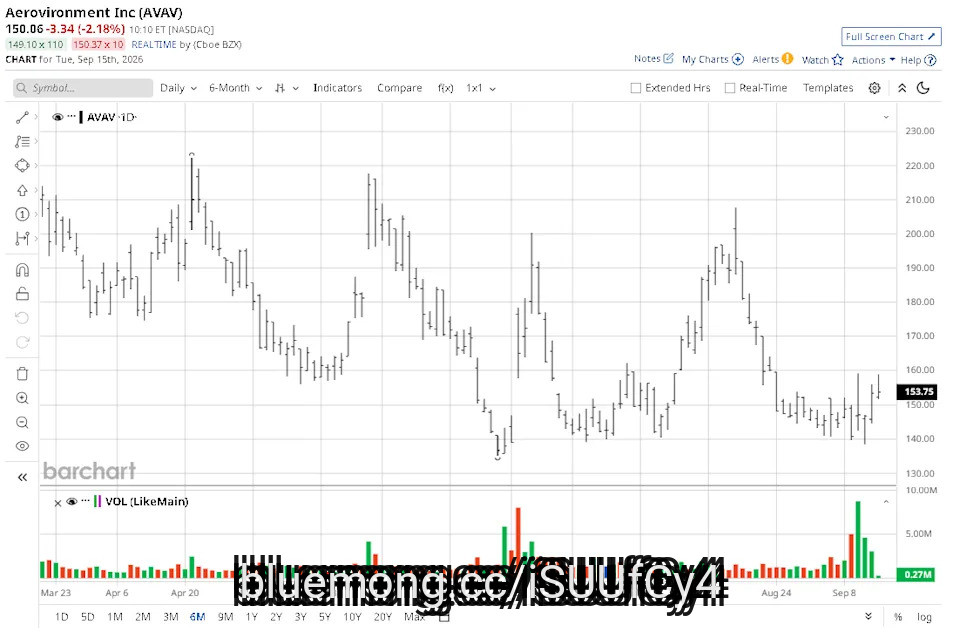
AeroVironment (AVAV) stock extended gains on Sept. 15 after the company's BlueHalo unit landed a landmark defense contract potentially worth up to $99.8 million. In its press release, AVAV said this new U.S. Air Force award — designed to advance military ******* e systems under the Leveraged Orbital Battlespace Optimization program — runs through August 2031.
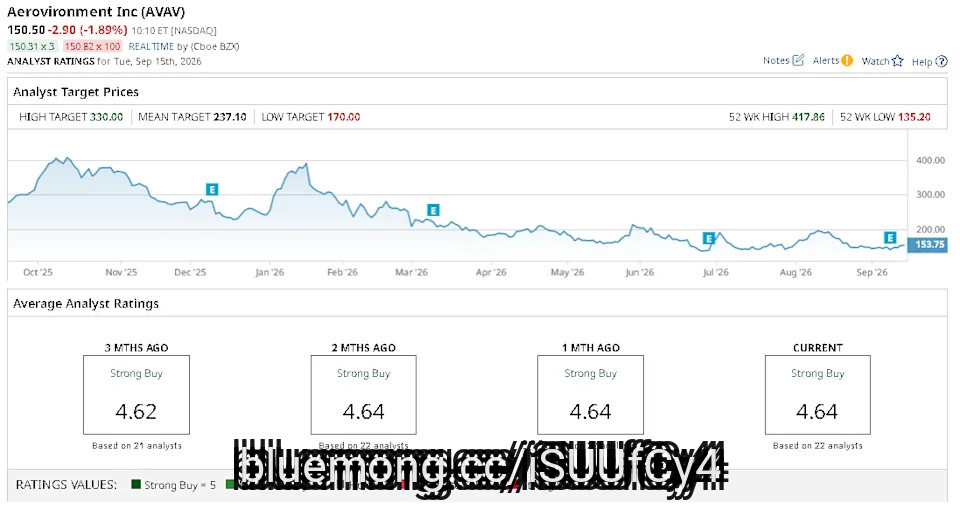
The announcement arrives as AeroVironment shares are struggling to regain investor interest, currently down more than 60% versus their year-to-date high.
Goldman Sachs Expects Fed Chair Kevin Warsh to Raise Rates This Week — But Not Because of Oil Prices.
Billionaire Charlie Munger, Who Died at 99, Skipped Insurance on His Mansion Since He Could Just Write a Check to Rebuild — 'All Intelligent People Do It My Way'
The EV Bubble Has Burst. How to Play Rivian Stock Now.
#sept


1 month ago
On September 8, United Natural Foods Inc. (NYSE:UNFI) announced its fourth quarter and full FY26 results. For the final quarter, the company posted an adjusted EBITDA of $172 million, which grew 48.3% compared to Q4 FY25. United's fourth quarter adjusted EPS of $0.69 took a sharp turn relative to a $0.11 adjusted loss per share for the same period last year. Cash flow from operating activities for the quarter stood at $197 million, along with free cash flow of $80 million.
Nejron Photo/Shutterstock.com
Amid a favorable customer mix and network optimizations, United delivered Q4 gross profit of $1,050 million, increasing marginally by 1.9% from the same period last year. This led to a gross margin of 13.7%, compared to 13.4% recorded in Q4 FY25. Cost-saving initiatives, which included efficient productivity through distribution centers and network optimizations, translated into lower operating expenses on a year-over-year basis. It helped United jump from an $87 million net loss for Q4 FY25 to a net income of $35 million during the recently concluded quarter.
For the complete fiscal year, the company delivered an adjusted EBITDA of $701 million, showcasing a 27% growth compared to FY25. Full-year adjusted EPS also climbed from $0.71 last year to $2.65. United generated FY26 operating cash flow of $540 million and free cash flow of $323 million.
Several encouraging operational developments took place during the fourth quarter. United initiated onboarding additional business from its existing customer base, as well as the new ones. Topline impact of such additions will be seen during FY27, once the broader optimization initiatives have cycled through. For its Lean Daily Management (LDM) program, the company concluded a preliminary rollout covering 44 distribution centers. This resulted in year-over-year enhancement in fill rates, throughput, and on-time deliveries, for four consecutive quarters.
#cash #flow #fourth #company


2 months ago
On September 3, Genesco (NYSE:GCO) reported a second quarter that should not have worked on paper. Revenue fell 3% to $530 million, yet the company nearly halved its adjusted operating loss and raised full-year earnings guidance to the top end of its range. That combination, shrinking sales alongside expanding profit, is the footwear-first strategy showing up in real numbers. Every one of the company's three brands beat internal expectations, and management says the toughest sales pressure ahead is coming from a deliberate choice rather than a weakening business.
Journeys, the company's teen-focused chain, delivered its eighth consecutive quarter of positive comparable sales, up 2%, even while lapping strong growth from a year earlier. The more interesting story sits underneath that number. The Journeys 4.0 store format, a redesigned concept built around a more elevated ***** ortment, is generating a sales lift of 25% or more wherever it opens, and the company expects roughly 180 locations, about a fifth of its fleet, running that format by year-end. That rollout, combined with fleet optimization and more efficient use of selling staff, handed Journeys 180 basis points of expense leverage in the quarter. Comparable sales kept accelerating into August, marking Journeys' ninth straight month of positive comps and a mid-single-digit gain during the back-to-school peak.
Johnston & Murphy is running its own streak, with comparable sales up 4% in its third consecutive positive quarter, helped by a newly extended, multiyear partnership with Peyton Manning and a broader shift in menswear toward more refined, put-together dressing. Companywide, adjusted gross margin expanded 140 basis points to 47.2%, and the adjusted operating loss narrowed to $8 million from $14 million a year ago. Genesco also collected $22.5 million in tariff refunds during the quarter and cut total debt to $15.8 million from $71 million a year earlier, giving a new CFO and a new Schuh president a far healthier balance sheet to work with as they settle into their roles.
The drag comes almost entirely from Schuh, Genesco's UK chain, where comparable sales fell 9% as management deliberately pulled back on discounting to protect margin. Executives were blunt about the cost of that choice. CEO Mimi Vaughn said "the UK consumer market remains challenged and price sensitive," and the Schuh turnaround is expected to take longer than the one already underway at Journeys. That pressure is now baked into guidance. Full-year total sales are expected to fall about 2%, worse than the prior forecast of down 1% to flat, with management incorporating more back-half sales pressure than it originally planned for given how promotional the UK footwear market has become.
#comparable #schuh #management #pressure


2 months ago
USA Rare Earth, Inc. (NASDAQ:USAR) announced on September 4 that it completed the Serra Verde acquisition one day earlier, paying $300 million in cash and issuing approximately 126.8 million common shares. The transaction adds Brazil's Pela Ema mine to Less Common Metals in the United Kingdom, the Stillwater, Oklahoma, magnet facility, and the Round Top project in Texas.
Serra Verde began production in January 2024 but is still completing optimization and commissioning. Stage 1 is expected to reach an annual run rate of approximately 4,000 metric tons of total rare-earth oxide, or TREO, by year-end 2026. Stage 2 construction targets average annual production of 6,400 metric tons, with commissioning expected to begin within 12 months.
Serra Verde had $425 million of principal outstanding under its U.S. International Development Finance Corporation loan at June 30. At closing, a $100 million tranche was extinguished after related warrants were exercised, leaving approximately $325 million of principal. The unaudited pro forma combined balance sheet reported a $304.1 million debt carrying value after discounts and issuance costs.
Serra Verde gives USA Rare Earth, Inc. (NASDAQ:USAR) a producing source of dysprosium, terbium, and other rare earths used in permanent magnets. Combining mining, metals, alloys, and magnet manufacturing could capture more of the value chain outside Asia.
The Phase 1 offtake agreement supports revenue visibility. It covers 100% of Pela Ema's Phase 1 products, subject to limited carve-outs, and includes escalating price floors annually. The counterparty is a special-purpose vehicle capitalized by the U.S. government and private investors. The arrangement provides contractual price protection, subject to the counterparty's performance.
#earth #approximately #NASDAQ #usar


2 months ago
Our **** ysts just identified a stock with the potential to be the next Nvidia. Tell us how you invest and we'll show you why it's our #1 pick. Tap here.
Performance was driven by the disciplined execution of a value creation strategy, resulting in 27% full-year adjusted EBITDA growth despite reported sales declines from network optimization.
Management attributes underlying sales growth to the $90 billion target addressable market of differentiated retailers, who increased their grocery industry share by 30 basis points.
Operational efficiency improved through the deployment of 'Lean' daily management to 44 distribution centers, resulting in four consecutive quarters of fill rate and throughput gains.
The natural product segment continues to outperform the broader market, reflecting enduring consumer demand for health-forward and specialty products.
#resulting #performance #ebitda #operational


2 months ago
Our ****** ysts just identified a stock with the potential to be the next Nvidia. Tell us how you invest and we'll show you why it's our #1 pick. Tap here.
Management is prioritizing a return to core fundamentals in the Snacks division, specifically targeting households with kids for Goldfish and launching national brand campaigns for Pepperidge Farm.
The Meals and Beverage segment is leaning into 'semi-scratch' cooking trends, which represent 50% of at-home cooking occasions, by focusing on convenience with 5-ingredient-or-less recipes.
Performance attribution highlights a divergence in the soup portfolio, where cooking-related products (broth and condensed) are performing well while 'eating' soups require further innovation to meet consumer value needs.
The company is implementing a new $500 million enterprise cost-savings program through fiscal 2030, focusing on procurement efficiencies and supply chain network optimization.
#focusing


2 months ago
NextEra Energy says an artificial intelligence (AI)–driven dispatch and outage-scheduling tool has saved its customers more than $20 million so far this year. Santee Cooper expects a custom AI weather-forecasting model to help it avoid spot-market purchases that can cost $100,000 an hour during extreme weather. Both utilities say the tools moved from concept to production in a matter of weeks, not years.The two companies detailed their AI deployments during a Sept. 2 virtual media roundtable hosted by Google Cloud, alongside Raiford Smith, the company's global director of power and energy industry. The session focused on Gemini Enterprise, Google Cloud's platform for building and deploying AI agents, and framed both utilities as evidence that AI in the sector has moved beyond generic chatbots and into tools built for specific, high-stakes operational decisions."Utilities are being asked to deliver greater reliability, lower costs, and a grid ready for what comes next," said Rich Argentieri, president of NextEra ***** ytics. Tami Wilson, vice president and chief financial officer of Santee Cooper, described the shift in similar terms, saying her utility is moving away from "legacy, clunky, ***** bersome processes" toward AI-driven financial and load forecasting to save time and money.
Argentieri walked through NextEra's Grid Composer platform, which the company built on the Gemini Enterprise Agent Platform and rolled out across Florida Power and Light's (FPL's) generating fleet. The platform pulls together real-time telemetry, load data, and generation profiles—what Argentieri estimated at roughly half a trillion data points a day—into a single model that compares manual dispatch decisions against an AI-optimized alternative.NextEra built the first version of the tool in less than 12 weeks, according to Argentieri. Since then, he said, the optimized dispatch and outage scheduling it enables have produced "over $20 million of savings to our customers" so far this year. NextEra has since made the underlying tools available to other utilities through a Google Cloud marketplace product it calls Optos, with Optos Composer—the version built for market and ***** et optimization—unifying generation, fuel, maintenance, trading, reserves, and storage decisions that Argentieri said have traditionally been managed by separate, siloed teams."All of those teams very much traditionally siloed. And not only the people, but all the data and the processes that go into that," Argentieri said, describing generation, transmission, and trading functions that rarely shared data before. Bringing those functions onto a single platform, he said, has let the company avoid "suboptimal decisions" and given teams visibility into how choices in one area affect costs elsewhere in the system.Argentieri also pointed to field applications. FPL technicians—he estimated 85% to 90% of the company's workforce—now use voice-activated tools to pull torque specifications or work-order gu
Argentieri walked through NextEra's Grid Composer platform, which the company built on the Gemini Enterprise Agent Platform and rolled out across Florida Power and Light's (FPL's) generating fleet. The platform pulls together real-time telemetry, load data, and generation profiles—what Argentieri estimated at roughly half a trillion data points a day—into a single model that compares manual dispatch decisions against an AI-optimized alternative.NextEra built the first version of the tool in less than 12 weeks, according to Argentieri. Since then, he said, the optimized dispatch and outage scheduling it enables have produced "over $20 million of savings to our customers" so far this year. NextEra has since made the underlying tools available to other utilities through a Google Cloud marketplace product it calls Optos, with Optos Composer—the version built for market and ***** et optimization—unifying generation, fuel, maintenance, trading, reserves, and storage decisions that Argentieri said have traditionally been managed by separate, siloed teams."All of those teams very much traditionally siloed. And not only the people, but all the data and the processes that go into that," Argentieri said, describing generation, transmission, and trading functions that rarely shared data before. Bringing those functions onto a single platform, he said, has let the company avoid "suboptimal decisions" and given teams visibility into how choices in one area affect costs elsewhere in the system.Argentieri also pointed to field applications. FPL technicians—he estimated 85% to 90% of the company's workforce—now use voice-activated tools to pull torque specifications or work-order gu


2 months ago
Our **** ysts just identified a stock with the potential to be the next Nvidia. Tell us how you invest and we'll show you why it's our #1 pick. Tap here.
Achieved a debt-free balance sheet following $350 million in prepayments since 2023, significantly reducing cash flow breakeven points and enhancing financial flexibility.
Maintained high profitability with a 40% margin, driven by efficient cost structures and increased interest income from a growing cash position.
Executed a fleet optimization strategy by selling 13 older vessels since 2023 to crystallize returns and improve the average age of the fleet.
Shifted vessel allocation to the West of Suez (Europe and Med) where spot rates are approximately 30% higher than in Eastern markets.
#achieved #shifted

2 months ago
Our ******* ysts just identified a stock with the potential to be the next Nvidia. Tell us how you invest and we'll show you why it's our #1 pick. Tap here.
Performance was driven by strong demand across core end markets, achieving 7.1% net sales growth despite the quarter being one week shorter than the prior year.
The company is executing a three-pillar strategy focused on organic growth, operational excellence, and disciplined capital deployment to expand profitability.
Operational efficiency is being bolstered by a new global procurement leader and the use of AI to ******* yze spend cubes for direct and indirect cost optimization.
Manufacturing footprint optimization is underway, including the ramp-up of the Mexico plant for narrow pixel pitch products and a potential exit from the highly customized international transportation business in Ireland.
#operational #Potential #optimization


2 months ago
Interested in Yatsen Holding Limited Sponsored ADR? Here are five stocks we like better.
Revenue grew 5.1% to RMB1.14 billion, driven by a 40.4% increase in skincare sales, which accounted for 71.5% of revenue. This was partially offset by a 35.8% decline in color cosmetics revenue amid portfolio optimization and SKU reductions.
Profitability weakened significantly: gross margin fell to 73.9% due largely to inventory provisions, while higher marketing expenses pushed the company's net loss to RMB90.8 million from RMB19.5 million a year earlier.
Yatsen plans to improve profitability by diversifying beyond Tmall and Douyin into business-to-business, offline, duty-free and professional channels. It forecasts third-quarter revenue of RMB898.6 million to RMB998.4 million, implying roughly flat to 10% year-over-year decline.
Yatsen (NYSE:YSG) reported second-quarter 2026 revenue growth of 5.1% as continued strength in its skincare portfolio offset a sharp decline in color cosmetics sales, while higher inventory provisions and increased marketing spending widened the company's losses.
#profitability #offset


2 months ago
Our **** ysts just identified a stock with the potential to be the next Nvidia. Tell us how you invest and we'll show you why it's our #1 pick. Tap here.
Ads are coming for your LLM queries: OpenAI, the company behind the LLM, said this week its advertising business hit a $1 billion annualized run rate in well under a year.
OpenAI first slotted ads into ChatGPT in February in the U.S. and has slowly rolled out options for advertisers to purchase slots right in the LLM around the globe. On Monday, that option was extended to India, Europe, the Middle East and North Africa.
But rather than the search engine optimization of the mid-2010s yore, which catalyzed a boom-and-bust cycle for digital media platforms like HuffPost and BuzzFeed, these ads are placed directly into ChatGPT's output alongside similar queries. OpenAI's about to find out if the 2020s version is any different.
Ask ChatGPT for a recommendation for the best pen for taking notes, and you might be served an ad for notebooks. And so forth. It's a burgeoning marketing-science (with a healthy dash of pseudoscience) field called GEO, or Generative Engine Optimization.
#NVIDIA #tell


2 months ago
On August 25, The Bank of Nova Scotia (NYSE:BNS) reported third-quarter results that hit a target management had been promising for the medium term, not the near term. Return on equity reached 14.2%, adjusted net income climbed to $2.97 billion, and adjusted earnings per share rose to $2.28 from $1.88 a year earlier, a 21% jump. CEO Scott Thomson signaled that 14% won't be the high-water mark for the bank's returns going forward. With every division growing at once, the quarter reads like a strategy finally clicking into place.
Canadian Banking earned $1.1 billion, up 12% year over year, with return on equity jumping 160 basis points sequentially to 19.4%. That came from a fifth straight quarter of margin expansion, plus commercial loan growth that accelerated to 3% sequentially after 2% the quarter before, with small business lending up 10% year over year. Credit card premium mix rose to 45% of new acquisitions, up from 35% a year ago.
Global Banking and Markets posted its best quarterly net income ever, $647 million, up 37% year over year, helped by a net interest margin that expanded more than 30 basis points and a run of marquee deals, including the two largest debt capital markets issuances ever done in Canada and the country's biggest IPO since 2021. Loans in that segment grew 7% sequentially as the bank reinvests after a period of deliberate optimization.
Global Wealth Management earnings rose 23% to $515 million as the segment posted net sales of $3 billion for the quarter, a Q3 record, while **** ets under management reached $474 billion. Referrals between Canadian Banking and Wealth Management hit $14 billion year to date, with commercial-to-wealth referrals up 33%. International Banking added $725 million, up 6% on a constant dollar basis, with retail loans growing 5% as management leans into primary banking relationships. The bank also logged its tenth straight quarter of positive operating leverage.
The quarter wasn't friction-free. Expenses grew 14% year over year, driven largely by performance-based pay and a 16% increase in technology spending to $1.5 billion. Chief Risk Officer Shannon McGinnis flagged, "We continue to monitor some pockets of weakness, including elevated mortgage delinquencies," even with the retail book carrying an average FICO score of 798. International Banking's provision for credit losses ran at 138 basis points, well above the 42 basis points booked in Canadian Banking, and the segment absorbed an incremental $57 million provision tied to a corporate account in Brazil that management said it continues to work through.
#quarter #billion #points #wealth


2 months ago
Our ******* ysts just identified a stock with the potential to be the next Nvidia. Tell us how you invest and we'll show you why it's our #1 pick. Tap here.
Ads are coming for your LLM queries: OpenAI, the company behind the LLM, said this week its advertising business hit a $1 billion annualized run rate in well under a year.
OpenAI first slotted ads into ChatGPT in February in the U.S. and has slowly rolled out options for advertisers to purchase slots right in the LLM around the globe. On Monday, that option was extended to India, Europe, the Middle East and North Africa.
But rather than the search engine optimization of the mid-2010s yore, which catalyzed a boom-and-bust cycle for digital media platforms like HuffPost and BuzzFeed, these ads are placed directly into ChatGPT's output alongside similar queries. OpenAI's about to find out if the 2020s version is any different.
Ask ChatGPT for a recommendation for the best pen for taking notes, and you might be served an ad for notebooks. And so forth. It's a burgeoning marketing-science (with a healthy dash of pseudoscience) field called GEO, or Generative Engine Optimization.
#openai #engine #queries


2 months ago
On August 25, The Bank of Nova Scotia (NYSE:BNS) reported third-quarter results that hit a target management had been promising for the medium term, not the near term. Return on equity reached 14.2%, adjusted net income climbed to $2.97 billion, and adjusted earnings per share rose to $2.28 from $1.88 a year earlier, a 21% jump. CEO Scott Thomson signaled that 14% won't be the high-water mark for the bank's returns going forward. With every division growing at once, the quarter reads like a strategy finally clicking into place.
Canadian Banking earned $1.1 billion, up 12% year over year, with return on equity jumping 160 basis points sequentially to 19.4%. That came from a fifth straight quarter of margin expansion, plus commercial loan growth that accelerated to 3% sequentially after 2% the quarter before, with small business lending up 10% year over year. Credit card premium mix rose to 45% of new acquisitions, up from 35% a year ago.
Global Banking and Markets posted its best quarterly net income ever, $647 million, up 37% year over year, helped by a net interest margin that expanded more than 30 basis points and a run of marquee deals, including the two largest debt capital markets issuances ever done in Canada and the country's biggest IPO since 2021. Loans in that segment grew 7% sequentially as the bank reinvests after a period of deliberate optimization.
Global Wealth Management earnings rose 23% to $515 million as the segment posted net sales of $3 billion for the quarter, a Q3 record, while ******* ets under management reached $474 billion. Referrals between Canadian Banking and Wealth Management hit $14 billion year to date, with commercial-to-wealth referrals up 33%. International Banking added $725 million, up 6% on a constant dollar basis, with retail loans growing 5% as management leans into primary banking relationships. The bank also logged its tenth straight quarter of positive operating leverage.
The quarter wasn't friction-free. Expenses grew 14% year over year, driven largely by performance-based pay and a 16% increase in technology spending to $1.5 billion. Chief Risk Officer Shannon McGinnis flagged, "We continue to monitor some pockets of weakness, including elevated mortgage delinquencies," even with the retail book carrying an average FICO score of 798. International Banking's provision for credit losses ran at 138 basis points, well above the 42 basis points booked in Canadian Banking, and the segment absorbed an incremental $57 million provision tied to a corporate account in Brazil that management said it continues to work through.
#year #canadian


2 months ago
On August 14, RLX Technology (NYSE:RLX) reported second-quarter results that told two different stories at once. International sales climbed to roughly 70% of revenue as the company absorbed a new European distribution partner, even as trade normalization back home pulled growth down from where the year started. RLX is no longer just an e-vapor device maker. It is trying to become a diversified, direct-to-retail nicotine platform before its home market tightens further.
Net revenues reached RMB1.01 billion in the second quarter, up 14.8% year over year, powered by international volume growth and the contribution of a company RLX acquired in May 2025. Gross margin expanded to 35.4% from 27.5% a year earlier, a jump management credited to supply chain optimization and a better mix of products and geographies. Non-GAAP income from operations rose 28.8% to RMB149.6 million, marking the 11th straight quarter of positive non-GAAP operating profit.
In July 2026, RLX took a 51% controlling stake in a Western European distributor that reaches 30,000 retail endpoints and runs a digital ordering platform connecting 20,000 independent merchants, a deal management framed as the next step in building direct retail relationships rather than depending on layers of wholesalers. CEO Kate ****** argued that as vaping hardware becomes commoditized, "competition is shifting from pure product development to route-to-market execution."
The company is also leaning into modern oral nicotine pouches as a new growth line and is building a manufacturing hub in Southeast Asia to produce them at scale, all while sitting on RMB13.9 billion in total capital resources as of June 30, 2026.
The same quarter that produced margin expansion also produced warning signs closer to home. Mainland China revenue is now expected to be roughly flat for the full year, and Sam Tsang, the company's head of capital markets, said the "procedural time line for government approval has become more conservative" as domestic enforcement tightens. Revenue and margins both moderated sequentially from the first quarter, which had been inflated by a shipment pull-forward tied to regulatory export changes, and management flagged that the elevated 35.4% margin should settle into a lower range going forward.
#revenue #retail


2 months ago
Pfizer Inc. (NYSE:PFE) and Abbott Laboratories (NYSE:ABT) offer investors two very different dividend stories. Pfizer (NYSE:PFE) is working to rebuild growth before major patent expirations arrive, while Abbott (NYSE:ABT) is combining a long dividend-growth record with a more diversified healthcare portfolio. Pfizer (NYSE:PFE) may offer turnaround potential, but Abbott's (NYSE:ABT) latest results present the steadier investment case.
Pfizer's (NYSE:PFE) non-COVID portfolio is beginning to carry more of the business. Revenue excluding Comirnaty and Paxlovid grew 5% operationally in fiscal Q2 2026, while launched and acquired products generated $3.2 billion and increased 18% operationally. Padcev revenue rose 23% operationally to $667 million, supported by increased market share in first-line locally advanced or metastatic urothelial cancer and uptake in muscle-invasive bladder cancer. The Vyndaqel family generated $1.76 billion, up 8% operationally, while Lorbrena grew 37% operationally. This broader contribution is encouraging because Pfizer needs several products to offset declining COVID revenue and future patent losses.
Stronger non-COVID performance allowed Pfizer (NYSE:PFE) to raise the midpoint of its 2026 revenue guidance by $500 million, despite reducing its COVID-product forecast from approximately $5 billion to $4 billion. Its cost programs should provide further support, as management expects combined savings of approximately $9.7 billion through 2029 across its cost-realignment and manufacturing-optimization initiatives.
Abbott's (NYSE:ABT) advantage is the breadth of its growth. Second-quarter sales increased 13% on a reported basis and 4.8% on a comparable basis, while adjusted EPS rose 4% to $1.31. Medical Devices remained Abbott's (NYSE:ABT) largest segment and an important growth contributor, with sales rising 8.4% on a comparable basis. Growth was led by electrophysiology, rhythm management, heart failure, and diabetes care, with continuous-glucose-monitor sales increasing 9.5% comparably.
The Exact Sciences acquisition also expanded Abbott's (NYSE:ABT) diagnostics business. Diagnostics revenue reached $3.09 billion, rising 42.3% reported and 2.9% comparably. Within the segment, Cancer Diagnostics delivered 13.3% comparable growth as Cologuard benefited from increasing numbers of new and repeat users.
#Growth #billion #covid #revenue


2 months ago
The London Company, an investment management company, released its second-quarter 2026 investor letter for its "Small-Mid Cap Strategy." The letter can be downloaded here. U.S. equities rebounded sharply in Q2, with the Russell 3000 gaining 15.4%, supported by AI infrastructure spending, strong earnings, and easing Middle East tensions. Technology led the rally as semiconductors recovered, while Energy and defensive sectors lagged. The portfolio returned 12.1% gross and 11.8% net compared with a 20.3% gain in the Russell 2500 Index. Stock selection weighed on relative performance, as high-beta and high-volatility stocks dominated returns while Quality remained weak, although results improved in June as market participation broadened. Looking ahead, resilient earnings and AI productivity support a constructive outlook, but negative hyperscaler cash flow, sticky inflation, geopolitical risks, index concentration, and elevated valuations warrant caution. The strategy continues to emphasize quality, downside protection, and active management. Additionally, reviewing the Fund's top five holdings could also highlight its best ideas for 2026.
In its second-quarter 2026 investor letter, London Company SMID Cap Strategy highlighted Entegris, Inc. (NASDAQ:ENTG) as a leading contributor. Headquartered in Billerica, Massachusetts, Entegris, Inc. (NASDAQ:ENTG) provides materials and process solutions for the semiconductor and other high-technology industries. On August 26, 2026, Entegris, Inc. (NASDAQ:ENTG) closed at $142.46 per share, reflecting a market capitalization of $21.77 billion. Entegris, Inc. (NASDAQ:ENTG) posted a one‑month return of 22.74%, while its shares gained 71.40% over the past 52 weeks.
London Company SMID Cap Strategy stated the following regarding Entegris, Inc. (NASDAQ:ENTG) in its Q2 2026 investor letter:
"Entegris, Inc. (NASDAQ:ENTG) was a top contributor, benefiting from improving semiconductor demand, accelerating AI investment, and rising fab utilization. Beyond the industry recovery, management outlined a clear path to structurally higher earnings through manufacturing optimization, improved working capital, and rebuilding the operating model over time. We remain attracted to ENTG's strong competitive position, high barriers to entry, and long runway for free cash flow expansion."
Entegris, Inc. (NASDAQ:ENTG) is not on our list of the 40 Most Popular Stocks Among Hedge Funds. As per our database, 47 hedge fund portfolios held Entegris, Inc. (NASDAQ:ENTG) at the end of the second quarter, the same as in the previous quarter. While we acknowledge the potential of Entegris, Inc. (NASDAQ:ENTG) as an investment, we believe certain AI stocks offer greater upside potential and carry less downside risk. If you're looking for an extremely undervalued AI stock that also stands to benefit significantly from Trump-era tariffs and the onshoring trend, see our free report on the best short-term AI stock.
#entg #Stock

2 months ago
Our **** ysts just identified a stock with the potential to be the next Nvidia. Tell us how you invest and we'll show you why it's our #1 pick. Tap here.
Achieved record full-year net sales and operating income, marking the fourth consecutive year of top-line growth despite a challenging operating environment.
Retail segment performance was driven by the successful acquisition of Bachan's and continued momentum in specialty bakery, specifically Texas Roadhouse dinner rolls which grew 28.1% in the quarter.
Gross margin expansion for the 12th consecutive quarter was attributed to a multi-year network restructuring, including the sale of the Milpitas facility and optimization of the Horse Cave and College Park plants.
Foodservice stability was maintained through strategic partnerships with high-growth national QSR chains like Chick-fil-A, Domino's, and Taco Bell, offsetting declines in smaller accounts.
#year #Growth #tell #retail

2 months ago
The next few years will test whether Pfizer Inc. (NYSE:PFE) can replace yesterday's blockbusters, and whether Gilead Sciences, Inc. (NASDAQ:GILD) can become more than an HIV company. Pfizer's (NYSE:PFE) newer medicines are gaining traction, but that growth has yet to accelerate the wider business. Gilead (NASDAQ:GILD) is expanding faster, although its performance remains concentrated in one therapeutic area. For investors, this is ultimately a choice between an unfinished turnaround and a stronger growth story still searching for greater breadth.
Pfizer's (NYSE:PFE) strongest result was the performance of its non-COVID portfolio. Revenue excluding Comirnaty and Paxlovid grew 5% operationally, while launched and acquired products generated $3.2 billion and increased 18% operationally. Growth also came from several franchises. Padcev revenue rose 23% operationally to $667 million, supported by increased market share in bladder cancer. The Vyndaqel family generated $1.76 billion, up 8% operationally, while Lorbrena grew 37% operationally. These products give Pfizer more than one avenue for rebuilding revenue as COVID-related demand declines.
Pfizer (NYSE:PFE) lowered its 2026 COVID-product forecast from approximately $5 billion to $4 billion after low infection levels weighed on Paxlovid utilization. Nevertheless, stronger-than-expected non-COVID sales allowed the company to raise the midpoint of its total revenue guidance by $500 million. Cost reductions provide additional support for the company. Pfizer (NYSE:PFE) expects approximately $6.7 billion in savings from its cost-realignment program through 2029. A separate manufacturing-optimization program is expected to generate another $3 billion, bringing anticipated savings across the two programs to approximately $9.7 billion. This leaner cost base could help Pfizer (NYSE:PFE) preserve margins and continue investing in areas such as oncology and obesity.
Gilead (NASDAQ:GILD), however, is currently delivering much stronger underlying growth. Product sales excluding Veklury increased 10% to $7.6 billion, and HIV sales rose 12% to $5.7 billion, with Biktarvy revenue increasing 7% to $3.8 billion and Descovy sales climbing 48% to $967 million. Yeztugo, Gilead's (NASDAQ:GILD) twice-yearly injectable HIV-prevention medicine, contributed $232 million as its launch gained momentum. The product adds a potentially important growth driver to an already dominant HIV portfolio.
Growth, however, was not confined to HIV alone, as liver-disease sales increased 10% to $877 million, while Livdelzi revenue more than doubled from $78 million to $167 million. Trodelvy sales rose 26% to $457 million, providing further evidence that Gilead (NASDAQ:GILD) is building a meaningful oncology franchise. Management subsequently raised its 2026 product-sales outlook to $30.1–$30.4 billion and increased guidance for product sales excluding Veklury to $29.8–$30.1 billion.
#NYSE #million #gild


2 months ago
This story was originally published on QSR. To receive daily news and insights, subscribe to our free daily QSR AM Jolt.
In today's challenging restaurant environment, operators are under constant pressure to grow sales while managing rising food, labor, occupancy, and operating costs. While much attention is placed on pricing, promotions, labor optimization, and food costs, one of the most powerful tools for improving restaurant economics is often overlooked: the menuboard.
The menuboard is one of the most important points of communication between a restaurant and its customers. It does more than tell customers what is available and what it costs. A well-designed and strategically optimized menuboard can greatly influence product selection, increase average check, improve throughput, reduce decision friction, and make the operation easier to execute. When these benefits are considered together, the return on investment from menuboard optimization can be substantial.
A menuboard should be viewed as a "silent" salesperson that serves every customer, every day. Unlike a traditional advertising investment, the menuboard goes to work at the precise moment a customer is making a purchase decision.
Its job is to answer three fundamental customer questions quickly: What can I order? What looks appealing? What represents the best value for me?
#menuboard #costs #customer #optimization


2 months ago
Utah endurance cyclist Matthew Lefthand spent 10 nights in an altitude tent — an enclosed canopy over his bed which lowers oxygen levels to simulate high-altitude environments — before attempting to become the fastest rider ever to cover 200 miles on a standard upright bicycle.
But that was only one aspect of his meticulous preparation that included months of aerodynamic testing, equipment optimization, nutritions strategies and training to sustain roughly 200 grams of carbohydrates per hour during the effort.
Lefthand rides at about 4,400 feet elevation near his South Ogden home, but traveled to Colorado late last month for the record attempt at 7,700 feet, where there is less air resistance.
Endurance cyclist Matthew Lefthand of South Ogden, Utah, pictured here on July 26, 2026, became the first rider in history to average more than 30 miles per hour over 200 miles on a certified road course using a standard, upright bicycle. This single performance included six World Ultracycling ***** ociation (WUCA) and Guinness World Records on a 61-mile stretch on Highway 17 in Colorado's San Luis Valley. | Bailey Lefthand
On July 29, he became the first rider in history to average more than 30 mph over 200 miles on a certified road course using a standard upright bike, according to the World Ultra Cycling ***** ociation. He averaged 30.11 mph riding an aerodynamic time trial bike back and forth over a 61-mile, pancake-flat stretch of Highway 17 in the San Luis Valley in 6:38:31.
#upright #utah




2 months ago
Interested in Grabagun Digital Holdings Inc.? Here are five stocks we like better.
Revenue and gross margin improved: Second-quarter revenue rose 9.4% to $23.2 million, while gross profit increased 39% to $3.1 million and gross margin expanded to 13.5%. Growth was driven by higher-priced firearms, larger customer orders, pricing optimization and favorable product mix.
Profitability remained pressured by investment costs: Operating expenses climbed to $5.7 million due to public-company costs, PEW Logistics investments and added infrastructure, resulting in a $1.8 million net loss and $1.7 million adjusted EBITDA loss.
PEW Logistics is expanding, while leadership changes: The platform processed more than $1.9 million in gross merchandise value and added Backwoods Suppressors as its third manufacturer partner. CFO and co-founder Justin Hilty plans to retire and will be succeeded by Jonathan Terry, formerly of YETI.
Grabagun Digital (NYSE:PEW) reported second-quarter revenue growth and a sharp improvement in gross margin as higher-priced firearms sales, pricing initiatives and product mix supported profitability at the gross-profit level. The company also highlighted early progress at its PEW Logistics platform and announced a planned chief financial officer transition.
#million #Margin #digital


2 months ago
Our ******* ysts just identified a stock with the potential to be the next Nvidia. Tell us how you invest and we'll show you why it's our #1 pick. Tap here.
Management attributed the revenue decline to significant headwinds in traditional advertising monetization, despite stable audience consumption levels.
The company is executing a 'remodeling the house while living in it' strategy, incurring higher operating expenses to build out digital infrastructure and sales leadership.
A strategic shift toward a 'blended digital strategy'—combining radio with search, SEO, and social—drove a 76.4% increase in blended digital revenue for the first half of the year.
Management emphasized a return to in-house search tools and specialized digital fulfillment teams to improve speed-to-market and campaign optimization.
#revenue #strategy

3 months ago
After its shares sank by more than 35% at the start of the year, Toast (NYSE: TOST) stock has come roaring back since the spring to near breakeven for the year.
The combination of mixed restaurant industry sales and the software-as-a-service (SaaS) sell-off contributed to its poor early stock performance, but the company itself continued to hit on all cylinders. That was seen again in the second quarter, with the restaurant software and payments company once again delivering strong results.
Missed Nvidia in 2009? This Rare Signal Is Flashing Again. In 2009, a "Double Down" signal flashed for a little-known chipmaker called Nvidia. For the first time in years, that same "Total Conviction" signal is flashing for a company 1/100th the size of Nvidia. Continue »
While Toast had been dumped in the AI loser bucket with other software companies, that narrative makes even less sense for Toast. First, its focus is on a sprawling industry of millions of small and medium-sized restaurant operators that aren't particularly tech savvy. Frontier model companies aren't going to look to put together the salesforce to sell into this market, and these companies aren't going to vibe code their own solutions.
Meanwhile, Toast's own AI-powered solutions have been gaining traction. Its AI-powered marketing agentic AI tool Toast IQ Grow is on track to become its fastest-ever solution to reach $10 million in annual recurring revenue (ARR), as restaurants are seeing great outcomes with it. In addition, the company is looking to expand its agentic AI platform into other areas like payroll, scheduling, tax, and bookkeeping. Things like dynamic menu and margin optimization tools, and predictive labor scheduling can have big impacts for restaurant operators that survive on slim margins, and these are the types of modules that can really help grow its ARPU (average revenue per user) over the long term.
#Companies #aren 't #first


3 months ago
Our **** ysts just identified a stock with the potential to be the next Nvidia. Tell us how you invest and we'll show you why it's our #1 pick. Tap here.
Achieved all-time record Q2 revenue and EBITDA, driven by a 12% EBITDA increase in North American operations which now represent approximately 90% of total results.
Performance attribution is largely credited to the 'contribution phase' of capital investments made over the last two years, particularly at the Nugget and Missouri properties.
The Nugget saw a 93% EBITDA increase, fueled by a successful entertainment calendar and a 300% surge in transient corporate room nights during historically soft periods.
Operational efficiency improved across the portfolio, with U.S. property margins expanding from 24% to 26% through disciplined expense management and gaming floor optimization.
#ebitda #achieved #north


3 months ago
Our ****** ysts just identified a stock with the potential to be the next Nvidia. Tell us how you invest and we'll show you why it's our #1 pick. Tap here.
Achieved all-time records for net income, EBITDA, and TCE rates, driven by a combination of high utilization and favorable market inefficiencies.
The Strait of Hormuz conflict acted as a significant demand catalyst, redirecting customers toward North American supply chains and increasing ton-mile demand due to longer voyages.
Ethylene export terminal at Morgan's Point reached record throughput of 374,000 tons, benefiting from high naphtha prices that made U.S. ethylene more competitive globally.
Strategic fleet optimization continued with the divestment of the 8 Unigas Pool vessels for $183 million, focusing the portfolio on larger, more modern ****** ets.
#hormuz

3 months ago
Our ****** ysts just identified a stock with the potential to be the next Nvidia. Tell us how you invest and we'll show you why it's our #1 pick. Tap here.
New CEO Dan Krawczyk emphasized that the ongoing strategic review is progressing with urgency and discipline, with a mandate to maximize shareholder value through either a transaction or stand-alone optimization.
Performance improvement in the second quarter was primarily driven by a 21% year-over-year increase in Cellulose Specialties (CS) pricing, reflecting a disciplined value-based pricing strategy.
Management identified a tangible pipeline of reliability, productivity, and cost initiatives to improve the manufacturing network's earnings and cash generation capability.
The company is leveraging its unique position as the sole remaining U.S. supplier of nitrocellulose grade dissolving wood pulp for defense and NATO applications, citing it as a critical strategic ****** et.
#strategic #year