

11 mins. ago
Toward the end of the lightning round on September 8, when a caller inquired about AstraZeneca PLC (NYSE:AZN), Mad Money host Jim Cramer commented:
Alright, now, AstraZeneca reminds me of a company, it's not unlike Novartis. I'm a little nervous about it. It's been missing some of its trials. I don't think COPD is enough to change my mind… I am not going to put my money on AstraZeneca.
AstraZeneca PLC (NYSE:AZN) maintains a solid financial foundation supported by steady top-line growth and disciplined cost management. In its second-quarter report, the company generated total revenue of $15.38 billion, marking a 6.4% increase compared to the same period last year. Adjusted earnings per share reached $2.63, outperforming ****** yst consensus estimates.
The profitability was driven by strong global demand for core oncology and rare disease treatments, which successfully offset revenue headwinds from generic competition affecting older blockbusters like Farxiga and Brilinta. With a net margin hovering around 17.02% and management reiterating its full-year guidance for mid-to-high single-digit revenue growth along with low double-digit core EPS expansion, the core business continues to demonstrate commercial resilience.
The primary driver behind the skepticism could be based on tangible execution risks and regulatory hurdles that threaten AstraZeneca PLC's (NYSE:AZN) long-term top line. A significant blow to the rare disease division came when anselamimab failed to achieve statistical significance for the primary endpoint in the overall AL amyloidosis population in the Phase III CARES program, although AstraZeneca reported encouraging results in a prespecified subgroup of patients with kappa light-chain amyloidosis.
#management
Alright, now, AstraZeneca reminds me of a company, it's not unlike Novartis. I'm a little nervous about it. It's been missing some of its trials. I don't think COPD is enough to change my mind… I am not going to put my money on AstraZeneca.
AstraZeneca PLC (NYSE:AZN) maintains a solid financial foundation supported by steady top-line growth and disciplined cost management. In its second-quarter report, the company generated total revenue of $15.38 billion, marking a 6.4% increase compared to the same period last year. Adjusted earnings per share reached $2.63, outperforming ****** yst consensus estimates.
The profitability was driven by strong global demand for core oncology and rare disease treatments, which successfully offset revenue headwinds from generic competition affecting older blockbusters like Farxiga and Brilinta. With a net margin hovering around 17.02% and management reiterating its full-year guidance for mid-to-high single-digit revenue growth along with low double-digit core EPS expansion, the core business continues to demonstrate commercial resilience.
The primary driver behind the skepticism could be based on tangible execution risks and regulatory hurdles that threaten AstraZeneca PLC's (NYSE:AZN) long-term top line. A significant blow to the rare disease division came when anselamimab failed to achieve statistical significance for the primary endpoint in the overall AL amyloidosis population in the Phase III CARES program, although AstraZeneca reported encouraging results in a prespecified subgroup of patients with kappa light-chain amyloidosis.
#management


13 mins. ago
Investors seeking exposure to artificial intelligence infrastructure must weigh the explosive growth of Astera Labs Inc (NASDAQ:ALAB) against the established scale and diverse portfolio of Marvell Technology Inc(NASDAQ:MRVL) to determine the better buy.
Both companies focus on the plumbing of the digital world, ensuring data moves quickly between processors and memory. While Astera Labs focuses on specialized connectivity for AI racks, Marvell offers a broader range of networking, storage, and custom compute solutions. This comparison explores which strategy offers more potential for long-term investors.
Astera Labs designs connectivity solutions that integrate various protocols to support rack-scale AI infrastructure, a high-growth niche among semiconductor stocks. The company serves major hyperscalers and equipment manufacturers who need to overcome data bottlenecks in massive data centers, though its revenue is highly concentrated. In 2025, one end customer -- Amazon.com Inc (NASDAQ:AMZN) -- accounted for over 70% of revenue, which adds a significant layer of risk to the business model.
According to its latest annual report, filed for the fiscal year ended Dec. 31, 2025, revenue reached close to $853 million, representing a significant jump of 115% compared with the prior fiscal year. This growth trajectory helped the company transition to a net income of just over $219 million after recording losses in the previous two years. The net margin for the latest year was close to 26%.
As of its December 2025 balance sheet, the debt-to-equity ratio was 0.0x, meaning the company carries no debt relative to its shareholder equity, while the so-called current ratio was 10.2x. Free cash flow for the period reached nearly $282 million. Note that stock-based compensation (SBC) represented roughly 50.1% of operating cash flow, which inflates reported cash generation since SBC is a non-cash expense added back in the cash flow statement.
#company #million
Both companies focus on the plumbing of the digital world, ensuring data moves quickly between processors and memory. While Astera Labs focuses on specialized connectivity for AI racks, Marvell offers a broader range of networking, storage, and custom compute solutions. This comparison explores which strategy offers more potential for long-term investors.
Astera Labs designs connectivity solutions that integrate various protocols to support rack-scale AI infrastructure, a high-growth niche among semiconductor stocks. The company serves major hyperscalers and equipment manufacturers who need to overcome data bottlenecks in massive data centers, though its revenue is highly concentrated. In 2025, one end customer -- Amazon.com Inc (NASDAQ:AMZN) -- accounted for over 70% of revenue, which adds a significant layer of risk to the business model.
According to its latest annual report, filed for the fiscal year ended Dec. 31, 2025, revenue reached close to $853 million, representing a significant jump of 115% compared with the prior fiscal year. This growth trajectory helped the company transition to a net income of just over $219 million after recording losses in the previous two years. The net margin for the latest year was close to 26%.
As of its December 2025 balance sheet, the debt-to-equity ratio was 0.0x, meaning the company carries no debt relative to its shareholder equity, while the so-called current ratio was 10.2x. Free cash flow for the period reached nearly $282 million. Note that stock-based compensation (SBC) represented roughly 50.1% of operating cash flow, which inflates reported cash generation since SBC is a non-cash expense added back in the cash flow statement.
#company #million


18 mins. ago
Google search on your laptop. YouTube on your TV. Chrome on your phone. It often feels -- and probably accurately so -- like tech giant Alphabet (NASDAQ: GOOG) (NASDAQ: GOOGL) and its products are everywhere. Expect that feeling to get even more common in the age of AI.
In fact, expect that feeling to get more common right now.
Missed Nvidia in 2009? This Rare Signal Is Flashing Again. In 2009, a "Double Down" signal flashed for a little-known chipmaker called Nvidia. For the first time in years, that same "Total Conviction" signal is flashing for a company 1/100th the size of Nvidia. Continue »
In an announcement that dropped just mid-day Thursday, Alphabet announced a new software offering that will put Google Gemini artificial intelligence right on your PC. Download the "Gemini for desktop" app, install it, and any time you have a need for it going forward, you can hit "Alt + ******* e" on your personal computer (Option + ******* e if you use a Mac).
Use that keyboard shortcut, and up will pop "Gemini Spark, your 24/7 personal AI agent," to answer whatever questions you might have for it -- much faster than logging onto ChatGPT or Anthropic, for example. The app can answer questions, verify facts, or draft text, says Google, and even build images or construct videos.
#Google #NASDAQ
In fact, expect that feeling to get more common right now.
Missed Nvidia in 2009? This Rare Signal Is Flashing Again. In 2009, a "Double Down" signal flashed for a little-known chipmaker called Nvidia. For the first time in years, that same "Total Conviction" signal is flashing for a company 1/100th the size of Nvidia. Continue »
In an announcement that dropped just mid-day Thursday, Alphabet announced a new software offering that will put Google Gemini artificial intelligence right on your PC. Download the "Gemini for desktop" app, install it, and any time you have a need for it going forward, you can hit "Alt + ******* e" on your personal computer (Option + ******* e if you use a Mac).
Use that keyboard shortcut, and up will pop "Gemini Spark, your 24/7 personal AI agent," to answer whatever questions you might have for it -- much faster than logging onto ChatGPT or Anthropic, for example. The app can answer questions, verify facts, or draft text, says Google, and even build images or construct videos.
#Google #NASDAQ


21 mins. ago
DE and CAT have surged 47% and 44% YTD respectively, roughly four times the industrial sector's gain, forcing holders to weigh profits against further upside.
PCAR, a comparable industrial name, has gained only 14% YTD alongside XLI, confirming the rally is stock-specific rather than a broad sector re-rating.
Neither stock has flashed a sell signal, and benchmark-driven money chasing year-to-date winners could extend both rallies before the gap narrows.
Just released. Our ***** ysts combed the entire stock market and named the ten best stocks to buy right now, and Caterpillar didn't make the cut. Enter your email to see the names that beat CAT. The report is free. Enter your email and see if any of your stocks made the cut.
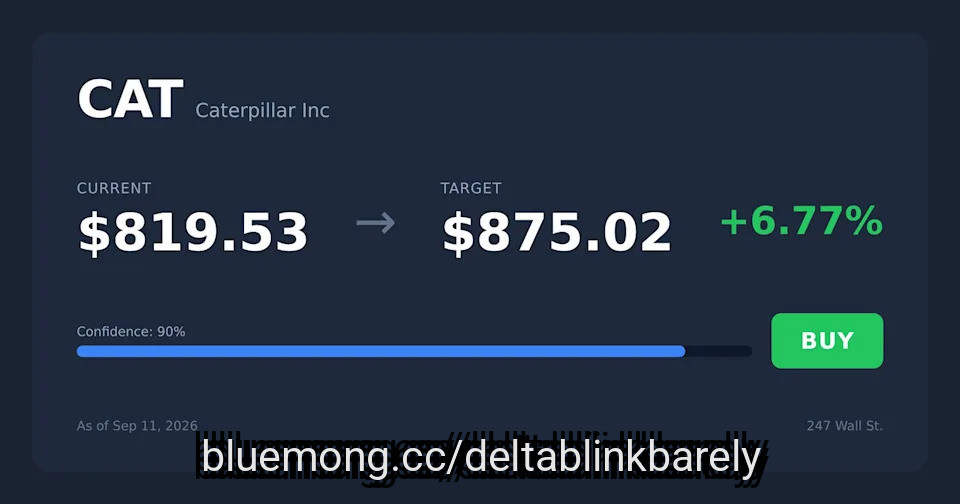
Shares of Deere & Company (NYSE:DE) and Caterpillar (NYSE:CAT) sit near the top of the industrial leaderboard this year, and both are adding to the gain again in Friday midday trading. Deere stock is up 47% year to date (YTD) to $680.98, and it's up 0.5% on the session. Meanwhile, Caterpillar stock is up 44% YTD to $821.19, rising 2% Friday.
#enter #date
PCAR, a comparable industrial name, has gained only 14% YTD alongside XLI, confirming the rally is stock-specific rather than a broad sector re-rating.
Neither stock has flashed a sell signal, and benchmark-driven money chasing year-to-date winners could extend both rallies before the gap narrows.
Just released. Our ***** ysts combed the entire stock market and named the ten best stocks to buy right now, and Caterpillar didn't make the cut. Enter your email to see the names that beat CAT. The report is free. Enter your email and see if any of your stocks made the cut.
Shares of Deere & Company (NYSE:DE) and Caterpillar (NYSE:CAT) sit near the top of the industrial leaderboard this year, and both are adding to the gain again in Friday midday trading. Deere stock is up 47% year to date (YTD) to $680.98, and it's up 0.5% on the session. Meanwhile, Caterpillar stock is up 44% YTD to $821.19, rising 2% Friday.
#enter #date



28 mins. ago
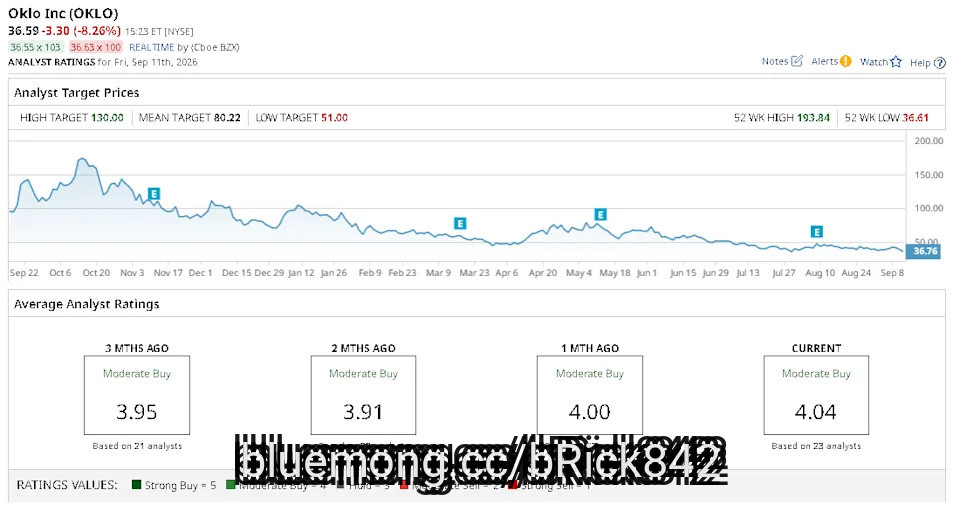
Oklo (OKLO) stock was under immense pressure on Sept. 11 after the advanced nuclear-tech company disclosed plans to raise another $1 billion in fresh capital. In an 8-K filing, OKLO confirmed that it has entered into an equity distribution agreement with a syndicate of 10 major financial institutions to issue and sell up to $1 billion of its common stock.
Following today's decline, Oklo shares are trading at less than half their price at the start of 2026.
GME Stock Jumps as GameStop CEO Ryan Cohen Buys $20 Million Worth of Shares
Rocket Lab Stock Just Scored a New Bullish Rating
Cathie Wood Just Bet $45 Million on This Beaten-Down ****** e Stock. Wall Street Sees 70% Upside.
#billion #following #ryan
Following today's decline, Oklo shares are trading at less than half their price at the start of 2026.
GME Stock Jumps as GameStop CEO Ryan Cohen Buys $20 Million Worth of Shares
Rocket Lab Stock Just Scored a New Bullish Rating
Cathie Wood Just Bet $45 Million on This Beaten-Down ****** e Stock. Wall Street Sees 70% Upside.
#billion #following #ryan



31 mins. ago
Salesforce (CRM) trades at 20.6 times earnings, below the S&P 500 median of 22.6, after losing 2.8% over the past twelve months while the index gained 17.9%. A profitable software company priced under the market is the setup value buyers wait for. The question is whether that is a good business on sale or a fair price for a legacy platform facing disintermediation from next-generation AI architectures.
Salesforce sells the customer relationship software that companies run their sales and service teams on, and it owns Slack. Deutsche Telekom and FIFA both expanded their AI spending with Salesforce in fiscal Q2 2027. Revenue over the trailing twelve months was $43.94 billion, up 11.2%. The three-year average revenue growth rate is 9.9% a year—ahead of the S&P 500 median of 8.3%—making the last twelve months the faster of the two.
Free cash flow over the same window was $15.15 billion, a 7.6% yield on the market value. Operating margin over those twelve months is 21.5% against an S&P 500 median of 18.6%, and the margin did not thin against the year before.
Free cash flow in fiscal Q2 2027 was $1.1 billion, up 81% from a year earlier. That is one quarter. For the whole of fiscal 2027 management guides free cash flow growth of 4% to 5%, against revenue guided up 11% to 12%, so cash is set to grow at less than half the pace of the top line.
License revenue is a headwind and integration and ******* ytics revenue is volatile, management says, though both only partially offset growth in the newer lines. Near $243, the stock is just 8% off its 52-week high, though it remains about 33% below its two-year peak of $363.22: while the recent rally closed the immediate valuation gap, the longer-term discount reflects that structural hesitation hasn't fully cleared.
#cash #billion
Salesforce sells the customer relationship software that companies run their sales and service teams on, and it owns Slack. Deutsche Telekom and FIFA both expanded their AI spending with Salesforce in fiscal Q2 2027. Revenue over the trailing twelve months was $43.94 billion, up 11.2%. The three-year average revenue growth rate is 9.9% a year—ahead of the S&P 500 median of 8.3%—making the last twelve months the faster of the two.
Free cash flow over the same window was $15.15 billion, a 7.6% yield on the market value. Operating margin over those twelve months is 21.5% against an S&P 500 median of 18.6%, and the margin did not thin against the year before.
Free cash flow in fiscal Q2 2027 was $1.1 billion, up 81% from a year earlier. That is one quarter. For the whole of fiscal 2027 management guides free cash flow growth of 4% to 5%, against revenue guided up 11% to 12%, so cash is set to grow at less than half the pace of the top line.
License revenue is a headwind and integration and ******* ytics revenue is volatile, management says, though both only partially offset growth in the newer lines. Near $243, the stock is just 8% off its 52-week high, though it remains about 33% below its two-year peak of $363.22: while the recent rally closed the immediate valuation gap, the longer-term discount reflects that structural hesitation hasn't fully cleared.
#cash #billion


43 mins. ago
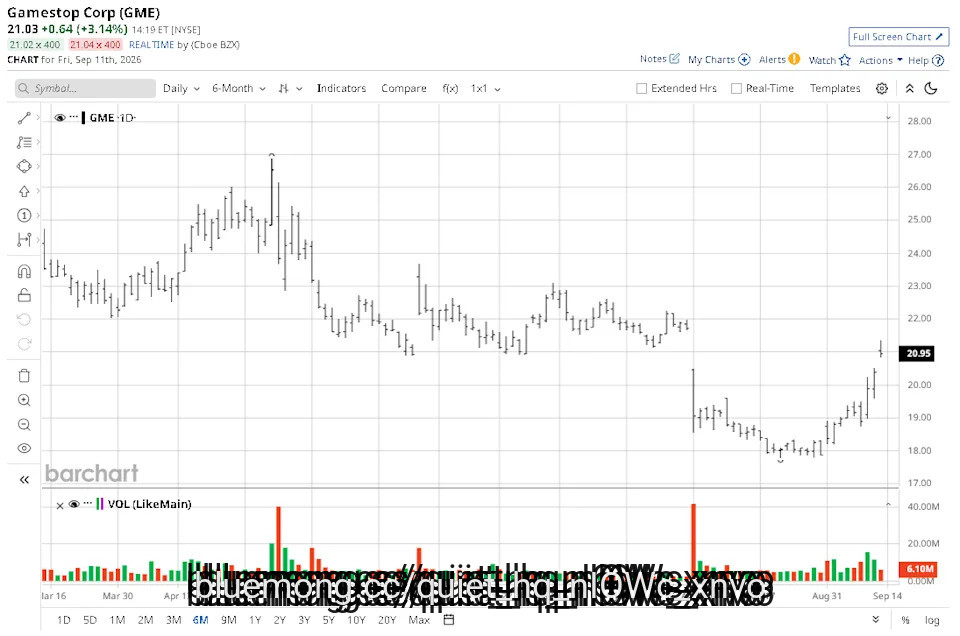
GameStop (GME) shares pushed higher on Sept. 11 after a regulatory filing confirmed that chief executive Ryan Cohen has expanded his stake in the gaming merchandise retailer. In open-market transactions, Cohen has acquired a total of 1,000,000 company shares for roughly $20.37 million, which translates to a weighted per-share price of about $20.38, the filing revealed.
The disclosure arrives at a time when GME stock is already reclaiming some of its recent losses, currently up some 15% versus its August low.
NVDA Stock Alert: What to Know as Nvidia Faces DOJ Probe
Rocket Lab Stock Just Scored a New Bullish Rating
Cathie Wood Just Bet $45 Million on This Beaten-Down ******* e Stock. Wall Street Sees 70% Upside.
#shares #filing #august
The disclosure arrives at a time when GME stock is already reclaiming some of its recent losses, currently up some 15% versus its August low.
NVDA Stock Alert: What to Know as Nvidia Faces DOJ Probe
Rocket Lab Stock Just Scored a New Bullish Rating
Cathie Wood Just Bet $45 Million on This Beaten-Down ******* e Stock. Wall Street Sees 70% Upside.
#shares #filing #august
45 mins. ago
High-performance computing is currently undergoing a massive generational shift. Deciding between Astera Labs Inc (NASDAQ:ALAB) and Applied Materials Inc (NASDAQ:AMAT) means choosing between a fast-growing connectivity specialist and an established ******* an of manufacturing equipment.
Astera Labs focuses on the internal plumbing of data centers, providing chips that move data between processors. Applied Materials builds the actual machines that make those chips possible. While both benefit from artificial intelligence, they occupy very different rungs on the technology ladder.
Astera Labs sells high-speed connectivity hardware and software designed for AI-heavy data centers. Its primary products include PCIe and Ethernet solutions that help hyperscale cloud providers manage massive data workloads. In its latest annual report, filed for the period ending December 31, 2025, the company noted that one end customer represented more than 70% of its revenue. Customer concentration like this adds a layer of risk to the business.
In FY 2025, revenue reached nearly $853 million, which is an increase of approximately 115% over the prior year. This growth resulted in a net income of roughly $219 million, compared to a net loss in the previous fiscal year. The company recorded a net margin of close to 26% during this period. Such expansion is notable among semiconductor stocks catering to the cloud market.
The company carries no debt, resulting in a debt-to-equity ratio of 0.0x. This metric compares total debt to shareholder equity to show how a firm finances its ******* ets. As of its December 2025 balance sheet, the so-called current ratio was nearly 10.2x, indicating a strong ability to cover short-term debts. Free cash flow was roughly $282 million. Note that stock-based compensation represented just about 50% of operating cash flow, which inflates reported cash generation since SBC is a non-cash expense added back in the cash flow statement.
#million #flow #NASDAQ
Astera Labs focuses on the internal plumbing of data centers, providing chips that move data between processors. Applied Materials builds the actual machines that make those chips possible. While both benefit from artificial intelligence, they occupy very different rungs on the technology ladder.
Astera Labs sells high-speed connectivity hardware and software designed for AI-heavy data centers. Its primary products include PCIe and Ethernet solutions that help hyperscale cloud providers manage massive data workloads. In its latest annual report, filed for the period ending December 31, 2025, the company noted that one end customer represented more than 70% of its revenue. Customer concentration like this adds a layer of risk to the business.
In FY 2025, revenue reached nearly $853 million, which is an increase of approximately 115% over the prior year. This growth resulted in a net income of roughly $219 million, compared to a net loss in the previous fiscal year. The company recorded a net margin of close to 26% during this period. Such expansion is notable among semiconductor stocks catering to the cloud market.
The company carries no debt, resulting in a debt-to-equity ratio of 0.0x. This metric compares total debt to shareholder equity to show how a firm finances its ******* ets. As of its December 2025 balance sheet, the so-called current ratio was nearly 10.2x, indicating a strong ability to cover short-term debts. Free cash flow was roughly $282 million. Note that stock-based compensation represented just about 50% of operating cash flow, which inflates reported cash generation since SBC is a non-cash expense added back in the cash flow statement.
#million #flow #NASDAQ


55 mins. ago
Navan Inc. (NASDAQ:NAVN), a global AI-enabled business travel and expense management solutions provider, announced its second quarter results on September 9. The company registered a 45% growth in its gross booking volume (GBV), which reached more than $3 billion. Such growth was fueled by cohort expansion, customer additions and increase in its existing install base. Total revenue for the quarter was $233 million, representing a 35% year-over-year jump. The company's adjusted operating income more than doubled compared to Q2 FY26, and the quarter also saw positive cash flow generation.
Copyright: kentoh / 123RF Stock Photo
Navan delivered robust performance during the recently concluded quarter, driven by a 35% increase in usage revenue which clocked in at $211 million. Subscription revenue was also up 39%, reaching $21 million. Apart from the 45% GBV expansion, a 34% growth was witnessed in Q2 Payment Volume which stood at $1.3 billion. One of the highlights of this quarter was a turnaround in adjusted net income, which jumped from an $8 million loss in Q2 FY26 to a $14 million profit for the reported period.
Enterprise market momentum remained persistent during the period, as the company established partnerships with leading names such as Evotec, Enbridge, ****** mins, and Ingersoll Rand. Significant progress was made around the Navan's proprietary AI agent, Ava, which managed roughly 60% of the total customer interactions. More than 50% of AI calls are now being managed through the company's in-house AI models, compared to 30% for the previous quarter.
Additionally, the company finalized its acquisition of a leading travel management business, Smartrips. This will enable Navan to expand its presence within the swiftly expanding Latin American market. Navan also acquired an AI-led meetings and events management platform, BoomPop.
#volume
Copyright: kentoh / 123RF Stock Photo
Navan delivered robust performance during the recently concluded quarter, driven by a 35% increase in usage revenue which clocked in at $211 million. Subscription revenue was also up 39%, reaching $21 million. Apart from the 45% GBV expansion, a 34% growth was witnessed in Q2 Payment Volume which stood at $1.3 billion. One of the highlights of this quarter was a turnaround in adjusted net income, which jumped from an $8 million loss in Q2 FY26 to a $14 million profit for the reported period.
Enterprise market momentum remained persistent during the period, as the company established partnerships with leading names such as Evotec, Enbridge, ****** mins, and Ingersoll Rand. Significant progress was made around the Navan's proprietary AI agent, Ava, which managed roughly 60% of the total customer interactions. More than 50% of AI calls are now being managed through the company's in-house AI models, compared to 30% for the previous quarter.
Additionally, the company finalized its acquisition of a leading travel management business, Smartrips. This will enable Navan to expand its presence within the swiftly expanding Latin American market. Navan also acquired an AI-led meetings and events management platform, BoomPop.
#volume


1 hr. ago
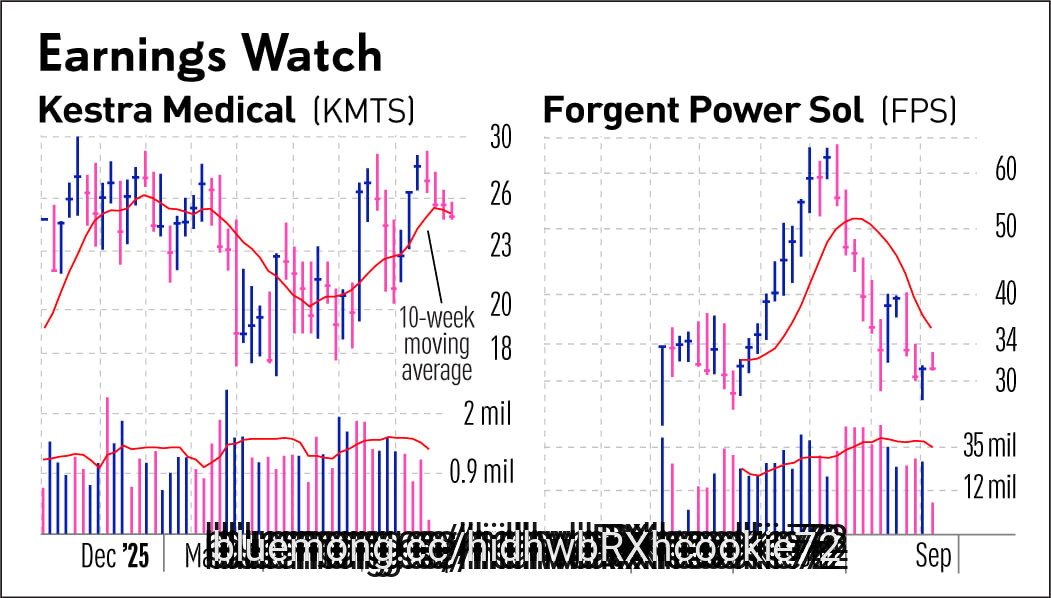
Restaurant stock Dave & Buster's Entertainment (PLAY) and healthcare name Kestra Medical Technologies (KMTS) will kick off earnings reports during a week when investors will be squarely focused on the Federal Reserve and a possible interest-rate hike Wednesday. Forgent Power Solutions (FPS) is also on the docket, with its stock trying to recover after a lengthy sell-off.
Friday's stock market rally notwithstanding, the Dow Jones Industrial Average and the Russell 2000 small-cap index have come under the most pressure amid surging oil prices and spiking bond yields, as investors worry about pesky inflation and escalating tension between the U.S. and Iran.
While the Dow is testing major support near 52,000, the Russell fell below its 50-day moving average in late August and has been below the support level ever since. The Nasdaq composite, meanwhile, bounced off its 50-day line with conviction Friday, helped by a tame report on consumer prices. The S&P 500 also moved off its 50-day line Friday.
Results from Lennar (LEN) are due Wednesday after the close. Lennar stock tried to break out in late June, but was turned away at its 200-day line and went into a downtrend. It tried to clear the 200-day line several times again in August but to no avail. With interest rates on the rise, heavy-volume selling has picked up the pace in recent weeks.
Forgent, which sells electrical distribution equipment to data centers, reports early Tuesday. The company priced its IPO at 27 on Feb. 4, at the midpoint of a proposed range of 25-29.
#line #forgent #august #lennar
Friday's stock market rally notwithstanding, the Dow Jones Industrial Average and the Russell 2000 small-cap index have come under the most pressure amid surging oil prices and spiking bond yields, as investors worry about pesky inflation and escalating tension between the U.S. and Iran.
While the Dow is testing major support near 52,000, the Russell fell below its 50-day moving average in late August and has been below the support level ever since. The Nasdaq composite, meanwhile, bounced off its 50-day line with conviction Friday, helped by a tame report on consumer prices. The S&P 500 also moved off its 50-day line Friday.
Results from Lennar (LEN) are due Wednesday after the close. Lennar stock tried to break out in late June, but was turned away at its 200-day line and went into a downtrend. It tried to clear the 200-day line several times again in August but to no avail. With interest rates on the rise, heavy-volume selling has picked up the pace in recent weeks.
Forgent, which sells electrical distribution equipment to data centers, reports early Tuesday. The company priced its IPO at 27 on Feb. 4, at the midpoint of a proposed range of 25-29.
#line #forgent #august #lennar


1 hr. ago
CrowdStrike (CRWD) stock rose about 97% over the past year, against 18% for the S&P 500, as growth in the recurring revenue it adds each quarter sped up. Management was forecasting that speed-up by March 2025 and named one mechanism: Falcon Flex customers using up their contracts early and coming back for more. The direction was public. The size of the fiscal 2027 speed-up was not.
How Early Did CrowdStrike Forecast The Speed-Up?
The earliest sign came with the fiscal Q4 2025 report in March 2025. After its July 19 outage, CrowdStrike had given affected clients customer commitment packages, mostly extra product and Falcon Flex subscriptions. The CEO said that uptake underpinned an expected speed-up in net new annual recurring revenue (ARR) in the second half of fiscal 2026. He added that Flex demand plans were running ahead of schedule and expected contracts to be upsized and renewed. The CFO expected more acceleration in fiscal 2027.
The fiscal Q1 2026 report in early June 2025 put numbers on the mechanism: 39 Flex customers had deployed initial plans signed for 35 months on average and came back for more within five months, a step the company calls a reflex.
What Could You See Just Before The Run Began?
#speed #crowdstrike
How Early Did CrowdStrike Forecast The Speed-Up?
The earliest sign came with the fiscal Q4 2025 report in March 2025. After its July 19 outage, CrowdStrike had given affected clients customer commitment packages, mostly extra product and Falcon Flex subscriptions. The CEO said that uptake underpinned an expected speed-up in net new annual recurring revenue (ARR) in the second half of fiscal 2026. He added that Flex demand plans were running ahead of schedule and expected contracts to be upsized and renewed. The CFO expected more acceleration in fiscal 2027.
The fiscal Q1 2026 report in early June 2025 put numbers on the mechanism: 39 Flex customers had deployed initial plans signed for 35 months on average and came back for more within five months, a step the company calls a reflex.
What Could You See Just Before The Run Began?
#speed #crowdstrike


1 hr. ago
Greg Abel took over as CEO of Berkshire Hathaway (NYSE: BRKA)(NYSE: BRKB) at the start of 2026. Former CEO Warren Buffett left Abel a huge gift: nearly $400 billion in cash on the company's balance sheet. Abel has put some of that cash to work buying Taylor Morrison Home, and some has been spent on publicly traded stock investments. However, Abel has also decided to buy back Berkshire Hathaway stock. That could be a positive sign. Here's why.
Under Warren Buffett, Berkshire Hathaway didn't make a habit of buying back stock. The world-famous investor preferred to put cash to work by buying shares in other companies or buying companies outright. When he did buy back Berkshire Hathaway stock, it was because he believed the shares were undervalued.
Missed Nvidia in 2009? This Rare Signal Is Flashing Again. In 2009, a "Double Down" signal flashed for a little-known chipmaker called Nvidia. For the first time in years, that same "Total Conviction" signal is flashing for a company 1/100th the size of Nvidia. Continue »
This dynamic is clearly explained in the company's 2025 10k, where the company states: "Berkshire's common stock repurchase program currently permits Berkshire to repurchase shares any time that Berkshire's Chief Executive Officer, after consultation with the Chairman of the Board, believes that the repurchase price is below Berkshire's intrinsic value, conservatively determined." The only limit on repurchase activity is that it can't reduce the company's cash and short-term investment balance below $30 billion.
Some market watchers had hypothesized that Berkshire Hathaway bought as much as $11 billion of its own stock in the second quarter, but the real number turned out to be roughly $4.5 billion. That said, the number was still quite large and, even then, given the huge cash balance the company has, it didn't put the company anywhere near the $30 billion cash limitation.
#Stock
Under Warren Buffett, Berkshire Hathaway didn't make a habit of buying back stock. The world-famous investor preferred to put cash to work by buying shares in other companies or buying companies outright. When he did buy back Berkshire Hathaway stock, it was because he believed the shares were undervalued.
Missed Nvidia in 2009? This Rare Signal Is Flashing Again. In 2009, a "Double Down" signal flashed for a little-known chipmaker called Nvidia. For the first time in years, that same "Total Conviction" signal is flashing for a company 1/100th the size of Nvidia. Continue »
This dynamic is clearly explained in the company's 2025 10k, where the company states: "Berkshire's common stock repurchase program currently permits Berkshire to repurchase shares any time that Berkshire's Chief Executive Officer, after consultation with the Chairman of the Board, believes that the repurchase price is below Berkshire's intrinsic value, conservatively determined." The only limit on repurchase activity is that it can't reduce the company's cash and short-term investment balance below $30 billion.
Some market watchers had hypothesized that Berkshire Hathaway bought as much as $11 billion of its own stock in the second quarter, but the real number turned out to be roughly $4.5 billion. That said, the number was still quite large and, even then, given the huge cash balance the company has, it didn't put the company anywhere near the $30 billion cash limitation.
#Stock


1 hr. ago
On September 8, a caller inquired if Trinity Industries, Inc. (NYSE:TRN) is worth looking at after its recent pullback. Mad Money host Jim Cramer replied:
Yes, Railcar, shouldn't be down this much. I like your thinking. You waited for the big hit. Now, it's in a good place. I would pull the trigger.
Trinity Industries, Inc. (NYSE:TRN) has faced a sharp correction, pulling back significantly from its 52-week high of $38.31. Despite this downward pressure, the company's fundamental **** et base remains exceptionally stable. In its second-quarter earnings report, the company posted total revenues of $485 million and diluted earnings per share from continuing operations of $1.25, with earnings benefiting from a $132 million non-cash pre-tax gain tied to the Napier Park railcar partnership transaction.
The leasing and services segment continues to support the business, posting a robust fleet utilization rate of 97.3% and an improved lease renewal success rate of 75%. In addition, the Future Lease Rate Differential improved to +3.5%, showing healthy pricing power on expiring contracts. Management reaffirmed its full-year EPS guidance of $2.20 to $2.40, supported by a solid railcar backlog standing at $1.6 billion.
The primary catalyst for Trinity Industries, Inc.'s (NYSE:TRN) recent sell-off stems from margin compression within the Rail Products manufacturing division. Operating margins in manufacturing faced pressure from an unplanned production interruption at the Longview manufacturing facility and temporary realignment expenses tied to the company's Mexican footprint. These localized execution issues overshadowed a strong quarterly performance in leasing, causing the stock to drift below both its 50-day and 200-day moving average.
#trinity
Yes, Railcar, shouldn't be down this much. I like your thinking. You waited for the big hit. Now, it's in a good place. I would pull the trigger.
Trinity Industries, Inc. (NYSE:TRN) has faced a sharp correction, pulling back significantly from its 52-week high of $38.31. Despite this downward pressure, the company's fundamental **** et base remains exceptionally stable. In its second-quarter earnings report, the company posted total revenues of $485 million and diluted earnings per share from continuing operations of $1.25, with earnings benefiting from a $132 million non-cash pre-tax gain tied to the Napier Park railcar partnership transaction.
The leasing and services segment continues to support the business, posting a robust fleet utilization rate of 97.3% and an improved lease renewal success rate of 75%. In addition, the Future Lease Rate Differential improved to +3.5%, showing healthy pricing power on expiring contracts. Management reaffirmed its full-year EPS guidance of $2.20 to $2.40, supported by a solid railcar backlog standing at $1.6 billion.
The primary catalyst for Trinity Industries, Inc.'s (NYSE:TRN) recent sell-off stems from margin compression within the Rail Products manufacturing division. Operating margins in manufacturing faced pressure from an unplanned production interruption at the Longview manufacturing facility and temporary realignment expenses tied to the company's Mexican footprint. These localized execution issues overshadowed a strong quarterly performance in leasing, causing the stock to drift below both its 50-day and 200-day moving average.
#trinity


1 hr. ago
Updated Sept 11, 2026, 2:37 pm EDT / Original Sept 11, 2026, 10:54 am EDT
Palantir Technologies
PLTR
+0.83%
is doing a pretty good job of convincing at least one Wall Streeter that businesses will keep adopting its enterprise software—mostly its AI platform—and, in turn, that it will keep growing. Whether the stock will move on the momentum is another question.
PLTR
+0.83%
Copyright ©2026 Dow Jones & Company, Inc. All Rights Reserved. 87990cbe856818d5eddac44c7b1cdeb8
#sept #streeter
Palantir Technologies
PLTR
+0.83%
is doing a pretty good job of convincing at least one Wall Streeter that businesses will keep adopting its enterprise software—mostly its AI platform—and, in turn, that it will keep growing. Whether the stock will move on the momentum is another question.
PLTR
+0.83%
Copyright ©2026 Dow Jones & Company, Inc. All Rights Reserved. 87990cbe856818d5eddac44c7b1cdeb8
#sept #streeter


1 hr. ago
As artificial intelligence matures, investors must decide between the high-growth niche players and the foundational giants. Choosing between Astera Labs Inc (NASDAQ:ALAB) and Taiwan Semiconductor Manufacturing Co (NYSE:TSM) involves weighing explosive potential against established dominance.
Astera Labs provides the critical connectivity infrastructure that allows AI chips to communicate within data centers. Meanwhile, Taiwan Semiconductor Manufacturing operates as the world's largest dedicated chip foundry, producing the actual processors for almost every major tech firm. Both companies are central to the future of semiconductor stocks.
Astera Labs specializes in connectivity solutions designed to remove bottlenecks in high-performance data centers. The company sells hardware and software that helps AI accelerators, such as those made by major chip designers, communicate efficiently across servers. Its customer base is highly concentrated, primarily consisting of the largest cloud providers and system manufacturers. In 2025, one end customer accounted for over 70% of total revenue. Customer concentration like this adds a layer of risk to the business.
In FY 2025, revenue reached more than $852.5 million, representing an impressive increase of roughly 115% compared to the prior year. This rapid growth helped the company pivot from a loss in previous years to a net income of approximately $219 million. The net margin, which measures how much of each dollar of sales remains as profit, stood at nearly 26%. This trajectory highlights the surging demand for the specialized connectivity chips required for large-scale AI deployments.
As of its December 2025 balance sheet, the company reported a debt-to-equity ratio of 0.0x, indicating it holds no debt relative to its shareholder equity. Its so-called current ratio, which compares short-term ******* ets to short-term liabilities, was a robust 10.2x. Free cash flow, or the cash left over after paying for operations and equipment, was approximately $282 million. Note that stock-based compensation represented roughly 50% of operating cash flow, which inflates reported cash generation since this is a non-cash expense added back in the cash flow statement.
#company
Astera Labs provides the critical connectivity infrastructure that allows AI chips to communicate within data centers. Meanwhile, Taiwan Semiconductor Manufacturing operates as the world's largest dedicated chip foundry, producing the actual processors for almost every major tech firm. Both companies are central to the future of semiconductor stocks.
Astera Labs specializes in connectivity solutions designed to remove bottlenecks in high-performance data centers. The company sells hardware and software that helps AI accelerators, such as those made by major chip designers, communicate efficiently across servers. Its customer base is highly concentrated, primarily consisting of the largest cloud providers and system manufacturers. In 2025, one end customer accounted for over 70% of total revenue. Customer concentration like this adds a layer of risk to the business.
In FY 2025, revenue reached more than $852.5 million, representing an impressive increase of roughly 115% compared to the prior year. This rapid growth helped the company pivot from a loss in previous years to a net income of approximately $219 million. The net margin, which measures how much of each dollar of sales remains as profit, stood at nearly 26%. This trajectory highlights the surging demand for the specialized connectivity chips required for large-scale AI deployments.
As of its December 2025 balance sheet, the company reported a debt-to-equity ratio of 0.0x, indicating it holds no debt relative to its shareholder equity. Its so-called current ratio, which compares short-term ******* ets to short-term liabilities, was a robust 10.2x. Free cash flow, or the cash left over after paying for operations and equipment, was approximately $282 million. Note that stock-based compensation represented roughly 50% of operating cash flow, which inflates reported cash generation since this is a non-cash expense added back in the cash flow statement.
#company


1 hr. ago
The Cooper Companies Inc. (NASDAQ:COO), a leading medical device company, announced its third quarter fiscal 2026 results on September 9. Topline went up 1% to $1.066 billion in comparison with the same quarter last year, which also included 1% organic growth. The company posted quarterly adjusted diluted EPS of $1.15, which represented a 4% jump from Q3 FY25. During the quarter, $339.1 million was spent on repurchasing around 4.9 million of the company's common shares. This leaves management with $1.5 billion of repurchase capacity, which remains available after the Board had raised its buyback authorization from $2 billion to $3 billion.
The quarter featured several encouraging highlights. These include earnings that exceeded projections, notable growth across the fertility segment within CooperSurgical, record free cash flow generation, and a major tax resolution in the company's favor.
GAAP gross margin went up from 65% in Q3 FY25 to 67% during the recent quarter, largely reflecting the comparison against fiscal 2025 inventory write-downs tied to a CooperSurgical product line exit. Adjusted operating margin improved by 30 basis points to 26%, supported by cost discipline and productivity gains, though partly offset by currency headwinds.
Interest expense fell to $21.5 million from $25.4 million a year prior, reflecting lower rates and reduced average debt. Free cash flow surged 66% to $273.0 million, driven by $341.7 million in operating cash flow less $68.7 million in capital spending.
Due to unfavorable currency movements and rising manufacturing costs, the Q3 gross margin settled at 67% on adjusted basis. This was a 60 basis point drop from Q3 FY25. Certain areas of the business grant caution, such as the CooperVision segment. It generated flat organic growth amid notable weakness across the Asia Pacific and Americas regions.
#billion #cash
The quarter featured several encouraging highlights. These include earnings that exceeded projections, notable growth across the fertility segment within CooperSurgical, record free cash flow generation, and a major tax resolution in the company's favor.
GAAP gross margin went up from 65% in Q3 FY25 to 67% during the recent quarter, largely reflecting the comparison against fiscal 2025 inventory write-downs tied to a CooperSurgical product line exit. Adjusted operating margin improved by 30 basis points to 26%, supported by cost discipline and productivity gains, though partly offset by currency headwinds.
Interest expense fell to $21.5 million from $25.4 million a year prior, reflecting lower rates and reduced average debt. Free cash flow surged 66% to $273.0 million, driven by $341.7 million in operating cash flow less $68.7 million in capital spending.
Due to unfavorable currency movements and rising manufacturing costs, the Q3 gross margin settled at 67% on adjusted basis. This was a 60 basis point drop from Q3 FY25. Certain areas of the business grant caution, such as the CooperVision segment. It generated flat organic growth amid notable weakness across the Asia Pacific and Americas regions.
#billion #cash


1 hr. ago
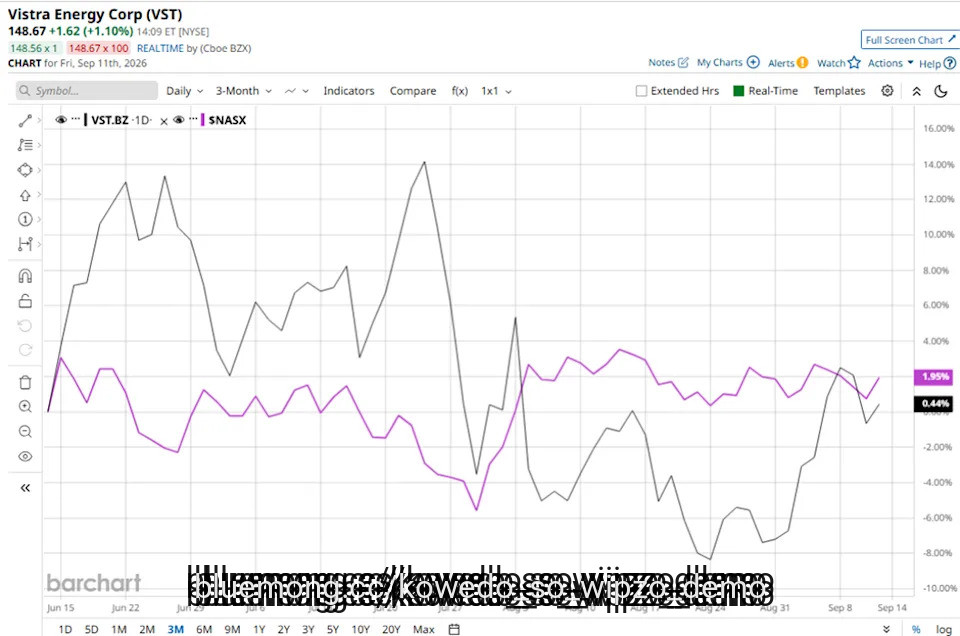
With a market cap of $49.4 billion, Vistra Corp. (VST) is a leading integrated electricity and power generation company. The company provides essential energy resources to customers, businesses, and communities across the United States, with a strong focus on reliability, affordability, and sustainability.
Companies valued at more than $10 billion are generally considered "large-cap" stocks, and Vistra fits this criterion perfectly. Vistra operates a diverse and efficient power generation portfolio spanning natural gas, nuclear, coal, solar, and battery energy storage, complemented by a customer-centric retail business.
Why It's Time to Load Up on Intel Stock
Google Plans to Build Mammoth Solar Farm on an Abandoned Coal Mine. This Penny Stock Just Won the Deal.
NVDA Stock Alert: What to Know as Nvidia Faces DOJ Probe
#Stock #energy #corp
Companies valued at more than $10 billion are generally considered "large-cap" stocks, and Vistra fits this criterion perfectly. Vistra operates a diverse and efficient power generation portfolio spanning natural gas, nuclear, coal, solar, and battery energy storage, complemented by a customer-centric retail business.
Why It's Time to Load Up on Intel Stock
Google Plans to Build Mammoth Solar Farm on an Abandoned Coal Mine. This Penny Stock Just Won the Deal.
NVDA Stock Alert: What to Know as Nvidia Faces DOJ Probe
#Stock #energy #corp


2 hours ago
Cathie Wood just made a massive bet on Rocket Lab (RKLB), buying more than 700,000 shares as the ******* e stock continues to reel from a sharp selloff.
Last week, Ark Invest purchased more than 705,000 shares of Rocket Lab, with the transactions worth roughly $45 million. That makes the ******* e company one of Ark's biggest disclosed additions by value during the period and puts Wood firmly on the bullish side of the debate surrounding RKLB stock.
Why It's Time to Load Up on Intel Stock
Google Plans to Build Mammoth Solar Farm on an Abandoned Coal Mine. This Penny Stock Just Won the Deal.
NVDA Stock Alert: What to Know as Nvidia Faces DOJ Probe
#Stock #time
Last week, Ark Invest purchased more than 705,000 shares of Rocket Lab, with the transactions worth roughly $45 million. That makes the ******* e company one of Ark's biggest disclosed additions by value during the period and puts Wood firmly on the bullish side of the debate surrounding RKLB stock.
Why It's Time to Load Up on Intel Stock
Google Plans to Build Mammoth Solar Farm on an Abandoned Coal Mine. This Penny Stock Just Won the Deal.
NVDA Stock Alert: What to Know as Nvidia Faces DOJ Probe
#Stock #time



2 hours ago
A $48 billion valuation and more than $2 billion in fresh venture capital would normally signal that investors have completely lost the plot.
Cognition AI, the startup behind the autonomous coding agent Devin, closed its Series E round on Sept. 8, 2026, to those exact headline figures.
The sheer size of the round drew immediate and predictable comparisons to the frothiest stretch of the 2026 AI investment cycle.
But the arithmetic behind the deal paints a different picture, one in which the ratio of investors' per-dollar revenue barely moved.
Between its May 2026 Series D and Series E close, Cognition's annualized run-rate revenue grew from $492 million to nearly $900 million, the company reported.
#round #devin
Cognition AI, the startup behind the autonomous coding agent Devin, closed its Series E round on Sept. 8, 2026, to those exact headline figures.
The sheer size of the round drew immediate and predictable comparisons to the frothiest stretch of the 2026 AI investment cycle.
But the arithmetic behind the deal paints a different picture, one in which the ratio of investors' per-dollar revenue barely moved.
Between its May 2026 Series D and Series E close, Cognition's annualized run-rate revenue grew from $492 million to nearly $900 million, the company reported.
#round #devin

2 hours ago
Interested in Lam Research Corporation? Here are five stocks we like better.
Lam Research raised its 2026 wafer-fabrication equipment spending outlook to the low-$150 billion range from $135 billion-$140 billion, driven by sustained AI demand and expectations for eight to 10 new leading-edge fabs through 2027.
AI hardware is increasing equipment intensity, while advanced chip designs and packaging are expanding Lam's addressable market. The company cited growing opportunities in gate-all-around transistors, backside power delivery, advanced packaging and dry-resist technology.
Lam is accelerating capacity expansion, including a second Malaysia facility, as clean-room availability and supply-chain capacity constrain the industry. The company also expects NAND upgrades to accelerate, while targeting mid-50% gross margins and reporting record customer-support revenue.
From High Dividend Growth to High Yield, These 3 Stocks Just Boosted Dividend Payouts
#billion #Research #equipment #advanced
Lam Research raised its 2026 wafer-fabrication equipment spending outlook to the low-$150 billion range from $135 billion-$140 billion, driven by sustained AI demand and expectations for eight to 10 new leading-edge fabs through 2027.
AI hardware is increasing equipment intensity, while advanced chip designs and packaging are expanding Lam's addressable market. The company cited growing opportunities in gate-all-around transistors, backside power delivery, advanced packaging and dry-resist technology.
Lam is accelerating capacity expansion, including a second Malaysia facility, as clean-room availability and supply-chain capacity constrain the industry. The company also expects NAND upgrades to accelerate, while targeting mid-50% gross margins and reporting record customer-support revenue.
From High Dividend Growth to High Yield, These 3 Stocks Just Boosted Dividend Payouts
#billion #Research #equipment #advanced
2 hours ago
Updated Sept 11, 2026, 1:55 pm EDT / Original Sept 11, 2026, 7:30 am EDT
The grocery giant now expects same-store sales excluding fuel to rise between 0.2% and 0.8% for the fiscal year, down from a prior range of 1% to 2% growth. The new guidance includes a hit of roughly 140 basis points tied to the Inflation Reduction Act, which lowered prescription drug prices for Medicare beneficiaries and impacted pharmacy revenue. Management separately reaffirmed its earnings guidance of $5.10 to $5.30 a share for the fiscal year.
Copyright ©2026 Dow Jones & Company, Inc. All Rights Reserved. 87990cbe856818d5eddac44c7b1cdeb8
#inflation #medicare
The grocery giant now expects same-store sales excluding fuel to rise between 0.2% and 0.8% for the fiscal year, down from a prior range of 1% to 2% growth. The new guidance includes a hit of roughly 140 basis points tied to the Inflation Reduction Act, which lowered prescription drug prices for Medicare beneficiaries and impacted pharmacy revenue. Management separately reaffirmed its earnings guidance of $5.10 to $5.30 a share for the fiscal year.
Copyright ©2026 Dow Jones & Company, Inc. All Rights Reserved. 87990cbe856818d5eddac44c7b1cdeb8
#inflation #medicare

2 hours ago
SailPoint Inc. (NASDAQ:SAIL), a leading player within the enterprise identity security ***** e, released its fiscal second-quarter 2027 on September 9. The company registered a 25% growth in its annual recurring revenue compared to the same period last year, with figures of $1.231 billion. This was driven by a 36% expansion in SaaS ARR which clocked in at $847 million. SailPoint generated $45 million in operating cash flow during the quarter, along with $37 million in free cash flow.
Burben/Shutterstock.com
Topline for the quarter hit $309 million, exhibiting 17% growth compared to Q2 FY26, amid several underlying factors. The company's subscription revenue reached $295 million, up 19% from a year earlier. SaaS customer base increased by 16%, with net new SaaS ARR jumping 34% year-over-year. It contributed around 97% to overall net new ARR for the business, with AI-driven ARR crossing $70 million mark.
SailPoint's existing customer base showed highly encouraging trends in adopting the company's AI-enabled solutions, with a 60% increase in their annual spend during the second quarter. These solutions were incorporated within more than two-thirds of the completed migrations during the quarter. Quarterly adjusted operating income increased from $54 million a year prior to $63 million, translating into an adjusted margin of 20%.
The quarter also saw key strategic moves by the management. It introduced the SailPoint Identity Security solution, which integrates SailPoint Agentic Fabric with SailPoint Human Fabric to deliver a real-time cycle for discovering and securing intricate digital ecosystems. The company also launched its Cursor Enterprise connector, which enables enterprises to manage both autonomous AI agents and human developers through an integrated control plane.
#year #SaaS #fabric #identity
Burben/Shutterstock.com
Topline for the quarter hit $309 million, exhibiting 17% growth compared to Q2 FY26, amid several underlying factors. The company's subscription revenue reached $295 million, up 19% from a year earlier. SaaS customer base increased by 16%, with net new SaaS ARR jumping 34% year-over-year. It contributed around 97% to overall net new ARR for the business, with AI-driven ARR crossing $70 million mark.
SailPoint's existing customer base showed highly encouraging trends in adopting the company's AI-enabled solutions, with a 60% increase in their annual spend during the second quarter. These solutions were incorporated within more than two-thirds of the completed migrations during the quarter. Quarterly adjusted operating income increased from $54 million a year prior to $63 million, translating into an adjusted margin of 20%.
The quarter also saw key strategic moves by the management. It introduced the SailPoint Identity Security solution, which integrates SailPoint Agentic Fabric with SailPoint Human Fabric to deliver a real-time cycle for discovering and securing intricate digital ecosystems. The company also launched its Cursor Enterprise connector, which enables enterprises to manage both autonomous AI agents and human developers through an integrated control plane.
#year #SaaS #fabric #identity


2 hours ago
On September 9, AeroVironment Inc. (NASDAQ:AVAV) revealed its Q1 FY27 results, posting its highest ever first quarter revenue. Topline figure of $480.5 million marked a 6% year-over-year growth, fueled by a $15.5 million jump in product sales and a $10.3 million expansion of service revenue. The company reported a book-to-bill ratio of 1.4, after total bookings for the quarter came in at $0.7 billion. Let's explore the underlying drivers of AeroVironment's impressive first quarter print.
Photo by NASA on Unsplash
The first quarter record topline figure reflects on strength across the underlying business lines. The Autonomous Systems (AxS) and the ***** e, Cyber and Directed Energy (SCDE) segments contributed $346 million and $134.5 million to the total revenue, respectively. The overall gross profit jumped 31% during the quarter to $124.6 million. This pushed gross margin to 26% from 21% posted a year earlier.
Adjusted diluted earnings per share for the first quarter almost doubled, from $0.32 in the same period last year to of $0.59 in the recently concluded quarter. The company also increased its funded backlog, which clocked in at $1.5 billion, compared to $1.2 billion recorded on April 30.
With a strong backlog position and landmark strategic wins, management upheld its full-year guidance, with topline figures estimated to land between $2.125 billion and $2.225 billion. It has forecasted an adjusted EBITDA ranging from $305 million to $325 million, along with diluted EPS between $3.02 and $3.34 on adjusted basis.
#million #quarter #billion #first
Photo by NASA on Unsplash
The first quarter record topline figure reflects on strength across the underlying business lines. The Autonomous Systems (AxS) and the ***** e, Cyber and Directed Energy (SCDE) segments contributed $346 million and $134.5 million to the total revenue, respectively. The overall gross profit jumped 31% during the quarter to $124.6 million. This pushed gross margin to 26% from 21% posted a year earlier.
Adjusted diluted earnings per share for the first quarter almost doubled, from $0.32 in the same period last year to of $0.59 in the recently concluded quarter. The company also increased its funded backlog, which clocked in at $1.5 billion, compared to $1.2 billion recorded on April 30.
With a strong backlog position and landmark strategic wins, management upheld its full-year guidance, with topline figures estimated to land between $2.125 billion and $2.225 billion. It has forecasted an adjusted EBITDA ranging from $305 million to $325 million, along with diluted EPS between $3.02 and $3.34 on adjusted basis.
#million #quarter #billion #first

2 hours ago
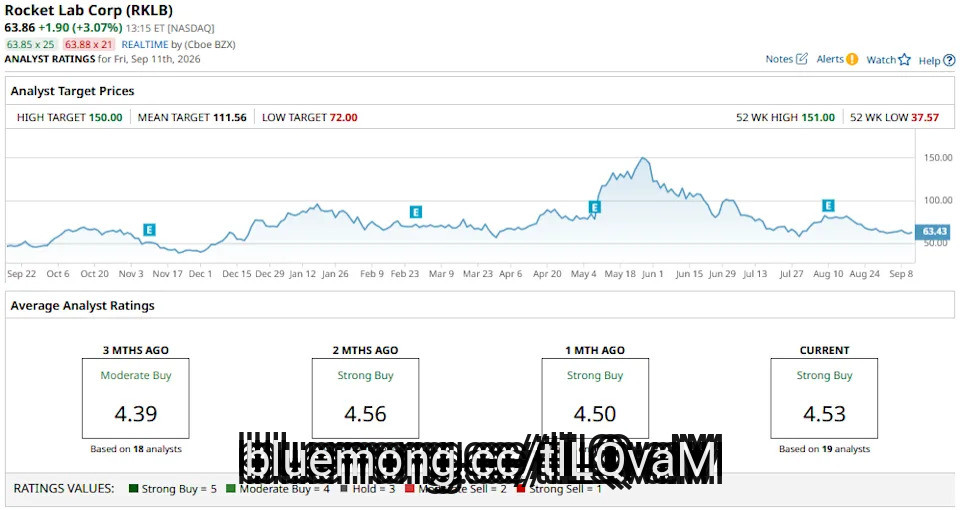
Rocket Lab (RKLB) shares are inching higher on Friday morning after Raymond James ***** yst Brian Gesuale issued a bullish note in favor of the ***** e infrastructure company. Gesuale ***** umed coverage of RKLB today with an "Outperform" rating and an $80 price objective, which signals potential upside of more than 25% from current levels.
His bullish call suggests Rocket Lab stock is poised to reclaim some of its recent losses. As of this writing, it's down more than 55% versus its year-to-date high.
Why It's Time to Load Up on Intel Stock
Google Plans to Build Mammoth Solar Farm on an Abandoned Coal Mine. This Penny Stock Just Won the Deal.
NVDA Stock Alert: What to Know as Nvidia Faces DOJ Probe
#Stock
His bullish call suggests Rocket Lab stock is poised to reclaim some of its recent losses. As of this writing, it's down more than 55% versus its year-to-date high.
Why It's Time to Load Up on Intel Stock
Google Plans to Build Mammoth Solar Farm on an Abandoned Coal Mine. This Penny Stock Just Won the Deal.
NVDA Stock Alert: What to Know as Nvidia Faces DOJ Probe
#Stock
2 hours ago
To summarize my investment approach, I prefer to buy companies with long histories of dividend increases and historically high yields. Those two traits don't come around all that often, and sometimes I find clusters of stocks in specific sectors. I need to think specifically about diversification, one of the simplest and most effective ways to reduce risk. Here's how I've done it as I've built my portfolio of around 34 investments.
The Motley Fool recommends that investors own 50 stocks. That's a perfectly fine number, but also a lot of work. And just owning 50 stocks doesn't actually mean you are diversified. You could own 50 technology stocks, for example, which would leave you with exposure to just a single sector. That's not diversification. Diversification is really about owning a reasonable number of investments across a wide range of sectors and ****** et classes.
Missed Nvidia in 2009? This Rare Signal Is Flashing Again. In 2009, a "Double Down" signal flashed for a little-known chipmaker called Nvidia. For the first time in years, that same "Total Conviction" signal is flashing for a company 1/100th the size of Nvidia. Continue »
My first step toward diversification was to take an honest look at what I want to achieve and what I'm capable of. My goal is a mixture of income and capital appreciation. I am fairly confident in my ability to select dividend stocks, though every investor makes mistakes from time to time, and I know I can only juggle so many stocks at once. In other words, 50 stocks are too many for me, so a core part of my diversification strategy is to outsource some of my work.
For example, I own two Baron mutual funds to gain exposure to growth stocks and smaller companies. I own several closed-end funds: one focused on healthcare stocks with an option income overlay, one investing in convertible securities, and one with a broadly diversified dividend portfolio. And I own three exchange-traded funds: one with an option income focus and two that use very different screening approaches to pick dividend stocks.
#Diversification #funds
The Motley Fool recommends that investors own 50 stocks. That's a perfectly fine number, but also a lot of work. And just owning 50 stocks doesn't actually mean you are diversified. You could own 50 technology stocks, for example, which would leave you with exposure to just a single sector. That's not diversification. Diversification is really about owning a reasonable number of investments across a wide range of sectors and ****** et classes.
Missed Nvidia in 2009? This Rare Signal Is Flashing Again. In 2009, a "Double Down" signal flashed for a little-known chipmaker called Nvidia. For the first time in years, that same "Total Conviction" signal is flashing for a company 1/100th the size of Nvidia. Continue »
My first step toward diversification was to take an honest look at what I want to achieve and what I'm capable of. My goal is a mixture of income and capital appreciation. I am fairly confident in my ability to select dividend stocks, though every investor makes mistakes from time to time, and I know I can only juggle so many stocks at once. In other words, 50 stocks are too many for me, so a core part of my diversification strategy is to outsource some of my work.
For example, I own two Baron mutual funds to gain exposure to growth stocks and smaller companies. I own several closed-end funds: one focused on healthcare stocks with an option income overlay, one investing in convertible securities, and one with a broadly diversified dividend portfolio. And I own three exchange-traded funds: one with an option income focus and two that use very different screening approaches to pick dividend stocks.
#Diversification #funds


3 hours ago
Palo Alto Networks, Inc. (NASDAQ:PANW) is entering its fiscal 2027 with strong momentum, particularly in next-generation security. But investors now demand more from the cybersecurity company after its stock rallied sharply.
On September 7, PhillipCapital downgraded Palo Alto stock to Neutral from Accumulate but raised the price target to $346 from $320.
PhillipCapital's move captures the central investment debate. It's that Palo Alto's opportunities are compelling, but the stock's roughly 160% rise from its February low to its August peak has raised the bar for further gains.
Palo Alto Networks, Inc. (NASDAQ:PANW)'s revenue rose 34% YoY to $3.4 billion in fiscal 2026 fourth quarter. More importantly, Next-Generation Security ARR (NGS ARR) surged 63% to $9.10 billion. The company added nearly $1 billion of net new NGS ARR in the quarter. The company targets $20 billion in NGS ARR by fiscal 2030, as it expects platformization and AI infrastructure investment to continue driving growth.
More than 65% of Palo Alto's NGS ARR comes from platformized customers. Meanwhile, AI is expanding the addressable market. As enterprises deploy agents, Palo Alto offerings such as Prisma AIRS and Cortex, alongside CyberArk's identity-security platform, can address emerging needs.
#palo #company #NASDAQ #PANW
On September 7, PhillipCapital downgraded Palo Alto stock to Neutral from Accumulate but raised the price target to $346 from $320.
PhillipCapital's move captures the central investment debate. It's that Palo Alto's opportunities are compelling, but the stock's roughly 160% rise from its February low to its August peak has raised the bar for further gains.
Palo Alto Networks, Inc. (NASDAQ:PANW)'s revenue rose 34% YoY to $3.4 billion in fiscal 2026 fourth quarter. More importantly, Next-Generation Security ARR (NGS ARR) surged 63% to $9.10 billion. The company added nearly $1 billion of net new NGS ARR in the quarter. The company targets $20 billion in NGS ARR by fiscal 2030, as it expects platformization and AI infrastructure investment to continue driving growth.
More than 65% of Palo Alto's NGS ARR comes from platformized customers. Meanwhile, AI is expanding the addressable market. As enterprises deploy agents, Palo Alto offerings such as Prisma AIRS and Cortex, alongside CyberArk's identity-security platform, can address emerging needs.
#palo #company #NASDAQ #PANW

3 hours ago
DIVO's trailing yield overstates its committed forward rate by 30%, built on discretionary year-end specials the fund has never guaranteed to repeat.
DIVO, DGRO, and MAIN all show gaps between trailing and forward income, inflating the look-back for most of the portfolio's weight.
Duke Energy and Southern Company, the smallest 5% positions, are the only holdings with predictable scheduled dividend raises a retiree can count on to the penny.
Read More: Learn 7 ways to generate income with a $1,000,000+ portfolio (sponsor)
Replacing $8,600 a month, or roughly $103,200 a year, with portfolio income at age 61 sounds pretty straightforward on paper. But here's the catch: the biggest holding in a popular seven-fund income sleeve is the one whose payout the fund has never actually promised.
#income #fund #divo #main
DIVO, DGRO, and MAIN all show gaps between trailing and forward income, inflating the look-back for most of the portfolio's weight.
Duke Energy and Southern Company, the smallest 5% positions, are the only holdings with predictable scheduled dividend raises a retiree can count on to the penny.
Read More: Learn 7 ways to generate income with a $1,000,000+ portfolio (sponsor)
Replacing $8,600 a month, or roughly $103,200 a year, with portfolio income at age 61 sounds pretty straightforward on paper. But here's the catch: the biggest holding in a popular seven-fund income sleeve is the one whose payout the fund has never actually promised.
#income #fund #divo #main

3 hours ago
NVIDIA Corporation (NASDAQ:NVDA) is expanding its global AI infrastructure ambitions, with Australia emerging as an important new market for its growing portfolio of GPUs, CPUs, networking products, and AI software.
On September 9, it announced strategic partnerships with Australian NVIDIA Cloud Partners (NCPs) and AI infrastructure providers as it works with local partners toward an AI infrastructure buildout of up to 2 gigawatts by 2027.
The initiative will expand the availability of land, power, and data center shell capacity designed to host multiple generations of Nvidia's DSX AI factory infrastructure. While the buildout is designed to meet Australia's growing demand for AI computing, it could also create a significant new source of demand for Nvidia's hardware and software ecosystem.
The Australian buildout could benefit NVIDIA Corporation (NASDAQ:NVDA) beyond the initial sale of GPUs. Nvidia will provide its DSX platform, accelerated computing, networking, software, and ecosystem support to the emerging network of AI factories. DSX is also compatible with Nvidia's CUDA ecosystem.
As enterprises, universities, government agencies, and startups increasingly build AI workloads around Nvidia's architecture, the company could strengthen CUDA's position as the underlying software platform for AI development and deployment.
#NASDAQ #australian
On September 9, it announced strategic partnerships with Australian NVIDIA Cloud Partners (NCPs) and AI infrastructure providers as it works with local partners toward an AI infrastructure buildout of up to 2 gigawatts by 2027.
The initiative will expand the availability of land, power, and data center shell capacity designed to host multiple generations of Nvidia's DSX AI factory infrastructure. While the buildout is designed to meet Australia's growing demand for AI computing, it could also create a significant new source of demand for Nvidia's hardware and software ecosystem.
The Australian buildout could benefit NVIDIA Corporation (NASDAQ:NVDA) beyond the initial sale of GPUs. Nvidia will provide its DSX platform, accelerated computing, networking, software, and ecosystem support to the emerging network of AI factories. DSX is also compatible with Nvidia's CUDA ecosystem.
As enterprises, universities, government agencies, and startups increasingly build AI workloads around Nvidia's architecture, the company could strengthen CUDA's position as the underlying software platform for AI development and deployment.
#NASDAQ #australian

3 hours ago
Salesforce Inc. (NYSE:CRM) continues to strengthen its enterprise artificial intelligence offering as it looks to make AI a larger part of its customer relationship management ecosystem. On September 9, reports emerged that the company is prepared to spend as much as $2 billion to acquire Listen Labs, an AI-powered customer research platform.
The potential deal would extend Salesforce's aggressive M&A strategy as the company seeks to expand its generative and agentic AI capabilities. Salesforce recently completed its approximately $3.6 billion acquisition of customer service AI agent provider Fin, formerly Intercom, underscoring management's willingness to use acquisitions to accelerate its AI roadmap.
Listen Labs could add a new layer of customer intelligence to Salesforce's platform. The company uses artificial intelligence to conduct customer interviews through audio and video and ******* yze the resulting responses.
Kritchanut/Shutterstock.com
The potential acquisition could be particularly valuable for Salesforce Agentforce, the company's platform for building and deploying AI agents. Listen Labs could end up providing crucial insights into why customers behave the way they do. Customer interviews and conversations can reveal motivations, preferences, frustrations, and other qualitative information that may not be captured in traditional CRM databases.
#customer #salesforce #platform #artificial
The potential deal would extend Salesforce's aggressive M&A strategy as the company seeks to expand its generative and agentic AI capabilities. Salesforce recently completed its approximately $3.6 billion acquisition of customer service AI agent provider Fin, formerly Intercom, underscoring management's willingness to use acquisitions to accelerate its AI roadmap.
Listen Labs could add a new layer of customer intelligence to Salesforce's platform. The company uses artificial intelligence to conduct customer interviews through audio and video and ******* yze the resulting responses.
Kritchanut/Shutterstock.com
The potential acquisition could be particularly valuable for Salesforce Agentforce, the company's platform for building and deploying AI agents. Listen Labs could end up providing crucial insights into why customers behave the way they do. Customer interviews and conversations can reveal motivations, preferences, frustrations, and other qualitative information that may not be captured in traditional CRM databases.
#customer #salesforce #platform #artificial


3 hours ago
Dodgers news: What impressed Dave Roberts most about Josue De Paula's MLB debut appeared first on ClutchPoints. Add ClutchPoints as a Preferred Source by clicking here.
While the Los Angeles Dodgers will be without Shohei Ohtani for at least the next few games, Dave Roberts and company have found a way to replace his spot in the lineup in a must-watch way, calling up star prospect Josue De Paula from Double-A to DH in his place.
Discussing what he saw from De Paula's debut against the Miami Marlins, Roberts noted that he was really impressed with the 21-year-old's pitch selection, as he looked like a professional hitter despite his inexperience.
"I was very impressed. I'm not sure or certain 100%, but I don't think he swung at a ball out of the hitting zone, and so that's really impressive," Roberts said. "So to offer at ***** in the strike zone, not chase at all, earn a walk, get behind and line the ball to left field, get count leverage, hit a ball hard to the first baseman, I thought it was a fantastic night for him."
Watch sports LIVE with fuboTV (free trial)
#impressed
While the Los Angeles Dodgers will be without Shohei Ohtani for at least the next few games, Dave Roberts and company have found a way to replace his spot in the lineup in a must-watch way, calling up star prospect Josue De Paula from Double-A to DH in his place.
Discussing what he saw from De Paula's debut against the Miami Marlins, Roberts noted that he was really impressed with the 21-year-old's pitch selection, as he looked like a professional hitter despite his inexperience.
"I was very impressed. I'm not sure or certain 100%, but I don't think he swung at a ball out of the hitting zone, and so that's really impressive," Roberts said. "So to offer at ***** in the strike zone, not chase at all, earn a walk, get behind and line the ball to left field, get count leverage, hit a ball hard to the first baseman, I thought it was a fantastic night for him."
Watch sports LIVE with fuboTV (free trial)
#impressed