

26 mins. ago
Walmart and SCAN Health Plan announced a partnership on Wednesday to offer co-branded Medicare Advantage plans in two states, targeting a pool of more than two million Medicare enrollees.
The plans, pending regulatory approval, may include pharmacy, vision, food, and over-the-counter benefits, the companies said. Open enrollment for Medicare Advantage begins Oct. 15, according to MarketWatch.
A central feature of the partnership is Walmart's Everyday Health Signals platform, an AI tool designed to provide personalized nutrition and wellness guidance based on members' shopping preferences and self-reported wellness goals. The companies said they plan to make that capability available to participating plan members as part of broader coaching and wellness support.
"By combining Walmart's technology capabilities and consumer retail expertise with SCAN's Medicare product experience, we have an opportunity to develop products that translate those insights into meaningful support that helps members make more informed choices about their health and well-being," said Zack Myers, national general manager of SCAN Health Plan, in a statement.
Walmart Group Director for Consumer Health and Data Solutions Pravene Nath said the collaboration is distinct because of Walmart's role in customers' everyday lives. "Because customers regularly turn to Walmart for groceries and other everyday essentials, we have an opportunity for those who choose to participate, to use insights from their shopping experiences to make nutrition guidance more relevant and actionable," Nath said in a statement.
#plan #Wellness #members #advantage
The plans, pending regulatory approval, may include pharmacy, vision, food, and over-the-counter benefits, the companies said. Open enrollment for Medicare Advantage begins Oct. 15, according to MarketWatch.
A central feature of the partnership is Walmart's Everyday Health Signals platform, an AI tool designed to provide personalized nutrition and wellness guidance based on members' shopping preferences and self-reported wellness goals. The companies said they plan to make that capability available to participating plan members as part of broader coaching and wellness support.
"By combining Walmart's technology capabilities and consumer retail expertise with SCAN's Medicare product experience, we have an opportunity to develop products that translate those insights into meaningful support that helps members make more informed choices about their health and well-being," said Zack Myers, national general manager of SCAN Health Plan, in a statement.
Walmart Group Director for Consumer Health and Data Solutions Pravene Nath said the collaboration is distinct because of Walmart's role in customers' everyday lives. "Because customers regularly turn to Walmart for groceries and other everyday essentials, we have an opportunity for those who choose to participate, to use insights from their shopping experiences to make nutrition guidance more relevant and actionable," Nath said in a statement.
#plan #Wellness #members #advantage

41 mins. ago
Wasatch Global Investors, an **** et management company, released its "Long/Short Alpha Fund" Q2 2026 investor letter. The letter can be downloaded here. Small- and mid-cap growth stocks posted significant gains in Q2, led primarily by AI-related companies. The Russell 2500 Index rose 20.26%, while the Wasatch Long/Short Alpha Fund—Investor Class increased by 8.29%. However, the fund faced challenges due to the outperformance of lower-quality companies, which negatively impacted its long positions. Despite trailing the benchmark and some losses in short positions, the fund remains confident in its long portfolio's fundamentals, which have not deteriorated. Additionally, reviewing the Fund's top five holdings could help identify its best picks for 2026.
In its second-quarter 2026 investor letter, Wasatch Long/Short Alpha Fund highlighted Real REMAX Group Inc. (NASDAQ:REAX). Real REMAX Group Inc. (NASDAQ:REAX) is a real estate technology company that provides **** le, mortgage, wallet, and franchising and ancillary services. The Real Brokerage, Inc. changed its name to Real REMAX Group Inc. (NASDAQ:REAX) in August 2026. On September 15, 2026, Real REMAX Group Inc. (NASDAQ:REAX) closed at $19.27 per share. Over the past month, Real REMAX Group Inc. (NASDAQ:REAX) declined 30.93%, but its shares are down 61.84% over the past year. Real REMAX Group Inc. (NASDAQ:REAX) has a market capitalization of $422.42 million, and its stock has traded within a 52-week range of $15.50 to $52.50.
Wasatch Long/Short Alpha Fund stated the following regarding Real REMAX Group Inc. (NASDAQ:REAX) in its Q2 2026 investor letter:
"Among shorts, contributors to Fund performance were those stocks that declined in price. One of our largest contributors was REMAX Group Inc. (NASDAQ:REAX). The company operates a cloud-based real estate platform operating across the U.S. and Canada. Real Brokerage's stock was down due to concerns about how AI may disrupt its business model."
Real REMAX Group Inc. (NASDAQ:REAX) is not on our list of the 40 Most Popular Stocks Among Hedge Funds. According to our database, 25 hedge fund portfolios held Real REMAX Group Inc. (NASDAQ:REAX) at the end of the second quarter, compared to 21 in the previous quarter. While we acknowledge the potential of Real REMAX Group Inc. (NASDAQ:REAX) as an investment, we believe certain AI stocks offer greater upside potential and carry less downside risk. If you're looking for an extremely undervalued AI stock that also stands to benefit significantly from Trump-era tariffs and the onshoring trend, see our free report on the best short-term AI stock.
#real #reax
In its second-quarter 2026 investor letter, Wasatch Long/Short Alpha Fund highlighted Real REMAX Group Inc. (NASDAQ:REAX). Real REMAX Group Inc. (NASDAQ:REAX) is a real estate technology company that provides **** le, mortgage, wallet, and franchising and ancillary services. The Real Brokerage, Inc. changed its name to Real REMAX Group Inc. (NASDAQ:REAX) in August 2026. On September 15, 2026, Real REMAX Group Inc. (NASDAQ:REAX) closed at $19.27 per share. Over the past month, Real REMAX Group Inc. (NASDAQ:REAX) declined 30.93%, but its shares are down 61.84% over the past year. Real REMAX Group Inc. (NASDAQ:REAX) has a market capitalization of $422.42 million, and its stock has traded within a 52-week range of $15.50 to $52.50.
Wasatch Long/Short Alpha Fund stated the following regarding Real REMAX Group Inc. (NASDAQ:REAX) in its Q2 2026 investor letter:
"Among shorts, contributors to Fund performance were those stocks that declined in price. One of our largest contributors was REMAX Group Inc. (NASDAQ:REAX). The company operates a cloud-based real estate platform operating across the U.S. and Canada. Real Brokerage's stock was down due to concerns about how AI may disrupt its business model."
Real REMAX Group Inc. (NASDAQ:REAX) is not on our list of the 40 Most Popular Stocks Among Hedge Funds. According to our database, 25 hedge fund portfolios held Real REMAX Group Inc. (NASDAQ:REAX) at the end of the second quarter, compared to 21 in the previous quarter. While we acknowledge the potential of Real REMAX Group Inc. (NASDAQ:REAX) as an investment, we believe certain AI stocks offer greater upside potential and carry less downside risk. If you're looking for an extremely undervalued AI stock that also stands to benefit significantly from Trump-era tariffs and the onshoring trend, see our free report on the best short-term AI stock.
#real #reax


1 hr. ago
Moneywise and Yahoo Finance LLC may earn commission or revenue through links in the content below.
Imagine checking a long-forgotten account and discovering it's worth multiple millions of dollars.
It might sound like a dream, or a financial cautionary tale, but that's exactly what happened to Sarah, a 50-year-old mom from Seattle.
Jeff Bezos backs a platform that lets anyone invest in rental homes for as little as $100 — 6 ways to build wealth like a landlord without actually being one
A record 45% of central banks plan to grow gold reserves — and many investors are following suit. Get your free gold IRA guide from Priority Gold
#imagine
Imagine checking a long-forgotten account and discovering it's worth multiple millions of dollars.
It might sound like a dream, or a financial cautionary tale, but that's exactly what happened to Sarah, a 50-year-old mom from Seattle.
Jeff Bezos backs a platform that lets anyone invest in rental homes for as little as $100 — 6 ways to build wealth like a landlord without actually being one
A record 45% of central banks plan to grow gold reserves — and many investors are following suit. Get your free gold IRA guide from Priority Gold
#imagine

1 hr. ago
Dune Oil Corp (CSE:DUNE, OTCQB:DUNXF, FRA:Z620) has changed its OTCQB trading symbol to "DUNXF" and closed additional tranches of its non-brokered private placement, raising gross proceeds of C$422,500.
The new symbol took effect September 14. The company's CSE symbol (DUNE) and Frankfurt symbol (Z62) remain unchanged.
Under the private placement, first announced in filings from April, June and July 2026, Dune issued 2.8 million units at $0.15 per unit for gross proceeds of C$422,500.
The company also settled C$20,000 in outstanding debt with an arm's length party through the issuance of 133,333 units. Each unit consists of one common share and one-half of one warrant, with each whole warrant exercisable at C$0.25 for one year from issuance.
The shares and warrants from this tranche are subject to hold periods until December 26, 2026 and January 15, 2027, respectively.
#placement
The new symbol took effect September 14. The company's CSE symbol (DUNE) and Frankfurt symbol (Z62) remain unchanged.
Under the private placement, first announced in filings from April, June and July 2026, Dune issued 2.8 million units at $0.15 per unit for gross proceeds of C$422,500.
The company also settled C$20,000 in outstanding debt with an arm's length party through the issuance of 133,333 units. Each unit consists of one common share and one-half of one warrant, with each whole warrant exercisable at C$0.25 for one year from issuance.
The shares and warrants from this tranche are subject to hold periods until December 26, 2026 and January 15, 2027, respectively.
#placement


1 hr. ago
On the surface, Oracle (NYSE: ORCL) is the type of company you would expect to benefit tremendously from the generative artificial intelligence (AI) boom. It provides the computing power and data storage vital for running and training these complex algorithms. But while its stock captured some gains early in the AI era, it has more recently lagged behind other AI infrastructure stocks.
Oracle's shares are up by a relatively modest 69% over the last five years, well behind chipmakers such as Nvidia and Micron Technology, which have soared by 885% and 1,212%, respectively, in the same time frame. Let's discuss the pros and cons of Oracle, and attempt to predict what a $1,000 position could be worth by the end of the decade.
Missed Nvidia in 2009? This Rare Signal Is Flashing Again. In 2009, a "Double Down" signal flashed for a little-known chipmaker called Nvidia. For the first time in years, that same "Total Conviction" signal is flashing for a company 1/100th the size of Nvidia. Continue »
Like the leadership teams at many tech giants, Oracle's management recognized the long-term potential of the generative AI boom fairly early in the trend. They quickly moved to position the company on the pick-and-shovel side of the opportunity, providing cloud services and data center capacity to companies that were working to create and market consumer-facing large language models (LLMs). That push into the cloud infrastructure segment was underpinned by a substantial reorganization of Oracle's corporate structure.
This year, the company has already laid off 21,000 employees. That number is expected to rise with a $700 million addition to its restructuring plan (which is now worth $2.8 billion); much of the new spending is earmarked for severance payments and other exit expenses.
#NVIDIA #flashing #early
Oracle's shares are up by a relatively modest 69% over the last five years, well behind chipmakers such as Nvidia and Micron Technology, which have soared by 885% and 1,212%, respectively, in the same time frame. Let's discuss the pros and cons of Oracle, and attempt to predict what a $1,000 position could be worth by the end of the decade.
Missed Nvidia in 2009? This Rare Signal Is Flashing Again. In 2009, a "Double Down" signal flashed for a little-known chipmaker called Nvidia. For the first time in years, that same "Total Conviction" signal is flashing for a company 1/100th the size of Nvidia. Continue »
Like the leadership teams at many tech giants, Oracle's management recognized the long-term potential of the generative AI boom fairly early in the trend. They quickly moved to position the company on the pick-and-shovel side of the opportunity, providing cloud services and data center capacity to companies that were working to create and market consumer-facing large language models (LLMs). That push into the cloud infrastructure segment was underpinned by a substantial reorganization of Oracle's corporate structure.
This year, the company has already laid off 21,000 employees. That number is expected to rise with a $700 million addition to its restructuring plan (which is now worth $2.8 billion); much of the new spending is earmarked for severance payments and other exit expenses.
#NVIDIA #flashing #early


2 hours ago
Moneywise and Yahoo Finance LLC may earn commission or revenue through links in the content below.
With all the doom and gloom in the headlines, it's easy to **** ume that most Americans are heading into retirement broke. But the data seems to suggest that many older Americans are actually doing better than expected.
In fact, millions of Americans have accumulated retirement balances of at least $500,000, which could be enough for a relatively comfortable retirement in many parts of the country.
Jeff Bezos backs a platform that lets anyone invest in rental homes for as little as $100 — 6 ways to build wealth like a landlord without actually being one
A record 45% of central banks plan to grow gold reserves — and many investors are following suit. Get your free gold IRA guide from Priority Gold
#Gold #many #finance #priority
With all the doom and gloom in the headlines, it's easy to **** ume that most Americans are heading into retirement broke. But the data seems to suggest that many older Americans are actually doing better than expected.
In fact, millions of Americans have accumulated retirement balances of at least $500,000, which could be enough for a relatively comfortable retirement in many parts of the country.
Jeff Bezos backs a platform that lets anyone invest in rental homes for as little as $100 — 6 ways to build wealth like a landlord without actually being one
A record 45% of central banks plan to grow gold reserves — and many investors are following suit. Get your free gold IRA guide from Priority Gold
#Gold #many #finance #priority


1 day ago
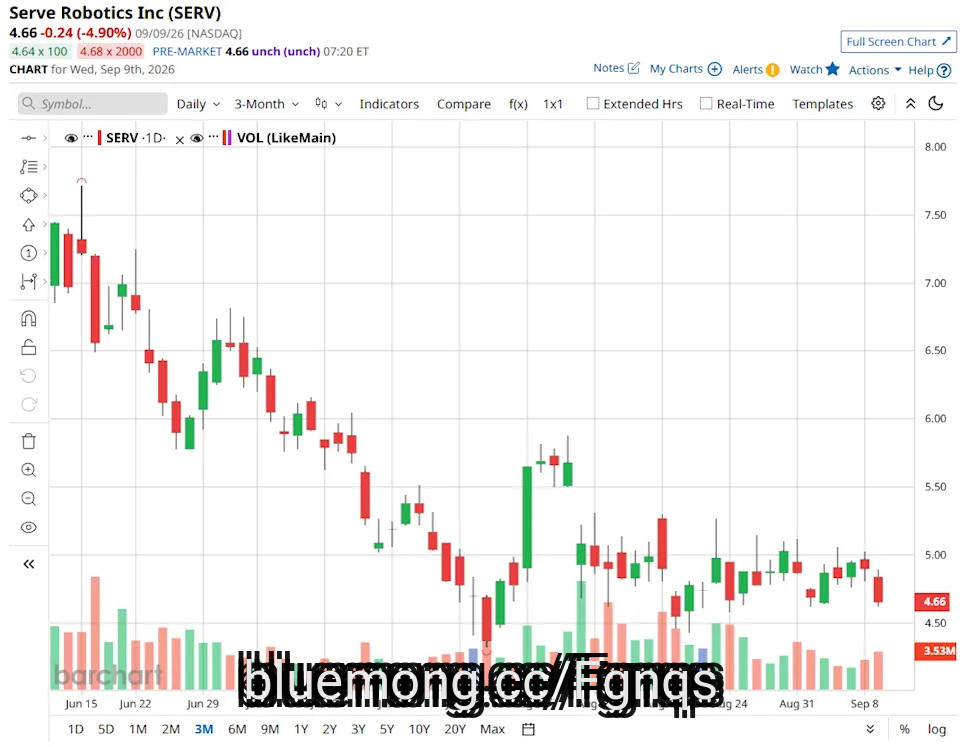
Serve Robotics (SERV) shares have tumbled roughly 20% since the autonomous delivery company lowered its 2026 revenue guidance on Aug. 6. The cut came despite quarterly revenue surging 404% year-over-year (YOY). Serve Robotics also said it may not renew its foundational partnership with Uber (UBER) after it expires in early 2027. The development follows Serve's first decline in Uber Eats delivery volume in 17 consecutive quarters. However, Serve has $240 million in cash and is intentionally expanding into DoorDash (DASH), healthcare robotics, and advertising. The debate now is whether the reset reflects deeper trouble or a strategic effort to diversify beyond a weakening partnership.
Investors should also look closely at the short interest number when it comes to SERV stock. Serve Robotics has a short percentage of float of 31.3%. That's an extremely high number for any company but also brings with it an opportunity — namely, a potential short squeeze. For that to happen, though, there needs to be some retail interest in SERV stock.
Dear ***** eX Stock Fans, Mark Your Calendars for September 21
How to Play IBM Stock as It Teams Up with NASA to Launch a New Open-Source Model
GF Securities Says NAND Prices May Stabilize Later This Year. What This Means for Sandisk Stock.
#company
Investors should also look closely at the short interest number when it comes to SERV stock. Serve Robotics has a short percentage of float of 31.3%. That's an extremely high number for any company but also brings with it an opportunity — namely, a potential short squeeze. For that to happen, though, there needs to be some retail interest in SERV stock.
Dear ***** eX Stock Fans, Mark Your Calendars for September 21
How to Play IBM Stock as It Teams Up with NASA to Launch a New Open-Source Model
GF Securities Says NAND Prices May Stabilize Later This Year. What This Means for Sandisk Stock.
#company



1 day ago
Following an impressive second quarter FY27, Navan Inc. (NASDAQ:NAVN) announced its acquisition of BoomPop, an AI-powered meetings and events platform that has been recognized by Inc. as one of the fastest-growing private companies in America. Launched in 2023, BoomPop offers end-to-end event management solutions to enterprises, by leveraging artificial intelligence capabilities. Its offerings cover the entire spectrum of event management procedures including venue selection, vendor sourcing, contractual agreement, payments, and more. For Navan, this deal build on an existing alliance between the two entities, which was announced earlier in February. It marks the company's strategic push to expand its footprint across the meetings and events segment, where a large chunk of the spending is still done outside managed platforms.
LStockStudio/Shutterstock.com
The BoomPop acquisition follows a persistent enterprise market momentum reported by the company in its second quarter results, allowing Navan to enter into collaborative agreements with several leading companies during the quarter. These included Enbridge, Ingersoll Rand, ****** mins, and Evotec. Navan also concluded the deal to acquire Smartrips, a well-reputed travel management business, with the aim of bolstering its presence across a rapidly-growing Latin American market.
Notably, Navan registered adjusted net income of $14 million during the second quarter compared to an $8 million loss in Q2 FY26. It came at the back of year-over-year growth figures of 39% and 35% for subscription revenue and usage revenue, respectively.
Through full integration of BoomPop's staff and technology, Navan intends to expand its current meetings and events operations, accelerate its product development timeline, and satisfy growing customer interest. The company aims to deliver a more seamless experience covering travel, expense, meetings, and events.
#navan
LStockStudio/Shutterstock.com
The BoomPop acquisition follows a persistent enterprise market momentum reported by the company in its second quarter results, allowing Navan to enter into collaborative agreements with several leading companies during the quarter. These included Enbridge, Ingersoll Rand, ****** mins, and Evotec. Navan also concluded the deal to acquire Smartrips, a well-reputed travel management business, with the aim of bolstering its presence across a rapidly-growing Latin American market.
Notably, Navan registered adjusted net income of $14 million during the second quarter compared to an $8 million loss in Q2 FY26. It came at the back of year-over-year growth figures of 39% and 35% for subscription revenue and usage revenue, respectively.
Through full integration of BoomPop's staff and technology, Navan intends to expand its current meetings and events operations, accelerate its product development timeline, and satisfy growing customer interest. The company aims to deliver a more seamless experience covering travel, expense, meetings, and events.
#navan


1 day ago
On September 1, Korn Ferry (NYSE:KFY) completed its £850 million acquisition of UK-based AMS, from OMERS Private Equity. The deal combines two well-reputed brands, resulting in a highly well-rounded solutions provider and a leading business within the global talent and organizational consulting **** e. It offers a broader market reach to Korn Ferry, along with more extensive coverage spanning several new industries.
Copyright: baranq / 123RF Stock Photo
AMS acquisition extends Korn Ferry's existing growth trajectory, which was highlighted in the company's recently announced first quarter results. It was the sixth back-to-back quarter of topline growth, which augments the durability of Korn Ferry's fundamental business model. The company also delivered a 9% growth in its adjusted diluted EPS of $1.43, relative to the same period last year.
The AMS deal results in several strategic benefits for Korn Ferry. Based on its long-standing client relationships, AMS offers robust operational strength, along with prospects of consistent, recurring income. Such relationships also enable the company to deliver technology-led solutions at scale.
Financing of this transaction involved a mix of existing cash, share issuance and borrowings. At closing, Korn Ferry paid approximately £473 million and $326 million in cash, covering consideration to the sellers, repayment of AMS indebtedness and other transaction obligations, and issued 3,118,628 Korn Ferry shares to the sellers.
#business
Copyright: baranq / 123RF Stock Photo
AMS acquisition extends Korn Ferry's existing growth trajectory, which was highlighted in the company's recently announced first quarter results. It was the sixth back-to-back quarter of topline growth, which augments the durability of Korn Ferry's fundamental business model. The company also delivered a 9% growth in its adjusted diluted EPS of $1.43, relative to the same period last year.
The AMS deal results in several strategic benefits for Korn Ferry. Based on its long-standing client relationships, AMS offers robust operational strength, along with prospects of consistent, recurring income. Such relationships also enable the company to deliver technology-led solutions at scale.
Financing of this transaction involved a mix of existing cash, share issuance and borrowings. At closing, Korn Ferry paid approximately £473 million and $326 million in cash, covering consideration to the sellers, repayment of AMS indebtedness and other transaction obligations, and issued 3,118,628 Korn Ferry shares to the sellers.
#business


1 day ago
Chiefs news: 60-yard Kenneth Walker III touchdown has KC fans thinking Super Bowl appeared first on ClutchPoints. Add ClutchPoints as a Preferred Source by clicking here.
Kenneth Walker III has Kansas City fans on Cloud Nine after scoring a spectacular 60-yard touchdown in the Chiefs' season opener against the Denver Broncos on Monday night.
Walker started his fifth season in the NFL, his first with the Chiefs. He played his first four years with the Seattle Seahawks, winning a Super Bowl in 2025 as he earned the game's MVP award.
The star rusher went on to surprise many by leaving Seattle to sign a three-year, $45 million contract with Kansas City. The team had a weakness in the running back room, something that Walker addressed with ease.
Watch sports LIVE with fuboTV (free trial)
#super #city
Kenneth Walker III has Kansas City fans on Cloud Nine after scoring a spectacular 60-yard touchdown in the Chiefs' season opener against the Denver Broncos on Monday night.
Walker started his fifth season in the NFL, his first with the Chiefs. He played his first four years with the Seattle Seahawks, winning a Super Bowl in 2025 as he earned the game's MVP award.
The star rusher went on to surprise many by leaving Seattle to sign a three-year, $45 million contract with Kansas City. The team had a weakness in the running back room, something that Walker addressed with ease.
Watch sports LIVE with fuboTV (free trial)
#super #city


2 days ago
With the heat index at 110 degrees before kickoff at Darrell K Royal-Texas Memorial Stadium and the temperature on the artificial turf at Campbell-Williams Field reaching 160 degrees, the Ohio State Buckeyes were the only team on the field for pregame warmups.
Seeking an edge in a game with a betting line set at 1.5 points during the week, the Texas Longhorns were across the street in the school's brand-new, $80-million dollar Frank & Wofford Denius Football Training Complex.
"Figured they could go out in the heat," Texas senior quarterback Arch Manning said.
The decision was made by director of football sports medicine Donald Nguyen.
"You save yourself a little bit from the heat — it's all sweat that leaves your body when you go out there in the sun, so definitely helped, I thought," said fifth-year defensive tackle Hero Kanu.
#texas #heat #stadium
Seeking an edge in a game with a betting line set at 1.5 points during the week, the Texas Longhorns were across the street in the school's brand-new, $80-million dollar Frank & Wofford Denius Football Training Complex.
"Figured they could go out in the heat," Texas senior quarterback Arch Manning said.
The decision was made by director of football sports medicine Donald Nguyen.
"You save yourself a little bit from the heat — it's all sweat that leaves your body when you go out there in the sun, so definitely helped, I thought," said fifth-year defensive tackle Hero Kanu.
#texas #heat #stadium

2 days ago
During the September 10 episode of Mad Money, a caller questioned whether recent vertical integration by industrial competitors and market selloffs warranted a lower valuation for Howmet Aerospace Inc.'s (NYSE:HWM) economic moat, or if demand remained strong enough to make the pullback an overreaction. Jim Cramer replied:
Now, look, I'll tell you, here's the problem… It's a fastener company, and it frankly is, most times, very commodity-oriented business, and it happens to sell at 44 times earnings, and we don't want to pay that for commodities even though the business is strong. I think people are saying, "Wait a second, that's too much to pay, and I'm going to wait till it goes lower." And if you look at the chart, it does seem like it is going lower.
Howmet Aerospace Inc. (NYSE:HWM) occupies a sole-source or primary-supplier position across critical narrowbody and widebody aircraft programs, providing single-crystal turbine blades, advanced structural castings, and **** anium fasteners. Approval and qualification requirements, manufacturing complexity, and a limited supplier base can make alternative sources difficult to establish quickly. That gives the company strong pricing power on both new plane parts and higher-margin replacement spares.
The structural advantages of Howmet Aerospace Inc.'s (NYSE:HWM) business model can be seen in its Q2 financial results. Revenue surged over 24% year-over-year (21% organically) to $2.55 billion, driven by a 28% jump in commercial aerospace revenue, a 38% expansion in industrial gas turbines, and an 11% gain in defense aerospace. The core Engine Products division recorded third-party sales of $1.37 billion, up 32% year-over-year, while segment adjusted EBITDA margins expanded by 470 basis points to 37.7%.
Despite its market positioning, Howmet Aerospace Inc. (NYSE:HWM) carries valuation risks that advise a cautious approach. Trading at elevated EV/EBITDA and forward P/E multiples relative to traditional industrial peers, the stock leaves little margin for operational missteps. Capital expenditures are projected to exceed $500 million in 2026 as the company builds out production capacity for next-generation engine components and gas turbines, reducing near-term free cash conversion flexibility.
#lower #ebitda
Now, look, I'll tell you, here's the problem… It's a fastener company, and it frankly is, most times, very commodity-oriented business, and it happens to sell at 44 times earnings, and we don't want to pay that for commodities even though the business is strong. I think people are saying, "Wait a second, that's too much to pay, and I'm going to wait till it goes lower." And if you look at the chart, it does seem like it is going lower.
Howmet Aerospace Inc. (NYSE:HWM) occupies a sole-source or primary-supplier position across critical narrowbody and widebody aircraft programs, providing single-crystal turbine blades, advanced structural castings, and **** anium fasteners. Approval and qualification requirements, manufacturing complexity, and a limited supplier base can make alternative sources difficult to establish quickly. That gives the company strong pricing power on both new plane parts and higher-margin replacement spares.
The structural advantages of Howmet Aerospace Inc.'s (NYSE:HWM) business model can be seen in its Q2 financial results. Revenue surged over 24% year-over-year (21% organically) to $2.55 billion, driven by a 28% jump in commercial aerospace revenue, a 38% expansion in industrial gas turbines, and an 11% gain in defense aerospace. The core Engine Products division recorded third-party sales of $1.37 billion, up 32% year-over-year, while segment adjusted EBITDA margins expanded by 470 basis points to 37.7%.
Despite its market positioning, Howmet Aerospace Inc. (NYSE:HWM) carries valuation risks that advise a cautious approach. Trading at elevated EV/EBITDA and forward P/E multiples relative to traditional industrial peers, the stock leaves little margin for operational missteps. Capital expenditures are projected to exceed $500 million in 2026 as the company builds out production capacity for next-generation engine components and gas turbines, reducing near-term free cash conversion flexibility.
#lower #ebitda


2 days ago
Moneywise and Yahoo Finance LLC may earn commission or revenue through links in the content below.
Having $1 million to your name is a major financial milestone. But in America today, it doesn't put you nearly as close to the top as you might think.
In fact, the average American now believes they'll need $1.46 million just to retire comfortably, according to Northwestern Mutual's 2026 Planning & Progress Study (1). Among Americans who already have more than $1 million in investable ******* ets, that figure jumps to $2.67 million.
Jeff Bezos backs a platform that lets anyone invest in rental homes for as little as $100 — 6 ways to build wealth like a landlord without actually being one
A record 45% of central banks plan to grow gold reserves — and many investors are following suit. Get your free gold IRA guide from Priority Gold
#finance #America #american
Having $1 million to your name is a major financial milestone. But in America today, it doesn't put you nearly as close to the top as you might think.
In fact, the average American now believes they'll need $1.46 million just to retire comfortably, according to Northwestern Mutual's 2026 Planning & Progress Study (1). Among Americans who already have more than $1 million in investable ******* ets, that figure jumps to $2.67 million.
Jeff Bezos backs a platform that lets anyone invest in rental homes for as little as $100 — 6 ways to build wealth like a landlord without actually being one
A record 45% of central banks plan to grow gold reserves — and many investors are following suit. Get your free gold IRA guide from Priority Gold
#finance #America #american


2 days ago
In the recent past, Nvidia's (NVDA) CEO Jensen Huang has been focused on how Wall Street prices and finances AI infrastructure. As a part of this effort, Nvidia entered into an agreement with six of the world's largest **** et managers for a $500 million AI-financing plan.
Huang pitched for an AI factory platform as an investible **** et "because it's productive, it's revenue generating, it is fungible, it's used by just about every cloud service provider, it runs every AI model." With AI infrastructure buildout requiring significant investments, this pitch is intended to support cloud providers and AI companies to raise funds. In turn, Nvidia stands to benefit from the global AI ecosystem growth.
Dear **** eX Stock Fans, Mark Your Calendars for September 21
How to Play IBM Stock as It Teams Up with NASA to Launch a New Open-Source Model
GF Securities Says NAND Prices May Stabilize Later This Year. What This Means for Sandisk Stock.
#huang #model #infrastructure #asset
Huang pitched for an AI factory platform as an investible **** et "because it's productive, it's revenue generating, it is fungible, it's used by just about every cloud service provider, it runs every AI model." With AI infrastructure buildout requiring significant investments, this pitch is intended to support cloud providers and AI companies to raise funds. In turn, Nvidia stands to benefit from the global AI ecosystem growth.
Dear **** eX Stock Fans, Mark Your Calendars for September 21
How to Play IBM Stock as It Teams Up with NASA to Launch a New Open-Source Model
GF Securities Says NAND Prices May Stabilize Later This Year. What This Means for Sandisk Stock.
#huang #model #infrastructure #asset


2 days ago
The stars will be in Surrey (England) this week as an absolutely stacked field competes at the BMW PGA Championship.
144 players will tee off at Wentworth Club this week looking for a piece of the $9 million purse at stake on the DP World Tour.
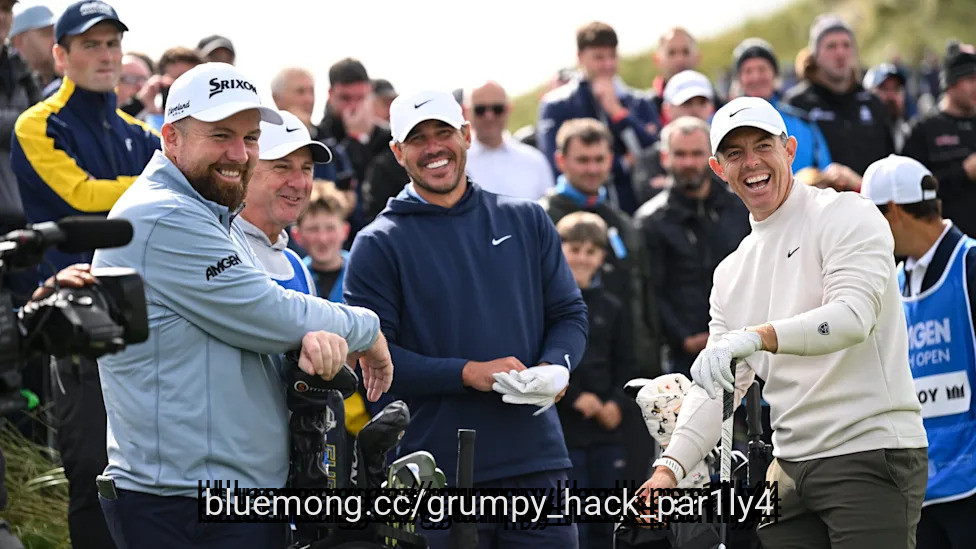
The high-powered field includes, Rory McIlroy, Shane Lowry fresh off his Amgen Irish Open victory, Brooks Koepka, Alex and Matt Fitzpatrick, Patrick Reed, Ryan Fox, Aaron Rai, Tommy Fleetwood and defending champ Alex Noren. And, that's just the list we could fit on two hands.
Here's how you can watch the BMW PGA Championship on Golf Channel and Golf Channel mobile (ET):
Thursday, Sept. 17:
#alex #field #england
144 players will tee off at Wentworth Club this week looking for a piece of the $9 million purse at stake on the DP World Tour.
The high-powered field includes, Rory McIlroy, Shane Lowry fresh off his Amgen Irish Open victory, Brooks Koepka, Alex and Matt Fitzpatrick, Patrick Reed, Ryan Fox, Aaron Rai, Tommy Fleetwood and defending champ Alex Noren. And, that's just the list we could fit on two hands.
Here's how you can watch the BMW PGA Championship on Golf Channel and Golf Channel mobile (ET):
Thursday, Sept. 17:
#alex #field #england

2 days ago
The trade sending Kawhi Leonard back to Toronto is finally going forward, with the Raptors and Los Angeles Clippers agreeing to complete the deal that was agreed to earlier this summer, a person with knowledge of the negotiations said Monday.
The deal will be the same as what was agreed to 2 1/2 months ago: Leonard returns to the Raptors, with the Clippers getting Brandon Ingram, Gradey ******* , two first-round draft picks, two second-round picks and a pick swap, said the person who spoke to The ******* ociated Press on condition of anonymity because the trade had not received the required league approval.
It's a huge move for Toronto, which won the 2019 NBA ******* le with Leonard leading the way and is expecting to contend in the Eastern Conference. But the sides put the agreement on hold in early July pending any resolution of NBA's investigation into whether the Clippers circumvented salary cap rules with regard to Leonard's compensation.
The NBA hit the Clippers earlier this month with massive penalties as a result of that probe, suspending owner Steve Ballmer for one year, fining the team $30 million and forcing it to forfeit five first-round draft picks, among other sanctions.
Leonard, a two-time NBA Finals MVP, was hit with a $700,000 penalty as a result of that investigation. But he was not suspended and his contract was not voided, and the Raptors evidently are now certain that his status will not be affected.
#clippers #raptors #picks #deal
The deal will be the same as what was agreed to 2 1/2 months ago: Leonard returns to the Raptors, with the Clippers getting Brandon Ingram, Gradey ******* , two first-round draft picks, two second-round picks and a pick swap, said the person who spoke to The ******* ociated Press on condition of anonymity because the trade had not received the required league approval.
It's a huge move for Toronto, which won the 2019 NBA ******* le with Leonard leading the way and is expecting to contend in the Eastern Conference. But the sides put the agreement on hold in early July pending any resolution of NBA's investigation into whether the Clippers circumvented salary cap rules with regard to Leonard's compensation.
The NBA hit the Clippers earlier this month with massive penalties as a result of that probe, suspending owner Steve Ballmer for one year, fining the team $30 million and forcing it to forfeit five first-round draft picks, among other sanctions.
Leonard, a two-time NBA Finals MVP, was hit with a $700,000 penalty as a result of that investigation. But he was not suspended and his contract was not voided, and the Raptors evidently are now certain that his status will not be affected.
#clippers #raptors #picks #deal



2 days ago
On August 4, Willis Lease Finance Corporation (NASDAQ:WLFC) reported second-quarter results that pulled in two directions at once. The lessor of commercial aircraft engines grew its operating business at a healthy clip, yet net income fell by more than half, a split that makes this quarter harder to read than the headline suggests.
Income from operations climbed 20.2% to $34.0 million in the quarter ended June 30, 2026, and the engine underneath that number is lease rent revenue, which rose 6.7% to $77.1 million as the average size of Willis Lease's portfolio expanded from a year earlier. Over the first six months of 2026, lease rent revenue is up 10.4% to $154.5 million, a steadier pace than the quarterly figure alone implies.
The company's trading business added to that. Willis Lease booked a $32.0 million gain on the sale of leased equipment, up 16.2%, after selling 21 engines and other parts and equipment during the quarter, compared with 14 engines and two airframes a year earlier. That kind of turnover matters for a leasing company, since selling ****** ets at a gain confirms that engine values in the market are holding up.
The bigger story sits in how Willis Lease is expanding beyond its own balance sheet. ****** ets under management, which folds in the company's on-balance-sheet fleet along with its Willis Aviation Capital business, grew 21% year over year to $4.4 billion. CEO Austin C. Willis tied that growth directly to building out Willis Aviation Capital, and the fee income backs that up: management and advisory fees jumped 113.4% to $5.5 million in the quarter and 194.9% to $13.4 million over six months. Two new investment fund partnerships, one with Liberty Mutual Investments that began operating in March 2026 and one with Blackstone Credit & Insurance that started in April 2026, are the mechanics behind that shift toward managing other people's capital rather than only deploying its own.
Net income attributable to common shareholders fell 51.2% to $28.7 million, and diluted earnings per share dropped from $2.81 to $1.31. Some of that gap traces to a tough comparison rather than a weaker quarter, since the second quarter of 2025 included a $43.0 million gain from the sale of the BAML business that had no counterpart this year. Willis Lease also recognized a $5.4 million loss on debt extinguishment in the quarter, and $12.4 million over six months, a cost tied to refinancing that simply was not there in 2025.
#lease #capital #months
Income from operations climbed 20.2% to $34.0 million in the quarter ended June 30, 2026, and the engine underneath that number is lease rent revenue, which rose 6.7% to $77.1 million as the average size of Willis Lease's portfolio expanded from a year earlier. Over the first six months of 2026, lease rent revenue is up 10.4% to $154.5 million, a steadier pace than the quarterly figure alone implies.
The company's trading business added to that. Willis Lease booked a $32.0 million gain on the sale of leased equipment, up 16.2%, after selling 21 engines and other parts and equipment during the quarter, compared with 14 engines and two airframes a year earlier. That kind of turnover matters for a leasing company, since selling ****** ets at a gain confirms that engine values in the market are holding up.
The bigger story sits in how Willis Lease is expanding beyond its own balance sheet. ****** ets under management, which folds in the company's on-balance-sheet fleet along with its Willis Aviation Capital business, grew 21% year over year to $4.4 billion. CEO Austin C. Willis tied that growth directly to building out Willis Aviation Capital, and the fee income backs that up: management and advisory fees jumped 113.4% to $5.5 million in the quarter and 194.9% to $13.4 million over six months. Two new investment fund partnerships, one with Liberty Mutual Investments that began operating in March 2026 and one with Blackstone Credit & Insurance that started in April 2026, are the mechanics behind that shift toward managing other people's capital rather than only deploying its own.
Net income attributable to common shareholders fell 51.2% to $28.7 million, and diluted earnings per share dropped from $2.81 to $1.31. Some of that gap traces to a tough comparison rather than a weaker quarter, since the second quarter of 2025 included a $43.0 million gain from the sale of the BAML business that had no counterpart this year. Willis Lease also recognized a $5.4 million loss on debt extinguishment in the quarter, and $12.4 million over six months, a cost tied to refinancing that simply was not there in 2025.
#lease #capital #months

2 days ago
On August 6, The RealReal (NASDAQ:REAL) reported second quarter results that beat its own outlook and pushed the resale luxury marketplace to raise its full year guidance. Gross merchandise value hit an all time high of $617 million, up 22% from a year earlier, and management pointed to four straight quarters of GMV growth above 20%. But a wider net loss sitting next to those record numbers complicates the story for anyone weighing the stock today.
The headline number is GMV of $617 million for the quarter ended June 30, up 22% year over year, with total revenue climbing 17% to $193 million. Consignment revenue grew 15% while Direct Revenue, the company's owned inventory channel, grew 26%, showing both sides of the business contributing to the acceleration. Profitability moved in the same direction. Gross margin reached 74.4%, up 10 basis points from a year ago, and Adjusted EBITDA margin jumped to 7%, a 290 basis point improvement that management called nearly 300 basis points of expansion.
The buyer base backs up the growth story rather than just the pricing. Trailing twelve-month active buyers rose 11% to 1,107,000, and average order value climbed 13% to $659, meaning existing shoppers are spending meaningfully more per transaction, not just showing up more often. That combination gave management enough confidence to raise full-year guidance to $2.54 billion to $2.57 billion in GMV and $788 million to $797 million in total revenue, alongside third-quarter Adjusted EBITDA guidance of $13.5 million to $14.5 million.
Despite the operating improvements, GAAP losses widened. Net loss came in at $27 million, or 14.1% of total revenue, compared to $11 million, or 6.9% of total revenue, a year earlier. GAAP basic net loss per share was $0.23 versus $0.10 in the prior year period, and diluted net loss per share was $0.23 versus $0.13. Much of that swing traces to a $(18.6) million non-cash adjustment tied to the change in fair value of warrant liability, a factor unrelated to how the underlying business performed. On a non-GAAP basis, basic and diluted net loss per share actually narrowed to $0.01 from $0.06, underscoring how much of the GAAP gap is accounting rather than operations.
There is also a transparency wrinkle in the guidance itself. The RealReal said it has not reconciled its forward-looking Adjusted EBITDA figures to GAAP net income or loss, citing components like payroll tax expense on employee stock transactions that it cannot predict with reasonable certainty. That leaves investors trusting a non-GAAP target without the usual bridge back to the bottom line.
#adjusted
The headline number is GMV of $617 million for the quarter ended June 30, up 22% year over year, with total revenue climbing 17% to $193 million. Consignment revenue grew 15% while Direct Revenue, the company's owned inventory channel, grew 26%, showing both sides of the business contributing to the acceleration. Profitability moved in the same direction. Gross margin reached 74.4%, up 10 basis points from a year ago, and Adjusted EBITDA margin jumped to 7%, a 290 basis point improvement that management called nearly 300 basis points of expansion.
The buyer base backs up the growth story rather than just the pricing. Trailing twelve-month active buyers rose 11% to 1,107,000, and average order value climbed 13% to $659, meaning existing shoppers are spending meaningfully more per transaction, not just showing up more often. That combination gave management enough confidence to raise full-year guidance to $2.54 billion to $2.57 billion in GMV and $788 million to $797 million in total revenue, alongside third-quarter Adjusted EBITDA guidance of $13.5 million to $14.5 million.
Despite the operating improvements, GAAP losses widened. Net loss came in at $27 million, or 14.1% of total revenue, compared to $11 million, or 6.9% of total revenue, a year earlier. GAAP basic net loss per share was $0.23 versus $0.10 in the prior year period, and diluted net loss per share was $0.23 versus $0.13. Much of that swing traces to a $(18.6) million non-cash adjustment tied to the change in fair value of warrant liability, a factor unrelated to how the underlying business performed. On a non-GAAP basis, basic and diluted net loss per share actually narrowed to $0.01 from $0.06, underscoring how much of the GAAP gap is accounting rather than operations.
There is also a transparency wrinkle in the guidance itself. The RealReal said it has not reconciled its forward-looking Adjusted EBITDA figures to GAAP net income or loss, citing components like payroll tax expense on employee stock transactions that it cannot predict with reasonable certainty. That leaves investors trusting a non-GAAP target without the usual bridge back to the bottom line.
#adjusted


2 days ago
On August 10, Red Violet Inc. (NASDAQ:RDVT) reported second-quarter 2026 results for the period ended June 30 that showed the company converting growth into profit at an accelerating clip. Revenue rose 23% to $26.7 million, and net income nearly doubled to $5 million. For a company built on selling identity intelligence to businesses, watching net margin move from 12% to 19% says that growth is not costing more to produce.
Gross profit climbed 29% to $20.2 million, pushing gross margin to 76% from 72%, while adjusted EBITDA jumped 48% to $11.2 million as its margin widened to 42% from 35%. Adjusted net income rose 58% to $7.2 million. Cash generation told the same story: operating cash flow increased 42% to a record $10.6 million for the quarter. None of that came from adding customers who barely move the needle. Red Violet signed on 447 new IDI customers in the quarter, a company record, ending with 10,869 customers on the platform.
FOREWARN, its product built for real estate agents, picked up 25,493 new users to reach 443,173, and 660 REALTOR ****** ociations across the country are now under contract to use it. The company also closed an underwritten public offering in August that sold 1,916,667 shares, including 250,000 shares from the underwriters' full exercise of their option, generating net proceeds of about $109.0 million. Between the funds already on hand and this new raise, Red Violet says it holds over $160 million in cash and carries no debt, money earmarked for working capital and possible acquisitions.
CEO Derek Dubner called it what he described as "the strongest pipeline of strategic initiatives" in the company's history. The company also repurchased 74,500 shares by June 30, paying $41.87 per share on average, and had $15.5 million left on its buyback authorization.
The August offering that padded Red Violet's cash balance also added 1,916,667 new shares to the count, arriving in the same year that per-share profit is climbing fastest. Diluted earnings came in a penny below basic at $0.34, and adjusted diluted earnings landed at $0.50 versus $0.51 on a basic basis, a gap new shares will only widen going forward. There is also a timing tension worth sitting with: Red Violet spent part of the quarter buying back its own stock at an average of $41.87 a share, then turned around weeks later and sold new shares to the public.
#million
Gross profit climbed 29% to $20.2 million, pushing gross margin to 76% from 72%, while adjusted EBITDA jumped 48% to $11.2 million as its margin widened to 42% from 35%. Adjusted net income rose 58% to $7.2 million. Cash generation told the same story: operating cash flow increased 42% to a record $10.6 million for the quarter. None of that came from adding customers who barely move the needle. Red Violet signed on 447 new IDI customers in the quarter, a company record, ending with 10,869 customers on the platform.
FOREWARN, its product built for real estate agents, picked up 25,493 new users to reach 443,173, and 660 REALTOR ****** ociations across the country are now under contract to use it. The company also closed an underwritten public offering in August that sold 1,916,667 shares, including 250,000 shares from the underwriters' full exercise of their option, generating net proceeds of about $109.0 million. Between the funds already on hand and this new raise, Red Violet says it holds over $160 million in cash and carries no debt, money earmarked for working capital and possible acquisitions.
CEO Derek Dubner called it what he described as "the strongest pipeline of strategic initiatives" in the company's history. The company also repurchased 74,500 shares by June 30, paying $41.87 per share on average, and had $15.5 million left on its buyback authorization.
The August offering that padded Red Violet's cash balance also added 1,916,667 new shares to the count, arriving in the same year that per-share profit is climbing fastest. Diluted earnings came in a penny below basic at $0.34, and adjusted diluted earnings landed at $0.50 versus $0.51 on a basic basis, a gap new shares will only widen going forward. There is also a timing tension worth sitting with: Red Violet spent part of the quarter buying back its own stock at an average of $41.87 a share, then turned around weeks later and sold new shares to the public.
#million


2 days ago
On August 6, PureCycle Technologies (NASDAQ:PCT) reported second-quarter results for the period ended June 30, and buried in the numbers was something the plastics recycler has chased for years: an actual branded product on store shelves. Select Downy detergent caps made with PureCycle's PureFive resin entered commercial production for Procter & Gamble during the quarter, the first tangible sign the company's purification technology can clear a major consumer brand's supply chain. Revenue came in at $4.5 million, up roughly 173% from a year earlier and the sixth straight quarter of sequential growth.
The Downy win was not an isolated event. PureCycle said select Tide caps are scheduled for retail production in the third quarter, with Vicks ZzzQuil PURE Zzzs child-resistant lids targeted for the fourth quarter of 2026. Seven customer conversions took place during the quarter, alongside six new commercial partnerships spanning closures, automotive, film, and food packaging, including Amcor, Motherson, and Innovia Films. Regulation is doing real work here too. New Jersey's Department of Environmental Protection approved PureFive as post-consumer recycled content, a decision that arrives as the state's food contact exemption expires in January 2027 and its recycled content requirement climbs to 20%, while California's SB54 is already in effect.
Operationally, the Ironton facility's planned turnaround finished ahead of schedule and under budget, with more than 170 reliability and rate projects completed and inspections showing no corrosion on major equipment. On-site compounding, commissioned in April, is now running 24 hours a day, five days a week, with plans to expand to seven by the fourth quarter. PureCycle also picked up ISO 9001:2015 certification in May and closed the quarter with $236.9 million in total liquidity after a June capital raise.
The other side of the ledger is harder to ignore. PureCycle posted a net loss of $142.2 million for the quarter, and adjusted EBITDA actually widened to a loss of $31.7 million from a loss of $27.8 million a year earlier, a shift the company attributes to smaller non-cash addbacks rather than weaker operations. PureFive production fell to 4.5 million pounds for the quarter, a direct result of the planned turnaround, even though output was still up about 32% from a year ago. Growth is not coming cheap either. Full-year 2026 project spending guidance was raised to a range of $45 million to $50 million, up from the prior $39 million to $45 million.
#year #loss
The Downy win was not an isolated event. PureCycle said select Tide caps are scheduled for retail production in the third quarter, with Vicks ZzzQuil PURE Zzzs child-resistant lids targeted for the fourth quarter of 2026. Seven customer conversions took place during the quarter, alongside six new commercial partnerships spanning closures, automotive, film, and food packaging, including Amcor, Motherson, and Innovia Films. Regulation is doing real work here too. New Jersey's Department of Environmental Protection approved PureFive as post-consumer recycled content, a decision that arrives as the state's food contact exemption expires in January 2027 and its recycled content requirement climbs to 20%, while California's SB54 is already in effect.
Operationally, the Ironton facility's planned turnaround finished ahead of schedule and under budget, with more than 170 reliability and rate projects completed and inspections showing no corrosion on major equipment. On-site compounding, commissioned in April, is now running 24 hours a day, five days a week, with plans to expand to seven by the fourth quarter. PureCycle also picked up ISO 9001:2015 certification in May and closed the quarter with $236.9 million in total liquidity after a June capital raise.
The other side of the ledger is harder to ignore. PureCycle posted a net loss of $142.2 million for the quarter, and adjusted EBITDA actually widened to a loss of $31.7 million from a loss of $27.8 million a year earlier, a shift the company attributes to smaller non-cash addbacks rather than weaker operations. PureFive production fell to 4.5 million pounds for the quarter, a direct result of the planned turnaround, even though output was still up about 32% from a year ago. Growth is not coming cheap either. Full-year 2026 project spending guidance was raised to a range of $45 million to $50 million, up from the prior $39 million to $45 million.
#year #loss


2 days ago
On August 5, Clear Channel Outdoor Holdings Inc. (NYSE:CCO) reported second-quarter results that showed the billboard and airport advertising company accelerating just as it prepares to leave the public markets. On February 9, Clear Channel agreed to be acquired by an investor consortium advised by Mubadala Capital for $2.43 per share, a deal stockholders approved on May 12, and one expected to close by the end of the third quarter of 2026. Because of the pending Merger, Clear Channel skipped its usual earnings call and offered no forward guidance.
Consolidated revenue climbed 8.7% to $438.0 million in the quarter and 10.2% to $811.9 million over the first half, with the 2026 FIFA World Cup pulling in extra advertising spend across both of Clear Channel's segments. The America division, which houses the roadside billboard and street furniture business, grew revenue 7% to $324.3 million as demand from technology advertisers in the San Francisco/Bay Area market broadened out and digital billboard revenue rose 7.2% to $122 million. Airports revenue jumped 14% to $113.6 million, helped by strong demand at San Francisco
International Airport and digital sales that climbed 15.6% to $73.4 million, with national advertisers now accounting for 57.8% of that segment's revenue. Profitability grew even faster than the top line. Adjusted EBITDA rose 11.6% to $143.4 million for the quarter and 19% to $247.3 million for the first half, while Airports Segment Adjusted EBITDA jumped 22.8% to $29.9 million. Adjusted Funds From Operations climbed 61.6% to $44.9 million in the quarter, and for the first half it went from just $5 million a year ago to $51.5 million. On August 4, Clear Channel also closed the sale of its Spain business for about $132.3 million, proceeds it plans to put toward paying down debt.
The growth did not reach the bottom line. Clear Channel posted a loss from continuing operations of $10 million in the quarter, reversing a $6.3 million profit a year earlier, and the consolidated net loss came to $5 million versus net income of $10.6 million in the same period of 2025. Over six months, the loss from continuing operations widened 21.4% to $59.4 million. Costs rose alongside revenue. Direct operating and SG&A expenses increased 5.9% for the quarter, and Airports site lease expense alone jumped 12.0% to $67.1 million on higher minimum guaranteed payments and the renewed contract with the Metropolitan Washington Airports Authority.
#channel #revenue #airports #operations
Consolidated revenue climbed 8.7% to $438.0 million in the quarter and 10.2% to $811.9 million over the first half, with the 2026 FIFA World Cup pulling in extra advertising spend across both of Clear Channel's segments. The America division, which houses the roadside billboard and street furniture business, grew revenue 7% to $324.3 million as demand from technology advertisers in the San Francisco/Bay Area market broadened out and digital billboard revenue rose 7.2% to $122 million. Airports revenue jumped 14% to $113.6 million, helped by strong demand at San Francisco
International Airport and digital sales that climbed 15.6% to $73.4 million, with national advertisers now accounting for 57.8% of that segment's revenue. Profitability grew even faster than the top line. Adjusted EBITDA rose 11.6% to $143.4 million for the quarter and 19% to $247.3 million for the first half, while Airports Segment Adjusted EBITDA jumped 22.8% to $29.9 million. Adjusted Funds From Operations climbed 61.6% to $44.9 million in the quarter, and for the first half it went from just $5 million a year ago to $51.5 million. On August 4, Clear Channel also closed the sale of its Spain business for about $132.3 million, proceeds it plans to put toward paying down debt.
The growth did not reach the bottom line. Clear Channel posted a loss from continuing operations of $10 million in the quarter, reversing a $6.3 million profit a year earlier, and the consolidated net loss came to $5 million versus net income of $10.6 million in the same period of 2025. Over six months, the loss from continuing operations widened 21.4% to $59.4 million. Costs rose alongside revenue. Direct operating and SG&A expenses increased 5.9% for the quarter, and Airports site lease expense alone jumped 12.0% to $67.1 million on higher minimum guaranteed payments and the renewed contract with the Metropolitan Washington Airports Authority.
#channel #revenue #airports #operations


2 days ago
On September 10, Adobe (NASDAQ:ADBE) posted record third-quarter revenue of $6.76 billion, up 13% year over year, and raised its full-year revenue and profit targets. Non-GAAP EPS climbed 15% to $6.13, while GAAP EPS rose 11% to $4.62. Buried inside those headline numbers was a sharper story: AI-first ending ARR topped $650 million, growing more than 150% year over year. The same call brought a leadership change, with Anil S. Chakravarthy set to take over as CEO from Shantanu Narayen on December 1. Investors got a lot to digest in one afternoon.
Adobe's AI tools are no longer just a demo. Firefly ending ARR, which spans the Firefly app and its credit packs, grew 40% quarter over quarter, and the Acrobat AI ******* istant doubled its monthly active users over the same three months. Total monthly active users across Adobe's businesses surpassed 1 billion in the quarter, up more than 20% year over year, and creative premium MAU crossed 100 million, up more than 70%. Business professionals and consumers MAU passed 900 million, up more than 25%. That kind of user growth, concentrated in free and freemium tiers, is what feeds the paid AI upgrades now showing up in ARR.
The company backed that growth with cash. Operating cash flow hit a third-quarter record of $2.52 billion, and Adobe bought back roughly 9.5 million shares during the quarter, leaving $24.55 billion still authorized for repurchases. Management raised its full-year revenue target to a range of $26.58 billion to $26.63 billion and its non-GAAP EPS target to $24.45 to $24.50. On the product side, Adobe struck a deal to acquire Topaz Labs, whose AI enhancement models for image and video work would slot directly into Firefly and Creative Cloud. Enterprise demand held up too, with ending ARR growing more than 20% year over year at each of Adobe Experience Manager, Adobe Gen Studio, and Adobe Experience Platform.
Not every metric moved as fast. Remaining performance obligations, the backlog of contracted but unrecognized revenue, grew 8% year over year to $22.16 billion, trailing both the 13% revenue growth and the 11.2% growth in total ending ARR. Current RPO grew 9%, also behind the topline. Interim CFO Steven Day flagged a separate issue heading into the fourth quarter: a foreign-exchange headwind that partly offset the benefit of the third-quarter beat when management updated its full-year guidance.
AI-first ARR, for all its 150% growth rate, is still just over $650 million against a total ARR base of $27.50 billion, so it remains a small slice of the business even as it scales. The transition arrives at a pivotal moment too, with Chakravarthy set to take the CEO seat on Dec. 1 just as the company leans harder into an unproven agentic-software strategy, and the Topaz Labs deal still needs to clear regulatory approval before it adds anything to the numbers.
#adobe #billion #million
Adobe's AI tools are no longer just a demo. Firefly ending ARR, which spans the Firefly app and its credit packs, grew 40% quarter over quarter, and the Acrobat AI ******* istant doubled its monthly active users over the same three months. Total monthly active users across Adobe's businesses surpassed 1 billion in the quarter, up more than 20% year over year, and creative premium MAU crossed 100 million, up more than 70%. Business professionals and consumers MAU passed 900 million, up more than 25%. That kind of user growth, concentrated in free and freemium tiers, is what feeds the paid AI upgrades now showing up in ARR.
The company backed that growth with cash. Operating cash flow hit a third-quarter record of $2.52 billion, and Adobe bought back roughly 9.5 million shares during the quarter, leaving $24.55 billion still authorized for repurchases. Management raised its full-year revenue target to a range of $26.58 billion to $26.63 billion and its non-GAAP EPS target to $24.45 to $24.50. On the product side, Adobe struck a deal to acquire Topaz Labs, whose AI enhancement models for image and video work would slot directly into Firefly and Creative Cloud. Enterprise demand held up too, with ending ARR growing more than 20% year over year at each of Adobe Experience Manager, Adobe Gen Studio, and Adobe Experience Platform.
Not every metric moved as fast. Remaining performance obligations, the backlog of contracted but unrecognized revenue, grew 8% year over year to $22.16 billion, trailing both the 13% revenue growth and the 11.2% growth in total ending ARR. Current RPO grew 9%, also behind the topline. Interim CFO Steven Day flagged a separate issue heading into the fourth quarter: a foreign-exchange headwind that partly offset the benefit of the third-quarter beat when management updated its full-year guidance.
AI-first ARR, for all its 150% growth rate, is still just over $650 million against a total ARR base of $27.50 billion, so it remains a small slice of the business even as it scales. The transition arrives at a pivotal moment too, with Chakravarthy set to take the CEO seat on Dec. 1 just as the company leans harder into an unproven agentic-software strategy, and the Topaz Labs deal still needs to clear regulatory approval before it adds anything to the numbers.
#adobe #billion #million


2 days ago
On September 10, LightPath Technologies (NASDAQ:LPTH) reported fiscal fourth-quarter and full-year results that turned a multiyear strategic bet into a financial statement. Revenue nearly doubled for the year, margins expanded, and the company walked away from its last manufacturing ties to China. For a small-cap optics supplier that spent years explaining a strategy, this was the quarter the strategy started explaining itself.
Annual revenue climbed 92.7% to $71.7 million from $37.2 million, and the fourth quarter alone hit a record $21.2 million, up 73.8% year over year. That growth is not just volume. Full-year gross margin expanded to 36% from 27.2%, and the fourth quarter came in even higher at 39.4%, because ****** emblies, modules and cameras now make up 44% of annual sales instead of being sold as raw components.
CEO Sam Rubin said the shift reflects both a change in what LightPath sells and better execution on what it already made, noting every one of its four product groups improved margin for the year. Backlog finished at $110.9 million, up 197% from $37.4 million a year earlier, with $85.6 million of it scheduled for delivery within 12 months. Weeks after the fiscal year closed, the company booked another $24 million in counter-UAS orders, and some of those programs have already moved to monthly delivery cadences of tens of units.
LightPath also completed its exit from China, selling its subsidiary there for $4.5 million paid out over five years, leaving the company with no manufacturing footprint in a country that increasingly can't supply the defense primes it depends on. That matters because defense programs face a deadline this decade to source optics away from covered nations, and qualification cycles run two to three years, meaning the sourcing decisions being made now will determine who wins contracts in 2029 and 2030.
The company's fourth-quarter net loss narrowed to $4.1 million from $7.1 million a year earlier, but full-year operating expenses jumped to $45.5 million from $22 million, and $15.6 million of that was a noncash charge tied to G5 Infrared outperforming the earnout targets set at acquisition. Management called that charge mostly behind the business now that the final G5 payout has been accrued for January 2027, but it is a reminder that acquisition accounting can swing the income statement even when operations are healthy.
#year #quarter #China
Annual revenue climbed 92.7% to $71.7 million from $37.2 million, and the fourth quarter alone hit a record $21.2 million, up 73.8% year over year. That growth is not just volume. Full-year gross margin expanded to 36% from 27.2%, and the fourth quarter came in even higher at 39.4%, because ****** emblies, modules and cameras now make up 44% of annual sales instead of being sold as raw components.
CEO Sam Rubin said the shift reflects both a change in what LightPath sells and better execution on what it already made, noting every one of its four product groups improved margin for the year. Backlog finished at $110.9 million, up 197% from $37.4 million a year earlier, with $85.6 million of it scheduled for delivery within 12 months. Weeks after the fiscal year closed, the company booked another $24 million in counter-UAS orders, and some of those programs have already moved to monthly delivery cadences of tens of units.
LightPath also completed its exit from China, selling its subsidiary there for $4.5 million paid out over five years, leaving the company with no manufacturing footprint in a country that increasingly can't supply the defense primes it depends on. That matters because defense programs face a deadline this decade to source optics away from covered nations, and qualification cycles run two to three years, meaning the sourcing decisions being made now will determine who wins contracts in 2029 and 2030.
The company's fourth-quarter net loss narrowed to $4.1 million from $7.1 million a year earlier, but full-year operating expenses jumped to $45.5 million from $22 million, and $15.6 million of that was a noncash charge tied to G5 Infrared outperforming the earnout targets set at acquisition. Management called that charge mostly behind the business now that the final G5 payout has been accrued for January 2027, but it is a reminder that acquisition accounting can swing the income statement even when operations are healthy.
#year #quarter #China


2 days ago
On September 10, Copart (NASDAQ:CPRT) held its fourth-quarter earnings call and used it to unveil a deal that could reshape its business: an all-cash agreement to acquire ACV, a digital auto marketplace that moved roughly $10 billion of vehicles last year without owning a single lot. The announcement landed alongside a quarter that captured the company's central tension. Revenue rose, but net income fell, and management is now betting that pairing its junkyards with someone else's software can fix that.
The ACV deal is the headline, and for good reason. ACV brings more than 22,000 active buyers and inspection and valuation technology, while Copart contributes over 275 locations, roughly 4 million vehicles sold annually, and about 1 million members across more than 185 countries. Management structured it as an all-cash tender offer funded from cash on hand, with a close targeted by the end of the calendar year and earnings accretion expected in fiscal 2028. Executives framed the fit as physical scale meeting digital liquidity, giving dealers, banks, and fleet sellers a single partner for disposing of vehicles.
That diversification push is already showing up in the numbers. International revenue grew 11.7% to $222.1 million on 15% service revenue growth, and international buyers accounted for 45.7% of total US sales dollars despite making up only 38.2% of units, a sign they are chasing pricier vehicles. Domestically, non-insurance units returned to growth of 0.2% in the quarter after a full-year decline, dealer units rose 5.8%, and BluCar, which serves banks and fleets, expanded nearly 20%. Global average selling prices climbed 3.5%, evidence that Copart's auctions still command pricing power even as volumes soften.
The quarter's numbers show where the strain is. Consolidated revenue grew 2.4% to $1.2 billion, yet net income dropped 17.4% to $327.4 million and diluted earnings per share fell 14.6% to $0.35. Operating expense per car jumped 12.7% year over year as the company poured money into long-haul delivery, **** leExpress, and dedicated wholesale facilities, and US facility costs alone rose 7.7% in the quarter. Lower interest income, a byproduct of the $1.63 billion spent on buybacks earlier in the fiscal year, added to the squeeze.
The core insurance business is also cooling. Global insurance units fell 4.2%, with domestic insurance **** ignments down 7.5%, though management noted that figure would have been up 2.3% excluding the loss of a single customer. Collision claim frequency declined 3.4% even as total loss frequency hit a record 23.3% for a second quarter and severity topped $6,300 per claim, up 8.8%. And the ACV deal itself carries integration risk, since management expects only breakeven results before accretion arrives in fiscal 2028.
#quarter #vehicles #insurance
The ACV deal is the headline, and for good reason. ACV brings more than 22,000 active buyers and inspection and valuation technology, while Copart contributes over 275 locations, roughly 4 million vehicles sold annually, and about 1 million members across more than 185 countries. Management structured it as an all-cash tender offer funded from cash on hand, with a close targeted by the end of the calendar year and earnings accretion expected in fiscal 2028. Executives framed the fit as physical scale meeting digital liquidity, giving dealers, banks, and fleet sellers a single partner for disposing of vehicles.
That diversification push is already showing up in the numbers. International revenue grew 11.7% to $222.1 million on 15% service revenue growth, and international buyers accounted for 45.7% of total US sales dollars despite making up only 38.2% of units, a sign they are chasing pricier vehicles. Domestically, non-insurance units returned to growth of 0.2% in the quarter after a full-year decline, dealer units rose 5.8%, and BluCar, which serves banks and fleets, expanded nearly 20%. Global average selling prices climbed 3.5%, evidence that Copart's auctions still command pricing power even as volumes soften.
The quarter's numbers show where the strain is. Consolidated revenue grew 2.4% to $1.2 billion, yet net income dropped 17.4% to $327.4 million and diluted earnings per share fell 14.6% to $0.35. Operating expense per car jumped 12.7% year over year as the company poured money into long-haul delivery, **** leExpress, and dedicated wholesale facilities, and US facility costs alone rose 7.7% in the quarter. Lower interest income, a byproduct of the $1.63 billion spent on buybacks earlier in the fiscal year, added to the squeeze.
The core insurance business is also cooling. Global insurance units fell 4.2%, with domestic insurance **** ignments down 7.5%, though management noted that figure would have been up 2.3% excluding the loss of a single customer. Collision claim frequency declined 3.4% even as total loss frequency hit a record 23.3% for a second quarter and severity topped $6,300 per claim, up 8.8%. And the ACV deal itself carries integration risk, since management expects only breakeven results before accretion arrives in fiscal 2028.
#quarter #vehicles #insurance


2 days ago
Mets news: Ex-GM drops 'disappointed' admission on NY not re-signing Pete Alonso appeared first on ClutchPoints. Add ClutchPoints as a Preferred Source by clicking here.
The New York Mets have the difficult task of facing the man who set their all-time home run record a little more than a year ago. He also happens to be responsible for one of the most famous dingers in recent playoff history. That is not the type of player fans want to see in a different uniform. Beloved first baseman Pete Alonso will return to Citi Field for the first time since inking a five-year, $155 million contract with the Baltimore Orioles last December, and with that big reunion comes endless evaluation and nitpicking.
Former Mets executive Sandy Alderson was running the front office when the organization selected the Polar Bear in the 2016 MLB Draft, so it is no surprise to hear how he feels about New York failing to re-sign Alonso.
"I was disappointed," Alderson told Brian Kenny on MLB Now, one day after being inducted into the Athletics Hall of Fame. "Pete Alonso was drafted by Tommy Tanous, the scouting director at that time, in the second round. Basically a home-run hitter who got on base. And that's what he's been since he came to the big leagues. Let's say his defense is not…. superb. Poor defense doesn't outweigh the kind of homegrown, home-run, impact talent that Pete Alonso can provide.
Watch sports LIVE with fuboTV (free trial)
#alonso #pete #first
The New York Mets have the difficult task of facing the man who set their all-time home run record a little more than a year ago. He also happens to be responsible for one of the most famous dingers in recent playoff history. That is not the type of player fans want to see in a different uniform. Beloved first baseman Pete Alonso will return to Citi Field for the first time since inking a five-year, $155 million contract with the Baltimore Orioles last December, and with that big reunion comes endless evaluation and nitpicking.
Former Mets executive Sandy Alderson was running the front office when the organization selected the Polar Bear in the 2016 MLB Draft, so it is no surprise to hear how he feels about New York failing to re-sign Alonso.
"I was disappointed," Alderson told Brian Kenny on MLB Now, one day after being inducted into the Athletics Hall of Fame. "Pete Alonso was drafted by Tommy Tanous, the scouting director at that time, in the second round. Basically a home-run hitter who got on base. And that's what he's been since he came to the big leagues. Let's say his defense is not…. superb. Poor defense doesn't outweigh the kind of homegrown, home-run, impact talent that Pete Alonso can provide.
Watch sports LIVE with fuboTV (free trial)
#alonso #pete #first



2 days ago
Now that football season has returned, so has the season of tracking the sizes of the TV audiences for football games.
The first of 283 games that count in the 2026 season — a Super Bowl LX rematch between the Patriots and Seahawks — averaged 25.1 million viewers.
The good news is that the season-opening game has exceeded 25 million viewers for four straight years, matching the same run from 2013 through 2016. The bad news is that, via Manny Soloway of Awful Announcing, the number fell 12 percent from last year's 28.3 million who watched the Eagles host the Cowboys, and it was the lowest since 2022.
It's fair to wonder whether the dip had anything to do with the season starting on a Wednesday. The last Wednesday night Week 1 kickoff game happened in 2012, with the Cowboys-Giants game generating 23.9 million viewers. In contrast, the Thursday night opener the prior year, between the Saints and Packers, drew 27.2 million.
That's odd, to say the least. The Cowboys were (and still are) the Cowboys. And the Giants — in the nation's top media market — had just won the Super Bowl. It's lower number than would have been expected, and it could have had something to do with Wednesday vs. Thursday.
#wednesday #viewers #super #thursday
The first of 283 games that count in the 2026 season — a Super Bowl LX rematch between the Patriots and Seahawks — averaged 25.1 million viewers.
The good news is that the season-opening game has exceeded 25 million viewers for four straight years, matching the same run from 2013 through 2016. The bad news is that, via Manny Soloway of Awful Announcing, the number fell 12 percent from last year's 28.3 million who watched the Eagles host the Cowboys, and it was the lowest since 2022.
It's fair to wonder whether the dip had anything to do with the season starting on a Wednesday. The last Wednesday night Week 1 kickoff game happened in 2012, with the Cowboys-Giants game generating 23.9 million viewers. In contrast, the Thursday night opener the prior year, between the Saints and Packers, drew 27.2 million.
That's odd, to say the least. The Cowboys were (and still are) the Cowboys. And the Giants — in the nation's top media market — had just won the Super Bowl. It's lower number than would have been expected, and it could have had something to do with Wednesday vs. Thursday.
#wednesday #viewers #super #thursday



2 days ago
On September 10, Lovesac (NASDAQ:LOVE) reported record second quarter revenue of $161.2 million, its highest Q2 total ever, even as its entry-level furniture shopper kept pulling back. The 0.4% sales increase came almost entirely from showrooms rather than higher-margin online orders, and the quarter's real profit boost was traced to a one-time source. A $20 million tariff refund lifted gross margin by 1,200 basis points to 68.4%, masking an underlying business that actually lost money once that windfall is stripped out.
Configurations priced above $6,000 grew by double digits during the quarter, even against a strong comparison from a year earlier, and management pointed to that segment as the clearest sign the brand's value proposition still resonates. Showroom net sales climbed 4.6% to $114.1 million, helped by 14 net new locations opened over the past year and a double-digit jump in conversion rates that offset softer foot traffic.
The Snugg platform, a smaller and more digitally oriented sofa line, helped push "other products" revenue up 198.2%, with more than half of Snugg sales happening online, giving Lovesac a lower-priced entry point into the brand. The Loved by Lovesac resale program is doing similar work, with 70% of its customers new to the company.
Behind all of this sits a pipeline of four major launches set for the second half: a personalized comfort feature for Sactionals, an entirely new large-format premium seating platform, Snugg accessories including a corner piece and swivel base, and the start of onshore Sactionals seat manufacturing, alongside a national rollout of White Glove and Room of Choice delivery. The balance sheet backs it up, with $68.8 million in cash, no debt, $34 million in unused borrowing capacity, and $7.2 million in buybacks with $46.9 million left under the current authorization.
Omni-channel comparable sales fell 1.9%, driven by demand pressure below $6,000, where management said inflation, higher interest rates, and a spike in gas prices have hit the same buyers for several quarters running. Internet sales dropped 5.3%, Sacs sales fell 8.6%, and the exit of the Best Buy shop-in-shop partnership cut "other" net sales by 23.2%. Strip out the tariff refund and adjusted EBITDA was actually a loss of $1.3 million, compared with income of $0.8 million a year earlier, a sign the core business is less profitable than the headline numbers suggest.
#million #quarter #revenue
Configurations priced above $6,000 grew by double digits during the quarter, even against a strong comparison from a year earlier, and management pointed to that segment as the clearest sign the brand's value proposition still resonates. Showroom net sales climbed 4.6% to $114.1 million, helped by 14 net new locations opened over the past year and a double-digit jump in conversion rates that offset softer foot traffic.
The Snugg platform, a smaller and more digitally oriented sofa line, helped push "other products" revenue up 198.2%, with more than half of Snugg sales happening online, giving Lovesac a lower-priced entry point into the brand. The Loved by Lovesac resale program is doing similar work, with 70% of its customers new to the company.
Behind all of this sits a pipeline of four major launches set for the second half: a personalized comfort feature for Sactionals, an entirely new large-format premium seating platform, Snugg accessories including a corner piece and swivel base, and the start of onshore Sactionals seat manufacturing, alongside a national rollout of White Glove and Room of Choice delivery. The balance sheet backs it up, with $68.8 million in cash, no debt, $34 million in unused borrowing capacity, and $7.2 million in buybacks with $46.9 million left under the current authorization.
Omni-channel comparable sales fell 1.9%, driven by demand pressure below $6,000, where management said inflation, higher interest rates, and a spike in gas prices have hit the same buyers for several quarters running. Internet sales dropped 5.3%, Sacs sales fell 8.6%, and the exit of the Best Buy shop-in-shop partnership cut "other" net sales by 23.2%. Strip out the tariff refund and adjusted EBITDA was actually a loss of $1.3 million, compared with income of $0.8 million a year earlier, a sign the core business is less profitable than the headline numbers suggest.
#million #quarter #revenue

2 days ago
On September 10, Shoe Station Group (NASDAQ:SHOE) held its first earnings call under its new name, and the numbers told a story of a company still finding its footing. Second quarter net sales fell 7.2% to $284.3 million from $306.4 million a year earlier, with comparable sales down 7.1%. But buried in the report was a sharper signal: August comparable sales improved to a 2.7% decline, a real jump from the second quarter's pace, and management is pointing to store-by-store product changes as the reason why.
Shoe Station's turnaround argument rests on giving up the idea that every store should look the same. Interim CEO Clifton Sifford said the company had been running nearly identical ***** ortments across its stores even though its two banners serve very different customers, and that approach stopped working. The shift already shows up in the numbers. Once the company localized its athletic ***** ortments ahead of back-to-school, adult athletic sales moved from a low single-digit decline in the second quarter to a low single-digit increase in August.
Running shoes comped positive in both men's and women's categories, and men's work boots, a replenishment category with loyal repeat buyers, grew 2%. Management believes this fall's boot lineup is the best it has fielded in years, heading into what Sifford expects to be a bigger nonathletic fashion cycle. E-commerce sales grew 18.8% even as store traffic fell, and in-store conversion actually improved, evidence that customers who show up are buying; they just are not showing up in the same numbers yet. The company also ended the quarter debt-free with $131.6 million in cash, up $39.7 million from a year ago, giving it room to fund the localized rollout without straining the balance sheet.
The flip side is that the entire second quarter was ugly across the board. Shoe Carnival branded stores, still 63% of revenue, saw sales fall 6.5%, while the newly converted Shoe Station banner dropped 8.4%. Gross profit margin fell 690 basis points to 31.9%, a mix of a promotional footwear market and management's decision to accelerate liquidation of aged inventory, trading margin for cash. That combination cut net income to $6.3 million, or $0.23 per diluted share, down from $19.2 million and $0.70 a year earlier.
Management is not projecting relief anytime soon. Sifford said plainly, "We are not ***** uming the environment improves," and CFO Kerry Jackson noted that gross margins in fiscal August were still running below last year's levels at a pace comparable to the second quarter. Full-year gross margin guidance of 32.5% to 32.7% implies 390 to 410 basis points of compression for the year. Store impairment charges reached $6.7 million on 11 stores year to date, and management has already conceded that the core problem is not price, since conversion rates rose while total customer visits kept falling. That points to a marketing and trust problem rather than a demand problem, and fixing it will take more tha
Shoe Station's turnaround argument rests on giving up the idea that every store should look the same. Interim CEO Clifton Sifford said the company had been running nearly identical ***** ortments across its stores even though its two banners serve very different customers, and that approach stopped working. The shift already shows up in the numbers. Once the company localized its athletic ***** ortments ahead of back-to-school, adult athletic sales moved from a low single-digit decline in the second quarter to a low single-digit increase in August.
Running shoes comped positive in both men's and women's categories, and men's work boots, a replenishment category with loyal repeat buyers, grew 2%. Management believes this fall's boot lineup is the best it has fielded in years, heading into what Sifford expects to be a bigger nonathletic fashion cycle. E-commerce sales grew 18.8% even as store traffic fell, and in-store conversion actually improved, evidence that customers who show up are buying; they just are not showing up in the same numbers yet. The company also ended the quarter debt-free with $131.6 million in cash, up $39.7 million from a year ago, giving it room to fund the localized rollout without straining the balance sheet.
The flip side is that the entire second quarter was ugly across the board. Shoe Carnival branded stores, still 63% of revenue, saw sales fall 6.5%, while the newly converted Shoe Station banner dropped 8.4%. Gross profit margin fell 690 basis points to 31.9%, a mix of a promotional footwear market and management's decision to accelerate liquidation of aged inventory, trading margin for cash. That combination cut net income to $6.3 million, or $0.23 per diluted share, down from $19.2 million and $0.70 a year earlier.
Management is not projecting relief anytime soon. Sifford said plainly, "We are not ***** uming the environment improves," and CFO Kerry Jackson noted that gross margins in fiscal August were still running below last year's levels at a pace comparable to the second quarter. Full-year gross margin guidance of 32.5% to 32.7% implies 390 to 410 basis points of compression for the year. Store impairment charges reached $6.7 million on 11 stores year to date, and management has already conceded that the core problem is not price, since conversion rates rose while total customer visits kept falling. That points to a marketing and trust problem rather than a demand problem, and fixing it will take more tha


2 days ago
On September 10, IBEX Limited (NASDAQ:IBEX) held its fourth-quarter and full fiscal year 2026 earnings call, and the numbers backed up a message management has been building toward for months. The company posted record full-year revenue, adjusted EBITDA, and free cash flow, all while pitching itself as a business that has flipped the AI narrative in its favor rather than becoming its next casualty. For a sector that has spent the last two years bracing for automation to gut it, that is a notable claim to back with actual client wins.
Full-year revenue hit $644.1 million, up 15.4% organically, and fourth-quarter revenue reached $164.3 million, up 11.6% from a year earlier. That marked the sixth straight quarter of double-digit growth, a streak that suggests the momentum is not a one-off. HealthTech led the charge, climbing 38.5% to $114 million for the year and blowing past the $100 million target management had set for the segment, driven largely by demand from large insurance payers. Technology grew 27.4% in the quarter, while travel and logistics added 17.8%, helped by a new AI agent partnership with Philippine Airlines.
That Philippine Airlines deal is the clearest evidence that IBEX's Sierra AI partnership, formalized in January and announced publicly in May, is more than a slide in an investor deck. During the proof of concept, the AI agent handled interactions in English, Tagalog, and Taglish, hit resolution rates above 20%, and scored a 4.7 out of 5.0 on customer satisfaction, on par with human agents. A separate deployment for BJ's Wholesale pushed resolution rates above 40% and matched that same satisfaction score, beating the marks the client's prior BPO vendor had put up with human agents alone. The company added 17 new trophy logo clients across the year, and its top five clients now make up 33% of revenue, down from 36%, a sign the business is not leaning on a shrinking handful of accounts to carry it.
Not every line moved in the right direction. Fourth quarter GAAP net income slipped to $8.7 million from $9.6 million a year earlier, and diluted EPS fell to $0.59 from $0.66. Management pointed to training costs tied to all those new client wins, a temporary hit from shifting work out of nearshore centers into offshore ones, and higher fuel prices hitting utility and transportation costs, particularly offshore. Adjusted EBITDA margin for the quarter slipped to 12.3% from 13.9%, the same set of pressures showing up in the profitability line rather than just net income.
#revenue #fourth
Full-year revenue hit $644.1 million, up 15.4% organically, and fourth-quarter revenue reached $164.3 million, up 11.6% from a year earlier. That marked the sixth straight quarter of double-digit growth, a streak that suggests the momentum is not a one-off. HealthTech led the charge, climbing 38.5% to $114 million for the year and blowing past the $100 million target management had set for the segment, driven largely by demand from large insurance payers. Technology grew 27.4% in the quarter, while travel and logistics added 17.8%, helped by a new AI agent partnership with Philippine Airlines.
That Philippine Airlines deal is the clearest evidence that IBEX's Sierra AI partnership, formalized in January and announced publicly in May, is more than a slide in an investor deck. During the proof of concept, the AI agent handled interactions in English, Tagalog, and Taglish, hit resolution rates above 20%, and scored a 4.7 out of 5.0 on customer satisfaction, on par with human agents. A separate deployment for BJ's Wholesale pushed resolution rates above 40% and matched that same satisfaction score, beating the marks the client's prior BPO vendor had put up with human agents alone. The company added 17 new trophy logo clients across the year, and its top five clients now make up 33% of revenue, down from 36%, a sign the business is not leaning on a shrinking handful of accounts to carry it.
Not every line moved in the right direction. Fourth quarter GAAP net income slipped to $8.7 million from $9.6 million a year earlier, and diluted EPS fell to $0.59 from $0.66. Management pointed to training costs tied to all those new client wins, a temporary hit from shifting work out of nearshore centers into offshore ones, and higher fuel prices hitting utility and transportation costs, particularly offshore. Adjusted EBITDA margin for the quarter slipped to 12.3% from 13.9%, the same set of pressures showing up in the profitability line rather than just net income.
#revenue #fourth


2 days ago
On September 10, Designer Brands (NYSE:DBI) reported second-quarter results that pushed full-year earnings guidance sharply higher, even as net sales slipped 1% year over year to $730.6 million. Adjusted operating income reached $39.4 million for the quarter, and management raised its adjusted diluted earnings per share outlook to a range of $0.47 to $0.52, up from $0.28 to $0.38. That kind of upward revision usually calms skeptics. Here, more than a third of the float is still sold short.
The clearest story in this report is a company reorganizing itself around its own brands rather than its stores. Brand portfolio sales climbed 18% in the quarter to $86.3 million, and the growth showed up on the bottom line too, with year-to-date adjusted operating income of $58.8 million, more than doubling what Designer Brands produced over the same stretch last year. Topo grew revenue more than 24% during the quarter, and management now expects the brand to clear $100 million in 2027. Jessica Simpson sales rose about 24% as well, with growth across every major account, and intercompany sales between the brand and retail segments rose by double digits, a sign the two sides of the business are reinforcing each other rather than splitting the same customer dollar.
Profitability improved even where the headlines are less flashy. Gross margin expanded 430 basis points to 47.9%, and while $20.2 million in tariff refunds accounted for much of that, the company still added 150 basis points of margin from better ***** ortment and inventory management alone. Merchandise margin in retail widened 140 basis points, with 100 of those points coming from less markdown activity, meaning more inventory is selling at full price. Debt fell by $93 million to $423.1 million compared with a year earlier, and total liquidity stood at roughly $198 million, funding room for projects like the Topo sourcing integration and the new Edit at DSW store-within-a-store pilot without leaning further on the balance sheet.
The retail side of the business is still the drag. CEO Doug Howe said sandals, the company's largest seasonal category, "were pressured by early weather-related headwinds and never fully rebounded," and that alone accounted for roughly 200 basis points of the retail segment's 2% sales decline. Comparable sales fell 2.6% in retail and 2.4% companywide, and the segment battled a sequential traffic headwind even as average unit retail and average dollars per sale held firm. Strip out the brand portfolio's 18% growth, and the underlying store business is still shrinking.
#million #brands
The clearest story in this report is a company reorganizing itself around its own brands rather than its stores. Brand portfolio sales climbed 18% in the quarter to $86.3 million, and the growth showed up on the bottom line too, with year-to-date adjusted operating income of $58.8 million, more than doubling what Designer Brands produced over the same stretch last year. Topo grew revenue more than 24% during the quarter, and management now expects the brand to clear $100 million in 2027. Jessica Simpson sales rose about 24% as well, with growth across every major account, and intercompany sales between the brand and retail segments rose by double digits, a sign the two sides of the business are reinforcing each other rather than splitting the same customer dollar.
Profitability improved even where the headlines are less flashy. Gross margin expanded 430 basis points to 47.9%, and while $20.2 million in tariff refunds accounted for much of that, the company still added 150 basis points of margin from better ***** ortment and inventory management alone. Merchandise margin in retail widened 140 basis points, with 100 of those points coming from less markdown activity, meaning more inventory is selling at full price. Debt fell by $93 million to $423.1 million compared with a year earlier, and total liquidity stood at roughly $198 million, funding room for projects like the Topo sourcing integration and the new Edit at DSW store-within-a-store pilot without leaning further on the balance sheet.
The retail side of the business is still the drag. CEO Doug Howe said sandals, the company's largest seasonal category, "were pressured by early weather-related headwinds and never fully rebounded," and that alone accounted for roughly 200 basis points of the retail segment's 2% sales decline. Comparable sales fell 2.6% in retail and 2.4% companywide, and the segment battled a sequential traffic headwind even as average unit retail and average dollars per sale held firm. Strip out the brand portfolio's 18% growth, and the underlying store business is still shrinking.
#million #brands