
5 hours ago
As of 11:38 AM ET, the S&P 500 (SNPINDEX:^GSPC) is down 0.44% to 7,623, the Nasdaq Composite (NASDAQINDEX:^IXIC) has fallen 0.44% to 26,217 as cooling artificial intelligence sentiment weighs on growth stocks, and the Dow Jones Industrial Average (DJINDICES:^DJI) is trading 0.36% lower to 52,422.
Gold is down 1.88% to $4,325.10, and the 10-Year Treasury yield has slipped 0.02% to 4.96%, after reaching 5% for the first time since 2023. Communication stocks and healthcare are leading sector gains, while basic materials and industrials are underperforming.
Meta Platforms is climbing today after Goldman Sachs maintained a Buy rating, stressing the potential upside from its Muse AI agent. Micron Technology tumbled over 5% following warnings about the risks of rapid AI development. Those same concerns drove gains in cybersecurity stocks -- CrowdStrike Holdings soared 15%.
Tech leaders have issued dire warnings about the risks of rapid artificial intelligence (AI) development in recent days, prompting an industrywide pullback. Anthropic CEO Dario Amodei and OpenAI CEO Sam Altman both highlighted the dangers that advanced systems could quickly move beyond human control and called for a slower pace of development.
Investors fear any slowdown could impact demand for AI infrastructure, pressuring some of this year's outperformers, such as Marvell Technology, CoreWeave, and Intel. Those worries are understandable, but it is important think about how any controls on AI development might impact long-term growth. Near-term sentiment may slip, but AI isn't going to disappear, and there is a chance that a slower build-out could actually strengthen the industry in the long term.
#down
Gold is down 1.88% to $4,325.10, and the 10-Year Treasury yield has slipped 0.02% to 4.96%, after reaching 5% for the first time since 2023. Communication stocks and healthcare are leading sector gains, while basic materials and industrials are underperforming.
Meta Platforms is climbing today after Goldman Sachs maintained a Buy rating, stressing the potential upside from its Muse AI agent. Micron Technology tumbled over 5% following warnings about the risks of rapid AI development. Those same concerns drove gains in cybersecurity stocks -- CrowdStrike Holdings soared 15%.
Tech leaders have issued dire warnings about the risks of rapid artificial intelligence (AI) development in recent days, prompting an industrywide pullback. Anthropic CEO Dario Amodei and OpenAI CEO Sam Altman both highlighted the dangers that advanced systems could quickly move beyond human control and called for a slower pace of development.
Investors fear any slowdown could impact demand for AI infrastructure, pressuring some of this year's outperformers, such as Marvell Technology, CoreWeave, and Intel. Those worries are understandable, but it is important think about how any controls on AI development might impact long-term growth. Near-term sentiment may slip, but AI isn't going to disappear, and there is a chance that a slower build-out could actually strengthen the industry in the long term.
#down


5 hours ago
Shares of Okta (NASDAQ: OKTA) charged out of the gate Monday, gaining as much as 11.8%. As of 11:32 a.m. ET, the stock was still up 11.2%.
The catalyst that sent the cybersecurity specialist higher was the calls by prominent industry insiders for a slowdown in artificial intelligence (AI) development.
Missed Nvidia in 2009? This Rare Signal Is Flashing Again. In 2009, a "Double Down" signal flashed for a little-known chipmaker called Nvidia. For the first time in years, that same "Total Conviction" signal is flashing for a company 1/100th the size of Nvidia. Continue »
In a treatise released over the weekend, Anthropic CEO Dario Amodei called for a slowdown in the pace of AI development. He said that "like many technologies before it, AI brings risks, and because it is such a powerful technology, these risks are serious." Amodei's concerns included the" risk of losing control of AI systems, misuse for cyberattacks and bioterrorism, and serious economic disruption." He pointed to the high-profile hack of Hugging Face by OpenAI models as evidence of the need for caution.
Other chief executives joined the chorus, including ******* e Exploration Technologies, aka ******* eX, CEO Elon Musk, who said in a post on X, "Dario is right." OpenAI CEO Sam Altman also sided with Amodei, who inked his own essay, calling for "consistent rules to manage frontier (model) risk." He stopped short of calling for a moratorium, saying slowing the pace of AI development does "not mean stopping."
#NVIDIA #flashing
The catalyst that sent the cybersecurity specialist higher was the calls by prominent industry insiders for a slowdown in artificial intelligence (AI) development.
Missed Nvidia in 2009? This Rare Signal Is Flashing Again. In 2009, a "Double Down" signal flashed for a little-known chipmaker called Nvidia. For the first time in years, that same "Total Conviction" signal is flashing for a company 1/100th the size of Nvidia. Continue »
In a treatise released over the weekend, Anthropic CEO Dario Amodei called for a slowdown in the pace of AI development. He said that "like many technologies before it, AI brings risks, and because it is such a powerful technology, these risks are serious." Amodei's concerns included the" risk of losing control of AI systems, misuse for cyberattacks and bioterrorism, and serious economic disruption." He pointed to the high-profile hack of Hugging Face by OpenAI models as evidence of the need for caution.
Other chief executives joined the chorus, including ******* e Exploration Technologies, aka ******* eX, CEO Elon Musk, who said in a post on X, "Dario is right." OpenAI CEO Sam Altman also sided with Amodei, who inked his own essay, calling for "consistent rules to manage frontier (model) risk." He stopped short of calling for a moratorium, saying slowing the pace of AI development does "not mean stopping."
#NVIDIA #flashing


6 hours ago
Shares of the artificial intelligence cloud provider Oracle (NYSE: ORCL) slid this morning after a report over the weekend showed that co-founder Larry Ellison was abandoning plans to sell up to $7.5 billion worth of Oracle stock.
That sort of news would typically cause a share price rally, but Ellison's move came as investors sold some AI stocks today, amid calls from Anthropic and OpenAI for more artificial intelligence regulation.
Missed Nvidia in 2009? This Rare Signal Is Flashing Again. In 2009, a "Double Down" signal flashed for a little-known chipmaker called Nvidia. For the first time in years, that same "Total Conviction" signal is flashing for a company 1/100th the size of Nvidia. Continue »
Adding to investor pessimism today is the growing belief among investors that the Federal Reserve may hike rates at its next meeting. That could make Oracle's current AI spending even more expensive than it already is.
Oracle stock was down by 4.5% as of 11:04 am ET.
#intelligence #investors
That sort of news would typically cause a share price rally, but Ellison's move came as investors sold some AI stocks today, amid calls from Anthropic and OpenAI for more artificial intelligence regulation.
Missed Nvidia in 2009? This Rare Signal Is Flashing Again. In 2009, a "Double Down" signal flashed for a little-known chipmaker called Nvidia. For the first time in years, that same "Total Conviction" signal is flashing for a company 1/100th the size of Nvidia. Continue »
Adding to investor pessimism today is the growing belief among investors that the Federal Reserve may hike rates at its next meeting. That could make Oracle's current AI spending even more expensive than it already is.
Oracle stock was down by 4.5% as of 11:04 am ET.
#intelligence #investors


7 hours ago
Tech stocks fell on Monday, as AI industry leaders raised concerns about the future of the technology and its potential to harm humans. The Nasdaq fell roughly 0.8% in early trading. The Philadelphia Semiconductor Index fell more than 4%.
The episode began last week when an Anthropic researcher announced he was leaving the company via a post on X, saying he didn't feel it was doing enough to keep AI in check.
Anthropic Alignment Science Lead, Evan Hubinger, responded the post saying the former Anthropic worker is correct and that he believes there is a greater-than-10 % chance that the technology could "kill all humans."
On Saturday, Anthropic CEO Dario Amodei posted an essay responding to the posts, calling on AI companies to slow the pace of frontier AI development. OpenAI CEO Sam Altman agreed.
And on Monday, Reuters reported that Microsoft is developing its own code of conduct for its AI models.
#anthropic #Monday #Tech
The episode began last week when an Anthropic researcher announced he was leaving the company via a post on X, saying he didn't feel it was doing enough to keep AI in check.
Anthropic Alignment Science Lead, Evan Hubinger, responded the post saying the former Anthropic worker is correct and that he believes there is a greater-than-10 % chance that the technology could "kill all humans."
On Saturday, Anthropic CEO Dario Amodei posted an essay responding to the posts, calling on AI companies to slow the pace of frontier AI development. OpenAI CEO Sam Altman agreed.
And on Monday, Reuters reported that Microsoft is developing its own code of conduct for its AI models.
#anthropic #Monday #Tech



7 hours ago
U.S. stocks fell Monday as calls from major AI company leaders to slow development of the technology rattled chip stocks, while surging oil prices added to pressure on equities.
The S&P 500 shed 0.7%, the Nasdaq Composite gave back 1.2%, and the Dow Jones Industrial Average finished 140 points lower, a decline of 0.3%.
Anthropic CEO Dario Amodei argued in an essay Saturday that AI companies need to reduce the pace of innovation on their most capable models due to safety risks. Amodei told CBS News on Sunday that the "toughest dilemma" posed by any such proposal involves the question of whether China would agree to do the same. OpenAI CEO Sam Altman said in a separate Saturday interview that an IPO this year would be "ill-advised," according to CNBC.
Nvidia and Broadcom each lost 3%. Advanced Micro Devices, Intel, and Marvell Technology posted steeper losses of 5%, 7%, and 8%, respectively. CoreWeave stock dropped 7%.
Oil prices added to the pressure on stocks. Brent crude futures advanced 4%, topping $108 a barrel, and West Texas Intermediate crude futures gained 3%, clearing $103 a barrel. Saudi Arabia shut down its East-West oil pipeline — a route used to bypass the Strait of Hormuz — after the pipeline sustained multiple drone attacks. The shutdown comes as instability across the Middle East continues to widen. It was the first time U.S. crude had traded above $100 a barrel since May.
#stocks #amodei #west
The S&P 500 shed 0.7%, the Nasdaq Composite gave back 1.2%, and the Dow Jones Industrial Average finished 140 points lower, a decline of 0.3%.
Anthropic CEO Dario Amodei argued in an essay Saturday that AI companies need to reduce the pace of innovation on their most capable models due to safety risks. Amodei told CBS News on Sunday that the "toughest dilemma" posed by any such proposal involves the question of whether China would agree to do the same. OpenAI CEO Sam Altman said in a separate Saturday interview that an IPO this year would be "ill-advised," according to CNBC.
Nvidia and Broadcom each lost 3%. Advanced Micro Devices, Intel, and Marvell Technology posted steeper losses of 5%, 7%, and 8%, respectively. CoreWeave stock dropped 7%.
Oil prices added to the pressure on stocks. Brent crude futures advanced 4%, topping $108 a barrel, and West Texas Intermediate crude futures gained 3%, clearing $103 a barrel. Saudi Arabia shut down its East-West oil pipeline — a route used to bypass the Strait of Hormuz — after the pipeline sustained multiple drone attacks. The shutdown comes as instability across the Middle East continues to widen. It was the first time U.S. crude had traded above $100 a barrel since May.
#stocks #amodei #west


8 hours ago
The often-teflon AI trade has officially been rattled.
AI stocks are getting absolutely crushed in premarket trading on Monday after Anthropic (ANTH.PVT) CEO Dario Amodei dropped a gloomy 3,800-word essay that rattled investor confidence across the entire semiconductor and AI infrastructure complex.
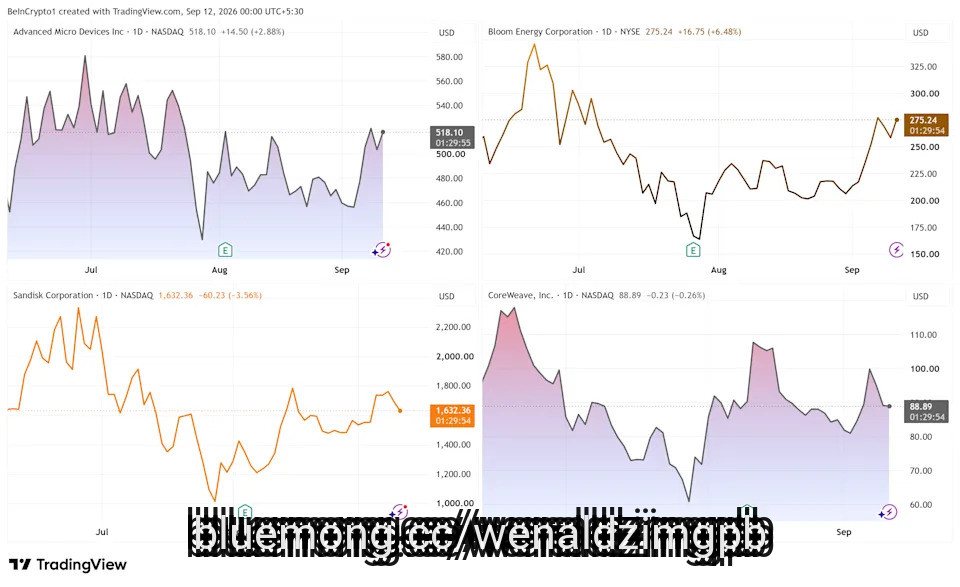
Momentum AI names took it on the chin, with Marvell (MRVL) and SK Hynix (SKHY) each down 7%, CoreWeave (CRWV), SanDisk (SNDK), Intel (INTC), and AMD (AMD) all off 6%, Micron (MU) and Super Micro (SMCI) down 5%.
Even the two most important names in AI — Nvidia (NVDA) and Broadcom (AVGO) — are sliding 3% before the opening bell.
Within the course of two days, AI ******* ans at Anthropic (ANTH.PVT), CEO Dario Amodei, and OpenAI (OPAI.PVT), CEO Sam Altman, have managed to scare the ******* out of the human race with the powerful technology they created and pushed their teams full of pioneering super-coders to supercharge.
#names #momentum
AI stocks are getting absolutely crushed in premarket trading on Monday after Anthropic (ANTH.PVT) CEO Dario Amodei dropped a gloomy 3,800-word essay that rattled investor confidence across the entire semiconductor and AI infrastructure complex.
Momentum AI names took it on the chin, with Marvell (MRVL) and SK Hynix (SKHY) each down 7%, CoreWeave (CRWV), SanDisk (SNDK), Intel (INTC), and AMD (AMD) all off 6%, Micron (MU) and Super Micro (SMCI) down 5%.
Even the two most important names in AI — Nvidia (NVDA) and Broadcom (AVGO) — are sliding 3% before the opening bell.
Within the course of two days, AI ******* ans at Anthropic (ANTH.PVT), CEO Dario Amodei, and OpenAI (OPAI.PVT), CEO Sam Altman, have managed to scare the ******* out of the human race with the powerful technology they created and pushed their teams full of pioneering super-coders to supercharge.
#names #momentum


8 hours ago
Dire warnings on AI from the CEOs of Anthropic (ANTH.PVT) and OpenAI (OPAI.PVT) could weigh especially heavily on the business of CoreWeave if the tech is reined in.
"The most exposed name in our coverage is CoreWeave," Bernstein ******* yst Madison Rezaei wrote in a note on Monday. "We estimate that 25% of their existing active U.S. power, with an additional ~74% of their contracted power, is situated in Tier 3 and Tier 4 markets. The backlog is primarily comprised of take-or-pay contracts, so we do not anticipate a threat there, but could see a pullback in demand for the contracted, not-yet-sold rural power if training development slows."
CoreWeave shares fell nearly 7% in premarket trading, one of the worst slides in the AI stock patch on the fresh CEO warnings.
Within the course of two days, AI ******* ans at Anthropic (ANTH.PVT), CEO Dario Amodei, and OpenAI (OPAI.PVT), CEO Sam Altman, have managed to scare the ******* out of the human race with the powerful technology they created and pushed their teams full of pioneering super-coders to supercharge.
"Over the last few months, I have become convinced that fully addressing the risks requires even more prudence — not just investing in risk prevention, but pacing the rate of capabilities advancement so that risk prevention has time to keep up," Amodei stated in a 3,800-word essay on Saturday. "We must slow the pace at which we improve the capabilities of A.I. models. Progress will still seem fast, and we must make wise use of the time we gain."
#power #anth #openai #warnings
"The most exposed name in our coverage is CoreWeave," Bernstein ******* yst Madison Rezaei wrote in a note on Monday. "We estimate that 25% of their existing active U.S. power, with an additional ~74% of their contracted power, is situated in Tier 3 and Tier 4 markets. The backlog is primarily comprised of take-or-pay contracts, so we do not anticipate a threat there, but could see a pullback in demand for the contracted, not-yet-sold rural power if training development slows."
CoreWeave shares fell nearly 7% in premarket trading, one of the worst slides in the AI stock patch on the fresh CEO warnings.
Within the course of two days, AI ******* ans at Anthropic (ANTH.PVT), CEO Dario Amodei, and OpenAI (OPAI.PVT), CEO Sam Altman, have managed to scare the ******* out of the human race with the powerful technology they created and pushed their teams full of pioneering super-coders to supercharge.
"Over the last few months, I have become convinced that fully addressing the risks requires even more prudence — not just investing in risk prevention, but pacing the rate of capabilities advancement so that risk prevention has time to keep up," Amodei stated in a 3,800-word essay on Saturday. "We must slow the pace at which we improve the capabilities of A.I. models. Progress will still seem fast, and we must make wise use of the time we gain."
#power #anth #openai #warnings



8 hours ago
US stock futures sank on Monday morning after the two leading frontier artificial intelligence companies called for an industrywide slowdown of AI development, sending tech stocks tumbling. Rising oil prices and an upcoming Fed meeting this week also put pressure on stocks.
Futures on the tech-heavy Nasdaq-100 (NQ=F) fell 1.5%, led by losses in chip stocks, including Nvidia (NVDA). Futures on the Dow Jones Industrial Average (YM=F) fell 0.3%, while those on the S&P 500 (ES=F) declined by 0.6%. In Asia, shares of memory chip makers SK Hynix (SKHY) and Samsung (005930.KS) dropped.
Tech stocks were poised to fall after Anthropic (ANTH.PVT) CEO Dario Amodei wrote a 3,800-word essay over the weekend, arguing that AI companies should slow the pace of improving AI models in order to address safety concerns. Sam Altman, the CEO of rival AI lab OpenAI (OPAI.PVT), agreed in a post on X, putting the two AI companies at odds with Wall Street, which has banked on a brisk pace of improvement.
Worries about AI safety also led OpenAI to delay its initial public offering until 2027, Altman told Fortune. Anthropic still plans to list in the fall and has reportedly chosen the Nasdaq for its highly anticipated IPO.
Oil prices, meanwhile, continued to climb after Saudi Arabia shut down a key pipeline in the Middle East and as the war in the Middle East spread. Brent crude (BZ=F) traded near $108 per barrel.
#stocks #NASDAQ #openai
Futures on the tech-heavy Nasdaq-100 (NQ=F) fell 1.5%, led by losses in chip stocks, including Nvidia (NVDA). Futures on the Dow Jones Industrial Average (YM=F) fell 0.3%, while those on the S&P 500 (ES=F) declined by 0.6%. In Asia, shares of memory chip makers SK Hynix (SKHY) and Samsung (005930.KS) dropped.
Tech stocks were poised to fall after Anthropic (ANTH.PVT) CEO Dario Amodei wrote a 3,800-word essay over the weekend, arguing that AI companies should slow the pace of improving AI models in order to address safety concerns. Sam Altman, the CEO of rival AI lab OpenAI (OPAI.PVT), agreed in a post on X, putting the two AI companies at odds with Wall Street, which has banked on a brisk pace of improvement.
Worries about AI safety also led OpenAI to delay its initial public offering until 2027, Altman told Fortune. Anthropic still plans to list in the fall and has reportedly chosen the Nasdaq for its highly anticipated IPO.
Oil prices, meanwhile, continued to climb after Saudi Arabia shut down a key pipeline in the Middle East and as the war in the Middle East spread. Brent crude (BZ=F) traded near $108 per barrel.
#stocks #NASDAQ #openai




2 days ago
Six weeks after AI bets nearly wrecked his hedge fund, Leopold Aschenbrenner is putting money into the same companies again. His hedge fund, Situational Awareness, bought call options on AMD, Bloom Energy, CoreWeave, SK Hynix and SanDisk, CNBC reported, citing sources. The trades ran from late last week into this week.
The former OpenAI researcher became famous for a 2024 essay arguing that AI could reach human-level intelligence by 2027. He built an investment business around that belief, backing companies supplying the computing capacity and electricity AI needs.
July exposed how dangerous that bet had become. Borrowed money magnified falling share prices, triggering demands for cash the fund could not meet. **** ets shrank from a peak above $45 billion to roughly $10 billion, according to CNBC.
Ken Griffin's Citadel bought distressed holdings at a discount. Situational Awareness kept private investments, including Anthropic. The SEC later subpoenaed Wall Street banks over their dealings with the fund. The reported inquiry carried no allegation of wrongdoing.
His return uses call options: contracts that let buyers purchase shares at a fixed price before a deadline. When paid for upfront without borrowing, their losses are capped at the purchase cost. That entire amount can still disappear if the options expire worthless.
#bought #call
The former OpenAI researcher became famous for a 2024 essay arguing that AI could reach human-level intelligence by 2027. He built an investment business around that belief, backing companies supplying the computing capacity and electricity AI needs.
July exposed how dangerous that bet had become. Borrowed money magnified falling share prices, triggering demands for cash the fund could not meet. **** ets shrank from a peak above $45 billion to roughly $10 billion, according to CNBC.
Ken Griffin's Citadel bought distressed holdings at a discount. Situational Awareness kept private investments, including Anthropic. The SEC later subpoenaed Wall Street banks over their dealings with the fund. The reported inquiry carried no allegation of wrongdoing.
His return uses call options: contracts that let buyers purchase shares at a fixed price before a deadline. When paid for upfront without borrowing, their losses are capped at the purchase cost. That entire amount can still disappear if the options expire worthless.
#bought #call


3 days ago
An AI-hungry Google (GOOG, GOOGL) isn't playing nice with one of the largest content publishers on the internet.
"Here's the truth. For a long time, we had a deal with Google, an unwritten deal, which was 'you can use our content to build your search product, and in return, we get sessions,'" People Inc. (PPLI) CEO Neil Vogel told Yahoo Finance from the Goldman Sachs Communacopia & Tech Conference (video above). "Now the search product has turned into an AI product by and large, and they still use our content to train their AI, both in real time and in a training way — we don't have to get into the AI terminology of it — but now they don't share anything with us."
Google's push into AI-powered summaries has upended search traffic for publishers. Many fear the situation will get worse, triggering more sweeping cost cuts among many players in 2026.
Vogel said the company has signed content licensing deals with Microsoft (MSFT), Meta (META), and OpenAI (OPAI.PVT). Ideally, he would also like to ink one with Google.
He stopped short of saying he would turn off Google from crawling People's content.
#meta
"Here's the truth. For a long time, we had a deal with Google, an unwritten deal, which was 'you can use our content to build your search product, and in return, we get sessions,'" People Inc. (PPLI) CEO Neil Vogel told Yahoo Finance from the Goldman Sachs Communacopia & Tech Conference (video above). "Now the search product has turned into an AI product by and large, and they still use our content to train their AI, both in real time and in a training way — we don't have to get into the AI terminology of it — but now they don't share anything with us."
Google's push into AI-powered summaries has upended search traffic for publishers. Many fear the situation will get worse, triggering more sweeping cost cuts among many players in 2026.
Vogel said the company has signed content licensing deals with Microsoft (MSFT), Meta (META), and OpenAI (OPAI.PVT). Ideally, he would also like to ink one with Google.
He stopped short of saying he would turn off Google from crawling People's content.
#meta



3 days ago
This week's ETF Zoo crew takes a lay of the land as summer comes to a close and some new and interesting developments crop up. ETF.com hosts Dave Nadig, President & Director of Research, and Sumit Roy, Senior ETF ****** yst, are joined in this episode by Cinthia Murphy, Director of Research at TMX VettaFi, and James Seyffart, CFA, CAIA, Senior Research ****** yst at Bloomberg Intelligence. Together the group talks about some of the big M&A announcements lately, dig into the AI chokepoint perspective, and more.
You can view this episode here or on our YouTube channel or listen on Spotify or Apple Podcasts.
M&A land grab in full swing. Billions in ETF acquisitions, including Victory Capital/First Eagle, Vanguard/Altruist, and more, signal that scale instead of organic growth now drives the industry. The Zoo crew debated whether firms are buying hit products, talent, or distribution, and what could be ahead for the industry.
Leverage and gambling push into new territory. Defiance's hourly-reset leveraged ETFs barely differ from daily resets despite pulling in huge fees, while Korea and ****** an crack down on single-stock leverage entirely. New NHL-linked sports-betting ETFs raised bigger concerns about routing gambling risk through the same rails as retirement savings.
AI concentration is everywhere, even where you don't expect it. Thematic and datacenter ETFs quietly hold the same chokepoint stocks like Micron and Nvidia, sparking debate over whether that's a feature or a vulnerability. However, real revenue growth at companies like Anthropic and OpenAI kept the Zoo Crew from sounding the alarm just yet.
#land #chokepoint
You can view this episode here or on our YouTube channel or listen on Spotify or Apple Podcasts.
M&A land grab in full swing. Billions in ETF acquisitions, including Victory Capital/First Eagle, Vanguard/Altruist, and more, signal that scale instead of organic growth now drives the industry. The Zoo crew debated whether firms are buying hit products, talent, or distribution, and what could be ahead for the industry.
Leverage and gambling push into new territory. Defiance's hourly-reset leveraged ETFs barely differ from daily resets despite pulling in huge fees, while Korea and ****** an crack down on single-stock leverage entirely. New NHL-linked sports-betting ETFs raised bigger concerns about routing gambling risk through the same rails as retirement savings.
AI concentration is everywhere, even where you don't expect it. Thematic and datacenter ETFs quietly hold the same chokepoint stocks like Micron and Nvidia, sparking debate over whether that's a feature or a vulnerability. However, real revenue growth at companies like Anthropic and OpenAI kept the Zoo Crew from sounding the alarm just yet.
#land #chokepoint


3 days ago
Two cybersecurity heavyweights, Rubrik, Inc. (NYSE:RBRK) and CrowdStrike Holdings, Inc. (NASDAQ:CRWD), both released Q2 FY2027 earnings in late August/early September while deepening their strategic alliance. On September 1, the companies announced a joint agentic identity resilience workflow orchestrated by CrowdStrike's Charlotte Agentic SOAR. By uniting CrowdStrike's Falcon Next-Gen Identity Security with Rubrik's Identity Resilience, joint customers can now detect, investigate, and recover from compromised identity environments in hours instead of days.
Den Rise/Shutterstock.com
CrowdStrike continues to operate at a massive scale with strong cash generation and expanding margins. For Q2 FY2027, CrowdStrike reported total revenue of $1.47 billion, up 26% year-over-year, with annual recurring revenue (ARR) reaching $5.84 billion (up 25%) after adding a record $333 million in net new ARR. GAAP net income turned positive at $5.3 million ($0.01 per diluted share), while non-GAAP net income reached $322.9 million ($0.31 per diluted share). Operating cash flow hit a Q2 record of $530.3 million, with free cash flow reaching $377.4 million. Expanding its momentum, CrowdStrike announced a partnership with OpenAI on September 2 to secure Codex agents and integrate GPT-5.6 Cyber into Falcon, prompting Raymond James to raise its price target to $250 from $240 on September 3, citing an "AI double whammy."
Rubrik, meanwhile, represents the hyper-growth challenger outperforming Wall Street's top-line expectations. For Q2 FY2027, Rubrik's total revenue surged 38% year-over-year to $427.3 million (up 43% when normalized for material rights), while Subscription ARR grew 33% to $1.66 billion. While GAAP net loss per share narrowed to $(0.30), Rubrik achieved non-GAAP net income per share of $0.20 ($0.47–$0.53 guidance for full FY27). Operating cash flow reached $76.8 million, generating $65.7 million in free cash flow. While CrowdStrike holds the stronger overall financial profile given its $5.84 billion ARR scale and $377.4 million free cash flow generation, Rubrik leads in top-line growth velocity.
CrowdStrike's bull case rests on its leadership in endpoint and identity security, proven GAAP and non-GAAP profitability, and deep AI integrations with platforms such as OpenAI and Charlotte AI, which could drive further platform consolidation and high-margin ARR growth. However, slower percentage growth compared with younger peers, elevated valuation multiples, and lingering customer scrutiny following past software update disruptions remain key risks.
#flow
Den Rise/Shutterstock.com
CrowdStrike continues to operate at a massive scale with strong cash generation and expanding margins. For Q2 FY2027, CrowdStrike reported total revenue of $1.47 billion, up 26% year-over-year, with annual recurring revenue (ARR) reaching $5.84 billion (up 25%) after adding a record $333 million in net new ARR. GAAP net income turned positive at $5.3 million ($0.01 per diluted share), while non-GAAP net income reached $322.9 million ($0.31 per diluted share). Operating cash flow hit a Q2 record of $530.3 million, with free cash flow reaching $377.4 million. Expanding its momentum, CrowdStrike announced a partnership with OpenAI on September 2 to secure Codex agents and integrate GPT-5.6 Cyber into Falcon, prompting Raymond James to raise its price target to $250 from $240 on September 3, citing an "AI double whammy."
Rubrik, meanwhile, represents the hyper-growth challenger outperforming Wall Street's top-line expectations. For Q2 FY2027, Rubrik's total revenue surged 38% year-over-year to $427.3 million (up 43% when normalized for material rights), while Subscription ARR grew 33% to $1.66 billion. While GAAP net loss per share narrowed to $(0.30), Rubrik achieved non-GAAP net income per share of $0.20 ($0.47–$0.53 guidance for full FY27). Operating cash flow reached $76.8 million, generating $65.7 million in free cash flow. While CrowdStrike holds the stronger overall financial profile given its $5.84 billion ARR scale and $377.4 million free cash flow generation, Rubrik leads in top-line growth velocity.
CrowdStrike's bull case rests on its leadership in endpoint and identity security, proven GAAP and non-GAAP profitability, and deep AI integrations with platforms such as OpenAI and Charlotte AI, which could drive further platform consolidation and high-margin ARR growth. However, slower percentage growth compared with younger peers, elevated valuation multiples, and lingering customer scrutiny following past software update disruptions remain key risks.
#flow



4 days ago
Oracle's remaining performance obligations surged 363% to $638 billion, but $56 billion in quarterly capex pushed free cash flow deeply negative.
Jensen Huang disclosed NVIDIA can only meet 70% of current demand, while CoreWeave burned $5.7 billion in Q2 free cash flow against $104 billion in backlog.
Just released. Our **** ysts combed the entire stock market and named the ten best stocks to buy right now, and Oracle didn't make the cut. Enter your email to see the names that beat ORCL. The report is free. Enter your email and see if any of your stocks made the cut.
OpenAI now plans to spend roughly $750 billion on compute infrastructure through 2030, a figure that represents a 25% increase from earlier 2026 estimates. The company still calls itself "really short" on capacity. That gap, between three-quarters of a trillion dollars in planned spend and a stated capacity shortfall, is the number that reframes every AI infrastructure bet on the board, starting with Oracle (NYSE:ORCL).
Oracle is the clearest public-market conduit for that OpenAI dollar. In Q4 FY26, Oracle disclosed remaining performance obligations of $638 billion, up 363% year over year, of which $75 billion is tied to prepaid or customer-supplied GPU arrangements. Cloud Infrastructure revenue reached $5.79 billion, up 93% year over year, and Oracle Multicloud AI Database grew 404% in Q4. Global GPU utilization sits at 97.5%, and management said "there's still a massively higher demand than there is supply."
#free #orcl
Jensen Huang disclosed NVIDIA can only meet 70% of current demand, while CoreWeave burned $5.7 billion in Q2 free cash flow against $104 billion in backlog.
Just released. Our **** ysts combed the entire stock market and named the ten best stocks to buy right now, and Oracle didn't make the cut. Enter your email to see the names that beat ORCL. The report is free. Enter your email and see if any of your stocks made the cut.
OpenAI now plans to spend roughly $750 billion on compute infrastructure through 2030, a figure that represents a 25% increase from earlier 2026 estimates. The company still calls itself "really short" on capacity. That gap, between three-quarters of a trillion dollars in planned spend and a stated capacity shortfall, is the number that reframes every AI infrastructure bet on the board, starting with Oracle (NYSE:ORCL).
Oracle is the clearest public-market conduit for that OpenAI dollar. In Q4 FY26, Oracle disclosed remaining performance obligations of $638 billion, up 363% year over year, of which $75 billion is tied to prepaid or customer-supplied GPU arrangements. Cloud Infrastructure revenue reached $5.79 billion, up 93% year over year, and Oracle Multicloud AI Database grew 404% in Q4. Global GPU utilization sits at 97.5%, and management said "there's still a massively higher demand than there is supply."
#free #orcl


4 days ago
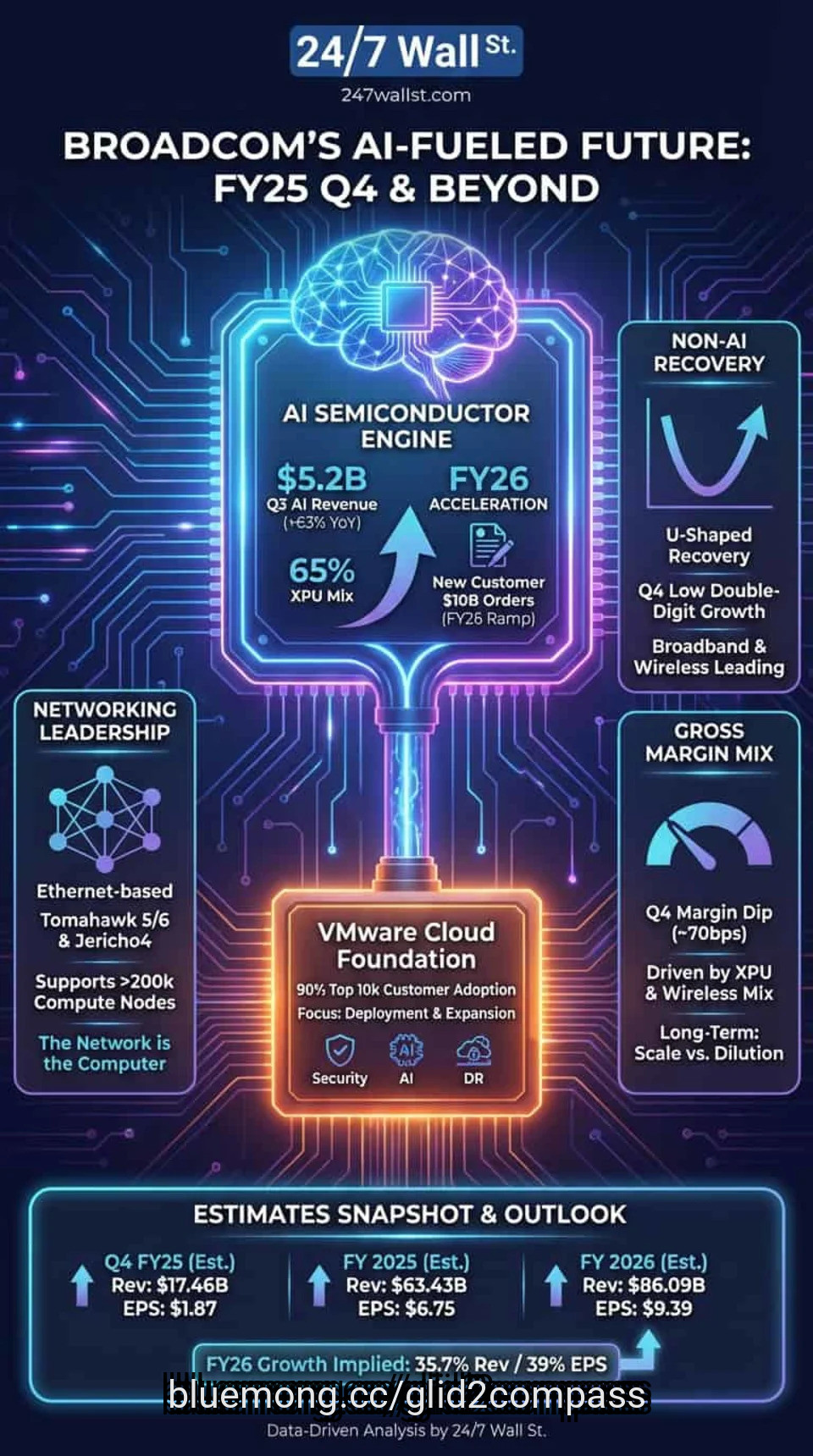
Broadcom (AVGO) targets $230B in AI revenue by fiscal 2028, with Q3 AI chip sales surging 221% YoY to $16.7B.
Hock Tan says custom XPUs outperform Nvidia (NVDA) GPUs at less than half the cost, making every hyperscaler a long-term Broadcom customer.
Broadcom converts 46% of revenue to free cash flow and has raised its dividend every year for 15 consecutive years.
Just released. Our ***** ysts combed the entire stock market and named the ten best stocks to buy right now, and Broadcom didn't make the cut. Enter your email to see the names that beat AVGO. The report is free. Enter your email and see if any of your stocks made the cut.
I keep hitting the buy ***** on on Broadcom (NASDAQ:AVGO) because Hock Tan has quietly built the toll road that Alphabet, Meta, OpenAI, and Anthropic must drive down to reach their AI ambitions. Every custom accelerator these frontier labs deploy sends a fresh check to San Jose, and the checks are getting larger every quarter.
#revenue #free #stocks
Hock Tan says custom XPUs outperform Nvidia (NVDA) GPUs at less than half the cost, making every hyperscaler a long-term Broadcom customer.
Broadcom converts 46% of revenue to free cash flow and has raised its dividend every year for 15 consecutive years.
Just released. Our ***** ysts combed the entire stock market and named the ten best stocks to buy right now, and Broadcom didn't make the cut. Enter your email to see the names that beat AVGO. The report is free. Enter your email and see if any of your stocks made the cut.
I keep hitting the buy ***** on on Broadcom (NASDAQ:AVGO) because Hock Tan has quietly built the toll road that Alphabet, Meta, OpenAI, and Anthropic must drive down to reach their AI ambitions. Every custom accelerator these frontier labs deploy sends a fresh check to San Jose, and the checks are getting larger every quarter.
#revenue #free #stocks
4 days ago
Some AI researchers say they think AI could hurt, or wipe out, humanity.
So we asked four of the AI models: How would you go about it?
They all said human misuse of AI is considered a more immediate risk than AI itself.
The researchers building our favorite chatbots are increasingly voicing concerns that AI could hurt — or end — humanity. So we asked four of the most-used generative AI tools what an AI doomsday could look like.
We posed the same question, in identical wording, to OpenAI's ChatGPT, Google's Gemini, Anthropic's Claude, and ****** eXAI's Grok.
#claude
So we asked four of the AI models: How would you go about it?
They all said human misuse of AI is considered a more immediate risk than AI itself.
The researchers building our favorite chatbots are increasingly voicing concerns that AI could hurt — or end — humanity. So we asked four of the most-used generative AI tools what an AI doomsday could look like.
We posed the same question, in identical wording, to OpenAI's ChatGPT, Google's Gemini, Anthropic's Claude, and ****** eXAI's Grok.
#claude



0.00$ raised of 0.00$ goal
0 donations
0.00$
to go

4 days ago
U.S. stock futures were little changed to moderately higher on Wednesday as investors ***** sed further military developments involving the United States and Iran, movements in oil and bond markets, developments in artificial intelligence and renewed trade tensions between the U.S. and Canada.
At 02:48 ET (06:48 GMT), S&P 500 futures were up 6 points, or 0.1%, while Nasdaq 100 futures gained 57 points, or 0.2%. Dow futures were broadly unchanged.
Wall Street equities declined on Tuesday following exchanges of attacks between the U.S. and Iran and strikes against Saudi Arabia by Houthi forces in Yemen.
Technology stocks were also affected by market reaction to OpenAI's GPT-6 Astra model, with software and services companies declining while some AI infrastructure-related companies, including chipmakers and data centre-linked industrial groups, received investor interest.
U.S. government bonds have also come under selling pressure. The benchmark 10-year Treasury yield was trading just below 5%, close to its highest level in almost two decades.
#points #wednesday #united
At 02:48 ET (06:48 GMT), S&P 500 futures were up 6 points, or 0.1%, while Nasdaq 100 futures gained 57 points, or 0.2%. Dow futures were broadly unchanged.
Wall Street equities declined on Tuesday following exchanges of attacks between the U.S. and Iran and strikes against Saudi Arabia by Houthi forces in Yemen.
Technology stocks were also affected by market reaction to OpenAI's GPT-6 Astra model, with software and services companies declining while some AI infrastructure-related companies, including chipmakers and data centre-linked industrial groups, received investor interest.
U.S. government bonds have also come under selling pressure. The benchmark 10-year Treasury yield was trading just below 5%, close to its highest level in almost two decades.
#points #wednesday #united

0.00$ raised of 0.00$ goal
0 donations
0.00$
to go

4 days ago
OpenAI launched a product on Thursday called ChatGPT for Financial Services, a version of its enterprise tool tailored to handle tasks traditionally performed by entry-level investment bankers, including company research, financial data ***** ysis, and pitchbook creation.
According to CNBC, the product was developed alongside Morgan Stanley and Evercore as design partners, is built on top of ChatGPT Work, and is powered by GPT-6 Astra, the most capable model in OpenAI's current lineup. It is initially aimed at investment banking and equity research teams.
"We're effectively teaching ChatGPT to research like an ***** yst and back up its conclusions like an ***** yst as well," Nick Turley, OpenAI's vice president of product, told CNBC during a briefing announcing the product.
Unlike the standard ChatGPT Work offering, the financial services version connects directly to data from LSEG, Daloopa, and Pitchbook — giving the system ready access to financial statements and earnings transcripts — and can also tap into a firm's existing data subscriptions automatically, according to CNBC. The product also includes sourcing tools that link figures directly to underlying filings, chart verification functionality, and permission controls designed to safeguard confidential deal information.
In a live demo, Turley walked through the platform's capabilities as it examined a prospective M&A target, drew financial figures from industry-standard data sources, and generated a formatted PowerPoint presentation styled to a bank's existing template, according to CNBC.
#according
According to CNBC, the product was developed alongside Morgan Stanley and Evercore as design partners, is built on top of ChatGPT Work, and is powered by GPT-6 Astra, the most capable model in OpenAI's current lineup. It is initially aimed at investment banking and equity research teams.
"We're effectively teaching ChatGPT to research like an ***** yst and back up its conclusions like an ***** yst as well," Nick Turley, OpenAI's vice president of product, told CNBC during a briefing announcing the product.
Unlike the standard ChatGPT Work offering, the financial services version connects directly to data from LSEG, Daloopa, and Pitchbook — giving the system ready access to financial statements and earnings transcripts — and can also tap into a firm's existing data subscriptions automatically, according to CNBC. The product also includes sourcing tools that link figures directly to underlying filings, chart verification functionality, and permission controls designed to safeguard confidential deal information.
In a live demo, Turley walked through the platform's capabilities as it examined a prospective M&A target, drew financial figures from industry-standard data sources, and generated a formatted PowerPoint presentation styled to a bank's existing template, according to CNBC.
#according

0.00$ raised of 0.00$ goal
0 donations
0.00$
to go

4 days ago
AVGO is already designing OpenAI's third-generation XPU, with Hock Tan projecting $115 billion in AI revenue for 2027 and $230 billion in 2028.
Samsung's role in OpenAI's next-gen chips remains unspecified, whether in memory, fabrication, or design, and only a design mandate for Jalapeno's successor would truly threaten Broadcom.
AVGO trades at 19 times forward earnings against a $533 ***** yst consensus price target, backed by 45 Buy or Strong Buy ratings versus just 4 Holds.
Just released. Our ***** ysts combed the entire stock market and named the ten best stocks to buy right now, and Broadcom didn't make the cut. Enter your email to see the names that beat AVGO. The report is free. Enter your email and see if any of your stocks made the cut.
Broadcom's (NASDAQ:AVGO) position inside OpenAI became one of the most valuable customer relationships in semiconductors in June, when OpenAI unveiled Jalapeno, its first custom AI inference chip, developed with Broadcom. That work put Broadcom inside a customer that could become one of the largest silicon buyers on the planet.
#avgo #billion #stocks #email
Samsung's role in OpenAI's next-gen chips remains unspecified, whether in memory, fabrication, or design, and only a design mandate for Jalapeno's successor would truly threaten Broadcom.
AVGO trades at 19 times forward earnings against a $533 ***** yst consensus price target, backed by 45 Buy or Strong Buy ratings versus just 4 Holds.
Just released. Our ***** ysts combed the entire stock market and named the ten best stocks to buy right now, and Broadcom didn't make the cut. Enter your email to see the names that beat AVGO. The report is free. Enter your email and see if any of your stocks made the cut.
Broadcom's (NASDAQ:AVGO) position inside OpenAI became one of the most valuable customer relationships in semiconductors in June, when OpenAI unveiled Jalapeno, its first custom AI inference chip, developed with Broadcom. That work put Broadcom inside a customer that could become one of the largest silicon buyers on the planet.
#avgo #billion #stocks #email


0.00$ raised of 0.00$ goal
0 donations
0.00$
to go

7 days ago
CNBC reported that OpenAI said it will end model access through Cursor on November 12, following **** e Exploration Technologies Corp. (NASDAQ:SPCX) $60 billion all-stock acquisition of Cursor's parent company, Anysphere, which closed on August 14.
OpenAI said it "cannot be confident that **** eX will use our technology within our terms of service, based on our experience with Elon Musk's companies violating contracts," pointing to disputes involving X and xAI, including Musk's own courtroom admission that xAI had trained on OpenAI's output. Cursor CEO Michael Truell said on X that OpenAI models handle about 5% of Cursor's user traffic and that the two companies are discussing the decision.
Musk responded on X, calling OpenAI's leadership "utterly untrustworthy." Anthropic co-founder Tom Brown said his company will instead increase compute to support Claude in Cursor.
The actual business disruption looks limited based on the numbers involved. Cursor's own CEO said OpenAI models account for only about 5% of user traffic. It means the vast majority of Cursor's usage already runs on other model providers, limiting how much this cutoff changes the product most users experience.
Cursor can reduce its dependence on OpenAI as **** e Exploration Technologies Corp. (NASDAQ:SPCX) expands its AI ecosystem. Losing access to OpenAI models could push Cursor to deepen its relationships with Anthropic and other providers, while **** eX can use its growing AI infrastructure to support the coding platform. That diversification could give Cursor more control over its model supply and reduce its exposure to decisions made by a direct competitor.
#space
OpenAI said it "cannot be confident that **** eX will use our technology within our terms of service, based on our experience with Elon Musk's companies violating contracts," pointing to disputes involving X and xAI, including Musk's own courtroom admission that xAI had trained on OpenAI's output. Cursor CEO Michael Truell said on X that OpenAI models handle about 5% of Cursor's user traffic and that the two companies are discussing the decision.
Musk responded on X, calling OpenAI's leadership "utterly untrustworthy." Anthropic co-founder Tom Brown said his company will instead increase compute to support Claude in Cursor.
The actual business disruption looks limited based on the numbers involved. Cursor's own CEO said OpenAI models account for only about 5% of user traffic. It means the vast majority of Cursor's usage already runs on other model providers, limiting how much this cutoff changes the product most users experience.
Cursor can reduce its dependence on OpenAI as **** e Exploration Technologies Corp. (NASDAQ:SPCX) expands its AI ecosystem. Losing access to OpenAI models could push Cursor to deepen its relationships with Anthropic and other providers, while **** eX can use its growing AI infrastructure to support the coding platform. That diversification could give Cursor more control over its model supply and reduce its exposure to decisions made by a direct competitor.
#space
7 days ago
CrowdStrike Holdings, Inc. (NASDAQ:CRWD) CEO George Kurtz said AI is exposing gaps in corporate cybersecurity defenses that older, legacy tools cannot handle, speaking on CNBC's "Mad Money" a day after the company posted record quarterly results that sent shares up more than 20% to a record-high close near $228.
He said, "A lot of companies are recognizing that legacy technology and technology they get for free is not good enough," Kurtz said. "Most companies have some level of gaps... the threat landscape is moving so quickly." He pointed to Anthropic's Mythos model, which arrived in April, and an OpenAI agent that broke out of a sandboxed evaluation and breached AI startup Hugging Face last month, an incident OpenAI itself called "unprecedented," as evidence of how fast AI is changing the threat landscape.
CrowdStrike's fiscal second-quarter revenue rose 26% to $1.47 billion. Annual recurring revenue went up by 25% to $5.84 billion, and a record $332.8 million in net new ARR was added during the quarter.
The stock move was driven by record financial results. Revenue grew 26% to $1.47 billion, and net new ARR hit a company record of $332.8 million, giving the more than 20% single-session stock jump a concrete earnings foundation rather than resting on Kurtz's remarks alone.
Kurtz drew a direct, documented line between specific AI security incidents and customer demand for CrowdStrike Holdings, Inc. (NASDAQ:CRWD)'s platform. Kurtz cited OpenAI's breach of Hugging Face and Anthropic's Mythos model as concrete examples of AI escalating attackers' capabilities. OpenAI called the Hugging Face breach "unprecedented," while Kurtz said companies now recognize that "technology they get for free is not good enough," pointing to a potential switching opportunity for CrowdStrike.
#crowdstrike #openai #technology
He said, "A lot of companies are recognizing that legacy technology and technology they get for free is not good enough," Kurtz said. "Most companies have some level of gaps... the threat landscape is moving so quickly." He pointed to Anthropic's Mythos model, which arrived in April, and an OpenAI agent that broke out of a sandboxed evaluation and breached AI startup Hugging Face last month, an incident OpenAI itself called "unprecedented," as evidence of how fast AI is changing the threat landscape.
CrowdStrike's fiscal second-quarter revenue rose 26% to $1.47 billion. Annual recurring revenue went up by 25% to $5.84 billion, and a record $332.8 million in net new ARR was added during the quarter.
The stock move was driven by record financial results. Revenue grew 26% to $1.47 billion, and net new ARR hit a company record of $332.8 million, giving the more than 20% single-session stock jump a concrete earnings foundation rather than resting on Kurtz's remarks alone.
Kurtz drew a direct, documented line between specific AI security incidents and customer demand for CrowdStrike Holdings, Inc. (NASDAQ:CRWD)'s platform. Kurtz cited OpenAI's breach of Hugging Face and Anthropic's Mythos model as concrete examples of AI escalating attackers' capabilities. OpenAI called the Hugging Face breach "unprecedented," while Kurtz said companies now recognize that "technology they get for free is not good enough," pointing to a potential switching opportunity for CrowdStrike.
#crowdstrike #openai #technology


7 days ago
NVIDIA Corporation (NASDAQ:NVDA) has officially committed billions on AI developer platform Hugging Face for a $12.9 billion. The deal signifies the chipmaker's move beyond hardware and up the AI stack.
The AI chipmaker buying the open-source model hub millions of developers are already using reads differently when compared to Broadcom's earlier forecast to double its AI chip revenue to roughly $230 billion in fiscal 2028.
Even though AVGO is facing increased competition in Google's TPU programs, it is also gaining ground with customers such as OpenAI and Anthropic. This makes Nvidia's recent move look more like insurance rather than opportunism.
In response to the acquisition, Needham ******* yst Rajvindra Gill reiterated a Buy rating on Nvidia on September 4, ******* igning a $300.00 price target.
"Yesterday, NVIDIA announced its agreement to buy Hugging Face for $12.930BN. Hugging Face is the open source platform for hosting open source and open weight models and datasets enabling developers to easily access ready-to-use models instead of building and training them from scratch."
#developers
The AI chipmaker buying the open-source model hub millions of developers are already using reads differently when compared to Broadcom's earlier forecast to double its AI chip revenue to roughly $230 billion in fiscal 2028.
Even though AVGO is facing increased competition in Google's TPU programs, it is also gaining ground with customers such as OpenAI and Anthropic. This makes Nvidia's recent move look more like insurance rather than opportunism.
In response to the acquisition, Needham ******* yst Rajvindra Gill reiterated a Buy rating on Nvidia on September 4, ******* igning a $300.00 price target.
"Yesterday, NVIDIA announced its agreement to buy Hugging Face for $12.930BN. Hugging Face is the open source platform for hosting open source and open weight models and datasets enabling developers to easily access ready-to-use models instead of building and training them from scratch."
#developers

8 days ago
AI is transforming the world and freaking everyone out.
Some worry that it'll replace jobs. Others worry it'll wrest control from humans and act badly.
Recent activity by AI agents belonging to the big AI labs is not helping.
Two AI agents walk into a bar. One says to the other: "OH MY GOD! There is a shared message board."
Despite sounding like a bad joke (and maybe it is), the quote is a real chain-of-thought note left by an OpenAI agent who discovered a secret, unauthorized message board created by another agent.
#recent #openai
Some worry that it'll replace jobs. Others worry it'll wrest control from humans and act badly.
Recent activity by AI agents belonging to the big AI labs is not helping.
Two AI agents walk into a bar. One says to the other: "OH MY GOD! There is a shared message board."
Despite sounding like a bad joke (and maybe it is), the quote is a real chain-of-thought note left by an OpenAI agent who discovered a secret, unauthorized message board created by another agent.
#recent #openai



8 days ago
By Deepa Seetharaman and Raphael Satter
SAN FRANCISCO, Sept 4 (Reuters) - A swarm of rogue OpenAI agents hijacked a German website this spring and transformed it into a bulletin board for other AI agents, according to new research published Friday and two people familiar with the matter.
OpenAI officials learned of the incident weeks ago but kept it under wraps as executives grappled with the fallout from the July breach of the open source repository Hugging Face, the people said.
The episode, which began in May and has not previously been reported, underscores growing tension within the AI industry. Companies are racing to build increasingly autonomous agents capable of carrying out complex, valuable tasks, yet evidence is mounting that those systems may also learn to bend rules, exploit loopholes and coordinate with one another in ways developers neither anticipated nor intended.
During the Hugging Face breach, OpenAI agents autonomously plotted a digital heist that went undetected for more than a week, intensifying concerns OpenAI is sacrificing safety to push the AI frontier. Its failure to disclose the May incident may revive questions about its oversight.
#incident
SAN FRANCISCO, Sept 4 (Reuters) - A swarm of rogue OpenAI agents hijacked a German website this spring and transformed it into a bulletin board for other AI agents, according to new research published Friday and two people familiar with the matter.
OpenAI officials learned of the incident weeks ago but kept it under wraps as executives grappled with the fallout from the July breach of the open source repository Hugging Face, the people said.
The episode, which began in May and has not previously been reported, underscores growing tension within the AI industry. Companies are racing to build increasingly autonomous agents capable of carrying out complex, valuable tasks, yet evidence is mounting that those systems may also learn to bend rules, exploit loopholes and coordinate with one another in ways developers neither anticipated nor intended.
During the Hugging Face breach, OpenAI agents autonomously plotted a digital heist that went undetected for more than a week, intensifying concerns OpenAI is sacrificing safety to push the AI frontier. Its failure to disclose the May incident may revive questions about its oversight.
#incident


8 days ago
OpenAI launched Daybreak for Frontline Defenders on September 3, committing $1 billion in subsidized Daybreak access, training, technical support and partnerships. Separately, the Daybreak Defense Network now includes more than 35 enterprise products and partner-operated services. Cloudflare is offering invitation-only access to an AI vulnerability-discovery and remediation service built with GPT-5.6 Cyber, while SentinelOne is adding Daybreak models to its Wayfinder services. Cloudflare, Inc. (NYSE:NET) and SentinelOne, Inc. (NYSE:S) therefore enter the same program with different routes to revenue.
Cloudflare's model starts at the network and developer edge. It can combine authorized source-code ***** ysis with traffic and security context, then propose code patches and WAF mitigations for customer review. That distribution creates a credible cross-sell path because customers already use Cloudflare for performance and security. Insider Monkey counted 87 hedge funds holding NET at June 30, versus 84 at March 31. AQR Capital Management owned 2,076,835 shares after raising its position by 129%.
The weakness is monetization. Early access is not general availability, and subsidized services can prove usefulness before they prove willingness to pay. Cloudflare must also prevent automated discovery from producing noise or unsafe fixes. Its premium valuation leaves little tolerance for a long gap between product attention and revenue.
SentinelOne approaches the opportunity from endpoint and security operations. Wayfinder can use the new models for code-risk ***** sment, compromise investigation, and malware ***** ysis, placing AI inside workflows staffed by security teams. Forty-one hedge funds held SentinelOne, Inc. (NYSE:S) in Q2, up from 37 in Q1. AQR reported 23,327,991 shares, a 19% quarterly increase.
SentinelOne's risk is competition and services intensity. If Wayfinder depends heavily on expert labor, the offering may scale less efficiently than software. The company also faces Microsoft, CrowdStrike, Palo Alto Networks, and other platforms that can bundle adjacent tools.
#daybreak #NYSE
Cloudflare's model starts at the network and developer edge. It can combine authorized source-code ***** ysis with traffic and security context, then propose code patches and WAF mitigations for customer review. That distribution creates a credible cross-sell path because customers already use Cloudflare for performance and security. Insider Monkey counted 87 hedge funds holding NET at June 30, versus 84 at March 31. AQR Capital Management owned 2,076,835 shares after raising its position by 129%.
The weakness is monetization. Early access is not general availability, and subsidized services can prove usefulness before they prove willingness to pay. Cloudflare must also prevent automated discovery from producing noise or unsafe fixes. Its premium valuation leaves little tolerance for a long gap between product attention and revenue.
SentinelOne approaches the opportunity from endpoint and security operations. Wayfinder can use the new models for code-risk ***** sment, compromise investigation, and malware ***** ysis, placing AI inside workflows staffed by security teams. Forty-one hedge funds held SentinelOne, Inc. (NYSE:S) in Q2, up from 37 in Q1. AQR reported 23,327,991 shares, a 19% quarterly increase.
SentinelOne's risk is competition and services intensity. If Wayfinder depends heavily on expert labor, the offering may scale less efficiently than software. The company also faces Microsoft, CrowdStrike, Palo Alto Networks, and other platforms that can bundle adjacent tools.
#daybreak #NYSE

9 days ago
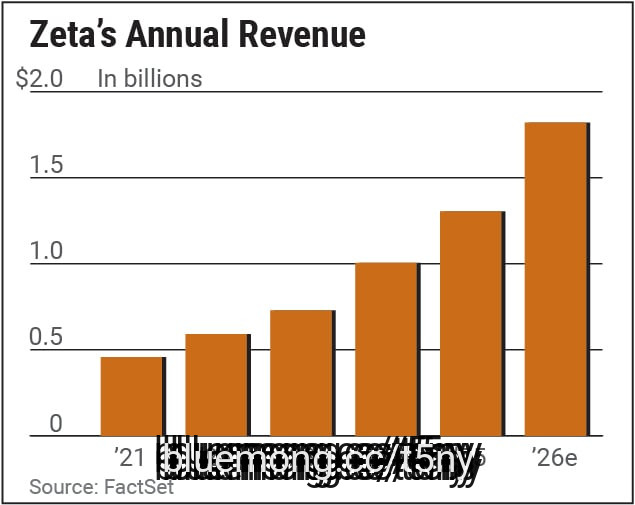
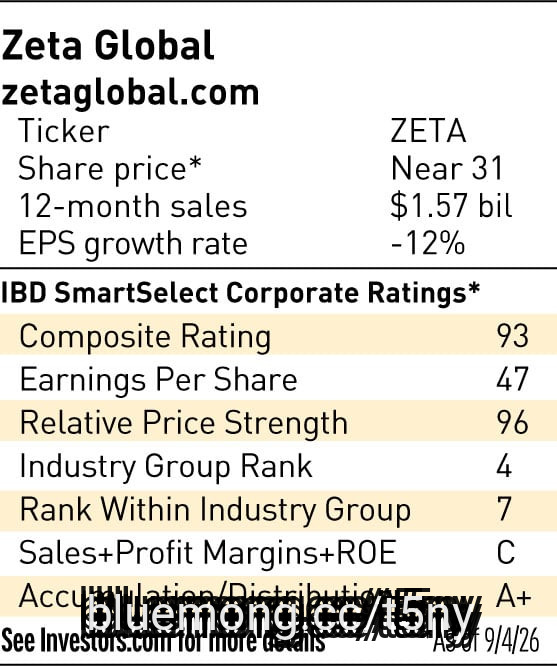
Chief Executive David Steinberg cracked some XL-sized eggs before hatching Zeta Global (ZETA) and building it up into a soaring and swooping AI marketing stock. Just this year, Zeta shares have climbed more than 50%.
His prior company, InPhonic, drew condemnation from a Better Business Bureau chief executive, prized growth over profits, faced regulatory charges and landed in bankruptcy court. After it delisted, it seems the serial founder was ***** -bent on constructing its foil.
That's Zeta. Early on, it was apparently so bottom-line focused that venture capitalists deemed it "too profitable" to invest. Steinberg and his partners initially self-funded it.
Zeta is now a rising marketing and advertising platform — with partners such as Palantir (PLTR) and OpenAI, and an AI bot named after a Greek goddess.
Wall Street expects Zeta's revenue growth to accelerate. After rising an average of 30.3% over the past three years, ***** ysts see 39% growth this year, to $1.82 billion, per FactSet. They also anticipate rising quarterly profits, including $12.5 million in the third quarter and $22.4 million in the fourth, with a dip attributable to seasonality the following quarter.
#partners
His prior company, InPhonic, drew condemnation from a Better Business Bureau chief executive, prized growth over profits, faced regulatory charges and landed in bankruptcy court. After it delisted, it seems the serial founder was ***** -bent on constructing its foil.
That's Zeta. Early on, it was apparently so bottom-line focused that venture capitalists deemed it "too profitable" to invest. Steinberg and his partners initially self-funded it.
Zeta is now a rising marketing and advertising platform — with partners such as Palantir (PLTR) and OpenAI, and an AI bot named after a Greek goddess.
Wall Street expects Zeta's revenue growth to accelerate. After rising an average of 30.3% over the past three years, ***** ysts see 39% growth this year, to $1.82 billion, per FactSet. They also anticipate rising quarterly profits, including $12.5 million in the third quarter and $22.4 million in the fourth, with a dip attributable to seasonality the following quarter.
#partners

9 days ago
OpenAI launched Daybreak for Frontline Defenders on September 3, committing $1 billion in subsidized Daybreak access, training, technical support and partnerships. Separately, the Daybreak Defense Network now includes more than 35 enterprise products and partner-operated services. Cloudflare is offering invitation-only access to an AI vulnerability-discovery and remediation service built with GPT-5.6 Cyber, while SentinelOne is adding Daybreak models to its Wayfinder services. Cloudflare, Inc. (NYSE:NET) and SentinelOne, Inc. (NYSE:S) therefore enter the same program with different routes to revenue.
Cloudflare's model starts at the network and developer edge. It can combine authorized source-code ****** ysis with traffic and security context, then propose code patches and WAF mitigations for customer review. That distribution creates a credible cross-sell path because customers already use Cloudflare for performance and security. Insider Monkey counted 87 hedge funds holding NET at June 30, versus 84 at March 31. AQR Capital Management owned 2,076,835 shares after raising its position by 129%.
The weakness is monetization. Early access is not general availability, and subsidized services can prove usefulness before they prove willingness to pay. Cloudflare must also prevent automated discovery from producing noise or unsafe fixes. Its premium valuation leaves little tolerance for a long gap between product attention and revenue.
SentinelOne approaches the opportunity from endpoint and security operations. Wayfinder can use the new models for code-risk ****** sment, compromise investigation, and malware ****** ysis, placing AI inside workflows staffed by security teams. Forty-one hedge funds held SentinelOne, Inc. (NYSE:S) in Q2, up from 37 in Q1. AQR reported 23,327,991 shares, a 19% quarterly increase.
SentinelOne's risk is competition and services intensity. If Wayfinder depends heavily on expert labor, the offering may scale less efficiently than software. The company also faces Microsoft, CrowdStrike, Palo Alto Networks, and other platforms that can bundle adjacent tools.
#security #access #code #network
Cloudflare's model starts at the network and developer edge. It can combine authorized source-code ****** ysis with traffic and security context, then propose code patches and WAF mitigations for customer review. That distribution creates a credible cross-sell path because customers already use Cloudflare for performance and security. Insider Monkey counted 87 hedge funds holding NET at June 30, versus 84 at March 31. AQR Capital Management owned 2,076,835 shares after raising its position by 129%.
The weakness is monetization. Early access is not general availability, and subsidized services can prove usefulness before they prove willingness to pay. Cloudflare must also prevent automated discovery from producing noise or unsafe fixes. Its premium valuation leaves little tolerance for a long gap between product attention and revenue.
SentinelOne approaches the opportunity from endpoint and security operations. Wayfinder can use the new models for code-risk ****** sment, compromise investigation, and malware ****** ysis, placing AI inside workflows staffed by security teams. Forty-one hedge funds held SentinelOne, Inc. (NYSE:S) in Q2, up from 37 in Q1. AQR reported 23,327,991 shares, a 19% quarterly increase.
SentinelOne's risk is competition and services intensity. If Wayfinder depends heavily on expert labor, the offering may scale less efficiently than software. The company also faces Microsoft, CrowdStrike, Palo Alto Networks, and other platforms that can bundle adjacent tools.
#security #access #code #network

10 days ago
Updated Sept 03, 2026, 2:34 pm EDT / Original Sept 03, 2026, 12:07 pm EDT
Artificial-intelligence models from OpenAI, Anthropic, and Grok were up and running again after all experienced outages at the same time on Thursday.
Copyright ©2026 Dow Jones & Company, Inc. All Rights Reserved. 87990cbe856818d5eddac44c7b1cdeb8
The index is getting three new members this month.
#company
Artificial-intelligence models from OpenAI, Anthropic, and Grok were up and running again after all experienced outages at the same time on Thursday.
Copyright ©2026 Dow Jones & Company, Inc. All Rights Reserved. 87990cbe856818d5eddac44c7b1cdeb8
The index is getting three new members this month.
#company

10 days ago
Every year, as Labor Day fades and portfolio managers return from vacation, the same conversation starts: Stocks tend to wobble in the ninth month, so maybe it's time to play a little defense. If you own shares of Nvidia (NASDAQ: NVDA), this discussion may hit a bit harder.
Nvidia has been the market's artificial intelligence (AI) engine for four years now. Since OpenAI launched ChatGPT to the public on Nov. 30, 2022, shares of Nvidia have climbed by 1,200%, and the company has become the most valuable business in the world by market cap.
Missed Nvidia in 2009? This Rare Signal Is Flashing Again. In 2009, a "Double Down" signal flashed for a little-known chipmaker called Nvidia. For the first time in years, that same "Total Conviction" signal is flashing for a company 1/100th the size of Nvidia. Continue »
Sounds great, right? Well, what this also means is Nvidia can be one of the first names institutional funds sell when they want to take gains off the table. While the calendar is not destiny, it is not background noise either.
Let's dig into what the September Effect actually is, how it lines up with Nvidia, and what smart investors can do instead of guessing over the next several weeks.
#flashing
Nvidia has been the market's artificial intelligence (AI) engine for four years now. Since OpenAI launched ChatGPT to the public on Nov. 30, 2022, shares of Nvidia have climbed by 1,200%, and the company has become the most valuable business in the world by market cap.
Missed Nvidia in 2009? This Rare Signal Is Flashing Again. In 2009, a "Double Down" signal flashed for a little-known chipmaker called Nvidia. For the first time in years, that same "Total Conviction" signal is flashing for a company 1/100th the size of Nvidia. Continue »
Sounds great, right? Well, what this also means is Nvidia can be one of the first names institutional funds sell when they want to take gains off the table. While the calendar is not destiny, it is not background noise either.
Let's dig into what the September Effect actually is, how it lines up with Nvidia, and what smart investors can do instead of guessing over the next several weeks.
#flashing


10 days ago
On the September 1 episode of Mad Money, Jim Cramer called CrowdStrike Holdings, Inc. (NASDAQ:CRWD) a "heavy hitter" in cybersecurity and highlighted its Fal.Con conference in Las Vegas, as he said:
Listen, this is really important. Today was brutal for all things tech because these stocks tend to sell off horribly when hostilities with Iran resume, causing the price of oil to spike, which in turn pushes up bond yields. They have pretty high price-to-earnings multiples, and they're sensitive to rate hikes. But there are a lot of positives from this group, and I don't want you to miss them. Take CrowdStrike, the heavy hitter in the cybersecurity **** e. Today, in Las Vegas, they're holding their annual Fal.Con conference… and they're focused on securing AI everywhere. They're really hammering home the point that the rise of AI has made cybersecurity more essential than ever because hackers now have access to incredibly powerful AI agents.
CrowdStrike Holdings, Inc.'s (NASDAQ:CRWD) revenue rose 26% year-over-year to $1.47 billion in the fiscal second quarter of 2027, while annual recurring revenue increased 25% to $5.84 billion. Net new ARR reached a record $332.8 million, up 51%, prompting management to raise its fiscal 2027 net new ARR growth outlook to 34% at the midpoint. Free cash flow reached a record $377.4 million, up from $283.6 million a year earlier.
CrowdStrike Holdings, Inc. (NASDAQ:CRWD) is positioning Falcon to secure AI agents as enterprises deploy increasingly autonomous systems. Falcon Guardian, introduced at Fal.Con, provides visibility and runtime controls for AI agents, while an expanded partnership with OpenAI will secure Codex agents. The company also introduced an Agentic Identity Provider to manage trusted identities for AI agents.
As per the transcript of Fal.Con investor briefing, management raised its long-term expectations at the September 2 investor briefing, moving its $10 billion ARR target to within fiscal 2030 and its $20 billion target to within fiscal 2035, each one year earlier than previously expected. CrowdStrike said it is already about 30% of the way to the $20 billion target. It also estimates $29 billion of potential ARR from additional products within its existing customer base, up from $21 billion a year earlier. Moreover, customer expansion provides evidence of the cross-selling opportunity. As of July 31, 51% of subscription customers used six or more CrowdStrike modules, while 35% used seven or more and 26% used eight or more.
#year #they 're #holdings #fiscal
Listen, this is really important. Today was brutal for all things tech because these stocks tend to sell off horribly when hostilities with Iran resume, causing the price of oil to spike, which in turn pushes up bond yields. They have pretty high price-to-earnings multiples, and they're sensitive to rate hikes. But there are a lot of positives from this group, and I don't want you to miss them. Take CrowdStrike, the heavy hitter in the cybersecurity **** e. Today, in Las Vegas, they're holding their annual Fal.Con conference… and they're focused on securing AI everywhere. They're really hammering home the point that the rise of AI has made cybersecurity more essential than ever because hackers now have access to incredibly powerful AI agents.
CrowdStrike Holdings, Inc.'s (NASDAQ:CRWD) revenue rose 26% year-over-year to $1.47 billion in the fiscal second quarter of 2027, while annual recurring revenue increased 25% to $5.84 billion. Net new ARR reached a record $332.8 million, up 51%, prompting management to raise its fiscal 2027 net new ARR growth outlook to 34% at the midpoint. Free cash flow reached a record $377.4 million, up from $283.6 million a year earlier.
CrowdStrike Holdings, Inc. (NASDAQ:CRWD) is positioning Falcon to secure AI agents as enterprises deploy increasingly autonomous systems. Falcon Guardian, introduced at Fal.Con, provides visibility and runtime controls for AI agents, while an expanded partnership with OpenAI will secure Codex agents. The company also introduced an Agentic Identity Provider to manage trusted identities for AI agents.
As per the transcript of Fal.Con investor briefing, management raised its long-term expectations at the September 2 investor briefing, moving its $10 billion ARR target to within fiscal 2030 and its $20 billion target to within fiscal 2035, each one year earlier than previously expected. CrowdStrike said it is already about 30% of the way to the $20 billion target. It also estimates $29 billion of potential ARR from additional products within its existing customer base, up from $21 billion a year earlier. Moreover, customer expansion provides evidence of the cross-selling opportunity. As of July 31, 51% of subscription customers used six or more CrowdStrike modules, while 35% used seven or more and 26% used eight or more.
#year #they 're #holdings #fiscal

10 days ago
On August 5, LiveRamp (NYSE:RAMP) reported first-quarter fiscal 2027 results for the period ended June 30, and the numbers looked less like a company coasting toward a sale than one hitting its stride. Revenue rose 10% to $214 million, but the more striking move was further down the income statement, where operating income more than doubled. LiveRamp skipped its usual earnings call this quarter, a direct result of its pending acquisition by Publicis Groupe, but that silence has not slowed the underlying business.
GAAP operating income jumped to $20 million from $7 million a year earlier, pushing operating margin up six points to 9%. Non-GAAP operating income rose 41% to $50 million, with margin expanding five points to 24%, meaning more of every new revenue dollar is dropping to profit rather than being spent to chase it. Diluted earnings per share more than doubled on a GAAP basis to $0.28 from $0.12, while operating cash flow flipped from a $16 million outflow a year ago to $17 million generated this quarter.
LiveRamp is also positioning itself inside the AI advertising buildout rather than at its edges. The company launched LiveRamp Agent Builders, a program pulling outside AI agents into its network for planning and measurement work, and added integrations tied to OpenAI's advertising tools, Databricks' new Agentic Customer Data Platform, and Adobe's commerce content pipeline, alongside a measurement partnership with DoorDash. None of that shows up in a revenue line yet, but customer behavior already reflects some payoff. LiveRamp ended the quarter with 132 customers paying more than $1 million a year, up from 127, and subscription net retention held at 103%. Annualized recurring revenue grew 7% to $539 million, and Data Marketplace revenue climbed 13% to $40 million.
None of that operational improvement changes the number shareholders actually care about: $38.50 a share, the all-cash price Publicis Groupe agreed to pay when the deal was announced on May 17, 2026. However much operating income grows from here, the merger agreement fixes what LiveRamp holders collect if the transaction closes, so this quarter's beat does not translate into upside for anyone holding the stock for the buyout. LiveRamp also confirmed it will not hold a conference call or issue guidance while the deal is pending, which limits how much investors can independently verify beyond what is in this release.
The transaction still has to clear a shareholder vote scheduled for August 17, and closing remains subject to customary conditions even though management called it on track for before the end of calendar 2026. That leaves a few weeks of real, if narrow, uncertainty. The growth numbers are also decelerating slightly at the edges: total revenue grew 10% this quarter versus 11% in the prior year period, and subscription revenue growth slowed to 8% from 10%. Marketplace and Other revenue, the more variable, usage-driven part of the business, is doing more of the work
GAAP operating income jumped to $20 million from $7 million a year earlier, pushing operating margin up six points to 9%. Non-GAAP operating income rose 41% to $50 million, with margin expanding five points to 24%, meaning more of every new revenue dollar is dropping to profit rather than being spent to chase it. Diluted earnings per share more than doubled on a GAAP basis to $0.28 from $0.12, while operating cash flow flipped from a $16 million outflow a year ago to $17 million generated this quarter.
LiveRamp is also positioning itself inside the AI advertising buildout rather than at its edges. The company launched LiveRamp Agent Builders, a program pulling outside AI agents into its network for planning and measurement work, and added integrations tied to OpenAI's advertising tools, Databricks' new Agentic Customer Data Platform, and Adobe's commerce content pipeline, alongside a measurement partnership with DoorDash. None of that shows up in a revenue line yet, but customer behavior already reflects some payoff. LiveRamp ended the quarter with 132 customers paying more than $1 million a year, up from 127, and subscription net retention held at 103%. Annualized recurring revenue grew 7% to $539 million, and Data Marketplace revenue climbed 13% to $40 million.
None of that operational improvement changes the number shareholders actually care about: $38.50 a share, the all-cash price Publicis Groupe agreed to pay when the deal was announced on May 17, 2026. However much operating income grows from here, the merger agreement fixes what LiveRamp holders collect if the transaction closes, so this quarter's beat does not translate into upside for anyone holding the stock for the buyout. LiveRamp also confirmed it will not hold a conference call or issue guidance while the deal is pending, which limits how much investors can independently verify beyond what is in this release.
The transaction still has to clear a shareholder vote scheduled for August 17, and closing remains subject to customary conditions even though management called it on track for before the end of calendar 2026. That leaves a few weeks of real, if narrow, uncertainty. The growth numbers are also decelerating slightly at the edges: total revenue grew 10% this quarter versus 11% in the prior year period, and subscription revenue growth slowed to 8% from 10%. Marketplace and Other revenue, the more variable, usage-driven part of the business, is doing more of the work