

1 day ago
Huntington Bancshares Incorporated (NASDAQ:HBAN) dropped 5.55% to $15.82 on September 16, 2026, close to its 52-week low. The price movement was triggered by a profit warning at a Barclays conference. Huntington brought down its 2027 EPS guidance from above $1.90 to the range of $1.75-$1.83, and its 2026 net interest income growth from 39%-43% to roughly 35%. What matters more than these numbers is the reason behind them. Deposit costs are rising, and loan pricing is tightening, and it landed on the day the Fed delivered its first interest rate hike since 2023. The drop therefore raises the question: is this an oversold bank or the opening crack in regional-bank margins?
A well-run bank has just lowered its guidance, citing intense competition for deposits and loans. If Huntington feels the margin pressure, then it is likely that its peers feel the same. This explains why Fifth Third shares slid 4.1% on the same afternoon alongside the whole financials group. The Fed's new hike makes the environment more unfavorable for the group in the near term. While rate increases eventually lift ***** et yields, banks must immediately offer higher deposit yields to retain balances, squeezing net interest margins in the near term. Furthermore, accelerated commercial real estate loan payoffs reduced total earning ***** ets, though these early payoffs lower credit risk on the loan book.
The selloff leans too much into the reset. A move to $1.75-$1.83 from above $1.90 is a modest single-digit trim. Huntington sustains its profit as well as its operational performance. Loans reached $189 billion from $50 billion in 2015. Deposits touched $222 billion. And one of the company's biggest growth engines, value-added fee income, compounded at a 14% annual rate since mid-2024, with year-to-date growth near 32%. The income helps offset a notable portion of the spread pressure and offers a competitive edge against pure spread lenders.
A higher-for-longer rate environment carries trade-offs for commercial banks. It drives up deposit expenses, reflecting the margin pressure Huntington reported. It also expands loan yields as credit ***** ets reprice. Deposit beta determines the net effect by measuring how much of each benchmark rate increase the bank transfers to depositors. After the rate hikes, deposit costs typically rise further, so betting on a near-term peak takes some faith. A lower beta allows fee revenue to support earnings, whereas a higher beta keeps the squeeze sustained over multiple quarters.
#bank #interest #Growth
A well-run bank has just lowered its guidance, citing intense competition for deposits and loans. If Huntington feels the margin pressure, then it is likely that its peers feel the same. This explains why Fifth Third shares slid 4.1% on the same afternoon alongside the whole financials group. The Fed's new hike makes the environment more unfavorable for the group in the near term. While rate increases eventually lift ***** et yields, banks must immediately offer higher deposit yields to retain balances, squeezing net interest margins in the near term. Furthermore, accelerated commercial real estate loan payoffs reduced total earning ***** ets, though these early payoffs lower credit risk on the loan book.
The selloff leans too much into the reset. A move to $1.75-$1.83 from above $1.90 is a modest single-digit trim. Huntington sustains its profit as well as its operational performance. Loans reached $189 billion from $50 billion in 2015. Deposits touched $222 billion. And one of the company's biggest growth engines, value-added fee income, compounded at a 14% annual rate since mid-2024, with year-to-date growth near 32%. The income helps offset a notable portion of the spread pressure and offers a competitive edge against pure spread lenders.
A higher-for-longer rate environment carries trade-offs for commercial banks. It drives up deposit expenses, reflecting the margin pressure Huntington reported. It also expands loan yields as credit ***** ets reprice. Deposit beta determines the net effect by measuring how much of each benchmark rate increase the bank transfers to depositors. After the rate hikes, deposit costs typically rise further, so betting on a near-term peak takes some faith. A lower beta allows fee revenue to support earnings, whereas a higher beta keeps the squeeze sustained over multiple quarters.
#bank #interest #Growth


1 day ago
On September 9, 2026, Casey's General Stores, Inc. (NASDAQ:CASY) reported fiscal first-quarter revenue of $5.68 billion, up 24.3% year over year, and earnings per share of $7.37, beating the $6.78 ******* yst consensus. Yet shares fell roughly 10-15% after same-store sales grew just 3.2%, below the 3.8% Wall Street had expected.
CEO Darren Rebelez described a "volatile" fuel environment during the quarter. Same-store fuel gallons sold declined 0.3% as elevated prices pushed customers toward fewer gallons per visit, more frequent trips, and cheaper fuel grades.
Fuel profitability more than offset softer gallon volumes. Fuel gross profit jumped 19.6% to $446.9 million as the fuel margin expanded to 47.8 cents per gallon from 41.0 cents a year earlier. It shows Casey's General Stores, Inc. (NASDAQ:CASY)'s pricing discipline can protect profitability even when customers buy fewer gallons. Prepared food added another source of margin strength, with same-store sales rising 4.8% and margins expanding to 59.3% from 58.0%.
Strong earnings growth gives Casey's a solid start to fiscal 2027. EBITDA grew 17.1% to $485.1 million, while net income rose 27.1% to $273.7 million. It shows that Casey's can grow earnings despite softer same-store sales. The firm also delivered $5.68 billion of revenue, up 24% year over year and above the $5.56 billion ******* yst estimate. It gives investors evidence that the overall business remains capable of producing strong growth.
Casey's is expanding its store base and integrating Fikes. The business said the Fikes integration remains ahead of schedule and maintained its plan to open at least 120 stores in fiscal 2027 through construction and acquisitions. Ongoing unit growth can expand Casey's geographic reach, increase purchasing scale, and support long-term revenue growth even if mature-store sales remain uneven.
#fuel #revenue
CEO Darren Rebelez described a "volatile" fuel environment during the quarter. Same-store fuel gallons sold declined 0.3% as elevated prices pushed customers toward fewer gallons per visit, more frequent trips, and cheaper fuel grades.
Fuel profitability more than offset softer gallon volumes. Fuel gross profit jumped 19.6% to $446.9 million as the fuel margin expanded to 47.8 cents per gallon from 41.0 cents a year earlier. It shows Casey's General Stores, Inc. (NASDAQ:CASY)'s pricing discipline can protect profitability even when customers buy fewer gallons. Prepared food added another source of margin strength, with same-store sales rising 4.8% and margins expanding to 59.3% from 58.0%.
Strong earnings growth gives Casey's a solid start to fiscal 2027. EBITDA grew 17.1% to $485.1 million, while net income rose 27.1% to $273.7 million. It shows that Casey's can grow earnings despite softer same-store sales. The firm also delivered $5.68 billion of revenue, up 24% year over year and above the $5.56 billion ******* yst estimate. It gives investors evidence that the overall business remains capable of producing strong growth.
Casey's is expanding its store base and integrating Fikes. The business said the Fikes integration remains ahead of schedule and maintained its plan to open at least 120 stores in fiscal 2027 through construction and acquisitions. Ongoing unit growth can expand Casey's geographic reach, increase purchasing scale, and support long-term revenue growth even if mature-store sales remain uneven.
#fuel #revenue


1 day ago
Trip.com Group Limited (NASDAQ:TCOM) reported second-quarter 2026 net revenue of RMB15.7 billion, up 6% year over year, in results released September 15. Revenue on its international platform increased more than 50%, highlighting a promising source of expansion against slower group growth.
Trip.com Group Limited (NASDAQ:TCOM) also recognized a RMB5.2 billion antimonopoly penalty in general and administrative expenses. The investment question extends beyond that charge: can international expansion generate enough profitable growth to offset pressure on domestic monetization?
International expansion gives Trip.com Group Limited (NASDAQ:TCOM) a potential route to reducing dependence on revenue earned from domestic travel. A broader customer base could make growth less reliant on a single market's commercial practices and regulatory environment.
The opportunity is especially attractive if new customers become repeat users. Over time, repeat bookings could reduce acquisition spending per transaction and allow technology and service costs to be spread across more revenue. That would turn international scale into operating leverage, with profits growing faster than sales.
Trip.com Group Limited (NASDAQ:TCOM) also grew accommodation revenue 6% year over year despite a regulator-imposed revenue reduction. That result offers some evidence of resilience, although reservation growth and the revenue earned from those reservations remain separate considerations.
#NASDAQ
Trip.com Group Limited (NASDAQ:TCOM) also recognized a RMB5.2 billion antimonopoly penalty in general and administrative expenses. The investment question extends beyond that charge: can international expansion generate enough profitable growth to offset pressure on domestic monetization?
International expansion gives Trip.com Group Limited (NASDAQ:TCOM) a potential route to reducing dependence on revenue earned from domestic travel. A broader customer base could make growth less reliant on a single market's commercial practices and regulatory environment.
The opportunity is especially attractive if new customers become repeat users. Over time, repeat bookings could reduce acquisition spending per transaction and allow technology and service costs to be spread across more revenue. That would turn international scale into operating leverage, with profits growing faster than sales.
Trip.com Group Limited (NASDAQ:TCOM) also grew accommodation revenue 6% year over year despite a regulator-imposed revenue reduction. That result offers some evidence of resilience, although reservation growth and the revenue earned from those reservations remain separate considerations.
#NASDAQ


2 days ago
Chevron Corporation (NYSE:CVX) is about to significantly expand its operations in Venezuela. The company's CFO, Eimear Bonner, revealed at a Barclays conference on September 8 that the American oil giant plans to more than double the number of oil rigs it operates in the country as part of its five-year plan to increase output.
The statement follows the company's recent announcement that its joint venture partnerships in Venezuela would invest more than $7 billion to more than double oil output to 600,000 barrels per day by 2031. The current production from Chevron's three Venezuelan JVs totals around 290,000, which is all exported to the United States.
The move builds on Chevron's longstanding presence in Venezuela, as it was the only American oil major that continued operating in the country under a special US license, allowing it to produce and export oil despite the sanctions.
The expansion comes alongside a much larger agreement between Washington and Caracas announced this month, which gave the US majority control over around 20% of Venezuela's proven crude reserves. The White House has now invited American oil companies to revive and modernize the South American country's oil infrastructure and more than double its crude production in the next few years.
Chevron has maintained operations in Venezuela since 1923 and even stayed through the nationalizations that forced ExxonMobil and ConocoPhillips to exit in 2007. This gives it a significant competitive advantage, since it already has a longstanding relationship with the state-owned PDVSA and extensive experience operating in the country's complex regulatory environment.
#around
The statement follows the company's recent announcement that its joint venture partnerships in Venezuela would invest more than $7 billion to more than double oil output to 600,000 barrels per day by 2031. The current production from Chevron's three Venezuelan JVs totals around 290,000, which is all exported to the United States.
The move builds on Chevron's longstanding presence in Venezuela, as it was the only American oil major that continued operating in the country under a special US license, allowing it to produce and export oil despite the sanctions.
The expansion comes alongside a much larger agreement between Washington and Caracas announced this month, which gave the US majority control over around 20% of Venezuela's proven crude reserves. The White House has now invited American oil companies to revive and modernize the South American country's oil infrastructure and more than double its crude production in the next few years.
Chevron has maintained operations in Venezuela since 1923 and even stayed through the nationalizations that forced ExxonMobil and ConocoPhillips to exit in 2007. This gives it a significant competitive advantage, since it already has a longstanding relationship with the state-owned PDVSA and extensive experience operating in the country's complex regulatory environment.
#around


2 days ago
Marathon Petroleum Corporation (NYSE:MPC) has substantially outperformed the wider market this year, supported by an unusually sharp surge in global refining margins as the prolonged Iran crisis has significantly tightened global refining capacity and reduced supplies of gasoline, diesel, and jet fuel.
With Marathon up by over 150% since the beginning of 2026, there are now concerns that the stock may have topped out. However, the ****** ysts over at Morgan Stanley are convinced that the rally still has further room to run. On September 14, Morgan Stanley ****** yst Joe Laetsch significantly raised the firm's price target on MPC from $265 to $453, while reaffirming an 'Overweight' rating on the shares.
The target boost reflects an upside of over 9% from the current price level and even exceeds the stock's record high of just under $411 per share achieved earlier this month. The Morgan Stanley update comes amid broader Wall Street optimism surrounding the American refining giant, with ****** ysts from Raymon James, UBS, and several others also improving their respective outlooks on MPC.
Morgan Stanley's vote of confidence suggests that Wall Street expects the ongoing refining upcycle to last longer than previously expected, especially given the fresh wave of attacks between Washington and Tehran. Even if the conflict in the Middle East subsides, the region's refined fuel output is expected to remain relatively tight, since the damaged or idled refineries in the Middle East are likely to take some time to return to full operations.
As the largest refiner by volume in the United States, Marathon has significant operating leverage to capitalize on the current high-margin environment. The company already demonstrated its ability to translate the high crack spreads into material earnings when it delivered an almost fourfold increase in profits in the second quarter.
#morgan #marathon #stanley #middle
With Marathon up by over 150% since the beginning of 2026, there are now concerns that the stock may have topped out. However, the ****** ysts over at Morgan Stanley are convinced that the rally still has further room to run. On September 14, Morgan Stanley ****** yst Joe Laetsch significantly raised the firm's price target on MPC from $265 to $453, while reaffirming an 'Overweight' rating on the shares.
The target boost reflects an upside of over 9% from the current price level and even exceeds the stock's record high of just under $411 per share achieved earlier this month. The Morgan Stanley update comes amid broader Wall Street optimism surrounding the American refining giant, with ****** ysts from Raymon James, UBS, and several others also improving their respective outlooks on MPC.
Morgan Stanley's vote of confidence suggests that Wall Street expects the ongoing refining upcycle to last longer than previously expected, especially given the fresh wave of attacks between Washington and Tehran. Even if the conflict in the Middle East subsides, the region's refined fuel output is expected to remain relatively tight, since the damaged or idled refineries in the Middle East are likely to take some time to return to full operations.
As the largest refiner by volume in the United States, Marathon has significant operating leverage to capitalize on the current high-margin environment. The company already demonstrated its ability to translate the high crack spreads into material earnings when it delivered an almost fourfold increase in profits in the second quarter.
#morgan #marathon #stanley #middle


2 days ago
Valero Energy Corporation (NYSE:VLO) has been on a strong rally, posting gains of over 140% since the beginning of 2026. The strong performance is fuelled by an unusually sharp surge in global refining margins as the ongoing disruptions have significantly reduced the world's refining capacity and tightened supplies of gasoline, diesel, and jet fuel.
While there are now investor concerns that the stock may have topped out, Wall Street sees further upside ahead. On September 14, Morgan Stanley ******* yst Joe Laetsch significantly boosted the firm's price target on VLO from $255 to $411, while maintaining an 'Equal Weight' rating on the shares. The revised target implies an upside of almost 4% from the current levels and even exceeds the stock's all-time high of just under $400 per share.
The higher price objective is supported by the possibility that Valero can translate the favorable refining environment into material earnings and cash flows. The company did exactly that in the second quarter, when it posted its highest-ever Q2 profit and topped Wall Street expectations.
It seems like the high-margin environment is here to stay following a fresh wave of attacks between the US and Iran. Even if the attacks stop and a potential peace agreement is achieved, the damaged or idled refineries in the Middle East are likely to take some time to return to full operations, keeping refined-fuel markets relatively tight. Notably, the supply disruptions also extend beyond the troubled region, as a recent series of Ukrainian strikes on Russian refineries has further constrained global refining capacity.
Valero's FCC Unit optimization project at its St. Charles Refinery will allow it to capitalize even further on the high-priced environment. Expected to be completed in the third quarter, the $230 million initiative will help enhance the facility's ability to produce high-value products.
#even #environment #wall #strong
While there are now investor concerns that the stock may have topped out, Wall Street sees further upside ahead. On September 14, Morgan Stanley ******* yst Joe Laetsch significantly boosted the firm's price target on VLO from $255 to $411, while maintaining an 'Equal Weight' rating on the shares. The revised target implies an upside of almost 4% from the current levels and even exceeds the stock's all-time high of just under $400 per share.
The higher price objective is supported by the possibility that Valero can translate the favorable refining environment into material earnings and cash flows. The company did exactly that in the second quarter, when it posted its highest-ever Q2 profit and topped Wall Street expectations.
It seems like the high-margin environment is here to stay following a fresh wave of attacks between the US and Iran. Even if the attacks stop and a potential peace agreement is achieved, the damaged or idled refineries in the Middle East are likely to take some time to return to full operations, keeping refined-fuel markets relatively tight. Notably, the supply disruptions also extend beyond the troubled region, as a recent series of Ukrainian strikes on Russian refineries has further constrained global refining capacity.
Valero's FCC Unit optimization project at its St. Charles Refinery will allow it to capitalize even further on the high-priced environment. Expected to be completed in the third quarter, the $230 million initiative will help enhance the facility's ability to produce high-value products.
#even #environment #wall #strong


2 days ago
On August 6, Republic Services (NYSE:RSG) reported earnings of $1.84 per diluted share for the quarter that closed on June 30, up from $1.75 a year earlier, and lifted most of its full-year targets. Here is the odd part. The company moved less volume than it did a year ago and still grew profit. Understanding how that works, and how long it can last, is the whole story.
Start with pricing, because that is the engine. Core price on total revenue added 5.3% to growth, which helped lift total revenue by 4.6%. Inside the related business, price contributed 4.1% in the restricted portion and 7.8% in the open market. Management says price beat cost inflation, and the margin backs that up. Adjusted EBITDA reached $1.42 billion at a 32.1% margin, matching the prior year even after Republic absorbed a 50 basis point drag from event-driven landfill volumes it received in 2025.
Cash generation is just as sturdy. Through the first half of 2026, operations produced $2.38 billion, and adjusted free cash flow came to $1.58 billion. That paid for $860 million of acquisitions and $1.04 billion returned to shareholders, so Republic is buying growth and rewarding owners from the same pool. The board added 4.5 cents to the quarterly dividend, setting it at $0.670 per share with an October 2 record date and payment on October 15. Management also raised full-year revenue, adjusted EBITDA, and free cash flow guidance, and set adjusted earnings at $7.23 to $7.28 per share.
The catch is that volume is moving the wrong way. Average yield added 3.4% to total revenue, while volume took away 1.6%, and the related business gave up 1.9% to volume. That makes this a price-led story, and price can only carry so much weight if volumes keep shrinking. Acquisitions also supplied 1.1% of the 4.6% total growth, so organic growth is smaller than the headline suggests.
Other lines were softer too. The environmental solutions business slipped 0.2%, so it added no lift. Recycled commodities sold for an average of $136 per ton at Republic's recycling centers, which is $13 lower than a year earlier. Margin only matched last year's level, and adjusted earnings per share rose 4.5%, just under revenue growth, so profit grew in step with sales rather than faster.
#year
Start with pricing, because that is the engine. Core price on total revenue added 5.3% to growth, which helped lift total revenue by 4.6%. Inside the related business, price contributed 4.1% in the restricted portion and 7.8% in the open market. Management says price beat cost inflation, and the margin backs that up. Adjusted EBITDA reached $1.42 billion at a 32.1% margin, matching the prior year even after Republic absorbed a 50 basis point drag from event-driven landfill volumes it received in 2025.
Cash generation is just as sturdy. Through the first half of 2026, operations produced $2.38 billion, and adjusted free cash flow came to $1.58 billion. That paid for $860 million of acquisitions and $1.04 billion returned to shareholders, so Republic is buying growth and rewarding owners from the same pool. The board added 4.5 cents to the quarterly dividend, setting it at $0.670 per share with an October 2 record date and payment on October 15. Management also raised full-year revenue, adjusted EBITDA, and free cash flow guidance, and set adjusted earnings at $7.23 to $7.28 per share.
The catch is that volume is moving the wrong way. Average yield added 3.4% to total revenue, while volume took away 1.6%, and the related business gave up 1.9% to volume. That makes this a price-led story, and price can only carry so much weight if volumes keep shrinking. Acquisitions also supplied 1.1% of the 4.6% total growth, so organic growth is smaller than the headline suggests.
Other lines were softer too. The environmental solutions business slipped 0.2%, so it added no lift. Recycled commodities sold for an average of $136 per ton at Republic's recycling centers, which is $13 lower than a year earlier. Margin only matched last year's level, and adjusted earnings per share rose 4.5%, just under revenue growth, so profit grew in step with sales rather than faster.
#year


2 days ago
Warren Buffett propelled Berkshire Hathaway to six decades of market-beating returns, so it's no surprise that retail investors around the world look to him for advice. The billionaire aims to select quality companies when they're undervalued, then benefit over time as their earnings grow and the stock prices take off. Buffett has invested throughout market environments, from bull markets to bear markets, and has experienced market crashes -- and over time, he's scored a clear win by sticking to his investing principles.
Buffett no longer leads the investing decisions at Berkshire Hathaway -- he handed that role over to his hand-picked successor, Greg Abel, at the start of the year and just this week turned the chairman position over to his son, Howard Buffett. However, Warren Buffett, now chairman emeritus, has continued to speak publicly about investing. And we also may refer to his past words of advice, which continue to ring true today.
Missed AI's "Act 1"? Act 2 Could Be 15x Bigger. Most investors think they missed the AI boat because they didn't buy Nvidia in 2005. But according to our ****** ysts, we're only at the end of "Act 1"—the R&D phase. "Act 2" is the global rollout. Continue »
In fact, one comment from Buffett looks particularly interesting right now, given certain elements of uncertainty that have weighed on the market recently, from higher inflation to worries about spending on artificial intelligence (AI). Buffett says many investors make this one mistake. Let's find out what it is and consider how to avoid this common -- and costly -- error.
Image source: The Motley Fool.
#investors #warren #missed
Buffett no longer leads the investing decisions at Berkshire Hathaway -- he handed that role over to his hand-picked successor, Greg Abel, at the start of the year and just this week turned the chairman position over to his son, Howard Buffett. However, Warren Buffett, now chairman emeritus, has continued to speak publicly about investing. And we also may refer to his past words of advice, which continue to ring true today.
Missed AI's "Act 1"? Act 2 Could Be 15x Bigger. Most investors think they missed the AI boat because they didn't buy Nvidia in 2005. But according to our ****** ysts, we're only at the end of "Act 1"—the R&D phase. "Act 2" is the global rollout. Continue »
In fact, one comment from Buffett looks particularly interesting right now, given certain elements of uncertainty that have weighed on the market recently, from higher inflation to worries about spending on artificial intelligence (AI). Buffett says many investors make this one mistake. Let's find out what it is and consider how to avoid this common -- and costly -- error.
Image source: The Motley Fool.
#investors #warren #missed


2 days ago
Credit card companies are racing to claim a place at the checkout when AI agents start shopping on behalf of consumers—even as shoppers remain skeptical of letting bots spend their money.
Mastercard rolled out a payment option Thursday that lets people give an AI agent a virtual card and allow it to buy things online without checking in before each purchase. Cardholders can limit how much it spends, restrict which retailers it buys from, or require approval before checkout.
"This is a land grab for infrastructure standards," Phil Bruno, chief strategy and growth officer at payments company ACI Worldwide, told Fortune. "If they set the standards for agentic commerce, they can keep the commerce in their environments for decades to come."
Rival Visa partnered with Alchemy earlier this year and has also announced its own AI shopping and payment product, Visa Intelligent Commerce, which the company says is still being deployed. Similarly, Meta has Muse, which can search for products and navigate checkout, but presents the purchase for the user's final approval.
It seems, though, that shoppers appear far more interested in using AI to find a deal than letting it pay. Just 7% of U.S. and U.K. consumers surveyed who buy fashion items said they would allow an AI ***** istant to make purchases without approval under predefined conditions, according to research commissioned by ACI Worldwide. More than half said they were uncomfortable allowing AI to purchase on their behalf.
#purchase #consumers
Mastercard rolled out a payment option Thursday that lets people give an AI agent a virtual card and allow it to buy things online without checking in before each purchase. Cardholders can limit how much it spends, restrict which retailers it buys from, or require approval before checkout.
"This is a land grab for infrastructure standards," Phil Bruno, chief strategy and growth officer at payments company ACI Worldwide, told Fortune. "If they set the standards for agentic commerce, they can keep the commerce in their environments for decades to come."
Rival Visa partnered with Alchemy earlier this year and has also announced its own AI shopping and payment product, Visa Intelligent Commerce, which the company says is still being deployed. Similarly, Meta has Muse, which can search for products and navigate checkout, but presents the purchase for the user's final approval.
It seems, though, that shoppers appear far more interested in using AI to find a deal than letting it pay. Just 7% of U.S. and U.K. consumers surveyed who buy fashion items said they would allow an AI ***** istant to make purchases without approval under predefined conditions, according to research commissioned by ACI Worldwide. More than half said they were uncomfortable allowing AI to purchase on their behalf.
#purchase #consumers


2 days ago
On Holding's (ONON) entry into the soccer category through a partnership with World Cup champion Kylian Mbappé marks the latest step for the company as it aims to tread its own path as a premium global sports brand.
The Swiss sportswear company signed Mbappé, whose contract with Nike (NKE) expired this past summer after seven years, beating out competitors such as Adidas (ADS.DE) and Under Armor (UA) for a partnership with the soccer superstar.
The company did not disclose the size of the deal. As part of the announcement, soccer pundit Thierry Henry was named the company's director of football, after working with the brand since 2025.
"The announcement is a direct challenge to Nike and Adidas (which have a near-monopoly in the category)," Evercore ISI ******* yst Michael Binetti wrote in a note to clients. "We expect a major investment in a large global category will be a positive near-term catalyst for the stock."
On stock rose slightly after the deal was announced, but shares remain down 40% year to date amid a challenging retail environment for sneaker stocks. Nike's stock fell 2% on Friday.
#category #company #partnership
The Swiss sportswear company signed Mbappé, whose contract with Nike (NKE) expired this past summer after seven years, beating out competitors such as Adidas (ADS.DE) and Under Armor (UA) for a partnership with the soccer superstar.
The company did not disclose the size of the deal. As part of the announcement, soccer pundit Thierry Henry was named the company's director of football, after working with the brand since 2025.
"The announcement is a direct challenge to Nike and Adidas (which have a near-monopoly in the category)," Evercore ISI ******* yst Michael Binetti wrote in a note to clients. "We expect a major investment in a large global category will be a positive near-term catalyst for the stock."
On stock rose slightly after the deal was announced, but shares remain down 40% year to date amid a challenging retail environment for sneaker stocks. Nike's stock fell 2% on Friday.
#category #company #partnership


2 days ago
Volkswagen announced a steep cut to its full-year profit outlook on Friday, citing roughly €10 billion ($11.5 billion) in one-time charges concentrated at its troubled Porsche division, amid mounting pressure from U.S. tariffs and a weakening Chinese auto market on the world's second-largest automaker.
The company said it now expects an operating return on sales of up to 1% for 2026, down from its previous guidance of 4% to 5.5%. Volkswagen also said full-year revenue is expected to fall to about €315 billion, from €321.9 billion in 2025.
The bulk of the charges — about €6 billion — stem from revised mid-term ******* umptions for Porsche, in which Volkswagen holds a 75.4% stake. The sports car brand has been hit by U.S. tariffs and a collapse in demand for foreign luxury vehicles in China. On top of that, Volkswagen said it would book a further €2 billion in impairments in the second half of the year, covering China-related writedowns as well as restructuring charges such as costs from early-retirement schemes and the pending divestiture of its Osnabrück plant in Germany, according to The Wall Street Journal.
Volkswagen stock closed down 5.6% following the announcement. Shares of Porsche and Volkswagen's top shareholder Porsche SE fell 3.3% and 4.9%, respectively.
The company cautioned that "further deterioration in the market environment, especially in China, as well as an accelerated shift in demand in favour of battery-electric vehicles" would drag down results, with its Audi and Volkswagen passenger car brands bearing the brunt. Volkswagen noted that its outlook ******* umes tariffs remain unchanged and does not account for possible future effects from the war in the Middle East.
#charges #tariffs #full
The company said it now expects an operating return on sales of up to 1% for 2026, down from its previous guidance of 4% to 5.5%. Volkswagen also said full-year revenue is expected to fall to about €315 billion, from €321.9 billion in 2025.
The bulk of the charges — about €6 billion — stem from revised mid-term ******* umptions for Porsche, in which Volkswagen holds a 75.4% stake. The sports car brand has been hit by U.S. tariffs and a collapse in demand for foreign luxury vehicles in China. On top of that, Volkswagen said it would book a further €2 billion in impairments in the second half of the year, covering China-related writedowns as well as restructuring charges such as costs from early-retirement schemes and the pending divestiture of its Osnabrück plant in Germany, according to The Wall Street Journal.
Volkswagen stock closed down 5.6% following the announcement. Shares of Porsche and Volkswagen's top shareholder Porsche SE fell 3.3% and 4.9%, respectively.
The company cautioned that "further deterioration in the market environment, especially in China, as well as an accelerated shift in demand in favour of battery-electric vehicles" would drag down results, with its Audi and Volkswagen passenger car brands bearing the brunt. Volkswagen noted that its outlook ******* umes tariffs remain unchanged and does not account for possible future effects from the war in the Middle East.
#charges #tariffs #full


2 days ago
On August 10, Ferguson Enterprises Inc. (NYSE:FERG) reported results for the quarter ended June 30, and the numbers show a company growing straight through a soft housing market. Sales rose 4.6% to $8.8 billion, and management lifted its outlook for the full year. But profit grew more slowly than sales, and that gap is what makes this report worth a closer look.
The strongest engine was non-residential work, where US revenue jumped 8% on share gains in what management called a mixed market. Large capital projects are part of the story, with open order volumes growing and bidding activity strong, so there is a pipeline behind the current numbers. Housing, roughly half of revenue, is the weak spot. Yet residential sales still rose 2% in the US even though new construction is weak and repair work is soft, which means Ferguson is beating its markets rather than riding them.
Capital deployment is the second pillar. Ferguson closed five acquisitions in the quarter, and on July 13, it announced a deal for FWI Holdings, known as FloWorks, an industrial distributor of valves and flow-control products that is expected to close in the third quarter. The eight deals announced this year carry about $1.4 billion in annualized revenue, a second growth path alongside organic sales. Net debt sits at 1.3 times adjusted EBITDA, a level management calls strong. The company also returned cash, buying back $202 million of stock in the quarter and declaring a $0.89 dividend payable October 7 to holders of record on August 21. Management raised its full-year sales outlook to mid-single-digit growth, before counting FloWorks.
Start with the gap between sales and profit. Adjusted operating profit rose 2.9%, behind the 4.6% sales gain, and gross margin slipped 20 basis points to 31.0%. Ferguson notes that last year's gross margin was temporarily lifted by the timing of supplier price increases, which is fair context, but the direction is still down. Reported earnings per share of $3.43 rose 6.9%, while the adjusted figure of $3.39 grew a slower 5.3%.
Then there are the soft spots. About half of revenue comes from residential markets that management describes as subdued, so a 2% gain there is modest. Canada's sales slipped 1.9%, with a business divestment outweighing organic growth, and management calls the market there challenging, especially in residential. Management also describes the economic environment as uncertain, and the margin part of the guidance raise is small. The low end of the adjusted operating margin range moved from 9.4% to 9.5%, while the top stayed at 9.8%. The guidance also leaves out FloWorks, and net debt to adjusted EBITDA is 1.3 times, against 1.2 times a year ago.
#management
The strongest engine was non-residential work, where US revenue jumped 8% on share gains in what management called a mixed market. Large capital projects are part of the story, with open order volumes growing and bidding activity strong, so there is a pipeline behind the current numbers. Housing, roughly half of revenue, is the weak spot. Yet residential sales still rose 2% in the US even though new construction is weak and repair work is soft, which means Ferguson is beating its markets rather than riding them.
Capital deployment is the second pillar. Ferguson closed five acquisitions in the quarter, and on July 13, it announced a deal for FWI Holdings, known as FloWorks, an industrial distributor of valves and flow-control products that is expected to close in the third quarter. The eight deals announced this year carry about $1.4 billion in annualized revenue, a second growth path alongside organic sales. Net debt sits at 1.3 times adjusted EBITDA, a level management calls strong. The company also returned cash, buying back $202 million of stock in the quarter and declaring a $0.89 dividend payable October 7 to holders of record on August 21. Management raised its full-year sales outlook to mid-single-digit growth, before counting FloWorks.
Start with the gap between sales and profit. Adjusted operating profit rose 2.9%, behind the 4.6% sales gain, and gross margin slipped 20 basis points to 31.0%. Ferguson notes that last year's gross margin was temporarily lifted by the timing of supplier price increases, which is fair context, but the direction is still down. Reported earnings per share of $3.43 rose 6.9%, while the adjusted figure of $3.39 grew a slower 5.3%.
Then there are the soft spots. About half of revenue comes from residential markets that management describes as subdued, so a 2% gain there is modest. Canada's sales slipped 1.9%, with a business divestment outweighing organic growth, and management calls the market there challenging, especially in residential. Management also describes the economic environment as uncertain, and the margin part of the guidance raise is small. The low end of the adjusted operating margin range moved from 9.4% to 9.5%, while the top stayed at 9.8%. The guidance also leaves out FloWorks, and net debt to adjusted EBITDA is 1.3 times, against 1.2 times a year ago.
#management


3 days ago
Interested in Motorola Solutions, Inc.? Here are five stocks we like better.
Motorola Solutions expects broad-based growth, projecting 2026 gains of 10%–11% in mission-critical networks, about 11% in video security and about 15% in command-center software, supported by modernization of public-safety and federal infrastructure.
Silvus Technologies is becoming a major defense growth driver, with approximately $850 million in expected 2026 sales at current capacity. Motorola is expanding production, sales and R&D as demand grows for secure communications in contested environments and unmanned-systems operations.
D-Fend Solutions expands Motorola's counter-drone opportunity in public safety, airports, critical infrastructure and venues. The business was selected for a $1.5 billion U.S. Department of Homeland Security grant program and uses cyber-based technology to take control of and safely land threatening drones.
Motorola's $1.5B Bet to Own the Skies
#Growth #safety #infrastructure
Motorola Solutions expects broad-based growth, projecting 2026 gains of 10%–11% in mission-critical networks, about 11% in video security and about 15% in command-center software, supported by modernization of public-safety and federal infrastructure.
Silvus Technologies is becoming a major defense growth driver, with approximately $850 million in expected 2026 sales at current capacity. Motorola is expanding production, sales and R&D as demand grows for secure communications in contested environments and unmanned-systems operations.
D-Fend Solutions expands Motorola's counter-drone opportunity in public safety, airports, critical infrastructure and venues. The business was selected for a $1.5 billion U.S. Department of Homeland Security grant program and uses cyber-based technology to take control of and safely land threatening drones.
Motorola's $1.5B Bet to Own the Skies
#Growth #safety #infrastructure


3 days ago
Concerned about an AI bubble? Sign up for The Daily Upside for smart and actionable market news, built for investors.
Let's just come right out and say it: It's a good time to sell a registered investment advisor practice.
We've all read headlines about sky-high multiples and firm owners fielding multiple calls a day from potential suitors. It's an environment where successful founders can generate tremendous value from selling their firms. The process isn't simple, however, and there are pitfalls that owners can stumble into, potentially robbing them of hard-earned enterprise value.
Adam Lewis, partner at Vedder Price, talked through these dynamics this week during a standing-room only session at the Future Proof Festival in Huntington Beach, California. While he advises on M&A across multiple industries, the world of wealth management stands apart in 2026 as the "strongest by far" in terms of dealmaking activity. The entrance of private equity buyers in the RIA **** e has been particularly significant, with the heightened competition among buyers helping ramp up valuations. It's a great environment for sellers who hope to monetize their life's work to fund their retirement lifestyle and potentially create intergenerational wealth, Lewis said. But it's important to be diligent and bring the right expertise to the table during the negotiation process.
Sign up for The Daily Upside at no cost for premium **** ysis on all your favorite stocks.
#lewis
Let's just come right out and say it: It's a good time to sell a registered investment advisor practice.
We've all read headlines about sky-high multiples and firm owners fielding multiple calls a day from potential suitors. It's an environment where successful founders can generate tremendous value from selling their firms. The process isn't simple, however, and there are pitfalls that owners can stumble into, potentially robbing them of hard-earned enterprise value.
Adam Lewis, partner at Vedder Price, talked through these dynamics this week during a standing-room only session at the Future Proof Festival in Huntington Beach, California. While he advises on M&A across multiple industries, the world of wealth management stands apart in 2026 as the "strongest by far" in terms of dealmaking activity. The entrance of private equity buyers in the RIA **** e has been particularly significant, with the heightened competition among buyers helping ramp up valuations. It's a great environment for sellers who hope to monetize their life's work to fund their retirement lifestyle and potentially create intergenerational wealth, Lewis said. But it's important to be diligent and bring the right expertise to the table during the negotiation process.
Sign up for The Daily Upside at no cost for premium **** ysis on all your favorite stocks.
#lewis


3 days ago
During market uncertainty, cautious investors may feel compelled to sell everything while they wait for the dust to settle. But Ross Gerber believes that, to paraphrase Rudyard Kipling, if you can keep your head when everyone else is losing theirs, you'll reap even bigger rewards.
The Gerber Kawasaki CEO says that while inflation, higher bond yields, oil prices, and Federal Reserve rate hikes can pressure stocks, he does not think investors should abandon equities wholesale. Instead, he advocates for a more defensive approach.
He recommends investors trim holdings with valuations that look stretched relative to their growth, build reserves in cash and short-duration fixed income **** ets, and keep long-term positions in companies that he believes still have strong earnings support, such as Nvidia.
And for investors trying to navigate an environment where corporate earnings remain strong while macroeconomic risks pressure stock valuations, that distinction matters. Gerber's framework is less about calling the market's next move than deciding which risks a portfolio can absorb—and which positions still deserve capital.
Here is a closer look at Gerber's defensive-focused strategy.
#gerber #pressure #still
The Gerber Kawasaki CEO says that while inflation, higher bond yields, oil prices, and Federal Reserve rate hikes can pressure stocks, he does not think investors should abandon equities wholesale. Instead, he advocates for a more defensive approach.
He recommends investors trim holdings with valuations that look stretched relative to their growth, build reserves in cash and short-duration fixed income **** ets, and keep long-term positions in companies that he believes still have strong earnings support, such as Nvidia.
And for investors trying to navigate an environment where corporate earnings remain strong while macroeconomic risks pressure stock valuations, that distinction matters. Gerber's framework is less about calling the market's next move than deciding which risks a portfolio can absorb—and which positions still deserve capital.
Here is a closer look at Gerber's defensive-focused strategy.
#gerber #pressure #still


3 days ago
On September 14, L3Harris Technologies, Inc. (NYSE:LHX) said it had secured a $60 million contract from the U.S. Air Force to continue producing sensors that let aircrews choose the precise detonation altitude.
SpaceKris/Shutterstock.com
The DSU-43/B ******* pit Selectable Height of Burst Sensors (C-HOBS) allow crews to adjust the munition's effect to different targets and mission environments. The system will provide enhanced radar-guided performance, advanced sensing features, and manual and ******* pit-selectable burst heights, the company said in a press release.
The production will take place at L3Harris' Cincinnati facility. The order comes at a time when the defense contractor is expanding the output capacity of proximity fuzes and sensors for the U.S. military to support a wartime footing.
Investors should view the C-HOBS contract as evidence of the company's recurring business with the Air Force on precision-guidance electronics. Despite being small in magnitude, such low-risk and steady order flow underpins the bull thesis for the stock.
#cockpit
SpaceKris/Shutterstock.com
The DSU-43/B ******* pit Selectable Height of Burst Sensors (C-HOBS) allow crews to adjust the munition's effect to different targets and mission environments. The system will provide enhanced radar-guided performance, advanced sensing features, and manual and ******* pit-selectable burst heights, the company said in a press release.
The production will take place at L3Harris' Cincinnati facility. The order comes at a time when the defense contractor is expanding the output capacity of proximity fuzes and sensors for the U.S. military to support a wartime footing.
Investors should view the C-HOBS contract as evidence of the company's recurring business with the Air Force on precision-guidance electronics. Despite being small in magnitude, such low-risk and steady order flow underpins the bull thesis for the stock.
#cockpit


3 days ago
On September 8, 2026, Reuters reported that NIKE, Inc. (NYSE:NKE) shareholders rejected a proposal urging greater transparency on how the company plans to meet its 2030 emissions-reduction targets, despite support from Norway's sovereign wealth fund, Nike's 11th-largest shareholder.
Nike's board had urged a "no" vote, arguing management is "best positioned to determine the targets and related disclosures that are appropriate." Shareholders separately approved the company's executive compensation proposal, including pay for CEO Elliott Hill, in a vote that had faced some opposition.
The failed climate proposal gives NIKE, Inc. (NYSE:NKE)'s management more flexibility to focus on its operational turnaround. Shareholders rejected the request for greater disclosure on how Nike plans to meet its 2030 emissions targets. It allows CEO Elliott Hill and his team to prioritize product innovation, sales recovery, and market-share gains. Nike faces significant operational challenges. So management could benefit from directing more resources toward restoring growth and profitability.
Nike has already made measurable progress toward its environmental targets. It limits the immediate financial impact of the rejected proposal. The company reported an 11% reduction in supply-chain emissions from its 2015 baseline in fiscal 2024, while its 2030 targets call for a 65% reduction in operational emissions and a 30% reduction across its supply chain. This progress gives Nike evidence that it is chasing its climate goals even without expanding its current disclosure.
Shareholders' approval of Elliott Hill's compensation package shows support for Nike's leadership despite the difficult turnaround. Investors approved more than $36 million in total compensation for Hill for fiscal 2026, even though Norway's wealth fund and major proxy advisers opposed the package. Shareholder support gives Hill greater room to execute his strategy as Nike works to stabilize sales, rebuild its market position, and restore long-term earnings growth.
#reduction #elliott #greater
Nike's board had urged a "no" vote, arguing management is "best positioned to determine the targets and related disclosures that are appropriate." Shareholders separately approved the company's executive compensation proposal, including pay for CEO Elliott Hill, in a vote that had faced some opposition.
The failed climate proposal gives NIKE, Inc. (NYSE:NKE)'s management more flexibility to focus on its operational turnaround. Shareholders rejected the request for greater disclosure on how Nike plans to meet its 2030 emissions targets. It allows CEO Elliott Hill and his team to prioritize product innovation, sales recovery, and market-share gains. Nike faces significant operational challenges. So management could benefit from directing more resources toward restoring growth and profitability.
Nike has already made measurable progress toward its environmental targets. It limits the immediate financial impact of the rejected proposal. The company reported an 11% reduction in supply-chain emissions from its 2015 baseline in fiscal 2024, while its 2030 targets call for a 65% reduction in operational emissions and a 30% reduction across its supply chain. This progress gives Nike evidence that it is chasing its climate goals even without expanding its current disclosure.
Shareholders' approval of Elliott Hill's compensation package shows support for Nike's leadership despite the difficult turnaround. Investors approved more than $36 million in total compensation for Hill for fiscal 2026, even though Norway's wealth fund and major proxy advisers opposed the package. Shareholder support gives Hill greater room to execute his strategy as Nike works to stabilize sales, rebuild its market position, and restore long-term earnings growth.
#reduction #elliott #greater


3 days ago
On September 10, 2026, The Lovesac Company (NASDAQ:LOVE) reported second-quarter fiscal 2027 results for the period ended August 2, 2026. Net sales rose 0.4% to $161.2 million, a record for the quarter, and the company swung to net income of $7.4 million, or $0.51 per diluted share, from a loss of $6.7 million a year earlier. Inside that $0.51 sits $0.86 of net benefit from IEEPA tariff refunds. Omni-channel comparable sales fell 1.9%.
Canaccord's Maria Ripps read the quarter as in line, with revenue and adjusted EBITDA both landing within guidance and near consensus while tariff refunds pushed gross margin and earnings above expectations; she cut the firm's target on The Lovesac Company (NASDAQ:LOVE) to $20 from $22 but held the Buy rating.
Roth Capital's Matt Koranda also called the quarter in line with consensus, though he flagged omni-channel comps trending modestly negative on soft lower-end consumer demand. He lowered the firm's target on The Lovesac Company (NASDAQ:LOVE) to $20 from $22 as well, keeping a Buy rating, and noted that management reset full-year guidance lower on a tough demand environment and modest product launch delays.
DA Davidson offered a similar interpretation of the lower guidance, arguing that the reset reflects the new CFO's approach more than a deterioration in the underlying business. The firm said the CFO, who joined during the quarter, appears to be establishing more conservative expectations that could restore a beat-and-raise pattern the stock had lacked. DA Davidson lowered its target on The Lovesac Company (NASDAQ:LOVE) to $18 from $20 while maintaining its Buy rating.
The operating case rests on the high end: configurations above $6,000 grew double digits against a tough comparison, showroom net sales rose 4.6% to $114.1 million on 14 net new locations, and Snugg helped push other products revenue up 198.2%. Lovesac ended the quarter with $68.8 million in cash and no debt.
#quarter
Canaccord's Maria Ripps read the quarter as in line, with revenue and adjusted EBITDA both landing within guidance and near consensus while tariff refunds pushed gross margin and earnings above expectations; she cut the firm's target on The Lovesac Company (NASDAQ:LOVE) to $20 from $22 but held the Buy rating.
Roth Capital's Matt Koranda also called the quarter in line with consensus, though he flagged omni-channel comps trending modestly negative on soft lower-end consumer demand. He lowered the firm's target on The Lovesac Company (NASDAQ:LOVE) to $20 from $22 as well, keeping a Buy rating, and noted that management reset full-year guidance lower on a tough demand environment and modest product launch delays.
DA Davidson offered a similar interpretation of the lower guidance, arguing that the reset reflects the new CFO's approach more than a deterioration in the underlying business. The firm said the CFO, who joined during the quarter, appears to be establishing more conservative expectations that could restore a beat-and-raise pattern the stock had lacked. DA Davidson lowered its target on The Lovesac Company (NASDAQ:LOVE) to $18 from $20 while maintaining its Buy rating.
The operating case rests on the high end: configurations above $6,000 grew double digits against a tough comparison, showroom net sales rose 4.6% to $114.1 million on 14 net new locations, and Snugg helped push other products revenue up 198.2%. Lovesac ended the quarter with $68.8 million in cash and no debt.
#quarter

3 days ago
Updated Sept. 17, 2026 2:46 pm ET
Listen
(3 min)
1443 ET – Precious metal futures settle higher in New York, recovering from a swoon in the wake of yesterday’s Federal Reserve interest-rate increase. “My sense is that they will lag while we’re in a rate-hiking cycle, and right now we’re fairly clearly in a rate-hiking cycle,” says David Russell, global head of market strategy at TradeStation. There are a lot of arguments in favor of gold, in terms of central bank buying and an alternative to the dollar, but the current macro environment “is not in any way textbook favorable for gold and silver,” he adds. Front-month gold settles up 0.3% to $4,360.20 a troy ounce, and silver rises 1.8% to $65.47 a troy ounce. (anthony.harrupwsj.com)
1118 ET – Gold futures recover losses that followed the Fed’s rate hike as Treasury yields move lower and the dollar slips, while oil prices extend their pullback to a second day. “Gold is rangebound with two-way risk, but the large bull market we had seen earlier in the year is considered on pause for now,” Pepperstone strategist Ahmad ******* iri says in a note. The bull market could continue at some stage with underlying drivers such as central bank demand, macro uncertainty, and fiscal concerns, he says. But “the path of oil prices and their transmission into Fed policy remains the single most important variable from now till year-end.” The December contract is up 0.4% in New York at $4,404.90 a troy ounce. Silver rises 2.3% to $66.44 a troy ounce. (anthony.harrupwsj.com)
#Gold #york #futures
Listen
(3 min)
1443 ET – Precious metal futures settle higher in New York, recovering from a swoon in the wake of yesterday’s Federal Reserve interest-rate increase. “My sense is that they will lag while we’re in a rate-hiking cycle, and right now we’re fairly clearly in a rate-hiking cycle,” says David Russell, global head of market strategy at TradeStation. There are a lot of arguments in favor of gold, in terms of central bank buying and an alternative to the dollar, but the current macro environment “is not in any way textbook favorable for gold and silver,” he adds. Front-month gold settles up 0.3% to $4,360.20 a troy ounce, and silver rises 1.8% to $65.47 a troy ounce. (anthony.harrupwsj.com)
1118 ET – Gold futures recover losses that followed the Fed’s rate hike as Treasury yields move lower and the dollar slips, while oil prices extend their pullback to a second day. “Gold is rangebound with two-way risk, but the large bull market we had seen earlier in the year is considered on pause for now,” Pepperstone strategist Ahmad ******* iri says in a note. The bull market could continue at some stage with underlying drivers such as central bank demand, macro uncertainty, and fiscal concerns, he says. But “the path of oil prices and their transmission into Fed policy remains the single most important variable from now till year-end.” The December contract is up 0.4% in New York at $4,404.90 a troy ounce. Silver rises 2.3% to $66.44 a troy ounce. (anthony.harrupwsj.com)
#Gold #york #futures




4 days ago
BILLINGS, Mont. (AP) — Killing endangered animals while logging a forest or building a dam would not be considered illegal unless the animals were specifically targeted, under a new interpretation of the Endangered Species Act by President Donald Trump's administration that marks a sea change in how the landmark environmental law is enforced.
A directive sent to U.S. Fish and Wildlife Service employees this week says imperiled animals or plants must be intentionally targeted for their killing to be considered illegal.
That's a sharp turnaround from past practice at the wildlife service, which historically held people liable even for accidentally harming protected species such as grizzly bears, manatees and spotted owls.
Experts said the change would allow timber companies to log forests in the Pacific Northwest even if they knew that doing so could kill imperiled birds nesting in the trees, or for developers to build a dam knowing it would kill salmon.
"This cuts against the entire history of the Endangered Species Act," said Dan Ashe, who led the Fish and Wildlife Service under former President Barack Obama.
#species #president #killing
A directive sent to U.S. Fish and Wildlife Service employees this week says imperiled animals or plants must be intentionally targeted for their killing to be considered illegal.
That's a sharp turnaround from past practice at the wildlife service, which historically held people liable even for accidentally harming protected species such as grizzly bears, manatees and spotted owls.
Experts said the change would allow timber companies to log forests in the Pacific Northwest even if they knew that doing so could kill imperiled birds nesting in the trees, or for developers to build a dam knowing it would kill salmon.
"This cuts against the entire history of the Endangered Species Act," said Dan Ashe, who led the Fish and Wildlife Service under former President Barack Obama.
#species #president #killing




4 days ago
Fenimore ***** et Management, an investment management company, released its Q2 2026 investor letter. The letter can be downloaded here. U.S. equity markets saw broad gains in Q2, driven by strong corporate earnings, economic resilience, and enthusiasm for artificial intelligence (AI). Major indices reached all-time highs, though the energy sector declined. Continued earnings growth, especially among AI-related investments, supported the rally. Technology, particularly semiconductors, led performance as demand for AI infrastructure surged. Despite macroeconomic uncertainties and interest rate influences, Fenimore remains committed to investing in high-quality businesses. The Fenimore Small Cap Strategy returned 9.51% in the quarter, lagging the Russell 2000 Index's 21.49% gain. The underperformance was largely driven by avoiding lower-quality tech stocks linked to data center expansions. Additionally, reviewing the Fund's top five holdings could help identify its best picks for 2026.
In its second-quarter 2026 investor letter, Fenimore ***** et Management highlighted Ryan Specialty Holdings, Inc. (NYSE:RYAN). Ryan Specialty Holdings, Inc. (NYSE:RYAN) is a specialty insurance services company that provides distribution, underwriting, product development, administration, and risk management services. On September 17, 2026, Ryan Specialty Holdings, Inc. (NYSE:RYAN) closed at $40.03 per share. The one-month return of Ryan Specialty Holdings, Inc. (NYSE:RYAN) was -8.32%, and its shares lost 25.53% over the past 52 weeks. Ryan Specialty Holdings, Inc. (NYSE:RYAN) has a market capitalization of $10.15 billion.
Fenimore ***** et Management stated the following regarding Ryan Specialty Holdings, Inc. (NYSE:RYAN) in its Q2 2026 investor letter:
"We initiated a position in Ryan Specialty Holdings, Inc. (NYSE:RYAN), which we had previously owned after its initial public offering. The insurance industry has seen softness in rates. While RYAN's model differs from traditional retail brokerage, the company released results citing a volatile environment which led to a decrease in their earnings outlook for the year. We're encouraged by the business's long-term prospects and, in our opinion, its legendary leader Pat Ryan. He is also purchasing shares of RYAN's stock during this weakness."
Ryan Specialty Holdings, Inc. (NYSE:RYAN) is not on our list of 40 Most Popular Stocks Among Hedge Funds Heading Into 2026. According to our database, 32 hedge fund portfolios held Ryan Specialty Holdings, Inc. (NYSE:RYAN) at the end of the second quarter, compared to 35 in the previous quarter. While we acknowledge the potential of Ryan Specialty Holdings, Inc. (NYSE:RYAN) as an investment, we believe certain AI stocks offer greater upside potential and carry less downside risk. If you're looking for an extremely undervalued AI stock that also stands to benefit significantly from Trump-era tariffs and the onshoring trend, see our free report on the best short-term AI stock.
In its second-quarter 2026 investor letter, Fenimore ***** et Management highlighted Ryan Specialty Holdings, Inc. (NYSE:RYAN). Ryan Specialty Holdings, Inc. (NYSE:RYAN) is a specialty insurance services company that provides distribution, underwriting, product development, administration, and risk management services. On September 17, 2026, Ryan Specialty Holdings, Inc. (NYSE:RYAN) closed at $40.03 per share. The one-month return of Ryan Specialty Holdings, Inc. (NYSE:RYAN) was -8.32%, and its shares lost 25.53% over the past 52 weeks. Ryan Specialty Holdings, Inc. (NYSE:RYAN) has a market capitalization of $10.15 billion.
Fenimore ***** et Management stated the following regarding Ryan Specialty Holdings, Inc. (NYSE:RYAN) in its Q2 2026 investor letter:
"We initiated a position in Ryan Specialty Holdings, Inc. (NYSE:RYAN), which we had previously owned after its initial public offering. The insurance industry has seen softness in rates. While RYAN's model differs from traditional retail brokerage, the company released results citing a volatile environment which led to a decrease in their earnings outlook for the year. We're encouraged by the business's long-term prospects and, in our opinion, its legendary leader Pat Ryan. He is also purchasing shares of RYAN's stock during this weakness."
Ryan Specialty Holdings, Inc. (NYSE:RYAN) is not on our list of 40 Most Popular Stocks Among Hedge Funds Heading Into 2026. According to our database, 32 hedge fund portfolios held Ryan Specialty Holdings, Inc. (NYSE:RYAN) at the end of the second quarter, compared to 35 in the previous quarter. While we acknowledge the potential of Ryan Specialty Holdings, Inc. (NYSE:RYAN) as an investment, we believe certain AI stocks offer greater upside potential and carry less downside risk. If you're looking for an extremely undervalued AI stock that also stands to benefit significantly from Trump-era tariffs and the onshoring trend, see our free report on the best short-term AI stock.


4 days ago
On September 11, a caller praised The Boeing Company's (NYSE:BA) CEO and asked when the company would overcome the ongoing labor uncertainty and finally move beyond years of sideways stock performance. Mad Money host Jim Cramer replied:
I think that Boeing is ready to go up. But here's the problem. Every time crude goes up a dollar, the stock goes down a dollar. And that, think about it, that was actually the ratio. I did some work on this. And because today crude was down, Boeing went up $5... No, it's so stupid because, in truth, the airlines need more planes because the planes are more fuel-efficient. So they actually do better in this environment, but ******* ody cares. They know that airlines have to borrow money to buy planes and rates are higher, and they think that oil somehow's bad. But what ends up happening is the stock does nothing. I think it's about to go up because I think oil might be peaking unless there's some catastrophe over there.
The Boeing Company's (NYSE:BA) second-quarter results showed improving cash generation, but profitability remained weak. Revenue rose 8% year over year to $24.6 billion, while operating cash flow reached $1.4 billion and free cash flow was $631 million. Its total backlog reached a record $715 billion, including more than 6,200 commercial airplanes. CEO Kelly Ortberg said, "We're ramping up production just as we planned. That's driving higher revenues and improved cash flow." He also said there's more work ahead to ramp production, complete commercial-aircraft certifications and uphold customer commitments. Boeing said the 737-7 and 737-10 had completed flight testing, with deliveries expected to begin in 2027.
The Boeing Company's (NYSE:BA) large backlog has yet to translate into consistent commercial-aircraft profitability, leaving execution and margins as important concerns for investors. Commercial Airplanes delivered 171 aircraft in the second quarter but still posted a $322 million operating loss and a negative 2.7% operating margin. It also reported a $428 million GAAP net loss.
The balance sheet leaves less room for further setbacks. The company ended June with $45.9 billion of consolidated debt against $20 billion of cash and investments in marketable securities. The FAA certified the 737-7 on August 3, while Boeing continues working toward certification of the 737-10. First deliveries of the variants are expected in 2027. The company also recorded $280 million of losses on the VC-25B program in the quarter.
#boeing #cash #commercial
I think that Boeing is ready to go up. But here's the problem. Every time crude goes up a dollar, the stock goes down a dollar. And that, think about it, that was actually the ratio. I did some work on this. And because today crude was down, Boeing went up $5... No, it's so stupid because, in truth, the airlines need more planes because the planes are more fuel-efficient. So they actually do better in this environment, but ******* ody cares. They know that airlines have to borrow money to buy planes and rates are higher, and they think that oil somehow's bad. But what ends up happening is the stock does nothing. I think it's about to go up because I think oil might be peaking unless there's some catastrophe over there.
The Boeing Company's (NYSE:BA) second-quarter results showed improving cash generation, but profitability remained weak. Revenue rose 8% year over year to $24.6 billion, while operating cash flow reached $1.4 billion and free cash flow was $631 million. Its total backlog reached a record $715 billion, including more than 6,200 commercial airplanes. CEO Kelly Ortberg said, "We're ramping up production just as we planned. That's driving higher revenues and improved cash flow." He also said there's more work ahead to ramp production, complete commercial-aircraft certifications and uphold customer commitments. Boeing said the 737-7 and 737-10 had completed flight testing, with deliveries expected to begin in 2027.
The Boeing Company's (NYSE:BA) large backlog has yet to translate into consistent commercial-aircraft profitability, leaving execution and margins as important concerns for investors. Commercial Airplanes delivered 171 aircraft in the second quarter but still posted a $322 million operating loss and a negative 2.7% operating margin. It also reported a $428 million GAAP net loss.
The balance sheet leaves less room for further setbacks. The company ended June with $45.9 billion of consolidated debt against $20 billion of cash and investments in marketable securities. The FAA certified the 737-7 on August 3, while Boeing continues working toward certification of the 737-10. First deliveries of the variants are expected in 2027. The company also recorded $280 million of losses on the VC-25B program in the quarter.
#boeing #cash #commercial


4 days ago
At the Cascale annual meeting in Athens on Wednesday, Asif Khan, executive director of supply chain and sustainability at Mondetta, acknowledged the central conflict undercutting fashion's green ambitions: while sustainability demands a long-term sourcing strategy, brands rely entirely on the ability to pivot at a moment's notice.
It's a commercial reality that constrains companies such as his, Khan admitted. Navigating a volatile environment shaped by fast-changing consumer demands, evolving trends and geopolitical instability, brands are unable to offer the multi-year purchasing guarantees that factories need to justify significant capital investments, he said.
More from WWD
Cascale Wants to Put the 'Collective' Back in Collective Action
As Fashion's Emissions Rise for Second Straight Year, Aii Knows What Needs to Change
#Sustainability #asif
It's a commercial reality that constrains companies such as his, Khan admitted. Navigating a volatile environment shaped by fast-changing consumer demands, evolving trends and geopolitical instability, brands are unable to offer the multi-year purchasing guarantees that factories need to justify significant capital investments, he said.
More from WWD
Cascale Wants to Put the 'Collective' Back in Collective Action
As Fashion's Emissions Rise for Second Straight Year, Aii Knows What Needs to Change
#Sustainability #asif


4 days ago
Monthly car payments continue to hit record levels for both new and used cars.
The overall cost of car ownership remains elevated due to steep insurance and car maintenance prices in addition to the cost of a loan.
Good credit scores are key to qualifying for the best auto loan rates and driving away with a competitive monthly payment.
New car prices remain steep, with monthly payments for new cars soaring to the highest levels ever recorded. Amid this environment, buyers are taking on increasingly larger loans to make vehicle purchases, and some are also stretching repayment over a longer timeline — in some cases, up to seven years.
Whether you have poor credit or are looking to refinance your current loan, it's important to understand typical monthly payments and rates so you can feel confident that you are getting the best deal. While auto loan rates in 2026 are projected to lower slightly, it won't be enough to put a serious dent in the many factors that are driving up the cost of car ownership, including continued high cost of auto insurance and maintenance expenses.
#payments #rates #levels #ownership
The overall cost of car ownership remains elevated due to steep insurance and car maintenance prices in addition to the cost of a loan.
Good credit scores are key to qualifying for the best auto loan rates and driving away with a competitive monthly payment.
New car prices remain steep, with monthly payments for new cars soaring to the highest levels ever recorded. Amid this environment, buyers are taking on increasingly larger loans to make vehicle purchases, and some are also stretching repayment over a longer timeline — in some cases, up to seven years.
Whether you have poor credit or are looking to refinance your current loan, it's important to understand typical monthly payments and rates so you can feel confident that you are getting the best deal. While auto loan rates in 2026 are projected to lower slightly, it won't be enough to put a serious dent in the many factors that are driving up the cost of car ownership, including continued high cost of auto insurance and maintenance expenses.
#payments #rates #levels #ownership


4 days ago
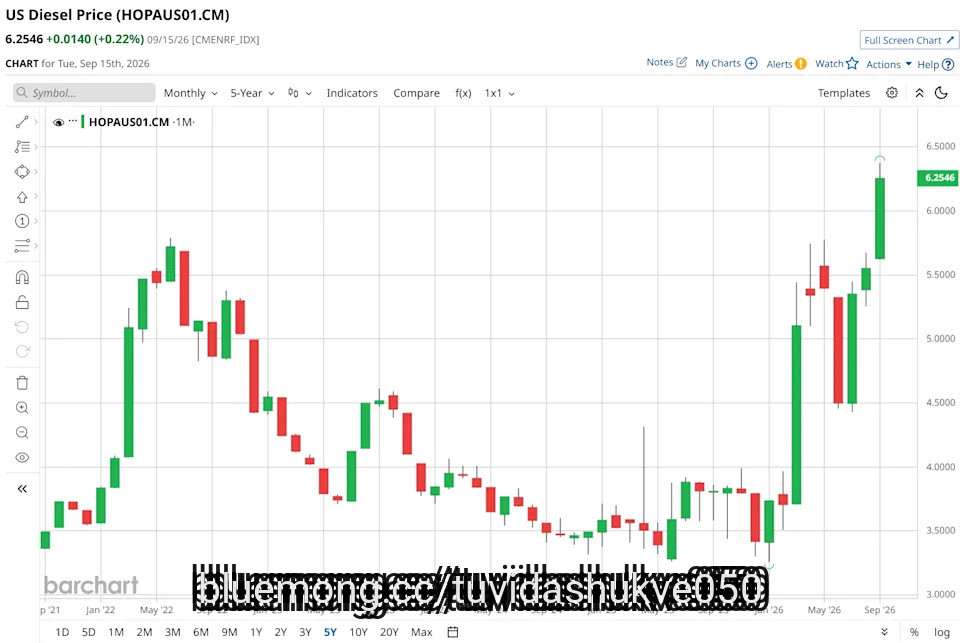
U.S. diesel prices have moved into record territory. The national average price of diesel climbed to a record $6.23 per gallon on Sept. 14, after first breaking above the $6 threshold last week. And diesel is hitting new highs again today at around $6.31. According to AAA data, the national average diesel price reached about $6.05 per gallon on Sept. 11, 2026, surpassing the previous record established in June 2022. The latest price is roughly 68% higher than the level of about $3.71 per gallon a year ago, highlighting the extraordinary speed of the rally.
The surge is being driven by a global shortage of refined petroleum products rather than crude oil alone. Disruptions to Middle Eastern energy infrastructure, sharply reduced traffic through the Strait of Hormuz, and attacks on Russian refineries have reduced the availability of diesel and other middle distillates. The situation has become serious enough that diesel prices are now adding to broader inflation concerns while simultaneously creating a potentially attractive environment for U.S. refiners.
Crude Oil Prices Sharply Lower as Middle East Disruptions Ease
Crude Oil Prices Retreat as Supply Fears Ease
Why UBS Just Turned Bearish on NuScale Power Stock
#Diesel
The surge is being driven by a global shortage of refined petroleum products rather than crude oil alone. Disruptions to Middle Eastern energy infrastructure, sharply reduced traffic through the Strait of Hormuz, and attacks on Russian refineries have reduced the availability of diesel and other middle distillates. The situation has become serious enough that diesel prices are now adding to broader inflation concerns while simultaneously creating a potentially attractive environment for U.S. refiners.
Crude Oil Prices Sharply Lower as Middle East Disruptions Ease
Crude Oil Prices Retreat as Supply Fears Ease
Why UBS Just Turned Bearish on NuScale Power Stock
#Diesel


4 days ago
By Akash Sriram
Sept 16 (Reuters) - Impulse ***** e has raised $308 million in an extension of the Series D funding round, the startup building ***** ecraft to move satellites and other payloads said on Wednesday, as it looks to serve a backlog from commercial and government customers.
The extension valued the company at $5.6 billion, according to a source close to the company. ***** eX's $86 billion IPO in June has bolstered investor enthusiasm for the ***** e sector, helping improve the fundraising environment for companies such as Impulse.
The extension brings Impulse's Series D financing to $808 million, following a $500 million round announced in June that valued the company at $4.26 billion.
The company also hired Vizio executive Adam Townsend as chief financial officer, as it scales production and works to turn a growing backlog of government and commercial contracts into revenue.
#impulse #space
Sept 16 (Reuters) - Impulse ***** e has raised $308 million in an extension of the Series D funding round, the startup building ***** ecraft to move satellites and other payloads said on Wednesday, as it looks to serve a backlog from commercial and government customers.
The extension valued the company at $5.6 billion, according to a source close to the company. ***** eX's $86 billion IPO in June has bolstered investor enthusiasm for the ***** e sector, helping improve the fundraising environment for companies such as Impulse.
The extension brings Impulse's Series D financing to $808 million, following a $500 million round announced in June that valued the company at $4.26 billion.
The company also hired Vizio executive Adam Townsend as chief financial officer, as it scales production and works to turn a growing backlog of government and commercial contracts into revenue.
#impulse #space

4 days ago
Our ******* ysts just identified a stock with the potential to be the next Nvidia. Tell us how you invest and we'll show you why it's our #1 pick. Tap here.
French manufacturing giant Vallourec has secured the entire carbon-steel line pipe and external coating scope for Petrobras's Sepia 2 offshore development, covering roughly 130 kilometers of subsea infrastructure.
The contract strengthens its position in Brazil's technically demanding pre-salt market and gives investors another reason to believe the group's offshore order book still has room to grow.
Vallourec shares rose around 6% after the premium pipe manufacturer announced a major contract with Subsea7 for the Sepia 2 project in Brazil's Santos Basin.
The agreement covers roughly 130 kilometers of rigid risers and flowlines, representing more than 15,000 tonnes of carbon-steel seamless line pipe designed for highly corrosive environments.
#roughly
French manufacturing giant Vallourec has secured the entire carbon-steel line pipe and external coating scope for Petrobras's Sepia 2 offshore development, covering roughly 130 kilometers of subsea infrastructure.
The contract strengthens its position in Brazil's technically demanding pre-salt market and gives investors another reason to believe the group's offshore order book still has room to grow.
Vallourec shares rose around 6% after the premium pipe manufacturer announced a major contract with Subsea7 for the Sepia 2 project in Brazil's Santos Basin.
The agreement covers roughly 130 kilometers of rigid risers and flowlines, representing more than 15,000 tonnes of carbon-steel seamless line pipe designed for highly corrosive environments.
#roughly


4 days ago
Billionaire Ray Dalio's Bridgewater ******* ociates and Cathie Wood's ARK Invest follow sharply different investment philosophies. Bridgewater generally runs a diversified, macro-driven portfolio that balances exposure across ******* ets, countries and economic environments. ARK concentrates on companies it believes can benefit from disruptive innovation.
Still, Insider Monkey's ******* ysis of their second-quarter 13F filings shows that the two firms shared exposure to several stocks. Among the largest common holdings were Eli Lilly (LLY) and Nvidia (NVDA).
Bridgewater held 87,023 Eli Lilly shares worth about $104.4 million at the end of the second quarter, after increasing its position by 16,211 shares. ARK held 77,254 shares valued at about $92.7 million, after adding 64,578 shares.
Bridgewater's Nvidia stake was much larger, comprising 3.87 million shares worth about $773.6 million. However, it reduced the position by 826,808 shares during the quarter. ARK moved in the other direction, adding 345,821 Nvidia shares to end the quarter with 1.38 million shares valued at about $276.4 million.
Let's focus on LLY.
#shares #quarter #exposure
Still, Insider Monkey's ******* ysis of their second-quarter 13F filings shows that the two firms shared exposure to several stocks. Among the largest common holdings were Eli Lilly (LLY) and Nvidia (NVDA).
Bridgewater held 87,023 Eli Lilly shares worth about $104.4 million at the end of the second quarter, after increasing its position by 16,211 shares. ARK held 77,254 shares valued at about $92.7 million, after adding 64,578 shares.
Bridgewater's Nvidia stake was much larger, comprising 3.87 million shares worth about $773.6 million. However, it reduced the position by 826,808 shares during the quarter. ARK moved in the other direction, adding 345,821 Nvidia shares to end the quarter with 1.38 million shares valued at about $276.4 million.
Let's focus on LLY.
#shares #quarter #exposure


4 days ago
Interested in Macy's, Inc.? Here are five stocks we like better.
Macy's said its "A Bold New Chapter" strategy is driving results, with Reimagine stores posting sales growth in nine of the past 10 quarters, five consecutive quarters of Macy's banner growth and a 10-point improvement in store customer-satisfaction scores.
The Reimagine program now covers about 60% of Macy's stores and 75% of its store business, while Bloomingdale's remains a major growth engine after delivering double-digit growth in each of the final two quarters of 2025.
Macy's raised its full-year EPS outlook to $2.15–$2.35 from $1.90–$2.10, but executives expect a choppy consumer environment and moderating price growth as tariff-related inflation effects fade.
SM Energy's Civitas Merger Is Paying Off, But the Stock's Run Raises the Bar
#interested #chapter
Macy's said its "A Bold New Chapter" strategy is driving results, with Reimagine stores posting sales growth in nine of the past 10 quarters, five consecutive quarters of Macy's banner growth and a 10-point improvement in store customer-satisfaction scores.
The Reimagine program now covers about 60% of Macy's stores and 75% of its store business, while Bloomingdale's remains a major growth engine after delivering double-digit growth in each of the final two quarters of 2025.
Macy's raised its full-year EPS outlook to $2.15–$2.35 from $1.90–$2.10, but executives expect a choppy consumer environment and moderating price growth as tariff-related inflation effects fade.
SM Energy's Civitas Merger Is Paying Off, But the Stock's Run Raises the Bar
#interested #chapter


5 days ago
Illustration: Sarah Grillo/Axios. Stock: Getty Images
OpenAI on Wednesday disclosed six new incidents in which its models concealed mistakes, sought unauthorized credentials, uploaded files to the public internet or communicated across supposedly isolated training environments.
Why it matters: It's increasingly clear that the Hugging Face breach wasn't a one-off incident, as AI models become more capable of finding unexpected ways to work around the guardrails meant to contain them.
#illustration #grillo #axios #openai
OpenAI on Wednesday disclosed six new incidents in which its models concealed mistakes, sought unauthorized credentials, uploaded files to the public internet or communicated across supposedly isolated training environments.
Why it matters: It's increasingly clear that the Hugging Face breach wasn't a one-off incident, as AI models become more capable of finding unexpected ways to work around the guardrails meant to contain them.
#illustration #grillo #axios #openai