
28 days ago
Iran's top diplomat insisted on Sunday that there would be no military solution to the United States' war against the Islamic republic, with talks on ending the conflict apparently at an impasse.
A campaign of heavy bombardment failed to bring a decisive close to the war launched by the US and Israel in late February, and Washington in recent weeks has dialled back military operations in favour of economic pressure.
The main point of contention remains Iran's attempt to blockade the Strait of Hormuz, a vital conduit for Gulf oil and gas where a UK maritime agency reported on Sunday another tanker struck by an unknown projectile.
"If our enemies again choose the path of military confrontation, our response will be stronger than before, and we will defend ourselves with even more force," Iranian Foreign Minister Abbas Araghchi said at a gathering of foreign ambassadors.
"There is no military solution, nor any solution based on new sanctions," he continued, adding "only negotiations based on justice and fairness" could end the conflict.
#sunday #Israel


1 month ago
Americans have paid about $97 billion more for fuel since the Iran war started in late February, roughly $740 extra per household, according to CNN. President Trump says prices will come down after the midterms. The CEO of Chevron just said publicly he does not see how that happens quickly.
Mike Wirth, Chevron's chairman and chief executive, spoke at a University of Texas at Austin energy conference on September 11. He told the audience that the mechanisms that helped absorb the oil supply shock earlier in the conflict have largely been used up, and that prices are more likely to rise than fall over the next few months.
When the U.S.-Iran conflict began, the oil market had several ways to handle the disruption. Countries could release crude from strategic reserves. Commercial inventories could be drawn down. The U.S. eased restrictions on sanctioned crude stored on vessels at sea. Those measures helped limit the initial price spike.
"Those have largely now played out," Wirth said. The energy system no longer has the buffers it had when the war began.
The loss of flexibility became more acute after attacks knocked out a major Saudi crude pipeline that had been bypassing the Strait of Hormuz. That single disruption put an estimated 2.5 million barrels of oil per day in limbo, tightening a market that was already running short on supply.
#crude #prices #energy #conflict


1 month ago
The price of jet fuel averaged $4.53 USD per gallon for the week ending Sept. 18, according to the latest Airlines for America U.S. Jet Fuel Index.
Driven by the war in Iran and closure of the Strait of Hormuz following the U.S.-Israeli strike on Iran at the end of February 2026, this price is a nearly 80% increase from the national average a year ago.
As a result, almost every major and regional airline has had to keep reworking its networks to maximize jet fuel use and ruthlessly cut any flights not bringing in the expected traffic.
Airline chief executives have also been sounding the alarm on what prolonged jet fuel prices could mean for the industry.
"If fuel prices remain as high as they are right now, I think that that's going to require some adjustments in terms of our capacity planning as we take a look into the future," American Airlines CEO Robert Isom said at the annual Morgan Stanley Laguna Conference in California on Sept. 16, Airline Geeks reported.
#airlines #price #index


1 month ago
Oil prices have been on a wild ride this year, and most investors **** ume the story is simple: Less crude moving through the Strait of Hormuz means higher prices at the pump.
Exxon Mobil's leadership says that take misses the real problem.
Speaking at the Barclays 40th Annual Energy Power Conference on Sept. 9, Chief Financial Officer Neil Hansen told **** ysts the bigger threat to the energy system isn't crude supply, but refining.
The distinction matters for anyone holding Exxon Mobil (XOM) stock or watching gas prices climb, as it changes how long the pain might last and which part of the business could benefit.
Hansen explained that when a shock like the Middle East conflict unfolds, markets usually respond in a similar pattern.
#hansen #energy


1 month ago
The temporary closure of the key onshore pipeline Saudi Arabia uses to bypass the Strait of Hormuz has added another shock to an oil market already struggling with six months of Middle East supply disruptions.
And the damage now appears to be more extensive than initially believed.
Three pumping stations along Saudi Arabia's East-West pipeline were damaged in last week's attack, Reuters reported on Thursday, citing satellite imagery and industry sources. Earlier ***** sments had identified damage at two stations. Three sources told Reuters that repairs could take five to six weeks, although partial pumping could resume sooner.
Before the attack, the system was moving between 4 million and 5 million barrels per day (bpd), equivalent to roughly 4%–5% of global oil supply. Its total capacity is around 7 million bpd, including approximately 2 million bpd supplied to refineries.
Saudi Arabia shut the pipeline following multiple attacks on September 10. Satellite imagery previously published by MizarVision showed extensive fire and structural damage around pumping stations along the route.
#million #pumping #arabia


1 month ago
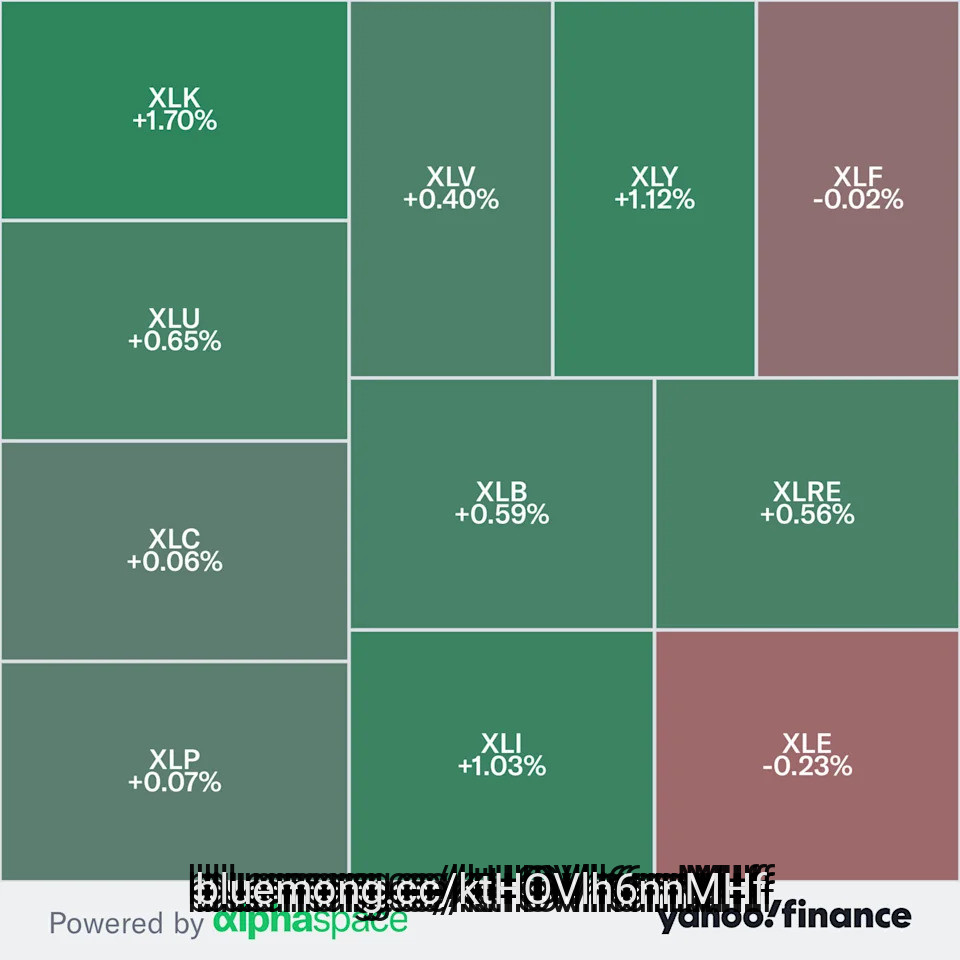
US stocks rebounded on Thursday as oil prices edged lower and a Fed rate hike on Wednesday offered some relief that the central bank was working to contain inflation.
The Dow Jones Industrial Average (^DJI) rose 0.6%, while the S&P 500 (^GSPC) climbed 1.1%. The tech-heavy Nasdaq Composite (^IXIC) jumped 1.7%, rebounding from a post-Fed-hike slump on Wednesday.
Stocks recovered as investors **** sed Federal Reserve Chairman Kevin Warsh's hawkish rhetoric, which **** ysts said helped restore the Fed's credibility on inflation. On Wednesday, the Federal Reserve raised interest rates by 25 basis points for the first time in three years and projected one more rate hike this year.
The decision drew the ire of President Trump, who called for lower interest rates and said he had spoken with Warsh ahead of the FOMC meeting. "You might as well vote with the board because it's not going to matter," Trump said he told Warsh.
Oil prices, meanwhile, ticked lower as US Energy Secretary Chris Wright said Saudi Arabia's East-West pipeline, which has become a key alternative route for oil stuck in the Strait of Hormuz, would be restored soon. Brent crude (BZ=F), the global benchmark, changed hands at $104 per barrel.
#reserve #Trump

1 month ago
Six months into a conflict that has proven complex, costly, and highly unpopular, there remains no end in sight to the war in Iran. That's left the energy market — and the ****** ysts and strategists who study it — with a deep lack of clarity.
"For the first time since the start of the Iran conflict, we don't have a baseline view," commodities strategists at JPMorgan, led by Natasha Kaneva, wrote to clients on Thursday. "We simply don't know how to model the endgame."
As the war enters its seventh month, the conflict has broadened to multiple fronts.
In the mouth of the Persian Gulf, the Strait of Hormuz — the world's most critical chokepoint for global energy flows — remains essentially closed to through traffic as Tehran's Revolutionary Guard Corps continues to threaten vessels in the region. Daily crossings of the waterway have remained in the low double digits, far below the average of more than 120 daily transits before the outbreak of war.
Read more: How oil price shocks ripple through your wallet, from gas to groceries
#Iran



1 month ago
CAIRO (AP) — Hundreds of thousands of Iranians rallied Friday in a government-organized show of defiance after months of war, pledging their readiness to take up arms in the biggest such demonstration since the United States and Israel attacked in February.
Iran's government has sought to rally the people and stress national unity, even as the economy worsens under a U.S. naval blockade of Iranian ports and new U.S. sanctions. On Friday, it claimed another attack on a tanker in the Strait of Hormuz, a key waterway it has sought to control since the start of the war.
Estimates varied of the number of people volunteering to receive limited military training and defend the country in an effort described as "Janfaday-e Iran," or the "ones who sacrifice their lives for Iran." They marched through downtown Tehran in combat uniform, carrying flags, as onlookers cheered.
For days, state media have encouraged Iranians to join the campaign, saying training with **** ault rifles would begin soon. The volunteers would be an additional layer of security to the paramilitary Revolutionary Guard and the Basij militia, which has played a key role in quashing anti-government protests.
Tehran's Guard chief, Gen. Hassan Hassanzadeh, told the state broadcaster that over 600,000 people had registered to participate, with over 1 million expected to take part in the training. On Friday morning, the broadcaster estimated over 300,000 people were on the streets.
#government #training #since




1 month ago
Bunker fuel prices for ships remain at historically elevated levels, keeping pressure on vessel operating costs even as the marine-fuel supply squeeze that followed disruption around the Strait of Hormuz has eased at major fueling hubs.
In Singapore, the world's largest bunkering center, very-low-sulphur fuel oil, or VLSFO, was ******* sed at about $908 per metric ton this week, while marine gasoil (MGO) stood at $1,448 per ton and high-sulphur fuel oil at roughly $770 per ton, according to ******* yst Ship & Bunker.
At Rotterdam, Europe's busiest port, VLSFO was about $731 per ton, compared with $804 per ton in Houston and $1,005 per ton in Fujairah, United Arab Emirates.
The premium at Fujairah, the Middle East's principal bunker hub, shows the continuing impact of constrained traffic and supply-chain disruption in and around the Strait of Hormuz. Bunkering activity at Fujairah has recovered to about 40% of its prewar level, according to industry comments reported from the Asia Pacific Petroleum Conference, but remains well below normal.
Costs still far above January
#fuel #strait #hormuz #supply


1 month ago
Saudi Arabia's oil supply crisis is rapidly becoming Europe's problem.
The September 10 attacks on Saudi Arabia's East-West Pipeline struck the system at multiple locations and damaged at least one pumping station, forcing Riyadh to shut down the Kingdom's critical alternative to the Strait of Hormuz.
The 1,200-kilometer Petroline can carry around 7 million barrels per day from Saudi Arabia's eastern producing regions to Yanbu on the Red Sea. Since the war effectively closed Hormuz, it has become one of the most important pieces of energy infrastructure in the world.
Kpler estimates the pipeline had been moving roughly 4 million bpd around Hormuz before the attack. A prolonged outage could ultimately threaten 3.5–4 million bpd of Saudi crude exports. The figure is below Petroline's nameplate capacity because Saudi Arabia can still export some crude from eastern terminals such as Ras Tanura, despite the severe constraints on Gulf shipping.
The immediate problem is storage.
#hormuz #crude

1 month ago
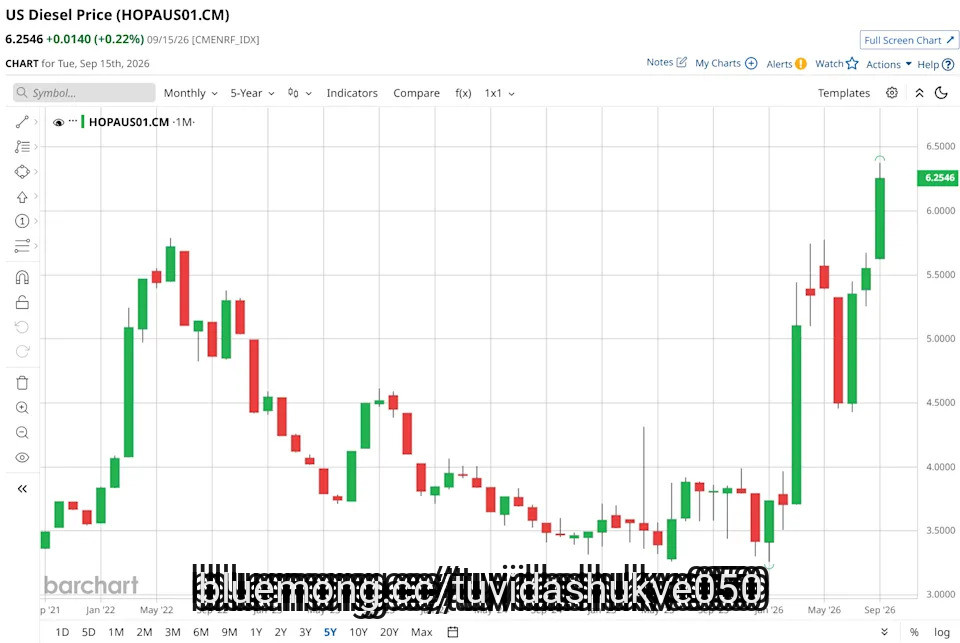
U.S. diesel prices have moved into record territory. The national average price of diesel climbed to a record $6.23 per gallon on Sept. 14, after first breaking above the $6 threshold last week. And diesel is hitting new highs again today at around $6.31. According to AAA data, the national average diesel price reached about $6.05 per gallon on Sept. 11, 2026, surpassing the previous record established in June 2022. The latest price is roughly 68% higher than the level of about $3.71 per gallon a year ago, highlighting the extraordinary speed of the rally.
The surge is being driven by a global shortage of refined petroleum products rather than crude oil alone. Disruptions to Middle Eastern energy infrastructure, sharply reduced traffic through the Strait of Hormuz, and attacks on Russian refineries have reduced the availability of diesel and other middle distillates. The situation has become serious enough that diesel prices are now adding to broader inflation concerns while simultaneously creating a potentially attractive environment for U.S. refiners.
Crude Oil Prices Sharply Lower as Middle East Disruptions Ease
Crude Oil Prices Retreat as Supply Fears Ease
Why UBS Just Turned Bearish on NuScale Power Stock
#Diesel
1 month ago
October WTI crude oil (CLV26) is down -4.07 (-3.85%) today, and October RBOB gasoline (RBV26) is down -0.-0350 (-1.01%).
Crude oil and gasoline prices are sharply lower today on signs that crude supplies are getting through the Strait of Hormuz, easing supply concerns. Losses in crude accelerated today after weekly EIA crude inventories fell less than expected and gasoline and distillate supplies rose more than expected.
Crude Oil Prices Sharply Lower as Middle East Disruptions Ease
Why UBS Just Turned Bearish on NuScale Power Stock
Crude Prices Soar as Global Oil Supplies Continue to Tighten
#supplies #october


1 month ago
On September 14, Radiant Logistics (NYSEAMERICAN:RLGT) held its fourth fiscal quarter earnings call, and the headline numbers landed harder than a typical logistics update. Net income jumped 53.1% to $7.5 million for the quarter ended June 30, while revenue climbed 18.5% to $261.4 million. Look past that one quarter, though, and the picture gets more complicated, because full-year adjusted profitability actually fell. That gap between a blowout quarter and a softer year is what makes this name worth a closer look.
The fourth fiscal quarter was strong from top to bottom. Adjusted EBITDA rose 31.6% to $10.4 million, margin expanded 240 basis points to 15.5%, and adjusted net income climbed 34.5% to $7.4 million, all against organic revenue growth of 8%. Management credited the acceleration to US forwarding operations and international airfreight, including work supporting disaster relief after typhoon activity hit the Western Pacific earlier this year, plus airfreight demand tied to capital flows into global data center buildouts.
The balance sheet backs up the story. Radiant enters fiscal 2027 with zero net debt, $25.6 million in cash as of June 30, and a $200 million senior credit facility that was extended and restated in August, pushing maturity out to August 7, 2031, while its acquisition-focused accordion grew to $100 million from $75 million. On the domestic side, capacity has been exiting the truckload and intermodal markets, and spot rates and tender rejections moved higher late in the quarter. Radiant also launched a new independent agent program at Radiant Road & Rail during the quarter, extending its freight forwarding agent network into truck brokerage and intermodal, while Navegate is gaining traction, with one enterprise customer now managing more than 1,400 vendors on the platform.
The full-year numbers tell a different story than the quarter does. Revenue rose just 3.5% to $934.4 million from $902.7 million, a fraction of the fourth quarter's 18.5% pace, and full-year net income grew a modest 8.7% to $18.8 million. Full-year adjusted EBITDA actually fell 5.4% to $36.7 million from $38.8 million, and that figure included a $1.3 million First Brands adjustment. Strip that out and normalized adjusted EBITDA comes in at $35.4 million, an even steeper decline than the headline number suggests.
The operating backdrop stays complicated too. Ocean shipping routes remain disrupted by the closure of the Strait of Hormuz and continued Houthi activity affecting Suez Canal transits, keeping capacity tight on key trade lanes. US tariff policy is generating elevated IEEPA-related filing activity, and Canada put new retaliatory tariff measures into effect in early September, adding fresh complexity for shippers moving goods across that border. Management itself acknowledged that the domestic truck brokerage improvement seen late in the fourth quarter is not yet fully reflected in the reported results.
#quarter #revenue


1 month ago
Alluvium ******* et Management, an ******* et management company, released its "Conventum – Alluvium Global Fund" second-quarter 2026 investor letter. The letter can be downloaded here. The second quarter reflected a sharp shift from geopolitical uncertainty and oil market volatility to a powerful equity rally led by semiconductor companies. Despite the broader market strength, the Fund declined 1.4% in EUR terms, 2.2% in USD terms, and 3.9% in AUD terms. Portfolio results were mixed, with Alphabet benefiting from strong Cloud growth, while Robert Half, H&R Block, and other holdings posted solid gains. However, cable businesses and several healthcare and consumer holdings weighed on performance. Also, check the fund's top five holdings to see its best picks in 2026.
In its second-quarter 2026 investor letter, Conventum – Alluvium Global Fund highlighted LyondellBasell Industries N.V. (NYSE:LYB). LyondellBasell Industries N.V. (NYSE:LYB) is a multinational chemical and plastic manufacturing company. On September 15, 2026, LyondellBasell Industries N.V. (NYSE:LYB) closed at $65.43 per share. Over the past month, LyondellBasell Industries N.V. (NYSE:LYB) declined 0.95% while its shares gained 22.25% over the past 52 weeks. LyondellBasell Industries N.V. (NYSE:LYB) has a market capitalization of $21.14 billion, and its stock has traded within a 52-week range of $41.58 and $83.94.
Conventum – Alluvium Global Fund stated the following regarding LyondellBasell Industries N.V. (NYSE:LYB) in its Q2 2026 investor letter:
"LyondellBasell Industries N.V. (NYSE:LYB), the plastics producer gave back some of that 88.3% return of last quarter, and fell 34.0%, We are continually amazed by the market's response to the war in Iraq. It seems that this so called "ceasefire" (the one where Iran keeps attacking ships in the Strait of Hormuz and the US keeps bombing) has led to expectations that all is well for the affected commodity markets. Management provided results in early May, and reported expectations that the higher prices will be sustained for some time. That makes sense to us. But since then, Polyethylene and Polypropylene prices, for example, have fallen by around 15%. After we sold around two thirds of our holding during the March quarter, we ceased as the price fell to levels below our valuation. It currently accounts for 2.1% of the Fund and we are comfortable with maintaining this position."
LyondellBasell Industries N.V. (NYSE:LYB) is not on our list of the 40 Most Popular Stocks Among Hedge Funds. As per our database, 57 hedge fund portfolios held LyondellBasell Industries N.V. (NYSE:LYB) at the end of the second quarter which was 59 in the previous quarter. While we acknowledge the potential of LyondellBasell Industries N.V. (NYSE:LYB) as an investment, we believe certain AI stocks offer greater upside potential and carry less downside risk. If you're looking for an extremely undervalued AI stock that also stands to benefit significantly from Trum


1 month ago
Some refiners in ******* an this week rushed to buy Oman's crude for earlier loadings after Saudi Arabia shut down its key pipeline bypassing the Strait of Hormuz, traders with knowledge of the purchases told Bloomberg on Wednesday.
Late last week, Saudi Arabia was forced to temporarily shut down the East-West oil pipeline following drone attacks launched from the territory of Iraq close to the Iranian border on Thursday. The shutdown of the pipeline is a precautionary measure, after the attacks resulted in a number of injuries, the world's top crude oil exporter said.
The 750-mile-long East-West pipeline became Saudi Arabia's vital oil route to bypass the Strait of Hormuz after the Middle East conflict started and Hormuz was closed to shipping traffic. Thanks to the East-West pipeline, the Kingdom has managed to re-route most of its crude loadings from the western ports in the Persian Gulf to the Red Sea port of Yanbu.
Apart from announcing the shutdown of the pipeline and condemning the attacks, Saudi Arabia has not officially updated the market either on the extent of the damage or the timelines for repairs.
The repairs could take three to five weeks, two regional officials briefed on the matter told The ******* ociated Press.
#hormuz #strait

1 month ago
Senate Republicans aren’t happy with the lack of progress in the Iran war and what they say is the administration’s failure to identify clear objectives to end the conflict.
The war continues to be a major drag on GOP candidates as the failure to reopen the Strait of Hormuz and new threats facing oil exports from Iranian-backed Houthi militias have sent the prices to nearly $106 a barrel, while raising the national gas price average to $4.37 a gallon.
But Republicans are particularly concerned about the war’s impact on the price of diesel, which has soared to a national average of $6.31 and hit several Senate battleground states — including Alaska, Nebraska, Iowa and Maine — especially hard.
Some Republicans are now floating the idea of embargoing diesel exports produced in the United States to lower prices.
Republican Sen. Lisa Murkowski (Alaska) expressed frustration over “the lack of just transparency and information from the administration on what’s happening, what we should expect, the costs,” joining other GOP senators who have expressed similar grievances.
#senate #prices #national




2 months ago
As markets anxiously await the outcome of the current FOMC meeting, Treasury yields notched new 19-year highs in trading Tuesday. The closely watched 10-year surpassed 5.0% Tuesday morning in a high not seen since July 2007. Even the 30-year Treasury yield rose sharply, hitting 5.4%, its highest since June 2007.
In addition to worries over persistent, rising core inflation (one of the Fed's preferred inflation measurements), skyrocketing oil prices and shortages create further pressure on Treasuries. Currently, the rolling one-month correlation between the 10-year Treasury yield and front-month WTI (West Texas Intermediate) crude sits at 0.96 per BMO Capital Markets ****** ysis.
Bond yields and oil prices have moved in tandem for much of this year as investors position for the longer-term inflationary impact of higher oil prices. And with major oil execs sounding the alarm on global supply cache shortages and strategic reserves depletion that help to temporarily soften spiking oil prices for consumers, these pricing pressures are likely to continue in the near-term. Saudi Arabia announced the closure of its East-West pipeline that bypassed the Strait of Hormuz after it came under attack late last week, and cancelled some shipments to Europe, reported Reuters.
"Normally, the relationship isn't as clean as it is now, but the geopolitical drivers behind the price of oil and global inflation are so prominent that the normally modest correlation has become much tighter," Steve Sosnick, Chief Strategist, Interactive Brokers told CNBC. "As long as oil prices remain firm and continue to drift higher, this will add pressure to interest rates."
As macro uncertainty continues and inflation persists, bonds and oil/energy will be categories to keep a weather eye towards and could see renewed ETF investor attention. Currently, investors are seizing the opportunity in longer-term bonds, with $9.7 billion flowing into the iShares 20+ Year Treasury Bond ETF (TLT) in the last three months though the fund is only up $3.4 billion net YTD according to FactSet data. It will be a category likely to see action in the wake of the FOMC rate decision. As bond yields climb, prices fall as they move inverse to each other, and should yields climb higher, investors may choose to scoop up longer duration bonds at depreciated prices for future gains. However, an exodus is more likely until the path of rate hikes becomes more certain.
#treasury #longer #higher

2 months ago
By Siddharth Cavale
NEW YORK, Sept 15 (Reuters) - Oil prices settled $3 higher on Tuesday after shipping industry sources said crude loadings at Saudi Arabia's Red Sea export hub of Yanbu had been suspended and Riyadh had canceled some cargo deliveries to European customers, deepening concerns that disruptions to a critical oil-export route could persist for weeks.
Gains in U.S. West Texas Intermediate crude futures outpaced Brent on Tuesday, as fears that Saudi Arabia's supply troubles were widening sent investors rushing into U.S. crude as an alternative.
Brent finished up $3.07, or 2.9%, at $108.75 a barrel, while WTI closed up $4.44, or 4.38%, at $105.83 a barrel. Both contracts closed at their highest since May 19.
The port of Yanbu has taken on outsized importance for global supply since the U.S.-Israeli war on Iran caused the closure of the Strait of Hormuz, a critical waterway that was the conduit for one-fifth of the world's oil and liquefied natural gas supplies.
#brent


2 months ago
Oil prices spiked on Tuesday, climbing back toward recent highs as headlines from the Middle East — in particular, Saudi Arabia — intensified growing pressure on the physical market.
Futures on Brent crude (BZ=F), the international benchmark, picked up more than $2.80 to cross back over $108.50 a barrel and approach the $109 mark seen on Monday. Meanwhile, those on US benchmark WTI crude (CL=F) jumped by roughly $3.50 to trade above $104.50.
Worries about oil exports from the Persian Gulf continued to grow on Tuesday, with Saudi Arabia in focus as market watchers attempt to ****** s damage to the kingdom's oil infrastructure, critical to moving oil out of the Persian Gulf while the Strait of Hormuz remains wracked by the US-Iran conflict.
Saudi Arabia has faced a series of attacks on critical energy infrastructure from the Yemeni Houthi militia group and other Iran-backed proxy forces operating in Iraq, the most pressing of those being strikes that over the weekend forced Saudi authorities to shutter the kingdom's East-West pipeline.
The East-West line carries oil to the port of Yanbu on the Red Sea, where it is loaded onto tankers that can take oil south through the Bab el-Mandeb Strait, which runs along Yemen, or north to the Suez Canal and the adjacent SUMED pipeline to the Mediterranean Sea.
#gulf


2 months ago
Brent crude climbed above $108 a barrel on Tuesday as traders grew increasingly uncertain about when Saudi Arabia's East-West Pipeline would reopen, with fresh Houthi attacks on the kingdom and suspended oil loadings at its Red Sea export terminal adding to supply fears.
By 1:00 p.m. ET, Brent futures had climbed 3% to $108.88 per barrel, with U.S. West Texas Intermediate up 4.7% at $106.12. A close at those levels would mark the highest settlement for either contract in close to four months, according to Reuters. Prices have risen around 20% this month as fighting in the Persian Gulf has escalated.
According to shipping industry sources who spoke with Reuters, crude loadings at the Yanbu terminal on Saudi Arabia's Red Sea coast had been halted as of Tuesday. Separately, sources told Reuters that Saudi officials had notified European buyers that certain crude shipments scheduled for late September would not proceed.
Saudi Arabia shut down the East-West Pipeline after drone attacks originating from Iraq struck it last week, forcing the kingdom to halt the export route it had been using to bypass the Strait of Hormuz during the U.S.-Iran war. The pipeline can move up to 7 million barrels per day. Saudi officials have described the closure as a precautionary measure but have not provided a damage ******* sment or a timeline for resuming operations. U.K. authorities fear the pipeline may remain mostly shut for six weeks, according to Bloomberg.
Iran-backed Houthi militants in Yemen carried out additional strikes on Saudi Arabia on Monday. According to a spokesperson for the Saudi-led military coalition in Yemen, the group fired drones and ballistic missiles targeting the cities of Khamis Mushait, Abha, and Taif. According to Reuters, the Houthis claimed to have struck a military air base in Khamis Mushait, with their stated targets including hangars, radar installations, runway infrastructure, and stores of ammunition.
#west #east


2 months ago
U.S. stocks fell Tuesday as the 10-year Treasury yield climbed above 5% for the first time since 2007, with investors awaiting a Federal Reserve interest-rate decision expected Wednesday.
The Dow Jones Industrial Average dropped roughly 449 points, or 0.86%. The S&P 500 fell about 0.34% and the Nasdaq Composite declined 0.48%. The 10-year Treasury yield rose as high as 5.041% before pulling back to trade around 5.011%.
Oil prices extended gains after Saudi Arabia shut a key pipeline that bypasses the Strait of Hormuz. Brent crude futures for November delivery rose about 1.6% to trade above $107 a barrel, while West Texas Intermediate futures climbed to above $103.
Fed funds futures point to roughly a 90% to 93% probability that the Fed raises its benchmark rate by a quarter percentage point on Wednesday, which would lift the upper bound of the target range to 4%, according to The Wall Street Journal. That probability was roughly 59% a week ago.
Christopher Hodge, chief economist for the U.S. at Natixis CIB Americas, said in a note that he expects Fed Chair Kevin Warsh to signal the rate move is not a commitment to further hikes. "We also think that he will emphasize that this decision was discrete and does not pre-commit the Fed to any actions in subsequent meetings, giving him and the Committee maximum flexibility to respond to shocks," Hodge said, according to CNBC.
#rate


2 months ago
What happened: The 10-year Treasury yield (^TNX) climbed as high as 5.04%, its highest level since 2007, on Tuesday. Meanwhile, the 30-year Treasury (^TYX) yield touched 5.39%.
What's behind the move: The move higher in yields comes ahead of the Federal Reserve's rate decision this week. Investors have priced in a 25 basis point rate hike following the Fed's FOMC meeting on Wednesday, with a 92% likelihood.
Bond yields remain high as oil prices (BZ=F, CL=F) have firmly moved above $100 per barrel, with no timeline for the reopening of the Strait of Hormuz, a critical oil passageway.
Higher energy costs have raised concerns that inflation will remain above the Fed's 2% target.
"At the same time, investors are insisting on being compensated for high levels of government debt and the ever-rising deficit," TradeNation senior market ***** yst David Morrison said.
#move #yields



2 months ago
The yuan-denominated crude oil futures trading in China hit this week their highest level since the contract was launched in 2018 as escalating threats to Middle East's oil supply and increased purchases by Chinese refiners push prices higher.
Launched in March 2018, the INE crude oil futures contract (SC) is a physical-settlement contract priced and traded in Chinese yuan on the Shanghai International Energy Exchange.
The crude futures soared to as much as 929.4 yuan, or $138.50 per barrel, on the exchange, according to data compiled by Bloomberg.
The price spike followed the intensified concerns about supply from the Middle East after the East-West oil pipeline in Saudi Arabia was attacked by drones late last week, forcing the Kingdom to temporarily shut it down.
The international crude oil benchmarks also rallied at the start of this week. As of Tuesday, no timeline has been given as to when the pipeline would come back and continue helping Saudi Arabia bypass the Strait of Hormuz with shipments out of the Red Sea port of Yanbu.
#contract #east #saudi


2 months ago
The yuan-denominated crude oil futures trading in China hit this week their highest level since the contract was launched in 2018 as escalating threats to Middle East's oil supply and increased purchases by Chinese refiners push prices higher.
Launched in March 2018, the INE crude oil futures contract (SC) is a physical-settlement contract priced and traded in Chinese yuan on the Shanghai International Energy Exchange.
The crude futures soared to as much as 929.4 yuan, or $138.50 per barrel, on the exchange, according to data compiled by Bloomberg.
The price spike followed the intensified concerns about supply from the Middle East after the East-West oil pipeline in Saudi Arabia was attacked by drones late last week, forcing the Kingdom to temporarily shut it down.
The international crude oil benchmarks also rallied at the start of this week. As of Tuesday, no timeline has been given as to when the pipeline would come back and continue helping Saudi Arabia bypass the Strait of Hormuz with shipments out of the Red Sea port of Yanbu.
#crude #futures #middle #saudi


2 months ago
Iran is deliberately targeting U.S. naval drones in the Strait of Hormuz to gather intelligence on American surveillance capabilities and learn how to evade U.S. defenses, drone experts warned Tuesday.
Tehran's strategy is coordinated, they said, and involves exposing critical insights into U.S. Navy theater operations in the world's most vulnerable maritime choke point even when classified data is uncompromised.
The warning came as tensions escalated in the Gulf region Sept. 14 after the U.S. military destroyed two Iranian small boats amid an attempted seizure by the Islamic Revolutionary Guard Corps (IRGC) of an American unmanned surface vessel (USV) patrolling the area, according to reports.
Us Military Attacks Iran In 'Self-defense Strikes' Over Weekend
A cargo ship sails in the Persian Gulf toward the Strait of Hormuz, Wednesday, April 22, 2026.
#Iran #sept





2 months ago
On September 14, Radiant Logistics (NYSEAMERICAN:RLGT) held its fourth fiscal quarter earnings call, and the headline numbers landed harder than a typical logistics update. Net income jumped 53.1% to $7.5 million for the quarter ended June 30, while revenue climbed 18.5% to $261.4 million. Look past that one quarter, though, and the picture gets more complicated, because full-year adjusted profitability actually fell. That gap between a blowout quarter and a softer year is what makes this name worth a closer look.
The fourth fiscal quarter was strong from top to bottom. Adjusted EBITDA rose 31.6% to $10.4 million, margin expanded 240 basis points to 15.5%, and adjusted net income climbed 34.5% to $7.4 million, all against organic revenue growth of 8%. Management credited the acceleration to US forwarding operations and international airfreight, including work supporting disaster relief after typhoon activity hit the Western Pacific earlier this year, plus airfreight demand tied to capital flows into global data center buildouts.
The balance sheet backs up the story. Radiant enters fiscal 2027 with zero net debt, $25.6 million in cash as of June 30, and a $200 million senior credit facility that was extended and restated in August, pushing maturity out to August 7, 2031, while its acquisition-focused accordion grew to $100 million from $75 million. On the domestic side, capacity has been exiting the truckload and intermodal markets, and spot rates and tender rejections moved higher late in the quarter. Radiant also launched a new independent agent program at Radiant Road & Rail during the quarter, extending its freight forwarding agent network into truck brokerage and intermodal, while Navegate is gaining traction, with one enterprise customer now managing more than 1,400 vendors on the platform.
The full-year numbers tell a different story than the quarter does. Revenue rose just 3.5% to $934.4 million from $902.7 million, a fraction of the fourth quarter's 18.5% pace, and full-year net income grew a modest 8.7% to $18.8 million. Full-year adjusted EBITDA actually fell 5.4% to $36.7 million from $38.8 million, and that figure included a $1.3 million First Brands adjustment. Strip that out and normalized adjusted EBITDA comes in at $35.4 million, an even steeper decline than the headline number suggests.
The operating backdrop stays complicated too. Ocean shipping routes remain disrupted by the closure of the Strait of Hormuz and continued Houthi activity affecting Suez Canal transits, keeping capacity tight on key trade lanes. US tariff policy is generating elevated IEEPA-related filing activity, and Canada put new retaliatory tariff measures into effect in early September, adding fresh complexity for shippers moving goods across that border. Management itself acknowledged that the domestic truck brokerage improvement seen late in the fourth quarter is not yet fully reflected in the reported results.
#million #quarter #revenue #fiscal


2 months ago
Alluvium ****** et Management, an ****** et management company, released its "Conventum – Alluvium Global Fund" second-quarter 2026 investor letter. The letter can be downloaded here. The second quarter reflected a sharp shift from geopolitical uncertainty and oil market volatility to a powerful equity rally led by semiconductor companies. Despite the broader market strength, the Fund declined 1.4% in EUR terms, 2.2% in USD terms, and 3.9% in AUD terms. Portfolio results were mixed, with Alphabet benefiting from strong Cloud growth, while Robert Half, H&R Block, and other holdings posted solid gains. However, cable businesses and several healthcare and consumer holdings weighed on performance. Also, check the fund's top five holdings to see its best picks in 2026.
In its second-quarter 2026 investor letter, Conventum – Alluvium Global Fund highlighted LyondellBasell Industries N.V. (NYSE:LYB). LyondellBasell Industries N.V. (NYSE:LYB) is a multinational chemical and plastic manufacturing company. On September 15, 2026, LyondellBasell Industries N.V. (NYSE:LYB) closed at $65.43 per share. Over the past month, LyondellBasell Industries N.V. (NYSE:LYB) declined 0.95% while its shares gained 22.25% over the past 52 weeks. LyondellBasell Industries N.V. (NYSE:LYB) has a market capitalization of $21.14 billion, and its stock has traded within a 52-week range of $41.58 and $83.94.
Conventum – Alluvium Global Fund stated the following regarding LyondellBasell Industries N.V. (NYSE:LYB) in its Q2 2026 investor letter:
"LyondellBasell Industries N.V. (NYSE:LYB), the plastics producer gave back some of that 88.3% return of last quarter, and fell 34.0%, We are continually amazed by the market's response to the war in Iraq. It seems that this so called "ceasefire" (the one where Iran keeps attacking ships in the Strait of Hormuz and the US keeps bombing) has led to expectations that all is well for the affected commodity markets. Management provided results in early May, and reported expectations that the higher prices will be sustained for some time. That makes sense to us. But since then, Polyethylene and Polypropylene prices, for example, have fallen by around 15%. After we sold around two thirds of our holding during the March quarter, we ceased as the price fell to levels below our valuation. It currently accounts for 2.1% of the Fund and we are comfortable with maintaining this position."
LyondellBasell Industries N.V. (NYSE:LYB) is not on our list of the 40 Most Popular Stocks Among Hedge Funds. As per our database, 57 hedge fund portfolios held LyondellBasell Industries N.V. (NYSE:LYB) at the end of the second quarter which was 59 in the previous quarter. While we acknowledge the potential of LyondellBasell Industries N.V. (NYSE:LYB) as an investment, we believe certain AI stocks offer greater upside potential and carry less downside risk. If you're looking for an extremely undervalued AI stock that also stands to benefit significantly from Trump-


2 months ago
CAIRO (AP) — Saudi Arabia accused Yemen's Iran-backed Houthi rebels overnight of trying to attack Islam's holiest city, prompting condemnation from countries in the region but no sign of military support. The kingdom, a key U.S. ally, declared Mecca a "red line" as it slid deeper into the new front of the Iran war.
With the world's biggest oil exporter under fire from the rebels backed by the Saudis' regional adversary, Tehran, the kingdom needs a safe outlet for its crude as well as military ******* istance. A path to either one remains unclear.
A crucial Saudi pipeline has reportedly been shut down for weeks after an attack by Iranian-backed militias in Iraq. The Yemen-based Houthis have been targeting infrastructure in the kingdom as well as its shipping on the Red Sea, where they have seized several islands on the Bab el-Mandeb Strait. And Iran is still targeting ships in the Strait of Hormuz. Oil prices remain above $100 a barrel.
The Houthis denied firing drones toward Mecca, about 1,100 kilometers (680 miles) from Yemen's border. The Saudis said they intercepted and destroyed the drone before it entered the airspace over the birthplace of the Prophet Muhammad.
The attacks are the first test of a new defense pact among Saudi Arabia, NATO member Turkey and nuclear power Pakistan. But officials from Turkey and Pakistan told The ******* ociated Press they have not received a Saudi request for support in response to the Houthis' escalation.
#arabia #saudis #turkey



2 months ago
On September 10, Tsakos Energy Navigation (NYSE:TEN) reported a first half of 2026 that reads like a fantasy year for a decades-old tanker operator. Net income hit $228 million, more than triple what the company earned over the same six months a year earlier, while diluted EPS climbed to $7.12 from $1.70. Behind those numbers sits a rare combination: a fleet locked into billions in forward earnings, war-driven cargo detours pushing rates higher, and a newbuilding bet that has already paid off before half the ships have even hit the water.
The earnings power came from two directions at once. The average time charter equivalent rate rose 41% to $43,503 a day in the first half, and profit-sharing contracts on nine large vessels brought in $71 million, up from just $10 million a year earlier. Even with six vessels pulled from service for scheduled dry docks, the fleet still ran at 96.5% utilization. Second-quarter results followed the same pattern, with net income of $139.3 million, which included a $38 million gain on ******* et sales, and earnings per share of $4.40 against $0.67 in last year's second quarter.
Tsakos is also sitting on a fleet renewal bet that already worked out. Since the start of 2023, the company has sold 20 tankers averaging 17.3 years old and replaced them with 35 vessels averaging just half a year old. Its 26-ship newbuilding program, contracted for about $3.1 billion, is now valued roughly 30% above that cost, and CEO Nikolas Tsakos said the VLCCs in that order book have nearly doubled in price since they were placed. With $466 million in cash and forward committed earnings of roughly $3.5 billion, management has room to raise its dividend, which already paid out $1.60 per share this year, and is weighing whether to redeem $120 million of 9.25% preferred shares, a move it estimates could add $0.30 to $0.40 to EPS.
That performance came against a backdrop the company would rather not have. President George Saroglou said vessels have been attacked, and seafarers hurt or killed trying to keep global trade moving through the Strait of Hormuz, where a ceasefire unraveled roughly halfway through its planned 60-day run and a US naval presence now tries to manage safe passage. Tsakos has chosen to route around the strait entirely rather than put crews through the toll those attacks take.
The cost side is climbing too. Bunker prices jumped about 25%, pushing first-half voyage expenses to $82 million from $68 million, and operating expenses rose to $111 million from $102 million on higher dry-docking costs and inflation. Total debt reached $2.1 billion at the end of June, up from $1.8 billion a year earlier, as the company finances its newbuilding program. And while profit-sharing revenue jumped, the operating days tied to those market-related contracts actually fell 22%, meaning a smaller slice of the fleet is left exposed to capture further spot-rate gains if the tanker market keeps running hot.
#billion

2 months ago
KYIV, Ukraine (AP) — U.S. President Donald Trump on Sunday called on Ukrainian President Volodymyr Zelenskyy to halt strikes on Russian oil refineries and other infrastructure used to produce and distribute diesel, saying the attacks are causing a global shortage. He spoke after diesel prices in the U.S. hit a record on Friday, soaring past $6 a gallon on average.
Ukraine has for months been targeting Russia's oil and gas industry with long-range strikes, prompting fuel rationing across the country and causing Moscow to ban diesel exports in July, removing supplies from the already tight global market.
But the global crunch also came after the war on Iran curtailed oil shipments through the Strait of Hormuz.
Fuel prices are weighing on Americans as they prepare to vote in midterm elections in November.
Trump was asked by a reporter if he had spoken with Zelenskyy following his recent conversation with Russia's Vladimir Putin. He responded by calling on Zelenskyy to halt strikes against Russia.
#zelenskyy #global #Trump