

23 days ago
PUBLISHED
OCT 03, 2026 AT 07:38 PM EDT
Tennessee officials are still investigating why death row inmate Christa Pike survived an execution attempt after receiving two doses of pentobarbital, a drug intended to render a person unconscious and ultimately cause death.
While the immediate focus has been on what went wrong inside the execution chamber, experts say Pike's case has also renewed scrutiny of a problem that has been building for more than a decade: how states obtain lethal injection drugs after pharmaceutical companies moved aggressively to keep their products from being used in executions. Despite those efforts, pentobarbital remains the primary execution drug used by many death-penalty states, making questions about sourcing, testing and oversight especially significant.
The issue has reshaped how many states carry out executions, forcing them to change drug protocols, seek alternative suppliers and adopt increasingly secretive procurement practices.
#pentobarbital #executions #published #tennessee
OCT 03, 2026 AT 07:38 PM EDT
Tennessee officials are still investigating why death row inmate Christa Pike survived an execution attempt after receiving two doses of pentobarbital, a drug intended to render a person unconscious and ultimately cause death.
While the immediate focus has been on what went wrong inside the execution chamber, experts say Pike's case has also renewed scrutiny of a problem that has been building for more than a decade: how states obtain lethal injection drugs after pharmaceutical companies moved aggressively to keep their products from being used in executions. Despite those efforts, pentobarbital remains the primary execution drug used by many death-penalty states, making questions about sourcing, testing and oversight especially significant.
The issue has reshaped how many states carry out executions, forcing them to change drug protocols, seek alternative suppliers and adopt increasingly secretive procurement practices.
#pentobarbital #executions #published #tennessee




1 month ago
On September 4, the U.S. Department of War (DoW) announced a $336,112,000 Navy contract for Huntington Ingalls Industries, Inc. (NYSE:HII) to advance procurement of long-lead materials for the construction of the future USS William J. Clinton (CVN 82).
Work on the program will be executed in Newport News, Virginia, with completion anticipated by March 2039. Shipbuilding and conversion funding from FY 2026 will be obligated at the time of award.
The contract is not just a headline number, but reaffirms the company's status as the sole nuclear carrier builder for the U.S. Navy.
The long lead materials contract has secured Huntington Ingalls Industries, Inc. (NYSE:HII)'s role on the CVN 82 well before construction begins, which has extended revenue visibility to 2039.
According to defense websites, the Navy plans on spending $22.34 billion on its aircraft carrier replacement program over the next five years. This contract can be seen as among the first in a larger sequence, with more awards to come as procurement accelerates.
#navy #contract #ingalls #industries
Work on the program will be executed in Newport News, Virginia, with completion anticipated by March 2039. Shipbuilding and conversion funding from FY 2026 will be obligated at the time of award.
The contract is not just a headline number, but reaffirms the company's status as the sole nuclear carrier builder for the U.S. Navy.
The long lead materials contract has secured Huntington Ingalls Industries, Inc. (NYSE:HII)'s role on the CVN 82 well before construction begins, which has extended revenue visibility to 2039.
According to defense websites, the Navy plans on spending $22.34 billion on its aircraft carrier replacement program over the next five years. This contract can be seen as among the first in a larger sequence, with more awards to come as procurement accelerates.
#navy #contract #ingalls #industries



1 month ago
Amazon Business is now a $60B operation serving 11 million customers worldwide. In this FreightWaves Today interview, Amazon Business exec Daniel Silverfield breaks down what that scale means for procurement, supplier consolidation, same-day grocery delivery and AI-driven savings.The big takeaway: business buyers want fewer suppliers, better visibility and less waste in purchasing. Silverfield explains how Amazon Business is pitching exactly that to everyone from small companies to Fortune 100s.
Amazon Business has hit $60 billion in annualized gross sales and now serves 11 million customers worldwide, with 1.8 million organizations added this year alone — a growth rate that puts it on par with a Fortune 100 company if it were standalone. The platform, which launched roughly a decade ago after Amazon noticed businesses already shopping on amazon.com, is increasingly central to how companies across sectors manage procurement, from office supplies to same-day groceries.
The scale matters to shippers, carriers, and brokers because Amazon Business is driving a fundamental shift in B2B purchasing behavior — consolidating supplier pools, centralizing data, and moving procurement from quarterly reporting cycles to an always-on, AI-powered model. Every order that migrates to the platform is one fewer touchpoint for traditional distributors and one more shipment flowing through Amazon's own logistics network.
Daniel Silverfield, head of value and selection for Amazon Business, said the platform saved customers $880 million on Prime free shipping last year and $1 billion through business-specific discounts. The company added 30% new items year over year and recently launched same-day grocery delivery across 2,300 U.S. cities in the first half of this year, a capability customers had been requesting for some time.
"The big shift that we're seeing is that people are moving to a continuous, always-on, conversational-powered procurement journey where agents may be looking for the best price while they're asleep, maybe negotiating on their behalf while they're asleep, and then surfacing to them the best product to buy," said Silverfield.
#customers
Amazon Business has hit $60 billion in annualized gross sales and now serves 11 million customers worldwide, with 1.8 million organizations added this year alone — a growth rate that puts it on par with a Fortune 100 company if it were standalone. The platform, which launched roughly a decade ago after Amazon noticed businesses already shopping on amazon.com, is increasingly central to how companies across sectors manage procurement, from office supplies to same-day groceries.
The scale matters to shippers, carriers, and brokers because Amazon Business is driving a fundamental shift in B2B purchasing behavior — consolidating supplier pools, centralizing data, and moving procurement from quarterly reporting cycles to an always-on, AI-powered model. Every order that migrates to the platform is one fewer touchpoint for traditional distributors and one more shipment flowing through Amazon's own logistics network.
Daniel Silverfield, head of value and selection for Amazon Business, said the platform saved customers $880 million on Prime free shipping last year and $1 billion through business-specific discounts. The company added 30% new items year over year and recently launched same-day grocery delivery across 2,300 U.S. cities in the first half of this year, a capability customers had been requesting for some time.
"The big shift that we're seeing is that people are moving to a continuous, always-on, conversational-powered procurement journey where agents may be looking for the best price while they're asleep, maybe negotiating on their behalf while they're asleep, and then surfacing to them the best product to buy," said Silverfield.
#customers


1 month ago
Freight fraud risks and carrier vetting are the focus as Highway Chief Commercial Officer Michael Caney joins FreightWaves Today. He breaks down what brokers, carriers and shippers need to watch right now when onboarding and monitoring capacity.If you work fraud prevention, carrier compliance or network procurement, this conversation gets straight to the operational takeaway without the fluff.#FreightFraud #CarrierVetting #SupplyChain
Carrier-vetting platform Highway is putting its balance sheet behind its fraud-detection product: if a broker moves freight using Highway's guarantee standard and loses a load, Highway writes a check for $100,000. The company's chief commercial officer said the program covers the vast majority of carrier capacity in North America — and has paid out only once across roughly one million loads.
Of the approximately 175,000 carriers that move freight for freight brokers, Highway says more than 82% qualify for the guarantee tier. "What I would tell you is the industry keeps trying to solve for the bottom 18% of the market," the CCO said. "And what we're saying is if you will just move your freight to this cohort of carriers, which is the majority of capacity in North America, not only will you be fine, but Highway will stand behind it with a performance guarantee."
"The average cargo theft is not the $100,000, it's $250,000. This idea that a motor carrier can just show up and say, hey man, I'm gonna need this cargo, it's $250 grand, I'm good for it, is bananas."
The single payout to date stemmed from an identity-design flaw tied to California's non-domiciled limited-term licensing rules. A fraudulent carrier obtained a new license through California's process, resubmitted in Highway's system, and the alert dropped off before the bug was caught and fixed — costing Highway $100,000. The CCO described theft events as a "Swiss cheese" of compounding decisions rather than a single failure point, and said Highway continuously monitors for ownership changes, inbox compromises, and cyber anomalies within the guarantee framework.
#carriers #capacity #America
Carrier-vetting platform Highway is putting its balance sheet behind its fraud-detection product: if a broker moves freight using Highway's guarantee standard and loses a load, Highway writes a check for $100,000. The company's chief commercial officer said the program covers the vast majority of carrier capacity in North America — and has paid out only once across roughly one million loads.
Of the approximately 175,000 carriers that move freight for freight brokers, Highway says more than 82% qualify for the guarantee tier. "What I would tell you is the industry keeps trying to solve for the bottom 18% of the market," the CCO said. "And what we're saying is if you will just move your freight to this cohort of carriers, which is the majority of capacity in North America, not only will you be fine, but Highway will stand behind it with a performance guarantee."
"The average cargo theft is not the $100,000, it's $250,000. This idea that a motor carrier can just show up and say, hey man, I'm gonna need this cargo, it's $250 grand, I'm good for it, is bananas."
The single payout to date stemmed from an identity-design flaw tied to California's non-domiciled limited-term licensing rules. A fraudulent carrier obtained a new license through California's process, resubmitted in Highway's system, and the alert dropped off before the bug was caught and fixed — costing Highway $100,000. The CCO described theft events as a "Swiss cheese" of compounding decisions rather than a single failure point, and said Highway continuously monitors for ownership changes, inbox compromises, and cyber anomalies within the guarantee framework.
#carriers #capacity #America


1 month ago
OpenAI holds $122B in cash and no IPO deadline, stripping Nvidia of the urgency and dependency that sustain premium chip pricing.
Broadcom dropped 7.95% and AMD held near flat as markets priced each company's exposure to OpenAI's supplier diversification.
Nvidia owns the training workload that ends once, while purpose-built inference chips capture every query that follows.
Just released. Our **** ysts combed the entire stock market and named the ten best stocks to buy right now, and NVIDIA didn't make the cut. Enter your email to see the names that beat NVDA. The report is free. Enter your email and see if any of your stocks made the cut.
Sarah Friar, chief financial officer of OpenAI, sat with CNBC's Jim Cramer and described her chip procurement in the language a corporate treasurer would use. "We also have a strategy for diversifying our supply chain. And that is just good CFO risk mitigation. You never know when someone's supply chain is going to get gummed up. So you need to have multiple providers."
#chip #stocks #broadcom
Broadcom dropped 7.95% and AMD held near flat as markets priced each company's exposure to OpenAI's supplier diversification.
Nvidia owns the training workload that ends once, while purpose-built inference chips capture every query that follows.
Just released. Our **** ysts combed the entire stock market and named the ten best stocks to buy right now, and NVIDIA didn't make the cut. Enter your email to see the names that beat NVDA. The report is free. Enter your email and see if any of your stocks made the cut.
Sarah Friar, chief financial officer of OpenAI, sat with CNBC's Jim Cramer and described her chip procurement in the language a corporate treasurer would use. "We also have a strategy for diversifying our supply chain. And that is just good CFO risk mitigation. You never know when someone's supply chain is going to get gummed up. So you need to have multiple providers."
#chip #stocks #broadcom


1 month ago
This story was originally published on CFO.com. To receive daily news and insights, subscribe to our free daily CFO.com newsletter.
Is there a disconnect between finance teams and procurement teams? A new survey of 2,005 procurement leaders in the U.S. and the U.K. suggests there is for some companies, and it may ultimately be affecting their bottom lines.
Released Tuesday, the report from California-based contract lifecycle management company Agiloft showed that about one in 10 respondents said they have no shared metrics between chief procurement officers and CFOs. The lack of shared metrics was cited among the biggest obstacles preventing companies from "closing the gap between what procurement negotiates and what finance realizes."
Other barriers cited were lack of contract data visibility, selected by 14% of respondents, along with manual processes that create exceptions that go unseen (23%).
Agiloft's survey included responses gathered from 2,005 chief procurement officers and other procurement leaders Aug. 5-20.
#procurement
Is there a disconnect between finance teams and procurement teams? A new survey of 2,005 procurement leaders in the U.S. and the U.K. suggests there is for some companies, and it may ultimately be affecting their bottom lines.
Released Tuesday, the report from California-based contract lifecycle management company Agiloft showed that about one in 10 respondents said they have no shared metrics between chief procurement officers and CFOs. The lack of shared metrics was cited among the biggest obstacles preventing companies from "closing the gap between what procurement negotiates and what finance realizes."
Other barriers cited were lack of contract data visibility, selected by 14% of respondents, along with manual processes that create exceptions that go unseen (23%).
Agiloft's survey included responses gathered from 2,005 chief procurement officers and other procurement leaders Aug. 5-20.
#procurement


1 month ago
On August 14, the Pentagon announced framework agreements with The Boeing Company (NYSE:BA) and RTX Corporation (NYSE:RTX) to increase component production for the SM-3 Block IIA and SM-3 Block IB interceptors. Both agreements are intended to increase the output of a group of ship-fired, surface-to-air interceptors that serve as the foundation for the Aegis Ballistic Missile Defense System, the sea-based shield used by the US Navy to intercept ballistic missiles.
The announcement had little impact on the shares of both companies, with The Boeing Company (NYSE:BA) down around 0.4% and RTX Corporation (NYSE:RTX) down about 1% during the day.
RTX Corporation (NYSE:RTX) alone inked five separate Pentagon deals earlier this year to greatly boost output of Tomahawk cruise missiles, AMRAAM air-to-air missiles, and the Standard Missile family, with Tomahawk production expected to increase sixteenfold, from approximately 60 to 1,000 units per year.
Congress has provided financial support for the effort. The 2026 defense spending bill provided multiyear procurement authority for eight critical munitions and more than $6.3 billion for 13 critical munitions, while the Pentagon's fiscal 2027 budget request calls for roughly $95 billion in missile procurement.
Rising tensions with Iran have added urgency to rebuild US missile inventories. During the June 2025 12-day Israel-Iran war, US forces reportedly used more than 150 THAAD interceptors. This highlights the pressure that sustained conflict can place on American missile-defense stockpiles.
#missile #corporation #missiles #pentagon
The announcement had little impact on the shares of both companies, with The Boeing Company (NYSE:BA) down around 0.4% and RTX Corporation (NYSE:RTX) down about 1% during the day.
RTX Corporation (NYSE:RTX) alone inked five separate Pentagon deals earlier this year to greatly boost output of Tomahawk cruise missiles, AMRAAM air-to-air missiles, and the Standard Missile family, with Tomahawk production expected to increase sixteenfold, from approximately 60 to 1,000 units per year.
Congress has provided financial support for the effort. The 2026 defense spending bill provided multiyear procurement authority for eight critical munitions and more than $6.3 billion for 13 critical munitions, while the Pentagon's fiscal 2027 budget request calls for roughly $95 billion in missile procurement.
Rising tensions with Iran have added urgency to rebuild US missile inventories. During the June 2025 12-day Israel-Iran war, US forces reportedly used more than 150 THAAD interceptors. This highlights the pressure that sustained conflict can place on American missile-defense stockpiles.
#missile #corporation #missiles #pentagon


1 month ago
By Karen Roman
Swarmer, Inc.'s (Nasdaq: SWMR) pending acquisition ofUkrainian unmanned-ground-vehicle maker Ratel Robotics could lead to $200 million in 2027 revenue and $20 million in adjusted EBITDA, according to a research note by Lucid Capital Markets.
Swarmer, which boasts Blackwater founder and industry veteran Erik Prince as its non-executive chairman, is in a definitive agreement to buy Ratel for up to $224 million and it has $86 million in secured contracts and about 37% share of Ukrainian government UGV procurement spending, the note said.
The deal comes as Ukraine's drone industry is beginning a consolidation phase, with more than 500 credible drone companies operating in the country while being home to some of the world's advanced battlefield drone technology, it said.
Swarmer could potentially consolidate Ukraine's fragmented drone industry into a full-stack drones, autonomy software and ground-vehicle platform, the note said.
#swarmer #note #vehicle #roman
Swarmer, Inc.'s (Nasdaq: SWMR) pending acquisition ofUkrainian unmanned-ground-vehicle maker Ratel Robotics could lead to $200 million in 2027 revenue and $20 million in adjusted EBITDA, according to a research note by Lucid Capital Markets.
Swarmer, which boasts Blackwater founder and industry veteran Erik Prince as its non-executive chairman, is in a definitive agreement to buy Ratel for up to $224 million and it has $86 million in secured contracts and about 37% share of Ukrainian government UGV procurement spending, the note said.
The deal comes as Ukraine's drone industry is beginning a consolidation phase, with more than 500 credible drone companies operating in the country while being home to some of the world's advanced battlefield drone technology, it said.
Swarmer could potentially consolidate Ukraine's fragmented drone industry into a full-stack drones, autonomy software and ground-vehicle platform, the note said.
#swarmer #note #vehicle #roman



1 month ago
On September 14, Coda Octopus Group (NASDAQ:CODA) reported third-quarter fiscal 2026 results that quietly crossed a threshold the company had never reached in its public history: positive retained earnings, after years of operating at an accumulated deficit. Revenue rose 9.2% year over year to $7.7 million, and pretax income climbed 16% to $1.8 million, even as instability in the Middle East knocked down the marine technology unit that has long been the company's calling card. The reason the quarter held together anyway comes down to where the growth actually showed up.
Defense engineering revenue jumped 68.3% to $2.7 million during the quarter, and the momentum did not look like a one-time ****** p. Sustainment spares orders have already topped $2.4 million year to date, and one prime contractor customer's new multiyear repair and sustainment award has since fed additional subcontract work back to Coda Octopus. On the newer end of the business, the company's US defense engineering team is now supporting several prime contractors building rugged, deployable RF electronic warfare systems for unmanned platforms, helicopters, airborne pods, and ground vehicles.
The DAVID diving system added its own proof points. Coda Octopus has delivered 24 DAVID systems to the US Navy to date, including 16 untethered units earlier in the year, and the Navy's authorization for use ****** sment on that untethered system was completed during the year, clearing it for full operational deployment. Since the quarter closed, the Navy has placed about $1.4 million in additional orders covering tethered systems and DAVID Flex adoption, including four units bought specifically for diving school and academy training. A European navy that already bought in is also expected to firm up a procurement roadmap later this year, while the new Nano sonar is being tested by subsea robotics OEMs and research groups for next-generation autonomous platforms. All of that arrived alongside $31.7 million in cash, no debt, and a balance sheet management says can fund acquisitions.
None of that offsets what happened in marine technology, the segment that still generates the largest share of revenue. Marine tech sales fell 15.2% to $3.4 million as customer activity slowed across the Middle East and parts of Asia, and hardware revenue specifically dropped 17.8% to $2.3 million. Improved rental utilization, with rental revenue up 131.1%, cushioned the blow but did not reverse it, and management has tied the weakness directly to geopolitical conditions it cannot control.
#revenue #david
Defense engineering revenue jumped 68.3% to $2.7 million during the quarter, and the momentum did not look like a one-time ****** p. Sustainment spares orders have already topped $2.4 million year to date, and one prime contractor customer's new multiyear repair and sustainment award has since fed additional subcontract work back to Coda Octopus. On the newer end of the business, the company's US defense engineering team is now supporting several prime contractors building rugged, deployable RF electronic warfare systems for unmanned platforms, helicopters, airborne pods, and ground vehicles.
The DAVID diving system added its own proof points. Coda Octopus has delivered 24 DAVID systems to the US Navy to date, including 16 untethered units earlier in the year, and the Navy's authorization for use ****** sment on that untethered system was completed during the year, clearing it for full operational deployment. Since the quarter closed, the Navy has placed about $1.4 million in additional orders covering tethered systems and DAVID Flex adoption, including four units bought specifically for diving school and academy training. A European navy that already bought in is also expected to firm up a procurement roadmap later this year, while the new Nano sonar is being tested by subsea robotics OEMs and research groups for next-generation autonomous platforms. All of that arrived alongside $31.7 million in cash, no debt, and a balance sheet management says can fund acquisitions.
None of that offsets what happened in marine technology, the segment that still generates the largest share of revenue. Marine tech sales fell 15.2% to $3.4 million as customer activity slowed across the Middle East and parts of Asia, and hardware revenue specifically dropped 17.8% to $2.3 million. Improved rental utilization, with rental revenue up 131.1%, cushioned the blow but did not reverse it, and management has tied the weakness directly to geopolitical conditions it cannot control.
#revenue #david


1 month ago
Solaris Energy Infrastructure, Inc. (NYSE:SEI), traditionally known as an oil and gas field services and solutions company, has been increasingly shifting toward the data center market. On September 8, the company provided an update to its guidance ranges, which suggests that this shift is working.
The company lifted its adjusted EBITDA guidance for the third and fourth quarters of 2026 and provided its initial outlook for the first quarter of 2027. The company said that the updated expectations reflect stronger contributions from its core power services business, along with better-than-expected performance from recently acquired businesses. Solaris Energy Infrastructure, Inc. (NYSE:SEI) now expects Q3 2026 adjusted EBITDA of $110 million to $130 million, up from its previous range of $90 million to $105 million. At the midpoint, that represents a 23% increase.
For Q4 2026, the company raised its guidance to $145 million to $180 million from $100 million to $120 million, a 48% increase at the midpoint. The company also provided initial Q1 2027 adjusted EBITDA guidance of $200 million to $240 million.
Investors responded positively to the update as the stock rallied following the announcement. Solaris Energy Infrastructure, Inc. (NYSE:SEI) has returned about 150% over the past 12 months. As of September 8, the stock was up more than 25% year to date, compared with a 12% gain for the S&P 500.
The guidance update follows the company's September 2 announcement of its acquisition of Omega Foundation Services, a leader in the specialized engineering, procurement and construction industry with expertise in heavy civil construction across several end markets, including large-scale data centers.
#energy #Services
The company lifted its adjusted EBITDA guidance for the third and fourth quarters of 2026 and provided its initial outlook for the first quarter of 2027. The company said that the updated expectations reflect stronger contributions from its core power services business, along with better-than-expected performance from recently acquired businesses. Solaris Energy Infrastructure, Inc. (NYSE:SEI) now expects Q3 2026 adjusted EBITDA of $110 million to $130 million, up from its previous range of $90 million to $105 million. At the midpoint, that represents a 23% increase.
For Q4 2026, the company raised its guidance to $145 million to $180 million from $100 million to $120 million, a 48% increase at the midpoint. The company also provided initial Q1 2027 adjusted EBITDA guidance of $200 million to $240 million.
Investors responded positively to the update as the stock rallied following the announcement. Solaris Energy Infrastructure, Inc. (NYSE:SEI) has returned about 150% over the past 12 months. As of September 8, the stock was up more than 25% year to date, compared with a 12% gain for the S&P 500.
The guidance update follows the company's September 2 announcement of its acquisition of Omega Foundation Services, a leader in the specialized engineering, procurement and construction industry with expertise in heavy civil construction across several end markets, including large-scale data centers.
#energy #Services


2 months ago
Daktronics Inc. (NASDAQ:DAKT) reported its Q1 FY27 results, showing continued momentum across core segments and its strategic push. The company reported topline figures of $234.6 million, which grew 7.1% compared to the same period last year. This growth was primarily driven by impressive numbers across the Live Events, Transportation, and International units. The diluted EPS of $0.40 was the highest quarterly figure in the last twelve quarters, exhibiting a substantial growth of more than 21%. The business generated $31.4 million in cash from operations, which pushed the cash balance to $154.6 million by the quarter end, after accounting for $4.4 million expenditure on share repurchases.
Copyright: rawpixel / 123RF Stock Photo
The recently reported results point to enhanced profitability and the company's ongoing operational excellence initiatives, which would strengthen investor confidence. An impressive cash position backed with robust operating cash flows would enable Daktronics to pursue its 3-year strategic plan around growth, operational strength, and efficient capital allocation.
For growth, management focused on vertical market expansion during the quarter, with investments in service offerings and software to facilitate recurring revenue growth and customer value.
For operational excellence, the company took several initiatives around supply chain and manufacturing. These include scaling up of Mexico operations, adding automation, refining procurement, and more. Product backlog reached $311.3 million, the sixth straight quarter it has stayed above $300 million, pointing to continued demand spread across the company's varied business segments.
#million #cash #results
Copyright: rawpixel / 123RF Stock Photo
The recently reported results point to enhanced profitability and the company's ongoing operational excellence initiatives, which would strengthen investor confidence. An impressive cash position backed with robust operating cash flows would enable Daktronics to pursue its 3-year strategic plan around growth, operational strength, and efficient capital allocation.
For growth, management focused on vertical market expansion during the quarter, with investments in service offerings and software to facilitate recurring revenue growth and customer value.
For operational excellence, the company took several initiatives around supply chain and manufacturing. These include scaling up of Mexico operations, adding automation, refining procurement, and more. Product backlog reached $311.3 million, the sixth straight quarter it has stayed above $300 million, pointing to continued demand spread across the company's varied business segments.
#million #cash #results

2 months ago
This story was originally published on C-Store Dive. To receive daily news and insights, subscribe to our free daily C-Store Dive newsletter.
Pilot has promoted Jamie Landis to executive vice president and chief administrative officer, a spokesperson for the travel center chain confirmed to C-Store Dive.
Landis, who was named senior vice president of business planning and execution in 2024, will continue leading that function while **** uming leadership of Pilot's safety, enterprise risk, procurement and communications functions. She will also spearhead the company's people team.
Landis succeeds Julius **** , who announced his resignation via social media last week. **** said in a LinkedIn post that he will remain at Pilot through the end of the year as an executive advisor to the CEO. Pilot's website reflects both leadership changes.
Landis' updated company bio says she is responsible for developing, refining and helping execute Pilot's long-term strategy, and for advancing the company's business ambition and supporting more than 30,000 team members across North America.
#landis #daily #vice
Pilot has promoted Jamie Landis to executive vice president and chief administrative officer, a spokesperson for the travel center chain confirmed to C-Store Dive.
Landis, who was named senior vice president of business planning and execution in 2024, will continue leading that function while **** uming leadership of Pilot's safety, enterprise risk, procurement and communications functions. She will also spearhead the company's people team.
Landis succeeds Julius **** , who announced his resignation via social media last week. **** said in a LinkedIn post that he will remain at Pilot through the end of the year as an executive advisor to the CEO. Pilot's website reflects both leadership changes.
Landis' updated company bio says she is responsible for developing, refining and helping execute Pilot's long-term strategy, and for advancing the company's business ambition and supporting more than 30,000 team members across North America.
#landis #daily #vice

0.00$ raised of 0.00$ goal
0 donations
0.00$
to go

2 months ago
GitLab Inc. (NASDAQ:GTLB) reported fiscal second-quarter revenue of $286.3 million, up 21% year over year, as gross bookings reached a company record. Annual recurring revenue, or ARR, is the annualized run rate of subscription revenue at period end and excludes professional services. GitLab Inc. (NASDAQ:GTLB) defines Net ARR as the change in ARR between periods on a bookings basis, measured by opportunity close date. Quarterly Net ARR grew more than 40%, which does not mean total ending ARR grew at that rate.
Dollar-based net retention was 117%, the same rounded figure as the first quarter. GitLab Inc. (NASDAQ:GTLB) said the underlying rate accelerated sequentially, although it declined from 121% one year earlier. Customers generating more than $100,000 of ARR increased 17% to 1,571. Current remaining performance obligations, or contracted revenue expected to be recognized within 12 months, rose 20% to $744.7 million. Total remaining performance obligations increased 16% to $1.2 billion.
Record bookings and management-reported sequential improvement in dollar-based net retention create a credible path to future subscription revenue. First orders more than doubled, while first-order Net ARR grew nearly 40%. Deals worth at least $500,000 increased more than 150%, and the Ultimate tier reached 59% of ARR after growing approximately 35%.
AI and consumption products are gaining early traction. Duo Agent Platform paid consumption run rate grew roughly 50% sequentially. GitLab Inc. (NASDAQ:GTLB) defines paid consumption run rate as a point-in-time annualized measure of credit and Flex commitments plus paid on-demand consumption, excluding trials and promotional credits. It exceeded $40 million, up from $15 million entering the quarter, but is not revenue or ARR. The increase included Flex, where existing subscription dollars can enter the commitment pool, so it was not necessarily incremental consumption demand.
GitLab Flex attracted more than 130 customers and over $20 million of commitments during its first six weeks, with most occurring at renewal. Flex lets customers allocate one commitment across seats, credits, and eligible consumption products, potentially reducing procurement friction as AI-driven activity grows.
#revenue #consumption #gtlb #first
Dollar-based net retention was 117%, the same rounded figure as the first quarter. GitLab Inc. (NASDAQ:GTLB) said the underlying rate accelerated sequentially, although it declined from 121% one year earlier. Customers generating more than $100,000 of ARR increased 17% to 1,571. Current remaining performance obligations, or contracted revenue expected to be recognized within 12 months, rose 20% to $744.7 million. Total remaining performance obligations increased 16% to $1.2 billion.
Record bookings and management-reported sequential improvement in dollar-based net retention create a credible path to future subscription revenue. First orders more than doubled, while first-order Net ARR grew nearly 40%. Deals worth at least $500,000 increased more than 150%, and the Ultimate tier reached 59% of ARR after growing approximately 35%.
AI and consumption products are gaining early traction. Duo Agent Platform paid consumption run rate grew roughly 50% sequentially. GitLab Inc. (NASDAQ:GTLB) defines paid consumption run rate as a point-in-time annualized measure of credit and Flex commitments plus paid on-demand consumption, excluding trials and promotional credits. It exceeded $40 million, up from $15 million entering the quarter, but is not revenue or ARR. The increase included Flex, where existing subscription dollars can enter the commitment pool, so it was not necessarily incremental consumption demand.
GitLab Flex attracted more than 130 customers and over $20 million of commitments during its first six weeks, with most occurring at renewal. Flex lets customers allocate one commitment across seats, credits, and eligible consumption products, potentially reducing procurement friction as AI-driven activity grows.
#revenue #consumption #gtlb #first

0.00$ raised of 0.00$ goal
0 donations
0.00$
to go
2 months ago
On August 6, SIGA Technologies (NASDAQ:SIGA) reported financial results for the three and six months ended June 30, and the numbers tell two very different stories depending on which quarter you compare them to. Revenue and profit both cratered from a year ago, yet the company still turned a profit, paid out a special dividend, and closed the books on a major government contract. For a stock priced at less than three times forward earnings, that combination is worth unpacking.
The quarter's headline number is $37 million in TPOXX sales spread across three customers. That included $24 million of IV TPOXX delivered to the US strategic national stockpile and $13 million of oral TPOXX sold to two international buyers. CEO Diem Nguyen pointed to deliveries spanning the US, Europe, and the Asia-Pacific region, across multiple formulations, as evidence the company is executing its plan to sell TPOXX to a broader mix of regions and customers rather than leaning on a single buyer.
That IV shipment also marked something bigger. The deliveries completed the last procurement order under the 19C contract, the government agreement that has anchored SIGA's stockpile sales for years. Wrapping up that order cleanly, alongside new international oral TPOXX business, supports the idea that SIGA can keep generating meaningful revenue even as its original government relationship winds down. The company also stayed profitable through the transition. Net income came in at $12.5 million for the quarter and $9 million for the first half of the year, and it still had room to pay shareholders a special cash dividend of $0.6 per share, declared March 26 and paid out April 23 to holders of record as of April 7. A company burning cash could not make that call.
Set next to a year ago, the quarter looks like a steep step down. Product sales fell to $37.9 million from $79.1 million, and six-month product sales dropped to $41.4 million from $84.9 million. Total revenue followed the same path, sliding to $41 million from $81.1 million in the quarter and to $47.2 million from $88.2 million over six months.
Profitability fell even faster than revenue. Operating income dropped to $13.9 million from $45.7 million in the quarter, and to $8.6 million from $43.4 million over six months. Net income slid to $12.5 million from $35.5 million, and diluted earnings per share fell to $0.17 from $0.49. The six-month numbers show the same pattern, with EPS down to $0.13 from $0.49. And with the last 19C procurement order now delivered, the specific piece of business that drove those bigger prior-year numbers will not simply repeat itself, leaving the company to lean on the newer international and stockpile orders it is still building out.
#tpoxx #quarter #siga #months
The quarter's headline number is $37 million in TPOXX sales spread across three customers. That included $24 million of IV TPOXX delivered to the US strategic national stockpile and $13 million of oral TPOXX sold to two international buyers. CEO Diem Nguyen pointed to deliveries spanning the US, Europe, and the Asia-Pacific region, across multiple formulations, as evidence the company is executing its plan to sell TPOXX to a broader mix of regions and customers rather than leaning on a single buyer.
That IV shipment also marked something bigger. The deliveries completed the last procurement order under the 19C contract, the government agreement that has anchored SIGA's stockpile sales for years. Wrapping up that order cleanly, alongside new international oral TPOXX business, supports the idea that SIGA can keep generating meaningful revenue even as its original government relationship winds down. The company also stayed profitable through the transition. Net income came in at $12.5 million for the quarter and $9 million for the first half of the year, and it still had room to pay shareholders a special cash dividend of $0.6 per share, declared March 26 and paid out April 23 to holders of record as of April 7. A company burning cash could not make that call.
Set next to a year ago, the quarter looks like a steep step down. Product sales fell to $37.9 million from $79.1 million, and six-month product sales dropped to $41.4 million from $84.9 million. Total revenue followed the same path, sliding to $41 million from $81.1 million in the quarter and to $47.2 million from $88.2 million over six months.
Profitability fell even faster than revenue. Operating income dropped to $13.9 million from $45.7 million in the quarter, and to $8.6 million from $43.4 million over six months. Net income slid to $12.5 million from $35.5 million, and diluted earnings per share fell to $0.17 from $0.49. The six-month numbers show the same pattern, with EPS down to $0.13 from $0.49. And with the last 19C procurement order now delivered, the specific piece of business that drove those bigger prior-year numbers will not simply repeat itself, leaving the company to lean on the newer international and stockpile orders it is still building out.
#tpoxx #quarter #siga #months

2 months ago
On August 13, TSS Inc. (NASDAQ:TSSI) reported second-quarter results that look worse on the top line and better underneath it. Revenue fell 20% year over year to $35.1 million, yet gross profit rose 11% and adjusted EBITDA climbed 12%. The company is deliberately walking away from lower-margin procurement work and leaning into systems integration for AI and HPC infrastructure, a business that grew 46% in the quarter. That trade-off is the whole story right now, and it cuts both ways.
Systems integration revenue reached $13.9 million in the quarter, up 46% from a year earlier, and now makes up 39% of revenue, versus just 22% in last year's second quarter. Facilities management grew even faster, up 84% to $2.7 million. CEO Darryll Dewan said systems integration is expected to keep outpacing the rest of the business given strong demand and the company's track record on complex technology projects.
TSS has started deploying capital toward a planned $17 million investment aimed at the next wave of AI data center technology, a buildout the company expects to start converting into higher systems integration revenue in the third quarter. The company has also put an idle **** et back to work: its former Round Rock integration facility began warehouse operations on May 1, generating $0.3 million in operating lease income during the quarter.
Management is also pointing to stronger months ahead. TSS expects the second half of 2026 to outperform the first half, with accelerated systems integration growth, and it maintained guidance for full-year adjusted EBITDA to land between $20 million and $22 million, at the high end of that band.
The revenue decline is not small. Procurement revenue, still TSS's largest segment by dollars, fell 45% to $18.2 million in the quarter and is down 53% to $58.2 million for the first six months of the year. That drop pulled total revenue down 20% in the quarter and 37% for the year to date, to $90.5 million, even as the higher-margin segments expanded.
#systems #procurement
Systems integration revenue reached $13.9 million in the quarter, up 46% from a year earlier, and now makes up 39% of revenue, versus just 22% in last year's second quarter. Facilities management grew even faster, up 84% to $2.7 million. CEO Darryll Dewan said systems integration is expected to keep outpacing the rest of the business given strong demand and the company's track record on complex technology projects.
TSS has started deploying capital toward a planned $17 million investment aimed at the next wave of AI data center technology, a buildout the company expects to start converting into higher systems integration revenue in the third quarter. The company has also put an idle **** et back to work: its former Round Rock integration facility began warehouse operations on May 1, generating $0.3 million in operating lease income during the quarter.
Management is also pointing to stronger months ahead. TSS expects the second half of 2026 to outperform the first half, with accelerated systems integration growth, and it maintained guidance for full-year adjusted EBITDA to land between $20 million and $22 million, at the high end of that band.
The revenue decline is not small. Procurement revenue, still TSS's largest segment by dollars, fell 45% to $18.2 million in the quarter and is down 53% to $58.2 million for the first six months of the year. That drop pulled total revenue down 20% in the quarter and 37% for the year to date, to $90.5 million, even as the higher-margin segments expanded.
#systems #procurement


2 months ago
On August 18, Austin Moeller from Canaccord Genuity reiterated his Buy rating for Intuitive Machines (NASDAQ:LUNR). Despite cutting his price target from $41 to $39, his estimates result in almost 165% upside potential as of September 1 closing. Moeller's stance is based on the company's second quarter announcement on August 13. The management reiterated its full-year 2026 guidance, projecting topline figures between $900 million and $1 billion, along with positive adjusted EBITDA. Chief Executive Officer, Steve Altemus, reflected on the company's performance by stating:
"We delivered a strong quarter, highlighted by revenue over four times Q2 2025 as we executed across our programs, recorded unprecedented bookings and backlog, and positioned the Company for the next phase of growth."
Sergey Nivens/Shutterstock.com
The second quarter saw Intuitive Machines (NASDAQ:LUNR) posting record quarterly revenue figures of $206.17 million. This equates to a 310% growth compared to a $50.31 million topline during the same period last year. This can be attributed to execution across the company's commercial lunar payload services, omnibus multidisciplinary engineering services, near ****** e network services, and ****** ecraft production programs. During the second quarter, it booked additional $920 million of awards and ended the quarter with an order backlog of $1.8 billion. This represented a substantial jump compared with December-end backlog of $213.1 million. It is pertinent to highlight that $612.8 million of the total order backlog is linked to the company's acquisition of Lanteris, earlier in 2026.
The business mix exhibited a material shift during the second quarter. National security programs saw a notable jump in revenue contribution, accounting for roughly 30% of the topline compared to just 3% in Q2 2025. The company has been actively pursuing opportunities to expand its pipeline of defense and satellite communication programs. It recently received authorization to proceed on a $600 million multi-satellite communications infrastructure program. The company will leverage its IM 1300 satellite platform to design, manufacture, integrate, and support multiple ****** ecraft. This award validates the Intuitive Machines' IM 1300 platform for large-scale procurements, and strengthens its footprint in satellite communications infrastructure.
#intuitive #machines #company
"We delivered a strong quarter, highlighted by revenue over four times Q2 2025 as we executed across our programs, recorded unprecedented bookings and backlog, and positioned the Company for the next phase of growth."
Sergey Nivens/Shutterstock.com
The second quarter saw Intuitive Machines (NASDAQ:LUNR) posting record quarterly revenue figures of $206.17 million. This equates to a 310% growth compared to a $50.31 million topline during the same period last year. This can be attributed to execution across the company's commercial lunar payload services, omnibus multidisciplinary engineering services, near ****** e network services, and ****** ecraft production programs. During the second quarter, it booked additional $920 million of awards and ended the quarter with an order backlog of $1.8 billion. This represented a substantial jump compared with December-end backlog of $213.1 million. It is pertinent to highlight that $612.8 million of the total order backlog is linked to the company's acquisition of Lanteris, earlier in 2026.
The business mix exhibited a material shift during the second quarter. National security programs saw a notable jump in revenue contribution, accounting for roughly 30% of the topline compared to just 3% in Q2 2025. The company has been actively pursuing opportunities to expand its pipeline of defense and satellite communication programs. It recently received authorization to proceed on a $600 million multi-satellite communications infrastructure program. The company will leverage its IM 1300 satellite platform to design, manufacture, integrate, and support multiple ****** ecraft. This award validates the Intuitive Machines' IM 1300 platform for large-scale procurements, and strengthens its footprint in satellite communications infrastructure.
#intuitive #machines #company

2 months ago
On July 1, QXO Inc. (NYSE:QXO) finalized its cash-and-stock acquisition of TopBuild Corp. for a $17 billion consideration. This makes QXO North America's largest distributor and installer of insulation, the largest distributor of waterproofing products, and the second-largest distributor of roofing products.. Chairman and CEO, Brad Jacobs, noted that the acquisition will enable QXO to explore rapidly expanding end markets such as data centers and broaden its product portfolio. Let's explore QXO's acquisitive growth strategy within the building products distribution segment and what potential does it offer to the company going forward.
QXO's acquisition of TopBuild is anticipated to be a highly accretive deal, with the company expecting at least $300 million of annual synergies by 2030. These will be linked with pricing, procurement, and cross-selling opportunities. Along with previous transactions involving $2.25 billion purchase of Kodiak Building Partners back in April and $11 billion acquisition of Beacon Roofing Supply in 2025, it makes QXO one of the top names across roofing, insulation, waterproofing, and building materials categories within North America.
The company's financials also appear encouraging. On August 13, QXO announced its second quarter results. The company posted $3.25 billion in revenue compared to $1.91 billion during Q2 2025. Adjusted EBITDA clocked in at $272 million, exhibiting 33% year-on-year growth. Adjusted net income came in at $130 million, up by more than 19% relative to the same period last year. The comparison, however, is influenced by acquisition timing. This is because the 2026 quarter included Kodiak and a full quarter of Beacon, while the prior-year period included Beacon only from its April 29, 2025 acquisition date.
CEO and Chairman acknowledged the company's technological progress and financial growth during the quarter. He stated:
"We are focused on our plan to more than double EBITDA by 2030 and reach $50 billion in revenue within the decade."
#building
QXO's acquisition of TopBuild is anticipated to be a highly accretive deal, with the company expecting at least $300 million of annual synergies by 2030. These will be linked with pricing, procurement, and cross-selling opportunities. Along with previous transactions involving $2.25 billion purchase of Kodiak Building Partners back in April and $11 billion acquisition of Beacon Roofing Supply in 2025, it makes QXO one of the top names across roofing, insulation, waterproofing, and building materials categories within North America.
The company's financials also appear encouraging. On August 13, QXO announced its second quarter results. The company posted $3.25 billion in revenue compared to $1.91 billion during Q2 2025. Adjusted EBITDA clocked in at $272 million, exhibiting 33% year-on-year growth. Adjusted net income came in at $130 million, up by more than 19% relative to the same period last year. The comparison, however, is influenced by acquisition timing. This is because the 2026 quarter included Kodiak and a full quarter of Beacon, while the prior-year period included Beacon only from its April 29, 2025 acquisition date.
CEO and Chairman acknowledged the company's technological progress and financial growth during the quarter. He stated:
"We are focused on our plan to more than double EBITDA by 2030 and reach $50 billion in revenue within the decade."
#building

2 months ago
On July 1, QXO Inc. (NYSE:QXO) finalized its cash-and-stock acquisition of TopBuild Corp. for a $17 billion consideration. This makes QXO North America's largest distributor and installer of insulation, the largest distributor of waterproofing products, and the second-largest distributor of roofing products.. Chairman and CEO, Brad Jacobs, noted that the acquisition will enable QXO to explore rapidly expanding end markets such as data centers and broaden its product portfolio. Let's explore QXO's acquisitive growth strategy within the building products distribution segment and what potential does it offer to the company going forward.
QXO's acquisition of TopBuild is anticipated to be a highly accretive deal, with the company expecting at least $300 million of annual synergies by 2030. These will be linked with pricing, procurement, and cross-selling opportunities. Along with previous transactions involving $2.25 billion purchase of Kodiak Building Partners back in April and $11 billion acquisition of Beacon Roofing Supply in 2025, it makes QXO one of the top names across roofing, insulation, waterproofing, and building materials categories within North America.
The company's financials also appear encouraging. On August 13, QXO announced its second quarter results. The company posted $3.25 billion in revenue compared to $1.91 billion during Q2 2025. Adjusted EBITDA clocked in at $272 million, exhibiting 33% year-on-year growth. Adjusted net income came in at $130 million, up by more than 19% relative to the same period last year. The comparison, however, is influenced by acquisition timing. This is because the 2026 quarter included Kodiak and a full quarter of Beacon, while the prior-year period included Beacon only from its April 29, 2025 acquisition date.
CEO and Chairman acknowledged the company's technological progress and financial growth during the quarter. He stated:
"We are focused on our plan to more than double EBITDA by 2030 and reach $50 billion in revenue within the decade."
#year
QXO's acquisition of TopBuild is anticipated to be a highly accretive deal, with the company expecting at least $300 million of annual synergies by 2030. These will be linked with pricing, procurement, and cross-selling opportunities. Along with previous transactions involving $2.25 billion purchase of Kodiak Building Partners back in April and $11 billion acquisition of Beacon Roofing Supply in 2025, it makes QXO one of the top names across roofing, insulation, waterproofing, and building materials categories within North America.
The company's financials also appear encouraging. On August 13, QXO announced its second quarter results. The company posted $3.25 billion in revenue compared to $1.91 billion during Q2 2025. Adjusted EBITDA clocked in at $272 million, exhibiting 33% year-on-year growth. Adjusted net income came in at $130 million, up by more than 19% relative to the same period last year. The comparison, however, is influenced by acquisition timing. This is because the 2026 quarter included Kodiak and a full quarter of Beacon, while the prior-year period included Beacon only from its April 29, 2025 acquisition date.
CEO and Chairman acknowledged the company's technological progress and financial growth during the quarter. He stated:
"We are focused on our plan to more than double EBITDA by 2030 and reach $50 billion in revenue within the decade."
#year

2 months ago
Our ****** ysts just identified a stock with the potential to be the next Nvidia. Tell us how you invest and we'll show you why it's our #1 pick. Tap here.
Management is prioritizing a return to core fundamentals in the Snacks division, specifically targeting households with kids for Goldfish and launching national brand campaigns for Pepperidge Farm.
The Meals and Beverage segment is leaning into 'semi-scratch' cooking trends, which represent 50% of at-home cooking occasions, by focusing on convenience with 5-ingredient-or-less recipes.
Performance attribution highlights a divergence in the soup portfolio, where cooking-related products (broth and condensed) are performing well while 'eating' soups require further innovation to meet consumer value needs.
The company is implementing a new $500 million enterprise cost-savings program through fiscal 2030, focusing on procurement efficiencies and supply chain network optimization.
#focusing
Management is prioritizing a return to core fundamentals in the Snacks division, specifically targeting households with kids for Goldfish and launching national brand campaigns for Pepperidge Farm.
The Meals and Beverage segment is leaning into 'semi-scratch' cooking trends, which represent 50% of at-home cooking occasions, by focusing on convenience with 5-ingredient-or-less recipes.
Performance attribution highlights a divergence in the soup portfolio, where cooking-related products (broth and condensed) are performing well while 'eating' soups require further innovation to meet consumer value needs.
The company is implementing a new $500 million enterprise cost-savings program through fiscal 2030, focusing on procurement efficiencies and supply chain network optimization.
#focusing

2 months ago
Our ******* ysts just identified a stock with the potential to be the next Nvidia. Tell us how you invest and we'll show you why it's our #1 pick. Tap here.
Performance was driven by strong demand across core end markets, achieving 7.1% net sales growth despite the quarter being one week shorter than the prior year.
The company is executing a three-pillar strategy focused on organic growth, operational excellence, and disciplined capital deployment to expand profitability.
Operational efficiency is being bolstered by a new global procurement leader and the use of AI to ******* yze spend cubes for direct and indirect cost optimization.
Manufacturing footprint optimization is underway, including the ramp-up of the Mexico plant for narrow pixel pitch products and a potential exit from the highly customized international transportation business in Ireland.
#operational #Potential #optimization
Performance was driven by strong demand across core end markets, achieving 7.1% net sales growth despite the quarter being one week shorter than the prior year.
The company is executing a three-pillar strategy focused on organic growth, operational excellence, and disciplined capital deployment to expand profitability.
Operational efficiency is being bolstered by a new global procurement leader and the use of AI to ******* yze spend cubes for direct and indirect cost optimization.
Manufacturing footprint optimization is underway, including the ramp-up of the Mexico plant for narrow pixel pitch products and a potential exit from the highly customized international transportation business in Ireland.
#operational #Potential #optimization


2 months ago
Interested in Daktronics, Inc.? Here are five stocks we like better.
Daktronics delivered a strong fiscal Q1: Revenue rose 7.1% year over year, operating income increased 7.2% to $24.9 million, and EPS climbed 21.2% to $0.40, the company's highest quarterly EPS in three years. Gross margin expanded 80 basis points to 30.5%.
Demand remains solid despite lower bookings: Backlog stood at $311 million, exceeding $300 million for the sixth consecutive quarter. Management attributed weaker bookings primarily to project timing and expects several substantial purchase orders later in Q2, with revenue contributions beginning mostly in Q3.
The company is investing while managing cost pressures: Daktronics plans to increase annual capital expenditures to about $20 million for automation and manufacturing capacity, while implementing price increases and procurement savings to offset rising input costs. It reaffirmed fiscal 2028 targets for 7%–10% revenue CAGR, 10%–12% operating margins and 17%–20% ROIC.
This Is Why Daktronics Fell 40% In One Day
#revenue
Daktronics delivered a strong fiscal Q1: Revenue rose 7.1% year over year, operating income increased 7.2% to $24.9 million, and EPS climbed 21.2% to $0.40, the company's highest quarterly EPS in three years. Gross margin expanded 80 basis points to 30.5%.
Demand remains solid despite lower bookings: Backlog stood at $311 million, exceeding $300 million for the sixth consecutive quarter. Management attributed weaker bookings primarily to project timing and expects several substantial purchase orders later in Q2, with revenue contributions beginning mostly in Q3.
The company is investing while managing cost pressures: Daktronics plans to increase annual capital expenditures to about $20 million for automation and manufacturing capacity, while implementing price increases and procurement savings to offset rising input costs. It reaffirmed fiscal 2028 targets for 7%–10% revenue CAGR, 10%–12% operating margins and 17%–20% ROIC.
This Is Why Daktronics Fell 40% In One Day
#revenue


2 months ago
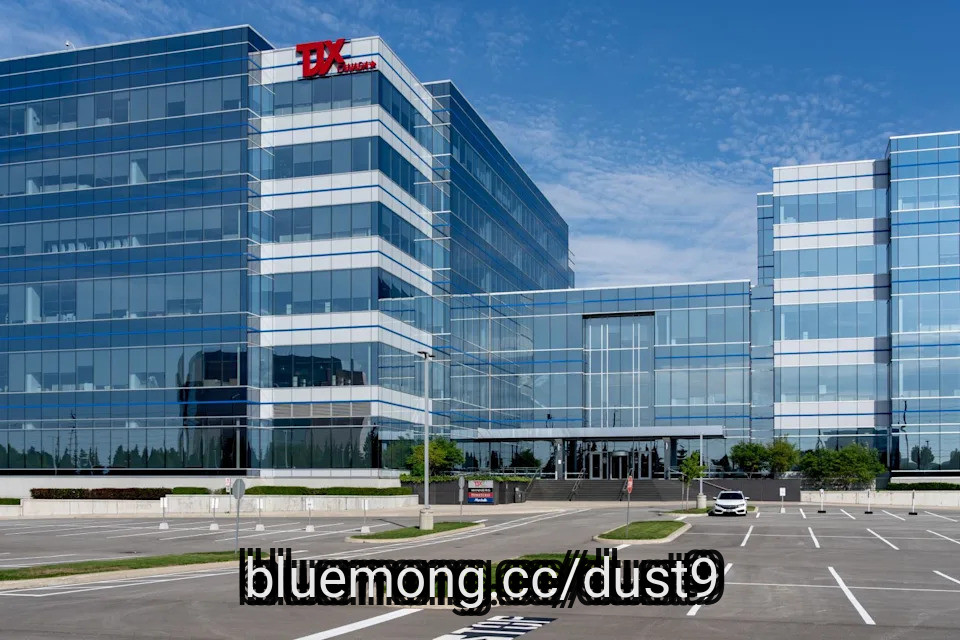
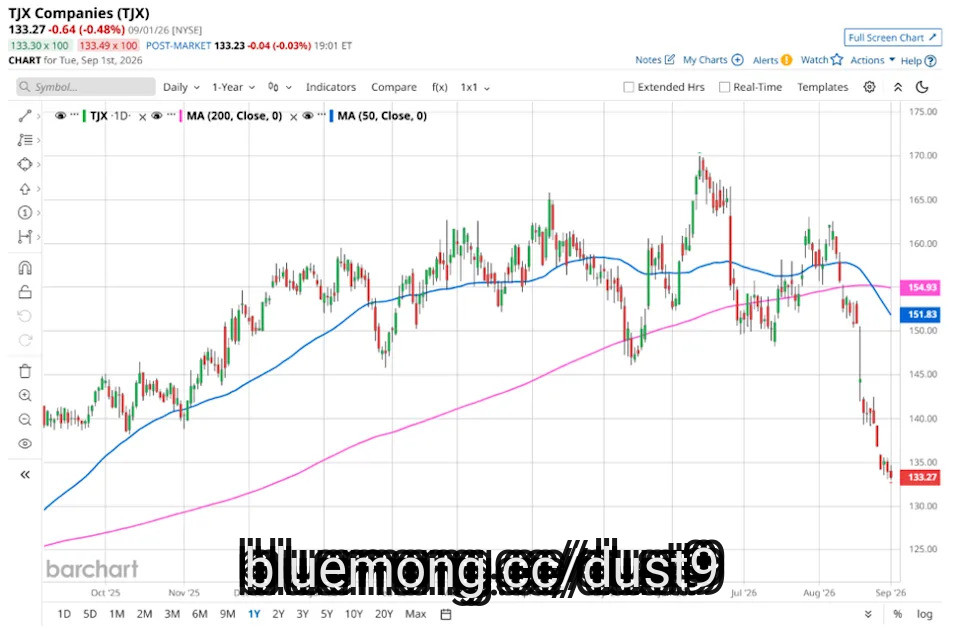
The TJX Companies, Inc. (TJX), headquartered in Framingham, Massachusetts, operates as an off-price apparel and home fashions retailer. With a market cap of $147.9 billion, the company operates off-price retail concepts and e-commerce sites in the U.S., Canada, and Europe that offer a wide range of brand name and designer merchandise.
Companies worth $10 billion or more are generally described as "large-cap stocks," and TJX definitely fits that description, with its market cap exceeding this threshold, reflecting its substantial size, influence, and dominance in the apparel retail industry. TJX has cemented its leadership in off-price retail by leveraging strong vendor relationships and efficient procurement to offer branded merchandise at significantly lower prices than traditional channels. Its treasure-hunt shopping experience, driven by a diverse and ever-changing ****** ortment, continues to resonate with cost-conscious consumers and build a loyal customer base, while strategic investments in Multibrand Outlet Stores in Mexico and Brands for Less in the Middle East underscore its focus on international expansion and geographic diversification.
Dear GameStop Stock Fans, Mark Your Calendars for September 8
SMCI vs. CoreWeave: 1 AI Infrastructure Model Has the Bigger Opportunity
Why ****** ysts Think Sellas Life Sciences Stock Can Gain 150% From Here
#price #Companies #market #billion
Companies worth $10 billion or more are generally described as "large-cap stocks," and TJX definitely fits that description, with its market cap exceeding this threshold, reflecting its substantial size, influence, and dominance in the apparel retail industry. TJX has cemented its leadership in off-price retail by leveraging strong vendor relationships and efficient procurement to offer branded merchandise at significantly lower prices than traditional channels. Its treasure-hunt shopping experience, driven by a diverse and ever-changing ****** ortment, continues to resonate with cost-conscious consumers and build a loyal customer base, while strategic investments in Multibrand Outlet Stores in Mexico and Brands for Less in the Middle East underscore its focus on international expansion and geographic diversification.
Dear GameStop Stock Fans, Mark Your Calendars for September 8
SMCI vs. CoreWeave: 1 AI Infrastructure Model Has the Bigger Opportunity
Why ****** ysts Think Sellas Life Sciences Stock Can Gain 150% From Here
#price #Companies #market #billion

2 months ago
Our ****** ysts just identified a stock with the potential to be the next Nvidia. Tell us how you invest and we'll show you why it's our #1 pick. Tap here.
Achieved the largest gross bookings quarter in company history, driven by a 30% increase in sales capacity and a 10% improvement in rep productivity.
First order count grew more than 100% year-over-year, validating a strategy to land customers at any entry point, as over half of current $1 billion-plus run rate revenue originated from initial orders under $5,000.
Introduced 'Flex' to eliminate procurement friction, allowing customers to dynamically allocate a single dollar commitment between seat-based subscriptions and new consumption products.
Observed a stabilization in SMB and mid-market segments, with performance exceeding internal targets for both expansion and new customer acquisition.
#tell #observed
Achieved the largest gross bookings quarter in company history, driven by a 30% increase in sales capacity and a 10% improvement in rep productivity.
First order count grew more than 100% year-over-year, validating a strategy to land customers at any entry point, as over half of current $1 billion-plus run rate revenue originated from initial orders under $5,000.
Introduced 'Flex' to eliminate procurement friction, allowing customers to dynamically allocate a single dollar commitment between seat-based subscriptions and new consumption products.
Observed a stabilization in SMB and mid-market segments, with performance exceeding internal targets for both expansion and new customer acquisition.
#tell #observed


2 months ago
On August 25, The Marzetti Company (NASDAQ:MZTI) closed out a fiscal year of records, even as reported quarterly sales slipped 2.2% to $465.0 million. The drop traces to the planned expiration of a temporary supply agreement rather than any softness in the core business, and once that noise is stripped out, adjusted sales actually grew. Behind the headline number sits a company generating more cash and profit than it ever has, just as a fresh food safety scare threatens to interrupt the streak.
Fiscal 2026 marked the fourth straight year of record net sales and gross profit and the third straight year of record operating income, with fourth-quarter gross profit alone reaching $114.0 million. Gross margin expanded 220 basis points to 24.5%, the twelfth consecutive quarter of improvement, as procurement, manufacturing and network changes kept squeezing out costs. Adjusted operating income rose 17.5% to $52.2 million. Growth is increasingly coming from newer names. Bachan's, the barbecue sauce brand acquired mid-year, added $15.4 million in sales in its first two months and contributed 320 basis points to consolidated growth. Scanner data showed Bachan's sales up 8.7% for the quarter with distribution points up 16.6%, and household penetration climbing from 5% to 6% since the deal closed.
Management is now extending the brand into mayo, a category it pegs at $3.4 billion in potential, and into a wing sauce made at its own Kentucky plant. Texas Roadhouse dinner rolls kept up an even faster pace, up 28.1% in the quarter and 76% for the year to $58 million, selling nearly twice as fast per distribution point as the category average. New York Bakery grew 2.8% and took 220 basis points of share to a leading 45.5%, while branded croutons picked up another 100 basis points. Record operating cash flow of $283.8 million helped fund $36.3 million in buybacks and a 63rd straight annual dividend increase.
That momentum is about to run into a real headwind. A Cyclospora outbreak is expected to cut fiscal first-quarter net sales by roughly 250 basis points in both the retail and foodservice segments, and management is modeling the recovery on a similar 2018 episode that took about four months to fade. CFO Tom Pigott was blunt about the near-term cost, saying the company does "not expect to be able to grow our margins" in the first quarter, and Marzetti is guiding to a roughly 15% decline in first-quarter operating income.
#quarter #sales
Fiscal 2026 marked the fourth straight year of record net sales and gross profit and the third straight year of record operating income, with fourth-quarter gross profit alone reaching $114.0 million. Gross margin expanded 220 basis points to 24.5%, the twelfth consecutive quarter of improvement, as procurement, manufacturing and network changes kept squeezing out costs. Adjusted operating income rose 17.5% to $52.2 million. Growth is increasingly coming from newer names. Bachan's, the barbecue sauce brand acquired mid-year, added $15.4 million in sales in its first two months and contributed 320 basis points to consolidated growth. Scanner data showed Bachan's sales up 8.7% for the quarter with distribution points up 16.6%, and household penetration climbing from 5% to 6% since the deal closed.
Management is now extending the brand into mayo, a category it pegs at $3.4 billion in potential, and into a wing sauce made at its own Kentucky plant. Texas Roadhouse dinner rolls kept up an even faster pace, up 28.1% in the quarter and 76% for the year to $58 million, selling nearly twice as fast per distribution point as the category average. New York Bakery grew 2.8% and took 220 basis points of share to a leading 45.5%, while branded croutons picked up another 100 basis points. Record operating cash flow of $283.8 million helped fund $36.3 million in buybacks and a 63rd straight annual dividend increase.
That momentum is about to run into a real headwind. A Cyclospora outbreak is expected to cut fiscal first-quarter net sales by roughly 250 basis points in both the retail and foodservice segments, and management is modeling the recovery on a similar 2018 episode that took about four months to fade. CFO Tom Pigott was blunt about the near-term cost, saying the company does "not expect to be able to grow our margins" in the first quarter, and Marzetti is guiding to a roughly 15% decline in first-quarter operating income.
#quarter #sales


2 months ago
Our **** ysts just identified a stock with the potential to be the next Nvidia. Tell us how you invest and we'll show you why it's our #1 pick. Tap here.
Organic growth of 5% was driven by broad-based strength and an improving outlay environment, allowing for faster conversion of backlog into revenue.
Management achieved a recompete win rate exceeding 90%, which provides a secure base for future growth and reduces historical revenue headwinds.
Project Orbit has transitioned to the implementation phase, focusing on removing 'gunk' from systems through procurement rigor, automated onboarding, and Agentic AI tools.
The company is shifting toward a more disciplined bidding approach, prioritizing fewer, mission-oriented pursuits in intelligence, **** e, and national security domains.
#revenue #NVIDIA #tell #agentic
Organic growth of 5% was driven by broad-based strength and an improving outlay environment, allowing for faster conversion of backlog into revenue.
Management achieved a recompete win rate exceeding 90%, which provides a secure base for future growth and reduces historical revenue headwinds.
Project Orbit has transitioned to the implementation phase, focusing on removing 'gunk' from systems through procurement rigor, automated onboarding, and Agentic AI tools.
The company is shifting toward a more disciplined bidding approach, prioritizing fewer, mission-oriented pursuits in intelligence, **** e, and national security domains.
#revenue #NVIDIA #tell #agentic


2 months ago
Interested in Science Applications International Corporation? Here are five stocks we like better.
SAIC exceeded expectations in fiscal 2027's second quarter, reporting $1.9 billion in revenue, 5% organic growth, a 10.3% adjusted EBITDA margin and $131 million in free cash flow. Net leverage declined to 3.0 times.
The company raised its full-year guidance to $7.25 billion in revenue, 10.3%–10.5% adjusted EBITDA margins and at least $600 million in free cash flow, although the RITS contract rollover is expected to weigh on second-half revenue.
SAIC highlighted strong on-contract growth and more than $1.6 billion in intelligence and ******* e awards, while procurement remains uneven. Its Project ORBIT efficiency program targets $150 million in annual run-rate savings and supports a long-term path toward approximately 11% margins.
Science Applications International Is a Wicked Hot Buy in June
#science
SAIC exceeded expectations in fiscal 2027's second quarter, reporting $1.9 billion in revenue, 5% organic growth, a 10.3% adjusted EBITDA margin and $131 million in free cash flow. Net leverage declined to 3.0 times.
The company raised its full-year guidance to $7.25 billion in revenue, 10.3%–10.5% adjusted EBITDA margins and at least $600 million in free cash flow, although the RITS contract rollover is expected to weigh on second-half revenue.
SAIC highlighted strong on-contract growth and more than $1.6 billion in intelligence and ******* e awards, while procurement remains uneven. Its Project ORBIT efficiency program targets $150 million in annual run-rate savings and supports a long-term path toward approximately 11% margins.
Science Applications International Is a Wicked Hot Buy in June
#science

2 months ago
There is always a winner in any major global oil crisis. In 1973/74, it was Saudi Arabia and its OPEC brothers who shifted the balance of power in the market away from the previous arrangement dominated by the West's 'Seven Sisters' to the oil producers of the Middle East. After the 2014-2016 Oil Price War, it was the U.S. whose earlier nascent shale oil sector resisted the threat to its very existence from Saudi Arabia and OPEC, reorganising into a meaner, leaner, lower-cost oil production machine. The U.S. was the winner again in the short-lived 2020 Oil Price War, and this, along with all the other major crises mentioned, is ****** ysed in full in my latest book on the global oil markets. The latest rupture in the global oil market order that followed the U.S.'s 'Operation Epic Fury' against Iran that began on 28 February has also produced a clear winner. It is neither the U.S., Saudi Arabia, nor the other OPEC states -- it is China. So, how inclined will Beijing be to heed Washington's newly announced sanctions on Iran ahead of the meeting of its President Xi Jinping with U.S. counterpart Donald Trump on 24 September at the White House?
The sanctions in question were announced on 20 August by U.S. Treasury Secretary Scott Bessent, who stated they would be "the toughest sanctions in history" on Iran, under the umbrella of 'Economic D-Day' for the country. The direct sanctions on Iran aim for the complete financial isolation and economic shutdown of the regime by cutting off all domestic and international revenue streams. To this end, the U.S. Treasury blacklisted five core sectors of Iran's economy -- Digital ****** ets/Crypto, Technology, Gold, Aviation, and Shipping -- making any business operating within them subject to immediate ****** et freezes. At the same time, all longstanding humanitarian, academic, athletic, and personal remittance exemptions were indefinitely suspended, including a complete ban on non-commercial family money transfers and joint research collaborations. In parallel with this, the state-run Islamic Republic of Iran Shipping Lines (IRISL) and commercial aviation fleets were put under a strict operational embargo, cutting off access to foreign ports, refuelling, and aircraft spare parts. Immediate ****** et freezes were also levied against procurement networks, cyber warfare units, and business syndicates tied to the Islamic Revolutionary Guard Corps (IRGC).
Related: Solar Has Crossed a Critical Economic Tipping Point
In tandem with this, the U.S. Treasury, along with sister organisations, will fully utilise secondary sanctions to force foreign governments and companies to choose between trading with Iran or trading with the U.S., under the umbrella of 'Operation Economic Outcast'. This aims to target the complete financial isolation of Tehran by cutting off its remaining economic lifelines. To that end, the U.S. Treasury has already blacklisted nearly 60 entities, individuals, and vessels, focusing heavily on thir
The sanctions in question were announced on 20 August by U.S. Treasury Secretary Scott Bessent, who stated they would be "the toughest sanctions in history" on Iran, under the umbrella of 'Economic D-Day' for the country. The direct sanctions on Iran aim for the complete financial isolation and economic shutdown of the regime by cutting off all domestic and international revenue streams. To this end, the U.S. Treasury blacklisted five core sectors of Iran's economy -- Digital ****** ets/Crypto, Technology, Gold, Aviation, and Shipping -- making any business operating within them subject to immediate ****** et freezes. At the same time, all longstanding humanitarian, academic, athletic, and personal remittance exemptions were indefinitely suspended, including a complete ban on non-commercial family money transfers and joint research collaborations. In parallel with this, the state-run Islamic Republic of Iran Shipping Lines (IRISL) and commercial aviation fleets were put under a strict operational embargo, cutting off access to foreign ports, refuelling, and aircraft spare parts. Immediate ****** et freezes were also levied against procurement networks, cyber warfare units, and business syndicates tied to the Islamic Revolutionary Guard Corps (IRGC).
Related: Solar Has Crossed a Critical Economic Tipping Point
In tandem with this, the U.S. Treasury, along with sister organisations, will fully utilise secondary sanctions to force foreign governments and companies to choose between trading with Iran or trading with the U.S., under the umbrella of 'Operation Economic Outcast'. This aims to target the complete financial isolation of Tehran by cutting off its remaining economic lifelines. To that end, the U.S. Treasury has already blacklisted nearly 60 entities, individuals, and vessels, focusing heavily on thir


2 months ago
China-based YFore has opened its American headquarters in Suwanee, Georgia, a site combining research, manufacturing, procurement, sales and delivery under one roof.
The automotive electronics supplier said the 62,225ft² facility is intended to bring "agile engineering and resilient local supply chains directly to local automotive partners".
Alongside the opening, the company rolled out its first US-built digital key unit to showcase the site's manufacturing capabilities.
YFore also used the launch to present its three main product lines.
In Intelligent Mirror, the company showed its range of interior digital mirrors, auto-dimming mirrors and exterior side mirrors, now in mass production on over 60 vehicle models worldwide.
#mirrors #automotive #local #digital
The automotive electronics supplier said the 62,225ft² facility is intended to bring "agile engineering and resilient local supply chains directly to local automotive partners".
Alongside the opening, the company rolled out its first US-built digital key unit to showcase the site's manufacturing capabilities.
YFore also used the launch to present its three main product lines.
In Intelligent Mirror, the company showed its range of interior digital mirrors, auto-dimming mirrors and exterior side mirrors, now in mass production on over 60 vehicle models worldwide.
#mirrors #automotive #local #digital

2 months ago
On August 25, The Marzetti Company (NASDAQ:MZTI) closed out a fiscal year of records, even as reported quarterly sales slipped 2.2% to $465.0 million. The drop traces to the planned expiration of a temporary supply agreement rather than any softness in the core business, and once that noise is stripped out, adjusted sales actually grew. Behind the headline number sits a company generating more cash and profit than it ever has, just as a fresh food safety scare threatens to interrupt the streak.
Fiscal 2026 marked the fourth straight year of record net sales and gross profit and the third straight year of record operating income, with fourth-quarter gross profit alone reaching $114.0 million. Gross margin expanded 220 basis points to 24.5%, the twelfth consecutive quarter of improvement, as procurement, manufacturing and network changes kept squeezing out costs. Adjusted operating income rose 17.5% to $52.2 million. Growth is increasingly coming from newer names. Bachan's, the barbecue sauce brand acquired mid-year, added $15.4 million in sales in its first two months and contributed 320 basis points to consolidated growth. Scanner data showed Bachan's sales up 8.7% for the quarter with distribution points up 16.6%, and household penetration climbing from 5% to 6% since the deal closed.
Management is now extending the brand into mayo, a category it pegs at $3.4 billion in potential, and into a wing sauce made at its own Kentucky plant. Texas Roadhouse dinner rolls kept up an even faster pace, up 28.1% in the quarter and 76% for the year to $58 million, selling nearly twice as fast per distribution point as the category average. New York Bakery grew 2.8% and took 220 basis points of share to a leading 45.5%, while branded croutons picked up another 100 basis points. Record operating cash flow of $283.8 million helped fund $36.3 million in buybacks and a 63rd straight annual dividend increase.
That momentum is about to run into a real headwind. A Cyclospora outbreak is expected to cut fiscal first-quarter net sales by roughly 250 basis points in both the retail and foodservice segments, and management is modeling the recovery on a similar 2018 episode that took about four months to fade. CFO Tom Pigott was blunt about the near-term cost, saying the company does "not expect to be able to grow our margins" in the first quarter, and Marzetti is guiding to a roughly 15% decline in first-quarter operating income.
#points
Fiscal 2026 marked the fourth straight year of record net sales and gross profit and the third straight year of record operating income, with fourth-quarter gross profit alone reaching $114.0 million. Gross margin expanded 220 basis points to 24.5%, the twelfth consecutive quarter of improvement, as procurement, manufacturing and network changes kept squeezing out costs. Adjusted operating income rose 17.5% to $52.2 million. Growth is increasingly coming from newer names. Bachan's, the barbecue sauce brand acquired mid-year, added $15.4 million in sales in its first two months and contributed 320 basis points to consolidated growth. Scanner data showed Bachan's sales up 8.7% for the quarter with distribution points up 16.6%, and household penetration climbing from 5% to 6% since the deal closed.
Management is now extending the brand into mayo, a category it pegs at $3.4 billion in potential, and into a wing sauce made at its own Kentucky plant. Texas Roadhouse dinner rolls kept up an even faster pace, up 28.1% in the quarter and 76% for the year to $58 million, selling nearly twice as fast per distribution point as the category average. New York Bakery grew 2.8% and took 220 basis points of share to a leading 45.5%, while branded croutons picked up another 100 basis points. Record operating cash flow of $283.8 million helped fund $36.3 million in buybacks and a 63rd straight annual dividend increase.
That momentum is about to run into a real headwind. A Cyclospora outbreak is expected to cut fiscal first-quarter net sales by roughly 250 basis points in both the retail and foodservice segments, and management is modeling the recovery on a similar 2018 episode that took about four months to fade. CFO Tom Pigott was blunt about the near-term cost, saying the company does "not expect to be able to grow our margins" in the first quarter, and Marzetti is guiding to a roughly 15% decline in first-quarter operating income.
#points

2 months ago
Lantronix (NASDAQ:LTRX) closed out fiscal 2026 looking like a different company than it was a year earlier. Revenue for the fourth quarter, which ended June 30 and was reported on August 26, came in at $31.2 million, up 8% from a year ago, while non-GAAP earnings per share jumped 300% to $0.04. The company also finished the year debt-free with $60.5 million in cash. What used to be a niche embedded-connectivity supplier is now leaning hard into drones, edge AI compute, and recurring software revenue.
That shift shows up most clearly in unmanned systems. A year ago the company had roughly 10 active engagements in the category; by the end of fiscal 2026 that number had tripled to over 30. Unmanned systems revenue hit $12.6 million for the year, above the midpoint of the $10 million to $14 million range management had guided to, and embedded IoT solutions overall grew 34% on the strength of that business.
CEO Saleel Awsare pointed to the company's US Army short-range reconnaissance program win, tied to Teal Drones' Black Widow platform and its status as a Blue UAS approved supplier, as proof of its camera tuning and sensor fusion expertise. Management is layering in partnerships too, including a deal with AVT Australia to build its system-on-module tech into gimbal camera payloads and a collaboration with Swarmer that roughly quadruples onboard processing power for Group 1 drones. For fiscal 2027, management expects unmanned systems to reach 15% to 20% of total revenue, more than $25 million.
The balance sheet backs up the ambition: a $44 million capital raise during the quarter helped push cash to $60.5 million while the company paid off its remaining $8.7 million in debt. On top of that, the $11.7 million purchase of Vecima Networks' Industrial IoT business, including the Nero Global Tracking platform and its 125,000 device tags, is expected to add $5.3 million in annual revenue and push software and services to about 10% of total revenue on a pro forma basis, up from 7% to 8% previously.
Not every input is cooperating. CFO Brent Stringham flagged that memory availability has tightened and prices have risen as AI infrastructure and hyperscale data centers absorb a growing share of global supply, a dynamic he described as industry-wide rather than specific to Lantronix. The company's IoT Systems Solutions segment, which grew 16% sequentially to $15.3 million, was still recovering from federal government shutdowns that slowed procurement in the prior two quarters, a reminder of how exposed that business is to Washington's budget calendar. And despite the non-GAAP profit, Lantronix posted a GAAP net loss of $269,000 for the quarter, an improvement from the $2.6 million loss a year earlier but still red ink.
#gaap
That shift shows up most clearly in unmanned systems. A year ago the company had roughly 10 active engagements in the category; by the end of fiscal 2026 that number had tripled to over 30. Unmanned systems revenue hit $12.6 million for the year, above the midpoint of the $10 million to $14 million range management had guided to, and embedded IoT solutions overall grew 34% on the strength of that business.
CEO Saleel Awsare pointed to the company's US Army short-range reconnaissance program win, tied to Teal Drones' Black Widow platform and its status as a Blue UAS approved supplier, as proof of its camera tuning and sensor fusion expertise. Management is layering in partnerships too, including a deal with AVT Australia to build its system-on-module tech into gimbal camera payloads and a collaboration with Swarmer that roughly quadruples onboard processing power for Group 1 drones. For fiscal 2027, management expects unmanned systems to reach 15% to 20% of total revenue, more than $25 million.
The balance sheet backs up the ambition: a $44 million capital raise during the quarter helped push cash to $60.5 million while the company paid off its remaining $8.7 million in debt. On top of that, the $11.7 million purchase of Vecima Networks' Industrial IoT business, including the Nero Global Tracking platform and its 125,000 device tags, is expected to add $5.3 million in annual revenue and push software and services to about 10% of total revenue on a pro forma basis, up from 7% to 8% previously.
Not every input is cooperating. CFO Brent Stringham flagged that memory availability has tightened and prices have risen as AI infrastructure and hyperscale data centers absorb a growing share of global supply, a dynamic he described as industry-wide rather than specific to Lantronix. The company's IoT Systems Solutions segment, which grew 16% sequentially to $15.3 million, was still recovering from federal government shutdowns that slowed procurement in the prior two quarters, a reminder of how exposed that business is to Washington's budget calendar. And despite the non-GAAP profit, Lantronix posted a GAAP net loss of $269,000 for the quarter, an improvement from the $2.6 million loss a year earlier but still red ink.
#gaap