
2 months ago
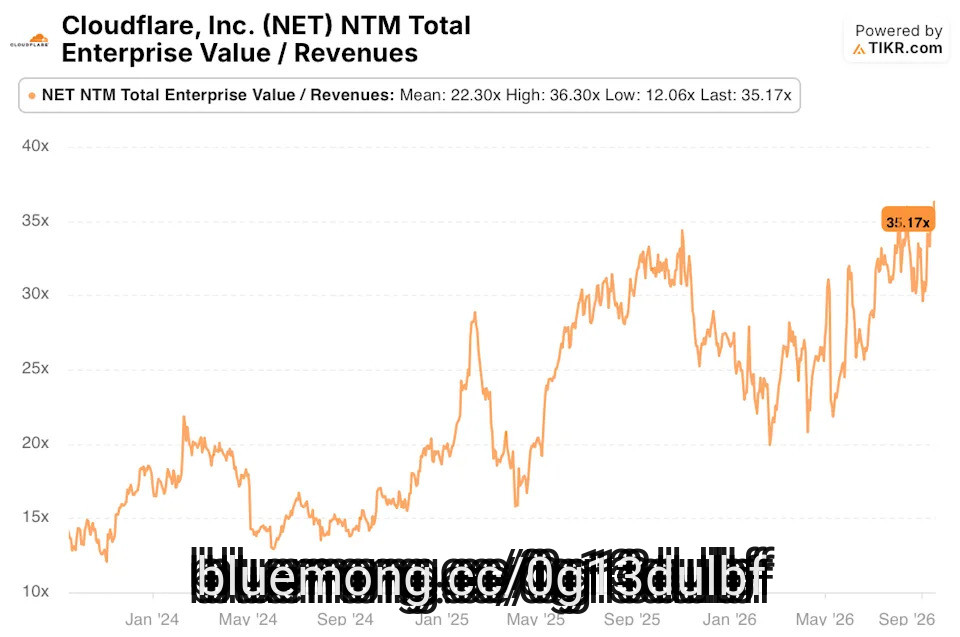
Cloudflare's Q2 beat and reaccelerating growth (36% revenue growth, 120% net dollar retention, record large customer adds) pushed NET stock to new highs, but the market has already paid up: NTM EV/Revenue sits at 35.17x, just below its all-time high of 36.30x and well above its roughly two-year average of 22.30x.
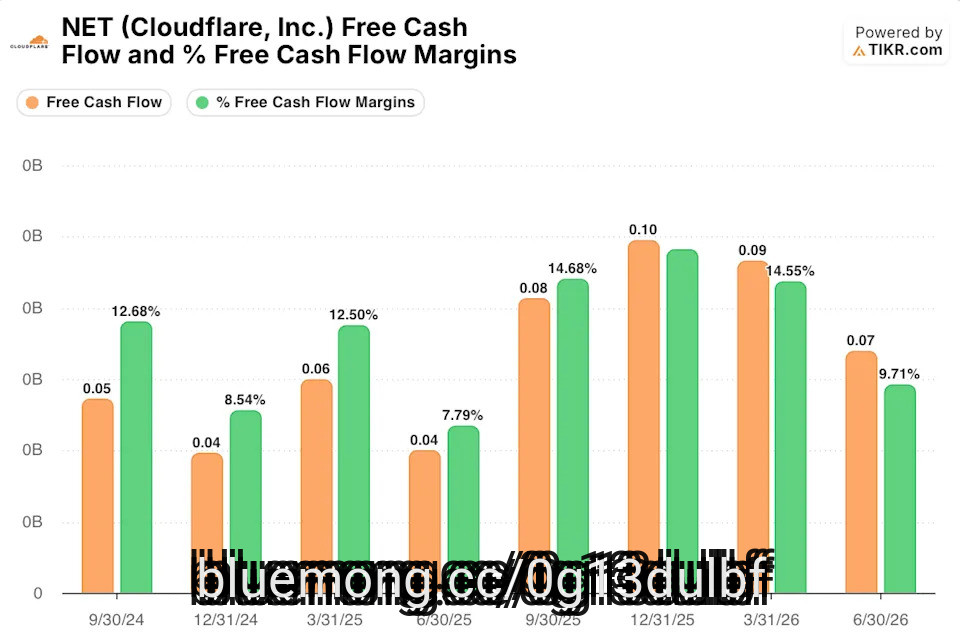
Free cash flow margin, the exact metric management points to as evidence of a credible path to GAAP profitability by 2028, has fallen for two straight quarters, from 14.55% in Q1 2026 to 9.71% in Q2 2026, even as severance and restructuring costs climbed toward $165 million for the year.
President Michelle Zatlyn, CFO Thomas Seifert, and director John Graham-Cumming all sold stock in August and September, Zatlyn alone disposing of roughly $44 million across two separate filings, while the company also raised $2.175 billion in convertible debt despite already holding $4.2 billion in cash.
Street consensus, which saw NET stock as 13% to 22% undervalued for most of late 2025 and early 2026, has now caught up: the mean ****** yst target of $336.81 sits just 4% above the September 18 close of $323.60, a far thinner cushion than investors had earlier in the rally.
Cloudflare's second quarter gave bulls plenty to like. Revenue grew 36% year over year to $696.1 million, beating the $665.5 million ****** yst estimate. The company added a record 986 large customers over the trailing year and net dollar retention accelerated to 120%, up six points from a year earlier. Management used that momentum to lean harder into its Act 4 story, the plan to turn Cloudflare's network into infrastructure for agentic commerce through products like Monetization Gateway, Wallets, and cloudflare.pay.
#revenue #dollar
Free cash flow margin, the exact metric management points to as evidence of a credible path to GAAP profitability by 2028, has fallen for two straight quarters, from 14.55% in Q1 2026 to 9.71% in Q2 2026, even as severance and restructuring costs climbed toward $165 million for the year.
President Michelle Zatlyn, CFO Thomas Seifert, and director John Graham-Cumming all sold stock in August and September, Zatlyn alone disposing of roughly $44 million across two separate filings, while the company also raised $2.175 billion in convertible debt despite already holding $4.2 billion in cash.
Street consensus, which saw NET stock as 13% to 22% undervalued for most of late 2025 and early 2026, has now caught up: the mean ****** yst target of $336.81 sits just 4% above the September 18 close of $323.60, a far thinner cushion than investors had earlier in the rally.
Cloudflare's second quarter gave bulls plenty to like. Revenue grew 36% year over year to $696.1 million, beating the $665.5 million ****** yst estimate. The company added a record 986 large customers over the trailing year and net dollar retention accelerated to 120%, up six points from a year earlier. Management used that momentum to lean harder into its Act 4 story, the plan to turn Cloudflare's network into infrastructure for agentic commerce through products like Monetization Gateway, Wallets, and cloudflare.pay.
#revenue #dollar


2 months ago
Meta Platforms, Inc. (NASDAQ:META) is taking another step toward monetizing artificial intelligence beyond its core advertising business. On September 9, the company acquired AI startup Stilla.ai.
The acquisition will strengthen the company's agentic AI capabilities as it moves to capitalize on growing demand for AI agents that can handle business transactions. Plans are underway to integrate Stilla.ai's team and technology into Meta Business Agent, which already helps businesses interact with customers across various platforms.
Stilla.ai's technology could help Meta's Business Agent enable more sophisticated interactions between customers and AI agents across its messaging platforms. In the long term, customers could use AI agents to inquire about products, discuss pricing, and potentially complete purchases without leaving Meta's ecosystem.
Such capabilities could result in new monetization opportunities as the company faces increasing pressure to generate returns from its substantial artificial intelligence investments. Rather than relying exclusively on AI to improve advertising efficiency, Meta could use AI to facilitate transactions and capture value from the commercial activity taking place across its platforms.
The acquisition could help the company build an AI-driven commerce layer across its massive messaging ecosystem. The company has access to billions of users across Facebook, Instagram, Messenger, and WhatsApp, while millions of businesses already use its platforms to communicate with customers.
#customers #agents
The acquisition will strengthen the company's agentic AI capabilities as it moves to capitalize on growing demand for AI agents that can handle business transactions. Plans are underway to integrate Stilla.ai's team and technology into Meta Business Agent, which already helps businesses interact with customers across various platforms.
Stilla.ai's technology could help Meta's Business Agent enable more sophisticated interactions between customers and AI agents across its messaging platforms. In the long term, customers could use AI agents to inquire about products, discuss pricing, and potentially complete purchases without leaving Meta's ecosystem.
Such capabilities could result in new monetization opportunities as the company faces increasing pressure to generate returns from its substantial artificial intelligence investments. Rather than relying exclusively on AI to improve advertising efficiency, Meta could use AI to facilitate transactions and capture value from the commercial activity taking place across its platforms.
The acquisition could help the company build an AI-driven commerce layer across its massive messaging ecosystem. The company has access to billions of users across Facebook, Instagram, Messenger, and WhatsApp, while millions of businesses already use its platforms to communicate with customers.
#customers #agents


2 months ago
Cybersecurity provider CrowdStrike Holdings, Inc. (NASDAQ:CRWD)'s shares are up by more than 100% year to date. With AI continuing to dominate the market narrative, the firm has found itself at the center of the industry's concerns about cybersecurity. While some, such as Anthropic's Dario Amodei, have claimed that their AI software is sufficient for cybersecurity purposes, others have argued that firms such as CrowdStrike Holdings, Inc. (NASDAQ:CRWD) will play a key role in the industry. Cramer is in the latter camp, and in his morning appearance on September 15th, the CNBC TV host discussed the recent discussions about AI being a threat:
"I had George Kurtz last night, who has partnered both with OpenAI and Anthropic. And he encouraged me to say look, they are doing a lot of things about safeguards. I think he was so much surprised, that there was so much doomsaying, of course, doomsaying being heavily refuted. Now there's a stock, remember that stock was up the most of any stock in the S&P."
While Cramer believes CrowdStrike Holdings, Inc. (NASDAQ:CRWD) will play an important role in cybersecurity in the AI era, the broader debate about the firm is about its AI-driven cybersecurity initiatives and whether they are sufficient to stay competitive and justify the eye-watering share price performance. On this front, the firm's annual recurring revenue (ARR) grew by 25% and net new ARR grew by 55% in its fiscal second quarter. Additionally, CrowdStrike Holdings, Inc. (NASDAQ:CRWD)'s net new ARR set a new record of $333 million. Cramer's bullishness on the firm is also matched by others, such as ******* ysts from Argus. Argus has set a $425 share price target for CrowdStrike Holdings, Inc. (NASDAQ:CRWD) and argued that growth in agentic AI use presents a major tailwind for the firm.
Yet, in a classic case of the bigger you are, the harder you fall, CrowdStrike Holdings, Inc. (NASDAQ:CRWD)'s massive growth creates risk. For its fiscal second quarter, the firm has guided net new ARR to range between $343 million and $347 million to imply growth ranging between 29% to 31%. Considering that the metric grew by 55% in Q1, the new figures do indicate a slowdown. As for catalysts from agentic AI, CrowdStrike Holdings, Inc. (NASDAQ:CRWD)'s next-gen SIEM (Security Information and Event Management) ending ARR grew by 60% to $695 million in the second quarter.
Hedge fund interest in CrowdStrike Holdings, Inc. (NASDAQ:CRWD) grew in Q2. According to Insider Monkey's data, 89 out of 1,006 funds had held a stake in the firm during the period. This marked a jump over the 89 out of the 1,022 funds in Q1. As for valuation, CrowdStrike Holdings, Inc. (NASDAQ:CRWD)'s forward P/E ratio of 188 is significantly higher than peer firm Palo Alto's 89 which should increase the pressure to maintain growth. Short interest as a percentage of float is 2.41% for CrowdStrike Holdings, Inc. (NASDAQ:CRWD) compared to 2.65% for Palo Alto.
#NASDAQ #firm #grew
"I had George Kurtz last night, who has partnered both with OpenAI and Anthropic. And he encouraged me to say look, they are doing a lot of things about safeguards. I think he was so much surprised, that there was so much doomsaying, of course, doomsaying being heavily refuted. Now there's a stock, remember that stock was up the most of any stock in the S&P."
While Cramer believes CrowdStrike Holdings, Inc. (NASDAQ:CRWD) will play an important role in cybersecurity in the AI era, the broader debate about the firm is about its AI-driven cybersecurity initiatives and whether they are sufficient to stay competitive and justify the eye-watering share price performance. On this front, the firm's annual recurring revenue (ARR) grew by 25% and net new ARR grew by 55% in its fiscal second quarter. Additionally, CrowdStrike Holdings, Inc. (NASDAQ:CRWD)'s net new ARR set a new record of $333 million. Cramer's bullishness on the firm is also matched by others, such as ******* ysts from Argus. Argus has set a $425 share price target for CrowdStrike Holdings, Inc. (NASDAQ:CRWD) and argued that growth in agentic AI use presents a major tailwind for the firm.
Yet, in a classic case of the bigger you are, the harder you fall, CrowdStrike Holdings, Inc. (NASDAQ:CRWD)'s massive growth creates risk. For its fiscal second quarter, the firm has guided net new ARR to range between $343 million and $347 million to imply growth ranging between 29% to 31%. Considering that the metric grew by 55% in Q1, the new figures do indicate a slowdown. As for catalysts from agentic AI, CrowdStrike Holdings, Inc. (NASDAQ:CRWD)'s next-gen SIEM (Security Information and Event Management) ending ARR grew by 60% to $695 million in the second quarter.
Hedge fund interest in CrowdStrike Holdings, Inc. (NASDAQ:CRWD) grew in Q2. According to Insider Monkey's data, 89 out of 1,006 funds had held a stake in the firm during the period. This marked a jump over the 89 out of the 1,022 funds in Q1. As for valuation, CrowdStrike Holdings, Inc. (NASDAQ:CRWD)'s forward P/E ratio of 188 is significantly higher than peer firm Palo Alto's 89 which should increase the pressure to maintain growth. Short interest as a percentage of float is 2.41% for CrowdStrike Holdings, Inc. (NASDAQ:CRWD) compared to 2.65% for Palo Alto.
#NASDAQ #firm #grew


2 months ago
Credit card companies are racing to claim a place at the checkout when AI agents start shopping on behalf of consumers—even as shoppers remain skeptical of letting bots spend their money.
Mastercard rolled out a payment option Thursday that lets people give an AI agent a virtual card and allow it to buy things online without checking in before each purchase. Cardholders can limit how much it spends, restrict which retailers it buys from, or require approval before checkout.
"This is a land grab for infrastructure standards," Phil Bruno, chief strategy and growth officer at payments company ACI Worldwide, told Fortune. "If they set the standards for agentic commerce, they can keep the commerce in their environments for decades to come."
Rival Visa partnered with Alchemy earlier this year and has also announced its own AI shopping and payment product, Visa Intelligent Commerce, which the company says is still being deployed. Similarly, Meta has Muse, which can search for products and navigate checkout, but presents the purchase for the user's final approval.
It seems, though, that shoppers appear far more interested in using AI to find a deal than letting it pay. Just 7% of U.S. and U.K. consumers surveyed who buy fashion items said they would allow an AI ***** istant to make purchases without approval under predefined conditions, according to research commissioned by ACI Worldwide. More than half said they were uncomfortable allowing AI to purchase on their behalf.
#purchase #consumers
Mastercard rolled out a payment option Thursday that lets people give an AI agent a virtual card and allow it to buy things online without checking in before each purchase. Cardholders can limit how much it spends, restrict which retailers it buys from, or require approval before checkout.
"This is a land grab for infrastructure standards," Phil Bruno, chief strategy and growth officer at payments company ACI Worldwide, told Fortune. "If they set the standards for agentic commerce, they can keep the commerce in their environments for decades to come."
Rival Visa partnered with Alchemy earlier this year and has also announced its own AI shopping and payment product, Visa Intelligent Commerce, which the company says is still being deployed. Similarly, Meta has Muse, which can search for products and navigate checkout, but presents the purchase for the user's final approval.
It seems, though, that shoppers appear far more interested in using AI to find a deal than letting it pay. Just 7% of U.S. and U.K. consumers surveyed who buy fashion items said they would allow an AI ***** istant to make purchases without approval under predefined conditions, according to research commissioned by ACI Worldwide. More than half said they were uncomfortable allowing AI to purchase on their behalf.
#purchase #consumers


2 months ago
Two years of Synopsys (SNPS) earnings calls show management changing what it explains. The company used to open on problems, some outside its control and some its own. The August 2026 call is built around a joint product with Ansys, agentic AI, and a new way to charge for its design IP. Most of that switch is earned, but parts of it are still a promise.
Synopsys Once Opened Its Calls With Bad News
Management used to point to underperformance in the IP business, where expected deals did not arrive, and to challenges at a major foundry customer that were having a sizable impact. The CEO said it plainly on an earlier call: "new export restrictions disrupted design starts in China."
None of that comes up on the August 2026 call. China does not come up. The closest thing to the old worry is that design starts outside AI have stopped declining.
Synopsys Now Leads With Multiphysics Fusion And Agentic AI
#China
Synopsys Once Opened Its Calls With Bad News
Management used to point to underperformance in the IP business, where expected deals did not arrive, and to challenges at a major foundry customer that were having a sizable impact. The CEO said it plainly on an earlier call: "new export restrictions disrupted design starts in China."
None of that comes up on the August 2026 call. China does not come up. The closest thing to the old worry is that design starts outside AI have stopped declining.
Synopsys Now Leads With Multiphysics Fusion And Agentic AI
#China


2 months ago
SailPoint Inc. (NASDAQ:SAIL), a leading player within the enterprise identity security ****** e, recently expanded its strategic alliance with CrowdStrike. As part of the revised arrangement, the company's SailPoint SecOps Identity Intelligence will be integrated with CrowdStrike Falcon Next-Gen SIEM. This will help in expediting threat detection procedures, and will also incorporate access data and identity governance into the overall investigation process. The expanded partnership will facilitate security teams in lining up the identity insights with Falcon's existing security telemetry.
Copyright: franckito / 123RF Stock Photo
The announcement aligns strongly with SailPoint's broader strategic narrative revealed in its Q2 FY27 print. It builds upon several recent initiatives undertaken by the management, such as introduction of the SailPoint Identity Security solution. This is aimed toward integrating SailPoint Agentic Fabric with SailPoint Human Fabric for real-time discovery and security of complex digital ecosystems. The company also launched its Cursor Enterprise connector, which helps organizations to leverage a highly-integrated control plane to manage human developers and autonomous AI agents.
The recently released financials also back this narrative as the company delivered a 25% year-over-year growth in its annual recurring revenue, which stood at $1.231 billion. SailPoint generated $45 million in operating cash flow during the second quarter, along with $37 million in free cash flow.
By weaving SailPoint's identity intelligence into Falcon Next-Gen SIEM, customers gain extra context inside workflows they already rely on, making it easier to probe identity-related risks. The integration augments SailPoint's position at a time when identity threats are on a rise. This leads to an opportunity for SailPoint to cement itself as a leading provider of advanced security solutions.
#sailpoint #falcon #next
Copyright: franckito / 123RF Stock Photo
The announcement aligns strongly with SailPoint's broader strategic narrative revealed in its Q2 FY27 print. It builds upon several recent initiatives undertaken by the management, such as introduction of the SailPoint Identity Security solution. This is aimed toward integrating SailPoint Agentic Fabric with SailPoint Human Fabric for real-time discovery and security of complex digital ecosystems. The company also launched its Cursor Enterprise connector, which helps organizations to leverage a highly-integrated control plane to manage human developers and autonomous AI agents.
The recently released financials also back this narrative as the company delivered a 25% year-over-year growth in its annual recurring revenue, which stood at $1.231 billion. SailPoint generated $45 million in operating cash flow during the second quarter, along with $37 million in free cash flow.
By weaving SailPoint's identity intelligence into Falcon Next-Gen SIEM, customers gain extra context inside workflows they already rely on, making it easier to probe identity-related risks. The integration augments SailPoint's position at a time when identity threats are on a rise. This leads to an opportunity for SailPoint to cement itself as a leading provider of advanced security solutions.
#sailpoint #falcon #next


2 months ago
Top media leaders across print, digital and broadcast warned about AI's impacts on journalism at the inaugural Status Summit last week.
Why it matters: News publishers recognize that they need to embrace AI to survive the transition to an agentic web, but they refuse to broker deals with companies they feel are illegally scraping their content.
What they're saying: Speaking onstage to Status founder Oliver Darcy last Wednesday, New York Times CEO Meredith Kopit Levien said large language model developers "as far as we see it ... have engaged in theft of intellectual property and creative expressive work on a scale that is unprecedented."
As it relates to the Times, they've "stolen our stuff," she said.
The Times, which has sued OpenAI and Microsoft in a landmark copyright lawsuit, has struck partnerships with AI firms, such as Amazon, when they believe terms are equitable.
#darcy #york
Why it matters: News publishers recognize that they need to embrace AI to survive the transition to an agentic web, but they refuse to broker deals with companies they feel are illegally scraping their content.
What they're saying: Speaking onstage to Status founder Oliver Darcy last Wednesday, New York Times CEO Meredith Kopit Levien said large language model developers "as far as we see it ... have engaged in theft of intellectual property and creative expressive work on a scale that is unprecedented."
As it relates to the Times, they've "stolen our stuff," she said.
The Times, which has sued OpenAI and Microsoft in a landmark copyright lawsuit, has struck partnerships with AI firms, such as Amazon, when they believe terms are equitable.
#darcy #york

2 months ago
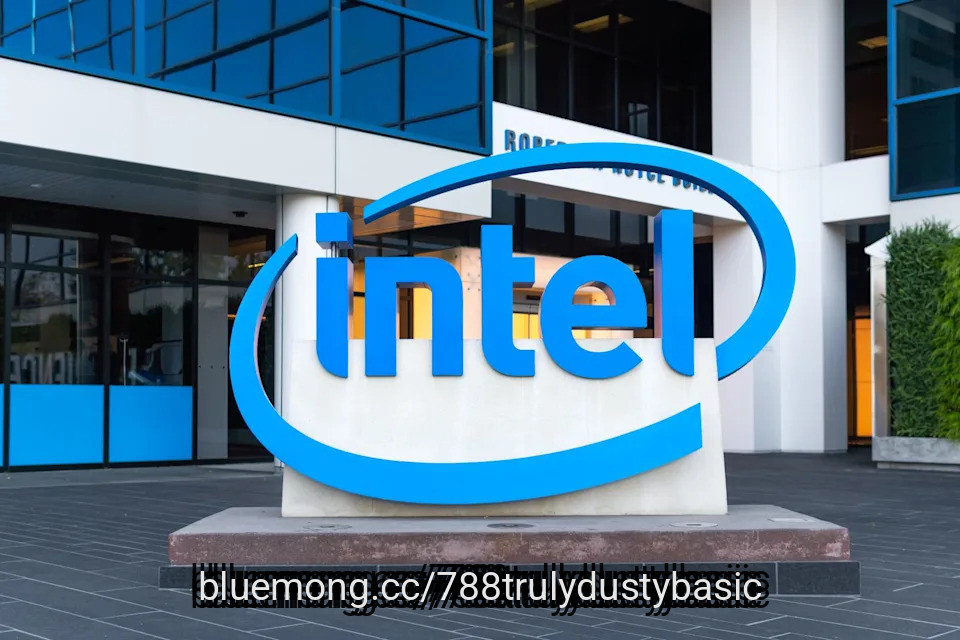
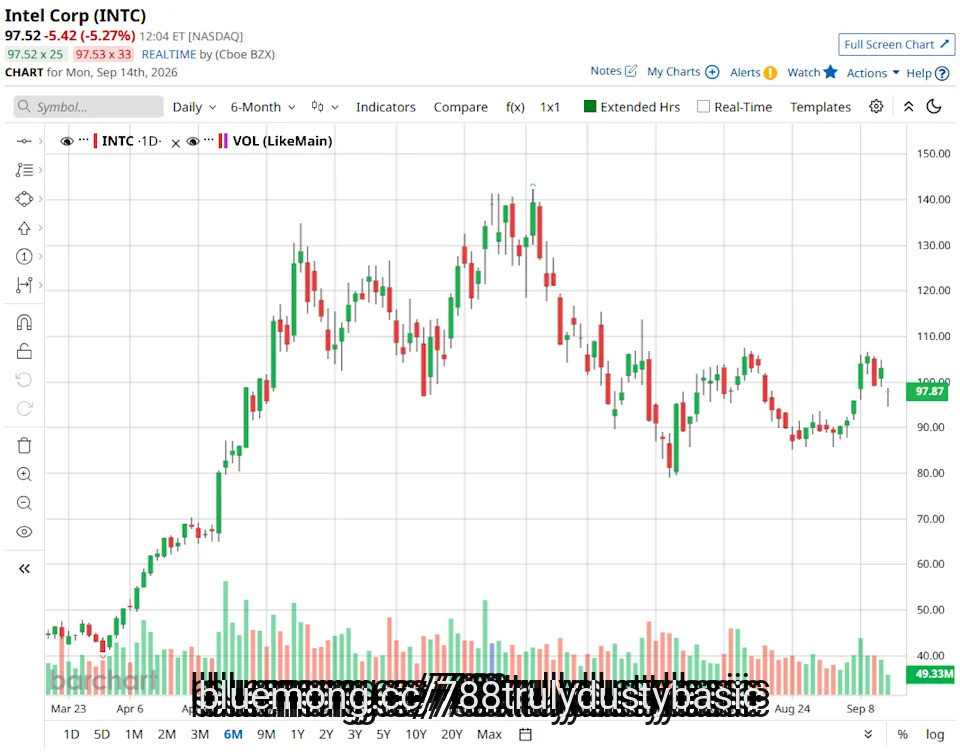
Mizuho has identified four clear tailwinds for Intel (INTC): ongoing CPU supply shortages, a stronger PC refresh cycle, accelerating demand for agentic AI, and growth in advanced packaging. Normally, such a setup would provide a reason to raise a price target. Instead, the firm cut its price target from $109 to $92, citing short-term multiple compression across Agentic AI stocks, and maintained a "Neutral" rating. The contradiction becomes more important because Intel's re-rating still depends on a foundry turnaround that has yet to prove itself.
Mizuho remains cautious on INTC stock despite outlining four separate tailwinds that could support the company's growth. The firm lowered its price target from $109 to $92 on Sept. 3, pointing to short-term multiple compression across agentic AI companies while keeping its "Neutral" rating unchanged. Mizuho **** yst Vijay Rakesh highlighted four developments that could support Intel's outlook. According to the **** yst, accelerating agentic AI demand could improve CPU-to-GPU ratios and drive additional server refreshers. Ongoing CPU supply constraints could also leave the company unable to fully meet demand through 2027. In addition, advanced packaging revenue is expected to reach $3.5 billion by 2029, with external foundry revenue potentially reaching a similar level through the 14A node. Finally, a stronger PC cycle could extend the upgrade cycle as corporate refreshes combine with ongoing memory tightness.
Goldman Sachs Expects Fed Chair Kevin Warsh to Raise Rates This Week — But Not Because of Oil Prices.
Billionaire Charlie Munger, Who Died at 99, Skipped Insurance on His Mansion Since He Could Just Write a Check to Rebuild — 'All Intelligent People Do It My Way'
The EV Bubble Has Burst. How to Play Rivian Stock Now.
#four
Mizuho remains cautious on INTC stock despite outlining four separate tailwinds that could support the company's growth. The firm lowered its price target from $109 to $92 on Sept. 3, pointing to short-term multiple compression across agentic AI companies while keeping its "Neutral" rating unchanged. Mizuho **** yst Vijay Rakesh highlighted four developments that could support Intel's outlook. According to the **** yst, accelerating agentic AI demand could improve CPU-to-GPU ratios and drive additional server refreshers. Ongoing CPU supply constraints could also leave the company unable to fully meet demand through 2027. In addition, advanced packaging revenue is expected to reach $3.5 billion by 2029, with external foundry revenue potentially reaching a similar level through the 14A node. Finally, a stronger PC cycle could extend the upgrade cycle as corporate refreshes combine with ongoing memory tightness.
Goldman Sachs Expects Fed Chair Kevin Warsh to Raise Rates This Week — But Not Because of Oil Prices.
Billionaire Charlie Munger, Who Died at 99, Skipped Insurance on His Mansion Since He Could Just Write a Check to Rebuild — 'All Intelligent People Do It My Way'
The EV Bubble Has Burst. How to Play Rivian Stock Now.
#four


2 months ago
On September 13, Reuters reported that Anthropic is in talks to bring NVIDIA Corporation (NASDAQ:NVDA) in as an anchor investor in what could become one of the largest IPOs in history, potentially raising as much as $100 billion at a valuation of around $2 trillion. Nvidia is reportedly considering an investment of up to $10 billion. Anthropic's annualized revenue run rate has reportedly increased from about $9 billion in 2025 to more than $65 billion by mid-2026, with the company targeting as much as $200 billion of revenue by 2028.
The strategic significance for Nvidia is greater than the potential financial return from the investment: Anthropic is a major buyer and user of AI computing infrastructure, and Reuters reported that it has committed $30 billion to Microsoft Azure infrastructure powered by Nvidia chips. Anthropic is also pursuing major capacity agreements with other providers and developing custom chips, making its future hardware choices strategically important to Nvidia.
The move would also deepen an already established relationship. NVIDIA Corporation (NASDAQ:NVDA) has previously disclosed an investment and technology partnership with Anthropic, while its fiscal 2026 filing said it had entered into an agreement to invest up to $10 billion in Anthropic. Nvidia generated $215.9 billion of fiscal 2026 revenue, up 65%, with Data Center revenue up 68%, demonstrating the enormous economic leverage of continued AI infrastructure spending.
The strongest bullish argument is that an equity investment could help NVIDIA Corporation (NASDAQ:NVDA) protect and expand one of the fastest-growing sources of demand for its GPUs. Anthropic's reported annualized revenue growth from $9 billion to more than $65 billion in roughly 18 months implies a rapidly expanding need for training and inference capacity. Its reported $30 billion commitment to Microsoft Azure powered by Nvidia systems provides a particularly direct link between Anthropic's growth and Nvidia's infrastructure demand. Anthropic is also reportedly committing $45 billion to rent AI computing capacity from Nscale, with that infrastructure expected to use Nvidia's Vera Rubin chips, indicating that the relationship can translate into future-generation hardware demand rather than being limited to Nvidia's existing products.
The investment could also strengthen Nvidia's position as AI workloads shift from model training toward large-scale inference and agentic AI. Nvidia recently said Anthropic is evaluating its Vera CPU for CPU-intensive agentic workloads, while Nvidia has positioned Blackwell Ultra and the Vera Rubin platform around the rapidly expanding inference market. Nvidia has disclosed visibility into more than $1 trillion of ***** ulative Blackwell and Rubin revenue from the beginning of 2025 through 2027, with Anthropic among the model developers contributing to that ecosystem. A successful Anthropic IPO would therefore potentially create a well-capitalized AI customer capable o
The strategic significance for Nvidia is greater than the potential financial return from the investment: Anthropic is a major buyer and user of AI computing infrastructure, and Reuters reported that it has committed $30 billion to Microsoft Azure infrastructure powered by Nvidia chips. Anthropic is also pursuing major capacity agreements with other providers and developing custom chips, making its future hardware choices strategically important to Nvidia.
The move would also deepen an already established relationship. NVIDIA Corporation (NASDAQ:NVDA) has previously disclosed an investment and technology partnership with Anthropic, while its fiscal 2026 filing said it had entered into an agreement to invest up to $10 billion in Anthropic. Nvidia generated $215.9 billion of fiscal 2026 revenue, up 65%, with Data Center revenue up 68%, demonstrating the enormous economic leverage of continued AI infrastructure spending.
The strongest bullish argument is that an equity investment could help NVIDIA Corporation (NASDAQ:NVDA) protect and expand one of the fastest-growing sources of demand for its GPUs. Anthropic's reported annualized revenue growth from $9 billion to more than $65 billion in roughly 18 months implies a rapidly expanding need for training and inference capacity. Its reported $30 billion commitment to Microsoft Azure powered by Nvidia systems provides a particularly direct link between Anthropic's growth and Nvidia's infrastructure demand. Anthropic is also reportedly committing $45 billion to rent AI computing capacity from Nscale, with that infrastructure expected to use Nvidia's Vera Rubin chips, indicating that the relationship can translate into future-generation hardware demand rather than being limited to Nvidia's existing products.
The investment could also strengthen Nvidia's position as AI workloads shift from model training toward large-scale inference and agentic AI. Nvidia recently said Anthropic is evaluating its Vera CPU for CPU-intensive agentic workloads, while Nvidia has positioned Blackwell Ultra and the Vera Rubin platform around the rapidly expanding inference market. Nvidia has disclosed visibility into more than $1 trillion of ***** ulative Blackwell and Rubin revenue from the beginning of 2025 through 2027, with Anthropic among the model developers contributing to that ecosystem. A successful Anthropic IPO would therefore potentially create a well-capitalized AI customer capable o


2 months ago
With Agentic AI accelerating CPU server chip demand, Wall Street believes Advanced Micro Devices, Inc. (NASDAQ:AMD) is one of the primary beneficiaries taking share. On September 9, Piper Sandler ******* yst David O'Connor initiated coverage on AMD (NASDAQ: AMD) with an Overweight rating and a $600 price target.
Analyst O'Connor estimates revenue for FY26-30 to grow at a 50% CAGR, while earnings per share compound at 65%.
The server-CPU share gain story for AMD is simple, Agentic AI is expected to increase demand for server CPUs. This is because the workloads require continuous control-plane activity, API calls, database queries and tool execution. AMD will benefit from this use based on its high-frequency and general-purpose processors with its Venice portfolio.
Even AMD executives have highlighted that AMD is now transitioning from merely a semiconductor supplier to a provider of rack-scale systems and software. It is also positioning its server CPU portfolio for increased demand from agentic AI workloads.
The company reported second-quarter revenue of $11.5 billion, beating ******* yst estimates. This includes $6.7 billion from data centers, up 107% year-over-year. The segment performance was attributed to EPYC processors and Instinct GPUs.
#workloads
Analyst O'Connor estimates revenue for FY26-30 to grow at a 50% CAGR, while earnings per share compound at 65%.
The server-CPU share gain story for AMD is simple, Agentic AI is expected to increase demand for server CPUs. This is because the workloads require continuous control-plane activity, API calls, database queries and tool execution. AMD will benefit from this use based on its high-frequency and general-purpose processors with its Venice portfolio.
Even AMD executives have highlighted that AMD is now transitioning from merely a semiconductor supplier to a provider of rack-scale systems and software. It is also positioning its server CPU portfolio for increased demand from agentic AI workloads.
The company reported second-quarter revenue of $11.5 billion, beating ******* yst estimates. This includes $6.7 billion from data centers, up 107% year-over-year. The segment performance was attributed to EPYC processors and Instinct GPUs.
#workloads


2 months ago
On September 13, Reuters reported that Anthropic is in talks to bring NVIDIA Corporation (NASDAQ:NVDA) in as an anchor investor in what could become one of the largest IPOs in history, potentially raising as much as $100 billion at a valuation of around $2 trillion. Nvidia is reportedly considering an investment of up to $10 billion. Anthropic's annualized revenue run rate has reportedly increased from about $9 billion in 2025 to more than $65 billion by mid-2026, with the company targeting as much as $200 billion of revenue by 2028.
The strategic significance for Nvidia is greater than the potential financial return from the investment: Anthropic is a major buyer and user of AI computing infrastructure, and Reuters reported that it has committed $30 billion to Microsoft Azure infrastructure powered by Nvidia chips. Anthropic is also pursuing major capacity agreements with other providers and developing custom chips, making its future hardware choices strategically important to Nvidia.
The move would also deepen an already established relationship. NVIDIA Corporation (NASDAQ:NVDA) has previously disclosed an investment and technology partnership with Anthropic, while its fiscal 2026 filing said it had entered into an agreement to invest up to $10 billion in Anthropic. Nvidia generated $215.9 billion of fiscal 2026 revenue, up 65%, with Data Center revenue up 68%, demonstrating the enormous economic leverage of continued AI infrastructure spending.
The strongest bullish argument is that an equity investment could help NVIDIA Corporation (NASDAQ:NVDA) protect and expand one of the fastest-growing sources of demand for its GPUs. Anthropic's reported annualized revenue growth from $9 billion to more than $65 billion in roughly 18 months implies a rapidly expanding need for training and inference capacity. Its reported $30 billion commitment to Microsoft Azure powered by Nvidia systems provides a particularly direct link between Anthropic's growth and Nvidia's infrastructure demand. Anthropic is also reportedly committing $45 billion to rent AI computing capacity from Nscale, with that infrastructure expected to use Nvidia's Vera Rubin chips, indicating that the relationship can translate into future-generation hardware demand rather than being limited to Nvidia's existing products.
The investment could also strengthen Nvidia's position as AI workloads shift from model training toward large-scale inference and agentic AI. Nvidia recently said Anthropic is evaluating its Vera CPU for CPU-intensive agentic workloads, while Nvidia has positioned Blackwell Ultra and the Vera Rubin platform around the rapidly expanding inference market. Nvidia has disclosed visibility into more than $1 trillion of **** ulative Blackwell and Rubin revenue from the beginning of 2025 through 2027, with Anthropic among the model developers contributing to that ecosystem. A successful Anthropic IPO would therefore potentially create a well-capitalized AI customer capable of
The strategic significance for Nvidia is greater than the potential financial return from the investment: Anthropic is a major buyer and user of AI computing infrastructure, and Reuters reported that it has committed $30 billion to Microsoft Azure infrastructure powered by Nvidia chips. Anthropic is also pursuing major capacity agreements with other providers and developing custom chips, making its future hardware choices strategically important to Nvidia.
The move would also deepen an already established relationship. NVIDIA Corporation (NASDAQ:NVDA) has previously disclosed an investment and technology partnership with Anthropic, while its fiscal 2026 filing said it had entered into an agreement to invest up to $10 billion in Anthropic. Nvidia generated $215.9 billion of fiscal 2026 revenue, up 65%, with Data Center revenue up 68%, demonstrating the enormous economic leverage of continued AI infrastructure spending.
The strongest bullish argument is that an equity investment could help NVIDIA Corporation (NASDAQ:NVDA) protect and expand one of the fastest-growing sources of demand for its GPUs. Anthropic's reported annualized revenue growth from $9 billion to more than $65 billion in roughly 18 months implies a rapidly expanding need for training and inference capacity. Its reported $30 billion commitment to Microsoft Azure powered by Nvidia systems provides a particularly direct link between Anthropic's growth and Nvidia's infrastructure demand. Anthropic is also reportedly committing $45 billion to rent AI computing capacity from Nscale, with that infrastructure expected to use Nvidia's Vera Rubin chips, indicating that the relationship can translate into future-generation hardware demand rather than being limited to Nvidia's existing products.
The investment could also strengthen Nvidia's position as AI workloads shift from model training toward large-scale inference and agentic AI. Nvidia recently said Anthropic is evaluating its Vera CPU for CPU-intensive agentic workloads, while Nvidia has positioned Blackwell Ultra and the Vera Rubin platform around the rapidly expanding inference market. Nvidia has disclosed visibility into more than $1 trillion of **** ulative Blackwell and Rubin revenue from the beginning of 2025 through 2027, with Anthropic among the model developers contributing to that ecosystem. A successful Anthropic IPO would therefore potentially create a well-capitalized AI customer capable of

2 months ago
Back in April, Morgan Stanley had highlighted how accelerating Agentic AI demand could boost demand for central processing units (CPUs) beyond the graphic chips that have dominated the AI theme so far.
"As AI transitions from generation to autonomous action, the computing bottleneck is shifting towards CPU and memory, driving a step-change in general-purpose compute intensity."
The firm estimated that agentic AI could add $32.5–60 billion to a data-center CPU market already exceeding $100 billion by 2030.
Piper Sandler now backs this claim, ******* erting that Agentic AI is driving demand for Intel Corporation (NASDAQ:INTC)'s CPU server products amid limited supply. On September 9, Piper Sandler ******* yst David O'Connor initiated coverage on Intel with a Neutral rating and a $110 price target.
Egorov Artem/Shutterstock.com
#agentic #piper #morgan
"As AI transitions from generation to autonomous action, the computing bottleneck is shifting towards CPU and memory, driving a step-change in general-purpose compute intensity."
The firm estimated that agentic AI could add $32.5–60 billion to a data-center CPU market already exceeding $100 billion by 2030.
Piper Sandler now backs this claim, ******* erting that Agentic AI is driving demand for Intel Corporation (NASDAQ:INTC)'s CPU server products amid limited supply. On September 9, Piper Sandler ******* yst David O'Connor initiated coverage on Intel with a Neutral rating and a $110 price target.
Egorov Artem/Shutterstock.com
#agentic #piper #morgan


2 months ago
On September 10, Adobe (NASDAQ:ADBE) posted record third-quarter revenue of $6.76 billion, up 13% year over year, and raised its full-year revenue and profit targets. Non-GAAP EPS climbed 15% to $6.13, while GAAP EPS rose 11% to $4.62. Buried inside those headline numbers was a sharper story: AI-first ending ARR topped $650 million, growing more than 150% year over year. The same call brought a leadership change, with Anil S. Chakravarthy set to take over as CEO from Shantanu Narayen on December 1. Investors got a lot to digest in one afternoon.
Adobe's AI tools are no longer just a demo. Firefly ending ARR, which spans the Firefly app and its credit packs, grew 40% quarter over quarter, and the Acrobat AI ******* istant doubled its monthly active users over the same three months. Total monthly active users across Adobe's businesses surpassed 1 billion in the quarter, up more than 20% year over year, and creative premium MAU crossed 100 million, up more than 70%. Business professionals and consumers MAU passed 900 million, up more than 25%. That kind of user growth, concentrated in free and freemium tiers, is what feeds the paid AI upgrades now showing up in ARR.
The company backed that growth with cash. Operating cash flow hit a third-quarter record of $2.52 billion, and Adobe bought back roughly 9.5 million shares during the quarter, leaving $24.55 billion still authorized for repurchases. Management raised its full-year revenue target to a range of $26.58 billion to $26.63 billion and its non-GAAP EPS target to $24.45 to $24.50. On the product side, Adobe struck a deal to acquire Topaz Labs, whose AI enhancement models for image and video work would slot directly into Firefly and Creative Cloud. Enterprise demand held up too, with ending ARR growing more than 20% year over year at each of Adobe Experience Manager, Adobe Gen Studio, and Adobe Experience Platform.
Not every metric moved as fast. Remaining performance obligations, the backlog of contracted but unrecognized revenue, grew 8% year over year to $22.16 billion, trailing both the 13% revenue growth and the 11.2% growth in total ending ARR. Current RPO grew 9%, also behind the topline. Interim CFO Steven Day flagged a separate issue heading into the fourth quarter: a foreign-exchange headwind that partly offset the benefit of the third-quarter beat when management updated its full-year guidance.
AI-first ARR, for all its 150% growth rate, is still just over $650 million against a total ARR base of $27.50 billion, so it remains a small slice of the business even as it scales. The transition arrives at a pivotal moment too, with Chakravarthy set to take the CEO seat on Dec. 1 just as the company leans harder into an unproven agentic-software strategy, and the Topaz Labs deal still needs to clear regulatory approval before it adds anything to the numbers.
#adobe #billion #million
Adobe's AI tools are no longer just a demo. Firefly ending ARR, which spans the Firefly app and its credit packs, grew 40% quarter over quarter, and the Acrobat AI ******* istant doubled its monthly active users over the same three months. Total monthly active users across Adobe's businesses surpassed 1 billion in the quarter, up more than 20% year over year, and creative premium MAU crossed 100 million, up more than 70%. Business professionals and consumers MAU passed 900 million, up more than 25%. That kind of user growth, concentrated in free and freemium tiers, is what feeds the paid AI upgrades now showing up in ARR.
The company backed that growth with cash. Operating cash flow hit a third-quarter record of $2.52 billion, and Adobe bought back roughly 9.5 million shares during the quarter, leaving $24.55 billion still authorized for repurchases. Management raised its full-year revenue target to a range of $26.58 billion to $26.63 billion and its non-GAAP EPS target to $24.45 to $24.50. On the product side, Adobe struck a deal to acquire Topaz Labs, whose AI enhancement models for image and video work would slot directly into Firefly and Creative Cloud. Enterprise demand held up too, with ending ARR growing more than 20% year over year at each of Adobe Experience Manager, Adobe Gen Studio, and Adobe Experience Platform.
Not every metric moved as fast. Remaining performance obligations, the backlog of contracted but unrecognized revenue, grew 8% year over year to $22.16 billion, trailing both the 13% revenue growth and the 11.2% growth in total ending ARR. Current RPO grew 9%, also behind the topline. Interim CFO Steven Day flagged a separate issue heading into the fourth quarter: a foreign-exchange headwind that partly offset the benefit of the third-quarter beat when management updated its full-year guidance.
AI-first ARR, for all its 150% growth rate, is still just over $650 million against a total ARR base of $27.50 billion, so it remains a small slice of the business even as it scales. The transition arrives at a pivotal moment too, with Chakravarthy set to take the CEO seat on Dec. 1 just as the company leans harder into an unproven agentic-software strategy, and the Topaz Labs deal still needs to clear regulatory approval before it adds anything to the numbers.
#adobe #billion #million


2 months ago
SailPoint Inc. (NASDAQ:SAIL), a leading player within the enterprise identity security ***** e, released its fiscal second-quarter 2027 on September 9. The company registered a 25% growth in its annual recurring revenue compared to the same period last year, with figures of $1.231 billion. This was driven by a 36% expansion in SaaS ARR which clocked in at $847 million. SailPoint generated $45 million in operating cash flow during the quarter, along with $37 million in free cash flow.
Burben/Shutterstock.com
Topline for the quarter hit $309 million, exhibiting 17% growth compared to Q2 FY26, amid several underlying factors. The company's subscription revenue reached $295 million, up 19% from a year earlier. SaaS customer base increased by 16%, with net new SaaS ARR jumping 34% year-over-year. It contributed around 97% to overall net new ARR for the business, with AI-driven ARR crossing $70 million mark.
SailPoint's existing customer base showed highly encouraging trends in adopting the company's AI-enabled solutions, with a 60% increase in their annual spend during the second quarter. These solutions were incorporated within more than two-thirds of the completed migrations during the quarter. Quarterly adjusted operating income increased from $54 million a year prior to $63 million, translating into an adjusted margin of 20%.
The quarter also saw key strategic moves by the management. It introduced the SailPoint Identity Security solution, which integrates SailPoint Agentic Fabric with SailPoint Human Fabric to deliver a real-time cycle for discovering and securing intricate digital ecosystems. The company also launched its Cursor Enterprise connector, which enables enterprises to manage both autonomous AI agents and human developers through an integrated control plane.
#year #SaaS #fabric #identity
Burben/Shutterstock.com
Topline for the quarter hit $309 million, exhibiting 17% growth compared to Q2 FY26, amid several underlying factors. The company's subscription revenue reached $295 million, up 19% from a year earlier. SaaS customer base increased by 16%, with net new SaaS ARR jumping 34% year-over-year. It contributed around 97% to overall net new ARR for the business, with AI-driven ARR crossing $70 million mark.
SailPoint's existing customer base showed highly encouraging trends in adopting the company's AI-enabled solutions, with a 60% increase in their annual spend during the second quarter. These solutions were incorporated within more than two-thirds of the completed migrations during the quarter. Quarterly adjusted operating income increased from $54 million a year prior to $63 million, translating into an adjusted margin of 20%.
The quarter also saw key strategic moves by the management. It introduced the SailPoint Identity Security solution, which integrates SailPoint Agentic Fabric with SailPoint Human Fabric to deliver a real-time cycle for discovering and securing intricate digital ecosystems. The company also launched its Cursor Enterprise connector, which enables enterprises to manage both autonomous AI agents and human developers through an integrated control plane.
#year #SaaS #fabric #identity

2 months ago
Salesforce Inc. (NYSE:CRM) continues to strengthen its enterprise artificial intelligence offering as it looks to make AI a larger part of its customer relationship management ecosystem. On September 9, reports emerged that the company is prepared to spend as much as $2 billion to acquire Listen Labs, an AI-powered customer research platform.
The potential deal would extend Salesforce's aggressive M&A strategy as the company seeks to expand its generative and agentic AI capabilities. Salesforce recently completed its approximately $3.6 billion acquisition of customer service AI agent provider Fin, formerly Intercom, underscoring management's willingness to use acquisitions to accelerate its AI roadmap.
Listen Labs could add a new layer of customer intelligence to Salesforce's platform. The company uses artificial intelligence to conduct customer interviews through audio and video and ******* yze the resulting responses.
Kritchanut/Shutterstock.com
The potential acquisition could be particularly valuable for Salesforce Agentforce, the company's platform for building and deploying AI agents. Listen Labs could end up providing crucial insights into why customers behave the way they do. Customer interviews and conversations can reveal motivations, preferences, frustrations, and other qualitative information that may not be captured in traditional CRM databases.
#customer #salesforce #platform #artificial
The potential deal would extend Salesforce's aggressive M&A strategy as the company seeks to expand its generative and agentic AI capabilities. Salesforce recently completed its approximately $3.6 billion acquisition of customer service AI agent provider Fin, formerly Intercom, underscoring management's willingness to use acquisitions to accelerate its AI roadmap.
Listen Labs could add a new layer of customer intelligence to Salesforce's platform. The company uses artificial intelligence to conduct customer interviews through audio and video and ******* yze the resulting responses.
Kritchanut/Shutterstock.com
The potential acquisition could be particularly valuable for Salesforce Agentforce, the company's platform for building and deploying AI agents. Listen Labs could end up providing crucial insights into why customers behave the way they do. Customer interviews and conversations can reveal motivations, preferences, frustrations, and other qualitative information that may not be captured in traditional CRM databases.
#customer #salesforce #platform #artificial


2 months ago
Scotiabank believes CrowdStrike Holdings, Inc. (NASDAQ: CRWD) is emerging as a "vendor of choice" for agentic AI security needs. After conversing with more than 15 customers at the Fal.Con 2026 event and meeting with the company management, the Wall Street firm came away confident in the company's sustained momentum.
On September 4, Scotiabank ***** yst Patrick Colville raised the price target on the stock to $265 from $250 while maintaining a Sector Outperform rating. Firm checks showed how customers are experiencing an "accelerating" desire to consolidate security stacks onto CrowdStrike's platform.
The key question now is whether CrowdStrike can sustain this interest and translate it into meaningful growth, all while defending its position as a key AI cyber security platform.
An engineer typing on a computer, developing the latest cybersecurity application.
On September 1, CrowdStrike introduced SafeMind, a suite of cyber security threat detection models within its Falcon platform. The launch was made at the Fal.Con 2026 event, aimed to run as one system designed to deliver AI safety.
#platform #september #customers #holdings
On September 4, Scotiabank ***** yst Patrick Colville raised the price target on the stock to $265 from $250 while maintaining a Sector Outperform rating. Firm checks showed how customers are experiencing an "accelerating" desire to consolidate security stacks onto CrowdStrike's platform.
The key question now is whether CrowdStrike can sustain this interest and translate it into meaningful growth, all while defending its position as a key AI cyber security platform.
An engineer typing on a computer, developing the latest cybersecurity application.
On September 1, CrowdStrike introduced SafeMind, a suite of cyber security threat detection models within its Falcon platform. The launch was made at the Fal.Con 2026 event, aimed to run as one system designed to deliver AI safety.
#platform #september #customers #holdings

2 months ago
Two cybersecurity heavyweights, Rubrik, Inc. (NYSE:RBRK) and CrowdStrike Holdings, Inc. (NASDAQ:CRWD), both released Q2 FY2027 earnings in late August/early September while deepening their strategic alliance. On September 1, the companies announced a joint agentic identity resilience workflow orchestrated by CrowdStrike's Charlotte Agentic SOAR. By uniting CrowdStrike's Falcon Next-Gen Identity Security with Rubrik's Identity Resilience, joint customers can now detect, investigate, and recover from compromised identity environments in hours instead of days.
Den Rise/Shutterstock.com
CrowdStrike continues to operate at a massive scale with strong cash generation and expanding margins. For Q2 FY2027, CrowdStrike reported total revenue of $1.47 billion, up 26% year-over-year, with annual recurring revenue (ARR) reaching $5.84 billion (up 25%) after adding a record $333 million in net new ARR. GAAP net income turned positive at $5.3 million ($0.01 per diluted share), while non-GAAP net income reached $322.9 million ($0.31 per diluted share). Operating cash flow hit a Q2 record of $530.3 million, with free cash flow reaching $377.4 million. Expanding its momentum, CrowdStrike announced a partnership with OpenAI on September 2 to secure Codex agents and integrate GPT-5.6 Cyber into Falcon, prompting Raymond James to raise its price target to $250 from $240 on September 3, citing an "AI double whammy."
Rubrik, meanwhile, represents the hyper-growth challenger outperforming Wall Street's top-line expectations. For Q2 FY2027, Rubrik's total revenue surged 38% year-over-year to $427.3 million (up 43% when normalized for material rights), while Subscription ARR grew 33% to $1.66 billion. While GAAP net loss per share narrowed to $(0.30), Rubrik achieved non-GAAP net income per share of $0.20 ($0.47–$0.53 guidance for full FY27). Operating cash flow reached $76.8 million, generating $65.7 million in free cash flow. While CrowdStrike holds the stronger overall financial profile given its $5.84 billion ARR scale and $377.4 million free cash flow generation, Rubrik leads in top-line growth velocity.
CrowdStrike's bull case rests on its leadership in endpoint and identity security, proven GAAP and non-GAAP profitability, and deep AI integrations with platforms such as OpenAI and Charlotte AI, which could drive further platform consolidation and high-margin ARR growth. However, slower percentage growth compared with younger peers, elevated valuation multiples, and lingering customer scrutiny following past software update disruptions remain key risks.
#flow
Den Rise/Shutterstock.com
CrowdStrike continues to operate at a massive scale with strong cash generation and expanding margins. For Q2 FY2027, CrowdStrike reported total revenue of $1.47 billion, up 26% year-over-year, with annual recurring revenue (ARR) reaching $5.84 billion (up 25%) after adding a record $333 million in net new ARR. GAAP net income turned positive at $5.3 million ($0.01 per diluted share), while non-GAAP net income reached $322.9 million ($0.31 per diluted share). Operating cash flow hit a Q2 record of $530.3 million, with free cash flow reaching $377.4 million. Expanding its momentum, CrowdStrike announced a partnership with OpenAI on September 2 to secure Codex agents and integrate GPT-5.6 Cyber into Falcon, prompting Raymond James to raise its price target to $250 from $240 on September 3, citing an "AI double whammy."
Rubrik, meanwhile, represents the hyper-growth challenger outperforming Wall Street's top-line expectations. For Q2 FY2027, Rubrik's total revenue surged 38% year-over-year to $427.3 million (up 43% when normalized for material rights), while Subscription ARR grew 33% to $1.66 billion. While GAAP net loss per share narrowed to $(0.30), Rubrik achieved non-GAAP net income per share of $0.20 ($0.47–$0.53 guidance for full FY27). Operating cash flow reached $76.8 million, generating $65.7 million in free cash flow. While CrowdStrike holds the stronger overall financial profile given its $5.84 billion ARR scale and $377.4 million free cash flow generation, Rubrik leads in top-line growth velocity.
CrowdStrike's bull case rests on its leadership in endpoint and identity security, proven GAAP and non-GAAP profitability, and deep AI integrations with platforms such as OpenAI and Charlotte AI, which could drive further platform consolidation and high-margin ARR growth. However, slower percentage growth compared with younger peers, elevated valuation multiples, and lingering customer scrutiny following past software update disruptions remain key risks.
#flow




2 months ago
On September 2, F5, Inc. (NASDAQ:FFIV) announced a key integration with MuleSoft, a Salesforce, Inc. (NYSE:CRM) company, federating F5 AI Guardrails directly into MuleSoft's Agent Fabric Omni Gateway. As enterprises rapidly scale agentic AI capabilities, security teams face growing governance gaps and risks from prompt injection, data leakage, and toxic outputs. This native integration gives security and platform engineering teams centralized policy enforcement, proactive threat mitigation, and low-touch policy tuning without forcing organizations to re-architect existing infrastructure.
While the partnership strengthens both ecosystems, examining their latest financials reveals two enterprise software giants moving at distinctly different scales and growth trajectories.
F5, Inc. (NASDAQ:FFIV) reported strong Q3 FY26 results, generating $865 million in revenue (up 11% year-over-year). Revenue growth was anchored by a 19% jump in product revenue, led by a 32% surge in systems revenue ($240 million). F5's bottom line remained exceptionally robust, expanding non-GAAP operating margin to 35.0% and delivering non-GAAP net income of $272 million ($4.73 per diluted share, up from $4.16).
Salesforce operated at a much larger scale in its record Q2 FY27, generating $11.3 billion in quarterly revenue (up 11% year-over-year). Growth was fueled by subscription and support revenue of $10.8 billion and expanding adoption of its Agentforce platform, whose annual recurring revenue (ARR) neared $3.9 billion. Salesforce posted a non-GAAP operating margin of 34.1%, and non-GAAP diluted EPS of $5.90, while raising its full-year FY27 revenue guidance to $46.1B–$46.4B.
While both companies run near-identical, highly profitable non-GAAP operating margins (~34%–35%), Salesforce leads overall financial health due to its massive free cash flow generation, cRPO backlog of $33.5 billion, and broader ecosystem dominance.
#Growth
While the partnership strengthens both ecosystems, examining their latest financials reveals two enterprise software giants moving at distinctly different scales and growth trajectories.
F5, Inc. (NASDAQ:FFIV) reported strong Q3 FY26 results, generating $865 million in revenue (up 11% year-over-year). Revenue growth was anchored by a 19% jump in product revenue, led by a 32% surge in systems revenue ($240 million). F5's bottom line remained exceptionally robust, expanding non-GAAP operating margin to 35.0% and delivering non-GAAP net income of $272 million ($4.73 per diluted share, up from $4.16).
Salesforce operated at a much larger scale in its record Q2 FY27, generating $11.3 billion in quarterly revenue (up 11% year-over-year). Growth was fueled by subscription and support revenue of $10.8 billion and expanding adoption of its Agentforce platform, whose annual recurring revenue (ARR) neared $3.9 billion. Salesforce posted a non-GAAP operating margin of 34.1%, and non-GAAP diluted EPS of $5.90, while raising its full-year FY27 revenue guidance to $46.1B–$46.4B.
While both companies run near-identical, highly profitable non-GAAP operating margins (~34%–35%), Salesforce leads overall financial health due to its massive free cash flow generation, cRPO backlog of $33.5 billion, and broader ecosystem dominance.
#Growth


2 months ago
You can find original article here WealthManagement. Subscribe to our free daily WealthManagement newsletters.
Known as Conquest Planning since its launch in 2018, the fintech company has unveiled a refreshed brand and visual identity, shortened its name from Conquest Planning to Conquest, and announced a pivot beyond financial planning to signal the broader role its financial advice engine plays.
The company's engine, Strategic Advice Manager, has evolved to include agentic capabilities announced earlier this year. SAM comprises a calculation engine and proprietary artificial intelligence expert system that work together to evaluate and rank financial strategies, model life events and respond to client questions.
"Financial advice was never meant to be static," said Brad Joudrie, chief executive officer of Conquest, in a prepared statement. "Clients' lives change constantly, and the advice they receive should be able to keep pace."
The engine can power AI-enabled advisor, client and white-label experiences, helping firms deliver financial guidance across any wealth segment, channel and surface, according to the company.
#wealthmanagement #company
Known as Conquest Planning since its launch in 2018, the fintech company has unveiled a refreshed brand and visual identity, shortened its name from Conquest Planning to Conquest, and announced a pivot beyond financial planning to signal the broader role its financial advice engine plays.
The company's engine, Strategic Advice Manager, has evolved to include agentic capabilities announced earlier this year. SAM comprises a calculation engine and proprietary artificial intelligence expert system that work together to evaluate and rank financial strategies, model life events and respond to client questions.
"Financial advice was never meant to be static," said Brad Joudrie, chief executive officer of Conquest, in a prepared statement. "Clients' lives change constantly, and the advice they receive should be able to keep pace."
The engine can power AI-enabled advisor, client and white-label experiences, helping firms deliver financial guidance across any wealth segment, channel and surface, according to the company.
#wealthmanagement #company


0.00$ raised of 0.00$ goal
0 donations
0.00$
to go

2 months ago
Palo Alto Networks, Inc. (NASDAQ:PANW) reported fiscal fourth-quarter revenue of $3.41 billion, up 34% year over year. Next-Generation Security annual recurring revenue, or NGS ARR, increased 63% to $9.10 billion, while remaining performance obligations rose 34% to $21.2 billion. Remaining performance obligations represent contracted revenue not yet recognized.
NGS ARR is a company-reported operating metric measuring annualized allocated revenue from active contracts, excluding hardware, legacy attached subscriptions and support, and professional services. The current portfolio includes acquired identity and observability businesses absent from the prior-year base, so the 63% increase is not an organic growth rate. Palo Alto Networks, Inc. (NASDAQ:PANW) also reported a $282 million GAAP net loss after earning $254 million a year earlier.
The commercial indicators support greater customer consolidation onto the expanded platform. Palo Alto Networks, Inc. (NASDAQ:PANW) added approximately $970 million of net new NGS ARR. The $21.2 billion RPO balance provides visibility as contracted revenue is recognized over time.
Cash generation also remained strong despite the GAAP loss. Palo Alto Networks, Inc. (NASDAQ:PANW) produced $1.36 billion of operating cash flow, up from $1.02 billion a year earlier. That cash supports integration work.
Management expects fiscal 2027 revenue of $14.10 billion to $14.20 billion, representing growth of 23% to 24%. NGS ARR is expected to reach $11.075 billion to $11.175 billion, up 22% to 23%. Palo Alto Networks, Inc. (NASDAQ:PANW) also acquired Console, an AI-native platform intended to add agentic workflows to Cortex and extend automated investigation and remediation across enterprise operations.
#billion #networks #NASDAQ
NGS ARR is a company-reported operating metric measuring annualized allocated revenue from active contracts, excluding hardware, legacy attached subscriptions and support, and professional services. The current portfolio includes acquired identity and observability businesses absent from the prior-year base, so the 63% increase is not an organic growth rate. Palo Alto Networks, Inc. (NASDAQ:PANW) also reported a $282 million GAAP net loss after earning $254 million a year earlier.
The commercial indicators support greater customer consolidation onto the expanded platform. Palo Alto Networks, Inc. (NASDAQ:PANW) added approximately $970 million of net new NGS ARR. The $21.2 billion RPO balance provides visibility as contracted revenue is recognized over time.
Cash generation also remained strong despite the GAAP loss. Palo Alto Networks, Inc. (NASDAQ:PANW) produced $1.36 billion of operating cash flow, up from $1.02 billion a year earlier. That cash supports integration work.
Management expects fiscal 2027 revenue of $14.10 billion to $14.20 billion, representing growth of 23% to 24%. NGS ARR is expected to reach $11.075 billion to $11.175 billion, up 22% to 23%. Palo Alto Networks, Inc. (NASDAQ:PANW) also acquired Console, an AI-native platform intended to add agentic workflows to Cortex and extend automated investigation and remediation across enterprise operations.
#billion #networks #NASDAQ

0.00$ raised of 0.00$ goal
0 donations
0.00$
to go
2 months ago
Shares of Intel (NASDAQ: INTC) rose over 7% this past week after an ******* yst report highlighted the chipmaker's enormous artificial intelligence (AI)-driven growth potential.
Missed Nvidia in 2009? This Rare Signal Is Flashing Again. In 2009, a "Double Down" signal flashed for a little-known chipmaker called Nvidia. For the first time in years, that same "Total Conviction" signal is flashing for a company 1/100th the size of Nvidia. Continue »
The AI boom is creating a massive need for the semiconductor chips that power high-performance computing infrastructure. Many investors are aware of this trend. But they may be overlooking the shift toward central processor units (CPUs), as compute needs transition from graphics processing unit (GPU)-based model training to agentic AI workloads.
Global Equities Research ******* yst Trip Chowdhry believes this shift will help Intel's annual earnings per share grow more than tenfold to $20 by 2031. For context, Wall Street's consensus estimates call for Intel's EPS to increase to $1.51 in 2026 and $2.04 in 2027, as per Yahoo! Finance.
In turn, Chowdhry sees Intel's stock price more than doubling to $200 per share.
#NVIDIA #Intel
Missed Nvidia in 2009? This Rare Signal Is Flashing Again. In 2009, a "Double Down" signal flashed for a little-known chipmaker called Nvidia. For the first time in years, that same "Total Conviction" signal is flashing for a company 1/100th the size of Nvidia. Continue »
The AI boom is creating a massive need for the semiconductor chips that power high-performance computing infrastructure. Many investors are aware of this trend. But they may be overlooking the shift toward central processor units (CPUs), as compute needs transition from graphics processing unit (GPU)-based model training to agentic AI workloads.
Global Equities Research ******* yst Trip Chowdhry believes this shift will help Intel's annual earnings per share grow more than tenfold to $20 by 2031. For context, Wall Street's consensus estimates call for Intel's EPS to increase to $1.51 in 2026 and $2.04 in 2027, as per Yahoo! Finance.
In turn, Chowdhry sees Intel's stock price more than doubling to $200 per share.
#NVIDIA #Intel

2 months ago
Adobe Inc. (NASDAQ:ADBE) is strengthening its position in agentic artificial intelligence as the company looks to expand its marketing intelligence and workflow automation capabilities. The company had recently acquired Rilo, an India-based AI workflow automation startup, in a deal involving the licensing of Rilo's technology and the addition of its team.
The transaction gives Adobe access to technology designed to automate increasingly complex marketing workflows. The move comes as businesses accelerate their adoption of AI tools capable of not only generating content but also executing tasks with limited human intervention.
Rilo has developed AI agents capable of understanding plain-English instructions and executing multi-step marketing and go-to-market workflows. For Adobe, the technology could help expand its AI strategy beyond content generation toward AI agents that can act on behalf of marketers.
Rilo's technology could also enhance Adobe's existing marketing products as the company seeks to deepen its relationships with large enterprise customers.
Adobe could integrate Rilo's capabilities across its marketing ecosystem to automate activities such as competitor intelligence, sales call ***** ysis, marketing workflow execution, and content distribution.
#intelligence
The transaction gives Adobe access to technology designed to automate increasingly complex marketing workflows. The move comes as businesses accelerate their adoption of AI tools capable of not only generating content but also executing tasks with limited human intervention.
Rilo has developed AI agents capable of understanding plain-English instructions and executing multi-step marketing and go-to-market workflows. For Adobe, the technology could help expand its AI strategy beyond content generation toward AI agents that can act on behalf of marketers.
Rilo's technology could also enhance Adobe's existing marketing products as the company seeks to deepen its relationships with large enterprise customers.
Adobe could integrate Rilo's capabilities across its marketing ecosystem to automate activities such as competitor intelligence, sales call ***** ysis, marketing workflow execution, and content distribution.
#intelligence


2 months ago
Shares of enterprise automation software company UiPath (NYSE: PATH) rallied 46.3% in August, according to data from S&P Global Market Intelligence.
UiPath didn't provide any specific financial news last month, as it just reported fiscal second-quarter earnings on Thursday.
Missed Nvidia in 2009? This Rare Signal Is Flashing Again. In 2009, a "Double Down" signal flashed for a little-known chipmaker called Nvidia. For the first time in years, that same "Total Conviction" signal is flashing for a company 1/100th the size of Nvidia. Continue »
However, there were a few bullish data points for the enterprise software ****** e during August, as Wall Street ****** ysts grew more optimistic on the sector following the first half's "SaaS-pocalypse." Earnings results from UiPath's peers also indicated resilience amid the disruption concerns that dominated the first half. With a very cheap valuation heading into August, UiPath had a strong month.
In August, the software sector received some encouragement from the ****** yst community after a terrible first half. In the first half of 2026, the enterprise software ****** e was hit by fears of disruption, as Anthropic's Claude code and other agentic software offerings raised concerns that companies might be able to "vibe code" their own software rather than purchasing from others.
#software #flashing
UiPath didn't provide any specific financial news last month, as it just reported fiscal second-quarter earnings on Thursday.
Missed Nvidia in 2009? This Rare Signal Is Flashing Again. In 2009, a "Double Down" signal flashed for a little-known chipmaker called Nvidia. For the first time in years, that same "Total Conviction" signal is flashing for a company 1/100th the size of Nvidia. Continue »
However, there were a few bullish data points for the enterprise software ****** e during August, as Wall Street ****** ysts grew more optimistic on the sector following the first half's "SaaS-pocalypse." Earnings results from UiPath's peers also indicated resilience amid the disruption concerns that dominated the first half. With a very cheap valuation heading into August, UiPath had a strong month.
In August, the software sector received some encouragement from the ****** yst community after a terrible first half. In the first half of 2026, the enterprise software ****** e was hit by fears of disruption, as Anthropic's Claude code and other agentic software offerings raised concerns that companies might be able to "vibe code" their own software rather than purchasing from others.
#software #flashing


2 months ago
With about 40% short interest, SoundHound AI (NASDAQ: SOUN) is one of the most shorted stocks in the market. The company has been growing its revenue quickly, but a pending merger with troubled LivePerson (NASDAQ: LPSN) has investors betting against the stock. However, heavy short interest is a double-edged sword.
If a stock has high short interest, there is usually a bearish case to be made against it. In the case of SoundHound AI, its merger with LivePerson will bring considerable debt and a business currently in decline. There is also a good chance that SoundHound AI will seek a future equity raise to pay off the debt it is taking on as part of the deal, as it has stated it will work to quickly retire the debt through a combination of cash and stock.
Missed Nvidia in 2009? This Rare Signal Is Flashing Again. In 2009, a "Double Down" signal flashed for a little-known chipmaker called Nvidia. For the first time in years, that same "Total Conviction" signal is flashing for a company 1/100th the size of Nvidia. Continue »
The flip side is that heavily shorted stocks can see huge short squeezes if they can prove the skeptics wrong. With LivePerson, SoundHound AI is gaining access to a large, established, albeit declining, customer base, especially in call centers and the customer service ***** e.
Its goal will be to retain these customers and switch them to its more comprehensive and higher-priced AI voice technology and agentic AI platform. If the company can stabilize churn and upsell customers, this deal could be a huge boon for this growth stock.
#Stock #NVIDIA #interest #NASDAQ
If a stock has high short interest, there is usually a bearish case to be made against it. In the case of SoundHound AI, its merger with LivePerson will bring considerable debt and a business currently in decline. There is also a good chance that SoundHound AI will seek a future equity raise to pay off the debt it is taking on as part of the deal, as it has stated it will work to quickly retire the debt through a combination of cash and stock.
Missed Nvidia in 2009? This Rare Signal Is Flashing Again. In 2009, a "Double Down" signal flashed for a little-known chipmaker called Nvidia. For the first time in years, that same "Total Conviction" signal is flashing for a company 1/100th the size of Nvidia. Continue »
The flip side is that heavily shorted stocks can see huge short squeezes if they can prove the skeptics wrong. With LivePerson, SoundHound AI is gaining access to a large, established, albeit declining, customer base, especially in call centers and the customer service ***** e.
Its goal will be to retain these customers and switch them to its more comprehensive and higher-priced AI voice technology and agentic AI platform. If the company can stabilize churn and upsell customers, this deal could be a huge boon for this growth stock.
#Stock #NVIDIA #interest #NASDAQ


2 months ago
On the September 1 episode of Mad Money, Jim Cramer called CrowdStrike Holdings, Inc. (NASDAQ:CRWD) a "heavy hitter" in cybersecurity and highlighted its Fal.Con conference in Las Vegas, as he said:
Listen, this is really important. Today was brutal for all things tech because these stocks tend to sell off horribly when hostilities with Iran resume, causing the price of oil to spike, which in turn pushes up bond yields. They have pretty high price-to-earnings multiples, and they're sensitive to rate hikes. But there are a lot of positives from this group, and I don't want you to miss them. Take CrowdStrike, the heavy hitter in the cybersecurity **** e. Today, in Las Vegas, they're holding their annual Fal.Con conference… and they're focused on securing AI everywhere. They're really hammering home the point that the rise of AI has made cybersecurity more essential than ever because hackers now have access to incredibly powerful AI agents.
CrowdStrike Holdings, Inc.'s (NASDAQ:CRWD) revenue rose 26% year-over-year to $1.47 billion in the fiscal second quarter of 2027, while annual recurring revenue increased 25% to $5.84 billion. Net new ARR reached a record $332.8 million, up 51%, prompting management to raise its fiscal 2027 net new ARR growth outlook to 34% at the midpoint. Free cash flow reached a record $377.4 million, up from $283.6 million a year earlier.
CrowdStrike Holdings, Inc. (NASDAQ:CRWD) is positioning Falcon to secure AI agents as enterprises deploy increasingly autonomous systems. Falcon Guardian, introduced at Fal.Con, provides visibility and runtime controls for AI agents, while an expanded partnership with OpenAI will secure Codex agents. The company also introduced an Agentic Identity Provider to manage trusted identities for AI agents.
As per the transcript of Fal.Con investor briefing, management raised its long-term expectations at the September 2 investor briefing, moving its $10 billion ARR target to within fiscal 2030 and its $20 billion target to within fiscal 2035, each one year earlier than previously expected. CrowdStrike said it is already about 30% of the way to the $20 billion target. It also estimates $29 billion of potential ARR from additional products within its existing customer base, up from $21 billion a year earlier. Moreover, customer expansion provides evidence of the cross-selling opportunity. As of July 31, 51% of subscription customers used six or more CrowdStrike modules, while 35% used seven or more and 26% used eight or more.
#year #they 're #holdings #fiscal
Listen, this is really important. Today was brutal for all things tech because these stocks tend to sell off horribly when hostilities with Iran resume, causing the price of oil to spike, which in turn pushes up bond yields. They have pretty high price-to-earnings multiples, and they're sensitive to rate hikes. But there are a lot of positives from this group, and I don't want you to miss them. Take CrowdStrike, the heavy hitter in the cybersecurity **** e. Today, in Las Vegas, they're holding their annual Fal.Con conference… and they're focused on securing AI everywhere. They're really hammering home the point that the rise of AI has made cybersecurity more essential than ever because hackers now have access to incredibly powerful AI agents.
CrowdStrike Holdings, Inc.'s (NASDAQ:CRWD) revenue rose 26% year-over-year to $1.47 billion in the fiscal second quarter of 2027, while annual recurring revenue increased 25% to $5.84 billion. Net new ARR reached a record $332.8 million, up 51%, prompting management to raise its fiscal 2027 net new ARR growth outlook to 34% at the midpoint. Free cash flow reached a record $377.4 million, up from $283.6 million a year earlier.
CrowdStrike Holdings, Inc. (NASDAQ:CRWD) is positioning Falcon to secure AI agents as enterprises deploy increasingly autonomous systems. Falcon Guardian, introduced at Fal.Con, provides visibility and runtime controls for AI agents, while an expanded partnership with OpenAI will secure Codex agents. The company also introduced an Agentic Identity Provider to manage trusted identities for AI agents.
As per the transcript of Fal.Con investor briefing, management raised its long-term expectations at the September 2 investor briefing, moving its $10 billion ARR target to within fiscal 2030 and its $20 billion target to within fiscal 2035, each one year earlier than previously expected. CrowdStrike said it is already about 30% of the way to the $20 billion target. It also estimates $29 billion of potential ARR from additional products within its existing customer base, up from $21 billion a year earlier. Moreover, customer expansion provides evidence of the cross-selling opportunity. As of July 31, 51% of subscription customers used six or more CrowdStrike modules, while 35% used seven or more and 26% used eight or more.
#year #they 're #holdings #fiscal

2 months ago
Our ******* ysts just identified a stock with the potential to be the next Nvidia. Tell us how you invest and we'll show you why it's our #1 pick. Tap here.
Management is executing a deliberate pivot from a digital wealth management firm to a technology company focused on building specialized AI agents for high-stakes use cases.
The strategy follows a three-step pattern: operating a business vertical, converting that domain expertise into an AI agent, and then taking that agent to market.
Revenue growth of 39% sequentially was driven by the first quarter of recognition for A-MM, which management classifies as 'agentic' revenue rather than legacy financial services.
Gross margin expansion to 79.5% is attributed to a mix shift toward these agentic solutions, which carry structurally higher margins than the manual businesses they replace.
#agentic
Management is executing a deliberate pivot from a digital wealth management firm to a technology company focused on building specialized AI agents for high-stakes use cases.
The strategy follows a three-step pattern: operating a business vertical, converting that domain expertise into an AI agent, and then taking that agent to market.
Revenue growth of 39% sequentially was driven by the first quarter of recognition for A-MM, which management classifies as 'agentic' revenue rather than legacy financial services.
Gross margin expansion to 79.5% is attributed to a mix shift toward these agentic solutions, which carry structurally higher margins than the manual businesses they replace.
#agentic

2 months ago
Sands Capital, an investment management company, released its "Sands Capital Select Growth Fund" Q2 2026 investor letter. The letter can be downloaded here. Select Growth Fund targets U.S. businesses driving significant structural change through disruptive innovation. The fund returned 23.2% in the quarter, outperforming the Russell 1000 Growth Index's 16.7% gain. U.S. large-cap growth equities rebounded sharply, driven by improving corporate fundamentals and renewed investor confidence in AI, despite geopolitical uncertainties. However, the market's gains were narrow, concentrated among AI beneficiaries. The portfolio's success stemmed from strength in AI infrastructure holdings, especially memory and storage, supported by better pricing and tightening supply. As AI development advances, continuous demand for compute capacity is expected, prompting investments in memory, CPUs, AI chips, and semiconductor manufacturing to address emerging bottlenecks essential for scaling AI. Also, check the fund's top five holdings to see its best picks in 2026.
In its second-quarter 2026 investor letter, Sands Capital Select Growth Fund highlighted Micron Technology, Inc. (NASDAQ:MU). Micron Technology, Inc. (NASDAQ:MU) is a leading semiconductor company manufacturing memory and storage products. On September 02, 2026, Micron Technology, Inc. (NASDAQ:MU) closed at $956.08 per share. Over the past month, Micron Technology, Inc. (NASDAQ:MU) returned 8.46%, but its shares are up 669.73% over the past year. Micron Technology, Inc. (NASDAQ:MU) has a market capitalization of $1.08 trillion, and its stock has traded within a 52-week range of $118.52 to $1,255.00.
Sands Capital Select Growth Fund stated the following regarding Micron Technology, Inc. (NASDAQ:MU) in its Q2 2026 investor letter:
"Micron Technology, Inc. (NASDAQ:MU) and SanDisk increased the portfolio's exposure to memory, which has become a critical bottleneck in the AI infrastructure stack. Agentic AI systems require greater context, faster retrieval, and more persistent memory, increasing demand for DRAM, high-bandwidth memory, and NAND. At the same time, advanced memory remains difficult, capital intensive, and time consuming to manufacture. The industry has also become more consolidated and disciplined, which should limit the speed of supply response. We believe this combination of accelerating demand and constrained supply can support stronger pricing, better margins, and a more durable earnings cycle for leading memory providers."
#NASDAQ #fund #sands #investor
In its second-quarter 2026 investor letter, Sands Capital Select Growth Fund highlighted Micron Technology, Inc. (NASDAQ:MU). Micron Technology, Inc. (NASDAQ:MU) is a leading semiconductor company manufacturing memory and storage products. On September 02, 2026, Micron Technology, Inc. (NASDAQ:MU) closed at $956.08 per share. Over the past month, Micron Technology, Inc. (NASDAQ:MU) returned 8.46%, but its shares are up 669.73% over the past year. Micron Technology, Inc. (NASDAQ:MU) has a market capitalization of $1.08 trillion, and its stock has traded within a 52-week range of $118.52 to $1,255.00.
Sands Capital Select Growth Fund stated the following regarding Micron Technology, Inc. (NASDAQ:MU) in its Q2 2026 investor letter:
"Micron Technology, Inc. (NASDAQ:MU) and SanDisk increased the portfolio's exposure to memory, which has become a critical bottleneck in the AI infrastructure stack. Agentic AI systems require greater context, faster retrieval, and more persistent memory, increasing demand for DRAM, high-bandwidth memory, and NAND. At the same time, advanced memory remains difficult, capital intensive, and time consuming to manufacture. The industry has also become more consolidated and disciplined, which should limit the speed of supply response. We believe this combination of accelerating demand and constrained supply can support stronger pricing, better margins, and a more durable earnings cycle for leading memory providers."
#NASDAQ #fund #sands #investor


2 months ago
On August 5, LiveRamp (NYSE:RAMP) reported first-quarter fiscal 2027 results for the period ended June 30, and the numbers looked less like a company coasting toward a sale than one hitting its stride. Revenue rose 10% to $214 million, but the more striking move was further down the income statement, where operating income more than doubled. LiveRamp skipped its usual earnings call this quarter, a direct result of its pending acquisition by Publicis Groupe, but that silence has not slowed the underlying business.
GAAP operating income jumped to $20 million from $7 million a year earlier, pushing operating margin up six points to 9%. Non-GAAP operating income rose 41% to $50 million, with margin expanding five points to 24%, meaning more of every new revenue dollar is dropping to profit rather than being spent to chase it. Diluted earnings per share more than doubled on a GAAP basis to $0.28 from $0.12, while operating cash flow flipped from a $16 million outflow a year ago to $17 million generated this quarter.
LiveRamp is also positioning itself inside the AI advertising buildout rather than at its edges. The company launched LiveRamp Agent Builders, a program pulling outside AI agents into its network for planning and measurement work, and added integrations tied to OpenAI's advertising tools, Databricks' new Agentic Customer Data Platform, and Adobe's commerce content pipeline, alongside a measurement partnership with DoorDash. None of that shows up in a revenue line yet, but customer behavior already reflects some payoff. LiveRamp ended the quarter with 132 customers paying more than $1 million a year, up from 127, and subscription net retention held at 103%. Annualized recurring revenue grew 7% to $539 million, and Data Marketplace revenue climbed 13% to $40 million.
None of that operational improvement changes the number shareholders actually care about: $38.50 a share, the all-cash price Publicis Groupe agreed to pay when the deal was announced on May 17, 2026. However much operating income grows from here, the merger agreement fixes what LiveRamp holders collect if the transaction closes, so this quarter's beat does not translate into upside for anyone holding the stock for the buyout. LiveRamp also confirmed it will not hold a conference call or issue guidance while the deal is pending, which limits how much investors can independently verify beyond what is in this release.
The transaction still has to clear a shareholder vote scheduled for August 17, and closing remains subject to customary conditions even though management called it on track for before the end of calendar 2026. That leaves a few weeks of real, if narrow, uncertainty. The growth numbers are also decelerating slightly at the edges: total revenue grew 10% this quarter versus 11% in the prior year period, and subscription revenue growth slowed to 8% from 10%. Marketplace and Other revenue, the more variable, usage-driven part of the business, is doing more of the work
GAAP operating income jumped to $20 million from $7 million a year earlier, pushing operating margin up six points to 9%. Non-GAAP operating income rose 41% to $50 million, with margin expanding five points to 24%, meaning more of every new revenue dollar is dropping to profit rather than being spent to chase it. Diluted earnings per share more than doubled on a GAAP basis to $0.28 from $0.12, while operating cash flow flipped from a $16 million outflow a year ago to $17 million generated this quarter.
LiveRamp is also positioning itself inside the AI advertising buildout rather than at its edges. The company launched LiveRamp Agent Builders, a program pulling outside AI agents into its network for planning and measurement work, and added integrations tied to OpenAI's advertising tools, Databricks' new Agentic Customer Data Platform, and Adobe's commerce content pipeline, alongside a measurement partnership with DoorDash. None of that shows up in a revenue line yet, but customer behavior already reflects some payoff. LiveRamp ended the quarter with 132 customers paying more than $1 million a year, up from 127, and subscription net retention held at 103%. Annualized recurring revenue grew 7% to $539 million, and Data Marketplace revenue climbed 13% to $40 million.
None of that operational improvement changes the number shareholders actually care about: $38.50 a share, the all-cash price Publicis Groupe agreed to pay when the deal was announced on May 17, 2026. However much operating income grows from here, the merger agreement fixes what LiveRamp holders collect if the transaction closes, so this quarter's beat does not translate into upside for anyone holding the stock for the buyout. LiveRamp also confirmed it will not hold a conference call or issue guidance while the deal is pending, which limits how much investors can independently verify beyond what is in this release.
The transaction still has to clear a shareholder vote scheduled for August 17, and closing remains subject to customary conditions even though management called it on track for before the end of calendar 2026. That leaves a few weeks of real, if narrow, uncertainty. The growth numbers are also decelerating slightly at the edges: total revenue grew 10% this quarter versus 11% in the prior year period, and subscription revenue growth slowed to 8% from 10%. Marketplace and Other revenue, the more variable, usage-driven part of the business, is doing more of the work


2 months ago
This story was originally published on Utility Dive. To receive daily news and insights, subscribe to our free daily Utility Dive newsletter.
South Carolina's public power and water utility Santee Cooper announced Thursday that it is working with Google to modernize its financial planning and load forecasting with artificial intelligence tools.
Google's WeatherNext 2 is designed to provide more accurate medium-range weather forecasts, which is expected to improve Santee Cooper's load forecasting, the utility's CFO, Tami Wilson, said during a Wednesday press teleconference. The utility is also using Google's Gemini Enterprise Agent Platform to speed up financial forecasting, she said.
Wilson said the utility is undergoing a "major digital transformation" by "shifting away from legacy, clunky, **** bersome processes," and wants to "automate the routine" without automating accountability or risk management, which she said will remain with human operators.
Wilson said the utility plans to use different approaches with generative AI versus agentic AI. Generative AI will be used to perform "low-cost initial drafting," while Santee Cooper will use agentic AI to "execute multi-step processes autonomously."
#generative
South Carolina's public power and water utility Santee Cooper announced Thursday that it is working with Google to modernize its financial planning and load forecasting with artificial intelligence tools.
Google's WeatherNext 2 is designed to provide more accurate medium-range weather forecasts, which is expected to improve Santee Cooper's load forecasting, the utility's CFO, Tami Wilson, said during a Wednesday press teleconference. The utility is also using Google's Gemini Enterprise Agent Platform to speed up financial forecasting, she said.
Wilson said the utility is undergoing a "major digital transformation" by "shifting away from legacy, clunky, **** bersome processes," and wants to "automate the routine" without automating accountability or risk management, which she said will remain with human operators.
Wilson said the utility plans to use different approaches with generative AI versus agentic AI. Generative AI will be used to perform "low-cost initial drafting," while Santee Cooper will use agentic AI to "execute multi-step processes autonomously."
#generative


2 months ago
Shares of Dell Technologies Inc (NASDAQ:DELL) climbed more than 10% Wednesday after the company posted broad-based earnings strength and raised its full-year guidance well above expectations, driven by surging demand for AI servers.
Fiscal second-quarter revenue was $47 billion, up 58% year over year, beating the $46 billion consensus estimate. The company guided full-year revenue to $192 billion, up from a prior outlook of $167 billion.
Bank of America reiterated its Buy rating and raised its price objective to $600 from $505, citing Dell's position as a beneficiary of agentic AI adoption across NeoClouds, sovereign, enterprise and edge computing.
BofA said demand continues to outpace supply by roughly 30% in fiscal 2027, with an even larger gap expected in fiscal 2028, creating a favorable pricing environment.
Dell's AI server business was a standout, with revenue, orders and backlog all coming in well above BofA's estimates. AI server revenue reached $16.4 billion, orders totaled $60.9 billion and backlog nearly doubled quarter over quarter to $95 billion. Dell raised its fiscal 2027 AI server revenue guidance by $14 billion to $74 billion.
#dell #year #quarter
Fiscal second-quarter revenue was $47 billion, up 58% year over year, beating the $46 billion consensus estimate. The company guided full-year revenue to $192 billion, up from a prior outlook of $167 billion.
Bank of America reiterated its Buy rating and raised its price objective to $600 from $505, citing Dell's position as a beneficiary of agentic AI adoption across NeoClouds, sovereign, enterprise and edge computing.
BofA said demand continues to outpace supply by roughly 30% in fiscal 2027, with an even larger gap expected in fiscal 2028, creating a favorable pricing environment.
Dell's AI server business was a standout, with revenue, orders and backlog all coming in well above BofA's estimates. AI server revenue reached $16.4 billion, orders totaled $60.9 billion and backlog nearly doubled quarter over quarter to $95 billion. Dell raised its fiscal 2027 AI server revenue guidance by $14 billion to $74 billion.
#dell #year #quarter