

9 days ago
New York governor Kathy Hochul will today (Monday) launch an 88-person exploratory committee to report on the feasibility and challenges of a formal bid to host the Winter Olympic Games, according to people with knowledge of the announcement who spoke anonymously as they were not authorized to do so publicly.
The potential bid would see New York City and Lake Placid partner to host the 2042 edition.
Earlier this year, Gov. Hochul told The Athletic that "significant" meetings had taken place as she seeks to return the Winter Olympics to New York state for the first time since 1980, which is best remembered for the Miracle on Ice when the U.S. hockey team defeated the Soviet Union. Gov. Hochul, while announcing the committee today, will also announce a $2.5 million funding commitment to create a monument in Lake Placid in honor of the Miracle on Ice team.
The Lake Placid-New York City Olympic & Paralympic Winter Games Exploratory Committee will have an eight-strong leadership group, which will include Ashley Walden, the president and CEO of the Olympic Regional Development Authority, as well as representation from the offices of Senators Chuck Schumer and Kirsten Gillibrand (both Democrats), sources said. It will also include Julie Su, appointed deputy mayor for economic justice of New York City by mayor Zohran Mamdani, as well as Hope Knight, the president of Empire State Development, the New York state economic development arm.
There is a 16-member sub-committee on finance, which includes John Collins, co-owner and operating partner of the New York Islanders, and Josh Cohen, the son of New York Mets owner Steve Cohen, who works as the team's vice president of business development. Randy Levine, the owner of the New York Yankees, is one of 12 members of a legal sub-committee, which also includes Robert Landau, the executive vice-president of NBC Universal, the long-time broadcaster of the Olympics in the United States.
#city
The potential bid would see New York City and Lake Placid partner to host the 2042 edition.
Earlier this year, Gov. Hochul told The Athletic that "significant" meetings had taken place as she seeks to return the Winter Olympics to New York state for the first time since 1980, which is best remembered for the Miracle on Ice when the U.S. hockey team defeated the Soviet Union. Gov. Hochul, while announcing the committee today, will also announce a $2.5 million funding commitment to create a monument in Lake Placid in honor of the Miracle on Ice team.
The Lake Placid-New York City Olympic & Paralympic Winter Games Exploratory Committee will have an eight-strong leadership group, which will include Ashley Walden, the president and CEO of the Olympic Regional Development Authority, as well as representation from the offices of Senators Chuck Schumer and Kirsten Gillibrand (both Democrats), sources said. It will also include Julie Su, appointed deputy mayor for economic justice of New York City by mayor Zohran Mamdani, as well as Hope Knight, the president of Empire State Development, the New York state economic development arm.
There is a 16-member sub-committee on finance, which includes John Collins, co-owner and operating partner of the New York Islanders, and Josh Cohen, the son of New York Mets owner Steve Cohen, who works as the team's vice president of business development. Randy Levine, the owner of the New York Yankees, is one of 12 members of a legal sub-committee, which also includes Robert Landau, the executive vice-president of NBC Universal, the long-time broadcaster of the Olympics in the United States.
#city


9 days ago
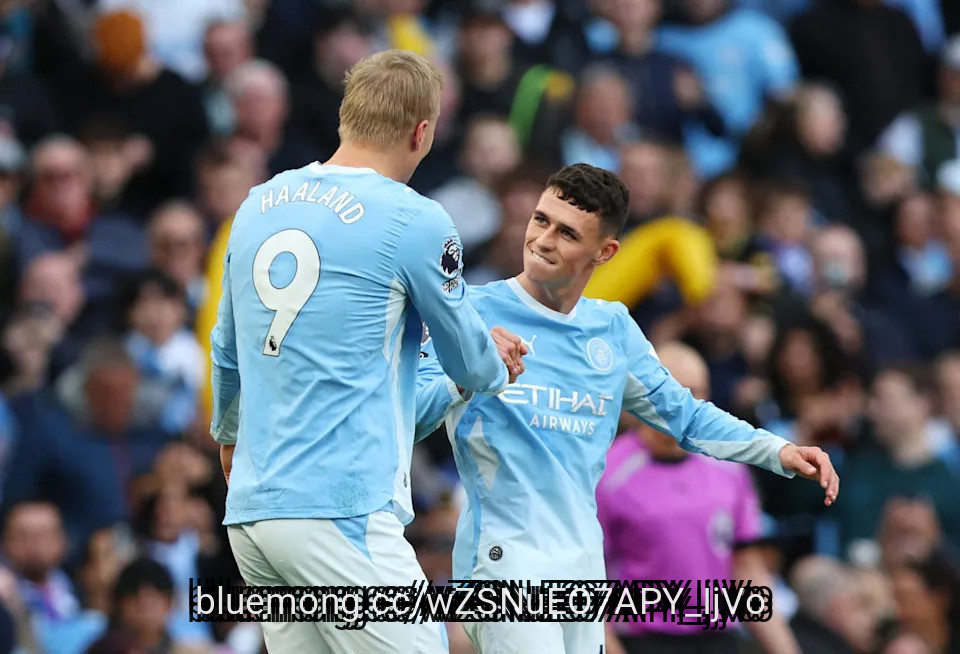
Enzo Maresca had predicted Phil Foden would score, and he did score. For much of Foden's career that would scarcely have seemed an outlandish prediction. Not now. Foden's had struck 27 times for Manchester City alone in 2023-24. Yet when Ipswich arrived at the Etihad Stadium on Saturday, his drought spanned 35 games for City, plus two for England that may have cost him a place at the World Cup.
But there are two Fodens. Maresca remembered the teenage prodigy, the player who had won the individual awards, the seeming generational talent before he became the goal-shy City substitute. "With Phil I said many times, I know him from years ago, for me he's one of the best Premier League players," said the City manager, who had worked with Foden in his previous times at the Etihad Stadium. "And since day one it's my duty to help him to again be one of the best players."
That process got off to something of a false start. By the time City kicked off against Ipswich Foden had, in effect, sat out four-and-three-quarter games. His first-half red card in the Manchester derby was followed by a three-match domestic suspension. He was an unused substitute in the Champions League defeat against Paris Saint-Germain.
Even before being banned, he had been usurped, and under successive managers. In first Pep Guardiola's valedictory season and then Maresca's first in charge, Rayan Cherki has been the No 10 who has starred and sparkled. Foden has provided less magic. Perhaps it says something for the luxuries Maresca enjoys that Foden has felt the more prosaic player in his position.
Perhaps it is an added complication, too, that in Enzo Fernandez he has costly competition emerging, with the £125m signing spending the second half against PSG operating as the most advanced of the midfield trio. A lesson of that defeat may be that, against elite opposition, Maresca requires both Ayyoub Bouaddi and Elliot Anderson to anchor the midfield, perhaps meaning Fernandez is the most advanced of the trio.
#perhaps #enzo #phil
But there are two Fodens. Maresca remembered the teenage prodigy, the player who had won the individual awards, the seeming generational talent before he became the goal-shy City substitute. "With Phil I said many times, I know him from years ago, for me he's one of the best Premier League players," said the City manager, who had worked with Foden in his previous times at the Etihad Stadium. "And since day one it's my duty to help him to again be one of the best players."
That process got off to something of a false start. By the time City kicked off against Ipswich Foden had, in effect, sat out four-and-three-quarter games. His first-half red card in the Manchester derby was followed by a three-match domestic suspension. He was an unused substitute in the Champions League defeat against Paris Saint-Germain.
Even before being banned, he had been usurped, and under successive managers. In first Pep Guardiola's valedictory season and then Maresca's first in charge, Rayan Cherki has been the No 10 who has starred and sparkled. Foden has provided less magic. Perhaps it says something for the luxuries Maresca enjoys that Foden has felt the more prosaic player in his position.
Perhaps it is an added complication, too, that in Enzo Fernandez he has costly competition emerging, with the £125m signing spending the second half against PSG operating as the most advanced of the midfield trio. A lesson of that defeat may be that, against elite opposition, Maresca requires both Ayyoub Bouaddi and Elliot Anderson to anchor the midfield, perhaps meaning Fernandez is the most advanced of the trio.
#perhaps #enzo #phil



19 days ago
We now have a better idea of exactly who the biggest creators are on social media. ESHAP and What's Trending have partnered to unveil the second annual Creator Map, a guide to the biggest creators by platform. And TheWrap has your first look at their findings.
The Creator Map will be unveiled later today at the first Jupiter Festival Miami, which is sponsored by YouTube. Evan Shapiro, media cartographer and ESHAP founder and CEO; Shira Lazar, What's Trending founder and CEO; and Jon Goss, CEO of the Lighthouse will unveil the project on the main stage of the event.
Described as the "definitive visual guide to the creator ecosphere," the Creator Map offers a data-informed view of the creator economy, an industry that can often feel confusing and chaotic from an outsider perspective. For the first time, the top 200 creators across Instagram, YouTube and TikTok will have both their follower counts and Affinity Quotient scores published on the map. Sponsored by Whalar Group and with data powered by Whalar's creator operating system Foam, the Affinity Quotient measures the depth of audience engagement and places a greater emphasis on active signals such as shares and saves than on passive interactions. That's an important insight as engagement rather than follower count has become the top metric in the creator economy. The Creator Affinity 100 list was first presented at this this year's IBC and identified 100 creators generating the greatest affinity among their audiences.
The map also identifies top creators across Snap, Facebook, LinkedIn, X, Twitch, Pinterest and Rumble, along with the top Substack publishers and podcasters. Additionally, it identifies some of the top agencies, studios, technology tools, payment platforms and other companies powering the creator ecosystem. Check it out below:
ESHAP and What's Trending Creator Map (Photo Credit: ESHAP, What's Trending)
#biggest
The Creator Map will be unveiled later today at the first Jupiter Festival Miami, which is sponsored by YouTube. Evan Shapiro, media cartographer and ESHAP founder and CEO; Shira Lazar, What's Trending founder and CEO; and Jon Goss, CEO of the Lighthouse will unveil the project on the main stage of the event.
Described as the "definitive visual guide to the creator ecosphere," the Creator Map offers a data-informed view of the creator economy, an industry that can often feel confusing and chaotic from an outsider perspective. For the first time, the top 200 creators across Instagram, YouTube and TikTok will have both their follower counts and Affinity Quotient scores published on the map. Sponsored by Whalar Group and with data powered by Whalar's creator operating system Foam, the Affinity Quotient measures the depth of audience engagement and places a greater emphasis on active signals such as shares and saves than on passive interactions. That's an important insight as engagement rather than follower count has become the top metric in the creator economy. The Creator Affinity 100 list was first presented at this this year's IBC and identified 100 creators generating the greatest affinity among their audiences.
The map also identifies top creators across Snap, Facebook, LinkedIn, X, Twitch, Pinterest and Rumble, along with the top Substack publishers and podcasters. Additionally, it identifies some of the top agencies, studios, technology tools, payment platforms and other companies powering the creator ecosystem. Check it out below:
ESHAP and What's Trending Creator Map (Photo Credit: ESHAP, What's Trending)
#biggest





20 days ago
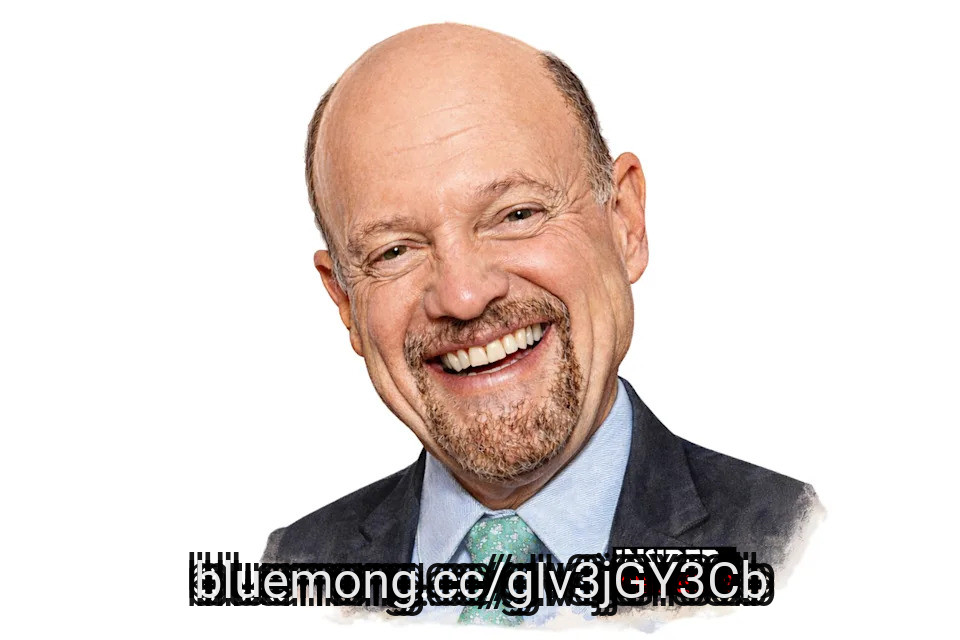
When a caller mentioned that they are thinking about adding to their position in Simon Property Group, Inc. (NYSE:SPG) during the October 2 episode of Mad Money, Jim Cramer commented:
I think you're absolutely right... I want you to add to the Simon Property Group... What a great man he (David Simon, previous CEO) was, and he built a fabulous company, and you should buy more of it.
A September 8 question about buying Simon Property Group led Cramer to bring another real estate stock into the conversation.
Simon Property Group, Inc. (NYSE:SPG) reported second-quarter real estate funds from operations of $3.29 per diluted share, up 7.9% year-over-year. Domestic property net operating income increased 8.5%. Occupancy at its U.S. malls and premium outlets remained at 96%, while base minimum rent increased 6.3% to $62.42 per square foot. Management raised its full-year real estate funds from operations outlook to $13.20 - $13.30 per share. These figures show rent and property-income growth without requiring an increase in occupancy. Leasing activity also remained substantial. During the earnings call, management reported signing approximately 1,200 leases covering more than 4.8 million square feet, with new-deal volume increasing more than 20%.
Stable occupancy does not mean every tenant is healthy. Simon Property Group, Inc. (NYSE:SPG) absorbed approximately one million square feet of ****** e returned through retailer bankruptcies during the quarter. Management said it successfully re-leased the ****** e, helping maintain occupancy. That shows leasing strength, but also a reminder of the work required to preserve rental income. Additional retailer failures could bring more vacancies and replacement costs, even when demand for the properties remains sound.
#occupancy #NYSE #management #estate
I think you're absolutely right... I want you to add to the Simon Property Group... What a great man he (David Simon, previous CEO) was, and he built a fabulous company, and you should buy more of it.
A September 8 question about buying Simon Property Group led Cramer to bring another real estate stock into the conversation.
Simon Property Group, Inc. (NYSE:SPG) reported second-quarter real estate funds from operations of $3.29 per diluted share, up 7.9% year-over-year. Domestic property net operating income increased 8.5%. Occupancy at its U.S. malls and premium outlets remained at 96%, while base minimum rent increased 6.3% to $62.42 per square foot. Management raised its full-year real estate funds from operations outlook to $13.20 - $13.30 per share. These figures show rent and property-income growth without requiring an increase in occupancy. Leasing activity also remained substantial. During the earnings call, management reported signing approximately 1,200 leases covering more than 4.8 million square feet, with new-deal volume increasing more than 20%.
Stable occupancy does not mean every tenant is healthy. Simon Property Group, Inc. (NYSE:SPG) absorbed approximately one million square feet of ****** e returned through retailer bankruptcies during the quarter. Management said it successfully re-leased the ****** e, helping maintain occupancy. That shows leasing strength, but also a reminder of the work required to preserve rental income. Additional retailer failures could bring more vacancies and replacement costs, even when demand for the properties remains sound.
#occupancy #NYSE #management #estate
20 days ago
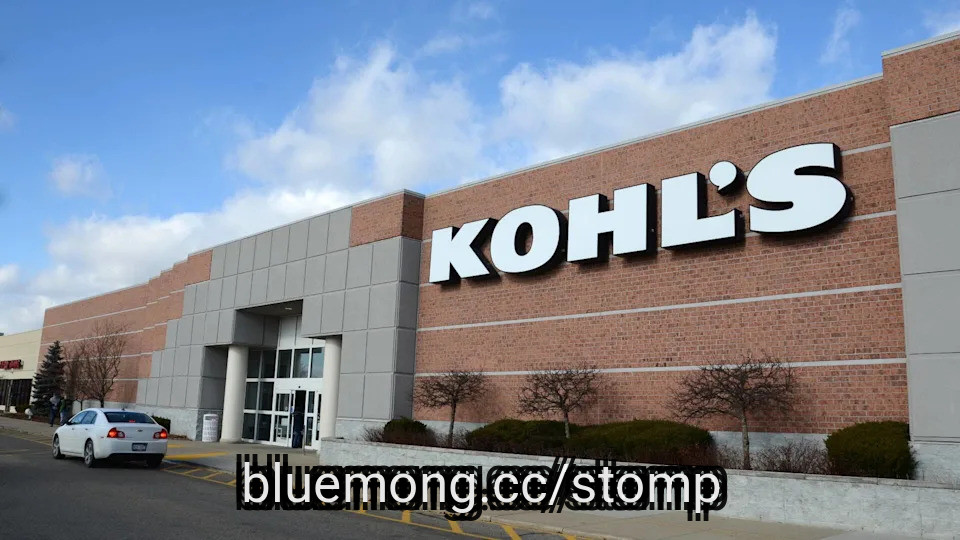
Kohl's is rolling out steep discounts for customers as it struggles to turn around its sales.
The department store chain revealed in its most recent earnings report that its comparable sales decreased 0.9% year over year in the second quarter of 2026, while recent Placer.ai data showed overall visits to Kohl's stores declined 1.4%.
Kohl's CEO Michael Bender said on the August earnings call that the company is "operating in a challenging macroeconomic environment" where customers are "experiencing persistent financial pressures from inflation in their everyday expenses, like gas and food."
Against this backdrop, Kohl's has taken several steps to make its merchandise more affordable. It introduced Deal Bar and Toy Towers in stores earlier this year, featuring products priced below $10. It also priced thousands of back-to-school items under $25 in July.
In its latest effort to win over price-conscious customers, Kohl's has made its annual Kohl's Deal Days savings event more generous this year.
#year #deal #recent #placer
The department store chain revealed in its most recent earnings report that its comparable sales decreased 0.9% year over year in the second quarter of 2026, while recent Placer.ai data showed overall visits to Kohl's stores declined 1.4%.
Kohl's CEO Michael Bender said on the August earnings call that the company is "operating in a challenging macroeconomic environment" where customers are "experiencing persistent financial pressures from inflation in their everyday expenses, like gas and food."
Against this backdrop, Kohl's has taken several steps to make its merchandise more affordable. It introduced Deal Bar and Toy Towers in stores earlier this year, featuring products priced below $10. It also priced thousands of back-to-school items under $25 in July.
In its latest effort to win over price-conscious customers, Kohl's has made its annual Kohl's Deal Days savings event more generous this year.
#year #deal #recent #placer

20 days ago
When True Food Kitchen filed for Chapter 11 bankruptcy protection on Oct. 4, the chain's CEO Jeff Chandler tried to make it clear that the company planned to continue operating.
"This process is the best path forward to simplify the business and focus on what we do best: delivering craveable, health-forward food and genuine hospitality. We are confident this step will help us build a stronger True Food Kitchen for the future," he said in a press release.
True Food Kitchen serves an upscale clientele looking for healthy food. Most of its stores are located in higher-end shopping or lifestyle plazas. That contributed to its financial problems, Chad Van Horn, founder and managing partner of Van Horn Law Group in Fort Lauderdale, Fla., shared with TheStreet.
"True Food Kitchen did not file because people stopped eating there. Sales were essentially flat, about $312 million last year against $314 million the year before, and the reported debt is around $42 million. That is a cost and footprint problem, not a demand problem," he said.
As part of its Chapter 11 bankruptcy filing, True Food Kitchen shared that it had already closed 12 restaurants. Those locations completed their final service on Oct. 4, but the initial release did not share which locations were closing.
#chapter
"This process is the best path forward to simplify the business and focus on what we do best: delivering craveable, health-forward food and genuine hospitality. We are confident this step will help us build a stronger True Food Kitchen for the future," he said in a press release.
True Food Kitchen serves an upscale clientele looking for healthy food. Most of its stores are located in higher-end shopping or lifestyle plazas. That contributed to its financial problems, Chad Van Horn, founder and managing partner of Van Horn Law Group in Fort Lauderdale, Fla., shared with TheStreet.
"True Food Kitchen did not file because people stopped eating there. Sales were essentially flat, about $312 million last year against $314 million the year before, and the reported debt is around $42 million. That is a cost and footprint problem, not a demand problem," he said.
As part of its Chapter 11 bankruptcy filing, True Food Kitchen shared that it had already closed 12 restaurants. Those locations completed their final service on Oct. 4, but the initial release did not share which locations were closing.
#chapter



20 days ago
JPMorgan just raised its dividend 10% while still paying out only 28% of earnings, and Visa's even lower 23% payout fuels years of double-digit raises.
Cisco's AI infrastructure orders hit $9.3 billion, lifting earnings faster than its dividend, while T. Rowe Price yields 5% at just 10 times earnings.
Building a portfolio and living off one are two completely different skills, and almost ******* ody teaches the second. This problem is what The Definitive Guide to Retirement Income helps, and it is free today. Read more here. (Sponsor)
The best dividend raises come from companies that pay out a small piece of what they earn. JPMorgan Chase (NYSE:JPM) just showed how that works: it lifted its quarterly dividend from $1.50 to $1.65, a 10% increase, and the new annual rate still matches only 28.3% of trailing earnings. The five companies below all fit that pattern. Each has strong earnings and a payout ratio low enough to fund many more raises. A long streak of past increases supports the case for some of them, but the reason they're here is how much room each has to keep advancing.
Visa (NYSE:V) yields only about 0.72% on its $2.68 annualized dividend at a share price of $370.97. That's a small yield, but the dividend has a lot of room to grow. The payout uses about 22.8% of trailing diluted EPS of $11.75, and Visa's trailing operating margin is 66.1%.
#payout #trailing
Cisco's AI infrastructure orders hit $9.3 billion, lifting earnings faster than its dividend, while T. Rowe Price yields 5% at just 10 times earnings.
Building a portfolio and living off one are two completely different skills, and almost ******* ody teaches the second. This problem is what The Definitive Guide to Retirement Income helps, and it is free today. Read more here. (Sponsor)
The best dividend raises come from companies that pay out a small piece of what they earn. JPMorgan Chase (NYSE:JPM) just showed how that works: it lifted its quarterly dividend from $1.50 to $1.65, a 10% increase, and the new annual rate still matches only 28.3% of trailing earnings. The five companies below all fit that pattern. Each has strong earnings and a payout ratio low enough to fund many more raises. A long streak of past increases supports the case for some of them, but the reason they're here is how much room each has to keep advancing.
Visa (NYSE:V) yields only about 0.72% on its $2.68 annualized dividend at a share price of $370.97. That's a small yield, but the dividend has a lot of room to grow. The payout uses about 22.8% of trailing diluted EPS of $11.75, and Visa's trailing operating margin is 66.1%.
#payout #trailing

21 days ago
Oracle, Microsoft, and Amazon helped push hyperscaler capex past $400 billion in 2025, a figure that exceeded combined operating cash flow for the first time.
Meta and Alphabet fund an AI buildout projected at $9 trillion through 2032, averaging 3.22% of GDP and topping railroads' historic 2.24% share.
Read More: Learn 7 ways to generate income with a $1,000,000+ portfolio (sponsor)
Railroads made Cornelius Vanderbilt America's richest person by the 1860s, dying in 1877 with an estate estimated at $95 million to $105 million, larger than U.S. Treasury holdings. By share of GDP, Vanderbilt places third among the richest Americans, behind Rockefeller and Carnegie. Within years, his industry's financing gave way, a warning for today's AI expansion.
The rail network doubled from 35,000 to 70,000 miles between 1865 and 1872, with bonds financing more than three-quarters of it. On September 18, 1873, Jay Cooke's bank failed. The New York Stock Exchange closed for ten days, its first closure ever.
#railroads #amazon
Meta and Alphabet fund an AI buildout projected at $9 trillion through 2032, averaging 3.22% of GDP and topping railroads' historic 2.24% share.
Read More: Learn 7 ways to generate income with a $1,000,000+ portfolio (sponsor)
Railroads made Cornelius Vanderbilt America's richest person by the 1860s, dying in 1877 with an estate estimated at $95 million to $105 million, larger than U.S. Treasury holdings. By share of GDP, Vanderbilt places third among the richest Americans, behind Rockefeller and Carnegie. Within years, his industry's financing gave way, a warning for today's AI expansion.
The rail network doubled from 35,000 to 70,000 miles between 1865 and 1872, with bonds financing more than three-quarters of it. On September 18, 1873, Jay Cooke's bank failed. The New York Stock Exchange closed for ten days, its first closure ever.
#railroads #amazon


21 days ago
Pfizer paid $9.8B in dividends in 2025 while earning only $7.7B in net income, marking the third straight year its payout exceeded its profit.
Icahn Enterprises yields near 30% but lost money every year from 2021 to 2025 and has already slashed its quarterly payout from $2.00 to $0.50.
Dow halved its dividend yet still failed to cover it from operating cash in 2025, posting a $2.6B net loss the same year.
Building a portfolio and living off one are two completely different skills, and almost **** ody teaches the second. This problem is what The Definitive Guide to Retirement Income helps, and it is free today. Read more here. (Sponsor)
Pfizer (NYSE:PFE) paid $9.771 billion in dividends in 2025 and earned net income of $7.746 billion. That was the third straight year the payout ran ahead of profit. When this repeats year after year, it is company policy. A high yield lasts only as long as the cash behind it does.
#year #pfizer #only
Icahn Enterprises yields near 30% but lost money every year from 2021 to 2025 and has already slashed its quarterly payout from $2.00 to $0.50.
Dow halved its dividend yet still failed to cover it from operating cash in 2025, posting a $2.6B net loss the same year.
Building a portfolio and living off one are two completely different skills, and almost **** ody teaches the second. This problem is what The Definitive Guide to Retirement Income helps, and it is free today. Read more here. (Sponsor)
Pfizer (NYSE:PFE) paid $9.771 billion in dividends in 2025 and earned net income of $7.746 billion. That was the third straight year the payout ran ahead of profit. When this repeats year after year, it is company policy. A high yield lasts only as long as the cash behind it does.
#year #pfizer #only
21 days ago
From a purely statistical standpoint, Wall Street has thrived under President Donald Trump. During his first, non-consecutive term, the timeless Dow Jones Industrial Average (DJINDICES:^DJI), benchmark S&P 500 (SNPINDEX:^GSPC), and tech-focused Nasdaq Composite (NASDAQINDEX:^IXIC) gained 57%, 70%, and 142%, respectively. We've witnessed something of an encore performance since the beginning of his second term in January 2025.
The Trump bull market is being fueled by the artificial intelligence (AI) infrastructure build-out, much better-than-expected corporate earnings, and record share buybacks. The president's first-term tax-and-spending law, the Tax Cuts and Jobs Act (signed into law December 2017), spurred the latter by reducing the peak marginal corporate income tax rate to 21%, the lowest level since 1939.
Missed AI's "Act 1"? Act 2 Could Be 14x Bigger. Most investors think they missed the AI boat because they didn't buy Nvidia in 2005. But according to our ***** ysts, we're only at the end of "Act 1"—the R&D phase. "Act 2" is the global rollout. Continue »
Image source: Official White House Photo by Daniel Torok.
But things may not be as perfect for the stock market as the Dow's, S&P 500's, and Nasdaq Composite's gains imply. An ominous $8.44 trillion figure with historical precedent at its back looms large, implying that the Trump bull market is operating on borrowed time.
#term
The Trump bull market is being fueled by the artificial intelligence (AI) infrastructure build-out, much better-than-expected corporate earnings, and record share buybacks. The president's first-term tax-and-spending law, the Tax Cuts and Jobs Act (signed into law December 2017), spurred the latter by reducing the peak marginal corporate income tax rate to 21%, the lowest level since 1939.
Missed AI's "Act 1"? Act 2 Could Be 14x Bigger. Most investors think they missed the AI boat because they didn't buy Nvidia in 2005. But according to our ***** ysts, we're only at the end of "Act 1"—the R&D phase. "Act 2" is the global rollout. Continue »
Image source: Official White House Photo by Daniel Torok.
But things may not be as perfect for the stock market as the Dow's, S&P 500's, and Nasdaq Composite's gains imply. An ominous $8.44 trillion figure with historical precedent at its back looms large, implying that the Trump bull market is operating on borrowed time.
#term


21 days ago
American Tower Corporation (NYSE:AMT) traded at around $165 on October 6, within five dollars of its 52-week low of $160.06.
The company keeps 45.41% of revenue as operating profit on a portfolio of communications towers leased to wireless carriers. A business that profitable sitting at a 52-week low is usually a disagreement about the future rather than the present.
READ ALSO: What is eBay's (EBAY) Economic Moat, and is it Widening or Narrowing?
A tower is difficult to replicate for reasons that have nothing to do with engineering. Local authorities restrict where new structures can go, so an existing site near a highway or a dense suburb cannot simply be copied next door.
The economics follow from that scarcity. The first tenant on a tower covers the construction and the ground lease, and each additional tenant is close to pure margin. Gross margin of 73.77% is what that layering produces, and the 45.41% operating margin is what survives after the overheads.
#NYSE
The company keeps 45.41% of revenue as operating profit on a portfolio of communications towers leased to wireless carriers. A business that profitable sitting at a 52-week low is usually a disagreement about the future rather than the present.
READ ALSO: What is eBay's (EBAY) Economic Moat, and is it Widening or Narrowing?
A tower is difficult to replicate for reasons that have nothing to do with engineering. Local authorities restrict where new structures can go, so an existing site near a highway or a dense suburb cannot simply be copied next door.
The economics follow from that scarcity. The first tenant on a tower covers the construction and the ground lease, and each additional tenant is close to pure margin. Gross margin of 73.77% is what that layering produces, and the 45.41% operating margin is what survives after the overheads.
#NYSE


21 days ago
AbbVie Inc. (NYSE:ABBV) was trading at around $263 on October 5, up 14.18% over twelve months. Its payout ratio is 190.40%. The company distributes nearly twice what it reports as profit.
A dividend that large is either about to be cut or is being paid out of something the earnings line does not show.
READ ALSO: Here is Why Tripadvisor (TRIP) is a Bad Investment at Today's Price
AbbVie reported net income of $6.27 billion and generated $16.87 billion of free cash flow. Dividends are paid from the second number, so a ratio measured against the first is describing depressed earnings rather than a company living beyond its means.
The margins show what depresses them. Operating margin is 40.04%. Net margin is 9.80%. Thirty points vanish between those lines, and where they vanish matters. Costs that high sitting below the operating line are not the business failing to earn. They are the amortization of a drug portfolio AbbVie bought rather than discovered, plus interest on the debt that bought it.
#paid
A dividend that large is either about to be cut or is being paid out of something the earnings line does not show.
READ ALSO: Here is Why Tripadvisor (TRIP) is a Bad Investment at Today's Price
AbbVie reported net income of $6.27 billion and generated $16.87 billion of free cash flow. Dividends are paid from the second number, so a ratio measured against the first is describing depressed earnings rather than a company living beyond its means.
The margins show what depresses them. Operating margin is 40.04%. Net margin is 9.80%. Thirty points vanish between those lines, and where they vanish matters. Costs that high sitting below the operating line are not the business failing to earn. They are the amortization of a drug portfolio AbbVie bought rather than discovered, plus interest on the debt that bought it.
#paid

21 days ago
The Boeing Company (NYSE:BA) was trading at around $193 on October 5, down 11.91% over twelve months. Boeing reported net income of $2.09 billion over the past twelve months. Its EBITDA over the same period was negative $2.9 billion.
Those two figures describe the same year and point in opposite directions. Only one of them tells you what the business did.
READ ALSO: GE Aerospace (GE) vs. RTX (RTX): Which Is the Better Stock to Buy?
Start with the figure that describes the aircraft business itself. Boeing's operating margin is 0.00%. On $93.99 billion of revenue, building and selling airplanes earned nothing.
That is not a rounding problem. Gross profit was $4.43 billion on that revenue, under five percent for a manufacturer, which means the cost of building the aircraft very nearly equals what customers pay for them.
#same
Those two figures describe the same year and point in opposite directions. Only one of them tells you what the business did.
READ ALSO: GE Aerospace (GE) vs. RTX (RTX): Which Is the Better Stock to Buy?
Start with the figure that describes the aircraft business itself. Boeing's operating margin is 0.00%. On $93.99 billion of revenue, building and selling airplanes earned nothing.
That is not a rounding problem. Gross profit was $4.43 billion on that revenue, under five percent for a manufacturer, which means the cost of building the aircraft very nearly equals what customers pay for them.
#same


21 days ago
Procter & Gamble has raised its dividend for 70 straight years while Johnson & Johnson covers its roughly $12.6 billion dividend run rate 1.56 times with free cash flow.
Coca-Cola posted its strongest Trademark volume growth in 17 years, and ADP's operating cash flow covers its dividend more than twice over while still funding buybacks.
Lowe's carries the lowest payout ratio in the group at 41% and trades at just 15 times earnings after falling 24% year to date.
Read More: Learn 7 ways to generate income with a $1,000,000+ portfolio (sponsor)
Yield is relatively easy to find. A dividend that keeps arriving through recessions, patent cliffs and housing slumps is much harder to find, and that kind of reliability is the hook for this group. Every name below covers its payout with real cash flow, has a long record of raises and keeps its payout ratio at a level that leaves room for mistakes. Procter & Gamble (NYSE:PG) sets the standard: management says its latest increase marks the 70th consecutive year of dividend increases and 136th consecutive year of dividend payments, putting it firmly in the Dividend Kings club (we ranked ten of them by valuation in a free report here). The other four pair long dividend records with cash flow that covers the payout.
#cash #year #procter #gamble
Coca-Cola posted its strongest Trademark volume growth in 17 years, and ADP's operating cash flow covers its dividend more than twice over while still funding buybacks.
Lowe's carries the lowest payout ratio in the group at 41% and trades at just 15 times earnings after falling 24% year to date.
Read More: Learn 7 ways to generate income with a $1,000,000+ portfolio (sponsor)
Yield is relatively easy to find. A dividend that keeps arriving through recessions, patent cliffs and housing slumps is much harder to find, and that kind of reliability is the hook for this group. Every name below covers its payout with real cash flow, has a long record of raises and keeps its payout ratio at a level that leaves room for mistakes. Procter & Gamble (NYSE:PG) sets the standard: management says its latest increase marks the 70th consecutive year of dividend increases and 136th consecutive year of dividend payments, putting it firmly in the Dividend Kings club (we ranked ten of them by valuation in a free report here). The other four pair long dividend records with cash flow that covers the payout.
#cash #year #procter #gamble

21 days ago
GNL paid out more in dividends than it earned in operating cash for four straight years and has already slashed its quarterly dividend from $0.53 to $0.19; PSEC's NAV fell from $6.56 to $5.71 while distributions exceeded net investment income.
IEP carries a 30% yield but posted net losses every year from 2019 through 2025 and slashed distributions from $2 to $0.50 per quarter while units dropped 66% over five years.
BEP and CWEN both rely on billions in annual financing inflows to fund distributions, with BEP's 2025 capex hitting $6.7 billion against just $1.5 billion in operating cash flow.
Building a portfolio and living off one are two completely different skills, and almost ******* ody teaches the second. This problem is what The Definitive Guide to Retirement Income helps, and it is free today. Read more here. (Sponsor)
One stock on this list has a forward yield of about 30%. For a retiree, a number like that looks like a solid paycheck. A high yield only means something if the payout is sustainable, and each of the five names below has spent years sending out more cash than the business brought in.
#distributions #operating #slashed
IEP carries a 30% yield but posted net losses every year from 2019 through 2025 and slashed distributions from $2 to $0.50 per quarter while units dropped 66% over five years.
BEP and CWEN both rely on billions in annual financing inflows to fund distributions, with BEP's 2025 capex hitting $6.7 billion against just $1.5 billion in operating cash flow.
Building a portfolio and living off one are two completely different skills, and almost ******* ody teaches the second. This problem is what The Definitive Guide to Retirement Income helps, and it is free today. Read more here. (Sponsor)
One stock on this list has a forward yield of about 30%. For a retiree, a number like that looks like a solid paycheck. A high yield only means something if the payout is sustainable, and each of the five names below has spent years sending out more cash than the business brought in.
#distributions #operating #slashed


22 days ago
Costco is famously rooted in Washington state, with its headquarters in Kirkland (which is also the name of its signature brand) and its first official store operating out of Seattle's industrial SoDo neighborhood. But did you know that the wholesale club behemoth can trace its true origins much further south, and to a famous connection? As it turns out, a line can be drawn from Costco to Howard Hughes, the famous movie producer, aviator, and eccentric business tycoon.
Among his many properties, Hughes once owned a rather large warehouse in San Diego, California, that was eventually turned into an early wholesale store called Price Club. It went on to merge with Costco in the 1990s, forever cementing the Costco-Hughes connection. Sure, it may not be the strongest celebrity-Costco connection ever, and Hughes himself never set foot inside one of the chain's stores, but it's one that Costco can be proud to have as part of its storied history nonetheless.
Read more: 9 Store-Bought Canned Chili Brands Ranked Worst To Best
Bettmann/Getty Images
While it's unclear exactly how long Howard Hughes' San Diego building served as a hangar, or if any remodeling was done prior to its wholesale club days, what is known is that it reopened as Price Club in the summer of 1976 after being purchased by local businessman Sol Price and his son, Robert. It looks pretty similar today compared to old photos of the building in its Price Club days and as an aviation hangar, with its vaulted ceilings and massive walls. The coolest part though? If you're a history buff in San Diego, you can actually go shop at the Costco that once housed Hughes' airplanes (assuming you're also a Costco member, of course). The store sits on Morena Boulevard, at the exact same address as its preceding incarnations.
#price #connection #famous
Among his many properties, Hughes once owned a rather large warehouse in San Diego, California, that was eventually turned into an early wholesale store called Price Club. It went on to merge with Costco in the 1990s, forever cementing the Costco-Hughes connection. Sure, it may not be the strongest celebrity-Costco connection ever, and Hughes himself never set foot inside one of the chain's stores, but it's one that Costco can be proud to have as part of its storied history nonetheless.
Read more: 9 Store-Bought Canned Chili Brands Ranked Worst To Best
Bettmann/Getty Images
While it's unclear exactly how long Howard Hughes' San Diego building served as a hangar, or if any remodeling was done prior to its wholesale club days, what is known is that it reopened as Price Club in the summer of 1976 after being purchased by local businessman Sol Price and his son, Robert. It looks pretty similar today compared to old photos of the building in its Price Club days and as an aviation hangar, with its vaulted ceilings and massive walls. The coolest part though? If you're a history buff in San Diego, you can actually go shop at the Costco that once housed Hughes' airplanes (assuming you're also a Costco member, of course). The store sits on Morena Boulevard, at the exact same address as its preceding incarnations.
#price #connection #famous



22 days ago
One of the secrets of Berkshire Hathaway (NYSE: BRKA) (NYSE: BRKB) and its success in the stock market has been its focus on value. Whether led by former Chief Executive Officer Warren Buffett or its current leader, Greg Abel, Berkshire has always focused on buying stocks when they are significantly below their intrinsic value.
On top of that, Berkshire's management team has sought companies that have significant advantages over their competitors -- an economic moat -- operating in a mature industry with reliable cash flow.
Missed Nvidia in 2009? This Rare Signal Is Flashing Again. In 2009, a "Double Down" signal flashed for a little-known chipmaker called Nvidia. For the first time in years, that same "Total Conviction" signal is flashing for a company 1/100th the size of Nvidia. Continue »
That strategy has helped Berkshire Hathaway build an investment portfolio valued at about $350 billion -- and generate returns that averaged 19.7% during the past 60 years, nearly double the S&P 500's (SNPINDEX: ^GSPC) return.
In today's go-go market, which is focused so heavily on artificial intelligence, machine learning, and other technological advances, it's easy to forget that there are some great value stocks available -- and at comparatively dirt cheap prices. Three such stocks currently in Berkshire's portfolio are American Express (NYSE: AXP), The New York Times Company (NYSE: NYT), and DaVita (NYSE: DVA). Here's the case for buying and holding each of them right now.
#NVIDIA #value #stocks
On top of that, Berkshire's management team has sought companies that have significant advantages over their competitors -- an economic moat -- operating in a mature industry with reliable cash flow.
Missed Nvidia in 2009? This Rare Signal Is Flashing Again. In 2009, a "Double Down" signal flashed for a little-known chipmaker called Nvidia. For the first time in years, that same "Total Conviction" signal is flashing for a company 1/100th the size of Nvidia. Continue »
That strategy has helped Berkshire Hathaway build an investment portfolio valued at about $350 billion -- and generate returns that averaged 19.7% during the past 60 years, nearly double the S&P 500's (SNPINDEX: ^GSPC) return.
In today's go-go market, which is focused so heavily on artificial intelligence, machine learning, and other technological advances, it's easy to forget that there are some great value stocks available -- and at comparatively dirt cheap prices. Three such stocks currently in Berkshire's portfolio are American Express (NYSE: AXP), The New York Times Company (NYSE: NYT), and DaVita (NYSE: DVA). Here's the case for buying and holding each of them right now.
#NVIDIA #value #stocks

29 days ago
Vista Gold Corp. (NYSEAMERICAN:VGZ) announced on September 21 that it had agreed to be acquired by Artemis Gold Inc. (TSXV:ARTG). Under the agreement signed September 20, shareholders would receive 0.0966 buyer common shares for each existing common share and own approximately 5% of the combined company. That ownership calculation excludes the buyer's existing 4.95% stake in Vista Gold Corp. (NYSEAMERICAN:VGZ), which it intends to cancel at completion.
For shareholders, the trade-off is a smaller interest in a larger mining business with an operating ***** et and development expertise. The central question is whether that combination can supply the capital and execution needed to bring Australia's Mt Todd gold project into production.
Artemis Gold Inc. (TSXV:ARTG) operates the Blackwater mine in British Columbia and expects its future cash generation to support Mt Todd. That offers Vista Gold a potential funding source alongside a team experienced in building and operating mines.
The financial starting point explains the appeal. Vista Gold Corp. (NYSEAMERICAN:VGZ) ended June 2026 with $49.5 million in cash and no debt. Management described that cash as sufficient for interim development objectives. Joining an operating producer could broaden the resources available for the much larger task of construction.
The acquisition requires no cash consideration or new acquisition debt. Preserving the buyer's financial capacity could leave more room for investment, although the share exchange itself does not raise construction funding.
#cash
For shareholders, the trade-off is a smaller interest in a larger mining business with an operating ***** et and development expertise. The central question is whether that combination can supply the capital and execution needed to bring Australia's Mt Todd gold project into production.
Artemis Gold Inc. (TSXV:ARTG) operates the Blackwater mine in British Columbia and expects its future cash generation to support Mt Todd. That offers Vista Gold a potential funding source alongside a team experienced in building and operating mines.
The financial starting point explains the appeal. Vista Gold Corp. (NYSEAMERICAN:VGZ) ended June 2026 with $49.5 million in cash and no debt. Management described that cash as sufficient for interim development objectives. Joining an operating producer could broaden the resources available for the much larger task of construction.
The acquisition requires no cash consideration or new acquisition debt. Preserving the buyer's financial capacity could leave more room for investment, although the share exchange itself does not raise construction funding.
#cash


29 days ago
Westinghouse Air Brake Technologies Corporation (NYSE:WAB) announced on September 21 a services agreement worth more than $700 million with La Compagnie du TransGuinéen. Combined with locomotive orders placed in 2024, announced agreements for the Simandou project now exceed $1.2 billion.
The railway stretches more than 600 kilometers between the Simandou mine and Guinea's Port of Morebaya. The new agreement extends the relationship beyond locomotive delivery into ongoing fleet support. For investors, the opportunity is to earn revenue throughout the equipment's operating life.
Westinghouse Air Brake Technologies Corporation (NYSE:WAB) will provide scheduled and unscheduled maintenance, parts, component overhauls, logistics support, remote diagnostics, and training. These activities create multiple opportunities to serve the same fleet after the initial equipment sale.
That is an attractive business model when maintenance needs translate into repeat orders and efficient service delivery. Familiarity with the locomotives should help technicians diagnose problems and plan repairs. Remote monitoring could also help identify faults before they cause prolonged downtime, strengthening the customer's incentive to maintain the relationship.
Local workforce development and partnerships with Guinean businesses could improve responsiveness as the operation matures. Over time, an experienced local team could reduce dependence on specialists traveling to the site and make parts planning more efficient.
#westinghouse #brake #agreement
The railway stretches more than 600 kilometers between the Simandou mine and Guinea's Port of Morebaya. The new agreement extends the relationship beyond locomotive delivery into ongoing fleet support. For investors, the opportunity is to earn revenue throughout the equipment's operating life.
Westinghouse Air Brake Technologies Corporation (NYSE:WAB) will provide scheduled and unscheduled maintenance, parts, component overhauls, logistics support, remote diagnostics, and training. These activities create multiple opportunities to serve the same fleet after the initial equipment sale.
That is an attractive business model when maintenance needs translate into repeat orders and efficient service delivery. Familiarity with the locomotives should help technicians diagnose problems and plan repairs. Remote monitoring could also help identify faults before they cause prolonged downtime, strengthening the customer's incentive to maintain the relationship.
Local workforce development and partnerships with Guinean businesses could improve responsiveness as the operation matures. Over time, an experienced local team could reduce dependence on specialists traveling to the site and make parts planning more efficient.
#westinghouse #brake #agreement

1 month ago
On September 17, Lucid Group, Inc. (NASDAQ:LCID) and Bolt, a leading European shared mobility platform, announced a strategic partnership to develop and deploy autonomous mobility services across Europe. This sent shares of Lucid Group, Inc. (NASDAQ:LCID) higher, and the stock ended the trading session with gains of nearly 6%.
The partnership will combine Lucid Group, Inc.'s (NASDAQ:LCID) software-defined vehicle platform with Bolt's European data, operating infrastructure, and mobility expertise. The companies will be looking to develop and launch autonomous mobility services at scale, using vehicles based on Lucid Group, Inc.'s (NASDAQ:LCID) upcoming Midsize platform.
Bolt plans to deploy at least 25,000 fully autonomous vehicles across multiple European cities and countries, supporting its ambitious goal of having 100,000 autonomous vehicles on its platform by 2035.
The financial details of the partnership were not disclosed.
The deal comes as Lucid Group, Inc. (NASDAQ:LCID) continues to face significant financial pressure. The company has been pursuing an ambitious expansion strategy. However, its revenue growth has not yet been enough to offset substantial operating losses and the high costs ****** ociated with building its global factories.
#lcid #european #platform #partnership
The partnership will combine Lucid Group, Inc.'s (NASDAQ:LCID) software-defined vehicle platform with Bolt's European data, operating infrastructure, and mobility expertise. The companies will be looking to develop and launch autonomous mobility services at scale, using vehicles based on Lucid Group, Inc.'s (NASDAQ:LCID) upcoming Midsize platform.
Bolt plans to deploy at least 25,000 fully autonomous vehicles across multiple European cities and countries, supporting its ambitious goal of having 100,000 autonomous vehicles on its platform by 2035.
The financial details of the partnership were not disclosed.
The deal comes as Lucid Group, Inc. (NASDAQ:LCID) continues to face significant financial pressure. The company has been pursuing an ambitious expansion strategy. However, its revenue growth has not yet been enough to offset substantial operating losses and the high costs ****** ociated with building its global factories.
#lcid #european #platform #partnership

1 month ago
For the recently reported second quarter, PicS N.V. (NASDAQ:PICS) outperformed relative to its previous guidance across all profitability metrics. The total account base for the company went up to 70.4 million during the second quarter, showcasing a 10% jump from the prior year. Moving on to the bottom line figures, the adjusted earnings before tax, without factoring in costs ******* ociated with stock-based compensation came in at R$291 million for the quarter. This represented a 2.1% outperformance relative to the company's R$285 million guidance. Similarly, compared to the R$245 million projection, adjusted net income for the period actually stood 15.5% higher at R$283 million.
welcomia/Shutterstock.com
The second quarter concluded with strong financial and operating momentum for PicS. The company recorded a 9% annual and 2% sequential growth in its client base, which went up to 45.4 million active users. The total credit portfolio jumped to R$31.9 billion, exceeding management's guidance by 3%. This outperformance came due to a higher number of mature credit card cohorts, and accelerated origination within secured and partly secured categories. An additional factor that accounted for the credit portfolio growth was management's measured expansion into higher risk areas such as newer platform credit and private payroll lending.
Managerial revenue rose to R$3,730 million, topping guidance by 3.6%, and net interest income reached R$2,002 million, 5.4% above projections, boosted by growing credit income. Total cash in totaled R$136.4 billion, up 17% from a year earlier and 9% from the previous quarter, with customers bringing in an average of approximately R$45.4 billion to the platform each month. Total deposits climbed to R$35.8 billion, a 45% yearly jump and 10% quarterly rise.
Some concerns related to the company's loan portfolio emerged during the quarter. Non-performing loans more than 90 days overdue increased to 9.8% of the credit portfolio during the quarter, up 93 basis points sequentially. Stage 3 exposure, which includes a broader set of credit-impaired loans, reached 12.9% of the total credit portfolio.
#million #credit #quarter #Portfolio
welcomia/Shutterstock.com
The second quarter concluded with strong financial and operating momentum for PicS. The company recorded a 9% annual and 2% sequential growth in its client base, which went up to 45.4 million active users. The total credit portfolio jumped to R$31.9 billion, exceeding management's guidance by 3%. This outperformance came due to a higher number of mature credit card cohorts, and accelerated origination within secured and partly secured categories. An additional factor that accounted for the credit portfolio growth was management's measured expansion into higher risk areas such as newer platform credit and private payroll lending.
Managerial revenue rose to R$3,730 million, topping guidance by 3.6%, and net interest income reached R$2,002 million, 5.4% above projections, boosted by growing credit income. Total cash in totaled R$136.4 billion, up 17% from a year earlier and 9% from the previous quarter, with customers bringing in an average of approximately R$45.4 billion to the platform each month. Total deposits climbed to R$35.8 billion, a 45% yearly jump and 10% quarterly rise.
Some concerns related to the company's loan portfolio emerged during the quarter. Non-performing loans more than 90 days overdue increased to 9.8% of the credit portfolio during the quarter, up 93 basis points sequentially. Stage 3 exposure, which includes a broader set of credit-impaired loans, reached 12.9% of the total credit portfolio.
#million #credit #quarter #Portfolio


1 month ago
On September 17, Coherent Corp. (NYSE:COHR) announced an upgraded Pluggable Optical Line System that covers the full C-band and fits in a compact QSFP module, the same slot ordinary transceivers use. That is a lot of networking gear shrunk into a plug, and it follows a quarter of 34% revenue growth. Here is what the launch means, and where the stock's story gets harder to read.
Start with what the product does. The upgraded system can pack 32 wavelengths onto a single pair of fibers, which Coherent says adds up to as much as 25.6Tbps of traffic on links running 2km to 200km. It is designed for the latest 800G coherent optics, and it configures itself, handling link setup and laser safety without a technician tuning each connection. Coherent also says the system is generally available and already shipping in high volume, in 400G and 800G versions that work with existing network setups. Madhu Krishnaswamy, who runs the company's telecom transport unit, describes the goal as easing the usual trade-off between raw performance and operational simplicity.
The launch also sits on top of a business that is already moving. On August 12, Coherent reported results for its fiscal fourth quarter, which ended June 30: revenue of $2.05 billion, up 34% from a year earlier. Non-GAAP earnings per share rose to $1.74 from $1.00, and CEO Jim Anderson noted that for the full year, that measure grew more than twice as fast as revenue. Management guided to revenue of $2.2 billion to $2.4 billion for the first quarter of fiscal 2027, and Anderson says AI data centers are increasingly moving from copper to optical links.
Now look at the two versions of profit. Coherent's non-GAAP earnings came to $1.74 per share, but under GAAP the figure was $1.19. The gap comes from items management leaves out, including stock-based pay, amortization on acquired intangibles, and restructuring and integration costs. Operating margin shows it more clearly, at 21.8% on a non-GAAP basis and 12.4% under GAAP. Some of those costs are non-cash, but they are real, and anyone anchoring on the higher figure is skipping them.
Then there is how much weight this launch can carry. The announcement puts no sales figure on the product, so its contribution to a company that booked $2.05 billion in a quarter cannot be sized from what has been published. The bullish story also rests on management's own read of where AI networks are headed, and on a capacity build-out that CFO Sherri Luther says gets priority in spending. Money spent on capacity only pays off if the demand management describes keeps arriving.
#gaap #revenue #launch #anderson
Start with what the product does. The upgraded system can pack 32 wavelengths onto a single pair of fibers, which Coherent says adds up to as much as 25.6Tbps of traffic on links running 2km to 200km. It is designed for the latest 800G coherent optics, and it configures itself, handling link setup and laser safety without a technician tuning each connection. Coherent also says the system is generally available and already shipping in high volume, in 400G and 800G versions that work with existing network setups. Madhu Krishnaswamy, who runs the company's telecom transport unit, describes the goal as easing the usual trade-off between raw performance and operational simplicity.
The launch also sits on top of a business that is already moving. On August 12, Coherent reported results for its fiscal fourth quarter, which ended June 30: revenue of $2.05 billion, up 34% from a year earlier. Non-GAAP earnings per share rose to $1.74 from $1.00, and CEO Jim Anderson noted that for the full year, that measure grew more than twice as fast as revenue. Management guided to revenue of $2.2 billion to $2.4 billion for the first quarter of fiscal 2027, and Anderson says AI data centers are increasingly moving from copper to optical links.
Now look at the two versions of profit. Coherent's non-GAAP earnings came to $1.74 per share, but under GAAP the figure was $1.19. The gap comes from items management leaves out, including stock-based pay, amortization on acquired intangibles, and restructuring and integration costs. Operating margin shows it more clearly, at 21.8% on a non-GAAP basis and 12.4% under GAAP. Some of those costs are non-cash, but they are real, and anyone anchoring on the higher figure is skipping them.
Then there is how much weight this launch can carry. The announcement puts no sales figure on the product, so its contribution to a company that booked $2.05 billion in a quarter cannot be sized from what has been published. The bullish story also rests on management's own read of where AI networks are headed, and on a capacity build-out that CFO Sherri Luther says gets priority in spending. Money spent on capacity only pays off if the demand management describes keeps arriving.
#gaap #revenue #launch #anderson

1 month ago
On August 5, Cencora (NYSE:COR) reported results for its fiscal third quarter, which closed on June 30, and the headline numbers looked clean. Revenue rose 5.1% to $84.8 billion, adjusted earnings per share climbed 12.0% to $4.48, and management raised its full-year adjusted EPS outlook to $17.75 to $17.95. The company also repurchased $1 billion of its own stock during the quarter. But the profit story has moving parts, and a few of them pull in opposite directions.
Start with the gap between profit growth and sales growth. Adjusted operating income rose 17.0% while revenue grew only 5.1%. Much of the help came from gross profit, which jumped 23.2% on an adjusted basis as both segments contributed and the OneOncology acquisition in February lifted margins in the US business. In plain terms, adjusted gross margin widened 61 basis points to 4.16%, so the company keeps more gross profit from every dollar it sells.
The strength was not confined to one corner, either. US Healthcare Solutions grew operating income 15.9% on higher pharmaceutical sales and the OneOncology deal, while specialty volume to health systems and physician groups lifted its revenue. International Healthcare Solutions did better still, with operating income up 20.8% on strength in European distribution and global specialty logistics. Management also put cash to work, completing in one quarter the $1 billion of buybacks it had expected to finish by the close of calendar 2026. The board declared a $0.60 quarterly dividend as well, payable August 31, to holders of record on August 14.
Growth is costing more than it first appears. Adjusted operating expenses jumped 26.8%, faster than adjusted gross profit, because OneOncology brought expenses along with its profits. Even so, adjusted operating income amounts to just 1.46% of revenue, a thin cushion on a business this large. Financing adds weight too. Cencora funded part of the purchase with new senior notes plus variable-rate term loans, and net interest expense rose $58.9 million from a year earlier.
The sales mix carries its own drag. GLP-1 drugs for diabetes and weight loss are adding to revenue, but they earn lower gross margins, so each dollar of that growth is worth less to profit. Meanwhile, an oncology customer Cencora lost in 2025, and lower sales to a large mail order customer both held back US revenue, as did lower manufacturer prices on some brand pharmaceuticals. Cencora is also exploring strategic alternatives for a group of other businesses, and its April divestiture of US Consulting Services trimmed consulting sales.
#adjusted #revenue #august
Start with the gap between profit growth and sales growth. Adjusted operating income rose 17.0% while revenue grew only 5.1%. Much of the help came from gross profit, which jumped 23.2% on an adjusted basis as both segments contributed and the OneOncology acquisition in February lifted margins in the US business. In plain terms, adjusted gross margin widened 61 basis points to 4.16%, so the company keeps more gross profit from every dollar it sells.
The strength was not confined to one corner, either. US Healthcare Solutions grew operating income 15.9% on higher pharmaceutical sales and the OneOncology deal, while specialty volume to health systems and physician groups lifted its revenue. International Healthcare Solutions did better still, with operating income up 20.8% on strength in European distribution and global specialty logistics. Management also put cash to work, completing in one quarter the $1 billion of buybacks it had expected to finish by the close of calendar 2026. The board declared a $0.60 quarterly dividend as well, payable August 31, to holders of record on August 14.
Growth is costing more than it first appears. Adjusted operating expenses jumped 26.8%, faster than adjusted gross profit, because OneOncology brought expenses along with its profits. Even so, adjusted operating income amounts to just 1.46% of revenue, a thin cushion on a business this large. Financing adds weight too. Cencora funded part of the purchase with new senior notes plus variable-rate term loans, and net interest expense rose $58.9 million from a year earlier.
The sales mix carries its own drag. GLP-1 drugs for diabetes and weight loss are adding to revenue, but they earn lower gross margins, so each dollar of that growth is worth less to profit. Meanwhile, an oncology customer Cencora lost in 2025, and lower sales to a large mail order customer both held back US revenue, as did lower manufacturer prices on some brand pharmaceuticals. Cencora is also exploring strategic alternatives for a group of other businesses, and its April divestiture of US Consulting Services trimmed consulting sales.
#adjusted #revenue #august

1 month ago
On September 9, 2026, Signet Jewelers Limited (NYSE:SIG) reported second-quarter net profit of more than $52 million, reversing a net loss of over $9 million a year earlier, with adjusted earnings per share of $2.19 beating ***** yst estimates of $1.72 by a wide margin. It sent shares up as much as 24% in trading.
The parent of Kay Jewelers, Zales, and Jared also raised its full-year profit guidance for the second time this fiscal year. It also extended its consumer credit partnership with Bread Financial through 2035, a deal it said includes new profit-sharing terms expected to make more than $1 billion in incremental value over time.
Signet Jewelers Limited (NYSE:SIG) is showing demand improvement across its core jewelry brands. Same-store sales increased 2.2% in the second quarter, beating Wall Street's 1.9% expectation. Management reported positive comparable sales across all three months of the quarter. Performance also improved across Kay, Zales, Jared, and Blue Nile. It shows the recovery extends beyond a single brand or temporary sales spike.
Margin expansion is allowing Signet to make substantially stronger earnings despite limited revenue growth. Adjusted operating margin expanded 140 basis points to 7%, while adjusted EPS reached $2.19, well above ***** ysts' $1.74 estimate. Stronger bridal and timepiece sales, tighter inventory management, and operating improvements helped Signet expand profitability. Redesigned Kay and Jared websites provide additional opportunities to back up digital sales.
Signet's higher earnings outlook and shareholder returns solidify the investment case. The company raised full-year adjusted EPS guidance to $10.45-$12.15 versus $9.20-$11.00 and plans a $125 million accelerated share repurchase program. Signet also extended its consumer-credit partnership with Bread Financial through 2035. It added improved technology and data ***** ytics while supporting customer financing and marketing capabilities over the long term.
#adjusted #jewelers #limited
The parent of Kay Jewelers, Zales, and Jared also raised its full-year profit guidance for the second time this fiscal year. It also extended its consumer credit partnership with Bread Financial through 2035, a deal it said includes new profit-sharing terms expected to make more than $1 billion in incremental value over time.
Signet Jewelers Limited (NYSE:SIG) is showing demand improvement across its core jewelry brands. Same-store sales increased 2.2% in the second quarter, beating Wall Street's 1.9% expectation. Management reported positive comparable sales across all three months of the quarter. Performance also improved across Kay, Zales, Jared, and Blue Nile. It shows the recovery extends beyond a single brand or temporary sales spike.
Margin expansion is allowing Signet to make substantially stronger earnings despite limited revenue growth. Adjusted operating margin expanded 140 basis points to 7%, while adjusted EPS reached $2.19, well above ***** ysts' $1.74 estimate. Stronger bridal and timepiece sales, tighter inventory management, and operating improvements helped Signet expand profitability. Redesigned Kay and Jared websites provide additional opportunities to back up digital sales.
Signet's higher earnings outlook and shareholder returns solidify the investment case. The company raised full-year adjusted EPS guidance to $10.45-$12.15 versus $9.20-$11.00 and plans a $125 million accelerated share repurchase program. Signet also extended its consumer-credit partnership with Bread Financial through 2035. It added improved technology and data ***** ytics while supporting customer financing and marketing capabilities over the long term.
#adjusted #jewelers #limited



1 month ago
On September 4, 2026, the Wall Street Journal reported that Starbucks Corporation (NASDAQ:SBUX)' longtime chai latte devotees have turned against the company's reformulated recipe, introduced in March. It reduced sweetener and shifted from a pre-made concentrate to a new base with just two grams of sugar.
Customers have signed petitions, flooded Starbucks' corporate lines, and taken to Reddit and store review sites demanding the original formula back. Starbucks says the change gives customers more control over sweetness and has introduced new variations like Mango Cream Chai and Pumpkin Cream Chai.
Starbucks Corporation (NASDAQ:SBUX)' broader turnaround remains intact despite the backlash over its chai reformulation. Global comparable sales increased 7.9% in fiscal Q3, with comparable transactions rising 4.2%. The company raised its fiscal 2026 adjusted EPS guidance to $2.55-$2.65 from $2.25-$2.45. Stronger customer traffic and higher earnings give investors evidence that one unpopular menu change has not derailed the recovery.
The chai backlash appears concentrated among loyal customers of one product rather than across Starbucks' broader customer base. The business introduced the new chai formula as part of a personalization strategy. Customers can customize sweetness and other ingredients. If Starbucks keeps transaction growth across its wider menu, the business could improve its product economics without materially damaging overall customer demand.
Starbucks is improving profitability while it executes its turnaround. Non-GAAP operating margin expanded 430 basis points year over year to 14.4% in fiscal Q3, while North America revenue increased 7% to $7.4 billion. These results give investors evidence that the company can improve margins and sales even as it experiments with its menu and customer experience.
#customer
Customers have signed petitions, flooded Starbucks' corporate lines, and taken to Reddit and store review sites demanding the original formula back. Starbucks says the change gives customers more control over sweetness and has introduced new variations like Mango Cream Chai and Pumpkin Cream Chai.
Starbucks Corporation (NASDAQ:SBUX)' broader turnaround remains intact despite the backlash over its chai reformulation. Global comparable sales increased 7.9% in fiscal Q3, with comparable transactions rising 4.2%. The company raised its fiscal 2026 adjusted EPS guidance to $2.55-$2.65 from $2.25-$2.45. Stronger customer traffic and higher earnings give investors evidence that one unpopular menu change has not derailed the recovery.
The chai backlash appears concentrated among loyal customers of one product rather than across Starbucks' broader customer base. The business introduced the new chai formula as part of a personalization strategy. Customers can customize sweetness and other ingredients. If Starbucks keeps transaction growth across its wider menu, the business could improve its product economics without materially damaging overall customer demand.
Starbucks is improving profitability while it executes its turnaround. Non-GAAP operating margin expanded 430 basis points year over year to 14.4% in fiscal Q3, while North America revenue increased 7% to $7.4 billion. These results give investors evidence that the company can improve margins and sales even as it experiments with its menu and customer experience.
#customer


1 month ago
On September 17, B. Riley initiated coverage of Nokia Oyj (NYSE:NOK), giving the stock a Buy rating and setting the price target at $15. The firm pointed to the company's position in telecom infrastructure, cloud software, and hardware networking solutions.
Riley noted that the company's networking businesses are seeing strong growth. In Q2 2026, Optical Networks revenue increased 20% year-over-year, while IP Networks grew 16%. Net sales to AI and cloud customers also surged 105%. The research firm noted that hyperscalers continue to purchase Nokia Oyj's (NYSE:NOK) AI networking products to support large-scale computing clusters.
The company's AI and cloud opportunity is also reflected in its order book. Nokia Oyj (NYSE:NOK) reported EUR 2.8 billion in AI and cloud order intake during the second quarter of 2026. B. Riley pointed out that this provides revenue visibility into 2027. The firm also noted that the carrier inventory correction cycle that had weighed on global capital expenditures has now concluded.
Riley derived its $15 price target using a sum-of-the-parts valuation that separates the company's legacy ****** ets from its data center business. The firm applied a premium hardware multiple to the data center segment, reflecting its view of the potential operating leverage in that business.
Profitability Remains a Concern
#riley #NYSE #firm
Riley noted that the company's networking businesses are seeing strong growth. In Q2 2026, Optical Networks revenue increased 20% year-over-year, while IP Networks grew 16%. Net sales to AI and cloud customers also surged 105%. The research firm noted that hyperscalers continue to purchase Nokia Oyj's (NYSE:NOK) AI networking products to support large-scale computing clusters.
The company's AI and cloud opportunity is also reflected in its order book. Nokia Oyj (NYSE:NOK) reported EUR 2.8 billion in AI and cloud order intake during the second quarter of 2026. B. Riley pointed out that this provides revenue visibility into 2027. The firm also noted that the carrier inventory correction cycle that had weighed on global capital expenditures has now concluded.
Riley derived its $15 price target using a sum-of-the-parts valuation that separates the company's legacy ****** ets from its data center business. The firm applied a premium hardware multiple to the data center segment, reflecting its view of the potential operating leverage in that business.
Profitability Remains a Concern
#riley #NYSE #firm


1 month ago
On September 9, 2026, Reuters reported that Amazon.com, Inc. (NASDAQ:AMZN) raised £4.25 billion, or about $5.76 billion, in its first-ever sterling bond sale, slightly more than initially expected, as part of a four-tranche deal spanning 3 to 19 years. Final investor demand came in at more than £10.65 billion, roughly 2.5 times the amount raised, but that was notably lower than the demand Alphabet saw for its own sterling debut in February, a sign ******* ysts said shows hyperscaler borrowing may be starting to test the limits of investor appetite.
Amazon.com, Inc. (NASDAQ:AMZN)'s first sterling bond sale shows that investors still have a strong appetite for its debt. The firm raised $5.8 billion through the offering, and demand reached roughly 2.5 times the amount available. The sterling market also has relatively limited supply of large technology-company debt. It could back up demand for future Amazon issuance in the currency. Strong demand gives Amazon another funding channel as it finances its large-scale AI and cloud infrastructure investments.
Amazon can put the proceeds toward AWS, its fastest-growing major business. AWS revenue increased 36.7% year over year in the second quarter. It marks its fastest growth rate in 18 quarters as demand for AI infrastructure accelerated. Funding more data centers, computing capacity and related infrastructure could allow Amazon to capture more of that demand. If AWS sustains its growth while making strong operating profits, the additional debt could support investments in one of Amazon's most important long-term earnings drivers.
The sterling offering diversifies Amazon's funding base as its capital requirements grow. Amazon issued four tranches with maturities ranging from three to 19 years. It gives the business access to UK investors while adding sterling financing alongside its existing dollar, euro, Swiss franc and yen debt. This overall investor base gives Amazon greater flexibility to raise capital across different markets and currencies. So diversification could become more valuable as Amazon funds an unprecedented AI infrastructure buildout without relying entirely on one debt market.
Amazon.com, Inc. (NASDAQ:AMZN)'s weaker reception compared with Alphabet signals that investors may demand higher borrowing costs from hyperscalers. Amazon's sterling offering attracted about 2.5 times coverage, below Alphabet's roughly 3.5 times coverage for its recent euro bond sale. The difference shows that demand for hyperscaler debt is not unlimited. If investor appetite continues to weaken, Amazon could face higher yields on future borrowing, increasing the cost of financing its AI infrastructure expansion.
#sterling #infrastructure #NASDAQ #amzn
Amazon.com, Inc. (NASDAQ:AMZN)'s first sterling bond sale shows that investors still have a strong appetite for its debt. The firm raised $5.8 billion through the offering, and demand reached roughly 2.5 times the amount available. The sterling market also has relatively limited supply of large technology-company debt. It could back up demand for future Amazon issuance in the currency. Strong demand gives Amazon another funding channel as it finances its large-scale AI and cloud infrastructure investments.
Amazon can put the proceeds toward AWS, its fastest-growing major business. AWS revenue increased 36.7% year over year in the second quarter. It marks its fastest growth rate in 18 quarters as demand for AI infrastructure accelerated. Funding more data centers, computing capacity and related infrastructure could allow Amazon to capture more of that demand. If AWS sustains its growth while making strong operating profits, the additional debt could support investments in one of Amazon's most important long-term earnings drivers.
The sterling offering diversifies Amazon's funding base as its capital requirements grow. Amazon issued four tranches with maturities ranging from three to 19 years. It gives the business access to UK investors while adding sterling financing alongside its existing dollar, euro, Swiss franc and yen debt. This overall investor base gives Amazon greater flexibility to raise capital across different markets and currencies. So diversification could become more valuable as Amazon funds an unprecedented AI infrastructure buildout without relying entirely on one debt market.
Amazon.com, Inc. (NASDAQ:AMZN)'s weaker reception compared with Alphabet signals that investors may demand higher borrowing costs from hyperscalers. Amazon's sterling offering attracted about 2.5 times coverage, below Alphabet's roughly 3.5 times coverage for its recent euro bond sale. The difference shows that demand for hyperscaler debt is not unlimited. If investor appetite continues to weaken, Amazon could face higher yields on future borrowing, increasing the cost of financing its AI infrastructure expansion.
#sterling #infrastructure #NASDAQ #amzn


1 month ago
On September 9, 2026, Reuters reported that CEO Brian Niccol's first two years as Starbucks Corporation (NASDAQ:SBUX) CEO have succeeded in bringing customers back to the coffee chain. Comparable sales rose 7.9% in the fiscal third quarter for a fourth straight quarter of improvement, but his "Back to Starbucks" restructuring has raised costs and squeezed margins along the way. Global operating margin has fallen to 12.9% from 15.8% two years earlier. Niccol, who marks his second anniversary in the role, now faces pressure to convert the sales recovery into the sustainable profit growth investors are demanding.
Niccol's turnaround strategy has already restored customer momentum at Starbucks Corporation (NASDAQ:SBUX). The "Back to Starbucks" strategy reversed six consecutive quarters of declining comparable sales as the company focused on reducing wait times, simplifying menus, improving store ambiance, and increasing staffing. Starbucks has moved beyond the sales deterioration that preceded Niccol's tenure. It gives investors a stronger foundation for the next phase of the turnaround. If management can sustain traffic gains while improving productivity, the sales recovery could provide a path toward stronger earnings growth.
The China joint venture with Boyu Capital gives Starbucks a more capital-efficient way to participate in China's growth. Starbucks sold control of its China retail operations to Boyu. It retained a 40% stake and continues to own and license its brand and intellectual property. The structure reduces Starbucks' direct capital requirements while allowing it to retain economic exposure to the Chinese market. Reuters cited ****** ysts who said the arrangement leaves Starbucks well positioned to convert stronger organic sales growth into profit growth, which could support returns as the recovery progresses.
Starbucks now has an opportunity to turn its customer investments into margin expansion. The firm committed at least $500 million toward labor as part of the restructuring. Niccol prioritized staffing and store improvements to rebuild the customer experience. That spending helped help the sales recovery. But it also pushed global operating margins down to 12.9% from 15.8% over two years. With sales now improving, management can focus more heavily on productivity, cost control, and operating leverage. It creates an opportunity for stronger earnings if it can improve margins without damaging customer traffic.
Labor tensions could undermine Starbucks Corporation (NASDAQ:SBUX)' recovery and keep costs elevated. Starbucks has yet to reach a first contract with its U.S. barista union. The union called for a consumer boycott in August. Negotiations or labor actions could disrupt store operations, increase labor costs, and create reputational pressure just as Starbucks tries to improve profitability. Therefore, investors face a risk that labor issues could offset some of the productivity gains management needs to expand margins.
#
Niccol's turnaround strategy has already restored customer momentum at Starbucks Corporation (NASDAQ:SBUX). The "Back to Starbucks" strategy reversed six consecutive quarters of declining comparable sales as the company focused on reducing wait times, simplifying menus, improving store ambiance, and increasing staffing. Starbucks has moved beyond the sales deterioration that preceded Niccol's tenure. It gives investors a stronger foundation for the next phase of the turnaround. If management can sustain traffic gains while improving productivity, the sales recovery could provide a path toward stronger earnings growth.
The China joint venture with Boyu Capital gives Starbucks a more capital-efficient way to participate in China's growth. Starbucks sold control of its China retail operations to Boyu. It retained a 40% stake and continues to own and license its brand and intellectual property. The structure reduces Starbucks' direct capital requirements while allowing it to retain economic exposure to the Chinese market. Reuters cited ****** ysts who said the arrangement leaves Starbucks well positioned to convert stronger organic sales growth into profit growth, which could support returns as the recovery progresses.
Starbucks now has an opportunity to turn its customer investments into margin expansion. The firm committed at least $500 million toward labor as part of the restructuring. Niccol prioritized staffing and store improvements to rebuild the customer experience. That spending helped help the sales recovery. But it also pushed global operating margins down to 12.9% from 15.8% over two years. With sales now improving, management can focus more heavily on productivity, cost control, and operating leverage. It creates an opportunity for stronger earnings if it can improve margins without damaging customer traffic.
Labor tensions could undermine Starbucks Corporation (NASDAQ:SBUX)' recovery and keep costs elevated. Starbucks has yet to reach a first contract with its U.S. barista union. The union called for a consumer boycott in August. Negotiations or labor actions could disrupt store operations, increase labor costs, and create reputational pressure just as Starbucks tries to improve profitability. Therefore, investors face a risk that labor issues could offset some of the productivity gains management needs to expand margins.
#
1 month ago
Toward the end of the lightning round on September 17, a caller asked for Mad Money's host Jim Cramer's thoughts on Iron Mountain Incorporated (NYSE:IRM), and he replied:
It's been an incredible stock. It's a real estate investment trust, basically. And you know, we know that they shred, 3% yield, down 20 points from its high. I think it's a buy.
Iron Mountain Incorporated (NYSE:IRM) operates a highly durable business model centered on physical records management, secure document destruction, and expanding digital infrastructure. In Q2, total revenue reached $2.03 billion, representing an 18.7% increase year-over-year and 16.8% organic growth. The core physical storage business provides reliable cash flow, with storage rental revenue expanding 11.5% year-over-year excluding foreign-exchange effects across a global customer base of 240,000. Adjusted funds from operations grew 17% to $432.7 million, or $1.44 per share.
At the same time, management has channeled capital into scaling higher-growth segments, including digital solutions, ***** et lifecycle management, and data center operations. The data center segment posted 39% revenue growth during the second quarter, securing 110 megawatts in new leases through July and increasing power capacity across major enterprise markets. Operating as a real estate investment trust, the company maintains a quarterly dividend of $0.864 per share, offering shareholders a forward yield of over 3%.
On the other hand, Iron Mountain Incorporated (NYSE:IRM) faces risks inherent to capital-intensive real estate infrastructure expansion. Rapid buildouts of data center power capacity demand substantial capital expenditure, leading to elevated leverage across the balance sheet. Long-term debt, net of the current portion, reached approximately $17.1 billion at the end of the second quarter, increasing sensitivity to interest rate fluctuations and refinancing costs.
#revenue #Growth
It's been an incredible stock. It's a real estate investment trust, basically. And you know, we know that they shred, 3% yield, down 20 points from its high. I think it's a buy.
Iron Mountain Incorporated (NYSE:IRM) operates a highly durable business model centered on physical records management, secure document destruction, and expanding digital infrastructure. In Q2, total revenue reached $2.03 billion, representing an 18.7% increase year-over-year and 16.8% organic growth. The core physical storage business provides reliable cash flow, with storage rental revenue expanding 11.5% year-over-year excluding foreign-exchange effects across a global customer base of 240,000. Adjusted funds from operations grew 17% to $432.7 million, or $1.44 per share.
At the same time, management has channeled capital into scaling higher-growth segments, including digital solutions, ***** et lifecycle management, and data center operations. The data center segment posted 39% revenue growth during the second quarter, securing 110 megawatts in new leases through July and increasing power capacity across major enterprise markets. Operating as a real estate investment trust, the company maintains a quarterly dividend of $0.864 per share, offering shareholders a forward yield of over 3%.
On the other hand, Iron Mountain Incorporated (NYSE:IRM) faces risks inherent to capital-intensive real estate infrastructure expansion. Rapid buildouts of data center power capacity demand substantial capital expenditure, leading to elevated leverage across the balance sheet. Long-term debt, net of the current portion, reached approximately $17.1 billion at the end of the second quarter, increasing sensitivity to interest rate fluctuations and refinancing costs.
#revenue #Growth

1 month ago
Vera Bradley, Inc. (NASDAQ:VRA) reported on September 15 that fiscal 2027 second-quarter revenue from continuing operations increased 1.1% to $71.6 million. For the quarter ended August 1, 2026, GAAP operating income from continuing operations reached $4.2 million, compared with a $4.6 million loss a year earlier.
However, gross profit included a $7.7 million tariff refund relating to prior-period imports. Subtracting that benefit from reported operating income, with all other items unchanged, produces an illustrative operating loss of approximately $3.5 million and an operating margin of negative 4.9%.
The quarter therefore shows improving customer demand alongside an earnings recovery that still depends heavily on refunds.
Direct-channel performance gives Vera Bradley, Inc. (NASDAQ:VRA) tangible evidence of customer traction. Direct revenue increased 8.0% to $65.4 million, while comparable sales rose 9.2%. Management attributed the comparable-sales improvement to better e-commerce conversion and higher average transaction values across direct channels.
That combination matters because stronger conversion means more shoppers complete purchases, while larger transactions support revenue without requiring equivalent growth in customer traffic. Continued momentum could help spread store, distribution, and corporate costs across a larger sales base.
#bradley
However, gross profit included a $7.7 million tariff refund relating to prior-period imports. Subtracting that benefit from reported operating income, with all other items unchanged, produces an illustrative operating loss of approximately $3.5 million and an operating margin of negative 4.9%.
The quarter therefore shows improving customer demand alongside an earnings recovery that still depends heavily on refunds.
Direct-channel performance gives Vera Bradley, Inc. (NASDAQ:VRA) tangible evidence of customer traction. Direct revenue increased 8.0% to $65.4 million, while comparable sales rose 9.2%. Management attributed the comparable-sales improvement to better e-commerce conversion and higher average transaction values across direct channels.
That combination matters because stronger conversion means more shoppers complete purchases, while larger transactions support revenue without requiring equivalent growth in customer traffic. Continued momentum could help spread store, distribution, and corporate costs across a larger sales base.
#bradley