

6 hours ago
Michael John Callahan, Chief Administrative Officer of Rivian Automotive, Inc. (NASDAQ:RIVN), sold 15,000 shares of Class A Common Stock on September 11, 2026, according to a recent SEC Form 4 filing.
Metric
Value
Transaction value
~$244,000
#john #administrative #officer #NASDAQ
Metric
Value
Transaction value
~$244,000
#john #administrative #officer #NASDAQ


7 hours ago
Indian automotive supplier Uno Minda has announced four capacity expansion and consolidation projects across its component businesses, with a combined proposed investment of about Rs14.15bn ($147.5m).
The projects span the company's two-wheeler alloy wheels, aluminium casting, moulding, and interior, exterior parts and sealing systems operations, although details have so far been provided for two of them.
One of the projects concerns a new greenfield aluminium casting plant in Hosur, Tamil Nadu, after expansion **** e at the company's existing Hosur facility was used up.
This business supplies parts for two-wheelers, four-wheelers and commercial vehicles for both combustion-engine and electric vehicle platforms.
The project is expected to involve an additional investment of Rs5.10bn and increase capacity at the site from about 13,000 metric tonnes to a peak of 30,000 metric tonnes.
#projects #aluminium #casting
The projects span the company's two-wheeler alloy wheels, aluminium casting, moulding, and interior, exterior parts and sealing systems operations, although details have so far been provided for two of them.
One of the projects concerns a new greenfield aluminium casting plant in Hosur, Tamil Nadu, after expansion **** e at the company's existing Hosur facility was used up.
This business supplies parts for two-wheelers, four-wheelers and commercial vehicles for both combustion-engine and electric vehicle platforms.
The project is expected to involve an additional investment of Rs5.10bn and increase capacity at the site from about 13,000 metric tonnes to a peak of 30,000 metric tonnes.
#projects #aluminium #casting

8 hours ago
Interested in Qualcomm Incorporated? Here are five stocks we like better.
Qualcomm trades at a price-to-earnings ratio of just 22, well below rivals like NVIDIA, Broadcom, and AMD, despite its ties to the AI boom.
Analysts, including Rosenblatt Securities with a $235 price target, see upside from Qualcomm's expansion into AI data centers, automotive chips, and on-device AI processing.
Apple's shift to in-house modem chips and a sluggish Android market in China threaten to offset Qualcomm's diversification gains, keeping its consensus rating at Hold.
There's a certain irony in a stock that has just rallied hard still being written off, yet that's exactly where chipmaker Qualcomm Inc. (NASDAQ: QCOM) finds itself right now. After a brutal 44% slide through much of the summer, its shares staged an impressive comeback, climbing around 30% since the start of August.
#incorporated
Qualcomm trades at a price-to-earnings ratio of just 22, well below rivals like NVIDIA, Broadcom, and AMD, despite its ties to the AI boom.
Analysts, including Rosenblatt Securities with a $235 price target, see upside from Qualcomm's expansion into AI data centers, automotive chips, and on-device AI processing.
Apple's shift to in-house modem chips and a sluggish Android market in China threaten to offset Qualcomm's diversification gains, keeping its consensus rating at Hold.
There's a certain irony in a stock that has just rallied hard still being written off, yet that's exactly where chipmaker Qualcomm Inc. (NASDAQ: QCOM) finds itself right now. After a brutal 44% slide through much of the summer, its shares staged an impressive comeback, climbing around 30% since the start of August.
#incorporated


12 hours ago
On August 25, Aptiv (NYSE:APTV) said it will support NVIDIA's newly announced Jetson Orin Nano 2 processor, extending a partnership that already covers the more powerful Jetson Thor platform. The move puts Aptiv squarely inside the buildout of "physical AI," the term for machines like drones, robots, and industrial systems that need to sense and react to the real world in real time. For a company still just months removed from spinning off its electrical distribution business, betting on edge robotics is a statement about where it thinks the next decade of growth actually lives.
NVIDIA's Jetson Orin Nano 2 packs 78 TOPS of processing power into an 8GB, 8-core Arm chip that doubles the inference speed of its predecessor while cutting power draw by 40% at equivalent performance. That kind of efficiency gain matters for battery-powered devices like delivery drones and mobile robots, where every watt saved extends run time. Aptiv isn't just supplying compute support; it is layering in its PULSE surround-view camera and radar system for 360-degree sensing, its Gen 8 radar for object detection in tough conditions, and Wind River software to handle the unglamorous but essential work of long-term maintenance and security updates. That full-stack approach is the pitch: instead of stitching together sensors, chips, and software from separate vendors, customers get one partner who can carry a device from prototype to a fleet running in the field.
The timing lines up with what Aptiv reported in its second-quarter results on August 4, 2026. Revenue reached $3.3 billion, up 2%, while adjusted EBITDA climbed to $613 million from $547 million a year earlier, pushing margins to 18.7% from 17.1%. CEO Kevin Clark pointed to double-digit growth in non-automotive revenue, progress moving robotics from partnership talks to actual commercial deployments, and a major drone industry win secured in early July. North America sales rose 10% and Asia Pacific grew 6%, including 5% growth in China, giving the company some geographic momentum to lean on as it chases this new business line.
The quarter wasn't clean underneath the headline numbers. Free cash flow came in at just $12 million in the second quarter, down from $219 million a year earlier, and the first half of 2026 actually posted negative free cash flow of $196 million versus a positive $264 million a year ago. Operating cash flow from continuing operations fell to $82 million for the first half, down sharply from $531 million. Management also flagged automotive demand and customer mix as an incremental headwind, a reminder that Aptiv's legacy business still carries real weight even as it chases robotics and drones. EMEA revenue dropped 8%, and South America fell 4% in the quarter, both drags even as North America and Asia Pacific grew.
#jetson #robotics
NVIDIA's Jetson Orin Nano 2 packs 78 TOPS of processing power into an 8GB, 8-core Arm chip that doubles the inference speed of its predecessor while cutting power draw by 40% at equivalent performance. That kind of efficiency gain matters for battery-powered devices like delivery drones and mobile robots, where every watt saved extends run time. Aptiv isn't just supplying compute support; it is layering in its PULSE surround-view camera and radar system for 360-degree sensing, its Gen 8 radar for object detection in tough conditions, and Wind River software to handle the unglamorous but essential work of long-term maintenance and security updates. That full-stack approach is the pitch: instead of stitching together sensors, chips, and software from separate vendors, customers get one partner who can carry a device from prototype to a fleet running in the field.
The timing lines up with what Aptiv reported in its second-quarter results on August 4, 2026. Revenue reached $3.3 billion, up 2%, while adjusted EBITDA climbed to $613 million from $547 million a year earlier, pushing margins to 18.7% from 17.1%. CEO Kevin Clark pointed to double-digit growth in non-automotive revenue, progress moving robotics from partnership talks to actual commercial deployments, and a major drone industry win secured in early July. North America sales rose 10% and Asia Pacific grew 6%, including 5% growth in China, giving the company some geographic momentum to lean on as it chases this new business line.
The quarter wasn't clean underneath the headline numbers. Free cash flow came in at just $12 million in the second quarter, down from $219 million a year earlier, and the first half of 2026 actually posted negative free cash flow of $196 million versus a positive $264 million a year ago. Operating cash flow from continuing operations fell to $82 million for the first half, down sharply from $531 million. Management also flagged automotive demand and customer mix as an incremental headwind, a reminder that Aptiv's legacy business still carries real weight even as it chases robotics and drones. EMEA revenue dropped 8%, and South America fell 4% in the quarter, both drags even as North America and Asia Pacific grew.
#jetson #robotics


15 hours ago
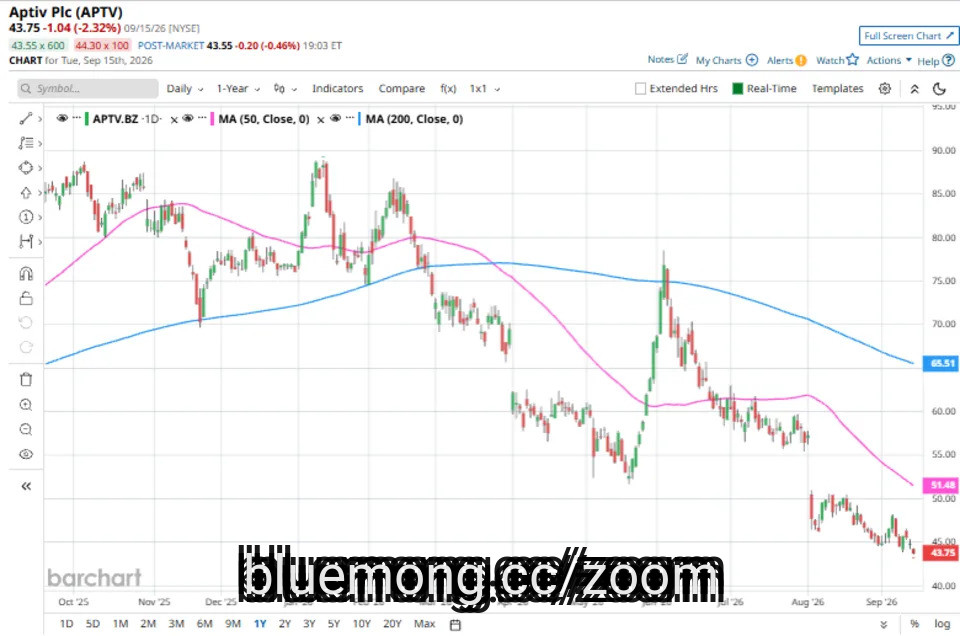
Schaffhausen, Switzerland-based Aptiv PLC (APTV) is a global industrial technology company developing automated, electrified and digitalized solutions. Its businesses provide software, advanced hardware, perception systems and connectivity technologies for mission-critical applications across mobility and other end markets. It has a market capitalization of approximately $9.3 billion.
Companies valued between $2 billion and $10 billion are generally classified as "small-cap stocks," and Aptiv comfortably fits this category. Its substantial market capitalization reflects its size, influence and established position within the auto parts industry. Aptiv stands out for its expertise in advanced automotive technology, including connectivity, electrification and intelligent systems. Its above-average margins, strong free cash flow and growing non-automotive business provide differentiation. Its established customer relationships and exposure to electrification and autonomous driving could support long-term growth.
Billionaire Charlie Munger, Who Died at 99, Skipped Insurance on His Mansion Since He Could Just Write a Check to Rebuild — 'All Intelligent People Do It My Way'
Nvidia CEO Jensen Huang Just Dropped Huge News for This Cybersecurity Stock
How to Play GME Stock as GameStop CEO Ryan Cohen Buys $20.3 Million in Shares
#aptiv #technology #advanced #connectivity
Companies valued between $2 billion and $10 billion are generally classified as "small-cap stocks," and Aptiv comfortably fits this category. Its substantial market capitalization reflects its size, influence and established position within the auto parts industry. Aptiv stands out for its expertise in advanced automotive technology, including connectivity, electrification and intelligent systems. Its above-average margins, strong free cash flow and growing non-automotive business provide differentiation. Its established customer relationships and exposure to electrification and autonomous driving could support long-term growth.
Billionaire Charlie Munger, Who Died at 99, Skipped Insurance on His Mansion Since He Could Just Write a Check to Rebuild — 'All Intelligent People Do It My Way'
Nvidia CEO Jensen Huang Just Dropped Huge News for This Cybersecurity Stock
How to Play GME Stock as GameStop CEO Ryan Cohen Buys $20.3 Million in Shares
#aptiv #technology #advanced #connectivity


15 hours ago
Teradyne, Inc. (TER) is a technology company that designs and manufactures automated test equipment and advanced robotics systems, with a market capitalization of approximately $51.5 billion. Based in North Reading, Massachusetts, the company's semiconductor and electronics testing solutions help customers maintain quality standards, while its collaborative and mobile robots support manufacturing and warehouse operations across businesses of various sizes.
Companies valued between $10 billion and $200 billion are generally classified as "large-cap stocks," and Teradyne comfortably fits this category. Its edge comes from its leading role in automated testing and robotics, serving several industries, from semiconductors to automotive and aerospace. Its diversified product portfolio, strong brand, stable revenue, healthy profit margins, and consistent cash generation support continued investment in technology and long-term growth.
Billionaire Charlie Munger, Who Died at 99, Skipped Insurance on His Mansion Since He Could Just Write a Check to Rebuild — 'All Intelligent People Do It My Way'
Nvidia CEO Jensen Huang Just Dropped Huge News for This Cybersecurity Stock
How to Play GME Stock as GameStop CEO Ryan Cohen Buys $20.3 Million in Shares
#robotics #support
Companies valued between $10 billion and $200 billion are generally classified as "large-cap stocks," and Teradyne comfortably fits this category. Its edge comes from its leading role in automated testing and robotics, serving several industries, from semiconductors to automotive and aerospace. Its diversified product portfolio, strong brand, stable revenue, healthy profit margins, and consistent cash generation support continued investment in technology and long-term growth.
Billionaire Charlie Munger, Who Died at 99, Skipped Insurance on His Mansion Since He Could Just Write a Check to Rebuild — 'All Intelligent People Do It My Way'
Nvidia CEO Jensen Huang Just Dropped Huge News for This Cybersecurity Stock
How to Play GME Stock as GameStop CEO Ryan Cohen Buys $20.3 Million in Shares
#robotics #support


1 day ago
Broyhill **** et Management, a Charlotte-based firm, issued its second-quarter 2026 investor letter, which is available for download here. The Broyhill Equity Composite gained 8.8% in Q2, trailing the MSCI All Country World Index's 15.1% and the MSCI ACWI Value Index's 10.8%. For the first half, the Composite returned 2.3%, versus 11.5% for the Index. The letter highlights that a significant portion of the shortfall occurred in April due to market dynamics and geopolitical events, with tech, particularly semiconductors, driving recent gains. Broyhill notes its lack of direct semiconductor exposure but acknowledges potential interest in the sector if opportunities arise, maintaining its investment philosophy focused on capital protection in fragile market conditions. Also, check the fund's top five holdings to see its best picks in 2026.
In its second-quarter 2026 investor letter, Broyhill **** et Management highlighted Valvoline Inc. (NYSE:VVV) as a leading performance contributor. Valvoline Inc. (NYSE:VVV) is a US-based automotive preventive maintenance company that offers oil changes, battery, bulb, and wiper replacements; tire rotations; and other maintenance services. On September 14, 2026, Valvoline Inc. (NYSE:VVV) closed at $30.37 per share. Over the past month, Valvoline Inc. (NYSE:VVV) declined 9.69%, and its shares lost 25.33% over the past 52 weeks. Valvoline Inc. (NYSE:VVV) has a market capitalization of $3.87 billion.
Broyhill **** et Management stated the following regarding Valvoline Inc. (NYSE:VVV) in its Q2 2026 investor letter:
"Valvoline Inc. (NYSE:VVV) gained 18%, having also led the first quarter. Comparable sales grew 8.2% against consensus near 5.4%, adjusted EBITDA grew 28%, and guidance was raised across comparable sales, EBITDA, and earnings. The company added 31 stores and now operates 2,409 stores, with ticket sales driving roughly two-thirds of the gain."
Valvoline Inc. (NYSE:VVV) is not on our list of the 40 Most Popular Stocks Among Hedge Funds. According to our database, 44 hedge fund portfolios held Valvoline Inc. (NYSE:VVV) at the end of the second quarter, compared to 39 in the previous quarter. While we acknowledge the potential of Valvoline Inc. (NYSE:VVV) as an investment, we believe certain AI stocks offer greater upside potential and carry less downside risk. If you're looking for an extremely undervalued AI stock that also stands to benefit significantly from Trump-era tariffs and the onshoring trend, see our free report on the best short-term AI stock.
#broyhill #investor
In its second-quarter 2026 investor letter, Broyhill **** et Management highlighted Valvoline Inc. (NYSE:VVV) as a leading performance contributor. Valvoline Inc. (NYSE:VVV) is a US-based automotive preventive maintenance company that offers oil changes, battery, bulb, and wiper replacements; tire rotations; and other maintenance services. On September 14, 2026, Valvoline Inc. (NYSE:VVV) closed at $30.37 per share. Over the past month, Valvoline Inc. (NYSE:VVV) declined 9.69%, and its shares lost 25.33% over the past 52 weeks. Valvoline Inc. (NYSE:VVV) has a market capitalization of $3.87 billion.
Broyhill **** et Management stated the following regarding Valvoline Inc. (NYSE:VVV) in its Q2 2026 investor letter:
"Valvoline Inc. (NYSE:VVV) gained 18%, having also led the first quarter. Comparable sales grew 8.2% against consensus near 5.4%, adjusted EBITDA grew 28%, and guidance was raised across comparable sales, EBITDA, and earnings. The company added 31 stores and now operates 2,409 stores, with ticket sales driving roughly two-thirds of the gain."
Valvoline Inc. (NYSE:VVV) is not on our list of the 40 Most Popular Stocks Among Hedge Funds. According to our database, 44 hedge fund portfolios held Valvoline Inc. (NYSE:VVV) at the end of the second quarter, compared to 39 in the previous quarter. While we acknowledge the potential of Valvoline Inc. (NYSE:VVV) as an investment, we believe certain AI stocks offer greater upside potential and carry less downside risk. If you're looking for an extremely undervalued AI stock that also stands to benefit significantly from Trump-era tariffs and the onshoring trend, see our free report on the best short-term AI stock.
#broyhill #investor


2 days ago
Broyhill ***** et Management, a Charlotte-based firm, issued its second-quarter 2026 investor letter, which is available for download here. The Broyhill Equity Composite gained 8.8% in Q2, trailing the MSCI All Country World Index's 15.1% and the MSCI ACWI Value Index's 10.8%. For the first half, the Composite returned 2.3%, versus 11.5% for the Index. The letter highlights that a significant portion of the shortfall occurred in April due to market dynamics and geopolitical events, with tech, particularly semiconductors, driving recent gains. Broyhill notes its lack of direct semiconductor exposure but acknowledges potential interest in the sector if opportunities arise, maintaining its investment philosophy focused on capital protection in fragile market conditions. Also, check the fund's top five holdings to see its best picks in 2026.
In its second-quarter 2026 investor letter, Broyhill ***** et Management highlighted Valvoline Inc. (NYSE:VVV) as a leading performance contributor. Valvoline Inc. (NYSE:VVV) is a US-based automotive preventive maintenance company that offers oil changes, battery, bulb, and wiper replacements; tire rotations; and other maintenance services. On September 14, 2026, Valvoline Inc. (NYSE:VVV) closed at $30.37 per share. Over the past month, Valvoline Inc. (NYSE:VVV) declined 9.69%, and its shares lost 25.33% over the past 52 weeks. Valvoline Inc. (NYSE:VVV) has a market capitalization of $3.87 billion.
Broyhill ***** et Management stated the following regarding Valvoline Inc. (NYSE:VVV) in its Q2 2026 investor letter:
"Valvoline Inc. (NYSE:VVV) gained 18%, having also led the first quarter. Comparable sales grew 8.2% against consensus near 5.4%, adjusted EBITDA grew 28%, and guidance was raised across comparable sales, EBITDA, and earnings. The company added 31 stores and now operates 2,409 stores, with ticket sales driving roughly two-thirds of the gain."
Valvoline Inc. (NYSE:VVV) is not on our list of the 40 Most Popular Stocks Among Hedge Funds. According to our database, 44 hedge fund portfolios held Valvoline Inc. (NYSE:VVV) at the end of the second quarter, compared to 39 in the previous quarter. While we acknowledge the potential of Valvoline Inc. (NYSE:VVV) as an investment, we believe certain AI stocks offer greater upside potential and carry less downside risk. If you're looking for an extremely undervalued AI stock that also stands to benefit significantly from Trump-era tariffs and the onshoring trend, see our free report on the best short-term AI stock.
#valvoline #asset
In its second-quarter 2026 investor letter, Broyhill ***** et Management highlighted Valvoline Inc. (NYSE:VVV) as a leading performance contributor. Valvoline Inc. (NYSE:VVV) is a US-based automotive preventive maintenance company that offers oil changes, battery, bulb, and wiper replacements; tire rotations; and other maintenance services. On September 14, 2026, Valvoline Inc. (NYSE:VVV) closed at $30.37 per share. Over the past month, Valvoline Inc. (NYSE:VVV) declined 9.69%, and its shares lost 25.33% over the past 52 weeks. Valvoline Inc. (NYSE:VVV) has a market capitalization of $3.87 billion.
Broyhill ***** et Management stated the following regarding Valvoline Inc. (NYSE:VVV) in its Q2 2026 investor letter:
"Valvoline Inc. (NYSE:VVV) gained 18%, having also led the first quarter. Comparable sales grew 8.2% against consensus near 5.4%, adjusted EBITDA grew 28%, and guidance was raised across comparable sales, EBITDA, and earnings. The company added 31 stores and now operates 2,409 stores, with ticket sales driving roughly two-thirds of the gain."
Valvoline Inc. (NYSE:VVV) is not on our list of the 40 Most Popular Stocks Among Hedge Funds. According to our database, 44 hedge fund portfolios held Valvoline Inc. (NYSE:VVV) at the end of the second quarter, compared to 39 in the previous quarter. While we acknowledge the potential of Valvoline Inc. (NYSE:VVV) as an investment, we believe certain AI stocks offer greater upside potential and carry less downside risk. If you're looking for an extremely undervalued AI stock that also stands to benefit significantly from Trump-era tariffs and the onshoring trend, see our free report on the best short-term AI stock.
#valvoline #asset


2 days ago
Indian automotive supplier Uno Minda has announced four capacity expansion and consolidation projects across its component businesses, with a combined proposed investment of about Rs14.15bn ($147.5m).
The projects span the company's two-wheeler alloy wheels, aluminium casting, moulding, and interior, exterior parts and sealing systems operations, although details have so far been provided for two of them.
One of the projects concerns a new greenfield aluminium casting plant in Hosur, Tamil Nadu, after expansion ******* e at the company's existing Hosur facility was used up.
This business supplies parts for two-wheelers, four-wheelers and commercial vehicles for both combustion-engine and electric vehicle platforms.
The project is expected to involve an additional investment of Rs5.10bn and increase capacity at the site from about 13,000 metric tonnes to a peak of 30,000 metric tonnes.
#expansion #parts
The projects span the company's two-wheeler alloy wheels, aluminium casting, moulding, and interior, exterior parts and sealing systems operations, although details have so far been provided for two of them.
One of the projects concerns a new greenfield aluminium casting plant in Hosur, Tamil Nadu, after expansion ******* e at the company's existing Hosur facility was used up.
This business supplies parts for two-wheelers, four-wheelers and commercial vehicles for both combustion-engine and electric vehicle platforms.
The project is expected to involve an additional investment of Rs5.10bn and increase capacity at the site from about 13,000 metric tonnes to a peak of 30,000 metric tonnes.
#expansion #parts
2 days ago
On August 25, Aptiv (NYSE:APTV) said it will support NVIDIA's newly announced Jetson Orin Nano 2 processor, extending a partnership that already covers the more powerful Jetson Thor platform. The move puts Aptiv squarely inside the buildout of "physical AI," the term for machines like drones, robots, and industrial systems that need to sense and react to the real world in real time. For a company still just months removed from spinning off its electrical distribution business, betting on edge robotics is a statement about where it thinks the next decade of growth actually lives.
NVIDIA's Jetson Orin Nano 2 packs 78 TOPS of processing power into an 8GB, 8-core Arm chip that doubles the inference speed of its predecessor while cutting power draw by 40% at equivalent performance. That kind of efficiency gain matters for battery-powered devices like delivery drones and mobile robots, where every watt saved extends run time. Aptiv isn't just supplying compute support; it is layering in its PULSE surround-view camera and radar system for 360-degree sensing, its Gen 8 radar for object detection in tough conditions, and Wind River software to handle the unglamorous but essential work of long-term maintenance and security updates. That full-stack approach is the pitch: instead of stitching together sensors, chips, and software from separate vendors, customers get one partner who can carry a device from prototype to a fleet running in the field.
The timing lines up with what Aptiv reported in its second-quarter results on August 4, 2026. Revenue reached $3.3 billion, up 2%, while adjusted EBITDA climbed to $613 million from $547 million a year earlier, pushing margins to 18.7% from 17.1%. CEO Kevin Clark pointed to double-digit growth in non-automotive revenue, progress moving robotics from partnership talks to actual commercial deployments, and a major drone industry win secured in early July. North America sales rose 10% and Asia Pacific grew 6%, including 5% growth in China, giving the company some geographic momentum to lean on as it chases this new business line.
The quarter wasn't clean underneath the headline numbers. Free cash flow came in at just $12 million in the second quarter, down from $219 million a year earlier, and the first half of 2026 actually posted negative free cash flow of $196 million versus a positive $264 million a year ago. Operating cash flow from continuing operations fell to $82 million for the first half, down sharply from $531 million. Management also flagged automotive demand and customer mix as an incremental headwind, a reminder that Aptiv's legacy business still carries real weight even as it chases robotics and drones. EMEA revenue dropped 8%, and South America fell 4% in the quarter, both drags even as North America and Asia Pacific grew.
#America #real
NVIDIA's Jetson Orin Nano 2 packs 78 TOPS of processing power into an 8GB, 8-core Arm chip that doubles the inference speed of its predecessor while cutting power draw by 40% at equivalent performance. That kind of efficiency gain matters for battery-powered devices like delivery drones and mobile robots, where every watt saved extends run time. Aptiv isn't just supplying compute support; it is layering in its PULSE surround-view camera and radar system for 360-degree sensing, its Gen 8 radar for object detection in tough conditions, and Wind River software to handle the unglamorous but essential work of long-term maintenance and security updates. That full-stack approach is the pitch: instead of stitching together sensors, chips, and software from separate vendors, customers get one partner who can carry a device from prototype to a fleet running in the field.
The timing lines up with what Aptiv reported in its second-quarter results on August 4, 2026. Revenue reached $3.3 billion, up 2%, while adjusted EBITDA climbed to $613 million from $547 million a year earlier, pushing margins to 18.7% from 17.1%. CEO Kevin Clark pointed to double-digit growth in non-automotive revenue, progress moving robotics from partnership talks to actual commercial deployments, and a major drone industry win secured in early July. North America sales rose 10% and Asia Pacific grew 6%, including 5% growth in China, giving the company some geographic momentum to lean on as it chases this new business line.
The quarter wasn't clean underneath the headline numbers. Free cash flow came in at just $12 million in the second quarter, down from $219 million a year earlier, and the first half of 2026 actually posted negative free cash flow of $196 million versus a positive $264 million a year ago. Operating cash flow from continuing operations fell to $82 million for the first half, down sharply from $531 million. Management also flagged automotive demand and customer mix as an incremental headwind, a reminder that Aptiv's legacy business still carries real weight even as it chases robotics and drones. EMEA revenue dropped 8%, and South America fell 4% in the quarter, both drags even as North America and Asia Pacific grew.
#America #real


2 days ago
Choosing between Advance Auto Parts (NYSE:AAP) and Intuitive Machines (NASDAQ:LUNR) requires balancing the steady but challenged automotive retail sector against the high-stakes, high-growth arena of ******* e infrastructure.
Advance Auto Parts operates as a massive retailer for vehicle maintenance, while Intuitive Machines focuses on lunar landers and orbital services. These two businesses represent very different risk-to-reward profiles for 2026 portfolios.
Advance Auto Parts operates as an automotive aftermarket parts retailer, serving both everyday do-it-yourselfers and professional installers like garages or dealerships. In its latest annual report, filed for the fiscal year ended January 3, 2026, the company noted it operates over 4,000 stores across North America. As an established player among retail stocks, its strategy relies on balancing these two customer bases, with professional sales accounting for nearly 50% of its total revenue.
In FY 2025, revenue reached $8.6 billion, representing a revenue decline of roughly 5.4% compared to the previous year. Despite this decline, the company reported a net income of $44.0 million. This resulted in a thin net margin, a measure of how much profit a company keeps from its total sales, of about 0.5%.
As of its January 2026 balance sheet, the debt-to-equity ratio was 2.4x. This ratio measures total debt against shareholder equity, with a higher number suggesting more reliance on borrowing. The so-called current ratio, which tracks the ability to pay short-term debts with short-term ******* ets, was 1.7x. Free cash flow, defined as cash from operations minus capital expenditures, was negative $298.0 million for the year.
#parts #operates #total #ratio
Advance Auto Parts operates as a massive retailer for vehicle maintenance, while Intuitive Machines focuses on lunar landers and orbital services. These two businesses represent very different risk-to-reward profiles for 2026 portfolios.
Advance Auto Parts operates as an automotive aftermarket parts retailer, serving both everyday do-it-yourselfers and professional installers like garages or dealerships. In its latest annual report, filed for the fiscal year ended January 3, 2026, the company noted it operates over 4,000 stores across North America. As an established player among retail stocks, its strategy relies on balancing these two customer bases, with professional sales accounting for nearly 50% of its total revenue.
In FY 2025, revenue reached $8.6 billion, representing a revenue decline of roughly 5.4% compared to the previous year. Despite this decline, the company reported a net income of $44.0 million. This resulted in a thin net margin, a measure of how much profit a company keeps from its total sales, of about 0.5%.
As of its January 2026 balance sheet, the debt-to-equity ratio was 2.4x. This ratio measures total debt against shareholder equity, with a higher number suggesting more reliance on borrowing. The so-called current ratio, which tracks the ability to pay short-term debts with short-term ******* ets, was 1.7x. Free cash flow, defined as cash from operations minus capital expenditures, was negative $298.0 million for the year.
#parts #operates #total #ratio


2 days ago
New vehicle sales in Indonesia surged by a further 32% year-on-year to 81,756 units in August 2026, up from weak year-earlier sales of 61,771 units, according to wholesale data compiled by the local automotive industry ***** ociation, Gaikindo. The market last month was driven higher by strong demand for trucks and battery electric vehicles (BEVs).
In the first eight months of 2026, the country's vehicle market expanded by 20% to 599,491 units, after declining by 11% to 499,315 units a year earlier, with sales of light passenger vehicles rising by over 13% to 437,374 units, while commercial vehicle sales increased by 42% to 162,117 units, driven by a 54% surge in light- and medium-duty trucks to 131,813 units.
The truck market this year has been supported by government plans to procure vehicles to support the development of rural cooperatives and improve local logistics networks nationwide.
Sales of BEVs almost doubled to 103,300 units year-to-date, up from 53,100 units in the same period a year earlier, driven by Chinese brands and supported by government tax incentives.
GDP growth moderated to 5.3% year-on-year in the second quarter of 2026, down from a peak of 5.6% in the first quarter, underpinned mainly by strong government spending and investment. Private consumption growth slowed to 5.1% from 5.5%, after the central bank hiked its benchmark interest rate by 100 basis points to 5.75% in the second quarter to support the rupiah and rein in rising inflation. Government spending grew by 16%, down from a peak of 22%, driven by social programmes and rising fuel subsidy costs.
#year
In the first eight months of 2026, the country's vehicle market expanded by 20% to 599,491 units, after declining by 11% to 499,315 units a year earlier, with sales of light passenger vehicles rising by over 13% to 437,374 units, while commercial vehicle sales increased by 42% to 162,117 units, driven by a 54% surge in light- and medium-duty trucks to 131,813 units.
The truck market this year has been supported by government plans to procure vehicles to support the development of rural cooperatives and improve local logistics networks nationwide.
Sales of BEVs almost doubled to 103,300 units year-to-date, up from 53,100 units in the same period a year earlier, driven by Chinese brands and supported by government tax incentives.
GDP growth moderated to 5.3% year-on-year in the second quarter of 2026, down from a peak of 5.6% in the first quarter, underpinned mainly by strong government spending and investment. Private consumption growth slowed to 5.1% from 5.5%, after the central bank hiked its benchmark interest rate by 100 basis points to 5.75% in the second quarter to support the rupiah and rein in rising inflation. Government spending grew by 16%, down from a peak of 22%, driven by social programmes and rising fuel subsidy costs.
#year


2 days ago
McLaren Automotive has announced a £500m investment programme to expand its UK manufacturing, engineering and operations, enabling it to accelerate the development of its next generation of models.
The investment forms part of a larger commitment from McLaren Automotive shareholder L'IMAD, a sovereign investor of the Government of Abu Dhabi, and reinforces McLaren's commitment to Britain, where Bruce McLaren founded the company in 1963.
Expanding McLaren Automotive in the UK
The company said the investment will enable McLaren Automotive to expand its production capability, increasing vehicle output to ensure the next generation of McLaren Automotive cars are built in Britain 'including a newly confirmed performance SUV'. This will be made possible by a new vehicle ****** embly facility planned in the UK.
For the first time in its history, McLaren Automotive's future powertrains will be designed and built in-house, starting with two new engines and transmissions. This will support the company's hybrid engine strategy, building on McLaren Automotive's use of hybrid technology, which started with the McLaren P1.
#next
The investment forms part of a larger commitment from McLaren Automotive shareholder L'IMAD, a sovereign investor of the Government of Abu Dhabi, and reinforces McLaren's commitment to Britain, where Bruce McLaren founded the company in 1963.
Expanding McLaren Automotive in the UK
The company said the investment will enable McLaren Automotive to expand its production capability, increasing vehicle output to ensure the next generation of McLaren Automotive cars are built in Britain 'including a newly confirmed performance SUV'. This will be made possible by a new vehicle ****** embly facility planned in the UK.
For the first time in its history, McLaren Automotive's future powertrains will be designed and built in-house, starting with two new engines and transmissions. This will support the company's hybrid engine strategy, building on McLaren Automotive's use of hybrid technology, which started with the McLaren P1.
#next


4 days ago
On August 6, PureCycle Technologies (NASDAQ:PCT) reported second-quarter results for the period ended June 30, and buried in the numbers was something the plastics recycler has chased for years: an actual branded product on store shelves. Select Downy detergent caps made with PureCycle's PureFive resin entered commercial production for Procter & Gamble during the quarter, the first tangible sign the company's purification technology can clear a major consumer brand's supply chain. Revenue came in at $4.5 million, up roughly 173% from a year earlier and the sixth straight quarter of sequential growth.
The Downy win was not an isolated event. PureCycle said select Tide caps are scheduled for retail production in the third quarter, with Vicks ZzzQuil PURE Zzzs child-resistant lids targeted for the fourth quarter of 2026. Seven customer conversions took place during the quarter, alongside six new commercial partnerships spanning closures, automotive, film, and food packaging, including Amcor, Motherson, and Innovia Films. Regulation is doing real work here too. New Jersey's Department of Environmental Protection approved PureFive as post-consumer recycled content, a decision that arrives as the state's food contact exemption expires in January 2027 and its recycled content requirement climbs to 20%, while California's SB54 is already in effect.
Operationally, the Ironton facility's planned turnaround finished ahead of schedule and under budget, with more than 170 reliability and rate projects completed and inspections showing no corrosion on major equipment. On-site compounding, commissioned in April, is now running 24 hours a day, five days a week, with plans to expand to seven by the fourth quarter. PureCycle also picked up ISO 9001:2015 certification in May and closed the quarter with $236.9 million in total liquidity after a June capital raise.
The other side of the ledger is harder to ignore. PureCycle posted a net loss of $142.2 million for the quarter, and adjusted EBITDA actually widened to a loss of $31.7 million from a loss of $27.8 million a year earlier, a shift the company attributes to smaller non-cash addbacks rather than weaker operations. PureFive production fell to 4.5 million pounds for the quarter, a direct result of the planned turnaround, even though output was still up about 32% from a year ago. Growth is not coming cheap either. Full-year 2026 project spending guidance was raised to a range of $45 million to $50 million, up from the prior $39 million to $45 million.
#year #loss
The Downy win was not an isolated event. PureCycle said select Tide caps are scheduled for retail production in the third quarter, with Vicks ZzzQuil PURE Zzzs child-resistant lids targeted for the fourth quarter of 2026. Seven customer conversions took place during the quarter, alongside six new commercial partnerships spanning closures, automotive, film, and food packaging, including Amcor, Motherson, and Innovia Films. Regulation is doing real work here too. New Jersey's Department of Environmental Protection approved PureFive as post-consumer recycled content, a decision that arrives as the state's food contact exemption expires in January 2027 and its recycled content requirement climbs to 20%, while California's SB54 is already in effect.
Operationally, the Ironton facility's planned turnaround finished ahead of schedule and under budget, with more than 170 reliability and rate projects completed and inspections showing no corrosion on major equipment. On-site compounding, commissioned in April, is now running 24 hours a day, five days a week, with plans to expand to seven by the fourth quarter. PureCycle also picked up ISO 9001:2015 certification in May and closed the quarter with $236.9 million in total liquidity after a June capital raise.
The other side of the ledger is harder to ignore. PureCycle posted a net loss of $142.2 million for the quarter, and adjusted EBITDA actually widened to a loss of $31.7 million from a loss of $27.8 million a year earlier, a shift the company attributes to smaller non-cash addbacks rather than weaker operations. PureFive production fell to 4.5 million pounds for the quarter, a direct result of the planned turnaround, even though output was still up about 32% from a year ago. Growth is not coming cheap either. Full-year 2026 project spending guidance was raised to a range of $45 million to $50 million, up from the prior $39 million to $45 million.
#year #loss



5 days ago
Benzinga and Yahoo Finance LLC may earn commission or revenue on some items through the links below.
Angel investor and All-In Podcast host Jason Calacanis warned that allowing Chinese electric vehicles into the U.S. could devastate domestic automakers even as their low prices attract consumers, reacting to Sen. Elissa Slotkin's (D-Mich.) claim that President Donald Trump could loosen barriers as part of a China deal.
"This would be the end of the US automotive industry — but consumers will love to buy these cars," Calacanis wrote in an X post on Wednesday. He added, "Everywhere I go, from the Middle East to Europe to Mexico, the streets and Uber fleets are filled with dirt-cheap Chinese EVs," calling such U.S. access "a disaster."
This would be the end of the US automotive industry — but consumers will love to buy these cars
But…. You'll probably die in one since they're not very safe
Everywhere I go, from the Middle East to Europe to Mexico, the streets and uber fleets are filled with dirt cheap… https://t.co/LGUwforT6a
— jason (Jason) September 10, 2026
#calacanis #chinese #Europe #uber
Angel investor and All-In Podcast host Jason Calacanis warned that allowing Chinese electric vehicles into the U.S. could devastate domestic automakers even as their low prices attract consumers, reacting to Sen. Elissa Slotkin's (D-Mich.) claim that President Donald Trump could loosen barriers as part of a China deal.
"This would be the end of the US automotive industry — but consumers will love to buy these cars," Calacanis wrote in an X post on Wednesday. He added, "Everywhere I go, from the Middle East to Europe to Mexico, the streets and Uber fleets are filled with dirt-cheap Chinese EVs," calling such U.S. access "a disaster."
This would be the end of the US automotive industry — but consumers will love to buy these cars
But…. You'll probably die in one since they're not very safe
Everywhere I go, from the Middle East to Europe to Mexico, the streets and uber fleets are filled with dirt cheap… https://t.co/LGUwforT6a
— jason (Jason) September 10, 2026
#calacanis #chinese #Europe #uber
5 days ago
Affordability in a car market usually looks like a math problem. Every so often it turns out to be a permission problem.
Americans have spent four years watching window stickers climb and calling it inflation. The average new vehicle sold for $50,089 in August, the first month of 2026 that the industry average cleared $50,000, according to Kelley Blue Book.
Buyers feel it without reading the data.
"Many American households are under significant financial pressure," said Erin Keating, executive ***** yst at ***** Automotive, in comments published by Kelley Blue Book.
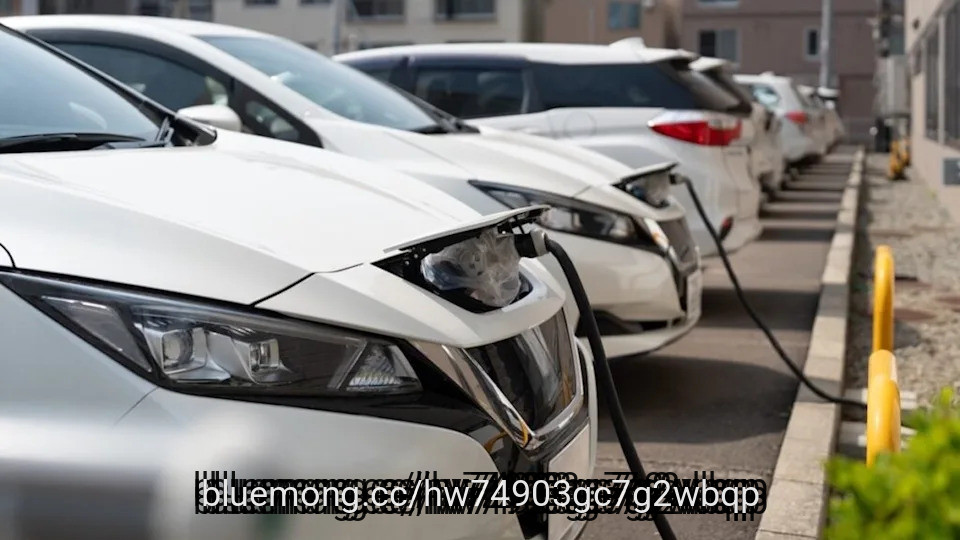
Electric cars sit higher up the ladder. The cheapest new EV on sale in the U.S. starts at $29,990 before destination, a price Nissan (NSANY) called "the lowest starting MSRP for any new EV currently on sale in the U.S.," according to Electrek.
#according
Americans have spent four years watching window stickers climb and calling it inflation. The average new vehicle sold for $50,089 in August, the first month of 2026 that the industry average cleared $50,000, according to Kelley Blue Book.
Buyers feel it without reading the data.
"Many American households are under significant financial pressure," said Erin Keating, executive ***** yst at ***** Automotive, in comments published by Kelley Blue Book.
Electric cars sit higher up the ladder. The cheapest new EV on sale in the U.S. starts at $29,990 before destination, a price Nissan (NSANY) called "the lowest starting MSRP for any new EV currently on sale in the U.S.," according to Electrek.
#according

7 days ago
Based in Midland, Michigan, Dow Inc. (DOW) is a global materials science leader that develops and manufactures chemicals, plastics, coatings, silicones, and other advanced materials used across industries ranging from packaging and construction to automotive, electronics, and consumer products.
Companies valued between $10 billion and $200 billion are typically classified as "large-cap stocks," and DOW, with a market capitalization of $21.4 billion, fits the label perfectly. Its key competitive advantage is its global scale, deep materials-science expertise, and broad portfolio of essential chemicals and advanced materials.
'Not Tens Of Billions, But Tens Of Trillions': Nvidia CEO Jensen Huang Says AI Is Like the New Electricity and the Scale Is Unlike Any Tech in History
What It Means for MSFT Stock Investors as Microsoft Switches to 2 Business Segments
RKLB Stock Jumps as Rocket Lab Debuts New Solar Cell for ******* e
#billion #science
Companies valued between $10 billion and $200 billion are typically classified as "large-cap stocks," and DOW, with a market capitalization of $21.4 billion, fits the label perfectly. Its key competitive advantage is its global scale, deep materials-science expertise, and broad portfolio of essential chemicals and advanced materials.
'Not Tens Of Billions, But Tens Of Trillions': Nvidia CEO Jensen Huang Says AI Is Like the New Electricity and the Scale Is Unlike Any Tech in History
What It Means for MSFT Stock Investors as Microsoft Switches to 2 Business Segments
RKLB Stock Jumps as Rocket Lab Debuts New Solar Cell for ******* e
#billion #science


7 days ago
Qualcomm (QCOM) has spent years telling shareholders it is becoming more than a smartphone chip company. What changed is where the new growth is expected to come from. Two years ago the big non-handset targets were automotive and IoT. Today, the newest leg of the story runs through the data center, and management has already put a number on it.
Qualcomm Once Told You The Laptop Chip Had Redefined Computing
The Snapdragon X Series was the flagship of that older story. Two years ago management said those platforms had redefined personal computing.
Management no longer leads with that story. In the fiscal Q3 2026 call, delivered on July 29, 2026, the PC gets two passing lines: a growing share of design wins in AI-first laptops and Project Solara, a chip-to-cloud platform being built with Microsoft for agent-first enterprise devices. Both are real. Neither carries a revenue figure.
Qualcomm Nearly Doubled Its Non-Handset Target Without Naming The Laptop
#first
Qualcomm Once Told You The Laptop Chip Had Redefined Computing
The Snapdragon X Series was the flagship of that older story. Two years ago management said those platforms had redefined personal computing.
Management no longer leads with that story. In the fiscal Q3 2026 call, delivered on July 29, 2026, the PC gets two passing lines: a growing share of design wins in AI-first laptops and Project Solara, a chip-to-cloud platform being built with Microsoft for agent-first enterprise devices. Both are real. Neither carries a revenue figure.
Qualcomm Nearly Doubled Its Non-Handset Target Without Naming The Laptop
#first


8 days ago
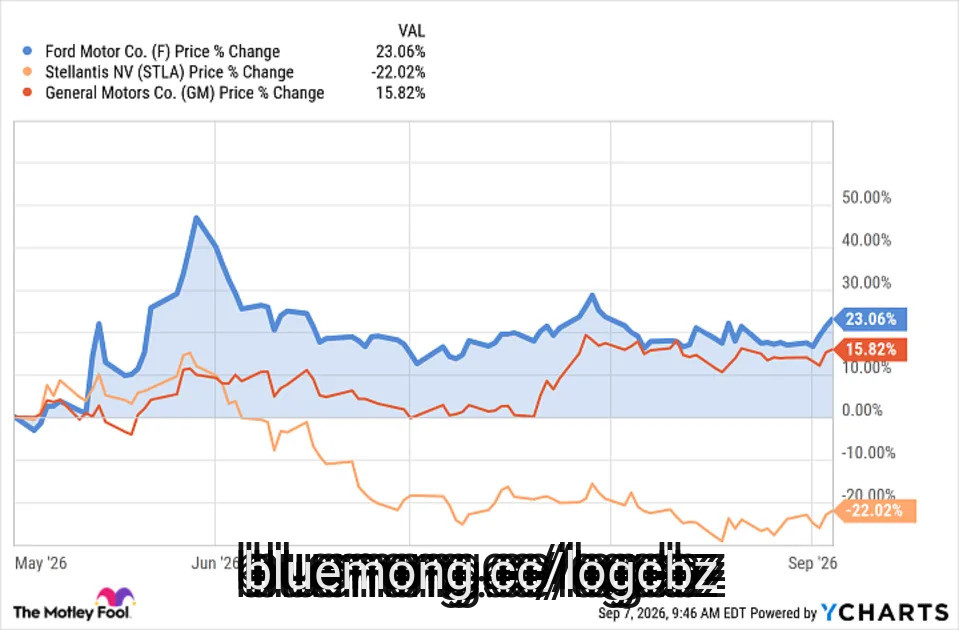
Ford Motor Company (NYSE: F) stock soared nearly 50% in May, as Wall Street began seeing the legacy automotive company as a hidden-gem infrastructure play as the demand for artificial intelligence (AI) and data center energy explodes. The stock has since given back about half of its May surge, and that gives investors who see long-term growth an opportunity to jump back in at a better price.
Here's why investors should be intrigued.
Missed Nvidia in 2009? This Rare Signal Is Flashing Again. In 2009, a "Double Down" signal flashed for a little-known chipmaker called Nvidia. For the first time in years, that same "Total Conviction" signal is flashing for a company 1/100th the size of Nvidia. Continue »
In May, the Detroit automaker announced its wholly owned subsidiary, called Ford Energy, which will develop and offer a battery energy storage system (BESS) for utility customers, AI data centers, and other large industrial and commercial customers. Savvy investors may have seen this coming, but for the most part, Ford built the new business behind the scenes, securing supply chains and preparing manufacturing. Ford Energy will manufacture battery cells, **** emble modules and containers, and offer sales and service support, which could be the lucrative part. That's because the automaker's Ford Energy DC block was designed to have a stable and predictable lifetime performance for about two decades.
To help connect the dots for investors wondering, AI data centers run intense workloads that put immense strain on the electrical grid. Ford's BESS give AI data centers security in the event of electrical grid fluctuations or blackouts, as the centers need an uninterrupted power supply. The systems will also provide power during AI workload spikes, charge when electricity is cheap, and discharge when prices peak, ultimately lowering costs and providing downtime protection.
#bess
Here's why investors should be intrigued.
Missed Nvidia in 2009? This Rare Signal Is Flashing Again. In 2009, a "Double Down" signal flashed for a little-known chipmaker called Nvidia. For the first time in years, that same "Total Conviction" signal is flashing for a company 1/100th the size of Nvidia. Continue »
In May, the Detroit automaker announced its wholly owned subsidiary, called Ford Energy, which will develop and offer a battery energy storage system (BESS) for utility customers, AI data centers, and other large industrial and commercial customers. Savvy investors may have seen this coming, but for the most part, Ford built the new business behind the scenes, securing supply chains and preparing manufacturing. Ford Energy will manufacture battery cells, **** emble modules and containers, and offer sales and service support, which could be the lucrative part. That's because the automaker's Ford Energy DC block was designed to have a stable and predictable lifetime performance for about two decades.
To help connect the dots for investors wondering, AI data centers run intense workloads that put immense strain on the electrical grid. Ford's BESS give AI data centers security in the event of electrical grid fluctuations or blackouts, as the centers need an uninterrupted power supply. The systems will also provide power during AI workload spikes, charge when electricity is cheap, and discharge when prices peak, ultimately lowering costs and providing downtime protection.
#bess

0.00$ raised of 0.00$ goal
0 donations
0.00$
to go

10 days ago
In its early years, Chinese battery leader CATL focused on electric vehicles (EVs), riding the explosive growth of the global e-mobility market. The company has since taken a turn, aggressively expanding its energy storage business with a target for storage to generate 50% of its global sales by 2030.
Today, CATL stands as one of the world's largest grid storage suppliers, powering megaprojects such as Synergy's 2.4GW-hour (GWh) Collie Battery in Australia and the 1.4GWh Gemini Solar-Plus-Storage project in Nevada, US.
In an exclusive interview with Power Technology, CATL's managing director of Western Europe, Hank Zhao, and chief technology officer of AC (alternating current) systems, Bruce Li, share how they translate learnings from the company's automotive history to its stationary storage unit. They also discuss the operational realities of energy storage leadership, executive decision-making in a fast-changing industry, and bridging the gap between Chinese technology and European markets.
Hank Zhao (HZ): I joined the company's EV business in 2010 and stayed there for 11 years before moving to the energy storage unit in mid-2021.
When the company was founded, it started with e-mobility and stationary storage as its two main business directions. But I think before 2020, the business scale of storage was much smaller than for EVs, and we didn't see as many opportunities. Then from 2021, there was a rapid boom in demand for energy storage, especially in markets like the US and China.
#hank
Today, CATL stands as one of the world's largest grid storage suppliers, powering megaprojects such as Synergy's 2.4GW-hour (GWh) Collie Battery in Australia and the 1.4GWh Gemini Solar-Plus-Storage project in Nevada, US.
In an exclusive interview with Power Technology, CATL's managing director of Western Europe, Hank Zhao, and chief technology officer of AC (alternating current) systems, Bruce Li, share how they translate learnings from the company's automotive history to its stationary storage unit. They also discuss the operational realities of energy storage leadership, executive decision-making in a fast-changing industry, and bridging the gap between Chinese technology and European markets.
Hank Zhao (HZ): I joined the company's EV business in 2010 and stayed there for 11 years before moving to the energy storage unit in mid-2021.
When the company was founded, it started with e-mobility and stationary storage as its two main business directions. But I think before 2020, the business scale of storage was much smaller than for EVs, and we didn't see as many opportunities. Then from 2021, there was a rapid boom in demand for energy storage, especially in markets like the US and China.
#hank

10 days ago
Rivian Automotive, Inc. (NASDAQ:RIVN) Chief Financial Officer Claire McDonough is stepping down at the end of October to join GE Vernova Inc. (NYSE:GEV) in the same role, Reuters reported on August 27, just as Rivian ramps up production of its cheaper R2 SUV amid fragile U.S. EV demand.
McDonough will formally take the GE Vernova CFO seat on January 1, 2027, succeeding the retiring Ken Parks. Rivian said her exit is "not the result of any disagreement" and that she is relocating to the East Coast to be closer to family. McDonough joined Rivian in January 2021, led the company through its $13.7 billion IPO later that year, and helped structure its $5.8 billion Volkswagen Group joint venture. Derek Mulvey, Rivian's vice president of finance, will serve as interim CFO starting October 30 while the company runs a search for a permanent replacement. The news lands as Rivian scales the R2, its $45,000-to-$58,000 SUV that began customer deliveries in June, with the stock trading near $17, down more than 75% from its IPO price.
Rivian Automotive, Inc. (NASDAQ:RIVN) keeps improving its business as it enters the next phase of its growth strategy. The company has started R2 deliveries, and management raised its annual delivery forecast last month as customers showed stronger interest in the lower-priced SUV. Rivian also continues to pursue profitability while growing its vehicle lineup. This is giving the company an opportunity to build a larger customer base through a more affordable model.
Rivian also has an experienced finance team that can maintain continuity after Claire McDonough's departure. McDonough will remain at Rivian through the end of October and help with the transition, while Vice President of Finance Derek Mulvey will take over as interim CFO. That arrangement gives Rivian time to search for a permanent replacement without forcing the company to manage an abrupt leadership gap during the R2 rollout.
GE Vernova Inc. (NYSE:GEV) gains a finance chief with experience in capital-intensive businesses, fundraising and cost management. McDonough helped Rivian take its business public, lead cost-cutting efforts and raise capital during its expansion. Those skills could benefit GE Vernova as the company expands its Power and Electrification businesses and manages rising demand for energy infrastructure.
#company #vernova #take #NASDAQ
McDonough will formally take the GE Vernova CFO seat on January 1, 2027, succeeding the retiring Ken Parks. Rivian said her exit is "not the result of any disagreement" and that she is relocating to the East Coast to be closer to family. McDonough joined Rivian in January 2021, led the company through its $13.7 billion IPO later that year, and helped structure its $5.8 billion Volkswagen Group joint venture. Derek Mulvey, Rivian's vice president of finance, will serve as interim CFO starting October 30 while the company runs a search for a permanent replacement. The news lands as Rivian scales the R2, its $45,000-to-$58,000 SUV that began customer deliveries in June, with the stock trading near $17, down more than 75% from its IPO price.
Rivian Automotive, Inc. (NASDAQ:RIVN) keeps improving its business as it enters the next phase of its growth strategy. The company has started R2 deliveries, and management raised its annual delivery forecast last month as customers showed stronger interest in the lower-priced SUV. Rivian also continues to pursue profitability while growing its vehicle lineup. This is giving the company an opportunity to build a larger customer base through a more affordable model.
Rivian also has an experienced finance team that can maintain continuity after Claire McDonough's departure. McDonough will remain at Rivian through the end of October and help with the transition, while Vice President of Finance Derek Mulvey will take over as interim CFO. That arrangement gives Rivian time to search for a permanent replacement without forcing the company to manage an abrupt leadership gap during the R2 rollout.
GE Vernova Inc. (NYSE:GEV) gains a finance chief with experience in capital-intensive businesses, fundraising and cost management. McDonough helped Rivian take its business public, lead cost-cutting efforts and raise capital during its expansion. Those skills could benefit GE Vernova as the company expands its Power and Electrification businesses and manages rising demand for energy infrastructure.
#company #vernova #take #NASDAQ


10 days ago
General Motors Company (NYSE:GM) reached a tentative three-year labor deal with Unifor that Canadian workers ratified on August 29 and 30, securing more than C$1 billion ($791 million) in new and previously announced investment across Ontario, covering over 4,600 workers.
GM will spend C$144 million to bring next-generation Heavy-Duty GMC Sierra production to Oshawa, adding to a previously committed C$343 million there. At St. Catharines, GM will invest C$215 million in a new transmission program starting late 2029, on top of a previously announced C$691 million for V8 engine production. GM also pledged not to immediately sell or close its CAMI plant in Ingersoll while it studies alternatives, including possible defense work if it lands a Canadian Armed Forces contract. The deal lands as Canada's auto sector faces 25% U.S. tariffs, with Trump threatening to double that to 50% on January 1, 2027, and U.S. and Canada trade talks still stalled.
General Motors Company (NYSE:GM) enters this deal from a position of financial strength. GM beat second-quarter expectations with adjusted earnings per share of $3.57 versus the $3.18 estimate and revenue of $48 billion versus the $46.99 billion forecast. The company also raised its full-year guidance for the second time this year, while adjusted automotive free cash flow reached $5 billion, up $2.2 billion year over year. That cash generation gives GM room to fund its Canadian commitments without putting significant pressure on its balance sheet.
The tariff environment has also become more favorable for GM. After the Supreme Court invalidated tariffs imposed under emergency powers, GM lowered its full-year gross tariff-cost estimate to $2.5 billion-$3.5 billion from $3 billion-$4 billion. Protecting Canadian production now could reduce the risk of costly disruptions as GM adjusts its North American manufacturing footprint and responds to changing trade policies.
The agreement also protects GM's pickup and SUV business, which generates some of the company's highest margins. CEO Mary Barra said North American demand remains strong for these vehicles, while the return of Heavy-Duty Sierra production to Oshawa will give GM additional North American capacity for a key product line. Producing more trucks within the region could also help GM reduce its exposure to cross-border tariff costs.
#million
GM will spend C$144 million to bring next-generation Heavy-Duty GMC Sierra production to Oshawa, adding to a previously committed C$343 million there. At St. Catharines, GM will invest C$215 million in a new transmission program starting late 2029, on top of a previously announced C$691 million for V8 engine production. GM also pledged not to immediately sell or close its CAMI plant in Ingersoll while it studies alternatives, including possible defense work if it lands a Canadian Armed Forces contract. The deal lands as Canada's auto sector faces 25% U.S. tariffs, with Trump threatening to double that to 50% on January 1, 2027, and U.S. and Canada trade talks still stalled.
General Motors Company (NYSE:GM) enters this deal from a position of financial strength. GM beat second-quarter expectations with adjusted earnings per share of $3.57 versus the $3.18 estimate and revenue of $48 billion versus the $46.99 billion forecast. The company also raised its full-year guidance for the second time this year, while adjusted automotive free cash flow reached $5 billion, up $2.2 billion year over year. That cash generation gives GM room to fund its Canadian commitments without putting significant pressure on its balance sheet.
The tariff environment has also become more favorable for GM. After the Supreme Court invalidated tariffs imposed under emergency powers, GM lowered its full-year gross tariff-cost estimate to $2.5 billion-$3.5 billion from $3 billion-$4 billion. Protecting Canadian production now could reduce the risk of costly disruptions as GM adjusts its North American manufacturing footprint and responds to changing trade policies.
The agreement also protects GM's pickup and SUV business, which generates some of the company's highest margins. CEO Mary Barra said North American demand remains strong for these vehicles, while the return of Heavy-Duty Sierra production to Oshawa will give GM additional North American capacity for a key product line. Producing more trucks within the region could also help GM reduce its exposure to cross-border tariff costs.
#million

11 days ago
On September 2, ChargePoint Holdings, Inc (NYSE:CHPT) reported stronger-than-expected results for the second quarter of fiscal 2027. Revenue and the company's loss per share both came in better than Wall Street expectations and the company also reported record non-GAAP gross margin while also highlighting continued progress across its charging business.
Q2 revenue increased 18% year-over-year to $116.1 million, exceeding the $105.2 million ****** yst estimate. ChargePoint Holdings, Inc (NYSE:CHPT) reported an adjusted loss of 35 cents per share, compared with ****** ysts' expectations for a loss of 85 cents per share, according to average estimates compiled by LSEG.
The company also benefited from higher North American home-charging sales, which helped push revenue above expectations. Networked charging systems revenue was up 25% year-over-year as it reached $62.9 million. Subscription revenue increased 10% to $43.7 million. Additionally, the company reported a 78% improvement in its non-GAAP adjusted EBITDA loss, which narrowed sharply to $4.8 million from $22.1 million in the same quarter last year.
ChargePoint Holdings, Inc (NYSE:CHPT) expanded its commercial relationships during the quarter as it extended its long-standing partnership with Mercedes-Benz through a new agreement covering charging solutions for fleet operators in the UK and Germany. The company also announced agreements with Optimus Energy Solutions and Onvo that are expected to add hundreds of new charging ports across the eastern US.
The company also appointed automotive industry veteran John Saffrett as Executive Vice President and Managing Director for Europe, where he will be overseeing sales, customer relationships, partnerships, and market expansion.
#revenue #holdings #chpt
Q2 revenue increased 18% year-over-year to $116.1 million, exceeding the $105.2 million ****** yst estimate. ChargePoint Holdings, Inc (NYSE:CHPT) reported an adjusted loss of 35 cents per share, compared with ****** ysts' expectations for a loss of 85 cents per share, according to average estimates compiled by LSEG.
The company also benefited from higher North American home-charging sales, which helped push revenue above expectations. Networked charging systems revenue was up 25% year-over-year as it reached $62.9 million. Subscription revenue increased 10% to $43.7 million. Additionally, the company reported a 78% improvement in its non-GAAP adjusted EBITDA loss, which narrowed sharply to $4.8 million from $22.1 million in the same quarter last year.
ChargePoint Holdings, Inc (NYSE:CHPT) expanded its commercial relationships during the quarter as it extended its long-standing partnership with Mercedes-Benz through a new agreement covering charging solutions for fleet operators in the UK and Germany. The company also announced agreements with Optimus Energy Solutions and Onvo that are expected to add hundreds of new charging ports across the eastern US.
The company also appointed automotive industry veteran John Saffrett as Executive Vice President and Managing Director for Europe, where he will be overseeing sales, customer relationships, partnerships, and market expansion.
#revenue #holdings #chpt


12 days ago
ChargePoint (CHPT) spent most of the past two years as a stock few investors wanted.
Then it reported earnings, and sentiment changed quickly.
The electric vehicle charging company beat expectations on both revenue and profit for its second quarter, and traders pushed the shares sharply higher.
ChargePoint sells commercial-grade Level 2 and DC Fast charging stations, and cloud software that allows property owners to manage prices, usage, and energy demand. There are 44,800 physical station locations in the U.S., making its installed base the largest Level 2 commercial footprint in America.
The company's financial performance is particularly impressive given the broader decline in electric vehicle sales since tax credits disappeared, with U.S. EV sales down 27% from a year earlier in the first quarter of 2026, according to ****** Automotive.
#vehicle #commercial #sales #fast
Then it reported earnings, and sentiment changed quickly.
The electric vehicle charging company beat expectations on both revenue and profit for its second quarter, and traders pushed the shares sharply higher.
ChargePoint sells commercial-grade Level 2 and DC Fast charging stations, and cloud software that allows property owners to manage prices, usage, and energy demand. There are 44,800 physical station locations in the U.S., making its installed base the largest Level 2 commercial footprint in America.
The company's financial performance is particularly impressive given the broader decline in electric vehicle sales since tax credits disappeared, with U.S. EV sales down 27% from a year earlier in the first quarter of 2026, according to ****** Automotive.
#vehicle #commercial #sales #fast


12 days ago
Ford Motor Company's (NYSE: F) shares have been in the fast lane. Over the past 12 months, they have climbed 21% (as of Sept. 3). Surprisingly, this performance is ahead of four of the "Magnificent Seven" stocks, high-powered companies sitting in the middle of impactful technological trends.
Investors aren't used to this automotive stock putting up strong returns. In the past five years, Ford's share price increased by just 9%. But can the business do a better job at rewarding its investors over the coming half-decade?
Missed Nvidia in 2009? This Rare Signal Is Flashing Again. In 2009, a "Double Down" signal flashed for a little-known chipmaker called Nvidia. For the first time in years, that same "Total Conviction" signal is flashing for a company 1/100th the size of Nvidia. Continue »
Here's where I believe Ford stock will be in five years.
At a high level, Ford's operations aren't going to change much going forward. Known for its pickup trucks and SUVs, the company will remain a leading player in this segment of the automotive industry. Its Ford Blue segment will remain the most important financial driver. This division reported revenue of $26.1 billion in the second quarter, representing 54% of the company's total.
#ford #past #high
Investors aren't used to this automotive stock putting up strong returns. In the past five years, Ford's share price increased by just 9%. But can the business do a better job at rewarding its investors over the coming half-decade?
Missed Nvidia in 2009? This Rare Signal Is Flashing Again. In 2009, a "Double Down" signal flashed for a little-known chipmaker called Nvidia. For the first time in years, that same "Total Conviction" signal is flashing for a company 1/100th the size of Nvidia. Continue »
Here's where I believe Ford stock will be in five years.
At a high level, Ford's operations aren't going to change much going forward. Known for its pickup trucks and SUVs, the company will remain a leading player in this segment of the automotive industry. Its Ford Blue segment will remain the most important financial driver. This division reported revenue of $26.1 billion in the second quarter, representing 54% of the company's total.
#ford #past #high


13 days ago
On August 25, EPAM Systems (NYSE:EPAM) announced a partnership with Wiz, the cloud and AI security platform now owned by Google Cloud, joining the Wiz Partner Alliance to help large organizations turn cloud risk data into actual engineering fixes. The timing is notable. Just weeks earlier, on August 6, EPAM reported second-quarter revenue growth of only 4.5% and pointed to a much slower pace ahead. A cybersecurity push gives the company a fresh growth story just as its core business decelerates.
The Wiz deal pairs Wiz's AI Application Protection Platform with EPAM's AI-native engineering and cloud modernization work, aiming to move clients from simply spotting cloud risks to actually remediating them across Google Cloud, AWS, Azure, and other environments. White Hat, an EPAM company, adds an offensive security layer of defensive, offensive, and incident response specialists to test whether flaws found by Wiz are actually exploitable, rather than just theoretical. EPAM says this formalizes work already underway, having delivered Wiz implementation programs across six industries: media and entertainment, transportation and logistics, life sciences and healthcare, financial services, automotive, and retail and consumer goods. That existing footprint gives the partnership a running start rather than a cold launch.
The financial backdrop supports the case that EPAM has room to invest here. Second quarter GAAP income from operations rose to 10.8% of revenue from 9.3% a year earlier, while non-GAAP operating margin climbed to 16.4% from 15%. GAAP diluted EPS reached $1.97, up 26.3% year over year, and non-GAAP diluted EPS hit $3.38, up 22%. The company also returned $409 million to shareholders through buybacks in the first half of 2026, including $85 million in the second quarter alone.
The numbers behind the Wiz announcement tell a more cautious story. EPAM's full-year revenue growth guidance now sits at 3.2% to 4.2%, with organic constant currency growth pegged at just 2.0% to 3.0%. The third quarter outlook is softer still: revenue of $1.410 billion to $1.425 billion implies year-over-year growth of roughly 1.7% at the midpoint, a sharp step down from the 4.5% posted in the second quarter.
Cash flow moved in the wrong direction too. EPAM used $38.8 million in operating activities during the first half of 2026, compared with $77.4 million generated over the same period in 2025. Total cash, equivalents and restricted cash fell 39% to $794.3 million as of June 30, from $1.301 billion at the end of 2025, a decline driven in part by continued share repurchases. Headcount growth was modest as well, with delivery professionals up just 0.3% from the prior quarter, suggesting a company being deliberate rather than aggressive about scaling capacity even as it adds new service lines like Wiz implementation.
#epam #cloud #year #company
The Wiz deal pairs Wiz's AI Application Protection Platform with EPAM's AI-native engineering and cloud modernization work, aiming to move clients from simply spotting cloud risks to actually remediating them across Google Cloud, AWS, Azure, and other environments. White Hat, an EPAM company, adds an offensive security layer of defensive, offensive, and incident response specialists to test whether flaws found by Wiz are actually exploitable, rather than just theoretical. EPAM says this formalizes work already underway, having delivered Wiz implementation programs across six industries: media and entertainment, transportation and logistics, life sciences and healthcare, financial services, automotive, and retail and consumer goods. That existing footprint gives the partnership a running start rather than a cold launch.
The financial backdrop supports the case that EPAM has room to invest here. Second quarter GAAP income from operations rose to 10.8% of revenue from 9.3% a year earlier, while non-GAAP operating margin climbed to 16.4% from 15%. GAAP diluted EPS reached $1.97, up 26.3% year over year, and non-GAAP diluted EPS hit $3.38, up 22%. The company also returned $409 million to shareholders through buybacks in the first half of 2026, including $85 million in the second quarter alone.
The numbers behind the Wiz announcement tell a more cautious story. EPAM's full-year revenue growth guidance now sits at 3.2% to 4.2%, with organic constant currency growth pegged at just 2.0% to 3.0%. The third quarter outlook is softer still: revenue of $1.410 billion to $1.425 billion implies year-over-year growth of roughly 1.7% at the midpoint, a sharp step down from the 4.5% posted in the second quarter.
Cash flow moved in the wrong direction too. EPAM used $38.8 million in operating activities during the first half of 2026, compared with $77.4 million generated over the same period in 2025. Total cash, equivalents and restricted cash fell 39% to $794.3 million as of June 30, from $1.301 billion at the end of 2025, a decline driven in part by continued share repurchases. Headcount growth was modest as well, with delivery professionals up just 0.3% from the prior quarter, suggesting a company being deliberate rather than aggressive about scaling capacity even as it adds new service lines like Wiz implementation.
#epam #cloud #year #company

13 days ago
AUMOVIO has agreed to sell its washer and cleaning business to Munich-based industrial holding company CERTINA Group, as the automotive supplier continues to streamline its portfolio and focus capital on core technologies.
The deal, announced on 3 September, covers production, research and development, employees and all related business activities.
Closing is subject to customary conditions and is expected by the end of 2026.
The companies did not disclose the purchase price.
The business is headquartered in Adrspach and operates entirely in the Czech Republic, employing around 700 people.
#certina #september #czech
The deal, announced on 3 September, covers production, research and development, employees and all related business activities.
Closing is subject to customary conditions and is expected by the end of 2026.
The companies did not disclose the purchase price.
The business is headquartered in Adrspach and operates entirely in the Czech Republic, employing around 700 people.
#certina #september #czech


13 days ago
Interested in Ambarella, Inc.? Here are five stocks we like better.
Ambarella's fiscal Q2 revenue rose 13.2% year over year to $108.1 million, driven by record AI revenue and strong automotive and IoT demand. Automotive revenue reached a new high, while non-GAAP EPS was $0.18.
The company forecast fiscal Q3 revenue of $115 million to $124 million and authorized a new $50 million stock-repurchase program. Ambarella also expects to maintain its 59%–62% long-term gross-margin target despite rising supply-chain costs.
Ambarella raised its fiscal 2032 serviceable market forecast to $22.9 billion, citing expansion into edge infrastructure and AI accelerators such as the sampling X7. Partnerships with Capgemini and Macnica are intended to broaden enterprise and midsize-customer reach, though meaningful revenue is expected in two to three years.
3 Picks-and-Shovels Stocks Powering the Humanoid Robotics Buildout
#revenue #automotive
Ambarella's fiscal Q2 revenue rose 13.2% year over year to $108.1 million, driven by record AI revenue and strong automotive and IoT demand. Automotive revenue reached a new high, while non-GAAP EPS was $0.18.
The company forecast fiscal Q3 revenue of $115 million to $124 million and authorized a new $50 million stock-repurchase program. Ambarella also expects to maintain its 59%–62% long-term gross-margin target despite rising supply-chain costs.
Ambarella raised its fiscal 2032 serviceable market forecast to $22.9 billion, citing expansion into edge infrastructure and AI accelerators such as the sampling X7. Partnerships with Capgemini and Macnica are intended to broaden enterprise and midsize-customer reach, though meaningful revenue is expected in two to three years.
3 Picks-and-Shovels Stocks Powering the Humanoid Robotics Buildout
#revenue #automotive


13 days ago
Rivian Automotive (RIVN) has had a ***** py 2026, and the company now faces another question mark. CFO Claire McDonough, who helped guide Rivian Automotive through its $13.7 billion initial public offering (IPO) and build its financial foundation, will step down on Oct. 30, 2026. McDonough is reportedly leaving for a new opportunity on the East Coast. Rivian expects Vice President of Finance Derek Mulvey to serve as interim CFO while the company looks for a permanent replacement, both internally and externally.
Investors reacted quickly to the news. RIVN stock fell 6% in the session after the announcement. Still, the stock has made plenty moves of more than 5% over the past year, so sharp swings are nothing new for Rivian. The selloff shows that investors are taking the CFO change seriously, but it does not necessarily mean the company's broader story has changed.
Nvidia CEO Jensen Huang Says His $3.5 Billion MediaTek Deal Is 'Not Circular' Because 'They Do Their Own Business'
Strategy's Strategy Appears to Have Failed, and the Outlook of MSTR Stock Is Unfavorable
A Potential ***** eX Deal Could Meaningfully Accelerate Growth for Technip Stock
#billion
Investors reacted quickly to the news. RIVN stock fell 6% in the session after the announcement. Still, the stock has made plenty moves of more than 5% over the past year, so sharp swings are nothing new for Rivian. The selloff shows that investors are taking the CFO change seriously, but it does not necessarily mean the company's broader story has changed.
Nvidia CEO Jensen Huang Says His $3.5 Billion MediaTek Deal Is 'Not Circular' Because 'They Do Their Own Business'
Strategy's Strategy Appears to Have Failed, and the Outlook of MSTR Stock Is Unfavorable
A Potential ***** eX Deal Could Meaningfully Accelerate Growth for Technip Stock
#billion

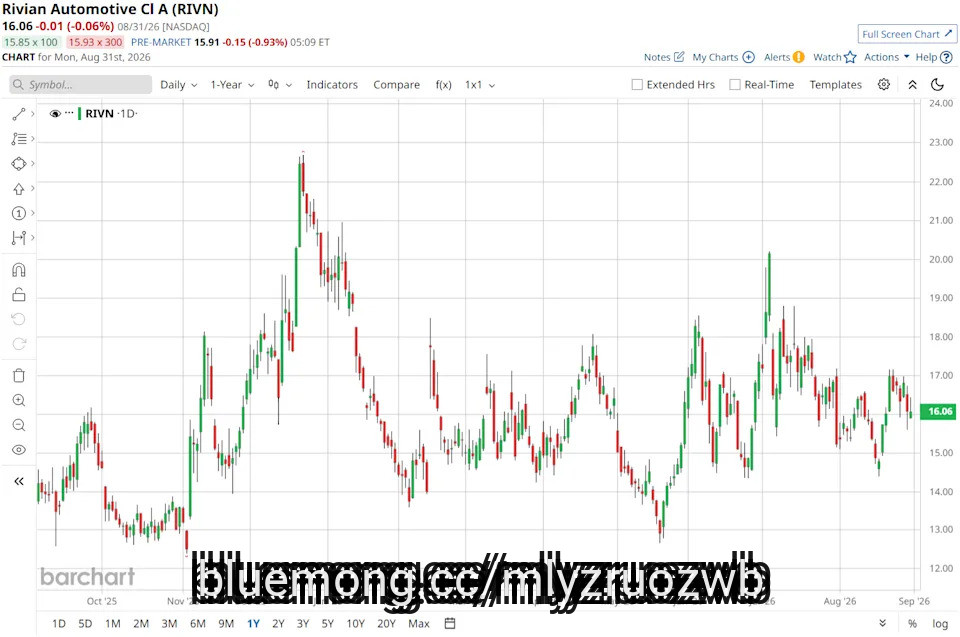


14 days ago
A trade group representing American automakers is urging Congress to permanently bar the sale of Chinese vehicles in the U.S.
In a letter to senior lawmakers, the Alliance for Automotive Innovation on Thursday called on them to "enact a permanent ban on the sale, import and manufacture of Chinese connected vehicles, hardware and software" in the U.S., citing China's alleged unfair trade practices, intellectual property theft and pattern of surveillance.
"This behavior is a feature of the Chinese approach and especially acute when it comes to China's strategy to dominate global automotive manufacturing and critical supply chains," wrote the group's president and CEO, John Bozzella.
Bozzella also said that non-Chinese automakers are unfairly disadvantaged by China's industrial and manufacturing policy, which the car industry group said threatens to undermine the U.S. automotive manufacturing sector.
U.S. automakers face mounting competition from Chinese rivals, including BYD, which is exporting more low-cost vehicles worldwide.
#automotive #sale
In a letter to senior lawmakers, the Alliance for Automotive Innovation on Thursday called on them to "enact a permanent ban on the sale, import and manufacture of Chinese connected vehicles, hardware and software" in the U.S., citing China's alleged unfair trade practices, intellectual property theft and pattern of surveillance.
"This behavior is a feature of the Chinese approach and especially acute when it comes to China's strategy to dominate global automotive manufacturing and critical supply chains," wrote the group's president and CEO, John Bozzella.
Bozzella also said that non-Chinese automakers are unfairly disadvantaged by China's industrial and manufacturing policy, which the car industry group said threatens to undermine the U.S. automotive manufacturing sector.
U.S. automakers face mounting competition from Chinese rivals, including BYD, which is exporting more low-cost vehicles worldwide.
#automotive #sale