

3 days ago
Interested in Intuitive Surgical, Inc.? Here are five stocks we like better.
Global procedure growth remains intact despite a recent U.S. slowdown and Affordable Care Act-related uncertainty; Intuitive Surgical maintained its 13.5%–15.5% global procedure-growth outlook, expecting results near the midpoint.
Ambulatory surgery centers and international markets remain important expansion opportunities, with second-quarter system placements rising in the U.S. and abroad. However, China remains pressured by local competition and slower tenders, with improved visibility not expected until 2027.
Future growth could come from da Vinci 5 upgrades, Force Feedback instruments, new procedures and sites of care, and AI services such as Case Insights. The company also reported strong financial performance, including 21% revenue growth and operating and free-cash-flow margins above historical averages.
This AI ETF Is Missing the Biggest AI Winners
#affordable
Global procedure growth remains intact despite a recent U.S. slowdown and Affordable Care Act-related uncertainty; Intuitive Surgical maintained its 13.5%–15.5% global procedure-growth outlook, expecting results near the midpoint.
Ambulatory surgery centers and international markets remain important expansion opportunities, with second-quarter system placements rising in the U.S. and abroad. However, China remains pressured by local competition and slower tenders, with improved visibility not expected until 2027.
Future growth could come from da Vinci 5 upgrades, Force Feedback instruments, new procedures and sites of care, and AI services such as Case Insights. The company also reported strong financial performance, including 21% revenue growth and operating and free-cash-flow margins above historical averages.
This AI ETF Is Missing the Biggest AI Winners
#affordable


8 days ago
On August 18, Austin Moeller from Canaccord Genuity reiterated his Buy rating for Intuitive Machines (NASDAQ:LUNR). Despite cutting his price target from $41 to $39, his estimates result in almost 165% upside potential as of September 1 closing. Moeller's stance is based on the company's second quarter announcement on August 13. The management reiterated its full-year 2026 guidance, projecting topline figures between $900 million and $1 billion, along with positive adjusted EBITDA. Chief Executive Officer, Steve Altemus, reflected on the company's performance by stating:
"We delivered a strong quarter, highlighted by revenue over four times Q2 2025 as we executed across our programs, recorded unprecedented bookings and backlog, and positioned the Company for the next phase of growth."
Sergey Nivens/Shutterstock.com
The second quarter saw Intuitive Machines (NASDAQ:LUNR) posting record quarterly revenue figures of $206.17 million. This equates to a 310% growth compared to a $50.31 million topline during the same period last year. This can be attributed to execution across the company's commercial lunar payload services, omnibus multidisciplinary engineering services, near ****** e network services, and ****** ecraft production programs. During the second quarter, it booked additional $920 million of awards and ended the quarter with an order backlog of $1.8 billion. This represented a substantial jump compared with December-end backlog of $213.1 million. It is pertinent to highlight that $612.8 million of the total order backlog is linked to the company's acquisition of Lanteris, earlier in 2026.
The business mix exhibited a material shift during the second quarter. National security programs saw a notable jump in revenue contribution, accounting for roughly 30% of the topline compared to just 3% in Q2 2025. The company has been actively pursuing opportunities to expand its pipeline of defense and satellite communication programs. It recently received authorization to proceed on a $600 million multi-satellite communications infrastructure program. The company will leverage its IM 1300 satellite platform to design, manufacture, integrate, and support multiple ****** ecraft. This award validates the Intuitive Machines' IM 1300 platform for large-scale procurements, and strengthens its footprint in satellite communications infrastructure.
#intuitive #machines #company
"We delivered a strong quarter, highlighted by revenue over four times Q2 2025 as we executed across our programs, recorded unprecedented bookings and backlog, and positioned the Company for the next phase of growth."
Sergey Nivens/Shutterstock.com
The second quarter saw Intuitive Machines (NASDAQ:LUNR) posting record quarterly revenue figures of $206.17 million. This equates to a 310% growth compared to a $50.31 million topline during the same period last year. This can be attributed to execution across the company's commercial lunar payload services, omnibus multidisciplinary engineering services, near ****** e network services, and ****** ecraft production programs. During the second quarter, it booked additional $920 million of awards and ended the quarter with an order backlog of $1.8 billion. This represented a substantial jump compared with December-end backlog of $213.1 million. It is pertinent to highlight that $612.8 million of the total order backlog is linked to the company's acquisition of Lanteris, earlier in 2026.
The business mix exhibited a material shift during the second quarter. National security programs saw a notable jump in revenue contribution, accounting for roughly 30% of the topline compared to just 3% in Q2 2025. The company has been actively pursuing opportunities to expand its pipeline of defense and satellite communication programs. It recently received authorization to proceed on a $600 million multi-satellite communications infrastructure program. The company will leverage its IM 1300 satellite platform to design, manufacture, integrate, and support multiple ****** ecraft. This award validates the Intuitive Machines' IM 1300 platform for large-scale procurements, and strengthens its footprint in satellite communications infrastructure.
#intuitive #machines #company


11 days ago
Intuitive Machines (NASDAQ: LUNR), a developer of lunar landers and exploration vehicles, doesn't usually get as much attention as bigger ***** e stocks like ***** eX (NASDAQ: SPCX). But over the past two years, Intuitive's stock has nearly tripled.
Most of that rally was driven by the expansion of its partnership with NASA, which now includes seven lunar, orbital satellite, and science missions. Let's take a closer look at that manifest -- and see if its stock is still worth chasing after its astronomical gains.
Missed Nvidia in 2009? This Rare Signal Is Flashing Again. In 2009, a "Double Down" signal flashed for a little-known chipmaker called Nvidia. For the first time in years, that same "Total Conviction" signal is flashing for a company 1/100th the size of Nvidia. Continue »
Intuitive Machines' manifest for NASA includes five lunar surface delivery missions (IM-1 to IM-5) and the production of two satellite buses (IM 300 and IM 500) for orbital science missions.
It has launched two lunar lander missions for NASA so far: IM-1 in 2024 and IM-2 in 2025. Both landers tipped over after arriving on the moon, but they successfully transmitted some data back to NASA before their solar panels ran out of power. Though imperfect, IM-1 marked NASA's first successful moon landing since 1972, and it strengthened Intuitive's relationship with NASA.
#NVIDIA #intuitive #landers
Most of that rally was driven by the expansion of its partnership with NASA, which now includes seven lunar, orbital satellite, and science missions. Let's take a closer look at that manifest -- and see if its stock is still worth chasing after its astronomical gains.
Missed Nvidia in 2009? This Rare Signal Is Flashing Again. In 2009, a "Double Down" signal flashed for a little-known chipmaker called Nvidia. For the first time in years, that same "Total Conviction" signal is flashing for a company 1/100th the size of Nvidia. Continue »
Intuitive Machines' manifest for NASA includes five lunar surface delivery missions (IM-1 to IM-5) and the production of two satellite buses (IM 300 and IM 500) for orbital science missions.
It has launched two lunar lander missions for NASA so far: IM-1 in 2024 and IM-2 in 2025. Both landers tipped over after arriving on the moon, but they successfully transmitted some data back to NASA before their solar panels ran out of power. Though imperfect, IM-1 marked NASA's first successful moon landing since 1972, and it strengthened Intuitive's relationship with NASA.
#NVIDIA #intuitive #landers


11 days ago
In the world of robotic surgery, one company is both the undisputed leader and the most expensive option, forcing investors to ask if operational excellence is worth the premium.
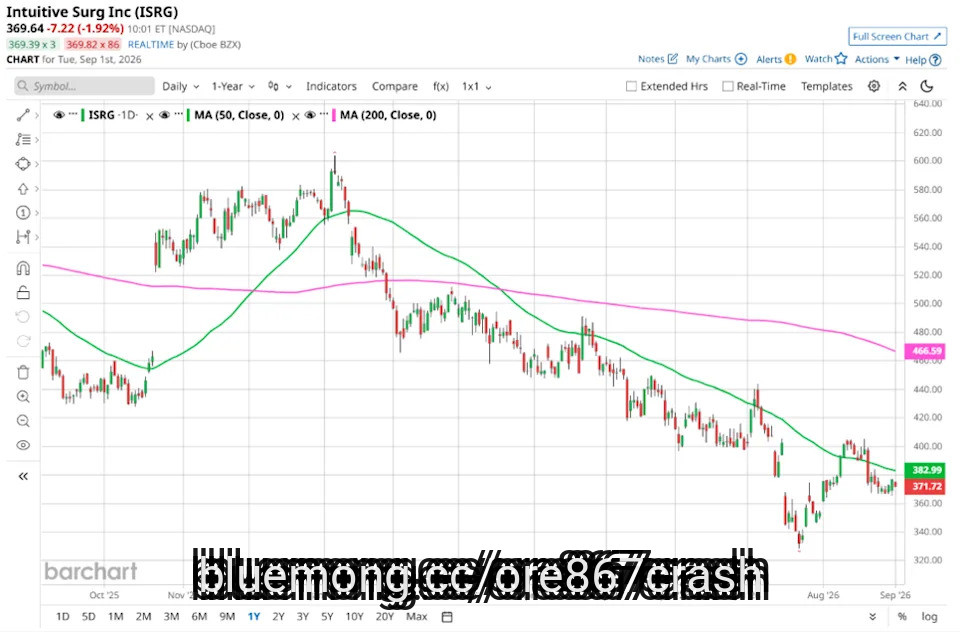
Intuitive Surgical (ISRG), the pioneer of robotic-assisted surgery, trades around $370, a share after a tough year. The stock has delivered a -21% return over the last twelve months, badly trailing the S&P 500's +19.2% gain. Yet, within its peer group, it commands the highest valuation. Why does the market charge a top-tier price for the company with the group's worst-performing stock?
By the numbers, Intuitive Surgical's operational lead is real, even if Globus Medical sits close behind at 19.7%. The company's revenue grew 21% over the last twelve months, well ahead of diversified rivals like Medtronic, which grew at 8.4%.. Its 31% operating margin also leads the pack, again comfortably ahead of Medtronic's 18.8%. This is a business that executes at a higher level than its competition. The market sees this performance and charges accordingly. Intuitive Surgical trades at 42.5 times earnings, the highest multiple in its group. For comparison, Medtronic trades at a much lower 24.2 times earnings. The mismatch is stark: investors are paying a premium for leading fundamentals, but so far, that premium has not translated into positive returns.
ISRG
MDT
#robotic
Intuitive Surgical (ISRG), the pioneer of robotic-assisted surgery, trades around $370, a share after a tough year. The stock has delivered a -21% return over the last twelve months, badly trailing the S&P 500's +19.2% gain. Yet, within its peer group, it commands the highest valuation. Why does the market charge a top-tier price for the company with the group's worst-performing stock?
By the numbers, Intuitive Surgical's operational lead is real, even if Globus Medical sits close behind at 19.7%. The company's revenue grew 21% over the last twelve months, well ahead of diversified rivals like Medtronic, which grew at 8.4%.. Its 31% operating margin also leads the pack, again comfortably ahead of Medtronic's 18.8%. This is a business that executes at a higher level than its competition. The market sees this performance and charges accordingly. Intuitive Surgical trades at 42.5 times earnings, the highest multiple in its group. For comparison, Medtronic trades at a much lower 24.2 times earnings. The mismatch is stark: investors are paying a premium for leading fundamentals, but so far, that premium has not translated into positive returns.
ISRG
MDT
#robotic


13 days ago
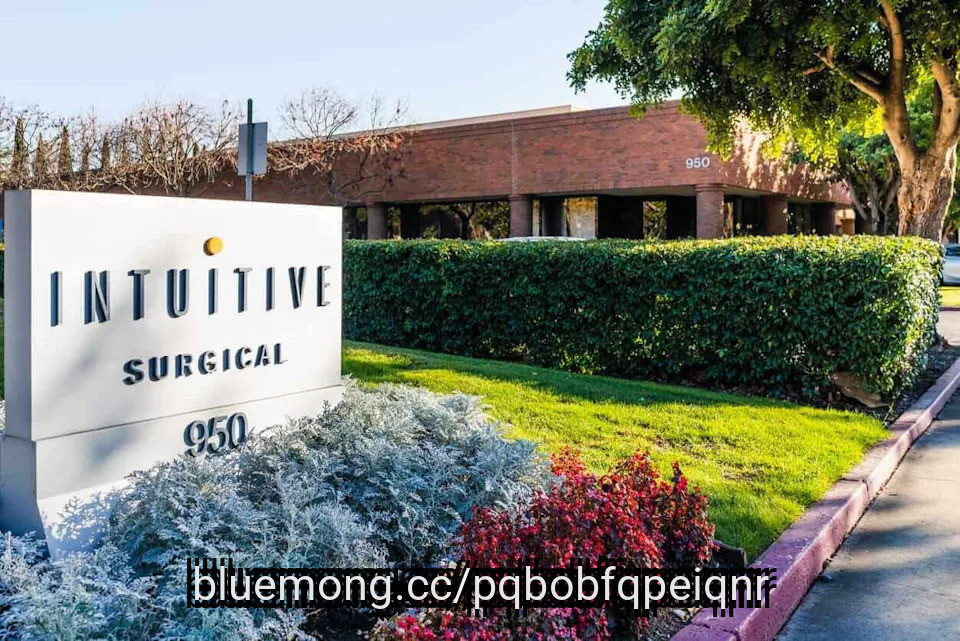
Sunnyvale, California-based Intuitive Surgical, Inc. (ISRG) develops, manufactures, and markets products that enable physicians and healthcare providers to enhance the quality of and access to minimally invasive care. Valued at $133.1 billion by market cap, the company offers endoscopes, endoscopic retractors and disectors, scissors, scalpels, forceps, needle holders, electrocautery, ultrasonic cutters, and accessories during surgical procedures.
Companies worth $10 billion or more are generally described as "large-cap stocks," and ISRG definitely fits that description, with its market cap exceeding this threshold, reflecting its substantial size, influence, and dominance in the medical instruments & supplies industry. Intuitive Surgical excels in robotic-assisted surgery with its gold-standard da Vinci system, backed by strong brand reputation, continuous R&D investment, and comprehensive surgeon training, driving user proficiency and patient outcomes.
Dear Sandisk Stock Fans, Mark Your Calendars for August 31
Bill Gates Says 'We Need Time to Prepare' for an Economic Upheaval — Especially the $20-an-Hour Workers Being Replaced by $10-an-Hour Robots
Dear Palantir Stock Fans, Here's What Maven's Billion-Dollar ARR Means for PLTR
#intuitive #dear
Companies worth $10 billion or more are generally described as "large-cap stocks," and ISRG definitely fits that description, with its market cap exceeding this threshold, reflecting its substantial size, influence, and dominance in the medical instruments & supplies industry. Intuitive Surgical excels in robotic-assisted surgery with its gold-standard da Vinci system, backed by strong brand reputation, continuous R&D investment, and comprehensive surgeon training, driving user proficiency and patient outcomes.
Dear Sandisk Stock Fans, Mark Your Calendars for August 31
Bill Gates Says 'We Need Time to Prepare' for an Economic Upheaval — Especially the $20-an-Hour Workers Being Replaced by $10-an-Hour Robots
Dear Palantir Stock Fans, Here's What Maven's Billion-Dollar ARR Means for PLTR
#intuitive #dear


18 days ago
Nvidia (NVDA) delivered a commanding second-quarter fiscal 2027 performance after the close on Wednesday, Aug. 26, with revenue of $96.2 billion more than doubling from the year-ago period and comfortably exceeding the Wall Street consensus of approximately $92.2 billion.
Adjusted earnings per share came in at $2.22, well above the $2.09 ******* ysts had projected, while GAAP net income surged 126% year-over-year to $59.69 billion, or $2.46 per diluted share. The data center segment, which now represents over 92% of total revenue, generated $89 billion in quarterly sales, up 117% from a year earlier and roughly $3 billion above consensus expectations.
HP, Inc. Results Today - Huge, Unusual Options Activity in Long-Dated HPQ Puts
Extreme Speculators Should Keep Close Tabs on Intuitive Machines (LUNR) Stock
Bearish Outlook? Try These 2 Bear Call Spread Trades on Wednesday
#wednesday #revenue #Share #above
Adjusted earnings per share came in at $2.22, well above the $2.09 ******* ysts had projected, while GAAP net income surged 126% year-over-year to $59.69 billion, or $2.46 per diluted share. The data center segment, which now represents over 92% of total revenue, generated $89 billion in quarterly sales, up 117% from a year earlier and roughly $3 billion above consensus expectations.
HP, Inc. Results Today - Huge, Unusual Options Activity in Long-Dated HPQ Puts
Extreme Speculators Should Keep Close Tabs on Intuitive Machines (LUNR) Stock
Bearish Outlook? Try These 2 Bear Call Spread Trades on Wednesday
#wednesday #revenue #Share #above


20 days ago
There's no denying that Tim Curry was a master of his craft. The ultimate character actor, he brought to life some of the most unforgettable roles ever to grace the stage or screen, be they eccentric, campy, larger-than-life, or terrifyingly sinister.
The big reason why Curry was able to slip into these varied selves effortlessly may have been that he didn't feel the need to carve out a rigid sense of personal selfhood.
In a recent interview with CBS Sunday Morning, recorded only two weeks before his passing at the age of 80 on August 26, Curry told Turner Classic Movies host Ben Mankiewicz that throughout the course of his 50-year career "one of the keys" to his success has been "to not encourage an identity."
It's a counterintuitive idea, particularly today when identity has become such an important part of how people understand themselves and one another. We are regularly encouraged to define and stay aligned with some kind of "personal brand" via personality types, aesthetics, ****** ual orientation, zodiac signs, neurospiciness levels, political affiliations…you name it. Social media has this self-presentation as a near-constant part of daily life, inviting people to curate their interests, values, appearance, and opinions into an instantly recognizable public persona.
While there are certainly benefits, it often comes with the expectation that each person has a clearly defined, authentic identity waiting to be uncovered, articulated, and presented to the world.
#life #identity #part
The big reason why Curry was able to slip into these varied selves effortlessly may have been that he didn't feel the need to carve out a rigid sense of personal selfhood.
In a recent interview with CBS Sunday Morning, recorded only two weeks before his passing at the age of 80 on August 26, Curry told Turner Classic Movies host Ben Mankiewicz that throughout the course of his 50-year career "one of the keys" to his success has been "to not encourage an identity."
It's a counterintuitive idea, particularly today when identity has become such an important part of how people understand themselves and one another. We are regularly encouraged to define and stay aligned with some kind of "personal brand" via personality types, aesthetics, ****** ual orientation, zodiac signs, neurospiciness levels, political affiliations…you name it. Social media has this self-presentation as a near-constant part of daily life, inviting people to curate their interests, values, appearance, and opinions into an instantly recognizable public persona.
While there are certainly benefits, it often comes with the expectation that each person has a clearly defined, authentic identity waiting to be uncovered, articulated, and presented to the world.
#life #identity #part


21 days ago
Healthcare investors often face a difficult decision when choosing between companies with very different paths to growth. Some businesses are emerging from temporary industry slowdowns, while others continue compounding through durable competitive advantages.
Danaher Corporation (NYSE:DHR) and Intuitive Surgical (NASDAQ:ISRG) illustrate that contrast perfectly. Danaher (NYSE:DHR) is beginning to benefit from improving life sciences spending after several challenging years, whereas Intuitive Surgical (NASDAQ:ISRG) continues to expand one of the healthcare industry's strongest recurring revenue businesses through robotic surgery. Both companies reported encouraging results, but the question for investors is whether a cyclical recovery or a structural growth story offers the better long-term opportunity.
The strongest argument supporting Danaher is that its recovery appears to be broadening. Its Life Sciences business delivered its strongest performance in several years, and although bioprocessing revenue was affected by customer project timings, the underlying order trends remained strong, with bioprocessing orders growing mid-teens in the quarter. This shows that the underlying demand for bioprocessing remained solid, including consumables and equipment necessary to make biologic drugs.
Danaher Corporation (NYSE:DHR) also stated that a little over $100 million of revenue has shifted into next year, primarily from the second and third quarters. This suggests that customer demand has been delayed rather than cancelled, potentially supporting future revenue growth.
Intuitive Surgical (NASDAQ:ISRG), by contrast, continues to benefit from the strength of a business model that has consistently generated growth regardless of broader industry cycles. Intuitive Surgical's (NASDAQ:ISRG) business model remains one of its biggest competitive advantages. Approximately 85% of total revenue came from recurring sources during the quarter, providing investors with significant revenue visibility as the installed base continues to grow.
#danaher #surgical
Danaher Corporation (NYSE:DHR) and Intuitive Surgical (NASDAQ:ISRG) illustrate that contrast perfectly. Danaher (NYSE:DHR) is beginning to benefit from improving life sciences spending after several challenging years, whereas Intuitive Surgical (NASDAQ:ISRG) continues to expand one of the healthcare industry's strongest recurring revenue businesses through robotic surgery. Both companies reported encouraging results, but the question for investors is whether a cyclical recovery or a structural growth story offers the better long-term opportunity.
The strongest argument supporting Danaher is that its recovery appears to be broadening. Its Life Sciences business delivered its strongest performance in several years, and although bioprocessing revenue was affected by customer project timings, the underlying order trends remained strong, with bioprocessing orders growing mid-teens in the quarter. This shows that the underlying demand for bioprocessing remained solid, including consumables and equipment necessary to make biologic drugs.
Danaher Corporation (NYSE:DHR) also stated that a little over $100 million of revenue has shifted into next year, primarily from the second and third quarters. This suggests that customer demand has been delayed rather than cancelled, potentially supporting future revenue growth.
Intuitive Surgical (NASDAQ:ISRG), by contrast, continues to benefit from the strength of a business model that has consistently generated growth regardless of broader industry cycles. Intuitive Surgical's (NASDAQ:ISRG) business model remains one of its biggest competitive advantages. Approximately 85% of total revenue came from recurring sources during the quarter, providing investors with significant revenue visibility as the installed base continues to grow.
#danaher #surgical


21 days ago
Premium healthcare stocks often trade at elevated valuations for very different reasons. Thermo Fisher's (NYSE:TMO) investment case increasingly depends on whether the life sciences industry is emerging from its post-pandemic slowdown, while Intuitive Surgical (NASDAQ:ISRG) continues to hold a dominant position in robotic surgery through factors such as its highly recurring revenue model. Both companies delivered encouraging quarters, but the market is asking different questions of each.
The key issue for investors in this scenario is which premium valuation is better supported by long-term fundamentals.
Thermo Fisher's (NYSE:TMO) investment case increasingly depends on whether life sciences spending is finally emerging from its post-pandemic slowdown. Thermo Fisher Scientific Inc.'s (NYSE:TMO) quarter suggests that the recovery in life sciences spending is becoming increasingly broad-based. Management highlighted improving customer activity across pharmaceutical and biotechnology markets, while multiple operating segments returned to healthy growth. That broadening recovery is particularly important because earlier signs of improvement had been concentrated in bioprocessing, and stronger demand across multiple businesses suggests the recovery is becoming more durable.
Thermo Fisher Scientific Inc.'s (NYSE:TMO) Life Sciences Solutions segment reinforced the recovery narrative. Reported revenue climbed 13% year over year, while organic revenue rose 3%, led by continued strength in the high-margin bioproduction business. Healthy demand in this segment suggests pharmaceutical and biotechnology customers continue investing in biologic drug manufacturing, supporting management's view that end-market conditions are improving.
Perhaps the biggest positive from the quarter was the recovery in **** ytical Instruments, a business that had faced weak demand for nearly two years as biotechnology funding slowed. Its return to growth provides another indication that laboratory spending is beginning to normalize.
#suggests
The key issue for investors in this scenario is which premium valuation is better supported by long-term fundamentals.
Thermo Fisher's (NYSE:TMO) investment case increasingly depends on whether life sciences spending is finally emerging from its post-pandemic slowdown. Thermo Fisher Scientific Inc.'s (NYSE:TMO) quarter suggests that the recovery in life sciences spending is becoming increasingly broad-based. Management highlighted improving customer activity across pharmaceutical and biotechnology markets, while multiple operating segments returned to healthy growth. That broadening recovery is particularly important because earlier signs of improvement had been concentrated in bioprocessing, and stronger demand across multiple businesses suggests the recovery is becoming more durable.
Thermo Fisher Scientific Inc.'s (NYSE:TMO) Life Sciences Solutions segment reinforced the recovery narrative. Reported revenue climbed 13% year over year, while organic revenue rose 3%, led by continued strength in the high-margin bioproduction business. Healthy demand in this segment suggests pharmaceutical and biotechnology customers continue investing in biologic drug manufacturing, supporting management's view that end-market conditions are improving.
Perhaps the biggest positive from the quarter was the recovery in **** ytical Instruments, a business that had faced weak demand for nearly two years as biotechnology funding slowed. Its return to growth provides another indication that laboratory spending is beginning to normalize.
#suggests

25 days ago
On August 20, Intuitive Machines (NASDAQ:LUNR) reported second-quarter revenue of $206 million, more than four times what it brought in a year earlier, and closed the quarter with a record $1.8 billion in backlog. The company reaffirmed its full-year guidance of $900 million to $1 billion in revenue and said it still expects positive adjusted EBITDA for 2026. Behind those headline numbers sits a business spending heavily to chase a market it says has grown far beyond the moon.
The quarter's standout number was bookings. Intuitive Machines logged $1.7 billion in bookings so far this year, including $1.2 billion in the second quarter alone, the highest quarterly total in company history. Management said that volume reflects a shift away from depending on any single customer or mission type. The $1.8 billion backlog now splits roughly 37% civil, 49% commercial and 14% national security, and Q2 bookings skewed even further toward commercial and national security work, at 50% and 30% respectively.
That diversification showed up across every part of the business. NASA selected Intuitive Machines for the CS-8 lunar delivery mission, its sixth award under the CLPS contract, extending its delivery cadence into 2030. On the national security side, the company finished delivering all 16 satellites for the SDA's Tranche 1 tracking layer, added an 18-satellite Tranche 3 award, and picked up another 18 satellites tied to the Golden Dome missile defense architecture. It now has more than 70 IM-300 series ****** ecraft under contract. Commercially, it landed three geostationary communication satellites worth over $600 million and deployed SiriusXM-11 during the quarter. Gross profit swung to $36 million from negative $12 million a year earlier, evidence that the growing satellite manufacturing business is starting to convert into real profit.
That expansion is not free. Operating loss widened to $47 million, driven by higher SG&A, amortization, and a $14.7 million cost adjustment tied to the IM-4 lunar lander program. SG&A itself hit $60 million for the quarter, including $11 million in stock-based compensation and $8 million in acquisition and integration costs from recent deals. Operating cash used came to $60 million, and total cash deployed for the quarter reached $84 million once inventory buildup, acquisition costs, and a $17 million milestone payment to ****** eX are included.
The company is also leaning on equity markets to fund the buildout. It raised $235 million in net proceeds this quarter through its at-the-market stock program, bringing total gross proceeds raised to date to $291 million at an average price of $26.81 a share. Capital expenditures of $24 million went largely toward its NSNS satellite constellation and ground network, and management said CapEx will stay elevated in coming quarters as it builds out five satellites at once.
#million #quarter #bookings
The quarter's standout number was bookings. Intuitive Machines logged $1.7 billion in bookings so far this year, including $1.2 billion in the second quarter alone, the highest quarterly total in company history. Management said that volume reflects a shift away from depending on any single customer or mission type. The $1.8 billion backlog now splits roughly 37% civil, 49% commercial and 14% national security, and Q2 bookings skewed even further toward commercial and national security work, at 50% and 30% respectively.
That diversification showed up across every part of the business. NASA selected Intuitive Machines for the CS-8 lunar delivery mission, its sixth award under the CLPS contract, extending its delivery cadence into 2030. On the national security side, the company finished delivering all 16 satellites for the SDA's Tranche 1 tracking layer, added an 18-satellite Tranche 3 award, and picked up another 18 satellites tied to the Golden Dome missile defense architecture. It now has more than 70 IM-300 series ****** ecraft under contract. Commercially, it landed three geostationary communication satellites worth over $600 million and deployed SiriusXM-11 during the quarter. Gross profit swung to $36 million from negative $12 million a year earlier, evidence that the growing satellite manufacturing business is starting to convert into real profit.
That expansion is not free. Operating loss widened to $47 million, driven by higher SG&A, amortization, and a $14.7 million cost adjustment tied to the IM-4 lunar lander program. SG&A itself hit $60 million for the quarter, including $11 million in stock-based compensation and $8 million in acquisition and integration costs from recent deals. Operating cash used came to $60 million, and total cash deployed for the quarter reached $84 million once inventory buildup, acquisition costs, and a $17 million milestone payment to ****** eX are included.
The company is also leaning on equity markets to fund the buildout. It raised $235 million in net proceeds this quarter through its at-the-market stock program, bringing total gross proceeds raised to date to $291 million at an average price of $26.81 a share. Capital expenditures of $24 million went largely toward its NSNS satellite constellation and ground network, and management said CapEx will stay elevated in coming quarters as it builds out five satellites at once.
#million #quarter #bookings


25 days ago
Enterprise software companies built their businesses around one ******* umption that went unquestioned for decades. People are the users. Employees log in, click through interfaces, update records and move between applications. The software earns its seat license because a human being sits in front of it.
That ******* umption is starting to crack. AI agents are becoming capable of retrieving information, making decisions and executing workflows on behalf of employees. The question circulating across enterprise software boardrooms is what happens to the business model when the human in the browser tab is no longer the primary user.
Salesforce is already confronting this. In April, the company launched Headless 360 at its TrailblazerDX conference. The architecture exposes every Salesforce capability as an API, MCP tool, or CLI command so that AI agents can access data, workflows, and business logic without opening a browser.
Co-founder Parker Harris framed it directly: "Why should you ever log into Salesforce again?"
That question points at something counterintuitive. The screens may matter less. The systems underneath may matter more.
#enterprise #agents
That ******* umption is starting to crack. AI agents are becoming capable of retrieving information, making decisions and executing workflows on behalf of employees. The question circulating across enterprise software boardrooms is what happens to the business model when the human in the browser tab is no longer the primary user.
Salesforce is already confronting this. In April, the company launched Headless 360 at its TrailblazerDX conference. The architecture exposes every Salesforce capability as an API, MCP tool, or CLI command so that AI agents can access data, workflows, and business logic without opening a browser.
Co-founder Parker Harris framed it directly: "Why should you ever log into Salesforce again?"
That question points at something counterintuitive. The screens may matter less. The systems underneath may matter more.
#enterprise #agents


29 days ago
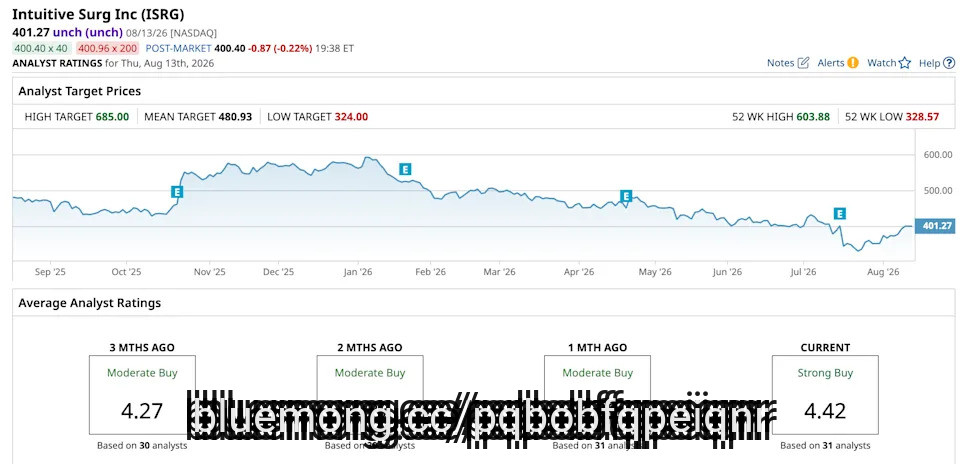
Analysts at Oppenheimer recently upgraded the medtech company Intuitive Surgical (ISRG) from "Perform" to "Outperform" and set a $500 price target, implying a 24.6% upside from current levels. Expecting the company to benefit from the growth in robotic surgery, Oppenheimer **** ysts expect Intuitive to maintain a leading position in the market despite increasing competition.
Intuitive also has a vision regarding the usage of artificial intelligence (AI) in such surgeries, helping medical personnel achieve better outcomes. The company is developing AI as a capability stack that leverages real-world surgical data to build advanced vision-language and reasoning models capable of answering complex surgical questions.
A $210 Billion Reason to Buy AMD Stock Here
CoreWeave vs Nebius: Both Companies Reported Strong Earnings, But Here's the Stock You Should Buy
As Oracle Deepens Its Partnership with AWS, Here's How You Should Play ORCL Stock
#Stock #analysts
Intuitive also has a vision regarding the usage of artificial intelligence (AI) in such surgeries, helping medical personnel achieve better outcomes. The company is developing AI as a capability stack that leverages real-world surgical data to build advanced vision-language and reasoning models capable of answering complex surgical questions.
A $210 Billion Reason to Buy AMD Stock Here
CoreWeave vs Nebius: Both Companies Reported Strong Earnings, But Here's the Stock You Should Buy
As Oracle Deepens Its Partnership with AWS, Here's How You Should Play ORCL Stock
#Stock #analysts

1 month ago
ExxonMobil's latest earnings call forced management to explain a strange problem: why its best project is so successful that the company's share of the oil is now falling.
After a large 56% run over the past year, ExxonMobil (XOM) shareholders are accustomed to good news. So on its latest call, management had to explain a counterintuitive development in its crown jewel ****** et, Guyana. The project is so successful and has paid back its investment so far ahead of schedule that Exxon's share of the oil is now set to decline, forcing ****** ysts to question if this signals peaking growth or the start of an even more profitable phase for the company.
A Victim of Its Own Success?
The core worry is straightforward. In Guyana, Exxon has recovered its initial investment costs "nearly two years earlier than anticipated," a stunning success that triggered a shift in the production-sharing contract. This means the government of Guyana now gets a larger slice of the pie, and Exxon's entitled volume of oil shrinks. For a stock that has been rewarded for growth, seeing your share of the output fall in your star ****** et looks like a red flag, suggesting the growth story that powered the stock might be fading.
Management's response was to frame this as an unmitigated victory. The accelerated payback wasn't just due to high oil prices. The CFO pointed to a "2-year acceleration of our investment recovery" driven purely by stellar execution: building facilities at industry-leading cost and running them more reliably than planned. The message was that this isn't a problem to be managed, but a result to be celebrated, driven by operational excellence.
#investment #Growth #call #problem
After a large 56% run over the past year, ExxonMobil (XOM) shareholders are accustomed to good news. So on its latest call, management had to explain a counterintuitive development in its crown jewel ****** et, Guyana. The project is so successful and has paid back its investment so far ahead of schedule that Exxon's share of the oil is now set to decline, forcing ****** ysts to question if this signals peaking growth or the start of an even more profitable phase for the company.
A Victim of Its Own Success?
The core worry is straightforward. In Guyana, Exxon has recovered its initial investment costs "nearly two years earlier than anticipated," a stunning success that triggered a shift in the production-sharing contract. This means the government of Guyana now gets a larger slice of the pie, and Exxon's entitled volume of oil shrinks. For a stock that has been rewarded for growth, seeing your share of the output fall in your star ****** et looks like a red flag, suggesting the growth story that powered the stock might be fading.
Management's response was to frame this as an unmitigated victory. The accelerated payback wasn't just due to high oil prices. The CFO pointed to a "2-year acceleration of our investment recovery" driven purely by stellar execution: building facilities at industry-leading cost and running them more reliably than planned. The message was that this isn't a problem to be managed, but a result to be celebrated, driven by operational excellence.
#investment #Growth #call #problem


1 month ago
Intuitive Machines (NASDAQ: LUNR) published its second-quarter results after the market closed yesterday, and its stock is seeing strong gains in Friday's trading. The company's share price was up 10.5%in the daily session as of 12:30 p.m. ET.
Intuitive Machines' Q2 sales and earnings actually came in below Wall Street's expectations, but there was some good news for investors. In addition to reaffirming its full-year sales forecast, the company provided new details about its lunar satellite constellation plans.
Missed Nvidia in 2009? This Rare Signal Is Flashing Again. In 2009, a "Double Down" signal flashed for a little-known chipmaker called Nvidia. For the first time in years, that same "Total Conviction" signal is flashing for a company 1/100th the size of Nvidia. Continue »
In the second quarter, Intuitive Machines recorded a net loss of $0.29 per share and revenue of roughly $206.2 million. The average Wall Street **** yst estimate had only targeted a per-share loss of $0.10 in the quarter, and the average forecast called for sales in the period to be roughly $15 million higher. Despite the sales and earnings misses, other updates from the company has been enough to spur big gains for the stock today.
While the company's Q2 sales came in below expectations, Intuitive Machines still expects to post revenue between $900 million and $1 billion this year. The company also expects to record positive non-GAAP (adjusted) earnings before interest, taxes, depreciation, and amortization (EBITDA).
#intuitive #sales #company
Intuitive Machines' Q2 sales and earnings actually came in below Wall Street's expectations, but there was some good news for investors. In addition to reaffirming its full-year sales forecast, the company provided new details about its lunar satellite constellation plans.
Missed Nvidia in 2009? This Rare Signal Is Flashing Again. In 2009, a "Double Down" signal flashed for a little-known chipmaker called Nvidia. For the first time in years, that same "Total Conviction" signal is flashing for a company 1/100th the size of Nvidia. Continue »
In the second quarter, Intuitive Machines recorded a net loss of $0.29 per share and revenue of roughly $206.2 million. The average Wall Street **** yst estimate had only targeted a per-share loss of $0.10 in the quarter, and the average forecast called for sales in the period to be roughly $15 million higher. Despite the sales and earnings misses, other updates from the company has been enough to spur big gains for the stock today.
While the company's Q2 sales came in below expectations, Intuitive Machines still expects to post revenue between $900 million and $1 billion this year. The company also expects to record positive non-GAAP (adjusted) earnings before interest, taxes, depreciation, and amortization (EBITDA).
#intuitive #sales #company


1 month ago
Johnson & Johnson (NYSE:JNJ) has officially entered the U.S. soft-tissue robotic surgery market after receiving FDA De Novo authorization for its OTTAVA robotic surgical system. The authorization represents an important milestone for J&J's MedTech ambitions, but the company is entering a market in which Intuitive Surgical (NASDAQ:ISRG) already has an extensive installed base, established surgeon relationships, and a rapidly expanding da Vinci 5 platform.
The question for investors is not whether OTTAVA can become a viable product, but whether Johnson & Johnson (NYSE:JNJ) can convert its differentiated design and broader surgical portfolio into meaningful market share, and even challenge Intuitive Surgical (ISRG) in the process.
OTTAVA's most compelling feature is its table-integrated architecture. Johnson & Johnson (NYSE:JNJ) stated that the robotic arms are incorporated directly into the operating table, which allows the system to occupy 30% to 50% less ****** e than traditional boom- and cart-mounted systems. The company believes this design could make robotic surgery accessible to operating rooms that previously could not accommodate a larger platform. That gives Johnson & Johnson (NYSE:JNJ) a potentially differentiated selling point among hospitals focused on operating-room capacity and workflow efficiency.
The FDA authorized OTTAVA for multiple upper-abdominal general surgery procedures, including gastric bypass, gastrectomy, cholecystectomy, gastric sleeve surgery, appendectomy, and hiatal hernia repair. Johnson & Johnson (NYSE:JNJ) will commercially launch the OTTAVA system with select customers in the United States to focus on early customer success and simultaneously advance the technology into additional regulatory jurisdictions and indications gradually. In addition, it has an ongoing U.S. clinical trial for OTTAVA in inguinal hernia procedures.
The selective launch is strategically sensible because robotic surgery systems require several factors for their smooth functioning in addition to regulatory authorization, including training for surgeons and operating-room staff, integration of the system into existing workflows, and establishing procedure volumes sufficient to justify the investment. With such a measured rollout, Johnson & Johnson (NYSE:JNJ) has time to collect real-world feedback, improve training, and refine the platform before attempting a broader commercial expansion.
#ottava #operating #market
The question for investors is not whether OTTAVA can become a viable product, but whether Johnson & Johnson (NYSE:JNJ) can convert its differentiated design and broader surgical portfolio into meaningful market share, and even challenge Intuitive Surgical (ISRG) in the process.
OTTAVA's most compelling feature is its table-integrated architecture. Johnson & Johnson (NYSE:JNJ) stated that the robotic arms are incorporated directly into the operating table, which allows the system to occupy 30% to 50% less ****** e than traditional boom- and cart-mounted systems. The company believes this design could make robotic surgery accessible to operating rooms that previously could not accommodate a larger platform. That gives Johnson & Johnson (NYSE:JNJ) a potentially differentiated selling point among hospitals focused on operating-room capacity and workflow efficiency.
The FDA authorized OTTAVA for multiple upper-abdominal general surgery procedures, including gastric bypass, gastrectomy, cholecystectomy, gastric sleeve surgery, appendectomy, and hiatal hernia repair. Johnson & Johnson (NYSE:JNJ) will commercially launch the OTTAVA system with select customers in the United States to focus on early customer success and simultaneously advance the technology into additional regulatory jurisdictions and indications gradually. In addition, it has an ongoing U.S. clinical trial for OTTAVA in inguinal hernia procedures.
The selective launch is strategically sensible because robotic surgery systems require several factors for their smooth functioning in addition to regulatory authorization, including training for surgeons and operating-room staff, integration of the system into existing workflows, and establishing procedure volumes sufficient to justify the investment. With such a measured rollout, Johnson & Johnson (NYSE:JNJ) has time to collect real-world feedback, improve training, and refine the platform before attempting a broader commercial expansion.
#ottava #operating #market


1 month ago
Intuitive Surgical (NASDAQ: ISRG) can be hard to own because the stock is ***** e to deep drawdowns. It is in a drawdown right now, with the stock down roughly 40% from its early 2025 high. Even after that drop, the price-to-earnings ratio remains lofty at 42x. This is not a stock for the faint of heart.
However, if you are a growth-oriented investor, you shouldn't give up on Intuitive Surgical. Historically, the stock has recovered from deep drawdowns and gone on to reach higher highs. There's a difference this time around due to increasing competition from medical device peers such as Medtronic (NYSE: MDT) and Johnson & Johnson (NYSE: JNJ). But that probably shouldn't stop more aggressive investors. Here's why.
Missed Nvidia in 2009? This Rare Signal Is Flashing Again. In 2009, a "Double Down" signal flashed for a little-known chipmaker called Nvidia. For the first time in years, that same "Total Conviction" signal is flashing for a company 1/100th the size of Nvidia. Continue »
Intuitive Surgical was an early leader in the surgical robotics ***** e. The company's da Vinci system basically helped create the industry niche. So, early on, the question was about medical providers being willing to adopt a new technology. Surgical robotics is now a far more mature and well-accepted technology, generally enabling less invasive surgeries with better outcomes.
In late 2025, Medtronic received approval for its Hugo surgical robotic system in the United States. In mid-2026, J&J received approval for its OTTAVA surgical robot system. Both Medtronic and J&J are well-established competitors with strong industry connections. There is no doubt that they will be fierce competitors to Intuitive Surgical.
#surgical #Stock
However, if you are a growth-oriented investor, you shouldn't give up on Intuitive Surgical. Historically, the stock has recovered from deep drawdowns and gone on to reach higher highs. There's a difference this time around due to increasing competition from medical device peers such as Medtronic (NYSE: MDT) and Johnson & Johnson (NYSE: JNJ). But that probably shouldn't stop more aggressive investors. Here's why.
Missed Nvidia in 2009? This Rare Signal Is Flashing Again. In 2009, a "Double Down" signal flashed for a little-known chipmaker called Nvidia. For the first time in years, that same "Total Conviction" signal is flashing for a company 1/100th the size of Nvidia. Continue »
Intuitive Surgical was an early leader in the surgical robotics ***** e. The company's da Vinci system basically helped create the industry niche. So, early on, the question was about medical providers being willing to adopt a new technology. Surgical robotics is now a far more mature and well-accepted technology, generally enabling less invasive surgeries with better outcomes.
In late 2025, Medtronic received approval for its Hugo surgical robotic system in the United States. In mid-2026, J&J received approval for its OTTAVA surgical robot system. Both Medtronic and J&J are well-established competitors with strong industry connections. There is no doubt that they will be fierce competitors to Intuitive Surgical.
#surgical #Stock


1 month ago
Baron Capital, an investment management company, released its Q2 2026 investor letter for the "Baron Health Care Fund". A copy of the letter is available to download here. The Fund gained 11.99% during the quarter, compared with the 10.48% gain for the Russell 3000 Health Care Index and the 15.44% gain for the Russell 3000 Index. Since inception, the Fund appreciated 10.61% on an annualized basis, compared with 10.02% for the Benchmark and 14.83% for the Index. Strong stock selection in pharmaceuticals, biotechnology, health care equipment, and life sciences tools and services supported the Fund's outperformance, although limited exposure to managed care stocks reduced relative returns. The Fund remains positive on health care due to improving biotechnology funding, strong acquisition activity, recovering managed care margins, and growth from an aging population, chronic disease, medical innovation, and higher health care spending. In addition, please check the Fund's top five holdings to know the best picks in 2026.
In its second-quarter 2026 investor letter, Baron Health Care Fund highlighted Intuitive Surgical, Inc. (NASDAQ:ISRG). Intuitive Surgical, Inc. (NASDAQ:ISRG) develops, manufactures, and markets products that enable physicians and healthcare providers to enhance the quality of and access to minimally invasive care in the United States and internationally. On August 3, 2026, Intuitive Surgical, Inc. (NASDAQ:ISRG) closed at $375.41 per share. The one-month return of Intuitive Surgical, Inc. (NASDAQ:ISRG) was -13.53% and its shares lost 26.60% over the past 52 weeks. Intuitive Surgical, Inc. (NASDAQ:ISRG) has a market capitalization of $132.62 billion.
Baron Health Care Fund stated the following regarding Intuitive Surgical, Inc. (NASDAQ:ISRG) in its Q2 2026 investor letter:
"Intuitive Surgical, Inc. (NASDAQ:ISRG) sells robotic-assisted surgical systems. Shares declined after the company's first-quarter U.S. system placements came in below investor expectations. Medical device stocks also broadly underperformed the market amid concerns that health care utilization trends could decelerate following the expiration of Affordable Care Act (ACA) subsidies. Concerns were further compounded by the potential impact of Medicaid work requirements expected to take effect in 2027. Despite these headwinds, we believe Intuitive can continue to grow revenue at a mid-teens rate for many years and remain positive on the company's long-term growth outlook."
Intuitive Surgical, Inc. (NASDAQ:ISRG) is not on our list of the 40 Most Popular Stocks Among Hedge Funds. As per our database, 103 hedge fund portfolios held Intuitive Surgical, Inc. (NASDAQ:ISRG) at the end of the first quarter which was 109 in the previous quarter. While we acknowledge the potential of Intuitive Surgical, Inc. (NASDAQ:ISRG) as an investment, we believe certain AI stocks offer greater upside potential and carry less downside risk. If you're looking for an extremely undervalued AI
In its second-quarter 2026 investor letter, Baron Health Care Fund highlighted Intuitive Surgical, Inc. (NASDAQ:ISRG). Intuitive Surgical, Inc. (NASDAQ:ISRG) develops, manufactures, and markets products that enable physicians and healthcare providers to enhance the quality of and access to minimally invasive care in the United States and internationally. On August 3, 2026, Intuitive Surgical, Inc. (NASDAQ:ISRG) closed at $375.41 per share. The one-month return of Intuitive Surgical, Inc. (NASDAQ:ISRG) was -13.53% and its shares lost 26.60% over the past 52 weeks. Intuitive Surgical, Inc. (NASDAQ:ISRG) has a market capitalization of $132.62 billion.
Baron Health Care Fund stated the following regarding Intuitive Surgical, Inc. (NASDAQ:ISRG) in its Q2 2026 investor letter:
"Intuitive Surgical, Inc. (NASDAQ:ISRG) sells robotic-assisted surgical systems. Shares declined after the company's first-quarter U.S. system placements came in below investor expectations. Medical device stocks also broadly underperformed the market amid concerns that health care utilization trends could decelerate following the expiration of Affordable Care Act (ACA) subsidies. Concerns were further compounded by the potential impact of Medicaid work requirements expected to take effect in 2027. Despite these headwinds, we believe Intuitive can continue to grow revenue at a mid-teens rate for many years and remain positive on the company's long-term growth outlook."
Intuitive Surgical, Inc. (NASDAQ:ISRG) is not on our list of the 40 Most Popular Stocks Among Hedge Funds. As per our database, 103 hedge fund portfolios held Intuitive Surgical, Inc. (NASDAQ:ISRG) at the end of the first quarter which was 109 in the previous quarter. While we acknowledge the potential of Intuitive Surgical, Inc. (NASDAQ:ISRG) as an investment, we believe certain AI stocks offer greater upside potential and carry less downside risk. If you're looking for an extremely undervalued AI


1 month ago
Baron Capital, an investment management company, released its Q2 2026 investor letter for the "Baron Health Care Fund". A copy of the letter is available to download here. The Fund gained 11.99% during the quarter, compared with the 10.48% gain for the Russell 3000 Health Care Index and the 15.44% gain for the Russell 3000 Index. Since inception, the Fund appreciated 10.61% on an annualized basis, compared with 10.02% for the Benchmark and 14.83% for the Index. Strong stock selection in pharmaceuticals, biotechnology, health care equipment, and life sciences tools and services supported the Fund's outperformance, although limited exposure to managed care stocks reduced relative returns. The Fund remains positive on health care due to improving biotechnology funding, strong acquisition activity, recovering managed care margins, and growth from an aging population, chronic disease, medical innovation, and higher health care spending. In addition, please check the Fund's top five holdings to know the best picks in 2026.
In its second-quarter 2026 investor letter, Baron Health Care Fund highlighted Intuitive Surgical, Inc. (NASDAQ:ISRG). Intuitive Surgical, Inc. (NASDAQ:ISRG) develops, manufactures, and markets products that enable physicians and healthcare providers to enhance the quality of and access to minimally invasive care in the United States and internationally. On August 3, 2026, Intuitive Surgical, Inc. (NASDAQ:ISRG) closed at $375.41 per share. The one-month return of Intuitive Surgical, Inc. (NASDAQ:ISRG) was -13.53% and its shares lost 26.60% over the past 52 weeks. Intuitive Surgical, Inc. (NASDAQ:ISRG) has a market capitalization of $132.62 billion.
Baron Health Care Fund stated the following regarding Intuitive Surgical, Inc. (NASDAQ:ISRG) in its Q2 2026 investor letter:
"Intuitive Surgical, Inc. (NASDAQ:ISRG) sells robotic-assisted surgical systems. Shares declined after the company's first-quarter U.S. system placements came in below investor expectations. Medical device stocks also broadly underperformed the market amid concerns that health care utilization trends could decelerate following the expiration of Affordable Care Act (ACA) subsidies. Concerns were further compounded by the potential impact of Medicaid work requirements expected to take effect in 2027. Despite these headwinds, we believe Intuitive can continue to grow revenue at a mid-teens rate for many years and remain positive on the company's long-term growth outlook."
Intuitive Surgical, Inc. (NASDAQ:ISRG) is not on our list of the 40 Most Popular Stocks Among Hedge Funds. As per our database, 103 hedge fund portfolios held Intuitive Surgical, Inc. (NASDAQ:ISRG) at the end of the first quarter which was 109 in the previous quarter. While we acknowledge the potential of Intuitive Surgical, Inc. (NASDAQ:ISRG) as an investment, we believe certain AI stocks offer greater upside potential and carry less downside risk. If you're looking for an extremely undervalued AI
In its second-quarter 2026 investor letter, Baron Health Care Fund highlighted Intuitive Surgical, Inc. (NASDAQ:ISRG). Intuitive Surgical, Inc. (NASDAQ:ISRG) develops, manufactures, and markets products that enable physicians and healthcare providers to enhance the quality of and access to minimally invasive care in the United States and internationally. On August 3, 2026, Intuitive Surgical, Inc. (NASDAQ:ISRG) closed at $375.41 per share. The one-month return of Intuitive Surgical, Inc. (NASDAQ:ISRG) was -13.53% and its shares lost 26.60% over the past 52 weeks. Intuitive Surgical, Inc. (NASDAQ:ISRG) has a market capitalization of $132.62 billion.
Baron Health Care Fund stated the following regarding Intuitive Surgical, Inc. (NASDAQ:ISRG) in its Q2 2026 investor letter:
"Intuitive Surgical, Inc. (NASDAQ:ISRG) sells robotic-assisted surgical systems. Shares declined after the company's first-quarter U.S. system placements came in below investor expectations. Medical device stocks also broadly underperformed the market amid concerns that health care utilization trends could decelerate following the expiration of Affordable Care Act (ACA) subsidies. Concerns were further compounded by the potential impact of Medicaid work requirements expected to take effect in 2027. Despite these headwinds, we believe Intuitive can continue to grow revenue at a mid-teens rate for many years and remain positive on the company's long-term growth outlook."
Intuitive Surgical, Inc. (NASDAQ:ISRG) is not on our list of the 40 Most Popular Stocks Among Hedge Funds. As per our database, 103 hedge fund portfolios held Intuitive Surgical, Inc. (NASDAQ:ISRG) at the end of the first quarter which was 109 in the previous quarter. While we acknowledge the potential of Intuitive Surgical, Inc. (NASDAQ:ISRG) as an investment, we believe certain AI stocks offer greater upside potential and carry less downside risk. If you're looking for an extremely undervalued AI

1 month ago
Sometimes what is needed is something different.
There is a long history in football of counterintuitive thinking being successful, of the benefits of creative tension, of adding grit to the oyster to generate the pearl, but even so, the news that talks between Vinícius Júnior and ***** nal on personal terms are progressing comes as something of a shock. Mikel Arteta's great followers of a blueprint adding a free spirit like the Brazilian? Really?
Vinícius returns to Real Madrid this week after the World Cup with movement on his future expected relatively soon. He has 12 months remaining on his contract and Madrid are keen either to tie him down to a new deal or to sell him while he will attract at least some kind of fee. As their squad rebuild goes on under José Mourinho, Madrid's position is readily understandable. They have already signed Bernardo Silva, Denzel Dumfries, Marc Cucurella and Ibrahima Konaté this summer; removing Vinícius's £420,000 a week (about $30m/year) basic wages significantly increases their financial headroom.
Related: The five big beasts are gone: who will be the Premier League's next alpha manager? | Jonathan Wilson
There's been a sense since Kylian Mbappé joined Madrid two years ago that having him and Vinícius together left the squad unbalanced. Why would you need two rapid forwards who both prefer to cut in from the left, particularly when Rodrygo, who tended to be consigned to the right before tearing his ACL in March, would also prefer to play from the left? Yan Diomandé is likely to confirm his move to Real Madrid from RB Leipzig this week. Although the Ivorian has said he would rather play on the right, he too has spent much of his career on the left.
#cius #prefer
There is a long history in football of counterintuitive thinking being successful, of the benefits of creative tension, of adding grit to the oyster to generate the pearl, but even so, the news that talks between Vinícius Júnior and ***** nal on personal terms are progressing comes as something of a shock. Mikel Arteta's great followers of a blueprint adding a free spirit like the Brazilian? Really?
Vinícius returns to Real Madrid this week after the World Cup with movement on his future expected relatively soon. He has 12 months remaining on his contract and Madrid are keen either to tie him down to a new deal or to sell him while he will attract at least some kind of fee. As their squad rebuild goes on under José Mourinho, Madrid's position is readily understandable. They have already signed Bernardo Silva, Denzel Dumfries, Marc Cucurella and Ibrahima Konaté this summer; removing Vinícius's £420,000 a week (about $30m/year) basic wages significantly increases their financial headroom.
Related: The five big beasts are gone: who will be the Premier League's next alpha manager? | Jonathan Wilson
There's been a sense since Kylian Mbappé joined Madrid two years ago that having him and Vinícius together left the squad unbalanced. Why would you need two rapid forwards who both prefer to cut in from the left, particularly when Rodrygo, who tended to be consigned to the right before tearing his ACL in March, would also prefer to play from the left? Yan Diomandé is likely to confirm his move to Real Madrid from RB Leipzig this week. Although the Ivorian has said he would rather play on the right, he too has spent much of his career on the left.
#cius #prefer


2 months ago
By Jamie McGeever
ORLANDO, Florida, July 28 (Reuters) - European and U.S. stock markets on Tuesday shrugged off a deep slump in Asia earlier in the day, following another sharp fall in oil prices and growing optimism around peace talks between the U.S. and Iran, while investors also awaited key tech earnings and the Federal Reserve's policy decision.
In my column today, I look at whether high and rising bond yields will slam the brakes on Wall Street. Intuitively, there's a good chance. But if rising borrowing costs are a reflection of stronger nominal growth and a healthy economy, then not necessarily.
If you have more time to read, here are a few articles I recommend to help you make sense of what happened in markets today.
1. Bar to Fed rate hike this week remains high even as markets see a chance
#today #rising #chance #jamie
ORLANDO, Florida, July 28 (Reuters) - European and U.S. stock markets on Tuesday shrugged off a deep slump in Asia earlier in the day, following another sharp fall in oil prices and growing optimism around peace talks between the U.S. and Iran, while investors also awaited key tech earnings and the Federal Reserve's policy decision.
In my column today, I look at whether high and rising bond yields will slam the brakes on Wall Street. Intuitively, there's a good chance. But if rising borrowing costs are a reflection of stronger nominal growth and a healthy economy, then not necessarily.
If you have more time to read, here are a few articles I recommend to help you make sense of what happened in markets today.
1. Bar to Fed rate hike this week remains high even as markets see a chance
#today #rising #chance #jamie

2 months ago
Health policy has quietly become a stock-moving variable in 2026, and the figures are significant enough to matter. Approximately 2.6 million Americans discontinued ACA marketplace coverage this year after increased pandemic-era subsidies ended at the end of 2025, with health policy experts predicting that total enrollment would decrease to between 16.5 million and 17.5 million by year-end. Meanwhile, the Urban Institute has projected that 4.8 million more people will be uninsured in 2026 as a direct consequence of the lapsed subsidies, with certain HealthCare.gov-reliant states witnessing enrollment losses of 20% or more.
Whether this translates into fewer elective medical treatments is now a hotly debated topic in the healthcare industry, with Intuitive Surgical, Inc. (NASDAQ:ISRG) emerging as the evident casualty. The company's shares plunged more than 12% before the bell on July 17, despite Intuitive maintaining its global procedure-growth prediction for its da Vinci surgical robots. Instead, the selloff was driven by the company's own admission that changes in insurance coverage could impact demand.
US da Vinci procedure growth slowed to roughly 12% in the second quarter, down from where Intuitive Surgical, Inc. (NASDAQ:ISRG) expected to be at the beginning of the year, with a focus on surgeries that patients may defer. On the July 16 call, CEO David Rosa told ******* ysts that customer conversations indicated that fluctuating patient coverage and premium dynamics affect "when patients seek care," as opposed to if they seek it at all.
That reaction came at an awkward time, as a highly public disagreement was already taking place in the sector. Abbott, a major medical device and diagnostics manufacturer, had argued recently that blaming industry-wide procedure weakness on ACA disenrollment was a "flawed ******* umption." HCA Healthcare, the largest for-profit hospital operator in the United States, took the opposite stance, warning earlier of lower surgical demand and an increase in uninsured patients when pandemic-era subsidies expired.
Intuitive's own results now appear to support the HCA side of the argument, at least in procedures when patients can choose to delay. Stifel's response immediately reflected the tension: the firm reduced its price objective to $550 from $670 on July 17 while keeping a Buy rating on the company's shares, despite Intuitive Surgical, Inc. (NASDAQ:ISRG) exceeding expectations in revenue, earnings, system placements, and procedure growth in the same quarter. Both US procedure and installed-base growth have slowed since the 2020-2021 COVID era, with management blaming the slowdown on ACA disenrollment and the basic law of large numbers as the installed base matures.
#NASDAQ #Growth #healthcare
Whether this translates into fewer elective medical treatments is now a hotly debated topic in the healthcare industry, with Intuitive Surgical, Inc. (NASDAQ:ISRG) emerging as the evident casualty. The company's shares plunged more than 12% before the bell on July 17, despite Intuitive maintaining its global procedure-growth prediction for its da Vinci surgical robots. Instead, the selloff was driven by the company's own admission that changes in insurance coverage could impact demand.
US da Vinci procedure growth slowed to roughly 12% in the second quarter, down from where Intuitive Surgical, Inc. (NASDAQ:ISRG) expected to be at the beginning of the year, with a focus on surgeries that patients may defer. On the July 16 call, CEO David Rosa told ******* ysts that customer conversations indicated that fluctuating patient coverage and premium dynamics affect "when patients seek care," as opposed to if they seek it at all.
That reaction came at an awkward time, as a highly public disagreement was already taking place in the sector. Abbott, a major medical device and diagnostics manufacturer, had argued recently that blaming industry-wide procedure weakness on ACA disenrollment was a "flawed ******* umption." HCA Healthcare, the largest for-profit hospital operator in the United States, took the opposite stance, warning earlier of lower surgical demand and an increase in uninsured patients when pandemic-era subsidies expired.
Intuitive's own results now appear to support the HCA side of the argument, at least in procedures when patients can choose to delay. Stifel's response immediately reflected the tension: the firm reduced its price objective to $550 from $670 on July 17 while keeping a Buy rating on the company's shares, despite Intuitive Surgical, Inc. (NASDAQ:ISRG) exceeding expectations in revenue, earnings, system placements, and procedure growth in the same quarter. Both US procedure and installed-base growth have slowed since the 2020-2021 COVID era, with management blaming the slowdown on ACA disenrollment and the basic law of large numbers as the installed base matures.
#NASDAQ #Growth #healthcare


2 months ago
Bengen's 2025 research drops the safe withdrawal rate to 4.2% for a 50-year retirement, undercutting the standard 4% rule for anyone retiring at 55.
Retiring at 55 forces a full decade of self-funded healthcare before Medicare at 65, a cost the original 4% rule never accounted for.
BLS data shows household spending peaks between ages 45 and 54, meaning early retirees exit income at their highest-spending years, not during natural tapering.
Don't wait: the ******* yst who called NVIDIA in 2010 just revealed his top 10 AI stocks. See the full list FREE now.
The 4% withdrawal rule has been a fixture of retirement planning for three decades and for good reason. It is simple, intuitive, and, for the right retiree, it can and has worked well. The challenge is that it was never designed for someone who would stop working at 55.
#spending
Retiring at 55 forces a full decade of self-funded healthcare before Medicare at 65, a cost the original 4% rule never accounted for.
BLS data shows household spending peaks between ages 45 and 54, meaning early retirees exit income at their highest-spending years, not during natural tapering.
Don't wait: the ******* yst who called NVIDIA in 2010 just revealed his top 10 AI stocks. See the full list FREE now.
The 4% withdrawal rule has been a fixture of retirement planning for three decades and for good reason. It is simple, intuitive, and, for the right retiree, it can and has worked well. The challenge is that it was never designed for someone who would stop working at 55.
#spending

2 months ago
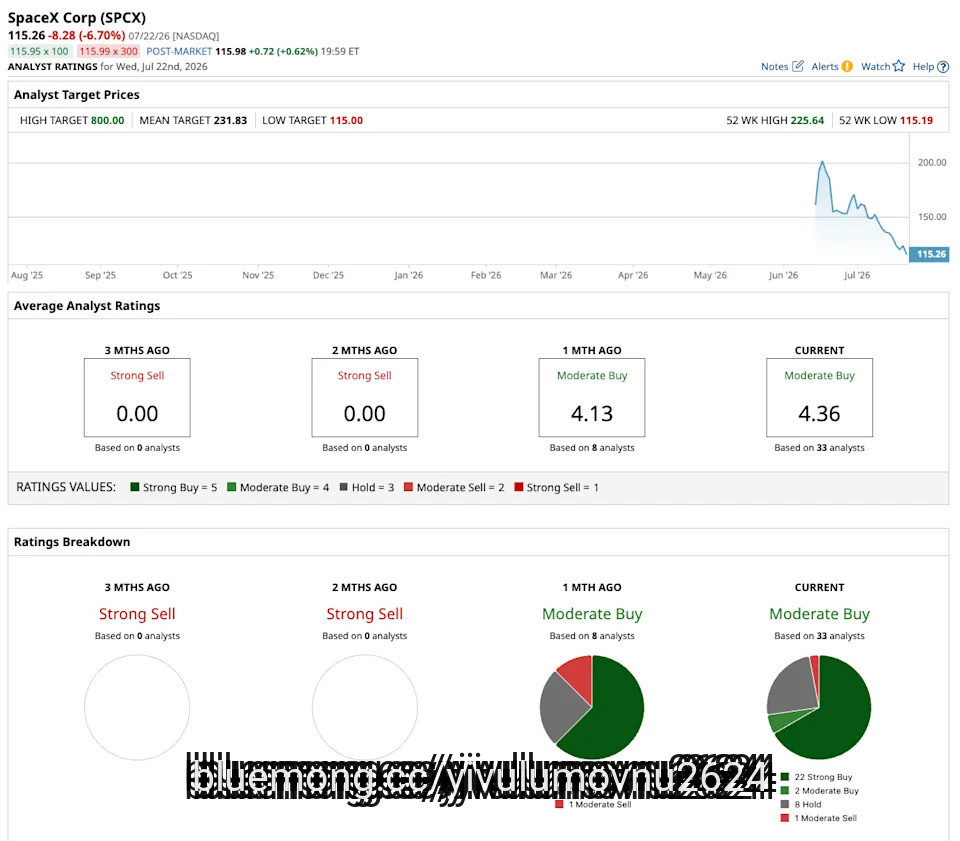
If you own ******* eX (SPCX) stock, or you're thinking about gaining exposure, this week deserves a spot on your calendar. Thursday brings a Starship test flight that ******* eX badly needs to go well, and it's the first of three dates over the next few weeks that could move the stock in a big way.
I've watched plenty of young public companies go through their first real test after an IPO. ******* eX is about to go through three of them at once, and they're all connected. Here's what's happening and why it matters to anyone holding SPCX stock.
The Biggest Risk to ******* eX Stock Comes After Earnings. Here Are The Numbers You Should Keep An Eye On.
Walmart Stock's Extended Downturn Could Trigger a Possible Comeback
Why Johnson & Johnson Is Sending Intuitive Surgical (ISRG) Stock Down Today
#thursday
I've watched plenty of young public companies go through their first real test after an IPO. ******* eX is about to go through three of them at once, and they're all connected. Here's what's happening and why it matters to anyone holding SPCX stock.
The Biggest Risk to ******* eX Stock Comes After Earnings. Here Are The Numbers You Should Keep An Eye On.
Walmart Stock's Extended Downturn Could Trigger a Possible Comeback
Why Johnson & Johnson Is Sending Intuitive Surgical (ISRG) Stock Down Today
#thursday


2 months ago
NZS Capital, LLC, an investment management company, released its "NZS Growth Equity Strategy" second-quarter 2026 investor letter. A copy of the letter can be downloaded here. Equity markets delivered a strong performance in the second quarter of 2026, driven by demand for AI infrastructure, geopolitical stabilization, and positive earnings reports. The portfolio achieved a gross return of +24.96% and a net return of +24.76%, significantly outperforming the +14.79% return for the Morningstar Global Target Market Exposure Index. Overweight in Semiconductors, stock selection in areas like Software and Industrials, and zero exposure to Energy contributed to the Strategy's outperformance in the quarter. In addition, please check the Strategy's top five holdings to know its best picks in 2026.
In its Q2 2026 investor letter, NZS Growth Equity Strategy highlighted Intuitive Surgical, Inc. (NASDAQ:ISRG). Intuitive Surgical, Inc. (NASDAQ:ISRG) is a leader in robotic-assisted surgery that develops, manufactures, and markets products for improving the quality of and access to minimally invasive care. On July 20, 2026, Intuitive Surgical, Inc. (NASDAQ:ISRG) closed at $353.17 per share. One-month return of Intuitive Surgical, Inc. (NASDAQ:ISRG) was -10.55%, and its shares lost 29.42% over the past 52 weeks. Intuitive Surgical, Inc. (NASDAQ:ISRG) has a market capitalization of $125.08 billion.
NZS Growth Equity Strategy stated the following regarding Intuitive Surgical, Inc. (NASDAQ:ISRG) in its Q2 2026 investor update:
"Only Real Estate and Healthcare contributed negatively to absolute returns, but Materials and Financials lagged. Intuitive Surgical, Inc. (NASDAQ:ISRG) was the top individual detractor to absolute returns in the quarter. While fundamentals remain solid for Intuitive Surgical, the stock's multiple has not been immune from the broad de-rating in "quality growth" stocks we've seen outside of the AI ecosystem."
Intuitive Surgical, Inc. (NASDAQ:ISRG) is not on our list of 40 Most Popular Stocks Among Hedge Funds Heading Into 2026. According to our database, 103 hedge fund portfolios held Intuitive Surgical, Inc. (NASDAQ:ISRG) at the end of the first quarter, compared to 109 in the previous quarter. While we acknowledge the potential of Intuitive Surgical, Inc. (NASDAQ:ISRG) as an investment, we believe certain AI stocks offer greater upside potential and carry less downside risk. If you're looking for an extremely undervalued AI stock that also stands to benefit significantly from Trump-era tariffs and the onshoring trend, see our free report on the best short-term AI stock.
#intuitive #quarter
In its Q2 2026 investor letter, NZS Growth Equity Strategy highlighted Intuitive Surgical, Inc. (NASDAQ:ISRG). Intuitive Surgical, Inc. (NASDAQ:ISRG) is a leader in robotic-assisted surgery that develops, manufactures, and markets products for improving the quality of and access to minimally invasive care. On July 20, 2026, Intuitive Surgical, Inc. (NASDAQ:ISRG) closed at $353.17 per share. One-month return of Intuitive Surgical, Inc. (NASDAQ:ISRG) was -10.55%, and its shares lost 29.42% over the past 52 weeks. Intuitive Surgical, Inc. (NASDAQ:ISRG) has a market capitalization of $125.08 billion.
NZS Growth Equity Strategy stated the following regarding Intuitive Surgical, Inc. (NASDAQ:ISRG) in its Q2 2026 investor update:
"Only Real Estate and Healthcare contributed negatively to absolute returns, but Materials and Financials lagged. Intuitive Surgical, Inc. (NASDAQ:ISRG) was the top individual detractor to absolute returns in the quarter. While fundamentals remain solid for Intuitive Surgical, the stock's multiple has not been immune from the broad de-rating in "quality growth" stocks we've seen outside of the AI ecosystem."
Intuitive Surgical, Inc. (NASDAQ:ISRG) is not on our list of 40 Most Popular Stocks Among Hedge Funds Heading Into 2026. According to our database, 103 hedge fund portfolios held Intuitive Surgical, Inc. (NASDAQ:ISRG) at the end of the first quarter, compared to 109 in the previous quarter. While we acknowledge the potential of Intuitive Surgical, Inc. (NASDAQ:ISRG) as an investment, we believe certain AI stocks offer greater upside potential and carry less downside risk. If you're looking for an extremely undervalued AI stock that also stands to benefit significantly from Trump-era tariffs and the onshoring trend, see our free report on the best short-term AI stock.
#intuitive #quarter

2 months ago
Two-day chart shows the Nasdaq led major indexes lower Friday.
Stocks were headed for a losing week Friday amid disheartening earnings from Netflix (NFLX) and the latest updates from the housing sector. ****** e Exploration Technologies (SPCX), known as ****** eX, was an early loser on the stock market today after a canceled test flight while Intuitive Surgical (ISRG) tumbled as a key metric disappointed investors.
The Dow Jones Industrial Average was flat as the S&P 500 fell 0.6%. The tech-heavy Nasdaq faced the brunt of a sell-off in tech and sank 1.2% in morning trading.
West Texas intermediate crude oil futures climbed to around $81.80 per barrel. The 10-year Treasury yield was down at 4.52%. Meanwhile, bitcoin fell near $63,300.
News from the housing front was mixed with housing starts beating economist expectations for June, yet the number of building permits issued missed forecasts.
Stocks were headed for a losing week Friday amid disheartening earnings from Netflix (NFLX) and the latest updates from the housing sector. ****** e Exploration Technologies (SPCX), known as ****** eX, was an early loser on the stock market today after a canceled test flight while Intuitive Surgical (ISRG) tumbled as a key metric disappointed investors.
The Dow Jones Industrial Average was flat as the S&P 500 fell 0.6%. The tech-heavy Nasdaq faced the brunt of a sell-off in tech and sank 1.2% in morning trading.
West Texas intermediate crude oil futures climbed to around $81.80 per barrel. The 10-year Treasury yield was down at 4.52%. Meanwhile, bitcoin fell near $63,300.
News from the housing front was mixed with housing starts beating economist expectations for June, yet the number of building permits issued missed forecasts.



2 months ago
Intuitive Surgical, Inc. (NASDAQ:ISRG) is one of the 8 Worst Blue Chip Stocks to Buy Now.
On July 9, 2026, BMO Capital ****** yst Vik Chopra initiated coverage of Intuitive Surgical, Inc. (NASDAQ:ISRG) with an Outperform rating and $518 price target. Chopra said the da Vinci 5 upgrade cycle remains in the early innings, procedure growth is broadening into new specialties and geographies, and the earnings stream is "durable and visible."
On July 6, Evercore ISI lowered the firm's price target on Intuitive Surgical to $430 from $480 and kept an In Line rating on the shares. Evercore ISI said its Q2 preview for MedTech, Life Sciences Tools, and Diagnostics highlights generally healthy procedure volumes and capital expenditure trends across the sector.
Last month, BofA ****** yst Travis Steed lowered the firm's price target on Intuitive Surgical to $515 from $520 and kept a Buy rating on the shares. Steed noted that BofA's services team continues to highlight a lower utilization environment and took a more conservative view on 2027 medtech company estimates, given that valuations already reflect utilization risk. Steed also ****** umed inflation will be more of a headwind in 2027, with less margin expansion for medtech, and lowered 2027 estimates across the firm's larger-cap coverage with exposure to utilization and inflation.
Intuitive Surgical, Inc. (NASDAQ:ISRG) develops, manufactures, and markets products that enable physicians and healthcare providers to enhance the quality of and access to minimally invasive care in the United States and internationally.
On July 9, 2026, BMO Capital ****** yst Vik Chopra initiated coverage of Intuitive Surgical, Inc. (NASDAQ:ISRG) with an Outperform rating and $518 price target. Chopra said the da Vinci 5 upgrade cycle remains in the early innings, procedure growth is broadening into new specialties and geographies, and the earnings stream is "durable and visible."
On July 6, Evercore ISI lowered the firm's price target on Intuitive Surgical to $430 from $480 and kept an In Line rating on the shares. Evercore ISI said its Q2 preview for MedTech, Life Sciences Tools, and Diagnostics highlights generally healthy procedure volumes and capital expenditure trends across the sector.
Last month, BofA ****** yst Travis Steed lowered the firm's price target on Intuitive Surgical to $515 from $520 and kept a Buy rating on the shares. Steed noted that BofA's services team continues to highlight a lower utilization environment and took a more conservative view on 2027 medtech company estimates, given that valuations already reflect utilization risk. Steed also ****** umed inflation will be more of a headwind in 2027, with less margin expansion for medtech, and lowered 2027 estimates across the firm's larger-cap coverage with exposure to utilization and inflation.
Intuitive Surgical, Inc. (NASDAQ:ISRG) develops, manufactures, and markets products that enable physicians and healthcare providers to enhance the quality of and access to minimally invasive care in the United States and internationally.


2 months ago
Intuitive Surgical (ISRG) stock tumbled Tuesday, alongside shares of other medtech leaders like Abbott Laboratories (ABT), Stryker (SYK) and Medtronic (MDT), after HCA Healthcare trimmed its full-year earnings outlook, suggesting a drop in surgical procedures.
HCA Healthcare, the largest for-profit hospital operator, said inpatient surgeries declined 2.3% while outpatient procedures fell 3.4% in the second quarter compared with the year-ago period.
As a result, HCA now projects $6.3 billion to $6.7 billion in net income and adjusted earnings before interest, taxes, depreciation and amortization, or EBITDA, of $15.4 billion to $16.1 billion. That's down from the prior outlook for roughly $6.5 billion to $7.04 billion in net income and adjusted EBITDA of $15.55 billion to $16.45 billion.
HCA also narrowed its sales guidance, now projecting $77 billion to $79.5 billion. The midpoint of the new outlook, $78.25 billion, matches the company's prior view.
HCA Healthcare, the largest for-profit hospital operator, said inpatient surgeries declined 2.3% while outpatient procedures fell 3.4% in the second quarter compared with the year-ago period.
As a result, HCA now projects $6.3 billion to $6.7 billion in net income and adjusted earnings before interest, taxes, depreciation and amortization, or EBITDA, of $15.4 billion to $16.1 billion. That's down from the prior outlook for roughly $6.5 billion to $7.04 billion in net income and adjusted EBITDA of $15.55 billion to $16.45 billion.
HCA also narrowed its sales guidance, now projecting $77 billion to $79.5 billion. The midpoint of the new outlook, $78.25 billion, matches the company's prior view.


2 months ago
Inter could easily turn a profit on either Petar Sucic or Aleksandar Stankovic if they wished, but the plan is to keep them both at the moment. The former turned heads in the World Cup, landing even on Real Madrid's radar.
According to Vecernji List (via Calciomercato), Los Merengues and a few English clubs are keeping tabs on him, but the Nerazzurri want to have him for the long haul. He scored and ******* isted once during the recent tournament, becoming an indispensable player for Croatia and throwing his hat in the ring to succeed Luka Modric as the fulcrum of their midfield. He's under contract until 2030. His €1.5M salary will eventually need to be ******* ped up.
Inter already value Sucic €50/60M, and it's unlikely any side will lodge proposals that could really tempt them, while Stankovic is worth about €30/40M. His sale would yield a decent-sized 'plusvalenza,' since the Nerazzurri brought him back from Club Brugge for €13M earlier in the summer, La Gazzetta dello Sport relays.
Christian Chivu spoke highly of the youngster during a recent press conference. He'll likely be part of the squad next season, too. In the meantime, there hasn't been any progress in their Curtis Jones chase. New Liverpool coach Andoni Iraola stated he'd like to retain him (via Mediaset).
Since they have already proven their worth, the team is in a good financial position and doesn't have a ton to do in the transfer market, the opposite stance would be counterintuitive, especially given that they have an aging midfield trio, and two of them might have reached the end of the road.
According to Vecernji List (via Calciomercato), Los Merengues and a few English clubs are keeping tabs on him, but the Nerazzurri want to have him for the long haul. He scored and ******* isted once during the recent tournament, becoming an indispensable player for Croatia and throwing his hat in the ring to succeed Luka Modric as the fulcrum of their midfield. He's under contract until 2030. His €1.5M salary will eventually need to be ******* ped up.
Inter already value Sucic €50/60M, and it's unlikely any side will lodge proposals that could really tempt them, while Stankovic is worth about €30/40M. His sale would yield a decent-sized 'plusvalenza,' since the Nerazzurri brought him back from Club Brugge for €13M earlier in the summer, La Gazzetta dello Sport relays.
Christian Chivu spoke highly of the youngster during a recent press conference. He'll likely be part of the squad next season, too. In the meantime, there hasn't been any progress in their Curtis Jones chase. New Liverpool coach Andoni Iraola stated he'd like to retain him (via Mediaset).
Since they have already proven their worth, the team is in a good financial position and doesn't have a ton to do in the transfer market, the opposite stance would be counterintuitive, especially given that they have an aging midfield trio, and two of them might have reached the end of the road.

2 months ago
Intuitive Machines, Inc. (NASDAQ:LUNR) is one of the Best **** e Technology Stocks to Buy Now. Intuitive Machines, Inc. (NASDAQ:LUNR) has fallen roughly 40% over the past month, mainly due to profit-taking after the stock reached an all-time high on May 29. Wall Street remains bullish on the stock, with **** ysts' 12-month price target reflecting more than 124% upside from the current level.
Recently, on July 1, Craig-Hallum maintained a Buy rating on the stock with a price target of $42. The firm highlighted NASA's press conference announcing lunar lander contract awards. During the press conference, Intuitive Machines was awarded $148 million, Firefly Aerospace was awarded $144 million, and Astrobotic got $298 million in contract awards. The firm calls Intuitive Machines and Firefly awards roughly in line with expectations, while Astrobotic's award came in higher than anticipated.
Craig-Hallum also praised new NASA administrator Isaacman's approach, citing a steady cadence of well-considered awards, more efficient use of resources, and a strategy focused on partnering with commercial **** e players.
Moreover, earlier on June 24, **** yst Mike Crawford from B. Riley maintained a Buy rating on the stock with a price target of $45. The **** yst noted the recent stock weakness as a buying opportunity and noted that the company is making progress building an end-to-end **** e and lunar infrastructure stack, backed by a $1.1 billion order backlog. The firm also noted multiple near-term catalysts that could meaningfully grow this backlog and argued the sell-off created an attractive entry point.
Intuitive Machines, Inc. (NASDAQ:LUNR) is a **** e exploration, infrastructure, and services company. It contributes to the establishment of cislunar infrastructure and helps develop cislunar and deep-space commerce.
Recently, on July 1, Craig-Hallum maintained a Buy rating on the stock with a price target of $42. The firm highlighted NASA's press conference announcing lunar lander contract awards. During the press conference, Intuitive Machines was awarded $148 million, Firefly Aerospace was awarded $144 million, and Astrobotic got $298 million in contract awards. The firm calls Intuitive Machines and Firefly awards roughly in line with expectations, while Astrobotic's award came in higher than anticipated.
Craig-Hallum also praised new NASA administrator Isaacman's approach, citing a steady cadence of well-considered awards, more efficient use of resources, and a strategy focused on partnering with commercial **** e players.
Moreover, earlier on June 24, **** yst Mike Crawford from B. Riley maintained a Buy rating on the stock with a price target of $45. The **** yst noted the recent stock weakness as a buying opportunity and noted that the company is making progress building an end-to-end **** e and lunar infrastructure stack, backed by a $1.1 billion order backlog. The firm also noted multiple near-term catalysts that could meaningfully grow this backlog and argued the sell-off created an attractive entry point.
Intuitive Machines, Inc. (NASDAQ:LUNR) is a **** e exploration, infrastructure, and services company. It contributes to the establishment of cislunar infrastructure and helps develop cislunar and deep-space commerce.

2 months ago
VinFast Auto Ltd (NASDAQ:VFS) is one of the top mid-cap stocks to own for the long term, according to hedge funds. On June 18, VinFast Auto Ltd (NASDAQ:VFS) confirmed the availability of its VF 8 electric SUV across the United States.
Copyright: microolga / 123RF Stock Photo
The base Eco trim will retail for $39,900, while the Plus trim will retail for $44,900. VinFast is targeting families that want a capable, quiet, and well-equipped electric SUV with the new model. The VF8 comes with a 116.1-inch wheelbase to compete equally in the D-SUV segment. In its cabin rear passengers can sit upright without negotiating legroom. It also comes with an intuitive head-up display that projects key information directly onto the windshield.
Earlier, on June 10, VinFast announced domestic deliveries of 19,503 electric vehicles in May. Year to date the company has delivered 97,961 EVs in Vietnam affirming its dominance in the domestic market even as it eyes growth on the international scene. The Limo Green and the VF 3 are the company's two best-selling models in Vietnam, with ******* ulative deliveries of 24,059 and 20,231 vehicles, respectively.
VinFast Auto Ltd. (NASDAQ:VFS) is a global automotive manufacturer specializing in the research, development, and production of smart electric vehicles (EVs), including battery-electric cars, electric motorbikes/scooters, and e-bikes.
Copyright: microolga / 123RF Stock Photo
The base Eco trim will retail for $39,900, while the Plus trim will retail for $44,900. VinFast is targeting families that want a capable, quiet, and well-equipped electric SUV with the new model. The VF8 comes with a 116.1-inch wheelbase to compete equally in the D-SUV segment. In its cabin rear passengers can sit upright without negotiating legroom. It also comes with an intuitive head-up display that projects key information directly onto the windshield.
Earlier, on June 10, VinFast announced domestic deliveries of 19,503 electric vehicles in May. Year to date the company has delivered 97,961 EVs in Vietnam affirming its dominance in the domestic market even as it eyes growth on the international scene. The Limo Green and the VF 3 are the company's two best-selling models in Vietnam, with ******* ulative deliveries of 24,059 and 20,231 vehicles, respectively.
VinFast Auto Ltd. (NASDAQ:VFS) is a global automotive manufacturer specializing in the research, development, and production of smart electric vehicles (EVs), including battery-electric cars, electric motorbikes/scooters, and e-bikes.