

4 days ago
On September 9, 2026, Independence Realty Trust, Inc. (NYSE:IRT) and Centerspace announced a definitive all-stock merger agreement. It creates a combined middle-market apartment REIT with a pro forma equity market capitalization of about $5.0 billion and a total enterprise value of approximately $8.1 billion, encompassing more than 44,000 units.
The combined company will retain the Independence Realty Trust name and NYSE ticker "IRT." IRT's Scott Schaeffer continues as Chairman and CEO. The management projects the deal will be roughly 5% accretive to 2027 Core FFO per share for shareholders of both companies.
The merger gives Independence Realty Trust, Inc. (NYSE:IRT) higher scale and significantly broader geographic diversification. The combined company will own 44,354 apartment units across 163 communities in 17 states, with 58% of pro forma NOI coming from Sunbelt markets, 27% from the Midwest, and 15% from the Mountain West. The overall footprint reduces reliance on any single regional apartment market while keeping substantial exposure to markets with strong population and employment growth.
IRT can apply its existing value-creation strategy across a much larger portfolio. Its value-add renovation program has delivered about a 16% historical return on investment. The firm expects to grow its Wi-Fi initiative and other technology and income-generating programs across Centerspace's properties. Management also expects approximately $24 million in annualized synergies. It supports roughly 5% accretion to 2027 Core FFO per share on a leverage-neutral basis.
The all-stock structure allows the companies to chase greater scale without adding acquisition debt. IRT and Centerspace expect the combined company to retain BBB/BBB investment-grade credit ratings and maintain a well-laddered debt maturity profile. Centerspace shareholders will receive IRT shares and own approximately 22% of the combined company. It gives them exposure to the larger platform. Management also expects the transaction to improve access to capital markets and reduce the combined firm's cost of capital over time.
#management
The combined company will retain the Independence Realty Trust name and NYSE ticker "IRT." IRT's Scott Schaeffer continues as Chairman and CEO. The management projects the deal will be roughly 5% accretive to 2027 Core FFO per share for shareholders of both companies.
The merger gives Independence Realty Trust, Inc. (NYSE:IRT) higher scale and significantly broader geographic diversification. The combined company will own 44,354 apartment units across 163 communities in 17 states, with 58% of pro forma NOI coming from Sunbelt markets, 27% from the Midwest, and 15% from the Mountain West. The overall footprint reduces reliance on any single regional apartment market while keeping substantial exposure to markets with strong population and employment growth.
IRT can apply its existing value-creation strategy across a much larger portfolio. Its value-add renovation program has delivered about a 16% historical return on investment. The firm expects to grow its Wi-Fi initiative and other technology and income-generating programs across Centerspace's properties. Management also expects approximately $24 million in annualized synergies. It supports roughly 5% accretion to 2027 Core FFO per share on a leverage-neutral basis.
The all-stock structure allows the companies to chase greater scale without adding acquisition debt. IRT and Centerspace expect the combined company to retain BBB/BBB investment-grade credit ratings and maintain a well-laddered debt maturity profile. Centerspace shareholders will receive IRT shares and own approximately 22% of the combined company. It gives them exposure to the larger platform. Management also expects the transaction to improve access to capital markets and reduce the combined firm's cost of capital over time.
#management


4 days ago
Definium Therapeutics, Inc. (NASDAQ:DFTX) has now delivered a third consecutive positive Phase 3 readout for its LSD-based medication, the second in generalized anxiety disorder. The result puts the company on a viable route toward a potential FDA approval of an LSD-based treatment for generalized anxiety disorder, and considering how closely psychedelic stocks have historically traded on each other's data, the reading carries far more weight than Definium's own ticker.
On September 14, Definium Therapeutics, Inc. (NASDAQ:DFTX) announced that its drug DT120, an orally disintegrating tablet formulation of LSD, was successful in Panorama, the company's second late-stage anxiety trial. Over 12 weeks, patients who received a 100-microgram dose experienced a 9.8-point decline on the Hamilton Anxiety Rating Scale, a typical clinical measure, compared to a 4.7-point drop with placebo.
The resulting 5.1-point placebo-adjusted improvement is similar to what the company's first pivotal anxiety trial, Voyage, showed back in August: an 11.6-point improvement versus 6.2 for placebo, a 5.4-point separation that Jefferies called one of the strongest placebo-adjusted efficacy results ever seen in generalized anxiety disorder, and that Stifel simply described as "a clean win."
Psychedelic equities have a history of trading as a group rather than as individual names, and this tendency applies both ways. In February 2026, when Compass Pathways, the sector's other clinical leader developing a psilocybin-based drug for treatment-resistant depression, reported positive late-stage data, shares of Definium Therapeutics, Inc. (NASDAQ:DFTX), Atai Beckley, GH Research, and Helus Pharma all rose, some by double digits.
That correlation is significant here because Definium's win is an independent validation of the broader therapeutic argument on which Compass and others are betting: a single dose of a classic psychedelic, administered in a controlled clinical setting, can produce lasting improvements in serious mental health conditions via pathways different from existing SSRIs and other standard-of-care drugs.
#definium #placebo
On September 14, Definium Therapeutics, Inc. (NASDAQ:DFTX) announced that its drug DT120, an orally disintegrating tablet formulation of LSD, was successful in Panorama, the company's second late-stage anxiety trial. Over 12 weeks, patients who received a 100-microgram dose experienced a 9.8-point decline on the Hamilton Anxiety Rating Scale, a typical clinical measure, compared to a 4.7-point drop with placebo.
The resulting 5.1-point placebo-adjusted improvement is similar to what the company's first pivotal anxiety trial, Voyage, showed back in August: an 11.6-point improvement versus 6.2 for placebo, a 5.4-point separation that Jefferies called one of the strongest placebo-adjusted efficacy results ever seen in generalized anxiety disorder, and that Stifel simply described as "a clean win."
Psychedelic equities have a history of trading as a group rather than as individual names, and this tendency applies both ways. In February 2026, when Compass Pathways, the sector's other clinical leader developing a psilocybin-based drug for treatment-resistant depression, reported positive late-stage data, shares of Definium Therapeutics, Inc. (NASDAQ:DFTX), Atai Beckley, GH Research, and Helus Pharma all rose, some by double digits.
That correlation is significant here because Definium's win is an independent validation of the broader therapeutic argument on which Compass and others are betting: a single dose of a classic psychedelic, administered in a controlled clinical setting, can produce lasting improvements in serious mental health conditions via pathways different from existing SSRIs and other standard-of-care drugs.
#definium #placebo


4 days ago
Helfstein estimates META needs 115 million paying Muse subscribers at $20/month to unlock $28 billion in AI revenue, but doubts it happens.
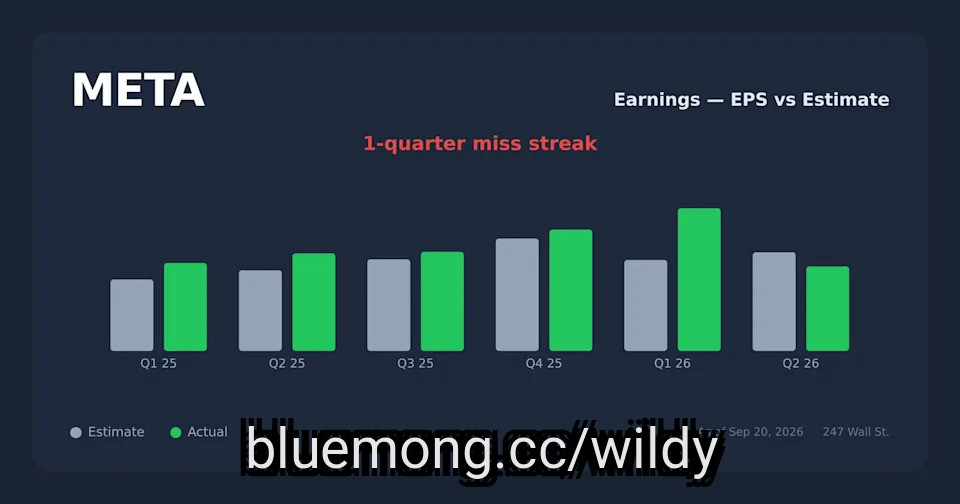
META's Q2 operating margin collapsed from 43% to 31%, while full-year capex guidance soared to a range of $130 billion to $145 billion.
Just released. Our ******* ysts combed the entire stock market and named the ten best stocks to buy right now, and Meta didn't make the cut. Enter your email to see the names that beat METAPLATFORMS. The report is free. Enter your email and see if any of your stocks made the cut.
Jason Helfstein, Oppenheimer's Managing Director and Senior ******* yst covering the Internet sector, laid out a striking scenario in a September 2026 note: Meta Platforms (NASDAQ:META) would need roughly 115 million paying Muse subscribers at a $20/month price point to generate about $27.5 to $28 billion in annual AI agent revenue. His conclusion, however, was skeptical. For long-term investors, the math frames just how high the bar is for Meta stock to earn a consumer-AI premium on top of its advertising engine.
Ticker
#million
META's Q2 operating margin collapsed from 43% to 31%, while full-year capex guidance soared to a range of $130 billion to $145 billion.
Just released. Our ******* ysts combed the entire stock market and named the ten best stocks to buy right now, and Meta didn't make the cut. Enter your email to see the names that beat METAPLATFORMS. The report is free. Enter your email and see if any of your stocks made the cut.
Jason Helfstein, Oppenheimer's Managing Director and Senior ******* yst covering the Internet sector, laid out a striking scenario in a September 2026 note: Meta Platforms (NASDAQ:META) would need roughly 115 million paying Muse subscribers at a $20/month price point to generate about $27.5 to $28 billion in annual AI agent revenue. His conclusion, however, was skeptical. For long-term investors, the math frames just how high the bar is for Meta stock to earn a consumer-AI premium on top of its advertising engine.
Ticker
#million

4 days ago


4 days ago
Benzinga and Yahoo Finance LLC may earn commission or revenue on some items through the links below.
Ripple-backed XRP treasury company Evernorth Holdings has lined up $30 million in new financing as it prepares to go public through a merger with Armada Acquisition Corp. II (NASDAQ:XRPN).
The deal would bring Evernorth onto Nasdaq under the XRPN ticker, giving public-market investors exposure to a company built around accumulating XRP (CRYPTO: XRP) and deploying it across the XRP ecosystem.
Evernorth said the new financing may be used to buy more XRP and fund other ecosystem investments. The $30 million arrives when the merger closes, which the company expects in the fourth quarter.
Evernorth and an affiliate held 473.1 million XRP at the end of 2025. At around $1.38 per token, $30 million would buy roughly another 21.7 million XRP, or less than 5% of that existing position.
#financing #merger
Ripple-backed XRP treasury company Evernorth Holdings has lined up $30 million in new financing as it prepares to go public through a merger with Armada Acquisition Corp. II (NASDAQ:XRPN).
The deal would bring Evernorth onto Nasdaq under the XRPN ticker, giving public-market investors exposure to a company built around accumulating XRP (CRYPTO: XRP) and deploying it across the XRP ecosystem.
Evernorth said the new financing may be used to buy more XRP and fund other ecosystem investments. The $30 million arrives when the merger closes, which the company expects in the fourth quarter.
Evernorth and an affiliate held 473.1 million XRP at the end of 2025. At around $1.38 per token, $30 million would buy roughly another 21.7 million XRP, or less than 5% of that existing position.
#financing #merger


5 days ago


6 days ago
A UTMA custodial account requires no attorney, costs nothing to open, and lets married couples contribute $38,000 annually per grandchild without triggering gift-tax reporting.
VOO anchors the portfolio at 60-70% with a 0.03% expense ratio, while SCHG's 447% 10-year return earns it a 20-25% growth slice.
Custodial account funds legally become the grandchild's property at 18 or 21, so grandparents who want spending control should use a 529 instead.
Read More: Avoid these 13 retirement mistakes before they derail your future (sponsor)
You want to hand each grandchild a serious head start without the complicated legal setup. Skip the trust attorney. A custodial account under the Uniform Transfers to Minors Act (UTMA) can be opened in an afternoon at any major brokerage, and three low-cost ETFs can do the work for the next 15 to 20 years: the Vanguard S&P 500 ETF (NYSEARCA:VOO), the Schwab U.S. Large-Cap Growth ETF (NYSEARCA:SCHG), and the iShares Core MSCI Emerging Markets ETF (NYSEARCA:IEMG). Three tickers, one account per grandchild, and time on your side.
#custodial #three
VOO anchors the portfolio at 60-70% with a 0.03% expense ratio, while SCHG's 447% 10-year return earns it a 20-25% growth slice.
Custodial account funds legally become the grandchild's property at 18 or 21, so grandparents who want spending control should use a 529 instead.
Read More: Avoid these 13 retirement mistakes before they derail your future (sponsor)
You want to hand each grandchild a serious head start without the complicated legal setup. Skip the trust attorney. A custodial account under the Uniform Transfers to Minors Act (UTMA) can be opened in an afternoon at any major brokerage, and three low-cost ETFs can do the work for the next 15 to 20 years: the Vanguard S&P 500 ETF (NYSEARCA:VOO), the Schwab U.S. Large-Cap Growth ETF (NYSEARCA:SCHG), and the iShares Core MSCI Emerging Markets ETF (NYSEARCA:IEMG). Three tickers, one account per grandchild, and time on your side.
#custodial #three



6 days ago
Watch Highlights From the 2025 Palm Beach CorpGov Forum:
CorpGov, IPO Edge and PE Edge will host the sixth annual Palm Beach CorpGov Forum on November 4-5, 2026, at the Palm Beach Lake Pavilion and The Cove Club, both located waterfront with sweeping views of Palm Beach Island, along with a reception at Cucina Palm Beach. The Forum will feature a VC-focused keynote panel on Wednesday evening and a full day of panels on Thursday, with networking events both nights.
Our audience will include approximately 300 attendees including institutional investors, board directors, family offices/HNWIs, attorneys, investment bankers and key advisors. For sponsorship, speaker or media enquiries, email EditorCorpGov.com
The event will be digitized into reports published on CorpGov and by its content partners (under relevant company stock tickers) Yahoo Finance, Bloomberg Terminals, Reuters via LSEG Workspace, and AlphaSense, and filmed with multiple 4K video cameras and professional editing.
Preliminary Agenda
#beach #corpgov #watch
CorpGov, IPO Edge and PE Edge will host the sixth annual Palm Beach CorpGov Forum on November 4-5, 2026, at the Palm Beach Lake Pavilion and The Cove Club, both located waterfront with sweeping views of Palm Beach Island, along with a reception at Cucina Palm Beach. The Forum will feature a VC-focused keynote panel on Wednesday evening and a full day of panels on Thursday, with networking events both nights.
Our audience will include approximately 300 attendees including institutional investors, board directors, family offices/HNWIs, attorneys, investment bankers and key advisors. For sponsorship, speaker or media enquiries, email EditorCorpGov.com
The event will be digitized into reports published on CorpGov and by its content partners (under relevant company stock tickers) Yahoo Finance, Bloomberg Terminals, Reuters via LSEG Workspace, and AlphaSense, and filmed with multiple 4K video cameras and professional editing.
Preliminary Agenda
#beach #corpgov #watch



6 days ago
Berkshire Hathaway (NYSE: BRKA) (NYSE: BRKB) is no artificial intelligence (AI) stock, but it may be closer to one than most casual observers think. The exact percentage is also very broad. Amid the higher electricity demand driven by AI, one could argue that Berkshire Hathaway Energy is an AI company.
However, that does not help average investors, who cannot invest directly in that specific part of Berkshire. Instead, we only have its stock holdings with which to contend, but even when measured by those, the AI exposure is about 31%. Here are the two stocks and their role in Berkshire's portfolio.
Missed Nvidia in 2009? This Rare Signal Is Flashing Again. In 2009, a "Double Down" signal flashed for a little-known chipmaker called Nvidia. For the first time in years, that same "Total Conviction" signal is flashing for a company 1/100th the size of Nvidia. Continue »
Google-parent Alphabet (NASDAQ: GOOGL) (NASDAQ: GOOG) is the growth name among the two and the largest purchase during the Greg Abel era.
The purchases began under Warren Buffett in the third quarter of 2025, but most of the buying occurred after Abel took over, albeit with Buffett's encouragement. Between its two tickers, the company has bought nearly 106 million shares, increasing its portfolio share from 0% to just under 10% in less than one year.
#berkshire #NVIDIA
However, that does not help average investors, who cannot invest directly in that specific part of Berkshire. Instead, we only have its stock holdings with which to contend, but even when measured by those, the AI exposure is about 31%. Here are the two stocks and their role in Berkshire's portfolio.
Missed Nvidia in 2009? This Rare Signal Is Flashing Again. In 2009, a "Double Down" signal flashed for a little-known chipmaker called Nvidia. For the first time in years, that same "Total Conviction" signal is flashing for a company 1/100th the size of Nvidia. Continue »
Google-parent Alphabet (NASDAQ: GOOGL) (NASDAQ: GOOG) is the growth name among the two and the largest purchase during the Greg Abel era.
The purchases began under Warren Buffett in the third quarter of 2025, but most of the buying occurred after Abel took over, albeit with Buffett's encouragement. Between its two tickers, the company has bought nearly 106 million shares, increasing its portfolio share from 0% to just under 10% in less than one year.
#berkshire #NVIDIA

7 days ago
A fresh wave of nuclear stock listings is sweeping Wall Street as the explosive growth of data centers puts mounting pressure on electricity grids and reignites investor appetite for nuclear power. Joining this initial public offering (IPO) frenzy is nuclear stock Holtec Nuclear, which is gearing up for its public debut this month. The company plans to offer 50 million shares of Class A common stock at a price range of $15 to $18 per share, potentially raising up to $900 million and valuing the company at as much as $10.2 billion.
Holtec plans to list on the Nasdaq Global Select Market and Nasdaq Texas under the ticker symbol "HNUC" on Sept. 18. The underwriters also have a 30-day option to purchase up to an additional 7.5 million shares. Leading the offering as joint lead book-running managers are J.P. Morgan, Guggenheim Securities, Goldman Sachs, Citigroup, and BofA Securities, while Morgan Stanley, Cantor, BMO Capital Markets, and Oppenheimer & Co. round out the group of joint book-running managers.
Billionaire Charlie Munger, Who Died at 99, Skipped Insurance on His Mansion Since He Could Just Write a Check to Rebuild — 'All Intelligent People Do It My Way'
Nvidia CEO Jensen Huang Just Dropped Huge News for This Cybersecurity Stock
How to Play GME Stock as GameStop CEO Ryan Cohen Buys $20.3 Million in Shares
#shares #securities
Holtec plans to list on the Nasdaq Global Select Market and Nasdaq Texas under the ticker symbol "HNUC" on Sept. 18. The underwriters also have a 30-day option to purchase up to an additional 7.5 million shares. Leading the offering as joint lead book-running managers are J.P. Morgan, Guggenheim Securities, Goldman Sachs, Citigroup, and BofA Securities, while Morgan Stanley, Cantor, BMO Capital Markets, and Oppenheimer & Co. round out the group of joint book-running managers.
Billionaire Charlie Munger, Who Died at 99, Skipped Insurance on His Mansion Since He Could Just Write a Check to Rebuild — 'All Intelligent People Do It My Way'
Nvidia CEO Jensen Huang Just Dropped Huge News for This Cybersecurity Stock
How to Play GME Stock as GameStop CEO Ryan Cohen Buys $20.3 Million in Shares
#shares #securities


7 days ago
Agriscience business Corteva (CTVA) is gearing up to spin off its seed operating segment as an independently traded public company, Vylor, trading under the "VYLR" ticker. Shareholders have already approved the separation, and they are expected to receive one Vylor common share for each Corteva common share they hold. VYLR is set to begin trading on Oct. 1. The company is holding an Investor Day webcast on Sept. 15.
Corteva believes this spinoff will give both companies more flexibility. However, ****** ysts have questioned whether it weakens the entities. Meanwhile, CEO Luke Kissam has highlighted a pipeline Corteva values at $11 billion through 2040 and its plan to introduce 12 products over the next decade. Contrarily, competition from generic products remains, and President Donald Trump's administration is exploring whether consolidation among agricultural suppliers has driven up input costs.
Goldman Sachs Expects Fed Chair Kevin Warsh to Raise Rates This Week — But Not Because of Oil Prices.
Billionaire Charlie Munger, Who Died at 99, Skipped Insurance on His Mansion Since He Could Just Write a Check to Rebuild — 'All Intelligent People Do It My Way'
Morgan Stanley Doubles Down on Apple Stock as New Offerings Become 'More Exciting'
#corteva
Corteva believes this spinoff will give both companies more flexibility. However, ****** ysts have questioned whether it weakens the entities. Meanwhile, CEO Luke Kissam has highlighted a pipeline Corteva values at $11 billion through 2040 and its plan to introduce 12 products over the next decade. Contrarily, competition from generic products remains, and President Donald Trump's administration is exploring whether consolidation among agricultural suppliers has driven up input costs.
Goldman Sachs Expects Fed Chair Kevin Warsh to Raise Rates This Week — But Not Because of Oil Prices.
Billionaire Charlie Munger, Who Died at 99, Skipped Insurance on His Mansion Since He Could Just Write a Check to Rebuild — 'All Intelligent People Do It My Way'
Morgan Stanley Doubles Down on Apple Stock as New Offerings Become 'More Exciting'
#corteva


7 days ago
Meta (META) on Tuesday officially unveiled its Meta One subscription service as part of the company's effort to further monetize its enormous AI spending and diversify its revenue stream.
The plans, which start at $2.99 per month for single-product plans, $7.99 for individual bundles, and $14.99 for creator and business bundles, provide a number of features for users looking to get more out of their Instagram, Facebook, and WhatsApp accounts.
Instagram Plus and Facebook Plus allow users to keep their stories up for 48 hours instead of 24, send animated super reactions and super hearts to stories, preview stories without showing up as a viewer in other users' lists, and more.
WhatsApp Plus lets you share exclusive stickers, get exclusive ringtones for contacts, and pin up to 20 different chats.
#meta #users #Instagram #plans
The plans, which start at $2.99 per month for single-product plans, $7.99 for individual bundles, and $14.99 for creator and business bundles, provide a number of features for users looking to get more out of their Instagram, Facebook, and WhatsApp accounts.
Instagram Plus and Facebook Plus allow users to keep their stories up for 48 hours instead of 24, send animated super reactions and super hearts to stories, preview stories without showing up as a viewer in other users' lists, and more.
WhatsApp Plus lets you share exclusive stickers, get exclusive ringtones for contacts, and pin up to 20 different chats.
#meta #users #Instagram #plans



8 days ago
KCHP launched September 15, 2026 on NYSE Arca, giving U.S. investors a single-ticker bet on South Korean semiconductor companies at a 0.65% expense ratio.
Unlike broad Korea funds EWY and FLKR or global chip ETFs SOXX and SMH, KCHP targets only Korean chipmakers but charges more than all of them.
With just one day of trading history and likely wide bid-ask spreads, KCHP carries real liquidity risk on top of concentrated memory-chip exposure.
Read More: Learn 7 ways to generate income with a $1,000,000+ portfolio (sponsor)
The specific index the fund tracks, the method used to weight the holdings (for example, by market value or a capped scheme to prevent one stock from dominating), and the exact number of positions were not spelled out in the data available for this article. Those details sit in the prospectus filed with the SEC, which investors should consult directly.
#korea
Unlike broad Korea funds EWY and FLKR or global chip ETFs SOXX and SMH, KCHP targets only Korean chipmakers but charges more than all of them.
With just one day of trading history and likely wide bid-ask spreads, KCHP carries real liquidity risk on top of concentrated memory-chip exposure.
Read More: Learn 7 ways to generate income with a $1,000,000+ portfolio (sponsor)
The specific index the fund tracks, the method used to weight the holdings (for example, by market value or a capped scheme to prevent one stock from dominating), and the exact number of positions were not spelled out in the data available for this article. Those details sit in the prospectus filed with the SEC, which investors should consult directly.
#korea

11 days ago


11 days ago
Fundstrat's Tom Lee took the Future Proof Citywide stage earlier this year with CNBC's Scott Wapner for a session that landed in the middle of a jittery tape that included geopolitical conflict, oil spiking, private credit cracking, and fresh doubts about AI spending. Not too far off where we find ourselves currently, but with an awful lot of volatility and shifting, uncertain outlooks between these six months. While their conversation was a snapshot in time, you can expect more of this kind of sharp, thoughtful ****** ysis next week.
The contrarian take of the session was oil. High crude, Lee argued, is actually constructive for U.S. equities. With the U.S. as a net exporter, our economic competitors are importers, and stalled global growth pushes investors toward growth stocks, which is about 80% of the U.S. market. On AI CapEx, he pushed back on the sticker shock, claiming roughly $700 billion a year is a fraction of the $60 trillion global labor market and small change against daily moves in gold.
Lee also made the case that software had bottomed at the time, that enterprises building their own tools inherit the maintenance burden software companies exist to carry, and that private credit is genuinely bad but not a GFC repeat, with the real fix being taking private companies public rather than pushing private product into retail portfolios. On crypto, his argument shifted from a perspective of digital gold to one of plumbing whereby Wall Street tokenizes ****** ets, and AI agents needing a settlement rail that handles fractions of a penny.
His parting advice was the oldest one in the book, dressed in new clothes: miss the 10 best days of each year and a 16% average return goes to roughly nothing. Danger and opportunity show up together. Staying invested is the perpetual drumbeat of advisors to their clients, but one that needs banging louder when markets feel much less certain.
Future Proof Festival is September 14–17 in Huntington Beach and includes four days on the boardwalk with advisors, ****** et managers, and fintechs building the modern wealth management industry. Find us at the ETF Oasis and don't miss the stellar agenda we've got lined up.
#find #session #credit #time
The contrarian take of the session was oil. High crude, Lee argued, is actually constructive for U.S. equities. With the U.S. as a net exporter, our economic competitors are importers, and stalled global growth pushes investors toward growth stocks, which is about 80% of the U.S. market. On AI CapEx, he pushed back on the sticker shock, claiming roughly $700 billion a year is a fraction of the $60 trillion global labor market and small change against daily moves in gold.
Lee also made the case that software had bottomed at the time, that enterprises building their own tools inherit the maintenance burden software companies exist to carry, and that private credit is genuinely bad but not a GFC repeat, with the real fix being taking private companies public rather than pushing private product into retail portfolios. On crypto, his argument shifted from a perspective of digital gold to one of plumbing whereby Wall Street tokenizes ****** ets, and AI agents needing a settlement rail that handles fractions of a penny.
His parting advice was the oldest one in the book, dressed in new clothes: miss the 10 best days of each year and a 16% average return goes to roughly nothing. Danger and opportunity show up together. Staying invested is the perpetual drumbeat of advisors to their clients, but one that needs banging louder when markets feel much less certain.
Future Proof Festival is September 14–17 in Huntington Beach and includes four days on the boardwalk with advisors, ****** et managers, and fintechs building the modern wealth management industry. Find us at the ETF Oasis and don't miss the stellar agenda we've got lined up.
#find #session #credit #time


11 days ago
A ~$1.7M portfolio split evenly between SCHD and JEPI targets $7,700/month using each fund's forward payout rate.
JEPI's monthly distributions have dropped sharply since 2022 as volatility fell, and recent payouts still vary from $0.34 to $0.45 per share.
Hold JEPI in an IRA and SCHD in a taxable account to maximize after-tax income from this two-fund strategy.
Read More: Learn 7 ways to generate income with a $1,000,000+ portfolio (sponsor)
A portfolio of roughly $1.7 million, split evenly between SCHD and JEPI, targets $7,700 a month in distributions using each fund's current forward payout rate. Two tickers, one brokerage screen, nothing to rebalance beyond keeping the halves even. For a reader who finds a seven-holding portfolio intimidating, that simplicity is genuinely appealing, and it deserves to be said before the caveats begin.
#targets
JEPI's monthly distributions have dropped sharply since 2022 as volatility fell, and recent payouts still vary from $0.34 to $0.45 per share.
Hold JEPI in an IRA and SCHD in a taxable account to maximize after-tax income from this two-fund strategy.
Read More: Learn 7 ways to generate income with a $1,000,000+ portfolio (sponsor)
A portfolio of roughly $1.7 million, split evenly between SCHD and JEPI, targets $7,700 a month in distributions using each fund's current forward payout rate. Two tickers, one brokerage screen, nothing to rebalance beyond keeping the halves even. For a reader who finds a seven-holding portfolio intimidating, that simplicity is genuinely appealing, and it deserves to be said before the caveats begin.
#targets

11 days ago
All eyes are on the Fed with another higher than expected reading for core inflation. Jeff Klingelhofer, CFA, Managing Director, Portfolio Manager & Senior Research **** yst, Securitized **** ets at Aristotle Pacific, talks with host Brad Roth on this episode of Behind the Ticker about why the new Fed Chair stepping into an environment of high inflation matters for investors and bonds, and what that means for how the firm is positioning their strategies that include three new ETFs, the Aristotle Core Plus Income ETF (ARCP), the Aristotle Multi-Sector Income ETF (ARMS), and the Aristotle Short Term Income ETF (SDUR).
You can also watch this conversation here or on our YouTube, as well as find it on any of your preferred podcast streaming platforms.
A non-traditional path to fixed income: Jeff Klingelhofer started at PIMCO, moved through Tokyo and London, then took an unexpected detour into a five-person hedge fund during his Chicago MBA. That experience shaped his career trajectory, from building Thornburg's taxable fixed income desk from scratch to joining Aristotle Pacific in 2024.
The relative value philosophy: Instead of chasing yield by taking more risk within a single **** et class, Klingelhofer compares opportunities across all of fixed income, including corporates, ABS, CLOs, bank loans, and more. His go-to example: in 2020, an American Airlines corporate bond and its aircraft-backed EETC priced identically, but a month later one traded at 27 cents on the dollar while the other held at 65 cent, proof that siloed desks miss cross-market mispricing.
Three ETFs, one philosophy: Aristotle Pacific's new suite of SDUR (short-term income), ARCP (core plus), and ARMS (multi-sector income) applies this relative value lens across the risk spectrum, each targeting a different level of duration and credit exposure. All three aim to outperform passive benchmarks through active security selection rather than added risk.
#jeff #etfs
You can also watch this conversation here or on our YouTube, as well as find it on any of your preferred podcast streaming platforms.
A non-traditional path to fixed income: Jeff Klingelhofer started at PIMCO, moved through Tokyo and London, then took an unexpected detour into a five-person hedge fund during his Chicago MBA. That experience shaped his career trajectory, from building Thornburg's taxable fixed income desk from scratch to joining Aristotle Pacific in 2024.
The relative value philosophy: Instead of chasing yield by taking more risk within a single **** et class, Klingelhofer compares opportunities across all of fixed income, including corporates, ABS, CLOs, bank loans, and more. His go-to example: in 2020, an American Airlines corporate bond and its aircraft-backed EETC priced identically, but a month later one traded at 27 cents on the dollar while the other held at 65 cent, proof that siloed desks miss cross-market mispricing.
Three ETFs, one philosophy: Aristotle Pacific's new suite of SDUR (short-term income), ARCP (core plus), and ARMS (multi-sector income) applies this relative value lens across the risk spectrum, each targeting a different level of duration and credit exposure. All three aim to outperform passive benchmarks through active security selection rather than added risk.
#jeff #etfs
12 days ago
Affordability in a car market usually looks like a math problem. Every so often it turns out to be a permission problem.
Americans have spent four years watching window stickers climb and calling it inflation. The average new vehicle sold for $50,089 in August, the first month of 2026 that the industry average cleared $50,000, according to Kelley Blue Book.
Buyers feel it without reading the data.
"Many American households are under significant financial pressure," said Erin Keating, executive ***** yst at ***** Automotive, in comments published by Kelley Blue Book.
Electric cars sit higher up the ladder. The cheapest new EV on sale in the U.S. starts at $29,990 before destination, a price Nissan (NSANY) called "the lowest starting MSRP for any new EV currently on sale in the U.S.," according to Electrek.
#according
Americans have spent four years watching window stickers climb and calling it inflation. The average new vehicle sold for $50,089 in August, the first month of 2026 that the industry average cleared $50,000, according to Kelley Blue Book.
Buyers feel it without reading the data.
"Many American households are under significant financial pressure," said Erin Keating, executive ***** yst at ***** Automotive, in comments published by Kelley Blue Book.
Electric cars sit higher up the ladder. The cheapest new EV on sale in the U.S. starts at $29,990 before destination, a price Nissan (NSANY) called "the lowest starting MSRP for any new EV currently on sale in the U.S.," according to Electrek.
#according


12 days ago


13 days ago
Judd Nelson made a rare public appearance in West Hollywood this week, looking a lot different than he did as an '80s teen icon.
In photos shared by the Daily Mail and published on Friday, September 11, the Breakfast Club star, 66, stepped out in an eclectic layered look — camo pants, a brown shirt and a loosely ***** oned plaid overshirt in blue, red and white, all topped off with a black trench coat. He rounded out the outfit with a gray ball cap and sunglasses. But the real transformation came from his beard: long, gray and scruffy, it obscured much of his once-famous face.
David Edwards / MEGA
Nelson grinned as he geared up, strapped on a sticker-covered black helmet, hopped on his motorcycle and headed off into traffic.
The Suddenly Susan alum tends to avoid the red-carpet circuit and public events, but he's a familiar sight to Angelenos who spot him weaving through the city on two wheels. His love of motorcycles even led to a memorable mishap decades ago on his first day filming 1991's New Jack City alongside Ice-T and Chris Rock.
#west #mail
In photos shared by the Daily Mail and published on Friday, September 11, the Breakfast Club star, 66, stepped out in an eclectic layered look — camo pants, a brown shirt and a loosely ***** oned plaid overshirt in blue, red and white, all topped off with a black trench coat. He rounded out the outfit with a gray ball cap and sunglasses. But the real transformation came from his beard: long, gray and scruffy, it obscured much of his once-famous face.
David Edwards / MEGA
Nelson grinned as he geared up, strapped on a sticker-covered black helmet, hopped on his motorcycle and headed off into traffic.
The Suddenly Susan alum tends to avoid the red-carpet circuit and public events, but he's a familiar sight to Angelenos who spot him weaving through the city on two wheels. His love of motorcycles even led to a memorable mishap decades ago on his first day filming 1991's New Jack City alongside Ice-T and Chris Rock.
#west #mail



13 days ago
Boston College will host Rutgers for their annual Red Bandana game on Friday night in Chestnut Hill, Massachusetts. In a tradition that honors Welles Crowther, a Boston College graduate and volunteer firefighter who died saving lives in the South Tower on 9/11.
When the Eagles played the UCF Knights on the 10th anniversary of 9/11, fans wore red bandana stickers on their helmets. Three years later Boston College created the "red bandana game." Tonight they will wear special red bandana-themed uniforms and helmets for the 13th consecutive year.
MORE: Jamie Erdahl opens 'GMFB' with emotional 9/11 tribute on 25th anniversary
Tomorrow we honor a hero who made the ultimate sacrifice. #ForWelles pic.twitter.com/PsuRe2Ut6m
— Boston College Football (BCFootball) September 10, 2026
#college #bandana #Friday #chestnut
When the Eagles played the UCF Knights on the 10th anniversary of 9/11, fans wore red bandana stickers on their helmets. Three years later Boston College created the "red bandana game." Tonight they will wear special red bandana-themed uniforms and helmets for the 13th consecutive year.
MORE: Jamie Erdahl opens 'GMFB' with emotional 9/11 tribute on 25th anniversary
Tomorrow we honor a hero who made the ultimate sacrifice. #ForWelles pic.twitter.com/PsuRe2Ut6m
— Boston College Football (BCFootball) September 10, 2026
#college #bandana #Friday #chestnut

13 days ago


13 days ago
Every ETF.com fund page follows the same simple pattern: etf.com/[TICKER]. Want the Invesco QQQ Trust? Go to etf.com/QQQ. Want the Vanguard S&P 500 ETF? etf.com/VOO. Each page pulls together the fund's real-time market data, fundamentals, holdings, cost, and **** ysis into one place — so you don't have to hunt across a dozen websites to research a fund. Using QQQ as our example, here's what you'll find.
At the top of every fund page is the live quote — the fund's current price, daily change, and an intraday chart showing how it's moved through the trading day. Alongside it you get the essential trading data: previous close, opening price, volume, the day's range, the 52-week range, and real-time bid/ask prices and sizes. This is the information you need to actually place a trade intelligently — especially the bid/ask spread, which tells you how cheaply you can get in and out.
The Summary Data section gives you the fund's vital statistics in seconds: the issuer (who runs the fund), the inception date (how long it's existed), the expense ratio (what it costs you annually), the AUM (assets under management — a proxy for size and liquidity), the index tracked, the segment, and the fund's legal structure. For QQQ, this is where you'd instantly see it's an Invesco fund tracking the Nasdaq-100. These are the first things any investor should check before buying.
One of the most useful features is the Competing ETFs list. Rather than making you research alternatives on your own, the fund page shows you similar funds side by side — with their AUM and expense ratios — so you can immediately see whether a cheaper or larger competitor exists. On the QQQ page, for example, this is where you'd spot alternatives like QQQM. It turns a single-fund lookup into instant comparison shopping.
Right on the page, the built-in Compare ETFs tool lets you pit the fund against any other ticker — QQQ vs. VOO, QQQ vs. QQQM, whatever you choose — and see the differences in cost, holdings, and performance line by line. It's the fastest way to answer the question every ETF investor eventually asks: "Which of these two should I actually buy?"
#page #invesco #qqqm #real
At the top of every fund page is the live quote — the fund's current price, daily change, and an intraday chart showing how it's moved through the trading day. Alongside it you get the essential trading data: previous close, opening price, volume, the day's range, the 52-week range, and real-time bid/ask prices and sizes. This is the information you need to actually place a trade intelligently — especially the bid/ask spread, which tells you how cheaply you can get in and out.
The Summary Data section gives you the fund's vital statistics in seconds: the issuer (who runs the fund), the inception date (how long it's existed), the expense ratio (what it costs you annually), the AUM (assets under management — a proxy for size and liquidity), the index tracked, the segment, and the fund's legal structure. For QQQ, this is where you'd instantly see it's an Invesco fund tracking the Nasdaq-100. These are the first things any investor should check before buying.
One of the most useful features is the Competing ETFs list. Rather than making you research alternatives on your own, the fund page shows you similar funds side by side — with their AUM and expense ratios — so you can immediately see whether a cheaper or larger competitor exists. On the QQQ page, for example, this is where you'd spot alternatives like QQQM. It turns a single-fund lookup into instant comparison shopping.
Right on the page, the built-in Compare ETFs tool lets you pit the fund against any other ticker — QQQ vs. VOO, QQQ vs. QQQM, whatever you choose — and see the differences in cost, holdings, and performance line by line. It's the fastest way to answer the question every ETF investor eventually asks: "Which of these two should I actually buy?"
#page #invesco #qqqm #real

19 days ago


20 days ago


20 days ago
Credo Technology (NASDAQ: CRDO) is having a difficult Wednesday. The company reported Q1 2027 results on Tuesday evening, smashing Wall Street's estimates and offering rosy guidance for the next quarter. But the stock was priced for perfection, and Credo gave the bears enough to feast on. The stock closed Wednesday's trading 20% lower.
Let's start with the headline figures. Revenue more than doubled, with a 115% year-over-year jump to $479 million. Adjusted earnings landed at $1.20 per diluted share, up 131% from $0.52 per share in the year-ago period. Credo's active electric cables (AECs) are shipping to five hyperscalers, and the newer optical business is catching up fast. Q2 guidance pointed to roughly $530 million of top-line revenue, up from $268 million in last year's second quarter and well above the current ****** yst consensus at $517 million.
Missed Nvidia in 2009? This Rare Signal Is Flashing Again. In 2009, a "Double Down" signal flashed for a little-known chipmaker called Nvidia. For the first time in years, that same "Total Conviction" signal is flashing for a company 1/100th the size of Nvidia. Continue »
So it's a classic beat-and-raise report, but there's one uncomfortable wrinkle. Credo's business is incredibly concentrated on a handful of customers. The three largest clients accounted for 74% of total revenues.
That might have been alright for a calmer stock, but Credo is a volatile ticker and it headed into this report at sky-high valuation ratios. After today's sharp drop, the beta value is a massive 3.2, and the stock still trades at 59 times trailing earnings.
#signal #revenue #flashing
Let's start with the headline figures. Revenue more than doubled, with a 115% year-over-year jump to $479 million. Adjusted earnings landed at $1.20 per diluted share, up 131% from $0.52 per share in the year-ago period. Credo's active electric cables (AECs) are shipping to five hyperscalers, and the newer optical business is catching up fast. Q2 guidance pointed to roughly $530 million of top-line revenue, up from $268 million in last year's second quarter and well above the current ****** yst consensus at $517 million.
Missed Nvidia in 2009? This Rare Signal Is Flashing Again. In 2009, a "Double Down" signal flashed for a little-known chipmaker called Nvidia. For the first time in years, that same "Total Conviction" signal is flashing for a company 1/100th the size of Nvidia. Continue »
So it's a classic beat-and-raise report, but there's one uncomfortable wrinkle. Credo's business is incredibly concentrated on a handful of customers. The three largest clients accounted for 74% of total revenues.
That might have been alright for a calmer stock, but Credo is a volatile ticker and it headed into this report at sky-high valuation ratios. After today's sharp drop, the beta value is a massive 3.2, and the stock still trades at 59 times trailing earnings.
#signal #revenue #flashing
21 days ago

22 days ago
Notre Dame announced via social media that the Irish will be wearing "LOU" stickers on the helmets this college football season to honor the late Lou Holtz.
For Lou.#GoIrish☘️ pic.twitter.com/1HwTc5n6dC
We all knew this was going to be a thing in some way this year — as it should be. For those wondering why it isn't above the bar on the facemark like the Irish did for Ara or Moose, I can't offer you an answer of fact. What I can say is that helmet technology is much different, and the raised ND Monogram in that place right now might not be the easiest thing to change.
But it doesn't matter where it's located. Lou wouldn't pay it any mind, and would be humble and grateful for the sticker. Now… let's go win that national championship Lou predicted all the time.
#irish #notre #dame
For Lou.#GoIrish☘️ pic.twitter.com/1HwTc5n6dC
We all knew this was going to be a thing in some way this year — as it should be. For those wondering why it isn't above the bar on the facemark like the Irish did for Ara or Moose, I can't offer you an answer of fact. What I can say is that helmet technology is much different, and the raised ND Monogram in that place right now might not be the easiest thing to change.
But it doesn't matter where it's located. Lou wouldn't pay it any mind, and would be humble and grateful for the sticker. Now… let's go win that national championship Lou predicted all the time.
#irish #notre #dame


22 days ago
Investors added $27.2 billion to US-listed ETFs during the week ending Friday, Aug. 28, pushing year-to-date inflows to $1.38 trillion.
International equity ETFs led the way with $9.1 billion, followed by US fixed income ETFs with $8.6 billion. US equity ETFs took in a relatively modest $2.3 billion, less even than the $2.5 billion that went into currency funds.
The backdrop was a firmer stock market and a softer bond market. The S&P 500 rose about 1% last week, while the 10-year Treasury yield ticked a few basis points higher. On Monday it climbed further, reaching as much as 4.77%, its highest level since January 2025.
Judging by the flows, ETF investors have been treating those higher yields as a buying opportunity.
At the individual fund level, the Vanguard S&P 500 ETF (VOO) led with $11.4 billion, lifting its year-to-date haul to a whopping $106 billion. The Vanguard Short-Term Treasury ETF (VGSH) followed with $2.7 billion.
Meanwhile, both the AI trade and the debasement trade remained in play, with $1.6 billion flowing into the VanEck Semiconductor ETF (SMH) and $1.2 billion into the iShares Bitcoin Trust ETF (IBIT).
For a full list of last week's top inflows and outflows, see the tables below.
Ticker
Name
Net Flows ($, mm)
AUM ($, mm)
#etfs #vanguard #flows #week
International equity ETFs led the way with $9.1 billion, followed by US fixed income ETFs with $8.6 billion. US equity ETFs took in a relatively modest $2.3 billion, less even than the $2.5 billion that went into currency funds.
The backdrop was a firmer stock market and a softer bond market. The S&P 500 rose about 1% last week, while the 10-year Treasury yield ticked a few basis points higher. On Monday it climbed further, reaching as much as 4.77%, its highest level since January 2025.
Judging by the flows, ETF investors have been treating those higher yields as a buying opportunity.
At the individual fund level, the Vanguard S&P 500 ETF (VOO) led with $11.4 billion, lifting its year-to-date haul to a whopping $106 billion. The Vanguard Short-Term Treasury ETF (VGSH) followed with $2.7 billion.
Meanwhile, both the AI trade and the debasement trade remained in play, with $1.6 billion flowing into the VanEck Semiconductor ETF (SMH) and $1.2 billion into the iShares Bitcoin Trust ETF (IBIT).
For a full list of last week's top inflows and outflows, see the tables below.
Ticker
Name
Net Flows ($, mm)
AUM ($, mm)
#etfs #vanguard #flows #week