
1 hr. ago
On September 17, shares of Marvell Technology, Inc. (NASDAQ:MRVL) and GLOBALFOUNDRIES Inc. (NASDAQ:GFS) moved sharply higher, with Marvell Technology, Inc. (NASDAQ:MRVL) gaining more than 4% and GLOBALFOUNDRIES Inc. (NASDAQ:GFS) rising more than 6% by the end of the trading session.
Reuters reported that the two companies have expanded their agreement to increase production capacity for silicon germanium (SiGe), a semiconductor technology used in high-speed optical connections for data centers. The multi-year agreement will expand capacity for GLOBALFOUNDRIES Inc.'s (NASDAQ:GFS) SiGe technology at its facility in Burlington, Vermont. SiGe allows semiconductor devices to operate at higher speeds while using less energy, making it increasingly important as data centers handle larger volumes of data.
Robb Johnson, Vice President, Foundry Technology at Marvell Technology, Inc. (NASDAQ:MRVL) said the expanded collaboration will help ensure that the company has the "SiGe technology and manufacturing capacity to support the significant growth" it expects ahead.
According to the report, the increased manufacturing capacity will help Marvell Technology, Inc. (NASDAQ:MRVL) meet growing demand for optical networking products, including pluggable optical transceivers, near-packaged optics, and co-packaged optics.
GlobalFoundries Is Seeing Strong SiGe Demand
#sige #globalfoundries #optical #data
Reuters reported that the two companies have expanded their agreement to increase production capacity for silicon germanium (SiGe), a semiconductor technology used in high-speed optical connections for data centers. The multi-year agreement will expand capacity for GLOBALFOUNDRIES Inc.'s (NASDAQ:GFS) SiGe technology at its facility in Burlington, Vermont. SiGe allows semiconductor devices to operate at higher speeds while using less energy, making it increasingly important as data centers handle larger volumes of data.
Robb Johnson, Vice President, Foundry Technology at Marvell Technology, Inc. (NASDAQ:MRVL) said the expanded collaboration will help ensure that the company has the "SiGe technology and manufacturing capacity to support the significant growth" it expects ahead.
According to the report, the increased manufacturing capacity will help Marvell Technology, Inc. (NASDAQ:MRVL) meet growing demand for optical networking products, including pluggable optical transceivers, near-packaged optics, and co-packaged optics.
GlobalFoundries Is Seeing Strong SiGe Demand
#sige #globalfoundries #optical #data


2 hours ago
On September 17, Coherent Corp. (NYSE:COHR) announced an upgraded Pluggable Optical Line System that covers the full C-band and fits in a compact QSFP module, the same slot ordinary transceivers use. That is a lot of networking gear shrunk into a plug, and it follows a quarter of 34% revenue growth. Here is what the launch means, and where the stock's story gets harder to read.
Start with what the product does. The upgraded system can pack 32 wavelengths onto a single pair of fibers, which Coherent says adds up to as much as 25.6Tbps of traffic on links running 2km to 200km. It is designed for the latest 800G coherent optics, and it configures itself, handling link setup and laser safety without a technician tuning each connection. Coherent also says the system is generally available and already shipping in high volume, in 400G and 800G versions that work with existing network setups. Madhu Krishnaswamy, who runs the company's telecom transport unit, describes the goal as easing the usual trade-off between raw performance and operational simplicity.
The launch also sits on top of a business that is already moving. On August 12, Coherent reported results for its fiscal fourth quarter, which ended June 30: revenue of $2.05 billion, up 34% from a year earlier. Non-GAAP earnings per share rose to $1.74 from $1.00, and CEO Jim Anderson noted that for the full year, that measure grew more than twice as fast as revenue. Management guided to revenue of $2.2 billion to $2.4 billion for the first quarter of fiscal 2027, and Anderson says AI data centers are increasingly moving from copper to optical links.
Now look at the two versions of profit. Coherent's non-GAAP earnings came to $1.74 per share, but under GAAP the figure was $1.19. The gap comes from items management leaves out, including stock-based pay, amortization on acquired intangibles, and restructuring and integration costs. Operating margin shows it more clearly, at 21.8% on a non-GAAP basis and 12.4% under GAAP. Some of those costs are non-cash, but they are real, and anyone anchoring on the higher figure is skipping them.
Then there is how much weight this launch can carry. The announcement puts no sales figure on the product, so its contribution to a company that booked $2.05 billion in a quarter cannot be sized from what has been published. The bullish story also rests on management's own read of where AI networks are headed, and on a capacity build-out that CFO Sherri Luther says gets priority in spending. Money spent on capacity only pays off if the demand management describes keeps arriving.
#gaap #revenue #launch #anderson
Start with what the product does. The upgraded system can pack 32 wavelengths onto a single pair of fibers, which Coherent says adds up to as much as 25.6Tbps of traffic on links running 2km to 200km. It is designed for the latest 800G coherent optics, and it configures itself, handling link setup and laser safety without a technician tuning each connection. Coherent also says the system is generally available and already shipping in high volume, in 400G and 800G versions that work with existing network setups. Madhu Krishnaswamy, who runs the company's telecom transport unit, describes the goal as easing the usual trade-off between raw performance and operational simplicity.
The launch also sits on top of a business that is already moving. On August 12, Coherent reported results for its fiscal fourth quarter, which ended June 30: revenue of $2.05 billion, up 34% from a year earlier. Non-GAAP earnings per share rose to $1.74 from $1.00, and CEO Jim Anderson noted that for the full year, that measure grew more than twice as fast as revenue. Management guided to revenue of $2.2 billion to $2.4 billion for the first quarter of fiscal 2027, and Anderson says AI data centers are increasingly moving from copper to optical links.
Now look at the two versions of profit. Coherent's non-GAAP earnings came to $1.74 per share, but under GAAP the figure was $1.19. The gap comes from items management leaves out, including stock-based pay, amortization on acquired intangibles, and restructuring and integration costs. Operating margin shows it more clearly, at 21.8% on a non-GAAP basis and 12.4% under GAAP. Some of those costs are non-cash, but they are real, and anyone anchoring on the higher figure is skipping them.
Then there is how much weight this launch can carry. The announcement puts no sales figure on the product, so its contribution to a company that booked $2.05 billion in a quarter cannot be sized from what has been published. The bullish story also rests on management's own read of where AI networks are headed, and on a capacity build-out that CFO Sherri Luther says gets priority in spending. Money spent on capacity only pays off if the demand management describes keeps arriving.
#gaap #revenue #launch #anderson


3 hours ago
On September 17, B. Riley initiated coverage of Nokia Oyj (NYSE:NOK), giving the stock a Buy rating and setting the price target at $15. The firm pointed to the company's position in telecom infrastructure, cloud software, and hardware networking solutions.
Riley noted that the company's networking businesses are seeing strong growth. In Q2 2026, Optical Networks revenue increased 20% year-over-year, while IP Networks grew 16%. Net sales to AI and cloud customers also surged 105%. The research firm noted that hyperscalers continue to purchase Nokia Oyj's (NYSE:NOK) AI networking products to support large-scale computing clusters.
The company's AI and cloud opportunity is also reflected in its order book. Nokia Oyj (NYSE:NOK) reported EUR 2.8 billion in AI and cloud order intake during the second quarter of 2026. B. Riley pointed out that this provides revenue visibility into 2027. The firm also noted that the carrier inventory correction cycle that had weighed on global capital expenditures has now concluded.
Riley derived its $15 price target using a sum-of-the-parts valuation that separates the company's legacy ****** ets from its data center business. The firm applied a premium hardware multiple to the data center segment, reflecting its view of the potential operating leverage in that business.
Profitability Remains a Concern
#riley #NYSE #firm
Riley noted that the company's networking businesses are seeing strong growth. In Q2 2026, Optical Networks revenue increased 20% year-over-year, while IP Networks grew 16%. Net sales to AI and cloud customers also surged 105%. The research firm noted that hyperscalers continue to purchase Nokia Oyj's (NYSE:NOK) AI networking products to support large-scale computing clusters.
The company's AI and cloud opportunity is also reflected in its order book. Nokia Oyj (NYSE:NOK) reported EUR 2.8 billion in AI and cloud order intake during the second quarter of 2026. B. Riley pointed out that this provides revenue visibility into 2027. The firm also noted that the carrier inventory correction cycle that had weighed on global capital expenditures has now concluded.
Riley derived its $15 price target using a sum-of-the-parts valuation that separates the company's legacy ****** ets from its data center business. The firm applied a premium hardware multiple to the data center segment, reflecting its view of the potential operating leverage in that business.
Profitability Remains a Concern
#riley #NYSE #firm


1 day ago
Corning (GLW) stock took a sharp hit this week after the company opened the door to a potential $2 billion equity offering that could dilute existing shareholders. The stock dropped 13.7% on Sept. 14, marking its worst one-day decline in years. At the same time, Corning is expanding its capacity and signing major deals with some of the world's biggest tech companies, including Nvidia (NVDA) and Amazon (AMZN). Its latest Verizon (VZ) agreement alone covers over 80 million miles of optical fiber and connectivity products through 2032. Corning shares have since recovered, shifting attention away from dilution fear to whether the capital raise was a sensible decision, how much stock Corning actually sells, how quickly Optical Communications grows, and whether new capacity generates the returns management expects.
Let's find out more on what matters for investors now.
Bank of America Just Declared a 'Generational Entry Point' in U.S. Bonds. Why Investors Should Be Backing Up the Truck on Treasuries Here.
Mark Cuban Says He Was Dizzy for Months, So He Built a VR Fix That Does at Home 'Much Of What A 180k Machine' Does
JPMorgan Gives Up Forecasting Iran War Endgame as Trump Tells Reporters 'Anything Could Happen With Me'
#Stock #sept
Let's find out more on what matters for investors now.
Bank of America Just Declared a 'Generational Entry Point' in U.S. Bonds. Why Investors Should Be Backing Up the Truck on Treasuries Here.
Mark Cuban Says He Was Dizzy for Months, So He Built a VR Fix That Does at Home 'Much Of What A 180k Machine' Does
JPMorgan Gives Up Forecasting Iran War Endgame as Trump Tells Reporters 'Anything Could Happen With Me'
#Stock #sept


1 day ago
On September 17, shares of Marvell Technology, Inc. (NASDAQ:MRVL) and GLOBALFOUNDRIES Inc. (NASDAQ:GFS) moved sharply higher, with Marvell Technology, Inc. (NASDAQ:MRVL) gaining more than 4% and GLOBALFOUNDRIES Inc. (NASDAQ:GFS) rising more than 6% by the end of the trading session.
Reuters reported that the two companies have expanded their agreement to increase production capacity for silicon germanium (SiGe), a semiconductor technology used in high-speed optical connections for data centers. The multi-year agreement will expand capacity for GLOBALFOUNDRIES Inc.'s (NASDAQ:GFS) SiGe technology at its facility in Burlington, Vermont. SiGe allows semiconductor devices to operate at higher speeds while using less energy, making it increasingly important as data centers handle larger volumes of data.
Robb Johnson, Vice President, Foundry Technology at Marvell Technology, Inc. (NASDAQ:MRVL) said the expanded collaboration will help ensure that the company has the "SiGe technology and manufacturing capacity to support the significant growth" it expects ahead.
According to the report, the increased manufacturing capacity will help Marvell Technology, Inc. (NASDAQ:MRVL) meet growing demand for optical networking products, including pluggable optical transceivers, near-packaged optics, and co-packaged optics.
GlobalFoundries Is Seeing Strong SiGe Demand
#NASDAQ #globalfoundries #capacity #data
Reuters reported that the two companies have expanded their agreement to increase production capacity for silicon germanium (SiGe), a semiconductor technology used in high-speed optical connections for data centers. The multi-year agreement will expand capacity for GLOBALFOUNDRIES Inc.'s (NASDAQ:GFS) SiGe technology at its facility in Burlington, Vermont. SiGe allows semiconductor devices to operate at higher speeds while using less energy, making it increasingly important as data centers handle larger volumes of data.
Robb Johnson, Vice President, Foundry Technology at Marvell Technology, Inc. (NASDAQ:MRVL) said the expanded collaboration will help ensure that the company has the "SiGe technology and manufacturing capacity to support the significant growth" it expects ahead.
According to the report, the increased manufacturing capacity will help Marvell Technology, Inc. (NASDAQ:MRVL) meet growing demand for optical networking products, including pluggable optical transceivers, near-packaged optics, and co-packaged optics.
GlobalFoundries Is Seeing Strong SiGe Demand
#NASDAQ #globalfoundries #capacity #data


2 days ago
On September 17, Coherent Corp. (NYSE:COHR) announced an upgraded Pluggable Optical Line System that covers the full C-band and fits in a compact QSFP module, the same slot ordinary transceivers use. That is a lot of networking gear shrunk into a plug, and it follows a quarter of 34% revenue growth. Here is what the launch means, and where the stock's story gets harder to read.
Start with what the product does. The upgraded system can pack 32 wavelengths onto a single pair of fibers, which Coherent says adds up to as much as 25.6Tbps of traffic on links running 2km to 200km. It is designed for the latest 800G coherent optics, and it configures itself, handling link setup and laser safety without a technician tuning each connection. Coherent also says the system is generally available and already shipping in high volume, in 400G and 800G versions that work with existing network setups. Madhu Krishnaswamy, who runs the company's telecom transport unit, describes the goal as easing the usual trade-off between raw performance and operational simplicity.
The launch also sits on top of a business that is already moving. On August 12, Coherent reported results for its fiscal fourth quarter, which ended June 30: revenue of $2.05 billion, up 34% from a year earlier. Non-GAAP earnings per share rose to $1.74 from $1.00, and CEO Jim Anderson noted that for the full year, that measure grew more than twice as fast as revenue. Management guided to revenue of $2.2 billion to $2.4 billion for the first quarter of fiscal 2027, and Anderson says AI data centers are increasingly moving from copper to optical links.
Now look at the two versions of profit. Coherent's non-GAAP earnings came to $1.74 per share, but under GAAP the figure was $1.19. The gap comes from items management leaves out, including stock-based pay, amortization on acquired intangibles, and restructuring and integration costs. Operating margin shows it more clearly, at 21.8% on a non-GAAP basis and 12.4% under GAAP. Some of those costs are non-cash, but they are real, and anyone anchoring on the higher figure is skipping them.
Then there is how much weight this launch can carry. The announcement puts no sales figure on the product, so its contribution to a company that booked $2.05 billion in a quarter cannot be sized from what has been published. The bullish story also rests on management's own read of where AI networks are headed, and on a capacity build-out that CFO Sherri Luther says gets priority in spending. Money spent on capacity only pays off if the demand management describes keeps arriving.
#quarter #launch #anderson
Start with what the product does. The upgraded system can pack 32 wavelengths onto a single pair of fibers, which Coherent says adds up to as much as 25.6Tbps of traffic on links running 2km to 200km. It is designed for the latest 800G coherent optics, and it configures itself, handling link setup and laser safety without a technician tuning each connection. Coherent also says the system is generally available and already shipping in high volume, in 400G and 800G versions that work with existing network setups. Madhu Krishnaswamy, who runs the company's telecom transport unit, describes the goal as easing the usual trade-off between raw performance and operational simplicity.
The launch also sits on top of a business that is already moving. On August 12, Coherent reported results for its fiscal fourth quarter, which ended June 30: revenue of $2.05 billion, up 34% from a year earlier. Non-GAAP earnings per share rose to $1.74 from $1.00, and CEO Jim Anderson noted that for the full year, that measure grew more than twice as fast as revenue. Management guided to revenue of $2.2 billion to $2.4 billion for the first quarter of fiscal 2027, and Anderson says AI data centers are increasingly moving from copper to optical links.
Now look at the two versions of profit. Coherent's non-GAAP earnings came to $1.74 per share, but under GAAP the figure was $1.19. The gap comes from items management leaves out, including stock-based pay, amortization on acquired intangibles, and restructuring and integration costs. Operating margin shows it more clearly, at 21.8% on a non-GAAP basis and 12.4% under GAAP. Some of those costs are non-cash, but they are real, and anyone anchoring on the higher figure is skipping them.
Then there is how much weight this launch can carry. The announcement puts no sales figure on the product, so its contribution to a company that booked $2.05 billion in a quarter cannot be sized from what has been published. The bullish story also rests on management's own read of where AI networks are headed, and on a capacity build-out that CFO Sherri Luther says gets priority in spending. Money spent on capacity only pays off if the demand management describes keeps arriving.
#quarter #launch #anderson


3 days ago
Listen
(4 min)
The latest Market Talks covering the Health Care sector. Published exclusively on Dow Jones Newswires at 4:20 ET, 12:20 ET and 16:50 ET.
1528 ET – Q/C Technologies shares mostly rebounded from a 67% drop Monday and a 52-week low Tuesday, more than doubling late Wednesday. The optical-computing company late Friday disclosed that consulting agreements with an entity affiliated with Martin Shkreli and with OpenAI scientist Chelsea Voss were mutually terminated. Voss also resigned from the board. Earlier Wednesday, adviser James Altucher posted on X about the company’s AI-powered platform for chip design, which coincided with an intraday peak in the company’s share price. Shares were recently at $1.06, up 139%, amid very volatile trading and still below Friday’s close of $1.71. (josh.beckermanwsj.com)
#voss
(4 min)
The latest Market Talks covering the Health Care sector. Published exclusively on Dow Jones Newswires at 4:20 ET, 12:20 ET and 16:50 ET.
1528 ET – Q/C Technologies shares mostly rebounded from a 67% drop Monday and a 52-week low Tuesday, more than doubling late Wednesday. The optical-computing company late Friday disclosed that consulting agreements with an entity affiliated with Martin Shkreli and with OpenAI scientist Chelsea Voss were mutually terminated. Voss also resigned from the board. Earlier Wednesday, adviser James Altucher posted on X about the company’s AI-powered platform for chip design, which coincided with an intraday peak in the company’s share price. Shares were recently at $1.06, up 139%, amid very volatile trading and still below Friday’s close of $1.71. (josh.beckermanwsj.com)
#voss


3 days ago
Corning Incorporated (GLW), the 175-year-old materials science giant based in Corning, New York, has become one of the more surprising beneficiaries of the artificial intelligence infrastructure buildout. Best known for its glass, ceramics, and optical technology innovations, Corning now plays a critical behind-the-scenes role as the dominant supplier of optical fiber powering hyperscale data centers and AI networks. The company has locked in major long-term supply agreements with tech heavyweights including Apple (AAPL), Meta (META), Nvidia (NVDA), Amazon (AMZN), and Verizon (VZ).
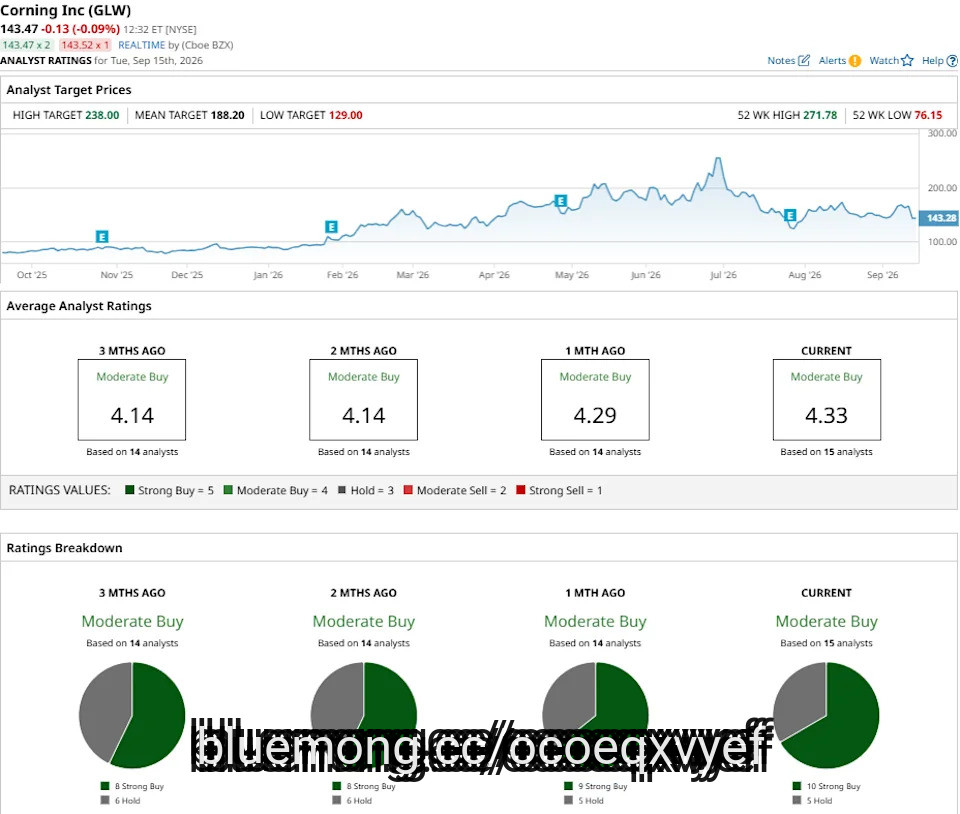
Corning stock has swung wildly of late, recently trading near $144 after plunging more than 13% in a single session following news of a $2 billion at-the-market equity offering arranged with Goldman Sachs, a move that reignited investor concerns over shareholder dilution. Shares now sit roughly in the middle of a wide 52-week range spanning $75.77 to $271.78, capturing a dramatic round trip. Corning suffered its worst monthly drop in 24 years this past July, only to rebound 8% in early September after unveiling a multibillion-dollar, 80-million-mile fiber supply deal with Verizon.
Billionaire Charlie Munger, Who Died at 99, Skipped Insurance on His Mansion Since He Could Just Write a Check to Rebuild — 'All Intelligent People Do It My Way'
Why It's Time to Load Up on Nvidia Stock
The Case for Selling CrowdStrike Stock
#meta #fiber
Corning stock has swung wildly of late, recently trading near $144 after plunging more than 13% in a single session following news of a $2 billion at-the-market equity offering arranged with Goldman Sachs, a move that reignited investor concerns over shareholder dilution. Shares now sit roughly in the middle of a wide 52-week range spanning $75.77 to $271.78, capturing a dramatic round trip. Corning suffered its worst monthly drop in 24 years this past July, only to rebound 8% in early September after unveiling a multibillion-dollar, 80-million-mile fiber supply deal with Verizon.
Billionaire Charlie Munger, Who Died at 99, Skipped Insurance on His Mansion Since He Could Just Write a Check to Rebuild — 'All Intelligent People Do It My Way'
Why It's Time to Load Up on Nvidia Stock
The Case for Selling CrowdStrike Stock
#meta #fiber


3 days ago
Parnassus Investments, an investment management company, released the "Parnassus Growth Equity Fund" second-quarter 2026 investor letter. The letter can be downloaded here. During the quarter, the Fund (Investor Shares) returned 17.49% (net of fees), outperforming the Russell 1000 Growth Index's 16.74%. Holdings in Information Technology and Consumer Discretionary sectors boosted relative returns, while Communication Services and Financials holdings detracted. For the year-to-date period, the Fund returned 6.17% (net of fees), outperforming the Russell 1000 Growth's 5.33%. The firm remains constructively bullish on U.S. equities and continues to be selective, valuation-sensitive, and focused on disruptive growth opportunities through active stock selection. Growth stocks advanced during the second quarter, as the Russell 1000 Growth Index generated strong double-digit returns driven by increased confidence in the durability of the ongoing artificial intelligence (AI) infrastructure build-out. Additionally, reviewing the Fund's top five holdings could help identify its best picks for 2026.
In its second-quarter 2026 investor letter, Parnassus Growth Equity Fund highlighted Lumentum Holdings Inc. (NASDAQ:LITE). Lumentum Holdings Inc. (NASDAQ:LITE) is a leading technology company that manufactures and sells optical and photonic products. On September 15, 2026, Lumentum Holdings Inc. closed at $838.96 per share. Over the past month, Lumentum Holdings Inc. gained 6.57%, and its shares are up 439.98% over the past year. Lumentum Holdings Inc. has a market capitalization of $75.25 billion, and its stock has traded within a 52-week range of $144.52 to $1,085.68.
Parnassus Growth Equity Fund stated the following regarding Lumentum Holdings Inc. (NASDAQ:LITE) in its Q2 2026 investor letter:
"Lumentum Holdings Inc. (NASDAQ:LITE) offers exposure to a key bottleneck in AI infrastructure, optical networking, as rising data demand drives a shift away from copper-based systems. Its components enable faster, more efficient data transfer and benefit from strong competitive advantages, including deep technical expertise and high switching costs once embedded in customer platforms."
Lumentum Holdings Inc. (NASDAQ:LITE) is not on our list of the 40 Most Popular Stocks Among Hedge Funds. According to our database, 111 hedge fund portfolios held Lumentum Holdings Inc. (NASDAQ:LITE) at the end of the second quarter, down from 123 in the previous quarter. While we acknowledge the potential of Lumentum Holdings Inc. (NASDAQ:LITE) as an investment, we believe certain AI stocks offer greater upside potential and carry less downside risk. If you're looking for an extremely undervalued AI stock that also stands to benefit significantly from Trump-era tariffs and the onshoring trend, see our free report on the best short-term AI stock.
#Growth #fund #quarter #parnassus
In its second-quarter 2026 investor letter, Parnassus Growth Equity Fund highlighted Lumentum Holdings Inc. (NASDAQ:LITE). Lumentum Holdings Inc. (NASDAQ:LITE) is a leading technology company that manufactures and sells optical and photonic products. On September 15, 2026, Lumentum Holdings Inc. closed at $838.96 per share. Over the past month, Lumentum Holdings Inc. gained 6.57%, and its shares are up 439.98% over the past year. Lumentum Holdings Inc. has a market capitalization of $75.25 billion, and its stock has traded within a 52-week range of $144.52 to $1,085.68.
Parnassus Growth Equity Fund stated the following regarding Lumentum Holdings Inc. (NASDAQ:LITE) in its Q2 2026 investor letter:
"Lumentum Holdings Inc. (NASDAQ:LITE) offers exposure to a key bottleneck in AI infrastructure, optical networking, as rising data demand drives a shift away from copper-based systems. Its components enable faster, more efficient data transfer and benefit from strong competitive advantages, including deep technical expertise and high switching costs once embedded in customer platforms."
Lumentum Holdings Inc. (NASDAQ:LITE) is not on our list of the 40 Most Popular Stocks Among Hedge Funds. According to our database, 111 hedge fund portfolios held Lumentum Holdings Inc. (NASDAQ:LITE) at the end of the second quarter, down from 123 in the previous quarter. While we acknowledge the potential of Lumentum Holdings Inc. (NASDAQ:LITE) as an investment, we believe certain AI stocks offer greater upside potential and carry less downside risk. If you're looking for an extremely undervalued AI stock that also stands to benefit significantly from Trump-era tariffs and the onshoring trend, see our free report on the best short-term AI stock.
#Growth #fund #quarter #parnassus


3 days ago
NBIS revenue surged 454% to $582M with a $37.49B contracted backlog, while ALAB posted its eighth straight EPS beat on 104% revenue growth.
GPUs are worthless without high-speed interconnects, making cables, switches, and optical modules the AI industry's most critical and most overlooked bottleneck.
CRDO plunged 42% last month despite delivering 114.7% revenue growth and guiding for over 85% full-year growth in fiscal 2027.
Just released. Our ***** ysts combed the entire stock market and named the ten best stocks to buy right now, and Astera Labs didn't make the cut. Enter your email to see the names that beat ALAB. The report is free. Enter your email and see if any of your stocks made the cut.
The interconnect layer beneath AI clusters is the current bottleneck. GPUs are useless if they cannot exchange gradients and tokens at line rate, and the cables, switches, retimers, and optical modules that carry that traffic have become the constraint the industry is racing to relieve. One data point frames the pressure: (NASDAQ:ALAB) said PCIe 6 products already made up more than 50% of its total revenue in Q2, up from one third in Q1, evidence that the connectivity generation shift is happening in quarters, not years.
#gpus #cables
GPUs are worthless without high-speed interconnects, making cables, switches, and optical modules the AI industry's most critical and most overlooked bottleneck.
CRDO plunged 42% last month despite delivering 114.7% revenue growth and guiding for over 85% full-year growth in fiscal 2027.
Just released. Our ***** ysts combed the entire stock market and named the ten best stocks to buy right now, and Astera Labs didn't make the cut. Enter your email to see the names that beat ALAB. The report is free. Enter your email and see if any of your stocks made the cut.
The interconnect layer beneath AI clusters is the current bottleneck. GPUs are useless if they cannot exchange gradients and tokens at line rate, and the cables, switches, retimers, and optical modules that carry that traffic have become the constraint the industry is racing to relieve. One data point frames the pressure: (NASDAQ:ALAB) said PCIe 6 products already made up more than 50% of its total revenue in Q2, up from one third in Q1, evidence that the connectivity generation shift is happening in quarters, not years.
#gpus #cables



4 days ago
KeyBanc targets $400 for MRVL, implying 83% upside, as the stock sits 34% below its 52-week high despite record Q2 revenue up 37% year-over-year.
A sector-wide AI chip selloff dragged Broadcom down 12% and NVIDIA down 6% over the past month, yet both still carry consensus upside above 54%.
Read More: Learn 7 secret wealth tips high net worth investors use that most investors miss (sponsor)
Marvell Technology (NASDAQ:MRVL) currently trades at $218.82, well below the consensus 12-month ****** yst price target of $284.64. That gap implies roughly 30% upside to the average, but one outlier target from KeyBanc sits at $400, a call that would nearly double the stock and represents about 83% upside from here.
Marvell designs custom AI silicon and optical interconnect chips that hyperscalers stitch into their data center fabrics. The company's data center segment now accounts for 79% of total revenue, up from 74% a year ago, which is why Wall Street tracks every hyperscaler order like a leading indicator.
#sits
A sector-wide AI chip selloff dragged Broadcom down 12% and NVIDIA down 6% over the past month, yet both still carry consensus upside above 54%.
Read More: Learn 7 secret wealth tips high net worth investors use that most investors miss (sponsor)
Marvell Technology (NASDAQ:MRVL) currently trades at $218.82, well below the consensus 12-month ****** yst price target of $284.64. That gap implies roughly 30% upside to the average, but one outlier target from KeyBanc sits at $400, a call that would nearly double the stock and represents about 83% upside from here.
Marvell designs custom AI silicon and optical interconnect chips that hyperscalers stitch into their data center fabrics. The company's data center segment now accounts for 79% of total revenue, up from 74% a year ago, which is why Wall Street tracks every hyperscaler order like a leading indicator.
#sits

4 days ago
The artificial intelligence (AI) boom is entering a new phase, and this time, the battle is moving deeper into the data center. It is no longer simply about who can build the fastest AI accelerator. Hyperscalers are scrambling for more compute, faster connectivity, and better power efficiency as AI workloads continue to grow at a breakneck pace. That is opening the door for chipmakers that can deliver customized, energy-efficient solutions at scale.
Qualcomm (QCOM) wants a seat at that table. The company just landed a major multi-generational collaboration with Amazon (AMZN) to supply customized silicon, systems, and related technology for large-scale AI data centers, with a focus on inference. The partnership also extends into high-speed optical connectivity, an increasingly critical piece of the AI infrastructure puzzle.
Goldman Sachs Expects Fed Chair Kevin Warsh to Raise Rates This Week — But Not Because of Oil Prices.
Morgan Stanley Doubles Down on Apple Stock as New Offerings Become 'More Exciting'
The EV Bubble Has Burst. How to Play Rivian Stock Now.
#customized #hyperscalers #amzn
Qualcomm (QCOM) wants a seat at that table. The company just landed a major multi-generational collaboration with Amazon (AMZN) to supply customized silicon, systems, and related technology for large-scale AI data centers, with a focus on inference. The partnership also extends into high-speed optical connectivity, an increasingly critical piece of the AI infrastructure puzzle.
Goldman Sachs Expects Fed Chair Kevin Warsh to Raise Rates This Week — But Not Because of Oil Prices.
Morgan Stanley Doubles Down on Apple Stock as New Offerings Become 'More Exciting'
The EV Bubble Has Burst. How to Play Rivian Stock Now.
#customized #hyperscalers #amzn



4 days ago
KeyBanc targets $400 for MRVL, implying 83% upside, as the stock sits 34% below its 52-week high despite record Q2 revenue up 37% year-over-year.
A sector-wide AI chip selloff dragged Broadcom down 12% and NVIDIA down 6% over the past month, yet both still carry consensus upside above 54%.
Read More: Learn 7 secret wealth tips high net worth investors use that most investors miss (sponsor)
Marvell Technology (NASDAQ:MRVL) currently trades at $218.82, well below the consensus 12-month ****** yst price target of $284.64. That gap implies roughly 30% upside to the average, but one outlier target from KeyBanc sits at $400, a call that would nearly double the stock and represents about 83% upside from here.
Marvell designs custom AI silicon and optical interconnect chips that hyperscalers stitch into their data center fabrics. The company's data center segment now accounts for 79% of total revenue, up from 74% a year ago, which is why Wall Street tracks every hyperscaler order like a leading indicator.
#marvell #below
A sector-wide AI chip selloff dragged Broadcom down 12% and NVIDIA down 6% over the past month, yet both still carry consensus upside above 54%.
Read More: Learn 7 secret wealth tips high net worth investors use that most investors miss (sponsor)
Marvell Technology (NASDAQ:MRVL) currently trades at $218.82, well below the consensus 12-month ****** yst price target of $284.64. That gap implies roughly 30% upside to the average, but one outlier target from KeyBanc sits at $400, a call that would nearly double the stock and represents about 83% upside from here.
Marvell designs custom AI silicon and optical interconnect chips that hyperscalers stitch into their data center fabrics. The company's data center segment now accounts for 79% of total revenue, up from 74% a year ago, which is why Wall Street tracks every hyperscaler order like a leading indicator.
#marvell #below


4 days ago
The artificial intelligence (AI) boom is entering a new phase, and this time, the battle is moving deeper into the data center. It is no longer simply about who can build the fastest AI accelerator. Hyperscalers are scrambling for more compute, faster connectivity, and better power efficiency as AI workloads continue to grow at a breakneck pace. That is opening the door for chipmakers that can deliver customized, energy-efficient solutions at scale.
Qualcomm (QCOM) wants a seat at that table. The company just landed a major multi-generational collaboration with Amazon (AMZN) to supply customized silicon, systems, and related technology for large-scale AI data centers, with a focus on inference. The partnership also extends into high-speed optical connectivity, an increasingly critical piece of the AI infrastructure puzzle.
Goldman Sachs Expects Fed Chair Kevin Warsh to Raise Rates This Week — But Not Because of Oil Prices.
Morgan Stanley Doubles Down on Apple Stock as New Offerings Become 'More Exciting'
The EV Bubble Has Burst. How to Play Rivian Stock Now.
#customized #amzn
Qualcomm (QCOM) wants a seat at that table. The company just landed a major multi-generational collaboration with Amazon (AMZN) to supply customized silicon, systems, and related technology for large-scale AI data centers, with a focus on inference. The partnership also extends into high-speed optical connectivity, an increasingly critical piece of the AI infrastructure puzzle.
Goldman Sachs Expects Fed Chair Kevin Warsh to Raise Rates This Week — But Not Because of Oil Prices.
Morgan Stanley Doubles Down on Apple Stock as New Offerings Become 'More Exciting'
The EV Bubble Has Burst. How to Play Rivian Stock Now.
#customized #amzn


4 days ago
OpenAI acquired Glass Imaging, a startup developing AI-powered smartphone camera technology, in a deal valued at over $300 million, according to The Wall Street Journal. The purchase price represents a significant jump from the roughly $100 million valuation Glass Imaging carried in a funding round last year.
Glass Imaging was founded in 2019 by Ziv Attar and Tom Bishop, two former Apple engineers who worked on the company's Portrait Mode feature. The Los Altos, California-based company had raised about $30 million from investors including GV, Alphabet's venture arm, and Insight Partners before the acquisition.
Glass Imaging's approach differs from conventional AI photo editing: instead of processing images after the fact, the company teaches neural networks the specific optical properties of each camera system so that picture quality is improved as the shot is taken, according to The Wall Street Journal. The company's goal is to produce image quality comparable to a DSLR camera from a smartphone. Its zoom-imaging technology was featured in a line of phones from Chinese smartphone brand Honor.
OpenAI's plans for Glass Imaging are unclear. The company is also developing a device with Jony Ive, the former Apple designer behind the iPhone. OpenAI brought on Ive in 2025 through its $6.5 billion purchase of io Products, and his responsibilities span hardware development alongside broader efforts to define how AI products will look and function.
A spokesperson for OpenAI had not provided a statement by the time of publication, according to TechCrunch. The company has made several other acquisitions recently, including an internet talk show called TBPN and an open-source developer tools startup, according to The Wall Street Journal. OpenAI is also preparing for an initial public offering expected next year.
#according #journal
Glass Imaging was founded in 2019 by Ziv Attar and Tom Bishop, two former Apple engineers who worked on the company's Portrait Mode feature. The Los Altos, California-based company had raised about $30 million from investors including GV, Alphabet's venture arm, and Insight Partners before the acquisition.
Glass Imaging's approach differs from conventional AI photo editing: instead of processing images after the fact, the company teaches neural networks the specific optical properties of each camera system so that picture quality is improved as the shot is taken, according to The Wall Street Journal. The company's goal is to produce image quality comparable to a DSLR camera from a smartphone. Its zoom-imaging technology was featured in a line of phones from Chinese smartphone brand Honor.
OpenAI's plans for Glass Imaging are unclear. The company is also developing a device with Jony Ive, the former Apple designer behind the iPhone. OpenAI brought on Ive in 2025 through its $6.5 billion purchase of io Products, and his responsibilities span hardware development alongside broader efforts to define how AI products will look and function.
A spokesperson for OpenAI had not provided a statement by the time of publication, according to TechCrunch. The company has made several other acquisitions recently, including an internet talk show called TBPN and an open-source developer tools startup, according to The Wall Street Journal. OpenAI is also preparing for an initial public offering expected next year.
#according #journal


5 days ago
Parnassus Investments, an investment management company, released the "Parnassus Growth Equity Fund" second-quarter 2026 investor letter. The letter can be downloaded here. During the quarter, the Fund (Investor Shares) returned 17.49% (net of fees), outperforming the Russell 1000 Growth Index's 16.74%. Holdings in Information Technology and Consumer Discretionary sectors boosted relative returns, while Communication Services and Financials holdings detracted. For the year-to-date period, the Fund returned 6.17% (net of fees), outperforming the Russell 1000 Growth's 5.33%. The firm remains constructively bullish on U.S. equities and continues to be selective, valuation-sensitive, and focused on disruptive growth opportunities through active stock selection. Growth stocks advanced during the second quarter, as the Russell 1000 Growth Index generated strong double-digit returns driven by increased confidence in the durability of the ongoing artificial intelligence (AI) infrastructure build-out. Additionally, reviewing the Fund's top five holdings could help identify its best picks for 2026.
In its second-quarter 2026 investor letter, Parnassus Growth Equity Fund highlighted Lumentum Holdings Inc. (NASDAQ:LITE). Lumentum Holdings Inc. (NASDAQ:LITE) is a leading technology company that manufactures and sells optical and photonic products. On September 15, 2026, Lumentum Holdings Inc. closed at $838.96 per share. Over the past month, Lumentum Holdings Inc. gained 6.57%, and its shares are up 439.98% over the past year. Lumentum Holdings Inc. has a market capitalization of $75.25 billion, and its stock has traded within a 52-week range of $144.52 to $1,085.68.
Parnassus Growth Equity Fund stated the following regarding Lumentum Holdings Inc. (NASDAQ:LITE) in its Q2 2026 investor letter:
"Lumentum Holdings Inc. (NASDAQ:LITE) offers exposure to a key bottleneck in AI infrastructure, optical networking, as rising data demand drives a shift away from copper-based systems. Its components enable faster, more efficient data transfer and benefit from strong competitive advantages, including deep technical expertise and high switching costs once embedded in customer platforms."
Lumentum Holdings Inc. (NASDAQ:LITE) is not on our list of the 40 Most Popular Stocks Among Hedge Funds. According to our database, 111 hedge fund portfolios held Lumentum Holdings Inc. (NASDAQ:LITE) at the end of the second quarter, down from 123 in the previous quarter. While we acknowledge the potential of Lumentum Holdings Inc. (NASDAQ:LITE) as an investment, we believe certain AI stocks offer greater upside potential and carry less downside risk. If you're looking for an extremely undervalued AI stock that also stands to benefit significantly from Trump-era tariffs and the onshoring trend, see our free report on the best short-term AI stock.
#lumentum #lite #Growth #investor
In its second-quarter 2026 investor letter, Parnassus Growth Equity Fund highlighted Lumentum Holdings Inc. (NASDAQ:LITE). Lumentum Holdings Inc. (NASDAQ:LITE) is a leading technology company that manufactures and sells optical and photonic products. On September 15, 2026, Lumentum Holdings Inc. closed at $838.96 per share. Over the past month, Lumentum Holdings Inc. gained 6.57%, and its shares are up 439.98% over the past year. Lumentum Holdings Inc. has a market capitalization of $75.25 billion, and its stock has traded within a 52-week range of $144.52 to $1,085.68.
Parnassus Growth Equity Fund stated the following regarding Lumentum Holdings Inc. (NASDAQ:LITE) in its Q2 2026 investor letter:
"Lumentum Holdings Inc. (NASDAQ:LITE) offers exposure to a key bottleneck in AI infrastructure, optical networking, as rising data demand drives a shift away from copper-based systems. Its components enable faster, more efficient data transfer and benefit from strong competitive advantages, including deep technical expertise and high switching costs once embedded in customer platforms."
Lumentum Holdings Inc. (NASDAQ:LITE) is not on our list of the 40 Most Popular Stocks Among Hedge Funds. According to our database, 111 hedge fund portfolios held Lumentum Holdings Inc. (NASDAQ:LITE) at the end of the second quarter, down from 123 in the previous quarter. While we acknowledge the potential of Lumentum Holdings Inc. (NASDAQ:LITE) as an investment, we believe certain AI stocks offer greater upside potential and carry less downside risk. If you're looking for an extremely undervalued AI stock that also stands to benefit significantly from Trump-era tariffs and the onshoring trend, see our free report on the best short-term AI stock.
#lumentum #lite #Growth #investor


8 days ago
The latest monthly list of new buys by the best mutual funds puts a dazzling spotlight on Lumentum (LITE). These savvy money managers scooped up an eye-catching $13.11 billion worth of Lumentum stock. The optical and photonics giant plays a key role in powering the infrastructure behind artificial intelligence, cloud computing, and next-generation communications. Demand from top funds continues to…
#funds #list
#funds #list

9 days ago
But first, what's optoelectronics?
Computers speak in electrons. Fiber in fiber optic cable speaks photons. Connect the two and that's optoelectronics.
Lasers provide the light and modulators encode digital information to be transmitted:
Optoelectronics technology is efficient and solving a data transmission problem that's been an AI bottleneck recently.
Recent pullbacks in two great optoelectronics companies have provided potentially attractive opportunities. The first company is Ciena (CIEN), a $50 billion market capitalization firm that makes high-speed optical network equipment.
#optoelectronics #fiber #connect #speak
Computers speak in electrons. Fiber in fiber optic cable speaks photons. Connect the two and that's optoelectronics.
Lasers provide the light and modulators encode digital information to be transmitted:
Optoelectronics technology is efficient and solving a data transmission problem that's been an AI bottleneck recently.
Recent pullbacks in two great optoelectronics companies have provided potentially attractive opportunities. The first company is Ciena (CIEN), a $50 billion market capitalization firm that makes high-speed optical network equipment.
#optoelectronics #fiber #connect #speak


10 days ago
Our ***** ysts just identified a stock with the potential to be the next Nvidia. Tell us how you invest and we'll show you why it's our #1 pick. Tap here.
Net sales growth of 22% was primarily driven by sustained demand across enterprise, data center, and specialty market sectors, including military applications.
Gross profit margin expansion to 37.4% demonstrates significant manufacturing operating leverage, where fixed costs are distributed over higher production volumes.
Management attributes margin improvements to increased manufacturing efficiencies that naturally occur as production volumes scale.
The company is navigating industry-wide optical fiber shortages and raw material lead time extensions by actively managing supply chain dynamics to protect customer deliveries.
#Margin #Manufacturing #volumes #management
Net sales growth of 22% was primarily driven by sustained demand across enterprise, data center, and specialty market sectors, including military applications.
Gross profit margin expansion to 37.4% demonstrates significant manufacturing operating leverage, where fixed costs are distributed over higher production volumes.
Management attributes margin improvements to increased manufacturing efficiencies that naturally occur as production volumes scale.
The company is navigating industry-wide optical fiber shortages and raw material lead time extensions by actively managing supply chain dynamics to protect customer deliveries.
#Margin #Manufacturing #volumes #management

10 days ago
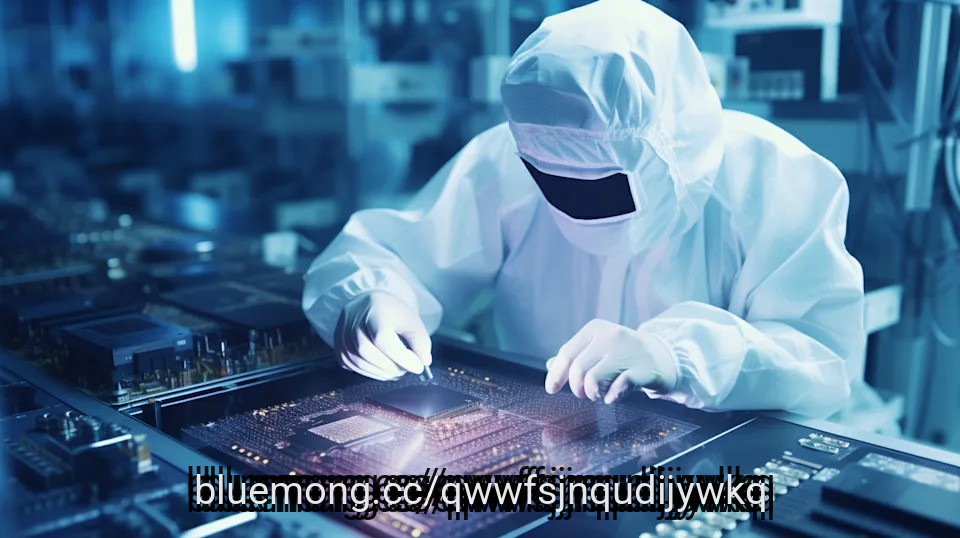
On September 2, Michael Genovese from Rosenblatt Securities reiterated his Neutral rating for Credo Technology Group Holding Ltd (NASDAQ:CRDO). The **** yst increased his price target for the stock from $215 to $235, which implies upside potential of almost 38% as of September 4 closing. Genovese's upward adjustment in price target in based on the company's recently announced Q1 FY27 results, leading him to increase his projections for FY27 and FY28. Despite that, he has a Neutral stance because he still wants more visibility around the company's ZeroFlap Optical Transceivers proof points, as well as the incremental revenues from its acquisition of Dust Photonics in May.
Photo by Yogesh Phuyal on Unsplash
Credo's acquisition of DustPhotonics gives it a vertically integrated connectivity stack covering DSP, silicon photonics, SerDes and system integration. This allows the company to tap into both optical and electrical interconnects across the entire AI infrastructure buildout. Together with its optical DSPs and ZeroFlap transceivers, the deal is expected to be a key growth driver in FY27, supported by resilient hyperscale customer sentiment.
Following the DustPhotonics transaction, Credo reported a strong first quarter for FY27. Topline of $479 million jumped 115% compared to Q1 in FY26. Adjusted non-GAAP net income of $236.3 million was up 140% year-over-year, as the company broadens its connectivity portfolio stack. It now spans copper and optical solutions, ranging from millimeters to kilometers, which enables Credo to meet the scaling needs of AI infrastructure with energy-efficient and reliable products.
For FY27, Credo expects a strong inflection with optical revenues expected to exceed $600 million. Management projects contributions over $100 million each from silicon photonics, ZeroFlap optics, and optical DSPs. Full-year revenue growth is expected to be over 85% year-over-year. Adjusted gross margins are likely to remain consistent with fiscal 2026 levels, along with adjusted net margins of around 50%.
#expected
Photo by Yogesh Phuyal on Unsplash
Credo's acquisition of DustPhotonics gives it a vertically integrated connectivity stack covering DSP, silicon photonics, SerDes and system integration. This allows the company to tap into both optical and electrical interconnects across the entire AI infrastructure buildout. Together with its optical DSPs and ZeroFlap transceivers, the deal is expected to be a key growth driver in FY27, supported by resilient hyperscale customer sentiment.
Following the DustPhotonics transaction, Credo reported a strong first quarter for FY27. Topline of $479 million jumped 115% compared to Q1 in FY26. Adjusted non-GAAP net income of $236.3 million was up 140% year-over-year, as the company broadens its connectivity portfolio stack. It now spans copper and optical solutions, ranging from millimeters to kilometers, which enables Credo to meet the scaling needs of AI infrastructure with energy-efficient and reliable products.
For FY27, Credo expects a strong inflection with optical revenues expected to exceed $600 million. Management projects contributions over $100 million each from silicon photonics, ZeroFlap optics, and optical DSPs. Full-year revenue growth is expected to be over 85% year-over-year. Adjusted gross margins are likely to remain consistent with fiscal 2026 levels, along with adjusted net margins of around 50%.
#expected


10 days ago
Qualcomm (QCOM) stock rose 3.2% on Sept. 8 after the chipmaker announced a partnership with Amazon (AMZN) focused on customized AI data center silicon. The agreement could generate up to $60 billion in revenue opportunities over the next decade, giving Qualcomm a new growth avenue as revenue related to Apple (AAPL) declines.
Qualcomm is strengthening its position in the fast-expanding artificial intelligence (AI) infrastructure market through a multi-year partnership with Amazon. The companies plan to develop customized silicon for large-scale AI data centers. Moreover, the partnership also includes work on optical connectivity technologies, along with solutions designed for future generations of AI infrastructure.
Dear Nvidia Stock Fans, Mark Your Calendars for September 10
Rocket Lab Keeps Landing Defense Deals. Here's Why ******* ysts Aren't Getting More Bullish.
Why Stifel Just Revamped Its Price Target for Microsoft Stock
#qualcomm #partnership #customized
Qualcomm is strengthening its position in the fast-expanding artificial intelligence (AI) infrastructure market through a multi-year partnership with Amazon. The companies plan to develop customized silicon for large-scale AI data centers. Moreover, the partnership also includes work on optical connectivity technologies, along with solutions designed for future generations of AI infrastructure.
Dear Nvidia Stock Fans, Mark Your Calendars for September 10
Rocket Lab Keeps Landing Defense Deals. Here's Why ******* ysts Aren't Getting More Bullish.
Why Stifel Just Revamped Its Price Target for Microsoft Stock
#qualcomm #partnership #customized


10 days ago
Credo Technology Group Holding Ltd (NASDAQ:CRDO) reported fiscal first-quarter 2027 revenue of $479.0 million, up 9.6% sequentially. Management said the company's connectivity portfolio now spans copper and optical products, while total revenue increased 114.7% year over year. GAAP gross margin fell to 64.5% from 68.2% in the preceding quarter and 67.4% one year earlier.
GAAP operating expenses increased to $188.4 million from $142.2 million sequentially, while GAAP operating income declined to $120.7 million from $155.8 million. Credo Technology Group Holding Ltd (NASDAQ:CRDO) nevertheless expects another quarter of growth, guiding fiscal second-quarter revenue to $525 million to $535 million. The $530 million midpoint implies approximately 10.6% sequential expansion.
The question is whether revenue growth and the broader AI connectivity portfolio can offset acquisition-related costs and rising operating expenses.
Revenue scale remains the central strength. Credo Technology Group Holding Ltd (NASDAQ:CRDO) offers active electrical cables, optical transceivers, digital signal processors, silicon-photonics components, retimers, and chip-to-chip connectivity. These products address connections spanning short distances inside AI systems through longer links across clusters.
Absolute GAAP gross profit still increased to $309.1 million from $298.1 million sequentially despite the lower margin. Credo Technology Group Holding Ltd (NASDAQ:CRDO) ended the quarter with $764.3 million in cash and short-term investments, down from approximately $1.44 billion following completion of the DustPhotonics acquisition during the quarter. The remaining liquidity supports research, product development, and capacity requirements.
#crdo
GAAP operating expenses increased to $188.4 million from $142.2 million sequentially, while GAAP operating income declined to $120.7 million from $155.8 million. Credo Technology Group Holding Ltd (NASDAQ:CRDO) nevertheless expects another quarter of growth, guiding fiscal second-quarter revenue to $525 million to $535 million. The $530 million midpoint implies approximately 10.6% sequential expansion.
The question is whether revenue growth and the broader AI connectivity portfolio can offset acquisition-related costs and rising operating expenses.
Revenue scale remains the central strength. Credo Technology Group Holding Ltd (NASDAQ:CRDO) offers active electrical cables, optical transceivers, digital signal processors, silicon-photonics components, retimers, and chip-to-chip connectivity. These products address connections spanning short distances inside AI systems through longer links across clusters.
Absolute GAAP gross profit still increased to $309.1 million from $298.1 million sequentially despite the lower margin. Credo Technology Group Holding Ltd (NASDAQ:CRDO) ended the quarter with $764.3 million in cash and short-term investments, down from approximately $1.44 billion following completion of the DustPhotonics acquisition during the quarter. The remaining liquidity supports research, product development, and capacity requirements.
#crdo
0.00$ raised of 0.00$ goal
0 donations
0.00$
to go
12 days ago
Corning (GLW) stock rose Tuesday after the provider of optical communications gear for telecom networks and artificial intelligence data centers announced a multibillion-dollar agreement with longtime customer Verizon Communications (VZ). Corning stock has advanced 70% in 2026, but shares have retreated from a 52-week high set on June 30.
Under the deal, Verizon will buy optical fiber and connectivity products from 2027 to 2032 for its landline broadband network. Verizon also is building a new long-distance backbone network for cloud computing companies.
On the stock market today, Corning stock rose more than 7% to 165.70 in morning trading. Corning stock hit a high of 271.78 on June 30. Meanwhile, Verizon stock climbed nearly 1% to 50.51.
Corning was long known for its flat-panel display business and Gorilla Glass used in smartphones. But the company has pivoted to become a provider of fiber, cables, connectors and networking components needed to link AI computer servers inside and between AI data centers.
Nvidia (NVDA) recently agreed to invest up to $3.2 billion in Corning under a warrant deal. Corning plans to expand production capacity for AI data centers.
#Stock #centers
Under the deal, Verizon will buy optical fiber and connectivity products from 2027 to 2032 for its landline broadband network. Verizon also is building a new long-distance backbone network for cloud computing companies.
On the stock market today, Corning stock rose more than 7% to 165.70 in morning trading. Corning stock hit a high of 271.78 on June 30. Meanwhile, Verizon stock climbed nearly 1% to 50.51.
Corning was long known for its flat-panel display business and Gorilla Glass used in smartphones. But the company has pivoted to become a provider of fiber, cables, connectors and networking components needed to link AI computer servers inside and between AI data centers.
Nvidia (NVDA) recently agreed to invest up to $3.2 billion in Corning under a warrant deal. Corning plans to expand production capacity for AI data centers.
#Stock #centers


12 days ago
Stewart ***** et Management's flagship portfolio returned 15.97%, net of fees, in the second quarter, and the S&P 500 Index gained 15.20%. YTD, it appreciated 5.37%, net of fees, and the S&P 500 Index gained 10.21%. The letter can be downloaded here. Despite geopolitical uncertainties, share prices surged higher as emerging prospects for a ceasefire in the Middle East restored market composure and investor optimism for continued earnings growth in the second half of the year. Volatility in share prices was noted, particularly tied to industrial trends like AI, with comparisons made to the internet boom and personal computer adoption. Despite concerns about extreme valuations and potential corrections, the conclusion is that strong earnings growth is fundamental to rising share prices, emphasizing the importance of investing in robust businesses. Please check the fund's top five holdings for its best picks in 2026.
In its second-quarter 2026 investor letter, Stewart ***** et Management highlighted Lumentum Holdings Inc. (NASDAQ:LITE). Lumentum Holdings Inc. (NASDAQ:LITE) is a leading technology company that manufactures and sells optical and photonic products. On September 04, 2026, Lumentum Holdings Inc. (NASDAQ:LITE) closed at $881.26 per share. Over the past month, Lumentum Holdings Inc. (NASDAQ:LITE) gained 13.83%, and its shares are up 519.81% over the past year. Lumentum Holdings Inc. (NASDAQ:LITE) has a market capitalization of $79.05 billion, and its stock has traded within a 52-week range of $144.52 to $1,085.68.
Stewart ***** et Management stated the following regarding Lumentum Holdings Inc. (NASDAQ:LITE) in its Q2 2026 investor letter:
"During the quarter we initiated a small investment in Lumentum Holdings Inc. (NASDAQ:LITE), a leader in optical networking — the hardware that moves data between AI chips, servers, and data centers. We believe AI infrastructure spending is driving an optical upgrade cycle from which Lumentum may benefit. Demand outstrips supply, and customer agreements now extend through 2027 as data centers grow in number and size. Capturing this opportunity requires execution on capacity expansion and continued hyperscaler willingness to invest in AI infrastructure. The primary risks ***** ociated with the company are its concentration of revenue from a small number of customers, product timelines shifting and emerging technologies. However, we believe that the positives noted above outweigh these risks."
Lumentum Holdings Inc. (NASDAQ:LITE) is not on our list of the 40 Most Popular Stocks Among Hedge Funds. According to our database, 111 hedge fund portfolios held Lumentum Holdings Inc. (NASDAQ:LITE) at the end of the second quarter, down from 123 in the previous quarter. While we acknowledge the potential of Lumentum Holdings Inc. (NASDAQ:LITE) as an investment, we believe certain AI stocks offer greater upside potential and carry less downside risk. If you're looking for an extremely undervalued AI stock that a
In its second-quarter 2026 investor letter, Stewart ***** et Management highlighted Lumentum Holdings Inc. (NASDAQ:LITE). Lumentum Holdings Inc. (NASDAQ:LITE) is a leading technology company that manufactures and sells optical and photonic products. On September 04, 2026, Lumentum Holdings Inc. (NASDAQ:LITE) closed at $881.26 per share. Over the past month, Lumentum Holdings Inc. (NASDAQ:LITE) gained 13.83%, and its shares are up 519.81% over the past year. Lumentum Holdings Inc. (NASDAQ:LITE) has a market capitalization of $79.05 billion, and its stock has traded within a 52-week range of $144.52 to $1,085.68.
Stewart ***** et Management stated the following regarding Lumentum Holdings Inc. (NASDAQ:LITE) in its Q2 2026 investor letter:
"During the quarter we initiated a small investment in Lumentum Holdings Inc. (NASDAQ:LITE), a leader in optical networking — the hardware that moves data between AI chips, servers, and data centers. We believe AI infrastructure spending is driving an optical upgrade cycle from which Lumentum may benefit. Demand outstrips supply, and customer agreements now extend through 2027 as data centers grow in number and size. Capturing this opportunity requires execution on capacity expansion and continued hyperscaler willingness to invest in AI infrastructure. The primary risks ***** ociated with the company are its concentration of revenue from a small number of customers, product timelines shifting and emerging technologies. However, we believe that the positives noted above outweigh these risks."
Lumentum Holdings Inc. (NASDAQ:LITE) is not on our list of the 40 Most Popular Stocks Among Hedge Funds. According to our database, 111 hedge fund portfolios held Lumentum Holdings Inc. (NASDAQ:LITE) at the end of the second quarter, down from 123 in the previous quarter. While we acknowledge the potential of Lumentum Holdings Inc. (NASDAQ:LITE) as an investment, we believe certain AI stocks offer greater upside potential and carry less downside risk. If you're looking for an extremely undervalued AI stock that a

15 days ago
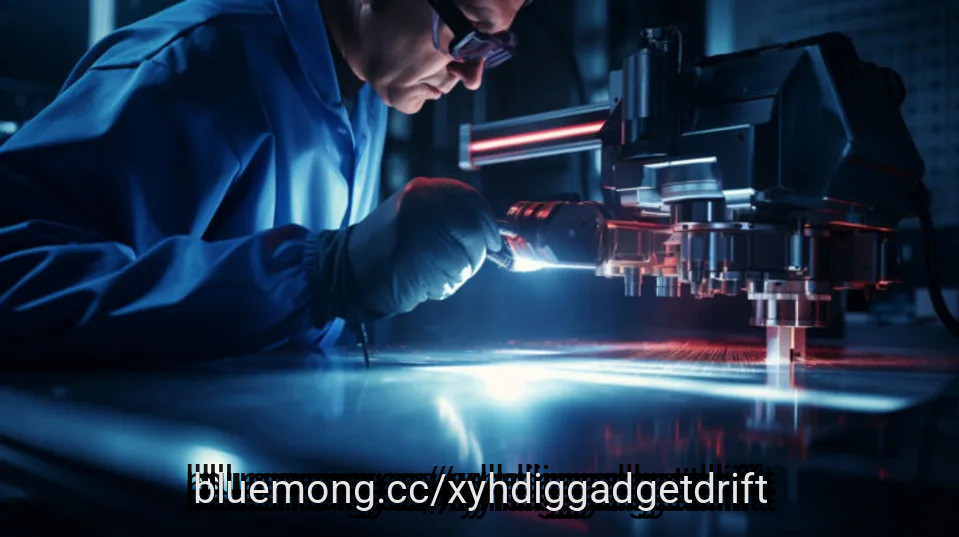
Vertiv, Applied Optoelectronics, and Innodata entered September well below their 2026 highs despite strong operating growth. The pullbacks do not make them interchangeable bargains. Vertiv Holdings Co. (NYSE:VRT) sells power and cooling, Applied Optoelectronics, Inc. (NASDAQ:AAOI) supplies optical transceivers, and Innodata Inc. (NASDAQ:INOD) provides data engineering and model-evaluation services.
Vertiv's second-quarter sales rose 24% to $3.27 billion, adjusted operating margin expanded 410 basis points to 22.6%, and adjusted free cash flow reached $925 million. The bull case is rising power and thermal content per AI rack. The bear case is project timing, supply congestion, and expectations built around long-duration demand. Insider Monkey counted 112 hedge funds holding Vertiv Holdings Co. (NYSE:VRT) in Q2, up from 96 in Q1. Cliff Asness's AQR Capital reported 2,686,683 shares, 0.5% more sequentially.
Applied Optoelectronics posted record revenue of $191.9 million, while 800G volume more than doubled from Q1. Management expects 800G and 1.6-terabit demand to exceed production capacity through mid-2027. That capacity ramp is the bull case; a 27.7% GAAP gross margin, a $22.8 million GAAP loss, customer concentration, and execution are the bear case. Fifty-four hedge funds held Applied Optoelectronics, Inc. (NASDAQ:AAOI), down from 55. Value Aligned Research disclosed 1,595,124 shares, 26% more sequentially.
Innodata's revenue grew 58% to $92.1 million and adjusted EBITDA rose 92% to $25.4 million. Its reusable data sets and evaluation work can expand margins, but large-customer dependence and rapidly changing model-training methods create risk. Twenty-five hedge funds held Innodata Inc. (NASDAQ:INOD), up from 20. Mitch Rubin's RiverPark Advisors reported 2,042 shares, 18% more than in Q1.
AAOI's August 14 short-interest settlement showed 10,421,985 shares sold short, equal to 12.81% of float, with 0.69 days to cover..The elevated short-float percentage signals substantial bearish positioning, while the low days-to-cover ratio suggests shorts could cover relatively quickly at recent trading volumes.Vertiv has the strongest cash generation, AAOI the sharpest capacity upside, and Innodata the lightest physical footprint. A buying opportunity exists only if margins, customer diversification, and cash conversion justify each stock's remaining expectations. The risks also differ in timing. Vertiv can lose on delayed data-center construction, AAOI can lose during the manufacturing ramp, and Innodata can lose when a major customer changes vendors or training methods. Investors should therefore avoid using distance from a high as valuation ******* ysis. Order conversion, gross-margin durability, customer concentration, and diluted share growth are the comparable checkpoints. The pullback improves entry prices, but only operating evidence can establish value. Balance-sheet resilience matters most when capacity plans meet a weaker cycle.
#innodata
Vertiv's second-quarter sales rose 24% to $3.27 billion, adjusted operating margin expanded 410 basis points to 22.6%, and adjusted free cash flow reached $925 million. The bull case is rising power and thermal content per AI rack. The bear case is project timing, supply congestion, and expectations built around long-duration demand. Insider Monkey counted 112 hedge funds holding Vertiv Holdings Co. (NYSE:VRT) in Q2, up from 96 in Q1. Cliff Asness's AQR Capital reported 2,686,683 shares, 0.5% more sequentially.
Applied Optoelectronics posted record revenue of $191.9 million, while 800G volume more than doubled from Q1. Management expects 800G and 1.6-terabit demand to exceed production capacity through mid-2027. That capacity ramp is the bull case; a 27.7% GAAP gross margin, a $22.8 million GAAP loss, customer concentration, and execution are the bear case. Fifty-four hedge funds held Applied Optoelectronics, Inc. (NASDAQ:AAOI), down from 55. Value Aligned Research disclosed 1,595,124 shares, 26% more sequentially.
Innodata's revenue grew 58% to $92.1 million and adjusted EBITDA rose 92% to $25.4 million. Its reusable data sets and evaluation work can expand margins, but large-customer dependence and rapidly changing model-training methods create risk. Twenty-five hedge funds held Innodata Inc. (NASDAQ:INOD), up from 20. Mitch Rubin's RiverPark Advisors reported 2,042 shares, 18% more than in Q1.
AAOI's August 14 short-interest settlement showed 10,421,985 shares sold short, equal to 12.81% of float, with 0.69 days to cover..The elevated short-float percentage signals substantial bearish positioning, while the low days-to-cover ratio suggests shorts could cover relatively quickly at recent trading volumes.Vertiv has the strongest cash generation, AAOI the sharpest capacity upside, and Innodata the lightest physical footprint. A buying opportunity exists only if margins, customer diversification, and cash conversion justify each stock's remaining expectations. The risks also differ in timing. Vertiv can lose on delayed data-center construction, AAOI can lose during the manufacturing ramp, and Innodata can lose when a major customer changes vendors or training methods. Investors should therefore avoid using distance from a high as valuation ******* ysis. Order conversion, gross-margin durability, customer concentration, and diluted share growth are the comparable checkpoints. The pullback improves entry prices, but only operating evidence can establish value. Balance-sheet resilience matters most when capacity plans meet a weaker cycle.
#innodata

15 days ago
Nvidia rose only 0.8% on September 4, while Astera Labs jumped 9.8% and Marvell gained 7.1%. The comparison was consistent with investors broadening the AI trade beyond accelerators into connectivity suppliers. Astera's rally also coincided with speculation that the company could be added to the S&P 500, although it was ultimately not selected in the September rebalance. Bigger accelerator clusters need retimers, switches, optical links, and custom silicon to move data without leaving expensive processors idle. Astera Labs, Inc. (NASDAQ:ALAB) and Marvell Technology, Inc. (NASDAQ:MRVL) monetize that connectivity bottleneck from different positions.
Photo from Astera Labs
Astera is the focused rack-scale connectivity play. Its second-quarter update said a Q3 production ramp of the Scorpio X-Series 320-lane fabric switch was expected to drive the next revenue inflection, alongside growth opportunities across Aries, Taurus, and Leo. The bull case is content growth: each new generation of AI rack can require more connectivity silicon and software. The bear case is dependence on a concentrated group of hyperscale customers, product-transition timing, and a valuation that ***** umes strong adoption before every design win becomes revenue.
Hedge-fund breadth strengthened before the rally. Insider Monkey counted 73 funds holding Astera Labs, Inc. (NASDAQ:ALAB) at June 30, up from 53 at March 31. Lee Ainslie's Maverick Capital disclosed 1,067,215 shares, 12% more than in Q1. The quarter-end filing cannot show whether Maverick participated in the September move.
Marvell is more diversified. Its data-center business spans custom compute, electro-optics, switching, and interconnect, giving it multiple ways to benefit as cloud companies redesign AI systems. That breadth is the bull case because one customer's architecture can pull several product families. It is also the risk: custom programs can be lumpy, development costs arrive before revenue, and investors may overestimate the near-term contribution of announced wins.
#september #alab
Photo from Astera Labs
Astera is the focused rack-scale connectivity play. Its second-quarter update said a Q3 production ramp of the Scorpio X-Series 320-lane fabric switch was expected to drive the next revenue inflection, alongside growth opportunities across Aries, Taurus, and Leo. The bull case is content growth: each new generation of AI rack can require more connectivity silicon and software. The bear case is dependence on a concentrated group of hyperscale customers, product-transition timing, and a valuation that ***** umes strong adoption before every design win becomes revenue.
Hedge-fund breadth strengthened before the rally. Insider Monkey counted 73 funds holding Astera Labs, Inc. (NASDAQ:ALAB) at June 30, up from 53 at March 31. Lee Ainslie's Maverick Capital disclosed 1,067,215 shares, 12% more than in Q1. The quarter-end filing cannot show whether Maverick participated in the September move.
Marvell is more diversified. Its data-center business spans custom compute, electro-optics, switching, and interconnect, giving it multiple ways to benefit as cloud companies redesign AI systems. That breadth is the bull case because one customer's architecture can pull several product families. It is also the risk: custom programs can be lumpy, development costs arrive before revenue, and investors may overestimate the near-term contribution of announced wins.
#september #alab


16 days ago
During the September 1 episode of Mad Money, a caller inquired whether Marvell Technology, Inc. (NASDAQ:MRVL) is a buy. In response, Jim Cramer commented:
Okay, this is another one that proves my point. Marvell reported an amazing quarter. What they then said was, "Look, listen, maybe our big win won't be till 2029… It's going to be pushed back." They have an October meeting, beginning of October, their ****** yst meeting. That's going to tell us what's going to happen. I don't feel comfortable until I see what they say before I say just pull the trigger.
Marvell Technology, Inc. (NASDAQ:MRVL) has quietly become a powerhouse in the infrastructure driving the AI boom, specializing in custom chips and ultra-fast optical connections. Through massive partnerships, including custom silicon work with Google, the company has positioned itself right at the center of the AI buildout. Its data center revenue keeps shattering records because tech giants desperately need its networking gear to keep expensive GPUs from getting bottlenecked. For bulls, these multi-year deals mean steady, dependable growth that can ride out the usual semiconductor boom-and-bust cycles.
Even with great numbers, Wall Street has zero patience for tech stocks when timelines get pushed out. With Marvell Technology, Inc. (NASDAQ:MRVL) trading at a steep 50.25x forward multiple, there is no room for slip-ups if margins or execution wobble. As Cramer pointed out, management indicated that the big financial payoff from Google partnership might not arrive until 2029 which complicates things for investors expecting quick returns. Anyone counting on quick gains could face a reality check if customer spending slows down or unexpected hurdles pop up.
Wall Street's smart money is paying close attention to Marvell Technology, Inc. (NASDAQ:MRVL) as a practical way to back the AI infrastructure buildout. According to Insider Monkey's database tracking over 1,000 elite hedge funds, 96 hedge funds held positions in the company during the second quarter, up from 79 in the previous quarter, showing clear institutional backing. It is worth noting that the D E Shaw increased its position in Q2 by 658%, as per Insider Monkey. At the same time, short interest sits at just 3.79% of the float, indicating limited skepticism against the stock.
#NASDAQ #cramer #wall
Okay, this is another one that proves my point. Marvell reported an amazing quarter. What they then said was, "Look, listen, maybe our big win won't be till 2029… It's going to be pushed back." They have an October meeting, beginning of October, their ****** yst meeting. That's going to tell us what's going to happen. I don't feel comfortable until I see what they say before I say just pull the trigger.
Marvell Technology, Inc. (NASDAQ:MRVL) has quietly become a powerhouse in the infrastructure driving the AI boom, specializing in custom chips and ultra-fast optical connections. Through massive partnerships, including custom silicon work with Google, the company has positioned itself right at the center of the AI buildout. Its data center revenue keeps shattering records because tech giants desperately need its networking gear to keep expensive GPUs from getting bottlenecked. For bulls, these multi-year deals mean steady, dependable growth that can ride out the usual semiconductor boom-and-bust cycles.
Even with great numbers, Wall Street has zero patience for tech stocks when timelines get pushed out. With Marvell Technology, Inc. (NASDAQ:MRVL) trading at a steep 50.25x forward multiple, there is no room for slip-ups if margins or execution wobble. As Cramer pointed out, management indicated that the big financial payoff from Google partnership might not arrive until 2029 which complicates things for investors expecting quick returns. Anyone counting on quick gains could face a reality check if customer spending slows down or unexpected hurdles pop up.
Wall Street's smart money is paying close attention to Marvell Technology, Inc. (NASDAQ:MRVL) as a practical way to back the AI infrastructure buildout. According to Insider Monkey's database tracking over 1,000 elite hedge funds, 96 hedge funds held positions in the company during the second quarter, up from 79 in the previous quarter, showing clear institutional backing. It is worth noting that the D E Shaw increased its position in Q2 by 658%, as per Insider Monkey. At the same time, short interest sits at just 3.79% of the float, indicating limited skepticism against the stock.
#NASDAQ #cramer #wall


16 days ago
Our ******* ysts just identified a stock with the potential to be the next Nvidia. Tell us how you invest and we'll show you why it's our #1 pick. Tap here.
Achieved record Q3 revenue of $1.7 billion and 22.5% operating margin, driven by an accelerating industry demand environment for data center infrastructure.
Management attributes the performance to Ciena's role in re-architecting networks for AI, which requires high-speed, low-latency optical connectivity for both training and inferencing workloads.
The company is seeing a fundamental shift where optics have become the 'indispensable element' for next-generation AI architectures across traditional WAN, AI-specific WAN, and intra-data center fabrics.
Market share gains are being driven by the WaveLogic 6 Extreme platform, which remains the only 1.6 terabit high-performance modem available after 18 months on the market.
#market #next
Achieved record Q3 revenue of $1.7 billion and 22.5% operating margin, driven by an accelerating industry demand environment for data center infrastructure.
Management attributes the performance to Ciena's role in re-architecting networks for AI, which requires high-speed, low-latency optical connectivity for both training and inferencing workloads.
The company is seeing a fundamental shift where optics have become the 'indispensable element' for next-generation AI architectures across traditional WAN, AI-specific WAN, and intra-data center fabrics.
Market share gains are being driven by the WaveLogic 6 Extreme platform, which remains the only 1.6 terabit high-performance modem available after 18 months on the market.
#market #next
17 days ago
Credo Technology (NASDAQ: CRDO) is having a difficult Wednesday. The company reported Q1 2027 results on Tuesday evening, smashing Wall Street's estimates and offering rosy guidance for the next quarter. But the stock was priced for perfection, and Credo gave the bears enough to feast on. The stock closed Wednesday's trading 20% lower.
Let's start with the headline figures. Revenue more than doubled, with a 115% year-over-year jump to $479 million. Adjusted earnings landed at $1.20 per diluted share, up 131% from $0.52 per share in the year-ago period. Credo's active electric cables (AECs) are shipping to five hyperscalers, and the newer optical business is catching up fast. Q2 guidance pointed to roughly $530 million of top-line revenue, up from $268 million in last year's second quarter and well above the current ****** yst consensus at $517 million.
Missed Nvidia in 2009? This Rare Signal Is Flashing Again. In 2009, a "Double Down" signal flashed for a little-known chipmaker called Nvidia. For the first time in years, that same "Total Conviction" signal is flashing for a company 1/100th the size of Nvidia. Continue »
So it's a classic beat-and-raise report, but there's one uncomfortable wrinkle. Credo's business is incredibly concentrated on a handful of customers. The three largest clients accounted for 74% of total revenues.
That might have been alright for a calmer stock, but Credo is a volatile ticker and it headed into this report at sky-high valuation ratios. After today's sharp drop, the beta value is a massive 3.2, and the stock still trades at 59 times trailing earnings.
#signal #revenue #flashing
Let's start with the headline figures. Revenue more than doubled, with a 115% year-over-year jump to $479 million. Adjusted earnings landed at $1.20 per diluted share, up 131% from $0.52 per share in the year-ago period. Credo's active electric cables (AECs) are shipping to five hyperscalers, and the newer optical business is catching up fast. Q2 guidance pointed to roughly $530 million of top-line revenue, up from $268 million in last year's second quarter and well above the current ****** yst consensus at $517 million.
Missed Nvidia in 2009? This Rare Signal Is Flashing Again. In 2009, a "Double Down" signal flashed for a little-known chipmaker called Nvidia. For the first time in years, that same "Total Conviction" signal is flashing for a company 1/100th the size of Nvidia. Continue »
So it's a classic beat-and-raise report, but there's one uncomfortable wrinkle. Credo's business is incredibly concentrated on a handful of customers. The three largest clients accounted for 74% of total revenues.
That might have been alright for a calmer stock, but Credo is a volatile ticker and it headed into this report at sky-high valuation ratios. After today's sharp drop, the beta value is a massive 3.2, and the stock still trades at 59 times trailing earnings.
#signal #revenue #flashing

17 days ago
Chances are, if you have watched a YouTube video, you have come across one where the creator is recording their experiences through a small, handheld camera. Usually, it is a GoPro (GPRO). And it is in the news now because prominent YouTuber and filmmaker Markiplier (also known as Mark Fischbach) has become the single largest shareholder of the company. Additionally, the company has now entered into a $285 million merger agreement with photonics company Starman Optical.
Aimed at expanding GoPro's reach in the AI and defense market, Starman CEO Charles Tebele said, "Advanced optics and imaging are essential to AI, national security, and the broader economy, yet much of the critical hardware supporting these technologies continues to be manufactured overseas. The combination of GoPro's world-class optical expertise and intellectual property with Starman's advanced transceiver capabilities and U.S. manufacturing platform creates a unique opportunity. Together, we intend to bring production of these critical components back to the United States."
Dear GameStop Stock Fans, Mark Your Calendars for September 8
Why **** ysts Think Sellas Life Sciences Stock Can Gain 150% From Here
Jensen Huang: Nvidia's Vera Rubin Platform Turns Electricity Into a $40 Billion Cash Machine
#advanced #platform #critical
Aimed at expanding GoPro's reach in the AI and defense market, Starman CEO Charles Tebele said, "Advanced optics and imaging are essential to AI, national security, and the broader economy, yet much of the critical hardware supporting these technologies continues to be manufactured overseas. The combination of GoPro's world-class optical expertise and intellectual property with Starman's advanced transceiver capabilities and U.S. manufacturing platform creates a unique opportunity. Together, we intend to bring production of these critical components back to the United States."
Dear GameStop Stock Fans, Mark Your Calendars for September 8
Why **** ysts Think Sellas Life Sciences Stock Can Gain 150% From Here
Jensen Huang: Nvidia's Vera Rubin Platform Turns Electricity Into a $40 Billion Cash Machine
#advanced #platform #critical