25 days ago
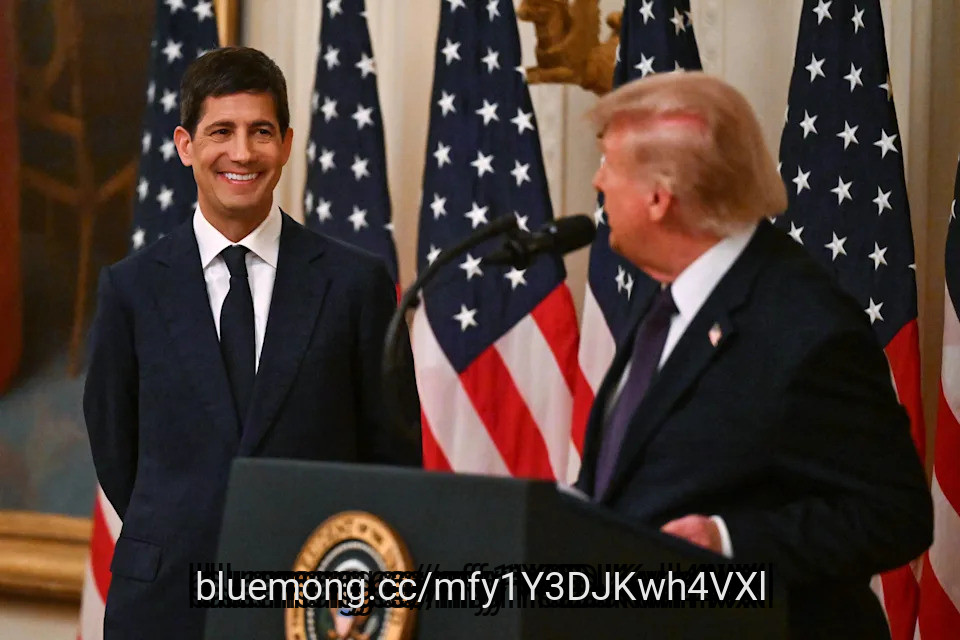
President Donald Trump's portfolio managers bought as much as $30 million in Meta stock and ******* eX debt in August as purchases made in his name continue to be highly active.
A newly released financial disclosure shows more than 500 securities transactions in August, including up to $25 million in Meta stock and $5 million in ******* eX debt. His portfolio also invested in AT&T, Netflix and Chevron. In contrast, he sold shares of Advanced Micro Devices, T-Mobile, Dell Technologies and Nvidia.
Democrats have criticized moves made by the president's portfolio managers in the past. Sen. Elizabeth Warren and Rep. Robert Garcia sent a lengthy letter to Trump in August, saying they want to know who are the money managers in charge of his investments.
"One ******* ysis estimates that you reported more than 14,000 stock trades, worth up to $1.06 billion during your first year in office. The total is likely higher as these reports don't even include transactions worth less than one thousand dollars," reads a passage of the letter.
"The sheer volume of this trading activity and the timing of a number of transactions, raise questions about whether you are using your knowledge of government activities, your official authority, or the vast megaphone provided by the Presidency to make investments or move markets to your personal benefit—and about whether you have been making decisions that boost your portfolio at the expense of taxpayers, the economy, and national security," it adds.
#million #Stock


25 days ago
Netflix gave up on buying Warner Bros. Discovery's studio and streaming business on Feb. 26. By the next day, Paramount Skydance, the company that outbid it, paid Netflix $2.8 billion.
The money was a breakup fee written into Netflix's own deal with Warner, and Paramount covered it as part of its winning bid, according to a Warner Bros. Discovery securities filing.
Jeff Bezos backs a platform that lets anyone invest in rental homes for as little as $100 — 6 ways to build wealth like a landlord without actually being one
A single line on your car insurance policy could be inflating your premium by up to 30% — here's what to change
Dave Ramsey warns nearly 50% of Americans are making 1 big Social Security mistake. Here's what it is and 3 simple steps to fix it ASAP
#warner #bros #jeff #ramsey


26 days ago
AGNC's Q2 spread income of 40 cents per share covered its 36-cent dividend, but the payout has been cut three times since 2015.
Annaly raised its quarterly dividend from $0.70 to $0.75, while Dynex rebounded to 6.4% economic return after both posted Q1 losses.
If Q3 spread income falls below 36 cents or book value drops below $8.38, shareholders' own capital funds the dividend and a cut becomes likely.
Read More: Learn 7 ways to generate income with a $1,000,000+ portfolio (sponsor)
AGNC Investment (NASDAQ:AGNC) is a mortgage REIT that borrows short-term money in the repo market, buys agency mortgage-backed securities, and keeps the spread between bond yields and borrowing costs. Leverage of 7.4 times tangible equity magnifies both gains and losses.
#times


1 month ago
The CLARITY Act failed to pass votes in the Senate earlier this week, a piece of legislature that would set out guardrails and ground rules for crypto **** ets in the U.S. With the failure of passage, the Securities and Exchange Commission took matters into its own hands, passing a conditional exemption Thursday for tokenized stocks. This Innovation Exemption allows for a limited type of tokenized securities to trade on specific Tokenized Securities Venues (TSVs), giving them a 5-year runway to prove their trading chops.
Tokenization is one of the latest trends in the investing world, whereby an **** et is represented digitally on a blockchain. It's seen as the next frontier in finance, with digital trading opening up greater access both for a broader investor base as well as the potential to trade 24/7, while also offering the potential for increased efficiency. However, some argue that tokenized **** ets come with added, unique risks and that by moving investments to the blockchain you introduce greater exposure to bad actors in an as-yet unregulated **** e in the U.S. That is, until now.
The SEC exemption allows for a specific type of tokenized stocks to be traded, specifically ones that retain the investor rights of the stock they are tied to (voting and dividends for example). Only tokenized U.S. National Market System (NMS) stocks qualify that trade through U.S. venues who have established standards for who can trade, limit trading volumes to a certain percentage of the stock, and make public their trading activities as well as any affiliates on the TSV. In addition, venues must halt trading when the primary exchange halts, and leverage is not permitted. Any company that does not want tokenized shares has 30 days to object and prevent their shares from being created.
It's important to note that currently there are two main types of tokenized securities, those that are directly linked to the **** et they represent digitally and those that provide synthetic exposure. Of the two, only the direct exposure tokenized stocks qualify that meet all of the exemption's restrictions.
"The Commission is not cementing today's technology as the standard for tomorrow. Instead, it is allowing the market to evolve, monitoring its development, and using that insight to inform a nimbler and future-ready regulatory framework," SEC Chair Paul Atkins said in a statement.
#exposure #commission


1 month ago
Benzinga and Yahoo Finance LLC may earn commission or revenue on some items through the links below.
The Securities and Exchange Commission (SEC) is seeking interviews with current and former Guggenheim Investments employees as regulators deepen inquiries into CEO Mark Walter's business.
The SEC is specifically looking at people who have managed insurance-company ******* et portfolios, sources familiar with the matter told Bloomberg. Some individuals contacted by the agency are hiring lawyers to help them respond to confidential inquiries.
The request for interviews suggests that regulators are continuing to scrutinize the billionaire's business empire despite public ******* urances from Guggenheim officials and TWG Holdings, Walter's holding company, that they are cooperating and working with the government on its inquiries.
Read Also:Deal Dispatch: Egg Maker Vital Farms Considers Sale, Blackstone Buys Flow Control, Kennedy Center Troubles
#regulators #securities

1 month ago
The Ethereum (CRYPTO: ETH) cryptocurrency is up 5.8% at 2:17 p.m. ET, floating atop a broad surge across the crypto sector. It's the kind of day where you almost expect stablecoins to rise, as the U.S. Securities and Exchange Commission (SEC) moved one step closer to permitting token-based trading of stock-type securities.
And Ethereum would benefit directly if tokenized stocks ever get the SEC's final stamp of approval. The news is a day old, but traders needed time to process the situation after a tumultuous week in which the Clarity Act failed to move forward.
Missed AI's "Act 1"? Act 2 Could Be 15x Bigger. Most investors think they missed the AI boat because they didn't buy Nvidia in 2005. But according to our **** ysts, we're only at the end of "Act 1"—the R&D phase. "Act 2" is the global rollout. Continue »
The SEC is allowing a new kind of venue to trade blockchain versions of regularly listed stocks without first registering as a stock exchange. It's temporary, it's capped, and it comes with strings attached.
This isn't retail investors buying tokenized stocks on a public blockchain tomorrow. It's explicitly a placeholder for further announcements. The tokenized securities venue (TSV) designation is essentially a bold but limited experiment.
#stocks #missed #investors


1 month ago
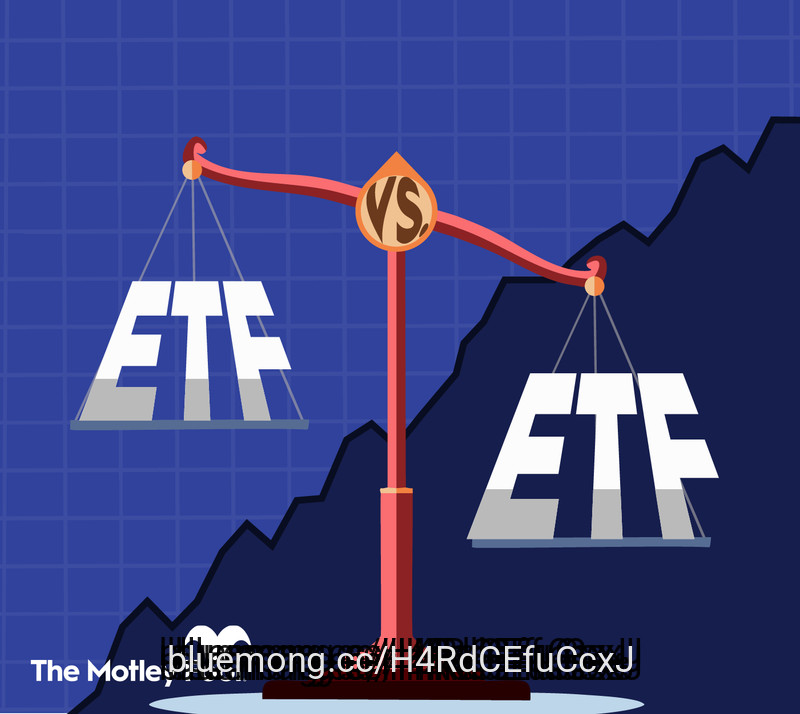
Comparing iShares National Muni Bond ETF (NYSEMKT:MUB) and Vanguard Intermediate-Term Treasury ETF (NASDAQ:VGIT) reveals a choice between tax-advantaged municipal income and the federal credit safety of intermediate-term U.S. government securities.
Both funds serve as core fixed-income holdings. The iShares fund tracks high-quality municipal bonds, which may provide tax benefits for certain investors. The Vanguard fund targets Treasury notes with maturities between three and 10 years, offering a refuge from credit risk during periods of market uncertainty.
Metric
MUB
VGIT
#income

1 month ago
TIPS held in taxable brokerage accounts generate phantom income from inflation-adjusted principal, potentially pushing up to 85% of Social Security benefits into taxable income.
30-year TIPS currently yield 2.96% above inflation, but account placement determines how much of that real return retirees actually keep after taxes.
Holding TIPS inside a traditional IRA defers inflation-adjustment taxation until withdrawal, shielding annual principal increases from the Social Security provisional income formula.
Two retirees, same $1 million, same 4% rule, buy one finished with $1.4 million, the other hit $0 in 12 years. Our free reader guide explains the flaw that separated them, and the income-first method built to avoid it.
A 71-year-old retiree did what the textbooks suggest. He built a ladder of Treasury Inflation-Protected Securities in his brokerage account to keep inflation from quietly eating away at retirement. The timing looks unusually attractive. As of August 28, Treasury's real-yield curve put 10-year TIPS at 2.42% and 30-year TIPS at 2.96%. Those are yields above inflation for an investor buying at current market prices and holding to maturity. That 2.96% is a real yield, meaning it sits on top of the inflation adjustment rather than competing with the inflation rate itself.
#real #taxable


1 month ago
Bonds should be an essential part of a well-balanced portfolio. Factual differences between the Schwab Long-Term U.S. Treasury ETF (NYSEMKT:SCHQ) and the State Street SPDR Portfolio Long Term Corporate Bond ETF (NYSEMKT:SPLB) center on credit quality, as the Schwab fund tracks government debt while the State Street fund targets investment-grade corporate bonds.
Investors seeking exposure to long-dated fixed income typically choose between government-backed securities and corporate credit. While both funds focus on maturities exceeding 10 years, they offer significantly different risk-reward profiles based on their underlying debt issuers and the credit risk investors are willing to accept for higher income.
Metric
SPLB
SCHQ
#nysemkt #state


1 month ago
AGNC Investment (NASDAQ: AGNC) completed its IPO in May 2008 at $20 per share. Today, shares of the mortgage REIT trade at around $10 per share, a staggering 50% below their IPO price.
However, the company's monthly dividends have more than offset the slump in its share price. AGNC has paid out over $50 per share in ****** ulative dividends since its IPO, more than double its IPO price. With dividends reinvested, it has significantly outperformed mortgage REITs and other financial stocks since its IPO.
Missed Nvidia in 2009? This Rare Signal Is Flashing Again. In 2009, a "Double Down" signal flashed for a little-known chipmaker called Nvidia. For the first time in years, that same "Total Conviction" signal is flashing for a company 1/100th the size of Nvidia. Continue »
AGNC Investment's founders formed it in the depths of the financial crisis, seeing an opportunity to create a leading Agency MBS (mortgage-backed securities guaranteed against credit losses by government agencies like Fannie Mae). It invests in Agency MBS on a leveraged basis, primarily through repurchase agreements, and uses dynamic risk management strategies to navigate market risks, including interest rate changes.
The company has had to maneuver around several market cycles, unexpected events, and market volatility over the years, which have weighed on its investment returns and earnings. AGNC Investment has still managed to significantly expand its Agency MBS portfolio (it reached $97.2 billion at the end of the second quarter), financed primarily by selling stock. As a result, its shares outstanding have risen a staggering 7,660% since its IPO. This combination of earnings volatility and dilution is why its share prices have fallen 50% since the IPO.
#since #agency #dividends



1 month ago
CoreWeave (NASDAQ: CRWV) stock was rocked on Thursday. The artificial intelligence (AI) cloud company's shares closed down more than 5% on news of two fundraising measures it announced that morning.
CoreWeave announced an at-the-market (ATM) issue of its publicly traded Class A common stock. Up to 35 million shares are to be sold in a public offering by a large syndicate of sales agents.
Missed Nvidia in 2009? This Rare Signal Is Flashing Again. In 2009, a "Double Down" signal flashed for a little-known chipmaker called Nvidia. For the first time in years, that same "Total Conviction" signal is flashing for a company 1/100th the size of Nvidia. Continue »
The company said it will use its share of the proceeds "to provide ongoing financing flexibility and to support CoreWeave's objective of migrating its enterprise credit profile toward investment grade."
The company also announced an issue of convertible senior notes. It will float $3 billion worth of the securities, which mature in 2033 if not converted, in a private offering. The company intends to offer the initial purchasers of the note up to a total of $500 million in additional aggregate principal amount of notes.
#shares


1 month ago
SGOV, JPST, and VTIP create a layered cash reserve covering one to five years, shielding equities from forced sales in a bear market.
Drawdowns from 2000 to 2007 and 2008 to 2013 both lasted multiple years, proving one year of T-bills forces equity sales at the worst possible time.
VTIP adjusts principal with CPI and delivers a 2.42% real yield, protecting purchasing power when inflation surprises retirees in years four and five.
Read More: Learn 7 secret wealth tips high net worth investors use that most investors miss (sponsor)
You retired into a market that rewards patience and punishes forced sellers. The bucket strategy answers a single question: how much of your spending can you cover without touching stocks when the S&P falls 30%? Guess one year, and a prolonged drawdown forces you to sell equities at the bottom. Guess five, and you drag on returns. The middle path is a laddered cash reserve, and three ETFs do the heavy lifting: iShares 0-3 Month Treasury Bond ETF (NYSEARCA:SGOV), JPMorgan Ultra-Short Income ETF (NYSEARCA:JPST), and Vanguard Short-Term Inflation-Protected Securities ETF (NASDAQ:VTIP).
#vtip

1 month ago
On September 11, a caller praised The Boeing Company's (NYSE:BA) CEO and asked when the company would overcome the ongoing labor uncertainty and finally move beyond years of sideways stock performance. Mad Money host Jim Cramer replied:
I think that Boeing is ready to go up. But here's the problem. Every time crude goes up a dollar, the stock goes down a dollar. And that, think about it, that was actually the ratio. I did some work on this. And because today crude was down, Boeing went up $5... No, it's so stupid because, in truth, the airlines need more planes because the planes are more fuel-efficient. So they actually do better in this environment, but ******* ody cares. They know that airlines have to borrow money to buy planes and rates are higher, and they think that oil somehow's bad. But what ends up happening is the stock does nothing. I think it's about to go up because I think oil might be peaking unless there's some catastrophe over there.
The Boeing Company's (NYSE:BA) second-quarter results showed improving cash generation, but profitability remained weak. Revenue rose 8% year over year to $24.6 billion, while operating cash flow reached $1.4 billion and free cash flow was $631 million. Its total backlog reached a record $715 billion, including more than 6,200 commercial airplanes. CEO Kelly Ortberg said, "We're ramping up production just as we planned. That's driving higher revenues and improved cash flow." He also said there's more work ahead to ramp production, complete commercial-aircraft certifications and uphold customer commitments. Boeing said the 737-7 and 737-10 had completed flight testing, with deliveries expected to begin in 2027.
The Boeing Company's (NYSE:BA) large backlog has yet to translate into consistent commercial-aircraft profitability, leaving execution and margins as important concerns for investors. Commercial Airplanes delivered 171 aircraft in the second quarter but still posted a $322 million operating loss and a negative 2.7% operating margin. It also reported a $428 million GAAP net loss.
The balance sheet leaves less room for further setbacks. The company ended June with $45.9 billion of consolidated debt against $20 billion of cash and investments in marketable securities. The FAA certified the 737-7 on August 3, while Boeing continues working toward certification of the 737-10. First deliveries of the variants are expected in 2027. The company also recorded $280 million of losses on the VC-25B program in the quarter.
#boeing #cash #commercial

2 months ago
Crypto volatility is likely to remain elevated as investors weigh the Federal Reserve's monetary policy decision and the CLARITY Act's failure to advance in a key Senate procedural vote, according to Simon-Peter Massabni, head of business development at XS.com.
Bitcoin (CRYPTO: $BTC) fell more than 2.5% to around $75,600 on Tuesday, while Ethereum (CRYPTO: $ETH), Solana (CRYPTO: $SOL), Cardano (CRYPTO: $ADA) and Dogecoin (CRYPTO: $DOGE) also traded lower.
The Senate's failure to advance the CLARITY Act was a major source of market uncertainty. Senators voted 49-50 on Tuesday, falling well short of the 60 votes required to move the legislation forward. The bill aims to establish a federal framework for digital ****** ets and clarify the regulatory roles of the Securities and Exchange Commission and Commodity Futures Trading Commission.
More From Cryptoprowl:
MEXC Launches Earn Plus With Limited-Time Event Offering Up to 800% APR Booster
#commission #failure #advance #senate


2 months ago
Interested in Qualcomm Incorporated? Here are five stocks we like better.
Qualcomm trades at a price-to-earnings ratio of just 22, well below rivals like NVIDIA, Broadcom, and AMD, despite its ties to the AI boom.
Analysts, including Rosenblatt Securities with a $235 price target, see upside from Qualcomm's expansion into AI data centers, automotive chips, and on-device AI processing.
Apple's shift to in-house modem chips and a sluggish Android market in China threaten to offset Qualcomm's diversification gains, keeping its consensus rating at Hold.
There's a certain irony in a stock that has just rallied hard still being written off, yet that's exactly where chipmaker Qualcomm Inc. (NASDAQ: QCOM) finds itself right now. After a brutal 44% slide through much of the summer, its shares staged an impressive comeback, climbing around 30% since the start of August.
#incorporated


2 months ago
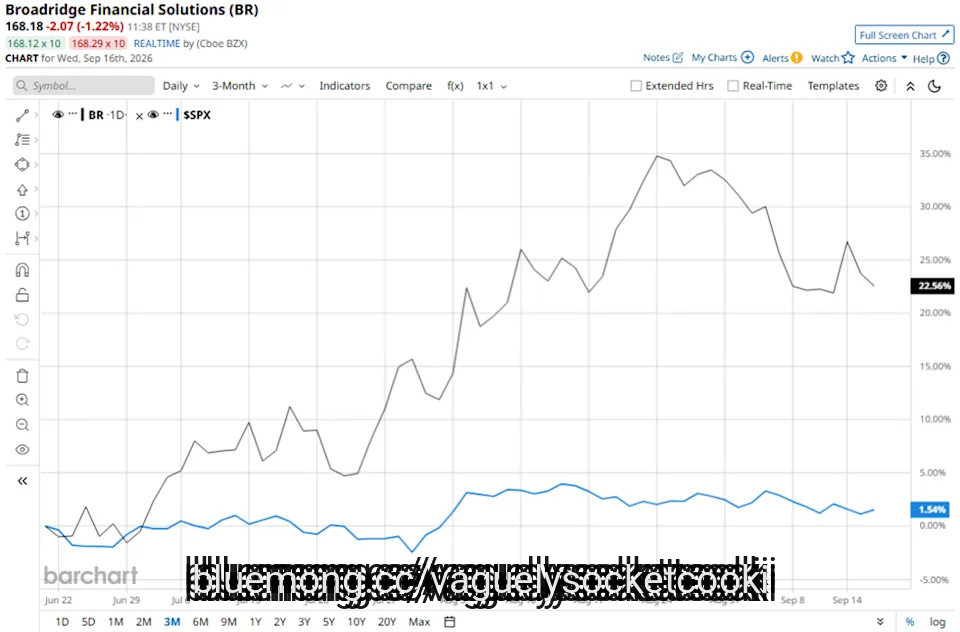
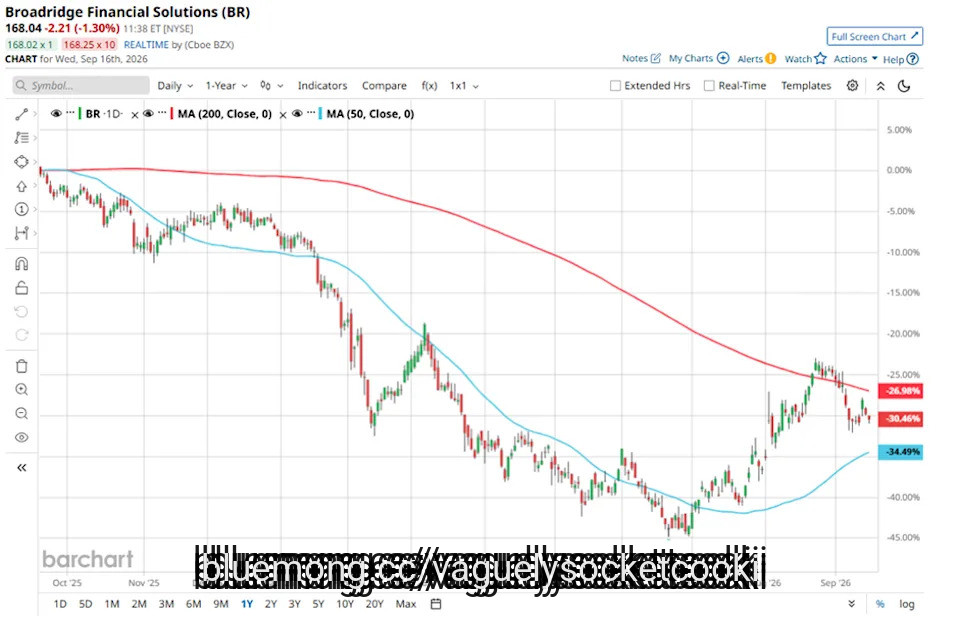
With a market cap of $19.4 billion, Broadridge Financial Solutions, Inc. (BR) is a global financial technology leader that provides investor communications and technology-driven solutions to banks, broker-dealers, ***** et managers, corporate issuers, and other financial institutions. Broadridge plays a critical role in enhancing transparency, efficiency, and engagement across the financial services industry.
Companies valued at $10 billion or more are generally classified as "large-cap" stocks, and Broadridge Financial fits this criterion perfectly. Through its two segments: Investor Communication Solutions and Global Technology & Operations, the company delivers services ranging from regulatory and shareholder communications to front-to-back securities processing and data-driven solutions.
Billionaire Charlie Munger, Who Died at 99, Skipped Insurance on His Mansion Since He Could Just Write a Check to Rebuild — 'All Intelligent People Do It My Way'
The Case for Selling CrowdStrike Stock
Why It's Time to Load Up on Nvidia Stock
#financial #broadridge

2 months ago
A fresh wave of nuclear stock listings is sweeping Wall Street as the explosive growth of data centers puts mounting pressure on electricity grids and reignites investor appetite for nuclear power. Joining this initial public offering (IPO) frenzy is nuclear stock Holtec Nuclear, which is gearing up for its public debut this month. The company plans to offer 50 million shares of Class A common stock at a price range of $15 to $18 per share, potentially raising up to $900 million and valuing the company at as much as $10.2 billion.
Holtec plans to list on the Nasdaq Global Select Market and Nasdaq Texas under the ticker symbol "HNUC" on Sept. 18. The underwriters also have a 30-day option to purchase up to an additional 7.5 million shares. Leading the offering as joint lead book-running managers are J.P. Morgan, Guggenheim Securities, Goldman Sachs, Citigroup, and BofA Securities, while Morgan Stanley, Cantor, BMO Capital Markets, and Oppenheimer & Co. round out the group of joint book-running managers.
Billionaire Charlie Munger, Who Died at 99, Skipped Insurance on His Mansion Since He Could Just Write a Check to Rebuild — 'All Intelligent People Do It My Way'
Nvidia CEO Jensen Huang Just Dropped Huge News for This Cybersecurity Stock
How to Play GME Stock as GameStop CEO Ryan Cohen Buys $20.3 Million in Shares
#shares #securities


2 months ago
A public company typically has limited control over third-party financial products that reference its shares, but Robinhood Markets, Inc. (NASDAQ:HOOD) and AMC Entertainment Holdings, Inc. (NYSE:AMC) are now testing that notion in public, in one of the year's most intense corporate spats. The debate revolves over stock tokens and has evolved from a heated social media post on September 3 to a live televised retort by September 9.
Robinhood Markets, Inc. (NASDAQ:HOOD) expanded its tokenized shares offering, which is issued through a unit named Robinhood ****** ets (Jersey) Limited and traded on Robinhood's proprietary blockchain, Robinhood Chain, to include over 190 public firms, including AMC, without the companies directly signing on. When AMC CEO Adam Aron discovered that his company was among them, he did not mince words. On September 3, Aron posted on X, calling the practice "contemptible, outrageous, disgusting, detestable, inexcusable, vile," questioning how it could possibly be legal, and stating that AMC Entertainment Holdings, Inc. (NYSE:AMC) had no relation to the tokens and did not condone them.
He stated that the company would retain independent securities counsel and vowed to take the matter to the SEC, characterizing Robinhood's tokens as an unregistered securities product that undermines the regular relationship between a public company and its shareholders.
The market reaction was fast and telling: AMC shares rose as much as 21% in overnight trading after the public dispute broke out.
Robinhood did not back down. In the days that followed, the company's chief legal officer, Dan Gallagher, a former SEC commissioner, mocked the tone of Aron's complaint on social media, saying Robinhood "know[s] a little something about the US securities laws," and inviting AMC's lawyers to contact them. CEO Vlad Tenev originally commented on X with a brief "What's the concern?" before making his first extensive, broadcast comments on the controversy in a CNBC "Squawk Box" interview on September 9.
#company


2 months ago
You can find original article here WealthManagement. Subscribe to our free daily WealthManagement newsletters.
Columbia Threadneedle Investments and alternative ******* et manager Hamilton Lane announced a strategic collaboration to deliver new investment products for the wealth channel. An interval fund combining public and private equity exposure, currently awaiting SEC approval, will likely be the first product launched through the two firms' partnership.
Columbia Threadneedle brings its public markets expertise, multi-asset investment capabilities and strategic distribution relationships to the collaboration. Hamilton Lane specializes in alternatives, with an established private markets platform, investment sourcing capabilities and data ******* ytics expertise.
Columbia Threadneedle filed a preliminary registration statement with the SEC for the Columbia Hamilton Lane Growth Innovation Fund, a public-private growth equity interval fund. If the fund is approved by the SEC, it will be offered to the wealth channel through financial advisors.
According to the filing, the fund will focus on capital appreciation, allocating at least 80% of its net ******* ets to investments in growth innovation companies. The fund will be roughly evenly split in exposure to publicly traded securities and private ******* ets. At least 40% of the fund's ******* ets will be invested in underlying funds managed by Hamilton Lane.
#lane

2 months ago
Two former Robinhood engineers allegedly used confidential information about upcoming cryptocurrency listings to make profitable trades on decentralized exchange Hyperliquid, federal prosecutors said Tuesday.
Hefu Chai, 36, and Huaisong "Jerry" Xiang, 30, each face one count of commodities fraud and one count of wire fraud.
"Today's charges make clear that corporate insiders cannot evade the securities and commodities laws by trading based on misappropriated information in derivatives like perpetual futures, tokenized securities, or other similar financial instruments," U.S. Attorney Jamie McDonald said in a statement.
Perpetual futures, or "perps," let traders speculate on an **** et's price—often with leverage—without owning it. Unlike conventional futures, the derivatives do not expire. Hyperliquid is one of the largest decentralized platforms for trading perps and has faced increased regulatory scrutiny.
According to the DOJ, the engineers allegedly used nonpublic information about upcoming Robinhood Crypto token listings to buy related perpetual futures before the announcements, earning profits "for their own benefit" between 2025 and 2026. Each defendant earned more than $50,000 from the alleged scheme, the Justice Department said.
#futures #engineers
2 months ago
Shares of Nvidia Corp (NASDAQ:NVDA) stock are inching 0.4% higher to trade at $211.72 this afternoon, taking a breather after five-straight losing sessions, including yesterday's AI-induced selloff of 3.4%. The equity is still up 13.3% in 2026, however, and a rebound could soon be on the way, per a historically bullish trendline.
According to Schaeffer's Senior Quantitative ***** yst Rocky White, NVDA is trading within 0.75 times the 126-day moving average's 20-day average true range (ATR), after spending at least 80% of the previous two weeks and 80% of the prior 42 trading sessions above that trendline.
This setup has appeared 11 times over the last decade, after which the stock was higher one month later 82% of the time, averaging a 6.2% gain. From its current perch, a move of this caliber would put the equity just shy of $225.
NVDA sports a 50-day put/call volume ratio at the International Securities Exchange (ISE), Cboe Options Exchange (CBOE), and NASDAQ OMX PHLX (PHLX) that stands higher than 83% of readings from the past year. Should this bearish sentiment begin to unwind, it could trigger a new round of tailwinds for the shares.
Options are looking affordable as well. The stock's Schaeffer's Volatility Index (SVI) of 34% stands higher than just 2% of all other readings from the past year. In other words, near-term option traders are pricing in low volatility expectations at the moment.
#NASDAQ #cboe #phlx


2 months ago
This story was originally published on Bisnow, the newsroom global commercial real estate reads first. To receive daily news and ******* ysis, subscribe to Bisnow's free suite of newsletters.
A pair of national real estate investment managers closed their U.S. office credit fund with $1.1B in investor commitments.
Hines and Rialto Capital secured 126 investors for their Hines Rialto Credit Partners, a co-general partnership focused on U.S. office credit investments. The fund required a minimum investment of $100K, according to a filing with the U.S. Securities and Exchange Commission.
With the rapid growth of private credit, Hines said it believes investors are searching for real estate credit strategies grounded in specialized underwriting and deep market knowledge.
"Yield alone does not tell you the quality of the risk," Alfonso Munk, Hines' global co-head of investment management, said in a statement. "In real estate credit, understanding the underlying ******* et — what it is worth, how it performs and how it may hold up under pressure — is becoming increasingly important as the market works through a significant refinancing cycle."
#real #rialto

2 months ago
During the September 10 episode of Mad Money, a caller inquired about Mad Money host Jim Cramer's confidence that Arista Networks, Inc. (NYSE:ANET) will not go down the same path as Ciena Corporation. He replied:
Okay, so let me just tell you, Arista is up a lot this year. My confidence is with Jayshree Ullall. I think she's amazing and I think it every time the stock has dipped, if you've noticed it. Since her tenure began, you have to buy it, and I'm not backing away from that. I feel the same way I do now, the way I did, oh man, how many years ago when we first met her. She is money, and the company's fantastic.
In its second quarter, the company shattered records by delivering its first-ever $3 billion quarter, reporting $3.036 billion in revenue, a 38% year-over-year and over 12% sequential increase. Management lifted its full-year 2026 revenue guidance to approximately $12.6 billion, representing roughly 40% annual top-line growth. The acceleration is supported by deep integration into cloud architectures, where Arista Networks, Inc. (NYSE:ANET) expects its dedicated AI fabrics revenue to reach at least $3.5 billion in 2026, supported by more than 100 **** ulative Etherlink customers.
Bottom-line performance remains equally strong, with non-GAAP diluted earnings per share reaching $1.02, driven by a 49.9% non-GAAP operating margin and $1.3 billion in non-GAAP quarterly net income. Arista Networks, Inc. (NYSE:ANET) ended the quarter with roughly $13.3 billion in cash and marketable securities, offering substantial liquidity. However, its $9.7 billion of non-cancellable purchase commitments also increase working-capital and inventory risk as the company secures components ahead of expected AI demand.
The company's financial results remain heavily tied to two hyperscale customers. According to its 10-K filings, Microsoft accounted for 26%, and Meta Platforms generated 16% of total revenue in fiscal 2025, bringing combined spending from these two cloud giants to 42%. It leaves Arista Networks, Inc. (NYSE:ANET) vulnerable to sudden capital expenditure adjustments, vendor diversification shifts, or project delays by its core buyers.
#billion #NYSE #year

2 months ago
Image source: The Motley Fool.
Monday, Sept. 14, 2026 at 4:30 p.m. ET
Chief Executive Officer and Chief Technology Officer - Ryan Melsert
Chief Financial Officer - Alex Flores
Tiffiany Moehring: American Battery Technology Company. I would like to welcome everyone to our fiscal full year 2026 earnings call. On behalf of the entire team at American Battery Technology Company, I would like to thank everyone for taking the time to join the call today. Following this presentation, a recording of this call, along with our press release, will be available on our website. This presentation includes forward-looking statements within the meaning of the safe harbor's provision of the Private Securities Litigation Reform Act of 1995. These statements are subject to risk and uncertainties that can cause actual results to differ from those anticipated.
#chief #technology


2 months ago
If you bought Meta Platforms (META) for its advertising engine, the engine still runs: revenue rose 28% year over year in the June 2026 quarter, and its Advantage+ automated campaigns keep growing. What has changed is where the cash goes afterward. The question for a holder is whether Meta is still the business you bought.
Over the twelve months through the June 2026 quarter, capital spending took 39.1% of revenue, against 18.5% across Meta's history. That money buys servers, data centers and network infrastructure. In late July 2026, Meta also announced a venture with BlackRock to develop a 1 gigawatt data center in El Paso, Texas. The plan is to keep going: management narrowed its 2026 capital-spending range by lifting the bottom of it.
Less cash is left over. TTM free-cash-flow margin is 18.0%, against 32.8% across its history, so on each dollar of sales Meta keeps a little more than half the free cash it used to.
Borrowing fills part of the gap. Debt has risen to 25.0% of total ******* ets, against a historical 7.0%, and the CFO says Meta is adding more debt to lower its cost of capital. Meta still holds more cash and marketable securities than debt.
Together, those three readings are the most unusual combination Meta has shown in 14 years. Taken with the 2026 spending floor that management has raised, the combination reads as a change in the business rather than one quarter of noise.
#quarter #spending #bought #engine


2 months ago
Axon Enterprise (NASDAQ:AXON) shares fell 5% on Tuesday after the public safety technology company announced plans to offer $1 billion of 0% convertible senior notes due 2031.
The notes will be offered through a public offering registered under the Securities Act of 1933. Axon also expects to grant the underwriters an option to purchase up to an additional $150 million of notes to cover over-allotments.
The securities will mature on September 15, 2031, unless they are converted, redeemed or repurchased earlier. They will be senior unsecured obligations and will not carry regular interest.
Upon conversion, Axon may settle the notes in cash, shares of its common stock or a combination of the two, at the company's election.
Axon said it plans to use part of the net proceeds to fund capped call transactions ******* ociated with the offering.
#senior #enterprise

2 months ago
Bitcoin faced this week's second major Washington catalyst on Sep. 16, with the Federal Reserve hiking the interest rates after the Senate failed to advance the CLARITY Act a day earlier.
The Federal Open Market Committee voted 12-0 to raise the federal funds target range by 25 basis points to 3.75%-4.00%, its first increase since 2023. The Fed said inflation "remains elevated" and that the move would support a timelier return to its 2% target.
The unanimous hike puts the central bank directly at odds with President Donald Trump, who has called for lower borrowing costs and said earlier this month that the U.S. "should be paying the lowest interest rate in the world."
The CLARITY Act, which would establish a federal market structure for digital ****** ets and clarify oversight between the Securities and Exchange Commission (SEC) and Commodity Futures Trading Commission (CFTC), failed to advance Tuesday in a 49-50 Senate cloture vote. It needed 60 votes to proceed.
The Fed decision matters for Bitcoin because higher interest rates increase yields on lower-risk ****** ets and tighten financial conditions, typically creating a tougher environment for speculative ****** ets.
#senate


2 months ago
If you bought Meta Platforms (META) for its advertising engine, the engine still runs: revenue rose 28% year over year in the June 2026 quarter, and its Advantage+ automated campaigns keep growing. What has changed is where the cash goes afterward. The question for a holder is whether Meta is still the business you bought.
Over the twelve months through the June 2026 quarter, capital spending took 39.1% of revenue, against 18.5% across Meta's history. That money buys servers, data centers and network infrastructure. In late July 2026, Meta also announced a venture with BlackRock to develop a 1 gigawatt data center in El Paso, Texas. The plan is to keep going: management narrowed its 2026 capital-spending range by lifting the bottom of it.
Less cash is left over. TTM free-cash-flow margin is 18.0%, against 32.8% across its history, so on each dollar of sales Meta keeps a little more than half the free cash it used to.
Borrowing fills part of the gap. Debt has risen to 25.0% of total **** ets, against a historical 7.0%, and the CFO says Meta is adding more debt to lower its cost of capital. Meta still holds more cash and marketable securities than debt.
Together, those three readings are the most unusual combination Meta has shown in 14 years. Taken with the 2026 spending floor that management has raised, the combination reads as a change in the business rather than one quarter of noise.
#meta #cash


2 months ago
Anthropic is moving forward with plans for an initial public offering that could value the company at $2 trillion, with signs pointing to the listing remaining on track, according to Bloomberg. Nasdaq has been selected as the venue for the listing, and Nvidia is reportedly weighing a contribution of around $10 billion to the offering.
Bloomberg reports Anthropic's annualized revenue at $65 billion, with the company's margins underpinned by investor confidence in where AI capabilities are headed rather than by today's cash generation.
The IPO comes as Anthropic chief executive officer Dario Amodei has published an essay calling on AI companies to manage the pace of frontier model development. Amodei's essay calls on firms "must slow the pace" of capability improvements, yet frames the goal as "a balanced rate" of progress, with the ****** urance that "progress will still seem fast," Bloomberg notes. When CFO Krishna Rao shared the piece on LinkedIn, his commentary centered on the themes of "pacing" and "common standards."
Anthropic is preparing to tell IPO investors that its potential revenue opportunity exceeds $30 trillion, according to The Wall Street Journal. The company more than doubled its revenue to $11.6 billion in the second quarter and could seek to raise as much as $100 billion in its offering — both figures that would surpass what ****** eX achieved when it went public in June at a $1.77 trillion valuation.
Investors have projected that Anthropic's annualized revenue will reach between $100 billion and $120 billion before year's end, representing more than tenfold growth from the $47 billion annualized revenue the company reported in May, according to the Financial Times as cited in earlier reporting. Morgan Stanley, Goldman Sachs, and JPMorgan are leading the offering. The company filed paperwork with the Securities and Exchange Commission in June.
#billion #bloomberg #trillion #according

2 months ago
Bitcoin faced this week's second major Washington catalyst on Sep. 16, with the Federal Reserve hiking the interest rates after the Senate failed to advance the CLARITY Act a day earlier.
The Federal Open Market Committee voted 12-0 to raise the federal funds target range by 25 basis points to 3.75%-4.00%, its first increase since 2023. The Fed said inflation "remains elevated" and that the move would support a timelier return to its 2% target.
The unanimous hike puts the central bank directly at odds with President Donald Trump, who has called for lower borrowing costs and said earlier this month that the U.S. "should be paying the lowest interest rate in the world."
The CLARITY Act, which would establish a federal market structure for digital **** ets and clarify oversight between the Securities and Exchange Commission (SEC) and Commodity Futures Trading Commission (CFTC), failed to advance Tuesday in a 49-50 Senate cloture vote. It needed 60 votes to proceed.
The Fed decision matters for Bitcoin because higher interest rates increase yields on lower-risk **** ets and tighten financial conditions, typically creating a tougher environment for speculative **** ets.
#federal #clarity #commission #failed