

2 days ago
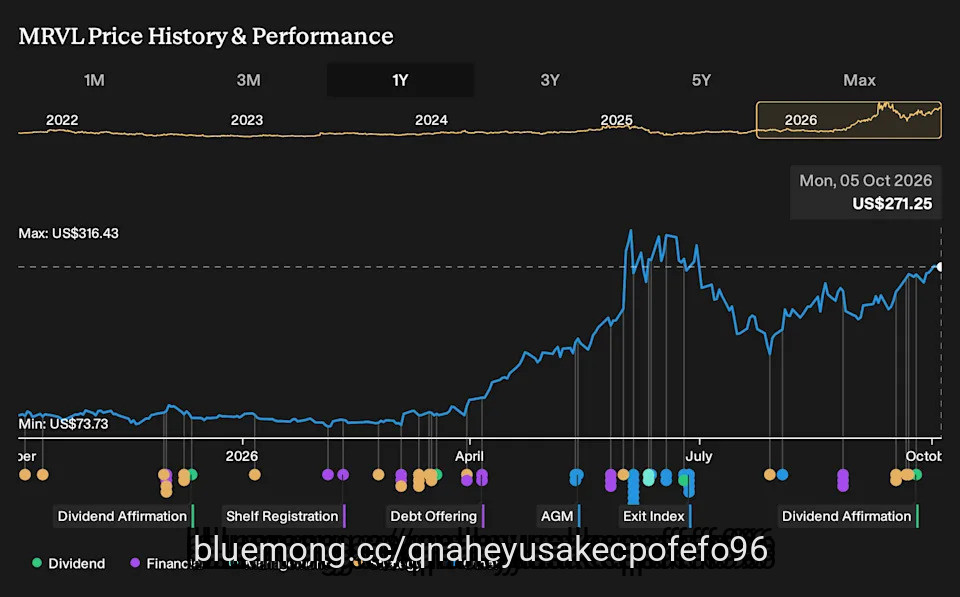
Marvell Technology (NASDAQ: MRVL) has been a big winner this year, with the stock up more than 130% in 2026, as of the end of October. However, an announced deal to acquire Lumentum (NASDAQ: LITE) could be a game changer for what has already been a good story.
This deal is all about optical networking, as it will combine Marvell's leadership in optical interconnects with Lumentum's strength in lasers. Marvell called the deal a "once-in-a-generation opportunity to define and lead AI connectivity in the era of integrated optics," as it will provide the company with end-to-end design capabilities that will allow it to accelerate its time to market and solve the increasing complexity of scale-up and scale-out networks.
Missed AI's "Act 1"? Act 2 Could Be 16x Bigger. Most investors think they missed the AI boat because they didn't buy Nvidia in 2005. But according to our ******* ysts, we're only at the end of "Act 1"—the R&D phase. "Act 2" is the global rollout. Continue »
Let's see what this could all mean for investors.
The two companies' optics technologies are very complementary. In an optical network, Marvell provides electronic components such as DSPs (digital signal processors) that prepare data to be converted into optical signals; transimpedance amplifiers (TIAs) that convert light signals back into electrical signals; and silicon photonics (SiPho) engines that combine hundreds of components to improve the performance and energy efficiency of optical interconnects.
#interconnects
This deal is all about optical networking, as it will combine Marvell's leadership in optical interconnects with Lumentum's strength in lasers. Marvell called the deal a "once-in-a-generation opportunity to define and lead AI connectivity in the era of integrated optics," as it will provide the company with end-to-end design capabilities that will allow it to accelerate its time to market and solve the increasing complexity of scale-up and scale-out networks.
Missed AI's "Act 1"? Act 2 Could Be 16x Bigger. Most investors think they missed the AI boat because they didn't buy Nvidia in 2005. But according to our ******* ysts, we're only at the end of "Act 1"—the R&D phase. "Act 2" is the global rollout. Continue »
Let's see what this could all mean for investors.
The two companies' optics technologies are very complementary. In an optical network, Marvell provides electronic components such as DSPs (digital signal processors) that prepare data to be converted into optical signals; transimpedance amplifiers (TIAs) that convert light signals back into electrical signals; and silicon photonics (SiPho) engines that combine hundreds of components to improve the performance and energy efficiency of optical interconnects.
#interconnects


7 days ago
Packers' Josh Jacobs explains what misinterpreted TD celebrations actually meant appeared first on ClutchPoints. Add ClutchPoints as a Preferred Source by clicking here.
The Green Bay Packers failed to run the ball efficiently yet again despite leaving Lambeau Field with a 27-19 victory over the Carolina Panthers, but Josh Jacobs still drew plenty of attention all the same. After scoring a go-ahead one-yard rushing touchdown in the second quarter, he put his hands behind his back as if he was wearing handcuffs.
The 2022 First-Team All-Pro was arrested in May regarding a domestic dispute with his then-girlfriend and pleaded no contest to misdemeanor charges of battery and criminal damage to property. The optics of such a TD celebration are obviously awful, but Jacobs claims his actions were misconstrued.
"Me and {wide receiver Savion Williams} came up with a celebration. They haven't seen the whole celebration," the former rushing yards leader and three-time Pro Bowl selection told reporters after the game, per Matt Schneidman of The Athletic. "Basically, last week, we said the first celebration when I score, I was going to thank God. That's what I did. The second was going to be break every chain, it's a gospel song. That was going to be the next celebration (he was immediately swarmed by his teammates). It's just a correlation.
Watch sports LIVE with fuboTV (free trial)
#first #rushing #second
The Green Bay Packers failed to run the ball efficiently yet again despite leaving Lambeau Field with a 27-19 victory over the Carolina Panthers, but Josh Jacobs still drew plenty of attention all the same. After scoring a go-ahead one-yard rushing touchdown in the second quarter, he put his hands behind his back as if he was wearing handcuffs.
The 2022 First-Team All-Pro was arrested in May regarding a domestic dispute with his then-girlfriend and pleaded no contest to misdemeanor charges of battery and criminal damage to property. The optics of such a TD celebration are obviously awful, but Jacobs claims his actions were misconstrued.
"Me and {wide receiver Savion Williams} came up with a celebration. They haven't seen the whole celebration," the former rushing yards leader and three-time Pro Bowl selection told reporters after the game, per Matt Schneidman of The Athletic. "Basically, last week, we said the first celebration when I score, I was going to thank God. That's what I did. The second was going to be break every chain, it's a gospel song. That was going to be the next celebration (he was immediately swarmed by his teammates). It's just a correlation.
Watch sports LIVE with fuboTV (free trial)
#first #rushing #second


1 month ago
In late September 2026, AT&S Austria Technologie & Systemtechnik AG announced an expanded collaboration with Marvell Technology to increase advanced IC substrate capacity for next-generation AI and cloud infrastructure, while Marvell also affirmed a quarterly dividend of US$0.06 per share payable on October 29, 2026.
This deeper manufacturing partnership gives Marvell greater access to complex packaging technologies that are increasingly critical for high-performance AI chips and data center hardware.
Next, we'll examine how this expanded AT&S manufacturing capacity could influence Marvell's AI-focused growth story and longer-term investment narrative.
The future of work is here. Discover the 89 top robotics and automation stocks leading the charge in AI-driven automation and industrial transformation.
To own Marvell, you need to believe its AI and data center franchises can justify today's rich valuation and eventually translate into stronger, more consistent earnings power. The expanded AT&S IC substrate deal directly supports Marvell's near term AI optics and custom silicon ramp, while also amplifying the existing risk that long term supplier prepayments and capacity commitments could weigh on margins and free cash flow if AI demand or customer ramps slow.
#term #substrate #Manufacturing #data
This deeper manufacturing partnership gives Marvell greater access to complex packaging technologies that are increasingly critical for high-performance AI chips and data center hardware.
Next, we'll examine how this expanded AT&S manufacturing capacity could influence Marvell's AI-focused growth story and longer-term investment narrative.
The future of work is here. Discover the 89 top robotics and automation stocks leading the charge in AI-driven automation and industrial transformation.
To own Marvell, you need to believe its AI and data center franchises can justify today's rich valuation and eventually translate into stronger, more consistent earnings power. The expanded AT&S IC substrate deal directly supports Marvell's near term AI optics and custom silicon ramp, while also amplifying the existing risk that long term supplier prepayments and capacity commitments could weigh on margins and free cash flow if AI demand or customer ramps slow.
#term #substrate #Manufacturing #data

1 month ago
When AI stocks rebounded last week, optical networking companies did not rebound equally.
Lumentum Holdings Inc. (NASDAQ:LITE) jumped nearly 10% in Wednesday trading and led the S&P 500, while Coherent rose 6.9%. Corning Incorporated (NYSE:GLW) managed only a 0.4% gain and remained down sharply for the week.
All three sit inside the same broad AI-connectivity buildout. The divergence suggests investors are beginning to distinguish between different pieces of that infrastructure rather than buying every optics name together.
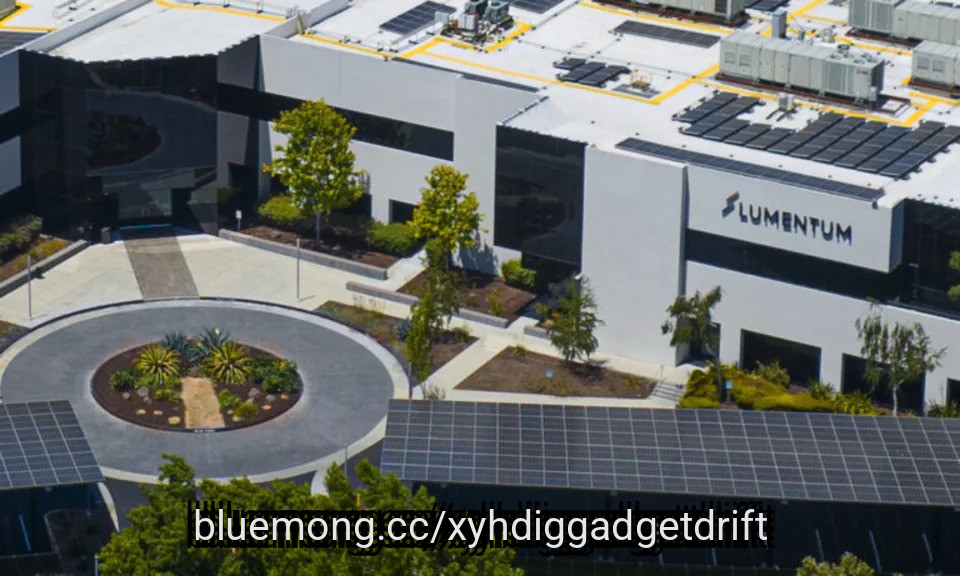
Photo from Lumentum Holdings website
AI clusters increasingly need optical connections as more accelerators communicate across larger physical distances. That drives demand for high-speed transceivers, lasers and other photonic components.
#NASDAQ #lite #wednesday #coherent
Lumentum Holdings Inc. (NASDAQ:LITE) jumped nearly 10% in Wednesday trading and led the S&P 500, while Coherent rose 6.9%. Corning Incorporated (NYSE:GLW) managed only a 0.4% gain and remained down sharply for the week.
All three sit inside the same broad AI-connectivity buildout. The divergence suggests investors are beginning to distinguish between different pieces of that infrastructure rather than buying every optics name together.
Photo from Lumentum Holdings website
AI clusters increasingly need optical connections as more accelerators communicate across larger physical distances. That drives demand for high-speed transceivers, lasers and other photonic components.
#NASDAQ #lite #wednesday #coherent

2 months ago
On September 17, shares of Marvell Technology, Inc. (NASDAQ:MRVL) and GLOBALFOUNDRIES Inc. (NASDAQ:GFS) moved sharply higher, with Marvell Technology, Inc. (NASDAQ:MRVL) gaining more than 4% and GLOBALFOUNDRIES Inc. (NASDAQ:GFS) rising more than 6% by the end of the trading session.
Reuters reported that the two companies have expanded their agreement to increase production capacity for silicon germanium (SiGe), a semiconductor technology used in high-speed optical connections for data centers. The multi-year agreement will expand capacity for GLOBALFOUNDRIES Inc.'s (NASDAQ:GFS) SiGe technology at its facility in Burlington, Vermont. SiGe allows semiconductor devices to operate at higher speeds while using less energy, making it increasingly important as data centers handle larger volumes of data.
Robb Johnson, Vice President, Foundry Technology at Marvell Technology, Inc. (NASDAQ:MRVL) said the expanded collaboration will help ensure that the company has the "SiGe technology and manufacturing capacity to support the significant growth" it expects ahead.
According to the report, the increased manufacturing capacity will help Marvell Technology, Inc. (NASDAQ:MRVL) meet growing demand for optical networking products, including pluggable optical transceivers, near-packaged optics, and co-packaged optics.
GlobalFoundries Is Seeing Strong SiGe Demand
#sige #globalfoundries #optical #data
Reuters reported that the two companies have expanded their agreement to increase production capacity for silicon germanium (SiGe), a semiconductor technology used in high-speed optical connections for data centers. The multi-year agreement will expand capacity for GLOBALFOUNDRIES Inc.'s (NASDAQ:GFS) SiGe technology at its facility in Burlington, Vermont. SiGe allows semiconductor devices to operate at higher speeds while using less energy, making it increasingly important as data centers handle larger volumes of data.
Robb Johnson, Vice President, Foundry Technology at Marvell Technology, Inc. (NASDAQ:MRVL) said the expanded collaboration will help ensure that the company has the "SiGe technology and manufacturing capacity to support the significant growth" it expects ahead.
According to the report, the increased manufacturing capacity will help Marvell Technology, Inc. (NASDAQ:MRVL) meet growing demand for optical networking products, including pluggable optical transceivers, near-packaged optics, and co-packaged optics.
GlobalFoundries Is Seeing Strong SiGe Demand
#sige #globalfoundries #optical #data


2 months ago
On September 17, Coherent Corp. (NYSE:COHR) announced an upgraded Pluggable Optical Line System that covers the full C-band and fits in a compact QSFP module, the same slot ordinary transceivers use. That is a lot of networking gear shrunk into a plug, and it follows a quarter of 34% revenue growth. Here is what the launch means, and where the stock's story gets harder to read.
Start with what the product does. The upgraded system can pack 32 wavelengths onto a single pair of fibers, which Coherent says adds up to as much as 25.6Tbps of traffic on links running 2km to 200km. It is designed for the latest 800G coherent optics, and it configures itself, handling link setup and laser safety without a technician tuning each connection. Coherent also says the system is generally available and already shipping in high volume, in 400G and 800G versions that work with existing network setups. Madhu Krishnaswamy, who runs the company's telecom transport unit, describes the goal as easing the usual trade-off between raw performance and operational simplicity.
The launch also sits on top of a business that is already moving. On August 12, Coherent reported results for its fiscal fourth quarter, which ended June 30: revenue of $2.05 billion, up 34% from a year earlier. Non-GAAP earnings per share rose to $1.74 from $1.00, and CEO Jim Anderson noted that for the full year, that measure grew more than twice as fast as revenue. Management guided to revenue of $2.2 billion to $2.4 billion for the first quarter of fiscal 2027, and Anderson says AI data centers are increasingly moving from copper to optical links.
Now look at the two versions of profit. Coherent's non-GAAP earnings came to $1.74 per share, but under GAAP the figure was $1.19. The gap comes from items management leaves out, including stock-based pay, amortization on acquired intangibles, and restructuring and integration costs. Operating margin shows it more clearly, at 21.8% on a non-GAAP basis and 12.4% under GAAP. Some of those costs are non-cash, but they are real, and anyone anchoring on the higher figure is skipping them.
Then there is how much weight this launch can carry. The announcement puts no sales figure on the product, so its contribution to a company that booked $2.05 billion in a quarter cannot be sized from what has been published. The bullish story also rests on management's own read of where AI networks are headed, and on a capacity build-out that CFO Sherri Luther says gets priority in spending. Money spent on capacity only pays off if the demand management describes keeps arriving.
#gaap #revenue #launch #anderson
Start with what the product does. The upgraded system can pack 32 wavelengths onto a single pair of fibers, which Coherent says adds up to as much as 25.6Tbps of traffic on links running 2km to 200km. It is designed for the latest 800G coherent optics, and it configures itself, handling link setup and laser safety without a technician tuning each connection. Coherent also says the system is generally available and already shipping in high volume, in 400G and 800G versions that work with existing network setups. Madhu Krishnaswamy, who runs the company's telecom transport unit, describes the goal as easing the usual trade-off between raw performance and operational simplicity.
The launch also sits on top of a business that is already moving. On August 12, Coherent reported results for its fiscal fourth quarter, which ended June 30: revenue of $2.05 billion, up 34% from a year earlier. Non-GAAP earnings per share rose to $1.74 from $1.00, and CEO Jim Anderson noted that for the full year, that measure grew more than twice as fast as revenue. Management guided to revenue of $2.2 billion to $2.4 billion for the first quarter of fiscal 2027, and Anderson says AI data centers are increasingly moving from copper to optical links.
Now look at the two versions of profit. Coherent's non-GAAP earnings came to $1.74 per share, but under GAAP the figure was $1.19. The gap comes from items management leaves out, including stock-based pay, amortization on acquired intangibles, and restructuring and integration costs. Operating margin shows it more clearly, at 21.8% on a non-GAAP basis and 12.4% under GAAP. Some of those costs are non-cash, but they are real, and anyone anchoring on the higher figure is skipping them.
Then there is how much weight this launch can carry. The announcement puts no sales figure on the product, so its contribution to a company that booked $2.05 billion in a quarter cannot be sized from what has been published. The bullish story also rests on management's own read of where AI networks are headed, and on a capacity build-out that CFO Sherri Luther says gets priority in spending. Money spent on capacity only pays off if the demand management describes keeps arriving.
#gaap #revenue #launch #anderson


2 months ago
Applied Materials (NASDAQ:AMAT) primarily generates its revenue by designing, developing, manufacturing, and selling the critical fabrication equipment, specialized factory automation software, and materials engineering solutions utilized to produce integrated circuits for customers globally.
While launching multiple new hardware systems to address technical production challenges in advanced memory scaling, it formalized a joint development agreement for augmented reality optics and reported a 34% operating margin for the quarter ended July 26, 2026.
Intel (NASDAQ:INTC) primarily generates its revenue by designing, developing, and manufacturing commercial central processing units, discrete graphics processors, and edge computing components, alongside operating its independent wafer fabrication and advanced packaging services.
It finalized a large-scale public common stock offering and confirmed pending organizational workforce reductions within its data center operations, while reporting a 12% operating margin for the quarter ended June 27, 2026.
Revenue establishes a fundamental baseline for investors seeking to measure the total incoming capital a business generates before any operating expenses, interest, or taxes are deducted. This metric reveals whether an organization is successfully attracting customers and growing its overall business volume over time.
#generates #primarily
While launching multiple new hardware systems to address technical production challenges in advanced memory scaling, it formalized a joint development agreement for augmented reality optics and reported a 34% operating margin for the quarter ended July 26, 2026.
Intel (NASDAQ:INTC) primarily generates its revenue by designing, developing, and manufacturing commercial central processing units, discrete graphics processors, and edge computing components, alongside operating its independent wafer fabrication and advanced packaging services.
It finalized a large-scale public common stock offering and confirmed pending organizational workforce reductions within its data center operations, while reporting a 12% operating margin for the quarter ended June 27, 2026.
Revenue establishes a fundamental baseline for investors seeking to measure the total incoming capital a business generates before any operating expenses, interest, or taxes are deducted. This metric reveals whether an organization is successfully attracting customers and growing its overall business volume over time.
#generates #primarily


2 months ago
On September 17, shares of Marvell Technology, Inc. (NASDAQ:MRVL) and GLOBALFOUNDRIES Inc. (NASDAQ:GFS) moved sharply higher, with Marvell Technology, Inc. (NASDAQ:MRVL) gaining more than 4% and GLOBALFOUNDRIES Inc. (NASDAQ:GFS) rising more than 6% by the end of the trading session.
Reuters reported that the two companies have expanded their agreement to increase production capacity for silicon germanium (SiGe), a semiconductor technology used in high-speed optical connections for data centers. The multi-year agreement will expand capacity for GLOBALFOUNDRIES Inc.'s (NASDAQ:GFS) SiGe technology at its facility in Burlington, Vermont. SiGe allows semiconductor devices to operate at higher speeds while using less energy, making it increasingly important as data centers handle larger volumes of data.
Robb Johnson, Vice President, Foundry Technology at Marvell Technology, Inc. (NASDAQ:MRVL) said the expanded collaboration will help ensure that the company has the "SiGe technology and manufacturing capacity to support the significant growth" it expects ahead.
According to the report, the increased manufacturing capacity will help Marvell Technology, Inc. (NASDAQ:MRVL) meet growing demand for optical networking products, including pluggable optical transceivers, near-packaged optics, and co-packaged optics.
GlobalFoundries Is Seeing Strong SiGe Demand
#NASDAQ #globalfoundries #capacity #data
Reuters reported that the two companies have expanded their agreement to increase production capacity for silicon germanium (SiGe), a semiconductor technology used in high-speed optical connections for data centers. The multi-year agreement will expand capacity for GLOBALFOUNDRIES Inc.'s (NASDAQ:GFS) SiGe technology at its facility in Burlington, Vermont. SiGe allows semiconductor devices to operate at higher speeds while using less energy, making it increasingly important as data centers handle larger volumes of data.
Robb Johnson, Vice President, Foundry Technology at Marvell Technology, Inc. (NASDAQ:MRVL) said the expanded collaboration will help ensure that the company has the "SiGe technology and manufacturing capacity to support the significant growth" it expects ahead.
According to the report, the increased manufacturing capacity will help Marvell Technology, Inc. (NASDAQ:MRVL) meet growing demand for optical networking products, including pluggable optical transceivers, near-packaged optics, and co-packaged optics.
GlobalFoundries Is Seeing Strong SiGe Demand
#NASDAQ #globalfoundries #capacity #data


2 months ago
Interested in Keysight Technologies Inc.? Here are five stocks we like better.
AI data-center demand is driving strong growth in Keysight's wireline business, particularly around 1.6T and emerging 3.2T networking, silicon photonics, co-packaged optics and system-level testing.
Demand currently exceeds supply, with Keysight expanding manufacturing capacity, supplier agreements and component sourcing; revenue beyond its typical order-to-revenue window was approaching $100 million.
Keysight expects additional growth from 6G, aerospace and defense, semiconductors and software-defined vehicles. The company anticipates 6G acceleration in the first half of 2028 and plans to maintain investment while targeting incremental margins of at least 40% when growth exceeds 5%.
3 Lesser-Known Quantum Plays the Market May Be Overlooking Right Now
#exceeds #lesser
AI data-center demand is driving strong growth in Keysight's wireline business, particularly around 1.6T and emerging 3.2T networking, silicon photonics, co-packaged optics and system-level testing.
Demand currently exceeds supply, with Keysight expanding manufacturing capacity, supplier agreements and component sourcing; revenue beyond its typical order-to-revenue window was approaching $100 million.
Keysight expects additional growth from 6G, aerospace and defense, semiconductors and software-defined vehicles. The company anticipates 6G acceleration in the first half of 2028 and plans to maintain investment while targeting incremental margins of at least 40% when growth exceeds 5%.
3 Lesser-Known Quantum Plays the Market May Be Overlooking Right Now
#exceeds #lesser

2 months ago
On September 17, Coherent Corp. (NYSE:COHR) announced an upgraded Pluggable Optical Line System that covers the full C-band and fits in a compact QSFP module, the same slot ordinary transceivers use. That is a lot of networking gear shrunk into a plug, and it follows a quarter of 34% revenue growth. Here is what the launch means, and where the stock's story gets harder to read.
Start with what the product does. The upgraded system can pack 32 wavelengths onto a single pair of fibers, which Coherent says adds up to as much as 25.6Tbps of traffic on links running 2km to 200km. It is designed for the latest 800G coherent optics, and it configures itself, handling link setup and laser safety without a technician tuning each connection. Coherent also says the system is generally available and already shipping in high volume, in 400G and 800G versions that work with existing network setups. Madhu Krishnaswamy, who runs the company's telecom transport unit, describes the goal as easing the usual trade-off between raw performance and operational simplicity.
The launch also sits on top of a business that is already moving. On August 12, Coherent reported results for its fiscal fourth quarter, which ended June 30: revenue of $2.05 billion, up 34% from a year earlier. Non-GAAP earnings per share rose to $1.74 from $1.00, and CEO Jim Anderson noted that for the full year, that measure grew more than twice as fast as revenue. Management guided to revenue of $2.2 billion to $2.4 billion for the first quarter of fiscal 2027, and Anderson says AI data centers are increasingly moving from copper to optical links.
Now look at the two versions of profit. Coherent's non-GAAP earnings came to $1.74 per share, but under GAAP the figure was $1.19. The gap comes from items management leaves out, including stock-based pay, amortization on acquired intangibles, and restructuring and integration costs. Operating margin shows it more clearly, at 21.8% on a non-GAAP basis and 12.4% under GAAP. Some of those costs are non-cash, but they are real, and anyone anchoring on the higher figure is skipping them.
Then there is how much weight this launch can carry. The announcement puts no sales figure on the product, so its contribution to a company that booked $2.05 billion in a quarter cannot be sized from what has been published. The bullish story also rests on management's own read of where AI networks are headed, and on a capacity build-out that CFO Sherri Luther says gets priority in spending. Money spent on capacity only pays off if the demand management describes keeps arriving.
#quarter #launch #anderson
Start with what the product does. The upgraded system can pack 32 wavelengths onto a single pair of fibers, which Coherent says adds up to as much as 25.6Tbps of traffic on links running 2km to 200km. It is designed for the latest 800G coherent optics, and it configures itself, handling link setup and laser safety without a technician tuning each connection. Coherent also says the system is generally available and already shipping in high volume, in 400G and 800G versions that work with existing network setups. Madhu Krishnaswamy, who runs the company's telecom transport unit, describes the goal as easing the usual trade-off between raw performance and operational simplicity.
The launch also sits on top of a business that is already moving. On August 12, Coherent reported results for its fiscal fourth quarter, which ended June 30: revenue of $2.05 billion, up 34% from a year earlier. Non-GAAP earnings per share rose to $1.74 from $1.00, and CEO Jim Anderson noted that for the full year, that measure grew more than twice as fast as revenue. Management guided to revenue of $2.2 billion to $2.4 billion for the first quarter of fiscal 2027, and Anderson says AI data centers are increasingly moving from copper to optical links.
Now look at the two versions of profit. Coherent's non-GAAP earnings came to $1.74 per share, but under GAAP the figure was $1.19. The gap comes from items management leaves out, including stock-based pay, amortization on acquired intangibles, and restructuring and integration costs. Operating margin shows it more clearly, at 21.8% on a non-GAAP basis and 12.4% under GAAP. Some of those costs are non-cash, but they are real, and anyone anchoring on the higher figure is skipping them.
Then there is how much weight this launch can carry. The announcement puts no sales figure on the product, so its contribution to a company that booked $2.05 billion in a quarter cannot be sized from what has been published. The bullish story also rests on management's own read of where AI networks are headed, and on a capacity build-out that CFO Sherri Luther says gets priority in spending. Money spent on capacity only pays off if the demand management describes keeps arriving.
#quarter #launch #anderson

2 months ago
Coherent jumped 6% and Lumentum climbed 5% with no catalyst, driven by short covering after both stocks fell sharply over the prior month.
SOXX gained only 2% and SPY just 0.3%, making the optics group's surge a positioning-only bounce confined to the sector, not a broad re-rating.
Just released. Our ******* ysts combed the entire stock market and named the ten best stocks to buy right now, and Coherent didn't make the cut. Enter your email to see the names that beat COHR. The report is free. Enter your email and see if any of your stocks made the cut.
Optics stocks are rebounding Wednesday morning without a fresh headline to point to, and the size of the group's move relative to the broader market is the story. The iShares Semiconductor ETF (NASDAQ:SOXX) is at $508.59, up 2%, while the SPDR S&P 500 ETF Trust (NYSEARCA:SPY) is at $759.69, up just 0.3%. The three optics names running today are outpacing both benchmarks by a wide margin.
Coherent Corp. (NYSE:COHR) stock is up 6% to $287.21 in Wednesday morning trading. The bounce arrives after a rough stretch. Coherent shares had fallen 12% over the past month heading into today's session, and that drawdown is the part of the setup that hasn't been undone.
#optics
SOXX gained only 2% and SPY just 0.3%, making the optics group's surge a positioning-only bounce confined to the sector, not a broad re-rating.
Just released. Our ******* ysts combed the entire stock market and named the ten best stocks to buy right now, and Coherent didn't make the cut. Enter your email to see the names that beat COHR. The report is free. Enter your email and see if any of your stocks made the cut.
Optics stocks are rebounding Wednesday morning without a fresh headline to point to, and the size of the group's move relative to the broader market is the story. The iShares Semiconductor ETF (NASDAQ:SOXX) is at $508.59, up 2%, while the SPDR S&P 500 ETF Trust (NYSEARCA:SPY) is at $759.69, up just 0.3%. The three optics names running today are outpacing both benchmarks by a wide margin.
Coherent Corp. (NYSE:COHR) stock is up 6% to $287.21 in Wednesday morning trading. The bounce arrives after a rough stretch. Coherent shares had fallen 12% over the past month heading into today's session, and that drawdown is the part of the setup that hasn't been undone.
#optics


2 months ago
Interested in 3M Company? Here are five stocks we like better.
3M says it is ahead of its 2027 targets, citing 5.4% second-quarter organic growth, higher margins, improved execution and on-time, in-full delivery rising to about 90%.
Data centers are a major growth priority. Its expanded beam optics technology has been standardized by Microsoft Azure, is being evaluated by five other hyperscalers, and could address a market approaching $2 billion within the next two years.
Innovation and cost reductions are supporting the outlook: 3M plans more than 350 new-product launches this year, is consolidating factories, expects to offset $150 million–$175 million in oil-related costs through pricing, and is tracking above its 25% operating-margin goal for next year.
3 Stocks Whose Charts May Be Signaling the Next Big Move
#company
3M says it is ahead of its 2027 targets, citing 5.4% second-quarter organic growth, higher margins, improved execution and on-time, in-full delivery rising to about 90%.
Data centers are a major growth priority. Its expanded beam optics technology has been standardized by Microsoft Azure, is being evaluated by five other hyperscalers, and could address a market approaching $2 billion within the next two years.
Innovation and cost reductions are supporting the outlook: 3M plans more than 350 new-product launches this year, is consolidating factories, expects to offset $150 million–$175 million in oil-related costs through pricing, and is tracking above its 25% operating-margin goal for next year.
3 Stocks Whose Charts May Be Signaling the Next Big Move
#company


2 months ago
On September 10, LightPath Technologies (NASDAQ:LPTH) reported fiscal fourth-quarter and full-year results that turned a multiyear strategic bet into a financial statement. Revenue nearly doubled for the year, margins expanded, and the company walked away from its last manufacturing ties to China. For a small-cap optics supplier that spent years explaining a strategy, this was the quarter the strategy started explaining itself.
Annual revenue climbed 92.7% to $71.7 million from $37.2 million, and the fourth quarter alone hit a record $21.2 million, up 73.8% year over year. That growth is not just volume. Full-year gross margin expanded to 36% from 27.2%, and the fourth quarter came in even higher at 39.4%, because ****** emblies, modules and cameras now make up 44% of annual sales instead of being sold as raw components.
CEO Sam Rubin said the shift reflects both a change in what LightPath sells and better execution on what it already made, noting every one of its four product groups improved margin for the year. Backlog finished at $110.9 million, up 197% from $37.4 million a year earlier, with $85.6 million of it scheduled for delivery within 12 months. Weeks after the fiscal year closed, the company booked another $24 million in counter-UAS orders, and some of those programs have already moved to monthly delivery cadences of tens of units.
LightPath also completed its exit from China, selling its subsidiary there for $4.5 million paid out over five years, leaving the company with no manufacturing footprint in a country that increasingly can't supply the defense primes it depends on. That matters because defense programs face a deadline this decade to source optics away from covered nations, and qualification cycles run two to three years, meaning the sourcing decisions being made now will determine who wins contracts in 2029 and 2030.
The company's fourth-quarter net loss narrowed to $4.1 million from $7.1 million a year earlier, but full-year operating expenses jumped to $45.5 million from $22 million, and $15.6 million of that was a noncash charge tied to G5 Infrared outperforming the earnout targets set at acquisition. Management called that charge mostly behind the business now that the final G5 payout has been accrued for January 2027, but it is a reminder that acquisition accounting can swing the income statement even when operations are healthy.
#year #quarter #China
Annual revenue climbed 92.7% to $71.7 million from $37.2 million, and the fourth quarter alone hit a record $21.2 million, up 73.8% year over year. That growth is not just volume. Full-year gross margin expanded to 36% from 27.2%, and the fourth quarter came in even higher at 39.4%, because ****** emblies, modules and cameras now make up 44% of annual sales instead of being sold as raw components.
CEO Sam Rubin said the shift reflects both a change in what LightPath sells and better execution on what it already made, noting every one of its four product groups improved margin for the year. Backlog finished at $110.9 million, up 197% from $37.4 million a year earlier, with $85.6 million of it scheduled for delivery within 12 months. Weeks after the fiscal year closed, the company booked another $24 million in counter-UAS orders, and some of those programs have already moved to monthly delivery cadences of tens of units.
LightPath also completed its exit from China, selling its subsidiary there for $4.5 million paid out over five years, leaving the company with no manufacturing footprint in a country that increasingly can't supply the defense primes it depends on. That matters because defense programs face a deadline this decade to source optics away from covered nations, and qualification cycles run two to three years, meaning the sourcing decisions being made now will determine who wins contracts in 2029 and 2030.
The company's fourth-quarter net loss narrowed to $4.1 million from $7.1 million a year earlier, but full-year operating expenses jumped to $45.5 million from $22 million, and $15.6 million of that was a noncash charge tied to G5 Infrared outperforming the earnout targets set at acquisition. Management called that charge mostly behind the business now that the final G5 payout has been accrued for January 2027, but it is a reminder that acquisition accounting can swing the income statement even when operations are healthy.
#year #quarter #China


2 months ago
On September 2, Michael Genovese from Rosenblatt Securities reiterated his Neutral rating for Credo Technology Group Holding Ltd (NASDAQ:CRDO). The **** yst increased his price target for the stock from $215 to $235, which implies upside potential of almost 38% as of September 4 closing. Genovese's upward adjustment in price target in based on the company's recently announced Q1 FY27 results, leading him to increase his projections for FY27 and FY28. Despite that, he has a Neutral stance because he still wants more visibility around the company's ZeroFlap Optical Transceivers proof points, as well as the incremental revenues from its acquisition of Dust Photonics in May.
Photo by Yogesh Phuyal on Unsplash
Credo's acquisition of DustPhotonics gives it a vertically integrated connectivity stack covering DSP, silicon photonics, SerDes and system integration. This allows the company to tap into both optical and electrical interconnects across the entire AI infrastructure buildout. Together with its optical DSPs and ZeroFlap transceivers, the deal is expected to be a key growth driver in FY27, supported by resilient hyperscale customer sentiment.
Following the DustPhotonics transaction, Credo reported a strong first quarter for FY27. Topline of $479 million jumped 115% compared to Q1 in FY26. Adjusted non-GAAP net income of $236.3 million was up 140% year-over-year, as the company broadens its connectivity portfolio stack. It now spans copper and optical solutions, ranging from millimeters to kilometers, which enables Credo to meet the scaling needs of AI infrastructure with energy-efficient and reliable products.
For FY27, Credo expects a strong inflection with optical revenues expected to exceed $600 million. Management projects contributions over $100 million each from silicon photonics, ZeroFlap optics, and optical DSPs. Full-year revenue growth is expected to be over 85% year-over-year. Adjusted gross margins are likely to remain consistent with fiscal 2026 levels, along with adjusted net margins of around 50%.
#expected
Photo by Yogesh Phuyal on Unsplash
Credo's acquisition of DustPhotonics gives it a vertically integrated connectivity stack covering DSP, silicon photonics, SerDes and system integration. This allows the company to tap into both optical and electrical interconnects across the entire AI infrastructure buildout. Together with its optical DSPs and ZeroFlap transceivers, the deal is expected to be a key growth driver in FY27, supported by resilient hyperscale customer sentiment.
Following the DustPhotonics transaction, Credo reported a strong first quarter for FY27. Topline of $479 million jumped 115% compared to Q1 in FY26. Adjusted non-GAAP net income of $236.3 million was up 140% year-over-year, as the company broadens its connectivity portfolio stack. It now spans copper and optical solutions, ranging from millimeters to kilometers, which enables Credo to meet the scaling needs of AI infrastructure with energy-efficient and reliable products.
For FY27, Credo expects a strong inflection with optical revenues expected to exceed $600 million. Management projects contributions over $100 million each from silicon photonics, ZeroFlap optics, and optical DSPs. Full-year revenue growth is expected to be over 85% year-over-year. Adjusted gross margins are likely to remain consistent with fiscal 2026 levels, along with adjusted net margins of around 50%.
#expected


2 months ago
Nvidia rose only 0.8% on September 4, while Astera Labs jumped 9.8% and Marvell gained 7.1%. The comparison was consistent with investors broadening the AI trade beyond accelerators into connectivity suppliers. Astera's rally also coincided with speculation that the company could be added to the S&P 500, although it was ultimately not selected in the September rebalance. Bigger accelerator clusters need retimers, switches, optical links, and custom silicon to move data without leaving expensive processors idle. Astera Labs, Inc. (NASDAQ:ALAB) and Marvell Technology, Inc. (NASDAQ:MRVL) monetize that connectivity bottleneck from different positions.
Photo from Astera Labs
Astera is the focused rack-scale connectivity play. Its second-quarter update said a Q3 production ramp of the Scorpio X-Series 320-lane fabric switch was expected to drive the next revenue inflection, alongside growth opportunities across Aries, Taurus, and Leo. The bull case is content growth: each new generation of AI rack can require more connectivity silicon and software. The bear case is dependence on a concentrated group of hyperscale customers, product-transition timing, and a valuation that ***** umes strong adoption before every design win becomes revenue.
Hedge-fund breadth strengthened before the rally. Insider Monkey counted 73 funds holding Astera Labs, Inc. (NASDAQ:ALAB) at June 30, up from 53 at March 31. Lee Ainslie's Maverick Capital disclosed 1,067,215 shares, 12% more than in Q1. The quarter-end filing cannot show whether Maverick participated in the September move.
Marvell is more diversified. Its data-center business spans custom compute, electro-optics, switching, and interconnect, giving it multiple ways to benefit as cloud companies redesign AI systems. That breadth is the bull case because one customer's architecture can pull several product families. It is also the risk: custom programs can be lumpy, development costs arrive before revenue, and investors may overestimate the near-term contribution of announced wins.
#september #alab
Photo from Astera Labs
Astera is the focused rack-scale connectivity play. Its second-quarter update said a Q3 production ramp of the Scorpio X-Series 320-lane fabric switch was expected to drive the next revenue inflection, alongside growth opportunities across Aries, Taurus, and Leo. The bull case is content growth: each new generation of AI rack can require more connectivity silicon and software. The bear case is dependence on a concentrated group of hyperscale customers, product-transition timing, and a valuation that ***** umes strong adoption before every design win becomes revenue.
Hedge-fund breadth strengthened before the rally. Insider Monkey counted 73 funds holding Astera Labs, Inc. (NASDAQ:ALAB) at June 30, up from 53 at March 31. Lee Ainslie's Maverick Capital disclosed 1,067,215 shares, 12% more than in Q1. The quarter-end filing cannot show whether Maverick participated in the September move.
Marvell is more diversified. Its data-center business spans custom compute, electro-optics, switching, and interconnect, giving it multiple ways to benefit as cloud companies redesign AI systems. That breadth is the bull case because one customer's architecture can pull several product families. It is also the risk: custom programs can be lumpy, development costs arrive before revenue, and investors may overestimate the near-term contribution of announced wins.
#september #alab


2 months ago
Our ******* ysts just identified a stock with the potential to be the next Nvidia. Tell us how you invest and we'll show you why it's our #1 pick. Tap here.
Achieved record Q3 revenue of $1.7 billion and 22.5% operating margin, driven by an accelerating industry demand environment for data center infrastructure.
Management attributes the performance to Ciena's role in re-architecting networks for AI, which requires high-speed, low-latency optical connectivity for both training and inferencing workloads.
The company is seeing a fundamental shift where optics have become the 'indispensable element' for next-generation AI architectures across traditional WAN, AI-specific WAN, and intra-data center fabrics.
Market share gains are being driven by the WaveLogic 6 Extreme platform, which remains the only 1.6 terabit high-performance modem available after 18 months on the market.
#market #next
Achieved record Q3 revenue of $1.7 billion and 22.5% operating margin, driven by an accelerating industry demand environment for data center infrastructure.
Management attributes the performance to Ciena's role in re-architecting networks for AI, which requires high-speed, low-latency optical connectivity for both training and inferencing workloads.
The company is seeing a fundamental shift where optics have become the 'indispensable element' for next-generation AI architectures across traditional WAN, AI-specific WAN, and intra-data center fabrics.
Market share gains are being driven by the WaveLogic 6 Extreme platform, which remains the only 1.6 terabit high-performance modem available after 18 months on the market.
#market #next
2 months ago
On August 18, Himax Technologies (NASDAQ:HIMX) said its WiseEye palm vein biometric technology now powers the WAFERLOCK L322, a smart lock built by Taiwan-based WAFERLOCK Corporation that just went on sale. Instead of scanning a fingerprint or a face, the lock reads the vein pattern under a user's palm, a method Himax says still works when hands are wet, dirty, or full of groceries. The announcement lands less than two weeks after Himax posted a second quarter that beat its own guidance on revenue, margin, and profit, giving the palm vein rollout a stronger financial backdrop than it might otherwise have had.
The WAFERLOCK deal shows what Himax has been building toward with WiseEye, an ultralow-power AI platform that pairs an image sensor and processor to capture, match, and verify a palm vein image directly on the device, without sending anything to the cloud. That matters for a smart lock, where sending biometric data offsite would be a hard sell to homeowners. The L322 pairs palm vein recognition with RFID cards, PIN codes, mechanical keys, and compatibility with EasyCard, iPASS, and MIFARE, so the biometric layer sits on top of access methods people already use.
Himax said the underlying palm vein modules earned TÜV Rheinland verification during the quarter, validating their recognition accuracy, response speed, and liveness detection, and that the technology also complies with GDPR, one of the world's strictest privacy standards. Design-in activity is already spreading beyond locks into workforce management, computer monitors, and smart office equipment.
Automotive remains the larger story sitting underneath it. Automotive display drivers, timing controllers, and touch controllers made up well over half of Himax's revenue in the quarter ended June 30, and the company expects full-year 2026 automotive IC sales to grow by double digits from a year earlier as automakers pack more, larger, and higher-resolution screens into vehicle interiors.
Alongside that base, Himax pointed to two newer bets: a leading global brand launched smart glasses powered by WiseEye during the quarter, and the company's co-packaged optics products entered engineering production ramps in the third quarter, with 2027 shipments expected to significantly exceed 2026. Neither business moves the revenue needle yet, but together they give Himax more than one lever to pull.
#himax #wiseeye #waferlock #lock
The WAFERLOCK deal shows what Himax has been building toward with WiseEye, an ultralow-power AI platform that pairs an image sensor and processor to capture, match, and verify a palm vein image directly on the device, without sending anything to the cloud. That matters for a smart lock, where sending biometric data offsite would be a hard sell to homeowners. The L322 pairs palm vein recognition with RFID cards, PIN codes, mechanical keys, and compatibility with EasyCard, iPASS, and MIFARE, so the biometric layer sits on top of access methods people already use.
Himax said the underlying palm vein modules earned TÜV Rheinland verification during the quarter, validating their recognition accuracy, response speed, and liveness detection, and that the technology also complies with GDPR, one of the world's strictest privacy standards. Design-in activity is already spreading beyond locks into workforce management, computer monitors, and smart office equipment.
Automotive remains the larger story sitting underneath it. Automotive display drivers, timing controllers, and touch controllers made up well over half of Himax's revenue in the quarter ended June 30, and the company expects full-year 2026 automotive IC sales to grow by double digits from a year earlier as automakers pack more, larger, and higher-resolution screens into vehicle interiors.
Alongside that base, Himax pointed to two newer bets: a leading global brand launched smart glasses powered by WiseEye during the quarter, and the company's co-packaged optics products entered engineering production ramps in the third quarter, with 2027 shipments expected to significantly exceed 2026. Neither business moves the revenue needle yet, but together they give Himax more than one lever to pull.
#himax #wiseeye #waferlock #lock


2 months ago
On September 3, Ermenegildo Zegna Group (NYSE:ZGN) reported first-half revenues of €987.3 million, up 6.4% year over year and 9.3% on an organic basis. Direct-to-consumer sales did nearly all the work, climbing 15.8% organically and now making up 86% of branded revenue. But headline profit told a rougher story, sliding to €28.4 million from €47.9 million a year earlier. The gap between a business growing almost everywhere that matters and a bottom line moving the other direction is what investors now have to untangle.
The clearest strength in the first half of 2026 is how much of Zegna's growth is coming from channels it controls directly. Direct-to-consumer revenue grew 12.1% as reported and 15.8% organically, while the Group deliberately shrank its wholesale business by 14.6% as it keeps trimming third-party accounts. The Zegna segment, which houses the flagship ZEGNA brand along with Textile, generated €724.3 million in revenue, up 9.7% year over year, with the ZEGNA brand itself growing 13.9% organically to €634.6 million. That segment's Adjusted EBIT Margin rose 50 basis points to 14.8%, driven by higher sales per square meter and better sell-through in its own stores.
Group-wide Adjusted EBIT rose to €74.5 million from €68.7 million, pushing the margin to 7.5%. The balance sheet moved in the right direction too, with the net cash surplus climbing to €59.6 million at June 30 from €52.1 million at December 31, 2025. Free cash flow flipped to a positive €19.2 million, compared with a negative €23.1 million a year earlier, helped by stronger operating cash flow and tighter working capital management. Even Tom Ford Fashion, still unprofitable, cut its Adjusted EBIT loss to €12.1 million from €19.4 million, a sign the newer brand is moving toward breakeven rather than away from it.
The drop in profit isn't just optics. H1 2025's €47.9 million figure included a €27.8 million non-cash gain from remeasuring non-controlling interest put option liabilities, a boost that didn't repeat this year. On top of that, the effective tax rate jumped to 38.8% from 29.6%, and the combined swing in financial expenses and foreign exchange moved to a negative €22.7 million from a positive €6.0 million. Together, those items explain most of the gap between a profit margin of 2.9% this year and 5.2% last year, even as operating profit itself improved to €68.5 million from €61.3 million.
Thom Browne is the segment causing the most concern. Revenue there fell 4.9% year over year to €123.1 million, and Adjusted EBIT swung to a loss of €8.3 million from a profit of €4.5 million, which the company attributed to foreign exchange pressure and investment in shifting the brand toward a retail-first model. Capital expenditure also climbed to €64 million from €54 million, largely tied to a new shoe production plant in Parma, and corporate costs rose to €12 million from €10.7 million as the Group builds out its structure.
#million
The clearest strength in the first half of 2026 is how much of Zegna's growth is coming from channels it controls directly. Direct-to-consumer revenue grew 12.1% as reported and 15.8% organically, while the Group deliberately shrank its wholesale business by 14.6% as it keeps trimming third-party accounts. The Zegna segment, which houses the flagship ZEGNA brand along with Textile, generated €724.3 million in revenue, up 9.7% year over year, with the ZEGNA brand itself growing 13.9% organically to €634.6 million. That segment's Adjusted EBIT Margin rose 50 basis points to 14.8%, driven by higher sales per square meter and better sell-through in its own stores.
Group-wide Adjusted EBIT rose to €74.5 million from €68.7 million, pushing the margin to 7.5%. The balance sheet moved in the right direction too, with the net cash surplus climbing to €59.6 million at June 30 from €52.1 million at December 31, 2025. Free cash flow flipped to a positive €19.2 million, compared with a negative €23.1 million a year earlier, helped by stronger operating cash flow and tighter working capital management. Even Tom Ford Fashion, still unprofitable, cut its Adjusted EBIT loss to €12.1 million from €19.4 million, a sign the newer brand is moving toward breakeven rather than away from it.
The drop in profit isn't just optics. H1 2025's €47.9 million figure included a €27.8 million non-cash gain from remeasuring non-controlling interest put option liabilities, a boost that didn't repeat this year. On top of that, the effective tax rate jumped to 38.8% from 29.6%, and the combined swing in financial expenses and foreign exchange moved to a negative €22.7 million from a positive €6.0 million. Together, those items explain most of the gap between a profit margin of 2.9% this year and 5.2% last year, even as operating profit itself improved to €68.5 million from €61.3 million.
Thom Browne is the segment causing the most concern. Revenue there fell 4.9% year over year to €123.1 million, and Adjusted EBIT swung to a loss of €8.3 million from a profit of €4.5 million, which the company attributed to foreign exchange pressure and investment in shifting the brand toward a retail-first model. Capital expenditure also climbed to €64 million from €54 million, largely tied to a new shoe production plant in Parma, and corporate costs rose to €12 million from €10.7 million as the Group builds out its structure.
#million


2 months ago
Chances are, if you have watched a YouTube video, you have come across one where the creator is recording their experiences through a small, handheld camera. Usually, it is a GoPro (GPRO). And it is in the news now because prominent YouTuber and filmmaker Markiplier (also known as Mark Fischbach) has become the single largest shareholder of the company. Additionally, the company has now entered into a $285 million merger agreement with photonics company Starman Optical.
Aimed at expanding GoPro's reach in the AI and defense market, Starman CEO Charles Tebele said, "Advanced optics and imaging are essential to AI, national security, and the broader economy, yet much of the critical hardware supporting these technologies continues to be manufactured overseas. The combination of GoPro's world-class optical expertise and intellectual property with Starman's advanced transceiver capabilities and U.S. manufacturing platform creates a unique opportunity. Together, we intend to bring production of these critical components back to the United States."
Dear GameStop Stock Fans, Mark Your Calendars for September 8
Why **** ysts Think Sellas Life Sciences Stock Can Gain 150% From Here
Jensen Huang: Nvidia's Vera Rubin Platform Turns Electricity Into a $40 Billion Cash Machine
#advanced #platform #critical
Aimed at expanding GoPro's reach in the AI and defense market, Starman CEO Charles Tebele said, "Advanced optics and imaging are essential to AI, national security, and the broader economy, yet much of the critical hardware supporting these technologies continues to be manufactured overseas. The combination of GoPro's world-class optical expertise and intellectual property with Starman's advanced transceiver capabilities and U.S. manufacturing platform creates a unique opportunity. Together, we intend to bring production of these critical components back to the United States."
Dear GameStop Stock Fans, Mark Your Calendars for September 8
Why **** ysts Think Sellas Life Sciences Stock Can Gain 150% From Here
Jensen Huang: Nvidia's Vera Rubin Platform Turns Electricity Into a $40 Billion Cash Machine
#advanced #platform #critical


2 months ago
Nvidia has placed a large financial bet on the lasers that connect AI systems. On March 2, NVIDIA Corporation (NASDAQ:NVDA) invested $2 billion in Coherent Corp. (NYSE:COHR) common stock and entered a nonexclusive multiyear strategic arrangement covering optics development, purchase commitments, and access to manufacturing capacity. Coherent's August filing keeps attention on the capital required to meet that opportunity. The deal suggests bandwidth, not raw compute alone, may determine how quickly next-generation data centers scale.
Photo from Coherent website
NVIDIA Corporation (NASDAQ:NVDA) needs faster and more power-efficient connections as clusters grow to enormous numbers of accelerators. Strategic access to lasers and optical components can reduce supply risk and help Nvidia coordinate networking with its computing roadmap. The bull case is that Nvidia secures a critical input before demand peaks. The bear case is that purchase commitments could become less attractive if technologies shift or capacity expands faster than customers need.
Coherent Corp. (NYSE:COHR) gains capital, demand visibility, and validation from the AI industry's most influential platform company. Its lasers, transceivers, and materials can participate as data movement consumes a larger share of system power and cost. Yet scaling production requires capital expenditures and working capital well before all revenue is recognized. Customer concentration, manufacturing yields, pricing negotiations, and technology transitions can determine whether volume growth becomes attractive free cash flow.
The nonexclusive structure is important here. Nvidia can support capacity without surrendering alternative suppliers, while Coherent can sell beyond Nvidia. That makes the arrangement more resilient than an acquisition, but it also limits exclusivity as a competitive moat. The strongest thesis is not that one partner controls optics. It is that AI architectures need substantially more optical content, allowing both partners to benefit if execution holds.
#capital #nvda #NYSE
Photo from Coherent website
NVIDIA Corporation (NASDAQ:NVDA) needs faster and more power-efficient connections as clusters grow to enormous numbers of accelerators. Strategic access to lasers and optical components can reduce supply risk and help Nvidia coordinate networking with its computing roadmap. The bull case is that Nvidia secures a critical input before demand peaks. The bear case is that purchase commitments could become less attractive if technologies shift or capacity expands faster than customers need.
Coherent Corp. (NYSE:COHR) gains capital, demand visibility, and validation from the AI industry's most influential platform company. Its lasers, transceivers, and materials can participate as data movement consumes a larger share of system power and cost. Yet scaling production requires capital expenditures and working capital well before all revenue is recognized. Customer concentration, manufacturing yields, pricing negotiations, and technology transitions can determine whether volume growth becomes attractive free cash flow.
The nonexclusive structure is important here. Nvidia can support capacity without surrendering alternative suppliers, while Coherent can sell beyond Nvidia. That makes the arrangement more resilient than an acquisition, but it also limits exclusivity as a competitive moat. The strongest thesis is not that one partner controls optics. It is that AI architectures need substantially more optical content, allowing both partners to benefit if execution holds.
#capital #nvda #NYSE

2 months ago
A $40 trillion debt load and surging AI capital demand have pushed the 30-year Treasury yield above 5.3% for the first time since 2007.
Bessent's $950 billion TGA headline masks a usable buffer of only $100 to $200 billion, making his bond market tools far smaller than advertised.
Citadel Securities labels Bessent's yield suppression 'financial repression,' warning that political optics could drive bond vigilantes to demand even higher yields.
Don't wait: the ******* yst who called NVIDIA in 2010 just revealed his top 10 AI stocks. See the full list FREE now.
Long-term Treasury yields are telling a different story from short-term interest rates. The 10-year yield has pushed toward 5%, while the 30-year recently climbed above 5.3% for the first time since 2007. The problem is bigger than the Federal Reserve.
#year #yield #above
Bessent's $950 billion TGA headline masks a usable buffer of only $100 to $200 billion, making his bond market tools far smaller than advertised.
Citadel Securities labels Bessent's yield suppression 'financial repression,' warning that political optics could drive bond vigilantes to demand even higher yields.
Don't wait: the ******* yst who called NVIDIA in 2010 just revealed his top 10 AI stocks. See the full list FREE now.
Long-term Treasury yields are telling a different story from short-term interest rates. The 10-year yield has pushed toward 5%, while the 30-year recently climbed above 5.3% for the first time since 2007. The problem is bigger than the Federal Reserve.
#year #yield #above

2 months ago
Team News
JJ Bleday hits for cycle at Chase Field vs. Diamondbacks: How rare is that? https://arizonasports.com/...
D-backs notes: Ketel Marte back to rehab work after casino night 'wasn't very good' for optics https://arizonasports.com/...
'Ketel's a grown man': Lovullo, D-backs hope to move on from Marte drama https://www.mlb.com/dbacks...
Kelly's love of Legos shapes his favorite off-field pastime
https://www.mlb.com/dbacks...
#hits
JJ Bleday hits for cycle at Chase Field vs. Diamondbacks: How rare is that? https://arizonasports.com/...
D-backs notes: Ketel Marte back to rehab work after casino night 'wasn't very good' for optics https://arizonasports.com/...
'Ketel's a grown man': Lovullo, D-backs hope to move on from Marte drama https://www.mlb.com/dbacks...
Kelly's love of Legos shapes his favorite off-field pastime
https://www.mlb.com/dbacks...
#hits

3 months ago
Hurlston said two AI data center links could double a hyperscaler's entire decade of backbone capacity, with Lumentum pump laser shipments set to quadruple.
Hyperscalers are pre-funding Lumentum's buildout through long-term agreements, with CIEN and AAOI up 85% and 296% YTD on the same scale-across demand wave.
Act now: the ***** yst who called NVIDIA in 2010 just named his top 10 AI stocks — and Ciena didn't make the cut. Grab the names FREE today.
Shares of Lumentum (NASDAQ:LITE) are trading at $936.95 in Thursday's session, hovering near flat after opening at $925.02. The broader optical complex is mixed as the group digests a heavy earnings week. Ciena (NYSE:CIEN) is up 6.04%, while Coherent (NYSE:COHR) is down 3.66% and Cisco (NASDAQ:CSCO) is off 8.27%.
Despite choppiness in earnings season, optics stocks have generally rallied across the past year. A quote from Lumentum CEO delivered during the company's Q4 earnings call on Monday provides context into why so many stocks that have been flat for a decade are now seeing their share charts inflect up at a record rate.
#stocks #decade #across
Hyperscalers are pre-funding Lumentum's buildout through long-term agreements, with CIEN and AAOI up 85% and 296% YTD on the same scale-across demand wave.
Act now: the ***** yst who called NVIDIA in 2010 just named his top 10 AI stocks — and Ciena didn't make the cut. Grab the names FREE today.
Shares of Lumentum (NASDAQ:LITE) are trading at $936.95 in Thursday's session, hovering near flat after opening at $925.02. The broader optical complex is mixed as the group digests a heavy earnings week. Ciena (NYSE:CIEN) is up 6.04%, while Coherent (NYSE:COHR) is down 3.66% and Cisco (NASDAQ:CSCO) is off 8.27%.
Despite choppiness in earnings season, optics stocks have generally rallied across the past year. A quote from Lumentum CEO delivered during the company's Q4 earnings call on Monday provides context into why so many stocks that have been flat for a decade are now seeing their share charts inflect up at a record rate.
#stocks #decade #across


3 months ago
AXTI surged on optical sector momentum and 165% YoY revenue growth; TE jumped 10% as new US solar tariffs protect its domestic manufacturing plans.
BW landed a 20-turbine Siemens data center deal and drew a 7.66M share Ameriprise disclosure, but still trades like a turnaround on a weak chart.
Act now: the ****** yst who called NVIDIA in 2010 just named his top 10 AI stocks — and Babcock & Wilcox Enterprises didn't make the cut. Grab the names FREE today.
Three second-derivative AI plays are in focus Friday morning. AXT (NASDAQ:AXTI) is trading higher alongside a broad rally in optics names, T1 Energy (NYSE:TE) is bouncing on the domestic solar policy trade, and Babcock & Wilcox Enterprises (NYSE:BW) is drawing attention around a fresh institutional disclosure. The connective tissue: AI capex is now pulling in materials, power gear, and energy suppliers well beyond the obvious chip names.
AXT is up about 3.1% today, around $79.83, after an Aug. 13 close of $77.45. The catalyst is a sector move. Applied Optoelectronics is up about 5%, Lumentum about 4%, and Corning about 4.5%. AXT makes compound semiconductor substrates, and its indium phosphide wafers are a key input for the high-speed optical transceivers and silicon photonics used in AI data centers. When the optical connectivity trade runs, AXT runs with it as the upstream materials supplier.
#names #axti #enterprises
BW landed a 20-turbine Siemens data center deal and drew a 7.66M share Ameriprise disclosure, but still trades like a turnaround on a weak chart.
Act now: the ****** yst who called NVIDIA in 2010 just named his top 10 AI stocks — and Babcock & Wilcox Enterprises didn't make the cut. Grab the names FREE today.
Three second-derivative AI plays are in focus Friday morning. AXT (NASDAQ:AXTI) is trading higher alongside a broad rally in optics names, T1 Energy (NYSE:TE) is bouncing on the domestic solar policy trade, and Babcock & Wilcox Enterprises (NYSE:BW) is drawing attention around a fresh institutional disclosure. The connective tissue: AI capex is now pulling in materials, power gear, and energy suppliers well beyond the obvious chip names.
AXT is up about 3.1% today, around $79.83, after an Aug. 13 close of $77.45. The catalyst is a sector move. Applied Optoelectronics is up about 5%, Lumentum about 4%, and Corning about 4.5%. AXT makes compound semiconductor substrates, and its indium phosphide wafers are a key input for the high-speed optical transceivers and silicon photonics used in AI data centers. When the optical connectivity trade runs, AXT runs with it as the upstream materials supplier.
#names #axti #enterprises


3 months ago
Sometimes, when we get an unrelated cameo on Hard Knocks, it's a juicy little tidbit that is sure to spark some unintended conversation. That's exactly what might happen with a clip from the latest episode featuring San Antonio Spurs general manager Brian Wright and head coach Mitch Johnson chatting with Seattle Seahawks head coach Mike Macdonald.
The discussion concerns Wright and Johnson expanding on the Spurs' initial process in trying to get young phenom Victor Wembanyama onto their team. Wright and Johnson claimed that the Spurs knew Wembanyama would be special when they saw him at age 16. From there, they put a "plan in motion" to "turn the team over" about a year later in an effort to put themselves in as good a position as possible to draft Wembanyama.
Hmm, turn the team over? You mean ... make the Spurs worse for draft lottery odds? The Spurs notably had a paltry 22-60 record in the season they earned the No. 1 overall pick that allowed them to draft Wembanyama. If I didn't know any better, that sure sounds like ... what amounts to tanking! I don't think the NBA would retroactively punish the Spurs for this, even in light of a reformed anti-tanking draft lottery plan.
However, I still can't imagine this is something San Antonio wanted out in the open because of the potential bad optics:
Whatever the truth is here, I'm sure that franchises like the Spurs are so grateful that draft lottery reform came after they were able to position themselves for a new MVP-caliber superstar like Wembanyama.
#SPURS #wright
The discussion concerns Wright and Johnson expanding on the Spurs' initial process in trying to get young phenom Victor Wembanyama onto their team. Wright and Johnson claimed that the Spurs knew Wembanyama would be special when they saw him at age 16. From there, they put a "plan in motion" to "turn the team over" about a year later in an effort to put themselves in as good a position as possible to draft Wembanyama.
Hmm, turn the team over? You mean ... make the Spurs worse for draft lottery odds? The Spurs notably had a paltry 22-60 record in the season they earned the No. 1 overall pick that allowed them to draft Wembanyama. If I didn't know any better, that sure sounds like ... what amounts to tanking! I don't think the NBA would retroactively punish the Spurs for this, even in light of a reformed anti-tanking draft lottery plan.
However, I still can't imagine this is something San Antonio wanted out in the open because of the potential bad optics:
Whatever the truth is here, I'm sure that franchises like the Spurs are so grateful that draft lottery reform came after they were able to position themselves for a new MVP-caliber superstar like Wembanyama.
#SPURS #wright

3 months ago
The FCC is drafting a ban on Chinese transceivers, a move that matters given China controls over 50% of global supply, directly elevating AAOI and COHR as US manufacturing alternatives.
LITE's revenue surged 90% to $808 million as a hyperscaler pure-play, while CRDO offers a contrarian copper-substitute payoff if optical shortages deepen.
Act now: the ***** yst who called NVIDIA in 2010 just named his top 10 AI stocks — and Coherent didn't make the cut. Grab the names FREE today.
China controls more than 50% of the global transceiver market, and the Federal Communications Commission is drafting a measure to bar imports of new Chinese optical transceivers, with officials hoping to publish the rule this year. Optical transceivers are the fiber-optic pipes that move AI training data between GPUs at the speed of light. If Washington chokes off the biggest supplier while hyperscalers are already fighting over every unit, the small handful of US-listed optical names left standing get to write their own ticket. Here are the five directly in the blast radius.
Start with the name most portfolios don't own. Applied Optoelectronics (NASDAQ:AAOI) is a Sugar Land, Texas transceiver maker that has spent the past year rebuilding capacity on American soil, precisely the profile the Trump administration would elevate if a ban lands. CEO Thompson Lin has already told investors the company is "well positioned to become the premier high-volume U.S. producer of AI-focused data center transceivers and optics."
#chinese #drafting #move
LITE's revenue surged 90% to $808 million as a hyperscaler pure-play, while CRDO offers a contrarian copper-substitute payoff if optical shortages deepen.
Act now: the ***** yst who called NVIDIA in 2010 just named his top 10 AI stocks — and Coherent didn't make the cut. Grab the names FREE today.
China controls more than 50% of the global transceiver market, and the Federal Communications Commission is drafting a measure to bar imports of new Chinese optical transceivers, with officials hoping to publish the rule this year. Optical transceivers are the fiber-optic pipes that move AI training data between GPUs at the speed of light. If Washington chokes off the biggest supplier while hyperscalers are already fighting over every unit, the small handful of US-listed optical names left standing get to write their own ticket. Here are the five directly in the blast radius.
Start with the name most portfolios don't own. Applied Optoelectronics (NASDAQ:AAOI) is a Sugar Land, Texas transceiver maker that has spent the past year rebuilding capacity on American soil, precisely the profile the Trump administration would elevate if a ban lands. CEO Thompson Lin has already told investors the company is "well positioned to become the premier high-volume U.S. producer of AI-focused data center transceivers and optics."
#chinese #drafting #move


3 months ago
The UFC flyweight ******* le rematch is on the books.
Champion Joshua Van and former ******* leholder Alexandre Pantoja will run it back Sept. 19 at UFC 331 at Crypto.com Arena in Los Angeles, the promotion announced.
Van (17-2 MMA, 10-1 UFC) and Pantoja (30-6 MMA, 14-4 UFC) initially collided at UFC 323 in December – and that's essentially what the fight was in a nutshell. It was one single collision. Van caught a Pantoja kick in the opening seconds and dumped the then-champion to the canvas. As Pantoja fell, he planted his left arm on the mat – causing fight-ending injury.
Despite the gruesome optics, Pantoja suffered a dislocation and is back competing for gold again nine months later. As Pantoja recovered, Van fought Tatsuro Taira in May and won by fifth-round knockout. The win extended his streak to seven in a row.
Champion Joshua Van vs. Alexandre Pantoja – for flyweight ******* le
#pantoja #title #Crypto
Champion Joshua Van and former ******* leholder Alexandre Pantoja will run it back Sept. 19 at UFC 331 at Crypto.com Arena in Los Angeles, the promotion announced.
Van (17-2 MMA, 10-1 UFC) and Pantoja (30-6 MMA, 14-4 UFC) initially collided at UFC 323 in December – and that's essentially what the fight was in a nutshell. It was one single collision. Van caught a Pantoja kick in the opening seconds and dumped the then-champion to the canvas. As Pantoja fell, he planted his left arm on the mat – causing fight-ending injury.
Despite the gruesome optics, Pantoja suffered a dislocation and is back competing for gold again nine months later. As Pantoja recovered, Van fought Tatsuro Taira in May and won by fifth-round knockout. The win extended his streak to seven in a row.
Champion Joshua Van vs. Alexandre Pantoja – for flyweight ******* le
#pantoja #title #Crypto


3 months ago
During the July 21 episode of CNBC's Mad Money, host Jim Cramer addressed viewer complaints about managing technology allocations as memory and storage stocks experience short-term price surges. Cramer defended his commitment to mega-cap tech leaders, noting that short-term performance gaps do not change the long-term dominance of primary platform owners. Acknowledging recent market movements, Cramer noted:
I certainly don't rebel at owning tech. Hey, my Charitable Trust's largest positions are Apple and NVIDIA, for heaven's sake. Sure, these haven't kept up with Sandisk or Western Digital lately, but they are unique, excellent companies that are making fortunes.
For investors looking for direct, targeted exposure to individual hardware components within the artificial intelligence infrastructure buildout, Cramer outlined a clear breakdown of his preferred market leaders across each category:
So here's my advice: If you want to go own a memory chip maker, I like Micron. If you want GPUs, to me, that's AMD or NVIDIA. If you want CPUs, that's Intel. Racks, call Dell. Optics, make it Corning.
Cramer's framework breaks down the artificial intelligence infrastructure stack into distinct, specialized categories rather than treating the semiconductor sector as a single, uniform trade. At the memory layer, Micron Technology, Inc. (NASDAQ:MU) serves as his primary pick for high-speed DRAM and High Bandwidth Memory modules that feed real-time data into complex AI processors. Storage-focused peers like Western Digital Corporation (NASDAQ:WDC), Sandisk Corporation (NASDAQ:SNDK), and Seagate Technology Holdings plc (NASDAQ:STX) complement the ecosystem by providing the flash storage and mass-capacity hard drives required for secondary data retention, but they operate outside the high-margin primary compute memory layer where Micron Technology, Inc. (NASDAQ:MU) maintains a core competitive advantage.
#cramer #technology #micron
I certainly don't rebel at owning tech. Hey, my Charitable Trust's largest positions are Apple and NVIDIA, for heaven's sake. Sure, these haven't kept up with Sandisk or Western Digital lately, but they are unique, excellent companies that are making fortunes.
For investors looking for direct, targeted exposure to individual hardware components within the artificial intelligence infrastructure buildout, Cramer outlined a clear breakdown of his preferred market leaders across each category:
So here's my advice: If you want to go own a memory chip maker, I like Micron. If you want GPUs, to me, that's AMD or NVIDIA. If you want CPUs, that's Intel. Racks, call Dell. Optics, make it Corning.
Cramer's framework breaks down the artificial intelligence infrastructure stack into distinct, specialized categories rather than treating the semiconductor sector as a single, uniform trade. At the memory layer, Micron Technology, Inc. (NASDAQ:MU) serves as his primary pick for high-speed DRAM and High Bandwidth Memory modules that feed real-time data into complex AI processors. Storage-focused peers like Western Digital Corporation (NASDAQ:WDC), Sandisk Corporation (NASDAQ:SNDK), and Seagate Technology Holdings plc (NASDAQ:STX) complement the ecosystem by providing the flash storage and mass-capacity hard drives required for secondary data retention, but they operate outside the high-margin primary compute memory layer where Micron Technology, Inc. (NASDAQ:MU) maintains a core competitive advantage.
#cramer #technology #micron


3 months ago
LeBron James has previously stated he's always wanted to be teammates with Steph Curry, but he couldn't overcome one factor to make it happen this summer.
LeBron and Steph are the two modern pillars of the NBA. While LeBron chases the legacy of Michael Jordan, Curry has proven that he belongs at the same table as the all-time greats.
James and Curry could've been teammates this summer if James had joined the Warriors, fulfilling a publicly-stated dream for the 41-year-old. Unfortunately, one factor was too much to ignore.
Draymond Green spoke about James' decision on his podcast, openly stating that he thought the optics of LeBron coming to the Warriors to play with Steph was too much of a gamble with his legacy.
"I ultimately don't think Bron was ever able to get over the history, and I understand it, I get it… He's gonna get crushed if he comes to the Warriors, 'ahhhh man, you went to team up with Steph', and ultimately I think that weighed in on the decision a lot."
#james #steph #Warriors #stated
LeBron and Steph are the two modern pillars of the NBA. While LeBron chases the legacy of Michael Jordan, Curry has proven that he belongs at the same table as the all-time greats.
James and Curry could've been teammates this summer if James had joined the Warriors, fulfilling a publicly-stated dream for the 41-year-old. Unfortunately, one factor was too much to ignore.
Draymond Green spoke about James' decision on his podcast, openly stating that he thought the optics of LeBron coming to the Warriors to play with Steph was too much of a gamble with his legacy.
"I ultimately don't think Bron was ever able to get over the history, and I understand it, I get it… He's gonna get crushed if he comes to the Warriors, 'ahhhh man, you went to team up with Steph', and ultimately I think that weighed in on the decision a lot."
#james #steph #Warriors #stated


3 months ago
Stephen A. Smith did not hold back when addressing the New York Giants' decision to hire John Harbaugh and the optics surrounding the coach's first publicized team meeting.
On First Take, Smith made clear he respects Harbaugh's track record and believes the veteran coach deserves an NFL head-coaching job. Yet he framed the Giants' move as evidence of a desperate franchise.
The team handed Harbaugh a five-year, $100 million contract that ranks among the richest in the league and granted him the unusual authority to report directly to ownership rather than general manager Joe Schoen.
#smith #stephen #york
On First Take, Smith made clear he respects Harbaugh's track record and believes the veteran coach deserves an NFL head-coaching job. Yet he framed the Giants' move as evidence of a desperate franchise.
The team handed Harbaugh a five-year, $100 million contract that ranks among the richest in the league and granted him the unusual authority to report directly to ownership rather than general manager Joe Schoen.
#smith #stephen #york




