

15 days ago
The transition toward renewable energy is creating massive opportunities for infrastructure providers. Eos Energy Enterprises (NASDAQ:EOSE) and GE Vernova (NYSE:GEV) represent two distinct ways to play this trend in 2026.
Eos focuses on specialized zinc-based batteries for long-duration energy storage. GE Vernova is a diversified giant that services a massive portion of the world's electricity grid. Comparing these two helps clarify whether you prefer a high-growth disruptor or an established power leader.
Eos Energy Enterprises produces aqueous zinc batteries designed as a safer, scalable alternative to lithium-ion. It operates primarily within the industrial stocks **** e, targeting utilities and commercial developers. Customer concentration like this adds a layer of risk to the business, as two clients accounted for approximately 70% of total revenue in 2025.
In FY 2025, revenue reached approximately $114.2 million. This represents growth of nearly 631.8% compared to the prior fiscal year. The company reported a pre-tax net loss of roughly $969.6 million, resulting in a negative net margin of approximately 849.1%.
As of its December 2025 balance sheet, the company had a debt-to-equity ratio of -1.0x. This value indicates that total liabilities exceed shareholder equity. The current ratio, which measures the ability to cover short term obligations with short term **** ets, was approximately 4.9x, while free cash flow was nearly negative $265.0 million.
#enterprises #massive #Growth
Eos focuses on specialized zinc-based batteries for long-duration energy storage. GE Vernova is a diversified giant that services a massive portion of the world's electricity grid. Comparing these two helps clarify whether you prefer a high-growth disruptor or an established power leader.
Eos Energy Enterprises produces aqueous zinc batteries designed as a safer, scalable alternative to lithium-ion. It operates primarily within the industrial stocks **** e, targeting utilities and commercial developers. Customer concentration like this adds a layer of risk to the business, as two clients accounted for approximately 70% of total revenue in 2025.
In FY 2025, revenue reached approximately $114.2 million. This represents growth of nearly 631.8% compared to the prior fiscal year. The company reported a pre-tax net loss of roughly $969.6 million, resulting in a negative net margin of approximately 849.1%.
As of its December 2025 balance sheet, the company had a debt-to-equity ratio of -1.0x. This value indicates that total liabilities exceed shareholder equity. The current ratio, which measures the ability to cover short term obligations with short term **** ets, was approximately 4.9x, while free cash flow was nearly negative $265.0 million.
#enterprises #massive #Growth


15 days ago
On September 15, Digital Realty (NYSE:DLR) made ServiceFabric MCP available, a software layer that lets AI agents design, monitor and troubleshoot network connections across more than 800 data centers, including third-party sites. That nudges a real estate company toward becoming a control panel for enterprise AI. It arrives after second quarter results reported on July 23, when Core FFO per share, the company's preferred earnings yardstick, excluding net promote rose to $2.13 from $1.87 a year earlier. Here is what the launch does, and what it has yet to prove.
The pitch is that enterprise AI needs more than servers. It needs power, cooling, and sovereign placement that software can control. ServiceFabric MCP handles four jobs: designing and provisioning connections, spotting capacity and watching live network health, managing access through OAuth 2, and handing troubleshooting to agents with links into chat and monitoring tools. It is also open by design. Customers do not have to live only in Digital Realty buildings or commit to a single AI model. An IDC research VP argues that public cloud interfaces alone cannot give enterprises enough control over data movement and policy, which favors providers that pair global reach with programmable interconnection. Digital Realty runs the system on its own AI workloads, and See All AI, a medical imaging developer, leans on the Boston campus and ServiceFabric to move large datasets quickly and securely.
The financial engine underneath is running hot. Renewal leases in the second quarter were signed at rates 25.4% higher on a cash basis, which shows customers will pay more to stay put. Signed leases waiting to start added up to a $1.9 billion backlog of annualized base rent at 100% share, so future revenue is already lined up. Management responded by lifting its 2026 Core FFO per share outlook, excluding net promote, to $8.15 to $8.20.
Start with what the launch has not shown yet. Digital Realty itself calls MCP an emerging standard, and ServiceFabric MCP is still being validated across internal, enterprise, and partner deployments. The announcement puts no dollar figure on what it could add to revenue, and the company describes it only as the first programmable surface of a larger architecture that may later stretch into ***** e, power and inventory. Until customers pay for this layer, it is a promising idea more than a line item.
Then there is the bill for the physical side. Digital Realty carried about $18.6 billion of debt at June 30, 2026, and its 2026 development spending outlook, net of partner contributions, now sits at $4.25 billion to $4.75 billion. The outlook also ***** umes new long-term debt priced at 4.5% to 5.5%, up from the earlier 4.0% to 4.5%. To help pay for growth, the company has sold roughly 13.5 million shares this year for about $2.5 billion, which spreads future earnings across more owners. And the quarter's headline flattered a bit: Core FFO per share of $2.65 included a $18
The pitch is that enterprise AI needs more than servers. It needs power, cooling, and sovereign placement that software can control. ServiceFabric MCP handles four jobs: designing and provisioning connections, spotting capacity and watching live network health, managing access through OAuth 2, and handing troubleshooting to agents with links into chat and monitoring tools. It is also open by design. Customers do not have to live only in Digital Realty buildings or commit to a single AI model. An IDC research VP argues that public cloud interfaces alone cannot give enterprises enough control over data movement and policy, which favors providers that pair global reach with programmable interconnection. Digital Realty runs the system on its own AI workloads, and See All AI, a medical imaging developer, leans on the Boston campus and ServiceFabric to move large datasets quickly and securely.
The financial engine underneath is running hot. Renewal leases in the second quarter were signed at rates 25.4% higher on a cash basis, which shows customers will pay more to stay put. Signed leases waiting to start added up to a $1.9 billion backlog of annualized base rent at 100% share, so future revenue is already lined up. Management responded by lifting its 2026 Core FFO per share outlook, excluding net promote, to $8.15 to $8.20.
Start with what the launch has not shown yet. Digital Realty itself calls MCP an emerging standard, and ServiceFabric MCP is still being validated across internal, enterprise, and partner deployments. The announcement puts no dollar figure on what it could add to revenue, and the company describes it only as the first programmable surface of a larger architecture that may later stretch into ***** e, power and inventory. Until customers pay for this layer, it is a promising idea more than a line item.
Then there is the bill for the physical side. Digital Realty carried about $18.6 billion of debt at June 30, 2026, and its 2026 development spending outlook, net of partner contributions, now sits at $4.25 billion to $4.75 billion. The outlook also ***** umes new long-term debt priced at 4.5% to 5.5%, up from the earlier 4.0% to 4.5%. To help pay for growth, the company has sold roughly 13.5 million shares this year for about $2.5 billion, which spreads future earnings across more owners. And the quarter's headline flattered a bit: Core FFO per share of $2.65 included a $18


15 days ago
On August 10, Ferguson Enterprises Inc. (NYSE:FERG) reported results for the quarter ended June 30, and the numbers show a company growing straight through a soft housing market. Sales rose 4.6% to $8.8 billion, and management lifted its outlook for the full year. But profit grew more slowly than sales, and that gap is what makes this report worth a closer look.
The strongest engine was non-residential work, where US revenue jumped 8% on share gains in what management called a mixed market. Large capital projects are part of the story, with open order volumes growing and bidding activity strong, so there is a pipeline behind the current numbers. Housing, roughly half of revenue, is the weak spot. Yet residential sales still rose 2% in the US even though new construction is weak and repair work is soft, which means Ferguson is beating its markets rather than riding them.
Capital deployment is the second pillar. Ferguson closed five acquisitions in the quarter, and on July 13, it announced a deal for FWI Holdings, known as FloWorks, an industrial distributor of valves and flow-control products that is expected to close in the third quarter. The eight deals announced this year carry about $1.4 billion in annualized revenue, a second growth path alongside organic sales. Net debt sits at 1.3 times adjusted EBITDA, a level management calls strong. The company also returned cash, buying back $202 million of stock in the quarter and declaring a $0.89 dividend payable October 7 to holders of record on August 21. Management raised its full-year sales outlook to mid-single-digit growth, before counting FloWorks.
Start with the gap between sales and profit. Adjusted operating profit rose 2.9%, behind the 4.6% sales gain, and gross margin slipped 20 basis points to 31.0%. Ferguson notes that last year's gross margin was temporarily lifted by the timing of supplier price increases, which is fair context, but the direction is still down. Reported earnings per share of $3.43 rose 6.9%, while the adjusted figure of $3.39 grew a slower 5.3%.
Then there are the soft spots. About half of revenue comes from residential markets that management describes as subdued, so a 2% gain there is modest. Canada's sales slipped 1.9%, with a business divestment outweighing organic growth, and management calls the market there challenging, especially in residential. Management also describes the economic environment as uncertain, and the margin part of the guidance raise is small. The low end of the adjusted operating margin range moved from 9.4% to 9.5%, while the top stayed at 9.8%. The guidance also leaves out FloWorks, and net debt to adjusted EBITDA is 1.3 times, against 1.2 times a year ago.
#management
The strongest engine was non-residential work, where US revenue jumped 8% on share gains in what management called a mixed market. Large capital projects are part of the story, with open order volumes growing and bidding activity strong, so there is a pipeline behind the current numbers. Housing, roughly half of revenue, is the weak spot. Yet residential sales still rose 2% in the US even though new construction is weak and repair work is soft, which means Ferguson is beating its markets rather than riding them.
Capital deployment is the second pillar. Ferguson closed five acquisitions in the quarter, and on July 13, it announced a deal for FWI Holdings, known as FloWorks, an industrial distributor of valves and flow-control products that is expected to close in the third quarter. The eight deals announced this year carry about $1.4 billion in annualized revenue, a second growth path alongside organic sales. Net debt sits at 1.3 times adjusted EBITDA, a level management calls strong. The company also returned cash, buying back $202 million of stock in the quarter and declaring a $0.89 dividend payable October 7 to holders of record on August 21. Management raised its full-year sales outlook to mid-single-digit growth, before counting FloWorks.
Start with the gap between sales and profit. Adjusted operating profit rose 2.9%, behind the 4.6% sales gain, and gross margin slipped 20 basis points to 31.0%. Ferguson notes that last year's gross margin was temporarily lifted by the timing of supplier price increases, which is fair context, but the direction is still down. Reported earnings per share of $3.43 rose 6.9%, while the adjusted figure of $3.39 grew a slower 5.3%.
Then there are the soft spots. About half of revenue comes from residential markets that management describes as subdued, so a 2% gain there is modest. Canada's sales slipped 1.9%, with a business divestment outweighing organic growth, and management calls the market there challenging, especially in residential. Management also describes the economic environment as uncertain, and the margin part of the guidance raise is small. The low end of the adjusted operating margin range moved from 9.4% to 9.5%, while the top stayed at 9.8%. The guidance also leaves out FloWorks, and net debt to adjusted EBITDA is 1.3 times, against 1.2 times a year ago.
#management


18 days ago
On September 11, Dell Technologies Inc. (NYSE:DELL) shares jumped more than 11% after RBC Capital Markets initiated coverage of the company with an Outperform rating and a price target of $640.
The latest rally adds to an already strong year for Dell Technologies Inc. (NYSE:DELL), with the stock having gained over 300% so far in 2026. The company has become one of the biggest vendors for Nvidia-based servers and related equipment, benefiting from strong demand for AI infrastructure from cloud companies and enterprises.
Photo by Pok Rie on Pexels
RBC ***** yst David Paige wrote in a note that Dell Technologies Inc. (NYSE:DELL) is showing no signs of slowing. RBC believes that the company "continues to be well positioned to benefit from a multi-year AI infrastructure spending cycle."
Paige pointed out that "Dell Technologies Inc.'s (NYSE:DELL) best-in-class supply chain represents a competitive moat that differentiates the company during periods of supply disruption, as customers increasingly turn to Dell Technologies Inc. (NYSE:DELL) for a 'calming hand' during periods of supply volatility/constraints."
#paige
The latest rally adds to an already strong year for Dell Technologies Inc. (NYSE:DELL), with the stock having gained over 300% so far in 2026. The company has become one of the biggest vendors for Nvidia-based servers and related equipment, benefiting from strong demand for AI infrastructure from cloud companies and enterprises.
Photo by Pok Rie on Pexels
RBC ***** yst David Paige wrote in a note that Dell Technologies Inc. (NYSE:DELL) is showing no signs of slowing. RBC believes that the company "continues to be well positioned to benefit from a multi-year AI infrastructure spending cycle."
Paige pointed out that "Dell Technologies Inc.'s (NYSE:DELL) best-in-class supply chain represents a competitive moat that differentiates the company during periods of supply disruption, as customers increasingly turn to Dell Technologies Inc. (NYSE:DELL) for a 'calming hand' during periods of supply volatility/constraints."
#paige


18 days ago
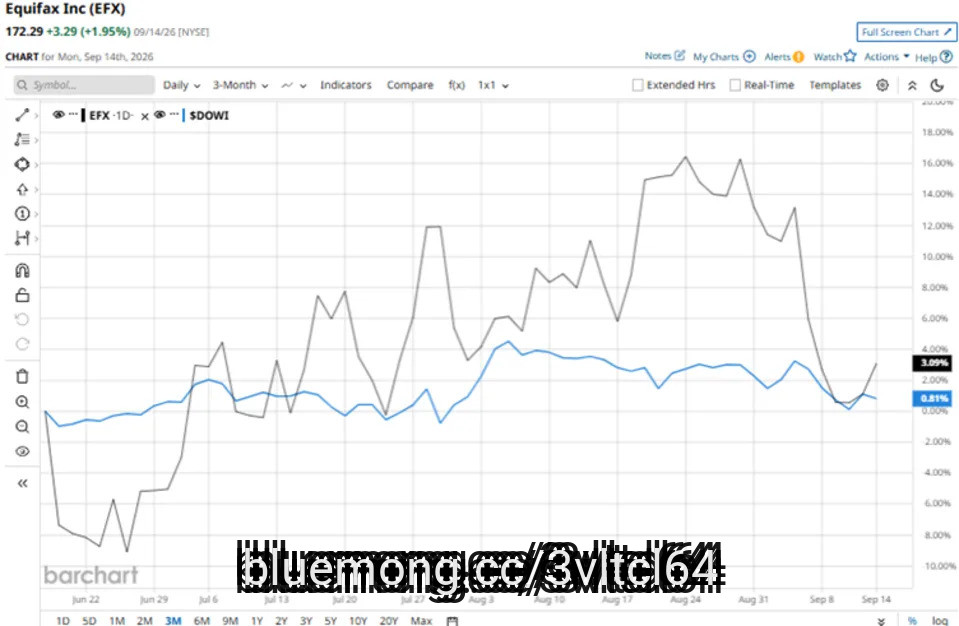
Equifax Inc. (EFX) is a global data, **** ytics, and technology company headquartered in Atlanta, Georgia. It operates as one of the "Big Three" credit bureaus, providing consumer and commercial credit reporting, identity and fraud solutions, and decisioning **** ytics to financial institutions, employers, governments, and other enterprises worldwide. The company has a market capitalization of $20.24 billion, which makes it a "big cap" stock.
The stock reached a 52-week low of $150.74 on June 22, but is up 14.3% from that level. Renewed confidence in Equifax's growth initiatives has sent the stock up 5.2% over the past three months. The broader Dow Jones Industrial Average ($DOWI) is up 2.4% over the same period. Therefore, the stock has outperformed the wider index over this period.
Goldman Sachs Expects Fed Chair Kevin Warsh to Raise Rates This Week — But Not Because of Oil Prices.
Morgan Stanley Doubles Down on Apple Stock as New Offerings Become 'More Exciting'
The EV Bubble Has Burst. How to Play Rivian Stock Now.
#analytics #credit #period #equifax
The stock reached a 52-week low of $150.74 on June 22, but is up 14.3% from that level. Renewed confidence in Equifax's growth initiatives has sent the stock up 5.2% over the past three months. The broader Dow Jones Industrial Average ($DOWI) is up 2.4% over the same period. Therefore, the stock has outperformed the wider index over this period.
Goldman Sachs Expects Fed Chair Kevin Warsh to Raise Rates This Week — But Not Because of Oil Prices.
Morgan Stanley Doubles Down on Apple Stock as New Offerings Become 'More Exciting'
The EV Bubble Has Burst. How to Play Rivian Stock Now.
#analytics #credit #period #equifax



18 days ago
With a market cap of $39.1 billion, California-based NetApp, Inc. (NTAP) is a leading provider of enterprise data storage and intelligent data infrastructure, helping businesses manage, protect, and activate data across on-premises systems, hybrid environments, and major public clouds. Its portfolio combines all-flash storage, cloud services, and data-management software, with its ONTAP platform at the core.
Companies valued at $10 billion or more are generally considered "large-cap" stocks, and NetApp fits this criterion perfectly. Its leadership lies in its enterprise storage, strong hybrid-cloud capabilities, and deeply embedded customer relationships. Its ONTAP platform offers unified data management across on-premises and cloud environments, while partnerships with major cloud providers strengthen its position as enterprises shift toward hybrid infrastructure. NetApp also benefits from its growing all-flash storage portfolio, recurring software and services revenue, and expanding AI-focused data infrastructure offerings.
Goldman Sachs Expects Fed Chair Kevin Warsh to Raise Rates This Week — But Not Because of Oil Prices.
Morgan Stanley Doubles Down on Apple Stock as New Offerings Become 'More Exciting'
The EV Bubble Has Burst. How to Play Rivian Stock Now.
#netapp #storage #Stock #offerings
Companies valued at $10 billion or more are generally considered "large-cap" stocks, and NetApp fits this criterion perfectly. Its leadership lies in its enterprise storage, strong hybrid-cloud capabilities, and deeply embedded customer relationships. Its ONTAP platform offers unified data management across on-premises and cloud environments, while partnerships with major cloud providers strengthen its position as enterprises shift toward hybrid infrastructure. NetApp also benefits from its growing all-flash storage portfolio, recurring software and services revenue, and expanding AI-focused data infrastructure offerings.
Goldman Sachs Expects Fed Chair Kevin Warsh to Raise Rates This Week — But Not Because of Oil Prices.
Morgan Stanley Doubles Down on Apple Stock as New Offerings Become 'More Exciting'
The EV Bubble Has Burst. How to Play Rivian Stock Now.
#netapp #storage #Stock #offerings



18 days ago
Equifax Inc. (EFX) is a global data, **** ytics, and technology company headquartered in Atlanta, Georgia. It operates as one of the "Big Three" credit bureaus, providing consumer and commercial credit reporting, identity and fraud solutions, and decisioning **** ytics to financial institutions, employers, governments, and other enterprises worldwide. The company has a market capitalization of $20.24 billion, which makes it a "big cap" stock.
The stock reached a 52-week low of $150.74 on June 22, but is up 14.3% from that level. Renewed confidence in Equifax's growth initiatives has sent the stock up 5.2% over the past three months. The broader Dow Jones Industrial Average ($DOWI) is up 2.4% over the same period. Therefore, the stock has outperformed the wider index over this period.
Goldman Sachs Expects Fed Chair Kevin Warsh to Raise Rates This Week — But Not Because of Oil Prices.
Morgan Stanley Doubles Down on Apple Stock as New Offerings Become 'More Exciting'
The EV Bubble Has Burst. How to Play Rivian Stock Now.
#credit #period #georgia
The stock reached a 52-week low of $150.74 on June 22, but is up 14.3% from that level. Renewed confidence in Equifax's growth initiatives has sent the stock up 5.2% over the past three months. The broader Dow Jones Industrial Average ($DOWI) is up 2.4% over the same period. Therefore, the stock has outperformed the wider index over this period.
Goldman Sachs Expects Fed Chair Kevin Warsh to Raise Rates This Week — But Not Because of Oil Prices.
Morgan Stanley Doubles Down on Apple Stock as New Offerings Become 'More Exciting'
The EV Bubble Has Burst. How to Play Rivian Stock Now.
#credit #period #georgia



19 days ago
Palantir stock has had a rough stretch. A 5-star Wall Street **** yst just said the market is reading the company wrong.
UBS **** yst Karl Keirstead raised his price target on Palantir Technologies to $250 from $220 on Sept. 15, reiterating his Buy rating, according to CNBC. At Palantir's Sept. 14 closing price of roughly $173, the new target implies about 44% upside.
Keirstead's updated view stemmed directly from Palantir's Sept. 10 AIPCon11 event, where Palantir brought together customers, executives, and partners to discuss how companies are deploying its AI platform in real operations.
"Our view of Palantir as the best AI enabler in the market, making frontier models and AI useful in large enterprises, was, if anything, bolstered by these conversations, and demand momentum seems robust," Keirstead wrote in a note shared with clients.
He described three points that stood out from the event. Customer conversations kept coming back to AI sovereignty, the idea that enterprises and governments want control over their own data and AI infrastructure, rather than handing it to a small number of large cloud providers.
#analyst #market #target #Event
UBS **** yst Karl Keirstead raised his price target on Palantir Technologies to $250 from $220 on Sept. 15, reiterating his Buy rating, according to CNBC. At Palantir's Sept. 14 closing price of roughly $173, the new target implies about 44% upside.
Keirstead's updated view stemmed directly from Palantir's Sept. 10 AIPCon11 event, where Palantir brought together customers, executives, and partners to discuss how companies are deploying its AI platform in real operations.
"Our view of Palantir as the best AI enabler in the market, making frontier models and AI useful in large enterprises, was, if anything, bolstered by these conversations, and demand momentum seems robust," Keirstead wrote in a note shared with clients.
He described three points that stood out from the event. Customer conversations kept coming back to AI sovereignty, the idea that enterprises and governments want control over their own data and AI infrastructure, rather than handing it to a small number of large cloud providers.
#analyst #market #target #Event


19 days ago
US-based accounting, tax and advisory practice PKF O'Connor Davies has appointed Mark Goldschmitt as a partner within its commercial tax practice, based at its office in Hauppauge, New York.
Goldschmitt brings close to 30 years of public accounting experience.
His work focuses on tax planning, regulatory compliance and business advisory services for corporate entities, partnerships, privately held enterprises and high-net-worth individuals.
His sector experience spans architecture, legal services, digital media, staffing and recruitment.
The appointment forms part of the company's plans to develop its commercial tax service capabilities across the New York metropolitan region.
#experience #o 'connor
Goldschmitt brings close to 30 years of public accounting experience.
His work focuses on tax planning, regulatory compliance and business advisory services for corporate entities, partnerships, privately held enterprises and high-net-worth individuals.
His sector experience spans architecture, legal services, digital media, staffing and recruitment.
The appointment forms part of the company's plans to develop its commercial tax service capabilities across the New York metropolitan region.
#experience #o 'connor

20 days ago
Following an impressive second quarter FY27, Navan Inc. (NASDAQ:NAVN) announced its acquisition of BoomPop, an AI-powered meetings and events platform that has been recognized by Inc. as one of the fastest-growing private companies in America. Launched in 2023, BoomPop offers end-to-end event management solutions to enterprises, by leveraging artificial intelligence capabilities. Its offerings cover the entire spectrum of event management procedures including venue selection, vendor sourcing, contractual agreement, payments, and more. For Navan, this deal build on an existing alliance between the two entities, which was announced earlier in February. It marks the company's strategic push to expand its footprint across the meetings and events segment, where a large chunk of the spending is still done outside managed platforms.
LStockStudio/Shutterstock.com
The BoomPop acquisition follows a persistent enterprise market momentum reported by the company in its second quarter results, allowing Navan to enter into collaborative agreements with several leading companies during the quarter. These included Enbridge, Ingersoll Rand, ****** mins, and Evotec. Navan also concluded the deal to acquire Smartrips, a well-reputed travel management business, with the aim of bolstering its presence across a rapidly-growing Latin American market.
Notably, Navan registered adjusted net income of $14 million during the second quarter compared to an $8 million loss in Q2 FY26. It came at the back of year-over-year growth figures of 39% and 35% for subscription revenue and usage revenue, respectively.
Through full integration of BoomPop's staff and technology, Navan intends to expand its current meetings and events operations, accelerate its product development timeline, and satisfy growing customer interest. The company aims to deliver a more seamless experience covering travel, expense, meetings, and events.
#navan
LStockStudio/Shutterstock.com
The BoomPop acquisition follows a persistent enterprise market momentum reported by the company in its second quarter results, allowing Navan to enter into collaborative agreements with several leading companies during the quarter. These included Enbridge, Ingersoll Rand, ****** mins, and Evotec. Navan also concluded the deal to acquire Smartrips, a well-reputed travel management business, with the aim of bolstering its presence across a rapidly-growing Latin American market.
Notably, Navan registered adjusted net income of $14 million during the second quarter compared to an $8 million loss in Q2 FY26. It came at the back of year-over-year growth figures of 39% and 35% for subscription revenue and usage revenue, respectively.
Through full integration of BoomPop's staff and technology, Navan intends to expand its current meetings and events operations, accelerate its product development timeline, and satisfy growing customer interest. The company aims to deliver a more seamless experience covering travel, expense, meetings, and events.
#navan


22 days ago
Fundstrat's Tom Lee took the Future Proof Citywide stage earlier this year with CNBC's Scott Wapner for a session that landed in the middle of a jittery tape that included geopolitical conflict, oil spiking, private credit cracking, and fresh doubts about AI spending. Not too far off where we find ourselves currently, but with an awful lot of volatility and shifting, uncertain outlooks between these six months. While their conversation was a snapshot in time, you can expect more of this kind of sharp, thoughtful ****** ysis next week.
The contrarian take of the session was oil. High crude, Lee argued, is actually constructive for U.S. equities. With the U.S. as a net exporter, our economic competitors are importers, and stalled global growth pushes investors toward growth stocks, which is about 80% of the U.S. market. On AI CapEx, he pushed back on the sticker shock, claiming roughly $700 billion a year is a fraction of the $60 trillion global labor market and small change against daily moves in gold.
Lee also made the case that software had bottomed at the time, that enterprises building their own tools inherit the maintenance burden software companies exist to carry, and that private credit is genuinely bad but not a GFC repeat, with the real fix being taking private companies public rather than pushing private product into retail portfolios. On crypto, his argument shifted from a perspective of digital gold to one of plumbing whereby Wall Street tokenizes ****** ets, and AI agents needing a settlement rail that handles fractions of a penny.
His parting advice was the oldest one in the book, dressed in new clothes: miss the 10 best days of each year and a 16% average return goes to roughly nothing. Danger and opportunity show up together. Staying invested is the perpetual drumbeat of advisors to their clients, but one that needs banging louder when markets feel much less certain.
Future Proof Festival is September 14–17 in Huntington Beach and includes four days on the boardwalk with advisors, ****** et managers, and fintechs building the modern wealth management industry. Find us at the ETF Oasis and don't miss the stellar agenda we've got lined up.
#find #session #credit #time
The contrarian take of the session was oil. High crude, Lee argued, is actually constructive for U.S. equities. With the U.S. as a net exporter, our economic competitors are importers, and stalled global growth pushes investors toward growth stocks, which is about 80% of the U.S. market. On AI CapEx, he pushed back on the sticker shock, claiming roughly $700 billion a year is a fraction of the $60 trillion global labor market and small change against daily moves in gold.
Lee also made the case that software had bottomed at the time, that enterprises building their own tools inherit the maintenance burden software companies exist to carry, and that private credit is genuinely bad but not a GFC repeat, with the real fix being taking private companies public rather than pushing private product into retail portfolios. On crypto, his argument shifted from a perspective of digital gold to one of plumbing whereby Wall Street tokenizes ****** ets, and AI agents needing a settlement rail that handles fractions of a penny.
His parting advice was the oldest one in the book, dressed in new clothes: miss the 10 best days of each year and a 16% average return goes to roughly nothing. Danger and opportunity show up together. Staying invested is the perpetual drumbeat of advisors to their clients, but one that needs banging louder when markets feel much less certain.
Future Proof Festival is September 14–17 in Huntington Beach and includes four days on the boardwalk with advisors, ****** et managers, and fintechs building the modern wealth management industry. Find us at the ETF Oasis and don't miss the stellar agenda we've got lined up.
#find #session #credit #time


22 days ago
SailPoint Inc. (NASDAQ:SAIL), a leading player within the enterprise identity security ***** e, released its fiscal second-quarter 2027 on September 9. The company registered a 25% growth in its annual recurring revenue compared to the same period last year, with figures of $1.231 billion. This was driven by a 36% expansion in SaaS ARR which clocked in at $847 million. SailPoint generated $45 million in operating cash flow during the quarter, along with $37 million in free cash flow.
Burben/Shutterstock.com
Topline for the quarter hit $309 million, exhibiting 17% growth compared to Q2 FY26, amid several underlying factors. The company's subscription revenue reached $295 million, up 19% from a year earlier. SaaS customer base increased by 16%, with net new SaaS ARR jumping 34% year-over-year. It contributed around 97% to overall net new ARR for the business, with AI-driven ARR crossing $70 million mark.
SailPoint's existing customer base showed highly encouraging trends in adopting the company's AI-enabled solutions, with a 60% increase in their annual spend during the second quarter. These solutions were incorporated within more than two-thirds of the completed migrations during the quarter. Quarterly adjusted operating income increased from $54 million a year prior to $63 million, translating into an adjusted margin of 20%.
The quarter also saw key strategic moves by the management. It introduced the SailPoint Identity Security solution, which integrates SailPoint Agentic Fabric with SailPoint Human Fabric to deliver a real-time cycle for discovering and securing intricate digital ecosystems. The company also launched its Cursor Enterprise connector, which enables enterprises to manage both autonomous AI agents and human developers through an integrated control plane.
#year #SaaS #fabric #identity
Burben/Shutterstock.com
Topline for the quarter hit $309 million, exhibiting 17% growth compared to Q2 FY26, amid several underlying factors. The company's subscription revenue reached $295 million, up 19% from a year earlier. SaaS customer base increased by 16%, with net new SaaS ARR jumping 34% year-over-year. It contributed around 97% to overall net new ARR for the business, with AI-driven ARR crossing $70 million mark.
SailPoint's existing customer base showed highly encouraging trends in adopting the company's AI-enabled solutions, with a 60% increase in their annual spend during the second quarter. These solutions were incorporated within more than two-thirds of the completed migrations during the quarter. Quarterly adjusted operating income increased from $54 million a year prior to $63 million, translating into an adjusted margin of 20%.
The quarter also saw key strategic moves by the management. It introduced the SailPoint Identity Security solution, which integrates SailPoint Agentic Fabric with SailPoint Human Fabric to deliver a real-time cycle for discovering and securing intricate digital ecosystems. The company also launched its Cursor Enterprise connector, which enables enterprises to manage both autonomous AI agents and human developers through an integrated control plane.
#year #SaaS #fabric #identity


22 days ago
Palo Alto Networks, Inc. (NASDAQ:PANW) is entering its fiscal 2027 with strong momentum, particularly in next-generation security. But investors now demand more from the cybersecurity company after its stock rallied sharply.
On September 7, PhillipCapital downgraded Palo Alto stock to Neutral from Accumulate but raised the price target to $346 from $320.
PhillipCapital's move captures the central investment debate. It's that Palo Alto's opportunities are compelling, but the stock's roughly 160% rise from its February low to its August peak has raised the bar for further gains.
Palo Alto Networks, Inc. (NASDAQ:PANW)'s revenue rose 34% YoY to $3.4 billion in fiscal 2026 fourth quarter. More importantly, Next-Generation Security ARR (NGS ARR) surged 63% to $9.10 billion. The company added nearly $1 billion of net new NGS ARR in the quarter. The company targets $20 billion in NGS ARR by fiscal 2030, as it expects platformization and AI infrastructure investment to continue driving growth.
More than 65% of Palo Alto's NGS ARR comes from platformized customers. Meanwhile, AI is expanding the addressable market. As enterprises deploy agents, Palo Alto offerings such as Prisma AIRS and Cortex, alongside CyberArk's identity-security platform, can address emerging needs.
#palo #company #NASDAQ #PANW
On September 7, PhillipCapital downgraded Palo Alto stock to Neutral from Accumulate but raised the price target to $346 from $320.
PhillipCapital's move captures the central investment debate. It's that Palo Alto's opportunities are compelling, but the stock's roughly 160% rise from its February low to its August peak has raised the bar for further gains.
Palo Alto Networks, Inc. (NASDAQ:PANW)'s revenue rose 34% YoY to $3.4 billion in fiscal 2026 fourth quarter. More importantly, Next-Generation Security ARR (NGS ARR) surged 63% to $9.10 billion. The company added nearly $1 billion of net new NGS ARR in the quarter. The company targets $20 billion in NGS ARR by fiscal 2030, as it expects platformization and AI infrastructure investment to continue driving growth.
More than 65% of Palo Alto's NGS ARR comes from platformized customers. Meanwhile, AI is expanding the addressable market. As enterprises deploy agents, Palo Alto offerings such as Prisma AIRS and Cortex, alongside CyberArk's identity-security platform, can address emerging needs.
#palo #company #NASDAQ #PANW


22 days ago
NVIDIA Corporation (NASDAQ:NVDA) is expanding its global AI infrastructure ambitions, with Australia emerging as an important new market for its growing portfolio of GPUs, CPUs, networking products, and AI software.
On September 9, it announced strategic partnerships with Australian NVIDIA Cloud Partners (NCPs) and AI infrastructure providers as it works with local partners toward an AI infrastructure buildout of up to 2 gigawatts by 2027.
The initiative will expand the availability of land, power, and data center shell capacity designed to host multiple generations of Nvidia's DSX AI factory infrastructure. While the buildout is designed to meet Australia's growing demand for AI computing, it could also create a significant new source of demand for Nvidia's hardware and software ecosystem.
The Australian buildout could benefit NVIDIA Corporation (NASDAQ:NVDA) beyond the initial sale of GPUs. Nvidia will provide its DSX platform, accelerated computing, networking, software, and ecosystem support to the emerging network of AI factories. DSX is also compatible with Nvidia's CUDA ecosystem.
As enterprises, universities, government agencies, and startups increasingly build AI workloads around Nvidia's architecture, the company could strengthen CUDA's position as the underlying software platform for AI development and deployment.
#NASDAQ #australian
On September 9, it announced strategic partnerships with Australian NVIDIA Cloud Partners (NCPs) and AI infrastructure providers as it works with local partners toward an AI infrastructure buildout of up to 2 gigawatts by 2027.
The initiative will expand the availability of land, power, and data center shell capacity designed to host multiple generations of Nvidia's DSX AI factory infrastructure. While the buildout is designed to meet Australia's growing demand for AI computing, it could also create a significant new source of demand for Nvidia's hardware and software ecosystem.
The Australian buildout could benefit NVIDIA Corporation (NASDAQ:NVDA) beyond the initial sale of GPUs. Nvidia will provide its DSX platform, accelerated computing, networking, software, and ecosystem support to the emerging network of AI factories. DSX is also compatible with Nvidia's CUDA ecosystem.
As enterprises, universities, government agencies, and startups increasingly build AI workloads around Nvidia's architecture, the company could strengthen CUDA's position as the underlying software platform for AI development and deployment.
#NASDAQ #australian


22 days ago
AKRON, Ohio (AP) — Marty Whims II got to experience the joy and frustration of being the offensive coordinator for a Football Bowl Subdivision team on Saturday.
Unfortunately, it lasted for only four plays.
Akron was moving the ball on its first possession against Robert Morris when wide receiver Marcel Williams fumbled at the Colonials' 37-yard line. David Johnson recovered the ball after Tasheen Howard and Jake Lopinto forced the fumble.
"We moved the ball, got some first downs. I thought we were going to get a touchdown if we didn't fumble," Whims said shortly after his OC stint ended.
Whims got to call plays as part of Akron's "Offensive Coordinator of the Game" for its home opener. The 46-year-old Whims — a longtime season-ticket holder — graduated from Akron and is the chief financial officer for Stark Enterprises.
#fumble
Unfortunately, it lasted for only four plays.
Akron was moving the ball on its first possession against Robert Morris when wide receiver Marcel Williams fumbled at the Colonials' 37-yard line. David Johnson recovered the ball after Tasheen Howard and Jake Lopinto forced the fumble.
"We moved the ball, got some first downs. I thought we were going to get a touchdown if we didn't fumble," Whims said shortly after his OC stint ended.
Whims got to call plays as part of Akron's "Offensive Coordinator of the Game" for its home opener. The 46-year-old Whims — a longtime season-ticket holder — graduated from Akron and is the chief financial officer for Stark Enterprises.
#fumble


24 days ago
On September 2, F5, Inc. (NASDAQ:FFIV) announced a key integration with MuleSoft, a Salesforce, Inc. (NYSE:CRM) company, federating F5 AI Guardrails directly into MuleSoft's Agent Fabric Omni Gateway. As enterprises rapidly scale agentic AI capabilities, security teams face growing governance gaps and risks from prompt injection, data leakage, and toxic outputs. This native integration gives security and platform engineering teams centralized policy enforcement, proactive threat mitigation, and low-touch policy tuning without forcing organizations to re-architect existing infrastructure.
While the partnership strengthens both ecosystems, examining their latest financials reveals two enterprise software giants moving at distinctly different scales and growth trajectories.
F5, Inc. (NASDAQ:FFIV) reported strong Q3 FY26 results, generating $865 million in revenue (up 11% year-over-year). Revenue growth was anchored by a 19% jump in product revenue, led by a 32% surge in systems revenue ($240 million). F5's bottom line remained exceptionally robust, expanding non-GAAP operating margin to 35.0% and delivering non-GAAP net income of $272 million ($4.73 per diluted share, up from $4.16).
Salesforce operated at a much larger scale in its record Q2 FY27, generating $11.3 billion in quarterly revenue (up 11% year-over-year). Growth was fueled by subscription and support revenue of $10.8 billion and expanding adoption of its Agentforce platform, whose annual recurring revenue (ARR) neared $3.9 billion. Salesforce posted a non-GAAP operating margin of 34.1%, and non-GAAP diluted EPS of $5.90, while raising its full-year FY27 revenue guidance to $46.1B–$46.4B.
While both companies run near-identical, highly profitable non-GAAP operating margins (~34%–35%), Salesforce leads overall financial health due to its massive free cash flow generation, cRPO backlog of $33.5 billion, and broader ecosystem dominance.
#Growth
While the partnership strengthens both ecosystems, examining their latest financials reveals two enterprise software giants moving at distinctly different scales and growth trajectories.
F5, Inc. (NASDAQ:FFIV) reported strong Q3 FY26 results, generating $865 million in revenue (up 11% year-over-year). Revenue growth was anchored by a 19% jump in product revenue, led by a 32% surge in systems revenue ($240 million). F5's bottom line remained exceptionally robust, expanding non-GAAP operating margin to 35.0% and delivering non-GAAP net income of $272 million ($4.73 per diluted share, up from $4.16).
Salesforce operated at a much larger scale in its record Q2 FY27, generating $11.3 billion in quarterly revenue (up 11% year-over-year). Growth was fueled by subscription and support revenue of $10.8 billion and expanding adoption of its Agentforce platform, whose annual recurring revenue (ARR) neared $3.9 billion. Salesforce posted a non-GAAP operating margin of 34.1%, and non-GAAP diluted EPS of $5.90, while raising its full-year FY27 revenue guidance to $46.1B–$46.4B.
While both companies run near-identical, highly profitable non-GAAP operating margins (~34%–35%), Salesforce leads overall financial health due to its massive free cash flow generation, cRPO backlog of $33.5 billion, and broader ecosystem dominance.
#Growth


24 days ago
Netskope Inc. (NASDAQ:NTSK) announced its second quarter results on September 2. The cloud and AI-led security and networking company saw a 27% year-over-year jump in its annual recurring revenue that climbed to $899 million. Total revenue for the recent quarter came in at $220.5 million, equating to a 29% growth compared to the same period last year. The company surpassed management's prior guidance across all metrics.
Gts/Shutterstock.com
The second quarter strength can be attributed to a robust demand for Netskope One platform. This was further supported by the company's continued organic innovation. Netskope is currently positioned right at the convergence of AI, networking, security, and ****** ytics, which makes strengthen its position as enterprises look for secure AI adoption. On the profitability front, the company reported gross profit of $169.1 million on adjusted basis, resulting in a marginal jump in adjusted gross margins to 77%, compared to 75% during the same period last year.
During the quarter, Netskope also introduced some new offerings and advanced features. These include the Netskope One DataSec Command Center, which is a unified platform for tracking and protecting sensitive data across endpoints, cloud, AI environments, and more. The company also brought enhancements to its NewEdge AI Fast Path capability, which, according to company testing, reduced latency by as much as 90% to popular AI destinations.
Following the second quarter, management issued guidance for the upcoming quarter, estimating topline figures between $227 million and $229 million. It has projected full-year revenue between $888 million and $892 million, along with adjusted gross margin of around 77% and a free cash flow margin of nearly 2%.
#second
Gts/Shutterstock.com
The second quarter strength can be attributed to a robust demand for Netskope One platform. This was further supported by the company's continued organic innovation. Netskope is currently positioned right at the convergence of AI, networking, security, and ****** ytics, which makes strengthen its position as enterprises look for secure AI adoption. On the profitability front, the company reported gross profit of $169.1 million on adjusted basis, resulting in a marginal jump in adjusted gross margins to 77%, compared to 75% during the same period last year.
During the quarter, Netskope also introduced some new offerings and advanced features. These include the Netskope One DataSec Command Center, which is a unified platform for tracking and protecting sensitive data across endpoints, cloud, AI environments, and more. The company also brought enhancements to its NewEdge AI Fast Path capability, which, according to company testing, reduced latency by as much as 90% to popular AI destinations.
Following the second quarter, management issued guidance for the upcoming quarter, estimating topline figures between $227 million and $229 million. It has projected full-year revenue between $888 million and $892 million, along with adjusted gross margin of around 77% and a free cash flow margin of nearly 2%.
#second


24 days ago
Answering a caller's query about Box, Inc. (NYSE:BOX) during the lightning round of Mad Money on September 3, Jim Cramer commented:
Box is finally, after multiple years, it is finally breaking out. It has good storage. People like storage. It's got a good CEO in Aaron Levie. It's just never been exciting to people. It's finally starting to get some mojo. I think it's okay to own. It's done nothing for years.
Cramer's perspective highlights a shifting narrative for a cloud pioneer that has historically traded in a tight range. In its fiscal second-quarter 2027 report, Box, Inc. (NYSE:BOX) posted revenue of $321.1 million, marking a 9.2% year-over-year increase that topped Wall Street expectations by over $2 million. Adjusted earnings per share reached $0.40, in line with consensus forecasts, while management raised full-year revenue guidance to approximately $1.29 billion. The core demand is supported by expanding adoption of higher-tier Box Suites, which now account for 69% of revenue, along with early traction in AI-driven document tools that help enterprises modernize legacy storage workflows.
Despite recent top-line acceleration, Box, Inc. (NYSE:BOX) operates in a fiercely competitive market dominated by massive tech ecosystems like Microsoft OneDrive and Google Drive, and other specialized rivals such as Dropbox. While quarterly growth has stabilized, Box's multi-year annual growth rate has historically lagged behind high-flying software peers. Furthermore, Box still needs to sustain its recent growth acceleration while investing in AI capabilities.
As per Insider Monkey's data of over 1000 hedge funds, 37 hedge funds had a stake in Box, Inc. (NYSE:BOX) in Q2 compared to 36 in Q1, highlighting steady institutional backing from long-term ***** et managers. Arrowstreet Capital remained the company's top hedge fund holder in Q2 with 4.3 million shares. Additionally, it is worth noting that another significant shareholder, Citadel Investment Group increased its position in the stock by 60% to over 3.7 million shares. The short percentage of float sits at 14.26%, which shows a notable segment of the market remains unconvinced about the sustainability of the breakout.
#NYSE #year #people
Box is finally, after multiple years, it is finally breaking out. It has good storage. People like storage. It's got a good CEO in Aaron Levie. It's just never been exciting to people. It's finally starting to get some mojo. I think it's okay to own. It's done nothing for years.
Cramer's perspective highlights a shifting narrative for a cloud pioneer that has historically traded in a tight range. In its fiscal second-quarter 2027 report, Box, Inc. (NYSE:BOX) posted revenue of $321.1 million, marking a 9.2% year-over-year increase that topped Wall Street expectations by over $2 million. Adjusted earnings per share reached $0.40, in line with consensus forecasts, while management raised full-year revenue guidance to approximately $1.29 billion. The core demand is supported by expanding adoption of higher-tier Box Suites, which now account for 69% of revenue, along with early traction in AI-driven document tools that help enterprises modernize legacy storage workflows.
Despite recent top-line acceleration, Box, Inc. (NYSE:BOX) operates in a fiercely competitive market dominated by massive tech ecosystems like Microsoft OneDrive and Google Drive, and other specialized rivals such as Dropbox. While quarterly growth has stabilized, Box's multi-year annual growth rate has historically lagged behind high-flying software peers. Furthermore, Box still needs to sustain its recent growth acceleration while investing in AI capabilities.
As per Insider Monkey's data of over 1000 hedge funds, 37 hedge funds had a stake in Box, Inc. (NYSE:BOX) in Q2 compared to 36 in Q1, highlighting steady institutional backing from long-term ***** et managers. Arrowstreet Capital remained the company's top hedge fund holder in Q2 with 4.3 million shares. Additionally, it is worth noting that another significant shareholder, Citadel Investment Group increased its position in the stock by 60% to over 3.7 million shares. The short percentage of float sits at 14.26%, which shows a notable segment of the market remains unconvinced about the sustainability of the breakout.
#NYSE #year #people


25 days ago
The International League T20 (ILT20) Season 5 was officially launched with a glittering event in Dubai, with fast-bowling legends Brett Lee and Shoaib Akhtar among the star attractions on an evening celebrating the league's rapid rise and growing influence across the Gulf region.
The event brought together leading figures from cricket, sport, business and government, with ILT20 chairman Khalid Al Zarooni and league commissioner, ICC board director and ECB general secretary Mubashshir Usmani highlighting the tournament's contribution to the development and expansion of cricket in the UAE and the wider region.
Al Zarooni reflected on the league's growth while thanking its stakeholders and partners.
"What began as a dream has grown into one of the world's leading cricket leagues, bringing together top players and major franchises, while helping grow cricket in the UAE, the region and beyond," he said.
He also acknowledged the support of franchise owners, commercial and strategic partners, with a special mention for Zee Network, while welcoming SPORTFIVE as a new commercial partner.
A special panel discussion hosted by former New Zealand international Simon Doull explored the changing landscape and future of cricket in the region and globally.
The panel featured Usmani, Dr Mohamed Abu Hamra, Eisa Sharif of the Dubai Sports Council, ZEE Entertainment Enterprises Deputy CEO and CFO Mukund Galgali, SportFive President Venu Nair and Bisleri Global Director Sales & Marketing Tushar Malhotra.
Doull later brought Lee and Shoaib together for another engaging discussion, with the two legendary fast bowlers speaking about the ILT20's growing impact on UAE and regional cricket.
The pair also looked back on their playing careers, recalling an era in which their blistering pace made them two of the most feared fast bowlers in world cricket.
The evening also featured a spell-binding performance by celebrity mentalist Karan Singh Magic, while the league unveiled its new brand identity for Season 5.
Season 5 will be played in November and December across the UAE's three iconic venues — Zayed Cricket Stadium in Abu Dhabi, Dubai International Stadium and Sharjah Cricket Stadium.
Defending champions Desert Vipers will enter the fifth season aiming to retain their crown. Gulf Giants won the inaugural season, followed by MI Emirates in Season 2 and Dubai Capitals in Season 3.
#stadium
The event brought together leading figures from cricket, sport, business and government, with ILT20 chairman Khalid Al Zarooni and league commissioner, ICC board director and ECB general secretary Mubashshir Usmani highlighting the tournament's contribution to the development and expansion of cricket in the UAE and the wider region.
Al Zarooni reflected on the league's growth while thanking its stakeholders and partners.
"What began as a dream has grown into one of the world's leading cricket leagues, bringing together top players and major franchises, while helping grow cricket in the UAE, the region and beyond," he said.
He also acknowledged the support of franchise owners, commercial and strategic partners, with a special mention for Zee Network, while welcoming SPORTFIVE as a new commercial partner.
A special panel discussion hosted by former New Zealand international Simon Doull explored the changing landscape and future of cricket in the region and globally.
The panel featured Usmani, Dr Mohamed Abu Hamra, Eisa Sharif of the Dubai Sports Council, ZEE Entertainment Enterprises Deputy CEO and CFO Mukund Galgali, SportFive President Venu Nair and Bisleri Global Director Sales & Marketing Tushar Malhotra.
Doull later brought Lee and Shoaib together for another engaging discussion, with the two legendary fast bowlers speaking about the ILT20's growing impact on UAE and regional cricket.
The pair also looked back on their playing careers, recalling an era in which their blistering pace made them two of the most feared fast bowlers in world cricket.
The evening also featured a spell-binding performance by celebrity mentalist Karan Singh Magic, while the league unveiled its new brand identity for Season 5.
Season 5 will be played in November and December across the UAE's three iconic venues — Zayed Cricket Stadium in Abu Dhabi, Dubai International Stadium and Sharjah Cricket Stadium.
Defending champions Desert Vipers will enter the fifth season aiming to retain their crown. Gulf Giants won the inaugural season, followed by MI Emirates in Season 2 and Dubai Capitals in Season 3.
#stadium

0.00$ raised of 0.00$ goal
0 donations
0.00$
to go
27 days ago
France-based Mistral has completed a €3bn ($3.48bn) Series D funding round, putting the AI company's post-money valuation at more than €21bn ($24.4bn).
The fundraising was co-led by Samsung Electronics, the Scaleup Europe Fund managed by EQT, and existing investor PSG Equity.
The latest round provides capital to expand the company's "frontier research," along with increased compute capabilities for training AI models and broader international operations. This round comes three years after Mistral's founding.
Mistral currently has operations in 20 countries and supports more than 125 global enterprises with their AI initiatives. Its clients include ASML, Airbus, HSBC, and others.
According to Mistral, the new investment will help to scale its infrastructure, accelerate its commercial growth, and strengthen its position in AI provision for both enterprises and governments seeking control over data and AI deployment.
#mistral #round #france #series
The fundraising was co-led by Samsung Electronics, the Scaleup Europe Fund managed by EQT, and existing investor PSG Equity.
The latest round provides capital to expand the company's "frontier research," along with increased compute capabilities for training AI models and broader international operations. This round comes three years after Mistral's founding.
Mistral currently has operations in 20 countries and supports more than 125 global enterprises with their AI initiatives. Its clients include ASML, Airbus, HSBC, and others.
According to Mistral, the new investment will help to scale its infrastructure, accelerate its commercial growth, and strengthen its position in AI provision for both enterprises and governments seeking control over data and AI deployment.
#mistral #round #france #series

27 days ago
CNBC reported that NVIDIA Corporation (NASDAQ:NVDA) CFO Colette Kress told investors on August 26 that fiscal 2028 revenue growth will reach 70%, far above the 44% average **** yst estimate tracked by LSEG, marking the company's first-ever year-ahead revenue forecast.
Applied to the roughly $396 billion consensus estimate for fiscal 2027, that guidance implies fiscal 2028 revenue near $673 billion to $700 billion. It would put Nvidia ahead of Apple and Alphabet and behind only Amazon among U.S. tech companies by revenue. The forecast followed fiscal second-quarter results that beat expectations across the board: revenue more than doubled to $96.22 billion, up 106% year over year, with data center revenue of $89 billion, up 117%, now making up 92% of total sales.
CEO Jensen Huang told investors AI has reached the point where it is doing productive, profitable work and that computing capacity itself is now translating directly into revenue. Shares jumped roughly 8.7% on the news, lifting the broader semiconductor sector. Management said the 70% figure shows supply constraints, primarily memory component shortages, rather than a ceiling on actual demand, and the outlook excludes China data center revenue.
The current quarter already delivered, not just promised. Revenue of $96.22 billion beat estimates by roughly $4 billion, and data center revenue's 117% year-over-year jump shows the AI buildout is generating historic growth today, not just in a projection.
NVIDIA Corporation (NASDAQ:NVDA)'s customer base is broadening, which could reduce concentration risk. Huang said demand is now coming from hyperscale cloud providers alongside sovereign AI programs, neoclouds, AI startups, and enterprises. It means future growth depends less on any single large customer's spending decisions.
#year #corporation
Applied to the roughly $396 billion consensus estimate for fiscal 2027, that guidance implies fiscal 2028 revenue near $673 billion to $700 billion. It would put Nvidia ahead of Apple and Alphabet and behind only Amazon among U.S. tech companies by revenue. The forecast followed fiscal second-quarter results that beat expectations across the board: revenue more than doubled to $96.22 billion, up 106% year over year, with data center revenue of $89 billion, up 117%, now making up 92% of total sales.
CEO Jensen Huang told investors AI has reached the point where it is doing productive, profitable work and that computing capacity itself is now translating directly into revenue. Shares jumped roughly 8.7% on the news, lifting the broader semiconductor sector. Management said the 70% figure shows supply constraints, primarily memory component shortages, rather than a ceiling on actual demand, and the outlook excludes China data center revenue.
The current quarter already delivered, not just promised. Revenue of $96.22 billion beat estimates by roughly $4 billion, and data center revenue's 117% year-over-year jump shows the AI buildout is generating historic growth today, not just in a projection.
NVIDIA Corporation (NASDAQ:NVDA)'s customer base is broadening, which could reduce concentration risk. Huang said demand is now coming from hyperscale cloud providers alongside sovereign AI programs, neoclouds, AI startups, and enterprises. It means future growth depends less on any single large customer's spending decisions.
#year #corporation


1 month ago
Shares of Palo Alto Networks (NASDAQ: PANW) surged 15% in August, according to data from S&P Global Market Intelligence. Cybersecurity stocks have seen booming investor demand due to the growing need for these services in the age of artificial intelligence (AI). Palo Alto Networks has seen its share price rise 320% in the last five years alone.
However, the stock has fallen over 10% this week, giving up most of its August gains, after reporting its Q4 earnings for fiscal year 2026. Here's why it rose in August and whether now is a good time to scoop up some shares.
Missed Nvidia in 2009? This Rare Signal Is Flashing Again. In 2009, a "Double Down" signal flashed for a little-known chipmaker called Nvidia. For the first time in years, that same "Total Conviction" signal is flashing for a company 1/100th the size of Nvidia. Continue »
Cybersecurity is becoming increasingly important for enterprises and other large organization seeking to secure data due to the threat posed by automated AI bots. Hackers using AI are becoming increasingly capable, meaning enterprises need to stay extra secure with their digital data.
This is where Palo Alto Networks steps in. It is one of the leading cybersecurity firms, providing solutions including automated firewalls, cloud security, threat detection, and threat intelligence. Last quarter, annual recurring revenue (ARR) for its next-generation solutions reached $9.1 billion, up 63% year-over-year, driven by contracts to protect from AI. Remaining performance obligations grew 34% to $21.2 billion.
#alto #networks #august #year
However, the stock has fallen over 10% this week, giving up most of its August gains, after reporting its Q4 earnings for fiscal year 2026. Here's why it rose in August and whether now is a good time to scoop up some shares.
Missed Nvidia in 2009? This Rare Signal Is Flashing Again. In 2009, a "Double Down" signal flashed for a little-known chipmaker called Nvidia. For the first time in years, that same "Total Conviction" signal is flashing for a company 1/100th the size of Nvidia. Continue »
Cybersecurity is becoming increasingly important for enterprises and other large organization seeking to secure data due to the threat posed by automated AI bots. Hackers using AI are becoming increasingly capable, meaning enterprises need to stay extra secure with their digital data.
This is where Palo Alto Networks steps in. It is one of the leading cybersecurity firms, providing solutions including automated firewalls, cloud security, threat detection, and threat intelligence. Last quarter, annual recurring revenue (ARR) for its next-generation solutions reached $9.1 billion, up 63% year-over-year, driven by contracts to protect from AI. Remaining performance obligations grew 34% to $21.2 billion.
#alto #networks #august #year


1 month ago
On the September 1 episode of Mad Money, Jim Cramer called CrowdStrike Holdings, Inc. (NASDAQ:CRWD) a "heavy hitter" in cybersecurity and highlighted its Fal.Con conference in Las Vegas, as he said:
Listen, this is really important. Today was brutal for all things tech because these stocks tend to sell off horribly when hostilities with Iran resume, causing the price of oil to spike, which in turn pushes up bond yields. They have pretty high price-to-earnings multiples, and they're sensitive to rate hikes. But there are a lot of positives from this group, and I don't want you to miss them. Take CrowdStrike, the heavy hitter in the cybersecurity **** e. Today, in Las Vegas, they're holding their annual Fal.Con conference… and they're focused on securing AI everywhere. They're really hammering home the point that the rise of AI has made cybersecurity more essential than ever because hackers now have access to incredibly powerful AI agents.
CrowdStrike Holdings, Inc.'s (NASDAQ:CRWD) revenue rose 26% year-over-year to $1.47 billion in the fiscal second quarter of 2027, while annual recurring revenue increased 25% to $5.84 billion. Net new ARR reached a record $332.8 million, up 51%, prompting management to raise its fiscal 2027 net new ARR growth outlook to 34% at the midpoint. Free cash flow reached a record $377.4 million, up from $283.6 million a year earlier.
CrowdStrike Holdings, Inc. (NASDAQ:CRWD) is positioning Falcon to secure AI agents as enterprises deploy increasingly autonomous systems. Falcon Guardian, introduced at Fal.Con, provides visibility and runtime controls for AI agents, while an expanded partnership with OpenAI will secure Codex agents. The company also introduced an Agentic Identity Provider to manage trusted identities for AI agents.
As per the transcript of Fal.Con investor briefing, management raised its long-term expectations at the September 2 investor briefing, moving its $10 billion ARR target to within fiscal 2030 and its $20 billion target to within fiscal 2035, each one year earlier than previously expected. CrowdStrike said it is already about 30% of the way to the $20 billion target. It also estimates $29 billion of potential ARR from additional products within its existing customer base, up from $21 billion a year earlier. Moreover, customer expansion provides evidence of the cross-selling opportunity. As of July 31, 51% of subscription customers used six or more CrowdStrike modules, while 35% used seven or more and 26% used eight or more.
#year #they 're #holdings #fiscal
Listen, this is really important. Today was brutal for all things tech because these stocks tend to sell off horribly when hostilities with Iran resume, causing the price of oil to spike, which in turn pushes up bond yields. They have pretty high price-to-earnings multiples, and they're sensitive to rate hikes. But there are a lot of positives from this group, and I don't want you to miss them. Take CrowdStrike, the heavy hitter in the cybersecurity **** e. Today, in Las Vegas, they're holding their annual Fal.Con conference… and they're focused on securing AI everywhere. They're really hammering home the point that the rise of AI has made cybersecurity more essential than ever because hackers now have access to incredibly powerful AI agents.
CrowdStrike Holdings, Inc.'s (NASDAQ:CRWD) revenue rose 26% year-over-year to $1.47 billion in the fiscal second quarter of 2027, while annual recurring revenue increased 25% to $5.84 billion. Net new ARR reached a record $332.8 million, up 51%, prompting management to raise its fiscal 2027 net new ARR growth outlook to 34% at the midpoint. Free cash flow reached a record $377.4 million, up from $283.6 million a year earlier.
CrowdStrike Holdings, Inc. (NASDAQ:CRWD) is positioning Falcon to secure AI agents as enterprises deploy increasingly autonomous systems. Falcon Guardian, introduced at Fal.Con, provides visibility and runtime controls for AI agents, while an expanded partnership with OpenAI will secure Codex agents. The company also introduced an Agentic Identity Provider to manage trusted identities for AI agents.
As per the transcript of Fal.Con investor briefing, management raised its long-term expectations at the September 2 investor briefing, moving its $10 billion ARR target to within fiscal 2030 and its $20 billion target to within fiscal 2035, each one year earlier than previously expected. CrowdStrike said it is already about 30% of the way to the $20 billion target. It also estimates $29 billion of potential ARR from additional products within its existing customer base, up from $21 billion a year earlier. Moreover, customer expansion provides evidence of the cross-selling opportunity. As of July 31, 51% of subscription customers used six or more CrowdStrike modules, while 35% used seven or more and 26% used eight or more.
#year #they 're #holdings #fiscal


1 month ago
MN8 Energy, Eos Energy Enterprises and Google have announced a joint project in West Virginia, US, that aims to deliver new clean energy resources to the PJM grid, supporting increasing demand in the region.
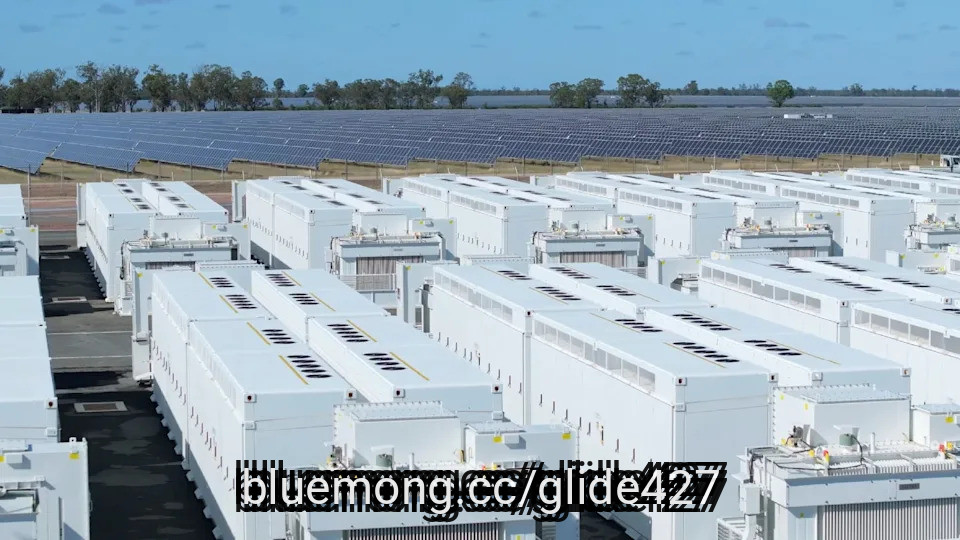
The development will combine 86MW of utility-scale solar, 70MW/280MWh of lithium-ion energy storage and 10MW/100MWh of Eos' zinc-based long-duration energy storage (LDES).
MN8 will own and operate the facility, which is planned to support Google's data centres in the area, including a project slated for West Virginia.
The solar component of the project is planned to begin commercial operations in 2028, with lithium-ion storage expected in 2029 and long-duration storage following in 2030.
MN8 has designed the Mammoth Solar project in Kanawha County as an integrated system, pairing both short and long-duration storage to convert intermittent renewable energy into a dispatchable source. This development becomes West Virginia's first commercial-scale deployment of LDES.
#storage #project #west #long
The development will combine 86MW of utility-scale solar, 70MW/280MWh of lithium-ion energy storage and 10MW/100MWh of Eos' zinc-based long-duration energy storage (LDES).
MN8 will own and operate the facility, which is planned to support Google's data centres in the area, including a project slated for West Virginia.
The solar component of the project is planned to begin commercial operations in 2028, with lithium-ion storage expected in 2029 and long-duration storage following in 2030.
MN8 has designed the Mammoth Solar project in Kanawha County as an integrated system, pairing both short and long-duration storage to convert intermittent renewable energy into a dispatchable source. This development becomes West Virginia's first commercial-scale deployment of LDES.
#storage #project #west #long

1 month ago
On August 18, Commvault (NASDAQ:CVLT) expanded its Cloud Rewind platform, tripling the number of Microsoft Azure resource types it can protect and recover after a cyberattack or outage. The move follows the company's fiscal first quarter 2027 results, reported on July 28, when subscription revenue rose 16% year over year to $267 million. Together, the two updates show a company betting on cloud recovery as its next growth engine, even as some of the underlying numbers complicate that story.
Cloud Rewind sits at the center of that bet. The August update makes it three times more capable on Azure, reaching 62% of the enterprise-relevant resource types available on that cloud. The tool continuously discovers cloud resources, maps how applications depend on each other, and orchestrates rebuilding the infrastructure and configurations an app needs, not just its files. New Protection Groups tie application data and cloud configuration into one recovery workflow, and policy-based protection can auto-enroll resources by tag, region, and type instead of onboarding each one by hand. Allcargo Group, a logistics customer, said the tool let it restore its operational environment in hours.
That kind of speed lines up with how fast Commvault itself is growing: subscription annualized recurring revenue reached $1,054 million in the quarter, up 22% year over year, while SaaS revenue crossed $100 million for the first time, up 39%, and free cash flow jumped 71% to $51 million. Commvault also struck a multi-year deal with Microsoft to sell its resilience tools as a native service on Azure, and Gartner named it a Magic Quadrant Leader in backup and data protection for the 15th straight year.
The numbers also show where the strain sits. Commvault's GAAP operating margin was just 8.2% in the quarter, far below the 22.8% non-GAAP margin the company highlights, a gap wide enough to suggest real costs are being adjusted away. Guidance points to more of the same rather than acceleration: management expects second-quarter subscription revenue of $264 million to $268 million, essentially flat against the $267 million just reported, and it guided full-year non-GAAP EBIT margin to about 21%, below the 22.8% just posted.
Even the marquee Cloud Rewind expansion has a gap built in. Tripling Azure coverage still leaves the platform reaching 62% of enterprise-relevant resource types, meaning well over a third of what enterprises run on Azure sits outside its recovery net, and the announcement says nothing about extending that coverage to AWS or Google Cloud. For a company competing on breadth of recovery, that is a real limitation until it is addressed.
#year #recovery
Cloud Rewind sits at the center of that bet. The August update makes it three times more capable on Azure, reaching 62% of the enterprise-relevant resource types available on that cloud. The tool continuously discovers cloud resources, maps how applications depend on each other, and orchestrates rebuilding the infrastructure and configurations an app needs, not just its files. New Protection Groups tie application data and cloud configuration into one recovery workflow, and policy-based protection can auto-enroll resources by tag, region, and type instead of onboarding each one by hand. Allcargo Group, a logistics customer, said the tool let it restore its operational environment in hours.
That kind of speed lines up with how fast Commvault itself is growing: subscription annualized recurring revenue reached $1,054 million in the quarter, up 22% year over year, while SaaS revenue crossed $100 million for the first time, up 39%, and free cash flow jumped 71% to $51 million. Commvault also struck a multi-year deal with Microsoft to sell its resilience tools as a native service on Azure, and Gartner named it a Magic Quadrant Leader in backup and data protection for the 15th straight year.
The numbers also show where the strain sits. Commvault's GAAP operating margin was just 8.2% in the quarter, far below the 22.8% non-GAAP margin the company highlights, a gap wide enough to suggest real costs are being adjusted away. Guidance points to more of the same rather than acceleration: management expects second-quarter subscription revenue of $264 million to $268 million, essentially flat against the $267 million just reported, and it guided full-year non-GAAP EBIT margin to about 21%, below the 22.8% just posted.
Even the marquee Cloud Rewind expansion has a gap built in. Tripling Azure coverage still leaves the platform reaching 62% of enterprise-relevant resource types, meaning well over a third of what enterprises run on Azure sits outside its recovery net, and the announcement says nothing about extending that coverage to AWS or Google Cloud. For a company competing on breadth of recovery, that is a real limitation until it is addressed.
#year #recovery

1 month ago
Our ******* ysts just identified a stock with the potential to be the next Nvidia. Tell us how you invest and we'll show you why it's our #1 pick. Tap here.
Management characterizes the current period as the midpoint of a multi-quarter transformation, moving from a 'technical debt' cleanup phase toward a projected 'acceleration phase' in fiscal year 2028.
Performance was driven by a 'Bear Hug' strategy focused on enterprise retention, resulting in renewal rates improving and completed sales transactions increasing 30% year-over-year.
The company is seeing a strategic shift among large enterprises away from point solutions toward unified AI-native platforms to reduce complexity and lower costs.
Professional services underperformed due to partner cost overruns and execution challenges in one specific region following the completion of a massive implementation project.
#phase #NVIDIA #bear #analysts
Management characterizes the current period as the midpoint of a multi-quarter transformation, moving from a 'technical debt' cleanup phase toward a projected 'acceleration phase' in fiscal year 2028.
Performance was driven by a 'Bear Hug' strategy focused on enterprise retention, resulting in renewal rates improving and completed sales transactions increasing 30% year-over-year.
The company is seeing a strategic shift among large enterprises away from point solutions toward unified AI-native platforms to reduce complexity and lower costs.
Professional services underperformed due to partner cost overruns and execution challenges in one specific region following the completion of a massive implementation project.
#phase #NVIDIA #bear #analysts


1 month ago
Digital infrastructure company Equinix Inc. (NASDAQ:EQIX) and AI chipmaker NVIDIA Corporation (NASDAQ:NVDA) have expanded their partnership today to target the next major phase of artificial intelligence spending: inference.
Shares of Equinix rose 2% on Wednesday following the announcement of Equinix Inference Exchange, which is a distributed AI inference program for global enterprises, together with a new collaboration with Together AI.
The distributed AI inference platform can leverage Nvidia's Enterprise Reference Architectures, Together AI's inference platform, and Equinix's global data center and networking infrastructure to enable enterprises to achieve a faster path from AI experimentation to production. The collaboration will provide connectivity to clouds, networks and AI providers through Equinix Fabric.
The market's modest response is worth looking at.
Nvidia's expanded collaboration with Equinix allows it to push its computing architecture deeper into corporate AI infrastructure. Inference Exchange can make Nvidia-based infrastructure easier to deploy alongside its existing cloud and data environments.
#equinix #NVIDIA #distributed
Shares of Equinix rose 2% on Wednesday following the announcement of Equinix Inference Exchange, which is a distributed AI inference program for global enterprises, together with a new collaboration with Together AI.
The distributed AI inference platform can leverage Nvidia's Enterprise Reference Architectures, Together AI's inference platform, and Equinix's global data center and networking infrastructure to enable enterprises to achieve a faster path from AI experimentation to production. The collaboration will provide connectivity to clouds, networks and AI providers through Equinix Fabric.
The market's modest response is worth looking at.
Nvidia's expanded collaboration with Equinix allows it to push its computing architecture deeper into corporate AI infrastructure. Inference Exchange can make Nvidia-based infrastructure easier to deploy alongside its existing cloud and data environments.
#equinix #NVIDIA #distributed


1 month ago
Equinix (NASDAQ:EQIX) shares rose 2% on Wednesday after the company announced Equinix Inference Exchange, a distributed artificial intelligence inference program developed in collaboration with Nvidia and Together AI.
The program brings together Nvidia Enterprise Reference Architectures, Together AI's inference platform and Equinix's global infrastructure for enterprises deploying AI workloads.
According to Equinix, the combination is designed to support deployment speed, flexibility and cost management. These benefits represent the company's stated objectives for the program rather than independently established performance outcomes.
Equinix said Inference Exchange will provide enterprises with connectivity to data, users and other parts of their technology ecosystems through Equinix Fabric.
The program integrates Nvidia's validated Enterprise Reference Architectures with Together AI's inference platform, which supports more than 200 open-source models, according to the company.
#equinix #exchange #NVIDIA #enterprise
The program brings together Nvidia Enterprise Reference Architectures, Together AI's inference platform and Equinix's global infrastructure for enterprises deploying AI workloads.
According to Equinix, the combination is designed to support deployment speed, flexibility and cost management. These benefits represent the company's stated objectives for the program rather than independently established performance outcomes.
Equinix said Inference Exchange will provide enterprises with connectivity to data, users and other parts of their technology ecosystems through Equinix Fabric.
The program integrates Nvidia's validated Enterprise Reference Architectures with Together AI's inference platform, which supports more than 200 open-source models, according to the company.
#equinix #exchange #NVIDIA #enterprise

1 month ago
Bald eagles from Dollywood's Eagle Mountain Sanctuary will have a new permanent home at the American Eagle Foundation's conservation campus in Kodak, Tenn.
The move follows storm damage to the sanctuary earlier this year, which led to the escape of three birds
Dollywood will continue educating guests about bald eagles through its Birds of Prey program at the Wings of America Theater
Dollywood is saying goodbye to its bald eagles after 35 years.
Dollywood Parks & Resorts, jointly owned by the late Dolly Parton and Herschend Family Enterprises, announced on Friday, Aug. 21, that its partnership with the American Eagle Foundation was entering "a new chapter."
#dollywood #bald #sanctuary
The move follows storm damage to the sanctuary earlier this year, which led to the escape of three birds
Dollywood will continue educating guests about bald eagles through its Birds of Prey program at the Wings of America Theater
Dollywood is saying goodbye to its bald eagles after 35 years.
Dollywood Parks & Resorts, jointly owned by the late Dolly Parton and Herschend Family Enterprises, announced on Friday, Aug. 21, that its partnership with the American Eagle Foundation was entering "a new chapter."
#dollywood #bald #sanctuary


1 month ago
Shell has agreed to take full control of U.S. convenience store operator and fuel distributor Tri Star Energy, in a transaction that will more than double the energy major's company-owned convenience retail footprint in the United States.
Equilon Enterprises, which operates as Shell Oil Products US, will increase its ownership of Nashville-based Tri Star from 33% to 100%. The acquisition includes 320 fuel and convenience retail sites in Tennessee and surrounding states, along with fuel-supply agreements covering another 552 dealer-owned locations. Financial terms were not disclosed.
Shell is acquiring the remaining interest from The Parman Corporation, Kimbro Oil Company and their subsidiaries. The deal is expected to close by the end of 2026, subject to regulatory approval and customary closing conditions.
The transaction represents a substantial expansion of Shell's directly controlled retail operations. While Shell already has around 12,000 branded fuel and convenience sites across 49 U.S. states, the vast majority are operated by wholesalers or dealers rather than owned directly by the company. Shell says its U.S. network serves more than 7 million customers per day.
Following completion, Tri Star will be operated by Texas Petroleum Group, a wholly owned unit of Shell Mobility & Convenience US. Shell expects the combined business to have nearly 550 company-owned convenience retail locations and supply agreements with around 650 dealer-owned sites across the southern United States.
Tri Star, founded in 2000, operates convenience-store brands including Twice Daily, Sudden Service and Little General and also owns the White Bison Coffee brand. Its wholesale fuel operation reaches multiple states, giving Shell additional exposure to both fuel distribution and higher-margin convenience and food-and-beverage sales.
#shell #convenience #retail
Equilon Enterprises, which operates as Shell Oil Products US, will increase its ownership of Nashville-based Tri Star from 33% to 100%. The acquisition includes 320 fuel and convenience retail sites in Tennessee and surrounding states, along with fuel-supply agreements covering another 552 dealer-owned locations. Financial terms were not disclosed.
Shell is acquiring the remaining interest from The Parman Corporation, Kimbro Oil Company and their subsidiaries. The deal is expected to close by the end of 2026, subject to regulatory approval and customary closing conditions.
The transaction represents a substantial expansion of Shell's directly controlled retail operations. While Shell already has around 12,000 branded fuel and convenience sites across 49 U.S. states, the vast majority are operated by wholesalers or dealers rather than owned directly by the company. Shell says its U.S. network serves more than 7 million customers per day.
Following completion, Tri Star will be operated by Texas Petroleum Group, a wholly owned unit of Shell Mobility & Convenience US. Shell expects the combined business to have nearly 550 company-owned convenience retail locations and supply agreements with around 650 dealer-owned sites across the southern United States.
Tri Star, founded in 2000, operates convenience-store brands including Twice Daily, Sudden Service and Little General and also owns the White Bison Coffee brand. Its wholesale fuel operation reaches multiple states, giving Shell additional exposure to both fuel distribution and higher-margin convenience and food-and-beverage sales.
#shell #convenience #retail