
23 days ago
When a caller mentioned that they are thinking about adding to their position in Simon Property Group, Inc. (NYSE:SPG) during the October 2 episode of Mad Money, Jim Cramer commented:
I think you're absolutely right... I want you to add to the Simon Property Group... What a great man he (David Simon, previous CEO) was, and he built a fabulous company, and you should buy more of it.
A September 8 question about buying Simon Property Group led Cramer to bring another real estate stock into the conversation.
Simon Property Group, Inc. (NYSE:SPG) reported second-quarter real estate funds from operations of $3.29 per diluted share, up 7.9% year-over-year. Domestic property net operating income increased 8.5%. Occupancy at its U.S. malls and premium outlets remained at 96%, while base minimum rent increased 6.3% to $62.42 per square foot. Management raised its full-year real estate funds from operations outlook to $13.20 - $13.30 per share. These figures show rent and property-income growth without requiring an increase in occupancy. Leasing activity also remained substantial. During the earnings call, management reported signing approximately 1,200 leases covering more than 4.8 million square feet, with new-deal volume increasing more than 20%.
Stable occupancy does not mean every tenant is healthy. Simon Property Group, Inc. (NYSE:SPG) absorbed approximately one million square feet of ****** e returned through retailer bankruptcies during the quarter. Management said it successfully re-leased the ****** e, helping maintain occupancy. That shows leasing strength, but also a reminder of the work required to preserve rental income. Additional retailer failures could bring more vacancies and replacement costs, even when demand for the properties remains sound.
#occupancy #NYSE #management #estate


23 days ago
Stocks are doing something that normally should not happen at the same time.
Major indexes keep closing at record highs even as Treasury yields climb to levels not seen in over two decades. That combination has traditionally meant trouble for expensive growth stocks, not fresh records.
Jim Cramer says there is a clear explanation for the disconnect. It comes down to just three companies carrying far more weight than their size alone would suggest.
Also read: Jim Cramer noticed something odd about the stock market
"Mad Money" host Jim Cramer said Nvidia, Microsoft and Meta are propping up the broader market even as surging Treasury yields pressure nearly everything else on Wall Street. "Here, I think there's tremendous distortion caused by some very big winners, namely Nvidia, Microsoft and Meta," he said.
#cramer #meta #market


24 days ago
Bessent's $6 billion buybacks left yields nearly unchanged against a $32 trillion market, prompting him to admit he can't set the equilibrium price.
The 10-year yield hit a 12-month high of 5.31%, dragging 30-year fixed mortgage rates near their 52-week high of 7.60%.
Cramer says bonds, not oil, reveal the long-term truth, making the daily 10-year yield close more important than Bessent's policy promises.
Read More: Learn 7 ways to generate income with a $1,000,000+ portfolio (sponsor)
Jim Cramer said on Mad Money October 5, 2026: "Treasury Secretary Bessent basically copped to not being able to stop a bond market slide with his meager multibillion dollar bond buys. He's plugging the dike with a finger, and it's got $31 trillion in Treasuries behind it.", according to Mad Money w/ Jim Cramer
#year #money #market #learn


25 days ago
Jim Cramer has built a career on conviction calls, and few have been more consistent than his faith in Amazon (AMZN). For years, the Mad Money host has treated the retail giant as close to untouchable. A permanent fixture in nearly every portfolio he recommends.
That changed, briefly and publicly, after watching a rival's AI demo live on air. Here is what Cramer actually said, the stock moves that gave his comment real weight, and what it all means for anyone holding either name heading into the rest of the year.
Also read: Jim Cramer noticed something odd about the stock market
Cramer made the comment live on CNBC's Squawk on the Street on September 28, after watching a demonstration of Meta's (META) new AI shopping capability. "I'm an Amazon guy, but maybe I shouldn't be. This seemed impressive," he said, speaking as a shopper describing his own buying habits rather than making a stock call.
The timing gave the remark unusual weight. Meta shares had climbed roughly 24% over the prior month. Amazon fell roughly 8% over the same stretch. Investors were already debating which company was winning the fight for online shoppers before Cramer weighed in.
#cramer #amazon #roughly


1 month ago
Toward the end of the lightning round on September 17, a caller asked for Mad Money's host Jim Cramer's thoughts on Iron Mountain Incorporated (NYSE:IRM), and he replied:
It's been an incredible stock. It's a real estate investment trust, basically. And you know, we know that they shred, 3% yield, down 20 points from its high. I think it's a buy.
Iron Mountain Incorporated (NYSE:IRM) operates a highly durable business model centered on physical records management, secure document destruction, and expanding digital infrastructure. In Q2, total revenue reached $2.03 billion, representing an 18.7% increase year-over-year and 16.8% organic growth. The core physical storage business provides reliable cash flow, with storage rental revenue expanding 11.5% year-over-year excluding foreign-exchange effects across a global customer base of 240,000. Adjusted funds from operations grew 17% to $432.7 million, or $1.44 per share.
At the same time, management has channeled capital into scaling higher-growth segments, including digital solutions, ***** et lifecycle management, and data center operations. The data center segment posted 39% revenue growth during the second quarter, securing 110 megawatts in new leases through July and increasing power capacity across major enterprise markets. Operating as a real estate investment trust, the company maintains a quarterly dividend of $0.864 per share, offering shareholders a forward yield of over 3%.
On the other hand, Iron Mountain Incorporated (NYSE:IRM) faces risks inherent to capital-intensive real estate infrastructure expansion. Rapid buildouts of data center power capacity demand substantial capital expenditure, leading to elevated leverage across the balance sheet. Long-term debt, net of the current portion, reached approximately $17.1 billion at the end of the second quarter, increasing sensitivity to interest rate fluctuations and refinancing costs.
#revenue #Growth

1 month ago
Veteran ******* yst Jim Cramer sees something in Apple's (AAPL) latest launch that is more than a reason for its customers to buy another replacement phone.
After visiting Apple's Manhattan store, the CNBC host praised the iPhone 18 but reserved his strongest enthusiasm for the foldable Duo. He plans to buy it as a second phone, a distinction that gives his excitement an intriguing business angle.
Apple shares have already gained around 23.6% this year through September 18, raising the stakes for turning product excitement into sales.
For context, Apple unveiled its iPhone 18 Pro lineup and first foldable iPhone on September 9. The Pro models reached stores on September 18; Duo availability follows on October 23.
For Cramer, the bigger opportunity goes beyond better cameras and battery life. His reaction suggests Apple could give loyal customers a fresh reason to spend, even when their existing phones still work perfectly well.
#reason #phone #veteran


1 month ago
For custom chip designer Broadcom Inc. (NASDAQ:AVGO), the debate is all about whether the demand for AI products will sustain and grow. It is among the few firms capable of designing custom AI chips that big technology firms rely on to supplement NVIDIA's high-power and expensive AI chips. Anthropic CEO Dario Amodei's latest remarks about the need to slow down AI development due to safety concerns have generated quite a buzz, and Cramer discussed what Broadcom Inc. (NASDAQ:AVGO)'s CEO told him when asked about AI infrastructure development losing traction:
"What's refuted by Hock Tan, of course, maybe Hock Tan is one of the biggest providers of semis, other than NVIDIA, and when I asked him about, give me a prediction about the AI slowdown, would there be one, he said, not in the least. We see the demand for compute infrastructure for development of AI and inference as extremely strong and durable. So I know those stocks were the most heavily hammered, other than the fiber stocks. But David, when you listen to what Hock Tan said last night on Mad Money, you are inclined to do buying.
"I think David, you recognize, and a lot of people don't, when you're speaking about Hock Tan, whom I had on, you're talking about a 1.6 trillion dollar company. This isn't just someone. . .worried about what orders are going to be. . .this man has more orders than almost anybody other than Jensen Huang. So I think Carl, when we get very, very negative we still have to rely on the facts And the facts do not support there are some people who are very worried about mankind, I did not get the mankind worry when I spoke yesterday."
The CNBC TV host's remarks about Broadcom Inc. (NASDAQ:AVGO) sit right at the center of the debate for the firm. This debate is about whether it will be able to continue to capture additional orders for custom AI chips. Looking at the third quarter earnings, released on September 2nd, the growth narrative appears to be quite strong.
It boosts Cramer's claims of Broadcom Inc. (NASDAQ:AVGO) experiencing strong orders, as during the quarter, the firm's revenue grew by 86%, AI semiconductor revenue jumped by 221% and fiscal year 2026 guidance implied 186% annual AI revenue growth. Not to mention, CEO Tan reaffirmed that Broadcom Inc. (NASDAQ:AVGO) could pull in $115 billion in annual AI chip sales in 2027 and a whopping $230 billion in 2028.
#orders #debate #strong

1 month ago
GE Vernova Inc. (NYSE:GEV) is one of Jim Cramer's favorite stocks. Throughout 2025, the CNBC TV host continued to heap praise on the firm. Cramer's praise came at a time when new-age nuclear power and quantum computing stocks were experiencing strong gains. Throughout this period, he continued to **** ert that GE Vernova Inc. (NYSE:GEV) was the only nuclear firm with a stable delivery timeline and the capacity to deliver. In his morning appearance on the 15th, Cramer discussed the recent dip in shares and worries about a slowdown in the AI buildout:
"One company, GE Vernova, which was hit incredibly hard, which actually builds these, was saying they're seeing an order acceleration. So I really doubt the idea there's going to be a decel. Now that stock got hammered yesterday, it's been a horrendous stock since we started getting this political controversy. But again I point out that you just hear no one say anything about pullback."
For GE Vernova Inc. (NYSE:GEV), as perhaps indicated by the share price movement, the narrative is driven by its backlog and overall exposure to AI's power generation demand. On this front, CEO Scott Strazik, another Cramer favorite, outlined during the firm's second quarter earnings that data center orders of $5 billion for H1 2026 had already doubled over the full year 2025 figures. Additionally, during Q2, the firm's total orders touched $24 billion to mark an 88% growth driven by its Power and Electrification segment. As a whole, GE Vernova Inc. (NYSE:GEV)'s Q2 revenue grew by 22% annually, while its overall backlog and electrification backlogs sat at $176 billion and $446 billion.
At the same time, with GE Vernova Inc. (NYSE:GEV) also relying on gas turbines for its business, the debate is also about whether exposure to AI can remove the inherent cyclicality in the business. Additionally, with data centers accounting for 40% of the Electrification business's orders, any slowdown in capex spending by big tech players could generate tailwinds for GE Vernova Inc. (NYSE:GEV). Similarly, while the data center business is booming and the gas generation business remains tied to prices and interest rates, the firm's wind business is a drag and expected to hurt the bottom line throughout 2026.
In Q2, 106 out of the 1,006 funds tracked by Insider Monkey had held a stake in GE Vernova Inc. (NYSE:GEV), which marked a dip over the 118 out of 1,022 funds in Q1. Whether the dip was due to the order mix and AI sentiment or due to profit taking, your guess is as good as ours. On the valuation front, GE Vernova Inc. (NYSE:GEV) trades at a forward P/E ratio of 35, while short interest as a percentage of float is 3.29%.
#vernova #business #throughout #data


1 month ago
Cybersecurity provider CrowdStrike Holdings, Inc. (NASDAQ:CRWD)'s shares are up by more than 100% year to date. With AI continuing to dominate the market narrative, the firm has found itself at the center of the industry's concerns about cybersecurity. While some, such as Anthropic's Dario Amodei, have claimed that their AI software is sufficient for cybersecurity purposes, others have argued that firms such as CrowdStrike Holdings, Inc. (NASDAQ:CRWD) will play a key role in the industry. Cramer is in the latter camp, and in his morning appearance on September 15th, the CNBC TV host discussed the recent discussions about AI being a threat:
"I had George Kurtz last night, who has partnered both with OpenAI and Anthropic. And he encouraged me to say look, they are doing a lot of things about safeguards. I think he was so much surprised, that there was so much doomsaying, of course, doomsaying being heavily refuted. Now there's a stock, remember that stock was up the most of any stock in the S&P."
While Cramer believes CrowdStrike Holdings, Inc. (NASDAQ:CRWD) will play an important role in cybersecurity in the AI era, the broader debate about the firm is about its AI-driven cybersecurity initiatives and whether they are sufficient to stay competitive and justify the eye-watering share price performance. On this front, the firm's annual recurring revenue (ARR) grew by 25% and net new ARR grew by 55% in its fiscal second quarter. Additionally, CrowdStrike Holdings, Inc. (NASDAQ:CRWD)'s net new ARR set a new record of $333 million. Cramer's bullishness on the firm is also matched by others, such as ******* ysts from Argus. Argus has set a $425 share price target for CrowdStrike Holdings, Inc. (NASDAQ:CRWD) and argued that growth in agentic AI use presents a major tailwind for the firm.
Yet, in a classic case of the bigger you are, the harder you fall, CrowdStrike Holdings, Inc. (NASDAQ:CRWD)'s massive growth creates risk. For its fiscal second quarter, the firm has guided net new ARR to range between $343 million and $347 million to imply growth ranging between 29% to 31%. Considering that the metric grew by 55% in Q1, the new figures do indicate a slowdown. As for catalysts from agentic AI, CrowdStrike Holdings, Inc. (NASDAQ:CRWD)'s next-gen SIEM (Security Information and Event Management) ending ARR grew by 60% to $695 million in the second quarter.
Hedge fund interest in CrowdStrike Holdings, Inc. (NASDAQ:CRWD) grew in Q2. According to Insider Monkey's data, 89 out of 1,006 funds had held a stake in the firm during the period. This marked a jump over the 89 out of the 1,022 funds in Q1. As for valuation, CrowdStrike Holdings, Inc. (NASDAQ:CRWD)'s forward P/E ratio of 188 is significantly higher than peer firm Palo Alto's 89 which should increase the pressure to maintain growth. Short interest as a percentage of float is 2.41% for CrowdStrike Holdings, Inc. (NASDAQ:CRWD) compared to 2.65% for Palo Alto.
#NASDAQ #firm #grew


1 month ago
An old Wall Street adage just got a fresh test.
"Don't fight the Fed" has guided generations of investors through rate cycles both gentle and brutal. This time, it came roaring back into the conversation after the central bank made its first major policy shift in more than three years.
Jim Cramer wasted no time translating what happened into plain language for viewers watching at home. His verdict landed within hours of the decision, and it was blunt enough to make anyone holding stocks in their portfolio pay very close attention.
Cramer delivered his warning on Sept. 16 on "Mad Money," just hours after the Federal Reserve raised its benchmark federal funds rate by a quarter percentage point to a range of 3.75% to 4%.
"If you buy stocks here, you're now officially fighting the Federal Reserve," Cramer said, invoking the old adage that ignoring it tends to hurt returns.
#wall


1 month ago
Jim Cramer put Intel Corporation (NASDAQ:INTC) and Micron Technology, Inc. (NASDAQ:MU) at the top of his technology stock list during the September 17 episode of Mad Money, as he said:
Yesterday, I said that people would buy tech. We got that in spades today. I continue to recommend the cybersecurity stocks, and I'd add Okta to the list because rogue agents cannot be stopped unless we can identify them first. That's Okta's job. I still think that Intel, as I tell club members, is the best stock in show, and Micron, number two… Both their products are in short supply. I just bought some Micron, candidly.
Intel Corporation's (NASDAQ:INTC) second-quarter revenue rose 25% year over year to $16.1 billion, while Data Center and AI revenue increased 59% to $6.3 billion. Intel Products generated $4.8 billion of operating income in the second quarter, up from $2.7 billion a year earlier, while Data Center and AI operating income increased $1.8 billion to $2.5 billion.
The company said client supply constraints are expected to ease in the second half of 2026, while industry-wide constraints affecting Data Center and AI products are expected to persist into 2027.
Micron Technology, Inc.'s (NASDAQ:MU) fiscal third-quarter GAAP operating margin reached 80.4%, up from 67.6% in the prior quarter and 23.3% a year earlier. Its non-GAAP operating margin was 81.2%. Operating cash flow reached $25.4 billion. The company also said DRAM inventories were "very tight and below 120 days."
#NASDAQ #operating #year #data


1 month ago
Markets have a familiar reflex when fear spreads through technology stocks. Investors wait to hear what Jim Cramer thinks.
This week, the fear did not come from a short seller or a regulator. It came from inside the AI industry itself, from one of its own leaders.
Cramer said Wednesday, Sept. 16, that he won't back away from the AI trade, according to CNBC. That comes despite a weekend essay from a top AI executive arguing that the technology is moving too fast.
He predicted spending on AI infrastructure will keep climbing, because the industry's two biggest labs are already turning that spending into real revenue. There's too much money at stake for them to stop now, the "Mad Money" host said.
The warning that shook markets came from Anthropic CEO Dario Amodei, not from a critic outside the industry. In an essay ****** led "We Must Pace the Frontier," Amodei wrote that we must slow the pace at which we improve the capabilities of AI models.
#markets #pace #came


1 month ago
Starting the lightning round on September 14, when a caller inquired about SentinelOne, Inc. (NYSE:S), Mad Money host Jim Cramer remarked:
No, look, I think you don't need, look, my Charitable Trust owns both Palo Alto and CrowdStrike. It's already too many. I think either one of those two is superior to letter S.
The latest results show a large difference in scale. SentinelOne's fiscal second-quarter 2027 revenue rose 21% year over year to $292 million, while annualized recurring revenue increased 22% to $1.218 billion. Palo Alto Networks, Inc.'s (NASDAQ:PANW) fiscal fourth-quarter 2026 revenue rose 34% to $3.41 billion, while Next-Generation Security ARR increased 63% to $9.10 billion. Additionally, we have discussed CRWD in our recent article, "Jim Cramer Highlights CrowdStrike (CRWD) as AI Security Concerns Lift Cybersecurity Stocks."
SentinelOne, Inc. (NYSE:S) non-GAAP operating margin reached 10% in fiscal Q2 2027, up from 2% a year earlier, while its GAAP operating margin improved to negative 31% from negative 33%. The company guided for fiscal third-quarter revenue of $309 million to $311 million and full-year revenue of $1.202 billion to $1.207 billion.
Palo Alto Networks, Inc. (NASDAQ:PANW) reported approximately $1 billion of non-GAAP operating income in its fiscal fourth quarter of 2026, compared with $768 million a year earlier. Adjusted free cash flow reached approximately $1.3 billion, while GAAP operating income was $172 million versus $497 million a year earlier. Palo Alto CEO Nikesh Arora said in the September 1 earnings release that the latest advances in AI are "elevating cybersecurity to the top of the CIO priority list."
#billion #year #gaap #operating


1 month ago
On September 14, during the episode of Mad Money, Jim Cramer said CrowdStrike Holdings, Inc. (NASDAQ:CRWD) is emerging as a beneficiary of growing concerns over the cybersecurity risks created by artificial intelligence, as he said:
Over the weekend, the co-founder and CEO of Anthropic published an essay where he pushed for a slowdown among the frontier AI labs in order to handle newfound security concerns. In response to that, the cybersecurity cohort just went crazy because there are the companies that can prevent AI agents from randomly hacking into networks all over the world, and it's the cybersecurity companies. Take CrowdStrike, which shot up nearly 14% today, leading the S&P 500, something I feel great about, of course, because we own it big for the Charitable Trust. These guys have been adamant that AI represented a great opportunity for their business, and now Wall Street's finally gotten the memo.
CrowdStrike Holdings, Inc.'s (NASDAQ:CRWD) second-quarter fiscal 2027 revenue increased 26% year over year to $1.47 billion, while ending annual recurring revenue rose 25% to $5.84 billion. Net new ARR reached a record $332.8 million, and free cash flow was $377.4 million. The company also raised its full-year fiscal 2027 net new ARR growth outlook to 34% at the midpoint, up 630 basis points. CEO George Kurtz said the company believes securing AI is its "largest market opportunity in our history."
Kurtz said on September 14 that AI-driven threats are already operating at machine speed, describing the emerging threat as autonomous campaigns rather than individual hackers. He identified endpoints, cloud workloads and SaaS as key battlegrounds and said "enforcement at machine speed" is needed to stop AI agents in motion. CrowdStrike has responded by expanding into AI-agent, model and infrastructure protection, including Continuous Identity for AI Agents and Falcon AI Detection and Response.
CrowdStrike Holdings, Inc.'s (NASDAQ:CRWD) valuation leaves little room for a meaningful slowdown in growth. Yahoo Finance currently shows a forward P/E of approximately 188.7 times and a price-to-sales ratio of roughly 44.6 times. Those multiples leave little room for a material slowdown in ARR growth, weaker adoption of newer products, or greater competitive pressure. The company also remains much less profitable on a GAAP basis than its adjusted results suggest. The company reported a $33.2 million GAAP operating loss in the latest quarter against $371.6 million of non-GAAP operating income, while stock-based compensation and related employer payroll taxes totaled $399 million.
#crwd


1 month ago
During the September 14 episode of Mad Money, Jim Cramer addressed the broader tech sector pullback and mentioned Broadcom Inc. (NASDAQ:AVGO) as an attractive option for investors looking past short-term volatility. He stated:
Well, it's a tough time to come out to San Francisco, a day when the whole AI complex is getting hammered because Anthropic and OpenAI seem to be, I don't know… pulling in their horns. Actually, I think there's some real bargains in this group. Take Broadcom, the maker of chips, networking equipment, and tech infrastructure and software with a stock that's down more than 10% over the past month. At the beginning of this month, Broadcom reported a strong set of results, issued a spectacular multi-year forecast, but their guidance for the current quarter was, I don't know, viewed by some as in line.
The stock got slammed. I think Broadcom's still on track to put up some incredible growth because they're at the heart of the AI ecosystem because the company's never let us down in all the years my Charitable Trust has owned it. And down here, roughly 150 points below its June high, the stock may be too cheap to ignore.
Recent financial reports from Broadcom Inc. (NASDAQ:AVGO) highlights the scale of expansion driving its core semiconductor and infrastructure divisions. Total revenue for the fiscal third quarter reached $29.6 billion, representing an 85.5% increase compared to the same period in the previous year. Artificial intelligence semiconductor revenue surged 221% to $16.7 billion, accounting for roughly 56% of total revenue. Remaining performance obligations climbed significantly to $179.2 billion, providing substantial visibility into future contracted revenue. Broadcom also serves major hyperscale AI customers including Alphabet and Meta Platforms.
Management raised its full year guidance to $58 billion from $56 billion in artificial intelligence revenue, while projecting $115 billion for fiscal 2027 and $230 billion for fiscal 2028. The figures highlight a deep integration into the enterprise artificial intelligence ecosystem through custom accelerators and high-speed networking solutions.
#down #year #fiscal #NASDAQ


1 month ago
During the September 11 episode of Mad Money, a caller asked whether to buy, sell, or hold shares of The Kraft Heinz Company (NYSE:KHC). Jim Cramer replied:
No, I don't want you to do that… And I'll tell you why. Because it's not that I believe in the greater man theory, but this Steve Cahillane, who's the CEO, he saved Kellogg and made people a ton of money. He's going to do the same thing with Kraft Heinz. Let's give him a chance. Let's give him six months, okay? I think he'd appreciate that if we give him six months. He's been here for a while, and he's a… person [who] really likes to... [take] action. Don't leave it. Please don't leave Kraft Heinz.
The comments build on his June 2 view that he was willing to "take on the risk" of owning Kraft Heinz because of Cahillane's record at Kellogg. At the time, however, Cramer said he had "not all that much faith in Kraft or Heinz after previous management gutted the company."
The Kraft Heinz Company's (NYSE:KHC) second-quarter results show why the turnaround remains unfinished. Net sales fell 1.4% year over year to $6.26 billion, while organic net sales declined 1.3%. Adjusted operating income fell 18.4% to $1 billion, while North American sales declined 2.7%. Management raised its 2026 organic net-sales outlook to a decline of 0.5% to 2%, from the previous range of a 1.5% to 3.5% decline. It also increased incremental investment by $100 million to approximately $700 million in 2026, with the company targeting a return to volume-led, sustainable and profitable growth.
On September 2, Kraft Heinz said it will hold an Investor Day on November 12 to present its long-term strategy for "sustainable volume-led and profitable growth." Cahillane said, "Our brand investments are gaining traction and driving improved performance."
#kraft #give #september

1 month ago
On September 11, a caller praised The Boeing Company's (NYSE:BA) CEO and asked when the company would overcome the ongoing labor uncertainty and finally move beyond years of sideways stock performance. Mad Money host Jim Cramer replied:
I think that Boeing is ready to go up. But here's the problem. Every time crude goes up a dollar, the stock goes down a dollar. And that, think about it, that was actually the ratio. I did some work on this. And because today crude was down, Boeing went up $5... No, it's so stupid because, in truth, the airlines need more planes because the planes are more fuel-efficient. So they actually do better in this environment, but ******* ody cares. They know that airlines have to borrow money to buy planes and rates are higher, and they think that oil somehow's bad. But what ends up happening is the stock does nothing. I think it's about to go up because I think oil might be peaking unless there's some catastrophe over there.
The Boeing Company's (NYSE:BA) second-quarter results showed improving cash generation, but profitability remained weak. Revenue rose 8% year over year to $24.6 billion, while operating cash flow reached $1.4 billion and free cash flow was $631 million. Its total backlog reached a record $715 billion, including more than 6,200 commercial airplanes. CEO Kelly Ortberg said, "We're ramping up production just as we planned. That's driving higher revenues and improved cash flow." He also said there's more work ahead to ramp production, complete commercial-aircraft certifications and uphold customer commitments. Boeing said the 737-7 and 737-10 had completed flight testing, with deliveries expected to begin in 2027.
The Boeing Company's (NYSE:BA) large backlog has yet to translate into consistent commercial-aircraft profitability, leaving execution and margins as important concerns for investors. Commercial Airplanes delivered 171 aircraft in the second quarter but still posted a $322 million operating loss and a negative 2.7% operating margin. It also reported a $428 million GAAP net loss.
The balance sheet leaves less room for further setbacks. The company ended June with $45.9 billion of consolidated debt against $20 billion of cash and investments in marketable securities. The FAA certified the 737-7 on August 3, while Boeing continues working toward certification of the 737-10. First deliveries of the variants are expected in 2027. The company also recorded $280 million of losses on the VC-25B program in the quarter.
#boeing #cash #commercial


1 month ago
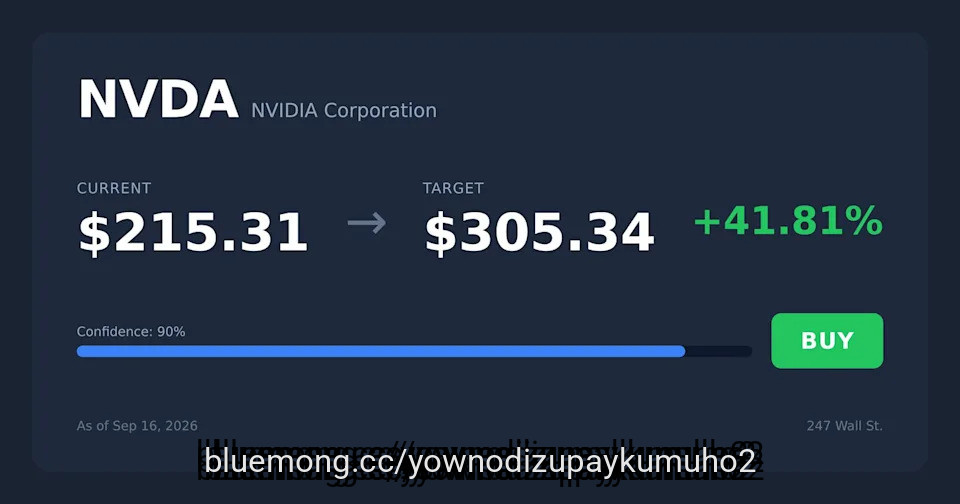
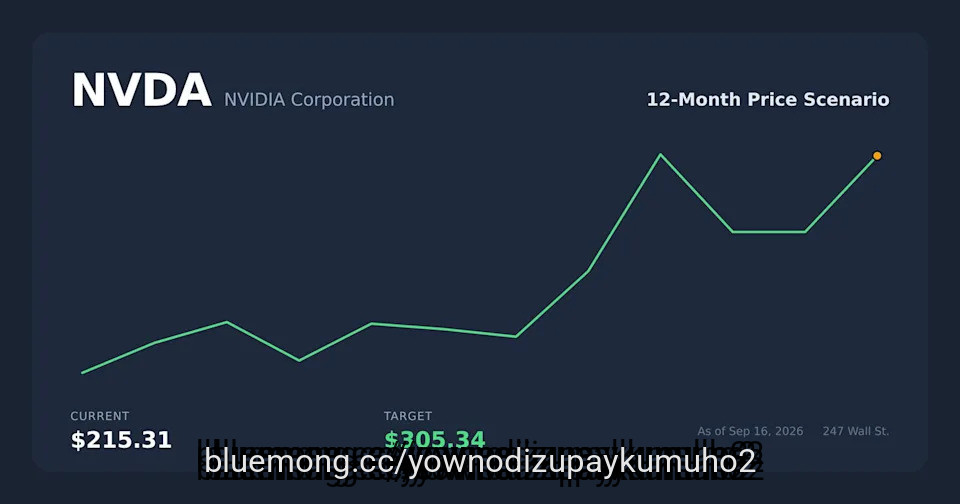
AI poster-child Nvidia (NVDA) has jumped 14% year to date, but the ride's been noticeably ******* py according to Seeking Alpha data.
The stock's down nearly 6% in just one week and around the same amount over the past month, a pullback that has coincided with fresh questions over whether the breakneck AI buildout could finally lose momentum.
Consequently, that debate followed calls from some of the biggest names in AI to slow the development of frontier models for safety reasons. But on his latest "Mad Money" broadcast from Dreamforce, veteran ******* yst Jim Cramer made clear he's viewing Nvidia stock through a very different lens.
That's not hard to fathom because Nvidia continues giving bulls ammunition. Fiscal Q2 revenue more than doubled to $96.2 billion, with its Data Center business reaching $89 billion, as it pushes deeper into enterprise AI, including Salesforce's (CRM) new Koa reasoning model built on Nvidia Nemotron.
Cramer's takeaway after a sit-down with CEO Jensen Huang was hardly cautious, though. Instead of treating the latest AI scare as a reason to jump in and out of Nvidia, he framed the stock as something investors need to hold through the noise instead of trade.
#down #latest #billion

1 month ago
WASHINGTON (AP) — Tensions are mounting between the Pentagon and Congress over the flow of information to lawmakers about the U.S. military's priorities, with both Democrats and Republicans accusing a Defense Department leader of being frustratingly opaque.
Some senators from both parties say they were left deeply unsettled Thursday after the Pentagon's top policy adviser, Defense Undersecretary Elbridge Colby, failed to provide an expected update on the Trump administration's National Defense Strategy at a classified briefing.
The lawmakers also say they were unsatisfied with Colby's answers to questions ranging from inquiries about the Iran war to growing concerns that President Donald Trump could deploy troops to polling places during November's midterm congressional elections. Colby acknowledged that discussions about deploying the National Guard were taking place.
Sen. Jacky Rosen, a Nevada Democrat on the Senate Armed Services Committee, said Colby "was not forthcoming" and "did not really address our concerns or issues."
Sen. Kevin Cramer, a North Dakota Republican also on the committee, described the classified briefing as "just sort of dodge and punt."
#national #committee #lawmakers #concerns

1 month ago
OpenAI holds $122B in cash and no IPO deadline, stripping Nvidia of the urgency and dependency that sustain premium chip pricing.
Broadcom dropped 7.95% and AMD held near flat as markets priced each company's exposure to OpenAI's supplier diversification.
Nvidia owns the training workload that ends once, while purpose-built inference chips capture every query that follows.
Just released. Our **** ysts combed the entire stock market and named the ten best stocks to buy right now, and NVIDIA didn't make the cut. Enter your email to see the names that beat NVDA. The report is free. Enter your email and see if any of your stocks made the cut.
Sarah Friar, chief financial officer of OpenAI, sat with CNBC's Jim Cramer and described her chip procurement in the language a corporate treasurer would use. "We also have a strategy for diversifying our supply chain. And that is just good CFO risk mitigation. You never know when someone's supply chain is going to get gummed up. So you need to have multiple providers."
#chip #stocks #broadcom


1 month ago
On the September 11 episode of Mad Money, Jim Cramer expressed strong optimism for Brinker International, Inc. (NYSE:EAT) ahead of its upcoming **** yst presentation, as he said:
Thursday, we have two important **** yst meetings. Brinker... We have them all the time on the show. Brinker, you know, is Chili's, and the company never fails to wow me. I think this meeting will be no exception.
Brinker International, Inc. (NYSE:EAT) continues to demonstrate operational strength across the casual dining sector, driven by sustained customer traffic and menu innovation at Chili's Grill & Bar. In its fourth quarter of fiscal 2026, the company generated $1.54 billion in total revenue, bringing full-year revenues to $5.81 billion. Adjusted earnings per share for the quarter reached $3.07, representing a 23% year-over-year increase.
Chili's reported a 5.6% increase in comparable store sales, marking its 21st consecutive quarter of positive same-store sales growth. The sustained momentum has been supported by the ongoing success of the $10.99 "3 for Me" everyday value platform as well as targeted menu launches, including the Big Crispy Chicken Sandwich, which helped support traffic as Chili's continued positioning its value proposition against fast-food offerings. According to the company's CEO Kevin Hochman, the Big Crispy Chicken Sandwich "overdelivered" on the management's estimates.
Despite consistent top-line momentum, Brinker International, Inc. (NYSE:EAT) faces ongoing execution risks **** ociated with sticky cost inflation and broader macroeconomic pressures on consumer spending. Elevated wholesale prices for core commodities, especially beef and produce, continue to weigh on restaurant operating costs, while wage growth across regional markets keeps labor expenses elevated.
#elevated #analyst


1 month ago
When a caller inquired about SoFi Technologies, Inc. (NASDAQ:SOFI) during the September 10 episode of Mad Money, Jim Cramer commented:
Well, you know, it's a financial tech. It's a bank, but let's put it this way: It's doing as well as it can, but it has a very high price-to-earnings multiple versus the others in its cohort. So, it's going to mark time until the earnings continue to go up. I do like the company. I like the management. I wouldn't mind you owning it for the long term.
SoFi Technologies, Inc. (NASDAQ:SOFI) reported record second-quarter adjusted net revenue of $1.2 billion, up 40% year over year, while GAAP net income rose 61% to $156.6 million. Adjusted EBITDA increased 44% to $358 million. Loan originations reached a record $14.8 billion, while members increased 35% to 15.8 million and deposits reached $45.5 billion. Moreover, at the September 8 Goldman Sachs conference, CFO Chris Lapointe said SoFi generated approximately 40% year-over-year revenue growth in each of the first two quarters and approximately 30% adjusted EBITDA margins. He also said the company had outpaced the Rule of 40 for 20 consecutive quarters. Additionally, the company raised its 2026 adjusted net revenue outlook to $4.75 billion to $4.85 billion but maintained its adjusted EPS outlook at $0.60.
A concern is that SoFi Technologies, Inc.'s (NASDAQ:SOFI) earnings growth may not be sufficient to justify the multiple investors are paying. SoFi is trading at a premium valuation compared to its traditional banking peers, with Yahoo Finance's latest data showing a trailing P/E of 35.12 and a forward P/E of 21.51. That valuation leaves the shares sensitive to a slowdown in earnings growth. Credit performance is another important consideration as SoFi expands its lending business. For the six months ended June 30, total net charge-offs were $406.1 million, up $77.2 million from the prior-year period, while the total net charge-off ratio declined to 1.91% from 2.24%. The increase in charge-offs was driven primarily by higher personal-loan net charge-offs and student-loan net charge-offs, reflecting growth in average loans.
According to Insider Monkey, which tracks more than 1,000 hedge funds, 44 hedge funds held SoFi in Q2, down from 47 in Q1. Its short interest stood at about 14% to 15% of the float. SoFi Technologies, Inc.'s (NASDAQ:SOFI) growth and improving profitability give Cramer's long-term view a fundamental basis, but its valuation still leaves the stock dependent on continued earnings growth. The company's ability to turn strong revenue and loan growth into higher earnings will remain important to the stock's valuation.
#earnings #adjusted #million #charge


1 month ago
Answering a caller's query about The Procter & Gamble Company (NYSE:PG) during the lightning round of the September 10 episode of Mad Money, Jim Cramer said:
It's a tough stock. It's a tough stock because they don't have the growth that I want. They do have the 3% yield, but that's not enough. So, I'm going to say, you know, we sold it for the club. Don't look back.
The Procter & Gamble Company's (NYSE:PG) upside relies on elite operational execution and pricing power in high-margin categories. Continuous supply chain savings and an aggressive premiumization push toward items like Tide PODS help protect profitability. Combined with strong free cash flow productivity, management returned roughly $15 billion in FY 2026 through dividends and share buybacks, ensuring a steady earnings floor despite slow top-line growth.
The primary headwind is weak top-line momentum, with organic sales flat in the second quarter as challenging consumer trends, particularly in the U.S., weighed on growth. Foreign exchange friction and cost pressures further cap near-term earnings acceleration. Additionally, while the stock offers a reliable 3% dividend yield, that income profile creates a steep opportunity cost when risk-free ******* ets and higher-growth stocks offer attractive returns. We recently discussed what Cramer thinks is the ideal valuation for a good entry point in our article, "Jim Cramer Discusses Procter & Gamble (PG) Valuation and Growth."
According to Insider Monkey's data, 83 hedge funds had a stake in The Procter & Gamble Company (NYSE:PG) in Q2 compared to 78 in the prior quarter. Short percentage of the float is 1.21%, showing its status as a defensive holding rather than a short target. While the company provides exceptional balance sheet stability and reliable cash returns for defensive portfolios, its modest top-line growth trajectory and premium valuation continue to test investor patience, validating Cramer's decision to reallocate capital toward faster-moving opportunities.
#company

1 month ago
Jim Cramer sees Seneca Foods Corporation (NASDAQ:SENEA) as an attractive food stock after its sharp rally, but he wants investors to leave room for a further pullback. During the September 10 episode of Mad Money, he noted that the shares had recently fallen about 11% from their high the previous week. He added:
Looking at the chart, you'd think this was an AI data center company. The stock's up 256% over the past three years, nearly 70% year to date.
Cramer said its appeal starts with its exposure to both branded and private-label products:
They don't care whether you're buying the premium nationally branded stuff or the cheap private-label knockoffs because they package everything.
Seneca reported fiscal first-quarter 2027 revenue of $405.2 million, up 36.2% year over year, while diluted EPS increased to $2.85 from $2.14. Management attributed the revenue growth to the Green Giant U.S. frozen acquisition, private-label growth and the timing of contract-packaging sales. Cramer credited the Green Giant transaction with helping drive the improvement after Seneca acquired B&G Foods' U.S. frozen business in March.
#seneca #giant


1 month ago
Inquiring about Walmart Inc. (NASDAQ:WMT) on September 10, a caller asked if they should "keep it." Mad Money host Jim Cramer replied:
I got to tell you, this one is a short and long-term, okay? Short-term, I think I know what Walmart's doing. I think that they're letting their customers have a big break. They're not passing along all of these costs. That is going to earn them tremendous love when things get better. So the wise situation is to say this: Walmart trades at 36 times earnings. It deserves to trade lower just because of what's happening at the company now and higher what's happening at the company when this inflation bout ends. So you buy some at $106, $105, and then buy some at $95. And yes, it could trade to $95. It does not have yield support. This is not like Target, which had that yield support. Target's doing better than Walmart right now. It is.
Walmart Inc.'s (NASDAQ:WMT) second-quarter fiscal 2027 revenue rose 5.9% year over year to $187.9 billion, while global e-commerce sales increased 23%. Global advertising revenue rose 38%, and membership-fee revenue increased 17% globally. Walmart U.S. comparable sales, excluding fuel, grew 2.6%. The company is also using tariff refunds to support lower prices. It said tariff refunds increased its gross profit rate during the quarter, while price investments partially offset the benefit.
Target Corporation (NYSE:TGT) has stronger recent comparable-sales momentum. Its second-quarter sales rose 5.3%, comparable sales increased 3.8%, and traffic rose 3.6%. The company also raised its full-year sales-growth outlook to approximately 5%. Its second-quarter GAAP and adjusted EPS were $4.11, including a $1.65 benefit from tariff refunds. Excluding tariff refunds, GAAP and adjusted EPS increased 20% year over year. CEO Michael Fiddelke said Target had reduced prices on more than 10,000 frequently purchased items over the past year and acknowledged that "there's still meaningful work ahead."
Walmart Inc.'s (NASDAQ:WMT) biggest risk is valuation. Its premium forward PE of 36.76 leaves the stock more exposed if U.S. comparable-sales growth remains modest while the company continues investing in prices. Walmart's 2.6% U.S. comparable-sales growth also trails Target's 3.8%.
#increased #rose

1 month ago
During the September 10 episode of Mad Money, a caller inquired about Mad Money host Jim Cramer's confidence that Arista Networks, Inc. (NYSE:ANET) will not go down the same path as Ciena Corporation. He replied:
Okay, so let me just tell you, Arista is up a lot this year. My confidence is with Jayshree Ullall. I think she's amazing and I think it every time the stock has dipped, if you've noticed it. Since her tenure began, you have to buy it, and I'm not backing away from that. I feel the same way I do now, the way I did, oh man, how many years ago when we first met her. She is money, and the company's fantastic.
In its second quarter, the company shattered records by delivering its first-ever $3 billion quarter, reporting $3.036 billion in revenue, a 38% year-over-year and over 12% sequential increase. Management lifted its full-year 2026 revenue guidance to approximately $12.6 billion, representing roughly 40% annual top-line growth. The acceleration is supported by deep integration into cloud architectures, where Arista Networks, Inc. (NYSE:ANET) expects its dedicated AI fabrics revenue to reach at least $3.5 billion in 2026, supported by more than 100 **** ulative Etherlink customers.
Bottom-line performance remains equally strong, with non-GAAP diluted earnings per share reaching $1.02, driven by a 49.9% non-GAAP operating margin and $1.3 billion in non-GAAP quarterly net income. Arista Networks, Inc. (NYSE:ANET) ended the quarter with roughly $13.3 billion in cash and marketable securities, offering substantial liquidity. However, its $9.7 billion of non-cancellable purchase commitments also increase working-capital and inventory risk as the company secures components ahead of expected AI demand.
The company's financial results remain heavily tied to two hyperscale customers. According to its 10-K filings, Microsoft accounted for 26%, and Meta Platforms generated 16% of total revenue in fiscal 2025, bringing combined spending from these two cloud giants to 42%. It leaves Arista Networks, Inc. (NYSE:ANET) vulnerable to sudden capital expenditure adjustments, vendor diversification shifts, or project delays by its core buyers.
#billion #NYSE #year


1 month ago
On September 10, a caller outlined a detailed financial thesis showing Micron Technology, Inc. (NASDAQ:MU) reaching $1,400 and asked whether the **** ysis held water. In response, Mad Money host Jim Cramer said:
I mean, that's a remarkable **** ysis. It's spot on in every single number. Every single thing you said is true, which is why my Charitable Trust owns it, and why we are buying it aggressively. And by the way, can I just say if you listen to what… [the caller] said, he put some money away. He was fortunate enough to have money, which I know not everybody can have, but he had money. He put it in an individual stock. Now, if he put it in an index fund, he'd make some money, but he got really rich. And part of my job is not just to get you rich, but to hopefully get you really rich.
Micron Technology, Inc. (NASDAQ:MU) stands as one of three primary global manufacturers of dynamic random-access memory (DRAM) and NAND flash memory, positioning it at the center of the ongoing expansion in artificial intelligence infrastructure. Because advanced AI workloads require significantly higher memory bandwidth, demand has surged for Micron's High-Bandwidth Memory (HBM3E) architecture, which is integrated directly into top-tier AI graphics processors and data center accelerators. With memory production capacity for advanced AI chips remaining constrained industry-wide, Micron has secured long-term purchase agreements that cover its HBM output through 2026 and into 2027, providing visibility into top-line revenue growth.
Driven by accelerated AI server adoption and broader pricing recovery across traditional DRAM and NAND markets, it reported extraordinary growth in fiscal Q3. Revenue surged to $41.46 billion, more than quadrupling the $9.30 billion generated in the same period last year and stepping up sharply from $23.86 billion in the prior quarter. The company demonstrated exceptional operating leverage during the period, posting GAAP net income of $28.24 billion ($24.67 per diluted share) and non-GAAP net income of $28.86 billion ($25.11 per diluted share). Operating cash flow also scaled quickly, reaching $25.39 billion compared to $11.90 billion in the prior quarter and $4.61 billion in the prior-year period.
Despite its strong position in the AI supply chain, Micron Technology, Inc. (NASDAQ:MU) operates in a historically cyclical memory industry with some operational and market risks. Memory chip pricing remains sensitive to industry-wide supply-and-demand imbalances, where oversupply can rapidly compress profit margins during broader downturns in consumer electronics demand or corporate IT spending.
#billion #memory #NASDAQ #industry


1 month ago
Jim Cramer raised concerns about The TJX Companies, Inc. (NYSE:TJX) during the September 10 episode of Mad Money, as he said:
We had our CNBC Investing Club meeting today… I review each of the Charitable Trust positions on the call. This time, it was pretty clinical until I got to TJX, the off-price retailer. Candidly, I lost it on TJX. I've owned the stock for the Trust for as long as I can remember, and I've never felt so worried about this franchise. They have a bunch of divisions, but the biggest one, Marmaxx, consisting of TJ Maxx and Marshalls, really blew it. Management told us that they had figured out what had gone wrong and they've already fixed it, but because of competitive reasons or whatever, they wouldn't tell us what went wrong and they wouldn't tell us how they fixed it. I found that infuriating…
I came close to saying, forget it, Jim, it's retail. Sometimes retail is seductive. I love my local TJ Maxx, and I think Home Goods is a fun place to shop. The company's almost always about the best in the industry, crushing Burlington and Ross Stores. But this time, shockingly, Ross Stores upside surprised. It crushed TJX, much better than expected... So why bother sticking your neck out for something in this group? Simple. Because some of the greatest stories of all time have come from retail. Costco's been an incredible long-term performer. Walmart's been terrific. And TJX, it's been a wonder, one of the best stocks ever.
Could they really suddenly have lost it? Did they go all LULU? I don't think so. What happens, though, is you have to be conscious that TJX is right now being buffeted by its group, which is trading down because of the decline in discretionary income from the tax that is higher gasoline. We can't tell how much of its underperformance comes from that alone or maybe the mistakes that management made and says they've corrected. In other words, these retail stocks are very hard to own, even as they seem so easy to grasp.
TJX Companies, Inc. (NYSE:TJX) reported second-quarter fiscal 2027 sales of $15.18 billion, up 5% year over year, while consolidated comparable sales increased 4%. Adjusted diluted EPS rose 11% to $1.22, and the company raised its full-year diluted EPS outlook to $5.31-$5.36, or $5.15-$5.20 excluding an expected $0.16 net benefit from tariff refunds. The weakness was concentrated in Marmaxx, which includes TJ Maxx, Marshalls and Sierra. Comparable sales increased just 1%, down from 6% in the first quarter, while HomeGoods, TJX Canada and TJX International each posted comparable-sales growth of 6% or more.
#year

1 month ago
Jim Cramer raised concerns about The TJX Companies, Inc. (NYSE:TJX) during the September 10 episode of Mad Money, as he said:
We had our CNBC Investing Club meeting today… I review each of the Charitable Trust positions on the call. This time, it was pretty clinical until I got to TJX, the off-price retailer. Candidly, I lost it on TJX. I've owned the stock for the Trust for as long as I can remember, and I've never felt so worried about this franchise. They have a bunch of divisions, but the biggest one, Marmaxx, consisting of TJ Maxx and Marshalls, really blew it. Management told us that they had figured out what had gone wrong and they've already fixed it, but because of competitive reasons or whatever, they wouldn't tell us what went wrong and they wouldn't tell us how they fixed it. I found that infuriating…
I came close to saying, forget it, Jim, it's retail. Sometimes retail is seductive. I love my local TJ Maxx, and I think Home Goods is a fun place to shop. The company's almost always about the best in the industry, crushing Burlington and Ross Stores. But this time, shockingly, Ross Stores upside surprised. It crushed TJX, much better than expected... So why bother sticking your neck out for something in this group? Simple. Because some of the greatest stories of all time have come from retail. Costco's been an incredible long-term performer. Walmart's been terrific. And TJX, it's been a wonder, one of the best stocks ever.
Could they really suddenly have lost it? Did they go all LULU? I don't think so. What happens, though, is you have to be conscious that TJX is right now being buffeted by its group, which is trading down because of the decline in discretionary income from the tax that is higher gasoline. We can't tell how much of its underperformance comes from that alone or maybe the mistakes that management made and says they've corrected. In other words, these retail stocks are very hard to own, even as they seem so easy to grasp.
TJX Companies, Inc. (NYSE:TJX) reported second-quarter fiscal 2027 sales of $15.18 billion, up 5% year over year, while consolidated comparable sales increased 4%. Adjusted diluted EPS rose 11% to $1.22, and the company raised its full-year diluted EPS outlook to $5.31-$5.36, or $5.15-$5.20 excluding an expected $0.16 net benefit from tariff refunds. The weakness was concentrated in Marmaxx, which includes TJ Maxx, Marshalls and Sierra. Comparable sales increased just 1%, down from 6% in the first quarter, while HomeGoods, TJX Canada and TJX International each posted comparable-sales growth of 6% or more.
#sales #time #NYSE


1 month ago
On the September 11 episode of Mad Money, Jim Cramer expressed strong optimism for Brinker International, Inc. (NYSE:EAT) ahead of its upcoming **** yst presentation, as he said:
Thursday, we have two important **** yst meetings. Brinker... We have them all the time on the show. Brinker, you know, is Chili's, and the company never fails to wow me. I think this meeting will be no exception.
Brinker International, Inc. (NYSE:EAT) continues to demonstrate operational strength across the casual dining sector, driven by sustained customer traffic and menu innovation at Chili's Grill & Bar. In its fourth quarter of fiscal 2026, the company generated $1.54 billion in total revenue, bringing full-year revenues to $5.81 billion. Adjusted earnings per share for the quarter reached $3.07, representing a 23% year-over-year increase.
Chili's reported a 5.6% increase in comparable store sales, marking its 21st consecutive quarter of positive same-store sales growth. The sustained momentum has been supported by the ongoing success of the $10.99 "3 for Me" everyday value platform as well as targeted menu launches, including the Big Crispy Chicken Sandwich, which helped support traffic as Chili's continued positioning its value proposition against fast-food offerings. According to the company's CEO Kevin Hochman, the Big Crispy Chicken Sandwich "overdelivered" on the management's estimates.
Despite consistent top-line momentum, Brinker International, Inc. (NYSE:EAT) faces ongoing execution risks **** ociated with sticky cost inflation and broader macroeconomic pressures on consumer spending. Elevated wholesale prices for core commodities, especially beef and produce, continue to weigh on restaurant operating costs, while wage growth across regional markets keeps labor expenses elevated.
#NYSE