

6 hours ago
Benzinga and Yahoo Finance LLC may earn commission or revenue on some items through the links below.
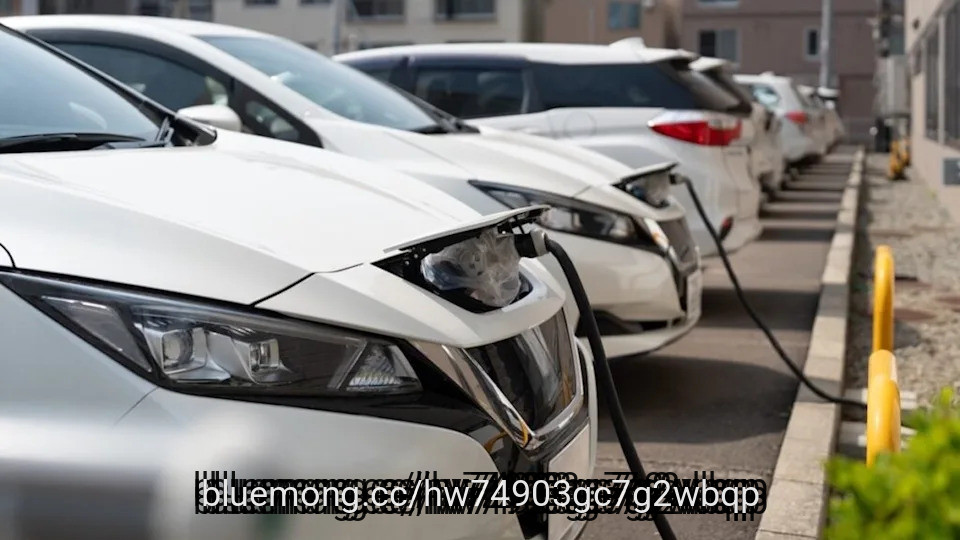
Angel investor and All-In Podcast host Jason Calacanis warned that allowing Chinese electric vehicles into the U.S. could devastate domestic automakers even as their low prices attract consumers, reacting to Sen. Elissa Slotkin's (D-Mich.) claim that President Donald Trump could loosen barriers as part of a China deal.
"This would be the end of the US automotive industry — but consumers will love to buy these cars," Calacanis wrote in an X post on Wednesday. He added, "Everywhere I go, from the Middle East to Europe to Mexico, the streets and Uber fleets are filled with dirt-cheap Chinese EVs," calling such U.S. access "a disaster."
This would be the end of the US automotive industry — but consumers will love to buy these cars
But…. You'll probably die in one since they're not very safe
Everywhere I go, from the Middle East to Europe to Mexico, the streets and uber fleets are filled with dirt cheap… https://t.co/LGUwforT6a
— jason (Jason) September 10, 2026
#calacanis #chinese #Europe #uber
Angel investor and All-In Podcast host Jason Calacanis warned that allowing Chinese electric vehicles into the U.S. could devastate domestic automakers even as their low prices attract consumers, reacting to Sen. Elissa Slotkin's (D-Mich.) claim that President Donald Trump could loosen barriers as part of a China deal.
"This would be the end of the US automotive industry — but consumers will love to buy these cars," Calacanis wrote in an X post on Wednesday. He added, "Everywhere I go, from the Middle East to Europe to Mexico, the streets and Uber fleets are filled with dirt-cheap Chinese EVs," calling such U.S. access "a disaster."
This would be the end of the US automotive industry — but consumers will love to buy these cars
But…. You'll probably die in one since they're not very safe
Everywhere I go, from the Middle East to Europe to Mexico, the streets and uber fleets are filled with dirt cheap… https://t.co/LGUwforT6a
— jason (Jason) September 10, 2026
#calacanis #chinese #Europe #uber

7 hours ago
Lululemon Athletica Inc. (NASDAQ:LULU) recently issued its second guidance cut of the year, and investors responded immediately by sending shares down roughly 18%. That selloff came despite an EPS beat, but the headline result was heavily supported by a tariff refund rather than underlying business strength. Brand sentiment, traffic, and leggings sales are all weakening across the company's two largest markets. The key issue for investors is no longer whether the quarter was weak, but whether the stock's low valuation and new CEO can provide the catalyst for a meaningful recovery.
Lululemon shares dropped 18% after the company lowered its full-year guidance for the second time this year. Revenue is now projected to range from $10.35 billion to $10.5 billion, while EPS guidance was reduced to $9.48 to $9.73. Both represent sharp reductions from its earlier guidance ranges. Second-quarter revenue was particularly weak, falling 4% to $2.4 billion and coming in below consensus estimates, while comparable sales dropped 9%, or 10% on a constant-dollar basis. According to the company, negative commentary had affected traffic in both the U.S. and China, while leggings sales slowed more than expected. Although reported EPS beat estimates, nearly all of that upside came from an $0.86 per share tariff refund. For the third quarter, management expects revenue to decline another 10% to 11%.
Lululemon still has several financial advantages that could support the business through its current slowdown. The company has no outstanding borrowings and maintains $1.4 billion in cash. First-half operating cash flow climbed to $589 million, more than double the prior year. Inventory per unit also declined roughly 7% year over year, reducing the risk of a margin-damaging clearance event. Meanwhile, shares have fallen over 50% year-to-date and now trade at a historically depressed valuation, potentially creating an out-of-favor-setup for investors. At the same time, management continued its buyback program, repurchasing $330 million worth of shares during the quarter.
The weakness in traffic and leggings sales cannot be ignored, and both remain serious concerns. However, the company has a debt-free balance sheet, stronger cash generation, and a valuation that already reflects much of the recent bad news. That gives Lululemon room to prove that its current struggles are mainly execution-related rather than signs of a structural decline.
#year #shares #company
Lululemon shares dropped 18% after the company lowered its full-year guidance for the second time this year. Revenue is now projected to range from $10.35 billion to $10.5 billion, while EPS guidance was reduced to $9.48 to $9.73. Both represent sharp reductions from its earlier guidance ranges. Second-quarter revenue was particularly weak, falling 4% to $2.4 billion and coming in below consensus estimates, while comparable sales dropped 9%, or 10% on a constant-dollar basis. According to the company, negative commentary had affected traffic in both the U.S. and China, while leggings sales slowed more than expected. Although reported EPS beat estimates, nearly all of that upside came from an $0.86 per share tariff refund. For the third quarter, management expects revenue to decline another 10% to 11%.
Lululemon still has several financial advantages that could support the business through its current slowdown. The company has no outstanding borrowings and maintains $1.4 billion in cash. First-half operating cash flow climbed to $589 million, more than double the prior year. Inventory per unit also declined roughly 7% year over year, reducing the risk of a margin-damaging clearance event. Meanwhile, shares have fallen over 50% year-to-date and now trade at a historically depressed valuation, potentially creating an out-of-favor-setup for investors. At the same time, management continued its buyback program, repurchasing $330 million worth of shares during the quarter.
The weakness in traffic and leggings sales cannot be ignored, and both remain serious concerns. However, the company has a debt-free balance sheet, stronger cash generation, and a valuation that already reflects much of the recent bad news. That gives Lululemon room to prove that its current struggles are mainly execution-related rather than signs of a structural decline.
#year #shares #company


7 hours ago
Interested in Intuitive Surgical, Inc.? Here are five stocks we like better.
Global procedure growth remains intact despite a recent U.S. slowdown and Affordable Care Act-related uncertainty; Intuitive Surgical maintained its 13.5%–15.5% global procedure-growth outlook, expecting results near the midpoint.
Ambulatory surgery centers and international markets remain important expansion opportunities, with second-quarter system placements rising in the U.S. and abroad. However, China remains pressured by local competition and slower tenders, with improved visibility not expected until 2027.
Future growth could come from da Vinci 5 upgrades, Force Feedback instruments, new procedures and sites of care, and AI services such as Case Insights. The company also reported strong financial performance, including 21% revenue growth and operating and free-cash-flow margins above historical averages.
This AI ETF Is Missing the Biggest AI Winners
#affordable
Global procedure growth remains intact despite a recent U.S. slowdown and Affordable Care Act-related uncertainty; Intuitive Surgical maintained its 13.5%–15.5% global procedure-growth outlook, expecting results near the midpoint.
Ambulatory surgery centers and international markets remain important expansion opportunities, with second-quarter system placements rising in the U.S. and abroad. However, China remains pressured by local competition and slower tenders, with improved visibility not expected until 2027.
Future growth could come from da Vinci 5 upgrades, Force Feedback instruments, new procedures and sites of care, and AI services such as Case Insights. The company also reported strong financial performance, including 21% revenue growth and operating and free-cash-flow margins above historical averages.
This AI ETF Is Missing the Biggest AI Winners
#affordable


11 hours ago
LONDON, ENGLAND - JUNE 27: Elena Rybakina of Kazakhstan practises with Coach Stefano Vukov ahead of The Championships Wimbledon 2023 at All England Lawn Tennis and Croquet Club on June 27, 2023 in London, England. (Photo by Clive Brunskill/Getty Images) Getty
NEW YORK, NEW YORK - SEPTEMBER 09: Elena Rybakina of Kazakhstan looks on against Qinwen Zheng of China during their Women's Singles Quarterfinal match on Day Eleven of the 2026 US Open at USTA Billie Jean King National Tennis Center on September 09, 2026 in the Flushing neighborhood of the Queens borough of New York City. (Photo by Patrick Smith/Getty Images) Getty
The coach of Kazakhstan's Elena Rybakina, Stefano Vukov, supports her from the players box as she competes against Belarus' Victoria Azarenka during their women's singles semi-final match on day eleven of the Australian Open tennis tournament in Melbourne on January 26, 2023. - -- IMAGE RESTRICTED TO EDITORIAL USE - STRICTLY NO COMMERCIAL USE -- (Photo by Martin KEEP / AFP) / -- IMAGE RESTRICTED TO EDITORIAL USE - STRICTLY NO COMMERCIAL USE -- (Photo by MARTIN KEEP/AFP via Getty Images) Getty
LONDON, ENGLAND - JUNE 25: Stefano Vukov watches Elena Rybakina train before The Championships Wimbledon 2026 at All England Lawn Tennis and Croquet Club on June 25, 2026 in London, England. (Photo by Matthew Stockman/Getty Images) Getty
Elena Rybakina is a professional tennis player widely regarded as one of the world's best. Her coach, Stefano Vukov, is also rumored to be her boyfriend. Vukov transitioned from playing professionally to coaching Rybakina. The 39-year-old was born on March 27, 1987.
#rybakina #elena #london
NEW YORK, NEW YORK - SEPTEMBER 09: Elena Rybakina of Kazakhstan looks on against Qinwen Zheng of China during their Women's Singles Quarterfinal match on Day Eleven of the 2026 US Open at USTA Billie Jean King National Tennis Center on September 09, 2026 in the Flushing neighborhood of the Queens borough of New York City. (Photo by Patrick Smith/Getty Images) Getty
The coach of Kazakhstan's Elena Rybakina, Stefano Vukov, supports her from the players box as she competes against Belarus' Victoria Azarenka during their women's singles semi-final match on day eleven of the Australian Open tennis tournament in Melbourne on January 26, 2023. - -- IMAGE RESTRICTED TO EDITORIAL USE - STRICTLY NO COMMERCIAL USE -- (Photo by Martin KEEP / AFP) / -- IMAGE RESTRICTED TO EDITORIAL USE - STRICTLY NO COMMERCIAL USE -- (Photo by MARTIN KEEP/AFP via Getty Images) Getty
LONDON, ENGLAND - JUNE 25: Stefano Vukov watches Elena Rybakina train before The Championships Wimbledon 2026 at All England Lawn Tennis and Croquet Club on June 25, 2026 in London, England. (Photo by Matthew Stockman/Getty Images) Getty
Elena Rybakina is a professional tennis player widely regarded as one of the world's best. Her coach, Stefano Vukov, is also rumored to be her boyfriend. Vukov transitioned from playing professionally to coaching Rybakina. The 39-year-old was born on March 27, 1987.
#rybakina #elena #london





1 day ago
Soybeans were in rally mode on Thursday, with contracts 13 to 22 cents higher across most contracts. The cmdtyView national average Cash Bean price was up 22 1/2 cents at $12.74 ½. Soymeal futures saw gains of $2.30 to $5.50, as Soy Oil rallied 102 to 135 points.
USDA reported private export sale announcements of 272,000 MT of soybeans to China for 2026/27 and 206,500 MT of 2026/27 beans to unknown destinations this morning. Weekly Export Sales data will be out on Friday morning, with ****** ysts surveyed by Reuters looking for no sales to net cancellations of 500,000 MT for 2025/26 soybeans. New crop sales are seen in a range of 1 to 2.6 MMT in the week of September 3. Soybean meal sales are expected to be in a range of 150,000 to 950,000 MT, with 0 to 12,000 MT
Arabica Coffee Falls Sharply on ICO Projections for Record Coffee Production
Sugar Prices Climb as Crude Oil Soars
Can Soybeans Remain in the Teens?
#export #cash
USDA reported private export sale announcements of 272,000 MT of soybeans to China for 2026/27 and 206,500 MT of 2026/27 beans to unknown destinations this morning. Weekly Export Sales data will be out on Friday morning, with ****** ysts surveyed by Reuters looking for no sales to net cancellations of 500,000 MT for 2025/26 soybeans. New crop sales are seen in a range of 1 to 2.6 MMT in the week of September 3. Soybean meal sales are expected to be in a range of 150,000 to 950,000 MT, with 0 to 12,000 MT
Arabica Coffee Falls Sharply on ICO Projections for Record Coffee Production
Sugar Prices Climb as Crude Oil Soars
Can Soybeans Remain in the Teens?
#export #cash


1 day ago
Zhihu Inc. (NYSE:ZH) disclosed on September 6 that a wholly owned subsidiary had signed a conditional RMB1.5 billion cash commitment to Tianjin Lisi Xingshen Equity Investment Partnership. The agreement, dated September 4, requires shareholder approval, with payments funded internally through capital calls.
Zhihu Inc. (NYSE:ZH) expects to hold no more than 30% of the fund and will have no role in daily management or individual investment decisions. The blind-pool structure asks shareholders to approve a manager and strategy before specific investments are identified. The fund targets early-to-mid-stage private AI and technology companies with significant mainland China connections.
The strategic rationale fits the company's existing capabilities. Zhihu Inc. (NYSE:ZH) is developing AI search, expert-data solutions and AI-enabled content businesses. Exposure to foundation models, infrastructure, robotics and applications could create technology partnerships and help identify emerging customer needs.
A specialist fund also supplies investment research, deal sourcing and portfolio oversight that would require substantial internal resources to replicate. For shareholders, the potential benefit combines investment returns with commercial opportunities for the core content platform. Any cooperation would still require separate **** sment and agreement.
There is an operating business to build around. Second-quarter paid content and intellectual-property operations revenue increased to RMB425.9 million from RMB408.2 million. Zhihu Inc. (NYSE:ZH) also reduced total operating expenses by 13% to RMB469.4 million. These results support a focused approach in which outside technology complements established content and expert relationships.
#content #technology #million
Zhihu Inc. (NYSE:ZH) expects to hold no more than 30% of the fund and will have no role in daily management or individual investment decisions. The blind-pool structure asks shareholders to approve a manager and strategy before specific investments are identified. The fund targets early-to-mid-stage private AI and technology companies with significant mainland China connections.
The strategic rationale fits the company's existing capabilities. Zhihu Inc. (NYSE:ZH) is developing AI search, expert-data solutions and AI-enabled content businesses. Exposure to foundation models, infrastructure, robotics and applications could create technology partnerships and help identify emerging customer needs.
A specialist fund also supplies investment research, deal sourcing and portfolio oversight that would require substantial internal resources to replicate. For shareholders, the potential benefit combines investment returns with commercial opportunities for the core content platform. Any cooperation would still require separate **** sment and agreement.
There is an operating business to build around. Second-quarter paid content and intellectual-property operations revenue increased to RMB425.9 million from RMB408.2 million. Zhihu Inc. (NYSE:ZH) also reduced total operating expenses by 13% to RMB469.4 million. These results support a focused approach in which outside technology complements established content and expert relationships.
#content #technology #million


2 days ago
Investment in what most call clean technologies dropped by 17% over the first half of the year, as China switched from subsidies to a market-based approach to those industries, a report from Rhodium Group has revealed.
Investments in things such as wind and solar power rose in other parts of the world, but China's decline more than offset that growth because of China's position as the top investor in clean tech, far ahead of everyone else.
"Geographically, the decline was driven by China, the world's largest cleantech investor, where a shift to market-based pricing put pressure on new renewable power investments," said the author of the report, Hannah Pitt, as quoted by Reuters.
"China's transition toward market-based pricing for new renewable generation in 2025 drove a rush of installations ahead of the deadline, followed by an uneven pullback. Beijing also phased out consumer EV purchase-tax exemptions starting January 2026," the report pointed out.
These decisions led to a sharp slump in alternative energy and electric transport investment of 49% for China, translating into $133 billion. This trend also slashed China's share of clean tech investment from 52% at the end of 2025 to 39% by June this year.
#Investments
Investments in things such as wind and solar power rose in other parts of the world, but China's decline more than offset that growth because of China's position as the top investor in clean tech, far ahead of everyone else.
"Geographically, the decline was driven by China, the world's largest cleantech investor, where a shift to market-based pricing put pressure on new renewable power investments," said the author of the report, Hannah Pitt, as quoted by Reuters.
"China's transition toward market-based pricing for new renewable generation in 2025 drove a rush of installations ahead of the deadline, followed by an uneven pullback. Beijing also phased out consumer EV purchase-tax exemptions starting January 2026," the report pointed out.
These decisions led to a sharp slump in alternative energy and electric transport investment of 49% for China, translating into $133 billion. This trend also slashed China's share of clean tech investment from 52% at the end of 2025 to 39% by June this year.
#Investments


2 days ago
By Aditya Kalra
NEW DELHI, Sept 9 (Reuters) - India's Serious Fraud Office has recommended Xiaomi be investigated for alleged irregularities in its business model and compliance with foreign investment law, potentially intensifying scrutiny of the smartphone maker, a government document shows.
China's Xiaomi was once India's top-selling smartphone brand but has seen its market share dwindle amid intense competition from Apple and Samsung. It is also battling several tax demands and royalty payment disputes.
The recommendation from India's Serious Fraud Investigation Office (SFIO) said the investigation should examine movement of funds and whether Xiaomi sought mandatory investment approvals as required after India tightened scrutiny of Chinese investments following deadly border clashes between the two nations in 2020.
A person familiar with the matter said the government is examining the memorandum, which was drafted in May and reviewed by Reuters.
#serious #fraud #investigation #investment
NEW DELHI, Sept 9 (Reuters) - India's Serious Fraud Office has recommended Xiaomi be investigated for alleged irregularities in its business model and compliance with foreign investment law, potentially intensifying scrutiny of the smartphone maker, a government document shows.
China's Xiaomi was once India's top-selling smartphone brand but has seen its market share dwindle amid intense competition from Apple and Samsung. It is also battling several tax demands and royalty payment disputes.
The recommendation from India's Serious Fraud Investigation Office (SFIO) said the investigation should examine movement of funds and whether Xiaomi sought mandatory investment approvals as required after India tightened scrutiny of Chinese investments following deadly border clashes between the two nations in 2020.
A person familiar with the matter said the government is examining the memorandum, which was drafted in May and reviewed by Reuters.
#serious #fraud #investigation #investment


2 days ago
By Ella Cao and Naveen Thukral
BEIJING/SINGAPORE, Sept 10 (Reuters) - China bought 14 to 15 cargoes of U.S. soybeans this week, or around 1 million metric tons, four traders told Reuters, as the world's top oilseed buyer steps up purchases ahead of Chinese President Xi Jinping's visit to Washington later this month.
The purchases take China's total U.S. soybean buying to nearly half of the 25 million tons the White House said Beijing had committed to annually through 2028.
Chinese state stockpiler Sinograin booked the cargoes for shipment from U.S. Gulf terminals between December and February, traders said.
Sinograin did not immediately respond to Reuters' requests for comment.
#cargoes #tons #purchases #ella
BEIJING/SINGAPORE, Sept 10 (Reuters) - China bought 14 to 15 cargoes of U.S. soybeans this week, or around 1 million metric tons, four traders told Reuters, as the world's top oilseed buyer steps up purchases ahead of Chinese President Xi Jinping's visit to Washington later this month.
The purchases take China's total U.S. soybean buying to nearly half of the 25 million tons the White House said Beijing had committed to annually through 2028.
Chinese state stockpiler Sinograin booked the cargoes for shipment from U.S. Gulf terminals between December and February, traders said.
Sinograin did not immediately respond to Reuters' requests for comment.
#cargoes #tons #purchases #ella


2 days ago
CAPE TOWN, South Africa (AP) — The Trump administration has provided a $99.6 million loan to a U.S.-owned cell phone network operator in Africa to expand American tech presence on a continent where China's Huawei is a leading player.
The loan from the U.S. government's Export-Import Bank was announced by the operator Africell on Friday. It is the only U.S.-owned cell network operator in Africa.
Africell said in a statement the loan would "boost U.S.-based employment in the telecommunications sector and strengthen American technology leadership abroad." It said the money would allow it to invest specifically in American and European technology for its operations in the southern African country of Angola.
Africell also operates in Congo, Sierra Leone and Gambia, it said.
Huawei is the world's biggest supplier of telecommunications network equipment and is estimated to have supplied more than half the 4G and 5G network infrastructure in Africa.
#loan
The loan from the U.S. government's Export-Import Bank was announced by the operator Africell on Friday. It is the only U.S.-owned cell network operator in Africa.
Africell said in a statement the loan would "boost U.S.-based employment in the telecommunications sector and strengthen American technology leadership abroad." It said the money would allow it to invest specifically in American and European technology for its operations in the southern African country of Angola.
Africell also operates in Congo, Sierra Leone and Gambia, it said.
Huawei is the world's biggest supplier of telecommunications network equipment and is estimated to have supplied more than half the 4G and 5G network infrastructure in Africa.
#loan



2 days ago
Soybeans were weaker on Wednesday, with contracts down 3 to 7 ¼ cents. The cmdtyView national average Cash Bean price was down 6 1/4 cents at $12.51. Soymeal futures closed with gains of 20 cents to $1.80 in the front months, as deferreds were weaker. Soy Oil was steady to 17 points lower on the day.
USDA reported private export sale announcements of 340,000 MT of soybeans to China for 2026/27 and 100,000 MT of 2026/27 beans to unknown destinations this morning.
Cocoa Prices Gain After Ghana Proposes Raising Farmer Pay
Coffee Prices Settle Higher on Tight ICE Inventories and Vietnam Weather
Sugar Prices Finish Sharply Higher as Crude Oil Surges
#cents #soybeans
USDA reported private export sale announcements of 340,000 MT of soybeans to China for 2026/27 and 100,000 MT of 2026/27 beans to unknown destinations this morning.
Cocoa Prices Gain After Ghana Proposes Raising Farmer Pay
Coffee Prices Settle Higher on Tight ICE Inventories and Vietnam Weather
Sugar Prices Finish Sharply Higher as Crude Oil Surges
#cents #soybeans

2 days ago
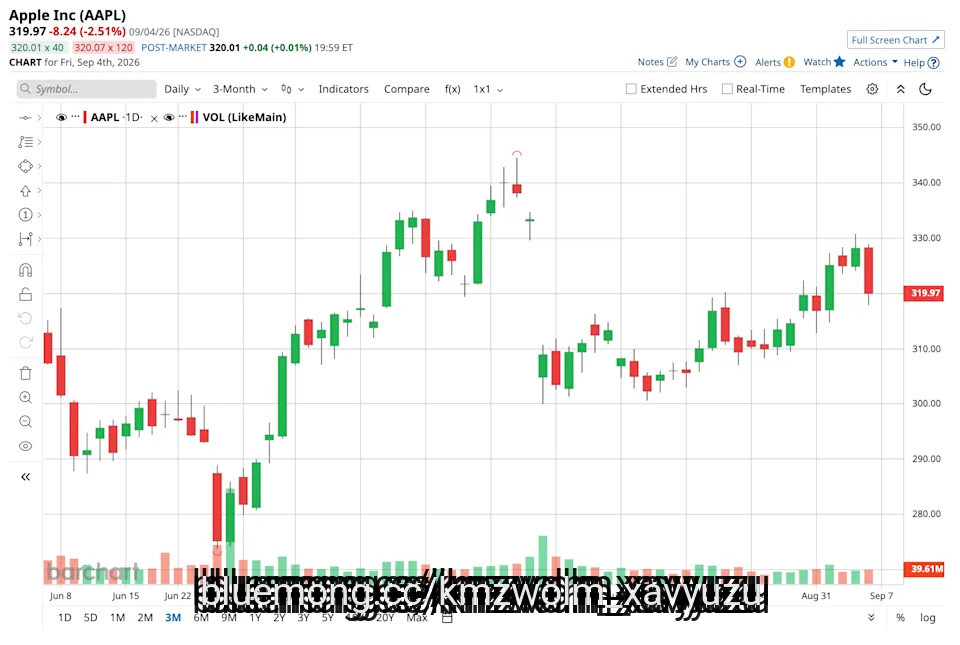
Apple Inc. (NASDAQ:AAPL) and Intel Corporation (NASDAQ:INTC) represent two sides of a historical silicon transition. A September 2 report from MacRumors highlighted a key milestone: Apple notified developers that universal Mac App Store apps requiring macOS 13 or later can now drop support for Intel-based Macs. Removing Intel binary slices simplifies app development and reduces download sizes. While symbolic, the move underscores Apple's completed transition to Apple Silicon and highlights Intel's diminishing footprint within Apple's high-margin ecosystem.
Financially, Apple is faring significantly better than Intel.
For Q3 2026 (ended June 27, 2026), Apple reported record quarterly revenue of $109.4 billion, up 16% year-over-year, driven by double-digit growth across iPhone, Mac, and Services. The company's gross margin reached 50.1%, supported by a 2 percentage point favorable impact from tariff refunds. Diluted earnings per share (EPS) surged 29% year-over-year to $2.02, which included a $0.11 favorable boost from tariff refunds. Operating cash flow and active installed base both set new June quarter records.
Intel's Q2 2026 financial results (ended June 27, 2026) delivered $16.1 billion in quarterly revenue, up 25% year-over-year, marking its fastest top-line growth in over 15 years. Intel reported a GAAP net loss of $11.0 billion (GAAP EPS of -$2.16), largely driven by non-cash charges and mark-to-market adjustments. However, on a non-GAAP basis, net income reached $2.2 billion ($0.42 diluted EPS), nearly doubling consensus expectations. Non-GAAP gross margin expanded to 41.8% (40.4% GAAP) on strong product mix and factory yields.
Apple's bull case centers on expanding Services margins, strong ecosystem lock-in, and the potential for Apple Intelligence to drive further demand and engagement across iOS and macOS devices, supporting high-margin growth. On the other hand, Apple faces risks from elevated valuation multiples, sluggish growth in Greater China, where Q3 revenue reached $14.7 billion, and ongoing global antitrust scrutiny over App Store fees.
#revenue
Financially, Apple is faring significantly better than Intel.
For Q3 2026 (ended June 27, 2026), Apple reported record quarterly revenue of $109.4 billion, up 16% year-over-year, driven by double-digit growth across iPhone, Mac, and Services. The company's gross margin reached 50.1%, supported by a 2 percentage point favorable impact from tariff refunds. Diluted earnings per share (EPS) surged 29% year-over-year to $2.02, which included a $0.11 favorable boost from tariff refunds. Operating cash flow and active installed base both set new June quarter records.
Intel's Q2 2026 financial results (ended June 27, 2026) delivered $16.1 billion in quarterly revenue, up 25% year-over-year, marking its fastest top-line growth in over 15 years. Intel reported a GAAP net loss of $11.0 billion (GAAP EPS of -$2.16), largely driven by non-cash charges and mark-to-market adjustments. However, on a non-GAAP basis, net income reached $2.2 billion ($0.42 diluted EPS), nearly doubling consensus expectations. Non-GAAP gross margin expanded to 41.8% (40.4% GAAP) on strong product mix and factory yields.
Apple's bull case centers on expanding Services margins, strong ecosystem lock-in, and the potential for Apple Intelligence to drive further demand and engagement across iOS and macOS devices, supporting high-margin growth. On the other hand, Apple faces risks from elevated valuation multiples, sluggish growth in Greater China, where Q3 revenue reached $14.7 billion, and ongoing global antitrust scrutiny over App Store fees.
#revenue

2 days ago
Eli Lilly (LLY) stock has gained about 56% over the past year, moving from $722.65 to $1,123.91. Before that run the company was doing something strange. It was deliberately selling less medicine than people wanted to buy, and it kept saying so out loud.
In early February 2025 the CEO said the capacity Lilly had already built was not enough to meet global demand, and that the company was still gating promotion and gating launches around the world. That is a company telling you its reported revenue understates what its products could sell.
The build was landing. Lilly produced more than 1.6 times as many salable incretin doses in the first half of 2025 as it had made in the first half of 2024. The rationed business was already lucrative: trailing-twelve-month operating margin as of fiscal Q2 2025 ran at 42.1%, against its own three-year average of 32.7%. A business earning that much with the tap half closed has an obvious next chapter.
Four weeks before the run began, the CFO was specific about where. Commercial activity behind the recent launches in Brazil, China, India, and Mexico was being kept deliberately measured, so that demand would not outrun supply.
Then look at where the growth landed a year later. In the second quarter of 2026, China revenue grew 93% in constant currency, and rest-of-world revenue grew 136% in constant currency, driven by Mounjaro, primarily in Latin America and Asia. China is on both lists; Latin America and Asia cover the rest. The volume was waiting.
#year #half
In early February 2025 the CEO said the capacity Lilly had already built was not enough to meet global demand, and that the company was still gating promotion and gating launches around the world. That is a company telling you its reported revenue understates what its products could sell.
The build was landing. Lilly produced more than 1.6 times as many salable incretin doses in the first half of 2025 as it had made in the first half of 2024. The rationed business was already lucrative: trailing-twelve-month operating margin as of fiscal Q2 2025 ran at 42.1%, against its own three-year average of 32.7%. A business earning that much with the tap half closed has an obvious next chapter.
Four weeks before the run began, the CFO was specific about where. Commercial activity behind the recent launches in Brazil, China, India, and Mexico was being kept deliberately measured, so that demand would not outrun supply.
Then look at where the growth landed a year later. In the second quarter of 2026, China revenue grew 93% in constant currency, and rest-of-world revenue grew 136% in constant currency, driven by Mounjaro, primarily in Latin America and Asia. China is on both lists; Latin America and Asia cover the rest. The volume was waiting.
#year #half

2 days ago
After signing what President Donald Trump touted as "the biggest oil deal in world history" to take majority control of 65 billion barrels of proven crude oil reserves in Venezuela, the U.S. Administration is setting its sights on the South American country's potentially vast gold and critical minerals wealth.
The Trump Administration is weighing measures to involve U.S. companies in Venezuela's gold and critical minerals and has held initial meetings with firms to see if there is interest in engaging in the Venezuelan mining sector, sources with knowledge of the plans told Reuters this week.
Securing gold and critical minerals from Venezuela could help the U.S. with its supply of metals crucial for defense technology and applications that don't depend on China. Moreover, greater access for U.S. and Western firms in Venezuela's minerals sector would further undermine Chinese and Russian influence in the country, which the ousted Venezuelan leader, Nicolas Maduro, deposed and arrested by the U.S. in January, had enjoyed.
"We are all watching the oil situation closely and recognize there could be a parallel track with critical minerals," an executive from a critical minerals firm who met with the U.S. Administration about Venezuela, told Reuters.
However, the path to mining Venezuela's minerals would not be as straightforward as it arguably is for the oil reserves. Operators generally know how much crude oil Venezuela has (the biggest reserves in the world), but no one really knows the reserves and mining potential of the gold and critical minerals deposits.
#venezuela
The Trump Administration is weighing measures to involve U.S. companies in Venezuela's gold and critical minerals and has held initial meetings with firms to see if there is interest in engaging in the Venezuelan mining sector, sources with knowledge of the plans told Reuters this week.
Securing gold and critical minerals from Venezuela could help the U.S. with its supply of metals crucial for defense technology and applications that don't depend on China. Moreover, greater access for U.S. and Western firms in Venezuela's minerals sector would further undermine Chinese and Russian influence in the country, which the ousted Venezuelan leader, Nicolas Maduro, deposed and arrested by the U.S. in January, had enjoyed.
"We are all watching the oil situation closely and recognize there could be a parallel track with critical minerals," an executive from a critical minerals firm who met with the U.S. Administration about Venezuela, told Reuters.
However, the path to mining Venezuela's minerals would not be as straightforward as it arguably is for the oil reserves. Operators generally know how much crude oil Venezuela has (the biggest reserves in the world), but no one really knows the reserves and mining potential of the gold and critical minerals deposits.
#venezuela


2 days ago
Listen
(3 min)
1444 ET – Gold futures make small gains despite a rise in Treasury yields after the Treasury Department said it would buy back $6 billion in bonds this week, less than some in the market expected. The dollar weakened, however, which tends to support gold. An easing in ******* anese yields and continued central bank buying—with China’s central bank adding 20 tons in August—also helped support prices, while the market remains focused on U.S. inflation data later this week, Konstantinos Chrysikos of Kudo.com says in a note. Front month gold settles up 0.5% in New York at $4,416 a troy ounce. Silver gains 2.5% to $67.942 a troy ounce. (anthony.harrupwsj.com)
1150 ET – Gold futures are steady as bond yields rise after the Treasury says it will buy up to $6 billion of longer-term debt at its Thursday buyback operation. The precious metals market is also focusing on this week’s inflation data—producer prices due Thursday and consumer prices on Friday. Gold’s recent slippage came as high Treasury yields, firmer Fed rate-hike expectations and rising oil prices “collectively outweighed dollar softness,” Kaynat Chainwala of Kotak Neo says in a note. Softer inflation readings would reduce the probability of a rate increase “and open the path toward the $4,500 resistance zone,” while an above-estimate result along with high energy prices “would likely reinstate selling pressure and bring the $4,300 support zone into focus.” Front month gold is up 0.2% at $4,401.20 a troy ounce. (anthony.harrupwsj.com)
#treasury #week #support #ounce
(3 min)
1444 ET – Gold futures make small gains despite a rise in Treasury yields after the Treasury Department said it would buy back $6 billion in bonds this week, less than some in the market expected. The dollar weakened, however, which tends to support gold. An easing in ******* anese yields and continued central bank buying—with China’s central bank adding 20 tons in August—also helped support prices, while the market remains focused on U.S. inflation data later this week, Konstantinos Chrysikos of Kudo.com says in a note. Front month gold settles up 0.5% in New York at $4,416 a troy ounce. Silver gains 2.5% to $67.942 a troy ounce. (anthony.harrupwsj.com)
1150 ET – Gold futures are steady as bond yields rise after the Treasury says it will buy up to $6 billion of longer-term debt at its Thursday buyback operation. The precious metals market is also focusing on this week’s inflation data—producer prices due Thursday and consumer prices on Friday. Gold’s recent slippage came as high Treasury yields, firmer Fed rate-hike expectations and rising oil prices “collectively outweighed dollar softness,” Kaynat Chainwala of Kotak Neo says in a note. Softer inflation readings would reduce the probability of a rate increase “and open the path toward the $4,500 resistance zone,” while an above-estimate result along with high energy prices “would likely reinstate selling pressure and bring the $4,300 support zone into focus.” Front month gold is up 0.2% at $4,401.20 a troy ounce. (anthony.harrupwsj.com)
#treasury #week #support #ounce




2 days ago
Soybeans are falling back 5 to 6 cents so far on Wednesday, but a nickel off the early lows. The cmdtyView national average Cash Bean price was down 5 cents at $12.52 1/4. Soymeal futures are up 80 cents at midday, with Soy Oil 13 points lower. There were no deliveries against September soybean futures overnight, with 38 deliveries for September meal and 11 for bean oil.
USDA reported private export sale announcements of 340,000 MT of soybeans to China for 2026/27 and 100,000 MT of 2026/27 beans to unknown destinations this morning.
Will Corn's Bullish Trend Continue
Arabica Coffee Retreats as Brazil Supplies Hit the Market
Adequate Cocoa Supplies Pressure Prices
#cents #september #soybeans #futures
USDA reported private export sale announcements of 340,000 MT of soybeans to China for 2026/27 and 100,000 MT of 2026/27 beans to unknown destinations this morning.
Will Corn's Bullish Trend Continue
Arabica Coffee Retreats as Brazil Supplies Hit the Market
Adequate Cocoa Supplies Pressure Prices
#cents #september #soybeans #futures

2 days ago
Apple's (AAPL) rivals in China are not waiting for it to make the first move. Just days before Apple's anticipated debut of its first foldable iPhone at its Sept. 9 event, Huawei and Xiaomi (XIACF) rolled out premium foldable devices of their own.
The timing gives both companies a chance to grab attention before Apple's launch. Huawei is launching the Mate XT 2, a trifold device that packs a phone and a tablet-sized screen into one body, while Xiaomi is close behind with the Xiaomi 18 Fold, a passport-style handset that looks a lot like what Apple is expected to show. So, both companies are trying to enter the high-end foldable market before Apple arrives.
Dear Nvidia Stock Fans, Mark Your Calendars for September 10
Rocket Lab Keeps Landing Defense Deals. Here's Why ******* ysts Aren't Getting More Bullish.
Why Stifel Just Revamped Its Price Target for Microsoft Stock
#xiaomi #huawei #aapl
The timing gives both companies a chance to grab attention before Apple's launch. Huawei is launching the Mate XT 2, a trifold device that packs a phone and a tablet-sized screen into one body, while Xiaomi is close behind with the Xiaomi 18 Fold, a passport-style handset that looks a lot like what Apple is expected to show. So, both companies are trying to enter the high-end foldable market before Apple arrives.
Dear Nvidia Stock Fans, Mark Your Calendars for September 10
Rocket Lab Keeps Landing Defense Deals. Here's Why ******* ysts Aren't Getting More Bullish.
Why Stifel Just Revamped Its Price Target for Microsoft Stock
#xiaomi #huawei #aapl


2 days ago
DeepSeek has engaged CITIC Securities to prepare for an initial public offering on Shanghai's STAR Market, according to Reuters, citing two people with knowledge of the matter who spoke on condition of anonymity.
The Hangzhou-based AI startup aims to begin the IPO process this year, according to Reuters. The timing of a potential offering, the amount DeepSeek could seek to raise, and its target valuation have not been determined. DeepSeek and CITIC did not respond to requests for comment.
In China, firms pursuing a mainland listing are generally required to retain a securities company for pre-IPO tutoring before they can file an application, Reuters notes. The previously undisclosed arrangement with CITIC suggests DeepSeek is making concrete progress toward a public offering.
The IPO push comes as DeepSeek seeks capital to fund computing infrastructure, model development, and talent retention amid competition from rival Chinese and U.S. AI firms. A person familiar with the matter told Reuters that Liang Wenfeng sees the IPO as a way to build a compensation structure capable of holding onto the startup's most important engineers and researchers. The company has lost talent to rivals including ByteDance and Xiaomi.
According to Reuters, DeepSeek is currently raising a new funding round at a valuation of 500 billion yuan ($75 billion). In June, the startup closed a round of roughly $7.4 billion at a post-money valuation exceeding $50 billion, with Liang Wenfeng personally contributing 20 billion yuan. Tencent Holdings and battery company CATL contributed 10 billion yuan and 5 billion yuan, respectively, becoming the largest external shareholders, according to Reuters.
#deepseek #according #company
The Hangzhou-based AI startup aims to begin the IPO process this year, according to Reuters. The timing of a potential offering, the amount DeepSeek could seek to raise, and its target valuation have not been determined. DeepSeek and CITIC did not respond to requests for comment.
In China, firms pursuing a mainland listing are generally required to retain a securities company for pre-IPO tutoring before they can file an application, Reuters notes. The previously undisclosed arrangement with CITIC suggests DeepSeek is making concrete progress toward a public offering.
The IPO push comes as DeepSeek seeks capital to fund computing infrastructure, model development, and talent retention amid competition from rival Chinese and U.S. AI firms. A person familiar with the matter told Reuters that Liang Wenfeng sees the IPO as a way to build a compensation structure capable of holding onto the startup's most important engineers and researchers. The company has lost talent to rivals including ByteDance and Xiaomi.
According to Reuters, DeepSeek is currently raising a new funding round at a valuation of 500 billion yuan ($75 billion). In June, the startup closed a round of roughly $7.4 billion at a post-money valuation exceeding $50 billion, with Liang Wenfeng personally contributing 20 billion yuan. Tencent Holdings and battery company CATL contributed 10 billion yuan and 5 billion yuan, respectively, becoming the largest external shareholders, according to Reuters.
#deepseek #according #company

0.00$ raised of 0.00$ goal
0 donations
0.00$
to go
2 days ago
World champion Wu Yize fell in the third round of the English Open as Liam Davies scored an eye-catching 4-1 victory in Brentwood.
Welsh prospect Davies, 20, opened up a 3-0 lead on his way to the first ranking event quarter-final of his career, helped by a break of 105 in the second frame, then completed his victory as China's Wu struggled to find his dynamic best form.
Tantalisingly, Davies will face compatriot Mark Williams, the three-time world champion, in the last eight on Friday evening.
Williams, still a major force on the baize at the age of 51, had breaks of 76, 103 and 63 in a late-night 4-1 victory over England's Barry Hawkins.
Mark Selby, who was runner-up at last week's British Open and won the China Open in August, had his hopes of reaching another final ended by a 4-3 defeat against fellow former world champion Kyren Wilson.
#open #davies #williams #final
Welsh prospect Davies, 20, opened up a 3-0 lead on his way to the first ranking event quarter-final of his career, helped by a break of 105 in the second frame, then completed his victory as China's Wu struggled to find his dynamic best form.
Tantalisingly, Davies will face compatriot Mark Williams, the three-time world champion, in the last eight on Friday evening.
Williams, still a major force on the baize at the age of 51, had breaks of 76, 103 and 63 in a late-night 4-1 victory over England's Barry Hawkins.
Mark Selby, who was runner-up at last week's British Open and won the China Open in August, had his hopes of reaching another final ended by a 4-3 defeat against fellow former world champion Kyren Wilson.
#open #davies #williams #final

0.00$ raised of 0.00$ goal
0 donations
0.00$
to go

2 days ago
Sept 9 (Reuters) - The photos tell a story of lives, interrupted.
The schoolroom, gaily decorated with paintings and letters. The paint shop, where the shelves still contain rows of once colourful cans. The bathroom, the closet that held neatly piled clothing, the yards. All are now covered with a thick layer of river mud that descended without warning on bustling communities.
As the waters recede, the survivors remain stunned, grieving and praying.
A string of miracle rescues in recent days has kept hopes alive that more people might still be saved from the catastrophe of August 26 when a glacier collapsed, sending a mass of mud and rock crashing into a river along the border between Nepal and China's Tibet. The resulting floods washed away villages, snapped highways like twigs, and buried homes in the mud.
At least 1,380 bodies have so far been pulled from the wreckage, some far downstream from the site of the disaster. A wall outside a Kathmandu hospital plastered with photos and desperate appeals hints at the unfinished story of an estimated 5,500 people who remain missing.
#nepal
The schoolroom, gaily decorated with paintings and letters. The paint shop, where the shelves still contain rows of once colourful cans. The bathroom, the closet that held neatly piled clothing, the yards. All are now covered with a thick layer of river mud that descended without warning on bustling communities.
As the waters recede, the survivors remain stunned, grieving and praying.
A string of miracle rescues in recent days has kept hopes alive that more people might still be saved from the catastrophe of August 26 when a glacier collapsed, sending a mass of mud and rock crashing into a river along the border between Nepal and China's Tibet. The resulting floods washed away villages, snapped highways like twigs, and buried homes in the mud.
At least 1,380 bodies have so far been pulled from the wreckage, some far downstream from the site of the disaster. A wall outside a Kathmandu hospital plastered with photos and desperate appeals hints at the unfinished story of an estimated 5,500 people who remain missing.
#nepal


0.00$ raised of 0.00$ goal
0 donations
0.00$
to go
3 days ago
China's largest new energy vehicle (NEV) manufacturer BYD Auto reported an 18% rise in global sales to 440,293 units in August 2026, marking the fourth consecutive month of growth for the company following eight months of declines. Last month's growth followed a 22% surge in July, as overseas sales continued to strengthen - offsetting continued weak demand and fast-rising competition in its home market.
Domestic sales fell by 14% year-on-year to 250,827 units in August, while overseas sales surged by 134% to 189,466 vehicles, accounting for 43% of the company's global sales.
In the first eight months of 2026, BYD sold a total of 2,668,015 vehicles globally, down by almost 7% from last year's 2,863,876 units, with domestic sales plunging by 33% to 1,505,755 units from 2,233,148 units in the same period last year. Overseas sales surged by 86% to 1,162,260 units year-to-date, after growing by 130% to 630,728 units previously.
BYD is in the process of switching its products to its second-generation Blade Battery, which features flash charging capabilities. The transition has caused some production bottlenecks in recent months, according to local reports. The company is also expanding its presence in the premium BEV segment, with the launch of the Dynasty Da Tang D-segment flagship SUV in July.
BYD has set a target of further increasing its overseas sales to 2.5 million vehicles in 2027, up from an expected 2.0 million units in 2026, helped by an expanded shipping fleet and rising production abroad, with the company's plant in Hungary scheduled to become operational in the fourth quarter of 2026.
#sales
Domestic sales fell by 14% year-on-year to 250,827 units in August, while overseas sales surged by 134% to 189,466 vehicles, accounting for 43% of the company's global sales.
In the first eight months of 2026, BYD sold a total of 2,668,015 vehicles globally, down by almost 7% from last year's 2,863,876 units, with domestic sales plunging by 33% to 1,505,755 units from 2,233,148 units in the same period last year. Overseas sales surged by 86% to 1,162,260 units year-to-date, after growing by 130% to 630,728 units previously.
BYD is in the process of switching its products to its second-generation Blade Battery, which features flash charging capabilities. The transition has caused some production bottlenecks in recent months, according to local reports. The company is also expanding its presence in the premium BEV segment, with the launch of the Dynasty Da Tang D-segment flagship SUV in July.
BYD has set a target of further increasing its overseas sales to 2.5 million vehicles in 2027, up from an expected 2.0 million units in 2026, helped by an expanded shipping fleet and rising production abroad, with the company's plant in Hungary scheduled to become operational in the fourth quarter of 2026.
#sales

0.00$ raised of 0.00$ goal
0 donations
0.00$
to go

3 days ago
Chinese independent refiners may be about to start reducing their processing rates as international oil prices rise and supply from major exporters such as Venezuela and Iran dries up as a result of U.S. foreign policy decisions.
"Teapots are unlikely to be able to afford a full shift to mainstream grades," an Energy Aspects ***** yst said this week, as quoted by Bloomberg. The so-called teapots are more sensitive to adverse oil market changes due to their refining margins being slimmer than those of state-owned majors. These margins have already fallen to breakeven, from around $10 per barrel in early July, Jianan Sun also said.
China imported 37.93 million tons, or 8.93 million barrels per day of crude oil in August, up by 6.2% compared to July, and further recovering from the decade-low seen in June, official Chinese customs data showed on Tuesday. The August import level was still 23.4% lower compared to the same month last year, but it's a marked improvement from the June lows of just 7.1 million bpd.
China slashed its total crude oil imports to a decade low in June, culminating three months of very low import levels amid high prices and constrained supply from the Middle East. This affected refinery output, which in turn contributed to the global fuel squeeze that is now set to deepen and extend in time as fighting in the Middle East continues and intensifies, pushing oil prices higher and sapping some refiners' appetite for the commodity.
With Venezuelan and Iranian crude all but gone, Chinese refiners will probably lean more heavily on Russian crude in the coming weeks. However, Russian crude prices are also on the rise on the futures market, in tune with all the other blends that trade internationally, which will likely put a lid on demand.
#june #july #China #middle
"Teapots are unlikely to be able to afford a full shift to mainstream grades," an Energy Aspects ***** yst said this week, as quoted by Bloomberg. The so-called teapots are more sensitive to adverse oil market changes due to their refining margins being slimmer than those of state-owned majors. These margins have already fallen to breakeven, from around $10 per barrel in early July, Jianan Sun also said.
China imported 37.93 million tons, or 8.93 million barrels per day of crude oil in August, up by 6.2% compared to July, and further recovering from the decade-low seen in June, official Chinese customs data showed on Tuesday. The August import level was still 23.4% lower compared to the same month last year, but it's a marked improvement from the June lows of just 7.1 million bpd.
China slashed its total crude oil imports to a decade low in June, culminating three months of very low import levels amid high prices and constrained supply from the Middle East. This affected refinery output, which in turn contributed to the global fuel squeeze that is now set to deepen and extend in time as fighting in the Middle East continues and intensifies, pushing oil prices higher and sapping some refiners' appetite for the commodity.
With Venezuelan and Iranian crude all but gone, Chinese refiners will probably lean more heavily on Russian crude in the coming weeks. However, Russian crude prices are also on the rise on the futures market, in tune with all the other blends that trade internationally, which will likely put a lid on demand.
#june #july #China #middle

0.00$ raised of 0.00$ goal
0 donations
0.00$
to go

3 days ago
SWKS surged 9% and QRVO gained 6% as CEO Phil Brace confirmed China's SAMR review hit its final phase, targeting a year-end close.
SOXX dropped 2% on the same session, isolating the rally as merger-arb repricing, with AAPL the largest customer for both companies post-merger.
Just released. Our ***** ysts combed the entire stock market and named the ten best stocks to buy right now, and Skyworks Solutions didn't make the cut. Enter your email to see the names that beat SWKS. The report is free. Enter your email and see if any of your stocks made the cut.
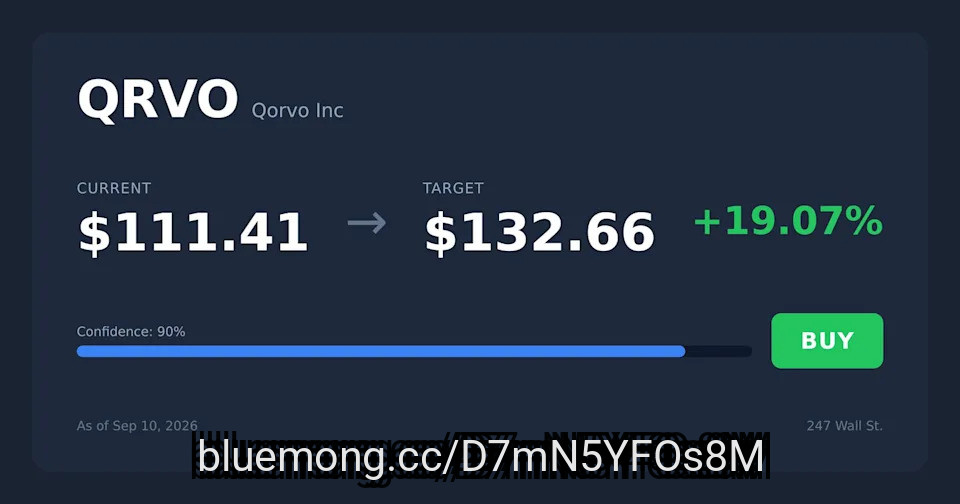
Shares of Skyworks Solutions (NASDAQ:SWKS) are up 10% to $84.24 in Thursday midday trade, while Qorvo (NASDAQ:QRVO) stock is climbing 6% to $111.49. The paired rally arrives on a session when the broader chip complex is red, which frames the move as merger-arb repricing driven by transaction odds.
The iShares Semiconductor ETF (NASDAQ:SOXX) is down 2%. Meanwhile, the Invesco QQQ Trust (NASDAQ:QQQ) is off 0.9%, so the divergence between the two RF names and the wider market isn't subtle.
#soxx #enter
SOXX dropped 2% on the same session, isolating the rally as merger-arb repricing, with AAPL the largest customer for both companies post-merger.
Just released. Our ***** ysts combed the entire stock market and named the ten best stocks to buy right now, and Skyworks Solutions didn't make the cut. Enter your email to see the names that beat SWKS. The report is free. Enter your email and see if any of your stocks made the cut.
Shares of Skyworks Solutions (NASDAQ:SWKS) are up 10% to $84.24 in Thursday midday trade, while Qorvo (NASDAQ:QRVO) stock is climbing 6% to $111.49. The paired rally arrives on a session when the broader chip complex is red, which frames the move as merger-arb repricing driven by transaction odds.
The iShares Semiconductor ETF (NASDAQ:SOXX) is down 2%. Meanwhile, the Invesco QQQ Trust (NASDAQ:QQQ) is off 0.9%, so the divergence between the two RF names and the wider market isn't subtle.
#soxx #enter


0.00$ raised of 0.00$ goal
0 donations
0.00$
to go
5 days ago
When does Caitlin Clark play again? Team USA's next game comes Thursday after the Americans completed an unbeaten run through group play at the FIBA Women's Basketball World Cup.
Clark and Team USA advanced directly to the quarterfinals by winning Group D with victories over China, Italy and Czechia. The Americans will play either Hungary or ******* an on Thursday, Sept. 10, while Clark enters the knockout round leading Team USA in ******* ists and coming off a record-setting World Cup debut against China.
Caitlin Clark and Team USA will play next on Thursday, Sept. 10, in the quarterfinals of the FIBA Women's Basketball World Cup. The Americans advanced directly to the quarterfinals after finishing 3-0 in Group D.
No. Team USA does not play Tuesday.
The Americans earned a direct trip to the quarterfinals and will not return to the court until Thursday, Sept. 10, where they will play the winner of today's matchup, ******* an vs. Hungary.
#play #caitlin
Clark and Team USA advanced directly to the quarterfinals by winning Group D with victories over China, Italy and Czechia. The Americans will play either Hungary or ******* an on Thursday, Sept. 10, while Clark enters the knockout round leading Team USA in ******* ists and coming off a record-setting World Cup debut against China.
Caitlin Clark and Team USA will play next on Thursday, Sept. 10, in the quarterfinals of the FIBA Women's Basketball World Cup. The Americans advanced directly to the quarterfinals after finishing 3-0 in Group D.
No. Team USA does not play Tuesday.
The Americans earned a direct trip to the quarterfinals and will not return to the court until Thursday, Sept. 10, where they will play the winner of today's matchup, ******* an vs. Hungary.
#play #caitlin

5 days ago
China's crude oil imports rose for the second consecutive month in August as refiners turned to additional non-Middle Eastern supply and boosted overseas fuel shipments amid eased export restrictions.
China imported 37.93 million tons, or 8.93 million barrels per day (bpd) of crude oil in August, up by 6.2% compared to July, and further recovering from the decade-low seen in June, official Chinese customs data showed on Tuesday.
The August import level was still 23.4% lower compared to the same month last year, but it's a marked improvement from the June lows of just 7.1 million bpd.
China slashed its total crude oil imports to a decade low in June, culminating three months of very low import levels amid high prices and constrained supply from the Middle East.
Beijing, having amassed about 1.4 billion barrels of crude before the war, could afford to dramatically reduce its crude buying, slashing import volumes in June by an estimated 4.4 million bpd compared to the 2025 average.
#compared
China imported 37.93 million tons, or 8.93 million barrels per day (bpd) of crude oil in August, up by 6.2% compared to July, and further recovering from the decade-low seen in June, official Chinese customs data showed on Tuesday.
The August import level was still 23.4% lower compared to the same month last year, but it's a marked improvement from the June lows of just 7.1 million bpd.
China slashed its total crude oil imports to a decade low in June, culminating three months of very low import levels amid high prices and constrained supply from the Middle East.
Beijing, having amassed about 1.4 billion barrels of crude before the war, could afford to dramatically reduce its crude buying, slashing import volumes in June by an estimated 4.4 million bpd compared to the 2025 average.
#compared


5 days ago
In its early years, Chinese battery leader CATL focused on electric vehicles (EVs), riding the explosive growth of the global e-mobility market. The company has since taken a turn, aggressively expanding its energy storage business with a target for storage to generate 50% of its global sales by 2030.
Today, CATL stands as one of the world's largest grid storage suppliers, powering megaprojects such as Synergy's 2.4GW-hour (GWh) Collie Battery in Australia and the 1.4GWh Gemini Solar-Plus-Storage project in Nevada, US.
In an exclusive interview with Power Technology, CATL's managing director of Western Europe, Hank Zhao, and chief technology officer of AC (alternating current) systems, Bruce Li, share how they translate learnings from the company's automotive history to its stationary storage unit. They also discuss the operational realities of energy storage leadership, executive decision-making in a fast-changing industry, and bridging the gap between Chinese technology and European markets.
Hank Zhao (HZ): I joined the company's EV business in 2010 and stayed there for 11 years before moving to the energy storage unit in mid-2021.
When the company was founded, it started with e-mobility and stationary storage as its two main business directions. But I think before 2020, the business scale of storage was much smaller than for EVs, and we didn't see as many opportunities. Then from 2021, there was a rapid boom in demand for energy storage, especially in markets like the US and China.
#hank
Today, CATL stands as one of the world's largest grid storage suppliers, powering megaprojects such as Synergy's 2.4GW-hour (GWh) Collie Battery in Australia and the 1.4GWh Gemini Solar-Plus-Storage project in Nevada, US.
In an exclusive interview with Power Technology, CATL's managing director of Western Europe, Hank Zhao, and chief technology officer of AC (alternating current) systems, Bruce Li, share how they translate learnings from the company's automotive history to its stationary storage unit. They also discuss the operational realities of energy storage leadership, executive decision-making in a fast-changing industry, and bridging the gap between Chinese technology and European markets.
Hank Zhao (HZ): I joined the company's EV business in 2010 and stayed there for 11 years before moving to the energy storage unit in mid-2021.
When the company was founded, it started with e-mobility and stationary storage as its two main business directions. But I think before 2020, the business scale of storage was much smaller than for EVs, and we didn't see as many opportunities. Then from 2021, there was a rapid boom in demand for energy storage, especially in markets like the US and China.
#hank


5 days ago
The decision will see the planned closure of Cone Denim's Jiaxing facility in Zhejiang province, marking a major step in its ongoing strategic transformation.
Cone Denim says the withdrawal follows a "comprehensive review" of its manufacturing footprint, the global denim market and changes in customer sourcing needs.
Recent changes in global trade, evolving customer strategies, cost pressures, supply chain considerations and broader geopolitical circumstances all contributed to the determination to curtail denim production in China.
Cone Denim president Steve Maggard explained: "We are positioning Cone Denim for its next chapter of success, with a clear priority to continue delivering for our customers with the quality, innovation, reliability, and service that have defined Cone Denim for generations.
"Closing the China facility was a difficult but necessary decision as we position Cone Denim for long-term competitiveness in a changing global market. While this marks a significant change in our manufacturing network, our commitment to serving customers remains unchanged, and we are committed to supporting our customers, employees, suppliers, and local stakeholders through this transition with transparency, care, and disciplined execution."
#global #changes
Cone Denim says the withdrawal follows a "comprehensive review" of its manufacturing footprint, the global denim market and changes in customer sourcing needs.
Recent changes in global trade, evolving customer strategies, cost pressures, supply chain considerations and broader geopolitical circumstances all contributed to the determination to curtail denim production in China.
Cone Denim president Steve Maggard explained: "We are positioning Cone Denim for its next chapter of success, with a clear priority to continue delivering for our customers with the quality, innovation, reliability, and service that have defined Cone Denim for generations.
"Closing the China facility was a difficult but necessary decision as we position Cone Denim for long-term competitiveness in a changing global market. While this marks a significant change in our manufacturing network, our commitment to serving customers remains unchanged, and we are committed to supporting our customers, employees, suppliers, and local stakeholders through this transition with transparency, care, and disciplined execution."
#global #changes


5 days ago
CNBC reported that NVIDIA Corporation (NASDAQ:NVDA) CFO Colette Kress told investors on August 26 that fiscal 2028 revenue growth will reach 70%, far above the 44% average **** yst estimate tracked by LSEG, marking the company's first-ever year-ahead revenue forecast.
Applied to the roughly $396 billion consensus estimate for fiscal 2027, that guidance implies fiscal 2028 revenue near $673 billion to $700 billion. It would put Nvidia ahead of Apple and Alphabet and behind only Amazon among U.S. tech companies by revenue. The forecast followed fiscal second-quarter results that beat expectations across the board: revenue more than doubled to $96.22 billion, up 106% year over year, with data center revenue of $89 billion, up 117%, now making up 92% of total sales.
CEO Jensen Huang told investors AI has reached the point where it is doing productive, profitable work and that computing capacity itself is now translating directly into revenue. Shares jumped roughly 8.7% on the news, lifting the broader semiconductor sector. Management said the 70% figure shows supply constraints, primarily memory component shortages, rather than a ceiling on actual demand, and the outlook excludes China data center revenue.
The current quarter already delivered, not just promised. Revenue of $96.22 billion beat estimates by roughly $4 billion, and data center revenue's 117% year-over-year jump shows the AI buildout is generating historic growth today, not just in a projection.
NVIDIA Corporation (NASDAQ:NVDA)'s customer base is broadening, which could reduce concentration risk. Huang said demand is now coming from hyperscale cloud providers alongside sovereign AI programs, neoclouds, AI startups, and enterprises. It means future growth depends less on any single large customer's spending decisions.
#year #corporation
Applied to the roughly $396 billion consensus estimate for fiscal 2027, that guidance implies fiscal 2028 revenue near $673 billion to $700 billion. It would put Nvidia ahead of Apple and Alphabet and behind only Amazon among U.S. tech companies by revenue. The forecast followed fiscal second-quarter results that beat expectations across the board: revenue more than doubled to $96.22 billion, up 106% year over year, with data center revenue of $89 billion, up 117%, now making up 92% of total sales.
CEO Jensen Huang told investors AI has reached the point where it is doing productive, profitable work and that computing capacity itself is now translating directly into revenue. Shares jumped roughly 8.7% on the news, lifting the broader semiconductor sector. Management said the 70% figure shows supply constraints, primarily memory component shortages, rather than a ceiling on actual demand, and the outlook excludes China data center revenue.
The current quarter already delivered, not just promised. Revenue of $96.22 billion beat estimates by roughly $4 billion, and data center revenue's 117% year-over-year jump shows the AI buildout is generating historic growth today, not just in a projection.
NVIDIA Corporation (NASDAQ:NVDA)'s customer base is broadening, which could reduce concentration risk. Huang said demand is now coming from hyperscale cloud providers alongside sovereign AI programs, neoclouds, AI startups, and enterprises. It means future growth depends less on any single large customer's spending decisions.
#year #corporation


5 days ago
NASA Administrator Jared Isaacman's support for Elon Musk's idea to put AI data centers in **** e and power them with solar panels did not occur in a vacuum. It comes not just against a background of rising, bipartisan opposition to ground-based data centers but also the recent announcement of an immense, **** eX Starbase to be built in Louisiana.
Many people oppose data centers out of the same kind of "NIMBY" emotion that fueled opposition to nuclear power plants and hydraulic fracking. They view them as big, noisy eyesores that will consume a lot of electricity and water to the detriment of local communities.
Opposition to ground-based AI data centers is not universal. Trade unions, which foresee lots of jobs being created in their construction and operation, are warmly supporting them. On the other hand, if Meta's experiments with using robots at data centers pans out, those jobs may be fewer than many expect.
The reason that many people are opposed to AI data centers in their communities may have less to do with objective facts than a Chinese disinformation campaign to turn them against such facilities. Engadget reports that X uncovered a Chinese bot farm with 200,000 accounts, 200 of which were used to manipulate the debate about data centers.
It should be noted that the Chinese are going pedal to the metal to create their own data centers. As a totalitarian country, China is not concerned with public opinion one way or the other. Beijing is determined to dominate AI according to its ideology and interests.
#centers #opposition #people #communities
Many people oppose data centers out of the same kind of "NIMBY" emotion that fueled opposition to nuclear power plants and hydraulic fracking. They view them as big, noisy eyesores that will consume a lot of electricity and water to the detriment of local communities.
Opposition to ground-based AI data centers is not universal. Trade unions, which foresee lots of jobs being created in their construction and operation, are warmly supporting them. On the other hand, if Meta's experiments with using robots at data centers pans out, those jobs may be fewer than many expect.
The reason that many people are opposed to AI data centers in their communities may have less to do with objective facts than a Chinese disinformation campaign to turn them against such facilities. Engadget reports that X uncovered a Chinese bot farm with 200,000 accounts, 200 of which were used to manipulate the debate about data centers.
It should be noted that the Chinese are going pedal to the metal to create their own data centers. As a totalitarian country, China is not concerned with public opinion one way or the other. Beijing is determined to dominate AI according to its ideology and interests.
#centers #opposition #people #communities


5 days ago
On September 4, Bruker (NASDAQ:BRKR) said its energy and supercon technologies unit, Bruker Energy & Supercon Technologies (or BEST), had struck a supply collaboration with Luvata Materials & Solutions to scale up production of RRP superconductors for magnetic confinement fusion. The deal lands right as governments and private developers from Europe to South Korea race to build fusion demonstration plants, and it comes a month after Bruker's core scientific instruments business showed its first real signs of stabilizing. Two very different stories are converging inside one stock.
The Luvata tie-up is not Bruker's first rodeo in fusion. BEST and Luvata previously supplied materials and expertise to ITER, the international fusion megaproject, and to the Wendelstein 7-X stellarator, two of the most advanced superconducting plasma facilities ever built. Their RRP superconductors, wires built with the Rod-Restack Process to withstand field strengths between 12 and 20 Tesla, already run inside CERN's Large Hadron Collider and in ultra-high field NMR magnets. That track record matters now because fusion programs are ramping across Europe, the Americas, China, ***** an and South Korea, and Gauss Fusion has already begun evaluating RRP superconductors for its Gauss Industrial Demonstrator and GIGA power plant platform.
The segment is already delivering. On August 4, Bruker reported that BEST revenue climbed 11.9% year over year to $74.2 million in the second quarter, with organic growth of 8.9% net of intercompany eliminations, while first-half BEST revenue rose 12.3% to $141 million. That growth showed up in Bruker's bottom line too. Non-GAAP operating margin expanded to 14.1% from 9% a year earlier, and non-GAAP diluted earnings per share grew to $0.49 from $0.32, results strong enough that management kept its full-year non-GAAP EPS growth target of 15% to 17% intact.
None of that shows up on a GAAP basis. Bruker's second-quarter GAAP operating results swung to a $65.3 million loss, versus $11.9 million of GAAP operating income a year earlier, dragged down largely by a $134.9 million non-cash goodwill charge. GAAP diluted earnings per share swung to a loss of $0.41 from a profit of $0.05, and for the first half of 2026 the company posted a GAAP diluted loss per share of $0.39. Impairments do not spend cash, but they are a reminder that some of what Bruker paid for in past acquisitions is now being written down.
#fusion
The Luvata tie-up is not Bruker's first rodeo in fusion. BEST and Luvata previously supplied materials and expertise to ITER, the international fusion megaproject, and to the Wendelstein 7-X stellarator, two of the most advanced superconducting plasma facilities ever built. Their RRP superconductors, wires built with the Rod-Restack Process to withstand field strengths between 12 and 20 Tesla, already run inside CERN's Large Hadron Collider and in ultra-high field NMR magnets. That track record matters now because fusion programs are ramping across Europe, the Americas, China, ***** an and South Korea, and Gauss Fusion has already begun evaluating RRP superconductors for its Gauss Industrial Demonstrator and GIGA power plant platform.
The segment is already delivering. On August 4, Bruker reported that BEST revenue climbed 11.9% year over year to $74.2 million in the second quarter, with organic growth of 8.9% net of intercompany eliminations, while first-half BEST revenue rose 12.3% to $141 million. That growth showed up in Bruker's bottom line too. Non-GAAP operating margin expanded to 14.1% from 9% a year earlier, and non-GAAP diluted earnings per share grew to $0.49 from $0.32, results strong enough that management kept its full-year non-GAAP EPS growth target of 15% to 17% intact.
None of that shows up on a GAAP basis. Bruker's second-quarter GAAP operating results swung to a $65.3 million loss, versus $11.9 million of GAAP operating income a year earlier, dragged down largely by a $134.9 million non-cash goodwill charge. GAAP diluted earnings per share swung to a loss of $0.41 from a profit of $0.05, and for the first half of 2026 the company posted a GAAP diluted loss per share of $0.39. Impairments do not spend cash, but they are a reminder that some of what Bruker paid for in past acquisitions is now being written down.
#fusion