
1 hr. ago
Walk into a Burlington Stores (NYSE:BURL) location on a Saturday afternoon, and you will see the mechanism of the company's business model in action. It's a literal hunt for value: a customer finds a name-brand jacket at a steep discount, checks the tag, and takes it to the register. Burlington operates as an off-price retailer of apparel, footwear, and home goods. With the stock priced at $228.73 as of Sept. 15, 2026, it has fallen by 15% over the past 12 months, a period marked by significant operational expansion and active navigation of the retail sector.
Our proprietary Hidden Gems scoring system ****** igns Burlington Stores an overall Superscore of 78 out of 100, placing it in the Strong category. The Superscore is an AI-powered metric that evaluates a company's overall strength by combining financial performance, product-market position, technological capabilities, leadership quality, and relative valuation. It represents the unification of all our scores into a single score for public companies, with five rating bands: Exceptional (90-100), Strong (75-89), Above Average (60-74), Average (40-59), and Cautious (0-39).
This 78 Superscore places the company in the Top ~14% of every company we score. This ****** ysis provides a data-driven signal to help you weigh the company's operational strengths against its risks as part of your own due diligence.
Accelerated store growth: Management successfully opened 104 net new stores in fiscal 2025, executing a long-term strategy to reach 2,000 total locations.
Operational efficiency gains: Gross margin reached 46% in Q2 fiscal 2026, driven by improved inventory turnover and a sophisticated supply chain that distributes goods from six regional centers.
#strong
Our proprietary Hidden Gems scoring system ****** igns Burlington Stores an overall Superscore of 78 out of 100, placing it in the Strong category. The Superscore is an AI-powered metric that evaluates a company's overall strength by combining financial performance, product-market position, technological capabilities, leadership quality, and relative valuation. It represents the unification of all our scores into a single score for public companies, with five rating bands: Exceptional (90-100), Strong (75-89), Above Average (60-74), Average (40-59), and Cautious (0-39).
This 78 Superscore places the company in the Top ~14% of every company we score. This ****** ysis provides a data-driven signal to help you weigh the company's operational strengths against its risks as part of your own due diligence.
Accelerated store growth: Management successfully opened 104 net new stores in fiscal 2025, executing a long-term strategy to reach 2,000 total locations.
Operational efficiency gains: Gross margin reached 46% in Q2 fiscal 2026, driven by improved inventory turnover and a sophisticated supply chain that distributes goods from six regional centers.
#strong


2 hours ago
Interested in 3M Company? Here are five stocks we like better.
3M says it is ahead of its 2027 targets, citing 5.4% second-quarter organic growth, higher margins, improved execution and on-time, in-full delivery rising to about 90%.
Data centers are a major growth priority. Its expanded beam optics technology has been standardized by Microsoft Azure, is being evaluated by five other hyperscalers, and could address a market approaching $2 billion within the next two years.
Innovation and cost reductions are supporting the outlook: 3M plans more than 350 new-product launches this year, is consolidating factories, expects to offset $150 million–$175 million in oil-related costs through pricing, and is tracking above its 25% operating-margin goal for next year.
3 Stocks Whose Charts May Be Signaling the Next Big Move
#company
3M says it is ahead of its 2027 targets, citing 5.4% second-quarter organic growth, higher margins, improved execution and on-time, in-full delivery rising to about 90%.
Data centers are a major growth priority. Its expanded beam optics technology has been standardized by Microsoft Azure, is being evaluated by five other hyperscalers, and could address a market approaching $2 billion within the next two years.
Innovation and cost reductions are supporting the outlook: 3M plans more than 350 new-product launches this year, is consolidating factories, expects to offset $150 million–$175 million in oil-related costs through pricing, and is tracking above its 25% operating-margin goal for next year.
3 Stocks Whose Charts May Be Signaling the Next Big Move
#company


3 hours ago
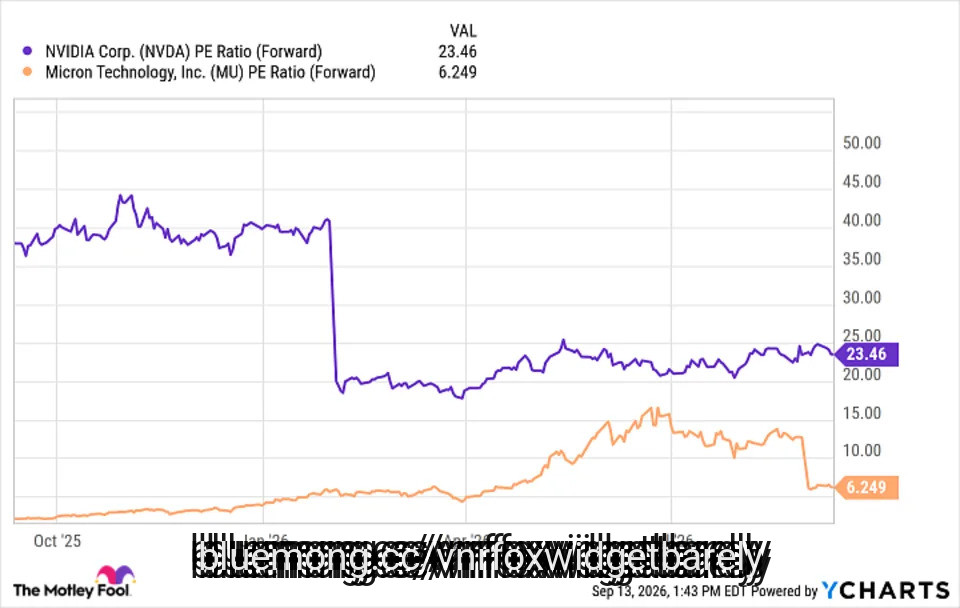
Between 2023 and 2025, Nvidia (NASDAQ: NVDA) was the market's most obvious artificial intelligence (AI) trade. During this period, the stock went parabolic, surging by 1,180% and turning the chipmaker into the world's most valuable company by market cap. On a split-adjusted basis, that was a climb from about $14 per share to $186 by the end of 2025.
Currently, Nvidia stock sits around $218, up another 17% year to date. This is what it looks like when a company owns a scarce product that's in heavy demand -- in this case, graphics processing units (GPUs).
Missed Nvidia in 2009? This Rare Signal Is Flashing Again. In 2009, a "Double Down" signal flashed for a little-known chipmaker called Nvidia. For the first time in years, that same "Total Conviction" signal is flashing for a company 1/100th the size of Nvidia. Continue »
Micron Technology's (NASDAQ: MU) rocket-like move came a bit later, but hit much harder. Memory chips were an afterthought during the initial GPU gold rush. But as training clusters got larger and inference workloads got hungrier, supplies of high bandwidth memory (HBM) started running short. Prices for HBM soared, and Micron stock responded epically -- rising 239% in 2025 and another 242% so far this year. This type of price action indicates the market has recognized that memory is no longer just another tech commodity -- its supply is one of the key bottlenecks dictating the pace at which data centers can be built.
Nvidia and Micron are not the same bet. While Nvidia sells engines, Micron is selling the tanks for the fuel these engines cannot operate without. This begs the question: At this point, which of these AI chip stocks would be the better one to buy and hold for the next five years?
#signal #Stock #chipmaker
Currently, Nvidia stock sits around $218, up another 17% year to date. This is what it looks like when a company owns a scarce product that's in heavy demand -- in this case, graphics processing units (GPUs).
Missed Nvidia in 2009? This Rare Signal Is Flashing Again. In 2009, a "Double Down" signal flashed for a little-known chipmaker called Nvidia. For the first time in years, that same "Total Conviction" signal is flashing for a company 1/100th the size of Nvidia. Continue »
Micron Technology's (NASDAQ: MU) rocket-like move came a bit later, but hit much harder. Memory chips were an afterthought during the initial GPU gold rush. But as training clusters got larger and inference workloads got hungrier, supplies of high bandwidth memory (HBM) started running short. Prices for HBM soared, and Micron stock responded epically -- rising 239% in 2025 and another 242% so far this year. This type of price action indicates the market has recognized that memory is no longer just another tech commodity -- its supply is one of the key bottlenecks dictating the pace at which data centers can be built.
Nvidia and Micron are not the same bet. While Nvidia sells engines, Micron is selling the tanks for the fuel these engines cannot operate without. This begs the question: At this point, which of these AI chip stocks would be the better one to buy and hold for the next five years?
#signal #Stock #chipmaker


3 hours ago
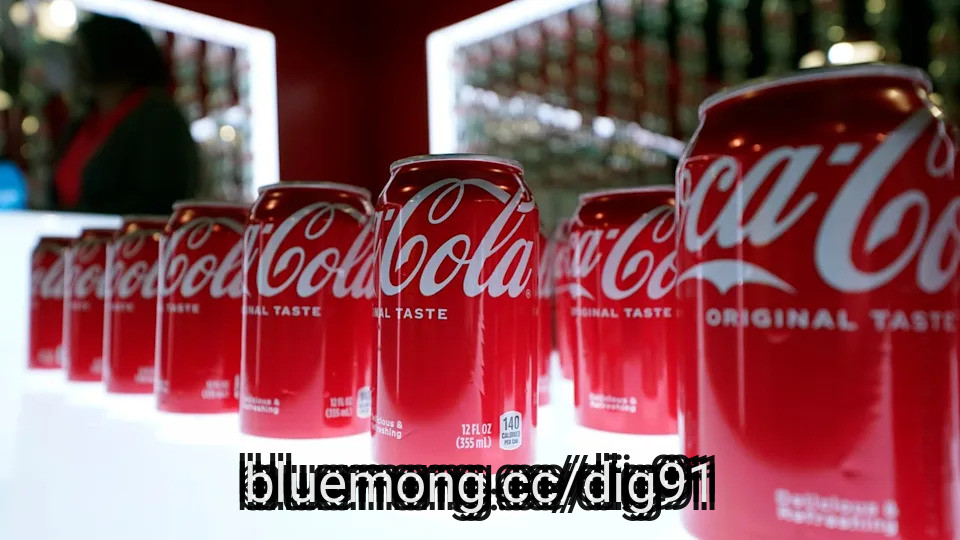
Coca-Cola announced plans Tuesday to invest $10 billion in U.S. infrastructure between 2026 and 2030, covering new and expanded production, distribution and office facilities across the country.
That $10 billion commitment is calculated across the full Coca-Cola system — meaning it rolls in spending by bottling partners and is not limited to the parent company's own capital budget, according to Reuters. In July, the company forecast its own capital expenditure at approximately $2.2 billion for the fiscal year. Projects covered by the broader $10 billion commitment include previously announced work in Rancho Cucamonga, California; Colorado Springs, Colorado; Indianapolis, Indiana; Birmingham, Alabama; Coopersville, Michigan; St. Cloud, Minnesota; Orlando, Florida; and Webster, New York, the company said.
The announcement accompanied an independently commissioned study measuring the Coca-Cola system's 2025 economic contributions in the United States. The study found the system contributed $85 billion to U.S. gross domestic product — roughly $10 million in economic activity per hour — and supported nearly 1 million jobs, the company said. Rounding out the economic picture, the system directed roughly $37 billion toward American suppliers and channeled $177 million into community initiatives via The Coca-Cola Foundation and the Coca-Cola Scholars Foundation.
"This ****** sment reinforces what we see every day: the Coca-Cola system is deeply rooted in America and continues to deliver meaningful value for the people and communities we serve," John Murphy, president and chief financial officer of The Coca-Cola Company, said in a statement.
The company said its production network spans more than 70 facilities and hundreds of distribution centers across all 50 states, Washington, D.C., and Puerto Rico, with the system's economic contributions exceeding $1 billion in 25 states. The study was conducted by Steward Redqueen.
#billion #economic #across #study
That $10 billion commitment is calculated across the full Coca-Cola system — meaning it rolls in spending by bottling partners and is not limited to the parent company's own capital budget, according to Reuters. In July, the company forecast its own capital expenditure at approximately $2.2 billion for the fiscal year. Projects covered by the broader $10 billion commitment include previously announced work in Rancho Cucamonga, California; Colorado Springs, Colorado; Indianapolis, Indiana; Birmingham, Alabama; Coopersville, Michigan; St. Cloud, Minnesota; Orlando, Florida; and Webster, New York, the company said.
The announcement accompanied an independently commissioned study measuring the Coca-Cola system's 2025 economic contributions in the United States. The study found the system contributed $85 billion to U.S. gross domestic product — roughly $10 million in economic activity per hour — and supported nearly 1 million jobs, the company said. Rounding out the economic picture, the system directed roughly $37 billion toward American suppliers and channeled $177 million into community initiatives via The Coca-Cola Foundation and the Coca-Cola Scholars Foundation.
"This ****** sment reinforces what we see every day: the Coca-Cola system is deeply rooted in America and continues to deliver meaningful value for the people and communities we serve," John Murphy, president and chief financial officer of The Coca-Cola Company, said in a statement.
The company said its production network spans more than 70 facilities and hundreds of distribution centers across all 50 states, Washington, D.C., and Puerto Rico, with the system's economic contributions exceeding $1 billion in 25 states. The study was conducted by Steward Redqueen.
#billion #economic #across #study

4 hours ago
Fast-growing stocks and artificial intelligence (AI) seem to go hand in hand, and there are several examples of stocks growing their revenue at 50%, 100%, or even 200%. But none quite touch how rapidly Nebius (NASDAQ: NBIS) is growing. During its most recent quarter, revenue rose by a jaw-dropping 454% year over year. What's even more impressive is that this growth rate is expected to last through the rest of the year, and 2027's will also be elevated.
It's starting to make a lot of sense that Nvidia (NASDAQ: NVDA) is investing in Nebius, and there's still a great buying opportunity here for investors.
Missed Nvidia in 2009? This Rare Signal Is Flashing Again. In 2009, a "Double Down" signal flashed for a little-known chipmaker called Nvidia. For the first time in years, that same "Total Conviction" signal is flashing for a company 1/100th the size of Nvidia. Continue »
Nebius is a neocloud business that provides AI-focused cloud computing power to its clients. Among its biggest clients are Meta Platforms and Microsoft, each of which has signed multi-year deals with Nebius to expand capacity. Both Microsoft and Meta have their own data centers, and Microsoft rents out its capacity to others, so why are they renting from Nebius?
Nebius' deal with Nvidia provides it with leading hardware before others, so it's a way to gain early access to the best computing units. Furthermore, these companies like having a bit of flexibility and not having to build too many data centers, as well as getting their hands on as much computing capacity as quickly as possible.
#Microsoft
It's starting to make a lot of sense that Nvidia (NASDAQ: NVDA) is investing in Nebius, and there's still a great buying opportunity here for investors.
Missed Nvidia in 2009? This Rare Signal Is Flashing Again. In 2009, a "Double Down" signal flashed for a little-known chipmaker called Nvidia. For the first time in years, that same "Total Conviction" signal is flashing for a company 1/100th the size of Nvidia. Continue »
Nebius is a neocloud business that provides AI-focused cloud computing power to its clients. Among its biggest clients are Meta Platforms and Microsoft, each of which has signed multi-year deals with Nebius to expand capacity. Both Microsoft and Meta have their own data centers, and Microsoft rents out its capacity to others, so why are they renting from Nebius?
Nebius' deal with Nvidia provides it with leading hardware before others, so it's a way to gain early access to the best computing units. Furthermore, these companies like having a bit of flexibility and not having to build too many data centers, as well as getting their hands on as much computing capacity as quickly as possible.
#Microsoft


4 hours ago
On September 8, United Natural Foods Inc. (NYSE:UNFI) announced its fourth quarter and full FY26 results. For the final quarter, the company posted an adjusted EBITDA of $172 million, which grew 48.3% compared to Q4 FY25. United's fourth quarter adjusted EPS of $0.69 took a sharp turn relative to a $0.11 adjusted loss per share for the same period last year. Cash flow from operating activities for the quarter stood at $197 million, along with free cash flow of $80 million.
Nejron Photo/Shutterstock.com
Amid a favorable customer mix and network optimizations, United delivered Q4 gross profit of $1,050 million, increasing marginally by 1.9% from the same period last year. This led to a gross margin of 13.7%, compared to 13.4% recorded in Q4 FY25. Cost-saving initiatives, which included efficient productivity through distribution centers and network optimizations, translated into lower operating expenses on a year-over-year basis. It helped United jump from an $87 million net loss for Q4 FY25 to a net income of $35 million during the recently concluded quarter.
For the complete fiscal year, the company delivered an adjusted EBITDA of $701 million, showcasing a 27% growth compared to FY25. Full-year adjusted EPS also climbed from $0.71 last year to $2.65. United generated FY26 operating cash flow of $540 million and free cash flow of $323 million.
Several encouraging operational developments took place during the fourth quarter. United initiated onboarding additional business from its existing customer base, as well as the new ones. Topline impact of such additions will be seen during FY27, once the broader optimization initiatives have cycled through. For its Lean Daily Management (LDM) program, the company concluded a preliminary rollout covering 44 distribution centers. This resulted in year-over-year enhancement in fill rates, throughput, and on-time deliveries, for four consecutive quarters.
#cash #flow #fourth #company
Nejron Photo/Shutterstock.com
Amid a favorable customer mix and network optimizations, United delivered Q4 gross profit of $1,050 million, increasing marginally by 1.9% from the same period last year. This led to a gross margin of 13.7%, compared to 13.4% recorded in Q4 FY25. Cost-saving initiatives, which included efficient productivity through distribution centers and network optimizations, translated into lower operating expenses on a year-over-year basis. It helped United jump from an $87 million net loss for Q4 FY25 to a net income of $35 million during the recently concluded quarter.
For the complete fiscal year, the company delivered an adjusted EBITDA of $701 million, showcasing a 27% growth compared to FY25. Full-year adjusted EPS also climbed from $0.71 last year to $2.65. United generated FY26 operating cash flow of $540 million and free cash flow of $323 million.
Several encouraging operational developments took place during the fourth quarter. United initiated onboarding additional business from its existing customer base, as well as the new ones. Topline impact of such additions will be seen during FY27, once the broader optimization initiatives have cycled through. For its Lean Daily Management (LDM) program, the company concluded a preliminary rollout covering 44 distribution centers. This resulted in year-over-year enhancement in fill rates, throughput, and on-time deliveries, for four consecutive quarters.
#cash #flow #fourth #company


5 hours ago
If you bought Meta Platforms (META) for its advertising engine, the engine still runs: revenue rose 28% year over year in the June 2026 quarter, and its Advantage+ automated campaigns keep growing. What has changed is where the cash goes afterward. The question for a holder is whether Meta is still the business you bought.
Over the twelve months through the June 2026 quarter, capital spending took 39.1% of revenue, against 18.5% across Meta's history. That money buys servers, data centers and network infrastructure. In late July 2026, Meta also announced a venture with BlackRock to develop a 1 gigawatt data center in El Paso, Texas. The plan is to keep going: management narrowed its 2026 capital-spending range by lifting the bottom of it.
Less cash is left over. TTM free-cash-flow margin is 18.0%, against 32.8% across its history, so on each dollar of sales Meta keeps a little more than half the free cash it used to.
Borrowing fills part of the gap. Debt has risen to 25.0% of total ******* ets, against a historical 7.0%, and the CFO says Meta is adding more debt to lower its cost of capital. Meta still holds more cash and marketable securities than debt.
Together, those three readings are the most unusual combination Meta has shown in 14 years. Taken with the 2026 spending floor that management has raised, the combination reads as a change in the business rather than one quarter of noise.
#quarter #spending #bought #engine
Over the twelve months through the June 2026 quarter, capital spending took 39.1% of revenue, against 18.5% across Meta's history. That money buys servers, data centers and network infrastructure. In late July 2026, Meta also announced a venture with BlackRock to develop a 1 gigawatt data center in El Paso, Texas. The plan is to keep going: management narrowed its 2026 capital-spending range by lifting the bottom of it.
Less cash is left over. TTM free-cash-flow margin is 18.0%, against 32.8% across its history, so on each dollar of sales Meta keeps a little more than half the free cash it used to.
Borrowing fills part of the gap. Debt has risen to 25.0% of total ******* ets, against a historical 7.0%, and the CFO says Meta is adding more debt to lower its cost of capital. Meta still holds more cash and marketable securities than debt.
Together, those three readings are the most unusual combination Meta has shown in 14 years. Taken with the 2026 spending floor that management has raised, the combination reads as a change in the business rather than one quarter of noise.
#quarter #spending #bought #engine


5 hours ago
CrowdStrike (CRWD) stock is already having a huge 2026, but Nvidia CEO Jensen Huang just offered investors another reason to stay bullish. Speaking at a Goldman Sachs technology conference, Huang said cybersecurity could become the next major growth driver for artificial intelligence and described CrowdStrike as Nvidia's (NVDA) "number one cybersecurity partner."
That matters because the AI opportunity is expanding beyond chatbots and data centers. As companies deploy more AI agents, they also face a growing number of security risks. CrowdStrike is positioning its Falcon platform to capture that spending, potentially giving CRWD another growth engine after its powerful run this year.
Goldman Sachs Expects Fed Chair Kevin Warsh to Raise Rates This Week — But Not Because of Oil Prices.
Morgan Stanley Doubles Down on Apple Stock as New Offerings Become 'More Exciting'
The EV Bubble Has Burst. How to Play Rivian Stock Now.
#crowdstrike #huang #goldman #become
That matters because the AI opportunity is expanding beyond chatbots and data centers. As companies deploy more AI agents, they also face a growing number of security risks. CrowdStrike is positioning its Falcon platform to capture that spending, potentially giving CRWD another growth engine after its powerful run this year.
Goldman Sachs Expects Fed Chair Kevin Warsh to Raise Rates This Week — But Not Because of Oil Prices.
Morgan Stanley Doubles Down on Apple Stock as New Offerings Become 'More Exciting'
The EV Bubble Has Burst. How to Play Rivian Stock Now.
#crowdstrike #huang #goldman #become



6 hours ago
Auxier ******* et Management, an investment advisory firm, released its second-quarter 2026 investor letter. The letter can be downloaded here. Following a strong rebound from the first-quarter decline, the S&P 500 gained 15.2% as accelerating capital spending toward artificial intelligence infrastructure drove significant gains across technology hardware companies. Semiconductor and data-center-related businesses benefited from supply constraints and strong demand, while enterprise software remained under pressure as investors reassessed AI disruption risks and compressed valuations. In the quarter, Auxier Focus Fund's Investor Class gained 8.82% and 10.70% for the six months ended June 30, 2026. Despite strong earnings growth across the broader market, Auxier highlighted concerns around rising margin debt, increased leverage, and elevated capital flows into high-growth technology areas that could amplify future volatility. The firm continues to focus on identifying enduring businesses with strong competitive advantages, resilient cash flows, and sustainable long-term growth potential. Also, check the fund's top five holdings to see its best picks in 2026.
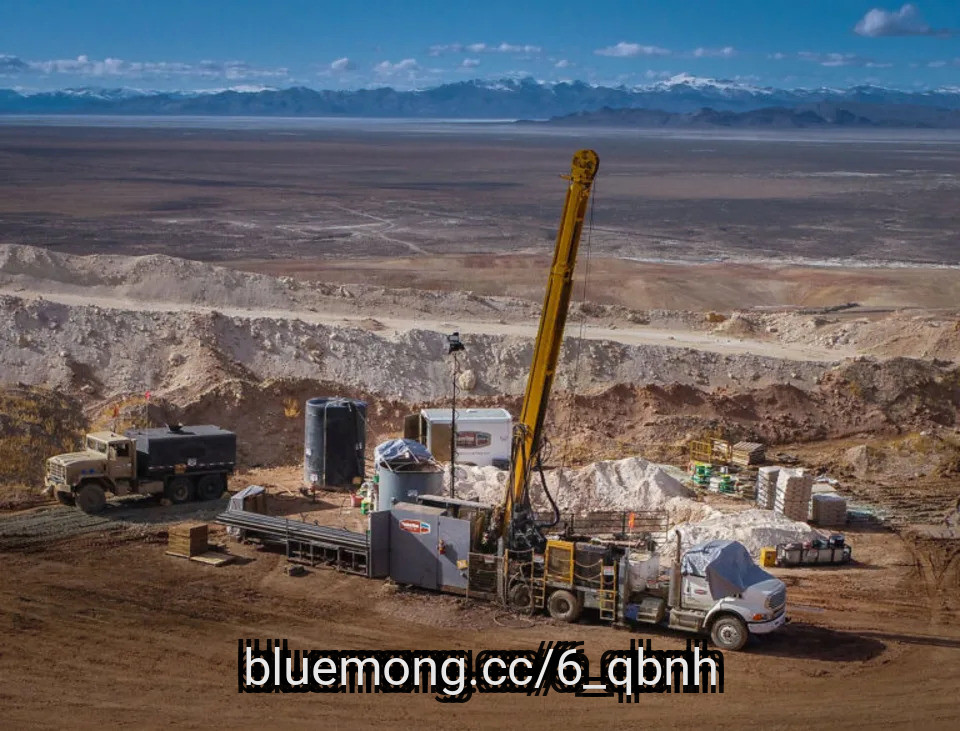
In its second-quarter 2026 investor letter, Auxier ******* et Management highlighted Caterpillar Inc. (NYSE:CAT). Caterpillar Inc. (NYSE:CAT) is a leading manufacturer of construction and mining equipment, off-highway diesel and natural gas engines, industrial gas turbines, and diesel-electric locomotives. On September 14, 2026, Caterpillar Inc. (NYSE:CAT) closed at $784.00 per share. Over the past month, Caterpillar Inc. (NYSE:CAT) declined 7.12%, but its shares are up 77.23% over the past year. Caterpillar Inc. (NYSE:CAT) has a market capitalization of $360.39 billion, and its stock has traded within a 52-week range of $423.32 to $1,073.46.
Auxier ******* et Management stated the following regarding Caterpillar Inc. (NYSE:CAT) in its Q2 2026 investor letter:
"Industrials were the strongest performing sector during the quarter. Tech-facing industrial players benefited from a shift in investor focus toward AI buildout rather than the development of AI models. Caterpillar Inc. (NYSE:CAT) and Gates also benefited indirectly from the expansion of AI infrastructure, particularly through increased demand for energy generation and cooling capacity in data centers."
Photo from Hycroft Mining website
#letter
In its second-quarter 2026 investor letter, Auxier ******* et Management highlighted Caterpillar Inc. (NYSE:CAT). Caterpillar Inc. (NYSE:CAT) is a leading manufacturer of construction and mining equipment, off-highway diesel and natural gas engines, industrial gas turbines, and diesel-electric locomotives. On September 14, 2026, Caterpillar Inc. (NYSE:CAT) closed at $784.00 per share. Over the past month, Caterpillar Inc. (NYSE:CAT) declined 7.12%, but its shares are up 77.23% over the past year. Caterpillar Inc. (NYSE:CAT) has a market capitalization of $360.39 billion, and its stock has traded within a 52-week range of $423.32 to $1,073.46.
Auxier ******* et Management stated the following regarding Caterpillar Inc. (NYSE:CAT) in its Q2 2026 investor letter:
"Industrials were the strongest performing sector during the quarter. Tech-facing industrial players benefited from a shift in investor focus toward AI buildout rather than the development of AI models. Caterpillar Inc. (NYSE:CAT) and Gates also benefited indirectly from the expansion of AI infrastructure, particularly through increased demand for energy generation and cooling capacity in data centers."
Photo from Hycroft Mining website
#letter

6 hours ago
Auxier ******* et Management, an investment advisory firm, released its second-quarter 2026 investor letter. The letter can be downloaded here. Following a strong rebound from the first-quarter decline, the S&P 500 gained 15.2% as accelerating capital spending toward artificial intelligence infrastructure drove significant gains across technology hardware companies. Semiconductor and data-center-related businesses benefited from supply constraints and strong demand, while enterprise software remained under pressure as investors reassessed AI disruption risks and compressed valuations. In the quarter, Auxier Focus Fund's Investor Class gained 8.82% and 10.70% for the six months ended June 30, 2026. Despite strong earnings growth across the broader market, Auxier highlighted concerns around rising margin debt, increased leverage, and elevated capital flows into high-growth technology areas that could amplify future volatility. The firm continues to focus on identifying enduring businesses with strong competitive advantages, resilient cash flows, and sustainable long-term growth potential. Also, check the fund's top five holdings to see its best picks in 2026.
In its second-quarter 2026 investor letter, Auxier ******* et Management highlighted Gates Industrial Corporation Ltd. (NYSE:GTES). Gates Industrial Corporation Ltd. (NYSE:GTES) is a leading manufacturer of engineered power transmission and fluid power solutions. On September 14, 2026, Gates Industrial Corporation Ltd. (NYSE:GTES) closed at $25.42 per share. Over the past month, Gates Industrial Corporation Ltd. (NYSE:GTES) declined 6.17%, and its shares gained 0.77% over the past 52 weeks. Gates Industrial Corporation Ltd. (NYSE:GTES) has a market capitalization of $6.44 billion, and its stock has traded within a 52-week range of $20.88 and $30.34.
Auxier ******* et Management stated the following regarding Gates Industrial Corporation Ltd. (NYSE:GTES) in its Q2 2026 investor letter:
"Industrials were the strongest performing sector during the quarter. Tech-facing industrial players benefited from a shift in investor focus toward AI buildout rather than the development of AI models. Caterpillar and Gates Industrial Corporation Ltd. (NYSE:GTES) Ltd. (NYSE:GTES) also benefited indirectly from the expansion of AI infrastructure, particularly through increased demand for energy generation and cooling capacity in data centers."
Gates Industrial Corporation Ltd. (NYSE:GTES) is not on our list of the 40 Most Popular Stocks Among Hedge Funds. As per our database, 36 hedge fund portfolios held Gates Industrial Corporation Ltd. (NYSE:GTES) at the end of the second quarter which was 37 in the previous quarter. While we acknowledge the potential of Gates Industrial Corporation Ltd. (NYSE:GTES) as an investment, we believe certain AI stocks offer greater upside potential and carry less downside risk. If you're looking for an extremely undervalued AI stock that also stands to benefit significantly from
In its second-quarter 2026 investor letter, Auxier ******* et Management highlighted Gates Industrial Corporation Ltd. (NYSE:GTES). Gates Industrial Corporation Ltd. (NYSE:GTES) is a leading manufacturer of engineered power transmission and fluid power solutions. On September 14, 2026, Gates Industrial Corporation Ltd. (NYSE:GTES) closed at $25.42 per share. Over the past month, Gates Industrial Corporation Ltd. (NYSE:GTES) declined 6.17%, and its shares gained 0.77% over the past 52 weeks. Gates Industrial Corporation Ltd. (NYSE:GTES) has a market capitalization of $6.44 billion, and its stock has traded within a 52-week range of $20.88 and $30.34.
Auxier ******* et Management stated the following regarding Gates Industrial Corporation Ltd. (NYSE:GTES) in its Q2 2026 investor letter:
"Industrials were the strongest performing sector during the quarter. Tech-facing industrial players benefited from a shift in investor focus toward AI buildout rather than the development of AI models. Caterpillar and Gates Industrial Corporation Ltd. (NYSE:GTES) Ltd. (NYSE:GTES) also benefited indirectly from the expansion of AI infrastructure, particularly through increased demand for energy generation and cooling capacity in data centers."
Gates Industrial Corporation Ltd. (NYSE:GTES) is not on our list of the 40 Most Popular Stocks Among Hedge Funds. As per our database, 36 hedge fund portfolios held Gates Industrial Corporation Ltd. (NYSE:GTES) at the end of the second quarter which was 37 in the previous quarter. While we acknowledge the potential of Gates Industrial Corporation Ltd. (NYSE:GTES) as an investment, we believe certain AI stocks offer greater upside potential and carry less downside risk. If you're looking for an extremely undervalued AI stock that also stands to benefit significantly from


6 hours ago
Fidelity Investments, an investment management company, recently released its second-quarter 2026 investor letter for the "Fidelity Dividend Growth Fund". The letter can be downloaded here. The Fidelity Dividend Growth Fund is a diversified large-cap equity strategy focused on capital appreciation through investments in large- and mid-cap stocks with strong dividend growth prospects. The fund returned 17.05% in the quarter, outperforming the S&P 500 Index, which gained 15.20%. U.S. stocks experienced significant gains in Q2, driven by increased spending on artificial intelligence. Technology stocks gained 31.79%, mainly driven by semiconductor companies, while the index faced a slight decline in June as investors considered the sustainability of AI-related profits amidst rising interest rates. Despite recent turbulence from the Middle East conflict, the fund remains optimistic about key investment themes, particularly in artificial intelligence. Also, check the fund's top five holdings to see its best picks in 2026.
In its second-quarter 2026 investor letter, Fidelity Dividend Growth Fund highlighted Seagate Technology Holdings plc (NASDAQ:STX) as a notable performance contributor. Seagate Technology Holdings plc (NASDAQ:STX) is a data storage company providing data storage technology and infrastructure solutions. On September 14, 2026, Seagate Technology Holdings plc (NASDAQ:STX) closed at $805.55 per share. Over the past month, Seagate Technology Holdings plc (NASDAQ:STX) declined 10.86%, but its shares are up 281.54% over the past year. Seagate Technology Holdings plc (NASDAQ:STX) has a market capitalization of $183.18 billion, and its stock has traded within a 52-week range of $206.26 to $1,145.00.
Fidelity Dividend Growth Fund stated the following regarding Seagate Technology Holdings plc (NASDAQ:STX) in its Q2 2026 investor letter:
"Shares of Seagate Technology Holdings plc (NASDAQ:STX) gained about 147% the past three months. Seagate is one of the world's largest producers of digital storage and, along with Western Digital, one of two dominant makers of hard-disk drives. Exploding demand for HDDs used in AI capable data centers has led to surging sales and strong pricing power for the company. In its most recent quarterly filing in April, Seagate reported revenue, earnings and profitability that all exceeded consensus expectations, while raising financial guidance."
Seagate Technology Holdings plc (NASDAQ:STX) is not on our list of the 40 Most Popular Stocks Among Hedge Funds. According to our database, 131 hedge fund portfolios held Seagate Technology Holdings plc (NASDAQ:STX) at the end of the second quarter, compared to 93 in the previous quarter. While we acknowledge the potential of Seagate Technology Holdings plc (NASDAQ:STX) as an investment, we believe certain AI stocks offer greater upside potential and carry less downside risk. If you're looking for an extremely undervalued AI stock that also stands to benefit significantly f
In its second-quarter 2026 investor letter, Fidelity Dividend Growth Fund highlighted Seagate Technology Holdings plc (NASDAQ:STX) as a notable performance contributor. Seagate Technology Holdings plc (NASDAQ:STX) is a data storage company providing data storage technology and infrastructure solutions. On September 14, 2026, Seagate Technology Holdings plc (NASDAQ:STX) closed at $805.55 per share. Over the past month, Seagate Technology Holdings plc (NASDAQ:STX) declined 10.86%, but its shares are up 281.54% over the past year. Seagate Technology Holdings plc (NASDAQ:STX) has a market capitalization of $183.18 billion, and its stock has traded within a 52-week range of $206.26 to $1,145.00.
Fidelity Dividend Growth Fund stated the following regarding Seagate Technology Holdings plc (NASDAQ:STX) in its Q2 2026 investor letter:
"Shares of Seagate Technology Holdings plc (NASDAQ:STX) gained about 147% the past three months. Seagate is one of the world's largest producers of digital storage and, along with Western Digital, one of two dominant makers of hard-disk drives. Exploding demand for HDDs used in AI capable data centers has led to surging sales and strong pricing power for the company. In its most recent quarterly filing in April, Seagate reported revenue, earnings and profitability that all exceeded consensus expectations, while raising financial guidance."
Seagate Technology Holdings plc (NASDAQ:STX) is not on our list of the 40 Most Popular Stocks Among Hedge Funds. According to our database, 131 hedge fund portfolios held Seagate Technology Holdings plc (NASDAQ:STX) at the end of the second quarter, compared to 93 in the previous quarter. While we acknowledge the potential of Seagate Technology Holdings plc (NASDAQ:STX) as an investment, we believe certain AI stocks offer greater upside potential and carry less downside risk. If you're looking for an extremely undervalued AI stock that also stands to benefit significantly f


6 hours ago
Benzinga and Yahoo Finance LLC may earn commission or revenue on some items through the links below.
Space Exploration Technologies Corp. CEO Elon Musk has reaffirmed that the commercial ***** eflight company will put NVIDIA Corp's orbital AI computing system in ***** e by next year.
On Sunday, user RyanFox.eth took to the social media platform X, referencing an unnamed YouTuber saying that data centers in ***** e could become a reality by 2035 if the cooling aspect were solved. "People really don't get it," the user said.
Don't Miss:
A single bad hire can set a startup back years. Here are the 5 hires founders most often misjudge — and why
#space #exploration
Space Exploration Technologies Corp. CEO Elon Musk has reaffirmed that the commercial ***** eflight company will put NVIDIA Corp's orbital AI computing system in ***** e by next year.
On Sunday, user RyanFox.eth took to the social media platform X, referencing an unnamed YouTuber saying that data centers in ***** e could become a reality by 2035 if the cooling aspect were solved. "People really don't get it," the user said.
Don't Miss:
A single bad hire can set a startup back years. Here are the 5 hires founders most often misjudge — and why
#space #exploration


6 hours ago
Carlyle Global Head of Liquid Credit Lauren Basmadjian spoke with Bloomberg's Dani Burger from the sidelines of Carlyle's Global Investor Conference and talked about the health of corporate borrowers, the loan market moving toward equilibrium, data centers as an emerging source of loan supply, and more.
#liquid #credit
#liquid #credit


6 hours ago
Dallas, Texas-based CBRE Group, Inc. (CBRE) operates as a commercial real estate services and investment company. Valued at $40.8 billion by market cap, the company offers property management, valuation, real estate investment, and advisory services. CBRE operates offices, data centers, multi-family, hotels, gaming, and retail sectors.
Companies worth $10 billion or more are generally described as "large-cap stocks," and CBRE perfectly fits that description, with its market cap exceeding this mark, underscoring its size, influence, and dominance within the real estate services industry. CBRE dominates commercial real estate through unmatched global scale, deep end-to-end advisory services, and a massive operational footprint that creates powerful data network effects.
Goldman Sachs Expects Fed Chair Kevin Warsh to Raise Rates This Week — But Not Because of Oil Prices.
Morgan Stanley Doubles Down on Apple Stock as New Offerings Become 'More Exciting'
The EV Bubble Has Burst. How to Play Rivian Stock Now.
#estate
Companies worth $10 billion or more are generally described as "large-cap stocks," and CBRE perfectly fits that description, with its market cap exceeding this mark, underscoring its size, influence, and dominance within the real estate services industry. CBRE dominates commercial real estate through unmatched global scale, deep end-to-end advisory services, and a massive operational footprint that creates powerful data network effects.
Goldman Sachs Expects Fed Chair Kevin Warsh to Raise Rates This Week — But Not Because of Oil Prices.
Morgan Stanley Doubles Down on Apple Stock as New Offerings Become 'More Exciting'
The EV Bubble Has Burst. How to Play Rivian Stock Now.
#estate



7 hours ago
The artificial intelligence (AI) boom is entering a new phase, and this time, the battle is moving deeper into the data center. It is no longer simply about who can build the fastest AI accelerator. Hyperscalers are scrambling for more compute, faster connectivity, and better power efficiency as AI workloads continue to grow at a breakneck pace. That is opening the door for chipmakers that can deliver customized, energy-efficient solutions at scale.
Qualcomm (QCOM) wants a seat at that table. The company just landed a major multi-generational collaboration with Amazon (AMZN) to supply customized silicon, systems, and related technology for large-scale AI data centers, with a focus on inference. The partnership also extends into high-speed optical connectivity, an increasingly critical piece of the AI infrastructure puzzle.
Goldman Sachs Expects Fed Chair Kevin Warsh to Raise Rates This Week — But Not Because of Oil Prices.
Morgan Stanley Doubles Down on Apple Stock as New Offerings Become 'More Exciting'
The EV Bubble Has Burst. How to Play Rivian Stock Now.
#customized #hyperscalers #amzn
Qualcomm (QCOM) wants a seat at that table. The company just landed a major multi-generational collaboration with Amazon (AMZN) to supply customized silicon, systems, and related technology for large-scale AI data centers, with a focus on inference. The partnership also extends into high-speed optical connectivity, an increasingly critical piece of the AI infrastructure puzzle.
Goldman Sachs Expects Fed Chair Kevin Warsh to Raise Rates This Week — But Not Because of Oil Prices.
Morgan Stanley Doubles Down on Apple Stock as New Offerings Become 'More Exciting'
The EV Bubble Has Burst. How to Play Rivian Stock Now.
#customized #hyperscalers #amzn


8 hours ago
Carter's unveiled a new brand identity and marketing campaign on Tuesday, as the children's clothing company works to attract a younger generation of parents and build on a recent business turnaround.
The rebrand centers on a new brand promise — "Let every child's light shine" — and a refreshed logo in which a shooting star replaces the apostrophe in the Carter's wordmark, the company said. A new 60-second film called "Watch Them Glow" will debut across connected television as the first major marketing expression of the new direction.
Chief Marketing Officer Sarah Crockett told CNBC that the company sees a significant shift in its core customer base. Gen Z is expected to account for a large share of new parents over the next several years, according to Carter's, and those parents tend to let children make their own clothing choices and turn to social media for guidance.
"We had an opportunity to really tap into the values that parents are bringing into the household," Crockett told CNBC.
The new identity will begin rolling out across Carter's channels in 2026, with additional retail, product, and packaging elements to follow in 2027, the company said. Carter's is also launching a creator program called Light Makers, featuring voices across North America, and expanding partnerships with organizations including Outward Bound and Boys & Girls Clubs of America.
#parents #Marketing #cnbc #America
The rebrand centers on a new brand promise — "Let every child's light shine" — and a refreshed logo in which a shooting star replaces the apostrophe in the Carter's wordmark, the company said. A new 60-second film called "Watch Them Glow" will debut across connected television as the first major marketing expression of the new direction.
Chief Marketing Officer Sarah Crockett told CNBC that the company sees a significant shift in its core customer base. Gen Z is expected to account for a large share of new parents over the next several years, according to Carter's, and those parents tend to let children make their own clothing choices and turn to social media for guidance.
"We had an opportunity to really tap into the values that parents are bringing into the household," Crockett told CNBC.
The new identity will begin rolling out across Carter's channels in 2026, with additional retail, product, and packaging elements to follow in 2027, the company said. Carter's is also launching a creator program called Light Makers, featuring voices across North America, and expanding partnerships with organizations including Outward Bound and Boys & Girls Clubs of America.
#parents #Marketing #cnbc #America


8 hours ago
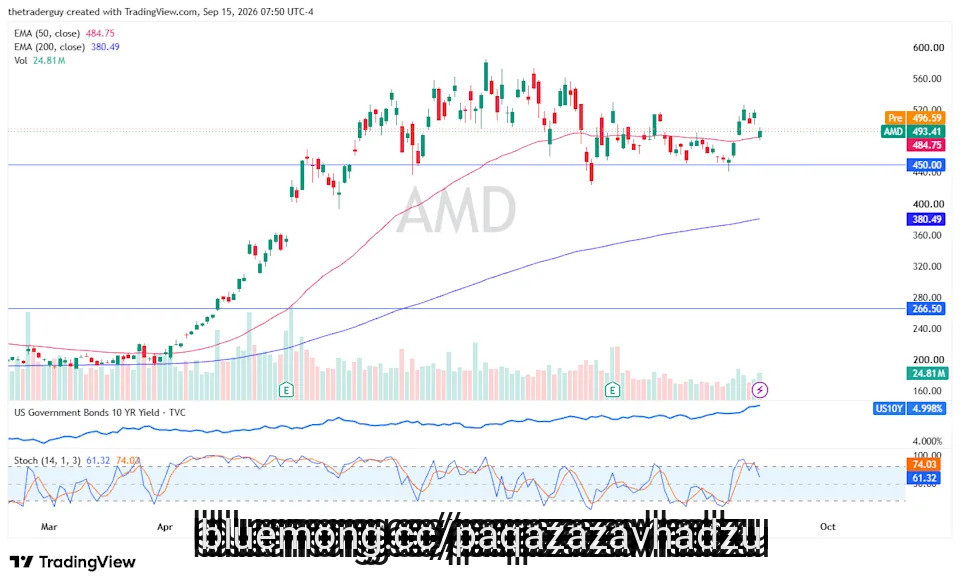
With Agentic AI accelerating CPU server chip demand, Wall Street believes Advanced Micro Devices, Inc. (NASDAQ:AMD) is one of the primary beneficiaries taking share. On September 9, Piper Sandler ******* yst David O'Connor initiated coverage on AMD (NASDAQ: AMD) with an Overweight rating and a $600 price target.
Analyst O'Connor estimates revenue for FY26-30 to grow at a 50% CAGR, while earnings per share compound at 65%.
The server-CPU share gain story for AMD is simple, Agentic AI is expected to increase demand for server CPUs. This is because the workloads require continuous control-plane activity, API calls, database queries and tool execution. AMD will benefit from this use based on its high-frequency and general-purpose processors with its Venice portfolio.
Even AMD executives have highlighted that AMD is now transitioning from merely a semiconductor supplier to a provider of rack-scale systems and software. It is also positioning its server CPU portfolio for increased demand from agentic AI workloads.
The company reported second-quarter revenue of $11.5 billion, beating ******* yst estimates. This includes $6.7 billion from data centers, up 107% year-over-year. The segment performance was attributed to EPYC processors and Instinct GPUs.
#workloads
Analyst O'Connor estimates revenue for FY26-30 to grow at a 50% CAGR, while earnings per share compound at 65%.
The server-CPU share gain story for AMD is simple, Agentic AI is expected to increase demand for server CPUs. This is because the workloads require continuous control-plane activity, API calls, database queries and tool execution. AMD will benefit from this use based on its high-frequency and general-purpose processors with its Venice portfolio.
Even AMD executives have highlighted that AMD is now transitioning from merely a semiconductor supplier to a provider of rack-scale systems and software. It is also positioning its server CPU portfolio for increased demand from agentic AI workloads.
The company reported second-quarter revenue of $11.5 billion, beating ******* yst estimates. This includes $6.7 billion from data centers, up 107% year-over-year. The segment performance was attributed to EPYC processors and Instinct GPUs.
#workloads


8 hours ago
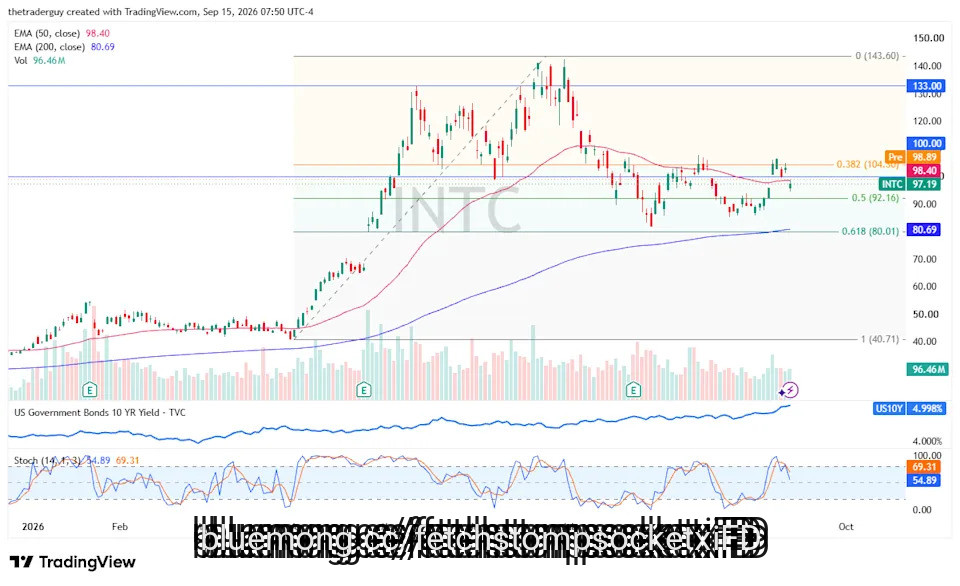
Intel is a little higher in pre-market trading, but recently we've seen some noise as broad semiconductor de-risking continues to be one of the stories here. Intel itself has been a fairly successful story over the last year as the turnaround continues for the company.
AI industry leaders got crushed. Perhaps the prospect of slowing frontier model development, as thrown out there by multiple leaders in the industry, has spooked the markets. Investors immediately figured that slower data-center CapEx and semiconductor demand would be part of that. It is a little overdone. It's just a few words, but it looks like the market is trying to turn things around.
Furthermore, you have to keep in mind that interest rates being higher than anticipated has been a bit of a drag.
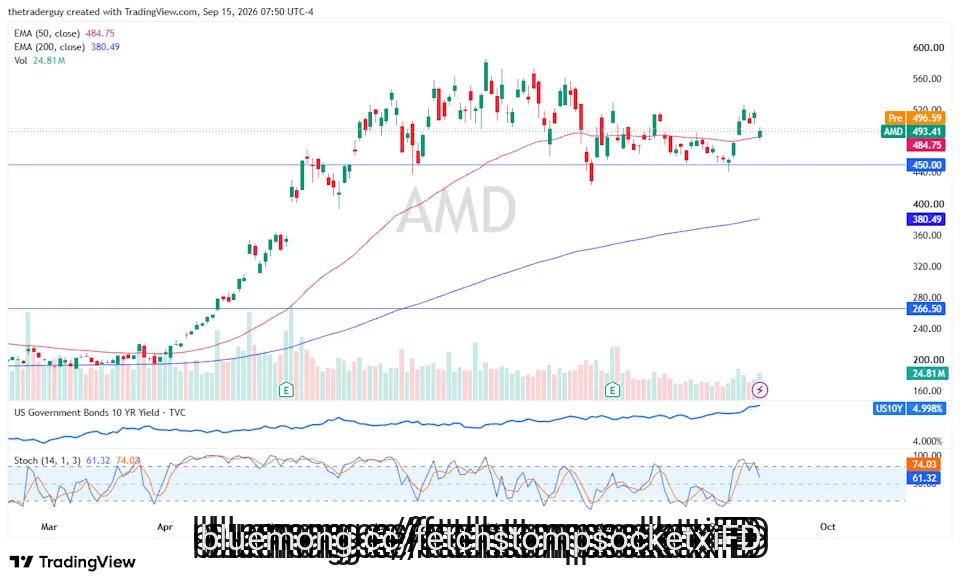
NVIDIA looks slightly positive in early market trading, with the market trying to reach toward the 50-day EMA. Again, this is about anxiety, with AI capital expenditures being the immediate problem. After all, if fewer data centers were to be built, NVIDIA is directly hit.
The market is looking at this in more fear-than-fact-based terms because NVIDIA's actual business numbers remain extraordinarily strong. So really, rates and the fear of a slowdown are fighting the reality of growth and economic numbers in this company that remain truly envy-worthy of most others.
#Intel #little #continues
AI industry leaders got crushed. Perhaps the prospect of slowing frontier model development, as thrown out there by multiple leaders in the industry, has spooked the markets. Investors immediately figured that slower data-center CapEx and semiconductor demand would be part of that. It is a little overdone. It's just a few words, but it looks like the market is trying to turn things around.
Furthermore, you have to keep in mind that interest rates being higher than anticipated has been a bit of a drag.
NVIDIA looks slightly positive in early market trading, with the market trying to reach toward the 50-day EMA. Again, this is about anxiety, with AI capital expenditures being the immediate problem. After all, if fewer data centers were to be built, NVIDIA is directly hit.
The market is looking at this in more fear-than-fact-based terms because NVIDIA's actual business numbers remain extraordinarily strong. So really, rates and the fear of a slowdown are fighting the reality of growth and economic numbers in this company that remain truly envy-worthy of most others.
#Intel #little #continues

9 hours ago
If you bought Meta Platforms (META) for its advertising engine, the engine still runs: revenue rose 28% year over year in the June 2026 quarter, and its Advantage+ automated campaigns keep growing. What has changed is where the cash goes afterward. The question for a holder is whether Meta is still the business you bought.
Over the twelve months through the June 2026 quarter, capital spending took 39.1% of revenue, against 18.5% across Meta's history. That money buys servers, data centers and network infrastructure. In late July 2026, Meta also announced a venture with BlackRock to develop a 1 gigawatt data center in El Paso, Texas. The plan is to keep going: management narrowed its 2026 capital-spending range by lifting the bottom of it.
Less cash is left over. TTM free-cash-flow margin is 18.0%, against 32.8% across its history, so on each dollar of sales Meta keeps a little more than half the free cash it used to.
Borrowing fills part of the gap. Debt has risen to 25.0% of total **** ets, against a historical 7.0%, and the CFO says Meta is adding more debt to lower its cost of capital. Meta still holds more cash and marketable securities than debt.
Together, those three readings are the most unusual combination Meta has shown in 14 years. Taken with the 2026 spending floor that management has raised, the combination reads as a change in the business rather than one quarter of noise.
#meta #cash
Over the twelve months through the June 2026 quarter, capital spending took 39.1% of revenue, against 18.5% across Meta's history. That money buys servers, data centers and network infrastructure. In late July 2026, Meta also announced a venture with BlackRock to develop a 1 gigawatt data center in El Paso, Texas. The plan is to keep going: management narrowed its 2026 capital-spending range by lifting the bottom of it.
Less cash is left over. TTM free-cash-flow margin is 18.0%, against 32.8% across its history, so on each dollar of sales Meta keeps a little more than half the free cash it used to.
Borrowing fills part of the gap. Debt has risen to 25.0% of total **** ets, against a historical 7.0%, and the CFO says Meta is adding more debt to lower its cost of capital. Meta still holds more cash and marketable securities than debt.
Together, those three readings are the most unusual combination Meta has shown in 14 years. Taken with the 2026 spending floor that management has raised, the combination reads as a change in the business rather than one quarter of noise.
#meta #cash


9 hours ago
CrowdStrike (CRWD) stock is already having a huge 2026, but Nvidia CEO Jensen Huang just offered investors another reason to stay bullish. Speaking at a Goldman Sachs technology conference, Huang said cybersecurity could become the next major growth driver for artificial intelligence and described CrowdStrike as Nvidia's (NVDA) "number one cybersecurity partner."
That matters because the AI opportunity is expanding beyond chatbots and data centers. As companies deploy more AI agents, they also face a growing number of security risks. CrowdStrike is positioning its Falcon platform to capture that spending, potentially giving CRWD another growth engine after its powerful run this year.
Goldman Sachs Expects Fed Chair Kevin Warsh to Raise Rates This Week — But Not Because of Oil Prices.
Morgan Stanley Doubles Down on Apple Stock as New Offerings Become 'More Exciting'
The EV Bubble Has Burst. How to Play Rivian Stock Now.
#become
That matters because the AI opportunity is expanding beyond chatbots and data centers. As companies deploy more AI agents, they also face a growing number of security risks. CrowdStrike is positioning its Falcon platform to capture that spending, potentially giving CRWD another growth engine after its powerful run this year.
Goldman Sachs Expects Fed Chair Kevin Warsh to Raise Rates This Week — But Not Because of Oil Prices.
Morgan Stanley Doubles Down on Apple Stock as New Offerings Become 'More Exciting'
The EV Bubble Has Burst. How to Play Rivian Stock Now.
#become


9 hours ago
Auxier ****** et Management, an investment advisory firm, released its second-quarter 2026 investor letter. The letter can be downloaded here. Following a strong rebound from the first-quarter decline, the S&P 500 gained 15.2% as accelerating capital spending toward artificial intelligence infrastructure drove significant gains across technology hardware companies. Semiconductor and data-center-related businesses benefited from supply constraints and strong demand, while enterprise software remained under pressure as investors reassessed AI disruption risks and compressed valuations. In the quarter, Auxier Focus Fund's Investor Class gained 8.82% and 10.70% for the six months ended June 30, 2026. Despite strong earnings growth across the broader market, Auxier highlighted concerns around rising margin debt, increased leverage, and elevated capital flows into high-growth technology areas that could amplify future volatility. The firm continues to focus on identifying enduring businesses with strong competitive advantages, resilient cash flows, and sustainable long-term growth potential. Also, check the fund's top five holdings to see its best picks in 2026.
In its second-quarter 2026 investor letter, Auxier ****** et Management highlighted Caterpillar Inc. (NYSE:CAT). Caterpillar Inc. (NYSE:CAT) is a leading manufacturer of construction and mining equipment, off-highway diesel and natural gas engines, industrial gas turbines, and diesel-electric locomotives. On September 14, 2026, Caterpillar Inc. (NYSE:CAT) closed at $784.00 per share. Over the past month, Caterpillar Inc. (NYSE:CAT) declined 7.12%, but its shares are up 77.23% over the past year. Caterpillar Inc. (NYSE:CAT) has a market capitalization of $360.39 billion, and its stock has traded within a 52-week range of $423.32 to $1,073.46.
Auxier ****** et Management stated the following regarding Caterpillar Inc. (NYSE:CAT) in its Q2 2026 investor letter:
"Industrials were the strongest performing sector during the quarter. Tech-facing industrial players benefited from a shift in investor focus toward AI buildout rather than the development of AI models. Caterpillar Inc. (NYSE:CAT) and Gates also benefited indirectly from the expansion of AI infrastructure, particularly through increased demand for energy generation and cooling capacity in data centers."
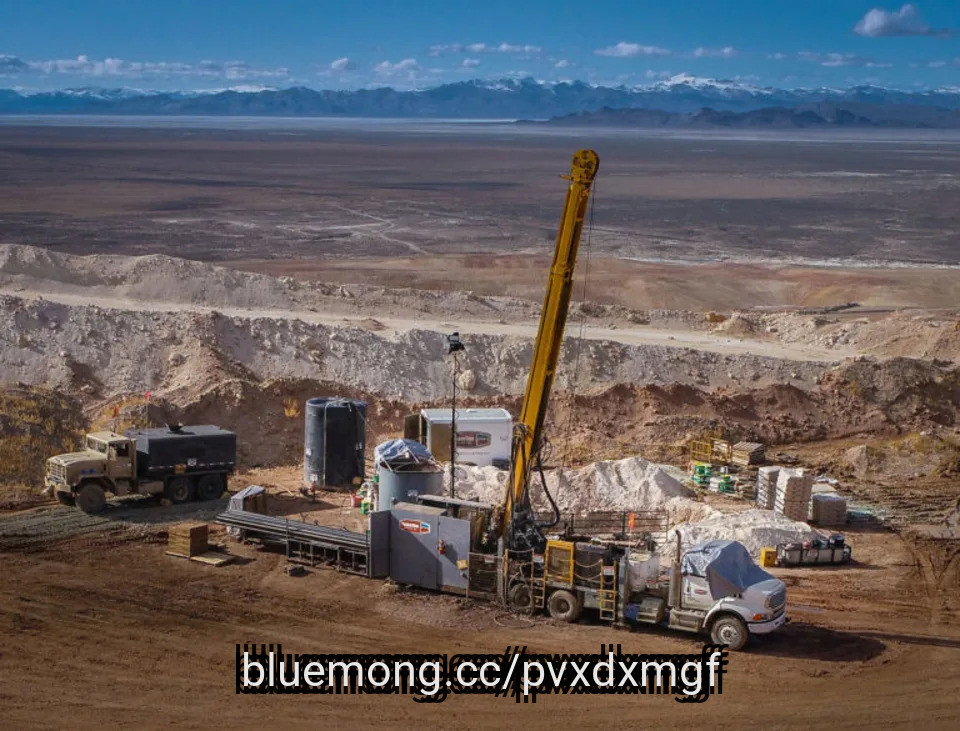
Photo from Hycroft Mining website
#quarter #asset #management #focus
In its second-quarter 2026 investor letter, Auxier ****** et Management highlighted Caterpillar Inc. (NYSE:CAT). Caterpillar Inc. (NYSE:CAT) is a leading manufacturer of construction and mining equipment, off-highway diesel and natural gas engines, industrial gas turbines, and diesel-electric locomotives. On September 14, 2026, Caterpillar Inc. (NYSE:CAT) closed at $784.00 per share. Over the past month, Caterpillar Inc. (NYSE:CAT) declined 7.12%, but its shares are up 77.23% over the past year. Caterpillar Inc. (NYSE:CAT) has a market capitalization of $360.39 billion, and its stock has traded within a 52-week range of $423.32 to $1,073.46.
Auxier ****** et Management stated the following regarding Caterpillar Inc. (NYSE:CAT) in its Q2 2026 investor letter:
"Industrials were the strongest performing sector during the quarter. Tech-facing industrial players benefited from a shift in investor focus toward AI buildout rather than the development of AI models. Caterpillar Inc. (NYSE:CAT) and Gates also benefited indirectly from the expansion of AI infrastructure, particularly through increased demand for energy generation and cooling capacity in data centers."
Photo from Hycroft Mining website
#quarter #asset #management #focus

10 hours ago
Auxier ******* et Management, an investment advisory firm, released its second-quarter 2026 investor letter. The letter can be downloaded here. Following a strong rebound from the first-quarter decline, the S&P 500 gained 15.2% as accelerating capital spending toward artificial intelligence infrastructure drove significant gains across technology hardware companies. Semiconductor and data-center-related businesses benefited from supply constraints and strong demand, while enterprise software remained under pressure as investors reassessed AI disruption risks and compressed valuations. In the quarter, Auxier Focus Fund's Investor Class gained 8.82% and 10.70% for the six months ended June 30, 2026. Despite strong earnings growth across the broader market, Auxier highlighted concerns around rising margin debt, increased leverage, and elevated capital flows into high-growth technology areas that could amplify future volatility. The firm continues to focus on identifying enduring businesses with strong competitive advantages, resilient cash flows, and sustainable long-term growth potential. Also, check the fund's top five holdings to see its best picks in 2026.
In its second-quarter 2026 investor letter, Auxier ******* et Management highlighted Gates Industrial Corporation Ltd. (NYSE:GTES). Gates Industrial Corporation Ltd. (NYSE:GTES) is a leading manufacturer of engineered power transmission and fluid power solutions. On September 14, 2026, Gates Industrial Corporation Ltd. (NYSE:GTES) closed at $25.42 per share. Over the past month, Gates Industrial Corporation Ltd. (NYSE:GTES) declined 6.17%, and its shares gained 0.77% over the past 52 weeks. Gates Industrial Corporation Ltd. (NYSE:GTES) has a market capitalization of $6.44 billion, and its stock has traded within a 52-week range of $20.88 and $30.34.
Auxier ******* et Management stated the following regarding Gates Industrial Corporation Ltd. (NYSE:GTES) in its Q2 2026 investor letter:
"Industrials were the strongest performing sector during the quarter. Tech-facing industrial players benefited from a shift in investor focus toward AI buildout rather than the development of AI models. Caterpillar and Gates Industrial Corporation Ltd. (NYSE:GTES) Ltd. (NYSE:GTES) also benefited indirectly from the expansion of AI infrastructure, particularly through increased demand for energy generation and cooling capacity in data centers."
Gates Industrial Corporation Ltd. (NYSE:GTES) is not on our list of the 40 Most Popular Stocks Among Hedge Funds. As per our database, 36 hedge fund portfolios held Gates Industrial Corporation Ltd. (NYSE:GTES) at the end of the second quarter which was 37 in the previous quarter. While we acknowledge the potential of Gates Industrial Corporation Ltd. (NYSE:GTES) as an investment, we believe certain AI stocks offer greater upside potential and carry less downside risk. If you're looking for an extremely undervalued AI stock that also stands to benefit significantly from
In its second-quarter 2026 investor letter, Auxier ******* et Management highlighted Gates Industrial Corporation Ltd. (NYSE:GTES). Gates Industrial Corporation Ltd. (NYSE:GTES) is a leading manufacturer of engineered power transmission and fluid power solutions. On September 14, 2026, Gates Industrial Corporation Ltd. (NYSE:GTES) closed at $25.42 per share. Over the past month, Gates Industrial Corporation Ltd. (NYSE:GTES) declined 6.17%, and its shares gained 0.77% over the past 52 weeks. Gates Industrial Corporation Ltd. (NYSE:GTES) has a market capitalization of $6.44 billion, and its stock has traded within a 52-week range of $20.88 and $30.34.
Auxier ******* et Management stated the following regarding Gates Industrial Corporation Ltd. (NYSE:GTES) in its Q2 2026 investor letter:
"Industrials were the strongest performing sector during the quarter. Tech-facing industrial players benefited from a shift in investor focus toward AI buildout rather than the development of AI models. Caterpillar and Gates Industrial Corporation Ltd. (NYSE:GTES) Ltd. (NYSE:GTES) also benefited indirectly from the expansion of AI infrastructure, particularly through increased demand for energy generation and cooling capacity in data centers."
Gates Industrial Corporation Ltd. (NYSE:GTES) is not on our list of the 40 Most Popular Stocks Among Hedge Funds. As per our database, 36 hedge fund portfolios held Gates Industrial Corporation Ltd. (NYSE:GTES) at the end of the second quarter which was 37 in the previous quarter. While we acknowledge the potential of Gates Industrial Corporation Ltd. (NYSE:GTES) as an investment, we believe certain AI stocks offer greater upside potential and carry less downside risk. If you're looking for an extremely undervalued AI stock that also stands to benefit significantly from

10 hours ago
Fidelity Investments, an investment management company, recently released its second-quarter 2026 investor letter for the "Fidelity Dividend Growth Fund". The letter can be downloaded here. The Fidelity Dividend Growth Fund is a diversified large-cap equity strategy focused on capital appreciation through investments in large- and mid-cap stocks with strong dividend growth prospects. The fund returned 17.05% in the quarter, outperforming the S&P 500 Index, which gained 15.20%. U.S. stocks experienced significant gains in Q2, driven by increased spending on artificial intelligence. Technology stocks gained 31.79%, mainly driven by semiconductor companies, while the index faced a slight decline in June as investors considered the sustainability of AI-related profits amidst rising interest rates. Despite recent turbulence from the Middle East conflict, the fund remains optimistic about key investment themes, particularly in artificial intelligence. Also, check the fund's top five holdings to see its best picks in 2026.
In its second-quarter 2026 investor letter, Fidelity Dividend Growth Fund highlighted Seagate Technology Holdings plc (NASDAQ:STX) as a notable performance contributor. Seagate Technology Holdings plc (NASDAQ:STX) is a data storage company providing data storage technology and infrastructure solutions. On September 14, 2026, Seagate Technology Holdings plc (NASDAQ:STX) closed at $805.55 per share. Over the past month, Seagate Technology Holdings plc (NASDAQ:STX) declined 10.86%, but its shares are up 281.54% over the past year. Seagate Technology Holdings plc (NASDAQ:STX) has a market capitalization of $183.18 billion, and its stock has traded within a 52-week range of $206.26 to $1,145.00.
Fidelity Dividend Growth Fund stated the following regarding Seagate Technology Holdings plc (NASDAQ:STX) in its Q2 2026 investor letter:
"Shares of Seagate Technology Holdings plc (NASDAQ:STX) gained about 147% the past three months. Seagate is one of the world's largest producers of digital storage and, along with Western Digital, one of two dominant makers of hard-disk drives. Exploding demand for HDDs used in AI capable data centers has led to surging sales and strong pricing power for the company. In its most recent quarterly filing in April, Seagate reported revenue, earnings and profitability that all exceeded consensus expectations, while raising financial guidance."
Seagate Technology Holdings plc (NASDAQ:STX) is not on our list of the 40 Most Popular Stocks Among Hedge Funds. According to our database, 131 hedge fund portfolios held Seagate Technology Holdings plc (NASDAQ:STX) at the end of the second quarter, compared to 93 in the previous quarter. While we acknowledge the potential of Seagate Technology Holdings plc (NASDAQ:STX) as an investment, we believe certain AI stocks offer greater upside potential and carry less downside risk. If you're looking for an extremely undervalued AI stock that also stands to benefit significantly f
In its second-quarter 2026 investor letter, Fidelity Dividend Growth Fund highlighted Seagate Technology Holdings plc (NASDAQ:STX) as a notable performance contributor. Seagate Technology Holdings plc (NASDAQ:STX) is a data storage company providing data storage technology and infrastructure solutions. On September 14, 2026, Seagate Technology Holdings plc (NASDAQ:STX) closed at $805.55 per share. Over the past month, Seagate Technology Holdings plc (NASDAQ:STX) declined 10.86%, but its shares are up 281.54% over the past year. Seagate Technology Holdings plc (NASDAQ:STX) has a market capitalization of $183.18 billion, and its stock has traded within a 52-week range of $206.26 to $1,145.00.
Fidelity Dividend Growth Fund stated the following regarding Seagate Technology Holdings plc (NASDAQ:STX) in its Q2 2026 investor letter:
"Shares of Seagate Technology Holdings plc (NASDAQ:STX) gained about 147% the past three months. Seagate is one of the world's largest producers of digital storage and, along with Western Digital, one of two dominant makers of hard-disk drives. Exploding demand for HDDs used in AI capable data centers has led to surging sales and strong pricing power for the company. In its most recent quarterly filing in April, Seagate reported revenue, earnings and profitability that all exceeded consensus expectations, while raising financial guidance."
Seagate Technology Holdings plc (NASDAQ:STX) is not on our list of the 40 Most Popular Stocks Among Hedge Funds. According to our database, 131 hedge fund portfolios held Seagate Technology Holdings plc (NASDAQ:STX) at the end of the second quarter, compared to 93 in the previous quarter. While we acknowledge the potential of Seagate Technology Holdings plc (NASDAQ:STX) as an investment, we believe certain AI stocks offer greater upside potential and carry less downside risk. If you're looking for an extremely undervalued AI stock that also stands to benefit significantly f


10 hours ago
Benzinga and Yahoo Finance LLC may earn commission or revenue on some items through the links below.
Space Exploration Technologies Corp. CEO Elon Musk has reaffirmed that the commercial ***** eflight company will put NVIDIA Corp's orbital AI computing system in ***** e by next year.
On Sunday, user RyanFox.eth took to the social media platform X, referencing an unnamed YouTuber saying that data centers in ***** e could become a reality by 2035 if the cooling aspect were solved. "People really don't get it," the user said.
Don't Miss:
A single bad hire can set a startup back years. Here are the 5 hires founders most often misjudge — and why
#benzinga #elon
Space Exploration Technologies Corp. CEO Elon Musk has reaffirmed that the commercial ***** eflight company will put NVIDIA Corp's orbital AI computing system in ***** e by next year.
On Sunday, user RyanFox.eth took to the social media platform X, referencing an unnamed YouTuber saying that data centers in ***** e could become a reality by 2035 if the cooling aspect were solved. "People really don't get it," the user said.
Don't Miss:
A single bad hire can set a startup back years. Here are the 5 hires founders most often misjudge — and why
#benzinga #elon


10 hours ago
Dallas, Texas-based CBRE Group, Inc. (CBRE) operates as a commercial real estate services and investment company. Valued at $40.8 billion by market cap, the company offers property management, valuation, real estate investment, and advisory services. CBRE operates offices, data centers, multi-family, hotels, gaming, and retail sectors.
Companies worth $10 billion or more are generally described as "large-cap stocks," and CBRE perfectly fits that description, with its market cap exceeding this mark, underscoring its size, influence, and dominance within the real estate services industry. CBRE dominates commercial real estate through unmatched global scale, deep end-to-end advisory services, and a massive operational footprint that creates powerful data network effects.
Goldman Sachs Expects Fed Chair Kevin Warsh to Raise Rates This Week — But Not Because of Oil Prices.
Morgan Stanley Doubles Down on Apple Stock as New Offerings Become 'More Exciting'
The EV Bubble Has Burst. How to Play Rivian Stock Now.
#estate #investment
Companies worth $10 billion or more are generally described as "large-cap stocks," and CBRE perfectly fits that description, with its market cap exceeding this mark, underscoring its size, influence, and dominance within the real estate services industry. CBRE dominates commercial real estate through unmatched global scale, deep end-to-end advisory services, and a massive operational footprint that creates powerful data network effects.
Goldman Sachs Expects Fed Chair Kevin Warsh to Raise Rates This Week — But Not Because of Oil Prices.
Morgan Stanley Doubles Down on Apple Stock as New Offerings Become 'More Exciting'
The EV Bubble Has Burst. How to Play Rivian Stock Now.
#estate #investment


11 hours ago
The artificial intelligence (AI) boom is entering a new phase, and this time, the battle is moving deeper into the data center. It is no longer simply about who can build the fastest AI accelerator. Hyperscalers are scrambling for more compute, faster connectivity, and better power efficiency as AI workloads continue to grow at a breakneck pace. That is opening the door for chipmakers that can deliver customized, energy-efficient solutions at scale.
Qualcomm (QCOM) wants a seat at that table. The company just landed a major multi-generational collaboration with Amazon (AMZN) to supply customized silicon, systems, and related technology for large-scale AI data centers, with a focus on inference. The partnership also extends into high-speed optical connectivity, an increasingly critical piece of the AI infrastructure puzzle.
Goldman Sachs Expects Fed Chair Kevin Warsh to Raise Rates This Week — But Not Because of Oil Prices.
Morgan Stanley Doubles Down on Apple Stock as New Offerings Become 'More Exciting'
The EV Bubble Has Burst. How to Play Rivian Stock Now.
#customized #amzn
Qualcomm (QCOM) wants a seat at that table. The company just landed a major multi-generational collaboration with Amazon (AMZN) to supply customized silicon, systems, and related technology for large-scale AI data centers, with a focus on inference. The partnership also extends into high-speed optical connectivity, an increasingly critical piece of the AI infrastructure puzzle.
Goldman Sachs Expects Fed Chair Kevin Warsh to Raise Rates This Week — But Not Because of Oil Prices.
Morgan Stanley Doubles Down on Apple Stock as New Offerings Become 'More Exciting'
The EV Bubble Has Burst. How to Play Rivian Stock Now.
#customized #amzn


12 hours ago
Intel is a little higher in pre-market trading, but recently we've seen some noise as broad semiconductor de-risking continues to be one of the stories here. Intel itself has been a fairly successful story over the last year as the turnaround continues for the company.
AI industry leaders got crushed. Perhaps the prospect of slowing frontier model development, as thrown out there by multiple leaders in the industry, has spooked the markets. Investors immediately figured that slower data-center CapEx and semiconductor demand would be part of that. It is a little overdone. It's just a few words, but it looks like the market is trying to turn things around.
Furthermore, you have to keep in mind that interest rates being higher than anticipated has been a bit of a drag.
NVIDIA looks slightly positive in early market trading, with the market trying to reach toward the 50-day EMA. Again, this is about anxiety, with AI capital expenditures being the immediate problem. After all, if fewer data centers were to be built, NVIDIA is directly hit.
The market is looking at this in more fear-than-fact-based terms because NVIDIA's actual business numbers remain extraordinarily strong. So really, rates and the fear of a slowdown are fighting the reality of growth and economic numbers in this company that remain truly envy-worthy of most others.
#market #Intel #trading #company
AI industry leaders got crushed. Perhaps the prospect of slowing frontier model development, as thrown out there by multiple leaders in the industry, has spooked the markets. Investors immediately figured that slower data-center CapEx and semiconductor demand would be part of that. It is a little overdone. It's just a few words, but it looks like the market is trying to turn things around.
Furthermore, you have to keep in mind that interest rates being higher than anticipated has been a bit of a drag.
NVIDIA looks slightly positive in early market trading, with the market trying to reach toward the 50-day EMA. Again, this is about anxiety, with AI capital expenditures being the immediate problem. After all, if fewer data centers were to be built, NVIDIA is directly hit.
The market is looking at this in more fear-than-fact-based terms because NVIDIA's actual business numbers remain extraordinarily strong. So really, rates and the fear of a slowdown are fighting the reality of growth and economic numbers in this company that remain truly envy-worthy of most others.
#market #Intel #trading #company



17 hours ago
On August 4, Westlake Corporation (NYSE:WLK) reported second-quarter results that erased two consecutive quarterly losses in a single swing. Net income landed at $260 million, or $2.01 per share, compared with a $169 million loss just three months earlier and a $142 million loss a year ago. EBITDA nearly tripled from the second quarter of 2025. The numbers mark a sharp reversal for a company whose chemicals business had been bleeding red ink.
The turnaround centers on Performance and Essential Materials, the segment that makes chlorovinyls and other basic chemicals. PEM swung from a $318 million operating loss in the second quarter of 2025 to $185 million in income this quarter, while EBITDA excluding identified items jumped from a 3% margin to 21%. The driver was pricing: average sales prices across PEM rose 14% year over year, more than offsetting a 3% price decline in the Housing and Infrastructure Products segment. Combined with a 7% increase in companywide sales volume, excluding the effects of plant shutdowns and an acquisition, the pricing recovery pushed companywide EBITDA to $679 million from $210 million a year earlier.
Westlake is also working the balance sheet alongside the market recovery. The company reduced debt by $500 million during the quarter and returned $99 million to shareholders through dividends and share repurchases. Management says its three-pillar profitability improvement plan remains on track to deliver a $600 million operating income benefit, a target that, if it holds, would layer structural cost savings on top of whatever the market gives back in pricing.
Not every part of the story improved together. Housing and Infrastructure Products, the segment tied to home construction and building products, saw its EBITDA margin slip to 22% from 24% a year earlier, even as volume rose 6% excluding the ACI acquisition. Average sales prices in that segment fell 3% year over year, a sign that pricing power in housing products has softened even as the company sells more of it.
The improvement in the core chemicals business also leans heavily on price rather than volume. PEM's turnaround came from a 14% jump in average sales price, a figure that can move in either direction with commodity cycles. The first quarter of 2026 was a reminder of how quickly conditions shift: Westlake posted a $169 million net loss just three months before this result, weighed down by $85 million in identified items, including a $67 million charge to settle litigation over PVC pipe and fittings and $18 million tied to facility shutdowns. A year earlier, in the second quarter of 2025, the company absorbed another $130 million in shutdown-related charges. Restructuring and legal charges showed up in two of the last three reported quarters.
#million #quarter #westlake #earlier
The turnaround centers on Performance and Essential Materials, the segment that makes chlorovinyls and other basic chemicals. PEM swung from a $318 million operating loss in the second quarter of 2025 to $185 million in income this quarter, while EBITDA excluding identified items jumped from a 3% margin to 21%. The driver was pricing: average sales prices across PEM rose 14% year over year, more than offsetting a 3% price decline in the Housing and Infrastructure Products segment. Combined with a 7% increase in companywide sales volume, excluding the effects of plant shutdowns and an acquisition, the pricing recovery pushed companywide EBITDA to $679 million from $210 million a year earlier.
Westlake is also working the balance sheet alongside the market recovery. The company reduced debt by $500 million during the quarter and returned $99 million to shareholders through dividends and share repurchases. Management says its three-pillar profitability improvement plan remains on track to deliver a $600 million operating income benefit, a target that, if it holds, would layer structural cost savings on top of whatever the market gives back in pricing.
Not every part of the story improved together. Housing and Infrastructure Products, the segment tied to home construction and building products, saw its EBITDA margin slip to 22% from 24% a year earlier, even as volume rose 6% excluding the ACI acquisition. Average sales prices in that segment fell 3% year over year, a sign that pricing power in housing products has softened even as the company sells more of it.
The improvement in the core chemicals business also leans heavily on price rather than volume. PEM's turnaround came from a 14% jump in average sales price, a figure that can move in either direction with commodity cycles. The first quarter of 2026 was a reminder of how quickly conditions shift: Westlake posted a $169 million net loss just three months before this result, weighed down by $85 million in identified items, including a $67 million charge to settle litigation over PVC pipe and fittings and $18 million tied to facility shutdowns. A year earlier, in the second quarter of 2025, the company absorbed another $130 million in shutdown-related charges. Restructuring and legal charges showed up in two of the last three reported quarters.
#million #quarter #westlake #earlier


18 hours ago
Cipher Digital (NASDAQ: CIFR) stock is roaring higher on Wednesday. The company's share price was up 13.9% as of 10:35 a.m. ET. At the same point in the daily session, the S&P 500 and the Nasdaq Composite were up 0.2% and 0.6%, respectively.
After recent sell-offs driven by concerns about the potential for increased regulation in the artificial intelligence (AI) industry, stocks in the category are seeing some rebound trading in today's session. In addition to that bullish catalyst, Cipher Digital stock is getting a big boost from news connected to its Texas data center projects.
Missed Nvidia in 2009? This Rare Signal Is Flashing Again. In 2009, a "Double Down" signal flashed for a little-known chipmaker called Nvidia. For the first time in years, that same "Total Conviction" signal is flashing for a company 1/100th the size of Nvidia. Continue »
The potential for AI to create dangerous outcomes has been a center-stage news item and point of political discussion recently, and increased focus on the topic has powered some valuation pullbacks for artificial intelligence companies. Calls for increased regulation of the AI industry have caused concerns among investors that growth in the category could be impeded, but stocks in the ******* e are broadly seeing some rebound momentum in today's trading.
Before the market opened this morning, the Electric Reliability Council of Texas (ERCOT) published an update through its Batch Zero evaluation framework indicating grid capacity of up to 3.2 gigawatts for Cipher's data centers in the state. The update bodes well for the scaling of the company's AI compute business, and investors are bidding up the stock today in response.
#NVIDIA #Stock #increased #flashing
After recent sell-offs driven by concerns about the potential for increased regulation in the artificial intelligence (AI) industry, stocks in the category are seeing some rebound trading in today's session. In addition to that bullish catalyst, Cipher Digital stock is getting a big boost from news connected to its Texas data center projects.
Missed Nvidia in 2009? This Rare Signal Is Flashing Again. In 2009, a "Double Down" signal flashed for a little-known chipmaker called Nvidia. For the first time in years, that same "Total Conviction" signal is flashing for a company 1/100th the size of Nvidia. Continue »
The potential for AI to create dangerous outcomes has been a center-stage news item and point of political discussion recently, and increased focus on the topic has powered some valuation pullbacks for artificial intelligence companies. Calls for increased regulation of the AI industry have caused concerns among investors that growth in the category could be impeded, but stocks in the ******* e are broadly seeing some rebound momentum in today's trading.
Before the market opened this morning, the Electric Reliability Council of Texas (ERCOT) published an update through its Batch Zero evaluation framework indicating grid capacity of up to 3.2 gigawatts for Cipher's data centers in the state. The update bodes well for the scaling of the company's AI compute business, and investors are bidding up the stock today in response.
#NVIDIA #Stock #increased #flashing


18 hours ago
Parnassus Investments, an investment management company, released the "Parnassus Growth Equity Fund" second-quarter 2026 investor letter. The letter can be downloaded here. During the quarter, the Fund (Investor Shares) returned 17.49% (net of fees), outperforming the Russell 1000 Growth Index's 16.74%. Holdings in Information Technology and Consumer Discretionary sectors boosted relative returns, while Communication Services and Financials holdings detracted. For the year-to-date period, the Fund returned 6.17% (net of fees), outperforming the Russell 1000 Growth's 5.33%. The firm remains constructively bullish on U.S. equities and continues to be selective, valuation-sensitive, and focused on disruptive growth opportunities through active stock selection. Growth stocks advanced during the second quarter, as the Russell 1000 Growth Index generated strong double-digit returns driven by increased confidence in the durability of the ongoing artificial intelligence (AI) infrastructure build-out. Additionally, reviewing the Fund's top five holdings could help identify its best picks for 2026.
In its second-quarter 2026 investor letter, Parnassus Growth Equity Fund highlighted Sandisk Corporation (NASDAQ:SNDK) as a newly added position. Sandisk Corporation (NASDAQ:SNDK) develops, manufactures, and sells data storage devices and solutions using NAND flash technology in the United States and internationally. On September 15, 2026, Sandisk Corporation (NASDAQ:SNDK) closed at $1,530.90 per share. Over the past month, Sandisk Corporation (NASDAQ:SNDK) declined 2.32%, but its shares are up 1,530.74% over the past year. Sandisk Corporation (NASDAQ:SNDK) has a market capitalization of $224.15 billion, and its stock has traded within a 52-week range of $90.22 to $2,354.39.
Parnassus Growth Equity Fund stated the following regarding Sandisk Corporation (NASDAQ:SNDK) in its Q2 2026 investor letter:
"Other positions added during the quarter included Sandisk Corporation (NASDAQ:SNDK), a leader in flash memory solutions; Comfort Systems, a mechanical, electrical and plumbing contractor. Sandisk makes NAND flash memory, which is seeing a surge in demand from data centers and AI workloads. While NAND remains cyclical, we believe the combination of accelerating AI-driven storage demand and constrained supply provides an attractive opportunity to participate in the current upcycle."
Sandisk Corporation (NASDAQ:SNDK) is on our list of the 40 Most Popular Stocks Among Hedge Funds. As per our database, 128 hedge fund portfolios held Sandisk Corporation (NASDAQ:SNDK) at the end of the second quarter which was 114 in the previous quarter. While we acknowledge the potential of Sandisk Corporation (NASDAQ:SNDK) as an investment, we believe certain AI stocks offer greater upside potential and carry less downside risk. If you're looking for an extremely undervalued AI stock that also stands to benefit significantly from Trump-era tariffs and the onshoring trend, see our fre
In its second-quarter 2026 investor letter, Parnassus Growth Equity Fund highlighted Sandisk Corporation (NASDAQ:SNDK) as a newly added position. Sandisk Corporation (NASDAQ:SNDK) develops, manufactures, and sells data storage devices and solutions using NAND flash technology in the United States and internationally. On September 15, 2026, Sandisk Corporation (NASDAQ:SNDK) closed at $1,530.90 per share. Over the past month, Sandisk Corporation (NASDAQ:SNDK) declined 2.32%, but its shares are up 1,530.74% over the past year. Sandisk Corporation (NASDAQ:SNDK) has a market capitalization of $224.15 billion, and its stock has traded within a 52-week range of $90.22 to $2,354.39.
Parnassus Growth Equity Fund stated the following regarding Sandisk Corporation (NASDAQ:SNDK) in its Q2 2026 investor letter:
"Other positions added during the quarter included Sandisk Corporation (NASDAQ:SNDK), a leader in flash memory solutions; Comfort Systems, a mechanical, electrical and plumbing contractor. Sandisk makes NAND flash memory, which is seeing a surge in demand from data centers and AI workloads. While NAND remains cyclical, we believe the combination of accelerating AI-driven storage demand and constrained supply provides an attractive opportunity to participate in the current upcycle."
Sandisk Corporation (NASDAQ:SNDK) is on our list of the 40 Most Popular Stocks Among Hedge Funds. As per our database, 128 hedge fund portfolios held Sandisk Corporation (NASDAQ:SNDK) at the end of the second quarter which was 114 in the previous quarter. While we acknowledge the potential of Sandisk Corporation (NASDAQ:SNDK) as an investment, we believe certain AI stocks offer greater upside potential and carry less downside risk. If you're looking for an extremely undervalued AI stock that also stands to benefit significantly from Trump-era tariffs and the onshoring trend, see our fre