

12 sec. ago
On August 14, the Pentagon announced framework agreements with The Boeing Company (NYSE:BA) and RTX Corporation (NYSE:RTX) to increase component production for the SM-3 Block IIA and SM-3 Block IB interceptors. Both agreements are intended to increase the output of a group of ship-fired, surface-to-air interceptors that serve as the foundation for the Aegis Ballistic Missile Defense System, the sea-based shield used by the US Navy to intercept ballistic missiles.
The announcement had little impact on the shares of both companies, with The Boeing Company (NYSE:BA) down around 0.4% and RTX Corporation (NYSE:RTX) down about 1% during the day.
RTX Corporation (NYSE:RTX) alone inked five separate Pentagon deals earlier this year to greatly boost output of Tomahawk cruise missiles, AMRAAM air-to-air missiles, and the Standard Missile family, with Tomahawk production expected to increase sixteenfold, from approximately 60 to 1,000 units per year.
Congress has provided financial support for the effort. The 2026 defense spending bill provided multiyear procurement authority for eight critical munitions and more than $6.3 billion for 13 critical munitions, while the Pentagon's fiscal 2027 budget request calls for roughly $95 billion in missile procurement.
Rising tensions with Iran have added urgency to rebuild US missile inventories. During the June 2025 12-day Israel-Iran war, US forces reportedly used more than 150 THAAD interceptors. This highlights the pressure that sustained conflict can place on American missile-defense stockpiles.
#missile #corporation #missiles #pentagon
The announcement had little impact on the shares of both companies, with The Boeing Company (NYSE:BA) down around 0.4% and RTX Corporation (NYSE:RTX) down about 1% during the day.
RTX Corporation (NYSE:RTX) alone inked five separate Pentagon deals earlier this year to greatly boost output of Tomahawk cruise missiles, AMRAAM air-to-air missiles, and the Standard Missile family, with Tomahawk production expected to increase sixteenfold, from approximately 60 to 1,000 units per year.
Congress has provided financial support for the effort. The 2026 defense spending bill provided multiyear procurement authority for eight critical munitions and more than $6.3 billion for 13 critical munitions, while the Pentagon's fiscal 2027 budget request calls for roughly $95 billion in missile procurement.
Rising tensions with Iran have added urgency to rebuild US missile inventories. During the June 2025 12-day Israel-Iran war, US forces reportedly used more than 150 THAAD interceptors. This highlights the pressure that sustained conflict can place on American missile-defense stockpiles.
#missile #corporation #missiles #pentagon


15 mins. ago
In March, shortly after the Supreme Court struck down President Donald Trump's International Emergency Economic Powers Act (IEEPA) tariffs and paved the way for $100 billion in import taxes being redistributed back to American importers, U.S. Trade Representative Jamieson Greer shared his idea of what these companies should do with this influx of cash.
"If I were these companies, and somehow they get this windfall, the most important thing and the smartest thing they should do is give it as bonuses to their workers," Greer told CNBC.
It appears some companies have heeded Greer's suggestion. As businesses receive more than $100 billion the U.S. Treasury has doled out in refunds since May, many are vowing to lower prices or pay down debts. A handful, however, are giving the cash back to their employees.
In its second quarter earnings report last month, houseware brand Williams Sonoma said it would allocate $10 million for one-time payments to 401(k) accounts to eligible employees "in recognition of their efforts navigating the IEEPA tariffs."
"We're so appreciative to have the money back and to be able to reward our employees with part of it," President and CEO Laura Alber said on an earnings call. "They have done such an amazing job."
#Companies #employees
"If I were these companies, and somehow they get this windfall, the most important thing and the smartest thing they should do is give it as bonuses to their workers," Greer told CNBC.
It appears some companies have heeded Greer's suggestion. As businesses receive more than $100 billion the U.S. Treasury has doled out in refunds since May, many are vowing to lower prices or pay down debts. A handful, however, are giving the cash back to their employees.
In its second quarter earnings report last month, houseware brand Williams Sonoma said it would allocate $10 million for one-time payments to 401(k) accounts to eligible employees "in recognition of their efforts navigating the IEEPA tariffs."
"We're so appreciative to have the money back and to be able to reward our employees with part of it," President and CEO Laura Alber said on an earnings call. "They have done such an amazing job."
#Companies #employees


29 mins. ago
Hive Digital Technologies Chief Financial Officer Darcy Daubaras joined Steve Darling from Proactive to discuss the appointment of renowned capital markets executive Hubert Marleau as an Independent Director of HIVE's wholly owned subsidiary, BUZZ High Performance Computing (BUZZ HPC), a move designed to strengthen governance and strategic oversight as the company expands its sovereign AI infrastructure platform across Canada.
Daubaras said Marleau's appointment brings an exceptional level of experience in capital markets, corporate governance and strategic growth at a pivotal time for BUZZ HPC. As demand for artificial intelligence infrastructure continues to accelerate globally, HIVE is positioning BUZZ HPC as a key provider of sovereign AI computing solutions, and management believes Marleau's expertise will help guide the business through its next phase of expansion.
Marleau has spent more than five decades working across North American capital markets and is widely recognized as one of Canada's most experienced investment and governance professionals. His career spans investment banking, ******* et management, corporate finance and public company leadership, giving him a unique perspective on scaling businesses, raising capital and creating shareholder value.
A co-founder of Palos Capital Corp. and Palos Management Inc., Marleau has held influential leadership positions throughout Canada's financial sector. His extensive resume includes serving as a Governor of both the Montreal and Vancouver stock exchanges, Chairman of the Toronto Stock Exchange Listing Committee and a director of the Investment Dealers ******* ociation of Canada, now known as IIROC.
Over the course of his distinguished career, Marleau has served as a current or former director of more than 50 publicly traded companies in Canada and the United States. He has also played a key role in raising both public and private capital for hundreds of issuers and has advised on numerous mergers, acquisitions and financing transactions across a wide range of industries.
#canada #across
Daubaras said Marleau's appointment brings an exceptional level of experience in capital markets, corporate governance and strategic growth at a pivotal time for BUZZ HPC. As demand for artificial intelligence infrastructure continues to accelerate globally, HIVE is positioning BUZZ HPC as a key provider of sovereign AI computing solutions, and management believes Marleau's expertise will help guide the business through its next phase of expansion.
Marleau has spent more than five decades working across North American capital markets and is widely recognized as one of Canada's most experienced investment and governance professionals. His career spans investment banking, ******* et management, corporate finance and public company leadership, giving him a unique perspective on scaling businesses, raising capital and creating shareholder value.
A co-founder of Palos Capital Corp. and Palos Management Inc., Marleau has held influential leadership positions throughout Canada's financial sector. His extensive resume includes serving as a Governor of both the Montreal and Vancouver stock exchanges, Chairman of the Toronto Stock Exchange Listing Committee and a director of the Investment Dealers ******* ociation of Canada, now known as IIROC.
Over the course of his distinguished career, Marleau has served as a current or former director of more than 50 publicly traded companies in Canada and the United States. He has also played a key role in raising both public and private capital for hundreds of issuers and has advised on numerous mergers, acquisitions and financing transactions across a wide range of industries.
#canada #across


34 mins. ago
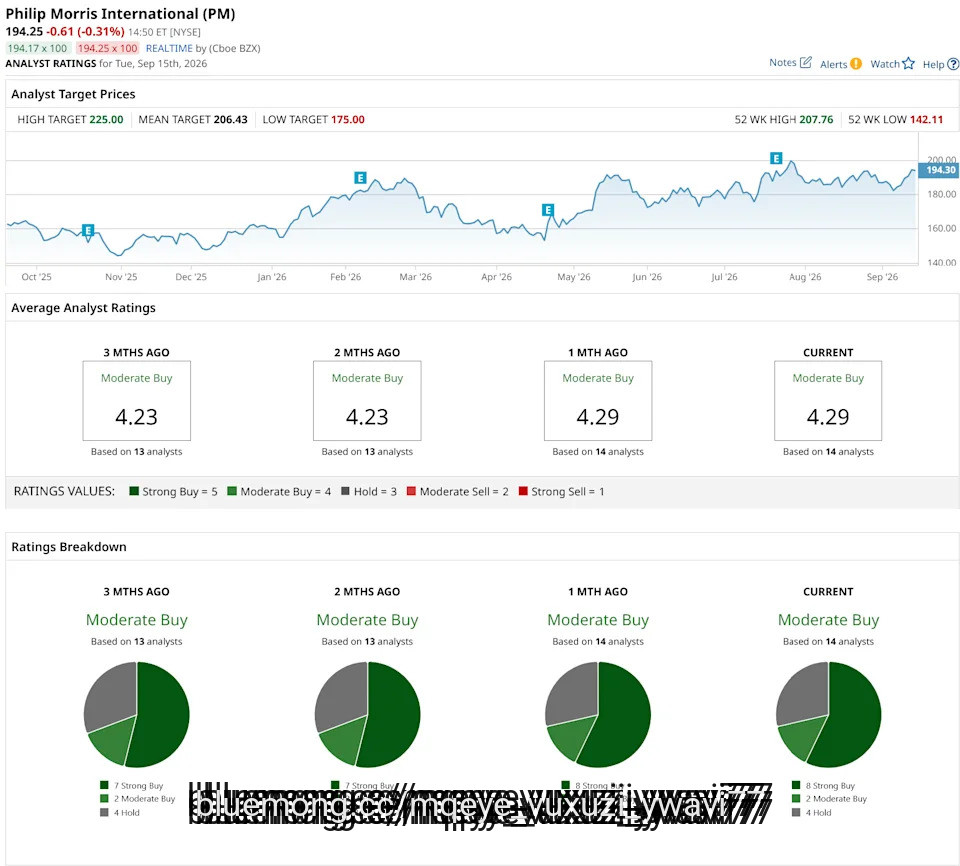
President Trump has nominated Nicole Saphier as Surgeon General, and she has revealed her investment portfolio, which includes tobacco stocks Philip Morris International (PM), Altria Group (MO), and British American Tobacco (BTI). If confirmed in the hearing scheduled for Sept. 16, Saphier would divest these holdings no later than 90 days after her confirmation, as part of an ethics agreement. This clearly avoids conflicts of interest with the role's public health mandate.
Meanwhile, the tobacco market is transforming, with smoke-free products gaining prominence. Bank of America's four‑week scanner data through May 30 showed that most U.S. tobacco categories continued to lose volume, while oral nicotine products remained the sector's strongest growth area.
Goldman Sachs Expects Fed Chair Kevin Warsh to Raise Rates This Week — But Not Because of Oil Prices.
Billionaire Charlie Munger, Who Died at 99, Skipped Insurance on His Mansion Since He Could Just Write a Check to Rebuild — 'All Intelligent People Do It My Way'
The EV Bubble Has Burst. How to Play Rivian Stock Now.
#philip
Meanwhile, the tobacco market is transforming, with smoke-free products gaining prominence. Bank of America's four‑week scanner data through May 30 showed that most U.S. tobacco categories continued to lose volume, while oral nicotine products remained the sector's strongest growth area.
Goldman Sachs Expects Fed Chair Kevin Warsh to Raise Rates This Week — But Not Because of Oil Prices.
Billionaire Charlie Munger, Who Died at 99, Skipped Insurance on His Mansion Since He Could Just Write a Check to Rebuild — 'All Intelligent People Do It My Way'
The EV Bubble Has Burst. How to Play Rivian Stock Now.
#philip



1 hr. ago
Coca-Cola announced plans Tuesday to invest $10 billion in U.S. infrastructure between 2026 and 2030, covering new and expanded production, distribution and office facilities across the country.
That $10 billion commitment is calculated across the full Coca-Cola system — meaning it rolls in spending by bottling partners and is not limited to the parent company's own capital budget, according to Reuters. In July, the company forecast its own capital expenditure at approximately $2.2 billion for the fiscal year. Projects covered by the broader $10 billion commitment include previously announced work in Rancho Cucamonga, California; Colorado Springs, Colorado; Indianapolis, Indiana; Birmingham, Alabama; Coopersville, Michigan; St. Cloud, Minnesota; Orlando, Florida; and Webster, New York, the company said.
The announcement accompanied an independently commissioned study measuring the Coca-Cola system's 2025 economic contributions in the United States. The study found the system contributed $85 billion to U.S. gross domestic product — roughly $10 million in economic activity per hour — and supported nearly 1 million jobs, the company said. Rounding out the economic picture, the system directed roughly $37 billion toward American suppliers and channeled $177 million into community initiatives via The Coca-Cola Foundation and the Coca-Cola Scholars Foundation.
"This ****** sment reinforces what we see every day: the Coca-Cola system is deeply rooted in America and continues to deliver meaningful value for the people and communities we serve," John Murphy, president and chief financial officer of The Coca-Cola Company, said in a statement.
The company said its production network spans more than 70 facilities and hundreds of distribution centers across all 50 states, Washington, D.C., and Puerto Rico, with the system's economic contributions exceeding $1 billion in 25 states. The study was conducted by Steward Redqueen.
#billion #economic #across #study
That $10 billion commitment is calculated across the full Coca-Cola system — meaning it rolls in spending by bottling partners and is not limited to the parent company's own capital budget, according to Reuters. In July, the company forecast its own capital expenditure at approximately $2.2 billion for the fiscal year. Projects covered by the broader $10 billion commitment include previously announced work in Rancho Cucamonga, California; Colorado Springs, Colorado; Indianapolis, Indiana; Birmingham, Alabama; Coopersville, Michigan; St. Cloud, Minnesota; Orlando, Florida; and Webster, New York, the company said.
The announcement accompanied an independently commissioned study measuring the Coca-Cola system's 2025 economic contributions in the United States. The study found the system contributed $85 billion to U.S. gross domestic product — roughly $10 million in economic activity per hour — and supported nearly 1 million jobs, the company said. Rounding out the economic picture, the system directed roughly $37 billion toward American suppliers and channeled $177 million into community initiatives via The Coca-Cola Foundation and the Coca-Cola Scholars Foundation.
"This ****** sment reinforces what we see every day: the Coca-Cola system is deeply rooted in America and continues to deliver meaningful value for the people and communities we serve," John Murphy, president and chief financial officer of The Coca-Cola Company, said in a statement.
The company said its production network spans more than 70 facilities and hundreds of distribution centers across all 50 states, Washington, D.C., and Puerto Rico, with the system's economic contributions exceeding $1 billion in 25 states. The study was conducted by Steward Redqueen.
#billion #economic #across #study


1 hr. ago
NuScale Power Corporation (SMR) stands out as America's leading developer of small modular reactors (SMRs), building light-water nuclear systems designed to deliver reliable, carbon-free baseload power. Its core product, the NuScale Power Module, targets a wide range of applications, from traditional electricity generation to industrial decarbonization, AI data center power supply, and hydrogen production. Notably, NuScale remains the only SMR developer to secure Standard Design Approval from the U.S. Nuclear Regulatory Commission, a regulatory milestone that continues to anchor its competitive positioning in the emerging advanced nuclear industry.
NuScale's stock has been anything but stable. Over the past 52 weeks, shares have traded across an enormous range, from a low of $7.21 to a high of $57.42, before settling closer to $10.81. That volatility stems from a mix of factors: heavy retail investor interest, elevated short interest fueling sharp swings in both directions, and macroeconomic shifts in interest rates that disproportionately affect capital-intensive, pre-revenue growth companies. Compared to the Russell 2000, a benchmark of diversified, largely profitable small-cap stocks, NuScale carries a significantly higher beta and downside risk, reflecting its speculative, early-stage commercialization profile.
Goldman Sachs Expects Fed Chair Kevin Warsh to Raise Rates This Week — But Not Because of Oil Prices.
Crude Prices Soar as Global Oil Supplies Continue to Tighten
Middle East Supply Constraints Lift Crude Oil Prices
#nuclear #crude
NuScale's stock has been anything but stable. Over the past 52 weeks, shares have traded across an enormous range, from a low of $7.21 to a high of $57.42, before settling closer to $10.81. That volatility stems from a mix of factors: heavy retail investor interest, elevated short interest fueling sharp swings in both directions, and macroeconomic shifts in interest rates that disproportionately affect capital-intensive, pre-revenue growth companies. Compared to the Russell 2000, a benchmark of diversified, largely profitable small-cap stocks, NuScale carries a significantly higher beta and downside risk, reflecting its speculative, early-stage commercialization profile.
Goldman Sachs Expects Fed Chair Kevin Warsh to Raise Rates This Week — But Not Because of Oil Prices.
Crude Prices Soar as Global Oil Supplies Continue to Tighten
Middle East Supply Constraints Lift Crude Oil Prices
#nuclear #crude




2 hours ago
On September 9, American Eagle Outfitters Inc. (NYSE:AEO) revealed results for its fiscal 2026 second quarter. The company achieved an 8% year-over-year topline growth with net revenue figures of $1.38 billion. The second quarter operating profit jumped up to $211 million compared to $103 million during the same period last year. As a result, diluted earnings per share for the quarter stood at $0.79 in comparison with $0.45 for Q2 FY25. This led to a $21 million distribution to shareholders with a dividend payout of $0.125 per share.
Africa Studio/Shutterstock.com
A resilient performance during the second quarter was primarily driven by robust momentum within the Aerie sub-brand and OFFLINE collection. There was a 6% year-over-year growth in company-wide comparable sales, whereas the Aerie's comparable sales picked up by 19%. Total gross profit for the quarter reached $672 million, which shows a 34% increase against $500 million for Q2 FY25. This pushed Q2 gross margins to 48.7%, a jump of 980 basis points relative to the previous year's quarter, despite 330 basis points deleveraging across the merchandise margins. Compared to an 8% operating margin in Q2 FY25, the company posted 15.3% margin in the recent period.
Even with a slight dip in comparable sales, the American Eagle brand also exhibited some encouraging signs. It posted sequential gains from the previous quarter, which marks the fourth consecutive quarter of expansion across menswear.
Results for the reported period were bolstered by $196 million in International Emergency Economic Powers Act (IEEPA) tariff refunds, which also included interest payments. This resulted in an additional $35 million in incentive compensation set aside by the company, which affected both gross profit and SG&A. After taking these additional expenses into consideration, the overall operating income gains related to tariff refunds amounted to $161 million.
#comparable
Africa Studio/Shutterstock.com
A resilient performance during the second quarter was primarily driven by robust momentum within the Aerie sub-brand and OFFLINE collection. There was a 6% year-over-year growth in company-wide comparable sales, whereas the Aerie's comparable sales picked up by 19%. Total gross profit for the quarter reached $672 million, which shows a 34% increase against $500 million for Q2 FY25. This pushed Q2 gross margins to 48.7%, a jump of 980 basis points relative to the previous year's quarter, despite 330 basis points deleveraging across the merchandise margins. Compared to an 8% operating margin in Q2 FY25, the company posted 15.3% margin in the recent period.
Even with a slight dip in comparable sales, the American Eagle brand also exhibited some encouraging signs. It posted sequential gains from the previous quarter, which marks the fourth consecutive quarter of expansion across menswear.
Results for the reported period were bolstered by $196 million in International Emergency Economic Powers Act (IEEPA) tariff refunds, which also included interest payments. This resulted in an additional $35 million in incentive compensation set aside by the company, which affected both gross profit and SG&A. After taking these additional expenses into consideration, the overall operating income gains related to tariff refunds amounted to $161 million.
#comparable


2 hours ago
ARK Invest sold over 142,000 CRCL shares Monday across ARKK and ARKW, pushing Circle Internet down 8% despite a 25% monthly gain.
COIN and BMNR each slid 5% as the Senate's Clarity Act vote threatens to open stablecoin markets to better-funded bank competitors.
Just released. Our ******* ysts combed the entire stock market and named the ten best stocks to buy right now, and Circle Internet Group didn't make the cut. Enter your email to see the names that beat CRCL. The report is free. Enter your email and see if any of your stocks made the cut.
Circle Internet Group (NYSE:CRCL) stock is falling on Tuesday after ARK Invest trimmed its position ahead of a U.S. Senate procedural vote on the Digital ******* et Market Clarity Act. Circle Internet stock is down 8% to $89.56 in midday trading. The move stands out among crypto-linked equities because the same manager cut several crypto positions but concentrated the sale in Circle Internet.
Coinbase Global (NASDAQ:COIN) shares are down 5% to $181.06. Also lower, Bitmine Immersion Technologies (NYSEAMERICAN:BMNR) stock is sliding 5% to $24.38. Meanwhile, the SPDR S&P 500 ETF Trust (NYSEARCA:SPY) is down 0.5% to $757.09, so the selling is concentrated in crypto-linked names.
#crcl #coin
COIN and BMNR each slid 5% as the Senate's Clarity Act vote threatens to open stablecoin markets to better-funded bank competitors.
Just released. Our ******* ysts combed the entire stock market and named the ten best stocks to buy right now, and Circle Internet Group didn't make the cut. Enter your email to see the names that beat CRCL. The report is free. Enter your email and see if any of your stocks made the cut.
Circle Internet Group (NYSE:CRCL) stock is falling on Tuesday after ARK Invest trimmed its position ahead of a U.S. Senate procedural vote on the Digital ******* et Market Clarity Act. Circle Internet stock is down 8% to $89.56 in midday trading. The move stands out among crypto-linked equities because the same manager cut several crypto positions but concentrated the sale in Circle Internet.
Coinbase Global (NASDAQ:COIN) shares are down 5% to $181.06. Also lower, Bitmine Immersion Technologies (NYSEAMERICAN:BMNR) stock is sliding 5% to $24.38. Meanwhile, the SPDR S&P 500 ETF Trust (NYSEARCA:SPY) is down 0.5% to $757.09, so the selling is concentrated in crypto-linked names.
#crcl #coin



3 hours ago
Image source: The Motley Fool.
Monday, Sept. 14, 2026 at 4:30 p.m. ET
Chief Executive Officer and Chief Technology Officer - Ryan Melsert
Chief Financial Officer - Alex Flores
Tiffiany Moehring: American Battery Technology Company. I would like to welcome everyone to our fiscal full year 2026 earnings call. On behalf of the entire team at American Battery Technology Company, I would like to thank everyone for taking the time to join the call today. Following this presentation, a recording of this call, along with our press release, will be available on our website. This presentation includes forward-looking statements within the meaning of the safe harbor's provision of the Private Securities Litigation Reform Act of 1995. These statements are subject to risk and uncertainties that can cause actual results to differ from those anticipated.
#chief #technology
Monday, Sept. 14, 2026 at 4:30 p.m. ET
Chief Executive Officer and Chief Technology Officer - Ryan Melsert
Chief Financial Officer - Alex Flores
Tiffiany Moehring: American Battery Technology Company. I would like to welcome everyone to our fiscal full year 2026 earnings call. On behalf of the entire team at American Battery Technology Company, I would like to thank everyone for taking the time to join the call today. Following this presentation, a recording of this call, along with our press release, will be available on our website. This presentation includes forward-looking statements within the meaning of the safe harbor's provision of the Private Securities Litigation Reform Act of 1995. These statements are subject to risk and uncertainties that can cause actual results to differ from those anticipated.
#chief #technology


3 hours ago
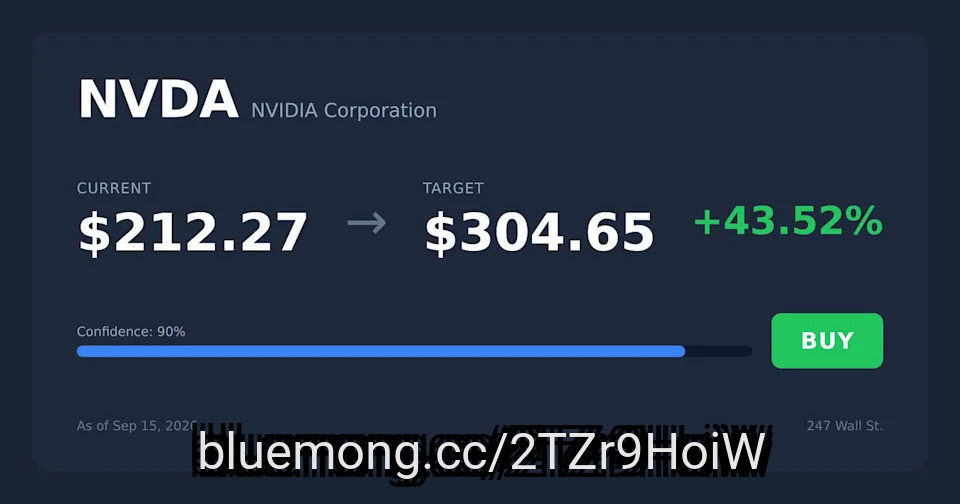
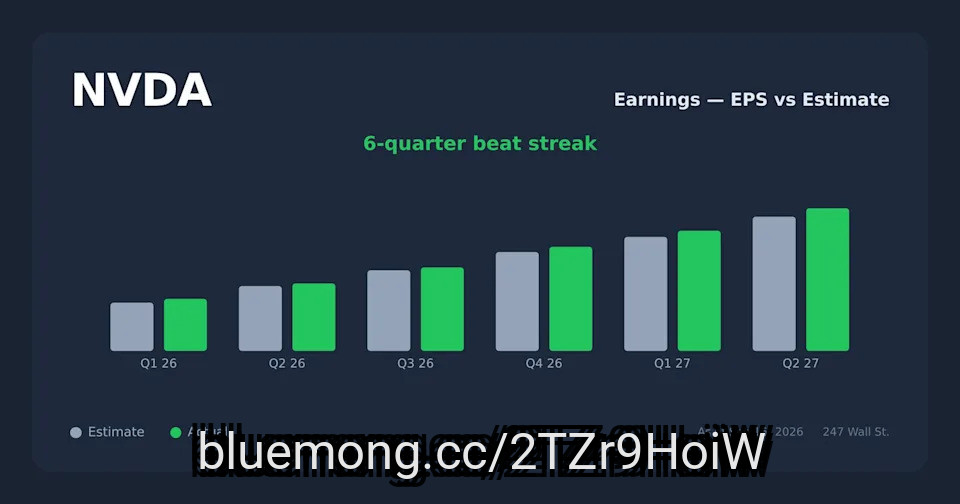
NVDA's $5 trillion market cap matches every Forbes 400 billionaire combined but equals just one-tenth of private business owners' $50 trillion collective wealth.
Jensen Huang guided Q3 revenue to $108 billion and projects 70% fiscal 2028 growth, calling the outlook supply-constrained against a $2 trillion cloud backlog.
Economist Owen Zidar estimates 3 million private business owners hold $50 trillion, a figure that dwarfs the $15 trillion held by all 3,795 global billionaires combined.
Read More: Avoid these 13 retirement mistakes before they derail your future (sponsor)
On Marketplace Morning Report, economist Owen Zidar delivered a number that reframes how investors should think about American wealth. Asked how much the country's hidden business-owner class actually holds, he answered: "We estimate that there are around 3 million everywhere millionaires who are business owners outside of tech and finance who have at least $5 million" and "Collectively it's around $50 trillion, which is enormous. The Forbes 400 only has about a tenth of that."
#forbes #zidar
Jensen Huang guided Q3 revenue to $108 billion and projects 70% fiscal 2028 growth, calling the outlook supply-constrained against a $2 trillion cloud backlog.
Economist Owen Zidar estimates 3 million private business owners hold $50 trillion, a figure that dwarfs the $15 trillion held by all 3,795 global billionaires combined.
Read More: Avoid these 13 retirement mistakes before they derail your future (sponsor)
On Marketplace Morning Report, economist Owen Zidar delivered a number that reframes how investors should think about American wealth. Asked how much the country's hidden business-owner class actually holds, he answered: "We estimate that there are around 3 million everywhere millionaires who are business owners outside of tech and finance who have at least $5 million" and "Collectively it's around $50 trillion, which is enormous. The Forbes 400 only has about a tenth of that."
#forbes #zidar

5 hours ago
Bank of America Corporation (NYSE:BAC) expects third-quarter investment banking fees to fall by at least 10% year over year, which highlights a broader normalization across capital markets after an unusually strong first half of 2026. BofA expects investment banking fees of roughly $1.6 billion to $1.8 billion in the third quarter, compared with $2 billion a year earlier. CEO Brian Moynihan said the broader investment banking market is also down around 10%, suggesting that the softer quarter reflects a cooling in industry activity rather than a company-specific breakdown.
The comparison with the second quarter illustrates how sharp the normalization is. BofA's investment banking fees had risen 50% year over year to $2.1 billion in Q2, while sales and trading revenue reached a record $7.1 billion. The current outlook therefore represents a pullback from elevated levels rather than a reversal of the broader recovery in dealmaking. Global M&A activity remained substantial in the first half of 2026, with more than $3 trillion of announced transactions, providing evidence that corporate deal appetite has remained relatively healthy even as quarterly activity fluctuates.
Pixabay/Public Domain
From a longer-term perspective, the normalization does not necessarily undermine Bank of America Corporation (NYSE:BAC)'s capital-markets franchise. Investment banking revenues remain well above the depressed levels seen during the earlier downturn in deal activity, while the bank continues to have a substantial pipeline of potential transactions. Moynihan's comments that the pipeline remains strong suggest that some of the current weakness could reflect the timing of transactions rather than a fundamental loss of corporate demand for M&A, financing or advisory services.
BofA also has a diversified earnings base that makes it less dependent on any single capital-markets cycle. Its second-quarter net interest income increased 9% to $16 billion, while average loans and leases grew 8%. That provides a more stable source of revenue as investment banking normalizes. In this context, the Q3 decline can be viewed as a shift away from exceptionally strong capital-markets contributions rather than evidence that the bank's broader earnings trajectory has deteriorated.
#billion #year #rather
The comparison with the second quarter illustrates how sharp the normalization is. BofA's investment banking fees had risen 50% year over year to $2.1 billion in Q2, while sales and trading revenue reached a record $7.1 billion. The current outlook therefore represents a pullback from elevated levels rather than a reversal of the broader recovery in dealmaking. Global M&A activity remained substantial in the first half of 2026, with more than $3 trillion of announced transactions, providing evidence that corporate deal appetite has remained relatively healthy even as quarterly activity fluctuates.
Pixabay/Public Domain
From a longer-term perspective, the normalization does not necessarily undermine Bank of America Corporation (NYSE:BAC)'s capital-markets franchise. Investment banking revenues remain well above the depressed levels seen during the earlier downturn in deal activity, while the bank continues to have a substantial pipeline of potential transactions. Moynihan's comments that the pipeline remains strong suggest that some of the current weakness could reflect the timing of transactions rather than a fundamental loss of corporate demand for M&A, financing or advisory services.
BofA also has a diversified earnings base that makes it less dependent on any single capital-markets cycle. Its second-quarter net interest income increased 9% to $16 billion, while average loans and leases grew 8%. That provides a more stable source of revenue as investment banking normalizes. In this context, the Q3 decline can be viewed as a shift away from exceptionally strong capital-markets contributions rather than evidence that the bank's broader earnings trajectory has deteriorated.
#billion #year #rather


5 hours ago
Choosing between a clean energy innovator and a traditional oil giant reflects a core tension in today's market. Investors must decide if Bloom Energy (NYSE:BE) or Diamondback Energy (NASDAQ:FANG) is the better buy.
Bloom Energy manufactures solid oxide fuel cells that provide reliable onsite power, targeting the surging demand from artificial intelligence infrastructure. Diamondback Energy focuses on extracting oil and gas from the Permian Basin, prioritizing operational efficiency and shareholder returns. While both operate in the energy **** e, their business models, risk profiles, and valuation metrics differ significantly for 2026 investors.
Bloom Energy serves as a prominent player among renewable energy stocks, focusing on solid oxide technology for onsite electricity and hydrogen production. The company targets large-load customers in the data center, semiconductor, and industrial sectors where power reliability is critical. Key partnerships include an agreement with American Electric Power (NASDAQ:AEP) to provide up to one gigawatt of fuel cells and a financing framework worth nearly $5.0 billion with Brookfield (NYSE:BN).
In FY 2025, Bloom Energy reported revenue of approximately $2.0 billion, which represents a growth rate of roughly 37.3% compared to the prior year. Despite this robust top-line performance, the company reported a net loss of nearly $88.4 million for the same period. This loss widened from a net loss of approximately $29.2 million in FY 2024, although the net margin of negative 4.4% in FY 2025 was a significant improvement over the negative 22.7% margin seen in FY 2023.
As of its December 2025 balance sheet, Bloom Energy holds a debt-to-equity ratio of 3.9x. This ratio measures total debt against shareholder equity, indicating the company relies moderately on borrowed funds to fuel its expansion. The current ratio, which measures a company's ability to cover short-term debts with its short-term **** ets, stands at a strong 6.0x. For FY 2025, free cash flow reached close to $57.2 million, which is the cash remaining after paying for operating costs and equipment investments.
#bloom #million
Bloom Energy manufactures solid oxide fuel cells that provide reliable onsite power, targeting the surging demand from artificial intelligence infrastructure. Diamondback Energy focuses on extracting oil and gas from the Permian Basin, prioritizing operational efficiency and shareholder returns. While both operate in the energy **** e, their business models, risk profiles, and valuation metrics differ significantly for 2026 investors.
Bloom Energy serves as a prominent player among renewable energy stocks, focusing on solid oxide technology for onsite electricity and hydrogen production. The company targets large-load customers in the data center, semiconductor, and industrial sectors where power reliability is critical. Key partnerships include an agreement with American Electric Power (NASDAQ:AEP) to provide up to one gigawatt of fuel cells and a financing framework worth nearly $5.0 billion with Brookfield (NYSE:BN).
In FY 2025, Bloom Energy reported revenue of approximately $2.0 billion, which represents a growth rate of roughly 37.3% compared to the prior year. Despite this robust top-line performance, the company reported a net loss of nearly $88.4 million for the same period. This loss widened from a net loss of approximately $29.2 million in FY 2024, although the net margin of negative 4.4% in FY 2025 was a significant improvement over the negative 22.7% margin seen in FY 2023.
As of its December 2025 balance sheet, Bloom Energy holds a debt-to-equity ratio of 3.9x. This ratio measures total debt against shareholder equity, indicating the company relies moderately on borrowed funds to fuel its expansion. The current ratio, which measures a company's ability to cover short-term debts with its short-term **** ets, stands at a strong 6.0x. For FY 2025, free cash flow reached close to $57.2 million, which is the cash remaining after paying for operating costs and equipment investments.
#bloom #million


5 hours ago
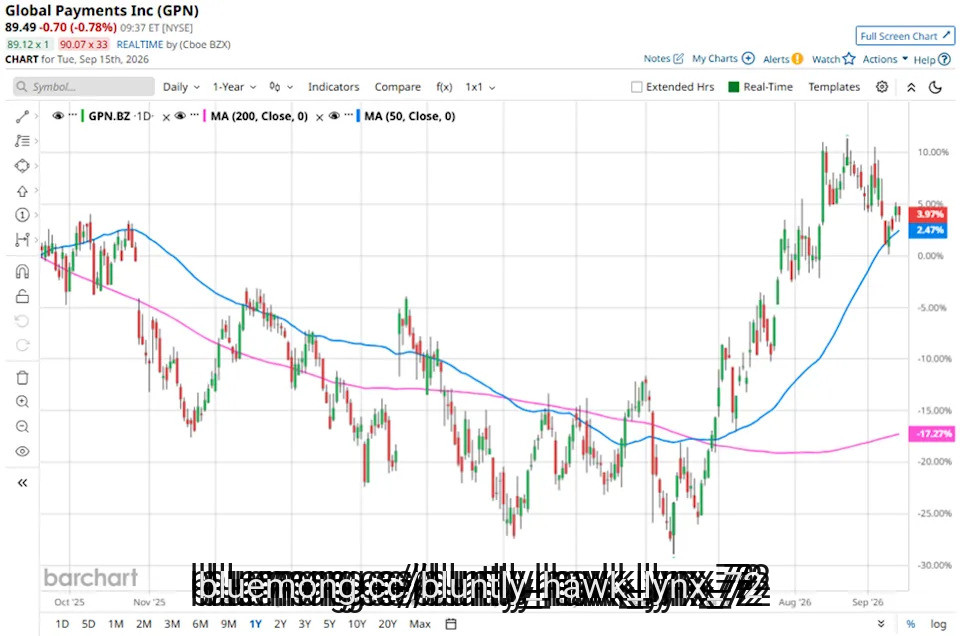
With a market cap of $23.9 billion, Global Payments Inc. (GPN) is a leading provider of payment technology and software solutions worldwide. The company operates primarily through its Merchant Solutions and Issuer Solutions segments, offering businesses and financial institutions secure, seamless, and innovative payment processing and software services.
Companies valued over $10 billion are generally described as "large-cap" stocks, and Global Payments fits right into that category. With a global presence across the Americas, Europe, and Asia-Pacific, Global Payments continues to expand through strategic acquisitions, joint ventures, and advanced financial technology solutions.
Goldman Sachs Expects Fed Chair Kevin Warsh to Raise Rates This Week — But Not Because of Oil Prices.
Morgan Stanley Doubles Down on Apple Stock as New Offerings Become 'More Exciting'
The EV Bubble Has Burst. How to Play Rivian Stock Now.
#payments #billion #payment #merchant
Companies valued over $10 billion are generally described as "large-cap" stocks, and Global Payments fits right into that category. With a global presence across the Americas, Europe, and Asia-Pacific, Global Payments continues to expand through strategic acquisitions, joint ventures, and advanced financial technology solutions.
Goldman Sachs Expects Fed Chair Kevin Warsh to Raise Rates This Week — But Not Because of Oil Prices.
Morgan Stanley Doubles Down on Apple Stock as New Offerings Become 'More Exciting'
The EV Bubble Has Burst. How to Play Rivian Stock Now.
#payments #billion #payment #merchant

5 hours ago
Broyhill **** et Management, a Charlotte-based firm, issued its second-quarter 2026 investor letter, which is available for download here. The Broyhill Equity Composite gained 8.8% in Q2, trailing the MSCI All Country World Index's 15.1% and the MSCI ACWI Value Index's 10.8%. For the first half, the Composite returned 2.3%, versus 11.5% for the Index. The letter highlights that a significant portion of the shortfall occurred in April due to market dynamics and geopolitical events, with tech, particularly semiconductors, driving recent gains. Broyhill notes its lack of direct semiconductor exposure but acknowledges potential interest in the sector if opportunities arise, maintaining its investment philosophy focused on capital protection in fragile market conditions. Also, check the fund's top five holdings to see its best picks in 2026.
In its second-quarter 2026 investor letter, Broyhill **** et Management highlighted Rentokil Initial plc (NYSE:RTO). Rentokil Initial plc (NYSE:RTO) is a route-based service provider that offers a range of pest control services. On September 14, 2026, Rentokil Initial plc (NYSE:RTO) closed at $22.55 per share. Over the past month, Rentokil Initial plc (NYSE:RTO) declined 5.34%, but its shares are down 10.61% over the past year. Rentokil Initial plc (NYSE:RTO) has a market capitalization of $11.2 billion, and its stock has traded within a 52-week range of $22.24 to $34.67.
Broyhill **** et Management stated the following regarding Rentokil Initial plc (NYSE:RTO) in its Q2 2026 investor letter:
"Rentokil Initial plc (NYSE:RTO) declined 9%. North American pest organic growth of 2.8% was entirely price, and customer retention remains near 80%. Our thesis is that the significant valuation discount to peer Rollins (almost half at the end of the second quarter) narrows as the Terminix integration is delivered."
Rentokil Initial plc (NYSE:RTO) is not on our list of the 40 Most Popular Stocks Among Hedge Funds. According to our database, 15 hedge fund portfolios held Rentokil Initial plc (NYSE:RTO) at the end of the second quarter, compared to 19 in the previous quarter. While we acknowledge the potential of Rentokil Initial plc (NYSE:RTO) as an investment, we believe certain AI stocks offer greater upside potential and carry less downside risk. If you're looking for an extremely undervalued AI stock that also stands to benefit significantly from Trump-era tariffs and the onshoring trend, see our free report on the best short-term AI stock.
#quarter #letter #investor
In its second-quarter 2026 investor letter, Broyhill **** et Management highlighted Rentokil Initial plc (NYSE:RTO). Rentokil Initial plc (NYSE:RTO) is a route-based service provider that offers a range of pest control services. On September 14, 2026, Rentokil Initial plc (NYSE:RTO) closed at $22.55 per share. Over the past month, Rentokil Initial plc (NYSE:RTO) declined 5.34%, but its shares are down 10.61% over the past year. Rentokil Initial plc (NYSE:RTO) has a market capitalization of $11.2 billion, and its stock has traded within a 52-week range of $22.24 to $34.67.
Broyhill **** et Management stated the following regarding Rentokil Initial plc (NYSE:RTO) in its Q2 2026 investor letter:
"Rentokil Initial plc (NYSE:RTO) declined 9%. North American pest organic growth of 2.8% was entirely price, and customer retention remains near 80%. Our thesis is that the significant valuation discount to peer Rollins (almost half at the end of the second quarter) narrows as the Terminix integration is delivered."
Rentokil Initial plc (NYSE:RTO) is not on our list of the 40 Most Popular Stocks Among Hedge Funds. According to our database, 15 hedge fund portfolios held Rentokil Initial plc (NYSE:RTO) at the end of the second quarter, compared to 19 in the previous quarter. While we acknowledge the potential of Rentokil Initial plc (NYSE:RTO) as an investment, we believe certain AI stocks offer greater upside potential and carry less downside risk. If you're looking for an extremely undervalued AI stock that also stands to benefit significantly from Trump-era tariffs and the onshoring trend, see our free report on the best short-term AI stock.
#quarter #letter #investor


5 hours ago
U.S. stocks fell Tuesday as the 10-year Treasury yield climbed above 5% for the first time since 2007, with investors awaiting a Federal Reserve interest-rate decision expected Wednesday.
The Dow Jones Industrial Average dropped roughly 449 points, or 0.86%. The S&P 500 fell about 0.34% and the Nasdaq Composite declined 0.48%. The 10-year Treasury yield rose as high as 5.041% before pulling back to trade around 5.011%.
Oil prices extended gains after Saudi Arabia shut a key pipeline that bypasses the Strait of Hormuz. Brent crude futures for November delivery rose about 1.6% to trade above $107 a barrel, while West Texas Intermediate futures climbed to above $103.
Fed funds futures point to roughly a 90% to 93% probability that the Fed raises its benchmark rate by a quarter percentage point on Wednesday, which would lift the upper bound of the target range to 4%, according to The Wall Street Journal. That probability was roughly 59% a week ago.
Christopher Hodge, chief economist for the U.S. at Natixis CIB Americas, said in a note that he expects Fed Chair Kevin Warsh to signal the rate move is not a commitment to further hikes. "We also think that he will emphasize that this decision was discrete and does not pre-commit the Fed to any actions in subsequent meetings, giving him and the Committee maximum flexibility to respond to shocks," Hodge said, according to CNBC.
#rate
The Dow Jones Industrial Average dropped roughly 449 points, or 0.86%. The S&P 500 fell about 0.34% and the Nasdaq Composite declined 0.48%. The 10-year Treasury yield rose as high as 5.041% before pulling back to trade around 5.011%.
Oil prices extended gains after Saudi Arabia shut a key pipeline that bypasses the Strait of Hormuz. Brent crude futures for November delivery rose about 1.6% to trade above $107 a barrel, while West Texas Intermediate futures climbed to above $103.
Fed funds futures point to roughly a 90% to 93% probability that the Fed raises its benchmark rate by a quarter percentage point on Wednesday, which would lift the upper bound of the target range to 4%, according to The Wall Street Journal. That probability was roughly 59% a week ago.
Christopher Hodge, chief economist for the U.S. at Natixis CIB Americas, said in a note that he expects Fed Chair Kevin Warsh to signal the rate move is not a commitment to further hikes. "We also think that he will emphasize that this decision was discrete and does not pre-commit the Fed to any actions in subsequent meetings, giving him and the Committee maximum flexibility to respond to shocks," Hodge said, according to CNBC.
#rate


5 hours ago
Colgate-Palmolive Company (NYSE:CL) is reportedly exploring the sale of several mass-market personal care brands, including Softsoap, Irish Spring and Speed Stick, in a portfolio reshaping effort that could generate more than $1 billion. The company is working with Goldman Sachs on the potential divestiture. Personal care accounted for roughly 17% of Colgate-Palmolive's 2025 net sales, or about $3.5 billion, while oral care remains the company's largest business.
The move comes as Colgate faces pressure in its North American business. Although the company recently reported a 4.9% increase in net sales, organic sales in North America declined 3%, highlighting competitive pressure in a mature market. The strategy is also consistent with a broader consumer-goods shift toward simplifying portfolios and concentrating capital on higher-growth categories. Unilever, Nestlé, and other major consumer companies have similarly been selling slower-growing or non-core businesses.
The biggest positive is that Colgate-Palmolive Company (NYSE:CL) could become a more focused and potentially higher-quality business. Selling brands that no longer fit its highest-priority growth areas would allow management to concentrate capital, marketing spending, and management attention on oral care, pet nutrition, and other businesses where Colgate has stronger competitive advantages. The company's decision would therefore be less about abandoning personal care altogether and more about improving the quality of the remaining portfolio.
A sale could also unlock meaningful shareholder value. If the divestitures generate more than $1 billion, Colgate would have additional capital that could be used for debt reduction, share repurchases, acquisitions, or investment behind its strongest brands. In a mature consumer-staples company, disciplined capital allocation can have an outsized impact on earnings growth and shareholder returns. There is also evidence that portfolio simplification is becoming increasingly attractive across the consumer-goods industry. The Wall Street Journal has highlighted how companies such as Unilever and Nestlé are shedding businesses that add complexity without providing sufficient growth. The underlying argument is that the benefits of owning a very broad portfolio have diminished as consumer preferences become more fragmented and smaller brands become better at responding to trends.
Most importantly, the divestiture could improve Colgate-Palmolive Company (NYSE:CL)'s strategic focus at a time when North American competition is challenging. Rather than allocating resources to defend slower-growing personal-care brands, management could direct investment toward categories and geographies with better long-term growth prospects. That could ultimately support margins and organic growth even if the immediate revenue base becomes smaller.
#personal #NYSE #Portfolio
The move comes as Colgate faces pressure in its North American business. Although the company recently reported a 4.9% increase in net sales, organic sales in North America declined 3%, highlighting competitive pressure in a mature market. The strategy is also consistent with a broader consumer-goods shift toward simplifying portfolios and concentrating capital on higher-growth categories. Unilever, Nestlé, and other major consumer companies have similarly been selling slower-growing or non-core businesses.
The biggest positive is that Colgate-Palmolive Company (NYSE:CL) could become a more focused and potentially higher-quality business. Selling brands that no longer fit its highest-priority growth areas would allow management to concentrate capital, marketing spending, and management attention on oral care, pet nutrition, and other businesses where Colgate has stronger competitive advantages. The company's decision would therefore be less about abandoning personal care altogether and more about improving the quality of the remaining portfolio.
A sale could also unlock meaningful shareholder value. If the divestitures generate more than $1 billion, Colgate would have additional capital that could be used for debt reduction, share repurchases, acquisitions, or investment behind its strongest brands. In a mature consumer-staples company, disciplined capital allocation can have an outsized impact on earnings growth and shareholder returns. There is also evidence that portfolio simplification is becoming increasingly attractive across the consumer-goods industry. The Wall Street Journal has highlighted how companies such as Unilever and Nestlé are shedding businesses that add complexity without providing sufficient growth. The underlying argument is that the benefits of owning a very broad portfolio have diminished as consumer preferences become more fragmented and smaller brands become better at responding to trends.
Most importantly, the divestiture could improve Colgate-Palmolive Company (NYSE:CL)'s strategic focus at a time when North American competition is challenging. Rather than allocating resources to defend slower-growing personal-care brands, management could direct investment toward categories and geographies with better long-term growth prospects. That could ultimately support margins and organic growth even if the immediate revenue base becomes smaller.
#personal #NYSE #Portfolio


5 hours ago
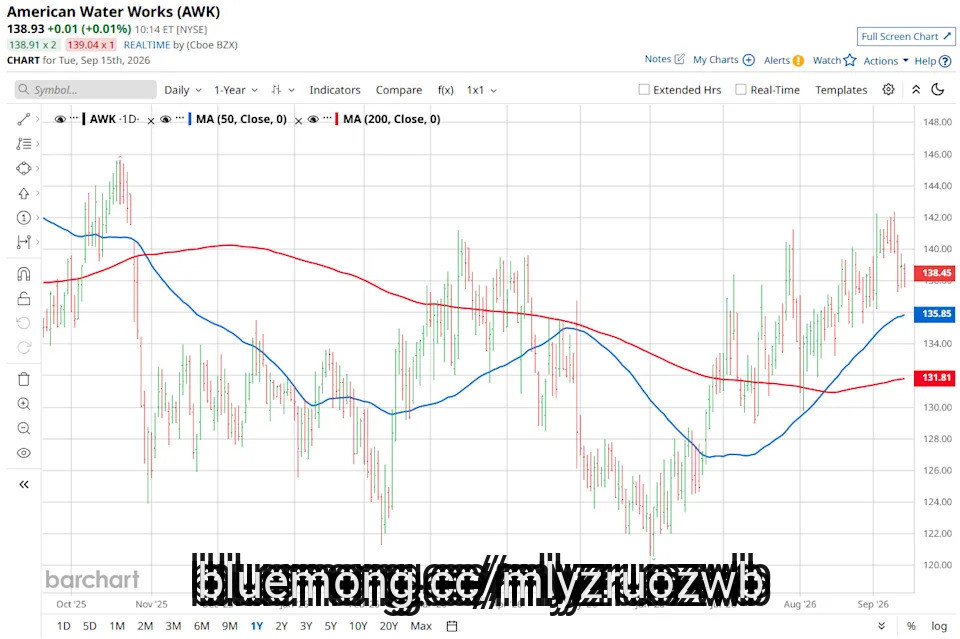
Camden, New Jersey-based American Water Works Company, Inc. (AWK) provides water and wastewater services in the United States and offers water and wastewater services on military installations, undertakes contracts with municipal customers to operate and manage water and wastewater facilities, and offers other related services. The company has a market cap of $27.6 billion and operates approximately 80 surface water treatment plants; 520 groundwater treatment plants; 170 wastewater treatment plants; and 55,000 miles of transmission, distribution, and collection.
Companies with a market cap of $10 billion or more are typically referred to as "large-cap stocks." AWK fits squarely into that category, with its market cap exceeding this threshold and reflecting its substantial size and influence in the regulated water utilities industry.
Goldman Sachs Expects Fed Chair Kevin Warsh to Raise Rates This Week — But Not Because of Oil Prices.
Morgan Stanley Doubles Down on Apple Stock as New Offerings Become 'More Exciting'
The EV Bubble Has Burst. How to Play Rivian Stock Now.
#wastewater #offers #billion
Companies with a market cap of $10 billion or more are typically referred to as "large-cap stocks." AWK fits squarely into that category, with its market cap exceeding this threshold and reflecting its substantial size and influence in the regulated water utilities industry.
Goldman Sachs Expects Fed Chair Kevin Warsh to Raise Rates This Week — But Not Because of Oil Prices.
Morgan Stanley Doubles Down on Apple Stock as New Offerings Become 'More Exciting'
The EV Bubble Has Burst. How to Play Rivian Stock Now.
#wastewater #offers #billion


5 hours ago
A 22-year-old man who dropped out of school in the eighth grade pleaded guilty on Sept. 8 to helping steal more than $245 million in cryptocurrency after teaming up with friends.
According to the ******* ociated Press, Malone Lam used proceeds from the theft to buy luxury cars, rent Miami mansions and spend millions at nightclubs. One night at a Los Angeles club, he reportedly spent $569,000.
Jeff Bezos backs a platform that lets anyone invest in rental homes for as little as $100 — 6 ways to build wealth like a landlord without actually being one
Dave Ramsey warns nearly 50% of Americans are making 1 big Social Security mistake. Here's what it is and 3 simple steps to fix it ASAP
The tax breaks in Trump's 'big beautiful bill' expire after 2028. Here are 4 moves to make before the window closes
#angeles
According to the ******* ociated Press, Malone Lam used proceeds from the theft to buy luxury cars, rent Miami mansions and spend millions at nightclubs. One night at a Los Angeles club, he reportedly spent $569,000.
Jeff Bezos backs a platform that lets anyone invest in rental homes for as little as $100 — 6 ways to build wealth like a landlord without actually being one
Dave Ramsey warns nearly 50% of Americans are making 1 big Social Security mistake. Here's what it is and 3 simple steps to fix it ASAP
The tax breaks in Trump's 'big beautiful bill' expire after 2028. Here are 4 moves to make before the window closes
#angeles


6 hours ago
Carter's unveiled a new brand identity and marketing campaign on Tuesday, as the children's clothing company works to attract a younger generation of parents and build on a recent business turnaround.
The rebrand centers on a new brand promise — "Let every child's light shine" — and a refreshed logo in which a shooting star replaces the apostrophe in the Carter's wordmark, the company said. A new 60-second film called "Watch Them Glow" will debut across connected television as the first major marketing expression of the new direction.
Chief Marketing Officer Sarah Crockett told CNBC that the company sees a significant shift in its core customer base. Gen Z is expected to account for a large share of new parents over the next several years, according to Carter's, and those parents tend to let children make their own clothing choices and turn to social media for guidance.
"We had an opportunity to really tap into the values that parents are bringing into the household," Crockett told CNBC.
The new identity will begin rolling out across Carter's channels in 2026, with additional retail, product, and packaging elements to follow in 2027, the company said. Carter's is also launching a creator program called Light Makers, featuring voices across North America, and expanding partnerships with organizations including Outward Bound and Boys & Girls Clubs of America.
#parents #Marketing #cnbc #America
The rebrand centers on a new brand promise — "Let every child's light shine" — and a refreshed logo in which a shooting star replaces the apostrophe in the Carter's wordmark, the company said. A new 60-second film called "Watch Them Glow" will debut across connected television as the first major marketing expression of the new direction.
Chief Marketing Officer Sarah Crockett told CNBC that the company sees a significant shift in its core customer base. Gen Z is expected to account for a large share of new parents over the next several years, according to Carter's, and those parents tend to let children make their own clothing choices and turn to social media for guidance.
"We had an opportunity to really tap into the values that parents are bringing into the household," Crockett told CNBC.
The new identity will begin rolling out across Carter's channels in 2026, with additional retail, product, and packaging elements to follow in 2027, the company said. Carter's is also launching a creator program called Light Makers, featuring voices across North America, and expanding partnerships with organizations including Outward Bound and Boys & Girls Clubs of America.
#parents #Marketing #cnbc #America


6 hours ago
Prosper Stars & Stripes, a long/short equity fund, recently released its second-quarter 2026 investor letter. The letter can be downloaded here. In Q2 2026, the portfolio delivered a strong net return of +30.1% compared to the Russell 2000 Index's +21.5% return and the HFRX Equity Hedge Index's +10.3% return. The long book drove performance, generating a 43.2% gross contribution, while average net exposure remained relatively modest at 47%. U.S. economic growth remained resilient despite inflation concerns, elevated energy prices, and geopolitical uncertainty. Markets rallied sharply after easing U.S.-Iran tensions pushed oil prices lower, supporting renewed risk appetite. Small-cap equities benefited significantly, with Information Technology, Industrials, and Health Care leading gains, while Energy declined as crude prices fell. Year to date, the Composite returned +23.7%, slightly ahead of the Russell 2000's +22.6% and well above the HFRI Equity Hedge Index's +9.7%. Additionally, you can review the Portfolio's top 5 holdings to see its best picks for 2026.
In its second-quarter 2026 investor letter, Prosper Stars & Stripes highlighted Universal Display Corporation (NASDAQ:OLED). Universal Display Corporation (NASDAQ:OLED) is an American technology company that develops and commercializes organic light-emitting diode (OLED) technologies and materials for use in display and solid-state lighting applications. On September 14, 2026, Universal Display Corporation (NASDAQ:OLED) closed at $76.62 per share. Over the past month, Universal Display Corporation (NASDAQ:OLED) declined 9.27%, and its shares lost 44.06% over the past 52 weeks. Universal Display Corporation (NASDAQ:OLED) has a market capitalization of $3.52 billion, and its stock traded within a 52-week range of $76.42 to $153.38.
Prosper Stars & Stripes stated the following regarding Universal Display Corporation (NASDAQ:OLED) in its Q2 2026 investor letter:
"This year's market rally has pressured short returns and narrowed the windows to successfully monetize shorts, as we would expect. Certain themes and short ideas do continue to resonate, however. One theme that has had success is the ongoing pressure caused by the investment boom in AI crowding out spending in other areas. We have shorted Universal Display Corporation (NASDAQ:OLED), Dolby Laboratories (DLB), and Logitech International (LOGI) on this theme. We believe cost pressures on technology components such as DRAM to result in higher prices for consumer electronics. This would have a significant impact on back-to-school and holiday spending, the key periods for these companies' end markets. We expect the forecasts that these companies are providing at this time of the year to prove optimistic, as tech cost inflation is unusual. Further, we believe the so-called K-shaped economy, where consumers have felt the pressure of rising costs of living, will continue to squeeze discretionary purchases like these. Rising prices make it nea
In its second-quarter 2026 investor letter, Prosper Stars & Stripes highlighted Universal Display Corporation (NASDAQ:OLED). Universal Display Corporation (NASDAQ:OLED) is an American technology company that develops and commercializes organic light-emitting diode (OLED) technologies and materials for use in display and solid-state lighting applications. On September 14, 2026, Universal Display Corporation (NASDAQ:OLED) closed at $76.62 per share. Over the past month, Universal Display Corporation (NASDAQ:OLED) declined 9.27%, and its shares lost 44.06% over the past 52 weeks. Universal Display Corporation (NASDAQ:OLED) has a market capitalization of $3.52 billion, and its stock traded within a 52-week range of $76.42 to $153.38.
Prosper Stars & Stripes stated the following regarding Universal Display Corporation (NASDAQ:OLED) in its Q2 2026 investor letter:
"This year's market rally has pressured short returns and narrowed the windows to successfully monetize shorts, as we would expect. Certain themes and short ideas do continue to resonate, however. One theme that has had success is the ongoing pressure caused by the investment boom in AI crowding out spending in other areas. We have shorted Universal Display Corporation (NASDAQ:OLED), Dolby Laboratories (DLB), and Logitech International (LOGI) on this theme. We believe cost pressures on technology components such as DRAM to result in higher prices for consumer electronics. This would have a significant impact on back-to-school and holiday spending, the key periods for these companies' end markets. We expect the forecasts that these companies are providing at this time of the year to prove optimistic, as tech cost inflation is unusual. Further, we believe the so-called K-shaped economy, where consumers have felt the pressure of rising costs of living, will continue to squeeze discretionary purchases like these. Rising prices make it nea


7 hours ago
NVDA's $5 trillion market cap matches every Forbes 400 billionaire combined but equals just one-tenth of private business owners' $50 trillion collective wealth.
Jensen Huang guided Q3 revenue to $108 billion and projects 70% fiscal 2028 growth, calling the outlook supply-constrained against a $2 trillion cloud backlog.
Economist Owen Zidar estimates 3 million private business owners hold $50 trillion, a figure that dwarfs the $15 trillion held by all 3,795 global billionaires combined.
Read More: Avoid these 13 retirement mistakes before they derail your future (sponsor)
On Marketplace Morning Report, economist Owen Zidar delivered a number that reframes how investors should think about American wealth. Asked how much the country's hidden business-owner class actually holds, he answered: "We estimate that there are around 3 million everywhere millionaires who are business owners outside of tech and finance who have at least $5 million" and "Collectively it's around $50 trillion, which is enormous. The Forbes 400 only has about a tenth of that."
#trillion #business #million #combined
Jensen Huang guided Q3 revenue to $108 billion and projects 70% fiscal 2028 growth, calling the outlook supply-constrained against a $2 trillion cloud backlog.
Economist Owen Zidar estimates 3 million private business owners hold $50 trillion, a figure that dwarfs the $15 trillion held by all 3,795 global billionaires combined.
Read More: Avoid these 13 retirement mistakes before they derail your future (sponsor)
On Marketplace Morning Report, economist Owen Zidar delivered a number that reframes how investors should think about American wealth. Asked how much the country's hidden business-owner class actually holds, he answered: "We estimate that there are around 3 million everywhere millionaires who are business owners outside of tech and finance who have at least $5 million" and "Collectively it's around $50 trillion, which is enormous. The Forbes 400 only has about a tenth of that."
#trillion #business #million #combined




8 hours ago
Wednesday’s Senate confirmation hearing wasn’t the first time much of the American public met Dr. Nicole Saphier and heard her perspective; President Donald Trump’s nominee for US surgeon general is a health and wellness influencer who has amassed hundreds of thousands of followers through her podcast and social media platforms.
In some ways, the surgeon general position – often referred to as the nation’s doctor – is the original health influencer, tasked with translating science into terms that are easy to understand and guiding the public on ways to improve their health.
“For a decade, I have specialized in translating complex, fast-evolving medical information on various media platforms into content that millions of Americans can understand and use, including during the uncertainty of the global pandemic,” Saphier, a radiologist and Fox News contributor, said in Wednesday’s hearing.
“I realized then how badly this country needs public health communication that is straightforward and grounded in the best evidence available,” she said. “My years of communicating directly with the public have prepared me to explain complex topics in a way that they can understand.”
But experts say that social media has changed how people receive health information, with increasingly blurred lines as to who is considered to have authority and expertise – and that bringing an influencer into the role of surgeon general presents both opportunities and challenges.
#public #saphier #hearing
In some ways, the surgeon general position – often referred to as the nation’s doctor – is the original health influencer, tasked with translating science into terms that are easy to understand and guiding the public on ways to improve their health.
“For a decade, I have specialized in translating complex, fast-evolving medical information on various media platforms into content that millions of Americans can understand and use, including during the uncertainty of the global pandemic,” Saphier, a radiologist and Fox News contributor, said in Wednesday’s hearing.
“I realized then how badly this country needs public health communication that is straightforward and grounded in the best evidence available,” she said. “My years of communicating directly with the public have prepared me to explain complex topics in a way that they can understand.”
But experts say that social media has changed how people receive health information, with increasingly blurred lines as to who is considered to have authority and expertise – and that bringing an influencer into the role of surgeon general presents both opportunities and challenges.
#public #saphier #hearing



8 hours ago
Broyhill **** et Management, a Charlotte-based firm, issued its second-quarter 2026 investor letter, which is available for download here. The Broyhill Equity Composite gained 8.8% in Q2, trailing the MSCI All Country World Index's 15.1% and the MSCI ACWI Value Index's 10.8%. For the first half, the Composite returned 2.3%, versus 11.5% for the Index. The letter highlights that a significant portion of the shortfall occurred in April due to market dynamics and geopolitical events, with tech, particularly semiconductors, driving recent gains. Broyhill notes its lack of direct semiconductor exposure but acknowledges potential interest in the sector if opportunities arise, maintaining its investment philosophy focused on capital protection in fragile market conditions. Also, check the fund's top five holdings to see its best picks in 2026.
In its second-quarter 2026 investor letter, Broyhill **** et Management highlighted Rentokil Initial plc (NYSE:RTO). Rentokil Initial plc (NYSE:RTO) is a route-based service provider that offers a range of pest control services. On September 14, 2026, Rentokil Initial plc (NYSE:RTO) closed at $22.55 per share. Over the past month, Rentokil Initial plc (NYSE:RTO) declined 5.34%, but its shares are down 10.61% over the past year. Rentokil Initial plc (NYSE:RTO) has a market capitalization of $11.2 billion, and its stock has traded within a 52-week range of $22.24 to $34.67.
Broyhill **** et Management stated the following regarding Rentokil Initial plc (NYSE:RTO) in its Q2 2026 investor letter:
"Rentokil Initial plc (NYSE:RTO) declined 9%. North American pest organic growth of 2.8% was entirely price, and customer retention remains near 80%. Our thesis is that the significant valuation discount to peer Rollins (almost half at the end of the second quarter) narrows as the Terminix integration is delivered."
Rentokil Initial plc (NYSE:RTO) is not on our list of the 40 Most Popular Stocks Among Hedge Funds. According to our database, 15 hedge fund portfolios held Rentokil Initial plc (NYSE:RTO) at the end of the second quarter, compared to 19 in the previous quarter. While we acknowledge the potential of Rentokil Initial plc (NYSE:RTO) as an investment, we believe certain AI stocks offer greater upside potential and carry less downside risk. If you're looking for an extremely undervalued AI stock that also stands to benefit significantly from Trump-era tariffs and the onshoring trend, see our free report on the best short-term AI stock.
#quarter
In its second-quarter 2026 investor letter, Broyhill **** et Management highlighted Rentokil Initial plc (NYSE:RTO). Rentokil Initial plc (NYSE:RTO) is a route-based service provider that offers a range of pest control services. On September 14, 2026, Rentokil Initial plc (NYSE:RTO) closed at $22.55 per share. Over the past month, Rentokil Initial plc (NYSE:RTO) declined 5.34%, but its shares are down 10.61% over the past year. Rentokil Initial plc (NYSE:RTO) has a market capitalization of $11.2 billion, and its stock has traded within a 52-week range of $22.24 to $34.67.
Broyhill **** et Management stated the following regarding Rentokil Initial plc (NYSE:RTO) in its Q2 2026 investor letter:
"Rentokil Initial plc (NYSE:RTO) declined 9%. North American pest organic growth of 2.8% was entirely price, and customer retention remains near 80%. Our thesis is that the significant valuation discount to peer Rollins (almost half at the end of the second quarter) narrows as the Terminix integration is delivered."
Rentokil Initial plc (NYSE:RTO) is not on our list of the 40 Most Popular Stocks Among Hedge Funds. According to our database, 15 hedge fund portfolios held Rentokil Initial plc (NYSE:RTO) at the end of the second quarter, compared to 19 in the previous quarter. While we acknowledge the potential of Rentokil Initial plc (NYSE:RTO) as an investment, we believe certain AI stocks offer greater upside potential and carry less downside risk. If you're looking for an extremely undervalued AI stock that also stands to benefit significantly from Trump-era tariffs and the onshoring trend, see our free report on the best short-term AI stock.
#quarter


8 hours ago
White House chief of staff Susie Wiles is "cancer free," she announced on X on Sept. 16, 2026. "Some personal news I'm grateful to share. After a medical appointment at the Mayo Clinic this week, my pathology results came back clear," she explained.
Wiles was diagnosed with early-stage breast cancer in March and told the New York Times that her prognosis was "strong." Wiles did not disclose at the time what treatment she would undergo, but said it would last several weeks — during which time she planned to continue working. Noting that one in eight American women develops breast cancer at some point in their lives, Wiles posted on X at the time: "Every day, these women continue to raise their families, go to work and serve their communities with strength and determination. I now join their ranks."
A breast cancer diagnosis is life-altering, but Wiles's comments highlighted the progress that's been made in recent years. Breast cancer is now detected at Stage 0 or 1 — before it has spread — in the majority of cases. Survival rates have risen dramatically, but "the treatments we use to treat early-stage breast cancer have become more tailored" and less disruptive to women's lives, Dr. Lynn Dengel, a University of Virginia surgical oncologist, told Yahoo in March.
"Because [Wiles] was taking care of her health [and getting screened], not only will her prognosis be better, but it will probably minimize what treatment she has to go through and will benefit her work-life and overall balance," Dengel said. She added that most of her patients are diagnosed early and can continue to work while undergoing breast cancer treatment, reducing the financial burden and overall disruption to their lives.
Wiles was diagnosed at age 68 — slightly older than the median age (62) when most women learn they have breast cancer. More than 380,000 American women are diagnosed with some form of breast cancer each year, according to the American Cancer Society (ACS).
Breast cancer remains the most common form of cancer among women in the U.S., except for skin cancers. And rates are rising. But there's good news: More women are surviving the disease. Treatments have also improved, becoming tolerable enough that many women still work, as Wiles intends to do. Here's what to know about the disease, why rates are rising and how women can reduce their risks.
#breast #diagnosed
Wiles was diagnosed with early-stage breast cancer in March and told the New York Times that her prognosis was "strong." Wiles did not disclose at the time what treatment she would undergo, but said it would last several weeks — during which time she planned to continue working. Noting that one in eight American women develops breast cancer at some point in their lives, Wiles posted on X at the time: "Every day, these women continue to raise their families, go to work and serve their communities with strength and determination. I now join their ranks."
A breast cancer diagnosis is life-altering, but Wiles's comments highlighted the progress that's been made in recent years. Breast cancer is now detected at Stage 0 or 1 — before it has spread — in the majority of cases. Survival rates have risen dramatically, but "the treatments we use to treat early-stage breast cancer have become more tailored" and less disruptive to women's lives, Dr. Lynn Dengel, a University of Virginia surgical oncologist, told Yahoo in March.
"Because [Wiles] was taking care of her health [and getting screened], not only will her prognosis be better, but it will probably minimize what treatment she has to go through and will benefit her work-life and overall balance," Dengel said. She added that most of her patients are diagnosed early and can continue to work while undergoing breast cancer treatment, reducing the financial burden and overall disruption to their lives.
Wiles was diagnosed at age 68 — slightly older than the median age (62) when most women learn they have breast cancer. More than 380,000 American women are diagnosed with some form of breast cancer each year, according to the American Cancer Society (ACS).
Breast cancer remains the most common form of cancer among women in the U.S., except for skin cancers. And rates are rising. But there's good news: More women are surviving the disease. Treatments have also improved, becoming tolerable enough that many women still work, as Wiles intends to do. Here's what to know about the disease, why rates are rising and how women can reduce their risks.
#breast #diagnosed




8 hours ago
The fate of Ed Sheeran's Loop Tour is suddenly uncertain after all of the British singer's remaining opening acts quit in solidarity with the rapper Macklemore, who was dropped from the remaining North American dates over pro-Palestinian comments.
Hours after Sheeran released a statement saying it was the promoter's decision to remove Macklemore from the tour and not his, the rest of his supporting acts — Irish singer Aaron Rowe, Danish pop band Lukas Graham and songwriter Finneas — as well as Sheeran's house band, Beoga, announced that they were pulling out in protest.
"Artists must not be silenced when they speak up for the oppressed," Finneas, the brother of Billie Eilish, wrote in a note posted to Instagram. "I have decided to withdraw from my upcoming tour dates with Ed Sheeran. I stand with Palestine and its people."
The Irish artists cited their country's history of oppression in their decisions to drop out.
"I don't take the decision lightly. Ed has been a friend to me and has changed my life, I could never thank him enough for this," Rowe wrote in his own Instagram post. "But as Irish people we know all too well about genocide, forced famine and violent occupation. I cannot stand by and allow billionaires to use their position of power to silence the rightful voices of those who speak up against Israeli genocide and who highlight the savage murder of children."
#irish #Instagram
Hours after Sheeran released a statement saying it was the promoter's decision to remove Macklemore from the tour and not his, the rest of his supporting acts — Irish singer Aaron Rowe, Danish pop band Lukas Graham and songwriter Finneas — as well as Sheeran's house band, Beoga, announced that they were pulling out in protest.
"Artists must not be silenced when they speak up for the oppressed," Finneas, the brother of Billie Eilish, wrote in a note posted to Instagram. "I have decided to withdraw from my upcoming tour dates with Ed Sheeran. I stand with Palestine and its people."
The Irish artists cited their country's history of oppression in their decisions to drop out.
"I don't take the decision lightly. Ed has been a friend to me and has changed my life, I could never thank him enough for this," Rowe wrote in his own Instagram post. "But as Irish people we know all too well about genocide, forced famine and violent occupation. I cannot stand by and allow billionaires to use their position of power to silence the rightful voices of those who speak up against Israeli genocide and who highlight the savage murder of children."
#irish #Instagram


8 hours ago
The Republican speaker of the House, Mike Johnson, announced on Wednesday that he would again cancel votes scheduled for Thursday, sending lawmakers home one day early ahead of the midterm election recess.
The latest change to the legislative schedule means House members will avoid voting on Republican Thomas Massie's resolution to impeach the defense secretary, Pete Hegseth, and comes amid a frenzied attempt to propose legislation on artificial intelligence.
It's the latest round of cancellations at the hands of Johnson, who had already cut the pre-election session short by two weeks. Democrats have reacted angrily, encouraging Johnson to keep lawmakers on Capitol Hill before the midterm recess beginning on Friday.
Related: More Republicans are turning on Iran war as midterms come into view
"I think it shows the cowardice of the Republican party. They are canceling votes to do business for the American people because they are afraid that that impeachment resolution of Pete Hegseth would pass on a bipartisan basis," the Democratic representative Pramila Jayapal told MediasTouch.
#votes #election
The latest change to the legislative schedule means House members will avoid voting on Republican Thomas Massie's resolution to impeach the defense secretary, Pete Hegseth, and comes amid a frenzied attempt to propose legislation on artificial intelligence.
It's the latest round of cancellations at the hands of Johnson, who had already cut the pre-election session short by two weeks. Democrats have reacted angrily, encouraging Johnson to keep lawmakers on Capitol Hill before the midterm recess beginning on Friday.
Related: More Republicans are turning on Iran war as midterms come into view
"I think it shows the cowardice of the Republican party. They are canceling votes to do business for the American people because they are afraid that that impeachment resolution of Pete Hegseth would pass on a bipartisan basis," the Democratic representative Pramila Jayapal told MediasTouch.
#votes #election


9 hours ago
Bank of America Corporation (NYSE:BAC) expects third-quarter investment banking fees to fall by at least 10% year over year, which highlights a broader normalization across capital markets after an unusually strong first half of 2026. BofA expects investment banking fees of roughly $1.6 billion to $1.8 billion in the third quarter, compared with $2 billion a year earlier. CEO Brian Moynihan said the broader investment banking market is also down around 10%, suggesting that the softer quarter reflects a cooling in industry activity rather than a company-specific breakdown.
The comparison with the second quarter illustrates how sharp the normalization is. BofA's investment banking fees had risen 50% year over year to $2.1 billion in Q2, while sales and trading revenue reached a record $7.1 billion. The current outlook therefore represents a pullback from elevated levels rather than a reversal of the broader recovery in dealmaking. Global M&A activity remained substantial in the first half of 2026, with more than $3 trillion of announced transactions, providing evidence that corporate deal appetite has remained relatively healthy even as quarterly activity fluctuates.
Pixabay/Public Domain
From a longer-term perspective, the normalization does not necessarily undermine Bank of America Corporation (NYSE:BAC)'s capital-markets franchise. Investment banking revenues remain well above the depressed levels seen during the earlier downturn in deal activity, while the bank continues to have a substantial pipeline of potential transactions. Moynihan's comments that the pipeline remains strong suggest that some of the current weakness could reflect the timing of transactions rather than a fundamental loss of corporate demand for M&A, financing or advisory services.
BofA also has a diversified earnings base that makes it less dependent on any single capital-markets cycle. Its second-quarter net interest income increased 9% to $16 billion, while average loans and leases grew 8%. That provides a more stable source of revenue as investment banking normalizes. In this context, the Q3 decline can be viewed as a shift away from exceptionally strong capital-markets contributions rather than evidence that the bank's broader earnings trajectory has deteriorated.
#investment #banking #year
The comparison with the second quarter illustrates how sharp the normalization is. BofA's investment banking fees had risen 50% year over year to $2.1 billion in Q2, while sales and trading revenue reached a record $7.1 billion. The current outlook therefore represents a pullback from elevated levels rather than a reversal of the broader recovery in dealmaking. Global M&A activity remained substantial in the first half of 2026, with more than $3 trillion of announced transactions, providing evidence that corporate deal appetite has remained relatively healthy even as quarterly activity fluctuates.
Pixabay/Public Domain
From a longer-term perspective, the normalization does not necessarily undermine Bank of America Corporation (NYSE:BAC)'s capital-markets franchise. Investment banking revenues remain well above the depressed levels seen during the earlier downturn in deal activity, while the bank continues to have a substantial pipeline of potential transactions. Moynihan's comments that the pipeline remains strong suggest that some of the current weakness could reflect the timing of transactions rather than a fundamental loss of corporate demand for M&A, financing or advisory services.
BofA also has a diversified earnings base that makes it less dependent on any single capital-markets cycle. Its second-quarter net interest income increased 9% to $16 billion, while average loans and leases grew 8%. That provides a more stable source of revenue as investment banking normalizes. In this context, the Q3 decline can be viewed as a shift away from exceptionally strong capital-markets contributions rather than evidence that the bank's broader earnings trajectory has deteriorated.
#investment #banking #year
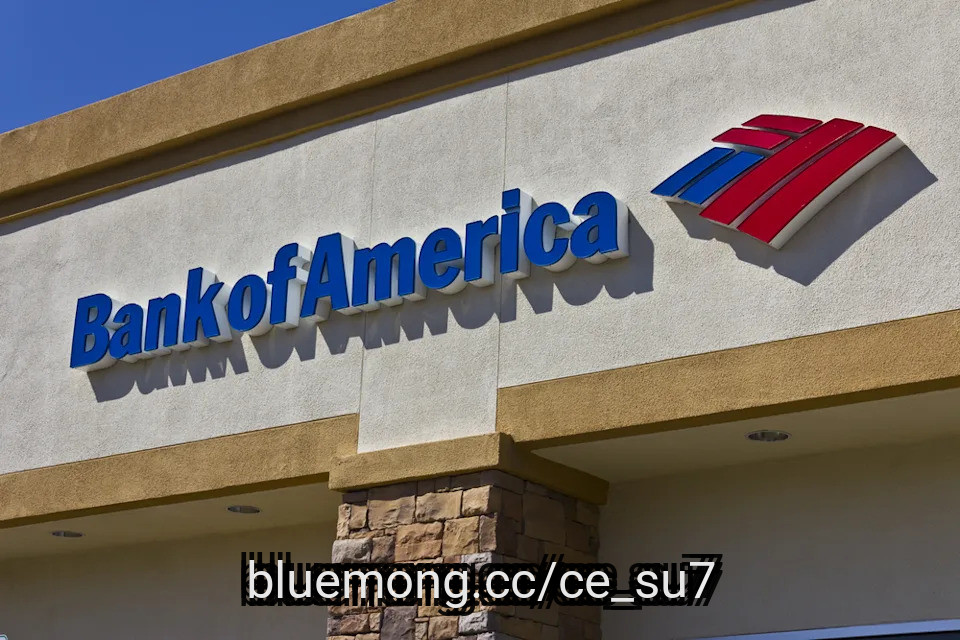
9 hours ago
With a market cap of $23.9 billion, Global Payments Inc. (GPN) is a leading provider of payment technology and software solutions worldwide. The company operates primarily through its Merchant Solutions and Issuer Solutions segments, offering businesses and financial institutions secure, seamless, and innovative payment processing and software services.
Companies valued over $10 billion are generally described as "large-cap" stocks, and Global Payments fits right into that category. With a global presence across the Americas, Europe, and Asia-Pacific, Global Payments continues to expand through strategic acquisitions, joint ventures, and advanced financial technology solutions.
Goldman Sachs Expects Fed Chair Kevin Warsh to Raise Rates This Week — But Not Because of Oil Prices.
Morgan Stanley Doubles Down on Apple Stock as New Offerings Become 'More Exciting'
The EV Bubble Has Burst. How to Play Rivian Stock Now.
#payments #Stock #financial
Companies valued over $10 billion are generally described as "large-cap" stocks, and Global Payments fits right into that category. With a global presence across the Americas, Europe, and Asia-Pacific, Global Payments continues to expand through strategic acquisitions, joint ventures, and advanced financial technology solutions.
Goldman Sachs Expects Fed Chair Kevin Warsh to Raise Rates This Week — But Not Because of Oil Prices.
Morgan Stanley Doubles Down on Apple Stock as New Offerings Become 'More Exciting'
The EV Bubble Has Burst. How to Play Rivian Stock Now.
#payments #Stock #financial


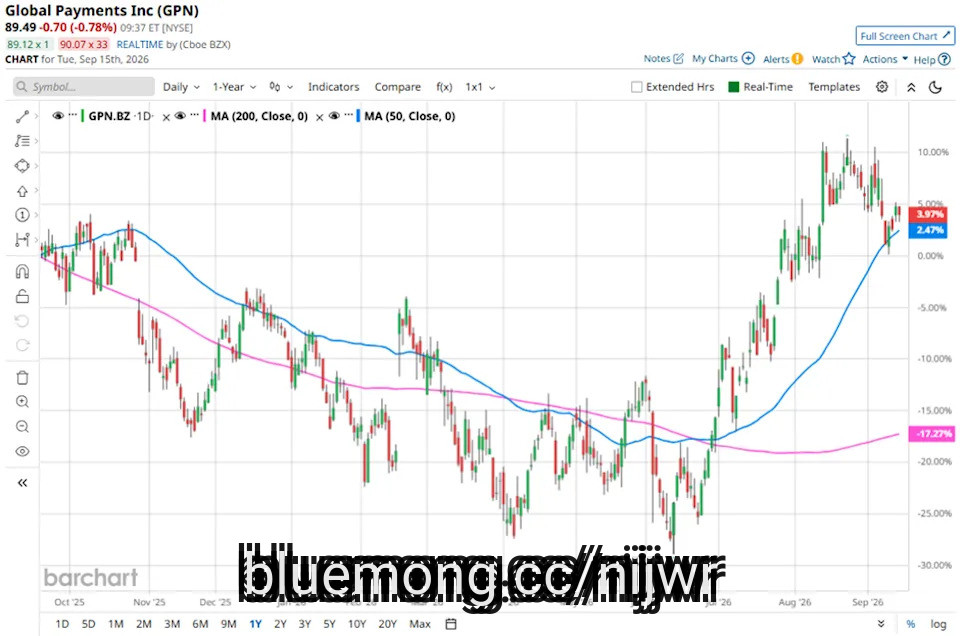

9 hours ago
Colgate-Palmolive Company (NYSE:CL) is reportedly exploring the sale of several mass-market personal care brands, including Softsoap, Irish Spring and Speed Stick, in a portfolio reshaping effort that could generate more than $1 billion. The company is working with Goldman Sachs on the potential divestiture. Personal care accounted for roughly 17% of Colgate-Palmolive's 2025 net sales, or about $3.5 billion, while oral care remains the company's largest business.
The move comes as Colgate faces pressure in its North American business. Although the company recently reported a 4.9% increase in net sales, organic sales in North America declined 3%, highlighting competitive pressure in a mature market. The strategy is also consistent with a broader consumer-goods shift toward simplifying portfolios and concentrating capital on higher-growth categories. Unilever, Nestlé, and other major consumer companies have similarly been selling slower-growing or non-core businesses.
The biggest positive is that Colgate-Palmolive Company (NYSE:CL) could become a more focused and potentially higher-quality business. Selling brands that no longer fit its highest-priority growth areas would allow management to concentrate capital, marketing spending, and management attention on oral care, pet nutrition, and other businesses where Colgate has stronger competitive advantages. The company's decision would therefore be less about abandoning personal care altogether and more about improving the quality of the remaining portfolio.
A sale could also unlock meaningful shareholder value. If the divestitures generate more than $1 billion, Colgate would have additional capital that could be used for debt reduction, share repurchases, acquisitions, or investment behind its strongest brands. In a mature consumer-staples company, disciplined capital allocation can have an outsized impact on earnings growth and shareholder returns. There is also evidence that portfolio simplification is becoming increasingly attractive across the consumer-goods industry. The Wall Street Journal has highlighted how companies such as Unilever and Nestlé are shedding businesses that add complexity without providing sufficient growth. The underlying argument is that the benefits of owning a very broad portfolio have diminished as consumer preferences become more fragmented and smaller brands become better at responding to trends.
Most importantly, the divestiture could improve Colgate-Palmolive Company (NYSE:CL)'s strategic focus at a time when North American competition is challenging. Rather than allocating resources to defend slower-growing personal-care brands, management could direct investment toward categories and geographies with better long-term growth prospects. That could ultimately support margins and organic growth even if the immediate revenue base becomes smaller.
#colgate #company #care
The move comes as Colgate faces pressure in its North American business. Although the company recently reported a 4.9% increase in net sales, organic sales in North America declined 3%, highlighting competitive pressure in a mature market. The strategy is also consistent with a broader consumer-goods shift toward simplifying portfolios and concentrating capital on higher-growth categories. Unilever, Nestlé, and other major consumer companies have similarly been selling slower-growing or non-core businesses.
The biggest positive is that Colgate-Palmolive Company (NYSE:CL) could become a more focused and potentially higher-quality business. Selling brands that no longer fit its highest-priority growth areas would allow management to concentrate capital, marketing spending, and management attention on oral care, pet nutrition, and other businesses where Colgate has stronger competitive advantages. The company's decision would therefore be less about abandoning personal care altogether and more about improving the quality of the remaining portfolio.
A sale could also unlock meaningful shareholder value. If the divestitures generate more than $1 billion, Colgate would have additional capital that could be used for debt reduction, share repurchases, acquisitions, or investment behind its strongest brands. In a mature consumer-staples company, disciplined capital allocation can have an outsized impact on earnings growth and shareholder returns. There is also evidence that portfolio simplification is becoming increasingly attractive across the consumer-goods industry. The Wall Street Journal has highlighted how companies such as Unilever and Nestlé are shedding businesses that add complexity without providing sufficient growth. The underlying argument is that the benefits of owning a very broad portfolio have diminished as consumer preferences become more fragmented and smaller brands become better at responding to trends.
Most importantly, the divestiture could improve Colgate-Palmolive Company (NYSE:CL)'s strategic focus at a time when North American competition is challenging. Rather than allocating resources to defend slower-growing personal-care brands, management could direct investment toward categories and geographies with better long-term growth prospects. That could ultimately support margins and organic growth even if the immediate revenue base becomes smaller.
#colgate #company #care

10 hours ago
Prosper Stars & Stripes, a long/short equity fund, recently released its second-quarter 2026 investor letter. The letter can be downloaded here. In Q2 2026, the portfolio delivered a strong net return of +30.1% compared to the Russell 2000 Index's +21.5% return and the HFRX Equity Hedge Index's +10.3% return. The long book drove performance, generating a 43.2% gross contribution, while average net exposure remained relatively modest at 47%. U.S. economic growth remained resilient despite inflation concerns, elevated energy prices, and geopolitical uncertainty. Markets rallied sharply after easing U.S.-Iran tensions pushed oil prices lower, supporting renewed risk appetite. Small-cap equities benefited significantly, with Information Technology, Industrials, and Health Care leading gains, while Energy declined as crude prices fell. Year to date, the Composite returned +23.7%, slightly ahead of the Russell 2000's +22.6% and well above the HFRI Equity Hedge Index's +9.7%. Additionally, you can review the Portfolio's top 5 holdings to see its best picks for 2026.
In its second-quarter 2026 investor letter, Prosper Stars & Stripes highlighted Universal Display Corporation (NASDAQ:OLED). Universal Display Corporation (NASDAQ:OLED) is an American technology company that develops and commercializes organic light-emitting diode (OLED) technologies and materials for use in display and solid-state lighting applications. On September 14, 2026, Universal Display Corporation (NASDAQ:OLED) closed at $76.62 per share. Over the past month, Universal Display Corporation (NASDAQ:OLED) declined 9.27%, and its shares lost 44.06% over the past 52 weeks. Universal Display Corporation (NASDAQ:OLED) has a market capitalization of $3.52 billion, and its stock traded within a 52-week range of $76.42 to $153.38.
Prosper Stars & Stripes stated the following regarding Universal Display Corporation (NASDAQ:OLED) in its Q2 2026 investor letter:
"This year's market rally has pressured short returns and narrowed the windows to successfully monetize shorts, as we would expect. Certain themes and short ideas do continue to resonate, however. One theme that has had success is the ongoing pressure caused by the investment boom in AI crowding out spending in other areas. We have shorted Universal Display Corporation (NASDAQ:OLED), Dolby Laboratories (DLB), and Logitech International (LOGI) on this theme. We believe cost pressures on technology components such as DRAM to result in higher prices for consumer electronics. This would have a significant impact on back-to-school and holiday spending, the key periods for these companies' end markets. We expect the forecasts that these companies are providing at this time of the year to prove optimistic, as tech cost inflation is unusual. Further, we believe the so-called K-shaped economy, where consumers have felt the pressure of rising costs of living, will continue to squeeze discretionary purchases like these. Rising prices make it nea
In its second-quarter 2026 investor letter, Prosper Stars & Stripes highlighted Universal Display Corporation (NASDAQ:OLED). Universal Display Corporation (NASDAQ:OLED) is an American technology company that develops and commercializes organic light-emitting diode (OLED) technologies and materials for use in display and solid-state lighting applications. On September 14, 2026, Universal Display Corporation (NASDAQ:OLED) closed at $76.62 per share. Over the past month, Universal Display Corporation (NASDAQ:OLED) declined 9.27%, and its shares lost 44.06% over the past 52 weeks. Universal Display Corporation (NASDAQ:OLED) has a market capitalization of $3.52 billion, and its stock traded within a 52-week range of $76.42 to $153.38.
Prosper Stars & Stripes stated the following regarding Universal Display Corporation (NASDAQ:OLED) in its Q2 2026 investor letter:
"This year's market rally has pressured short returns and narrowed the windows to successfully monetize shorts, as we would expect. Certain themes and short ideas do continue to resonate, however. One theme that has had success is the ongoing pressure caused by the investment boom in AI crowding out spending in other areas. We have shorted Universal Display Corporation (NASDAQ:OLED), Dolby Laboratories (DLB), and Logitech International (LOGI) on this theme. We believe cost pressures on technology components such as DRAM to result in higher prices for consumer electronics. This would have a significant impact on back-to-school and holiday spending, the key periods for these companies' end markets. We expect the forecasts that these companies are providing at this time of the year to prove optimistic, as tech cost inflation is unusual. Further, we believe the so-called K-shaped economy, where consumers have felt the pressure of rising costs of living, will continue to squeeze discretionary purchases like these. Rising prices make it nea