


14 days ago
On August 5, Kinetik Holdings Inc. (NYSE:KNTK) reported the strongest quarterly results in company history and raised its full-year 2026 guidance. The Permian-focused midstream operator posted net income, including noncontrolling interest, of $123.1 million for the quarter ended June 30, while Adjusted EBITDA climbed to $280.8 million. Management didn't stop at celebrating the number. It used the quarter as the launchpad for a string of expansion decisions that stretch out to 2028.
The Midstream Logistics segment, Kinetik's largest, grew Adjusted EBITDA 35% year over year to $204.8 million in the second quarter, even though processed natural gas volumes held flat at 1.74 Bcf/d. That flat number actually undersells the quarter. It came despite roughly 250 million cubic feet per day of gas that had been shut in because of weak Waha-area pricing, with stronger natural gas liquid recoveries, condensate yields, and favorable commodity spreads carrying the segment instead.
Management is betting the growth continues well past 2026. In May, Kinetik reached a final investment decision on Kings Landing II, a roughly $260 million project that will lift sour gas processing capacity across the company's Delaware North complex above 700 MMcf/d and push total system capacity to 2.7 Bcf/d when it comes online in mid-2028, earlier than previously communicated. The ECCC Pipeline, which links the system's northern and southern halves between Eddy and Culberson Counties, is now in service, and right-of-way work has already begun on a follow-on expansion for 2027.
Kinetik also locked in new firm Gulf Coast access for residue gas starting in 2027 and signed fresh natural gas liquids transport agreements, both aimed at getting better prices for the gas it moves. On the back of that momentum, Kinetik raised its full-year 2026 Adjusted EBITDA guidance to a range of $1.04 billion to $1.1 billion, a 7% ***** p from the guidance it issued in February.
Not every part of the business is moving in the same direction. The Pipeline Transportation segment posted Adjusted EBITDA of $83.0 million in the quarter, down 14% year over year, a decline the company attributes to last year's divestiture of its equity stake in EPIC Crude Holdings. That sale removed a source of cash flow the rest of the business now has to make up for. Kinetik also expects gas curtailments to keep running at an average of 25 million cubic feet per day through the second half of 2026, on top of the Waha-driven shut-ins that already weighed on the quarter. Its own pricing ***** umptions underline the regional problem: the company is now modeling Waha Hub natural gas at negative $0.26 per MMBtu for the full year, meaning gas in parts of the Permian is priced so low that moving it out of the basin is the whole game.
#quarter
The Midstream Logistics segment, Kinetik's largest, grew Adjusted EBITDA 35% year over year to $204.8 million in the second quarter, even though processed natural gas volumes held flat at 1.74 Bcf/d. That flat number actually undersells the quarter. It came despite roughly 250 million cubic feet per day of gas that had been shut in because of weak Waha-area pricing, with stronger natural gas liquid recoveries, condensate yields, and favorable commodity spreads carrying the segment instead.
Management is betting the growth continues well past 2026. In May, Kinetik reached a final investment decision on Kings Landing II, a roughly $260 million project that will lift sour gas processing capacity across the company's Delaware North complex above 700 MMcf/d and push total system capacity to 2.7 Bcf/d when it comes online in mid-2028, earlier than previously communicated. The ECCC Pipeline, which links the system's northern and southern halves between Eddy and Culberson Counties, is now in service, and right-of-way work has already begun on a follow-on expansion for 2027.
Kinetik also locked in new firm Gulf Coast access for residue gas starting in 2027 and signed fresh natural gas liquids transport agreements, both aimed at getting better prices for the gas it moves. On the back of that momentum, Kinetik raised its full-year 2026 Adjusted EBITDA guidance to a range of $1.04 billion to $1.1 billion, a 7% ***** p from the guidance it issued in February.
Not every part of the business is moving in the same direction. The Pipeline Transportation segment posted Adjusted EBITDA of $83.0 million in the quarter, down 14% year over year, a decline the company attributes to last year's divestiture of its equity stake in EPIC Crude Holdings. That sale removed a source of cash flow the rest of the business now has to make up for. Kinetik also expects gas curtailments to keep running at an average of 25 million cubic feet per day through the second half of 2026, on top of the Waha-driven shut-ins that already weighed on the quarter. Its own pricing ***** umptions underline the regional problem: the company is now modeling Waha Hub natural gas at negative $0.26 per MMBtu for the full year, meaning gas in parts of the Permian is priced so low that moving it out of the basin is the whole game.
#quarter

15 days ago
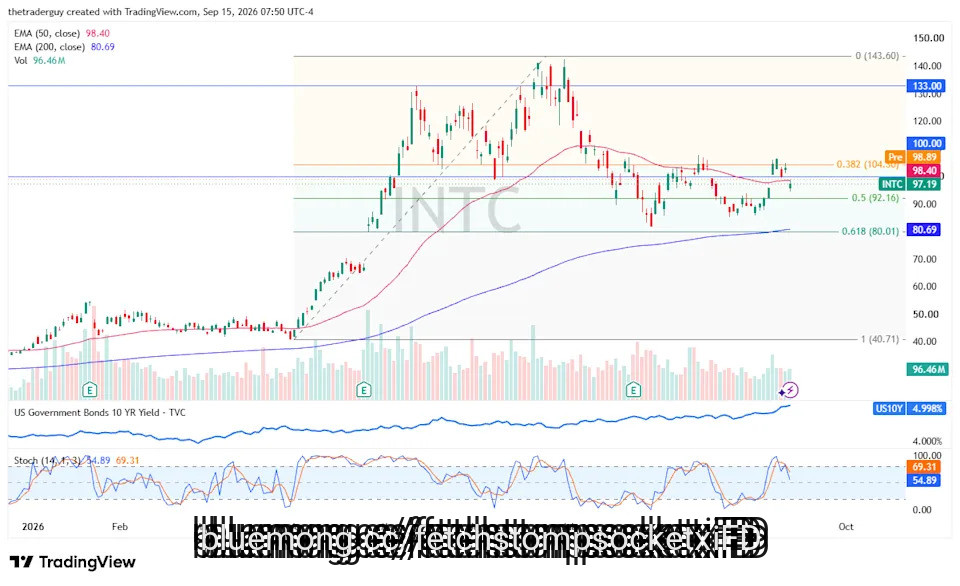
Intel is a little higher in pre-market trading, but recently we've seen some noise as broad semiconductor de-risking continues to be one of the stories here. Intel itself has been a fairly successful story over the last year as the turnaround continues for the company.
AI industry leaders got crushed. Perhaps the prospect of slowing frontier model development, as thrown out there by multiple leaders in the industry, has spooked the markets. Investors immediately figured that slower data-center CapEx and semiconductor demand would be part of that. It is a little overdone. It's just a few words, but it looks like the market is trying to turn things around.
Furthermore, you have to keep in mind that interest rates being higher than anticipated has been a bit of a drag.
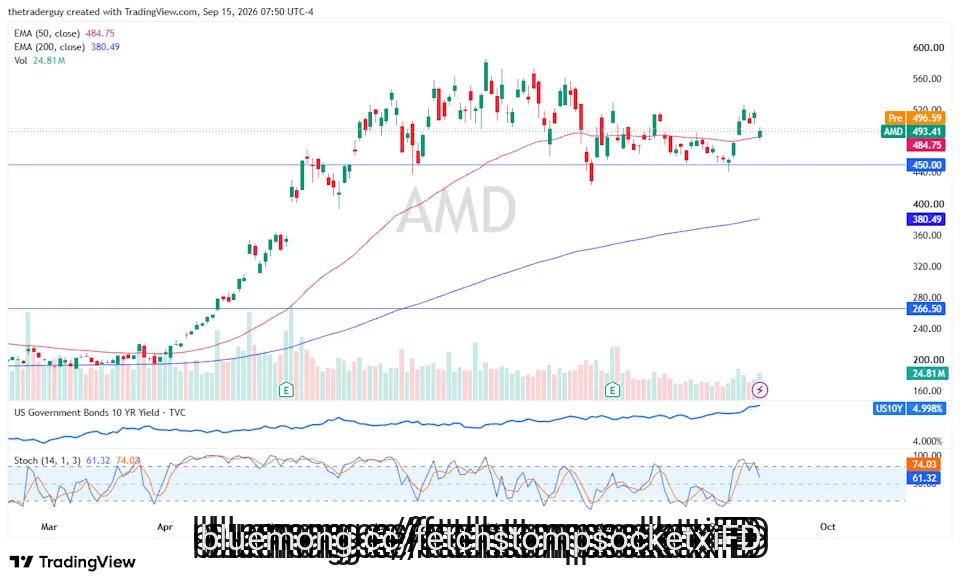
NVIDIA looks slightly positive in early market trading, with the market trying to reach toward the 50-day EMA. Again, this is about anxiety, with AI capital expenditures being the immediate problem. After all, if fewer data centers were to be built, NVIDIA is directly hit.
The market is looking at this in more fear-than-fact-based terms because NVIDIA's actual business numbers remain extraordinarily strong. So really, rates and the fear of a slowdown are fighting the reality of growth and economic numbers in this company that remain truly envy-worthy of most others.
#Intel #little #continues
AI industry leaders got crushed. Perhaps the prospect of slowing frontier model development, as thrown out there by multiple leaders in the industry, has spooked the markets. Investors immediately figured that slower data-center CapEx and semiconductor demand would be part of that. It is a little overdone. It's just a few words, but it looks like the market is trying to turn things around.
Furthermore, you have to keep in mind that interest rates being higher than anticipated has been a bit of a drag.
NVIDIA looks slightly positive in early market trading, with the market trying to reach toward the 50-day EMA. Again, this is about anxiety, with AI capital expenditures being the immediate problem. After all, if fewer data centers were to be built, NVIDIA is directly hit.
The market is looking at this in more fear-than-fact-based terms because NVIDIA's actual business numbers remain extraordinarily strong. So really, rates and the fear of a slowdown are fighting the reality of growth and economic numbers in this company that remain truly envy-worthy of most others.
#Intel #little #continues
19 days ago
SailPoint Inc. (NASDAQ:SAIL), a leading player within the enterprise identity security ***** e, released its fiscal second-quarter 2027 on September 9. The company registered a 25% growth in its annual recurring revenue compared to the same period last year, with figures of $1.231 billion. This was driven by a 36% expansion in SaaS ARR which clocked in at $847 million. SailPoint generated $45 million in operating cash flow during the quarter, along with $37 million in free cash flow.
Burben/Shutterstock.com
Topline for the quarter hit $309 million, exhibiting 17% growth compared to Q2 FY26, amid several underlying factors. The company's subscription revenue reached $295 million, up 19% from a year earlier. SaaS customer base increased by 16%, with net new SaaS ARR jumping 34% year-over-year. It contributed around 97% to overall net new ARR for the business, with AI-driven ARR crossing $70 million mark.
SailPoint's existing customer base showed highly encouraging trends in adopting the company's AI-enabled solutions, with a 60% increase in their annual spend during the second quarter. These solutions were incorporated within more than two-thirds of the completed migrations during the quarter. Quarterly adjusted operating income increased from $54 million a year prior to $63 million, translating into an adjusted margin of 20%.
The quarter also saw key strategic moves by the management. It introduced the SailPoint Identity Security solution, which integrates SailPoint Agentic Fabric with SailPoint Human Fabric to deliver a real-time cycle for discovering and securing intricate digital ecosystems. The company also launched its Cursor Enterprise connector, which enables enterprises to manage both autonomous AI agents and human developers through an integrated control plane.
#year #SaaS #fabric #identity
Burben/Shutterstock.com
Topline for the quarter hit $309 million, exhibiting 17% growth compared to Q2 FY26, amid several underlying factors. The company's subscription revenue reached $295 million, up 19% from a year earlier. SaaS customer base increased by 16%, with net new SaaS ARR jumping 34% year-over-year. It contributed around 97% to overall net new ARR for the business, with AI-driven ARR crossing $70 million mark.
SailPoint's existing customer base showed highly encouraging trends in adopting the company's AI-enabled solutions, with a 60% increase in their annual spend during the second quarter. These solutions were incorporated within more than two-thirds of the completed migrations during the quarter. Quarterly adjusted operating income increased from $54 million a year prior to $63 million, translating into an adjusted margin of 20%.
The quarter also saw key strategic moves by the management. It introduced the SailPoint Identity Security solution, which integrates SailPoint Agentic Fabric with SailPoint Human Fabric to deliver a real-time cycle for discovering and securing intricate digital ecosystems. The company also launched its Cursor Enterprise connector, which enables enterprises to manage both autonomous AI agents and human developers through an integrated control plane.
#year #SaaS #fabric #identity
28 days ago
Binance co-founder and Canadian billionaire Changpeng Zhao (CZ) says that capital is starting to return to the cryptocurrency market.
CZ says that capital that had been directed towards artificial intelligence (A.I.) in recent months is beginning to return to the crypto sector, helping to boost prices.
In an interview, CZ said that the "hot money" that had been flowing into A.I. stocks is now being shifted to crypto such as Bitcoin (CRYPTO: $BTC) and related exchange-traded funds (ETFs).
More From Cryptoprowl:
MEXC Launches Earn Plus With Limited-Time Event Offering Up to 800% APR Booster
#Crypto #etfs #cryptoprowl
CZ says that capital that had been directed towards artificial intelligence (A.I.) in recent months is beginning to return to the crypto sector, helping to boost prices.
In an interview, CZ said that the "hot money" that had been flowing into A.I. stocks is now being shifted to crypto such as Bitcoin (CRYPTO: $BTC) and related exchange-traded funds (ETFs).
More From Cryptoprowl:
MEXC Launches Earn Plus With Limited-Time Event Offering Up to 800% APR Booster
#Crypto #etfs #cryptoprowl


1 month ago
Alphabet (GOOG) stock entered 2026 with a remarkably tough act to follow.
Its stock soared nearly 66% in 2025, according to Yahoo Finance, with investors buying into its bull case, backed by Google's growing AI position, robust cloud business, and resilient Search franchise.
It's still up more than 10% this year, based on Seeking Alpha data, but has lost 9% of its value over the past three months as investor concerns over spending and returns have collided.
Now, though, Morgan Stanley ******* ysts argue that investors might be overlooking a far bigger AI opportunity taking shape inside Alphabet.
Nevertheless, a lot of the concerns this year resurfaced in Alphabet's Q2 results.
#year #concerns #search #seeking
Its stock soared nearly 66% in 2025, according to Yahoo Finance, with investors buying into its bull case, backed by Google's growing AI position, robust cloud business, and resilient Search franchise.
It's still up more than 10% this year, based on Seeking Alpha data, but has lost 9% of its value over the past three months as investor concerns over spending and returns have collided.
Now, though, Morgan Stanley ******* ysts argue that investors might be overlooking a far bigger AI opportunity taking shape inside Alphabet.
Nevertheless, a lot of the concerns this year resurfaced in Alphabet's Q2 results.
#year #concerns #search #seeking

1 month ago
Orbis Investment Management, an investment management company, released its Q2 2026 investor letter for "Orbis Global Equity Strategy". The letter can be downloaded here. In the first half of 2026, the Global Equity Strategy returned 19.9%, surpassing the MSCI All Country World Index by 7.8%. The market faced narrow breadth in the quarter. The strategy focuses on AI investments categorized into four groups: "Core" (direct exposure), "Enablers" (supporting businesses), "AI Powered" (companies enhanced by AI), and "Overlooked" (misjudged resilient companies). The firm emphasizes maintaining strong but flexible convictions in a fluctuating market, prioritizing disciplined, evidence-based investment over emotional decision-making. Also, check the fund's top five holdings to see its best picks in 2026.
In its Q2 2026 investor letter, Orbis Global Equity Strategy highlighted Brown & Brown, Inc. (NYSE:BRO). Brown & Brown, Inc. (NYSE:BRO) is a leading insurance brokerage firm operating through Retail and Specialty Distribution segments. On August 24, 2026, Brown & Brown, Inc. (NYSE:BRO) closed at $74.62 per share, reflecting a market capitalization of $24.97 billion. Brown & Brown, Inc. (NYSE:BRO) posted a one‑month return of 1.32%, while its shares lost 22.31% over the past 52 weeks.
Orbis Global Equity Strategy stated the following regarding Brown & Brown, Inc. (NYSE:BRO) in its Q2 2026 investor letter:
"The biggest winners have been concentrated in AI. But not all AI exposure is equal. We frame ours in four groups. The first is the "Core": direct exposure through companies like Samsung Electronics, Taiwan Semiconductor, and SK Square. The second is "Enablers": the businesses providing the power, materials, and real estate that hyperscalers need to operate. The third is AI "Powered": companies where AI accelerates an already compelling model, like Alphabet. The fourth is the "Overlooked": resilient businesses the market has mispriced as AI casualties. The first three are widely understood. The fourth is where we believe the market is most wrong, and where we are hunting.
Take insurance brokerage. Brown & Brown, Inc. (NYSE:BRO) and Ryan Specialty are brokers: they sit between companies and insurers, matching clients to the right coverage and placing it for a fee, without carrying the risk themselves. Both are priced as AI casualties. Two fears weigh on the stocks: a softening pricing cycle and AI disintermediation. The pricing cycle is already in the price. On AI, we disagree. AI may automate commodity cover like personal auto, but that is under 5% of Brown & Brown's book. The rest is commercial and specialty insurance, where the broker exercises judgement and answers for a denied claim. It is a people business, and Brown & Brown has spent more than eighty years serving mid sized companies that lack the in-house expertise in insurance."
#strategy #Equity
In its Q2 2026 investor letter, Orbis Global Equity Strategy highlighted Brown & Brown, Inc. (NYSE:BRO). Brown & Brown, Inc. (NYSE:BRO) is a leading insurance brokerage firm operating through Retail and Specialty Distribution segments. On August 24, 2026, Brown & Brown, Inc. (NYSE:BRO) closed at $74.62 per share, reflecting a market capitalization of $24.97 billion. Brown & Brown, Inc. (NYSE:BRO) posted a one‑month return of 1.32%, while its shares lost 22.31% over the past 52 weeks.
Orbis Global Equity Strategy stated the following regarding Brown & Brown, Inc. (NYSE:BRO) in its Q2 2026 investor letter:
"The biggest winners have been concentrated in AI. But not all AI exposure is equal. We frame ours in four groups. The first is the "Core": direct exposure through companies like Samsung Electronics, Taiwan Semiconductor, and SK Square. The second is "Enablers": the businesses providing the power, materials, and real estate that hyperscalers need to operate. The third is AI "Powered": companies where AI accelerates an already compelling model, like Alphabet. The fourth is the "Overlooked": resilient businesses the market has mispriced as AI casualties. The first three are widely understood. The fourth is where we believe the market is most wrong, and where we are hunting.
Take insurance brokerage. Brown & Brown, Inc. (NYSE:BRO) and Ryan Specialty are brokers: they sit between companies and insurers, matching clients to the right coverage and placing it for a fee, without carrying the risk themselves. Both are priced as AI casualties. Two fears weigh on the stocks: a softening pricing cycle and AI disintermediation. The pricing cycle is already in the price. On AI, we disagree. AI may automate commodity cover like personal auto, but that is under 5% of Brown & Brown's book. The rest is commercial and specialty insurance, where the broker exercises judgement and answers for a denied claim. It is a people business, and Brown & Brown has spent more than eighty years serving mid sized companies that lack the in-house expertise in insurance."
#strategy #Equity

1 month ago
Deere & Company (NYSE:DE) delivered a stronger-than-expected third quarter, with the company benefiting from a surprising source: the construction boom linked to AI data centers and infrastructure spending. Construction & Forestry sales increased 18% year over year, making it the company's fastest-growing major segment. Deere also reported a 7% increase in quarterly net income to $1.38 billion, while EPS rose to $5.10 from $4.75 a year earlier.
The improvement was enough for Deere to raise its 2026 net income outlook to $4.75 billion-$5 billion, up from the previous lower end of $4.5 billion. The company also continues to believe that 2026 will mark the bottom of the current agricultural equipment cycle.
Still, Deere & Company (NYSE:DE)'s core farm-equipment business remains under pressure. Production & Precision Agriculture sales fell 6% in the quarter as farmers continue to deal with weak commodity prices and difficult farm economics. At the same time, Small Agriculture & Turf sales increased 12%, helped by better milk and beef prices.
The biggest reason to be bullish on Deere & Company (NYSE:DE) is the growing strength of its construction business. The 18% increase in Construction & Forestry sales shows that the company is benefiting from spending that has little to do with the current farm cycle. AI data-center construction, infrastructure projects, and other large-scale development are creating demand for Deere's equipment. The company says customer backlogs now extend well into fiscal 2027, giving it strong visibility into future demand.
This diversification could become particularly valuable if the agricultural market takes longer to recover. Deere does not need its farm-equipment business to rebound immediately for the company to continue generating solid earnings. Construction is currently helping fill that gap, while the 12% increase in Small Agriculture & Turf sales provides another source of support.
#deere #sales #farm #agriculture
The improvement was enough for Deere to raise its 2026 net income outlook to $4.75 billion-$5 billion, up from the previous lower end of $4.5 billion. The company also continues to believe that 2026 will mark the bottom of the current agricultural equipment cycle.
Still, Deere & Company (NYSE:DE)'s core farm-equipment business remains under pressure. Production & Precision Agriculture sales fell 6% in the quarter as farmers continue to deal with weak commodity prices and difficult farm economics. At the same time, Small Agriculture & Turf sales increased 12%, helped by better milk and beef prices.
The biggest reason to be bullish on Deere & Company (NYSE:DE) is the growing strength of its construction business. The 18% increase in Construction & Forestry sales shows that the company is benefiting from spending that has little to do with the current farm cycle. AI data-center construction, infrastructure projects, and other large-scale development are creating demand for Deere's equipment. The company says customer backlogs now extend well into fiscal 2027, giving it strong visibility into future demand.
This diversification could become particularly valuable if the agricultural market takes longer to recover. Deere does not need its farm-equipment business to rebound immediately for the company to continue generating solid earnings. Construction is currently helping fill that gap, while the 12% increase in Small Agriculture & Turf sales provides another source of support.
#deere #sales #farm #agriculture

1 month ago
Loomis Sayles, an investment management company, released its "Global Growth Fund" investor letter for Q2 2026. You can download a copy of the letter here. The fund returned 6.43%, underperforming the MSCI ACWI Index's 14.93% return. The fund employs a long-term private equity investment strategy, focusing on high-quality businesses with sustainable competitive advantages, investing at significant discounts to intrinsic value. At quarter-end, the fund maintained an overweight in communication services, consumer discretionary and healthcare sectors, and an underweight in information technology, financials, industrials, and consumer staples sectors. Also, please check the Fund's top five holdings to see its best picks for 2026.
In its Q2 2026 investor letter, Loomis Sayles Global Growth Fund highlighted Alphabet Inc. (NASDAQ:GOOG) as a leading performance contributor. Alphabet Inc. (NASDAQ:GOOG), the parent company of Google, offers various platforms and services, including online search and advertising, cloud solutions, and artificial intelligence. On August 21, 2026, Alphabet Inc. (NASDAQ:GOOG) closed at $341.75 per share, reflecting a market capitalization of $4.2 trillion. Alphabet Inc. (NASDAQ:GOOG) posted a one-month return of 4.65%, while its shares gained 63.39% over the past 52 weeks.
Loomis Sayles Global Growth Fund stated the following regarding Alphabet Inc. (NASDAQ:GOOG) in its Q2 2026 investor letter:
"Alphabet Inc. (NASDAQ:GOOG) is a holding company that owns a collection of businesses, the largest and most important of which by far is Google. Google is the global leader in online search and advertising and also offers cloud solutions to businesses and consumers globally, with a goal of organizing the world's information and making it universally accessible and useful. Google dominates the US and global traditional search market with a greater than 80% share of search volumes. As a function of seeing more searches, Google is able to provide better search results, resulting in a higher customer conversion rate for advertisers and enabling Google to capture a leading share of search revenue. Google's large network of consumers, advertisers, and publishers is a powerful business ecosystem as third-party participants such as marketing affiliates and independent software vendors add value to the user experience. As a result, we believe consumers get their best and most relevant search results and advertisers get the best returns on their advertising dollars. Such a robust ecosystem attracts increasing numbers of participants and thereby creates a virtuous cycle for a sustainable business model and long-term growth. In its emerging cloud business, we estimate that Google captures less than 10% market share of the global market for public cloud services. We believe Google remains one of the few global companies that has the scale, research and development (R&D), and technical talent to effectively compete in this market over the long te
In its Q2 2026 investor letter, Loomis Sayles Global Growth Fund highlighted Alphabet Inc. (NASDAQ:GOOG) as a leading performance contributor. Alphabet Inc. (NASDAQ:GOOG), the parent company of Google, offers various platforms and services, including online search and advertising, cloud solutions, and artificial intelligence. On August 21, 2026, Alphabet Inc. (NASDAQ:GOOG) closed at $341.75 per share, reflecting a market capitalization of $4.2 trillion. Alphabet Inc. (NASDAQ:GOOG) posted a one-month return of 4.65%, while its shares gained 63.39% over the past 52 weeks.
Loomis Sayles Global Growth Fund stated the following regarding Alphabet Inc. (NASDAQ:GOOG) in its Q2 2026 investor letter:
"Alphabet Inc. (NASDAQ:GOOG) is a holding company that owns a collection of businesses, the largest and most important of which by far is Google. Google is the global leader in online search and advertising and also offers cloud solutions to businesses and consumers globally, with a goal of organizing the world's information and making it universally accessible and useful. Google dominates the US and global traditional search market with a greater than 80% share of search volumes. As a function of seeing more searches, Google is able to provide better search results, resulting in a higher customer conversion rate for advertisers and enabling Google to capture a leading share of search revenue. Google's large network of consumers, advertisers, and publishers is a powerful business ecosystem as third-party participants such as marketing affiliates and independent software vendors add value to the user experience. As a result, we believe consumers get their best and most relevant search results and advertisers get the best returns on their advertising dollars. Such a robust ecosystem attracts increasing numbers of participants and thereby creates a virtuous cycle for a sustainable business model and long-term growth. In its emerging cloud business, we estimate that Google captures less than 10% market share of the global market for public cloud services. We believe Google remains one of the few global companies that has the scale, research and development (R&D), and technical talent to effectively compete in this market over the long te

1 month ago
Image source: The Motley Fool.
Tuesday, Aug. 11, 2026, at 9 a.m. ET
Vice President of Investor Relations-Julie MacMedan
President and Chief Executive Officer-Shane Smith
Chief Financial Officer-Mark Hall
#motley
Tuesday, Aug. 11, 2026, at 9 a.m. ET
Vice President of Investor Relations-Julie MacMedan
President and Chief Executive Officer-Shane Smith
Chief Financial Officer-Mark Hall
#motley
2 months ago
On August 13, Alphabet's (NASDAQ:GOOGL) Google unveiled Gemini 3.7 Flash, a new AI model built for coding and automated business tasks. The launch came without word on when the company's flagship Gemini 3.5 Pro model will arrive, a gap investors have watched closely as a gauge of whether Google's DeepMind unit can keep pace with Anthropic and OpenAI. It also landed the same week that Alphabet closed a $25 billion bond sale and posted its first-ever negative free cash flow quarter.
Gemini 3.7 Flash arrived just three weeks after Gemini 3.6 Flash, a pace that signals Google is iterating quickly on the models it hopes will power autonomous AI agents. The new model targets businesses building systems that can plan tasks, use software tools, and complete multi-step workflows with less human oversight, and Google says it shows improved performance on coding tasks including debugging, issue resolution, and production-ready code generation. To win over developers, Google priced Gemini 3.7 Flash at 75 cents per million input tokens and $3.75 per million output tokens through the end of the year, half the original cost of Gemini 3.6 Flash. It is also rolling out immediately to Gemini Spark, Google's subscription AI agent service available in more than 160 countries.
That pricing sits alongside a cloud business converting AI investment into revenue. Google Cloud's backlog has climbed to $514 billion, and Alphabet expects to recognize a little more than half of it as revenue over the next 24 months. Alphabet also holds more than $240 billion in cash and marketable securities, giving it room to keep funding its buildout as free cash flow comes under pressure.
Alphabet's capital expenditures are now guided to $195 billion to $205 billion for 2026, up from $91 billion in 2025 and $53 billion in 2024. Second-quarter capex alone was $45 billion, double the year-earlier figure, pushing Alphabet to a quarterly free cash flow loss of $5.9 billion. Buybacks have gone to zero, and Alphabet raised roughly $56 billion in debt plus about $50 billion from stock sales in the first half to help cover the gap.
That borrowing culminated in a $25 billion, ten-tranche bond sale that closed Monday, ranging from notes due in 2028 to a $2.5 billion tranche not due until 2066. Much of that money funds servers and networking gear that Alphabet itself depreciates over about six years, meaning a large share of this year's spending will need to be repaid all over again long before the longest bonds come due.
#flow
Gemini 3.7 Flash arrived just three weeks after Gemini 3.6 Flash, a pace that signals Google is iterating quickly on the models it hopes will power autonomous AI agents. The new model targets businesses building systems that can plan tasks, use software tools, and complete multi-step workflows with less human oversight, and Google says it shows improved performance on coding tasks including debugging, issue resolution, and production-ready code generation. To win over developers, Google priced Gemini 3.7 Flash at 75 cents per million input tokens and $3.75 per million output tokens through the end of the year, half the original cost of Gemini 3.6 Flash. It is also rolling out immediately to Gemini Spark, Google's subscription AI agent service available in more than 160 countries.
That pricing sits alongside a cloud business converting AI investment into revenue. Google Cloud's backlog has climbed to $514 billion, and Alphabet expects to recognize a little more than half of it as revenue over the next 24 months. Alphabet also holds more than $240 billion in cash and marketable securities, giving it room to keep funding its buildout as free cash flow comes under pressure.
Alphabet's capital expenditures are now guided to $195 billion to $205 billion for 2026, up from $91 billion in 2025 and $53 billion in 2024. Second-quarter capex alone was $45 billion, double the year-earlier figure, pushing Alphabet to a quarterly free cash flow loss of $5.9 billion. Buybacks have gone to zero, and Alphabet raised roughly $56 billion in debt plus about $50 billion from stock sales in the first half to help cover the gap.
That borrowing culminated in a $25 billion, ten-tranche bond sale that closed Monday, ranging from notes due in 2028 to a $2.5 billion tranche not due until 2066. Much of that money funds servers and networking gear that Alphabet itself depreciates over about six years, meaning a large share of this year's spending will need to be repaid all over again long before the longest bonds come due.
#flow

2 months ago
As Americans turn to chatbots for answers on everything from grammar questions and popular baby names to how to store berries so they last longer, it's no surprise that some are also seeking financial advice from AI.
However, the stakes are markedly higher when it comes to financial decisions — you could potentially lose a lot more than a pint of blueberries.
Jeff Bezos backs a platform that lets anyone invest in rental homes for as little as $100 — 6 ways to build wealth like a landlord without actually being one
Dave Ramsey warns nearly 50% of Americans are making 1 big Social Security mistake. Here's what it is and 3 simple steps to fix it ASAP
Millionaires under 43 hold only 25% of their wealth in stocks. Here's where their money is actually going
#wealth #however #dave
However, the stakes are markedly higher when it comes to financial decisions — you could potentially lose a lot more than a pint of blueberries.
Jeff Bezos backs a platform that lets anyone invest in rental homes for as little as $100 — 6 ways to build wealth like a landlord without actually being one
Dave Ramsey warns nearly 50% of Americans are making 1 big Social Security mistake. Here's what it is and 3 simple steps to fix it ASAP
Millionaires under 43 hold only 25% of their wealth in stocks. Here's where their money is actually going
#wealth #however #dave

2 months ago


2 months ago
Manufacturing construction spending has collapsed 32% since Biden left office as CHIPS megaprojects wind down and IRA clean-energy plants are cancelled.
The ISM manufacturing index hit 55.6 in July, a 4-year high, with factory employment expanding for the first time in 33 months.
Today's production boom runs on Biden-era factories; a shrinking construction pipeline now quietly threatens U.S. manufacturing output in 2028 and beyond.
Don't wait: the ******* yst who called NVIDIA in 2010 just revealed his top 10 AI stocks. See the full list FREE now.
Donald Trump ran on rebuilding American factories. The building part is going the wrong way. Manufacturing construction spending in the United States is now down roughly 32% from its 2024 peak, reached in the final months of the Biden administration, according to a chart circulated this week by economist Joey Politano. The federal data behind it is stark: real dollars poured into new factory shells, chip fabs, and battery plants have slid from $211,142 million in August 2025 to $172,674 million in June 2026, a downward trajectory every month in between.
#plants
The ISM manufacturing index hit 55.6 in July, a 4-year high, with factory employment expanding for the first time in 33 months.
Today's production boom runs on Biden-era factories; a shrinking construction pipeline now quietly threatens U.S. manufacturing output in 2028 and beyond.
Don't wait: the ******* yst who called NVIDIA in 2010 just revealed his top 10 AI stocks. See the full list FREE now.
Donald Trump ran on rebuilding American factories. The building part is going the wrong way. Manufacturing construction spending in the United States is now down roughly 32% from its 2024 peak, reached in the final months of the Biden administration, according to a chart circulated this week by economist Joey Politano. The federal data behind it is stark: real dollars poured into new factory shells, chip fabs, and battery plants have slid from $211,142 million in August 2025 to $172,674 million in June 2026, a downward trajectory every month in between.
#plants

2 months ago
This story was originally published on C-Store Dive. To receive daily news and insights, subscribe to our free daily C-Store Dive newsletter.
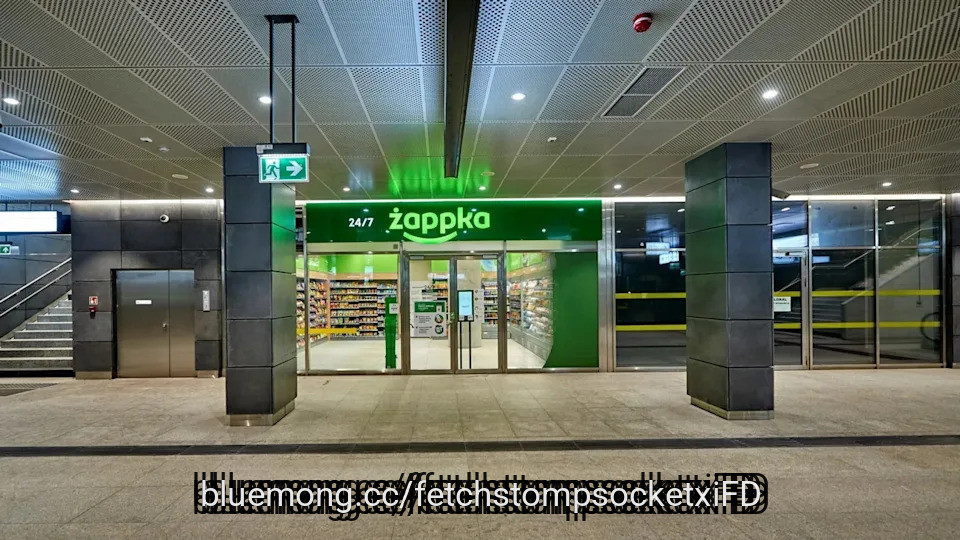
Alimentation Couche-Tard announced on Friday that it planned to buy Żabka, Poland's largest convenience retailer, for about $8.6 billion. If the deal goes through, Żabka's 13,000 stores in Poland and Romania would significantly bolster Couche-Tard's presence in the region.
But what's inside the stores may be just as important for the Canadian retailer. Key parts of the Polish retailer's business could support Core + More, the forward-looking strategy Couche-Tard rolled out earlier this year.
"This is a unique opportunity to invest in a business we deeply admire, one that is already operating at the leading edge of convenience in areas such as food, digital engagement, supply chain and innovation," said Alex Miller, president and CEO of Couche-Tard, in a presentation on Friday. He added, "many of the capabilities we believe will define the future of convenience already exist at scale within Żabka."
When an ******* yst asked if Couche-Tard would proliferate the best parts of Żabka across the rest of its footprint if the deal closed, Miller listed off areas where the European chain could help improve its business in North America and elsewhere.
#couche #business #miller
Alimentation Couche-Tard announced on Friday that it planned to buy Żabka, Poland's largest convenience retailer, for about $8.6 billion. If the deal goes through, Żabka's 13,000 stores in Poland and Romania would significantly bolster Couche-Tard's presence in the region.
But what's inside the stores may be just as important for the Canadian retailer. Key parts of the Polish retailer's business could support Core + More, the forward-looking strategy Couche-Tard rolled out earlier this year.
"This is a unique opportunity to invest in a business we deeply admire, one that is already operating at the leading edge of convenience in areas such as food, digital engagement, supply chain and innovation," said Alex Miller, president and CEO of Couche-Tard, in a presentation on Friday. He added, "many of the capabilities we believe will define the future of convenience already exist at scale within Żabka."
When an ******* yst asked if Couche-Tard would proliferate the best parts of Żabka across the rest of its footprint if the deal closed, Miller listed off areas where the European chain could help improve its business in North America and elsewhere.
#couche #business #miller
2 months ago
When Allison Brown and her husband bought land in a South Dakota golfing community in 2022, they planned to hire a contractor to build them a house. But after receiving estimates of between $650,000 and $800,000 for the job, they told People that they decided to make themselves a home.
So the couple began building in April 2025, managing the project while getting their hands dirty with "rock hauling, siding, insulation, flooring and masonry" among other tasks, along with shopping for deals on decor and working weekends and holidays to complete the job. A year later, they finished their family's new 3,600-square-foot home.
Jeff Bezos backs a platform that lets anyone invest in rental homes for as little as $100 — 6 ways to build wealth like a landlord without actually being one
Dave Ramsey warns nearly 50% of Americans are making 1 big Social Security mistake. Here's what it is and 3 simple steps to fix it ASAP
Millionaires under 43 hold only 25% of their wealth in stocks. Here's where their money is actually going
#brown
So the couple began building in April 2025, managing the project while getting their hands dirty with "rock hauling, siding, insulation, flooring and masonry" among other tasks, along with shopping for deals on decor and working weekends and holidays to complete the job. A year later, they finished their family's new 3,600-square-foot home.
Jeff Bezos backs a platform that lets anyone invest in rental homes for as little as $100 — 6 ways to build wealth like a landlord without actually being one
Dave Ramsey warns nearly 50% of Americans are making 1 big Social Security mistake. Here's what it is and 3 simple steps to fix it ASAP
Millionaires under 43 hold only 25% of their wealth in stocks. Here's where their money is actually going
#brown

2 months ago
For many retirees, selling the family home makes a lot of sense. They don't need three or four bedrooms anymore, or they don't want the hassle of maintaining a large property. Maybe stairs have become impractical. Or maybe they want to relocate in their golden years.
After all, empty-nest baby boomers own 28% of the nation's large homes, according to a report from Redfin.
Jeff Bezos backs a platform that lets anyone invest in rental homes for as little as $100 — 6 ways to build wealth like a landlord without actually being one
Dave Ramsey warns nearly 50% of Americans are making 1 big Social Security mistake — here's what it is and 3 simple steps to fix it ASAP
Millionaires under 43 hold only 25% of their wealth in stocks. Here's where their money is actually going
#bezos
After all, empty-nest baby boomers own 28% of the nation's large homes, according to a report from Redfin.
Jeff Bezos backs a platform that lets anyone invest in rental homes for as little as $100 — 6 ways to build wealth like a landlord without actually being one
Dave Ramsey warns nearly 50% of Americans are making 1 big Social Security mistake — here's what it is and 3 simple steps to fix it ASAP
Millionaires under 43 hold only 25% of their wealth in stocks. Here's where their money is actually going
#bezos
2 months ago
Interested in Southwest Airlines Co.? Here are five stocks we like better.
Southwest Airlines posted a strong Q2 with adjusted EPS of $0.94, record revenue of $8.7 billion, and a 20.3% jump in adjusted operating revenue despite only 0.2% capacity growth. Management said the results show the earnings power of its commercial transformation.
Revenue initiatives are driving growth, including bag fees, product changes, online travel agencies, and stronger corporate demand. Managed business revenue rose 30% year over year, Rapid Rewards enrollment climbed 35%, and Chase card acquisitions increased 28%.
Southwest trimmed its full-year profit outlook to adjusted EPS of $3.25 to $4.25 as fuel costs remained elevated and fuel expense rose nearly $900 million year over year in Q2. Even so, the airline generated $500 million in operating cash flow, ended with $5.3 billion in liquidity, and maintained a solid leverage profile.
MarketBeat Week in Review – 07/06 - 07/10
#southwest
Southwest Airlines posted a strong Q2 with adjusted EPS of $0.94, record revenue of $8.7 billion, and a 20.3% jump in adjusted operating revenue despite only 0.2% capacity growth. Management said the results show the earnings power of its commercial transformation.
Revenue initiatives are driving growth, including bag fees, product changes, online travel agencies, and stronger corporate demand. Managed business revenue rose 30% year over year, Rapid Rewards enrollment climbed 35%, and Chase card acquisitions increased 28%.
Southwest trimmed its full-year profit outlook to adjusted EPS of $3.25 to $4.25 as fuel costs remained elevated and fuel expense rose nearly $900 million year over year in Q2. Even so, the airline generated $500 million in operating cash flow, ended with $5.3 billion in liquidity, and maintained a solid leverage profile.
MarketBeat Week in Review – 07/06 - 07/10
#southwest

2 months ago
What happened: ServiceNow (NOW) gained 3% in early trading on Thursday.
What's behind the move: The Santa Clara, Calif.-based software company reported quarterly subscription revenue and bookings that topped ***** yst expectations, reinforcing investor optimism that its artificial intelligence offerings are helping drive growth.
Subscription revenue climbed roughly 25% year over year to $3.88 billion last quarter, while current remaining performance obligations (cRPO), a key metric of near-term bookings, rose 21% to $13.2 billion.
Management highlighted that demand for the company's AI products continues to outperform expectations, highlighting ServiceNow's broad customer demand, solid execution, and operating leverage.
What else you need to know: ServiceNow and other software firms have been aggressively promoting the integration of generative AI tools into their platforms as the industry has come under scrutiny earlier this year over concerns of AI disruption to their business models.
#year #subscription #revenue #thursday
What's behind the move: The Santa Clara, Calif.-based software company reported quarterly subscription revenue and bookings that topped ***** yst expectations, reinforcing investor optimism that its artificial intelligence offerings are helping drive growth.
Subscription revenue climbed roughly 25% year over year to $3.88 billion last quarter, while current remaining performance obligations (cRPO), a key metric of near-term bookings, rose 21% to $13.2 billion.
Management highlighted that demand for the company's AI products continues to outperform expectations, highlighting ServiceNow's broad customer demand, solid execution, and operating leverage.
What else you need to know: ServiceNow and other software firms have been aggressively promoting the integration of generative AI tools into their platforms as the industry has come under scrutiny earlier this year over concerns of AI disruption to their business models.
#year #subscription #revenue #thursday


2 months ago
Super Micro Computer Inc. (NASDAQ:SMCI) gave investors conflicting figures in its Q4 preliminary update on July 21. Fiscal Q4 revenue is expected near the bottom of its $11 billion to $12.5 billion guidance, below the $11.67 billion **** yst consensus, yet shares jumped 17.5% after hours. Our take is that the market was not celebrating sales; rather, it was repricing how much profit Supermicro might extract from them.
Supermicro now expects both GAAP and non-GAAP gross margins of 15% to 17%, almost twice its previous 8.2% to 8.4% forecast. At $11 billion of revenue, the new range implies roughly $1.65 billion to $1.87 billion of gross profit, compared with $902 million to $924 million under the old forecast. Even the low end of the new range exceeds the high end of the old one by about $726 million.
The reversal follows gross margins of only 6.3% in fiscal Q2 and 9.9% in Q3. Management attributed it to favorable customer and product mix. That can explain one quarter, but not yet a durable change. Mix can reverse quickly.
Copyright: ralwel / 123RF Stock Photo
Supermicro received more than $60 billion of new orders during fiscal Q4 and ended the year with record backlog. The orders are expected to ship over future quarters, giving the company strong demand visibility despite revenue landing near the bottom of its current-quarter guidance. Supermicro's immediate challenge would be converting high demand into revenue without sacrificing its improved margins.
#billion #revenue
Supermicro now expects both GAAP and non-GAAP gross margins of 15% to 17%, almost twice its previous 8.2% to 8.4% forecast. At $11 billion of revenue, the new range implies roughly $1.65 billion to $1.87 billion of gross profit, compared with $902 million to $924 million under the old forecast. Even the low end of the new range exceeds the high end of the old one by about $726 million.
The reversal follows gross margins of only 6.3% in fiscal Q2 and 9.9% in Q3. Management attributed it to favorable customer and product mix. That can explain one quarter, but not yet a durable change. Mix can reverse quickly.
Copyright: ralwel / 123RF Stock Photo
Supermicro received more than $60 billion of new orders during fiscal Q4 and ended the year with record backlog. The orders are expected to ship over future quarters, giving the company strong demand visibility despite revenue landing near the bottom of its current-quarter guidance. Supermicro's immediate challenge would be converting high demand into revenue without sacrificing its improved margins.
#billion #revenue

2 months ago
Some offers on this page are from advertisers who pay us, which may affect which products we write about, but not our recommendations. See our Advertiser Disclosure.
A "bad check" is not just an inconvenience. From overdraft fees to returned payment charges and even legal issues, the consequences of writing or cashing a bad check can be costly.
Here's what causes a check to bounce, what happens when it does, and how to avoid the problem in the first place.
A bad check is a check that your bank can't cash, or that requires the bank to reverse the transaction after you cash it. Reasons a check might be bad include:
It's counterfeit or forged
#check #reasons #offers #affect
A "bad check" is not just an inconvenience. From overdraft fees to returned payment charges and even legal issues, the consequences of writing or cashing a bad check can be costly.
Here's what causes a check to bounce, what happens when it does, and how to avoid the problem in the first place.
A bad check is a check that your bank can't cash, or that requires the bank to reverse the transaction after you cash it. Reasons a check might be bad include:
It's counterfeit or forged
#check #reasons #offers #affect



2 months ago
Bloom Energy (NYSE: BE) stock snapped out of its recent slump this morning, jumping 14% as of 12:05 p.m. ET Tuesday.
While shares of the fuel cell maker had taken a breather in recent weeks following its massive 248% run in the first half of 2026, at least one ***** yst believes now's the time to buy, predicting shares could surge another 75% from current levels.
Missed Nvidia in 2009? This Rare Signal Is Flashing Again. In 2009, a "Double Down" signal flashed for a little-known chipmaker called Nvidia. For the first time in years, that same "Total Conviction" signal is flashing for a company 1/100th the size of Nvidia. Continue »
In a fresh note to investors, JP Morgan ***** yst Mark Strouse raised Bloom Energy stock's price target to $346 per share from $267 a share. That's an almost 75% upside from the stock's Monday closing price.
Strouse projects Bloom Energy could deliver 4.1 gigawatts (GW) of fuel capacity in fiscal year 2030, driven by aggressive demand from tech companies desperate for immediate, off-grid power to start their data centers.
#first
While shares of the fuel cell maker had taken a breather in recent weeks following its massive 248% run in the first half of 2026, at least one ***** yst believes now's the time to buy, predicting shares could surge another 75% from current levels.
Missed Nvidia in 2009? This Rare Signal Is Flashing Again. In 2009, a "Double Down" signal flashed for a little-known chipmaker called Nvidia. For the first time in years, that same "Total Conviction" signal is flashing for a company 1/100th the size of Nvidia. Continue »
In a fresh note to investors, JP Morgan ***** yst Mark Strouse raised Bloom Energy stock's price target to $346 per share from $267 a share. That's an almost 75% upside from the stock's Monday closing price.
Strouse projects Bloom Energy could deliver 4.1 gigawatts (GW) of fuel capacity in fiscal year 2030, driven by aggressive demand from tech companies desperate for immediate, off-grid power to start their data centers.
#first

3 months ago
Updated July 15, 2026, 10:21 am EDT / Original July 15, 2026, 8:21 am EDT
Tesla
TSLA
-0.86%
investors might get a break from excessive volatility for the next few days.
TSLA
-0.86%
Copyright ©2026 Dow Jones & Company, Inc. All Rights Reserved. 87990cbe856818d5eddac44c7b1cdeb8
Tesla
TSLA
-0.86%
investors might get a break from excessive volatility for the next few days.
TSLA
-0.86%
Copyright ©2026 Dow Jones & Company, Inc. All Rights Reserved. 87990cbe856818d5eddac44c7b1cdeb8

3 months ago
Battered Netflix (NFLX) investors may end up tuning in to another dose of bad news when the company reports earnings on July 16.
Quick insight: "Given currency movement and a lack of hit programs, we believe more investors are expecting Netflix to lower full year numbers," KeyBanc Capital Markets **** yst Justin Patterson warned in a note on Monday.
The Street may be surprised negatively if Netflix does cut its outlook. According to Yahoo Finance AlphaSpace data, **** yst profit estimates on Netflix for 2026 have remained steady over the past 60 days and have fallen slightly for 2027.
But Netflix stock is trading as if another guidance letdown is in the cards. The stock is down 11% in the past month, bringing its year-to-date slide to 22%. Shares have plunged 41% over the past year.
Don't forget: Investors were left frustrated in April when Netflix failed to raise its full-year 2026 revenue guidance range from $50.7 billion to $51.7 billion.
Quick insight: "Given currency movement and a lack of hit programs, we believe more investors are expecting Netflix to lower full year numbers," KeyBanc Capital Markets **** yst Justin Patterson warned in a note on Monday.
The Street may be surprised negatively if Netflix does cut its outlook. According to Yahoo Finance AlphaSpace data, **** yst profit estimates on Netflix for 2026 have remained steady over the past 60 days and have fallen slightly for 2027.
But Netflix stock is trading as if another guidance letdown is in the cards. The stock is down 11% in the past month, bringing its year-to-date slide to 22%. Shares have plunged 41% over the past year.
Don't forget: Investors were left frustrated in April when Netflix failed to raise its full-year 2026 revenue guidance range from $50.7 billion to $51.7 billion.


3 months ago
UTM Offshore has signed a gas sales agreement (GSA) with Seplat Energy and the Nigerian National Petroleum Company (NNPC), marking a key development in plans for Nigeria's first indigenous-led floating liquefied natural gas (FLNG) project.
The agreement relates to gas from the deepwater Yoho field offshore Nigeria and moves UTM Offshore's project closer to a final investment decision (FID), according to a press release on African Energy Chamber (AEC).
The FLNG facility is designed to process 176 million cubic feet per day (mcf/d) once operational. Engineering and pre-construction work on the project is already complete.
With the GSA now established, UTM Offshore is progressing towards a sale and purchase agreement and working to achieve an FID. The targeted start date for shipping liquefied natural gas (LNG) from the Yoho FLNG project is 2030, according to current plans.
Financing arrangements are in place for the development, including debt capital from Afreximbank and equity commitments from NNPC and the Delta State Government.
The agreement relates to gas from the deepwater Yoho field offshore Nigeria and moves UTM Offshore's project closer to a final investment decision (FID), according to a press release on African Energy Chamber (AEC).
The FLNG facility is designed to process 176 million cubic feet per day (mcf/d) once operational. Engineering and pre-construction work on the project is already complete.
With the GSA now established, UTM Offshore is progressing towards a sale and purchase agreement and working to achieve an FID. The targeted start date for shipping liquefied natural gas (LNG) from the Yoho FLNG project is 2030, according to current plans.
Financing arrangements are in place for the development, including debt capital from Afreximbank and equity commitments from NNPC and the Delta State Government.

3 months ago
RiverPark Advisors, an investment advisory firm and sponsor of the RiverPark family of mutual funds, released its "RiverPark Large Growth Fund" Q1 2026 investor letter. A copy of the letter can be downloaded here. The US stock market declined in the quarter with the S&P 500 index ("S&P") and the Russell 1000 Growth index ("RLG") falling 4.33% and 9.78%, respectively. Markets started the year positively but became volatile mainly due to increased tensions with Iran. The Federal Reserve kept rates unchanged in January and February. Still, rising energy prices and weaker economic data sparked concerns about stagflation, leading investors to rethink the timing and scale of future rate cuts. Investor sentiment shifted from growth and tech stocks amid inflation, interest rate, and supply chain concerns. Opposing AI-driven rotations heavily influenced investor sentiment, affecting growth stocks—enthusiasm grew for semiconductor firms linked to AI infrastructure spending, while enterprise software companies, viewed as vulnerable to AI disruption, faced pessimism. The Fund's software holdings were sold off heavily, while the underweight in semiconductor companies, which benefited most from AI infrastructure spending, affected the performance. Despite challenges, the firm remains confident in the long-term prospects and valuations of its portfolio companies. Please review the Fund's top five holdings to gain insights into their key selections for 2026.
In its first-quarter 2026 investor letter, RiverPark Large Growth Fund highlighted Netflix, Inc. (NASDAQ:NFLX). Netflix, Inc. (NASDAQ:NFLX) is a leading subscription-based streaming entertainment platform. On July 2, 2026, Netflix, Inc. (NASDAQ:NFLX) closed at $77.65 per share. One-month return of Netflix, Inc. (NASDAQ:NFLX) was -7.06%, and its shares lost 41.12% over the past 52 weeks. Netflix, Inc. (NASDAQ:NFLX) has a market capitalization of $326.97 billion.
RiverPark Large Growth Fund stated the following regarding Netflix, Inc. (NASDAQ:NFLX) in its Q1 2026 investor letter:
"Netflix, Inc. (NASDAQ:NFLX): NFLX was the fifth-largest contributor for the quarter, gaining approximately 3% and significantly outperforming a sharply down market. Netflix benefited from multiple positive developments during Q1. In January, the company's decision to walk away from its proposed acquisition of Warner Bros. Discovery removed a major strategic and regulatory overhang from the stock, allowing investors to refocus on Netflix's strong fundamentals. The company's Q4 2025 earnings report highlighted full-year 2025 revenue of approximately $45.2 billion, an operating margin of nearly 29.5%, and global paid membership crossing 325 million, with management guiding for 2026 revenue growth of 12–14% and operating margin expansion to 31.5%. Netflix's subscription-based, global revenue model also made it a natural defensive holding during the March geopolitical-focused selloff.
We continue to view Netflix as the dominant global
In its first-quarter 2026 investor letter, RiverPark Large Growth Fund highlighted Netflix, Inc. (NASDAQ:NFLX). Netflix, Inc. (NASDAQ:NFLX) is a leading subscription-based streaming entertainment platform. On July 2, 2026, Netflix, Inc. (NASDAQ:NFLX) closed at $77.65 per share. One-month return of Netflix, Inc. (NASDAQ:NFLX) was -7.06%, and its shares lost 41.12% over the past 52 weeks. Netflix, Inc. (NASDAQ:NFLX) has a market capitalization of $326.97 billion.
RiverPark Large Growth Fund stated the following regarding Netflix, Inc. (NASDAQ:NFLX) in its Q1 2026 investor letter:
"Netflix, Inc. (NASDAQ:NFLX): NFLX was the fifth-largest contributor for the quarter, gaining approximately 3% and significantly outperforming a sharply down market. Netflix benefited from multiple positive developments during Q1. In January, the company's decision to walk away from its proposed acquisition of Warner Bros. Discovery removed a major strategic and regulatory overhang from the stock, allowing investors to refocus on Netflix's strong fundamentals. The company's Q4 2025 earnings report highlighted full-year 2025 revenue of approximately $45.2 billion, an operating margin of nearly 29.5%, and global paid membership crossing 325 million, with management guiding for 2026 revenue growth of 12–14% and operating margin expansion to 31.5%. Netflix's subscription-based, global revenue model also made it a natural defensive holding during the March geopolitical-focused selloff.
We continue to view Netflix as the dominant global

3 months ago
TQQQ's daily reset mechanic delivered just 178% over five years when a true 3x of QQQ's 107% gain should have produced 323%.
QQQ and QQQM offer identical Nasdaq-100 exposure without volatility decay, at expense ratios of 0.20% and 0.15% versus TQQQ's 0.82%.
Don't wait: the ***** yst who called NVIDIA in 2010 just revealed his top 10 AI stocks. See the full list FREE now.
If you bought ProShares UltraPro QQQ (NASDAQ:TQQQ) expecting a clean 3x version of the Nasdaq-100, look at the last five years. The index proxy Invesco QQQ Trust (NASDAQ:QQQ) returned 107.69%. Triple that is 323%. TQQQ actually returned 177.7%. That gap, roughly 145 percentage points of missing upside on a rising index, is the hidden cost the fact sheet won't frame for you.
Start with the sticker. TQQQ's expense ratio is 0.82%, both gross and net, as of the March 6, 2026 prospectus. On a $10,000 position, that is $82 a year quietly skimmed off the top. QQQ carries a stated 0.20% expense ratio and QQQM runs at 0.15%. On the same $10,000, that is $20 or $15 a year. Compounded over 20 years, the fee difference alone (before returns) is more than $1,200 per $10,000 versus QQQM, without any leverage math attached.
QQQ and QQQM offer identical Nasdaq-100 exposure without volatility decay, at expense ratios of 0.20% and 0.15% versus TQQQ's 0.82%.
Don't wait: the ***** yst who called NVIDIA in 2010 just revealed his top 10 AI stocks. See the full list FREE now.
If you bought ProShares UltraPro QQQ (NASDAQ:TQQQ) expecting a clean 3x version of the Nasdaq-100, look at the last five years. The index proxy Invesco QQQ Trust (NASDAQ:QQQ) returned 107.69%. Triple that is 323%. TQQQ actually returned 177.7%. That gap, roughly 145 percentage points of missing upside on a rising index, is the hidden cost the fact sheet won't frame for you.
Start with the sticker. TQQQ's expense ratio is 0.82%, both gross and net, as of the March 6, 2026 prospectus. On a $10,000 position, that is $82 a year quietly skimmed off the top. QQQ carries a stated 0.20% expense ratio and QQQM runs at 0.15%. On the same $10,000, that is $20 or $15 a year. Compounded over 20 years, the fee difference alone (before returns) is more than $1,200 per $10,000 versus QQQM, without any leverage math attached.

3 months ago
Chile's two biggest lithium players, SQM and state-owned Codelco, are laying the groundwork for a major expansion that could lift production from their joint venture by more than 70%.
In an environmental impact study tied to a planned $3 billion overhaul of operations in the Atacama Desert, the Novandino venture said it is targeting annual lithium production of up to 470,000 metric tons, compared with guidance of roughly 270,000 tons for 2026.
The project is designed to capitalize on expected long-term growth in lithium demand as electric vehicles and grid-scale battery storage continue expanding globally. If achieved, the higher output would further cement Chile's position as one of the world's most important suppliers of battery materials and could add pressure on higher-cost producers elsewhere.
However, the increase will take years to materialize. Under the current development plan, production is expected to rise gradually to around 300,000 tons before the venture begins a seven-year transition to an integrated production system that includes direct lithium extraction (DLE) technologies.
Analysts said the 470,000-ton target was larger than many in the industry had expected because the project had previously been presented primarily as an environmental modernization effort rather than a major capacity expansion.
In an environmental impact study tied to a planned $3 billion overhaul of operations in the Atacama Desert, the Novandino venture said it is targeting annual lithium production of up to 470,000 metric tons, compared with guidance of roughly 270,000 tons for 2026.
The project is designed to capitalize on expected long-term growth in lithium demand as electric vehicles and grid-scale battery storage continue expanding globally. If achieved, the higher output would further cement Chile's position as one of the world's most important suppliers of battery materials and could add pressure on higher-cost producers elsewhere.
However, the increase will take years to materialize. Under the current development plan, production is expected to rise gradually to around 300,000 tons before the venture begins a seven-year transition to an integrated production system that includes direct lithium extraction (DLE) technologies.
Analysts said the 470,000-ton target was larger than many in the industry had expected because the project had previously been presented primarily as an environmental modernization effort rather than a major capacity expansion.

3 months ago
Warren Buffett is a tough act to follow. He is arguably the greatest investor of his time, transforming Berkshire Hathaway (NYSE: BRKA)(NYSE: BRKB) into a massive holding company with almost 200 subsidiaries and a $330 billion equity portfolio, and he has trounced the S&P 500 over time.
However, Greg Abel, Buffett's handpicked successor, made his mark on the company in the first quarter of 2026, his first as CEO. Here's what it looks like, and how it could change the company's trajectory.
Missed Nvidia in 2009? This Rare Signal Is Flashing Again. In 2009, a "Double Down" signal flashed for a little-known chipmaker called Nvidia. For the first time in years, that same "Total Conviction" signal is flashing for a company 1/100th the size of Nvidia. Continue »
In his first annual shareholder letter as CEO, Abel committed to upholding the values that shaped Berkshire Hathaway over the 60 years Buffett ran it. He said that "Berkshire's culture and values remain unchanged and will continue into perpetuity," and he specified the commitment to allocating capital efficiently with a business underpinned by a robust insurance operation. He echoed Buffett's maxim that the company's job is to be "exceptional stewards of our shareholders' capital."
He laid out the principles behind his investing strategy, which include:
However, Greg Abel, Buffett's handpicked successor, made his mark on the company in the first quarter of 2026, his first as CEO. Here's what it looks like, and how it could change the company's trajectory.
Missed Nvidia in 2009? This Rare Signal Is Flashing Again. In 2009, a "Double Down" signal flashed for a little-known chipmaker called Nvidia. For the first time in years, that same "Total Conviction" signal is flashing for a company 1/100th the size of Nvidia. Continue »
In his first annual shareholder letter as CEO, Abel committed to upholding the values that shaped Berkshire Hathaway over the 60 years Buffett ran it. He said that "Berkshire's culture and values remain unchanged and will continue into perpetuity," and he specified the commitment to allocating capital efficiently with a business underpinned by a robust insurance operation. He echoed Buffett's maxim that the company's job is to be "exceptional stewards of our shareholders' capital."
He laid out the principles behind his investing strategy, which include:

3 months ago
Ultra Clean Holdings (UCTT) has surged 525% over the past year, reaching an all-time high of $142.43
UCTT maintains strong technical momentum with a 100% "Buy" technical opinion from Barchart.
Fundamentals show robust growth with nearly 124% earnings growth projected this year.
I recommend holding UCTT with a tight stop loss due to valuation concerns and mixed ****** yst sentiment. Avoid new entries at current levels.
Valued at $5.32 billion, Ultra Clean (UCTT) is a developer and supplier of critical subsystems for semiconductor capital equipment, flat panels, and the solar and medical device industries. Ultra Clean offers its customers an integrated outsourced solution for gas delivery systems and other subassemblies, improved design-to-delivery cycle times, component neutral design, and manufacturing and component testing capabilities. Ultra Clean's customers are primarily original equipment manufacturers.
UCTT maintains strong technical momentum with a 100% "Buy" technical opinion from Barchart.
Fundamentals show robust growth with nearly 124% earnings growth projected this year.
I recommend holding UCTT with a tight stop loss due to valuation concerns and mixed ****** yst sentiment. Avoid new entries at current levels.
Valued at $5.32 billion, Ultra Clean (UCTT) is a developer and supplier of critical subsystems for semiconductor capital equipment, flat panels, and the solar and medical device industries. Ultra Clean offers its customers an integrated outsourced solution for gas delivery systems and other subassemblies, improved design-to-delivery cycle times, component neutral design, and manufacturing and component testing capabilities. Ultra Clean's customers are primarily original equipment manufacturers.