

23 hours ago
On September 10, Shoe Station Group (NASDAQ:SHOE) held its first earnings call under its new name, and the numbers told a story of a company still finding its footing. Second quarter net sales fell 7.2% to $284.3 million from $306.4 million a year earlier, with comparable sales down 7.1%. But buried in the report was a sharper signal: August comparable sales improved to a 2.7% decline, a real jump from the second quarter's pace, and management is pointing to store-by-store product changes as the reason why.
Shoe Station's turnaround argument rests on giving up the idea that every store should look the same. Interim CEO Clifton Sifford said the company had been running nearly identical ***** ortments across its stores even though its two banners serve very different customers, and that approach stopped working. The shift already shows up in the numbers. Once the company localized its athletic ***** ortments ahead of back-to-school, adult athletic sales moved from a low single-digit decline in the second quarter to a low single-digit increase in August.
Running shoes comped positive in both men's and women's categories, and men's work boots, a replenishment category with loyal repeat buyers, grew 2%. Management believes this fall's boot lineup is the best it has fielded in years, heading into what Sifford expects to be a bigger nonathletic fashion cycle. E-commerce sales grew 18.8% even as store traffic fell, and in-store conversion actually improved, evidence that customers who show up are buying; they just are not showing up in the same numbers yet. The company also ended the quarter debt-free with $131.6 million in cash, up $39.7 million from a year ago, giving it room to fund the localized rollout without straining the balance sheet.
The flip side is that the entire second quarter was ugly across the board. Shoe Carnival branded stores, still 63% of revenue, saw sales fall 6.5%, while the newly converted Shoe Station banner dropped 8.4%. Gross profit margin fell 690 basis points to 31.9%, a mix of a promotional footwear market and management's decision to accelerate liquidation of aged inventory, trading margin for cash. That combination cut net income to $6.3 million, or $0.23 per diluted share, down from $19.2 million and $0.70 a year earlier.
Management is not projecting relief anytime soon. Sifford said plainly, "We are not ***** uming the environment improves," and CFO Kerry Jackson noted that gross margins in fiscal August were still running below last year's levels at a pace comparable to the second quarter. Full-year gross margin guidance of 32.5% to 32.7% implies 390 to 410 basis points of compression for the year. Store impairment charges reached $6.7 million on 11 stores year to date, and management has already conceded that the core problem is not price, since conversion rates rose while total customer visits kept falling. That points to a marketing and trust problem rather than a demand problem, and fixing it will take more tha
Shoe Station's turnaround argument rests on giving up the idea that every store should look the same. Interim CEO Clifton Sifford said the company had been running nearly identical ***** ortments across its stores even though its two banners serve very different customers, and that approach stopped working. The shift already shows up in the numbers. Once the company localized its athletic ***** ortments ahead of back-to-school, adult athletic sales moved from a low single-digit decline in the second quarter to a low single-digit increase in August.
Running shoes comped positive in both men's and women's categories, and men's work boots, a replenishment category with loyal repeat buyers, grew 2%. Management believes this fall's boot lineup is the best it has fielded in years, heading into what Sifford expects to be a bigger nonathletic fashion cycle. E-commerce sales grew 18.8% even as store traffic fell, and in-store conversion actually improved, evidence that customers who show up are buying; they just are not showing up in the same numbers yet. The company also ended the quarter debt-free with $131.6 million in cash, up $39.7 million from a year ago, giving it room to fund the localized rollout without straining the balance sheet.
The flip side is that the entire second quarter was ugly across the board. Shoe Carnival branded stores, still 63% of revenue, saw sales fall 6.5%, while the newly converted Shoe Station banner dropped 8.4%. Gross profit margin fell 690 basis points to 31.9%, a mix of a promotional footwear market and management's decision to accelerate liquidation of aged inventory, trading margin for cash. That combination cut net income to $6.3 million, or $0.23 per diluted share, down from $19.2 million and $0.70 a year earlier.
Management is not projecting relief anytime soon. Sifford said plainly, "We are not ***** uming the environment improves," and CFO Kerry Jackson noted that gross margins in fiscal August were still running below last year's levels at a pace comparable to the second quarter. Full-year gross margin guidance of 32.5% to 32.7% implies 390 to 410 basis points of compression for the year. Store impairment charges reached $6.7 million on 11 stores year to date, and management has already conceded that the core problem is not price, since conversion rates rose while total customer visits kept falling. That points to a marketing and trust problem rather than a demand problem, and fixing it will take more tha


23 hours ago
On September 10, 1-800-Flowers.com Inc. (NASDAQ:FLWS) reported fiscal 2026 results that read like a company still finding its footing after a hard year. Full year revenue fell 10.8% to $1.5 billion, and the fourth quarter alone dropped 12.9% to $293.1 million, as consumers stayed selective with discretionary spending on gifts and gourmet food. Buried under those declines, though, is a different story: inventory shrank, free cash flow improved by $55 million, and the company hit a two-year cost savings target a full year early. The question now is whether that discipline can outrun the sales slide.
1-800-Flowers spent fiscal 2026 tearing down the walls between its brands. Instead of separate teams running each brand in silos, the company shifted to functional teams built around marketing, merchandising, and the digital shopping experience, with one team now acting as store manager for every website. That shift already shows up in products: the floral business combined its florist-fulfilled and direct-ship merchandising teams, so the same popular arrangements are available either way, instead of competing against itself on one landing page. Harry & David rolled out a redesigned, mobile-first website with AI-powered search that is currently in A/B testing, and several low-traffic standalone sites were folded into harryanddavid.com to concentrate traffic rather than split it.
The financial discipline behind that reorganization is real. The company reached its $50 million cost savings run rate a full year ahead of schedule and has already lined up another $15 million to $20 million in savings for fiscal 2027, with the full benefit landing in fiscal 2028. That, combined with tighter working capital management, pushed free cash flow up $55 million year over year and cut inventory to $153 million from $177 million. Average order value rose 5.5%, third-party marketplace sales through Amazon, Walmart, and DoorDash are growing at double-to-triple-digit rates and are already contribution margin positive, and BloomNet grew 1.9% on the back of local delivery partnerships with apps like DoorDash and Instacart.
The rest of the story is bleaker. Total transactions fell 17.6% for the year, and the fourth quarter's decline was broad-based: consumer floral and gifts dropped 13.4% to $182.8 million as the company pulled back on promotional discounting, and gourmet foods and gift baskets fell 15.4% to $85.8 million, a decline made worse by the timing of Easter. Adjusted EBITDA for the year collapsed to $2.9 million from $29.2 million, and adjusted gross margin slipped 110 basis points to 38%. Even the fourth quarter's 34.7% gross margin leaned on a one-time $7 million tariff refund.
#fiscal
1-800-Flowers spent fiscal 2026 tearing down the walls between its brands. Instead of separate teams running each brand in silos, the company shifted to functional teams built around marketing, merchandising, and the digital shopping experience, with one team now acting as store manager for every website. That shift already shows up in products: the floral business combined its florist-fulfilled and direct-ship merchandising teams, so the same popular arrangements are available either way, instead of competing against itself on one landing page. Harry & David rolled out a redesigned, mobile-first website with AI-powered search that is currently in A/B testing, and several low-traffic standalone sites were folded into harryanddavid.com to concentrate traffic rather than split it.
The financial discipline behind that reorganization is real. The company reached its $50 million cost savings run rate a full year ahead of schedule and has already lined up another $15 million to $20 million in savings for fiscal 2027, with the full benefit landing in fiscal 2028. That, combined with tighter working capital management, pushed free cash flow up $55 million year over year and cut inventory to $153 million from $177 million. Average order value rose 5.5%, third-party marketplace sales through Amazon, Walmart, and DoorDash are growing at double-to-triple-digit rates and are already contribution margin positive, and BloomNet grew 1.9% on the back of local delivery partnerships with apps like DoorDash and Instacart.
The rest of the story is bleaker. Total transactions fell 17.6% for the year, and the fourth quarter's decline was broad-based: consumer floral and gifts dropped 13.4% to $182.8 million as the company pulled back on promotional discounting, and gourmet foods and gift baskets fell 15.4% to $85.8 million, a decline made worse by the timing of Easter. Adjusted EBITDA for the year collapsed to $2.9 million from $29.2 million, and adjusted gross margin slipped 110 basis points to 38%. Even the fourth quarter's 34.7% gross margin leaned on a one-time $7 million tariff refund.
#fiscal


1 day ago
BERLIN (AP) — Germany's federal prosecutor's office said Monday it had filed charges against a German-Ukrainian woman suspected of acting on behalf of Russian intelligence.
The woman, who was only identified as Ilona W. in line with German privacy rules, is accused of having been in contact with a full-time intelligence officer at the Russian Embassy in Berlin at least since Oct. 2023, the prosecutor's statement said.
The defendant ran a marketing agency in Berlin and was also the chairwoman of a lobbying group. As a result, she had an extensive network in military and political circles, prosecutors said.
Over the course of several years, the woman provided the intelligence officer at the Russian embassy with numerous tips about high-profile events and ensured that he could attend them — sometimes under a false name. This was intended to enable him to build his own network for intelligence purposes, the statement said.
To identify contacts and potential targets, she also attended such events herself. Furthermore, the defendant attempted to recruit individuals from the German Ministry of Defense and the defense industry for her own purposes, prosecutors alleged.
#defense #statement
The woman, who was only identified as Ilona W. in line with German privacy rules, is accused of having been in contact with a full-time intelligence officer at the Russian Embassy in Berlin at least since Oct. 2023, the prosecutor's statement said.
The defendant ran a marketing agency in Berlin and was also the chairwoman of a lobbying group. As a result, she had an extensive network in military and political circles, prosecutors said.
Over the course of several years, the woman provided the intelligence officer at the Russian embassy with numerous tips about high-profile events and ensured that he could attend them — sometimes under a false name. This was intended to enable him to build his own network for intelligence purposes, the statement said.
To identify contacts and potential targets, she also attended such events herself. Furthermore, the defendant attempted to recruit individuals from the German Ministry of Defense and the defense industry for her own purposes, prosecutors alleged.
#defense #statement


1 day ago
Enbridge Inc. (NYSE:ENB) has agreed to buy Blackstone-owned Tallgrass Energy's crude oil business for $2.55 billion in cash, expanding its presence in the U.S. liquids pipeline market. The deal includes a 75% stake in the 1,050-mile Pony Express Pipeline, a 51% interest in the Powder River Gateway system, around 8.4 million barrels of storage capacity and crude marketing operations.
Pony Express can move roughly 460,000 barrels of crude per day between the Rockies and the Cushing, Oklahoma, hub. The deal also gives Enbridge greater exposure to major producing regions, including the Bakken, Powder River and Denver-Julesburg basins.
The acquisition gives Enbridge Inc. (NYSE:ENB) a stronger position in U.S. crude transportation at a time when domestic oil production is expected to remain important. Pony Express gives the company a larger presence in the Rockies and complements its existing Express-Platte system.
That combination could allow Enbridge to bring the operations together more efficiently and find synergies across its wider liquids network. The deal also gives Enbridge more than additional pipeline capacity. It adds storage infrastructure and crude marketing operations, giving the company more flexibility in how it manages and optimizes volumes. Bringing these parts of the business together could also improve the economics of the acquired **** ets.
Enbridge Inc. (NYSE:ENB) expects the **** ets to generate significant free cash flow. The company also says the transaction should add to distributable cash flow per share in the first full year after closing. The **** ets also offer relatively predictable infrastructure-style cash flows. This means Enbridge does not need higher crude prices to benefit from the acquisition. The deal fits with the company's broader strategy of growing its fee-based energy infrastructure business across North America, backed by its C$41 billion secured growth backlog.
#enbridge #cash #gives #business
Pony Express can move roughly 460,000 barrels of crude per day between the Rockies and the Cushing, Oklahoma, hub. The deal also gives Enbridge greater exposure to major producing regions, including the Bakken, Powder River and Denver-Julesburg basins.
The acquisition gives Enbridge Inc. (NYSE:ENB) a stronger position in U.S. crude transportation at a time when domestic oil production is expected to remain important. Pony Express gives the company a larger presence in the Rockies and complements its existing Express-Platte system.
That combination could allow Enbridge to bring the operations together more efficiently and find synergies across its wider liquids network. The deal also gives Enbridge more than additional pipeline capacity. It adds storage infrastructure and crude marketing operations, giving the company more flexibility in how it manages and optimizes volumes. Bringing these parts of the business together could also improve the economics of the acquired **** ets.
Enbridge Inc. (NYSE:ENB) expects the **** ets to generate significant free cash flow. The company also says the transaction should add to distributable cash flow per share in the first full year after closing. The **** ets also offer relatively predictable infrastructure-style cash flows. This means Enbridge does not need higher crude prices to benefit from the acquisition. The deal fits with the company's broader strategy of growing its fee-based energy infrastructure business across North America, backed by its C$41 billion secured growth backlog.
#enbridge #cash #gives #business


1 day ago
The Cooper Companies, Inc. (NASDAQ:COO) cut its fiscal 2026 profit and revenue forecasts after weaker-than-expected demand for contact lenses weighed on its CooperVision business. The company now expects adjusted earnings of $4.51–$4.55 per share, down from its previous forecast of $4.58–$4.66, while revenue guidance was reduced to $4.23–$4.25 billion from $4.29–$4.32 billion. Third-quarter revenue came in at $1.07 billion, below Wall Street's $1.10 billion estimate, although adjusted EPS of $1.15 beat expectations.
The weakness was concentrated in CooperVision, where revenue fell to $717 million. Cooper said a reduction in U.S. channel inventory hurt results and is expected to continue affecting the fourth quarter. At the same time, the company completed its strategic review and decided to retain CooperSurgical rather than sell the business.
The biggest bullish argument is that some of the current weakness may be temporary rather than a fundamental deterioration in the contact lens market. The Cooper Companies, Inc. (NASDAQ:COO) specifically pointed to U.S. channel inventory reductions, meaning part of the sales pressure reflects distributors and customers working through existing stock rather than consumers permanently abandoning contact lenses. If inventories normalize, CooperVision could see a recovery in sales growth.
Cooper also continues to have a strong position in the global contact lens market. The company is investing in new products, expanding CooperVision's sales and marketing organization and improving inventory and logistics operations. Its strategic review also identified opportunities to reduce costs and improve operational efficiency.
There are encouraging signs beneath the weak headline numbers. Adjusted third-quarter EPS still increased 4% year over year to $1.15, while free cash flow jumped 66% to $273 million. The Cooper Companies, Inc. (NASDAQ:COO) also increased its share-repurchase authorization from $2 billion to $3 billion, giving the company another way to support per-share earnings if the stock remains depressed.
#Companies #revenue #contact #coopervision
The weakness was concentrated in CooperVision, where revenue fell to $717 million. Cooper said a reduction in U.S. channel inventory hurt results and is expected to continue affecting the fourth quarter. At the same time, the company completed its strategic review and decided to retain CooperSurgical rather than sell the business.
The biggest bullish argument is that some of the current weakness may be temporary rather than a fundamental deterioration in the contact lens market. The Cooper Companies, Inc. (NASDAQ:COO) specifically pointed to U.S. channel inventory reductions, meaning part of the sales pressure reflects distributors and customers working through existing stock rather than consumers permanently abandoning contact lenses. If inventories normalize, CooperVision could see a recovery in sales growth.
Cooper also continues to have a strong position in the global contact lens market. The company is investing in new products, expanding CooperVision's sales and marketing organization and improving inventory and logistics operations. Its strategic review also identified opportunities to reduce costs and improve operational efficiency.
There are encouraging signs beneath the weak headline numbers. Adjusted third-quarter EPS still increased 4% year over year to $1.15, while free cash flow jumped 66% to $273 million. The Cooper Companies, Inc. (NASDAQ:COO) also increased its share-repurchase authorization from $2 billion to $3 billion, giving the company another way to support per-share earnings if the stock remains depressed.
#Companies #revenue #contact #coopervision


1 day ago
Sydney Sweeney has come under fire for another advertising campaign.
The Euphoria actor has teamed up with Novig, a new platform that combines sports trading with prediction-market features and is restricted to users aged 21 and above.
But the conversation isn't about the platform, which she is the new strategic partner and equity holder for. Instead, the marketing campaign has sparked a debate about how women are represented in sports.
The minute-long ad, ****** led "Just Sports," features the Christy actress posing in nothing but strategically placed footballs, basketball hoops, hockey pads, and a pool cue. The concept is that the platform focuses on sports and nothing else.
Marissa Womack, manager of game day promotions for the Harrisburg Senators, addressed the video and its backlash in a TikTok video: "This isn't about me being jealous or insecure. It's about the fact that this is already a male-dominated field where we constantly have to prove we belong. When the only representation is ****** ualization, you see fewer and fewer young women wanting to pursue this industry."
#sports #platform #nothing
The Euphoria actor has teamed up with Novig, a new platform that combines sports trading with prediction-market features and is restricted to users aged 21 and above.
But the conversation isn't about the platform, which she is the new strategic partner and equity holder for. Instead, the marketing campaign has sparked a debate about how women are represented in sports.
The minute-long ad, ****** led "Just Sports," features the Christy actress posing in nothing but strategically placed footballs, basketball hoops, hockey pads, and a pool cue. The concept is that the platform focuses on sports and nothing else.
Marissa Womack, manager of game day promotions for the Harrisburg Senators, addressed the video and its backlash in a TikTok video: "This isn't about me being jealous or insecure. It's about the fact that this is already a male-dominated field where we constantly have to prove we belong. When the only representation is ****** ualization, you see fewer and fewer young women wanting to pursue this industry."
#sports #platform #nothing


1 day ago
Sydney Sweeney's latest ad campaign has landed very differently with some of the women who have spent their lives competing in sports.
Four-time Olympic gold medalist Ariarne ***** mus is among a growing group of athletes criticizing Sweeney's new "Just Sports" campaign for Novig, a sports prediction market. The campaign shows Sweeney nude or minimally dressed while footballs, basketballs, hockey equipment and other sports gear strategically cover her body.
Athletes including former UCLA gymnast Gracie Kramer, Olympic swimmer Lani Pallister, British sprinter Amy Hunt and water polo Olympian Tilly Kearns have responded by putting competition, training and athletic achievement back at the center of their own posts.
Sweeney is more closely tied to the campaign than a typical celebrity spokesperson. Novig announced that she joined the company as a strategic partner and equity holder, while Sweeney said she had participated in the creative process from the beginning.
The four-time Olympic champion, who retired from competitive swimming in 2025, wrote on Instagram that she had believed this kind of marketing belonged in the past.
#four
Four-time Olympic gold medalist Ariarne ***** mus is among a growing group of athletes criticizing Sweeney's new "Just Sports" campaign for Novig, a sports prediction market. The campaign shows Sweeney nude or minimally dressed while footballs, basketballs, hockey equipment and other sports gear strategically cover her body.
Athletes including former UCLA gymnast Gracie Kramer, Olympic swimmer Lani Pallister, British sprinter Amy Hunt and water polo Olympian Tilly Kearns have responded by putting competition, training and athletic achievement back at the center of their own posts.
Sweeney is more closely tied to the campaign than a typical celebrity spokesperson. Novig announced that she joined the company as a strategic partner and equity holder, while Sweeney said she had participated in the creative process from the beginning.
The four-time Olympic champion, who retired from competitive swimming in 2025, wrote on Instagram that she had believed this kind of marketing belonged in the past.
#four

4 days ago
May Lee was downsized from HP, where she had worked for over 30 years.
After a valuable conversation, she decided to pivot entirely and take a seasonal job in Antarctica.
She can't wait to return to Antarctica for her second job.
This as-told-to essay is based on a conversation with May Lee, a 59-year-old seasonal worker in Antarctica and former marketing and communications manager at HP. It has been edited for length and clarity.
I joined Hewlett-Packard in 1987 as a software engineer intern. As a graduate, I wanted to sign on for life with a good company that I knew I could be loyal to and would be as loyal as a company could be.
#seasonal #packard #downsized
After a valuable conversation, she decided to pivot entirely and take a seasonal job in Antarctica.
She can't wait to return to Antarctica for her second job.
This as-told-to essay is based on a conversation with May Lee, a 59-year-old seasonal worker in Antarctica and former marketing and communications manager at HP. It has been edited for length and clarity.
I joined Hewlett-Packard in 1987 as a software engineer intern. As a graduate, I wanted to sign on for life with a good company that I knew I could be loyal to and would be as loyal as a company could be.
#seasonal #packard #downsized



4 days ago
Titan Casket created a pumpkin spice-themed casket to highlight its customizable options and poke fun at the PSL trend
The brand says it uses bold marketing to normalize funeral planning and educate consumers about their rights and options
Actor David Dastmalchian joined as the brand's first ambassador in 2023 to promote open conversations about death and funeral planning
A unique brand is getting in on pumpkin spice season — a casket company.
Titan Casket is selling a Pumpkin Spice Casket, accompanied by related marketing that a brand representative tells PEOPLE is meant to poke fun at the decades-old flavor.
#poke #Marketing #Planning
The brand says it uses bold marketing to normalize funeral planning and educate consumers about their rights and options
Actor David Dastmalchian joined as the brand's first ambassador in 2023 to promote open conversations about death and funeral planning
A unique brand is getting in on pumpkin spice season — a casket company.
Titan Casket is selling a Pumpkin Spice Casket, accompanied by related marketing that a brand representative tells PEOPLE is meant to poke fun at the decades-old flavor.
#poke #Marketing #Planning



5 days ago
Adobe Inc. (NASDAQ:ADBE) is asking designers who use Figma, Inc. (NYSE:FIG) and similar tools to help test Project Oasis, a web-based graphic-design tool with brand-aware AI. The September 7 community invitation seeks feedback under a nondisclosure agreement before public launch. That makes it an early competitive signal, with neither customer wins nor meaningful revenue established.
The investment question is whether easier AI design draws marketing budgets toward Adobe or encourages customers to do more inside Figma. Both already serve people creating branded visual material. Winning that workflow could support subscriptions and paid AI usage, but another tool also gives customers another reason to compare prices.
Copyright: photogearch / 123RF Stock Photo
Adobe Inc. (NASDAQ:ADBE) reported fiscal second-quarter revenue of $6.62 billion, up 13%, for the period ended May 29. Its AI-first annualized recurring revenue exceeded $500 million and more than tripled year over year. Those figures give its AI strategy substance beyond a product invitation. Its established creative customer base could also make testing and distribution easier.
The risk is that product experimentation fails to produce additional spending. Adobe must persuade customers that new capabilities deserve payment while competitors make basic ******* et creation easier. Oasis currently provides no disclosed conversion rate or financial contribution with which investors can test that proposition. Its invitation targets brand-identity and marketing workflows, so success would need to solve repeatable production problems. Generating an attractive demonstration is a different hurdle from becoming the tool a team pays to use every week.
#tool #easier
The investment question is whether easier AI design draws marketing budgets toward Adobe or encourages customers to do more inside Figma. Both already serve people creating branded visual material. Winning that workflow could support subscriptions and paid AI usage, but another tool also gives customers another reason to compare prices.
Copyright: photogearch / 123RF Stock Photo
Adobe Inc. (NASDAQ:ADBE) reported fiscal second-quarter revenue of $6.62 billion, up 13%, for the period ended May 29. Its AI-first annualized recurring revenue exceeded $500 million and more than tripled year over year. Those figures give its AI strategy substance beyond a product invitation. Its established creative customer base could also make testing and distribution easier.
The risk is that product experimentation fails to produce additional spending. Adobe must persuade customers that new capabilities deserve payment while competitors make basic ******* et creation easier. Oasis currently provides no disclosed conversion rate or financial contribution with which investors can test that proposition. Its invitation targets brand-identity and marketing workflows, so success would need to solve repeatable production problems. Generating an attractive demonstration is a different hurdle from becoming the tool a team pays to use every week.
#tool #easier


5 days ago
I have spent much of this week watching Australian coverage of the NFL and scrolling through social media posts as the 49ers and Rams prepare to play the first regular-season game in Australia. The coverage has been entertaining, enthusiastic and occasionally educational. There have been explanations of the rules, breakdowns of the equipment and attempts to introduce American football to a country that already has a sport called football.
The Aussies are excited. Nearly 100,000 people are expected to fill the Melbourne Cricket Ground. Moreover, the NFL has taken over the city. The Jonas Brothers will perform at halftime, and Tourism Australia has built an advertising campaign around the game featuring wildlife conservationist and television personality Robert Irwin. He's the son of the late "Crocodile Hunter" Steve Irwin. In addition, Netflix will distribute the game globally.
It should be a spectacular event. I'm just not convinced it proves football has become a global sport.
This season, the NFL is staging nine regular-season games in seven countries outside the United States. That represents an extraordinary expansion from the occasional London game of the past. The league is no longer simply testing international markets. Moreover, overseas games have become an important part of its schedule, television strategy and marketing machine.
However, more games in more countries don't automatically mean football has developed deep roots in those places.
#sport
The Aussies are excited. Nearly 100,000 people are expected to fill the Melbourne Cricket Ground. Moreover, the NFL has taken over the city. The Jonas Brothers will perform at halftime, and Tourism Australia has built an advertising campaign around the game featuring wildlife conservationist and television personality Robert Irwin. He's the son of the late "Crocodile Hunter" Steve Irwin. In addition, Netflix will distribute the game globally.
It should be a spectacular event. I'm just not convinced it proves football has become a global sport.
This season, the NFL is staging nine regular-season games in seven countries outside the United States. That represents an extraordinary expansion from the occasional London game of the past. The league is no longer simply testing international markets. Moreover, overseas games have become an important part of its schedule, television strategy and marketing machine.
However, more games in more countries don't automatically mean football has developed deep roots in those places.
#sport



5 days ago
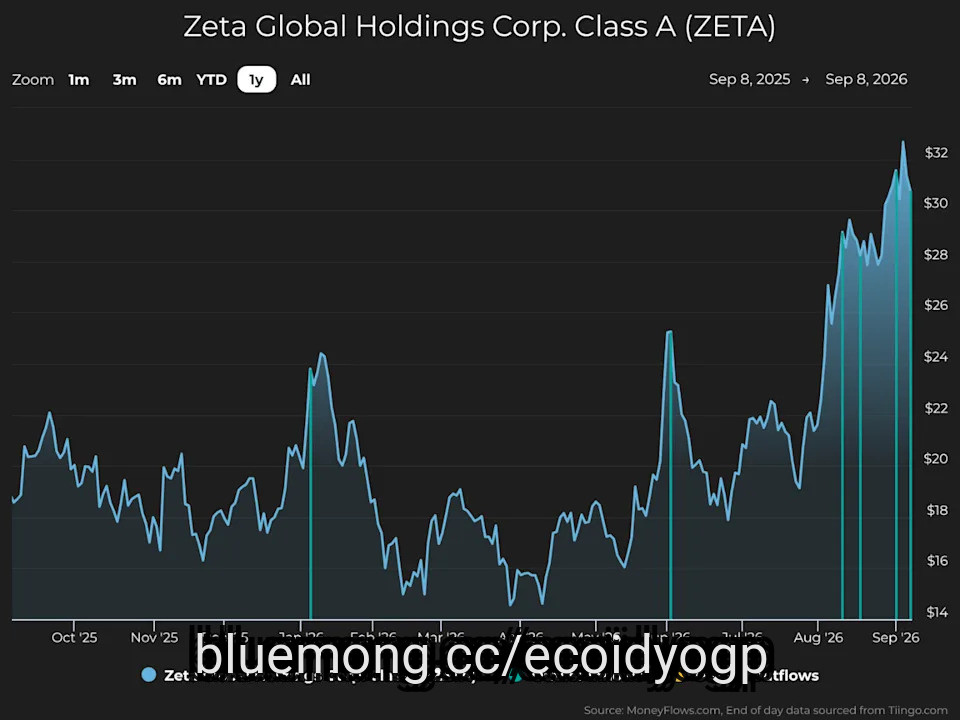
ZETA combines data, AI, automation, and execution into a single platform to turn data into strategic decisions with measurable outcomes – and its initial marketing focus is broadening. The company's second-quarter 2026 report showed $443 million in revenue (a 44% year-over-year gain), adjusted EBITDA of $92 million (a 56% jump), net income of $8.2 million or $0.03 per share (after a loss of nearly $13 million the prior quarter), and offered full-year EPS guidance of $0.11.
It's no wonder ZETA shares are up 51% this year – and they could rise more. MoneyFlows data shows how Big Money investors are once again betting heavily on the forward picture of the stock.
Institutional volumes reveal plenty. In the last year, ZETA has enjoyed strong investor demand, which we believe to be institutional support.
Each green bar signals unusually large volumes in ZETA shares. They reflect our proprietary inflow signal, pushing the stock higher:
Plenty of technology names are under accumulation right now. But there's a powerful fundamental story happening with Zeta Global.
#million #data #institutional #quarter
It's no wonder ZETA shares are up 51% this year – and they could rise more. MoneyFlows data shows how Big Money investors are once again betting heavily on the forward picture of the stock.
Institutional volumes reveal plenty. In the last year, ZETA has enjoyed strong investor demand, which we believe to be institutional support.
Each green bar signals unusually large volumes in ZETA shares. They reflect our proprietary inflow signal, pushing the stock higher:
Plenty of technology names are under accumulation right now. But there's a powerful fundamental story happening with Zeta Global.
#million #data #institutional #quarter

0.00$ raised of 0.00$ goal
0 donations
0.00$
to go
5 days ago
The International League T20 (ILT20) Season 5 was officially launched with a glittering event in Dubai, with fast-bowling legends Brett Lee and Shoaib Akhtar among the star attractions on an evening celebrating the league's rapid rise and growing influence across the Gulf region.
The event brought together leading figures from cricket, sport, business and government, with ILT20 chairman Khalid Al Zarooni and league commissioner, ICC board director and ECB general secretary Mubashshir Usmani highlighting the tournament's contribution to the development and expansion of cricket in the UAE and the wider region.
Al Zarooni reflected on the league's growth while thanking its stakeholders and partners.
"What began as a dream has grown into one of the world's leading cricket leagues, bringing together top players and major franchises, while helping grow cricket in the UAE, the region and beyond," he said.
He also acknowledged the support of franchise owners, commercial and strategic partners, with a special mention for Zee Network, while welcoming SPORTFIVE as a new commercial partner.
A special panel discussion hosted by former New Zealand international Simon Doull explored the changing landscape and future of cricket in the region and globally.
The panel featured Usmani, Dr Mohamed Abu Hamra, Eisa Sharif of the Dubai Sports Council, ZEE Entertainment Enterprises Deputy CEO and CFO Mukund Galgali, SportFive President Venu Nair and Bisleri Global Director Sales & Marketing Tushar Malhotra.
Doull later brought Lee and Shoaib together for another engaging discussion, with the two legendary fast bowlers speaking about the ILT20's growing impact on UAE and regional cricket.
The pair also looked back on their playing careers, recalling an era in which their blistering pace made them two of the most feared fast bowlers in world cricket.
The evening also featured a spell-binding performance by celebrity mentalist Karan Singh Magic, while the league unveiled its new brand identity for Season 5.
Season 5 will be played in November and December across the UAE's three iconic venues — Zayed Cricket Stadium in Abu Dhabi, Dubai International Stadium and Sharjah Cricket Stadium.
Defending champions Desert Vipers will enter the fifth season aiming to retain their crown. Gulf Giants won the inaugural season, followed by MI Emirates in Season 2 and Dubai Capitals in Season 3.
#stadium
The event brought together leading figures from cricket, sport, business and government, with ILT20 chairman Khalid Al Zarooni and league commissioner, ICC board director and ECB general secretary Mubashshir Usmani highlighting the tournament's contribution to the development and expansion of cricket in the UAE and the wider region.
Al Zarooni reflected on the league's growth while thanking its stakeholders and partners.
"What began as a dream has grown into one of the world's leading cricket leagues, bringing together top players and major franchises, while helping grow cricket in the UAE, the region and beyond," he said.
He also acknowledged the support of franchise owners, commercial and strategic partners, with a special mention for Zee Network, while welcoming SPORTFIVE as a new commercial partner.
A special panel discussion hosted by former New Zealand international Simon Doull explored the changing landscape and future of cricket in the region and globally.
The panel featured Usmani, Dr Mohamed Abu Hamra, Eisa Sharif of the Dubai Sports Council, ZEE Entertainment Enterprises Deputy CEO and CFO Mukund Galgali, SportFive President Venu Nair and Bisleri Global Director Sales & Marketing Tushar Malhotra.
Doull later brought Lee and Shoaib together for another engaging discussion, with the two legendary fast bowlers speaking about the ILT20's growing impact on UAE and regional cricket.
The pair also looked back on their playing careers, recalling an era in which their blistering pace made them two of the most feared fast bowlers in world cricket.
The evening also featured a spell-binding performance by celebrity mentalist Karan Singh Magic, while the league unveiled its new brand identity for Season 5.
Season 5 will be played in November and December across the UAE's three iconic venues — Zayed Cricket Stadium in Abu Dhabi, Dubai International Stadium and Sharjah Cricket Stadium.
Defending champions Desert Vipers will enter the fifth season aiming to retain their crown. Gulf Giants won the inaugural season, followed by MI Emirates in Season 2 and Dubai Capitals in Season 3.
#stadium

0.00$ raised of 0.00$ goal
0 donations
0.00$
to go

5 days ago
On August 5, Cytek Biosciences (NASDAQ:CTKB) reported financial results for the second quarter ended June 30, and the report reads like two different companies at once. Revenue climbed, margins widened, and the installed base of instruments kept expanding. At the same time, the net loss more than doubled from a year earlier and adjusted EBITDA swung negative. For a company selling hardware into cell ***** ysis labs, that split between growing revenue and growing losses is the story investors need to untangle.
Total revenue reached $48.1 million in the second quarter of 2026, up 6% from the second quarter of 2025, and the growth came from more than one source. Cytek expanded its installed base to 3,933 instruments as of June 30, 2026, adding 142 units in the quarter, and each new machine tends to pull in service and reagent sales over time. That dynamic already shows up in the numbers: recurring revenue from service and reagents hit $18.5 million in the quarter, and on a trailing 12-month basis it now makes up 35% of total revenue, up from 32% a year earlier.
Gross profit told a similar story, climbing 19% to $28.3 million, with GAAP gross margin rising to 59% from 52% and adjusted gross margin reaching 61% from 56%. Some of that lift came from a one-time tariff refund, but even stripped of it, adjusted gross margin still improved to 56%. Cytek also launched the Borealis, a 7-laser flow cytometer built for 60-color panels, and rolled out more automated configurations of its Aurora Evo line, giving the sales team new hardware to sell into the rest of 2026. Full-year revenue guidance moved up to a range of $207 million to $212 million, raising the midpoint by $1 million.
The same quarter that grew revenue also widened the losses. Operating expenses rose 15% year over year to $39.7 million, with general and administrative costs jumping 24% to $16.8 million because of litigation-related expenses, severance, and other personnel costs. R&D spending grew 10% to $9.7 million, and sales and marketing rose 9% to $13.2 million, so the increase was not confined to one line item. The loss from operations widened to $11.4 million from $10.6 million a year earlier, and net loss more than doubled to $12.2 million from $5.6 million.
Adjusted EBITDA, which strips out stock-based compensation and currency swings, swung to a $1.5 million loss from a positive $1.3 million a year earlier, after also adjusting for a write-off tied to an early-stage technology investment. The tariff refund that boosted this quarter's headline gross margin also means the underlying figures, 53% GAAP and 56% adjusted, are the more honest baseline going forward. Cash and marketable securities held roughly flat at $262.0 million as of June 30, 2026, down only slightly from $262.2 million three months earlier, so the balance sheet has not yet felt the strain.
#quarter #adjusted
Total revenue reached $48.1 million in the second quarter of 2026, up 6% from the second quarter of 2025, and the growth came from more than one source. Cytek expanded its installed base to 3,933 instruments as of June 30, 2026, adding 142 units in the quarter, and each new machine tends to pull in service and reagent sales over time. That dynamic already shows up in the numbers: recurring revenue from service and reagents hit $18.5 million in the quarter, and on a trailing 12-month basis it now makes up 35% of total revenue, up from 32% a year earlier.
Gross profit told a similar story, climbing 19% to $28.3 million, with GAAP gross margin rising to 59% from 52% and adjusted gross margin reaching 61% from 56%. Some of that lift came from a one-time tariff refund, but even stripped of it, adjusted gross margin still improved to 56%. Cytek also launched the Borealis, a 7-laser flow cytometer built for 60-color panels, and rolled out more automated configurations of its Aurora Evo line, giving the sales team new hardware to sell into the rest of 2026. Full-year revenue guidance moved up to a range of $207 million to $212 million, raising the midpoint by $1 million.
The same quarter that grew revenue also widened the losses. Operating expenses rose 15% year over year to $39.7 million, with general and administrative costs jumping 24% to $16.8 million because of litigation-related expenses, severance, and other personnel costs. R&D spending grew 10% to $9.7 million, and sales and marketing rose 9% to $13.2 million, so the increase was not confined to one line item. The loss from operations widened to $11.4 million from $10.6 million a year earlier, and net loss more than doubled to $12.2 million from $5.6 million.
Adjusted EBITDA, which strips out stock-based compensation and currency swings, swung to a $1.5 million loss from a positive $1.3 million a year earlier, after also adjusting for a write-off tied to an early-stage technology investment. The tariff refund that boosted this quarter's headline gross margin also means the underlying figures, 53% GAAP and 56% adjusted, are the more honest baseline going forward. Cash and marketable securities held roughly flat at $262.0 million as of June 30, 2026, down only slightly from $262.2 million three months earlier, so the balance sheet has not yet felt the strain.
#quarter #adjusted

0.00$ raised of 0.00$ goal
0 donations
0.00$
to go
5 days ago
Tina Knowles has shown she is a woman of many hats, and she's doubling down, starring in her first solo luxury fashion campaign.
The businesswoman, designer and mother of both Beyoncé and Solange Knowles made her luxury fashion campaign debut in American luxury heritage house St. John by Humberto Leon Fall 2026 capsule collection, released Sept. 10. The collection is now available at stjohnsknits.com
The collection serves as the inaugural campaign by Leon the brand's newly appointed creative director. He is the co-founder of the fashion brand Opening Ceremony and former co-creative director of Kenzo.
"St. John is a brand that exemplifies American luxury, and its unique perspective shaped the way I looked at fashion. I was always drawn to the mother-daughter bond at its core, and its iconic marketing which paired Marie Gray's dedication to knitwear with her daughter Kelly's edge. Today, that legacy is reflected not only in its excellence in design, but in the way its clothes make women of all generations feel. It's been thrilling to dive into St. John's incredible history, and I look forward to taking it to new and unexpected places," Leon said in a statement.
For the campaign, Knowles shows off her sense of style as she poses in various pieces from the collection, which features reimagined knitwear, capri pants, archival jewelry and more.
#creative
The businesswoman, designer and mother of both Beyoncé and Solange Knowles made her luxury fashion campaign debut in American luxury heritage house St. John by Humberto Leon Fall 2026 capsule collection, released Sept. 10. The collection is now available at stjohnsknits.com
The collection serves as the inaugural campaign by Leon the brand's newly appointed creative director. He is the co-founder of the fashion brand Opening Ceremony and former co-creative director of Kenzo.
"St. John is a brand that exemplifies American luxury, and its unique perspective shaped the way I looked at fashion. I was always drawn to the mother-daughter bond at its core, and its iconic marketing which paired Marie Gray's dedication to knitwear with her daughter Kelly's edge. Today, that legacy is reflected not only in its excellence in design, but in the way its clothes make women of all generations feel. It's been thrilling to dive into St. John's incredible history, and I look forward to taking it to new and unexpected places," Leon said in a statement.
For the campaign, Knowles shows off her sense of style as she poses in various pieces from the collection, which features reimagined knitwear, capri pants, archival jewelry and more.
#creative


0.00$ raised of 0.00$ goal
0 donations
0.00$
to go

5 days ago
Our ****** ysts just identified a stock with the potential to be the next Nvidia. Tell us how you invest and we'll show you why it's our #1 pick. Tap here.
Transitioned from a brand-centric to a function-based organization to create clear accountability across marketing, merchandising, and digital experience teams.
Achieved the original $50 million two-year cost savings target within one year by improving marketing efficiency and streamlining internal operations.
Prioritized revenue contribution margin over top-line growth in fiscal 2026, intentionally reducing marketing spend that did not meet incrementality or profitability thresholds.
Consolidated the digital ecosystem by moving low-traffic standalone websites into categories within flagship platforms like Harry & David to leverage scale and improve efficiency.
#achieved
Transitioned from a brand-centric to a function-based organization to create clear accountability across marketing, merchandising, and digital experience teams.
Achieved the original $50 million two-year cost savings target within one year by improving marketing efficiency and streamlining internal operations.
Prioritized revenue contribution margin over top-line growth in fiscal 2026, intentionally reducing marketing spend that did not meet incrementality or profitability thresholds.
Consolidated the digital ecosystem by moving low-traffic standalone websites into categories within flagship platforms like Harry & David to leverage scale and improve efficiency.
#achieved

0.00$ raised of 0.00$ goal
0 donations
0.00$
to go
7 days ago
Marathon Petroleum Corporation (MPC) is a leading U.S. downstream and midstream energy company headquartered in Findlay, Ohio. Valued at a market cap of $113.5 billion, its business centers on refining crude oil into fuels, distributing petroleum products, and operating the infrastructure that moves and stores energy.
Companies valued at $10 billion or more are typically classified as "large-cap stocks," and MPC fits the label perfectly, with its market cap exceeding this threshold, underscoring its size, influence, and dominance within the oil & gas refining & marketing industry. Its market leadership stems from its large, integrated refining system, strategic midstream ***** ets, and disciplined capital allocation. Its refineries are connected through pipelines, terminals, and marine transportation, allowing the company to optimize crude sourcing, product flows, and regional demand.
How to Play SNPS Stock as Layoffs Hit Synopsys
Micron Stock More Than Tripled in 2026. Now Taiwan Strike Threat Could Shake the AI Boom.
Dear Adobe Stock Fans, Mark Your Calendars for September 10
#petroleum #midstream #billion
Companies valued at $10 billion or more are typically classified as "large-cap stocks," and MPC fits the label perfectly, with its market cap exceeding this threshold, underscoring its size, influence, and dominance within the oil & gas refining & marketing industry. Its market leadership stems from its large, integrated refining system, strategic midstream ***** ets, and disciplined capital allocation. Its refineries are connected through pipelines, terminals, and marine transportation, allowing the company to optimize crude sourcing, product flows, and regional demand.
How to Play SNPS Stock as Layoffs Hit Synopsys
Micron Stock More Than Tripled in 2026. Now Taiwan Strike Threat Could Shake the AI Boom.
Dear Adobe Stock Fans, Mark Your Calendars for September 10
#petroleum #midstream #billion



7 days ago
Sophie Rain defines the image she offers subscribers as performance, denying her private choice as part of her marketing strategy.
In an interview for Where Is The Buzz, the owner of the multimillion-dollar business was asked about the strangeness of her separation between her product and her private life, since she mentioned on a talk show hosted by Bill Maher that she had never been in a relationship.
Rain understands the question's context.
"I understand why it sounds like a contradiction, but what I share online is still a performance," she said.
She describes her relationship with the audience narrowly.
#performance #sophie #buzz #defines
In an interview for Where Is The Buzz, the owner of the multimillion-dollar business was asked about the strangeness of her separation between her product and her private life, since she mentioned on a talk show hosted by Bill Maher that she had never been in a relationship.
Rain understands the question's context.
"I understand why it sounds like a contradiction, but what I share online is still a performance," she said.
She describes her relationship with the audience narrowly.
#performance #sophie #buzz #defines


7 days ago
When a subject has been as exhaustively covered — and as infamous — as Elon Musk, the electric-car-entrepreneur-turned-rocket-man-turned-richest-billionaire-in-the-universe-turned-Twitter-disruptor-turned-DOGE-destroyer-turned-God-only-knows-what-he'll-do-next, reviews of a documentary about him tend to lead by plucking out the film's incendiary bits of investigative reportage, the ones that feel worthy of a news headline. "Musk," Alex Gibney's 3-hour-and-45-minute documentary about the tech bro who would be king, has a handful of those.
The biggest revelation, to me, was the film's detailed history of Musk's attempt to put a self-driving car on the market — a technology that's sure to be here at some point, though Musk, in his race to be first, was far too eager to announce that it had already happened. Tesla released its Autopilot driver-assist system in 2015 (and then the Full Self-Driving Beta program in 2020), marketing the new technology with ads that exaggerated the car's powers. And so people were suckered. From the outset, there were accidents. More than 60 fatalities have been linked to Tesla's driver-assistance systems. Talk about something that could put a dent in your image! But Musk, for the most part, succeeded in hushing up the lawsuits, the federal investigations, and the fatal crashes, which were evidence of a recklessness that should have given the whole world pause.
More from Variety
Elon Musk's Ex Ashley St. Clair on Rejecting a $40 Million NDA and Participating in 'Musk' Doc: 'I Hope the Risk in Trying to Fight Back Helps a Little Bit'
Elon Musk Documentary Teaser Asks If Billionaire Is the 'Greatest Living Inventor' or a 'Fascist' Who 'Has Lost His Mind'
#twitter
The biggest revelation, to me, was the film's detailed history of Musk's attempt to put a self-driving car on the market — a technology that's sure to be here at some point, though Musk, in his race to be first, was far too eager to announce that it had already happened. Tesla released its Autopilot driver-assist system in 2015 (and then the Full Self-Driving Beta program in 2020), marketing the new technology with ads that exaggerated the car's powers. And so people were suckered. From the outset, there were accidents. More than 60 fatalities have been linked to Tesla's driver-assistance systems. Talk about something that could put a dent in your image! But Musk, for the most part, succeeded in hushing up the lawsuits, the federal investigations, and the fatal crashes, which were evidence of a recklessness that should have given the whole world pause.
More from Variety
Elon Musk's Ex Ashley St. Clair on Rejecting a $40 Million NDA and Participating in 'Musk' Doc: 'I Hope the Risk in Trying to Fight Back Helps a Little Bit'
Elon Musk Documentary Teaser Asks If Billionaire Is the 'Greatest Living Inventor' or a 'Fascist' Who 'Has Lost His Mind'

7 days ago
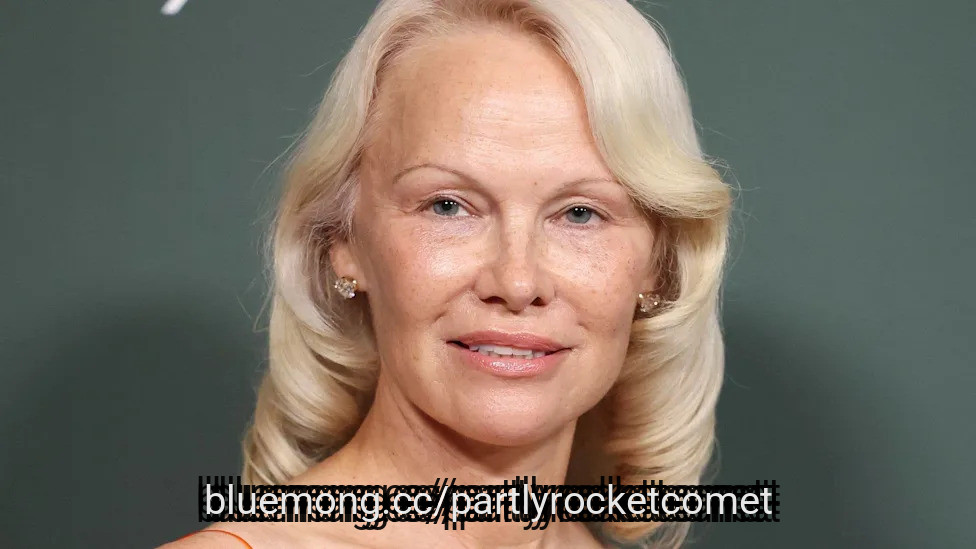
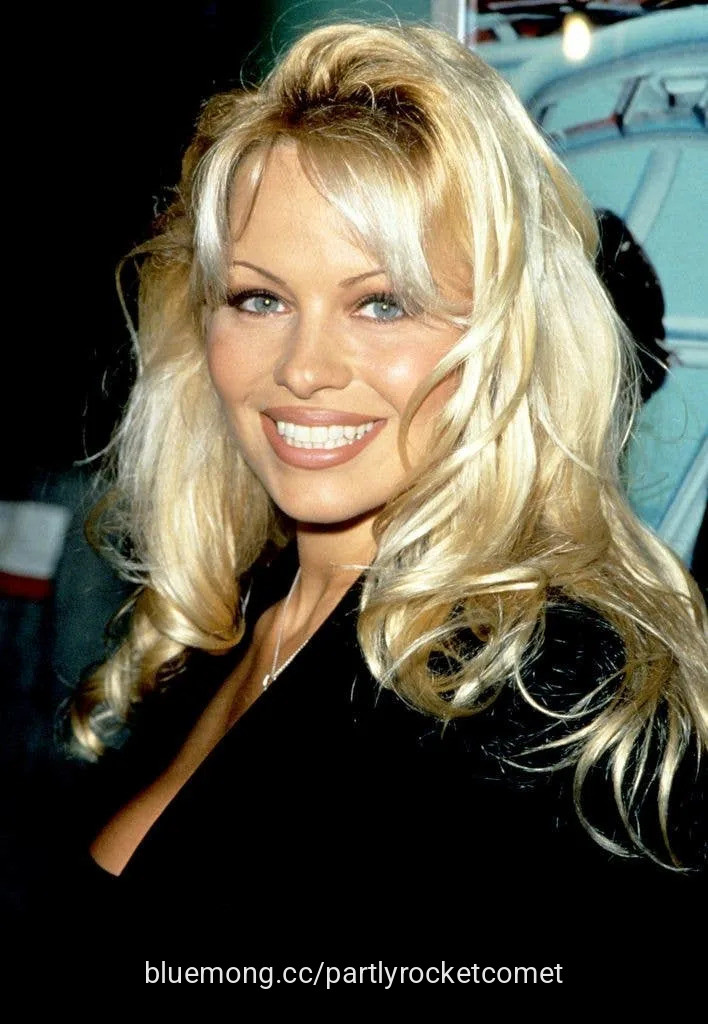
Let's be brutally honest, ladies. If someone had told us back in 1996 that Pamela Anderson - the slow-motion running, red-swimsuit-wearing, ultimate 90s bombshell - would one day become our leading philosophical guru for embracing midlife, we probably would have choked on our Diet ******* es. But here we are, fiercely navigating our own second acts, and surprisingly, it's Pam who is serving up exactly the kind of rebellious, bare-faced wisdom we didn't know we desperately needed.
Pamela Anderson keeps her makeup-free philosophy as she attends the amfAR Gala Venezia 2026 (@ Getty Images for amfAR)
Who can forget that Pamela was the poster girl for an impossible standard of hyper-glamorous beauty. With the heavy lip liner, bleach, and frosted eyeshadow, she really went for the more-is-more approach to beauty. But in more recent years? She has gloriously changed tack. She has stepped onto the world's most heavily photographed, judgmental red carpet arenas completely makeup-free (or minimally made-up sometimes). She lets her freckles shine, her fine lines show, and her natural skin breathe. And honestly, the collective sigh of relief from women over 50 could be heard from ******* e.
Pamela Anderson went for a more is more approach back in the nineties (@ WireImage)
Because let's face it: the 'anti-ageing' industry is downright exhausting. We are constantly bombarded with marketing campaigns telling us to freeze, fill, lift, and aggressively scrub away every single sign that we have actually had the audacity to live past our fortieth birthdays. It's a relentless, outrageously expensive treadmill. We are commanded to fight aging as if it's a disease, rather than the profound privilege it actually is.
#makeup #free #amfar
Pamela Anderson keeps her makeup-free philosophy as she attends the amfAR Gala Venezia 2026 (@ Getty Images for amfAR)
Who can forget that Pamela was the poster girl for an impossible standard of hyper-glamorous beauty. With the heavy lip liner, bleach, and frosted eyeshadow, she really went for the more-is-more approach to beauty. But in more recent years? She has gloriously changed tack. She has stepped onto the world's most heavily photographed, judgmental red carpet arenas completely makeup-free (or minimally made-up sometimes). She lets her freckles shine, her fine lines show, and her natural skin breathe. And honestly, the collective sigh of relief from women over 50 could be heard from ******* e.
Pamela Anderson went for a more is more approach back in the nineties (@ WireImage)
Because let's face it: the 'anti-ageing' industry is downright exhausting. We are constantly bombarded with marketing campaigns telling us to freeze, fill, lift, and aggressively scrub away every single sign that we have actually had the audacity to live past our fortieth birthdays. It's a relentless, outrageously expensive treadmill. We are commanded to fight aging as if it's a disease, rather than the profound privilege it actually is.
#makeup #free #amfar

7 days ago
While all drugs sold to American consumers face a rigorous approval process, that's not the case when it comes to supplements. The Food and Drug Administration (FDA) does not approve supplements, and while there are some limits to the claims that can be made by companies in this ******* e, there's a fair amount of latitude.
"The manufacturer must have substantiation that the claim is truthful and not misleading and must submit a notification with the text of the claim to FDA no later than 30 days after marketing the dietary supplement with the claim. If a dietary supplement label includes such a claim, it must state in a 'disclaimer' that FDA has not evaluated the claim," according to the FDA website.
Supplement makers can make certain structure/function claims without FDA preapproval, as long as they have substantiation that the claims are truthful and not misleading, and that they meet the agency's other requirements.
"The disclaimer must also state that the dietary supplement product is not intended to 'diagnose, treat, cure or prevent any disease,' because only a drug can legally make such a claim," the federal agency shared.
It's a legal grey area that allows supplements to advertise that they can help with fitness, hair growth, sleep, and your ability to focus.
#claims #dietary
"The manufacturer must have substantiation that the claim is truthful and not misleading and must submit a notification with the text of the claim to FDA no later than 30 days after marketing the dietary supplement with the claim. If a dietary supplement label includes such a claim, it must state in a 'disclaimer' that FDA has not evaluated the claim," according to the FDA website.
Supplement makers can make certain structure/function claims without FDA preapproval, as long as they have substantiation that the claims are truthful and not misleading, and that they meet the agency's other requirements.
"The disclaimer must also state that the dietary supplement product is not intended to 'diagnose, treat, cure or prevent any disease,' because only a drug can legally make such a claim," the federal agency shared.
It's a legal grey area that allows supplements to advertise that they can help with fitness, hair growth, sleep, and your ability to focus.
#claims #dietary

7 days ago
CNBC and Reuters reported that The Gap, Inc. (NYSE:GAP) named retail veteran Michael Francis as president and CEO of Old Navy, effective November 2, succeeding Haio Barbeito, who will move into an advisory role.
The announcement came alongside second-quarter results showing Old Navy net sales fell 4% year over year to $2.1 billion, with comparable sales down 4% versus ******* ysts' expected 2.4% decline, marking the brand's first negative comp in 12 quarters. Old Navy contributes nearly 60% of Gap's total revenue. CEO Richard ******* son attributed the miss partly to summer marketing that "lacked a direct product message" but said the brand has already seen "significant improvement" in traffic and sales over the past month. Gap's namesake brand posted 10% comparable sales growth in the same quarter, and Gap shares jumped as much as 14% after the report.
Northfoto / Shutterstock.com
Overall profitability far exceeded what the sales headline suggests since operating income more than doubled to $676 million from $292 million a year earlier, while net income more than doubled to $501 million from $216 million. These results show that Gap can significantly improve earnings even while Old Navy struggles.
The turnaround playbook is clearly working where it has been fully applied. The Gap, Inc. (NYSE:GAP)'s namesake brand delivered double-digit comparable sales growth this quarter. It shows that CEO ******* son's broader strategy can succeed decisively when executed well, which strengthens confidence that it can eventually be applied successfully to fix Old Navy too.
#sales #million #quarter #NYSE
The announcement came alongside second-quarter results showing Old Navy net sales fell 4% year over year to $2.1 billion, with comparable sales down 4% versus ******* ysts' expected 2.4% decline, marking the brand's first negative comp in 12 quarters. Old Navy contributes nearly 60% of Gap's total revenue. CEO Richard ******* son attributed the miss partly to summer marketing that "lacked a direct product message" but said the brand has already seen "significant improvement" in traffic and sales over the past month. Gap's namesake brand posted 10% comparable sales growth in the same quarter, and Gap shares jumped as much as 14% after the report.
Northfoto / Shutterstock.com
Overall profitability far exceeded what the sales headline suggests since operating income more than doubled to $676 million from $292 million a year earlier, while net income more than doubled to $501 million from $216 million. These results show that Gap can significantly improve earnings even while Old Navy struggles.
The turnaround playbook is clearly working where it has been fully applied. The Gap, Inc. (NYSE:GAP)'s namesake brand delivered double-digit comparable sales growth this quarter. It shows that CEO ******* son's broader strategy can succeed decisively when executed well, which strengthens confidence that it can eventually be applied successfully to fix Old Navy too.
#sales #million #quarter #NYSE

8 days ago
CNBC reported that Apple Inc. (NASDAQ:AAPL) announced new Mac Mini and Mac Studio models with updated chips built for AI workloads.
The Mac Mini now offers Apple's new M6 chip, its first built on a 2-nanometer process, or an M5 Pro, and starts at $899, up from $799 for the prior model. Apple says the M6 delivers 4 times faster AI performance and 2 times faster graphics than the M4 model it replaces, while the M5 Pro can process large language model prompts up to 8.5 times faster than the M2 Pro version. The Mac Studio now starts at $2,499 with the M5 Max chip or $5,499 with the new M5 Ultra, up from $5,299 for the prior Ultra model, and multiple M5 Ultra units can be linked together to pool memory for running large AI models. "With these frameworks and new chips, developers can run and fine-tune large AI models locally on their Mac," Apple said. Preorders opened Tuesday, with units shipping September 22.
The performance gains here are substantial, not incremental. The M6 chip delivers 4 times faster AI performance and is Apple Inc. (NASDAQ:AAPL)'s first chip built on a 2-nanometer process. The M5 Pro configuration processes large language model prompts 8.5 times faster than the model it replaces, Apple's own specifications show, giving Apple genuine technical claims to back its AI-focused marketing.
Apple is showing pricing power even as component costs rise industry-wide. Despite memory and silicon shortages pushing costs higher across the industry, Apple raised prices on both product lines rather than absorbing the cost pressure itself. It is a sign the company believes demand can bear higher price points.
These desktops are becoming more strategically important to Apple than their revenue alone suggests. It shows how Mac desktops have become a foothold in the AI development world for Apple. It is a showcase for its custom silicon that can influence which platform developers build AI tools on and an ecosystem benefit that extends beyond the sale of any individual machine.
#faster #chip #ultra
The Mac Mini now offers Apple's new M6 chip, its first built on a 2-nanometer process, or an M5 Pro, and starts at $899, up from $799 for the prior model. Apple says the M6 delivers 4 times faster AI performance and 2 times faster graphics than the M4 model it replaces, while the M5 Pro can process large language model prompts up to 8.5 times faster than the M2 Pro version. The Mac Studio now starts at $2,499 with the M5 Max chip or $5,499 with the new M5 Ultra, up from $5,299 for the prior Ultra model, and multiple M5 Ultra units can be linked together to pool memory for running large AI models. "With these frameworks and new chips, developers can run and fine-tune large AI models locally on their Mac," Apple said. Preorders opened Tuesday, with units shipping September 22.
The performance gains here are substantial, not incremental. The M6 chip delivers 4 times faster AI performance and is Apple Inc. (NASDAQ:AAPL)'s first chip built on a 2-nanometer process. The M5 Pro configuration processes large language model prompts 8.5 times faster than the model it replaces, Apple's own specifications show, giving Apple genuine technical claims to back its AI-focused marketing.
Apple is showing pricing power even as component costs rise industry-wide. Despite memory and silicon shortages pushing costs higher across the industry, Apple raised prices on both product lines rather than absorbing the cost pressure itself. It is a sign the company believes demand can bear higher price points.
These desktops are becoming more strategically important to Apple than their revenue alone suggests. It shows how Mac desktops have become a foothold in the AI development world for Apple. It is a showcase for its custom silicon that can influence which platform developers build AI tools on and an ecosystem benefit that extends beyond the sale of any individual machine.
#faster #chip #ultra


8 days ago
While all drugs sold to American consumers face a rigorous approval process, that's not the case when it comes to supplements. The Food and Drug Administration (FDA) does not approve supplements, and while there are some limits to the claims that can be made by companies in this **** e, there's a fair amount of latitude.
"The manufacturer must have substantiation that the claim is truthful and not misleading and must submit a notification with the text of the claim to FDA no later than 30 days after marketing the dietary supplement with the claim. If a dietary supplement label includes such a claim, it must state in a 'disclaimer' that FDA has not evaluated the claim," according to the FDA website.
Supplement makers can make certain structure/function claims without FDA preapproval, as long as they have substantiation that the claims are truthful and not misleading, and that they meet the agency's other requirements.
"The disclaimer must also state that the dietary supplement product is not intended to 'diagnose, treat, cure or prevent any disease,' because only a drug can legally make such a claim," the federal agency shared.
It's a legal grey area that allows supplements to advertise that they can help with fitness, hair growth, sleep, and your ability to focus.
#must #drug #substantiation
"The manufacturer must have substantiation that the claim is truthful and not misleading and must submit a notification with the text of the claim to FDA no later than 30 days after marketing the dietary supplement with the claim. If a dietary supplement label includes such a claim, it must state in a 'disclaimer' that FDA has not evaluated the claim," according to the FDA website.
Supplement makers can make certain structure/function claims without FDA preapproval, as long as they have substantiation that the claims are truthful and not misleading, and that they meet the agency's other requirements.
"The disclaimer must also state that the dietary supplement product is not intended to 'diagnose, treat, cure or prevent any disease,' because only a drug can legally make such a claim," the federal agency shared.
It's a legal grey area that allows supplements to advertise that they can help with fitness, hair growth, sleep, and your ability to focus.
#must #drug #substantiation


8 days ago
On August 6, Xponential Fitness (NYSE:XPOF) reported results for the second quarter ended June 30, and the numbers came in well short of where the boutique-fitness franchisor wanted to be. Revenue fell 13% year over year to $66 million, and the company swung to a net loss of $4.8 million after posting net income in the same period last year. CEO Mike Nuzzo said the quarter came in "below expectations." The bigger story sits in the outlook section, where the company trimmed nearly every full-year target it had set.
Despite the weak headline numbers, Xponential kept adding to its network. The company opened 67 gross new studios and sold 53 franchise licenses during the quarter, a sign that franchisee demand for its brands hasn't disappeared. North America system-wide sales held essentially flat at $437.3 million, which means new locations are offsetting some of the softness at existing studios rather than the whole system contracting. Even after cutting its 2026 targets, the company still expects to open roughly 150 net new studios for the year and generate North America system-wide sales of $1.7 billion to $1.75 billion. Full-year adjusted EBITDA guidance, while lowered, still points to $91 million to $97 million, meaning the business is still projected to be solidly profitable on that measure.
The details underneath the topline number are worse than the revenue decline alone suggests. North America same-store sales fell 6.8%, a sharp reversal from 2.4% growth in the same period a year earlier, and the quarterly run-rate average unit volume dropped to $659,000 from $686,000. Franchise revenue slipped 3% to $44 million on that same-store weakness plus brand divestitures completed in 2025, while equipment revenue dropped 26% to $7.1 million as fewer studio openings and license sales meant fewer installations. Merchandise revenue nearly vanished, falling 90% to $0.5 million as the company shifted from an in-house wholesale model to an outsourced retail arrangement, a transition it admitted came with its own challenges.
Costs moved the wrong direction too, with selling, general and administrative expenses up 33% to $32 million on higher legal expenses, and marketing fund expenses up 29% to $11.4 million. Adjusted EBITDA fell 22% to $21.9 million, and adjusted net income collapsed to $0.8 million from $14.5 million a year earlier. The balance sheet adds another concern, with just $25 million in cash, cash equivalents, and restricted cash against $522.4 million in total long-term debt, and $25.7 million in cash used in operating activities during the quarter. Management responded by cutting full-year revenue guidance to $250 million to $260 million, a 19% decline at the midpoint from 2025 and down from a prior forecast of $260 million to $270 million.
#million #quarter #north #sales
Despite the weak headline numbers, Xponential kept adding to its network. The company opened 67 gross new studios and sold 53 franchise licenses during the quarter, a sign that franchisee demand for its brands hasn't disappeared. North America system-wide sales held essentially flat at $437.3 million, which means new locations are offsetting some of the softness at existing studios rather than the whole system contracting. Even after cutting its 2026 targets, the company still expects to open roughly 150 net new studios for the year and generate North America system-wide sales of $1.7 billion to $1.75 billion. Full-year adjusted EBITDA guidance, while lowered, still points to $91 million to $97 million, meaning the business is still projected to be solidly profitable on that measure.
The details underneath the topline number are worse than the revenue decline alone suggests. North America same-store sales fell 6.8%, a sharp reversal from 2.4% growth in the same period a year earlier, and the quarterly run-rate average unit volume dropped to $659,000 from $686,000. Franchise revenue slipped 3% to $44 million on that same-store weakness plus brand divestitures completed in 2025, while equipment revenue dropped 26% to $7.1 million as fewer studio openings and license sales meant fewer installations. Merchandise revenue nearly vanished, falling 90% to $0.5 million as the company shifted from an in-house wholesale model to an outsourced retail arrangement, a transition it admitted came with its own challenges.
Costs moved the wrong direction too, with selling, general and administrative expenses up 33% to $32 million on higher legal expenses, and marketing fund expenses up 29% to $11.4 million. Adjusted EBITDA fell 22% to $21.9 million, and adjusted net income collapsed to $0.8 million from $14.5 million a year earlier. The balance sheet adds another concern, with just $25 million in cash, cash equivalents, and restricted cash against $522.4 million in total long-term debt, and $25.7 million in cash used in operating activities during the quarter. Management responded by cutting full-year revenue guidance to $250 million to $260 million, a 19% decline at the midpoint from 2025 and down from a prior forecast of $260 million to $270 million.
#million #quarter #north #sales


9 days ago
With a market cap of $1.91 trillion, ****** eX is among the most valuable companies in the world.
SpaceX (SPCX) listed on the Nasdaq in June 2026, raising over $75 billion in its initial public offering.
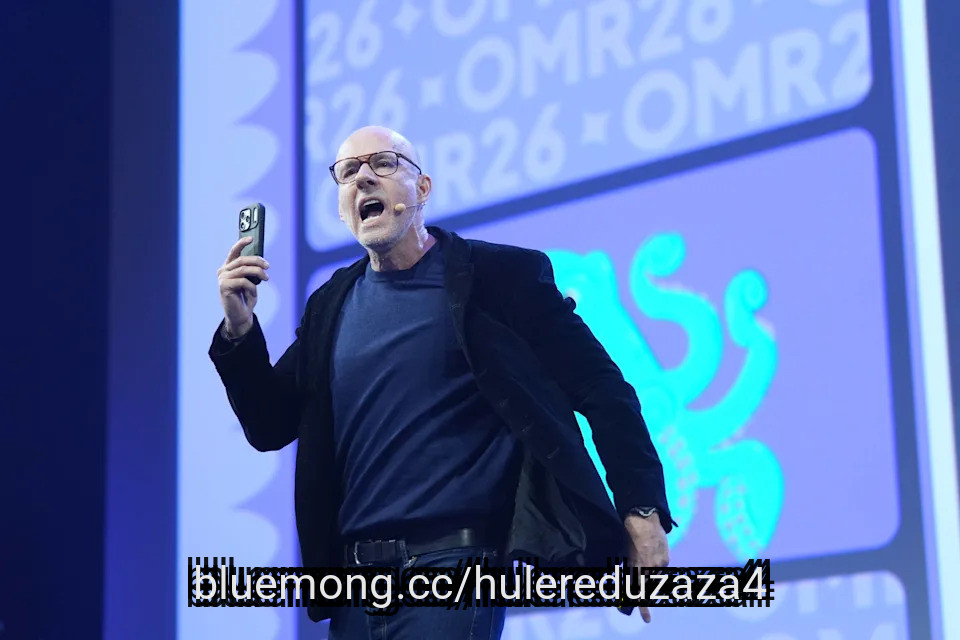
Last month, New York University marketing professor Scott Galloway said Wall Street has gotten the math badly wrong on ****** eX, and he is not shy about putting a number on just how wrong.
In a recent podcast, Galloway said that ****** eX shares are worth somewhere between $10 and $30.
At the time of writing, SPCX stock trades at $148, which means Galloway believes the stock could fall 80% from current levels without undervaluing the company.
#galloway #spcx #Stock #NASDAQ
SpaceX (SPCX) listed on the Nasdaq in June 2026, raising over $75 billion in its initial public offering.
Last month, New York University marketing professor Scott Galloway said Wall Street has gotten the math badly wrong on ****** eX, and he is not shy about putting a number on just how wrong.
In a recent podcast, Galloway said that ****** eX shares are worth somewhere between $10 and $30.
At the time of writing, SPCX stock trades at $148, which means Galloway believes the stock could fall 80% from current levels without undervaluing the company.
#galloway #spcx #Stock #NASDAQ
9 days ago
Coca-Cola (NYSE: KO) is one of the best-known companies in the world, thanks to its namesake beverage brand, so it needs little introduction. However, what's most impressive right now is the stock's performance. It is up 28% over the past year, as of this writing. The average consumer staples stock is only up 5% over that span. Even the S&P 500 index (SNPINDEX: ^GSPC) is "only" up 20%. After a run like that, is Coca-Cola a buy, hold, or sell?
Coca-Cola is a well-run business. It is one of the world's largest consumer staples companies. It is globally diversified and has industry-leading capabilities in distribution, marketing, and innovation. The company's fundamental strength is evident in its status as a Dividend King, with 64 consecutive annual dividend increases. The only consumer staples peer with a better record is Procter & Gamble (NYSE: PG), but P&G doesn't make food. So, Coca-Cola is the food company with the best dividend record.
Missed Nvidia in 2009? This Rare Signal Is Flashing Again. In 2009, a "Double Down" signal flashed for a little-known chipmaker called Nvidia. For the first time in years, that same "Total Conviction" signal is flashing for a company 1/100th the size of Nvidia. Continue »
If you want to own industry-leading businesses, Coca-Cola should be on your short list. And, with an above-market yield of 2.4%, you could easily justify adding it to your portfolio. That's particularly true given recent results, with organic revenue growth of 6% in the second quarter of 2026, even as consumers tighten their belts. In fact, Coca-Cola raised its full-year guidance despite the broader food industry's struggles.
Certainly, if you have owned Coca-Cola for years, selling it right when it is performing so well as a business probably isn't something you should be considering. Unless, of course, the stock's valuation was running ahead of its historical norms. But that's not the case.
#staples
Coca-Cola is a well-run business. It is one of the world's largest consumer staples companies. It is globally diversified and has industry-leading capabilities in distribution, marketing, and innovation. The company's fundamental strength is evident in its status as a Dividend King, with 64 consecutive annual dividend increases. The only consumer staples peer with a better record is Procter & Gamble (NYSE: PG), but P&G doesn't make food. So, Coca-Cola is the food company with the best dividend record.
Missed Nvidia in 2009? This Rare Signal Is Flashing Again. In 2009, a "Double Down" signal flashed for a little-known chipmaker called Nvidia. For the first time in years, that same "Total Conviction" signal is flashing for a company 1/100th the size of Nvidia. Continue »
If you want to own industry-leading businesses, Coca-Cola should be on your short list. And, with an above-market yield of 2.4%, you could easily justify adding it to your portfolio. That's particularly true given recent results, with organic revenue growth of 6% in the second quarter of 2026, even as consumers tighten their belts. In fact, Coca-Cola raised its full-year guidance despite the broader food industry's struggles.
Certainly, if you have owned Coca-Cola for years, selling it right when it is performing so well as a business probably isn't something you should be considering. Unless, of course, the stock's valuation was running ahead of its historical norms. But that's not the case.
#staples

10 days ago
Chief Executive David Steinberg cracked some XL-sized eggs before hatching Zeta Global (ZETA) and building it up into a soaring and swooping AI marketing stock. Just this year, Zeta shares have climbed more than 50%.
His prior company, InPhonic, drew condemnation from a Better Business Bureau chief executive, prized growth over profits, faced regulatory charges and landed in bankruptcy court. After it delisted, it seems the serial founder was ***** -bent on constructing its foil.
That's Zeta. Early on, it was apparently so bottom-line focused that venture capitalists deemed it "too profitable" to invest. Steinberg and his partners initially self-funded it.
Zeta is now a rising marketing and advertising platform — with partners such as Palantir (PLTR) and OpenAI, and an AI bot named after a Greek goddess.
Wall Street expects Zeta's revenue growth to accelerate. After rising an average of 30.3% over the past three years, ***** ysts see 39% growth this year, to $1.82 billion, per FactSet. They also anticipate rising quarterly profits, including $12.5 million in the third quarter and $22.4 million in the fourth, with a dip attributable to seasonality the following quarter.
#partners
His prior company, InPhonic, drew condemnation from a Better Business Bureau chief executive, prized growth over profits, faced regulatory charges and landed in bankruptcy court. After it delisted, it seems the serial founder was ***** -bent on constructing its foil.
That's Zeta. Early on, it was apparently so bottom-line focused that venture capitalists deemed it "too profitable" to invest. Steinberg and his partners initially self-funded it.
Zeta is now a rising marketing and advertising platform — with partners such as Palantir (PLTR) and OpenAI, and an AI bot named after a Greek goddess.
Wall Street expects Zeta's revenue growth to accelerate. After rising an average of 30.3% over the past three years, ***** ysts see 39% growth this year, to $1.82 billion, per FactSet. They also anticipate rising quarterly profits, including $12.5 million in the third quarter and $22.4 million in the fourth, with a dip attributable to seasonality the following quarter.
#partners
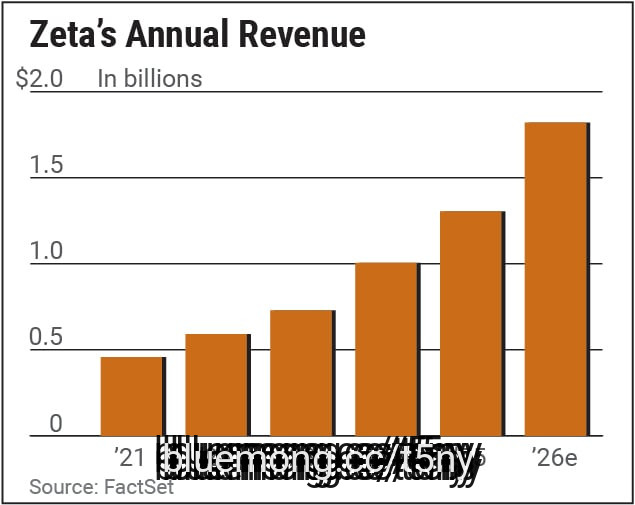

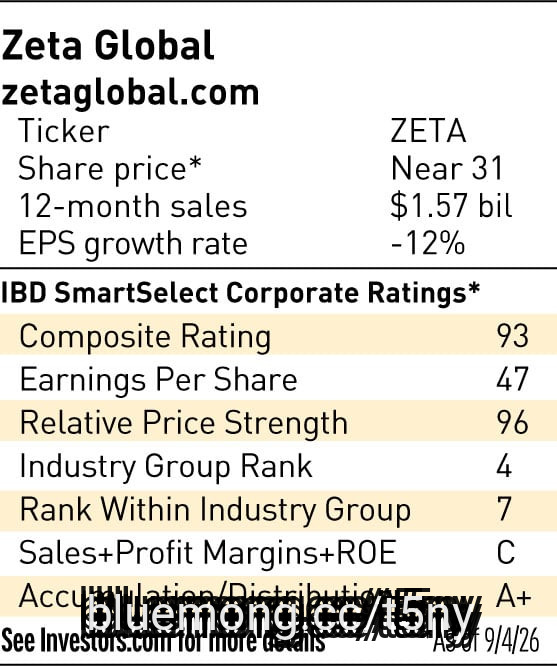

10 days ago
September 4 delivered a stark rotation. Memory, connectivity, chip-equipment, and power stocks rallied while Adobe fell 6.7% and Palantir dropped 4.5%. Adobe's decline followed news that Anil Chakravarthy will become chief executive on December 1, while Palantir faced a broader move away from richly valued software. Adobe Inc. (NASDAQ:ADBE) and Palantir Technologies Inc. (NASDAQ:PLTR) test whether investors are underestimating software monetization or correctly pricing greater disruption risk.
Adobe's bull case is embedded distribution across creative, document, and marketing workflows. Fiscal second-quarter revenue rose 13% to a record $6.62 billion, and AI-first annualized recurring revenue more than tripled to above $500 million. Chakravarthy already runs customer-experience orchestration, which could connect AI creation with enterprise activation. The bear case is that low-cost generative tools erode pricing, while its CEO and interim-CFO transitions complicate execution.
Insider Monkey counted 81 hedge funds holding Adobe Inc. (NASDAQ:ADBE) at June 30, down from 86 at March 31. Arrowstreet Capital, led by Peter Rathjens, Bruce Clarke, and John Campbell, disclosed 6,787,022 shares, roughly 0.1% fewer sequentially. The filing predates the leadership announcement.
Palantir's bull case is already visible in results. Second-quarter revenue grew 93% to $1.94 billion, U.S. commercial revenue rose 149%, and adjusted operating margin reached 62%. Its software can turn model output into governed operational decisions. The bear case is valuation, contract concentration, termination clauses, and the risk that current growth rates normalize as competitors improve.
Eighty-six hedge funds held Palantir Technologies Inc. (NASDAQ:PLTR) in Q2, down from 96 in Q1. Cathie Wood's ARK Investment Management reported 3,212,286 shares, about 3.3% more than in the prior quarter.
#revenue #chakravarthy #adbe
Adobe's bull case is embedded distribution across creative, document, and marketing workflows. Fiscal second-quarter revenue rose 13% to a record $6.62 billion, and AI-first annualized recurring revenue more than tripled to above $500 million. Chakravarthy already runs customer-experience orchestration, which could connect AI creation with enterprise activation. The bear case is that low-cost generative tools erode pricing, while its CEO and interim-CFO transitions complicate execution.
Insider Monkey counted 81 hedge funds holding Adobe Inc. (NASDAQ:ADBE) at June 30, down from 86 at March 31. Arrowstreet Capital, led by Peter Rathjens, Bruce Clarke, and John Campbell, disclosed 6,787,022 shares, roughly 0.1% fewer sequentially. The filing predates the leadership announcement.
Palantir's bull case is already visible in results. Second-quarter revenue grew 93% to $1.94 billion, U.S. commercial revenue rose 149%, and adjusted operating margin reached 62%. Its software can turn model output into governed operational decisions. The bear case is valuation, contract concentration, termination clauses, and the risk that current growth rates normalize as competitors improve.
Eighty-six hedge funds held Palantir Technologies Inc. (NASDAQ:PLTR) in Q2, down from 96 in Q1. Cathie Wood's ARK Investment Management reported 3,212,286 shares, about 3.3% more than in the prior quarter.
#revenue #chakravarthy #adbe
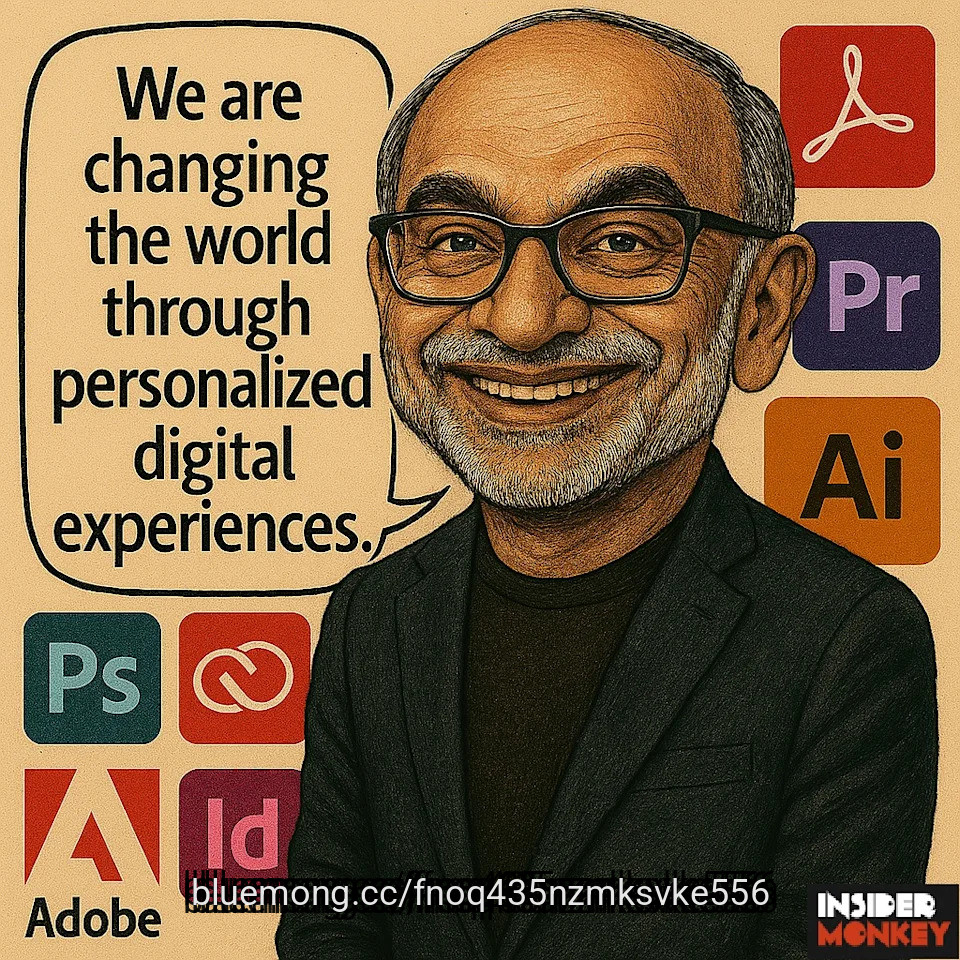
10 days ago
Adobe Inc. (NASDAQ:ADBE) is strengthening its position in agentic artificial intelligence as the company looks to expand its marketing intelligence and workflow automation capabilities. The company had recently acquired Rilo, an India-based AI workflow automation startup, in a deal involving the licensing of Rilo's technology and the addition of its team.
The transaction gives Adobe access to technology designed to automate increasingly complex marketing workflows. The move comes as businesses accelerate their adoption of AI tools capable of not only generating content but also executing tasks with limited human intervention.
Rilo has developed AI agents capable of understanding plain-English instructions and executing multi-step marketing and go-to-market workflows. For Adobe, the technology could help expand its AI strategy beyond content generation toward AI agents that can act on behalf of marketers.
Rilo's technology could also enhance Adobe's existing marketing products as the company seeks to deepen its relationships with large enterprise customers.
Adobe could integrate Rilo's capabilities across its marketing ecosystem to automate activities such as competitor intelligence, sales call ***** ysis, marketing workflow execution, and content distribution.
#intelligence
The transaction gives Adobe access to technology designed to automate increasingly complex marketing workflows. The move comes as businesses accelerate their adoption of AI tools capable of not only generating content but also executing tasks with limited human intervention.
Rilo has developed AI agents capable of understanding plain-English instructions and executing multi-step marketing and go-to-market workflows. For Adobe, the technology could help expand its AI strategy beyond content generation toward AI agents that can act on behalf of marketers.
Rilo's technology could also enhance Adobe's existing marketing products as the company seeks to deepen its relationships with large enterprise customers.
Adobe could integrate Rilo's capabilities across its marketing ecosystem to automate activities such as competitor intelligence, sales call ***** ysis, marketing workflow execution, and content distribution.
#intelligence