
20 days ago
It's not easy being a billionaire in the event that a stock market bubble bursts.
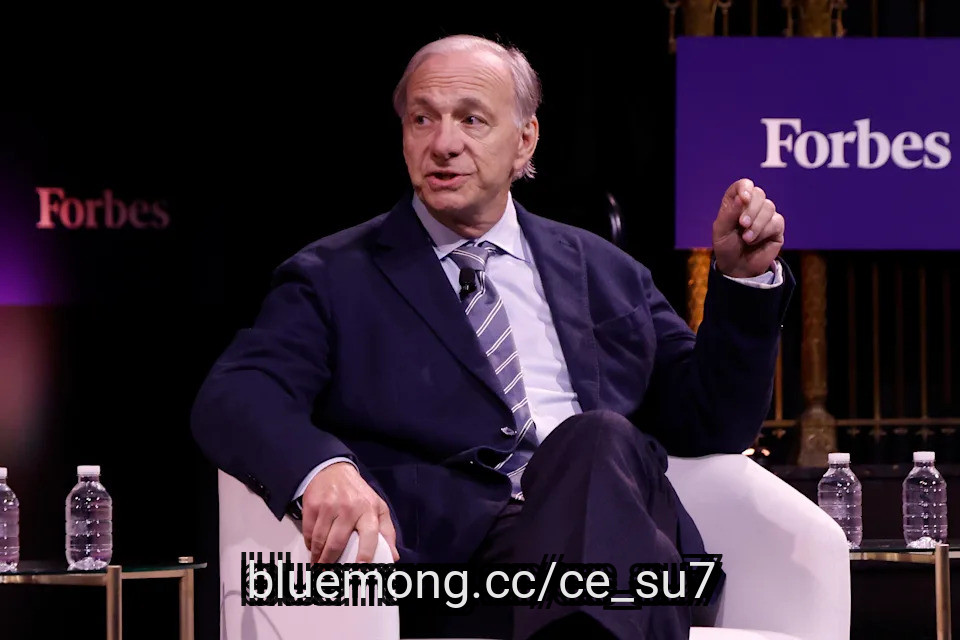
Just ask billionaire Bridgewater ****** ociates founder Ray Dalio, who sounds like he's worrying about potentially massive wealth destruction if the artificial intelligence trade goes south.
"Everybody says 'I'm worth a billion dollars' but, OK, try to spend that," Dalio said at the Forbes Global CEO Conference in Singapore on Wednesday. Bloomberg first reported his comments.
Dalio suggested that measures that force the ultrawealthy to liquidate their unrealized gains, such as a wealth tax, could hasten or contribute to a bubble popping.
"In order to spend that, you have to sell wealth in order to get money — and so the bubble usually ****** at that," he added.
#spend #bridgewater

21 days ago
Exchanges liquidated $403.58 million in leveraged crypto longs within one hour as Bitcoin (BTC) slid to about $83,800. That equals about 0.27% of open interest, the total value of unsettled futures contracts.
Longs made up 97% of the $415.33 million total, so the flush hit one side of the market. However, it cleared only a small fraction of the leverage still outstanding.
The selling arrived in one burst. CoinGlass, a derivatives data tracker, logged 98% of the $412.99 million in four-hour long liquidations inside the final hour.
Over 24 hours, longs made up $487.02 million of $554.76 million in liquidations. That hour alone holds about 83% of the day's long total.
By comparison, the 10th-largest event on CoinGlass's all-time list reached $2.77 billion, about five times the 24-hour total.
#however


25 days ago
Paris Hilton and Nicky Hilton enjoyed a rare sisters' night out at the Elie Saab show during Paris Fashion Week on October 3.
Paris turned heads in a sheer black lace evening gown and high-waisted underwear. Joining her on the red carpet, Nicky stunned in a sequin floral blazer and a gold skirt with beaded, fringe detailing.
The Hilton sisters' PFW moment comes less than a week after they matched in liquid silver ensembles dripping in glitter at the 2026 VMAs on September 27.
As kids, Paris Hilton, 45, and Nicky Hilton Rothschild, 42, were practically twins when it came to their wardrobes. The sisters, who are only two and a half years apart, have since adopted opposing—and iconic—individual aesthetics. One thing the Hilton sisters agree on when it comes to fashion, however, is that sequins and glitter are the ultimate red carpet accessories.
Paris Hilton and Nicky Hilton attend the Elie Saab Womenswear Spring/Summer 2027 show at Paris Fashion Week on October 03, 2026.
#nicky #sisters




1 month ago
On the Sept. 3, 2026 episode of The Ramsey Show, a Houston caller named Nathan asked whether he should use his savings to clear a mortgage he described as a "whatever, 2% mortgage or something." He had about $280,000 left on it and roughly $346,000 in liquid ******* ets, most of it cash and the rest in a taxable brokerage account. Dave Ramsey told him to do it, and to do it that night.
Five months earlier, Ramsey had told a caller in almost the same position the opposite. On April 1, 2026, a web engineer earning around $600,000 a year called in about three weeks after being laid off, sitting on enough cash to clear a San Francisco, California mortgage. "When you're in the middle of a storm, you do temporary things," Ramsey said. "Hold on to the cash. We're not gonna pay off the house because we may not be staying in the house."
Here's Another Little-Known Firm Jensen Huang's Nvidia Is Quietly Backing
MediaTek Is Stepping Up Competition Against Qualcomm With a New 2-Nanometer Chip. What This Means for QCOM Stock.
1 Year Into the Microsoft Deal, IREN Is Delivering and a Rally May Follow Soon
#mortgage #told


1 month ago
Enbridge Inc. (NYSE:ENB) has declined by around 17% since hitting its record high in May, likely as a result of rising bond yields, lack of visibility on the company's 5% growth guidance through the end of the decade, and the recently closed equity offering intended to fund the midstream operator's strategic acquisitions.
However, BMO Capital sees this pullback as an opportunity and on September 15, the firm upgraded ENB from 'Market Perform' to 'Outperform', while also slightly raising its price target from C$79 to C$79.50. The target boost implies an upside of 18% from the current levels.
The **** yst believes that Enbridge's scale, limited commodity exposure, and diversified **** ets are underappreciated. BMO also cited the company's improving visibility on growth, robust backlog, opportunistic acquisitions, and improved balance sheet as reasons behind the upgrade.
Enbridge's aggressive expansion strategy adds significantly to its bull case. The company announced on September 9 that it would acquire Tallgrass Energy's crude oil business for $2.55 billion in cash, expanding its US liquids pipeline network by buying a majority stake in the Pony Express Pipeline and other **** ets. The midstream operator expects the acquisition to be accretive to distributable cash flow per share in the first full year of ownership.
Similarly, Enbridge announced last month that it had agreed to acquire Salt Creek Midstream's crude oil gathering business for $600 million in cash, further bolstering its presence in the prolific Permian Basin. The acquired **** ets have an average remaining contract life of about 10 years, providing stable long-term cash flows.
#visibility #target


1 month ago
On September 16, Air Products (NYSE:APD) said it had signed a long-term deal to supply high-purity gases to a leading chipmaker, backed by roughly $250 million of its own money in Arizona. It is the company's second semiconductor supply win, and the two projects together carry more than $900 million of investment. That is a notable turn for a company that has been pulling back from big clean-energy projects.
The Arizona project plays to what Air Products already does. It will build, own, and operate the equipment, from hydrogen generation units and carbon dioxide purification to bulk supply for three gases: helium, hydrogen, and carbon dioxide. That means the customer's gas supply runs through equipment Air Products owns. Supply is targeted to start in phases, so the buildout can move alongside the customer's expansion plans. And this is familiar ground. Air Products has supplied electronics makers for more than 40 years, and its Chandler facility has served the Phoenix chip cluster since 1981, with a pipeline system carrying ultra-high purity nitrogen around the area.
The core business gives the deal a solid floor. In the fiscal third quarter, reported on July 30, adjusted earnings per share rose 12% to $3.47, and management lifted its full-year outlook to an adjusted $13.39 to $13.49 per share. Margins widened as well, so growth is showing up as profit. Chips appear elsewhere in the results too, since the company announced a deal to build four large air separation units to serve a chipmaker's growth in Taiwan.
The cost of the pivot is hard to ignore. On June 30, Air Products announced it would not go ahead with its Louisiana Clean Energy Complex and would discontinue a zero-carbon liquid hydrogen facility in Casa Grande, Arizona, plus other smaller clean energy distribution projects. The exits triggered roughly $2.9 billion in pre-tax charges, which is why the company posted a GAAP loss of $6.47 per share in the third quarter even as its underlying earnings grew. Adjusted results leave that hit out, but the GAAP numbers show what the retreat cost.
Owning the ****** ets also means funding them. Air Products expects about $3.5 billion of capital spending in fiscal 2026, and the Arizona plant alone is a commitment of approximately $250 million, with supply arriving in phases. The release also leaves gaps: it does not name the customer or say how long the contract runs, so the length of the revenue stream is unclear. Elsewhere, Europe's operating income rose only 2% as costs climbed, and management says it is still cautious about the economic backdrop.
#clean #adjusted


1 month ago
On August 6, Targa Resources Corp. (NYSE:TRGP) reported a record second quarter. Adjusted EBITDA reached $1.60 billion, a 38% jump from the same period a year earlier, and management now expects full-year results near the top of its guidance range. Targa moves and processes natural gas and natural gas liquids out of the Permian Basin, and these numbers suggest that system is running fuller than ever.
The strength came from volume, not just price. Adjusted EBITDA also climbed 14% from the first quarter, helped by Permian gas volumes that added over 450 million cubic feet of daily throughput. Some producers held back output because Waha gas prices went negative, and Targa still set a volume record. Volumes for NGL pipelines, fractionation, and LPG exports also hit records, helped by Train 11, a new fractionator in Mont Belvieu, Texas, that started up early in the quarter.
Construction is also landing on time. East Driver, a new processing plant serving the Midland side of the Permian, started up late in the quarter and ahead of schedule, and the other gathering and logistics projects are tracking their plans. Shareholders get a cut too. On July 16, Targa declared a $1.25 per share quarterly dividend, 25% above the payout for the second quarter of 2025, payable August 14 to holders of record on July 31. It also spent $80 million buying back shares during the quarter.
Growth at this pace costs real money. Targa plans about $4.5 billion in net growth spending this year, and its consolidated debt stood at $19,578 million on June 30. About $3.2 billion of liquidity gives it a cushion. In July, it also extended its receivables securitization facility to July 30, 2027 and raised the size to as much as $800 million. More borrowing capacity helps, but it is still borrowing.
Not every dollar of the profit surge is as steady as a pipeline volume. Management tied the higher outlook partly to strong marketing margin and optimization work in the first two quarters, and the quarter's jump in marketing margin came from greater optimization opportunities. That kind of income can be lumpy. Meanwhile, lower natural gas prices trimmed margins in the gathering business, and the Waha curtailments showed that producers can pull back when local prices turn ugly.
#record

1 month ago
On August 10, Simon Property Group (NYSE:SPG) reported results for the three months through June 30 and raised its full-year profit outlook once again. Real estate funds from operations (FFO), a cash-flow measure suited to landlords, hit $3.29 per share. Tenants are earning more from their stores, and management is confident enough to lift its guidance again. Yet the professionals who own the stock are heading the other way.
Start with the tenants, because they pay the rent. Reported retailer sales reached $838 per square foot over the year through June 30, up from $736 a year earlier, on June 30, 2025. Stronger sales tend to make higher rent easier to swallow, and base minimum rent per square foot did climb to $62.42 from $58.70.
That demand flowed through to profit. Real estate FFO rose to $3.29 per diluted share from $3.05, and net operating income at Simon's domestic properties grew 8.5%. Management responded by lifting its full-year real estate FFO range to $13.20 to $13.30 per share, moving the midpoint up by $0.08.
Shareholders get paid while they wait. The board declared a third-quarter dividend of $2.25 per share, $0.10 more than a year ago, to be paid on September 30 to anyone on the books by September 9. Simon also put $211.4 million into buying back stock at an average of $205.10 per share, and it finished June with about $9.3 billion of liquidity.
Now the less flattering side. Net income for common stockholders was $483.1 million, or $1.49 per diluted share, versus $1.70 a year earlier. The 2025 quarter included a non-cash gain of $0.21 per share from investment activity, which flatters that comparison. Still, plain FFO followed the same path, slipping to $3.12 from $3.15.
#Share #year #june #estate


1 month ago
On August 20, Royal Caribbean Group (NYSE:RCL) said it had completed a sale of $1.25 billion of notes that carry a 5.55% coupon and come due on January 20, 2034. The money is earmarked first for floating-rate term loans, with anything left over used to repay or refinance other debt, and the offering rode on a shelf registration filed on February 29, 2024. That sounds like routine upkeep. But next to an earnings beat and a flat third-quarter pricing outlook, the deal gives you a handy lens on where the company stands.
Start with the debt itself. Swapping floating-rate borrowings for notes with a stated 5.550% coupon takes some interest-rate guesswork out of the picture, and the notes don't mature until January 20, 2034. That matters because $2.7 billion comes due in 2027 and $3.4 billion in 2028. Against those bills, the company held $6.9 billion of liquidity as of June 30, and it added $250 million to its revolving credit line in July.
The business generating the cash is running well. On July 28, Royal Caribbean reported second-quarter adjusted earnings of $4.21 per share, ahead of its own guidance on stronger last-minute demand, lower costs, and better results from joint ventures. Management then raised full-year adjusted EPS guidance to a range of $17.73 to $17.87, which implies 14% growth. It also kept returning cash to shareholders in the second quarter, through $404 million of dividends and $199 million of buybacks. Booking volumes are running above last year, and 2027 bookings are tracking ahead of past years, even on routes that geopolitical events hit in 2026.
Beat or not, that $4.21 is still below the $4.38 from the same quarter in 2025. Costs excluding fuel per passenger cruise day rose 4.4%, and the cost beat came largely from the timing of expenses. Then there is pricing, where the story gets less rosy. Third-quarter net yields are guided to roughly flat against 2025 while capacity grows 8.5%, so the expected 8% revenue growth comes from more capacity, not from better yields. Management also says prolonged geopolitical activity has dented bookings on select itineraries. It calls the hit modest, but it is now built into guidance.
The refinancing also doesn't shrink the debt pile. New notes pay off old borrowings, so the total owed stays roughly where it was, and the company still expects net interest of $980 million to $990 million this year. Add roughly $4.7 billion of capital spending in 2026, mostly for new ships and destination projects, and it is clear this business needs a steady supply of capital. The April ship orders, Icon VI and Icon VII, extend that appetite, though their financing is already committed.
#billion #quarter #company #year

1 month ago
Updated Sept. 18, 2026 4:59 pm ET
Listen
(3 min)
The latest Market Talks covering Financial Services. Exclusively on Dow Jones Newswires at 4:20 ET, 12:20 ET and 16:50 ET.
1357 ET – Hyperliquid’s HYPE token rises 6.7% to $90.83 after the exchange announced that it would enable direct borrowing on its platform. HYPE hit a record $92.43 earlier in the session. Hyperliquid says that it will let users supply HYPE or BTC as collateral for loans, offering 65% and 50% loan-to-value, respectively, according to a statement on its website. The HYPE token has gained 30% in the past two months alone.(kirk.maltaiswsj.com)
#market


1 month ago
A crypto whale appears to be shifting a large portion of its portfolio from Bitcoin into Ethereum.
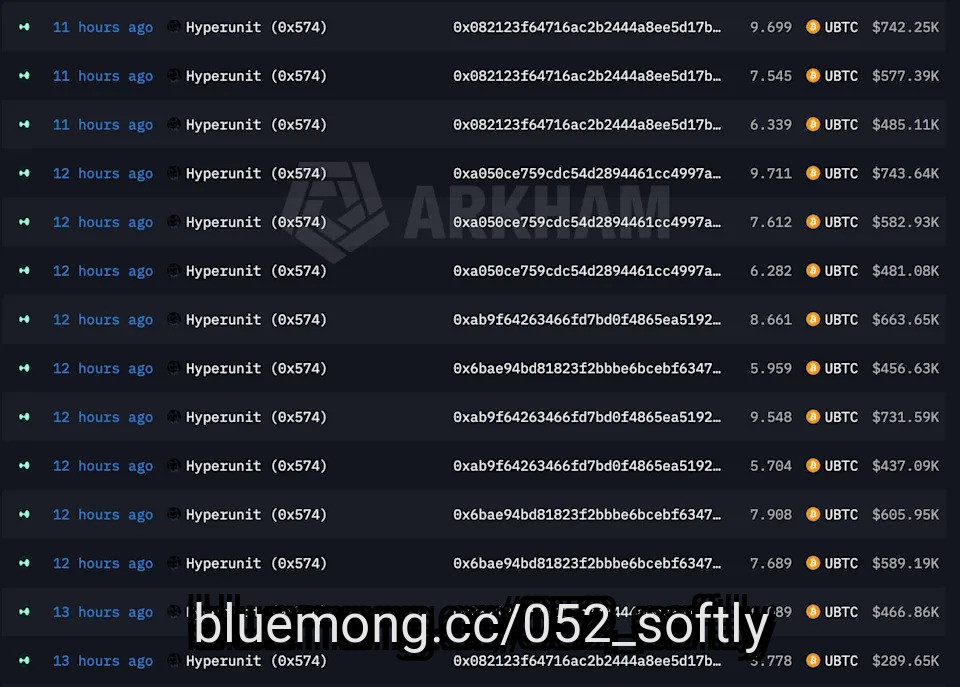
According to blockchain ***** ytics platform Lookonchain, 11 newly created wallets suspected to belong to the same whale, sold 602 BTC and bought 18,780 ETH on Hyperliquid over the past three days. Both sides of the transactions were worth roughly $45.83 million, indicating a large-scale portfolio rebalancing.
At press time, Bitcoin was trading around $81,001, up nearly 5.5% over the past 24 hours, while Ether was around $2,594, gaining about 5%.
JPMorgan says one ***** et class could soon beat gold
Kevin O'Leary has a warning on Washington's tax plans
#whale #Portfolio #ethereum #lookonchain



1 month ago
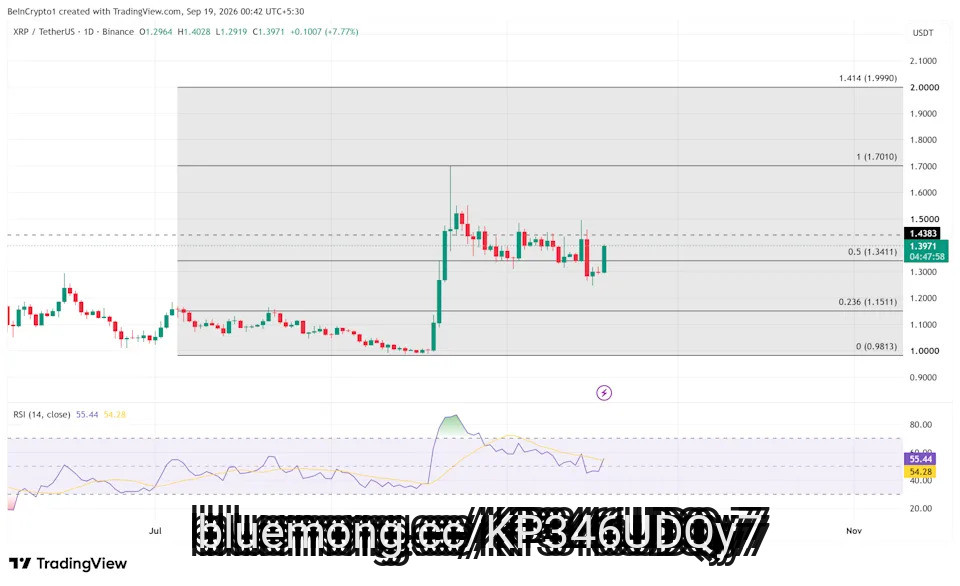
XRP shook off a sharp regulatory setback this week, climbing more than 7% over 24 hours to trade near $1.39 after briefly touching lows around $1.27.
The rebound followed a rocky 48 hours that combined a failed Senate vote with the Federal Reserve's first rate hike since 2023.
Cloture is the Senate procedure required to end debate and move a bill toward a final vote, needing 60 senators to succeed. On September 15, the CLARITY Act fell short in a narrow 50-49 tally, missing that threshold and stalling a proposed federal framework for digital **** ets.
XRP dropped more than 8% in the immediate aftermath, touching lows near $1.27 to $1.28. Pressure intensified the next day when the Fed raised its benchmark rate by 25 basis points to a range of 3.75% to 4.00%, a move that typically weighs on risk **** ets broadly.
The sell-off, however, proved short-lived. XRP has since rebounded to $1.39, up 7.23% over 24 hours, even as the token slipped slightly by 0.30% in the past hour. Trading volume held near $3.9 billion, close to its 30-day average, suggesting genuine buying rather than thin, low-liquidity trading.
#near #senate #since

1 month ago
Super Micro Computer (SMCI) stock rose 9.5% on Thursday, September 17, closing just over $40. The move followed a bullish call on how big the market for AI servers gets. That call may well be right. But it answers a question Super Micro's own results never raised. That is why one big session tells you less than it looks like it does.
Analysts at Goldman Sachs said the addressable market for AI servers will expand aggressively through the end of the decade. That is a forecast about an industry rather than about one manufacturer. Another account of Thursday morning's climb credited a broader equity rebound after Wednesday afternoon's Federal Reserve rate decision, not the forecast. Hewlett Packard Enterprise (HPE) jumped 8.0% the same day against the S&P 500's 1.1% gain, showing that capital was rotating heavily into primary AI server makers.
Company-specific headlines that day ran the other way: after the close, a shareholder rights law firm issued a press release soliciting clients for a potential investigation into company management.
A bigger market is not what this company is short of. In its fiscal fourth quarter, ended June 2026, Super Micro booked over $60 billion of new orders. That backlog underpins management's fiscal 2027 revenue guidance of $65 billion to $72 billion—up sharply from the $39 billion booked over the prior twelve months, but spread out as delivery and deployment constraints allow customers to take delivery.
What it is short of is customers ready to take delivery. Super Micro sells data center building block solutions, which bundle the servers with the power, cooling, networking and software around them. The company's manufacturing capability is on track to include more than 3,000 direct liquid-cooled racks a month.
#forecast

1 month ago
On September 18, Prudential Financial (NYSE:PRU) announced it will sell every share it holds in Alexforbes, a company listed on the Johannesburg Stock Exchange. Two buyers are splitting the stake. Alexforbes will repurchase roughly 372.8 million shares itself, and ARC AF Holdings will take about 74.1 million more. The package is worth about $185 million, a small number for a company managing $1.642 trillion. But the message matters more than the money. A plan Prudential laid out in August is now turning into signed agreements.
The logic is easy to follow. Prudential wants to operate in fewer places and put its money, people and attention where it thinks it can win for years. Andy Sullivan, the chief executive, says the aim is to lean harder on ***** et management, retirement and protection, and get those units working together more closely. David Legher, who leads emerging markets, called Alexforbes a successful investment, so this reads as a planned exit rather than a retreat from a problem.
The core business is giving management room to be choosy. On August 4, Prudential reported second-quarter net income of $985 million, up from $533 million a year earlier. That happened even though a charge from the yearly ***** umption update grew to $299 million from $134 million, so the underlying engine ran strong enough to absorb a bigger hit. The company also returned $743 million to shareholders in the quarter and held $4.2 billion in highly liquid ***** ets at the parent level. That does not look like a seller in a hurry.
Start with what has not happened yet. The deals are expected to close in the first half of 2027, and they still need Alexforbes shareholders to approve the buyback, along with regulatory sign-off. Until then, $185 million is an agreed price, not cash in the bank. Prudential also said New Veld's involvement continues before completion, so the company stays tied to the ***** et for now.
Then there is the size. Set against those trillions in ***** ets, this sale will not move results either way. Its value is strategic, and strategy takes years to judge. Prudential is giving up a foothold in a partnership it called important, and its remaining businesses have their own snags. Sales in Prudential of ***** an are suspended, and management said that weighed on international results even as earnings held up.
#august #money


1 month ago
Bitcoin's most violent rally of its two-year drawdown wasn't powered by fresh bullish bets. It was powered by bears getting crushed, according to a new report from ******* ytics firm Glassnode and crypto exchange Bybit.
Over five days in August, Bitcoin climbed 24.6% even as coin-denominated open interest, a measure of active leverage, fell 12.6%, the report found. That combination is the tell: rather than traders piling into new long positions, the move ran on the forced unwinding of existing shorts.
Roughly 64,000 BTC worth of open interest was closed out, and short positions supplied 89% of every liquidated dollar during the stretch.
The options market told the same story. Puts, the contracts traders buy to protect against a fall, had priced richer than calls for 361 straight days. A single session ended that run, flipping roughly a year of downside positioning as the market scrambled to reprice.
Bybit's own volatility index traveled four times its normal daily range in one session, and the front of the futures curve repriced sharply while longer-dated contracts barely moved, a sign the market read the move as a one-off event rather than a lasting regime change.
#interest

1 month ago
Margin debt hit $1.45 trillion in August, up 140% since 2022 and outpacing the S&P 500's 98% gain, which leaves the market carrying far more forced-selling risk.
At roughly 4.5% of GDP, margin debt now exceeds the dot-com bubble's peak, meaning a routine correction could cascade into broker-forced liquidations across the market.
The real danger isn't high leverage itself but the simultaneous forced selling that erupts when overleveraged investors all need cash at once.
Just released. Our ***** ysts combed the entire stock market and named the ten best stocks to buy right now. The report is free. Enter your email and see if any of your stocks made the cut.
The longer-term comparison is even more striking. Since the end of 2022 -- and the start of the current AI-dominated era -- investor borrowing has increased by $847 billion, or 140%, versus a 98% gain for the S&P 500 over the same period. That means leverage has grown faster than the market value investors have accumulated, presumably as they took on debt to buy into the AI boom.
#market #leverage #investors


1 month ago
Zcash (ZEC) has climbed 177.8% in a month, and the traders betting against it are paying for that move.
One short was closed at a $10.68 million loss this week, and the largest position still open sits $33.87 million underwater on Hyperliquid.
Lookonchain flagged the closed trade before the exit, citing 26 consecutive wins and an 89% rate across 47 trades. That record had produced more than $9 million in profit.
The short covered 12,285 ZEC and was worth $18.31 million earlier, with liquidation set at $1,550.66. Hyperliquid data shows the account now holds no positions at all.
Garrett Jin holds the largest short still open, covering 37,999 ZEC worth $59.37 million. He built the position at an average price of $671.05, so it now shows an unrealized loss of $33.87 million.
#million #open



1 month ago
This story was originally published on Supply Chain Dive. To receive daily news and insights, subscribe to our free daily Supply Chain Dive newsletter.
TJX Companies is confident in navigating weather-related events such as El Niño due to its warehouse distribution model, CEO Ernie Herrman said in a Q2 earnings call on Aug. 19.
Herrman said since the company keeps its liquidity and shipping out of its warehouses, it has better control than traditional retailers. Inventory doesn't need to go straight to the stores if the off-price retailer thinks there's going to be an unusual weather pattern in a certain region, he added.
"[T]his is a benefit of our model where we stage goods in our warehouses versus goods at most brick-and-mortar retailers come into the warehouse and have to go out," Herrman told **** ysts. He added that the company's "planning organization is really good at reacting to any wild swings in weather or natural disasters or any of those red flags."
Off-price retailers and classic retailers tend to have different supply chain models when it comes to how they manage their inventory, but it's not one-size fits all, Dheera Anand, a partner at Bain and Co., told Supply Chain Dive in an interview. The supply chain strategy Hermann described in TJX's earnings call is known as the hold and flow, or staged, model, Anand said.
#supply


1 month ago
Interested in Equinix, Inc.? Here are five stocks we like better.
Equinix plans to invest $5 billion to $7 billion annually in data-center development, primarily in established markets where customer demand and infrastructure needs are already visible.
The company controls about 3 gigawatts of designed power, with 600–700 megawatts under development, and is targeting cash-on-cash returns in the low 20% range with typical stabilization in two to three years.
AI adoption is accelerating among enterprise customers, driving expected demand for higher-density facilities, liquid cooling and additional interconnections; however, executives said AI-related business still represents a minority of Equinix's revenue today.
3 Stocks Built for Higher Rates—And 2 That Could Break
#higher #demand #here #built
1 month ago
Concerned about an AI bubble? Sign up for The Daily Upside for smart and actionable market news, built for investors.
September is famously the worst month for stocks on average, a phenomenon that has been heavily debated and attributed to tax-loss selling or parents liquidating ******* ets for back-to-school costs. The so-called September Effect has also been dismissed as totally meaningless.
Putting the market psychology aside, this September has given markets plenty of reason to reinforce the stereotype: oil prices on a war-fueled incline, rising AI apocalypse anxiety and, of course, this week's interest-rate hike. Some ******* ysts believe that, while the September Effect may be in full swing this year, there is still time for a positive October (and later) surprise.
Sign up for The Daily Upside at no cost for premium ******* ysis on all your favorite stocks.
READ ALSO: SEC Greenlights Tokenized Stocks After Clarity Act Fails in Senate and Fed Raises Interest Rates for First Time in Three Years as Diesel, Gas Prices Surge
#interest


1 month ago
On September 16, Evolution Petroleum Corporation (NYSEAMERICAN:EPM) held its fiscal fourth-quarter and full-year 2026 earnings call, and the numbers told a story of a company climbing out of a rough patch. Revenue jumped 20% sequentially to $24.2 million as oil prices realized before hedge settlements shot up 49% year over year to $90.74 a barrel. Adjusted EBITDA more than doubled to $6.5 million. After a bruising third quarter, the fourth quarter finally looked like the recovery management had promised investors back in May.
The fourth-quarter turnaround wasn't just about crude. NGL prices realized $32.49 a barrel, up 27% year over year, and because Evolution leaves its NGL production entirely unhedged, every dollar of that gain flowed straight through. That combination of higher liquids pricing, growing production, and the roll-off of a prior-period transportation adjustment at the Delhi Field pushed operating cash flow to $6.8 million in the quarter, nearly double the $3.5 million generated in the third quarter.
Behind the quarterly numbers sits a longer-term shift in how Evolution makes money. The company closed a roughly $16 million acquisition of mineral and royalty acreage in the Permian's Midland Basin after the fiscal year ended, adding about 3,420 net royalty acres and more than 200 barrels of oil equivalent per day of current production, all without Evolution spending a dime on development. That mirrors what's already happening in the SCOOP/STACK play, where fourth-quarter production climbed 14% year over year to 1,275 BOE per day while unit operating costs fell to $10.33 a barrel. Evolution also replaced more than 100% of the 2.6 million barrels of oil equivalent it produced during the year, ending fiscal 2026 with 27.2 million barrels of proved reserves, an outcome that matters directly to a dividend now in its 52nd consecutive quarter.
Not every part of the business bounced back. Average daily production fell 4% year over year to 6,901 barrels of oil equivalent per day, largely because the flush production from new Chaveroo wells that boosted last year's fourth quarter has since tapered off. Natural gas pricing remained the softest spot in the portfolio, especially at the Jonah Field, where CEO Kelly Loyd said "regional differentials have weighed on realizations" even as broader demand for gas keeps growing. CFO Ryan Stash noted that stronger oil and NGL results helped offset "continued weakness in natural gas realizations, particularly at Jonah."
#barrel


1 month ago
On September 15, Jazz Pharmaceuticals plc (NASDAQ:JAZZ) completed its acquisition of privately held Actio Biosciences for $820 million upfront, adding a clinical-stage epilepsy drug called ABS-1230 to its rare disease pipeline. The deal lands weeks after Jazz posted its highest quarterly revenue ever on August 3, and raised its full-year guidance, so a fresh acquisition now sits on top of a business that was already accelerating. The question for investors is whether that combination adds up to durable growth or just a bigger bill.
ABS-1230 targets KCNT1-related epilepsy, a rare and hard-to-treat form of the disease. In an early clinical proof-of-concept trial, children who received the drug experienced meaningful seizure reductions, and preclinical testing showed it inhibited KCNT1 across every pathogenic mutation researchers evaluated, hinting it could work across the whole patient population rather than a narrow subset. The FDA has already granted ABS-1230 Orphan Drug, Rare Pediatric Disease and Fast Track designations, and accepted it into the agency's Rare Disease Evidence Principles process, a set of regulatory advantages that can speed a drug toward approval.
The acquisition also arrives while Jazz's existing business is firing on multiple cylinders. Second-quarter revenue climbed 16% year over year to $1.2 billion, the company's highest quarterly total on record, and management raised full-year 2026 revenue guidance to a range of $4.6 billion to $4.75 billion. Growth was not confined to one product. Xywav sales rose 13% to $471 million on 525 net new patients, Epidiolex grew 16% to $292 million, and Zepzelca jumped 42% to $106 million. Zanidatamab, sold as Ziihera in biliary tract cancer, also received Breakthrough Therapy designation from the FDA for a form of colorectal cancer, adding another avenue for the oncology franchise Jazz has been building beyond its epilepsy and sleep businesses.
None of that came free. The $820 million upfront payment for Actio lands on top of $4.4 billion in long-term debt that Jazz already carried as of June 30, even after the company used part of its cash to repay $1.0 billion of exchangeable notes that matured this year. Cash, equivalents and investments stood at $2.2 billion at that point, meaning the Actio payment alone accounts for a meaningful share of the company's liquid resources.
Jazz's recent history also shows how acquisitions can distort the bottom line before they pay off. A $905.4 million in-process research and development charge tied to the 2025 Chimerix acquisition pushed second-quarter 2025 GAAP earnings to a loss of $11.74 per share, and a smaller $77 million IPR&D charge from the AbCellera and Werewolf deals still dented second-quarter 2026 results. ABS-1230 itself remains early, with only proof-of-concept data in hand and no late-stage trial results yet. The portfolio is not without setbacks, either. Jazz is moving to voluntarily drop the second-line indication for Zepzelca in meta


1 month ago
Financially challenged fast-food franchisees have been lining up to file for bankruptcy protection in 2026 to reorganize their businesses and restructure debt.
Hardee's Phoenix-based restaurant franchisee Superior Star LLC , filed for Chapter 11 bankruptcy protection on July 9, facing an alleged seller financing dispute, according to court papers. A burger chain rival, Checkers Drive-In franchisee C.S. Holdings of Tampa LLC, which operates two locations in Tampa, Fla., filed for Chapter 11 bankruptcy protection to reorganize its business on July 14.
Another Hardee's franchisee, ARC Burger LLC, filed for Chapter 7 bankruptcy liquidation on April 20, 2026, after franchisor Hardee's Restaurants LLC sued the restaurant operator for alleged breach of contract, seeking to recover over $6.5 million in unpaid franchise fees and other obligations, according to Law.com.
And now, major Wendy's restaurant franchisee Meritage Hospitality Group Inc., which operates over 350 locations in 15 states, filed for Chapter 11 bankruptcy to reorganize its business and restructure its debt, almost 11 months after defaulting on its franchise agreements for failing to remit payments.
Meritage Hospitality and 14 affiliates filed their petition in the U.S. Bankruptcy Court for the Western District of Michigan on Sept. 17, 2026, listing $10 million to $50 million in **** ets and debts.
#chapter


1 month ago
An anonymous trader known only by their wallet address 0x3bca had their $7.19 million short position on the S&P 500 fully liquidated on Hyperliquid as the broader market rebounded on Wednesday. The liquidation was tracked via onchain data on Hypurrscan.
A short position is a trade that profits when an ***** et's price falls. The trader was betting the S&P 500 would decline, and when it moved in the opposite direction, the position was forcibly closed at a loss.
Related: Kevin O'Leary has a warning on Washington's tax plans
Liquidation happens when a leveraged trade moves far enough against the trader that the exchange automatically closes it to prevent further losses. Hyperliquid is a decentralized exchange that lets users trade perpetual contracts, derivatives that track an ***** et's price without an expiration date, on crypto, equities and commodities.
The Hypurrscan data shows the wallet held a total portfolio value of roughly $7.85 million at the time, with exposure to S&P 500, XYZ100, BTC and gold contracts. The transaction history reveals a flurry of activity in the seconds surrounding the liquidation, including multiple "Close Long" orders on Robinhood stock (xyz:HOOD) at $109.48 and fresh "Open Long" positions on BTC at approximately $76,568.
#trader #position #hyperliquid #short


1 month ago
Michael Burry is back to short selling.
The investor who bet against the U.S. housing market to become one of Wall Street's most renowned contrarians will serve as a senior adviser to Minerva Investment Management as the business prepares to establish a short-biased investment vehicle.
The decision comes less than a year after Burry liquidated Scion ******* et Management, the hedge fund where he handled his ******* ets.
Scion's regulatory registration was terminated in November 2025, Reuters confirmed. The firm had managed about $155 million as of March of that year.
Later, Burry moved most of his public market ******* ysis inside his paid "Cassandra Unchained" newsletter.
#michael #wall


1 month ago
BitMEX has settled and delisted XBTUSD, ending one of the most influential trades in crypto history. The Bitcoin contract ran for more than 10 years and became the template for the perpetual futures market that dominates crypto trading today.
BitMEX itself will shut down on September 23. Yet the product it created is everywhere.
XBTUSD launched on May 13, 2016. It allowed traders to bet on Bitcoin without an expiry date.
Traditional futures expire on fixed dates. XBTUSD did not. That kept traders in one continuous market instead of splitting liquidity between different contracts.
BitMEX also introduced a funding system to keep the contract close to Bitcoin's spot price. When too many traders crowded onto one side, they paid the other side.
#xbtusd #Crypto #contract



1 month ago
Hub Group, Inc. (NASDAQ:HUBG) disclosed on September 14 that preliminary, unaudited first-half 2026 revenue was expected to reach $1.7 billion to $1.8 billion, near management's expectations. Yet management anticipated an operating loss before one-time charges. This non-GAAP presentation excludes those charges, but neither the loss nor the exclusions were quantified.
Hub Group, Inc. (NASDAQ:HUBG) identified higher fuel, rail, and drayage costs, excess warehouse capacity, and accounting-review and restatement expenses. The central issue is whether pricing and efficiency improvements can restore profitability on the revenue already moving through the business.
Hub Group, Inc. (NASDAQ:HUBG) began implementing rate increases in the third quarter, after transportation costs had pressured first-half results. Relatively stable intermodal volume trends suggest an existing customer base on which better pricing could improve margins. If increases hold without significant volume losses, revenue could become more profitable without requiring a broad freight recovery.
Hub Group, Inc. (NASDAQ:HUBG) also launched additional efficiency initiatives in the second quarter, including warehouse consolidation and improvements in driver and warehouse-worker productivity. These actions address specific weaknesses: underused ***** e spreads fixed costs across fewer orders, while low productivity raises the cost of each shipment or handling task. Better utilization could reinforce the benefit of higher rates.
Hub Group, Inc. (NASDAQ:HUBG) is also targeting order-to-cash processes, which cover the steps from taking orders through billing and collection. Improvements could reduce administrative friction and accelerate cash collection. That would support liquidity while operational changes take effect, although faster collections alone would not repair an operating loss.
#improvements #better

1 month ago
The dollar index (DXY00) fell from a new 1.5-month high on Thursday and finished down by -0.03%. The dollar posted modest losses on Thursday as a sharp rally in stocks curbed demand for dollar liquidity. Lower T-note yields on Thursday also weighed on the dollar.
Dollar losses were limited Thursday after US weekly jobless claims unexpectedly fell to an 8-week low, signaling a strong labor market. The dollar also has carryover support from Wednesday when the FOMC raised interest rates by 25 bp and signaled another rate hike by the end of the year.
Dollar Soars as Fed Hikes Rates and Signals More to Come
Dollar Weakens with Crude Oil Prices and T-Note Yields
Dollar Posts Modest Gains Ahead of Expected Fed Rate Hike
#modest #rates


1 month ago
Benzinga and Yahoo Finance LLC may earn commission or revenue on some items through the links below.
Apollo Global Management (NYSE:APO) is in talks to increase its loan to SoftBank's Vision Fund II from $5.4 billion to as much as $9 billion, potentially giving the ******* anese conglomerate additional financing capacity for its massive investment in OpenAI.
The deal size has not yet been determined, according to Bloomberg.
Apollo has previously extended financing to SoftBank's venture capital arm in 2021. The lender increased the facility by another $900 million last year, bringing its total size to $5.4 billion. NAV financing allows private capital managers to raise liquidity by using investments held with their funds as collateral.
Read Also:KKR Doubles Private Debt Deals to $80 Billion as AI Spending Explodes
#capital #finance #management



1 month ago
October Nymex natural gas (NGV26) on Wednesday closed down -0.028 (-0.96%).
Nat-gas prices retreated from a 1-week high on Wednesday and settled lower as a decline in European nat-gas prices to a 1-week low sparked long liquidation in US nat-gas futures. Nat-gas prices initially rose on Wednesday on the outlook for above-average US temperatures, which should boost nat-gas demand from electricity providers as air conditioning use is expected to increase. The Commodity Weather Group said Wednesday that above-average temperatures are expected across the South and Southeast through September 25.
Crude Oil Prices Sharply Lower as Middle East Disruptions Ease
Crude Oil Prices Retreat as Supply Fears Ease
Why UBS Just Turned Bearish on NuScale Power Stock
#prices #lower #average #expected