

5 days ago
The 10-year Treasury yield recently touched its highest level in roughly two decades, north of 5.3%, per CNBC.
When the 10-year Treasury yield rises, stocks can become less attractive because investors can earn higher yields on safer bonds, and higher borrowing costs can weigh on companies and their growth. At the same time, older bonds with lower interest rates lose market value compared with newer, higher-yielding bonds.
Missed Nvidia in 2009? This Rare Signal Is Flashing Again. In 2009, a "Double Down" signal flashed for a little-known chipmaker called Nvidia. For the first time in years, that same "Total Conviction" signal is flashing for a company 1/100th the size of Nvidia. Continue »
In short, this yield is the interest rate the U.S. government pays to borrow for 10 years and is a key benchmark for global borrowing costs and economic outlook.
Here's a difference that matters. A Treasury note pays you the same coupon in year 10 that it pays you in year one. A growing dividend you can find in a stock doesn't sit still. It compounds. Buy the right business today, and the income it hands you a decade from now can be meaningfully larger than what it pays this year, on top of whatever the stock itself is worth by then.
#treasury
When the 10-year Treasury yield rises, stocks can become less attractive because investors can earn higher yields on safer bonds, and higher borrowing costs can weigh on companies and their growth. At the same time, older bonds with lower interest rates lose market value compared with newer, higher-yielding bonds.
Missed Nvidia in 2009? This Rare Signal Is Flashing Again. In 2009, a "Double Down" signal flashed for a little-known chipmaker called Nvidia. For the first time in years, that same "Total Conviction" signal is flashing for a company 1/100th the size of Nvidia. Continue »
In short, this yield is the interest rate the U.S. government pays to borrow for 10 years and is a key benchmark for global borrowing costs and economic outlook.
Here's a difference that matters. A Treasury note pays you the same coupon in year 10 that it pays you in year one. A growing dividend you can find in a stock doesn't sit still. It compounds. Buy the right business today, and the income it hands you a decade from now can be meaningfully larger than what it pays this year, on top of whatever the stock itself is worth by then.
#treasury

5 days ago
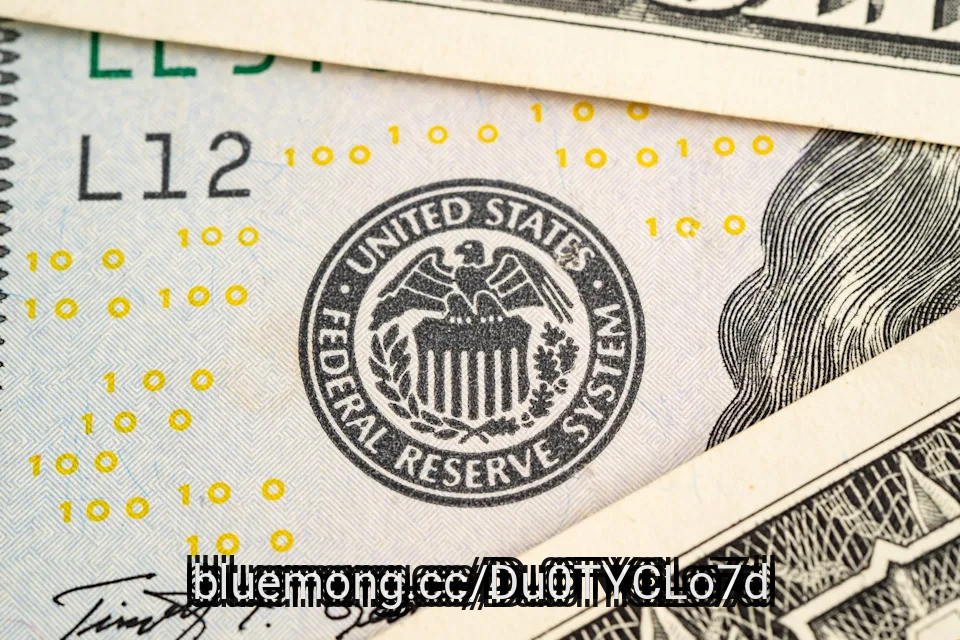
Dividend-paying stocks are taking a beating as surging Treasury yields make bonds a more competitive income source, creating a difficult environment for baby boomers who lean on dividend funds and individual stocks to cover living expenses in retirement.
Utilities, real estate, and materials have all experienced share-price declines as climbing bond yields have drawn income-seeking investors away from dividend stocks. The 10-year Treasury yield has remained north of 5%, recently hovering between 5.2% and 5.3%, while the 20-year has hit 5.68% and the 30-year has reached 5.62% — marks last seen more than two decades ago, according to Benzinga.
The pain shows up clearly in fund performance. The Invesco S&P 500 High Dividend Low Volatility ETF (SPHD) lost 7.59% over the trailing month, and the iShares Select Dividend ETF (DVY) shed 6.02% in the same window, according to CNBC. The Vanguard High Dividend Yield Index ETF (VYM) gave back 3.85% over the past month. The WisdomTree U.S. Quality Dividend Growth Fund (DGRW) stands apart, with its heavy tilt toward technology helping limit its one-month loss to just 0.81%.
The Federal Reserve raised its overnight rate by a quarter percentage point on Sept. 16, and markets are pricing in additional increases, keeping pressure on rate-sensitive dividend sectors. The 10-year yield touched 5.342% and the 30-year reached 5.683%, their highest marks in 24 years, driven in part by rising public debt, geopolitical tensions, and the prospect of a prolonged high-rate environment.
Despite the pressure, financial advisors caution retirees against making reactive moves. "The worst thing that a retiree could do is sell a high-quality dividend payer at depressed prices to chase income somewhere else in the stock market just to get higher yield," Timothy Chubb, chief investment officer at Girard, a Univest Wealth Division, told CNBC. Chubb said he would rather own a company growing 4% to 5% annually with a 3% dividend yield than pursue an 8% yield from a deteriorating business.
#Dividend #yield #month #treasury
Utilities, real estate, and materials have all experienced share-price declines as climbing bond yields have drawn income-seeking investors away from dividend stocks. The 10-year Treasury yield has remained north of 5%, recently hovering between 5.2% and 5.3%, while the 20-year has hit 5.68% and the 30-year has reached 5.62% — marks last seen more than two decades ago, according to Benzinga.
The pain shows up clearly in fund performance. The Invesco S&P 500 High Dividend Low Volatility ETF (SPHD) lost 7.59% over the trailing month, and the iShares Select Dividend ETF (DVY) shed 6.02% in the same window, according to CNBC. The Vanguard High Dividend Yield Index ETF (VYM) gave back 3.85% over the past month. The WisdomTree U.S. Quality Dividend Growth Fund (DGRW) stands apart, with its heavy tilt toward technology helping limit its one-month loss to just 0.81%.
The Federal Reserve raised its overnight rate by a quarter percentage point on Sept. 16, and markets are pricing in additional increases, keeping pressure on rate-sensitive dividend sectors. The 10-year yield touched 5.342% and the 30-year reached 5.683%, their highest marks in 24 years, driven in part by rising public debt, geopolitical tensions, and the prospect of a prolonged high-rate environment.
Despite the pressure, financial advisors caution retirees against making reactive moves. "The worst thing that a retiree could do is sell a high-quality dividend payer at depressed prices to chase income somewhere else in the stock market just to get higher yield," Timothy Chubb, chief investment officer at Girard, a Univest Wealth Division, told CNBC. Chubb said he would rather own a company growing 4% to 5% annually with a 3% dividend yield than pursue an 8% yield from a deteriorating business.
#Dividend #yield #month #treasury

5 days ago
President Donald Trump signed an executive order Monday evening temporarily allowing the use of red-dyed diesel on public roads and deferring the federal excise tax on that fuel through the end of the year, a move aimed at lowering costs for truckers and farmers facing record-high diesel prices.
Red-dyed diesel is chemically the same product as standard highway diesel, but carries a red dye to mark it as off-road fuel — meaning it is not subject to the 24.4-cent-per-gallon federal excise tax that applies to diesel sold at the pump for road use, such as for tractors and heavy machinery. Using it in highway vehicles has been illegal, carrying penalties for tax evasion, according to CNBC.
According to the White House, the order instructs the Treasury Secretary to hold off on collecting federal excise taxes on highway use of dyed diesel between October 5 and December 31, 2026, and to do so without charging interest or imposing penalties. The Treasury is also directed to direct the Internal Revenue Service not to impose penalties for on-road use of dyed diesel during that period. The order further instructs officials to explore pathways, including legislation, to eliminate the deferred tax obligations entirely.
The White House projected that a trucker who tops off an 18-wheeler's tank with 250 gallons stands to save over $100 on a single fill-up, provided the trucker's state suspends its own diesel tax as well. On top of the federal levy, each state levies its own diesel excise tax, and those state-level taxes average out to 35.5 cents per gallon, according to CNN.
The order also directs the Secretary of Agriculture to coordinate with agricultural cooperatives and rural fuel distributors to ensure adequate dyed diesel distribution in high-demand areas, and the Secretary of Transportation to engage with state governments and industry stakeholders. The White House Office of Intergovernmental Affairs was directed to encourage states to adopt corresponding policies.
#Diesel #federal #House #according
Red-dyed diesel is chemically the same product as standard highway diesel, but carries a red dye to mark it as off-road fuel — meaning it is not subject to the 24.4-cent-per-gallon federal excise tax that applies to diesel sold at the pump for road use, such as for tractors and heavy machinery. Using it in highway vehicles has been illegal, carrying penalties for tax evasion, according to CNBC.
According to the White House, the order instructs the Treasury Secretary to hold off on collecting federal excise taxes on highway use of dyed diesel between October 5 and December 31, 2026, and to do so without charging interest or imposing penalties. The Treasury is also directed to direct the Internal Revenue Service not to impose penalties for on-road use of dyed diesel during that period. The order further instructs officials to explore pathways, including legislation, to eliminate the deferred tax obligations entirely.
The White House projected that a trucker who tops off an 18-wheeler's tank with 250 gallons stands to save over $100 on a single fill-up, provided the trucker's state suspends its own diesel tax as well. On top of the federal levy, each state levies its own diesel excise tax, and those state-level taxes average out to 35.5 cents per gallon, according to CNN.
The order also directs the Secretary of Agriculture to coordinate with agricultural cooperatives and rural fuel distributors to ensure adequate dyed diesel distribution in high-demand areas, and the Secretary of Transportation to engage with state governments and industry stakeholders. The White House Office of Intergovernmental Affairs was directed to encourage states to adopt corresponding policies.
#Diesel #federal #House #according


6 days ago
Jim Cramer has built a career on conviction calls, and few have been more consistent than his faith in Amazon (AMZN). For years, the Mad Money host has treated the retail giant as close to untouchable. A permanent fixture in nearly every portfolio he recommends.
That changed, briefly and publicly, after watching a rival's AI demo live on air. Here is what Cramer actually said, the stock moves that gave his comment real weight, and what it all means for anyone holding either name heading into the rest of the year.
Also read: Jim Cramer noticed something odd about the stock market
Cramer made the comment live on CNBC's Squawk on the Street on September 28, after watching a demonstration of Meta's (META) new AI shopping capability. "I'm an Amazon guy, but maybe I shouldn't be. This seemed impressive," he said, speaking as a shopper describing his own buying habits rather than making a stock call.
The timing gave the remark unusual weight. Meta shares had climbed roughly 24% over the prior month. Amazon fell roughly 8% over the same stretch. Investors were already debating which company was winning the fight for online shoppers before Cramer weighed in.
#cramer #amazon #roughly
That changed, briefly and publicly, after watching a rival's AI demo live on air. Here is what Cramer actually said, the stock moves that gave his comment real weight, and what it all means for anyone holding either name heading into the rest of the year.
Also read: Jim Cramer noticed something odd about the stock market
Cramer made the comment live on CNBC's Squawk on the Street on September 28, after watching a demonstration of Meta's (META) new AI shopping capability. "I'm an Amazon guy, but maybe I shouldn't be. This seemed impressive," he said, speaking as a shopper describing his own buying habits rather than making a stock call.
The timing gave the remark unusual weight. Meta shares had climbed roughly 24% over the prior month. Amazon fell roughly 8% over the same stretch. Investors were already debating which company was winning the fight for online shoppers before Cramer weighed in.
#cramer #amazon #roughly


6 days ago
Benzinga and Yahoo Finance LLC may earn commission or revenue on some items through the links below.
Amazon founder Jeff Bezos once challenged Rep. Alexandria Ocasio-Cortez's (D-N.Y.) argument that billionaires cannot legitimately earn their fortunes.
During a May 2026 interview with CNBC's Andrew Ross Sorkin at Blue Origin's rocket factory in Florida, Bezos responded to Ocasio-Cortez's statement that no one can earn $1 billion without exploiting workers, abusing market power or breaking rules.
The Amazon executive chairman rejected the premise, illustrating his argument with a hypothetical burger restaurant that starts with 10 employees and gradually expands to 1,000 locations as customers embrace its products.
Don't Miss:
#alexandria
Amazon founder Jeff Bezos once challenged Rep. Alexandria Ocasio-Cortez's (D-N.Y.) argument that billionaires cannot legitimately earn their fortunes.
During a May 2026 interview with CNBC's Andrew Ross Sorkin at Blue Origin's rocket factory in Florida, Bezos responded to Ocasio-Cortez's statement that no one can earn $1 billion without exploiting workers, abusing market power or breaking rules.
The Amazon executive chairman rejected the premise, illustrating his argument with a hypothetical burger restaurant that starts with 10 employees and gradually expands to 1,000 locations as customers embrace its products.
Don't Miss:
#alexandria


6 days ago
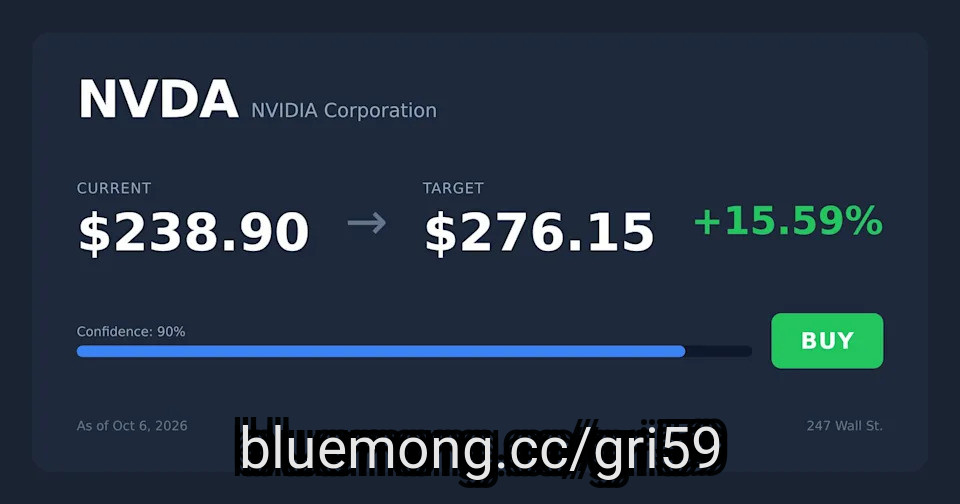
Options traders price NVDA at 50% odds of hitting $6 trillion by Oct. 30, needing just a 4% gain to roughly $249 a share.
Morgan Stanley restored NVDA as its top chip pick with a $300 target, while TSM's Oct. 15 earnings give the first read on AI foundry demand.
NVDA's revenue surged 106% and net income rose 126% last quarter, yet the stock's 28% year-to-date gain trails the semiconductor sector's 96% return.
Building a portfolio and living off one are two completely different skills, and almost ****** ody teaches the second. This problem is what The Definitive Guide to Retirement Income helps, and it is free today. Read more here. (Sponsor)
No company has ever been worth $6 trillion, yet a CNBC options-pricing ****** ysis put the odds of NVIDIA (NASDAQ:NVDA) reaching that level by the end of October at about 50%. The same pricing gave it about 13% odds of crossing within the week of Oct. 5.
#odds #options #trillion #morgan
Morgan Stanley restored NVDA as its top chip pick with a $300 target, while TSM's Oct. 15 earnings give the first read on AI foundry demand.
NVDA's revenue surged 106% and net income rose 126% last quarter, yet the stock's 28% year-to-date gain trails the semiconductor sector's 96% return.
Building a portfolio and living off one are two completely different skills, and almost ****** ody teaches the second. This problem is what The Definitive Guide to Retirement Income helps, and it is free today. Read more here. (Sponsor)
No company has ever been worth $6 trillion, yet a CNBC options-pricing ****** ysis put the odds of NVIDIA (NASDAQ:NVDA) reaching that level by the end of October at about 50%. The same pricing gave it about 13% odds of crossing within the week of Oct. 5.
#odds #options #trillion #morgan



22 days ago
Veteran ******* yst Jim Cramer sees something in Apple's (AAPL) latest launch that is more than a reason for its customers to buy another replacement phone.
After visiting Apple's Manhattan store, the CNBC host praised the iPhone 18 but reserved his strongest enthusiasm for the foldable Duo. He plans to buy it as a second phone, a distinction that gives his excitement an intriguing business angle.
Apple shares have already gained around 23.6% this year through September 18, raising the stakes for turning product excitement into sales.
For context, Apple unveiled its iPhone 18 Pro lineup and first foldable iPhone on September 9. The Pro models reached stores on September 18; Duo availability follows on October 23.
For Cramer, the bigger opportunity goes beyond better cameras and battery life. His reaction suggests Apple could give loyal customers a fresh reason to spend, even when their existing phones still work perfectly well.
#reason #phone #veteran
After visiting Apple's Manhattan store, the CNBC host praised the iPhone 18 but reserved his strongest enthusiasm for the foldable Duo. He plans to buy it as a second phone, a distinction that gives his excitement an intriguing business angle.
Apple shares have already gained around 23.6% this year through September 18, raising the stakes for turning product excitement into sales.
For context, Apple unveiled its iPhone 18 Pro lineup and first foldable iPhone on September 9. The Pro models reached stores on September 18; Duo availability follows on October 23.
For Cramer, the bigger opportunity goes beyond better cameras and battery life. His reaction suggests Apple could give loyal customers a fresh reason to spend, even when their existing phones still work perfectly well.
#reason #phone #veteran

22 days ago
For custom chip designer Broadcom Inc. (NASDAQ:AVGO), the debate is all about whether the demand for AI products will sustain and grow. It is among the few firms capable of designing custom AI chips that big technology firms rely on to supplement NVIDIA's high-power and expensive AI chips. Anthropic CEO Dario Amodei's latest remarks about the need to slow down AI development due to safety concerns have generated quite a buzz, and Cramer discussed what Broadcom Inc. (NASDAQ:AVGO)'s CEO told him when asked about AI infrastructure development losing traction:
"What's refuted by Hock Tan, of course, maybe Hock Tan is one of the biggest providers of semis, other than NVIDIA, and when I asked him about, give me a prediction about the AI slowdown, would there be one, he said, not in the least. We see the demand for compute infrastructure for development of AI and inference as extremely strong and durable. So I know those stocks were the most heavily hammered, other than the fiber stocks. But David, when you listen to what Hock Tan said last night on Mad Money, you are inclined to do buying.
"I think David, you recognize, and a lot of people don't, when you're speaking about Hock Tan, whom I had on, you're talking about a 1.6 trillion dollar company. This isn't just someone. . .worried about what orders are going to be. . .this man has more orders than almost anybody other than Jensen Huang. So I think Carl, when we get very, very negative we still have to rely on the facts And the facts do not support there are some people who are very worried about mankind, I did not get the mankind worry when I spoke yesterday."
The CNBC TV host's remarks about Broadcom Inc. (NASDAQ:AVGO) sit right at the center of the debate for the firm. This debate is about whether it will be able to continue to capture additional orders for custom AI chips. Looking at the third quarter earnings, released on September 2nd, the growth narrative appears to be quite strong.
It boosts Cramer's claims of Broadcom Inc. (NASDAQ:AVGO) experiencing strong orders, as during the quarter, the firm's revenue grew by 86%, AI semiconductor revenue jumped by 221% and fiscal year 2026 guidance implied 186% annual AI revenue growth. Not to mention, CEO Tan reaffirmed that Broadcom Inc. (NASDAQ:AVGO) could pull in $115 billion in annual AI chip sales in 2027 and a whopping $230 billion in 2028.
#orders #debate #strong
"What's refuted by Hock Tan, of course, maybe Hock Tan is one of the biggest providers of semis, other than NVIDIA, and when I asked him about, give me a prediction about the AI slowdown, would there be one, he said, not in the least. We see the demand for compute infrastructure for development of AI and inference as extremely strong and durable. So I know those stocks were the most heavily hammered, other than the fiber stocks. But David, when you listen to what Hock Tan said last night on Mad Money, you are inclined to do buying.
"I think David, you recognize, and a lot of people don't, when you're speaking about Hock Tan, whom I had on, you're talking about a 1.6 trillion dollar company. This isn't just someone. . .worried about what orders are going to be. . .this man has more orders than almost anybody other than Jensen Huang. So I think Carl, when we get very, very negative we still have to rely on the facts And the facts do not support there are some people who are very worried about mankind, I did not get the mankind worry when I spoke yesterday."
The CNBC TV host's remarks about Broadcom Inc. (NASDAQ:AVGO) sit right at the center of the debate for the firm. This debate is about whether it will be able to continue to capture additional orders for custom AI chips. Looking at the third quarter earnings, released on September 2nd, the growth narrative appears to be quite strong.
It boosts Cramer's claims of Broadcom Inc. (NASDAQ:AVGO) experiencing strong orders, as during the quarter, the firm's revenue grew by 86%, AI semiconductor revenue jumped by 221% and fiscal year 2026 guidance implied 186% annual AI revenue growth. Not to mention, CEO Tan reaffirmed that Broadcom Inc. (NASDAQ:AVGO) could pull in $115 billion in annual AI chip sales in 2027 and a whopping $230 billion in 2028.
#orders #debate #strong


22 days ago
GE Vernova Inc. (NYSE:GEV) is one of Jim Cramer's favorite stocks. Throughout 2025, the CNBC TV host continued to heap praise on the firm. Cramer's praise came at a time when new-age nuclear power and quantum computing stocks were experiencing strong gains. Throughout this period, he continued to **** ert that GE Vernova Inc. (NYSE:GEV) was the only nuclear firm with a stable delivery timeline and the capacity to deliver. In his morning appearance on the 15th, Cramer discussed the recent dip in shares and worries about a slowdown in the AI buildout:
"One company, GE Vernova, which was hit incredibly hard, which actually builds these, was saying they're seeing an order acceleration. So I really doubt the idea there's going to be a decel. Now that stock got hammered yesterday, it's been a horrendous stock since we started getting this political controversy. But again I point out that you just hear no one say anything about pullback."
For GE Vernova Inc. (NYSE:GEV), as perhaps indicated by the share price movement, the narrative is driven by its backlog and overall exposure to AI's power generation demand. On this front, CEO Scott Strazik, another Cramer favorite, outlined during the firm's second quarter earnings that data center orders of $5 billion for H1 2026 had already doubled over the full year 2025 figures. Additionally, during Q2, the firm's total orders touched $24 billion to mark an 88% growth driven by its Power and Electrification segment. As a whole, GE Vernova Inc. (NYSE:GEV)'s Q2 revenue grew by 22% annually, while its overall backlog and electrification backlogs sat at $176 billion and $446 billion.
At the same time, with GE Vernova Inc. (NYSE:GEV) also relying on gas turbines for its business, the debate is also about whether exposure to AI can remove the inherent cyclicality in the business. Additionally, with data centers accounting for 40% of the Electrification business's orders, any slowdown in capex spending by big tech players could generate tailwinds for GE Vernova Inc. (NYSE:GEV). Similarly, while the data center business is booming and the gas generation business remains tied to prices and interest rates, the firm's wind business is a drag and expected to hurt the bottom line throughout 2026.
In Q2, 106 out of the 1,006 funds tracked by Insider Monkey had held a stake in GE Vernova Inc. (NYSE:GEV), which marked a dip over the 118 out of 1,022 funds in Q1. Whether the dip was due to the order mix and AI sentiment or due to profit taking, your guess is as good as ours. On the valuation front, GE Vernova Inc. (NYSE:GEV) trades at a forward P/E ratio of 35, while short interest as a percentage of float is 3.29%.
#vernova #business #throughout #data
"One company, GE Vernova, which was hit incredibly hard, which actually builds these, was saying they're seeing an order acceleration. So I really doubt the idea there's going to be a decel. Now that stock got hammered yesterday, it's been a horrendous stock since we started getting this political controversy. But again I point out that you just hear no one say anything about pullback."
For GE Vernova Inc. (NYSE:GEV), as perhaps indicated by the share price movement, the narrative is driven by its backlog and overall exposure to AI's power generation demand. On this front, CEO Scott Strazik, another Cramer favorite, outlined during the firm's second quarter earnings that data center orders of $5 billion for H1 2026 had already doubled over the full year 2025 figures. Additionally, during Q2, the firm's total orders touched $24 billion to mark an 88% growth driven by its Power and Electrification segment. As a whole, GE Vernova Inc. (NYSE:GEV)'s Q2 revenue grew by 22% annually, while its overall backlog and electrification backlogs sat at $176 billion and $446 billion.
At the same time, with GE Vernova Inc. (NYSE:GEV) also relying on gas turbines for its business, the debate is also about whether exposure to AI can remove the inherent cyclicality in the business. Additionally, with data centers accounting for 40% of the Electrification business's orders, any slowdown in capex spending by big tech players could generate tailwinds for GE Vernova Inc. (NYSE:GEV). Similarly, while the data center business is booming and the gas generation business remains tied to prices and interest rates, the firm's wind business is a drag and expected to hurt the bottom line throughout 2026.
In Q2, 106 out of the 1,006 funds tracked by Insider Monkey had held a stake in GE Vernova Inc. (NYSE:GEV), which marked a dip over the 118 out of 1,022 funds in Q1. Whether the dip was due to the order mix and AI sentiment or due to profit taking, your guess is as good as ours. On the valuation front, GE Vernova Inc. (NYSE:GEV) trades at a forward P/E ratio of 35, while short interest as a percentage of float is 3.29%.
#vernova #business #throughout #data


22 days ago
Cybersecurity provider CrowdStrike Holdings, Inc. (NASDAQ:CRWD)'s shares are up by more than 100% year to date. With AI continuing to dominate the market narrative, the firm has found itself at the center of the industry's concerns about cybersecurity. While some, such as Anthropic's Dario Amodei, have claimed that their AI software is sufficient for cybersecurity purposes, others have argued that firms such as CrowdStrike Holdings, Inc. (NASDAQ:CRWD) will play a key role in the industry. Cramer is in the latter camp, and in his morning appearance on September 15th, the CNBC TV host discussed the recent discussions about AI being a threat:
"I had George Kurtz last night, who has partnered both with OpenAI and Anthropic. And he encouraged me to say look, they are doing a lot of things about safeguards. I think he was so much surprised, that there was so much doomsaying, of course, doomsaying being heavily refuted. Now there's a stock, remember that stock was up the most of any stock in the S&P."
While Cramer believes CrowdStrike Holdings, Inc. (NASDAQ:CRWD) will play an important role in cybersecurity in the AI era, the broader debate about the firm is about its AI-driven cybersecurity initiatives and whether they are sufficient to stay competitive and justify the eye-watering share price performance. On this front, the firm's annual recurring revenue (ARR) grew by 25% and net new ARR grew by 55% in its fiscal second quarter. Additionally, CrowdStrike Holdings, Inc. (NASDAQ:CRWD)'s net new ARR set a new record of $333 million. Cramer's bullishness on the firm is also matched by others, such as ******* ysts from Argus. Argus has set a $425 share price target for CrowdStrike Holdings, Inc. (NASDAQ:CRWD) and argued that growth in agentic AI use presents a major tailwind for the firm.
Yet, in a classic case of the bigger you are, the harder you fall, CrowdStrike Holdings, Inc. (NASDAQ:CRWD)'s massive growth creates risk. For its fiscal second quarter, the firm has guided net new ARR to range between $343 million and $347 million to imply growth ranging between 29% to 31%. Considering that the metric grew by 55% in Q1, the new figures do indicate a slowdown. As for catalysts from agentic AI, CrowdStrike Holdings, Inc. (NASDAQ:CRWD)'s next-gen SIEM (Security Information and Event Management) ending ARR grew by 60% to $695 million in the second quarter.
Hedge fund interest in CrowdStrike Holdings, Inc. (NASDAQ:CRWD) grew in Q2. According to Insider Monkey's data, 89 out of 1,006 funds had held a stake in the firm during the period. This marked a jump over the 89 out of the 1,022 funds in Q1. As for valuation, CrowdStrike Holdings, Inc. (NASDAQ:CRWD)'s forward P/E ratio of 188 is significantly higher than peer firm Palo Alto's 89 which should increase the pressure to maintain growth. Short interest as a percentage of float is 2.41% for CrowdStrike Holdings, Inc. (NASDAQ:CRWD) compared to 2.65% for Palo Alto.
#NASDAQ #firm #grew
"I had George Kurtz last night, who has partnered both with OpenAI and Anthropic. And he encouraged me to say look, they are doing a lot of things about safeguards. I think he was so much surprised, that there was so much doomsaying, of course, doomsaying being heavily refuted. Now there's a stock, remember that stock was up the most of any stock in the S&P."
While Cramer believes CrowdStrike Holdings, Inc. (NASDAQ:CRWD) will play an important role in cybersecurity in the AI era, the broader debate about the firm is about its AI-driven cybersecurity initiatives and whether they are sufficient to stay competitive and justify the eye-watering share price performance. On this front, the firm's annual recurring revenue (ARR) grew by 25% and net new ARR grew by 55% in its fiscal second quarter. Additionally, CrowdStrike Holdings, Inc. (NASDAQ:CRWD)'s net new ARR set a new record of $333 million. Cramer's bullishness on the firm is also matched by others, such as ******* ysts from Argus. Argus has set a $425 share price target for CrowdStrike Holdings, Inc. (NASDAQ:CRWD) and argued that growth in agentic AI use presents a major tailwind for the firm.
Yet, in a classic case of the bigger you are, the harder you fall, CrowdStrike Holdings, Inc. (NASDAQ:CRWD)'s massive growth creates risk. For its fiscal second quarter, the firm has guided net new ARR to range between $343 million and $347 million to imply growth ranging between 29% to 31%. Considering that the metric grew by 55% in Q1, the new figures do indicate a slowdown. As for catalysts from agentic AI, CrowdStrike Holdings, Inc. (NASDAQ:CRWD)'s next-gen SIEM (Security Information and Event Management) ending ARR grew by 60% to $695 million in the second quarter.
Hedge fund interest in CrowdStrike Holdings, Inc. (NASDAQ:CRWD) grew in Q2. According to Insider Monkey's data, 89 out of 1,006 funds had held a stake in the firm during the period. This marked a jump over the 89 out of the 1,022 funds in Q1. As for valuation, CrowdStrike Holdings, Inc. (NASDAQ:CRWD)'s forward P/E ratio of 188 is significantly higher than peer firm Palo Alto's 89 which should increase the pressure to maintain growth. Short interest as a percentage of float is 2.41% for CrowdStrike Holdings, Inc. (NASDAQ:CRWD) compared to 2.65% for Palo Alto.
#NASDAQ #firm #grew


22 days ago
Updated Sept. 18, 2026 4:54 pm ET
Listen
(3 min)
The latest Market Talks covering Technology, Media and Telecom. Published exclusively on Dow Jones Newswires at 4:20 ET, 12:20 ET and 16:50 ET.
1320 ET – Recent AI security incidents disclosed by OpenAI are a cause for concern, Microsoft AI CEO Mustafa Suleyman says on CNBC. An OpenAI model seems to have tampered with the log of its chain-of-thought reasoning, which was “modified to leave messages for a future version of itself,” Suleyman says, citing the company’s recent security disclosures. “We don’t know why that is or what’s behind that, but that’s a pretty serious situation.” He praises OpenAI’s disclosure of the incident but says it demonstrates the growing power and capability of leading AI models.(elias.schisgallwsj.com)
#market
Listen
(3 min)
The latest Market Talks covering Technology, Media and Telecom. Published exclusively on Dow Jones Newswires at 4:20 ET, 12:20 ET and 16:50 ET.
1320 ET – Recent AI security incidents disclosed by OpenAI are a cause for concern, Microsoft AI CEO Mustafa Suleyman says on CNBC. An OpenAI model seems to have tampered with the log of its chain-of-thought reasoning, which was “modified to leave messages for a future version of itself,” Suleyman says, citing the company’s recent security disclosures. “We don’t know why that is or what’s behind that, but that’s a pretty serious situation.” He praises OpenAI’s disclosure of the incident but says it demonstrates the growing power and capability of leading AI models.(elias.schisgallwsj.com)
#market


22 days ago
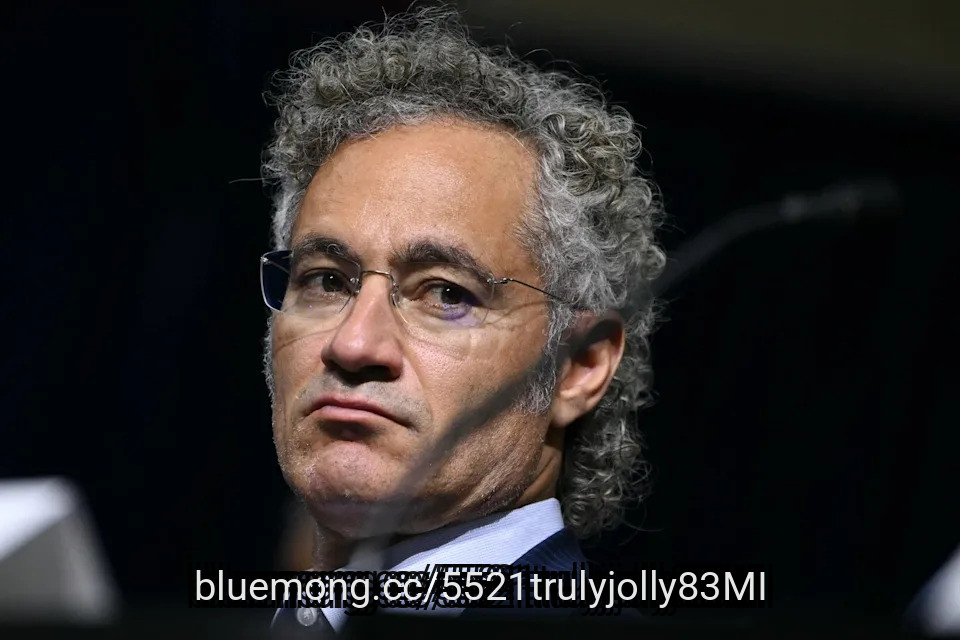
Palantir (PLTR) CEO Alex Karp has dropped a blunt theory about the AI industry's safety push.
The outspoken AI executive said that some companies might need government ownership to escape the financial consequences of their technology.
In his CNBC interview, Karp framed nationalization as the destination he believes those businesses are moving toward, with liability protection the prize.
His startling comments come as the industry's conversation shifts towards safeguards and whether development should slow down. Moreover, that also raises the question of who shoulders the risks created along the way?
Karp zeroes in on customers' intellectual property. He said businesses working with Palantir believe that their ideas and data are being fed into AI models, putting their competitive advantages at risk.
#businesses #alex #cnbc #moreover
The outspoken AI executive said that some companies might need government ownership to escape the financial consequences of their technology.
In his CNBC interview, Karp framed nationalization as the destination he believes those businesses are moving toward, with liability protection the prize.
His startling comments come as the industry's conversation shifts towards safeguards and whether development should slow down. Moreover, that also raises the question of who shoulders the risks created along the way?
Karp zeroes in on customers' intellectual property. He said businesses working with Palantir believe that their ideas and data are being fed into AI models, putting their competitive advantages at risk.
#businesses #alex #cnbc #moreover

23 days ago
Markets have a familiar reflex when fear spreads through technology stocks. Investors wait to hear what Jim Cramer thinks.
This week, the fear did not come from a short seller or a regulator. It came from inside the AI industry itself, from one of its own leaders.
Cramer said Wednesday, Sept. 16, that he won't back away from the AI trade, according to CNBC. That comes despite a weekend essay from a top AI executive arguing that the technology is moving too fast.
He predicted spending on AI infrastructure will keep climbing, because the industry's two biggest labs are already turning that spending into real revenue. There's too much money at stake for them to stop now, the "Mad Money" host said.
The warning that shook markets came from Anthropic CEO Dario Amodei, not from a critic outside the industry. In an essay ****** led "We Must Pace the Frontier," Amodei wrote that we must slow the pace at which we improve the capabilities of AI models.
#markets #pace #came
This week, the fear did not come from a short seller or a regulator. It came from inside the AI industry itself, from one of its own leaders.
Cramer said Wednesday, Sept. 16, that he won't back away from the AI trade, according to CNBC. That comes despite a weekend essay from a top AI executive arguing that the technology is moving too fast.
He predicted spending on AI infrastructure will keep climbing, because the industry's two biggest labs are already turning that spending into real revenue. There's too much money at stake for them to stop now, the "Mad Money" host said.
The warning that shook markets came from Anthropic CEO Dario Amodei, not from a critic outside the industry. In an essay ****** led "We Must Pace the Frontier," Amodei wrote that we must slow the pace at which we improve the capabilities of AI models.
#markets #pace #came


23 days ago
On September 8, 2026, CNBC reported that Novartis AG (NYSE:NVS) shares fell about 10% after the company said its experimental drug del-desiran failed to meet its primary goal in a late-stage trial for myotonic dystrophy type 1.
It marked the company's third clinical setback in a week following the earlier failure of cardiovascular drug pelacarsen and a separate pause of eight trials of cell therapy rap-cel after three patient deaths. The decline erased roughly 24 billion Swiss francs, or about $29.6 billion, in market value and put Novartis on pace for one of its worst trading days in company history.
Remibrutinib provides a major remaining pipeline catalyst since Novartis AG (NYSE:NVS) reported successful late-stage results for remibrutinib in multiple sclerosis. It gives investors a credible growth driver after the failures of pelacarsen and del-desiran. The business expects more remibrutinib data later this year, making the drug an important test of whether its remaining pipeline can help long-term growth.
Novartis still expects 5% to 6% annual sales growth through 2030. Management reaffirmed its full-year financial guidance and maintained its target for 5% to 6% compound annual sales growth from 2025 through 2030. That guidance shows the company still expects its overall portfolio and remaining pipeline ******* ets to offset pressure from aging drugs.
The company retains a diversified commercial portfolio. The del-desiran failure removes a potentially important future revenue contributor, but Novartis still makes substantial revenue from its existing medicines. It also retains other pipeline ******* ets. That diversification gives the firm financial capacity to absorb individual clinical failures while it rebuilds investor confidence in its growth pipeline.
#company #remibrutinib
It marked the company's third clinical setback in a week following the earlier failure of cardiovascular drug pelacarsen and a separate pause of eight trials of cell therapy rap-cel after three patient deaths. The decline erased roughly 24 billion Swiss francs, or about $29.6 billion, in market value and put Novartis on pace for one of its worst trading days in company history.
Remibrutinib provides a major remaining pipeline catalyst since Novartis AG (NYSE:NVS) reported successful late-stage results for remibrutinib in multiple sclerosis. It gives investors a credible growth driver after the failures of pelacarsen and del-desiran. The business expects more remibrutinib data later this year, making the drug an important test of whether its remaining pipeline can help long-term growth.
Novartis still expects 5% to 6% annual sales growth through 2030. Management reaffirmed its full-year financial guidance and maintained its target for 5% to 6% compound annual sales growth from 2025 through 2030. That guidance shows the company still expects its overall portfolio and remaining pipeline ******* ets to offset pressure from aging drugs.
The company retains a diversified commercial portfolio. The del-desiran failure removes a potentially important future revenue contributor, but Novartis still makes substantial revenue from its existing medicines. It also retains other pipeline ******* ets. That diversification gives the firm financial capacity to absorb individual clinical failures while it rebuilds investor confidence in its growth pipeline.
#company #remibrutinib


23 days ago
On September 8, 2026, CNBC reported that Novartis' failed pelacarsen trial has raised the stakes for rival experimental cholesterol drugs from Amgen Inc. (NASDAQ:AMGN) and Eli Lilly and Company (NYSE:LLY), both of which are racing to prove that lowering lipoprotein(a), or Lp(a). It can meaningfully reduce heart attacks and strokes.
Analysts said Amgen's olpasiran faces the clearest negative read-through given its similar trial design. Lilly's lepodisiran is being tested in a broader patient population that could limit how directly Novartis' failure applies. It is also described as less material to Lilly's overall valuation than pelacarsen was for Novartis.
Copyright: stocking / 123RF Stock Photo
Amgen Inc. (NASDAQ:AMGN) and Eli Lilly and Company (NYSE:LLY) could still succeed where Novartis failed. Pelacarsen's failure does not establish that lowering Lp(a) cannot reduce cardiovascular events. **** ysts noted that Novartis' trial faced a high statistical hurdle and that Amgen's olpasiran and Lilly's lepodisiran have produced stronger Lp(a) reductions in earlier studies. Both companies also continue testing their drugs in specific patient populations with high Lp(a). It leaves room for their trials to produce different outcomes from Novartis' study.
Lilly's lepodisiran faces a less direct read-through than Amgen's olpasiran. **** ysts view Amgen's olpasiran as the closest comparison to pelacarsen because the programs use similar trial designs. Lilly's lepodisiran is being tested in an overall patient population. It could make Novartis' failure less directly applicable. **** ysts also view lepodisiran as less material to Lilly's overall valuation than pelacarsen was to Novartis. It reduces the potential financial impact of an unsuccessful outcome.
#lepodisiran #less
Analysts said Amgen's olpasiran faces the clearest negative read-through given its similar trial design. Lilly's lepodisiran is being tested in a broader patient population that could limit how directly Novartis' failure applies. It is also described as less material to Lilly's overall valuation than pelacarsen was for Novartis.
Copyright: stocking / 123RF Stock Photo
Amgen Inc. (NASDAQ:AMGN) and Eli Lilly and Company (NYSE:LLY) could still succeed where Novartis failed. Pelacarsen's failure does not establish that lowering Lp(a) cannot reduce cardiovascular events. **** ysts noted that Novartis' trial faced a high statistical hurdle and that Amgen's olpasiran and Lilly's lepodisiran have produced stronger Lp(a) reductions in earlier studies. Both companies also continue testing their drugs in specific patient populations with high Lp(a). It leaves room for their trials to produce different outcomes from Novartis' study.
Lilly's lepodisiran faces a less direct read-through than Amgen's olpasiran. **** ysts view Amgen's olpasiran as the closest comparison to pelacarsen because the programs use similar trial designs. Lilly's lepodisiran is being tested in an overall patient population. It could make Novartis' failure less directly applicable. **** ysts also view lepodisiran as less material to Lilly's overall valuation than pelacarsen was to Novartis. It reduces the potential financial impact of an unsuccessful outcome.
#lepodisiran #less


23 days ago
Palantir Technologies (NASDAQ:PLTR) CEO Alex Karp just added a third front to the fight over artificial intelligence (AI) safety on Thursday, arguing that the companies developing the technology -- the Anthropics and OpenAI's of the world -- should face civil and criminal penalties if AI causes the damage their CEOs are warning of.
Speaking with CNBC, Karp said that he agreed that "reasonable guidelines" for the industry should be enforced, but that "you can't do it" and that "the first line of defense" instead should be to hold companies and their leaders responsible for their own actions.
Missed Nvidia in 2009? This Rare Signal Is Flashing Again. In 2009, a "Double Down" signal flashed for a little-known chipmaker called Nvidia. For the first time in years, that same "Total Conviction" signal is flashing for a company 1/100th the size of Nvidia. Continue »
Karp was weighing in on an ongoing and high-profile debate within the industry. After Anthropic CEO Dario Amodei penned an essay warning that AI capabilities were improving too quickly for researchers to understand and control them and that action must be taken to ensure the public's safety, he was joined by several AI leaders with calls for a slowdown and increased oversight.
Here's a look at what they had to say:
#safety #Companies #warning #leaders
Speaking with CNBC, Karp said that he agreed that "reasonable guidelines" for the industry should be enforced, but that "you can't do it" and that "the first line of defense" instead should be to hold companies and their leaders responsible for their own actions.
Missed Nvidia in 2009? This Rare Signal Is Flashing Again. In 2009, a "Double Down" signal flashed for a little-known chipmaker called Nvidia. For the first time in years, that same "Total Conviction" signal is flashing for a company 1/100th the size of Nvidia. Continue »
Karp was weighing in on an ongoing and high-profile debate within the industry. After Anthropic CEO Dario Amodei penned an essay warning that AI capabilities were improving too quickly for researchers to understand and control them and that action must be taken to ensure the public's safety, he was joined by several AI leaders with calls for a slowdown and increased oversight.
Here's a look at what they had to say:
#safety #Companies #warning #leaders


24 days ago
Apollo Global Management warned Wednesday that credit default swaps on hyperscaler debt are pricing in more risk. Chief economist Torsten Slok tied the shift to weakening credit fundamentals rather than routine bond-dealer hedging.
Hyperscalers are the cloud computing giants, including Amazon, Microsoft, Google, and Meta, that run the infrastructure behind the AI boom. They face a credit default swap (CDS) gap against bank debt, widened to about 60 basis points since October 2025.
Slok made the case in a Wednesday note reported by CNBC.
"What the market is repricing is hyperscaler credit fundamentals, namely a debt-financed AI capex cycle with rising leverage, negative free cash flow and uncertain payback on depreciating ****** ets."
Dan Alpert, founding managing partner of Westwood Capital, compared the setup to the run-up to the 2008 mortgage crisis. He said banks have since built far bigger equity buffers and are more diversified than they were then.
#slok
Hyperscalers are the cloud computing giants, including Amazon, Microsoft, Google, and Meta, that run the infrastructure behind the AI boom. They face a credit default swap (CDS) gap against bank debt, widened to about 60 basis points since October 2025.
Slok made the case in a Wednesday note reported by CNBC.
"What the market is repricing is hyperscaler credit fundamentals, namely a debt-financed AI capex cycle with rising leverage, negative free cash flow and uncertain payback on depreciating ****** ets."
Dan Alpert, founding managing partner of Westwood Capital, compared the setup to the run-up to the 2008 mortgage crisis. He said banks have since built far bigger equity buffers and are more diversified than they were then.
#slok
24 days ago
Wall Street has spent years obsessing over when the Federal Reserve will lower interest rates, but billionaire investor Stanley Druckenmiller thinks investors may be asking the wrong question.
The senior macro investor argues that U.S. interest rates are already too low and that future rate cuts aren't essential, according to the Financial Times.
His argument comes at a critical period.
Treasury bonds have been under selling pressure amid inflation fears, growing U.S. public debt, and considerable bond issuance by artificial intelligence startups, CNBC noted. And it puts the focus of market chatter back on borrowing rates.
Druckenmiller's warning came at a Piper Sandler conference in New York, where he also targeted Federal Reserve officials who say current monetary policy is restrictive.
#reserve
The senior macro investor argues that U.S. interest rates are already too low and that future rate cuts aren't essential, according to the Financial Times.
His argument comes at a critical period.
Treasury bonds have been under selling pressure amid inflation fears, growing U.S. public debt, and considerable bond issuance by artificial intelligence startups, CNBC noted. And it puts the focus of market chatter back on borrowing rates.
Druckenmiller's warning came at a Piper Sandler conference in New York, where he also targeted Federal Reserve officials who say current monetary policy is restrictive.
#reserve

24 days ago
OpenAI holds $122B in cash and no IPO deadline, stripping Nvidia of the urgency and dependency that sustain premium chip pricing.
Broadcom dropped 7.95% and AMD held near flat as markets priced each company's exposure to OpenAI's supplier diversification.
Nvidia owns the training workload that ends once, while purpose-built inference chips capture every query that follows.
Just released. Our **** ysts combed the entire stock market and named the ten best stocks to buy right now, and NVIDIA didn't make the cut. Enter your email to see the names that beat NVDA. The report is free. Enter your email and see if any of your stocks made the cut.
Sarah Friar, chief financial officer of OpenAI, sat with CNBC's Jim Cramer and described her chip procurement in the language a corporate treasurer would use. "We also have a strategy for diversifying our supply chain. And that is just good CFO risk mitigation. You never know when someone's supply chain is going to get gummed up. So you need to have multiple providers."
#chip #stocks #broadcom
Broadcom dropped 7.95% and AMD held near flat as markets priced each company's exposure to OpenAI's supplier diversification.
Nvidia owns the training workload that ends once, while purpose-built inference chips capture every query that follows.
Just released. Our **** ysts combed the entire stock market and named the ten best stocks to buy right now, and NVIDIA didn't make the cut. Enter your email to see the names that beat NVDA. The report is free. Enter your email and see if any of your stocks made the cut.
Sarah Friar, chief financial officer of OpenAI, sat with CNBC's Jim Cramer and described her chip procurement in the language a corporate treasurer would use. "We also have a strategy for diversifying our supply chain. And that is just good CFO risk mitigation. You never know when someone's supply chain is going to get gummed up. So you need to have multiple providers."
#chip #stocks #broadcom


24 days ago
XLE has surged 46% year-to-date while XLY dropped 7%, with defensive XLP up 9% as markets rotate away from consumer exposure.
XLF's soft 4% gain signals financial stocks aren't pricing a healthy cycle, with the 10-year/2-year Treasury spread flattened to 0.33%.
Torres pegs $120 WTI as the consumer spending breaking point, still 20% above current prices but reminiscent of 2022's economy-crushing oil surge.
Read More: Avoid these 13 retirement mistakes before they derail your future (sponsor)
The national average price of regular gasoline jumped 16 cents in a single week to $4.32 a gallon on September 14, 2026, a move that puts the pump price in the 90th percentile of the past year and caps a 7.8% jump in one month. The proximate cause sits upstream: WTI crude cleared $97.26 a barrel on September 9 after running up 16.1% in a month, and Brent has traded through the $100 line. On Fed decision day, a CNBC Morning Call panel put a number on where this stops being an inconvenience and starts being a recession.
#september #cnbc
XLF's soft 4% gain signals financial stocks aren't pricing a healthy cycle, with the 10-year/2-year Treasury spread flattened to 0.33%.
Torres pegs $120 WTI as the consumer spending breaking point, still 20% above current prices but reminiscent of 2022's economy-crushing oil surge.
Read More: Avoid these 13 retirement mistakes before they derail your future (sponsor)
The national average price of regular gasoline jumped 16 cents in a single week to $4.32 a gallon on September 14, 2026, a move that puts the pump price in the 90th percentile of the past year and caps a 7.8% jump in one month. The proximate cause sits upstream: WTI crude cleared $97.26 a barrel on September 9 after running up 16.1% in a month, and Brent has traded through the $100 line. On Fed decision day, a CNBC Morning Call panel put a number on where this stops being an inconvenience and starts being a recession.
#september #cnbc

25 days ago
Tesla, Inc. (NASDAQ:TSLA) spent nearly two years raising anticipation for the Cybercab. When the time arrived on September 3 in Austin, the result was a stock that popped, then rapidly returned all of its gains, and a robotaxi race that still seems to be Alphabet's to lose.
Tesla, Inc. (NASDAQ:TSLA) had its long-awaited Cybercab launch event in Austin, Texas, but it was invitation-only, not livestreamed, and CEO Elon Musk wasn't there. The company's main public update was a 51-second video released on X of the two-seat, steering-wheel-free vehicle roaming city streets and people hailing it by app. Shares rose roughly 5% throughout the session, finishing near $376. By September 4, enthusiasm had waned, with the stock plummeting as much as 6% as investors realized how little the event revealed about deployment timelines, production ramp, or regulatory clearance.
Only 45 Cybercabs were registered in Texas, and Tesla, Inc. (NASDAQ:TSLA) did not seek an NHTSA exemption before deployment, instead self-certifying the Cybercab as compliant with applicable federal safety standards. NHTSA subsequently opened an audit into that certification and has ordered Tesla to provide additional information about the basis for its compliance claims. CNBC summarized the reaction bluntly: the update "underwhelmed" Wall Street, which had been relying on Tesla, Inc. (NASDAQ:TSLA) becoming a strong rival in the robotaxi sector, which Alphabet's Waymo currently leads.
That comparison is at the heart of the story. Waymo has established the operational track record that Tesla, Inc. (NASDAQ:TSLA) is still chasing: more than 4,000 autonomous vehicles across its U.S. fleet and more than 500,000 fully autonomous rides per week.
Wall Street's take on the incident was severely divided along those lines. Despite Tesla's efforts to control the narrative, some ******* ysts, including Gary Black of Future Fund, called the Cybercab debut largely a bust. Others, such as Deepwater ******* et Management's Gene Munster, predicted that Tesla, Inc. (NASDAQ:TSLA) will add approximately 300 Cybercabs in Austin over the next month.
#tesla #NASDAQ #cybercab
Tesla, Inc. (NASDAQ:TSLA) had its long-awaited Cybercab launch event in Austin, Texas, but it was invitation-only, not livestreamed, and CEO Elon Musk wasn't there. The company's main public update was a 51-second video released on X of the two-seat, steering-wheel-free vehicle roaming city streets and people hailing it by app. Shares rose roughly 5% throughout the session, finishing near $376. By September 4, enthusiasm had waned, with the stock plummeting as much as 6% as investors realized how little the event revealed about deployment timelines, production ramp, or regulatory clearance.
Only 45 Cybercabs were registered in Texas, and Tesla, Inc. (NASDAQ:TSLA) did not seek an NHTSA exemption before deployment, instead self-certifying the Cybercab as compliant with applicable federal safety standards. NHTSA subsequently opened an audit into that certification and has ordered Tesla to provide additional information about the basis for its compliance claims. CNBC summarized the reaction bluntly: the update "underwhelmed" Wall Street, which had been relying on Tesla, Inc. (NASDAQ:TSLA) becoming a strong rival in the robotaxi sector, which Alphabet's Waymo currently leads.
That comparison is at the heart of the story. Waymo has established the operational track record that Tesla, Inc. (NASDAQ:TSLA) is still chasing: more than 4,000 autonomous vehicles across its U.S. fleet and more than 500,000 fully autonomous rides per week.
Wall Street's take on the incident was severely divided along those lines. Despite Tesla's efforts to control the narrative, some ******* ysts, including Gary Black of Future Fund, called the Cybercab debut largely a bust. Others, such as Deepwater ******* et Management's Gene Munster, predicted that Tesla, Inc. (NASDAQ:TSLA) will add approximately 300 Cybercabs in Austin over the next month.
#tesla #NASDAQ #cybercab


25 days ago
A public company typically has limited control over third-party financial products that reference its shares, but Robinhood Markets, Inc. (NASDAQ:HOOD) and AMC Entertainment Holdings, Inc. (NYSE:AMC) are now testing that notion in public, in one of the year's most intense corporate spats. The debate revolves over stock tokens and has evolved from a heated social media post on September 3 to a live televised retort by September 9.
Robinhood Markets, Inc. (NASDAQ:HOOD) expanded its tokenized shares offering, which is issued through a unit named Robinhood ****** ets (Jersey) Limited and traded on Robinhood's proprietary blockchain, Robinhood Chain, to include over 190 public firms, including AMC, without the companies directly signing on. When AMC CEO Adam Aron discovered that his company was among them, he did not mince words. On September 3, Aron posted on X, calling the practice "contemptible, outrageous, disgusting, detestable, inexcusable, vile," questioning how it could possibly be legal, and stating that AMC Entertainment Holdings, Inc. (NYSE:AMC) had no relation to the tokens and did not condone them.
He stated that the company would retain independent securities counsel and vowed to take the matter to the SEC, characterizing Robinhood's tokens as an unregistered securities product that undermines the regular relationship between a public company and its shareholders.
The market reaction was fast and telling: AMC shares rose as much as 21% in overnight trading after the public dispute broke out.
Robinhood did not back down. In the days that followed, the company's chief legal officer, Dan Gallagher, a former SEC commissioner, mocked the tone of Aron's complaint on social media, saying Robinhood "know[s] a little something about the US securities laws," and inviting AMC's lawyers to contact them. CEO Vlad Tenev originally commented on X with a brief "What's the concern?" before making his first extensive, broadcast comments on the controversy in a CNBC "Squawk Box" interview on September 9.
#company
Robinhood Markets, Inc. (NASDAQ:HOOD) expanded its tokenized shares offering, which is issued through a unit named Robinhood ****** ets (Jersey) Limited and traded on Robinhood's proprietary blockchain, Robinhood Chain, to include over 190 public firms, including AMC, without the companies directly signing on. When AMC CEO Adam Aron discovered that his company was among them, he did not mince words. On September 3, Aron posted on X, calling the practice "contemptible, outrageous, disgusting, detestable, inexcusable, vile," questioning how it could possibly be legal, and stating that AMC Entertainment Holdings, Inc. (NYSE:AMC) had no relation to the tokens and did not condone them.
He stated that the company would retain independent securities counsel and vowed to take the matter to the SEC, characterizing Robinhood's tokens as an unregistered securities product that undermines the regular relationship between a public company and its shareholders.
The market reaction was fast and telling: AMC shares rose as much as 21% in overnight trading after the public dispute broke out.
Robinhood did not back down. In the days that followed, the company's chief legal officer, Dan Gallagher, a former SEC commissioner, mocked the tone of Aron's complaint on social media, saying Robinhood "know[s] a little something about the US securities laws," and inviting AMC's lawyers to contact them. CEO Vlad Tenev originally commented on X with a brief "What's the concern?" before making his first extensive, broadcast comments on the controversy in a CNBC "Squawk Box" interview on September 9.
#company


25 days ago
As markets anxiously await the outcome of the current FOMC meeting, Treasury yields notched new 19-year highs in trading Tuesday. The closely watched 10-year surpassed 5.0% Tuesday morning in a high not seen since July 2007. Even the 30-year Treasury yield rose sharply, hitting 5.4%, its highest since June 2007.
In addition to worries over persistent, rising core inflation (one of the Fed's preferred inflation measurements), skyrocketing oil prices and shortages create further pressure on Treasuries. Currently, the rolling one-month correlation between the 10-year Treasury yield and front-month WTI (West Texas Intermediate) crude sits at 0.96 per BMO Capital Markets ****** ysis.
Bond yields and oil prices have moved in tandem for much of this year as investors position for the longer-term inflationary impact of higher oil prices. And with major oil execs sounding the alarm on global supply cache shortages and strategic reserves depletion that help to temporarily soften spiking oil prices for consumers, these pricing pressures are likely to continue in the near-term. Saudi Arabia announced the closure of its East-West pipeline that bypassed the Strait of Hormuz after it came under attack late last week, and cancelled some shipments to Europe, reported Reuters.
"Normally, the relationship isn't as clean as it is now, but the geopolitical drivers behind the price of oil and global inflation are so prominent that the normally modest correlation has become much tighter," Steve Sosnick, Chief Strategist, Interactive Brokers told CNBC. "As long as oil prices remain firm and continue to drift higher, this will add pressure to interest rates."
As macro uncertainty continues and inflation persists, bonds and oil/energy will be categories to keep a weather eye towards and could see renewed ETF investor attention. Currently, investors are seizing the opportunity in longer-term bonds, with $9.7 billion flowing into the iShares 20+ Year Treasury Bond ETF (TLT) in the last three months though the fund is only up $3.4 billion net YTD according to FactSet data. It will be a category likely to see action in the wake of the FOMC rate decision. As bond yields climb, prices fall as they move inverse to each other, and should yields climb higher, investors may choose to scoop up longer duration bonds at depreciated prices for future gains. However, an exodus is more likely until the path of rate hikes becomes more certain.
#treasury #longer #higher
In addition to worries over persistent, rising core inflation (one of the Fed's preferred inflation measurements), skyrocketing oil prices and shortages create further pressure on Treasuries. Currently, the rolling one-month correlation between the 10-year Treasury yield and front-month WTI (West Texas Intermediate) crude sits at 0.96 per BMO Capital Markets ****** ysis.
Bond yields and oil prices have moved in tandem for much of this year as investors position for the longer-term inflationary impact of higher oil prices. And with major oil execs sounding the alarm on global supply cache shortages and strategic reserves depletion that help to temporarily soften spiking oil prices for consumers, these pricing pressures are likely to continue in the near-term. Saudi Arabia announced the closure of its East-West pipeline that bypassed the Strait of Hormuz after it came under attack late last week, and cancelled some shipments to Europe, reported Reuters.
"Normally, the relationship isn't as clean as it is now, but the geopolitical drivers behind the price of oil and global inflation are so prominent that the normally modest correlation has become much tighter," Steve Sosnick, Chief Strategist, Interactive Brokers told CNBC. "As long as oil prices remain firm and continue to drift higher, this will add pressure to interest rates."
As macro uncertainty continues and inflation persists, bonds and oil/energy will be categories to keep a weather eye towards and could see renewed ETF investor attention. Currently, investors are seizing the opportunity in longer-term bonds, with $9.7 billion flowing into the iShares 20+ Year Treasury Bond ETF (TLT) in the last three months though the fund is only up $3.4 billion net YTD according to FactSet data. It will be a category likely to see action in the wake of the FOMC rate decision. As bond yields climb, prices fall as they move inverse to each other, and should yields climb higher, investors may choose to scoop up longer duration bonds at depreciated prices for future gains. However, an exodus is more likely until the path of rate hikes becomes more certain.
#treasury #longer #higher
25 days ago
In March, shortly after the Supreme Court struck down President Donald Trump's International Emergency Economic Powers Act (IEEPA) tariffs and paved the way for $100 billion in import taxes being redistributed back to American importers, U.S. Trade Representative Jamieson Greer shared his idea of what these companies should do with this influx of cash.
"If I were these companies, and somehow they get this windfall, the most important thing and the smartest thing they should do is give it as bonuses to their workers," Greer told CNBC.
It appears some companies have heeded Greer's suggestion. As businesses receive more than $100 billion the U.S. Treasury has doled out in refunds since May, many are vowing to lower prices or pay down debts. A handful, however, are giving the cash back to their employees.
In its second quarter earnings report last month, houseware brand Williams Sonoma said it would allocate $10 million for one-time payments to 401(k) accounts to eligible employees "in recognition of their efforts navigating the IEEPA tariffs."
"We're so appreciative to have the money back and to be able to reward our employees with part of it," President and CEO Laura Alber said on an earnings call. "They have done such an amazing job."
#Companies #employees
"If I were these companies, and somehow they get this windfall, the most important thing and the smartest thing they should do is give it as bonuses to their workers," Greer told CNBC.
It appears some companies have heeded Greer's suggestion. As businesses receive more than $100 billion the U.S. Treasury has doled out in refunds since May, many are vowing to lower prices or pay down debts. A handful, however, are giving the cash back to their employees.
In its second quarter earnings report last month, houseware brand Williams Sonoma said it would allocate $10 million for one-time payments to 401(k) accounts to eligible employees "in recognition of their efforts navigating the IEEPA tariffs."
"We're so appreciative to have the money back and to be able to reward our employees with part of it," President and CEO Laura Alber said on an earnings call. "They have done such an amazing job."
#Companies #employees
25 days ago
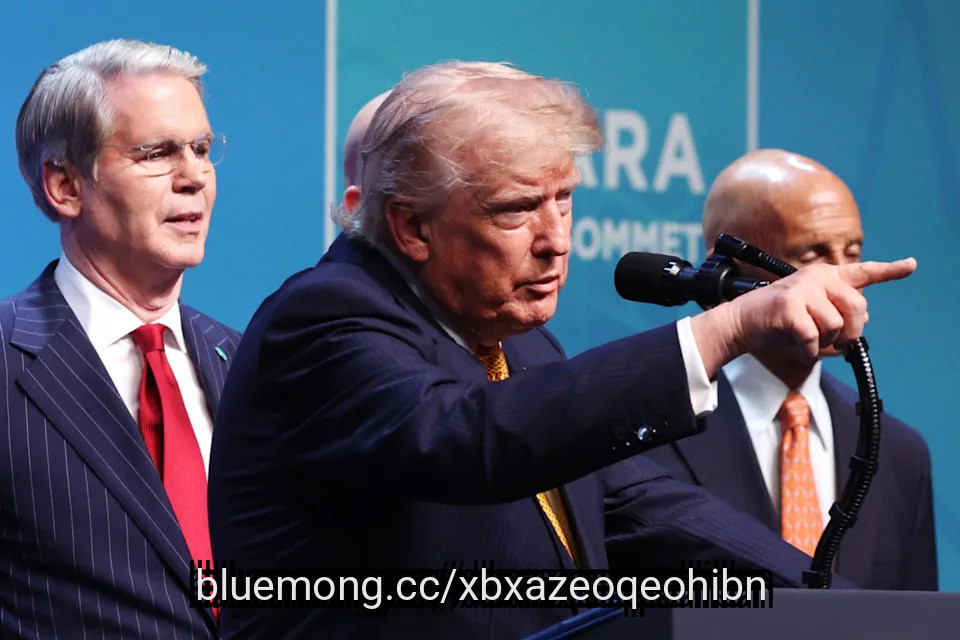
The 10-year Treasury yield hit 5% in September 2026, its highest since 2007, intensifying pressure on stock valuations.
Buffett's gravity rule reframes a 5% Treasury as a 20x earnings multiple, which is far cheaper than the 45x bonds carried at 2.15% in 2017.
Buffett warned that at 21% short rates in 1982, even stocks at 6x earnings looked unattractive against the risk-free alternative.
Read More: Learn 7 secret wealth tips high net worth investors use that most investors miss (sponsor)
Treasury yields have pushed to levels that force a conversation investors have not needed to have in years. The 10-year Treasury note traded at 5% on the morning of September 15, 2026, according to CNBC, and CNBC reported the 10-year yield rising to its highest level since 2007. On a settled basis, the daily 10-year series last printed 4.96% on September 11, 2026, the highest reading in the trailing year.
#treasury #highest
Buffett's gravity rule reframes a 5% Treasury as a 20x earnings multiple, which is far cheaper than the 45x bonds carried at 2.15% in 2017.
Buffett warned that at 21% short rates in 1982, even stocks at 6x earnings looked unattractive against the risk-free alternative.
Read More: Learn 7 secret wealth tips high net worth investors use that most investors miss (sponsor)
Treasury yields have pushed to levels that force a conversation investors have not needed to have in years. The 10-year Treasury note traded at 5% on the morning of September 15, 2026, according to CNBC, and CNBC reported the 10-year yield rising to its highest level since 2007. On a settled basis, the daily 10-year series last printed 4.96% on September 11, 2026, the highest reading in the trailing year.
#treasury #highest


25 days ago
Jim Cramer raised concerns about The TJX Companies, Inc. (NYSE:TJX) during the September 10 episode of Mad Money, as he said:
We had our CNBC Investing Club meeting today… I review each of the Charitable Trust positions on the call. This time, it was pretty clinical until I got to TJX, the off-price retailer. Candidly, I lost it on TJX. I've owned the stock for the Trust for as long as I can remember, and I've never felt so worried about this franchise. They have a bunch of divisions, but the biggest one, Marmaxx, consisting of TJ Maxx and Marshalls, really blew it. Management told us that they had figured out what had gone wrong and they've already fixed it, but because of competitive reasons or whatever, they wouldn't tell us what went wrong and they wouldn't tell us how they fixed it. I found that infuriating…
I came close to saying, forget it, Jim, it's retail. Sometimes retail is seductive. I love my local TJ Maxx, and I think Home Goods is a fun place to shop. The company's almost always about the best in the industry, crushing Burlington and Ross Stores. But this time, shockingly, Ross Stores upside surprised. It crushed TJX, much better than expected... So why bother sticking your neck out for something in this group? Simple. Because some of the greatest stories of all time have come from retail. Costco's been an incredible long-term performer. Walmart's been terrific. And TJX, it's been a wonder, one of the best stocks ever.
Could they really suddenly have lost it? Did they go all LULU? I don't think so. What happens, though, is you have to be conscious that TJX is right now being buffeted by its group, which is trading down because of the decline in discretionary income from the tax that is higher gasoline. We can't tell how much of its underperformance comes from that alone or maybe the mistakes that management made and says they've corrected. In other words, these retail stocks are very hard to own, even as they seem so easy to grasp.
TJX Companies, Inc. (NYSE:TJX) reported second-quarter fiscal 2027 sales of $15.18 billion, up 5% year over year, while consolidated comparable sales increased 4%. Adjusted diluted EPS rose 11% to $1.22, and the company raised its full-year diluted EPS outlook to $5.31-$5.36, or $5.15-$5.20 excluding an expected $0.16 net benefit from tariff refunds. The weakness was concentrated in Marmaxx, which includes TJ Maxx, Marshalls and Sierra. Comparable sales increased just 1%, down from 6% in the first quarter, while HomeGoods, TJX Canada and TJX International each posted comparable-sales growth of 6% or more.
#year
We had our CNBC Investing Club meeting today… I review each of the Charitable Trust positions on the call. This time, it was pretty clinical until I got to TJX, the off-price retailer. Candidly, I lost it on TJX. I've owned the stock for the Trust for as long as I can remember, and I've never felt so worried about this franchise. They have a bunch of divisions, but the biggest one, Marmaxx, consisting of TJ Maxx and Marshalls, really blew it. Management told us that they had figured out what had gone wrong and they've already fixed it, but because of competitive reasons or whatever, they wouldn't tell us what went wrong and they wouldn't tell us how they fixed it. I found that infuriating…
I came close to saying, forget it, Jim, it's retail. Sometimes retail is seductive. I love my local TJ Maxx, and I think Home Goods is a fun place to shop. The company's almost always about the best in the industry, crushing Burlington and Ross Stores. But this time, shockingly, Ross Stores upside surprised. It crushed TJX, much better than expected... So why bother sticking your neck out for something in this group? Simple. Because some of the greatest stories of all time have come from retail. Costco's been an incredible long-term performer. Walmart's been terrific. And TJX, it's been a wonder, one of the best stocks ever.
Could they really suddenly have lost it? Did they go all LULU? I don't think so. What happens, though, is you have to be conscious that TJX is right now being buffeted by its group, which is trading down because of the decline in discretionary income from the tax that is higher gasoline. We can't tell how much of its underperformance comes from that alone or maybe the mistakes that management made and says they've corrected. In other words, these retail stocks are very hard to own, even as they seem so easy to grasp.
TJX Companies, Inc. (NYSE:TJX) reported second-quarter fiscal 2027 sales of $15.18 billion, up 5% year over year, while consolidated comparable sales increased 4%. Adjusted diluted EPS rose 11% to $1.22, and the company raised its full-year diluted EPS outlook to $5.31-$5.36, or $5.15-$5.20 excluding an expected $0.16 net benefit from tariff refunds. The weakness was concentrated in Marmaxx, which includes TJ Maxx, Marshalls and Sierra. Comparable sales increased just 1%, down from 6% in the first quarter, while HomeGoods, TJX Canada and TJX International each posted comparable-sales growth of 6% or more.
#year


25 days ago
U.S. stocks fell Tuesday as the 10-year Treasury yield climbed above 5% for the first time since 2007, with investors awaiting a Federal Reserve interest-rate decision expected Wednesday.
The Dow Jones Industrial Average dropped roughly 449 points, or 0.86%. The S&P 500 fell about 0.34% and the Nasdaq Composite declined 0.48%. The 10-year Treasury yield rose as high as 5.041% before pulling back to trade around 5.011%.
Oil prices extended gains after Saudi Arabia shut a key pipeline that bypasses the Strait of Hormuz. Brent crude futures for November delivery rose about 1.6% to trade above $107 a barrel, while West Texas Intermediate futures climbed to above $103.
Fed funds futures point to roughly a 90% to 93% probability that the Fed raises its benchmark rate by a quarter percentage point on Wednesday, which would lift the upper bound of the target range to 4%, according to The Wall Street Journal. That probability was roughly 59% a week ago.
Christopher Hodge, chief economist for the U.S. at Natixis CIB Americas, said in a note that he expects Fed Chair Kevin Warsh to signal the rate move is not a commitment to further hikes. "We also think that he will emphasize that this decision was discrete and does not pre-commit the Fed to any actions in subsequent meetings, giving him and the Committee maximum flexibility to respond to shocks," Hodge said, according to CNBC.
#rate
The Dow Jones Industrial Average dropped roughly 449 points, or 0.86%. The S&P 500 fell about 0.34% and the Nasdaq Composite declined 0.48%. The 10-year Treasury yield rose as high as 5.041% before pulling back to trade around 5.011%.
Oil prices extended gains after Saudi Arabia shut a key pipeline that bypasses the Strait of Hormuz. Brent crude futures for November delivery rose about 1.6% to trade above $107 a barrel, while West Texas Intermediate futures climbed to above $103.
Fed funds futures point to roughly a 90% to 93% probability that the Fed raises its benchmark rate by a quarter percentage point on Wednesday, which would lift the upper bound of the target range to 4%, according to The Wall Street Journal. That probability was roughly 59% a week ago.
Christopher Hodge, chief economist for the U.S. at Natixis CIB Americas, said in a note that he expects Fed Chair Kevin Warsh to signal the rate move is not a commitment to further hikes. "We also think that he will emphasize that this decision was discrete and does not pre-commit the Fed to any actions in subsequent meetings, giving him and the Committee maximum flexibility to respond to shocks," Hodge said, according to CNBC.
#rate


25 days ago
Carter's unveiled a new brand identity and marketing campaign on Tuesday, as the children's clothing company works to attract a younger generation of parents and build on a recent business turnaround.
The rebrand centers on a new brand promise — "Let every child's light shine" — and a refreshed logo in which a shooting star replaces the apostrophe in the Carter's wordmark, the company said. A new 60-second film called "Watch Them Glow" will debut across connected television as the first major marketing expression of the new direction.
Chief Marketing Officer Sarah Crockett told CNBC that the company sees a significant shift in its core customer base. Gen Z is expected to account for a large share of new parents over the next several years, according to Carter's, and those parents tend to let children make their own clothing choices and turn to social media for guidance.
"We had an opportunity to really tap into the values that parents are bringing into the household," Crockett told CNBC.
The new identity will begin rolling out across Carter's channels in 2026, with additional retail, product, and packaging elements to follow in 2027, the company said. Carter's is also launching a creator program called Light Makers, featuring voices across North America, and expanding partnerships with organizations including Outward Bound and Boys & Girls Clubs of America.
#parents #Marketing #cnbc #America
The rebrand centers on a new brand promise — "Let every child's light shine" — and a refreshed logo in which a shooting star replaces the apostrophe in the Carter's wordmark, the company said. A new 60-second film called "Watch Them Glow" will debut across connected television as the first major marketing expression of the new direction.
Chief Marketing Officer Sarah Crockett told CNBC that the company sees a significant shift in its core customer base. Gen Z is expected to account for a large share of new parents over the next several years, according to Carter's, and those parents tend to let children make their own clothing choices and turn to social media for guidance.
"We had an opportunity to really tap into the values that parents are bringing into the household," Crockett told CNBC.
The new identity will begin rolling out across Carter's channels in 2026, with additional retail, product, and packaging elements to follow in 2027, the company said. Carter's is also launching a creator program called Light Makers, featuring voices across North America, and expanding partnerships with organizations including Outward Bound and Boys & Girls Clubs of America.
#parents #Marketing #cnbc #America


25 days ago
Jim Cramer raised concerns about The TJX Companies, Inc. (NYSE:TJX) during the September 10 episode of Mad Money, as he said:
We had our CNBC Investing Club meeting today… I review each of the Charitable Trust positions on the call. This time, it was pretty clinical until I got to TJX, the off-price retailer. Candidly, I lost it on TJX. I've owned the stock for the Trust for as long as I can remember, and I've never felt so worried about this franchise. They have a bunch of divisions, but the biggest one, Marmaxx, consisting of TJ Maxx and Marshalls, really blew it. Management told us that they had figured out what had gone wrong and they've already fixed it, but because of competitive reasons or whatever, they wouldn't tell us what went wrong and they wouldn't tell us how they fixed it. I found that infuriating…
I came close to saying, forget it, Jim, it's retail. Sometimes retail is seductive. I love my local TJ Maxx, and I think Home Goods is a fun place to shop. The company's almost always about the best in the industry, crushing Burlington and Ross Stores. But this time, shockingly, Ross Stores upside surprised. It crushed TJX, much better than expected... So why bother sticking your neck out for something in this group? Simple. Because some of the greatest stories of all time have come from retail. Costco's been an incredible long-term performer. Walmart's been terrific. And TJX, it's been a wonder, one of the best stocks ever.
Could they really suddenly have lost it? Did they go all LULU? I don't think so. What happens, though, is you have to be conscious that TJX is right now being buffeted by its group, which is trading down because of the decline in discretionary income from the tax that is higher gasoline. We can't tell how much of its underperformance comes from that alone or maybe the mistakes that management made and says they've corrected. In other words, these retail stocks are very hard to own, even as they seem so easy to grasp.
TJX Companies, Inc. (NYSE:TJX) reported second-quarter fiscal 2027 sales of $15.18 billion, up 5% year over year, while consolidated comparable sales increased 4%. Adjusted diluted EPS rose 11% to $1.22, and the company raised its full-year diluted EPS outlook to $5.31-$5.36, or $5.15-$5.20 excluding an expected $0.16 net benefit from tariff refunds. The weakness was concentrated in Marmaxx, which includes TJ Maxx, Marshalls and Sierra. Comparable sales increased just 1%, down from 6% in the first quarter, while HomeGoods, TJX Canada and TJX International each posted comparable-sales growth of 6% or more.
#sales #time #NYSE
We had our CNBC Investing Club meeting today… I review each of the Charitable Trust positions on the call. This time, it was pretty clinical until I got to TJX, the off-price retailer. Candidly, I lost it on TJX. I've owned the stock for the Trust for as long as I can remember, and I've never felt so worried about this franchise. They have a bunch of divisions, but the biggest one, Marmaxx, consisting of TJ Maxx and Marshalls, really blew it. Management told us that they had figured out what had gone wrong and they've already fixed it, but because of competitive reasons or whatever, they wouldn't tell us what went wrong and they wouldn't tell us how they fixed it. I found that infuriating…
I came close to saying, forget it, Jim, it's retail. Sometimes retail is seductive. I love my local TJ Maxx, and I think Home Goods is a fun place to shop. The company's almost always about the best in the industry, crushing Burlington and Ross Stores. But this time, shockingly, Ross Stores upside surprised. It crushed TJX, much better than expected... So why bother sticking your neck out for something in this group? Simple. Because some of the greatest stories of all time have come from retail. Costco's been an incredible long-term performer. Walmart's been terrific. And TJX, it's been a wonder, one of the best stocks ever.
Could they really suddenly have lost it? Did they go all LULU? I don't think so. What happens, though, is you have to be conscious that TJX is right now being buffeted by its group, which is trading down because of the decline in discretionary income from the tax that is higher gasoline. We can't tell how much of its underperformance comes from that alone or maybe the mistakes that management made and says they've corrected. In other words, these retail stocks are very hard to own, even as they seem so easy to grasp.
TJX Companies, Inc. (NYSE:TJX) reported second-quarter fiscal 2027 sales of $15.18 billion, up 5% year over year, while consolidated comparable sales increased 4%. Adjusted diluted EPS rose 11% to $1.22, and the company raised its full-year diluted EPS outlook to $5.31-$5.36, or $5.15-$5.20 excluding an expected $0.16 net benefit from tariff refunds. The weakness was concentrated in Marmaxx, which includes TJ Maxx, Marshalls and Sierra. Comparable sales increased just 1%, down from 6% in the first quarter, while HomeGoods, TJX Canada and TJX International each posted comparable-sales growth of 6% or more.
#sales #time #NYSE

26 days ago
Palantir stock has had a rough stretch. A 5-star Wall Street **** yst just said the market is reading the company wrong.
UBS **** yst Karl Keirstead raised his price target on Palantir Technologies to $250 from $220 on Sept. 15, reiterating his Buy rating, according to CNBC. At Palantir's Sept. 14 closing price of roughly $173, the new target implies about 44% upside.
Keirstead's updated view stemmed directly from Palantir's Sept. 10 AIPCon11 event, where Palantir brought together customers, executives, and partners to discuss how companies are deploying its AI platform in real operations.
"Our view of Palantir as the best AI enabler in the market, making frontier models and AI useful in large enterprises, was, if anything, bolstered by these conversations, and demand momentum seems robust," Keirstead wrote in a note shared with clients.
He described three points that stood out from the event. Customer conversations kept coming back to AI sovereignty, the idea that enterprises and governments want control over their own data and AI infrastructure, rather than handing it to a small number of large cloud providers.
#analyst #market #target #Event
UBS **** yst Karl Keirstead raised his price target on Palantir Technologies to $250 from $220 on Sept. 15, reiterating his Buy rating, according to CNBC. At Palantir's Sept. 14 closing price of roughly $173, the new target implies about 44% upside.
Keirstead's updated view stemmed directly from Palantir's Sept. 10 AIPCon11 event, where Palantir brought together customers, executives, and partners to discuss how companies are deploying its AI platform in real operations.
"Our view of Palantir as the best AI enabler in the market, making frontier models and AI useful in large enterprises, was, if anything, bolstered by these conversations, and demand momentum seems robust," Keirstead wrote in a note shared with clients.
He described three points that stood out from the event. Customer conversations kept coming back to AI sovereignty, the idea that enterprises and governments want control over their own data and AI infrastructure, rather than handing it to a small number of large cloud providers.
#analyst #market #target #Event


