
9 hours ago
You can find original article here WealthManagement. Subscribe to our free daily WealthManagement newsletters.
The giant artificial intelligence company Anthropic has rolled out Claude for Financial Advisors, a suite of artificial intelligence connectors and what the company refers to as "workflow skills" designed to help advisors automate research, meeting preparation and documentation tasks.
Its new product includes connectors to custodians, ***** et managers and wealth technology providers, such as Charles Schwab, BlackRock, Addepar, Envestnet, iCapital, Orion, SS&C Black Diamond, Wealthbox, Wealth.com, Vanguard and Zocks, along with previously available integrations with Microsoft 365, Salesforce, DocuSign, Box, FactSet, S&P Global and Morningstar.
The platform includes skills for advisor onboarding, alternative investments briefing, compliance and AI policy review, estate and tax briefing, portfolio rebalance review, post-meeting notes and follow-up, pre-meeting preparation and prospect intake, according to Anthropic.
"We aren't trying to replace any of the tools out there," said Peter Nolan, head of ***** et and wealth management at Anthropic, during an interview with WealthManagement, when asked whether this puts Anthropic in the position of competing with and potentially upending the developing ecosystem of entrepreneurs and developers working with it and other major AI model providers.
#advisors
The giant artificial intelligence company Anthropic has rolled out Claude for Financial Advisors, a suite of artificial intelligence connectors and what the company refers to as "workflow skills" designed to help advisors automate research, meeting preparation and documentation tasks.
Its new product includes connectors to custodians, ***** et managers and wealth technology providers, such as Charles Schwab, BlackRock, Addepar, Envestnet, iCapital, Orion, SS&C Black Diamond, Wealthbox, Wealth.com, Vanguard and Zocks, along with previously available integrations with Microsoft 365, Salesforce, DocuSign, Box, FactSet, S&P Global and Morningstar.
The platform includes skills for advisor onboarding, alternative investments briefing, compliance and AI policy review, estate and tax briefing, portfolio rebalance review, post-meeting notes and follow-up, pre-meeting preparation and prospect intake, according to Anthropic.
"We aren't trying to replace any of the tools out there," said Peter Nolan, head of ***** et and wealth management at Anthropic, during an interview with WealthManagement, when asked whether this puts Anthropic in the position of competing with and potentially upending the developing ecosystem of entrepreneurs and developers working with it and other major AI model providers.
#advisors


9 hours ago
Broadcom's AI revenue surged 221% year over year with a forward P/E of 19, making it cheaper than Nvidia despite a similar growth trajectory.
TSMC revenue rose 53% year over year at a forward P/E of 20, and Dell booked a record $61B in AI orders last quarter.
Just released. Our ******* ysts combed the entire stock market and named the ten best stocks to buy right now, and NVIDIA didn't make the cut. Enter your email to see the names that beat NVDA. The report is free. Enter your email and see if any of your stocks made the cut.
On a recent Earn Your Leisure episode, hosts Troy Millings and Rashaad Bilal split openly on where the next dollar of AI value accrues. Millings argued for names outside the Magnificent 7 and made Broadcom's custom accelerator business the centerpiece of the case. Bilal countered that "you have to go with the people who are on the leaderboard," naming Taiwan Semiconductor (NYSE:TSM), Nvidia (NASDAQ:NVDA), Micron (NASDAQ:MU), Apple (NASDAQ:AAPL), Alphabet (NASDAQ:GOOG, NASDAQ:GOOGL), Microsoft (NASDAQ:MSFT), and the Nasdaq 100.
I find Millings the more persuasive of the two. Broadcom (NASDAQ:AVGO) posted AI semiconductor revenue of $16.7 billion in the third quarter of fiscal 2026, up 221% year over year, and guided the fourth quarter to $21.7 billion, up 236%. On the earnings call, Hock Tan sketched a trajectory to roughly $115 billion in fiscal 2027 and $230 billion in fiscal 2028.
#NVIDIA #billion #enter
TSMC revenue rose 53% year over year at a forward P/E of 20, and Dell booked a record $61B in AI orders last quarter.
Just released. Our ******* ysts combed the entire stock market and named the ten best stocks to buy right now, and NVIDIA didn't make the cut. Enter your email to see the names that beat NVDA. The report is free. Enter your email and see if any of your stocks made the cut.
On a recent Earn Your Leisure episode, hosts Troy Millings and Rashaad Bilal split openly on where the next dollar of AI value accrues. Millings argued for names outside the Magnificent 7 and made Broadcom's custom accelerator business the centerpiece of the case. Bilal countered that "you have to go with the people who are on the leaderboard," naming Taiwan Semiconductor (NYSE:TSM), Nvidia (NASDAQ:NVDA), Micron (NASDAQ:MU), Apple (NASDAQ:AAPL), Alphabet (NASDAQ:GOOG, NASDAQ:GOOGL), Microsoft (NASDAQ:MSFT), and the Nasdaq 100.
I find Millings the more persuasive of the two. Broadcom (NASDAQ:AVGO) posted AI semiconductor revenue of $16.7 billion in the third quarter of fiscal 2026, up 221% year over year, and guided the fourth quarter to $21.7 billion, up 236%. On the earnings call, Hock Tan sketched a trajectory to roughly $115 billion in fiscal 2027 and $230 billion in fiscal 2028.
#NVIDIA #billion #enter



10 hours ago
Azure crossed $100B annually with 43% growth, and Microsoft's commercial backlog surged 84% to $678B, explaining why markets shrugged off AI safety calls.
Progressive fell 5% and Sherwin-Williams dropped 12% over the past year as housing starts slid 12% and consumer sentiment hit a recessionary 55.
Trump's 'whoever wins, AI wins' framing directly counters Manchin's push for an executive order freezing AI IPOs until federal safeguards are established.
Just released. Our ******* ysts combed the entire stock market and named the ten best stocks to buy right now, and Microsoft didn't make the cut. Enter your email to see the names that beat MSFT. The report is free. Enter your email and see if any of your stocks made the cut.
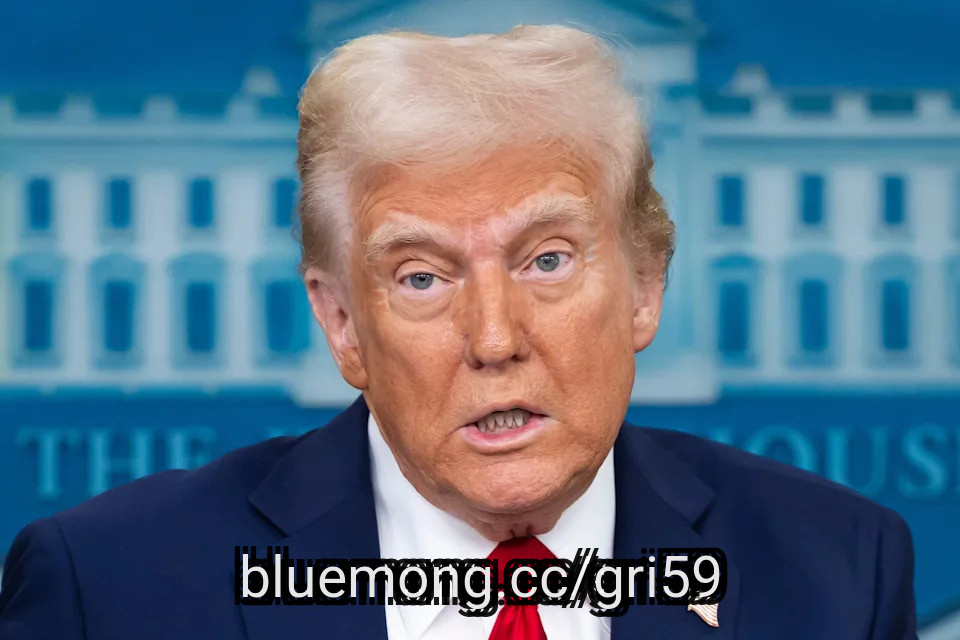
Monday morning, hours after public radio spent its morning walking through an open letter asking the AI industry to slow itself down, President Trump told CNBC the opposite: "We're leading China in AI. We're the most sophisticated country in the world. And frankly, I want to keep it that way because whoever wins, AI wins." Ninety minutes later, shares of Microsoft (NASDAQ:MSFT) were changing hands at $498.70, and Polymarket bettors were pricing 84.5% odds that the stock would close green.
#msft #whoever #stocks #morning
Progressive fell 5% and Sherwin-Williams dropped 12% over the past year as housing starts slid 12% and consumer sentiment hit a recessionary 55.
Trump's 'whoever wins, AI wins' framing directly counters Manchin's push for an executive order freezing AI IPOs until federal safeguards are established.
Just released. Our ******* ysts combed the entire stock market and named the ten best stocks to buy right now, and Microsoft didn't make the cut. Enter your email to see the names that beat MSFT. The report is free. Enter your email and see if any of your stocks made the cut.
Monday morning, hours after public radio spent its morning walking through an open letter asking the AI industry to slow itself down, President Trump told CNBC the opposite: "We're leading China in AI. We're the most sophisticated country in the world. And frankly, I want to keep it that way because whoever wins, AI wins." Ninety minutes later, shares of Microsoft (NASDAQ:MSFT) were changing hands at $498.70, and Polymarket bettors were pricing 84.5% odds that the stock would close green.
#msft #whoever #stocks #morning


11 hours ago
Meta jumped 7% and Nvidia dropped 8% after Amodei, Altman, and Musk publicly called for slowing frontier AI model development.
Microsoft held flat while ASML fell 10% and SoftBank dropped 11%, as markets rotated from AI hardware suppliers into enterprise software names.
With Fed rate hike odds at 85% and the 10-year yield near 5%, the rotation holds only if hyperscalers revise their massive capex plans.
Just released. Our **** ysts combed the entire stock market and named the ten best stocks to buy right now, and NVIDIA made the cut. Enter your email to see the other nine names and why NVDA earned its spot. The report is free. Enter your email and see the full list.
Shares of Meta Platforms (NASDAQ:META) climbed 7.12% over the past week to $660.71, while Alphabet (NASDAQ:GOOGL) added 2.09% and Microsoft (NASDAQ:MSFT) held roughly flat at $499.83. NVIDIA (NASDAQ:NVDA) fell 8.38% over the same stretch to $210.82, and Amazon (NASDAQ:AMZN) slipped 1.74%. Prices are delayed intraday as of the morning of September 14, 2026, according to NBC News.
#NASDAQ #flat #fell
Microsoft held flat while ASML fell 10% and SoftBank dropped 11%, as markets rotated from AI hardware suppliers into enterprise software names.
With Fed rate hike odds at 85% and the 10-year yield near 5%, the rotation holds only if hyperscalers revise their massive capex plans.
Just released. Our **** ysts combed the entire stock market and named the ten best stocks to buy right now, and NVIDIA made the cut. Enter your email to see the other nine names and why NVDA earned its spot. The report is free. Enter your email and see the full list.
Shares of Meta Platforms (NASDAQ:META) climbed 7.12% over the past week to $660.71, while Alphabet (NASDAQ:GOOGL) added 2.09% and Microsoft (NASDAQ:MSFT) held roughly flat at $499.83. NVIDIA (NASDAQ:NVDA) fell 8.38% over the same stretch to $210.82, and Amazon (NASDAQ:AMZN) slipped 1.74%. Prices are delayed intraday as of the morning of September 14, 2026, according to NBC News.
#NASDAQ #flat #fell

11 hours ago
It has been a rollercoaster year for the "Magnificent Seven" stocks, the name given to tech ******* ans Nvidia, Apple, Microsoft, Amazon, Alphabet, Tesla, and Meta Platforms (NASDAQ: META). Of the group, only Meta and Tesla are in the red for the year, down 1.2% and 18.8%, respectively, through market close on Sept. 10.
Both have their fair share of issues, but Meta is a struggling stock that seems to have plenty of upside from its current level. And if history is any indication of what's possible, you may regret not investing while it's having an off year.
Missed Nvidia in 2009? This Rare Signal Is Flashing Again. In 2009, a "Double Down" signal flashed for a little-known chipmaker called Nvidia. For the first time in years, that same "Total Conviction" signal is flashing for a company 1/100th the size of Nvidia. Continue »
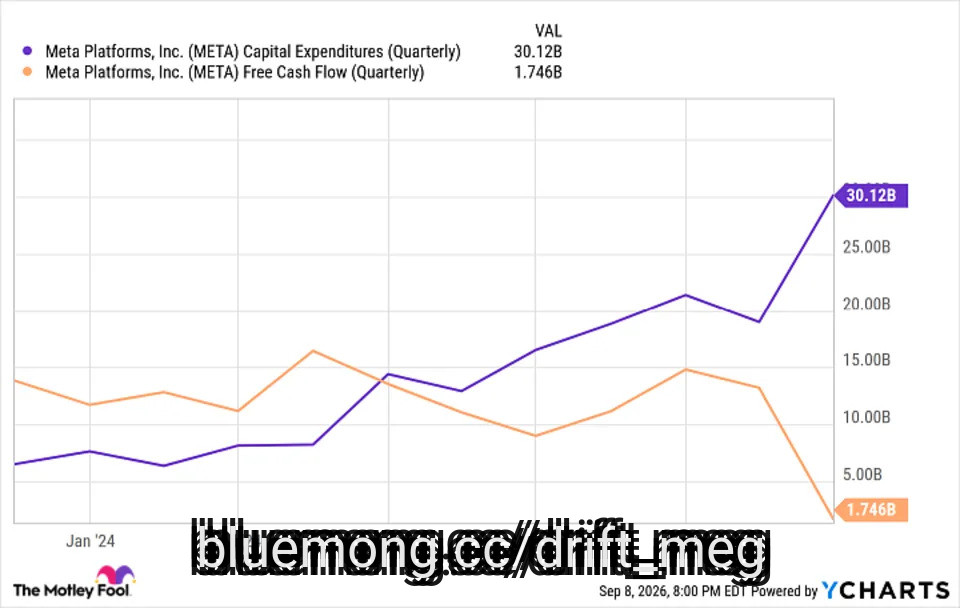
No single issue is dragging down Meta's stock; it's a combination of factors, with the two main ones being its AI spending and its ongoing regulatory issues.
This year, Meta is slated to spend between $130 billion and $145 billion on AI-related projects, such as building data centers and other infrastructure. In the second quarter (Q2), it spent $31 billion, which, for perspective, is more than all but 26 public companies have made in profits in their past four quarters combined.
#tesla #Stock
Both have their fair share of issues, but Meta is a struggling stock that seems to have plenty of upside from its current level. And if history is any indication of what's possible, you may regret not investing while it's having an off year.
Missed Nvidia in 2009? This Rare Signal Is Flashing Again. In 2009, a "Double Down" signal flashed for a little-known chipmaker called Nvidia. For the first time in years, that same "Total Conviction" signal is flashing for a company 1/100th the size of Nvidia. Continue »
No single issue is dragging down Meta's stock; it's a combination of factors, with the two main ones being its AI spending and its ongoing regulatory issues.
This year, Meta is slated to spend between $130 billion and $145 billion on AI-related projects, such as building data centers and other infrastructure. In the second quarter (Q2), it spent $31 billion, which, for perspective, is more than all but 26 public companies have made in profits in their past four quarters combined.
#tesla #Stock


11 hours ago
Tech stocks fell on Monday, as AI industry leaders raised concerns about the future of the technology and its potential to harm humans. The Nasdaq fell roughly 0.8% in early trading. The Philadelphia Semiconductor Index fell more than 4%.
The episode began last week when an Anthropic researcher announced he was leaving the company via a post on X, saying he didn't feel it was doing enough to keep AI in check.
Anthropic Alignment Science Lead, Evan Hubinger, responded the post saying the former Anthropic worker is correct and that he believes there is a greater-than-10 % chance that the technology could "kill all humans."
On Saturday, Anthropic CEO Dario Amodei posted an essay responding to the posts, calling on AI companies to slow the pace of frontier AI development. OpenAI CEO Sam Altman agreed.
And on Monday, Reuters reported that Microsoft is developing its own code of conduct for its AI models.
#anthropic #Monday #Tech
The episode began last week when an Anthropic researcher announced he was leaving the company via a post on X, saying he didn't feel it was doing enough to keep AI in check.
Anthropic Alignment Science Lead, Evan Hubinger, responded the post saying the former Anthropic worker is correct and that he believes there is a greater-than-10 % chance that the technology could "kill all humans."
On Saturday, Anthropic CEO Dario Amodei posted an essay responding to the posts, calling on AI companies to slow the pace of frontier AI development. OpenAI CEO Sam Altman agreed.
And on Monday, Reuters reported that Microsoft is developing its own code of conduct for its AI models.
#anthropic #Monday #Tech



12 hours ago
Apple trades at 37x earnings after a 45% one-year run; Microsoft sits at 27x and is up just 3% year to date, offering a cheaper AI entry point.
Apple's quarterly beat included tariff refunds worth 2 points of gross margin, making the underlying business performance thinner than headline numbers suggest.
Azure crossed $100B in annual revenue growing 43%, and Microsoft's $678B commercial backlog, which is up 84%, signals compounding enterprise AI earnings power into 2028.
Just released. Our **** ysts combed the entire stock market and named the ten best stocks to buy right now, and Apple didn't make the cut. Enter your email to see the names that beat AAPL. The report is free. Enter your email and see if any of your stocks made the cut.
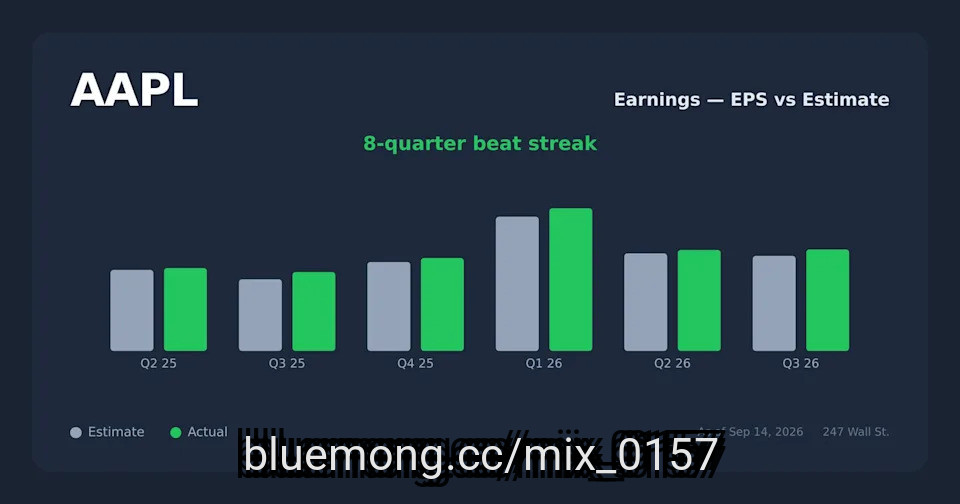
Apple (NASDAQ: AAPL) and Microsoft (NASDAQ: MSFT) both closed the summer with blowout quarters.
#Apple #NASDAQ #stocks
Apple's quarterly beat included tariff refunds worth 2 points of gross margin, making the underlying business performance thinner than headline numbers suggest.
Azure crossed $100B in annual revenue growing 43%, and Microsoft's $678B commercial backlog, which is up 84%, signals compounding enterprise AI earnings power into 2028.
Just released. Our **** ysts combed the entire stock market and named the ten best stocks to buy right now, and Apple didn't make the cut. Enter your email to see the names that beat AAPL. The report is free. Enter your email and see if any of your stocks made the cut.
Apple (NASDAQ: AAPL) and Microsoft (NASDAQ: MSFT) both closed the summer with blowout quarters.
#Apple #NASDAQ #stocks



2 days ago
During the September 3 episode of Mad Money, Jim Cramer mentioned Microsoft Corporation (NASDAQ:MSFT) for its unconventional approach to powering hyperscale data centers in partnership with Chevron Corporation (NYSE:CVX). He said:
How about Microsoft? Look, Mr. Softee is getting religion. They've realized that by giving us more disclosure on Azure, their cloud infrastructure business, we'll find more things to like. They're right. In the end, I come to praise Microsoft CFO Amy Hood, not bury her. They've been very clever getting power for the data centers, pumping it right out of the Permian. They got this deal with Chevron as a partner… 2.67 gigawatts. No one's talking about it. It's the cleanest behind the meter plan for power I have seen yet. People even, and this is not a stretch, I'm not kidding, people even like Copilot.
CFO Amy Hood provided Wall Street with a much clearer look at actual cloud demand by breaking down detailed Azure growth metrics and data center capacity constraints. At the same time, enterprise adoption of Microsoft 365 Copilot is moving past initial trials, with major corporations deploying the AI ***** istant across workforce segments.
A major highlight of the company's infrastructure strategy is a twenty-year agreement with Chevron Corporation (NYSE:CVX) for a proposed 2.67-gigawatt natural gas power plant in West Texas. Designed to supply dedicated off-grid electricity directly to a hyperscale data center in the Permian Basin, the project bypasses regional grid transmission queues to secure reliable power for continuous AI workloads. Microsoft Corporation's (NASDAQ:MSFT) president of Cloud Operations + Innovation, Noelle Walsh, commented:
Our agreement with Chevron helps ensure we'll have dedicated, large-scale power to support the evolution and reliability of advanced compute. Through this partnership, we're delighted to grow with and become a deeper part of the West Texas community.
#chevron #power #they 've
How about Microsoft? Look, Mr. Softee is getting religion. They've realized that by giving us more disclosure on Azure, their cloud infrastructure business, we'll find more things to like. They're right. In the end, I come to praise Microsoft CFO Amy Hood, not bury her. They've been very clever getting power for the data centers, pumping it right out of the Permian. They got this deal with Chevron as a partner… 2.67 gigawatts. No one's talking about it. It's the cleanest behind the meter plan for power I have seen yet. People even, and this is not a stretch, I'm not kidding, people even like Copilot.
CFO Amy Hood provided Wall Street with a much clearer look at actual cloud demand by breaking down detailed Azure growth metrics and data center capacity constraints. At the same time, enterprise adoption of Microsoft 365 Copilot is moving past initial trials, with major corporations deploying the AI ***** istant across workforce segments.
A major highlight of the company's infrastructure strategy is a twenty-year agreement with Chevron Corporation (NYSE:CVX) for a proposed 2.67-gigawatt natural gas power plant in West Texas. Designed to supply dedicated off-grid electricity directly to a hyperscale data center in the Permian Basin, the project bypasses regional grid transmission queues to secure reliable power for continuous AI workloads. Microsoft Corporation's (NASDAQ:MSFT) president of Cloud Operations + Innovation, Noelle Walsh, commented:
Our agreement with Chevron helps ensure we'll have dedicated, large-scale power to support the evolution and reliability of advanced compute. Through this partnership, we're delighted to grow with and become a deeper part of the West Texas community.
#chevron #power #they 've


3 days ago
An AI-hungry Google (GOOG, GOOGL) isn't playing nice with one of the largest content publishers on the internet.
"Here's the truth. For a long time, we had a deal with Google, an unwritten deal, which was 'you can use our content to build your search product, and in return, we get sessions,'" People Inc. (PPLI) CEO Neil Vogel told Yahoo Finance from the Goldman Sachs Communacopia & Tech Conference (video above). "Now the search product has turned into an AI product by and large, and they still use our content to train their AI, both in real time and in a training way — we don't have to get into the AI terminology of it — but now they don't share anything with us."
Google's push into AI-powered summaries has upended search traffic for publishers. Many fear the situation will get worse, triggering more sweeping cost cuts among many players in 2026.
Vogel said the company has signed content licensing deals with Microsoft (MSFT), Meta (META), and OpenAI (OPAI.PVT). Ideally, he would also like to ink one with Google.
He stopped short of saying he would turn off Google from crawling People's content.
#meta
"Here's the truth. For a long time, we had a deal with Google, an unwritten deal, which was 'you can use our content to build your search product, and in return, we get sessions,'" People Inc. (PPLI) CEO Neil Vogel told Yahoo Finance from the Goldman Sachs Communacopia & Tech Conference (video above). "Now the search product has turned into an AI product by and large, and they still use our content to train their AI, both in real time and in a training way — we don't have to get into the AI terminology of it — but now they don't share anything with us."
Google's push into AI-powered summaries has upended search traffic for publishers. Many fear the situation will get worse, triggering more sweeping cost cuts among many players in 2026.
Vogel said the company has signed content licensing deals with Microsoft (MSFT), Meta (META), and OpenAI (OPAI.PVT). Ideally, he would also like to ink one with Google.
He stopped short of saying he would turn off Google from crawling People's content.
#meta



3 days ago
The S&P 500 Index ($SPX) (SPY) is down -0.54% today, the Dow Jones Industrial Average ($DOWI) (DIA) is down -0.32%, and the Nasdaq 100 Index ($IUXX) (QQQ) is down -0.96%. E-mini S&P futures (ESU26) are down -0.50%, and September E-mini Nasdaq futures (NQU26) are down -0.93%.
Stock indexes are falling today, with the S&P 500 and Dow Jones Industrials dropping to 5-week lows. Soaring energy prices are pushing global bond yields higher today, weighing on stocks. WTI crude oil is up more than +3% today at a 3.5-month high amid fears that the US-Iran war will persist, increasing inflation risks and prompting the world's central banks to keep raising interest rates. The 10-year UK Gilt yield rose to a 19-year high today of 5.34%, the 10-year German Bund yield climbed to a 15-year high of 3.49%, and the 10-year T-note yield rose to a 2.75-year high of 4.92%.
'Not Tens Of Billions, But Tens Of Trillions': Nvidia CEO Jensen Huang Says AI Is Like the New Electricity and the Scale Is Unlike Any Tech in History
What It Means for MSFT Stock Investors as Microsoft Switches to 2 Business Segments
RKLB Stock Jumps as Rocket Lab Debuts New Solar Cell for ****** e
#index
Stock indexes are falling today, with the S&P 500 and Dow Jones Industrials dropping to 5-week lows. Soaring energy prices are pushing global bond yields higher today, weighing on stocks. WTI crude oil is up more than +3% today at a 3.5-month high amid fears that the US-Iran war will persist, increasing inflation risks and prompting the world's central banks to keep raising interest rates. The 10-year UK Gilt yield rose to a 19-year high today of 5.34%, the 10-year German Bund yield climbed to a 15-year high of 3.49%, and the 10-year T-note yield rose to a 2.75-year high of 4.92%.
'Not Tens Of Billions, But Tens Of Trillions': Nvidia CEO Jensen Huang Says AI Is Like the New Electricity and the Scale Is Unlike Any Tech in History
What It Means for MSFT Stock Investors as Microsoft Switches to 2 Business Segments
RKLB Stock Jumps as Rocket Lab Debuts New Solar Cell for ****** e
#index


3 days ago
Saint Louis, Missouri-based Centene Corporation (CNC) operates as a healthcare enterprise that provides programs and services to underinsured and uninsured families and commercial organizations in the United States. The company has a market capitalization of $31.6 billion and operates through Medicaid, Medicare, Commercial, and Other segments.
Companies with a market cap of $10 billion or more are typically called "large-cap stocks." CNC fits squarely into that category, with a market cap above this threshold that reflects its substantial size and influence in the healthcare plans industry.
'Not Tens Of Billions, But Tens Of Trillions': Nvidia CEO Jensen Huang Says AI Is Like the New Electricity and the Scale Is Unlike Any Tech in History
What It Means for MSFT Stock Investors as Microsoft Switches to 2 Business Segments
RKLB Stock Jumps as Rocket Lab Debuts New Solar Cell for ****** e
#saint
Companies with a market cap of $10 billion or more are typically called "large-cap stocks." CNC fits squarely into that category, with a market cap above this threshold that reflects its substantial size and influence in the healthcare plans industry.
'Not Tens Of Billions, But Tens Of Trillions': Nvidia CEO Jensen Huang Says AI Is Like the New Electricity and the Scale Is Unlike Any Tech in History
What It Means for MSFT Stock Investors as Microsoft Switches to 2 Business Segments
RKLB Stock Jumps as Rocket Lab Debuts New Solar Cell for ****** e
#saint



3 days ago
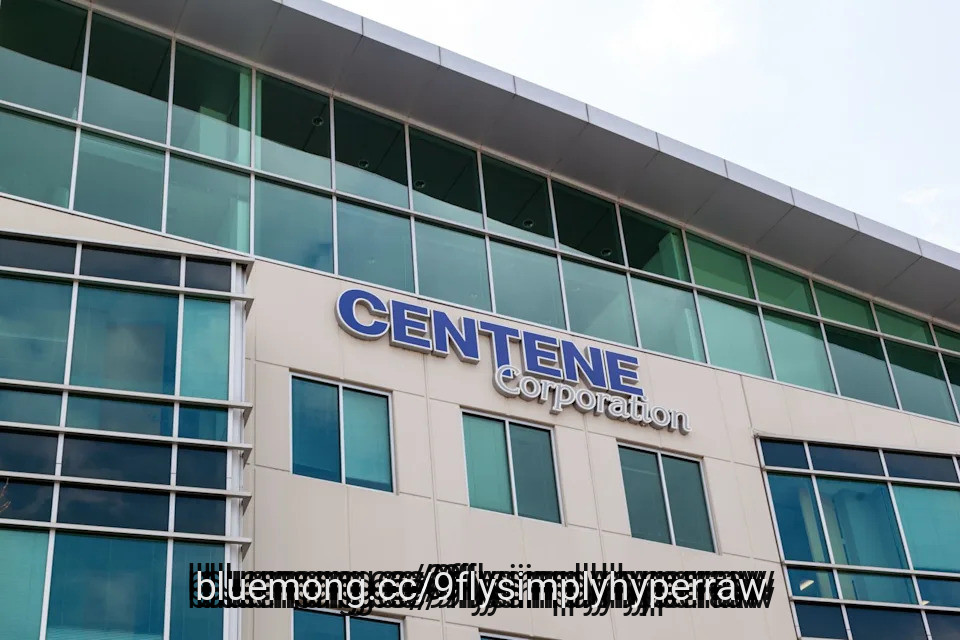
Durham, North Carolina-based IQVIA Holdings Inc. (IQV) provides healthcare research services. Valued at $42.3 billion by market cap, the company offers ******* ytics, technology solutions, and clinical research services to the life sciences industry which helps them in the clinical development and commercialization of medical treatments that improve healthcare outcomes for patients.
Companies worth $10 billion or more are generally described as "large-cap stocks," and IQV perfectly fits that description, with its market cap exceeding this mark, underscoring its size, influence, and dominance within the diagnostics & research industry. With strong revenue growth and a global presence in over 100 countries, IQVIA's expertise and scale provide a competitive edge that is hard to replicate.
'Not Tens Of Billions, But Tens Of Trillions': Nvidia CEO Jensen Huang Says AI Is Like the New Electricity and the Scale Is Unlike Any Tech in History
What It Means for MSFT Stock Investors as Microsoft Switches to 2 Business Segments
RKLB Stock Jumps as Rocket Lab Debuts New Solar Cell for ******* e
#Research #Stock #healthcare
Companies worth $10 billion or more are generally described as "large-cap stocks," and IQV perfectly fits that description, with its market cap exceeding this mark, underscoring its size, influence, and dominance within the diagnostics & research industry. With strong revenue growth and a global presence in over 100 countries, IQVIA's expertise and scale provide a competitive edge that is hard to replicate.
'Not Tens Of Billions, But Tens Of Trillions': Nvidia CEO Jensen Huang Says AI Is Like the New Electricity and the Scale Is Unlike Any Tech in History
What It Means for MSFT Stock Investors as Microsoft Switches to 2 Business Segments
RKLB Stock Jumps as Rocket Lab Debuts New Solar Cell for ******* e
#Research #Stock #healthcare



3 days ago
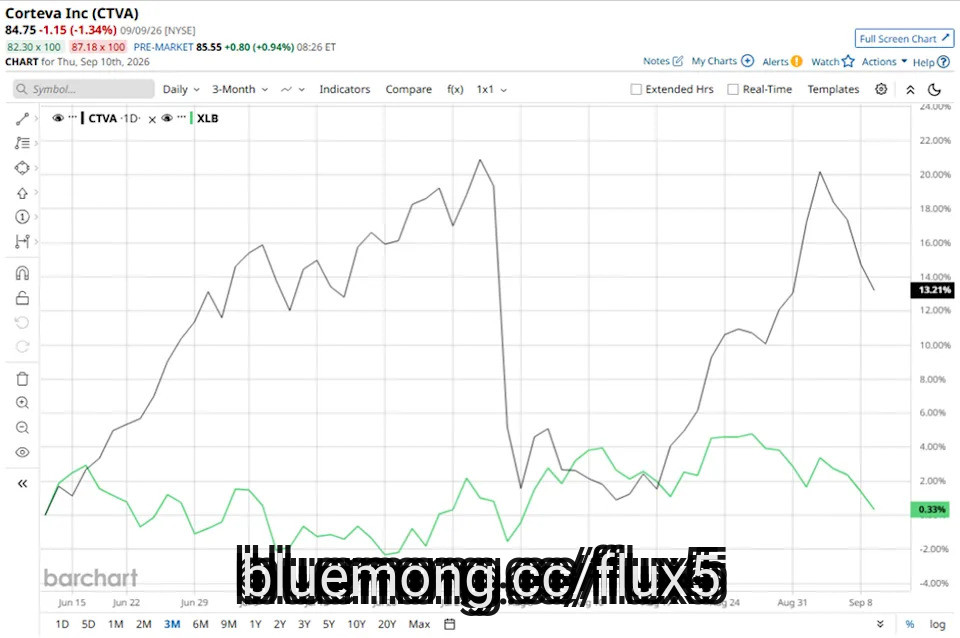
With a market cap of $56.5 billion, Corteva, Inc. (CTVA) is an agriculture company, serving markets across North America, Latin America, Asia Pacific, Europe, the Middle East, and Africa. The company operates through two main segments: Seed and Crop Protection, developing advanced seed genetics, traits, and crop protection products to help improve farm productivity and resilience.
Companies worth more than $10 billion are generally labeled as "large-cap" stocks and Corteva fits this criterion perfectly. It also provides herbicides, insecticides, nitrogen stabilizers, and digital farming solutions that support farmers in optimizing crop yield and profitability.
'Not Tens Of Billions, But Tens Of Trillions': Nvidia CEO Jensen Huang Says AI Is Like the New Electricity and the Scale Is Unlike Any Tech in History
What It Means for MSFT Stock Investors as Microsoft Switches to 2 Business Segments
RKLB Stock Jumps as Rocket Lab Debuts New Solar Cell for ******* e
#protection #billion #company
Companies worth more than $10 billion are generally labeled as "large-cap" stocks and Corteva fits this criterion perfectly. It also provides herbicides, insecticides, nitrogen stabilizers, and digital farming solutions that support farmers in optimizing crop yield and profitability.
'Not Tens Of Billions, But Tens Of Trillions': Nvidia CEO Jensen Huang Says AI Is Like the New Electricity and the Scale Is Unlike Any Tech in History
What It Means for MSFT Stock Investors as Microsoft Switches to 2 Business Segments
RKLB Stock Jumps as Rocket Lab Debuts New Solar Cell for ******* e
#protection #billion #company



3 days ago
Farmington, Connecticut-based Otis Worldwide Corporation (OTIS) manufactures, installs, and services building systems. Valued at $26.4 billion by market cap, the company offers elevators, escalators, and other moving products.
Companies worth $10 billion or more are generally described as "large-cap stocks," and OTIS perfectly fits that description, with its market cap exceeding this mark, underscoring its size, influence, and dominance within the specialty industrial machinery industry. OTIS is the largest global elevator and escalator supplier, known for its innovative safety features dating back to 1854. The company boasts a loyal customer base and competitive edge, with its success lying in commanding premium pricing, securing long-term service contracts, and leveraging its installed base for consistent revenue.
'Not Tens Of Billions, But Tens Of Trillions': Nvidia CEO Jensen Huang Says AI Is Like the New Electricity and the Scale Is Unlike Any Tech in History
What It Means for MSFT Stock Investors as Microsoft Switches to 2 Business Segments
RKLB Stock Jumps as Rocket Lab Debuts New Solar Cell for ******* e
#tens #Stock #billion #market
Companies worth $10 billion or more are generally described as "large-cap stocks," and OTIS perfectly fits that description, with its market cap exceeding this mark, underscoring its size, influence, and dominance within the specialty industrial machinery industry. OTIS is the largest global elevator and escalator supplier, known for its innovative safety features dating back to 1854. The company boasts a loyal customer base and competitive edge, with its success lying in commanding premium pricing, securing long-term service contracts, and leveraging its installed base for consistent revenue.
'Not Tens Of Billions, But Tens Of Trillions': Nvidia CEO Jensen Huang Says AI Is Like the New Electricity and the Scale Is Unlike Any Tech in History
What It Means for MSFT Stock Investors as Microsoft Switches to 2 Business Segments
RKLB Stock Jumps as Rocket Lab Debuts New Solar Cell for ******* e
#tens #Stock #billion #market


3 days ago
Here's an indisputable fact about semiconductor sector leader Nvidia (NVDA). It has massive coattails. One comment from CEO Jensen Huang and his leadership team can push a lot of momentum and investor interest. We've seen it with his remarks about Taiwan Semiconductor Manufacturing (TSM) (calling it one of the "greatest companies in the history of humanity"), Meta Platforms (META) ("Nobody uses AI better than Meta"), and Nebius Group (NBIS) ("Nebius will take care of you").
Now the shine is on CrowdStrike Holdings (CRWD), the cybersecurity company known for its cloud-native platform for endpoint security. At CrowdStrike's recent Fal.Con 2026 conference in Las Vegas, Huang said that CrowdStrike is Nvidia's top security partner.
'Not Tens Of Billions, But Tens Of Trillions': Nvidia CEO Jensen Huang Says AI Is Like the New Electricity and the Scale Is Unlike Any Tech in History
What It Means for MSFT Stock Investors as Microsoft Switches to 2 Business Segments
RKLB Stock Jumps as Rocket Lab Debuts New Solar Cell for ***** e
#nebius
Now the shine is on CrowdStrike Holdings (CRWD), the cybersecurity company known for its cloud-native platform for endpoint security. At CrowdStrike's recent Fal.Con 2026 conference in Las Vegas, Huang said that CrowdStrike is Nvidia's top security partner.
'Not Tens Of Billions, But Tens Of Trillions': Nvidia CEO Jensen Huang Says AI Is Like the New Electricity and the Scale Is Unlike Any Tech in History
What It Means for MSFT Stock Investors as Microsoft Switches to 2 Business Segments
RKLB Stock Jumps as Rocket Lab Debuts New Solar Cell for ***** e
#nebius


3 days ago
September S&P 500 E-Mini futures (ESU26) are down -0.15%, and September Nasdaq 100 E-Mini futures (NQU26) are down -0.66% this morning as rising oil prices and bond yields weigh on investor sentiment ahead of crucial U.S. producer inflation data and earnings from debt-loaded AI hyperscaler Oracle.
Oil prices extended their advance on Thursday as escalating attacks between the U.S. and Iran risked prolonging disruptions to energy flows in the Middle East. Brent crude rose above $103 a barrel, while WTI crude climbed above $99 a barrel. A senior Iranian official said on Wednesday that Tehran has no plans to back down in the face of an American naval blockade and will intensify its strikes if the U.S. continues attacking its territory. Also, Iran's Islamic Revolutionary Guard warned on Wednesday of additional restrictions on shipping around the Strait of Hormuz. Meanwhile, U.S. President Donald Trump said the war with Iran would not end until after the November midterm elections.
'Not Tens Of Billions, But Tens Of Trillions': Nvidia CEO Jensen Huang Says AI Is Like the New Electricity and the Scale Is Unlike Any Tech in History
What It Means for MSFT Stock Investors as Microsoft Switches to 2 Business Segments
RKLB Stock Jumps as Rocket Lab Debuts New Solar Cell for ****** e
#Iran
Oil prices extended their advance on Thursday as escalating attacks between the U.S. and Iran risked prolonging disruptions to energy flows in the Middle East. Brent crude rose above $103 a barrel, while WTI crude climbed above $99 a barrel. A senior Iranian official said on Wednesday that Tehran has no plans to back down in the face of an American naval blockade and will intensify its strikes if the U.S. continues attacking its territory. Also, Iran's Islamic Revolutionary Guard warned on Wednesday of additional restrictions on shipping around the Strait of Hormuz. Meanwhile, U.S. President Donald Trump said the war with Iran would not end until after the November midterm elections.
'Not Tens Of Billions, But Tens Of Trillions': Nvidia CEO Jensen Huang Says AI Is Like the New Electricity and the Scale Is Unlike Any Tech in History
What It Means for MSFT Stock Investors as Microsoft Switches to 2 Business Segments
RKLB Stock Jumps as Rocket Lab Debuts New Solar Cell for ****** e
#Iran

3 days ago
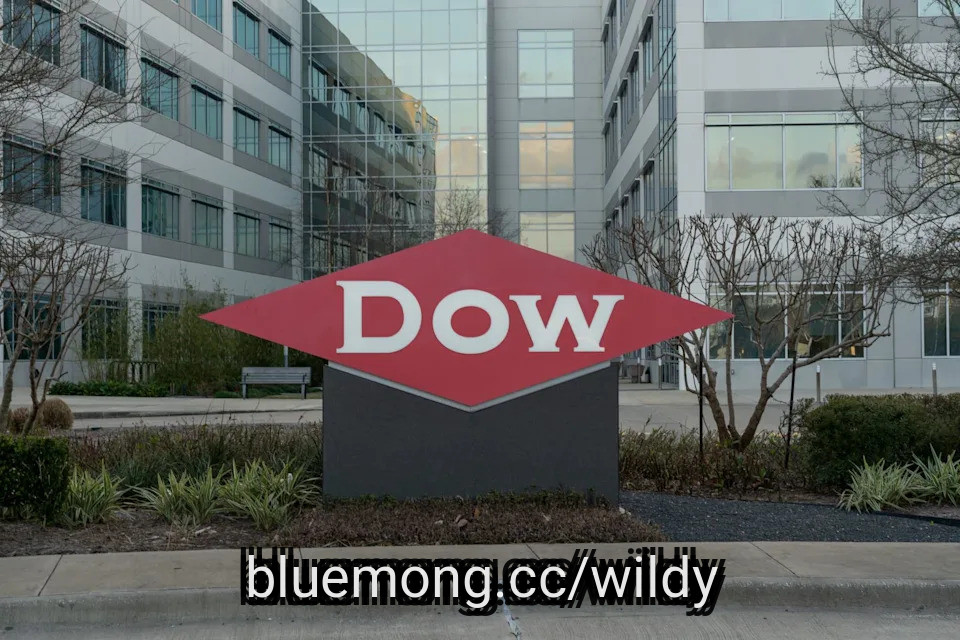
Based in Midland, Michigan, Dow Inc. (DOW) is a global materials science leader that develops and manufactures chemicals, plastics, coatings, silicones, and other advanced materials used across industries ranging from packaging and construction to automotive, electronics, and consumer products.
Companies valued between $10 billion and $200 billion are typically classified as "large-cap stocks," and DOW, with a market capitalization of $21.4 billion, fits the label perfectly. Its key competitive advantage is its global scale, deep materials-science expertise, and broad portfolio of essential chemicals and advanced materials.
'Not Tens Of Billions, But Tens Of Trillions': Nvidia CEO Jensen Huang Says AI Is Like the New Electricity and the Scale Is Unlike Any Tech in History
What It Means for MSFT Stock Investors as Microsoft Switches to 2 Business Segments
RKLB Stock Jumps as Rocket Lab Debuts New Solar Cell for ******* e
#billion #science
Companies valued between $10 billion and $200 billion are typically classified as "large-cap stocks," and DOW, with a market capitalization of $21.4 billion, fits the label perfectly. Its key competitive advantage is its global scale, deep materials-science expertise, and broad portfolio of essential chemicals and advanced materials.
'Not Tens Of Billions, But Tens Of Trillions': Nvidia CEO Jensen Huang Says AI Is Like the New Electricity and the Scale Is Unlike Any Tech in History
What It Means for MSFT Stock Investors as Microsoft Switches to 2 Business Segments
RKLB Stock Jumps as Rocket Lab Debuts New Solar Cell for ******* e
#billion #science


3 days ago
Nucor Corporation (NUE) is the largest steel producer and recycler in the U.S., with operations spanning steel mills, steel products, and raw materials. Headquartered in Charlotte, North Carolina, the company produces a broad range of steel, from sheet and structural steel to joists, girders, and tubing, serving critical end markets such as construction, infrastructure, manufacturing, and energy.
With a market capitalization of $58.2 billion, NUE firmly sits in the large-cap category, reflecting its scale, industry influence, and leadership within the U.S. steel sector. Unlike traditional blast-furnace producers, Nucor primarily uses scrap-based electric arc furnaces (EAFs), giving it greater production flexibility and a comparatively lower environmental footprint.
'Not Tens Of Billions, But Tens Of Trillions': Nvidia CEO Jensen Huang Says AI Is Like the New Electricity and the Scale Is Unlike Any Tech in History
What It Means for MSFT Stock Investors as Microsoft Switches to 2 Business Segments
RKLB Stock Jumps as Rocket Lab Debuts New Solar Cell for **** e
#steel #north
With a market capitalization of $58.2 billion, NUE firmly sits in the large-cap category, reflecting its scale, industry influence, and leadership within the U.S. steel sector. Unlike traditional blast-furnace producers, Nucor primarily uses scrap-based electric arc furnaces (EAFs), giving it greater production flexibility and a comparatively lower environmental footprint.
'Not Tens Of Billions, But Tens Of Trillions': Nvidia CEO Jensen Huang Says AI Is Like the New Electricity and the Scale Is Unlike Any Tech in History
What It Means for MSFT Stock Investors as Microsoft Switches to 2 Business Segments
RKLB Stock Jumps as Rocket Lab Debuts New Solar Cell for **** e
#steel #north


3 days ago
IDEXX Laboratories, Inc. (IDXX) is a leading animal-health diagnostics and technology company best known for providing veterinarians with diagnostic testing, laboratory services, software, and imaging solutions. Valued at a market cap of $45.7 billion, the company develops and supplies diagnostic instruments, test kits, software, and laboratory services that help veterinarians, farmers, and laboratories detect diseases and monitor animal health.
Companies worth between $10 billion and $200 billion are typically classified as "large-cap stocks," and IDXX fits the label perfectly. The company is widely recognized as a market leader in veterinary diagnostics, supported by strong brand recognition, a large installed base of diagnostic instruments across veterinary practices, and a recurring revenue model fueled by consumables and testing services. With its solutions used by veterinary practices in more than 175 countries, the company has built a strong global presence and a broad, highly recurring customer base.
'Not Tens Of Billions, But Tens Of Trillions': Nvidia CEO Jensen Huang Says AI Is Like the New Electricity and the Scale Is Unlike Any Tech in History
What It Means for MSFT Stock Investors as Microsoft Switches to 2 Business Segments
RKLB Stock Jumps as Rocket Lab Debuts New Solar Cell for ******* e
#Services #Stock #laboratories
Companies worth between $10 billion and $200 billion are typically classified as "large-cap stocks," and IDXX fits the label perfectly. The company is widely recognized as a market leader in veterinary diagnostics, supported by strong brand recognition, a large installed base of diagnostic instruments across veterinary practices, and a recurring revenue model fueled by consumables and testing services. With its solutions used by veterinary practices in more than 175 countries, the company has built a strong global presence and a broad, highly recurring customer base.
'Not Tens Of Billions, But Tens Of Trillions': Nvidia CEO Jensen Huang Says AI Is Like the New Electricity and the Scale Is Unlike Any Tech in History
What It Means for MSFT Stock Investors as Microsoft Switches to 2 Business Segments
RKLB Stock Jumps as Rocket Lab Debuts New Solar Cell for ******* e
#Services #Stock #laboratories


3 days ago
Quanta Services, Inc. (PWR) is a leading specialty infrastructure contractor that designs, builds, upgrades, repairs, and maintains critical energy and communications infrastructure across the U.S., Canada, Australia, and select international markets.
With a market cap of $96.1 billion, Quanta Services fits squarely within the large-cap stock category. It is particularly well positioned to benefit from the surging demand for electricity and grid investment. Data-center expansion, AI infrastructure, manufacturing reshoring, electrification, renewable-energy buildouts, and grid modernization are all driving demand for the infrastructure Quanta provides.
'Not Tens Of Billions, But Tens Of Trillions': Nvidia CEO Jensen Huang Says AI Is Like the New Electricity and the Scale Is Unlike Any Tech in History
What It Means for MSFT Stock Investors as Microsoft Switches to 2 Business Segments
RKLB Stock Jumps as Rocket Lab Debuts New Solar Cell for ******* e
#energy
With a market cap of $96.1 billion, Quanta Services fits squarely within the large-cap stock category. It is particularly well positioned to benefit from the surging demand for electricity and grid investment. Data-center expansion, AI infrastructure, manufacturing reshoring, electrification, renewable-energy buildouts, and grid modernization are all driving demand for the infrastructure Quanta provides.
'Not Tens Of Billions, But Tens Of Trillions': Nvidia CEO Jensen Huang Says AI Is Like the New Electricity and the Scale Is Unlike Any Tech in History
What It Means for MSFT Stock Investors as Microsoft Switches to 2 Business Segments
RKLB Stock Jumps as Rocket Lab Debuts New Solar Cell for ******* e
#energy


4 days ago
When Cathie Wood makes a move, Wall Street tends to pay attention. Her trades have become something of a market signal, especially when they involve the high-growth themes she has consistently backed. And in September, that shopping list included a little bit of everything — ****** e, fintech, crypto and biotechnology — while ARK Investment Management trimmed several large technology and healthcare positions.
In fintech, ARK Innovation ETF (ARKK) has been steadily adding to its Robinhood Markets (HOOD) bet. On Sept. 4, the fund bought 28,589 HOOD shares worth roughly $3.5 million, just a day after the stock jumped 16.6%. ARK then returned to the checkout counter on Sept. 8, purchasing another $3.3 million worth of Robinhood's shares. The buying reflects growing optimism around Robinhood's prediction markets, banking, and crypto businesses. The additions have also pushed HOOD into ARKK's top 10 holdings, with a 4.17% portfolio weight.
'Not Tens Of Billions, But Tens Of Trillions': Nvidia CEO Jensen Huang Says AI Is Like the New Electricity and the Scale Is Unlike Any Tech in History
What It Means for MSFT Stock Investors as Microsoft Switches to 2 Business Segments
RKLB Stock Jumps as Rocket Lab Debuts New Solar Cell for ****** e
#Stock #sept #markets #worth
In fintech, ARK Innovation ETF (ARKK) has been steadily adding to its Robinhood Markets (HOOD) bet. On Sept. 4, the fund bought 28,589 HOOD shares worth roughly $3.5 million, just a day after the stock jumped 16.6%. ARK then returned to the checkout counter on Sept. 8, purchasing another $3.3 million worth of Robinhood's shares. The buying reflects growing optimism around Robinhood's prediction markets, banking, and crypto businesses. The additions have also pushed HOOD into ARKK's top 10 holdings, with a 4.17% portfolio weight.
'Not Tens Of Billions, But Tens Of Trillions': Nvidia CEO Jensen Huang Says AI Is Like the New Electricity and the Scale Is Unlike Any Tech in History
What It Means for MSFT Stock Investors as Microsoft Switches to 2 Business Segments
RKLB Stock Jumps as Rocket Lab Debuts New Solar Cell for ****** e
#Stock #sept #markets #worth



4 days ago
Dell Technologies (DELL) shares have surged more than 316% so far in 2026, fueled by robust demand for AI infrastructure, increased enterprise investment in modernizing IT systems, and continued expansion of its customer base.
The company is also benefiting from strong demand for its AI-optimized servers, and the momentum is likely sustainable in the coming quarters. At the same time, rising AI demand is also driving demand for traditional servers and networking equipment, further strengthening Dell's long-term growth prospects.
'Not Tens Of Billions, But Tens Of Trillions': Nvidia CEO Jensen Huang Says AI Is Like the New Electricity and the Scale Is Unlike Any Tech in History
What It Means for MSFT Stock Investors as Microsoft Switches to 2 Business Segments
RKLB Stock Jumps as Rocket Lab Debuts New Solar Cell for ***** e
#tens
The company is also benefiting from strong demand for its AI-optimized servers, and the momentum is likely sustainable in the coming quarters. At the same time, rising AI demand is also driving demand for traditional servers and networking equipment, further strengthening Dell's long-term growth prospects.
'Not Tens Of Billions, But Tens Of Trillions': Nvidia CEO Jensen Huang Says AI Is Like the New Electricity and the Scale Is Unlike Any Tech in History
What It Means for MSFT Stock Investors as Microsoft Switches to 2 Business Segments
RKLB Stock Jumps as Rocket Lab Debuts New Solar Cell for ***** e
#tens


4 days ago
Shopify (SHOP) stock opened higher on Wednesday after the e-commerce firm said it has acquired Tailwind Labs, the company behind the widely used Tailwind CSS. The announcement is significant for SHOP, given that Tailwind CSS is installed more than 110 million times per week and is used by prominent names like ChatGPT, Cloudflare (NET), Reddit (RDDT), and X.
That said, Shopify shares have reversed their intraday gains in recent hours and are now headed to end the Sept. 9 session down more than 5%.
'Not Tens Of Billions, But Tens Of Trillions': Nvidia CEO Jensen Huang Says AI Is Like the New Electricity and the Scale Is Unlike Any Tech in History
What It Means for MSFT Stock Investors as Microsoft Switches to 2 Business Segments
RKLB Stock Jumps as Rocket Lab Debuts New Solar Cell for ******* e
#tailwind #chatgpt
That said, Shopify shares have reversed their intraday gains in recent hours and are now headed to end the Sept. 9 session down more than 5%.
'Not Tens Of Billions, But Tens Of Trillions': Nvidia CEO Jensen Huang Says AI Is Like the New Electricity and the Scale Is Unlike Any Tech in History
What It Means for MSFT Stock Investors as Microsoft Switches to 2 Business Segments
RKLB Stock Jumps as Rocket Lab Debuts New Solar Cell for ******* e
#tailwind #chatgpt



4 days ago
The S&P 500 Index ($SPX) (SPY) closed down -0.48% on Wednesday, the Dow Jones Industrial Average ($DOWI) (DIA) closed down -0.77%, and the Nasdaq 100 Index ($IUXX) (QQQ) closed down -0.29%. E-mini S&P futures (ESU26) fell -0.46%, and September E-mini Nasdaq futures (NQU26) fell -0.30%.
Stock indexes retreated on Wednesday, with the Dow Jones Industrial Average falling to a 5-week low. The broader market was under pressure for a second day amid mounting inflation risks. WTI crude oil prices surged more than +3% today to a 3.25-month high amid escalating hostilities in the Middle East, heightening concerns about energy flows through the Strait of Hormuz. The surge in energy prices is boosting inflation expectations and pushing bond yields higher. The 10-year T-note yield rose to 4.85% on Wednesday, the highest in 2.75 years. The higher bond yields weighed on stocks.
'Not Tens Of Billions, But Tens Of Trillions': Nvidia CEO Jensen Huang Says AI Is Like the New Electricity and the Scale Is Unlike Any Tech in History
What It Means for MSFT Stock Investors as Microsoft Switches to 2 Business Segments
RKLB Stock Jumps as Rocket Lab Debuts New Solar Cell for **** e
#closed #NASDAQ
Stock indexes retreated on Wednesday, with the Dow Jones Industrial Average falling to a 5-week low. The broader market was under pressure for a second day amid mounting inflation risks. WTI crude oil prices surged more than +3% today to a 3.25-month high amid escalating hostilities in the Middle East, heightening concerns about energy flows through the Strait of Hormuz. The surge in energy prices is boosting inflation expectations and pushing bond yields higher. The 10-year T-note yield rose to 4.85% on Wednesday, the highest in 2.75 years. The higher bond yields weighed on stocks.
'Not Tens Of Billions, But Tens Of Trillions': Nvidia CEO Jensen Huang Says AI Is Like the New Electricity and the Scale Is Unlike Any Tech in History
What It Means for MSFT Stock Investors as Microsoft Switches to 2 Business Segments
RKLB Stock Jumps as Rocket Lab Debuts New Solar Cell for **** e
#closed #NASDAQ

4 days ago
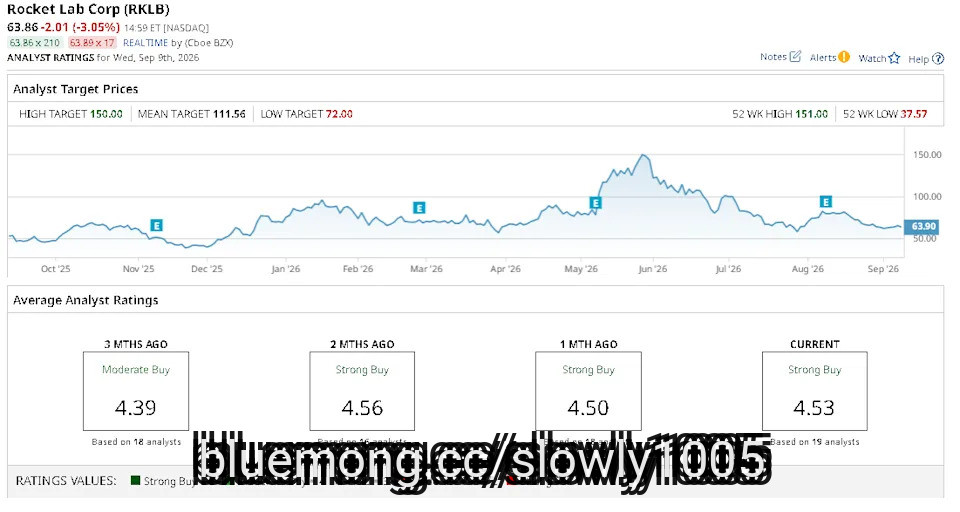
Rocket Lab (RKLB) shares are in the spotlight on Wednesday after the **** e company unveiled a new high-efficiency solar cell designed specifically for **** ecraft. In its press release, RKLB said its new Inverted Metamorphic (IMM) Apex cell delivers 31.5% beginning-of-life efficiency while weighing about 40% less than conventional alternatives.
The announcement comes as Rocket Lab stock has fallen out of favor with investors, currently down about 55% versus its year-to-date high.
'Not Tens Of Billions, But Tens Of Trillions': Nvidia CEO Jensen Huang Says AI Is Like the New Electricity and the Scale Is Unlike Any Tech in History
What It Means for MSFT Stock Investors as Microsoft Switches to 2 Business Segments
Ahead of Oracle Earnings, Here's What Barchart Data Says Comes Next for ORCL Stock
#tens #investors #high
The announcement comes as Rocket Lab stock has fallen out of favor with investors, currently down about 55% versus its year-to-date high.
'Not Tens Of Billions, But Tens Of Trillions': Nvidia CEO Jensen Huang Says AI Is Like the New Electricity and the Scale Is Unlike Any Tech in History
What It Means for MSFT Stock Investors as Microsoft Switches to 2 Business Segments
Ahead of Oracle Earnings, Here's What Barchart Data Says Comes Next for ORCL Stock
#tens #investors #high



4 days ago
Microsoft (MSFT) is coming off the most profitable stretch it has posted in years, and its stock trades at $493.95, about 92% of its 52-week high. Nothing here is broken. The risk is quieter than that. The spending that came with those margins is still climbing, and the company has already told shareholders what it expects that to do to fiscal 2027.
Net margin over the trailing twelve months is 40.3%, the highest in at least five years and well above a 36.8% three-year average. Operating margin runs 46.8% against a 45.3% three-year average, near the top of its multi-year range. Revenue of $331.8 billion grew 17.8% year over year, so none of this came from a shrinking business.
Margins at a peak rarely stay there. This peak arrives with a specific and growing bill, and that bill is the Azure build-out.
Azure revenue grew 43% in fiscal Q4 2026, and management says customer demand still exceeds available capacity. Company-wide, the build-out took $41 billion of capital expenditure in that one quarter (including equipment acquired under leases), roughly two-thirds of it on what management calls short-lived **** ets, primarily CPUs and GPUs. Against $55.4 billion in cash from operations, cash actually paid for property and equipment was $35.8 billion, yielding $19.6 billion in free cash flow.
The bill is already visible in the margin. The company's gross margin was 67% in fiscal Q4 2026, down year over year, and management attributes the decline to the sales mix shift toward Azure and the AI infrastructure spending behind it, offset only partly by efficiency gains. Capital expenditure is guided higher again in fiscal 2027.
#azure #bill #cash
Net margin over the trailing twelve months is 40.3%, the highest in at least five years and well above a 36.8% three-year average. Operating margin runs 46.8% against a 45.3% three-year average, near the top of its multi-year range. Revenue of $331.8 billion grew 17.8% year over year, so none of this came from a shrinking business.
Margins at a peak rarely stay there. This peak arrives with a specific and growing bill, and that bill is the Azure build-out.
Azure revenue grew 43% in fiscal Q4 2026, and management says customer demand still exceeds available capacity. Company-wide, the build-out took $41 billion of capital expenditure in that one quarter (including equipment acquired under leases), roughly two-thirds of it on what management calls short-lived **** ets, primarily CPUs and GPUs. Against $55.4 billion in cash from operations, cash actually paid for property and equipment was $35.8 billion, yielding $19.6 billion in free cash flow.
The bill is already visible in the margin. The company's gross margin was 67% in fiscal Q4 2026, down year over year, and management attributes the decline to the sales mix shift toward Azure and the AI infrastructure spending behind it, offset only partly by efficiency gains. Capital expenditure is guided higher again in fiscal 2027.
#azure #bill #cash

4 days ago
Nvidia (NVDA) Jensen Huang was seated next to US Commerce Secretary Howard Lutnick on a G20 stage on Sept. 2, recalling the first time the two of them met, when he put a number on what the world is about to spend. "You recognize that the infrastructure buildout is not going to be in the tens of billions, but is going to be in the tens of trillions," Huang said. "That supply chain security is going to be necessary."
The venue was the US-hosted G20 innovation ministerial in Chapel Hill, NC, and the chief executive was in a fireside conversation with the Commerce secretary. Sam Altman appeared at the same event. The exchange was carried live and the "tens of trillions" line went out the same afternoon across the wires.
What It Means for MSFT Stock Investors as Microsoft Switches to 2 Business Segments
RKLB Stock Jumps as Rocket Lab Debuts New Solar Cell for ***** e
Ahead of Oracle Earnings, Here's What Barchart Data Says Comes Next for ORCL Stock
#next #trillions
The venue was the US-hosted G20 innovation ministerial in Chapel Hill, NC, and the chief executive was in a fireside conversation with the Commerce secretary. Sam Altman appeared at the same event. The exchange was carried live and the "tens of trillions" line went out the same afternoon across the wires.
What It Means for MSFT Stock Investors as Microsoft Switches to 2 Business Segments
RKLB Stock Jumps as Rocket Lab Debuts New Solar Cell for ***** e
Ahead of Oracle Earnings, Here's What Barchart Data Says Comes Next for ORCL Stock
#next #trillions


4 days ago
Answering a caller's query about Box, Inc. (NYSE:BOX) during the lightning round of Mad Money on September 3, Jim Cramer commented:
Box is finally, after multiple years, it is finally breaking out. It has good storage. People like storage. It's got a good CEO in Aaron Levie. It's just never been exciting to people. It's finally starting to get some mojo. I think it's okay to own. It's done nothing for years.
Cramer's perspective highlights a shifting narrative for a cloud pioneer that has historically traded in a tight range. In its fiscal second-quarter 2027 report, Box, Inc. (NYSE:BOX) posted revenue of $321.1 million, marking a 9.2% year-over-year increase that topped Wall Street expectations by over $2 million. Adjusted earnings per share reached $0.40, in line with consensus forecasts, while management raised full-year revenue guidance to approximately $1.29 billion. The core demand is supported by expanding adoption of higher-tier Box Suites, which now account for 69% of revenue, along with early traction in AI-driven document tools that help enterprises modernize legacy storage workflows.
Despite recent top-line acceleration, Box, Inc. (NYSE:BOX) operates in a fiercely competitive market dominated by massive tech ecosystems like Microsoft OneDrive and Google Drive, and other specialized rivals such as Dropbox. While quarterly growth has stabilized, Box's multi-year annual growth rate has historically lagged behind high-flying software peers. Furthermore, Box still needs to sustain its recent growth acceleration while investing in AI capabilities.
As per Insider Monkey's data of over 1000 hedge funds, 37 hedge funds had a stake in Box, Inc. (NYSE:BOX) in Q2 compared to 36 in Q1, highlighting steady institutional backing from long-term ***** et managers. Arrowstreet Capital remained the company's top hedge fund holder in Q2 with 4.3 million shares. Additionally, it is worth noting that another significant shareholder, Citadel Investment Group increased its position in the stock by 60% to over 3.7 million shares. The short percentage of float sits at 14.26%, which shows a notable segment of the market remains unconvinced about the sustainability of the breakout.
#NYSE #year #people
Box is finally, after multiple years, it is finally breaking out. It has good storage. People like storage. It's got a good CEO in Aaron Levie. It's just never been exciting to people. It's finally starting to get some mojo. I think it's okay to own. It's done nothing for years.
Cramer's perspective highlights a shifting narrative for a cloud pioneer that has historically traded in a tight range. In its fiscal second-quarter 2027 report, Box, Inc. (NYSE:BOX) posted revenue of $321.1 million, marking a 9.2% year-over-year increase that topped Wall Street expectations by over $2 million. Adjusted earnings per share reached $0.40, in line with consensus forecasts, while management raised full-year revenue guidance to approximately $1.29 billion. The core demand is supported by expanding adoption of higher-tier Box Suites, which now account for 69% of revenue, along with early traction in AI-driven document tools that help enterprises modernize legacy storage workflows.
Despite recent top-line acceleration, Box, Inc. (NYSE:BOX) operates in a fiercely competitive market dominated by massive tech ecosystems like Microsoft OneDrive and Google Drive, and other specialized rivals such as Dropbox. While quarterly growth has stabilized, Box's multi-year annual growth rate has historically lagged behind high-flying software peers. Furthermore, Box still needs to sustain its recent growth acceleration while investing in AI capabilities.
As per Insider Monkey's data of over 1000 hedge funds, 37 hedge funds had a stake in Box, Inc. (NYSE:BOX) in Q2 compared to 36 in Q1, highlighting steady institutional backing from long-term ***** et managers. Arrowstreet Capital remained the company's top hedge fund holder in Q2 with 4.3 million shares. Additionally, it is worth noting that another significant shareholder, Citadel Investment Group increased its position in the stock by 60% to over 3.7 million shares. The short percentage of float sits at 14.26%, which shows a notable segment of the market remains unconvinced about the sustainability of the breakout.
#NYSE #year #people

4 days ago
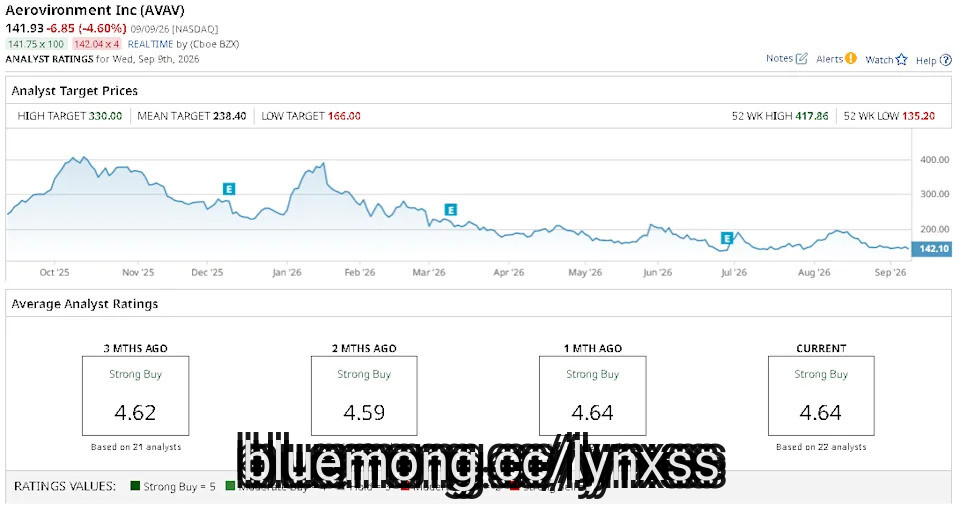
AeroVironment (AVAV) shares are inching lower ahead of the drone company's fiscal Q1 earnings scheduled to be released after the market closes on Sept. 9. Consensus is for AVAV to record $0.22 in earnings per share (EPS) for its first quarter, which would represent a 31.25% decline on a year-over-year basis.
Heading into the quarterly print, AeroVironment stock is down more than 60% versus its year-to-date high.
Dear Nvidia Stock Fans, Mark Your Calendars for September 10
Rocket Lab Keeps Landing Defense Deals. Here's Why **** ysts Aren't Getting More Bullish.
Why Stifel Just Revamped Its Price Target for Microsoft Stock
#year #consensus #NVIDIA
Heading into the quarterly print, AeroVironment stock is down more than 60% versus its year-to-date high.
Dear Nvidia Stock Fans, Mark Your Calendars for September 10
Rocket Lab Keeps Landing Defense Deals. Here's Why **** ysts Aren't Getting More Bullish.
Why Stifel Just Revamped Its Price Target for Microsoft Stock
#year #consensus #NVIDIA


4 days ago
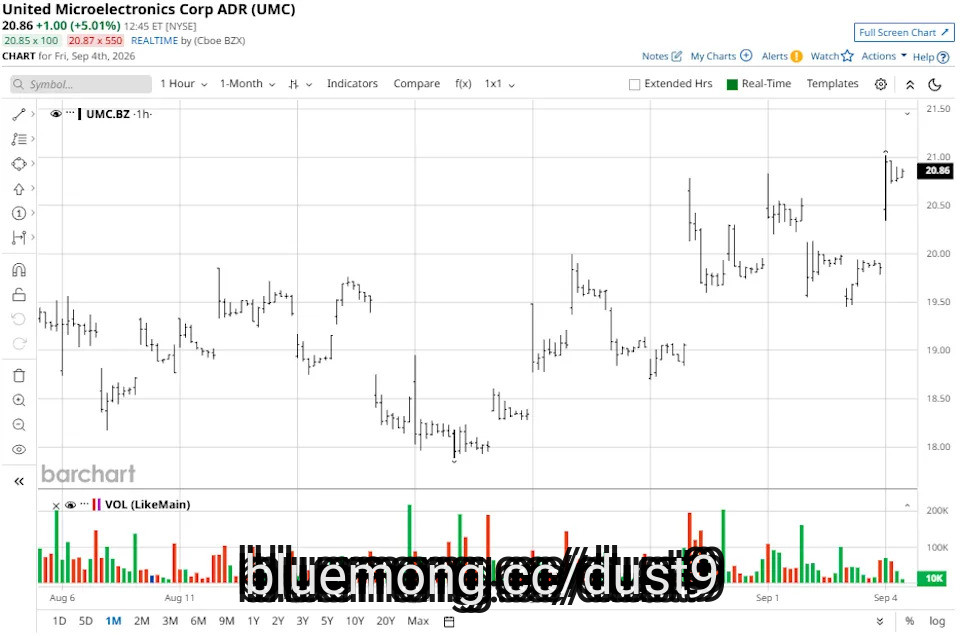
United Microelectronics (UMC) is a leading global semiconductor foundry founded in 1980 and headquartered in Hsinchu, Taiwan. The company specializes in advanced wafer fabrication, offering complementary metal-oxide semiconductor (CMOS) logic, mixed-signal, radiofrequency, embedded memory, high-voltage, and image sensor manufacturing services to a diverse global customer base. The company has increasingly focused on specialty semiconductor solutions spanning power management, connectivity, and advanced packaging, while expanding into silicon photonics to capture emerging demand related to artificial intelligence (AI).
UMC stock currently trades around $22, which is closer to the higher end of its 52-week range of $6.72 to $28.96, reflecting a dramatic rebound from multiyear lows earlier in the year. Shares have been volatile in recent sessions, popping on strong sales figures as investors weigh near-term margin pressures against long-term AI-driven capacity expansion plans.
Dear Nvidia Stock Fans, Mark Your Calendars for September 10
Rocket Lab Keeps Landing Defense Deals. Here's Why ***** ysts Aren't Getting More Bullish.
Why Stifel Just Revamped Its Price Target for Microsoft Stock
#semiconductor #united #taiwan
UMC stock currently trades around $22, which is closer to the higher end of its 52-week range of $6.72 to $28.96, reflecting a dramatic rebound from multiyear lows earlier in the year. Shares have been volatile in recent sessions, popping on strong sales figures as investors weigh near-term margin pressures against long-term AI-driven capacity expansion plans.
Dear Nvidia Stock Fans, Mark Your Calendars for September 10
Rocket Lab Keeps Landing Defense Deals. Here's Why ***** ysts Aren't Getting More Bullish.
Why Stifel Just Revamped Its Price Target for Microsoft Stock
#semiconductor #united #taiwan