

23 hours ago
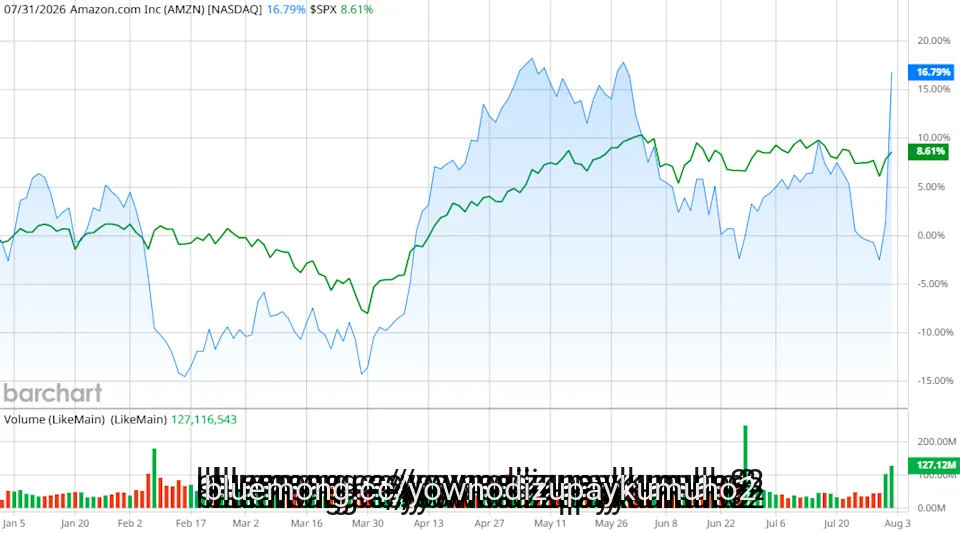
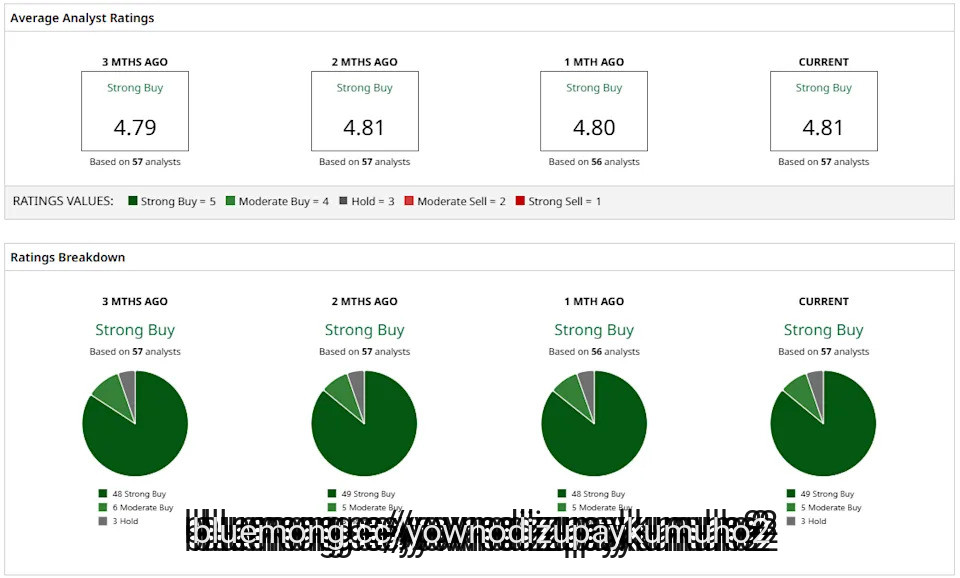
Score one for Andy Jassy and his team at Amazon (AMZN). After months of AMZN stock underperforming the S&P 500 ($SPX) on fears that the company was spending too much, too fast on its artificial intelligence (AI) buildout, the CEO put those fears to rest with the latest earnings report. The release made one thing clear: Amazon's AI strategy is paying off in a big way.
Amazon's second-quarter report recorded the fastest growth in Amazon Web Services (AWS) in 18 quarters, with the segment exceeding an annual run rate of $25 billion in AI revenue thanks to new agreements signed with several big companies, including Warner Bros. Discovery (WBD), Pinterest (PINS), Snowflake (SNOW), and Moody's (MCO). Amazon also recorded a $25 billion annual run rate for its chips business, which includes its custom-built Trainium AI chip. Amazon has commitments from AI startups Anthropic and OpenAI, Uber Technologies (UBER), Pinterest, and numerous smaller startups.
CoreWeave Just Scored a Leidos Partnership. What That Means for CRWV Stock Here.
Palantir Is Set to Deliver Strong Q2. **** ysts See 60% Upside Potential for PLTR Stock.
How to Play Jersey Mike's Subs Stock After the JMKE IPO
#amzn #pinterest
Amazon's second-quarter report recorded the fastest growth in Amazon Web Services (AWS) in 18 quarters, with the segment exceeding an annual run rate of $25 billion in AI revenue thanks to new agreements signed with several big companies, including Warner Bros. Discovery (WBD), Pinterest (PINS), Snowflake (SNOW), and Moody's (MCO). Amazon also recorded a $25 billion annual run rate for its chips business, which includes its custom-built Trainium AI chip. Amazon has commitments from AI startups Anthropic and OpenAI, Uber Technologies (UBER), Pinterest, and numerous smaller startups.
CoreWeave Just Scored a Leidos Partnership. What That Means for CRWV Stock Here.
Palantir Is Set to Deliver Strong Q2. **** ysts See 60% Upside Potential for PLTR Stock.
How to Play Jersey Mike's Subs Stock After the JMKE IPO
#amzn #pinterest

1 day ago
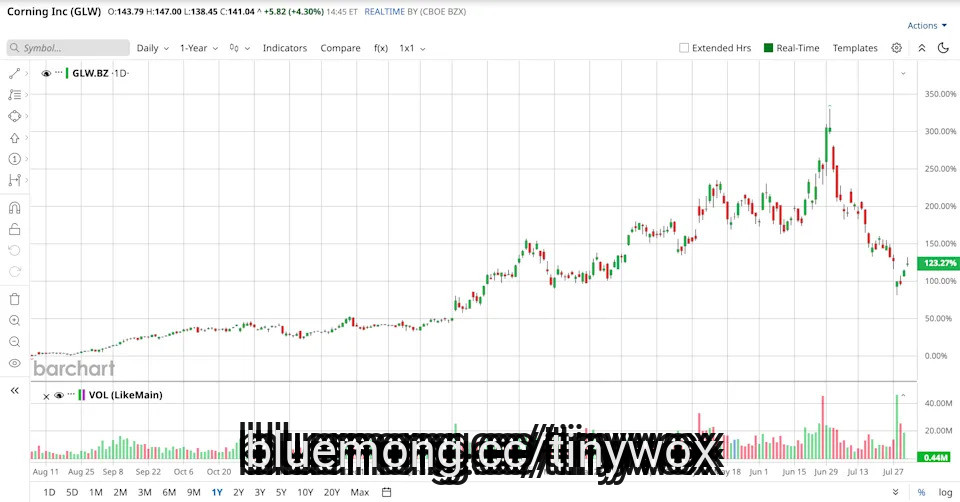
Corning (GLW), best known to many investors as the maker of Gorilla Glass, had increasingly been revalued as an important supplier to the AI buildout thanks to its optical connectivity business. However, its latest earnings shock is a reminder that even the market's most celebrated AI infrastructure winners can run into gravity when expectations get too high.
Its shares fell as much as 20% intraday on July 28 after the company reported second-quarter results. That is one of the sharpest single-day declines in years for a name that had become a high-conviction proxy for AI infrastructure spending.
CoreWeave Just Scored a Leidos Partnership. What That Means for CRWV Stock Here.
Palantir Is Set to Deliver Strong Q2. ******* ysts See 60% Upside Potential for PLTR Stock.
Earnings, PMI and Other Key Things to Watch this Week
#infrastructure #gorilla
Its shares fell as much as 20% intraday on July 28 after the company reported second-quarter results. That is one of the sharpest single-day declines in years for a name that had become a high-conviction proxy for AI infrastructure spending.
CoreWeave Just Scored a Leidos Partnership. What That Means for CRWV Stock Here.
Palantir Is Set to Deliver Strong Q2. ******* ysts See 60% Upside Potential for PLTR Stock.
Earnings, PMI and Other Key Things to Watch this Week
#infrastructure #gorilla



2 days ago
Concerned about an AI bubble? Sign up for The Daily Upside for smart and actionable market news, built for investors.
You thought gasoline prices have gone up? That's nothing compared with the soaring cost of memory chips, which have become not only incredibly expensive but also increasingly scarce relative to demand because of the AI buildout.
To see why, you only need to understand two things.
The first is compute, the most famous component of the AI buildout. In short, it's the hardware that provides the processing power to speed up AI and machine learning. As Big Tech hyperscalers and the major AI labs have raced to obtain as much processing power as possible for their more and more sophisticated advanced models, high-end hardware like Nvidia's graphics processing units (GPUs) has become one of the world's most coveted resources. The demand transformed the semiconductor designer into one of the most profitable and valuable companies on earth.
Sign up for The Daily Upside at no cost for premium ******* ysis on all your favorite stocks.
#daily #become #buildout #hardware
You thought gasoline prices have gone up? That's nothing compared with the soaring cost of memory chips, which have become not only incredibly expensive but also increasingly scarce relative to demand because of the AI buildout.
To see why, you only need to understand two things.
The first is compute, the most famous component of the AI buildout. In short, it's the hardware that provides the processing power to speed up AI and machine learning. As Big Tech hyperscalers and the major AI labs have raced to obtain as much processing power as possible for their more and more sophisticated advanced models, high-end hardware like Nvidia's graphics processing units (GPUs) has become one of the world's most coveted resources. The demand transformed the semiconductor designer into one of the most profitable and valuable companies on earth.
Sign up for The Daily Upside at no cost for premium ******* ysis on all your favorite stocks.
#daily #become #buildout #hardware


3 days ago
Zohran Mamdani stormed into office brandishing the banner of "affordability," and almost singlehandedly pushed the issue to the center of today's political debate. Of all the charismatic, 34-year-old Mayor's initiatives aimed at lowering living costs, the one that's garnered the most coverage is his proposal to get Gotham into the grocery business.
The city-owned food store initiative looks so radical, even for this avowed democratic socialist, because it puts a city in direct competition versus an immense, entrenched private industry. On his other big "affordability" initiatives, providing free bus service and freezing rent on one million apartments, Mamdani's simply using his regulatory and budget powers in the Democratic mayors' traditional vein of tightening price controls on housing and delivering more freebees
This one's different: It's extraordinarily rare for a municipality to challenge local businesses by starting its own enterprises that aim to do the same thing. The only major example: city-backed companies that battle the Verizons and Comcasts to supply broadband. They're all either struggling, or already flopped. Mamdani's predecessor Eric Adams shuttered the $2 billion fiber-optic buildout started a few years earlier under Mayor Bill de Blasio. As for supermarkets, Chicago last year killed plans for a city-owned emporium as impractical. Kansas City, apparently the only major metro ever to open a taxpayer-funded supermarket, ended the failed foray in early 2025.
Hence, Mamdani's plan would probably reign as the biggest push any city's ever made to launch its own business amid a galaxy of private players. The Mayor's identified a big problem. New Yorkers indeed suffer from extremely high prices for everything from chicken to eggs to milk. The city's riddled with "food desert" neighborhoods where residents often can't find much other than processed items nearby, and must travel 20 minutes or more to reach outlets that offer wide choices of fresh foods at low cost.
But that drastic shortage in the metro that ranks among the world's wealthiest is almost totally self-inflicted. Contrary to Mamdani's claim that "the private market alone has not delivered affordable, full-service grocery options," here's the real rub: A web of antiquated regulations—and one in particular that effectively bans big stores where they're needed most—is blocking major chains from deploying billions of their own capital to open far more of the kinds of giant extravaganzas featuring baseball-field length stretches of checkout lanes that bring far lower stickers to the suburbs just beyond Gotham's borders.
#affordability
The city-owned food store initiative looks so radical, even for this avowed democratic socialist, because it puts a city in direct competition versus an immense, entrenched private industry. On his other big "affordability" initiatives, providing free bus service and freezing rent on one million apartments, Mamdani's simply using his regulatory and budget powers in the Democratic mayors' traditional vein of tightening price controls on housing and delivering more freebees
This one's different: It's extraordinarily rare for a municipality to challenge local businesses by starting its own enterprises that aim to do the same thing. The only major example: city-backed companies that battle the Verizons and Comcasts to supply broadband. They're all either struggling, or already flopped. Mamdani's predecessor Eric Adams shuttered the $2 billion fiber-optic buildout started a few years earlier under Mayor Bill de Blasio. As for supermarkets, Chicago last year killed plans for a city-owned emporium as impractical. Kansas City, apparently the only major metro ever to open a taxpayer-funded supermarket, ended the failed foray in early 2025.
Hence, Mamdani's plan would probably reign as the biggest push any city's ever made to launch its own business amid a galaxy of private players. The Mayor's identified a big problem. New Yorkers indeed suffer from extremely high prices for everything from chicken to eggs to milk. The city's riddled with "food desert" neighborhoods where residents often can't find much other than processed items nearby, and must travel 20 minutes or more to reach outlets that offer wide choices of fresh foods at low cost.
But that drastic shortage in the metro that ranks among the world's wealthiest is almost totally self-inflicted. Contrary to Mamdani's claim that "the private market alone has not delivered affordable, full-service grocery options," here's the real rub: A web of antiquated regulations—and one in particular that effectively bans big stores where they're needed most—is blocking major chains from deploying billions of their own capital to open far more of the kinds of giant extravaganzas featuring baseball-field length stretches of checkout lanes that bring far lower stickers to the suburbs just beyond Gotham's borders.
#affordability


4 days ago
Arete Research, an independent research firm, has upgraded Texas Instruments Incorporated (NASDAQ:TXN) to Buy from Neutral and lifted its price target to $405 from $303. This 34% raise in the PT comes days after the company posted a strong quarter – a surprise from an ***** og cyclical sector. Texas Instruments' Q2 revenue reached $5.46 billion, up 23% year-over-year, beating the $5.24 billion consensus. The company's EPS rose 52% year-over-year, beating the $1.92 Street estimate with $2.14. The most crucial piece of information tucked away in the report is the twofold growth in data center income.
According to an Arete Research ***** yst, the surging AI demand is anticipated to cause three years of ***** og semiconductor shortages. The ***** yst believes that Texas Instruments is well-positioned with respect to capacity, which should yield significant market share gains during this cycle. Arete projects revenue of approximately $34 billion with earnings of $17 per share by fiscal 2028. These structural tailwinds, discussed by the ***** yst, align with the company's operational and financial performance. Let's break them down.
The AI buildout faces one severe bottleneck – power shortage. And power is exactly what Texas Instruments, nicknamed by the market as "boring ***** og," sells. Hyperscalers are shifting toward 800-volt DC architectures to support denser GPU clusters. As a result, the need for ***** og content per rack increases. Texas Instruments serves this critical conversion layer through high-voltage gallium-nitride (GaN) power devices, real-time motor control, and sensing technology. Additionally, the company's March collaboration with Nvidia on humanoid robotics expands this portfolio. These demands fuel the quarterly ***** og revenue, which rose 26% to $4.37 billion. Texas Instruments is not relying on an industrial market recovery but is working on strengthening its position as a significant supplier for technology's most capital-intensive infrastructure cycle.
A more durable driver stems from timing rather than the AI narrative. Texas Instruments is completing a six-year, roughly $24 billion fab expansion that constrained free cash flow. Spending is dropping significantly. The 2026 capex projected at $2 billion to $3 billion stands in contrast to the comparatively high $4.55 billion in 2025. The fabs are complete, and revenue is recovering now, allowing management to anticipate free cash flow per share exceeding $8 in 2026, compared to $3.23 in 2025. Cash generation is tripling alongside declining capital expenditure, altering the investment profile investors have avoided during the build.
#instruments #analog #Research #cash
According to an Arete Research ***** yst, the surging AI demand is anticipated to cause three years of ***** og semiconductor shortages. The ***** yst believes that Texas Instruments is well-positioned with respect to capacity, which should yield significant market share gains during this cycle. Arete projects revenue of approximately $34 billion with earnings of $17 per share by fiscal 2028. These structural tailwinds, discussed by the ***** yst, align with the company's operational and financial performance. Let's break them down.
The AI buildout faces one severe bottleneck – power shortage. And power is exactly what Texas Instruments, nicknamed by the market as "boring ***** og," sells. Hyperscalers are shifting toward 800-volt DC architectures to support denser GPU clusters. As a result, the need for ***** og content per rack increases. Texas Instruments serves this critical conversion layer through high-voltage gallium-nitride (GaN) power devices, real-time motor control, and sensing technology. Additionally, the company's March collaboration with Nvidia on humanoid robotics expands this portfolio. These demands fuel the quarterly ***** og revenue, which rose 26% to $4.37 billion. Texas Instruments is not relying on an industrial market recovery but is working on strengthening its position as a significant supplier for technology's most capital-intensive infrastructure cycle.
A more durable driver stems from timing rather than the AI narrative. Texas Instruments is completing a six-year, roughly $24 billion fab expansion that constrained free cash flow. Spending is dropping significantly. The 2026 capex projected at $2 billion to $3 billion stands in contrast to the comparatively high $4.55 billion in 2025. The fabs are complete, and revenue is recovering now, allowing management to anticipate free cash flow per share exceeding $8 in 2026, compared to $3.23 in 2025. Cash generation is tripling alongside declining capital expenditure, altering the investment profile investors have avoided during the build.
#instruments #analog #Research #cash


4 days ago
Hyperscale Data Inc. (NYSE: $GPUS) has begun using part of its bitcoin treasury to fund construction at its Michigan AI data center campus, turning a balance-sheet reserve into capital for a long-term compute buildout.
The company said it has monetized about 100 bitcoin (CRYPTO: $BTC) and directed the proceeds toward construction, critical infrastructure and long-lead equipment tied to a previously announced master services agreement with an unnamed neo-cloud AI infrastructure provider.
That agreement initially covers roughly 20 megawatts of critical AI compute capacity and runs for 10 years, with two five-year extension options. Hyperscale Data expects the contract to generate more than $1.2 billion if it reaches the maximum term.
More From Cryptoprowl:
Ramp Network Brings Multichain Wallet and Rewards to EU
#hyperscale #long #compute
The company said it has monetized about 100 bitcoin (CRYPTO: $BTC) and directed the proceeds toward construction, critical infrastructure and long-lead equipment tied to a previously announced master services agreement with an unnamed neo-cloud AI infrastructure provider.
That agreement initially covers roughly 20 megawatts of critical AI compute capacity and runs for 10 years, with two five-year extension options. Hyperscale Data expects the contract to generate more than $1.2 billion if it reaches the maximum term.
More From Cryptoprowl:
Ramp Network Brings Multichain Wallet and Rewards to EU
#hyperscale #long #compute


4 days ago
SNDK has surged 2,266% over the past year but sits 50% off its June peak, with 24/7 Wall St. targeting $1,442 for 42% upside.
CEO David Goeckeler expects datacenters to become NAND's largest market in 2026, with Q4 revenue guided to between $7.75 billion and $8.25 billion and 92% odds of an earnings beat.
SanDisk's 78% gross margin crushes WDC's 51% and nearly matches MU's 85%, supporting a premium valuation for pure-play NAND in AI inference workloads.
Act now: the ****** yst who called NVIDIA in 2010 just named his top 10 AI stocks — and SanDisk didn't make the cut. Grab the names FREE today.
SanDisk (NASDAQ:SNDK) embodies the AI storage buildout. The former Western Digital flash unit, spun off in February 2025, has risen from a filing price of $41.55 in August 2025 to $1,015.89 today on structural NAND shortage and datacenter demand.
#sndk #today #NVIDIA
CEO David Goeckeler expects datacenters to become NAND's largest market in 2026, with Q4 revenue guided to between $7.75 billion and $8.25 billion and 92% odds of an earnings beat.
SanDisk's 78% gross margin crushes WDC's 51% and nearly matches MU's 85%, supporting a premium valuation for pure-play NAND in AI inference workloads.
Act now: the ****** yst who called NVIDIA in 2010 just named his top 10 AI stocks — and SanDisk didn't make the cut. Grab the names FREE today.
SanDisk (NASDAQ:SNDK) embodies the AI storage buildout. The former Western Digital flash unit, spun off in February 2025, has risen from a filing price of $41.55 in August 2025 to $1,015.89 today on structural NAND shortage and datacenter demand.
#sndk #today #NVIDIA



5 days ago
The AI buildout has resulted in an unanticipated casualty distant from Silicon Valley: telecom equipment manufacturers, who now compete with hyperscalers for the same memory chips. Three major companies, SK Hynix, Samsung, and Micron, control more than 95% of worldwide DRAM production, and as AI data centers use an increasing share of that output, memory chips used in telecom base stations become scarcer and more expensive as a direct result. That is the mechanism behind Telefonaktiebolaget LM Ericsson (NASDAQ:ERIC)'s worst single-day stock reaction in nearly three years.
The company's shares plunged about 12% on July 14, reaching their lowest level since February, after Ericsson warned that growing component costs, particularly memory chips, will affect margins in the future. Looking into Ericsson's Q2 2026 results, the market's harsh reaction was more about forward guidance rather than a breakdown in existing operational execution. Adjusted EPS was SEK 1.22 (~$0.13), which was in line with market expectations. Adjusted gross margin increased to 48.4%, a two-percentage-point year-over-year rise after normalizing for a prior-period IPR licensing settlement. Meanwhile, reported net sales declined 6% to SEK 52.7 billion ($5.62 billion), missing the SEK 53.71 billion forecast, while organic sales excluding currency and one-offs remained essentially flat.
What worried investors was guidance and cash flow, not the print itself. Free cash flow before M&A fell to SEK 0.4 billion from SEK 2.6 billion a year ago, owing to increased inventories being accumulated ahead of scheduled third-quarter deliveries. Management forecasted Q3 Networks adjusted gross margin to a range of 48% to 50%, a slight decrease from Q2 levels, noting a higher share of lower-margin network rollout projects and component inflation developing "gradually" during the second half of 2026 and into 2027.
Jefferies, which rated the stock at a Hold with a target price of 98 Kronor, framed the sales miss as being centered primarily on delayed India deliveries within the Networks division as opposed to broad-based demand weakness, and noted Ericsson is forecasting a stronger-than-seasonal third quarter as those delayed deliveries arrive.
The sudden selloff has generated an attractive valuation gap for long-term investors. Telefonaktiebolaget LM Ericsson (NASDAQ:ERIC) is currently trading at a 14.45x forward P/E multiple, representing a significant discount to key infrastructure rivals such as Nokia, which trade on similar 5G-cycle and edge-connectivity theses. The market's knee-jerk reaction appears to regard temporary component inflation as a permanent weakening of Ericsson's earnings potential, resulting in a clear disparity between price and underlying value.
#billion #adjusted #memory
The company's shares plunged about 12% on July 14, reaching their lowest level since February, after Ericsson warned that growing component costs, particularly memory chips, will affect margins in the future. Looking into Ericsson's Q2 2026 results, the market's harsh reaction was more about forward guidance rather than a breakdown in existing operational execution. Adjusted EPS was SEK 1.22 (~$0.13), which was in line with market expectations. Adjusted gross margin increased to 48.4%, a two-percentage-point year-over-year rise after normalizing for a prior-period IPR licensing settlement. Meanwhile, reported net sales declined 6% to SEK 52.7 billion ($5.62 billion), missing the SEK 53.71 billion forecast, while organic sales excluding currency and one-offs remained essentially flat.
What worried investors was guidance and cash flow, not the print itself. Free cash flow before M&A fell to SEK 0.4 billion from SEK 2.6 billion a year ago, owing to increased inventories being accumulated ahead of scheduled third-quarter deliveries. Management forecasted Q3 Networks adjusted gross margin to a range of 48% to 50%, a slight decrease from Q2 levels, noting a higher share of lower-margin network rollout projects and component inflation developing "gradually" during the second half of 2026 and into 2027.
Jefferies, which rated the stock at a Hold with a target price of 98 Kronor, framed the sales miss as being centered primarily on delayed India deliveries within the Networks division as opposed to broad-based demand weakness, and noted Ericsson is forecasting a stronger-than-seasonal third quarter as those delayed deliveries arrive.
The sudden selloff has generated an attractive valuation gap for long-term investors. Telefonaktiebolaget LM Ericsson (NASDAQ:ERIC) is currently trading at a 14.45x forward P/E multiple, representing a significant discount to key infrastructure rivals such as Nokia, which trade on similar 5G-cycle and edge-connectivity theses. The market's knee-jerk reaction appears to regard temporary component inflation as a permanent weakening of Ericsson's earnings potential, resulting in a clear disparity between price and underlying value.
#billion #adjusted #memory


5 days ago
The S&P 500 Index ($SPX) (SPY) today is down -0.18%, the Dow Jones Industrial Average ($DOWI) (DIA) is down -0.85%, and the Nasdaq 100 Index ($IUXX) (QQQ) is down -0.23%. September E-mini S&P futures (ESU26) are down -0.25%, and September E-mini Nasdaq futures (NQU26) are down -0.30%.
Stock indexes turned lower today as crude prices surged, and bond yields jumped after President Trump said the US will "hit Iran hard" after a recent attack from Iran that targeted a US base in Jordan. The markets are awaiting the results of the 2-day FOMC meeting that ends early this afternoon, with policymakers expected to keep interest rates unchanged. Also, earnings results from Microsoft and Meta Platforms after today's close will be looked at to see whether the vast spending behind the buildout of artificial intelligence can deliver adequate returns. The 10-year T-note yield is up +3 bp to 4.63%.
Dear Sandisk Stock Fans, Mark Your Calendars for August 5
Nasdaq Futures Plunge as Chip Selloff Rages On, FOMC Meeting and Earnings on Tap
Ahead of Microsoft Earnings, Here's What Barchart Data Says Comes Next for MSFT Stock
#Stock #futures #Iran #Microsoft
Stock indexes turned lower today as crude prices surged, and bond yields jumped after President Trump said the US will "hit Iran hard" after a recent attack from Iran that targeted a US base in Jordan. The markets are awaiting the results of the 2-day FOMC meeting that ends early this afternoon, with policymakers expected to keep interest rates unchanged. Also, earnings results from Microsoft and Meta Platforms after today's close will be looked at to see whether the vast spending behind the buildout of artificial intelligence can deliver adequate returns. The 10-year T-note yield is up +3 bp to 4.63%.
Dear Sandisk Stock Fans, Mark Your Calendars for August 5
Nasdaq Futures Plunge as Chip Selloff Rages On, FOMC Meeting and Earnings on Tap
Ahead of Microsoft Earnings, Here's What Barchart Data Says Comes Next for MSFT Stock
#Stock #futures #Iran #Microsoft


5 days ago
By Patturaja Murugaboopathy
July 29 (Reuters) - Major U.S. technology companies are borrowing heavily as they ramp up spending on their artificial intelligence buildout, and at steadily higher yields as investors become more selective about absorbing the growing supply.
Amazon, Alphabet, Meta Platforms and Oracle issued about $194 billion of bonds in 2026 through July 7, up 79% from roughly $108 billion in all of 2025, according to a Reuters ******* ysis of LSEG data.
Goldman Sachs expects bond issuance by the five hyperscalers, including Microsoft Corp, to reach roughly $250 billion this year and $400 billion in 2027.
The added supply has led to widening borrowing spreads over risk-free rates for these investment-grade firms across major maturity buckets.
#roughly #murugaboopathy
July 29 (Reuters) - Major U.S. technology companies are borrowing heavily as they ramp up spending on their artificial intelligence buildout, and at steadily higher yields as investors become more selective about absorbing the growing supply.
Amazon, Alphabet, Meta Platforms and Oracle issued about $194 billion of bonds in 2026 through July 7, up 79% from roughly $108 billion in all of 2025, according to a Reuters ******* ysis of LSEG data.
Goldman Sachs expects bond issuance by the five hyperscalers, including Microsoft Corp, to reach roughly $250 billion this year and $400 billion in 2027.
The added supply has led to widening borrowing spreads over risk-free rates for these investment-grade firms across major maturity buckets.
#roughly #murugaboopathy


5 days ago
Wall Street is taking center stage in financing the AI buildout. On July 28, Meta Platforms, Inc. (NASDAQ: META) and ****** et manager BlackRock, Inc. (NYSE: BLK) announced a venture to develop and operate a one gigawatt data center campus in El Paso, Texas. The project, costing about $14 billion in development, marks the emergence of a new financing playbook for the AI infrastructure boom.
The overwhelming cost of the AI infrastructure build out is prompting tech giants to go beyond self-funding, raising tens of billions of dollars in debt and tapping ****** et managers such as BlackRock for capital.
Last year, the tech giant spent $72.2 billion on capex, up roughly $30 billion from the year before. For 2026, it has projected capital expenditure between $125 billion and $145 billion, up from its prior forecast of $115 billion to $135 billion. According to Chief Financial Officer Susan Li, the increase related to higher component pricing and additional data center costs tied to AI infrastructure.
This brings us to the question: Does the deal meaningfully reduce the cost of Meta's AI buildout?
As per Meta Platforms, Inc. (NASDAQ: META), BlackRock-managed funds will take an 80% ownership stake in the venture, while the tech giant will retain the remaining 20%. A part of BlackRock's investment will be financed through $12.5 billion in debt, while Meta will also receive a $1 billion distribution to align ownership.
#platforms #NASDAQ
The overwhelming cost of the AI infrastructure build out is prompting tech giants to go beyond self-funding, raising tens of billions of dollars in debt and tapping ****** et managers such as BlackRock for capital.
Last year, the tech giant spent $72.2 billion on capex, up roughly $30 billion from the year before. For 2026, it has projected capital expenditure between $125 billion and $145 billion, up from its prior forecast of $115 billion to $135 billion. According to Chief Financial Officer Susan Li, the increase related to higher component pricing and additional data center costs tied to AI infrastructure.
This brings us to the question: Does the deal meaningfully reduce the cost of Meta's AI buildout?
As per Meta Platforms, Inc. (NASDAQ: META), BlackRock-managed funds will take an 80% ownership stake in the venture, while the tech giant will retain the remaining 20%. A part of BlackRock's investment will be financed through $12.5 billion in debt, while Meta will also receive a $1 billion distribution to align ownership.
#platforms #NASDAQ

5 days ago
AI data centers are putting pressure on the US electrical grid in ways that did not seem possible just a few years ago, and that strain is a direct benefit to heavy equipment manufacturers, not just chipmakers. US data center power consumption is expected to increase by 22% in a single year, with total grid demand nearly tripling to 134.4 GW by 2030 as hyperscale buildouts gain speed.
Considering grid capacity cannot be increased quickly enough to meet that curve, on-site and backup power production has become a significant portion of AI infrastructure spending, with Caterpillar Inc. (NYSE:CAT) alone accounting for an estimated 18% of the data center generator market. Notably, the company has come to be one of the Dow's best-performing stocks so far in 2026, with a year-to-date return of 47.81%.
The company's Q1 2026 revenue came in at $17.4 billion, up 22% year-over-year, with adjusted EPS of $5.54, above expectations. The backlog behind that expansion seems to be the real story, with Caterpillar Inc. (NYSE:CAT) closing the quarter with a record $63 billion in order backlog, an increase of 79% year-over-year and $11.5 billion sequentially, owing to major project wins like Altus and Chevron, growing rental demand, and strong Mining segment order conversion.
CEO Joe Creed told ****** ysts that the company's massive engine backlog, which directly powers AI data centers, has grown by over 3.5x since Caterpillar first revealed capacity expansion plans back in January 2024.
This backlog progress led Oppenheimer to lift Caterpillar's price target to $1,105 from $980 on July 13, while keeping an Outperform rating, expecting high-margin Power & Energy deliveries to accelerate in the second half of the year. However, underlying margin trends indicate rising friction. Resource Industries segment margins fell by over 700 basis points year on year in Q1, to 10%, owing to roughly $600 million in quarterly tariff charges. With full-year tariff headwinds of $2.2 billion to $2.4 billion, Caterpillar's cost structure is under significant pressure even as top-line demand grows.
#caterpillar #power #grid #demand
Considering grid capacity cannot be increased quickly enough to meet that curve, on-site and backup power production has become a significant portion of AI infrastructure spending, with Caterpillar Inc. (NYSE:CAT) alone accounting for an estimated 18% of the data center generator market. Notably, the company has come to be one of the Dow's best-performing stocks so far in 2026, with a year-to-date return of 47.81%.
The company's Q1 2026 revenue came in at $17.4 billion, up 22% year-over-year, with adjusted EPS of $5.54, above expectations. The backlog behind that expansion seems to be the real story, with Caterpillar Inc. (NYSE:CAT) closing the quarter with a record $63 billion in order backlog, an increase of 79% year-over-year and $11.5 billion sequentially, owing to major project wins like Altus and Chevron, growing rental demand, and strong Mining segment order conversion.
CEO Joe Creed told ****** ysts that the company's massive engine backlog, which directly powers AI data centers, has grown by over 3.5x since Caterpillar first revealed capacity expansion plans back in January 2024.
This backlog progress led Oppenheimer to lift Caterpillar's price target to $1,105 from $980 on July 13, while keeping an Outperform rating, expecting high-margin Power & Energy deliveries to accelerate in the second half of the year. However, underlying margin trends indicate rising friction. Resource Industries segment margins fell by over 700 basis points year on year in Q1, to 10%, owing to roughly $600 million in quarterly tariff charges. With full-year tariff headwinds of $2.2 billion to $2.4 billion, Caterpillar's cost structure is under significant pressure even as top-line demand grows.
#caterpillar #power #grid #demand


5 days ago
By Aditya Soni
July 29 (Reuters) - Apple's decision to hold iPhone prices steady is set to power its strongest June-quarter sales growth in five years, but investors will want to know how long it can resist an increase.
The consumer electronics giant raised iPad and MacBook prices last month as it sought to offset cost increases from a shortage of memory and storage chips caused by massive AI datacenter buildouts.
But the company spared its cash cow, iPhones, even as rival smartphone makers were forced to pass on the higher costs that prompted a decline in global smartphone shipments in the April-June quarter, to the lowest in 13 years.
Apple's decision paid off: iPhone shipments rose 3% and the company's market share climbed to nearly a fifth, estimated research firm Counterpoint.
#june #shipments #soni
July 29 (Reuters) - Apple's decision to hold iPhone prices steady is set to power its strongest June-quarter sales growth in five years, but investors will want to know how long it can resist an increase.
The consumer electronics giant raised iPad and MacBook prices last month as it sought to offset cost increases from a shortage of memory and storage chips caused by massive AI datacenter buildouts.
But the company spared its cash cow, iPhones, even as rival smartphone makers were forced to pass on the higher costs that prompted a decline in global smartphone shipments in the April-June quarter, to the lowest in 13 years.
Apple's decision paid off: iPhone shipments rose 3% and the company's market share climbed to nearly a fifth, estimated research firm Counterpoint.
#june #shipments #soni


6 days ago
AI stocks like Nvidia (NVDA) have taken haymakers for much of the year, with investors firmly in "show-me" mode.
Circular financing, ballooning hyperscaler spending, and questions over risk-reward continue weighing down the market.
Yet one overlooked name tied to that buildout emerged as a standout.
AI power-infrastructure stock Bloom Energy (BE) reported Q2 2026 results on July 28 against a demanding Wall Street setup, according to Yahoo Finance.
What followed wasn't just a beat. It was a result strong enough to revamp expectations around the pace of its AI-driven power growth.
#power #bloom #finance
Circular financing, ballooning hyperscaler spending, and questions over risk-reward continue weighing down the market.
Yet one overlooked name tied to that buildout emerged as a standout.
AI power-infrastructure stock Bloom Energy (BE) reported Q2 2026 results on July 28 against a demanding Wall Street setup, according to Yahoo Finance.
What followed wasn't just a beat. It was a result strong enough to revamp expectations around the pace of its AI-driven power growth.
#power #bloom #finance


6 days ago
The biggest companies leading the artificial intelligence infrastructure build-out have said they expect hundreds of billions of dollars in capital expenditures through 2026. That trend is only set to accelerate and will be funded increasingly with debt, according to Goldman Sachs.
"While the exact magnitude and mix of future debt issuance from the hyperscalers is uncertain, our review of management commentary leaves us expecting a growing role for debt financing in the AI buildout in the years ahead," credit strategists led by Amanda Lynam said in a research note this week.
A hyperscaler is a large tech company that builds and operates massive data center infrastructure for computing, storage, and AI processing.
Over the past year and a half, capital expenditures from the leading hyperscalers — Meta (META), Microsoft (MSFT), Alphabet (GOOG), Amazon (AMZN), and Oracle (ORCL) — have boomed, as those companies have entered into an arms race focused on the build-out of vast infrastructure underpinning AI development.
In 2025, the companies collectively reported $405 billion in capex. By year end for 2026, that figure is expected to reach $750 billion, per Goldman Sachs, before nearing $1.2 trillion in 2027.
#leading
"While the exact magnitude and mix of future debt issuance from the hyperscalers is uncertain, our review of management commentary leaves us expecting a growing role for debt financing in the AI buildout in the years ahead," credit strategists led by Amanda Lynam said in a research note this week.
A hyperscaler is a large tech company that builds and operates massive data center infrastructure for computing, storage, and AI processing.
Over the past year and a half, capital expenditures from the leading hyperscalers — Meta (META), Microsoft (MSFT), Alphabet (GOOG), Amazon (AMZN), and Oracle (ORCL) — have boomed, as those companies have entered into an arms race focused on the build-out of vast infrastructure underpinning AI development.
In 2025, the companies collectively reported $405 billion in capex. By year end for 2026, that figure is expected to reach $750 billion, per Goldman Sachs, before nearing $1.2 trillion in 2027.
#leading



6 days ago
AI data centers are putting pressure on the US electrical grid in ways that did not seem possible just a few years ago, and that strain is a direct benefit to heavy equipment manufacturers, not just chipmakers. US data center power consumption is expected to increase by 22% in a single year, with total grid demand nearly tripling to 134.4 GW by 2030 as hyperscale buildouts gain speed.
Considering grid capacity cannot be increased quickly enough to meet that curve, on-site and backup power production has become a significant portion of AI infrastructure spending, with Caterpillar Inc. (NYSE:CAT) alone accounting for an estimated 18% of the data center generator market. Notably, the company has come to be one of the Dow's best-performing stocks so far in 2026, with a year-to-date return of 47.81%.
The company's Q1 2026 revenue came in at $17.4 billion, up 22% year-over-year, with adjusted EPS of $5.54, above expectations. The backlog behind that expansion seems to be the real story, with Caterpillar Inc. (NYSE:CAT) closing the quarter with a record $63 billion in order backlog, an increase of 79% year-over-year and $11.5 billion sequentially, owing to major project wins like Altus and Chevron, growing rental demand, and strong Mining segment order conversion.
CEO Joe Creed told ******* ysts that the company's massive engine backlog, which directly powers AI data centers, has grown by over 3.5x since Caterpillar first revealed capacity expansion plans back in January 2024.
This backlog progress led Oppenheimer to lift Caterpillar's price target to $1,105 from $980 on July 13, while keeping an Outperform rating, expecting high-margin Power & Energy deliveries to accelerate in the second half of the year. However, underlying margin trends indicate rising friction. Resource Industries segment margins fell by over 700 basis points year on year in Q1, to 10%, owing to roughly $600 million in quarterly tariff charges. With full-year tariff headwinds of $2.2 billion to $2.4 billion, Caterpillar's cost structure is under significant pressure even as top-line demand grows.
#billion #data #grid #centers
Considering grid capacity cannot be increased quickly enough to meet that curve, on-site and backup power production has become a significant portion of AI infrastructure spending, with Caterpillar Inc. (NYSE:CAT) alone accounting for an estimated 18% of the data center generator market. Notably, the company has come to be one of the Dow's best-performing stocks so far in 2026, with a year-to-date return of 47.81%.
The company's Q1 2026 revenue came in at $17.4 billion, up 22% year-over-year, with adjusted EPS of $5.54, above expectations. The backlog behind that expansion seems to be the real story, with Caterpillar Inc. (NYSE:CAT) closing the quarter with a record $63 billion in order backlog, an increase of 79% year-over-year and $11.5 billion sequentially, owing to major project wins like Altus and Chevron, growing rental demand, and strong Mining segment order conversion.
CEO Joe Creed told ******* ysts that the company's massive engine backlog, which directly powers AI data centers, has grown by over 3.5x since Caterpillar first revealed capacity expansion plans back in January 2024.
This backlog progress led Oppenheimer to lift Caterpillar's price target to $1,105 from $980 on July 13, while keeping an Outperform rating, expecting high-margin Power & Energy deliveries to accelerate in the second half of the year. However, underlying margin trends indicate rising friction. Resource Industries segment margins fell by over 700 basis points year on year in Q1, to 10%, owing to roughly $600 million in quarterly tariff charges. With full-year tariff headwinds of $2.2 billion to $2.4 billion, Caterpillar's cost structure is under significant pressure even as top-line demand grows.
#billion #data #grid #centers


7 days ago
Alphabet reported earnings on July 22 and the stock dropped more than 7% in a single session. The numbers weren't bad. Cloud grew 82% year over year. Advertising held up. EPS beat. What rattled investors was the spending. Capital expenditure guidance for 2026 came in at $195 billion to $205 billion. Free cash flow went negative for the first time in the company's history. The market looked at that bill and sold first, asked questions later.
Five days later, Phillip Securities ****** yst Serena Lim Yi Qi published a note saying the market got it wrong. On July 27, she upgraded Alphabet to Buy from Accumulate, lowered her price target to $425 from $450, and explained why the combination of those two moves makes sense.
The upgrade from Accumulate to Buy is the meaningful part of the call. Phillip Securities is saying Alphabet's AI momentum has reached the point where sitting on the sidelines no longer makes sense, according to Investing.com.
Lim Yi Qi pointed to Alphabet's vertically integrated AI ecosystem as the core of the bull case. The company controls its own custom silicon through its Tensor Processing Units, runs optimized data centers, and deploys its Gemini models across Search, Cloud, and its broader product suite. That integration, in her view, gives Alphabet a structural advantage that is starting to show up in the numbers in a meaningful way.
The free cash flow picture is more complicated. Alphabet turned negative on free cash flow for the first time this quarter because of the scale of its AI investment. Lim Yi Qi views that as a temporary condition supporting stronger long-term growth rather than a structural problem. The company has also raised its 2026 capex guidance to a range of $195 billion to $205 billion, signaling the buildout is far from over.
#free #flow #first #cloud
Five days later, Phillip Securities ****** yst Serena Lim Yi Qi published a note saying the market got it wrong. On July 27, she upgraded Alphabet to Buy from Accumulate, lowered her price target to $425 from $450, and explained why the combination of those two moves makes sense.
The upgrade from Accumulate to Buy is the meaningful part of the call. Phillip Securities is saying Alphabet's AI momentum has reached the point where sitting on the sidelines no longer makes sense, according to Investing.com.
Lim Yi Qi pointed to Alphabet's vertically integrated AI ecosystem as the core of the bull case. The company controls its own custom silicon through its Tensor Processing Units, runs optimized data centers, and deploys its Gemini models across Search, Cloud, and its broader product suite. That integration, in her view, gives Alphabet a structural advantage that is starting to show up in the numbers in a meaningful way.
The free cash flow picture is more complicated. Alphabet turned negative on free cash flow for the first time this quarter because of the scale of its AI investment. Lim Yi Qi views that as a temporary condition supporting stronger long-term growth rather than a structural problem. The company has also raised its 2026 capex guidance to a range of $195 billion to $205 billion, signaling the buildout is far from over.
#free #flow #first #cloud

8 days ago
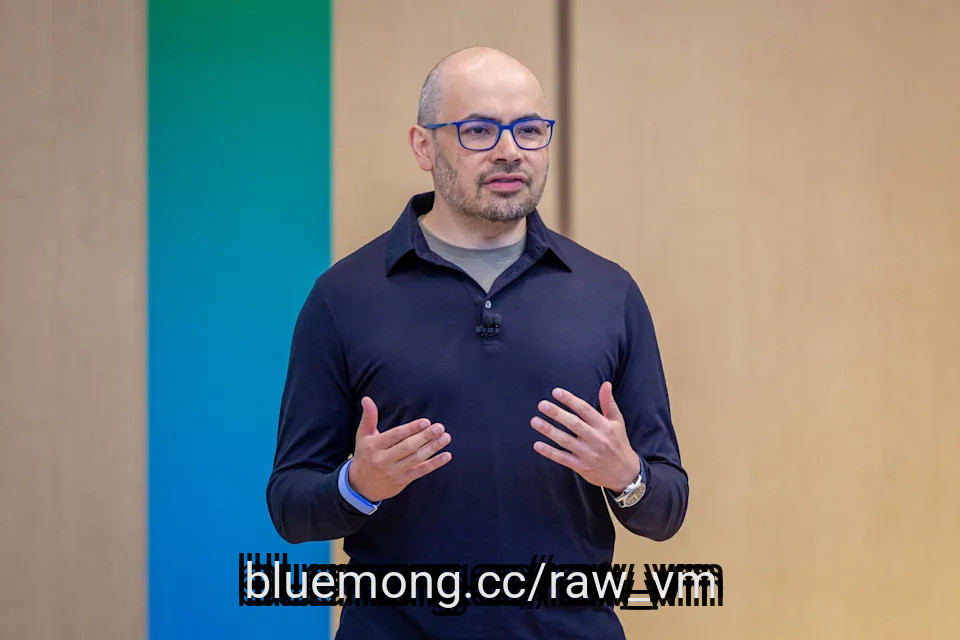
South Korean President Lee Jae Myung flew to San Francisco on July 24 for a summit with the most powerful names in artificial intelligence. Jensen Huang was there. Sam Altman was there. The heads of Samsung, SK Group, Hyundai Motor and Naver flew in. By the end of the day, roughly $950 billion in new AI agreements had been signed, and South Korea had positioned itself as the country most central to the next phase of the buildout.
Nvidia (NVDA) is not slowing down its global hunt for AI infrastructure partners. The chipmaker has spent much of 2026 signing deals across Asia, the Middle East and Europe to secure the chips, memory and power it needs to keep building AI systems.
On July 24, that hunt landed squarely on South Korea, with a cluster of new agreements announced within hours of each other.
Nvidia said on July 24 that it has locked down AI memory supply from SK Hynix, South Korea's second most valuable company, CNBC reported. The agreement, unveiled late that evening in San Francisco, could be worth $500 billion over a number of years, and it includes large-scale data centers expected to come online in 2027.
SK Hynix affiliate SK Telecom will build a cloud business using Nvidia's Vera Rubin systems as part of the deal.
#south #agreements #down
Nvidia (NVDA) is not slowing down its global hunt for AI infrastructure partners. The chipmaker has spent much of 2026 signing deals across Asia, the Middle East and Europe to secure the chips, memory and power it needs to keep building AI systems.
On July 24, that hunt landed squarely on South Korea, with a cluster of new agreements announced within hours of each other.
Nvidia said on July 24 that it has locked down AI memory supply from SK Hynix, South Korea's second most valuable company, CNBC reported. The agreement, unveiled late that evening in San Francisco, could be worth $500 billion over a number of years, and it includes large-scale data centers expected to come online in 2027.
SK Hynix affiliate SK Telecom will build a cloud business using Nvidia's Vera Rubin systems as part of the deal.
#south #agreements #down


11 days ago
Marvell Technology (NASDAQ: MRVL) has emerged as a strong AI investment candidate throughout 2026. It has a great bull thesis and is right at the heart of the AI buildout.
Furthermore, Nvidia (NASDAQ: NVDA) has invested $2 billion into Marvell and announced several strategic partnerships to ensure that Nvidia's computing units function on Marvell's products. This is a big deal because Marvell is starting to grow its custom AI chip business, and this could be a major part of the company someday, especially with the two major clients that it has.
Missed Nvidia in 2009? This Rare Signal Is Flashing Again. In 2009, a "Double Down" signal flashed for a little-known chipmaker called Nvidia. For the first time in years, that same "Total Conviction" signal is flashing for a company 1/100th the size of Nvidia. Continue »
But is this enough to make Marvell the new Nvidia? Let's take a look.
Marvell makes connectivity devices for data centers and also ******* ists AI hyperscalers design custom chips. This is a great business to be in right now, as the AI buildout is full steam ahead. In its custom AI chip business, Marvel has captured two major clients: Amazon and Microsoft. These two companies operated the largest and second-largest cloud computing platforms in the world, and having these two as clients is a big deal for Marvell, as it gives them a major customer that wants to reduce reliance on Nvidia chips through designing their own.
#major #NASDAQ
Furthermore, Nvidia (NASDAQ: NVDA) has invested $2 billion into Marvell and announced several strategic partnerships to ensure that Nvidia's computing units function on Marvell's products. This is a big deal because Marvell is starting to grow its custom AI chip business, and this could be a major part of the company someday, especially with the two major clients that it has.
Missed Nvidia in 2009? This Rare Signal Is Flashing Again. In 2009, a "Double Down" signal flashed for a little-known chipmaker called Nvidia. For the first time in years, that same "Total Conviction" signal is flashing for a company 1/100th the size of Nvidia. Continue »
But is this enough to make Marvell the new Nvidia? Let's take a look.
Marvell makes connectivity devices for data centers and also ******* ists AI hyperscalers design custom chips. This is a great business to be in right now, as the AI buildout is full steam ahead. In its custom AI chip business, Marvel has captured two major clients: Amazon and Microsoft. These two companies operated the largest and second-largest cloud computing platforms in the world, and having these two as clients is a big deal for Marvell, as it gives them a major customer that wants to reduce reliance on Nvidia chips through designing their own.
#major #NASDAQ


11 days ago
Broadcom's Hock Tan guided Q3 AI chip revenue to $16 billion, up over 200% year-over-year, while TSMC guided full-year 2026 revenue growth above 40%.
Laffont's five holdings form a closed AI infrastructure loop spanning power, fabrication, tools, and custom silicon, with four of the five currently rated BUY.
Act now: the **** yst who called NVIDIA in 2010 just named his top 10 AI stocks — and Taiwan Semiconductor Manufacturing didn't make the cut. Grab the names FREE today.
Philippe Laffont's Coatue Management just showed its hand: the latest 13F filing (holdings as of March 31, 2026) parks its biggest chips on a single trade: the AI infrastructure buildout. The five names below, all US-listed, represent Laffont's largest long common-stock and ADR positions. One of them just booked $10.80 billion in AI semiconductor revenue in a single quarter, growing 143% year-over-year. The setup is worth understanding before it reprices.
Every AI accelerator on this list is useless without electrons. That is why GE Vernova (NYSE:GEV) is the most surprising name in Laffont's tech basket: it sits one level upstream of the chips, building the gas turbines, grid equipment, and electrification hardware that hyperscalers are now ordering by the gigawatt. This is the AI trade one level upstream of NVIDIA. Q1 2026 revenue rose 15.8% year-over-year to $9.30 billion, but the real signal was orders: $18.30 billion, up 71% organically, with Electrification booking $2.4 billion in data center equipment orders in Q1 alone, more than all of 2025. CEO Scott Strazik put it plainly: "Demand is accelerating for our Power and Electrification solutions... backlog growing by more than $13 billion quarter-over-quarter."
#revenue #five #semiconductor
Laffont's five holdings form a closed AI infrastructure loop spanning power, fabrication, tools, and custom silicon, with four of the five currently rated BUY.
Act now: the **** yst who called NVIDIA in 2010 just named his top 10 AI stocks — and Taiwan Semiconductor Manufacturing didn't make the cut. Grab the names FREE today.
Philippe Laffont's Coatue Management just showed its hand: the latest 13F filing (holdings as of March 31, 2026) parks its biggest chips on a single trade: the AI infrastructure buildout. The five names below, all US-listed, represent Laffont's largest long common-stock and ADR positions. One of them just booked $10.80 billion in AI semiconductor revenue in a single quarter, growing 143% year-over-year. The setup is worth understanding before it reprices.
Every AI accelerator on this list is useless without electrons. That is why GE Vernova (NYSE:GEV) is the most surprising name in Laffont's tech basket: it sits one level upstream of the chips, building the gas turbines, grid equipment, and electrification hardware that hyperscalers are now ordering by the gigawatt. This is the AI trade one level upstream of NVIDIA. Q1 2026 revenue rose 15.8% year-over-year to $9.30 billion, but the real signal was orders: $18.30 billion, up 71% organically, with Electrification booking $2.4 billion in data center equipment orders in Q1 alone, more than all of 2025. CEO Scott Strazik put it plainly: "Demand is accelerating for our Power and Electrification solutions... backlog growing by more than $13 billion quarter-over-quarter."
#revenue #five #semiconductor


12 days ago
Baird initiated Vertiv with a buy and $370 price target, implying 21% upside as liquid cooling demand surges from next-gen AI hardware launches.
Vertiv's ThermoKey acquisition bolsters its heat rejection capabilities, adding a competitive edge beyond liquid cooling as data centers scale up.
Trading at 47x forward earnings, Loop Capital's Baruah still calls Vertiv a tech company in disguise, suggesting shares may not yet be expensive enough.
Don't wait: the ******* yst who called NVIDIA in 2010 just revealed his top 10 AI stocks. See the full list FREE now.
Shares of cooling infrastructure play Vertiv (NASDAQ:VRT) have been that much harder to hang onto since the shares peaked out back in May. Despite the pick-up in turbulence and the plunge into bear market territory, a number of ******* ysts have not soured on the name. The AI data center buildout hasn't gone anywhere; if anything, things could get even more intense as companies look to get AI compute where it needs to be to roll out the red carpet for that agentic AI blast-off.
#cooling #trading
Vertiv's ThermoKey acquisition bolsters its heat rejection capabilities, adding a competitive edge beyond liquid cooling as data centers scale up.
Trading at 47x forward earnings, Loop Capital's Baruah still calls Vertiv a tech company in disguise, suggesting shares may not yet be expensive enough.
Don't wait: the ******* yst who called NVIDIA in 2010 just revealed his top 10 AI stocks. See the full list FREE now.
Shares of cooling infrastructure play Vertiv (NASDAQ:VRT) have been that much harder to hang onto since the shares peaked out back in May. Despite the pick-up in turbulence and the plunge into bear market territory, a number of ******* ysts have not soured on the name. The AI data center buildout hasn't gone anywhere; if anything, things could get even more intense as companies look to get AI compute where it needs to be to roll out the red carpet for that agentic AI blast-off.
#cooling #trading

12 days ago
The AI boom is forcing some of technology's biggest cash machines to behave more like utilities. On July 22, Reuters reported that Microsoft Corporation (NASDAQ:MSFT), Oracle Corporation (NYSE:ORCL), and three other hyperscalers are expected to spend more on capital expenditures than they generate in combined free cash flow by 2027. From 2025 through 2027, their annual operating cash flow is projected to rise by $340 billion, versus a $534 billion increase in capex. Microsoft and Oracle, however, are not carrying the same risk.
Microsoft showed the squeeze in fiscal Q2. Operating cash flow was $35.8 billion, while capex including finance leases reached $37.5 billion. That does not mean the company burned cash: Microsoft reported $5.9 billion of conventional free cash flow because that measure deducts cash property and equipment purchases, not newly originated finance leases.
Carol Gauthier/Shutterstock.com
Fiscal Q3, however, was stronger. Operating cash flow rose to $46.7 billion and free cash flow reached $15.8 billion, even after $30.9 billion of cash property and equipment spending. Its AI business also passed a $37 billion annual revenue run rate. Microsoft can finance the buildout. The question is whether Azure and Copilot can generate nice returns before expensive GPUs depreciate or become obsolete.
Oracle has a more immediate cash problem. In fiscal 2026, it spent $55.7 billion on capex against $32 billion of operating cash flow, leaving free cash flow at negative $23.7 billion. Demand is real: cloud revenue grew 39% to $34 billion, and remaining performance obligations reached $638 billion. But backlog is not cash. Oracle must construct capacity before much of that revenue arrives, and plans to raise $45 billion to $50 billion through debt and equity.
#Microsoft #fiscal
Microsoft showed the squeeze in fiscal Q2. Operating cash flow was $35.8 billion, while capex including finance leases reached $37.5 billion. That does not mean the company burned cash: Microsoft reported $5.9 billion of conventional free cash flow because that measure deducts cash property and equipment purchases, not newly originated finance leases.
Carol Gauthier/Shutterstock.com
Fiscal Q3, however, was stronger. Operating cash flow rose to $46.7 billion and free cash flow reached $15.8 billion, even after $30.9 billion of cash property and equipment spending. Its AI business also passed a $37 billion annual revenue run rate. Microsoft can finance the buildout. The question is whether Azure and Copilot can generate nice returns before expensive GPUs depreciate or become obsolete.
Oracle has a more immediate cash problem. In fiscal 2026, it spent $55.7 billion on capex against $32 billion of operating cash flow, leaving free cash flow at negative $23.7 billion. Demand is real: cloud revenue grew 39% to $34 billion, and remaining performance obligations reached $638 billion. But backlog is not cash. Oracle must construct capacity before much of that revenue arrives, and plans to raise $45 billion to $50 billion through debt and equity.
#Microsoft #fiscal

12 days ago
July 22 (Reuters) - Intel's results on Thursday will show whether the American chip icon has the numbers to back a Wall Street rally that has sent its shares nearly three times higher this year, as its turnaround push wins over investors and the AI buildout powers demand.
Analysts expect the company to report its fastest quarterly revenue growth in about six years thanks to a demand rebound for central processors that are increasingly used to help power AI agents. Investors are also eager for details on potential new customers for its contract manufacturing business, which has shown growing traction with deals including a Tesla tie-up.
• Among the biggest questions for Intel is a potential deal to manufacture processors for Apple that U.S. President Donald Trump announced in April but neither company has confirmed.
• Winning a contract would boost both Intel's foundry business and its reputation as a contract manufacturer.
• Intel stock has declined more than 25% from its record close on June 22, amid a broader selloff in chip stocks. It remains 185% higher for the year.
#contract #Intel
Analysts expect the company to report its fastest quarterly revenue growth in about six years thanks to a demand rebound for central processors that are increasingly used to help power AI agents. Investors are also eager for details on potential new customers for its contract manufacturing business, which has shown growing traction with deals including a Tesla tie-up.
• Among the biggest questions for Intel is a potential deal to manufacture processors for Apple that U.S. President Donald Trump announced in April but neither company has confirmed.
• Winning a contract would boost both Intel's foundry business and its reputation as a contract manufacturer.
• Intel stock has declined more than 25% from its record close on June 22, amid a broader selloff in chip stocks. It remains 185% higher for the year.
#contract #Intel

12 days ago
Mark Cuban joked that pickleball players could be unlikely winners from the AI buildout.
He quipped that if better AI makes some data centers obsolete, they could be turned into courts.
Cuban said the AI boom isn't another dot-com bubble but could "destroy" VCs, funds, and PE firms.
Mark Cuban joked that the AI buildout could result in pickleball fans having plenty more venues to choose from.
The tech billionaire said during the latest episode of the "All-In" podcast that if AI models and data centers become more efficient over time, much of the computing capacity being built today will become redundant.
#pickleball #data #centers #unlikely
He quipped that if better AI makes some data centers obsolete, they could be turned into courts.
Cuban said the AI boom isn't another dot-com bubble but could "destroy" VCs, funds, and PE firms.
Mark Cuban joked that the AI buildout could result in pickleball fans having plenty more venues to choose from.
The tech billionaire said during the latest episode of the "All-In" podcast that if AI models and data centers become more efficient over time, much of the computing capacity being built today will become redundant.
#pickleball #data #centers #unlikely


13 days ago
Plymouth Township — Things are looking increasingly grim for the LIV Golf tournament in Metro Detroit next month.
LIV Golf's season-ending team championship officially remains on the schedule for Aug. 27-30, but amid the league's major funding crisis, that might not remain in the case for long.
There has been no infrastructure buildout at The Cardinal at Saint John's Resort as of Wednesday night, with a Detroit News reporter spotting no hospitality suites on the 18th hole, no stage for the post-round concerts and championship celebration, no player walking bridge across the signature pond, no visible signage — no nothing to suggest a significant golf tournament will be played here five weeks from Thursday.
Buildout for golf tournaments of this magnitude typically takes multiple months.
Meanwhile, earlier Wednesday, a LIV Golf player, two-time major champion Martin Kaymer, cast serious doubt on the likelihood that the championship in Michigan will take place.
#championship #tournament #township
LIV Golf's season-ending team championship officially remains on the schedule for Aug. 27-30, but amid the league's major funding crisis, that might not remain in the case for long.
There has been no infrastructure buildout at The Cardinal at Saint John's Resort as of Wednesday night, with a Detroit News reporter spotting no hospitality suites on the 18th hole, no stage for the post-round concerts and championship celebration, no player walking bridge across the signature pond, no visible signage — no nothing to suggest a significant golf tournament will be played here five weeks from Thursday.
Buildout for golf tournaments of this magnitude typically takes multiple months.
Meanwhile, earlier Wednesday, a LIV Golf player, two-time major champion Martin Kaymer, cast serious doubt on the likelihood that the championship in Michigan will take place.
#championship #tournament #township


13 days ago
Its history in market shocks reveals a pattern of deep falls and long recoveries that every shareholder should understand.
Bloom Energy (BE) stock fell 8.3% on July 20th, a sharp move for any holder. But to understand the risk you are carrying, you have to look past a single session. This is a company at the center of the AI buildout, providing clean, on-site power solutions for data centers, highlighted by a landmark deal with Oracle for its Project Jupiter. The market is weighing that strong demand, which led management to raise its 2026 revenue guidance to a range of $3.4 billion to $3.8 billion, against the significant operational challenge of scaling its manufacturing to meet it.
That recent dip is a minor tremor. The real question for a shareholder is how this stock behaves in a true major market downturn. When the entire market sells off, how far does Bloom Energy fall, and how long does it take to climb back? Can you ride that out?
A 78% Fall During The Covid Crash
When the broad market falls, Bloom Energy stock tends to fall much further. Across the seven major market shocks it has traded through, the stock's average peak-to-trough drop was about 49%, compared to just 17% for the S&P 500. That amplified downside is the core risk.
#Stock #falls #shareholder
Bloom Energy (BE) stock fell 8.3% on July 20th, a sharp move for any holder. But to understand the risk you are carrying, you have to look past a single session. This is a company at the center of the AI buildout, providing clean, on-site power solutions for data centers, highlighted by a landmark deal with Oracle for its Project Jupiter. The market is weighing that strong demand, which led management to raise its 2026 revenue guidance to a range of $3.4 billion to $3.8 billion, against the significant operational challenge of scaling its manufacturing to meet it.
That recent dip is a minor tremor. The real question for a shareholder is how this stock behaves in a true major market downturn. When the entire market sells off, how far does Bloom Energy fall, and how long does it take to climb back? Can you ride that out?
A 78% Fall During The Covid Crash
When the broad market falls, Bloom Energy stock tends to fall much further. Across the seven major market shocks it has traded through, the stock's average peak-to-trough drop was about 49%, compared to just 17% for the S&P 500. That amplified downside is the core risk.
#Stock #falls #shareholder

13 days ago
Bitdeer Technologies Group (NASDAQ: $BTDR) mined 990 bitcoin in June, extending a sharp production rebound while higher GPU utilization pushed its AI Cloud annualized recurring revenue to approximately $76 million.
Bitcoin (CRYPTO: $BTC) output rose 388% from 203 BTC a year earlier and increased from 921 BTC in May. Self-mining hashrate reached 73.0 EH/s, up from 70.2 EH/s a month earlier, while co-mining capacity climbed to 15.9 EH/s. Total hashrate under management finished June at 86.1 EH/s.
Bitdeer's bitcoin balance moved lower despite the production gain. The company held 150 BTC at month-end, down from 171 in May and 1,502 in June 2025, keeping capital allocation in view as it funds a wider buildout across mining, AI Cloud and colocation infrastructure.
More From Cryptoprowl:
Hyperliquid HIP-3 Volume Nears 50% as Onchain Stock Trading Accelerates
#mining #hashrate #bitdeer #technologies
Bitcoin (CRYPTO: $BTC) output rose 388% from 203 BTC a year earlier and increased from 921 BTC in May. Self-mining hashrate reached 73.0 EH/s, up from 70.2 EH/s a month earlier, while co-mining capacity climbed to 15.9 EH/s. Total hashrate under management finished June at 86.1 EH/s.
Bitdeer's bitcoin balance moved lower despite the production gain. The company held 150 BTC at month-end, down from 171 in May and 1,502 in June 2025, keeping capital allocation in view as it funds a wider buildout across mining, AI Cloud and colocation infrastructure.
More From Cryptoprowl:
Hyperliquid HIP-3 Volume Nears 50% as Onchain Stock Trading Accelerates
#mining #hashrate #bitdeer #technologies


13 days ago
It's worth saying straight out of the gates that Bloom Energy (BE) should be considered a speculative, high-risk trade. Sure, Bloom has enjoyed strong demand thanks to the stratospheric rise of artificial intelligence and the buildout of data centers. But it's also fair to point out that BE stock has suffered a heavy corrective cycle, losing 20% in the past five sessions and 43% in the trailing month.
Nevertheless, investors aren't giving up on Bloom stock, in part because the broader performance is impressive. Right now, BE enjoys a 24% Weak Buy rating from the Barchart Technical Opinion indicator, a byproduct of the ticker gaining almost 127% on a year-to-date basis. Of course, the bulk of that performance is tied to Bloom's core value proposition: providing rapid, off-grid solid-oxide power generation for electricity-hungry AI data centers.
Huge, Unusual Intel Options Volume Today Ahead of Earnings This Week
Intel Stock Is Down, But Put Premiums are High - Put Short Sellers Love the High Yields
Newmont Stock Suddenly Offers a Double-Sided Debit Trade on U.S.-Iran Tensions and Upcoming Earnings
#Stock #data #performance #energy
Nevertheless, investors aren't giving up on Bloom stock, in part because the broader performance is impressive. Right now, BE enjoys a 24% Weak Buy rating from the Barchart Technical Opinion indicator, a byproduct of the ticker gaining almost 127% on a year-to-date basis. Of course, the bulk of that performance is tied to Bloom's core value proposition: providing rapid, off-grid solid-oxide power generation for electricity-hungry AI data centers.
Huge, Unusual Intel Options Volume Today Ahead of Earnings This Week
Intel Stock Is Down, But Put Premiums are High - Put Short Sellers Love the High Yields
Newmont Stock Suddenly Offers a Double-Sided Debit Trade on U.S.-Iran Tensions and Upcoming Earnings
#Stock #data #performance #energy



13 days ago
Interested in Oracle Corporation? Here are five stocks we like better.
S&P Global Ratings downgraded Oracle's credit rating to BBB-, citing a widening free cash flow deficit and heavy reliance on OpenAI for revenue.
Microsoft, Alphabet, Amazon and Oracle are all borrowing heavily to fund AI spending, but Oracle has the weakest balance sheet and no rating cushion left.
Oracle's negative free cash flow raises the risk of higher interest costs, fewer buybacks, and difficulty covering debt if AI demand slows.
The past few weeks have seen the bond market start asking a question the stock market has mostly been happy to ignore: Who can actually afford the AI buildout?
#oracle #rating #corporation #global
S&P Global Ratings downgraded Oracle's credit rating to BBB-, citing a widening free cash flow deficit and heavy reliance on OpenAI for revenue.
Microsoft, Alphabet, Amazon and Oracle are all borrowing heavily to fund AI spending, but Oracle has the weakest balance sheet and no rating cushion left.
Oracle's negative free cash flow raises the risk of higher interest costs, fewer buybacks, and difficulty covering debt if AI demand slows.
The past few weeks have seen the bond market start asking a question the stock market has mostly been happy to ignore: Who can actually afford the AI buildout?
#oracle #rating #corporation #global

13 days ago
Anyone can become a millionaire. But it takes an understanding of the S&P 500.
An investment of just $170,660 in January in Sandisk (SNDK) would be worth a million today, says data from S&P Global Market Intelligence and MarketSurge. That's a gain of more than $829,000 in just seven months.
What's amazing, though, is that Sandisk is not a one-off winner. A number of S&P 500 stocks didn't require small fortunes to turn people into millionaires this year.
Sandisk is certainly the most dramatic example of turning a chunk of money into a million bucks. Shares of the stock are up 486% this year, making them the top performer in the S&P 500. You only needed to buy 719 shares at the start of the year to have $1 million now.
Shares of Sandisk carry a 99 RS Rating due to their enormous run this year. The company's memory chips are proving to be critical to the buildout of AI in 2026.
#million #sndk #market
An investment of just $170,660 in January in Sandisk (SNDK) would be worth a million today, says data from S&P Global Market Intelligence and MarketSurge. That's a gain of more than $829,000 in just seven months.
What's amazing, though, is that Sandisk is not a one-off winner. A number of S&P 500 stocks didn't require small fortunes to turn people into millionaires this year.
Sandisk is certainly the most dramatic example of turning a chunk of money into a million bucks. Shares of the stock are up 486% this year, making them the top performer in the S&P 500. You only needed to buy 719 shares at the start of the year to have $1 million now.
Shares of Sandisk carry a 99 RS Rating due to their enormous run this year. The company's memory chips are proving to be critical to the buildout of AI in 2026.
#million #sndk #market
