

12 hours ago
After spending years trading like a premium-priced AI leader, Nvidia may now be among the cheapest names in Piper Sandler's AI universe. NVIDIA Corporation (NASDAQ:NVDA) is trading at an attractive valuation according to Piper Sandler's forecast, with rapid AI growth backing its trajectory.
On September 9, Piper Sandler ***** yst David O'Connor initiated coverage on NVIDIA Corporation (NASDAQ:NVDA) with an Overweight rating and a price target of $300, implying roughly 34% upside.
The firm believes that the chipmaker is an outright AI compute leader controlling 80% of the market by value and an estimated 50% by units. Owing to its annual cadence of next-generation products, it has been able to continue to drive the industry forward.
Everyone knows and agrees that Nvidia has grown at an exponential pace. Its recent results offer evidence of operational strength as well. The company reported second-quarter fiscal 2027 revenue of $96.2 billion, up 106% year-over-year.
The chipmaker's data center revenue also surged 117% to $89 billion. GAAP gross margin was75%, while adjusted diluted earnings reached $2.22 per share. The figures highlight how Nvidia's robust demand is translating into profitability for the company.
#NVIDIA #corporation #trading #company
On September 9, Piper Sandler ***** yst David O'Connor initiated coverage on NVIDIA Corporation (NASDAQ:NVDA) with an Overweight rating and a price target of $300, implying roughly 34% upside.
The firm believes that the chipmaker is an outright AI compute leader controlling 80% of the market by value and an estimated 50% by units. Owing to its annual cadence of next-generation products, it has been able to continue to drive the industry forward.
Everyone knows and agrees that Nvidia has grown at an exponential pace. Its recent results offer evidence of operational strength as well. The company reported second-quarter fiscal 2027 revenue of $96.2 billion, up 106% year-over-year.
The chipmaker's data center revenue also surged 117% to $89 billion. GAAP gross margin was75%, while adjusted diluted earnings reached $2.22 per share. The figures highlight how Nvidia's robust demand is translating into profitability for the company.
#NVIDIA #corporation #trading #company


12 hours ago
Back in April, Morgan Stanley had highlighted how accelerating Agentic AI demand could boost demand for central processing units (CPUs) beyond the graphic chips that have dominated the AI theme so far.
"As AI transitions from generation to autonomous action, the computing bottleneck is shifting towards CPU and memory, driving a step-change in general-purpose compute intensity."
The firm estimated that agentic AI could add $32.5–60 billion to a data-center CPU market already exceeding $100 billion by 2030.
Piper Sandler now backs this claim, ******* erting that Agentic AI is driving demand for Intel Corporation (NASDAQ:INTC)'s CPU server products amid limited supply. On September 9, Piper Sandler ******* yst David O'Connor initiated coverage on Intel with a Neutral rating and a $110 price target.
Egorov Artem/Shutterstock.com
#agentic #piper #morgan
"As AI transitions from generation to autonomous action, the computing bottleneck is shifting towards CPU and memory, driving a step-change in general-purpose compute intensity."
The firm estimated that agentic AI could add $32.5–60 billion to a data-center CPU market already exceeding $100 billion by 2030.
Piper Sandler now backs this claim, ******* erting that Agentic AI is driving demand for Intel Corporation (NASDAQ:INTC)'s CPU server products amid limited supply. On September 9, Piper Sandler ******* yst David O'Connor initiated coverage on Intel with a Neutral rating and a $110 price target.
Egorov Artem/Shutterstock.com
#agentic #piper #morgan

12 hours ago
Starbucks Corporation (NASDAQ:SBUX) is betting $1 billion that leather armchairs, rugs, and bookshelves can turn a recovering coffee business into a more profitable one. The company plans to upgrade as many as 9,000 North American stores into warmer, more comfortable **** es designed to bring back customers who stopped treating Starbucks as a place to sit and stay. The strategy arrives as CEO Brian Niccol's turnaround gains traction, but investors still need to see whether higher traffic can translate into stronger margins.
Pixabay/Public Domain
The store upgrades are part of Niccol's broader "Back to Starbucks" strategy, which has already helped reverse a prolonged sales slump. Global comparable-store sales increased 7.9% in the latest quarter, with transactions up 4.2% and average ticket up 3.5%. U.S. comparable sales also rose 7.9%, indicating that the recovery is being driven by more than higher prices.
Starbucks Corporation (NASDAQ:SBUX) is spending roughly $150,000 per store on the new uplifts, far below the cost of previous renovations, and the work can generally be completed overnight without closing stores. The company expects about 1,500 upgrades to be finished by the end of September and ultimately wants to reach 8,000 to 9,000 company-operated North American locations.
That matters because Starbucks Corporation (NASDAQ:SBUX) has gradually become optimized for transactions rather than lingering. Mobile orders now account for roughly one-third of U.S. transactions, more than twice their share in 2019. The new design is therefore an attempt to restore the "third place" concept without abandoning the convenience that has become central to the business.
#corporation #NASDAQ #sales #transactions
Pixabay/Public Domain
The store upgrades are part of Niccol's broader "Back to Starbucks" strategy, which has already helped reverse a prolonged sales slump. Global comparable-store sales increased 7.9% in the latest quarter, with transactions up 4.2% and average ticket up 3.5%. U.S. comparable sales also rose 7.9%, indicating that the recovery is being driven by more than higher prices.
Starbucks Corporation (NASDAQ:SBUX) is spending roughly $150,000 per store on the new uplifts, far below the cost of previous renovations, and the work can generally be completed overnight without closing stores. The company expects about 1,500 upgrades to be finished by the end of September and ultimately wants to reach 8,000 to 9,000 company-operated North American locations.
That matters because Starbucks Corporation (NASDAQ:SBUX) has gradually become optimized for transactions rather than lingering. Mobile orders now account for roughly one-third of U.S. transactions, more than twice their share in 2019. The new design is therefore an attempt to restore the "third place" concept without abandoning the convenience that has become central to the business.
#corporation #NASDAQ #sales #transactions


14 hours ago
AMD and Intel compete for processor customers, but they have a common interest in making developers comfortable staying with x86. A September 2 GCC commit added initial support for their AI Compute Extensions, or ACE, bringing that shared strategy into a widely used compiler's development code.
For Advanced Micro Devices, Inc. (NASDAQ:AMD) and Intel Corporation (NASDAQ:INTC), the potential payoff is broader software adoption. The immediate event is much narrower: compiler infrastructure, followed by instruction-support commits. It is not evidence that compatible processors have shipped or that GCC 17 is a finished release.
The x86 Ecosystem Advisory Group's April whitepaper describes a common matrix-acceleration architecture shaped by both companies. Matrix multiplication is central to many AI workloads. A shared instruction interface could reduce the effort needed to target those operations across future processors.
That matters commercially because buyers consider the software work required to use hardware, alongside its price and performance. If developers can support both suppliers more easily, a processor purchase may depend more on execution and less on maintaining separate software paths.
For Advanced Micro Devices, Inc. (NASDAQ:AMD), the bull case is an easier route for compatible future CPUs into AI-related workloads. The risk is that a shared standard also improves the rival's appeal. Compiler support alone cannot demonstrate AMD's eventual performance advantage, customer adoption or incremental profit.
#Intel
For Advanced Micro Devices, Inc. (NASDAQ:AMD) and Intel Corporation (NASDAQ:INTC), the potential payoff is broader software adoption. The immediate event is much narrower: compiler infrastructure, followed by instruction-support commits. It is not evidence that compatible processors have shipped or that GCC 17 is a finished release.
The x86 Ecosystem Advisory Group's April whitepaper describes a common matrix-acceleration architecture shaped by both companies. Matrix multiplication is central to many AI workloads. A shared instruction interface could reduce the effort needed to target those operations across future processors.
That matters commercially because buyers consider the software work required to use hardware, alongside its price and performance. If developers can support both suppliers more easily, a processor purchase may depend more on execution and less on maintaining separate software paths.
For Advanced Micro Devices, Inc. (NASDAQ:AMD), the bull case is an easier route for compatible future CPUs into AI-related workloads. The risk is that a shared standard also improves the rival's appeal. Compiler support alone cannot demonstrate AMD's eventual performance advantage, customer adoption or incremental profit.
#Intel


16 hours ago
Sept 13 (Reuters) - The head of Russia's state nuclear energy corporation accused Ukraine on Sunday of attacking diesel fuel trucks, killing two Russian servicemen and deliberately jeopardising safety at the Russian-held Zaporizhzhia nuclear power plant in Ukraine.
Alexei Likhachev said the attack took place on Friday and also resulted in injuries to other Russian soldiers.
The Zaporizhzhia plant, Europe's largest with six reactors, was seized by Russian forces in the early weeks of the Ukraine war that broke out in February 2022. Each side has regularly accused the other of actions that endanger safety at the plant and increase the risk of a nuclear accident.
Likhachev issued a statement saying Ukrainian forces had launched "a series of combined strikes" on Friday on fuel trucks which deliver diesel to the station.
"The strikes hit very close to the perimeter of the station's site," he said.
#russian #nuclear #Friday
Alexei Likhachev said the attack took place on Friday and also resulted in injuries to other Russian soldiers.
The Zaporizhzhia plant, Europe's largest with six reactors, was seized by Russian forces in the early weeks of the Ukraine war that broke out in February 2022. Each side has regularly accused the other of actions that endanger safety at the plant and increase the risk of a nuclear accident.
Likhachev issued a statement saying Ukrainian forces had launched "a series of combined strikes" on Friday on fuel trucks which deliver diesel to the station.
"The strikes hit very close to the perimeter of the station's site," he said.
#russian #nuclear #Friday



19 hours ago
NVIDIA Corporation (NASDAQ:NVDA) has an argument against rapid hardware obsolescence: older accelerators still command rental prices. For CoreWeave, Inc. (NASDAQ:CRWV), which sells access to computing infrastructure, the harder question is how much of that rent becomes a return.
The September 7 settlement of a transaction-based GPU rental benchmark put NVIDIA's H100 SXM at $3.17 per GPU-hour and its older A100 SXM4 at $1.05. Those are market benchmarks, not CoreWeave's realized prices or the economics of its entire fleet.
The distinction matters because a chip can remain useful without every owner earning an attractive return on the equipment purchased around it.
NVIDIA benefits when buyers believe its systems can serve workloads across multiple product generations. A longer revenue-producing life can make the initial purchase easier to justify and reinforce confidence in its computing ecosystem.
That does not guarantee faster replacement demand. Customers able to run suitable tasks on older equipment may defer some upgrades. NVIDIA still needs new systems to offer advantages worth paying for, especially when power and facility capacity constrain deployment.
#NASDAQ #rental #computing #return
The September 7 settlement of a transaction-based GPU rental benchmark put NVIDIA's H100 SXM at $3.17 per GPU-hour and its older A100 SXM4 at $1.05. Those are market benchmarks, not CoreWeave's realized prices or the economics of its entire fleet.
The distinction matters because a chip can remain useful without every owner earning an attractive return on the equipment purchased around it.
NVIDIA benefits when buyers believe its systems can serve workloads across multiple product generations. A longer revenue-producing life can make the initial purchase easier to justify and reinforce confidence in its computing ecosystem.
That does not guarantee faster replacement demand. Customers able to run suitable tasks on older equipment may defer some upgrades. NVIDIA still needs new systems to offer advantages worth paying for, especially when power and facility capacity constrain deployment.
#NASDAQ #rental #computing #return

19 hours ago
On August 4, Willis Lease Finance Corporation (NASDAQ:WLFC) reported second-quarter results that pulled in two directions at once. The lessor of commercial aircraft engines grew its operating business at a healthy clip, yet net income fell by more than half, a split that makes this quarter harder to read than the headline suggests.
Income from operations climbed 20.2% to $34.0 million in the quarter ended June 30, 2026, and the engine underneath that number is lease rent revenue, which rose 6.7% to $77.1 million as the average size of Willis Lease's portfolio expanded from a year earlier. Over the first six months of 2026, lease rent revenue is up 10.4% to $154.5 million, a steadier pace than the quarterly figure alone implies.
The company's trading business added to that. Willis Lease booked a $32.0 million gain on the sale of leased equipment, up 16.2%, after selling 21 engines and other parts and equipment during the quarter, compared with 14 engines and two airframes a year earlier. That kind of turnover matters for a leasing company, since selling ****** ets at a gain confirms that engine values in the market are holding up.
The bigger story sits in how Willis Lease is expanding beyond its own balance sheet. ****** ets under management, which folds in the company's on-balance-sheet fleet along with its Willis Aviation Capital business, grew 21% year over year to $4.4 billion. CEO Austin C. Willis tied that growth directly to building out Willis Aviation Capital, and the fee income backs that up: management and advisory fees jumped 113.4% to $5.5 million in the quarter and 194.9% to $13.4 million over six months. Two new investment fund partnerships, one with Liberty Mutual Investments that began operating in March 2026 and one with Blackstone Credit & Insurance that started in April 2026, are the mechanics behind that shift toward managing other people's capital rather than only deploying its own.
Net income attributable to common shareholders fell 51.2% to $28.7 million, and diluted earnings per share dropped from $2.81 to $1.31. Some of that gap traces to a tough comparison rather than a weaker quarter, since the second quarter of 2025 included a $43.0 million gain from the sale of the BAML business that had no counterpart this year. Willis Lease also recognized a $5.4 million loss on debt extinguishment in the quarter, and $12.4 million over six months, a cost tied to refinancing that simply was not there in 2025.
#lease #capital #months
Income from operations climbed 20.2% to $34.0 million in the quarter ended June 30, 2026, and the engine underneath that number is lease rent revenue, which rose 6.7% to $77.1 million as the average size of Willis Lease's portfolio expanded from a year earlier. Over the first six months of 2026, lease rent revenue is up 10.4% to $154.5 million, a steadier pace than the quarterly figure alone implies.
The company's trading business added to that. Willis Lease booked a $32.0 million gain on the sale of leased equipment, up 16.2%, after selling 21 engines and other parts and equipment during the quarter, compared with 14 engines and two airframes a year earlier. That kind of turnover matters for a leasing company, since selling ****** ets at a gain confirms that engine values in the market are holding up.
The bigger story sits in how Willis Lease is expanding beyond its own balance sheet. ****** ets under management, which folds in the company's on-balance-sheet fleet along with its Willis Aviation Capital business, grew 21% year over year to $4.4 billion. CEO Austin C. Willis tied that growth directly to building out Willis Aviation Capital, and the fee income backs that up: management and advisory fees jumped 113.4% to $5.5 million in the quarter and 194.9% to $13.4 million over six months. Two new investment fund partnerships, one with Liberty Mutual Investments that began operating in March 2026 and one with Blackstone Credit & Insurance that started in April 2026, are the mechanics behind that shift toward managing other people's capital rather than only deploying its own.
Net income attributable to common shareholders fell 51.2% to $28.7 million, and diluted earnings per share dropped from $2.81 to $1.31. Some of that gap traces to a tough comparison rather than a weaker quarter, since the second quarter of 2025 included a $43.0 million gain from the sale of the BAML business that had no counterpart this year. Willis Lease also recognized a $5.4 million loss on debt extinguishment in the quarter, and $12.4 million over six months, a cost tied to refinancing that simply was not there in 2025.
#lease #capital #months

20 hours ago
On September 10, MasterCraft Boat Holdings (NASDAQ:MCFT) reported a fiscal fourth quarter that looked nothing like the one a year earlier. Adjusted EBITDA more than doubled, margins expanded across the legacy business, and the company closed out a year defined by its May 15 acquisition of Marine Products Corporation. But buried inside those same results was a $10.1 million writedown that tells a very different story about one corner of the business.
MasterCraft's core boat business is the reason the quarter worked at all. Legacy net sales, meaning the business before the acquisition, climbed 21.5% year over year to $96.6 million in the fourth quarter, powered by the next generation X Series lineup and less discounting at the dealer level. That combination of volume and pricing pushed legacy adjusted EBITDA margin up 730 basis points to 19.3%, up from 12% a year earlier. Once the newly acquired Chaparral and Robalo brands are added in, which contributed for only six weeks after the deal closed on May 15, consolidated fourth quarter net sales reached $129.9 million, up 63.4%, and adjusted EBITDA hit $20.5 million, up 114.9%.
The company also cleaned up its channel. Dealer field inventory for the legacy business fell 30% year over year, with turnover now running ahead of pre-pandemic levels, a sign dealers are selling boats rather than sitting on them. Full-year adjusted net income reached $30.2 million, or $1.76 per diluted share, up from $15.1 million, or $0.92 per share, in fiscal 2025. The company generated $22.3 million in free cash flow for the year and, as of June 30, held $43.9 million in cash, zero debt, and a fully available $75 million credit line. MasterCraft's own retail sales grew low single digits for the year even as the broader powerboat industry fell mid to high single digits, and the newer Robalo brand posted high single-digit retail growth in the fishing boat category.
The picture gets murkier once you look past the flagship brand. The Leisure segment, home to the Crest and Balise pontoon boats, saw fourth-quarter sales fall 11.2% year over year to $12.1 million, and the company booked a $10.1 million non-cash impairment against Crest brand ******* ets tied to what management called current category conditions. On a GAAP basis, that charge combined with acquisition costs and purchase accounting adjustments turned the quarter into a net loss of $7 million, or $0.35 per diluted share, compared to net income of $5.5 million a year earlier. Operating expenses rose $23.1 million in the quarter, including $5.9 million in transaction costs tied to the acquisition.
#million #legacy
MasterCraft's core boat business is the reason the quarter worked at all. Legacy net sales, meaning the business before the acquisition, climbed 21.5% year over year to $96.6 million in the fourth quarter, powered by the next generation X Series lineup and less discounting at the dealer level. That combination of volume and pricing pushed legacy adjusted EBITDA margin up 730 basis points to 19.3%, up from 12% a year earlier. Once the newly acquired Chaparral and Robalo brands are added in, which contributed for only six weeks after the deal closed on May 15, consolidated fourth quarter net sales reached $129.9 million, up 63.4%, and adjusted EBITDA hit $20.5 million, up 114.9%.
The company also cleaned up its channel. Dealer field inventory for the legacy business fell 30% year over year, with turnover now running ahead of pre-pandemic levels, a sign dealers are selling boats rather than sitting on them. Full-year adjusted net income reached $30.2 million, or $1.76 per diluted share, up from $15.1 million, or $0.92 per share, in fiscal 2025. The company generated $22.3 million in free cash flow for the year and, as of June 30, held $43.9 million in cash, zero debt, and a fully available $75 million credit line. MasterCraft's own retail sales grew low single digits for the year even as the broader powerboat industry fell mid to high single digits, and the newer Robalo brand posted high single-digit retail growth in the fishing boat category.
The picture gets murkier once you look past the flagship brand. The Leisure segment, home to the Crest and Balise pontoon boats, saw fourth-quarter sales fall 11.2% year over year to $12.1 million, and the company booked a $10.1 million non-cash impairment against Crest brand ******* ets tied to what management called current category conditions. On a GAAP basis, that charge combined with acquisition costs and purchase accounting adjustments turned the quarter into a net loss of $7 million, or $0.35 per diluted share, compared to net income of $5.5 million a year earlier. Operating expenses rose $23.1 million in the quarter, including $5.9 million in transaction costs tied to the acquisition.
#million #legacy


3 days ago
During the September 3 episode of Mad Money, Jim Cramer mentioned Microsoft Corporation (NASDAQ:MSFT) for its unconventional approach to powering hyperscale data centers in partnership with Chevron Corporation (NYSE:CVX). He said:
How about Microsoft? Look, Mr. Softee is getting religion. They've realized that by giving us more disclosure on Azure, their cloud infrastructure business, we'll find more things to like. They're right. In the end, I come to praise Microsoft CFO Amy Hood, not bury her. They've been very clever getting power for the data centers, pumping it right out of the Permian. They got this deal with Chevron as a partner… 2.67 gigawatts. No one's talking about it. It's the cleanest behind the meter plan for power I have seen yet. People even, and this is not a stretch, I'm not kidding, people even like Copilot.
CFO Amy Hood provided Wall Street with a much clearer look at actual cloud demand by breaking down detailed Azure growth metrics and data center capacity constraints. At the same time, enterprise adoption of Microsoft 365 Copilot is moving past initial trials, with major corporations deploying the AI ***** istant across workforce segments.
A major highlight of the company's infrastructure strategy is a twenty-year agreement with Chevron Corporation (NYSE:CVX) for a proposed 2.67-gigawatt natural gas power plant in West Texas. Designed to supply dedicated off-grid electricity directly to a hyperscale data center in the Permian Basin, the project bypasses regional grid transmission queues to secure reliable power for continuous AI workloads. Microsoft Corporation's (NASDAQ:MSFT) president of Cloud Operations + Innovation, Noelle Walsh, commented:
Our agreement with Chevron helps ensure we'll have dedicated, large-scale power to support the evolution and reliability of advanced compute. Through this partnership, we're delighted to grow with and become a deeper part of the West Texas community.
#chevron #power #they 've
How about Microsoft? Look, Mr. Softee is getting religion. They've realized that by giving us more disclosure on Azure, their cloud infrastructure business, we'll find more things to like. They're right. In the end, I come to praise Microsoft CFO Amy Hood, not bury her. They've been very clever getting power for the data centers, pumping it right out of the Permian. They got this deal with Chevron as a partner… 2.67 gigawatts. No one's talking about it. It's the cleanest behind the meter plan for power I have seen yet. People even, and this is not a stretch, I'm not kidding, people even like Copilot.
CFO Amy Hood provided Wall Street with a much clearer look at actual cloud demand by breaking down detailed Azure growth metrics and data center capacity constraints. At the same time, enterprise adoption of Microsoft 365 Copilot is moving past initial trials, with major corporations deploying the AI ***** istant across workforce segments.
A major highlight of the company's infrastructure strategy is a twenty-year agreement with Chevron Corporation (NYSE:CVX) for a proposed 2.67-gigawatt natural gas power plant in West Texas. Designed to supply dedicated off-grid electricity directly to a hyperscale data center in the Permian Basin, the project bypasses regional grid transmission queues to secure reliable power for continuous AI workloads. Microsoft Corporation's (NASDAQ:MSFT) president of Cloud Operations + Innovation, Noelle Walsh, commented:
Our agreement with Chevron helps ensure we'll have dedicated, large-scale power to support the evolution and reliability of advanced compute. Through this partnership, we're delighted to grow with and become a deeper part of the West Texas community.
#chevron #power #they 've


3 days ago
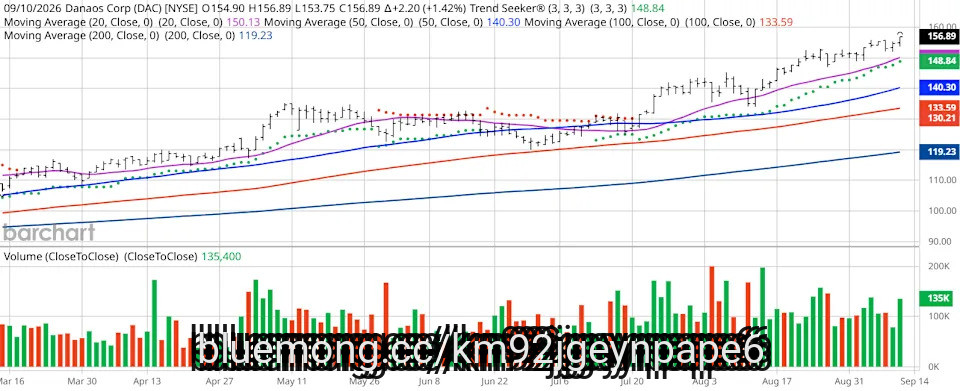
Danaos Corporation (DAC) is a leading global containership owner.
DAC exhibits robust technical momentum with shares trading at a new all-time high.
The stock is up nearly 70% over the past year.
Danaos also pays a dividend that yields 2.27%.
Valued at $2.86 billion, Danaos (DAC) is a leading international owner of containerships, chartering vessels to many of the world's largest liner companies.
#owner #valued #global
DAC exhibits robust technical momentum with shares trading at a new all-time high.
The stock is up nearly 70% over the past year.
Danaos also pays a dividend that yields 2.27%.
Valued at $2.86 billion, Danaos (DAC) is a leading international owner of containerships, chartering vessels to many of the world's largest liner companies.
#owner #valued #global


3 days ago
Some offers on this page are from advertisers who pay us, which may affect which products we write about, but not our recommendations. See our Advertiser Disclosure.
If you're looking for safe ways to grow your money and protect your savings, a high-yield savings account (HYSA) can be a great option. However, it's important to be aware that there are certain instances when you could lose money. So if you plan on opening a high-yield savings account, be sure you understand how to protect your principal and earned interest.
High-yield savings accounts are like traditional savings accounts except that they offer above-average interest rates. These accounts are available from banks and credit unions, particularly online financial institutions. The higher interest rate means you earn more on your deposited funds over time, allowing your savings to grow faster.
If you open an account with a federally insured financial institution, your savings account deposits are protected in case the institution fails. With banks, deposits are protected by the Federal Deposit Insurance Corporation (FDIC) up to $250,000 per institution, per depositor, per ownership category. With credit unions, deposits are similarly insured by the National Credit Union Administration.
Read more: High-yield savings account vs. traditional savings account: Which one is better?
#high #credit #interest
If you're looking for safe ways to grow your money and protect your savings, a high-yield savings account (HYSA) can be a great option. However, it's important to be aware that there are certain instances when you could lose money. So if you plan on opening a high-yield savings account, be sure you understand how to protect your principal and earned interest.
High-yield savings accounts are like traditional savings accounts except that they offer above-average interest rates. These accounts are available from banks and credit unions, particularly online financial institutions. The higher interest rate means you earn more on your deposited funds over time, allowing your savings to grow faster.
If you open an account with a federally insured financial institution, your savings account deposits are protected in case the institution fails. With banks, deposits are protected by the Federal Deposit Insurance Corporation (FDIC) up to $250,000 per institution, per depositor, per ownership category. With credit unions, deposits are similarly insured by the National Credit Union Administration.
Read more: High-yield savings account vs. traditional savings account: Which one is better?
#high #credit #interest




3 days ago
Interested in Lam Research Corporation? Here are five stocks we like better.
Lam Research raised its 2026 wafer-fabrication equipment spending outlook to the low-$150 billion range from $135 billion-$140 billion, driven by sustained AI demand and expectations for eight to 10 new leading-edge fabs through 2027.
AI hardware is increasing equipment intensity, while advanced chip designs and packaging are expanding Lam's addressable market. The company cited growing opportunities in gate-all-around transistors, backside power delivery, advanced packaging and dry-resist technology.
Lam is accelerating capacity expansion, including a second Malaysia facility, as clean-room availability and supply-chain capacity constrain the industry. The company also expects NAND upgrades to accelerate, while targeting mid-50% gross margins and reporting record customer-support revenue.
From High Dividend Growth to High Yield, These 3 Stocks Just Boosted Dividend Payouts
#billion #Research #equipment #advanced
Lam Research raised its 2026 wafer-fabrication equipment spending outlook to the low-$150 billion range from $135 billion-$140 billion, driven by sustained AI demand and expectations for eight to 10 new leading-edge fabs through 2027.
AI hardware is increasing equipment intensity, while advanced chip designs and packaging are expanding Lam's addressable market. The company cited growing opportunities in gate-all-around transistors, backside power delivery, advanced packaging and dry-resist technology.
Lam is accelerating capacity expansion, including a second Malaysia facility, as clean-room availability and supply-chain capacity constrain the industry. The company also expects NAND upgrades to accelerate, while targeting mid-50% gross margins and reporting record customer-support revenue.
From High Dividend Growth to High Yield, These 3 Stocks Just Boosted Dividend Payouts
#billion #Research #equipment #advanced

3 days ago
NVIDIA Corporation (NASDAQ:NVDA) is expanding its global AI infrastructure ambitions, with Australia emerging as an important new market for its growing portfolio of GPUs, CPUs, networking products, and AI software.
On September 9, it announced strategic partnerships with Australian NVIDIA Cloud Partners (NCPs) and AI infrastructure providers as it works with local partners toward an AI infrastructure buildout of up to 2 gigawatts by 2027.
The initiative will expand the availability of land, power, and data center shell capacity designed to host multiple generations of Nvidia's DSX AI factory infrastructure. While the buildout is designed to meet Australia's growing demand for AI computing, it could also create a significant new source of demand for Nvidia's hardware and software ecosystem.
The Australian buildout could benefit NVIDIA Corporation (NASDAQ:NVDA) beyond the initial sale of GPUs. Nvidia will provide its DSX platform, accelerated computing, networking, software, and ecosystem support to the emerging network of AI factories. DSX is also compatible with Nvidia's CUDA ecosystem.
As enterprises, universities, government agencies, and startups increasingly build AI workloads around Nvidia's architecture, the company could strengthen CUDA's position as the underlying software platform for AI development and deployment.
#NASDAQ #australian
On September 9, it announced strategic partnerships with Australian NVIDIA Cloud Partners (NCPs) and AI infrastructure providers as it works with local partners toward an AI infrastructure buildout of up to 2 gigawatts by 2027.
The initiative will expand the availability of land, power, and data center shell capacity designed to host multiple generations of Nvidia's DSX AI factory infrastructure. While the buildout is designed to meet Australia's growing demand for AI computing, it could also create a significant new source of demand for Nvidia's hardware and software ecosystem.
The Australian buildout could benefit NVIDIA Corporation (NASDAQ:NVDA) beyond the initial sale of GPUs. Nvidia will provide its DSX platform, accelerated computing, networking, software, and ecosystem support to the emerging network of AI factories. DSX is also compatible with Nvidia's CUDA ecosystem.
As enterprises, universities, government agencies, and startups increasingly build AI workloads around Nvidia's architecture, the company could strengthen CUDA's position as the underlying software platform for AI development and deployment.
#NASDAQ #australian


3 days ago
Interested in American Tower Corporation? Here are five stocks we like better.
2026 is expected to be American Tower's organic growth trough, with tenant billings growth projected to accelerate in 2027 as Dish Network churn fades and carrier network investment improves.
Future demand could be supported by 5G capacity expansion, higher-band spectrum, AI-driven uplink traffic and eventual 6G deployments. CoreSite's data-center business is also benefiting from rising bandwidth and cloud-interconnection demand.
American Tower is targeting 200–300 basis points of tower-business margin expansion and mid- to upper-mid-single-digit long-term AFFO-per-share growth, while Dish litigation and a Mexico arbitration could provide additional upside if resolved favorably.
AST ****** eMobile Looks to Extend Its 30-Day FCC Satellite Testing Window
#Growth #expansion #interested
2026 is expected to be American Tower's organic growth trough, with tenant billings growth projected to accelerate in 2027 as Dish Network churn fades and carrier network investment improves.
Future demand could be supported by 5G capacity expansion, higher-band spectrum, AI-driven uplink traffic and eventual 6G deployments. CoreSite's data-center business is also benefiting from rising bandwidth and cloud-interconnection demand.
American Tower is targeting 200–300 basis points of tower-business margin expansion and mid- to upper-mid-single-digit long-term AFFO-per-share growth, while Dish litigation and a Mexico arbitration could provide additional upside if resolved favorably.
AST ****** eMobile Looks to Extend Its 30-Day FCC Satellite Testing Window
#Growth #expansion #interested
3 days ago
As continuous inflation squeezes household budgets, the discount retail sector should potentially benefit across the board, with middle- and lower-income consumers looking for value driving foot traffic into value chains. That's roughly what happened in the second-quarter reports from Dollar General Corporation (NYSE:DG) and Dollar Tree, Inc. (NASDAQ:DLTR), both of which were released in late August. Both retailers outperformed expectations, though only one company's stock was rewarded for this.
Dollar General Corporation (NYSE:DG) reported second-quarter results on August 27 that exceeded expectations, and shares rose more than 6.5% in premarket trading. Net sales increased 5.2% to $11.29 billion, surpassing the $11.2 billion market forecast, while diluted EPS came in at $2.48, up 33.3% year-over-year and well above the $2.01 ******* ysts projected. Same-store sales increased 3.5%, driven by a 2.0% increase in customer traffic and a 1.5% increase in average transaction amount, marking the fifth consecutive quarter of traffic growth and the sixth consecutive quarter of positive comps across all four merchandise categories.
Management improved their full-year estimate across the board: same-store sales growth is now expected to be 2.5% to 2.9%, up from 2.2% to 2.7% before, while full-year EPS guidance increased to $7.80-$8.00 from $7.20-$7.45. Tariff refunds, a lower LIFO provision, and improved shrink and damages helped increase the gross margin by 127 basis points to 32.6%. CEO Todd Vasos also pointed to continued market share gains from higher-income households switching away from traditional grocers, a trend the company has cited for several quarters, with management announcing plans to resume up to $700 million in share buybacks in the latter half of the year, backed by remodels under its Project Renovate and Project Elevate initiatives.
Dollar Tree's results, released on August 27, indicate a more complicated situation. Diluted EPS came in at $2.70, including a $1.31-per-share net benefit related to tariff refunds, while revenue increased 7% year-over-year to $4.89 billion. Comparable store sales up 3.7%, driven by a 3.3% gain in average ticket and a 0.4% increase in traffic, a return to positive traffic that occurred a full quarter ahead of management's internal plan.
However, the headline figure includes an important caveat: $1.31 of the $2.70 in EPS came from the net impact of $383 million in IEEPA tariff refunds after related reinvestment spending, duties, and taxes. Strip that out, and underlying EPS was $1.39, above the $1.00-$1.15 range management had guided to in May and about 23% above the $1.13 consensus estimate.
#TRAFFIC
Dollar General Corporation (NYSE:DG) reported second-quarter results on August 27 that exceeded expectations, and shares rose more than 6.5% in premarket trading. Net sales increased 5.2% to $11.29 billion, surpassing the $11.2 billion market forecast, while diluted EPS came in at $2.48, up 33.3% year-over-year and well above the $2.01 ******* ysts projected. Same-store sales increased 3.5%, driven by a 2.0% increase in customer traffic and a 1.5% increase in average transaction amount, marking the fifth consecutive quarter of traffic growth and the sixth consecutive quarter of positive comps across all four merchandise categories.
Management improved their full-year estimate across the board: same-store sales growth is now expected to be 2.5% to 2.9%, up from 2.2% to 2.7% before, while full-year EPS guidance increased to $7.80-$8.00 from $7.20-$7.45. Tariff refunds, a lower LIFO provision, and improved shrink and damages helped increase the gross margin by 127 basis points to 32.6%. CEO Todd Vasos also pointed to continued market share gains from higher-income households switching away from traditional grocers, a trend the company has cited for several quarters, with management announcing plans to resume up to $700 million in share buybacks in the latter half of the year, backed by remodels under its Project Renovate and Project Elevate initiatives.
Dollar Tree's results, released on August 27, indicate a more complicated situation. Diluted EPS came in at $2.70, including a $1.31-per-share net benefit related to tariff refunds, while revenue increased 7% year-over-year to $4.89 billion. Comparable store sales up 3.7%, driven by a 3.3% gain in average ticket and a 0.4% increase in traffic, a return to positive traffic that occurred a full quarter ahead of management's internal plan.
However, the headline figure includes an important caveat: $1.31 of the $2.70 in EPS came from the net impact of $383 million in IEEPA tariff refunds after related reinvestment spending, duties, and taxes. Strip that out, and underlying EPS was $1.39, above the $1.00-$1.15 range management had guided to in May and about 23% above the $1.13 consensus estimate.
#TRAFFIC


4 days ago
Northern Trust Corporation (NASDAQ:NTRS) announced on September 7 that Warwickshire Pension Fund had appointed it to provide global custody, valuation reporting, capital call execution and performance measurement. The UK public pension fund has approximately £3.6 billion, or $4.8 billion, in ****** ets.
The appointment strengthens the pension-servicing franchise of Northern Trust Corporation (NASDAQ:NTRS). Contract duration and fees were not disclosed in the announcement. The investment question is whether the relationship can generate meaningful recurring revenue and support further wins.
Scale sets the hurdle. Northern Trust Corporation (NASDAQ:NTRS) reported $20.0 trillion of ****** ets under custody or administration at June 30. Warwickshire's ****** ets equal approximately 0.024% of that base. The pension ****** ets represent a servicing opportunity, with revenue depending on the services provided and contractual pricing.
Northern Trust Corporation (NASDAQ:NTRS) won responsibility for several connected functions. Combining custody, valuation reporting, and performance measurement could make the relationship more embedded in the fund's operations. Capital call execution also provides a role in supporting private-market investments.
Warwickshire is one of 18 partner funds in Border to Coast Pensions Partnership. For Northern Trust Corporation (NASDAQ:NTRS), successful delivery could provide a reference for additional pension mandates. The opportunity lies in repeating the service model across clients and expanding relationships as operational needs evolve.
#pension #assets
The appointment strengthens the pension-servicing franchise of Northern Trust Corporation (NASDAQ:NTRS). Contract duration and fees were not disclosed in the announcement. The investment question is whether the relationship can generate meaningful recurring revenue and support further wins.
Scale sets the hurdle. Northern Trust Corporation (NASDAQ:NTRS) reported $20.0 trillion of ****** ets under custody or administration at June 30. Warwickshire's ****** ets equal approximately 0.024% of that base. The pension ****** ets represent a servicing opportunity, with revenue depending on the services provided and contractual pricing.
Northern Trust Corporation (NASDAQ:NTRS) won responsibility for several connected functions. Combining custody, valuation reporting, and performance measurement could make the relationship more embedded in the fund's operations. Capital call execution also provides a role in supporting private-market investments.
Warwickshire is one of 18 partner funds in Border to Coast Pensions Partnership. For Northern Trust Corporation (NASDAQ:NTRS), successful delivery could provide a reference for additional pension mandates. The opportunity lies in repeating the service model across clients and expanding relationships as operational needs evolve.
#pension #assets

4 days ago
ExxonMobil Holdings Corporation (NYSE:XOM) agreed to increase its Papua LNG interest from 28.7% to 34.1% and ***** ume operatorship, as disclosed on September 7. The proposed ownership percentages reflect Papua New Guinea's state participation rights.
Papua LNG targets a fourth-quarter 2026 final investment decision, or FID. Santos Limited (ASX:STO) disclosed FID as a closing condition for its own stake acquisition; the operatorship announcement did not specify an equivalent condition.
TotalEnergies SE (NYSE:TTE) said redesign and contractor rebidding had reduced estimated development spending by nearly $4 billion since 2024 to approximately $14 billion. The project would produce 5.6 million tonnes of liquefied natural gas annually. The question is whether that smaller budget can support attractive returns through construction and an uncertain LNG market.
ExxonMobil Holdings Corporation (NYSE:XOM) already operates neighboring PNG LNG. Combining operatorship could improve coordination during construction and operations, including the redesigned handling of upstream condensate. That gives the proposed efficiency gains a practical basis in existing infrastructure and local experience.
The cost reduction is substantial. Mechanically, nearly $4 billion off an approximately $18 billion previous estimate represents about 22%. For ExxonMobil Holdings Corporation (NYSE:XOM), lower development spending would reduce the capital required to generate each future dollar of project cash flow, ***** uming production and operating economics hold.
#holdings #operatorship
Papua LNG targets a fourth-quarter 2026 final investment decision, or FID. Santos Limited (ASX:STO) disclosed FID as a closing condition for its own stake acquisition; the operatorship announcement did not specify an equivalent condition.
TotalEnergies SE (NYSE:TTE) said redesign and contractor rebidding had reduced estimated development spending by nearly $4 billion since 2024 to approximately $14 billion. The project would produce 5.6 million tonnes of liquefied natural gas annually. The question is whether that smaller budget can support attractive returns through construction and an uncertain LNG market.
ExxonMobil Holdings Corporation (NYSE:XOM) already operates neighboring PNG LNG. Combining operatorship could improve coordination during construction and operations, including the redesigned handling of upstream condensate. That gives the proposed efficiency gains a practical basis in existing infrastructure and local experience.
The cost reduction is substantial. Mechanically, nearly $4 billion off an approximately $18 billion previous estimate represents about 22%. For ExxonMobil Holdings Corporation (NYSE:XOM), lower development spending would reduce the capital required to generate each future dollar of project cash flow, ***** uming production and operating economics hold.
#holdings #operatorship

4 days ago
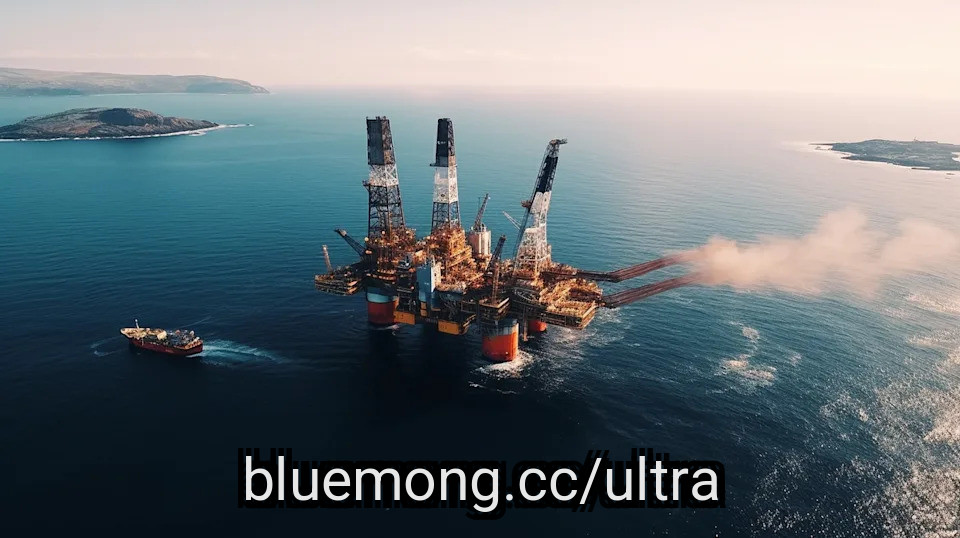
Tamboran Resources Corporation (NYSE:TBN) announced September 7 that it and Daly Waters Energy, LP had begun gas sales from the Shenandoah South Pilot Project into Australia's Northern Territory network. The deliveries mark the Beetaloo Basin's first gas sales and move the project into revenue generation.
The Sturt Plateau Compression Facility has a capacity of approximately 48.5 million cubic feet per day. Contracted supply of approximately 38.8 million cubic feet per day is expected by early 2027 under a long-term take-or-pay agreement with the Northern Territory Government. These are gross project volumes. Commissioning gas receives a discounted price because supply remains interruptible.
Tamboran Resources Corporation (NYSE:TBN) now has a working route from wells through processing infrastructure to a customer. All five wells on the Shenandoah South 2 pad have been drilled, stimulated and connected to the facility. Initial deliveries reduce uncertainty around the physical connection between the resource and its market.
Contracted demand equals 80% of stated processing capacity, providing a substantial foundation for utilization once production reaches the target. Take-or-pay agreements generally require buyers to pay for committed volumes even if they do not take delivery, subject to contractual conditions.
The gas sales agreement specifies a fixed price with annual adjustments linked to Australia's Consumer Price Index. That structure provides more revenue visibility than relying entirely on spot-market demand, although the price remains confidential.
#corporation
The Sturt Plateau Compression Facility has a capacity of approximately 48.5 million cubic feet per day. Contracted supply of approximately 38.8 million cubic feet per day is expected by early 2027 under a long-term take-or-pay agreement with the Northern Territory Government. These are gross project volumes. Commissioning gas receives a discounted price because supply remains interruptible.
Tamboran Resources Corporation (NYSE:TBN) now has a working route from wells through processing infrastructure to a customer. All five wells on the Shenandoah South 2 pad have been drilled, stimulated and connected to the facility. Initial deliveries reduce uncertainty around the physical connection between the resource and its market.
Contracted demand equals 80% of stated processing capacity, providing a substantial foundation for utilization once production reaches the target. Take-or-pay agreements generally require buyers to pay for committed volumes even if they do not take delivery, subject to contractual conditions.
The gas sales agreement specifies a fixed price with annual adjustments linked to Australia's Consumer Price Index. That structure provides more revenue visibility than relying entirely on spot-market demand, although the price remains confidential.
#corporation


4 days ago
First Citizens BancShares, Inc. (NASDAQ:FCNCA), through its First-Citizens Bank & Trust Company subsidiary, completed the acquisition of 138 BMO Bank N.A. branches on September 4. The locations span 11 states across the Midwest, Great Plains and West.
The completion announcement did not disclose final transferred balances. At the announcement, First Citizens BancShares, Inc. (NASDAQ:FCNCA) expected to ****** ume approximately $5.7 billion of deposits and acquire $1.1 billion of loans. Its July 2026 update lowered those estimates to $5.3 billion and $700 million, respectively. Both estimates imply roughly $4.6 billion of net liquidity. That difference represents funding capacity, not transaction income, and remains subject to final balances and acquisition accounting.
The deposit franchise could be the transaction's most valuable ****** et. At announcement, the acquired deposits carried a weighted average rate of 1.43%, with 21% in noninterest-bearing demand accounts. First Citizens BancShares, Inc. (NASDAQ:FCNCA) reported a 2.07% average total deposit cost in the second quarter of 2026. Retaining the acquired accounts near their original pricing could lower the consolidated funding cost.
The 138 branches also establish or deepen a presence across 11 states. The original transaction presentation identified approximately $1.0 billion of wealth ****** ets under management, creating opportunities to cross-sell commercial lending, treasury services, and wealth products. Retaining branch personnel could help preserve local relationships.
First Citizens BancShares, Inc. (NASDAQ:FCNCA) can deploy the surplus funding in several ways. As of June 30, 2026, the company held $151.03 billion of loans and $32.19 billion of borrowings, including a $28.42 billion purchase money note owed to the Federal Deposit Insurance Corporation. The acquired liquidity could support loan growth, replace more expensive funding, or be invested in securities. The original presentation projected immediate earnings-per-share accretion and an approximately 27-basis-point reduction in the Common Equity Tier 1 capital ratio.
#billion #first #citizens
The completion announcement did not disclose final transferred balances. At the announcement, First Citizens BancShares, Inc. (NASDAQ:FCNCA) expected to ****** ume approximately $5.7 billion of deposits and acquire $1.1 billion of loans. Its July 2026 update lowered those estimates to $5.3 billion and $700 million, respectively. Both estimates imply roughly $4.6 billion of net liquidity. That difference represents funding capacity, not transaction income, and remains subject to final balances and acquisition accounting.
The deposit franchise could be the transaction's most valuable ****** et. At announcement, the acquired deposits carried a weighted average rate of 1.43%, with 21% in noninterest-bearing demand accounts. First Citizens BancShares, Inc. (NASDAQ:FCNCA) reported a 2.07% average total deposit cost in the second quarter of 2026. Retaining the acquired accounts near their original pricing could lower the consolidated funding cost.
The 138 branches also establish or deepen a presence across 11 states. The original transaction presentation identified approximately $1.0 billion of wealth ****** ets under management, creating opportunities to cross-sell commercial lending, treasury services, and wealth products. Retaining branch personnel could help preserve local relationships.
First Citizens BancShares, Inc. (NASDAQ:FCNCA) can deploy the surplus funding in several ways. As of June 30, 2026, the company held $151.03 billion of loans and $32.19 billion of borrowings, including a $28.42 billion purchase money note owed to the Federal Deposit Insurance Corporation. The acquired liquidity could support loan growth, replace more expensive funding, or be invested in securities. The original presentation projected immediate earnings-per-share accretion and an approximately 27-basis-point reduction in the Common Equity Tier 1 capital ratio.
#billion #first #citizens


4 days ago
USA Rare Earth, Inc. (NASDAQ:USAR) announced on September 4 that it completed the Serra Verde acquisition one day earlier, paying $300 million in cash and issuing approximately 126.8 million common shares. The transaction adds Brazil's Pela Ema mine to Less Common Metals in the United Kingdom, the Stillwater, Oklahoma, magnet facility, and the Round Top project in Texas.
Serra Verde began production in January 2024 but is still completing optimization and commissioning. Stage 1 is expected to reach an annual run rate of approximately 4,000 metric tons of total rare-earth oxide, or TREO, by year-end 2026. Stage 2 construction targets average annual production of 6,400 metric tons, with commissioning expected to begin within 12 months.
Serra Verde had $425 million of principal outstanding under its U.S. International Development Finance Corporation loan at June 30. At closing, a $100 million tranche was extinguished after related warrants were exercised, leaving approximately $325 million of principal. The unaudited pro forma combined balance sheet reported a $304.1 million debt carrying value after discounts and issuance costs.
Serra Verde gives USA Rare Earth, Inc. (NASDAQ:USAR) a producing source of dysprosium, terbium, and other rare earths used in permanent magnets. Combining mining, metals, alloys, and magnet manufacturing could capture more of the value chain outside Asia.
The Phase 1 offtake agreement supports revenue visibility. It covers 100% of Pela Ema's Phase 1 products, subject to limited carve-outs, and includes escalating price floors annually. The counterparty is a special-purpose vehicle capitalized by the U.S. government and private investors. The arrangement provides contractual price protection, subject to the counterparty's performance.
#earth #approximately #NASDAQ #usar
Serra Verde began production in January 2024 but is still completing optimization and commissioning. Stage 1 is expected to reach an annual run rate of approximately 4,000 metric tons of total rare-earth oxide, or TREO, by year-end 2026. Stage 2 construction targets average annual production of 6,400 metric tons, with commissioning expected to begin within 12 months.
Serra Verde had $425 million of principal outstanding under its U.S. International Development Finance Corporation loan at June 30. At closing, a $100 million tranche was extinguished after related warrants were exercised, leaving approximately $325 million of principal. The unaudited pro forma combined balance sheet reported a $304.1 million debt carrying value after discounts and issuance costs.
Serra Verde gives USA Rare Earth, Inc. (NASDAQ:USAR) a producing source of dysprosium, terbium, and other rare earths used in permanent magnets. Combining mining, metals, alloys, and magnet manufacturing could capture more of the value chain outside Asia.
The Phase 1 offtake agreement supports revenue visibility. It covers 100% of Pela Ema's Phase 1 products, subject to limited carve-outs, and includes escalating price floors annually. The counterparty is a special-purpose vehicle capitalized by the U.S. government and private investors. The arrangement provides contractual price protection, subject to the counterparty's performance.
#earth #approximately #NASDAQ #usar


4 days ago
A Brazilian federal judge ordered the immediate suspension of all environmental licenses held by Sigma Mineração S.A., the operating subsidiary of Sigma Lithium Corporation (NASDAQ:SGML), for the Grota do Cirilo project. The September 4 preliminary order also halted mining activities following a civil action brought by the Federation of Quilombola Communities of Minas Gerais.
The dispute centers on whether the project lies within the area of influence of the Baú Quilombola Community and therefore required free, prior, and informed consultation. The judge cited studies placing the community's territory approximately 2.7 kilometers from the project's directly affected area, within the 8-kilometer presumptive regulatory impact radius applicable to mining projects outside Brazil's Legal Amazon under Interministerial Ordinance No. 60/2015. Sigma Lithium Corporation (NASDAQ:SGML) has argued that the project is outside the relevant impact zone.
The court ordered independent georeferencing and barred Minas Gerais and its environmental agency from issuing new licenses, amendments, or corrective approvals until the community-protection requirements are completed.
Two routes remain. If independent georeferencing supports the boundary position, Sigma Lithium Corporation (NASDAQ:SGML) could seek favorable court relief modifying or reversing the suspension. This provides an alternative to completing the consultation requirements.
If the project falls within the regulated impact area, Sigma Lithium Corporation (NASDAQ:SGML) would need Incra approval of the Quilombola Component Study, Basic Quilombola Environmental Plan and Final Execution Report, plus free, prior and informed consultation with the Baú community. Completing those requirements could preserve the project if acceptable mitigation is agreed.
#corporation #sgml #project #community
The dispute centers on whether the project lies within the area of influence of the Baú Quilombola Community and therefore required free, prior, and informed consultation. The judge cited studies placing the community's territory approximately 2.7 kilometers from the project's directly affected area, within the 8-kilometer presumptive regulatory impact radius applicable to mining projects outside Brazil's Legal Amazon under Interministerial Ordinance No. 60/2015. Sigma Lithium Corporation (NASDAQ:SGML) has argued that the project is outside the relevant impact zone.
The court ordered independent georeferencing and barred Minas Gerais and its environmental agency from issuing new licenses, amendments, or corrective approvals until the community-protection requirements are completed.
Two routes remain. If independent georeferencing supports the boundary position, Sigma Lithium Corporation (NASDAQ:SGML) could seek favorable court relief modifying or reversing the suspension. This provides an alternative to completing the consultation requirements.
If the project falls within the regulated impact area, Sigma Lithium Corporation (NASDAQ:SGML) would need Incra approval of the Quilombola Component Study, Basic Quilombola Environmental Plan and Final Execution Report, plus free, prior and informed consultation with the Baú community. Completing those requirements could preserve the project if acceptable mitigation is agreed.
#corporation #sgml #project #community


4 days ago
President Donald Trump pledged Wednesday to send every American adult $5,000 if Republicans retain control of the House and Senate in the midterm elections, an extraordinary gambit to reverse his party's sagging fortunes in November.
The dubious promise would most likely cost more than $1 trillion and require congressional approval, and would further exacerbate the country's nearly $1.8 trillion annual budget deficit and concerns about inflation.
"If the Republicans win, you win with us and you get $5,000," Trump said during the GOP's midterm convention in Dallas. "It will be called the Trump Dividend."
He likened the payments to a corporation's distributions to shareholders, citing "our tremendous strength and success economically."
Within an hour, Vice President JD Vance appeared to try to walk back Trump's proposal — at least in part — by suggesting the dividend payments would not go to the wealthy. Vance suggested it could be paid for by U.S. tariff revenues, though the suggested payment dwarfs what the U.S. has taken in through the protectionist measures.
#president #republicans #midterm #suggested
The dubious promise would most likely cost more than $1 trillion and require congressional approval, and would further exacerbate the country's nearly $1.8 trillion annual budget deficit and concerns about inflation.
"If the Republicans win, you win with us and you get $5,000," Trump said during the GOP's midterm convention in Dallas. "It will be called the Trump Dividend."
He likened the payments to a corporation's distributions to shareholders, citing "our tremendous strength and success economically."
Within an hour, Vice President JD Vance appeared to try to walk back Trump's proposal — at least in part — by suggesting the dividend payments would not go to the wealthy. Vance suggested it could be paid for by U.S. tariff revenues, though the suggested payment dwarfs what the U.S. has taken in through the protectionist measures.
#president #republicans #midterm #suggested



4 days ago
Saint Louis, Missouri-based Centene Corporation (CNC) operates as a healthcare enterprise that provides programs and services to underinsured and uninsured families and commercial organizations in the United States. The company has a market capitalization of $31.6 billion and operates through Medicaid, Medicare, Commercial, and Other segments.
Companies with a market cap of $10 billion or more are typically called "large-cap stocks." CNC fits squarely into that category, with a market cap above this threshold that reflects its substantial size and influence in the healthcare plans industry.
'Not Tens Of Billions, But Tens Of Trillions': Nvidia CEO Jensen Huang Says AI Is Like the New Electricity and the Scale Is Unlike Any Tech in History
What It Means for MSFT Stock Investors as Microsoft Switches to 2 Business Segments
RKLB Stock Jumps as Rocket Lab Debuts New Solar Cell for ****** e
#saint
Companies with a market cap of $10 billion or more are typically called "large-cap stocks." CNC fits squarely into that category, with a market cap above this threshold that reflects its substantial size and influence in the healthcare plans industry.
'Not Tens Of Billions, But Tens Of Trillions': Nvidia CEO Jensen Huang Says AI Is Like the New Electricity and the Scale Is Unlike Any Tech in History
What It Means for MSFT Stock Investors as Microsoft Switches to 2 Business Segments
RKLB Stock Jumps as Rocket Lab Debuts New Solar Cell for ****** e
#saint



4 days ago
Farmington, Connecticut-based Otis Worldwide Corporation (OTIS) manufactures, installs, and services building systems. Valued at $26.4 billion by market cap, the company offers elevators, escalators, and other moving products.
Companies worth $10 billion or more are generally described as "large-cap stocks," and OTIS perfectly fits that description, with its market cap exceeding this mark, underscoring its size, influence, and dominance within the specialty industrial machinery industry. OTIS is the largest global elevator and escalator supplier, known for its innovative safety features dating back to 1854. The company boasts a loyal customer base and competitive edge, with its success lying in commanding premium pricing, securing long-term service contracts, and leveraging its installed base for consistent revenue.
'Not Tens Of Billions, But Tens Of Trillions': Nvidia CEO Jensen Huang Says AI Is Like the New Electricity and the Scale Is Unlike Any Tech in History
What It Means for MSFT Stock Investors as Microsoft Switches to 2 Business Segments
RKLB Stock Jumps as Rocket Lab Debuts New Solar Cell for ******* e
#tens #Stock #billion #market
Companies worth $10 billion or more are generally described as "large-cap stocks," and OTIS perfectly fits that description, with its market cap exceeding this mark, underscoring its size, influence, and dominance within the specialty industrial machinery industry. OTIS is the largest global elevator and escalator supplier, known for its innovative safety features dating back to 1854. The company boasts a loyal customer base and competitive edge, with its success lying in commanding premium pricing, securing long-term service contracts, and leveraging its installed base for consistent revenue.
'Not Tens Of Billions, But Tens Of Trillions': Nvidia CEO Jensen Huang Says AI Is Like the New Electricity and the Scale Is Unlike Any Tech in History
What It Means for MSFT Stock Investors as Microsoft Switches to 2 Business Segments
RKLB Stock Jumps as Rocket Lab Debuts New Solar Cell for ******* e
#tens #Stock #billion #market


4 days ago
American Century Investments, an investment management company, released its first-quarter 2026 investor letter for the "American Century Investments Focused Dynamic Growth Fund". The letter can be downloaded here. U.S. stocks advanced sharply with double-digit quarterly gains largely due to robust earnings, resilient economic data, and momentum in AI-related stocks. However, there was a slight pullback in June as momentum waned and investors anticipated potential interest rate hikes by the Federal Reserve. Growth and AI stocks outperformed value stocks, while large-cap companies generally surpassed small- and mid-cap stocks. Underperformance was noted in healthcare and communication services, while industrials, particularly in aerospace and defense, contributed positively to performance. The fund's investor class returned 16.38%, slightly below the Russell 1000 Growth Index's 16.74%. The investment approach focuses on bottom-up financial ****** ysis to identify large-cap companies with long-term earnings growth potential, while aiming to mitigate non-financial risks. Please review the Fund's top five holdings to gain insights into its key selections for 2026.
In its second-quarter 2026 investor letter, American Century Investments Focused Dynamic Growth Fund highlighted Rocket Lab Corporation (NASDAQ:RKLB) as a notable contributor to performance. Rocket Lab Corporation (NASDAQ:RKLB) is an end-to-end ****** e company that provides launch services and ****** e systems solutions. On September 09, 2026, Rocket Lab Corporation (NASDAQ:RKLB) closed at $63.07 per share. Over the past month, Rocket Lab Corporation (NASDAQ:RKLB) declined 21.26%, but its shares are up 30.23% over the past year. Rocket Lab Corporation (NASDAQ:RKLB) has a market capitalization of $40.33 billion, and its stock has traded within a 52-week range of $37.57 to $151.00.
American Century Investments Focused Dynamic Growth Fund stated the following regarding Rocket Lab Corporation (NASDAQ:RKLB) in its Q2 2026 investor letter:
"Rocket Lab Corporation (NASDAQ:RKLB). The commercial ****** e company rallied as record revenue and strong guidance were supported by a large backlog and demand for its launch and ****** e systems businesses. After ****** e Exploration Technologies' June initial public offering drove some volatility, Rocket Lab announced plans to acquire satellite operator Iridium Communications."
Rocket Lab Corporation (NASDAQ:RKLB) is not on our list of the 40 Most Popular Stocks Among Hedge Funds. According to our database, 52 hedge fund portfolios held Rocket Lab Corporation (NASDAQ:RKLB) at the end of the second quarter, compared to 43 in the previous quarter. While we acknowledge the potential of Rocket Lab Corporation (NASDAQ:RKLB) as an investment, we believe certain AI stocks offer greater upside potential and carry less downside risk. If you're looking for an extremely undervalued AI stock that also stands to benefit significantly from Trump-era tariffs and the
In its second-quarter 2026 investor letter, American Century Investments Focused Dynamic Growth Fund highlighted Rocket Lab Corporation (NASDAQ:RKLB) as a notable contributor to performance. Rocket Lab Corporation (NASDAQ:RKLB) is an end-to-end ****** e company that provides launch services and ****** e systems solutions. On September 09, 2026, Rocket Lab Corporation (NASDAQ:RKLB) closed at $63.07 per share. Over the past month, Rocket Lab Corporation (NASDAQ:RKLB) declined 21.26%, but its shares are up 30.23% over the past year. Rocket Lab Corporation (NASDAQ:RKLB) has a market capitalization of $40.33 billion, and its stock has traded within a 52-week range of $37.57 to $151.00.
American Century Investments Focused Dynamic Growth Fund stated the following regarding Rocket Lab Corporation (NASDAQ:RKLB) in its Q2 2026 investor letter:
"Rocket Lab Corporation (NASDAQ:RKLB). The commercial ****** e company rallied as record revenue and strong guidance were supported by a large backlog and demand for its launch and ****** e systems businesses. After ****** e Exploration Technologies' June initial public offering drove some volatility, Rocket Lab announced plans to acquire satellite operator Iridium Communications."
Rocket Lab Corporation (NASDAQ:RKLB) is not on our list of the 40 Most Popular Stocks Among Hedge Funds. According to our database, 52 hedge fund portfolios held Rocket Lab Corporation (NASDAQ:RKLB) at the end of the second quarter, compared to 43 in the previous quarter. While we acknowledge the potential of Rocket Lab Corporation (NASDAQ:RKLB) as an investment, we believe certain AI stocks offer greater upside potential and carry less downside risk. If you're looking for an extremely undervalued AI stock that also stands to benefit significantly from Trump-era tariffs and the

4 days ago
Nucor Corporation (NUE) is the largest steel producer and recycler in the U.S., with operations spanning steel mills, steel products, and raw materials. Headquartered in Charlotte, North Carolina, the company produces a broad range of steel, from sheet and structural steel to joists, girders, and tubing, serving critical end markets such as construction, infrastructure, manufacturing, and energy.
With a market capitalization of $58.2 billion, NUE firmly sits in the large-cap category, reflecting its scale, industry influence, and leadership within the U.S. steel sector. Unlike traditional blast-furnace producers, Nucor primarily uses scrap-based electric arc furnaces (EAFs), giving it greater production flexibility and a comparatively lower environmental footprint.
'Not Tens Of Billions, But Tens Of Trillions': Nvidia CEO Jensen Huang Says AI Is Like the New Electricity and the Scale Is Unlike Any Tech in History
What It Means for MSFT Stock Investors as Microsoft Switches to 2 Business Segments
RKLB Stock Jumps as Rocket Lab Debuts New Solar Cell for **** e
#steel #north
With a market capitalization of $58.2 billion, NUE firmly sits in the large-cap category, reflecting its scale, industry influence, and leadership within the U.S. steel sector. Unlike traditional blast-furnace producers, Nucor primarily uses scrap-based electric arc furnaces (EAFs), giving it greater production flexibility and a comparatively lower environmental footprint.
'Not Tens Of Billions, But Tens Of Trillions': Nvidia CEO Jensen Huang Says AI Is Like the New Electricity and the Scale Is Unlike Any Tech in History
What It Means for MSFT Stock Investors as Microsoft Switches to 2 Business Segments
RKLB Stock Jumps as Rocket Lab Debuts New Solar Cell for **** e
#steel #north


4 days ago
Intel Corporation (NASDAQ:INTC) and ASML Holding N.V. (NASDAQ: ASML) have recently provided fresh evidence that High-NA EUV lithography is advancing in commercial manufacturing. At the SPIE Photomask Technology + Extreme Ultraviolet Lithography conference, the two companies announced several updates related to this technology and next-generation chip production.
While the update offers evidence of High-NA's manufacturing readiness, Intel faces a financial test about whether production improvements translate into better foundry returns. For ASML, it is whether greater manufacturing readiness ultimately leads to broader customer adoption and demand.
According to the companies, more than one million wafers have now been processed using High-NA EUV across early tool certification and testing, research and development efforts, and volume production on select layers for a subset of Intel® Core™ Ultra Series 3 processors, code-named Panther Lake.
The products that have been manufactured on Intel 18A using High NA for select layers continue to deliver performance, the companies noted, meeting or exceeding comparable layers patterned using the NXE platform.
This offers Intel early production experience with the technology. Back in July, ASML noted how Intel was the first company to ship a high-volume logic product manufactured using ASML's High NA EUV lithography technology.
#Intel #asml #technology #production
While the update offers evidence of High-NA's manufacturing readiness, Intel faces a financial test about whether production improvements translate into better foundry returns. For ASML, it is whether greater manufacturing readiness ultimately leads to broader customer adoption and demand.
According to the companies, more than one million wafers have now been processed using High-NA EUV across early tool certification and testing, research and development efforts, and volume production on select layers for a subset of Intel® Core™ Ultra Series 3 processors, code-named Panther Lake.
The products that have been manufactured on Intel 18A using High NA for select layers continue to deliver performance, the companies noted, meeting or exceeding comparable layers patterned using the NXE platform.
This offers Intel early production experience with the technology. Back in July, ASML noted how Intel was the first company to ship a high-volume logic product manufactured using ASML's High NA EUV lithography technology.
#Intel #asml #technology #production


4 days ago
Hewlett Packard Enterprise Company (NYSE:HPE) announced an expanded collaboration with Oracle Corporation (NYSE:ORCL) on September 2 to scale Oracle's global AI infrastructure using HPE Juniper Networking across Oracle Cloud Infrastructure (OCI) data centers. The partnership builds on over a decade of joint engineering, leveraging HPE's routing and switching platforms to support OCI's expanding gigawatt-scale GPU superclusters. To align long-term incentives, HPE issued stock warrants to Oracle.
Following the announcement, Wall Street delivered fast price target hikes: Barclays' Tim Long raised HPE's target by $12 to $79 (Overweight), citing server upside and robust margins, while Morgan Stanley's Sanjit Singh boosted Oracle's target by $3 to $210 (Equal Weight), noting a tactically positive setup driven by GPUaaS demand.
Hewlett Packard Enterprise Company (NYSE:HPE) and Oracle both delivered strong results, although Oracle operates at a significantly larger scale. HPE reported record Q3 2026 revenue of $12.2 billion, up 34% year over year, driven by strong server demand and a 74.9% increase in Networking revenue to $2.9 billion. GAAP diluted EPS reached $1.06, while strong execution led management to raise full-year FY26 revenue growth guidance to 34%-37% and its free cash flow target to at least $3.75 billion.
Oracle Corporation (NYSE:ORCL), meanwhile, ended fiscal 2026 with record Q4 revenue of $19.2 billion, up 21% year over year, and full-year revenue of $67.4 billion, up 17%. Q4 Cloud Infrastructure (IaaS) revenue surged 93% to $5.8 billion, while full-year GAAP EPS rose 34% to $5.83 and Remaining Performance Obligations (RPO) jumped 363% to $638 billion.
Overall, ORCL leads in hyper-growth and long-term backlog, reinforcing its position as the stronger software and cloud play, while HPE is demonstrating stronger near-term hardware momentum and attractive cash flow generation for value-oriented investors.
#billion #revenue #infrastructure
Following the announcement, Wall Street delivered fast price target hikes: Barclays' Tim Long raised HPE's target by $12 to $79 (Overweight), citing server upside and robust margins, while Morgan Stanley's Sanjit Singh boosted Oracle's target by $3 to $210 (Equal Weight), noting a tactically positive setup driven by GPUaaS demand.
Hewlett Packard Enterprise Company (NYSE:HPE) and Oracle both delivered strong results, although Oracle operates at a significantly larger scale. HPE reported record Q3 2026 revenue of $12.2 billion, up 34% year over year, driven by strong server demand and a 74.9% increase in Networking revenue to $2.9 billion. GAAP diluted EPS reached $1.06, while strong execution led management to raise full-year FY26 revenue growth guidance to 34%-37% and its free cash flow target to at least $3.75 billion.
Oracle Corporation (NYSE:ORCL), meanwhile, ended fiscal 2026 with record Q4 revenue of $19.2 billion, up 21% year over year, and full-year revenue of $67.4 billion, up 17%. Q4 Cloud Infrastructure (IaaS) revenue surged 93% to $5.8 billion, while full-year GAAP EPS rose 34% to $5.83 and Remaining Performance Obligations (RPO) jumped 363% to $638 billion.
Overall, ORCL leads in hyper-growth and long-term backlog, reinforcing its position as the stronger software and cloud play, while HPE is demonstrating stronger near-term hardware momentum and attractive cash flow generation for value-oriented investors.
#billion #revenue #infrastructure

4 days ago
Apple Inc. (NASDAQ:AAPL) and Intel Corporation (NASDAQ:INTC) represent two sides of a historical silicon transition. A September 2 report from MacRumors highlighted a key milestone: Apple notified developers that universal Mac App Store apps requiring macOS 13 or later can now drop support for Intel-based Macs. Removing Intel binary slices simplifies app development and reduces download sizes. While symbolic, the move underscores Apple's completed transition to Apple Silicon and highlights Intel's diminishing footprint within Apple's high-margin ecosystem.
Financially, Apple is faring significantly better than Intel.
For Q3 2026 (ended June 27, 2026), Apple reported record quarterly revenue of $109.4 billion, up 16% year-over-year, driven by double-digit growth across iPhone, Mac, and Services. The company's gross margin reached 50.1%, supported by a 2 percentage point favorable impact from tariff refunds. Diluted earnings per share (EPS) surged 29% year-over-year to $2.02, which included a $0.11 favorable boost from tariff refunds. Operating cash flow and active installed base both set new June quarter records.
Intel's Q2 2026 financial results (ended June 27, 2026) delivered $16.1 billion in quarterly revenue, up 25% year-over-year, marking its fastest top-line growth in over 15 years. Intel reported a GAAP net loss of $11.0 billion (GAAP EPS of -$2.16), largely driven by non-cash charges and mark-to-market adjustments. However, on a non-GAAP basis, net income reached $2.2 billion ($0.42 diluted EPS), nearly doubling consensus expectations. Non-GAAP gross margin expanded to 41.8% (40.4% GAAP) on strong product mix and factory yields.
Apple's bull case centers on expanding Services margins, strong ecosystem lock-in, and the potential for Apple Intelligence to drive further demand and engagement across iOS and macOS devices, supporting high-margin growth. On the other hand, Apple faces risks from elevated valuation multiples, sluggish growth in Greater China, where Q3 revenue reached $14.7 billion, and ongoing global antitrust scrutiny over App Store fees.
#revenue
Financially, Apple is faring significantly better than Intel.
For Q3 2026 (ended June 27, 2026), Apple reported record quarterly revenue of $109.4 billion, up 16% year-over-year, driven by double-digit growth across iPhone, Mac, and Services. The company's gross margin reached 50.1%, supported by a 2 percentage point favorable impact from tariff refunds. Diluted earnings per share (EPS) surged 29% year-over-year to $2.02, which included a $0.11 favorable boost from tariff refunds. Operating cash flow and active installed base both set new June quarter records.
Intel's Q2 2026 financial results (ended June 27, 2026) delivered $16.1 billion in quarterly revenue, up 25% year-over-year, marking its fastest top-line growth in over 15 years. Intel reported a GAAP net loss of $11.0 billion (GAAP EPS of -$2.16), largely driven by non-cash charges and mark-to-market adjustments. However, on a non-GAAP basis, net income reached $2.2 billion ($0.42 diluted EPS), nearly doubling consensus expectations. Non-GAAP gross margin expanded to 41.8% (40.4% GAAP) on strong product mix and factory yields.
Apple's bull case centers on expanding Services margins, strong ecosystem lock-in, and the potential for Apple Intelligence to drive further demand and engagement across iOS and macOS devices, supporting high-margin growth. On the other hand, Apple faces risks from elevated valuation multiples, sluggish growth in Greater China, where Q3 revenue reached $14.7 billion, and ongoing global antitrust scrutiny over App Store fees.
#revenue


4 days ago
On September 3, a caller mentioned that they are unsure whether to buy, sell, or hold Intel Corporation (NASDAQ:INTC). In response, Mad Money host Jim Cramer said:
Okay, now, let's own this right up front. I got too excited about Intel because I knew it was going to have a good quarter. It had an unbelievable quarter, and the stock went down anyway... Here's the problem: The government has a huge position in it, and they're supposed to be able to sell it if they want to, and we're all waiting for the government to sell the stake, and that's why the stock's been going down. And I have been saying, listen, I may just have to go in and buy more right here, get a better average, and have it come back. I understand it is mixed, but my belief in Intel is 100%. I just need to see the government get out of the stock or just go buy it anyway.
Intel Corporation's (NASDAQ:INTC) fundamental business is finally turning a corner. The company blew past Wall Street estimates with $16.1 billion in second-quarter revenue, fueled by heavy demand for its Xeon data center chips and solid progress on its 18A manufacturing technology. For patient investors who watched management pour billions into rebuilding the company's chip-making muscle, these results offer encouraging signs that Intel's long-term comeback and push into AI hardware are starting to pay off.
Even with those solid numbers, the stock faces a major psychological roadblock: the federal government's massive equity stake. As Cramer noted, investors are sitting on their hands, worried about when and how that big block of shares might be sold off, creating a potential overhang on the stock. Adding to this narrative are structural headwinds in the foundry segment, which continues to report operating losses as it scales up capital-intensive fabrication infrastructure, leaving the stock vulnerable to sentiment-driven pullbacks.
Institutional interest reflects growing engagement along with the company's operational recovery. According to Insider Monkey's tracking data, 138 hedge funds held positions in Intel Corporation (NASDAQ:INTC) during the second quarter, marking an increase from 112 funds in the prior quarter. Short interest stands at 2.57% of the public float, showing a measured level of skepticism without aggressive bearish shorting.
#Intel #quarter #government #right
Okay, now, let's own this right up front. I got too excited about Intel because I knew it was going to have a good quarter. It had an unbelievable quarter, and the stock went down anyway... Here's the problem: The government has a huge position in it, and they're supposed to be able to sell it if they want to, and we're all waiting for the government to sell the stake, and that's why the stock's been going down. And I have been saying, listen, I may just have to go in and buy more right here, get a better average, and have it come back. I understand it is mixed, but my belief in Intel is 100%. I just need to see the government get out of the stock or just go buy it anyway.
Intel Corporation's (NASDAQ:INTC) fundamental business is finally turning a corner. The company blew past Wall Street estimates with $16.1 billion in second-quarter revenue, fueled by heavy demand for its Xeon data center chips and solid progress on its 18A manufacturing technology. For patient investors who watched management pour billions into rebuilding the company's chip-making muscle, these results offer encouraging signs that Intel's long-term comeback and push into AI hardware are starting to pay off.
Even with those solid numbers, the stock faces a major psychological roadblock: the federal government's massive equity stake. As Cramer noted, investors are sitting on their hands, worried about when and how that big block of shares might be sold off, creating a potential overhang on the stock. Adding to this narrative are structural headwinds in the foundry segment, which continues to report operating losses as it scales up capital-intensive fabrication infrastructure, leaving the stock vulnerable to sentiment-driven pullbacks.
Institutional interest reflects growing engagement along with the company's operational recovery. According to Insider Monkey's tracking data, 138 hedge funds held positions in Intel Corporation (NASDAQ:INTC) during the second quarter, marking an increase from 112 funds in the prior quarter. Short interest stands at 2.57% of the public float, showing a measured level of skepticism without aggressive bearish shorting.
#Intel #quarter #government #right