
1 hr. ago
SPX Technologies, Inc. (NYSE:SPXC) announced on September 15 that it completed the acquisition of FIS Water, LLC for approximately $410 million in cash, including certain tax attributes. The acquired business is expected to generate approximately $105 million of revenue in 2026.
That is FIS Water's full-year revenue forecast; its contribution to consolidated 2026 results will reflect the ownership period. The stated cash consideration equals approximately 3.9 times expected annual revenue, making profitability and cash conversion central to the investment case.
FIS Water expands the products SPX Technologies, Inc. (NYSE:SPXC) can supply to cooling customers. Its filtration and flow-control products remove solids, maintain water quality, and regulate water movement in commercial and industrial cooling systems, including data centers.
The business has joined the HVAC segment, covering heating, ventilation and air conditioning, within its Cooling operations. Its products complement existing cooling-tower offerings, while its valves and actuators also fit the recently acquired Neptronic controls business.
The strategic attraction is customer overlap. Management identified shared customers, engineering specifications and sales channels, and plans to use its global distribution and equipment-manufacturer relationships to support growth.
#cooling #NYSE
That is FIS Water's full-year revenue forecast; its contribution to consolidated 2026 results will reflect the ownership period. The stated cash consideration equals approximately 3.9 times expected annual revenue, making profitability and cash conversion central to the investment case.
FIS Water expands the products SPX Technologies, Inc. (NYSE:SPXC) can supply to cooling customers. Its filtration and flow-control products remove solids, maintain water quality, and regulate water movement in commercial and industrial cooling systems, including data centers.
The business has joined the HVAC segment, covering heating, ventilation and air conditioning, within its Cooling operations. Its products complement existing cooling-tower offerings, while its valves and actuators also fit the recently acquired Neptronic controls business.
The strategic attraction is customer overlap. Management identified shared customers, engineering specifications and sales channels, and plans to use its global distribution and equipment-manufacturer relationships to support growth.
#cooling #NYSE


9 hours ago
On September 15, Digital Realty (NYSE:DLR) made ServiceFabric MCP available, a software layer that lets AI agents design, monitor and troubleshoot network connections across more than 800 data centers, including third-party sites. That nudges a real estate company toward becoming a control panel for enterprise AI. It arrives after second quarter results reported on July 23, when Core FFO per share, the company's preferred earnings yardstick, excluding net promote rose to $2.13 from $1.87 a year earlier. Here is what the launch does, and what it has yet to prove.
The pitch is that enterprise AI needs more than servers. It needs power, cooling, and sovereign placement that software can control. ServiceFabric MCP handles four jobs: designing and provisioning connections, spotting capacity and watching live network health, managing access through OAuth 2, and handing troubleshooting to agents with links into chat and monitoring tools. It is also open by design. Customers do not have to live only in Digital Realty buildings or commit to a single AI model. An IDC research VP argues that public cloud interfaces alone cannot give enterprises enough control over data movement and policy, which favors providers that pair global reach with programmable interconnection. Digital Realty runs the system on its own AI workloads, and See All AI, a medical imaging developer, leans on the Boston campus and ServiceFabric to move large datasets quickly and securely.
The financial engine underneath is running hot. Renewal leases in the second quarter were signed at rates 25.4% higher on a cash basis, which shows customers will pay more to stay put. Signed leases waiting to start added up to a $1.9 billion backlog of annualized base rent at 100% share, so future revenue is already lined up. Management responded by lifting its 2026 Core FFO per share outlook, excluding net promote, to $8.15 to $8.20.
Start with what the launch has not shown yet. Digital Realty itself calls MCP an emerging standard, and ServiceFabric MCP is still being validated across internal, enterprise, and partner deployments. The announcement puts no dollar figure on what it could add to revenue, and the company describes it only as the first programmable surface of a larger architecture that may later stretch into ***** e, power and inventory. Until customers pay for this layer, it is a promising idea more than a line item.
Then there is the bill for the physical side. Digital Realty carried about $18.6 billion of debt at June 30, 2026, and its 2026 development spending outlook, net of partner contributions, now sits at $4.25 billion to $4.75 billion. The outlook also ***** umes new long-term debt priced at 4.5% to 5.5%, up from the earlier 4.0% to 4.5%. To help pay for growth, the company has sold roughly 13.5 million shares this year for about $2.5 billion, which spreads future earnings across more owners. And the quarter's headline flattered a bit: Core FFO per share of $2.65 included a $18
The pitch is that enterprise AI needs more than servers. It needs power, cooling, and sovereign placement that software can control. ServiceFabric MCP handles four jobs: designing and provisioning connections, spotting capacity and watching live network health, managing access through OAuth 2, and handing troubleshooting to agents with links into chat and monitoring tools. It is also open by design. Customers do not have to live only in Digital Realty buildings or commit to a single AI model. An IDC research VP argues that public cloud interfaces alone cannot give enterprises enough control over data movement and policy, which favors providers that pair global reach with programmable interconnection. Digital Realty runs the system on its own AI workloads, and See All AI, a medical imaging developer, leans on the Boston campus and ServiceFabric to move large datasets quickly and securely.
The financial engine underneath is running hot. Renewal leases in the second quarter were signed at rates 25.4% higher on a cash basis, which shows customers will pay more to stay put. Signed leases waiting to start added up to a $1.9 billion backlog of annualized base rent at 100% share, so future revenue is already lined up. Management responded by lifting its 2026 Core FFO per share outlook, excluding net promote, to $8.15 to $8.20.
Start with what the launch has not shown yet. Digital Realty itself calls MCP an emerging standard, and ServiceFabric MCP is still being validated across internal, enterprise, and partner deployments. The announcement puts no dollar figure on what it could add to revenue, and the company describes it only as the first programmable surface of a larger architecture that may later stretch into ***** e, power and inventory. Until customers pay for this layer, it is a promising idea more than a line item.
Then there is the bill for the physical side. Digital Realty carried about $18.6 billion of debt at June 30, 2026, and its 2026 development spending outlook, net of partner contributions, now sits at $4.25 billion to $4.75 billion. The outlook also ***** umes new long-term debt priced at 4.5% to 5.5%, up from the earlier 4.0% to 4.5%. To help pay for growth, the company has sold roughly 13.5 million shares this year for about $2.5 billion, which spreads future earnings across more owners. And the quarter's headline flattered a bit: Core FFO per share of $2.65 included a $18


18 hours ago
Super Micro Computer (SMCI) stock rose 9.5% on Thursday, September 17, closing just over $40. The move followed a bullish call on how big the market for AI servers gets. That call may well be right. But it answers a question Super Micro's own results never raised. That is why one big session tells you less than it looks like it does.
Analysts at Goldman Sachs said the addressable market for AI servers will expand aggressively through the end of the decade. That is a forecast about an industry rather than about one manufacturer. Another account of Thursday morning's climb credited a broader equity rebound after Wednesday afternoon's Federal Reserve rate decision, not the forecast. Hewlett Packard Enterprise (HPE) jumped 8.0% the same day against the S&P 500's 1.1% gain, showing that capital was rotating heavily into primary AI server makers.
Company-specific headlines that day ran the other way: after the close, a shareholder rights law firm issued a press release soliciting clients for a potential investigation into company management.
A bigger market is not what this company is short of. In its fiscal fourth quarter, ended June 2026, Super Micro booked over $60 billion of new orders. That backlog underpins management's fiscal 2027 revenue guidance of $65 billion to $72 billion—up sharply from the $39 billion booked over the prior twelve months, but spread out as delivery and deployment constraints allow customers to take delivery.
What it is short of is customers ready to take delivery. Super Micro sells data center building block solutions, which bundle the servers with the power, cooling, networking and software around them. The company's manufacturing capability is on track to include more than 3,000 direct liquid-cooled racks a month.
#forecast
Analysts at Goldman Sachs said the addressable market for AI servers will expand aggressively through the end of the decade. That is a forecast about an industry rather than about one manufacturer. Another account of Thursday morning's climb credited a broader equity rebound after Wednesday afternoon's Federal Reserve rate decision, not the forecast. Hewlett Packard Enterprise (HPE) jumped 8.0% the same day against the S&P 500's 1.1% gain, showing that capital was rotating heavily into primary AI server makers.
Company-specific headlines that day ran the other way: after the close, a shareholder rights law firm issued a press release soliciting clients for a potential investigation into company management.
A bigger market is not what this company is short of. In its fiscal fourth quarter, ended June 2026, Super Micro booked over $60 billion of new orders. That backlog underpins management's fiscal 2027 revenue guidance of $65 billion to $72 billion—up sharply from the $39 billion booked over the prior twelve months, but spread out as delivery and deployment constraints allow customers to take delivery.
What it is short of is customers ready to take delivery. Super Micro sells data center building block solutions, which bundle the servers with the power, cooling, networking and software around them. The company's manufacturing capability is on track to include more than 3,000 direct liquid-cooled racks a month.
#forecast


1 day ago
Interested in Equinix, Inc.? Here are five stocks we like better.
Equinix plans to invest $5 billion to $7 billion annually in data-center development, primarily in established markets where customer demand and infrastructure needs are already visible.
The company controls about 3 gigawatts of designed power, with 600–700 megawatts under development, and is targeting cash-on-cash returns in the low 20% range with typical stabilization in two to three years.
AI adoption is accelerating among enterprise customers, driving expected demand for higher-density facilities, liquid cooling and additional interconnections; however, executives said AI-related business still represents a minority of Equinix's revenue today.
3 Stocks Built for Higher Rates—And 2 That Could Break
#higher #demand #here #built
Equinix plans to invest $5 billion to $7 billion annually in data-center development, primarily in established markets where customer demand and infrastructure needs are already visible.
The company controls about 3 gigawatts of designed power, with 600–700 megawatts under development, and is targeting cash-on-cash returns in the low 20% range with typical stabilization in two to three years.
AI adoption is accelerating among enterprise customers, driving expected demand for higher-density facilities, liquid cooling and additional interconnections; however, executives said AI-related business still represents a minority of Equinix's revenue today.
3 Stocks Built for Higher Rates—And 2 That Could Break
#higher #demand #here #built

2 days ago
Vertiv (VRT) supplies the power and cooling systems inside AI data centers, and its stock sits near $240, about 64% of its 52-week high. It is still up about 73% over the past twelve months. The open question is delivery, after some revenue from large projects slipped out of the second quarter of 2026. Even so, Vertiv's operating margin has widened in each of the last three years.
How Far Has Vertiv's Operating Margin Climbed?
Vertiv's operating margin was 9.6% three years ago. It rose to 15.1%, then 17.4%, and reached 19.4% over the last twelve months. That is roughly twice as much operating profit from every dollar of sales.
For the adjusted margin gain in the second quarter of 2026, management cites productivity and pricing that ran ahead of costs. Tariffs took back part of it. The company expects price to stay ahead of cost across 2026, tariffs included.
Does The Delivery Slip Show Up In Vertiv's Profits?
#Margin
How Far Has Vertiv's Operating Margin Climbed?
Vertiv's operating margin was 9.6% three years ago. It rose to 15.1%, then 17.4%, and reached 19.4% over the last twelve months. That is roughly twice as much operating profit from every dollar of sales.
For the adjusted margin gain in the second quarter of 2026, management cites productivity and pricing that ran ahead of costs. Tariffs took back part of it. The company expects price to stay ahead of cost across 2026, tariffs included.
Does The Delivery Slip Show Up In Vertiv's Profits?
#Margin


3 days ago
Shares of Occidental Petroleum Corp (NYSE:OXY) are trading lower Wednesday as energy equities experience broad profit-taking alongside a pullback in crude oil prices.
The weakness in benchmark energy commodities comes as fresh market data indicates a weekly drawdown in U.S. crude inventories, dampening immediate commodity momentum alongside sector-wide risk mitigation ahead of the Federal Reserve's afternoon interest rate decision.
Occidental Petroleum stock is taking a hit today. Why are OXY shares down?
A major catalyst cooling OXY's momentum today is the latest U.S. crude oil inventory report. The Energy Information Administration reported that crude stockpiles fell by just 640,000 barrels for the week ending Sept. 11, missing market expectations for a significantly larger drawdown.
Because a smaller-than-expected inventory draw signals softer overall energy demand, crude prices faced renewed downward pressure, pulling upstream producers like Occidental lower in tandem.
#lower #taking #alongside #market
The weakness in benchmark energy commodities comes as fresh market data indicates a weekly drawdown in U.S. crude inventories, dampening immediate commodity momentum alongside sector-wide risk mitigation ahead of the Federal Reserve's afternoon interest rate decision.
Occidental Petroleum stock is taking a hit today. Why are OXY shares down?
A major catalyst cooling OXY's momentum today is the latest U.S. crude oil inventory report. The Energy Information Administration reported that crude stockpiles fell by just 640,000 barrels for the week ending Sept. 11, missing market expectations for a significantly larger drawdown.
Because a smaller-than-expected inventory draw signals softer overall energy demand, crude prices faced renewed downward pressure, pulling upstream producers like Occidental lower in tandem.
#lower #taking #alongside #market


4 days ago
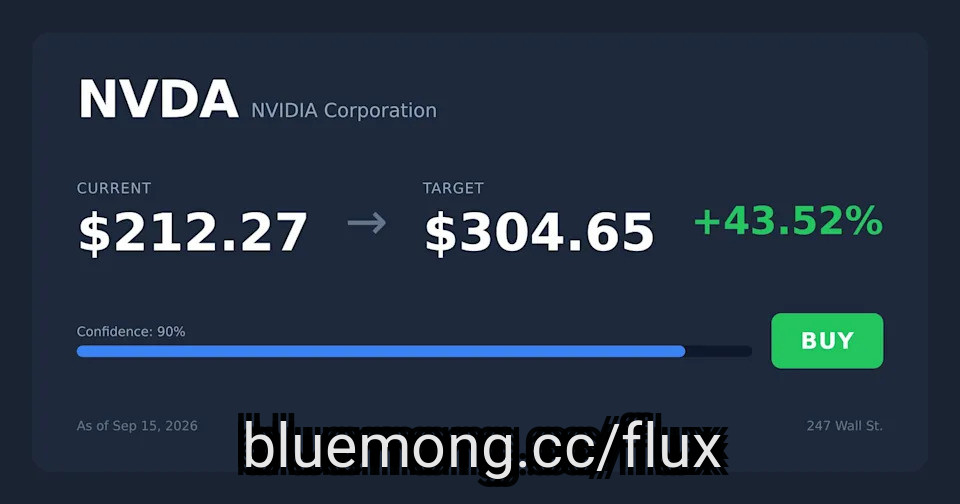
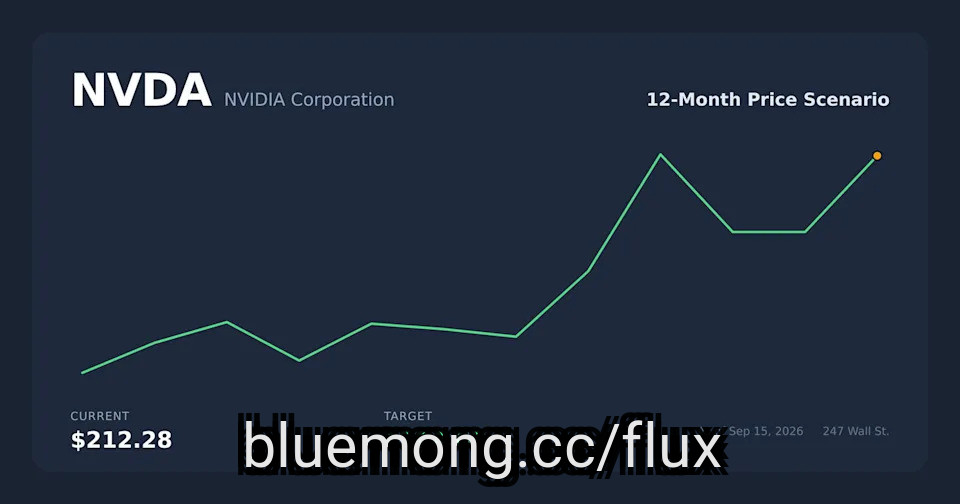
Nvidia's (NVDA) Vera Rubin GPUs claim 70% of the $4M VR200 rack bill of materials, while Micron (MU) benefits from the 22% memory slice.
Jensen Huang expects 70% revenue growth in fiscal 2028, supply-constrained despite purchase orders already secured from every major hyperscaler for Vera Rubin.
Just released. Our ****** ysts combed the entire stock market and named the ten best stocks to buy right now, and NVIDIA didn't make the cut. Enter your email to see the names that beat NVDA. The report is free. Enter your email and see if any of your stocks made the cut.
Inside an NVIDIA (NASDAQ:NVDA) VR200 NVL72 rack-scale AI supercomputer, 70% of the roughly $4 million bill of materials goes to one line item: the Rubin GPUs themselves, excluding their high-bandwidth memory. That figure comes from an HSBC estimated bill of materials for the VR200 NVL72 platform, and it is the cleanest single data point yet on where the AI infrastructure dollar actually lands. DRAM adds another 13%, HBM 9%, NAND 2%, NVLink 2%, cooling 2%, power supply 1%, and the CPU 1%.
In an era where every hyperscaler is trying to bend the AI capex curve, the VR200 breakdown says the GPU is still where the value concentrates. Nvidia is selling the rack, and the silicon it designs takes seven of every ten dollars a customer spends to fill it. That maps to what CEO Jensen Huang told investors on the fiscal Q2 2027 call: "Today, we're not just selling the best chips. We're selling a full-stack AI factory platform."
#rack #materials #vera
Jensen Huang expects 70% revenue growth in fiscal 2028, supply-constrained despite purchase orders already secured from every major hyperscaler for Vera Rubin.
Just released. Our ****** ysts combed the entire stock market and named the ten best stocks to buy right now, and NVIDIA didn't make the cut. Enter your email to see the names that beat NVDA. The report is free. Enter your email and see if any of your stocks made the cut.
Inside an NVIDIA (NASDAQ:NVDA) VR200 NVL72 rack-scale AI supercomputer, 70% of the roughly $4 million bill of materials goes to one line item: the Rubin GPUs themselves, excluding their high-bandwidth memory. That figure comes from an HSBC estimated bill of materials for the VR200 NVL72 platform, and it is the cleanest single data point yet on where the AI infrastructure dollar actually lands. DRAM adds another 13%, HBM 9%, NAND 2%, NVLink 2%, cooling 2%, power supply 1%, and the CPU 1%.
In an era where every hyperscaler is trying to bend the AI capex curve, the VR200 breakdown says the GPU is still where the value concentrates. Nvidia is selling the rack, and the silicon it designs takes seven of every ten dollars a customer spends to fill it. That maps to what CEO Jensen Huang told investors on the fiscal Q2 2027 call: "Today, we're not just selling the best chips. We're selling a full-stack AI factory platform."
#rack #materials #vera


4 days ago
Auxier ******* et Management, an investment advisory firm, released its second-quarter 2026 investor letter. The letter can be downloaded here. Following a strong rebound from the first-quarter decline, the S&P 500 gained 15.2% as accelerating capital spending toward artificial intelligence infrastructure drove significant gains across technology hardware companies. Semiconductor and data-center-related businesses benefited from supply constraints and strong demand, while enterprise software remained under pressure as investors reassessed AI disruption risks and compressed valuations. In the quarter, Auxier Focus Fund's Investor Class gained 8.82% and 10.70% for the six months ended June 30, 2026. Despite strong earnings growth across the broader market, Auxier highlighted concerns around rising margin debt, increased leverage, and elevated capital flows into high-growth technology areas that could amplify future volatility. The firm continues to focus on identifying enduring businesses with strong competitive advantages, resilient cash flows, and sustainable long-term growth potential. Also, check the fund's top five holdings to see its best picks in 2026.
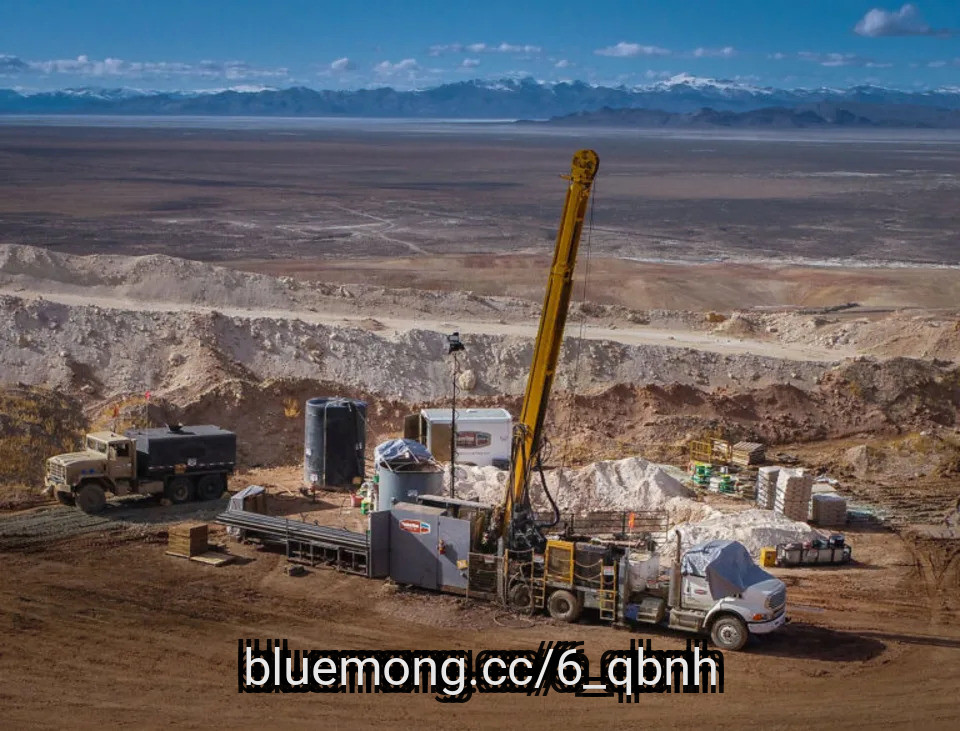
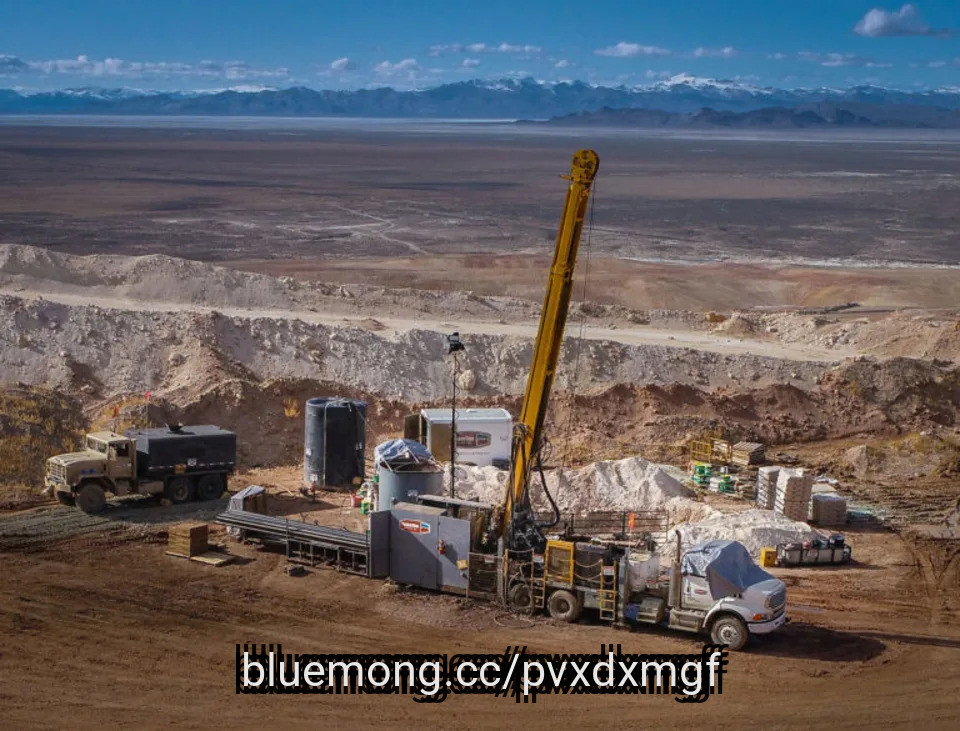
In its second-quarter 2026 investor letter, Auxier ******* et Management highlighted Caterpillar Inc. (NYSE:CAT). Caterpillar Inc. (NYSE:CAT) is a leading manufacturer of construction and mining equipment, off-highway diesel and natural gas engines, industrial gas turbines, and diesel-electric locomotives. On September 14, 2026, Caterpillar Inc. (NYSE:CAT) closed at $784.00 per share. Over the past month, Caterpillar Inc. (NYSE:CAT) declined 7.12%, but its shares are up 77.23% over the past year. Caterpillar Inc. (NYSE:CAT) has a market capitalization of $360.39 billion, and its stock has traded within a 52-week range of $423.32 to $1,073.46.
Auxier ******* et Management stated the following regarding Caterpillar Inc. (NYSE:CAT) in its Q2 2026 investor letter:
"Industrials were the strongest performing sector during the quarter. Tech-facing industrial players benefited from a shift in investor focus toward AI buildout rather than the development of AI models. Caterpillar Inc. (NYSE:CAT) and Gates also benefited indirectly from the expansion of AI infrastructure, particularly through increased demand for energy generation and cooling capacity in data centers."
Photo from Hycroft Mining website
#letter
In its second-quarter 2026 investor letter, Auxier ******* et Management highlighted Caterpillar Inc. (NYSE:CAT). Caterpillar Inc. (NYSE:CAT) is a leading manufacturer of construction and mining equipment, off-highway diesel and natural gas engines, industrial gas turbines, and diesel-electric locomotives. On September 14, 2026, Caterpillar Inc. (NYSE:CAT) closed at $784.00 per share. Over the past month, Caterpillar Inc. (NYSE:CAT) declined 7.12%, but its shares are up 77.23% over the past year. Caterpillar Inc. (NYSE:CAT) has a market capitalization of $360.39 billion, and its stock has traded within a 52-week range of $423.32 to $1,073.46.
Auxier ******* et Management stated the following regarding Caterpillar Inc. (NYSE:CAT) in its Q2 2026 investor letter:
"Industrials were the strongest performing sector during the quarter. Tech-facing industrial players benefited from a shift in investor focus toward AI buildout rather than the development of AI models. Caterpillar Inc. (NYSE:CAT) and Gates also benefited indirectly from the expansion of AI infrastructure, particularly through increased demand for energy generation and cooling capacity in data centers."
Photo from Hycroft Mining website
#letter

4 days ago
Auxier ******* et Management, an investment advisory firm, released its second-quarter 2026 investor letter. The letter can be downloaded here. Following a strong rebound from the first-quarter decline, the S&P 500 gained 15.2% as accelerating capital spending toward artificial intelligence infrastructure drove significant gains across technology hardware companies. Semiconductor and data-center-related businesses benefited from supply constraints and strong demand, while enterprise software remained under pressure as investors reassessed AI disruption risks and compressed valuations. In the quarter, Auxier Focus Fund's Investor Class gained 8.82% and 10.70% for the six months ended June 30, 2026. Despite strong earnings growth across the broader market, Auxier highlighted concerns around rising margin debt, increased leverage, and elevated capital flows into high-growth technology areas that could amplify future volatility. The firm continues to focus on identifying enduring businesses with strong competitive advantages, resilient cash flows, and sustainable long-term growth potential. Also, check the fund's top five holdings to see its best picks in 2026.
In its second-quarter 2026 investor letter, Auxier ******* et Management highlighted Gates Industrial Corporation Ltd. (NYSE:GTES). Gates Industrial Corporation Ltd. (NYSE:GTES) is a leading manufacturer of engineered power transmission and fluid power solutions. On September 14, 2026, Gates Industrial Corporation Ltd. (NYSE:GTES) closed at $25.42 per share. Over the past month, Gates Industrial Corporation Ltd. (NYSE:GTES) declined 6.17%, and its shares gained 0.77% over the past 52 weeks. Gates Industrial Corporation Ltd. (NYSE:GTES) has a market capitalization of $6.44 billion, and its stock has traded within a 52-week range of $20.88 and $30.34.
Auxier ******* et Management stated the following regarding Gates Industrial Corporation Ltd. (NYSE:GTES) in its Q2 2026 investor letter:
"Industrials were the strongest performing sector during the quarter. Tech-facing industrial players benefited from a shift in investor focus toward AI buildout rather than the development of AI models. Caterpillar and Gates Industrial Corporation Ltd. (NYSE:GTES) Ltd. (NYSE:GTES) also benefited indirectly from the expansion of AI infrastructure, particularly through increased demand for energy generation and cooling capacity in data centers."
Gates Industrial Corporation Ltd. (NYSE:GTES) is not on our list of the 40 Most Popular Stocks Among Hedge Funds. As per our database, 36 hedge fund portfolios held Gates Industrial Corporation Ltd. (NYSE:GTES) at the end of the second quarter which was 37 in the previous quarter. While we acknowledge the potential of Gates Industrial Corporation Ltd. (NYSE:GTES) as an investment, we believe certain AI stocks offer greater upside potential and carry less downside risk. If you're looking for an extremely undervalued AI stock that also stands to benefit significantly from
In its second-quarter 2026 investor letter, Auxier ******* et Management highlighted Gates Industrial Corporation Ltd. (NYSE:GTES). Gates Industrial Corporation Ltd. (NYSE:GTES) is a leading manufacturer of engineered power transmission and fluid power solutions. On September 14, 2026, Gates Industrial Corporation Ltd. (NYSE:GTES) closed at $25.42 per share. Over the past month, Gates Industrial Corporation Ltd. (NYSE:GTES) declined 6.17%, and its shares gained 0.77% over the past 52 weeks. Gates Industrial Corporation Ltd. (NYSE:GTES) has a market capitalization of $6.44 billion, and its stock has traded within a 52-week range of $20.88 and $30.34.
Auxier ******* et Management stated the following regarding Gates Industrial Corporation Ltd. (NYSE:GTES) in its Q2 2026 investor letter:
"Industrials were the strongest performing sector during the quarter. Tech-facing industrial players benefited from a shift in investor focus toward AI buildout rather than the development of AI models. Caterpillar and Gates Industrial Corporation Ltd. (NYSE:GTES) Ltd. (NYSE:GTES) also benefited indirectly from the expansion of AI infrastructure, particularly through increased demand for energy generation and cooling capacity in data centers."
Gates Industrial Corporation Ltd. (NYSE:GTES) is not on our list of the 40 Most Popular Stocks Among Hedge Funds. As per our database, 36 hedge fund portfolios held Gates Industrial Corporation Ltd. (NYSE:GTES) at the end of the second quarter which was 37 in the previous quarter. While we acknowledge the potential of Gates Industrial Corporation Ltd. (NYSE:GTES) as an investment, we believe certain AI stocks offer greater upside potential and carry less downside risk. If you're looking for an extremely undervalued AI stock that also stands to benefit significantly from


4 days ago
Benzinga and Yahoo Finance LLC may earn commission or revenue on some items through the links below.
Space Exploration Technologies Corp. CEO Elon Musk has reaffirmed that the commercial ***** eflight company will put NVIDIA Corp's orbital AI computing system in ***** e by next year.
On Sunday, user RyanFox.eth took to the social media platform X, referencing an unnamed YouTuber saying that data centers in ***** e could become a reality by 2035 if the cooling aspect were solved. "People really don't get it," the user said.
Don't Miss:
A single bad hire can set a startup back years. Here are the 5 hires founders most often misjudge — and why
#space #exploration
Space Exploration Technologies Corp. CEO Elon Musk has reaffirmed that the commercial ***** eflight company will put NVIDIA Corp's orbital AI computing system in ***** e by next year.
On Sunday, user RyanFox.eth took to the social media platform X, referencing an unnamed YouTuber saying that data centers in ***** e could become a reality by 2035 if the cooling aspect were solved. "People really don't get it," the user said.
Don't Miss:
A single bad hire can set a startup back years. Here are the 5 hires founders most often misjudge — and why
#space #exploration


4 days ago
Bank of America Corporation (NYSE:BAC) expects third-quarter investment banking fees to fall by at least 10% year over year, which highlights a broader normalization across capital markets after an unusually strong first half of 2026. BofA expects investment banking fees of roughly $1.6 billion to $1.8 billion in the third quarter, compared with $2 billion a year earlier. CEO Brian Moynihan said the broader investment banking market is also down around 10%, suggesting that the softer quarter reflects a cooling in industry activity rather than a company-specific breakdown.
The comparison with the second quarter illustrates how sharp the normalization is. BofA's investment banking fees had risen 50% year over year to $2.1 billion in Q2, while sales and trading revenue reached a record $7.1 billion. The current outlook therefore represents a pullback from elevated levels rather than a reversal of the broader recovery in dealmaking. Global M&A activity remained substantial in the first half of 2026, with more than $3 trillion of announced transactions, providing evidence that corporate deal appetite has remained relatively healthy even as quarterly activity fluctuates.
Pixabay/Public Domain
From a longer-term perspective, the normalization does not necessarily undermine Bank of America Corporation (NYSE:BAC)'s capital-markets franchise. Investment banking revenues remain well above the depressed levels seen during the earlier downturn in deal activity, while the bank continues to have a substantial pipeline of potential transactions. Moynihan's comments that the pipeline remains strong suggest that some of the current weakness could reflect the timing of transactions rather than a fundamental loss of corporate demand for M&A, financing or advisory services.
BofA also has a diversified earnings base that makes it less dependent on any single capital-markets cycle. Its second-quarter net interest income increased 9% to $16 billion, while average loans and leases grew 8%. That provides a more stable source of revenue as investment banking normalizes. In this context, the Q3 decline can be viewed as a shift away from exceptionally strong capital-markets contributions rather than evidence that the bank's broader earnings trajectory has deteriorated.
#billion #year #rather
The comparison with the second quarter illustrates how sharp the normalization is. BofA's investment banking fees had risen 50% year over year to $2.1 billion in Q2, while sales and trading revenue reached a record $7.1 billion. The current outlook therefore represents a pullback from elevated levels rather than a reversal of the broader recovery in dealmaking. Global M&A activity remained substantial in the first half of 2026, with more than $3 trillion of announced transactions, providing evidence that corporate deal appetite has remained relatively healthy even as quarterly activity fluctuates.
Pixabay/Public Domain
From a longer-term perspective, the normalization does not necessarily undermine Bank of America Corporation (NYSE:BAC)'s capital-markets franchise. Investment banking revenues remain well above the depressed levels seen during the earlier downturn in deal activity, while the bank continues to have a substantial pipeline of potential transactions. Moynihan's comments that the pipeline remains strong suggest that some of the current weakness could reflect the timing of transactions rather than a fundamental loss of corporate demand for M&A, financing or advisory services.
BofA also has a diversified earnings base that makes it less dependent on any single capital-markets cycle. Its second-quarter net interest income increased 9% to $16 billion, while average loans and leases grew 8%. That provides a more stable source of revenue as investment banking normalizes. In this context, the Q3 decline can be viewed as a shift away from exceptionally strong capital-markets contributions rather than evidence that the bank's broader earnings trajectory has deteriorated.
#billion #year #rather


4 days ago
Auxier ****** et Management, an investment advisory firm, released its second-quarter 2026 investor letter. The letter can be downloaded here. Following a strong rebound from the first-quarter decline, the S&P 500 gained 15.2% as accelerating capital spending toward artificial intelligence infrastructure drove significant gains across technology hardware companies. Semiconductor and data-center-related businesses benefited from supply constraints and strong demand, while enterprise software remained under pressure as investors reassessed AI disruption risks and compressed valuations. In the quarter, Auxier Focus Fund's Investor Class gained 8.82% and 10.70% for the six months ended June 30, 2026. Despite strong earnings growth across the broader market, Auxier highlighted concerns around rising margin debt, increased leverage, and elevated capital flows into high-growth technology areas that could amplify future volatility. The firm continues to focus on identifying enduring businesses with strong competitive advantages, resilient cash flows, and sustainable long-term growth potential. Also, check the fund's top five holdings to see its best picks in 2026.
In its second-quarter 2026 investor letter, Auxier ****** et Management highlighted Caterpillar Inc. (NYSE:CAT). Caterpillar Inc. (NYSE:CAT) is a leading manufacturer of construction and mining equipment, off-highway diesel and natural gas engines, industrial gas turbines, and diesel-electric locomotives. On September 14, 2026, Caterpillar Inc. (NYSE:CAT) closed at $784.00 per share. Over the past month, Caterpillar Inc. (NYSE:CAT) declined 7.12%, but its shares are up 77.23% over the past year. Caterpillar Inc. (NYSE:CAT) has a market capitalization of $360.39 billion, and its stock has traded within a 52-week range of $423.32 to $1,073.46.
Auxier ****** et Management stated the following regarding Caterpillar Inc. (NYSE:CAT) in its Q2 2026 investor letter:
"Industrials were the strongest performing sector during the quarter. Tech-facing industrial players benefited from a shift in investor focus toward AI buildout rather than the development of AI models. Caterpillar Inc. (NYSE:CAT) and Gates also benefited indirectly from the expansion of AI infrastructure, particularly through increased demand for energy generation and cooling capacity in data centers."
Photo from Hycroft Mining website
#quarter #asset #management #focus
In its second-quarter 2026 investor letter, Auxier ****** et Management highlighted Caterpillar Inc. (NYSE:CAT). Caterpillar Inc. (NYSE:CAT) is a leading manufacturer of construction and mining equipment, off-highway diesel and natural gas engines, industrial gas turbines, and diesel-electric locomotives. On September 14, 2026, Caterpillar Inc. (NYSE:CAT) closed at $784.00 per share. Over the past month, Caterpillar Inc. (NYSE:CAT) declined 7.12%, but its shares are up 77.23% over the past year. Caterpillar Inc. (NYSE:CAT) has a market capitalization of $360.39 billion, and its stock has traded within a 52-week range of $423.32 to $1,073.46.
Auxier ****** et Management stated the following regarding Caterpillar Inc. (NYSE:CAT) in its Q2 2026 investor letter:
"Industrials were the strongest performing sector during the quarter. Tech-facing industrial players benefited from a shift in investor focus toward AI buildout rather than the development of AI models. Caterpillar Inc. (NYSE:CAT) and Gates also benefited indirectly from the expansion of AI infrastructure, particularly through increased demand for energy generation and cooling capacity in data centers."
Photo from Hycroft Mining website
#quarter #asset #management #focus

4 days ago
Auxier ******* et Management, an investment advisory firm, released its second-quarter 2026 investor letter. The letter can be downloaded here. Following a strong rebound from the first-quarter decline, the S&P 500 gained 15.2% as accelerating capital spending toward artificial intelligence infrastructure drove significant gains across technology hardware companies. Semiconductor and data-center-related businesses benefited from supply constraints and strong demand, while enterprise software remained under pressure as investors reassessed AI disruption risks and compressed valuations. In the quarter, Auxier Focus Fund's Investor Class gained 8.82% and 10.70% for the six months ended June 30, 2026. Despite strong earnings growth across the broader market, Auxier highlighted concerns around rising margin debt, increased leverage, and elevated capital flows into high-growth technology areas that could amplify future volatility. The firm continues to focus on identifying enduring businesses with strong competitive advantages, resilient cash flows, and sustainable long-term growth potential. Also, check the fund's top five holdings to see its best picks in 2026.
In its second-quarter 2026 investor letter, Auxier ******* et Management highlighted Gates Industrial Corporation Ltd. (NYSE:GTES). Gates Industrial Corporation Ltd. (NYSE:GTES) is a leading manufacturer of engineered power transmission and fluid power solutions. On September 14, 2026, Gates Industrial Corporation Ltd. (NYSE:GTES) closed at $25.42 per share. Over the past month, Gates Industrial Corporation Ltd. (NYSE:GTES) declined 6.17%, and its shares gained 0.77% over the past 52 weeks. Gates Industrial Corporation Ltd. (NYSE:GTES) has a market capitalization of $6.44 billion, and its stock has traded within a 52-week range of $20.88 and $30.34.
Auxier ******* et Management stated the following regarding Gates Industrial Corporation Ltd. (NYSE:GTES) in its Q2 2026 investor letter:
"Industrials were the strongest performing sector during the quarter. Tech-facing industrial players benefited from a shift in investor focus toward AI buildout rather than the development of AI models. Caterpillar and Gates Industrial Corporation Ltd. (NYSE:GTES) Ltd. (NYSE:GTES) also benefited indirectly from the expansion of AI infrastructure, particularly through increased demand for energy generation and cooling capacity in data centers."
Gates Industrial Corporation Ltd. (NYSE:GTES) is not on our list of the 40 Most Popular Stocks Among Hedge Funds. As per our database, 36 hedge fund portfolios held Gates Industrial Corporation Ltd. (NYSE:GTES) at the end of the second quarter which was 37 in the previous quarter. While we acknowledge the potential of Gates Industrial Corporation Ltd. (NYSE:GTES) as an investment, we believe certain AI stocks offer greater upside potential and carry less downside risk. If you're looking for an extremely undervalued AI stock that also stands to benefit significantly from
In its second-quarter 2026 investor letter, Auxier ******* et Management highlighted Gates Industrial Corporation Ltd. (NYSE:GTES). Gates Industrial Corporation Ltd. (NYSE:GTES) is a leading manufacturer of engineered power transmission and fluid power solutions. On September 14, 2026, Gates Industrial Corporation Ltd. (NYSE:GTES) closed at $25.42 per share. Over the past month, Gates Industrial Corporation Ltd. (NYSE:GTES) declined 6.17%, and its shares gained 0.77% over the past 52 weeks. Gates Industrial Corporation Ltd. (NYSE:GTES) has a market capitalization of $6.44 billion, and its stock has traded within a 52-week range of $20.88 and $30.34.
Auxier ******* et Management stated the following regarding Gates Industrial Corporation Ltd. (NYSE:GTES) in its Q2 2026 investor letter:
"Industrials were the strongest performing sector during the quarter. Tech-facing industrial players benefited from a shift in investor focus toward AI buildout rather than the development of AI models. Caterpillar and Gates Industrial Corporation Ltd. (NYSE:GTES) Ltd. (NYSE:GTES) also benefited indirectly from the expansion of AI infrastructure, particularly through increased demand for energy generation and cooling capacity in data centers."
Gates Industrial Corporation Ltd. (NYSE:GTES) is not on our list of the 40 Most Popular Stocks Among Hedge Funds. As per our database, 36 hedge fund portfolios held Gates Industrial Corporation Ltd. (NYSE:GTES) at the end of the second quarter which was 37 in the previous quarter. While we acknowledge the potential of Gates Industrial Corporation Ltd. (NYSE:GTES) as an investment, we believe certain AI stocks offer greater upside potential and carry less downside risk. If you're looking for an extremely undervalued AI stock that also stands to benefit significantly from

4 days ago
Benzinga and Yahoo Finance LLC may earn commission or revenue on some items through the links below.
Space Exploration Technologies Corp. CEO Elon Musk has reaffirmed that the commercial ***** eflight company will put NVIDIA Corp's orbital AI computing system in ***** e by next year.
On Sunday, user RyanFox.eth took to the social media platform X, referencing an unnamed YouTuber saying that data centers in ***** e could become a reality by 2035 if the cooling aspect were solved. "People really don't get it," the user said.
Don't Miss:
A single bad hire can set a startup back years. Here are the 5 hires founders most often misjudge — and why
#benzinga #elon
Space Exploration Technologies Corp. CEO Elon Musk has reaffirmed that the commercial ***** eflight company will put NVIDIA Corp's orbital AI computing system in ***** e by next year.
On Sunday, user RyanFox.eth took to the social media platform X, referencing an unnamed YouTuber saying that data centers in ***** e could become a reality by 2035 if the cooling aspect were solved. "People really don't get it," the user said.
Don't Miss:
A single bad hire can set a startup back years. Here are the 5 hires founders most often misjudge — and why
#benzinga #elon

4 days ago
Bank of America Corporation (NYSE:BAC) expects third-quarter investment banking fees to fall by at least 10% year over year, which highlights a broader normalization across capital markets after an unusually strong first half of 2026. BofA expects investment banking fees of roughly $1.6 billion to $1.8 billion in the third quarter, compared with $2 billion a year earlier. CEO Brian Moynihan said the broader investment banking market is also down around 10%, suggesting that the softer quarter reflects a cooling in industry activity rather than a company-specific breakdown.
The comparison with the second quarter illustrates how sharp the normalization is. BofA's investment banking fees had risen 50% year over year to $2.1 billion in Q2, while sales and trading revenue reached a record $7.1 billion. The current outlook therefore represents a pullback from elevated levels rather than a reversal of the broader recovery in dealmaking. Global M&A activity remained substantial in the first half of 2026, with more than $3 trillion of announced transactions, providing evidence that corporate deal appetite has remained relatively healthy even as quarterly activity fluctuates.
Pixabay/Public Domain
From a longer-term perspective, the normalization does not necessarily undermine Bank of America Corporation (NYSE:BAC)'s capital-markets franchise. Investment banking revenues remain well above the depressed levels seen during the earlier downturn in deal activity, while the bank continues to have a substantial pipeline of potential transactions. Moynihan's comments that the pipeline remains strong suggest that some of the current weakness could reflect the timing of transactions rather than a fundamental loss of corporate demand for M&A, financing or advisory services.
BofA also has a diversified earnings base that makes it less dependent on any single capital-markets cycle. Its second-quarter net interest income increased 9% to $16 billion, while average loans and leases grew 8%. That provides a more stable source of revenue as investment banking normalizes. In this context, the Q3 decline can be viewed as a shift away from exceptionally strong capital-markets contributions rather than evidence that the bank's broader earnings trajectory has deteriorated.
#investment #banking #year
The comparison with the second quarter illustrates how sharp the normalization is. BofA's investment banking fees had risen 50% year over year to $2.1 billion in Q2, while sales and trading revenue reached a record $7.1 billion. The current outlook therefore represents a pullback from elevated levels rather than a reversal of the broader recovery in dealmaking. Global M&A activity remained substantial in the first half of 2026, with more than $3 trillion of announced transactions, providing evidence that corporate deal appetite has remained relatively healthy even as quarterly activity fluctuates.
Pixabay/Public Domain
From a longer-term perspective, the normalization does not necessarily undermine Bank of America Corporation (NYSE:BAC)'s capital-markets franchise. Investment banking revenues remain well above the depressed levels seen during the earlier downturn in deal activity, while the bank continues to have a substantial pipeline of potential transactions. Moynihan's comments that the pipeline remains strong suggest that some of the current weakness could reflect the timing of transactions rather than a fundamental loss of corporate demand for M&A, financing or advisory services.
BofA also has a diversified earnings base that makes it less dependent on any single capital-markets cycle. Its second-quarter net interest income increased 9% to $16 billion, while average loans and leases grew 8%. That provides a more stable source of revenue as investment banking normalizes. In this context, the Q3 decline can be viewed as a shift away from exceptionally strong capital-markets contributions rather than evidence that the bank's broader earnings trajectory has deteriorated.
#investment #banking #year

4 days ago
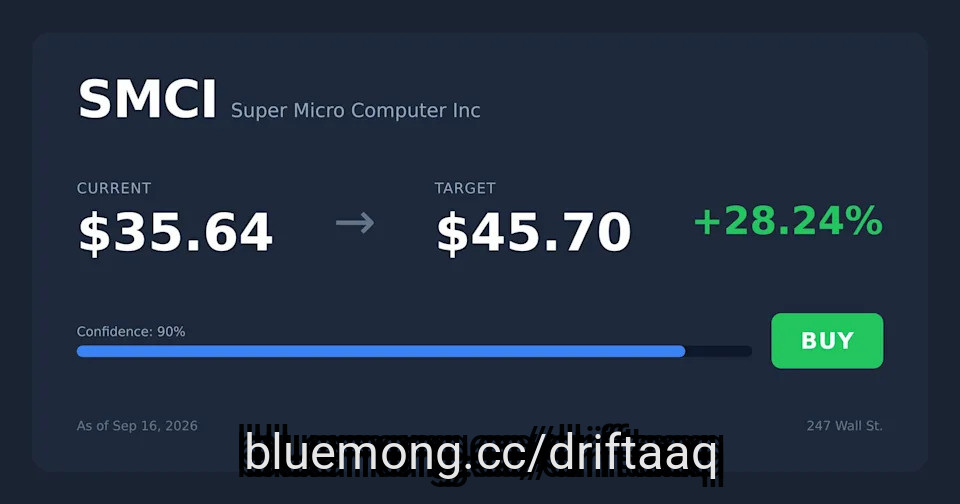
SMCI trades at just 8x FY2027 EPS despite a record $60 billion order backlog and a 78% Q4 earnings beat, supporting a $60 price target by 2027.
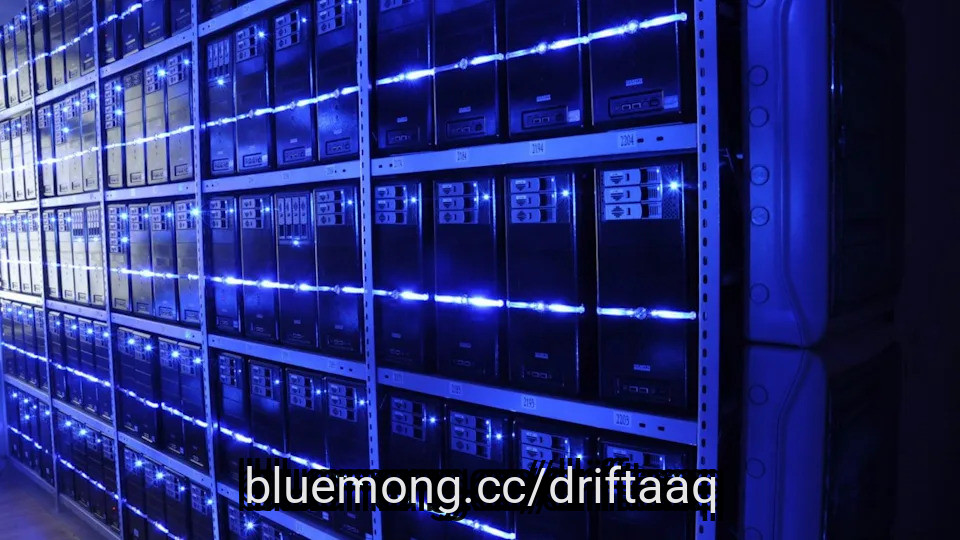
Unlike NVDA, which only designs chips, SMCI builds complete AI factories covering rack servers, liquid cooling, and deployment, giving it a one-stop infrastructure moat.
FY2027 EPS estimates jumped 33% in 90 days with 16 upward revisions and zero cuts, yet Wall Street's consensus price target still sits at just $42.
Read More: Learn 7 secret wealth tips high net worth investors use that most investors miss (sponsor)
Super Micro Computer (NASDAQ:SMCI) has quietly become one of the more interesting rebound stories in AI infrastructure. Shares are up 21.76% year to date, but the stock is still down 21.46% over the past year as investors work through governance overhangs and margin whiplash.
#fy2027 #target #unlike
Unlike NVDA, which only designs chips, SMCI builds complete AI factories covering rack servers, liquid cooling, and deployment, giving it a one-stop infrastructure moat.
FY2027 EPS estimates jumped 33% in 90 days with 16 upward revisions and zero cuts, yet Wall Street's consensus price target still sits at just $42.
Read More: Learn 7 secret wealth tips high net worth investors use that most investors miss (sponsor)
Super Micro Computer (NASDAQ:SMCI) has quietly become one of the more interesting rebound stories in AI infrastructure. Shares are up 21.76% year to date, but the stock is still down 21.46% over the past year as investors work through governance overhangs and margin whiplash.
#fy2027 #target #unlike


4 days ago
The energy landscape is evolving rapidly, and one company looking to disrupt the status quo and redefine the future of nuclear power is NuScale Power (NYSE: SMR). NuScale is the only small modular reactor (SMR) developer to receive a Standard Design Approval from the Nuclear Regulatory Commission.
On Sept. 1, NuScale achieved a major engineering breakthrough. In collaboration with MilleniTEK, it successfully fabricated specialized boron-oxide pellets, a critical component of NuScale's cutting-edge passive emergency cooling system.
Missed Nvidia in 2009? This Rare Signal Is Flashing Again. In 2009, a "Double Down" signal flashed for a little-known chipmaker called Nvidia. For the first time in years, that same "Total Conviction" signal is flashing for a company 1/100th the size of Nvidia. Continue »
This engineering triumph is a major step toward making safe, meltdown-proof modular nuclear power a reality. It also helps NuScale move closer to commercial deployment. But does this make NuScale Power stock a buy? Let's dive into the details and what it means for the stock.
In traditional nuclear reactors, reactivity control during nonstandard events often relies on active mechanical insertion of control rods or on powered chemical injection pumps. NuScale's 77 MWe Small Modular Reactor (SMR) design relies on passive safety mechanisms.
#power
On Sept. 1, NuScale achieved a major engineering breakthrough. In collaboration with MilleniTEK, it successfully fabricated specialized boron-oxide pellets, a critical component of NuScale's cutting-edge passive emergency cooling system.
Missed Nvidia in 2009? This Rare Signal Is Flashing Again. In 2009, a "Double Down" signal flashed for a little-known chipmaker called Nvidia. For the first time in years, that same "Total Conviction" signal is flashing for a company 1/100th the size of Nvidia. Continue »
This engineering triumph is a major step toward making safe, meltdown-proof modular nuclear power a reality. It also helps NuScale move closer to commercial deployment. But does this make NuScale Power stock a buy? Let's dive into the details and what it means for the stock.
In traditional nuclear reactors, reactivity control during nonstandard events often relies on active mechanical insertion of control rods or on powered chemical injection pumps. NuScale's 77 MWe Small Modular Reactor (SMR) design relies on passive safety mechanisms.
#power


6 days ago
The New York City Health Department has ordered 10 cooling towers in the South Bronx, including one at Yankee Stadium, to be cleaned and disinfected after preliminary testing found the presence of Legionella bacteria as officials investigate a cluster. NBC News medical contributor Natalie Azar discusses how the test was conducted the possible threat level to attendees.
#stadium
#stadium




6 days ago
On September 10, Copart (NASDAQ:CPRT) held its fourth-quarter earnings call and used it to unveil a deal that could reshape its business: an all-cash agreement to acquire ACV, a digital auto marketplace that moved roughly $10 billion of vehicles last year without owning a single lot. The announcement landed alongside a quarter that captured the company's central tension. Revenue rose, but net income fell, and management is now betting that pairing its junkyards with someone else's software can fix that.
The ACV deal is the headline, and for good reason. ACV brings more than 22,000 active buyers and inspection and valuation technology, while Copart contributes over 275 locations, roughly 4 million vehicles sold annually, and about 1 million members across more than 185 countries. Management structured it as an all-cash tender offer funded from cash on hand, with a close targeted by the end of the calendar year and earnings accretion expected in fiscal 2028. Executives framed the fit as physical scale meeting digital liquidity, giving dealers, banks, and fleet sellers a single partner for disposing of vehicles.
That diversification push is already showing up in the numbers. International revenue grew 11.7% to $222.1 million on 15% service revenue growth, and international buyers accounted for 45.7% of total US sales dollars despite making up only 38.2% of units, a sign they are chasing pricier vehicles. Domestically, non-insurance units returned to growth of 0.2% in the quarter after a full-year decline, dealer units rose 5.8%, and BluCar, which serves banks and fleets, expanded nearly 20%. Global average selling prices climbed 3.5%, evidence that Copart's auctions still command pricing power even as volumes soften.
The quarter's numbers show where the strain is. Consolidated revenue grew 2.4% to $1.2 billion, yet net income dropped 17.4% to $327.4 million and diluted earnings per share fell 14.6% to $0.35. Operating expense per car jumped 12.7% year over year as the company poured money into long-haul delivery, **** leExpress, and dedicated wholesale facilities, and US facility costs alone rose 7.7% in the quarter. Lower interest income, a byproduct of the $1.63 billion spent on buybacks earlier in the fiscal year, added to the squeeze.
The core insurance business is also cooling. Global insurance units fell 4.2%, with domestic insurance **** ignments down 7.5%, though management noted that figure would have been up 2.3% excluding the loss of a single customer. Collision claim frequency declined 3.4% even as total loss frequency hit a record 23.3% for a second quarter and severity topped $6,300 per claim, up 8.8%. And the ACV deal itself carries integration risk, since management expects only breakeven results before accretion arrives in fiscal 2028.
#quarter #vehicles #insurance
The ACV deal is the headline, and for good reason. ACV brings more than 22,000 active buyers and inspection and valuation technology, while Copart contributes over 275 locations, roughly 4 million vehicles sold annually, and about 1 million members across more than 185 countries. Management structured it as an all-cash tender offer funded from cash on hand, with a close targeted by the end of the calendar year and earnings accretion expected in fiscal 2028. Executives framed the fit as physical scale meeting digital liquidity, giving dealers, banks, and fleet sellers a single partner for disposing of vehicles.
That diversification push is already showing up in the numbers. International revenue grew 11.7% to $222.1 million on 15% service revenue growth, and international buyers accounted for 45.7% of total US sales dollars despite making up only 38.2% of units, a sign they are chasing pricier vehicles. Domestically, non-insurance units returned to growth of 0.2% in the quarter after a full-year decline, dealer units rose 5.8%, and BluCar, which serves banks and fleets, expanded nearly 20%. Global average selling prices climbed 3.5%, evidence that Copart's auctions still command pricing power even as volumes soften.
The quarter's numbers show where the strain is. Consolidated revenue grew 2.4% to $1.2 billion, yet net income dropped 17.4% to $327.4 million and diluted earnings per share fell 14.6% to $0.35. Operating expense per car jumped 12.7% year over year as the company poured money into long-haul delivery, **** leExpress, and dedicated wholesale facilities, and US facility costs alone rose 7.7% in the quarter. Lower interest income, a byproduct of the $1.63 billion spent on buybacks earlier in the fiscal year, added to the squeeze.
The core insurance business is also cooling. Global insurance units fell 4.2%, with domestic insurance **** ignments down 7.5%, though management noted that figure would have been up 2.3% excluding the loss of a single customer. Collision claim frequency declined 3.4% even as total loss frequency hit a record 23.3% for a second quarter and severity topped $6,300 per claim, up 8.8%. And the ACV deal itself carries integration risk, since management expects only breakeven results before accretion arrives in fiscal 2028.
#quarter #vehicles #insurance


6 days ago
As of 11:38 AM ET, the S&P 500 (SNPINDEX:^GSPC) is down 0.44% to 7,623, the Nasdaq Composite (NASDAQINDEX:^IXIC) has fallen 0.44% to 26,217 as cooling artificial intelligence sentiment weighs on growth stocks, and the Dow Jones Industrial Average (DJINDICES:^DJI) is trading 0.36% lower to 52,422.
Gold is down 1.88% to $4,325.10, and the 10-Year Treasury yield has slipped 0.02% to 4.96%, after reaching 5% for the first time since 2023. Communication stocks and healthcare are leading sector gains, while basic materials and industrials are underperforming.
Meta Platforms is climbing today after Goldman Sachs maintained a Buy rating, stressing the potential upside from its Muse AI agent. Micron Technology tumbled over 5% following warnings about the risks of rapid AI development. Those same concerns drove gains in cybersecurity stocks -- CrowdStrike Holdings soared 15%.
Tech leaders have issued dire warnings about the risks of rapid artificial intelligence (AI) development in recent days, prompting an industrywide pullback. Anthropic CEO Dario Amodei and OpenAI CEO Sam Altman both highlighted the dangers that advanced systems could quickly move beyond human control and called for a slower pace of development.
Investors fear any slowdown could impact demand for AI infrastructure, pressuring some of this year's outperformers, such as Marvell Technology, CoreWeave, and Intel. Those worries are understandable, but it is important think about how any controls on AI development might impact long-term growth. Near-term sentiment may slip, but AI isn't going to disappear, and there is a chance that a slower build-out could actually strengthen the industry in the long term.
#down
Gold is down 1.88% to $4,325.10, and the 10-Year Treasury yield has slipped 0.02% to 4.96%, after reaching 5% for the first time since 2023. Communication stocks and healthcare are leading sector gains, while basic materials and industrials are underperforming.
Meta Platforms is climbing today after Goldman Sachs maintained a Buy rating, stressing the potential upside from its Muse AI agent. Micron Technology tumbled over 5% following warnings about the risks of rapid AI development. Those same concerns drove gains in cybersecurity stocks -- CrowdStrike Holdings soared 15%.
Tech leaders have issued dire warnings about the risks of rapid artificial intelligence (AI) development in recent days, prompting an industrywide pullback. Anthropic CEO Dario Amodei and OpenAI CEO Sam Altman both highlighted the dangers that advanced systems could quickly move beyond human control and called for a slower pace of development.
Investors fear any slowdown could impact demand for AI infrastructure, pressuring some of this year's outperformers, such as Marvell Technology, CoreWeave, and Intel. Those worries are understandable, but it is important think about how any controls on AI development might impact long-term growth. Near-term sentiment may slip, but AI isn't going to disappear, and there is a chance that a slower build-out could actually strengthen the industry in the long term.
#down

6 days ago
The Sydney Sweeney Novig 'Just Sports' ad dominated social media over the last week, and as we wrap up a loaded weekend of college and pro football, the responses have only gotten louded. More specifically, the controversy surrounding it has intensified and doesn't appear to be cooling off.
There's been a whirlwind of responses, specifically from female athletes who haven't shied away from voicing their opinions on Sweeney's new ad and deal with Novig. Following the initial video (seen below), several notable athletes across various sports have weighed in on the topic.
Confirmed: Sydney Sweeney knows ball. pic.twitter.com/EXQ4PzVZsi
— Novig (Novig) September 9, 2026
The primary pushback came from many incredible female athletes across the sports landscape, including American gymnast Gracie Kramer, who posted a video with the caption, "Idk what Sydney Sweeney was doing, but this is what a woman in sports looks like."
#athletes #female #across
There's been a whirlwind of responses, specifically from female athletes who haven't shied away from voicing their opinions on Sweeney's new ad and deal with Novig. Following the initial video (seen below), several notable athletes across various sports have weighed in on the topic.
Confirmed: Sydney Sweeney knows ball. pic.twitter.com/EXQ4PzVZsi
— Novig (Novig) September 9, 2026
The primary pushback came from many incredible female athletes across the sports landscape, including American gymnast Gracie Kramer, who posted a video with the caption, "Idk what Sydney Sweeney was doing, but this is what a woman in sports looks like."
#athletes #female #across




8 days ago
Updated Sept. 11, 2026 3:51 pm ET
Listen
(3 min)
1547 ET – U.S. natural gas futures end the week lower as the market enters the shoulder season where summer cooling demand tapers off before early-season heating demand starts to kick in. Last week’s 40 Bcf storage injection was bigger than expected, but smaller than average, leaving inventories 148 Bcf above the five-year average. “Elevated production and falling power demand point to larger injections ahead, leaving firm LNG demand as the main counterweight to the seasonal loosening,” Gelber & ***** ociates says in a note. Nymex front-month gas settles down 0.1% at $2.831/mmBtu for a 4.8% loss on the week.(anthony.harrupwsj.com)
0951 ET – U.S. natural gas futures are giving back yesterday’s small gains and on track for weekly losses as summer ends and cooling demand is set to ease into the autumn. Futures “remain in a sell-the-strength type trade,” Dennis Kissler of BOK Financial says in a note. “While the fundamentals still favor the bears, the market seems to be well supported near the $2.75-$2.70 area.” Nymex natural gas for October delivery is off 0.7% at $2.813/mmBtu.(anthony.harrupwsj.com)
#market #summer #average
Listen
(3 min)
1547 ET – U.S. natural gas futures end the week lower as the market enters the shoulder season where summer cooling demand tapers off before early-season heating demand starts to kick in. Last week’s 40 Bcf storage injection was bigger than expected, but smaller than average, leaving inventories 148 Bcf above the five-year average. “Elevated production and falling power demand point to larger injections ahead, leaving firm LNG demand as the main counterweight to the seasonal loosening,” Gelber & ***** ociates says in a note. Nymex front-month gas settles down 0.1% at $2.831/mmBtu for a 4.8% loss on the week.(anthony.harrupwsj.com)
0951 ET – U.S. natural gas futures are giving back yesterday’s small gains and on track for weekly losses as summer ends and cooling demand is set to ease into the autumn. Futures “remain in a sell-the-strength type trade,” Dennis Kissler of BOK Financial says in a note. “While the fundamentals still favor the bears, the market seems to be well supported near the $2.75-$2.70 area.” Nymex natural gas for October delivery is off 0.7% at $2.813/mmBtu.(anthony.harrupwsj.com)
#market #summer #average




10 days ago
SpaceX (NASDAQ:SPCX) has been building its AI business at warp speed. It turns out to be much more challenging to rapidly build reliable data centers than expected. Some of its facilities ran without backup power for months. That recently led the company to make some changes, including reshuffling its leadership team to ensure it can meet a looming deadline for a $920 million-a-month compute deal with Alphabet's (NASDAQ:GOOG)(NASDAQ:GOOGL) Google.
Here's a look at what went wrong and how **** eX is racing to fix the problem.
Missed Nvidia in 2009? This Rare Signal Is Flashing Again. In 2009, a "Double Down" signal flashed for a little-known chipmaker called Nvidia. For the first time in years, that same "Total Conviction" signal is flashing for a company 1/100th the size of Nvidia. Continue »
Image source: The Motley Fool.
Engineering and reliability issues have surfaced at **** eX data center sites in Tennessee and Mississippi. According to a recent report by The Information, several sites operated without backup cooling and power systems as the company pushed to expand capacity as fast as possible. That publication has previously reported issues at **** eX data center sites, including that its Macrohand facility in Tennessee had to rely on over 100 mobile chillers and recorded uptime well below the company's 99.9% internal target. Meanwhile, the company used temporary gas turbines at its Mississippi data center longer than expected due to supply chain issues in delaying 41 permanent units. Temporary outages of the power and cooling systems have interrupted AI model training.
#company #NVIDIA #signal #power
Here's a look at what went wrong and how **** eX is racing to fix the problem.
Missed Nvidia in 2009? This Rare Signal Is Flashing Again. In 2009, a "Double Down" signal flashed for a little-known chipmaker called Nvidia. For the first time in years, that same "Total Conviction" signal is flashing for a company 1/100th the size of Nvidia. Continue »
Image source: The Motley Fool.
Engineering and reliability issues have surfaced at **** eX data center sites in Tennessee and Mississippi. According to a recent report by The Information, several sites operated without backup cooling and power systems as the company pushed to expand capacity as fast as possible. That publication has previously reported issues at **** eX data center sites, including that its Macrohand facility in Tennessee had to rely on over 100 mobile chillers and recorded uptime well below the company's 99.9% internal target. Meanwhile, the company used temporary gas turbines at its Mississippi data center longer than expected due to supply chain issues in delaying 41 permanent units. Temporary outages of the power and cooling systems have interrupted AI model training.
#company #NVIDIA #signal #power


10 days ago
SpaceEx (SPCX) stock is on the move Thursday as investors sort through a number of headlines affecting the rocket-and-satellite company.
The most consequential came from The Information, which reported that ******* eX and CEO Elon Musk are overhauling how the company builds its data centers, a shift that could slow the pace of new construction.
According to the report, a new management team from the company's rocket division is prioritizing reliability over speed, installing more backup power and cooling systems, and testing data centers more thoroughly before they go live.
The change is a departure from what Musk and xAI (now part of ******* eX) used to build at its Colossus campus in Tennessee, where the AI unit brought its first data center online in just 122 days, a timeline Nvidia (NVDA) CEO Jensen Huang called "superhuman."
But that speed came with trade-offs like frequent outages, including a construction-related outage at the Memphis facility last week that knocked some Grok models offline and affected compute customers like Anthropic (ANTH.PVT) and Google (GOOG, GOOGL), The Information said.
#rocket
The most consequential came from The Information, which reported that ******* eX and CEO Elon Musk are overhauling how the company builds its data centers, a shift that could slow the pace of new construction.
According to the report, a new management team from the company's rocket division is prioritizing reliability over speed, installing more backup power and cooling systems, and testing data centers more thoroughly before they go live.
The change is a departure from what Musk and xAI (now part of ******* eX) used to build at its Colossus campus in Tennessee, where the AI unit brought its first data center online in just 122 days, a timeline Nvidia (NVDA) CEO Jensen Huang called "superhuman."
But that speed came with trade-offs like frequent outages, including a construction-related outage at the Memphis facility last week that knocked some Grok models offline and affected compute customers like Anthropic (ANTH.PVT) and Google (GOOG, GOOGL), The Information said.
#rocket

0.00$ raised of 0.00$ goal
0 donations
0.00$
to go

13 days ago
On August 5, Murphy USA (NYSE:MUSA) reported second-quarter results that make the case for its unglamorous business model. Net income came in at $209.1 million, or $11.27 per diluted share, up from $145.6 million and $7.36 per share in the same quarter of 2025. Adjusted EBITDA climbed to $377.3 million from $286.0 million. For a company that mostly sells gasoline and convenience store snacks, that is a striking jump, and it did not come from a single lucky quarter.
The engine behind the gain was fuel. Total fuel contribution reached 40.6 cents per gallon in the quarter, up from 32.0 cents a year earlier, while the retail fuel margin alone rose 20.2% to 35.1 cents per gallon. Volume grew at the same time, with total retail gallons up 3.9% and same-store sales volumes up 0.5%, so Murphy USA was not just pricing better; it was also moving more gas through its pumps. Merchandise held up its end too, with contribution dollars up 4.0% to $227.4 million on unit margins of 20.1%, as nicotine contribution rose 6.1% and non-nicotine contribution grew 2.9%.
The company kept returning cash to shareholders through it all, buying back 143.1 thousand shares for $76.8 million and raising its quarterly dividend 28.0% year over year to $0.64 per share. In May, it issued $500 million of notes due 2034 and used the proceeds to retire $300 million of 2027 notes, pushing out its debt maturities while continuing to open new stores, with 6 net additions in the quarter and 36 more under construction.
The quarter's growth came with a heavier expense load. Total store and other operating expenses rose to $308.7 million from $275.2 million, and the company said two-thirds of that increase came from payment processing fees, which climb automatically as retail fuel prices rise. SG&A costs increased to $60.5 million from $50.9 million on higher employee costs and incentive accruals, and the effective tax rate ticked up to 24.7% from 24.4%, with guidance now pointing to the higher end of the company's 23% to 25% full-year range.
Fuel supply contribution, excluding renewable credits, was negative $54.9 million, a wider loss than the negative $25.9 million posted a year earlier. Management's own full-year outlook **** umes some cooling ahead: its projection of roughly $636 million in net income and $1.25 billion in Adjusted EBITDA is built on second-half fuel margins averaging 35 cents per gallon, down from 37.9 cents in the first half. Capital expenditures are also being guided to the higher end of the $475 million to $525 million range, meaning the spending pace is not slowing even as margins are expected to.
#million #fuel #total #same
The engine behind the gain was fuel. Total fuel contribution reached 40.6 cents per gallon in the quarter, up from 32.0 cents a year earlier, while the retail fuel margin alone rose 20.2% to 35.1 cents per gallon. Volume grew at the same time, with total retail gallons up 3.9% and same-store sales volumes up 0.5%, so Murphy USA was not just pricing better; it was also moving more gas through its pumps. Merchandise held up its end too, with contribution dollars up 4.0% to $227.4 million on unit margins of 20.1%, as nicotine contribution rose 6.1% and non-nicotine contribution grew 2.9%.
The company kept returning cash to shareholders through it all, buying back 143.1 thousand shares for $76.8 million and raising its quarterly dividend 28.0% year over year to $0.64 per share. In May, it issued $500 million of notes due 2034 and used the proceeds to retire $300 million of 2027 notes, pushing out its debt maturities while continuing to open new stores, with 6 net additions in the quarter and 36 more under construction.
The quarter's growth came with a heavier expense load. Total store and other operating expenses rose to $308.7 million from $275.2 million, and the company said two-thirds of that increase came from payment processing fees, which climb automatically as retail fuel prices rise. SG&A costs increased to $60.5 million from $50.9 million on higher employee costs and incentive accruals, and the effective tax rate ticked up to 24.7% from 24.4%, with guidance now pointing to the higher end of the company's 23% to 25% full-year range.
Fuel supply contribution, excluding renewable credits, was negative $54.9 million, a wider loss than the negative $25.9 million posted a year earlier. Management's own full-year outlook **** umes some cooling ahead: its projection of roughly $636 million in net income and $1.25 billion in Adjusted EBITDA is built on second-half fuel margins averaging 35 cents per gallon, down from 37.9 cents in the first half. Capital expenditures are also being guided to the higher end of the $475 million to $525 million range, meaning the spending pace is not slowing even as margins are expected to.
#million #fuel #total #same

14 days ago
On August 5, Murphy USA (NYSE:MUSA) reported second-quarter results that make the case for its unglamorous business model. Net income came in at $209.1 million, or $11.27 per diluted share, up from $145.6 million and $7.36 per share in the same quarter of 2025. Adjusted EBITDA climbed to $377.3 million from $286.0 million. For a company that mostly sells gasoline and convenience store snacks, that is a striking jump, and it did not come from a single lucky quarter.
The engine behind the gain was fuel. Total fuel contribution reached 40.6 cents per gallon in the quarter, up from 32.0 cents a year earlier, while the retail fuel margin alone rose 20.2% to 35.1 cents per gallon. Volume grew at the same time, with total retail gallons up 3.9% and same-store sales volumes up 0.5%, so Murphy USA was not just pricing better; it was also moving more gas through its pumps. Merchandise held up its end too, with contribution dollars up 4.0% to $227.4 million on unit margins of 20.1%, as nicotine contribution rose 6.1% and non-nicotine contribution grew 2.9%.
The company kept returning cash to shareholders through it all, buying back 143.1 thousand shares for $76.8 million and raising its quarterly dividend 28.0% year over year to $0.64 per share. In May, it issued $500 million of notes due 2034 and used the proceeds to retire $300 million of 2027 notes, pushing out its debt maturities while continuing to open new stores, with 6 net additions in the quarter and 36 more under construction.
The quarter's growth came with a heavier expense load. Total store and other operating expenses rose to $308.7 million from $275.2 million, and the company said two-thirds of that increase came from payment processing fees, which climb automatically as retail fuel prices rise. SG&A costs increased to $60.5 million from $50.9 million on higher employee costs and incentive accruals, and the effective tax rate ticked up to 24.7% from 24.4%, with guidance now pointing to the higher end of the company's 23% to 25% full-year range.
Fuel supply contribution, excluding renewable credits, was negative $54.9 million, a wider loss than the negative $25.9 million posted a year earlier. Management's own full-year outlook ***** umes some cooling ahead: its projection of roughly $636 million in net income and $1.25 billion in Adjusted EBITDA is built on second-half fuel margins averaging 35 cents per gallon, down from 37.9 cents in the first half. Capital expenditures are also being guided to the higher end of the $475 million to $525 million range, meaning the spending pace is not slowing even as margins are expected to.
#million #cents #total #Share
The engine behind the gain was fuel. Total fuel contribution reached 40.6 cents per gallon in the quarter, up from 32.0 cents a year earlier, while the retail fuel margin alone rose 20.2% to 35.1 cents per gallon. Volume grew at the same time, with total retail gallons up 3.9% and same-store sales volumes up 0.5%, so Murphy USA was not just pricing better; it was also moving more gas through its pumps. Merchandise held up its end too, with contribution dollars up 4.0% to $227.4 million on unit margins of 20.1%, as nicotine contribution rose 6.1% and non-nicotine contribution grew 2.9%.
The company kept returning cash to shareholders through it all, buying back 143.1 thousand shares for $76.8 million and raising its quarterly dividend 28.0% year over year to $0.64 per share. In May, it issued $500 million of notes due 2034 and used the proceeds to retire $300 million of 2027 notes, pushing out its debt maturities while continuing to open new stores, with 6 net additions in the quarter and 36 more under construction.
The quarter's growth came with a heavier expense load. Total store and other operating expenses rose to $308.7 million from $275.2 million, and the company said two-thirds of that increase came from payment processing fees, which climb automatically as retail fuel prices rise. SG&A costs increased to $60.5 million from $50.9 million on higher employee costs and incentive accruals, and the effective tax rate ticked up to 24.7% from 24.4%, with guidance now pointing to the higher end of the company's 23% to 25% full-year range.
Fuel supply contribution, excluding renewable credits, was negative $54.9 million, a wider loss than the negative $25.9 million posted a year earlier. Management's own full-year outlook ***** umes some cooling ahead: its projection of roughly $636 million in net income and $1.25 billion in Adjusted EBITDA is built on second-half fuel margins averaging 35 cents per gallon, down from 37.9 cents in the first half. Capital expenditures are also being guided to the higher end of the $475 million to $525 million range, meaning the spending pace is not slowing even as margins are expected to.
#million #cents #total #Share


15 days ago
In the quantum computing investment sector, two popular stock picks are IonQ (NYSE: IONQ) and Rigetti Computing (NASDAQ: RGTI). Both of these quantum computing upstarts have a long way to go before becoming a viable investment option. However, by looking at their respective technologies, investors can get an idea as to which company has a better chance of reaching the finish line.
Let's take a look at these two and see which is the better stock pick.
Missed Nvidia in 2009? This Rare Signal Is Flashing Again. In 2009, a "Double Down" signal flashed for a little-known chipmaker called Nvidia. For the first time in years, that same "Total Conviction" signal is flashing for a company 1/100th the size of Nvidia. Continue »
The primary way most companies do quantum computing is via superconducting. This involves cooling a particle in a chamber to near absolute zero temperatures so it can be controlled for the purposes of quantum computing. Rigetti utilizes this technique, but that's also the same process that many of the legacy tech companies are using. That may prove to be a problem, as Rigetti is competing against some heavyweights with huge resources.
IonQ is taking a far different approach. There's really ****** ody else doing what IonQ is doing, which could be good or bad. Instead of cooling a chamber, IonQ uses lasers to pinpoint and cool a particle, then utilizes an ion trap that's similar to a maze to trap the particle and utilize it for quantum computing purposes. This yields superior accuracy, but at the cost of processing speed.
#quantum #rigetti #particle
Let's take a look at these two and see which is the better stock pick.
Missed Nvidia in 2009? This Rare Signal Is Flashing Again. In 2009, a "Double Down" signal flashed for a little-known chipmaker called Nvidia. For the first time in years, that same "Total Conviction" signal is flashing for a company 1/100th the size of Nvidia. Continue »
The primary way most companies do quantum computing is via superconducting. This involves cooling a particle in a chamber to near absolute zero temperatures so it can be controlled for the purposes of quantum computing. Rigetti utilizes this technique, but that's also the same process that many of the legacy tech companies are using. That may prove to be a problem, as Rigetti is competing against some heavyweights with huge resources.
IonQ is taking a far different approach. There's really ****** ody else doing what IonQ is doing, which could be good or bad. Instead of cooling a chamber, IonQ uses lasers to pinpoint and cool a particle, then utilizes an ion trap that's similar to a maze to trap the particle and utilize it for quantum computing purposes. This yields superior accuracy, but at the cost of processing speed.
#quantum #rigetti #particle

15 days ago
Vertiv, Applied Optoelectronics, and Innodata entered September well below their 2026 highs despite strong operating growth. The pullbacks do not make them interchangeable bargains. Vertiv Holdings Co. (NYSE:VRT) sells power and cooling, Applied Optoelectronics, Inc. (NASDAQ:AAOI) supplies optical transceivers, and Innodata Inc. (NASDAQ:INOD) provides data engineering and model-evaluation services.
Vertiv's second-quarter sales rose 24% to $3.27 billion, adjusted operating margin expanded 410 basis points to 22.6%, and adjusted free cash flow reached $925 million. The bull case is rising power and thermal content per AI rack. The bear case is project timing, supply congestion, and expectations built around long-duration demand. Insider Monkey counted 112 hedge funds holding Vertiv Holdings Co. (NYSE:VRT) in Q2, up from 96 in Q1. Cliff Asness's AQR Capital reported 2,686,683 shares, 0.5% more sequentially.
Applied Optoelectronics posted record revenue of $191.9 million, while 800G volume more than doubled from Q1. Management expects 800G and 1.6-terabit demand to exceed production capacity through mid-2027. That capacity ramp is the bull case; a 27.7% GAAP gross margin, a $22.8 million GAAP loss, customer concentration, and execution are the bear case. Fifty-four hedge funds held Applied Optoelectronics, Inc. (NASDAQ:AAOI), down from 55. Value Aligned Research disclosed 1,595,124 shares, 26% more sequentially.
Innodata's revenue grew 58% to $92.1 million and adjusted EBITDA rose 92% to $25.4 million. Its reusable data sets and evaluation work can expand margins, but large-customer dependence and rapidly changing model-training methods create risk. Twenty-five hedge funds held Innodata Inc. (NASDAQ:INOD), up from 20. Mitch Rubin's RiverPark Advisors reported 2,042 shares, 18% more than in Q1.
AAOI's August 14 short-interest settlement showed 10,421,985 shares sold short, equal to 12.81% of float, with 0.69 days to cover..The elevated short-float percentage signals substantial bearish positioning, while the low days-to-cover ratio suggests shorts could cover relatively quickly at recent trading volumes.Vertiv has the strongest cash generation, AAOI the sharpest capacity upside, and Innodata the lightest physical footprint. A buying opportunity exists only if margins, customer diversification, and cash conversion justify each stock's remaining expectations. The risks also differ in timing. Vertiv can lose on delayed data-center construction, AAOI can lose during the manufacturing ramp, and Innodata can lose when a major customer changes vendors or training methods. Investors should therefore avoid using distance from a high as valuation ******* ysis. Order conversion, gross-margin durability, customer concentration, and diluted share growth are the comparable checkpoints. The pullback improves entry prices, but only operating evidence can establish value. Balance-sheet resilience matters most when capacity plans meet a weaker cycle.
#innodata
Vertiv's second-quarter sales rose 24% to $3.27 billion, adjusted operating margin expanded 410 basis points to 22.6%, and adjusted free cash flow reached $925 million. The bull case is rising power and thermal content per AI rack. The bear case is project timing, supply congestion, and expectations built around long-duration demand. Insider Monkey counted 112 hedge funds holding Vertiv Holdings Co. (NYSE:VRT) in Q2, up from 96 in Q1. Cliff Asness's AQR Capital reported 2,686,683 shares, 0.5% more sequentially.
Applied Optoelectronics posted record revenue of $191.9 million, while 800G volume more than doubled from Q1. Management expects 800G and 1.6-terabit demand to exceed production capacity through mid-2027. That capacity ramp is the bull case; a 27.7% GAAP gross margin, a $22.8 million GAAP loss, customer concentration, and execution are the bear case. Fifty-four hedge funds held Applied Optoelectronics, Inc. (NASDAQ:AAOI), down from 55. Value Aligned Research disclosed 1,595,124 shares, 26% more sequentially.
Innodata's revenue grew 58% to $92.1 million and adjusted EBITDA rose 92% to $25.4 million. Its reusable data sets and evaluation work can expand margins, but large-customer dependence and rapidly changing model-training methods create risk. Twenty-five hedge funds held Innodata Inc. (NASDAQ:INOD), up from 20. Mitch Rubin's RiverPark Advisors reported 2,042 shares, 18% more than in Q1.
AAOI's August 14 short-interest settlement showed 10,421,985 shares sold short, equal to 12.81% of float, with 0.69 days to cover..The elevated short-float percentage signals substantial bearish positioning, while the low days-to-cover ratio suggests shorts could cover relatively quickly at recent trading volumes.Vertiv has the strongest cash generation, AAOI the sharpest capacity upside, and Innodata the lightest physical footprint. A buying opportunity exists only if margins, customer diversification, and cash conversion justify each stock's remaining expectations. The risks also differ in timing. Vertiv can lose on delayed data-center construction, AAOI can lose during the manufacturing ramp, and Innodata can lose when a major customer changes vendors or training methods. Investors should therefore avoid using distance from a high as valuation ******* ysis. Order conversion, gross-margin durability, customer concentration, and diluted share growth are the comparable checkpoints. The pullback improves entry prices, but only operating evidence can establish value. Balance-sheet resilience matters most when capacity plans meet a weaker cycle.
#innodata


15 days ago
Key Takeaways
Bitcoin climbed back above $80,000 after Fed Governor Christopher Waller said cooling inflation could justify leaving interest rates unchanged in September.
Three-month core inflation has fallen from 4.76% in February to 3.05% through July, according to Waller, although annual PCE inflation remains well above the Fed's 2% target.
Markets are almost evenly divided over a Sept. 16 rate hike, making the upcoming August CPI report a major test for Bitcoin.
Bitcoin has returned above $80,000 as a sharp improvement in short-term US inflation data gives crypto traders a new reason to question whether the Federal Reserve will raise rates on Sept. 16.
#waller #sept #christopher #september
Bitcoin climbed back above $80,000 after Fed Governor Christopher Waller said cooling inflation could justify leaving interest rates unchanged in September.
Three-month core inflation has fallen from 4.76% in February to 3.05% through July, according to Waller, although annual PCE inflation remains well above the Fed's 2% target.
Markets are almost evenly divided over a Sept. 16 rate hike, making the upcoming August CPI report a major test for Bitcoin.
Bitcoin has returned above $80,000 as a sharp improvement in short-term US inflation data gives crypto traders a new reason to question whether the Federal Reserve will raise rates on Sept. 16.
#waller #sept #christopher #september

16 days ago
XRP (CRYPTO: XRP) is up 9.3% over the past 24 hours as of 4:30 p.m. ET on Thursday, Sept. 3, 2026, after Federal Reserve Governor Christopher Waller told Reuters that the Fed could hold rates steady at its upcoming meeting.
The S&P 500 and Nasdaq Composite finished Thursday's trading up 1.1% and 1.4%, respectively.
Missed Nvidia in 2009? This Rare Signal Is Flashing Again. In 2009, a "Double Down" signal flashed for a little-known chipmaker called Nvidia. For the first time in years, that same "Total Conviction" signal is flashing for a company 1/100th the size of Nvidia. Continue »
Waller said on Thursday that he would support leaving interest rates unchanged if he likes what he sees from the August inflation report. He said he would prefer to let prices moderate on their own and "refrain from prematurely raising rates to allow a cooling process to play out."
U.S. Treasury yields, which have been trading near multi-decade highs, eased slightly today as well. These two factors led to investors rotating back into riskier ******* ets like Bitcoin and other cryptos like XRP.
#NVIDIA #trading
The S&P 500 and Nasdaq Composite finished Thursday's trading up 1.1% and 1.4%, respectively.
Missed Nvidia in 2009? This Rare Signal Is Flashing Again. In 2009, a "Double Down" signal flashed for a little-known chipmaker called Nvidia. For the first time in years, that same "Total Conviction" signal is flashing for a company 1/100th the size of Nvidia. Continue »
Waller said on Thursday that he would support leaving interest rates unchanged if he likes what he sees from the August inflation report. He said he would prefer to let prices moderate on their own and "refrain from prematurely raising rates to allow a cooling process to play out."
U.S. Treasury yields, which have been trading near multi-decade highs, eased slightly today as well. These two factors led to investors rotating back into riskier ******* ets like Bitcoin and other cryptos like XRP.
#NVIDIA #trading