
12 mins. ago
Local backlash and reliability concerns are challenging the vision of an AI boom built quickly using large off-grid data centers.
Why it matters: If giant projects stumble, trillions of dollars in AI investment and the industry's plans to rapidly expand data centers could be at risk.
The big picture: In an effort to speed AI development, some companies are building data centers powered mainly by onsite generation rather than waiting years to connect to the electric grid.
There are 59 data centers with a combined capacity of about 90 gigawatts that plan to build their own power "behind-the-meter" using sources like gas turbines, generators and fuel cells, according to a report from research firm Cleanview.
A smaller subset is trying to run large campuses mostly on behind-the-meter power as a way to move more quickly than the local utility and the grid can.
#centers #large #power
Why it matters: If giant projects stumble, trillions of dollars in AI investment and the industry's plans to rapidly expand data centers could be at risk.
The big picture: In an effort to speed AI development, some companies are building data centers powered mainly by onsite generation rather than waiting years to connect to the electric grid.
There are 59 data centers with a combined capacity of about 90 gigawatts that plan to build their own power "behind-the-meter" using sources like gas turbines, generators and fuel cells, according to a report from research firm Cleanview.
A smaller subset is trying to run large campuses mostly on behind-the-meter power as a way to move more quickly than the local utility and the grid can.
#centers #large #power


59 mins. ago
What happened: Semiconductor stocks fell on Tuesday, with the PHLX Semiconductor Index (^SOX) falling more than 3% as investors continued to unwind positions in one of the market's hottest AI-driven sectors this year.
US-listed shares of memory and storage leaders Micron Technology (MU), SK Hynix (SKHY), and Sandisk (SNDK) all fell more than 8% and 13%, respectively. Among the semiconductor equipment makers, ASML (ASML), Applied Materials (AMAT), and Lam Research (LRCX) also dropped.
AI chip heavyweight Nvidia (NVDA) stock reversed early morning losses to climb into green territory following a 5% drop on Monday. Peer AMD (AMD) fell more than 7%. Chip maker Intel (INTC), along with Marvell (MRVL) and Qualcomm (QCOM), also slid.
What's behind the move: The sell-off followed declines in semiconductor stocks abroad. In South Korea, SK Hynix fell more than 14%, while Samsung Electronics (005930.KS) dropped more than 13%.
European semiconductor stocks also moved lower as concerns about circular financing and intensifying competition from China have weighed on the sector.
#fell #asml
US-listed shares of memory and storage leaders Micron Technology (MU), SK Hynix (SKHY), and Sandisk (SNDK) all fell more than 8% and 13%, respectively. Among the semiconductor equipment makers, ASML (ASML), Applied Materials (AMAT), and Lam Research (LRCX) also dropped.
AI chip heavyweight Nvidia (NVDA) stock reversed early morning losses to climb into green territory following a 5% drop on Monday. Peer AMD (AMD) fell more than 7%. Chip maker Intel (INTC), along with Marvell (MRVL) and Qualcomm (QCOM), also slid.
What's behind the move: The sell-off followed declines in semiconductor stocks abroad. In South Korea, SK Hynix fell more than 14%, while Samsung Electronics (005930.KS) dropped more than 13%.
European semiconductor stocks also moved lower as concerns about circular financing and intensifying competition from China have weighed on the sector.
#fell #asml

10 hours ago
2026 has marked a significant turning point in biotech capital markets, not just a small comeback. Venture funding for biotech startups reached $9.1 billion in the first half of the year, the highest first-half total since 2022, while 13 biotech IPOs raised a combined $4.5 billion, with a median haul of nearly $302 million per offering, unusually high by recent standards, with the majority of this year's debutants still trading above their offering price. Dealmaking has also maintained its pace, with 38 acquisitions closing in the same time period, placing the industry at its fastest M&A pace in at least seven years.
Underneath that broad comeback is a more unique validation story for RNA interference in particular. The market for RNAi treatments is expected to rise from $2.9 billion in 2025 to $3.6 billion in 2026. This growth comes after RNAi spent nearly two decades as a research curiosity before receiving its first licensed medicine in 2018. Alnylam Pharmaceuticals, Inc. (NASDAQ:ALNY) has recently emerged as the clearest example of this transition, and the market's reaction raises the question of whether the story has been properly priced.
During Q1 2026, Alnylam Pharmaceuticals, Inc. (NASDAQ:ALNY) exceeded $1 billion in quarterly product revenue for the first time in its history, with $1.036 billion in net product revenue, up 121% year-over-year and 4% sequentially over Q4 2025, on total revenue of $1.17 billion, up 96% year-over-year. AMVUTTRA alone delivered $890 million, bringing total TTR franchise revenue (AMVUTTRA plus ONPATTRO) to $910 million, up 153% from the previous year.
That growth completely flipped the company's bottom line: GAAP net income was $206 million, compared to a $15.9 million loss in the same quarter the previous year, and GAAP income from operations came in at $268.6 million, up from a prior-year loss. A company that continued to burn cash a year ago is now solidly profitable on a GAAP basis.
The growth is also not driven by a single medicine, which is important for long-term viability. The rare disease franchise, GIVLAARI and OXLUMO, added $126 million, increasing 15% year-over-year, while AMVUTTRA's worldwide rollout has reached seven markets, with payment negotiations still ongoing in the Spanish and French markets. This means that a significant portion of the revenue base is yet to be released.
#revenue #first #gaap #markets
Underneath that broad comeback is a more unique validation story for RNA interference in particular. The market for RNAi treatments is expected to rise from $2.9 billion in 2025 to $3.6 billion in 2026. This growth comes after RNAi spent nearly two decades as a research curiosity before receiving its first licensed medicine in 2018. Alnylam Pharmaceuticals, Inc. (NASDAQ:ALNY) has recently emerged as the clearest example of this transition, and the market's reaction raises the question of whether the story has been properly priced.
During Q1 2026, Alnylam Pharmaceuticals, Inc. (NASDAQ:ALNY) exceeded $1 billion in quarterly product revenue for the first time in its history, with $1.036 billion in net product revenue, up 121% year-over-year and 4% sequentially over Q4 2025, on total revenue of $1.17 billion, up 96% year-over-year. AMVUTTRA alone delivered $890 million, bringing total TTR franchise revenue (AMVUTTRA plus ONPATTRO) to $910 million, up 153% from the previous year.
That growth completely flipped the company's bottom line: GAAP net income was $206 million, compared to a $15.9 million loss in the same quarter the previous year, and GAAP income from operations came in at $268.6 million, up from a prior-year loss. A company that continued to burn cash a year ago is now solidly profitable on a GAAP basis.
The growth is also not driven by a single medicine, which is important for long-term viability. The rare disease franchise, GIVLAARI and OXLUMO, added $126 million, increasing 15% year-over-year, while AMVUTTRA's worldwide rollout has reached seven markets, with payment negotiations still ongoing in the Spanish and French markets. This means that a significant portion of the revenue base is yet to be released.
#revenue #first #gaap #markets


10 hours ago
Enterprise AI agents were meant to be the breakout software offering for 2026, yet instead they've become one of the major sources of buyer distrust. According to Anaconda and Forrester research, over 88% of AI agent pilots never reach production, as confirmed by independent polls from a16z and MIT Sloan's CIO panel, while Gartner predicts that more than 40% of agentic AI initiatives will be discontinued entirely by 2027 due to questionable ROI.
Salesforce Inc. (NYSE:CRM) walked into the gap between agent hype and agent reality when it placed its growth narrative on Agentforce, and by 2026, that bet has made Salesforce Inc. (NYSE:CRM) one of the worst-performing components of the Dow Jones Industrial Average, down around 31.48% year to date.
The immediate cause appears to be a credibility problem, not a demand issue. Bernstein downgraded Salesforce Inc. (NYSE:CRM) to Sector Weight from Outperform on July 9, removing its price target completely and citing poor customer feedback on Agentforce in particular. According to **** yst Jackson Ader, the released data doesn't yet indicate growing momentum, and a recent CIO survey found Salesforce Inc. (NYSE:CRM) to be "a standout for the wrong reasons."
That said, this interpretation is not uniform, and the debate on the market is serious. On July 14, Goldman Sachs reiterated its Buy rating and $242 price target, expecting organic growth to pick up in the third quarter as more details on AI monetization become available at Salesforce's Agentforce event in September. Goldman's more constructive reading is based on management's own acknowledgment of headwinds in Tableau, Commerce, and Marketing, which the firm sees as realistic rather than concerning, arguing that Salesforce Inc. (NYSE:CRM) is being open about a 12-to-24-month drag on its organic growth algorithm rather than covering it up.
Salesforce Inc. (NYSE:CRM)'s historical valuation decline looks to be the most mispriced aspect of the market story. Shares are currently trading at a compressed forward earnings multiple of only 10.83x, a substantial drop from the stock's five-year historical average of over 127x. The disparity is even more obvious when compared to prominent peers such as ServiceNow, which trades at a forward P/E of around 20.43x and requires consistent revenue growth above 18% through 2028 to maintain its valuation premium. Salesforce's current valuation of less than 11x forecast earnings is in near-total deadlock, despite the company's strong free cash flow generation and substantial enterprise data integration.
#valuation #july
Salesforce Inc. (NYSE:CRM) walked into the gap between agent hype and agent reality when it placed its growth narrative on Agentforce, and by 2026, that bet has made Salesforce Inc. (NYSE:CRM) one of the worst-performing components of the Dow Jones Industrial Average, down around 31.48% year to date.
The immediate cause appears to be a credibility problem, not a demand issue. Bernstein downgraded Salesforce Inc. (NYSE:CRM) to Sector Weight from Outperform on July 9, removing its price target completely and citing poor customer feedback on Agentforce in particular. According to **** yst Jackson Ader, the released data doesn't yet indicate growing momentum, and a recent CIO survey found Salesforce Inc. (NYSE:CRM) to be "a standout for the wrong reasons."
That said, this interpretation is not uniform, and the debate on the market is serious. On July 14, Goldman Sachs reiterated its Buy rating and $242 price target, expecting organic growth to pick up in the third quarter as more details on AI monetization become available at Salesforce's Agentforce event in September. Goldman's more constructive reading is based on management's own acknowledgment of headwinds in Tableau, Commerce, and Marketing, which the firm sees as realistic rather than concerning, arguing that Salesforce Inc. (NYSE:CRM) is being open about a 12-to-24-month drag on its organic growth algorithm rather than covering it up.
Salesforce Inc. (NYSE:CRM)'s historical valuation decline looks to be the most mispriced aspect of the market story. Shares are currently trading at a compressed forward earnings multiple of only 10.83x, a substantial drop from the stock's five-year historical average of over 127x. The disparity is even more obvious when compared to prominent peers such as ServiceNow, which trades at a forward P/E of around 20.43x and requires consistent revenue growth above 18% through 2028 to maintain its valuation premium. Salesforce's current valuation of less than 11x forecast earnings is in near-total deadlock, despite the company's strong free cash flow generation and substantial enterprise data integration.
#valuation #july


15 hours ago
Folksy wisdom holds that the surest way to make money during a gold rush was to sell shovels rather than swing picks. As with many emerging industries, quantum computing could be reviving that old dynamic, at least for a while, and it's no surprise why.
In particular, Nvidia (NASDAQ: NVDA), Microsoft (NASDAQ: MSFT), and Alphabet (NASDAQ: GOOG) (NASDAQ: GOOGL) -- none of which earn a meaningful sum from quantum yet -- could prove to be the best upstream providers to the quantum computing industry. The whole industry could be worth as much as $4.4 billion by 2028, according to research by McKinsey, up from being worth $1 billion today.
Missed Nvidia in 2009? This Rare Signal Is Flashing Again. In 2009, a "Double Down" signal flashed for a little-known chipmaker called Nvidia. For the first time in years, that same "Total Conviction" signal is flashing for a company 1/100th the size of Nvidia. Continue »
Which of these three businesses is best positioned to capture a slice of that growth, not to mention whatever happens in the long run?
Nvidia doesn't build a quantum chip, and it might not ever.
#industry #billion
In particular, Nvidia (NASDAQ: NVDA), Microsoft (NASDAQ: MSFT), and Alphabet (NASDAQ: GOOG) (NASDAQ: GOOGL) -- none of which earn a meaningful sum from quantum yet -- could prove to be the best upstream providers to the quantum computing industry. The whole industry could be worth as much as $4.4 billion by 2028, according to research by McKinsey, up from being worth $1 billion today.
Missed Nvidia in 2009? This Rare Signal Is Flashing Again. In 2009, a "Double Down" signal flashed for a little-known chipmaker called Nvidia. For the first time in years, that same "Total Conviction" signal is flashing for a company 1/100th the size of Nvidia. Continue »
Which of these three businesses is best positioned to capture a slice of that growth, not to mention whatever happens in the long run?
Nvidia doesn't build a quantum chip, and it might not ever.
#industry #billion


16 hours ago
Micron Technology has been on a tear on the stock market in 2026, with its shares almost tripling this year, as of this writing. However, the memory specialist's gains have been eclipsed by a 242% surge in shares of Dell Technologies (NYSE: DELL).
Dell stock has benefited from a significant acceleration in revenue and earnings growth this year, primarily fueled by booming demand for its artificial intelligence (AI) servers. The good news for investors is that it isn't too late to buy Dell, as it is trading at an extremely attractive valuation even after its stunning rally in 2026.
Missed Nvidia in 2009? This Rare Signal Is Flashing Again. In 2009, a "Double Down" signal flashed for a little-known chipmaker called Nvidia. For the first time in years, that same "Total Conviction" signal is flashing for a company 1/100th the size of Nvidia. Continue »
Let's look at the reasons why this AI stock could double your money in the next three years.
Market research firm IDC estimates that the global server market's revenue increased by 31% in the first quarter of 2026. IDC expects the server market to clock a solid annual growth rate of 25% through the end of the decade.
#NVIDIA #Stock
Dell stock has benefited from a significant acceleration in revenue and earnings growth this year, primarily fueled by booming demand for its artificial intelligence (AI) servers. The good news for investors is that it isn't too late to buy Dell, as it is trading at an extremely attractive valuation even after its stunning rally in 2026.
Missed Nvidia in 2009? This Rare Signal Is Flashing Again. In 2009, a "Double Down" signal flashed for a little-known chipmaker called Nvidia. For the first time in years, that same "Total Conviction" signal is flashing for a company 1/100th the size of Nvidia. Continue »
Let's look at the reasons why this AI stock could double your money in the next three years.
Market research firm IDC estimates that the global server market's revenue increased by 31% in the first quarter of 2026. IDC expects the server market to clock a solid annual growth rate of 25% through the end of the decade.
#NVIDIA #Stock



3 days ago
By Maggie Fick
LONDON, July 24 (Reuters) - AstraZeneca's long-time CEO Pascal Soriot has rarely put a foot wrong. The company's shares have more that quadrupled in price during his 14-year tenure, soaring above the wider FTSE 100 index and main British rival GSK.
AstraZeneca's huge diversity and number of drugs on the market and success in clinical trials in different therapeutic areas set it apart from peers, giving Soriot the golden touch in the eyes of investors.
Now, though, investors have some cause for concern after news this month of the unexpected failure of nerve drug Wainua in a late-stage heart disease trial, which hammered the shares and turned attention on the firm's drug R&D pipeline.
AstraZeneca's shares are down 10% this year and trail GSK and the wider London stock index over two years, with attention now on two other late-stage trials that could shape confidence in AstraZeneca's research engine and long-term growth outlook.
#soriot
LONDON, July 24 (Reuters) - AstraZeneca's long-time CEO Pascal Soriot has rarely put a foot wrong. The company's shares have more that quadrupled in price during his 14-year tenure, soaring above the wider FTSE 100 index and main British rival GSK.
AstraZeneca's huge diversity and number of drugs on the market and success in clinical trials in different therapeutic areas set it apart from peers, giving Soriot the golden touch in the eyes of investors.
Now, though, investors have some cause for concern after news this month of the unexpected failure of nerve drug Wainua in a late-stage heart disease trial, which hammered the shares and turned attention on the firm's drug R&D pipeline.
AstraZeneca's shares are down 10% this year and trail GSK and the wider London stock index over two years, with attention now on two other late-stage trials that could shape confidence in AstraZeneca's research engine and long-term growth outlook.
#soriot




3 days ago
SINGAPORE, July 24 (Reuters) - For months, Chinese chip manufacturer ChangXin Memory Technologies (CXMT) had been hiking prices on Huawei, one of the country's biggest technology companies. The chipmaker held firm when Huawei demanded relief from the escalating costs, according to two people familiar with the matter.
The standoff came to a head on CXMT's factory floor in June. A group of engineers from a chipmaking-equipment vendor with deep strategic ties to Huawei had been working in the cleanrooms at CXMT's core research and development zone in Hefei, Anhui province. Without warning, CXMT ordered the engineers, who had been helping with equipment maintenance, to pack their tools and leave the factory floor immediately, the two sources said.
Executives at the Huawei-connected equipment vendor, SiCarrier, concluded the confrontation was the result of the power struggle between CXMT and Huawei, the people told Reuters. The companies still do business but the engineers haven't been allowed back into the R&D zone, the two people said.
CXMT, Huawei and SiCarrier didn't respond to questions about the incident.
The clash illustrates the changing dynamics of China's semiconductor industry. CXMT has risen to become the world's fourth-biggest maker of memory, including the DRAM variety used in smartphones, laptops and servers. Now, the company is powerful enough to charge prices even Huawei can't stomach.
#engineers #memory
The standoff came to a head on CXMT's factory floor in June. A group of engineers from a chipmaking-equipment vendor with deep strategic ties to Huawei had been working in the cleanrooms at CXMT's core research and development zone in Hefei, Anhui province. Without warning, CXMT ordered the engineers, who had been helping with equipment maintenance, to pack their tools and leave the factory floor immediately, the two sources said.
Executives at the Huawei-connected equipment vendor, SiCarrier, concluded the confrontation was the result of the power struggle between CXMT and Huawei, the people told Reuters. The companies still do business but the engineers haven't been allowed back into the R&D zone, the two people said.
CXMT, Huawei and SiCarrier didn't respond to questions about the incident.
The clash illustrates the changing dynamics of China's semiconductor industry. CXMT has risen to become the world's fourth-biggest maker of memory, including the DRAM variety used in smartphones, laptops and servers. Now, the company is powerful enough to charge prices even Huawei can't stomach.
#engineers #memory

3 days ago
(Corrects para 18 to say that CXMT will debut on the market, not launch its IPO)
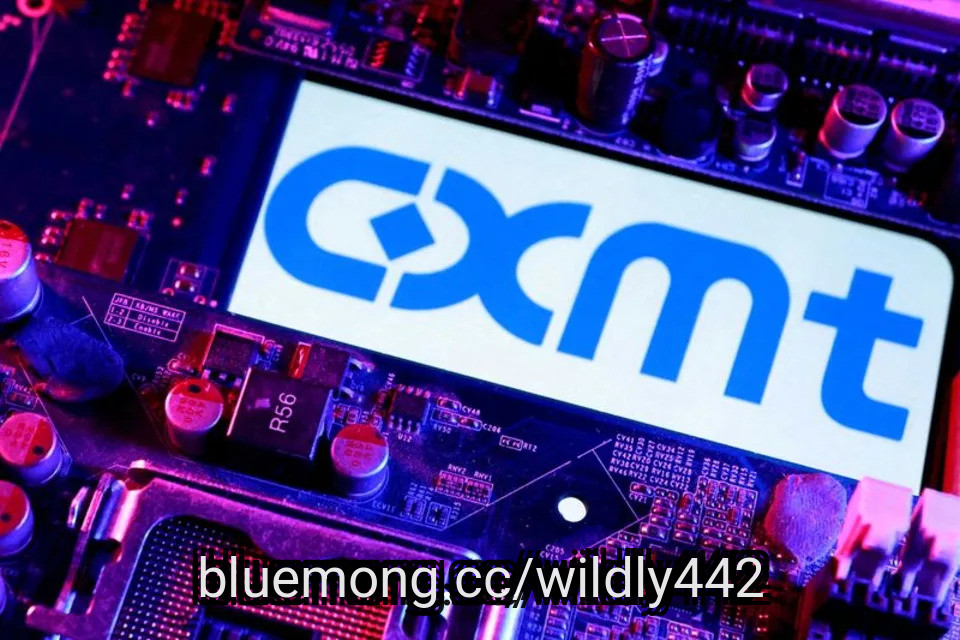
SINGAPORE, July 24 (Reuters) - For months, Chinese chip manufacturer ChangXin Memory Technologies (CXMT) had been hiking prices on Huawei, one of the country's biggest technology companies. The chipmaker held firm when Huawei demanded relief from the escalating costs, according to two people familiar with the matter.
The standoff came to a head on CXMT's factory floor in June. A group of engineers from a chipmaking-equipment vendor with deep strategic ties to Huawei had been working in the cleanrooms at CXMT's core research and development zone in Hefei, Anhui province. Without warning, CXMT ordered the engineers, who had been helping with equipment maintenance, to pack their tools and leave the factory floor immediately, the two sources said.
Executives at the Huawei-connected equipment vendor, SiCarrier, concluded the confrontation was the result of the power struggle between CXMT and Huawei, the people told Reuters. The companies still do business but the engineers haven't been allowed back into the R&D zone, the two people said.
CXMT, Huawei and SiCarrier didn't respond to questions about the incident.
#cxmt #people #factory
SINGAPORE, July 24 (Reuters) - For months, Chinese chip manufacturer ChangXin Memory Technologies (CXMT) had been hiking prices on Huawei, one of the country's biggest technology companies. The chipmaker held firm when Huawei demanded relief from the escalating costs, according to two people familiar with the matter.
The standoff came to a head on CXMT's factory floor in June. A group of engineers from a chipmaking-equipment vendor with deep strategic ties to Huawei had been working in the cleanrooms at CXMT's core research and development zone in Hefei, Anhui province. Without warning, CXMT ordered the engineers, who had been helping with equipment maintenance, to pack their tools and leave the factory floor immediately, the two sources said.
Executives at the Huawei-connected equipment vendor, SiCarrier, concluded the confrontation was the result of the power struggle between CXMT and Huawei, the people told Reuters. The companies still do business but the engineers haven't been allowed back into the R&D zone, the two people said.
CXMT, Huawei and SiCarrier didn't respond to questions about the incident.
#cxmt #people #factory

3 days ago
Thermo Fisher Scientific Inc. (NYSE:TMO) saw its share prices increase by 8.71 percent on Thursday to close at $572.32 apiece, as investors took heart from the strong earnings performance and a series of price target upgrades for its stock.
In the second quarter of the year, the company grew its net income by 7 percent to $1.736 billion from $1.617 billion in the same period last year, while revenues increased by 10 percent to $11.99 billion from $10.85 billion year-on-year, thanks to its strong PPI Business System and growth strategy, among others.
Among its launches during the period include the next-generation Orbitrap platforms with AI-driven ******* ytics, which support researchers to study complex biology across multiomics, structural biology, biopharma characterization and small-molecule ******* ysis on a single system; help scientists to identify hard-to-detect molecules in drug development; and improve workflow flexibility, speed and reproducibility for molecular biology laboratories.
"Our end markets continue to strengthen and we're making great progress enhancing our capabilities, and further advancing our trusted partner status with customers, leading to continued share gain," he said.
Photo by Tima Miroshnichenko on Pexels
#Share #strong #thermo
In the second quarter of the year, the company grew its net income by 7 percent to $1.736 billion from $1.617 billion in the same period last year, while revenues increased by 10 percent to $11.99 billion from $10.85 billion year-on-year, thanks to its strong PPI Business System and growth strategy, among others.
Among its launches during the period include the next-generation Orbitrap platforms with AI-driven ******* ytics, which support researchers to study complex biology across multiomics, structural biology, biopharma characterization and small-molecule ******* ysis on a single system; help scientists to identify hard-to-detect molecules in drug development; and improve workflow flexibility, speed and reproducibility for molecular biology laboratories.
"Our end markets continue to strengthen and we're making great progress enhancing our capabilities, and further advancing our trusted partner status with customers, leading to continued share gain," he said.
Photo by Tima Miroshnichenko on Pexels
#Share #strong #thermo


3 days ago
Concerned about an AI bubble? Sign up for The Daily Upside for smart and actionable market news, built for investors.
Mark Twain may have been right when he quipped that all a person needs in life is ignorance and confidence. But when it comes to successfully navigating retirement, that's playing a dangerous game.
Many Americans make a lot of ****** umptions about retirement, from when they'll finally leave the job to when they'll claim Social Security, according to new research from J.P. Morgan ****** et Management. That's mostly a good thing, because planning for retirement requires a lot of forethought and careful financial and behavioral preparation. The problem is that many people seem to be working from faulty premises, starting with the belief that retirement is a one-time event that can be carefully orchestrated according to one's personal wishes. In reality, retirement is more of a journey than a one-time event, with timing that can vary widely due to factors not entirely (or even partly) within the individual's control. That's why the research compares the experiences of current retirees with the expectations of savers, while highlighting the important role that financial advisors can play in helping their clients cut through the noise.
"Retirees can offer a valuable reference point for [those people] still saving," said Michael Conrath, chief retirement strategist for J.P. Morgan ****** et Management. "This year's survey highlights several disconnects between what people expect and what retirees actually experience."
Sign up for The Daily Upside at no cost for premium ****** ysis on all your favorite stocks.
#Retirement
Mark Twain may have been right when he quipped that all a person needs in life is ignorance and confidence. But when it comes to successfully navigating retirement, that's playing a dangerous game.
Many Americans make a lot of ****** umptions about retirement, from when they'll finally leave the job to when they'll claim Social Security, according to new research from J.P. Morgan ****** et Management. That's mostly a good thing, because planning for retirement requires a lot of forethought and careful financial and behavioral preparation. The problem is that many people seem to be working from faulty premises, starting with the belief that retirement is a one-time event that can be carefully orchestrated according to one's personal wishes. In reality, retirement is more of a journey than a one-time event, with timing that can vary widely due to factors not entirely (or even partly) within the individual's control. That's why the research compares the experiences of current retirees with the expectations of savers, while highlighting the important role that financial advisors can play in helping their clients cut through the noise.
"Retirees can offer a valuable reference point for [those people] still saving," said Michael Conrath, chief retirement strategist for J.P. Morgan ****** et Management. "This year's survey highlights several disconnects between what people expect and what retirees actually experience."
Sign up for The Daily Upside at no cost for premium ****** ysis on all your favorite stocks.
#Retirement


4 days ago
New Hamburg attacking addition Patson Daka bid the Bundesliga a spirited ****** o on Friday. Following his arrival at HSV's Austrian training camp, new striker Patson Daka has spoken about his decision to join the Bundesliga club and his determination to escape the difficult period that stalled his career at Leicester City.
The 27-year-old joined HSV on a free transfer after Leicester's relegation to the English third tier. Daka, for whom the former Premier League club paid approximately €30m five years ago, initially signed a one-year contract containing an extension option. The Zambian international is expected to make his unofficial debut in Saturday's friendly against 1. FC Heidenheim.
Daka's fellow new Hamburg signing – Moroccan U23 international Bilal Nadir – also saw his arrival on a free transfer confirmed Friday. Like Daka, Nadir is also hoping to put a recent rough patch behind him. Last October, whilst playing for Olympique Marseille, Nadir made unpleasant headlines when he collapsed on the field during a Ligue 1 match against Angers.
In their second season back in the Bundesliga, Hamburg are rapidly becoming the club of "second chances"; an apt categorization in the year that Mario Vuskovic is once again eligible to play following his long suspension. Daka optimistically led the group of new arrivals at his introductory press event.
The striker began researching HSV shortly after the club established contact. Daka also consulted former Salzburg teammates Hee-Chan Hwang (whom many will recall from his RB Leipzig days) and Masaya Okugawa (who mostly featured for Arminia Bielefeld), both of whom previously played in Hamburg.
#daka #year #patson
The 27-year-old joined HSV on a free transfer after Leicester's relegation to the English third tier. Daka, for whom the former Premier League club paid approximately €30m five years ago, initially signed a one-year contract containing an extension option. The Zambian international is expected to make his unofficial debut in Saturday's friendly against 1. FC Heidenheim.
Daka's fellow new Hamburg signing – Moroccan U23 international Bilal Nadir – also saw his arrival on a free transfer confirmed Friday. Like Daka, Nadir is also hoping to put a recent rough patch behind him. Last October, whilst playing for Olympique Marseille, Nadir made unpleasant headlines when he collapsed on the field during a Ligue 1 match against Angers.
In their second season back in the Bundesliga, Hamburg are rapidly becoming the club of "second chances"; an apt categorization in the year that Mario Vuskovic is once again eligible to play following his long suspension. Daka optimistically led the group of new arrivals at his introductory press event.
The striker began researching HSV shortly after the club established contact. Daka also consulted former Salzburg teammates Hee-Chan Hwang (whom many will recall from his RB Leipzig days) and Masaya Okugawa (who mostly featured for Arminia Bielefeld), both of whom previously played in Hamburg.
#daka #year #patson


4 days ago
Rep. Alexandria Ocasio-Cortez, D-N.Y., came under fire after claiming the House-passed National Defense Authorization Act (NDAA) would "merge parts of our military with the Israel Defense Forces," drawing accusations that she distorted what the legislation actually does.
The fight centers on Section 219 of the House-passed National Defense Authorization Act, a provision that calls for deeper U.S.-Israel defense integration through expanded cooperation on military technology, supply chains, research, artificial intelligence, cybersecurity and joint exercises.
On Wednesday, the House passed its version of the FY2027 NDAA in a 219-206 vote, leaving Section 219 intact.
But ahead of the vote, Ocasio-Cortez wrote on X that the NDAA "includes a provision to merge parts of our military with the IDF."
The Us-israel Strategic Alliance – Partnership, Not Charity
#passed #national #authorization
The fight centers on Section 219 of the House-passed National Defense Authorization Act, a provision that calls for deeper U.S.-Israel defense integration through expanded cooperation on military technology, supply chains, research, artificial intelligence, cybersecurity and joint exercises.
On Wednesday, the House passed its version of the FY2027 NDAA in a 219-206 vote, leaving Section 219 intact.
But ahead of the vote, Ocasio-Cortez wrote on X that the NDAA "includes a provision to merge parts of our military with the IDF."
The Us-israel Strategic Alliance – Partnership, Not Charity
#passed #national #authorization




4 days ago
Bengen's 2025 research drops the safe withdrawal rate to 4.2% for a 50-year retirement, undercutting the standard 4% rule for anyone retiring at 55.
Retiring at 55 forces a full decade of self-funded healthcare before Medicare at 65, a cost the original 4% rule never accounted for.
BLS data shows household spending peaks between ages 45 and 54, meaning early retirees exit income at their highest-spending years, not during natural tapering.
Don't wait: the ******* yst who called NVIDIA in 2010 just revealed his top 10 AI stocks. See the full list FREE now.
The 4% withdrawal rule has been a fixture of retirement planning for three decades and for good reason. It is simple, intuitive, and, for the right retiree, it can and has worked well. The challenge is that it was never designed for someone who would stop working at 55.
#spending
Retiring at 55 forces a full decade of self-funded healthcare before Medicare at 65, a cost the original 4% rule never accounted for.
BLS data shows household spending peaks between ages 45 and 54, meaning early retirees exit income at their highest-spending years, not during natural tapering.
Don't wait: the ******* yst who called NVIDIA in 2010 just revealed his top 10 AI stocks. See the full list FREE now.
The 4% withdrawal rule has been a fixture of retirement planning for three decades and for good reason. It is simple, intuitive, and, for the right retiree, it can and has worked well. The challenge is that it was never designed for someone who would stop working at 55.
#spending

4 days ago
Moon Capital Management, LLC, an investment management company, released its second quarter 2025 investor letter. A copy of the letter can be downloaded here. The S&P 500 index rebounded in the second quarter, achieving a 9.6% return for the first half of the year, while Moon Capital Management's equity portfolio gained 4%. AI-related stocks led market performance, mitigating geopolitical concerns. Moon Capital holds 10% of its portfolio in technology, significantly less than the S&P 500's 39%. The firm remains cautious about large AI investments and their potential return on investment. In addition, please check the Strategy's top five holdings to know its best picks in 2026.
In its Q2 2026 investor letter, Moon Capital Management highlighted Zoetis Inc. (NYSE:ZTS) as a newly added position. Zoetis Inc. (NYSE:ZTS) is an animal health company focused on animal health medications, vaccines, and diagnostic products. On July 22, 2026, Zoetis Inc. (NYSE:ZTS) closed at $74.19 per share. One-month return of Zoetis Inc. (NYSE:ZTS) was -4.66%, and its shares lost 51.45% over the past 52 weeks. Zoetis Inc. (NYSE:ZTS) has a market capitalization of $31.1 billion.
Moon Capital Management stated the following regarding Zoetis Inc. (NYSE:ZTS) in its Q2 2026 investor update:
"We added one new stock to the portfolio last quarter, Zoetis Inc. (NYSE:ZTS). (Our average purchase price was about $73.20/share.) Zoetis is the world's largest pure-play animal health company. We have long viewed Zoetis as one of the highest-quality businesses in healthcare (albeit for mostly four legged patients), and the company has generally been valued accordingly. However, temporary concerns around slower companion animal growth and increased competitive pressures created an opportunity to purchase the company at an attractive price. After trading above 30 times earnings for much of the past decade, Zoetis now has a P/E of less than 11x, a valuation we believe significantly understates the quality, durability, and long-term earnings power of the business.
The animal health industry is attractive as it combines the defensive characteristics of healthcare investing with a more favorable industry structure than traditional pharmaceuticals. In contrast to human healthcare, a significant portion of animal health spending is paid directly by owners, which reduces reimbursement pressure. The industry also benefits from lower research and development costs, shorter development timelines, and strong relationships with veterinarians. These relationships, combined with regulatory barriers and specialized technical expertise, create meaningful switching costs and contribute to long product lifecycles..." (Click here to read the full text)
#capital
In its Q2 2026 investor letter, Moon Capital Management highlighted Zoetis Inc. (NYSE:ZTS) as a newly added position. Zoetis Inc. (NYSE:ZTS) is an animal health company focused on animal health medications, vaccines, and diagnostic products. On July 22, 2026, Zoetis Inc. (NYSE:ZTS) closed at $74.19 per share. One-month return of Zoetis Inc. (NYSE:ZTS) was -4.66%, and its shares lost 51.45% over the past 52 weeks. Zoetis Inc. (NYSE:ZTS) has a market capitalization of $31.1 billion.
Moon Capital Management stated the following regarding Zoetis Inc. (NYSE:ZTS) in its Q2 2026 investor update:
"We added one new stock to the portfolio last quarter, Zoetis Inc. (NYSE:ZTS). (Our average purchase price was about $73.20/share.) Zoetis is the world's largest pure-play animal health company. We have long viewed Zoetis as one of the highest-quality businesses in healthcare (albeit for mostly four legged patients), and the company has generally been valued accordingly. However, temporary concerns around slower companion animal growth and increased competitive pressures created an opportunity to purchase the company at an attractive price. After trading above 30 times earnings for much of the past decade, Zoetis now has a P/E of less than 11x, a valuation we believe significantly understates the quality, durability, and long-term earnings power of the business.
The animal health industry is attractive as it combines the defensive characteristics of healthcare investing with a more favorable industry structure than traditional pharmaceuticals. In contrast to human healthcare, a significant portion of animal health spending is paid directly by owners, which reduces reimbursement pressure. The industry also benefits from lower research and development costs, shorter development timelines, and strong relationships with veterinarians. These relationships, combined with regulatory barriers and specialized technical expertise, create meaningful switching costs and contribute to long product lifecycles..." (Click here to read the full text)
#capital


4 days ago
Tesla reported second-quarter revenue of $28.24 billion, up 26% year over year, while executives highlighted progress toward launching production of the Tesla Semi Class 8 electric truck at its Nevada manufacturing facility.
Austin, Texas-based Tesla (Nasdaq: TSLA) released its second-quarter earnings and held a conference call with ******* ysts after the market closed on Wednesday.
The company generated $20.5 billion in automotive revenue during the quarter, delivered a record 480,126 vehicles worldwide and reported diluted earnings per share of 32 cents.
Operating income totaled $398 million, reflecting higher research and development spending in artificial intelligence, robotics, battery manufacturing and commercial vehicle production.
Tesla CEO Elon Musk said the company is entering what they described as its largest investment cycle, with spending focused on expanding manufacturing capacity across several businesses, including the Tesla Semi program.
#quarter #Manufacturing #semi #year
Austin, Texas-based Tesla (Nasdaq: TSLA) released its second-quarter earnings and held a conference call with ******* ysts after the market closed on Wednesday.
The company generated $20.5 billion in automotive revenue during the quarter, delivered a record 480,126 vehicles worldwide and reported diluted earnings per share of 32 cents.
Operating income totaled $398 million, reflecting higher research and development spending in artificial intelligence, robotics, battery manufacturing and commercial vehicle production.
Tesla CEO Elon Musk said the company is entering what they described as its largest investment cycle, with spending focused on expanding manufacturing capacity across several businesses, including the Tesla Semi program.
#quarter #Manufacturing #semi #year


4 days ago
The most talked about and market moving research calls around Wall Street are now in one place. Here are today's research calls that investors need to know, as compiled by The Fly.
Top 5 Upgrades:
Jefferies upgraded Verisk ****** ytics (VRSK) to Buy from Hold with a price target of $235, up from $192. Verisk's Q1 report "likely marks a trough," with its organic growth improving to 5% year-over-year in Q2, and accelerating further in the second half of 2026, the firm tells investors in a research note.
Morgan Stanley upgraded PayPay (PAYP) to Overweight from Equal Weight with a price target of $23, down from $24. The firm says that while the company's near-term catalysts remain limited, the stock's risk/reward suggests the upside potential outweighs downside risk.
Wolfe Research upgraded AT&T (T) to Outperform from Peer Perform with a $29 price target. The company's Q2 brought "stable and better than expected" unit economics, the firm tells investors in a research note.
KeyBanc upgraded Ameren (AEE) to Overweight from Sector Weight with a $122 price target. The firm believes increasing visibility around incremental load growth could position Ameren for a "meaningful earnings growth revision as early as this fall."
#Research #price #investors #Growth
Top 5 Upgrades:
Jefferies upgraded Verisk ****** ytics (VRSK) to Buy from Hold with a price target of $235, up from $192. Verisk's Q1 report "likely marks a trough," with its organic growth improving to 5% year-over-year in Q2, and accelerating further in the second half of 2026, the firm tells investors in a research note.
Morgan Stanley upgraded PayPay (PAYP) to Overweight from Equal Weight with a price target of $23, down from $24. The firm says that while the company's near-term catalysts remain limited, the stock's risk/reward suggests the upside potential outweighs downside risk.
Wolfe Research upgraded AT&T (T) to Outperform from Peer Perform with a $29 price target. The company's Q2 brought "stable and better than expected" unit economics, the firm tells investors in a research note.
KeyBanc upgraded Ameren (AEE) to Overweight from Sector Weight with a $122 price target. The firm believes increasing visibility around incremental load growth could position Ameren for a "meaningful earnings growth revision as early as this fall."
#Research #price #investors #Growth


4 days ago
Deep Sail Capital Partners, an investment management company, released its second-quarter 2026 investor letter. A copy of the letter can be downloaded here. In the second quarter, the fund significantly outperformed both of its benchmarks, the Russell 2000 Mid Cap Growth Index and the Russell 2000 Index, returning 41.6% net of fees while averaging 88% net long exposure. YTD, the fund returned 16.5% net of fees. long portfolio significantly outperformed both benchmarks, while the short portfolio was mixed in the quarter. The letter states that there was a notable performance push in Q1, which was reflected in Q2, driven by both the Iran War and idiosyncratic impacts on positions in the fund. In addition, please check the Fund's top five holdings to know its best picks in 2026.
In its Q2 2026 investor letter, Deep Sail Capital Partners highlighted Celestica Inc. (NYSE:CLS). Celestica Inc. (NYSE:CLS) is a leading technology and electronic manufacturing services company that offers supply chain solutions across multiple countries. On July 22, 2026, Celestica Inc. (NYSE:CLS) closed at $335.50 per share, reflecting a market capitalization of $38.57 billion. Celestica Inc. (NYSE:CLS) posted a one-month return of -7.17%, while its shares gained 104.60% over the past 52 weeks.
Deep Sail Capital Partners stated the following regarding Celestica Inc. (NYSE:CLS) in its Q2 2026 investor update:
"Celestica Inc. (NYSE:CLS) has transitioned from its legacy roots as an IBM captive manufacturer to become a design and technology integration leader within the AI and cloud infrastructure ***** e. Celestica was founded in 1994 as a subsidiary of IBM Canada. It was subsequently acquired by PE, and then IPOed in the late 1990s. The company's strategy from there was an acquisition model for the next two decades, acquiring various electronics and computer peripherals manufacturing and supply companies, highly tied to major OEMs like IBM, Avaya, and Lucent. At the beginning of the AI boom, the company found itself incredibly well positioned to provide specialized design, operational, and engineering services to large technology companies looking to build data centers or ***** ociated integrated rack systems.
The business segments of Celestica are split into two highly specialized operational segments: Advanced Technology Solutions (ATS) and Connectivity & Cloud Solutions (CCS). Within the CCS segment, the company serves enterprise AI companies and the hyperscalers, including Google, Meta, Dell, HPE, IBM, Juniper Networks, and Oracle Corporation, among others. Within the ATS segment, Celestica supports highly complex capital equipment, aerospace, and defense programs for Tier-1 customers such as Applied Materials, Honeywell, Lam Research, and Raytheon..." (Click here to read the full text)
#deep #solutions
In its Q2 2026 investor letter, Deep Sail Capital Partners highlighted Celestica Inc. (NYSE:CLS). Celestica Inc. (NYSE:CLS) is a leading technology and electronic manufacturing services company that offers supply chain solutions across multiple countries. On July 22, 2026, Celestica Inc. (NYSE:CLS) closed at $335.50 per share, reflecting a market capitalization of $38.57 billion. Celestica Inc. (NYSE:CLS) posted a one-month return of -7.17%, while its shares gained 104.60% over the past 52 weeks.
Deep Sail Capital Partners stated the following regarding Celestica Inc. (NYSE:CLS) in its Q2 2026 investor update:
"Celestica Inc. (NYSE:CLS) has transitioned from its legacy roots as an IBM captive manufacturer to become a design and technology integration leader within the AI and cloud infrastructure ***** e. Celestica was founded in 1994 as a subsidiary of IBM Canada. It was subsequently acquired by PE, and then IPOed in the late 1990s. The company's strategy from there was an acquisition model for the next two decades, acquiring various electronics and computer peripherals manufacturing and supply companies, highly tied to major OEMs like IBM, Avaya, and Lucent. At the beginning of the AI boom, the company found itself incredibly well positioned to provide specialized design, operational, and engineering services to large technology companies looking to build data centers or ***** ociated integrated rack systems.
The business segments of Celestica are split into two highly specialized operational segments: Advanced Technology Solutions (ATS) and Connectivity & Cloud Solutions (CCS). Within the CCS segment, the company serves enterprise AI companies and the hyperscalers, including Google, Meta, Dell, HPE, IBM, Juniper Networks, and Oracle Corporation, among others. Within the ATS segment, Celestica supports highly complex capital equipment, aerospace, and defense programs for Tier-1 customers such as Applied Materials, Honeywell, Lam Research, and Raytheon..." (Click here to read the full text)
#deep #solutions


4 days ago
Valued at a market cap of $68.8 billion, Regeneron Pharmaceuticals, Inc. (REGN) is a leading biotechnology company that discovers, develops, and commercializes antibody-based medicines for serious diseases. Headquartered in Tarrytown, New York, the company is known for leveraging its proprietary genetic research and antibody technologies to develop innovative therapies.
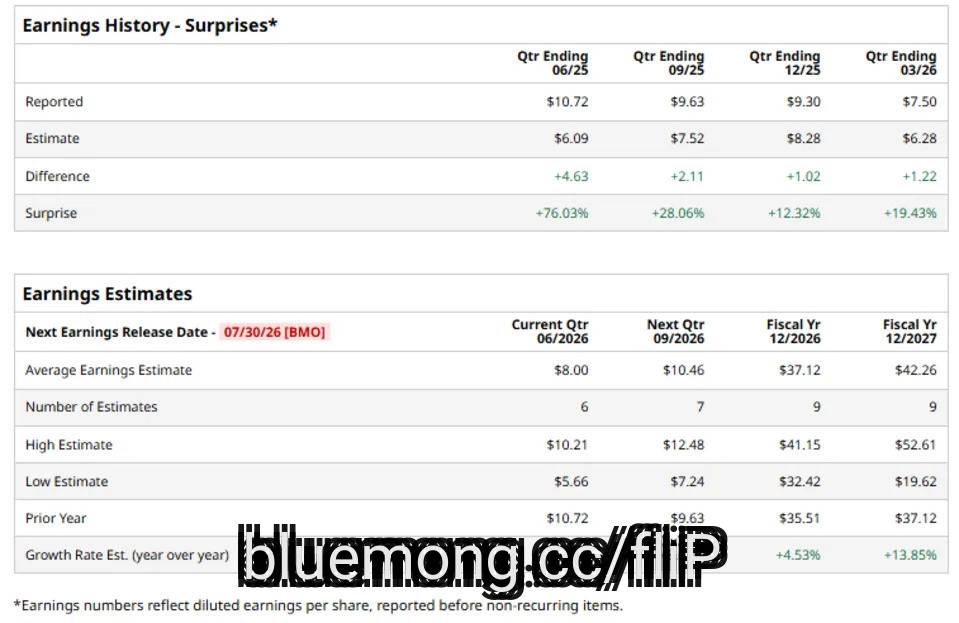
REGN is scheduled to announce its fiscal Q2 earnings for 2026 before the market opens on Thursday, July 30. Ahead of the release, **** ysts expect this healthcare company to report a profit of $8 per share, down 25.4% from $10.72 per share in the year-ago quarter. The company has topped Wall Street's bottom-line estimates in each of the last four quarters.
Dear **** eX Stock Fans, Mark Your Calendars for July 23
Walmart Stock's Extended Downturn Could Trigger a Possible Comeback
The Biggest Risk to **** eX Stock Comes After Earnings. Here Are The Numbers You Should Keep An Eye On.
#regn #SpaceX
REGN is scheduled to announce its fiscal Q2 earnings for 2026 before the market opens on Thursday, July 30. Ahead of the release, **** ysts expect this healthcare company to report a profit of $8 per share, down 25.4% from $10.72 per share in the year-ago quarter. The company has topped Wall Street's bottom-line estimates in each of the last four quarters.
Dear **** eX Stock Fans, Mark Your Calendars for July 23
Walmart Stock's Extended Downturn Could Trigger a Possible Comeback
The Biggest Risk to **** eX Stock Comes After Earnings. Here Are The Numbers You Should Keep An Eye On.
#regn #SpaceX



4 days ago
Space Exploration Technologies brought excitement to the ****** e sector ahead of its initial public offering (IPO). But when the hype wore off, some ****** e stocks fell back down to Earth.
Since ****** eX began trading to the public on June 12, the stock price of ****** e and defense tech company Redwire (NYSE: RDW) plummeted 43% from July 12 to July 20. It's still up more than 20% in 2026, but over the last year, shares have dropped over 42%.
Missed Nvidia in 2009? This Rare Signal Is Flashing Again. In 2009, a "Double Down" signal flashed for a little-known chipmaker called Nvidia. For the first time in years, that same "Total Conviction" signal is flashing for a company 1/100th the size of Nvidia. Continue »
There's a bullish case that any significant pullbacks, like the one we've seen since June, could be a buying opportunity. Still, there are a few issues to factor in before making an investment decision.
Redwire helps make ****** e missions possible through its antennas, power generation, trackers, and camera systems. That helps give its products an essential nature in the ****** e industry. But its most unique operations are in providing ****** e-based research and manufacturing capabilities for endeavors ranging from regenerative medicine to crop production.
#june #still
Since ****** eX began trading to the public on June 12, the stock price of ****** e and defense tech company Redwire (NYSE: RDW) plummeted 43% from July 12 to July 20. It's still up more than 20% in 2026, but over the last year, shares have dropped over 42%.
Missed Nvidia in 2009? This Rare Signal Is Flashing Again. In 2009, a "Double Down" signal flashed for a little-known chipmaker called Nvidia. For the first time in years, that same "Total Conviction" signal is flashing for a company 1/100th the size of Nvidia. Continue »
There's a bullish case that any significant pullbacks, like the one we've seen since June, could be a buying opportunity. Still, there are a few issues to factor in before making an investment decision.
Redwire helps make ****** e missions possible through its antennas, power generation, trackers, and camera systems. That helps give its products an essential nature in the ****** e industry. But its most unique operations are in providing ****** e-based research and manufacturing capabilities for endeavors ranging from regenerative medicine to crop production.
#june #still


4 days ago
Two years ago, Jamal Britt lay in his apartment in the hot summer — with no power as he struggled to pay bills — and wondered if it was time to quit track.
"A lot of people that live this life like me, sometimes they just decide to throw it all away and just give up," he told NBC Sports research. "I decided to keep going regardless of what the situation was."
Now, Britt, a 27-year-old who has never competed at an Olympics or World Championships, is the second-hottest 110m hurdler on the planet. He began 2026 with a personal best of 13.07 seconds, ranking outside the 40 fastest men in history.
He goes into the Toyota USA Track and Field Outdoor Championships — where the 110m hurdles are on Sunday, the last day of the four-day meet in New York City — as the fifth-fastest man in history and the top seed.
2026 Toyota USATF Outdoor and Para National Championships: How to watch, schedule, preview
#jamal
"A lot of people that live this life like me, sometimes they just decide to throw it all away and just give up," he told NBC Sports research. "I decided to keep going regardless of what the situation was."
Now, Britt, a 27-year-old who has never competed at an Olympics or World Championships, is the second-hottest 110m hurdler on the planet. He began 2026 with a personal best of 13.07 seconds, ranking outside the 40 fastest men in history.
He goes into the Toyota USA Track and Field Outdoor Championships — where the 110m hurdles are on Sunday, the last day of the four-day meet in New York City — as the fifth-fastest man in history and the top seed.
2026 Toyota USATF Outdoor and Para National Championships: How to watch, schedule, preview
#jamal




5 days ago
City Different Investments, an investment management firm, released Q2 2026 investor update for its global equity strategies. A copy of the letter can be downloaded here. City Different global equity strategies delivered strong results in the second quarter, but trailed the global market driven by AI enthusiasm. Its Focused Global returned +7.08%, and Global Equity returned +5.36% during the quarter. This compared to the MSCI All Country World Index return of +14.93%. YTD, the strategies returned +11.28% and +5.29%, vs +11.25% for the index. The global strategies involve focused portfolios of long-only equities selected on a global basis, aimed at long-term investment potential. The firm remains optimistic about these portfolios, which are constructed based on long-term fundamental ****** sments. In addition, please check the Fund's top five holdings to know its best picks in 2026.
In its Q2 2026 investor letter, City Different Investments highlighted ICON Public Limited Company (NASDAQ:ICLR). ICON Public Limited Company (NASDAQ:ICLR) is a clinical research organization that provides outsourced development and commercialization services to the pharmaceutical, biotechnology, and medical device industries. On July 21, 2026, ICON Public Limited Company (NASDAQ:ICLR) stock closed at $166.62 per share. One-month return of ICON Public Limited Company (NASDAQ:ICLR) was 4.54%, and its shares lost 1.51% over the past 52 weeks. ICON Public Limited Company (NASDAQ:ICLR) has a market capitalization of about $12.72 billion.
City Different Investments stated the following regarding ICON Public Limited Company (NASDAQ:ICLR) in its Q2 2026 investor update:
"ICON Public Limited Company (NASDAQ:ICLR) was a new purchase and became the top contributor to our results for the second quarter. Founded in 1990 by two Irish doctors, this Dublin-based provider of clinical research services and ****** ytics saw its stock price clobbered over the past two years due to the triple whammy of: 1/ a post-COVID-19 demand slowdown; 2/ AI-related fears; and 3/ an accounting error that led to a minor restatement of results. However, our team has followed this industry since 2019, and we bought ICON eagerly in April once the valuation became compelling. Now the accounting error has already been fixed, and leading growth indicators, such as bookings and cancellations, are encouraging. Our research suggests that ICON could be a net beneficiary of AI due to proprietary data, domain expertise, and regulatory barriers, among other factors. A combination of an improving growth rate and a declining share count could boost ICON's valuation from here."
#public #iclr
In its Q2 2026 investor letter, City Different Investments highlighted ICON Public Limited Company (NASDAQ:ICLR). ICON Public Limited Company (NASDAQ:ICLR) is a clinical research organization that provides outsourced development and commercialization services to the pharmaceutical, biotechnology, and medical device industries. On July 21, 2026, ICON Public Limited Company (NASDAQ:ICLR) stock closed at $166.62 per share. One-month return of ICON Public Limited Company (NASDAQ:ICLR) was 4.54%, and its shares lost 1.51% over the past 52 weeks. ICON Public Limited Company (NASDAQ:ICLR) has a market capitalization of about $12.72 billion.
City Different Investments stated the following regarding ICON Public Limited Company (NASDAQ:ICLR) in its Q2 2026 investor update:
"ICON Public Limited Company (NASDAQ:ICLR) was a new purchase and became the top contributor to our results for the second quarter. Founded in 1990 by two Irish doctors, this Dublin-based provider of clinical research services and ****** ytics saw its stock price clobbered over the past two years due to the triple whammy of: 1/ a post-COVID-19 demand slowdown; 2/ AI-related fears; and 3/ an accounting error that led to a minor restatement of results. However, our team has followed this industry since 2019, and we bought ICON eagerly in April once the valuation became compelling. Now the accounting error has already been fixed, and leading growth indicators, such as bookings and cancellations, are encouraging. Our research suggests that ICON could be a net beneficiary of AI due to proprietary data, domain expertise, and regulatory barriers, among other factors. A combination of an improving growth rate and a declining share count could boost ICON's valuation from here."
#public #iclr


5 days ago
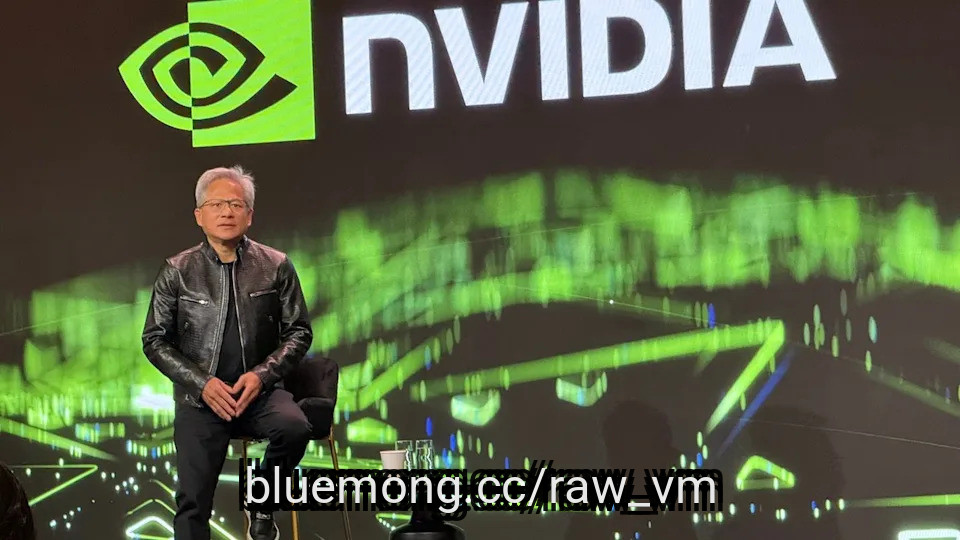
Nvidia CEO Jensen Huang said American companies should be free to use Chinese open-source artificial intelligence models, positioning himself against Trump administration officials and U.S. AI labs that have sought to restrict them.
"These Chinese models are excellent," Huang told Axios on Tuesday. "Open-source models that are excellent should be used." He said companies should "absolutely" be allowed to use them.
The remarks came as the release of Kimi K3, a model from Beijing-based Moonshot AI that combines near-frontier performance, lower prices, and open weights, has rattled chip and AI stocks, reviving concerns that cheaper models could undercut the case for large AI infrastructure spending. Huang argued Wall Street has the situation backward. "Free AI should be great for hardware," he said. "Free AI should be great for chips. Free AI should be great for data centers." Cheaper and more accessible models draw more people into AI ecosystems, he argued, and that broader adoption ultimately drives up demand for the chips and data centers that Nvidia provides.
Huang also rejected the argument that downloaded Chinese models create a security backdoor to Beijing. Companies can customize those models and run them inside secure environments, he said, and openness makes AI more secure because outside researchers can inspect models and identify weaknesses. "If everything just becomes one single model, one single point of attack, one single source of failure, I think the world is much, much more vulnerable," he said.
His comments came hours after Treasury Secretary Scott Bessent told Fox Business that the administration is examining Chinese AI models for evidence of stolen U.S. intellectual property and considering sanctions. "If we see ... that overseas models are stealing from our great companies, we have the ability to sanction them because of this theft," Bessent said, according to Axios. Huang said companies should still face consequences for violating privacy or contracts, but he argued the response should target misconduct, not the models themselves. "Distillation, learning from AI, learning from other sources of knowledge, is fundamental to intelligence," he said.
#Companies
"These Chinese models are excellent," Huang told Axios on Tuesday. "Open-source models that are excellent should be used." He said companies should "absolutely" be allowed to use them.
The remarks came as the release of Kimi K3, a model from Beijing-based Moonshot AI that combines near-frontier performance, lower prices, and open weights, has rattled chip and AI stocks, reviving concerns that cheaper models could undercut the case for large AI infrastructure spending. Huang argued Wall Street has the situation backward. "Free AI should be great for hardware," he said. "Free AI should be great for chips. Free AI should be great for data centers." Cheaper and more accessible models draw more people into AI ecosystems, he argued, and that broader adoption ultimately drives up demand for the chips and data centers that Nvidia provides.
Huang also rejected the argument that downloaded Chinese models create a security backdoor to Beijing. Companies can customize those models and run them inside secure environments, he said, and openness makes AI more secure because outside researchers can inspect models and identify weaknesses. "If everything just becomes one single model, one single point of attack, one single source of failure, I think the world is much, much more vulnerable," he said.
His comments came hours after Treasury Secretary Scott Bessent told Fox Business that the administration is examining Chinese AI models for evidence of stolen U.S. intellectual property and considering sanctions. "If we see ... that overseas models are stealing from our great companies, we have the ability to sanction them because of this theft," Bessent said, according to Axios. Huang said companies should still face consequences for violating privacy or contracts, but he argued the response should target misconduct, not the models themselves. "Distillation, learning from AI, learning from other sources of knowledge, is fundamental to intelligence," he said.
#Companies

5 days ago
For retirees, healthcare is one of the biggest expenses — and the costs keep spiraling.
On average, a 65-year-old who leaves the workforce this year may need $185,500 in savings to cover out-of-pocket healthcare expenses throughout retirement, up 7.5% from last year's expectation of $172,500, according to Fidelity's annual survey of estimated healthcare costs in retirement published on Tuesday.
"That number can feel intimidating, but the goal is not to scare people," Chandler Riggs, a financial planner at Fidelity Investments, told Yahoo Finance.
While panic isn't the aim, the reality is that few retirees have budgeted for that kind of payout. Yet roughly 15% of the average retiree's annual expenses will be health-related, per Fidelity.
"In our report published this spring, the expense that stood out for retirees was healthcare," Craig Copeland, director of wealth benefits research at the Employee Benefit Research Institute, told Yahoo Finance. "In fact, nearly 4 in 10 retirees said that these expenses were higher than they expected when they first retired."
#healthcare #fidelity #Retirement
On average, a 65-year-old who leaves the workforce this year may need $185,500 in savings to cover out-of-pocket healthcare expenses throughout retirement, up 7.5% from last year's expectation of $172,500, according to Fidelity's annual survey of estimated healthcare costs in retirement published on Tuesday.
"That number can feel intimidating, but the goal is not to scare people," Chandler Riggs, a financial planner at Fidelity Investments, told Yahoo Finance.
While panic isn't the aim, the reality is that few retirees have budgeted for that kind of payout. Yet roughly 15% of the average retiree's annual expenses will be health-related, per Fidelity.
"In our report published this spring, the expense that stood out for retirees was healthcare," Craig Copeland, director of wealth benefits research at the Employee Benefit Research Institute, told Yahoo Finance. "In fact, nearly 4 in 10 retirees said that these expenses were higher than they expected when they first retired."
#healthcare #fidelity #Retirement

5 days ago
July 22 (Reuters) - Repligen Corp said on Wednesday it would buy BioLife Solutions in a cash-and-stock deal valued at about $1.5 billion, to expand the drugmaking equipment provider's presence in the fast-growing cell therapy market.
The acquisition gives Repligen access to BioLife's technology to preserve cells throughout the manufacturing process and the supply chain, as well as its portfolio of cell-processing tools and high-margin consumables business.
Larger peer Danaher on Tuesday signaled a recovery in demand for bioprocessing products, including equipment and consumables used to manufacture biologic drugs, as biotech and pharmaceutical companies ramp up spending after a broader slowdown in research spending and customer inventories in recent years.
The acquisition comes a month after German drugmaker Merck KGaA's $11.3 billion deal to buy Bio-Techne, underscoring growing interest in companies making tools for drug development.
BioLife shareholders will receive $11.25 in cash and 0.1442 shares of Repligen for each share, valuing the cell therapy tools supplier at $31 per share — a premium of about 6.2% to BioLife's last close.
#tools #billion #equipment #growing
The acquisition gives Repligen access to BioLife's technology to preserve cells throughout the manufacturing process and the supply chain, as well as its portfolio of cell-processing tools and high-margin consumables business.
Larger peer Danaher on Tuesday signaled a recovery in demand for bioprocessing products, including equipment and consumables used to manufacture biologic drugs, as biotech and pharmaceutical companies ramp up spending after a broader slowdown in research spending and customer inventories in recent years.
The acquisition comes a month after German drugmaker Merck KGaA's $11.3 billion deal to buy Bio-Techne, underscoring growing interest in companies making tools for drug development.
BioLife shareholders will receive $11.25 in cash and 0.1442 shares of Repligen for each share, valuing the cell therapy tools supplier at $31 per share — a premium of about 6.2% to BioLife's last close.
#tools #billion #equipment #growing

5 days ago
This story was originally published on CFO.com. To receive daily news and insights, subscribe to our free daily CFO.com newsletter.
If generative AI is a potential game-changer for finance, agentic AI, which acts proactively rather than reactively, is even more so. But most CFOs say they feel pressed to deploy agents more quickly than is practicable.
That's according to a June survey of 1,505 CFOs and other senior finance leaders in the United States, United Kingdom, Australia and India who had deployed, piloted or actively evaluated AI agents in the previous 12 months.
The research, performed by Censuswide, was commissioned by Avalara, an interested party because it's a provider of agentic tax and compliance software. However, the findings are eye-opening nonetheless.
An overwhelming majority of those polled, 92%, said they're under significant (50%) or moderate (42%) pressure to demonstrate ROI from AI agents, and 71% said the pressure is entirely or mostly around deployment speed.
#cfos #united
If generative AI is a potential game-changer for finance, agentic AI, which acts proactively rather than reactively, is even more so. But most CFOs say they feel pressed to deploy agents more quickly than is practicable.
That's according to a June survey of 1,505 CFOs and other senior finance leaders in the United States, United Kingdom, Australia and India who had deployed, piloted or actively evaluated AI agents in the previous 12 months.
The research, performed by Censuswide, was commissioned by Avalara, an interested party because it's a provider of agentic tax and compliance software. However, the findings are eye-opening nonetheless.
An overwhelming majority of those polled, 92%, said they're under significant (50%) or moderate (42%) pressure to demonstrate ROI from AI agents, and 71% said the pressure is entirely or mostly around deployment speed.
#cfos #united


5 days ago
Artificial intelligence is rapidly becoming a competitive necessity across retail. From personalised shopping experiences and demand forecasting to inventory optimisation and customer service automation, AI is changing how retailers operate and engage with customers.
Yet for many businesses, embracing AI presents a difficult challenge. Investing too slowly risks losing market share, while replacing ageing technology and integrating new systems demands significant time, money and expertise.
The result is a growing technology divide. Retailers with modern digital platforms are moving AI projects from pilot programmes into everyday operations.
Those still relying on legacy systems often struggle to unlock the same benefits because their technology was not designed to support today's data-driven applications. Industry research consistently identifies legacy infrastructure, fragmented data and skills shortages as among the biggest barriers to successful AI adoption.
At the same time, retailers continue to increase investment in AI to improve efficiency, customer experience and decision-making.
#same #artificial
Yet for many businesses, embracing AI presents a difficult challenge. Investing too slowly risks losing market share, while replacing ageing technology and integrating new systems demands significant time, money and expertise.
The result is a growing technology divide. Retailers with modern digital platforms are moving AI projects from pilot programmes into everyday operations.
Those still relying on legacy systems often struggle to unlock the same benefits because their technology was not designed to support today's data-driven applications. Industry research consistently identifies legacy infrastructure, fragmented data and skills shortages as among the biggest barriers to successful AI adoption.
At the same time, retailers continue to increase investment in AI to improve efficiency, customer experience and decision-making.
#same #artificial


5 days ago
The initial deal behind the American AI boom seems to be: private investors would help finance it, taking on the risk; private companies would initially own the benefits of the breakthroughs, then distribute them to public markets later; and the government would help regulate the industry after the fact. In China, by contrast, the deal is that companies still have to compete for investment and customers, while the government provides the compute.
That bargain is showing signs of collapse — on the U.S. side. As costs soar, Chinese competitors gain ground and Washington increasingly considers AI to be a national-security **** et, President Donald Trump is considering taking a governmental stake into AI companies. While both the populist left and the right, and the AI companies themselves, have lauded the proposal, one person isn't cheering: Billionaire Michael Bloomberg.
In an opinion column published in Bloomberg Opinion on Monday, the media company's founder attacked the proposal, arguing that it would turn Washington from an industry regulator into an investor with incentives for profit, leading to "cronyism."
"Somewhere, Karl Marx is smiling," Bloomberg wrote of the centrally planned economy on offer, while the propaganda possibilities would "make George Orwell blush."
The former New York City mayor argued that Americans do not need their governments to own AI companies in order to share in the technology's gains. For one, once they go public, they could just buy shares. But also, consumers and businesses already benefit from AI through fraud detection, medical research, bookkeeping and other helpful applications, he wrote, while the resulting economic growth could eventually generate more tax revenue for public services.
#opinion
That bargain is showing signs of collapse — on the U.S. side. As costs soar, Chinese competitors gain ground and Washington increasingly considers AI to be a national-security **** et, President Donald Trump is considering taking a governmental stake into AI companies. While both the populist left and the right, and the AI companies themselves, have lauded the proposal, one person isn't cheering: Billionaire Michael Bloomberg.
In an opinion column published in Bloomberg Opinion on Monday, the media company's founder attacked the proposal, arguing that it would turn Washington from an industry regulator into an investor with incentives for profit, leading to "cronyism."
"Somewhere, Karl Marx is smiling," Bloomberg wrote of the centrally planned economy on offer, while the propaganda possibilities would "make George Orwell blush."
The former New York City mayor argued that Americans do not need their governments to own AI companies in order to share in the technology's gains. For one, once they go public, they could just buy shares. But also, consumers and businesses already benefit from AI through fraud detection, medical research, bookkeeping and other helpful applications, he wrote, while the resulting economic growth could eventually generate more tax revenue for public services.
#opinion

5 days ago
The artificial intelligence boom has created an era of unprecedented uncertainty in the global economy. Large language models are evolving as quickly as they are being integrated, creating a major headache for anyone trying to project their future impact or even their current energy footprint. But while we don't know exactly how much energy will be needed to power the tech sector in coming years, we do know that it will be a whole lot, and the market is already reacting accordingly.
"Energy companies are raising money at IPO at their fastest pace this century, taking advantage of investors' hunt for new ways to bet on the boom in power-intensive AI data centres," states a recent report from the Financial Times. In the first half of this year, the money raised in initial public offerings for energy startups was the highest since 1999, when the first dot-com boom spurred a similar gold rush. And the rate of growth is staggering: in 2025, energy companies raised a total of $4.3 billion for the entire year. The total for 2026 is already at $12.6 billion, and we still have another half year to go.
"Investors started by buying AI-linked names like Nvidia. Then they said, 'hold on, every chip needs energy to power it'," RBC clean energy ******* yst Chris Dendrinos was quoted by the Financial Times. "That's put a huge tailwind behind these companies."
This spending spree includes a wide range of energy companies, including unproven and next-gen energy technologies that are enjoying a windfall of funding that they may not otherwise have achieved. The tech sector is investing heavily in pie-in-the-sky energy research like nuclear fusion, enhanced geothermal energy, and ******* e-based solar power. Earlier this year Meta, the company behind Facebook and Instagram, signed a deal with startup Overview Energy to develop as much as 1 gigawatt of ******* e-based solar power.
The market is particularly bullish about nuclear fusion, which has finally broken through on Wall Street after years of struggling to go private. Historically, nuclear fusion research is so expensive and seen as so experimental that it's been funded by governments and huge public projects. But now fusion startups are popping up in astonishing numbers and seeing successful IPOs.
#power #boom
"Energy companies are raising money at IPO at their fastest pace this century, taking advantage of investors' hunt for new ways to bet on the boom in power-intensive AI data centres," states a recent report from the Financial Times. In the first half of this year, the money raised in initial public offerings for energy startups was the highest since 1999, when the first dot-com boom spurred a similar gold rush. And the rate of growth is staggering: in 2025, energy companies raised a total of $4.3 billion for the entire year. The total for 2026 is already at $12.6 billion, and we still have another half year to go.
"Investors started by buying AI-linked names like Nvidia. Then they said, 'hold on, every chip needs energy to power it'," RBC clean energy ******* yst Chris Dendrinos was quoted by the Financial Times. "That's put a huge tailwind behind these companies."
This spending spree includes a wide range of energy companies, including unproven and next-gen energy technologies that are enjoying a windfall of funding that they may not otherwise have achieved. The tech sector is investing heavily in pie-in-the-sky energy research like nuclear fusion, enhanced geothermal energy, and ******* e-based solar power. Earlier this year Meta, the company behind Facebook and Instagram, signed a deal with startup Overview Energy to develop as much as 1 gigawatt of ******* e-based solar power.
The market is particularly bullish about nuclear fusion, which has finally broken through on Wall Street after years of struggling to go private. Historically, nuclear fusion research is so expensive and seen as so experimental that it's been funded by governments and huge public projects. But now fusion startups are popping up in astonishing numbers and seeing successful IPOs.
#power #boom


5 days ago
Solana (SOL) processed nearly $6 billion in tokenized ****** et trades last quarter, and almost all of it came from tokenized stocks rather than crypto.
Solana is a high-performance blockchain network best known for its speed and low transaction costs, capable of processing thousands of transactions per second at a fraction of a cent each. Those qualities have long made it a popular venue for crypto trading and meme coins.
But new research from Blockworks shows the network's growth in the second quarter of 2026 came almost entirely from a different source: tokenized versions of real-world stocks.
Related: Over $700 million in Bitcoin left major exchanges in a single day
Tokenized ****** et trading on Solana hit an all-time high of $5.8 billion in the second quarter, up 114% from the previous quarter, according to Blockworks Research.
#second #almost
Solana is a high-performance blockchain network best known for its speed and low transaction costs, capable of processing thousands of transactions per second at a fraction of a cent each. Those qualities have long made it a popular venue for crypto trading and meme coins.
But new research from Blockworks shows the network's growth in the second quarter of 2026 came almost entirely from a different source: tokenized versions of real-world stocks.
Related: Over $700 million in Bitcoin left major exchanges in a single day
Tokenized ****** et trading on Solana hit an all-time high of $5.8 billion in the second quarter, up 114% from the previous quarter, according to Blockworks Research.
#second #almost