
4 hours ago
Arete Research, an independent research firm, has upgraded Texas Instruments Incorporated (NASDAQ:TXN) to Buy from Neutral and lifted its price target to $405 from $303. This 34% raise in the PT comes days after the company posted a strong quarter – a surprise from an ***** og cyclical sector. Texas Instruments' Q2 revenue reached $5.46 billion, up 23% year-over-year, beating the $5.24 billion consensus. The company's EPS rose 52% year-over-year, beating the $1.92 Street estimate with $2.14. The most crucial piece of information tucked away in the report is the twofold growth in data center income.
According to an Arete Research ***** yst, the surging AI demand is anticipated to cause three years of ***** og semiconductor shortages. The ***** yst believes that Texas Instruments is well-positioned with respect to capacity, which should yield significant market share gains during this cycle. Arete projects revenue of approximately $34 billion with earnings of $17 per share by fiscal 2028. These structural tailwinds, discussed by the ***** yst, align with the company's operational and financial performance. Let's break them down.
The AI buildout faces one severe bottleneck – power shortage. And power is exactly what Texas Instruments, nicknamed by the market as "boring ***** og," sells. Hyperscalers are shifting toward 800-volt DC architectures to support denser GPU clusters. As a result, the need for ***** og content per rack increases. Texas Instruments serves this critical conversion layer through high-voltage gallium-nitride (GaN) power devices, real-time motor control, and sensing technology. Additionally, the company's March collaboration with Nvidia on humanoid robotics expands this portfolio. These demands fuel the quarterly ***** og revenue, which rose 26% to $4.37 billion. Texas Instruments is not relying on an industrial market recovery but is working on strengthening its position as a significant supplier for technology's most capital-intensive infrastructure cycle.
A more durable driver stems from timing rather than the AI narrative. Texas Instruments is completing a six-year, roughly $24 billion fab expansion that constrained free cash flow. Spending is dropping significantly. The 2026 capex projected at $2 billion to $3 billion stands in contrast to the comparatively high $4.55 billion in 2025. The fabs are complete, and revenue is recovering now, allowing management to anticipate free cash flow per share exceeding $8 in 2026, compared to $3.23 in 2025. Cash generation is tripling alongside declining capital expenditure, altering the investment profile investors have avoided during the build.
#instruments #analog #Research #cash
According to an Arete Research ***** yst, the surging AI demand is anticipated to cause three years of ***** og semiconductor shortages. The ***** yst believes that Texas Instruments is well-positioned with respect to capacity, which should yield significant market share gains during this cycle. Arete projects revenue of approximately $34 billion with earnings of $17 per share by fiscal 2028. These structural tailwinds, discussed by the ***** yst, align with the company's operational and financial performance. Let's break them down.
The AI buildout faces one severe bottleneck – power shortage. And power is exactly what Texas Instruments, nicknamed by the market as "boring ***** og," sells. Hyperscalers are shifting toward 800-volt DC architectures to support denser GPU clusters. As a result, the need for ***** og content per rack increases. Texas Instruments serves this critical conversion layer through high-voltage gallium-nitride (GaN) power devices, real-time motor control, and sensing technology. Additionally, the company's March collaboration with Nvidia on humanoid robotics expands this portfolio. These demands fuel the quarterly ***** og revenue, which rose 26% to $4.37 billion. Texas Instruments is not relying on an industrial market recovery but is working on strengthening its position as a significant supplier for technology's most capital-intensive infrastructure cycle.
A more durable driver stems from timing rather than the AI narrative. Texas Instruments is completing a six-year, roughly $24 billion fab expansion that constrained free cash flow. Spending is dropping significantly. The 2026 capex projected at $2 billion to $3 billion stands in contrast to the comparatively high $4.55 billion in 2025. The fabs are complete, and revenue is recovering now, allowing management to anticipate free cash flow per share exceeding $8 in 2026, compared to $3.23 in 2025. Cash generation is tripling alongside declining capital expenditure, altering the investment profile investors have avoided during the build.
#instruments #analog #Research #cash


7 days ago
Russell 2000 ETF (IWM) is currently showing below average volatility with an IV Percentile of 13% and an IV Rank of 16.49%.
Why Nvidia (NVDA) Stock Faces Sell-the-News Risk Following Its Q2 Earnings Report
Oil's Surge Sparks Unusually Active Options Bets on Petrobras, Nike, Goldman Sachs and Other 120+ DTEs
Texas Instruments Generates Strong Free Cash Flow - But TXN Stock Looks Cheap to Value Buyers
Tired of missing midday reversals? The FREE Barchart Brief newsletter keeps you in the know. Sign up now!
#risk
Why Nvidia (NVDA) Stock Faces Sell-the-News Risk Following Its Q2 Earnings Report
Oil's Surge Sparks Unusually Active Options Bets on Petrobras, Nike, Goldman Sachs and Other 120+ DTEs
Texas Instruments Generates Strong Free Cash Flow - But TXN Stock Looks Cheap to Value Buyers
Tired of missing midday reversals? The FREE Barchart Brief newsletter keeps you in the know. Sign up now!
#risk




8 days ago
Zimmer Biomet Holdings, Inc. (ZBH) is a global medical technology company specializing in musculoskeletal healthcare. It designs and manufactures innovative orthopedic implants, surgical instruments, and digital solutions for joint reconstruction, trauma, and sports medicine. The company operates internationally with a corporate headquarters in Warsaw, Indiana. It has a market capitalization of $17.20 billion.
Zimmer Biomet is expected to report its second-quarter results for fiscal 2026 on Aug. 5, before the market opens. Ahead of the release, Wall Street **** ysts are tepid about the company's bottom-line trajectory.
PayPal Says a $53 Billion Takeover Offer from Stripe Undervalues It. How to Play PYPL Stock Here.
Billionaire Jeff Bezos Called Amazon's Customer Service to Prove a Point But Waited in Silence for More Than 10 Minutes — 'It Was Really Long'
Micron Stock Is Near Bear-Market Territory. Here's Why ASML's Guidance Says Buy the Dip.
#market #zimmer
Zimmer Biomet is expected to report its second-quarter results for fiscal 2026 on Aug. 5, before the market opens. Ahead of the release, Wall Street **** ysts are tepid about the company's bottom-line trajectory.
PayPal Says a $53 Billion Takeover Offer from Stripe Undervalues It. How to Play PYPL Stock Here.
Billionaire Jeff Bezos Called Amazon's Customer Service to Prove a Point But Waited in Silence for More Than 10 Minutes — 'It Was Really Long'
Micron Stock Is Near Bear-Market Territory. Here's Why ASML's Guidance Says Buy the Dip.
#market #zimmer



8 days ago
Dodge & ***** Fund, an investment management company, released its second-quarter 2026 investor letter for "Dodge and ***** Stock Fund". A copy of the letter can be downloaded here. Despite volatile oil prices and rising inflation, U.S. equities reached record highs in Q2 2026, driven by a technology-led rally, particularly in memory semiconductors. The Fund's Class A shares returned 5.57%, underperforming the S&P 500 Index's 15.20% return and the Russell 1000 Value Index's 13.84% gain, mainly due to underweighting in Information Technology and weak performances from several holdings. Concerns over AI disruption negatively impacted companies with strong franchises. The Fund's bottom-up investment approach allowed it to acquire shares in industry leaders with strong long-term fundamentals. The firm believes that increased exposure to high-quality businesses and a diversified portfolio positions the Fund well for future growth. In addition, please check the Fund's top five holdings to know its best picks in 2026.
In its Q2 2026 investor letter, Dodge and ***** Stock Fund highlighted Thermo Fisher Scientific Inc. (NYSE:TMO) as a newly added position. Thermo Fisher Scientific Inc. (NYSE:TMO) is a life science company focusing on providing life sciences solutions, ***** ytical instruments, specialty diagnostics, and laboratory products and biopharma services. On July 21, 2026, Thermo Fisher Scientific Inc. (NYSE:TMO) closed at $523.46 per share, reflecting a market capitalization of $194.53 billion. Thermo Fisher Scientific Inc. (NYSE:TMO) posted a one-month return of 6.35%, while its shares gained 12.16% over the past 52 weeks.
Dodge and ***** Stock Fund stated the following regarding Thermo Fisher Scientific Inc. (NYSE:TMO) in its Q2 2026 investor update:
"During the second quarter, concerns about AI disruption led to declines in a number of companies with strong franchises and solid profitability. Our bottom-up approach led us to establish several new positions in industry leaders whose shares have lagged, and where we believe the long-term fundamentals are not fully reflected in their current prices. We initiated a position in Visa, a leader in global payments, an industry characterized by strong network effects and high barriers to entry.
We also started a position in Thermo Fisher Scientific Inc. (NYSE:TMO), a leading global provider of life sciences tools, scientific instruments, and laboratory products and services. The company's shares recently declined to their lowest valuation in a decade as the industry navigates cyclical weakness due to customers' post-COVID inventory destocking. Despite this near-term pressure, Thermo Fisher generates substantial recurring revenues and has a track record of successful acquisitions. We believe the company's long-term prospects remain attractive and took advantage of the lower share price to establish a position."
#fisher
In its Q2 2026 investor letter, Dodge and ***** Stock Fund highlighted Thermo Fisher Scientific Inc. (NYSE:TMO) as a newly added position. Thermo Fisher Scientific Inc. (NYSE:TMO) is a life science company focusing on providing life sciences solutions, ***** ytical instruments, specialty diagnostics, and laboratory products and biopharma services. On July 21, 2026, Thermo Fisher Scientific Inc. (NYSE:TMO) closed at $523.46 per share, reflecting a market capitalization of $194.53 billion. Thermo Fisher Scientific Inc. (NYSE:TMO) posted a one-month return of 6.35%, while its shares gained 12.16% over the past 52 weeks.
Dodge and ***** Stock Fund stated the following regarding Thermo Fisher Scientific Inc. (NYSE:TMO) in its Q2 2026 investor update:
"During the second quarter, concerns about AI disruption led to declines in a number of companies with strong franchises and solid profitability. Our bottom-up approach led us to establish several new positions in industry leaders whose shares have lagged, and where we believe the long-term fundamentals are not fully reflected in their current prices. We initiated a position in Visa, a leader in global payments, an industry characterized by strong network effects and high barriers to entry.
We also started a position in Thermo Fisher Scientific Inc. (NYSE:TMO), a leading global provider of life sciences tools, scientific instruments, and laboratory products and services. The company's shares recently declined to their lowest valuation in a decade as the industry navigates cyclical weakness due to customers' post-COVID inventory destocking. Despite this near-term pressure, Thermo Fisher generates substantial recurring revenues and has a track record of successful acquisitions. We believe the company's long-term prospects remain attractive and took advantage of the lower share price to establish a position."
#fisher


10 days ago
Dodge & **** Fund, an investment management company, released its second-quarter 2026 investor letter for "Dodge and **** Stock Fund". A copy of the letter can be downloaded here. Despite volatile oil prices and rising inflation, U.S. equities reached record highs in Q2 2026, driven by a technology-led rally, particularly in memory semiconductors. The Fund's Class A shares returned 5.57%, underperforming the S&P 500 Index's 15.20% return and the Russell 1000 Value Index's 13.84% gain, mainly due to underweighting in Information Technology and weak performances from several holdings. Concerns over AI disruption negatively impacted companies with strong franchises. The Fund's bottom-up investment approach allowed it to acquire shares in industry leaders with strong long-term fundamentals. The firm believes that increased exposure to high-quality businesses and a diversified portfolio positions the Fund well for future growth. In addition, please check the Fund's top five holdings to know its best picks in 2026.
In its Q2 2026 investor letter, Dodge and **** Stock Fund highlighted Thermo Fisher Scientific Inc. (NYSE:TMO) as a newly added position. Thermo Fisher Scientific Inc. (NYSE:TMO) is a life science company focusing on providing life sciences solutions, **** ytical instruments, specialty diagnostics, and laboratory products and biopharma services. On July 21, 2026, Thermo Fisher Scientific Inc. (NYSE:TMO) closed at $523.46 per share, reflecting a market capitalization of $194.53 billion. Thermo Fisher Scientific Inc. (NYSE:TMO) posted a one-month return of 6.35%, while its shares gained 12.16% over the past 52 weeks.
Dodge and **** Stock Fund stated the following regarding Thermo Fisher Scientific Inc. (NYSE:TMO) in its Q2 2026 investor update:
"During the second quarter, concerns about AI disruption led to declines in a number of companies with strong franchises and solid profitability. Our bottom-up approach led us to establish several new positions in industry leaders whose shares have lagged, and where we believe the long-term fundamentals are not fully reflected in their current prices. We initiated a position in Visa, a leader in global payments, an industry characterized by strong network effects and high barriers to entry.
We also started a position in Thermo Fisher Scientific Inc. (NYSE:TMO), a leading global provider of life sciences tools, scientific instruments, and laboratory products and services. The company's shares recently declined to their lowest valuation in a decade as the industry navigates cyclical weakness due to customers' post-COVID inventory destocking. Despite this near-term pressure, Thermo Fisher generates substantial recurring revenues and has a track record of successful acquisitions. We believe the company's long-term prospects remain attractive and took advantage of the lower share price to establish a position."
#shares
In its Q2 2026 investor letter, Dodge and **** Stock Fund highlighted Thermo Fisher Scientific Inc. (NYSE:TMO) as a newly added position. Thermo Fisher Scientific Inc. (NYSE:TMO) is a life science company focusing on providing life sciences solutions, **** ytical instruments, specialty diagnostics, and laboratory products and biopharma services. On July 21, 2026, Thermo Fisher Scientific Inc. (NYSE:TMO) closed at $523.46 per share, reflecting a market capitalization of $194.53 billion. Thermo Fisher Scientific Inc. (NYSE:TMO) posted a one-month return of 6.35%, while its shares gained 12.16% over the past 52 weeks.
Dodge and **** Stock Fund stated the following regarding Thermo Fisher Scientific Inc. (NYSE:TMO) in its Q2 2026 investor update:
"During the second quarter, concerns about AI disruption led to declines in a number of companies with strong franchises and solid profitability. Our bottom-up approach led us to establish several new positions in industry leaders whose shares have lagged, and where we believe the long-term fundamentals are not fully reflected in their current prices. We initiated a position in Visa, a leader in global payments, an industry characterized by strong network effects and high barriers to entry.
We also started a position in Thermo Fisher Scientific Inc. (NYSE:TMO), a leading global provider of life sciences tools, scientific instruments, and laboratory products and services. The company's shares recently declined to their lowest valuation in a decade as the industry navigates cyclical weakness due to customers' post-COVID inventory destocking. Despite this near-term pressure, Thermo Fisher generates substantial recurring revenues and has a track record of successful acquisitions. We believe the company's long-term prospects remain attractive and took advantage of the lower share price to establish a position."
#shares


10 days ago
Is MPWR a good stock to buy? We came across a bullish thesis on Monolithic Power Systems, Inc. on Contrarian Indicator's Substack by Cameron Fen. In this article, we will summarize the bulls' thesis on MPWR. Monolithic Power Systems, Inc.'s share was trading at $ 1,328.80 as of July 20th. MPWR's trailing and forward P/E were 93.92 and 54.05 respectively according to Yahoo Finance.
Photo by Yogesh Phuyal on Unsplash
Monolithic Power Systems, Inc. provides semiconductor-based power electronics solutions. Its fastest-growing customer base right now is AI data centers, and that's central to understanding the stock. AI servers use far more power than regular servers, and that power has to be delivered in more precise, complex ways than before, which is exactly what MPWR specializes in. First quarter 2026 revenue rose 26.1% year over year to a record $804.2 million, while adjusted EPS increased 26.2% to $5.10 — solid, but not spectacular for a stock trading at about 54 times next year's earnings, versus roughly 26 times for **** og Devices (NASDAQ:ADI) and 38 times for Texas Instruments (NASDAQ:TXN). The gap suggests that investors aren't paying for this year's growth, they're betting on several more years of it.
Read More: 15 AI Stocks That Are Quietly Making Investors Rich
Read More: Undervalued AI Stock Poised For Massive Gains: 10000% Upside Potential
#monolithic #systems
Photo by Yogesh Phuyal on Unsplash
Monolithic Power Systems, Inc. provides semiconductor-based power electronics solutions. Its fastest-growing customer base right now is AI data centers, and that's central to understanding the stock. AI servers use far more power than regular servers, and that power has to be delivered in more precise, complex ways than before, which is exactly what MPWR specializes in. First quarter 2026 revenue rose 26.1% year over year to a record $804.2 million, while adjusted EPS increased 26.2% to $5.10 — solid, but not spectacular for a stock trading at about 54 times next year's earnings, versus roughly 26 times for **** og Devices (NASDAQ:ADI) and 38 times for Texas Instruments (NASDAQ:TXN). The gap suggests that investors aren't paying for this year's growth, they're betting on several more years of it.
Read More: 15 AI Stocks That Are Quietly Making Investors Rich
Read More: Undervalued AI Stock Poised For Massive Gains: 10000% Upside Potential
#monolithic #systems


10 days ago
Ripple does not view the current crypto winter as a retreat by institutional investors, but rather as a transition toward a less speculative market. In an interview with Markets Media, Michael Higgins, International CEO of Ripple Prime, explained that 24/7 markets are increasingly putting pressure on traditional banking processes. He believes Ripple is well positioned to benefit.
Ripple acquired Hidden Road in October 2025 for $1.25 billion and subsequently rebranded the company as Ripple Prime. Since then, revenue has tripled year over year. Ripple Prime now processes more than $3 trillion in annual transaction volume for over 300 institutional clients.
According to Higgins, this growth is driven by the increasingly sophisticated strategies adopted by institutional clients:
Even in a crypto winter, our business continues to thrive. The direction is clear: institutions continue to employ more sophisticated, less speculative approaches to digital **** ets, and they need partners such as Ripple Prime that can support these activities in up markets and down.
For Higgins, the current crypto winter is therefore "not a winter for digital **** ets." He expects traditional financial markets and crypto markets to converge over the long term, with securities and other financial instruments becoming increasingly tokenized.
#Crypto
Ripple acquired Hidden Road in October 2025 for $1.25 billion and subsequently rebranded the company as Ripple Prime. Since then, revenue has tripled year over year. Ripple Prime now processes more than $3 trillion in annual transaction volume for over 300 institutional clients.
According to Higgins, this growth is driven by the increasingly sophisticated strategies adopted by institutional clients:
Even in a crypto winter, our business continues to thrive. The direction is clear: institutions continue to employ more sophisticated, less speculative approaches to digital **** ets, and they need partners such as Ripple Prime that can support these activities in up markets and down.
For Higgins, the current crypto winter is therefore "not a winter for digital **** ets." He expects traditional financial markets and crypto markets to converge over the long term, with securities and other financial instruments becoming increasingly tokenized.
#Crypto


12 days ago
A $1.06M portfolio at 2.7% yield growing dividends 7% annually delivers roughly $28,600 in income and a $2,000 automatic raise each year.
Dividend growth stocks like PG and KO need ~$1.1M for a $2,000 raise but deliver accelerating payouts that outpace high-yield instruments long-term.
LOW's dividend grew fourfold since 2016 alongside a 223% price gain, and a 2.7%-yielding grower surpasses the 4.5% Treasury coupon within seven years.
Are you ahead, or behind on retirement? SmartAsset's free tool can match you with a financial advisor in minutes to help you answer that today. Each advisor has been carefully vetted, and must act in your best interests. Don't waste another minute; learn more here.
A $2,000 raise usually requires a boss, a performance review, or a new job. A dividend-growth portfolio can do it more quietly. Johnson & Johnson (NYSE:JNJ) handed shareholders a small version of that raise in April when its board approved a 3% dividend increase to $1.34 per quarter, extending its streak to 64 consecutive years of higher payouts. Every share now produces about $0.16 more annual income than it did before the increase. Nothing had to be sold. No new shares had to be bought. The raise simply appeared because the business raised its payout.
Dividend growth stocks like PG and KO need ~$1.1M for a $2,000 raise but deliver accelerating payouts that outpace high-yield instruments long-term.
LOW's dividend grew fourfold since 2016 alongside a 223% price gain, and a 2.7%-yielding grower surpasses the 4.5% Treasury coupon within seven years.
Are you ahead, or behind on retirement? SmartAsset's free tool can match you with a financial advisor in minutes to help you answer that today. Each advisor has been carefully vetted, and must act in your best interests. Don't waste another minute; learn more here.
A $2,000 raise usually requires a boss, a performance review, or a new job. A dividend-growth portfolio can do it more quietly. Johnson & Johnson (NYSE:JNJ) handed shareholders a small version of that raise in April when its board approved a 3% dividend increase to $1.34 per quarter, extending its streak to 64 consecutive years of higher payouts. Every share now produces about $0.16 more annual income than it did before the increase. Nothing had to be sold. No new shares had to be bought. The raise simply appeared because the business raised its payout.


22 days ago
Texas Instruments Inc (NASDAQ:TXN) is one of the best stocks to buy according to David Greenspan's Slate Path Capital. Texas Instruments stock was a fresh addition to David Greenspan's equity portfolio during the Q1 2026 period. This semiconductor stock makes up 7.7% of the billionaire's Slate Path Capital hedge fund portfolio size. Some 71 hedge funds are backing Texas Instruments stock.
On June 29, Cantor Fitzgerald raised its price target on Texas Instruments Inc (NASDAQ:TXN) shares to $340 from $300 while keeping a Neutral rating on the stock. The brokerage views the AI infrastructure buildout as a generational semiconductor cycle, noting that it is expected to drive rapid industry revenue expansion.
According to the brokerage, semiconductor industry revenue could reach roughly $3 trillion by 2029 and exceed $3.5 trillion by 2030, courtesy of AI-driven demand.
In Q1 2026, Texas Instruments' revenue rose 19% YoY to $4.8 billion, and EPS increased 31% to $1.68. The quarter was supported by strong demand from data center and industrial markets. The company is anticipating Q2 revenue in the band of $5 billion to $5.4 billion and EPS in the range of $1.77 and $2.05.
Texas Instruments Inc (NASDAQ:TXN) is a global semiconductor company. It focuses on developing **** og and embedded processing chips. These chips are used in everything from cars and medical devices to industrial systems.
On June 29, Cantor Fitzgerald raised its price target on Texas Instruments Inc (NASDAQ:TXN) shares to $340 from $300 while keeping a Neutral rating on the stock. The brokerage views the AI infrastructure buildout as a generational semiconductor cycle, noting that it is expected to drive rapid industry revenue expansion.
According to the brokerage, semiconductor industry revenue could reach roughly $3 trillion by 2029 and exceed $3.5 trillion by 2030, courtesy of AI-driven demand.
In Q1 2026, Texas Instruments' revenue rose 19% YoY to $4.8 billion, and EPS increased 31% to $1.68. The quarter was supported by strong demand from data center and industrial markets. The company is anticipating Q2 revenue in the band of $5 billion to $5.4 billion and EPS in the range of $1.77 and $2.05.
Texas Instruments Inc (NASDAQ:TXN) is a global semiconductor company. It focuses on developing **** og and embedded processing chips. These chips are used in everything from cars and medical devices to industrial systems.

22 days ago
With a market cap of $26.2 billion, Mettler-Toledo International Inc. (MTD) is a leading global provider of precision instruments and services, recognized for its innovation and strong market leadership across a wide range of industries, including life sciences, food, and chemicals. With products sold in more than 140 countries and a direct presence in approximately 40 countries, the company supports critical research, quality control, and manufacturing processes through an extensive global sales and service network.
The Greifensee, Switzerland-based company is set to unveil its fiscal Q2 2026 results after the market closes on Thursday, Jul. 30. Ahead of the event, ******* ysts forecast MTD to post an adjusted EPS of $10.78, a growth of 6.8% from $10.09 in the same quarter last year. The company has surpassed Wall Street's bottom-line projections in each of the past four quarters.
Nasdaq Futures Plunge as Samsung Sparks Chip Selloff
AbbVie vs Eli Lilly: 1 Is Clearly the Better Dividend Stock to Buy and Hold for the Next 10 Years
The Nasdaq-100 Could Be Forming a Textbook Diamond Top. Here's What to Watch on the QQQ Chart Now.
The Greifensee, Switzerland-based company is set to unveil its fiscal Q2 2026 results after the market closes on Thursday, Jul. 30. Ahead of the event, ******* ysts forecast MTD to post an adjusted EPS of $10.78, a growth of 6.8% from $10.09 in the same quarter last year. The company has surpassed Wall Street's bottom-line projections in each of the past four quarters.
Nasdaq Futures Plunge as Samsung Sparks Chip Selloff
AbbVie vs Eli Lilly: 1 Is Clearly the Better Dividend Stock to Buy and Hold for the Next 10 Years
The Nasdaq-100 Could Be Forming a Textbook Diamond Top. Here's What to Watch on the QQQ Chart Now.



22 days ago
MKS Inc. (NASDAQ:MKSI) is one of the 10 Best Stocks to Buy in Glen Kacher's Light Street Portfolio.
On June 25, 2026, MKS Inc. (NASDAQ:MKSI) announced a $25 million expansion of its Atotech equipment manufacturing facility in Guangzhou, China. The expansion aiming to support the global AI build-out, is expected to be completed before the end of the fourth quarter of 2027. The project will add 323,000 square feet and double the site's production capacity. With this investment, the company targets sustained growth in markets related to AI, such as semiconductors and advanced PCB applications. In addition to improving operational efficiency, the expanded facility is anticipated to shorten lead times as well as enhance technical collaboration across Asia.
In another event, BMO Capital initiated coverage of MKS Inc. (NASDAQ:MKSI) with an Outperform rating and set the price target on the stock at $453. The firm believes that MKS Inc. (NASDAQ:MKSI) is a leveraged beneficiary of the AI and data center buildout. The expanding chip capacity and materials intensity, induced by broad semiconductor and advanced packaging exposure, are anticipated to support sustained medium-term growth.
Founded in 1961, MKS Inc. (NASDAQ:MKSI) is a global advanced manufacturing technology leader. Headquartered in Massachusetts, the company offers instruments, systems, subsystems, and process control solutions to ****** yze, measure, and monitor the manufacturing process parameters to optimize productivity for its customers.
While we acknowledge the potential of MKSI as an investment, we believe certain AI stocks offer greater upside potential and carry less downside risk. If you're looking for an extremely undervalued AI stock that also stands to benefit significantly from Trump-era tariffs and the onshoring trend, see our free report on the best short-term AI stock.
On June 25, 2026, MKS Inc. (NASDAQ:MKSI) announced a $25 million expansion of its Atotech equipment manufacturing facility in Guangzhou, China. The expansion aiming to support the global AI build-out, is expected to be completed before the end of the fourth quarter of 2027. The project will add 323,000 square feet and double the site's production capacity. With this investment, the company targets sustained growth in markets related to AI, such as semiconductors and advanced PCB applications. In addition to improving operational efficiency, the expanded facility is anticipated to shorten lead times as well as enhance technical collaboration across Asia.
In another event, BMO Capital initiated coverage of MKS Inc. (NASDAQ:MKSI) with an Outperform rating and set the price target on the stock at $453. The firm believes that MKS Inc. (NASDAQ:MKSI) is a leveraged beneficiary of the AI and data center buildout. The expanding chip capacity and materials intensity, induced by broad semiconductor and advanced packaging exposure, are anticipated to support sustained medium-term growth.
Founded in 1961, MKS Inc. (NASDAQ:MKSI) is a global advanced manufacturing technology leader. Headquartered in Massachusetts, the company offers instruments, systems, subsystems, and process control solutions to ****** yze, measure, and monitor the manufacturing process parameters to optimize productivity for its customers.
While we acknowledge the potential of MKSI as an investment, we believe certain AI stocks offer greater upside potential and carry less downside risk. If you're looking for an extremely undervalued AI stock that also stands to benefit significantly from Trump-era tariffs and the onshoring trend, see our free report on the best short-term AI stock.


23 days ago
AI has pushed Texas Instruments (TXN) stock to near all-time highs, with shares surging roughly 70% year to date.
TI makes none of the AI compute chips everyone talks about, like Nvidia's (NVDA ) GPUs and Broadcom's (AVGO) custom chips. Instead, it builds **** og and embedded processing chips: power management ICs, voltage regulators, and amplifiers, the unglamorous components that keep electronics running. For decades, this made TI a steady, cyclical industrial semiconductor company, the kind of name that moved with factory orders and auto production.
That's changing. TI's chips sit inside every AI server, regulating and distributing the enormous amounts of power modern GPUs consume. The market has taken notice, rewarding the stock with a forward earnings multiple of roughly 39x, rich for a company historically viewed as a slow-growth cyclical.
An Upcycle, Not A Peak
TI's largest end market, industrial, is still recovering. Industrial revenue grew more than 30% year over year last quarter, marking eight straight quarters of sequential growth, yet the segment remains roughly 15% below its prior peak. That gap matters. A recovering cycle with room left to run supports a higher multiple than a business already at the top of its cycle. Earnings should continue to improve as the recovery unfolds. Management guided second-quarter revenue to $5.0 billion to $5.4 billion, well above **** yst estimates, with growth expected across both industrial and data center markets.
TI makes none of the AI compute chips everyone talks about, like Nvidia's (NVDA ) GPUs and Broadcom's (AVGO) custom chips. Instead, it builds **** og and embedded processing chips: power management ICs, voltage regulators, and amplifiers, the unglamorous components that keep electronics running. For decades, this made TI a steady, cyclical industrial semiconductor company, the kind of name that moved with factory orders and auto production.
That's changing. TI's chips sit inside every AI server, regulating and distributing the enormous amounts of power modern GPUs consume. The market has taken notice, rewarding the stock with a forward earnings multiple of roughly 39x, rich for a company historically viewed as a slow-growth cyclical.
An Upcycle, Not A Peak
TI's largest end market, industrial, is still recovering. Industrial revenue grew more than 30% year over year last quarter, marking eight straight quarters of sequential growth, yet the segment remains roughly 15% below its prior peak. That gap matters. A recovering cycle with room left to run supports a higher multiple than a business already at the top of its cycle. Earnings should continue to improve as the recovery unfolds. Management guided second-quarter revenue to $5.0 billion to $5.4 billion, well above **** yst estimates, with growth expected across both industrial and data center markets.


24 days ago
Artisan Partners, an investment management firm, issued its first-quarter 2026 investor letter for the "Artisan Mid Cap Value Fund". A copy of this letter is available for download here. In Q1 2026, the portfolio underperformed the benchmark Russell Midcap Value Index as the market favored momentum-driven stocks over quality factors. Some holdings faced company-specific setbacks and negative sentiment. The Fund's Investor Class: ARTQX returned -4.93%, Advisor Class: APDQX declined by -4.90%, and Institutional Class: APHQX fell by -4.97%, all trailing the Index's 3.68% gain. The equity market in the quarter was mixed, with mid- and small-cap indices showing resilience despite lagging large-cap growth stocks. Volatility increased, initially fueled by interest in AI and private credit, but escalated after the outbreak of war in Iran, leading to rising oil prices. Sector performance varied, with energy leading the gains. The Fund continues to seek companies capable of value growth during market dislocations at attractive entry points. Also, review the Fund's top five holdings to see its best picks for 2026.
In its first-quarter 2026 investor letter, Artisan Mid Cap Value Fund highlighted ******* og Devices, Inc. (NASDAQ:ADI). ******* og Devices, Inc. (NASDAQ:ADI) is a US-based semiconductor company that engages in the design, manufacture, testing, and marketing of integrated circuits (ICs), software, and subsystem products. On July 7, 2026, ******* og Devices, Inc. (NASDAQ:ADI) closed at $379.03 per share. One-month return of ******* og Devices, Inc. (NASDAQ:ADI) was -3.47%, and its shares gained 56.16% over the past 52 weeks. ******* og Devices, Inc. (NASDAQ:ADI) has a market capitalization of $184.62 billion.
Artisan Mid Cap Value Fund stated the following regarding ******* og Devices, Inc. (NASDAQ:ADI) in its Q1 2026 investor letter:
"Outside of the energy sector, ******* og Devices, Inc. (NASDAQ:ADI) was our largest gainer. ADI is the second-largest ******* og semiconductor chipmaker in the world behind Texas Instruments. ADI's most recent results reflect a clear acceleration in operating performance as the ******* og semiconductor cycle improves. The company delivered strong growth, with revenue up roughly 30% year over year and earnings and margins expanding meaningfully, driven by broad-based strength across end markets—particularly industrial, communications and data center demand. Performance has been supported by improving bookings and a recovery in customer demand, alongside continued share gains and strong execution. Profitability has also rebounded, with notable margin expansion reflecting both operating leverage and a more favorable mix. Initially purchased in 2006, ADI is one of our longest held investments and has proven to be an excellent compounder of value, supported by its leadership position in a secular growth industry, strong balance sheet and consistent cash generation. The company operates in attractive segments characteri
In its first-quarter 2026 investor letter, Artisan Mid Cap Value Fund highlighted ******* og Devices, Inc. (NASDAQ:ADI). ******* og Devices, Inc. (NASDAQ:ADI) is a US-based semiconductor company that engages in the design, manufacture, testing, and marketing of integrated circuits (ICs), software, and subsystem products. On July 7, 2026, ******* og Devices, Inc. (NASDAQ:ADI) closed at $379.03 per share. One-month return of ******* og Devices, Inc. (NASDAQ:ADI) was -3.47%, and its shares gained 56.16% over the past 52 weeks. ******* og Devices, Inc. (NASDAQ:ADI) has a market capitalization of $184.62 billion.
Artisan Mid Cap Value Fund stated the following regarding ******* og Devices, Inc. (NASDAQ:ADI) in its Q1 2026 investor letter:
"Outside of the energy sector, ******* og Devices, Inc. (NASDAQ:ADI) was our largest gainer. ADI is the second-largest ******* og semiconductor chipmaker in the world behind Texas Instruments. ADI's most recent results reflect a clear acceleration in operating performance as the ******* og semiconductor cycle improves. The company delivered strong growth, with revenue up roughly 30% year over year and earnings and margins expanding meaningfully, driven by broad-based strength across end markets—particularly industrial, communications and data center demand. Performance has been supported by improving bookings and a recovery in customer demand, alongside continued share gains and strong execution. Profitability has also rebounded, with notable margin expansion reflecting both operating leverage and a more favorable mix. Initially purchased in 2006, ADI is one of our longest held investments and has proven to be an excellent compounder of value, supported by its leadership position in a secular growth industry, strong balance sheet and consistent cash generation. The company operates in attractive segments characteri


27 days ago
Texas Instruments Incorporated (NASDAQ:TXN) is one of the best NASDAQ stocks to invest in for long term. On June 2, Texas Instruments announced that Julie Knecht will become the company's new chief financial officer, effective August 1. She will succeed Rafael Lizardi, who is retiring after a 25-year tenure. To ensure a smooth transition, Lizardi will remain in an advisory capacity until August 31.
Leadership at Texas Instruments credited Lizardi for his long-term focus on disciplined capital allocation and investments in manufacturing capacity. Knecht, a 25-year veteran of the firm, has worked closely with Lizardi for over a decade, with CEO Haviv Ilan highlighting her proven track record in strategic planning and financial operations as a key factor in her promotion.
For illustration purposes only. Photo from Pixabay/Pexels
Expressing her commitment to the company's culture and strategy, Knecht stated she looks forward to building on Texas Instruments Incorporated's (NASDAQ:TXN) established success. Meanwhile, the company remains focused on its operational goals and is scheduled to announce its Q2 2026 financial results on July 22.
Texas Instruments Incorporated (NASDAQ:TXN) is involved in the design and manufacture of semiconductors. The company's operations are divided into the following segments: ***** og, Embedded Processing, and Other.
Leadership at Texas Instruments credited Lizardi for his long-term focus on disciplined capital allocation and investments in manufacturing capacity. Knecht, a 25-year veteran of the firm, has worked closely with Lizardi for over a decade, with CEO Haviv Ilan highlighting her proven track record in strategic planning and financial operations as a key factor in her promotion.
For illustration purposes only. Photo from Pixabay/Pexels
Expressing her commitment to the company's culture and strategy, Knecht stated she looks forward to building on Texas Instruments Incorporated's (NASDAQ:TXN) established success. Meanwhile, the company remains focused on its operational goals and is scheduled to announce its Q2 2026 financial results on July 22.
Texas Instruments Incorporated (NASDAQ:TXN) is involved in the design and manufacture of semiconductors. The company's operations are divided into the following segments: ***** og, Embedded Processing, and Other.


1 month ago
The color, passion, and international folklore of the World Cup have completely taken over Nuevo León, Mexico.
Hundreds of fans flooded the city to put together a real celebration ahead of the clash against the Netherlands.
The gigantic public ***** e (Macroplaza) was awash in the colors of the Moroccan side, bringing together a crowd that packed the city center with chants, flags, and musical instruments.
The 2026 World Cup is giving us truly unforgettable scenes, and Monterrey is establishing itself as one of the tournament’s liveliest and most colorful host cities.
Hundreds of fans flooded the city to put together a real celebration ahead of the clash against the Netherlands.
The gigantic public ***** e (Macroplaza) was awash in the colors of the Moroccan side, bringing together a crowd that packed the city center with chants, flags, and musical instruments.
The 2026 World Cup is giving us truly unforgettable scenes, and Monterrey is establishing itself as one of the tournament’s liveliest and most colorful host cities.


1 month ago
Veeco Instruments (NASDAQ:VECO), a supplier of semiconductor process equipment, reported a sale by Director Richard A. Damore amid a year of sharp stock gains, according to a SEC Form 4 filing.
Metric
Value
Shares sold (direct)
43,701
Metric
Value
Shares sold (direct)
43,701

1 month ago
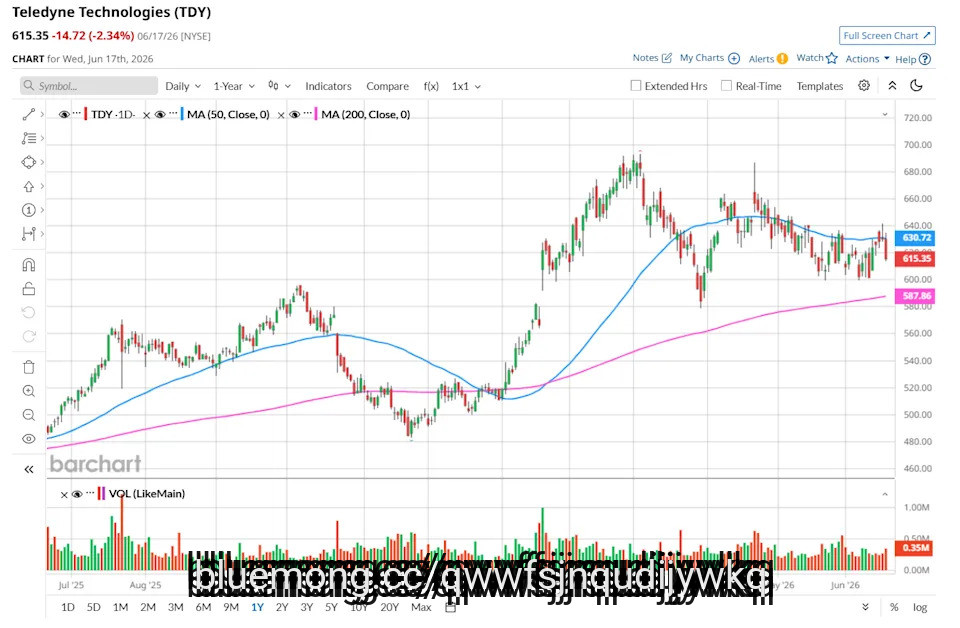
Valued at a market cap of $29.2 billion, Teledyne Technologies Incorporated (TDY) is an industrial conglomerate that specializes in providing enabling technologies for high-stakes, demanding environments where precision and high reliability are mission-critical. The Thousand Oaks, California-based company designs and manufactures an extensive portfolio of advanced monitoring and control instrumentation, digital imaging sensors, and highly specialized cameras that operate across the visible, infrared, and X-ray spectra.
Companies valued at $10 billion or more are typically classified as "large-cap stocks," and TDY fits the label perfectly, with its market cap exceeding this threshold, underscoring its size, influence, and dominance within the scientific & technical instruments industry. The company's core competitive strength lies in its highly disciplined capital allocation and "serial acquirer" business model, which has successfully integrated dozens of highly complementary, niche technology businesses to generate consistent compound earnings and cash flow.
Dear Nebius Stock Fans, Mark Your Calendars for June 22
Supermicro Is Struggling to Handle AI Demand, But Here's Why the Bears Might Be Wrong on This One
ASTS Stock Pops as AST ******* eMobile Launches Bluebird Satellites
Companies valued at $10 billion or more are typically classified as "large-cap stocks," and TDY fits the label perfectly, with its market cap exceeding this threshold, underscoring its size, influence, and dominance within the scientific & technical instruments industry. The company's core competitive strength lies in its highly disciplined capital allocation and "serial acquirer" business model, which has successfully integrated dozens of highly complementary, niche technology businesses to generate consistent compound earnings and cash flow.
Dear Nebius Stock Fans, Mark Your Calendars for June 22
Supermicro Is Struggling to Handle AI Demand, But Here's Why the Bears Might Be Wrong on This One
ASTS Stock Pops as AST ******* eMobile Launches Bluebird Satellites


1 month ago
With a net profit margin of 29.11%, Texas Instruments Incorporated (NASDAQ:TXN) is included among the 12 Most Profitable American Stocks to Buy in 2026.
Texas Instruments Incorporated (NASDAQ:TXN) designs, manufactures, and sells ***** og and embedded semiconductors that are the essential building blocks of electronic systems.
On June 15, Citi boosted its price recommendation on Texas Instruments Incorporated (NASDAQ:TXN) from $280 to $345 and maintained its 'Buy' rating on the shares. The revised target represents an upside of over 10% from the current levels.
According to Citi, the move is driven by the recent product price hikes and a strengthening recovery in the ***** og semiconductor market, supported by the soaring demand from data centers. The ***** yst firm expects Texas Instruments to grow its share in data center power starting in the second half of this year.
Similarly, earlier on June 9, Wells Fargo also raised its price target on Texas Instruments Incorporated (NASDAQ:TXN) by $40, while reiterating an 'Equal Weight' rating on the shares (read more details here).
Texas Instruments Incorporated (NASDAQ:TXN) designs, manufactures, and sells ***** og and embedded semiconductors that are the essential building blocks of electronic systems.
On June 15, Citi boosted its price recommendation on Texas Instruments Incorporated (NASDAQ:TXN) from $280 to $345 and maintained its 'Buy' rating on the shares. The revised target represents an upside of over 10% from the current levels.
According to Citi, the move is driven by the recent product price hikes and a strengthening recovery in the ***** og semiconductor market, supported by the soaring demand from data centers. The ***** yst firm expects Texas Instruments to grow its share in data center power starting in the second half of this year.
Similarly, earlier on June 9, Wells Fargo also raised its price target on Texas Instruments Incorporated (NASDAQ:TXN) by $40, while reiterating an 'Equal Weight' rating on the shares (read more details here).


1 month ago
Madison Investments, an investment advisor, released its first-quarter 2026 investor letter for the "Madison Large Cap Fund". A copy of the letter is available to download here. The Madison Large Cap Fund (Class I) declined 2.7% in the quarter, outperforming the S&P 500's -4.33% return. The fund focuses on long-term capital appreciation. The quarter saw a shift in the equity market beyond the mega-cap technology stocks into physical economy stocks, influenced by fears of AI disruption. Additionally, rising commodity prices due to the Middle East conflict reignited inflation concerns, benefiting sectors such as Energy, Materials, Utilities, Staples, and Real Estate, which the Fund does not invest in, impacting its relative performance. Please review the Fund's top five holdings to gain insights into their key selections for 2026.
In its first-quarter 2026 investor letter, Madison Large Cap Fund highlighted PACCAR Inc (NASDAQ:PCAR). PACCAR Inc (NASDAQ:PCAR) is a leading technology and manufacturing company specializing in light, medium, and heavy-duty commercial trucks. On June 15, 2026, PACCAR Inc (NASDAQ:PCAR) closed at $120.69 per share. One-month return of PACCAR Inc (NASDAQ:PCAR) was 10.34%, and its shares gained 32.48% over the past 52 weeks. PACCAR Inc (NASDAQ:PCAR) has a market capitalization of $63.52 billion.
Madison Large Cap Fund stated the following regarding PACCAR Inc (NASDAQ:PCAR) in its Q1 2026 investor letter:
"The top five contributors for the quarter were Keysight Technologies, **** og Devices, Texas Instruments, Deere, and PACCAR Inc (NASDAQ:PCAR). Deere and PACCAR were also strong contributors in the quarter. While end market conditions remain subdued in agriculture equipment and commercial trucking, it appears that the worst of the recent downcycle is likely behind us. Furthermore, Deere and PACCAR stocks also benefited from investors favoring the "HALO trade" during the quarter. As a result, we modestly trimmed our holdings in both companies when valuations, in our view, began to incorporate a recovery in profits."
PACCAR Inc (NASDAQ:PCAR) is not on our list of 40 Most Popular Stocks Among Hedge Funds Heading Into 2026. According to our database, 35 hedge fund portfolios held PACCAR Inc (NASDAQ:PCAR) at the end of the first quarter, up from 33 in the previous quarter. In Q1 2026, PACCAR Inc (NASDAQ:PCAR) achieved revenues of $6.8 billion and net income of $605 million. While we acknowledge the potential of PACCAR Inc (NASDAQ:PCAR) as an investment, we believe certain AI stocks offer greater upside potential and carry less downside risk. If you're looking for an extremely undervalued AI stock that also stands to benefit significantly from Trump-era tariffs and the onshoring trend, see our free report on the best short-term AI stock.
In its first-quarter 2026 investor letter, Madison Large Cap Fund highlighted PACCAR Inc (NASDAQ:PCAR). PACCAR Inc (NASDAQ:PCAR) is a leading technology and manufacturing company specializing in light, medium, and heavy-duty commercial trucks. On June 15, 2026, PACCAR Inc (NASDAQ:PCAR) closed at $120.69 per share. One-month return of PACCAR Inc (NASDAQ:PCAR) was 10.34%, and its shares gained 32.48% over the past 52 weeks. PACCAR Inc (NASDAQ:PCAR) has a market capitalization of $63.52 billion.
Madison Large Cap Fund stated the following regarding PACCAR Inc (NASDAQ:PCAR) in its Q1 2026 investor letter:
"The top five contributors for the quarter were Keysight Technologies, **** og Devices, Texas Instruments, Deere, and PACCAR Inc (NASDAQ:PCAR). Deere and PACCAR were also strong contributors in the quarter. While end market conditions remain subdued in agriculture equipment and commercial trucking, it appears that the worst of the recent downcycle is likely behind us. Furthermore, Deere and PACCAR stocks also benefited from investors favoring the "HALO trade" during the quarter. As a result, we modestly trimmed our holdings in both companies when valuations, in our view, began to incorporate a recovery in profits."
PACCAR Inc (NASDAQ:PCAR) is not on our list of 40 Most Popular Stocks Among Hedge Funds Heading Into 2026. According to our database, 35 hedge fund portfolios held PACCAR Inc (NASDAQ:PCAR) at the end of the first quarter, up from 33 in the previous quarter. In Q1 2026, PACCAR Inc (NASDAQ:PCAR) achieved revenues of $6.8 billion and net income of $605 million. While we acknowledge the potential of PACCAR Inc (NASDAQ:PCAR) as an investment, we believe certain AI stocks offer greater upside potential and carry less downside risk. If you're looking for an extremely undervalued AI stock that also stands to benefit significantly from Trump-era tariffs and the onshoring trend, see our free report on the best short-term AI stock.


1 month ago
Madison Investments, an investment advisor, released its first-quarter 2026 investor letter for the "Madison Large Cap Fund". A copy of the letter is available to download here. The Madison Large Cap Fund (Class I) declined 2.7% in the quarter, outperforming the S&P 500's -4.33% return. The fund focuses on long-term capital appreciation. The quarter saw a shift in the equity market beyond the mega-cap technology stocks into physical economy stocks, influenced by fears of AI disruption. Additionally, rising commodity prices due to the Middle East conflict reignited inflation concerns, benefiting sectors such as Energy, Materials, Utilities, Staples, and Real Estate, which the Fund does not invest in, impacting its relative performance. Please review the Fund's top five holdings to gain insights into their key selections for 2026.
In its first-quarter 2026 investor letter, Madison Large Cap Fund highlighted Agilent Technologies, Inc. (NYSE:A). Agilent Technologies, Inc. (NYSE:A) is a leading global provider of application-focused solutions to the life sciences, diagnostics, and applied chemical markets. On June 15, 2026, Agilent Technologies, Inc. (NYSE:A) closed at $130.59 per share. One-month return of Agilent Technologies, Inc. (NYSE:A) was 14.75%, and its shares gained 17.50% over the past 52 weeks. Agilent Technologies, Inc. (NYSE:A) has a market capitalization of $36.88 billion.
Madison Large Cap Fund stated the following regarding Agilent Technologies, Inc. (NYSE:A) in its Q1 2026 investor letter:
"Our two life science tools investments, Danaher and Agilent Technologies, Inc. (NYSE:A), round out the top five detractors. Both companies reported results broadly consistent with expectations. However, while each respective company's outlook for 2026 calls for continued end market recovery, it was at a slower pace than investors hoped. Furthermore, investors appear to also have ascribed some level of "AI risk" to these companies on the belief that AI technology could enable customers to simulate research experiments, thus reducing the need to purchase instruments and consumables used for physical experiments in the lab. We believe that there is a low likelihood that this will ultimately occur, and even if it did happen, early-stage R&D activity represents a very small percentage of Agilent and Danaher's revenue."
Agilent Technologies, Inc. (NYSE:A) is not on our list of 40 Most Popular Stocks Among Hedge Funds Heading Into 2026. According to our database, 63 hedge fund portfolios held Agilent Technologies, Inc. (NYSE:A) at the end of the first quarter, compared to 71 in the previous quarter. In the second quarter of fiscal 2026, Agilent Technologies, Inc. (NYSE:A) reported $1.83 billion in revenue, up 6.3% on a core basis, exceeding the high end of guidance. While we acknowledge the potential of Agilent Technologies, Inc. (NYSE:A) as an investment, we believe certain AI stocks offer greater upside potential and carry less downside risk. If yo
In its first-quarter 2026 investor letter, Madison Large Cap Fund highlighted Agilent Technologies, Inc. (NYSE:A). Agilent Technologies, Inc. (NYSE:A) is a leading global provider of application-focused solutions to the life sciences, diagnostics, and applied chemical markets. On June 15, 2026, Agilent Technologies, Inc. (NYSE:A) closed at $130.59 per share. One-month return of Agilent Technologies, Inc. (NYSE:A) was 14.75%, and its shares gained 17.50% over the past 52 weeks. Agilent Technologies, Inc. (NYSE:A) has a market capitalization of $36.88 billion.
Madison Large Cap Fund stated the following regarding Agilent Technologies, Inc. (NYSE:A) in its Q1 2026 investor letter:
"Our two life science tools investments, Danaher and Agilent Technologies, Inc. (NYSE:A), round out the top five detractors. Both companies reported results broadly consistent with expectations. However, while each respective company's outlook for 2026 calls for continued end market recovery, it was at a slower pace than investors hoped. Furthermore, investors appear to also have ascribed some level of "AI risk" to these companies on the belief that AI technology could enable customers to simulate research experiments, thus reducing the need to purchase instruments and consumables used for physical experiments in the lab. We believe that there is a low likelihood that this will ultimately occur, and even if it did happen, early-stage R&D activity represents a very small percentage of Agilent and Danaher's revenue."
Agilent Technologies, Inc. (NYSE:A) is not on our list of 40 Most Popular Stocks Among Hedge Funds Heading Into 2026. According to our database, 63 hedge fund portfolios held Agilent Technologies, Inc. (NYSE:A) at the end of the first quarter, compared to 71 in the previous quarter. In the second quarter of fiscal 2026, Agilent Technologies, Inc. (NYSE:A) reported $1.83 billion in revenue, up 6.3% on a core basis, exceeding the high end of guidance. While we acknowledge the potential of Agilent Technologies, Inc. (NYSE:A) as an investment, we believe certain AI stocks offer greater upside potential and carry less downside risk. If yo


1 month ago
Madison Investments, an investment advisor, released its first-quarter 2026 investor letter for the "Madison Large Cap Fund". A copy of the letter is available to download here. The Madison Large Cap Fund (Class I) declined 2.7% in the quarter, outperforming the S&P 500's -4.33% return. The fund focuses on long-term capital appreciation. The quarter saw a shift in the equity market beyond the mega-cap technology stocks into physical economy stocks, influenced by fears of AI disruption. Additionally, rising commodity prices due to the Middle East conflict reignited inflation concerns, benefiting sectors such as Energy, Materials, Utilities, Staples, and Real Estate, which the Fund does not invest in, impacting its relative performance. Please review the Fund's top five holdings to gain insights into their key selections for 2026.
In its first-quarter 2026 investor letter, Madison Large Cap Fund highlighted Deere & Company (NYSE:DE). Deere & Company (NYSE:DE) is a leading industrial company that manufactures and distributes equipment used in agriculture, construction, forestry, and turf care. On June 15, 2026, Deere & Company (NYSE:DE) closed at $575.47 per share. One-month return of Deere & Company (NYSE:DE) was 3.12%, and its shares gained 10.01% over the past 52 weeks. Deere & Company (NYSE:DE) has a market capitalization of $155.34 billion.
Madison Large Cap Fund stated the following regarding Deere & Company (NYSE:DE) in its Q1 2026 investor letter:
"The top five contributors for the quarter were Keysight Technologies, ****** og Devices, Texas Instruments, Deere & Company (NYSE:DE), and PACCAR. Deere and PACCAR were also strong contributors in the quarter. While end market conditions remain subdued in agriculture equipment and commercial trucking, it appears that the worst of the recent downcycle is likely behind us. Furthermore, Deere and PACCAR stocks also benefited from investors favoring the "HALO trade" during the quarter. As a result, we modestly trimmed our holdings in both companies when valuations, in our view, began to incorporate a recovery in profits."
Deere & Company (NYSE:DE) is not on our list of 40 Most Popular Stocks Among Hedge Funds Heading Into 2026. According to our database, 62 hedge fund portfolios held Deere & Company (NYSE:DE) at the end of the first quarter, up from 60 in the previous quarter. While we acknowledge the potential of Deere & Company (NYSE:DE) as an investment, we believe certain AI stocks offer greater upside potential and carry less downside risk. If you're looking for an extremely undervalued AI stock that also stands to benefit significantly from Trump-era tariffs and the onshoring trend, see our free report on the best short-term AI stock.
In its first-quarter 2026 investor letter, Madison Large Cap Fund highlighted Deere & Company (NYSE:DE). Deere & Company (NYSE:DE) is a leading industrial company that manufactures and distributes equipment used in agriculture, construction, forestry, and turf care. On June 15, 2026, Deere & Company (NYSE:DE) closed at $575.47 per share. One-month return of Deere & Company (NYSE:DE) was 3.12%, and its shares gained 10.01% over the past 52 weeks. Deere & Company (NYSE:DE) has a market capitalization of $155.34 billion.
Madison Large Cap Fund stated the following regarding Deere & Company (NYSE:DE) in its Q1 2026 investor letter:
"The top five contributors for the quarter were Keysight Technologies, ****** og Devices, Texas Instruments, Deere & Company (NYSE:DE), and PACCAR. Deere and PACCAR were also strong contributors in the quarter. While end market conditions remain subdued in agriculture equipment and commercial trucking, it appears that the worst of the recent downcycle is likely behind us. Furthermore, Deere and PACCAR stocks also benefited from investors favoring the "HALO trade" during the quarter. As a result, we modestly trimmed our holdings in both companies when valuations, in our view, began to incorporate a recovery in profits."
Deere & Company (NYSE:DE) is not on our list of 40 Most Popular Stocks Among Hedge Funds Heading Into 2026. According to our database, 62 hedge fund portfolios held Deere & Company (NYSE:DE) at the end of the first quarter, up from 60 in the previous quarter. While we acknowledge the potential of Deere & Company (NYSE:DE) as an investment, we believe certain AI stocks offer greater upside potential and carry less downside risk. If you're looking for an extremely undervalued AI stock that also stands to benefit significantly from Trump-era tariffs and the onshoring trend, see our free report on the best short-term AI stock.

1 month ago
Saxonburg, Pennsylvania-based Coherent Corp. (COHR) develops, manufactures, and markets engineered materials, optoelectronic components and devices, and laser systems for use in the industrial, communications, electronics, and instrumentation markets worldwide. Valued at a market cap of $81 billion, the company operates through three segments: Networking, Materials, and Lasers.
Companies with a market cap of $10 billion or more are typically referred to as "big-cap stocks." COHR fits right into that category, with its market cap exceeding this threshold, reflecting its substantial size and influence in the scientific & technical instruments industry.
Dear Rocket Lab Stock Fans, Mark Your Calendars for June 22
Stay Away from Super Micro Computer Stock. It's Hostage to Its Own Mistakes.
Palantir Stock Is Down Nearly 30% in 2026. Here's What It Will Take to Turn Around.
Companies with a market cap of $10 billion or more are typically referred to as "big-cap stocks." COHR fits right into that category, with its market cap exceeding this threshold, reflecting its substantial size and influence in the scientific & technical instruments industry.
Dear Rocket Lab Stock Fans, Mark Your Calendars for June 22
Stay Away from Super Micro Computer Stock. It's Hostage to Its Own Mistakes.
Palantir Stock Is Down Nearly 30% in 2026. Here's What It Will Take to Turn Around.


1 month ago
San Ramon, California-based The Cooper Companies, Inc. (COO) develops, manufactures, and markets contact lens wearers. The company has a market cap of $13.2 billion and operates in two segments, CooperVision and CooperSurgical, and offers spherical, toric, and multifocal contact lenses that address vision challenges, such as astigmatism, presbyopia, and myopia, and more.
Companies with a market cap of $10 billion or more are typically referred to as "big-cap stocks." COO fits right into that category, with its market cap exceeding this threshold, reflecting its substantial size and influence in the medical instruments and supplies industry.
Dear Rocket Lab Stock Fans, Mark Your Calendars for June 22
Stay Away from Super Micro Computer Stock. It's Hostage to Its Own Mistakes.
Palantir Stock Is Down Nearly 30% in 2026. Here's What It Will Take to Turn Around.
Companies with a market cap of $10 billion or more are typically referred to as "big-cap stocks." COO fits right into that category, with its market cap exceeding this threshold, reflecting its substantial size and influence in the medical instruments and supplies industry.
Dear Rocket Lab Stock Fans, Mark Your Calendars for June 22
Stay Away from Super Micro Computer Stock. It's Hostage to Its Own Mistakes.
Palantir Stock Is Down Nearly 30% in 2026. Here's What It Will Take to Turn Around.




2 months ago
SEATTLE (AP) — A group of Democratic senators and one Republican, as well as two Democratic House committees, sent letters Monday to the National Science Foundation asking it to reverse course on its plan to dismantle a sprawling ocean monitoring network, with House lawmakers going further and accusing the agency of acting illegally.
The Ocean Observatories Initiative is a network of more than 900 ocean sensors built at a cost of $386 million. Over the last decade it has tracked ocean circulation, marine ecosystems, climate change and extreme weather, producing data freely available to the public and informing more than 500 scientific publications. The project was slated to run another 15 to 20 years.
The National Science Foundation had directed the removal of most of the system's instruments from waters off Oregon, Washington, Alaska, North Carolina and Greenland by 2027 — a decision scientists said came with no warning and no scientific review. The independent federal agency, which was established by Congress, described the move not as a cancellation but as a "descoping" aligned with a strategy to prioritize "evolving scientific priorities and emerging technologies." The Trump administration's proposed 2026 budget had included a 55% cut to the agency.
"It just seems like this is supreme stupidity and a violation of the fundamental distribution of powers in our Constitution," Democratic Sen. Jeff Merkley of Oregon told The ****** ociated Press. "This program is authorized, it's funded, and for the administration to shut it down without direction from Congress violates that vision in which the people's representatives decide what's done and funded, and the executive branch executes that vision."
Merkley and Republican Sen. Lisa Murkowski of Alaska co-led the letter, which was also signed by Democratic Sens. Edward Markey and Elizabeth Warren of Massachusetts, Tammy Baldwin of Wisconsin, Patty Murray and Maria Cantwell of Washington, Sheldon Whitehouse of Rhode Island, Chris Van Hollen of Maryland and Ron Wyden of Oregon. It urged the National Science Foundation, or NSF, to halt the dismantling of the Ocean Observatories Initiative and conduct a thorough review, including consultation with the marine science community, before any further action is taken.
The Ocean Observatories Initiative is a network of more than 900 ocean sensors built at a cost of $386 million. Over the last decade it has tracked ocean circulation, marine ecosystems, climate change and extreme weather, producing data freely available to the public and informing more than 500 scientific publications. The project was slated to run another 15 to 20 years.
The National Science Foundation had directed the removal of most of the system's instruments from waters off Oregon, Washington, Alaska, North Carolina and Greenland by 2027 — a decision scientists said came with no warning and no scientific review. The independent federal agency, which was established by Congress, described the move not as a cancellation but as a "descoping" aligned with a strategy to prioritize "evolving scientific priorities and emerging technologies." The Trump administration's proposed 2026 budget had included a 55% cut to the agency.
"It just seems like this is supreme stupidity and a violation of the fundamental distribution of powers in our Constitution," Democratic Sen. Jeff Merkley of Oregon told The ****** ociated Press. "This program is authorized, it's funded, and for the administration to shut it down without direction from Congress violates that vision in which the people's representatives decide what's done and funded, and the executive branch executes that vision."
Merkley and Republican Sen. Lisa Murkowski of Alaska co-led the letter, which was also signed by Democratic Sens. Edward Markey and Elizabeth Warren of Massachusetts, Tammy Baldwin of Wisconsin, Patty Murray and Maria Cantwell of Washington, Sheldon Whitehouse of Rhode Island, Chris Van Hollen of Maryland and Ron Wyden of Oregon. It urged the National Science Foundation, or NSF, to halt the dismantling of the Ocean Observatories Initiative and conduct a thorough review, including consultation with the marine science community, before any further action is taken.



2 months ago
SEATTLE (AP) — A portion of one of the most ambitious ocean monitoring networks ever built will go dark this month when scientists board a research vessel and motor off the Oregon coast to pull a research buoy from deep out of the Pacific.
The buoy 80 meters (260 feet) below the water's surface will be removed June 16 from the Ocean Observatories Initiative — a network of more than 900 ocean sensors built at a cost of $386 million that has continuously collected real-time data for more than a decade. But last month, the National Science Foundation announced it would dismantle most of the system, pulling instruments from waters off Oregon, Washington, Alaska, North Carolina and Greenland by 2027.
Funded by the foundation, the observatories have tracked everything from ocean circulation and marine ecosystems to climate change and extreme weather. Its data has been freely available and has informed more than 500 scientific publications. The project was slated to run for another 15 to 20 years.
In an emailed statement, the foundation said the decision is not a cancellation, but a “descoping” aligned with a “wider strategy of a nimbler approach to prioritize support for evolving scientific priorities and emerging technologies, as well as smart lifecycle management within its research infrastructure portfolio.” The foundation added that its decision drew in part on a 2025 National Academies report on the future of ocean science.
But for the scientists who built and operated the system — and the researchers, educators and students who rely on its data — the timing feels particularly punishing.
The buoy 80 meters (260 feet) below the water's surface will be removed June 16 from the Ocean Observatories Initiative — a network of more than 900 ocean sensors built at a cost of $386 million that has continuously collected real-time data for more than a decade. But last month, the National Science Foundation announced it would dismantle most of the system, pulling instruments from waters off Oregon, Washington, Alaska, North Carolina and Greenland by 2027.
Funded by the foundation, the observatories have tracked everything from ocean circulation and marine ecosystems to climate change and extreme weather. Its data has been freely available and has informed more than 500 scientific publications. The project was slated to run for another 15 to 20 years.
In an emailed statement, the foundation said the decision is not a cancellation, but a “descoping” aligned with a “wider strategy of a nimbler approach to prioritize support for evolving scientific priorities and emerging technologies, as well as smart lifecycle management within its research infrastructure portfolio.” The foundation added that its decision drew in part on a 2025 National Academies report on the future of ocean science.
But for the scientists who built and operated the system — and the researchers, educators and students who rely on its data — the timing feels particularly punishing.


2 months ago
Agilent Technologies, Inc. (NYSE:A) was among the stocks Jim Cramer was focused on, as he discussed Mad Money’s latest game plan for the week. Cramer discussed the company’s latest earnings during the episode, as he stated:
What do we make of these results from Agilent, letter A, one of the major arms dealers to the life sciences industry, among other precision enterprises? Earlier this week, the company reported a magnificent top and bottom-line beat, with management also raising their full-year forecast. Yesterday, the stock, in response, jumped 17%, although it’s still basically just flat year to date, so there might be an opportunity.
This quarter was interesting because some of Agilent’s key end markets were indeed weak: China, food, academic, government spending down. But the rest of the business was so good, it more than made up for that softness. We’re talking about strengthening drug development, drug manufacturing, cancer diagnostics, semiconductor material testing, airport security screening, and lab automation. Next week, they’re presenting data on some new products at the American Society of Mass Spectrometry meeting, and it’s going to be very important.
Photo by Anna Nekrashevich on Pexels
Agilent Technologies, Inc. (NYSE:A) provides instruments, software, and services for life sciences, diagnostics, and chemical ****** ysis, including chromatography, spectroscopy, genomics, and laboratory automation solutions.
What do we make of these results from Agilent, letter A, one of the major arms dealers to the life sciences industry, among other precision enterprises? Earlier this week, the company reported a magnificent top and bottom-line beat, with management also raising their full-year forecast. Yesterday, the stock, in response, jumped 17%, although it’s still basically just flat year to date, so there might be an opportunity.
This quarter was interesting because some of Agilent’s key end markets were indeed weak: China, food, academic, government spending down. But the rest of the business was so good, it more than made up for that softness. We’re talking about strengthening drug development, drug manufacturing, cancer diagnostics, semiconductor material testing, airport security screening, and lab automation. Next week, they’re presenting data on some new products at the American Society of Mass Spectrometry meeting, and it’s going to be very important.
Photo by Anna Nekrashevich on Pexels
Agilent Technologies, Inc. (NYSE:A) provides instruments, software, and services for life sciences, diagnostics, and chemical ****** ysis, including chromatography, spectroscopy, genomics, and laboratory automation solutions.

2 months ago
In the days before the Memorial Day weekend, rates on 30 year Treasury bonds hit their highest level in 19 years at 5.2%, and the benchmark 10-year reached 4.7%, the top reading since mid-2007. If those kinds of yields take hold, the scenario for federal interest expense posited in the CBO’s “Budget and Economic Outlook: 2026 to 2036,” released in February, descends from dire to near-disastrous. Takeaway: America’s track to fiscal safety has lost all margin for error, and nothing demonstrates that better than the long-term impact of loftier than expected rates. America’s got so little room to maneuver that even yields that modestly exceed the CBO’s “baseline,” as the numbers compound in the years ahead, deliver a huge extra blow by crowding out big chunks of revenue that would otherwise go towards funding such essentials as Defense, Social Security and Medicare.
The CBO forecasts that yields on the 30 and 10-year Treasuries will respectively average about 4.65% and 4.15% through FY 2036. That’s roughly 55 basis points lower than the multi-year summit briefly notched in late May. Doesn’t sound like much of a difference, right? And if the interest expense on our gigantic and ballooning national debt of $39 trillion weren’t already running at nearly $1 trillion a year, bigger than Medicare spending and equaling two-thirds of Social Security outlays, the half-point upward shift would likely prove manageable.
But a recent report from the non-partisan Committee for a Responsible Federal Budget quantifies the deep damage even a continuation at the recent peaks would inflict. By 2036, interest expense would jump from absorbing 14% of all revenues to devouring 30%, five points more than under the CBO’s forecast. At $2.5 trillion, 2.5x today’s number, the carrying costs would become the second largest budget category, beating Medicare by one-third. Interest cost per household would soar from $7,900 last year to $17,000 a decade hence.
Much of today’s extreme vulnerability to even slightly higher rates arises from the need to both refinance existing debt, and shoulder trillions more in newly-issued bonds to cover deficits, at much higher cost. All told, the federal government will need to borrow almost $10 trillion in the next 12 months, equivalent to one-third our total debt. That amount consists of around $7.5 trillion to repay the Treasuries coming due, and $2 trillion for plugging the shortfall between revenues and spending. A major reason the U.S. accumulated so much debt in the first place was the lure of ultra-bargain yields orchestrated by the Fed’s easy money policy during and following the COVID crisis. In 2021 through early 2022, Treasury Bills, instruments that mature within a year, offered around a minuscule 0.2%. Today, that cost’s 18 times fatter at 3.7%.
The CBO forecasts that yields on the 30 and 10-year Treasuries will respectively average about 4.65% and 4.15% through FY 2036. That’s roughly 55 basis points lower than the multi-year summit briefly notched in late May. Doesn’t sound like much of a difference, right? And if the interest expense on our gigantic and ballooning national debt of $39 trillion weren’t already running at nearly $1 trillion a year, bigger than Medicare spending and equaling two-thirds of Social Security outlays, the half-point upward shift would likely prove manageable.
But a recent report from the non-partisan Committee for a Responsible Federal Budget quantifies the deep damage even a continuation at the recent peaks would inflict. By 2036, interest expense would jump from absorbing 14% of all revenues to devouring 30%, five points more than under the CBO’s forecast. At $2.5 trillion, 2.5x today’s number, the carrying costs would become the second largest budget category, beating Medicare by one-third. Interest cost per household would soar from $7,900 last year to $17,000 a decade hence.
Much of today’s extreme vulnerability to even slightly higher rates arises from the need to both refinance existing debt, and shoulder trillions more in newly-issued bonds to cover deficits, at much higher cost. All told, the federal government will need to borrow almost $10 trillion in the next 12 months, equivalent to one-third our total debt. That amount consists of around $7.5 trillion to repay the Treasuries coming due, and $2 trillion for plugging the shortfall between revenues and spending. A major reason the U.S. accumulated so much debt in the first place was the lure of ultra-bargain yields orchestrated by the Fed’s easy money policy during and following the COVID crisis. In 2021 through early 2022, Treasury Bills, instruments that mature within a year, offered around a minuscule 0.2%. Today, that cost’s 18 times fatter at 3.7%.


3 months ago
NASA's twin Voyager ******* ecraft are very low on power after nearly 50 years. How long can they keep going?
When you buy through links on our articles, Future and its syndication partners may earn a commission.
The pioneering Voyager probes might only have a few years left to explore interstellar ******* e, and that's ******* uming a planned, risky maneuver in 2026 goes well.
NASA's twin Voyager 1 and Voyager 2 ******* ecraft, both running on nuclear power, now have access to just a portion of the 470 watts of energy that they generated immediately after their 1977 launches. Originally tasked with exploring the giant planets in our solar system, the pair have long passed their expected lifespans and are still transmitting data, far from home.
Voyager 1 crossed into interstellar ******* e in 2012, and Voyager 2 followed suit six years later. For years, NASA has been turning off the probes' instruments one at a time as their power supplies dwindled. They still lose about four watts of power a year. But NASA's Jet Propulsion Laboratory (JPL) in Southern California has an idea, which will be tested out soon, to give them a little more time.
Both Voyager probes launched with the same 10 operational instruments. Voyager 1 turned off its subsystem to look at cosmic rays (high-energy particles) in February, then did the same with its Low-Energy Charged Particles (LECP) instrument in April.
https://www.yahoo.com/news...
When you buy through links on our articles, Future and its syndication partners may earn a commission.
The pioneering Voyager probes might only have a few years left to explore interstellar ******* e, and that's ******* uming a planned, risky maneuver in 2026 goes well.
NASA's twin Voyager 1 and Voyager 2 ******* ecraft, both running on nuclear power, now have access to just a portion of the 470 watts of energy that they generated immediately after their 1977 launches. Originally tasked with exploring the giant planets in our solar system, the pair have long passed their expected lifespans and are still transmitting data, far from home.
Voyager 1 crossed into interstellar ******* e in 2012, and Voyager 2 followed suit six years later. For years, NASA has been turning off the probes' instruments one at a time as their power supplies dwindled. They still lose about four watts of power a year. But NASA's Jet Propulsion Laboratory (JPL) in Southern California has an idea, which will be tested out soon, to give them a little more time.
Both Voyager probes launched with the same 10 operational instruments. Voyager 1 turned off its subsystem to look at cosmic rays (high-energy particles) in February, then did the same with its Low-Energy Charged Particles (LECP) instrument in April.
https://www.yahoo.com/news...

9 months ago
It's happening: we're finally getting a treasure trove of shiny new images of comet 3I/ATLAS, the third ultra-rare known object to enter the Solar System from interstellar ******* e.
On Wednesday November 19 at 3PM EST (8PM UT), NASA will host an event to drop a plethora of 3I/ATLAS imagery collected by the ground-based telescopes and ******* ecraft supported by the agency.
You can tune in to watch at the YouTube embed below.
NASA is playing coy about the instruments involved, but Hubble, JWST, and Mars orbiters may likely have observed the object from ******* e, while observatories such as
On Wednesday November 19 at 3PM EST (8PM UT), NASA will host an event to drop a plethora of 3I/ATLAS imagery collected by the ground-based telescopes and ******* ecraft supported by the agency.
You can tune in to watch at the YouTube embed below.
NASA is playing coy about the instruments involved, but Hubble, JWST, and Mars orbiters may likely have observed the object from ******* e, while observatories such as




1 yr. ago
Investing in tokenized sports teams could be the next big thing, offering ownership and profit through unique financial instruments