
1 min. ago
The U.S. fuel crisis stemming from the ongoing war in Iran has now reached the retail shelf, with Costco Wholesale (COST) nearly doubling the price of its Kirkland Signature full-synthetic motor oil from roughly $30 to $58 per 5-quart two-pack, while simultaneously capping purchases at two units per membership every seven days.
It's an extraordinary move for a retailer whose entire brand identity rests on bulk buying at deep discounts, and it signals that severe supply chain disruptions are spreading well beyond the gasoline pump.
Goldman Sachs Expects Fed Chair Kevin Warsh to Raise Rates This Week — But Not Because of Oil Prices.
Crude Prices Soar as Global Oil Supplies Continue to Tighten
Middle East Supply Constraints Lift Crude Oil Prices
#supply #wholesale
It's an extraordinary move for a retailer whose entire brand identity rests on bulk buying at deep discounts, and it signals that severe supply chain disruptions are spreading well beyond the gasoline pump.
Goldman Sachs Expects Fed Chair Kevin Warsh to Raise Rates This Week — But Not Because of Oil Prices.
Crude Prices Soar as Global Oil Supplies Continue to Tighten
Middle East Supply Constraints Lift Crude Oil Prices
#supply #wholesale


22 mins. ago
Bond traders are pricing in a Federal Reserve interest-rate hike Wednesday with a level of conviction that has proven right for decades. Interest-rate swaps tied to Fed meeting dates show traders see more than a 90% chance that Fed Chairman Kevin Warsh and his colleagues will lift the benchmark policy rate by a quarter point from the current 3.5%-3.75% range. That equates to roughly 23 basis points of tightening priced in. Kitty Richards Senior Fellow at the Groundwork Collaborative joined Balance of Power saying it will be difficult for the Fed to not raise rates.
#rate
#rate


30 mins. ago
You can find original article here WealthManagement. Subscribe to our free daily WealthManagement newsletters.
Columbia Threadneedle Investments and alternative ******* et manager Hamilton Lane announced a strategic collaboration to deliver new investment products for the wealth channel. An interval fund combining public and private equity exposure, currently awaiting SEC approval, will likely be the first product launched through the two firms' partnership.
Columbia Threadneedle brings its public markets expertise, multi-asset investment capabilities and strategic distribution relationships to the collaboration. Hamilton Lane specializes in alternatives, with an established private markets platform, investment sourcing capabilities and data ******* ytics expertise.
Columbia Threadneedle filed a preliminary registration statement with the SEC for the Columbia Hamilton Lane Growth Innovation Fund, a public-private growth equity interval fund. If the fund is approved by the SEC, it will be offered to the wealth channel through financial advisors.
According to the filing, the fund will focus on capital appreciation, allocating at least 80% of its net ******* ets to investments in growth innovation companies. The fund will be roughly evenly split in exposure to publicly traded securities and private ******* ets. At least 40% of the fund's ******* ets will be invested in underlying funds managed by Hamilton Lane.
#lane
Columbia Threadneedle Investments and alternative ******* et manager Hamilton Lane announced a strategic collaboration to deliver new investment products for the wealth channel. An interval fund combining public and private equity exposure, currently awaiting SEC approval, will likely be the first product launched through the two firms' partnership.
Columbia Threadneedle brings its public markets expertise, multi-asset investment capabilities and strategic distribution relationships to the collaboration. Hamilton Lane specializes in alternatives, with an established private markets platform, investment sourcing capabilities and data ******* ytics expertise.
Columbia Threadneedle filed a preliminary registration statement with the SEC for the Columbia Hamilton Lane Growth Innovation Fund, a public-private growth equity interval fund. If the fund is approved by the SEC, it will be offered to the wealth channel through financial advisors.
According to the filing, the fund will focus on capital appreciation, allocating at least 80% of its net ******* ets to investments in growth innovation companies. The fund will be roughly evenly split in exposure to publicly traded securities and private ******* ets. At least 40% of the fund's ******* ets will be invested in underlying funds managed by Hamilton Lane.
#lane


45 mins. ago
Accenture (ACN) stock trades near $195, and the options market prices roughly a two-in-three chance that it ends the coming twelve months between about $123 and about $308. That floor is about where the stock bottomed over the past year, and the ceiling is above the high it has already given back. For a holder, the question is whether a band that wide is more than you signed up for.
How Much Of Your Position Is On The Table Each Way?
The floor sits about 37% below today's price, a fall of $71.59, and the ceiling about 58% above it, a rise of $113.12. The bigger upside figure is not a lean: a share price can rise without limit and cannot fall below zero, so the band is always wider in dollars on the way up.
Has Accenture Stock Moved This Much Before?
It has. The stock traded between $122.96 and $282.71 over the past 52 weeks, and it lost 17.5% over the trailing twelve months while the S&P 500 gained 17%. Realized volatility over that year was 44.9%, and the one-year options carry implied volatility of 45.5%, a ratio of 1.01. The chain is pricing another year of movement about the size of the last one.
#twelve #floor
How Much Of Your Position Is On The Table Each Way?
The floor sits about 37% below today's price, a fall of $71.59, and the ceiling about 58% above it, a rise of $113.12. The bigger upside figure is not a lean: a share price can rise without limit and cannot fall below zero, so the band is always wider in dollars on the way up.
Has Accenture Stock Moved This Much Before?
It has. The stock traded between $122.96 and $282.71 over the past 52 weeks, and it lost 17.5% over the trailing twelve months while the S&P 500 gained 17%. Realized volatility over that year was 44.9%, and the one-year options carry implied volatility of 45.5%, a ratio of 1.01. The chain is pricing another year of movement about the size of the last one.
#twelve #floor

52 mins. ago
On August 14, the Pentagon announced framework agreements with The Boeing Company (NYSE:BA) and RTX Corporation (NYSE:RTX) to increase component production for the SM-3 Block IIA and SM-3 Block IB interceptors. Both agreements are intended to increase the output of a group of ship-fired, surface-to-air interceptors that serve as the foundation for the Aegis Ballistic Missile Defense System, the sea-based shield used by the US Navy to intercept ballistic missiles.
The announcement had little impact on the shares of both companies, with The Boeing Company (NYSE:BA) down around 0.4% and RTX Corporation (NYSE:RTX) down about 1% during the day.
RTX Corporation (NYSE:RTX) alone inked five separate Pentagon deals earlier this year to greatly boost output of Tomahawk cruise missiles, AMRAAM air-to-air missiles, and the Standard Missile family, with Tomahawk production expected to increase sixteenfold, from approximately 60 to 1,000 units per year.
Congress has provided financial support for the effort. The 2026 defense spending bill provided multiyear procurement authority for eight critical munitions and more than $6.3 billion for 13 critical munitions, while the Pentagon's fiscal 2027 budget request calls for roughly $95 billion in missile procurement.
Rising tensions with Iran have added urgency to rebuild US missile inventories. During the June 2025 12-day Israel-Iran war, US forces reportedly used more than 150 THAAD interceptors. This highlights the pressure that sustained conflict can place on American missile-defense stockpiles.
#missile #corporation #missiles #pentagon
The announcement had little impact on the shares of both companies, with The Boeing Company (NYSE:BA) down around 0.4% and RTX Corporation (NYSE:RTX) down about 1% during the day.
RTX Corporation (NYSE:RTX) alone inked five separate Pentagon deals earlier this year to greatly boost output of Tomahawk cruise missiles, AMRAAM air-to-air missiles, and the Standard Missile family, with Tomahawk production expected to increase sixteenfold, from approximately 60 to 1,000 units per year.
Congress has provided financial support for the effort. The 2026 defense spending bill provided multiyear procurement authority for eight critical munitions and more than $6.3 billion for 13 critical munitions, while the Pentagon's fiscal 2027 budget request calls for roughly $95 billion in missile procurement.
Rising tensions with Iran have added urgency to rebuild US missile inventories. During the June 2025 12-day Israel-Iran war, US forces reportedly used more than 150 THAAD interceptors. This highlights the pressure that sustained conflict can place on American missile-defense stockpiles.
#missile #corporation #missiles #pentagon


1 hr. ago
Our ****** ysts just identified a stock with the potential to be the next Nvidia. Tell us how you invest and we'll show you why it's our #1 pick. Tap here.
DEUTZ is transforming itself from an engine manufacturer into a broader industrial and defense group, but that expansion is proving expensive.
The company raised €179 million (about $207 million) overnight by issuing new shares to institutional investors, strengthening its balance sheet at the cost of another round of dilution for existing shareholders.
DEUTZ shares dropped roughly 5% after the German engine maker completed an accelerated share placement that raised approximately €179 million. The company issued 15.26 million new shares at €11.70 each, increasing its share capital by 10% to almost 168 million shares.
The placement price was 4.8% below the previous session's €12.29 Xetra close, and the stock opened around 5.7% lower at €11.58 before recovering some ground.
#shares #deutz #company
DEUTZ is transforming itself from an engine manufacturer into a broader industrial and defense group, but that expansion is proving expensive.
The company raised €179 million (about $207 million) overnight by issuing new shares to institutional investors, strengthening its balance sheet at the cost of another round of dilution for existing shareholders.
DEUTZ shares dropped roughly 5% after the German engine maker completed an accelerated share placement that raised approximately €179 million. The company issued 15.26 million new shares at €11.70 each, increasing its share capital by 10% to almost 168 million shares.
The placement price was 4.8% below the previous session's €12.29 Xetra close, and the stock opened around 5.7% lower at €11.58 before recovering some ground.
#shares #deutz #company


1 hr. ago
Oil prices spiked on Tuesday, climbing back toward recent highs as headlines from the Middle East — in particular, Saudi Arabia — intensified growing pressure on the physical market.
Futures on Brent crude (BZ=F), the international benchmark, picked up more than $2.80 to cross back over $108.50 a barrel and approach the $109 mark seen on Monday. Meanwhile, those on US benchmark WTI crude (CL=F) jumped by roughly $3.50 to trade above $104.50.
Worries about oil exports from the Persian Gulf continued to grow on Tuesday, with Saudi Arabia in focus as market watchers attempt to ****** s damage to the kingdom's oil infrastructure, critical to moving oil out of the Persian Gulf while the Strait of Hormuz remains wracked by the US-Iran conflict.
Saudi Arabia has faced a series of attacks on critical energy infrastructure from the Yemeni Houthi militia group and other Iran-backed proxy forces operating in Iraq, the most pressing of those being strikes that over the weekend forced Saudi authorities to shutter the kingdom's East-West pipeline.
The East-West line carries oil to the port of Yanbu on the Red Sea, where it is loaded onto tankers that can take oil south through the Bab el-Mandeb Strait, which runs along Yemen, or north to the Suez Canal and the adjacent SUMED pipeline to the Mediterranean Sea.
#gulf
Futures on Brent crude (BZ=F), the international benchmark, picked up more than $2.80 to cross back over $108.50 a barrel and approach the $109 mark seen on Monday. Meanwhile, those on US benchmark WTI crude (CL=F) jumped by roughly $3.50 to trade above $104.50.
Worries about oil exports from the Persian Gulf continued to grow on Tuesday, with Saudi Arabia in focus as market watchers attempt to ****** s damage to the kingdom's oil infrastructure, critical to moving oil out of the Persian Gulf while the Strait of Hormuz remains wracked by the US-Iran conflict.
Saudi Arabia has faced a series of attacks on critical energy infrastructure from the Yemeni Houthi militia group and other Iran-backed proxy forces operating in Iraq, the most pressing of those being strikes that over the weekend forced Saudi authorities to shutter the kingdom's East-West pipeline.
The East-West line carries oil to the port of Yanbu on the Red Sea, where it is loaded onto tankers that can take oil south through the Bab el-Mandeb Strait, which runs along Yemen, or north to the Suez Canal and the adjacent SUMED pipeline to the Mediterranean Sea.
#gulf


1 hr. ago
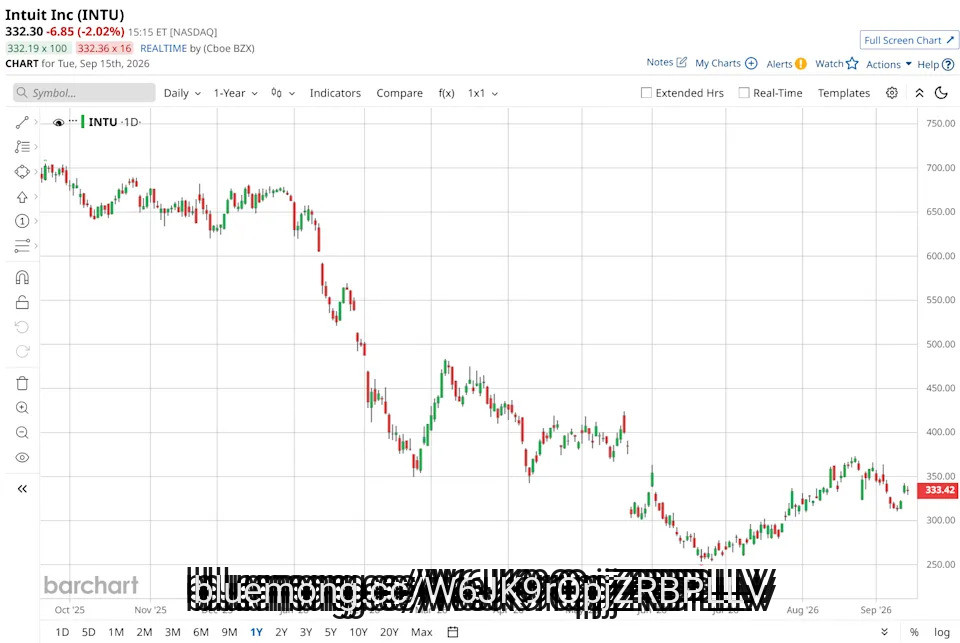
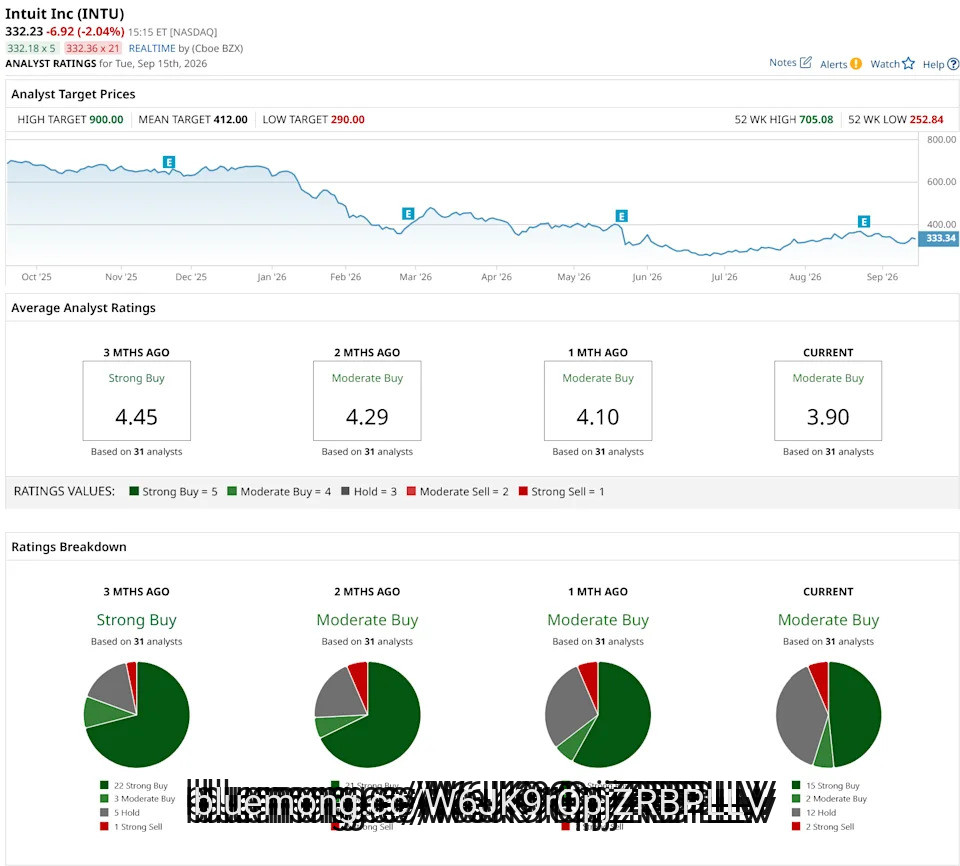
Intuit (INTU) remains a financial technology powerhouse, with roughly 100 million customers across its platforms. Its biggest advantage is the breadth of financial workflows it brings together, spanning everything from tax preparation to business software. But that strength has not protected the stock from a changing market narrative.
Wall Street is increasingly concerned that the rapid adoption and advancement of artificial intelligence (AI) could chip away at Intuit's core tax and business software offerings. These concerns intensified after Intuit delivered slightly disappointing FY2027 sales guidance with its Q4 FY2026 results.
1 'Strong Buy' Dividend Stock Offering a 6.3% Yield Right Now
A $90 Billion Reason to Buy Oracle Stock Now
This High-Yield Construction Stock Just Raised Its Dividend by 40%
#Dividend #yield #intu
Wall Street is increasingly concerned that the rapid adoption and advancement of artificial intelligence (AI) could chip away at Intuit's core tax and business software offerings. These concerns intensified after Intuit delivered slightly disappointing FY2027 sales guidance with its Q4 FY2026 results.
1 'Strong Buy' Dividend Stock Offering a 6.3% Yield Right Now
A $90 Billion Reason to Buy Oracle Stock Now
This High-Yield Construction Stock Just Raised Its Dividend by 40%
#Dividend #yield #intu


1 hr. ago
Dick's Sporting Goods has been one of the big success stories in the brick-and-mortar retail ***** e.
At a time when many rivals have been shrinking their physical store counts, the sporting goods giant has leaned into stores, creating new experiential concepts and generally rethinking its retail strategy.
The chain has selectively built House of Sport locations that offer running tracks, batting cages, golf simulators, and other interactive options.
"House of Sport locations now seeing 5-6 times the number of visits per location compared to the rest of the chain. For reference, the average ***** 's Sporting Goods store is roughly 50K square feet square feet compared to 100K-120K square feet for House of Sport, indicating that House of Sport is also outperforming on a visit per square foot basis," according to 2024 data from Placer.ai.
That's a win, and the overall company delivered a nearly 5% comparable store sales gain in the second quarter. Chairman Edward Stack celebrated that success during the chain's second-quarter earnings call.
#square
At a time when many rivals have been shrinking their physical store counts, the sporting goods giant has leaned into stores, creating new experiential concepts and generally rethinking its retail strategy.
The chain has selectively built House of Sport locations that offer running tracks, batting cages, golf simulators, and other interactive options.
"House of Sport locations now seeing 5-6 times the number of visits per location compared to the rest of the chain. For reference, the average ***** 's Sporting Goods store is roughly 50K square feet square feet compared to 100K-120K square feet for House of Sport, indicating that House of Sport is also outperforming on a visit per square foot basis," according to 2024 data from Placer.ai.
That's a win, and the overall company delivered a nearly 5% comparable store sales gain in the second quarter. Chairman Edward Stack celebrated that success during the chain's second-quarter earnings call.
#square


2 hours ago
Last month, Strategy (NASDAQ: MSTR) founder and Executive Chairman Michael Saylor predicted that Bitcoin's token price would grow at a 30% compound annual rate over a 10-year period. At the time, the market-leading cryptocurrency was trading at roughly $64,500.
As of this writing, Bitcoin is already up roughly 20% since Saylor made his prediction. Could Saylor's prediction for average annualized returns over the next 30 years really hold up?
Missed Nvidia in 2009? This Rare Signal Is Flashing Again. In 2009, a "Double Down" signal flashed for a little-known chipmaker called Nvidia. For the first time in years, that same "Total Conviction" signal is flashing for a company 1/100th the size of Nvidia. Continue »
Bitcoin hit an all-time high of roughly $126,200 per token in October 2025. It then began an extended downtrend that took it to a cyclical low of below $58,600 this summer. Even though the cryptocurrency has recently seen some strong bullish momentum, it's still down roughly 39% from its peak. It's possible that current macroeconomic dynamics will help the token continue regaining ground.
With concerns about rising bond yields, oil prices, and inflation recently shaping action across the stock market and weighing heavily on the broader macroeconomic outlook, the stage could be set for Bitcoin to continue coming back into favor with investors in the near term. Crypto bulls have long touted the token's ability to function as a store of value or "digital gold," and an inflationary environment that coincides with record national debt continuing to reach new highs seemingly reflects the kind of dynamics that Bitcoin has been championed as a bulwark against.
#saylor
As of this writing, Bitcoin is already up roughly 20% since Saylor made his prediction. Could Saylor's prediction for average annualized returns over the next 30 years really hold up?
Missed Nvidia in 2009? This Rare Signal Is Flashing Again. In 2009, a "Double Down" signal flashed for a little-known chipmaker called Nvidia. For the first time in years, that same "Total Conviction" signal is flashing for a company 1/100th the size of Nvidia. Continue »
Bitcoin hit an all-time high of roughly $126,200 per token in October 2025. It then began an extended downtrend that took it to a cyclical low of below $58,600 this summer. Even though the cryptocurrency has recently seen some strong bullish momentum, it's still down roughly 39% from its peak. It's possible that current macroeconomic dynamics will help the token continue regaining ground.
With concerns about rising bond yields, oil prices, and inflation recently shaping action across the stock market and weighing heavily on the broader macroeconomic outlook, the stage could be set for Bitcoin to continue coming back into favor with investors in the near term. Crypto bulls have long touted the token's ability to function as a store of value or "digital gold," and an inflationary environment that coincides with record national debt continuing to reach new highs seemingly reflects the kind of dynamics that Bitcoin has been championed as a bulwark against.
#saylor


2 hours ago
Coca-Cola announced plans Tuesday to invest $10 billion in U.S. infrastructure between 2026 and 2030, covering new and expanded production, distribution and office facilities across the country.
That $10 billion commitment is calculated across the full Coca-Cola system — meaning it rolls in spending by bottling partners and is not limited to the parent company's own capital budget, according to Reuters. In July, the company forecast its own capital expenditure at approximately $2.2 billion for the fiscal year. Projects covered by the broader $10 billion commitment include previously announced work in Rancho Cucamonga, California; Colorado Springs, Colorado; Indianapolis, Indiana; Birmingham, Alabama; Coopersville, Michigan; St. Cloud, Minnesota; Orlando, Florida; and Webster, New York, the company said.
The announcement accompanied an independently commissioned study measuring the Coca-Cola system's 2025 economic contributions in the United States. The study found the system contributed $85 billion to U.S. gross domestic product — roughly $10 million in economic activity per hour — and supported nearly 1 million jobs, the company said. Rounding out the economic picture, the system directed roughly $37 billion toward American suppliers and channeled $177 million into community initiatives via The Coca-Cola Foundation and the Coca-Cola Scholars Foundation.
"This ****** sment reinforces what we see every day: the Coca-Cola system is deeply rooted in America and continues to deliver meaningful value for the people and communities we serve," John Murphy, president and chief financial officer of The Coca-Cola Company, said in a statement.
The company said its production network spans more than 70 facilities and hundreds of distribution centers across all 50 states, Washington, D.C., and Puerto Rico, with the system's economic contributions exceeding $1 billion in 25 states. The study was conducted by Steward Redqueen.
#billion #economic #across #study
That $10 billion commitment is calculated across the full Coca-Cola system — meaning it rolls in spending by bottling partners and is not limited to the parent company's own capital budget, according to Reuters. In July, the company forecast its own capital expenditure at approximately $2.2 billion for the fiscal year. Projects covered by the broader $10 billion commitment include previously announced work in Rancho Cucamonga, California; Colorado Springs, Colorado; Indianapolis, Indiana; Birmingham, Alabama; Coopersville, Michigan; St. Cloud, Minnesota; Orlando, Florida; and Webster, New York, the company said.
The announcement accompanied an independently commissioned study measuring the Coca-Cola system's 2025 economic contributions in the United States. The study found the system contributed $85 billion to U.S. gross domestic product — roughly $10 million in economic activity per hour — and supported nearly 1 million jobs, the company said. Rounding out the economic picture, the system directed roughly $37 billion toward American suppliers and channeled $177 million into community initiatives via The Coca-Cola Foundation and the Coca-Cola Scholars Foundation.
"This ****** sment reinforces what we see every day: the Coca-Cola system is deeply rooted in America and continues to deliver meaningful value for the people and communities we serve," John Murphy, president and chief financial officer of The Coca-Cola Company, said in a statement.
The company said its production network spans more than 70 facilities and hundreds of distribution centers across all 50 states, Washington, D.C., and Puerto Rico, with the system's economic contributions exceeding $1 billion in 25 states. The study was conducted by Steward Redqueen.
#billion #economic #across #study

2 hours ago
Lam Research Corporation (NASDAQ: LRCX) stock has struggled recently, shedding 16.6% in the last week alone. The shares have seen some volatility since their April-June rally peaked at a June 30 record high of $438.50. LRCX was last seen down 2.3% at $267.22 today, though it still boasts a roughly 56% year-to-date lead. Plus, the recent pullback has found support at the 200-day moving average, a trendline with historically bullish implications.
Per Schaeffer's Senior Quantitative ***** yst Rocky White, LRCX has traded within 0.75 times the 200-day moving average's 20-day average true range (ATR) after spending at least 80% of the previous two weeks and 80% of the prior 42 trading sessions above the trendline. This setup has occurred five other times over the last decade, after which the stock was higher one month later 80% of the time, averaging a 6.9% gain.
Furthermore, LRCX's 14-day Relative Strength Index (RSI) of 28.7 sits in "oversold" territory, which often precedes a short-term bounce.
#Stock #Research
Per Schaeffer's Senior Quantitative ***** yst Rocky White, LRCX has traded within 0.75 times the 200-day moving average's 20-day average true range (ATR) after spending at least 80% of the previous two weeks and 80% of the prior 42 trading sessions above the trendline. This setup has occurred five other times over the last decade, after which the stock was higher one month later 80% of the time, averaging a 6.9% gain.
Furthermore, LRCX's 14-day Relative Strength Index (RSI) of 28.7 sits in "oversold" territory, which often precedes a short-term bounce.
#Stock #Research


2 hours ago
Adobe (ADBE) reported a record fiscal Q3 2026 and raised its fiscal 2026 revenue and earnings targets. Revenue rose 13% as reported to $6.76 billion, above the $6.70 billion the company had guided. But the key figure that did not move is the one to hold the quarter against: the fiscal 2026 target for growth in ending annualized recurring revenue, or ARR, still 10.2%.
The fiscal 2026 revenue target moved to $26.576 billion to $26.626 billion from $26.55 billion. The interim CFO sized that at around $50 million at the midpoint, a little less than the $60 million revenue beat in fiscal Q3. The gap is a slight currency headwind in fiscal Q4, and the interim CFO said nothing in the business changed. Non-GAAP earnings per share of $6.13 cleared the $6.08 guide, and the fiscal 2026 non-GAAP EPS target moved to $24.45 to $24.50.
Total ending ARR was $27.5 billion, up 11.2% year over year at the end of fiscal Q3, and the fiscal 2026 year-end growth target for it stayed at 10.2%. Remaining performance obligations, or RPO, grew 8% year over year. One ***** yst called that the first single-digit reading since early fiscal 2023, and down from the prior quarter. The interim CFO tied the RPO figure to the push to acquire new users through the freemium model, and said RPO typically steps up in fiscal Q4 and then stays roughly flat for three quarters.
Another ***** yst put net new ARR down 36% to 37% year over year. Management's answer: Adobe has sent a portion of its traffic into the freemium path to acquire users, and will calibrate when to convert them into paying ARR. The CEO said the company was happy to skip pricing actions that might have brought short-term relief but matter less than new user adoption. Creative freemium monthly active users, which include Firefly, Express and the web and mobile versions of Photoshop, crossed 100 million, growing more than 70% year over year.
So far the paying signal is small against the book. AI-first ending ARR passed $650 million, growing more than 150% year over year, which is about 2.4% of the $27.5 billion total. Management says credit consumption is accelerating quarter on quarter across Creative Cloud and the Firefly app, and Acrobat AI ***** istant monthly active users doubled from the prior quarter. Management gave no date for resuming the pricing actions it deferred in Creative Cloud, and said it is constantly calibrating the best conversion point.
#year #revenue #target #creative
The fiscal 2026 revenue target moved to $26.576 billion to $26.626 billion from $26.55 billion. The interim CFO sized that at around $50 million at the midpoint, a little less than the $60 million revenue beat in fiscal Q3. The gap is a slight currency headwind in fiscal Q4, and the interim CFO said nothing in the business changed. Non-GAAP earnings per share of $6.13 cleared the $6.08 guide, and the fiscal 2026 non-GAAP EPS target moved to $24.45 to $24.50.
Total ending ARR was $27.5 billion, up 11.2% year over year at the end of fiscal Q3, and the fiscal 2026 year-end growth target for it stayed at 10.2%. Remaining performance obligations, or RPO, grew 8% year over year. One ***** yst called that the first single-digit reading since early fiscal 2023, and down from the prior quarter. The interim CFO tied the RPO figure to the push to acquire new users through the freemium model, and said RPO typically steps up in fiscal Q4 and then stays roughly flat for three quarters.
Another ***** yst put net new ARR down 36% to 37% year over year. Management's answer: Adobe has sent a portion of its traffic into the freemium path to acquire users, and will calibrate when to convert them into paying ARR. The CEO said the company was happy to skip pricing actions that might have brought short-term relief but matter less than new user adoption. Creative freemium monthly active users, which include Firefly, Express and the web and mobile versions of Photoshop, crossed 100 million, growing more than 70% year over year.
So far the paying signal is small against the book. AI-first ending ARR passed $650 million, growing more than 150% year over year, which is about 2.4% of the $27.5 billion total. Management says credit consumption is accelerating quarter on quarter across Creative Cloud and the Firefly app, and Acrobat AI ***** istant monthly active users doubled from the prior quarter. Management gave no date for resuming the pricing actions it deferred in Creative Cloud, and said it is constantly calibrating the best conversion point.
#year #revenue #target #creative


2 hours ago
Crypto markets and related stocks moved lower Tuesday as investors braced for two major Washington catalysts: a Senate vote on the CLARITY Act and the Federal Reserve's interest-rate decision Wednesday.
Bitcoin was trading around $76,431, down 2.19% over 24 hours, while Ether fell 1.8% to roughly $2,449 and Solana dropped 1.02% to about $100. The total crypto market capitalization declined 1.2% to $2.61 trillion.
Derivatives traders were also caught in the selloff. Roughly $384 million in crypto positions were liquidated over 24 hours, including about $195 million in longs and $189 million in shorts, while nearly $160 million was wiped out over the previous 12 hours.
Crypto-linked stocks were hit harder.
Related: CLARITY Act faces urgent Democratic counterproposal and growing opposition
#hours #tuesday
Bitcoin was trading around $76,431, down 2.19% over 24 hours, while Ether fell 1.8% to roughly $2,449 and Solana dropped 1.02% to about $100. The total crypto market capitalization declined 1.2% to $2.61 trillion.
Derivatives traders were also caught in the selloff. Roughly $384 million in crypto positions were liquidated over 24 hours, including about $195 million in longs and $189 million in shorts, while nearly $160 million was wiped out over the previous 12 hours.
Crypto-linked stocks were hit harder.
Related: CLARITY Act faces urgent Democratic counterproposal and growing opposition
#hours #tuesday


3 hours ago
GE Aerospace (GE) trades near $318, up 13.4% over the past twelve months. Behind that price sits a commercial services backlog of roughly $170 billion, work on engines already flying. The easy read is that the good news is in the price, and the coming three years just work that backlog off. A three-year scenario on the company's own numbers puts a size on what is left.
Revenue does most of the work. The scenario grows it 17.4% a year for three years, down from the 21.7% pace of the past twelve months, and net margin recovers some of the ground it has lost. Together they lift earnings about 67%.
The constraint is not demand. Management said in July that what lies ahead is much more a supply-side challenge than a demand one. Spare parts delinquencies, shipments held up for want of material, grew 20% sequentially in the second quarter of 2026.
GE Aerospace agreed in September to buy the castings maker Consolidated Precision Products. The deal shows where the bottleneck sits.
Then the multiple takes its cut. The scenario trims the P/E from 36.8x to 32.9x, because a slower revenue pace will not support what the market pays today. On those ******* umptions the stock would be worth about $475 in three years, roughly 50% above today.
#aerospace #revenue #price
Revenue does most of the work. The scenario grows it 17.4% a year for three years, down from the 21.7% pace of the past twelve months, and net margin recovers some of the ground it has lost. Together they lift earnings about 67%.
The constraint is not demand. Management said in July that what lies ahead is much more a supply-side challenge than a demand one. Spare parts delinquencies, shipments held up for want of material, grew 20% sequentially in the second quarter of 2026.
GE Aerospace agreed in September to buy the castings maker Consolidated Precision Products. The deal shows where the bottleneck sits.
Then the multiple takes its cut. The scenario trims the P/E from 36.8x to 32.9x, because a slower revenue pace will not support what the market pays today. On those ******* umptions the stock would be worth about $475 in three years, roughly 50% above today.
#aerospace #revenue #price


3 hours ago
This story was originally published on CRE Daily. Join 70,000+ commercial real estate professionals getting daily news, market insights, and industry ***** ysis delivered straight to their inbox with the free CRE Daily newsletter.
Dallas, Tarrant, and Collin county records show 1,197 commercial and multifamily loans totaling $13.3 billion maturing over the next 12 months, with another $12.5 billion in loans already past their maturity date.
Only 3 of the 1,197 forward-maturing loans carry a recorded distress filing, underscoring how little of the real risk shows up in public records before a loan actually fails.
The wall stems from two colliding loan vintages: roughly $4.3 billion in 2016-2017 peak-era loans and $2.6 billion in short-term bridge debt originated since 2025.
DFW loan maturities over the next 12 months total $13.3 billion, according to a county-by-county read of deed of trust records by Circlemark. That's on top of $12.5 billion in loans that have already passed their stated maturity date and remain open. Circlemark, which reads scanned county clerk instruments rather than relying on servicer-reported data, calls its own $13.3 billion figure a floor, not a ceiling.
#records
Dallas, Tarrant, and Collin county records show 1,197 commercial and multifamily loans totaling $13.3 billion maturing over the next 12 months, with another $12.5 billion in loans already past their maturity date.
Only 3 of the 1,197 forward-maturing loans carry a recorded distress filing, underscoring how little of the real risk shows up in public records before a loan actually fails.
The wall stems from two colliding loan vintages: roughly $4.3 billion in 2016-2017 peak-era loans and $2.6 billion in short-term bridge debt originated since 2025.
DFW loan maturities over the next 12 months total $13.3 billion, according to a county-by-county read of deed of trust records by Circlemark. That's on top of $12.5 billion in loans that have already passed their stated maturity date and remain open. Circlemark, which reads scanned county clerk instruments rather than relying on servicer-reported data, calls its own $13.3 billion figure a floor, not a ceiling.
#records


3 hours ago
During the September 10 episode of Mad Money, a caller inquired about Mad Money host Jim Cramer's confidence that Arista Networks, Inc. (NYSE:ANET) will not go down the same path as Ciena Corporation. He replied:
Okay, so let me just tell you, Arista is up a lot this year. My confidence is with Jayshree Ullall. I think she's amazing and I think it every time the stock has dipped, if you've noticed it. Since her tenure began, you have to buy it, and I'm not backing away from that. I feel the same way I do now, the way I did, oh man, how many years ago when we first met her. She is money, and the company's fantastic.
In its second quarter, the company shattered records by delivering its first-ever $3 billion quarter, reporting $3.036 billion in revenue, a 38% year-over-year and over 12% sequential increase. Management lifted its full-year 2026 revenue guidance to approximately $12.6 billion, representing roughly 40% annual top-line growth. The acceleration is supported by deep integration into cloud architectures, where Arista Networks, Inc. (NYSE:ANET) expects its dedicated AI fabrics revenue to reach at least $3.5 billion in 2026, supported by more than 100 **** ulative Etherlink customers.
Bottom-line performance remains equally strong, with non-GAAP diluted earnings per share reaching $1.02, driven by a 49.9% non-GAAP operating margin and $1.3 billion in non-GAAP quarterly net income. Arista Networks, Inc. (NYSE:ANET) ended the quarter with roughly $13.3 billion in cash and marketable securities, offering substantial liquidity. However, its $9.7 billion of non-cancellable purchase commitments also increase working-capital and inventory risk as the company secures components ahead of expected AI demand.
The company's financial results remain heavily tied to two hyperscale customers. According to its 10-K filings, Microsoft accounted for 26%, and Meta Platforms generated 16% of total revenue in fiscal 2025, bringing combined spending from these two cloud giants to 42%. It leaves Arista Networks, Inc. (NYSE:ANET) vulnerable to sudden capital expenditure adjustments, vendor diversification shifts, or project delays by its core buyers.
#billion #NYSE #year
Okay, so let me just tell you, Arista is up a lot this year. My confidence is with Jayshree Ullall. I think she's amazing and I think it every time the stock has dipped, if you've noticed it. Since her tenure began, you have to buy it, and I'm not backing away from that. I feel the same way I do now, the way I did, oh man, how many years ago when we first met her. She is money, and the company's fantastic.
In its second quarter, the company shattered records by delivering its first-ever $3 billion quarter, reporting $3.036 billion in revenue, a 38% year-over-year and over 12% sequential increase. Management lifted its full-year 2026 revenue guidance to approximately $12.6 billion, representing roughly 40% annual top-line growth. The acceleration is supported by deep integration into cloud architectures, where Arista Networks, Inc. (NYSE:ANET) expects its dedicated AI fabrics revenue to reach at least $3.5 billion in 2026, supported by more than 100 **** ulative Etherlink customers.
Bottom-line performance remains equally strong, with non-GAAP diluted earnings per share reaching $1.02, driven by a 49.9% non-GAAP operating margin and $1.3 billion in non-GAAP quarterly net income. Arista Networks, Inc. (NYSE:ANET) ended the quarter with roughly $13.3 billion in cash and marketable securities, offering substantial liquidity. However, its $9.7 billion of non-cancellable purchase commitments also increase working-capital and inventory risk as the company secures components ahead of expected AI demand.
The company's financial results remain heavily tied to two hyperscale customers. According to its 10-K filings, Microsoft accounted for 26%, and Meta Platforms generated 16% of total revenue in fiscal 2025, bringing combined spending from these two cloud giants to 42%. It leaves Arista Networks, Inc. (NYSE:ANET) vulnerable to sudden capital expenditure adjustments, vendor diversification shifts, or project delays by its core buyers.
#billion #NYSE #year

3 hours ago
This story was originally published on CRE Daily. Join 70,000+ commercial real estate professionals getting daily news, market insights, and industry **** ysis delivered straight to their inbox with the free CRE Daily newsletter.
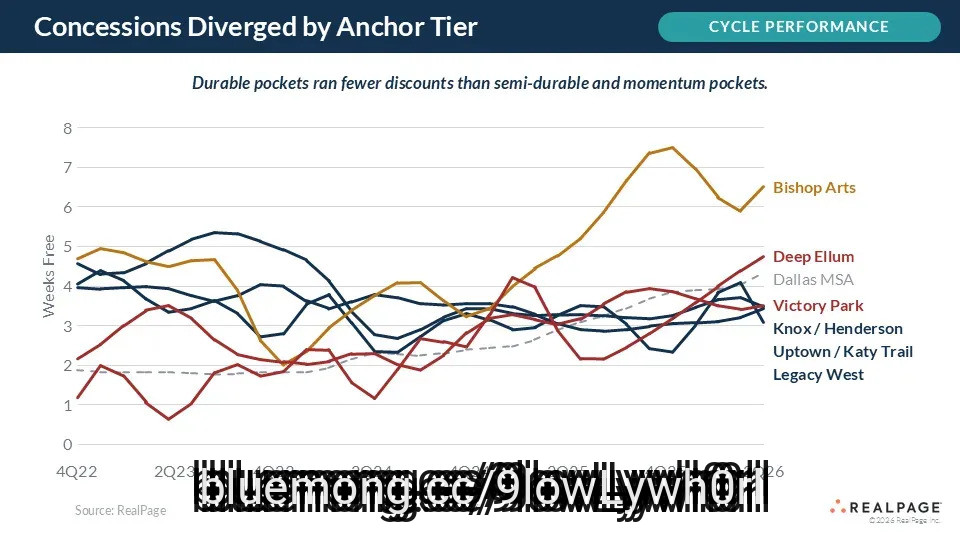
Legacy West apartments average $1,845 a month, a 9% premium over comparable Dallas properties that's smaller than any other demand pocket RealPage tracks, yet the submarket needs the fewest concessions to stay leased.
The pocket posted 95.5% occupancy in the second quarter, two points above the Dallas metro average, anchored by roughly 12,000 corporate jobs from employers including Toyota, JPMorgan Chase, and Frito-Lay.
Because Legacy West's strength rests on continued corporate expansion rather than a larger price premium, its durability depends on employers in the Plano-Frisco corridor keeping up their hiring pace.
Apartments in Legacy West command the smallest rent premium of any demand pocket in the Dallas metro, yet the submarket needs fewer concessions to stay full than any of its peers, according to RealPage. The corporate-anchored district straddling the Plano-Frisco border averaged $1,845 in effective rent in the second quarter, a 9% premium over comparable metro properties. That's the smallest premium among the demand pockets RealPage tracks across Dallas, even though Legacy West's occupancy and leasing strength outperform them.
#legacy #dallas #demand
Legacy West apartments average $1,845 a month, a 9% premium over comparable Dallas properties that's smaller than any other demand pocket RealPage tracks, yet the submarket needs the fewest concessions to stay leased.
The pocket posted 95.5% occupancy in the second quarter, two points above the Dallas metro average, anchored by roughly 12,000 corporate jobs from employers including Toyota, JPMorgan Chase, and Frito-Lay.
Because Legacy West's strength rests on continued corporate expansion rather than a larger price premium, its durability depends on employers in the Plano-Frisco corridor keeping up their hiring pace.
Apartments in Legacy West command the smallest rent premium of any demand pocket in the Dallas metro, yet the submarket needs fewer concessions to stay full than any of its peers, according to RealPage. The corporate-anchored district straddling the Plano-Frisco border averaged $1,845 in effective rent in the second quarter, a 9% premium over comparable metro properties. That's the smallest premium among the demand pockets RealPage tracks across Dallas, even though Legacy West's occupancy and leasing strength outperform them.
#legacy #dallas #demand


4 hours ago
Nvidia's (NVDA) Vera Rubin GPUs claim 70% of the $4M VR200 rack bill of materials, while Micron (MU) benefits from the 22% memory slice.
Jensen Huang expects 70% revenue growth in fiscal 2028, supply-constrained despite purchase orders already secured from every major hyperscaler for Vera Rubin.
Just released. Our ****** ysts combed the entire stock market and named the ten best stocks to buy right now, and NVIDIA didn't make the cut. Enter your email to see the names that beat NVDA. The report is free. Enter your email and see if any of your stocks made the cut.
Inside an NVIDIA (NASDAQ:NVDA) VR200 NVL72 rack-scale AI supercomputer, 70% of the roughly $4 million bill of materials goes to one line item: the Rubin GPUs themselves, excluding their high-bandwidth memory. That figure comes from an HSBC estimated bill of materials for the VR200 NVL72 platform, and it is the cleanest single data point yet on where the AI infrastructure dollar actually lands. DRAM adds another 13%, HBM 9%, NAND 2%, NVLink 2%, cooling 2%, power supply 1%, and the CPU 1%.
In an era where every hyperscaler is trying to bend the AI capex curve, the VR200 breakdown says the GPU is still where the value concentrates. Nvidia is selling the rack, and the silicon it designs takes seven of every ten dollars a customer spends to fill it. That maps to what CEO Jensen Huang told investors on the fiscal Q2 2027 call: "Today, we're not just selling the best chips. We're selling a full-stack AI factory platform."
#rack #materials #vera
Jensen Huang expects 70% revenue growth in fiscal 2028, supply-constrained despite purchase orders already secured from every major hyperscaler for Vera Rubin.
Just released. Our ****** ysts combed the entire stock market and named the ten best stocks to buy right now, and NVIDIA didn't make the cut. Enter your email to see the names that beat NVDA. The report is free. Enter your email and see if any of your stocks made the cut.
Inside an NVIDIA (NASDAQ:NVDA) VR200 NVL72 rack-scale AI supercomputer, 70% of the roughly $4 million bill of materials goes to one line item: the Rubin GPUs themselves, excluding their high-bandwidth memory. That figure comes from an HSBC estimated bill of materials for the VR200 NVL72 platform, and it is the cleanest single data point yet on where the AI infrastructure dollar actually lands. DRAM adds another 13%, HBM 9%, NAND 2%, NVLink 2%, cooling 2%, power supply 1%, and the CPU 1%.
In an era where every hyperscaler is trying to bend the AI capex curve, the VR200 breakdown says the GPU is still where the value concentrates. Nvidia is selling the rack, and the silicon it designs takes seven of every ten dollars a customer spends to fill it. That maps to what CEO Jensen Huang told investors on the fiscal Q2 2027 call: "Today, we're not just selling the best chips. We're selling a full-stack AI factory platform."
#rack #materials #vera


4 hours ago
The White House said Tuesday that banning yield on stablecoins would do little to increase bank lending, pushing back against estimates that stablecoin rewards could result in large amounts of deposits leaving the traditional banking system.
In an update to an April ****** ysis by the Council of Economic Advisers (CEA), the White House said eliminating stablecoin yield would increase bank lending by about $2.1 billion under its baseline ****** umptions. That represents just 0.02% of outstanding bank loans.
Community banks would account for roughly $500 million of the additional lending, or about 0.03% of their loan books, according to the ****** ysis.
More From Cryptoprowl:
MEXC Launches Earn Plus With Limited-Time Event Offering Up to 800% APR Booster
#yield #increase #tuesday
In an update to an April ****** ysis by the Council of Economic Advisers (CEA), the White House said eliminating stablecoin yield would increase bank lending by about $2.1 billion under its baseline ****** umptions. That represents just 0.02% of outstanding bank loans.
Community banks would account for roughly $500 million of the additional lending, or about 0.03% of their loan books, according to the ****** ysis.
More From Cryptoprowl:
MEXC Launches Earn Plus With Limited-Time Event Offering Up to 800% APR Booster
#yield #increase #tuesday

5 hours ago
Our ******* ysts just identified a stock with the potential to be the next Nvidia. Tell us how you invest and we'll show you why it's our #1 pick. Tap here.
The oil crisis is leaking into other parts of the car. Costco, the land of big and cheap, flipped the script and doubled the price of its full-synthetic motor oil and started rationing purchases. As crude pushes toward $100 a barrel, a 10-quart case that cost roughly $30 now runs $57.99, with purchases capped at two units per member per week.
U.S. diesel crossed $6 a gallon for the first time this week, and global oil inventories have drawn down more than 500 million barrels since the U.S.-Iran conflict began. This is affecting the entire crude industrial complex.
Base oil, which is the feedstock for motor oil, comes from the same barrel as gasoline and diesel so when refiners can earn more finishing crude into fuel than into lubricants, lubricant stock gets squeezed first.
The pressure for Costco, however, is more intense: Its signature Kirkland oil carries GM's Dexos1 Gen 3 certification, which requires manufacturers to pay GM separately per product and per unit sold. As a result, and much against its brand ethos, changing your own oil with Kirkland product now costs roughly what an independent shop would charge, thus eroding the DIY savings case entirely.
#crude #motor #case #week
The oil crisis is leaking into other parts of the car. Costco, the land of big and cheap, flipped the script and doubled the price of its full-synthetic motor oil and started rationing purchases. As crude pushes toward $100 a barrel, a 10-quart case that cost roughly $30 now runs $57.99, with purchases capped at two units per member per week.
U.S. diesel crossed $6 a gallon for the first time this week, and global oil inventories have drawn down more than 500 million barrels since the U.S.-Iran conflict began. This is affecting the entire crude industrial complex.
Base oil, which is the feedstock for motor oil, comes from the same barrel as gasoline and diesel so when refiners can earn more finishing crude into fuel than into lubricants, lubricant stock gets squeezed first.
The pressure for Costco, however, is more intense: Its signature Kirkland oil carries GM's Dexos1 Gen 3 certification, which requires manufacturers to pay GM separately per product and per unit sold. As a result, and much against its brand ethos, changing your own oil with Kirkland product now costs roughly what an independent shop would charge, thus eroding the DIY savings case entirely.
#crude #motor #case #week


5 hours ago
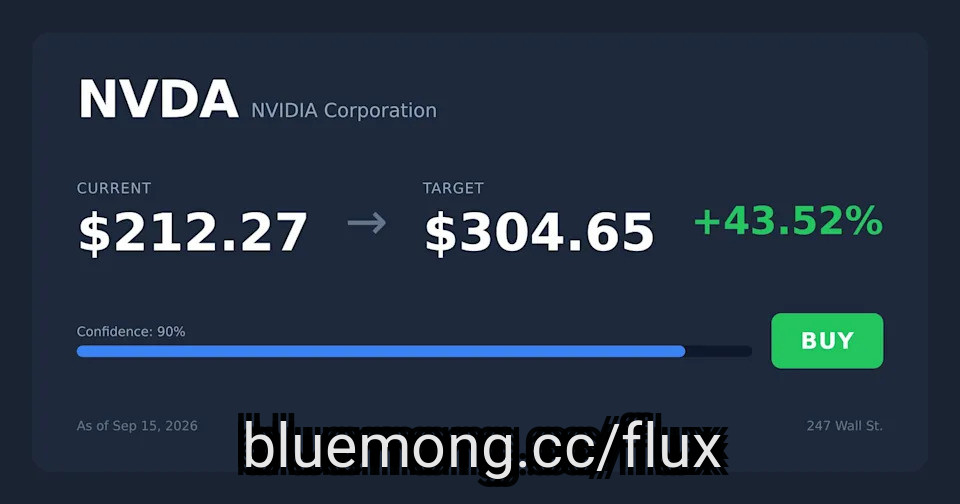
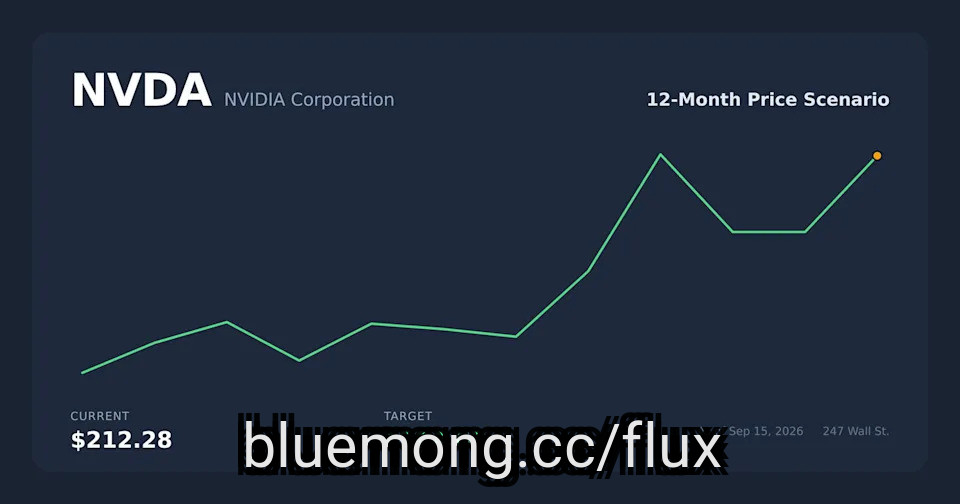
Nvidia (NVDA) CEO Jensen Huang just dropped an interesting update on the company's growth. He said he believes the chip giant can grow revenue by 70% next year, a forecast that would take annual sales from roughly $400 billion to about $680 billion.
At first look, that sounds almost too ambitious, but Huang argues that Nvidia is still at the center of the artificial intelligence buildout, and demand for its computing systems remains far from saturated.
Goldman Sachs Expects Fed Chair Kevin Warsh to Raise Rates This Week — But Not Because of Oil Prices.
Morgan Stanley Doubles Down on Apple Stock as New Offerings Become 'More Exciting'
The EV Bubble Has Burst. How to Play Rivian Stock Now.
#billion #nvda #goldman #expects
At first look, that sounds almost too ambitious, but Huang argues that Nvidia is still at the center of the artificial intelligence buildout, and demand for its computing systems remains far from saturated.
Goldman Sachs Expects Fed Chair Kevin Warsh to Raise Rates This Week — But Not Because of Oil Prices.
Morgan Stanley Doubles Down on Apple Stock as New Offerings Become 'More Exciting'
The EV Bubble Has Burst. How to Play Rivian Stock Now.
#billion #nvda #goldman #expects

5 hours ago
Broyhill **** et Management, a Charlotte-based firm, issued its second-quarter 2026 investor letter, which is available for download here. The Broyhill Equity Composite gained 8.8% in Q2, trailing the MSCI All Country World Index's 15.1% and the MSCI ACWI Value Index's 10.8%. For the first half, the Composite returned 2.3%, versus 11.5% for the Index. The letter highlights that a significant portion of the shortfall occurred in April due to market dynamics and geopolitical events, with tech, particularly semiconductors, driving recent gains. Broyhill notes its lack of direct semiconductor exposure but acknowledges potential interest in the sector if opportunities arise, maintaining its investment philosophy focused on capital protection in fragile market conditions. Also, check the fund's top five holdings to see its best picks in 2026.
In its second-quarter 2026 investor letter, Broyhill **** et Management highlighted First Citizens BancShares, Inc. (NASDAQ:FCNCA). First Citizens BancShares, Inc. (NASDAQ:FCNCA) operates as the holding company for First-Citizens Bank & Trust Company, providing retail and commercial banking services. On September 14, 2026, First Citizens BancShares, Inc. (NASDAQ:FCNCA) closed at $2,173.88 per share. Over the past month, First Citizens BancShares, Inc. (NASDAQ:FCNCA) declined 1.03%, but its shares are up 17.10% over the past year. First Citizens BancShares, Inc. (NASDAQ:FCNCA) has a market capitalization of $24.55 billion, and its stock has traded within a 52-week range of $1,623.76 to $2,296.30.
Broyhill **** et Management stated the following regarding First Citizens BancShares, Inc. (NASDAQ:FCNCA) in its Q2 2026 investor letter:
"First Citizens BancShares, Inc. (NASDAQ:FCNCA), initiated in June, is a well-run company which we believe to be undervalued and with catalysts on the horizon. The company has retired almost 20% of its Class A shares since July 2024, and inside its roughly $25 billion market capitalization sits a rail leasing fleet of approximately 128,000 cars valued by the market at bank multiples. Management has proven themselves highly competent and highly aligned with shareholders, with the Holding family in key executive positions, owning over 20% of the economics and controlling roughly half the vote through their Class B shares. Much of what we are waiting on has a date attached to it: two separations have completed, and Masco and First Citizens are retiring shares at a pace that improves per-share value whether or not the multiples change."
#fcnca #market
In its second-quarter 2026 investor letter, Broyhill **** et Management highlighted First Citizens BancShares, Inc. (NASDAQ:FCNCA). First Citizens BancShares, Inc. (NASDAQ:FCNCA) operates as the holding company for First-Citizens Bank & Trust Company, providing retail and commercial banking services. On September 14, 2026, First Citizens BancShares, Inc. (NASDAQ:FCNCA) closed at $2,173.88 per share. Over the past month, First Citizens BancShares, Inc. (NASDAQ:FCNCA) declined 1.03%, but its shares are up 17.10% over the past year. First Citizens BancShares, Inc. (NASDAQ:FCNCA) has a market capitalization of $24.55 billion, and its stock has traded within a 52-week range of $1,623.76 to $2,296.30.
Broyhill **** et Management stated the following regarding First Citizens BancShares, Inc. (NASDAQ:FCNCA) in its Q2 2026 investor letter:
"First Citizens BancShares, Inc. (NASDAQ:FCNCA), initiated in June, is a well-run company which we believe to be undervalued and with catalysts on the horizon. The company has retired almost 20% of its Class A shares since July 2024, and inside its roughly $25 billion market capitalization sits a rail leasing fleet of approximately 128,000 cars valued by the market at bank multiples. Management has proven themselves highly competent and highly aligned with shareholders, with the Holding family in key executive positions, owning over 20% of the economics and controlling roughly half the vote through their Class B shares. Much of what we are waiting on has a date attached to it: two separations have completed, and Masco and First Citizens are retiring shares at a pace that improves per-share value whether or not the multiples change."
#fcnca #market


5 hours ago
Reddit (RDDT) stock finally gave investors something to cheer about. Shares jumped about 6% on Sept. 10 after Piper Sandler data showed Reddit's user base grew 8% month over month in August. That marked the company's strongest monthly gain of 2026 and a sharp reversal from the roughly 2% decline in July.
The move also snapped a four-session losing streak. But there's still a major problem. Reddit shares remain down 30% in 2026 and down roughly 38% over the past year. The big question now is whether August marked the beginning of a real turnaround or just another short-lived bounce. Let's take a closer look.
Goldman Sachs Expects Fed Chair Kevin Warsh to Raise Rates This Week — But Not Because of Oil Prices.
Morgan Stanley Doubles Down on Apple Stock as New Offerings Become 'More Exciting'
The EV Bubble Has Burst. How to Play Rivian Stock Now.
#Stock
The move also snapped a four-session losing streak. But there's still a major problem. Reddit shares remain down 30% in 2026 and down roughly 38% over the past year. The big question now is whether August marked the beginning of a real turnaround or just another short-lived bounce. Let's take a closer look.
Goldman Sachs Expects Fed Chair Kevin Warsh to Raise Rates This Week — But Not Because of Oil Prices.
Morgan Stanley Doubles Down on Apple Stock as New Offerings Become 'More Exciting'
The EV Bubble Has Burst. How to Play Rivian Stock Now.
#Stock


5 hours ago
KeyBanc targets $400 for MRVL, implying 83% upside, as the stock sits 34% below its 52-week high despite record Q2 revenue up 37% year-over-year.
A sector-wide AI chip selloff dragged Broadcom down 12% and NVIDIA down 6% over the past month, yet both still carry consensus upside above 54%.
Read More: Learn 7 secret wealth tips high net worth investors use that most investors miss (sponsor)
Marvell Technology (NASDAQ:MRVL) currently trades at $218.82, well below the consensus 12-month ****** yst price target of $284.64. That gap implies roughly 30% upside to the average, but one outlier target from KeyBanc sits at $400, a call that would nearly double the stock and represents about 83% upside from here.
Marvell designs custom AI silicon and optical interconnect chips that hyperscalers stitch into their data center fabrics. The company's data center segment now accounts for 79% of total revenue, up from 74% a year ago, which is why Wall Street tracks every hyperscaler order like a leading indicator.
#sits
A sector-wide AI chip selloff dragged Broadcom down 12% and NVIDIA down 6% over the past month, yet both still carry consensus upside above 54%.
Read More: Learn 7 secret wealth tips high net worth investors use that most investors miss (sponsor)
Marvell Technology (NASDAQ:MRVL) currently trades at $218.82, well below the consensus 12-month ****** yst price target of $284.64. That gap implies roughly 30% upside to the average, but one outlier target from KeyBanc sits at $400, a call that would nearly double the stock and represents about 83% upside from here.
Marvell designs custom AI silicon and optical interconnect chips that hyperscalers stitch into their data center fabrics. The company's data center segment now accounts for 79% of total revenue, up from 74% a year ago, which is why Wall Street tracks every hyperscaler order like a leading indicator.
#sits
5 hours ago
Citigroup Inc. (NYSE:C)'s CFO Gonzalo Luchetti said the bank expects return on tangible common equity (RoTCE) to come in slightly above 11% in 2026, while also indicating that Citi will increase stock buybacks from the $13 billion repurchased in 2025. The bank plans to accelerate roughly $500 million of investment by year-end, including spending on severance and marketing intended to expand its credit-card and wealth-management businesses. Citi also expects to remove Banamex from its balance sheet in 2027, which will create an estimated $9 billion currency-translation adjustment loss.
The 11%+ target is meaningful because Citi's profitability has already improved materially. In the second quarter, Citi generated $24.8 billion of revenue, up 14% year over year, while net income rose 45% to $5.8 billion. Investment-banking revenue increased 44% to $1.55 billion, and net interest income increased 13%. Citi's SEC filing shows second-quarter RoTCE of 13.0%, versus 8.7% a year earlier, while the first half of 2026 produced a 13.1% RoTCE. The new guidance therefore suggests management believes profitability can remain above the longer-term 11%-13% RoTCE range Citi established for 2027-28, despite additional investment spending.
Kiev.Victor / Shutterstock.com
The bullish argument is that Citigroup Inc. (NYSE:C) appears to be converting its multiyear restructuring into higher returns while simultaneously returning more capital to shareholders. The move from 8.7% RoTCE in the second quarter of 2025 to 13.0% in the second quarter of 2026 represents a substantial improvement in capital efficiency. Citi's efficiency ratio also improved to 57.4% from 62.7%, indicating that revenue growth is increasingly translating into operating leverage rather than being absorbed by expenses. That is particularly relevant because management now intends to spend another roughly $500 million on severance, marketing, and growth initiatives; if these investments produce the intended expansion in cards and wealth management, they could support revenue growth without derailing the profitability trajectory.
Capital returns provide another positive lever. Citi repurchased $13 billion of stock in 2025 and now expects to increase that amount, while its June 2026 CET1 ratio remained 12.78%, comfortably above its 11.6% standardized regulatory requirement. Buybacks can reduce tangible common equity and shares outstanding, potentially supporting both RoTCE and per-share earnings when executed below intrinsic value. Citi's tangible book value per share had already risen 7% year over year to $100.89 by June 30, 2026. The combination of higher operating profitability, shrinking share count, and improving capital efficiency strengthens the case for a valuation re-rating if Citi can sustain returns above 11%.
#rotce #citi #management
The 11%+ target is meaningful because Citi's profitability has already improved materially. In the second quarter, Citi generated $24.8 billion of revenue, up 14% year over year, while net income rose 45% to $5.8 billion. Investment-banking revenue increased 44% to $1.55 billion, and net interest income increased 13%. Citi's SEC filing shows second-quarter RoTCE of 13.0%, versus 8.7% a year earlier, while the first half of 2026 produced a 13.1% RoTCE. The new guidance therefore suggests management believes profitability can remain above the longer-term 11%-13% RoTCE range Citi established for 2027-28, despite additional investment spending.
Kiev.Victor / Shutterstock.com
The bullish argument is that Citigroup Inc. (NYSE:C) appears to be converting its multiyear restructuring into higher returns while simultaneously returning more capital to shareholders. The move from 8.7% RoTCE in the second quarter of 2025 to 13.0% in the second quarter of 2026 represents a substantial improvement in capital efficiency. Citi's efficiency ratio also improved to 57.4% from 62.7%, indicating that revenue growth is increasingly translating into operating leverage rather than being absorbed by expenses. That is particularly relevant because management now intends to spend another roughly $500 million on severance, marketing, and growth initiatives; if these investments produce the intended expansion in cards and wealth management, they could support revenue growth without derailing the profitability trajectory.
Capital returns provide another positive lever. Citi repurchased $13 billion of stock in 2025 and now expects to increase that amount, while its June 2026 CET1 ratio remained 12.78%, comfortably above its 11.6% standardized regulatory requirement. Buybacks can reduce tangible common equity and shares outstanding, potentially supporting both RoTCE and per-share earnings when executed below intrinsic value. Citi's tangible book value per share had already risen 7% year over year to $100.89 by June 30, 2026. The combination of higher operating profitability, shrinking share count, and improving capital efficiency strengthens the case for a valuation re-rating if Citi can sustain returns above 11%.
#rotce #citi #management

5 hours ago
Bank of America Corporation (NYSE:BAC) expects third-quarter investment banking fees to fall by at least 10% year over year, which highlights a broader normalization across capital markets after an unusually strong first half of 2026. BofA expects investment banking fees of roughly $1.6 billion to $1.8 billion in the third quarter, compared with $2 billion a year earlier. CEO Brian Moynihan said the broader investment banking market is also down around 10%, suggesting that the softer quarter reflects a cooling in industry activity rather than a company-specific breakdown.
The comparison with the second quarter illustrates how sharp the normalization is. BofA's investment banking fees had risen 50% year over year to $2.1 billion in Q2, while sales and trading revenue reached a record $7.1 billion. The current outlook therefore represents a pullback from elevated levels rather than a reversal of the broader recovery in dealmaking. Global M&A activity remained substantial in the first half of 2026, with more than $3 trillion of announced transactions, providing evidence that corporate deal appetite has remained relatively healthy even as quarterly activity fluctuates.
Pixabay/Public Domain
From a longer-term perspective, the normalization does not necessarily undermine Bank of America Corporation (NYSE:BAC)'s capital-markets franchise. Investment banking revenues remain well above the depressed levels seen during the earlier downturn in deal activity, while the bank continues to have a substantial pipeline of potential transactions. Moynihan's comments that the pipeline remains strong suggest that some of the current weakness could reflect the timing of transactions rather than a fundamental loss of corporate demand for M&A, financing or advisory services.
BofA also has a diversified earnings base that makes it less dependent on any single capital-markets cycle. Its second-quarter net interest income increased 9% to $16 billion, while average loans and leases grew 8%. That provides a more stable source of revenue as investment banking normalizes. In this context, the Q3 decline can be viewed as a shift away from exceptionally strong capital-markets contributions rather than evidence that the bank's broader earnings trajectory has deteriorated.
#billion #year #rather
The comparison with the second quarter illustrates how sharp the normalization is. BofA's investment banking fees had risen 50% year over year to $2.1 billion in Q2, while sales and trading revenue reached a record $7.1 billion. The current outlook therefore represents a pullback from elevated levels rather than a reversal of the broader recovery in dealmaking. Global M&A activity remained substantial in the first half of 2026, with more than $3 trillion of announced transactions, providing evidence that corporate deal appetite has remained relatively healthy even as quarterly activity fluctuates.
Pixabay/Public Domain
From a longer-term perspective, the normalization does not necessarily undermine Bank of America Corporation (NYSE:BAC)'s capital-markets franchise. Investment banking revenues remain well above the depressed levels seen during the earlier downturn in deal activity, while the bank continues to have a substantial pipeline of potential transactions. Moynihan's comments that the pipeline remains strong suggest that some of the current weakness could reflect the timing of transactions rather than a fundamental loss of corporate demand for M&A, financing or advisory services.
BofA also has a diversified earnings base that makes it less dependent on any single capital-markets cycle. Its second-quarter net interest income increased 9% to $16 billion, while average loans and leases grew 8%. That provides a more stable source of revenue as investment banking normalizes. In this context, the Q3 decline can be viewed as a shift away from exceptionally strong capital-markets contributions rather than evidence that the bank's broader earnings trajectory has deteriorated.
#billion #year #rather


5 hours ago
Choosing between a clean energy innovator and a traditional oil giant reflects a core tension in today's market. Investors must decide if Bloom Energy (NYSE:BE) or Diamondback Energy (NASDAQ:FANG) is the better buy.
Bloom Energy manufactures solid oxide fuel cells that provide reliable onsite power, targeting the surging demand from artificial intelligence infrastructure. Diamondback Energy focuses on extracting oil and gas from the Permian Basin, prioritizing operational efficiency and shareholder returns. While both operate in the energy **** e, their business models, risk profiles, and valuation metrics differ significantly for 2026 investors.
Bloom Energy serves as a prominent player among renewable energy stocks, focusing on solid oxide technology for onsite electricity and hydrogen production. The company targets large-load customers in the data center, semiconductor, and industrial sectors where power reliability is critical. Key partnerships include an agreement with American Electric Power (NASDAQ:AEP) to provide up to one gigawatt of fuel cells and a financing framework worth nearly $5.0 billion with Brookfield (NYSE:BN).
In FY 2025, Bloom Energy reported revenue of approximately $2.0 billion, which represents a growth rate of roughly 37.3% compared to the prior year. Despite this robust top-line performance, the company reported a net loss of nearly $88.4 million for the same period. This loss widened from a net loss of approximately $29.2 million in FY 2024, although the net margin of negative 4.4% in FY 2025 was a significant improvement over the negative 22.7% margin seen in FY 2023.
As of its December 2025 balance sheet, Bloom Energy holds a debt-to-equity ratio of 3.9x. This ratio measures total debt against shareholder equity, indicating the company relies moderately on borrowed funds to fuel its expansion. The current ratio, which measures a company's ability to cover short-term debts with its short-term **** ets, stands at a strong 6.0x. For FY 2025, free cash flow reached close to $57.2 million, which is the cash remaining after paying for operating costs and equipment investments.
#bloom #million
Bloom Energy manufactures solid oxide fuel cells that provide reliable onsite power, targeting the surging demand from artificial intelligence infrastructure. Diamondback Energy focuses on extracting oil and gas from the Permian Basin, prioritizing operational efficiency and shareholder returns. While both operate in the energy **** e, their business models, risk profiles, and valuation metrics differ significantly for 2026 investors.
Bloom Energy serves as a prominent player among renewable energy stocks, focusing on solid oxide technology for onsite electricity and hydrogen production. The company targets large-load customers in the data center, semiconductor, and industrial sectors where power reliability is critical. Key partnerships include an agreement with American Electric Power (NASDAQ:AEP) to provide up to one gigawatt of fuel cells and a financing framework worth nearly $5.0 billion with Brookfield (NYSE:BN).
In FY 2025, Bloom Energy reported revenue of approximately $2.0 billion, which represents a growth rate of roughly 37.3% compared to the prior year. Despite this robust top-line performance, the company reported a net loss of nearly $88.4 million for the same period. This loss widened from a net loss of approximately $29.2 million in FY 2024, although the net margin of negative 4.4% in FY 2025 was a significant improvement over the negative 22.7% margin seen in FY 2023.
As of its December 2025 balance sheet, Bloom Energy holds a debt-to-equity ratio of 3.9x. This ratio measures total debt against shareholder equity, indicating the company relies moderately on borrowed funds to fuel its expansion. The current ratio, which measures a company's ability to cover short-term debts with its short-term **** ets, stands at a strong 6.0x. For FY 2025, free cash flow reached close to $57.2 million, which is the cash remaining after paying for operating costs and equipment investments.
#bloom #million

6 hours ago
Eli Lilly and Company (NYSE:LLY) says its newly launched oral obesity drug Foundayo has captured more than 30% of new U.S. patients starting oral weight-loss medicines, a notable early gain against Novo Nordisk's Wegovy pill. Reuters reports that Wegovy initially held roughly 90% of the oral market, making Lilly's rapid share capture an important sign that the oral GLP-1 market is becoming a two-player competition rather than a Novo-dominated segment. The broader U.S. obesity-drug market is expected to exceed $100 billion annually by 2030, with oral treatments potentially accounting for more than one-third of GLP-1 use.
The timing is strategically important for Lilly because Foundayo was only launched in the U.S. in April 2026. The drug starts at $149 per month for self-pay patients and can cost as little as $25 for eligible commercially insured patients, while Medicare beneficiaries can access it through the GLP-1 Bridge program at $50 per month. Lilly's SEC filing says Mounjaro and Zepbound already represented 65% of its revenue in the first six months of 2026, highlighting both the importance of the incretin franchise and the opportunity for Foundayo to broaden Lilly's cardiometabolic revenue base.
The strongest bullish implication is that Foundayo appears to be overcoming the biggest behavioral barrier in obesity treatment: patients' preference for an oral medicine over an injection. Capturing more than 30% of new oral patients only months after launch suggests Eli Lilly and Company (NYSE:LLY) is establishing meaningful competitive positioning before the oral GLP-1 market fully scales. Foundayo's formulation also has a practical advantage because it can be taken at any time of day without food or water restrictions, while Lilly's clinical data showed an average 27.3-pound, or 12.4%, weight reduction at the highest dose among patients who remained on treatment in ATTAIN-1.
The commercial opportunity could become considerably larger if Foundayo gains indications beyond obesity. Lilly reported that in the ACHIEVE-3 trial, Foundayo produced a 57.1% greater relative reduction in A1C and a 73.6% greater relative reduction in body weight compared with oral semaglutide 14 mg. Lilly submitted Foundayo for type 2 diabetes in the U.S., EU, and **** an, potentially expanding the addressable market beyond weight management.
The early oral-market traction also complements Eli Lilly and Company (NYSE:LLY)'s existing injectable franchise rather than simply cannibalizing it. A Lilly trial found that patients switching from maximum-tolerated Wegovy to Foundayo maintained all but 0.9 kg of their previous weight loss after one year, while patients switching from maximum-dose Zepbound to Foundayo maintained all but 5.0 kg. That suggests Foundayo could serve as a maintenance or lower-burden treatment within Lilly's broader obesity portfolio, increasing lifetime value per patient rather than limiting the opportunity to new prescriptions.
#patients #weight #c
The timing is strategically important for Lilly because Foundayo was only launched in the U.S. in April 2026. The drug starts at $149 per month for self-pay patients and can cost as little as $25 for eligible commercially insured patients, while Medicare beneficiaries can access it through the GLP-1 Bridge program at $50 per month. Lilly's SEC filing says Mounjaro and Zepbound already represented 65% of its revenue in the first six months of 2026, highlighting both the importance of the incretin franchise and the opportunity for Foundayo to broaden Lilly's cardiometabolic revenue base.
The strongest bullish implication is that Foundayo appears to be overcoming the biggest behavioral barrier in obesity treatment: patients' preference for an oral medicine over an injection. Capturing more than 30% of new oral patients only months after launch suggests Eli Lilly and Company (NYSE:LLY) is establishing meaningful competitive positioning before the oral GLP-1 market fully scales. Foundayo's formulation also has a practical advantage because it can be taken at any time of day without food or water restrictions, while Lilly's clinical data showed an average 27.3-pound, or 12.4%, weight reduction at the highest dose among patients who remained on treatment in ATTAIN-1.
The commercial opportunity could become considerably larger if Foundayo gains indications beyond obesity. Lilly reported that in the ACHIEVE-3 trial, Foundayo produced a 57.1% greater relative reduction in A1C and a 73.6% greater relative reduction in body weight compared with oral semaglutide 14 mg. Lilly submitted Foundayo for type 2 diabetes in the U.S., EU, and **** an, potentially expanding the addressable market beyond weight management.
The early oral-market traction also complements Eli Lilly and Company (NYSE:LLY)'s existing injectable franchise rather than simply cannibalizing it. A Lilly trial found that patients switching from maximum-tolerated Wegovy to Foundayo maintained all but 0.9 kg of their previous weight loss after one year, while patients switching from maximum-dose Zepbound to Foundayo maintained all but 5.0 kg. That suggests Foundayo could serve as a maintenance or lower-burden treatment within Lilly's broader obesity portfolio, increasing lifetime value per patient rather than limiting the opportunity to new prescriptions.
#patients #weight #c


6 hours ago
Kimberly-Clark Corporation (NASDAQ:KMB) is preparing **** et sales to address EU antitrust concerns surrounding its planned $40 billion acquisition of Kenvue, according to Reuters. The company is reportedly seeking to offer remedies that could secure European Commission approval by the September 29 deadline, avoiding a more extensive four-month investigation. Similar regulatory concerns have already emerged in Australia, where the deal received conditional approval after Kimberly-Clark agreed to divest Kenvue's Carefree and Stayfree brands.
The transaction is strategically important because it would create a consumer-health and personal-care company with approximately $32 billion of annual revenue and $7 billion of adjusted EBITDA. Kimberly-Clark Corporation (NASDAQ:KMB) expects about $1.9 billion of annual cost synergies and $500 million of revenue synergies, although it expects to invest roughly $2.5 billion in cash to achieve the cost savings. Therefore, the scale of any EU divestitures will be critical to determining whether Kimberly-Clark can retain the expected economic benefits of the deal.
The strongest bullish argument is that Kimberly-Clark Corporation (NASDAQ:KMB) is actively working toward a regulatory solution rather than allowing the EU review to threaten the transaction. If the company can satisfy regulators through limited **** et sales, it could preserve the majority of Kenvue's revenue and earnings while moving ahead with the combination. The expected $1.9 billion in annual cost savings represents a substantial earnings opportunity relative to the combined company's roughly $7 billion adjusted EBITDA target, giving Kimberly-Clark significant potential to improve margins and cash generation after integration.
The Australian precedent also suggests that targeted divestitures could be sufficient to resolve competition concerns without materially undermining the broader deal. Securing EU approval by September 29 would be particularly positive because it would remove a major source of uncertainty and allow Kimberly-Clark Corporation (NASDAQ:KMB) to focus on integration and synergy execution. With Kenvue adding major brands across consumer health and personal care, successful completion could also broaden Kimberly-Clark's portfolio and reduce its reliance on its existing product categories.
The biggest risk is that the EU requires more substantial **** et sales than Kimberly-Clark Corporation (NASDAQ:KMB) currently expects. Giving up attractive Kenvue brands or businesses in Europe could reduce the revenue and EBITDA acquired through the transaction, while Kimberly-Clark would still have to bear much of the financing, transaction, and integration burden. That could make the $40 billion purchase price less attractive on a risk-adjusted basis, particularly if the divested **** ets are among Kenvue's stronger European businesses.
#kimberly #revenue #ebitda
The transaction is strategically important because it would create a consumer-health and personal-care company with approximately $32 billion of annual revenue and $7 billion of adjusted EBITDA. Kimberly-Clark Corporation (NASDAQ:KMB) expects about $1.9 billion of annual cost synergies and $500 million of revenue synergies, although it expects to invest roughly $2.5 billion in cash to achieve the cost savings. Therefore, the scale of any EU divestitures will be critical to determining whether Kimberly-Clark can retain the expected economic benefits of the deal.
The strongest bullish argument is that Kimberly-Clark Corporation (NASDAQ:KMB) is actively working toward a regulatory solution rather than allowing the EU review to threaten the transaction. If the company can satisfy regulators through limited **** et sales, it could preserve the majority of Kenvue's revenue and earnings while moving ahead with the combination. The expected $1.9 billion in annual cost savings represents a substantial earnings opportunity relative to the combined company's roughly $7 billion adjusted EBITDA target, giving Kimberly-Clark significant potential to improve margins and cash generation after integration.
The Australian precedent also suggests that targeted divestitures could be sufficient to resolve competition concerns without materially undermining the broader deal. Securing EU approval by September 29 would be particularly positive because it would remove a major source of uncertainty and allow Kimberly-Clark Corporation (NASDAQ:KMB) to focus on integration and synergy execution. With Kenvue adding major brands across consumer health and personal care, successful completion could also broaden Kimberly-Clark's portfolio and reduce its reliance on its existing product categories.
The biggest risk is that the EU requires more substantial **** et sales than Kimberly-Clark Corporation (NASDAQ:KMB) currently expects. Giving up attractive Kenvue brands or businesses in Europe could reduce the revenue and EBITDA acquired through the transaction, while Kimberly-Clark would still have to bear much of the financing, transaction, and integration burden. That could make the $40 billion purchase price less attractive on a risk-adjusted basis, particularly if the divested **** ets are among Kenvue's stronger European businesses.
#kimberly #revenue #ebitda