

57 mins. ago
Grab Holdings (NASDAQ:GRAB), a super-app for ride-hailing, deliveries, and digital financial services, closed at $2.87, down 1.37%. The stock moved after Grab announced a $1.49 billion cash deal for a 60% stake in Atome Financial. Investors are watching the financial services expansion and consumer lending reach looking ahead. Trading volume reached 82.1M shares, coming in about 72% above its three-month average of 47.6M shares. Grab Holdings IPO'd in 2020 and has fallen 76% since going public.
The S&P 500 (SNPINDEX:^GSPC) fell 0.43% to 7,553, and the Nasdaq Composite (NASDAQINDEX:^IXIC) slipped 0.01% to 25,978. Among ride-hailing, delivery, and consumer fintech platforms, Uber Technologies (NYSE:UBER) closed at $71.01, down 0.59%, while Lyft (NASDAQ:LYFT) finished at $15.69, unchanged, as mobility peers remained in focus.
Grab, the Southeast Asian delivery, mobility, and financial services upstart, continues to show it intends to become the leading "superapp" in its niche after acquiring 60% of Atome Financial for $1.49 billion today. Prior to the deal, Grab held over $6 billion in cash versus minimal debt, so the deal shouldn't be a funding problem by any means.
Atome Financial operates in five of Grab's six markets and brings over 25 million unique transacting users, helping to beef up the latter's fintech offerings. Atome has seen its gross merchandise volume grow ninefold over the last six years and is profitable on an adjusted EBITDA basis.
As of 2024, merely 5% of Southeast Asian adults owned a credit card and only 14% had borrowed from a financial institution, so the potential here for Grab could be massive if they execute successfully upon this opportunity.
#billion #deal #lyft
The S&P 500 (SNPINDEX:^GSPC) fell 0.43% to 7,553, and the Nasdaq Composite (NASDAQINDEX:^IXIC) slipped 0.01% to 25,978. Among ride-hailing, delivery, and consumer fintech platforms, Uber Technologies (NYSE:UBER) closed at $71.01, down 0.59%, while Lyft (NASDAQ:LYFT) finished at $15.69, unchanged, as mobility peers remained in focus.
Grab, the Southeast Asian delivery, mobility, and financial services upstart, continues to show it intends to become the leading "superapp" in its niche after acquiring 60% of Atome Financial for $1.49 billion today. Prior to the deal, Grab held over $6 billion in cash versus minimal debt, so the deal shouldn't be a funding problem by any means.
Atome Financial operates in five of Grab's six markets and brings over 25 million unique transacting users, helping to beef up the latter's fintech offerings. Atome has seen its gross merchandise volume grow ninefold over the last six years and is profitable on an adjusted EBITDA basis.
As of 2024, merely 5% of Southeast Asian adults owned a credit card and only 14% had borrowed from a financial institution, so the potential here for Grab could be massive if they execute successfully upon this opportunity.
#billion #deal #lyft


1 hr. ago
Hawaiian Electric Industries, Inc. (NYSE:HE) has a potential valuation benchmark for its retained American Savings Bank investment. IPO terms reported September 9 imply approximately $1 billion of equity value at the midpoint. The proposed offering comprises approximately 7.5 million shares at $15 to $17 each.
Hawaiian Electric Industries, Inc. (NYSE:HE) sold 90.1% of the bank in December 2024 and retained 9.9%. Mechanically, a 9.9% holding at a $1 billion valuation would be worth approximately $99 million, ****** uming that ownership percentage remains unchanged.
The base offering would total approximately $120 million at the $16 midpoint before fees. That amount represents shares being sold across the offering, not proceeds automatically attributable to the retained investment.
A public listing could make the minority ****** et easier to value. For Hawaiian Electric Industries, Inc. (NYSE:HE), an observable trading price would give investors a clearer reference for estimating the holding's contribution to overall equity value.
The proposed transaction is entirely secondary, according to the detailed offering report. Existing shareholders are selling shares, so the offering itself does not dilute ownership through newly issued stock. Any change in the retained stake would depend on shareholder sales or other capital changes.
#value #million
Hawaiian Electric Industries, Inc. (NYSE:HE) sold 90.1% of the bank in December 2024 and retained 9.9%. Mechanically, a 9.9% holding at a $1 billion valuation would be worth approximately $99 million, ****** uming that ownership percentage remains unchanged.
The base offering would total approximately $120 million at the $16 midpoint before fees. That amount represents shares being sold across the offering, not proceeds automatically attributable to the retained investment.
A public listing could make the minority ****** et easier to value. For Hawaiian Electric Industries, Inc. (NYSE:HE), an observable trading price would give investors a clearer reference for estimating the holding's contribution to overall equity value.
The proposed transaction is entirely secondary, according to the detailed offering report. Existing shareholders are selling shares, so the offering itself does not dilute ownership through newly issued stock. Any change in the retained stake would depend on shareholder sales or other capital changes.
#value #million


2 hours ago
When planning for retirement, most people account for housing, travel, daily living expenses and general healthcare costs. However, it's easy to overlook one retirement expense: the Income-Related Monthly Adjustment Amount, commonly known as IRMAA.
If you have a large pension, substantial tax-deferred retirement accounts, or other variables that may elevate your retirement income, IRMAA is a factor you may encounter starting in your mid-60s. While it is unlikely to derail a well-constructed financial plan, failing to understand IRMAA and how to plan ahead for it can lead to frustrating annual surprises.
In the United States, most adults become eligible for Medicare when they turn 65. Medicare is divided into several parts, but IRMAA specifically applies to two of them: Part B (which covers doctor visits, outpatient care and preventive services) and Part D (prescription drug coverage).
For the average retiree, Medicare Part B carries a standard monthly base premium ($202.90 per month in 2026). Part D coverage varies depending on the specific private plan selected, but carries a national average base premium of roughly $38.99 per month. Combined, a standard retiree pays roughly $242 per month for basic Part B and Part D coverage, per Medicare.
However, Medicare premiums are not one-size-fits-all. If your income exceeds specific threshold limits set by the federal government, you will be required to pay an additional surcharge on top of your base monthly premiums. That additional surcharge is IRMAA.
#income #base
If you have a large pension, substantial tax-deferred retirement accounts, or other variables that may elevate your retirement income, IRMAA is a factor you may encounter starting in your mid-60s. While it is unlikely to derail a well-constructed financial plan, failing to understand IRMAA and how to plan ahead for it can lead to frustrating annual surprises.
In the United States, most adults become eligible for Medicare when they turn 65. Medicare is divided into several parts, but IRMAA specifically applies to two of them: Part B (which covers doctor visits, outpatient care and preventive services) and Part D (prescription drug coverage).
For the average retiree, Medicare Part B carries a standard monthly base premium ($202.90 per month in 2026). Part D coverage varies depending on the specific private plan selected, but carries a national average base premium of roughly $38.99 per month. Combined, a standard retiree pays roughly $242 per month for basic Part B and Part D coverage, per Medicare.
However, Medicare premiums are not one-size-fits-all. If your income exceeds specific threshold limits set by the federal government, you will be required to pay an additional surcharge on top of your base monthly premiums. That additional surcharge is IRMAA.
#income #base


2 hours ago
Cadence Design Systems (CDNS) trades at 54.5 times trailing earnings. A multiple that high is a requirement rather than an opinion. The price only works if the business grows into it, and you can work out exactly how much growth it takes. The harder question is whether that calculation deserves your trust here.
What Is Cadence's Price Already ***** uming?
Three things have to be true, and none is a forecast. Each is an ***** umption the price has already made, and each one is worth testing.
First, the market gives Cadence four years to grow into the multiple. Second, the multiple then settles at 28.8 times, where a mature, scaled software franchise usually lands. Third, net margin holds near 24.3%, roughly where Cadence's net margin has run over the past twelve months.
So How Fast Would Cadence Have To Grow?
#times #design
What Is Cadence's Price Already ***** uming?
Three things have to be true, and none is a forecast. Each is an ***** umption the price has already made, and each one is worth testing.
First, the market gives Cadence four years to grow into the multiple. Second, the multiple then settles at 28.8 times, where a mature, scaled software franchise usually lands. Third, net margin holds near 24.3%, roughly where Cadence's net margin has run over the past twelve months.
So How Fast Would Cadence Have To Grow?
#times #design


3 hours ago
October WTI crude oil (CLV26) closed down -3.40 (-3.21%) on Wednesday, and October RBOB gasoline (RBV26) closed up +0.0198 (+0.57%).
Crude oil and gasoline prices settled mixed on Wednesday, with gasoline climbing to a 3-week nearest-futures high. Crude prices fell sharply on Wednesday as signs emerged that more crude supplies are reaching the market, easing supply concerns. Losses in crude accelerated on Wednesday after weekly EIA crude inventories fell less than expected and gasoline and distillate supplies rose more than expected. Also, Wednesday's rally in the dollar index ($DXY) to a 1.5-month high undercut energy prices.
Crude Oil Prices Retreat as Supply Fears Ease
Why UBS Just Turned Bearish on NuScale Power Stock
Crude Prices Soar as Global Oil Supplies Continue to Tighten
#crude #wednesday #supply #high
Crude oil and gasoline prices settled mixed on Wednesday, with gasoline climbing to a 3-week nearest-futures high. Crude prices fell sharply on Wednesday as signs emerged that more crude supplies are reaching the market, easing supply concerns. Losses in crude accelerated on Wednesday after weekly EIA crude inventories fell less than expected and gasoline and distillate supplies rose more than expected. Also, Wednesday's rally in the dollar index ($DXY) to a 1.5-month high undercut energy prices.
Crude Oil Prices Retreat as Supply Fears Ease
Why UBS Just Turned Bearish on NuScale Power Stock
Crude Prices Soar as Global Oil Supplies Continue to Tighten
#crude #wednesday #supply #high


3 hours ago
Wall Street spent years debating whether crypto deserved a place inside the financial system.
Franklin Templeton increasingly thinks that debate has it backwards. The more important question may be how much of the existing financial system eventually starts behaving like crypto.
For Chris Perkins, head of Franklin Crypto, the shift is already underway.
"Every institution is integrating blockchain technology in one way, shape or form," Perkins told Coinage. "Market structure is changing overnight. We will be in an era of 24-seven markets. If you're not 24-seven capable, you'll be left behind and someone else is going to eat your lunch."
That is a notably aggressive prediction coming from Franklin Templeton, one of the world's largest traditional ***** et managers. But Franklin has increasingly been putting money behind that conviction, too.
#franklin #Crypto #seven #behind
Franklin Templeton increasingly thinks that debate has it backwards. The more important question may be how much of the existing financial system eventually starts behaving like crypto.
For Chris Perkins, head of Franklin Crypto, the shift is already underway.
"Every institution is integrating blockchain technology in one way, shape or form," Perkins told Coinage. "Market structure is changing overnight. We will be in an era of 24-seven markets. If you're not 24-seven capable, you'll be left behind and someone else is going to eat your lunch."
That is a notably aggressive prediction coming from Franklin Templeton, one of the world's largest traditional ***** et managers. But Franklin has increasingly been putting money behind that conviction, too.
#franklin #Crypto #seven #behind


3 hours ago
Bunker fuel prices for ships remain at historically elevated levels, keeping pressure on vessel operating costs even as the marine-fuel supply squeeze that followed disruption around the Strait of Hormuz has eased at major fueling hubs.
In Singapore, the world's largest bunkering center, very-low-sulphur fuel oil, or VLSFO, was ******* sed at about $908 per metric ton this week, while marine gasoil (MGO) stood at $1,448 per ton and high-sulphur fuel oil at roughly $770 per ton, according to ******* yst Ship & Bunker.
At Rotterdam, Europe's busiest port, VLSFO was about $731 per ton, compared with $804 per ton in Houston and $1,005 per ton in Fujairah, United Arab Emirates.
The premium at Fujairah, the Middle East's principal bunker hub, shows the continuing impact of constrained traffic and supply-chain disruption in and around the Strait of Hormuz. Bunkering activity at Fujairah has recovered to about 40% of its prewar level, according to industry comments reported from the Asia Pacific Petroleum Conference, but remains well below normal.
Costs still far above January
#fuel #strait #hormuz #supply
In Singapore, the world's largest bunkering center, very-low-sulphur fuel oil, or VLSFO, was ******* sed at about $908 per metric ton this week, while marine gasoil (MGO) stood at $1,448 per ton and high-sulphur fuel oil at roughly $770 per ton, according to ******* yst Ship & Bunker.
At Rotterdam, Europe's busiest port, VLSFO was about $731 per ton, compared with $804 per ton in Houston and $1,005 per ton in Fujairah, United Arab Emirates.
The premium at Fujairah, the Middle East's principal bunker hub, shows the continuing impact of constrained traffic and supply-chain disruption in and around the Strait of Hormuz. Bunkering activity at Fujairah has recovered to about 40% of its prewar level, according to industry comments reported from the Asia Pacific Petroleum Conference, but remains well below normal.
Costs still far above January
#fuel #strait #hormuz #supply


3 hours ago
XLE's put/call ratio hit 2.57, with the most crowded trade being a one-month put that only pays off if energy stocks drop 12%.
USO has surged 126% YTD, but $6 diesel and freight earnings warnings of 5 to 10% signal that high crude is becoming an economic drag.
If energy breaks, defensive rotation candidates XLP (up 10% YTD) and XLV (up 25% over one year) stand to benefit.
Read More: Avoid these 13 retirement mistakes before they derail your future (sponsor)
Energy is the year's best-performing sector, and on Wednesday the options market bet heavily that it is about to break. Volume in Energy Select Sector SPDR (NYSEARCA:XLE) options ran roughly 70% above normal, with more than twice as many puts as calls changing hands and nine of the ten busiest contracts on the day being puts. The single most crowded trade was a 57-strike put expiring one month out, a structure that only pays off if XLE falls roughly 12% from here. Our own full-chain read on XLE puts a live put/call ratio at 2.57, with ratios above 16 at the Sept. 23 expiration and above 13 at Sept. 25.
#above #call #ratio #trade
USO has surged 126% YTD, but $6 diesel and freight earnings warnings of 5 to 10% signal that high crude is becoming an economic drag.
If energy breaks, defensive rotation candidates XLP (up 10% YTD) and XLV (up 25% over one year) stand to benefit.
Read More: Avoid these 13 retirement mistakes before they derail your future (sponsor)
Energy is the year's best-performing sector, and on Wednesday the options market bet heavily that it is about to break. Volume in Energy Select Sector SPDR (NYSEARCA:XLE) options ran roughly 70% above normal, with more than twice as many puts as calls changing hands and nine of the ten busiest contracts on the day being puts. The single most crowded trade was a 57-strike put expiring one month out, a structure that only pays off if XLE falls roughly 12% from here. Our own full-chain read on XLE puts a live put/call ratio at 2.57, with ratios above 16 at the Sept. 23 expiration and above 13 at Sept. 25.
#above #call #ratio #trade


4 hours ago
GE Vernova Inc (NYSE:GEV) rebounded with Bernstein's backing after an earlier sell-off that followed broader concerns about technology infrastructure spending.
Shares were up 6% at $933.94 during afternoon trading on Wednesday, outpacing the utilities sector's reported 1.24% advance.
GE Vernova also ranked among the three leading stocks by turnover in the utilities sector as its shares recovered from prior-session declines.
Bernstein reaffirmed its "outperform" rating, highlighting electrification demand beyond immediate artificial intelligence data center needs.
The brokerage said utility-driven power grid upgrades, energy security and decarbonization initiatives accounted for the majority of electrification orders.
#backing
Shares were up 6% at $933.94 during afternoon trading on Wednesday, outpacing the utilities sector's reported 1.24% advance.
GE Vernova also ranked among the three leading stocks by turnover in the utilities sector as its shares recovered from prior-session declines.
Bernstein reaffirmed its "outperform" rating, highlighting electrification demand beyond immediate artificial intelligence data center needs.
The brokerage said utility-driven power grid upgrades, energy security and decarbonization initiatives accounted for the majority of electrification orders.
#backing


4 hours ago
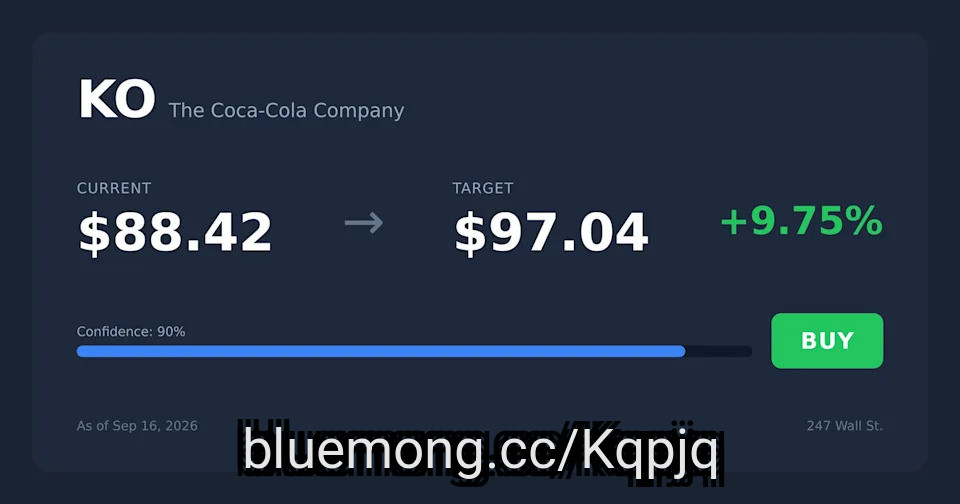
KO beat the S&P 500 over one and five years, returning 37% and 85% respectively, backed by 63 straight years of dividend raises.
At a P/E of 29 and P/FCF of 72 with shares near their $91.94 52-week high, Coca-Cola's valuation leaves little room for error.
Read More: Avoid these 13 retirement mistakes before they derail your future (sponsor)
If you bought Coca-Cola (NYSE:KO) a decade ago, you bought a business that has spent the intervening years quietly reinventing its balance sheet while doing what it always does: raising the dividend. 2025 marked the 63rd consecutive year of dividend increases, cementing Coca-Cola's status as a dividend king.
The past two years have been eventful. CEO James Quincey handed the reins to Henrique Braun in 2026, and the company has pushed hard on refranchising bottlers, including a pending sale of Coca-Cola Beverages Africa. Q4 2025 absorbed a $960M BODYARMOR impairment, but 2026 has been a different story. Q2 delivered EPS of $0.97, revenue of $13.38B (+6.7% YoY), and 5% unit case volume growth, aided by the FIFA World Cup marketing push. Management now guides to comparable EPS growth of 9% to 10% for the year.
#Dividend #cola #year
At a P/E of 29 and P/FCF of 72 with shares near their $91.94 52-week high, Coca-Cola's valuation leaves little room for error.
Read More: Avoid these 13 retirement mistakes before they derail your future (sponsor)
If you bought Coca-Cola (NYSE:KO) a decade ago, you bought a business that has spent the intervening years quietly reinventing its balance sheet while doing what it always does: raising the dividend. 2025 marked the 63rd consecutive year of dividend increases, cementing Coca-Cola's status as a dividend king.
The past two years have been eventful. CEO James Quincey handed the reins to Henrique Braun in 2026, and the company has pushed hard on refranchising bottlers, including a pending sale of Coca-Cola Beverages Africa. Q4 2025 absorbed a $960M BODYARMOR impairment, but 2026 has been a different story. Q2 delivered EPS of $0.97, revenue of $13.38B (+6.7% YoY), and 5% unit case volume growth, aided by the FIFA World Cup marketing push. Management now guides to comparable EPS growth of 9% to 10% for the year.
#Dividend #cola #year


4 hours ago
For much of 2025, UnitedHealth Group (UNH) looked like a company under siege as higher medical costs and weaker margins rattled investors. UNH stock sold off sharply, and questions emerged around the company's earnings outlook as well as the health of its long-standing growth story.
That picture is starting to improve in 2026. UnitedHealth's latest results showed a clear turnaround in profitability as it generated $112 billion in revenue and $8 billion in earnings from operations. Management also raised the company's full-year adjusted EPS outlook to a range of $19.50 to $20 and increased its operating cash flow forecast to about $24 billion. Those moves suggest UnitedHealth sees its recovery as more than a short-term earnings rebound.
This High-Yield Construction Stock Just Raised Its Dividend by 40%
Dear Intuit Stock Fans, Mark Your Calendars for September 17
This Dividend Stock Is Beating the Market in 2026 and Yields 2.36%
#Stock #billion #Dividend #management
That picture is starting to improve in 2026. UnitedHealth's latest results showed a clear turnaround in profitability as it generated $112 billion in revenue and $8 billion in earnings from operations. Management also raised the company's full-year adjusted EPS outlook to a range of $19.50 to $20 and increased its operating cash flow forecast to about $24 billion. Those moves suggest UnitedHealth sees its recovery as more than a short-term earnings rebound.
This High-Yield Construction Stock Just Raised Its Dividend by 40%
Dear Intuit Stock Fans, Mark Your Calendars for September 17
This Dividend Stock Is Beating the Market in 2026 and Yields 2.36%
#Stock #billion #Dividend #management


4 hours ago
Michael John Callahan, Chief Administrative Officer of Rivian Automotive, Inc. (NASDAQ:RIVN), sold 15,000 shares of Class A Common Stock on September 11, 2026, according to a recent SEC Form 4 filing.
Metric
Value
Transaction value
~$244,000
#john #administrative #officer #NASDAQ
Metric
Value
Transaction value
~$244,000
#john #administrative #officer #NASDAQ


5 hours ago
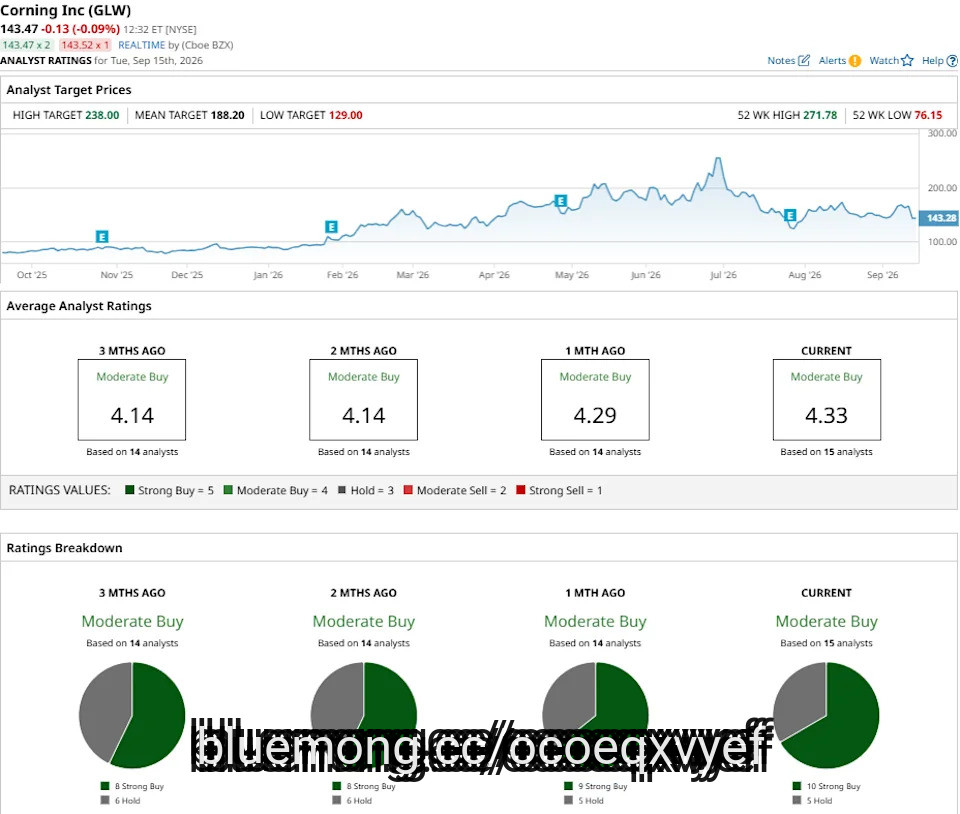
Corning Incorporated (GLW), the 175-year-old materials science giant based in Corning, New York, has become one of the more surprising beneficiaries of the artificial intelligence infrastructure buildout. Best known for its glass, ceramics, and optical technology innovations, Corning now plays a critical behind-the-scenes role as the dominant supplier of optical fiber powering hyperscale data centers and AI networks. The company has locked in major long-term supply agreements with tech heavyweights including Apple (AAPL), Meta (META), Nvidia (NVDA), Amazon (AMZN), and Verizon (VZ).
Corning stock has swung wildly of late, recently trading near $144 after plunging more than 13% in a single session following news of a $2 billion at-the-market equity offering arranged with Goldman Sachs, a move that reignited investor concerns over shareholder dilution. Shares now sit roughly in the middle of a wide 52-week range spanning $75.77 to $271.78, capturing a dramatic round trip. Corning suffered its worst monthly drop in 24 years this past July, only to rebound 8% in early September after unveiling a multibillion-dollar, 80-million-mile fiber supply deal with Verizon.
Billionaire Charlie Munger, Who Died at 99, Skipped Insurance on His Mansion Since He Could Just Write a Check to Rebuild — 'All Intelligent People Do It My Way'
Why It's Time to Load Up on Nvidia Stock
The Case for Selling CrowdStrike Stock
#meta #fiber
Corning stock has swung wildly of late, recently trading near $144 after plunging more than 13% in a single session following news of a $2 billion at-the-market equity offering arranged with Goldman Sachs, a move that reignited investor concerns over shareholder dilution. Shares now sit roughly in the middle of a wide 52-week range spanning $75.77 to $271.78, capturing a dramatic round trip. Corning suffered its worst monthly drop in 24 years this past July, only to rebound 8% in early September after unveiling a multibillion-dollar, 80-million-mile fiber supply deal with Verizon.
Billionaire Charlie Munger, Who Died at 99, Skipped Insurance on His Mansion Since He Could Just Write a Check to Rebuild — 'All Intelligent People Do It My Way'
Why It's Time to Load Up on Nvidia Stock
The Case for Selling CrowdStrike Stock
#meta #fiber

5 hours ago
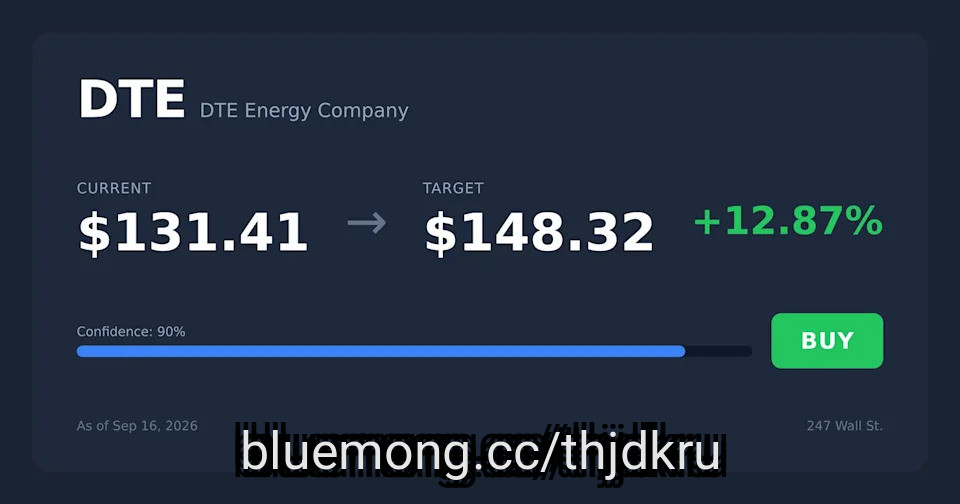
DTE Energy holds 2.4 GW of signed data center deals with between 5 and 6 GW more in the pipeline, supporting a $148 price target and 13% upside.
CEO Joi Harris confirmed Oracle's 1.4 GW project is under construction and Google's 1 GW deal could drive $5 billion in incremental capex through 2032.
CMS Energy's $24 billion capital plan and WEC's premium valuation both support DTE's forward P/E of 16 as reasonable and undervalued.
Read More: Avoid these 13 retirement mistakes before they derail your future (sponsor)
DTE Energy (NYSE:DTE) is quietly turning into one of the most direct Michigan plays on hyperscale data center power demand. With 2.4 gigawatts of executed data center agreements already in hand and another five to six gigawatts in the pipeline, the AI-era load story is now a real earnings catalyst.
#billion
CEO Joi Harris confirmed Oracle's 1.4 GW project is under construction and Google's 1 GW deal could drive $5 billion in incremental capex through 2032.
CMS Energy's $24 billion capital plan and WEC's premium valuation both support DTE's forward P/E of 16 as reasonable and undervalued.
Read More: Avoid these 13 retirement mistakes before they derail your future (sponsor)
DTE Energy (NYSE:DTE) is quietly turning into one of the most direct Michigan plays on hyperscale data center power demand. With 2.4 gigawatts of executed data center agreements already in hand and another five to six gigawatts in the pipeline, the AI-era load story is now a real earnings catalyst.
#billion



5 hours ago
GE Aerospace (GE) has more engine work booked than it can currently perform, and that visibility is much of why people own the shares. The option chain does not treat the stock as settled. At about $307, contracts running twelve months out carry a band from near $216.93 to near $434.6, with roughly a two-in-three chance the stock finishes inside it.
Read that band as money. The ceiling near $434.6 sits about 41.5% above today's price, and the floor near $216.93 sits about 29.4% below it. Whatever money you have in GE, the options market prices about $90 of every $307 coming off, or about $128 going on, inside twelve months.
The two distances are not equal. A share price cannot fall below zero while nothing caps the upside, so the ceiling always sits further out than the floor. That is arithmetic rather than a view on GE.
The floor is the half worth sitting with. Near $216.93, it is well below $272.91, the lowest GE has traded in the past 52 weeks. The chain is not forecasting that price. It prices twelve months as long enough to reach it.
A range is only wide relative to something. The stock's realized volatility over the trailing year, meaning how far it has actually moved, was 33.2%, and the options quote 34.6%. The market is charging about what this stock already delivers.
#near #sits #floor #band
Read that band as money. The ceiling near $434.6 sits about 41.5% above today's price, and the floor near $216.93 sits about 29.4% below it. Whatever money you have in GE, the options market prices about $90 of every $307 coming off, or about $128 going on, inside twelve months.
The two distances are not equal. A share price cannot fall below zero while nothing caps the upside, so the ceiling always sits further out than the floor. That is arithmetic rather than a view on GE.
The floor is the half worth sitting with. Near $216.93, it is well below $272.91, the lowest GE has traded in the past 52 weeks. The chain is not forecasting that price. It prices twelve months as long enough to reach it.
A range is only wide relative to something. The stock's realized volatility over the trailing year, meaning how far it has actually moved, was 33.2%, and the options quote 34.6%. The market is charging about what this stock already delivers.
#near #sits #floor #band

5 hours ago
Amazon raised minimum starting pay for its U.S. full-time core operations employees to $20 an hour on Wednesday, a $1-per-hour increase for front-line workers who sort, pack, and transport orders.
Amazon said the typical hourly rate for those workers climbs to nearly $24, and that when benefits are counted, total compensation comes out to more than $32 an hour. Amazon said its minimum starting pay has risen more than 17% over the past three years.
The announcement arrives as Amazon approaches the peak holiday shopping season. According to The Wall Street Journal, Amazon hired 250,000 full-time, part-time, and seasonal workers in advance of last year's holiday period.
Along with the pay increase, Amazon announced two new benefits. Beginning Oct. 1, all U.S. Amazon employees will receive a grocery discount — 10% off eligible groceries and everyday essentials on Amazon.com and Whole Foods Market online, and 20% off in-store at Whole Foods. The discount can be combined with existing Prime member discounts, the company said.
Amazon also said it is launching a banking benefit called Day 1 Financial, through which qualified employees and their families can obtain a lifelong membership in First Tech Federal Credit Union. The benefit includes accounts with no overdraft fees, no monthly maintenance fees, and no account minimums, as well as access to credit cards, auto loans, and home loans for those who qualify. The company said the rollout will start in late 2026, with broad availability expected in 2027.
#time #employees #credit #starting
Amazon said the typical hourly rate for those workers climbs to nearly $24, and that when benefits are counted, total compensation comes out to more than $32 an hour. Amazon said its minimum starting pay has risen more than 17% over the past three years.
The announcement arrives as Amazon approaches the peak holiday shopping season. According to The Wall Street Journal, Amazon hired 250,000 full-time, part-time, and seasonal workers in advance of last year's holiday period.
Along with the pay increase, Amazon announced two new benefits. Beginning Oct. 1, all U.S. Amazon employees will receive a grocery discount — 10% off eligible groceries and everyday essentials on Amazon.com and Whole Foods Market online, and 20% off in-store at Whole Foods. The discount can be combined with existing Prime member discounts, the company said.
Amazon also said it is launching a banking benefit called Day 1 Financial, through which qualified employees and their families can obtain a lifelong membership in First Tech Federal Credit Union. The benefit includes accounts with no overdraft fees, no monthly maintenance fees, and no account minimums, as well as access to credit cards, auto loans, and home loans for those who qualify. The company said the rollout will start in late 2026, with broad availability expected in 2027.
#time #employees #credit #starting


6 hours ago
Galliford Try Holdings PLC (LSE:GFRD, FRA:3WC) chief financial officer Kris Hampson spoke with Proactive's Stephen Gunnion about the construction group's latest results, growing order book, margin progression and outlook for 2027, as well as its approach to acquisitions and shareholder returns.
Hampson said Galliford Try delivered a sixth consecutive year of growth across key metrics, supported by its building, infrastructure and specialist services operations. Adjusted profit before tax rose 24% on revenue growth of 3% to nearly £56 million, with adjusted divisional operating margin advancing from 3% to 3.5% and average cash up 21% to £216.2 million. "We make revenue, we turn it into profit, and we turn that profit into cash," Hampson said.
Looking ahead, he highlighted the £4.3 billion order book, up 5%, with more than 90% of current-year revenue already secured, alongside 60% for 2028. He said 91% of the order book sits within long-term frameworks and 95% is with government and regulated clients.
Hampson also discussed opportunities across water, highways, education and affordable housing, including growth tied to AMP8, newer frameworks on improved terms, and expects continued progression towards the group's 4% adjusted operating margin target for 2030.
On capital allocation, Galliford Try announced a £15 million share buyback alongside its results, following last year's £10 million buyback. Hampson also discussed the company's active M&A pipeline and its commitment to maintaining a dividend at 1.8 times cover based on adjusted EPS.
#million #profit
Hampson said Galliford Try delivered a sixth consecutive year of growth across key metrics, supported by its building, infrastructure and specialist services operations. Adjusted profit before tax rose 24% on revenue growth of 3% to nearly £56 million, with adjusted divisional operating margin advancing from 3% to 3.5% and average cash up 21% to £216.2 million. "We make revenue, we turn it into profit, and we turn that profit into cash," Hampson said.
Looking ahead, he highlighted the £4.3 billion order book, up 5%, with more than 90% of current-year revenue already secured, alongside 60% for 2028. He said 91% of the order book sits within long-term frameworks and 95% is with government and regulated clients.
Hampson also discussed opportunities across water, highways, education and affordable housing, including growth tied to AMP8, newer frameworks on improved terms, and expects continued progression towards the group's 4% adjusted operating margin target for 2030.
On capital allocation, Galliford Try announced a £15 million share buyback alongside its results, following last year's £10 million buyback. Hampson also discussed the company's active M&A pipeline and its commitment to maintaining a dividend at 1.8 times cover based on adjusted EPS.
#million #profit


11 hours ago
On September 11, Elastic (NYSE:ESTC) rolled out Elasticsearch Vector Database, a new serverless offering the company says lets developers ship large-scale vector search and AI applications without stitching together the usual pile of infrastructure themselves. The launch landed less than three weeks after Elastic posted first-quarter fiscal 2027 results on August 27, for the period ended July 31, giving investors a fresh product story to weigh against a quarter that already showed accelerating growth.
The new database automates what used to require manual **** embly: chunking documents, hosting embedding and reranking models, configuring indexes, and wiring query-time retrieval. Elastic built in expert-tuned defaults, a single field type that handles indexing, embeddings, and chunking together, and hybrid search that combines full-text and vector retrieval in one query. The system scales to hundreds of billions of vectors using Elastic's Better Binary Quantization, which the company says shrinks vector memory by up to 32 times while keeping recall high, and pricing is based on data and search capacity rather than the opaque compute units the company says define most pure-play vector database pricing.
That product push follows a quarter that was already running hot. Total revenue reached $478 million in the first quarter of fiscal 2027, up 15% year over year, while current remaining performance obligations grew 21% and remaining performance obligations grew 27%. Sales-led subscription revenue, which strips out Monthly Elastic Cloud, grew 18% year over year to $399 million, outpacing the company's overall subscription growth.
Elastic added more customers with annual contract value above $100,000 than in any prior quarter, pushing that cohort past 1,800 from over 1,720 in the fourth quarter of fiscal 2026 and over 1,550 a year earlier. Net expansion rate held around 111%, and the company generated $143 million in adjusted free cash flow during the quarter. Guidance for the second quarter of fiscal 2027, ending October 31, calls for revenue of $486 million to $487 million and a swing to positive GAAP operating margin, with full fiscal 2027 non-GAAP operating margin guided to roughly 19.4%, up from 16.2% in the quarter just reported.
Growth came with a reminder that Elastic has not fully crossed into GAAP profitability. The company posted a GAAP operating loss of $24 million in the first quarter of fiscal 2027, a -5% operating margin, and a GAAP net loss per share of $0.16. Non-GAAP figures told a healthier story, with $77 million in non-GAAP operating income and $0.70 in non-GAAP diluted earnings per share, but the gap between the two measures shows how much of Elastic's reported profitability still depends on excluding real costs like stock-based compensation.
#elastic #vector #company
The new database automates what used to require manual **** embly: chunking documents, hosting embedding and reranking models, configuring indexes, and wiring query-time retrieval. Elastic built in expert-tuned defaults, a single field type that handles indexing, embeddings, and chunking together, and hybrid search that combines full-text and vector retrieval in one query. The system scales to hundreds of billions of vectors using Elastic's Better Binary Quantization, which the company says shrinks vector memory by up to 32 times while keeping recall high, and pricing is based on data and search capacity rather than the opaque compute units the company says define most pure-play vector database pricing.
That product push follows a quarter that was already running hot. Total revenue reached $478 million in the first quarter of fiscal 2027, up 15% year over year, while current remaining performance obligations grew 21% and remaining performance obligations grew 27%. Sales-led subscription revenue, which strips out Monthly Elastic Cloud, grew 18% year over year to $399 million, outpacing the company's overall subscription growth.
Elastic added more customers with annual contract value above $100,000 than in any prior quarter, pushing that cohort past 1,800 from over 1,720 in the fourth quarter of fiscal 2026 and over 1,550 a year earlier. Net expansion rate held around 111%, and the company generated $143 million in adjusted free cash flow during the quarter. Guidance for the second quarter of fiscal 2027, ending October 31, calls for revenue of $486 million to $487 million and a swing to positive GAAP operating margin, with full fiscal 2027 non-GAAP operating margin guided to roughly 19.4%, up from 16.2% in the quarter just reported.
Growth came with a reminder that Elastic has not fully crossed into GAAP profitability. The company posted a GAAP operating loss of $24 million in the first quarter of fiscal 2027, a -5% operating margin, and a GAAP net loss per share of $0.16. Non-GAAP figures told a healthier story, with $77 million in non-GAAP operating income and $0.70 in non-GAAP diluted earnings per share, but the gap between the two measures shows how much of Elastic's reported profitability still depends on excluding real costs like stock-based compensation.
#elastic #vector #company


11 hours ago
On August 4, Westlake Corporation (NYSE:WLK) reported second-quarter results that erased two consecutive quarterly losses in a single swing. Net income landed at $260 million, or $2.01 per share, compared with a $169 million loss just three months earlier and a $142 million loss a year ago. EBITDA nearly tripled from the second quarter of 2025. The numbers mark a sharp reversal for a company whose chemicals business had been bleeding red ink.
The turnaround centers on Performance and Essential Materials, the segment that makes chlorovinyls and other basic chemicals. PEM swung from a $318 million operating loss in the second quarter of 2025 to $185 million in income this quarter, while EBITDA excluding identified items jumped from a 3% margin to 21%. The driver was pricing: average sales prices across PEM rose 14% year over year, more than offsetting a 3% price decline in the Housing and Infrastructure Products segment. Combined with a 7% increase in companywide sales volume, excluding the effects of plant shutdowns and an acquisition, the pricing recovery pushed companywide EBITDA to $679 million from $210 million a year earlier.
Westlake is also working the balance sheet alongside the market recovery. The company reduced debt by $500 million during the quarter and returned $99 million to shareholders through dividends and share repurchases. Management says its three-pillar profitability improvement plan remains on track to deliver a $600 million operating income benefit, a target that, if it holds, would layer structural cost savings on top of whatever the market gives back in pricing.
Not every part of the story improved together. Housing and Infrastructure Products, the segment tied to home construction and building products, saw its EBITDA margin slip to 22% from 24% a year earlier, even as volume rose 6% excluding the ACI acquisition. Average sales prices in that segment fell 3% year over year, a sign that pricing power in housing products has softened even as the company sells more of it.
The improvement in the core chemicals business also leans heavily on price rather than volume. PEM's turnaround came from a 14% jump in average sales price, a figure that can move in either direction with commodity cycles. The first quarter of 2026 was a reminder of how quickly conditions shift: Westlake posted a $169 million net loss just three months before this result, weighed down by $85 million in identified items, including a $67 million charge to settle litigation over PVC pipe and fittings and $18 million tied to facility shutdowns. A year earlier, in the second quarter of 2025, the company absorbed another $130 million in shutdown-related charges. Restructuring and legal charges showed up in two of the last three reported quarters.
#million #year #quarter #loss
The turnaround centers on Performance and Essential Materials, the segment that makes chlorovinyls and other basic chemicals. PEM swung from a $318 million operating loss in the second quarter of 2025 to $185 million in income this quarter, while EBITDA excluding identified items jumped from a 3% margin to 21%. The driver was pricing: average sales prices across PEM rose 14% year over year, more than offsetting a 3% price decline in the Housing and Infrastructure Products segment. Combined with a 7% increase in companywide sales volume, excluding the effects of plant shutdowns and an acquisition, the pricing recovery pushed companywide EBITDA to $679 million from $210 million a year earlier.
Westlake is also working the balance sheet alongside the market recovery. The company reduced debt by $500 million during the quarter and returned $99 million to shareholders through dividends and share repurchases. Management says its three-pillar profitability improvement plan remains on track to deliver a $600 million operating income benefit, a target that, if it holds, would layer structural cost savings on top of whatever the market gives back in pricing.
Not every part of the story improved together. Housing and Infrastructure Products, the segment tied to home construction and building products, saw its EBITDA margin slip to 22% from 24% a year earlier, even as volume rose 6% excluding the ACI acquisition. Average sales prices in that segment fell 3% year over year, a sign that pricing power in housing products has softened even as the company sells more of it.
The improvement in the core chemicals business also leans heavily on price rather than volume. PEM's turnaround came from a 14% jump in average sales price, a figure that can move in either direction with commodity cycles. The first quarter of 2026 was a reminder of how quickly conditions shift: Westlake posted a $169 million net loss just three months before this result, weighed down by $85 million in identified items, including a $67 million charge to settle litigation over PVC pipe and fittings and $18 million tied to facility shutdowns. A year earlier, in the second quarter of 2025, the company absorbed another $130 million in shutdown-related charges. Restructuring and legal charges showed up in two of the last three reported quarters.
#million #year #quarter #loss


11 hours ago
On September 14, Radiant Logistics (NYSEAMERICAN:RLGT) held its fourth fiscal quarter earnings call, and the headline numbers landed harder than a typical logistics update. Net income jumped 53.1% to $7.5 million for the quarter ended June 30, while revenue climbed 18.5% to $261.4 million. Look past that one quarter, though, and the picture gets more complicated, because full-year adjusted profitability actually fell. That gap between a blowout quarter and a softer year is what makes this name worth a closer look.
The fourth fiscal quarter was strong from top to bottom. Adjusted EBITDA rose 31.6% to $10.4 million, margin expanded 240 basis points to 15.5%, and adjusted net income climbed 34.5% to $7.4 million, all against organic revenue growth of 8%. Management credited the acceleration to US forwarding operations and international airfreight, including work supporting disaster relief after typhoon activity hit the Western Pacific earlier this year, plus airfreight demand tied to capital flows into global data center buildouts.
The balance sheet backs up the story. Radiant enters fiscal 2027 with zero net debt, $25.6 million in cash as of June 30, and a $200 million senior credit facility that was extended and restated in August, pushing maturity out to August 7, 2031, while its acquisition-focused accordion grew to $100 million from $75 million. On the domestic side, capacity has been exiting the truckload and intermodal markets, and spot rates and tender rejections moved higher late in the quarter. Radiant also launched a new independent agent program at Radiant Road & Rail during the quarter, extending its freight forwarding agent network into truck brokerage and intermodal, while Navegate is gaining traction, with one enterprise customer now managing more than 1,400 vendors on the platform.
The full-year numbers tell a different story than the quarter does. Revenue rose just 3.5% to $934.4 million from $902.7 million, a fraction of the fourth quarter's 18.5% pace, and full-year net income grew a modest 8.7% to $18.8 million. Full-year adjusted EBITDA actually fell 5.4% to $36.7 million from $38.8 million, and that figure included a $1.3 million First Brands adjustment. Strip that out and normalized adjusted EBITDA comes in at $35.4 million, an even steeper decline than the headline number suggests.
The operating backdrop stays complicated too. Ocean shipping routes remain disrupted by the closure of the Strait of Hormuz and continued Houthi activity affecting Suez Canal transits, keeping capacity tight on key trade lanes. US tariff policy is generating elevated IEEPA-related filing activity, and Canada put new retaliatory tariff measures into effect in early September, adding fresh complexity for shippers moving goods across that border. Management itself acknowledged that the domestic truck brokerage improvement seen late in the fourth quarter is not yet fully reflected in the reported results.
#quarter #revenue
The fourth fiscal quarter was strong from top to bottom. Adjusted EBITDA rose 31.6% to $10.4 million, margin expanded 240 basis points to 15.5%, and adjusted net income climbed 34.5% to $7.4 million, all against organic revenue growth of 8%. Management credited the acceleration to US forwarding operations and international airfreight, including work supporting disaster relief after typhoon activity hit the Western Pacific earlier this year, plus airfreight demand tied to capital flows into global data center buildouts.
The balance sheet backs up the story. Radiant enters fiscal 2027 with zero net debt, $25.6 million in cash as of June 30, and a $200 million senior credit facility that was extended and restated in August, pushing maturity out to August 7, 2031, while its acquisition-focused accordion grew to $100 million from $75 million. On the domestic side, capacity has been exiting the truckload and intermodal markets, and spot rates and tender rejections moved higher late in the quarter. Radiant also launched a new independent agent program at Radiant Road & Rail during the quarter, extending its freight forwarding agent network into truck brokerage and intermodal, while Navegate is gaining traction, with one enterprise customer now managing more than 1,400 vendors on the platform.
The full-year numbers tell a different story than the quarter does. Revenue rose just 3.5% to $934.4 million from $902.7 million, a fraction of the fourth quarter's 18.5% pace, and full-year net income grew a modest 8.7% to $18.8 million. Full-year adjusted EBITDA actually fell 5.4% to $36.7 million from $38.8 million, and that figure included a $1.3 million First Brands adjustment. Strip that out and normalized adjusted EBITDA comes in at $35.4 million, an even steeper decline than the headline number suggests.
The operating backdrop stays complicated too. Ocean shipping routes remain disrupted by the closure of the Strait of Hormuz and continued Houthi activity affecting Suez Canal transits, keeping capacity tight on key trade lanes. US tariff policy is generating elevated IEEPA-related filing activity, and Canada put new retaliatory tariff measures into effect in early September, adding fresh complexity for shippers moving goods across that border. Management itself acknowledged that the domestic truck brokerage improvement seen late in the fourth quarter is not yet fully reflected in the reported results.
#quarter #revenue


11 hours ago
Parnassus Investments, an investment management company, released the "Parnassus Growth Equity Fund" second-quarter 2026 investor letter. The letter can be downloaded here. During the quarter, the Fund (Investor Shares) returned 17.49% (net of fees), outperforming the Russell 1000 Growth Index's 16.74%. Holdings in Information Technology and Consumer Discretionary sectors boosted relative returns, while Communication Services and Financials holdings detracted. For the year-to-date period, the Fund returned 6.17% (net of fees), outperforming the Russell 1000 Growth's 5.33%. The firm remains constructively bullish on U.S. equities and continues to be selective, valuation-sensitive, and focused on disruptive growth opportunities through active stock selection. Growth stocks advanced during the second quarter, as the Russell 1000 Growth Index generated strong double-digit returns driven by increased confidence in the durability of the ongoing artificial intelligence (AI) infrastructure build-out. Additionally, reviewing the Fund's top five holdings could help identify its best picks for 2026.
In its second-quarter 2026 investor letter, Parnassus Growth Equity Fund highlighted Sandisk Corporation (NASDAQ:SNDK) as a newly added position. Sandisk Corporation (NASDAQ:SNDK) develops, manufactures, and sells data storage devices and solutions using NAND flash technology in the United States and internationally. On September 15, 2026, Sandisk Corporation (NASDAQ:SNDK) closed at $1,530.90 per share. Over the past month, Sandisk Corporation (NASDAQ:SNDK) declined 2.32%, but its shares are up 1,530.74% over the past year. Sandisk Corporation (NASDAQ:SNDK) has a market capitalization of $224.15 billion, and its stock has traded within a 52-week range of $90.22 to $2,354.39.
Parnassus Growth Equity Fund stated the following regarding Sandisk Corporation (NASDAQ:SNDK) in its Q2 2026 investor letter:
"Other positions added during the quarter included Sandisk Corporation (NASDAQ:SNDK), a leader in flash memory solutions; Comfort Systems, a mechanical, electrical and plumbing contractor. Sandisk makes NAND flash memory, which is seeing a surge in demand from data centers and AI workloads. While NAND remains cyclical, we believe the combination of accelerating AI-driven storage demand and constrained supply provides an attractive opportunity to participate in the current upcycle."
Sandisk Corporation (NASDAQ:SNDK) is on our list of the 40 Most Popular Stocks Among Hedge Funds. As per our database, 128 hedge fund portfolios held Sandisk Corporation (NASDAQ:SNDK) at the end of the second quarter which was 114 in the previous quarter. While we acknowledge the potential of Sandisk Corporation (NASDAQ:SNDK) as an investment, we believe certain AI stocks offer greater upside potential and carry less downside risk. If you're looking for an extremely undervalued AI stock that also stands to benefit significantly from Trump-era tariffs and the onshoring trend, see our fre
In its second-quarter 2026 investor letter, Parnassus Growth Equity Fund highlighted Sandisk Corporation (NASDAQ:SNDK) as a newly added position. Sandisk Corporation (NASDAQ:SNDK) develops, manufactures, and sells data storage devices and solutions using NAND flash technology in the United States and internationally. On September 15, 2026, Sandisk Corporation (NASDAQ:SNDK) closed at $1,530.90 per share. Over the past month, Sandisk Corporation (NASDAQ:SNDK) declined 2.32%, but its shares are up 1,530.74% over the past year. Sandisk Corporation (NASDAQ:SNDK) has a market capitalization of $224.15 billion, and its stock has traded within a 52-week range of $90.22 to $2,354.39.
Parnassus Growth Equity Fund stated the following regarding Sandisk Corporation (NASDAQ:SNDK) in its Q2 2026 investor letter:
"Other positions added during the quarter included Sandisk Corporation (NASDAQ:SNDK), a leader in flash memory solutions; Comfort Systems, a mechanical, electrical and plumbing contractor. Sandisk makes NAND flash memory, which is seeing a surge in demand from data centers and AI workloads. While NAND remains cyclical, we believe the combination of accelerating AI-driven storage demand and constrained supply provides an attractive opportunity to participate in the current upcycle."
Sandisk Corporation (NASDAQ:SNDK) is on our list of the 40 Most Popular Stocks Among Hedge Funds. As per our database, 128 hedge fund portfolios held Sandisk Corporation (NASDAQ:SNDK) at the end of the second quarter which was 114 in the previous quarter. While we acknowledge the potential of Sandisk Corporation (NASDAQ:SNDK) as an investment, we believe certain AI stocks offer greater upside potential and carry less downside risk. If you're looking for an extremely undervalued AI stock that also stands to benefit significantly from Trump-era tariffs and the onshoring trend, see our fre


11 hours ago
York Water holds the longest dividend streak in US public markets at 27 consecutive years, while WTW's $1.775B operating cash flow dwarfs its $358M dividend obligation.
Amdocs and Ituran both run near-recession-proof revenue models, with DOX posting near-100% managed services renewal rates and ITRN carrying zero debt alongside $103.7M in net cash.
All five stocks fund dividends from contracted or recurring revenue streams such as regulated rates, fee income, or subscriptions, insulating payouts from economic cycles.
Read More: Learn 7 secret wealth tips high net worth investors use that most investors miss (sponsor)
Income investors heading into the fourth quarter want payouts that don't wobble with the business cycle. The five names below share one thing: dividends funded by recurring, contracted, or fee-based revenue streams that keep flowing whether or not the macro cooperates. Each has raised its payout recently, and each trades on Nasdaq. As a grounding data point, Willis Towers Watson (NASDAQ:WTW) alone generated $360 million of first-half free cash flow, roughly double the prior-year period, giving the broker ample room to keep funding both dividends and buybacks.
#revenue #NASDAQ #Dividend
Amdocs and Ituran both run near-recession-proof revenue models, with DOX posting near-100% managed services renewal rates and ITRN carrying zero debt alongside $103.7M in net cash.
All five stocks fund dividends from contracted or recurring revenue streams such as regulated rates, fee income, or subscriptions, insulating payouts from economic cycles.
Read More: Learn 7 secret wealth tips high net worth investors use that most investors miss (sponsor)
Income investors heading into the fourth quarter want payouts that don't wobble with the business cycle. The five names below share one thing: dividends funded by recurring, contracted, or fee-based revenue streams that keep flowing whether or not the macro cooperates. Each has raised its payout recently, and each trades on Nasdaq. As a grounding data point, Willis Towers Watson (NASDAQ:WTW) alone generated $360 million of first-half free cash flow, roughly double the prior-year period, giving the broker ample room to keep funding both dividends and buybacks.
#revenue #NASDAQ #Dividend


11 hours ago
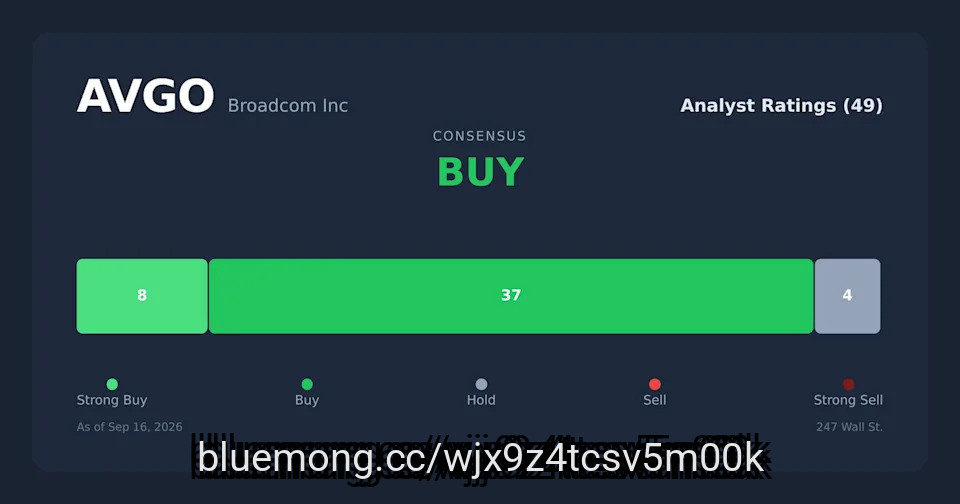
Broadcom (AVGO) trades at just 19x forward earnings despite AI semiconductor revenue surging 221% YoY, supporting a $424 price target with 22% upside.
AVGO's 19x forward multiple looks cheap against NVIDIA (NVDA) at 24x and Marvell (MRVL) at 56x, despite faster AI revenue acceleration than both peers.
Hock Tan targets $230 billion in fiscal 2028 AI revenue across a $350 billion XPU pipeline with Google, OpenAI, and Meta as anchor customers.
Read More: Avoid these 13 retirement mistakes before they derail your future (sponsor)
Broadcom (NASDAQ:AVGO) has become the second most valuable custom AI chip franchise on the planet, yet the stock is down over the past month and trading well below its 52-week high. Our proprietary model says that disconnect is an opportunity.
#despite #nvda
AVGO's 19x forward multiple looks cheap against NVIDIA (NVDA) at 24x and Marvell (MRVL) at 56x, despite faster AI revenue acceleration than both peers.
Hock Tan targets $230 billion in fiscal 2028 AI revenue across a $350 billion XPU pipeline with Google, OpenAI, and Meta as anchor customers.
Read More: Avoid these 13 retirement mistakes before they derail your future (sponsor)
Broadcom (NASDAQ:AVGO) has become the second most valuable custom AI chip franchise on the planet, yet the stock is down over the past month and trading well below its 52-week high. Our proprietary model says that disconnect is an opportunity.
#despite #nvda



11 hours ago
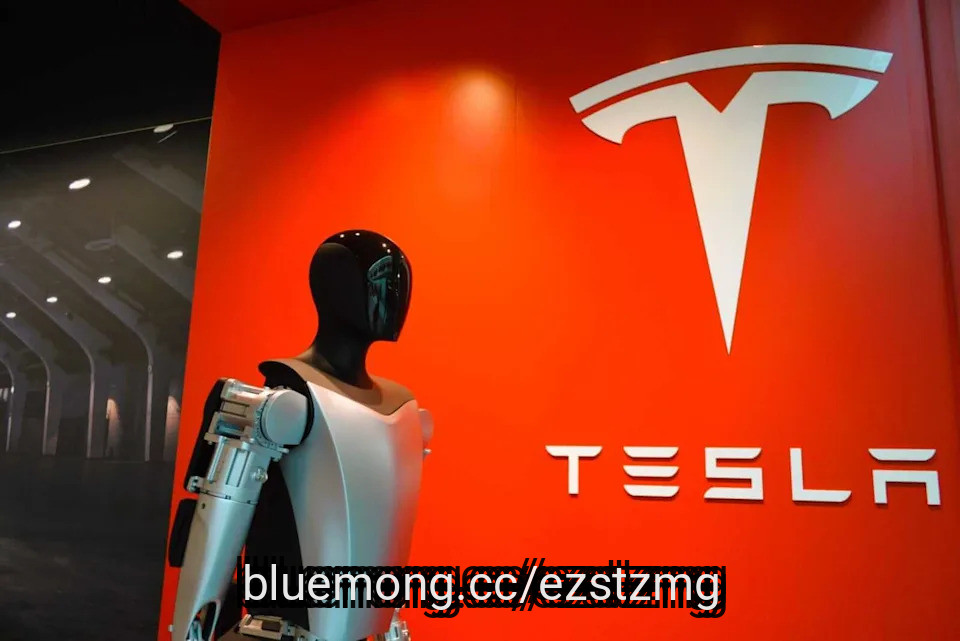
Over the past few months, **** eX (SPCX) has hogged so much of the limelight that Elon Musk's "other" company, Tesla (TSLA), has slipped completely under the radar. Yet, the EV leader is looking to go back to the past to grow in the future.
An event scheduled for Oct. 1 is expected to provide a major glimpse into the second-generation Roadster—a car that the company sold between 2008 and 2012 and was the one that put it on the automobile map of the world. Described as the company's first production vehicle and built with a Lotus Elise Chassis, the Roadster offered things that no other electric vehicle did at that time. 0-60 mph in 39 seconds, had a top speed of 120 mph, and an initial range of 200+ miles, which eventually rose to 245.
Billionaire Charlie Munger, Who Died at 99, Skipped Insurance on His Mansion Since He Could Just Write a Check to Rebuild — 'All Intelligent People Do It My Way'
The Case for Selling CrowdStrike Stock
Nvidia CEO Jensen Huang Just Dropped Huge News for This Cybersecurity Stock
#company #SpaceX #spcx #Tsla
An event scheduled for Oct. 1 is expected to provide a major glimpse into the second-generation Roadster—a car that the company sold between 2008 and 2012 and was the one that put it on the automobile map of the world. Described as the company's first production vehicle and built with a Lotus Elise Chassis, the Roadster offered things that no other electric vehicle did at that time. 0-60 mph in 39 seconds, had a top speed of 120 mph, and an initial range of 200+ miles, which eventually rose to 245.
Billionaire Charlie Munger, Who Died at 99, Skipped Insurance on His Mansion Since He Could Just Write a Check to Rebuild — 'All Intelligent People Do It My Way'
The Case for Selling CrowdStrike Stock
Nvidia CEO Jensen Huang Just Dropped Huge News for This Cybersecurity Stock
#company #SpaceX #spcx #Tsla


11 hours ago
"I am the house now," Treasury Secretary Scott Bessent told traders last week, as he defended the administration's increasingly interventionist approach to the bond market. He added that he had "asymmetric information" about what policymakers would do next and dared investors: "bet against me if you want."
On Wednesday, Federal Reserve chair Kevin Warsh might effectively take the other side of the bet.
It's been a hot American summer. Oil is hot, hovering around $110 a barrel. Bond yields are hot, too: the 10-year Treasury yield has pushed above 5%, around its highest level since 2007. Credit markets are running hot as well: U.S.-dollar debt issuance to finance AI and data-center development reached $308 billion through July. And all that borrowing is competing with U.S. national debt, which crossed $40 trillion less than a month ago. Stocks, despite a rough few days, are still up roughly 11% this year. Inflation, meanwhile, remains above 3%.
Put all that heat together, and the Federal Reserve is staring down a question it hasn't seriously confronted in three years: Is the U.S. economy actually overheating? Markets are betting the Fed thinks the answer is at least "maybe." Traders have priced a quarter-point hike Wednesday with near certainty.
But whether Wednesday amounts to a one-time course correction or the beginning of a new tightening cycle depends on what, exactly, is making the American economy hot. The last time the Fed began raising rates, in March 2022, Jerome Powell's Fed ultimately raised its benchmark rate by 525 basis points over 16 months.
Mohamed El-Erian, Wharton professor of practice and chief economic adviser at Allianz, parsed the current fervor and anxiety into four questions on X Tuesday: whether oil-supply disruptions persist, with China potentially acting as a "swing consumer"; whether Treasury Secretary Scott Bessent intervenes again to influence long-end yields; whether this week's hike proves "one and done" or the beginning of a cycle; and how markets balance AI's enormous promise against its enormous risks.
#secretary #federal #american
On Wednesday, Federal Reserve chair Kevin Warsh might effectively take the other side of the bet.
It's been a hot American summer. Oil is hot, hovering around $110 a barrel. Bond yields are hot, too: the 10-year Treasury yield has pushed above 5%, around its highest level since 2007. Credit markets are running hot as well: U.S.-dollar debt issuance to finance AI and data-center development reached $308 billion through July. And all that borrowing is competing with U.S. national debt, which crossed $40 trillion less than a month ago. Stocks, despite a rough few days, are still up roughly 11% this year. Inflation, meanwhile, remains above 3%.
Put all that heat together, and the Federal Reserve is staring down a question it hasn't seriously confronted in three years: Is the U.S. economy actually overheating? Markets are betting the Fed thinks the answer is at least "maybe." Traders have priced a quarter-point hike Wednesday with near certainty.
But whether Wednesday amounts to a one-time course correction or the beginning of a new tightening cycle depends on what, exactly, is making the American economy hot. The last time the Fed began raising rates, in March 2022, Jerome Powell's Fed ultimately raised its benchmark rate by 525 basis points over 16 months.
Mohamed El-Erian, Wharton professor of practice and chief economic adviser at Allianz, parsed the current fervor and anxiety into four questions on X Tuesday: whether oil-supply disruptions persist, with China potentially acting as a "swing consumer"; whether Treasury Secretary Scott Bessent intervenes again to influence long-end yields; whether this week's hike proves "one and done" or the beginning of a cycle; and how markets balance AI's enormous promise against its enormous risks.
#secretary #federal #american


12 hours ago
Parnassus Investments, an investment management company, released the "Parnassus Growth Equity Fund" second-quarter 2026 investor letter. The letter can be downloaded here. During the quarter, the Fund (Investor Shares) returned 17.49% (net of fees), outperforming the Russell 1000 Growth Index's 16.74%. Holdings in Information Technology and Consumer Discretionary sectors boosted relative returns, while Communication Services and Financials holdings detracted. For the year-to-date period, the Fund returned 6.17% (net of fees), outperforming the Russell 1000 Growth's 5.33%. The firm remains constructively bullish on U.S. equities and continues to be selective, valuation-sensitive, and focused on disruptive growth opportunities through active stock selection. Growth stocks advanced during the second quarter, as the Russell 1000 Growth Index generated strong double-digit returns driven by increased confidence in the durability of the ongoing artificial intelligence (AI) infrastructure build-out. Additionally, reviewing the Fund's top five holdings could help identify its best picks for 2026.
In its second-quarter 2026 investor letter, Parnassus Growth Equity Fund highlighted Medline Inc. (NASDAQ:MDLN). Medline Inc. (NASDAQ:MDLN) manufactures med-surg products serving hospitals, surgery centers, physician offices, post-acute facilities, and nursing home sites of care. On September 15, 2026, Medline Inc. (NASDAQ:MDLN) closed at $36.59 per share. Over the past month, Medline Inc. (NASDAQ:MDLN) declined 4.23%, and YTD its shares lost 22.68%. Medline Inc. has a market capitalization of $42.22 billion.
Parnassus Growth Equity Fund stated the following regarding Medline Inc. (NASDAQ:MDLN) in its Q2 2026 investor letter:
"Medline Inc. (NASDAQ:MDLN) shares declined as medical technology stocks broadly came under pressure. The company also faced near term concerns surrounding tariffs and higher transportation costs, though we remain confident in its long-term competitive positioning."
Medline Inc. (NASDAQ:MDLN) is not on our list of the 40 Most Popular Stocks Among Hedge Funds. As per our database, 52 hedge fund portfolios held Medline Inc. (NASDAQ:MDLN) at the end of the second quarter which was 65 in the previous quarter. While we acknowledge the potential of Medline Inc. (NASDAQ:MDLN) as an investment, we believe certain AI stocks offer greater upside potential and carry less downside risk. If you're looking for an extremely undervalued AI stock that also stands to benefit significantly from Trump-era tariffs and the onshoring trend, see our free report on the best short-term AI stock.
#medline #NASDAQ #fund #parnassus
In its second-quarter 2026 investor letter, Parnassus Growth Equity Fund highlighted Medline Inc. (NASDAQ:MDLN). Medline Inc. (NASDAQ:MDLN) manufactures med-surg products serving hospitals, surgery centers, physician offices, post-acute facilities, and nursing home sites of care. On September 15, 2026, Medline Inc. (NASDAQ:MDLN) closed at $36.59 per share. Over the past month, Medline Inc. (NASDAQ:MDLN) declined 4.23%, and YTD its shares lost 22.68%. Medline Inc. has a market capitalization of $42.22 billion.
Parnassus Growth Equity Fund stated the following regarding Medline Inc. (NASDAQ:MDLN) in its Q2 2026 investor letter:
"Medline Inc. (NASDAQ:MDLN) shares declined as medical technology stocks broadly came under pressure. The company also faced near term concerns surrounding tariffs and higher transportation costs, though we remain confident in its long-term competitive positioning."
Medline Inc. (NASDAQ:MDLN) is not on our list of the 40 Most Popular Stocks Among Hedge Funds. As per our database, 52 hedge fund portfolios held Medline Inc. (NASDAQ:MDLN) at the end of the second quarter which was 65 in the previous quarter. While we acknowledge the potential of Medline Inc. (NASDAQ:MDLN) as an investment, we believe certain AI stocks offer greater upside potential and carry less downside risk. If you're looking for an extremely undervalued AI stock that also stands to benefit significantly from Trump-era tariffs and the onshoring trend, see our free report on the best short-term AI stock.
#medline #NASDAQ #fund #parnassus

12 hours ago
Parnassus Investments, an investment management company, released the "Parnassus Growth Equity Fund" second-quarter 2026 investor letter. The letter can be downloaded here. During the quarter, the Fund (Investor Shares) returned 17.49% (net of fees), outperforming the Russell 1000 Growth Index's 16.74%. Holdings in Information Technology and Consumer Discretionary sectors boosted relative returns, while Communication Services and Financials holdings detracted. For the year-to-date period, the Fund returned 6.17% (net of fees), outperforming the Russell 1000 Growth's 5.33%. The firm remains constructively bullish on U.S. equities and continues to be selective, valuation-sensitive, and focused on disruptive growth opportunities through active stock selection. Growth stocks advanced during the second quarter, as the Russell 1000 Growth Index generated strong double-digit returns driven by increased confidence in the durability of the ongoing artificial intelligence (AI) infrastructure build-out. Additionally, reviewing the Fund's top five holdings could help identify its best picks for 2026.
In its second-quarter 2026 investor letter, Parnassus Growth Equity Fund highlighted Lumentum Holdings Inc. (NASDAQ:LITE). Lumentum Holdings Inc. (NASDAQ:LITE) is a leading technology company that manufactures and sells optical and photonic products. On September 15, 2026, Lumentum Holdings Inc. closed at $838.96 per share. Over the past month, Lumentum Holdings Inc. gained 6.57%, and its shares are up 439.98% over the past year. Lumentum Holdings Inc. has a market capitalization of $75.25 billion, and its stock has traded within a 52-week range of $144.52 to $1,085.68.
Parnassus Growth Equity Fund stated the following regarding Lumentum Holdings Inc. (NASDAQ:LITE) in its Q2 2026 investor letter:
"Lumentum Holdings Inc. (NASDAQ:LITE) offers exposure to a key bottleneck in AI infrastructure, optical networking, as rising data demand drives a shift away from copper-based systems. Its components enable faster, more efficient data transfer and benefit from strong competitive advantages, including deep technical expertise and high switching costs once embedded in customer platforms."
Lumentum Holdings Inc. (NASDAQ:LITE) is not on our list of the 40 Most Popular Stocks Among Hedge Funds. According to our database, 111 hedge fund portfolios held Lumentum Holdings Inc. (NASDAQ:LITE) at the end of the second quarter, down from 123 in the previous quarter. While we acknowledge the potential of Lumentum Holdings Inc. (NASDAQ:LITE) as an investment, we believe certain AI stocks offer greater upside potential and carry less downside risk. If you're looking for an extremely undervalued AI stock that also stands to benefit significantly from Trump-era tariffs and the onshoring trend, see our free report on the best short-term AI stock.
#Growth #fund #quarter #parnassus
In its second-quarter 2026 investor letter, Parnassus Growth Equity Fund highlighted Lumentum Holdings Inc. (NASDAQ:LITE). Lumentum Holdings Inc. (NASDAQ:LITE) is a leading technology company that manufactures and sells optical and photonic products. On September 15, 2026, Lumentum Holdings Inc. closed at $838.96 per share. Over the past month, Lumentum Holdings Inc. gained 6.57%, and its shares are up 439.98% over the past year. Lumentum Holdings Inc. has a market capitalization of $75.25 billion, and its stock has traded within a 52-week range of $144.52 to $1,085.68.
Parnassus Growth Equity Fund stated the following regarding Lumentum Holdings Inc. (NASDAQ:LITE) in its Q2 2026 investor letter:
"Lumentum Holdings Inc. (NASDAQ:LITE) offers exposure to a key bottleneck in AI infrastructure, optical networking, as rising data demand drives a shift away from copper-based systems. Its components enable faster, more efficient data transfer and benefit from strong competitive advantages, including deep technical expertise and high switching costs once embedded in customer platforms."
Lumentum Holdings Inc. (NASDAQ:LITE) is not on our list of the 40 Most Popular Stocks Among Hedge Funds. According to our database, 111 hedge fund portfolios held Lumentum Holdings Inc. (NASDAQ:LITE) at the end of the second quarter, down from 123 in the previous quarter. While we acknowledge the potential of Lumentum Holdings Inc. (NASDAQ:LITE) as an investment, we believe certain AI stocks offer greater upside potential and carry less downside risk. If you're looking for an extremely undervalued AI stock that also stands to benefit significantly from Trump-era tariffs and the onshoring trend, see our free report on the best short-term AI stock.
#Growth #fund #quarter #parnassus


12 hours ago
Weitz Investment Management, an investment management firm, released its second-quarter Q2 2026 investor letter for the "Multi Cap Equity Fund". The letter can be downloaded here. The Multi Cap Equity Fund's Institutional Class returned 7.90% in Q2, underperforming the Bloomberg U.S. 3000 Index's 15.71% gain. Markets rose in the quarter on hopes of de-escalating Middle East tensions and easing oil flow. Investor focus shifted back to artificial intelligence, despite component shortages like processing chips affecting profits and valuations. Valuation-sensitive investors are selective within the AI sector, in contrast to valuation-agnostic indexes that adopt a more relaxed strategy. Additionally, reviewing the Fund's top five holdings could help identify its best picks for 2026.
In its second-quarter 2026 investor letter, Weitz Multi Cap Equity Fund highlighted Charter Communications, Inc. (NASDAQ:CHTR). Charter Communications, Inc. (NASDAQ:CHTR) is a US-based broadband connectivity company. On September 15, 2026, Charter Communications, Inc. closed at $141.20 per share. Over the past month, Charter Communications, Inc. declined 7.39% and its shares lost 47.32% over the past 52 weeks. Charter Communications, Inc. has a market capitalization of $24.73 billion and its stock has traded within a 52-week range of $111.55 and $285.82.
Weitz Multi Cap Equity Fund stated the following regarding Charter Communications, Inc. (NASDAQ:CHTR) in its Q2 2026 investor letter:
"Charter Communications, Inc. (NASDAQ:CHTR) (the principal **** et of portfolio holding Liberty Broadband) shares were weak as investors remain laser-focused on the impact of competition in Charter's core broadband market. Although the stock price has not yet improved, we remain constructive and believe Charter's growing wireless business, forecasted reduction in investment spending and impending combination with **** provide reasons for optimism."
Charter Communications, Inc. (NASDAQ:CHTR) is not on our list of the 40 Most Popular Stocks Among Hedge Funds. As per our database, 63 hedge fund portfolios held Charter Communications, Inc. (NASDAQ:CHTR) at the end of the second quarter which was 48 in the previous quarter. While we acknowledge the potential of Charter Communications, Inc. (NASDAQ:CHTR) as an investment, we believe certain AI stocks offer greater upside potential and carry less downside risk. If you're looking for an extremely undervalued AI stock that also stands to benefit significantly from Trump-era tariffs and the onshoring trend, see our free report on the best short-term AI stock.
#communications #quarter #investor
In its second-quarter 2026 investor letter, Weitz Multi Cap Equity Fund highlighted Charter Communications, Inc. (NASDAQ:CHTR). Charter Communications, Inc. (NASDAQ:CHTR) is a US-based broadband connectivity company. On September 15, 2026, Charter Communications, Inc. closed at $141.20 per share. Over the past month, Charter Communications, Inc. declined 7.39% and its shares lost 47.32% over the past 52 weeks. Charter Communications, Inc. has a market capitalization of $24.73 billion and its stock has traded within a 52-week range of $111.55 and $285.82.
Weitz Multi Cap Equity Fund stated the following regarding Charter Communications, Inc. (NASDAQ:CHTR) in its Q2 2026 investor letter:
"Charter Communications, Inc. (NASDAQ:CHTR) (the principal **** et of portfolio holding Liberty Broadband) shares were weak as investors remain laser-focused on the impact of competition in Charter's core broadband market. Although the stock price has not yet improved, we remain constructive and believe Charter's growing wireless business, forecasted reduction in investment spending and impending combination with **** provide reasons for optimism."
Charter Communications, Inc. (NASDAQ:CHTR) is not on our list of the 40 Most Popular Stocks Among Hedge Funds. As per our database, 63 hedge fund portfolios held Charter Communications, Inc. (NASDAQ:CHTR) at the end of the second quarter which was 48 in the previous quarter. While we acknowledge the potential of Charter Communications, Inc. (NASDAQ:CHTR) as an investment, we believe certain AI stocks offer greater upside potential and carry less downside risk. If you're looking for an extremely undervalued AI stock that also stands to benefit significantly from Trump-era tariffs and the onshoring trend, see our free report on the best short-term AI stock.
#communications #quarter #investor


12 hours ago
Weitz Investment Management, an investment management firm, released its second-quarter Q2 2026 investor letter for the "Multi Cap Equity Fund". The letter can be downloaded here. The Multi Cap Equity Fund's Institutional Class returned 7.90% in Q2, underperforming the Bloomberg U.S. 3000 Index's 15.71% gain. Markets rose in the quarter on hopes of de-escalating Middle East tensions and easing oil flow. Investor focus shifted back to artificial intelligence, despite component shortages like processing chips affecting profits and valuations. Valuation-sensitive investors are selective within the AI sector, in contrast to valuation-agnostic indexes that adopt a more relaxed strategy. Additionally, reviewing the Fund's top five holdings could help identify its best picks for 2026.
In its second-quarter 2026 investor letter, Weitz Multi Cap Equity Fund highlighted CoStar Group, Inc. (NASDAQ:CSGP). CoStar Group, Inc. (NASDAQ:CSGP), an information, ****** ytics, and online marketplace services provider for commercial and residential property markets. On September 15, 2026, CoStar Group, Inc. (NASDAQ:CSGP) closed at $31.56 per share, reflecting a market capitalization of $12.79 billion. CoStar Group, Inc. (NASDAQ:CSGP) posted a one-month return of -6.43%, while its shares lost 64.08% over the past 52 weeks.
Weitz Multi Cap Equity Fund stated the following regarding CoStar Group, Inc. (NASDAQ:CSGP) in its Q2 2026 investor letter:
"CoStar Group, Inc.'s (NASDAQ:CSGP) management prevailed in its struggle with an activist investor and remains undeterred in its residential real estate strategy. Investors are clearly skeptical of management's plan, but at current prices, we believe the punishment has gone too far."
CoStar Group, Inc. (NASDAQ:CSGP) is not on our list of the 40 Most Popular Stocks Among Hedge Funds. According to our database, 58 hedge fund portfolios held CoStar Group, Inc. (NASDAQ:CSGP) at the end of the second quarter, down from 62 in the previous quarter. While we acknowledge the potential of CoStar Group, Inc. (NASDAQ:CSGP) as an investment, we believe certain AI stocks offer greater upside potential and carry less downside risk. If you're looking for an extremely undervalued AI stock that also stands to benefit significantly from Trump-era tariffs and the onshoring trend, see our free report on the best short-term AI stock.
#group #NASDAQ #fund #weitz
In its second-quarter 2026 investor letter, Weitz Multi Cap Equity Fund highlighted CoStar Group, Inc. (NASDAQ:CSGP). CoStar Group, Inc. (NASDAQ:CSGP), an information, ****** ytics, and online marketplace services provider for commercial and residential property markets. On September 15, 2026, CoStar Group, Inc. (NASDAQ:CSGP) closed at $31.56 per share, reflecting a market capitalization of $12.79 billion. CoStar Group, Inc. (NASDAQ:CSGP) posted a one-month return of -6.43%, while its shares lost 64.08% over the past 52 weeks.
Weitz Multi Cap Equity Fund stated the following regarding CoStar Group, Inc. (NASDAQ:CSGP) in its Q2 2026 investor letter:
"CoStar Group, Inc.'s (NASDAQ:CSGP) management prevailed in its struggle with an activist investor and remains undeterred in its residential real estate strategy. Investors are clearly skeptical of management's plan, but at current prices, we believe the punishment has gone too far."
CoStar Group, Inc. (NASDAQ:CSGP) is not on our list of the 40 Most Popular Stocks Among Hedge Funds. According to our database, 58 hedge fund portfolios held CoStar Group, Inc. (NASDAQ:CSGP) at the end of the second quarter, down from 62 in the previous quarter. While we acknowledge the potential of CoStar Group, Inc. (NASDAQ:CSGP) as an investment, we believe certain AI stocks offer greater upside potential and carry less downside risk. If you're looking for an extremely undervalued AI stock that also stands to benefit significantly from Trump-era tariffs and the onshoring trend, see our free report on the best short-term AI stock.
#group #NASDAQ #fund #weitz

12 hours ago
Weitz Investment Management, an investment management firm, released its second-quarter Q2 2026 investor letter for the "Multi Cap Equity Fund". The letter can be downloaded here. The Multi Cap Equity Fund's Institutional Class returned 7.90% in Q2, underperforming the Bloomberg U.S. 3000 Index's 15.71% gain. Markets rose in the quarter on hopes of de-escalating Middle East tensions and easing oil flow. Investor focus shifted back to artificial intelligence, despite component shortages like processing chips affecting profits and valuations. Valuation-sensitive investors are selective within the AI sector, in contrast to valuation-agnostic indexes that adopt a more relaxed strategy. Additionally, reviewing the Fund's top five holdings could help identify its best picks for 2026.
In its second-quarter 2026 investor letter, Weitz Multi Cap Equity Fund highlighted Netflix, Inc. (NASDAQ:NFLX) as a newly added postion. Netflix, Inc. (NASDAQ:NFLX) is a leading subscription-based streaming entertainment platform. On September 15, 2026, Netflix, Inc. (NASDAQ:NFLX) closed at $77.90 per share, reflecting a market capitalization of $324.37 billion. Netflix, Inc. (NASDAQ:NFLX) posted a one‑month return of -2.89%, while its shares lost 36.59% over the past 52 weeks.
Weitz Multi Cap Equity Fund stated the following regarding Netflix, Inc. (NASDAQ:NFLX) in its Q2 2026 investor letter:
"We initiated two new positions during the second quarter. Most will be familiar with global streaming giant, Netflix, Inc. (NASDAQ:NFLX). The company made headlines as it tried to acquire Warner Bros. from Warner Bros. Discovery before ultimately walking away from a bidding war for the company. Some investors feared its bid signaled stagnation in its streaming business. At the time of this writing, the 2026 FIFA World Cup is also captivating audiences and draining attention and engagement from Netflix's service. Despite these near-term perception headwinds, we are optimistic that Netflix's introduction of an ad-supported tier is a savvy strategy to extend its growth runway: Netflix will not only participate in the large, multi-billion-dollar global advertising market, but a lower-price ad-tier broadens its potential customer base while simultaneously enhancing the pricing power of its premium, ad free tier."
Netflix, Inc. (NASDAQ:NFLX) ranks 13 on our list of 40 Most Popular Stocks Among Hedge Funds Heading Into 2026. According to our database, 121 hedge fund portfolios held Netflix, Inc. (NASDAQ:NFLX) at the end of the second quarter, down from 144 in the previous quarter. While we acknowledge the potential of Netflix, Inc. (NASDAQ:NFLX) as an investment, we believe certain AI stocks offer greater upside potential and carry less downside risk. If you're looking for an extremely undervalued AI stock that also stands to benefit significantly from Trump-era tariffs and the onshoring trend, see our free report on the best short-term AI stock.
#second
In its second-quarter 2026 investor letter, Weitz Multi Cap Equity Fund highlighted Netflix, Inc. (NASDAQ:NFLX) as a newly added postion. Netflix, Inc. (NASDAQ:NFLX) is a leading subscription-based streaming entertainment platform. On September 15, 2026, Netflix, Inc. (NASDAQ:NFLX) closed at $77.90 per share, reflecting a market capitalization of $324.37 billion. Netflix, Inc. (NASDAQ:NFLX) posted a one‑month return of -2.89%, while its shares lost 36.59% over the past 52 weeks.
Weitz Multi Cap Equity Fund stated the following regarding Netflix, Inc. (NASDAQ:NFLX) in its Q2 2026 investor letter:
"We initiated two new positions during the second quarter. Most will be familiar with global streaming giant, Netflix, Inc. (NASDAQ:NFLX). The company made headlines as it tried to acquire Warner Bros. from Warner Bros. Discovery before ultimately walking away from a bidding war for the company. Some investors feared its bid signaled stagnation in its streaming business. At the time of this writing, the 2026 FIFA World Cup is also captivating audiences and draining attention and engagement from Netflix's service. Despite these near-term perception headwinds, we are optimistic that Netflix's introduction of an ad-supported tier is a savvy strategy to extend its growth runway: Netflix will not only participate in the large, multi-billion-dollar global advertising market, but a lower-price ad-tier broadens its potential customer base while simultaneously enhancing the pricing power of its premium, ad free tier."
Netflix, Inc. (NASDAQ:NFLX) ranks 13 on our list of 40 Most Popular Stocks Among Hedge Funds Heading Into 2026. According to our database, 121 hedge fund portfolios held Netflix, Inc. (NASDAQ:NFLX) at the end of the second quarter, down from 144 in the previous quarter. While we acknowledge the potential of Netflix, Inc. (NASDAQ:NFLX) as an investment, we believe certain AI stocks offer greater upside potential and carry less downside risk. If you're looking for an extremely undervalued AI stock that also stands to benefit significantly from Trump-era tariffs and the onshoring trend, see our free report on the best short-term AI stock.
#second