
11 hours ago
Skyworks Solutions (SWKS) shares rallied and printed a new 52-week high on Sept. 11 after chief executive Phil Brace said the pending merger with Qorvo has entered its final phases. As investors cheered the disclosure, SWKS's relative strength index (RSI) soared into the early 80s, indicating overbought conditions that often trigger profit-taking in the near term.
Including today's gains, Skyworks stock is up more than 50% versus its low in mid-July.
GME Stock Jumps as GameStop CEO Ryan Cohen Buys $20 Million Worth of Shares
Cathie Wood Just Bet $45 Million on This Beaten-Down ***** e Stock. Wall Street Sees 70% Upside.
Rocket Lab Stock Just Scored a New Bullish Rating
#swks
Including today's gains, Skyworks stock is up more than 50% versus its low in mid-July.
GME Stock Jumps as GameStop CEO Ryan Cohen Buys $20 Million Worth of Shares
Cathie Wood Just Bet $45 Million on This Beaten-Down ***** e Stock. Wall Street Sees 70% Upside.
Rocket Lab Stock Just Scored a New Bullish Rating
#swks


11 hours ago
Private equity advisers are racing to leverage AI and automate the services they provide to fund managers and their investors. Law firms, such as Kirkland & Ellis, have been among the most active adopters.
The dominant name in private fund formation and sponsor-backed M&A, the firm rolled out its own AI platform in June, built with Palantir and designed to reshape the repetitive, boilerplate elements of fund formation work, such as drafting limited partnership agreements, closing investor commitments and conducting compliance.
Earlier this year, Kirkland reportedly earmarked $500 million to develop a proprietary AI tool over three to four years, no small sum even for a law firm that generated $10.6 billion in annual revenue last year.
Erica Berthou
Erica Berthou, a partner at Kirkland and a member of the firm's executive committee, recently spoke with PitchBook about how AI could reshape the practice of law—including how it will change the economics of legal work—and how the adoption of AI may affect practitioners, especially the young talent.
#kirkland #private
The dominant name in private fund formation and sponsor-backed M&A, the firm rolled out its own AI platform in June, built with Palantir and designed to reshape the repetitive, boilerplate elements of fund formation work, such as drafting limited partnership agreements, closing investor commitments and conducting compliance.
Earlier this year, Kirkland reportedly earmarked $500 million to develop a proprietary AI tool over three to four years, no small sum even for a law firm that generated $10.6 billion in annual revenue last year.
Erica Berthou
Erica Berthou, a partner at Kirkland and a member of the firm's executive committee, recently spoke with PitchBook about how AI could reshape the practice of law—including how it will change the economics of legal work—and how the adoption of AI may affect practitioners, especially the young talent.
#kirkland #private


12 hours ago
If you are looking for yield today, rising interest rates have increased your options. For example, the 30-year Treasury bond's yield is around 5.3% as of this writing. By comparison, the S&P 500 index (SNPINDEX: ^GSPC) is only yielding around 1%. But there are still two big reasons why investors may want to buy a high-yield dividend stock like Coca-Cola (NYSE: KO), even though its 2.4% yield isn't even close to the 30-year Treasury yield.
A bond is an agreement between the lender and the borrower. The lender provides a fixed amount of cash, while the borrower pays interest at a fixed rate until the loan matures. When the loan matures, the borrower repays the bond's principal. Everything is fixed, and both the value of the interest collected and the bond's principal are slowly eroded by inflation. It doesn't matter that 30-year Treasuries are considered safe because they are backed by the U.S. government. The big inflation risk is still the same.
Missed Nvidia in 2009? This Rare Signal Is Flashing Again. In 2009, a "Double Down" signal flashed for a little-known chipmaker called Nvidia. For the first time in years, that same "Total Conviction" signal is flashing for a company 1/100th the size of Nvidia. Continue »
If you have a short investment time horizon, inflation may not be a big issue for you. In which case, the 5.3% yield of a 30-year Treasury would probably be more attractive than Coca-Cola's 2.4% yield. However, if you have a long time horizon, Coca-Cola's yield comes with something that a Treasury doesn't: Growth.
Coca-Cola is one of the world's largest consumer staples companies. It has an incredible history of growth, highlighted by 64 annual dividend increases. That makes the company a Dividend King. But think about that for a second, you can collect 30 years of the same income from a bond or 30 years of increasing income from Coca-Cola. Since the start of 1996, roughly 30 years ago, the company's dividend has increased by nearly 750%. That dividend growth was driven by the company's growth, which also led to an over 300% increase in the stock price. If you hold a bond to maturity, all you get back is the principal.
#coca
A bond is an agreement between the lender and the borrower. The lender provides a fixed amount of cash, while the borrower pays interest at a fixed rate until the loan matures. When the loan matures, the borrower repays the bond's principal. Everything is fixed, and both the value of the interest collected and the bond's principal are slowly eroded by inflation. It doesn't matter that 30-year Treasuries are considered safe because they are backed by the U.S. government. The big inflation risk is still the same.
Missed Nvidia in 2009? This Rare Signal Is Flashing Again. In 2009, a "Double Down" signal flashed for a little-known chipmaker called Nvidia. For the first time in years, that same "Total Conviction" signal is flashing for a company 1/100th the size of Nvidia. Continue »
If you have a short investment time horizon, inflation may not be a big issue for you. In which case, the 5.3% yield of a 30-year Treasury would probably be more attractive than Coca-Cola's 2.4% yield. However, if you have a long time horizon, Coca-Cola's yield comes with something that a Treasury doesn't: Growth.
Coca-Cola is one of the world's largest consumer staples companies. It has an incredible history of growth, highlighted by 64 annual dividend increases. That makes the company a Dividend King. But think about that for a second, you can collect 30 years of the same income from a bond or 30 years of increasing income from Coca-Cola. Since the start of 1996, roughly 30 years ago, the company's dividend has increased by nearly 750%. That dividend growth was driven by the company's growth, which also led to an over 300% increase in the stock price. If you hold a bond to maturity, all you get back is the principal.
#coca


13 hours ago
Benzinga and Yahoo Finance LLC may earn commission or revenue on some items through the links below.
Angel investor and All-In Podcast host Jason Calacanis warned that allowing Chinese electric vehicles into the U.S. could devastate domestic automakers even as their low prices attract consumers, reacting to Sen. Elissa Slotkin's (D-Mich.) claim that President Donald Trump could loosen barriers as part of a China deal.
"This would be the end of the US automotive industry — but consumers will love to buy these cars," Calacanis wrote in an X post on Wednesday. He added, "Everywhere I go, from the Middle East to Europe to Mexico, the streets and Uber fleets are filled with dirt-cheap Chinese EVs," calling such U.S. access "a disaster."
This would be the end of the US automotive industry — but consumers will love to buy these cars
But…. You'll probably die in one since they're not very safe
Everywhere I go, from the Middle East to Europe to Mexico, the streets and uber fleets are filled with dirt cheap… https://t.co/LGUwforT6a
— jason (Jason) September 10, 2026
#calacanis #chinese #Europe #uber
Angel investor and All-In Podcast host Jason Calacanis warned that allowing Chinese electric vehicles into the U.S. could devastate domestic automakers even as their low prices attract consumers, reacting to Sen. Elissa Slotkin's (D-Mich.) claim that President Donald Trump could loosen barriers as part of a China deal.
"This would be the end of the US automotive industry — but consumers will love to buy these cars," Calacanis wrote in an X post on Wednesday. He added, "Everywhere I go, from the Middle East to Europe to Mexico, the streets and Uber fleets are filled with dirt-cheap Chinese EVs," calling such U.S. access "a disaster."
This would be the end of the US automotive industry — but consumers will love to buy these cars
But…. You'll probably die in one since they're not very safe
Everywhere I go, from the Middle East to Europe to Mexico, the streets and uber fleets are filled with dirt cheap… https://t.co/LGUwforT6a
— jason (Jason) September 10, 2026
#calacanis #chinese #Europe #uber


13 hours ago
During the September 8 episode of Mad Money, Jim Cramer turned his attention to Enbridge Inc. (NYSE:ENB), examining escalating geopolitical tensions. He commented:
As long as the war with Iran drags on, it's easy to recommend the refiners like a Valero or a Marathon. I don't see it ending any time soon, not with the US and Iran trading volleys this evening at islands and ships in the Strait. But how about a pipeline that moves about 30% of all crude produced in North America? Now, I'm talking about Enbridge which has a 5.5% yield. Also has a natural gas, you know, it transports 20% of the natural gas that's consumed in America. Okay, it's Canadian, but it's not caught up in the tariff fight because slapping tariffs on Canadian energy would be economic suicide for our country.
Cramer's focus on Enbridge Inc. (NYSE:ENB) highlights the structural dominance of its midstream network. The company operates as a significant transport network for North American energy, moving approximately 30% of all crude produced on the continent. Moreover, its vast utility and transmission network handles 20% of the natural gas consumed in the United States. The company's toll-road business model generates highly predictable cash flows, supporting an attractive dividend yield of roughly 5.6%. For income-focused investors, the combination of essential operational volume and reliable capital return creates a defensive cushion during volatile market cycles.
The company's defensive moat goes into cross-border trade and regional security. As Cramer pointed out, imposing punitive tariffs on Canadian energy imports would amount to severe economic self-harm for the United States, given the deep interdependence of North American energy grids.
Even with steady toll revenues, Enbridge Inc. (NYSE:ENB) carries a heavy debt load that comes with the territory of running massive pipeline networks, with long-term debt sitting at approximately C$104 billion. Because building and maintaining energy infrastructure requires heavy borrowing, higher interest rates hit financing costs, which can occasionally weigh on income-seeking investors.
#enbridge #natural #Iran #America
As long as the war with Iran drags on, it's easy to recommend the refiners like a Valero or a Marathon. I don't see it ending any time soon, not with the US and Iran trading volleys this evening at islands and ships in the Strait. But how about a pipeline that moves about 30% of all crude produced in North America? Now, I'm talking about Enbridge which has a 5.5% yield. Also has a natural gas, you know, it transports 20% of the natural gas that's consumed in America. Okay, it's Canadian, but it's not caught up in the tariff fight because slapping tariffs on Canadian energy would be economic suicide for our country.
Cramer's focus on Enbridge Inc. (NYSE:ENB) highlights the structural dominance of its midstream network. The company operates as a significant transport network for North American energy, moving approximately 30% of all crude produced on the continent. Moreover, its vast utility and transmission network handles 20% of the natural gas consumed in the United States. The company's toll-road business model generates highly predictable cash flows, supporting an attractive dividend yield of roughly 5.6%. For income-focused investors, the combination of essential operational volume and reliable capital return creates a defensive cushion during volatile market cycles.
The company's defensive moat goes into cross-border trade and regional security. As Cramer pointed out, imposing punitive tariffs on Canadian energy imports would amount to severe economic self-harm for the United States, given the deep interdependence of North American energy grids.
Even with steady toll revenues, Enbridge Inc. (NYSE:ENB) carries a heavy debt load that comes with the territory of running massive pipeline networks, with long-term debt sitting at approximately C$104 billion. Because building and maintaining energy infrastructure requires heavy borrowing, higher interest rates hit financing costs, which can occasionally weigh on income-seeking investors.
#enbridge #natural #Iran #America


13 hours ago
Jim Cramer sees Enterprise Products Partners L.P. (NYSE:EPD) as a major beneficiary of the disruption surrounding the Strait of Hormuz, as he said during the September 8 episode of Mad Money:
When I wrote How to Make Money in Any Market… I didn't know that Enterprise Products Partners was going to be the, maybe the single biggest pipeline winner in this country thanks to the war. I didn't see that war coming. The CEO of Enterprise, Jim Teague, has raised awareness for the company's profit opportunity because of the Hormuz closing. The margins of some of its liquids, like ethane to ethylene, ethylene to polyethylene, have soared. As Teague says, the Houston Ship Channel is now just as important as the Strait of Hormuz. Now, there's an endorsement. Stock yields 5.8%.
Enterprise Products Partners L.P. (NYSE:EPD) reported record second-quarter adjusted EBITDA of $2.8 billion, up 17% year over year, while operational distributable cash flow reached a record $2.3 billion, up 21%. Moreover, pipeline volumes reached a record 14.7 million barrels of oil equivalent per day, up 8%, while marine-terminal volumes increased 33% to 2.8 million barrels per day. Co-Chief Executive Officer James Teague said:
Volumes at our marine terminals have returned to normal levels in June and July after the initial rush to backfill volumes affected by hostilities in the Middle East in April and May.
In July, Enterprise Products Partners L.P. (NYSE:EPD) declared a quarterly distribution of $0.56 per unit, or $2.24 annualized, a 2.8% increase from a year earlier. At EPD's September 8 closing price of $38.83, that equates to a yield of approximately 5.8%. The company has increased its distribution for 27 consecutive years. The company's latest investor materials show $6.5 billion of major capital projects under construction. It expects 2026 organic growth capital spending, net of ***** et-sale proceeds, of $2.9 billion to $3.4 billion. The company retained $1.1 billion of DCF for internally funded growth capital expenditures and buybacks.
#partners #hormuz
When I wrote How to Make Money in Any Market… I didn't know that Enterprise Products Partners was going to be the, maybe the single biggest pipeline winner in this country thanks to the war. I didn't see that war coming. The CEO of Enterprise, Jim Teague, has raised awareness for the company's profit opportunity because of the Hormuz closing. The margins of some of its liquids, like ethane to ethylene, ethylene to polyethylene, have soared. As Teague says, the Houston Ship Channel is now just as important as the Strait of Hormuz. Now, there's an endorsement. Stock yields 5.8%.
Enterprise Products Partners L.P. (NYSE:EPD) reported record second-quarter adjusted EBITDA of $2.8 billion, up 17% year over year, while operational distributable cash flow reached a record $2.3 billion, up 21%. Moreover, pipeline volumes reached a record 14.7 million barrels of oil equivalent per day, up 8%, while marine-terminal volumes increased 33% to 2.8 million barrels per day. Co-Chief Executive Officer James Teague said:
Volumes at our marine terminals have returned to normal levels in June and July after the initial rush to backfill volumes affected by hostilities in the Middle East in April and May.
In July, Enterprise Products Partners L.P. (NYSE:EPD) declared a quarterly distribution of $0.56 per unit, or $2.24 annualized, a 2.8% increase from a year earlier. At EPD's September 8 closing price of $38.83, that equates to a yield of approximately 5.8%. The company has increased its distribution for 27 consecutive years. The company's latest investor materials show $6.5 billion of major capital projects under construction. It expects 2026 organic growth capital spending, net of ***** et-sale proceeds, of $2.9 billion to $3.4 billion. The company retained $1.1 billion of DCF for internally funded growth capital expenditures and buybacks.
#partners #hormuz


13 hours ago
Fundstrat's Tom Lee took the Future Proof Citywide stage earlier this year with CNBC's Scott Wapner for a session that landed in the middle of a jittery tape that included geopolitical conflict, oil spiking, private credit cracking, and fresh doubts about AI spending. Not too far off where we find ourselves currently, but with an awful lot of volatility and shifting, uncertain outlooks between these six months. While their conversation was a snapshot in time, you can expect more of this kind of sharp, thoughtful ****** ysis next week.
The contrarian take of the session was oil. High crude, Lee argued, is actually constructive for U.S. equities. With the U.S. as a net exporter, our economic competitors are importers, and stalled global growth pushes investors toward growth stocks, which is about 80% of the U.S. market. On AI CapEx, he pushed back on the sticker shock, claiming roughly $700 billion a year is a fraction of the $60 trillion global labor market and small change against daily moves in gold.
Lee also made the case that software had bottomed at the time, that enterprises building their own tools inherit the maintenance burden software companies exist to carry, and that private credit is genuinely bad but not a GFC repeat, with the real fix being taking private companies public rather than pushing private product into retail portfolios. On crypto, his argument shifted from a perspective of digital gold to one of plumbing whereby Wall Street tokenizes ****** ets, and AI agents needing a settlement rail that handles fractions of a penny.
His parting advice was the oldest one in the book, dressed in new clothes: miss the 10 best days of each year and a 16% average return goes to roughly nothing. Danger and opportunity show up together. Staying invested is the perpetual drumbeat of advisors to their clients, but one that needs banging louder when markets feel much less certain.
Future Proof Festival is September 14–17 in Huntington Beach and includes four days on the boardwalk with advisors, ****** et managers, and fintechs building the modern wealth management industry. Find us at the ETF Oasis and don't miss the stellar agenda we've got lined up.
#find #session #credit #time
The contrarian take of the session was oil. High crude, Lee argued, is actually constructive for U.S. equities. With the U.S. as a net exporter, our economic competitors are importers, and stalled global growth pushes investors toward growth stocks, which is about 80% of the U.S. market. On AI CapEx, he pushed back on the sticker shock, claiming roughly $700 billion a year is a fraction of the $60 trillion global labor market and small change against daily moves in gold.
Lee also made the case that software had bottomed at the time, that enterprises building their own tools inherit the maintenance burden software companies exist to carry, and that private credit is genuinely bad but not a GFC repeat, with the real fix being taking private companies public rather than pushing private product into retail portfolios. On crypto, his argument shifted from a perspective of digital gold to one of plumbing whereby Wall Street tokenizes ****** ets, and AI agents needing a settlement rail that handles fractions of a penny.
His parting advice was the oldest one in the book, dressed in new clothes: miss the 10 best days of each year and a 16% average return goes to roughly nothing. Danger and opportunity show up together. Staying invested is the perpetual drumbeat of advisors to their clients, but one that needs banging louder when markets feel much less certain.
Future Proof Festival is September 14–17 in Huntington Beach and includes four days on the boardwalk with advisors, ****** et managers, and fintechs building the modern wealth management industry. Find us at the ETF Oasis and don't miss the stellar agenda we've got lined up.
#find #session #credit #time


13 hours ago
Updated Sept 11, 2026, 4:11 pm EDT / Original Sept 11, 2026, 8:52 am EDT
Kids are back to school, which also means it’s conference season on Wall Street, when executives meet with investors at events facilitated by brokers.
Copyright ©2026 Dow Jones & Company, Inc. All Rights Reserved. 87990cbe856818d5eddac44c7b1cdeb8
For Middle Eastern oil producers, there are fewer and fewer places to hide from Iranian violence. And because of that, oil prices are almost certain to stay high.
#wall #company #rights
Kids are back to school, which also means it’s conference season on Wall Street, when executives meet with investors at events facilitated by brokers.
Copyright ©2026 Dow Jones & Company, Inc. All Rights Reserved. 87990cbe856818d5eddac44c7b1cdeb8
For Middle Eastern oil producers, there are fewer and fewer places to hide from Iranian violence. And because of that, oil prices are almost certain to stay high.
#wall #company #rights


13 hours ago
Solaris Energy Infrastructure, Inc. (NYSE:SEI), traditionally known as an oil and gas field services and solutions company, has been increasingly shifting toward the data center market. On September 8, the company provided an update to its guidance ranges, which suggests that this shift is working.
The company lifted its adjusted EBITDA guidance for the third and fourth quarters of 2026 and provided its initial outlook for the first quarter of 2027. The company said that the updated expectations reflect stronger contributions from its core power services business, along with better-than-expected performance from recently acquired businesses. Solaris Energy Infrastructure, Inc. (NYSE:SEI) now expects Q3 2026 adjusted EBITDA of $110 million to $130 million, up from its previous range of $90 million to $105 million. At the midpoint, that represents a 23% increase.
For Q4 2026, the company raised its guidance to $145 million to $180 million from $100 million to $120 million, a 48% increase at the midpoint. The company also provided initial Q1 2027 adjusted EBITDA guidance of $200 million to $240 million.
Investors responded positively to the update as the stock rallied following the announcement. Solaris Energy Infrastructure, Inc. (NYSE:SEI) has returned about 150% over the past 12 months. As of September 8, the stock was up more than 25% year to date, compared with a 12% gain for the S&P 500.
The guidance update follows the company's September 2 announcement of its acquisition of Omega Foundation Services, a leader in the specialized engineering, procurement and construction industry with expertise in heavy civil construction across several end markets, including large-scale data centers.
#energy #Services
The company lifted its adjusted EBITDA guidance for the third and fourth quarters of 2026 and provided its initial outlook for the first quarter of 2027. The company said that the updated expectations reflect stronger contributions from its core power services business, along with better-than-expected performance from recently acquired businesses. Solaris Energy Infrastructure, Inc. (NYSE:SEI) now expects Q3 2026 adjusted EBITDA of $110 million to $130 million, up from its previous range of $90 million to $105 million. At the midpoint, that represents a 23% increase.
For Q4 2026, the company raised its guidance to $145 million to $180 million from $100 million to $120 million, a 48% increase at the midpoint. The company also provided initial Q1 2027 adjusted EBITDA guidance of $200 million to $240 million.
Investors responded positively to the update as the stock rallied following the announcement. Solaris Energy Infrastructure, Inc. (NYSE:SEI) has returned about 150% over the past 12 months. As of September 8, the stock was up more than 25% year to date, compared with a 12% gain for the S&P 500.
The guidance update follows the company's September 2 announcement of its acquisition of Omega Foundation Services, a leader in the specialized engineering, procurement and construction industry with expertise in heavy civil construction across several end markets, including large-scale data centers.
#energy #Services

13 hours ago
Lululemon Athletica Inc. (NASDAQ:LULU) recently issued its second guidance cut of the year, and investors responded immediately by sending shares down roughly 18%. That selloff came despite an EPS beat, but the headline result was heavily supported by a tariff refund rather than underlying business strength. Brand sentiment, traffic, and leggings sales are all weakening across the company's two largest markets. The key issue for investors is no longer whether the quarter was weak, but whether the stock's low valuation and new CEO can provide the catalyst for a meaningful recovery.
Lululemon shares dropped 18% after the company lowered its full-year guidance for the second time this year. Revenue is now projected to range from $10.35 billion to $10.5 billion, while EPS guidance was reduced to $9.48 to $9.73. Both represent sharp reductions from its earlier guidance ranges. Second-quarter revenue was particularly weak, falling 4% to $2.4 billion and coming in below consensus estimates, while comparable sales dropped 9%, or 10% on a constant-dollar basis. According to the company, negative commentary had affected traffic in both the U.S. and China, while leggings sales slowed more than expected. Although reported EPS beat estimates, nearly all of that upside came from an $0.86 per share tariff refund. For the third quarter, management expects revenue to decline another 10% to 11%.
Lululemon still has several financial advantages that could support the business through its current slowdown. The company has no outstanding borrowings and maintains $1.4 billion in cash. First-half operating cash flow climbed to $589 million, more than double the prior year. Inventory per unit also declined roughly 7% year over year, reducing the risk of a margin-damaging clearance event. Meanwhile, shares have fallen over 50% year-to-date and now trade at a historically depressed valuation, potentially creating an out-of-favor-setup for investors. At the same time, management continued its buyback program, repurchasing $330 million worth of shares during the quarter.
The weakness in traffic and leggings sales cannot be ignored, and both remain serious concerns. However, the company has a debt-free balance sheet, stronger cash generation, and a valuation that already reflects much of the recent bad news. That gives Lululemon room to prove that its current struggles are mainly execution-related rather than signs of a structural decline.
#year #shares #company
Lululemon shares dropped 18% after the company lowered its full-year guidance for the second time this year. Revenue is now projected to range from $10.35 billion to $10.5 billion, while EPS guidance was reduced to $9.48 to $9.73. Both represent sharp reductions from its earlier guidance ranges. Second-quarter revenue was particularly weak, falling 4% to $2.4 billion and coming in below consensus estimates, while comparable sales dropped 9%, or 10% on a constant-dollar basis. According to the company, negative commentary had affected traffic in both the U.S. and China, while leggings sales slowed more than expected. Although reported EPS beat estimates, nearly all of that upside came from an $0.86 per share tariff refund. For the third quarter, management expects revenue to decline another 10% to 11%.
Lululemon still has several financial advantages that could support the business through its current slowdown. The company has no outstanding borrowings and maintains $1.4 billion in cash. First-half operating cash flow climbed to $589 million, more than double the prior year. Inventory per unit also declined roughly 7% year over year, reducing the risk of a margin-damaging clearance event. Meanwhile, shares have fallen over 50% year-to-date and now trade at a historically depressed valuation, potentially creating an out-of-favor-setup for investors. At the same time, management continued its buyback program, repurchasing $330 million worth of shares during the quarter.
The weakness in traffic and leggings sales cannot be ignored, and both remain serious concerns. However, the company has a debt-free balance sheet, stronger cash generation, and a valuation that already reflects much of the recent bad news. That gives Lululemon room to prove that its current struggles are mainly execution-related rather than signs of a structural decline.
#year #shares #company

13 hours ago
Investment manager Jim Chanos is the founder of Kynikos ***** ociates, a New York City-registered investment advisor focused on short selling.
He is best known for predicting the fall of the major energy company Enron before its bankruptcy in 2001, with Kynikos profiting from its massive short position.
The trade turned Chanos into a legendary figure at Wall Street. The investor just now sent a harsh warning on artificial intelligence (AI) trends.
Related: HIVE chair dismisses Anthropic researcher's AI extinction warning
IREN Limited (Nasdaq: IREN) is a data infrastructure company that began as a Bitcoin miner. But it began focusing on building AI capacities, though mining is still a major business area.
#iren #company #began #associates
He is best known for predicting the fall of the major energy company Enron before its bankruptcy in 2001, with Kynikos profiting from its massive short position.
The trade turned Chanos into a legendary figure at Wall Street. The investor just now sent a harsh warning on artificial intelligence (AI) trends.
Related: HIVE chair dismisses Anthropic researcher's AI extinction warning
IREN Limited (Nasdaq: IREN) is a data infrastructure company that began as a Bitcoin miner. But it began focusing on building AI capacities, though mining is still a major business area.
#iren #company #began #associates

14 hours ago
US stocks rose on Friday as investors digested the Consumer Price Index data, which showed inflation remained sticky and cemented bets that the Federal Reserve will hike interest rates next week.
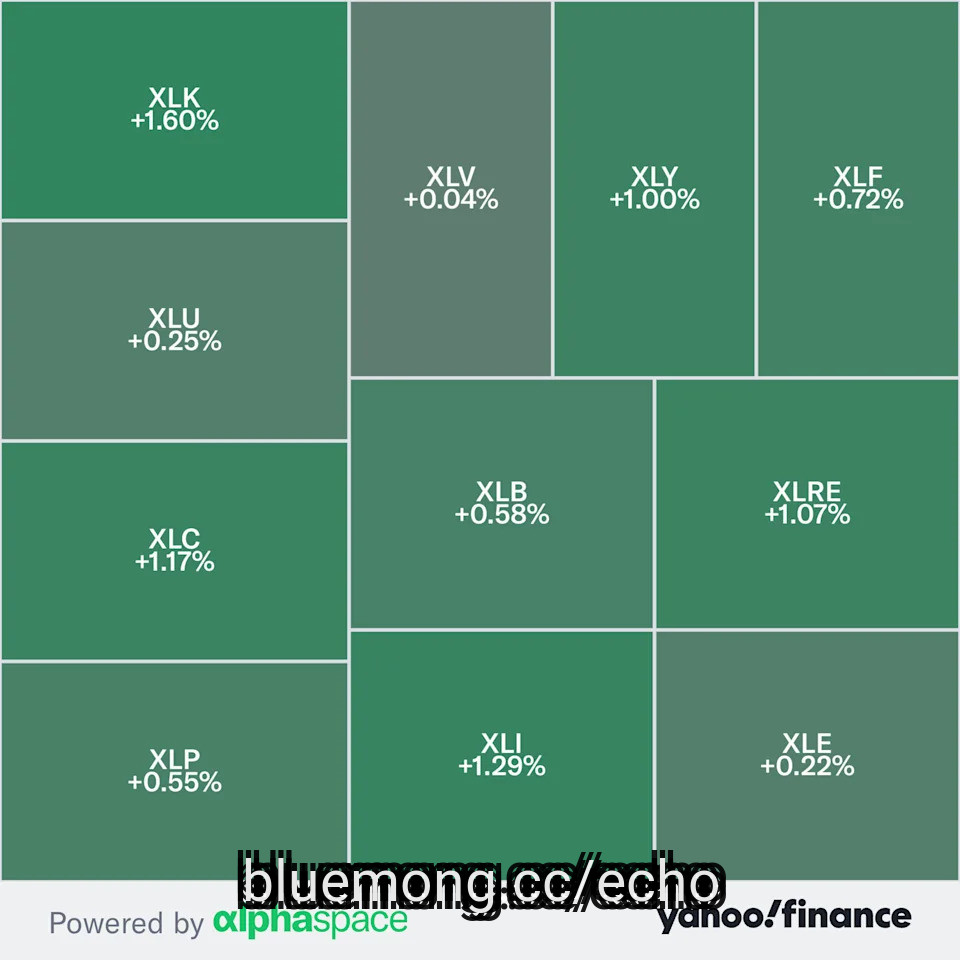
The Dow Industrial Average (^DJI) and tech-heavy Nasdaq Composite (^IXIC) rose 0.9% while the S&P 500 (^GSPC) rose 0.8%. The major indexes posted weekly declines, however, after a four-day losing streak.
Investors turned their attention to the Consumer Price Index, the last piece of inflation data before Federal Reserve policymakers convene next week. Overall prices rose 0.4% on a monthly basis and 3.4% on an annual basis, which were in line with economists' expectations and slightly hotter than July's reading.
But after stripping out volatile food and energy prices, the Fed's preferred reading, CPI rose 0.3%, compared to estimates for 0.2%.
Friday's CPI report prompted traders to ramp up their bets that the Fed will raise interest rates this month. Markets are now pricing in a roughly 87% chance the Fed raises interest rates by 25 basis points at the FOMC meeting next week, according to the CME's Fedwatch tool. That's up from 72% a day ago and 50% a week ago.
#week #next
The Dow Industrial Average (^DJI) and tech-heavy Nasdaq Composite (^IXIC) rose 0.9% while the S&P 500 (^GSPC) rose 0.8%. The major indexes posted weekly declines, however, after a four-day losing streak.
Investors turned their attention to the Consumer Price Index, the last piece of inflation data before Federal Reserve policymakers convene next week. Overall prices rose 0.4% on a monthly basis and 3.4% on an annual basis, which were in line with economists' expectations and slightly hotter than July's reading.
But after stripping out volatile food and energy prices, the Fed's preferred reading, CPI rose 0.3%, compared to estimates for 0.2%.
Friday's CPI report prompted traders to ramp up their bets that the Fed will raise interest rates this month. Markets are now pricing in a roughly 87% chance the Fed raises interest rates by 25 basis points at the FOMC meeting next week, according to the CME's Fedwatch tool. That's up from 72% a day ago and 50% a week ago.
#week #next


14 hours ago
Investors seeking exposure to artificial intelligence infrastructure must weigh the explosive growth of Astera Labs Inc (NASDAQ:ALAB) against the established scale and diverse portfolio of Marvell Technology Inc(NASDAQ:MRVL) to determine the better buy.
Both companies focus on the plumbing of the digital world, ensuring data moves quickly between processors and memory. While Astera Labs focuses on specialized connectivity for AI racks, Marvell offers a broader range of networking, storage, and custom compute solutions. This comparison explores which strategy offers more potential for long-term investors.
Astera Labs designs connectivity solutions that integrate various protocols to support rack-scale AI infrastructure, a high-growth niche among semiconductor stocks. The company serves major hyperscalers and equipment manufacturers who need to overcome data bottlenecks in massive data centers, though its revenue is highly concentrated. In 2025, one end customer -- Amazon.com Inc (NASDAQ:AMZN) -- accounted for over 70% of revenue, which adds a significant layer of risk to the business model.
According to its latest annual report, filed for the fiscal year ended Dec. 31, 2025, revenue reached close to $853 million, representing a significant jump of 115% compared with the prior fiscal year. This growth trajectory helped the company transition to a net income of just over $219 million after recording losses in the previous two years. The net margin for the latest year was close to 26%.
As of its December 2025 balance sheet, the debt-to-equity ratio was 0.0x, meaning the company carries no debt relative to its shareholder equity, while the so-called current ratio was 10.2x. Free cash flow for the period reached nearly $282 million. Note that stock-based compensation (SBC) represented roughly 50.1% of operating cash flow, which inflates reported cash generation since SBC is a non-cash expense added back in the cash flow statement.
#company #million
Both companies focus on the plumbing of the digital world, ensuring data moves quickly between processors and memory. While Astera Labs focuses on specialized connectivity for AI racks, Marvell offers a broader range of networking, storage, and custom compute solutions. This comparison explores which strategy offers more potential for long-term investors.
Astera Labs designs connectivity solutions that integrate various protocols to support rack-scale AI infrastructure, a high-growth niche among semiconductor stocks. The company serves major hyperscalers and equipment manufacturers who need to overcome data bottlenecks in massive data centers, though its revenue is highly concentrated. In 2025, one end customer -- Amazon.com Inc (NASDAQ:AMZN) -- accounted for over 70% of revenue, which adds a significant layer of risk to the business model.
According to its latest annual report, filed for the fiscal year ended Dec. 31, 2025, revenue reached close to $853 million, representing a significant jump of 115% compared with the prior fiscal year. This growth trajectory helped the company transition to a net income of just over $219 million after recording losses in the previous two years. The net margin for the latest year was close to 26%.
As of its December 2025 balance sheet, the debt-to-equity ratio was 0.0x, meaning the company carries no debt relative to its shareholder equity, while the so-called current ratio was 10.2x. Free cash flow for the period reached nearly $282 million. Note that stock-based compensation (SBC) represented roughly 50.1% of operating cash flow, which inflates reported cash generation since SBC is a non-cash expense added back in the cash flow statement.
#company #million


14 hours ago
The dollar index (DXY00) on Friday rose by +0.06%. The dollar found support as a hawkish US CPI report pushed odds of an FOMC rate hike next week up to 88% from 75% on Thursday. Also, the 10-year T-note yield on Friday rose by +0.6 bp, supporting the dollar's interest rate differentials.
Friday's -2.4% decline in oil prices initially caused the 10-year T-note yield to drop, despite the CPI report. However, the CPI report caught up with the T-note market by the end of the day, and the 10-year T-note yield ended slightly higher.
Dollar Eases as Crude Oil Prices Fall
Our exclusive Barchart Brief newsletter is your FREE midday guide to what's moving stocks, sectors, and investor sentiment - delivered right when you need the info most. Subscribe today!
Friday's Aug US CPI report of +0.4% m/m was in line with market expectations, but the core CPI report of +0.3% m/m was slightly stronger than market expectations of +0.2% m/m. On a year-on-year basis, the Aug CPI report of +3.4% y/y was unchanged from July and was in line with market expectations. Meanwhile, the Aug core CPI report of +2.4% y/y eased slightly from July's +2.5% and posted a new 5.5-year low, and was in line with market expectations.
#year
Friday's -2.4% decline in oil prices initially caused the 10-year T-note yield to drop, despite the CPI report. However, the CPI report caught up with the T-note market by the end of the day, and the 10-year T-note yield ended slightly higher.
Dollar Eases as Crude Oil Prices Fall
Our exclusive Barchart Brief newsletter is your FREE midday guide to what's moving stocks, sectors, and investor sentiment - delivered right when you need the info most. Subscribe today!
Friday's Aug US CPI report of +0.4% m/m was in line with market expectations, but the core CPI report of +0.3% m/m was slightly stronger than market expectations of +0.2% m/m. On a year-on-year basis, the Aug CPI report of +3.4% y/y was unchanged from July and was in line with market expectations. Meanwhile, the Aug core CPI report of +2.4% y/y eased slightly from July's +2.5% and posted a new 5.5-year low, and was in line with market expectations.
#year


14 hours ago
Investors are bailing on Chewy (CHWY) shares on Sept. 11 after a senior JPMorgan ***** yst downgraded the online pet food and supplies retailer to "Neutral." In his research note, Doug Anmuth reduced his price objective on CHWY to $24, although that still represents about a 20% upside from current levels.
Chewy stock has been out of favor with investors in 2026. It is currently down nearly 40% versus the start of this year.
GME Stock Jumps as GameStop CEO Ryan Cohen Buys $20 Million Worth of Shares
Rocket Lab Stock Just Scored a New Bullish Rating
Cathie Wood Just Bet $45 Million on This Beaten-Down ***** e Stock. Wall Street Sees 70% Upside.
#Stock #investors #jpmorgan
Chewy stock has been out of favor with investors in 2026. It is currently down nearly 40% versus the start of this year.
GME Stock Jumps as GameStop CEO Ryan Cohen Buys $20 Million Worth of Shares
Rocket Lab Stock Just Scored a New Bullish Rating
Cathie Wood Just Bet $45 Million on This Beaten-Down ***** e Stock. Wall Street Sees 70% Upside.
#Stock #investors #jpmorgan


14 hours ago
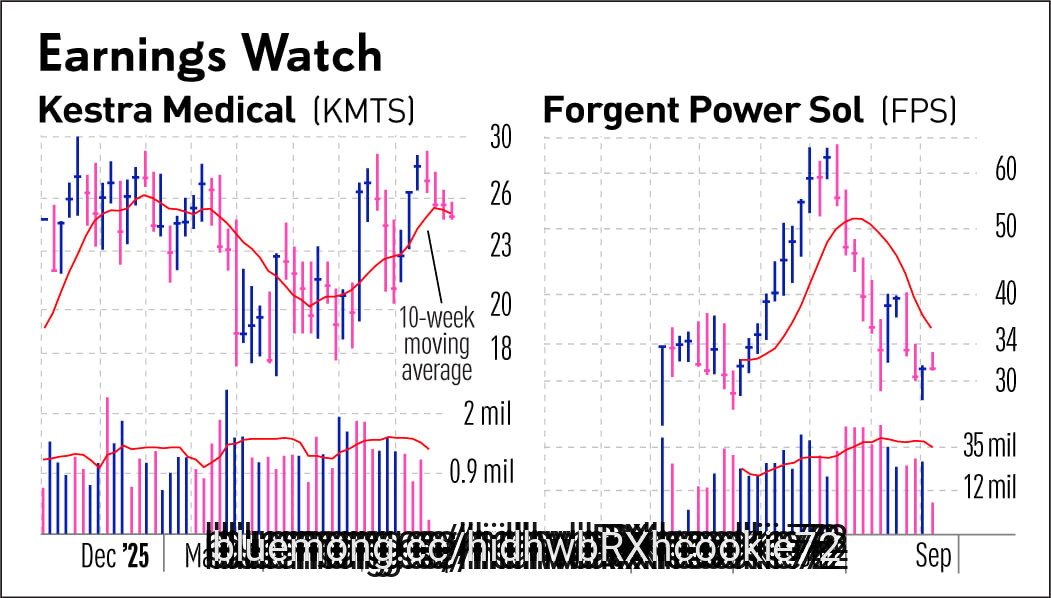
Restaurant stock Dave & Buster's Entertainment (PLAY) and healthcare name Kestra Medical Technologies (KMTS) will kick off earnings reports during a week when investors will be squarely focused on the Federal Reserve and a possible interest-rate hike Wednesday. Forgent Power Solutions (FPS) is also on the docket, with its stock trying to recover after a lengthy sell-off.
Friday's stock market rally notwithstanding, the Dow Jones Industrial Average and the Russell 2000 small-cap index have come under the most pressure amid surging oil prices and spiking bond yields, as investors worry about pesky inflation and escalating tension between the U.S. and Iran.
While the Dow is testing major support near 52,000, the Russell fell below its 50-day moving average in late August and has been below the support level ever since. The Nasdaq composite, meanwhile, bounced off its 50-day line with conviction Friday, helped by a tame report on consumer prices. The S&P 500 also moved off its 50-day line Friday.
Results from Lennar (LEN) are due Wednesday after the close. Lennar stock tried to break out in late June, but was turned away at its 200-day line and went into a downtrend. It tried to clear the 200-day line several times again in August but to no avail. With interest rates on the rise, heavy-volume selling has picked up the pace in recent weeks.
Forgent, which sells electrical distribution equipment to data centers, reports early Tuesday. The company priced its IPO at 27 on Feb. 4, at the midpoint of a proposed range of 25-29.
#line #forgent #august #lennar
Friday's stock market rally notwithstanding, the Dow Jones Industrial Average and the Russell 2000 small-cap index have come under the most pressure amid surging oil prices and spiking bond yields, as investors worry about pesky inflation and escalating tension between the U.S. and Iran.
While the Dow is testing major support near 52,000, the Russell fell below its 50-day moving average in late August and has been below the support level ever since. The Nasdaq composite, meanwhile, bounced off its 50-day line with conviction Friday, helped by a tame report on consumer prices. The S&P 500 also moved off its 50-day line Friday.
Results from Lennar (LEN) are due Wednesday after the close. Lennar stock tried to break out in late June, but was turned away at its 200-day line and went into a downtrend. It tried to clear the 200-day line several times again in August but to no avail. With interest rates on the rise, heavy-volume selling has picked up the pace in recent weeks.
Forgent, which sells electrical distribution equipment to data centers, reports early Tuesday. The company priced its IPO at 27 on Feb. 4, at the midpoint of a proposed range of 25-29.
#line #forgent #august #lennar


15 hours ago
All eyes are on the Fed with another higher than expected reading for core inflation. Jeff Klingelhofer, CFA, Managing Director, Portfolio Manager & Senior Research **** yst, Securitized **** ets at Aristotle Pacific, talks with host Brad Roth on this episode of Behind the Ticker about why the new Fed Chair stepping into an environment of high inflation matters for investors and bonds, and what that means for how the firm is positioning their strategies that include three new ETFs, the Aristotle Core Plus Income ETF (ARCP), the Aristotle Multi-Sector Income ETF (ARMS), and the Aristotle Short Term Income ETF (SDUR).
You can also watch this conversation here or on our YouTube, as well as find it on any of your preferred podcast streaming platforms.
A non-traditional path to fixed income: Jeff Klingelhofer started at PIMCO, moved through Tokyo and London, then took an unexpected detour into a five-person hedge fund during his Chicago MBA. That experience shaped his career trajectory, from building Thornburg's taxable fixed income desk from scratch to joining Aristotle Pacific in 2024.
The relative value philosophy: Instead of chasing yield by taking more risk within a single **** et class, Klingelhofer compares opportunities across all of fixed income, including corporates, ABS, CLOs, bank loans, and more. His go-to example: in 2020, an American Airlines corporate bond and its aircraft-backed EETC priced identically, but a month later one traded at 27 cents on the dollar while the other held at 65 cent, proof that siloed desks miss cross-market mispricing.
Three ETFs, one philosophy: Aristotle Pacific's new suite of SDUR (short-term income), ARCP (core plus), and ARMS (multi-sector income) applies this relative value lens across the risk spectrum, each targeting a different level of duration and credit exposure. All three aim to outperform passive benchmarks through active security selection rather than added risk.
#jeff #etfs
You can also watch this conversation here or on our YouTube, as well as find it on any of your preferred podcast streaming platforms.
A non-traditional path to fixed income: Jeff Klingelhofer started at PIMCO, moved through Tokyo and London, then took an unexpected detour into a five-person hedge fund during his Chicago MBA. That experience shaped his career trajectory, from building Thornburg's taxable fixed income desk from scratch to joining Aristotle Pacific in 2024.
The relative value philosophy: Instead of chasing yield by taking more risk within a single **** et class, Klingelhofer compares opportunities across all of fixed income, including corporates, ABS, CLOs, bank loans, and more. His go-to example: in 2020, an American Airlines corporate bond and its aircraft-backed EETC priced identically, but a month later one traded at 27 cents on the dollar while the other held at 65 cent, proof that siloed desks miss cross-market mispricing.
Three ETFs, one philosophy: Aristotle Pacific's new suite of SDUR (short-term income), ARCP (core plus), and ARMS (multi-sector income) applies this relative value lens across the risk spectrum, each targeting a different level of duration and credit exposure. All three aim to outperform passive benchmarks through active security selection rather than added risk.
#jeff #etfs

15 hours ago
SCHD returned 28.99% through Sept. 1 versus 12.31% for SPY, despite owning none of the Magnificent Seven stocks that dominated market performance in previous years.
SCHD's dividend methodology doubles as a quality and value screen, ranking companies using free cash flow relative to debt, return on equity, dividend yield, and five-year dividend growth.
With only 8% overlap by weight with SPY, a 0.06% expense ratio, and a 3.15% 30-day SEC yield, SCHD provides a relatively inexpensive way to diversify away from the S&P 500's growth and technology concentration.
Just released. Our ***** ysts combed the entire stock market and named the ten best stocks to buy right now. The report is free. Enter your email and see if any of your stocks made the cut.
Investors have spent much of 2026 talking about a potential style rotation. Large-cap growth stocks are still positive year to date, but their leadership has weakened as small-cap and, increasingly, value stocks have taken over more of the market's momentum.
#Dividend #market
SCHD's dividend methodology doubles as a quality and value screen, ranking companies using free cash flow relative to debt, return on equity, dividend yield, and five-year dividend growth.
With only 8% overlap by weight with SPY, a 0.06% expense ratio, and a 3.15% 30-day SEC yield, SCHD provides a relatively inexpensive way to diversify away from the S&P 500's growth and technology concentration.
Just released. Our ***** ysts combed the entire stock market and named the ten best stocks to buy right now. The report is free. Enter your email and see if any of your stocks made the cut.
Investors have spent much of 2026 talking about a potential style rotation. Large-cap growth stocks are still positive year to date, but their leadership has weakened as small-cap and, increasingly, value stocks have taken over more of the market's momentum.
#Dividend #market


15 hours ago
Greg Abel took over as CEO of Berkshire Hathaway (NYSE: BRKA)(NYSE: BRKB) at the start of 2026. Former CEO Warren Buffett left Abel a huge gift: nearly $400 billion in cash on the company's balance sheet. Abel has put some of that cash to work buying Taylor Morrison Home, and some has been spent on publicly traded stock investments. However, Abel has also decided to buy back Berkshire Hathaway stock. That could be a positive sign. Here's why.
Under Warren Buffett, Berkshire Hathaway didn't make a habit of buying back stock. The world-famous investor preferred to put cash to work by buying shares in other companies or buying companies outright. When he did buy back Berkshire Hathaway stock, it was because he believed the shares were undervalued.
Missed Nvidia in 2009? This Rare Signal Is Flashing Again. In 2009, a "Double Down" signal flashed for a little-known chipmaker called Nvidia. For the first time in years, that same "Total Conviction" signal is flashing for a company 1/100th the size of Nvidia. Continue »
This dynamic is clearly explained in the company's 2025 10k, where the company states: "Berkshire's common stock repurchase program currently permits Berkshire to repurchase shares any time that Berkshire's Chief Executive Officer, after consultation with the Chairman of the Board, believes that the repurchase price is below Berkshire's intrinsic value, conservatively determined." The only limit on repurchase activity is that it can't reduce the company's cash and short-term investment balance below $30 billion.
Some market watchers had hypothesized that Berkshire Hathaway bought as much as $11 billion of its own stock in the second quarter, but the real number turned out to be roughly $4.5 billion. That said, the number was still quite large and, even then, given the huge cash balance the company has, it didn't put the company anywhere near the $30 billion cash limitation.
#Stock
Under Warren Buffett, Berkshire Hathaway didn't make a habit of buying back stock. The world-famous investor preferred to put cash to work by buying shares in other companies or buying companies outright. When he did buy back Berkshire Hathaway stock, it was because he believed the shares were undervalued.
Missed Nvidia in 2009? This Rare Signal Is Flashing Again. In 2009, a "Double Down" signal flashed for a little-known chipmaker called Nvidia. For the first time in years, that same "Total Conviction" signal is flashing for a company 1/100th the size of Nvidia. Continue »
This dynamic is clearly explained in the company's 2025 10k, where the company states: "Berkshire's common stock repurchase program currently permits Berkshire to repurchase shares any time that Berkshire's Chief Executive Officer, after consultation with the Chairman of the Board, believes that the repurchase price is below Berkshire's intrinsic value, conservatively determined." The only limit on repurchase activity is that it can't reduce the company's cash and short-term investment balance below $30 billion.
Some market watchers had hypothesized that Berkshire Hathaway bought as much as $11 billion of its own stock in the second quarter, but the real number turned out to be roughly $4.5 billion. That said, the number was still quite large and, even then, given the huge cash balance the company has, it didn't put the company anywhere near the $30 billion cash limitation.
#Stock


15 hours ago
As artificial intelligence matures, investors must decide between the high-growth niche players and the foundational giants. Choosing between Astera Labs Inc (NASDAQ:ALAB) and Taiwan Semiconductor Manufacturing Co (NYSE:TSM) involves weighing explosive potential against established dominance.
Astera Labs provides the critical connectivity infrastructure that allows AI chips to communicate within data centers. Meanwhile, Taiwan Semiconductor Manufacturing operates as the world's largest dedicated chip foundry, producing the actual processors for almost every major tech firm. Both companies are central to the future of semiconductor stocks.
Astera Labs specializes in connectivity solutions designed to remove bottlenecks in high-performance data centers. The company sells hardware and software that helps AI accelerators, such as those made by major chip designers, communicate efficiently across servers. Its customer base is highly concentrated, primarily consisting of the largest cloud providers and system manufacturers. In 2025, one end customer accounted for over 70% of total revenue. Customer concentration like this adds a layer of risk to the business.
In FY 2025, revenue reached more than $852.5 million, representing an impressive increase of roughly 115% compared to the prior year. This rapid growth helped the company pivot from a loss in previous years to a net income of approximately $219 million. The net margin, which measures how much of each dollar of sales remains as profit, stood at nearly 26%. This trajectory highlights the surging demand for the specialized connectivity chips required for large-scale AI deployments.
As of its December 2025 balance sheet, the company reported a debt-to-equity ratio of 0.0x, indicating it holds no debt relative to its shareholder equity. Its so-called current ratio, which compares short-term ******* ets to short-term liabilities, was a robust 10.2x. Free cash flow, or the cash left over after paying for operations and equipment, was approximately $282 million. Note that stock-based compensation represented roughly 50% of operating cash flow, which inflates reported cash generation since this is a non-cash expense added back in the cash flow statement.
#company
Astera Labs provides the critical connectivity infrastructure that allows AI chips to communicate within data centers. Meanwhile, Taiwan Semiconductor Manufacturing operates as the world's largest dedicated chip foundry, producing the actual processors for almost every major tech firm. Both companies are central to the future of semiconductor stocks.
Astera Labs specializes in connectivity solutions designed to remove bottlenecks in high-performance data centers. The company sells hardware and software that helps AI accelerators, such as those made by major chip designers, communicate efficiently across servers. Its customer base is highly concentrated, primarily consisting of the largest cloud providers and system manufacturers. In 2025, one end customer accounted for over 70% of total revenue. Customer concentration like this adds a layer of risk to the business.
In FY 2025, revenue reached more than $852.5 million, representing an impressive increase of roughly 115% compared to the prior year. This rapid growth helped the company pivot from a loss in previous years to a net income of approximately $219 million. The net margin, which measures how much of each dollar of sales remains as profit, stood at nearly 26%. This trajectory highlights the surging demand for the specialized connectivity chips required for large-scale AI deployments.
As of its December 2025 balance sheet, the company reported a debt-to-equity ratio of 0.0x, indicating it holds no debt relative to its shareholder equity. Its so-called current ratio, which compares short-term ******* ets to short-term liabilities, was a robust 10.2x. Free cash flow, or the cash left over after paying for operations and equipment, was approximately $282 million. Note that stock-based compensation represented roughly 50% of operating cash flow, which inflates reported cash generation since this is a non-cash expense added back in the cash flow statement.
#company

15 hours ago
AVAV stock has plunged 40% in a year despite a historic $464M Army laser contract and a record $1.5B funded backlog.
AeroVironment's LOCUST laser cuts drone intercept costs from millions to under $10 per shot, backed by 300 cartel drones already downed at the southern border.
Nawabi sold 28,265 shares at $139 while ***** ysts set a $226 average price target, leaving investors to weigh insider doubt against a 47x forward P/E.
Just released. Our ***** ysts combed the entire stock market and named the ten best stocks to buy right now, and AeroVironment didn't make the cut. Enter your email to see the names that beat AVAV. The report is free. Enter your email and see if any of your stocks made the cut.
AeroVironment (NASDAQ:AVAV) chairman and chief executive Wahid Nawabi went on CNBC this week with an arithmetic problem for defense investors. Drones being thrown at Western militaries and border installations cost roughly $150,000 apiece, according to Nawabi, while the interceptors historically used to knock them down cost millions of dollars per shot. His pitch is that AeroVironment's LOCUST directed-energy laser, per Nawabi, brings that engagement cost down to less than $10 per shot.
#nawabi #avav #cost #locust
AeroVironment's LOCUST laser cuts drone intercept costs from millions to under $10 per shot, backed by 300 cartel drones already downed at the southern border.
Nawabi sold 28,265 shares at $139 while ***** ysts set a $226 average price target, leaving investors to weigh insider doubt against a 47x forward P/E.
Just released. Our ***** ysts combed the entire stock market and named the ten best stocks to buy right now, and AeroVironment didn't make the cut. Enter your email to see the names that beat AVAV. The report is free. Enter your email and see if any of your stocks made the cut.
AeroVironment (NASDAQ:AVAV) chairman and chief executive Wahid Nawabi went on CNBC this week with an arithmetic problem for defense investors. Drones being thrown at Western militaries and border installations cost roughly $150,000 apiece, according to Nawabi, while the interceptors historically used to knock them down cost millions of dollars per shot. His pitch is that AeroVironment's LOCUST directed-energy laser, per Nawabi, brings that engagement cost down to less than $10 per shot.
#nawabi #avav #cost #locust

15 hours ago
A $48 billion valuation and more than $2 billion in fresh venture capital would normally signal that investors have completely lost the plot.
Cognition AI, the startup behind the autonomous coding agent Devin, closed its Series E round on Sept. 8, 2026, to those exact headline figures.
The sheer size of the round drew immediate and predictable comparisons to the frothiest stretch of the 2026 AI investment cycle.
But the arithmetic behind the deal paints a different picture, one in which the ratio of investors' per-dollar revenue barely moved.
Between its May 2026 Series D and Series E close, Cognition's annualized run-rate revenue grew from $492 million to nearly $900 million, the company reported.
#round #devin
Cognition AI, the startup behind the autonomous coding agent Devin, closed its Series E round on Sept. 8, 2026, to those exact headline figures.
The sheer size of the round drew immediate and predictable comparisons to the frothiest stretch of the 2026 AI investment cycle.
But the arithmetic behind the deal paints a different picture, one in which the ratio of investors' per-dollar revenue barely moved.
Between its May 2026 Series D and Series E close, Cognition's annualized run-rate revenue grew from $492 million to nearly $900 million, the company reported.
#round #devin


16 hours ago
Some offers on this page are from advertisers who pay us, which may affect which products we write about, but not our recommendations. See our Advertiser Disclosure.
Gold can act as a hedge against inflation, but it doesn't reliably rise whenever inflation does. Some investors use gold to help preserve purchasing power as prices rise, but inflation is only one of several factors that can influence gold prices.
If you've researched gold as an investment, you've probably come across financial experts ****** erting that gold is a hedge against inflation. Understanding what that actually means — and what it doesn't — can help put gold's role in an investment portfolio into perspective.
An inflation hedge is an investment or strategy intended to help offset the loss of purchasing power caused by rising prices.
As inflation rises, each dollar buys a little less than it did before. For example, imagine a cart of groceries that costs $100 today. If those same groceries cost $105 next year, your $100 no longer buys as much as it did before.
#inflation #Gold #doesn 't #power
Gold can act as a hedge against inflation, but it doesn't reliably rise whenever inflation does. Some investors use gold to help preserve purchasing power as prices rise, but inflation is only one of several factors that can influence gold prices.
If you've researched gold as an investment, you've probably come across financial experts ****** erting that gold is a hedge against inflation. Understanding what that actually means — and what it doesn't — can help put gold's role in an investment portfolio into perspective.
An inflation hedge is an investment or strategy intended to help offset the loss of purchasing power caused by rising prices.
As inflation rises, each dollar buys a little less than it did before. For example, imagine a cart of groceries that costs $100 today. If those same groceries cost $105 next year, your $100 no longer buys as much as it did before.
#inflation #Gold #doesn 't #power



16 hours ago
To summarize my investment approach, I prefer to buy companies with long histories of dividend increases and historically high yields. Those two traits don't come around all that often, and sometimes I find clusters of stocks in specific sectors. I need to think specifically about diversification, one of the simplest and most effective ways to reduce risk. Here's how I've done it as I've built my portfolio of around 34 investments.
The Motley Fool recommends that investors own 50 stocks. That's a perfectly fine number, but also a lot of work. And just owning 50 stocks doesn't actually mean you are diversified. You could own 50 technology stocks, for example, which would leave you with exposure to just a single sector. That's not diversification. Diversification is really about owning a reasonable number of investments across a wide range of sectors and ****** et classes.
Missed Nvidia in 2009? This Rare Signal Is Flashing Again. In 2009, a "Double Down" signal flashed for a little-known chipmaker called Nvidia. For the first time in years, that same "Total Conviction" signal is flashing for a company 1/100th the size of Nvidia. Continue »
My first step toward diversification was to take an honest look at what I want to achieve and what I'm capable of. My goal is a mixture of income and capital appreciation. I am fairly confident in my ability to select dividend stocks, though every investor makes mistakes from time to time, and I know I can only juggle so many stocks at once. In other words, 50 stocks are too many for me, so a core part of my diversification strategy is to outsource some of my work.
For example, I own two Baron mutual funds to gain exposure to growth stocks and smaller companies. I own several closed-end funds: one focused on healthcare stocks with an option income overlay, one investing in convertible securities, and one with a broadly diversified dividend portfolio. And I own three exchange-traded funds: one with an option income focus and two that use very different screening approaches to pick dividend stocks.
#Diversification #funds
The Motley Fool recommends that investors own 50 stocks. That's a perfectly fine number, but also a lot of work. And just owning 50 stocks doesn't actually mean you are diversified. You could own 50 technology stocks, for example, which would leave you with exposure to just a single sector. That's not diversification. Diversification is really about owning a reasonable number of investments across a wide range of sectors and ****** et classes.
Missed Nvidia in 2009? This Rare Signal Is Flashing Again. In 2009, a "Double Down" signal flashed for a little-known chipmaker called Nvidia. For the first time in years, that same "Total Conviction" signal is flashing for a company 1/100th the size of Nvidia. Continue »
My first step toward diversification was to take an honest look at what I want to achieve and what I'm capable of. My goal is a mixture of income and capital appreciation. I am fairly confident in my ability to select dividend stocks, though every investor makes mistakes from time to time, and I know I can only juggle so many stocks at once. In other words, 50 stocks are too many for me, so a core part of my diversification strategy is to outsource some of my work.
For example, I own two Baron mutual funds to gain exposure to growth stocks and smaller companies. I own several closed-end funds: one focused on healthcare stocks with an option income overlay, one investing in convertible securities, and one with a broadly diversified dividend portfolio. And I own three exchange-traded funds: one with an option income focus and two that use very different screening approaches to pick dividend stocks.
#Diversification #funds


16 hours ago
Palo Alto Networks, Inc. (NASDAQ:PANW) is entering its fiscal 2027 with strong momentum, particularly in next-generation security. But investors now demand more from the cybersecurity company after its stock rallied sharply.
On September 7, PhillipCapital downgraded Palo Alto stock to Neutral from Accumulate but raised the price target to $346 from $320.
PhillipCapital's move captures the central investment debate. It's that Palo Alto's opportunities are compelling, but the stock's roughly 160% rise from its February low to its August peak has raised the bar for further gains.
Palo Alto Networks, Inc. (NASDAQ:PANW)'s revenue rose 34% YoY to $3.4 billion in fiscal 2026 fourth quarter. More importantly, Next-Generation Security ARR (NGS ARR) surged 63% to $9.10 billion. The company added nearly $1 billion of net new NGS ARR in the quarter. The company targets $20 billion in NGS ARR by fiscal 2030, as it expects platformization and AI infrastructure investment to continue driving growth.
More than 65% of Palo Alto's NGS ARR comes from platformized customers. Meanwhile, AI is expanding the addressable market. As enterprises deploy agents, Palo Alto offerings such as Prisma AIRS and Cortex, alongside CyberArk's identity-security platform, can address emerging needs.
#palo #company #NASDAQ #PANW
On September 7, PhillipCapital downgraded Palo Alto stock to Neutral from Accumulate but raised the price target to $346 from $320.
PhillipCapital's move captures the central investment debate. It's that Palo Alto's opportunities are compelling, but the stock's roughly 160% rise from its February low to its August peak has raised the bar for further gains.
Palo Alto Networks, Inc. (NASDAQ:PANW)'s revenue rose 34% YoY to $3.4 billion in fiscal 2026 fourth quarter. More importantly, Next-Generation Security ARR (NGS ARR) surged 63% to $9.10 billion. The company added nearly $1 billion of net new NGS ARR in the quarter. The company targets $20 billion in NGS ARR by fiscal 2030, as it expects platformization and AI infrastructure investment to continue driving growth.
More than 65% of Palo Alto's NGS ARR comes from platformized customers. Meanwhile, AI is expanding the addressable market. As enterprises deploy agents, Palo Alto offerings such as Prisma AIRS and Cortex, alongside CyberArk's identity-security platform, can address emerging needs.
#palo #company #NASDAQ #PANW

17 hours ago
U.S. Bancorp (NYSE:USB) has raised its quarterly dividend by 3.8% to $0.54 per share. That brings the annualized payout at $2.16 and the yield at 3.5%.
For income-focused investors, the increase adds to the bank's appeal. But the more important point is what supports the higher payout.
U.S. Bancorp enters the second half of 2026 on firm footing. The bank's latest results show accelerating earnings, strong loan growth, and a solid capital position.
U.S. Bancorp (NYSE:USB)'s revenue increased 10% YoY in Q2 to a record $7.7 billion. Net interest margin jumped to 2.79%, up from 2.66% a year ago. That helped push the net income attributable to the bank up 20% to $2.18 billion. Diluted EPS rose 21.6% to $1.35.
The bank's balance sheet also continued to expand. Average loans increased 7.1% to $405.5 billion, supported by strong commercial, commercial real estate and credit card lending activity. Average deposits increased 2.4% to $515.1 billion, providing low-cost funding for the loan growth.
#Growth
For income-focused investors, the increase adds to the bank's appeal. But the more important point is what supports the higher payout.
U.S. Bancorp enters the second half of 2026 on firm footing. The bank's latest results show accelerating earnings, strong loan growth, and a solid capital position.
U.S. Bancorp (NYSE:USB)'s revenue increased 10% YoY in Q2 to a record $7.7 billion. Net interest margin jumped to 2.79%, up from 2.66% a year ago. That helped push the net income attributable to the bank up 20% to $2.18 billion. Diluted EPS rose 21.6% to $1.35.
The bank's balance sheet also continued to expand. Average loans increased 7.1% to $405.5 billion, supported by strong commercial, commercial real estate and credit card lending activity. Average deposits increased 2.4% to $515.1 billion, providing low-cost funding for the loan growth.
#Growth


1 day ago
Concerned about an AI bubble? Sign up for The Daily Upside for smart and actionable market news, built for investors.
Paying off your mortgage used to be something people aspired to. Now, many Americans fantasize about simply getting one.
The National ***** ociation of Realtors said Thursday that US home sales fell 2% month-over-month in August to a 14-month low. The seasonally adjusted annual rate of 3.98 million residences, the lowest since June 2025, was weighed down by stubbornly high mortgage rates and home prices.
Sign up for The Daily Upside at no cost for premium ***** ysis on all your favorite stocks.
READ ALSO: Musk's Boring Company Scores $23 Billion Valuation Despite Slow Progress and Brian Niccol's Two-Year Turnaround Serves Up Sales Growth for Starbucks
#month #sign #sales #paying
Paying off your mortgage used to be something people aspired to. Now, many Americans fantasize about simply getting one.
The National ***** ociation of Realtors said Thursday that US home sales fell 2% month-over-month in August to a 14-month low. The seasonally adjusted annual rate of 3.98 million residences, the lowest since June 2025, was weighed down by stubbornly high mortgage rates and home prices.
Sign up for The Daily Upside at no cost for premium ***** ysis on all your favorite stocks.
READ ALSO: Musk's Boring Company Scores $23 Billion Valuation Despite Slow Progress and Brian Niccol's Two-Year Turnaround Serves Up Sales Growth for Starbucks
#month #sign #sales #paying


2 days ago
Patterson-UTI Energy, Inc. (NASDAQ:PTEN) reported on September 7 that it averaged 101 revenue-earning drilling rigs in the United States during August and 100 over the two months ended August 31.
The count measures rigs earning revenue under drilling contracts. The announcement provided no day rates, contract duration, utilization by rig class, or margins. Management explicitly cautioned that rig-count trends alone may not indicate financial performance.
For investors, the update supplies evidence that customers are putting equipment to work. Whether that activity produces better returns depends on the revenue earned and costs incurred for each contracted rig.
The two-month average is consistent with management's earlier outlook for approximately 100 U.S. rigs in the third quarter, compared with 92 in the second quarter. That supports an activity recovery from the prior quarter, although September will determine the final quarterly average.
There is also pricing evidence outside the monthly release. In its July 29 results, Patterson-UTI Energy, Inc. (NASDAQ:PTEN) said recently awarded term contracts carried approximately 10% to 15% higher pricing than levels at the start of the year. Management attributed that improvement to higher demand and customer interest in structural rig upgrades. Those increases applied to recently awarded contracts, rather than the entire fleet.
#rigs #energy #pten
The count measures rigs earning revenue under drilling contracts. The announcement provided no day rates, contract duration, utilization by rig class, or margins. Management explicitly cautioned that rig-count trends alone may not indicate financial performance.
For investors, the update supplies evidence that customers are putting equipment to work. Whether that activity produces better returns depends on the revenue earned and costs incurred for each contracted rig.
The two-month average is consistent with management's earlier outlook for approximately 100 U.S. rigs in the third quarter, compared with 92 in the second quarter. That supports an activity recovery from the prior quarter, although September will determine the final quarterly average.
There is also pricing evidence outside the monthly release. In its July 29 results, Patterson-UTI Energy, Inc. (NASDAQ:PTEN) said recently awarded term contracts carried approximately 10% to 15% higher pricing than levels at the start of the year. Management attributed that improvement to higher demand and customer interest in structural rig upgrades. Those increases applied to recently awarded contracts, rather than the entire fleet.
#rigs #energy #pten


2 days ago
In 2024, Catalent tapped direct lenders for a $4.2 billion term loan to fund its acquisition by Novo Holdings. Last month, the drug manufacturer refinanced with a $4.1 billion syndicated loan that it says will cut its annual interest expense by about $100 million.
Catalent's move captures a shift under way in the leveraged finance market, according to a new report from DC Advisory. Redemptions from retail investors are contributing to the erosion of private credit's pricing advantage, creating an opening for banks to win refinancing business.
The problems in the retail private credit market show few signs of abating.
All the largest direct lenders, such as Ares, Apollo and KKR, also run business development companies, the most common form of credit fund aimed at individual investors, all under varying degrees of pressure to redeem investors.
PitchBook LCD reported on Wednesday that investors in Cliffwater's direct lending interval fund sought to redeem 16% of shares outstanding in the third quarter, down from 17% in the prior quarter.
#billion #private
Catalent's move captures a shift under way in the leveraged finance market, according to a new report from DC Advisory. Redemptions from retail investors are contributing to the erosion of private credit's pricing advantage, creating an opening for banks to win refinancing business.
The problems in the retail private credit market show few signs of abating.
All the largest direct lenders, such as Ares, Apollo and KKR, also run business development companies, the most common form of credit fund aimed at individual investors, all under varying degrees of pressure to redeem investors.
PitchBook LCD reported on Wednesday that investors in Cliffwater's direct lending interval fund sought to redeem 16% of shares outstanding in the third quarter, down from 17% in the prior quarter.
#billion #private


2 days ago
Some offers on this page are from advertisers who pay us, which may affect which products we write about, but not our recommendations. See our Advertiser Disclosure.
Gold doesn't rise or fall because of a single economic event. Its price reflects the decisions of millions of investors, central banks, manufacturers, jewelers, and others around the world. Those decisions are shaped by changing economic conditions and future expectations.
Understanding what drives the price of gold means learning how multiple forces interact. Sometimes they reinforce one another. Sometimes they pull in opposite directions. That's why different headlines can describe the same market move from different angles.
Every second the global gold market is open, buyers and sellers are negotiating a price — but they're not all buying gold for the same reason.
An investor may be looking to diversify a portfolio. A jewelry manufacturer may need gold for finished products. A technology company may use it in electronic components. A central bank may be increasing its reserves. Another investor may believe interest rates are about to fall.
#Gold #price #economic #different
Gold doesn't rise or fall because of a single economic event. Its price reflects the decisions of millions of investors, central banks, manufacturers, jewelers, and others around the world. Those decisions are shaped by changing economic conditions and future expectations.
Understanding what drives the price of gold means learning how multiple forces interact. Sometimes they reinforce one another. Sometimes they pull in opposite directions. That's why different headlines can describe the same market move from different angles.
Every second the global gold market is open, buyers and sellers are negotiating a price — but they're not all buying gold for the same reason.
An investor may be looking to diversify a portfolio. A jewelry manufacturer may need gold for finished products. A technology company may use it in electronic components. A central bank may be increasing its reserves. Another investor may believe interest rates are about to fall.
#Gold #price #economic #different