
1 month ago
Volkswagen announced a steep cut to its full-year profit outlook on Friday, citing roughly €10 billion ($11.5 billion) in one-time charges concentrated at its troubled Porsche division, amid mounting pressure from U.S. tariffs and a weakening Chinese auto market on the world's second-largest automaker.
The company said it now expects an operating return on sales of up to 1% for 2026, down from its previous guidance of 4% to 5.5%. Volkswagen also said full-year revenue is expected to fall to about €315 billion, from €321.9 billion in 2025.
The bulk of the charges — about €6 billion — stem from revised mid-term ******* umptions for Porsche, in which Volkswagen holds a 75.4% stake. The sports car brand has been hit by U.S. tariffs and a collapse in demand for foreign luxury vehicles in China. On top of that, Volkswagen said it would book a further €2 billion in impairments in the second half of the year, covering China-related writedowns as well as restructuring charges such as costs from early-retirement schemes and the pending divestiture of its Osnabrück plant in Germany, according to The Wall Street Journal.
Volkswagen stock closed down 5.6% following the announcement. Shares of Porsche and Volkswagen's top shareholder Porsche SE fell 3.3% and 4.9%, respectively.
The company cautioned that "further deterioration in the market environment, especially in China, as well as an accelerated shift in demand in favour of battery-electric vehicles" would drag down results, with its Audi and Volkswagen passenger car brands bearing the brunt. Volkswagen noted that its outlook ******* umes tariffs remain unchanged and does not account for possible future effects from the war in the Middle East.
#charges #tariffs #full

1 month ago
Volkswagen cut its 2026 operating-margin forecast to no more than 1 per cent, down from a previous range of 4 to 5.5 per cent.
Approximately €10 billion in special charges includes a €6 billion non-cash impairment connected with Porsche.
Volkswagen maintained its cash-flow outlook, but the downgrade highlights deeper pressure from China, restructuring costs and lower-margin electric vehicles.
Volkswagen AG (OTC:VWAGY) shares suffered their sharpest decline in months after the German automaker warned that Porsche's deteriorating outlook and additional restructuring costs would substantially reduce its 2026 profit.
Volkswagen's preferred shares fell as much as 7.5 per cent in Frankfurt on Friday before closing 5.6 per cent lower. Shares of Porsche AG declined 3.3 per cent, while Volkswagen's largest shareholder, Porsche Automobil Holding SE, lost 4.9 per cent.
#volkswagen #Margin #billion

1 month ago
Volkswagen has dramatically cut its 2026 profit outlook as deteriorating business in China, restructuring costs and a multibillion-euro writedown at Porsche pile pressure on Europe's largest automaker.
The German carmaker now expects an operating margin of no more than 1% this year, down from its previous forecast of at least 4%, according to Bloomberg. Volkswagen shares fell more than 7% following the announcement, dragging other automakers lower.
VW expects around €10 billion ($11.5 billion) in charges this year, including restructuring costs ****** ociated with workforce reductions and writedowns on Chinese ****** ets. The total includes a €6-billion writedown related to Porsche, reflecting revised long-term expectations for the sports-car maker.
Excluding the exceptional charges, Volkswagen said its operating margin would be around 4%.
China represents one of the biggest challenges. Volkswagen CFO Arno Antlitz said the market has contracted by around 20%, with no stabilization currently in sight. Chinese automakers are simultaneously taking domestic market share and expanding into Europe with competitively priced electric vehicles.
#porsche

1 month ago
On September 9, 2026, Reuters reported that U.S. Transportation Secretary Sean Duffy sent a letter to Ford Motor Company (NYSE:F) CEO Jim Farley criticizing the automaker's business relationships with Chinese battery maker CATL and Chinese automakers Geely and BYD as raising "profound concern."
It specifically flagged Ford's licensed CATL battery technology at its Marshall, Michigan plant, its joint venture with Geely in Spain, and its decision not to move Lincoln Nautilus production out of China until 2030. Ford responded that Duffy's letter was "a wrongheaded attempt to capture headlines," noting that it owns the Marshall plant, controls its operations, and employs the workforce there, unlike companies that simply import Chinese-made batteries.
Ford Motor Company (NYSE:F) can argue that its CATL partnership still solidifies U.S. battery manufacturing rather than becoming more dependent on Chinese imports. Ford owns and operates its Marshall, Michigan battery plant. It allows the company to manufacture batteries domestically while licensing CATL technology. That structure could help Ford expand its U.S. EV production capacity and reduce the need to import finished Chinese battery packs.
Ford's improving financial performance gives the firm more flexibility to manage the political pressure. The automaker raised its full-year adjusted EBIT guidance to $10 billion-$11 billion after second-quarter results exceeded expectations, with record Bronco sales and a stronger product mix supporting the improvement. Stronger operating earnings could give Ford more resources to adjust its battery strategy if policymakers impose more restrictions on Chinese technology.
The company's existing U.S. manufacturing footprint could become a competitive advantage if Washington tightens restrictions on Chinese automotive technology. Ford has already invested in domestic battery production instead of relying entirely on imported battery packs. Model e losses have narrowed for three consecutive quarters. If policymakers force automakers to cut Chinese supply-chain reliance, Ford can use its existing U.S. factories to adapt faster than rivals that depend heavily on Chinese parts.
#ford #catl #motor


1 month ago
Costco has raised the price of its Kirkland Signature full-synthetic motor oil and begun limiting how much any one member can purchase, as a global lubricant shortage tied to the ongoing Middle East conflict pushes crude oil toward $100 a barrel.
That 10-quart case — two 5-quart bottles, enough for a typical V6 or V8 oil change — has jumped to $57.99, compared with the roughly $30 price members had grown accustomed to paying, according to The Drive. Stores are capping purchases at two units per customer per week. The retailer has also imposed a five-per-member limit on Mobil 1, with six quarts of that brand running $44.
The rationing reflects pressure from multiple directions. The connection to fuel prices runs through the refinery: base oil shares its crude-oil origins with gasoline and diesel, so when margins on finished fuel are strong, refiners have a financial reason to favor fuel production over lubricant stock, according to The Auto Wire. EIA data showed the gasoline crack spread sitting roughly a dollar per gallon higher than where it stood at the same point in 2025, a gap that has squeezed base oil availability and pushed its price upward.
Regulatory and licensing costs add a separate layer of expense. The Kirkland 5W-30 displays the dexos1 Gen 3 certification, GM's proprietary specification, and earning that mark is not free — manufacturers must put their formulation through GM's independent testing protocol and obtain a license from the automaker, paying separately for each product and each unit sold, according to The Auto Wire. Layered on top of that is an industry-wide burden: when the API SP category took effect around 2020, it introduced seven additional laboratory tests with no equivalent in the previous standard, among them a procedure targeting low-speed pre-ignition, the knock-like detonation problem **** ociated with modern turbocharged, direct-injection engines.
The supply squeeze is unfolding against a backdrop of a worsening global oil deficit. The International Energy Agency cut its 2026 global oil supply forecast to 102 million barrels per day in August, projecting a deficit of 1.8 million barrels per day in the third quarter — more than double its prior estimate. **** ulative global inventory draws since the start of the U.S.-Iran conflict have reached more than 500 million barrels, and Chevron CEO Mike Wirth said last week that the cushions that had softened earlier price increases have been exhausted. U.S. diesel prices crossed $6 per gallon for the first time, sitting at $6.06 as of Monday, an 8-cent increase from Sunday and 21 cents above week-earlier levels, according to AAA.
#barrels #wire

2 months ago
Benzinga and Yahoo Finance LLC may earn commission or revenue on some items through the links below.
Angel investor and All-In Podcast host Jason Calacanis warned that allowing Chinese electric vehicles into the U.S. could devastate domestic automakers even as their low prices attract consumers, reacting to Sen. Elissa Slotkin's (D-Mich.) claim that President Donald Trump could loosen barriers as part of a China deal.
"This would be the end of the US automotive industry — but consumers will love to buy these cars," Calacanis wrote in an X post on Wednesday. He added, "Everywhere I go, from the Middle East to Europe to Mexico, the streets and Uber fleets are filled with dirt-cheap Chinese EVs," calling such U.S. access "a disaster."
This would be the end of the US automotive industry — but consumers will love to buy these cars
But…. You'll probably die in one since they're not very safe
Everywhere I go, from the Middle East to Europe to Mexico, the streets and uber fleets are filled with dirt cheap… https://t.co/LGUwforT6a
— jason (Jason) September 10, 2026
#calacanis #chinese #Europe #uber



2 months ago
Ford Motor Company (F) is giving investors a fresh reason to revisit its electric vehicle (EV) strategy as the automaker prepares to launch the Fathom, an affordable electric pickup aimed squarely at the mass market. Ford reportedly wants to sell more than 100,000 Fathom trucks in its first year, a target that would put the model in rare company. That'd make it the first non-Tesla (TSLA) EV to cross the 100,000-unit mark for a single U.S. model in one year.
The Fathom is expected to start at $30,000, with customer orders opening in early 2027 and production beginning in the first quarter at Ford's Louisville, Kentucky, plant. Moreover, Ford is building the truck around a new Universal EV platform and a redesigned manufacturing process intended to dramatically lower costs. CEO Jim Farley has described the effort as a potential "Model T moment" for the company.
Dear Nvidia Stock Fans, Mark Your Calendars for September 10
Rocket Lab Keeps Landing Defense Deals. Here's Why **** ysts Aren't Getting More Bullish.
Why Stifel Just Revamped Its Price Target for Microsoft Stock
#model #first #target #year


2 months ago
Investors love to check automakers' quarterly (or otherwise) delivery figures, especially when it comes to young electric vehicle (EV) makers that are surviving amid low volume and scale. Rivian's (NASDAQ: RIVN) R2 has been long-hyped, and on June 9, 2026, customers finally began receiving their prized ride. However, while Wall Street ****** ysts obsess over delivery charts and the smallest gains or losses, savvy investors know the R2 is about much more than increasing deliveries and revenue for the young EV maker. Here is one big development that's often forgotten.
One of Rivian's underappreciated strengths is its ability to bring in investment from larger companies that see value in Rivian's software technology or vehicles as a service. In this case, Rivian's mass-market R2 was a solid choice for Uber Technologies (NYSE: UBER) to add to its numerous investments for robotaxi joint ventures. Uber will invest up to $1.25 billion in Rivian through 2031, after it meets certain conditions and milestones, and the statement from Uber CEO Dara Khosrowshahi emphasizes Rivian's growing value with its vertical integration.
Missed Nvidia in 2009? This Rare Signal Is Flashing Again. In 2009, a "Double Down" signal flashed for a little-known chipmaker called Nvidia. For the first time in years, that same "Total Conviction" signal is flashing for a company 1/100th the size of Nvidia. Continue »
"We're big believers in Rivian's approach -- designing the vehicle, compute platform, and software stack together, while maintaining end-to-end control of scaled manufacturing and supply in the U.S.," Khosrowshahi said in a press release.
Uber and Rivian expect to deploy 10,000 fully autonomous R2 robotaxis during their joint venture's first phase. San Francisco and Miami are circled in red to host the initial R2 robotaxi deployments in 2028, with the target of entering 25 additional cities by 2031. If all goes well for the joint venture, there's an option for the companies to negotiate the purchase of up to 40,000 additional R2 vehicles beginning in 2030.
#uber #delivery #young


2 months ago
Ford Motor Company (NYSE: F) stock soared nearly 50% in May, as Wall Street began seeing the legacy automotive company as a hidden-gem infrastructure play as the demand for artificial intelligence (AI) and data center energy explodes. The stock has since given back about half of its May surge, and that gives investors who see long-term growth an opportunity to jump back in at a better price.
Here's why investors should be intrigued.
Missed Nvidia in 2009? This Rare Signal Is Flashing Again. In 2009, a "Double Down" signal flashed for a little-known chipmaker called Nvidia. For the first time in years, that same "Total Conviction" signal is flashing for a company 1/100th the size of Nvidia. Continue »
In May, the Detroit automaker announced its wholly owned subsidiary, called Ford Energy, which will develop and offer a battery energy storage system (BESS) for utility customers, AI data centers, and other large industrial and commercial customers. Savvy investors may have seen this coming, but for the most part, Ford built the new business behind the scenes, securing supply chains and preparing manufacturing. Ford Energy will manufacture battery cells, **** emble modules and containers, and offer sales and service support, which could be the lucrative part. That's because the automaker's Ford Energy DC block was designed to have a stable and predictable lifetime performance for about two decades.
To help connect the dots for investors wondering, AI data centers run intense workloads that put immense strain on the electrical grid. Ford's BESS give AI data centers security in the event of electrical grid fluctuations or blackouts, as the centers need an uninterrupted power supply. The systems will also provide power during AI workload spikes, charge when electricity is cheap, and discharge when prices peak, ultimately lowering costs and providing downtime protection.
#bess

0.00$ raised of 0.00$ goal
0 donations
0.00$
to go

2 months ago
By Gilles Guillaume
PARIS, Sept 7 (Reuters) - Premium German car brand Audi on Monday introduced a new compact electric vehicle to boost its presence at the smaller end of the European market, where Chinese automakers are launching more affordable models, and help revive its global sales.
Sales at Audi, a unit of Volkswagen, have fallen for two consecutive years and slid 7% in the first half of 2026 as fierce competition in China and U.S. tariffs hit demand.
"In Europe, we need compact and efficient cars for the future," Audi CEO Gernot Doellner told Reuters in a two-century-old industrial building in the heart of Paris where the new A2 e-tron was revealed to the press.
"Premium cannot just mean more — more power, more resources — it has to mean using resources more intelligently."
#reuters #premium #mean


2 months ago
Volkswagen just told investors it will cut 50,000 more jobs, and the market cheered.
Shares of Europe's largest automaker jumped after the announcement, a reaction that tells you a lot about what Wall Street wants from legacy car companies right now.
For investors, a rising stock and a shrinking workforce point in the same direction, and that is worth understanding.
Volkswagen's Frankfurt-listed shares rose more than 8% on Thursday, September 3, after its supervisory board approved the plan.
When a company cuts tens of thousands of jobs, its fixed costs fall fast, and investors read lower costs as higher future profit.
#shares #Jobs #volkswagen #frankfurt


2 months ago
(This Sept 2 story has been republished, with no changes to text.)
By David Shepardson
WASHINGTON, Sept 2 (Reuters) - A judge in Washington on Wednesday blocked the U.S. Environmental Protection Agency from sending landmark California vehicle emissions rules for a potential repeal to the Republican-controlled Congress.
The four waivers sent by the EPA to Congress for review granted California authority to enact its own emission standards for cars and trucks as well as lawn-and-garden equipment. The Trump administration has mounted a multi-pronged effort to deny California the ability to require cleaner and more electric vehicles. The EPA and Congress have also enacted rules making it easier for automakers to sell more gas-powered cars and trucks, while making it more expensive to buy EVs.
If the Trump administration is successful, it would bar California indefinitely from regulating tailpipe emissions and a future Democratic president would be unable to easily reinstate its regulatory powers.
#sept #cars


2 months ago
A trade group representing American automakers is urging Congress to permanently bar the sale of Chinese vehicles in the U.S.
In a letter to senior lawmakers, the Alliance for Automotive Innovation on Thursday called on them to "enact a permanent ban on the sale, import and manufacture of Chinese connected vehicles, hardware and software" in the U.S., citing China's alleged unfair trade practices, intellectual property theft and pattern of surveillance.
"This behavior is a feature of the Chinese approach and especially acute when it comes to China's strategy to dominate global automotive manufacturing and critical supply chains," wrote the group's president and CEO, John Bozzella.
Bozzella also said that non-Chinese automakers are unfairly disadvantaged by China's industrial and manufacturing policy, which the car industry group said threatens to undermine the U.S. automotive manufacturing sector.
U.S. automakers face mounting competition from Chinese rivals, including BYD, which is exporting more low-cost vehicles worldwide.
#automotive #sale


2 months ago
On August 18, Himax Technologies (NASDAQ:HIMX) said its WiseEye palm vein biometric technology now powers the WAFERLOCK L322, a smart lock built by Taiwan-based WAFERLOCK Corporation that just went on sale. Instead of scanning a fingerprint or a face, the lock reads the vein pattern under a user's palm, a method Himax says still works when hands are wet, dirty, or full of groceries. The announcement lands less than two weeks after Himax posted a second quarter that beat its own guidance on revenue, margin, and profit, giving the palm vein rollout a stronger financial backdrop than it might otherwise have had.
The WAFERLOCK deal shows what Himax has been building toward with WiseEye, an ultralow-power AI platform that pairs an image sensor and processor to capture, match, and verify a palm vein image directly on the device, without sending anything to the cloud. That matters for a smart lock, where sending biometric data offsite would be a hard sell to homeowners. The L322 pairs palm vein recognition with RFID cards, PIN codes, mechanical keys, and compatibility with EasyCard, iPASS, and MIFARE, so the biometric layer sits on top of access methods people already use.
Himax said the underlying palm vein modules earned TÜV Rheinland verification during the quarter, validating their recognition accuracy, response speed, and liveness detection, and that the technology also complies with GDPR, one of the world's strictest privacy standards. Design-in activity is already spreading beyond locks into workforce management, computer monitors, and smart office equipment.
Automotive remains the larger story sitting underneath it. Automotive display drivers, timing controllers, and touch controllers made up well over half of Himax's revenue in the quarter ended June 30, and the company expects full-year 2026 automotive IC sales to grow by double digits from a year earlier as automakers pack more, larger, and higher-resolution screens into vehicle interiors.
Alongside that base, Himax pointed to two newer bets: a leading global brand launched smart glasses powered by WiseEye during the quarter, and the company's co-packaged optics products entered engineering production ramps in the third quarter, with 2027 shipments expected to significantly exceed 2026. Neither business moves the revenue needle yet, but together they give Himax more than one lever to pull.
#himax #wiseeye #waferlock #lock


2 months ago
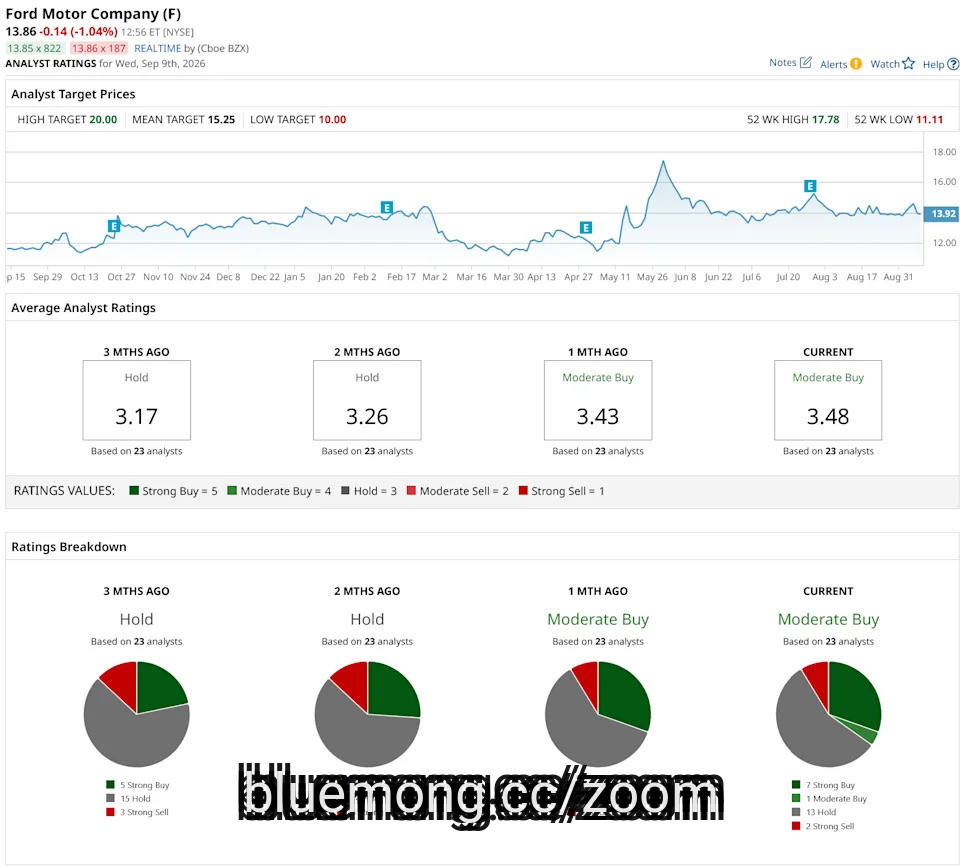
Ford Motor (NYSE:F), the global light-vehicle and truck maker with Ford and Lincoln brands, closed at $14.14, up 2.17%. Wednesday's session followed reports that August U.S. sales fell 10.3%. Investors will be closely watching pickup production and demand next.
Trading volume reached 51.7 million shares, coming in roughly 3.1% above its three-month average of 50.2 million shares.
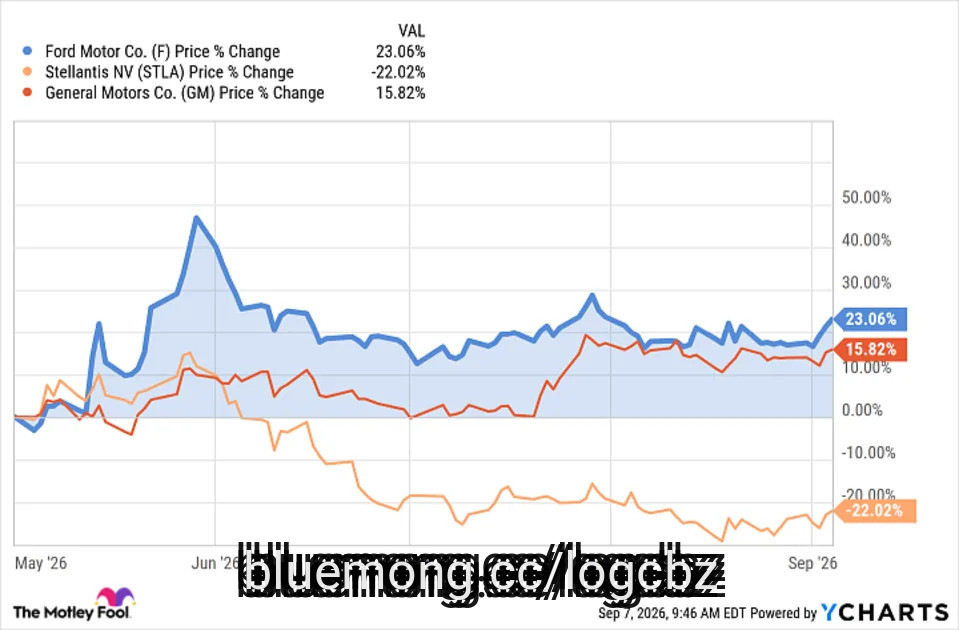
The S&P 500 (SNPINDEX:^GSPC) closed at 7,667, up 0.47%, while the Nasdaq Composite (NASDAQINDEX:^IXIC) finished at 26,218, up 0.45%. Among automobile manufacturers, General Motors (NYSE:GM) closed at $84.88, down 0.88%, and Stellantis (NYSE:STLA) ended at $5.27, down 1.50%, highlighting softer trading in auto peers during the session.
Ford reported August U.S. sales fell 10.3%, marking an eighth straight month of year-over-year declines. Investors were encouraged, however, after the automaker said its production of the large, highly profitable "Super Duty" trucks last month reached a 20-year high. At the same time, the output of F-150 pickups reached its highest point in two years, reports CNBC. Ford was significantly affected by supplier issues due to its large aluminum bodies and other components following an aluminum plant fire late last year.
August electric vehicle (EV) sales were down nearly 80%, while hybrid sales were down 20%. Ford stock is nearly 20% off its 2026 highs, reached after the company announced the formation of Ford Energy in May. That came after it repurposed some EV ******* ets as part of a pivot to tap into demand for energy storage. That helped investors shrug off the plunging EV and hybrid sales.
Before you buy stock in Ford Motor Company, consider this:
#sales


2 months ago
On August 29, Reuters reported that Honda Motor Co. Ltd. (NYSE:HMC) and Nissan Motor could reach an agreement as soon as the following Monday to jointly develop a vehicle operating system and onboard computer, according to ***** an's Nikkei newspaper. The tie-up would target new models arriving as early as 2029 and marks the clearest sign yet that the two ***** anese automakers are rebuilding cooperation more than a year after their $60 billion merger talks fell apart. Honda has plenty riding on getting both the technology and the timing right.
Honda told Reuters it is discussing "potential areas of collaboration" with Nissan and Mitsubishi Motors under their existing strategic partnership, though it stressed no deal has been finalized. A Nissan spokesperson said the company is exploring "various possibilities" and would share details once something is confirmed. Nissan CEO Ivan Espinosa said earlier this month that talks with Honda over software collaboration were underway, and on Honda's own fiscal first-quarter earnings call, management confirmed it is exploring cooperation with Nissan on software-defined vehicles, batteries and shared vehicle platforms to pool volume across both companies. A shared computing platform could let Honda spread the cost of software development across a far larger base of vehicles, an advantage smaller automakers rarely get on their own.
That potential collaboration comes as Honda's core business is performing better than expected. Operating profit for the fiscal first quarter, reported August 5, reached a record JPY530.7 billion, powered by an all-time high JPY233.9 billion motorcycle profit on strong demand in India and Brazil. Automobile operating profit held at JPY192.1 billion despite a rough patch in China, a 5% margin management attributed partly to a JPY78.1 billion positive tariff impact. In the United States, high gasoline prices pushed buyers toward Honda's hybrids, and the company captured a 10% share of the market in April and May, its best showing in five years. Management responded by raising full-year operating profit guidance to JPY650 billion and adjusted operating profit, which excludes EV-related losses, to JPY1.17 trillion, while holding the dividend at JPY70 per share and keeping a JPY3.3 trillion net cash position.
China remains the biggest drag. Management said the country's combustion-engine and hybrid market shrank by about 40% in the quarter, and Honda's retail units there fell 50% year over year, even after the company moved early to extend its joint venture with GAC through 2028 to calm dealers. Honda is also still absorbing the cost of its shifted EV strategy, forecasting JPY520 billion in EV-related losses for the full year, a figure it revised to reflect foreign exchange effects on compensation talks with North American suppliers that remain unresolved.
#billion #nissan #profit #talks


2 months ago
Two leading automotive giants, General Motors Company (NYSE:GM) and Toyota Motor Corporation (NYSE:TM), represent contrasting strategies in the U.S. auto market. Twenty years ago, GM sold twice as many vehicles in the U.S. as Toyota. Today, that gap has narrowed dramatically. Through July, GM's sales lead over Toyota dwindled to just over 100,000 vehicles, as reported on August 21. The shifting dynamic highlights two distinct operating models: GM prioritizing disciplined volume and profit margins, while Toyota aggressively expands its hybrid-heavy lineup to capture market share.
Toyota's push into electrified vehicles, predominantly gas-electric hybrids, is rapidly closing the volume gap. In Q2 2026, Toyota Motor North America reported U.S. sales of 673,971 vehicles, up 1.1% year-over-year. Driver demand was led by its electrified options, which jumped 19.5% to 383,091 units, representing 56.8% of Toyota's total Q2 volume.
Financially, Toyota's hybrid strategy gives it strong top-line momentum without forcing full reliance on pure electric vehicles. Its multi-pathway approach offers 33 electrified models across the Toyota and Lexus lineups, helping maintain high consumer interest while keeping incentive spending among the lowest among full-line automakers.
While Toyota closes the distance, GM retained its spot as America's #1 automaker by volume in Q2 2026, selling 714,896 vehicles. Total sales dipped 4.2% year-over-year due to inventory constraints, discontinued models, and a softer EV backdrop. However, GM intentionally chose not to chase lower-margin volume, focusing instead on high-margin trucks and SUVs like the Chevrolet Suburban and GMC Sierra.
GM's financial execution remains sharp. In Q2 2026, GM delivered an 8.6% North American EBIT-adjusted margin, up 2.5 percentage points year-over-year, and raised its full-year 2026 guidance for the second time. Reduced EV manufacturing losses and pricing stability have kept profitability resilient despite lower unit sales growth.
#full #NYSE

2 months ago
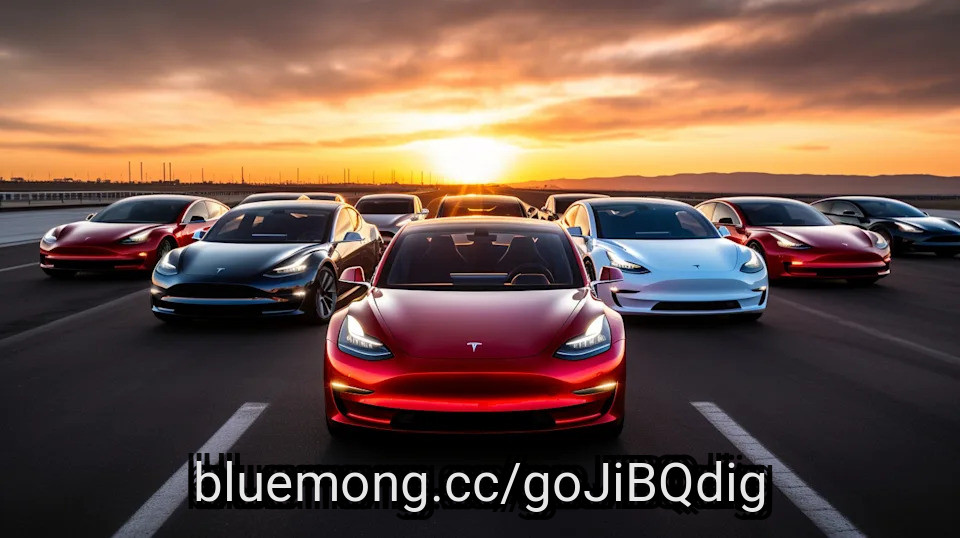
On August 21, CNBC reported that according to notices published by Tesla and China's State Administration for Market Regulation, Tesla, Inc. (NASDAQ:TSLA) is voluntarily recalling about 3 million vehicles in China over two separate issues: door handles that can fail to open after severe crashes and deficient driver "attention monitoring" systems.
The door handle flaw related to a low-voltage system failure after collisions is part of a broader industry action. It covers roughly 4.3 million vehicles across nine automakers, the largest such recall in China's history, Bloomberg reported.
Tesla's fix will use an over-the-air software update to automatically lower windows after a crash, plus warning labels, rather than a hardware redesign. The recall covers Model 3, Model Y, Model S, and Model X vehicles built between 2019 and 2026.
Tesla, Inc. (NASDAQ:TSLA)'s remedy is cheap and fast compared with a typical hardware recall. The company is addressing the door handle issue with an over-the-air software update and physical warning labels rather than a parts replacement. It means most affected owners never need a service appointment. That keeps the direct cost and logistical burden of this recall far lower than recalls requiring in-person repairs.
Tesla was not singled out as uniquely unsafe. Eight other automakers in China also issued voluntary recalls to deal with door handle safety the same day, showing this is an industry-wide design and regulatory issue rather than a Tesla-specific failure. That context matters for how much reputational damage the recall actually does relative to competitors facing the same scrutiny.
#model #rather
2 months ago
Tesla's FSD reached 55% of Q2 North American deliveries and 1.5 million paid subscribers globally, embedding a software subscription business inside an automaker.
GM trades at 29x P/E and Rivian posts -66% operating margins, framing just how much unproven autonomy optionality is embedded in Tesla's 185x forward multiple.
Act now: the ***** yst who called NVIDIA in 2010 just named his top 10 AI stocks — and Tesla didn't make the cut. Grab the names FREE today.
Everyone is focused on Tesla's vehicle deliveries. I think that misses the point. The number that could actually decide Tesla's (NASDAQ:TSLA) future is the Full Self-Driving attach rate, which reached 55% of Q2 North American deliveries with paid FSD customers hitting nearly 1.5 million globally. That is a software subscription business hiding inside an automaker.
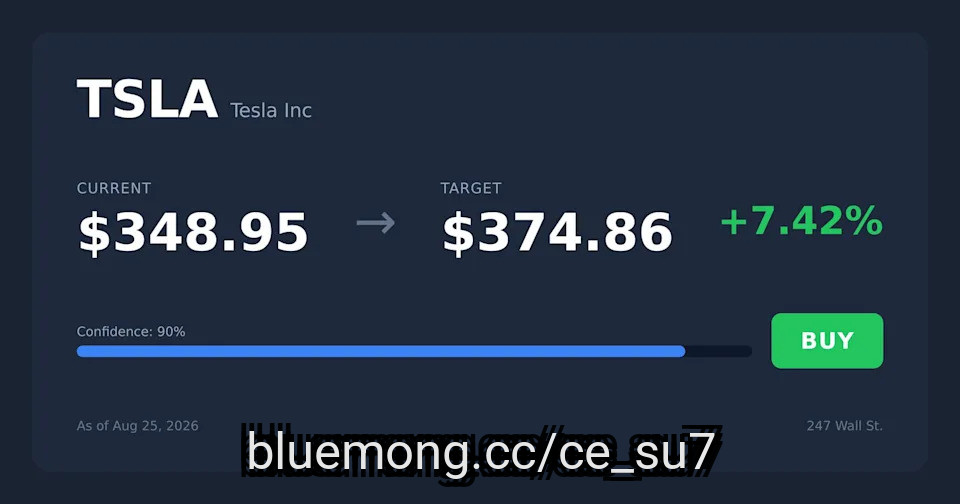
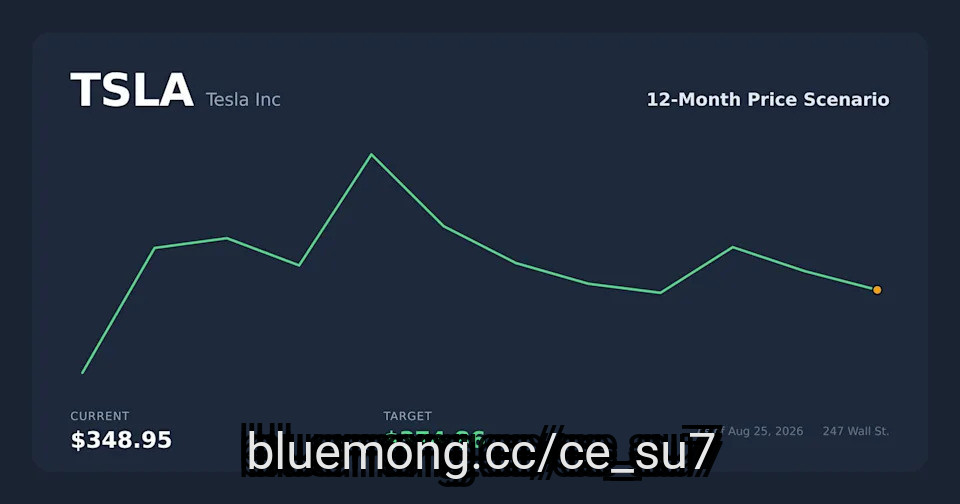
Our 24/7 Wall St. price target for Tesla is $377.78, modest upside of 4.11% from $362.86. That is a hold, delivered with high (90%) confidence.
#american #tesla #software

2 months ago
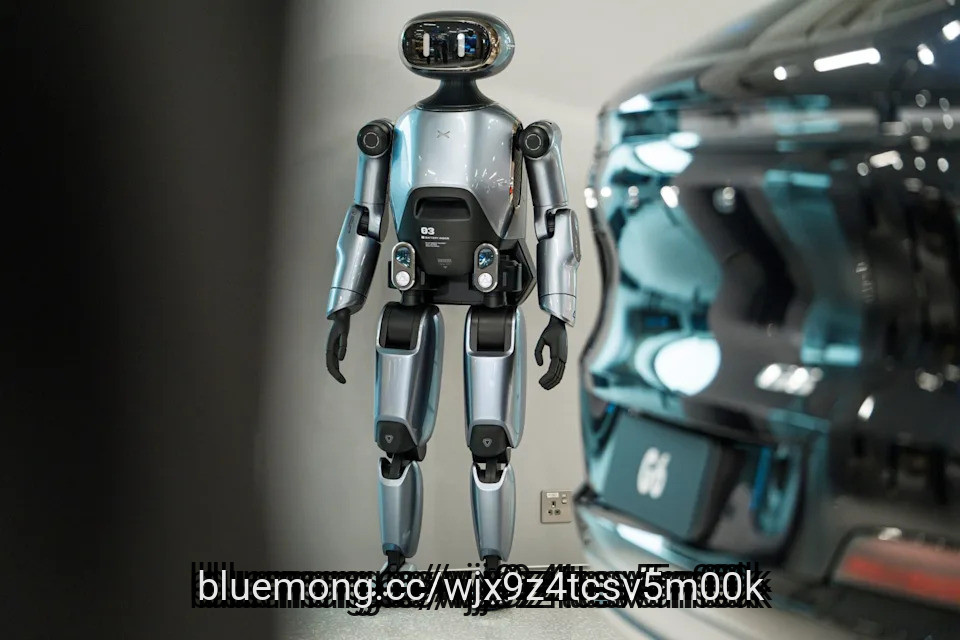
(Bloomberg) -- Xpeng Inc.'s robot unit plans to raise $900 million from investors including Alibaba Group Holding Ltd. and Tencent Holdings Ltd., bolstering the automaker's push into humanoid robots.
Most Read from Bloomberg
Canada Sees Long Trade War With US That May Last Beyond Midterms
US Oil Refiners Face Import Squeeze From Biggest Foreign Seller
US-Canada Trade Talks Fell Apart Over Fine Print, Envoy Says
#bloomberg #alibaba
Most Read from Bloomberg
Canada Sees Long Trade War With US That May Last Beyond Midterms
US Oil Refiners Face Import Squeeze From Biggest Foreign Seller
US-Canada Trade Talks Fell Apart Over Fine Print, Envoy Says
#bloomberg #alibaba

2 months ago
BEIJING, Aug 24 (Reuters) - Chinese automaker Xpeng said on Monday its robotics unit had raised more than $900 million in its first funding round, setting a new record for a single private financing in China's embodied AI sector.
The funding round, led by IDG Capital and backed by strategic investors Tencent and Alibaba, values the robotics business at more than $6.3 billion, Xpeng said in a statement.
Gaorong Ventures, an early investor in autonomous driving company Momenta and humanoid robot startup AgiBot, also participated in the funding.
The proceeds will be used to develop robotics hardware and software, train and refine physical AI models, collect high-quality data, build end-to-end mass-production facilities, and support global expansion, the company said.
Xpeng has aimed to reach a monthly output of 1,000 units of its IRON humanoid robot by the end of the year, with initial deployments at its retail stores and industrial campuses. Commercial sales and deliveries in China and overseas markets are scheduled to begin in 2027.
#robotics #funding #company

2 months ago
Hyundai Motor and its labour union have arrived at a tentative wage agreement, bringing an end to a period of industrial action that had hit production at the South Korean automaker.
According to Yonhap News Agency, the breakthrough came during the 17th round of negotiations between the two parties.
Under the terms agreed, monthly base pay will rise by Won100,000 ($72.20), alongside a performance bonus worth more than 400% of monthly salary and a separate lump-sum payment of Won12.5m.
"The two sides agreed to transparently share information on new projects and their implementation processes, and jointly respond to future changes in the industry", the company was quoted as saying.
Yonhap also reported that the retirement age will be pushed back from 60 to 65, though this element of the deal depends on corresponding changes to relevant laws and regulations.
#changes #motor #korean #agency


2 months ago
BEIJING, Aug 24 (Reuters) - Chinese automaker Xpeng said on Monday its robotics unit had raised more than $900 million in its first funding round, setting a new record for a single private financing in China's embodied AI sector.
The funding round, led by IDG Capital and backed by strategic investors Tencent and Alibaba, values the robotics business at more than $6.3 billion, Xpeng said in a statement.
The proceeds will be used to develop robotics hardware and software, train and refine physical AI models, collect high-quality data, build end-to-end mass-production facilities, and support global expansion, the company said.
Xpeng plans to begin mass production of its humanoid robot, Xpeng IRON, by year-end, with initial deployments at its retail stores and industrial campuses. Commercial sales and deliveries in China and overseas markets are scheduled to begin in 2027.
CEO He Xiaopeng announced in June that he would personally lead the robotics business as the electric vehicle maker, seen as one of the leading automaker-backed developers of humanoid robots, pushes towards mass production.
#mass #automaker #business
2 months ago
BEIJING, Aug 21 (Reuters) - Tesla will roll out software fixes for millions of vehicles in China, the country's market regulator said on Monday, marking the automaker's largest-ever recall in the market.
Effective September 25, Tesla will recall 2.98 million China-made and imported Model 3, Model Y, Model S and Model X vehicles because emergency door release handles may be difficult to identify, potentially hindering escape or rescue after a severe crash and electrical system failure. The remedy includes warning labels and an over-the-air (OTA) update that lowers windows after a collision.
Separately, Tesla is immediately recalling 2.74 million China-made Model 3 and Model Y vehicles for an OTA software update to enhance driver-attention monitoring while ******* isted steering and other driver-assistance functions are engaged, reducing the risk of collisions if drivers fail to respond promptly.
(Reporting by Beijing newsroom; Editing by Joe Bavier)
The supertruck arms race is getting petty in the best way possible. With Ram resurrecting the supercharged 777-horsepower TRX SRT and aggressively pushing its 540-hp inline-six Ram 1500 RHO, Ford is making a aggressive move to protect its territory. For the 2027 model year, The Blue Oval has slashed $4,010 off the standard F-150 Raptor's entry sticker, bringing the delivered base price down to $77,790.
#vehicles #beijing #made



2 months ago
Hyundai Motor is considering expanding production capacity at its Georgia ******* embly plant from 500,000 vehicles annually to between 700,000 and 800,000 units by 2028, CEO José Muñoz told CNBC on Thursday. The South Korean automaker said following publication of the interview that the plans are under consideration but not yet confirmed.
At the upper end of that range, the Georgia Metaplant would leapfrog rivals — among them Tesla and Toyota Motor — to claim the top spot among U.S. vehicle ******* embly plants measured by capacity.
Muñoz said President Donald Trump's tariffs, including a 15% levy on imports from South Korea, have accelerated the company's localization plans. "Tariffs are helping accelerate our localization plan. That's very, very simple," he said. "The good thing is that we had already started before tariffs were announced. So in a way it's helping us to accelerate."
Any such expansion would be funded through Hyundai's already-announced $26 billion U.S. investment commitment running to 2028. Hyundai has targeted a domestic production share of at least 80% of the vehicles it moves in the U.S. market by 2030, compared with roughly 40% in 2024. "For that purpose, we need to add more capacity," Muñoz said.
The $7.6 billion Metaplant, which Hyundai first announced in 2022, is currently turning out the all-electric Ioniq 5 and Ioniq 9 models alongside the Kia Sportage hybrid. The facility is designed to build hybrid and all-electric vehicles for the Hyundai, Genesis, and Kia brands. Under the existing 500,000-unit framework, the Georgia campus would employ upward of 8,500 people directly, with a further 6,900 positions supported at supplier facilities nearby.
#hyundai #georgia #capacity #ioniq


2 months ago
Tesla (TSLA) is a global leader in electric vehicles, energy storage, and artificial intelligence, headquartered in Austin, Texas. Led by CEO Elon Musk, Tesla designs and manufactures EVs, energy storage systems, and solar products while aggressively expanding into autonomous driving, robotics, and AI infrastructure through its Full Self-Driving (FSD) software, Robotaxi network, and Optimus humanoid robot program. The company operates through two primary segments: Automotive, and Energy Generation and Storage. As Tesla transitions from a pure-play automaker into a broader AI and robotics powerhouse, it continues to invest heavily in manufacturing capacity, battery technology, and next-generation autonomous systems worldwide.
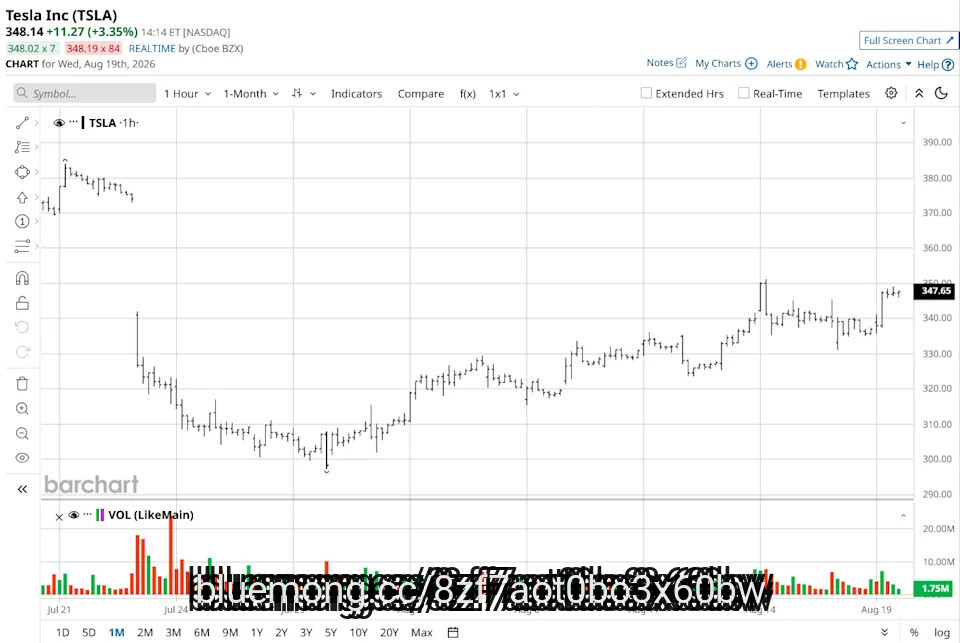
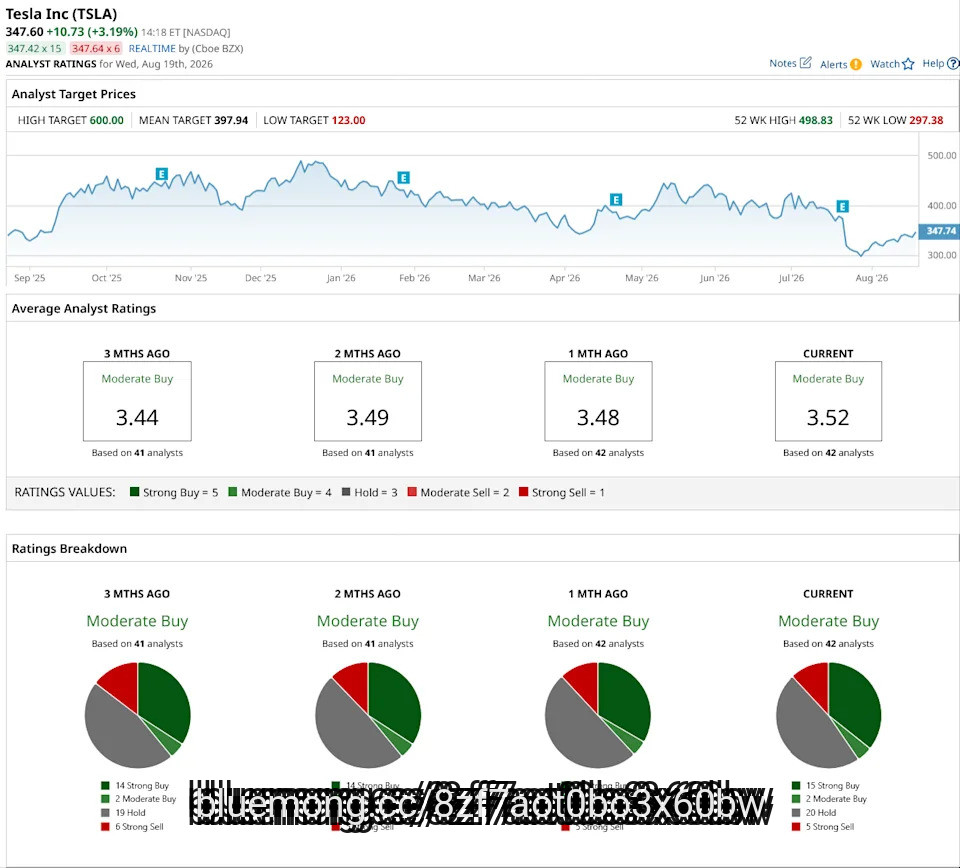
Tesla's stock has struggled in 2026, trading near the bottom of its 52-week range and below its 200-day moving average. Shares recently closed around $336.87, down sharply from a 52-week high of $498.83 set in June, though still above the 52-week low of $297.38 touched in late July. The stock has been pressured by margin compression, a negative free cash flow quarter, and investor anxiety over Tesla's massive AI and robotics capital spending, even as anticipation builds around the upcoming public Cybercab robotaxi launch in Austin and continued progress on Optimus humanoid robot production.
Barron Trump, 20, Now Worth $150 Million — More Than Mom, Melania — From Crypto And $39 Energy Drink
Billionaire Michael Saylor Warns Against Buying a House Because 'Every 36 Years You Actually Pay the Cost of the House in Tax to the Government'
QQQ Just 'Gamma Flipped' as Market Makers Were Forced to Sell. Here's What Our Top Chart Expert is Tracking Next.
#robotics #driving

2 months ago
On August 14, autoworkers at Stellantis (NYSE:STLA) learned their union had been told the company is weighing the sale of its Brampton, Ontario plant, a move Unifor tied directly to US tariffs on Canadian goods. The timing is awkward. Days earlier, Stellantis had posted a swing back to profit, which looked like the first real evidence that its turnaround plan is working. Now investors have to weigh a genuine operational rebound against a labor and trade headache tangled up in the very North American market the company is counting on.
Stellantis reported a Q2 net profit of 293 million euros, a sharp reversal from a loss of 1.87 billion euros a year earlier, while adjusted operating income more than tripled to 773 million euros. North America, the region investors watch most closely, saw market share climb to 7.4% from a flat 7%, and Ram notched its fourth straight quarter of year-over-year sales growth, up 6%, breaking a seven-year losing streak. Renewed demand for the reintroduced Hemi V8 helped drive that gain, and Stellantis is leaning further into high-margin performance vehicles to extend it.
The Ram 1500 TRX SRT, priced at $102,590 with shipping, just reached dealerships only six months after its unveiling, and a lower-priced Rumble Bee variant is coming in the lower $60,000s. SRT trims carry margins two to three times higher than standard versions, and the automaker plans eleven SRT models across Ram, Jeep, and Dodge over the next five years. Combined with two all-new and three refreshed vehicles launched in the quarter, and nine more on the way, that product cycle backs up a stated goal of pushing North American margins to 8% to 10% within five years.
Wall Street was not impressed by the Q2 print. Adjusted operating income fell short of the 914 million euro estimate, and the stock dropped nearly 10% on the news before recovering part of that loss, a sign the turnaround still has to prove itself. That skepticism looks more justified given what surfaced on August 14, when Unifor said Stellantis notified the union it may close and sell its Brampton plant, ending decades of vehicle ***** embly there. Stellantis pointed to US tariffs on Canadian goods as the driver, and Brampton would not be the first casualty.
The plant was already idled for retooling in 2024, paused again in 2025, and lost its planned Jeep Compass production to a factory in Illinois once the tariffs hit. Brampton employed 2,200 workers before closing, and Canada's government, including Industry Minister Melanie Joly's office, has been pushing Stellantis to restart it. Stellantis has also previously discussed building electric vehicles in Canada with Chinese partner Zhejiang Leapmotor, an idea Unifor has openly opposed. All of this lands just as Unifor enters new contract talks covering Brampton and two other plants, with the current agreement expiring in September.
#north #plant #million #euros

2 months ago
General Motors Co (NYSE:GM) is abandoning one of the most storied American automobile brands in the world's largest auto market, and Ford Motor Company (NYSE:F) announced a different kind of pullback. Together, the two moves demonstrate how much American manufacturers have lost their foothold in China.
According to a report in German trade publication Automobilwoche, General Motors Co (NYSE:GM) plans to stop Chevrolet sales in China after nearly 21 years. The figures driving the decision are stark: Chevrolet sold over 767,000 vehicles in China in 2014, its peak year. Last year, that figure had fallen to less than 9,000 units, a 98.8% decrease in just over a decade. GM's answer has been to double down on its two surviving, more successful Chinese brands, focusing on Buick and Cadillac, with Buick specifically finding success with its new Electra electric vehicle series.
Chevrolet's decline is a symptom of a broader fundamental instability. Foreign automakers' overall share of China's auto market has plummeted, dropping from 53% to around 33% in just two years, while local Chinese companies led by BYD and Geely have taken control.
Ford's version of the retreat, announced on August 13, focuses on Lincoln, its luxury brand. Ford announced that beginning in 2030, it will stop producing Lincoln vehicles in China for the US market and instead expand Lincoln manufacturing domestically. The move notably targets the Lincoln Nautilus, the brand's best-selling model and the only car Ford Motor Company (NYSE:F) currently makes in China for American buyers, manufactured at the Changan Ford joint venture in Hangzhou since 2024.
CEO Jim Farley described the move as a statement of identity as much as strategy, claiming that Lincoln is an American brand and Ford Motor Company (NYSE:F) is America's automaker, telling Reuters that the decision was prompted by the Trump administration's trade policies. Those policies are doing the majority of the work here. The China-built Nautilus is subject to a significant 52.5% tariff in the US, a cost that has become difficult to justify. Despite the fact that the SUV has held up fairly well commercially, its US sales are down only 5.7% year-over-year through July, a smaller decrease than the Lincoln brand overall (down 12.6%).
#ford #american #motor #announced

3 months ago
Rivian burns $833 million per quarter selling just 65,000 vehicles a year, yet its $23 billion market cap edges out global automaker Stellantis.
Stellantis sells 5.4 million vehicles annually but sits at a $20 billion market cap, while Tesla commands $1.1 trillion on EV future optimism.
EVs represent only 5% of new US car sales, making the investor optimism inflating Rivian above Stellantis increasingly hard to justify.
Act now: the ****** yst who called NVIDIA in 2010 just named his top 10 AI stocks — and Rivian didn't make the cut. Grab the names FREE today.
Troubled EV company Rivian (NASDAQ: RIVN) has a $23 billion market cap. Global car giant Stellantis (NYSE: STLA) has a $20 billion market cap. This seems impossible. It shouldn't be. The EV revolution has ended in the US. Stellantis has troubled brands, but not that troubled.
#stellantis #rivian #billion #global