
1 day ago
Volkswagen announced a steep cut to its full-year profit outlook on Friday, citing roughly €10 billion ($11.5 billion) in one-time charges concentrated at its troubled Porsche division, amid mounting pressure from U.S. tariffs and a weakening Chinese auto market on the world's second-largest automaker.
The company said it now expects an operating return on sales of up to 1% for 2026, down from its previous guidance of 4% to 5.5%. Volkswagen also said full-year revenue is expected to fall to about €315 billion, from €321.9 billion in 2025.
The bulk of the charges — about €6 billion — stem from revised mid-term ******* umptions for Porsche, in which Volkswagen holds a 75.4% stake. The sports car brand has been hit by U.S. tariffs and a collapse in demand for foreign luxury vehicles in China. On top of that, Volkswagen said it would book a further €2 billion in impairments in the second half of the year, covering China-related writedowns as well as restructuring charges such as costs from early-retirement schemes and the pending divestiture of its Osnabrück plant in Germany, according to The Wall Street Journal.
Volkswagen stock closed down 5.6% following the announcement. Shares of Porsche and Volkswagen's top shareholder Porsche SE fell 3.3% and 4.9%, respectively.
The company cautioned that "further deterioration in the market environment, especially in China, as well as an accelerated shift in demand in favour of battery-electric vehicles" would drag down results, with its Audi and Volkswagen passenger car brands bearing the brunt. Volkswagen noted that its outlook ******* umes tariffs remain unchanged and does not account for possible future effects from the war in the Middle East.
#charges #tariffs #full
The company said it now expects an operating return on sales of up to 1% for 2026, down from its previous guidance of 4% to 5.5%. Volkswagen also said full-year revenue is expected to fall to about €315 billion, from €321.9 billion in 2025.
The bulk of the charges — about €6 billion — stem from revised mid-term ******* umptions for Porsche, in which Volkswagen holds a 75.4% stake. The sports car brand has been hit by U.S. tariffs and a collapse in demand for foreign luxury vehicles in China. On top of that, Volkswagen said it would book a further €2 billion in impairments in the second half of the year, covering China-related writedowns as well as restructuring charges such as costs from early-retirement schemes and the pending divestiture of its Osnabrück plant in Germany, according to The Wall Street Journal.
Volkswagen stock closed down 5.6% following the announcement. Shares of Porsche and Volkswagen's top shareholder Porsche SE fell 3.3% and 4.9%, respectively.
The company cautioned that "further deterioration in the market environment, especially in China, as well as an accelerated shift in demand in favour of battery-electric vehicles" would drag down results, with its Audi and Volkswagen passenger car brands bearing the brunt. Volkswagen noted that its outlook ******* umes tariffs remain unchanged and does not account for possible future effects from the war in the Middle East.
#charges #tariffs #full

1 day ago
Volkswagen cut its 2026 operating-margin forecast to no more than 1 per cent, down from a previous range of 4 to 5.5 per cent.
Approximately €10 billion in special charges includes a €6 billion non-cash impairment connected with Porsche.
Volkswagen maintained its cash-flow outlook, but the downgrade highlights deeper pressure from China, restructuring costs and lower-margin electric vehicles.
Volkswagen AG (OTC:VWAGY) shares suffered their sharpest decline in months after the German automaker warned that Porsche's deteriorating outlook and additional restructuring costs would substantially reduce its 2026 profit.
Volkswagen's preferred shares fell as much as 7.5 per cent in Frankfurt on Friday before closing 5.6 per cent lower. Shares of Porsche AG declined 3.3 per cent, while Volkswagen's largest shareholder, Porsche Automobil Holding SE, lost 4.9 per cent.
#volkswagen #Margin #billion
Approximately €10 billion in special charges includes a €6 billion non-cash impairment connected with Porsche.
Volkswagen maintained its cash-flow outlook, but the downgrade highlights deeper pressure from China, restructuring costs and lower-margin electric vehicles.
Volkswagen AG (OTC:VWAGY) shares suffered their sharpest decline in months after the German automaker warned that Porsche's deteriorating outlook and additional restructuring costs would substantially reduce its 2026 profit.
Volkswagen's preferred shares fell as much as 7.5 per cent in Frankfurt on Friday before closing 5.6 per cent lower. Shares of Porsche AG declined 3.3 per cent, while Volkswagen's largest shareholder, Porsche Automobil Holding SE, lost 4.9 per cent.
#volkswagen #Margin #billion

1 day ago
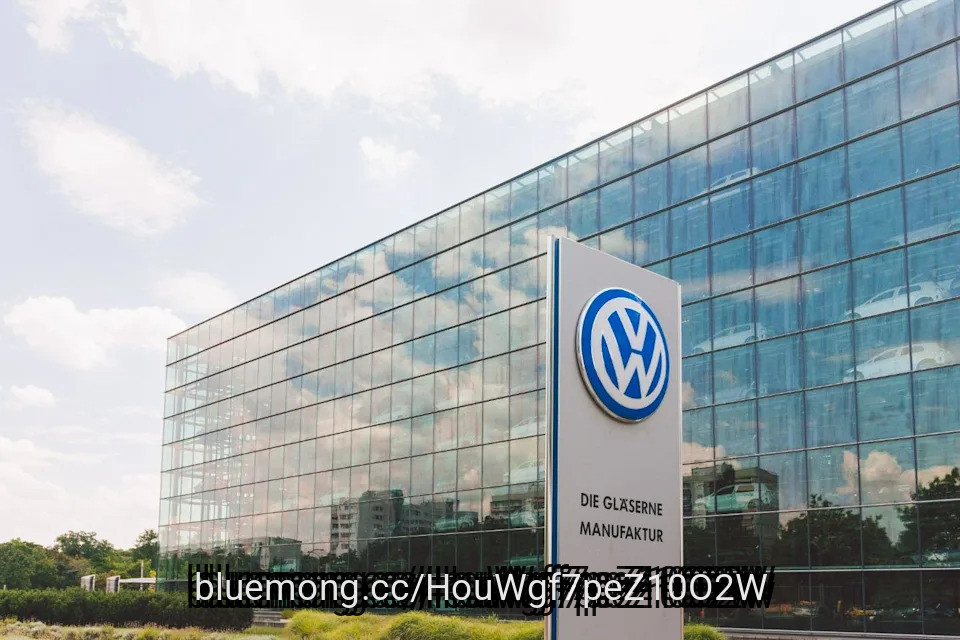
Volkswagen has dramatically cut its 2026 profit outlook as deteriorating business in China, restructuring costs and a multibillion-euro writedown at Porsche pile pressure on Europe's largest automaker.
The German carmaker now expects an operating margin of no more than 1% this year, down from its previous forecast of at least 4%, according to Bloomberg. Volkswagen shares fell more than 7% following the announcement, dragging other automakers lower.
VW expects around €10 billion ($11.5 billion) in charges this year, including restructuring costs ****** ociated with workforce reductions and writedowns on Chinese ****** ets. The total includes a €6-billion writedown related to Porsche, reflecting revised long-term expectations for the sports-car maker.
Excluding the exceptional charges, Volkswagen said its operating margin would be around 4%.
China represents one of the biggest challenges. Volkswagen CFO Arno Antlitz said the market has contracted by around 20%, with no stabilization currently in sight. Chinese automakers are simultaneously taking domestic market share and expanding into Europe with competitively priced electric vehicles.
#porsche
The German carmaker now expects an operating margin of no more than 1% this year, down from its previous forecast of at least 4%, according to Bloomberg. Volkswagen shares fell more than 7% following the announcement, dragging other automakers lower.
VW expects around €10 billion ($11.5 billion) in charges this year, including restructuring costs ****** ociated with workforce reductions and writedowns on Chinese ****** ets. The total includes a €6-billion writedown related to Porsche, reflecting revised long-term expectations for the sports-car maker.
Excluding the exceptional charges, Volkswagen said its operating margin would be around 4%.
China represents one of the biggest challenges. Volkswagen CFO Arno Antlitz said the market has contracted by around 20%, with no stabilization currently in sight. Chinese automakers are simultaneously taking domestic market share and expanding into Europe with competitively priced electric vehicles.
#porsche


1 month ago
The FIA will enforce its sporting regulations more strictly in Formula E's Gen4 era to clamp down on teams colluding to "manipulate" races.
Manufacturers in Formula E hold significant influence over their customer teams, with some agreements extending far beyond the supply of powertrains. This was particularly evident in last weekend's London finale, when Cupra Kiro driver Dan Ticktum admitted to slowing down in qualifying to help factory Porsche driver Pascal Wehrlein reach the final duel.
Read Also:
Did Formula E's London finale go too far with team games and personal vendettas?
While the London races put manufacturer and team orders in the spotlight, the FIA had already been planning a clampdown on such tactics since the summer break.
#down #team #manufacturers
Manufacturers in Formula E hold significant influence over their customer teams, with some agreements extending far beyond the supply of powertrains. This was particularly evident in last weekend's London finale, when Cupra Kiro driver Dan Ticktum admitted to slowing down in qualifying to help factory Porsche driver Pascal Wehrlein reach the final duel.
Read Also:
Did Formula E's London finale go too far with team games and personal vendettas?
While the London races put manufacturer and team orders in the spotlight, the FIA had already been planning a clampdown on such tactics since the summer break.
#down #team #manufacturers



1 month ago
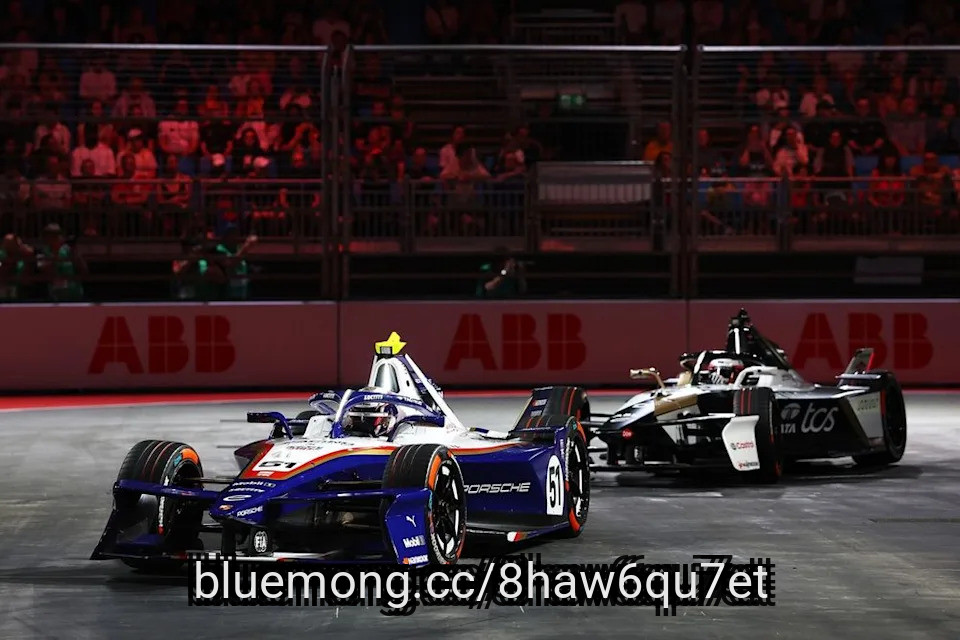
Mitch Evans reckons the ill-timed virtual safety car was "typical of my luck" in race one of the London E-Prix, after Porsche's "extreme games" already compromised his Formula E ***** le chances on Saturday.
The factory Jaguar driver could only manage an eighth-place finish at the ExCeL after starting third on the grid, while ***** le rival Pascal Wehrlein converted pole position into a dominant win.
Having arrived into the weekend just two points behind Jake Dennis in the ***** le fight, Evans now faces a substantial 21-point deficit to new championship leader Wehrlein with 28 available.
Evans was already losing touch with Porsche's Wehrlein in the opening phase of the race as Nico Muller backed up the field to let his team-mate run away at the front.
But the biggest deciding factor was a mid-race VSC, which allowed the likes of Wehrlein to make a cheap pitstop. Although the Kiwi eventually overtook Muller, he only scored four points as several drivers who had delayed their pitstop boost jumped ahead of him.
#wehrlein #muller #points
The factory Jaguar driver could only manage an eighth-place finish at the ExCeL after starting third on the grid, while ***** le rival Pascal Wehrlein converted pole position into a dominant win.
Having arrived into the weekend just two points behind Jake Dennis in the ***** le fight, Evans now faces a substantial 21-point deficit to new championship leader Wehrlein with 28 available.
Evans was already losing touch with Porsche's Wehrlein in the opening phase of the race as Nico Muller backed up the field to let his team-mate run away at the front.
But the biggest deciding factor was a mid-race VSC, which allowed the likes of Wehrlein to make a cheap pitstop. Although the Kiwi eventually overtook Muller, he only scored four points as several drivers who had delayed their pitstop boost jumped ahead of him.
#wehrlein #muller #points



1 month ago
Although it's hard to envision 49ers tackle Trent Williams fitting inside a Porsche 911, he leased one in 2021. Now, the company that leased it to him is suing for failing to make the payments.
Via TMZ, OpenRoad Auto Group claims that Williams signed a four-year lease for the vehicle in August 2021. He allegedly made the first two payments (totaling $10,617.26) by bank debit. He allegedly closed the account before any of the remaining 46 payments could be made.
The lease expired last August. The company contends that it doesn't know the whereabouts of the car. It alleges that Williams may have sold it to a car company, which then sold it to someone else.
OpenRoad has sued Williams for breach of contract, fraud, and other specific legal claims.
The whole thing is confusing. First, why would OpenRoad wait so long to take formal action (assuming the case was filed recently)? Second, how could Williams have sold the car without being able to transfer a valid ***** le to it?
#williams #august
Via TMZ, OpenRoad Auto Group claims that Williams signed a four-year lease for the vehicle in August 2021. He allegedly made the first two payments (totaling $10,617.26) by bank debit. He allegedly closed the account before any of the remaining 46 payments could be made.
The lease expired last August. The company contends that it doesn't know the whereabouts of the car. It alleges that Williams may have sold it to a car company, which then sold it to someone else.
OpenRoad has sued Williams for breach of contract, fraud, and other specific legal claims.
The whole thing is confusing. First, why would OpenRoad wait so long to take formal action (assuming the case was filed recently)? Second, how could Williams have sold the car without being able to transfer a valid ***** le to it?
#williams #august



2 months ago
Wayne Taylor Racing ended a winning streak of more than two years in IMSA Grand Touring Prototype, winnin the Motul SportsCar Endurance Grand Prix at Road America with the No. 10 Cadillac of Filipe Albuquerque and Ricky Taylor
In a chaotic race (expanded to six hours) Sunday on the Elkhart Lake, Wisconsin, road course, Albuquerque and Taylor delivered the team's first win in the top category of the IMSA WeatherTech SportsCar Championship since Detroit in June 2024. It's WTR's first victory since returning to Cadillac last year.
"Very, very special," Albuquerque said. "This is more than just a win. Super happy with everyone."
Albuquerque took the lead from Jack Aitken in the No. 31 Cadillac with just under 90 minutes remaining and held on through multiple restarts as the race ended under yellow. The No. 5 JDC-Miller MotorSports Porsche 963 of Laurin Heinrich, Kaylen Frederick and Tijmen van der Helm finished second, and WTR 's No. 40 Cadillac of Jordan Taylor and Louis Deletraz finished third.
"Amazing day, it was a full team effort," Ricky Taylor said. "So proud of how the team has stuck with it and kept working towards this sort of result, and just very thankful to Cadillac for sticking with us through all of it. They've always had our back, and they've emphasized how it's one team and that support goes a long way to keeping our confidence because our confidence has been challenged a lot with the lack of results. So, finally getting a win and not just a lucky one. It was a strong performance all day, so we feel like this is something we can build on."
#cadillac
In a chaotic race (expanded to six hours) Sunday on the Elkhart Lake, Wisconsin, road course, Albuquerque and Taylor delivered the team's first win in the top category of the IMSA WeatherTech SportsCar Championship since Detroit in June 2024. It's WTR's first victory since returning to Cadillac last year.
"Very, very special," Albuquerque said. "This is more than just a win. Super happy with everyone."
Albuquerque took the lead from Jack Aitken in the No. 31 Cadillac with just under 90 minutes remaining and held on through multiple restarts as the race ended under yellow. The No. 5 JDC-Miller MotorSports Porsche 963 of Laurin Heinrich, Kaylen Frederick and Tijmen van der Helm finished second, and WTR 's No. 40 Cadillac of Jordan Taylor and Louis Deletraz finished third.
"Amazing day, it was a full team effort," Ricky Taylor said. "So proud of how the team has stuck with it and kept working towards this sort of result, and just very thankful to Cadillac for sticking with us through all of it. They've always had our back, and they've emphasized how it's one team and that support goes a long way to keeping our confidence because our confidence has been challenged a lot with the lack of results. So, finally getting a win and not just a lucky one. It was a strong performance all day, so we feel like this is something we can build on."
#cadillac


2 months ago
The supervisory board of VW Group-owned Porsche has approved another phase of restructuring, a company spokesperson told Reuters.
German media reports said the total number of planned job cuts could reach about 9,000.
The company spokesperson declined to discuss the contents of the new package agreed with labour representatives.
The spokesperson said only that the supervisory board had backed the measures.
"Now it's time to finalise the last steps," the spokesperson said in an emailed statement to Reuters.
#spokesperson #reuters #group #porsche
German media reports said the total number of planned job cuts could reach about 9,000.
The company spokesperson declined to discuss the contents of the new package agreed with labour representatives.
The spokesperson said only that the supervisory board had backed the measures.
"Now it's time to finalise the last steps," the spokesperson said in an emailed statement to Reuters.
#spokesperson #reuters #group #porsche


2 months ago
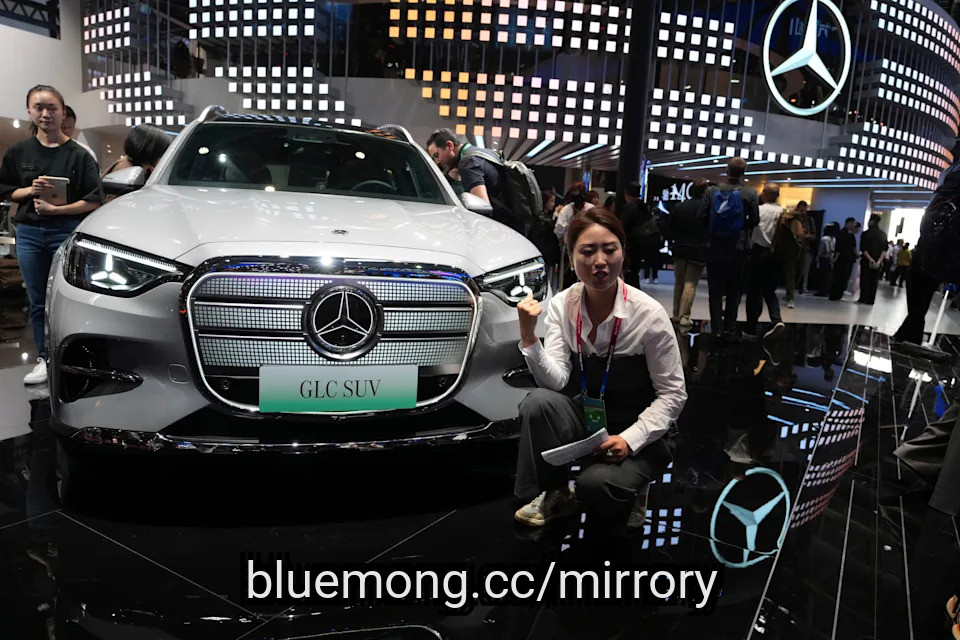
HONG KONG (AP) — Major German carmakers saw sharp quarterly sales declines in China as domestic demand weakened and competition heated up in the world's biggest auto market.
At Volkswagen, Mercedes-Benz, BMW and Porsche, China sales for the April-June quarter plummeted between 30% and 41% compared with the same period a year ago, according to company data released over the past week.
For the first half of this year, they all reported a more than 20% year-on-year drop in China. The falling China sales have squeezed their overall profits and in some cases offset gains from other regions.
This also comes at a time when these legacy German carmakers are faced with intensified competition from Chinese automakers outside of China, including in Europe, as leading Chinese brands like BYD make inroads overseas.
The latest quarterly sales declines were some of the steepest seen for the German automakers in China, said Lei Xing, an independent auto ******* yst.
At Volkswagen, Mercedes-Benz, BMW and Porsche, China sales for the April-June quarter plummeted between 30% and 41% compared with the same period a year ago, according to company data released over the past week.
For the first half of this year, they all reported a more than 20% year-on-year drop in China. The falling China sales have squeezed their overall profits and in some cases offset gains from other regions.
This also comes at a time when these legacy German carmakers are faced with intensified competition from Chinese automakers outside of China, including in Europe, as leading Chinese brands like BYD make inroads overseas.
The latest quarterly sales declines were some of the steepest seen for the German automakers in China, said Lei Xing, an independent auto ******* yst.

3 months ago
Marc van der Straten died at his home in Switzerland on July 5, at age 78. If your motorsport diet is heavy on GT3 and Blancpain results, you know his name from a BMW Z4 that tore through the Spa 24 Hours a decade ago. If you follow Grand Prix motorcycle racing, you know it from a Moto2 garage that quietly produced three world champions. What most people on either side of that divide don't realize is that it's the same man, running the same family operation, for the better part of three decades. That's the part of this story worth sitting with — not just the loss of a team owner, but the exit of one of the last people in professional racing who genuinely built something on both two wheels and four.
The timing makes it sting a little more. Seven days before he passed, a Boutsen VDS-run Porsche crossed the line eighth overall at the 79th running of the CrowdStrike 24 Hours of Spa, an event SRO Motorsports Group itself markets as the biggest GT race on the planet. Van der Straten was, by every account from people who worked with him, still fully engaged with that program. He didn't get a slow fade into retirement. He got one more finish on the board first.
Van der Straten came from the van der Straten-Ponthoz family, tied to the lineage behind Stella Artois, which tells you where the checkbook came from but not why he spent it on race cars. That part came from his father, a onetime racer himself, and it pointed young Marc toward a genuinely strange starting point: the Gillet Vertigo, a low-volume Belgian sports car that most enthusiasts outside the Ardennes have never heard of. Van der Straten ran it in the domestic Belcar series under the Belgian Racing banner before pushing into the international FIA GT Championship by 2005.
Here's the part that's easy to gloss over: the Vertigo program was never eligible to score points toward the actual GT championship, because ******* logation rules require a minimum number of road-going examples to exist before a manufacturer's race car can compete for a ******* le. Gillet never built enough Vertigos to clear that bar. Van der Straten was paying to go racing at the top level with a car that, on paper, couldn't win anything. That's either an expensive hobby or a serious statement about priorities, and by 2008 even he seemed to agree it was time to pivot.
The team rebranded as Marc VDS for 2009 and became a development partner for the Matech-built Ford GT1, which earned it one of twelve entries in the inaugural FIA GT1 World Championship in 2010 — a season that also included a Ford GT1 at the 24 Hours of Le Mans, a race the team wouldn't finish. The following year told a different story: a Kronos Racing/Marc VDS-entered Lola-Aston Martin LMP1 finished seventh overall at Le Mans with Vanina Ickx, Bas Leinders, and Maxime Martin sharing the car. If that surname looks familiar, yes, Vanina is Jacky Ickx's daughter, which is its own small piece of Belgian racing trivia buried inside a bigger one.
The timing makes it sting a little more. Seven days before he passed, a Boutsen VDS-run Porsche crossed the line eighth overall at the 79th running of the CrowdStrike 24 Hours of Spa, an event SRO Motorsports Group itself markets as the biggest GT race on the planet. Van der Straten was, by every account from people who worked with him, still fully engaged with that program. He didn't get a slow fade into retirement. He got one more finish on the board first.
Van der Straten came from the van der Straten-Ponthoz family, tied to the lineage behind Stella Artois, which tells you where the checkbook came from but not why he spent it on race cars. That part came from his father, a onetime racer himself, and it pointed young Marc toward a genuinely strange starting point: the Gillet Vertigo, a low-volume Belgian sports car that most enthusiasts outside the Ardennes have never heard of. Van der Straten ran it in the domestic Belcar series under the Belgian Racing banner before pushing into the international FIA GT Championship by 2005.
Here's the part that's easy to gloss over: the Vertigo program was never eligible to score points toward the actual GT championship, because ******* logation rules require a minimum number of road-going examples to exist before a manufacturer's race car can compete for a ******* le. Gillet never built enough Vertigos to clear that bar. Van der Straten was paying to go racing at the top level with a car that, on paper, couldn't win anything. That's either an expensive hobby or a serious statement about priorities, and by 2008 even he seemed to agree it was time to pivot.
The team rebranded as Marc VDS for 2009 and became a development partner for the Matech-built Ford GT1, which earned it one of twelve entries in the inaugural FIA GT1 World Championship in 2010 — a season that also included a Ford GT1 at the 24 Hours of Le Mans, a race the team wouldn't finish. The following year told a different story: a Kronos Racing/Marc VDS-entered Lola-Aston Martin LMP1 finished seventh overall at Le Mans with Vanina Ickx, Bas Leinders, and Maxime Martin sharing the car. If that surname looks familiar, yes, Vanina is Jacky Ickx's daughter, which is its own small piece of Belgian racing trivia buried inside a bigger one.

3 months ago
The Indianapolis Motor Speedway Museum has done something it has never done before, and it took a four-time Cup Series champion to make it happen. On July 1, the museum opened its first exhibition built entirely around a single NASCAR driver, and the subject is Jeff Gordon. For an institution that has spent decades honoring the broad sweep of racing history, dedicating its ******* e to one man is a significant departure from how it usually operates.
Leclerc Says Ferrari's Whole Weekend Formula Just Flipped in Austria
Porsche's Sonderwunsch Turns Three Toy Story 911s Into a $3 Million Charity Play
The exhibit stretches across both of the museum's lower-level galleries, giving Gordon's career the kind of room most drivers never get in a museum setting. Visitors will find 13 cars pulled from every era of his time at the top of the sport, a lineup that traces his rise from a young challenger into one of the most decorated names stock car racing has produced. Seeing that many machines gathered under one roof is rare, and ******* embling them in a single ******* e is a statement about where Gordon sits in the sport's memory.
Beyond the cars, the exhibit leans into something more personal and more unexpected. More than 70 of Gordon's helmets are on display, and they are presented not as equipment tucked into a glass case but as pieces of art. That framing turns gear that most fans only glimpse at 200 miles per hour into something meant to be studied up close, and it signals that the museum wants people to think about Gordon's legacy in a different way than they might expect.
Leclerc Says Ferrari's Whole Weekend Formula Just Flipped in Austria
Porsche's Sonderwunsch Turns Three Toy Story 911s Into a $3 Million Charity Play
The exhibit stretches across both of the museum's lower-level galleries, giving Gordon's career the kind of room most drivers never get in a museum setting. Visitors will find 13 cars pulled from every era of his time at the top of the sport, a lineup that traces his rise from a young challenger into one of the most decorated names stock car racing has produced. Seeing that many machines gathered under one roof is rare, and ******* embling them in a single ******* e is a statement about where Gordon sits in the sport's memory.
Beyond the cars, the exhibit leans into something more personal and more unexpected. More than 70 of Gordon's helmets are on display, and they are presented not as equipment tucked into a glass case but as pieces of art. That framing turns gear that most fans only glimpse at 200 miles per hour into something meant to be studied up close, and it signals that the museum wants people to think about Gordon's legacy in a different way than they might expect.

3 months ago
Laurin Heinrich rallied JDC-Miller MotorSports to a third-place finish at the Sahlen’s Six Hours of The Glen after dropping a lap down. However, a victory by rival Jack Aitken meant the German lost ground in the GTP championship.
The #5 Porsche 963 started fifth at Watkins Glen International, but was hit with severe adversity with three and a half hours remaining when co-driver Kaylen Frederick suffered a cut left-rear tire following contact with a GTD car, leaving the tire carcass at Turn 9. Frederick managed to limp back to the pit lane, but the subsequent issue dropped the team to a lap down. Despite the setback, the plethora of cautions in the chaotic race allowed the combination of Frederick, Hienrich, and third co-driver Tijman van der Helm claw back on the lead lap.
Heinrich took over for the final two stints and pushed back into contention for the win. While a slow stop with roughly 55 minutes left provided another brief setback, he cut a 13s deficit to the race leader down to 6.5s, carving back up to the rear wing of runner-up Nick Yelloly before caution on the final lap cemented a result on the final step of the podium.
“Yeah, frantic to say the least,” said Heinrich, 24. “It was a roller coaster, the race, on a roller coaster track. Had a good start. Yesterday was the first time qualifying, so that means a very first time starting in GTP in a prototype in general.
“So that was a new experience for me, which was great to do. I knew it was a long race, so just trying to get settled, came in in third. Then we hit some trouble, we were a lap down, had to take emergency service to refit a tire. And looked like it's going to be difficult, but what I really liked was today the team didn't give up."
The #5 Porsche 963 started fifth at Watkins Glen International, but was hit with severe adversity with three and a half hours remaining when co-driver Kaylen Frederick suffered a cut left-rear tire following contact with a GTD car, leaving the tire carcass at Turn 9. Frederick managed to limp back to the pit lane, but the subsequent issue dropped the team to a lap down. Despite the setback, the plethora of cautions in the chaotic race allowed the combination of Frederick, Hienrich, and third co-driver Tijman van der Helm claw back on the lead lap.
Heinrich took over for the final two stints and pushed back into contention for the win. While a slow stop with roughly 55 minutes left provided another brief setback, he cut a 13s deficit to the race leader down to 6.5s, carving back up to the rear wing of runner-up Nick Yelloly before caution on the final lap cemented a result on the final step of the podium.
“Yeah, frantic to say the least,” said Heinrich, 24. “It was a roller coaster, the race, on a roller coaster track. Had a good start. Yesterday was the first time qualifying, so that means a very first time starting in GTP in a prototype in general.
“So that was a new experience for me, which was great to do. I knew it was a long race, so just trying to get settled, came in in third. Then we hit some trouble, we were a lap down, had to take emergency service to refit a tire. And looked like it's going to be difficult, but what I really liked was today the team didn't give up."



3 months ago
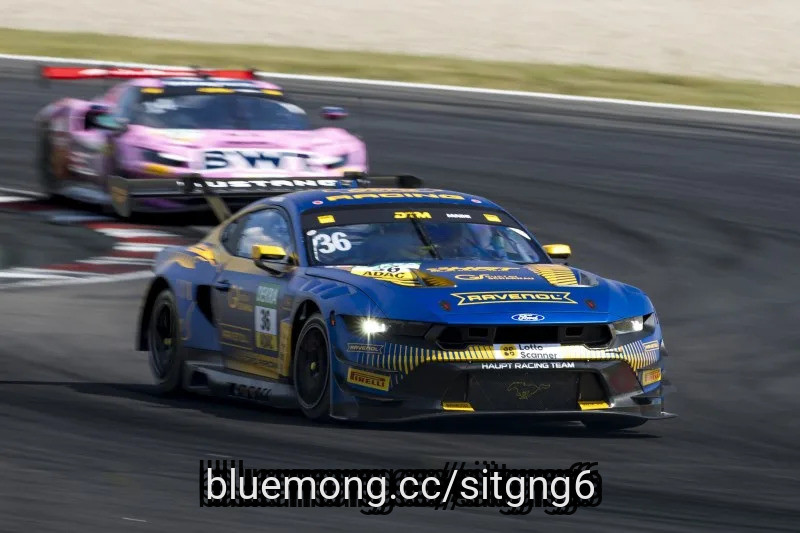
In its second year with the Ford Mustang, the US manufacturer has reason to celebrate its first DTM pole position. Arjun Maini delivered a 1:19.750 for HRT and Ford to secure the top spot on the grid after already starting from second on Saturday. The Indian driver was 0.128 seconds faster than Ferrari pilot Matteo Cairoli from Emil Frey Racing.
"I cannot thank the team enough, really", said a delighted Maini, who secured the second DTM pole of his career after his 2024 success at Spielberg, which he achieved back then in an HRT Mercedes. "Considering where we were last year and the progress we have made: to have such good qualifyings in a row now, strong race results, and strong pace."
Nicki Thiim is lurking in third place, having set a qualifying record of 1:19.463 on Saturday. However, the times on Sunday were significantly slower, possibly due to the rain the previous day. Thiim was 0.157 seconds off pole in his Comtoyou Aston Martin. Fourth place went to rookie Finn Wiebelhaus in the second HRT Ford.
Both the Ford and the Aston Martin were slowed down slightly by the first Balance of Performance adjustment at the Lausitzring, but the result justifies the decisions made by the BoP officials, as seven different manufacturers will start from the first eight positions.
Fifth place went to Abt driver Luca Engstler (+0.243), the best-placed pilot in the new Lamborghini Temerario, followed by Thomas Preining as the strongest Porsche driver in sixth. The top representative for the brand with the star was Maro Engel (+0.258), who put his Winward Mercedes in seventh. This means he will start directly behind his arch-rival Preining following their Saturday duel.
The best BMW driver was Marco Wittmann, who was 0.330 seconds short in the Schubert BMW. "Finally starting from the top 10 again," said the Franconian with relief, who is in a good fourth place in the overall standings despite very consistent results. Qualifying is also only rarely a strength of the BMW M4 GT3 Evo this season.
"I cannot thank the team enough, really", said a delighted Maini, who secured the second DTM pole of his career after his 2024 success at Spielberg, which he achieved back then in an HRT Mercedes. "Considering where we were last year and the progress we have made: to have such good qualifyings in a row now, strong race results, and strong pace."
Nicki Thiim is lurking in third place, having set a qualifying record of 1:19.463 on Saturday. However, the times on Sunday were significantly slower, possibly due to the rain the previous day. Thiim was 0.157 seconds off pole in his Comtoyou Aston Martin. Fourth place went to rookie Finn Wiebelhaus in the second HRT Ford.
Both the Ford and the Aston Martin were slowed down slightly by the first Balance of Performance adjustment at the Lausitzring, but the result justifies the decisions made by the BoP officials, as seven different manufacturers will start from the first eight positions.
Fifth place went to Abt driver Luca Engstler (+0.243), the best-placed pilot in the new Lamborghini Temerario, followed by Thomas Preining as the strongest Porsche driver in sixth. The top representative for the brand with the star was Maro Engel (+0.258), who put his Winward Mercedes in seventh. This means he will start directly behind his arch-rival Preining following their Saturday duel.
The best BMW driver was Marco Wittmann, who was 0.330 seconds short in the Schubert BMW. "Finally starting from the top 10 again," said the Franconian with relief, who is in a good fourth place in the overall standings despite very consistent results. Qualifying is also only rarely a strength of the BMW M4 GT3 Evo this season.
3 months ago
Porsche says the new 2030 regulations could influence its future in the World Endurance Championship’s Hypercar class, but insists it can’t comment on a comeback just yet.
On the eve of last weekend’s Le Mans 24 Hours, the FIA and the ACO outlined how the next-generation cars in Hypercar and the IMSA SportsCar Championship could look.
Read Also:
Hypercar manufacturers free to develop bespoke hybrid systems as WEC outlines 2030 rules
While the exact regulations will not be finalised until the end of the year, the organisers revealed that the LMDh and LMH platforms will be unified into a single ruleset, while still allowing manufacturers to either build their own chassis, engines and hybrid systems or sourcing them from external suppliers.
On the eve of last weekend’s Le Mans 24 Hours, the FIA and the ACO outlined how the next-generation cars in Hypercar and the IMSA SportsCar Championship could look.
Read Also:
Hypercar manufacturers free to develop bespoke hybrid systems as WEC outlines 2030 rules
While the exact regulations will not be finalised until the end of the year, the organisers revealed that the LMDh and LMH platforms will be unified into a single ruleset, while still allowing manufacturers to either build their own chassis, engines and hybrid systems or sourcing them from external suppliers.