
22 hours ago
Fundstrat's Tom Lee took the Future Proof Citywide stage earlier this year with CNBC's Scott Wapner for a session that landed in the middle of a jittery tape that included geopolitical conflict, oil spiking, private credit cracking, and fresh doubts about AI spending. Not too far off where we find ourselves currently, but with an awful lot of volatility and shifting, uncertain outlooks between these six months. While their conversation was a snapshot in time, you can expect more of this kind of sharp, thoughtful ****** ysis next week.
The contrarian take of the session was oil. High crude, Lee argued, is actually constructive for U.S. equities. With the U.S. as a net exporter, our economic competitors are importers, and stalled global growth pushes investors toward growth stocks, which is about 80% of the U.S. market. On AI CapEx, he pushed back on the sticker shock, claiming roughly $700 billion a year is a fraction of the $60 trillion global labor market and small change against daily moves in gold.
Lee also made the case that software had bottomed at the time, that enterprises building their own tools inherit the maintenance burden software companies exist to carry, and that private credit is genuinely bad but not a GFC repeat, with the real fix being taking private companies public rather than pushing private product into retail portfolios. On crypto, his argument shifted from a perspective of digital gold to one of plumbing whereby Wall Street tokenizes ****** ets, and AI agents needing a settlement rail that handles fractions of a penny.
His parting advice was the oldest one in the book, dressed in new clothes: miss the 10 best days of each year and a 16% average return goes to roughly nothing. Danger and opportunity show up together. Staying invested is the perpetual drumbeat of advisors to their clients, but one that needs banging louder when markets feel much less certain.
Future Proof Festival is September 14–17 in Huntington Beach and includes four days on the boardwalk with advisors, ****** et managers, and fintechs building the modern wealth management industry. Find us at the ETF Oasis and don't miss the stellar agenda we've got lined up.
#find #session #credit #time
The contrarian take of the session was oil. High crude, Lee argued, is actually constructive for U.S. equities. With the U.S. as a net exporter, our economic competitors are importers, and stalled global growth pushes investors toward growth stocks, which is about 80% of the U.S. market. On AI CapEx, he pushed back on the sticker shock, claiming roughly $700 billion a year is a fraction of the $60 trillion global labor market and small change against daily moves in gold.
Lee also made the case that software had bottomed at the time, that enterprises building their own tools inherit the maintenance burden software companies exist to carry, and that private credit is genuinely bad but not a GFC repeat, with the real fix being taking private companies public rather than pushing private product into retail portfolios. On crypto, his argument shifted from a perspective of digital gold to one of plumbing whereby Wall Street tokenizes ****** ets, and AI agents needing a settlement rail that handles fractions of a penny.
His parting advice was the oldest one in the book, dressed in new clothes: miss the 10 best days of each year and a 16% average return goes to roughly nothing. Danger and opportunity show up together. Staying invested is the perpetual drumbeat of advisors to their clients, but one that needs banging louder when markets feel much less certain.
Future Proof Festival is September 14–17 in Huntington Beach and includes four days on the boardwalk with advisors, ****** et managers, and fintechs building the modern wealth management industry. Find us at the ETF Oasis and don't miss the stellar agenda we've got lined up.
#find #session #credit #time


22 hours ago
For most of your adult life, you have decided which card comes out of your wallet. Maybe it is the one with the best cashback. Maybe it is the one on top.
That decision is starting to move to software.
More than one in 10 online shoppers will routinely use AI agents to shop and pay by 2030, according to a report published Sept. 8, 2026 by Mastercard (MA). That works out to more than 300 million people worldwide.
The number reads like a distant projection. Recent US data suggests the behavior is already further along than that.
The report, ******* led "A short history of the future of shopping and payments," pairs original consumer research with predictions from four futurists in the US, Europe and Asia, according to Mastercard.
#maybe
That decision is starting to move to software.
More than one in 10 online shoppers will routinely use AI agents to shop and pay by 2030, according to a report published Sept. 8, 2026 by Mastercard (MA). That works out to more than 300 million people worldwide.
The number reads like a distant projection. Recent US data suggests the behavior is already further along than that.
The report, ******* led "A short history of the future of shopping and payments," pairs original consumer research with predictions from four futurists in the US, Europe and Asia, according to Mastercard.
#maybe


23 hours ago
Google search on your laptop. YouTube on your TV. Chrome on your phone. It often feels -- and probably accurately so -- like tech giant Alphabet (NASDAQ: GOOG) (NASDAQ: GOOGL) and its products are everywhere. Expect that feeling to get even more common in the age of AI.
In fact, expect that feeling to get more common right now.
Missed Nvidia in 2009? This Rare Signal Is Flashing Again. In 2009, a "Double Down" signal flashed for a little-known chipmaker called Nvidia. For the first time in years, that same "Total Conviction" signal is flashing for a company 1/100th the size of Nvidia. Continue »
In an announcement that dropped just mid-day Thursday, Alphabet announced a new software offering that will put Google Gemini artificial intelligence right on your PC. Download the "Gemini for desktop" app, install it, and any time you have a need for it going forward, you can hit "Alt + ******* e" on your personal computer (Option + ******* e if you use a Mac).
Use that keyboard shortcut, and up will pop "Gemini Spark, your 24/7 personal AI agent," to answer whatever questions you might have for it -- much faster than logging onto ChatGPT or Anthropic, for example. The app can answer questions, verify facts, or draft text, says Google, and even build images or construct videos.
#Google #NASDAQ
In fact, expect that feeling to get more common right now.
Missed Nvidia in 2009? This Rare Signal Is Flashing Again. In 2009, a "Double Down" signal flashed for a little-known chipmaker called Nvidia. For the first time in years, that same "Total Conviction" signal is flashing for a company 1/100th the size of Nvidia. Continue »
In an announcement that dropped just mid-day Thursday, Alphabet announced a new software offering that will put Google Gemini artificial intelligence right on your PC. Download the "Gemini for desktop" app, install it, and any time you have a need for it going forward, you can hit "Alt + ******* e" on your personal computer (Option + ******* e if you use a Mac).
Use that keyboard shortcut, and up will pop "Gemini Spark, your 24/7 personal AI agent," to answer whatever questions you might have for it -- much faster than logging onto ChatGPT or Anthropic, for example. The app can answer questions, verify facts, or draft text, says Google, and even build images or construct videos.
#Google #NASDAQ


23 hours ago
Salesforce (CRM) trades at 20.6 times earnings, below the S&P 500 median of 22.6, after losing 2.8% over the past twelve months while the index gained 17.9%. A profitable software company priced under the market is the setup value buyers wait for. The question is whether that is a good business on sale or a fair price for a legacy platform facing disintermediation from next-generation AI architectures.
Salesforce sells the customer relationship software that companies run their sales and service teams on, and it owns Slack. Deutsche Telekom and FIFA both expanded their AI spending with Salesforce in fiscal Q2 2027. Revenue over the trailing twelve months was $43.94 billion, up 11.2%. The three-year average revenue growth rate is 9.9% a year—ahead of the S&P 500 median of 8.3%—making the last twelve months the faster of the two.
Free cash flow over the same window was $15.15 billion, a 7.6% yield on the market value. Operating margin over those twelve months is 21.5% against an S&P 500 median of 18.6%, and the margin did not thin against the year before.
Free cash flow in fiscal Q2 2027 was $1.1 billion, up 81% from a year earlier. That is one quarter. For the whole of fiscal 2027 management guides free cash flow growth of 4% to 5%, against revenue guided up 11% to 12%, so cash is set to grow at less than half the pace of the top line.
License revenue is a headwind and integration and ******* ytics revenue is volatile, management says, though both only partially offset growth in the newer lines. Near $243, the stock is just 8% off its 52-week high, though it remains about 33% below its two-year peak of $363.22: while the recent rally closed the immediate valuation gap, the longer-term discount reflects that structural hesitation hasn't fully cleared.
#cash #billion
Salesforce sells the customer relationship software that companies run their sales and service teams on, and it owns Slack. Deutsche Telekom and FIFA both expanded their AI spending with Salesforce in fiscal Q2 2027. Revenue over the trailing twelve months was $43.94 billion, up 11.2%. The three-year average revenue growth rate is 9.9% a year—ahead of the S&P 500 median of 8.3%—making the last twelve months the faster of the two.
Free cash flow over the same window was $15.15 billion, a 7.6% yield on the market value. Operating margin over those twelve months is 21.5% against an S&P 500 median of 18.6%, and the margin did not thin against the year before.
Free cash flow in fiscal Q2 2027 was $1.1 billion, up 81% from a year earlier. That is one quarter. For the whole of fiscal 2027 management guides free cash flow growth of 4% to 5%, against revenue guided up 11% to 12%, so cash is set to grow at less than half the pace of the top line.
License revenue is a headwind and integration and ******* ytics revenue is volatile, management says, though both only partially offset growth in the newer lines. Near $243, the stock is just 8% off its 52-week high, though it remains about 33% below its two-year peak of $363.22: while the recent rally closed the immediate valuation gap, the longer-term discount reflects that structural hesitation hasn't fully cleared.
#cash #billion


23 hours ago
High-performance computing is currently undergoing a massive generational shift. Deciding between Astera Labs Inc (NASDAQ:ALAB) and Applied Materials Inc (NASDAQ:AMAT) means choosing between a fast-growing connectivity specialist and an established ******* an of manufacturing equipment.
Astera Labs focuses on the internal plumbing of data centers, providing chips that move data between processors. Applied Materials builds the actual machines that make those chips possible. While both benefit from artificial intelligence, they occupy very different rungs on the technology ladder.
Astera Labs sells high-speed connectivity hardware and software designed for AI-heavy data centers. Its primary products include PCIe and Ethernet solutions that help hyperscale cloud providers manage massive data workloads. In its latest annual report, filed for the period ending December 31, 2025, the company noted that one end customer represented more than 70% of its revenue. Customer concentration like this adds a layer of risk to the business.
In FY 2025, revenue reached nearly $853 million, which is an increase of approximately 115% over the prior year. This growth resulted in a net income of roughly $219 million, compared to a net loss in the previous fiscal year. The company recorded a net margin of close to 26% during this period. Such expansion is notable among semiconductor stocks catering to the cloud market.
The company carries no debt, resulting in a debt-to-equity ratio of 0.0x. This metric compares total debt to shareholder equity to show how a firm finances its ******* ets. As of its December 2025 balance sheet, the so-called current ratio was nearly 10.2x, indicating a strong ability to cover short-term debts. Free cash flow was roughly $282 million. Note that stock-based compensation represented just about 50% of operating cash flow, which inflates reported cash generation since SBC is a non-cash expense added back in the cash flow statement.
#million #flow #NASDAQ
Astera Labs focuses on the internal plumbing of data centers, providing chips that move data between processors. Applied Materials builds the actual machines that make those chips possible. While both benefit from artificial intelligence, they occupy very different rungs on the technology ladder.
Astera Labs sells high-speed connectivity hardware and software designed for AI-heavy data centers. Its primary products include PCIe and Ethernet solutions that help hyperscale cloud providers manage massive data workloads. In its latest annual report, filed for the period ending December 31, 2025, the company noted that one end customer represented more than 70% of its revenue. Customer concentration like this adds a layer of risk to the business.
In FY 2025, revenue reached nearly $853 million, which is an increase of approximately 115% over the prior year. This growth resulted in a net income of roughly $219 million, compared to a net loss in the previous fiscal year. The company recorded a net margin of close to 26% during this period. Such expansion is notable among semiconductor stocks catering to the cloud market.
The company carries no debt, resulting in a debt-to-equity ratio of 0.0x. This metric compares total debt to shareholder equity to show how a firm finances its ******* ets. As of its December 2025 balance sheet, the so-called current ratio was nearly 10.2x, indicating a strong ability to cover short-term debts. Free cash flow was roughly $282 million. Note that stock-based compensation represented just about 50% of operating cash flow, which inflates reported cash generation since SBC is a non-cash expense added back in the cash flow statement.
#million #flow #NASDAQ


24 hours ago
Updated Sept 11, 2026, 2:37 pm EDT / Original Sept 11, 2026, 10:54 am EDT
Palantir Technologies
PLTR
+0.83%
is doing a pretty good job of convincing at least one Wall Streeter that businesses will keep adopting its enterprise software—mostly its AI platform—and, in turn, that it will keep growing. Whether the stock will move on the momentum is another question.
PLTR
+0.83%
Copyright ©2026 Dow Jones & Company, Inc. All Rights Reserved. 87990cbe856818d5eddac44c7b1cdeb8
#sept #streeter
Palantir Technologies
PLTR
+0.83%
is doing a pretty good job of convincing at least one Wall Streeter that businesses will keep adopting its enterprise software—mostly its AI platform—and, in turn, that it will keep growing. Whether the stock will move on the momentum is another question.
PLTR
+0.83%
Copyright ©2026 Dow Jones & Company, Inc. All Rights Reserved. 87990cbe856818d5eddac44c7b1cdeb8
#sept #streeter


24 hours ago
As artificial intelligence matures, investors must decide between the high-growth niche players and the foundational giants. Choosing between Astera Labs Inc (NASDAQ:ALAB) and Taiwan Semiconductor Manufacturing Co (NYSE:TSM) involves weighing explosive potential against established dominance.
Astera Labs provides the critical connectivity infrastructure that allows AI chips to communicate within data centers. Meanwhile, Taiwan Semiconductor Manufacturing operates as the world's largest dedicated chip foundry, producing the actual processors for almost every major tech firm. Both companies are central to the future of semiconductor stocks.
Astera Labs specializes in connectivity solutions designed to remove bottlenecks in high-performance data centers. The company sells hardware and software that helps AI accelerators, such as those made by major chip designers, communicate efficiently across servers. Its customer base is highly concentrated, primarily consisting of the largest cloud providers and system manufacturers. In 2025, one end customer accounted for over 70% of total revenue. Customer concentration like this adds a layer of risk to the business.
In FY 2025, revenue reached more than $852.5 million, representing an impressive increase of roughly 115% compared to the prior year. This rapid growth helped the company pivot from a loss in previous years to a net income of approximately $219 million. The net margin, which measures how much of each dollar of sales remains as profit, stood at nearly 26%. This trajectory highlights the surging demand for the specialized connectivity chips required for large-scale AI deployments.
As of its December 2025 balance sheet, the company reported a debt-to-equity ratio of 0.0x, indicating it holds no debt relative to its shareholder equity. Its so-called current ratio, which compares short-term ******* ets to short-term liabilities, was a robust 10.2x. Free cash flow, or the cash left over after paying for operations and equipment, was approximately $282 million. Note that stock-based compensation represented roughly 50% of operating cash flow, which inflates reported cash generation since this is a non-cash expense added back in the cash flow statement.
#company
Astera Labs provides the critical connectivity infrastructure that allows AI chips to communicate within data centers. Meanwhile, Taiwan Semiconductor Manufacturing operates as the world's largest dedicated chip foundry, producing the actual processors for almost every major tech firm. Both companies are central to the future of semiconductor stocks.
Astera Labs specializes in connectivity solutions designed to remove bottlenecks in high-performance data centers. The company sells hardware and software that helps AI accelerators, such as those made by major chip designers, communicate efficiently across servers. Its customer base is highly concentrated, primarily consisting of the largest cloud providers and system manufacturers. In 2025, one end customer accounted for over 70% of total revenue. Customer concentration like this adds a layer of risk to the business.
In FY 2025, revenue reached more than $852.5 million, representing an impressive increase of roughly 115% compared to the prior year. This rapid growth helped the company pivot from a loss in previous years to a net income of approximately $219 million. The net margin, which measures how much of each dollar of sales remains as profit, stood at nearly 26%. This trajectory highlights the surging demand for the specialized connectivity chips required for large-scale AI deployments.
As of its December 2025 balance sheet, the company reported a debt-to-equity ratio of 0.0x, indicating it holds no debt relative to its shareholder equity. Its so-called current ratio, which compares short-term ******* ets to short-term liabilities, was a robust 10.2x. Free cash flow, or the cash left over after paying for operations and equipment, was approximately $282 million. Note that stock-based compensation represented roughly 50% of operating cash flow, which inflates reported cash generation since this is a non-cash expense added back in the cash flow statement.
#company

1 day ago
NVIDIA Corporation (NASDAQ:NVDA) is expanding its global AI infrastructure ambitions, with Australia emerging as an important new market for its growing portfolio of GPUs, CPUs, networking products, and AI software.
On September 9, it announced strategic partnerships with Australian NVIDIA Cloud Partners (NCPs) and AI infrastructure providers as it works with local partners toward an AI infrastructure buildout of up to 2 gigawatts by 2027.
The initiative will expand the availability of land, power, and data center shell capacity designed to host multiple generations of Nvidia's DSX AI factory infrastructure. While the buildout is designed to meet Australia's growing demand for AI computing, it could also create a significant new source of demand for Nvidia's hardware and software ecosystem.
The Australian buildout could benefit NVIDIA Corporation (NASDAQ:NVDA) beyond the initial sale of GPUs. Nvidia will provide its DSX platform, accelerated computing, networking, software, and ecosystem support to the emerging network of AI factories. DSX is also compatible with Nvidia's CUDA ecosystem.
As enterprises, universities, government agencies, and startups increasingly build AI workloads around Nvidia's architecture, the company could strengthen CUDA's position as the underlying software platform for AI development and deployment.
#NASDAQ #australian
On September 9, it announced strategic partnerships with Australian NVIDIA Cloud Partners (NCPs) and AI infrastructure providers as it works with local partners toward an AI infrastructure buildout of up to 2 gigawatts by 2027.
The initiative will expand the availability of land, power, and data center shell capacity designed to host multiple generations of Nvidia's DSX AI factory infrastructure. While the buildout is designed to meet Australia's growing demand for AI computing, it could also create a significant new source of demand for Nvidia's hardware and software ecosystem.
The Australian buildout could benefit NVIDIA Corporation (NASDAQ:NVDA) beyond the initial sale of GPUs. Nvidia will provide its DSX platform, accelerated computing, networking, software, and ecosystem support to the emerging network of AI factories. DSX is also compatible with Nvidia's CUDA ecosystem.
As enterprises, universities, government agencies, and startups increasingly build AI workloads around Nvidia's architecture, the company could strengthen CUDA's position as the underlying software platform for AI development and deployment.
#NASDAQ #australian


1 day ago
WASHINGTON, Sept 9 (Reuters) - Three U.S. lawmakers have called on the American government to blacklist a set of Indian IT firms over what they describe as "more than fifteen years of targeted espionage against U.S. citizens, businesses, and the lawyers representing them."
In a letter issued Wednesday, Democratic Senators Ron Wyden and Sheldon Whitehouse, along with Republican Representative Pat Harrigan, asked the Commerce Department to add BellTroX, CyberRoot, and Sunkissed Organic Farms Pvt. Ltd. (formerly known as "Appin Technology Pvt. Ltd.") and its subsidiaries, to the Commerce Department's Entity List. Such a designation would cut them off from U.S. software, cloud infrastructure, and cybersecurity tools.
Sunkissed representatives, CyberRoot and the Commerce Department did not respond to requests for comment. BellTroX could not be reached for comment.
All three companies have been described in media coverage and in reports published by major tech firms as being fronts for hack-for-hire activities.
In 2022, Reuters named CyberRoot and BellTroX as key players in the cybermercenary industry, saying they were frequently tapped by Western lawyers and private investigators to spy on one another during legal and business disputes. A 2023 Reuters report identified Appin as a pioneer in the field, saying the company grew from an educational startup to a hack-for-hire powerhouse that stole secrets from executives, politicians, military officials and wealthy elites around the globe.
#three
In a letter issued Wednesday, Democratic Senators Ron Wyden and Sheldon Whitehouse, along with Republican Representative Pat Harrigan, asked the Commerce Department to add BellTroX, CyberRoot, and Sunkissed Organic Farms Pvt. Ltd. (formerly known as "Appin Technology Pvt. Ltd.") and its subsidiaries, to the Commerce Department's Entity List. Such a designation would cut them off from U.S. software, cloud infrastructure, and cybersecurity tools.
Sunkissed representatives, CyberRoot and the Commerce Department did not respond to requests for comment. BellTroX could not be reached for comment.
All three companies have been described in media coverage and in reports published by major tech firms as being fronts for hack-for-hire activities.
In 2022, Reuters named CyberRoot and BellTroX as key players in the cybermercenary industry, saying they were frequently tapped by Western lawyers and private investigators to spy on one another during legal and business disputes. A 2023 Reuters report identified Appin as a pioneer in the field, saying the company grew from an educational startup to a hack-for-hire powerhouse that stole secrets from executives, politicians, military officials and wealthy elites around the globe.
#three


2 days ago
May Lee was downsized from HP, where she had worked for over 30 years.
After a valuable conversation, she decided to pivot entirely and take a seasonal job in Antarctica.
She can't wait to return to Antarctica for her second job.
This as-told-to essay is based on a conversation with May Lee, a 59-year-old seasonal worker in Antarctica and former marketing and communications manager at HP. It has been edited for length and clarity.
I joined Hewlett-Packard in 1987 as a software engineer intern. As a graduate, I wanted to sign on for life with a good company that I knew I could be loyal to and would be as loyal as a company could be.
#seasonal #packard #downsized
After a valuable conversation, she decided to pivot entirely and take a seasonal job in Antarctica.
She can't wait to return to Antarctica for her second job.
This as-told-to essay is based on a conversation with May Lee, a 59-year-old seasonal worker in Antarctica and former marketing and communications manager at HP. It has been edited for length and clarity.
I joined Hewlett-Packard in 1987 as a software engineer intern. As a graduate, I wanted to sign on for life with a good company that I knew I could be loyal to and would be as loyal as a company could be.
#seasonal #packard #downsized



2 days ago
By Sai Ishwarbharath B and Abhirami G
BENGALURU, Sept 10 (Reuters) - Wipro's AI initiatives have increased productivity equivalent to the output of 20,000 employees, who have since been redeployed within the Indian IT firm, its chief technology officer said.
The comments come as India's $315 billion software services industry grapples with adoption of AI, which is reshaping hiring, software development and contracts.
Wipro, with about 243,000 employees in June, is shifting to a "human-AI operating model," with more than 100,000 employees receiving advanced AI-related training and certifications, Sandhya Arun said in an interview.
"It could be the same engineer managing a bunch of agents, deployed on other projects or being trained for some other role. It doesn't necessarily mean person-to-person replacement by an agent."
#employees #ishwarbharath
BENGALURU, Sept 10 (Reuters) - Wipro's AI initiatives have increased productivity equivalent to the output of 20,000 employees, who have since been redeployed within the Indian IT firm, its chief technology officer said.
The comments come as India's $315 billion software services industry grapples with adoption of AI, which is reshaping hiring, software development and contracts.
Wipro, with about 243,000 employees in June, is shifting to a "human-AI operating model," with more than 100,000 employees receiving advanced AI-related training and certifications, Sandhya Arun said in an interview.
"It could be the same engineer managing a bunch of agents, deployed on other projects or being trained for some other role. It doesn't necessarily mean person-to-person replacement by an agent."
#employees #ishwarbharath


2 days ago
IDEXX Laboratories, Inc. (IDXX) is a leading animal-health diagnostics and technology company best known for providing veterinarians with diagnostic testing, laboratory services, software, and imaging solutions. Valued at a market cap of $45.7 billion, the company develops and supplies diagnostic instruments, test kits, software, and laboratory services that help veterinarians, farmers, and laboratories detect diseases and monitor animal health.
Companies worth between $10 billion and $200 billion are typically classified as "large-cap stocks," and IDXX fits the label perfectly. The company is widely recognized as a market leader in veterinary diagnostics, supported by strong brand recognition, a large installed base of diagnostic instruments across veterinary practices, and a recurring revenue model fueled by consumables and testing services. With its solutions used by veterinary practices in more than 175 countries, the company has built a strong global presence and a broad, highly recurring customer base.
'Not Tens Of Billions, But Tens Of Trillions': Nvidia CEO Jensen Huang Says AI Is Like the New Electricity and the Scale Is Unlike Any Tech in History
What It Means for MSFT Stock Investors as Microsoft Switches to 2 Business Segments
RKLB Stock Jumps as Rocket Lab Debuts New Solar Cell for ******* e
#Services #Stock #laboratories
Companies worth between $10 billion and $200 billion are typically classified as "large-cap stocks," and IDXX fits the label perfectly. The company is widely recognized as a market leader in veterinary diagnostics, supported by strong brand recognition, a large installed base of diagnostic instruments across veterinary practices, and a recurring revenue model fueled by consumables and testing services. With its solutions used by veterinary practices in more than 175 countries, the company has built a strong global presence and a broad, highly recurring customer base.
'Not Tens Of Billions, But Tens Of Trillions': Nvidia CEO Jensen Huang Says AI Is Like the New Electricity and the Scale Is Unlike Any Tech in History
What It Means for MSFT Stock Investors as Microsoft Switches to 2 Business Segments
RKLB Stock Jumps as Rocket Lab Debuts New Solar Cell for ******* e
#Services #Stock #laboratories



3 days ago
Daktronics Inc. (NASDAQ:DAKT) reported its Q1 FY27 results, showing continued momentum across core segments and its strategic push. The company reported topline figures of $234.6 million, which grew 7.1% compared to the same period last year. This growth was primarily driven by impressive numbers across the Live Events, Transportation, and International units. The diluted EPS of $0.40 was the highest quarterly figure in the last twelve quarters, exhibiting a substantial growth of more than 21%. The business generated $31.4 million in cash from operations, which pushed the cash balance to $154.6 million by the quarter end, after accounting for $4.4 million expenditure on share repurchases.
Copyright: rawpixel / 123RF Stock Photo
The recently reported results point to enhanced profitability and the company's ongoing operational excellence initiatives, which would strengthen investor confidence. An impressive cash position backed with robust operating cash flows would enable Daktronics to pursue its 3-year strategic plan around growth, operational strength, and efficient capital allocation.
For growth, management focused on vertical market expansion during the quarter, with investments in service offerings and software to facilitate recurring revenue growth and customer value.
For operational excellence, the company took several initiatives around supply chain and manufacturing. These include scaling up of Mexico operations, adding automation, refining procurement, and more. Product backlog reached $311.3 million, the sixth straight quarter it has stayed above $300 million, pointing to continued demand spread across the company's varied business segments.
#million #cash #results
Copyright: rawpixel / 123RF Stock Photo
The recently reported results point to enhanced profitability and the company's ongoing operational excellence initiatives, which would strengthen investor confidence. An impressive cash position backed with robust operating cash flows would enable Daktronics to pursue its 3-year strategic plan around growth, operational strength, and efficient capital allocation.
For growth, management focused on vertical market expansion during the quarter, with investments in service offerings and software to facilitate recurring revenue growth and customer value.
For operational excellence, the company took several initiatives around supply chain and manufacturing. These include scaling up of Mexico operations, adding automation, refining procurement, and more. Product backlog reached $311.3 million, the sixth straight quarter it has stayed above $300 million, pointing to continued demand spread across the company's varied business segments.
#million #cash #results


3 days ago
Two cybersecurity heavyweights, Rubrik, Inc. (NYSE:RBRK) and CrowdStrike Holdings, Inc. (NASDAQ:CRWD), both released Q2 FY2027 earnings in late August/early September while deepening their strategic alliance. On September 1, the companies announced a joint agentic identity resilience workflow orchestrated by CrowdStrike's Charlotte Agentic SOAR. By uniting CrowdStrike's Falcon Next-Gen Identity Security with Rubrik's Identity Resilience, joint customers can now detect, investigate, and recover from compromised identity environments in hours instead of days.
Den Rise/Shutterstock.com
CrowdStrike continues to operate at a massive scale with strong cash generation and expanding margins. For Q2 FY2027, CrowdStrike reported total revenue of $1.47 billion, up 26% year-over-year, with annual recurring revenue (ARR) reaching $5.84 billion (up 25%) after adding a record $333 million in net new ARR. GAAP net income turned positive at $5.3 million ($0.01 per diluted share), while non-GAAP net income reached $322.9 million ($0.31 per diluted share). Operating cash flow hit a Q2 record of $530.3 million, with free cash flow reaching $377.4 million. Expanding its momentum, CrowdStrike announced a partnership with OpenAI on September 2 to secure Codex agents and integrate GPT-5.6 Cyber into Falcon, prompting Raymond James to raise its price target to $250 from $240 on September 3, citing an "AI double whammy."
Rubrik, meanwhile, represents the hyper-growth challenger outperforming Wall Street's top-line expectations. For Q2 FY2027, Rubrik's total revenue surged 38% year-over-year to $427.3 million (up 43% when normalized for material rights), while Subscription ARR grew 33% to $1.66 billion. While GAAP net loss per share narrowed to $(0.30), Rubrik achieved non-GAAP net income per share of $0.20 ($0.47–$0.53 guidance for full FY27). Operating cash flow reached $76.8 million, generating $65.7 million in free cash flow. While CrowdStrike holds the stronger overall financial profile given its $5.84 billion ARR scale and $377.4 million free cash flow generation, Rubrik leads in top-line growth velocity.
CrowdStrike's bull case rests on its leadership in endpoint and identity security, proven GAAP and non-GAAP profitability, and deep AI integrations with platforms such as OpenAI and Charlotte AI, which could drive further platform consolidation and high-margin ARR growth. However, slower percentage growth compared with younger peers, elevated valuation multiples, and lingering customer scrutiny following past software update disruptions remain key risks.
#flow
Den Rise/Shutterstock.com
CrowdStrike continues to operate at a massive scale with strong cash generation and expanding margins. For Q2 FY2027, CrowdStrike reported total revenue of $1.47 billion, up 26% year-over-year, with annual recurring revenue (ARR) reaching $5.84 billion (up 25%) after adding a record $333 million in net new ARR. GAAP net income turned positive at $5.3 million ($0.01 per diluted share), while non-GAAP net income reached $322.9 million ($0.31 per diluted share). Operating cash flow hit a Q2 record of $530.3 million, with free cash flow reaching $377.4 million. Expanding its momentum, CrowdStrike announced a partnership with OpenAI on September 2 to secure Codex agents and integrate GPT-5.6 Cyber into Falcon, prompting Raymond James to raise its price target to $250 from $240 on September 3, citing an "AI double whammy."
Rubrik, meanwhile, represents the hyper-growth challenger outperforming Wall Street's top-line expectations. For Q2 FY2027, Rubrik's total revenue surged 38% year-over-year to $427.3 million (up 43% when normalized for material rights), while Subscription ARR grew 33% to $1.66 billion. While GAAP net loss per share narrowed to $(0.30), Rubrik achieved non-GAAP net income per share of $0.20 ($0.47–$0.53 guidance for full FY27). Operating cash flow reached $76.8 million, generating $65.7 million in free cash flow. While CrowdStrike holds the stronger overall financial profile given its $5.84 billion ARR scale and $377.4 million free cash flow generation, Rubrik leads in top-line growth velocity.
CrowdStrike's bull case rests on its leadership in endpoint and identity security, proven GAAP and non-GAAP profitability, and deep AI integrations with platforms such as OpenAI and Charlotte AI, which could drive further platform consolidation and high-margin ARR growth. However, slower percentage growth compared with younger peers, elevated valuation multiples, and lingering customer scrutiny following past software update disruptions remain key risks.
#flow




3 days ago
On September 2, F5, Inc. (NASDAQ:FFIV) announced a key integration with MuleSoft, a Salesforce, Inc. (NYSE:CRM) company, federating F5 AI Guardrails directly into MuleSoft's Agent Fabric Omni Gateway. As enterprises rapidly scale agentic AI capabilities, security teams face growing governance gaps and risks from prompt injection, data leakage, and toxic outputs. This native integration gives security and platform engineering teams centralized policy enforcement, proactive threat mitigation, and low-touch policy tuning without forcing organizations to re-architect existing infrastructure.
While the partnership strengthens both ecosystems, examining their latest financials reveals two enterprise software giants moving at distinctly different scales and growth trajectories.
F5, Inc. (NASDAQ:FFIV) reported strong Q3 FY26 results, generating $865 million in revenue (up 11% year-over-year). Revenue growth was anchored by a 19% jump in product revenue, led by a 32% surge in systems revenue ($240 million). F5's bottom line remained exceptionally robust, expanding non-GAAP operating margin to 35.0% and delivering non-GAAP net income of $272 million ($4.73 per diluted share, up from $4.16).
Salesforce operated at a much larger scale in its record Q2 FY27, generating $11.3 billion in quarterly revenue (up 11% year-over-year). Growth was fueled by subscription and support revenue of $10.8 billion and expanding adoption of its Agentforce platform, whose annual recurring revenue (ARR) neared $3.9 billion. Salesforce posted a non-GAAP operating margin of 34.1%, and non-GAAP diluted EPS of $5.90, while raising its full-year FY27 revenue guidance to $46.1B–$46.4B.
While both companies run near-identical, highly profitable non-GAAP operating margins (~34%–35%), Salesforce leads overall financial health due to its massive free cash flow generation, cRPO backlog of $33.5 billion, and broader ecosystem dominance.
#Growth
While the partnership strengthens both ecosystems, examining their latest financials reveals two enterprise software giants moving at distinctly different scales and growth trajectories.
F5, Inc. (NASDAQ:FFIV) reported strong Q3 FY26 results, generating $865 million in revenue (up 11% year-over-year). Revenue growth was anchored by a 19% jump in product revenue, led by a 32% surge in systems revenue ($240 million). F5's bottom line remained exceptionally robust, expanding non-GAAP operating margin to 35.0% and delivering non-GAAP net income of $272 million ($4.73 per diluted share, up from $4.16).
Salesforce operated at a much larger scale in its record Q2 FY27, generating $11.3 billion in quarterly revenue (up 11% year-over-year). Growth was fueled by subscription and support revenue of $10.8 billion and expanding adoption of its Agentforce platform, whose annual recurring revenue (ARR) neared $3.9 billion. Salesforce posted a non-GAAP operating margin of 34.1%, and non-GAAP diluted EPS of $5.90, while raising its full-year FY27 revenue guidance to $46.1B–$46.4B.
While both companies run near-identical, highly profitable non-GAAP operating margins (~34%–35%), Salesforce leads overall financial health due to its massive free cash flow generation, cRPO backlog of $33.5 billion, and broader ecosystem dominance.
#Growth

3 days ago
Hewlett Packard Enterprise Company (NYSE:HPE) announced an expanded collaboration with Oracle Corporation (NYSE:ORCL) on September 2 to scale Oracle's global AI infrastructure using HPE Juniper Networking across Oracle Cloud Infrastructure (OCI) data centers. The partnership builds on over a decade of joint engineering, leveraging HPE's routing and switching platforms to support OCI's expanding gigawatt-scale GPU superclusters. To align long-term incentives, HPE issued stock warrants to Oracle.
Following the announcement, Wall Street delivered fast price target hikes: Barclays' Tim Long raised HPE's target by $12 to $79 (Overweight), citing server upside and robust margins, while Morgan Stanley's Sanjit Singh boosted Oracle's target by $3 to $210 (Equal Weight), noting a tactically positive setup driven by GPUaaS demand.
Hewlett Packard Enterprise Company (NYSE:HPE) and Oracle both delivered strong results, although Oracle operates at a significantly larger scale. HPE reported record Q3 2026 revenue of $12.2 billion, up 34% year over year, driven by strong server demand and a 74.9% increase in Networking revenue to $2.9 billion. GAAP diluted EPS reached $1.06, while strong execution led management to raise full-year FY26 revenue growth guidance to 34%-37% and its free cash flow target to at least $3.75 billion.
Oracle Corporation (NYSE:ORCL), meanwhile, ended fiscal 2026 with record Q4 revenue of $19.2 billion, up 21% year over year, and full-year revenue of $67.4 billion, up 17%. Q4 Cloud Infrastructure (IaaS) revenue surged 93% to $5.8 billion, while full-year GAAP EPS rose 34% to $5.83 and Remaining Performance Obligations (RPO) jumped 363% to $638 billion.
Overall, ORCL leads in hyper-growth and long-term backlog, reinforcing its position as the stronger software and cloud play, while HPE is demonstrating stronger near-term hardware momentum and attractive cash flow generation for value-oriented investors.
#billion #revenue #infrastructure
Following the announcement, Wall Street delivered fast price target hikes: Barclays' Tim Long raised HPE's target by $12 to $79 (Overweight), citing server upside and robust margins, while Morgan Stanley's Sanjit Singh boosted Oracle's target by $3 to $210 (Equal Weight), noting a tactically positive setup driven by GPUaaS demand.
Hewlett Packard Enterprise Company (NYSE:HPE) and Oracle both delivered strong results, although Oracle operates at a significantly larger scale. HPE reported record Q3 2026 revenue of $12.2 billion, up 34% year over year, driven by strong server demand and a 74.9% increase in Networking revenue to $2.9 billion. GAAP diluted EPS reached $1.06, while strong execution led management to raise full-year FY26 revenue growth guidance to 34%-37% and its free cash flow target to at least $3.75 billion.
Oracle Corporation (NYSE:ORCL), meanwhile, ended fiscal 2026 with record Q4 revenue of $19.2 billion, up 21% year over year, and full-year revenue of $67.4 billion, up 17%. Q4 Cloud Infrastructure (IaaS) revenue surged 93% to $5.8 billion, while full-year GAAP EPS rose 34% to $5.83 and Remaining Performance Obligations (RPO) jumped 363% to $638 billion.
Overall, ORCL leads in hyper-growth and long-term backlog, reinforcing its position as the stronger software and cloud play, while HPE is demonstrating stronger near-term hardware momentum and attractive cash flow generation for value-oriented investors.
#billion #revenue #infrastructure


3 days ago
On August 11, Humana Inc. (NYSE:HUM) announced that its Medicaid plan, Humana Healthy Horizons in Indiana, is collaborating with HealthStream, Inc. (NASDAQ:HSTM). The partnership expands access to workforce training for caregivers, aiming to recruit and retain talent in rural and underserved communities. While one provides healthcare coverage and the other builds the software to train healthcare workers, both companies are capitalizing on the industry's critical focus: solving caregiving shortages and optimizing healthcare delivery.
HealthStream emerges as the operationally cleaner, higher-growth performer, while Humana continues to navigate a more complex transition marked by regulatory and profitability pressures. Humana Inc. (NYSE:HUM) reported Q2 2026 GAAP EPS of $5.73 and adjusted EPS of $7.61, with an Insurance segment GAAP benefit ratio of 91.2%. The company reaffirmed its full-year adjusted EPS guidance of at least $9.00 but lowered its FY 2026 GAAP EPS forecast to at least $6.52 from $8.36, reflecting non-cash adjustments and value creation charges. Although individual Medicare Advantage membership is expected to grow approximately 25% in 2026, lower Star Ratings remain a significant drag on profitability.
HealthStream, Inc. (NASDAQ:HSTM), meanwhile, delivered record Q2 2026 results, with revenue rising 12.5% year over year to $83.7 million. Operating income increased 41.4% to $8.3 million, while net income climbed 23.8% to $6.7 million, or $0.23 per diluted share. Adjusted EBITDA also increased 16.9% to $20.6 million. The company's debt-free balance sheet, supported by $66.7 million in cash and cash equivalents, further strengthens its financial flexibility. While Humana operates at substantially greater scale, HealthStream is demonstrating stronger operational leverage, margin expansion, and balance sheet flexibility.
Humana's bull case is supported by strong Medicare Advantage membership growth, with the company targeting a 25% increase in 2026, alongside strategic expansion of its CenterWell primary care business and state Medicaid footprint, including its recent Illinois win. These initiatives could strengthen its long-term recovery and expand its addressable market. However, the bear case centers on elevated medical benefit ratios, which reached 91.2% in Q2, as well as regulatory pressures in Medicaid and continued Medicare Star Ratings headwinds. These factors could further squeeze margins and weigh on net earnings.
#healthcare #year
HealthStream emerges as the operationally cleaner, higher-growth performer, while Humana continues to navigate a more complex transition marked by regulatory and profitability pressures. Humana Inc. (NYSE:HUM) reported Q2 2026 GAAP EPS of $5.73 and adjusted EPS of $7.61, with an Insurance segment GAAP benefit ratio of 91.2%. The company reaffirmed its full-year adjusted EPS guidance of at least $9.00 but lowered its FY 2026 GAAP EPS forecast to at least $6.52 from $8.36, reflecting non-cash adjustments and value creation charges. Although individual Medicare Advantage membership is expected to grow approximately 25% in 2026, lower Star Ratings remain a significant drag on profitability.
HealthStream, Inc. (NASDAQ:HSTM), meanwhile, delivered record Q2 2026 results, with revenue rising 12.5% year over year to $83.7 million. Operating income increased 41.4% to $8.3 million, while net income climbed 23.8% to $6.7 million, or $0.23 per diluted share. Adjusted EBITDA also increased 16.9% to $20.6 million. The company's debt-free balance sheet, supported by $66.7 million in cash and cash equivalents, further strengthens its financial flexibility. While Humana operates at substantially greater scale, HealthStream is demonstrating stronger operational leverage, margin expansion, and balance sheet flexibility.
Humana's bull case is supported by strong Medicare Advantage membership growth, with the company targeting a 25% increase in 2026, alongside strategic expansion of its CenterWell primary care business and state Medicaid footprint, including its recent Illinois win. These initiatives could strengthen its long-term recovery and expand its addressable market. However, the bear case centers on elevated medical benefit ratios, which reached 91.2% in Q2, as well as regulatory pressures in Medicaid and continued Medicare Star Ratings headwinds. These factors could further squeeze margins and weigh on net earnings.
#healthcare #year

3 days ago
Artificial intelligence (AI) software demand is increasing at a healthy clip, which isn't surprising considering the productivity gains this technology can deliver.
A recent survey by McKinsey revealed that 80% of respondents who use AI report higher productivity, while 50% report better decision-making. Not surprisingly, the generative AI tools offered by Palantir Technologies (NASDAQ:PLTR) are in high demand, as evidenced by the company's phenomenal growth.
Missed Nvidia in 2009? This Rare Signal Is Flashing Again. In 2009, a "Double Down" signal flashed for a little-known chipmaker called Nvidia. For the first time in years, that same "Total Conviction" signal is flashing for a company 1/100th the size of Nvidia. Continue »
Palantir is one of the pioneers in AI software. The productivity gains delivered by its Artificial Intelligence Platform (AIP) are driving solid revenue and earnings growth for Palantir by helping it land bigger deals and more customers. However, Palantir stock is expensively valued, and that's one of the reasons it has lost over 4% of its value in 2026.
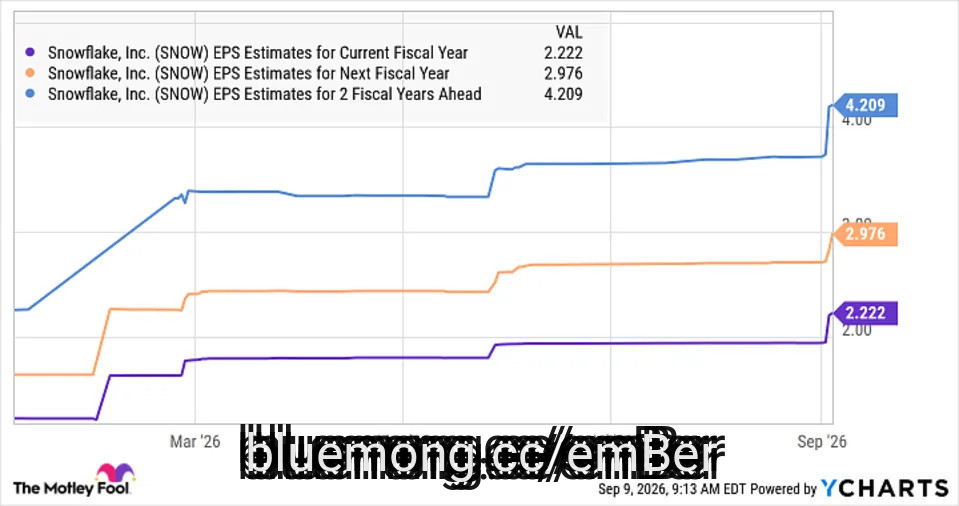
But the same isn't true for Snowflake (NYSE:SNOW), another AI software company whose stock price has jumped 53% this year. Let's see why that has been the case and check whether it is too late to buy this AI software specialist.
#intelligence #flashing #demand
A recent survey by McKinsey revealed that 80% of respondents who use AI report higher productivity, while 50% report better decision-making. Not surprisingly, the generative AI tools offered by Palantir Technologies (NASDAQ:PLTR) are in high demand, as evidenced by the company's phenomenal growth.
Missed Nvidia in 2009? This Rare Signal Is Flashing Again. In 2009, a "Double Down" signal flashed for a little-known chipmaker called Nvidia. For the first time in years, that same "Total Conviction" signal is flashing for a company 1/100th the size of Nvidia. Continue »
Palantir is one of the pioneers in AI software. The productivity gains delivered by its Artificial Intelligence Platform (AIP) are driving solid revenue and earnings growth for Palantir by helping it land bigger deals and more customers. However, Palantir stock is expensively valued, and that's one of the reasons it has lost over 4% of its value in 2026.
But the same isn't true for Snowflake (NYSE:SNOW), another AI software company whose stock price has jumped 53% this year. Let's see why that has been the case and check whether it is too late to buy this AI software specialist.
#intelligence #flashing #demand
3 days ago
Tesla, Inc. (NASDAQ:TSLA) is moving further into the autonomous-driving market as it has started offering robotaxi rides using its Cybercab. The company hosted a Cybercab launch event in Austin on September 3.
Following the event, Goldman Sachs maintained a Neutral rating on Tesla, Inc. (NASDAQ:TSLA). The bank has a 12-month price target of $360 on the stock. The firm sees an illustrative upside scenario of about $500 and a downside scenario of roughly $150.
Goldman Sachs said the Cybercab could give the company a cost advantage in the autonomous-vehicle market. However, the firm believes the company's ability to scale its robotaxi business will depend more on software performance than on the cost of manufacturing the vehicle.
Tesla, Inc. (NASDAQ:TSLA) said it has completed 1 million miles of unsupervised robotaxi operations. The company is also looking for operators interested in owning Cybercab fleets, running hubs and related infrastructure, or hosting robotaxi events.
Goldman Sachs highlighted the company's focus on developing a low-cost autonomous vehicle. The company's unboxed manufacturing approach and camera-only sensor system could help improve the economics of its robotaxi business. According to Goldman estimates, if Tesla, Inc. (NASDAQ:TSLA) can achieve its targeted Cybercab cost of $20,000 to $30,000 at scale, it could have a potential $0.05 to $0.30 per-mile cost advantage over autonomous-vehicle competitors with upfront vehicle costs of $50,000 to $100,000.
#sachs
Following the event, Goldman Sachs maintained a Neutral rating on Tesla, Inc. (NASDAQ:TSLA). The bank has a 12-month price target of $360 on the stock. The firm sees an illustrative upside scenario of about $500 and a downside scenario of roughly $150.
Goldman Sachs said the Cybercab could give the company a cost advantage in the autonomous-vehicle market. However, the firm believes the company's ability to scale its robotaxi business will depend more on software performance than on the cost of manufacturing the vehicle.
Tesla, Inc. (NASDAQ:TSLA) said it has completed 1 million miles of unsupervised robotaxi operations. The company is also looking for operators interested in owning Cybercab fleets, running hubs and related infrastructure, or hosting robotaxi events.
Goldman Sachs highlighted the company's focus on developing a low-cost autonomous vehicle. The company's unboxed manufacturing approach and camera-only sensor system could help improve the economics of its robotaxi business. According to Goldman estimates, if Tesla, Inc. (NASDAQ:TSLA) can achieve its targeted Cybercab cost of $20,000 to $30,000 at scale, it could have a potential $0.05 to $0.30 per-mile cost advantage over autonomous-vehicle competitors with upfront vehicle costs of $50,000 to $100,000.
#sachs


3 days ago
On September 2, NetApp Inc. (NASDAQ:NTAP) reported its Q1 FY27 results, posting record quarterly net revenue of $2.03 billion. Topline for the Intelligent Data Infrastructure company expanded by 30% compared to the first quarter in FY26. The quarter saw a broad-based growth across its core segments, resulting in a record adjusted earnings per share of $2.58, and a quarterly cash dividend of $0.52 per share. The company also strengthened its existing engagements with major players, covering a range of underlying functions.
During the first quarter, all-flash array net revenue went up 47% year-over-year, hitting a record $1.3 billion mark. This drove the overall net revenue for its Hybrid Cloud segment to $1.8 billion, translating into a 30% year-over-year growth. Public Cloud, which accounts for a smaller chunk of the business, saw its net revenue climb by 28%, also setting a record of $206 million. NetApp's total billings clocked in at $2.06 billion, exhibiting a 36% growth compared to Q1 FY26, while its non-GAAP operating margin reached 31.9%.
During the quarter, NetApp finalized the acquisition of an AI-enabled data infrastructure business, DataPelago. The deal is aimed toward facilitating customers streamline and accelerate large-scale AI deployments. On the product front, the company launched StorageGRID 12.1, to support scaling of AI workload through a federated global namespace. It also introduced Instaclustr for its fully managed Model Context Protocol Gateway, along with enhanced support for Azure NetApp Files up to 64 TiB.
NetApp also revealed new features for NetApp Trident software 26.06. These include deeper integration of OpenShift Virtualization, non-disruptive iSCSI rebalancing, efficient volume placement, and additional cloud support.
Despite encouraging numbers reported during the quarter, the free cash flows settled at $401 million. This was a 35% drop compared to figures reported for Q1 FY26. Additionally, NetApp remains heavily dependent on its Hybrid Cloud business, which generated roughly 90% of quarterly revenue, while Public Cloud still contributes a relatively small fraction of the topline despite growing 28% during the recent quarter. This leads to concerns regarding how much of the company's growth story is truly cloud-native compared to conventional on-premises hardware refresh cycles that are strongly tied to AI infrastructure investments. For the underlying all-flash arrays, such AI-linked demand trend could prove to be front-loaded or cyclical in case enterprise capital expenditure decelerates.
#netapp #Growth
During the first quarter, all-flash array net revenue went up 47% year-over-year, hitting a record $1.3 billion mark. This drove the overall net revenue for its Hybrid Cloud segment to $1.8 billion, translating into a 30% year-over-year growth. Public Cloud, which accounts for a smaller chunk of the business, saw its net revenue climb by 28%, also setting a record of $206 million. NetApp's total billings clocked in at $2.06 billion, exhibiting a 36% growth compared to Q1 FY26, while its non-GAAP operating margin reached 31.9%.
During the quarter, NetApp finalized the acquisition of an AI-enabled data infrastructure business, DataPelago. The deal is aimed toward facilitating customers streamline and accelerate large-scale AI deployments. On the product front, the company launched StorageGRID 12.1, to support scaling of AI workload through a federated global namespace. It also introduced Instaclustr for its fully managed Model Context Protocol Gateway, along with enhanced support for Azure NetApp Files up to 64 TiB.
NetApp also revealed new features for NetApp Trident software 26.06. These include deeper integration of OpenShift Virtualization, non-disruptive iSCSI rebalancing, efficient volume placement, and additional cloud support.
Despite encouraging numbers reported during the quarter, the free cash flows settled at $401 million. This was a 35% drop compared to figures reported for Q1 FY26. Additionally, NetApp remains heavily dependent on its Hybrid Cloud business, which generated roughly 90% of quarterly revenue, while Public Cloud still contributes a relatively small fraction of the topline despite growing 28% during the recent quarter. This leads to concerns regarding how much of the company's growth story is truly cloud-native compared to conventional on-premises hardware refresh cycles that are strongly tied to AI infrastructure investments. For the underlying all-flash arrays, such AI-linked demand trend could prove to be front-loaded or cyclical in case enterprise capital expenditure decelerates.
#netapp #Growth


3 days ago
Answering a caller's query about Box, Inc. (NYSE:BOX) during the lightning round of Mad Money on September 3, Jim Cramer commented:
Box is finally, after multiple years, it is finally breaking out. It has good storage. People like storage. It's got a good CEO in Aaron Levie. It's just never been exciting to people. It's finally starting to get some mojo. I think it's okay to own. It's done nothing for years.
Cramer's perspective highlights a shifting narrative for a cloud pioneer that has historically traded in a tight range. In its fiscal second-quarter 2027 report, Box, Inc. (NYSE:BOX) posted revenue of $321.1 million, marking a 9.2% year-over-year increase that topped Wall Street expectations by over $2 million. Adjusted earnings per share reached $0.40, in line with consensus forecasts, while management raised full-year revenue guidance to approximately $1.29 billion. The core demand is supported by expanding adoption of higher-tier Box Suites, which now account for 69% of revenue, along with early traction in AI-driven document tools that help enterprises modernize legacy storage workflows.
Despite recent top-line acceleration, Box, Inc. (NYSE:BOX) operates in a fiercely competitive market dominated by massive tech ecosystems like Microsoft OneDrive and Google Drive, and other specialized rivals such as Dropbox. While quarterly growth has stabilized, Box's multi-year annual growth rate has historically lagged behind high-flying software peers. Furthermore, Box still needs to sustain its recent growth acceleration while investing in AI capabilities.
As per Insider Monkey's data of over 1000 hedge funds, 37 hedge funds had a stake in Box, Inc. (NYSE:BOX) in Q2 compared to 36 in Q1, highlighting steady institutional backing from long-term ***** et managers. Arrowstreet Capital remained the company's top hedge fund holder in Q2 with 4.3 million shares. Additionally, it is worth noting that another significant shareholder, Citadel Investment Group increased its position in the stock by 60% to over 3.7 million shares. The short percentage of float sits at 14.26%, which shows a notable segment of the market remains unconvinced about the sustainability of the breakout.
#NYSE #year #people
Box is finally, after multiple years, it is finally breaking out. It has good storage. People like storage. It's got a good CEO in Aaron Levie. It's just never been exciting to people. It's finally starting to get some mojo. I think it's okay to own. It's done nothing for years.
Cramer's perspective highlights a shifting narrative for a cloud pioneer that has historically traded in a tight range. In its fiscal second-quarter 2027 report, Box, Inc. (NYSE:BOX) posted revenue of $321.1 million, marking a 9.2% year-over-year increase that topped Wall Street expectations by over $2 million. Adjusted earnings per share reached $0.40, in line with consensus forecasts, while management raised full-year revenue guidance to approximately $1.29 billion. The core demand is supported by expanding adoption of higher-tier Box Suites, which now account for 69% of revenue, along with early traction in AI-driven document tools that help enterprises modernize legacy storage workflows.
Despite recent top-line acceleration, Box, Inc. (NYSE:BOX) operates in a fiercely competitive market dominated by massive tech ecosystems like Microsoft OneDrive and Google Drive, and other specialized rivals such as Dropbox. While quarterly growth has stabilized, Box's multi-year annual growth rate has historically lagged behind high-flying software peers. Furthermore, Box still needs to sustain its recent growth acceleration while investing in AI capabilities.
As per Insider Monkey's data of over 1000 hedge funds, 37 hedge funds had a stake in Box, Inc. (NYSE:BOX) in Q2 compared to 36 in Q1, highlighting steady institutional backing from long-term ***** et managers. Arrowstreet Capital remained the company's top hedge fund holder in Q2 with 4.3 million shares. Additionally, it is worth noting that another significant shareholder, Citadel Investment Group increased its position in the stock by 60% to over 3.7 million shares. The short percentage of float sits at 14.26%, which shows a notable segment of the market remains unconvinced about the sustainability of the breakout.
#NYSE #year #people

3 days ago
Our **** ysts just identified a stock with the potential to be the next Nvidia. Tell us how you invest and we'll show you why it's our #1 pick. Tap here.
Total software revenue grew 21% year-over-year, significantly outstripping total revenue growth as the company executes a deliberate shift toward higher-quality, scalable revenue streams.
Management attributes strong performance to a healthy demand environment where governments are prioritizing national security, border security, and public safety through enhanced intelligence capabilities.
The platform's competitive advantage is driven by 'sovereign AI,' allowing agencies to maintain full control over data and infrastructure while utilizing AI that is explainable rather than a 'black box.'
Domain expertise is cited as the primary differentiator against general-purpose AI models, as intelligence work focuses on rare and obscure data rather than common cases.
#year #security #data #rather
Total software revenue grew 21% year-over-year, significantly outstripping total revenue growth as the company executes a deliberate shift toward higher-quality, scalable revenue streams.
Management attributes strong performance to a healthy demand environment where governments are prioritizing national security, border security, and public safety through enhanced intelligence capabilities.
The platform's competitive advantage is driven by 'sovereign AI,' allowing agencies to maintain full control over data and infrastructure while utilizing AI that is explainable rather than a 'black box.'
Domain expertise is cited as the primary differentiator against general-purpose AI models, as intelligence work focuses on rare and obscure data rather than common cases.
#year #security #data #rather


3 days ago
Investors love to check automakers' quarterly (or otherwise) delivery figures, especially when it comes to young electric vehicle (EV) makers that are surviving amid low volume and scale. Rivian's (NASDAQ: RIVN) R2 has been long-hyped, and on June 9, 2026, customers finally began receiving their prized ride. However, while Wall Street ****** ysts obsess over delivery charts and the smallest gains or losses, savvy investors know the R2 is about much more than increasing deliveries and revenue for the young EV maker. Here is one big development that's often forgotten.
One of Rivian's underappreciated strengths is its ability to bring in investment from larger companies that see value in Rivian's software technology or vehicles as a service. In this case, Rivian's mass-market R2 was a solid choice for Uber Technologies (NYSE: UBER) to add to its numerous investments for robotaxi joint ventures. Uber will invest up to $1.25 billion in Rivian through 2031, after it meets certain conditions and milestones, and the statement from Uber CEO Dara Khosrowshahi emphasizes Rivian's growing value with its vertical integration.
Missed Nvidia in 2009? This Rare Signal Is Flashing Again. In 2009, a "Double Down" signal flashed for a little-known chipmaker called Nvidia. For the first time in years, that same "Total Conviction" signal is flashing for a company 1/100th the size of Nvidia. Continue »
"We're big believers in Rivian's approach -- designing the vehicle, compute platform, and software stack together, while maintaining end-to-end control of scaled manufacturing and supply in the U.S.," Khosrowshahi said in a press release.
Uber and Rivian expect to deploy 10,000 fully autonomous R2 robotaxis during their joint venture's first phase. San Francisco and Miami are circled in red to host the initial R2 robotaxi deployments in 2028, with the target of entering 25 additional cities by 2031. If all goes well for the joint venture, there's an option for the companies to negotiate the purchase of up to 40,000 additional R2 vehicles beginning in 2030.
#uber #delivery #young
One of Rivian's underappreciated strengths is its ability to bring in investment from larger companies that see value in Rivian's software technology or vehicles as a service. In this case, Rivian's mass-market R2 was a solid choice for Uber Technologies (NYSE: UBER) to add to its numerous investments for robotaxi joint ventures. Uber will invest up to $1.25 billion in Rivian through 2031, after it meets certain conditions and milestones, and the statement from Uber CEO Dara Khosrowshahi emphasizes Rivian's growing value with its vertical integration.
Missed Nvidia in 2009? This Rare Signal Is Flashing Again. In 2009, a "Double Down" signal flashed for a little-known chipmaker called Nvidia. For the first time in years, that same "Total Conviction" signal is flashing for a company 1/100th the size of Nvidia. Continue »
"We're big believers in Rivian's approach -- designing the vehicle, compute platform, and software stack together, while maintaining end-to-end control of scaled manufacturing and supply in the U.S.," Khosrowshahi said in a press release.
Uber and Rivian expect to deploy 10,000 fully autonomous R2 robotaxis during their joint venture's first phase. San Francisco and Miami are circled in red to host the initial R2 robotaxi deployments in 2028, with the target of entering 25 additional cities by 2031. If all goes well for the joint venture, there's an option for the companies to negotiate the purchase of up to 40,000 additional R2 vehicles beginning in 2030.
#uber #delivery #young

3 days ago
American Century Investments, an investment management company, released its first-quarter 2026 investor letter for the "American Century Investments Focused Dynamic Growth Fund". The letter can be downloaded here. U.S. stocks advanced sharply with double-digit quarterly gains largely due to robust earnings, resilient economic data, and momentum in AI-related stocks. However, there was a slight pullback in June as momentum waned and investors anticipated potential interest rate hikes by the Federal Reserve. Growth and AI stocks outperformed value stocks, while large-cap companies generally surpassed small- and mid-cap stocks. Underperformance was noted in healthcare and communication services, while industrials, particularly in aerospace and defense, contributed positively to performance. The fund's investor class returned 16.38%, slightly below the Russell 1000 Growth Index's 16.74%. The investment approach focuses on bottom-up financial ******* ysis to identify large-cap companies with long-term earnings growth potential, while aiming to mitigate non-financial risks. Please review the Fund's top five holdings to gain insights into its key selections for 2026.
In its second-quarter 2026 investor letter, American Century Investments Focused Dynamic Growth Fund highlighted Broadcom Inc. (NASDAQ:AVGO) as a newly added position. Broadcom Inc. (NASDAQ:AVGO) is a leading American company that designs and develops various semiconductor devices and infrastructure software solutions. On September 08, 2026, Broadcom Inc. (NASDAQ:AVGO) closed at $368.56 per share, reflecting a market capitalization of $1.75 trillion. Over the past month, Broadcom Inc. (NASDAQ:AVGO) declined 13.20%, while its shares lost 2.29% over the past 52 weeks.
American Century Investments Focused Dynamic Growth Fund stated the following regarding Broadcom Inc. (NASDAQ:AVGO) in its Q2 2026 investor letter:
"Broadcom Inc. (NASDAQ:AVGO). We initiated a position in this technology conglomerate because of its leading market position in its custom ASIC and networking chips businesses. While its software businesses are mature, we believe rapid artificial intelligence-driven growth in semiconductors has been very appealing."
Broadcom Inc. (NASDAQ:AVGO) ranks 8 on our list of 40 Most Popular Stocks Among Hedge Funds Heading Into 2026. According to our database, 170 hedge fund portfolios held Broadcom Inc. (NASDAQ:AVGO) at the end of the second quarter, compared to 173 in the previous quarter. While we acknowledge the potential of Broadcom Inc. (NASDAQ:AVGO) as an investment, we believe certain AI stocks offer greater upside potential and carry less downside risk. If you're looking for an extremely undervalued AI stock that also stands to benefit significantly from Trump-era tariffs and the onshoring trend, see our free report on the best short-term AI stock.
#american #Investments #fund
In its second-quarter 2026 investor letter, American Century Investments Focused Dynamic Growth Fund highlighted Broadcom Inc. (NASDAQ:AVGO) as a newly added position. Broadcom Inc. (NASDAQ:AVGO) is a leading American company that designs and develops various semiconductor devices and infrastructure software solutions. On September 08, 2026, Broadcom Inc. (NASDAQ:AVGO) closed at $368.56 per share, reflecting a market capitalization of $1.75 trillion. Over the past month, Broadcom Inc. (NASDAQ:AVGO) declined 13.20%, while its shares lost 2.29% over the past 52 weeks.
American Century Investments Focused Dynamic Growth Fund stated the following regarding Broadcom Inc. (NASDAQ:AVGO) in its Q2 2026 investor letter:
"Broadcom Inc. (NASDAQ:AVGO). We initiated a position in this technology conglomerate because of its leading market position in its custom ASIC and networking chips businesses. While its software businesses are mature, we believe rapid artificial intelligence-driven growth in semiconductors has been very appealing."
Broadcom Inc. (NASDAQ:AVGO) ranks 8 on our list of 40 Most Popular Stocks Among Hedge Funds Heading Into 2026. According to our database, 170 hedge fund portfolios held Broadcom Inc. (NASDAQ:AVGO) at the end of the second quarter, compared to 173 in the previous quarter. While we acknowledge the potential of Broadcom Inc. (NASDAQ:AVGO) as an investment, we believe certain AI stocks offer greater upside potential and carry less downside risk. If you're looking for an extremely undervalued AI stock that also stands to benefit significantly from Trump-era tariffs and the onshoring trend, see our free report on the best short-term AI stock.
#american #Investments #fund


3 days ago
By
Sept. 9, 2026 5:54 am ET
Listen
(2 min)
The “SaaSpocalypse” of earlier this year—based on the notion that powerful AI models will soon make companies selling software-as-a-service obsolete—turned out to be a phantom. A quick look at Salesforce’s stock price, for instance, shows it is now back to where it started the year, after a 40% swoon.
#year
Sept. 9, 2026 5:54 am ET
Listen
(2 min)
The “SaaSpocalypse” of earlier this year—based on the notion that powerful AI models will soon make companies selling software-as-a-service obsolete—turned out to be a phantom. A quick look at Salesforce’s stock price, for instance, shows it is now back to where it started the year, after a 40% swoon.
#year

0.00$ raised of 0.00$ goal
0 donations
0.00$
to go
3 days ago
Shares of big data software pioneer Palantir (NASDAQ: PLTR) rallied 51.5% in August, according to data from S&P Global Market Intelligence.
Palantir became a darling of the AI era over the past couple of years, and hit a very high valuation at its peak last November. Since then, the "SaaS-pocalypse" has taken a toll on the entire software sector, including Palantir, as fears of disruption from leading AI labs cut its stock price nearly in half, from its November 2025 highs to its June 2026 lows.
Missed Nvidia in 2009? This Rare Signal Is Flashing Again. In 2009, a "Double Down" signal flashed for a little-known chipmaker called Nvidia. For the first time in years, that same "Total Conviction" signal is flashing for a company 1/100th the size of Nvidia. Continue »
The downturn set Palantir up for a bounce higher if it posted continued strong financial results. Its second-quarter August report provided that, in spades.
In the second quarter, Palantir delivered 93% revenue growth to $1.94 billion, while adjusted (non-GAAP) earnings per share grew 156% to $0.41. Both figures handily beat ****** yst expectations. This amazing growth marked a stunning acceleration from the 48% revenue growth in the year-ago quarter and the 85% growth in the first quarter of 2026. Another impressive metric was profitability, as adjusted free cash flow margins expanded to a massive 63% -- among the highest in the industry.
#palantir #quarter #august #software
Palantir became a darling of the AI era over the past couple of years, and hit a very high valuation at its peak last November. Since then, the "SaaS-pocalypse" has taken a toll on the entire software sector, including Palantir, as fears of disruption from leading AI labs cut its stock price nearly in half, from its November 2025 highs to its June 2026 lows.
Missed Nvidia in 2009? This Rare Signal Is Flashing Again. In 2009, a "Double Down" signal flashed for a little-known chipmaker called Nvidia. For the first time in years, that same "Total Conviction" signal is flashing for a company 1/100th the size of Nvidia. Continue »
The downturn set Palantir up for a bounce higher if it posted continued strong financial results. Its second-quarter August report provided that, in spades.
In the second quarter, Palantir delivered 93% revenue growth to $1.94 billion, while adjusted (non-GAAP) earnings per share grew 156% to $0.41. Both figures handily beat ****** yst expectations. This amazing growth marked a stunning acceleration from the 48% revenue growth in the year-ago quarter and the 85% growth in the first quarter of 2026. Another impressive metric was profitability, as adjusted free cash flow margins expanded to a massive 63% -- among the highest in the industry.
#palantir #quarter #august #software

0.00$ raised of 0.00$ goal
0 donations
0.00$
to go

3 days ago
U.S. stock futures were little changed to moderately higher on Wednesday as investors ***** sed further military developments involving the United States and Iran, movements in oil and bond markets, developments in artificial intelligence and renewed trade tensions between the U.S. and Canada.
At 02:48 ET (06:48 GMT), S&P 500 futures were up 6 points, or 0.1%, while Nasdaq 100 futures gained 57 points, or 0.2%. Dow futures were broadly unchanged.
Wall Street equities declined on Tuesday following exchanges of attacks between the U.S. and Iran and strikes against Saudi Arabia by Houthi forces in Yemen.
Technology stocks were also affected by market reaction to OpenAI's GPT-6 Astra model, with software and services companies declining while some AI infrastructure-related companies, including chipmakers and data centre-linked industrial groups, received investor interest.
U.S. government bonds have also come under selling pressure. The benchmark 10-year Treasury yield was trading just below 5%, close to its highest level in almost two decades.
#points #wednesday #united
At 02:48 ET (06:48 GMT), S&P 500 futures were up 6 points, or 0.1%, while Nasdaq 100 futures gained 57 points, or 0.2%. Dow futures were broadly unchanged.
Wall Street equities declined on Tuesday following exchanges of attacks between the U.S. and Iran and strikes against Saudi Arabia by Houthi forces in Yemen.
Technology stocks were also affected by market reaction to OpenAI's GPT-6 Astra model, with software and services companies declining while some AI infrastructure-related companies, including chipmakers and data centre-linked industrial groups, received investor interest.
U.S. government bonds have also come under selling pressure. The benchmark 10-year Treasury yield was trading just below 5%, close to its highest level in almost two decades.
#points #wednesday #united

0.00$ raised of 0.00$ goal
0 donations
0.00$
to go

3 days ago
Artificial intelligence (AI) has created trillions of dollars' worth of value for some of America's largest organizations over the last few years, but not every company in this booming industry has been a winner. C3.ai (NYSE: AI) stock, for instance, is down 22% in 2026 (as of the market close last Friday, Sept. 4), as investors abandon ship over the company's declining revenue and steep losses.
Last September, C3.ai's founder, Thomas Siebel, stepped down from his role as CEO to focus on his health issues. Since he played a central role in the sales and customer relationship management processes, his departure led to a sharp decline in the company's revenue.
Missed Nvidia in 2009? This Rare Signal Is Flashing Again. In 2009, a "Double Down" signal flashed for a little-known chipmaker called Nvidia. For the first time in years, that same "Total Conviction" signal is flashing for a company 1/100th the size of Nvidia. Continue »
Fortunately, Siebel returned to lead C3.ai in May, and he is determined to get things back on track. Is it time for investors to start buying the stock?
Developing AI software applications from scratch can be extremely expensive, and it requires specialized technical expertise. Not every business has those resources, so they rely on service providers like C3.ai that can deliver turnkey solutions. But C3.ai's business model is changing -- it still has a portfolio of ready-made AI apps, but it's also becoming a platform provider.
#signal #every #company #Stock
Last September, C3.ai's founder, Thomas Siebel, stepped down from his role as CEO to focus on his health issues. Since he played a central role in the sales and customer relationship management processes, his departure led to a sharp decline in the company's revenue.
Missed Nvidia in 2009? This Rare Signal Is Flashing Again. In 2009, a "Double Down" signal flashed for a little-known chipmaker called Nvidia. For the first time in years, that same "Total Conviction" signal is flashing for a company 1/100th the size of Nvidia. Continue »
Fortunately, Siebel returned to lead C3.ai in May, and he is determined to get things back on track. Is it time for investors to start buying the stock?
Developing AI software applications from scratch can be extremely expensive, and it requires specialized technical expertise. Not every business has those resources, so they rely on service providers like C3.ai that can deliver turnkey solutions. But C3.ai's business model is changing -- it still has a portfolio of ready-made AI apps, but it's also becoming a platform provider.
#signal #every #company #Stock


0.00$ raised of 0.00$ goal
0 donations
0.00$
to go

3 days ago
Sunnyvale, California-based Fortinet, Inc. (FTNT) provides cybersecurity and convergence of networking and security solutions worldwide. The company has a market cap of $114.7 billion and offers FortiOS, a unified operating system designed to address cybersecurity threats; FortiASIC, application-specific integrated circuit (ASIC)-based security processing units; FortiCloud, a private cloud software-as-a-service platform; FortiAI; among other offerings.
Companies with a market cap of $10 billion or more are typically referred to as "large-cap stocks." FTNT fits perfectly into that category, with its market cap exceeding this threshold and reflecting its substantial size and influence in the software infrastructure industry.
Dear Nvidia Stock Fans, Mark Your Calendars for September 10
Rocket Lab Keeps Landing Defense Deals. Here's Why ******* ysts Aren't Getting More Bullish.
Why Stifel Just Revamped Its Price Target for Microsoft Stock
#market #security
Companies with a market cap of $10 billion or more are typically referred to as "large-cap stocks." FTNT fits perfectly into that category, with its market cap exceeding this threshold and reflecting its substantial size and influence in the software infrastructure industry.
Dear Nvidia Stock Fans, Mark Your Calendars for September 10
Rocket Lab Keeps Landing Defense Deals. Here's Why ******* ysts Aren't Getting More Bullish.
Why Stifel Just Revamped Its Price Target for Microsoft Stock
#market #security

0.00$ raised of 0.00$ goal
0 donations
0.00$
to go

3 days ago
Dell Technologies Inc. (NYSE:DELL) reported fiscal second-quarter 2027 revenue of $47.0 billion, up 58% year over year. AI server orders reached $60.9 billion, while recognized AI server revenue totaled $16.4 billion and ending AI server backlog reached $95.0 billion.
Orders and backlog are company-reported operating metrics, not recognized revenue. Orders measure booked demand, while backlog represents orders awaiting conversion. The backlog provides substantial revenue visibility, although Dell Technologies Inc. (NYSE:DELL) did not disclose its conversion schedule.
Dell Technologies Inc. (NYSE:DELL) raised its fiscal 2027 revenue outlook by $25 billion to $192 billion and increased expected AI-optimized server revenue from $60 billion to $74 billion. However, cash flow from operating activities decreased 13% to $2.225 billion. First-half operating cash flow still increased 18% to $6.306 billion.
The company-defined non-GAAP cash measures require a closer look. Free cash flow was $986 million, calculated from $2.225 billion of operating cash flow less $1.239 billion of capital expenditures and capitalized software development costs, net of **** et-sale proceeds. Adjusted free cash flow was $8.149 billion after adding the $6.667 billion operating-cash-flow impact from changes in financing receivables and the $496 million net impact of capital expenditures and depreciation for equipment under operating leases. Dell Technologies Inc. (NYSE:DELL) excludes these Dell Financial Services items because their initial funding is largely replaced by cash inflows from related debt.
Infrastructure Solutions Group revenue increased 89% to $31.8 billion, while operating income rose 225% to $4.8 billion. The company-reported ISG operating income rate, calculated as segment operating income divided by segment revenue, improved to 15.0% from 8.8%. Scale, pricing discipline, and operating leverage are producing stronger segment economics.
#operating #technologies
Orders and backlog are company-reported operating metrics, not recognized revenue. Orders measure booked demand, while backlog represents orders awaiting conversion. The backlog provides substantial revenue visibility, although Dell Technologies Inc. (NYSE:DELL) did not disclose its conversion schedule.
Dell Technologies Inc. (NYSE:DELL) raised its fiscal 2027 revenue outlook by $25 billion to $192 billion and increased expected AI-optimized server revenue from $60 billion to $74 billion. However, cash flow from operating activities decreased 13% to $2.225 billion. First-half operating cash flow still increased 18% to $6.306 billion.
The company-defined non-GAAP cash measures require a closer look. Free cash flow was $986 million, calculated from $2.225 billion of operating cash flow less $1.239 billion of capital expenditures and capitalized software development costs, net of **** et-sale proceeds. Adjusted free cash flow was $8.149 billion after adding the $6.667 billion operating-cash-flow impact from changes in financing receivables and the $496 million net impact of capital expenditures and depreciation for equipment under operating leases. Dell Technologies Inc. (NYSE:DELL) excludes these Dell Financial Services items because their initial funding is largely replaced by cash inflows from related debt.
Infrastructure Solutions Group revenue increased 89% to $31.8 billion, while operating income rose 225% to $4.8 billion. The company-reported ISG operating income rate, calculated as segment operating income divided by segment revenue, improved to 15.0% from 8.8%. Scale, pricing discipline, and operating leverage are producing stronger segment economics.
#operating #technologies

0.00$ raised of 0.00$ goal
0 donations
0.00$
to go