
9 days ago
Bengaluru: For Tilak Varma, the number next to his name on the team sheet matters far less than the one on the scoreboard at the end of the match.
The India T20I vice-captain has seen his role evolve considerably in recent months, moving from the top order to the finisher's role as the team continues to fine-tune its combinations. While adapting to different batting positions is rarely straightforward, the 23-year-old has embraced the challenge and put the team's needs ahead of personal preference.
Having begun his T20I career near the top of the order, Tilak now often finds himself walking in at No. 5 or 6. With Sanju Samson and Abhishek Sharma opening, Ishan Kishan firmly established at No. 3 and skipper Shreyas Iyer occupying the next slot, opportunities higher up the order have become limited.
Rather than viewing it as a setback, Tilak sees it as another responsibility to master.
"Ishan is batting brilliantly at No. 3. So, for me, there is no option but to bat at 5 and 6 and do the job for the team. I am mentally prepared for that role and in the last few games, I have won matches from there. So, I am pretty confident," Tilak said after the rain-hit series decider against the West Indies in Bengaluru on Saturday.
The left-hander admitted that the transition from a top-order batter to a finisher has not been without its challenges.
"It's not easy to change from No. 3 to No. 5 or 6. It is slightly challenging. But I have been working on how I can finish games, and I love finishing games for the country," he said.
The demands of batting in the lower middle order are vastly different from those of a top-order role. There is little time to settle in, and the emphasis is on making an immediate impact rather than constructing an innings. Tilak said he has consciously altered his preparation to meet those demands.
"I have been working on it in the nets. Otherwise, it becomes tough. When you go in as a finisher and a slower ball comes into your arc, you need to be ready to hit it for six. In T20 cricket, if you bat at No. 5 or 6, you generally get only five or six overs, so I have had to change my approach."
Fortunately for Tilak, batting down the order is not entirely new territory.
"I batted lower down the order in my childhood as well. I have shots all around the ground and I am confident in my ability to adapt. Whether it is No. 3 or No. 5, I believe I have the technique to fit into any role for the team if I prepare well," he said.
#tilak #t20i


22 days ago
Before we get worried about recessions or market crashes, let's put a 10% drop in context. Going back to 1980, the S&P 500 has fallen 10% or more in roughly half of all calendar years, and a correction of that size has historically shown up about once every 12 to 18 months.
What makes a 10% decline packed into a single month unusual isn't the size of the drop, it's the speed: that kind of compressed move tends to show up during sudden shocks rather than the slower grind most corrections take. Even so, it's happened before, and the market has recovered every time.
Missed Nvidia in 2009? This Rare Signal Is Flashing Again. In 2009, a "Double Down" signal flashed for a little-known chipmaker called Nvidia. For the first time in years, that same "Total Conviction" signal is flashing for a company 1/100th the size of Nvidia. Continue »
My goal here isn't to predict whether October brings one. It's to point to three consumer businesses whose underlying demand doesn't particularly care what the stock market does that month.
Procter & Gamble (NYSE: PG) makes Tide, Pampers, Crest, and Gillette. These products are the kind of household basics people buy again almost automatically, recession or not. That steadiness shows up in the numbers. P&G generated more than $87 billion in revenue in its 2026 fiscal year and returned over $15 billion to shareholders through dividends and buybacks.
#market #flashing #every #month

22 days ago
Prince Harry and Meghan Markle are reportedly at odds over work, according to a royal insider. One of them has been busy on the charity circuit and engagements in London and New York, while the other has been enjoying a slower pace. Now, a royal insider says the contrast has become a sore point, and money could be the factor.
Since returning to the UK, Prince Harry has been out and about. Meghan Markle's schedule, by comparison, sounds far gentler. New Idea reports that Markle's days are a mix of business calls for her lifestyle brand, As Ever, going to Pilates or yoga with friends, and school runs for Archie and Lilibet.
A royal insider speaking to the outlet claims Harry would like that to change. "Harry wants Meghan to work," the source says. They add that "while he was at that WellChild event and being offered radio gigs for Meghan, she was having a jolly in a pub with Ellen and Portia."
Money appears to be at the heart of it, as the insider says the couple's funds are shrinking. Keeping their Montecito home is estimated to cost about $1 million. Meghan is said to want it as a safety net if life in the UK does not work out.
Meanwhile, her acting plans have hit obstacles too. In August, a rumor spread that she was in talks with Guy Ritchie's team regarding a role in "The Gentlemen," which streams on Netflix. Series star Theo James dismissed these rumors soon after.
#prince #london


1 month ago
Trip.com Group Limited (NASDAQ:TCOM) reported second-quarter 2026 net revenue of RMB15.7 billion, up 6% year over year, in results released September 15. Revenue on its international platform increased more than 50%, highlighting a promising source of expansion against slower group growth.
Trip.com Group Limited (NASDAQ:TCOM) also recognized a RMB5.2 billion antimonopoly penalty in general and administrative expenses. The investment question extends beyond that charge: can international expansion generate enough profitable growth to offset pressure on domestic monetization?
International expansion gives Trip.com Group Limited (NASDAQ:TCOM) a potential route to reducing dependence on revenue earned from domestic travel. A broader customer base could make growth less reliant on a single market's commercial practices and regulatory environment.
The opportunity is especially attractive if new customers become repeat users. Over time, repeat bookings could reduce acquisition spending per transaction and allow technology and service costs to be spread across more revenue. That would turn international scale into operating leverage, with profits growing faster than sales.
Trip.com Group Limited (NASDAQ:TCOM) also grew accommodation revenue 6% year over year despite a regulator-imposed revenue reduction. That result offers some evidence of resilience, although reservation growth and the revenue earned from those reservations remain separate considerations.
#NASDAQ

1 month ago
Eli Lilly (LLY) trades near $1,150, up about 52% over the past year, and is now worth more than a trillion dollars. At that size the easy read is that the big money has been made. But Lilly has barely started selling Foundayo, its oral obesity medicine, outside the United States. So how much is left? The scenario below starts from Lilly's own trailing numbers, but the growth, margin, and multiple it ***** umes are ours. It is not a forecast and not a price target.
Almost all of the upside is revenue. The scenario caps growth at 30% a year. That is well below the 49.6% Lilly grew over the past twelve months, though only a little below the roughly 32% pace of its own 2026 guide. Revenue still climbs from $79.7 billion to $175.0 billion by year three.
The engine is incretins. Mounjaro and Zepbound together made $14.9 billion in the second quarter of 2026, $6.3 billion more than a year earlier. Net margin eases to 30.7% in the scenario, so earnings roughly double.
Then the multiple takes its cut. Lilly's P/E of 38.5x already sits below its three-year average of 68.9x, and the scenario trims it further to 33.6x because slower growth will not support even today's multiple. On those ***** umptions the stock would be worth about $2,024 in three years, roughly 76% above today.
LLY
#below #roughly #revenue


1 month ago
On August 10, Ferguson Enterprises Inc. (NYSE:FERG) reported results for the quarter ended June 30, and the numbers show a company growing straight through a soft housing market. Sales rose 4.6% to $8.8 billion, and management lifted its outlook for the full year. But profit grew more slowly than sales, and that gap is what makes this report worth a closer look.
The strongest engine was non-residential work, where US revenue jumped 8% on share gains in what management called a mixed market. Large capital projects are part of the story, with open order volumes growing and bidding activity strong, so there is a pipeline behind the current numbers. Housing, roughly half of revenue, is the weak spot. Yet residential sales still rose 2% in the US even though new construction is weak and repair work is soft, which means Ferguson is beating its markets rather than riding them.
Capital deployment is the second pillar. Ferguson closed five acquisitions in the quarter, and on July 13, it announced a deal for FWI Holdings, known as FloWorks, an industrial distributor of valves and flow-control products that is expected to close in the third quarter. The eight deals announced this year carry about $1.4 billion in annualized revenue, a second growth path alongside organic sales. Net debt sits at 1.3 times adjusted EBITDA, a level management calls strong. The company also returned cash, buying back $202 million of stock in the quarter and declaring a $0.89 dividend payable October 7 to holders of record on August 21. Management raised its full-year sales outlook to mid-single-digit growth, before counting FloWorks.
Start with the gap between sales and profit. Adjusted operating profit rose 2.9%, behind the 4.6% sales gain, and gross margin slipped 20 basis points to 31.0%. Ferguson notes that last year's gross margin was temporarily lifted by the timing of supplier price increases, which is fair context, but the direction is still down. Reported earnings per share of $3.43 rose 6.9%, while the adjusted figure of $3.39 grew a slower 5.3%.
Then there are the soft spots. About half of revenue comes from residential markets that management describes as subdued, so a 2% gain there is modest. Canada's sales slipped 1.9%, with a business divestment outweighing organic growth, and management calls the market there challenging, especially in residential. Management also describes the economic environment as uncertain, and the margin part of the guidance raise is small. The low end of the adjusted operating margin range moved from 9.4% to 9.5%, while the top stayed at 9.8%. The guidance also leaves out FloWorks, and net debt to adjusted EBITDA is 1.3 times, against 1.2 times a year ago.
#management


1 month ago
Interested in HCA Healthcare, Inc.? Here are five stocks we like better.
Exchange-related pressure is weighing on HCA's 2026 outlook: The expiration of enhanced tax credits is pushing some patients into uninsured status, with estimated full-year impact of $1 billion to $1.2 billion and slower elective-care utilization.
State supplemental payments and underlying demand provide offsets: HCA expects a $300 million to $500 million net benefit from state programs, while insured business excluding exchange plans grew 3.2% and adjusted admissions increased 2.7% in the second quarter.
HCA is pursuing long-term growth through capacity and efficiency investments: The company is expanding outpatient facilities, improving patient throughput and cost management, and maintaining a target of 4% to 6% long-term revenue growth with stable margins.
Healthcare Added 35,200 Jobs—3 Stocks Positioned to Benefit
#healthcare #Growth

1 month ago
On August 18, Amer Sports (NYSE:AS) reported second-quarter results that beat its own guidance and then raised the bar for the rest of the year. Revenue climbed 32% to $1.63 billion, adjusted operating profit nearly tripled, and every region and segment posted double-digit growth. Diluted earnings per share reached $0.18, up from a much smaller figure a year earlier. What stands out about August 18 is not just the size of the beat but how broad it was.
Technical Apparel grew 32% to $674 million, led by Arc'teryx and backed by a 17% omni-comp gain across owned stores and e-commerce. Outdoor Performance grew even faster, up 37% to $569 million, driven by Salomon Softgoods. Ball & Racquet Sports rose 24% to $390 million on the strength of Wilson Tennis 360. CEO James Zheng pointed to strong double-digit growth across every segment, geography, and channel as the reason for confidence in the outlook.
That confidence showed up in the numbers: Amer Sports raised full-year 2026 guidance to roughly 24% reported revenue growth, a gross margin of 60.5% to 61.0%, an operating margin of 14.2% to 14.5%, and diluted EPS of $1.27 to $1.30. The balance sheet backs up the reinvestment CFO Andrew Page described, with $573 million in net cash and $720 million in cash and equivalents at quarter-end.
Some of the second quarter's biggest numbers lean on a one-time tailwind. Gross margin expanded 710 basis points to 65.6%, but 390 of those points came from net tariff refunds. Operating margin's 820 basis point jump included the same 390-point benefit. The effect is largest in Ball & Racquet Sports, where adjusted segment operating margin rose 1,300 basis points to 17.2%, yet 970 of those points came from tariff refunds alone. Selling, general and administrative expenses rose 30% to $909 million, and on an adjusted basis SG&A grew 33%, faster than revenue itself.
Inventories climbed 19% year over year to $1,897 million. The guidance for the next quarter also points to a slower pace: third quarter revenue growth is guided at 18% to 20%, well below the 32% just reported, with gross margin guided down to about 59.0% and net finance cost alone guided to $15 million to $20 million, against roughly $85 million for the entire year.
#revenue #basis


1 month ago
Intuitive Surgical (ISRG), maker of the da Vinci surgical robots, trades at about $382, some 36% below its 52-week high. Even so, you pay about 35.9 times trailing adjusted earnings. That is normalized net income with stock-based compensation added back, a basis meant to sit closer to the one ****** ysts forecast on, though the two are not defined identically. ****** ysts' forecasts run to 2027, the year Intuitive plans to start lowering what customers pay per use on some instruments.
The shares were trading about 11% lower the day after second-quarter results in July showed slower US procedure growth. US da Vinci procedures grew 12% in the second quarter, against 14% in the first. Management pointed to two likely causes, with the CFO noting that some customers say coverage changes are delaying deferrable procedures, alongside a little of the law of large numbers.
What the price still pays for is revenue growing faster than procedures. On the first-quarter call, the CFO credited that largely to da Vinci 5 and its higher pricing. More than half of the da Vinci systems Intuitive placed in the second quarter were da Vinci 5.
On ****** ysts' 2026 estimates, today's price is about 35.1 times earnings. On their 2027 estimates, it is about 31.4 times. The revenue forecast behind that looks modest: about 13.1% growth a year through 2027, against 20.7% growth over the past twelve months.
Consensus has earnings and revenue growing at a similar pace between 2026 and 2027, so margins hold roughly steady. Intuitive enters that stretch with an operating margin of 31.3% over the past twelve months, above its three-year average of 27.7%.
#intuitive #analysts #year #procedures


1 month ago
Comments from Anthropic CEO Dario Amodei and OpenAI CEO Sam Altman calling for a more measured approach to frontier AI development contributed to a sharp selloff across neoclouds and data center stocks. Bernstein identified CoreWeave Inc. (NASDAQ:CRWV) as the most exposed name because of its rural footprint and focus on AI training. The concern represents a genuine structural argument. However, it marks the second time this year that the same group of stocks has faced concerns over the sustainability of AI demand. There is also an important tension within Bernstein's own note, which highlights CoreWeave's exposure while acknowledging that most of its backlog remains shielded by contracts.
Bernstein cautioned that a slowdown in AI training could weigh on data center developers. The warning followed Amodei's weekend comments urging the industry to deliberately slow the pace of frontier AI capability gains, along with similar remarks from Sam Altman. According to ****** yst Madison Rezaei, slower training activity would likely reduce demand for rural data center sites designed for latency-insensitive workloads. The ****** yst pointed out that rural and Tier 3 markets account for 70% of the industry's 488GW pipeline. CoreWeave was identified as the most exposed name in the firm's coverage. ****** yst Madison Rezaei remarked:
We estimate that 25% of their existing active U.S. power, with an additional ~74% of their contracted power, is situated in Tier 3 and Tier 4 markets.
However, there is a key counterpoint within Bernstein's own note:
The backlog is primarily comprised of take-or-pay contracts, so we do not anticipate a threat there but could see a pullback in demand for the contracted-not-yet-sold rural power if training development slows.
#training #analyst


1 month ago
GE Aerospace (GE) trades near $318, up 13.4% over the past twelve months. Behind that price sits a commercial services backlog of roughly $170 billion, work on engines already flying. The easy read is that the good news is in the price, and the coming three years just work that backlog off. A three-year scenario on the company's own numbers puts a size on what is left.
Revenue does most of the work. The scenario grows it 17.4% a year for three years, down from the 21.7% pace of the past twelve months, and net margin recovers some of the ground it has lost. Together they lift earnings about 67%.
The constraint is not demand. Management said in July that what lies ahead is much more a supply-side challenge than a demand one. Spare parts delinquencies, shipments held up for want of material, grew 20% sequentially in the second quarter of 2026.
GE Aerospace agreed in September to buy the castings maker Consolidated Precision Products. The deal shows where the bottleneck sits.
Then the multiple takes its cut. The scenario trims the P/E from 36.8x to 32.9x, because a slower revenue pace will not support what the market pays today. On those ******* umptions the stock would be worth about $475 in three years, roughly 50% above today.
#aerospace #revenue #price


1 month ago
The Kroger Co. (NYSE:KR) cut its full-year 2026 identical-sales forecast excluding fuel to 0.2%–0.8% from 1%–2%, reflecting a sharper-than-expected slowdown in consumer demand. Second-quarter identical sales rose just 0.2%, down from 3.4% a year earlier and below the 0.9% ****** yst estimate.
The weakness reflects pressure on middle- and lower-income consumers, while a Cyclospora outbreak reduced quarterly identical sales by roughly 35 basis points and Medicare prescription-drug pricing changes created an approximately 140-basis-point headwind for pharmacy revenue. Importantly, Kroger maintained its full-year adjusted FIFO operating-profit forecast of $5.0 billion–$5.2 billion and delivered adjusted EPS of $1.09, ahead of the $1.06 consensus.
The strongest bullish argument is that The Kroger Co. (NYSE:KR) is currently protecting earnings despite the deterioration in sales momentum. Second-quarter adjusted EPS increased 5% year over year to $1.09, while adjusted FIFO operating profit was $1.076 billion. Kroger's gross margin rate actually increased by 13 basis points, although the overall gross-margin percentage was 22.4% versus 22.5% a year earlier, suggesting that pricing, sourcing, and cost-management initiatives are helping offset weaker volumes. The company's higher-margin businesses are also becoming increasingly important: adjusted e-commerce sales grew 20% in the quarter, and Kroger Precision Marketing profit increased 24%. That mix shift gives Kroger an earnings lever even when supermarket traffic and comparable sales are weak.
There is also evidence that management is actively responding to the competitive pressure rather than simply accepting slower growth. CEO Greg Foran has been pursuing tighter sourcing, simpler operations and lower prices, with Reuters reporting plans to cut prices across thousands of products to regain shoppers from Walmart, Costco and Aldi. The Kroger Co. (NYSE:KR)'s balance sheet provides room to fund that strategy: its net debt-to-adjusted-EBITDA ratio was 1.91x, below its stated target range of 2.30x–2.50x, while the company repurchased $1.0 billion of shares in the second quarter and $1.2 billion year to date. It also raised its dividend 11%, marking the 20th consecutive year of increases. If sales stabilize while e-commerce, retail media and cost efficiencies continue expanding, the unchanged $5.0 billion–$5.2 billion operating-profit forecast could prove more important to valuation than the reduced top-line outlook.
#year


1 month ago
Colgate-Palmolive Company (NYSE:CL) is reportedly exploring the sale of several mass-market personal care brands, including Softsoap, Irish Spring and Speed Stick, in a portfolio reshaping effort that could generate more than $1 billion. The company is working with Goldman Sachs on the potential divestiture. Personal care accounted for roughly 17% of Colgate-Palmolive's 2025 net sales, or about $3.5 billion, while oral care remains the company's largest business.
The move comes as Colgate faces pressure in its North American business. Although the company recently reported a 4.9% increase in net sales, organic sales in North America declined 3%, highlighting competitive pressure in a mature market. The strategy is also consistent with a broader consumer-goods shift toward simplifying portfolios and concentrating capital on higher-growth categories. Unilever, Nestlé, and other major consumer companies have similarly been selling slower-growing or non-core businesses.
The biggest positive is that Colgate-Palmolive Company (NYSE:CL) could become a more focused and potentially higher-quality business. Selling brands that no longer fit its highest-priority growth areas would allow management to concentrate capital, marketing spending, and management attention on oral care, pet nutrition, and other businesses where Colgate has stronger competitive advantages. The company's decision would therefore be less about abandoning personal care altogether and more about improving the quality of the remaining portfolio.
A sale could also unlock meaningful shareholder value. If the divestitures generate more than $1 billion, Colgate would have additional capital that could be used for debt reduction, share repurchases, acquisitions, or investment behind its strongest brands. In a mature consumer-staples company, disciplined capital allocation can have an outsized impact on earnings growth and shareholder returns. There is also evidence that portfolio simplification is becoming increasingly attractive across the consumer-goods industry. The Wall Street Journal has highlighted how companies such as Unilever and Nestlé are shedding businesses that add complexity without providing sufficient growth. The underlying argument is that the benefits of owning a very broad portfolio have diminished as consumer preferences become more fragmented and smaller brands become better at responding to trends.
Most importantly, the divestiture could improve Colgate-Palmolive Company (NYSE:CL)'s strategic focus at a time when North American competition is challenging. Rather than allocating resources to defend slower-growing personal-care brands, management could direct investment toward categories and geographies with better long-term growth prospects. That could ultimately support margins and organic growth even if the immediate revenue base becomes smaller.
#personal #NYSE #Portfolio


1 month ago
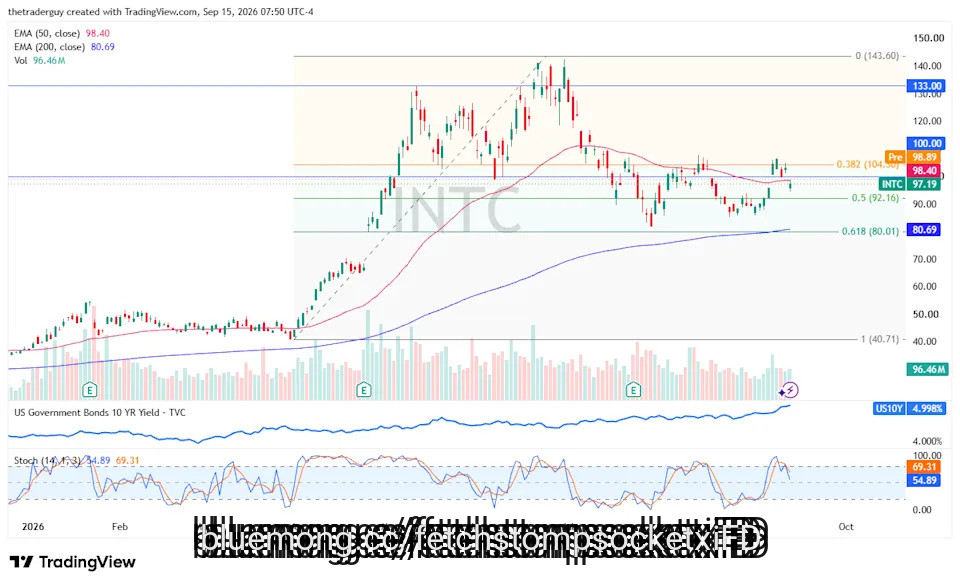
Intel is a little higher in pre-market trading, but recently we've seen some noise as broad semiconductor de-risking continues to be one of the stories here. Intel itself has been a fairly successful story over the last year as the turnaround continues for the company.
AI industry leaders got crushed. Perhaps the prospect of slowing frontier model development, as thrown out there by multiple leaders in the industry, has spooked the markets. Investors immediately figured that slower data-center CapEx and semiconductor demand would be part of that. It is a little overdone. It's just a few words, but it looks like the market is trying to turn things around.
Furthermore, you have to keep in mind that interest rates being higher than anticipated has been a bit of a drag.
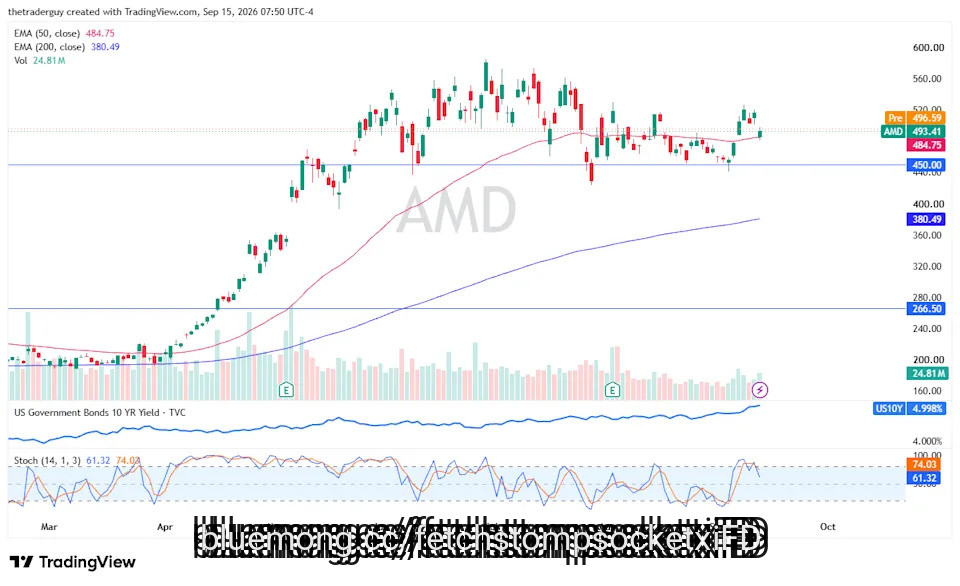
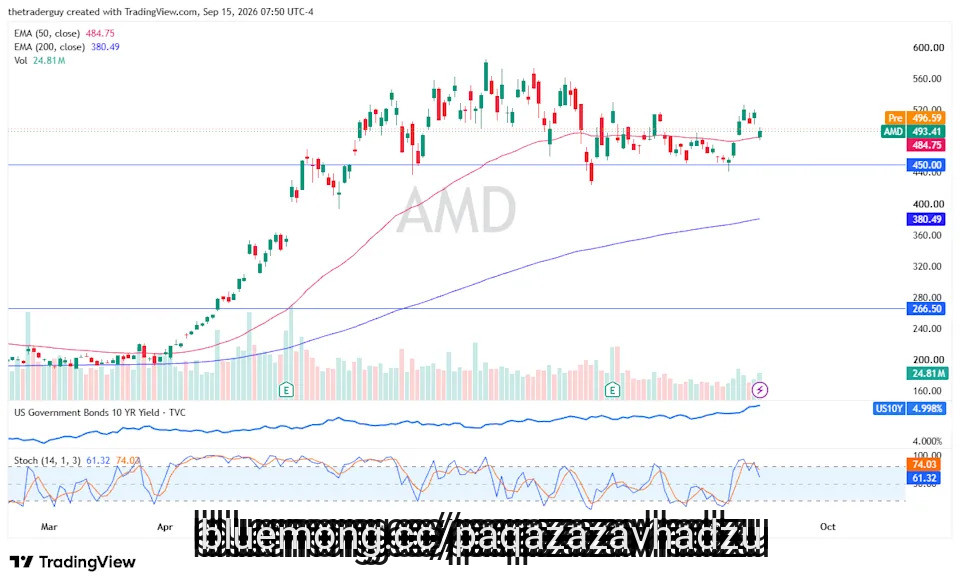
NVIDIA looks slightly positive in early market trading, with the market trying to reach toward the 50-day EMA. Again, this is about anxiety, with AI capital expenditures being the immediate problem. After all, if fewer data centers were to be built, NVIDIA is directly hit.
The market is looking at this in more fear-than-fact-based terms because NVIDIA's actual business numbers remain extraordinarily strong. So really, rates and the fear of a slowdown are fighting the reality of growth and economic numbers in this company that remain truly envy-worthy of most others.
#Intel #little #continues

1 month ago
Colgate-Palmolive Company (NYSE:CL) is reportedly exploring the sale of several mass-market personal care brands, including Softsoap, Irish Spring and Speed Stick, in a portfolio reshaping effort that could generate more than $1 billion. The company is working with Goldman Sachs on the potential divestiture. Personal care accounted for roughly 17% of Colgate-Palmolive's 2025 net sales, or about $3.5 billion, while oral care remains the company's largest business.
The move comes as Colgate faces pressure in its North American business. Although the company recently reported a 4.9% increase in net sales, organic sales in North America declined 3%, highlighting competitive pressure in a mature market. The strategy is also consistent with a broader consumer-goods shift toward simplifying portfolios and concentrating capital on higher-growth categories. Unilever, Nestlé, and other major consumer companies have similarly been selling slower-growing or non-core businesses.
The biggest positive is that Colgate-Palmolive Company (NYSE:CL) could become a more focused and potentially higher-quality business. Selling brands that no longer fit its highest-priority growth areas would allow management to concentrate capital, marketing spending, and management attention on oral care, pet nutrition, and other businesses where Colgate has stronger competitive advantages. The company's decision would therefore be less about abandoning personal care altogether and more about improving the quality of the remaining portfolio.
A sale could also unlock meaningful shareholder value. If the divestitures generate more than $1 billion, Colgate would have additional capital that could be used for debt reduction, share repurchases, acquisitions, or investment behind its strongest brands. In a mature consumer-staples company, disciplined capital allocation can have an outsized impact on earnings growth and shareholder returns. There is also evidence that portfolio simplification is becoming increasingly attractive across the consumer-goods industry. The Wall Street Journal has highlighted how companies such as Unilever and Nestlé are shedding businesses that add complexity without providing sufficient growth. The underlying argument is that the benefits of owning a very broad portfolio have diminished as consumer preferences become more fragmented and smaller brands become better at responding to trends.
Most importantly, the divestiture could improve Colgate-Palmolive Company (NYSE:CL)'s strategic focus at a time when North American competition is challenging. Rather than allocating resources to defend slower-growing personal-care brands, management could direct investment toward categories and geographies with better long-term growth prospects. That could ultimately support margins and organic growth even if the immediate revenue base becomes smaller.
#colgate #company #care


1 month ago
Intel is a little higher in pre-market trading, but recently we've seen some noise as broad semiconductor de-risking continues to be one of the stories here. Intel itself has been a fairly successful story over the last year as the turnaround continues for the company.
AI industry leaders got crushed. Perhaps the prospect of slowing frontier model development, as thrown out there by multiple leaders in the industry, has spooked the markets. Investors immediately figured that slower data-center CapEx and semiconductor demand would be part of that. It is a little overdone. It's just a few words, but it looks like the market is trying to turn things around.
Furthermore, you have to keep in mind that interest rates being higher than anticipated has been a bit of a drag.
NVIDIA looks slightly positive in early market trading, with the market trying to reach toward the 50-day EMA. Again, this is about anxiety, with AI capital expenditures being the immediate problem. After all, if fewer data centers were to be built, NVIDIA is directly hit.
The market is looking at this in more fear-than-fact-based terms because NVIDIA's actual business numbers remain extraordinarily strong. So really, rates and the fear of a slowdown are fighting the reality of growth and economic numbers in this company that remain truly envy-worthy of most others.
#market #Intel #trading #company



1 month ago
As of 11:38 AM ET, the S&P 500 (SNPINDEX:^GSPC) is down 0.44% to 7,623, the Nasdaq Composite (NASDAQINDEX:^IXIC) has fallen 0.44% to 26,217 as cooling artificial intelligence sentiment weighs on growth stocks, and the Dow Jones Industrial Average (DJINDICES:^DJI) is trading 0.36% lower to 52,422.
Gold is down 1.88% to $4,325.10, and the 10-Year Treasury yield has slipped 0.02% to 4.96%, after reaching 5% for the first time since 2023. Communication stocks and healthcare are leading sector gains, while basic materials and industrials are underperforming.
Meta Platforms is climbing today after Goldman Sachs maintained a Buy rating, stressing the potential upside from its Muse AI agent. Micron Technology tumbled over 5% following warnings about the risks of rapid AI development. Those same concerns drove gains in cybersecurity stocks -- CrowdStrike Holdings soared 15%.
Tech leaders have issued dire warnings about the risks of rapid artificial intelligence (AI) development in recent days, prompting an industrywide pullback. Anthropic CEO Dario Amodei and OpenAI CEO Sam Altman both highlighted the dangers that advanced systems could quickly move beyond human control and called for a slower pace of development.
Investors fear any slowdown could impact demand for AI infrastructure, pressuring some of this year's outperformers, such as Marvell Technology, CoreWeave, and Intel. Those worries are understandable, but it is important think about how any controls on AI development might impact long-term growth. Near-term sentiment may slip, but AI isn't going to disappear, and there is a chance that a slower build-out could actually strengthen the industry in the long term.
#down


1 month ago
Jennifer Aniston's love life has long fascinated fans, but the latest insight into her relationship with Jim Curtis suggests their connection developed in a very different way than many might expect.
Rather than starting with instant romance, the pair built a foundation away from the spotlight, letting a friendship grow before taking things further.
According to Curtis, that slower path ultimately changed the way he approached love altogether.
ZUMAPRESS.com / MEGA
Long before Jennifer Aniston and Jim Curtis became a couple, they spent months getting to know each other as friends.
#rather #aniston #life




2 months ago
Interested in Intuitive Surgical, Inc.? Here are five stocks we like better.
Global procedure growth remains intact despite a recent U.S. slowdown and Affordable Care Act-related uncertainty; Intuitive Surgical maintained its 13.5%–15.5% global procedure-growth outlook, expecting results near the midpoint.
Ambulatory surgery centers and international markets remain important expansion opportunities, with second-quarter system placements rising in the U.S. and abroad. However, China remains pressured by local competition and slower tenders, with improved visibility not expected until 2027.
Future growth could come from da Vinci 5 upgrades, Force Feedback instruments, new procedures and sites of care, and AI services such as Case Insights. The company also reported strong financial performance, including 21% revenue growth and operating and free-cash-flow margins above historical averages.
This AI ETF Is Missing the Biggest AI Winners
#affordable


2 months ago
25-year-old Guardians LHP Parker Messick made his MLB debut last August, and so far the results have been pretty spectacular. Even if they're helped a little by a lucky batting average on **** in play (he's at .264 for the season, the MLB average is .289). That's not a crazy outlier though, I don't think. Messick relies heavily on a 94-ish fastball and slightly slower sinker; that combo has been dynamite for him this season. He'll frequently mix in a change, less frequently some breaking stuff.
75 years ago, Bill Veeck pulled one of his signature wacky baseball stunts. He signed 3'7" Eddie Gaedel to the Browns' roster and had him pinch-hit in a game. Gaedel drew a walk — obviously his strike zone was small — and Veeck replaced him with a pinch-runner. The pinch-runner didn't score
Now, Veeck owned the St. Louis Browns at that time, not the team in Cleveland. (So this is kinda the wrong week for this post. I thought this happened in Cleveland, until I started writing it.)
But Veeck had owned the Indians for four years, selling them in 1950 when he needed money for a divorce settlement. And had done some notable things with the team, like signing the first Negro League player to join the American League, Larry Doby. (When manager Lou Boudreau introduced Doby to the team, three players refused to shake his hand — and Veeck got rid of all three.) In 1949, Veeck signed Satchel Paige, the oldest rookie to ever play in MLB at the age of 41; he'd pitch 155.2 innings over two seasons for the team (and then became a two-time All-Star with the Browns).
Veeck claimed the idea of using a small person as a pinch-hitter was his own notion… however, there'd been a 1941 story in The Saturday Evening Post called "You Could Look it Up" by James Thurber, author of "The Secret Life of Walter Mitty." You can read the Thurber story here, if you like. It has paintings by Norman Rockwell which are very detailed and striking, as usual:
#pinch #cleveland



2 months ago
On September 8, ServiceTitan, Inc. (NASDAQ:TTAN) reported its fiscal second-quarter financial results, which showed impressive growth. The company's revenue increased 21% year-over-year to $292.8 million and non-GAAP free cash flow reached a record $50.5 million. The company's non-GAAP operating margin also improved to 15.2%.
A key highlight of the quarter was the growing adoption of ServiceTitan, Inc.'s (NASDAQ:TTAN) AI-powered Max package. The company exceeded its target as the number of Max locations more than doubled during the quarter. It now expects to reach more than 700 Max locations by the end of the fiscal year.
The company also said that it is currently focusing on Max and AI, as these represent the highest return on investment. However, this also means that the company is deferring expansion into new commercial trades.
GTV Growth Slows Despite Strong Results
While overall results were solid, ServiceTitan, Inc. (NASDAQ:TTAN) saw some moderation in gross transaction volume (GTV) growth. GTV increased 17% year-over-year in the fiscal second quarter, down from the 23% growth seen in the first quarter. The company attributed the slower growth mainly to lower lead volumes among customers, particularly in the HVAC market.
#NASDAQ


2 months ago
Two cybersecurity heavyweights, Rubrik, Inc. (NYSE:RBRK) and CrowdStrike Holdings, Inc. (NASDAQ:CRWD), both released Q2 FY2027 earnings in late August/early September while deepening their strategic alliance. On September 1, the companies announced a joint agentic identity resilience workflow orchestrated by CrowdStrike's Charlotte Agentic SOAR. By uniting CrowdStrike's Falcon Next-Gen Identity Security with Rubrik's Identity Resilience, joint customers can now detect, investigate, and recover from compromised identity environments in hours instead of days.
Den Rise/Shutterstock.com
CrowdStrike continues to operate at a massive scale with strong cash generation and expanding margins. For Q2 FY2027, CrowdStrike reported total revenue of $1.47 billion, up 26% year-over-year, with annual recurring revenue (ARR) reaching $5.84 billion (up 25%) after adding a record $333 million in net new ARR. GAAP net income turned positive at $5.3 million ($0.01 per diluted share), while non-GAAP net income reached $322.9 million ($0.31 per diluted share). Operating cash flow hit a Q2 record of $530.3 million, with free cash flow reaching $377.4 million. Expanding its momentum, CrowdStrike announced a partnership with OpenAI on September 2 to secure Codex agents and integrate GPT-5.6 Cyber into Falcon, prompting Raymond James to raise its price target to $250 from $240 on September 3, citing an "AI double whammy."
Rubrik, meanwhile, represents the hyper-growth challenger outperforming Wall Street's top-line expectations. For Q2 FY2027, Rubrik's total revenue surged 38% year-over-year to $427.3 million (up 43% when normalized for material rights), while Subscription ARR grew 33% to $1.66 billion. While GAAP net loss per share narrowed to $(0.30), Rubrik achieved non-GAAP net income per share of $0.20 ($0.47–$0.53 guidance for full FY27). Operating cash flow reached $76.8 million, generating $65.7 million in free cash flow. While CrowdStrike holds the stronger overall financial profile given its $5.84 billion ARR scale and $377.4 million free cash flow generation, Rubrik leads in top-line growth velocity.
CrowdStrike's bull case rests on its leadership in endpoint and identity security, proven GAAP and non-GAAP profitability, and deep AI integrations with platforms such as OpenAI and Charlotte AI, which could drive further platform consolidation and high-margin ARR growth. However, slower percentage growth compared with younger peers, elevated valuation multiples, and lingering customer scrutiny following past software update disruptions remain key risks.
#flow



2 months ago
Vertiv Holdings (VRT) bounced off its 200-day moving average last week and then crossed above the 50-day moving average on Tuesday. **** ysts are bullish on Vertiv stock with an average price target of 336 a share. However, Wednesday morning saw the stock pulling back below its 50-day line. Can it hold recent support?
When it comes to options, we normally look at short-term trades — anywhere from one week to one month. Today, we will look at a slightly longer-term bull put spread.
Longer-term option trades tend to move a little slower than shorter-term trades. That allows more time to adjust or close, but also means a lower annualized return.
As a reminder, a bull put spread is a defined-risk strategy, so you always know the worst-case scenario in advance. This type of trade will profit if Vertiv stock trades sideways or higher, and even sometimes if it trades slightly lower.
With Vertiv trading around 270, if we use the Dec. 18 expiration, we can sell a 230 put and buy a 220 put to set up the bull put spread. That spread is trading around $3.20 a share.
#trades #week

2 months ago
Fantasy football ****** yst Hayden Winks reveals his WR2 rankings and ****** ysis for Week 1. He'll continue to update his rankings for every position throughout the week.
London was the WR5 on WR5 usage from 2024 through Week 11 of 2025 when he went down with a PCL injury. Only Justin Jefferson and Ja'Marr Chase had a higher target share (29.6%) over that span, and the Falcons only added depth in the skill group this offseason in third-round slot Zachariah Branch, Jahan Dotson and Olamide Zaccheaus.
Unfortunately, the QB play hasn't really improved with Tua Tagovailoa playing so poorly this offseason that he was only awarded the starting nod mere days before the season after Michael Penix Jr. (ACL) wasn't going to make it in time. There is also a new coaching staff, and last year's OC Zac Robinson just about did everything right for London's box scores. We can only hope London gets as much slot work as he did last year.
Join a Yahoo Fantasy Football league for the 2026 NFL season
The good news is the Steelers have turned into a bit of a pass funnel. Last year's unit was third-worst in pass yards allowed and 18th in rush yards allowed. CB1 Joey Porter is an above-average top option and slot CB Jalen Ramsey is still a tough out, even if he's a step slower. Atlanta only projects for 19.5 points this week.
#slot #fantasy #london


0.00$ raised of 0.00$ goal
0 donations
0.00$
to go

2 months ago
Reuters reported that McKesson Corporation (NYSE:MCK) said it would buy privately held Precision Medicine Group in a deal valued at about $2.25 billion as part of a "years-long effort to strengthen its higher-growth businesses."
McKesson has been reshaping its portfolio by exiting non-core **** ets and streamlining its operations while investing in businesses such as oncology and specialty care. Precision Medicine Group, based in Bethesda, Maryland, provides clinical research, laboratory testing, and commercialization services that help biopharma companies develop and launch new medicines. It will become part of McKesson's Oncology & Multispecialty segment once the deal closes, though McKesson gave no completion timeline. CEO Brian Tyler said the acquisition would "enhance our clinical research and commercialization services, strengthen clinical trial execution, and broaden our clinical service offerings."
The deal fits neatly into a growth strategy McKesson Corporation (NYSE:MCK) has already been executing, not a scattershot bet. The company has spent recent years exiting non-core **** ets while specifically building out oncology and specialty care. It means this acquisition extends a strategy management has already proven willing to follow through on.
McKesson is adding Precision Medicine to its strongest-performing division rather than using the acquisition to revive a struggling business. Revenue in the Oncology & Multispecialty segment jumped 33% to $14.2 billion in the first quarter of fiscal 2026, while JP Morgan **** yst Lisa Gill said the acquisition will likely strengthen McKesson's biopharma offerings.
The purchase reflects disciplined capital recycling, not new debt-fueled expansion. McKesson said in April it would sell a minority stake in its medical-surgical solutions business to Apollo Funds for $1.25 billion while pursuing an IPO for that unit, showing the company is actively shedding slower-growth **** ets to help fund investments like this one.
#medicine #acquisition #deal


2 months ago
Manchester United head into a demanding week with one eye on Sabah and the other on Manchester City, and the injury picture is starting to shift. Michael Carrick has had some encouragement, with Mason Mount back fit and Luke Shaw already returning to the starting line-up against Everton. That matters, because United need bodies, options and a bit of continuity.
The derby is the bigger concern. Sabah may arrive first, but ****** ody at Old Trafford will pretend Sunday is not the priority. As things stand, United are hoping at least one player can be back in contention for that game, while others remain on slower timelines.
Marcus Rashford looked sharp against Everton and caused problems throughout his 70 minutes, particularly with his direct running and willingness to attack ****** e. So when he came off, it raised eyebrows. Carrick later explained the change, saying: "Yeah, he was feeling a bit of something."
That does not automatically mean a lay-off, but it does put his immediate availability under scrutiny. With Sabah up next, United may decide not to take risks if there is any doubt at all. The working ****** umption is that Rashford should be available soon, and the home game against Sabah on September 10 is currently viewed as the earliest realistic return point if caution wins out.
Photo: IMAGO
#carrick #everton #rashford #city

2 months ago
NVIDIA Corporation (NASDAQ:NVDA) biggest lingering investor concern was customer concentration, CNBC reported. Nvidia relies on hyperscalers Amazon, Google, and Microsoft, along with major buyers Meta and ****** eX, for an outsized share of revenue, and in May began splitting its data center reporting into "hyperscalers" versus everyone else, a group it calls AI clouds, industrial, and enterprise, or ACIE. In the first quarter, the two segments were nearly even, at $37.9 billion for hyperscalers and $37.5 billion for ACIE, with ACIE growing 31% versus a slower pace for hyperscalers. CEO Jensen Huang has said the "easiest go-to-market" is hyperscalers "because there are only five or six of them," versus "250,000 companies" in the broader industry Nvidia hopes to reach.
NVIDIA Corporation (NASDAQ:NVDA)'s actual results answered the concentration question better than investors feared. In a later quarter, Data Center revenue reached $89 billion (beating the $85.8 billion forecast), while CFO Colette Kress noted that hyperscale revenue more than doubled. ACIE revenue surged 138%, an outcome showing the smaller, more diversified customer base is now growing even faster than the concentrated hyperscaler group Nvidia has leaned on most heavily.
Huang's own framing shows the concentration is a go-to-market choice, not a structural ceiling. Huang has described hyperscalers as simply the "easiest" customers to sell to first because there are only a handful of them, while pointing to roughly 250,000 other companies as the long-term addressable market. It means today's concentration shows where Nvidia started selling, not the limit of where it can sell.
Even Nvidia's most concentrated customers keep buying at scale despite their own cost pressures. Hyperscalers have continued purchasing GPUs in bulk even as their free cash flow gets squeezed by capital spending, evidence that AI infrastructure remains a top spending priority for these companies rather than an area facing near-term cutbacks.
The underlying dependence is still there, even if this quarter's mix improved. Nvidia continues to draw an outsized share of revenue from just three hyperscalers plus Meta and ****** eX. Each of those companies is actively designing its own custom chips specifically to reduce reliance on Nvidia. It is a long-term competitive threat that one strong ACIE quarter does not eliminate.
#NVIDIA #acie

2 months ago
On August 13, Applied Industrial Technologies (NYSE:AIT) reported fiscal fourth-quarter and full-year results for the period ended June 30, and the numbers were the best in company history. Quarterly sales climbed 10.4% year over year to $1.4 billion, with organic growth of 9.7% marking the strongest pace in more than three years. Yet in the same release, the industrial distributor guided fiscal 2027 sales growth to just 4.0% to 6.5%, a sharp step down that leaves investors wondering whether the acceleration is fading or just getting started.
Applied Industrial's fourth quarter showed growth spreading rather than concentrating in one corner of the business. The Engineered Solutions segment grew 12.9% while the Service Center segment grew 7.9%, both accelerating well past the pace either had shown earlier in the fiscal year. Full-year net sales reached $5.0 billion, up 8.8% year over year, with organic growth of 5.4%, meaning the fourth quarter alone ran at nearly double the full-year organic rate.
Profitability grew even faster than revenue. Fourth-quarter EBITDA rose 16.1% year over year to $177.6 million, and EBITDA margins expanded by more than 60 basis points, evidence that the extra sales reached the bottom line rather than getting discounted away. Net income for the quarter climbed 13.2% to $118.6 million, or $3.17 per share, while full-year earnings per share reached $10.95, up 8.2%. Management also pointed to an estimated 7% organic sales increase in the first quarter of fiscal 2027 to date, suggesting the demand that showed up in the June quarter has not cooled off since.
The company used that strength to raise its own long-term bar, lifting its intermediate targets to $7 billion in sales and 14% EBITDA margins over the next five years, and pointing to an active M&A pipeline as another lever beyond organic growth.
The same release that celebrated record results also set a noticeably slower pace for the year ahead. Fiscal 2027 guidance calls for total sales growth of only 4.0% to 6.5%, well below the 9.7% organic growth just posted, and EBITDA margins are guided to 12.5% to 12.8%, short of the 14% margin the company now targets down the road. Management explicitly cited tougher comparisons as fiscal 2027 plays out, language that suggests the fourth quarter's growth rate was closer to a peak than a new baseline.
#year #quarter #sales #full

2 months ago
On August 25, EPAM Systems (NYSE:EPAM) announced a partnership with Wiz, the cloud and AI security platform now owned by Google Cloud, joining the Wiz Partner Alliance to help large organizations turn cloud risk data into actual engineering fixes. The timing is notable. Just weeks earlier, on August 6, EPAM reported second-quarter revenue growth of only 4.5% and pointed to a much slower pace ahead. A cybersecurity push gives the company a fresh growth story just as its core business decelerates.
The Wiz deal pairs Wiz's AI Application Protection Platform with EPAM's AI-native engineering and cloud modernization work, aiming to move clients from simply spotting cloud risks to actually remediating them across Google Cloud, AWS, Azure, and other environments. White Hat, an EPAM company, adds an offensive security layer of defensive, offensive, and incident response specialists to test whether flaws found by Wiz are actually exploitable, rather than just theoretical. EPAM says this formalizes work already underway, having delivered Wiz implementation programs across six industries: media and entertainment, transportation and logistics, life sciences and healthcare, financial services, automotive, and retail and consumer goods. That existing footprint gives the partnership a running start rather than a cold launch.
The financial backdrop supports the case that EPAM has room to invest here. Second quarter GAAP income from operations rose to 10.8% of revenue from 9.3% a year earlier, while non-GAAP operating margin climbed to 16.4% from 15%. GAAP diluted EPS reached $1.97, up 26.3% year over year, and non-GAAP diluted EPS hit $3.38, up 22%. The company also returned $409 million to shareholders through buybacks in the first half of 2026, including $85 million in the second quarter alone.
The numbers behind the Wiz announcement tell a more cautious story. EPAM's full-year revenue growth guidance now sits at 3.2% to 4.2%, with organic constant currency growth pegged at just 2.0% to 3.0%. The third quarter outlook is softer still: revenue of $1.410 billion to $1.425 billion implies year-over-year growth of roughly 1.7% at the midpoint, a sharp step down from the 4.5% posted in the second quarter.
Cash flow moved in the wrong direction too. EPAM used $38.8 million in operating activities during the first half of 2026, compared with $77.4 million generated over the same period in 2025. Total cash, equivalents and restricted cash fell 39% to $794.3 million as of June 30, from $1.301 billion at the end of 2025, a decline driven in part by continued share repurchases. Headcount growth was modest as well, with delivery professionals up just 0.3% from the prior quarter, suggesting a company being deliberate rather than aggressive about scaling capacity even as it adds new service lines like Wiz implementation.
#epam #cloud #year #company

2 months ago
WASHINGTON (AP) — President Donald Trump has spent 20 months promising that America was on the cusp of an economic boom. But Friday's surprisingly positive jobs report ultimately provoked frustration from Trump.
The August job numbers might have been a welcome break from after months of sluggish hiring and concerns about inflation that have been weighing on Trump and his party two months from Election Day. But speaking from the Oval Office, Trump instead launched into a grievance session about inflation and interest rates. His anger was aimed at the financial markets, the Federal Reserve and U.S. trade partners. He objected to the commonly accepted notion in economics that the surprise gain of 162,000 jobs in August could contribute to inflationary pressures.
"Success does not cause inflation. Stupidity causes inflation," Trump vented in the Oval Office, as he declared it "crazy" that the stock markets fell Friday on inflation concerns.
The combination over his second term of a drop-off in hiring and higher prices has dogged Trump and his pledge to instantly unleash historic levels of growth. "When I win the election, we will immediately begin a brand new Trump economic boom," Trump said at an August 2024 rally in North Carolina. But so far, the economy has grown at roughly 2% annually, slower than the gains during the Biden administration.
Trump blamed his inability to deliver stronger growth on higher interest rates for U.S. government debt, saying on social media that America could retaliate by stopping trade with foreign countries. Rates have been climbing in response to persistently high inflation fueled by Trump's tariffs and oil shortages from the Iran war. The national debt has now crossed the daunting threshold of $40 trillion and rates on the 10-year U.S. Treasury note on Friday rose to 4.79%.
#august