
5 days ago
McALLEN, Texas (AP) — The Ford Expedition rumbled to a stop and Cindy Banda's bedazzled flip-flops landed on the asphalt of the Houston cancer center's vast parking lot. She threaded through the rows of cars, a tally of patients who gather here to sit with chemotherapy needles or lie on radiation machines.
The elevator dinged open. A year ago in this building, surgeons removed Banda's right breast, and she still didn't know whether treatment had expunged the cancer from her body. Doctors had told her it would be tough to beat.
"I'm more of a positive person myself," Banda said, now sitting with a white wristband in a dim waiting room. But the bills are harder to dismiss, and the single mother with six children in her care repeated something like a mantra. "Keep the house. Keep the cars. And just keep the kids stable."
That's true for many Americans, as rising healthcare costs leave more families with a sinking feeling after seeing the bill for surgery or medication. Heading into the Nov. 3 midterm elections, about half of registered voters said healthcare costs are a major problem for them and their families, up from a little more than one-third four years ago, according to a Fox News poll from September.
With party control of Congress at stake, registered voters are nearly twice as likely to say they trust Democrats over Republicans to handle healthcare, according to an ******* ociated Press-NORC Center for Public Affairs Research poll from the same month. Those frustrations, combined with broader concerns over rising prices, have sapped support for President Donald Trump and his Republican Party.
#keep #cancer #rising #families




23 days ago
For an average single person planning to stop working at 64, a $1.2 million 401(k) account and $2,800 Social Security benefit could provide enough income to make ends meet during retirement. Widely used guidelines suggest your annual income may be around $81,600, which may or may not be more than your annual expenses. Much depends on individual circumstances, including the kind of retirement lifestyle you desire, your location and future trends of inflation, taxes and investment returns. To get a comprehensive workup of your retirement budget, take the question to a financial advisor.
Income and expenses represent the two sides of your retirement budget. Both are equally important and decisions you make regarding either can affect the overall accuracy and dependability of the budget.
You can estimate expenses by using averages for typical retirees or by considering specifics of your situation with estimate for categories such as housing, healthcare and taxes. Similarly, you can estimate future income with general guidelines or by accounting for specifics such as your personal investment preferences.
In your case, we'll start with income since we have information about that. Despite the possibility that Social Security benefits will be cut by about 20% after 2035, your $2,800 Social Security benefit can probably be relied upon. And benefits are indexed to a cost-of-living benchmark, providing protection against inflation.
Note, however, that if you wait to claim benefits, your monthly amount will increase every year until you are 70. By claiming at age 64 rather than waiting until your full retirement age of 67, you are receiving 20% less. If you wait until age 70, you'll get 24% more than at 67. And you'll receive the higher amount, adjusted annually for cost of living, as long as you live.
#Retirement #benefits


23 days ago
Amcor plc (NYSE:AMCR) isn't a flashy business. Most people probably don't know much about the company, even though they come across its products every day. The company makes the packaging used for food, drinks, healthcare products, beauty products, and plenty of other everyday items.
That gives the company an interesting quality from an investment perspective. Consumers may cut back on certain purchases when the economy gets tougher, but they still need to buy food, medicine, and other basic products. About 60% of Amcor's markets are tied to nutrition, while health, beauty, and wellness make up another 25%. Billionaires are gravitating towards another packaging company, and that has also returned nearly 20% in the past year. Find here.
The company's size is another advantage. Amcor operates across a large global manufacturing network and has relationships with major customers that have been built over many years. It also offers a wide range of packaging formats and materials. For a large multinational customer, being able to deal with one supplier across multiple markets can be a meaningful advantage. The Berry Global acquisition has made Amcor even larger, although it also brought more debt onto the balance sheet.
Amcor plc (NYSE:AMCR) pays $0.65 per share every quarter, giving investors an annual dividend of $2.60. At the October 7 closing price of $41.26, that works out to a yield of about 6.3%. That's a big yield for a company selling products that are tied to everyday consumption. However, a high yield doesn't automatically make a dividend attractive. What matters is whether the business can actually afford to keep paying it. Amcor's latest numbers offer some comfort. Its steady dividend growth is one reason the stock remains popular with income-focused investors.
The company generated $1.303 billion in free cash flow during fiscal 2026, while adjusted diluted EPS came in at $4.02, up 13% from the previous year. Amcor also increased its annual dividend to $2.60. On an adjusted earnings basis, the payout ratio is around 65%. That's not unusual for a mature company and doesn't immediately raise a red flag.
#NYSE


23 days ago
My husband, who is 59 and an only child, recently inherited $3 million from his father. I'm 57, and we've been married since we were in our 20s. We've always kept most of our money separate, although we split the household bills and own our house together.
He grew up wealthy. His family had a big house, belonged to a country club and paid for his college and graduate school. He's always been comfortable spending money on things I think of as luxuries. My parents were middle-class and worked hard, but they never had much saved.
My brother-in-law convinced his parents to sign over their home and life savings to buy a $3 million compound. Do I intervene?
America's favorite index is misleading investors about the state of the stock market
We both still work. He's a partner at a consulting firm and makes $350,000 a year. I work in healthcare administration and earn $145,000. We have $1.6 million in retirement accounts, a little more than half of which belongs to my husband. We owe $280,000 on our $1.1 million house.
#we 've #husband #only



24 days ago
Generating $6,550 a month requires $2.25M at a 3.5% yield, $1.31M at 6%, or just $786,000 at 10%.
A blended portfolio of VYM, DIVO, VICI, JEPQ, ARCC, and SGOV yields 5.6%, requiring $1.4M while preserving some dividend growth.
A 3.5% yield growing 8% annually reaches $249,000 in income by year 15, while a static 10% yield stays flat and loses ground to inflation.
Read More: Learn 7 ways to generate income with a $1,000,000+ portfolio (sponsor)
A target of $6,550 a month equals $78,600 a year. For a 66-year-old, that income must cover housing, healthcare premiums, travel, and decades of other retirement expenses. The amount you need to invest to generate $78,600 from portfolio income alone varies widely by yield. Here's what the numbers look like at three yield levels, using six income holdings as examples.
#yield



24 days ago
When you buy through links on our articles, Future and its syndication partners may earn a commission.
Some might think $4 million guarantees a life of luxury, but with market volatility and inflation, it makes sense to ask how far that money will actually go.
One of the trickiest elements of retirement planning is figuring out a savings target. It's virtually impossible to estimate what retirement will cost because there are too many unknowns, from inflation to longevity to healthcare costs.
When it comes to setting a savings target, the best thing many of us can do is estimate a number and run with it.
Some data shows how much money it might take to afford a comfortable retirement. Northwestern Mutual found that $1.46 million was the magic number. There's also guidance that you can adjust for your personal situation. Fidelity, for example, recommends having 10 times your ending salary saved by age 67.
#savings #many


24 days ago
Social Security acts as a financial safety net for many retirees, but it's not enough for most. These government checks were never designed to cover all living expenses. Social Security is a supplemental income source that can keep up with expenses if you combine it with savings.
That's why many people are encouraged to save up before retirement, and the math proves it. Your life in retirement will be very different if you just live on Social Security compared to having $500,000 in savings alongside your government checks. Let's break it all down below.
The average monthly Social Security benefit for retired workers as of mid-2026 was $2,085.98, according to the Social Security Administration (SSA). At that rate, you will not pay any taxes on Social Security, ******* uming you do not have any other income sources. You won't even have to worry about state income taxes.
However, that's where the advantages end if you rely exclusively on Social Security. Per Apartment List data, the national median rent was $1,390 in August. That median rent leaves you with less than $700 for groceries, transportation, healthcare, utilities, insurance, debt and miscellaneous purchases.
For most people, the average Social Security is not enough. High-earners can max out their benefits at $5,181 per month if they earned a high salary for most or all of their 35 highest-earning years and wait until 70 to tap into Social Security, per the SSA. That monthly amount offers more room for financial flexibility, but the average is insufficient for most people unless their spouse earns a similar check or they live very frugally.
#income #financial



24 days ago
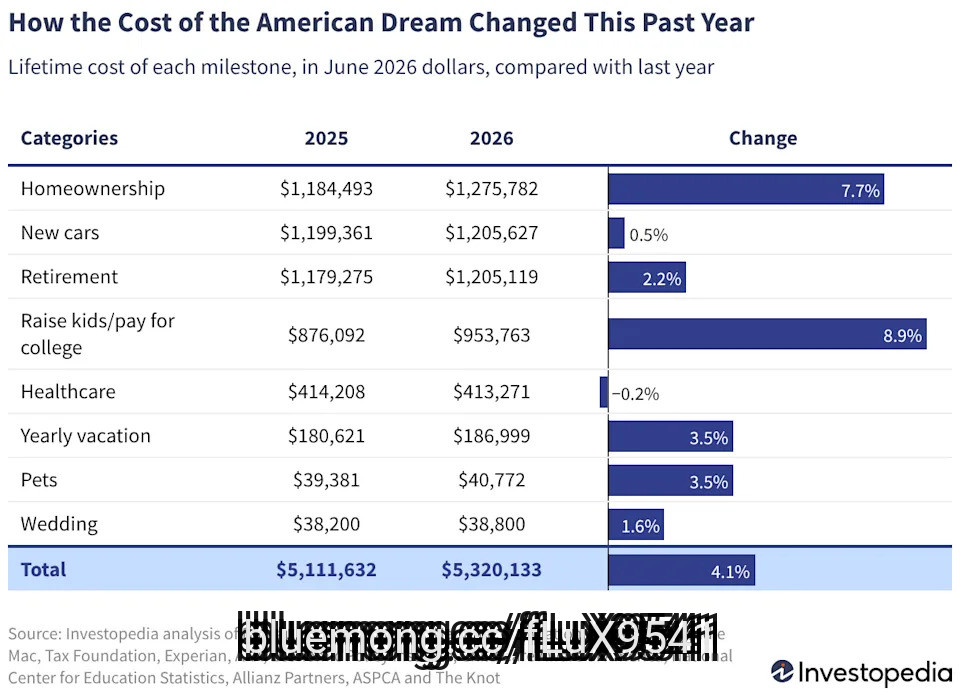
The "American Dream" costs about $5.3 million over a lifetime, up 4.1% from last year's updated total and faster than wages grew.
The costs of owning a house, paying for new cars and retirement expenses make up nearly 70% of the overall total.
Healthcare and car ownership prices were little changed from last year, but up substantially from five years ago.
The cost of the American Dream is rising faster than our paychecks can cover it.
That's according to an Investopedia ***** ysis of eight classic milestones: owning a home, buying new cars, raising two children and sending them to college, retiring, paying for healthcare, having a wedding, owning pets, and taking a yearly vacation. The lifetime tab, $5.3 million, is up 4.1% from a year ago. By comparison, private-sector wages and salaries in the 12 months through June rose 3.1%, according to the Bureau of Labor Statistics' Employment Cost Index.
#dream #last #total



25 days ago
Pfizer (NYSE:PFE) has been a reliable healthcare company to invest in for decades, also providing shareholders with some terrific dividend income along the way. Nowadays, however, it's struggling to attract any investors at all.
While its shares are up over 10% this year, over the past five years, they're still down 35%. Worries about its future growth and the safety of the payout are keeping investors away. Here's why I think that's a mistake, and why it may just be the most underrated dividend stock out there today.
Missed Nvidia in 2009? This Rare Signal Is Flashing Again. In 2009, a "Double Down" signal flashed for a little-known chipmaker called Nvidia. For the first time in years, that same "Total Conviction" signal is flashing for a company 1/100th the size of Nvidia. Continue »
Image source: Getty Images.
Many investors may scoff at stocks that have high yields, out of fear that they simply are too good to be true, and that a cut could be due. But that isn't always the case. In fact, there can be low and modest-yielding stocks that can be riskier. Yield is not always indicative of risk.
#down #company

26 days ago
The issue of Daniel Penny, the center of a New York City vigilante case in which he unintentionally ended the life of Jordan Neely following a subway confrontation, is the focus of a new book. Frequent MS NOW guest Anand Giridharadas is out promoting his work, Man in the Mirror.
His interviews seen during the media promotional tour do not give the impression of an unbiased approach to this topic. Instead of describing core facts and the details that pertain to the confrontation on the New York subway car, Giridharadas delivers what sounds more like a college term paper-level of pontificating.
Sitting with Christiane Amanpour, the Heat Miser-coiffed Anand offers up a theory that Neely, Penny, and others on the subway car were experiencing something that is felt across the country:
Jordan Neely, you know, a mentally ill, homeless man, felt abandoned by the systems of care. Daniel Penny felt abandoned by a lack of police and a lack of law enforcement that forced him, in his mind, to step up and step in. The passengers on that train…spoke of their own sense of abandonment and kind of being left to their own devices. And, Christiane, I think that sense of abandonment, that sense that the cavalry's not coming, the sense that we're on our own, the sense that maybe somebody does something because no one who should be doing anything is doing anything. I believe, Christiane, that is the defining political emotion of this age. It is maybe the most dangerous emotion in a democracy, because it starts to tempt people with the thought that if ******* ody's coming, I must fill the void. In this case, it was Daniel Penny filling a void in a subway in New York.
This is the selling of the concept that we need government in more, if not all, aspects of our lives. If Jordan Neely had been given proper mental healthcare and housing, if there had been police on that train car, if Daniel Penny had not felt abandoned by authorities, this tragedy would not have played out. If every person in the country is cared for by the government, we will have no problems!
#sense #subway #christiane #abandoned

27 days ago
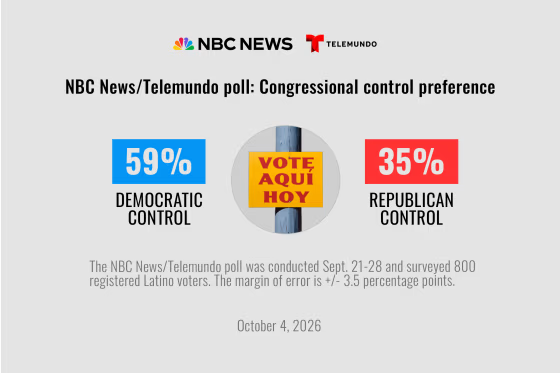
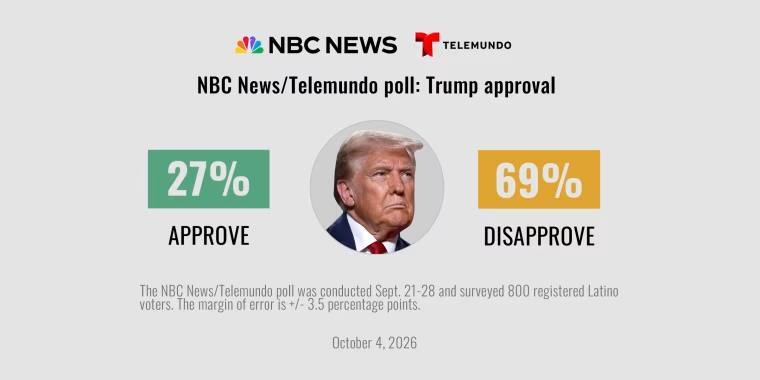
Latino voters helped propel Donald Trump back to the White House. Now, they are turning on him, according to a new NBC News/Telemundo poll — a shift that gives Democrats a major opportunity to capitalize in a 2026 election that could hinge on states and districts with sizable Latino populations.
Like the broader electorate, Latino voters are racked by major concerns about high prices and Trump’s approach to immigration enforcement. The president’s approval rating sits at 27% among Latino voters. Two-thirds say his administration’s deportation policies have gone too far and three-quarters disapprove of how he has handled the economy and the cost of living.
There are clear signs his party is paying the price.
A greater share of Latino voters hold negative views of the Republican Party than at any time since 2016, and Democrats have leads on issues like dealing with the economy, immigration, the cost of living, corruption and healthcare. Two years ago, Latino voters gave Trump a 4-point edge over then-Vice President Kamala Harris on handling the economy. Today, they give Democrats a 21-point advantage on the same question.
Against that backdrop, Democrats have a 24-point lead on whom Latino voters want to see in control of Congress, 59%-35%.
#latino
29 days ago
CNN has obtained newly unsealed police body camera footage showing the arrest of Luigi Mangione inside a McDonald’s in Altoona, Pennsylvania, days after he fatally shot United Healthcare CEO Brian Thompson.
The hours of footage capture officers questioning Mangione at the fast-food restaurant on the morning of December 9, 2024, before he is handcuffed, searched and transported to the police station. The videos show police conducting more thorough searches of Mangione and his belongings at the station, including the moment an officer finds a gun – now known to be the murder weapon – inside his backpack.
This is the first time the videos have been seen outside the courtroom. Some of the footage was played during a dayslong suppression hearing last December, when the defense argued evidence recovered during the arrest should be suppressed because Mangione’s backpack was improperly searched.
#footage #backpack



1 month ago
On August 5, Cencora (NYSE:COR) reported results for its fiscal third quarter, which closed on June 30, and the headline numbers looked clean. Revenue rose 5.1% to $84.8 billion, adjusted earnings per share climbed 12.0% to $4.48, and management raised its full-year adjusted EPS outlook to $17.75 to $17.95. The company also repurchased $1 billion of its own stock during the quarter. But the profit story has moving parts, and a few of them pull in opposite directions.
Start with the gap between profit growth and sales growth. Adjusted operating income rose 17.0% while revenue grew only 5.1%. Much of the help came from gross profit, which jumped 23.2% on an adjusted basis as both segments contributed and the OneOncology acquisition in February lifted margins in the US business. In plain terms, adjusted gross margin widened 61 basis points to 4.16%, so the company keeps more gross profit from every dollar it sells.
The strength was not confined to one corner, either. US Healthcare Solutions grew operating income 15.9% on higher pharmaceutical sales and the OneOncology deal, while specialty volume to health systems and physician groups lifted its revenue. International Healthcare Solutions did better still, with operating income up 20.8% on strength in European distribution and global specialty logistics. Management also put cash to work, completing in one quarter the $1 billion of buybacks it had expected to finish by the close of calendar 2026. The board declared a $0.60 quarterly dividend as well, payable August 31, to holders of record on August 14.
Growth is costing more than it first appears. Adjusted operating expenses jumped 26.8%, faster than adjusted gross profit, because OneOncology brought expenses along with its profits. Even so, adjusted operating income amounts to just 1.46% of revenue, a thin cushion on a business this large. Financing adds weight too. Cencora funded part of the purchase with new senior notes plus variable-rate term loans, and net interest expense rose $58.9 million from a year earlier.
The sales mix carries its own drag. GLP-1 drugs for diabetes and weight loss are adding to revenue, but they earn lower gross margins, so each dollar of that growth is worth less to profit. Meanwhile, an oncology customer Cencora lost in 2025, and lower sales to a large mail order customer both held back US revenue, as did lower manufacturer prices on some brand pharmaceuticals. Cencora is also exploring strategic alternatives for a group of other businesses, and its April divestiture of US Consulting Services trimmed consulting sales.
#adjusted #revenue #august

1 month ago
LifeMD, Inc. (NASDAQ:LFMD) announced an exclusive healthcare collaboration on September 15 that initially makes virtual-health membership benefits available to approximately 29 million eligible AT&T wireless and fiber customers across 11 states. Customers must be 18 or older, and some services have additional eligibility and state restrictions. A nationwide expansion planned for January 2027 would extend eligibility beyond 100 million customers.
The $19 monthly membership fee is waived, but customers must enroll. Visits, prescriptions, and other services remain separately payable. For LifeMD, Inc. (NASDAQ:LFMD), the opportunity is converting access to a large audience into recurring demand for paid care.
The partnership gives LifeMD, Inc. (NASDAQ:LFMD) a distribution channel through the website, mobile app and customer-benefits program of AT&T Inc. (NYSE:T). Reaching customers through an established relationship could reduce reliance on advertising and lower acquisition costs per paying patient.
Removing the membership charge also reduces the financial commitment required to try the service. Announced visit prices start at $29 for message-based care, $49 for urgent and primary care video visits, and $79 for specialty care. Customers may use insurance, Medicare, or discounted cash-pay rates for visits and prescriptions.
LifeMD, Inc. (NASDAQ:LFMD) could benefit from repeat consultations and prescription fulfillment when clinically appropriate. Primary care, chronic-condition management and other services create opportunities for continuing patient relationships. If satisfied patients return, the revenue earned over those relationships could exceed the cost of acquiring and serving them.
#Services


1 month ago
No matter how well you plan for retirement, there are surprises that could throw you for a loop. The stock market might crash unexpectedly. Your healthcare costs might increase. Or, worse yet, you could end up needing long-term care at some point.
But one hiccup you should know to plan for is inflation. Over time, the cost of living is likely to rise. And if you aren't prepared, you could easily end up losing out on buying power. These two adjustments to your retirement plan could help you avoid that fate.
Missed AI's "Act 1"? Act 2 Could Be 15x Bigger. Most investors think they missed the AI boat because they didn't buy Nvidia in 2005. But according to our ******* ysts, we're only at the end of "Act 1"—the R&D phase. "Act 2" is the global rollout. Continue »
It's fairly common for retirees to reduce their stock holdings to minimize risk in their portfolios. But while it's OK to de-risk to some degree, you don't want to dump your stocks completely. Doing so could cause your portfolio to trail inflation, leading you to lose buying power and putting your savings at risk of being depleted.
If you're not comfortable holding individual stocks in retirement, buy shares of an S&P 500 exchange-traded fund (ETF). This effectively gives you exposure to the market. Or load up on dividend ETFs that generate steady income.
#plan #market


1 month ago
Morgan Stanley met privately with Gilead Sciences (GILD) leadership at its 2026 Global Healthcare Conference this month, and the feedback strengthened the bank's positive view on the stock.
Morgan Stanley's biopharma team hosted a meeting and a management dinner with Gilead Chairman and CEO Daniel O'Day and Chief Commercial and Corporate Affairs Officer Johanna Mercier. According to a Morgan Stanley research note shared with me, the discussion reinforced its Overweight rating on Gilead and singled out one franchise as the biggest reason to stay positive.
Gilead trades around $150.89, up about 24% year to date and roughly 111% over five years. That kind of run in a biotech stock usually needs a catalyst, and Morgan Stanley points to HIV prevention. The bigger question for investors now is whether the new HIV prevention business built around Yeztugo can keep growing at the pace of the last few quarters.
Terence Flynn, a Morgan Stanley equity **** yst who covers Gilead and other healthcare stocks has held an Overweight rating on the stock since January 2025.
According to the note, Gilead management described the company as being at "an important inflection point, supported by what it views as the most robust portfolio in the company's history," with no patent expiring until 2036.
#gilead #healthcare #management #note


1 month ago
You've been working for decades and are eagerly anticipating your retirement years, when you'll finally be free to do whatever you want — whether that's travel, golfing, hiking or volunteering.
But while you may be looking forward to ending your worklife, you may not have yet created a strong enough plan. A 2026 study from the Employee Benefit Research Institute, for instance, found that only half of retirees rated their household financial well-being as at least very good, while two in five said healthcare costs have been higher than they expected. Two in five also said their overall spending in retirement was more than they expected.
Jeff Bezos backs a platform that lets anyone invest in rental homes for as little as $100 — 6 ways to build wealth like a landlord without actually being one
Dave Ramsey warns nearly 50% of Americans are making 1 big Social Security mistake. Here's what it is and 3 simple steps to fix it ASAP
The tax breaks in Trump's 'big beautiful bill' expire after 2028. Here are 4 moves to make before the window closes
#bezos


1 month ago
HDV has outpaced VYM by nearly 9 points year-to-date in 2026 while paying a 3.34% yield versus VYM's 2.20%.
HDV's 75-stock tilt toward energy, healthcare, and staples drives its 2026 edge but can lag equally in growth-led markets.
Taxable investors switching from VYM should redirect new contributions into HDV rather than selling lots with large embedded capital gains.
Two retirees, same $1 million, same 4% rule, buy one finished with $1.4 million, the other hit $0 in 12 years. Our free reader guide explains the flaw that separated them, and the income-first method built to avoid it.
If you own the Vanguard High Dividend Yield ETF (NYSEARCA:VYM), you own it for a good reason. VYM tracks the FTSE High Dividend Yield Index, holds roughly 500 above-average payers, and delivers a broad, cheap slice of dividend-paying American stocks. It is one of the most widely held income ETFs on the market, and for buy-and-hold investors who want a diversified basket of yielders without thinking too hard about it, VYM has done its job. But in 2026, VYM is losing ground to a much smaller, more concentrated peer from BlackRock that pays a higher yield and follows a very different rulebook.
#same


1 month ago
Interested in Cardinal Health, Inc.? Here are five stocks we like better.
Cardinal Health expects growth to normalize in fiscal 2027 after fiscal 2026 benefited from unusually strong specialty growth, customer onboarding, acquisitions and solid healthcare utilization. Management said all five operating segments delivered double-digit earnings growth in fiscal 2026.
The company is expanding its specialty and at-home healthcare strategy through MSO platforms, bolt-on acquisitions and diabetes-related deals. Strive Medical has closed, while the AdaptHealth diabetes acquisition is expected to close in the second half of fiscal 2027, strengthening Cardinal's continuous glucose monitoring business.
Cardinal is prioritizing automated, small-parcel distribution of higher-value at-home products and plans to add three more automated distribution centers. Management also said cash flow was strong in fiscal 2026, putting the company about 90% of the way toward its previously announced $10 billion objective.
Cardinal Health Earnings: Can Perfection Get Priced In Twice?
#acquisitions


1 month ago
On August 5, Cencora (NYSE:COR) reported results for its fiscal third quarter, which closed on June 30, and the headline numbers looked clean. Revenue rose 5.1% to $84.8 billion, adjusted earnings per share climbed 12.0% to $4.48, and management raised its full-year adjusted EPS outlook to $17.75 to $17.95. The company also repurchased $1 billion of its own stock during the quarter. But the profit story has moving parts, and a few of them pull in opposite directions.
Start with the gap between profit growth and sales growth. Adjusted operating income rose 17.0% while revenue grew only 5.1%. Much of the help came from gross profit, which jumped 23.2% on an adjusted basis as both segments contributed and the OneOncology acquisition in February lifted margins in the US business. In plain terms, adjusted gross margin widened 61 basis points to 4.16%, so the company keeps more gross profit from every dollar it sells.
The strength was not confined to one corner, either. US Healthcare Solutions grew operating income 15.9% on higher pharmaceutical sales and the OneOncology deal, while specialty volume to health systems and physician groups lifted its revenue. International Healthcare Solutions did better still, with operating income up 20.8% on strength in European distribution and global specialty logistics. Management also put cash to work, completing in one quarter the $1 billion of buybacks it had expected to finish by the close of calendar 2026. The board declared a $0.60 quarterly dividend as well, payable August 31, to holders of record on August 14.
Growth is costing more than it first appears. Adjusted operating expenses jumped 26.8%, faster than adjusted gross profit, because OneOncology brought expenses along with its profits. Even so, adjusted operating income amounts to just 1.46% of revenue, a thin cushion on a business this large. Financing adds weight too. Cencora funded part of the purchase with new senior notes plus variable-rate term loans, and net interest expense rose $58.9 million from a year earlier.
The sales mix carries its own drag. GLP-1 drugs for diabetes and weight loss are adding to revenue, but they earn lower gross margins, so each dollar of that growth is worth less to profit. Meanwhile, an oncology customer Cencora lost in 2025, and lower sales to a large mail order customer both held back US revenue, as did lower manufacturer prices on some brand pharmaceuticals. Cencora is also exploring strategic alternatives for a group of other businesses, and its April divestiture of US Consulting Services trimmed consulting sales.
#profit #operating #Growth #august


1 month ago
Interested in HCA Healthcare, Inc.? Here are five stocks we like better.
Exchange-related pressure is weighing on HCA's 2026 outlook: The expiration of enhanced tax credits is pushing some patients into uninsured status, with estimated full-year impact of $1 billion to $1.2 billion and slower elective-care utilization.
State supplemental payments and underlying demand provide offsets: HCA expects a $300 million to $500 million net benefit from state programs, while insured business excluding exchange plans grew 3.2% and adjusted admissions increased 2.7% in the second quarter.
HCA is pursuing long-term growth through capacity and efficiency investments: The company is expanding outpatient facilities, improving patient throughput and cost management, and maintaining a target of 4% to 6% long-term revenue growth with stable margins.
Healthcare Added 35,200 Jobs—3 Stocks Positioned to Benefit
#healthcare #Growth


1 month ago
When planning for retirement, most people account for housing, travel, daily living expenses and general healthcare costs. However, it's easy to overlook one retirement expense: the Income-Related Monthly Adjustment Amount, commonly known as IRMAA.
If you have a large pension, substantial tax-deferred retirement accounts, or other variables that may elevate your retirement income, IRMAA is a factor you may encounter starting in your mid-60s. While it is unlikely to derail a well-constructed financial plan, failing to understand IRMAA and how to plan ahead for it can lead to frustrating annual surprises.
In the United States, most adults become eligible for Medicare when they turn 65. Medicare is divided into several parts, but IRMAA specifically applies to two of them: Part B (which covers doctor visits, outpatient care and preventive services) and Part D (prescription drug coverage).
For the average retiree, Medicare Part B carries a standard monthly base premium ($202.90 per month in 2026). Part D coverage varies depending on the specific private plan selected, but carries a national average base premium of roughly $38.99 per month. Combined, a standard retiree pays roughly $242 per month for basic Part B and Part D coverage, per Medicare.
However, Medicare premiums are not one-size-fits-all. If your income exceeds specific threshold limits set by the federal government, you will be required to pay an additional surcharge on top of your base monthly premiums. That additional surcharge is IRMAA.
#income #base


1 month ago
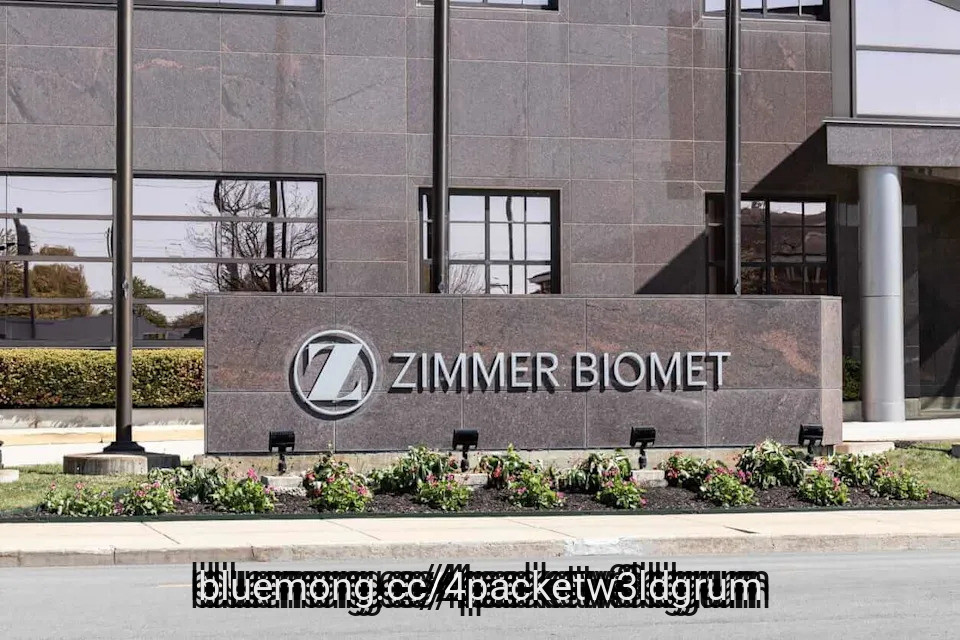
With a market cap of $18.8 billion, Zimmer Biomet Holdings, Inc. (ZBH) is a global medical technology company specializing in musculoskeletal healthcare solutions. The company designs, manufactures, and markets products ranging from orthopedic reconstructive implants to sports medicine, spine, craniomaxillofacial, and thoracic solutions.
Companies worth more than $10 billion are generally labeled as "large-cap" stocks and Zimmer Biomet fits this criterion perfectly. Its innovations support surgeons and healthcare providers worldwide in treating disorders and injuries of bones, joints, and soft tissues.
Billionaire Charlie Munger, Who Died at 99, Skipped Insurance on His Mansion Since He Could Just Write a Check to Rebuild — 'All Intelligent People Do It My Way'
Why It's Time to Load Up on Nvidia Stock
The Case for Selling CrowdStrike Stock
#Stock



1 month ago
On September 15, CareTrust REIT (NYSE:CTRE) announced it had closed on a $400 million skilled nursing portfolio in the Southwest, effective September 1, and unveiled a reloaded $600 million investment pipeline behind it. The deal covers 2,622 licensed beds triple net leased back to the existing operator, sourced off-market and structured through a joint venture that put roughly $380 million of CareTrust's own capital to work. It is the latest entry in a buying spree that has now pushed the company's 2026 investment total past $1.9 billion.
The new portfolio is expected to generate a stabilized yield of about 8.6%, in line with the 8.7% blended yield CareTrust has posted across two dozen deals closed so far in 2026. That consistency matters more than any single transaction. The company has now closed roughly $710 million in investments in the third quarter alone, including a small UK care home purchase in mid-August, on top of the $899.6 million it closed in the second quarter at an 8.9% yield.
Management says the $600 million pipeline of near-term, actionable deals, about half of it aimed at the senior housing operating portfolio, does not even include a set of larger transactions still being pursued, so the deal flow may not be finished. The balance sheet backs up that ambition. CareTrust ended the second quarter, on June 30, 2026, with net debt to annualized normalized EBITDA of just 1.01x, and as of the September announcement it still had $725 million available under its revolver plus $612 million of remaining ATM capacity. That combination let the company raise its full year 2026 guidance on August 6 to normalized FFO of $2.03 to $2.06 per share, an increase of 16.2% at the midpoint over 2025, even before this latest acquisition was on the books.
This growth has come with a real cost to existing shareholders. Diluted weighted average shares outstanding rose from about 192.9 million in the second quarter of 2025 to 234.2 million a year later, as CareTrust leaned on forward equity offerings and its ATM program to fund the buying spree. The company still had $439 million of expected net proceeds sitting in unsettled forward equity contracts as of September 15, meaning more shares are still coming.
The second quarter also carried a $4.7 million provision for loan losses, a line that did not appear in the prior year period and is worth watching as the loan and financing receivable book grows alongside the property portfolio. Interest expense rose to $15.3 million in the quarter from $13.0 million a year earlier, and 2026 guidance leans on rent escalators of just 2.5% a year, a modest built-in growth rate once the acquisition pace eventually slows. The company's own risk disclosures flag reliance on tenants to keep meeting their lease obligations, along with exposure to healthcare reform, staffing requirements, and currency swings tied to its UK operations.
#still

1 month ago
Avantor (AVTR) exhibits strong technical momentum, recently setting a new year-to-date high.
Shares are up more than 22% over the past year.
AVTR maintains a 100% "Buy" technical opinion from Barchart.
Most ******* ysts see AVTR as undervalued, but I recommend a tight stop loss given its volatility and only moderate fundamental outlook.
Valued at $10.44 billion, Avantor (AVTR) is a provider of critical products and services primarily to the biopharma, healthcare, education, government, advanced technologies, and applied materials industries.
#avantor #year #exhibits


1 month ago
Alluvium ******* et Management, an ******* et management company, released its "Conventum – Alluvium Global Fund" second-quarter 2026 investor letter. The letter can be downloaded here. The second quarter reflected a sharp shift from geopolitical uncertainty and oil market volatility to a powerful equity rally led by semiconductor companies. Despite the broader market strength, the Fund declined 1.4% in EUR terms, 2.2% in USD terms, and 3.9% in AUD terms. Portfolio results were mixed, with Alphabet benefiting from strong Cloud growth, while Robert Half, H&R Block, and other holdings posted solid gains. However, cable businesses and several healthcare and consumer holdings weighed on performance. Also, check the fund's top five holdings to see its best picks in 2026.
In its second-quarter 2026 investor letter, Conventum – Alluvium Global Fund highlighted McKesson Corporation (NYSE:MCK). McKesson Corporation (NYSE:MCK) is a leading healthcare services company headquartered in Irving, Texas. On September 15, 2026, McKesson Corporation (NYSE:MCK) closed at $899.56 per share. Over the past month. McKesson Corporation (NYSE:MCK) returned 5.37% and its shares gained 29.95% over the past 52 weeks. McKesson Corporation (NYSE:MCK) has a market capitalization of $106.21 billion, and its stock has traded with a range of $687.68 and $999.00.
Conventum – Alluvium Global Fund stated the following regarding McKesson Corporation (NYSE:MCK) in its Q2 2026 investor letter:
"Our two healthcare companies had a poor quarter (in terms of share price performance, not business fundamentals). McKesson Corporation (NYSE:MCK), the drug distributor (down 12.6%), reported its full year results which were perfectly in-line with our expectations. Management provided strong guidance for its next year's earnings, and reiterated its 13%-16% long term growth expectations. After feeding the numbers through our model, our valuation increased by 18%, and with the share price trading below it, we bought a little more such that it accounts for 6.8% of the Fund."
McKesson Corporation (NYSE:MCK) is not on our list of the 40 Most Popular Stocks Among Hedge Funds. As per our database, 77 hedge fund portfolios held McKesson Corporation (NYSE:MCK) at the end of the second quarter which was 73 in the previous quarter. While we acknowledge the potential of McKesson Corporation (NYSE:MCK) as an investment, we believe certain AI stocks offer greater upside potential and carry less downside risk. If you're looking for an extremely undervalued AI stock that also stands to benefit significantly from Trump-era tariffs and the onshoring trend, see our free report on the best short-term AI stock.
#mckesson #alluvium #global


1 month ago
Welltower and Ventas posted SHOP NOI growth of 20.5% and 16.3%, respectively, as senior occupancy rates climb and new supply starts remain at record lows.
Roughly 2 million people turn 80 in 2026, and Ventas CEO Debra Cafaro says the senior population growth rate will more than double over the next decade.
OHI's 5.68% yield carries real tenant risk: Genesis Healthcare is in Chapter 11 with $148 million in loans outstanding and the CEO is retiring.
Just released. Our **** ysts combed the entire stock market and named the ten best stocks to buy right now, and Welltower didn't make the cut. Enter your email to see the names that beat WELL. The report is free. Enter your email and see if any of your stocks made the cut.
Senior housing and skilled nursing REITs are riding a demographic tide that shows up in the operating data. Roughly two million people will turn 80 in 2026 alone, and Ventas Chair and CEO Debra A. Cafaro told investors that "the leading edge of the nearly 70 million baby boomers has just begun turning 80 this year, ushering in a decade where the growth rate of the senior population more than doubles, yet new starts remain at record lows." Four US-listed equity REITs sit squarely in that trade. Dividend safety leads the **** ysis, so every payout is measured against FFO or AFFO, not GAAP earnings.
#ventas #welltower

1 month ago
Oscar Health (OSCR) raised its full-year earnings outlook while lowering its expected medical costs to cover benefits for its nearly 3 million Affordable Care Act exchange members. OSCR stock climbed in early Wednesday stock market action ahead of its 9 a.m. ET investor conference.
Oscar, which made an aggressive play to gain ACA market share, has seen enrollment surge 47% from a year ago as of June 30, even as overall enrollment has plunged due to the expiration of enhanced premium subsidies. As of now, it looks like the bet is paying off in a big way, with shares up 126% this year through Tuesday. But it's still a bit early to know, because Oscar's earnings depend not only on its own members' costs, but also those of other ACA insurers.
The ACA's No. 2 insurer by membership behind Centene (CNC) said that it now expects its medical loss ratio, or benefit costs as a share of premiums, to be in the 81% to 82% range, down from the prior outlook of 81.5% to 82.5%.
Oscar boosted its outlook for earnings from operations by $100 million at both ends to a range of $600 million to $800 million. The unchanged revenue outlook, between $18.7 billion and $19 billion, implies that no additional customer churn is expected.
Here is what investors should keep in mind. Compared to the overall ACA risk pool, Oscar's enrollment is relatively young, healthy and more likely to sign up for very-high-deductible bronze plans. Yet based on its relatively healthy risk pool, Oscar expects about 20% of its premiums will be paid out via risk adjustment to other carriers under ACA rules. That means results in the second half of this year depend to a large degree on the level of healthcare utilization by non-Oscar members. As of now, it's a bit early to tell, since healthcare spending tends to rise as the year progresses and insured members exhaust their deductibles.
#oscar #year

1 month ago
Alluvium **** et Management, an **** et management company, released its "Conventum – Alluvium Global Fund" second-quarter 2026 investor letter. The letter can be downloaded here. The second quarter reflected a sharp shift from geopolitical uncertainty and oil market volatility to a powerful equity rally led by semiconductor companies. Despite the broader market strength, the Fund declined 1.4% in EUR terms, 2.2% in USD terms, and 3.9% in AUD terms. Portfolio results were mixed, with Alphabet benefiting from strong Cloud growth, while Robert Half, H&R Block and other holdings posted solid gains. However, cable businesses and several healthcare and consumer holdings weighed on performance. Also, check the fund's top five holdings to see its best picks in 2026.
In its second-quarter 2026 investor letter, Conventum – Alluvium Global Fund highlighted Alphabet Inc. (NASDAQ:GOOG). Alphabet Inc. (NASDAQ:GOOG), the parent company of Google, offers various platforms and services, including online search and advertising, cloud solutions, and artificial intelligence. On September 15, 2026, Alphabet Inc. (NASDAQ:GOOG) closed at $341.43 per share, reflecting a market capitalization of $4.2 trillion. Alphabet Inc. (NASDAQ:GOOG) posted a one-month return of -0.08%, while its shares gained 36.65% over the past 52 weeks.
Conventum – Alluvium Global Fund stated the following regarding Alphabet Inc. (NASDAQ:GOOG) in its Q2 2026 investor letter:
"Alphabet Inc. (NASDAQ:GOOG) was the Fund's strongest performer over the quarter, up 24.4%. There's little to add from our last report, except that its 22% revenue growth exceeded our expectations, and it seems it can't keep up with demand, hence it has increased, yet again (and somewhat worryingly) its capital expenditure to budget (to USD 190b) and expects further increases next year."
Alphabet Inc. (NASDAQ:GOOG) ranks 7th on our list of 40 Most Popular Stocks Among Hedge Funds. As per our database, 195 hedge fund portfolios held Alphabet Inc. (NASDAQ:GOOG) at the end of the second quarter, which was 201 in the previous quarter. While we acknowledge the potential of Alphabet Inc. (NASDAQ:GOOG) as an investment, we believe certain AI stocks offer greater upside potential and carry less downside risk. If you're looking for an extremely undervalued AI stock that also stands to benefit significantly from Trump-era tariffs and the onshoring trend, see our free report on the best short-term AI stock.
#alphabet #NASDAQ #quarter #conventum