

23 days ago
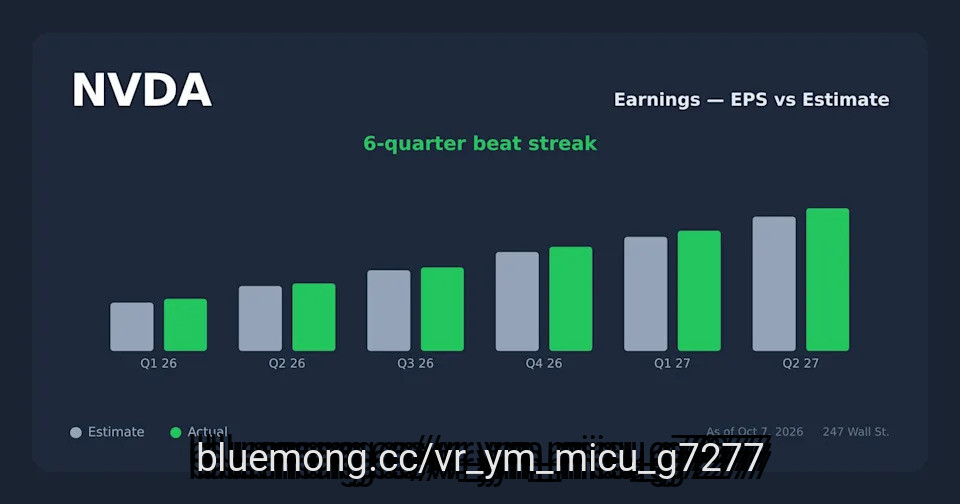
NVDA and AAPL join MSFT to control 21% of the S&P 500, nearly double the prior three-stock record of 13% set in the 1980s.
SPY investors who also hold NVDA, AAPL, or MSFT directly are doubling up; TOPC caps each position at 3% as a concentration alternative.
Only 25% of S&P 500 stocks trade above their 50-day moving average, meaning the index's record high rests on historically thin participation.
Read More: Learn 7 ways to generate income with a $1,000,000+ portfolio (sponsor)
At the close on October 6, 2026, the S&P 500 finished at a record 7,818.93, up 0.58%. Three companies now account for an unusually large share of that level.
#nvda

1 month ago
Centrus Energy Corp. (NYSE:LEU) reported on September 17 that it had signed a multi-year contract to supply high-assay low-enriched uranium (HALEU) to Antares Nuclear, with deliveries expected to begin before the end of the decade. Although financial terms were not disclosed, the deal includes prepayments from Antares to help fund Centrus' expanded HALEU capacity.
The deal holds strategic importance as Antares is developing compact microreactors for critical missions on Earth and in ***** e. The company was also recently selected for the U.S. Army's Janus Program, a $2.2 billion initiative to build and operate tiny nuclear reactors on military bases, with the hope that they will one day power remote installations.
Amir Vexler, President and CEO of Centrus Energy, commented:
"This contract is another sign that demand for HALEU is real and it is accelerating, and Centrus is in prime position to meet this need. Binding orders from Antares and others are supporting our expansion to commercial-scale production – an expansion that is now well underway. We look forward to supporting Antares' continued growth and success."
dan-meyers-xXbQIrWH2_A-unsplash
#centrus #haleu

1 month ago
Warren Buffett began buying shares of Berkshire Hathaway (NYSE:BRKA)(NYSE:BRKB) in 1962. He took complete control in 1965.
In the decades to come, Buffett led Berkshire on a truly historic run. The stock averaged 19.7% annual returns -- roughly double what the S&P 500 Index garnered over the same time period.
Missed AI's "Act 1"? Act 2 Could Be 15x Bigger. Most investors think they missed the AI boat because they didn't buy Nvidia in 2005. But according to our ***** ysts, we're only at the end of "Act 1"—the R&D phase. "Act 2" is the global rollout. Continue »
At the end of last year, Buffett relinquished his role as CEO. Greg Abel took the reigns at the start of 2026. Now, Buffett is stepping down as Chairman of the board. Though, he is retaining a position as Director, as well as the ***** le of Chairman Emeritus.
"Father Time always wins," Buffett explained in a letter to investors. "He has, however, been generous with me. He has given me the opportunity to see Berkshire reach a point where I am more confident than ever about what lies ahead."
#chairman

1 month ago
On September 15, Arthur J. Gallagher & Co. (NYSE:AJG) announced that it had bought McMillan Insurance & Bonding Inc., an Englewood, Colorado, firm that operates as Innovise Business Consultants. Gallagher did not say what it paid. On its own, the deal is a footnote. But it is one of many, and the way those deals show up in earnings is where the debate over this stock really lives.
On July 30, Gallagher reported results for the quarter ended June 30, and the top line was hard to argue with. Revenue from its combined Brokerage and Risk Management businesses grew 24%, and organic growth, which leaves out acquisitions, was 6%. That second number shows clients are staying and spending. It was not confined to one corner, either, since organic fees in the risk management arm rose 12%. Management adds that retention is strong and customers want broader help from the platform. Adjusted earnings per share climbed to $2.84 from $2.30, which means growth is reaching profit once one-time acquisition costs are set aside.
Innovise fits the pattern. It sells surety bonds and commercial insurance brokerage with a focus on manufacturing, energy, construction and real estate, and Chairman and CEO J. Patrick Gallagher, Jr. said that niche expertise adds depth in Colorado. Jason McMillan's team will move into Gallagher's Denver office and work under Bret VanderVoort, who oversees retail property/casualty brokerage for the Western Zone. Buying specialists and folding them into existing offices is a repeatable playbook, and Gallagher closed 14 brokerage acquisitions in the first six months of 2026.
Now look at reported earnings, because that is where you see the cost. Diluted earnings per share fell to $1.25, from $1.40 in the second quarter of 2025, even though revenue jumped. Much of the gap between reported and adjusted results is the price of buying growth. Amortization of acquired intangibles alone weighs on brokerage net earnings by $218 million, up from $130 million a year ago, and integration costs rose as well. Adjusted figures set those aside, but they are real expenses, and they keep landing as long as Gallagher keeps buying.
Margins tell a similar story. The brokerage segment's adjusted EBITDAC margin, a stand-in for operating profit, slipped to 33.3% from 36.1%. Gallagher points to last year's interest income on cash raised for the ***** uredPartners deal, which closed in the third quarter of 2025, plus seasonality and newly added tuck-ins. That is a fair explanation. But the debt behind the deal is still here, including $9.55 billion of public debt, plus more in private placements and on a credit line. And the deal flow is thinner: brokerage acquisitions closed in the first six months of 2026 carried $107 million of annualized revenue, versus $354 million a year earlier, which puts more weight on organic growth.
#Growth

1 month ago
Ascendis Pharma A/S (NASDAQ:ASND) announced on September 14 that it will regain exclusive rights to develop, manufacture, and commercialize TransCon products in metabolic and cardiovascular diseases following the termination of its collaboration with Novo Nordisk A/S (NYSE:NVO).
The rights include once-monthly TransCon Semaglutide, an investigational long-acting prodrug of semaglutide intended for obesity and type 2 diabetes. Neither party will have continuing financial obligations to the other. Once termination becomes effective and the rights revert, management plans to initiate multiple programs across rare and large indications.
The investment question is whether greater control over future products can justify the resources needed to develop them.
Ascendis Pharma A/S (NASDAQ:ASND) would regain flexibility over which indications to pursue, how quickly to advance candidates, and whether to seek another partner. Successful independent development could retain more of a product's commercial economics, while a new collaboration could provide another way to share costs and risk.
Monthly dosing offers a clear development objective. If clinical studies demonstrate effective treatment with acceptable tolerability, fewer injections could make long-term therapy more convenient. That potential benefit would matter most if it helps patients stay on treatment without sacrificing outcomes.
#ascendis #pharma #asnd #regain


1 month ago
The choice between established ****** ans and digital-first challengers defines many modern portfolios. In the financial realm, investors must decide if JPMorgan Chase (NYSE:JPM) or SoFi Technologies (NASDAQ:SOFI) is the better buy for long-term growth.
JPMorgan Chase operates as a global financial heavyweight, offering everything from wealth management to retail branches. Conversely, SoFi Technologies focuses on an integrated mobile app to help members borrow, save, and invest. While one relies on massive scale, the other bets on fintech innovation to capture a younger, tech-savvy demographic.
JPMorgan Chase functions as a cornerstone of the global economy, managing a vast array of services including ****** et management and investment banking. In its latest annual report, filed for 2025, the firm highlighted its reach through more than 5,000 branches across the 48 contiguous states. It serves a diverse client base ranging from individual consumers and small businesses to large corporations and governments. The firm provides a comprehensive range of financial services, including transaction processing and commercial banking on a global scale.
Financial performance remained robust in FY 2025, with revenue reaching nearly $182.4 billion. This represented a growth rate of approximately 3.3% compared to the previous year, contributing to a net income of close to $57.0 billion. The net margin, which measures the percentage of revenue kept as profit after all expenses, sat at roughly 20.4% for the period. This consistent profitability underscores the scale of its operations across diverse global markets.
As of its December 2025 balance sheet, the firm reported a debt-to-equity ratio of nearly 2.6x. This ratio measures total debt against shareholder equity, with a higher number indicating more reliance on borrowed funds to finance growth. The current ratio, which compares short-term ****** ets to short-term liabilities, was approximately 0.5x, while free cash flow reached a negative $147.8 billion. Free cash flow is the cash a company generates after accounting for cash outflows to support operations and maintain its capital ****** ets.
#sofi #global #term

1 month ago
Investor Cathie Wood has sold a number of cryptocurrency stocks over the past week as their share prices have rallied.
Wood's firm Ark Invest sold shares of Coinbase Global (NASDAQ: $COIN), Circle (NYSE: $CRCL), Bullish (NYSE: $BLSH), and Bitmine (NYSE: $BMNR) as the stocks rose.
The firm's latest trade disclosure showed that it sold $7 million U.S. of Coinbase stock and $13.8 million U.S. of Circle Internet Group's stock.
More From Cryptoprowl:
MEXC Launches Earn Plus With Limited-Time Event Offering Up to 800% APR Booster
#NYSE #million
2 months ago
Intel's 7% drop and AMD's 6% slide outpace NVIDIA's 3% pullback, an order that is the reverse of AI exposure ranking, suggesting a positioning unwind rather than a demand shift.
SOXX falling 6% against QQQ's 2% drop confirms the sell-off is chip-specific, not a broad Nasdaq retreat.
Amodei explicitly ruled out halting AI training, and Anthropic itself committed to deploying AMD's MI450 GPUs in a disclosed partnership.
Just released. Our **** ysts combed the entire stock market and named the ten best stocks to buy right now, and NVIDIA made the cut. Enter your email to see the other nine names and why NVDA earned its spot. The report is free. Enter your email and see the full list.
Chip stocks are sliding in early Monday trading after an AI pacing appeal over the weekend rippled beyond memory suppliers and into logic and accelerator names. Intel (NASDAQ:INTC) stock is falling 7% to $95.96, AMD (NASDAQ:AMD) stock is down 6% to $486.80, and NVIDIA (NASDAQ:NVDA) stock is declining 3% to $212.50. Intel is falling hardest of the three, NVIDIA is falling the least, and AMD sits in the middle, an ordering that runs opposite to each name's exposure to AI accelerator demand.
#nvda

2 months ago
Reuters reported that McKesson Corporation (NYSE:MCK) said it would buy privately held Precision Medicine Group in a deal valued at about $2.25 billion as part of a "years-long effort to strengthen its higher-growth businesses."
McKesson has been reshaping its portfolio by exiting non-core **** ets and streamlining its operations while investing in businesses such as oncology and specialty care. Precision Medicine Group, based in Bethesda, Maryland, provides clinical research, laboratory testing, and commercialization services that help biopharma companies develop and launch new medicines. It will become part of McKesson's Oncology & Multispecialty segment once the deal closes, though McKesson gave no completion timeline. CEO Brian Tyler said the acquisition would "enhance our clinical research and commercialization services, strengthen clinical trial execution, and broaden our clinical service offerings."
The deal fits neatly into a growth strategy McKesson Corporation (NYSE:MCK) has already been executing, not a scattershot bet. The company has spent recent years exiting non-core **** ets while specifically building out oncology and specialty care. It means this acquisition extends a strategy management has already proven willing to follow through on.
McKesson is adding Precision Medicine to its strongest-performing division rather than using the acquisition to revive a struggling business. Revenue in the Oncology & Multispecialty segment jumped 33% to $14.2 billion in the first quarter of fiscal 2026, while JP Morgan **** yst Lisa Gill said the acquisition will likely strengthen McKesson's biopharma offerings.
The purchase reflects disciplined capital recycling, not new debt-fueled expansion. McKesson said in April it would sell a minority stake in its medical-surgical solutions business to Apollo Funds for $1.25 billion while pursuing an IPO for that unit, showing the company is actively shedding slower-growth **** ets to help fund investments like this one.
#medicine #acquisition #deal

2 months ago
On August 4, Qualys Inc. (NASDAQ:QLYS) reported second-quarter revenue of $182.2 million, up 11% from a year earlier, and used the moment to raise its own bar for the rest of 2026. A company that was already growing at a healthy clip just told Wall Street it expects to grow even more than it previously promised, and it backed that up with a jump in cash generation that outpaced revenue by a wide margin.
Qualys grew revenue from $164.1 million to $182.2 million year over year, and the profit line grew even faster. GAAP operating income rose 20% to $61.9 million, pushing the operating margin to 34% from 31% a year earlier. Non-GAAP operating income climbed 16% to $81.4 million, a 45% margin compared to 43% in the same period last year. Adjusted EBITDA rose 14% to $83.8 million, a 46% margin. Operating cash flow told the sharpest story of the quarter, jumping 77% to $59.6 million from $33.8 million, which lifted cash flow as a share of revenue to 33% from 21%.
On the back of that quarter, Qualys raised its full-year revenue guidance to a range of $732.0 million to $738.0 million, up from a prior range of $721.0 million to $727.0 million. Full-year non-GAAP earnings per share guidance moved up to $7.74 to $7.88, from $7.44 to $7.65, and GAAP earnings per share guidance rose to $5.76 to $5.90. The company also pointed to expanding platform reach during the quarter, including a FedRAMP High Authorization for its TotalCloud solution, sponsored by the US Drug Enforcement Administration, which brings cloud-native application protection capabilities onto the FedRAMP Marketplace for federal and other regulated customers.
The guidance raise came with a smaller growth number attached. Third quarter revenue guidance of $185.5 million to $187.5 million implies growth of 9% to 10%, down from the 11% Qualys just posted, and the full-year guidance range of 9% to 10% growth points the same direction. The gap between GAAP and non-GAAP results also widened this quarter, with GAAP net income of $52.4 million sitting well below the $69.2 million non-GAAP figure, a distance driven by adjustments that GAAP accounting does not recognize.
Qualys leaned on a busy stretch of announcements to make its case for the next leg of growth, including a Converge partnership tied to cyber insurance discounts, four international ROCon customer conferences, and Frost & Sullivan recognition in cloud and application runtime security. Those are the kinds of announcements that build a longer-term pipeline rather than move the needle immediately, and the guidance itself suggests management is not pricing in an acceleration from here.
#qualys #Margin

2 months ago
Sands Capital, an investment management company, released its "Sands Capital Select Growth Fund" Q2 2026 investor letter. The letter can be downloaded here. Select Growth Fund targets U.S. businesses driving significant structural change through disruptive innovation. The fund returned 23.2% in the quarter, outperforming the Russell 1000 Growth Index's 16.7%. U.S. large-cap growth equities rebounded sharply, driven by improving corporate fundamentals and renewed investor confidence in AI, despite geopolitical uncertainties. However, the market's gains were narrow, concentrated among AI beneficiaries. The portfolio's success stemmed from strength in AI infrastructure holdings, especially memory and storage, supported by better pricing and tightening supply. As AI development advances, continuous demand for compute capacity is expected, prompting investments in memory, CPUs, AI chips, and semiconductor manufacturing to address emerging bottlenecks essential for scaling AI. Also, check the fund's top five holdings to see its best picks in 2026.
In its second-quarter 2026 investor letter, Sands Capital Select Growth Fund highlighted Shopify Inc. (NASDAQ:SHOP). Shopify Inc. (NASDAQ:SHOP), a Canada-based e-commerce technology company that provides a cloud-based platform for individuals and companies to create and manage their operations, detracted from performance in the quarter. On September 01, 2026, Shopify Inc. (NASDAQ:SHOP) closed at $139.82 per share. Over the past month, Shopify Inc. (NASDAQ:SHOP) declined 3.06%, and its shares are down 0.29% over the past year. Shopify Inc. (NASDAQ:SHOP) has a market capitalization of $181.44 billion, and its stock has traded within a 52-week range of $94.00 to $182.19.
Sands Capital Select Growth Fund stated the following regarding Shopify Inc. (NASDAQ:SHOP) in its Q2 2026 investor letter:
"Shopify Inc. (NASDAQ:SHOP) is a leading global ecommerce platform enabling the next generation of retail. Shares declined as concerns around AI-related expenses and forward guidance overshadowed strong quarterly results. Revenue grew 32 percent, the company's fastest growth rate since 2021, supported by strength in North America and higher payments penetration. Investors focused on rising LLM costs ***** ociated with Sidekick, Shopify's AI ***** istant, and second-quarter guidance that implied sequential deceleration. In our view, these concerns are manageable. Shopify is embedding AI into its platform to improve merchant productivity, product discovery, conversion, and win rates, creating potential latent pricing power over time. Early traction is encouraging, with Sidekick usage up 400 percent and Campaigns usage up 300 percent year over year. We maintain conviction in Shopify's long-term growth, supported by enterprise adoption, international expansion, rising take rate, and AI-driven discovery and product enhancements."
#shop

2 months ago
Some offers on this page are from advertisers who pay us, which may affect which products we write about, but not our recommendations. See our Advertiser Disclosure.
For many renters, their monthly rent payment is the biggest recurring expense. If you have a rewards credit card or are struggling to keep up with your basic needs, you may wonder if you can use your credit card to pay your landlord.
While it's technically possible to pay rent with a credit card, it's important to understand the potential pitfalls and the right way to do it. Here's what you need to know.
Yes, it's possible to pay rent with a credit card. You may have a few different options, depending on your situation.
Some landlords and property managers use a payment system that allows tenants to pay with a credit card. Unfortunately, many of these services charge a convenience fee, which typically ranges from 2% to 3% of the payment amount but can be higher.
#card #possible






2 months ago
Companies worried for years about whether an employee's password had been stolen.
Now they have to worry about AI "workers," too.
Okta (OKTA) reported fiscal second-quarter revenue of $805 million, up 11%, while subscription revenue reached $793 million, up 12%. Remaining performance obligations increased 17% to nearly $4.86 billion.
The company boosted its yearly outlook as organizations increasingly face a category of identity that was virtually nonexistent in mainstream commercial IT only a few years ago: autonomous AI agents.
"Every agent needs a trusted identity and clear controls over what it can access and do," CEO Todd McKinnon said.
#okta #million #identity #remaining

2 months ago
Our ****** ysts just identified a stock with the potential to be the next Nvidia. Tell us how you invest and we'll show you why it's our #1 pick. Tap here.
Indians sold 50 tons of old gold jewelry for cash last quarter. That's a 43% jump from the same period last year for a population that loves ****** ding gold. What changed? Prices.
Indian families are rushing to lock in their gains by selling old jewelry for cash. But here's the twist: Indian gold buyers also spent about $20.75 billion, up nearly 50% from last year.
The logic is straightforward: A gold chain bought years ago at, say, $314-419 per 10 grams is suddenly "worth" 4-5x that at the price peak. Suddenly, the gold that felt like a permanent family ****** et starts looking more like an investment position with a visible, bankable profit.
Usually when this happens, people trade old jewelry for new, but this time they opted for cash.
#jewelry

2 months ago
Langdon Partners' Q2 2026 investor letter for the Langdon Global Smaller Companies Strategy revealed a 9.4% return, lagging behind the MSCI World Small Cap Net Index's 17.0% gain, with a year-to-date return of -10.7% versus the index's 35.3%. A copy of the letter can be downloaded here. Despite the improvement, the seven-percentage point lag behind the benchmark is considered disappointing, and year-to-date performance is still below long-term expectations. The market sends signals through share prices, where rising prices indicate improvement and falling prices suggest decline. However, blindly following these signals can be misleading. The portfolio's performance reflected this, with technology lagging and consumer discretionary stocks performing well. The quarter emphasized that market expectations can shift quickly, demanding careful ***** sment of a business's long-term earning potential. Also, check the fund's top five holdings to see its best picks in 2026.
In its Q2 2026 investor letter, Langdon Global Smaller Companies Strategy highlighted Miami International Holdings, Inc. (NYSE:MIAX). Miami International Holdings, Inc. (NYSE:MIAX) is a financial services company that builds and operates various financial marketplaces in the United States. On August 26, 2026, Miami International Holdings, Inc. (NYSE:MIAX) closed at $43.39 per share, reflecting a market capitalization of $4.30 billion. Miami International Holdings, Inc. (NYSE:MIAX) posted a one‑month return of -5.67%, while its shares gained 22.26% over the past 52 weeks.
Langdon Global Smaller Companies Strategy stated the following regarding Miami International Holdings, Inc. (NYSE:MIAX) in its Q2 2026 investor letter:
"We initiated a position in Miami International Holdings, Inc. (NYSE:MIAX) during the second quarter. MIAX operates electronic exchanges across several areas of the U.S. financial markets. Exchange businesses can possess attractive characteristics, including transaction-based revenue, operating leverage and network effects that may strengthen as liquidity and participation grow. Our interest in MIAX rests on the combination of its existing position in U.S. listed options, its proprietary technology infrastructure and its ability to introduce new products across a broader derivatives platform.
The company has continued to gain share in certain markets while investing in new products and partnerships. Because much of its technology and operating infrastructure is already in place, higher trading volumes may support attractive incremental margins over time. That potential is meaningful but not ***** ured. Exchange operators face substantial competitive, regulatory and execution risks. Their economics can also be affected by trading activity, pricing, market structure and the actions of large incumbents..." (Click here to read the full text)
#holdings #global #smaller

2 months ago
Consensus has the earnings arriving, and the multiple falling, yet the scenario that follows leaves a holder within a few percent of today's price unless the market goes on paying a richer forward multiple than it does today.
Cisco Systems (CSCO) trades at about $111 a share, roughly 30 times the last twelve months of normalized earnings. That is a demanding price for a networking company; the defense is that the earnings ***** ysts expect will grow into it. They would. What that is worth to a holder is the smaller answer.
Thirty Times Today, Twenty Times On Fiscal 2028 Earnings
Today's price is about 21.5 times the earnings ***** ysts expect for fiscal 2027, and about 20.0 times what they expect for fiscal 2028, a multiple 34% lower than the trailing one. That drop is not an earnings growth rate: the trailing figure is normalized net income with stock-based compensation added back, a basis not defined identically to the ***** ysts' own adjusted earnings, so the two multiples are not a like-for-like series. Consensus for fiscal 2027, about $5.13 a share on the ***** ysts' adjusted basis, is barely ahead of the $5.05 to $5.11 non-GAAP range management guided.
Margins Have To Hold While The Mix Fights Them
#earnings #consensus #holder

2 months ago
December British pound (B6Z26) futures present a buying opportunity on more price strength.
See on the daily bar chart for the December British pound futures that prices are in an uptrend and have just hit a 13-week high. See, too, at the bottom of the chart that the moving average convergence divergence (MACD) indicator is in a bullish posture, as the blue MACD line is above the red trigger line and both lines are trending up. Sterling bulls have the overall near-term technical advantage.
Barron Trump, 20, Now Worth $150 Million — More Than Mom, Melania — From Crypto And $39 Energy Drink
Billionaire Michael Saylor Warns Against Buying a House Because 'Every 36 Years You Actually Pay the Cost of the House in Tax to the Government'
QQQ Just 'Gamma Flipped' as Market Makers Were Forced to Sell. Here's What Our Top Chart Expert is Tracking Next.
#chart #House #futures #b6z26


2 months ago
Greenhaven Road Capital, an investment management company, released its second-quarter 2026 investor letter. A copy of the letter can be downloaded here. The fund achieved an approximate 11% net return in the second quarter, indicating progress from the first quarter. Key changes to the portfolio will include lower concentration and increased investments with near-term catalysts, alongside a proactive stance on profit-taking. The focus will remain on owning strong businesses and conducting research that challenges consensus views, as several major investments are poised for significant events within the year. Despite declines in market multiples, underlying businesses continue to grow, suggesting a favorable positioning for returns. Additionally, reviewing the Fund's top five holdings could help identify its best picks for 2026.
In its Q2 2026 investor letter, Greenhaven Road Capital highlighted Burford Capital Limited (NYSE:BUR). Burford Capital Limited (NYSE:BUR) is a leading legal finance company that offers litigation finance, ****** et recovery and ****** et management services. On August 14, 2026, Burford Capital Limited (NYSE:BUR) closed at $4.37 per share, reflecting a market capitalization of $959.58 million. Burford Capital Limited (NYSE:BUR) posted a one‑month return of 8.71%, while its shares lost 67.89% over the past 52 weeks."
Greenhaven Road Capital stated the following regarding Burford Capital Limited (NYSE:BUR) in its Q2 2026 investor letter:
"Burford Capital Limited (NYSE:BUR) is the 800-pound gorilla of litigation finance. It sees the most cases and has the best settlement data, giving it an advantage in selecting and funding cases profitably. More than 285 funded cases have concluded; 90% ended in a win or profitable settlement. Those investments produced an 82% return on invested capital over a weighted average life of 2.6 years, resulting in a 25% IRR.
As outlined in previous letters and the presentation sent last quarter, Burford has invested more than $150M in price-fixing cases involving proteins—chicken, beef, turkey, and pork. For much of that capital, Burford retains all of the upside rather than sharing it with a client, and it controls when the cases settle.
#capital #limited #road

2 months ago
Alphabet's (NASDAQ: GOOGL) latest earnings report put two enormous sums front and center: a full-year capital expenditure guidance range that it increased to as much as $205 billion and a Google Cloud backlog that has climbed to $514 billion.
The scales of these figures invite comparison -- which one should investors weigh more heavily? The answer becomes more clear when these numbers are understood as two sides of the same coin.
Missed Nvidia in 2009? This Rare Signal Is Flashing Again. In 2009, a "Double Down" signal flashed for a little-known chipmaker called Nvidia. For the first time in years, that same "Total Conviction" signal is flashing for a company 1/100th the size of Nvidia. Continue »
Alphabet is pouring unprecedented sums into artificial intelligence (AI) infrastructure precisely because customer demand -- quantified by its towering backlog -- is accelerating. One number represents its investments, while the other is proof that the investments are paying off.
Alphabet's AI infrastructure budget will be directed toward servers, GPUs, CPUs, memory, custom chips called Tensor Processing Units (TPUs), data center construction, and the networking gear that stitches everything together. Roughly 60% of the company's recent capital outlays went into servers, while the remaining 40% funded facilities and connectivity.
#NVIDIA

3 months ago
Earnings season can be humbling, so I hope you allow me the opportunity to boast when given the chance. The last time I wrote about Nu Holdings (NYSE: NU) -- on June 3 -- the Latin American fintech was sliding. The parent company of Brazil's fast-growing NuBank was reeling from ******* yst downgrades and mounting headwinds.
I argued that it wasn't too soon to call a bottom on the stock, the same day it hit a 52-week low of $11.20. For now, I was right. Following weeks of upticks and a jump after posting blowout results after Thursday's market close, Nu has jumped almost 40% from its June low.
Missed Nvidia in 2009? This Rare Signal Is Flashing Again. In 2009, a "Double Down" signal flashed for a little-known chipmaker called Nvidia. For the first time in years, that same "Total Conviction" signal is flashing for a company 1/100th the size of Nvidia. Continue »
I guess it's time for another bold prediction: Nu's bounce is just getting started.
Nu Holdings has come a long way in a short time. The digital banking platform that launched in Brazil just a dozen years ago, in the form of a no-fee credit card for mass-market users, now reaches more than 62% of the country's adult population.
#same

3 months ago
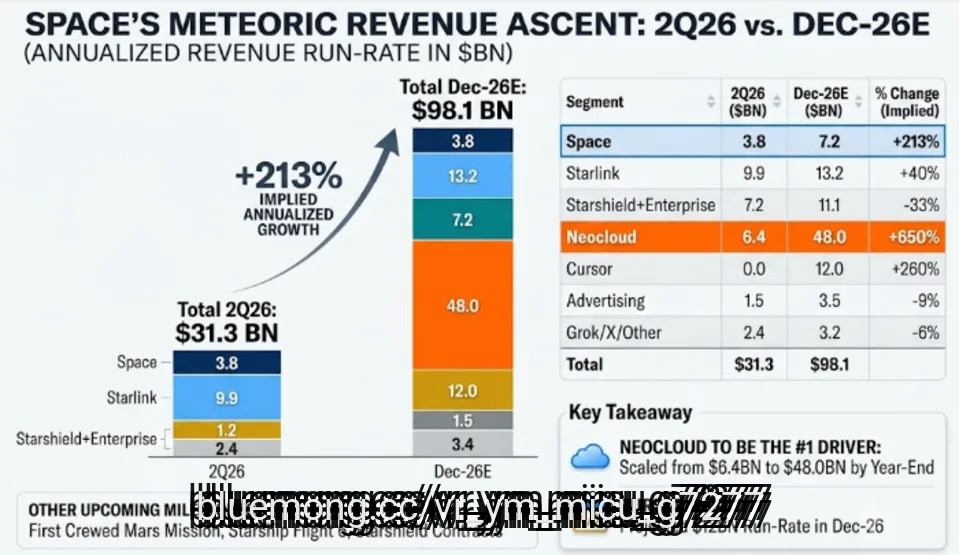
There is a plausible scenario in which Elon Musk's ******* eX (SPCX) reaches its ambitious goal of $100 billion in annual recurring revenue (ARR) by year-end.
SpaceX reiterated its goal of reaching $100 billion in ARR by year-end, a target that may not be as insane as it appeared on the company's earnings call transcript last week.
"As a baseline, 2Q's [ARR] run-rate was just $31 billion, meaning management is aiming to more than triple that in just six months. We see this target as likely very achievable, driven mainly by neocloud and Cursor contribution," Deutsche Bank ******* yst and ******* eX bull Edison Yu said in a note on Monday.
"Neocloud carrying the largest load In 2Q, neocloud revenue was $1.6b billion, all coming from Anthropic (ANTH.PVT); this deal alone should ramp up to $3.75 billion in 3Q in quarterly revenue," Yu explained. "In addition, the Google (GOOG, GOOGL) agreement is set to ramp up next month and hit full $920m/month rate beginning in Oct. Then most recently, ******* eX signed a $6.7bn over six month deal which we suspect could possibly be with the US government. And lastly, we expect one more large neocloud deal to get potentially signed before year-end considering industry compute supply/demand dynamics. Putting it all together, this could generate $45- 50bn of ARR exiting December."
Here's how Yu estimates this number will be reached:
#revenue #deal
3 months ago
Markets now price 53% odds of a September rate hike, punishing SCHD's bond-proxy tilt while FDRR screens dividend payers for positive yield correlation.
FDRR's top three holdings are NVIDIA, Apple, and Alphabet, which together exceed 22% of the portfolio, fueling an 86% five-year return but adding significant growth-stock concentration risk.
Directing new contributions to FDRR while leaving existing SCHD lots intact captures the rate hedge without crystallizing embedded capital gains in taxable accounts.
Don't wait: the ***** yst who called NVIDIA in 2010 just revealed his top 10 AI stocks. See the full list FREE now.
The Schwab US Dividend Equity ETF (NYSEARCA:SCHD) is the default income holding for millions of investors. SCHD screens for cash-rich payers, delivers a yield above the S&P 500, and costs almost nothing to hold. Yet the fund was built for a world of falling or stable long rates, and that world is under pressure.
#screens #yield

3 months ago
Conestoga Capital Advisors, an ******* et management company, released its second-quarter 2026 investor letter. A copy of the letter can be downloaded here. The letter reports a positive market shift towards Small Caps, with the Russell 2000 Index achieving its best first half since 1991 and the Russell 2000 Growth Index up 25.7% in Q2, fueled by AI enthusiasm and semiconductor stocks. However, market leadership was uneven, mirroring the Tech Bubble, as high-beta stocks outperformed while high-quality companies lagged, impacting Conestoga's quality-focused strategies. Management expressed confidence in long-term outcomes, noting that speculative leadership won't last as monetary policy tightens and market breadth improves. The firm remains committed to high-quality growth businesses, expecting these to regain favor as leadership broadens. The Conestoga Small Cap Composite returned 14.32% net-of-fees in the second quarter, with 25.71% for the Russell 2000 Growth Index. Narrow Index leadership hurt the relative results, but it also hid Composite improvements. In addition, please check the Strategy's top five holdings to know its best picks in 2026.
In its Q2 2026 investor letter, Conestoga Capital Advisors highlighted Perimeter Solutions, Inc. (NYSE:PRM) as a newly added position in the small cap composite. Perimeter Solutions, Inc. (NYSE:PRM) is a leading manufacturer of firefighting products, electronic components, lubricant additives, and engineered machinery. On August 4, 2026, Perimeter Solutions, Inc. (NYSE:PRM) closed at $33.25 per share, reflecting a market capitalization of $5.44 billion. Perimeter Solutions, Inc. (NYSE:PRM) posted a one-month return of 0.95%, while its shares gained 115.61% over the past 52 weeks.
Conestoga Capital Advisors stated the following regarding Perimeter Solutions, Inc. (NYSE:PRM) in its Q2 2026 investor letter:
"Perimeter Solutions, Inc. (NYSE:PRM) provides mission-critical fire safety and specialty chemical solutions. We initiated a position based on the company's durable earnings profile, disciplined capital allocation, and strong competitive position in niche markets. Recent long-term contract wins, including a five-year agreement with the Defense Logistics Agency, reinforce confidence in PRM's ability to generate predictable cash flow while continuing to expand its earnings base through both organic growth and acquisitions."
Perimeter Solutions, Inc. (NYSE:PRM) is not on our list of 40 Most Popular Stocks Among Hedge Funds Heading Into 2026. According to our database, 37 hedge fund portfolios held Perimeter Solutions, Inc. (NYSE:PRM) at the end of the first quarter, up from 33 in the previous quarter. While we acknowledge the risk and potential of Perimeter Solutions, Inc. (NYSE:PRM) as an investment, our conviction lies in the belief that some AI stocks hold greater promise for delivering higher returns and doing so within a shorter time frame. If you are looking for an AI stock that is more promising

3 months ago
Our ***** ysts just identified a stock with the potential to be the next Nvidia. Tell us how you invest and we'll show you why it's our #1 pick. Tap here.
Management attributes the decision to skew toward organic production growth to a macro view that global oil and product inventories, including Strategic Petroleum Reserves, must be refilled.
Performance outperformance is driven by a 'stacked innovation' framework, combining faster well construction, optimized targeting, and aggressive stimulation techniques to maximize NPV per acre.
The company has successfully transitioned from drilling wells in 30 days to just 5 days, reflecting a continuous improvement culture that offsets inflationary pressures.
Operational efficiency gains, specifically reaching over 21 hours of average pumping time per day, are being utilized to maintain a capital-efficient run rate of approximately $1 billion per quarter.
#management
3 months ago
Amazon.com, Inc. (NASDAQ:AMZN) completed its full $50 billion OpenAI investment and built a roughly 5% stake, the Financial Times reported on July 31. The payment became possible after Microsoft Corporation (NASDAQ:MSFT) revised its OpenAI agreement on April 27 and ended the exclusivity that had constrained rival cloud providers.
Amazon originally committed $15 billion immediately and another $35 billion after specified conditions were met. Paying the full amount before an OpenAI initial public offering turns a conditional commitment into real equity risk. The broader February partnership also carries a much larger commercial channel. AWS became the exclusive third-party cloud distributor for OpenAI Frontier, while OpenAI committed to consume roughly 2 gigawatts of Trainium capacity. The companies also expanded an existing $38 billion AWS agreement by $100 billion over eight years.
Pixabay/ Public Domain
That makes Amazon's investment more than just a wager on OpenAI's private valuation. It can drive AWS utilization, establish Trainium inside frontier-model workloads and put OpenAI products in front of enterprise customers. Amazon's Q2 2026 numbers show the capacity to absorb the bet: AWS revenue rose 37% to $42.2 billion, and total operating income increased 43% to $27.5 billion.
The cost is material. Amazon raised planned 2026 capital spending to $220 billion, while trailing free cash flow swung to a $7.6 billion outflow. A $50 billion private stake adds valuation and liquidity risk just as infrastructure spending consumes cash. Insider Monkey's database showed 353 hedge funds holding Amazon.com, Inc. (NASDAQ:AMZN) at the end of Q1 2026, down from 381 in Q4 2025.
#openai #amazon

3 months ago
Intercontinental Exchange Inc. (NYSE:ICE) delivered second-quarter results that exceeded Wall Street's earnings expectations while matching revenue forecasts, supported by continued growth across each of its three operating divisions.
Investors responded positively to the report, with the company's shares rising about 1.8% in premarket trading on Thursday.
ICE reported adjusted diluted earnings of $1.90 per share for the second quarter, surpassing ***** ysts' consensus estimate of $1.88.
Quarterly revenue totaled $2.67 billion, in line with market expectations and 5% higher than the same period a year earlier.
"We are pleased to report our second quarter results, which reflect continued revenue and earnings per share growth and record open interest across our exchange complex," said Jeff Sprecher, ICE Chair and Chief Executive Officer.
#quarter #exchange #continued #across

3 months ago
The MAGS ETF returned 158% since its April 2023 launch but has fallen 4% in 2026 while the S&P 500 gained 8%.
Alphabet, Amazon, Meta, and Microsoft stand out for combining strong cash flows with AI monetization, while Tesla and Apple face steeper growth questions.
Buying the Magnificent 7 as a single basket no longer makes sense, as each stock sits at a different stage of turning AI spending into profit.
Don't wait: the **** yst who called NVIDIA in 2010 just revealed his top 10 AI stocks. See the full list FREE now.
The artificial intelligence boom reshaped the stock market faster than almost any investing trend in recent memory. When OpenAI released ChatGPT in late 2022, investors quickly realized AI wasn't another speculative technology story -- it was becoming the next computing platform.
#mags #april

3 months ago
The European Central Bank is expected to leave rates unchanged at its meeting concluding today, choosing patience over prediction and preserving maximum room for manoeuvre ahead of a big decision by September.
Neither traders nor ******* ysts believe the ECB will deliver a second consecutive hike today after last month's increase. That means the deposit rate is seen remaining at 2.25%, a level officials have described as being "appropriate" as they evaluate implications of a re-escalation in the US-Iran conflict.
In an economists' panel for Bloomberg I sat on, most economists left open the chance of a second quarter-point rise in rates by September, when policymakers will have new quarterly projections.
A ceasefire following the June ECB meeting along with weaker-than-anticipated inflation that month had bolstered hopes that the worst of the crisis may have passed. However – fresh hostilities recently, placing Brent oil back around USD 100 a barrel, have revived expectations for more tightening ahead.
Traders currently wager that an initial June move will be followed up by another in September and a final one by the end of this year. The ECB's projections last month were based on ******* umptions for a total of three hikes this cycle.
#september


3 months ago
For the first time in the program's history, Medicare is covering weight-loss drugs, and the price tag looks almost too good to pass up.
Beginning July 1, eligible Part D enrollees can access medications including Wegovy, Foundayo, and the Zepbound KwikPen for a flat $50 monthly copay through a temporary federal demonstration called the Medicare GLP-1 (glucagon-like peptide-1) Bridge.
That is a massive discount compared to the retail price of these drugs, which can exceed $1,000 per month without insurance coverage.
It arrives at a moment when roughly 56% of GLP-1 users say affordability is a significant challenge, a poll from KFF, the health policy research organization, found.
But this is not traditional Part D coverage, and the distinction creates financial consequences that could blindside enrollees who ******* ume the program works like every other Medicare prescription benefit they have used.
#part #drugs