
1 hr. ago
On September 7, 2026, Reuters reported that Novo Nordisk A/S (NYSE:NVO) halted two additional trials of its experimental cardiovascular drug ziltivekimab, further denting the Danish drugmaker's efforts to diversify beyond its blockbuster obesity and diabetes franchise.
The move follows a July disclosure that ziltivekimab failed to reduce major adverse cardiovascular events in a late-stage trial. An independent data monitoring committee found a "low likelihood" that the two additional heart-failure studies would produce a different result from that earlier failure, prompting Novo to end them ahead of schedule.
Novo Nordisk A/S (NYSE:NVO) still has one opportunity to create value from its cardiovascular program. The company will continue testing ziltivekimab in patients recovering from a heart attack, with results expected in the first half of 2027. A successful outcome could give Novo another growth opportunity outside its obesity and diabetes franchise.
Novo's core obesity and diabetes business remains the much larger driver of its financial performance. The oral Wegovy pill has already generated more than 2 million prescriptions shortly after its January 2026 launch. It gives Novo an important growth opportunity as the company competes with Eli Lilly in the oral GLP-1 market.
The company can also preserve capital by ending trials that show limited prospects for success. An independent data monitoring committee found a low likelihood that the two heart-failure studies would produce different results from the earlier failed trial. Novo can redirect the resources it would have spent on those studies toward higher-potential programs.
#obesity #diabetes
The move follows a July disclosure that ziltivekimab failed to reduce major adverse cardiovascular events in a late-stage trial. An independent data monitoring committee found a "low likelihood" that the two additional heart-failure studies would produce a different result from that earlier failure, prompting Novo to end them ahead of schedule.
Novo Nordisk A/S (NYSE:NVO) still has one opportunity to create value from its cardiovascular program. The company will continue testing ziltivekimab in patients recovering from a heart attack, with results expected in the first half of 2027. A successful outcome could give Novo another growth opportunity outside its obesity and diabetes franchise.
Novo's core obesity and diabetes business remains the much larger driver of its financial performance. The oral Wegovy pill has already generated more than 2 million prescriptions shortly after its January 2026 launch. It gives Novo an important growth opportunity as the company competes with Eli Lilly in the oral GLP-1 market.
The company can also preserve capital by ending trials that show limited prospects for success. An independent data monitoring committee found a low likelihood that the two heart-failure studies would produce different results from the earlier failed trial. Novo can redirect the resources it would have spent on those studies toward higher-potential programs.
#obesity #diabetes


4 hours ago
Ascendis Pharma A/S (NASDAQ:ASND) announced on September 14 that it will regain exclusive rights to develop, manufacture, and commercialize TransCon products in metabolic and cardiovascular diseases following the termination of its collaboration with Novo Nordisk A/S (NYSE:NVO).
The rights include once-monthly TransCon Semaglutide, an investigational long-acting prodrug of semaglutide intended for obesity and type 2 diabetes. Neither party will have continuing financial obligations to the other. Once termination becomes effective and the rights revert, management plans to initiate multiple programs across rare and large indications.
The investment question is whether greater control over future products can justify the resources needed to develop them.
Ascendis Pharma A/S (NASDAQ:ASND) would regain flexibility over which indications to pursue, how quickly to advance candidates, and whether to seek another partner. Successful independent development could retain more of a product's commercial economics, while a new collaboration could provide another way to share costs and risk.
Monthly dosing offers a clear development objective. If clinical studies demonstrate effective treatment with acceptable tolerability, fewer injections could make long-term therapy more convenient. That potential benefit would matter most if it helps patients stay on treatment without sacrificing outcomes.
#ascendis #pharma #asnd #regain
The rights include once-monthly TransCon Semaglutide, an investigational long-acting prodrug of semaglutide intended for obesity and type 2 diabetes. Neither party will have continuing financial obligations to the other. Once termination becomes effective and the rights revert, management plans to initiate multiple programs across rare and large indications.
The investment question is whether greater control over future products can justify the resources needed to develop them.
Ascendis Pharma A/S (NASDAQ:ASND) would regain flexibility over which indications to pursue, how quickly to advance candidates, and whether to seek another partner. Successful independent development could retain more of a product's commercial economics, while a new collaboration could provide another way to share costs and risk.
Monthly dosing offers a clear development objective. If clinical studies demonstrate effective treatment with acceptable tolerability, fewer injections could make long-term therapy more convenient. That potential benefit would matter most if it helps patients stay on treatment without sacrificing outcomes.
#ascendis #pharma #asnd #regain



2 days ago
Interested in Eli Lilly and Company? Here are five stocks we like better.
The healthcare sector offers options for investors of every age, combining high-growth drugmakers, defensive operators, and reliable dividend payers.
Eli Lilly suits younger investors with its obesity and diabetes drug pipeline driving growth, having gained nearly 34% since its April low.
UnitedHealth Group fits middle-aged investors with a turnaround story and rising dividend, while Johnson & Johnson's Dividend King status appeals to older, income-focused investors.
When it comes to investing, there is no one-size-fits-all approach. Strategies vary based on numerous factors, including but not limited to investors' risk tolerance, net worth, and age. When it comes to stock-picking, that last one is important.
#comes #here #april
The healthcare sector offers options for investors of every age, combining high-growth drugmakers, defensive operators, and reliable dividend payers.
Eli Lilly suits younger investors with its obesity and diabetes drug pipeline driving growth, having gained nearly 34% since its April low.
UnitedHealth Group fits middle-aged investors with a turnaround story and rising dividend, while Johnson & Johnson's Dividend King status appeals to older, income-focused investors.
When it comes to investing, there is no one-size-fits-all approach. Strategies vary based on numerous factors, including but not limited to investors' risk tolerance, net worth, and age. When it comes to stock-picking, that last one is important.
#comes #here #april

2 days ago
Eli Lilly and Company (NYSE:LLY) says its newly launched oral obesity drug Foundayo has captured more than 30% of new U.S. patients starting oral weight-loss medicines, a notable early gain against Novo Nordisk's Wegovy pill. Reuters reports that Wegovy initially held roughly 90% of the oral market, making Lilly's rapid share capture an important sign that the oral GLP-1 market is becoming a two-player competition rather than a Novo-dominated segment. The broader U.S. obesity-drug market is expected to exceed $100 billion annually by 2030, with oral treatments potentially accounting for more than one-third of GLP-1 use.
The timing is strategically important for Lilly because Foundayo was only launched in the U.S. in April 2026. The drug starts at $149 per month for self-pay patients and can cost as little as $25 for eligible commercially insured patients, while Medicare beneficiaries can access it through the GLP-1 Bridge program at $50 per month. Lilly's SEC filing says Mounjaro and Zepbound already represented 65% of its revenue in the first six months of 2026, highlighting both the importance of the incretin franchise and the opportunity for Foundayo to broaden Lilly's cardiometabolic revenue base.
The strongest bullish implication is that Foundayo appears to be overcoming the biggest behavioral barrier in obesity treatment: patients' preference for an oral medicine over an injection. Capturing more than 30% of new oral patients only months after launch suggests Eli Lilly and Company (NYSE:LLY) is establishing meaningful competitive positioning before the oral GLP-1 market fully scales. Foundayo's formulation also has a practical advantage because it can be taken at any time of day without food or water restrictions, while Lilly's clinical data showed an average 27.3-pound, or 12.4%, weight reduction at the highest dose among patients who remained on treatment in ATTAIN-1.
The commercial opportunity could become considerably larger if Foundayo gains indications beyond obesity. Lilly reported that in the ACHIEVE-3 trial, Foundayo produced a 57.1% greater relative reduction in A1C and a 73.6% greater relative reduction in body weight compared with oral semaglutide 14 mg. Lilly submitted Foundayo for type 2 diabetes in the U.S., EU, and **** an, potentially expanding the addressable market beyond weight management.
The early oral-market traction also complements Eli Lilly and Company (NYSE:LLY)'s existing injectable franchise rather than simply cannibalizing it. A Lilly trial found that patients switching from maximum-tolerated Wegovy to Foundayo maintained all but 0.9 kg of their previous weight loss after one year, while patients switching from maximum-dose Zepbound to Foundayo maintained all but 5.0 kg. That suggests Foundayo could serve as a maintenance or lower-burden treatment within Lilly's broader obesity portfolio, increasing lifetime value per patient rather than limiting the opportunity to new prescriptions.
#patients #weight #c
The timing is strategically important for Lilly because Foundayo was only launched in the U.S. in April 2026. The drug starts at $149 per month for self-pay patients and can cost as little as $25 for eligible commercially insured patients, while Medicare beneficiaries can access it through the GLP-1 Bridge program at $50 per month. Lilly's SEC filing says Mounjaro and Zepbound already represented 65% of its revenue in the first six months of 2026, highlighting both the importance of the incretin franchise and the opportunity for Foundayo to broaden Lilly's cardiometabolic revenue base.
The strongest bullish implication is that Foundayo appears to be overcoming the biggest behavioral barrier in obesity treatment: patients' preference for an oral medicine over an injection. Capturing more than 30% of new oral patients only months after launch suggests Eli Lilly and Company (NYSE:LLY) is establishing meaningful competitive positioning before the oral GLP-1 market fully scales. Foundayo's formulation also has a practical advantage because it can be taken at any time of day without food or water restrictions, while Lilly's clinical data showed an average 27.3-pound, or 12.4%, weight reduction at the highest dose among patients who remained on treatment in ATTAIN-1.
The commercial opportunity could become considerably larger if Foundayo gains indications beyond obesity. Lilly reported that in the ACHIEVE-3 trial, Foundayo produced a 57.1% greater relative reduction in A1C and a 73.6% greater relative reduction in body weight compared with oral semaglutide 14 mg. Lilly submitted Foundayo for type 2 diabetes in the U.S., EU, and **** an, potentially expanding the addressable market beyond weight management.
The early oral-market traction also complements Eli Lilly and Company (NYSE:LLY)'s existing injectable franchise rather than simply cannibalizing it. A Lilly trial found that patients switching from maximum-tolerated Wegovy to Foundayo maintained all but 0.9 kg of their previous weight loss after one year, while patients switching from maximum-dose Zepbound to Foundayo maintained all but 5.0 kg. That suggests Foundayo could serve as a maintenance or lower-burden treatment within Lilly's broader obesity portfolio, increasing lifetime value per patient rather than limiting the opportunity to new prescriptions.
#patients #weight #c


2 days ago
Novo Nordisk A/S (NYSE:NVO)'s decision to rebrand its day-to-day identity as "Novo" and launch a cultural reset is primarily a strategic response to the company's loss of momentum in the obesity-drug market, rather than a financial restructuring in itself. Reuters reports that the company is trying to regain competitiveness as pressure from Eli Lilly intensifies. The move comes as Novo prepares to unveil new strategic ambitions at its September 21 Capital Markets Day, making the cultural reset potentially important if it leads to faster decision-making, stronger commercial execution and a more aggressive R&D approach.
The underlying business still has substantial scale to protect. Novo generated DKK 309.1 billion of 2025 sales and DKK 127.7 billion of operating profit, while obesity-care sales rose 31% at constant exchange rates to DKK 82.3 billion. However, the company also spent around DKK 8 billion on its transformation in 2025, and its diabetes value-market share fell 3.6 percentage points to 30.1%. The reset therefore comes at a critical point: Novo remains the global obesity-market leader, with a 59.6% branded-volume share in 2025, but Lilly is rapidly narrowing the competitive gap.
A successful cultural reset could improve Novo Nordisk A/S (NYSE:NVO)'s execution at a time when the company needs to convert its scientific and commercial ******* ets into faster growth. Reuters reported that CEO Mike Doustdar is already seeking to accelerate R&D and streamline decision-making following investor concerns about the pipeline and competition from Lilly. If the reorganization reduces internal bureaucracy and improves the speed of clinical, regulatory and commercial decisions, it could help Novo extract more value from its existing obesity portfolio while advancing next-generation treatments before the semaglutide patent cliff expected early next decade.
The company also has ******* ets that give a cultural and operational reset something concrete to build around. Wegovy was available in 52 countries by the end of 2025, while the company's higher-dose Wegovy achieved 20.7% weight loss in Phase 3 studies and its oral Wegovy achieved 16.6% weight loss. More recently, Wegovy received approval in China for MASH, expanding its potential beyond weight management and cardiovascular benefits into another large metabolic-disease market. If Novo Nordisk A/S (NYSE:NVO) can combine these products with better execution, the reset could support higher patient volumes and extend the commercial life of its GLP-1 franchise, helping defend revenue and cash flow despite pricing pressure.
#nordisk #lilly
The underlying business still has substantial scale to protect. Novo generated DKK 309.1 billion of 2025 sales and DKK 127.7 billion of operating profit, while obesity-care sales rose 31% at constant exchange rates to DKK 82.3 billion. However, the company also spent around DKK 8 billion on its transformation in 2025, and its diabetes value-market share fell 3.6 percentage points to 30.1%. The reset therefore comes at a critical point: Novo remains the global obesity-market leader, with a 59.6% branded-volume share in 2025, but Lilly is rapidly narrowing the competitive gap.
A successful cultural reset could improve Novo Nordisk A/S (NYSE:NVO)'s execution at a time when the company needs to convert its scientific and commercial ******* ets into faster growth. Reuters reported that CEO Mike Doustdar is already seeking to accelerate R&D and streamline decision-making following investor concerns about the pipeline and competition from Lilly. If the reorganization reduces internal bureaucracy and improves the speed of clinical, regulatory and commercial decisions, it could help Novo extract more value from its existing obesity portfolio while advancing next-generation treatments before the semaglutide patent cliff expected early next decade.
The company also has ******* ets that give a cultural and operational reset something concrete to build around. Wegovy was available in 52 countries by the end of 2025, while the company's higher-dose Wegovy achieved 20.7% weight loss in Phase 3 studies and its oral Wegovy achieved 16.6% weight loss. More recently, Wegovy received approval in China for MASH, expanding its potential beyond weight management and cardiovascular benefits into another large metabolic-disease market. If Novo Nordisk A/S (NYSE:NVO) can combine these products with better execution, the reset could support higher patient volumes and extend the commercial life of its GLP-1 franchise, helping defend revenue and cash flow despite pricing pressure.
#nordisk #lilly


2 days ago
Eli Lilly and Company (NYSE:LLY) says its newly launched oral obesity drug Foundayo has captured more than 30% of new U.S. patients starting oral weight-loss medicines, a notable early gain against Novo Nordisk's Wegovy pill. Reuters reports that Wegovy initially held roughly 90% of the oral market, making Lilly's rapid share capture an important sign that the oral GLP-1 market is becoming a two-player competition rather than a Novo-dominated segment. The broader U.S. obesity-drug market is expected to exceed $100 billion annually by 2030, with oral treatments potentially accounting for more than one-third of GLP-1 use.
The timing is strategically important for Lilly because Foundayo was only launched in the U.S. in April 2026. The drug starts at $149 per month for self-pay patients and can cost as little as $25 for eligible commercially insured patients, while Medicare beneficiaries can access it through the GLP-1 Bridge program at $50 per month. Lilly's SEC filing says Mounjaro and Zepbound already represented 65% of its revenue in the first six months of 2026, highlighting both the importance of the incretin franchise and the opportunity for Foundayo to broaden Lilly's cardiometabolic revenue base.
The strongest bullish implication is that Foundayo appears to be overcoming the biggest behavioral barrier in obesity treatment: patients' preference for an oral medicine over an injection. Capturing more than 30% of new oral patients only months after launch suggests Eli Lilly and Company (NYSE:LLY) is establishing meaningful competitive positioning before the oral GLP-1 market fully scales. Foundayo's formulation also has a practical advantage because it can be taken at any time of day without food or water restrictions, while Lilly's clinical data showed an average 27.3-pound, or 12.4%, weight reduction at the highest dose among patients who remained on treatment in ATTAIN-1.
The commercial opportunity could become considerably larger if Foundayo gains indications beyond obesity. Lilly reported that in the ACHIEVE-3 trial, Foundayo produced a 57.1% greater relative reduction in A1C and a 73.6% greater relative reduction in body weight compared with oral semaglutide 14 mg. Lilly submitted Foundayo for type 2 diabetes in the U.S., EU, and ***** an, potentially expanding the addressable market beyond weight management.
The early oral-market traction also complements Eli Lilly and Company (NYSE:LLY)'s existing injectable franchise rather than simply cannibalizing it. A Lilly trial found that patients switching from maximum-tolerated Wegovy to Foundayo maintained all but 0.9 kg of their previous weight loss after one year, while patients switching from maximum-dose Zepbound to Foundayo maintained all but 5.0 kg. That suggests Foundayo could serve as a maintenance or lower-burden treatment within Lilly's broader obesity portfolio, increasing lifetime value per patient rather than limiting the opportunity to new prescriptions.
#weight
The timing is strategically important for Lilly because Foundayo was only launched in the U.S. in April 2026. The drug starts at $149 per month for self-pay patients and can cost as little as $25 for eligible commercially insured patients, while Medicare beneficiaries can access it through the GLP-1 Bridge program at $50 per month. Lilly's SEC filing says Mounjaro and Zepbound already represented 65% of its revenue in the first six months of 2026, highlighting both the importance of the incretin franchise and the opportunity for Foundayo to broaden Lilly's cardiometabolic revenue base.
The strongest bullish implication is that Foundayo appears to be overcoming the biggest behavioral barrier in obesity treatment: patients' preference for an oral medicine over an injection. Capturing more than 30% of new oral patients only months after launch suggests Eli Lilly and Company (NYSE:LLY) is establishing meaningful competitive positioning before the oral GLP-1 market fully scales. Foundayo's formulation also has a practical advantage because it can be taken at any time of day without food or water restrictions, while Lilly's clinical data showed an average 27.3-pound, or 12.4%, weight reduction at the highest dose among patients who remained on treatment in ATTAIN-1.
The commercial opportunity could become considerably larger if Foundayo gains indications beyond obesity. Lilly reported that in the ACHIEVE-3 trial, Foundayo produced a 57.1% greater relative reduction in A1C and a 73.6% greater relative reduction in body weight compared with oral semaglutide 14 mg. Lilly submitted Foundayo for type 2 diabetes in the U.S., EU, and ***** an, potentially expanding the addressable market beyond weight management.
The early oral-market traction also complements Eli Lilly and Company (NYSE:LLY)'s existing injectable franchise rather than simply cannibalizing it. A Lilly trial found that patients switching from maximum-tolerated Wegovy to Foundayo maintained all but 0.9 kg of their previous weight loss after one year, while patients switching from maximum-dose Zepbound to Foundayo maintained all but 5.0 kg. That suggests Foundayo could serve as a maintenance or lower-burden treatment within Lilly's broader obesity portfolio, increasing lifetime value per patient rather than limiting the opportunity to new prescriptions.
#weight

2 days ago
Novo Nordisk A/S (NYSE:NVO)'s decision to rebrand its day-to-day identity as "Novo" and launch a cultural reset is primarily a strategic response to the company's loss of momentum in the obesity-drug market, rather than a financial restructuring in itself. Reuters reports that the company is trying to regain competitiveness as pressure from Eli Lilly intensifies. The move comes as Novo prepares to unveil new strategic ambitions at its September 21 Capital Markets Day, making the cultural reset potentially important if it leads to faster decision-making, stronger commercial execution and a more aggressive R&D approach.
The underlying business still has substantial scale to protect. Novo generated DKK 309.1 billion of 2025 sales and DKK 127.7 billion of operating profit, while obesity-care sales rose 31% at constant exchange rates to DKK 82.3 billion. However, the company also spent around DKK 8 billion on its transformation in 2025, and its diabetes value-market share fell 3.6 percentage points to 30.1%. The reset therefore comes at a critical point: Novo remains the global obesity-market leader, with a 59.6% branded-volume share in 2025, but Lilly is rapidly narrowing the competitive gap.
A successful cultural reset could improve Novo Nordisk A/S (NYSE:NVO)'s execution at a time when the company needs to convert its scientific and commercial ***** ets into faster growth. Reuters reported that CEO Mike Doustdar is already seeking to accelerate R&D and streamline decision-making following investor concerns about the pipeline and competition from Lilly. If the reorganization reduces internal bureaucracy and improves the speed of clinical, regulatory and commercial decisions, it could help Novo extract more value from its existing obesity portfolio while advancing next-generation treatments before the semaglutide patent cliff expected early next decade.
The company also has ***** ets that give a cultural and operational reset something concrete to build around. Wegovy was available in 52 countries by the end of 2025, while the company's higher-dose Wegovy achieved 20.7% weight loss in Phase 3 studies and its oral Wegovy achieved 16.6% weight loss. More recently, Wegovy received approval in China for MASH, expanding its potential beyond weight management and cardiovascular benefits into another large metabolic-disease market. If Novo Nordisk A/S (NYSE:NVO) can combine these products with better execution, the reset could support higher patient volumes and extend the commercial life of its GLP-1 franchise, helping defend revenue and cash flow despite pricing pressure.
#cultural #company #lilly
The underlying business still has substantial scale to protect. Novo generated DKK 309.1 billion of 2025 sales and DKK 127.7 billion of operating profit, while obesity-care sales rose 31% at constant exchange rates to DKK 82.3 billion. However, the company also spent around DKK 8 billion on its transformation in 2025, and its diabetes value-market share fell 3.6 percentage points to 30.1%. The reset therefore comes at a critical point: Novo remains the global obesity-market leader, with a 59.6% branded-volume share in 2025, but Lilly is rapidly narrowing the competitive gap.
A successful cultural reset could improve Novo Nordisk A/S (NYSE:NVO)'s execution at a time when the company needs to convert its scientific and commercial ***** ets into faster growth. Reuters reported that CEO Mike Doustdar is already seeking to accelerate R&D and streamline decision-making following investor concerns about the pipeline and competition from Lilly. If the reorganization reduces internal bureaucracy and improves the speed of clinical, regulatory and commercial decisions, it could help Novo extract more value from its existing obesity portfolio while advancing next-generation treatments before the semaglutide patent cliff expected early next decade.
The company also has ***** ets that give a cultural and operational reset something concrete to build around. Wegovy was available in 52 countries by the end of 2025, while the company's higher-dose Wegovy achieved 20.7% weight loss in Phase 3 studies and its oral Wegovy achieved 16.6% weight loss. More recently, Wegovy received approval in China for MASH, expanding its potential beyond weight management and cardiovascular benefits into another large metabolic-disease market. If Novo Nordisk A/S (NYSE:NVO) can combine these products with better execution, the reset could support higher patient volumes and extend the commercial life of its GLP-1 franchise, helping defend revenue and cash flow despite pricing pressure.
#cultural #company #lilly


4 days ago
Amgen Inc. (NASDAQ:AMGN) shed roughly $12 billion in market value after hours on September 4, 2026. The stock declined by about 5% to $415. The reason, as strange as it sounds, is a drug it does not own. Novartis announced that pelacarsen, an Lp(a)-lowering therapy, missed its Phase 3 cardiovascular-outcomes trial, Lp(a)HORIZON. And since Amgen's late-stage ******* et olpasiran relies on the same biological premise, investors immediately marked down Amgen on the negative read-through.
The result strikes at a premise rather than at a product. Pelacarsenhad lowered Lp(a) by roughly 80% in earlier studies. In Lp(a)HORIZON, Novartis said pelacarsen substantially lowered Lp(a), but it still failed to reduce the composite of cardiovascular death, heart attack, stroke, and urgent revascularization. It still could not reduce the composite of cardiovascular death, heart attack, stroke, and urgent revascularization. And now the entire hypothesis that lowering Lp(a), a genetic cardiovascular risk factor, actually cuts events, is being directly challenged. Olpasiran is built on the same hypothesis, leading to the repricing of odds as soon as pelacarsen's data were out.
Amgen's olpasiran, an siRNA, lowered Lp(a) by more than 95% at certain doses in Phase 2, compared with reductions of roughly 80% for pelacarsen in earlier studies. The bull case is that this deeper reduction could help olpasiran deliver better cardiovascular outcomes.. The bull case is that this 15% will help Amgen to make a deeper cut and deliver results. While biologically possible, the Lp(a)HORIZON trial provided no evidence that a clinical threshold exists above an 80% reduction. The topline Phase 3 announcement did not establish that deeper Lp(a) lowering would have produced a cardiovascular benefit. It is therefore appropriate to say that the miss lowered olpasiran's probability of success rather than pretending it is irrelevant. Eli Lilly's lepodisiran is running the same deep-reduction experiment, so the hypothesis will be tested with or without Amgen.
Amgen is not an Lp(a) pure-play. MariTide in obesity, Repatha in cholesterol, and Tezspire in asthma drive more value for the company, and this diversification creates a cushion for the stock, although the selloff ultimately became much larger than the initial 5% after-hours reaction. Positioning has stayed calm since the beginning of 2026. Insider Monkey data shows 66 hedge funds held AMGN in the second quarter of 2026, up slightly from 65 in the first. Short interest, on the other hand, sits at just 2.4% of float, reflecting minimal bets against the stock in the market.
#horizon #pelacarsen
The result strikes at a premise rather than at a product. Pelacarsenhad lowered Lp(a) by roughly 80% in earlier studies. In Lp(a)HORIZON, Novartis said pelacarsen substantially lowered Lp(a), but it still failed to reduce the composite of cardiovascular death, heart attack, stroke, and urgent revascularization. It still could not reduce the composite of cardiovascular death, heart attack, stroke, and urgent revascularization. And now the entire hypothesis that lowering Lp(a), a genetic cardiovascular risk factor, actually cuts events, is being directly challenged. Olpasiran is built on the same hypothesis, leading to the repricing of odds as soon as pelacarsen's data were out.
Amgen's olpasiran, an siRNA, lowered Lp(a) by more than 95% at certain doses in Phase 2, compared with reductions of roughly 80% for pelacarsen in earlier studies. The bull case is that this deeper reduction could help olpasiran deliver better cardiovascular outcomes.. The bull case is that this 15% will help Amgen to make a deeper cut and deliver results. While biologically possible, the Lp(a)HORIZON trial provided no evidence that a clinical threshold exists above an 80% reduction. The topline Phase 3 announcement did not establish that deeper Lp(a) lowering would have produced a cardiovascular benefit. It is therefore appropriate to say that the miss lowered olpasiran's probability of success rather than pretending it is irrelevant. Eli Lilly's lepodisiran is running the same deep-reduction experiment, so the hypothesis will be tested with or without Amgen.
Amgen is not an Lp(a) pure-play. MariTide in obesity, Repatha in cholesterol, and Tezspire in asthma drive more value for the company, and this diversification creates a cushion for the stock, although the selloff ultimately became much larger than the initial 5% after-hours reaction. Positioning has stayed calm since the beginning of 2026. Insider Monkey data shows 66 hedge funds held AMGN in the second quarter of 2026, up slightly from 65 in the first. Short interest, on the other hand, sits at just 2.4% of float, reflecting minimal bets against the stock in the market.
#horizon #pelacarsen


5 days ago
Sept 14 - Novo Nordisk is changing its day-to-day name to 'Novo', and taking a new approach to company culture as it looks to claw back ground in the fierce obesity drug race, the Danish drugmaker said on Monday.
• Novo, which is slated to unveil details on its business strategy during a Capital Markets Day on September 21, will keep 'Novo Nordisk A/S' as its legal name.
• The company set out on Monday a new cultural strategy it called "The Novo Way", centred around four principles — customer obsession, competitiveness, clarity, and care and integrity.
• The move comes as it faces fierce competition from rival weight-loss drug maker Eli Lilly, investor pressure to deliver new blockbusters, and setbacks to its medicine pipeline.
• The company's Copenhagen shares are down nearly 15% this year, even as its oral GLP-1 outpaces Eli Lilly by hundreds of thousands of U.S. prescriptions per week, according to IQVIA data provided by an ****** yst.
#novo #company #fierce
• Novo, which is slated to unveil details on its business strategy during a Capital Markets Day on September 21, will keep 'Novo Nordisk A/S' as its legal name.
• The company set out on Monday a new cultural strategy it called "The Novo Way", centred around four principles — customer obsession, competitiveness, clarity, and care and integrity.
• The move comes as it faces fierce competition from rival weight-loss drug maker Eli Lilly, investor pressure to deliver new blockbusters, and setbacks to its medicine pipeline.
• The company's Copenhagen shares are down nearly 15% this year, even as its oral GLP-1 outpaces Eli Lilly by hundreds of thousands of U.S. prescriptions per week, according to IQVIA data provided by an ****** yst.
#novo #company #fierce


9 days ago
Is it better to own a company already selling drugs or one with a potential blockbuster in testing? Investors are weighing Axsome Therapeutics (NASDAQ:AXSM) against Viking Therapeutics (NASDAQ:VKTX) to decide.
Axsome focuses on commercializing treatments for depression and sleep disorders, showing significant revenue growth. Viking is a clinical-stage developer targeting the massive obesity market but has no products on the market yet. Both represent different stages of growth within the biotech world, making them popular choices for healthcare-minded portfolios.
Axsome develops and sells treatments for central nervous system conditions such as depression, migraines, and narcolepsy. It is a prominent name among biotech stocks, with a portfolio that includes Auvelity, Sunosi, and Symbravo. The company recently entered a settlement that grants license rights to five generic manufacturers for Sunosi starting in 2040, providing long-term clarity on its patent life and market position. In its latest annual report, filed in early 2026, the company noted it had over 900 full-time employees to support its commercial reach.
In FY 2025, revenue reached nearly $638.5 million, marking growth of close to 65.5% compared to the prior year. This increase was driven by the continued expansion of its key central nervous system treatments into new geographic markets. The company reported a net loss of approximately $183.2 million, resulting in a negative net margin, which is the percentage of revenue left after all expenses are paid, of roughly 28.7%. Some investors focus on the P/S ratio to value the business relative to this growing revenue.
As of December 2025, the debt-to-equity ratio was nearly 2.7x, meaning the company uses significant debt relative to its equity. The current ratio of approximately 1.6x indicates it has $1.60 in ****** ets for every $1.00 in liabilities due within a year. Free cash flow, or cash from operations minus capital spending, was nearly negative $93.9 million as the company continues to invest in its commercial pipeline. This spending is intended to support the long-term growth of its approved products and the development of new candidates.
#ratio #therapeutics
Axsome focuses on commercializing treatments for depression and sleep disorders, showing significant revenue growth. Viking is a clinical-stage developer targeting the massive obesity market but has no products on the market yet. Both represent different stages of growth within the biotech world, making them popular choices for healthcare-minded portfolios.
Axsome develops and sells treatments for central nervous system conditions such as depression, migraines, and narcolepsy. It is a prominent name among biotech stocks, with a portfolio that includes Auvelity, Sunosi, and Symbravo. The company recently entered a settlement that grants license rights to five generic manufacturers for Sunosi starting in 2040, providing long-term clarity on its patent life and market position. In its latest annual report, filed in early 2026, the company noted it had over 900 full-time employees to support its commercial reach.
In FY 2025, revenue reached nearly $638.5 million, marking growth of close to 65.5% compared to the prior year. This increase was driven by the continued expansion of its key central nervous system treatments into new geographic markets. The company reported a net loss of approximately $183.2 million, resulting in a negative net margin, which is the percentage of revenue left after all expenses are paid, of roughly 28.7%. Some investors focus on the P/S ratio to value the business relative to this growing revenue.
As of December 2025, the debt-to-equity ratio was nearly 2.7x, meaning the company uses significant debt relative to its equity. The current ratio of approximately 1.6x indicates it has $1.60 in ****** ets for every $1.00 in liabilities due within a year. Free cash flow, or cash from operations minus capital spending, was nearly negative $93.9 million as the company continues to invest in its commercial pipeline. This spending is intended to support the long-term growth of its approved products and the development of new candidates.
#ratio #therapeutics
0.00$ raised of 0.00$ goal
0 donations
0.00$
to go

11 days ago
On August 5, Protagonist Therapeutics (NASDAQ:PTGX) reported second-quarter 2026 results that flipped the company from red ink to a $162.8 million profit, or $2.29 per diluted share, compared with a $34.8 million loss a year earlier. The swing came as the company banked payments tied to two drugs moving from the lab bench to the pharmacy counter: ICOTYDE, an oral psoriasis treatment, and rusfertide, an injectable now awaiting an FDA decision. Cash and marketable securities climbed to $849.5 million. Here's what's fueling the optimism, and what could complicate it.
The quarter marked the first full three months of commercial sales for ICOTYDE, which won FDA approval on March 18 for moderate-to-severe plaque psoriasis in patients 12 and older weighing at least 40 kg. That approval triggered a $50 million milestone payment and made ICOTYDE, according to the company, the first and only FDA-approved targeted oral peptide for the condition. Protagonist can still collect up to $580 million more in milestones from partner Johnson & Johnson, plus royalties that average around 7.25 percent at $4 billion in annual sales.
Rusfertide carries even more weight. Its new drug application sits under Priority Review with a PDUFA goal date in August, backed by Breakthrough Therapy, Orphan Drug, and Fast Track designations for polycythemia vera. Partner Takeda already paid Protagonist $200 million on an opt-out election in April, with another $200 million and a $75 million approval milestone still due, on top of royalties that can reach 29 percent of sales above $1.5 billion. Behind both drugs, PN-881, an oral IL-17 antagonist, is heading into a Phase 2b psoriasis program in early 2027 after Phase 1 data showed drug levels beating their pharmacokinetic targets, and a Phase 1 study just began for PN-477sc, an injectable obesity peptide.
Look closer at that $213.5 million in license and collaboration revenue, and $192.4 million of it traces to the proportional recognition of Takeda's initial opt-out payment, not repeatable product sales. A year earlier, the same line item was just $5.5 million, so the growth reflects a single deal event more than an operating business scaling up. And that opt-out itself cuts both ways: Protagonist gave up its right to develop and commercialize rusfertide on its own, trading full ownership for royalties and milestones that depend on Takeda's execution rather than Protagonist's.
Spending is also set to climb. Management expects research and development costs to increase significantly in the second half of 2026 versus the first half, driven by the new PN-881 Phase 2b program, manufacturing investments, and added headcount. General and administrative costs are rising too, largely on stock-based compensation. And rusfertide's fate still hinges on an FDA decision that hasn't happened yet, priority review or not.
#protagonist
The quarter marked the first full three months of commercial sales for ICOTYDE, which won FDA approval on March 18 for moderate-to-severe plaque psoriasis in patients 12 and older weighing at least 40 kg. That approval triggered a $50 million milestone payment and made ICOTYDE, according to the company, the first and only FDA-approved targeted oral peptide for the condition. Protagonist can still collect up to $580 million more in milestones from partner Johnson & Johnson, plus royalties that average around 7.25 percent at $4 billion in annual sales.
Rusfertide carries even more weight. Its new drug application sits under Priority Review with a PDUFA goal date in August, backed by Breakthrough Therapy, Orphan Drug, and Fast Track designations for polycythemia vera. Partner Takeda already paid Protagonist $200 million on an opt-out election in April, with another $200 million and a $75 million approval milestone still due, on top of royalties that can reach 29 percent of sales above $1.5 billion. Behind both drugs, PN-881, an oral IL-17 antagonist, is heading into a Phase 2b psoriasis program in early 2027 after Phase 1 data showed drug levels beating their pharmacokinetic targets, and a Phase 1 study just began for PN-477sc, an injectable obesity peptide.
Look closer at that $213.5 million in license and collaboration revenue, and $192.4 million of it traces to the proportional recognition of Takeda's initial opt-out payment, not repeatable product sales. A year earlier, the same line item was just $5.5 million, so the growth reflects a single deal event more than an operating business scaling up. And that opt-out itself cuts both ways: Protagonist gave up its right to develop and commercialize rusfertide on its own, trading full ownership for royalties and milestones that depend on Takeda's execution rather than Protagonist's.
Spending is also set to climb. Management expects research and development costs to increase significantly in the second half of 2026 versus the first half, driven by the new PN-881 Phase 2b program, manufacturing investments, and added headcount. General and administrative costs are rising too, largely on stock-based compensation. And rusfertide's fate still hinges on an FDA decision that hasn't happened yet, priority review or not.
#protagonist


14 days ago
The keto diet may have surprising benefits for liver health, a new study suggests.
The research, published in the journal Cell Metabolism, studied 42 adults who had obesity, prediabetes and excess liver fat.
In a randomized clinical trial, the participants were ***** igned to three weight-loss diets – a low-carb ketogenic diet, a Mediterranean diet and a low-fat, mostly plant-based diet.
Secret To Weight Loss May Be Hiding In Your Gut, New Study Suggests
The keto diet's calories consisted of about 4% carbohydrates and 73% fat, according to the study. The Mediterranean diet provided about 50% of calories from carbohydrates and 35% from fat, while the low-fat diet provided about 70% of calories from carbohydrates and 15% from fat.
#liver
The research, published in the journal Cell Metabolism, studied 42 adults who had obesity, prediabetes and excess liver fat.
In a randomized clinical trial, the participants were ***** igned to three weight-loss diets – a low-carb ketogenic diet, a Mediterranean diet and a low-fat, mostly plant-based diet.
Secret To Weight Loss May Be Hiding In Your Gut, New Study Suggests
The keto diet's calories consisted of about 4% carbohydrates and 73% fat, according to the study. The Mediterranean diet provided about 50% of calories from carbohydrates and 35% from fat, while the low-fat diet provided about 70% of calories from carbohydrates and 15% from fat.
#liver




17 days ago
Eli Lilly and Company (NYSE:LLY) has agreed to acquire privately held Merida Biosciences for up to $2.875 billion in cash, including an upfront payment and milestone-based payments. The deal is expected to close in the fourth quarter of 2026.
The acquisition expands Lilly's immunology pipeline and gives it access to Merida's antibody-engineering platform, which is designed to selectively eliminate disease-causing autoantibodies while preserving normal immune function. Merida's lead candidate, MER511, is in Phase 1 development for Graves' disease and thyroid eye disease (TED). Early data showed substantial reductions in disease-related antibodies along with a favorable initial safety profile.
The deal also fits Eli Lilly and Company (NYSE:LLY)'s broader strategy of using the cash generated by its obesity and diabetes franchises to diversify into additional therapeutic areas. Lilly has been active in acquisitions throughout 2026, making Merida the latest addition to its expanding pipeline.
The biggest benefit for Eli Lilly and Company (NYSE:LLY) is pipeline diversification. The company has generated significant growth from Mounjaro and Zepbound, but that success also increases its reliance on the obesity and diabetes markets. Adding Merida gives Lilly another potential growth platform in immunology.
Merida's technology could be particularly valuable if it works beyond its lead program. Rather than broadly suppressing the immune system, its approach is designed to target the antibodies responsible for specific autoimmune and allergic diseases. This could potentially offer a more targeted treatment strategy and create opportunities across several conditions.
#lilly #NYSE #immunology
The acquisition expands Lilly's immunology pipeline and gives it access to Merida's antibody-engineering platform, which is designed to selectively eliminate disease-causing autoantibodies while preserving normal immune function. Merida's lead candidate, MER511, is in Phase 1 development for Graves' disease and thyroid eye disease (TED). Early data showed substantial reductions in disease-related antibodies along with a favorable initial safety profile.
The deal also fits Eli Lilly and Company (NYSE:LLY)'s broader strategy of using the cash generated by its obesity and diabetes franchises to diversify into additional therapeutic areas. Lilly has been active in acquisitions throughout 2026, making Merida the latest addition to its expanding pipeline.
The biggest benefit for Eli Lilly and Company (NYSE:LLY) is pipeline diversification. The company has generated significant growth from Mounjaro and Zepbound, but that success also increases its reliance on the obesity and diabetes markets. Adding Merida gives Lilly another potential growth platform in immunology.
Merida's technology could be particularly valuable if it works beyond its lead program. Rather than broadly suppressing the immune system, its approach is designed to target the antibodies responsible for specific autoimmune and allergic diseases. This could potentially offer a more targeted treatment strategy and create opportunities across several conditions.
#lilly #NYSE #immunology

23 days ago
LLY posted 48% revenue growth and controls 6 in 10 U.S. obesity prescriptions, while NVO cut 12,000 employees and saw gross margins fall to 78%.
Retatrutide hit Phase 3 endpoints with weight loss approaching bariatric surgery levels, with Lilly targeting a U.S. BLA submission in Q1 2027.
Act now: the ***** yst who called NVIDIA in 2010 just named his top 10 AI stocks — and Eli Lilly didn't make the cut. Grab the names FREE today.
Eli Lilly (NYSE:LLY) and Novo Nordisk (NYSE:NVO) both reported Q2 2026 results in early August, and the split screen was jarring.
Lilly delivered 48% revenue growth and raised guidance. Novo defended a shrinking U.S. business with price cuts, layoffs, and a fresh round of pipeline impairments. Same week, same category, opposite momentum.
#lilly #NYSE #same #NVIDIA
Retatrutide hit Phase 3 endpoints with weight loss approaching bariatric surgery levels, with Lilly targeting a U.S. BLA submission in Q1 2027.
Act now: the ***** yst who called NVIDIA in 2010 just named his top 10 AI stocks — and Eli Lilly didn't make the cut. Grab the names FREE today.
Eli Lilly (NYSE:LLY) and Novo Nordisk (NYSE:NVO) both reported Q2 2026 results in early August, and the split screen was jarring.
Lilly delivered 48% revenue growth and raised guidance. Novo defended a shrinking U.S. business with price cuts, layoffs, and a fresh round of pipeline impairments. Same week, same category, opposite momentum.
#lilly #NYSE #same #NVIDIA



24 days ago
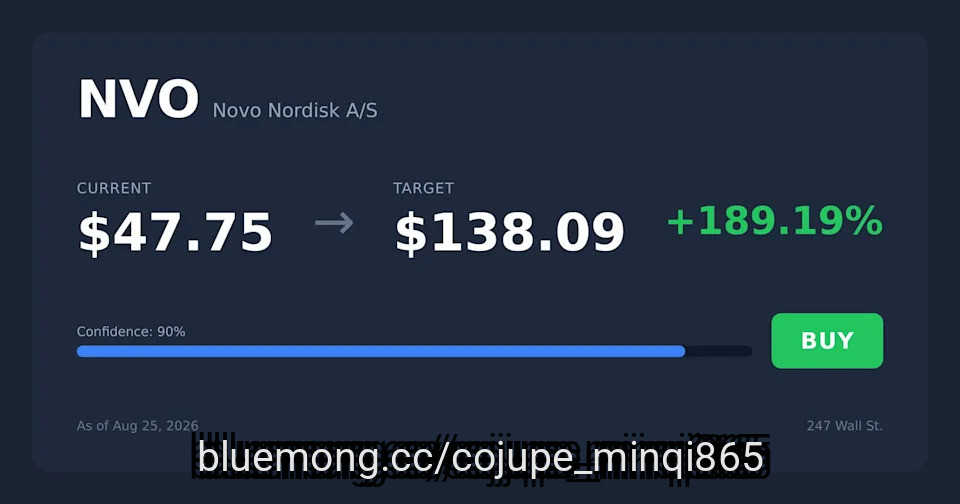
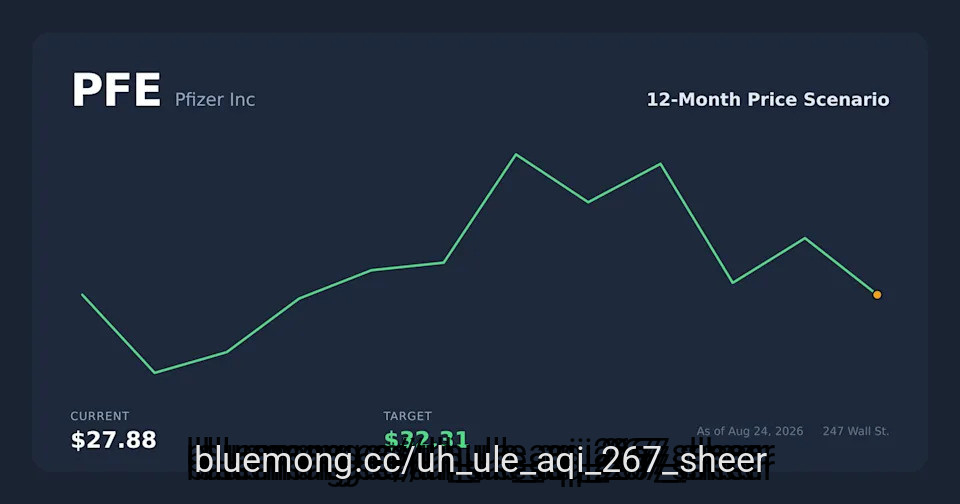
Pfizer (PFE) earns a BUY rating with a $32.36 price target, 15% upside, and a 6.19% dividend yield anchoring the rebound thesis.
Pfizer trades at 10x forward earnings, a steep discount to Merck (MRK) at 18x and Bristol Myers Squibb (BMY) at 11x.
CEO Albert Bourla beat consensus revenue nine of ten quarters, with 19 pivotal study starts planned across oncology, obesity, and immunology.
Act now: the ***** yst who called NVIDIA in 2010 just named his top 10 AI stocks — and Pfizer didn't make the cut. Grab the names FREE today.
Our 24/7 Wall St. price target for Pfizer (NYSE:PFE) points to $32.36 over the next 12 months, implying 15.27% upside from the recent close of $28.07. Our recommendation is buy, with high model confidence of 90%. Pipeline momentum, a re-rated 2026 guide, and a 6.19% dividend yield tip the scale toward a rebound thesis.
#target #upside #thesis
Pfizer trades at 10x forward earnings, a steep discount to Merck (MRK) at 18x and Bristol Myers Squibb (BMY) at 11x.
CEO Albert Bourla beat consensus revenue nine of ten quarters, with 19 pivotal study starts planned across oncology, obesity, and immunology.
Act now: the ***** yst who called NVIDIA in 2010 just named his top 10 AI stocks — and Pfizer didn't make the cut. Grab the names FREE today.
Our 24/7 Wall St. price target for Pfizer (NYSE:PFE) points to $32.36 over the next 12 months, implying 15.27% upside from the recent close of $28.07. Our recommendation is buy, with high model confidence of 90%. Pipeline momentum, a re-rated 2026 guide, and a 6.19% dividend yield tip the scale toward a rebound thesis.
#target #upside #thesis


25 days ago
The next few years will test whether Pfizer Inc. (NYSE:PFE) can replace yesterday's blockbusters, and whether Gilead Sciences, Inc. (NASDAQ:GILD) can become more than an HIV company. Pfizer's (NYSE:PFE) newer medicines are gaining traction, but that growth has yet to accelerate the wider business. Gilead (NASDAQ:GILD) is expanding faster, although its performance remains concentrated in one therapeutic area. For investors, this is ultimately a choice between an unfinished turnaround and a stronger growth story still searching for greater breadth.
Pfizer's (NYSE:PFE) strongest result was the performance of its non-COVID portfolio. Revenue excluding Comirnaty and Paxlovid grew 5% operationally, while launched and acquired products generated $3.2 billion and increased 18% operationally. Growth also came from several franchises. Padcev revenue rose 23% operationally to $667 million, supported by increased market share in bladder cancer. The Vyndaqel family generated $1.76 billion, up 8% operationally, while Lorbrena grew 37% operationally. These products give Pfizer more than one avenue for rebuilding revenue as COVID-related demand declines.
Pfizer (NYSE:PFE) lowered its 2026 COVID-product forecast from approximately $5 billion to $4 billion after low infection levels weighed on Paxlovid utilization. Nevertheless, stronger-than-expected non-COVID sales allowed the company to raise the midpoint of its total revenue guidance by $500 million. Cost reductions provide additional support for the company. Pfizer (NYSE:PFE) expects approximately $6.7 billion in savings from its cost-realignment program through 2029. A separate manufacturing-optimization program is expected to generate another $3 billion, bringing anticipated savings across the two programs to approximately $9.7 billion. This leaner cost base could help Pfizer (NYSE:PFE) preserve margins and continue investing in areas such as oncology and obesity.
Gilead (NASDAQ:GILD), however, is currently delivering much stronger underlying growth. Product sales excluding Veklury increased 10% to $7.6 billion, and HIV sales rose 12% to $5.7 billion, with Biktarvy revenue increasing 7% to $3.8 billion and Descovy sales climbing 48% to $967 million. Yeztugo, Gilead's (NASDAQ:GILD) twice-yearly injectable HIV-prevention medicine, contributed $232 million as its launch gained momentum. The product adds a potentially important growth driver to an already dominant HIV portfolio.
Growth, however, was not confined to HIV alone, as liver-disease sales increased 10% to $877 million, while Livdelzi revenue more than doubled from $78 million to $167 million. Trodelvy sales rose 26% to $457 million, providing further evidence that Gilead (NASDAQ:GILD) is building a meaningful oncology franchise. Management subsequently raised its 2026 product-sales outlook to $30.1–$30.4 billion and increased guidance for product sales excluding Veklury to $29.8–$30.1 billion.
#NYSE #million #gild
Pfizer's (NYSE:PFE) strongest result was the performance of its non-COVID portfolio. Revenue excluding Comirnaty and Paxlovid grew 5% operationally, while launched and acquired products generated $3.2 billion and increased 18% operationally. Growth also came from several franchises. Padcev revenue rose 23% operationally to $667 million, supported by increased market share in bladder cancer. The Vyndaqel family generated $1.76 billion, up 8% operationally, while Lorbrena grew 37% operationally. These products give Pfizer more than one avenue for rebuilding revenue as COVID-related demand declines.
Pfizer (NYSE:PFE) lowered its 2026 COVID-product forecast from approximately $5 billion to $4 billion after low infection levels weighed on Paxlovid utilization. Nevertheless, stronger-than-expected non-COVID sales allowed the company to raise the midpoint of its total revenue guidance by $500 million. Cost reductions provide additional support for the company. Pfizer (NYSE:PFE) expects approximately $6.7 billion in savings from its cost-realignment program through 2029. A separate manufacturing-optimization program is expected to generate another $3 billion, bringing anticipated savings across the two programs to approximately $9.7 billion. This leaner cost base could help Pfizer (NYSE:PFE) preserve margins and continue investing in areas such as oncology and obesity.
Gilead (NASDAQ:GILD), however, is currently delivering much stronger underlying growth. Product sales excluding Veklury increased 10% to $7.6 billion, and HIV sales rose 12% to $5.7 billion, with Biktarvy revenue increasing 7% to $3.8 billion and Descovy sales climbing 48% to $967 million. Yeztugo, Gilead's (NASDAQ:GILD) twice-yearly injectable HIV-prevention medicine, contributed $232 million as its launch gained momentum. The product adds a potentially important growth driver to an already dominant HIV portfolio.
Growth, however, was not confined to HIV alone, as liver-disease sales increased 10% to $877 million, while Livdelzi revenue more than doubled from $78 million to $167 million. Trodelvy sales rose 26% to $457 million, providing further evidence that Gilead (NASDAQ:GILD) is building a meaningful oncology franchise. Management subsequently raised its 2026 product-sales outlook to $30.1–$30.4 billion and increased guidance for product sales excluding Veklury to $29.8–$30.1 billion.
#NYSE #million #gild


25 days ago
Zoetis Inc. (NYSE:ZTS) entered 2026 as a leader in animal health, but its latest earnings show that even a strong market position cannot fully insulate the company from weaker consumer demand. Fiscal Q2 2026 revenue remained flat at $2.5 billion and declined 1% on an organic operational basis, as pressure in the U.S. companion-animal market offset growth in livestock and international markets.
The quarter therefore presents investors with two different versions of Zoetis (NYSE:ZTS), as an established companion-animal business facing near-term pressure and a diversified animal-health platform still investing in its next generation of products.
Zoetis's (NYSE:ZTS) diversification provided an important source of resilience during the quarter. Livestock revenue increased 12% on a reported basis, supported by cattle and poultry products. In the United States, livestock sales grew 23% on both a reported and organic operational basis in the quarter, benefiting from favorable beef-cattle economics, supply timing, and increased poultry-vaccine sales **** ociated with disease outbreaks.
International performance was also encouraging. Revenue outside the United States rose 8% on a reported basis and 6% organically to $1.2 billion. International companion-animal sales grew 5% organically, supported by parasiticides such as Simparica Trio, Revolution and Stronghold, as well as diagnostics and newer osteoarthritis treatments. This geographic contrast demonstrates that the weakness was not uniform across Zoetis's (NYSE:ZTS) business. Demand for its products remains healthy in several markets, even as U.S. pet owners become more price-sensitive.
However, innovation could provide another route back to growth, as Zoetis (NYSE:ZTS) says that its pipeline contains more than 12 potential blockbuster candidates across chronic kidney disease, oncology, cardiology, anxiety, and obesity. The company also launched Lenivia and Portela, long-acting osteoarthritis treatments offering dogs and cats up to three months of pain relief from one injection.
#revenue #quarter
The quarter therefore presents investors with two different versions of Zoetis (NYSE:ZTS), as an established companion-animal business facing near-term pressure and a diversified animal-health platform still investing in its next generation of products.
Zoetis's (NYSE:ZTS) diversification provided an important source of resilience during the quarter. Livestock revenue increased 12% on a reported basis, supported by cattle and poultry products. In the United States, livestock sales grew 23% on both a reported and organic operational basis in the quarter, benefiting from favorable beef-cattle economics, supply timing, and increased poultry-vaccine sales **** ociated with disease outbreaks.
International performance was also encouraging. Revenue outside the United States rose 8% on a reported basis and 6% organically to $1.2 billion. International companion-animal sales grew 5% organically, supported by parasiticides such as Simparica Trio, Revolution and Stronghold, as well as diagnostics and newer osteoarthritis treatments. This geographic contrast demonstrates that the weakness was not uniform across Zoetis's (NYSE:ZTS) business. Demand for its products remains healthy in several markets, even as U.S. pet owners become more price-sensitive.
However, innovation could provide another route back to growth, as Zoetis (NYSE:ZTS) says that its pipeline contains more than 12 potential blockbuster candidates across chronic kidney disease, oncology, cardiology, anxiety, and obesity. The company also launched Lenivia and Portela, long-acting osteoarthritis treatments offering dogs and cats up to three months of pain relief from one injection.
#revenue #quarter


26 days ago
(NEXSTAR) – From unexpected babies to "Ozempic teeth," the ultra-popular class of GLP-1 medications is turning out to have a few unanticipated side effects. Emerging research shows the drugs, which have proven effective in treating obesity and diabetes, may also be useful in treating addiction.
The medications' full potential is coming to light as more people are prescribed a GLP-1, which includes the brand names Ozempic, Mounjaro, Wegovy and Zepbound. As 15% of Americans say they've tried a GLP-1, researchers are learning more about how it impacts all aspects of life, not just diet.
"This drug has been available in the medical community since 2005," said Dr. Eugene Lucas, professor and coordinator of the Psychiatric Mental Health Nurse Practitioner Program at Wilkes University. "And over time, when physicians are ordering these medications for people with obesity, diabetes, they're finding that if they have a concurrent addictive disorder, and specifically alcohol, that they're either cutting back or stopping their alcohol use."
A large study of more than 200,000 people in Sweden found using a GLP-1 drug was ***** ociated with a decreased risk of hospitalization from alcohol use disorder.
Another study by researchers at the Washington University School of Medicine, which looked at 600,000 veterans with type 2 diabetes, found the medications were tied to a lower risk of developing any kind of substance use disorder.
#medications #diabetes #disorder #university
The medications' full potential is coming to light as more people are prescribed a GLP-1, which includes the brand names Ozempic, Mounjaro, Wegovy and Zepbound. As 15% of Americans say they've tried a GLP-1, researchers are learning more about how it impacts all aspects of life, not just diet.
"This drug has been available in the medical community since 2005," said Dr. Eugene Lucas, professor and coordinator of the Psychiatric Mental Health Nurse Practitioner Program at Wilkes University. "And over time, when physicians are ordering these medications for people with obesity, diabetes, they're finding that if they have a concurrent addictive disorder, and specifically alcohol, that they're either cutting back or stopping their alcohol use."
A large study of more than 200,000 people in Sweden found using a GLP-1 drug was ***** ociated with a decreased risk of hospitalization from alcohol use disorder.
Another study by researchers at the Washington University School of Medicine, which looked at 600,000 veterans with type 2 diabetes, found the medications were tied to a lower risk of developing any kind of substance use disorder.
#medications #diabetes #disorder #university



1 month ago
Eli Lilly and Company (NYSE:LLY) cleared a notable regulatory hurdle on August 10, when Britain's drug regulator authorized the company's oral GLP-1 drug orforglipron, becoming the first country in Europe to approve the pill. Shares of LLY increased more than 2% in response to the announcement, a modest but insightful reaction for a company whose weight-loss franchise has become the single most important driver of its market value.
The UK's Medicines and Healthcare Products Regulatory Agency approved orforglipron, offered under the brand name Foundayo, for weight loss and maintenance in obese adults, as well as select overweight individuals with at least one weight-related health condition. The approval also addresses increasing blood sugar control in people with type 2 diabetes.
What sets Foundayo apart from Lilly's other weight-loss medications, as well as the majority of the GLP-1 category in general, is the format. Unlike injectable drugs like Lilly's Zepbound or Novo Nordisk A/S (NYSE:NVO)'s Ozempic, Foundayo is a small, non-peptide GLP-1 receptor agonist that is taken as a single daily tablet. It can also be taken at any time with no food or water restrictions, making it a far more convenient regimen than some oral peptide alternatives that require fasting windows around dosing.
The clinical data that supports the approval is strong. In the ATTAIN-1 trial, which tracked 3,127 individuals with obesity for 72 weeks, participants on the 36 mg dose lost an average of 11.2% of their body weight, as opposed to 2.1% on placebo, and more than half of those on that dose lost at least 10%.
The authorization is crucial, but it is not the final step. Foundayo is not currently available through the NHS in the UK, and the drug's journey to that larger market is through the National Institute for Health and Care Excellence, which is completing its own cost-effectiveness study, with a decision expected on November 18. Until NICE decides, UK patients seeking the medicine will have to pay out of pocket or get it privately, a scenario that is already playing out with competing products in the category.
#foundayo #loss #NYSE #regulatory
The UK's Medicines and Healthcare Products Regulatory Agency approved orforglipron, offered under the brand name Foundayo, for weight loss and maintenance in obese adults, as well as select overweight individuals with at least one weight-related health condition. The approval also addresses increasing blood sugar control in people with type 2 diabetes.
What sets Foundayo apart from Lilly's other weight-loss medications, as well as the majority of the GLP-1 category in general, is the format. Unlike injectable drugs like Lilly's Zepbound or Novo Nordisk A/S (NYSE:NVO)'s Ozempic, Foundayo is a small, non-peptide GLP-1 receptor agonist that is taken as a single daily tablet. It can also be taken at any time with no food or water restrictions, making it a far more convenient regimen than some oral peptide alternatives that require fasting windows around dosing.
The clinical data that supports the approval is strong. In the ATTAIN-1 trial, which tracked 3,127 individuals with obesity for 72 weeks, participants on the 36 mg dose lost an average of 11.2% of their body weight, as opposed to 2.1% on placebo, and more than half of those on that dose lost at least 10%.
The authorization is crucial, but it is not the final step. Foundayo is not currently available through the NHS in the UK, and the drug's journey to that larger market is through the National Institute for Health and Care Excellence, which is completing its own cost-effectiveness study, with a decision expected on November 18. Until NICE decides, UK patients seeking the medicine will have to pay out of pocket or get it privately, a scenario that is already playing out with competing products in the category.
#foundayo #loss #NYSE #regulatory


1 month ago
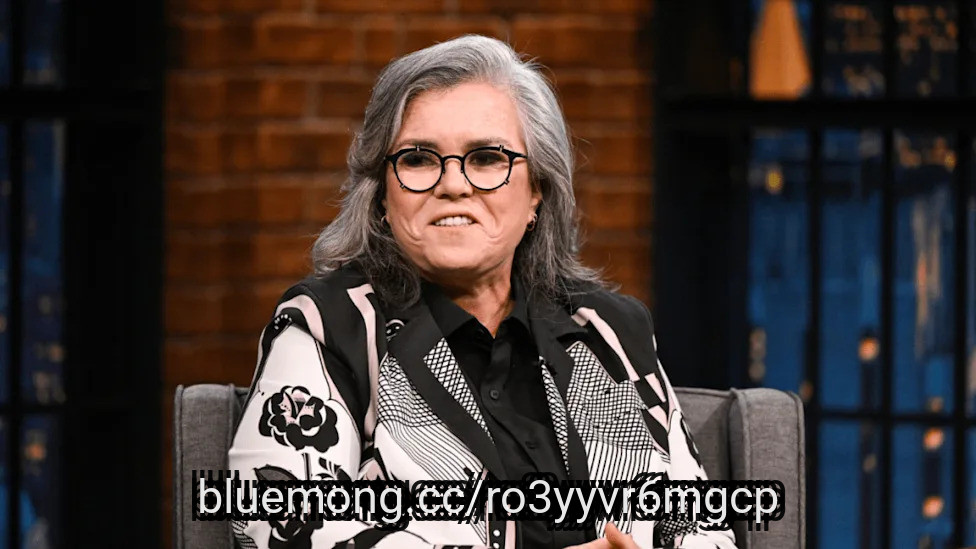
Rosie O'Donnell shared her experience taking the weight-loss drug Mounjaro, including the side effects. The former talk show host said she has "never felt better." However, she revealed that she had lost 12 pounds without making any changes, leading her to worry that she might have cancer.
O'Donnell spoke about the details on the August 11 episode of the Good Hang with Amy Poehler podcast. The 64-year-old said, as quoted by Us Weekly, "Three years ago, the doctor told me … they said, 'You have diabetes, can you take a shot?' I said, 'I think so. I don't know. I've never done a shot. Is it insulin?' … They said, 'No, it's this new drug and it really helps with your blood sugar.'"
O'Donnell said she was never told that the medication could cause rapid weight loss. She said doctors were focused on getting her "numbers" down. After starting Mounjaro, O'Donnell went to ***** u but said she could not eat after her son Blake proposed to Teresa Garofalow Westervelt. The couple got married in 2024. O'Donnell is also the mother of Parker, 31, Chelsea, 28, Vivienne, 23, and Clay, 13.
The comedian said she was overwhelmed with emotion after missing her mother, Roseann, and wishing she could have witnessed Blake's engagement and new chapter in life. She initially believed that emotional experience explained her weight loss. However, two weeks later, "I get on the scale. I call my doctor crying. I must have cancer. I've lost 12 pounds and I haven't done anything. It's been three weeks since I started that medicine."
O'Donnell, who first opened up about taking Mounjaro in January 2023, explained that losing weight had always been difficult for her, even when she actively tried. She said the drug could help many people with obesity but criticized the high cost of the treatment.
#mounjaro #loss #i 've #experience
O'Donnell spoke about the details on the August 11 episode of the Good Hang with Amy Poehler podcast. The 64-year-old said, as quoted by Us Weekly, "Three years ago, the doctor told me … they said, 'You have diabetes, can you take a shot?' I said, 'I think so. I don't know. I've never done a shot. Is it insulin?' … They said, 'No, it's this new drug and it really helps with your blood sugar.'"
O'Donnell said she was never told that the medication could cause rapid weight loss. She said doctors were focused on getting her "numbers" down. After starting Mounjaro, O'Donnell went to ***** u but said she could not eat after her son Blake proposed to Teresa Garofalow Westervelt. The couple got married in 2024. O'Donnell is also the mother of Parker, 31, Chelsea, 28, Vivienne, 23, and Clay, 13.
The comedian said she was overwhelmed with emotion after missing her mother, Roseann, and wishing she could have witnessed Blake's engagement and new chapter in life. She initially believed that emotional experience explained her weight loss. However, two weeks later, "I get on the scale. I call my doctor crying. I must have cancer. I've lost 12 pounds and I haven't done anything. It's been three weeks since I started that medicine."
O'Donnell, who first opened up about taking Mounjaro in January 2023, explained that losing weight had always been difficult for her, even when she actively tried. She said the drug could help many people with obesity but criticized the high cost of the treatment.
#mounjaro #loss #i 've #experience

1 month ago
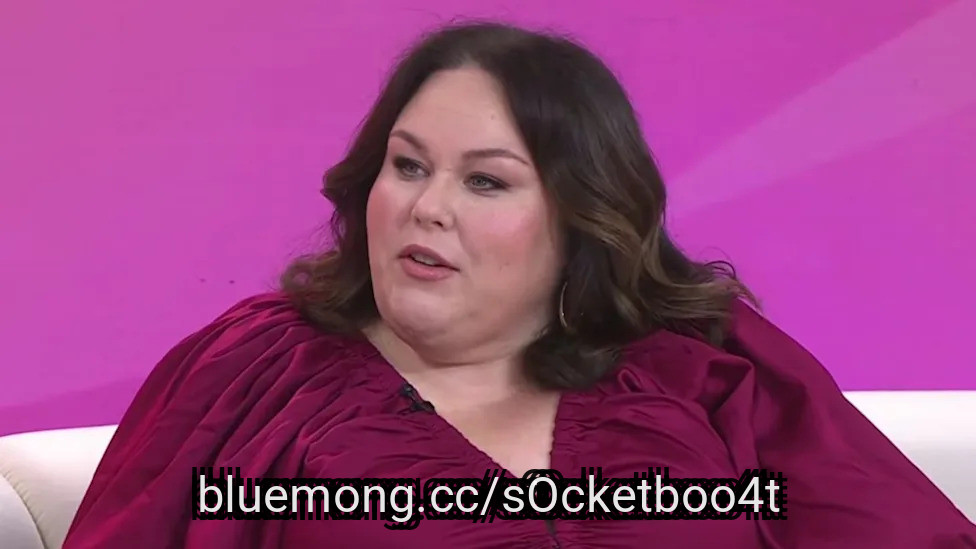
Chrissy Metz has opened up about using drugs on her weight-loss journey.
The actor and singer, who is best known for playing Kate Pearson in the TV drama This Is Us from 2016 to 2022, has signed up as a celebrity brand ambassador for telehealth GLP-1 weight loss programme Ro.
The Primetime Emmy and Golden Globe Award nominee shared with People magazine that after years of trying diets that didn't work, "I just wanted to take care of myself."
"I'm not getting any younger," she told the outlet. "I'm in perimenopause, and there were obesity issues within my family and with my father, and I felt like I've tried so many modalities, whether it was diets or therapy, and none of it really worked for me."
The Hunting Wives star admits she was sceptical about weight-loss drugs for years, **** uming they wouldn't work for her or would give her horrible side effects, but so far, she's been having a positive experience.
"It's so nice not to be obsessing about what I'm going to have every minute, even as I'm still consuming the meal. I just vilified food for so long because I was taught that it was bad, and you shouldn't eat this or that. And it's been helping me be more mobile and have less joint pain and inflammation, and run around onstage."
#loss #diets #chrissy #kate
The actor and singer, who is best known for playing Kate Pearson in the TV drama This Is Us from 2016 to 2022, has signed up as a celebrity brand ambassador for telehealth GLP-1 weight loss programme Ro.
The Primetime Emmy and Golden Globe Award nominee shared with People magazine that after years of trying diets that didn't work, "I just wanted to take care of myself."
"I'm not getting any younger," she told the outlet. "I'm in perimenopause, and there were obesity issues within my family and with my father, and I felt like I've tried so many modalities, whether it was diets or therapy, and none of it really worked for me."
The Hunting Wives star admits she was sceptical about weight-loss drugs for years, **** uming they wouldn't work for her or would give her horrible side effects, but so far, she's been having a positive experience.
"It's so nice not to be obsessing about what I'm going to have every minute, even as I'm still consuming the meal. I just vilified food for so long because I was taught that it was bad, and you shouldn't eat this or that. And it's been helping me be more mobile and have less joint pain and inflammation, and run around onstage."
#loss #diets #chrissy #kate



1 month ago
Chrissy Metz has revealed that she is taking a GLP-1 medication after years of skepticism, saying concerns about her long-term health eventually persuaded her to reconsider.
The 45-year-old This Is Us star said perimenopause, obesity within her family and health problems involving her father all contributed to her decision. She discussed the treatment with her doctor and says she ultimately concluded that trying a GLP-1 could be beneficial for her.
Metz, who is now a brand ambassador for telehealth company Ro, says one of the biggest changes has been a reduction in what she calls "food noise", the persistent thoughts about food and what she would eat next. She has also reported improvements in mobility, joint pain, inflammation, energy and blood work.
Metz began taking a GLP-1 later, in 2026, after she had already publicly discussed changing her diet, exercising and working with a trainer.
Metz told PEOPLE that she had spent years **** uming a GLP-1 either would not work for her or would produce side effects she did not want. Her experience so far has been more positive than she expected.
#taking #years #Food #chrissy
The 45-year-old This Is Us star said perimenopause, obesity within her family and health problems involving her father all contributed to her decision. She discussed the treatment with her doctor and says she ultimately concluded that trying a GLP-1 could be beneficial for her.
Metz, who is now a brand ambassador for telehealth company Ro, says one of the biggest changes has been a reduction in what she calls "food noise", the persistent thoughts about food and what she would eat next. She has also reported improvements in mobility, joint pain, inflammation, energy and blood work.
Metz began taking a GLP-1 later, in 2026, after she had already publicly discussed changing her diet, exercising and working with a trainer.
Metz told PEOPLE that she had spent years **** uming a GLP-1 either would not work for her or would produce side effects she did not want. Her experience so far has been more positive than she expected.
#taking #years #Food #chrissy
1 month ago
Eli Lilly (NYSE:LLY) delivered a quarter that forced Wall Street to catch up to its own numbers. On August 5, the company reported second-quarter revenue of $23.0 billion, up 48% from a year earlier, and used the momentum to raise its full-year sales and profit targets. Shares moved higher the same day as investors focused on how fast the obesity franchise is still expanding.
The headline number came from Mounjaro and Zepbound. Mounjaro revenue jumped 91% to $9.9 billion, while Zepbound climbed 46% to $4.9 billion, and together they anchored a quarter where US sales rose 33% to $14.4 billion, and international sales rose 80% to $8.6 billion. Growth was not confined to the diabetes and obesity lineup either. Lilly's immunology, oncology, and neuroscience products grew a combined 121%, showing the newer parts of the portfolio are starting to contribute in a real way.
Management responded by lifting full-year revenue guidance to a range of $85 billion to $87 billion, up from $82 billion to $85 billion previously. Lilly is also plowing the cash back into its pipeline, closing acquisitions of Orna Therapeutics, Ajax Therapeutics, Centessa Pharmaceuticals, and Kelonia Therapeutics during the quarter, agreeing to buy AtaiBeckley afterward, and committing another $4.5 billion to expand manufacturing in Indiana. On the drug development side, three more Phase 3 trials of the experimental triple agonist retatrutide read out positively, giving Lilly a complete data package to support a planned obesity application submission in the first quarter of 2027.
The same quarter that produced 48% revenue growth also showed what that growth is costing. Realized prices fell 13% company-wide, with international pricing down 36% largely tied to Mounjaro's addition to China's national reimbursement drug list, a trade-off Lilly is making for volume and market access. The acquisition spree carried a real accounting price tag too. Acquired R&D charges hit $2.8 billion in the quarter, versus just $154 million a year earlier, which is why reported EPS grew only 26% even as the non-GAAP figure grew 33%.
Asset impairment and restructuring charges of $703 million, largely tied to the Kelonia and Centessa deals, added further drag, and the effective tax rate climbed to 23.3% from 16.5% because of the non-deductible nature of those charges. R&D spending rose 14% to $3.8 billion, and marketing and administrative costs rose 25% to $3.4 billion, a reminder that funding a pipeline this active and prepping for a wave of new launches is not cheap. None of this changes the underlying growth story, but it does mean the path from strong sales to clean reported profit is getting ****** pier as the deal-making continues.
#billion #lilly #therapeutics #reported
The headline number came from Mounjaro and Zepbound. Mounjaro revenue jumped 91% to $9.9 billion, while Zepbound climbed 46% to $4.9 billion, and together they anchored a quarter where US sales rose 33% to $14.4 billion, and international sales rose 80% to $8.6 billion. Growth was not confined to the diabetes and obesity lineup either. Lilly's immunology, oncology, and neuroscience products grew a combined 121%, showing the newer parts of the portfolio are starting to contribute in a real way.
Management responded by lifting full-year revenue guidance to a range of $85 billion to $87 billion, up from $82 billion to $85 billion previously. Lilly is also plowing the cash back into its pipeline, closing acquisitions of Orna Therapeutics, Ajax Therapeutics, Centessa Pharmaceuticals, and Kelonia Therapeutics during the quarter, agreeing to buy AtaiBeckley afterward, and committing another $4.5 billion to expand manufacturing in Indiana. On the drug development side, three more Phase 3 trials of the experimental triple agonist retatrutide read out positively, giving Lilly a complete data package to support a planned obesity application submission in the first quarter of 2027.
The same quarter that produced 48% revenue growth also showed what that growth is costing. Realized prices fell 13% company-wide, with international pricing down 36% largely tied to Mounjaro's addition to China's national reimbursement drug list, a trade-off Lilly is making for volume and market access. The acquisition spree carried a real accounting price tag too. Acquired R&D charges hit $2.8 billion in the quarter, versus just $154 million a year earlier, which is why reported EPS grew only 26% even as the non-GAAP figure grew 33%.
Asset impairment and restructuring charges of $703 million, largely tied to the Kelonia and Centessa deals, added further drag, and the effective tax rate climbed to 23.3% from 16.5% because of the non-deductible nature of those charges. R&D spending rose 14% to $3.8 billion, and marketing and administrative costs rose 25% to $3.4 billion, a reminder that funding a pipeline this active and prepping for a wave of new launches is not cheap. None of this changes the underlying growth story, but it does mean the path from strong sales to clean reported profit is getting ****** pier as the deal-making continues.
#billion #lilly #therapeutics #reported

1 month ago
Chrissy Metz is opening up about her decision to start taking a GLP-1.
In a new interview with People, the This Is Us alum, 45, said that after years of trying different diets and fitness routines that didn't work, she opted for weight loss medication.
"I just wanted to take care of myself," Metz said.
"I'm not getting any younger. I'm in perimenopause, and there were obesity issues within my family and with my father, and I felt like I've tried so many modalities, whether it was diets or therapy, and none of it really worked for me," she continued.
Metz was skeptical at first, however, about starting a GLP-1, which, per the Cleveland Clinic, are "medications that help lower blood sugar levels and promote weight loss." In addition to being worried that the popular weight loss drugs wouldn't work for her, Metz was scared she would experience some of the horrible side effects often **** ociated with taking the medication, including nausea, vomiting, diarrhea and constipation, per Harvard Health.
#weight #people
In a new interview with People, the This Is Us alum, 45, said that after years of trying different diets and fitness routines that didn't work, she opted for weight loss medication.
"I just wanted to take care of myself," Metz said.
"I'm not getting any younger. I'm in perimenopause, and there were obesity issues within my family and with my father, and I felt like I've tried so many modalities, whether it was diets or therapy, and none of it really worked for me," she continued.
Metz was skeptical at first, however, about starting a GLP-1, which, per the Cleveland Clinic, are "medications that help lower blood sugar levels and promote weight loss." In addition to being worried that the popular weight loss drugs wouldn't work for her, Metz was scared she would experience some of the horrible side effects often **** ociated with taking the medication, including nausea, vomiting, diarrhea and constipation, per Harvard Health.
#weight #people


1 month ago
After a year at the helm, Novo Nordisk's CEO Maziar Mike Doustdar's task of closing the gap to pacesetter Eli Lilly doesn't look to be getting any easier.
Doustdar joined Novo at the height of spiralling erosion to rivals in the obesity and type 2 diabetes market segments. While the Danish drugmaker has since gained approval for oral Wegovy, a drug that set a record-breaking pace for a glucagon-like peptide-1 receptor agonist (GLP-1RA) at launch, other pipeline products have had mixed clinical results. Earlier this week, cardiovascular disease drug ziltivekimab failed a Phase III trial, while CagriSema fell short in a non-inferiority trial comparing it to Lilly's tirzepatide.
Coupled with ongoing sales decline, dealmaking presents an obvious avenue in which to boost pipeline offerings. Novo has already said it is actively targeting bolt-on acquisitions, with Doustdar reiterating during the Q2 earnings call that large-scale, transformative deals are still a way off.
"I'm very proud of our internal R&D and pipeline, but no company has a monopoly on good ideas. I've also said we are in every data room to try and see who else has a better idea, who else can give us ******* ets that we can bolt on, and complement what [our internal R&D teams] are doing," Doustdar said.
"I'm a person who never starts with a no to one day [being able to conduct transformative M&A], but you have to be in a very different situation than Novo Nordisk is in today," he added.
#pipeline
Doustdar joined Novo at the height of spiralling erosion to rivals in the obesity and type 2 diabetes market segments. While the Danish drugmaker has since gained approval for oral Wegovy, a drug that set a record-breaking pace for a glucagon-like peptide-1 receptor agonist (GLP-1RA) at launch, other pipeline products have had mixed clinical results. Earlier this week, cardiovascular disease drug ziltivekimab failed a Phase III trial, while CagriSema fell short in a non-inferiority trial comparing it to Lilly's tirzepatide.
Coupled with ongoing sales decline, dealmaking presents an obvious avenue in which to boost pipeline offerings. Novo has already said it is actively targeting bolt-on acquisitions, with Doustdar reiterating during the Q2 earnings call that large-scale, transformative deals are still a way off.
"I'm very proud of our internal R&D and pipeline, but no company has a monopoly on good ideas. I've also said we are in every data room to try and see who else has a better idea, who else can give us ******* ets that we can bolt on, and complement what [our internal R&D teams] are doing," Doustdar said.
"I'm a person who never starts with a no to one day [being able to conduct transformative M&A], but you have to be in a very different situation than Novo Nordisk is in today," he added.
#pipeline

1 month ago
By Mrinalika Roy and Mariam Sunny
Aug 5 (Reuters) - Sales of Eli Lilly's Zepbound and Mounjaro injectable weight-loss and diabetes drugs soared during the second quarter, easily beating Wall Street estimates and widening the gap with Danish rival Novo Nordisk.
The trillion-dollar company also posted better-than-expected quarterly results and raised its full-year revenue forecast, and its shares jumped over 5% in early trading.
The strong results are likely to reassure investors that demand for Lilly's GLP-1 treatments remains resilient despite pricing pressure and intensifying competition from Novo, which launched an oral version of its Wegovy weight-loss drug in the U.S. earlier this year.
Sales of diabetes drug Mounjaro rose 91% to $9.94 billion, beating ****** ysts' estimates, while obesity drug Zepbound brought in $4.93 billion, compared with expectations of $4.73 billion. The two drugs accounted for 64.7% of Lilly's revenue in the latest reported quarter.
#sales #novo #drugs
Aug 5 (Reuters) - Sales of Eli Lilly's Zepbound and Mounjaro injectable weight-loss and diabetes drugs soared during the second quarter, easily beating Wall Street estimates and widening the gap with Danish rival Novo Nordisk.
The trillion-dollar company also posted better-than-expected quarterly results and raised its full-year revenue forecast, and its shares jumped over 5% in early trading.
The strong results are likely to reassure investors that demand for Lilly's GLP-1 treatments remains resilient despite pricing pressure and intensifying competition from Novo, which launched an oral version of its Wegovy weight-loss drug in the U.S. earlier this year.
Sales of diabetes drug Mounjaro rose 91% to $9.94 billion, beating ****** ysts' estimates, while obesity drug Zepbound brought in $4.93 billion, compared with expectations of $4.73 billion. The two drugs accounted for 64.7% of Lilly's revenue in the latest reported quarter.
#sales #novo #drugs

1 month ago
Pfizer (PFE) yields nearly 7% as COVID drugs crater, while Merck (MRK) compounds at 66% one-year gains with a leaner 3% payout.
Pfizer runs 20 pivotal trials in 2026 targeting obesity and oncology, with a Vyndamax patent extension to 2031 protecting dividend coverage.
It sounds nuts, but SoFi1 is giving new Active Invest users up to $3,000 in stock for a limited time, and all it takes is a $50 deposit to get started.2 See for yourself (Sponsor)
Pfizer (NYSE:PFE) and Merck (NYSE:MRK) refreshed the dividend debate with their latest quarterly reports.
Pfizer defends one of Big Pharma's fattest yields while its COVID franchise fades. Merck absorbs multi-billion dollar deal charges to reload a pipeline behind Keytruda. Two payouts, two very different risk profiles for income investors.
#NYSE #yields #Dividend
Pfizer runs 20 pivotal trials in 2026 targeting obesity and oncology, with a Vyndamax patent extension to 2031 protecting dividend coverage.
It sounds nuts, but SoFi1 is giving new Active Invest users up to $3,000 in stock for a limited time, and all it takes is a $50 deposit to get started.2 See for yourself (Sponsor)
Pfizer (NYSE:PFE) and Merck (NYSE:MRK) refreshed the dividend debate with their latest quarterly reports.
Pfizer defends one of Big Pharma's fattest yields while its COVID franchise fades. Merck absorbs multi-billion dollar deal charges to reload a pipeline behind Keytruda. Two payouts, two very different risk profiles for income investors.
#NYSE #yields #Dividend



1 month ago
A coat owned by French actress, model and animal rights activist Brigitte Bardot is to be auctioned to raise money for a dog rescue charity.
Bardot, who died in December, aged 91, rose to fame during her teen modelling career, later becoming a famous actress starring in the film 'And God Created Woman'. She turned her attention to supporting animal charities in her retirement.
Now, a sleeveless velvet coat she owned will be sold at The Cotswold Auction Company in Cheltenham to raise money for the Dogs in Distress charity.
Senior valuer Jenny Low said: "This is a once-in-a-lifetime opportunity to own an item of clothing designed for and worn by screen icon Brigitte Bardot."
Deprived area pupils face high obesity rates
#brigitte #owned #actress
Bardot, who died in December, aged 91, rose to fame during her teen modelling career, later becoming a famous actress starring in the film 'And God Created Woman'. She turned her attention to supporting animal charities in her retirement.
Now, a sleeveless velvet coat she owned will be sold at The Cotswold Auction Company in Cheltenham to raise money for the Dogs in Distress charity.
Senior valuer Jenny Low said: "This is a once-in-a-lifetime opportunity to own an item of clothing designed for and worn by screen icon Brigitte Bardot."
Deprived area pupils face high obesity rates
#brigitte #owned #actress


1 month ago
Baron Capital, an investment management company, released its Q2 2026 investor letter for the "Baron Health Care Fund". A copy of the letter is available to download here. The Fund gained 11.99% during the quarter, compared with the 10.48% gain for the Russell 3000 Health Care Index and the 15.44% gain for the Russell 3000 Index. Since inception, the Fund appreciated 10.61% on an annualized basis, compared with 10.02% for the Benchmark and 14.83% for the Index. Strong stock selection in pharmaceuticals, biotechnology, health care equipment, and life sciences tools and services supported the Fund's outperformance, although limited exposure to managed care stocks reduced relative returns. The Fund remains positive on health care due to improving biotechnology funding, strong acquisition activity, recovering managed care margins, and growth from an aging population, chronic disease, medical innovation, and higher health care spending. In addition, please check the Fund's top five holdings to know the best picks in 2026.
In its second-quarter 2026 investor letter, Baron Health Care Fund highlighted Eli Lilly and Company (NYSE:LLY) as a notable performance contributor. Eli Lilly and Company (NYSE:LLY) discovers, develops, manufactures, and markets human pharmaceutical products in the United States and internationally. On August 03, 2026, Eli Lilly and Company (NYSE:LLY) closed at $1,121.36 per share. The one-month return of Eli Lilly and Company (NYSE:LLY) was -9.24%, and its shares gained 46.40% over the past 52 weeks. Eli Lilly and Company (NYSE:LLY) has a market capitalization of $1.06 trillion.
Baron Health Care Fund stated the following regarding Eli Lilly and Company (NYSE:LLY) in its Q2 2026 investor letter:
"Pharmaceutical company Eli Lilly and Company (NYSE:LLY), currently best known for its diabetes and obesity GLP-1 therapies, contributed to performance as commercial execution and pipeline data reinforced investor confidence in the company's long-term leadership. All three major pharmacy benefit managers now cover Lilly's obesity portfolio, including its new daily oral GLP-1, Foundayo. This marks a reversal from last summer, when CVS Caremark provided preferred coverage for Novo Nordisk's Wegovy and raised concerns about a potential price war. The shift suggests that patients and physicians prefer Zepbound and are driving demand. Clinical trial data further reinforces our view that Lilly has one of the strongest next-generation metabolic pipelines in the industry. Phase 3 data showed retatrutide delivered weight loss in the high-20% range at higher doses and nearly 20% at lower doses, while maintaining excellent tolerability. We are also excited about eloralintide, where Phase 2 data showed Zepbound-like efficacy and tolerability, with combination data expected soon. Long term, we continue to view Lilly's portfolio as the gold standard in a category that we believe can exceed $150 billion."
#Health #investor #letter
In its second-quarter 2026 investor letter, Baron Health Care Fund highlighted Eli Lilly and Company (NYSE:LLY) as a notable performance contributor. Eli Lilly and Company (NYSE:LLY) discovers, develops, manufactures, and markets human pharmaceutical products in the United States and internationally. On August 03, 2026, Eli Lilly and Company (NYSE:LLY) closed at $1,121.36 per share. The one-month return of Eli Lilly and Company (NYSE:LLY) was -9.24%, and its shares gained 46.40% over the past 52 weeks. Eli Lilly and Company (NYSE:LLY) has a market capitalization of $1.06 trillion.
Baron Health Care Fund stated the following regarding Eli Lilly and Company (NYSE:LLY) in its Q2 2026 investor letter:
"Pharmaceutical company Eli Lilly and Company (NYSE:LLY), currently best known for its diabetes and obesity GLP-1 therapies, contributed to performance as commercial execution and pipeline data reinforced investor confidence in the company's long-term leadership. All three major pharmacy benefit managers now cover Lilly's obesity portfolio, including its new daily oral GLP-1, Foundayo. This marks a reversal from last summer, when CVS Caremark provided preferred coverage for Novo Nordisk's Wegovy and raised concerns about a potential price war. The shift suggests that patients and physicians prefer Zepbound and are driving demand. Clinical trial data further reinforces our view that Lilly has one of the strongest next-generation metabolic pipelines in the industry. Phase 3 data showed retatrutide delivered weight loss in the high-20% range at higher doses and nearly 20% at lower doses, while maintaining excellent tolerability. We are also excited about eloralintide, where Phase 2 data showed Zepbound-like efficacy and tolerability, with combination data expected soon. Long term, we continue to view Lilly's portfolio as the gold standard in a category that we believe can exceed $150 billion."
#Health #investor #letter

1 month ago
Aug 4 (Reuters) - Pfizer on Tuesday slightly raised the lower end of its full-year revenue forecast after beating Wall Street estimates for second-quarter profit, driven by strong demand for blood thinner Eliquis.
Shares rose 1.8% to $25.5 in premarket trading.
Pfizer is banking on newer medicines to offset fading COVID revenue and reduce reliance on aging blockbuster drugs, while investors look for signs that its $10 billion purchase of Metsera can help establish a meaningful presence in the fast-growing obesity market.
The drugmaker, whose shares have fallen more than 50% from their pandemic-era peak, expects to return to stronger growth after 2028.
The U.S. drugmaker now expects annual sales of $60.5 billion to $62.5 billion, up from $59.5 billion to $62.5 billion forecast previously.
#forecast #drugmaker #reuters
Shares rose 1.8% to $25.5 in premarket trading.
Pfizer is banking on newer medicines to offset fading COVID revenue and reduce reliance on aging blockbuster drugs, while investors look for signs that its $10 billion purchase of Metsera can help establish a meaningful presence in the fast-growing obesity market.
The drugmaker, whose shares have fallen more than 50% from their pandemic-era peak, expects to return to stronger growth after 2028.
The U.S. drugmaker now expects annual sales of $60.5 billion to $62.5 billion, up from $59.5 billion to $62.5 billion forecast previously.
#forecast #drugmaker #reuters