
1 month ago
Johnson & Johnson (JNJ) stock has returned about 57% over the past year, against about 17% for the S&P 500. On the earnings it has already banked, that price looks expensive. But those earnings carry STELARA, which is losing share to biosimilar competition. What looks dear on earnings already reported comes down sharply on the earnings ***** ysts expect.
At about $270 a share, Johnson & Johnson trades at about 28.3 times its trailing earnings. That figure sits on adjusted earnings: normalized net income with stock-based compensation added back, meant to sit closer to the basis ***** ysts use in their forecasts than a GAAP figure would, though the two measures are not defined identically. Measured as market value against consensus net income, the multiple on fiscal 2026 earnings is about 24.1 times, and on the earnings expected for 2027 it is about 20.9 times.
Those trailing twelve months were not a clean run. STELARA cost Johnson & Johnson about 460 basis points of operational sales growth in the second quarter of 2026. Strip it out and the company grew double digits in that quarter on the same basis, on management's own account.
The trailing multiple measures today's price against a period burdened by slowing STELARA revenue. The rest of the portfolio kept growing. Revenue over the trailing twelve months is close to $98 billion, and the company has 28 products and platforms that each sell more than $1 billion a year.
Immunology shows both sides at once. TREMFYA grew 71% in the second quarter of 2026, and it remains the fastest-growing advanced therapy in both Crohn's disease and ulcerative colitis. STELARA is shrinking under biosimilars in that same segment.
#johnson #earnings


1 month ago
Johnson & Johnson (JNJ) has been a rewarding stock to hold, up about 53% over the past year against about 17% for the S&P 500. The change worth noticing over that stretch is quieter than the price. Management said sales still rose 5.6% despite a STELARA drag of about 460 basis points. Management is encouraging investors to evaluate the company's underlying momentum by presenting growth rates that exclude STELARA alongside its reported figures.
A year and a half ago, that drag was the headline. Management's own framing of the first quarter of 2025 noted an approximate 810 basis point headwind on Innovative Medicine sales.
By the second quarter of 2026, that segment-level drag remained heavy at roughly 760 basis points (or about 460 basis points across the total enterprise), yet management's emphasis shifted to highlighting double-digit operational growth excluding STELARA
The exclusion is not a rounding adjustment. STELARA sales fell 55.7% in the second quarter of 2026, and management put that drag at about 460 basis points of the whole company's 5.6% operational sales growth.
Two products show what the replacement looks like. TREMFYA booked $2 billion of sales in the second quarter of 2026, up over 70%, and management says ulcerative colitis and Crohn's disease are the major drivers of that growth. ICOTYDE, a recently launched once-daily pill for psoriasis, is the second, which leadership has highlighted as a key pipeline priority for the immunology business.
#sales #basis #drag #quarter


1 month ago
Biogen Inc. (BIIB) is a global biotechnology company that develops and commercializes therapies for serious and complex diseases. Headquartered in Cambridge, Massachusetts, Biogen has built a strong presence in neurology, specialized immunology, and rare diseases, with a portfolio spanning multiple sclerosis, spinal muscular atrophy, Alzheimer's disease, ALS, and other conditions.
Companies worth $10 billion or more are typically classified as "large-cap stocks," and Biogen, with a market cap of $32.1 billion, fits the label perfectly. Biogen's core strength lies in its deep neuroscience expertise and a portfolio of established therapies for complex neurological and rare diseases. Its long-standing research capabilities, specialized commercial infrastructure, and broad pipeline also provide scale and expertise that smaller biotech rivals can find hard to replicate.
Billionaire Charlie Munger, Who Died at 99, Skipped Insurance on His Mansion Since He Could Just Write a Check to Rebuild — 'All Intelligent People Do It My Way'
Nvidia CEO Jensen Huang Just Dropped Huge News for This Cybersecurity Stock
How to Play GME Stock as GameStop CEO Ryan Cohen Buys $20.3 Million in Shares
#biogen #complex #expertise


1 month ago
Wolfe Research upgraded two prominent pharmaceutical companies to Outperform on August 13. The firm upgraded both Biogen Inc. (NASDAQ:BIIB) and AbbVie Inc. (NYSE:ABBV)'s ratings from Peer Perform, with Wolfe ***** igning them similar $300 price targets. The firm's logic in each case was based on a comparable set of factors: pipelines that the market appears to undervalue, and valuations that Wolfe believes are too low given each company's growth track.
Wolfe's thesis for Biogen Inc. (NASDAQ:BIIB) is mainly based on late-stage clinical programs, which it believes the stock has yet to reflect. The firm focused on two experimental therapies in particular, both of which have key late-stage clinical readouts expected over the coming year: litifilimab, which Wolfe believes could be the first biologic approved for cutaneous lupus erythematosus, and felzartamab, which the firm claims represents a bigger commercial opportunity in antibody-mediated transplant rejection than Wall Street currently thinks.
Wolfe also cited Biogen's acquisition of Apellis Pharmaceuticals as strengthening its near-term revenue base through the FDA-approved drugs Empaveli and Syfovre. That move is part of an overall pattern of Biogen Inc. (NASDAQ:BIIB) diversifying beyond its core neurology brand, with the company completing its acquisition of RayThera on August 6, adding another early-stage immunology platform to its pipeline.
Wolfe's Biogen Inc. (NASDAQ:BIIB) thesis is incomplete without valuation. The firm believes the stock is trading at a discount to the broader market, despite the company's development on Leqembi, its Alzheimer's medication, and what Wolfe described as solid commercial execution overall.
AbbVie's upgrade is based on a slightly different premise: patent strength and cash generation rather than simple clinical events. Wolfe stated that AbbVie's 2027 earnings multiple of 14.6x seemed too low for a company that forecasts high-single-digit revenue growth for the rest of the decade. AbbVie's patent position, according to Wolfe, sets the company apart from its competitors in a way that the market has yet to completely price in.
#wolfe #firm #market #clinical

1 month ago
Apollo Global Management, Inc. (NYSE:APO) is reportedly in talks to acquire Johnson & Johnson (NYSE:JNJ) DePuy Synthes orthopedics business in a transaction that could value the unit at close to $20 billion, according to Bloomberg, as reported by Reuters. J&J generated $9.3 billion of revenue from the orthopedics business in 2025, making the potential transaction material for both companies. The discussions could reach an agreement within weeks, although J&J is also considering a public-market spin-off. This is consistent with J&J's October 2025 decision to separate DePuy Synthes within an expected 18-to-24-month timeframe and shift its MedTech portfolio toward higher-growth, higher-margin businesses.
For Apollo Global Management, Inc. (NYSE:APO), the attraction is the opportunity to acquire a large, established medical-device franchise with substantial recurring demand from joint-replacement and surgical procedures. A roughly $20 billion valuation against $9.3 billion of 2025 revenue implies a price-to-sales multiple of about 2.2x, giving Apollo room to pursue operational improvements, portfolio rationalization, and margin expansion if the business is acquired at an attractive valuation.
DePuy Synthes also has meaningful scale and leading positions across major orthopedics categories, while J&J has recently invested in technologies that could strengthen the franchise, including an agreement covering Gemtrack tracking technology for robotic and navigation-assisted joint procedures and the acquisition of Expanding Innovations for expandable spine implants. Apollo is also entering the potential deal from a position of considerable financial scale: it had approximately $1.05 trillion of ***** ets under management as of June 30, 2026, with $198 billion in equity strategies and $849 billion in credit strategies. Its second-quarter results included $111 billion of gross capital deployment, demonstrating the capacity to execute large transactions.
For Johnson & Johnson (NYSE:JNJ), a sale could accelerate the portfolio transformation that management has already identified as a strategic priority while potentially delivering a sizeable upfront cash inflow. J&J explicitly said its planned orthopedics separation should increase the company's top-line growth and operating margins by allowing it to concentrate on Oncology, Immunology, Neuroscience, Cardiovascular, Surgery and Vision.
The company has also been restructuring orthopedics, with $307 million of restructuring expense in 2025, following $167 million in 2024 and $319 million in 2023, primarily tied to market and product exits. A sale could therefore remove a business that has required restructuring resources while allowing J&J to redeploy capital toward areas it views as higher growth and higher margin.
#billion #depuy

1 month ago
Apollo Global Management, Inc. (NYSE:APO) is reportedly in talks to acquire Johnson & Johnson (NYSE:JNJ) DePuy Synthes orthopedics business in a transaction that could value the unit at close to $20 billion, according to Bloomberg, as reported by Reuters. J&J generated $9.3 billion of revenue from the orthopedics business in 2025, making the potential transaction material for both companies. The discussions could reach an agreement within weeks, although J&J is also considering a public-market spin-off. This is consistent with J&J's October 2025 decision to separate DePuy Synthes within an expected 18-to-24-month timeframe and shift its MedTech portfolio toward higher-growth, higher-margin businesses.
For Apollo Global Management, Inc. (NYSE:APO), the attraction is the opportunity to acquire a large, established medical-device franchise with substantial recurring demand from joint-replacement and surgical procedures. A roughly $20 billion valuation against $9.3 billion of 2025 revenue implies a price-to-sales multiple of about 2.2x, giving Apollo room to pursue operational improvements, portfolio rationalization, and margin expansion if the business is acquired at an attractive valuation.
DePuy Synthes also has meaningful scale and leading positions across major orthopedics categories, while J&J has recently invested in technologies that could strengthen the franchise, including an agreement covering Gemtrack tracking technology for robotic and navigation-assisted joint procedures and the acquisition of Expanding Innovations for expandable spine implants. Apollo is also entering the potential deal from a position of considerable financial scale: it had approximately $1.05 trillion of **** ets under management as of June 30, 2026, with $198 billion in equity strategies and $849 billion in credit strategies. Its second-quarter results included $111 billion of gross capital deployment, demonstrating the capacity to execute large transactions.
For Johnson & Johnson (NYSE:JNJ), a sale could accelerate the portfolio transformation that management has already identified as a strategic priority while potentially delivering a sizeable upfront cash inflow. J&J explicitly said its planned orthopedics separation should increase the company's top-line growth and operating margins by allowing it to concentrate on Oncology, Immunology, Neuroscience, Cardiovascular, Surgery and Vision.
The company has also been restructuring orthopedics, with $307 million of restructuring expense in 2025, following $167 million in 2024 and $319 million in 2023, primarily tied to market and product exits. A sale could therefore remove a business that has required restructuring resources while allowing J&J to redeploy capital toward areas it views as higher growth and higher margin.
#NYSE #johnson

2 months ago
On September 3, AbbVie Inc. (NYSE:ABBV) finalized its acquisition of clinical-stage biotech Apogee Therapeutics, Inc. (NASDAQ:APGE) for $135.11 per share in cash. The $10.9 billion buyouts immediately fold Apogee's promising inflammatory and immunology (I&I) pipeline into AbbVie's commercial engine. On the exact same day, AbbVie separately reported positive Phase 3 Cervino trial results for its bispecific T-cell engager, etentamig, in relapsed/refractory multiple myeloma. Together, the dual catalysts emphasize how mega-cap pharmaceutical giants are deploying cash flow from legacy franchises to lock in next-generation immunology and oncology ***** ets.
In Q2 2026, AbbVie Inc. (NYSE:ABBV) posted $16.99 billion in net revenue, up 10.2% year over year, while adjusted diluted EPS increased 22.9% to $3.65. Growth was driven by its immunology blockbusters, Skyrizi and Rinvoq, which generated $5.505 billion and $2.525 billion in revenue, respectively, representing growth of 24.4% and 24.5%. These gains more than offset the continued decline in Humira revenue, which fell 35.9% to $756 million amid biosimilar competition. AbbVie reiterated its full-year 2026 adjusted EPS guidance of $13.87–$14.07, including a $0.14 dilutive impact from the Apogee transaction.
As a clinical-stage biotech, Apogee Therapeutics, Inc. (NASDAQ:APGE) generated no product revenue in Q2 2026, while R&D expenses reached $67.3 million and G&A expenses totaled $24.3 million, resulting in a quarterly net loss of $85.9 million. Despite the cash burn, the company maintained a strong liquidity position, with $1.3 billion in cash and marketable securities, alongside a $1.3 billion non-dilutive credit collaboration with Blackstone Life Sciences to support Phase 3 trials of its lead ***** et, zumilokibart.
Financially, AbbVie is vastly superior in immediate cash generation and profitability, whereas Apogee represented pure clinical optionality backed by robust liquidity.
For AbbVie, acquiring Apogee's optimized antibody portfolio, including zumilokibart for atopic dermatitis, strengthens its post-Humira immunology franchise. Combined with internal R&D advances such as etentamig, which achieved statistically significant overall response rate and progression-free survival results in the Phase 3 Cervino study, along with an 87.9% 12-month overall survival rate, AbbVie demonstrates potential to sustain strong organic growth.
#phase #revenue #Growth


2 months ago
With a market cap of $138.2 billion, Bristol-Myers Squibb Company (BMY) is a global biopharmaceutical company that discovers, develops, manufactures, and markets innovative medicines worldwide. Its portfolio spans key therapeutic areas including oncology, hematology, immunology, cardiovascular disease, and neuroscience, with well-known products such as Opdivo, Eliquis, Revlimid, and Yervoy.
Companies valued at $10 billion or more are generally classified as "large-cap" stocks, and Bristol-Myers Squibb fits this criterion perfectly. The company serves patients through a broad commercial network that includes wholesalers, distributors, specialty pharmacies, hospitals, clinics, and government agencies.
Nvidia CEO Jensen Huang Says His $3.5 Billion MediaTek Deal Is 'Not Circular' Because 'They Do Their Own Business'
Strategy's Strategy Appears to Have Failed, and the Outlook of MSTR Stock Is Unfavorable
A Potential ***** eX Deal Could Meaningfully Accelerate Growth for Technip Stock
#company #bristol #squibb #Stock



2 months ago
Eli Lilly and Company (NYSE:LLY) has agreed to acquire privately held Merida Biosciences for up to $2.875 billion in cash, including an upfront payment and milestone-based payments. The deal is expected to close in the fourth quarter of 2026.
The acquisition expands Lilly's immunology pipeline and gives it access to Merida's antibody-engineering platform, which is designed to selectively eliminate disease-causing autoantibodies while preserving normal immune function. Merida's lead candidate, MER511, is in Phase 1 development for Graves' disease and thyroid eye disease (TED). Early data showed substantial reductions in disease-related antibodies along with a favorable initial safety profile.
The deal also fits Eli Lilly and Company (NYSE:LLY)'s broader strategy of using the cash generated by its obesity and diabetes franchises to diversify into additional therapeutic areas. Lilly has been active in acquisitions throughout 2026, making Merida the latest addition to its expanding pipeline.
The biggest benefit for Eli Lilly and Company (NYSE:LLY) is pipeline diversification. The company has generated significant growth from Mounjaro and Zepbound, but that success also increases its reliance on the obesity and diabetes markets. Adding Merida gives Lilly another potential growth platform in immunology.
Merida's technology could be particularly valuable if it works beyond its lead program. Rather than broadly suppressing the immune system, its approach is designed to target the antibodies responsible for specific autoimmune and allergic diseases. This could potentially offer a more targeted treatment strategy and create opportunities across several conditions.
#lilly #NYSE #immunology


2 months ago
North Chicago, Illinois-based AbbVie Inc. (ABBV) is a global, research-driven biopharmaceutical company focused on developing and commercializing medicines for complex and serious diseases. Valued at a market cap of $386.3 billion, its key therapeutic areas include immunology, neuroscience, oncology and aesthetics, with operations spanning more than 75 countries.
Companies with a market capitalization of $200 billion or more are typically referred to as "mega-cap stocks." ABBV fits right into that category, with its market cap exceeding this threshold, reflecting its substantial size and influence in the general drug manufacturers industry. AbbVie combines a large established pharmaceutical portfolio with a rapidly expanding immunology franchise and a broad pipeline.
Wu-Tang Clan Member Raekwon Is a Palantir 'OG,' Visiting Headquarters 16 Years After Receiving His Custom PLTR Jacket
Tesla Just Killed Its Solar Roof After Years of Struggling to Scale. What It Means for TSLA Stock.
Tesla Stock Could Benefit as Trump Locks Down the U.S. Power Grid
#abbvie #abbv #billion



2 months ago
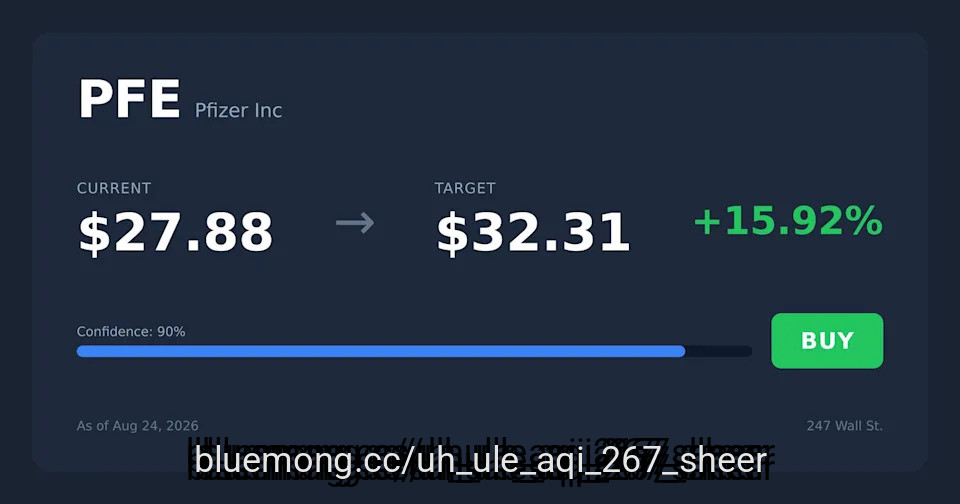
Pfizer (PFE) earns a BUY rating with a $32.36 price target, 15% upside, and a 6.19% dividend yield anchoring the rebound thesis.
Pfizer trades at 10x forward earnings, a steep discount to Merck (MRK) at 18x and Bristol Myers Squibb (BMY) at 11x.
CEO Albert Bourla beat consensus revenue nine of ten quarters, with 19 pivotal study starts planned across oncology, obesity, and immunology.
Act now: the ***** yst who called NVIDIA in 2010 just named his top 10 AI stocks — and Pfizer didn't make the cut. Grab the names FREE today.
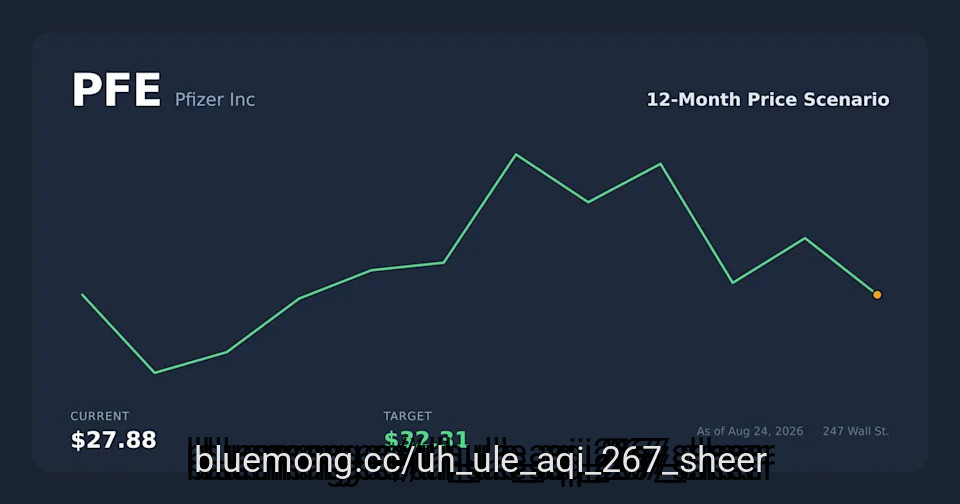
Our 24/7 Wall St. price target for Pfizer (NYSE:PFE) points to $32.36 over the next 12 months, implying 15.27% upside from the recent close of $28.07. Our recommendation is buy, with high model confidence of 90%. Pipeline momentum, a re-rated 2026 guide, and a 6.19% dividend yield tip the scale toward a rebound thesis.
#target #upside #thesis

2 months ago
Healthcare investors looking for long-term growth don't always have to choose between fast-growing companies and defensive businesses. Sometimes the more interesting decision is between two high-quality companies that are growing for entirely different reasons. Johnson & Johnson (NYSE:JNJ) continues to benefit from the breadth of its pharmaceutical and medical technology businesses, while Thermo Fisher's (NYSE:TMO) outlook increasingly depends on a recovery in life sciences spending after several difficult years.
Both companies reported encouraging results, but does steady diversification or an improving industry cycle offer the stronger long-term opportunity for investors? Let's take a look.
Johnson & Johnson's (NYSE:JNJ) pharmaceutical business was arguably the biggest contributor to its strong quarter, as it helped increase total sales, generating $16.38 billion in quarterly sales and exceeding **** ysts' estimate of $16.1 billion. The healthcare giant now expects its annual sales to be around $101.1 billion at the midpoint, compared with $100.8 billion previously. In another optimistic feat, it raised its adjusted earnings per share forecast to $11.68 at the midpoint, from a previous $11.55 per share.
The most impressive aspect for Johnson & Johnson (NYSE:JNJ), however, wasn't simply pharmaceutical growth but rather the company's ability to offset one of the largest patent cliffs in its portfolio, as it absorbed a significant patent-related decline in Stelara sales while still raising its full-year outlook. Revenue from Johnson & Johnson's (NYSE:JNJ) Stelara, which treats psoriasis, Crohn's disease, and other autoimmune conditions, dropped over 55% in the quarter to $740 million due to patent loss.
However, the company's cancer and newer immunology drugs can be seen countering this loss, as sales of Tremfya, its psoriasis and inflammatory bowel disease drug, rose 72.5% to $2 billion, considerably exceeding the estimate of $1.74 billion. Strong performance from newer drugs such as Tremfya suggests the company's pipeline is successfully offsetting losses from older products.
#billion #tremfya

2 months ago
Greenhaven Road Capital, an investment management company, released its second-quarter 2026 investor letter. A copy of the letter can be downloaded here. The fund achieved an approximate 11% net return in the second quarter, indicating progress from the first quarter. Key changes to the portfolio will include lower concentration and increased investments with near-term catalysts, alongside a proactive stance on profit-taking. The focus will remain on owning strong businesses and conducting research that challenges consensus views, as several major investments are poised for significant events within the year. Despite declines in market multiples, underlying businesses continue to grow, suggesting a favorable positioning for returns. Additionally, reviewing the Fund's top five holdings could help identify its best picks for 2026.
In its Q2 2026 investor letter, Greenhaven Road Capital highlighted AnaptysBio, Inc. (NASDAQ:ANAB) as a newly added position. AnaptysBio, Inc. (NASDAQ:ANAB) is a clinical-stage biotechnology company focusing on immunology therapeutics for autoimmune and inflammatory diseases. On August 14, 2026, AnaptysBio, Inc. (NASDAQ:ANAB) closed at $58.47 per share, reflecting a market capitalization of $1.73 billion. AnaptysBio, Inc. (NASDAQ:ANAB) posted a one-month return of 16.27%, while its shares gained 338.15% over the past 52 weeks.
Greenhaven Road Capital stated the following regarding AnaptysBio, Inc. (NASDAQ:ANAB) in its Q2 2026 investor letter:
"Many of our investments require patience. Rather than a clear near-term catalyst, they offer an advantaged product or management team that can build the business and compound value over time. This quarter, we invested in AnaptysBio, a situation that may not require as much patience.
AnaptysBio, Inc. (NASDAQ:ANAB) is a drug royalty company. In 2014, Tesaro licensed a portfolio of pre-clinical antibodies from AnaptysBio. Tesaro, then a small company with $180M in cash, paid AnaptysBio $17M under an agreement designed for two small companies. The agreement included exclusivity and notification provisions and required Tesaro to seek an "optimal commercial return" for AnaptysBio's drugs, which were still in clinical trials.
#road #company #letter

2 months ago
For years, AbbVie (NYSE: ABBV) was known primarily for immunology. Humira built the company into a pharmaceutical giant, and newer blockbusters Skyrizi and Rinvoq have helped replace much of the revenue lost to biosimilar competition. Now the company's got another iron in the fire -- neuroscience -- and it's no slouch.
Management now expects its neuroscience portfolio to generate approximately $12.7 billion in revenue during 2026, raising guidance by another $100 million after a strong first half of the year. That's a remarkable figure when you consider that the portfolio generated $10.8 billion last year and continues to grow at a double-digit pace.
Missed Nvidia in 2009? This Rare Signal Is Flashing Again. In 2009, a "Double Down" signal flashed for a little-known chipmaker called Nvidia. For the first time in years, that same "Total Conviction" signal is flashing for a company 1/100th the size of Nvidia. Continue »
Unlike some pharmaceutical franchises that depend on a single blockbuster, AbbVie's neuroscience business has become increasingly diversified. During the second quarter, neuroscience revenue climbed 20.3% year over year to $3.23 billion. Schizophrenia and bipolar disorder drug Vraylar generated $1.07 billion, therapeutic Botox contributed $1.04 billion, and migraine drugs Ubrelvy and Qulipta combined for $742 million in quarterly sales. Parkinson's disease therapy Vyalev added another $256 million.
The fastest-growing part of AbbVie's neuroscience business may be migraine. Combined sales rose 22.6% year over year as Ubrelvy and Qulipta continued gaining traction with physicians addressing both acute migraine attacks and migraine prevention.
#year #billion #revenue #million


2 months ago
AbbVie Inc. (NYSE:ABBV) reported its first-quarter 2026 financial results, delivering worldwide net revenues of $15.002 billion, an increase of 12.4% on a reported basis (10.3% operationally). The company posted GAAP diluted EPS of $0.39 and adjusted diluted EPS of $2.65, which exceeded internal expectations despite including a $0.41 per share unfavorable impact from acquired IPR&D and milestone expenses. Grounded in this solid operational momentum, ABBV raised its full-year 2026 adjusted diluted EPS guidance range to $14.08–$14.28.
Adding to its commercial trajectory, AbbVie's Allergan Aesthetics announced on July 17 that the European Commission approved Boey (trenibotulinumtoxinE) across all 30 European Economic Area countries. Marked as the first and only rapid-onset, short-duration botulinum neurotoxin serotype E in Europe, Boey targets the temporary improvement of moderate to severe frown lines with an onset as fast as eight hours and results lasting two to three weeks. This regulatory milestone follows approval in Canada earlier in the year and expands AbbVie's high-margin aesthetic portfolio beyond traditional Botox offerings.
Following these catalysts, Wall Street **** yst revisions have turned increasingly positive. On July 22, Canaccord raised its price target on AbbVie to $282 from $273 while maintaining a Buy rating. The firm updated its financial model ahead of Q2 earnings, citing expected strength across core prescription volume trends and recent positive developmental wins.
This momentum brings up a pivotal question: Does AbbVie's successful pivot away from legacy reliance justify higher valuation multiples, or do long-term debt levels and margin pressures cap future upside?
Proponents of the bullish case emphasize AbbVie Inc. (NYSE:ABBV)'s high-performing post-Humira growth engine. Top-line expansion is overwhelmingly driven by its flagship immunology **** ets, Skyrizi and Rinvoq, which generated $4.483 billion (+30.9% reported) and $2.119 billion (+23.3% reported) in Q1 net revenues, respectively. Rapid, durable share gains across multiple indication rollouts highlight a strong product-market fit that effectively absorbs legacy biosimilar erosion.
#diluted


3 months ago
AbbVie (NYSE:ABBV) just moved a step closer to expanding one of its most recognizable brands. On August 4, the FDA accepted for review a supplemental Biologics License Application for Botox Cosmetic to treat masseter muscle prominence, the jaw-muscle bulge that can give a face a wider, squarer look. If cleared, Botox Cosmetic would become the first and only neurotoxin approved for that use in the US and the fifth aesthetic indication for a drug that already anchors AbbVie's fastest-growing units.
The filing rests on two Phase 3 studies, M21-416 and M21-417, both of which hit their main goal and showed statistically significant improvement in masseter prominence against a placebo, with p-values of 0.0046 and 0.0014. Twice as many treated patients called themselves satisfied compared with the placebo group, and the safety data lined up with Botox's long track record, with no new red flags. That is the AbbVie playbook in miniature: squeeze another approved use out of a drug it already owns rather than starting from zero.
The broader business backs that pattern up. In the quarter ended June 30, net revenue came in just under $17 billion, up more than 10% year over year, with immunology sales climbing 15% on Skyrizi and Rinvoq and neuroscience revenue jumping more than 20%. Management raised its full-year outlook for the second time this year, and the Humira patent-cliff drag that weighed on results for two years now looks largely behind the company.
Most of AbbVie's US product sales still flow through just three wholesale distributors, McKesson, Cardinal Health, and Cencora, a concentration that leaves the company exposed if any one relationship sours. The balance sheet carries real leverage too: a debt-to-equity ratio of roughly -21.1x as of its December 2025 filing means liabilities outweigh shareholder equity outright, and a current ratio near 0.7x offers less short-term cushion than many healthcare peers hold.
Patent protection for Skyrizi and Rinvoq remains a multi-year risk, and the Inflation Reduction Act already allows government price negotiation on products including Imbruvica and, notably, Botox itself. The pending $10.9 billion Apogee Therapeutics acquisition adds fresh debt and integration risk on top of that. Oncology revenue slipped almost 2% in the latest quarter, and the stock's 8% gain this year has trailed the S&P 500's 13%, with a trailing P/E near 70 that mostly reflects acquisition-related charges rather than the underlying business.
#revenue


3 months ago
Eli Lilly (NYSE:LLY) delivered a quarter that forced Wall Street to catch up to its own numbers. On August 5, the company reported second-quarter revenue of $23.0 billion, up 48% from a year earlier, and used the momentum to raise its full-year sales and profit targets. Shares moved higher the same day as investors focused on how fast the obesity franchise is still expanding.
The headline number came from Mounjaro and Zepbound. Mounjaro revenue jumped 91% to $9.9 billion, while Zepbound climbed 46% to $4.9 billion, and together they anchored a quarter where US sales rose 33% to $14.4 billion, and international sales rose 80% to $8.6 billion. Growth was not confined to the diabetes and obesity lineup either. Lilly's immunology, oncology, and neuroscience products grew a combined 121%, showing the newer parts of the portfolio are starting to contribute in a real way.
Management responded by lifting full-year revenue guidance to a range of $85 billion to $87 billion, up from $82 billion to $85 billion previously. Lilly is also plowing the cash back into its pipeline, closing acquisitions of Orna Therapeutics, Ajax Therapeutics, Centessa Pharmaceuticals, and Kelonia Therapeutics during the quarter, agreeing to buy AtaiBeckley afterward, and committing another $4.5 billion to expand manufacturing in Indiana. On the drug development side, three more Phase 3 trials of the experimental triple agonist retatrutide read out positively, giving Lilly a complete data package to support a planned obesity application submission in the first quarter of 2027.
The same quarter that produced 48% revenue growth also showed what that growth is costing. Realized prices fell 13% company-wide, with international pricing down 36% largely tied to Mounjaro's addition to China's national reimbursement drug list, a trade-off Lilly is making for volume and market access. The acquisition spree carried a real accounting price tag too. Acquired R&D charges hit $2.8 billion in the quarter, versus just $154 million a year earlier, which is why reported EPS grew only 26% even as the non-GAAP figure grew 33%.
Asset impairment and restructuring charges of $703 million, largely tied to the Kelonia and Centessa deals, added further drag, and the effective tax rate climbed to 23.3% from 16.5% because of the non-deductible nature of those charges. R&D spending rose 14% to $3.8 billion, and marketing and administrative costs rose 25% to $3.4 billion, a reminder that funding a pipeline this active and prepping for a wave of new launches is not cheap. None of this changes the underlying growth story, but it does mean the path from strong sales to clean reported profit is getting ****** pier as the deal-making continues.
#billion #lilly #therapeutics #reported


3 months ago
Baron Capital, an investment management company, released its Q2 2026 investor letter for the "Baron Health Care Fund". A copy of the letter is available to download here. The Fund gained 11.99% during the quarter, compared with the 10.48% gain for the Russell 3000 Health Care Index and the 15.44% gain for the Russell 3000 Index. Since inception, the Fund appreciated 10.61% on an annualized basis, compared with 10.02% for the Benchmark and 14.83% for the Index. Strong stock selection in pharmaceuticals, biotechnology, health care equipment, and life sciences tools and services supported the Fund's outperformance, although limited exposure to managed care stocks reduced relative returns. The Fund remains positive on health care due to improving biotechnology funding, strong acquisition activity, recovering managed care margins, and growth from an aging population, chronic disease, medical innovation, and higher health care spending. In addition, please check the Fund's top five holdings to know the best picks in 2026.
In its second-quarter 2026 investor letter, Baron Health Care Fund highlighted Apogee Therapeutics, Inc. (NASDAQ:APGE). Apogee Therapeutics, Inc. (NASDAQ:APGE) a clinical stage biotechnology company, develops novel biologics for the treatment of atopic dermatitis, asthma, eosinophilic esophagitis, chronic obstructive pulmonary disease, and other inflammatory and immunology indications. On August 04, 2026, Apogee Therapeutics, Inc. (NASDAQ:APGE) closed at $134.19 per share. One-month return of Apogee Therapeutics, Inc. (NASDAQ:APGE) was 1.05% and its shares gained 269.47% over the past 52 weeks. Apogee Therapeutics, Inc. (NASDAQ:APGE) has a market capitalization of $10.11 billion with a 52-week trading range between $34.34 - $134.46.
Baron Health Care Fund stated the following regarding Apogee Therapeutics, Inc. (NASDAQ:APGE) in its Q2 2026 investor letter:
"Favorable stock selection in biotechnology, mostly attributable to acquisition target Apogee Therapeutics, Inc. (NASDAQ:APGE), was partly offset by higher exposure to this underperforming sub-industry. In June, Apogee announced an agreement to be acquired by AbbVie Inc. for $135.11 per share, representing a 49.5% premium over the prior day's closing stock price. We sold Apogee Therapeutics, Inc. following announcements that it was being acquired by AbbVie Inc."
Apogee Therapeutics, Inc. (NASDAQ:APGE) is not on our list of the 40 Most Popular Stocks Among Hedge Funds. As per our database, 44 hedge fund portfolios held Apogee Therapeutics, Inc. (NASDAQ:APGE) at the end of the first quarter which was 35 in the previous quarter. While we acknowledge the potential of Apogee Therapeutics, Inc. (NASDAQ:APGE) as an investment, we believe certain AI stocks offer greater upside potential and carry less downside risk. If you're looking for an extremely undervalued AI stock that also stands to benefit significantly from Trump-era tariffs and the onshoring trend, see our free report on the


3 months ago
SKYRIZI supplies close to a third of guided company revenue, which puts an unusual amount of AbbVie's future behind one patent estate.
AbbVie (ABBV) has guided total 2026 revenue to roughly $67.6 billion. About $21.7 billion of that, close to one-third, is expected to come from a single medicine, SKYRIZI. That share is the number a holder should sit with before anything else in this story.
The quarterly picture has the same shape. SKYRIZI sold $5.5 billion in the second quarter of 2026, up 24% operationally, against total net revenues of nearly $17 billion, and the next largest product AbbVie broke out, RINVOQ, sold more than $2.5 billion. Immunology as a whole brought in nearly $8.8 billion, more than half the company, on 14.6% operational growth. What makes that concentration matter is what sits beside it: oncology revenue of more than $1.6 billion fell 2.4% operationally in the same three months, and aesthetics, at nearly $1.3 billion, slipped 0.9%. Neuroscience did grow, at more than $3.2 billion and roughly 20%. So the growth you are paying for sits in immunology and neuroscience, and inside the bigger of the two it leans mostly on one molecule.
AbbVie does not have to imagine what biosimilar entry does to a large immunology franchise, because it is happening on its own income statement right now. HUMIRA sold $756 million in the second quarter of 2026, down 36% operationally, which the company puts down to biosimilar competition. A franchise shedding better than a third of its sales year over year is the shape of the risk, not its timing, because the two products sit on very different clocks.
SKYRIZI's clock is public and much further out. The company says the US composition-of-matter patent expires in 2033, that later-expiring patents embodying the product are granted or in process and run into the mid twenty-thirties and later, that regulatory data protection does not lapse until 2031, and that it does not expect biosimilar applications before the end of the decade. That is a long runway by any standard. It is also why the question keeps coming back, because close to a third of today's guided revenue eventually sits behind that later intellectual property rather than behind the original patent.
#billion #skyrizi #abbvie #behind


3 months ago
AstraZeneca (AZN) stock took a nosedive Monday amid reports it's mulling a megamerger with Bristol Myers Squibb (BMY).
The combined company would be worth roughly $400 billion, "making it one of the biggest pharmaceutical mergers in history," RBC Capital Markets ******* yst Trung Huynh said in a report. The Financial Times first reported the early merger talks. AstraZeneca declined to comment to Investor's Business Daily. Bristol Myers didn't immediately respond.
The deal would merge two oncology powerhouses, and likely trigger an antitrust review. Bristol Myers fills portfolio gaps in blood cancer, immunology, cardiovascular diseases and central nervous system conditions where AstraZeneca lacks scale today, Huynh said.
AstraZeneca stock tumbled 6.9% to 157.97. Shares are already trading below their 21-day, 50-day and 200-day moving averages. Bristol Myers Squibb stock, on the other hand, inched a fraction higher to 65.47. The stock ended the regular session in a buy zone that runs up to 66.03.
Given the size of the two companies, the deal would likely be mostly stock-based, resulting in Bristol Myers shareholders owning roughly a third of the combined company, William Blair ******* yst Matt Phipps said in a client note. He says $160 billion makes sense as a price tag for Bristol Myers Squibb.
#astrazeneca #huynh #combined

3 months ago
Bristol Myers Squibb (NYSE: BMY) looks attractive from a value perspective. For example, its dividend yield is a lofty 4% compared to the S&P 500 index's (SNPINDEX: ^GSPC) 1% and the pharmaceutical sector's average of around 1.5%. From a more traditional perspective, Bristol Myers Squibb's 17.5x price-to-earnings ratio is well below the industry average of 25x. Here's why it may not be as cheap as it looks and what needs to happen to change that.
There is nothing particularly unusual happening with Bristol Myers Squibb's business. That is important to highlight because the pharmaceutical industry is highly competitive, research-driven, and has a unique patent situation that materially complicates things even for the largest drug makers. The issue is that the patent protections for new drugs are time-limited, but research and development outcomes are unpredictable.
Missed Nvidia in 2009? This Rare Signal Is Flashing Again. In 2009, a "Double Down" signal flashed for a little-known chipmaker called Nvidia. For the first time in years, that same "Total Conviction" signal is flashing for a company 1/100th the size of Nvidia. Continue »
That's the crux of the problem with Bristol Myers Squibb right now. Material patent expirations are occurring, including Revlimid and Pomalyst in 2026. And that will be followed by Eliquis, which is marketed with Pfizer (NYSE: PFE) in 2028. While patent expirations are common, the outcome is usually a material drop in revenue from the affected drugs. So Bristol Myers Squibb's top and bottom lines are going to be under pressure for a bit. If that's the case, the low P/E and high yield relative to the broader sector could simply be Wall Street pricing in the patent expirations.
Management isn't sitting around with its head in the sand. The company is actively looking for new drug candidates. And it actually has some attractive pipeline options in rare diseases, immunology, and cancer. If the company gets a couple of new blockbuster drugs approved, it could easily offset the hit from drugs that are losing patent protection. If that comes to pass, today's relatively low price will turn out to be a bargain.
#signal

3 months ago
Princeton, New Jersey-based Bristol-Myers Squibb Company (BMY) discovers, develops, licenses, manufactures, markets, distributes, and sells biopharmaceutical products worldwide. With a market cap of $129.9 billion, the company offers products for oncology, hematology, immunology, cardiovascular, neuroscience, and other areas.
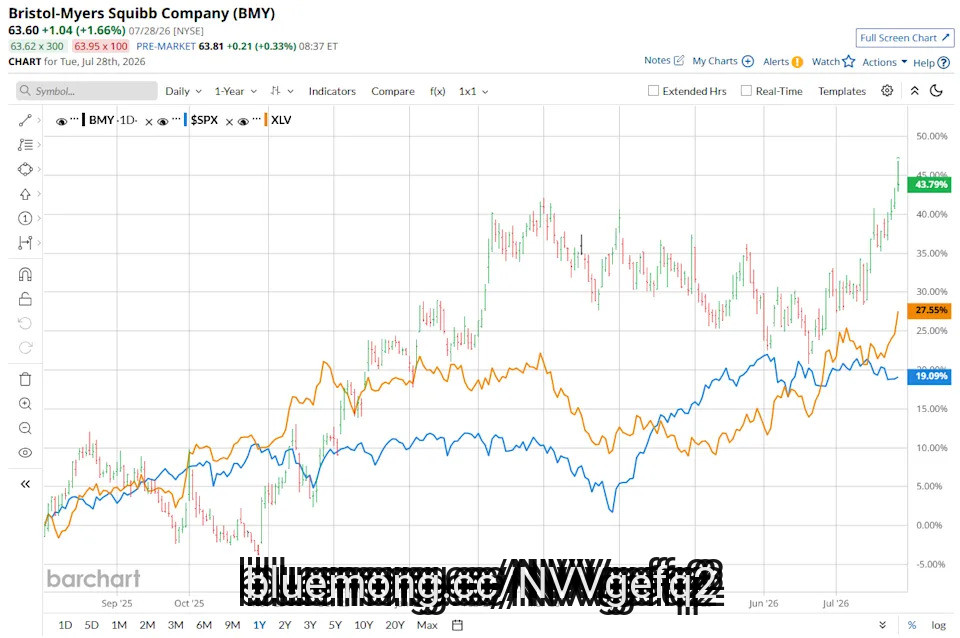
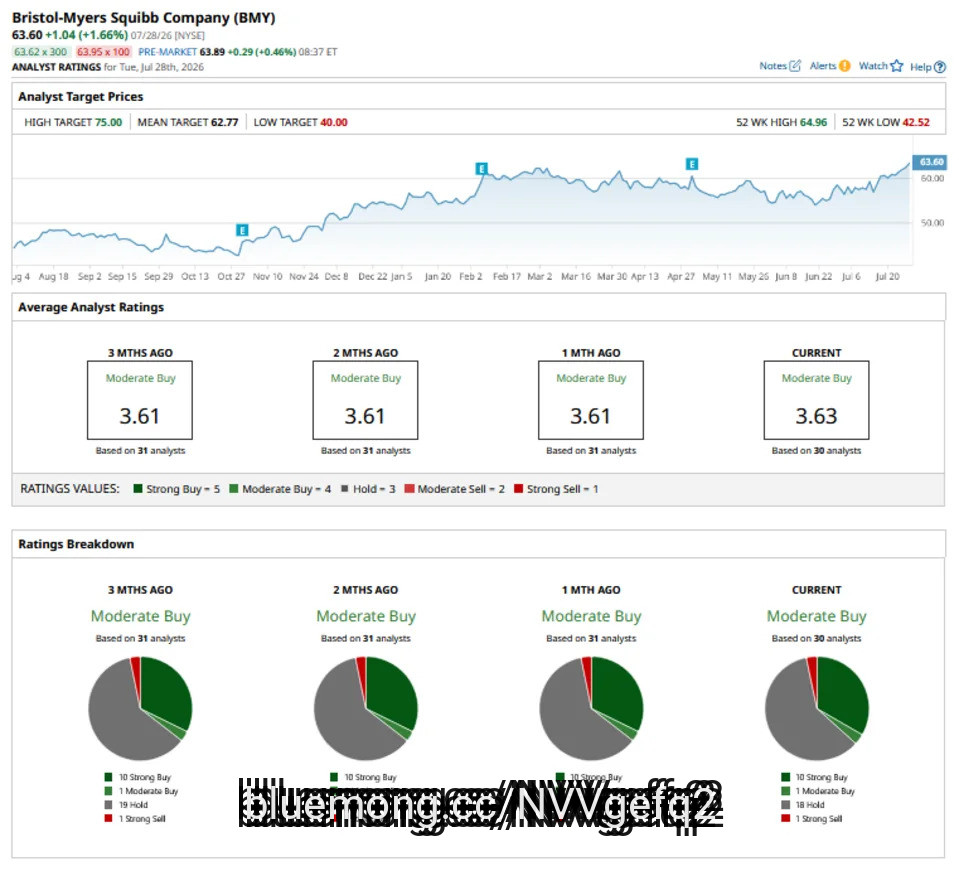
Shares of BMY have rallied the broader market over the past year, surging 33.9% compared to the S&P 500 Index's ($SPX) 16.3% surge. Moreover, in 2026, the stock has risen by nearly 17.9%, outpacing the SPX's 8.5% gain.
Dear Sandisk Stock Fans, Mark Your Calendars for August 5
Nasdaq Futures Plunge as Chip Selloff Rages On, FOMC Meeting and Earnings on Tap
Ahead of Microsoft Earnings, Here's What Barchart Data Says Comes Next for MSFT Stock
#products #bristol #squibb


3 months ago
The biopharma sector is in the middle of a transformation in which macroeconomic pressures and policy developments actively dictate corporate dealmaking. As leading pharmaceutical companies prepare for a $300 billion patent cliff in the second half of the decade, capital allocation has switched sharply toward restocking commercial pipelines with low-risk, high-conviction clinical ******* ets. At the same time, implementation of the Inflation Reduction Act has changed the relative attractiveness of drug options. Since small-molecule drugs are subject to government price negotiations earlier in their lifecycle compared to large-molecule biologics, commercial buyers are shifting premium valuations to large-molecule immunology platforms.
Against this macro context, argenx SE (NASDAQ:ARGX) entered a definitive all-cash agreement on July 27 to acquire clinical-stage biotech Forte Biosciences, Inc. (NASDAQ:FBRX) for $77 per share, valuing the company at over $2.2 billion. At first glance, the $77 offer represents a 40% premium to Forte's closing price prior to the announcement. However, the underlying deal economics demonstrate argenx's readiness to pay a premium for clinical validation: when compared to Forte's volume-weighted average pricing following its successful Phase 1b vitiligo readout on July 9, the purchase price represents an 86% premium.
The target ******* et, Forte's FB102, is a first-in-class anti-CD122 antibody that has shown clinical efficacy in vitiligo and celiac disease. In a 24-week experiment, FB102 showed a significant 29.6% mean improvement on the Facial Vitiligo Area Scoring Index, separating from placebo by day 64.
Argenx's ability to carry out a $2.2 billion cash deal stems from its strong financial condition. The company's Q1 2026 financial report showed global product net sales of $1.3 billion, a 63% increase year-over-year, as well as a quarterly net profit of $366 million and a strong balance sheet with $4.9 billion in cash and financial ******* ets. This commercial momentum is almost exclusively driven by Vyvgart, the company's blockbuster FcRn-blocking medication, which is now seeing its 17th straight quarter of growth.
That said, the explosive top-line trajectory poses a major concentration risk. According to CEO Karen Massey's "Vision 2030" framework, which targets 50,000 patients and ten designated indications worldwide, argenx SE (NASDAQ:ARGX) needs a supplementary second leg in immunology. FB102 offers that diversification by delivering a unique CD122 mechanism into unserved autoimmune indications without jeopardizing its core FcRn business.
#premium #price

3 months ago
argenx has entered a definitive agreement to acquire Forte Biosciences for approximately $2.2bn in total equity value.
Approved by both companies' boards of directors, the transaction is expected to close in the third quarter of 2026, contingent upon standard closing conditions.
The main ***** et involved is FB102, Forte Biosciences' first-in-class anti-CD122 antibody, which will be added to argenx's immunology portfolio. FB102 was evaluated in Phase Ib studies for vitiligo and celiac disease.
These studies were a key factor in deciding to proceed from a strategic investment to acquisition by argenx.
Forte Biosciences expects to release Phase II data for FB102 in the second half of this year.
#forte #biosciences


3 months ago
Just when we thought things were going in a good direction, tensions in the Middle East escalated again. If things worsen, it may eventually impact broader equities. Even if that doesn't happen, it's always useful for investors to buy shares in solid, dividend-paying corporations that can perform relatively well -- and continue raising their payouts -- regardless of economic conditions.
Let's consider two excellent stocks that fit the bill: AbbVie (NYSE: ABBV) and Johnson & Johnson (NYSE: JNJ). Both are Dividend Kings, or companies with at least 50 consecutive years of dividend increases. Here's why they are among my favorite stocks in this elite group to buy right now.
Missed Nvidia in 2009? This Rare Signal Is Flashing Again. In 2009, a "Double Down" signal flashed for a little-known chipmaker called Nvidia. For the first time in years, that same "Total Conviction" signal is flashing for a company 1/100th the size of Nvidia. Continue »
AbbVie, a pharmaceutical leader, boasts a deep portfolio of medicines across several therapeutic areas. The company is best-known for its work in immunology, with its two growth pillars, Skyrizi and Rinvoq, performing even better than management had anticipated. They should maintain sales growth for a while, and by the time they run into patent cliffs, the drugmaker will almost certainly have found new growth drivers. AbbVie is developing promising products, including an investigational weight-loss medicine, ABBV-295, that performed well in early stage studies.
The anti-obesity market is growing rapidly, and AbbVie's candidate could prove a highly differentiated **** et, as it can be administered monthly (the current leaders are taken weekly).

3 months ago
Just when we thought things were going in a good direction, tensions in the Middle East escalated again. If things worsen, it may eventually impact broader equities. Even if that doesn't happen, it's always useful for investors to buy shares in solid, dividend-paying corporations that can perform relatively well -- and continue raising their payouts -- regardless of economic conditions.
Let's consider two excellent stocks that fit the bill: AbbVie (NYSE: ABBV) and Johnson & Johnson (NYSE: JNJ). Both are Dividend Kings, or companies with at least 50 consecutive years of dividend increases. Here's why they are among my favorite stocks in this elite group to buy right now.
Missed Nvidia in 2009? This Rare Signal Is Flashing Again. In 2009, a "Double Down" signal flashed for a little-known chipmaker called Nvidia. For the first time in years, that same "Total Conviction" signal is flashing for a company 1/100th the size of Nvidia. Continue »
AbbVie, a pharmaceutical leader, boasts a deep portfolio of medicines across several therapeutic areas. The company is best-known for its work in immunology, with its two growth pillars, Skyrizi and Rinvoq, performing even better than management had anticipated. They should maintain sales growth for a while, and by the time they run into patent cliffs, the drugmaker will almost certainly have found new growth drivers. AbbVie is developing promising products, including an investigational weight-loss medicine, ABBV-295, that performed well in early stage studies.
The anti-obesity market is growing rapidly, and AbbVie's candidate could prove a highly differentiated ***** et, as it can be administered monthly (the current leaders are taken weekly).


4 months ago
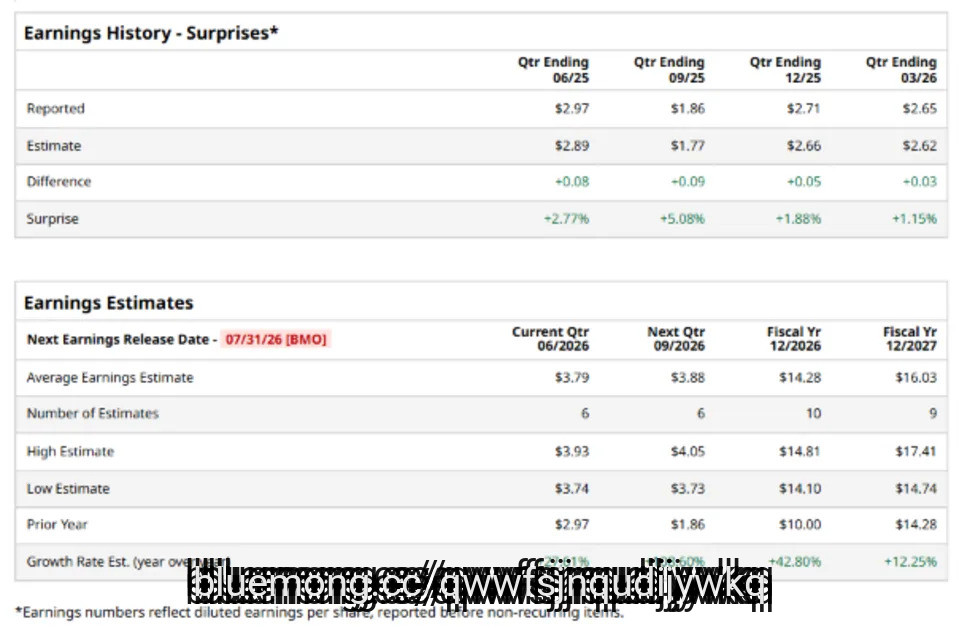
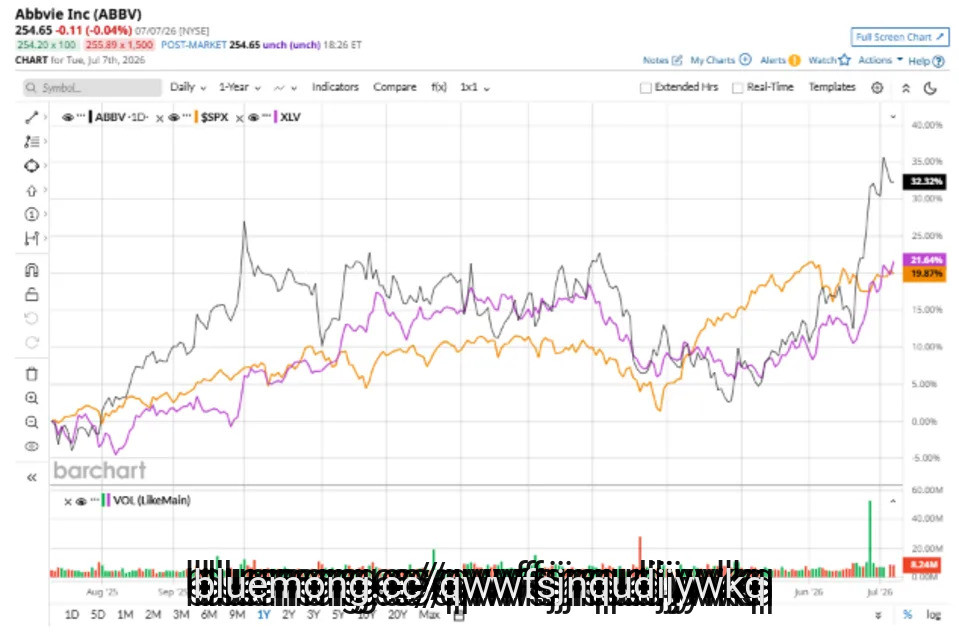
North Chicago, Illinois-based AbbVie Inc. (ABBV) discovers, develops, manufactures, and sells pharmaceuticals worldwide. With a market cap of $450.1 billion, the company discovers and develops medicines and therapies that solve health issues across immunology, oncology, aesthetics, neuroscience, and eye care. The drug giant is expected to announce its fiscal second-quarter earnings for 2026 before the market opens on Friday, Jul. 31.
Ahead of the event, **** ysts expect ABBV to report a profit of $3.79 per share on a diluted basis, up 27.6% from $2.97 per share in the year-ago quarter. The company has consistently surpassed Wall Street's EPS estimates in its last four quarterly reports.
Nasdaq Futures Plunge as Samsung Sparks Chip Selloff
AbbVie vs Eli Lilly: 1 Is Clearly the Better Dividend Stock to Buy and Hold for the Next 10 Years
The Nasdaq-100 Could Be Forming a Textbook Diamond Top. Here's What to Watch on the QQQ Chart Now.


4 months ago
When it comes to dividend stocks, no other sector has been more reliable than the healthcare sector. No matter the economic scenario, there will always be demand for drugs treating life-threatening diseases. This keeps the sector defensive, allowing large pharmaceutical companies to generate steady cash flow and consistently reward shareholders.
Two pharmaceutical giants — AbbVie (ABBV) and Eli Lilly (LLY) — stand out for some of the fastest-growing drug portfolios in the industry. However, only one is the better choice for income-seeking investors. Let's take a closer look.
Markets move fast. Keep up by reading our FREE midday Barchart Brief newsletter for exclusive charts, ******* ysis, and headlines.
AbbVie is a global biopharmaceutical company that develops medicines for immunology, cancer, neuroscience, and aesthetics, with blockbuster drugs including Skyrizi, Rinvoq, and Botox. AbbVie's forward dividend yield of 2.65% is higher than the market and the healthcare sector average. This higher income compounds meaningfully over a decade, especially for investors who reinvest their dividends.
When AbbVie's top-selling drug, Humira, began losing patent protection, investors questioned whether it would weaken earnings and pressure dividends. However, the company has spent the last few years successfully replacing it, as Skyrizi and Rinvoq have become AbbVie's new growth engines, generating $6.6 billion in combined revenue in the first quarter of 2026.



4 months ago
Maximizing dividend income isn't all about chasing high yields. A company must have a healthy, growing business to generate the profits needed to pay dividends and raise them over time. A high dividend yield can even be a red flag, a trap that ultimately costs investors more than they bargained for.
Fortunately, there are some fantastic high-yield dividend stocks out there. That's especially true in healthcare. It's an evergreen industry, and an enormous one; in the United States, healthcare spending in 2025 reached $5.7 trillion.
Missed Nvidia in 2009? This Rare Signal Is Flashing Again. In 2009, a "Double Down" signal flashed for a little-known chipmaker called Nvidia. For the first time in years, that same "Total Conviction" signal is flashing for a company 1/100th the size of Nvidia. Continue »
These three healthcare stocks will pay you generously to hold them, and have the stability and growth to own them for the long haul. While AbbVie (NYSE: ABBV) tops this list, you don't want to miss the other two.
The pharmaceutical industry is a major driver of the broader healthcare sector, and AbbVie is one of its top players. The company boasts an impressive portfolio spanning immunology, oncology, neuroscience, eye care, and aesthetics. AbbVie has increased its dividend for at least 50 consecutive years, dating back to its years as part of Abbott Laboratories. This impressive feat makes the stock a Dividend King.

4 months ago
Biogen (NASDAQ: BIIB) built itself into a biotech giant thanks to its portfolio of multiple sclerosis (MS) drugs -- but in biotech and pharma, revenue growth depends on the life of a patent. Once a company loses exclusivity, generics or biosimilars enter the market, and the leader's drug sales decline. This is the challenge Biogen has faced in recent years, as MS blockbusters faced growing competition.
But the biotech giant put into place a recovery and growth plan, shifting many costs out of the MS franchise and into areas that represented growth potential. Biogen also made strategic acquisitions, announcing its intention to buy Apellis Pharmaceuticals, an immunology and rare diseases drug company, in March and closing the deal in May.
Missed Nvidia in 2009? This Rare Signal Is Flashing Again. In 2009, a "Double Down" signal flashed for a little-known chipmaker called Nvidia. For the first time in years, that same "Total Conviction" signal is flashing for a company 1/100th the size of Nvidia. Continue »
And just recently, Biogen announced another purchase. This time, the biotech is paying $1 billion for a company that won't say what it makes. Here's why this actually is good news for Biogen investors.
Let's start with a quick update on Biogen. As mentioned, the biotech company was once known as an MS giant, and it still sells a number of important MS drugs, such as Tecfidera and Tysabri. But loss of exclusivity made a significant dent in revenue, with Tecfidera's peak sales of $4.4 billion in 2019 dropping to $1.4 billion in 2022. In the latest fiscal year, all of Biogen's MS drugs, together, delivered $4 billion in revenue, further highlighting this decline.