


6 days ago
On September 14, Dave & Buster's Entertainment (NASDAQ:PLAY) reported second-quarter fiscal 2026 results that read like two different companies at once. Revenue fell, and the company posted a net loss for the period ended August 4, yet comparable sales, which had been sliding for more than a year, kept getting less bad every month from June through the first five weeks of the third quarter. New CEO Darin Harper is betting that improvement compounds into something bigger.
The clearest evidence is the trend line itself. Comparable store sales fell 5.4% in the first quarter of fiscal 2026, then 2.9% in the second quarter, then just 1.6% in July after a 5% decline in June, and Harper said trends improved further over the first five weeks of the third quarter. Food and beverage sales are moving in the opposite direction entirely, up 7.6% in the quarter and positive for five straight quarters, helped by the Eat & Play Combo, a bundled meal and game credit offer sold through kiosks. Special event sales have now grown for seven consecutive quarters.
Behind that shift sits a rebuilt leadership bench. Dave & Buster's went more than a year without a chief marketing officer, and Harper has since added a CMO, a chief operations officer, a chief technology officer, and a chief legal officer since taking over. The company also leaned on new content, launching 10 games and attractions this year, including tie-ins with Mandalorian and Grogu, John Wick and Stranger Things, after research found more than 70% of guests said new games would bring them back more often. Changes to game pricing pushed play and dwell time up 16% to 20% or more. Six remodeled stores are already outperforming the rest of the chain, and management says the newest remodel template costs less to build than the last one. Net capital spending dropped to $127.6 million through the first half of the year from $155.4 million, and adjusted free cash flow swung to positive $19.5 million from negative $36.5 million, a $56 million improvement.
The headline figures were still rough. Total revenue slipped 2.4% to $544.1 million from $557.4 million a year earlier, and adjusted EBITDA dropped to $98.9 million, an 18.2% margin, from $129.8 million and a 23.3% margin. On a GAAP basis, the company posted a net loss of $12.5 million, or $0.36 per diluted share, versus net income of $11.4 million in the same quarter last year. About $15 million of the EBITDA decline came from items management calls non-normalized, including a $10 million noncash deferral adjustment that did not repeat this year, $3 million in extra preopening costs and $2 million in higher insurance expenses, but even stripped of those, the underlying decline was still roughly $16 million.
#year #first #harper #play
The clearest evidence is the trend line itself. Comparable store sales fell 5.4% in the first quarter of fiscal 2026, then 2.9% in the second quarter, then just 1.6% in July after a 5% decline in June, and Harper said trends improved further over the first five weeks of the third quarter. Food and beverage sales are moving in the opposite direction entirely, up 7.6% in the quarter and positive for five straight quarters, helped by the Eat & Play Combo, a bundled meal and game credit offer sold through kiosks. Special event sales have now grown for seven consecutive quarters.
Behind that shift sits a rebuilt leadership bench. Dave & Buster's went more than a year without a chief marketing officer, and Harper has since added a CMO, a chief operations officer, a chief technology officer, and a chief legal officer since taking over. The company also leaned on new content, launching 10 games and attractions this year, including tie-ins with Mandalorian and Grogu, John Wick and Stranger Things, after research found more than 70% of guests said new games would bring them back more often. Changes to game pricing pushed play and dwell time up 16% to 20% or more. Six remodeled stores are already outperforming the rest of the chain, and management says the newest remodel template costs less to build than the last one. Net capital spending dropped to $127.6 million through the first half of the year from $155.4 million, and adjusted free cash flow swung to positive $19.5 million from negative $36.5 million, a $56 million improvement.
The headline figures were still rough. Total revenue slipped 2.4% to $544.1 million from $557.4 million a year earlier, and adjusted EBITDA dropped to $98.9 million, an 18.2% margin, from $129.8 million and a 23.3% margin. On a GAAP basis, the company posted a net loss of $12.5 million, or $0.36 per diluted share, versus net income of $11.4 million in the same quarter last year. About $15 million of the EBITDA decline came from items management calls non-normalized, including a $10 million noncash deferral adjustment that did not repeat this year, $3 million in extra preopening costs and $2 million in higher insurance expenses, but even stripped of those, the underlying decline was still roughly $16 million.
#year #first #harper #play

7 days ago
Auxier ***** et Management, an investment advisory firm, released its second-quarter 2026 investor letter. The letter can be downloaded here. Following a strong rebound from the first-quarter decline, the S&P 500 gained 15.2% as accelerating capital spending toward artificial intelligence infrastructure drove significant gains across technology hardware companies. Semiconductor and data-center-related businesses benefited from supply constraints and strong demand, while enterprise software remained under pressure as investors reassessed AI disruption risks and compressed valuations. In the quarter, Auxier Focus Fund's Investor Class gained 8.82% and 10.70% for the six months ended June 30, 2026. Despite strong earnings growth across the broader market, Auxier highlighted concerns around rising margin debt, increased leverage, and elevated capital flows into high-growth technology areas that could amplify future volatility. The firm continues to focus on identifying enduring businesses with strong competitive advantages, resilient cash flows, and sustainable long-term growth potential. Also, check the fund's top five holdings to see its best picks in 2026.
In its second-quarter 2026 investor letter, Auxier ***** et Management highlighted The Kroger Co. (NYSE:KR). The Kroger Co. (NYSE:KR) is a leading supermarket chain that operates combination food and drug stores, multi-department stores, marketplace stores, and price impact warehouses. On September 14, 2026, The Kroger Co. (NYSE:KR) closed at $60.91 per share. Over the past month, The Kroger Co. (NYSE:KR) returned 10.12%, but its shares are down 7.06% over the past year. The Kroger Co. (NYSE:KR) has a market capitalization of $37.32 billion, and its stock has traded within a 52-week range of $54.15 to $76.58.
Auxier ***** et Management stated the following regarding The Kroger Co. (NYSE:KR) in its Q2 2026 investor letter:
"Consumer staples underperformed during the quarter. Elevated inflation, high interest rates and rising gas prices contributed to lower consumer spending, impacting companies like The Kroger Co. (NYSE:KR) and PepsiCo. Although Kroger's stock has been weak, its new CEO Greg Foran brings exceptional leadership that promises positive change. While he was President of Walmart US from 2014-2019, the company achieved 20 consecutive quarters of same-store sales growth and scaled its online grocery pickup. Since joining Kroger he has aggressively reduced prices and boosted the growth in private label and organic offerings. The stock trades at a mere 12 times earnings which is a significant discount to both Costco and Walmart."
#NYSE #quarter #Growth #strong
In its second-quarter 2026 investor letter, Auxier ***** et Management highlighted The Kroger Co. (NYSE:KR). The Kroger Co. (NYSE:KR) is a leading supermarket chain that operates combination food and drug stores, multi-department stores, marketplace stores, and price impact warehouses. On September 14, 2026, The Kroger Co. (NYSE:KR) closed at $60.91 per share. Over the past month, The Kroger Co. (NYSE:KR) returned 10.12%, but its shares are down 7.06% over the past year. The Kroger Co. (NYSE:KR) has a market capitalization of $37.32 billion, and its stock has traded within a 52-week range of $54.15 to $76.58.
Auxier ***** et Management stated the following regarding The Kroger Co. (NYSE:KR) in its Q2 2026 investor letter:
"Consumer staples underperformed during the quarter. Elevated inflation, high interest rates and rising gas prices contributed to lower consumer spending, impacting companies like The Kroger Co. (NYSE:KR) and PepsiCo. Although Kroger's stock has been weak, its new CEO Greg Foran brings exceptional leadership that promises positive change. While he was President of Walmart US from 2014-2019, the company achieved 20 consecutive quarters of same-store sales growth and scaled its online grocery pickup. Since joining Kroger he has aggressively reduced prices and boosted the growth in private label and organic offerings. The stock trades at a mere 12 times earnings which is a significant discount to both Costco and Walmart."
#NYSE #quarter #Growth #strong

12 days ago
An AI-hungry Google (GOOG, GOOGL) isn't playing nice with one of the largest content publishers on the internet.
"Here's the truth. For a long time, we had a deal with Google, an unwritten deal, which was 'you can use our content to build your search product, and in return, we get sessions,'" People Inc. (PPLI) CEO Neil Vogel told Yahoo Finance from the Goldman Sachs Communacopia & Tech Conference (video above). "Now the search product has turned into an AI product by and large, and they still use our content to train their AI, both in real time and in a training way — we don't have to get into the AI terminology of it — but now they don't share anything with us."
Google's push into AI-powered summaries has upended search traffic for publishers. Many fear the situation will get worse, triggering more sweeping cost cuts among many players in 2026.
Vogel said the company has signed content licensing deals with Microsoft (MSFT), Meta (META), and OpenAI (OPAI.PVT). Ideally, he would also like to ink one with Google.
He stopped short of saying he would turn off Google from crawling People's content.
#meta
"Here's the truth. For a long time, we had a deal with Google, an unwritten deal, which was 'you can use our content to build your search product, and in return, we get sessions,'" People Inc. (PPLI) CEO Neil Vogel told Yahoo Finance from the Goldman Sachs Communacopia & Tech Conference (video above). "Now the search product has turned into an AI product by and large, and they still use our content to train their AI, both in real time and in a training way — we don't have to get into the AI terminology of it — but now they don't share anything with us."
Google's push into AI-powered summaries has upended search traffic for publishers. Many fear the situation will get worse, triggering more sweeping cost cuts among many players in 2026.
Vogel said the company has signed content licensing deals with Microsoft (MSFT), Meta (META), and OpenAI (OPAI.PVT). Ideally, he would also like to ink one with Google.
He stopped short of saying he would turn off Google from crawling People's content.
#meta


13 days ago
Sponsor-backed direct lending volume and deal count ticked up in the three months ended Aug. 31, recovering from the lows seen in Q2 but remaining below Q1 levels, according to new LCD data.
Direct lenders provided an estimated $28 billion across 124 sponsor-backed deals over the past three months, up from $23 billion across 101 deals in Q2, though still short of Q1's $45 billion across 133 deals, according to the latest US LCD Private Credit Monitor.
On a year-to-date basis, sponsor-backed direct lending volume of $87 billion across 322 deals through August runs 27% behind last year's $120 billion (from 356 deals) over the same period, signaling that sponsors remain cautious even as quarterly activity firms up.
Buyout financing has followed a similar path. Direct lenders backed 50 LBOs for roughly $14 billion over the three months through August, an improvement on Q2's 47 deals and $13 billion but still well below Q1's 56 deals and $23 billion. Year-to-date, direct lending buyout volume of $44 billion across 135 deals trails the $57 billion and 154 deals at the same time last year, suggesting sponsors are still hesitant to launch new platform deals amid the higher-for-longer rate backdrop.
Healthcare sector deals accounted for 20% of new-issue direct lending deals in 2026 year-to-date, versus 18% in full-year 2025. Technology's share of new direct lending deals has fallen to 16% YTD, from 18% for FY 2025, representing the largest drop of any sector over the period. Utilities and building materials both saw large increases, though both sectors sit on small relative bases.
#billion #lending #three
Direct lenders provided an estimated $28 billion across 124 sponsor-backed deals over the past three months, up from $23 billion across 101 deals in Q2, though still short of Q1's $45 billion across 133 deals, according to the latest US LCD Private Credit Monitor.
On a year-to-date basis, sponsor-backed direct lending volume of $87 billion across 322 deals through August runs 27% behind last year's $120 billion (from 356 deals) over the same period, signaling that sponsors remain cautious even as quarterly activity firms up.
Buyout financing has followed a similar path. Direct lenders backed 50 LBOs for roughly $14 billion over the three months through August, an improvement on Q2's 47 deals and $13 billion but still well below Q1's 56 deals and $23 billion. Year-to-date, direct lending buyout volume of $44 billion across 135 deals trails the $57 billion and 154 deals at the same time last year, suggesting sponsors are still hesitant to launch new platform deals amid the higher-for-longer rate backdrop.
Healthcare sector deals accounted for 20% of new-issue direct lending deals in 2026 year-to-date, versus 18% in full-year 2025. Technology's share of new direct lending deals has fallen to 16% YTD, from 18% for FY 2025, representing the largest drop of any sector over the period. Utilities and building materials both saw large increases, though both sectors sit on small relative bases.
#billion #lending #three

13 days ago
UK homeware retailer Dunelm Group has set out a three-year plan to cut around £100m ($135.6m) in costs.
The strategy, named Winning Hearts & Homes, was announced alongside preliminary results for the financial year ended 27 June 2026.
Dunelm said it would strip "£100m of unproductive costs from the FY26 base by FY29" and channel that amount into growth initiatives.
The retailer said its objectives include lifting customer loyalty and spend through repeat visits and share of wallet, together with "a return to sustainable mid-to-high single digit sales growth, supported by increasing LFL [like for like] sales, digital acceleration and store investment."
It added that it plans to invest while maintaining "adjusted PBT [profit before tax] margin of 11% and return on capital employed of 30%".
#Growth
The strategy, named Winning Hearts & Homes, was announced alongside preliminary results for the financial year ended 27 June 2026.
Dunelm said it would strip "£100m of unproductive costs from the FY26 base by FY29" and channel that amount into growth initiatives.
The retailer said its objectives include lifting customer loyalty and spend through repeat visits and share of wallet, together with "a return to sustainable mid-to-high single digit sales growth, supported by increasing LFL [like for like] sales, digital acceleration and store investment."
It added that it plans to invest while maintaining "adjusted PBT [profit before tax] margin of 11% and return on capital employed of 30%".
#Growth
0.00$ raised of 0.00$ goal
0 donations
0.00$
to go
19 days ago
Some offers on this page are from advertisers who pay us, which may affect which products we write about, but not our recommendations. See our Advertiser Disclosure.
Silver (SI=F) December futures opened at $66.17 per ounce on Thursday, September 3, 2026, up 1.1% from Wednesday's closing price. Silver prices are holding steady so far this morning, reaching $66.21 as of 7:05 a.m. ET.
President Trump's comments yesterday that the U.S.'s "very heavy attack" on Iran wouldn't last too long gave silver prices room to move upward on Thursday.
Silver prices opened stronger on Thursday, back in line with the opening value we observed on Monday. Gold and silver both had a strong August, with silver prices up nearly 15% month over month today. Compared to last year, silver prices are up nearly 61%.
The opening price of silver futures on Thursday, September 3, 2026, was 1.1% higher compared to Wednesday's closing price. Here's how today's opening silver price has changed versus last week, month, and year:
#silver #thursday #prices #futures
Silver (SI=F) December futures opened at $66.17 per ounce on Thursday, September 3, 2026, up 1.1% from Wednesday's closing price. Silver prices are holding steady so far this morning, reaching $66.21 as of 7:05 a.m. ET.
President Trump's comments yesterday that the U.S.'s "very heavy attack" on Iran wouldn't last too long gave silver prices room to move upward on Thursday.
Silver prices opened stronger on Thursday, back in line with the opening value we observed on Monday. Gold and silver both had a strong August, with silver prices up nearly 15% month over month today. Compared to last year, silver prices are up nearly 61%.
The opening price of silver futures on Thursday, September 3, 2026, was 1.1% higher compared to Wednesday's closing price. Here's how today's opening silver price has changed versus last week, month, and year:
#silver #thursday #prices #futures


20 days ago
QuantumScape (NASDAQ: QS), a developer of solid-state batteries, went public through a merger with a special purpose acquisition company (SPAC) on Nov. 27, 2020. Its stock opened at $24.80 on its first day and closed at an all-time high of $131.67 on Dec. 22, 2020.
Before going public, QuantumScape claimed it could commercialize its first batteries by 2024, and that its revenue would soar from $14 million in 2024 to $275 million in 2026. But as of this writing, it hasn't commercialized any batteries nor generated any meaningful revenue yet.
Missed Nvidia in 2009? This Rare Signal Is Flashing Again. In 2009, a "Double Down" signal flashed for a little-known chipmaker called Nvidia. For the first time in years, that same "Total Conviction" signal is flashing for a company 1/100th the size of Nvidia. Continue »
That's why QuantumScape's stock plummeted 96% to its current price of about $5. Will it bounce back next year as it makes more progress toward launching its first batteries?
QuantumScape's solid-state batteries have higher charging capacities, shorter charging times, and better thermal resistance than liquid-based lithium-ion batteries. But they're also more expensive and challenging to manufacture than their lithium-ion counterparts.
#batteries
Before going public, QuantumScape claimed it could commercialize its first batteries by 2024, and that its revenue would soar from $14 million in 2024 to $275 million in 2026. But as of this writing, it hasn't commercialized any batteries nor generated any meaningful revenue yet.
Missed Nvidia in 2009? This Rare Signal Is Flashing Again. In 2009, a "Double Down" signal flashed for a little-known chipmaker called Nvidia. For the first time in years, that same "Total Conviction" signal is flashing for a company 1/100th the size of Nvidia. Continue »
That's why QuantumScape's stock plummeted 96% to its current price of about $5. Will it bounce back next year as it makes more progress toward launching its first batteries?
QuantumScape's solid-state batteries have higher charging capacities, shorter charging times, and better thermal resistance than liquid-based lithium-ion batteries. But they're also more expensive and challenging to manufacture than their lithium-ion counterparts.
#batteries

21 days ago
Xiaodong Li, Chairman and CEO of Sea Limited (NYSE:SE), sold 5,164 Class A ordinary shares on Aug. 28, 2026, according to a recent SEC Form 4 filing.
Metric
Value
Transaction value
~$621,901
#value #NYSE #transaction #sold
Metric
Value
Transaction value
~$621,901
#value #NYSE #transaction #sold

22 days ago
By Marianna Parraga and Deisy Buitrago
HOUSTON/CARACAS, Aug 31 (Reuters) - U.S. companies Chevron and GE Vernova, India's ONGC, Italy's Eni and Colombia's GeoPark are on track to sign final agreements in Venezuela after months of negotiations to firm up energy projects in the OPEC country, five sources close to the preparations said.
Most of the pacts imply completion of a six-month migration of oil contracts to an amended hydrocarbon law now giving more flexibility to foreign firms to expand and operate oilfields, export the barrels and cash sale proceeds, the sources said. Others set terms for new energy and electricity projects.
The list of companies lining up to sign has not been finalized as executives are rushing to complete negotiations at the last minute, two of the sources said.
Chevron's agreements with Venezuela are expected to be "of significant size," according to one of the sources.
#venezuela #marianna
HOUSTON/CARACAS, Aug 31 (Reuters) - U.S. companies Chevron and GE Vernova, India's ONGC, Italy's Eni and Colombia's GeoPark are on track to sign final agreements in Venezuela after months of negotiations to firm up energy projects in the OPEC country, five sources close to the preparations said.
Most of the pacts imply completion of a six-month migration of oil contracts to an amended hydrocarbon law now giving more flexibility to foreign firms to expand and operate oilfields, export the barrels and cash sale proceeds, the sources said. Others set terms for new energy and electricity projects.
The list of companies lining up to sign has not been finalized as executives are rushing to complete negotiations at the last minute, two of the sources said.
Chevron's agreements with Venezuela are expected to be "of significant size," according to one of the sources.
#venezuela #marianna

22 days ago
Steel and aluminum stocks surged and then retreated last week as the escalating trade war between the United States and Canada sent investors scrambling to reprice exposure to North American metals supply chains.
SLX gained 1.6% on Monday, Aug. 25, following the breakdown of U.S.-Canada trade talks, and the State Street Materials Select Sector SPDR (XLB) reached a new intraday record that session, topping the peak it had set in February. Shares of Nucor, Steel Dynamics, Cleveland-Cliffs, and Century Aluminum all climbed. The gains proved short-lived, however: by Friday's close, XLB had slipped into the red for the week and SLX was essentially unchanged, according to CNBC. Through Aug. 28, Morningstar data show SLX has gained more than 28% on the year and XLB more than 18%.
The swing reflects the complexity of a trade war between two countries whose metals industries are deeply intertwined. Dan Luttner, who serves as managing partner of the supply chain consulting firm NEOS by Argon & Company, characterized the initial stock move to CNBC as a repricing reflex rather than a durable signal. "The stock pop is a headline reflex, honestly — mills reprice to replacement cost the second a 50% wall goes up, so of course Nucor and Cleveland-Cliffs jumped," Luttner said. "But that's not the interesting question. The interesting question is who controls their feedstock inside the wall versus who's still exposed to it?"
Luttner noted that both Nucor and Cleveland-Cliffs use electric arc furnace technology whose inputs have no dependence on Canadian ore or slab, positioning them to capture tariff-driven pricing benefits without the same exposure. Cleveland-Cliffs stock is nonetheless in negative territory for 2026 because of balance sheet stress. Century Aluminum is a more complicated case: because domestic primary aluminum production is thin, the raw inputs that sustain it — alumina and semi-finished material — largely still flow across the Canadian border, undermining the protection the tariffs were meant to provide.
Atsi Sheth, chief credit officer at Moody's Ratings, said uncertainty will persist. "Expect much more of this uncertainty for some time to come," Sheth said. She added that U.S. steel companies hold a modest edge over their Canadian counterparts because the U.S. market is larger, but said the auto sector has no clear winner given how deeply integrated cross-border production is.
#cliffs #nucor
SLX gained 1.6% on Monday, Aug. 25, following the breakdown of U.S.-Canada trade talks, and the State Street Materials Select Sector SPDR (XLB) reached a new intraday record that session, topping the peak it had set in February. Shares of Nucor, Steel Dynamics, Cleveland-Cliffs, and Century Aluminum all climbed. The gains proved short-lived, however: by Friday's close, XLB had slipped into the red for the week and SLX was essentially unchanged, according to CNBC. Through Aug. 28, Morningstar data show SLX has gained more than 28% on the year and XLB more than 18%.
The swing reflects the complexity of a trade war between two countries whose metals industries are deeply intertwined. Dan Luttner, who serves as managing partner of the supply chain consulting firm NEOS by Argon & Company, characterized the initial stock move to CNBC as a repricing reflex rather than a durable signal. "The stock pop is a headline reflex, honestly — mills reprice to replacement cost the second a 50% wall goes up, so of course Nucor and Cleveland-Cliffs jumped," Luttner said. "But that's not the interesting question. The interesting question is who controls their feedstock inside the wall versus who's still exposed to it?"
Luttner noted that both Nucor and Cleveland-Cliffs use electric arc furnace technology whose inputs have no dependence on Canadian ore or slab, positioning them to capture tariff-driven pricing benefits without the same exposure. Cleveland-Cliffs stock is nonetheless in negative territory for 2026 because of balance sheet stress. Century Aluminum is a more complicated case: because domestic primary aluminum production is thin, the raw inputs that sustain it — alumina and semi-finished material — largely still flow across the Canadian border, undermining the protection the tariffs were meant to provide.
Atsi Sheth, chief credit officer at Moody's Ratings, said uncertainty will persist. "Expect much more of this uncertainty for some time to come," Sheth said. She added that U.S. steel companies hold a modest edge over their Canadian counterparts because the U.S. market is larger, but said the auto sector has no clear winner given how deeply integrated cross-border production is.
#cliffs #nucor

27 days ago
In early 2025, shares of memory chipmaker Micron Technology (NASDAQ: MU) were trading at about $65 per share. **** ody could have predicted they'd be trading above $1,000 per share by mid-2026.
But a number of factors, including a stumble by rival chipmaker Samsung (OTC: SSNLF), rapidly increasing demand for artificial intelligence memory chips, and limited global manufacturing capacity, sent Micron's revenue, profits, and share price stratospheric.
Missed Nvidia in 2009? This Rare Signal Is Flashing Again. In 2009, a "Double Down" signal flashed for a little-known chipmaker called Nvidia. For the first time in years, that same "Total Conviction" signal is flashing for a company 1/100th the size of Nvidia. Continue »
In June, the stock topped out at $1,214 per share before dropping 39%. It's now trading around $930. But I think it's going to break its own share price record by the end of the year. Here's why I'm predicting a $1,300 share price for Micron before the end of 2026.
Micron's quarterly revenue increased 346% year over year (YOY) in its most recently reported quarter, and its net income was up a jaw-dropping 1,400%, but that doesn't tell the whole story.
#Share #trading
But a number of factors, including a stumble by rival chipmaker Samsung (OTC: SSNLF), rapidly increasing demand for artificial intelligence memory chips, and limited global manufacturing capacity, sent Micron's revenue, profits, and share price stratospheric.
Missed Nvidia in 2009? This Rare Signal Is Flashing Again. In 2009, a "Double Down" signal flashed for a little-known chipmaker called Nvidia. For the first time in years, that same "Total Conviction" signal is flashing for a company 1/100th the size of Nvidia. Continue »
In June, the stock topped out at $1,214 per share before dropping 39%. It's now trading around $930. But I think it's going to break its own share price record by the end of the year. Here's why I'm predicting a $1,300 share price for Micron before the end of 2026.
Micron's quarterly revenue increased 346% year over year (YOY) in its most recently reported quarter, and its net income was up a jaw-dropping 1,400%, but that doesn't tell the whole story.
#Share #trading

28 days ago
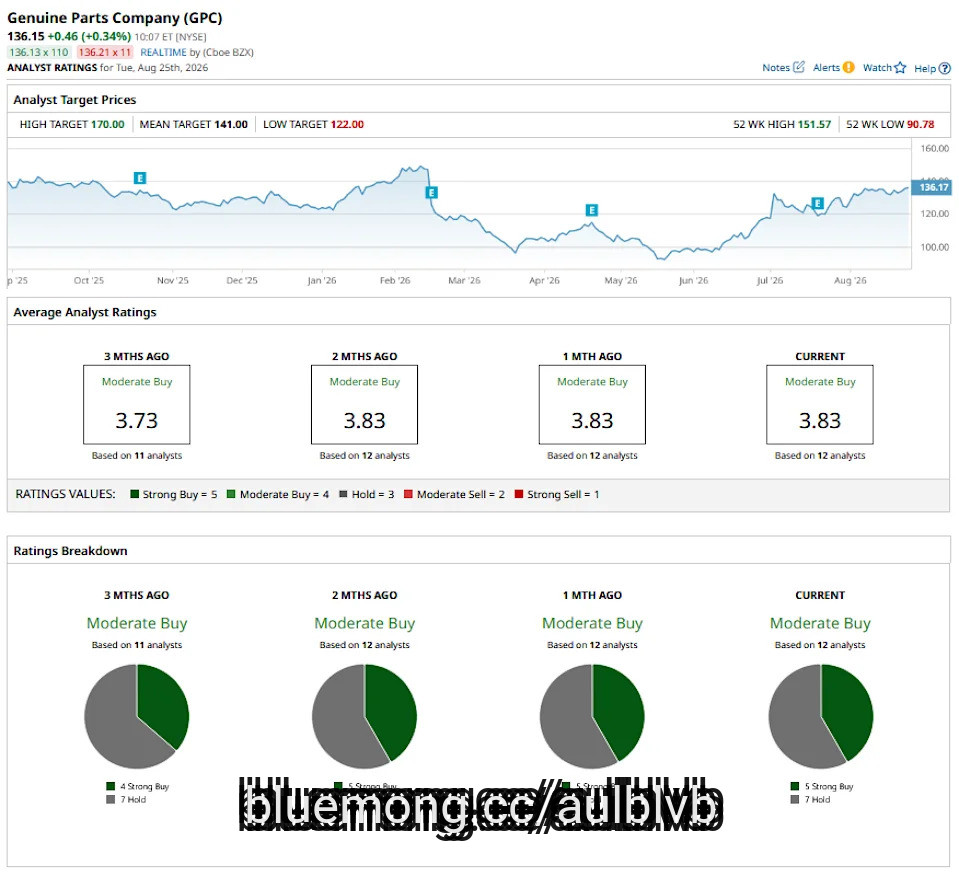
Atlanta, Georgia-based Genuine Parts Company (GPC) distributes automotive and industrial replacement parts. The company has a market cap of $18.7 billion and operates in three segments: North America Automotive Parts Group, International Automotive Parts Group, and Industrial Parts Group. It distributes automotive replacement parts, accessories, tools, equipment, and related solutions for hybrid and electric vehicles, trucks, buses, and more.
GPC stock has lagged behind the broader market over the past year, falling 2.4% compared to the S&P 500 Index's ($SPX) 18.3% surge. Moreover, in 2026, the stock has risen nearly 10.5%, underperforming the SPX's 11.8% rise.
IonQ vs. Rigetti: The Better Quantum Computing Stock for Long-Term Investors
QQQ is Still in a Negative Gamma Regime. Here's How a 'Put Wall' and Fibonacci Support Could Come Into Play.
IBM Just Hit a New Quantum Computing Milestone. How to Play IBM Stock Now.
#quantum #play #industrial
GPC stock has lagged behind the broader market over the past year, falling 2.4% compared to the S&P 500 Index's ($SPX) 18.3% surge. Moreover, in 2026, the stock has risen nearly 10.5%, underperforming the SPX's 11.8% rise.
IonQ vs. Rigetti: The Better Quantum Computing Stock for Long-Term Investors
QQQ is Still in a Negative Gamma Regime. Here's How a 'Put Wall' and Fibonacci Support Could Come Into Play.
IBM Just Hit a New Quantum Computing Milestone. How to Play IBM Stock Now.
#quantum #play #industrial


29 days ago
T. Rowe Price Group, Inc. (NASDAQ:TROW) is making a bigger move into fixed-income ETFs through its agreement to acquire F/m Investments, a fixed-income **** et manager with about $19 billion in **** ets. The deal would add 20 ETFs covering Treasuries, TIPS, corporate bonds and municipal securities. It would also increase T. Rowe Price's fixed-income **** ets by nearly 9% and more than double its fixed-income ETF **** ets from around $6.5 billion.
The deal comes as ETFs become a more important part of the **** et-management industry. T. Rowe Price Group, Inc. (NASDAQ:TROW) has traditionally been better known for active investing, so F/m gives it an established ETF platform and a team with experience developing fixed-income products. The transaction is expected to close in early 2027, although T. Rowe Price has not disclosed how much it will pay for F/m.
Photo by Scott Graham on Unsplash
The biggest positive for T. Rowe Price Group, Inc. (NASDAQ:TROW) is that it is getting an established fixed-income ETF business rather than having to build one from scratch. The company already manages about $220 billion in fixed income, so F/m fits naturally into a business T. Rowe Price already knows well.
Distribution could be another major opportunity. F/m has built a portfolio of ETFs, but T. Rowe has a much larger network and deeper relationships with financial advisers, institutions and other investors. If the company can put F/m's products in front of more customers, the $19 billion **** et base could have room to grow. F/m also brings experience in developing new ETF structures and products. T. Rowe Price, meanwhile, has the scale and resources of a much larger **** et manager. Bringing those strengths together could help expand its fixed-income ETF offering as more investors turn to ETFs for bond exposure.
#income #group #trow
The deal comes as ETFs become a more important part of the **** et-management industry. T. Rowe Price Group, Inc. (NASDAQ:TROW) has traditionally been better known for active investing, so F/m gives it an established ETF platform and a team with experience developing fixed-income products. The transaction is expected to close in early 2027, although T. Rowe Price has not disclosed how much it will pay for F/m.
Photo by Scott Graham on Unsplash
The biggest positive for T. Rowe Price Group, Inc. (NASDAQ:TROW) is that it is getting an established fixed-income ETF business rather than having to build one from scratch. The company already manages about $220 billion in fixed income, so F/m fits naturally into a business T. Rowe Price already knows well.
Distribution could be another major opportunity. F/m has built a portfolio of ETFs, but T. Rowe has a much larger network and deeper relationships with financial advisers, institutions and other investors. If the company can put F/m's products in front of more customers, the $19 billion **** et base could have room to grow. F/m also brings experience in developing new ETF structures and products. T. Rowe Price, meanwhile, has the scale and resources of a much larger **** et manager. Bringing those strengths together could help expand its fixed-income ETF offering as more investors turn to ETFs for bond exposure.
#income #group #trow

29 days ago
Xpeng Inc (NYSE:XPEV), the Chinese electric vehicle maker, is raising more than $900 million for its robotics business, valuing the unit at more than $6.3 billion.
The EV maker claims this is the largest single-round private financing ever recorded in China's embodied AI industry.
The funding round is led by IDG Capital and includes Gaorong Ventures, while Alibaba and Tencent are participating as strategic investors, giving the unit substantial backing from China's technology industry.
Bloomberg reported that XPeng itself will invest $200 million in the robotics business, while external investors will provide $600 million and senior executives will contribute $100 million.
XPeng described the transaction as the largest single-round private capital raise to date in China's embodied artificial intelligence industry, which covers systems that use artificial intelligence to perceive and act in the physical world.
#robotics
The EV maker claims this is the largest single-round private financing ever recorded in China's embodied AI industry.
The funding round is led by IDG Capital and includes Gaorong Ventures, while Alibaba and Tencent are participating as strategic investors, giving the unit substantial backing from China's technology industry.
Bloomberg reported that XPeng itself will invest $200 million in the robotics business, while external investors will provide $600 million and senior executives will contribute $100 million.
XPeng described the transaction as the largest single-round private capital raise to date in China's embodied artificial intelligence industry, which covers systems that use artificial intelligence to perceive and act in the physical world.
#robotics

1 month ago
Investment researchers over the last few decades have reported hundreds of stock-picking rules that seemed to beat the market. Those were the good days.
Copyright ©2026 Dow Jones & Company, Inc. All Rights Reserved. 87990cbe856818d5eddac44c7b1cdeb8
#investment #last
Copyright ©2026 Dow Jones & Company, Inc. All Rights Reserved. 87990cbe856818d5eddac44c7b1cdeb8
#investment #last

1 month ago
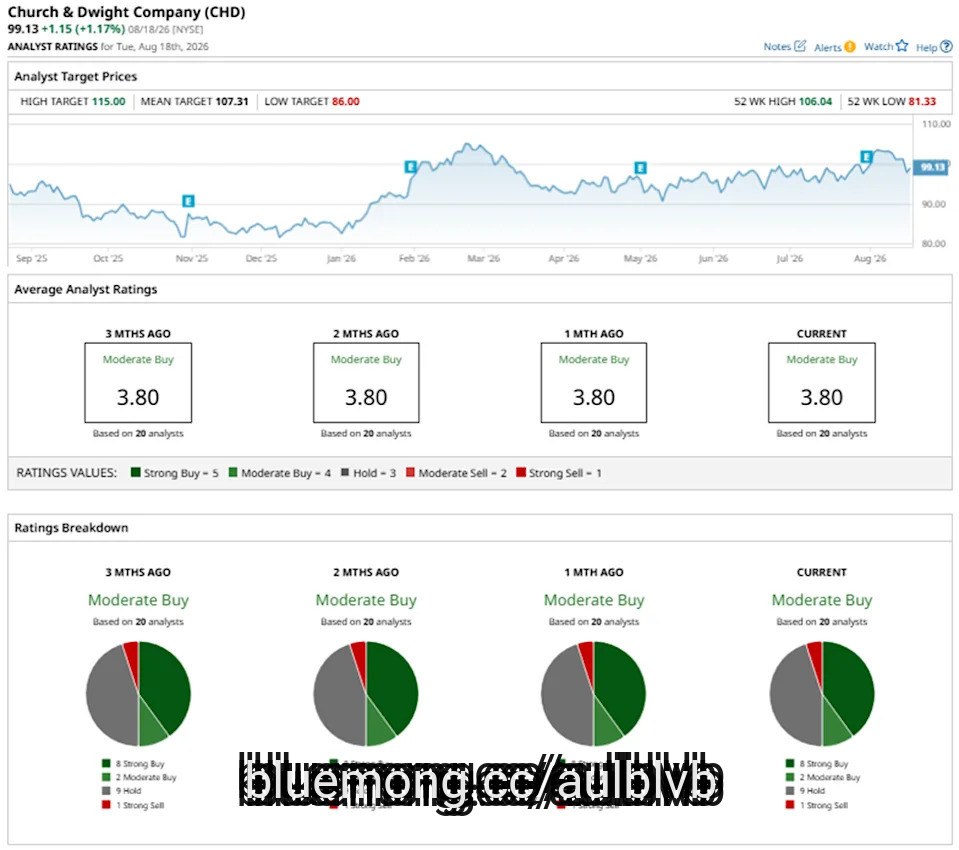
With a market cap of $23.5 billion, Church & Dwight Co., Inc. (CHD) is a U.S.-based manufacturer and marketer of household, personal care, and specialty products, operating across Consumer Domestic, Consumer International, and Specialty Products segments. It owns a diverse portfolio of well-known brands spanning cleaning, personal care, health, and animal nutrition, sold through both retail and industrial channels worldwide.
Shares of the Ewing, New Jersey-based company have underperformed the broader market over the past 52 weeks. CHD stock has risen 6.8% over this time frame, while the broader S&P 500 Index ($SPX) has increased 19.3%. However, shares of the company are up 18.2% on a YTD basis, outpacing SPX's 12.4% return.
Barron Trump, 20, Now Worth $150 Million — More Than Mom, Melania — From Crypto And $39 Energy Drink
Billionaire Michael Saylor Warns Against Buying a House Because 'Every 36 Years You Actually Pay the Cost of the House in Tax to the Government'
QQQ Just 'Gamma Flipped' as Market Makers Were Forced to Sell. Here's What Our Top Chart Expert is Tracking Next.
#Consumer #specialty #shares #company
Shares of the Ewing, New Jersey-based company have underperformed the broader market over the past 52 weeks. CHD stock has risen 6.8% over this time frame, while the broader S&P 500 Index ($SPX) has increased 19.3%. However, shares of the company are up 18.2% on a YTD basis, outpacing SPX's 12.4% return.
Barron Trump, 20, Now Worth $150 Million — More Than Mom, Melania — From Crypto And $39 Energy Drink
Billionaire Michael Saylor Warns Against Buying a House Because 'Every 36 Years You Actually Pay the Cost of the House in Tax to the Government'
QQQ Just 'Gamma Flipped' as Market Makers Were Forced to Sell. Here's What Our Top Chart Expert is Tracking Next.
#Consumer #specialty #shares #company

2 months ago
September WTI crude oil (CLU26) is down -0.61 (-0.81%) today, and September RBOB gasoline (RBU26) is up +0.0130 (+0.46%).
Crude oil and gasoline prices added to this week's sharp losses today, with crude falling to a 3-week low and gasoline dropping to a 4.75-month nearest-futures low. Growing optimism that the US and Iran are nearing a deal to reopen the Strait of Hormuz is pushing crude oil prices lower today. Crude prices remained lower after today's weekly EIA crude inventories unexpectedly increased. However, gasoline recovered its losses and moved higher after weekly EIA gasoline inventories fell more than expected to an 8.5-month low.
What Are Wheat Producers Seeing That Traders Aren't?
Nat-Gas Prices Retreat on Bigger US Supplies and Cooler Temps
Crude Oil Prices Slump on Hopes of a Deal to Reopen Strait of Hormuz
#crude #gasoline
Crude oil and gasoline prices added to this week's sharp losses today, with crude falling to a 3-week low and gasoline dropping to a 4.75-month nearest-futures low. Growing optimism that the US and Iran are nearing a deal to reopen the Strait of Hormuz is pushing crude oil prices lower today. Crude prices remained lower after today's weekly EIA crude inventories unexpectedly increased. However, gasoline recovered its losses and moved higher after weekly EIA gasoline inventories fell more than expected to an 8.5-month low.
What Are Wheat Producers Seeing That Traders Aren't?
Nat-Gas Prices Retreat on Bigger US Supplies and Cooler Temps
Crude Oil Prices Slump on Hopes of a Deal to Reopen Strait of Hormuz
#crude #gasoline

2 months ago
Pfizer (PFE) yields nearly 7% as COVID drugs crater, while Merck (MRK) compounds at 66% one-year gains with a leaner 3% payout.
Pfizer runs 20 pivotal trials in 2026 targeting obesity and oncology, with a Vyndamax patent extension to 2031 protecting dividend coverage.
It sounds nuts, but SoFi1 is giving new Active Invest users up to $3,000 in stock for a limited time, and all it takes is a $50 deposit to get started.2 See for yourself (Sponsor)
Pfizer (NYSE:PFE) and Merck (NYSE:MRK) refreshed the dividend debate with their latest quarterly reports.
Pfizer defends one of Big Pharma's fattest yields while its COVID franchise fades. Merck absorbs multi-billion dollar deal charges to reload a pipeline behind Keytruda. Two payouts, two very different risk profiles for income investors.
#NYSE #yields #Dividend
Pfizer runs 20 pivotal trials in 2026 targeting obesity and oncology, with a Vyndamax patent extension to 2031 protecting dividend coverage.
It sounds nuts, but SoFi1 is giving new Active Invest users up to $3,000 in stock for a limited time, and all it takes is a $50 deposit to get started.2 See for yourself (Sponsor)
Pfizer (NYSE:PFE) and Merck (NYSE:MRK) refreshed the dividend debate with their latest quarterly reports.
Pfizer defends one of Big Pharma's fattest yields while its COVID franchise fades. Merck absorbs multi-billion dollar deal charges to reload a pipeline behind Keytruda. Two payouts, two very different risk profiles for income investors.
#NYSE #yields #Dividend



2 months ago
CapVest Partners-backed Curium has agreed to buy rival US-based radiopharmaceutical company Lantheus in an all-cash deal worth up to nearly $8bn.
The deal will take the Nasdaq-listed Lantheus private.
Under the agreement, Curium US will purchase all outstanding shares of Lantheus for $102.50 per share upon closing.
Lantheus' shareholders are also set to receive non-transferable contingent value rights (CVRs) that could provide up to an additional $12.00 per share if certain commercial milestones for the company's product portfolio are met by 2030. This brings the potential total consideration per share to $114.50.
The offer represents a 38% premium to Lantheus' 60-day volume-weighted average price, a 29% premium to its 30-day average. It is also 21% above the company's closing price as of 21 May 2026, the last day before media reports emerged about the potential sale.
#deal
The deal will take the Nasdaq-listed Lantheus private.
Under the agreement, Curium US will purchase all outstanding shares of Lantheus for $102.50 per share upon closing.
Lantheus' shareholders are also set to receive non-transferable contingent value rights (CVRs) that could provide up to an additional $12.00 per share if certain commercial milestones for the company's product portfolio are met by 2030. This brings the potential total consideration per share to $114.50.
The offer represents a 38% premium to Lantheus' 60-day volume-weighted average price, a 29% premium to its 30-day average. It is also 21% above the company's closing price as of 21 May 2026, the last day before media reports emerged about the potential sale.
#deal

2 months ago
Washington Saves launches July 1, 2027, automatically enrolling workers without employer retirement plans into an IRA at a default contribution rate ranging from 3% to 7%.
Choosing a Roth over a traditional auto-IRA keeps withdrawals tax-free and invisible to the Social Security formula that determines benefit taxation.
Even modest savings before full retirement age can fund delayed Social Security claiming, worth roughly 8% more per year than filing early.
Are you ahead, or behind on retirement? SmartAsset's free tool can match you with a financial advisor in minutes to help you answer that today. Each advisor has been carefully vetted, and must act in your best interests. Don't waste another minute; learn more here.
Picture a 59-year-old woman in Tacoma who has waited tables, run a register, and answered phones at a seven-person insurance office. Decades of steady work, zero years with a 401(k). Her retirement plan has always been Social Security. Then a letter arrives from her employer explaining that starting July 1, 2027, she is being automatically signed up for something called Washington Saves.
#Retirement #Social #free
Choosing a Roth over a traditional auto-IRA keeps withdrawals tax-free and invisible to the Social Security formula that determines benefit taxation.
Even modest savings before full retirement age can fund delayed Social Security claiming, worth roughly 8% more per year than filing early.
Are you ahead, or behind on retirement? SmartAsset's free tool can match you with a financial advisor in minutes to help you answer that today. Each advisor has been carefully vetted, and must act in your best interests. Don't waste another minute; learn more here.
Picture a 59-year-old woman in Tacoma who has waited tables, run a register, and answered phones at a seven-person insurance office. Decades of steady work, zero years with a 401(k). Her retirement plan has always been Social Security. Then a letter arrives from her employer explaining that starting July 1, 2027, she is being automatically signed up for something called Washington Saves.
#Retirement #Social #free

2 months ago
The market for tokenized stocks is expanding rapidly as more traditional financial institutions embrace blockchain technology, and Ondo Finance continues to lead the sector by total value issued.
Tokenized stocks are blockchain-based versions of traditional financial ******* ets such as publicly traded shares, exchange-traded funds (ETFs), and index products. Unlike conventional equities, they can be stored in self-custodied digital wallets, transferred without intermediaries, traded around the clock, and used as collateral across decentralized finance applications.
The growing interest from both crypto-native companies and traditional financial firms suggests tokenized equities are becoming one of the strongest examples of blockchain's integration with Wall Street.
Related: Mark Zuckerberg's grand AI vision hits a brutal reality check
The momentum is reflected in market data.
#ondo
Tokenized stocks are blockchain-based versions of traditional financial ******* ets such as publicly traded shares, exchange-traded funds (ETFs), and index products. Unlike conventional equities, they can be stored in self-custodied digital wallets, transferred without intermediaries, traded around the clock, and used as collateral across decentralized finance applications.
The growing interest from both crypto-native companies and traditional financial firms suggests tokenized equities are becoming one of the strongest examples of blockchain's integration with Wall Street.
Related: Mark Zuckerberg's grand AI vision hits a brutal reality check
The momentum is reflected in market data.
#ondo


2 months ago
Oil prices are plummeting again, but the benchmark used for most fuel surcharges has risen for a third consecutive week.
The Department of Energy/Energy Information Administration average weekly retail diesel price climbed 17.9 cents/gallon to $5.313/g, effective Monday but published Tuesday. It's the third consecutive week of an increase, tacking on 73.5 cts/g during that time.
But as a reflection of how volatile markets have been, the latest DOE/EIA price, even after such a steep slide, has risen to a level that is the highest since just June 8, when it was $5.21/g. It is just under where it was on April 27–$5.351/g–but since that day has experienced double digit increases or decreases eight out of the last 13 weeks.
Given the lag in retail changes, the price would not have been expected this week to reflect the sharp fall in futures prices that began when trading opened for the week Sunday evening U.S. time. That decline followed lower prices Friday that were seen not as a reversal of the market but more of a "breather" after several days of sharp increases.
Possible peace?
#week #energy #consecutive
The Department of Energy/Energy Information Administration average weekly retail diesel price climbed 17.9 cents/gallon to $5.313/g, effective Monday but published Tuesday. It's the third consecutive week of an increase, tacking on 73.5 cts/g during that time.
But as a reflection of how volatile markets have been, the latest DOE/EIA price, even after such a steep slide, has risen to a level that is the highest since just June 8, when it was $5.21/g. It is just under where it was on April 27–$5.351/g–but since that day has experienced double digit increases or decreases eight out of the last 13 weeks.
Given the lag in retail changes, the price would not have been expected this week to reflect the sharp fall in futures prices that began when trading opened for the week Sunday evening U.S. time. That decline followed lower prices Friday that were seen not as a reversal of the market but more of a "breather" after several days of sharp increases.
Possible peace?
#week #energy #consecutive

2 months ago
Welcome back to TechCrunch Mobility, your hub for the future of transportation and now, more than ever, the role AI is playing in it. To get this in your inbox, sign up here for free — just click TechCrunch Mobility!
Tesla kicked off earnings season — at least for this sector — and the shareholder letter, along with Elon Musk's remarks during the conference call, provided some pretty incredible disclosures I imagine have some investors concerned, or at least puzzled.
Tesla has backed off previous promises to reach "volume production" of the Cybercab, Tesla Semi, and Megapack 3 in 2026. And while the company has publicly touted expansions of its Tesla Robotaxi service into new cities in Florida and Texas, the quarter-over-quarter data shows a drop in paid robotaxi miles.
Senior reporter Sean O'Kane took a closer look at a graph shared in Tesla's shareholder letter. At a passing glance, the chart appears to show steady growth in paid robotaxi rides between August 2025 and June 2026, O'Kane notes. But the numbers displayed are **** ulative, and when broken down by quarter, they show that Tesla's Robotaxi fleet of Model Y SUVs carrying paying passengers covered around 1.1 million miles in the first quarter. That fell to roughly 700,000 miles in the second quarter, a decline of about 36%.
Musk also disclosed during the call that Tesla needs to accumulate driving data specific to the Cybercab before it can put large numbers of the vehicles on the road. That isn't terribly surprising; the Cybercab is new, after all. But the reason got my attention. He explained that Tesla has to accumulate miles using Cybercabs retrofitted with steering wheels and accelerator and braking pedals so it can calibrate to the Cybercab chassis.
#robotaxi
Tesla kicked off earnings season — at least for this sector — and the shareholder letter, along with Elon Musk's remarks during the conference call, provided some pretty incredible disclosures I imagine have some investors concerned, or at least puzzled.
Tesla has backed off previous promises to reach "volume production" of the Cybercab, Tesla Semi, and Megapack 3 in 2026. And while the company has publicly touted expansions of its Tesla Robotaxi service into new cities in Florida and Texas, the quarter-over-quarter data shows a drop in paid robotaxi miles.
Senior reporter Sean O'Kane took a closer look at a graph shared in Tesla's shareholder letter. At a passing glance, the chart appears to show steady growth in paid robotaxi rides between August 2025 and June 2026, O'Kane notes. But the numbers displayed are **** ulative, and when broken down by quarter, they show that Tesla's Robotaxi fleet of Model Y SUVs carrying paying passengers covered around 1.1 million miles in the first quarter. That fell to roughly 700,000 miles in the second quarter, a decline of about 36%.
Musk also disclosed during the call that Tesla needs to accumulate driving data specific to the Cybercab before it can put large numbers of the vehicles on the road. That isn't terribly surprising; the Cybercab is new, after all. But the reason got my attention. He explained that Tesla has to accumulate miles using Cybercabs retrofitted with steering wheels and accelerator and braking pedals so it can calibrate to the Cybercab chassis.
#robotaxi



2 months ago
OPEC+ is expected to approve another production target increase when eight key producers meet on August 2, extending a months-long campaign to unwind voluntary supply cuts that have existed largely on paper since the Iran war upended Gulf exports.
Reuters reported Thursday that Saudi Arabia, Russia, Iraq, Kuwait, Algeria, Kazakhstan, and Oman are expected to raise their combined September production target by another 188,000 barrels per day, matching the increases announced for June, July, and August.
The problem is that quotas have been rising while actual production has been moving in the opposite direction.
According to OPEC's own data, the group produced 36.28 million bpd in June, down from nearly 43 million bpd before the war began in February. Repeated disruptions to shipping through the Strait of Hormuz, followed by renewed attacks on vessels in the Red Sea, have prevented several Gulf producers from restoring exports despite higher official targets.
Brent crude topped $100 a barrel Thursday after Houthi attacks on Saudi-linked tankers raised fresh concerns about traffic through the Bab el-Mandeb Strait. Saudi Arabia shifted much of its crude exports to the Red Sea after Hormuz became unreliable. That alternative route is now coming under pressure as well.
#august #strait #hormuz
Reuters reported Thursday that Saudi Arabia, Russia, Iraq, Kuwait, Algeria, Kazakhstan, and Oman are expected to raise their combined September production target by another 188,000 barrels per day, matching the increases announced for June, July, and August.
The problem is that quotas have been rising while actual production has been moving in the opposite direction.
According to OPEC's own data, the group produced 36.28 million bpd in June, down from nearly 43 million bpd before the war began in February. Repeated disruptions to shipping through the Strait of Hormuz, followed by renewed attacks on vessels in the Red Sea, have prevented several Gulf producers from restoring exports despite higher official targets.
Brent crude topped $100 a barrel Thursday after Houthi attacks on Saudi-linked tankers raised fresh concerns about traffic through the Bab el-Mandeb Strait. Saudi Arabia shifted much of its crude exports to the Red Sea after Hormuz became unreliable. That alternative route is now coming under pressure as well.
#august #strait #hormuz

2 months ago
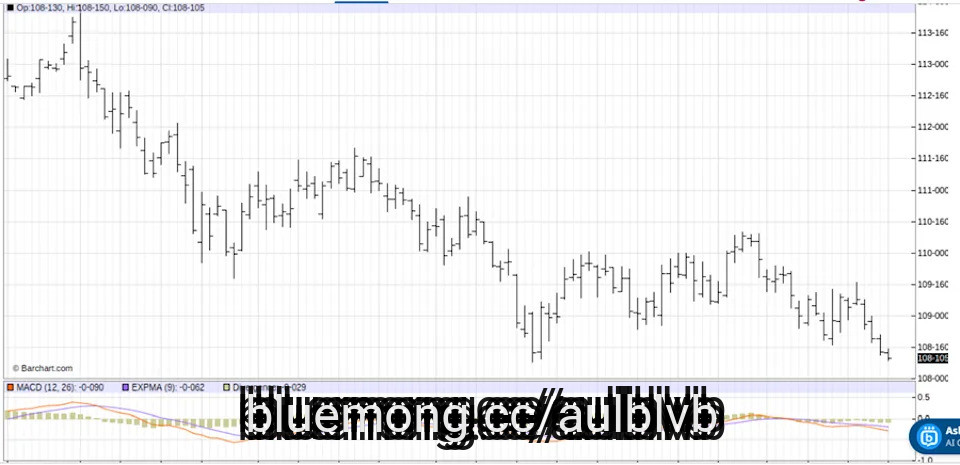
September U.S. T-Note (ZNU26) futures present a selling opportunity on more price weakness.
See on the daily bar chart for September U.S. Treasury note futures that prices are trending down and have just hit a two-month low. See, too, at the bottom of the chart that the moving average convergence divergence (MACD) indicator is also in a bearish posture, as the blue MACD line is below the red trigger line and both lines are trending down. The T-Note bears have the near-term technical advantage.
Dear **** eX Stock Fans, Mark Your Calendars for July 23
The Biggest Risk to **** eX Stock Comes After Earnings. Here Are The Numbers You Should Keep An Eye On.
Walmart Stock's Extended Downturn Could Trigger a Possible Comeback
#futures
See on the daily bar chart for September U.S. Treasury note futures that prices are trending down and have just hit a two-month low. See, too, at the bottom of the chart that the moving average convergence divergence (MACD) indicator is also in a bearish posture, as the blue MACD line is below the red trigger line and both lines are trending down. The T-Note bears have the near-term technical advantage.
Dear **** eX Stock Fans, Mark Your Calendars for July 23
The Biggest Risk to **** eX Stock Comes After Earnings. Here Are The Numbers You Should Keep An Eye On.
Walmart Stock's Extended Downturn Could Trigger a Possible Comeback
#futures

2 months ago
Concerned about an AI bubble? Sign up for The Daily Upside for smart and actionable market news, built for investors.
Maybe one size really can fit all.
As financial and investment advisors face rising client loads and portfolio complexity, the challenge is no longer simply building portfolios, but turning them into consistent and customized strategies. That's leading some advisors to take another look at model portfolios. Sometimes models have been dismissed as commoditized, one-size-fits-all solutions, but as the wealth industry has evolved, so too have model portfolios. Rather than forcing every client into the same allocation, today's products are dynamic, outcome-oriented frameworks that help RIAs implement their best thinking more consistently.
By providing a repeatable foundation for portfolio construction, they can reduce ad hoc decision-making, improve communication around portfolio changes and create greater flexibility to accommodate client-specific preferences and circumstances. We've heard it before, but the result is that advisors can spend less time manually building portfolios and more time delivering the advice clients increasingly value.
But not every customization is right for every client, and advisors need to serve as gatekeepers to ensure that adjustments are creating value rather than simply introducing additional complexity, implementation burdens and costs.
#client #Portfolio #rather #simply
Maybe one size really can fit all.
As financial and investment advisors face rising client loads and portfolio complexity, the challenge is no longer simply building portfolios, but turning them into consistent and customized strategies. That's leading some advisors to take another look at model portfolios. Sometimes models have been dismissed as commoditized, one-size-fits-all solutions, but as the wealth industry has evolved, so too have model portfolios. Rather than forcing every client into the same allocation, today's products are dynamic, outcome-oriented frameworks that help RIAs implement their best thinking more consistently.
By providing a repeatable foundation for portfolio construction, they can reduce ad hoc decision-making, improve communication around portfolio changes and create greater flexibility to accommodate client-specific preferences and circumstances. We've heard it before, but the result is that advisors can spend less time manually building portfolios and more time delivering the advice clients increasingly value.
But not every customization is right for every client, and advisors need to serve as gatekeepers to ensure that adjustments are creating value rather than simply introducing additional complexity, implementation burdens and costs.
#client #Portfolio #rather #simply

2 months ago
The CRSP U.S. Total Market index is made up of all 3,451 companies listed on American stock exchanges. Then there's the CRSP U.S. Large Cap index, which aims to include the major companies that account for 85% of the market's total capitalization. The index includes just 438 companies, a fact that highlights the extreme concentration of capital in corporate America.
Those 438 companies can be divided into two categories: growth stocks and value stocks. The CRSP U.S. Large Cap Growth index consists of the 146 growth stocks in that group, a subset that includes nine of America's 10 most valuable companies. Typically, the CRSP U.S. Large Cap Growth Index outperforms its value-based counterpart because of its high degree of exposure to sectors such as technology, and it has an exceptional track record of delivering positive returns.
Missed Nvidia in 2009? This Rare Signal Is Flashing Again. In 2009, a "Double Down" signal flashed for a little-known chipmaker called Nvidia. For the first time in years, that same "Total Conviction" signal is flashing for a company 1/100th the size of Nvidia. Continue »
The Vanguard Growth ETF (NYSEMKT: VUG) is an exchange-traded fund (ETF) that mimics the CRSP Large Cap Growth Index by holding the same stocks. Here's how it could turn consistent investments of $500 per month into $1 million over the long term.
Technology companies operate at the forefront of some of the world's fastest-growing industries, with artificial intelligence (AI) being the latest example. Therefore, despite the fact that this EFT has components from across all 11 different sectors of the stock market, it's no surprise that almost 70% of its ***** ets are parked in technology stocks.
#Growth
Those 438 companies can be divided into two categories: growth stocks and value stocks. The CRSP U.S. Large Cap Growth index consists of the 146 growth stocks in that group, a subset that includes nine of America's 10 most valuable companies. Typically, the CRSP U.S. Large Cap Growth Index outperforms its value-based counterpart because of its high degree of exposure to sectors such as technology, and it has an exceptional track record of delivering positive returns.
Missed Nvidia in 2009? This Rare Signal Is Flashing Again. In 2009, a "Double Down" signal flashed for a little-known chipmaker called Nvidia. For the first time in years, that same "Total Conviction" signal is flashing for a company 1/100th the size of Nvidia. Continue »
The Vanguard Growth ETF (NYSEMKT: VUG) is an exchange-traded fund (ETF) that mimics the CRSP Large Cap Growth Index by holding the same stocks. Here's how it could turn consistent investments of $500 per month into $1 million over the long term.
Technology companies operate at the forefront of some of the world's fastest-growing industries, with artificial intelligence (AI) being the latest example. Therefore, despite the fact that this EFT has components from across all 11 different sectors of the stock market, it's no surprise that almost 70% of its ***** ets are parked in technology stocks.
#Growth

2 months ago
The tech earnings season has just begun. For AI-focused investors, the busiest stretch is between the last two weeks of July, when nearly all the tech giants report within roughly one week. This period is likely to set the tone for AI and semiconductor stocks for the rest of the quarter. Microsoft (MSFT) and Amazon (AMZN), two of the "Magnificent Seven" giants, are also set to report by the end of July, with investors closely watching how heavy AI investments are translating into revenue growth and profitability.
Here's why one appears to be the better AI opportunity ahead of earnings.
Huge, Unusual Intel Options Volume Today Ahead of Earnings This Week
Intel Stock Is Down, But Put Premiums are High - Put Short Sellers Love the High Yields
Billionaire Mark Cuban Says If CEOs Get 10% of Pay in Stock, Janitors Deserve the Same Percentage — 'That Will Change the Game'
#high #week
Here's why one appears to be the better AI opportunity ahead of earnings.
Huge, Unusual Intel Options Volume Today Ahead of Earnings This Week
Intel Stock Is Down, But Put Premiums are High - Put Short Sellers Love the High Yields
Billionaire Mark Cuban Says If CEOs Get 10% of Pay in Stock, Janitors Deserve the Same Percentage — 'That Will Change the Game'
#high #week


2 months ago
Moneywise and Yahoo Finance LLC may earn commission or revenue through links in the content below.
Most American workers ***** ume they'll call it quits around 65. But most are wrong, and the gap between expectation and reality carries serious financial consequences.
According to the 2026 Retirement Confidence Survey put out by the Employee Benefit Research Institute (EBRI) and Greenwald Research, nearly half of retirees (46%) left the workforce earlier than planned (1). The average actual retirement age was 62, while the average age workers expected to retire remained 65.
Jeff Bezos backs a platform that lets anyone invest in rental homes for as little as $100 — 6 ways to build wealth like a landlord without actually being one
JPMorgan still sees gold hitting $5,000/oz by Q4 — and savvy investors are protecting their wealth with a tax-advantaged Gold IRA. Learn more with a free guide from Priority Gold
Most American workers ***** ume they'll call it quits around 65. But most are wrong, and the gap between expectation and reality carries serious financial consequences.
According to the 2026 Retirement Confidence Survey put out by the Employee Benefit Research Institute (EBRI) and Greenwald Research, nearly half of retirees (46%) left the workforce earlier than planned (1). The average actual retirement age was 62, while the average age workers expected to retire remained 65.
Jeff Bezos backs a platform that lets anyone invest in rental homes for as little as $100 — 6 ways to build wealth like a landlord without actually being one
JPMorgan still sees gold hitting $5,000/oz by Q4 — and savvy investors are protecting their wealth with a tax-advantaged Gold IRA. Learn more with a free guide from Priority Gold