

27 days ago
Eli Lilly (LLY) trades near $1,150, up about 52% over the past year, and is now worth more than a trillion dollars. At that size the easy read is that the big money has been made. But Lilly has barely started selling Foundayo, its oral obesity medicine, outside the United States. So how much is left? The scenario below starts from Lilly's own trailing numbers, but the growth, margin, and multiple it ***** umes are ours. It is not a forecast and not a price target.
Almost all of the upside is revenue. The scenario caps growth at 30% a year. That is well below the 49.6% Lilly grew over the past twelve months, though only a little below the roughly 32% pace of its own 2026 guide. Revenue still climbs from $79.7 billion to $175.0 billion by year three.
The engine is incretins. Mounjaro and Zepbound together made $14.9 billion in the second quarter of 2026, $6.3 billion more than a year earlier. Net margin eases to 30.7% in the scenario, so earnings roughly double.
Then the multiple takes its cut. Lilly's P/E of 38.5x already sits below its three-year average of 68.9x, and the scenario trims it further to 33.6x because slower growth will not support even today's multiple. On those ***** umptions the stock would be worth about $2,024 in three years, roughly 76% above today.
LLY
#below #roughly #revenue
Almost all of the upside is revenue. The scenario caps growth at 30% a year. That is well below the 49.6% Lilly grew over the past twelve months, though only a little below the roughly 32% pace of its own 2026 guide. Revenue still climbs from $79.7 billion to $175.0 billion by year three.
The engine is incretins. Mounjaro and Zepbound together made $14.9 billion in the second quarter of 2026, $6.3 billion more than a year earlier. Net margin eases to 30.7% in the scenario, so earnings roughly double.
Then the multiple takes its cut. Lilly's P/E of 38.5x already sits below its three-year average of 68.9x, and the scenario trims it further to 33.6x because slower growth will not support even today's multiple. On those ***** umptions the stock would be worth about $2,024 in three years, roughly 76% above today.
LLY
#below #roughly #revenue

30 days ago
Eli Lilly (NYSE: LLY) has been on a historic run over the past five years, outperforming similarly sized peers in the pharmaceutical industry and becoming the first healthcare stock to reach a $1 trillion market cap. The company's diabetes and weight-loss portfolio has been the main engine behind its terrific performance of late, and it remains strong. During the second quarter, Eli Lilly's revenue jumped 48% year over year to $23 billion, while adjusted earnings per share rose 33% year over year to $8.38.
Sales from Eli Lilly's Mounjaro, a diabetes medicine, soared 91% year over year to $9.9 billion, while sales of Zepbound, approved for weight loss and obstructive sleep apnea, grew 46% to $4.9 billion. Can anything stop Eli Lilly's momentum? Here's one thing that might do so.
Missed Nvidia in 2009? This Rare Signal Is Flashing Again. In 2009, a "Double Down" signal flashed for a little-known chipmaker called Nvidia. For the first time in years, that same "Total Conviction" signal is flashing for a company 1/100th the size of Nvidia. Continue »
Eli Lilly generates most of its revenue from Mounjaro and Zepbound, which have the same active ingredient, tirzepatide, a medicine that mimics the action of the GLP-1 and GIP gut hormones. In the second quarter, sales from these two medicines accounted for almost 65% of the company's top line. Eli Lilly also markets Foundayo, an oral GLP-1 approved for weight loss, although it was approved in April and doesn't yet contribute much to its financial results.
Still, the point is that Eli Lilly's lineup is concentrated at the top, with just a couple of brands responsible for most of the recent momentum. Other pharmaceutical giants are well aware of Eli Lilly's GLP-1 success, and they are seeking to launch competing therapies.
#lilly #sales #loss #billion
Sales from Eli Lilly's Mounjaro, a diabetes medicine, soared 91% year over year to $9.9 billion, while sales of Zepbound, approved for weight loss and obstructive sleep apnea, grew 46% to $4.9 billion. Can anything stop Eli Lilly's momentum? Here's one thing that might do so.
Missed Nvidia in 2009? This Rare Signal Is Flashing Again. In 2009, a "Double Down" signal flashed for a little-known chipmaker called Nvidia. For the first time in years, that same "Total Conviction" signal is flashing for a company 1/100th the size of Nvidia. Continue »
Eli Lilly generates most of its revenue from Mounjaro and Zepbound, which have the same active ingredient, tirzepatide, a medicine that mimics the action of the GLP-1 and GIP gut hormones. In the second quarter, sales from these two medicines accounted for almost 65% of the company's top line. Eli Lilly also markets Foundayo, an oral GLP-1 approved for weight loss, although it was approved in April and doesn't yet contribute much to its financial results.
Still, the point is that Eli Lilly's lineup is concentrated at the top, with just a couple of brands responsible for most of the recent momentum. Other pharmaceutical giants are well aware of Eli Lilly's GLP-1 success, and they are seeking to launch competing therapies.
#lilly #sales #loss #billion


1 month ago
Eli Lilly and Company (NYSE:LLY) says its newly launched oral obesity drug Foundayo has captured more than 30% of new U.S. patients starting oral weight-loss medicines, a notable early gain against Novo Nordisk's Wegovy pill. Reuters reports that Wegovy initially held roughly 90% of the oral market, making Lilly's rapid share capture an important sign that the oral GLP-1 market is becoming a two-player competition rather than a Novo-dominated segment. The broader U.S. obesity-drug market is expected to exceed $100 billion annually by 2030, with oral treatments potentially accounting for more than one-third of GLP-1 use.
The timing is strategically important for Lilly because Foundayo was only launched in the U.S. in April 2026. The drug starts at $149 per month for self-pay patients and can cost as little as $25 for eligible commercially insured patients, while Medicare beneficiaries can access it through the GLP-1 Bridge program at $50 per month. Lilly's SEC filing says Mounjaro and Zepbound already represented 65% of its revenue in the first six months of 2026, highlighting both the importance of the incretin franchise and the opportunity for Foundayo to broaden Lilly's cardiometabolic revenue base.
The strongest bullish implication is that Foundayo appears to be overcoming the biggest behavioral barrier in obesity treatment: patients' preference for an oral medicine over an injection. Capturing more than 30% of new oral patients only months after launch suggests Eli Lilly and Company (NYSE:LLY) is establishing meaningful competitive positioning before the oral GLP-1 market fully scales. Foundayo's formulation also has a practical advantage because it can be taken at any time of day without food or water restrictions, while Lilly's clinical data showed an average 27.3-pound, or 12.4%, weight reduction at the highest dose among patients who remained on treatment in ATTAIN-1.
The commercial opportunity could become considerably larger if Foundayo gains indications beyond obesity. Lilly reported that in the ACHIEVE-3 trial, Foundayo produced a 57.1% greater relative reduction in A1C and a 73.6% greater relative reduction in body weight compared with oral semaglutide 14 mg. Lilly submitted Foundayo for type 2 diabetes in the U.S., EU, and **** an, potentially expanding the addressable market beyond weight management.
The early oral-market traction also complements Eli Lilly and Company (NYSE:LLY)'s existing injectable franchise rather than simply cannibalizing it. A Lilly trial found that patients switching from maximum-tolerated Wegovy to Foundayo maintained all but 0.9 kg of their previous weight loss after one year, while patients switching from maximum-dose Zepbound to Foundayo maintained all but 5.0 kg. That suggests Foundayo could serve as a maintenance or lower-burden treatment within Lilly's broader obesity portfolio, increasing lifetime value per patient rather than limiting the opportunity to new prescriptions.
#patients #weight #c
The timing is strategically important for Lilly because Foundayo was only launched in the U.S. in April 2026. The drug starts at $149 per month for self-pay patients and can cost as little as $25 for eligible commercially insured patients, while Medicare beneficiaries can access it through the GLP-1 Bridge program at $50 per month. Lilly's SEC filing says Mounjaro and Zepbound already represented 65% of its revenue in the first six months of 2026, highlighting both the importance of the incretin franchise and the opportunity for Foundayo to broaden Lilly's cardiometabolic revenue base.
The strongest bullish implication is that Foundayo appears to be overcoming the biggest behavioral barrier in obesity treatment: patients' preference for an oral medicine over an injection. Capturing more than 30% of new oral patients only months after launch suggests Eli Lilly and Company (NYSE:LLY) is establishing meaningful competitive positioning before the oral GLP-1 market fully scales. Foundayo's formulation also has a practical advantage because it can be taken at any time of day without food or water restrictions, while Lilly's clinical data showed an average 27.3-pound, or 12.4%, weight reduction at the highest dose among patients who remained on treatment in ATTAIN-1.
The commercial opportunity could become considerably larger if Foundayo gains indications beyond obesity. Lilly reported that in the ACHIEVE-3 trial, Foundayo produced a 57.1% greater relative reduction in A1C and a 73.6% greater relative reduction in body weight compared with oral semaglutide 14 mg. Lilly submitted Foundayo for type 2 diabetes in the U.S., EU, and **** an, potentially expanding the addressable market beyond weight management.
The early oral-market traction also complements Eli Lilly and Company (NYSE:LLY)'s existing injectable franchise rather than simply cannibalizing it. A Lilly trial found that patients switching from maximum-tolerated Wegovy to Foundayo maintained all but 0.9 kg of their previous weight loss after one year, while patients switching from maximum-dose Zepbound to Foundayo maintained all but 5.0 kg. That suggests Foundayo could serve as a maintenance or lower-burden treatment within Lilly's broader obesity portfolio, increasing lifetime value per patient rather than limiting the opportunity to new prescriptions.
#patients #weight #c


1 month ago
Eli Lilly and Company (NYSE:LLY) says its newly launched oral obesity drug Foundayo has captured more than 30% of new U.S. patients starting oral weight-loss medicines, a notable early gain against Novo Nordisk's Wegovy pill. Reuters reports that Wegovy initially held roughly 90% of the oral market, making Lilly's rapid share capture an important sign that the oral GLP-1 market is becoming a two-player competition rather than a Novo-dominated segment. The broader U.S. obesity-drug market is expected to exceed $100 billion annually by 2030, with oral treatments potentially accounting for more than one-third of GLP-1 use.
The timing is strategically important for Lilly because Foundayo was only launched in the U.S. in April 2026. The drug starts at $149 per month for self-pay patients and can cost as little as $25 for eligible commercially insured patients, while Medicare beneficiaries can access it through the GLP-1 Bridge program at $50 per month. Lilly's SEC filing says Mounjaro and Zepbound already represented 65% of its revenue in the first six months of 2026, highlighting both the importance of the incretin franchise and the opportunity for Foundayo to broaden Lilly's cardiometabolic revenue base.
The strongest bullish implication is that Foundayo appears to be overcoming the biggest behavioral barrier in obesity treatment: patients' preference for an oral medicine over an injection. Capturing more than 30% of new oral patients only months after launch suggests Eli Lilly and Company (NYSE:LLY) is establishing meaningful competitive positioning before the oral GLP-1 market fully scales. Foundayo's formulation also has a practical advantage because it can be taken at any time of day without food or water restrictions, while Lilly's clinical data showed an average 27.3-pound, or 12.4%, weight reduction at the highest dose among patients who remained on treatment in ATTAIN-1.
The commercial opportunity could become considerably larger if Foundayo gains indications beyond obesity. Lilly reported that in the ACHIEVE-3 trial, Foundayo produced a 57.1% greater relative reduction in A1C and a 73.6% greater relative reduction in body weight compared with oral semaglutide 14 mg. Lilly submitted Foundayo for type 2 diabetes in the U.S., EU, and ***** an, potentially expanding the addressable market beyond weight management.
The early oral-market traction also complements Eli Lilly and Company (NYSE:LLY)'s existing injectable franchise rather than simply cannibalizing it. A Lilly trial found that patients switching from maximum-tolerated Wegovy to Foundayo maintained all but 0.9 kg of their previous weight loss after one year, while patients switching from maximum-dose Zepbound to Foundayo maintained all but 5.0 kg. That suggests Foundayo could serve as a maintenance or lower-burden treatment within Lilly's broader obesity portfolio, increasing lifetime value per patient rather than limiting the opportunity to new prescriptions.
#weight
The timing is strategically important for Lilly because Foundayo was only launched in the U.S. in April 2026. The drug starts at $149 per month for self-pay patients and can cost as little as $25 for eligible commercially insured patients, while Medicare beneficiaries can access it through the GLP-1 Bridge program at $50 per month. Lilly's SEC filing says Mounjaro and Zepbound already represented 65% of its revenue in the first six months of 2026, highlighting both the importance of the incretin franchise and the opportunity for Foundayo to broaden Lilly's cardiometabolic revenue base.
The strongest bullish implication is that Foundayo appears to be overcoming the biggest behavioral barrier in obesity treatment: patients' preference for an oral medicine over an injection. Capturing more than 30% of new oral patients only months after launch suggests Eli Lilly and Company (NYSE:LLY) is establishing meaningful competitive positioning before the oral GLP-1 market fully scales. Foundayo's formulation also has a practical advantage because it can be taken at any time of day without food or water restrictions, while Lilly's clinical data showed an average 27.3-pound, or 12.4%, weight reduction at the highest dose among patients who remained on treatment in ATTAIN-1.
The commercial opportunity could become considerably larger if Foundayo gains indications beyond obesity. Lilly reported that in the ACHIEVE-3 trial, Foundayo produced a 57.1% greater relative reduction in A1C and a 73.6% greater relative reduction in body weight compared with oral semaglutide 14 mg. Lilly submitted Foundayo for type 2 diabetes in the U.S., EU, and ***** an, potentially expanding the addressable market beyond weight management.
The early oral-market traction also complements Eli Lilly and Company (NYSE:LLY)'s existing injectable franchise rather than simply cannibalizing it. A Lilly trial found that patients switching from maximum-tolerated Wegovy to Foundayo maintained all but 0.9 kg of their previous weight loss after one year, while patients switching from maximum-dose Zepbound to Foundayo maintained all but 5.0 kg. That suggests Foundayo could serve as a maintenance or lower-burden treatment within Lilly's broader obesity portfolio, increasing lifetime value per patient rather than limiting the opportunity to new prescriptions.
#weight

2 months ago
Management is betting on a bigger year than ever, but investors seem to be waiting for a catch.
When a company with a $1.12 trillion market cap tells you it expects to pull in an extra few billion dollars, you listen. On Aug 5, 2026, the company did just that, significantly raising its full-year 2026 revenue guidance. And the market's reaction? A polite nod. The stock gained +4.9% on earnings day and has added another +7.5% since, with the market steadily validating management's raised outlook rather than pushing back on it.
The guidance update came with key moving parts: management raised full-year 2026 revenue guidance by 3% and lifted its performance margin target by 2 full percentage points, even while modestly trimming its full-year EPS guidance. This comes on the heels of a quarter where revenue grew 48% year-over-year, driven by the blockbuster performance of its incretin drugs Mounjaro and Zepbound. The company is signaling that its commercial engine, already running at full throttle, has found another gear. For a company of this scale, adding billions to the top-line forecast is a significant statement of confidence.
Perhaps the market's hesitation is understandable. After a stock has climbed 79% in a single year, it's fair to ask how much good news is already baked into the price. Investors are now looking past the headline numbers for cracks in the story. Some ******* ysts have pointed to the launch of the oral drug Foundayo as being "slower than anticipated," while others noted that the company's own guidance implies a potential deceleration in growth in the back half of the year. When you're priced for perfection, any hint of a slowdown gets magnified.
The market is actively debating what level of future growth is truly baked into Lilly's multiple—a question explored in our recent breakdown of what the stock's valuation actually implies. It's the classic standoff: the company delivered the numbers, but the market is questioning if it can keep delivering at the same pace.
#company
When a company with a $1.12 trillion market cap tells you it expects to pull in an extra few billion dollars, you listen. On Aug 5, 2026, the company did just that, significantly raising its full-year 2026 revenue guidance. And the market's reaction? A polite nod. The stock gained +4.9% on earnings day and has added another +7.5% since, with the market steadily validating management's raised outlook rather than pushing back on it.
The guidance update came with key moving parts: management raised full-year 2026 revenue guidance by 3% and lifted its performance margin target by 2 full percentage points, even while modestly trimming its full-year EPS guidance. This comes on the heels of a quarter where revenue grew 48% year-over-year, driven by the blockbuster performance of its incretin drugs Mounjaro and Zepbound. The company is signaling that its commercial engine, already running at full throttle, has found another gear. For a company of this scale, adding billions to the top-line forecast is a significant statement of confidence.
Perhaps the market's hesitation is understandable. After a stock has climbed 79% in a single year, it's fair to ask how much good news is already baked into the price. Investors are now looking past the headline numbers for cracks in the story. Some ******* ysts have pointed to the launch of the oral drug Foundayo as being "slower than anticipated," while others noted that the company's own guidance implies a potential deceleration in growth in the back half of the year. When you're priced for perfection, any hint of a slowdown gets magnified.
The market is actively debating what level of future growth is truly baked into Lilly's multiple—a question explored in our recent breakdown of what the stock's valuation actually implies. It's the classic standoff: the company delivered the numbers, but the market is questioning if it can keep delivering at the same pace.
#company


2 months ago
By Amina Niasse
NEW YORK, Aug 25 (Reuters) - About 14% of employers in the United States have already or plan to drop GLP-1 drugs in 2027, as companies see rising healthcare costs, according to a survey released on Tuesday by the Business Group on Health.
Healthcare costs are set to increase 9.2% if employers do not make changes to manage costs in 2027, up from 8.5% in 2026, the group said. Two-thirds of employers surveyed said they saw rising utilization of the drugs.
GLP-1 weight-loss drugs, such as Novo Nordisk's Wegovy and Eli Lilly's Zepbound and Foundayo, help people lose weight by mimicking a hormone that keeps the stomach feeling full. Zepbound and Wegovy cost $499 and $1,349.02, respectively, per month according to list prices on manufacturer websites.
"This represents an unfortunate new reality for employers, who now face growing difficulty in budgeting and forecasting," said Ellen Kelsay, president of the Business Group on Health. "It's a call to take a more disruptive approach and rethink how to deliver value and improved health outcomes."
#group #drugs
NEW YORK, Aug 25 (Reuters) - About 14% of employers in the United States have already or plan to drop GLP-1 drugs in 2027, as companies see rising healthcare costs, according to a survey released on Tuesday by the Business Group on Health.
Healthcare costs are set to increase 9.2% if employers do not make changes to manage costs in 2027, up from 8.5% in 2026, the group said. Two-thirds of employers surveyed said they saw rising utilization of the drugs.
GLP-1 weight-loss drugs, such as Novo Nordisk's Wegovy and Eli Lilly's Zepbound and Foundayo, help people lose weight by mimicking a hormone that keeps the stomach feeling full. Zepbound and Wegovy cost $499 and $1,349.02, respectively, per month according to list prices on manufacturer websites.
"This represents an unfortunate new reality for employers, who now face growing difficulty in budgeting and forecasting," said Ellen Kelsay, president of the Business Group on Health. "It's a call to take a more disruptive approach and rethink how to deliver value and improved health outcomes."
#group #drugs


2 months ago
Drugmaker Bristol-Myers Squibb Company (NYSE:BMY) is putting real money behind its confidence in American manufacturing. On August 10, the company said it will spend about $2.3 billion on a new plant in Houston, part of a larger $40 billion U.S. investment pledge.
On the very same day, British regulators cleared Eli Lilly and Company (NYSE:LLY)'s weight-loss pill Foundayo for both weight management and type 2 diabetes, making the UK the first country in Europe to approve the drug.
Bristol-Myers Squibb Company (NYSE:BMY)'s new Houston campus, roughly 600,000 square feet, will churn out everything from small-molecule medicines to more complex biologics and antibody-drug conjugates. It is expected to create close to 500 skilled jobs and about 2,000 construction jobs between 2027 and 2030. CEO Christopher Boerner framed it as a vote of confidence in America's biopharma future. The timing lines up with a broader industry trend: drugmakers from Lilly to Johnson & Johnson to Pfizer are all racing to build more in the U.S. as tariff pressure from the Trump administration ramps up.
Eli Lilly took the opposite direction this week, expanding outward instead of inward. Foundayo's UK approval opens a major new market, even though the pill isn't covered by the National Health Service yet and still trails Novo Nordisk's Wegovy pill there.
So which strategy actually serves shareholders better, building strength at home or chasing growth abroad?
#NYSE #myers #squibb #confidence
On the very same day, British regulators cleared Eli Lilly and Company (NYSE:LLY)'s weight-loss pill Foundayo for both weight management and type 2 diabetes, making the UK the first country in Europe to approve the drug.
Bristol-Myers Squibb Company (NYSE:BMY)'s new Houston campus, roughly 600,000 square feet, will churn out everything from small-molecule medicines to more complex biologics and antibody-drug conjugates. It is expected to create close to 500 skilled jobs and about 2,000 construction jobs between 2027 and 2030. CEO Christopher Boerner framed it as a vote of confidence in America's biopharma future. The timing lines up with a broader industry trend: drugmakers from Lilly to Johnson & Johnson to Pfizer are all racing to build more in the U.S. as tariff pressure from the Trump administration ramps up.
Eli Lilly took the opposite direction this week, expanding outward instead of inward. Foundayo's UK approval opens a major new market, even though the pill isn't covered by the National Health Service yet and still trails Novo Nordisk's Wegovy pill there.
So which strategy actually serves shareholders better, building strength at home or chasing growth abroad?
#NYSE #myers #squibb #confidence


2 months ago
On August 10, Eli Lilly and Company (NYSE:LLY)'s weight-loss pill Foundayo won approval in the UK, becoming the first country in Europe to clear the drug for both weight management and type 2 diabetes. It's only the second GLP-1 pill approved in Europe, arriving two months after Novo Nordisk A/S (NYSE:NVO)'s Wegovy pill got its own UK approval in June.
Novo already has a head start in the European pill market and in patient numbers worldwide. Lilly is betting that a pill with no food restrictions can close that gap.
That raises the real question: can Lilly's convenience edge actually win over doctors and patients fast enough to catch up, or does Novo Nordisk A/S (NYSE:NVO)'s lead already look too big to close?
Foundayo can be taken at any time of day without food or water restrictions, unlike the Wegovy pill, which must be taken on an empty stomach with a 30-minute wait before eating. Lilly said the drug will launch in the UK later this month through private prescription, priced below Mounjaro's roughly £330 monthly list price. Foundayo already brought in $98 million in US sales last quarter. Eli Lilly and Company (NYSE:LLY)'s overall 2026 revenue guidance now sits at $85 billion to $87 billion, up from its earlier forecast, due to strong demand for its weight-loss and diabetes drugs.
Foundayo's uptake has been much slower than that of the Wegovy pills in the US, something Eli Lilly and Company (NYSE:LLY) CEO David Ricks has said reflects the time it takes for a brand-new medicine to build trust with doctors and patients. NHS access in the UK isn't automatic either, since it depends on a coming cost-effectiveness review. That means most early UK patients will have to pay privately. Foundayo is also still under review in the European Union, while the Wegovy pill has already secured a positive recommendation there.
#pill #wegovy
Novo already has a head start in the European pill market and in patient numbers worldwide. Lilly is betting that a pill with no food restrictions can close that gap.
That raises the real question: can Lilly's convenience edge actually win over doctors and patients fast enough to catch up, or does Novo Nordisk A/S (NYSE:NVO)'s lead already look too big to close?
Foundayo can be taken at any time of day without food or water restrictions, unlike the Wegovy pill, which must be taken on an empty stomach with a 30-minute wait before eating. Lilly said the drug will launch in the UK later this month through private prescription, priced below Mounjaro's roughly £330 monthly list price. Foundayo already brought in $98 million in US sales last quarter. Eli Lilly and Company (NYSE:LLY)'s overall 2026 revenue guidance now sits at $85 billion to $87 billion, up from its earlier forecast, due to strong demand for its weight-loss and diabetes drugs.
Foundayo's uptake has been much slower than that of the Wegovy pills in the US, something Eli Lilly and Company (NYSE:LLY) CEO David Ricks has said reflects the time it takes for a brand-new medicine to build trust with doctors and patients. NHS access in the UK isn't automatic either, since it depends on a coming cost-effectiveness review. That means most early UK patients will have to pay privately. Foundayo is also still under review in the European Union, while the Wegovy pill has already secured a positive recommendation there.
#pill #wegovy

2 months ago
Eli Lilly and Company (NYSE:LLY) cleared a notable regulatory hurdle on August 10, when Britain's drug regulator authorized the company's oral GLP-1 drug orforglipron, becoming the first country in Europe to approve the pill. Shares of LLY increased more than 2% in response to the announcement, a modest but insightful reaction for a company whose weight-loss franchise has become the single most important driver of its market value.
The UK's Medicines and Healthcare Products Regulatory Agency approved orforglipron, offered under the brand name Foundayo, for weight loss and maintenance in obese adults, as well as select overweight individuals with at least one weight-related health condition. The approval also addresses increasing blood sugar control in people with type 2 diabetes.
What sets Foundayo apart from Lilly's other weight-loss medications, as well as the majority of the GLP-1 category in general, is the format. Unlike injectable drugs like Lilly's Zepbound or Novo Nordisk A/S (NYSE:NVO)'s Ozempic, Foundayo is a small, non-peptide GLP-1 receptor agonist that is taken as a single daily tablet. It can also be taken at any time with no food or water restrictions, making it a far more convenient regimen than some oral peptide alternatives that require fasting windows around dosing.
The clinical data that supports the approval is strong. In the ATTAIN-1 trial, which tracked 3,127 individuals with obesity for 72 weeks, participants on the 36 mg dose lost an average of 11.2% of their body weight, as opposed to 2.1% on placebo, and more than half of those on that dose lost at least 10%.
The authorization is crucial, but it is not the final step. Foundayo is not currently available through the NHS in the UK, and the drug's journey to that larger market is through the National Institute for Health and Care Excellence, which is completing its own cost-effectiveness study, with a decision expected on November 18. Until NICE decides, UK patients seeking the medicine will have to pay out of pocket or get it privately, a scenario that is already playing out with competing products in the category.
#foundayo #loss #NYSE #regulatory
The UK's Medicines and Healthcare Products Regulatory Agency approved orforglipron, offered under the brand name Foundayo, for weight loss and maintenance in obese adults, as well as select overweight individuals with at least one weight-related health condition. The approval also addresses increasing blood sugar control in people with type 2 diabetes.
What sets Foundayo apart from Lilly's other weight-loss medications, as well as the majority of the GLP-1 category in general, is the format. Unlike injectable drugs like Lilly's Zepbound or Novo Nordisk A/S (NYSE:NVO)'s Ozempic, Foundayo is a small, non-peptide GLP-1 receptor agonist that is taken as a single daily tablet. It can also be taken at any time with no food or water restrictions, making it a far more convenient regimen than some oral peptide alternatives that require fasting windows around dosing.
The clinical data that supports the approval is strong. In the ATTAIN-1 trial, which tracked 3,127 individuals with obesity for 72 weeks, participants on the 36 mg dose lost an average of 11.2% of their body weight, as opposed to 2.1% on placebo, and more than half of those on that dose lost at least 10%.
The authorization is crucial, but it is not the final step. Foundayo is not currently available through the NHS in the UK, and the drug's journey to that larger market is through the National Institute for Health and Care Excellence, which is completing its own cost-effectiveness study, with a decision expected on November 18. Until NICE decides, UK patients seeking the medicine will have to pay out of pocket or get it privately, a scenario that is already playing out with competing products in the category.
#foundayo #loss #NYSE #regulatory


2 months ago
What happened: Eli Lilly (LLY) stock jumped as much as 7% on Wednesday.
What's behind the move: The drug company raised its 2026 sales forecast after it saw strong demand for GLP-1 drugs in its fiscal second quarter.
Revenue is now expected to fall between $85 billion and $87 billion for the year, topping an earlier forecast of up to $85 billion, according to Bloomberg data.
Adjusted earnings for the second quarter also beat Wall Street estimates.
What else you need to know: Eli Lilly's GLP-1 business has been the growth engine of the drug company, benefiting from several tailwinds since the start of the year, including the FDA's approval of Foundayo, the pill version of its weight-loss drug, earlier this year.
#billion #wednesday
What's behind the move: The drug company raised its 2026 sales forecast after it saw strong demand for GLP-1 drugs in its fiscal second quarter.
Revenue is now expected to fall between $85 billion and $87 billion for the year, topping an earlier forecast of up to $85 billion, according to Bloomberg data.
Adjusted earnings for the second quarter also beat Wall Street estimates.
What else you need to know: Eli Lilly's GLP-1 business has been the growth engine of the drug company, benefiting from several tailwinds since the start of the year, including the FDA's approval of Foundayo, the pill version of its weight-loss drug, earlier this year.
#billion #wednesday



2 months ago
Baron Capital, an investment management company, released its Q2 2026 investor letter for the "Baron Health Care Fund". A copy of the letter is available to download here. The Fund gained 11.99% during the quarter, compared with the 10.48% gain for the Russell 3000 Health Care Index and the 15.44% gain for the Russell 3000 Index. Since inception, the Fund appreciated 10.61% on an annualized basis, compared with 10.02% for the Benchmark and 14.83% for the Index. Strong stock selection in pharmaceuticals, biotechnology, health care equipment, and life sciences tools and services supported the Fund's outperformance, although limited exposure to managed care stocks reduced relative returns. The Fund remains positive on health care due to improving biotechnology funding, strong acquisition activity, recovering managed care margins, and growth from an aging population, chronic disease, medical innovation, and higher health care spending. In addition, please check the Fund's top five holdings to know the best picks in 2026.
In its second-quarter 2026 investor letter, Baron Health Care Fund highlighted Eli Lilly and Company (NYSE:LLY) as a notable performance contributor. Eli Lilly and Company (NYSE:LLY) discovers, develops, manufactures, and markets human pharmaceutical products in the United States and internationally. On August 03, 2026, Eli Lilly and Company (NYSE:LLY) closed at $1,121.36 per share. The one-month return of Eli Lilly and Company (NYSE:LLY) was -9.24%, and its shares gained 46.40% over the past 52 weeks. Eli Lilly and Company (NYSE:LLY) has a market capitalization of $1.06 trillion.
Baron Health Care Fund stated the following regarding Eli Lilly and Company (NYSE:LLY) in its Q2 2026 investor letter:
"Pharmaceutical company Eli Lilly and Company (NYSE:LLY), currently best known for its diabetes and obesity GLP-1 therapies, contributed to performance as commercial execution and pipeline data reinforced investor confidence in the company's long-term leadership. All three major pharmacy benefit managers now cover Lilly's obesity portfolio, including its new daily oral GLP-1, Foundayo. This marks a reversal from last summer, when CVS Caremark provided preferred coverage for Novo Nordisk's Wegovy and raised concerns about a potential price war. The shift suggests that patients and physicians prefer Zepbound and are driving demand. Clinical trial data further reinforces our view that Lilly has one of the strongest next-generation metabolic pipelines in the industry. Phase 3 data showed retatrutide delivered weight loss in the high-20% range at higher doses and nearly 20% at lower doses, while maintaining excellent tolerability. We are also excited about eloralintide, where Phase 2 data showed Zepbound-like efficacy and tolerability, with combination data expected soon. Long term, we continue to view Lilly's portfolio as the gold standard in a category that we believe can exceed $150 billion."
#Health #investor #letter
In its second-quarter 2026 investor letter, Baron Health Care Fund highlighted Eli Lilly and Company (NYSE:LLY) as a notable performance contributor. Eli Lilly and Company (NYSE:LLY) discovers, develops, manufactures, and markets human pharmaceutical products in the United States and internationally. On August 03, 2026, Eli Lilly and Company (NYSE:LLY) closed at $1,121.36 per share. The one-month return of Eli Lilly and Company (NYSE:LLY) was -9.24%, and its shares gained 46.40% over the past 52 weeks. Eli Lilly and Company (NYSE:LLY) has a market capitalization of $1.06 trillion.
Baron Health Care Fund stated the following regarding Eli Lilly and Company (NYSE:LLY) in its Q2 2026 investor letter:
"Pharmaceutical company Eli Lilly and Company (NYSE:LLY), currently best known for its diabetes and obesity GLP-1 therapies, contributed to performance as commercial execution and pipeline data reinforced investor confidence in the company's long-term leadership. All three major pharmacy benefit managers now cover Lilly's obesity portfolio, including its new daily oral GLP-1, Foundayo. This marks a reversal from last summer, when CVS Caremark provided preferred coverage for Novo Nordisk's Wegovy and raised concerns about a potential price war. The shift suggests that patients and physicians prefer Zepbound and are driving demand. Clinical trial data further reinforces our view that Lilly has one of the strongest next-generation metabolic pipelines in the industry. Phase 3 data showed retatrutide delivered weight loss in the high-20% range at higher doses and nearly 20% at lower doses, while maintaining excellent tolerability. We are also excited about eloralintide, where Phase 2 data showed Zepbound-like efficacy and tolerability, with combination data expected soon. Long term, we continue to view Lilly's portfolio as the gold standard in a category that we believe can exceed $150 billion."
#Health #investor #letter
3 months ago
For the first time in the program's history, Medicare is covering weight-loss drugs, and the price tag looks almost too good to pass up.
Beginning July 1, eligible Part D enrollees can access medications including Wegovy, Foundayo, and the Zepbound KwikPen for a flat $50 monthly copay through a temporary federal demonstration called the Medicare GLP-1 (glucagon-like peptide-1) Bridge.
That is a massive discount compared to the retail price of these drugs, which can exceed $1,000 per month without insurance coverage.
It arrives at a moment when roughly 56% of GLP-1 users say affordability is a significant challenge, a poll from KFF, the health policy research organization, found.
But this is not traditional Part D coverage, and the distinction creates financial consequences that could blindside enrollees who ******* ume the program works like every other Medicare prescription benefit they have used.
#part #drugs
Beginning July 1, eligible Part D enrollees can access medications including Wegovy, Foundayo, and the Zepbound KwikPen for a flat $50 monthly copay through a temporary federal demonstration called the Medicare GLP-1 (glucagon-like peptide-1) Bridge.
That is a massive discount compared to the retail price of these drugs, which can exceed $1,000 per month without insurance coverage.
It arrives at a moment when roughly 56% of GLP-1 users say affordability is a significant challenge, a poll from KFF, the health policy research organization, found.
But this is not traditional Part D coverage, and the distinction creates financial consequences that could blindside enrollees who ******* ume the program works like every other Medicare prescription benefit they have used.
#part #drugs

3 months ago
By Chris Prentice and Mariam Sunny
NEW YORK, July 22 (Reuters) - Many patients have opted for injectable forms of the wildly popular GLP-1 obesity medications through a pilot program of the U.S. government's Medicare health insurance program for Americans aged 65 and older, according to early indications from doctors and analysts.
The U.S. Centers for Medicare & Medicaid Services this month launched an 18-month trial program that for the first time opens access to Novo Nordisk's Wegovy and Eli Lilly's Foundayo and Zepbound as weight-loss treatment alone for a monthly cost of $50.
Millions of people are expected to qualify, and doctors are already being flooded with interest from patients aged 65 and older. For the most part, they say the process is going well — with some hiccups.
Many pharmaceutical industry experts had expected that patients would prefer pills over injections, for convenience. Novo's U.S. chief Jamey Millar in June said the firm's research indicated that Medicare beneficiaries prefer the oral pill to the injectable on a two-to-one basis.
#medicare #patients #program #older
NEW YORK, July 22 (Reuters) - Many patients have opted for injectable forms of the wildly popular GLP-1 obesity medications through a pilot program of the U.S. government's Medicare health insurance program for Americans aged 65 and older, according to early indications from doctors and analysts.
The U.S. Centers for Medicare & Medicaid Services this month launched an 18-month trial program that for the first time opens access to Novo Nordisk's Wegovy and Eli Lilly's Foundayo and Zepbound as weight-loss treatment alone for a monthly cost of $50.
Millions of people are expected to qualify, and doctors are already being flooded with interest from patients aged 65 and older. For the most part, they say the process is going well — with some hiccups.
Many pharmaceutical industry experts had expected that patients would prefer pills over injections, for convenience. Novo's U.S. chief Jamey Millar in June said the firm's research indicated that Medicare beneficiaries prefer the oral pill to the injectable on a two-to-one basis.
#medicare #patients #program #older

4 months ago
By Chris Prentice and Amina Niasse
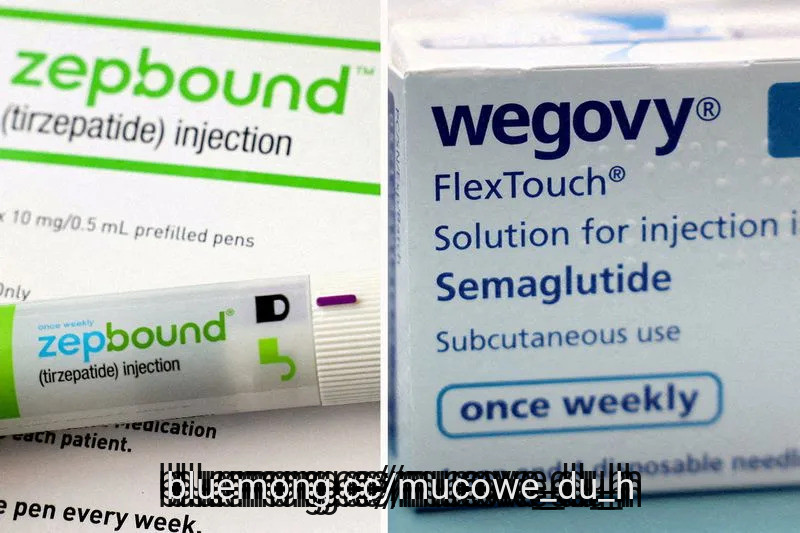
NEW YORK, July 1 (Reuters) - Millions more Americans will qualify for obesity medications at just $50 a month under a new Medicare program starting on Wednesday, bringing the highly effective drugs to people aged 65 and older at an affordable price.
The U.S. Centers for Medicare & Medicaid Services' 18-month trial program will offer for the first time Novo Nordisk's Wegovy and Eli Lilly's Foundayo and Zepbound as a weight-loss treatment alone.
Medicare, which also covers people with disabilities, has been barred from weight-loss coverage and had paid for the drugs only when prescribed for co-conditions like cardiovascular issues and severe fatty liver disease. Now the program offers three pathways for some Medicare subscribers to qualify for coverage.
Eligible patients are estimated in the single-digit millions, a U.S. official said recently. Wall Street **** ysts estimate that will amount to billions of dollars in revenue for the drugmakers.
NEW YORK, July 1 (Reuters) - Millions more Americans will qualify for obesity medications at just $50 a month under a new Medicare program starting on Wednesday, bringing the highly effective drugs to people aged 65 and older at an affordable price.
The U.S. Centers for Medicare & Medicaid Services' 18-month trial program will offer for the first time Novo Nordisk's Wegovy and Eli Lilly's Foundayo and Zepbound as a weight-loss treatment alone.
Medicare, which also covers people with disabilities, has been barred from weight-loss coverage and had paid for the drugs only when prescribed for co-conditions like cardiovascular issues and severe fatty liver disease. Now the program offers three pathways for some Medicare subscribers to qualify for coverage.
Eligible patients are estimated in the single-digit millions, a U.S. official said recently. Wall Street **** ysts estimate that will amount to billions of dollars in revenue for the drugmakers.


4 months ago
LLY needs just 9% to reach $1,200, a figure that sits below the 90%-confidence base case target of $1,280 despite 55% revenue growth.
Foundayo signed up 8,000+ prescribers with 80% of scripts new-to-class, while retatrutide's Phase 3 showed 25 to 37 pounds of weight loss.
Act now: the ****** yst who called NVIDIA in 2010 just named his top 10 AI stocks — and Eli Lilly didn't make the cut. Grab the names FREE today.
Eli Lilly (NYSE:LLY) just reported a quarter that should have sent bulls into a frenzy. Revenue grew 55.5% year over year to $19.80 billion, Mounjaro alone delivered $8.66 billion, and management raised full-year guidance to $82 to $85 billion.
Yet shares are up just 2.57% year to date at $1,098.57. That disconnect is the entire setup for my question: can LLY trade at $1,200 by year-end 2026? I think it can, and the math is closer than most realize.
Foundayo signed up 8,000+ prescribers with 80% of scripts new-to-class, while retatrutide's Phase 3 showed 25 to 37 pounds of weight loss.
Act now: the ****** yst who called NVIDIA in 2010 just named his top 10 AI stocks — and Eli Lilly didn't make the cut. Grab the names FREE today.
Eli Lilly (NYSE:LLY) just reported a quarter that should have sent bulls into a frenzy. Revenue grew 55.5% year over year to $19.80 billion, Mounjaro alone delivered $8.66 billion, and management raised full-year guidance to $82 to $85 billion.
Yet shares are up just 2.57% year to date at $1,098.57. That disconnect is the entire setup for my question: can LLY trade at $1,200 by year-end 2026? I think it can, and the math is closer than most realize.



