

1 hr. ago
Eli Lilly and Company (NYSE:LLY) cleared a notable regulatory hurdle on August 10, when Britain's drug regulator authorized the company's oral GLP-1 drug orforglipron, becoming the first country in Europe to approve the pill. Shares of LLY increased more than 2% in response to the announcement, a modest but insightful reaction for a company whose weight-loss franchise has become the single most important driver of its market value.
The UK's Medicines and Healthcare Products Regulatory Agency approved orforglipron, offered under the brand name Foundayo, for weight loss and maintenance in obese adults, as well as select overweight individuals with at least one weight-related health condition. The approval also addresses increasing blood sugar control in people with type 2 diabetes.
What sets Foundayo apart from Lilly's other weight-loss medications, as well as the majority of the GLP-1 category in general, is the format. Unlike injectable drugs like Lilly's Zepbound or Novo Nordisk A/S (NYSE:NVO)'s Ozempic, Foundayo is a small, non-peptide GLP-1 receptor agonist that is taken as a single daily tablet. It can also be taken at any time with no food or water restrictions, making it a far more convenient regimen than some oral peptide alternatives that require fasting windows around dosing.
The clinical data that supports the approval is strong. In the ATTAIN-1 trial, which tracked 3,127 individuals with obesity for 72 weeks, participants on the 36 mg dose lost an average of 11.2% of their body weight, as opposed to 2.1% on placebo, and more than half of those on that dose lost at least 10%.
The authorization is crucial, but it is not the final step. Foundayo is not currently available through the NHS in the UK, and the drug's journey to that larger market is through the National Institute for Health and Care Excellence, which is completing its own cost-effectiveness study, with a decision expected on November 18. Until NICE decides, UK patients seeking the medicine will have to pay out of pocket or get it privately, a scenario that is already playing out with competing products in the category.
#foundayo #loss #NYSE #regulatory
The UK's Medicines and Healthcare Products Regulatory Agency approved orforglipron, offered under the brand name Foundayo, for weight loss and maintenance in obese adults, as well as select overweight individuals with at least one weight-related health condition. The approval also addresses increasing blood sugar control in people with type 2 diabetes.
What sets Foundayo apart from Lilly's other weight-loss medications, as well as the majority of the GLP-1 category in general, is the format. Unlike injectable drugs like Lilly's Zepbound or Novo Nordisk A/S (NYSE:NVO)'s Ozempic, Foundayo is a small, non-peptide GLP-1 receptor agonist that is taken as a single daily tablet. It can also be taken at any time with no food or water restrictions, making it a far more convenient regimen than some oral peptide alternatives that require fasting windows around dosing.
The clinical data that supports the approval is strong. In the ATTAIN-1 trial, which tracked 3,127 individuals with obesity for 72 weeks, participants on the 36 mg dose lost an average of 11.2% of their body weight, as opposed to 2.1% on placebo, and more than half of those on that dose lost at least 10%.
The authorization is crucial, but it is not the final step. Foundayo is not currently available through the NHS in the UK, and the drug's journey to that larger market is through the National Institute for Health and Care Excellence, which is completing its own cost-effectiveness study, with a decision expected on November 18. Until NICE decides, UK patients seeking the medicine will have to pay out of pocket or get it privately, a scenario that is already playing out with competing products in the category.
#foundayo #loss #NYSE #regulatory


9 hours ago
Payment giants Fiserv, Inc. (NASDAQ:FISV) and Mastercard Incorporated (NYSE:MA) announced a major strategic global partnership on August 4. The deal integrates Mastercard Merchant Cloud into Fiserv Commerce Hub, creating a unified connection for enterprise merchants across online, mobile, and in-store channels. Building on this momentum, Fiserv separately partnered with Stuut Technologies on August 5 to bring agentic AI-enabled automation to B2B enterprise receivables via SnapPay and Commerce Hub. While both agreements showcase how payment rails and software are converging, the underlying financial trajectories of these two companies present a stark contrast.
Bornfree / Shutterstock.com
Mastercard Incorporated is operating at peak efficiency. In Q2 2026, net revenue rose 14% year-over-year (12% currency-neutral) to $9.3 billion, driven by an 8% increase in gross dollar volume to $2.9 trillion, a 12% jump in cross-border volume, and 20% growth in value-added services. Adjusted net income reached $4.5 billion, yielding an adjusted diluted EPS of $5.04, up 21% from Q2 2025. Operating margins expanded to an exceptional 61.1%, proving Mastercard's elite pricing power and operating leverage even as card issuance hit $3.7 billion.
Fiserv, Inc. (NASDAQ:FISV), on the other hand, faces execution hurdles in its corporate turnaround. In Q2 2026, GAAP revenue dropped 4% year-over-year to $5.29 billion, while adjusted revenue fell 4% to $4.96 billion. Adjusted EPS fell 26% to $1.84, missing Wall Street expectations. Top-line contraction was seen across both key segments: Merchant Solutions declined 1% organically, and Financial Solutions dropped 8%. Compounding the pressure, management slashed full-year 2026 organic revenue guidance to between (1%) and 0% (down from 1%–3%) and trimmed adjusted EPS guidance to $7.20–$7.40 (down from $8.00–$8.30), citing transformation costs and elevated technology spending.
Mastercard's bull case is supported by its dominant duopoly position, high operating margins of 61.1%, and strong secular tailwinds from the ongoing shift from cash to digital payments. The company's value-added services, including cybersecurity, fraud prevention, and ***** ytics, are expanding rapidly at around 20%, while resilient cross-border travel provides additional growth and downside protection. Truist ***** yst Matthew Coad highlighted these strengths when raising his price target for Mastercard to $633 from $554 while maintaining a Buy rating on August 5. On the downside, Mastercard's elevated valuation leaves limited room for execution missteps. Capital One's portfolio migration presents a near-term headwind, while increased regulatory scrutiny of swipe fees and a 22% rise in customer rebates in Q2 could pressure long-term yields.
#mastercard #august #revenue #fisv
Bornfree / Shutterstock.com
Mastercard Incorporated is operating at peak efficiency. In Q2 2026, net revenue rose 14% year-over-year (12% currency-neutral) to $9.3 billion, driven by an 8% increase in gross dollar volume to $2.9 trillion, a 12% jump in cross-border volume, and 20% growth in value-added services. Adjusted net income reached $4.5 billion, yielding an adjusted diluted EPS of $5.04, up 21% from Q2 2025. Operating margins expanded to an exceptional 61.1%, proving Mastercard's elite pricing power and operating leverage even as card issuance hit $3.7 billion.
Fiserv, Inc. (NASDAQ:FISV), on the other hand, faces execution hurdles in its corporate turnaround. In Q2 2026, GAAP revenue dropped 4% year-over-year to $5.29 billion, while adjusted revenue fell 4% to $4.96 billion. Adjusted EPS fell 26% to $1.84, missing Wall Street expectations. Top-line contraction was seen across both key segments: Merchant Solutions declined 1% organically, and Financial Solutions dropped 8%. Compounding the pressure, management slashed full-year 2026 organic revenue guidance to between (1%) and 0% (down from 1%–3%) and trimmed adjusted EPS guidance to $7.20–$7.40 (down from $8.00–$8.30), citing transformation costs and elevated technology spending.
Mastercard's bull case is supported by its dominant duopoly position, high operating margins of 61.1%, and strong secular tailwinds from the ongoing shift from cash to digital payments. The company's value-added services, including cybersecurity, fraud prevention, and ***** ytics, are expanding rapidly at around 20%, while resilient cross-border travel provides additional growth and downside protection. Truist ***** yst Matthew Coad highlighted these strengths when raising his price target for Mastercard to $633 from $554 while maintaining a Buy rating on August 5. On the downside, Mastercard's elevated valuation leaves limited room for execution missteps. Capital One's portfolio migration presents a near-term headwind, while increased regulatory scrutiny of swipe fees and a 22% rise in customer rebates in Q2 could pressure long-term yields.
#mastercard #august #revenue #fisv


12 hours ago
Aug 14 (Reuters) - Tiger Global Management trimmed several of its Big Tech stakes, exited Netflix, and took positions in Advanced Micro Devices and **** eX during the second quarter, according to regulatory disclosures filed Friday.
Here are more details from its quarterly 13-F filings with the U.S. Securities and Exchange Commission:
• The hedge fund cut its Alphabet holdings by 45.4% to 5.81 million shares as of June 30 from the end of March, and its Nvidia stake by 6.8% to 11.20 million shares.
• It trimmed its Microsoft stake by 9.3% to 2.27 million shares and its Amazon position by 3.2% to 9.68 million shares.
• The hedge fund reduced its holding in Meta Platforms by 8.5% to 2.82 million.
#stake
Here are more details from its quarterly 13-F filings with the U.S. Securities and Exchange Commission:
• The hedge fund cut its Alphabet holdings by 45.4% to 5.81 million shares as of June 30 from the end of March, and its Nvidia stake by 6.8% to 11.20 million shares.
• It trimmed its Microsoft stake by 9.3% to 2.27 million shares and its Amazon position by 3.2% to 9.68 million shares.
• The hedge fund reduced its holding in Meta Platforms by 8.5% to 2.82 million.
#stake


1 day ago
This story was originally published on Utility Dive. To receive daily news and insights, subscribe to our free daily Utility Dive newsletter.
The Federal Energy Regulatory Commission on Thursday approved power plant deals for gas-fired generation in New York and Colorado.
In the larger deal, PowerTransitions, an independent power producer, has agreed to buy the 1,242-MW, gas- and oil-fired Roseton power plant in Newburgh, New York, from a Castleton Commodities International subsidiary, according to FERC's decision. Partners Group Holding, a private equity firm based in Switzerland, owns PowerTransitions.
Reflecting its business strategy, PowerTransitions aims to use the Roseton power plant as part of an "energy campus" it intends to develop to serve data centers and other energy intensive industries.
"Its scale and existing grid infrastructure make it an ideal candidate for co-location development into a robust energy campus, including new energy storage systems," PowerTransitions said when it announced the deal last month.
#powertransitions #plant
The Federal Energy Regulatory Commission on Thursday approved power plant deals for gas-fired generation in New York and Colorado.
In the larger deal, PowerTransitions, an independent power producer, has agreed to buy the 1,242-MW, gas- and oil-fired Roseton power plant in Newburgh, New York, from a Castleton Commodities International subsidiary, according to FERC's decision. Partners Group Holding, a private equity firm based in Switzerland, owns PowerTransitions.
Reflecting its business strategy, PowerTransitions aims to use the Roseton power plant as part of an "energy campus" it intends to develop to serve data centers and other energy intensive industries.
"Its scale and existing grid infrastructure make it an ideal candidate for co-location development into a robust energy campus, including new energy storage systems," PowerTransitions said when it announced the deal last month.
#powertransitions #plant


1 day ago
SEOUL, Aug 14 (Reuters) - TerraPower and South Korea's SK Innovation signed on Friday a preliminary global agreement on small modular reactors (SMRs), Seoul's Industry Ministry said, opening a path for the SK Group affiliate to participate in the U.S. company's projects at home and abroad.
The agreement was signed at a meeting in Seoul between TerraPower co-founder Bill Gates, SK Group Chairman Chey Tae-won and Industry Minister Kim Jung-kwan, the ministry said.
The deal gives SK Innovation, the parent of South Korea's largest oil refiner, an opportunity to take part in development of TerraPower's SMR projects in the United States and overseas, the ministry said. It did not disclose financial terms or the scope of any investment.
TerraPower, backed by Gates, is developing its sodium-cooled Natrium reactor project in Kemmerer, Wyoming. The company received a construction permit from the U.S. Nuclear Regulatory Commission in March and is targeting commercial operation in 2031, the ministry said.
South Korea's Doosan Enerbility said on Friday it won a contract from TerraPower to manufacture key components for the reactor, including the reactor vessel, support structures and internal structures, without disclosing the value of the deal.
#ministry #south #innovation #gates
The agreement was signed at a meeting in Seoul between TerraPower co-founder Bill Gates, SK Group Chairman Chey Tae-won and Industry Minister Kim Jung-kwan, the ministry said.
The deal gives SK Innovation, the parent of South Korea's largest oil refiner, an opportunity to take part in development of TerraPower's SMR projects in the United States and overseas, the ministry said. It did not disclose financial terms or the scope of any investment.
TerraPower, backed by Gates, is developing its sodium-cooled Natrium reactor project in Kemmerer, Wyoming. The company received a construction permit from the U.S. Nuclear Regulatory Commission in March and is targeting commercial operation in 2031, the ministry said.
South Korea's Doosan Enerbility said on Friday it won a contract from TerraPower to manufacture key components for the reactor, including the reactor vessel, support structures and internal structures, without disclosing the value of the deal.
#ministry #south #innovation #gates

1 day ago
Two biopharma giants, Merck & Co., Inc. (NYSE:MRK) and Gilead Sciences, Inc. (NASDAQ:GILD), are proving that in modern drug development, the biggest catalyst isn't always competing head-to-head; it is knowing when to join forces. While both companies reported their first-quarter 2026 earnings earlier this year, their recent double dose of clinical and regulatory breakthroughs across oncology and virology shows how strategic alliances can reshape two massive therapeutic markets at once.
Merck & Co., Inc. delivered $16.3 billion in total sales for the first quarter of 2026, up 5% year-over-year (3% excluding foreign exchange). Top-line growth continued to be anchored by its flagship oncology therapy, Keytruda, which, alongside its sub-formulations, brought in $8.0 billion in sales, representing an 8% ex-exchange increase. Pulmonary arterial hypertension treatment Winrevair also contributed strongly with $525 million in quarterly revenue, up 87% ex-exchange. GAAP and non-GAAP bottom-line metrics reflected net losses per share of $1.72 and $1.28, respectively, largely driven by upfront charges tied to the strategic acquisition of Cidara Therapeutics. Despite those acquisition-related charges, Merck narrowed and raised the midpoint of its full-year worldwide sales guidance to between $65.8 billion and $67.0 billion.
Merck's growth story remains heavily reliant on expanding Keytruda's reach into earlier-stage treatments and novel combination regimens. With key patent expirations approaching toward the end of the decade, management has aggressively pursued business development and combination therapies to diversify its revenue base and maintain its dominance in immuno-oncology.
Gilead Sciences, Inc. reported $7.0 billion in total revenue for the first quarter of 2026, posting 5% year-over-year product sales growth. Gilead's base business, excluding COVID-19 treatment Veklury, rose 8% year-over-year to $6.8 billion, powered by its market-leading HIV franchise, which generated $5.0 billion in sales (up 10% year-over-year). Biktarvy remained the primary growth driver, while newly launched therapies like Yeztugo (lenacapavir) for HIV pre-exposure prophylaxis provided fresh momentum. The corporation's adjusted diluted earnings per share reached $2.03.
Backed by strong demand across its core virology portfolio, Gilead Sciences, Inc. raised its full-year 2026 total product sales guidance range by $400 million, targeting $30.0 billion to $30.4 billion.
#billion #merck #sciences #oncology
Merck & Co., Inc. delivered $16.3 billion in total sales for the first quarter of 2026, up 5% year-over-year (3% excluding foreign exchange). Top-line growth continued to be anchored by its flagship oncology therapy, Keytruda, which, alongside its sub-formulations, brought in $8.0 billion in sales, representing an 8% ex-exchange increase. Pulmonary arterial hypertension treatment Winrevair also contributed strongly with $525 million in quarterly revenue, up 87% ex-exchange. GAAP and non-GAAP bottom-line metrics reflected net losses per share of $1.72 and $1.28, respectively, largely driven by upfront charges tied to the strategic acquisition of Cidara Therapeutics. Despite those acquisition-related charges, Merck narrowed and raised the midpoint of its full-year worldwide sales guidance to between $65.8 billion and $67.0 billion.
Merck's growth story remains heavily reliant on expanding Keytruda's reach into earlier-stage treatments and novel combination regimens. With key patent expirations approaching toward the end of the decade, management has aggressively pursued business development and combination therapies to diversify its revenue base and maintain its dominance in immuno-oncology.
Gilead Sciences, Inc. reported $7.0 billion in total revenue for the first quarter of 2026, posting 5% year-over-year product sales growth. Gilead's base business, excluding COVID-19 treatment Veklury, rose 8% year-over-year to $6.8 billion, powered by its market-leading HIV franchise, which generated $5.0 billion in sales (up 10% year-over-year). Biktarvy remained the primary growth driver, while newly launched therapies like Yeztugo (lenacapavir) for HIV pre-exposure prophylaxis provided fresh momentum. The corporation's adjusted diluted earnings per share reached $2.03.
Backed by strong demand across its core virology portfolio, Gilead Sciences, Inc. raised its full-year 2026 total product sales guidance range by $400 million, targeting $30.0 billion to $30.4 billion.
#billion #merck #sciences #oncology


1 day ago
AbbVie Inc. (NYSE:ABBV) reported its first-quarter 2026 financial results, delivering worldwide net revenues of $15.002 billion, an increase of 12.4% on a reported basis (10.3% operationally). The company posted GAAP diluted EPS of $0.39 and adjusted diluted EPS of $2.65, which exceeded internal expectations despite including a $0.41 per share unfavorable impact from acquired IPR&D and milestone expenses. Grounded in this solid operational momentum, ABBV raised its full-year 2026 adjusted diluted EPS guidance range to $14.08–$14.28.
Adding to its commercial trajectory, AbbVie's Allergan Aesthetics announced on July 17 that the European Commission approved Boey (trenibotulinumtoxinE) across all 30 European Economic Area countries. Marked as the first and only rapid-onset, short-duration botulinum neurotoxin serotype E in Europe, Boey targets the temporary improvement of moderate to severe frown lines with an onset as fast as eight hours and results lasting two to three weeks. This regulatory milestone follows approval in Canada earlier in the year and expands AbbVie's high-margin aesthetic portfolio beyond traditional Botox offerings.
Following these catalysts, Wall Street **** yst revisions have turned increasingly positive. On July 22, Canaccord raised its price target on AbbVie to $282 from $273 while maintaining a Buy rating. The firm updated its financial model ahead of Q2 earnings, citing expected strength across core prescription volume trends and recent positive developmental wins.
This momentum brings up a pivotal question: Does AbbVie's successful pivot away from legacy reliance justify higher valuation multiples, or do long-term debt levels and margin pressures cap future upside?
Proponents of the bullish case emphasize AbbVie Inc. (NYSE:ABBV)'s high-performing post-Humira growth engine. Top-line expansion is overwhelmingly driven by its flagship immunology **** ets, Skyrizi and Rinvoq, which generated $4.483 billion (+30.9% reported) and $2.119 billion (+23.3% reported) in Q1 net revenues, respectively. Rapid, durable share gains across multiple indication rollouts highlight a strong product-market fit that effectively absorbs legacy biosimilar erosion.
#diluted
Adding to its commercial trajectory, AbbVie's Allergan Aesthetics announced on July 17 that the European Commission approved Boey (trenibotulinumtoxinE) across all 30 European Economic Area countries. Marked as the first and only rapid-onset, short-duration botulinum neurotoxin serotype E in Europe, Boey targets the temporary improvement of moderate to severe frown lines with an onset as fast as eight hours and results lasting two to three weeks. This regulatory milestone follows approval in Canada earlier in the year and expands AbbVie's high-margin aesthetic portfolio beyond traditional Botox offerings.
Following these catalysts, Wall Street **** yst revisions have turned increasingly positive. On July 22, Canaccord raised its price target on AbbVie to $282 from $273 while maintaining a Buy rating. The firm updated its financial model ahead of Q2 earnings, citing expected strength across core prescription volume trends and recent positive developmental wins.
This momentum brings up a pivotal question: Does AbbVie's successful pivot away from legacy reliance justify higher valuation multiples, or do long-term debt levels and margin pressures cap future upside?
Proponents of the bullish case emphasize AbbVie Inc. (NYSE:ABBV)'s high-performing post-Humira growth engine. Top-line expansion is overwhelmingly driven by its flagship immunology **** ets, Skyrizi and Rinvoq, which generated $4.483 billion (+30.9% reported) and $2.119 billion (+23.3% reported) in Q1 net revenues, respectively. Rapid, durable share gains across multiple indication rollouts highlight a strong product-market fit that effectively absorbs legacy biosimilar erosion.
#diluted


1 day ago
Our ******* ysts just identified a stock with the potential to be the next Nvidia. Tell us how you invest and we'll show you why it's our #1 pick. Tap here.
Management prioritized margin preservation and cash flow over aggressive revenue expansion, resulting in a 212 basis point EBITDA margin expansion despite a 12% revenue decline.
Performance was bolstered by 44% year-over-year growth in proprietary content revenue within North America, which management identifies as their most profitable product and most critical market.
Revenue headwinds were driven by the anticipated roll-off of legacy turnkey contracts in the Netherlands and a shift in Brazil where operators moved to direct supply integrations.
Regulatory changes in European jurisdictions, specifically Croatia, proved more impactful than anticipated due to new restrictions on customer acquisition and advertising.
#ebitda #performance
Management prioritized margin preservation and cash flow over aggressive revenue expansion, resulting in a 212 basis point EBITDA margin expansion despite a 12% revenue decline.
Performance was bolstered by 44% year-over-year growth in proprietary content revenue within North America, which management identifies as their most profitable product and most critical market.
Revenue headwinds were driven by the anticipated roll-off of legacy turnkey contracts in the Netherlands and a shift in Brazil where operators moved to direct supply integrations.
Regulatory changes in European jurisdictions, specifically Croatia, proved more impactful than anticipated due to new restrictions on customer acquisition and advertising.
#ebitda #performance

1 day ago
Atmos Energy (NYSE:ATO) posted year-to-date fiscal 2026 net income of $1.2 billion, or $7.33 per diluted share, a 14.5% increase over the prior-year period, according to the company's Q3 2026 earnings call held August 6. Management reaffirmed full-year earnings guidance of $8.40 to $8.50 per share. That combination, steady growth plus an unchanged outlook, usually reads as a quiet quarter. The details underneath it are anything but.
Atmos added nearly 51,000 new customers in the 12 months ending June 30, with almost 39,000 of those in Texas. The company also picked up 12 new industrial customers so far this fiscal year, expected to consume roughly 950,000 Mcf annually once fully operational, which management said is volumetrically equivalent to adding 18,000 residential customers. That is a meaningful load increase from a small customer count. Texas itself is doing heavy lifting here. The state added 30 Fortune 500 companies in 2026, bringing its total to 57, the highest level since 2010, and job growth outpaced the national rate over the trailing 12 months.
On the infrastructure side, Atmos Pipeline Texas is running several projects at once southeast of the Dallas-Fort Worth Metroplex, including 29 miles of 36-inch pipeline connecting two compressor stations to the Tri-City storage facility, plus a new compressor station in Carthage and the final 15-mile phase of a project that completes a 92-mile pipeline loop. All of it is slated to be in service by the end of the calendar year. Regulatory mechanics are working in the company's favor too. This month Atmos will file for $160 million to $165 million in Rider REV revenue credits for the period running November 1, 2026 through October 31, 2027, which, if approved, would bring ***** ulative customer savings under that mechanism to more than $300 million since November 2023. The balance sheet backs it up: 60% equity capitalization as of June 30, no short-term debt outstanding, and $4.6 billion in available liquidity.
Not everything in the print is a tailwind. A big piece of this year's earnings growth came from unusually wide spreads on APT's through-system gas transport business, which averaged $4.66 over the first nine months of fiscal 2026 versus $1.77 a year earlier. Management said those spreads have narrowed significantly since June, as new pipeline takeaway capacity came online, some of it earlier than expected. That is the exact dynamic that inflated the prior comparison, now working in reverse.
#atmos #earnings #Growth
Atmos added nearly 51,000 new customers in the 12 months ending June 30, with almost 39,000 of those in Texas. The company also picked up 12 new industrial customers so far this fiscal year, expected to consume roughly 950,000 Mcf annually once fully operational, which management said is volumetrically equivalent to adding 18,000 residential customers. That is a meaningful load increase from a small customer count. Texas itself is doing heavy lifting here. The state added 30 Fortune 500 companies in 2026, bringing its total to 57, the highest level since 2010, and job growth outpaced the national rate over the trailing 12 months.
On the infrastructure side, Atmos Pipeline Texas is running several projects at once southeast of the Dallas-Fort Worth Metroplex, including 29 miles of 36-inch pipeline connecting two compressor stations to the Tri-City storage facility, plus a new compressor station in Carthage and the final 15-mile phase of a project that completes a 92-mile pipeline loop. All of it is slated to be in service by the end of the calendar year. Regulatory mechanics are working in the company's favor too. This month Atmos will file for $160 million to $165 million in Rider REV revenue credits for the period running November 1, 2026 through October 31, 2027, which, if approved, would bring ***** ulative customer savings under that mechanism to more than $300 million since November 2023. The balance sheet backs it up: 60% equity capitalization as of June 30, no short-term debt outstanding, and $4.6 billion in available liquidity.
Not everything in the print is a tailwind. A big piece of this year's earnings growth came from unusually wide spreads on APT's through-system gas transport business, which averaged $4.66 over the first nine months of fiscal 2026 versus $1.77 a year earlier. Management said those spreads have narrowed significantly since June, as new pipeline takeaway capacity came online, some of it earlier than expected. That is the exact dynamic that inflated the prior comparison, now working in reverse.
#atmos #earnings #Growth


2 days ago
Lactalis has entered a "definitive" agreement to acquire the UK business of Canadian peer Saputo in the French dairy giant's fourth deal in two months.
While the privately-owned company did not reveal the purchase price in a statement today (14 August), Saputo tagged the transaction at around £988m ($1.33bn).
The deal is expected to close by the end of the first quarter next year, subject to regulatory approval, Toronto-listed Saputo added.
Lactalis said in its own announcement that Saputo UK, which generated revenue in its latest financial year of £800m, comes with five production facilities, along with a host of cheese brands such as Cathedral City and Davidstow.
The sites are located in Hawes (Yorkshire), Davidstow (Cornwall), Nuneaton (Warwickshire), Kirkby (Merseyside) and the Isle of Bute (Scotland), employing around 1,300 people, Lactalis said.
#davidstow #around #august #toronto
While the privately-owned company did not reveal the purchase price in a statement today (14 August), Saputo tagged the transaction at around £988m ($1.33bn).
The deal is expected to close by the end of the first quarter next year, subject to regulatory approval, Toronto-listed Saputo added.
Lactalis said in its own announcement that Saputo UK, which generated revenue in its latest financial year of £800m, comes with five production facilities, along with a host of cheese brands such as Cathedral City and Davidstow.
The sites are located in Hawes (Yorkshire), Davidstow (Cornwall), Nuneaton (Warwickshire), Kirkby (Merseyside) and the Isle of Bute (Scotland), employing around 1,300 people, Lactalis said.
#davidstow #around #august #toronto


4 days ago
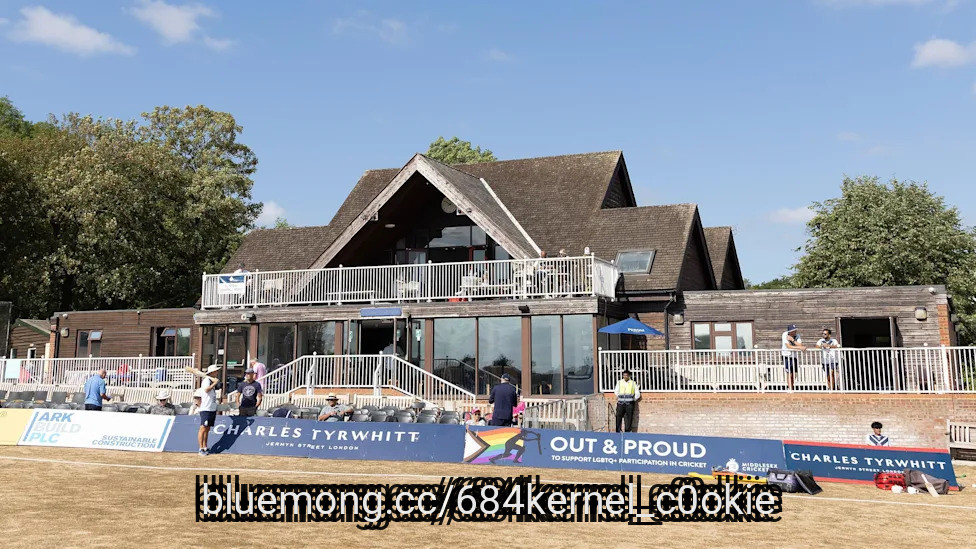
Middlesex CCC have reported an incidence of racial abuse from a visiting spectator at the club's One-Day Cup match against Sussex on Tuesday.
The individual, who is believed to have been there to watch Sussex but is understood not to be a Sussex member, was ejected from the ground at Radlett after the incident.
"Middlesex Cricket is appalled and deeply disappointed to report that during yesterday's game at Radlett, a valuable member of our team was racially abused by an away supporter," a club statement said.
"Middlesex Cricket strongly condemns this behaviour and will work closely with the regulatory body to investigate the perpetrator and support our member of staff."
BBC Sport understands the victim of the abuse was not a Middlesex player.
#member #reported
The individual, who is believed to have been there to watch Sussex but is understood not to be a Sussex member, was ejected from the ground at Radlett after the incident.
"Middlesex Cricket is appalled and deeply disappointed to report that during yesterday's game at Radlett, a valuable member of our team was racially abused by an away supporter," a club statement said.
"Middlesex Cricket strongly condemns this behaviour and will work closely with the regulatory body to investigate the perpetrator and support our member of staff."
BBC Sport understands the victim of the abuse was not a Middlesex player.
#member #reported

4 days ago
It was reported on July 27 that AstraZeneca PLC (NASDAQ:AZN) shares outperformed in European trading after the company reported second-quarter earnings that beat Wall Street expectations and reiterated its full-year 2026 guidance. Core earnings per share (EPS) jumped 18% on a constant exchange rate (FXN) basis year-over-year to $2.63, comfortably ahead of the $2.48 ***** yst consensus. Total revenue reached $15.38 billion, up 5% at constant exchange rates, driven primarily by sustained momentum in its Oncology and Rare Disease units. Management reconfirmed its full-year 2026 outlook of mid-to-high single-digit revenue growth and low double-digit Core EPS growth, expressing confidence in reaching its $80 billion total revenue target by 2030 despite near-term headwind shocks.
The quarter demonstrated strong commercial execution in core growth engines. Oncology revenue rose 16% to $7.33 billion, supported by strong demand for Tagrisso ($1.94 billion), Imfinzi ($1.85 billion), and Enhertu (+31%). Rare Disease contributed $4.9 billion, led by Ultomiris. These gains successfully offset severe pressures in the Cardiovascular, Renal & Metabolism (CVRM) segment, which declined 15% due to the loss of exclusivity (LOE) for Farxiga in the U.S. and ongoing Volume-Based Procurement (VBP) price cuts in China.
Meanwhile, pipeline updates presented a mixed picture. On July 27, AZN disclosed that a Phase 3 study evaluating Ultomiris in hematopoietic stem cell transplant-associated thrombotic microangiopathy (HSCT-TMA) failed to hit its primary endpoint of event-free survival at week 26 versus placebo. Following the readout, H.C. Wainwright noted that the trial miss represents a "clear positive" for competitor Omeros (OMER), removing a major near-term competitive overhang on its drug Yartemlea and driving Omeros shares up 11% in morning trading.
AstraZeneca PLC (NASDAQ:AZN)'s core profitability remains elite, with core operating margins expanding to 34% in Q2 despite top-line headwinds from generic entry. High gross and net margins signal durable pricing power across its branded specialty portfolio. This strong profitability generates predictable cash flow to fund heavy R&D investments, commercial rollouts, and growing shareholder returns, including a 3-cent increase in the interim dividend to $1.06 per share, while buffering the company against pricing pressure.
The company's expansive late-stage pipeline and high volume of regulatory approvals underpin a multi-year growth trajectory. With 30 major regional approvals since late 2025 and more than 20 high-value trial readouts scheduled over the next 18 months, AZN possesses broad commercial optionality. Continued expansions in oncology (e.g., Enhertu and Imfinzi) and respiratory therapies (such as Breztri and Tezspire) provide direct revenue replacement for legacy products facing patent expiration.
#high #july
The quarter demonstrated strong commercial execution in core growth engines. Oncology revenue rose 16% to $7.33 billion, supported by strong demand for Tagrisso ($1.94 billion), Imfinzi ($1.85 billion), and Enhertu (+31%). Rare Disease contributed $4.9 billion, led by Ultomiris. These gains successfully offset severe pressures in the Cardiovascular, Renal & Metabolism (CVRM) segment, which declined 15% due to the loss of exclusivity (LOE) for Farxiga in the U.S. and ongoing Volume-Based Procurement (VBP) price cuts in China.
Meanwhile, pipeline updates presented a mixed picture. On July 27, AZN disclosed that a Phase 3 study evaluating Ultomiris in hematopoietic stem cell transplant-associated thrombotic microangiopathy (HSCT-TMA) failed to hit its primary endpoint of event-free survival at week 26 versus placebo. Following the readout, H.C. Wainwright noted that the trial miss represents a "clear positive" for competitor Omeros (OMER), removing a major near-term competitive overhang on its drug Yartemlea and driving Omeros shares up 11% in morning trading.
AstraZeneca PLC (NASDAQ:AZN)'s core profitability remains elite, with core operating margins expanding to 34% in Q2 despite top-line headwinds from generic entry. High gross and net margins signal durable pricing power across its branded specialty portfolio. This strong profitability generates predictable cash flow to fund heavy R&D investments, commercial rollouts, and growing shareholder returns, including a 3-cent increase in the interim dividend to $1.06 per share, while buffering the company against pricing pressure.
The company's expansive late-stage pipeline and high volume of regulatory approvals underpin a multi-year growth trajectory. With 30 major regional approvals since late 2025 and more than 20 high-value trial readouts scheduled over the next 18 months, AZN possesses broad commercial optionality. Continued expansions in oncology (e.g., Enhertu and Imfinzi) and respiratory therapies (such as Breztri and Tezspire) provide direct revenue replacement for legacy products facing patent expiration.
#high #july


5 days ago
US-based investment company McIntyre Partnerships delivered flat performance in H1 2026, returning 0% gross and -1% net compared to the Russell 2000 Value Index's 23% return. A copy of the letter can be downloaded here. The second quarter results were a complete reversal of Q1 results, with the portfolio appreciating 23.0% (gross) and 23.3% (net), outperforming the index's 17.3%. The overall market surge contributed to this performance, alongside several positive developments related to the firm's holdings. Since inception, the fund has returned ~16% gross and ~12% net per annum, surpassing the benchmark's return of ~9% per annum. The portfolio is highly concentrated, with QDEL as the largest holding, creating volatility. Despite mixed results, the firm remains confident in the portfolio, particularly with QDEL viewed as a key investment opportunity. Potential for further growth is expected from several large investments with promising catalysts. In addition, you can check the Strategy's top 5 holdings to determine its best picks for 2026.
In its Q2 2026 investor letter, McIntyre Partnerships highlighted QuidelOrtho Corporation NASDAQ:QDEL). QuidelOrtho Corporation (NASDAQ:QDEL) is a diagnostic testing solutions company that provides solutions across Labs, Transfusion Medicine, Point of Care, and Molecular Diagnostics. On August 7, 2026, QuidelOrtho Corporation (NASDAQ:QDEL) closed at $12.28 per share, reflecting a market capitalization of $837.72 million. QuidelOrtho Corporation (NASDAQ:QDEL) posted a one‑month return of ‑837.72%, while its shares lost 46.55% over the past 52 weeks."
McIntyre Partnerships stated the following regarding QuidelOrtho Corporation (NASDAQ:QDEL) in its Q2 2026 investor letter:
"As I argued in the Q1 letter outlining our thesis, QuidelOrtho Corporation (NASDAQ:QDEL) is essentially three different businesses operating under one corporate entity, and a division could be sold to deleverage the company. QDEL appears to be following this path. According to the FT article, QDEL is looking to sell its POC division for roughly $1.5B. POC is the old Quidel business, and the transaction would essentially undo the 2022 merger of Quidel and Ortho. ***** uming a sale near the rumored price, the QDEL RemainCo would be ~2.5x levered and consist of the legacy Ortho business. Critically, the driver of QDEL's repeated missed estimates over the last three years is the legacy Quidel business, while legacy Ortho has been a steady performer, albeit with negative Chinese regulatory news in Q1. Once the Chinese regulations are finalized in the coming months, I believe the legacy Ortho business will return to its historical, consistent high single-digit EBITDA growth.
Additionally, I believe Q2 will mark a low point for cash flow generation, a frequent bear point. As QDEL delevers and exits the volatile flu and COVID business, I believe the stock can reweight towards peers in the 11-15x EV/EBITDA range. If not, I believe the company will
In its Q2 2026 investor letter, McIntyre Partnerships highlighted QuidelOrtho Corporation NASDAQ:QDEL). QuidelOrtho Corporation (NASDAQ:QDEL) is a diagnostic testing solutions company that provides solutions across Labs, Transfusion Medicine, Point of Care, and Molecular Diagnostics. On August 7, 2026, QuidelOrtho Corporation (NASDAQ:QDEL) closed at $12.28 per share, reflecting a market capitalization of $837.72 million. QuidelOrtho Corporation (NASDAQ:QDEL) posted a one‑month return of ‑837.72%, while its shares lost 46.55% over the past 52 weeks."
McIntyre Partnerships stated the following regarding QuidelOrtho Corporation (NASDAQ:QDEL) in its Q2 2026 investor letter:
"As I argued in the Q1 letter outlining our thesis, QuidelOrtho Corporation (NASDAQ:QDEL) is essentially three different businesses operating under one corporate entity, and a division could be sold to deleverage the company. QDEL appears to be following this path. According to the FT article, QDEL is looking to sell its POC division for roughly $1.5B. POC is the old Quidel business, and the transaction would essentially undo the 2022 merger of Quidel and Ortho. ***** uming a sale near the rumored price, the QDEL RemainCo would be ~2.5x levered and consist of the legacy Ortho business. Critically, the driver of QDEL's repeated missed estimates over the last three years is the legacy Quidel business, while legacy Ortho has been a steady performer, albeit with negative Chinese regulatory news in Q1. Once the Chinese regulations are finalized in the coming months, I believe the legacy Ortho business will return to its historical, consistent high single-digit EBITDA growth.
Additionally, I believe Q2 will mark a low point for cash flow generation, a frequent bear point. As QDEL delevers and exits the volatile flu and COVID business, I believe the stock can reweight towards peers in the 11-15x EV/EBITDA range. If not, I believe the company will


5 days ago
Johnson & Johnson (NYSE:JNJ) has officially entered the U.S. soft-tissue robotic surgery market after receiving FDA De Novo authorization for its OTTAVA robotic surgical system. The authorization represents an important milestone for J&J's MedTech ambitions, but the company is entering a market in which Intuitive Surgical (NASDAQ:ISRG) already has an extensive installed base, established surgeon relationships, and a rapidly expanding da Vinci 5 platform.
The question for investors is not whether OTTAVA can become a viable product, but whether Johnson & Johnson (NYSE:JNJ) can convert its differentiated design and broader surgical portfolio into meaningful market share, and even challenge Intuitive Surgical (ISRG) in the process.
OTTAVA's most compelling feature is its table-integrated architecture. Johnson & Johnson (NYSE:JNJ) stated that the robotic arms are incorporated directly into the operating table, which allows the system to occupy 30% to 50% less ****** e than traditional boom- and cart-mounted systems. The company believes this design could make robotic surgery accessible to operating rooms that previously could not accommodate a larger platform. That gives Johnson & Johnson (NYSE:JNJ) a potentially differentiated selling point among hospitals focused on operating-room capacity and workflow efficiency.
The FDA authorized OTTAVA for multiple upper-abdominal general surgery procedures, including gastric bypass, gastrectomy, cholecystectomy, gastric sleeve surgery, appendectomy, and hiatal hernia repair. Johnson & Johnson (NYSE:JNJ) will commercially launch the OTTAVA system with select customers in the United States to focus on early customer success and simultaneously advance the technology into additional regulatory jurisdictions and indications gradually. In addition, it has an ongoing U.S. clinical trial for OTTAVA in inguinal hernia procedures.
The selective launch is strategically sensible because robotic surgery systems require several factors for their smooth functioning in addition to regulatory authorization, including training for surgeons and operating-room staff, integration of the system into existing workflows, and establishing procedure volumes sufficient to justify the investment. With such a measured rollout, Johnson & Johnson (NYSE:JNJ) has time to collect real-world feedback, improve training, and refine the platform before attempting a broader commercial expansion.
#ottava #operating #market
The question for investors is not whether OTTAVA can become a viable product, but whether Johnson & Johnson (NYSE:JNJ) can convert its differentiated design and broader surgical portfolio into meaningful market share, and even challenge Intuitive Surgical (ISRG) in the process.
OTTAVA's most compelling feature is its table-integrated architecture. Johnson & Johnson (NYSE:JNJ) stated that the robotic arms are incorporated directly into the operating table, which allows the system to occupy 30% to 50% less ****** e than traditional boom- and cart-mounted systems. The company believes this design could make robotic surgery accessible to operating rooms that previously could not accommodate a larger platform. That gives Johnson & Johnson (NYSE:JNJ) a potentially differentiated selling point among hospitals focused on operating-room capacity and workflow efficiency.
The FDA authorized OTTAVA for multiple upper-abdominal general surgery procedures, including gastric bypass, gastrectomy, cholecystectomy, gastric sleeve surgery, appendectomy, and hiatal hernia repair. Johnson & Johnson (NYSE:JNJ) will commercially launch the OTTAVA system with select customers in the United States to focus on early customer success and simultaneously advance the technology into additional regulatory jurisdictions and indications gradually. In addition, it has an ongoing U.S. clinical trial for OTTAVA in inguinal hernia procedures.
The selective launch is strategically sensible because robotic surgery systems require several factors for their smooth functioning in addition to regulatory authorization, including training for surgeons and operating-room staff, integration of the system into existing workflows, and establishing procedure volumes sufficient to justify the investment. With such a measured rollout, Johnson & Johnson (NYSE:JNJ) has time to collect real-world feedback, improve training, and refine the platform before attempting a broader commercial expansion.
#ottava #operating #market


5 days ago
eToro Group Ltd. (NASDAQ: $ETOR) has agreed to acquire TradeZero for up to $231 million, adding an active-trader brokerage and broker-dealer infrastructure as it looks to expand its U.S. business.
The consideration will consist of cash and up to 2.5 million newly issued eToro Class A common shares, subject to customary adjustments. The transaction requires regulatory approvals and is expected to close during the first half of 2027.
TradeZero gives eToro a more established foothold with active U.S. traders while extending its reach into Canada and other international markets. Founded in 2015, the brokerage operates across desktop, web and mobile platforms, with tools built around U.S. equities, options and stock shorting, including a proprietary short locator.
More From Cryptoprowl:
Bernstein Sees 100% Upside In TeraWulf Stock After Earnings
#Stock #active
The consideration will consist of cash and up to 2.5 million newly issued eToro Class A common shares, subject to customary adjustments. The transaction requires regulatory approvals and is expected to close during the first half of 2027.
TradeZero gives eToro a more established foothold with active U.S. traders while extending its reach into Canada and other international markets. Founded in 2015, the brokerage operates across desktop, web and mobile platforms, with tools built around U.S. equities, options and stock shorting, including a proprietary short locator.
More From Cryptoprowl:
Bernstein Sees 100% Upside In TeraWulf Stock After Earnings
#Stock #active


5 days ago
On CNBC's Mad Money's August 3 episode, host Jim Cramer highlighted PayPal Holdings, Inc. (NASDAQ:PYPL) as one of the standout performers in the S&P 500 during July as it gained 32.5%. While noting operational improvements under Chief Executive Officer Enrique Lores, Cramer focused on the market reaction surrounding a reported buyout proposal from private fintech competitor Stripe and private equity partner Advent International:
Third best performing in the S&P 500… in July… PayPal. That's up 32.5%. Now, while the company's certainly doing much better under Enrique Lores than its previous CEO. The stock roared because PayPal apparently got a takeover overture from the giant private fintech company called Stripe, with the backing also of a big private equity firm. Now, they haven't agreed to anything, but it hasn't been shot down. Quizzical.
Reports of a joint buyout offer from Stripe and Advent International valued PayPal Holdings, Inc. (NASDAQ:PYPL) at approximately $53 billion, or $60.50 per share, a significant premium over its pre-announcement trading price. The acquisition attempt represents a rare role reversal, in which a private fintech firm, backed by major financial investors, is trying to buy out an established market leader.
While both platforms dominate online commerce processing, PayPal Holdings, Inc. (NASDAQ:PYPL) and Stripe represent contrasting business architectures and growth trajectories within fintech. PayPal operates as a consumer-facing ecosystem with hundreds of millions of active digital wallets alongside its merchant services. That dual-sided model gives PayPal deep brand recognition, yet leaves it exposed to changing consumer payment preferences and margin pressure in basic checkout processing.
Stripe functions as developer-first infrastructure, embedding payment capabilities directly into application software, SaaS platforms, and enterprise marketplaces. While PayPal Holdings, Inc. (NASDAQ:PYPL) relies on legacy brand equity and consumer wallet engagement, Stripe built its market share by serving software engineers and digital businesses. Combining the two firms would pair PayPal's massive global network and consumer base with Stripe's strength among software developers, though clearing regulatory scrutiny and merging their massive tech systems would pose major challenges.
#holdings #pypl #Equity
Third best performing in the S&P 500… in July… PayPal. That's up 32.5%. Now, while the company's certainly doing much better under Enrique Lores than its previous CEO. The stock roared because PayPal apparently got a takeover overture from the giant private fintech company called Stripe, with the backing also of a big private equity firm. Now, they haven't agreed to anything, but it hasn't been shot down. Quizzical.
Reports of a joint buyout offer from Stripe and Advent International valued PayPal Holdings, Inc. (NASDAQ:PYPL) at approximately $53 billion, or $60.50 per share, a significant premium over its pre-announcement trading price. The acquisition attempt represents a rare role reversal, in which a private fintech firm, backed by major financial investors, is trying to buy out an established market leader.
While both platforms dominate online commerce processing, PayPal Holdings, Inc. (NASDAQ:PYPL) and Stripe represent contrasting business architectures and growth trajectories within fintech. PayPal operates as a consumer-facing ecosystem with hundreds of millions of active digital wallets alongside its merchant services. That dual-sided model gives PayPal deep brand recognition, yet leaves it exposed to changing consumer payment preferences and margin pressure in basic checkout processing.
Stripe functions as developer-first infrastructure, embedding payment capabilities directly into application software, SaaS platforms, and enterprise marketplaces. While PayPal Holdings, Inc. (NASDAQ:PYPL) relies on legacy brand equity and consumer wallet engagement, Stripe built its market share by serving software engineers and digital businesses. Combining the two firms would pair PayPal's massive global network and consumer base with Stripe's strength among software developers, though clearing regulatory scrutiny and merging their massive tech systems would pose major challenges.
#holdings #pypl #Equity

5 days ago
Manus announced Tuesday that it will resume operating as an independent company, as it works to comply with Beijing's order to reverse Meta's $2 billion acquisition of the startup.
Manus is an AI agent startup that originated in China in 2022 and later moved its base to Singapore, according to CNBC. Meta announced the acquisition of Manus in December 2025. China's National Development and Reform Commission issued a directive in April ordering the parties to unwind the transaction, citing the country's rules on foreign investment.
As part of the separation, some Manus users will have data deleted. Specifically, for users in certain jurisdictions, any data created from December 29, 2025 onward — the day the acquisition closed — is slated for removal. "This is part of our separation from Meta; we must take this step to comply with regulatory requirements in specific parts of the world," the company said.
Affected users have a backup window open through 7:59 p.m. EDT on August 22. Data will be deleted August 23 through August 24, and users will be able to restore their backed-up data starting August 25. Manus said it will not charge affected users during the backup period.
The unwinding process has been underway for months. Meta cut off Manus staff from its internal data systems and barred Meta employees from using Manus tools, in steps toward operational separation. China's NDRC order made clear that offshore incorporation does not shield a deal from Beijing's authority when the underlying technology and talent originated in China — a structure critics had called "Singapore washing." Co-founders Xiao Hong and Ji Yichao were required to appear before Chinese officials in Beijing in March and have since been prohibited from traveling abroad.
#meta #august #users #acquisition
Manus is an AI agent startup that originated in China in 2022 and later moved its base to Singapore, according to CNBC. Meta announced the acquisition of Manus in December 2025. China's National Development and Reform Commission issued a directive in April ordering the parties to unwind the transaction, citing the country's rules on foreign investment.
As part of the separation, some Manus users will have data deleted. Specifically, for users in certain jurisdictions, any data created from December 29, 2025 onward — the day the acquisition closed — is slated for removal. "This is part of our separation from Meta; we must take this step to comply with regulatory requirements in specific parts of the world," the company said.
Affected users have a backup window open through 7:59 p.m. EDT on August 22. Data will be deleted August 23 through August 24, and users will be able to restore their backed-up data starting August 25. Manus said it will not charge affected users during the backup period.
The unwinding process has been underway for months. Meta cut off Manus staff from its internal data systems and barred Meta employees from using Manus tools, in steps toward operational separation. China's NDRC order made clear that offshore incorporation does not shield a deal from Beijing's authority when the underlying technology and talent originated in China — a structure critics had called "Singapore washing." Co-founders Xiao Hong and Ji Yichao were required to appear before Chinese officials in Beijing in March and have since been prohibited from traveling abroad.
#meta #august #users #acquisition


5 days ago
What happened: Hims & Hers Health (HIMS) stock declined 3% before trimming losses on Tuesday.
What's behind the move: Shares were volatile after the telehealth company swung to a loss of $0.37 per share in the second quarter from a profit of $0.17 a share in the year-earlier period.
Gross margins in the second quarter were 64%, down from 76% in the year-earlier period.
The results were impacted by a one-time cost of $81 million during the quarter, including expenses related to the acquisition of the Australian-based digital health company Eucalyptus. The expenses were also related to restructuring following Hims & Hers' shift in weight-loss strategy earlier this year, as well as legal reserves tied to recent litigation with the Federal Trade Commission.
What else you need to know: Hims & Hers Health stock has been recovering from a drawdown earlier this year, as regulatory and legal risks surrounding the manufacturing of compounded GLP-1 weight-loss drugs have weighed on shares.
#hims #earlier #Health #quarter
What's behind the move: Shares were volatile after the telehealth company swung to a loss of $0.37 per share in the second quarter from a profit of $0.17 a share in the year-earlier period.
Gross margins in the second quarter were 64%, down from 76% in the year-earlier period.
The results were impacted by a one-time cost of $81 million during the quarter, including expenses related to the acquisition of the Australian-based digital health company Eucalyptus. The expenses were also related to restructuring following Hims & Hers' shift in weight-loss strategy earlier this year, as well as legal reserves tied to recent litigation with the Federal Trade Commission.
What else you need to know: Hims & Hers Health stock has been recovering from a drawdown earlier this year, as regulatory and legal risks surrounding the manufacturing of compounded GLP-1 weight-loss drugs have weighed on shares.
#hims #earlier #Health #quarter


5 days ago
Core Scientific, Inc. (NASDAQ:CORZ) announced a major infrastructure partnership with Advanced Micro Devices, Inc. (NASDAQ:AMD) on July 28, giving the chipmaker's ecosystem access to more than 500 megawatts of U.S. data-center capacity beginning in 2027. The arrangement can expand to 2.5 gigawatts. Core Scientific shares rallied in premarket trading.
The agreement is more substantial than the initial announcement suggested. Core Scientific's earnings release described 15-year agreements covering approximately 530 megawatts across five sites, with more than $14 billion of potential base contracted revenue. Its regulatory filing provided an important distinction: AMD directly leased 377 megawatts, while an unnamed neocloud leased another 152 megawatts under agreements that give AMD certain equipment protections and rights if that customer defaults.
The larger story, however, began nine months earlier. Core Scientific shareholders rejected an all-stock acquisition by CoreWeave whose announcement-date implied equity value was approximately $9 billion. The fixed exchange ratio valued CORZ at $20.40 per share when the transaction was announced in July 2025, but the value shareholders would have received at closing was not fixed and moved with CoreWeave's share price.
In January, Gullane Capital Partners founder Trip Miller, who had opposed the sale, predicted that Core Scientific would secure new AI customers. "I expect them to announce deals for AI with third parties other than CoreWeave," he told Business Insider.
The new agreements appear to deliver precisely that customer diversification. Taken together, AMD's 377-megawatt direct lease and the neocloud's 152-megawatt lease exceed Miller's roughly 400-megawatt expectation, although AMD itself did not directly lease the full 529 megawatts. The question is whether the agreements prove that shareholders were right to preserve Core Scientific's independence, or merely give the company a large, capital-intensive opportunity whose ultimate value remains uncertain.
#lease
The agreement is more substantial than the initial announcement suggested. Core Scientific's earnings release described 15-year agreements covering approximately 530 megawatts across five sites, with more than $14 billion of potential base contracted revenue. Its regulatory filing provided an important distinction: AMD directly leased 377 megawatts, while an unnamed neocloud leased another 152 megawatts under agreements that give AMD certain equipment protections and rights if that customer defaults.
The larger story, however, began nine months earlier. Core Scientific shareholders rejected an all-stock acquisition by CoreWeave whose announcement-date implied equity value was approximately $9 billion. The fixed exchange ratio valued CORZ at $20.40 per share when the transaction was announced in July 2025, but the value shareholders would have received at closing was not fixed and moved with CoreWeave's share price.
In January, Gullane Capital Partners founder Trip Miller, who had opposed the sale, predicted that Core Scientific would secure new AI customers. "I expect them to announce deals for AI with third parties other than CoreWeave," he told Business Insider.
The new agreements appear to deliver precisely that customer diversification. Taken together, AMD's 377-megawatt direct lease and the neocloud's 152-megawatt lease exceed Miller's roughly 400-megawatt expectation, although AMD itself did not directly lease the full 529 megawatts. The question is whether the agreements prove that shareholders were right to preserve Core Scientific's independence, or merely give the company a large, capital-intensive opportunity whose ultimate value remains uncertain.
#lease


6 days ago
Constellation Energy (NASDAQ:CEG) gave investors a lot to unpack on August 6 with the release of its second-quarter earnings report. The report raised full-year adjusted operating earnings guidance to $11.50 to $12.50 per share and stacked on a run of nuclear contract wins and regulatory approvals tied to its Crane Clean Energy Center restart. The headline story is growth. The details show a company juggling more moving parts than it has in years.
Constellation signed 920 megawatts of new long-term power purchase agreements in the quarter, contracts running 15 to 20 years that won't start delivering power until 2029 through 2032. One, a 176-megawatt deal with Walmart (NASDAQ:WMT), split into two 15-year contracts that start in 2029 and 2030, will fund a 30-megawatt expansion at the Dresden Clean Energy Center, located in Illinois. The batch averages 18.5 years in length, adding to earlier 20-year agreements with Microsoft Corp. (NASDAQ:MSFT) and Meta Platforms (NASDAQ:META).
The bigger prize is Crane, the plant once known as Three Mile Island Unit 1. FERC granted a waiver letting Constellation shift grid connection rights to Crane, and the NRC approved its fuel license amendment, clearing two of the last hurdles before the 835 megawatt unit restarts in 2027 to serve its Microsoft contract. Constellation also filed to extend the licenses of its Ginna and Nine Mile Point 1 reactors in New York out to 2049, stretching value from ****** ets it already owns. Management guided to 20% annualized adjusted earnings growth through 2029, a number that excludes any contracts signed after this quarter.
GAAP numbers moved the other way. Earnings per share fell to $1.42 from $2.67 a year earlier, even as adjusted operating earnings rose to $2.55. Part of that gap traces to a bigger share count after the Calpine acquisition, with average diluted shares outstanding climbing to 360 million from 314 million. The nuclear fleet had a rougher quarter too: output slipped to 44,160 gigawatt-hours from 45,170, and the capacity factor at plants Constellation operates fell to 93.0% from 94.8%, with planned refueling outage days more than doubling to 86 from 41.
There's also cleanup work left from Calpine. Constellation agreed to sell the 606 megawatt Brazos Valley Energy Center to LS Power for $860 million, the last divestiture regulators required, but the deal still needs Department of Justice approval to close. And as a merchant power seller, Constellation stays exposed to regulatory pushback, including from consumer advocates who argue that connecting data centers directly to nuclear plants lets big tech dodge grid costs that land on residential customers instead.
#quarter #center
Constellation signed 920 megawatts of new long-term power purchase agreements in the quarter, contracts running 15 to 20 years that won't start delivering power until 2029 through 2032. One, a 176-megawatt deal with Walmart (NASDAQ:WMT), split into two 15-year contracts that start in 2029 and 2030, will fund a 30-megawatt expansion at the Dresden Clean Energy Center, located in Illinois. The batch averages 18.5 years in length, adding to earlier 20-year agreements with Microsoft Corp. (NASDAQ:MSFT) and Meta Platforms (NASDAQ:META).
The bigger prize is Crane, the plant once known as Three Mile Island Unit 1. FERC granted a waiver letting Constellation shift grid connection rights to Crane, and the NRC approved its fuel license amendment, clearing two of the last hurdles before the 835 megawatt unit restarts in 2027 to serve its Microsoft contract. Constellation also filed to extend the licenses of its Ginna and Nine Mile Point 1 reactors in New York out to 2049, stretching value from ****** ets it already owns. Management guided to 20% annualized adjusted earnings growth through 2029, a number that excludes any contracts signed after this quarter.
GAAP numbers moved the other way. Earnings per share fell to $1.42 from $2.67 a year earlier, even as adjusted operating earnings rose to $2.55. Part of that gap traces to a bigger share count after the Calpine acquisition, with average diluted shares outstanding climbing to 360 million from 314 million. The nuclear fleet had a rougher quarter too: output slipped to 44,160 gigawatt-hours from 45,170, and the capacity factor at plants Constellation operates fell to 93.0% from 94.8%, with planned refueling outage days more than doubling to 86 from 41.
There's also cleanup work left from Calpine. Constellation agreed to sell the 606 megawatt Brazos Valley Energy Center to LS Power for $860 million, the last divestiture regulators required, but the deal still needs Department of Justice approval to close. And as a merchant power seller, Constellation stays exposed to regulatory pushback, including from consumer advocates who argue that connecting data centers directly to nuclear plants lets big tech dodge grid costs that land on residential customers instead.
#quarter #center

6 days ago
Advanced Micro Devices (NASDAQ:AMD) is trying to solve two problems at once: proving its AI hardware can keep growing as fast as Street expects, and making a case for why that growth alone should justify the stock's price. On August 6, AMD confirmed a deal to buy Taalas, a Toronto-based startup building specialized silicon for AI inference, a move aimed squarely at the first problem even as the second has been driving the stock's swings all week.
Taalas, founded in 2023, has built technology that optimizes how data moves during AI inference, cutting the compute and memory bottlenecks that slow general-purpose chip designs. AMD plans to fold that technology into its accelerator roadmap and pair it with AMD Instinct GPUs, adding another layer to a platform that already spans Helios rackscale systems, EPYC CPUs and the ROCm software stack. The deal, still subject to regulatory approval, also extends AMD's long-standing presence in Canada, where the company says it intends to keep growing its engineering talent base.
The underlying business backs that ambition up. Second-quarter revenue hit a record $11.5 billion, up 50% year-over-year, with data center revenue alone climbing 107% to $6.7 billion. Adjusted EPS jumped 246% to $1.66, and operating margin improved to 17% from a 2% loss a year earlier. AMD has picked up customers once seen as Nvidia territory, including Oracle, Microsoft and OpenAI, and CEO Lisa Su says AMD has lined up 6 gigawatts of committed capacity apiece from OpenAI and Meta Platforms for its new MI450 chips and Helios racks. Su has pegged the AI data center chip market at $1.4 trillion annually by 2030 and forecasts that AMD's own data center sales will roughly double once more in 2027.
Despite that quarter, AMD shares fell, and the simplest explanation is that much of the good news was already baked into the price. The stock trades at nearly 70 times forward earnings, a multiple that ******* umes years of growth are already locked in. Some of AMD's headline growth rate is also flattered by an easy comparison: a US government ban on chip sales to China in April 2025 depressed AMD's results a year ago, making this year's percentage gain look larger than the underlying quarter-over-quarter trend, which came in at 16%.
Hedge fund ownership of AMD ticked up from 132 funds in the prior quarter to 134 in the most recent one, a modest increase suggesting institutional interest is holding steady rather than swinging hard either way. Short interest is low at 2.45% of float, showing little organized betting against the stock. Even so, AMD carries a forward price-to-earnings ratio of 65.36 as of August 7, a rich multiple that leaves the stock priced for the growth story to keep delivering rather than for any near-term stumble.
#data #year #price #center
Taalas, founded in 2023, has built technology that optimizes how data moves during AI inference, cutting the compute and memory bottlenecks that slow general-purpose chip designs. AMD plans to fold that technology into its accelerator roadmap and pair it with AMD Instinct GPUs, adding another layer to a platform that already spans Helios rackscale systems, EPYC CPUs and the ROCm software stack. The deal, still subject to regulatory approval, also extends AMD's long-standing presence in Canada, where the company says it intends to keep growing its engineering talent base.
The underlying business backs that ambition up. Second-quarter revenue hit a record $11.5 billion, up 50% year-over-year, with data center revenue alone climbing 107% to $6.7 billion. Adjusted EPS jumped 246% to $1.66, and operating margin improved to 17% from a 2% loss a year earlier. AMD has picked up customers once seen as Nvidia territory, including Oracle, Microsoft and OpenAI, and CEO Lisa Su says AMD has lined up 6 gigawatts of committed capacity apiece from OpenAI and Meta Platforms for its new MI450 chips and Helios racks. Su has pegged the AI data center chip market at $1.4 trillion annually by 2030 and forecasts that AMD's own data center sales will roughly double once more in 2027.
Despite that quarter, AMD shares fell, and the simplest explanation is that much of the good news was already baked into the price. The stock trades at nearly 70 times forward earnings, a multiple that ******* umes years of growth are already locked in. Some of AMD's headline growth rate is also flattered by an easy comparison: a US government ban on chip sales to China in April 2025 depressed AMD's results a year ago, making this year's percentage gain look larger than the underlying quarter-over-quarter trend, which came in at 16%.
Hedge fund ownership of AMD ticked up from 132 funds in the prior quarter to 134 in the most recent one, a modest increase suggesting institutional interest is holding steady rather than swinging hard either way. Short interest is low at 2.45% of float, showing little organized betting against the stock. Even so, AMD carries a forward price-to-earnings ratio of 65.36 as of August 7, a rich multiple that leaves the stock priced for the growth story to keep delivering rather than for any near-term stumble.
#data #year #price #center

6 days ago
ABO Energy has reached an agreement to sell its subsidiaries in Poland and Hungary to Public Power Corporation (PPC), a Greek electric power group.
The deal includes all 38 ABO Energy employees in both countries, a development pipeline of around 2GW, and five operating solar parks with a combined capacity of 82MW. It also covers a 17MW solar farm that is nearing completion.
Financial details regarding the transaction are undisclosed.
PPC, described as an integrated utility group in south-east Europe, will acquire the two subsidiaries following the necessary regulatory approvals.
The companies expect the transaction to close by the end of the year.
#subsidiaries #transaction #Poland
The deal includes all 38 ABO Energy employees in both countries, a development pipeline of around 2GW, and five operating solar parks with a combined capacity of 82MW. It also covers a 17MW solar farm that is nearing completion.
Financial details regarding the transaction are undisclosed.
PPC, described as an integrated utility group in south-east Europe, will acquire the two subsidiaries following the necessary regulatory approvals.
The companies expect the transaction to close by the end of the year.
#subsidiaries #transaction #Poland


6 days ago
Aside from artificial intelligence juggernaut Nvidia, no company garners more attention during earnings season than Berkshire Hathaway (NYSE: BRKA)(NYSE: BRKB). The trillion-dollar conglomerate that now-retired CEO Warren Buffett helped build is closely watched by value seekers and long-term investors.
While most of Wall Street has homed in on CEO Greg Abel ending a 14-quarter streak of net stock sales that began in the fourth quarter of 2022, the bigger story from the latest quarterly report is what, specifically, Berkshire's new boss has been buying.
Missed Nvidia in 2009? This Rare Signal Is Flashing Again. In 2009, a "Double Down" signal flashed for a little-known chipmaker called Nvidia. For the first time in years, that same "Total Conviction" signal is flashing for a company 1/100th the size of Nvidia. Continue »
According to regulatory filings, no stock has been purchased more aggressively since Abel took the reins than Google parent Alphabet (NASDAQ: GOOGL)(NASDAQ: GOOG). After Buffett initiated this position last year, Abel more than tripled Berkshire's stake in Alphabet during the first quarter and added another $10 billion via private placement in the second quarter. It's now Berkshire's No. 5 holding.
But this isn't the stock that should have investors buzzing.
#signal #NYSE
While most of Wall Street has homed in on CEO Greg Abel ending a 14-quarter streak of net stock sales that began in the fourth quarter of 2022, the bigger story from the latest quarterly report is what, specifically, Berkshire's new boss has been buying.
Missed Nvidia in 2009? This Rare Signal Is Flashing Again. In 2009, a "Double Down" signal flashed for a little-known chipmaker called Nvidia. For the first time in years, that same "Total Conviction" signal is flashing for a company 1/100th the size of Nvidia. Continue »
According to regulatory filings, no stock has been purchased more aggressively since Abel took the reins than Google parent Alphabet (NASDAQ: GOOGL)(NASDAQ: GOOG). After Buffett initiated this position last year, Abel more than tripled Berkshire's stake in Alphabet during the first quarter and added another $10 billion via private placement in the second quarter. It's now Berkshire's No. 5 holding.
But this isn't the stock that should have investors buzzing.
#signal #NYSE



7 days ago
Core Scientific, Inc. (NASDAQ:CORZ) announced a major infrastructure partnership with Advanced Micro Devices, Inc. (NASDAQ:AMD) on July 28, giving the chipmaker's ecosystem access to more than 500 megawatts of U.S. data-center capacity beginning in 2027. The arrangement can expand to 2.5 gigawatts. Core Scientific shares rallied in premarket trading.
The agreement is more substantial than the initial announcement suggested. Core Scientific's earnings release described 15-year agreements covering approximately 530 megawatts across five sites, with more than $14 billion of potential base contracted revenue. Its regulatory filing provided an important distinction: AMD directly leased 377 megawatts, while an unnamed neocloud leased another 152 megawatts under agreements that give AMD certain equipment protections and rights if that customer defaults.
The larger story, however, began nine months earlier. Core Scientific shareholders rejected an all-stock acquisition by CoreWeave whose announcement-date implied equity value was approximately $9 billion. The fixed exchange ratio valued CORZ at $20.40 per share when the transaction was announced in July 2025, but the value shareholders would have received at closing was not fixed and moved with CoreWeave's share price.
In January, Gullane Capital Partners founder Trip Miller, who had opposed the sale, predicted that Core Scientific would secure new AI customers. "I expect them to announce deals for AI with third parties other than CoreWeave," he told Business Insider.
The new agreements appear to deliver precisely that customer diversification. Taken together, AMD's 377-megawatt direct lease and the neocloud's 152-megawatt lease exceed Miller's roughly 400-megawatt expectation, although AMD itself did not directly lease the full 529 megawatts. The question is whether the agreements prove that shareholders were right to preserve Core Scientific's independence, or merely give the company a large, capital-intensive opportunity whose ultimate value remains uncertain.
#agreements
The agreement is more substantial than the initial announcement suggested. Core Scientific's earnings release described 15-year agreements covering approximately 530 megawatts across five sites, with more than $14 billion of potential base contracted revenue. Its regulatory filing provided an important distinction: AMD directly leased 377 megawatts, while an unnamed neocloud leased another 152 megawatts under agreements that give AMD certain equipment protections and rights if that customer defaults.
The larger story, however, began nine months earlier. Core Scientific shareholders rejected an all-stock acquisition by CoreWeave whose announcement-date implied equity value was approximately $9 billion. The fixed exchange ratio valued CORZ at $20.40 per share when the transaction was announced in July 2025, but the value shareholders would have received at closing was not fixed and moved with CoreWeave's share price.
In January, Gullane Capital Partners founder Trip Miller, who had opposed the sale, predicted that Core Scientific would secure new AI customers. "I expect them to announce deals for AI with third parties other than CoreWeave," he told Business Insider.
The new agreements appear to deliver precisely that customer diversification. Taken together, AMD's 377-megawatt direct lease and the neocloud's 152-megawatt lease exceed Miller's roughly 400-megawatt expectation, although AMD itself did not directly lease the full 529 megawatts. The question is whether the agreements prove that shareholders were right to preserve Core Scientific's independence, or merely give the company a large, capital-intensive opportunity whose ultimate value remains uncertain.
#agreements

7 days ago
According to a recent report from the Financial Industry Regulatory Authority (FINRA), 61% of social media users and "finfluencer" followers aged 18 to 34 have made an investment decision based on recommendations from a social media personality -- and these folks also reported "substantially higher fraud exposure and victimization."
A lot of financial advice found on social media is worth what you paid for it -- nothing. Here's a look at several bits of advice I've run across that are simply wrong or misleading.
Missed Nvidia in 2009? This Rare Signal Is Flashing Again. In 2009, a "Double Down" signal flashed for a little-known chipmaker called Nvidia. For the first time in years, that same "Total Conviction" signal is flashing for a company 1/100th the size of Nvidia. Continue »
One social media pontificator said: "The stock market is one of the best tools to grow your wealth." That's very true. Over decades, it beats most other alternatives. They added that a 10% return doubles your money every 7.2 years, and a 20% return doubles your money every 3.6 years. That, too, is true -- it's the classic "Rule of 72."
The problem, though, is the suggestion that you can expect stock market returns of 20% annually. The stock market has averaged annual returns of close to 10% over many decades, not 20%. There are some years with massive gains, and some with sharp drops. But overall, expectations should be tempered.
#advice
A lot of financial advice found on social media is worth what you paid for it -- nothing. Here's a look at several bits of advice I've run across that are simply wrong or misleading.
Missed Nvidia in 2009? This Rare Signal Is Flashing Again. In 2009, a "Double Down" signal flashed for a little-known chipmaker called Nvidia. For the first time in years, that same "Total Conviction" signal is flashing for a company 1/100th the size of Nvidia. Continue »
One social media pontificator said: "The stock market is one of the best tools to grow your wealth." That's very true. Over decades, it beats most other alternatives. They added that a 10% return doubles your money every 7.2 years, and a 20% return doubles your money every 3.6 years. That, too, is true -- it's the classic "Rule of 72."
The problem, though, is the suggestion that you can expect stock market returns of 20% annually. The stock market has averaged annual returns of close to 10% over many decades, not 20%. There are some years with massive gains, and some with sharp drops. But overall, expectations should be tempered.
#advice


7 days ago
Interested in Zai Lab Limited Unsponsored ADR? Here are five stocks we like better.
Q2 net product revenue rose 11% sequentially to $105.8 million, supported by VYVGART volume growth, steady ZEJULA sales, XACDURO strength and the early KarXT launch. Management expects revenue to stabilize in late 2026 before returning to meaningful year-over-year growth in 2027, with $717.5 million in cash at quarter-end.
Zoci development is expanding toward potential U.S. approval. Zai Lab expects three registrational programs by the end of 2026, plans to complete a Phase III small-cell lung cancer enrollment in the first half of 2027 and anticipates a possible accelerated-approval filing later that year, with potential approval in 2028.
The company continues advancing its global pipeline, including ZL-1503 for atopic dermatitis, ZL-6201 for solid tumors and ZL-1311 for gastrointestinal cancers. Zai Lab also expects its first U.S. regulatory submission next year as it transitions from a China-focused business into a global biopharmaceutical company.
Zai Lab Stock Has Fallen to Value Levels
#expects #Potential #global
Q2 net product revenue rose 11% sequentially to $105.8 million, supported by VYVGART volume growth, steady ZEJULA sales, XACDURO strength and the early KarXT launch. Management expects revenue to stabilize in late 2026 before returning to meaningful year-over-year growth in 2027, with $717.5 million in cash at quarter-end.
Zoci development is expanding toward potential U.S. approval. Zai Lab expects three registrational programs by the end of 2026, plans to complete a Phase III small-cell lung cancer enrollment in the first half of 2027 and anticipates a possible accelerated-approval filing later that year, with potential approval in 2028.
The company continues advancing its global pipeline, including ZL-1503 for atopic dermatitis, ZL-6201 for solid tumors and ZL-1311 for gastrointestinal cancers. Zai Lab also expects its first U.S. regulatory submission next year as it transitions from a China-focused business into a global biopharmaceutical company.
Zai Lab Stock Has Fallen to Value Levels
#expects #Potential #global


10 days ago
Interested in Lifecore Biomedical, Inc.? Here are five stocks we like better.
Lifecore reaffirmed its 2026 guidance for revenue of $120 million to $125 million and adjusted EBITDA of $20.5 million to $25 million, despite second-quarter revenue falling 6.2% year over year to $34.2 million and the net loss widening to $6.2 million.
Contractually committed fill-finish demand from the company's largest customer is expected to double beginning in 2027 and exceed 2026 levels by more than 200% in 2028. Lifecore also completed a ***** anese regulatory inspection without material issues, potentially expanding market access.
Lifecore added six development programs during the quarter and now has 11 programs that could commercialize by the end of 2028. Management expects stronger second-half results, supported by higher aseptic and development revenue, while targeting roughly $7 million to $10 million in full-year free cash flow.
Lifecore Biomedical (NASDAQ:LFCR) reaffirmed its 2026 revenue and adjusted EBITDA guidance while outlining plans to support sharply higher fill-finish demand from its largest customer beginning in 2027.
#lifecore
Lifecore reaffirmed its 2026 guidance for revenue of $120 million to $125 million and adjusted EBITDA of $20.5 million to $25 million, despite second-quarter revenue falling 6.2% year over year to $34.2 million and the net loss widening to $6.2 million.
Contractually committed fill-finish demand from the company's largest customer is expected to double beginning in 2027 and exceed 2026 levels by more than 200% in 2028. Lifecore also completed a ***** anese regulatory inspection without material issues, potentially expanding market access.
Lifecore added six development programs during the quarter and now has 11 programs that could commercialize by the end of 2028. Management expects stronger second-half results, supported by higher aseptic and development revenue, while targeting roughly $7 million to $10 million in full-year free cash flow.
Lifecore Biomedical (NASDAQ:LFCR) reaffirmed its 2026 revenue and adjusted EBITDA guidance while outlining plans to support sharply higher fill-finish demand from its largest customer beginning in 2027.
#lifecore


10 days ago
Tesla (TSLA) is one stock that remains in the spotlight every week. After missing on second-quarter earnings, Tesla is now reportedly considering selling or spinning off its China business to clear a potential path toward a merger with **** eX (SPCX), according to a report from The Wall Street Journal. CEO Elon Musk has dismissed the report as "absurdly fake news." Still, the speculation raises an important question for Tesla investors: What would happen to TSLA stock if the company actually separated its China operations?
The idea is tied to national security concerns surrounding **** eX's U.S. government and defense contracts. Separating Tesla's China business could theoretically make a combination easier from a regulatory standpoint. Reuters also notes that Tesla's China operations could be difficult to separate given the importance of the company's Shanghai factory to global production.
Jeff Bezos Says He's Selling $1 Billion In Amazon Stock Every Year to Fund Blue Origin — 'It's The Most Important Work I'm Doing'
Apple's New CEO Is Bringing a Familiar Face Back From Retirement. The Shift Is Happening.
Nasdaq Futures Climb as Tech Rally Continues on Palantir Boost, U.S. JOLTS Report and **** eX Earnings on Tap
#tesla #selling
The idea is tied to national security concerns surrounding **** eX's U.S. government and defense contracts. Separating Tesla's China business could theoretically make a combination easier from a regulatory standpoint. Reuters also notes that Tesla's China operations could be difficult to separate given the importance of the company's Shanghai factory to global production.
Jeff Bezos Says He's Selling $1 Billion In Amazon Stock Every Year to Fund Blue Origin — 'It's The Most Important Work I'm Doing'
Apple's New CEO Is Bringing a Familiar Face Back From Retirement. The Shift Is Happening.
Nasdaq Futures Climb as Tech Rally Continues on Palantir Boost, U.S. JOLTS Report and **** eX Earnings on Tap
#tesla #selling

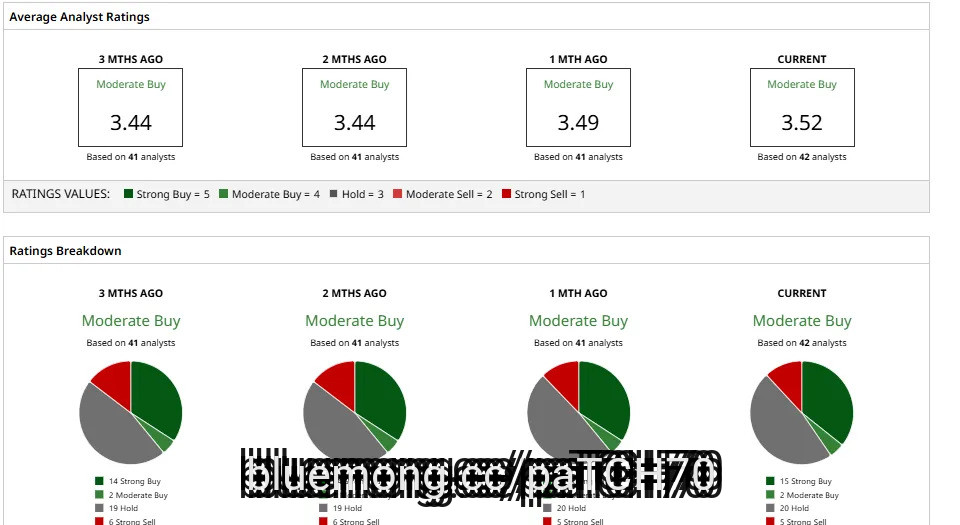

10 days ago
SoFi Technologies (NASDAQ:SOFI) just posted the best quarter in its history, and the stock fell anyway. Membership hit a record, loan originations hit a record, and tangible book value grew faster than almost anyone expected. Yet shares dropped roughly 9% the day the numbers came out, part of a stretch that has left the stock down nearly 42% this year. The gap between what the business is doing and what the market is doing has rarely been this wide.
The growth engine behind that record quarter keeps compounding. SoFi added 1.1 million new members in FQ2 2026, a record, pushing its base to 15.8 million people, up 35% year over year. What matters more is how it is selling to them: 51% of new products went to existing members, up from 43% the prior quarter and 35% a year earlier, and the average member now uses 1.54 products, up from 1.46 twelve months ago. That is a company getting cheaper to grow, since selling another product to someone already banking with you costs far less than acquiring a stranger.
The balance sheet backs up that growth. Tangible book value jumped 80% year over year to $9.5 billion, or $7.34 per share, while deposits reached $45.5 billion and the total capital ratio sat at 18.8%, comfortably above the 10.5% regulatory minimum. Loan originations hit a record $14.8 billion, up 69%, and the personal loan charge-off rate actually fell 21 basis points even as that book expanded, a sign SoFi is not chasing volume by loosening standards. SoFi's brokerage arm was also among the firms chosen for the record-breaking ***** e Exploration Technologies IPO, and brokerage revenue climbed 141% for the quarter. William Blair's Andrew Jeffrey called the results reason to "aggressively accumulate" the stock, arguing the larger balance sheet efficiently supports management's 20% to 30% long-term return-on-equity target.
Pixabay/Public Domain
None of that explains why the profit outlook didn't move. Management raised full-year adjusted net revenue guidance to $4.75 billion to $4.85 billion, up from $4.66 billion, but left adjusted EBITDA guidance at $1.6 billion and adjusted earnings per share at $0.60. More revenue with no more profit attached is exactly the kind of detail the market prices quickly. CEO Anthony Noto pointed to a shift in the bank's own rate expectations, from two cuts to two hikes this year, as the reason for the caution, alongside a choice to reinvest rather than bank the upside.
#year #record #book #revenue
The growth engine behind that record quarter keeps compounding. SoFi added 1.1 million new members in FQ2 2026, a record, pushing its base to 15.8 million people, up 35% year over year. What matters more is how it is selling to them: 51% of new products went to existing members, up from 43% the prior quarter and 35% a year earlier, and the average member now uses 1.54 products, up from 1.46 twelve months ago. That is a company getting cheaper to grow, since selling another product to someone already banking with you costs far less than acquiring a stranger.
The balance sheet backs up that growth. Tangible book value jumped 80% year over year to $9.5 billion, or $7.34 per share, while deposits reached $45.5 billion and the total capital ratio sat at 18.8%, comfortably above the 10.5% regulatory minimum. Loan originations hit a record $14.8 billion, up 69%, and the personal loan charge-off rate actually fell 21 basis points even as that book expanded, a sign SoFi is not chasing volume by loosening standards. SoFi's brokerage arm was also among the firms chosen for the record-breaking ***** e Exploration Technologies IPO, and brokerage revenue climbed 141% for the quarter. William Blair's Andrew Jeffrey called the results reason to "aggressively accumulate" the stock, arguing the larger balance sheet efficiently supports management's 20% to 30% long-term return-on-equity target.
Pixabay/Public Domain
None of that explains why the profit outlook didn't move. Management raised full-year adjusted net revenue guidance to $4.75 billion to $4.85 billion, up from $4.66 billion, but left adjusted EBITDA guidance at $1.6 billion and adjusted earnings per share at $0.60. More revenue with no more profit attached is exactly the kind of detail the market prices quickly. CEO Anthony Noto pointed to a shift in the bank's own rate expectations, from two cuts to two hikes this year, as the reason for the caution, alongside a choice to reinvest rather than bank the upside.
#year #record #book #revenue
10 days ago
Amazon shares slid Tuesday after founder Jeff Bezos filed plans to sell over $4 billion worth of Amazon stock.
Shares of Amazon are still up about 20% year-to-date, boosted by strong earnings and revenue growth.
Amazon's stock hit a record high Monday. It's pulling back today following the news that founder Jeff Bezos plans to part with some shares.
Amazon (AMZN) shares were down 2% recently, leading Dow Jones Industrial Average decliners on a day when the broader index gained, after a regulatory filing revealed that Bezos intends to sell 15 million shares worth more than $4.07 billion.
The Form 144 filing with the Securities and Exchange Commission also indicated that on May 4, Bezos donated 220,200 shares to non-profit organizations.
#amazon #jeff #founder
Shares of Amazon are still up about 20% year-to-date, boosted by strong earnings and revenue growth.
Amazon's stock hit a record high Monday. It's pulling back today following the news that founder Jeff Bezos plans to part with some shares.
Amazon (AMZN) shares were down 2% recently, leading Dow Jones Industrial Average decliners on a day when the broader index gained, after a regulatory filing revealed that Bezos intends to sell 15 million shares worth more than $4.07 billion.
The Form 144 filing with the Securities and Exchange Commission also indicated that on May 4, Bezos donated 220,200 shares to non-profit organizations.
#amazon #jeff #founder