
2 days ago
On September 9, 2026, Jersey Mike's Subs Inc. (NYSE:JMKE) reported its first quarterly results as a public company, with total revenue up 10% year over year to $208 million and same-store sales accelerating to 2.3% growth from 1.7% in the prior quarter. It was primarily driven by transaction growth even as the restaurant industry faced weak traffic trends. Net income fell to $37 million from $59 million a year earlier. It showed non-routine expenses, advertising fund timing, and higher interest costs following the company's July initial public offering, partially offset by a $14 million gain on the sale of corporate-owned stores.
Jersey Mike's Subs Inc. (NYSE:JMKE) is gaining customers while its brand remains a major competitive advantage. The firm added 83 stores in the second quarter. It grew its customer base and increased systemwide sales 10% to $1.21 billion. Jersey Mike's also earned the No. 1 ranking among U.S. quick-service restaurant brands in the 2026 American Customer Satisfaction Index, surpassing Chick-fil-A after 11 consecutive years at the top. It gives the newly public company a strong foundation for continued customer and franchisee growth.
The business has substantial whitespace for long-term unit growth. Jersey Mike's ended the quarter with 3,378 locations and maintains a domestic development pipeline of more than 1,600 stores, with more than 90% of that pipeline coming from existing franchisees. Management estimates that the U.S. market could eventually support roughly 7,500 locations and sees potential to reach approximately 15,000 stores globally. It gives the business a long runway for franchise-led revenue and royalty growth.
Digital engagement and transaction growth give Jersey Mike's more avenues to increase sales. Digital sales represented 43% of systemwide sales in the second quarter, up from 41% a year earlier. Same-store sales increased 2.3% mainly because customers placed more transactions. Jersey Mike's also had more than 12.5 million active MyMike's loyalty members in 2025. It provides the company with a large customer database that it can use to increase frequency and personalize marketing as it expands.
Jersey Mike's Subs Inc. (NYSE:JMKE) still faces a significant profitability challenge despite its revenue growth. Second-quarter revenue jumped 10% to $208 million. However, net income fell 37% to $37 million from $59 million a year earlier. Management attributed part of the decline to advertising-fund timing and higher interest expense. It shows that revenue growth has not yet translated into comparable bottom-line growth for shareholders.
#million #customer
Jersey Mike's Subs Inc. (NYSE:JMKE) is gaining customers while its brand remains a major competitive advantage. The firm added 83 stores in the second quarter. It grew its customer base and increased systemwide sales 10% to $1.21 billion. Jersey Mike's also earned the No. 1 ranking among U.S. quick-service restaurant brands in the 2026 American Customer Satisfaction Index, surpassing Chick-fil-A after 11 consecutive years at the top. It gives the newly public company a strong foundation for continued customer and franchisee growth.
The business has substantial whitespace for long-term unit growth. Jersey Mike's ended the quarter with 3,378 locations and maintains a domestic development pipeline of more than 1,600 stores, with more than 90% of that pipeline coming from existing franchisees. Management estimates that the U.S. market could eventually support roughly 7,500 locations and sees potential to reach approximately 15,000 stores globally. It gives the business a long runway for franchise-led revenue and royalty growth.
Digital engagement and transaction growth give Jersey Mike's more avenues to increase sales. Digital sales represented 43% of systemwide sales in the second quarter, up from 41% a year earlier. Same-store sales increased 2.3% mainly because customers placed more transactions. Jersey Mike's also had more than 12.5 million active MyMike's loyalty members in 2025. It provides the company with a large customer database that it can use to increase frequency and personalize marketing as it expands.
Jersey Mike's Subs Inc. (NYSE:JMKE) still faces a significant profitability challenge despite its revenue growth. Second-quarter revenue jumped 10% to $208 million. However, net income fell 37% to $37 million from $59 million a year earlier. Management attributed part of the decline to advertising-fund timing and higher interest expense. It shows that revenue growth has not yet translated into comparable bottom-line growth for shareholders.
#million #customer


3 days ago
A Wall Street Journal report on September 16 revealed that ExxonMobil Holdings Corporation (NYSE:XOM) is nearing a preliminary agreement with Venezuela's state-owned PDVSA, potentially marking its return to the country almost two decades after its ***** ets were nationalized. According to Reuters, Exxon has shown interest in the large Petromonagas heavy oil project in the Orinoco Belt, as well as in areas in the neighboring Carabobo block.
While the talks are still in their preliminary phase and could still fall apart or be delayed, they mark a major turnaround from Exxon's previous stance on Venezuela. The company's CEO, Darren Woods, stated in January that the country was "uninvestable" without durable investment protections, legal reforms, and changes to its hydrocarbon laws.
The development comes amid a broader push by the Trump administration to open Venezuela's oil industry to American companies and revive the country's dilapidated oil infrastructure. The South American nation is sitting on the largest proven crude oil reserves in the world, accounting for roughly 17% of the global total.
Venezuela could provide Exxon with access to an enormous resource base at a time when the company is actively seeking low-cost and long-duration ***** ets. The fields under consideration are estimated to contain more than 50 billion barrels of oil buried underground.
Exxon already holds an advantage through its previous experience in the country. Petromonagas, formerly called Cerro Negro, was once the energy firm's flagship project in Venezuela, giving it familiarity with the country's vast heavy and extra-heavy crude resources. Petromonagas also remains one of the few Venezuelan projects with an operational upgrader capable of turning the Orinoco's extra-heavy crude into lighter exportable grades.
#heavy #project
While the talks are still in their preliminary phase and could still fall apart or be delayed, they mark a major turnaround from Exxon's previous stance on Venezuela. The company's CEO, Darren Woods, stated in January that the country was "uninvestable" without durable investment protections, legal reforms, and changes to its hydrocarbon laws.
The development comes amid a broader push by the Trump administration to open Venezuela's oil industry to American companies and revive the country's dilapidated oil infrastructure. The South American nation is sitting on the largest proven crude oil reserves in the world, accounting for roughly 17% of the global total.
Venezuela could provide Exxon with access to an enormous resource base at a time when the company is actively seeking low-cost and long-duration ***** ets. The fields under consideration are estimated to contain more than 50 billion barrels of oil buried underground.
Exxon already holds an advantage through its previous experience in the country. Petromonagas, formerly called Cerro Negro, was once the energy firm's flagship project in Venezuela, giving it familiarity with the country's vast heavy and extra-heavy crude resources. Petromonagas also remains one of the few Venezuelan projects with an operational upgrader capable of turning the Orinoco's extra-heavy crude into lighter exportable grades.
#heavy #project


3 days ago
As a Californian, I can say this: If there are two industries that residents of the Golden State really don't like, it's insurance providers and utilities.
Interestingly, with the state considering wildfire reform legislation, those industries are at odds with one another. That's material for investors considering stocks such as PG&E (NYSE: PCG). The company known to California customers as Pacific Gas & Electric is one of the four major investor-owned utilities in the state, and due to the state having some of the highest utility rates in the U.S., PG&E and friends don't have a lot of fans in the state.
Missed Nvidia in 2009? This Rare Signal Is Flashing Again. In 2009, a "Double Down" signal flashed for a little-known chipmaker called Nvidia. For the first time in years, that same "Total Conviction" signal is flashing for a company 1/100th the size of Nvidia. Continue »
Of course, investing isn't a popularity contest. There are plenty of stocks that are often vilified in the court of public opinion that also deliver compelling returns. This year, oil equities certainly check that box. But the biggest risk to prospective PG&E investors isn't how Californians feel about the utility. It's the goings-on in Sacramento.
For those who are new to utility stocks, the primary reasons investors have embraced this sector over the years are above-average dividend yields, below-average risk profiles, and, more recently, inroads to the artificial intelligence (AI) trade.
#state #signal
Interestingly, with the state considering wildfire reform legislation, those industries are at odds with one another. That's material for investors considering stocks such as PG&E (NYSE: PCG). The company known to California customers as Pacific Gas & Electric is one of the four major investor-owned utilities in the state, and due to the state having some of the highest utility rates in the U.S., PG&E and friends don't have a lot of fans in the state.
Missed Nvidia in 2009? This Rare Signal Is Flashing Again. In 2009, a "Double Down" signal flashed for a little-known chipmaker called Nvidia. For the first time in years, that same "Total Conviction" signal is flashing for a company 1/100th the size of Nvidia. Continue »
Of course, investing isn't a popularity contest. There are plenty of stocks that are often vilified in the court of public opinion that also deliver compelling returns. This year, oil equities certainly check that box. But the biggest risk to prospective PG&E investors isn't how Californians feel about the utility. It's the goings-on in Sacramento.
For those who are new to utility stocks, the primary reasons investors have embraced this sector over the years are above-average dividend yields, below-average risk profiles, and, more recently, inroads to the artificial intelligence (AI) trade.
#state #signal


3 days ago
Chevron Corporation (NYSE:CVX) is about to significantly expand its operations in Venezuela. The company's CFO, Eimear Bonner, revealed at a Barclays conference on September 8 that the American oil giant plans to more than double the number of oil rigs it operates in the country as part of its five-year plan to increase output.
The statement follows the company's recent announcement that its joint venture partnerships in Venezuela would invest more than $7 billion to more than double oil output to 600,000 barrels per day by 2031. The current production from Chevron's three Venezuelan JVs totals around 290,000, which is all exported to the United States.
The move builds on Chevron's longstanding presence in Venezuela, as it was the only American oil major that continued operating in the country under a special US license, allowing it to produce and export oil despite the sanctions.
The expansion comes alongside a much larger agreement between Washington and Caracas announced this month, which gave the US majority control over around 20% of Venezuela's proven crude reserves. The White House has now invited American oil companies to revive and modernize the South American country's oil infrastructure and more than double its crude production in the next few years.
Chevron has maintained operations in Venezuela since 1923 and even stayed through the nationalizations that forced ExxonMobil and ConocoPhillips to exit in 2007. This gives it a significant competitive advantage, since it already has a longstanding relationship with the state-owned PDVSA and extensive experience operating in the country's complex regulatory environment.
#around
The statement follows the company's recent announcement that its joint venture partnerships in Venezuela would invest more than $7 billion to more than double oil output to 600,000 barrels per day by 2031. The current production from Chevron's three Venezuelan JVs totals around 290,000, which is all exported to the United States.
The move builds on Chevron's longstanding presence in Venezuela, as it was the only American oil major that continued operating in the country under a special US license, allowing it to produce and export oil despite the sanctions.
The expansion comes alongside a much larger agreement between Washington and Caracas announced this month, which gave the US majority control over around 20% of Venezuela's proven crude reserves. The White House has now invited American oil companies to revive and modernize the South American country's oil infrastructure and more than double its crude production in the next few years.
Chevron has maintained operations in Venezuela since 1923 and even stayed through the nationalizations that forced ExxonMobil and ConocoPhillips to exit in 2007. This gives it a significant competitive advantage, since it already has a longstanding relationship with the state-owned PDVSA and extensive experience operating in the country's complex regulatory environment.
#around


3 days ago
For the record:
1:38 p.m. Sept. 19, 2026: An earlier version of this article stated KCAL's helicopter is owned by Angel City Air. It is owned by Helicopters Inc.
Whether it's a brush fire, a mass shooting, a car chase or the aftermath of a major storm, viewers in Los Angeles are used to getting the news from above.
Television news helicopter coverage has become one of the most important elements of any local newscast, with the high-flying helicopters roaring overhead a common fixture of breaking news scenes.
These images are so ubiquitous, it may have been easy to take them for granted, until Tuesday, when an NBC4 helicopter carrying reporter Eliana Moreno and pilot George Marciniw crashed while covering breaking news in Chatsworth. Both died, along with a bystander on the ground.
The tragedy has prompted soul-searching in the world of TV news helicopter pilots and focused attention on safety issues.
#city #whether #angeles
1:38 p.m. Sept. 19, 2026: An earlier version of this article stated KCAL's helicopter is owned by Angel City Air. It is owned by Helicopters Inc.
Whether it's a brush fire, a mass shooting, a car chase or the aftermath of a major storm, viewers in Los Angeles are used to getting the news from above.
Television news helicopter coverage has become one of the most important elements of any local newscast, with the high-flying helicopters roaring overhead a common fixture of breaking news scenes.
These images are so ubiquitous, it may have been easy to take them for granted, until Tuesday, when an NBC4 helicopter carrying reporter Eliana Moreno and pilot George Marciniw crashed while covering breaking news in Chatsworth. Both died, along with a bystander on the ground.
The tragedy has prompted soul-searching in the world of TV news helicopter pilots and focused attention on safety issues.
#city #whether #angeles

3 days ago
The federal government is preparing to cash out a chunk of its stake in GlobalFoundries (GFS). A new filing shows Washington plans to sell as many as 9.9 million shares of the semiconductor firm, months after agreeing to take an equity position in the company.
For investors watching GFS stock, the move raises questions about what comes next, even as GlobalFoundries lands new government-backed deals in quantum computing and silicon photonics. Here is what the filing means, and why the government owned shares of GlobalFoundries stock in the first place.
Bank of America Just Declared a 'Generational Entry Point' in U.S. Bonds. Why Investors Should Be Backing Up the Truck on Treasuries Here.
Mark Cuban Says He Was Dizzy for Months, So He Built a VR Fix That Does at Home 'Much Of What A 180k Machine' Does
JPMorgan Gives Up Forecasting Iran War Endgame as Trump Tells Reporters 'Anything Could Happen With Me'
#globalfoundries #months #filing
For investors watching GFS stock, the move raises questions about what comes next, even as GlobalFoundries lands new government-backed deals in quantum computing and silicon photonics. Here is what the filing means, and why the government owned shares of GlobalFoundries stock in the first place.
Bank of America Just Declared a 'Generational Entry Point' in U.S. Bonds. Why Investors Should Be Backing Up the Truck on Treasuries Here.
Mark Cuban Says He Was Dizzy for Months, So He Built a VR Fix That Does at Home 'Much Of What A 180k Machine' Does
JPMorgan Gives Up Forecasting Iran War Endgame as Trump Tells Reporters 'Anything Could Happen With Me'
#globalfoundries #months #filing



3 days ago
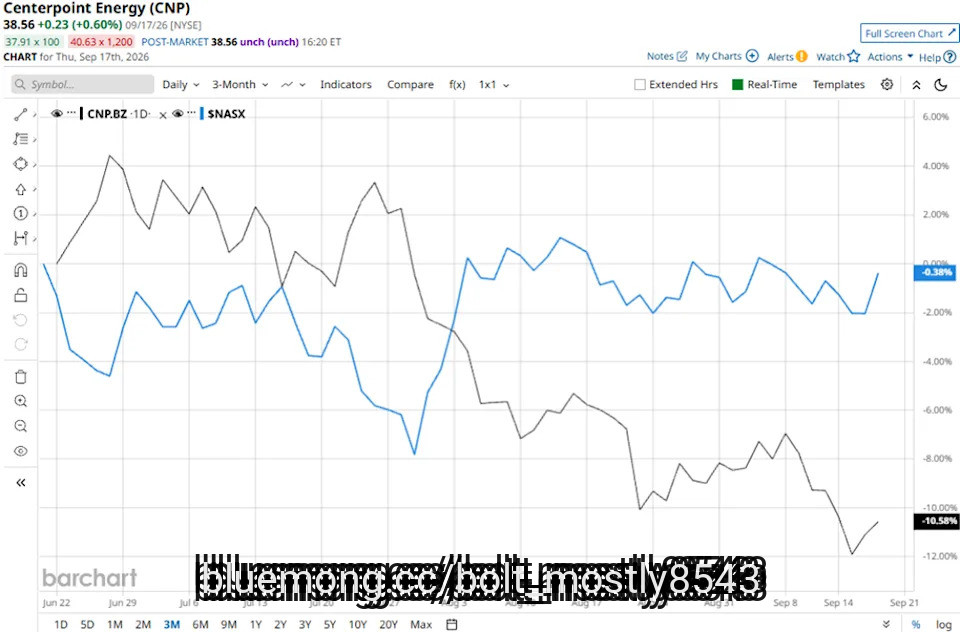
With a market cap. of $25.4 billion, Houston, Texas-based CenterPoint Energy, Inc. (CNP) is an energy delivery company providing electric and natural gas services across Indiana, Minnesota, Ohio, and Texas. The company serves more than 7 million metered customers through its electric transmission and distribution, power generation, and natural gas distribution operations.
Companies valued between $10 billion and $200 billion are generally classified as "large-cap stocks," and CenterPoint Energy comfortably fits this category. As of June 30, 2026, CenterPoint Energy owned approximately $48.3 billion in ******* ets and employed around 8,800 people, with a history spanning more than 150 years.
Bank of America Just Declared a 'Generational Entry Point' in U.S. Bonds. Why Investors Should Be Backing Up the Truck on Treasuries Here.
Mark Cuban Says He Was Dizzy for Months, So He Built a VR Fix That Does at Home 'Much Of What A 180k Machine' Does
JPMorgan Gives Up Forecasting Iran War Endgame as Trump Tells Reporters 'Anything Could Happen With Me'
#electric #distribution
Companies valued between $10 billion and $200 billion are generally classified as "large-cap stocks," and CenterPoint Energy comfortably fits this category. As of June 30, 2026, CenterPoint Energy owned approximately $48.3 billion in ******* ets and employed around 8,800 people, with a history spanning more than 150 years.
Bank of America Just Declared a 'Generational Entry Point' in U.S. Bonds. Why Investors Should Be Backing Up the Truck on Treasuries Here.
Mark Cuban Says He Was Dizzy for Months, So He Built a VR Fix That Does at Home 'Much Of What A 180k Machine' Does
JPMorgan Gives Up Forecasting Iran War Endgame as Trump Tells Reporters 'Anything Could Happen With Me'
#electric #distribution


4 days ago
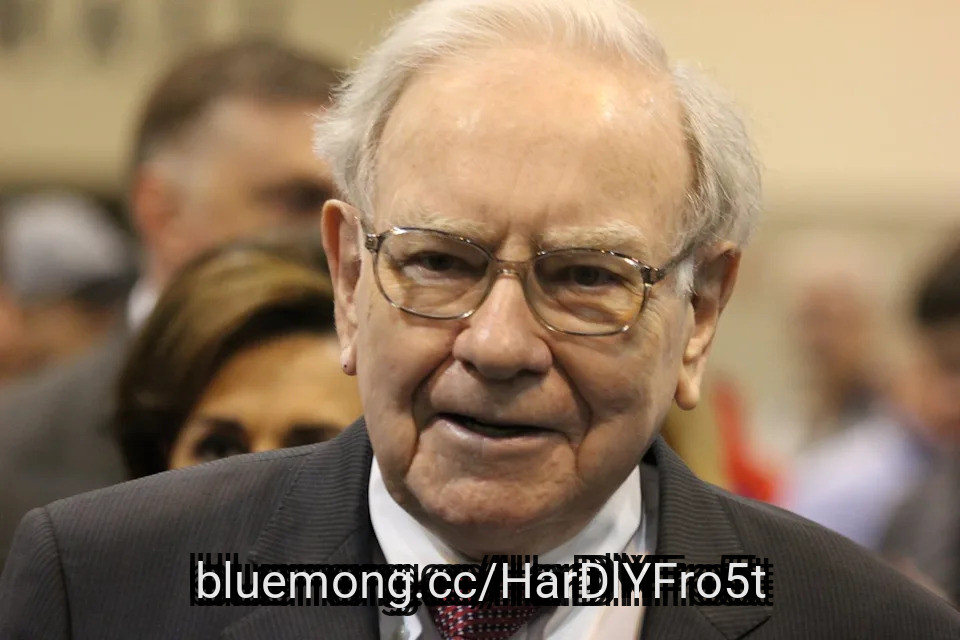
Nearly 10 years ago, Warren Buffett told Berkshire Hathaway (NYSE: BRKA) (NYSE: BRKB) investors that he had made a mistake for not buying Google when he had the opportunity many years earlier. He had become quite familiar with the business because GEICO, Berkshire's consumer insurance company, was paying $10 or $11 per click for advertising on the search engine owned by Alphabet (NASDAQ: GOOG) (NASDAQ: GOOGL). At the 2017 shareholder meeting, Buffett said he'd missed the opportunity, but he wouldn't bet against Google.
The stock climbed significantly while Buffett sat on the sidelines. He finally pulled the trigger on the stock in the third quarter of last year. Since then, he and newly appointed CEO Greg Abel have plowed tens of billions into the stock, making it one of Berkshire's biggest investments. But Buffett arguably missed out on a 9,000% gain by not buying into the stock sooner.
Missed Nvidia in 2009? This Rare Signal Is Flashing Again. In 2009, a "Double Down" signal flashed for a little-known chipmaker called Nvidia. For the first time in years, that same "Total Conviction" signal is flashing for a company 1/100th the size of Nvidia. Continue »
It's hard to blame Buffett for not buying Alphabet, then known as Google, when it made its initial public offering (IPO) in 2004. Buffett historically avoids both IPO stocks and tech stocks.
Buffett thinks IPOs are typically overvalued, at least relative to many other stocks, because underwriters are incentivized to secure the highest possible price for the company issuing shares. An IPO like Google's also comes with a lot of hype and media attention that can drive prices higher without any fundamental basis.
#buffett #NVIDIA #years #company
The stock climbed significantly while Buffett sat on the sidelines. He finally pulled the trigger on the stock in the third quarter of last year. Since then, he and newly appointed CEO Greg Abel have plowed tens of billions into the stock, making it one of Berkshire's biggest investments. But Buffett arguably missed out on a 9,000% gain by not buying into the stock sooner.
Missed Nvidia in 2009? This Rare Signal Is Flashing Again. In 2009, a "Double Down" signal flashed for a little-known chipmaker called Nvidia. For the first time in years, that same "Total Conviction" signal is flashing for a company 1/100th the size of Nvidia. Continue »
It's hard to blame Buffett for not buying Alphabet, then known as Google, when it made its initial public offering (IPO) in 2004. Buffett historically avoids both IPO stocks and tech stocks.
Buffett thinks IPOs are typically overvalued, at least relative to many other stocks, because underwriters are incentivized to secure the highest possible price for the company issuing shares. An IPO like Google's also comes with a lot of hype and media attention that can drive prices higher without any fundamental basis.
#buffett #NVIDIA #years #company

4 days ago
Are you worried enough about rising interest rates jump-starting a recession that you're looking for ways of sidestepping the effect of such an economic headwind? It's not a terrible idea to at least start making a mental plan for that possibility.
You may have considered Berkshire Hathaway (NYSE: BRKA) (NYSE: BRKB) to fill that role. Its wholly owned, private businesses generate plenty of cash flow regardless of the economic backdrop, after all.
Missed Nvidia in 2009? This Rare Signal Is Flashing Again. In 2009, a "Double Down" signal flashed for a little-known chipmaker called Nvidia. For the first time in years, that same "Total Conviction" signal is flashing for a company 1/100th the size of Nvidia. Continue »
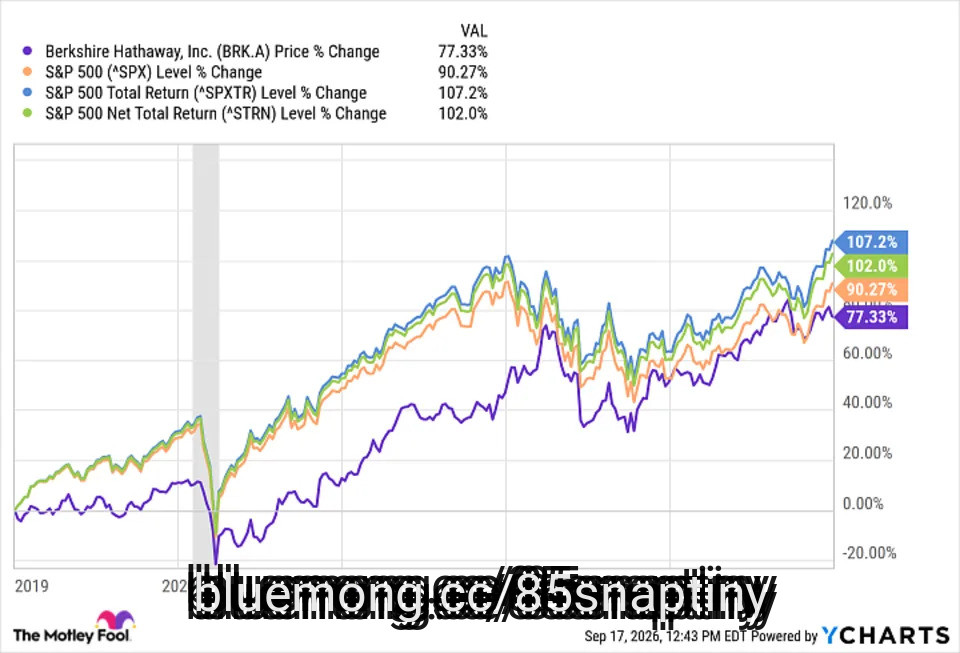
But how do Berkshire shares actually perform during recessions? It's not like the data doesn't exist.
You probably know Berkshire Hathaway best by its stock picks. Although they're not built to be an actively managed mutual fund, its equity holdings -- and changes to these holdings -- are closely followed by investors looking for some new ideas for their own portfolios.
#berkshire #signal #NYSE #flashing
You may have considered Berkshire Hathaway (NYSE: BRKA) (NYSE: BRKB) to fill that role. Its wholly owned, private businesses generate plenty of cash flow regardless of the economic backdrop, after all.
Missed Nvidia in 2009? This Rare Signal Is Flashing Again. In 2009, a "Double Down" signal flashed for a little-known chipmaker called Nvidia. For the first time in years, that same "Total Conviction" signal is flashing for a company 1/100th the size of Nvidia. Continue »
But how do Berkshire shares actually perform during recessions? It's not like the data doesn't exist.
You probably know Berkshire Hathaway best by its stock picks. Although they're not built to be an actively managed mutual fund, its equity holdings -- and changes to these holdings -- are closely followed by investors looking for some new ideas for their own portfolios.
#berkshire #signal #NYSE #flashing



4 days ago
The State Department's approval of two potential arms sales to Saudi Arabia totaling $5.75 billion, including JDAM-ER munitions and AGT-1500 tank engines, offers a modest but meaningful data point for two very different defense players. For The Boeing Company (NYSE:BA), the potential sale represents an additional international defense opportunity as the company continues working through margin pressure elsewhere. For Honeywell Aerospace Inc. (NASDAQ:HONA), the package reinforces a stable business line while the firm tackles its first quarter as a standalone public company.
The State Department approved a potential $5 billion sale of JDAM-ER guidance kits and bombs to Saudi Arabia, along with a separate potential $750 million deal for AGT-1500 tank engines. The JDAM package consists of 5,004 KMU-572 and 5,000 KMU-556 JDAM guidance kits and 5,004 BLU-111 and 5,000 BLU-117 bombs. Boeing has been identified as the principal contractor for the JDAM-ERs, with Honeywell handling the engines. The State Department said the sales would strengthen Saudi Arabia's airborne defense capabilities and improve interoperability with U.S. and Gulf partner forces.
Boeing stands to gain only modestly from the deal, given its roughly $85 billion Defense, ******* e and Security backlog. International orders already account for 27% of that total. The segment reported a second-quarter operating loss, largely due to charges tied to the VC-25B (Air Force One) program. That makes mature, lower-risk munitions programs such as JDAM-ER a more dependable part of the portfolio, though the deal is unlikely to have a meaningful impact on margins. For Honeywell Aerospace, the contract is smaller, but the AGT-1500 fits within its established defense propulsion business. It also adds to the company's international defence business, which makes up about 30% of its total Defense and ******* e revenue.
Honeywell Aerospace is owned by 74 hedge funds as of Q2 2026, which is consistent with Honeywell (NASDAQ:HON) hedge fund ownership prior to the spinoff. Unlike Honeywell, the number of hedge funds holding Boeing stock dropped from 99 at the end of the first quarter of fiscal 2026 to 90 at the end of Q2 2026.
Neither potential sale is large enough to have a meaningful impact on either company's short-term results by itself. Still, each supports a different investment story. For Boeing, the potential sales add to international defense exposure if finalized, as its defense unit continues dealing with fixed-price losses. For Honeywell, they support the steady flow of high-margin legacy revenue across its broader defense franchise.
#international #saudi
The State Department approved a potential $5 billion sale of JDAM-ER guidance kits and bombs to Saudi Arabia, along with a separate potential $750 million deal for AGT-1500 tank engines. The JDAM package consists of 5,004 KMU-572 and 5,000 KMU-556 JDAM guidance kits and 5,004 BLU-111 and 5,000 BLU-117 bombs. Boeing has been identified as the principal contractor for the JDAM-ERs, with Honeywell handling the engines. The State Department said the sales would strengthen Saudi Arabia's airborne defense capabilities and improve interoperability with U.S. and Gulf partner forces.
Boeing stands to gain only modestly from the deal, given its roughly $85 billion Defense, ******* e and Security backlog. International orders already account for 27% of that total. The segment reported a second-quarter operating loss, largely due to charges tied to the VC-25B (Air Force One) program. That makes mature, lower-risk munitions programs such as JDAM-ER a more dependable part of the portfolio, though the deal is unlikely to have a meaningful impact on margins. For Honeywell Aerospace, the contract is smaller, but the AGT-1500 fits within its established defense propulsion business. It also adds to the company's international defence business, which makes up about 30% of its total Defense and ******* e revenue.
Honeywell Aerospace is owned by 74 hedge funds as of Q2 2026, which is consistent with Honeywell (NASDAQ:HON) hedge fund ownership prior to the spinoff. Unlike Honeywell, the number of hedge funds holding Boeing stock dropped from 99 at the end of the first quarter of fiscal 2026 to 90 at the end of Q2 2026.
Neither potential sale is large enough to have a meaningful impact on either company's short-term results by itself. Still, each supports a different investment story. For Boeing, the potential sales add to international defense exposure if finalized, as its defense unit continues dealing with fixed-price losses. For Honeywell, they support the steady flow of high-margin legacy revenue across its broader defense franchise.
#international #saudi


4 days ago
Empress Royalty has signed a stream purchase agreement (SPA) for an interest in production from the Tongon Gold Mine in Côte d'Ivoire for an upfront cash payment of $62m (C$86.78m).
The agreement, made through its wholly owned subsidiary Empress Holdings, was reached with Appian Tongon Streamco.
In connection with the acquisition, Empress Holdings has also entered into a $75m senior secured credit facility with Appian Empire Loanco, providing an initial $55m draw at closing to partially fund the purchase, with a further $20m committed for future royalty and stream transactions.
According to the terms of the stream agreement, Empress Holdings will receive 3.58% of Tongon's payable gold output until 400,000 ****** ulative ounces have been delivered from 31 January 2026.
This percentage will then decrease to 2.93% until 600,000oz are delivered, and subsequently to 0.81% of gold production for the remainder of the stream's term, which is approximately 29 years from the acquisition date.
#Gold #production
The agreement, made through its wholly owned subsidiary Empress Holdings, was reached with Appian Tongon Streamco.
In connection with the acquisition, Empress Holdings has also entered into a $75m senior secured credit facility with Appian Empire Loanco, providing an initial $55m draw at closing to partially fund the purchase, with a further $20m committed for future royalty and stream transactions.
According to the terms of the stream agreement, Empress Holdings will receive 3.58% of Tongon's payable gold output until 400,000 ****** ulative ounces have been delivered from 31 January 2026.
This percentage will then decrease to 2.93% until 600,000oz are delivered, and subsequently to 0.81% of gold production for the remainder of the stream's term, which is approximately 29 years from the acquisition date.
#Gold #production


4 days ago
On August 18, Amer Sports (NYSE:AS) reported second-quarter results that beat its own guidance and then raised the bar for the rest of the year. Revenue climbed 32% to $1.63 billion, adjusted operating profit nearly tripled, and every region and segment posted double-digit growth. Diluted earnings per share reached $0.18, up from a much smaller figure a year earlier. What stands out about August 18 is not just the size of the beat but how broad it was.
Technical Apparel grew 32% to $674 million, led by Arc'teryx and backed by a 17% omni-comp gain across owned stores and e-commerce. Outdoor Performance grew even faster, up 37% to $569 million, driven by Salomon Softgoods. Ball & Racquet Sports rose 24% to $390 million on the strength of Wilson Tennis 360. CEO James Zheng pointed to strong double-digit growth across every segment, geography, and channel as the reason for confidence in the outlook.
That confidence showed up in the numbers: Amer Sports raised full-year 2026 guidance to roughly 24% reported revenue growth, a gross margin of 60.5% to 61.0%, an operating margin of 14.2% to 14.5%, and diluted EPS of $1.27 to $1.30. The balance sheet backs up the reinvestment CFO Andrew Page described, with $573 million in net cash and $720 million in cash and equivalents at quarter-end.
Some of the second quarter's biggest numbers lean on a one-time tailwind. Gross margin expanded 710 basis points to 65.6%, but 390 of those points came from net tariff refunds. Operating margin's 820 basis point jump included the same 390-point benefit. The effect is largest in Ball & Racquet Sports, where adjusted segment operating margin rose 1,300 basis points to 17.2%, yet 970 of those points came from tariff refunds alone. Selling, general and administrative expenses rose 30% to $909 million, and on an adjusted basis SG&A grew 33%, faster than revenue itself.
Inventories climbed 19% year over year to $1,897 million. The guidance for the next quarter also points to a slower pace: third quarter revenue growth is guided at 18% to 20%, well below the 32% just reported, with gross margin guided down to about 59.0% and net finance cost alone guided to $15 million to $20 million, against roughly $85 million for the entire year.
#revenue #basis
Technical Apparel grew 32% to $674 million, led by Arc'teryx and backed by a 17% omni-comp gain across owned stores and e-commerce. Outdoor Performance grew even faster, up 37% to $569 million, driven by Salomon Softgoods. Ball & Racquet Sports rose 24% to $390 million on the strength of Wilson Tennis 360. CEO James Zheng pointed to strong double-digit growth across every segment, geography, and channel as the reason for confidence in the outlook.
That confidence showed up in the numbers: Amer Sports raised full-year 2026 guidance to roughly 24% reported revenue growth, a gross margin of 60.5% to 61.0%, an operating margin of 14.2% to 14.5%, and diluted EPS of $1.27 to $1.30. The balance sheet backs up the reinvestment CFO Andrew Page described, with $573 million in net cash and $720 million in cash and equivalents at quarter-end.
Some of the second quarter's biggest numbers lean on a one-time tailwind. Gross margin expanded 710 basis points to 65.6%, but 390 of those points came from net tariff refunds. Operating margin's 820 basis point jump included the same 390-point benefit. The effect is largest in Ball & Racquet Sports, where adjusted segment operating margin rose 1,300 basis points to 17.2%, yet 970 of those points came from tariff refunds alone. Selling, general and administrative expenses rose 30% to $909 million, and on an adjusted basis SG&A grew 33%, faster than revenue itself.
Inventories climbed 19% year over year to $1,897 million. The guidance for the next quarter also points to a slower pace: third quarter revenue growth is guided at 18% to 20%, well below the 32% just reported, with gross margin guided down to about 59.0% and net finance cost alone guided to $15 million to $20 million, against roughly $85 million for the entire year.
#revenue #basis


4 days ago
CleanSpark just announced a Mag 7 tenant for its first AI site, in a bullish disclosure for the former bitcoin miner as it seeks $2B in financing for its first AI site at a time when capital could get more expensive following the Fed's rate hike yesterday.
CleanSpark announced its first-ever AI lease on July 14 – a 20-year, $6.6B deal for 175 critical IT MWs at its Sandersville, Georgia, facility. But at the time, CleanSpark didn't disclose the tenant.
An SEC filing from today reveals that tenant is Meta, the social-media stalwart turned digital marketing giant and burgeoning AI lab, by way of its wholly owned subsidiary, Anviran. But that's not even the most interesting part – this ******* ociation also means that Meta holds an LOI for 885 MW from CleanSpark's Sealy and Brazoria, Texas, sites, since CleanSpark in July said the Sandersville counterparty also signed an exclusivity agreement for those sites.
The filing says that Meta will serve as "guarantor of rent and operating expenses," with the parent company backstopping Anviran.
And this backstop is more important now than ever. As we covered on the show yesterday, the Fed's 25-basis-point rate hike could lead to not just higher borrowing costs but also tightened credit access for non-investment-grade companies.
#tenant
CleanSpark announced its first-ever AI lease on July 14 – a 20-year, $6.6B deal for 175 critical IT MWs at its Sandersville, Georgia, facility. But at the time, CleanSpark didn't disclose the tenant.
An SEC filing from today reveals that tenant is Meta, the social-media stalwart turned digital marketing giant and burgeoning AI lab, by way of its wholly owned subsidiary, Anviran. But that's not even the most interesting part – this ******* ociation also means that Meta holds an LOI for 885 MW from CleanSpark's Sealy and Brazoria, Texas, sites, since CleanSpark in July said the Sandersville counterparty also signed an exclusivity agreement for those sites.
The filing says that Meta will serve as "guarantor of rent and operating expenses," with the parent company backstopping Anviran.
And this backstop is more important now than ever. As we covered on the show yesterday, the Fed's 25-basis-point rate hike could lead to not just higher borrowing costs but also tightened credit access for non-investment-grade companies.
#tenant


4 days ago
Estes Express Lines is investing nearly $56 million to expand its cross-border and offshore freight network, including terminals, equipment and capacity serving Canada, Mexico, Alaska, Hawaii and Puerto Rico.
Alex Peebles, senior director of offshore and international at Estes, said the privately held, family-owned carrier is taking a longer view of the freight market rather than allowing current conditions to dictate its investment strategy.
"We're really looking at all of these investments from a long-term horizon and viewpoint perspective and one that's going to help accommodate growth and capacity into all the offshore international markets that we service," Peebles told FreightWaves.
Estes, which is celebrating its 95th anniversary this year, is North America's largest privately held less-than-truckload (LTL) freight transportation provider. The company operates a network of over 300 terminals and service centers across the U.S., Puerto Rico, Alaska, Hawaii with coverage extending to Canada, Mexico and the Caribbean
Peebles said the company's ownership structure gives it flexibility to move quickly when real estate and equipment opportunities arise.
#rico
Alex Peebles, senior director of offshore and international at Estes, said the privately held, family-owned carrier is taking a longer view of the freight market rather than allowing current conditions to dictate its investment strategy.
"We're really looking at all of these investments from a long-term horizon and viewpoint perspective and one that's going to help accommodate growth and capacity into all the offshore international markets that we service," Peebles told FreightWaves.
Estes, which is celebrating its 95th anniversary this year, is North America's largest privately held less-than-truckload (LTL) freight transportation provider. The company operates a network of over 300 terminals and service centers across the U.S., Puerto Rico, Alaska, Hawaii with coverage extending to Canada, Mexico and the Caribbean
Peebles said the company's ownership structure gives it flexibility to move quickly when real estate and equipment opportunities arise.
#rico



4 days ago
Michael Burry is back to short selling.
The investor who bet against the U.S. housing market to become one of Wall Street's most renowned contrarians will serve as a senior adviser to Minerva Investment Management as the business prepares to establish a short-biased investment vehicle.
The decision comes less than a year after Burry liquidated Scion ******* et Management, the hedge fund where he handled his ******* ets.
Scion's regulatory registration was terminated in November 2025, Reuters confirmed. The firm had managed about $155 million as of March of that year.
Later, Burry moved most of his public market ******* ysis inside his paid "Cassandra Unchained" newsletter.
#michael #wall
The investor who bet against the U.S. housing market to become one of Wall Street's most renowned contrarians will serve as a senior adviser to Minerva Investment Management as the business prepares to establish a short-biased investment vehicle.
The decision comes less than a year after Burry liquidated Scion ******* et Management, the hedge fund where he handled his ******* ets.
Scion's regulatory registration was terminated in November 2025, Reuters confirmed. The firm had managed about $155 million as of March of that year.
Later, Burry moved most of his public market ******* ysis inside his paid "Cassandra Unchained" newsletter.
#michael #wall


4 days ago
During the September 14 episode of Mad Money, Jim Cramer addressed the broader tech sector pullback and mentioned Broadcom Inc. (NASDAQ:AVGO) as an attractive option for investors looking past short-term volatility. He stated:
Well, it's a tough time to come out to San Francisco, a day when the whole AI complex is getting hammered because Anthropic and OpenAI seem to be, I don't know… pulling in their horns. Actually, I think there's some real bargains in this group. Take Broadcom, the maker of chips, networking equipment, and tech infrastructure and software with a stock that's down more than 10% over the past month. At the beginning of this month, Broadcom reported a strong set of results, issued a spectacular multi-year forecast, but their guidance for the current quarter was, I don't know, viewed by some as in line.
The stock got slammed. I think Broadcom's still on track to put up some incredible growth because they're at the heart of the AI ecosystem because the company's never let us down in all the years my Charitable Trust has owned it. And down here, roughly 150 points below its June high, the stock may be too cheap to ignore.
Recent financial reports from Broadcom Inc. (NASDAQ:AVGO) highlights the scale of expansion driving its core semiconductor and infrastructure divisions. Total revenue for the fiscal third quarter reached $29.6 billion, representing an 85.5% increase compared to the same period in the previous year. Artificial intelligence semiconductor revenue surged 221% to $16.7 billion, accounting for roughly 56% of total revenue. Remaining performance obligations climbed significantly to $179.2 billion, providing substantial visibility into future contracted revenue. Broadcom also serves major hyperscale AI customers including Alphabet and Meta Platforms.
Management raised its full year guidance to $58 billion from $56 billion in artificial intelligence revenue, while projecting $115 billion for fiscal 2027 and $230 billion for fiscal 2028. The figures highlight a deep integration into the enterprise artificial intelligence ecosystem through custom accelerators and high-speed networking solutions.
#down #year #fiscal #NASDAQ
Well, it's a tough time to come out to San Francisco, a day when the whole AI complex is getting hammered because Anthropic and OpenAI seem to be, I don't know… pulling in their horns. Actually, I think there's some real bargains in this group. Take Broadcom, the maker of chips, networking equipment, and tech infrastructure and software with a stock that's down more than 10% over the past month. At the beginning of this month, Broadcom reported a strong set of results, issued a spectacular multi-year forecast, but their guidance for the current quarter was, I don't know, viewed by some as in line.
The stock got slammed. I think Broadcom's still on track to put up some incredible growth because they're at the heart of the AI ecosystem because the company's never let us down in all the years my Charitable Trust has owned it. And down here, roughly 150 points below its June high, the stock may be too cheap to ignore.
Recent financial reports from Broadcom Inc. (NASDAQ:AVGO) highlights the scale of expansion driving its core semiconductor and infrastructure divisions. Total revenue for the fiscal third quarter reached $29.6 billion, representing an 85.5% increase compared to the same period in the previous year. Artificial intelligence semiconductor revenue surged 221% to $16.7 billion, accounting for roughly 56% of total revenue. Remaining performance obligations climbed significantly to $179.2 billion, providing substantial visibility into future contracted revenue. Broadcom also serves major hyperscale AI customers including Alphabet and Meta Platforms.
Management raised its full year guidance to $58 billion from $56 billion in artificial intelligence revenue, while projecting $115 billion for fiscal 2027 and $230 billion for fiscal 2028. The figures highlight a deep integration into the enterprise artificial intelligence ecosystem through custom accelerators and high-speed networking solutions.
#down #year #fiscal #NASDAQ


4 days ago
Burford Capital Limited (NYSE:BUR) announced on September 14 that its indirect, wholly owned subsidiary, Burford Capital Global Finance LLC, priced $300 million of 8% senior secured notes due 2029. Closing is expected September 17, subject to customary conditions.
Net proceeds and existing cash are intended to redeem the subsidiary's 6.25% unsecured notes due in 2028. The transaction would move this maturity into 2029, with a coupon 175 basis points higher.
The September 14 offering announcement confirmed $400 million of outstanding 2028 notes, making the cash contribution central to the refinancing. Burford Capital Limited (NYSE:BUR) said it expected to issue a conditional notice targeting September 24, 2026, for redemption of all $400 million, subject to successful completion of the $300 million financing.
For Burford Capital Limited (NYSE:BUR), refinancing ahead of maturity creates more room for litigation investments to generate cash. Court proceedings, settlements, and collections follow uncertain schedules. Reducing dependence on a particular realization date could help management preserve investment value.
Redeeming the confirmed $400 million balance with $300 million of replacement notes would reduce gross principal by $100 million. Calculated annual coupons would fall from $25 million to $24 million, before fees and other financing costs.
#capital #september #NYSE
Net proceeds and existing cash are intended to redeem the subsidiary's 6.25% unsecured notes due in 2028. The transaction would move this maturity into 2029, with a coupon 175 basis points higher.
The September 14 offering announcement confirmed $400 million of outstanding 2028 notes, making the cash contribution central to the refinancing. Burford Capital Limited (NYSE:BUR) said it expected to issue a conditional notice targeting September 24, 2026, for redemption of all $400 million, subject to successful completion of the $300 million financing.
For Burford Capital Limited (NYSE:BUR), refinancing ahead of maturity creates more room for litigation investments to generate cash. Court proceedings, settlements, and collections follow uncertain schedules. Reducing dependence on a particular realization date could help management preserve investment value.
Redeeming the confirmed $400 million balance with $300 million of replacement notes would reduce gross principal by $100 million. Calculated annual coupons would fall from $25 million to $24 million, before fees and other financing costs.
#capital #september #NYSE


5 days ago
Fenimore ***** et Management, an investment management company, released its Q2 2026 investor letter. The letter can be downloaded here. U.S. equity markets saw broad gains in Q2, driven by strong corporate earnings, economic resilience, and enthusiasm for artificial intelligence (AI). Major indices reached all-time highs, though the energy sector declined. Continued earnings growth, especially among AI-related investments, supported the rally. Technology, particularly semiconductors, led performance as demand for AI infrastructure surged. Despite macroeconomic uncertainties and interest rate influences, Fenimore remains committed to investing in high-quality businesses. The Fenimore Small Cap Strategy returned 9.51% in the quarter, lagging the Russell 2000 Index's 21.49% gain. The underperformance was largely driven by avoiding lower-quality tech stocks linked to data center expansions. Additionally, reviewing the Fund's top five holdings could help identify its best picks for 2026.
In its second-quarter 2026 investor letter, Fenimore ***** et Management highlighted Ryan Specialty Holdings, Inc. (NYSE:RYAN). Ryan Specialty Holdings, Inc. (NYSE:RYAN) is a specialty insurance services company that provides distribution, underwriting, product development, administration, and risk management services. On September 17, 2026, Ryan Specialty Holdings, Inc. (NYSE:RYAN) closed at $40.03 per share. The one-month return of Ryan Specialty Holdings, Inc. (NYSE:RYAN) was -8.32%, and its shares lost 25.53% over the past 52 weeks. Ryan Specialty Holdings, Inc. (NYSE:RYAN) has a market capitalization of $10.15 billion.
Fenimore ***** et Management stated the following regarding Ryan Specialty Holdings, Inc. (NYSE:RYAN) in its Q2 2026 investor letter:
"We initiated a position in Ryan Specialty Holdings, Inc. (NYSE:RYAN), which we had previously owned after its initial public offering. The insurance industry has seen softness in rates. While RYAN's model differs from traditional retail brokerage, the company released results citing a volatile environment which led to a decrease in their earnings outlook for the year. We're encouraged by the business's long-term prospects and, in our opinion, its legendary leader Pat Ryan. He is also purchasing shares of RYAN's stock during this weakness."
Ryan Specialty Holdings, Inc. (NYSE:RYAN) is not on our list of 40 Most Popular Stocks Among Hedge Funds Heading Into 2026. According to our database, 32 hedge fund portfolios held Ryan Specialty Holdings, Inc. (NYSE:RYAN) at the end of the second quarter, compared to 35 in the previous quarter. While we acknowledge the potential of Ryan Specialty Holdings, Inc. (NYSE:RYAN) as an investment, we believe certain AI stocks offer greater upside potential and carry less downside risk. If you're looking for an extremely undervalued AI stock that also stands to benefit significantly from Trump-era tariffs and the onshoring trend, see our free report on the best short-term AI stock.
In its second-quarter 2026 investor letter, Fenimore ***** et Management highlighted Ryan Specialty Holdings, Inc. (NYSE:RYAN). Ryan Specialty Holdings, Inc. (NYSE:RYAN) is a specialty insurance services company that provides distribution, underwriting, product development, administration, and risk management services. On September 17, 2026, Ryan Specialty Holdings, Inc. (NYSE:RYAN) closed at $40.03 per share. The one-month return of Ryan Specialty Holdings, Inc. (NYSE:RYAN) was -8.32%, and its shares lost 25.53% over the past 52 weeks. Ryan Specialty Holdings, Inc. (NYSE:RYAN) has a market capitalization of $10.15 billion.
Fenimore ***** et Management stated the following regarding Ryan Specialty Holdings, Inc. (NYSE:RYAN) in its Q2 2026 investor letter:
"We initiated a position in Ryan Specialty Holdings, Inc. (NYSE:RYAN), which we had previously owned after its initial public offering. The insurance industry has seen softness in rates. While RYAN's model differs from traditional retail brokerage, the company released results citing a volatile environment which led to a decrease in their earnings outlook for the year. We're encouraged by the business's long-term prospects and, in our opinion, its legendary leader Pat Ryan. He is also purchasing shares of RYAN's stock during this weakness."
Ryan Specialty Holdings, Inc. (NYSE:RYAN) is not on our list of 40 Most Popular Stocks Among Hedge Funds Heading Into 2026. According to our database, 32 hedge fund portfolios held Ryan Specialty Holdings, Inc. (NYSE:RYAN) at the end of the second quarter, compared to 35 in the previous quarter. While we acknowledge the potential of Ryan Specialty Holdings, Inc. (NYSE:RYAN) as an investment, we believe certain AI stocks offer greater upside potential and carry less downside risk. If you're looking for an extremely undervalued AI stock that also stands to benefit significantly from Trump-era tariffs and the onshoring trend, see our free report on the best short-term AI stock.


5 days ago
Alcoa Corporation (NYSE:AA) priced $2.6 billion of acquisition financing on September 9, 2026, through two wholly owned subsidiaries. Alumina Pty Ltd will issue $1.5 billion of 6.625% notes due 2034, while Alcoa Nederland Holding B.V. will issue $1.1 billion of 6.875% notes due 2036. Alcoa Corporation (NYSE:AA) and certain subsidiaries will guarantee the notes on a senior unsecured basis.
The tranches imply annual coupons of $99.375 million and $75.625 million, respectively, totaling exactly $175 million. Settlement is expected on September 23. Net proceeds and cash on hand would fund the approximately $3.1 billion cash portion of the South32 Limited (ASX:S32) ****** et acquisition, plus related fees and expenses.
For Alcoa Corporation (NYSE:AA), successful settlement would secure longer-dated funding and allow termination of the remaining 364-day bridge commitments. Maturities in 2034 and 2036 give management time to integrate the ****** ets before principal comes due.
The operating opportunity lies in linking additional bauxite resources, alumina refining and aluminum production. Better coordination could strengthen feedstock security and improve purchasing, logistics and plant economics. Acquired earnings and operating improvements could produce recurring cash to service the debt while funding reinvestment.
Fixed coupons also make the interest burden predictable. Strong ****** et performance could support debt reduction and give shareholders a growing share of incremental cash generation.
#notes #september
The tranches imply annual coupons of $99.375 million and $75.625 million, respectively, totaling exactly $175 million. Settlement is expected on September 23. Net proceeds and cash on hand would fund the approximately $3.1 billion cash portion of the South32 Limited (ASX:S32) ****** et acquisition, plus related fees and expenses.
For Alcoa Corporation (NYSE:AA), successful settlement would secure longer-dated funding and allow termination of the remaining 364-day bridge commitments. Maturities in 2034 and 2036 give management time to integrate the ****** ets before principal comes due.
The operating opportunity lies in linking additional bauxite resources, alumina refining and aluminum production. Better coordination could strengthen feedstock security and improve purchasing, logistics and plant economics. Acquired earnings and operating improvements could produce recurring cash to service the debt while funding reinvestment.
Fixed coupons also make the interest burden predictable. Strong ****** et performance could support debt reduction and give shareholders a growing share of incremental cash generation.
#notes #september

5 days ago
Grab Holdings (NASDAQ:GRAB), a super-app for ride-hailing, deliveries, and digital financial services, closed at $2.87, down 1.37%. The stock moved after Grab announced a $1.49 billion cash deal for a 60% stake in Atome Financial. Investors are watching the financial services expansion and consumer lending reach looking ahead. Trading volume reached 82.1M shares, coming in about 72% above its three-month average of 47.6M shares. Grab Holdings IPO'd in 2020 and has fallen 76% since going public.
The S&P 500 (SNPINDEX:^GSPC) fell 0.43% to 7,553, and the Nasdaq Composite (NASDAQINDEX:^IXIC) slipped 0.01% to 25,978. Among ride-hailing, delivery, and consumer fintech platforms, Uber Technologies (NYSE:UBER) closed at $71.01, down 0.59%, while Lyft (NASDAQ:LYFT) finished at $15.69, unchanged, as mobility peers remained in focus.
Grab, the Southeast Asian delivery, mobility, and financial services upstart, continues to show it intends to become the leading "superapp" in its niche after acquiring 60% of Atome Financial for $1.49 billion today. Prior to the deal, Grab held over $6 billion in cash versus minimal debt, so the deal shouldn't be a funding problem by any means.
Atome Financial operates in five of Grab's six markets and brings over 25 million unique transacting users, helping to beef up the latter's fintech offerings. Atome has seen its gross merchandise volume grow ninefold over the last six years and is profitable on an adjusted EBITDA basis.
As of 2024, merely 5% of Southeast Asian adults owned a credit card and only 14% had borrowed from a financial institution, so the potential here for Grab could be massive if they execute successfully upon this opportunity.
#billion #deal #lyft
The S&P 500 (SNPINDEX:^GSPC) fell 0.43% to 7,553, and the Nasdaq Composite (NASDAQINDEX:^IXIC) slipped 0.01% to 25,978. Among ride-hailing, delivery, and consumer fintech platforms, Uber Technologies (NYSE:UBER) closed at $71.01, down 0.59%, while Lyft (NASDAQ:LYFT) finished at $15.69, unchanged, as mobility peers remained in focus.
Grab, the Southeast Asian delivery, mobility, and financial services upstart, continues to show it intends to become the leading "superapp" in its niche after acquiring 60% of Atome Financial for $1.49 billion today. Prior to the deal, Grab held over $6 billion in cash versus minimal debt, so the deal shouldn't be a funding problem by any means.
Atome Financial operates in five of Grab's six markets and brings over 25 million unique transacting users, helping to beef up the latter's fintech offerings. Atome has seen its gross merchandise volume grow ninefold over the last six years and is profitable on an adjusted EBITDA basis.
As of 2024, merely 5% of Southeast Asian adults owned a credit card and only 14% had borrowed from a financial institution, so the potential here for Grab could be massive if they execute successfully upon this opportunity.
#billion #deal #lyft

6 days ago
This story was originally published on Restaurant Dive. To receive daily news and insights, subscribe to our free daily Restaurant Dive newsletter.
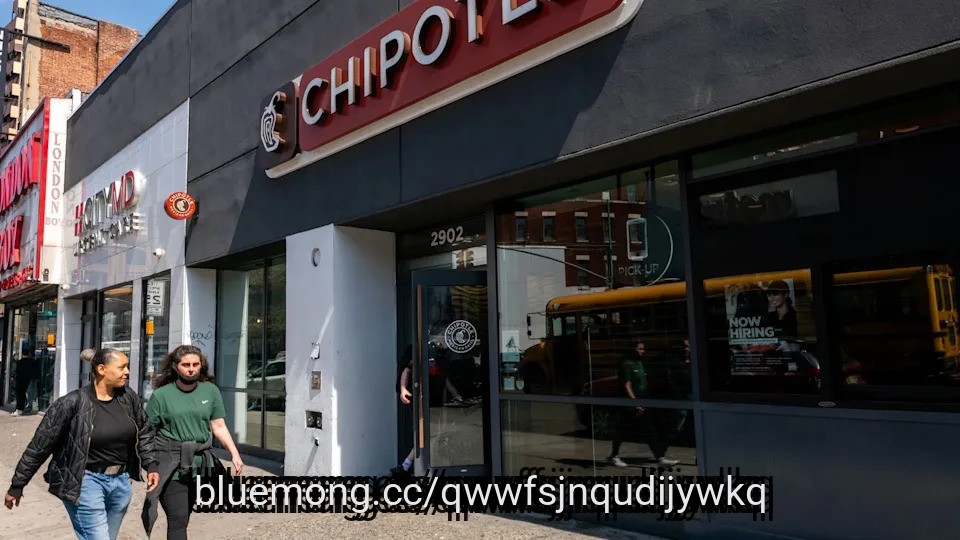
Chipotle will expand its Apprentice program by placing these employees in over 4,200 company-owned locations by the end of 2027, the chain said in a press release Tuesday.
Apprentices — high-performing employees working toward a management position — are currently in about 75% of its restaurants. Adding more apprentices will create additional opportunities for crew members to advance their careers, while the organization builds a deeper management bench.
These up-and-coming leaders are a key part of the chain's unit growth strategy, particularly as it expands towards 7,000 restaurants in the U.S. and Canada. This year, it expects to open between 350 to 370 company-owned units.
Developing its leadership pipeline is part of the chain's Recipe for Growth strategy, which also includes strengthening its core menu, improving brand messaging and menu innovations, modernizing its business model with technology and expanding its global reach.
#restaurant #dive #employees
Chipotle will expand its Apprentice program by placing these employees in over 4,200 company-owned locations by the end of 2027, the chain said in a press release Tuesday.
Apprentices — high-performing employees working toward a management position — are currently in about 75% of its restaurants. Adding more apprentices will create additional opportunities for crew members to advance their careers, while the organization builds a deeper management bench.
These up-and-coming leaders are a key part of the chain's unit growth strategy, particularly as it expands towards 7,000 restaurants in the U.S. and Canada. This year, it expects to open between 350 to 370 company-owned units.
Developing its leadership pipeline is part of the chain's Recipe for Growth strategy, which also includes strengthening its core menu, improving brand messaging and menu innovations, modernizing its business model with technology and expanding its global reach.
#restaurant #dive #employees

6 days ago
HIVE Digital Technologies (Nasdaq: HIVE), a Canada-based Bitcoin miner and data center operator, has appointed Hubert Marleau as an independent director at BUZZ HPC.
The company, which trades on the Nasdaq and Toronto Stock Exchange, said Marleau will serve on the board of its wholly owned AI cloud and high-performance computing subsidiary.
Marleau brings more than 50 years of experience in Canadian capital markets. He co-founded Palos Capital Corp. and Palos Management Inc. and has served as governor of both the Montreal and Vancouver stock exchanges, chairman of the Toronto Stock Exchange Listing Committee, and a director of the Investment Dealers ******* ociation of Canada.
Related: Dogecoin co-founder mocks Trump's $5,000 dividend plan
During his five-decade-long career, he has sat on the boards of more than 50 publicly traded companies in Canada and the United States and advised on numerous mergers, acquisitions, and financings, according to the company.
#canada #marleau #palos
The company, which trades on the Nasdaq and Toronto Stock Exchange, said Marleau will serve on the board of its wholly owned AI cloud and high-performance computing subsidiary.
Marleau brings more than 50 years of experience in Canadian capital markets. He co-founded Palos Capital Corp. and Palos Management Inc. and has served as governor of both the Montreal and Vancouver stock exchanges, chairman of the Toronto Stock Exchange Listing Committee, and a director of the Investment Dealers ******* ociation of Canada.
Related: Dogecoin co-founder mocks Trump's $5,000 dividend plan
During his five-decade-long career, he has sat on the boards of more than 50 publicly traded companies in Canada and the United States and advised on numerous mergers, acquisitions, and financings, according to the company.
#canada #marleau #palos

6 days ago
Hive Digital Technologies Chief Financial Officer Darcy Daubaras joined Steve Darling from Proactive to discuss the appointment of renowned capital markets executive Hubert Marleau as an Independent Director of HIVE's wholly owned subsidiary, BUZZ High Performance Computing (BUZZ HPC), a move designed to strengthen governance and strategic oversight as the company expands its sovereign AI infrastructure platform across Canada.
Daubaras said Marleau's appointment brings an exceptional level of experience in capital markets, corporate governance and strategic growth at a pivotal time for BUZZ HPC. As demand for artificial intelligence infrastructure continues to accelerate globally, HIVE is positioning BUZZ HPC as a key provider of sovereign AI computing solutions, and management believes Marleau's expertise will help guide the business through its next phase of expansion.
Marleau has spent more than five decades working across North American capital markets and is widely recognized as one of Canada's most experienced investment and governance professionals. His career spans investment banking, ******* et management, corporate finance and public company leadership, giving him a unique perspective on scaling businesses, raising capital and creating shareholder value.
A co-founder of Palos Capital Corp. and Palos Management Inc., Marleau has held influential leadership positions throughout Canada's financial sector. His extensive resume includes serving as a Governor of both the Montreal and Vancouver stock exchanges, Chairman of the Toronto Stock Exchange Listing Committee and a director of the Investment Dealers ******* ociation of Canada, now known as IIROC.
Over the course of his distinguished career, Marleau has served as a current or former director of more than 50 publicly traded companies in Canada and the United States. He has also played a key role in raising both public and private capital for hundreds of issuers and has advised on numerous mergers, acquisitions and financing transactions across a wide range of industries.
#canada #across
Daubaras said Marleau's appointment brings an exceptional level of experience in capital markets, corporate governance and strategic growth at a pivotal time for BUZZ HPC. As demand for artificial intelligence infrastructure continues to accelerate globally, HIVE is positioning BUZZ HPC as a key provider of sovereign AI computing solutions, and management believes Marleau's expertise will help guide the business through its next phase of expansion.
Marleau has spent more than five decades working across North American capital markets and is widely recognized as one of Canada's most experienced investment and governance professionals. His career spans investment banking, ******* et management, corporate finance and public company leadership, giving him a unique perspective on scaling businesses, raising capital and creating shareholder value.
A co-founder of Palos Capital Corp. and Palos Management Inc., Marleau has held influential leadership positions throughout Canada's financial sector. His extensive resume includes serving as a Governor of both the Montreal and Vancouver stock exchanges, Chairman of the Toronto Stock Exchange Listing Committee and a director of the Investment Dealers ******* ociation of Canada, now known as IIROC.
Over the course of his distinguished career, Marleau has served as a current or former director of more than 50 publicly traded companies in Canada and the United States. He has also played a key role in raising both public and private capital for hundreds of issuers and has advised on numerous mergers, acquisitions and financing transactions across a wide range of industries.
#canada #across


6 days ago
Jim Cramer raised concerns about The TJX Companies, Inc. (NYSE:TJX) during the September 10 episode of Mad Money, as he said:
We had our CNBC Investing Club meeting today… I review each of the Charitable Trust positions on the call. This time, it was pretty clinical until I got to TJX, the off-price retailer. Candidly, I lost it on TJX. I've owned the stock for the Trust for as long as I can remember, and I've never felt so worried about this franchise. They have a bunch of divisions, but the biggest one, Marmaxx, consisting of TJ Maxx and Marshalls, really blew it. Management told us that they had figured out what had gone wrong and they've already fixed it, but because of competitive reasons or whatever, they wouldn't tell us what went wrong and they wouldn't tell us how they fixed it. I found that infuriating…
I came close to saying, forget it, Jim, it's retail. Sometimes retail is seductive. I love my local TJ Maxx, and I think Home Goods is a fun place to shop. The company's almost always about the best in the industry, crushing Burlington and Ross Stores. But this time, shockingly, Ross Stores upside surprised. It crushed TJX, much better than expected... So why bother sticking your neck out for something in this group? Simple. Because some of the greatest stories of all time have come from retail. Costco's been an incredible long-term performer. Walmart's been terrific. And TJX, it's been a wonder, one of the best stocks ever.
Could they really suddenly have lost it? Did they go all LULU? I don't think so. What happens, though, is you have to be conscious that TJX is right now being buffeted by its group, which is trading down because of the decline in discretionary income from the tax that is higher gasoline. We can't tell how much of its underperformance comes from that alone or maybe the mistakes that management made and says they've corrected. In other words, these retail stocks are very hard to own, even as they seem so easy to grasp.
TJX Companies, Inc. (NYSE:TJX) reported second-quarter fiscal 2027 sales of $15.18 billion, up 5% year over year, while consolidated comparable sales increased 4%. Adjusted diluted EPS rose 11% to $1.22, and the company raised its full-year diluted EPS outlook to $5.31-$5.36, or $5.15-$5.20 excluding an expected $0.16 net benefit from tariff refunds. The weakness was concentrated in Marmaxx, which includes TJ Maxx, Marshalls and Sierra. Comparable sales increased just 1%, down from 6% in the first quarter, while HomeGoods, TJX Canada and TJX International each posted comparable-sales growth of 6% or more.
#year
We had our CNBC Investing Club meeting today… I review each of the Charitable Trust positions on the call. This time, it was pretty clinical until I got to TJX, the off-price retailer. Candidly, I lost it on TJX. I've owned the stock for the Trust for as long as I can remember, and I've never felt so worried about this franchise. They have a bunch of divisions, but the biggest one, Marmaxx, consisting of TJ Maxx and Marshalls, really blew it. Management told us that they had figured out what had gone wrong and they've already fixed it, but because of competitive reasons or whatever, they wouldn't tell us what went wrong and they wouldn't tell us how they fixed it. I found that infuriating…
I came close to saying, forget it, Jim, it's retail. Sometimes retail is seductive. I love my local TJ Maxx, and I think Home Goods is a fun place to shop. The company's almost always about the best in the industry, crushing Burlington and Ross Stores. But this time, shockingly, Ross Stores upside surprised. It crushed TJX, much better than expected... So why bother sticking your neck out for something in this group? Simple. Because some of the greatest stories of all time have come from retail. Costco's been an incredible long-term performer. Walmart's been terrific. And TJX, it's been a wonder, one of the best stocks ever.
Could they really suddenly have lost it? Did they go all LULU? I don't think so. What happens, though, is you have to be conscious that TJX is right now being buffeted by its group, which is trading down because of the decline in discretionary income from the tax that is higher gasoline. We can't tell how much of its underperformance comes from that alone or maybe the mistakes that management made and says they've corrected. In other words, these retail stocks are very hard to own, even as they seem so easy to grasp.
TJX Companies, Inc. (NYSE:TJX) reported second-quarter fiscal 2027 sales of $15.18 billion, up 5% year over year, while consolidated comparable sales increased 4%. Adjusted diluted EPS rose 11% to $1.22, and the company raised its full-year diluted EPS outlook to $5.31-$5.36, or $5.15-$5.20 excluding an expected $0.16 net benefit from tariff refunds. The weakness was concentrated in Marmaxx, which includes TJ Maxx, Marshalls and Sierra. Comparable sales increased just 1%, down from 6% in the first quarter, while HomeGoods, TJX Canada and TJX International each posted comparable-sales growth of 6% or more.
#year


6 days ago
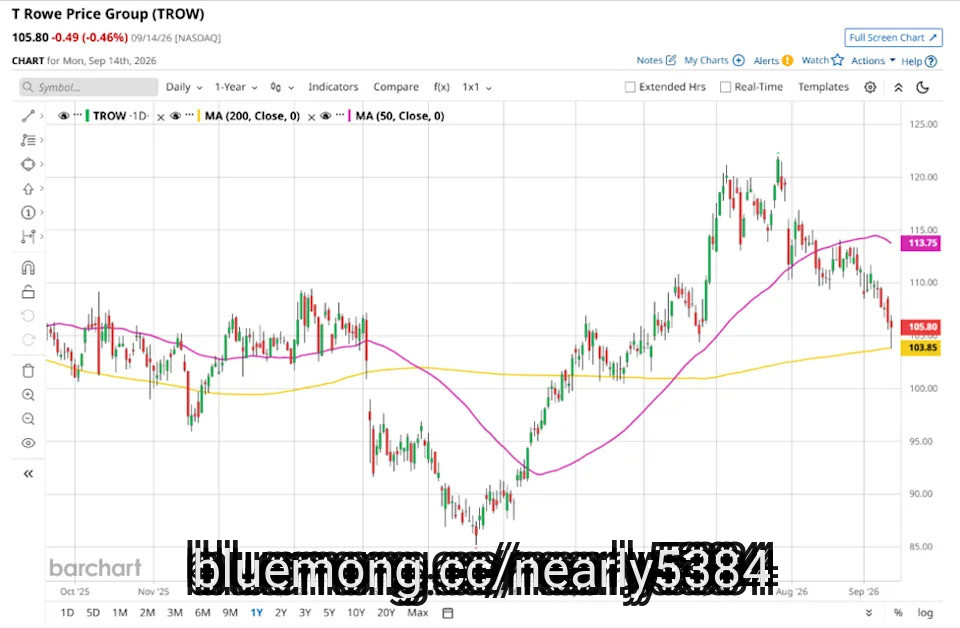
Baltimore, Maryland-based T. Rowe Price Group, Inc. (TROW) is a publicly owned investment manager that provides its services to individuals, institutional investors, retirement plans, financial intermediaries, and institutions. Valued at $22.7 billion by market cap, the company provides investment advisory services and manages a broad range of U.S. and international stock, blended ***** et, bond, and money market mutual funds and other investment portfolios.
Companies worth $10 billion or more are generally described as "large-cap stocks," and TROW perfectly fits that description, with its market cap exceeding this mark, underscoring its size, influence, and dominance within the ***** et management industry. TROW derives its core competitive strengths from its robust brand equity, extensive proprietary research capabilities, and industry-leading position in target-date retirement products.
Goldman Sachs Expects Fed Chair Kevin Warsh to Raise Rates This Week — But Not Because of Oil Prices.
Morgan Stanley Doubles Down on Apple Stock as New Offerings Become 'More Exciting'
The EV Bubble Has Burst. How to Play Rivian Stock Now.
#trow #market #Retirement
Companies worth $10 billion or more are generally described as "large-cap stocks," and TROW perfectly fits that description, with its market cap exceeding this mark, underscoring its size, influence, and dominance within the ***** et management industry. TROW derives its core competitive strengths from its robust brand equity, extensive proprietary research capabilities, and industry-leading position in target-date retirement products.
Goldman Sachs Expects Fed Chair Kevin Warsh to Raise Rates This Week — But Not Because of Oil Prices.
Morgan Stanley Doubles Down on Apple Stock as New Offerings Become 'More Exciting'
The EV Bubble Has Burst. How to Play Rivian Stock Now.
#trow #market #Retirement

6 days ago
Jim Cramer raised concerns about The TJX Companies, Inc. (NYSE:TJX) during the September 10 episode of Mad Money, as he said:
We had our CNBC Investing Club meeting today… I review each of the Charitable Trust positions on the call. This time, it was pretty clinical until I got to TJX, the off-price retailer. Candidly, I lost it on TJX. I've owned the stock for the Trust for as long as I can remember, and I've never felt so worried about this franchise. They have a bunch of divisions, but the biggest one, Marmaxx, consisting of TJ Maxx and Marshalls, really blew it. Management told us that they had figured out what had gone wrong and they've already fixed it, but because of competitive reasons or whatever, they wouldn't tell us what went wrong and they wouldn't tell us how they fixed it. I found that infuriating…
I came close to saying, forget it, Jim, it's retail. Sometimes retail is seductive. I love my local TJ Maxx, and I think Home Goods is a fun place to shop. The company's almost always about the best in the industry, crushing Burlington and Ross Stores. But this time, shockingly, Ross Stores upside surprised. It crushed TJX, much better than expected... So why bother sticking your neck out for something in this group? Simple. Because some of the greatest stories of all time have come from retail. Costco's been an incredible long-term performer. Walmart's been terrific. And TJX, it's been a wonder, one of the best stocks ever.
Could they really suddenly have lost it? Did they go all LULU? I don't think so. What happens, though, is you have to be conscious that TJX is right now being buffeted by its group, which is trading down because of the decline in discretionary income from the tax that is higher gasoline. We can't tell how much of its underperformance comes from that alone or maybe the mistakes that management made and says they've corrected. In other words, these retail stocks are very hard to own, even as they seem so easy to grasp.
TJX Companies, Inc. (NYSE:TJX) reported second-quarter fiscal 2027 sales of $15.18 billion, up 5% year over year, while consolidated comparable sales increased 4%. Adjusted diluted EPS rose 11% to $1.22, and the company raised its full-year diluted EPS outlook to $5.31-$5.36, or $5.15-$5.20 excluding an expected $0.16 net benefit from tariff refunds. The weakness was concentrated in Marmaxx, which includes TJ Maxx, Marshalls and Sierra. Comparable sales increased just 1%, down from 6% in the first quarter, while HomeGoods, TJX Canada and TJX International each posted comparable-sales growth of 6% or more.
#sales #time #NYSE
We had our CNBC Investing Club meeting today… I review each of the Charitable Trust positions on the call. This time, it was pretty clinical until I got to TJX, the off-price retailer. Candidly, I lost it on TJX. I've owned the stock for the Trust for as long as I can remember, and I've never felt so worried about this franchise. They have a bunch of divisions, but the biggest one, Marmaxx, consisting of TJ Maxx and Marshalls, really blew it. Management told us that they had figured out what had gone wrong and they've already fixed it, but because of competitive reasons or whatever, they wouldn't tell us what went wrong and they wouldn't tell us how they fixed it. I found that infuriating…
I came close to saying, forget it, Jim, it's retail. Sometimes retail is seductive. I love my local TJ Maxx, and I think Home Goods is a fun place to shop. The company's almost always about the best in the industry, crushing Burlington and Ross Stores. But this time, shockingly, Ross Stores upside surprised. It crushed TJX, much better than expected... So why bother sticking your neck out for something in this group? Simple. Because some of the greatest stories of all time have come from retail. Costco's been an incredible long-term performer. Walmart's been terrific. And TJX, it's been a wonder, one of the best stocks ever.
Could they really suddenly have lost it? Did they go all LULU? I don't think so. What happens, though, is you have to be conscious that TJX is right now being buffeted by its group, which is trading down because of the decline in discretionary income from the tax that is higher gasoline. We can't tell how much of its underperformance comes from that alone or maybe the mistakes that management made and says they've corrected. In other words, these retail stocks are very hard to own, even as they seem so easy to grasp.
TJX Companies, Inc. (NYSE:TJX) reported second-quarter fiscal 2027 sales of $15.18 billion, up 5% year over year, while consolidated comparable sales increased 4%. Adjusted diluted EPS rose 11% to $1.22, and the company raised its full-year diluted EPS outlook to $5.31-$5.36, or $5.15-$5.20 excluding an expected $0.16 net benefit from tariff refunds. The weakness was concentrated in Marmaxx, which includes TJ Maxx, Marshalls and Sierra. Comparable sales increased just 1%, down from 6% in the first quarter, while HomeGoods, TJX Canada and TJX International each posted comparable-sales growth of 6% or more.
#sales #time #NYSE

7 days ago
By David Shepardson
WASHINGTON, Sept 16 (Reuters) - The U.S. Senate Commerce Committee approved legislation on Wednesday to bar government officials from pressuring private companies to censor speech, citing threats from the Trump administration against late-night talk shows as evidence of efforts to stifle free expression.
The measure would allow citizens to sue federal employees who pressure private companies into suppressing speech protected by the First Amendment to the U.S. Constitution, which guarantees free expression. Both Republicans and Democrats on the committee said the bill was needed to curb government overreach.
The committee approved the bill 18-10. It must still pass the full Senate, where it is unclear when it may be taken up, and the U.S. House of Representatives to become law.
Senator Maria Cantwell, the top Democrat on the panel, said the bill, if it had been in effect, would have allowed Disney-owned ABC's late-night show host Jimmy Kimmel to file suit after Federal Communications Commission chair Brendan Carr last year pressured station owners to stop airing Kimmel's show following remarks about the ****** assination of conservative activist Charlie Kirk.
#approved #government #private
WASHINGTON, Sept 16 (Reuters) - The U.S. Senate Commerce Committee approved legislation on Wednesday to bar government officials from pressuring private companies to censor speech, citing threats from the Trump administration against late-night talk shows as evidence of efforts to stifle free expression.
The measure would allow citizens to sue federal employees who pressure private companies into suppressing speech protected by the First Amendment to the U.S. Constitution, which guarantees free expression. Both Republicans and Democrats on the committee said the bill was needed to curb government overreach.
The committee approved the bill 18-10. It must still pass the full Senate, where it is unclear when it may be taken up, and the U.S. House of Representatives to become law.
Senator Maria Cantwell, the top Democrat on the panel, said the bill, if it had been in effect, would have allowed Disney-owned ABC's late-night show host Jimmy Kimmel to file suit after Federal Communications Commission chair Brendan Carr last year pressured station owners to stop airing Kimmel's show following remarks about the ****** assination of conservative activist Charlie Kirk.
#approved #government #private
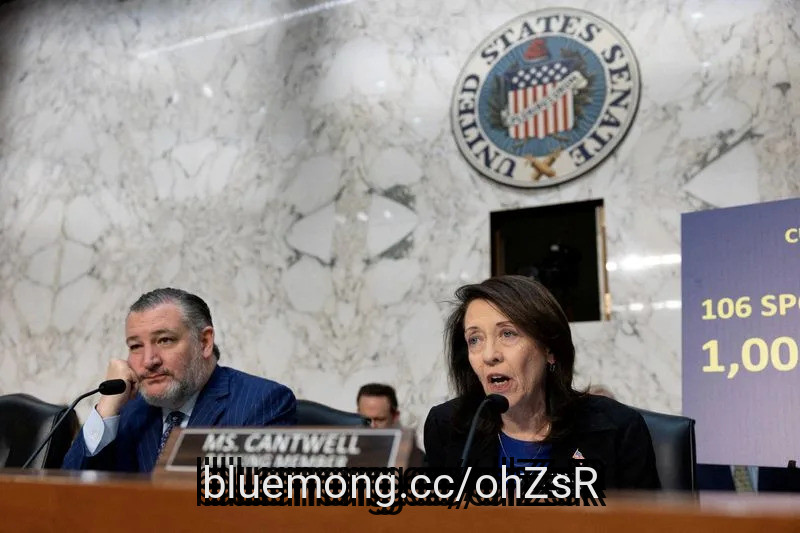
7 days ago
After holding Microsoft (NASDAQ: MSFT) for more than 10 years, I wouldn't sell a single share, not even today. The company I bought back in 2016 has changed dramatically, but mostly in ways that strengthen the original reason I owned it. Microsoft has shifted from a PC-centric software business to one built on cloud, subscriptions, enterprise software, and artificial intelligence.
So the question now is whether those changes can support another decade of compounding, and whether the stock is still a buy at today's valuation.
Missed Nvidia in 2009? This Rare Signal Is Flashing Again. In 2009, a "Double Down" signal flashed for a little-known chipmaker called Nvidia. For the first time in years, that same "Total Conviction" signal is flashing for a company 1/100th the size of Nvidia. Continue »
When I first bought Microsoft, the business was much smaller. In fiscal 2016, it generated $85.3 billion in revenue and $20.2 billion in operating income. By fiscal 2026, revenue had reached $331.8 billion and operating income $155.2 billion. Azure alone passed $100 billion in annual revenue.
The bigger change is where that growth came from. Microsoft expanded Microsoft 365, Azure, LinkedIn, Dynamics, GitHub, security, and other cloud products across largely the same enterprise customer base.
#Microsoft #revenue #company
So the question now is whether those changes can support another decade of compounding, and whether the stock is still a buy at today's valuation.
Missed Nvidia in 2009? This Rare Signal Is Flashing Again. In 2009, a "Double Down" signal flashed for a little-known chipmaker called Nvidia. For the first time in years, that same "Total Conviction" signal is flashing for a company 1/100th the size of Nvidia. Continue »
When I first bought Microsoft, the business was much smaller. In fiscal 2016, it generated $85.3 billion in revenue and $20.2 billion in operating income. By fiscal 2026, revenue had reached $331.8 billion and operating income $155.2 billion. Azure alone passed $100 billion in annual revenue.
The bigger change is where that growth came from. Microsoft expanded Microsoft 365, Azure, LinkedIn, Dynamics, GitHub, security, and other cloud products across largely the same enterprise customer base.
#Microsoft #revenue #company


7 days ago
NFP, the Aon-owned property and casualty (P&C) broker and benefits consultant, has acquired Moores Insurance Management, a multi-disciplinary risk management company based in Minnesota, US.
Established in 1987, Moores works with high-net-worth (HNW) individuals and businesses in 43 states, offering P&C insurance services to both commercial and personal-risk clients.
Under the agreement, Moores CEO Mark Moores will take on the role of senior vice-president, commercial P&C at NFP, reporting to Amanda Ruback, the company's managing director of P&C for the central region.
NFP personal risk president Brett Woodward said: "Moores is a long-standing risk management firm and this addition further establishes our presence in the Minnesota market and positions us well to continue delivering P&C insurance solutions for high-net-worth and commercial clients."
Jack Moores, who serves as president of Moores, will join NFP as senior vice-president of personal lines.
#moores
Established in 1987, Moores works with high-net-worth (HNW) individuals and businesses in 43 states, offering P&C insurance services to both commercial and personal-risk clients.
Under the agreement, Moores CEO Mark Moores will take on the role of senior vice-president, commercial P&C at NFP, reporting to Amanda Ruback, the company's managing director of P&C for the central region.
NFP personal risk president Brett Woodward said: "Moores is a long-standing risk management firm and this addition further establishes our presence in the Minnesota market and positions us well to continue delivering P&C insurance solutions for high-net-worth and commercial clients."
Jack Moores, who serves as president of Moores, will join NFP as senior vice-president of personal lines.
#moores

8 days ago
Coming into Monday night, the Yankees were one win away from officially clinching a playoff berth. While that's obviously not the end goal of their season, getting into the postseason is the first step. They're now there.
Officially, the clinching came prior to the Yankees' game ending, as the Blue Jays losing to the Tigers was also enough to get the job done. However on the field, the Yankees got the job done too, eventually.
On the mound, Will Warren was pretty good but deserved better. He ended up going 5.2 innings, allowing two runs — both of which ended up unearned — on five hits and two walks. Thanks to some iffy defense and the offense struggling, he left the game in line for the loss, before the offense responded just in time. Thanks to a six-run eighth inning that included Aaron Judge's first home run since returning from the injured list, the Yankees flipped the game back in their favor. They didn't need the win to pop the champagne, but it still feels better to get in with it, as they downed the Twins 8-3.
After both teams failed to capitalize on some early runners, the Yankees broke the deadlock in the third. With two outs, José Caballero just cleared the left wall at Target Field for a solo home run, putting the Yankees up early.
On the mound, Warren was mostly very solid. He ended up giving up the lead in the sixth, albeit with some defensive miscues that weren't entirely on him. After Warren got the first out of the inning, Ryan McMahon let a Kody Clemens grounder through his legs for an error. Warren then got the second out, brining Josh Bell to the plate. Bell hit a liner to a leaping George Lombard Jr., who got a glove on the ball, but couldn't complete the catch. The ball got past him into center field, moving Clemens to third. That one was ruled a single as opposed to an error, as it would've been a very nice play had Lombard completed it.
#field #first #game
Officially, the clinching came prior to the Yankees' game ending, as the Blue Jays losing to the Tigers was also enough to get the job done. However on the field, the Yankees got the job done too, eventually.
On the mound, Will Warren was pretty good but deserved better. He ended up going 5.2 innings, allowing two runs — both of which ended up unearned — on five hits and two walks. Thanks to some iffy defense and the offense struggling, he left the game in line for the loss, before the offense responded just in time. Thanks to a six-run eighth inning that included Aaron Judge's first home run since returning from the injured list, the Yankees flipped the game back in their favor. They didn't need the win to pop the champagne, but it still feels better to get in with it, as they downed the Twins 8-3.
After both teams failed to capitalize on some early runners, the Yankees broke the deadlock in the third. With two outs, José Caballero just cleared the left wall at Target Field for a solo home run, putting the Yankees up early.
On the mound, Warren was mostly very solid. He ended up giving up the lead in the sixth, albeit with some defensive miscues that weren't entirely on him. After Warren got the first out of the inning, Ryan McMahon let a Kody Clemens grounder through his legs for an error. Warren then got the second out, brining Josh Bell to the plate. Bell hit a liner to a leaping George Lombard Jr., who got a glove on the ball, but couldn't complete the catch. The ball got past him into center field, moving Clemens to third. That one was ruled a single as opposed to an error, as it would've been a very nice play had Lombard completed it.
#field #first #game