
11 days ago
Merck (MRK) stock returned about 87% over the past twelve months, climbing from roughly $79 to about $147. Nothing in the year's results looks like that. The medicines Merck sells today grew at their usual pace. Investors spent the year repricing what comes next.
Revenue over the trailing twelve months was $66.6 billion, up 4.6% and in line with its own three-year pace. Profitability did not follow. Its operating margin over the same twelve months was 10.5%, versus a three-year average of 22.4%.
Most of that gap is one purchase. Merck took a $5.7 billion charge in the second quarter of 2026, about 9% of a year's sales. It bought Terns Pharmaceuticals, and with it MK-4208, a candidate for chronic myeloid leukemia. The bill hits earnings now and the medicine arrives later.
The proof matters because of the risk hanging over this stock. The KEYTRUDA family was just over half of Merck's revenue in the second quarter of 2026. The company is openly planning for the end of that exclusivity when Keytruda loses primary U.S. patent protection in 2028. Management describes the stretch as more of a hill than a cliff, with a shallow dip and a fast return to growth.
Johnson & Johnson (JNJ) returned 56% over the same twelve months and Pfizer (PFE) 23%, so a good year for pharmaceuticals explains some of this but not Merck's lead. What separated Merck was evidence. The FDA approved LIPFENDRA, the first and only oral PCSK9 inhibitor. In the CORALreef Lipids trial it lowered LDL cholesterol by up to 60% when added to a statin.
#year #johnson
Revenue over the trailing twelve months was $66.6 billion, up 4.6% and in line with its own three-year pace. Profitability did not follow. Its operating margin over the same twelve months was 10.5%, versus a three-year average of 22.4%.
Most of that gap is one purchase. Merck took a $5.7 billion charge in the second quarter of 2026, about 9% of a year's sales. It bought Terns Pharmaceuticals, and with it MK-4208, a candidate for chronic myeloid leukemia. The bill hits earnings now and the medicine arrives later.
The proof matters because of the risk hanging over this stock. The KEYTRUDA family was just over half of Merck's revenue in the second quarter of 2026. The company is openly planning for the end of that exclusivity when Keytruda loses primary U.S. patent protection in 2028. Management describes the stretch as more of a hill than a cliff, with a shallow dip and a fast return to growth.
Johnson & Johnson (JNJ) returned 56% over the same twelve months and Pfizer (PFE) 23%, so a good year for pharmaceuticals explains some of this but not Merck's lead. What separated Merck was evidence. The FDA approved LIPFENDRA, the first and only oral PCSK9 inhibitor. In the CORALreef Lipids trial it lowered LDL cholesterol by up to 60% when added to a statin.
#year #johnson


12 days ago
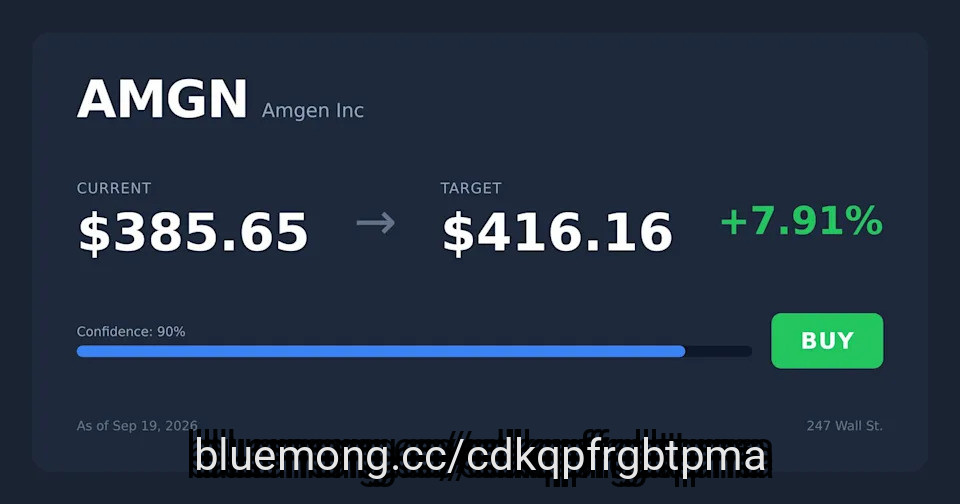
Amgen (AMGN) yields 2.6% with a $10.08 annualized payout, topping Merck (MRK) at 2.29%, and has raised its dividend 6% annually versus Merck's smaller step-ups.
Amgen's 17 billion-dollar products and $3.5B quarterly free cash flow dwarf Merck's reliance on a single Keytruda franchise facing peak penetration.
Merck absorbed a $5.7B acquisition charge that pushed Q2 earnings to a loss, while Amgen raised 2026 EPS guidance to as high as $23.50.
Just released. Our ***** ysts combed the entire stock market and named the ten best stocks to buy right now, and Merck didn't make the cut. Enter your email to see the names that beat MRK. The report is free. Enter your email and see if any of your stocks made the cut.
For a retirement portfolio that leans on pharma dividends, the choice between Amgen (NASDAQ:AMGN) and Merck (NYSE:MRK) comes down to one question: which check is more likely to keep getting bigger through the next wave of patent expirations? Both companies deliver quarterly income today. Only one has the coverage, the growth cadence, and the portfolio breadth to keep raising through the cliff.
#merck #amgen
Amgen's 17 billion-dollar products and $3.5B quarterly free cash flow dwarf Merck's reliance on a single Keytruda franchise facing peak penetration.
Merck absorbed a $5.7B acquisition charge that pushed Q2 earnings to a loss, while Amgen raised 2026 EPS guidance to as high as $23.50.
Just released. Our ***** ysts combed the entire stock market and named the ten best stocks to buy right now, and Merck didn't make the cut. Enter your email to see the names that beat MRK. The report is free. Enter your email and see if any of your stocks made the cut.
For a retirement portfolio that leans on pharma dividends, the choice between Amgen (NASDAQ:AMGN) and Merck (NYSE:MRK) comes down to one question: which check is more likely to keep getting bigger through the next wave of patent expirations? Both companies deliver quarterly income today. Only one has the coverage, the growth cadence, and the portfolio breadth to keep raising through the cliff.
#merck #amgen



13 days ago
Merck (MRK) was at the center of a major cancer-treatment update in August. Specifically, the drugmaker and Moderna (MRNA) said their personalized mRNA cancer therapy, intismeran autogene, delivered positive results in a Phase 3 study involving 1,137 patients with high-risk melanoma.
Used with Keytruda, the treatment reduced the risk of cancer returning or causing death and improved distant metastasis-free survival compared with Keytruda alone. Merck shares jumped 11% on the news. That was a big move for the stock, which had posted only five single-day gains of more than 5% over the past year.
This High-Yield Construction Stock Just Raised Its Dividend by 40%
Dear Intuit Stock Fans, Mark Your Calendars for September 17
This Dividend Stock Is Staging a Turnaround in 2026 and Pays More Than 2.4%
#Dividend #high #treatment #risk
Used with Keytruda, the treatment reduced the risk of cancer returning or causing death and improved distant metastasis-free survival compared with Keytruda alone. Merck shares jumped 11% on the news. That was a big move for the stock, which had posted only five single-day gains of more than 5% over the past year.
This High-Yield Construction Stock Just Raised Its Dividend by 40%
Dear Intuit Stock Fans, Mark Your Calendars for September 17
This Dividend Stock Is Staging a Turnaround in 2026 and Pays More Than 2.4%
#Dividend #high #treatment #risk



23 days ago
On August 5, Vaxcyte (NASDAQ:PCVX) reported second-quarter results that read less like a snapshot of today and more like a countdown to a verdict. The clinical-stage vaccine maker has no product on the market yet, but its three late-stage trials for its lead pneumococcal candidate are now fully enrolled, with the first major readout due before year-end. Add a net loss that nearly doubled and a boardroom that just brought in two vaccine-industry veterans, and you have a company betting its near-term story on data still to come.
Vaxcyte's three Phase 3 studies of VAX-31, its next-generation pneumococcal conjugate vaccine, have dosed 6,191 adults combined, with roughly 3,500 of them receiving the actual candidate. The largest, OPUS-1, put 4,049 participants through head-to-head comparisons against Prevnar 20 and Capvaxive, the two shots VAX-31 needs to beat to earn a spot in the standard vaccination schedule. Data on safety, tolerability, and immune response from that trial are due in the fourth quarter of 2026, with results from OPUS-2 and OPUS-3 following in the first half of 2027.
A separate Phase 2 study testing VAX-31 in infants, covering both the primary immunization series and a booster dose, is on a similar timeline. In June, Vaxcyte also dosed the first participants in a Phase 1 study of VAX-A1, aimed at preventing disease from Group A Streptococcus, with topline data expected in the second half of 2027. As of June 30, cash and investments stood at $2.5 billion, up from $2.44 billion at the end of 2025, and the board added Dr. Moncef Slaoui, previously chief scientific advisor to Operation Warp Speed and a three-decade GSK veteran, alongside Dr. John Markels, the former president of Merck's global vaccines business.
None of that pipeline progress comes cheap. Vaxcyte's net loss for the quarter ended June 30 was $284.3 million, up from $166.6 million in the same period a year earlier, and the increase shows up on both sides of the ledger. R&D spending rose to $267.9 million from $194.2 million, driven by manufacturing work to prepare for a possible launch and by the cost of running three simultaneous Phase 3 trials at once. G&A expenses climbed too, to $34.9 million from $32 million, largely from adding headcount.
Because Vaxcyte has no approved product generating sales, every one of those dollars comes straight off the balance sheet. The calendar adds pressure of its own: even a clean OPUS-1 readout in the fourth quarter of 2026 still leaves the OPUS-2 and OPUS-3 results, plus a required manufacturing consistency study, sitting in the first half of 2027, pushing any license application and launch well beyond that. The newer VAX-A1 program is earlier still, with its second stage contingent on a safety board signing off on the first.
#phase
Vaxcyte's three Phase 3 studies of VAX-31, its next-generation pneumococcal conjugate vaccine, have dosed 6,191 adults combined, with roughly 3,500 of them receiving the actual candidate. The largest, OPUS-1, put 4,049 participants through head-to-head comparisons against Prevnar 20 and Capvaxive, the two shots VAX-31 needs to beat to earn a spot in the standard vaccination schedule. Data on safety, tolerability, and immune response from that trial are due in the fourth quarter of 2026, with results from OPUS-2 and OPUS-3 following in the first half of 2027.
A separate Phase 2 study testing VAX-31 in infants, covering both the primary immunization series and a booster dose, is on a similar timeline. In June, Vaxcyte also dosed the first participants in a Phase 1 study of VAX-A1, aimed at preventing disease from Group A Streptococcus, with topline data expected in the second half of 2027. As of June 30, cash and investments stood at $2.5 billion, up from $2.44 billion at the end of 2025, and the board added Dr. Moncef Slaoui, previously chief scientific advisor to Operation Warp Speed and a three-decade GSK veteran, alongside Dr. John Markels, the former president of Merck's global vaccines business.
None of that pipeline progress comes cheap. Vaxcyte's net loss for the quarter ended June 30 was $284.3 million, up from $166.6 million in the same period a year earlier, and the increase shows up on both sides of the ledger. R&D spending rose to $267.9 million from $194.2 million, driven by manufacturing work to prepare for a possible launch and by the cost of running three simultaneous Phase 3 trials at once. G&A expenses climbed too, to $34.9 million from $32 million, largely from adding headcount.
Because Vaxcyte has no approved product generating sales, every one of those dollars comes straight off the balance sheet. The calendar adds pressure of its own: even a clean OPUS-1 readout in the fourth quarter of 2026 still leaves the OPUS-2 and OPUS-3 results, plus a required manufacturing consistency study, sitting in the first half of 2027, pushing any license application and launch well beyond that. The newer VAX-A1 program is earlier still, with its second stage contingent on a safety board signing off on the first.
#phase


25 days ago
On August 5, Vaxcyte (NASDAQ:PCVX) reported second-quarter results that read less like a snapshot of today and more like a countdown to a verdict. The clinical-stage vaccine maker has no product on the market yet, but its three late-stage trials for its lead pneumococcal candidate are now fully enrolled, with the first major readout due before year-end. Add a net loss that nearly doubled and a boardroom that just brought in two vaccine-industry veterans, and you have a company betting its near-term story on data still to come.
Vaxcyte's three Phase 3 studies of VAX-31, its next-generation pneumococcal conjugate vaccine, have dosed 6,191 adults combined, with roughly 3,500 of them receiving the actual candidate. The largest, OPUS-1, put 4,049 participants through head-to-head comparisons against Prevnar 20 and Capvaxive, the two shots VAX-31 needs to beat to earn a spot in the standard vaccination schedule. Data on safety, tolerability, and immune response from that trial are due in the fourth quarter of 2026, with results from OPUS-2 and OPUS-3 following in the first half of 2027.
A separate Phase 2 study testing VAX-31 in infants, covering both the primary immunization series and a booster dose, is on a similar timeline. In June, Vaxcyte also dosed the first participants in a Phase 1 study of VAX-A1, aimed at preventing disease from Group A Streptococcus, with topline data expected in the second half of 2027. As of June 30, cash and investments stood at $2.5 billion, up from $2.44 billion at the end of 2025, and the board added Dr. Moncef Slaoui, previously chief scientific advisor to Operation Warp Speed and a three-decade GSK veteran, alongside Dr. John Markels, the former president of Merck's global vaccines business.
None of that pipeline progress comes cheap. Vaxcyte's net loss for the quarter ended June 30 was $284.3 million, up from $166.6 million in the same period a year earlier, and the increase shows up on both sides of the ledger. R&D spending rose to $267.9 million from $194.2 million, driven by manufacturing work to prepare for a possible launch and by the cost of running three simultaneous Phase 3 trials at once. G&A expenses climbed too, to $34.9 million from $32 million, largely from adding headcount.
Because Vaxcyte has no approved product generating sales, every one of those dollars comes straight off the balance sheet. The calendar adds pressure of its own: even a clean OPUS-1 readout in the fourth quarter of 2026 still leaves the OPUS-2 and OPUS-3 results, plus a required manufacturing consistency study, sitting in the first half of 2027, pushing any license application and launch well beyond that. The newer VAX-A1 program is earlier still, with its second stage contingent on a safety board signing off on the first.
#opus #data
Vaxcyte's three Phase 3 studies of VAX-31, its next-generation pneumococcal conjugate vaccine, have dosed 6,191 adults combined, with roughly 3,500 of them receiving the actual candidate. The largest, OPUS-1, put 4,049 participants through head-to-head comparisons against Prevnar 20 and Capvaxive, the two shots VAX-31 needs to beat to earn a spot in the standard vaccination schedule. Data on safety, tolerability, and immune response from that trial are due in the fourth quarter of 2026, with results from OPUS-2 and OPUS-3 following in the first half of 2027.
A separate Phase 2 study testing VAX-31 in infants, covering both the primary immunization series and a booster dose, is on a similar timeline. In June, Vaxcyte also dosed the first participants in a Phase 1 study of VAX-A1, aimed at preventing disease from Group A Streptococcus, with topline data expected in the second half of 2027. As of June 30, cash and investments stood at $2.5 billion, up from $2.44 billion at the end of 2025, and the board added Dr. Moncef Slaoui, previously chief scientific advisor to Operation Warp Speed and a three-decade GSK veteran, alongside Dr. John Markels, the former president of Merck's global vaccines business.
None of that pipeline progress comes cheap. Vaxcyte's net loss for the quarter ended June 30 was $284.3 million, up from $166.6 million in the same period a year earlier, and the increase shows up on both sides of the ledger. R&D spending rose to $267.9 million from $194.2 million, driven by manufacturing work to prepare for a possible launch and by the cost of running three simultaneous Phase 3 trials at once. G&A expenses climbed too, to $34.9 million from $32 million, largely from adding headcount.
Because Vaxcyte has no approved product generating sales, every one of those dollars comes straight off the balance sheet. The calendar adds pressure of its own: even a clean OPUS-1 readout in the fourth quarter of 2026 still leaves the OPUS-2 and OPUS-3 results, plus a required manufacturing consistency study, sitting in the first half of 2027, pushing any license application and launch well beyond that. The newer VAX-A1 program is earlier still, with its second stage contingent on a safety board signing off on the first.
#opus #data


26 days ago
On August 6, Ligand Pharmaceuticals (NASDAQ:LGND) reported second-quarter 2026 results showing royalty revenue up 32% year over year, just weeks after the company closed its acquisition of XOMA Royalty. Total revenue reached $63.7 million for the quarter, up from $47.6 million a year earlier, and Ligand raised the low end of its full-year adjusted earnings guidance. The headline growth numbers are easy to like. What is harder to ignore is that Ligand just more than doubled its royalty portfolio and added $700 million in convertible debt in the same stretch.
Royalty revenue is where Ligand's growth is actually coming from, and it has been strong on its own merits. Royalties totaled $48.0 million in the second quarter, up from $36.4 million a year earlier, with Travere Therapeutics' Filspari, Pelthos Therapeutics' Zelsuvmi, and Merck's Ohtuvayre leading the increase. That growth compounded further in the first half, when royalties reached $91.0 million, up 42% from $63.9 million a year ago. The Filspari story helps explain why: the FDA approved the drug in April to treat FSGS, a second rare kidney disease beyond its original approval, and Travere reported $141 million in US net sales in early August, up 96% year over year.
Then there is the XOMA deal. On July 14, Ligand closed its acquisition of XOMA Royalty, adding more than 120 commercial, clinical, and preclinical **** ets, including Roche's Vabysmo, Servier's Ojemda, and Zevra Therapeutics' Miplyffa. That pushed Ligand's total portfolio past 200 royalty **** ets, more than double what it held before. Management expects the deal to add roughly $0.50 per share to 2026 adjusted earnings and $1.50 per share in 2027, and it came with about $700 million in deployable capital left over to keep buying royalty streams at a stated pace of $150 million to $250 million a year.
That growth is not coming cheap. G&A expense jumped to $29.1 million in the second quarter from $20.2 million a year earlier, driven by transaction costs tied to the XOMA deal along with higher headcount and stock compensation. R&D expense nearly tripled to $14.7 million, largely because of a $12.3 million funding arrangement with Orchestra BioMed. A large share of the quarter's reported profit also did not come from the royalty business at all: net non-operating income of $55.7 million included a $35.7 million non-cash gain tied to swings in the value of Ligand's Pelthos Therapeutics stock holdings, a figure that can move the other way just as easily.
#reported
Royalty revenue is where Ligand's growth is actually coming from, and it has been strong on its own merits. Royalties totaled $48.0 million in the second quarter, up from $36.4 million a year earlier, with Travere Therapeutics' Filspari, Pelthos Therapeutics' Zelsuvmi, and Merck's Ohtuvayre leading the increase. That growth compounded further in the first half, when royalties reached $91.0 million, up 42% from $63.9 million a year ago. The Filspari story helps explain why: the FDA approved the drug in April to treat FSGS, a second rare kidney disease beyond its original approval, and Travere reported $141 million in US net sales in early August, up 96% year over year.
Then there is the XOMA deal. On July 14, Ligand closed its acquisition of XOMA Royalty, adding more than 120 commercial, clinical, and preclinical **** ets, including Roche's Vabysmo, Servier's Ojemda, and Zevra Therapeutics' Miplyffa. That pushed Ligand's total portfolio past 200 royalty **** ets, more than double what it held before. Management expects the deal to add roughly $0.50 per share to 2026 adjusted earnings and $1.50 per share in 2027, and it came with about $700 million in deployable capital left over to keep buying royalty streams at a stated pace of $150 million to $250 million a year.
That growth is not coming cheap. G&A expense jumped to $29.1 million in the second quarter from $20.2 million a year earlier, driven by transaction costs tied to the XOMA deal along with higher headcount and stock compensation. R&D expense nearly tripled to $14.7 million, largely because of a $12.3 million funding arrangement with Orchestra BioMed. A large share of the quarter's reported profit also did not come from the royalty business at all: net non-operating income of $55.7 million included a $35.7 million non-cash gain tied to swings in the value of Ligand's Pelthos Therapeutics stock holdings, a figure that can move the other way just as easily.
#reported

27 days ago
During the August 31 episode of Mad Money, Jim Cramer addressed shifting market dynamics, highlighting how the fallout from heavily crowded hedge fund positions was finally unwinding. Turning his attention to a heavily shorted stock on Wall Street, Cramer pointed to Moderna, Inc. (NASDAQ:MRNA) and explained why skeptics were forced to rethink their thesis. He stated:
Now, I don't want to say that Situational Awareness, again that's the hedge fund, has disappeared. The fund still has some ******* ets. Still, the fallout from its collapse does finally seem to be unwinding. Still, when you look at the 10 best and worst performers for the month, they're stark in their themes that include the unwind of the Situational positions. Let's go over the winners first. First, let's start with a heavily shorted stock known as Moderna. Yes, there was a huge bet being made against these guys. Skeptics believed that its technology would never produce the breakthroughs that the bulls expected and were initially promised when the company came public. But this month, that's exactly what we got. See, working with Merck, Moderna's developed a vaccine for those who have beaten melanoma once. Now, this, my friends, is miraculous. So, it got a miraculous welcome. Do you know what? I think this could still have a huge potential to go higher.
The basis of Moderna, Inc.'s (NASDAQ:MRNA) recent transition is its co-development partnership with Merck. Together, the companies advanced an mRNA-based personalized cancer vaccine designed to prevent melanoma recurrence in patients who have already beaten the disease once.
Beyond oncology, Moderna has worked to diversify its commercial footprint. Management has navigated a sharp post-pandemic revenue drop by tightening operational controls, tightening operating costs, and maintaining a solid cash cushion of $6.9 billion.
Despite the enthusiasm surrounding its cancer pipeline, Moderna, Inc. (NASDAQ:MRNA) remains a high-risk bet. The company continues to post substantial net losses, reporting a quarterly net loss of nearly $0.8 billion, along with heavy research expenditures needed to push its pipeline forward.
#NASDAQ #heavily #fund
Now, I don't want to say that Situational Awareness, again that's the hedge fund, has disappeared. The fund still has some ******* ets. Still, the fallout from its collapse does finally seem to be unwinding. Still, when you look at the 10 best and worst performers for the month, they're stark in their themes that include the unwind of the Situational positions. Let's go over the winners first. First, let's start with a heavily shorted stock known as Moderna. Yes, there was a huge bet being made against these guys. Skeptics believed that its technology would never produce the breakthroughs that the bulls expected and were initially promised when the company came public. But this month, that's exactly what we got. See, working with Merck, Moderna's developed a vaccine for those who have beaten melanoma once. Now, this, my friends, is miraculous. So, it got a miraculous welcome. Do you know what? I think this could still have a huge potential to go higher.
The basis of Moderna, Inc.'s (NASDAQ:MRNA) recent transition is its co-development partnership with Merck. Together, the companies advanced an mRNA-based personalized cancer vaccine designed to prevent melanoma recurrence in patients who have already beaten the disease once.
Beyond oncology, Moderna has worked to diversify its commercial footprint. Management has navigated a sharp post-pandemic revenue drop by tightening operational controls, tightening operating costs, and maintaining a solid cash cushion of $6.9 billion.
Despite the enthusiasm surrounding its cancer pipeline, Moderna, Inc. (NASDAQ:MRNA) remains a high-risk bet. The company continues to post substantial net losses, reporting a quarterly net loss of nearly $0.8 billion, along with heavy research expenditures needed to push its pipeline forward.
#NASDAQ #heavily #fund


30 days ago
Moderna led the S&P 500 in August after reporting promising results from a late-stage trial of a personalized mRNA cancer vaccine it co-developed with Merck, according to CNBC. The data challenged years of skepticism about whether the company's mRNA technology could produce another major breakthrough following the decline of its Covid-19 vaccine business. "This is miraculous, so it got a miraculous welcome," CNBC's Jim Cramer said Monday.
Enterprise software stocks accounted for many of the index's other top performers. Palantir, Veeva Systems, Salesforce, and ServiceNow had each come under sustained selling pressure as investors grew skeptical that traditional software models could remain competitive against the backdrop of accelerating AI development, according to the outlet. Those declines were compounded by large short positions held by Situational Awareness, a leveraged hedge fund that had bet against software companies based on that thesis. When the fund was forced to unwind its trades in late July, those shorts became a tailwind for the stocks it had targeted. "As August comes to a grinding end, it's hard to believe that the reverberations of a hedge fund implosion could color so much of the month's action," Cramer said.
Situational Awareness, which was run by Leopold Aschenbrenner and peaked at $45 billion in **** ets at the start of July, lost roughly $35 billion after margin calls from prime brokers Bank of America, Goldman Sachs, and JPMorgan Chase forced a distressed sale of its publicly traded holdings to Ken Griffin's Citadel. The fund had used as much as 400% leverage and held large short positions in software names including Adobe alongside bullish bets on AI infrastructure stocks.
Among individual software stocks, Salesforce bounced back after better-than-expected quarterly results quieted fears of what Cramer called a "SaaSpocalypse," while ServiceNow gained ground after showing investors that AI could be folded into its platform without disrupting existing operations. Veeva Systems climbed in tandem with the wider software sector after the anticipated AI threat to its life sciences niche failed to materialize in any meaningful way. Gartner also joined the recovery, as worries that large AI models would erode the market for its research and advisory services turned out not to be borne out by the company's actual results.
Outside software, Newmont benefited from a recovery in gold prices, while Coinbase climbed as cryptocurrencies rebounded amid concerns about U.S. debt and government spending. Super Micro Computer and Sandisk also surged on strong demand for memory used in AI data centers.
#cramer
Enterprise software stocks accounted for many of the index's other top performers. Palantir, Veeva Systems, Salesforce, and ServiceNow had each come under sustained selling pressure as investors grew skeptical that traditional software models could remain competitive against the backdrop of accelerating AI development, according to the outlet. Those declines were compounded by large short positions held by Situational Awareness, a leveraged hedge fund that had bet against software companies based on that thesis. When the fund was forced to unwind its trades in late July, those shorts became a tailwind for the stocks it had targeted. "As August comes to a grinding end, it's hard to believe that the reverberations of a hedge fund implosion could color so much of the month's action," Cramer said.
Situational Awareness, which was run by Leopold Aschenbrenner and peaked at $45 billion in **** ets at the start of July, lost roughly $35 billion after margin calls from prime brokers Bank of America, Goldman Sachs, and JPMorgan Chase forced a distressed sale of its publicly traded holdings to Ken Griffin's Citadel. The fund had used as much as 400% leverage and held large short positions in software names including Adobe alongside bullish bets on AI infrastructure stocks.
Among individual software stocks, Salesforce bounced back after better-than-expected quarterly results quieted fears of what Cramer called a "SaaSpocalypse," while ServiceNow gained ground after showing investors that AI could be folded into its platform without disrupting existing operations. Veeva Systems climbed in tandem with the wider software sector after the anticipated AI threat to its life sciences niche failed to materialize in any meaningful way. Gartner also joined the recovery, as worries that large AI models would erode the market for its research and advisory services turned out not to be borne out by the company's actual results.
Outside software, Newmont benefited from a recovery in gold prices, while Coinbase climbed as cryptocurrencies rebounded amid concerns about U.S. debt and government spending. Super Micro Computer and Sandisk also surged on strong demand for memory used in AI data centers.
#cramer

1 month ago
Rahway, New Jersey-based Merck & Co., Inc. (MRK) is a global research-driven biopharmaceutical company focused on developing medicines, vaccines, and animal-health products. Known as MSD outside the U.S. and Canada, Merck operates through two main businesses: Pharmaceuticals and Animal Health. Valued at a market cap of $297 billion, its pharmaceutical portfolio spans oncology, vaccines, cardiometabolic disease, infectious diseases, and other therapeutic areas.
Companies with a market cap of $200 billion or more are typically referred to as "mega-cap stocks." It fits right into that category, with its market cap exceeding this threshold, reflecting its substantial size and influence in the general drug manufacturers industry. Merck combines a dominant oncology franchise, a broad vaccine portfolio, an expanding pipeline of newer medicines, and a large animal-health business. Its key investment consideration is balancing the continued strength of Keytruda and newer products against pressure on mature franchises such as Gardasil and the eventual impact of Keytruda's patent expiry.
Wu-Tang Clan Member Raekwon Is a Palantir 'OG,' Visiting Headquarters 16 Years After Receiving His Custom PLTR Jacket
Tesla Just Killed Its Solar Roof After Years of Struggling to Scale. What It Means for TSLA Stock.
Tesla Stock Could Benefit as Trump Locks Down the U.S. Power Grid
#animal #medicines #products
Companies with a market cap of $200 billion or more are typically referred to as "mega-cap stocks." It fits right into that category, with its market cap exceeding this threshold, reflecting its substantial size and influence in the general drug manufacturers industry. Merck combines a dominant oncology franchise, a broad vaccine portfolio, an expanding pipeline of newer medicines, and a large animal-health business. Its key investment consideration is balancing the continued strength of Keytruda and newer products against pressure on mature franchises such as Gardasil and the eventual impact of Keytruda's patent expiry.
Wu-Tang Clan Member Raekwon Is a Palantir 'OG,' Visiting Headquarters 16 Years After Receiving His Custom PLTR Jacket
Tesla Just Killed Its Solar Roof After Years of Struggling to Scale. What It Means for TSLA Stock.
Tesla Stock Could Benefit as Trump Locks Down the U.S. Power Grid
#animal #medicines #products


1 month ago
Revolution Medicines, Inc. (NASDAQ:RVMD) touched an all-time high above $224 on August 27, 2026, following FDA approval of Rasonque (daraxonrasib) – the first broad RAS-targeted therapy cleared for metastatic pancreatic cancer. Creating a milestone, the approval came roughly five weeks after filing under the agency's national priority voucher. The pivotal RASolute 302 trial nearly doubled median overall survival, to 13.2 months from 6.7 on chemotherapy. While the clinical benefit is substantial, a $47 billion valuation suggests the market had already priced in this success.
RVMD carries essentially no product revenue yet. Its price rests entirely on the future. Evercore ISI has raised the next-year sales estimate for Rasonque to ~$2.4 billion. Additionally, the $47 billion valuation discounts much of a long-term pancreatic opportunity which the Evercore **** yst estimates Rasonque could generate about $15.1 billion in pancreatic-cancer sales by 2034. However, a few details complicate this math. First, the approved label applies strictly to second-line or multiagent-ineligible patients. The front-line indication represents the larger market opportunity but remains pending, meaning a notable portion of the TAM is not yet accessible. Second, RVMD's current valuation also sits well above the $28 billion–$32 billion takeover valuation reportedly discussed with Merck earlier this year. Bulls argue lung and colorectal trials justify the $47 billion beyond pancreatic cancer, though that pipeline potential remains unproven.
That matters because Revolution Medicines must now execute its first commercial launch independently in one of oncology's most challenging indications characterized by short survival, high patient frailty, and a U.S. list price of $39,800 for a 30-day supply. Commercialization will require heavy spending. The second-quarter net loss widened to $644 million, and full-year operating expense guidance increased to between $2.1 and $2.2 billion. While a $3.9 billion cash balance and up to $1.5 billion in committed royalty financing fund the launch, operational execution remains the primary risk.
Insiders were net sellers of roughly $21.5 million over the past 90 days with zero buying. Hedge fund data on the stock is flat. As per the Insider Monkey database, 105 funds held RVMD in the second quarter of 2026, modestly down from 106 in the first, indicating strong conviction among institutional investors. Short interest sits near 6% of float, representing a modest level of bets against the stock.
#first
RVMD carries essentially no product revenue yet. Its price rests entirely on the future. Evercore ISI has raised the next-year sales estimate for Rasonque to ~$2.4 billion. Additionally, the $47 billion valuation discounts much of a long-term pancreatic opportunity which the Evercore **** yst estimates Rasonque could generate about $15.1 billion in pancreatic-cancer sales by 2034. However, a few details complicate this math. First, the approved label applies strictly to second-line or multiagent-ineligible patients. The front-line indication represents the larger market opportunity but remains pending, meaning a notable portion of the TAM is not yet accessible. Second, RVMD's current valuation also sits well above the $28 billion–$32 billion takeover valuation reportedly discussed with Merck earlier this year. Bulls argue lung and colorectal trials justify the $47 billion beyond pancreatic cancer, though that pipeline potential remains unproven.
That matters because Revolution Medicines must now execute its first commercial launch independently in one of oncology's most challenging indications characterized by short survival, high patient frailty, and a U.S. list price of $39,800 for a 30-day supply. Commercialization will require heavy spending. The second-quarter net loss widened to $644 million, and full-year operating expense guidance increased to between $2.1 and $2.2 billion. While a $3.9 billion cash balance and up to $1.5 billion in committed royalty financing fund the launch, operational execution remains the primary risk.
Insiders were net sellers of roughly $21.5 million over the past 90 days with zero buying. Hedge fund data on the stock is flat. As per the Insider Monkey database, 105 funds held RVMD in the second quarter of 2026, modestly down from 106 in the first, indicating strong conviction among institutional investors. Short interest sits near 6% of float, representing a modest level of bets against the stock.
#first

1 month ago
On the August 26 episode of Mad Money, a caller mentioned that they had purchased 1,000 shares of Moderna, Inc. (NASDAQ:MRNA) at $54 a couple of weeks prior, watched the price go up to $150, and asked what they should do. Jim Cramer replied:
Here's what I would do: I think that you have to take a little bit off. But I have also, because of my daughter who had melanoma and fortunately beat it, done a huge amount of work on the vaccine, and I got to tell you, I would hold on to this stock because I think the vaccine is very for real.
Moderna shares surged 177% on August 19 after the company and Merck & Co. announced that their personalized mRNA cancer vaccine, intismeran autogene, met the primary and key secondary endpoints in a Phase 3 melanoma trial involving 1,137 patients. The result gives Moderna its strongest late-stage evidence yet that its mRNA platform can work as a therapeutic cancer treatment. However, the detailed Phase 3 data have not been released, and investors should not confuse the new results with the 49% reduction in recurrence or death and 59% reduction in distant metastasis or death reported in the earlier Phase 2b study.
The clinical breakthrough arrived well before Moderna, Inc.'s (NASDAQ:MRNA) financial turnaround. The company generated $145 million of second-quarter 2026 revenue and reported a $782 million GAAP net loss, while continuing to target cash breakeven in 2028. It ended June with $6.9 billion of cash, cash equivalents, and investments, although it subsequently paid $950 million related to a litigation settlement.
The bear argument is that Moderna, Inc.'s (NASDAQ:MRNA) stock has repriced faster than the fundamental business has been proven. Its market value increased by tens of billions of dollars following the announcement of a trial whose detailed Phase 3 data remain outstanding. Regulatory approval is still required, while personalized cancer vaccines must overcome significant manufacturing and logistical challenges. Success in melanoma also does not guarantee comparable results in lung, bladder, kidney, or other cancers.
#mrna
Here's what I would do: I think that you have to take a little bit off. But I have also, because of my daughter who had melanoma and fortunately beat it, done a huge amount of work on the vaccine, and I got to tell you, I would hold on to this stock because I think the vaccine is very for real.
Moderna shares surged 177% on August 19 after the company and Merck & Co. announced that their personalized mRNA cancer vaccine, intismeran autogene, met the primary and key secondary endpoints in a Phase 3 melanoma trial involving 1,137 patients. The result gives Moderna its strongest late-stage evidence yet that its mRNA platform can work as a therapeutic cancer treatment. However, the detailed Phase 3 data have not been released, and investors should not confuse the new results with the 49% reduction in recurrence or death and 59% reduction in distant metastasis or death reported in the earlier Phase 2b study.
The clinical breakthrough arrived well before Moderna, Inc.'s (NASDAQ:MRNA) financial turnaround. The company generated $145 million of second-quarter 2026 revenue and reported a $782 million GAAP net loss, while continuing to target cash breakeven in 2028. It ended June with $6.9 billion of cash, cash equivalents, and investments, although it subsequently paid $950 million related to a litigation settlement.
The bear argument is that Moderna, Inc.'s (NASDAQ:MRNA) stock has repriced faster than the fundamental business has been proven. Its market value increased by tens of billions of dollars following the announcement of a trial whose detailed Phase 3 data remain outstanding. Regulatory approval is still required, while personalized cancer vaccines must overcome significant manufacturing and logistical challenges. Success in melanoma also does not guarantee comparable results in lung, bladder, kidney, or other cancers.
#mrna


1 month ago
Tempus AI, Inc. (NASDAQ:TEM) rallied following a melanoma breakthrough reported by Moderna and Merck. The companies said their Phase 3 INTerpath-001 trial met its recurrence-free survival endpoint for the personalized cancer therapy intismeran autogene, also known as V940, combined with Keytruda. Detailed trial data remain pending. The read-through came from Personalis, which has supported the V940 clinical-development program since its inception. Tempus agreed in July to a pending acquisition of Personalis at a $1.5 billion enterprise value, net of Tempus's existing stake. The question for Tempus AI, Inc. (NASDAQ:TEM) is whether the result validates the acquisition or merely confirms that one Personalis platform is strategically relevant to personalized cancer therapy.
Personalis uses ImmunoID NeXT to sequence tumor information for personalized vaccine development. That technology is distinct from NeXT Personal, the company's tumor-informed molecular residual disease test and the central strategic target of the acquisition. For Tempus AI, Inc. (NASDAQ:TEM), the clinical result validates Personalis's sequencing capabilities without establishing the economics of either product.
Tempus AI, Inc. (NASDAQ:TEM) is acquiring a company that has supported the V940 program from its beginning. A successful Phase 3 endpoint could strengthen Personalis's credibility with biopharma customers and create additional sequencing opportunities as drugmakers pursue individualized therapies across more tumor types.
The acquisition also reaches beyond vaccine sequencing. Tempus AI, Inc. (NASDAQ:TEM) has commercialized NeXT Personal since 2023. The MRD test searches for small traces of circulating tumor DNA after treatment, helping clinicians monitor response and identify possible recurrence before it becomes visible through conventional imaging.
Tempus AI, Inc. (NASDAQ:TEM) reported 9,000 total MRD tests in the second quarter, up from 6,500 sequentially. Personalis generated finalized quarterly revenue of $22.357 million and delivered 10,384 clinical tests, with volume rising 33% sequentially. NeXT Personal also has Medicare coverage in three indications, giving the pending transaction a commercial foundation independent of V940.
#v940 #acquisition #tumor
Personalis uses ImmunoID NeXT to sequence tumor information for personalized vaccine development. That technology is distinct from NeXT Personal, the company's tumor-informed molecular residual disease test and the central strategic target of the acquisition. For Tempus AI, Inc. (NASDAQ:TEM), the clinical result validates Personalis's sequencing capabilities without establishing the economics of either product.
Tempus AI, Inc. (NASDAQ:TEM) is acquiring a company that has supported the V940 program from its beginning. A successful Phase 3 endpoint could strengthen Personalis's credibility with biopharma customers and create additional sequencing opportunities as drugmakers pursue individualized therapies across more tumor types.
The acquisition also reaches beyond vaccine sequencing. Tempus AI, Inc. (NASDAQ:TEM) has commercialized NeXT Personal since 2023. The MRD test searches for small traces of circulating tumor DNA after treatment, helping clinicians monitor response and identify possible recurrence before it becomes visible through conventional imaging.
Tempus AI, Inc. (NASDAQ:TEM) reported 9,000 total MRD tests in the second quarter, up from 6,500 sequentially. Personalis generated finalized quarterly revenue of $22.357 million and delivered 10,384 clinical tests, with volume rising 33% sequentially. NeXT Personal also has Medicare coverage in three indications, giving the pending transaction a commercial foundation independent of V940.
#v940 #acquisition #tumor


1 month ago
BioNTech SE (NASDAQ:BNTX) rallied following the first positive interim Phase 3 topline result for a personalized mRNA cancer therapy. Moderna and Merck said intismeran, combined with Keytruda, significantly improved recurrence-free and distant metastasis-free survival in patients with surgically removed high-risk melanoma. The result lifted other mRNA developers because it provided the strongest evidence yet that the technology can work against cancer in a large late-stage trial. For BioNTech SE (NASDAQ:BNTX), however, the rally raises a harder question: does validation of the therapeutic class meaningfully improve the odds for its own candidates, or has the market moved ahead of company-specific evidence?
The distinction matters. Moderna's intismeran is individually designed around mutations found in each patient's tumor. BioNTech SE (NASDAQ:BNTX) is awaiting an interim ******* ysis from the Phase 3 portion of AHEAD-MERIT, which tests BNT113 with pembrolizumab in first-line unresectable recurrent or metastatic HPV16-positive, PD-L1-positive head-and-neck squamous cell carcinoma. BNT113 is an off-the-shelf FixVac therapy encoding the HPV16 E6 and E7 oncoproteins. Different antigens, manufacturing approaches, cancer types and treatment settings prevent Moderna's result from functioning as a direct clinical read-through.
Still, BioNTech SE (NASDAQ:BNTX) has more than one attempt at building an oncology franchise. The company has 14 ongoing pivotal trials across mRNA immunotherapies, immunomodulators and antibody-drug conjugates. It expects three late-stage readouts during 2026, including the BNT113 interim ******* ysis, and ended June with €16.6 billion in cash, cash equivalents and security investments.
The bull case for BioNTech SE (NASDAQ:BNTX) is that Moderna and Merck have reduced skepticism around the broader platform. Their trial enrolled 1,137 patients and met its primary endpoint of recurrence-free survival and a secondary endpoint of distant metastasis-free survival, with no new safety concerns reported. The result shows that an mRNA therapy can add meaningful benefit to a checkpoint inhibitor in Phase 3.
BioNTech also has a personalized program that more closely resembles intismeran. Autogene cevumeran, partnered with Genentech, is being studied in randomized Phase 2 trials in pancreatic and colorectal cancer. Meanwhile, BNT113 has FDA Fast Track designation and could provide BioNTech's own pivotal mRNA evidence. The company's cash position gives it room to fund these programs and absorb failures elsewhere in the portfolio.
#biontech
The distinction matters. Moderna's intismeran is individually designed around mutations found in each patient's tumor. BioNTech SE (NASDAQ:BNTX) is awaiting an interim ******* ysis from the Phase 3 portion of AHEAD-MERIT, which tests BNT113 with pembrolizumab in first-line unresectable recurrent or metastatic HPV16-positive, PD-L1-positive head-and-neck squamous cell carcinoma. BNT113 is an off-the-shelf FixVac therapy encoding the HPV16 E6 and E7 oncoproteins. Different antigens, manufacturing approaches, cancer types and treatment settings prevent Moderna's result from functioning as a direct clinical read-through.
Still, BioNTech SE (NASDAQ:BNTX) has more than one attempt at building an oncology franchise. The company has 14 ongoing pivotal trials across mRNA immunotherapies, immunomodulators and antibody-drug conjugates. It expects three late-stage readouts during 2026, including the BNT113 interim ******* ysis, and ended June with €16.6 billion in cash, cash equivalents and security investments.
The bull case for BioNTech SE (NASDAQ:BNTX) is that Moderna and Merck have reduced skepticism around the broader platform. Their trial enrolled 1,137 patients and met its primary endpoint of recurrence-free survival and a secondary endpoint of distant metastasis-free survival, with no new safety concerns reported. The result shows that an mRNA therapy can add meaningful benefit to a checkpoint inhibitor in Phase 3.
BioNTech also has a personalized program that more closely resembles intismeran. Autogene cevumeran, partnered with Genentech, is being studied in randomized Phase 2 trials in pancreatic and colorectal cancer. Meanwhile, BNT113 has FDA Fast Track designation and could provide BioNTech's own pivotal mRNA evidence. The company's cash position gives it room to fund these programs and absorb failures elsewhere in the portfolio.
#biontech


1 month ago
On August 19, 2026, Moderna, Inc. (NASDAQ:MRNA) and Merck & Co., Inc. (NYSE:MRK) said that their personalized mRNA cancer vaccine, combined with Merck's Keytruda, met its main goals in a first-ever Phase 3 trial for melanoma. The news sent Moderna shares up as much as 177%, adding $44 billion to its market value, while Merck shares rose more than 12% to an all-time high.
This is the first personalized cancer vaccine to succeed at the late-stage trial level, a milestone Moderna has pursued for years after its Covid-19 vaccine business faded. The stock became the most shorted in the S&P 500.
Does this trial genuinely validate personalized cancer vaccines as a new class of medicine, or is the market's reaction running ahead of data the companies haven't even fully released yet?
Breakthrough Results vs. Unreleased Data: The Moderna Debate
The combination, involving Moderna, Inc. (NASDAQ:MRNA)'s vaccine intismeran autogene and Merck & Co., Inc. (NYSE:MRK)'s Keytruda, extended the time patients lived without their melanoma returning. It reduced the risk of cancer spreading, building on earlier data showing a 49% reduction in recurrence or death risk and a 59% reduction in distant metastasis risk compared with Keytruda alone. Moderna CEO Stéphane Bancel called it validation of "an entirely new class of medicine." TD Cowen ******* ysts called it "a landmark moment" and expect regulatory approval as soon as next year. Even after the surge, Moderna trades at less than a third of its 2021 peak. Rezilient Health's Dr. Danish Nagda argued the platform remains undervalued given the potential to extend the approach to other cancers.
#vaccine #personalized #trial
This is the first personalized cancer vaccine to succeed at the late-stage trial level, a milestone Moderna has pursued for years after its Covid-19 vaccine business faded. The stock became the most shorted in the S&P 500.
Does this trial genuinely validate personalized cancer vaccines as a new class of medicine, or is the market's reaction running ahead of data the companies haven't even fully released yet?
Breakthrough Results vs. Unreleased Data: The Moderna Debate
The combination, involving Moderna, Inc. (NASDAQ:MRNA)'s vaccine intismeran autogene and Merck & Co., Inc. (NYSE:MRK)'s Keytruda, extended the time patients lived without their melanoma returning. It reduced the risk of cancer spreading, building on earlier data showing a 49% reduction in recurrence or death risk and a 59% reduction in distant metastasis risk compared with Keytruda alone. Moderna CEO Stéphane Bancel called it validation of "an entirely new class of medicine." TD Cowen ******* ysts called it "a landmark moment" and expect regulatory approval as soon as next year. Even after the surge, Moderna trades at less than a third of its 2021 peak. Rezilient Health's Dr. Danish Nagda argued the platform remains undervalued given the potential to extend the approach to other cancers.
#vaccine #personalized #trial

1 month ago
On August 19, 2026, Moderna, Inc. (NASDAQ:MRNA) and Merck & Co., Inc. (NYSE:MRK) said their personalized melanoma vaccine, intismeran, combined with Merck's Keytruda, met its goals in a Phase 3 trial of 1,137 patients. It reduced the risk of cancer recurrence and spread compared with Keytruda alone, Reuters reported.
It is the first positive late-stage trial result for an mRNA cancer vaccine. Merck's Jane Healy called the result a "clinically meaningful improvement," and said it was well tolerated, CNBC reported.
Both companies' shares rose on the news. Full data will be presented at an upcoming medical meeting alongside regulatory filing discussions. The companies are already running additional trials of the same vaccine-Keytruda combination in lung, bladder, kidney, pancreatic, and stomach cancers.
For Moderna, Inc. (NASDAQ:MRNA), this is proof that its mRNA platform works beyond vaccines for infectious disease. A positive Phase 3 readout validates years of personalized cancer vaccine development. It gives Moderna a genuine second growth pillar alongside its COVID business, one built on technology the company already knows how to manufacture and scale.
For Merck & Co., Inc. (NYSE:MRK), the result extends Keytruda's competitive life at a critical moment. Pairing Keytruda with a personalized vaccine gives Merck a differentiated, harder-to-copy combination therapy just as Keytruda itself approaches patent expiration later this decade. Hence, it protects franchise revenue through a next-generation product rather than the drug alone.
#result #NYSE
It is the first positive late-stage trial result for an mRNA cancer vaccine. Merck's Jane Healy called the result a "clinically meaningful improvement," and said it was well tolerated, CNBC reported.
Both companies' shares rose on the news. Full data will be presented at an upcoming medical meeting alongside regulatory filing discussions. The companies are already running additional trials of the same vaccine-Keytruda combination in lung, bladder, kidney, pancreatic, and stomach cancers.
For Moderna, Inc. (NASDAQ:MRNA), this is proof that its mRNA platform works beyond vaccines for infectious disease. A positive Phase 3 readout validates years of personalized cancer vaccine development. It gives Moderna a genuine second growth pillar alongside its COVID business, one built on technology the company already knows how to manufacture and scale.
For Merck & Co., Inc. (NYSE:MRK), the result extends Keytruda's competitive life at a critical moment. Pairing Keytruda with a personalized vaccine gives Merck a differentiated, harder-to-copy combination therapy just as Keytruda itself approaches patent expiration later this decade. Hence, it protects franchise revenue through a next-generation product rather than the drug alone.
#result #NYSE


1 month ago
Merck & Co., Inc. (NYSE:MRK) jumped 12.6% to a record $152.20 on August 19 after a pivotal melanoma trial validated intismeran autogene, the individualized mRNA cancer therapy developed with Moderna. In the 1,137-patient Phase 3 INTerpath-001 study, intismeran plus Keytruda produced statistically significant and clinically meaningful improvements in recurrence-free survival and distant-metastasis-free survival compared with Keytruda alone. No new safety concerns emerged. Investors are now asking whether intismeran can turn Keytruda from a drug approaching a patent cliff into the foundation of a personalized-cancer platform.
That distinction matters because Merck & Co., Inc. (NYSE:MRK) generated $31.68 billion from Keytruda and Keytruda Qlex in 2025, nearly half of the company's sales. In the U.S., biosimilar competition could begin after Keytruda's primary compound patent expires in December 2028, although biosimilars have already entered some smaller international markets. A successful combination could support continued use of the franchise without removing the need for other growth engines.
The bullish case for Merck & Co., Inc. (NYSE:MRK) is that intismeran adds a personalized immune response to a checkpoint inhibitor already embedded across oncology. The treatment is designed from the unique mutations in each patient's tumor and encodes as many as 34 neoantigens, training the immune system to recognize tumor cells while Keytruda removes a brake on the immune response.
Earlier Phase 2b data showed a 49% reduction in the risk of recurrence or death and a 59% reduction in distant metastasis or death at five years. Phase 3 confirmation makes the approach more credible for Merck & Co., Inc. (NYSE:MRK) beyond melanoma. The company is also studying intismeran combinations in non-small cell lung, bladder and renal-cell cancers. Success across several tumor types could create a portfolio of Keytruda combinations rather than a single indication.
That would give Merck & Co., Inc. (NYSE:MRK) another lifecycle-management tool alongside Keytruda Qlex and newer oncology ***** ets. It also strengthens the argument that Keytruda can remain commercially relevant after standalone pembrolizumab faces lower-priced competition.
#NYSE #tumor #cancer
That distinction matters because Merck & Co., Inc. (NYSE:MRK) generated $31.68 billion from Keytruda and Keytruda Qlex in 2025, nearly half of the company's sales. In the U.S., biosimilar competition could begin after Keytruda's primary compound patent expires in December 2028, although biosimilars have already entered some smaller international markets. A successful combination could support continued use of the franchise without removing the need for other growth engines.
The bullish case for Merck & Co., Inc. (NYSE:MRK) is that intismeran adds a personalized immune response to a checkpoint inhibitor already embedded across oncology. The treatment is designed from the unique mutations in each patient's tumor and encodes as many as 34 neoantigens, training the immune system to recognize tumor cells while Keytruda removes a brake on the immune response.
Earlier Phase 2b data showed a 49% reduction in the risk of recurrence or death and a 59% reduction in distant metastasis or death at five years. Phase 3 confirmation makes the approach more credible for Merck & Co., Inc. (NYSE:MRK) beyond melanoma. The company is also studying intismeran combinations in non-small cell lung, bladder and renal-cell cancers. Success across several tumor types could create a portfolio of Keytruda combinations rather than a single indication.
That would give Merck & Co., Inc. (NYSE:MRK) another lifecycle-management tool alongside Keytruda Qlex and newer oncology ***** ets. It also strengthens the argument that Keytruda can remain commercially relevant after standalone pembrolizumab faces lower-priced competition.
#NYSE #tumor #cancer


1 month ago
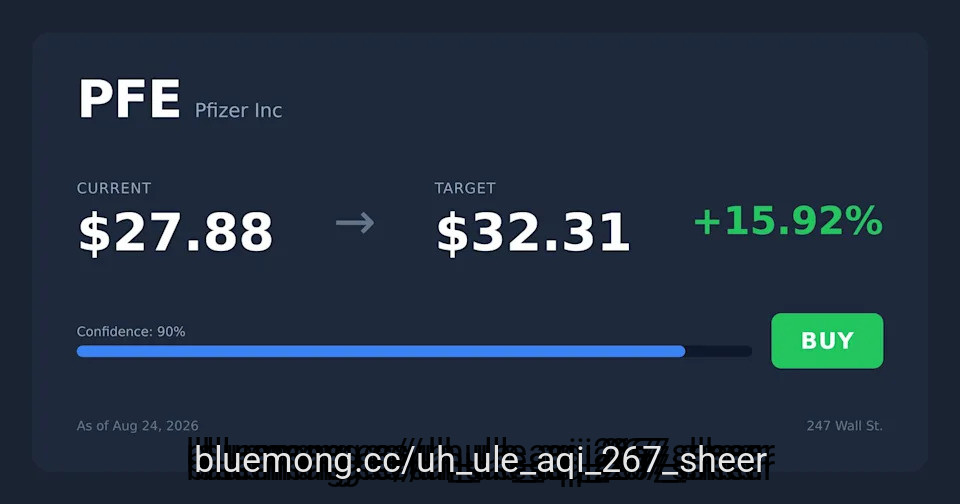
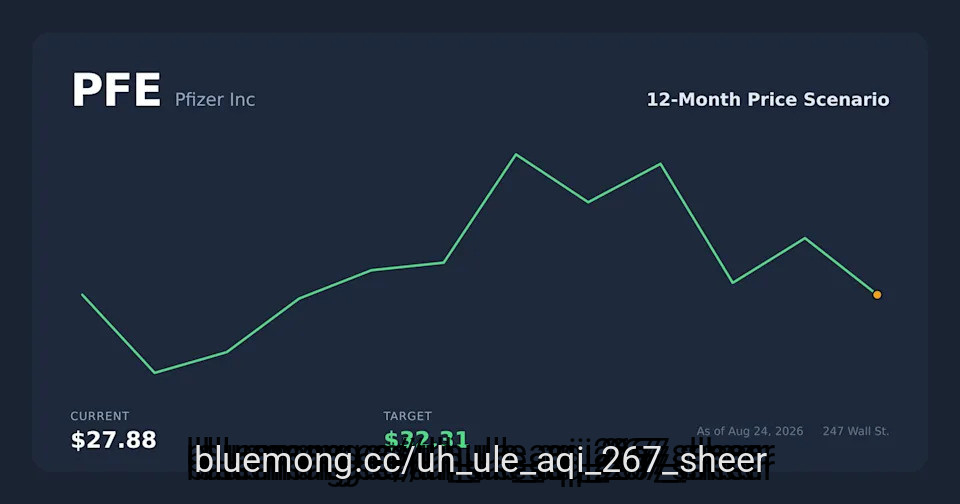
Pfizer (PFE) earns a BUY rating with a $32.36 price target, 15% upside, and a 6.19% dividend yield anchoring the rebound thesis.
Pfizer trades at 10x forward earnings, a steep discount to Merck (MRK) at 18x and Bristol Myers Squibb (BMY) at 11x.
CEO Albert Bourla beat consensus revenue nine of ten quarters, with 19 pivotal study starts planned across oncology, obesity, and immunology.
Act now: the ***** yst who called NVIDIA in 2010 just named his top 10 AI stocks — and Pfizer didn't make the cut. Grab the names FREE today.
Our 24/7 Wall St. price target for Pfizer (NYSE:PFE) points to $32.36 over the next 12 months, implying 15.27% upside from the recent close of $28.07. Our recommendation is buy, with high model confidence of 90%. Pipeline momentum, a re-rated 2026 guide, and a 6.19% dividend yield tip the scale toward a rebound thesis.
#target #upside #thesis
Pfizer trades at 10x forward earnings, a steep discount to Merck (MRK) at 18x and Bristol Myers Squibb (BMY) at 11x.
CEO Albert Bourla beat consensus revenue nine of ten quarters, with 19 pivotal study starts planned across oncology, obesity, and immunology.
Act now: the ***** yst who called NVIDIA in 2010 just named his top 10 AI stocks — and Pfizer didn't make the cut. Grab the names FREE today.
Our 24/7 Wall St. price target for Pfizer (NYSE:PFE) points to $32.36 over the next 12 months, implying 15.27% upside from the recent close of $28.07. Our recommendation is buy, with high model confidence of 90%. Pipeline momentum, a re-rated 2026 guide, and a 6.19% dividend yield tip the scale toward a rebound thesis.
#target #upside #thesis


1 month ago
Biotech stocks had already been gaining ground before this week's news. In June, the iShares Nasdaq Biotechnology ETF (IBB) traded just 1.47% below its 52-week high after moving sideways since November.
Then, Moderna (MRNA) surged more than 176%, while Merck (MRK) gained over 12%, after their personalized mRNA cancer vaccine reduced melanoma recurrence in a late-stage trial. The INTerpath-001 study included 1,137 high-risk melanoma patients and delivered the first successful Phase 3 result for an individualized mRNA neoantigen therapy.
Soros Fund Management Opened a New Position in Nebius During Q2. What This Means for NBIS Stock.
Nvidia Earnings, Jackson Hole and Other Key Things to Watch this Week
Ahead of Nvidia Earnings, Here's What Barchart Data Says Comes Next for NVDA Stock
#week #Biotech #june #NASDAQ
Then, Moderna (MRNA) surged more than 176%, while Merck (MRK) gained over 12%, after their personalized mRNA cancer vaccine reduced melanoma recurrence in a late-stage trial. The INTerpath-001 study included 1,137 high-risk melanoma patients and delivered the first successful Phase 3 result for an individualized mRNA neoantigen therapy.
Soros Fund Management Opened a New Position in Nebius During Q2. What This Means for NBIS Stock.
Nvidia Earnings, Jackson Hole and Other Key Things to Watch this Week
Ahead of Nvidia Earnings, Here's What Barchart Data Says Comes Next for NVDA Stock
#week #Biotech #june #NASDAQ


1 month ago
Tempus AI (NASDAQ: TEM) stock posted massive gains this week despite valuation pressures across the broader market. The healthcare artificial intelligence (AI) specialist's share price climbed 39.5% over its close at the end of the previous week's trading. Meanwhile, the S&P 500's level declined 1.9%, and the Nasdaq Composite's level declined 2.8%.
Tempus's big gains this week stemmed from a press release published by Merck and Moderna that provided an update on a trial for their cancer vaccine. Despite the big valuation pop, Tempus stock is still down roughly 10% over the last year.
Missed Nvidia in 2009? This Rare Signal Is Flashing Again. In 2009, a "Double Down" signal flashed for a little-known chipmaker called Nvidia. For the first time in years, that same "Total Conviction" signal is flashing for a company 1/100th the size of Nvidia. Continue »
On Wednesday, Merck and Moderna published a press release detailing Phase 3 trial data for the use of a jointly developed messenger ribonucleic acid (mRNA) vaccine along with Merck's Keytruda immunotherapy as a cancer treatment. The results showed that patients who took the combined treatment saw significant benefits compared to those who just took Keytruda, with the return and spread of cancer both being diminished among the cohort.
Tempus stock soared following the announcement, largely due to its pending acquisition of Personalis -- the company that developed the genomic tumor-profiling technology that was central to the development of Merck and Moderna's cancer vaccines. Tempus's deal to acquire Personalis is a binding agreement and is expected to close late this year or early in 2027.
#tempus #NASDAQ #keytruda
Tempus's big gains this week stemmed from a press release published by Merck and Moderna that provided an update on a trial for their cancer vaccine. Despite the big valuation pop, Tempus stock is still down roughly 10% over the last year.
Missed Nvidia in 2009? This Rare Signal Is Flashing Again. In 2009, a "Double Down" signal flashed for a little-known chipmaker called Nvidia. For the first time in years, that same "Total Conviction" signal is flashing for a company 1/100th the size of Nvidia. Continue »
On Wednesday, Merck and Moderna published a press release detailing Phase 3 trial data for the use of a jointly developed messenger ribonucleic acid (mRNA) vaccine along with Merck's Keytruda immunotherapy as a cancer treatment. The results showed that patients who took the combined treatment saw significant benefits compared to those who just took Keytruda, with the return and spread of cancer both being diminished among the cohort.
Tempus stock soared following the announcement, largely due to its pending acquisition of Personalis -- the company that developed the genomic tumor-profiling technology that was central to the development of Merck and Moderna's cancer vaccines. Tempus's deal to acquire Personalis is a binding agreement and is expected to close late this year or early in 2027.
#tempus #NASDAQ #keytruda


1 month ago
Interested in Eli Lilly and Company? Here are five stocks we like better.
Moderna's mRNA cancer vaccine, developed with Merck, succeeded in a late-stage melanoma trial, sending shares up 177% and boosting the broader biotech sector.
Eli Lilly, the world's largest pharmaceutical company, is nearing a 52-week high driven by its GLP-1 franchise and new oral-drug pipeline catalyst.
Natera has surged over 40% year to date on accelerating revenue growth and **** yst support, though its rich valuation reflects a momentum-driven growth profile.
The biotech sector just got the kind of catalyst that can define a cycle. On Wednesday, Moderna (NASDAQ: MRNA) stunned the market when its personalized mRNA cancer vaccine, developed with Merck (NYSE: MRK), became the first such therapy to succeed in a late-stage trial, reducing the risk of melanoma recurrence.
#lilly #company #cancer
Moderna's mRNA cancer vaccine, developed with Merck, succeeded in a late-stage melanoma trial, sending shares up 177% and boosting the broader biotech sector.
Eli Lilly, the world's largest pharmaceutical company, is nearing a 52-week high driven by its GLP-1 franchise and new oral-drug pipeline catalyst.
Natera has surged over 40% year to date on accelerating revenue growth and **** yst support, though its rich valuation reflects a momentum-driven growth profile.
The biotech sector just got the kind of catalyst that can define a cycle. On Wednesday, Moderna (NASDAQ: MRNA) stunned the market when its personalized mRNA cancer vaccine, developed with Merck (NYSE: MRK), became the first such therapy to succeed in a late-stage trial, reducing the risk of melanoma recurrence.
#lilly #company #cancer


1 month ago
Moderna, the American pharma company that became popular for its COVID vaccine, has spent three days trading like a meme stock. Shares exploded 177% on Wednesday after its personalized mRNA cancer vaccine with Merck succeeded in a Phase 3 melanoma trial, adding roughly $30 billion in market value in a single session.
Heavy short covering helped turn a major clinical breakthrough into an extraordinary market move. Then came the whiplash. Moderna fell 23.6% on Thursday, before buyers rushed back on Friday.
Even after the violent pullback and another volatile session, Moderna was still up more than 140% for the week. BeInCrypto ******* ysts now looked at three other US stocks that could potentially have a similar setup.
Moderna's day began with a collapse and a recovery, and Intel has both, sinking to $21.81 before quadrupling to $92.80 in a year, even as chip leaders wobbled.
Its Q2 revenue grew 25.4%, the best in 15 years, and CEO Lip-Bu Tan just put $10 million into the stock at $95 per share.
#shares
Heavy short covering helped turn a major clinical breakthrough into an extraordinary market move. Then came the whiplash. Moderna fell 23.6% on Thursday, before buyers rushed back on Friday.
Even after the violent pullback and another volatile session, Moderna was still up more than 140% for the week. BeInCrypto ******* ysts now looked at three other US stocks that could potentially have a similar setup.
Moderna's day began with a collapse and a recovery, and Intel has both, sinking to $21.81 before quadrupling to $92.80 in a year, even as chip leaders wobbled.
Its Q2 revenue grew 25.4%, the best in 15 years, and CEO Lip-Bu Tan just put $10 million into the stock at $95 per share.
#shares


1 month ago
Cycling superstar Tadej Pogačar won the opening stage of the 81st Vuelta/Tour of Spain by the narrowest of margins on Saturday, claiming the red jersey as overall leader for the first time in his career.
The Slovenian edged the short 9.4-kilometre individual time trial in his adopted home of Monaco, beating Britain's Ethan Hayter by nine hundredths of a second.
Pogačar is still missing an overall victory at the Vuelta.
The 27-year-old has dominated cycling in the way Belgian icon Eddy Merckx used to. Pogačar's long list of achievements includes a record-equalling five Tour de France ****** les including in July, two world championship ****** les, victory at the Giro d'Italia and numerous wins in the classics.
At the end of the 3,275-kilometre Vuelta, he wants to stand on the top step of the podium at the finish in Granada. That would mean Pogačar has won all three Grand Tours.
#vuelta #Cycling #tadej
The Slovenian edged the short 9.4-kilometre individual time trial in his adopted home of Monaco, beating Britain's Ethan Hayter by nine hundredths of a second.
Pogačar is still missing an overall victory at the Vuelta.
The 27-year-old has dominated cycling in the way Belgian icon Eddy Merckx used to. Pogačar's long list of achievements includes a record-equalling five Tour de France ****** les including in July, two world championship ****** les, victory at the Giro d'Italia and numerous wins in the classics.
At the end of the 3,275-kilometre Vuelta, he wants to stand on the top step of the podium at the finish in Granada. That would mean Pogačar has won all three Grand Tours.
#vuelta #Cycling #tadej

1 month ago
US stocks rose on Wednesday, snapping a three-day losing streak, after the US Treasury Department said it would increase its buybacks of long-dated government debt, leading yields to pull back sharply.
The Dow Jones Industrial Average (^DJI) and the S&P 500 (^GSPC) both gained 0.2%, while the tech-heavy Nasdaq Composite (^IXIC) also roughly put on 0.2%.
In individual stocks, Moderna (MRNA) shares surged 176% after the company reported positive results from its late-stage trial of a melanoma vaccine developed with Merck (MRK).
Stocks gained momentum after Treasury yields eased from their highest levels in years. Bond prices, which move inversely to yields, rallied after the US Treasury Department said it would increase buybacks of long-dated government debt "by at least double" for securities from the 10-year to 30-year sector.
The 10-year yield (^TNX) fell by 5 basis points to 4.65%, while the 30-year yield (^TYX) declined by 9 basis points to 5.19% after hitting its highest level since 2007 earlier this week.
#stocks #buybacks #long #dated
The Dow Jones Industrial Average (^DJI) and the S&P 500 (^GSPC) both gained 0.2%, while the tech-heavy Nasdaq Composite (^IXIC) also roughly put on 0.2%.
In individual stocks, Moderna (MRNA) shares surged 176% after the company reported positive results from its late-stage trial of a melanoma vaccine developed with Merck (MRK).
Stocks gained momentum after Treasury yields eased from their highest levels in years. Bond prices, which move inversely to yields, rallied after the US Treasury Department said it would increase buybacks of long-dated government debt "by at least double" for securities from the 10-year to 30-year sector.
The 10-year yield (^TNX) fell by 5 basis points to 4.65%, while the 30-year yield (^TYX) declined by 9 basis points to 5.19% after hitting its highest level since 2007 earlier this week.
#stocks #buybacks #long #dated



1 month ago
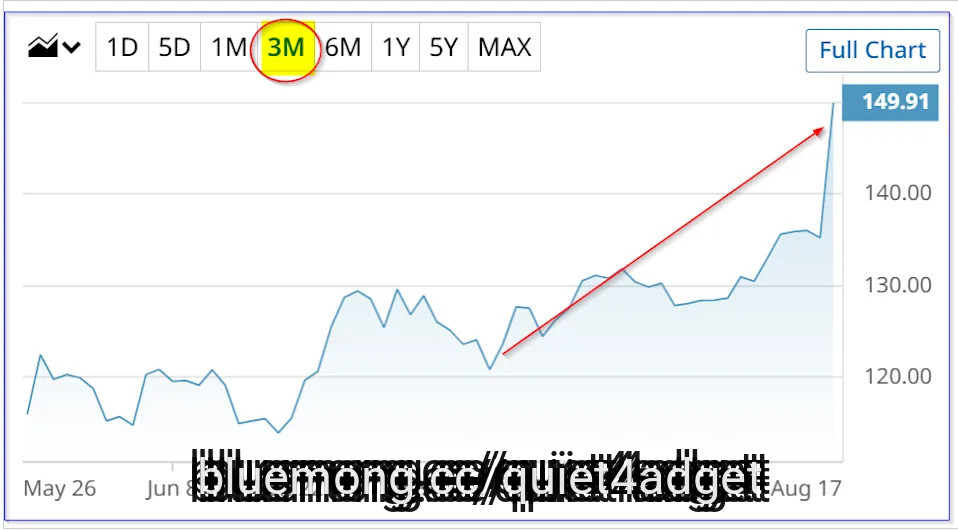
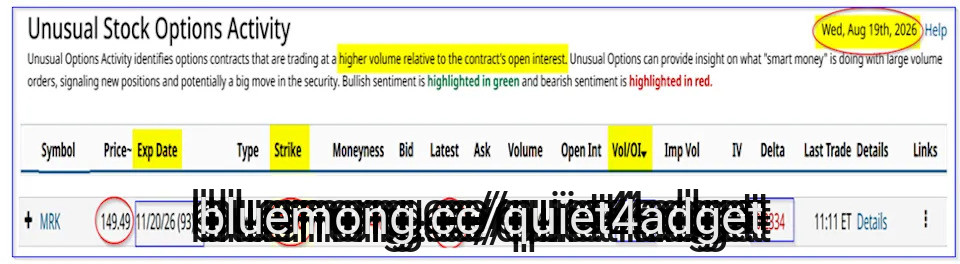
A Barchart report shows that despite recent strong Q2 results and a 10% spike in Merck & Co., Inc. (MRK) stock today, an unusually large volume of put options has traded at a much lower strike price. Is MRK stock overvalued?
MRK is up $14.66 today at $149.83 (i.e., +10.85%) in midday trading. The stock has been moving higher over the past three months, including today's 10% spike, as can be seen in the chart below.
QQQ Just 'Gamma Flipped' as Market Makers Were Forced to Sell. Here's What Our Top Chart Expert is Tracking Next.
Analysts Keep Hiking Intel's Revenue Forecasts and Price Targets - Is INTC Still a Buy?
Terrible Nike Stock Historically Offers a Near-Term Bounce When Things Are This Bad
#chart #barchart #gamma #flipped
MRK is up $14.66 today at $149.83 (i.e., +10.85%) in midday trading. The stock has been moving higher over the past three months, including today's 10% spike, as can be seen in the chart below.
QQQ Just 'Gamma Flipped' as Market Makers Were Forced to Sell. Here's What Our Top Chart Expert is Tracking Next.
Analysts Keep Hiking Intel's Revenue Forecasts and Price Targets - Is INTC Still a Buy?
Terrible Nike Stock Historically Offers a Near-Term Bounce When Things Are This Bad
#chart #barchart #gamma #flipped

1 month ago
By Christy Santhosh and Shashwat Chauhan
Aug 19 (Reuters) - Moderna shares more than doubled on Wednesday, adding about $30 billion to its market value, after promising late-stage data on its personalized mRNA cancer therapy developed with Merck sent investors piling into the stock.
The therapy is central to Moderna's efforts to prove that its mRNA technology can succeed beyond its COVID-19 vaccine franchise and infectious disease shots, as it seeks to build a more durable revenue base. The company recently added a flu vaccine to its portfolio and is advancing experimental vaccines for conditions including norovirus and Lyme disease.
Analysts had noted the cancer vaccine data could be an important catalyst for the company and potentially strengthen investor sentiment.
"A successful trial gives investors stronger evidence that mRNA technology can have a meaningful future beyond infectious diseases," said Lale Akoner, global market strategist for eToro.
#market #cancer #Therapy #investors
Aug 19 (Reuters) - Moderna shares more than doubled on Wednesday, adding about $30 billion to its market value, after promising late-stage data on its personalized mRNA cancer therapy developed with Merck sent investors piling into the stock.
The therapy is central to Moderna's efforts to prove that its mRNA technology can succeed beyond its COVID-19 vaccine franchise and infectious disease shots, as it seeks to build a more durable revenue base. The company recently added a flu vaccine to its portfolio and is advancing experimental vaccines for conditions including norovirus and Lyme disease.
Analysts had noted the cancer vaccine data could be an important catalyst for the company and potentially strengthen investor sentiment.
"A successful trial gives investors stronger evidence that mRNA technology can have a meaningful future beyond infectious diseases," said Lale Akoner, global market strategist for eToro.
#market #cancer #Therapy #investors


1 month ago
Good morning. Stocks turned higher at the open, but tech stocks resumed their sell-off from yesterday. While the Nasdaq Composite (^IXIC) fell in early trading, the Dow (^DJI) and S&P 500 (^GSPC) were buoyed by falling bond yields after the US Treasury Department stepped in to support buybacks of long-dated securities.
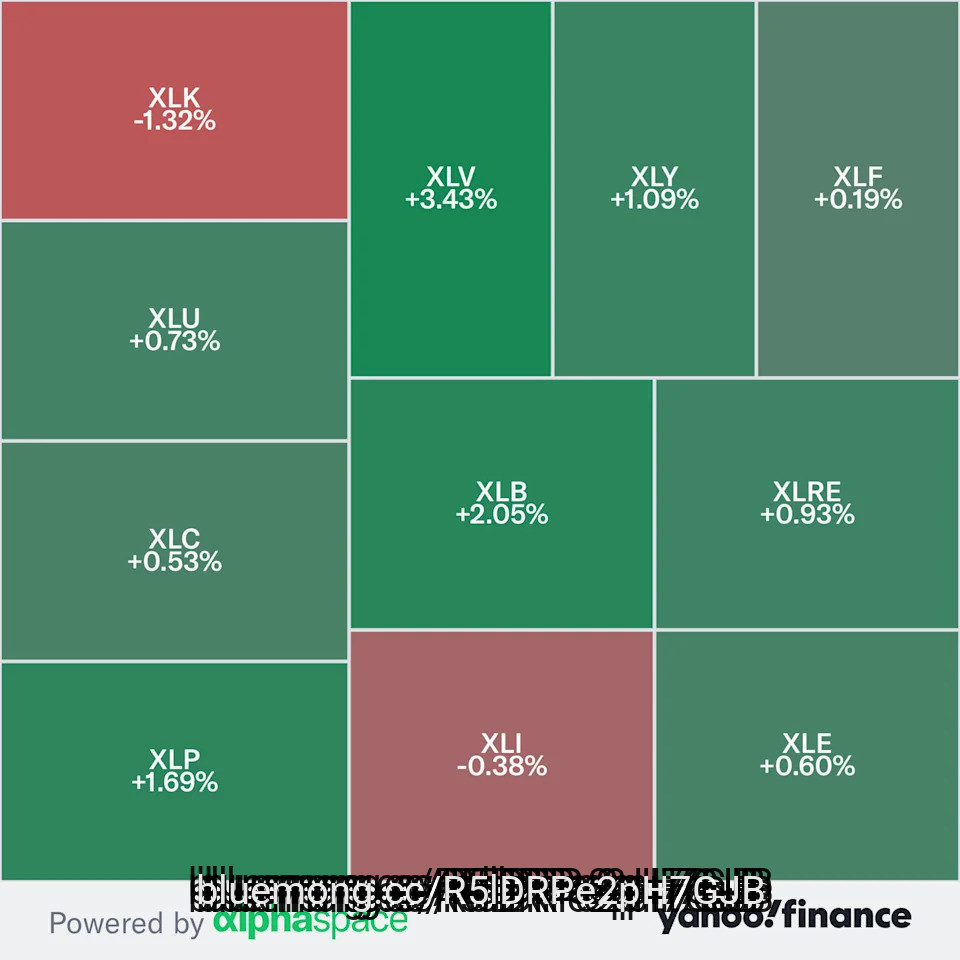
Here's a check of the markets in the first few minutes of trading, based on a heat map powered by Yahoo Finance AlphaSpace data.
The tech sector (XLK) faced renewed selling pressure as semiconductor stocks continued to slide, led by declines in shares of Intel (INTC), AMD (AMD), and Broadcom (AVGO).
On the other end of the spectrum, Healthcare (XLV) saw tremendous strength, driven by a 124% gain in Moderna (MRNA) following positive phase 3 trial results for its melanoma vaccine developed with Merck (MRK).
Basic Materials (XLB) also led the morning, as a surge in gold futures (GC=F) and gold miner stocks broadly rose.
#stocks #Gold #good #NASDAQ
Here's a check of the markets in the first few minutes of trading, based on a heat map powered by Yahoo Finance AlphaSpace data.
The tech sector (XLK) faced renewed selling pressure as semiconductor stocks continued to slide, led by declines in shares of Intel (INTC), AMD (AMD), and Broadcom (AVGO).
On the other end of the spectrum, Healthcare (XLV) saw tremendous strength, driven by a 124% gain in Moderna (MRNA) following positive phase 3 trial results for its melanoma vaccine developed with Merck (MRK).
Basic Materials (XLB) also led the morning, as a surge in gold futures (GC=F) and gold miner stocks broadly rose.
#stocks #Gold #good #NASDAQ
1 month ago
CHICAGO, Aug 19 (Reuters) - Merck and Moderna's success with a personalized cancer vaccine designed to keep melanoma at bay opens a new avenue of treatment that doctors hope will work against many types of tumors.
Unlike chemotherapy, which kills both healthy and cancerous cells, or immunotherapy, which revs up the immune system, personalized cancer vaccines train the immune system to specifically target mutations found only on a person's tumor.
Merck and Moderna said on Wednesday their vaccine helped prevent the return and spread of disease in a large trial involving more than 1,000 melanoma patients. They had localized tumors that were removed surgically, but had a high risk of recurrence. Moderna expects that thousands of melanoma patients could benefit within the first few years of approval.
"It is a big deal for the field in general," said Dr. Ryan Sullivan, director of the Center for Melanoma at Mass General Brigham Cancer Institute. "With this positive study, there is hope (and likely investment to follow) that these approaches may change the way we treat cancer more broadly."
The trial result is "a monumental leap forward," validating mRNA technology as a cancer treatment, said Dr. Julie Gralow, chief medical officer of the American Society of Clinical Oncology.
#cancer #merck #general
Unlike chemotherapy, which kills both healthy and cancerous cells, or immunotherapy, which revs up the immune system, personalized cancer vaccines train the immune system to specifically target mutations found only on a person's tumor.
Merck and Moderna said on Wednesday their vaccine helped prevent the return and spread of disease in a large trial involving more than 1,000 melanoma patients. They had localized tumors that were removed surgically, but had a high risk of recurrence. Moderna expects that thousands of melanoma patients could benefit within the first few years of approval.
"It is a big deal for the field in general," said Dr. Ryan Sullivan, director of the Center for Melanoma at Mass General Brigham Cancer Institute. "With this positive study, there is hope (and likely investment to follow) that these approaches may change the way we treat cancer more broadly."
The trial result is "a monumental leap forward," validating mRNA technology as a cancer treatment, said Dr. Julie Gralow, chief medical officer of the American Society of Clinical Oncology.
#cancer #merck #general

1 month ago
CHICAGO (AP) — Right-hander Grant Holmes of the Atlanta Braves is pitching a no-hitter through six innings against the Chicago White Sox on Thursday.
Atlanta led 2-0 in the top of the seventh in a makeup game of a June 11 rainout at Rate Field.
The 30-year-old Holmes has retired 18 of the first 20 White Sox hitters. Colson Montgomery walked with two outs in the second and Drew Romo walked with one out in the fifth for Chicago's only baserunners.
There's been only one-no hitter in the majors this season, a combined effort by three Houston pitchers in a 9-0 win over Texas on May 25. The Braves' last no-hitter was by Kent Mercker in a 6-0 win over the Dodgers at Los Angeles on April 8, 1994.
Holmes has never pitched a complete game in the majors. His longest effort was 7 2/3 innings on April 14, 2025, in an 8-4 win over Toronto.
#Chicago #Braves #white #game
Atlanta led 2-0 in the top of the seventh in a makeup game of a June 11 rainout at Rate Field.
The 30-year-old Holmes has retired 18 of the first 20 White Sox hitters. Colson Montgomery walked with two outs in the second and Drew Romo walked with one out in the fifth for Chicago's only baserunners.
There's been only one-no hitter in the majors this season, a combined effort by three Houston pitchers in a 9-0 win over Texas on May 25. The Braves' last no-hitter was by Kent Mercker in a 6-0 win over the Dodgers at Los Angeles on April 8, 1994.
Holmes has never pitched a complete game in the majors. His longest effort was 7 2/3 innings on April 14, 2025, in an 8-4 win over Toronto.
#Chicago #Braves #white #game



1 month ago
Moderna (MRNA) surged 177% and Merck (MRK) rose 12.5% after their mRNA cancer vaccine met key Phase 3 melanoma trial goals.
Phase 2b data showed a 49% reduction in recurrence or death versus Keytruda alone, with nine studies now underway across multiple cancer types.
Act now: the ******* yst who called NVIDIA in 2010 just named his top 10 AI stocks — and Merck didn't make the cut. Grab the names FREE today.
Moderna (NASDAQ:MRNA) shares have crashed 20% as of 12:00 PM ET on Thursday after delivering one of the biotech sector's most extraordinary single-day moves of 2026. CNBC co-anchor Andrew Ross Sorkin told viewers that Moderna's Phase 3 results for its experimental cancer vaccine sent the stock soaring 177% on Wednesday, while partner Merck (NYSE:MRK) rallied 12.5%.
As Sorkin summarized on air, "The mRNA based shot, in combination with Merck's immunotherapy called Keytruda, met key goals in a trial of patients with higher risk or advanced melanoma whose detectable cancer had been removed."
#mrna #merck #phase #sorkin
Phase 2b data showed a 49% reduction in recurrence or death versus Keytruda alone, with nine studies now underway across multiple cancer types.
Act now: the ******* yst who called NVIDIA in 2010 just named his top 10 AI stocks — and Merck didn't make the cut. Grab the names FREE today.
Moderna (NASDAQ:MRNA) shares have crashed 20% as of 12:00 PM ET on Thursday after delivering one of the biotech sector's most extraordinary single-day moves of 2026. CNBC co-anchor Andrew Ross Sorkin told viewers that Moderna's Phase 3 results for its experimental cancer vaccine sent the stock soaring 177% on Wednesday, while partner Merck (NYSE:MRK) rallied 12.5%.
As Sorkin summarized on air, "The mRNA based shot, in combination with Merck's immunotherapy called Keytruda, met key goals in a trial of patients with higher risk or advanced melanoma whose detectable cancer had been removed."
#mrna #merck #phase #sorkin
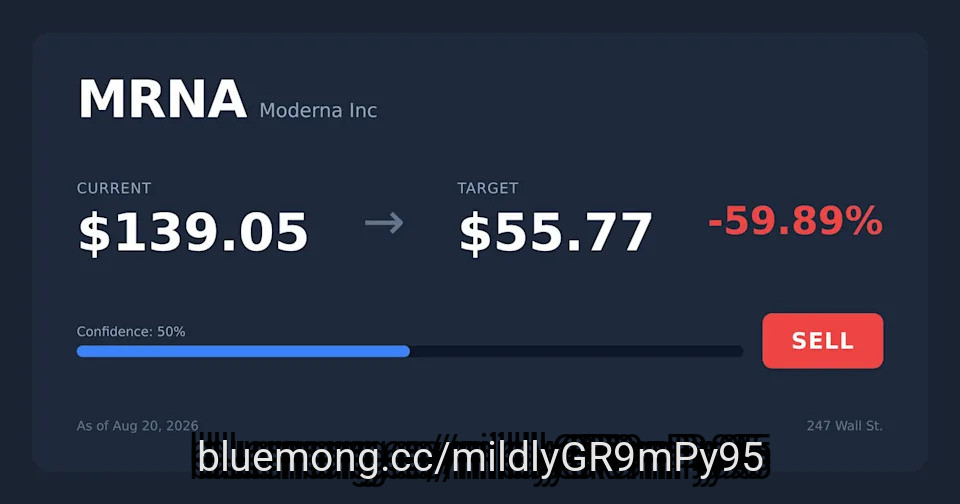
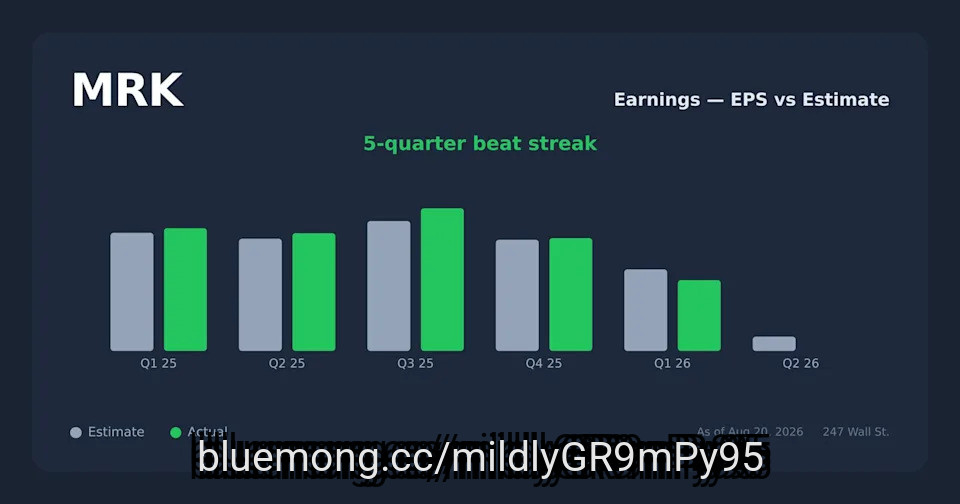
1 month ago
It's the day after one of the surprise healthcare stories of 2026.
Moderna (MRNA) shares fell 20% in early trading on Thursday after a stunning 177% gain yesterday on news that the biotech and partner Merck (MRK) notched a big breakthrough in the fight against cancer.
The pair announced that their personalized mRNA cancer vaccine — called intismeran — successfully hit its primary goal in a Phase 3 late-stage trial, demonstrating a meaningful reduction in melanoma recurrence in patients who had already had their tumors surgically removed.
The trial compared using intismeran alongside Merck's well-known immunotherapy drug Keytruda against using Keytruda alone. Patients who received the combination lived meaningfully longer without their cancer returning or spreading.
"It's a home run, maybe even a grand slam," Dr. Ezekiel Emanuel said on Yahoo Finance (video above). "The results are pretty amazing."
#patients
Moderna (MRNA) shares fell 20% in early trading on Thursday after a stunning 177% gain yesterday on news that the biotech and partner Merck (MRK) notched a big breakthrough in the fight against cancer.
The pair announced that their personalized mRNA cancer vaccine — called intismeran — successfully hit its primary goal in a Phase 3 late-stage trial, demonstrating a meaningful reduction in melanoma recurrence in patients who had already had their tumors surgically removed.
The trial compared using intismeran alongside Merck's well-known immunotherapy drug Keytruda against using Keytruda alone. Patients who received the combination lived meaningfully longer without their cancer returning or spreading.
"It's a home run, maybe even a grand slam," Dr. Ezekiel Emanuel said on Yahoo Finance (video above). "The results are pretty amazing."
#patients