
28 days ago
BioNTech SE (NASDAQ:BNTX) reported that its investigational lung-cancer drug gotistobart produced a clinically meaningful overall-survival benefit in the Phase 3 PRESERVE-003 trial in patients with metastatic squamous non-small cell lung cancer whose disease had progressed after prior immunotherapy and chemotherapy. Reuters said gotistobart nearly doubled survival compared with standard-of-care chemotherapy, strengthening the case for the drug as a potential chemotherapy-free treatment in a population with significant unmet need.
The result builds on earlier Stage 1 data, where gotistobart reduced the risk of death by 54% versus docetaxel, with a hazard ratio of 0.46. Median overall survival was not yet reached for gotistobart versus 9.95 months for docetaxel, while the 12-month progression-free survival rate was 25.2% versus 0%. BioNTech is now awaiting the pivotal Stage 2 readout, making the latest result important not only for the drug's approval prospects but also for the credibility of BioNTech's broader transition from a COVID-vaccine company toward a multi-product oncology business.
The strongest bullish argument is that gotistobart now has repeated evidence of a meaningful survival advantage in a difficult-to-treat lung-cancer population. The earlier Stage 1 dataset showed 55.6% of patients alive in the gotistobart arm versus 23.8% with docetaxel, alongside a 54% reduction in the risk of death. The latest Phase 3 update reinforces that signal rather than introducing an entirely new hypothesis. If the pivotal Stage 2 data confirm the benefit, BioNTech SE (NASDAQ:BNTX) could have a differentiated therapy capable of competing on survival rather than simply response rates, potentially supporting meaningful pricing power and a commercially attractive oncology franchise.
The result also strengthens BioNTech's broader oncology strategy because gotistobart is one piece of a much larger pipeline rather than a standalone bet. BioNTech says it has 14 ongoing pivotal trials and more than 10 novel combination programs, while its lung-cancer strategy spans more than 16 ongoing clinical trials and five Phase 3 programs. Gotistobart's success therefore provides validation for the company's immuno-oncology capabilities, while other ****** ets such as pumitamig and antibody-drug conjugates advance toward additional indications. BioNTech has identified 17+ late-stage or pivotal readouts through 2030+, creating the possibility that a successful gotistobart launch becomes the first major commercial proof point in its planned transition to a multi-product oncology company.
#stage #survival
The result builds on earlier Stage 1 data, where gotistobart reduced the risk of death by 54% versus docetaxel, with a hazard ratio of 0.46. Median overall survival was not yet reached for gotistobart versus 9.95 months for docetaxel, while the 12-month progression-free survival rate was 25.2% versus 0%. BioNTech is now awaiting the pivotal Stage 2 readout, making the latest result important not only for the drug's approval prospects but also for the credibility of BioNTech's broader transition from a COVID-vaccine company toward a multi-product oncology business.
The strongest bullish argument is that gotistobart now has repeated evidence of a meaningful survival advantage in a difficult-to-treat lung-cancer population. The earlier Stage 1 dataset showed 55.6% of patients alive in the gotistobart arm versus 23.8% with docetaxel, alongside a 54% reduction in the risk of death. The latest Phase 3 update reinforces that signal rather than introducing an entirely new hypothesis. If the pivotal Stage 2 data confirm the benefit, BioNTech SE (NASDAQ:BNTX) could have a differentiated therapy capable of competing on survival rather than simply response rates, potentially supporting meaningful pricing power and a commercially attractive oncology franchise.
The result also strengthens BioNTech's broader oncology strategy because gotistobart is one piece of a much larger pipeline rather than a standalone bet. BioNTech says it has 14 ongoing pivotal trials and more than 10 novel combination programs, while its lung-cancer strategy spans more than 16 ongoing clinical trials and five Phase 3 programs. Gotistobart's success therefore provides validation for the company's immuno-oncology capabilities, while other ****** ets such as pumitamig and antibody-drug conjugates advance toward additional indications. BioNTech has identified 17+ late-stage or pivotal readouts through 2030+, creating the possibility that a successful gotistobart launch becomes the first major commercial proof point in its planned transition to a multi-product oncology company.
#stage #survival


28 days ago
BioNTech SE (NASDAQ:BNTX) reported that its investigational lung-cancer drug gotistobart produced a clinically meaningful overall-survival benefit in the Phase 3 PRESERVE-003 trial in patients with metastatic squamous non-small cell lung cancer whose disease had progressed after prior immunotherapy and chemotherapy. Reuters said gotistobart nearly doubled survival compared with standard-of-care chemotherapy, strengthening the case for the drug as a potential chemotherapy-free treatment in a population with significant unmet need.
The result builds on earlier Stage 1 data, where gotistobart reduced the risk of death by 54% versus docetaxel, with a hazard ratio of 0.46. Median overall survival was not yet reached for gotistobart versus 9.95 months for docetaxel, while the 12-month progression-free survival rate was 25.2% versus 0%. BioNTech is now awaiting the pivotal Stage 2 readout, making the latest result important not only for the drug's approval prospects but also for the credibility of BioNTech's broader transition from a COVID-vaccine company toward a multi-product oncology business.
The strongest bullish argument is that gotistobart now has repeated evidence of a meaningful survival advantage in a difficult-to-treat lung-cancer population. The earlier Stage 1 dataset showed 55.6% of patients alive in the gotistobart arm versus 23.8% with docetaxel, alongside a 54% reduction in the risk of death. The latest Phase 3 update reinforces that signal rather than introducing an entirely new hypothesis. If the pivotal Stage 2 data confirm the benefit, BioNTech SE (NASDAQ:BNTX) could have a differentiated therapy capable of competing on survival rather than simply response rates, potentially supporting meaningful pricing power and a commercially attractive oncology franchise.
The result also strengthens BioNTech's broader oncology strategy because gotistobart is one piece of a much larger pipeline rather than a standalone bet. BioNTech says it has 14 ongoing pivotal trials and more than 10 novel combination programs, while its lung-cancer strategy spans more than 16 ongoing clinical trials and five Phase 3 programs. Gotistobart's success therefore provides validation for the company's immuno-oncology capabilities, while other ***** ets such as pumitamig and antibody-drug conjugates advance toward additional indications. BioNTech has identified 17+ late-stage or pivotal readouts through 2030+, creating the possibility that a successful gotistobart launch becomes the first major commercial proof point in its planned transition to a multi-product oncology company.
#biontech #survival
The result builds on earlier Stage 1 data, where gotistobart reduced the risk of death by 54% versus docetaxel, with a hazard ratio of 0.46. Median overall survival was not yet reached for gotistobart versus 9.95 months for docetaxel, while the 12-month progression-free survival rate was 25.2% versus 0%. BioNTech is now awaiting the pivotal Stage 2 readout, making the latest result important not only for the drug's approval prospects but also for the credibility of BioNTech's broader transition from a COVID-vaccine company toward a multi-product oncology business.
The strongest bullish argument is that gotistobart now has repeated evidence of a meaningful survival advantage in a difficult-to-treat lung-cancer population. The earlier Stage 1 dataset showed 55.6% of patients alive in the gotistobart arm versus 23.8% with docetaxel, alongside a 54% reduction in the risk of death. The latest Phase 3 update reinforces that signal rather than introducing an entirely new hypothesis. If the pivotal Stage 2 data confirm the benefit, BioNTech SE (NASDAQ:BNTX) could have a differentiated therapy capable of competing on survival rather than simply response rates, potentially supporting meaningful pricing power and a commercially attractive oncology franchise.
The result also strengthens BioNTech's broader oncology strategy because gotistobart is one piece of a much larger pipeline rather than a standalone bet. BioNTech says it has 14 ongoing pivotal trials and more than 10 novel combination programs, while its lung-cancer strategy spans more than 16 ongoing clinical trials and five Phase 3 programs. Gotistobart's success therefore provides validation for the company's immuno-oncology capabilities, while other ***** ets such as pumitamig and antibody-drug conjugates advance toward additional indications. BioNTech has identified 17+ late-stage or pivotal readouts through 2030+, creating the possibility that a successful gotistobart launch becomes the first major commercial proof point in its planned transition to a multi-product oncology company.
#biontech #survival


2 months ago
BioNTech SE (NASDAQ:BNTX) rallied following the first positive interim Phase 3 topline result for a personalized mRNA cancer therapy. Moderna and Merck said intismeran, combined with Keytruda, significantly improved recurrence-free and distant metastasis-free survival in patients with surgically removed high-risk melanoma. The result lifted other mRNA developers because it provided the strongest evidence yet that the technology can work against cancer in a large late-stage trial. For BioNTech SE (NASDAQ:BNTX), however, the rally raises a harder question: does validation of the therapeutic class meaningfully improve the odds for its own candidates, or has the market moved ahead of company-specific evidence?
The distinction matters. Moderna's intismeran is individually designed around mutations found in each patient's tumor. BioNTech SE (NASDAQ:BNTX) is awaiting an interim ******* ysis from the Phase 3 portion of AHEAD-MERIT, which tests BNT113 with pembrolizumab in first-line unresectable recurrent or metastatic HPV16-positive, PD-L1-positive head-and-neck squamous cell carcinoma. BNT113 is an off-the-shelf FixVac therapy encoding the HPV16 E6 and E7 oncoproteins. Different antigens, manufacturing approaches, cancer types and treatment settings prevent Moderna's result from functioning as a direct clinical read-through.
Still, BioNTech SE (NASDAQ:BNTX) has more than one attempt at building an oncology franchise. The company has 14 ongoing pivotal trials across mRNA immunotherapies, immunomodulators and antibody-drug conjugates. It expects three late-stage readouts during 2026, including the BNT113 interim ******* ysis, and ended June with €16.6 billion in cash, cash equivalents and security investments.
The bull case for BioNTech SE (NASDAQ:BNTX) is that Moderna and Merck have reduced skepticism around the broader platform. Their trial enrolled 1,137 patients and met its primary endpoint of recurrence-free survival and a secondary endpoint of distant metastasis-free survival, with no new safety concerns reported. The result shows that an mRNA therapy can add meaningful benefit to a checkpoint inhibitor in Phase 3.
BioNTech also has a personalized program that more closely resembles intismeran. Autogene cevumeran, partnered with Genentech, is being studied in randomized Phase 2 trials in pancreatic and colorectal cancer. Meanwhile, BNT113 has FDA Fast Track designation and could provide BioNTech's own pivotal mRNA evidence. The company's cash position gives it room to fund these programs and absorb failures elsewhere in the portfolio.
#biontech
The distinction matters. Moderna's intismeran is individually designed around mutations found in each patient's tumor. BioNTech SE (NASDAQ:BNTX) is awaiting an interim ******* ysis from the Phase 3 portion of AHEAD-MERIT, which tests BNT113 with pembrolizumab in first-line unresectable recurrent or metastatic HPV16-positive, PD-L1-positive head-and-neck squamous cell carcinoma. BNT113 is an off-the-shelf FixVac therapy encoding the HPV16 E6 and E7 oncoproteins. Different antigens, manufacturing approaches, cancer types and treatment settings prevent Moderna's result from functioning as a direct clinical read-through.
Still, BioNTech SE (NASDAQ:BNTX) has more than one attempt at building an oncology franchise. The company has 14 ongoing pivotal trials across mRNA immunotherapies, immunomodulators and antibody-drug conjugates. It expects three late-stage readouts during 2026, including the BNT113 interim ******* ysis, and ended June with €16.6 billion in cash, cash equivalents and security investments.
The bull case for BioNTech SE (NASDAQ:BNTX) is that Moderna and Merck have reduced skepticism around the broader platform. Their trial enrolled 1,137 patients and met its primary endpoint of recurrence-free survival and a secondary endpoint of distant metastasis-free survival, with no new safety concerns reported. The result shows that an mRNA therapy can add meaningful benefit to a checkpoint inhibitor in Phase 3.
BioNTech also has a personalized program that more closely resembles intismeran. Autogene cevumeran, partnered with Genentech, is being studied in randomized Phase 2 trials in pancreatic and colorectal cancer. Meanwhile, BNT113 has FDA Fast Track designation and could provide BioNTech's own pivotal mRNA evidence. The company's cash position gives it room to fund these programs and absorb failures elsewhere in the portfolio.
#biontech


2 months ago
Aug 28 (Reuters) - BioNTech SE said on Friday it has decided to terminate the mid-stage trial of its experimental mRNA-based cancer vaccine for patients with a type of colorectal cancer, sending the German firm's U.S.-listed shares down nearly 9%.
An independent data safety monitoring board, responsible for overseeing the safety and integrity of the trial, recommended discontinuing treatment of patients and terminating the study.
The immunotherapy, autogene cevumeran, is being jointly developed by BioNTech and Roche's Genentech. The trial was evaluating it as an adjuvant monotherapy in patients with high-risk stage II or stage III colorectal cancer whose tumors had been surgically removed but who remained ctDNA-positive.
In its most recent review of the available data of this trial, the board identified a numerical imbalance in overall survival between treatment arms in this specific patient population and noted that further trial continuation was unlikely to change the efficacy outcome.
(Reporting by Sriparna Roy in Bengaluru; Editing by Shilpi Majumdar)
#patients #colorectal
An independent data safety monitoring board, responsible for overseeing the safety and integrity of the trial, recommended discontinuing treatment of patients and terminating the study.
The immunotherapy, autogene cevumeran, is being jointly developed by BioNTech and Roche's Genentech. The trial was evaluating it as an adjuvant monotherapy in patients with high-risk stage II or stage III colorectal cancer whose tumors had been surgically removed but who remained ctDNA-positive.
In its most recent review of the available data of this trial, the board identified a numerical imbalance in overall survival between treatment arms in this specific patient population and noted that further trial continuation was unlikely to change the efficacy outcome.
(Reporting by Sriparna Roy in Bengaluru; Editing by Shilpi Majumdar)
#patients #colorectal


2 months ago
Moderna surged 11% while BioNTech gained just 2% on no catalyst, with MRNA's Reddit sentiment score of 88 flagging crowded retail positioning over fundamentals.
BioNTech trails XBI's 3% session gain and its 35% YTD return, while Moderna's 371% YTD run versus BNTX's 19% effectively ends the mRNA pair trade.
Act now: the ***** yst who called NVIDIA in 2010 just named his top 10 AI stocks — and Moderna didn't make the cut. Grab the names FREE today.
Two names built on the same platform have stopped moving together this morning. Moderna (NASDAQ:MRNA) stock is up 11% to $154.15, a Tuesday morning session standing well apart from anything happening across the broader biotech sector. Meanwhile, BioNTech (NASDAQ:BNTX) stock is up 2% to $115.10, a much lighter session for a name that's traded as Moderna's mRNA partner for years.
For sector context, the SPDR S&P Biotech ETF (NYSEARCA:XBI) is up 3% to $168.45. That means BioNTech isn't only lagging Moderna today; it's trailing the sector fund that holds it. The comparison against the fund is what makes the gap inside the mRNA pair legible. Biotech is having a good session, and Moderna is having a different kind of session entirely, while BioNTech sits below the fund, making the split inside the mRNA pair even sharper than the headline figures alone would suggest.
#Biotech #pair #names
BioNTech trails XBI's 3% session gain and its 35% YTD return, while Moderna's 371% YTD run versus BNTX's 19% effectively ends the mRNA pair trade.
Act now: the ***** yst who called NVIDIA in 2010 just named his top 10 AI stocks — and Moderna didn't make the cut. Grab the names FREE today.
Two names built on the same platform have stopped moving together this morning. Moderna (NASDAQ:MRNA) stock is up 11% to $154.15, a Tuesday morning session standing well apart from anything happening across the broader biotech sector. Meanwhile, BioNTech (NASDAQ:BNTX) stock is up 2% to $115.10, a much lighter session for a name that's traded as Moderna's mRNA partner for years.
For sector context, the SPDR S&P Biotech ETF (NYSEARCA:XBI) is up 3% to $168.45. That means BioNTech isn't only lagging Moderna today; it's trailing the sector fund that holds it. The comparison against the fund is what makes the gap inside the mRNA pair legible. Biotech is having a good session, and Moderna is having a different kind of session entirely, while BioNTech sits below the fund, making the split inside the mRNA pair even sharper than the headline figures alone would suggest.
#Biotech #pair #names



3 months ago
Entries from early 2020 in a now-exposed personal diary kept by Dr. Anthony Fauci during the COVID-19 pandemic show that he privately estimated the death rate from the illness was significantly lower than what he told Congress under oath only weeks later.
Fauci, 85, has come under intense scrutiny for years regarding his approach leading the U.S. response to the coronavirus pandemic, and his alleged links to the Chinese lab where the virus originated. He will return to Capitol Hill on Wednesday before the Senate Homeland Security and Governmental Affairs Committee to speak about his newly publicized personal records.
"The stated mortality over all of this when you look at all the data including China is about three percent. It first started off as two and three," Fauci said in testimony before the House Oversight Committee on March 11, 2020, according to a transcript of the hearing.
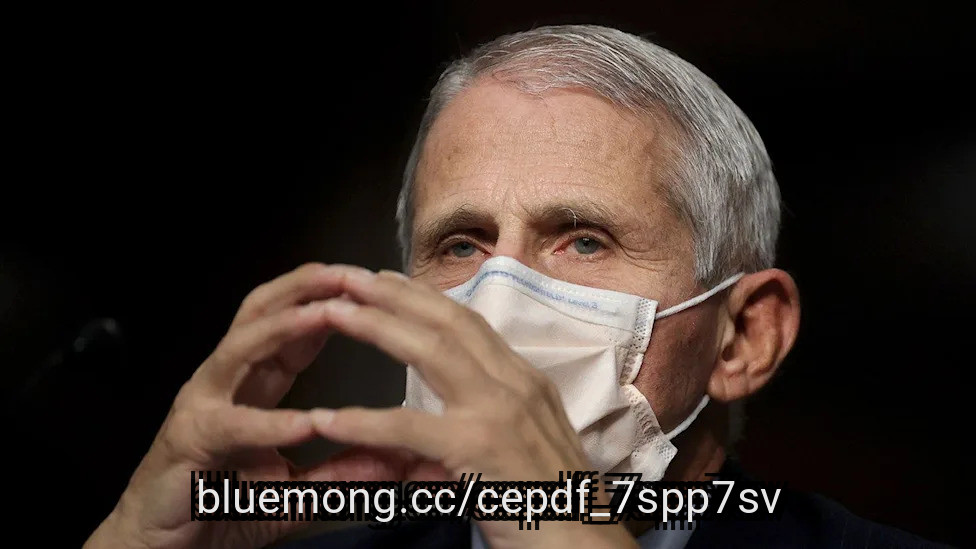
National Institute of Allergy and Infectious Diseases Director Anthony Fauci prepares to testify before the Senate Health, Education, Labor, and Pensions Committee about the ongoing response to the COVID-19 pandemic in the Dirksen Senate Office Building on Capitol Hill on November 4, 2021, in Washington, D.C. Senators questioned Fauci and other witnesses about the approval of the Pfizer-BioNTech coronavirus vaccine for children between 5 and 11 years old this week.
Legacy Media Ignores Massive Anthony Fauci Document Release Alleging He Misled Congress On Covid Origins
#senate #capitol
Fauci, 85, has come under intense scrutiny for years regarding his approach leading the U.S. response to the coronavirus pandemic, and his alleged links to the Chinese lab where the virus originated. He will return to Capitol Hill on Wednesday before the Senate Homeland Security and Governmental Affairs Committee to speak about his newly publicized personal records.
"The stated mortality over all of this when you look at all the data including China is about three percent. It first started off as two and three," Fauci said in testimony before the House Oversight Committee on March 11, 2020, according to a transcript of the hearing.
National Institute of Allergy and Infectious Diseases Director Anthony Fauci prepares to testify before the Senate Health, Education, Labor, and Pensions Committee about the ongoing response to the COVID-19 pandemic in the Dirksen Senate Office Building on Capitol Hill on November 4, 2021, in Washington, D.C. Senators questioned Fauci and other witnesses about the approval of the Pfizer-BioNTech coronavirus vaccine for children between 5 and 11 years old this week.
Legacy Media Ignores Massive Anthony Fauci Document Release Alleging He Misled Congress On Covid Origins
#senate #capitol



3 months ago
Choosing between Bristol Myers Squibb (NYSE:BMY) and Johnson & Johnson (NYSE:JNJ) means deciding whether you prefer a pure-play pharmaceutical company trading at a deep discount or a diversified giant with higher growth.
While both operate within the same broader sector, their business models differ significantly. Bristol Myers focuses heavily on drug development for serious diseases, while Johnson & Johnson splits its attention between medicine and medical devices. Let's compare them and weigh their specific risks and financial health.
Bristol Myers operates as a major player in the pharmaceutical stocks **** e, focusing on oncology, hematology, and immunology. The company sells its innovative medicines primarily to wholesalers and specialty pharmacies, relying on established distribution channels for top products like Opdivo and Eliquis. Key commercial alliances with Merck (NYSE:MRK) and BioNTech (NASDAQ:BNTX) help Bristol Myers expand its reach in specialized therapeutic areas.
In fiscal 2025, revenue reached nearly $48.2 billion, reflecting a slight decrease of approximately 0.2% compared to the previous year. The company reported net income of roughly $7.1 billion during this period, resulting in a net margin of approximately 14.6%. This was a significant recovery from the prior fiscal year, when Bristol Myers recorded a substantial net loss following specific business shifts.
As of its December 2025 balance sheet, the debt-to-equity ratio is roughly 2.6. This figure, which compares total debt to the value of shareholder equity, suggests a higher reliance on borrowed funds. The current ratio, which measures the company's ability to cover short-term debts with current **** ets, is approximately 1.3, while free cash flow reached nearly $12.8 billion.
While both operate within the same broader sector, their business models differ significantly. Bristol Myers focuses heavily on drug development for serious diseases, while Johnson & Johnson splits its attention between medicine and medical devices. Let's compare them and weigh their specific risks and financial health.
Bristol Myers operates as a major player in the pharmaceutical stocks **** e, focusing on oncology, hematology, and immunology. The company sells its innovative medicines primarily to wholesalers and specialty pharmacies, relying on established distribution channels for top products like Opdivo and Eliquis. Key commercial alliances with Merck (NYSE:MRK) and BioNTech (NASDAQ:BNTX) help Bristol Myers expand its reach in specialized therapeutic areas.
In fiscal 2025, revenue reached nearly $48.2 billion, reflecting a slight decrease of approximately 0.2% compared to the previous year. The company reported net income of roughly $7.1 billion during this period, resulting in a net margin of approximately 14.6%. This was a significant recovery from the prior fiscal year, when Bristol Myers recorded a substantial net loss following specific business shifts.
As of its December 2025 balance sheet, the debt-to-equity ratio is roughly 2.6. This figure, which compares total debt to the value of shareholder equity, suggests a higher reliance on borrowed funds. The current ratio, which measures the company's ability to cover short-term debts with current **** ets, is approximately 1.3, while free cash flow reached nearly $12.8 billion.


4 months ago
Dealmaking is back with a vengeance in the pharmaceutical sector this year. According to a report by PwC, there were more than $65 billion in pharma and life sciences mergers & acquisitions in the first quarter, the best quarter for the sector since 2020. The report said the quarter had 16 M&A deals of at least $1 billion each.
In the second quarter, the pace hasn't slowed, with Sun Pharmaceuticals announcing in April that it would acquire Organon for $11.75 billion and AbbVie reporting in June that it would acquire Apogee Therapeutics for $10.9 billion. Many deals focus on biotech stocks that use gene editing and other unique technologies. When a larger pharmaceutical company acquires a biotech stock, it is often at a premium to the biotech's stock price, rewarding its investors.
Missed Nvidia in 2009? This Rare Signal Is Flashing Again. In 2009, a "Double Down" signal flashed for a little-known chipmaker called Nvidia. For the first time in years, that same "Total Conviction" signal is flashing for a company 1/100th the size of Nvidia. Continue »
If you're wondering which biotech stocks might be the next takeover targets, consider Legend Biotech (NASDAQ: LEGN) and BioNTech (NASDAQ: BNTX). Takeover or not, here are three reasons to consider each stock.
Legend Biotech has frequently been at the center of takeover rumors, and the stock regularly spikes on speculation that it has received formal buyout bids. It stands out as one of the most uniquely attractive targets in the oncology and cell-therapy landscape.
In the second quarter, the pace hasn't slowed, with Sun Pharmaceuticals announcing in April that it would acquire Organon for $11.75 billion and AbbVie reporting in June that it would acquire Apogee Therapeutics for $10.9 billion. Many deals focus on biotech stocks that use gene editing and other unique technologies. When a larger pharmaceutical company acquires a biotech stock, it is often at a premium to the biotech's stock price, rewarding its investors.
Missed Nvidia in 2009? This Rare Signal Is Flashing Again. In 2009, a "Double Down" signal flashed for a little-known chipmaker called Nvidia. For the first time in years, that same "Total Conviction" signal is flashing for a company 1/100th the size of Nvidia. Continue »
If you're wondering which biotech stocks might be the next takeover targets, consider Legend Biotech (NASDAQ: LEGN) and BioNTech (NASDAQ: BNTX). Takeover or not, here are three reasons to consider each stock.
Legend Biotech has frequently been at the center of takeover rumors, and the stock regularly spikes on speculation that it has received formal buyout bids. It stands out as one of the most uniquely attractive targets in the oncology and cell-therapy landscape.