

2 months ago
Merck (MRK) stock returned about 87% over the past twelve months, climbing from roughly $79 to about $147. Nothing in the year's results looks like that. The medicines Merck sells today grew at their usual pace. Investors spent the year repricing what comes next.
Revenue over the trailing twelve months was $66.6 billion, up 4.6% and in line with its own three-year pace. Profitability did not follow. Its operating margin over the same twelve months was 10.5%, versus a three-year average of 22.4%.
Most of that gap is one purchase. Merck took a $5.7 billion charge in the second quarter of 2026, about 9% of a year's sales. It bought Terns Pharmaceuticals, and with it MK-4208, a candidate for chronic myeloid leukemia. The bill hits earnings now and the medicine arrives later.
The proof matters because of the risk hanging over this stock. The KEYTRUDA family was just over half of Merck's revenue in the second quarter of 2026. The company is openly planning for the end of that exclusivity when Keytruda loses primary U.S. patent protection in 2028. Management describes the stretch as more of a hill than a cliff, with a shallow dip and a fast return to growth.
Johnson & Johnson (JNJ) returned 56% over the same twelve months and Pfizer (PFE) 23%, so a good year for pharmaceuticals explains some of this but not Merck's lead. What separated Merck was evidence. The FDA approved LIPFENDRA, the first and only oral PCSK9 inhibitor. In the CORALreef Lipids trial it lowered LDL cholesterol by up to 60% when added to a statin.
#year #johnson
Revenue over the trailing twelve months was $66.6 billion, up 4.6% and in line with its own three-year pace. Profitability did not follow. Its operating margin over the same twelve months was 10.5%, versus a three-year average of 22.4%.
Most of that gap is one purchase. Merck took a $5.7 billion charge in the second quarter of 2026, about 9% of a year's sales. It bought Terns Pharmaceuticals, and with it MK-4208, a candidate for chronic myeloid leukemia. The bill hits earnings now and the medicine arrives later.
The proof matters because of the risk hanging over this stock. The KEYTRUDA family was just over half of Merck's revenue in the second quarter of 2026. The company is openly planning for the end of that exclusivity when Keytruda loses primary U.S. patent protection in 2028. Management describes the stretch as more of a hill than a cliff, with a shallow dip and a fast return to growth.
Johnson & Johnson (JNJ) returned 56% over the same twelve months and Pfizer (PFE) 23%, so a good year for pharmaceuticals explains some of this but not Merck's lead. What separated Merck was evidence. The FDA approved LIPFENDRA, the first and only oral PCSK9 inhibitor. In the CORALreef Lipids trial it lowered LDL cholesterol by up to 60% when added to a statin.
#year #johnson


2 months ago
On September 8, 2026, CNBC reported that Novartis AG (NYSE:NVS) shares fell about 10% after the company said its experimental drug del-desiran failed to meet its primary goal in a late-stage trial for myotonic dystrophy type 1.
It marked the company's third clinical setback in a week following the earlier failure of cardiovascular drug pelacarsen and a separate pause of eight trials of cell therapy rap-cel after three patient deaths. The decline erased roughly 24 billion Swiss francs, or about $29.6 billion, in market value and put Novartis on pace for one of its worst trading days in company history.
Remibrutinib provides a major remaining pipeline catalyst since Novartis AG (NYSE:NVS) reported successful late-stage results for remibrutinib in multiple sclerosis. It gives investors a credible growth driver after the failures of pelacarsen and del-desiran. The business expects more remibrutinib data later this year, making the drug an important test of whether its remaining pipeline can help long-term growth.
Novartis still expects 5% to 6% annual sales growth through 2030. Management reaffirmed its full-year financial guidance and maintained its target for 5% to 6% compound annual sales growth from 2025 through 2030. That guidance shows the company still expects its overall portfolio and remaining pipeline ******* ets to offset pressure from aging drugs.
The company retains a diversified commercial portfolio. The del-desiran failure removes a potentially important future revenue contributor, but Novartis still makes substantial revenue from its existing medicines. It also retains other pipeline ******* ets. That diversification gives the firm financial capacity to absorb individual clinical failures while it rebuilds investor confidence in its growth pipeline.
#company #remibrutinib
It marked the company's third clinical setback in a week following the earlier failure of cardiovascular drug pelacarsen and a separate pause of eight trials of cell therapy rap-cel after three patient deaths. The decline erased roughly 24 billion Swiss francs, or about $29.6 billion, in market value and put Novartis on pace for one of its worst trading days in company history.
Remibrutinib provides a major remaining pipeline catalyst since Novartis AG (NYSE:NVS) reported successful late-stage results for remibrutinib in multiple sclerosis. It gives investors a credible growth driver after the failures of pelacarsen and del-desiran. The business expects more remibrutinib data later this year, making the drug an important test of whether its remaining pipeline can help long-term growth.
Novartis still expects 5% to 6% annual sales growth through 2030. Management reaffirmed its full-year financial guidance and maintained its target for 5% to 6% compound annual sales growth from 2025 through 2030. That guidance shows the company still expects its overall portfolio and remaining pipeline ******* ets to offset pressure from aging drugs.
The company retains a diversified commercial portfolio. The del-desiran failure removes a potentially important future revenue contributor, but Novartis still makes substantial revenue from its existing medicines. It also retains other pipeline ******* ets. That diversification gives the firm financial capacity to absorb individual clinical failures while it rebuilds investor confidence in its growth pipeline.
#company #remibrutinib


2 months ago
Eli Lilly (NYSE: LLY) has been on a historic run over the past five years, outperforming similarly sized peers in the pharmaceutical industry and becoming the first healthcare stock to reach a $1 trillion market cap. The company's diabetes and weight-loss portfolio has been the main engine behind its terrific performance of late, and it remains strong. During the second quarter, Eli Lilly's revenue jumped 48% year over year to $23 billion, while adjusted earnings per share rose 33% year over year to $8.38.
Sales from Eli Lilly's Mounjaro, a diabetes medicine, soared 91% year over year to $9.9 billion, while sales of Zepbound, approved for weight loss and obstructive sleep apnea, grew 46% to $4.9 billion. Can anything stop Eli Lilly's momentum? Here's one thing that might do so.
Missed Nvidia in 2009? This Rare Signal Is Flashing Again. In 2009, a "Double Down" signal flashed for a little-known chipmaker called Nvidia. For the first time in years, that same "Total Conviction" signal is flashing for a company 1/100th the size of Nvidia. Continue »
Eli Lilly generates most of its revenue from Mounjaro and Zepbound, which have the same active ingredient, tirzepatide, a medicine that mimics the action of the GLP-1 and GIP gut hormones. In the second quarter, sales from these two medicines accounted for almost 65% of the company's top line. Eli Lilly also markets Foundayo, an oral GLP-1 approved for weight loss, although it was approved in April and doesn't yet contribute much to its financial results.
Still, the point is that Eli Lilly's lineup is concentrated at the top, with just a couple of brands responsible for most of the recent momentum. Other pharmaceutical giants are well aware of Eli Lilly's GLP-1 success, and they are seeking to launch competing therapies.
#lilly #sales #loss #billion
Sales from Eli Lilly's Mounjaro, a diabetes medicine, soared 91% year over year to $9.9 billion, while sales of Zepbound, approved for weight loss and obstructive sleep apnea, grew 46% to $4.9 billion. Can anything stop Eli Lilly's momentum? Here's one thing that might do so.
Missed Nvidia in 2009? This Rare Signal Is Flashing Again. In 2009, a "Double Down" signal flashed for a little-known chipmaker called Nvidia. For the first time in years, that same "Total Conviction" signal is flashing for a company 1/100th the size of Nvidia. Continue »
Eli Lilly generates most of its revenue from Mounjaro and Zepbound, which have the same active ingredient, tirzepatide, a medicine that mimics the action of the GLP-1 and GIP gut hormones. In the second quarter, sales from these two medicines accounted for almost 65% of the company's top line. Eli Lilly also markets Foundayo, an oral GLP-1 approved for weight loss, although it was approved in April and doesn't yet contribute much to its financial results.
Still, the point is that Eli Lilly's lineup is concentrated at the top, with just a couple of brands responsible for most of the recent momentum. Other pharmaceutical giants are well aware of Eli Lilly's GLP-1 success, and they are seeking to launch competing therapies.
#lilly #sales #loss #billion


2 months ago
Pfizer Inc. (NYSE:PFE) and Valneva SE (NASDAQ:VALN) reported on August 14 that the European Medicines Agency has validated the Marketing Authorization Application for PF-07307405, the companies' experimental Lyme disease vaccine candidate, and will now begin the official review.
For a vaccine candidate first proposed in a 2020 collaboration deal between Pfizer Inc. (NYSE:PFE) and French biotech Valneva SE (NASDAQ:VALN), this represents the formal transition from years of clinical development into European regulatory review.
The application is based on the Phase 3 VALOR trial, a placebo-controlled, randomized study of 9,437 participants aged five and older from high-incidence Lyme disease locations in US, Canada, and Europe. Participants got four doses on a phased schedule: one at months 0, 2, and 5-9, followed by a fourth dosage around a year later, shortly before the start of the next Lyme season. Topline data released in March 2026 demonstrated efficacy of over 70% in reducing confirmed Lyme disease cases, with the vaccine generally tolerated and no safety issues detected. However, the statistical picture was less clean than the headline efficacy suggests. The first prespecified **** ysis, which served as the primary endpoint, showed 73.2% efficacy but failed the trial's predefined statistical criterion because the lower bound of the 95% confidence interval was 15.8%, below the required 20%. A second prespecified **** ysis showed 74.8% efficacy and did meet that threshold.
Valneva SE (NASDAQ:VALN), the smallest of the two partners, views the vaccine as a clean competitive setup. According to the company, PF-07307405 is the most advanced Lyme disease vaccine candidate currently in clinical development, a rare spot in the vaccine industry where new entrants often face competition from existing treatments. Under the terms of the 2020 partnership and license agreement, Pfizer Inc. (NYSE:PFE) will have exclusive rights to produce and commercialize the vaccine if it is approved, while Valneva SE (NASDAQ:VALN) will benefit as a development partner.
The institutional stance is very different between the two companies, reflecting their very different sizes. Pfizer Inc. (NYSE:PFE) is still a strong name in the institutional **** e, with hedge fund ownership stable at 83 funds in the second quarter of 2026, the same as the first quarter, reflecting its position as a large, diversified pharmaceutical holding, rather than a name driven by a specific pipeline event. Valneva SE (NASDAQ:VALN), however, has little hedge fund exposure, with only 4 funds holding a position in the second quarter, up from 1 in the first quarter, reflecting the continued lack of visibility of the smaller partner among institutional investors.
#vaccine #pfizer #NYSE
For a vaccine candidate first proposed in a 2020 collaboration deal between Pfizer Inc. (NYSE:PFE) and French biotech Valneva SE (NASDAQ:VALN), this represents the formal transition from years of clinical development into European regulatory review.
The application is based on the Phase 3 VALOR trial, a placebo-controlled, randomized study of 9,437 participants aged five and older from high-incidence Lyme disease locations in US, Canada, and Europe. Participants got four doses on a phased schedule: one at months 0, 2, and 5-9, followed by a fourth dosage around a year later, shortly before the start of the next Lyme season. Topline data released in March 2026 demonstrated efficacy of over 70% in reducing confirmed Lyme disease cases, with the vaccine generally tolerated and no safety issues detected. However, the statistical picture was less clean than the headline efficacy suggests. The first prespecified **** ysis, which served as the primary endpoint, showed 73.2% efficacy but failed the trial's predefined statistical criterion because the lower bound of the 95% confidence interval was 15.8%, below the required 20%. A second prespecified **** ysis showed 74.8% efficacy and did meet that threshold.
Valneva SE (NASDAQ:VALN), the smallest of the two partners, views the vaccine as a clean competitive setup. According to the company, PF-07307405 is the most advanced Lyme disease vaccine candidate currently in clinical development, a rare spot in the vaccine industry where new entrants often face competition from existing treatments. Under the terms of the 2020 partnership and license agreement, Pfizer Inc. (NYSE:PFE) will have exclusive rights to produce and commercialize the vaccine if it is approved, while Valneva SE (NASDAQ:VALN) will benefit as a development partner.
The institutional stance is very different between the two companies, reflecting their very different sizes. Pfizer Inc. (NYSE:PFE) is still a strong name in the institutional **** e, with hedge fund ownership stable at 83 funds in the second quarter of 2026, the same as the first quarter, reflecting its position as a large, diversified pharmaceutical holding, rather than a name driven by a specific pipeline event. Valneva SE (NASDAQ:VALN), however, has little hedge fund exposure, with only 4 funds holding a position in the second quarter, up from 1 in the first quarter, reflecting the continued lack of visibility of the smaller partner among institutional investors.
#vaccine #pfizer #NYSE


2 months ago
Eli Lilly and Company (NYSE:LLY) says its newly launched oral obesity drug Foundayo has captured more than 30% of new U.S. patients starting oral weight-loss medicines, a notable early gain against Novo Nordisk's Wegovy pill. Reuters reports that Wegovy initially held roughly 90% of the oral market, making Lilly's rapid share capture an important sign that the oral GLP-1 market is becoming a two-player competition rather than a Novo-dominated segment. The broader U.S. obesity-drug market is expected to exceed $100 billion annually by 2030, with oral treatments potentially accounting for more than one-third of GLP-1 use.
The timing is strategically important for Lilly because Foundayo was only launched in the U.S. in April 2026. The drug starts at $149 per month for self-pay patients and can cost as little as $25 for eligible commercially insured patients, while Medicare beneficiaries can access it through the GLP-1 Bridge program at $50 per month. Lilly's SEC filing says Mounjaro and Zepbound already represented 65% of its revenue in the first six months of 2026, highlighting both the importance of the incretin franchise and the opportunity for Foundayo to broaden Lilly's cardiometabolic revenue base.
The strongest bullish implication is that Foundayo appears to be overcoming the biggest behavioral barrier in obesity treatment: patients' preference for an oral medicine over an injection. Capturing more than 30% of new oral patients only months after launch suggests Eli Lilly and Company (NYSE:LLY) is establishing meaningful competitive positioning before the oral GLP-1 market fully scales. Foundayo's formulation also has a practical advantage because it can be taken at any time of day without food or water restrictions, while Lilly's clinical data showed an average 27.3-pound, or 12.4%, weight reduction at the highest dose among patients who remained on treatment in ATTAIN-1.
The commercial opportunity could become considerably larger if Foundayo gains indications beyond obesity. Lilly reported that in the ACHIEVE-3 trial, Foundayo produced a 57.1% greater relative reduction in A1C and a 73.6% greater relative reduction in body weight compared with oral semaglutide 14 mg. Lilly submitted Foundayo for type 2 diabetes in the U.S., EU, and **** an, potentially expanding the addressable market beyond weight management.
The early oral-market traction also complements Eli Lilly and Company (NYSE:LLY)'s existing injectable franchise rather than simply cannibalizing it. A Lilly trial found that patients switching from maximum-tolerated Wegovy to Foundayo maintained all but 0.9 kg of their previous weight loss after one year, while patients switching from maximum-dose Zepbound to Foundayo maintained all but 5.0 kg. That suggests Foundayo could serve as a maintenance or lower-burden treatment within Lilly's broader obesity portfolio, increasing lifetime value per patient rather than limiting the opportunity to new prescriptions.
#patients #weight #c
The timing is strategically important for Lilly because Foundayo was only launched in the U.S. in April 2026. The drug starts at $149 per month for self-pay patients and can cost as little as $25 for eligible commercially insured patients, while Medicare beneficiaries can access it through the GLP-1 Bridge program at $50 per month. Lilly's SEC filing says Mounjaro and Zepbound already represented 65% of its revenue in the first six months of 2026, highlighting both the importance of the incretin franchise and the opportunity for Foundayo to broaden Lilly's cardiometabolic revenue base.
The strongest bullish implication is that Foundayo appears to be overcoming the biggest behavioral barrier in obesity treatment: patients' preference for an oral medicine over an injection. Capturing more than 30% of new oral patients only months after launch suggests Eli Lilly and Company (NYSE:LLY) is establishing meaningful competitive positioning before the oral GLP-1 market fully scales. Foundayo's formulation also has a practical advantage because it can be taken at any time of day without food or water restrictions, while Lilly's clinical data showed an average 27.3-pound, or 12.4%, weight reduction at the highest dose among patients who remained on treatment in ATTAIN-1.
The commercial opportunity could become considerably larger if Foundayo gains indications beyond obesity. Lilly reported that in the ACHIEVE-3 trial, Foundayo produced a 57.1% greater relative reduction in A1C and a 73.6% greater relative reduction in body weight compared with oral semaglutide 14 mg. Lilly submitted Foundayo for type 2 diabetes in the U.S., EU, and **** an, potentially expanding the addressable market beyond weight management.
The early oral-market traction also complements Eli Lilly and Company (NYSE:LLY)'s existing injectable franchise rather than simply cannibalizing it. A Lilly trial found that patients switching from maximum-tolerated Wegovy to Foundayo maintained all but 0.9 kg of their previous weight loss after one year, while patients switching from maximum-dose Zepbound to Foundayo maintained all but 5.0 kg. That suggests Foundayo could serve as a maintenance or lower-burden treatment within Lilly's broader obesity portfolio, increasing lifetime value per patient rather than limiting the opportunity to new prescriptions.
#patients #weight #c


2 months ago
Pfizer Inc. (NYSE:PFE) and Valneva SE (NASDAQ:VALN) reported on August 14 that the European Medicines Agency has validated the Marketing Authorization Application for PF-07307405, the companies' experimental Lyme disease vaccine candidate, and will now begin the official review.
For a vaccine candidate first proposed in a 2020 collaboration deal between Pfizer Inc. (NYSE:PFE) and French biotech Valneva SE (NASDAQ:VALN), this represents the formal transition from years of clinical development into European regulatory review.
The application is based on the Phase 3 VALOR trial, a placebo-controlled, randomized study of 9,437 participants aged five and older from high-incidence Lyme disease locations in US, Canada, and Europe. Participants got four doses on a phased schedule: one at months 0, 2, and 5-9, followed by a fourth dosage around a year later, shortly before the start of the next Lyme season. Topline data released in March 2026 demonstrated efficacy of over 70% in reducing confirmed Lyme disease cases, with the vaccine generally tolerated and no safety issues detected. However, the statistical picture was less clean than the headline efficacy suggests. The first prespecified **** ysis, which served as the primary endpoint, showed 73.2% efficacy but failed the trial's predefined statistical criterion because the lower bound of the 95% confidence interval was 15.8%, below the required 20%. A second prespecified **** ysis showed 74.8% efficacy and did meet that threshold.
Valneva SE (NASDAQ:VALN), the smallest of the two partners, views the vaccine as a clean competitive setup. According to the company, PF-07307405 is the most advanced Lyme disease vaccine candidate currently in clinical development, a rare spot in the vaccine industry where new entrants often face competition from existing treatments. Under the terms of the 2020 partnership and license agreement, Pfizer Inc. (NYSE:PFE) will have exclusive rights to produce and commercialize the vaccine if it is approved, while Valneva SE (NASDAQ:VALN) will benefit as a development partner.
The institutional stance is very different between the two companies, reflecting their very different sizes. Pfizer Inc. (NYSE:PFE) is still a strong name in the institutional **** e, with hedge fund ownership stable at 83 funds in the second quarter of 2026, the same as the first quarter, reflecting its position as a large, diversified pharmaceutical holding, rather than a name driven by a specific pipeline event. Valneva SE (NASDAQ:VALN), however, has little hedge fund exposure, with only 4 funds holding a position in the second quarter, up from 1 in the first quarter, reflecting the continued lack of visibility of the smaller partner among institutional investors.
#disease
For a vaccine candidate first proposed in a 2020 collaboration deal between Pfizer Inc. (NYSE:PFE) and French biotech Valneva SE (NASDAQ:VALN), this represents the formal transition from years of clinical development into European regulatory review.
The application is based on the Phase 3 VALOR trial, a placebo-controlled, randomized study of 9,437 participants aged five and older from high-incidence Lyme disease locations in US, Canada, and Europe. Participants got four doses on a phased schedule: one at months 0, 2, and 5-9, followed by a fourth dosage around a year later, shortly before the start of the next Lyme season. Topline data released in March 2026 demonstrated efficacy of over 70% in reducing confirmed Lyme disease cases, with the vaccine generally tolerated and no safety issues detected. However, the statistical picture was less clean than the headline efficacy suggests. The first prespecified **** ysis, which served as the primary endpoint, showed 73.2% efficacy but failed the trial's predefined statistical criterion because the lower bound of the 95% confidence interval was 15.8%, below the required 20%. A second prespecified **** ysis showed 74.8% efficacy and did meet that threshold.
Valneva SE (NASDAQ:VALN), the smallest of the two partners, views the vaccine as a clean competitive setup. According to the company, PF-07307405 is the most advanced Lyme disease vaccine candidate currently in clinical development, a rare spot in the vaccine industry where new entrants often face competition from existing treatments. Under the terms of the 2020 partnership and license agreement, Pfizer Inc. (NYSE:PFE) will have exclusive rights to produce and commercialize the vaccine if it is approved, while Valneva SE (NASDAQ:VALN) will benefit as a development partner.
The institutional stance is very different between the two companies, reflecting their very different sizes. Pfizer Inc. (NYSE:PFE) is still a strong name in the institutional **** e, with hedge fund ownership stable at 83 funds in the second quarter of 2026, the same as the first quarter, reflecting its position as a large, diversified pharmaceutical holding, rather than a name driven by a specific pipeline event. Valneva SE (NASDAQ:VALN), however, has little hedge fund exposure, with only 4 funds holding a position in the second quarter, up from 1 in the first quarter, reflecting the continued lack of visibility of the smaller partner among institutional investors.
#disease


2 months ago
Eli Lilly and Company (NYSE:LLY) says its newly launched oral obesity drug Foundayo has captured more than 30% of new U.S. patients starting oral weight-loss medicines, a notable early gain against Novo Nordisk's Wegovy pill. Reuters reports that Wegovy initially held roughly 90% of the oral market, making Lilly's rapid share capture an important sign that the oral GLP-1 market is becoming a two-player competition rather than a Novo-dominated segment. The broader U.S. obesity-drug market is expected to exceed $100 billion annually by 2030, with oral treatments potentially accounting for more than one-third of GLP-1 use.
The timing is strategically important for Lilly because Foundayo was only launched in the U.S. in April 2026. The drug starts at $149 per month for self-pay patients and can cost as little as $25 for eligible commercially insured patients, while Medicare beneficiaries can access it through the GLP-1 Bridge program at $50 per month. Lilly's SEC filing says Mounjaro and Zepbound already represented 65% of its revenue in the first six months of 2026, highlighting both the importance of the incretin franchise and the opportunity for Foundayo to broaden Lilly's cardiometabolic revenue base.
The strongest bullish implication is that Foundayo appears to be overcoming the biggest behavioral barrier in obesity treatment: patients' preference for an oral medicine over an injection. Capturing more than 30% of new oral patients only months after launch suggests Eli Lilly and Company (NYSE:LLY) is establishing meaningful competitive positioning before the oral GLP-1 market fully scales. Foundayo's formulation also has a practical advantage because it can be taken at any time of day without food or water restrictions, while Lilly's clinical data showed an average 27.3-pound, or 12.4%, weight reduction at the highest dose among patients who remained on treatment in ATTAIN-1.
The commercial opportunity could become considerably larger if Foundayo gains indications beyond obesity. Lilly reported that in the ACHIEVE-3 trial, Foundayo produced a 57.1% greater relative reduction in A1C and a 73.6% greater relative reduction in body weight compared with oral semaglutide 14 mg. Lilly submitted Foundayo for type 2 diabetes in the U.S., EU, and ***** an, potentially expanding the addressable market beyond weight management.
The early oral-market traction also complements Eli Lilly and Company (NYSE:LLY)'s existing injectable franchise rather than simply cannibalizing it. A Lilly trial found that patients switching from maximum-tolerated Wegovy to Foundayo maintained all but 0.9 kg of their previous weight loss after one year, while patients switching from maximum-dose Zepbound to Foundayo maintained all but 5.0 kg. That suggests Foundayo could serve as a maintenance or lower-burden treatment within Lilly's broader obesity portfolio, increasing lifetime value per patient rather than limiting the opportunity to new prescriptions.
#weight
The timing is strategically important for Lilly because Foundayo was only launched in the U.S. in April 2026. The drug starts at $149 per month for self-pay patients and can cost as little as $25 for eligible commercially insured patients, while Medicare beneficiaries can access it through the GLP-1 Bridge program at $50 per month. Lilly's SEC filing says Mounjaro and Zepbound already represented 65% of its revenue in the first six months of 2026, highlighting both the importance of the incretin franchise and the opportunity for Foundayo to broaden Lilly's cardiometabolic revenue base.
The strongest bullish implication is that Foundayo appears to be overcoming the biggest behavioral barrier in obesity treatment: patients' preference for an oral medicine over an injection. Capturing more than 30% of new oral patients only months after launch suggests Eli Lilly and Company (NYSE:LLY) is establishing meaningful competitive positioning before the oral GLP-1 market fully scales. Foundayo's formulation also has a practical advantage because it can be taken at any time of day without food or water restrictions, while Lilly's clinical data showed an average 27.3-pound, or 12.4%, weight reduction at the highest dose among patients who remained on treatment in ATTAIN-1.
The commercial opportunity could become considerably larger if Foundayo gains indications beyond obesity. Lilly reported that in the ACHIEVE-3 trial, Foundayo produced a 57.1% greater relative reduction in A1C and a 73.6% greater relative reduction in body weight compared with oral semaglutide 14 mg. Lilly submitted Foundayo for type 2 diabetes in the U.S., EU, and ***** an, potentially expanding the addressable market beyond weight management.
The early oral-market traction also complements Eli Lilly and Company (NYSE:LLY)'s existing injectable franchise rather than simply cannibalizing it. A Lilly trial found that patients switching from maximum-tolerated Wegovy to Foundayo maintained all but 0.9 kg of their previous weight loss after one year, while patients switching from maximum-dose Zepbound to Foundayo maintained all but 5.0 kg. That suggests Foundayo could serve as a maintenance or lower-burden treatment within Lilly's broader obesity portfolio, increasing lifetime value per patient rather than limiting the opportunity to new prescriptions.
#weight


2 months ago
Parnassus Investments, an investment management company, released the "Parnassus Growth Equity Fund" second-quarter 2026 investor letter. The letter can be downloaded here. During the quarter, the Fund (Investor Shares) returned 17.49% (net of fees), outperforming the Russell 1000 Growth Index's 16.74%. Holdings in Information Technology and Consumer Discretionary sectors boosted relative returns, while Communication Services and Financials holdings detracted. For the year-to-date period, the Fund returned 6.17% (net of fees), outperforming the Russell 1000 Growth's 5.33%. The firm remains constructively bullish on U.S. equities and continues to be selective, valuation-sensitive, and focused on disruptive growth opportunities through active stock selection. Growth stocks advanced during the second quarter, as the Russell 1000 Growth Index generated strong double-digit returns driven by increased confidence in the durability of the ongoing artificial intelligence (AI) infrastructure build-out. Additionally, reviewing the Fund's top five holdings could help identify its best picks for 2026.
In its second-quarter 2026 investor letter, Parnassus Growth Equity Fund highlighted Revolution Medicines, Inc. (NASDAQ:RVMD) as a new addition. Revolution Medicines, Inc. (NASDAQ:RVMD) is a clinical-stage precision oncology company that develops novel targeted therapies for RAS-addicted cancers. On September 15, 2026, Revolution Medicines, Inc. (NASDAQ:RVMD) closed at $204.86 per share. Over the past month, Revolution Medicines, Inc. (NASDAQ:RVMD) declined 6.53% and its shares gained 358.00% over the past 52 weeks. Revolution Medicines, Inc. (NASDAQ:RVMD) has a market capitalization of $43.91 billion.
Parnassus Growth Equity Fund stated the following regarding Revolution Medicines, Inc. (NASDAQ:RVMD) in its Q2 2026 investor letter:
"In the Health Care sector, we see compelling long-term idiosyncratic growth opportunities in drug discovery, diagnostics and medical innovation. During the quarter, we added Revolution Medicines, Inc. (NASDAQ:RVMD), developer of a promising new drug for pancreatic cancer. Revolution Medicines' lead drug candidate, daraxonrasib, has delivered strong late-stage clinical results in pancreatic cancer, with data suggesting it could become a new standard of care and support significant commercial potential, alongside additional opportunities in other cancers over time."
Revolution Medicines, Inc. (NASDAQ:RVMD) is not on our list of the 40 Most Popular Stocks Among Hedge Funds. According to our database, 105 hedge fund portfolios held Revolution Medicines, Inc. (NASDAQ:RVMD) at the end of the second quarter, compared to 106 in the previous quarter. While we acknowledge the potential of Revolution Medicines, Inc. (NASDAQ:RVMD) as an investment, we believe certain AI stocks offer greater upside potential and carry less downside risk. If you're looking for an extremely undervalued AI stock that also stands to benefit significantly from Tr
In its second-quarter 2026 investor letter, Parnassus Growth Equity Fund highlighted Revolution Medicines, Inc. (NASDAQ:RVMD) as a new addition. Revolution Medicines, Inc. (NASDAQ:RVMD) is a clinical-stage precision oncology company that develops novel targeted therapies for RAS-addicted cancers. On September 15, 2026, Revolution Medicines, Inc. (NASDAQ:RVMD) closed at $204.86 per share. Over the past month, Revolution Medicines, Inc. (NASDAQ:RVMD) declined 6.53% and its shares gained 358.00% over the past 52 weeks. Revolution Medicines, Inc. (NASDAQ:RVMD) has a market capitalization of $43.91 billion.
Parnassus Growth Equity Fund stated the following regarding Revolution Medicines, Inc. (NASDAQ:RVMD) in its Q2 2026 investor letter:
"In the Health Care sector, we see compelling long-term idiosyncratic growth opportunities in drug discovery, diagnostics and medical innovation. During the quarter, we added Revolution Medicines, Inc. (NASDAQ:RVMD), developer of a promising new drug for pancreatic cancer. Revolution Medicines' lead drug candidate, daraxonrasib, has delivered strong late-stage clinical results in pancreatic cancer, with data suggesting it could become a new standard of care and support significant commercial potential, alongside additional opportunities in other cancers over time."
Revolution Medicines, Inc. (NASDAQ:RVMD) is not on our list of the 40 Most Popular Stocks Among Hedge Funds. According to our database, 105 hedge fund portfolios held Revolution Medicines, Inc. (NASDAQ:RVMD) at the end of the second quarter, compared to 106 in the previous quarter. While we acknowledge the potential of Revolution Medicines, Inc. (NASDAQ:RVMD) as an investment, we believe certain AI stocks offer greater upside potential and carry less downside risk. If you're looking for an extremely undervalued AI stock that also stands to benefit significantly from Tr


2 months ago
Serena Williams turned a frightening childbirth experience into a pointed conversation about women's healthcare. The tennis legend said her ordeal showed her how widespread those struggles had become.
Williams revisited the experience during the Forbes Power Women's Summit on September 10. She also connected her advocacy to motherhood, entrepreneurship and the example she wanted to set for her daughters.
Williams told Forbes Executive Vice President Moira Forbes that she initially misunderstood the scale of the problem. "When I told my story, I didn't realize how many people could relate," she said. "Then I realized it's a women's problem." She later delivered her bluntest punchline about childbirth. "If men were giving birth, they would have sweets [and] like all kinds of medicines," Williams said. She joked that the healthcare problem "wouldn't be the same" otherwise.
The 44-year-old faced life-threatening complications after delivering Alexis Olympia in 2017. Doctors performed an emergency C-section before a coughing fit reopened her wound. Williams previously detailed the ordeal in a 2018 CNN opinion piece. Doctors discovered a large abdominal hematoma before she developed a pulmonary embolism.
The condition triggered a six-day medical battle and multiple surgeries. Williams said her doctor listened when she knew something had gone wrong. "I knew something was wrong with me and it was super important that I was heard," she said. She credited her doctor and nurses with helping save her life.
#problem #doctors #healthcare #ordeal
Williams revisited the experience during the Forbes Power Women's Summit on September 10. She also connected her advocacy to motherhood, entrepreneurship and the example she wanted to set for her daughters.
Williams told Forbes Executive Vice President Moira Forbes that she initially misunderstood the scale of the problem. "When I told my story, I didn't realize how many people could relate," she said. "Then I realized it's a women's problem." She later delivered her bluntest punchline about childbirth. "If men were giving birth, they would have sweets [and] like all kinds of medicines," Williams said. She joked that the healthcare problem "wouldn't be the same" otherwise.
The 44-year-old faced life-threatening complications after delivering Alexis Olympia in 2017. Doctors performed an emergency C-section before a coughing fit reopened her wound. Williams previously detailed the ordeal in a 2018 CNN opinion piece. Doctors discovered a large abdominal hematoma before she developed a pulmonary embolism.
The condition triggered a six-day medical battle and multiple surgeries. Williams said her doctor listened when she knew something had gone wrong. "I knew something was wrong with me and it was super important that I was heard," she said. She credited her doctor and nurses with helping save her life.
#problem #doctors #healthcare #ordeal


2 months ago
Biopharmaceutical leader Kiniksa Pharmaceuticals (KNSA) is approaching a new buy point in the wake of a strong quarterly sales report. That makes Kiniksa stock Thursday's pick for IBD 50 Growth Stocks To Watch from Investor's Business Daily.
Kiniksa develops and commercializes medicines for cardiovascular, autoimmune and autoinflammatory diseases. Its only drug, Arcalyst, treats recurrent pericarditis, a condition in which the sac protecting the heart, the pericardium, becomes inflamed. The risk of recurrence increases with each subsequent flare-up of pericarditis, according to the Arcalyst website.
The company expects to replace Arcalyst with a next-generation version, now called KPL-387, in 2028 or 2029.
While Arcalyst requires a weekly under-the-skin shot, KPL-387 is a monthly injection. KPL-387 sales are expected to start slow at $21.7 million in 2028, growing to $173.7 million, $486.3 million and $1.03 billion over the next three years.
During the second quarter, Arcalyst generated $243.6 million in sales, growing 55% year over year. That crushed estimates from FactSet that called for $227.7 million.
#next #biopharmaceutical
Kiniksa develops and commercializes medicines for cardiovascular, autoimmune and autoinflammatory diseases. Its only drug, Arcalyst, treats recurrent pericarditis, a condition in which the sac protecting the heart, the pericardium, becomes inflamed. The risk of recurrence increases with each subsequent flare-up of pericarditis, according to the Arcalyst website.
The company expects to replace Arcalyst with a next-generation version, now called KPL-387, in 2028 or 2029.
While Arcalyst requires a weekly under-the-skin shot, KPL-387 is a monthly injection. KPL-387 sales are expected to start slow at $21.7 million in 2028, growing to $173.7 million, $486.3 million and $1.03 billion over the next three years.
During the second quarter, Arcalyst generated $243.6 million in sales, growing 55% year over year. That crushed estimates from FactSet that called for $227.7 million.
#next #biopharmaceutical
0.00$ raised of 0.00$ goal
0 donations
0.00$
to go
2 months ago
Harbor Funds, an investment management company, released its Q2 2026 investor letter for "Harbor Mid Cap Value Fund". The letter can be downloaded here. Global equities experienced a sharp rally in Q2 2026, with the S&P 500 returning 15.2%, its strongest quarter since 2020, driven by a shift from software to hardware in the Artificial Intelligence capital spending cycle. Small caps outperformed large caps, with the Russell 2000® gaining 21.5% compared to the Russell 1000's 15.1%. Growth stocks led within large caps, while Information Technology rose about 33%, contributing significantly to the S&P 500's return. The Harbor Mid Cap Value Fund returned 13.99%, outperforming its benchmark, the Russell Midcap Value Index. Strong stock selection in Consumer Discretionary, Real Estate, and Financials contributed positively, although an underweight in Information Technology negatively impacted results. Despite ongoing economic uncertainties, the investment philosophy remains committed to a disciplined value approach. Check the fund's top five holdings for its best picks in 2026.
In its second-quarter 2026 investor letter, Harbor Mid Cap Value Fund highlighted Regeneron Pharmaceuticals, Inc. (NASDAQ:REGN) as a newly added position. Regeneron Pharmaceuticals, Inc. (NASDAQ:REGN) is a biotechnology company that develops and commercializes medicines to treat various diseases. On September 04, 2026, Regeneron Pharmaceuticals, Inc. (NASDAQ:REGN) closed at $827.72 per share, reflecting a market capitalization of $85.21 billion. Regeneron Pharmaceuticals, Inc. (NASDAQ:REGN) posted a one‑month return of 2.43%, while its shares gained 48.22% over the past 52 weeks.
Harbor Mid Cap Value Fund stated the following regarding Regeneron Pharmaceuticals, Inc. (NASDAQ:REGN) in its Q2 2026 investor letter:
"We added to our position in Regeneron Pharmaceuticals, Inc. (NASDAQ:REGN), a biotech company in the Health Care sector. The stock ranks high on multiple cash flow and forecasted earnings measures — two of our most important measures of valuation. While the company pays a below-average dividend, Regeneron has been buying back stock, which we view positively. Price momentum over the past 12 months has been strong. In addition, several indicators of operating momentum also are attractive with improving operating margins and growth in sales. Overall, the stock ranks in the top 10% in our stock-ranking universe, which led to the second quarter purchase."
Regeneron Pharmaceuticals, Inc. (NASDAQ:REGN) is not on our list of the 40 Most Popular Stocks Among Hedge Funds. According to our database, 63 hedge fund portfolios held Regeneron Pharmaceuticals, Inc. (NASDAQ:REGN) at the end of the second quarter, down from 72 in the previous quarter. While we acknowledge the potential of Regeneron Pharmaceuticals, Inc. (NASDAQ:REGN) as an investment, we believe certain AI stocks offer greater upside potential and carry less downside risk. If you're looking for an extremely undervalue
In its second-quarter 2026 investor letter, Harbor Mid Cap Value Fund highlighted Regeneron Pharmaceuticals, Inc. (NASDAQ:REGN) as a newly added position. Regeneron Pharmaceuticals, Inc. (NASDAQ:REGN) is a biotechnology company that develops and commercializes medicines to treat various diseases. On September 04, 2026, Regeneron Pharmaceuticals, Inc. (NASDAQ:REGN) closed at $827.72 per share, reflecting a market capitalization of $85.21 billion. Regeneron Pharmaceuticals, Inc. (NASDAQ:REGN) posted a one‑month return of 2.43%, while its shares gained 48.22% over the past 52 weeks.
Harbor Mid Cap Value Fund stated the following regarding Regeneron Pharmaceuticals, Inc. (NASDAQ:REGN) in its Q2 2026 investor letter:
"We added to our position in Regeneron Pharmaceuticals, Inc. (NASDAQ:REGN), a biotech company in the Health Care sector. The stock ranks high on multiple cash flow and forecasted earnings measures — two of our most important measures of valuation. While the company pays a below-average dividend, Regeneron has been buying back stock, which we view positively. Price momentum over the past 12 months has been strong. In addition, several indicators of operating momentum also are attractive with improving operating margins and growth in sales. Overall, the stock ranks in the top 10% in our stock-ranking universe, which led to the second quarter purchase."
Regeneron Pharmaceuticals, Inc. (NASDAQ:REGN) is not on our list of the 40 Most Popular Stocks Among Hedge Funds. According to our database, 63 hedge fund portfolios held Regeneron Pharmaceuticals, Inc. (NASDAQ:REGN) at the end of the second quarter, down from 72 in the previous quarter. While we acknowledge the potential of Regeneron Pharmaceuticals, Inc. (NASDAQ:REGN) as an investment, we believe certain AI stocks offer greater upside potential and carry less downside risk. If you're looking for an extremely undervalue


2 months ago
Reuters reported that McKesson Corporation (NYSE:MCK) said it would buy privately held Precision Medicine Group in a deal valued at about $2.25 billion as part of a "years-long effort to strengthen its higher-growth businesses."
McKesson has been reshaping its portfolio by exiting non-core **** ets and streamlining its operations while investing in businesses such as oncology and specialty care. Precision Medicine Group, based in Bethesda, Maryland, provides clinical research, laboratory testing, and commercialization services that help biopharma companies develop and launch new medicines. It will become part of McKesson's Oncology & Multispecialty segment once the deal closes, though McKesson gave no completion timeline. CEO Brian Tyler said the acquisition would "enhance our clinical research and commercialization services, strengthen clinical trial execution, and broaden our clinical service offerings."
The deal fits neatly into a growth strategy McKesson Corporation (NYSE:MCK) has already been executing, not a scattershot bet. The company has spent recent years exiting non-core **** ets while specifically building out oncology and specialty care. It means this acquisition extends a strategy management has already proven willing to follow through on.
McKesson is adding Precision Medicine to its strongest-performing division rather than using the acquisition to revive a struggling business. Revenue in the Oncology & Multispecialty segment jumped 33% to $14.2 billion in the first quarter of fiscal 2026, while JP Morgan **** yst Lisa Gill said the acquisition will likely strengthen McKesson's biopharma offerings.
The purchase reflects disciplined capital recycling, not new debt-fueled expansion. McKesson said in April it would sell a minority stake in its medical-surgical solutions business to Apollo Funds for $1.25 billion while pursuing an IPO for that unit, showing the company is actively shedding slower-growth **** ets to help fund investments like this one.
#medicine #acquisition #deal
McKesson has been reshaping its portfolio by exiting non-core **** ets and streamlining its operations while investing in businesses such as oncology and specialty care. Precision Medicine Group, based in Bethesda, Maryland, provides clinical research, laboratory testing, and commercialization services that help biopharma companies develop and launch new medicines. It will become part of McKesson's Oncology & Multispecialty segment once the deal closes, though McKesson gave no completion timeline. CEO Brian Tyler said the acquisition would "enhance our clinical research and commercialization services, strengthen clinical trial execution, and broaden our clinical service offerings."
The deal fits neatly into a growth strategy McKesson Corporation (NYSE:MCK) has already been executing, not a scattershot bet. The company has spent recent years exiting non-core **** ets while specifically building out oncology and specialty care. It means this acquisition extends a strategy management has already proven willing to follow through on.
McKesson is adding Precision Medicine to its strongest-performing division rather than using the acquisition to revive a struggling business. Revenue in the Oncology & Multispecialty segment jumped 33% to $14.2 billion in the first quarter of fiscal 2026, while JP Morgan **** yst Lisa Gill said the acquisition will likely strengthen McKesson's biopharma offerings.
The purchase reflects disciplined capital recycling, not new debt-fueled expansion. McKesson said in April it would sell a minority stake in its medical-surgical solutions business to Apollo Funds for $1.25 billion while pursuing an IPO for that unit, showing the company is actively shedding slower-growth **** ets to help fund investments like this one.
#medicine #acquisition #deal


2 months ago
With a market cap of $138.2 billion, Bristol-Myers Squibb Company (BMY) is a global biopharmaceutical company that discovers, develops, manufactures, and markets innovative medicines worldwide. Its portfolio spans key therapeutic areas including oncology, hematology, immunology, cardiovascular disease, and neuroscience, with well-known products such as Opdivo, Eliquis, Revlimid, and Yervoy.
Companies valued at $10 billion or more are generally classified as "large-cap" stocks, and Bristol-Myers Squibb fits this criterion perfectly. The company serves patients through a broad commercial network that includes wholesalers, distributors, specialty pharmacies, hospitals, clinics, and government agencies.
Nvidia CEO Jensen Huang Says His $3.5 Billion MediaTek Deal Is 'Not Circular' Because 'They Do Their Own Business'
Strategy's Strategy Appears to Have Failed, and the Outlook of MSTR Stock Is Unfavorable
A Potential ***** eX Deal Could Meaningfully Accelerate Growth for Technip Stock
#company #bristol #squibb #Stock
Companies valued at $10 billion or more are generally classified as "large-cap" stocks, and Bristol-Myers Squibb fits this criterion perfectly. The company serves patients through a broad commercial network that includes wholesalers, distributors, specialty pharmacies, hospitals, clinics, and government agencies.
Nvidia CEO Jensen Huang Says His $3.5 Billion MediaTek Deal Is 'Not Circular' Because 'They Do Their Own Business'
Strategy's Strategy Appears to Have Failed, and the Outlook of MSTR Stock Is Unfavorable
A Potential ***** eX Deal Could Meaningfully Accelerate Growth for Technip Stock
#company #bristol #squibb #Stock



2 months ago
Foster City, California-based Gilead Sciences, Inc. (GILD) discovers, develops, and commercializes medicines in the areas of unmet medical need in the United States and internationally. The company has a market cap of $185.9 billion and provides Biktarvy, Descovy, Genvoya, Odefsey, Sunlenca, Symtuza, and Yeztugo for the treatment of HIV-1 infection in patients, as well as other related drugs.
Companies with a market cap of $10 billion or more are typically referred to as "large-cap stocks." GILD fits perfectly into that category, with its market cap exceeding this threshold and reflecting its substantial size and influence in the general drug manufacturers industry.
Nvidia CEO Jensen Huang Says His $3.5 Billion MediaTek Deal Is 'Not Circular' Because 'They Do Their Own Business'
Strategy's Strategy Appears to Have Failed, and the Outlook of MSTR Stock Is Unfavorable
A Potential ******* eX Deal Could Meaningfully Accelerate Growth for Technip Stock
#gild #deal #Stock #sciences
Companies with a market cap of $10 billion or more are typically referred to as "large-cap stocks." GILD fits perfectly into that category, with its market cap exceeding this threshold and reflecting its substantial size and influence in the general drug manufacturers industry.
Nvidia CEO Jensen Huang Says His $3.5 Billion MediaTek Deal Is 'Not Circular' Because 'They Do Their Own Business'
Strategy's Strategy Appears to Have Failed, and the Outlook of MSTR Stock Is Unfavorable
A Potential ******* eX Deal Could Meaningfully Accelerate Growth for Technip Stock
#gild #deal #Stock #sciences

2 months ago
Revolution Medicines, Inc. (NASDAQ:RVMD) received FDA approval for Rasonque, or daraxonrasib, following an expedited review. The once-daily oral RAS inhibitor is approved for adults with metastatic pancreatic adenocarcinoma who have received at least one prior systemic therapy or are not candidates for multiagent systemic therapy.
Revolution Medicines, Inc. (NASDAQ:RVMD) set a wholesale acquisition cost (WAC) of $39,800 for a 30-day supply. Twelve 30-day supplies would total $477,600 at WAC before discounts, rebates, or ******* istance. Rasonque is available in the United States, with (ON)Path offering insurance navigation and financial-assistance resources, including copay support for eligible commercially insured patients.
The approval was based on RASolute 302, a randomized Phase 3 trial involving 500 patients with previously treated metastatic pancreatic adenocarcinoma. In the overall population, median overall survival reached 13.2 months with Rasonque versus 6.7 months with chemotherapy. The hazard ratio of 0.40 represented a 60% lower hazard of death during trial follow-up. Median progression-free survival was 7.2 months versus 3.6 months, while objective response rates were 30% and 11%, respectively.
The survival benefit gives Rasonque a strong clinical argument for reimbursement. Pancreatic cancer is aggressive, treatment options after progression are limited, and Rasonque improved overall survival, progression-free survival, and response rates in a randomized comparison. Oral dosing may also reduce the burden of intravenous chemotherapy.
The approved population is broader than a single mutation-defined subgroup. Rasonque can be prescribed with or without an identified RAS tumor mutation and does not require a companion diagnostic. That reduces testing friction within the approved treatment setting.
#months #pancreatic #progression #medicines
Revolution Medicines, Inc. (NASDAQ:RVMD) set a wholesale acquisition cost (WAC) of $39,800 for a 30-day supply. Twelve 30-day supplies would total $477,600 at WAC before discounts, rebates, or ******* istance. Rasonque is available in the United States, with (ON)Path offering insurance navigation and financial-assistance resources, including copay support for eligible commercially insured patients.
The approval was based on RASolute 302, a randomized Phase 3 trial involving 500 patients with previously treated metastatic pancreatic adenocarcinoma. In the overall population, median overall survival reached 13.2 months with Rasonque versus 6.7 months with chemotherapy. The hazard ratio of 0.40 represented a 60% lower hazard of death during trial follow-up. Median progression-free survival was 7.2 months versus 3.6 months, while objective response rates were 30% and 11%, respectively.
The survival benefit gives Rasonque a strong clinical argument for reimbursement. Pancreatic cancer is aggressive, treatment options after progression are limited, and Rasonque improved overall survival, progression-free survival, and response rates in a randomized comparison. Oral dosing may also reduce the burden of intravenous chemotherapy.
The approved population is broader than a single mutation-defined subgroup. Rasonque can be prescribed with or without an identified RAS tumor mutation and does not require a companion diagnostic. That reduces testing friction within the approved treatment setting.
#months #pancreatic #progression #medicines


2 months ago
Pfizer (NYSE: PFE) has faced several issues in recent years that have weighed on its share price. First, the company's coronavirus business isn't nearly as strong as it once was. Second, Pfizer is racing toward important patent cliffs, including that of Eliquis, an anticoagulant. Third, the pharmaceutical giant has faced clinical setbacks with otherwise promising pipeline candidates, including some it acquired. This problem has led to billions in impairment charges. Because of these headwinds (and others), Pfizer's shares have lagged broader equities over the past two years and have hovered below $30 apiece. Is it finally time to invest in the company? Let's see whether there is a rebound on the horizon.
Missed Nvidia in 2009? This Rare Signal Is Flashing Again. In 2009, a "Double Down" signal flashed for a little-known chipmaker called Nvidia. For the first time in years, that same "Total Conviction" signal is flashing for a company 1/100th the size of Nvidia. Continue »
Let's start with Pfizer's recent second-quarter update. The company's revenue increased by 1% year over year to $15 billion. While that top-line growth doesn't look impressive, it beat ***** yst estimates. On the bottom line, Pfizer's adjusted earnings per share were $0.77, slightly lower than the $0.78 reported in the prior-year quarter. Here too, Pfizer beat expectations. And it's important to highlight what drove the revenue and earnings beat.
The company noted that non-COVID revenue increased 5% year over year, while sales from launched and acquired products jumped 18%. This is great news for Pfizer. It suggests that newer (and acquired) products will help pull sales in the right direction over the medium term, while older medicines, especially within its coronavirus business, continue to lose steam.
Even with the progress Pfizer is making with relatively new launches, upcoming patent cliffs will be a major problem for the company. Consider, for instance, that Eliquis was the drugmaker's best-selling therapy during the second quarter. Pfizer's revenue from Eliquis came in at $2.4 billion, up 21% year over year. So, it arguably remains its single most important growth driver. Pfizer will have to launch more new drugs to fill the gap Eliquis will leave behind as it faces generic competition by the end of the decade. Can the company pull it off? My view is that it can.
#company #revenue #years
Missed Nvidia in 2009? This Rare Signal Is Flashing Again. In 2009, a "Double Down" signal flashed for a little-known chipmaker called Nvidia. For the first time in years, that same "Total Conviction" signal is flashing for a company 1/100th the size of Nvidia. Continue »
Let's start with Pfizer's recent second-quarter update. The company's revenue increased by 1% year over year to $15 billion. While that top-line growth doesn't look impressive, it beat ***** yst estimates. On the bottom line, Pfizer's adjusted earnings per share were $0.77, slightly lower than the $0.78 reported in the prior-year quarter. Here too, Pfizer beat expectations. And it's important to highlight what drove the revenue and earnings beat.
The company noted that non-COVID revenue increased 5% year over year, while sales from launched and acquired products jumped 18%. This is great news for Pfizer. It suggests that newer (and acquired) products will help pull sales in the right direction over the medium term, while older medicines, especially within its coronavirus business, continue to lose steam.
Even with the progress Pfizer is making with relatively new launches, upcoming patent cliffs will be a major problem for the company. Consider, for instance, that Eliquis was the drugmaker's best-selling therapy during the second quarter. Pfizer's revenue from Eliquis came in at $2.4 billion, up 21% year over year. So, it arguably remains its single most important growth driver. Pfizer will have to launch more new drugs to fill the gap Eliquis will leave behind as it faces generic competition by the end of the decade. Can the company pull it off? My view is that it can.
#company #revenue #years
2 months ago
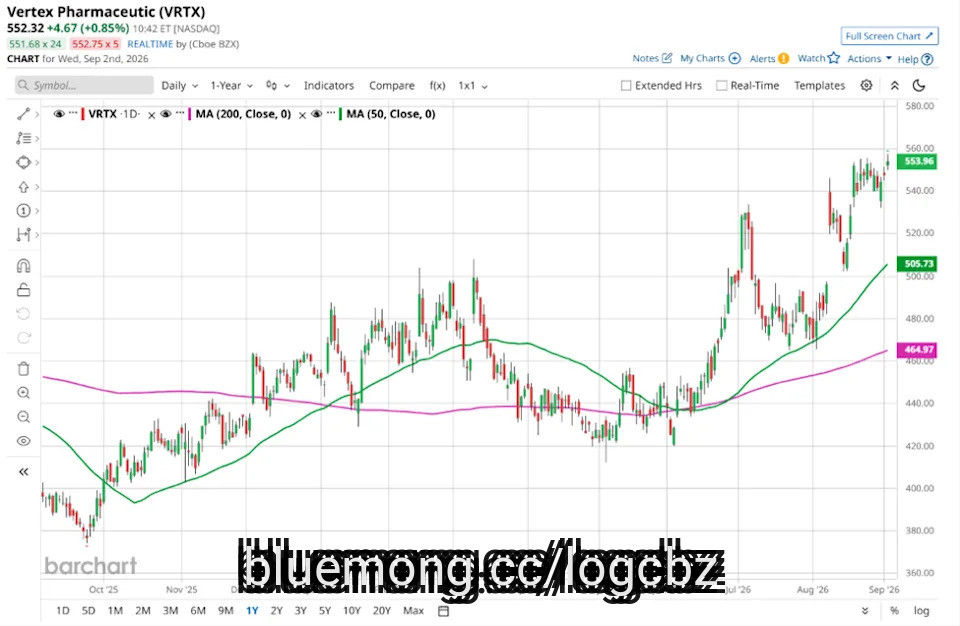
Boston, Massachusetts-based Vertex Pharmaceuticals Incorporated (VRTX) develops and commercializes therapies for treating cystic fibrosis (CF). Valued at $139 billion by market cap, the company invests in scientific innovation to create transformative medicines for people with serious diseases.
Companies worth $10 billion or more are generally described as "large-cap stocks," and VRTX perfectly fits that description, with its market cap exceeding this mark, underscoring its size, influence, and dominance within the biotechnology industry. VRTX derives its primary competitive strength from its global monopoly in CF treatments, anchored by flagship blockbusters like Trikafta/Katori which generate robust cash flow to fuel its high-impact clinical pipeline.
Dear GameStop Stock Fans, Mark Your Calendars for September 8
SMCI vs. CoreWeave: 1 AI Infrastructure Model Has the Bigger Opportunity
Why **** ysts Think Sellas Life Sciences Stock Can Gain 150% From Here
#vrtx #massachusetts
Companies worth $10 billion or more are generally described as "large-cap stocks," and VRTX perfectly fits that description, with its market cap exceeding this mark, underscoring its size, influence, and dominance within the biotechnology industry. VRTX derives its primary competitive strength from its global monopoly in CF treatments, anchored by flagship blockbusters like Trikafta/Katori which generate robust cash flow to fuel its high-impact clinical pipeline.
Dear GameStop Stock Fans, Mark Your Calendars for September 8
SMCI vs. CoreWeave: 1 AI Infrastructure Model Has the Bigger Opportunity
Why **** ysts Think Sellas Life Sciences Stock Can Gain 150% From Here
#vrtx #massachusetts


2 months ago
By Karen Roman
Inventiva S.A. (Nasdaq: IVA) said it designated Chris Benecchi as Chief Operating Officer, having previously served as Chief Executive Officer of Motric Bio (an Aditum Bio company).
Mr. Benecchi will lead the company's operational side as Inventiva comes close to its NATiV3 Phase 3 study results of lanifibranor in MASH, expected for the last quarter of 2026, and also prepare for potential commercialization, it stated.
"As we approach our Phase 3 readout, we are preparing the company for the next stage of its evolution," said Andrew Obenshain, Inventiva's CEO. "Chris brings a valuable combination of commercial, operational and launch experience, with a proven track record of helping organizations bring promising medicines to patients."
Mr. Benecchi has 30 years of biopharmaceutical leadership experience across commercial, operational and enterprise roles, with a record of building organizations, preparing investigational medicines for launch, and leading cross-functional execution in competitive and access-challenged markets, Inventiva said.
#chris #chief #commercial
Inventiva S.A. (Nasdaq: IVA) said it designated Chris Benecchi as Chief Operating Officer, having previously served as Chief Executive Officer of Motric Bio (an Aditum Bio company).
Mr. Benecchi will lead the company's operational side as Inventiva comes close to its NATiV3 Phase 3 study results of lanifibranor in MASH, expected for the last quarter of 2026, and also prepare for potential commercialization, it stated.
"As we approach our Phase 3 readout, we are preparing the company for the next stage of its evolution," said Andrew Obenshain, Inventiva's CEO. "Chris brings a valuable combination of commercial, operational and launch experience, with a proven track record of helping organizations bring promising medicines to patients."
Mr. Benecchi has 30 years of biopharmaceutical leadership experience across commercial, operational and enterprise roles, with a record of building organizations, preparing investigational medicines for launch, and leading cross-functional execution in competitive and access-challenged markets, Inventiva said.
#chris #chief #commercial


2 months ago
Sept 1 (Reuters) - UnitedHealth's insurance unit said on Tuesday that a broad range of conditions will no longer need prior approval, effective October 1, as it aims to eliminate prior authorization for 30% of healthcare services by the end of this year.
Here are the details:
• The reduction spans a broad mix of services across multiple clinical specialties, including cardiology, genetic and laboratory testing, chiropractic care, physical, occupational and speech therapy, orthopedic and musculoskeletal procedures, among others.
• The prior authorization requirements are being eliminated across its commercial plans, Medicare Advantage for older adults and individual insurance under the Affordable Care Act, also known as Obamacare, and some other types of plans.
• Health insurers have been taking measures to simplify their requirements for prior authorization on medicines and medical services after complaints from patients and doctors over excessive paperwork that can delay or even deny needed care.
#prior
Here are the details:
• The reduction spans a broad mix of services across multiple clinical specialties, including cardiology, genetic and laboratory testing, chiropractic care, physical, occupational and speech therapy, orthopedic and musculoskeletal procedures, among others.
• The prior authorization requirements are being eliminated across its commercial plans, Medicare Advantage for older adults and individual insurance under the Affordable Care Act, also known as Obamacare, and some other types of plans.
• Health insurers have been taking measures to simplify their requirements for prior authorization on medicines and medical services after complaints from patients and doctors over excessive paperwork that can delay or even deny needed care.
#prior

2 months ago
North Chicago, Illinois-based AbbVie Inc. (ABBV) is a global, research-driven biopharmaceutical company focused on developing and commercializing medicines for complex and serious diseases. Valued at a market cap of $386.3 billion, its key therapeutic areas include immunology, neuroscience, oncology and aesthetics, with operations spanning more than 75 countries.
Companies with a market capitalization of $200 billion or more are typically referred to as "mega-cap stocks." ABBV fits right into that category, with its market cap exceeding this threshold, reflecting its substantial size and influence in the general drug manufacturers industry. AbbVie combines a large established pharmaceutical portfolio with a rapidly expanding immunology franchise and a broad pipeline.
Wu-Tang Clan Member Raekwon Is a Palantir 'OG,' Visiting Headquarters 16 Years After Receiving His Custom PLTR Jacket
Tesla Just Killed Its Solar Roof After Years of Struggling to Scale. What It Means for TSLA Stock.
Tesla Stock Could Benefit as Trump Locks Down the U.S. Power Grid
#abbvie #abbv #billion
Companies with a market capitalization of $200 billion or more are typically referred to as "mega-cap stocks." ABBV fits right into that category, with its market cap exceeding this threshold, reflecting its substantial size and influence in the general drug manufacturers industry. AbbVie combines a large established pharmaceutical portfolio with a rapidly expanding immunology franchise and a broad pipeline.
Wu-Tang Clan Member Raekwon Is a Palantir 'OG,' Visiting Headquarters 16 Years After Receiving His Custom PLTR Jacket
Tesla Just Killed Its Solar Roof After Years of Struggling to Scale. What It Means for TSLA Stock.
Tesla Stock Could Benefit as Trump Locks Down the U.S. Power Grid
#abbvie #abbv #billion


2 months ago
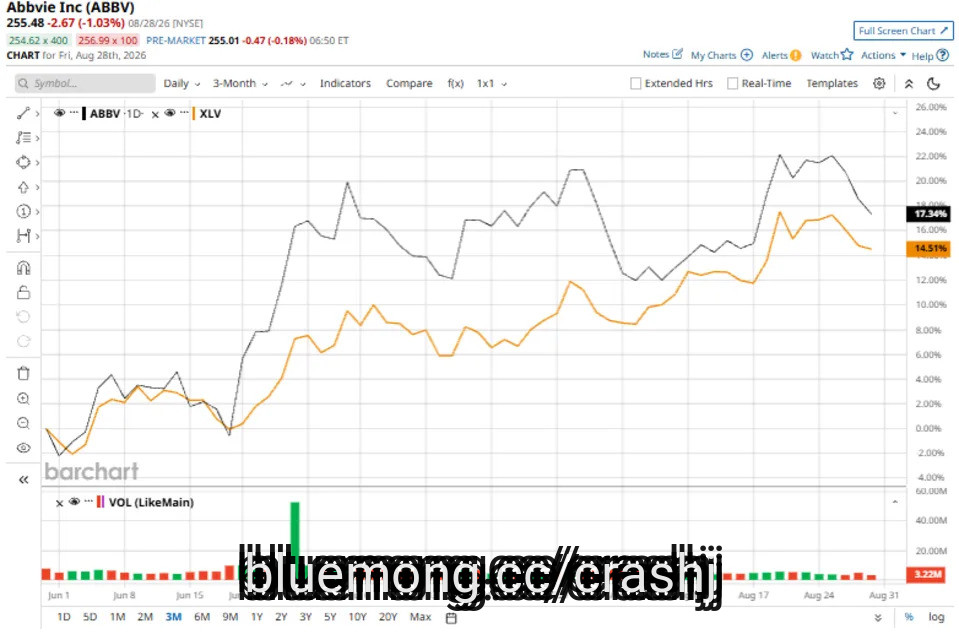
Rahway, New Jersey-based Merck & Co., Inc. (MRK) is a global research-driven biopharmaceutical company focused on developing medicines, vaccines, and animal-health products. Known as MSD outside the U.S. and Canada, Merck operates through two main businesses: Pharmaceuticals and Animal Health. Valued at a market cap of $297 billion, its pharmaceutical portfolio spans oncology, vaccines, cardiometabolic disease, infectious diseases, and other therapeutic areas.
Companies with a market cap of $200 billion or more are typically referred to as "mega-cap stocks." It fits right into that category, with its market cap exceeding this threshold, reflecting its substantial size and influence in the general drug manufacturers industry. Merck combines a dominant oncology franchise, a broad vaccine portfolio, an expanding pipeline of newer medicines, and a large animal-health business. Its key investment consideration is balancing the continued strength of Keytruda and newer products against pressure on mature franchises such as Gardasil and the eventual impact of Keytruda's patent expiry.
Wu-Tang Clan Member Raekwon Is a Palantir 'OG,' Visiting Headquarters 16 Years After Receiving His Custom PLTR Jacket
Tesla Just Killed Its Solar Roof After Years of Struggling to Scale. What It Means for TSLA Stock.
Tesla Stock Could Benefit as Trump Locks Down the U.S. Power Grid
#animal #medicines #products
Companies with a market cap of $200 billion or more are typically referred to as "mega-cap stocks." It fits right into that category, with its market cap exceeding this threshold, reflecting its substantial size and influence in the general drug manufacturers industry. Merck combines a dominant oncology franchise, a broad vaccine portfolio, an expanding pipeline of newer medicines, and a large animal-health business. Its key investment consideration is balancing the continued strength of Keytruda and newer products against pressure on mature franchises such as Gardasil and the eventual impact of Keytruda's patent expiry.
Wu-Tang Clan Member Raekwon Is a Palantir 'OG,' Visiting Headquarters 16 Years After Receiving His Custom PLTR Jacket
Tesla Just Killed Its Solar Roof After Years of Struggling to Scale. What It Means for TSLA Stock.
Tesla Stock Could Benefit as Trump Locks Down the U.S. Power Grid
#animal #medicines #products


2 months ago
Revolution Medicines, Inc. (NASDAQ:RVMD) touched an all-time high above $224 on August 27, 2026, following FDA approval of Rasonque (daraxonrasib) – the first broad RAS-targeted therapy cleared for metastatic pancreatic cancer. Creating a milestone, the approval came roughly five weeks after filing under the agency's national priority voucher. The pivotal RASolute 302 trial nearly doubled median overall survival, to 13.2 months from 6.7 on chemotherapy. While the clinical benefit is substantial, a $47 billion valuation suggests the market had already priced in this success.
RVMD carries essentially no product revenue yet. Its price rests entirely on the future. Evercore ISI has raised the next-year sales estimate for Rasonque to ~$2.4 billion. Additionally, the $47 billion valuation discounts much of a long-term pancreatic opportunity which the Evercore **** yst estimates Rasonque could generate about $15.1 billion in pancreatic-cancer sales by 2034. However, a few details complicate this math. First, the approved label applies strictly to second-line or multiagent-ineligible patients. The front-line indication represents the larger market opportunity but remains pending, meaning a notable portion of the TAM is not yet accessible. Second, RVMD's current valuation also sits well above the $28 billion–$32 billion takeover valuation reportedly discussed with Merck earlier this year. Bulls argue lung and colorectal trials justify the $47 billion beyond pancreatic cancer, though that pipeline potential remains unproven.
That matters because Revolution Medicines must now execute its first commercial launch independently in one of oncology's most challenging indications characterized by short survival, high patient frailty, and a U.S. list price of $39,800 for a 30-day supply. Commercialization will require heavy spending. The second-quarter net loss widened to $644 million, and full-year operating expense guidance increased to between $2.1 and $2.2 billion. While a $3.9 billion cash balance and up to $1.5 billion in committed royalty financing fund the launch, operational execution remains the primary risk.
Insiders were net sellers of roughly $21.5 million over the past 90 days with zero buying. Hedge fund data on the stock is flat. As per the Insider Monkey database, 105 funds held RVMD in the second quarter of 2026, modestly down from 106 in the first, indicating strong conviction among institutional investors. Short interest sits near 6% of float, representing a modest level of bets against the stock.
#first
RVMD carries essentially no product revenue yet. Its price rests entirely on the future. Evercore ISI has raised the next-year sales estimate for Rasonque to ~$2.4 billion. Additionally, the $47 billion valuation discounts much of a long-term pancreatic opportunity which the Evercore **** yst estimates Rasonque could generate about $15.1 billion in pancreatic-cancer sales by 2034. However, a few details complicate this math. First, the approved label applies strictly to second-line or multiagent-ineligible patients. The front-line indication represents the larger market opportunity but remains pending, meaning a notable portion of the TAM is not yet accessible. Second, RVMD's current valuation also sits well above the $28 billion–$32 billion takeover valuation reportedly discussed with Merck earlier this year. Bulls argue lung and colorectal trials justify the $47 billion beyond pancreatic cancer, though that pipeline potential remains unproven.
That matters because Revolution Medicines must now execute its first commercial launch independently in one of oncology's most challenging indications characterized by short survival, high patient frailty, and a U.S. list price of $39,800 for a 30-day supply. Commercialization will require heavy spending. The second-quarter net loss widened to $644 million, and full-year operating expense guidance increased to between $2.1 and $2.2 billion. While a $3.9 billion cash balance and up to $1.5 billion in committed royalty financing fund the launch, operational execution remains the primary risk.
Insiders were net sellers of roughly $21.5 million over the past 90 days with zero buying. Hedge fund data on the stock is flat. As per the Insider Monkey database, 105 funds held RVMD in the second quarter of 2026, modestly down from 106 in the first, indicating strong conviction among institutional investors. Short interest sits near 6% of float, representing a modest level of bets against the stock.
#first


3 months ago
The next few years will test whether Pfizer Inc. (NYSE:PFE) can replace yesterday's blockbusters, and whether Gilead Sciences, Inc. (NASDAQ:GILD) can become more than an HIV company. Pfizer's (NYSE:PFE) newer medicines are gaining traction, but that growth has yet to accelerate the wider business. Gilead (NASDAQ:GILD) is expanding faster, although its performance remains concentrated in one therapeutic area. For investors, this is ultimately a choice between an unfinished turnaround and a stronger growth story still searching for greater breadth.
Pfizer's (NYSE:PFE) strongest result was the performance of its non-COVID portfolio. Revenue excluding Comirnaty and Paxlovid grew 5% operationally, while launched and acquired products generated $3.2 billion and increased 18% operationally. Growth also came from several franchises. Padcev revenue rose 23% operationally to $667 million, supported by increased market share in bladder cancer. The Vyndaqel family generated $1.76 billion, up 8% operationally, while Lorbrena grew 37% operationally. These products give Pfizer more than one avenue for rebuilding revenue as COVID-related demand declines.
Pfizer (NYSE:PFE) lowered its 2026 COVID-product forecast from approximately $5 billion to $4 billion after low infection levels weighed on Paxlovid utilization. Nevertheless, stronger-than-expected non-COVID sales allowed the company to raise the midpoint of its total revenue guidance by $500 million. Cost reductions provide additional support for the company. Pfizer (NYSE:PFE) expects approximately $6.7 billion in savings from its cost-realignment program through 2029. A separate manufacturing-optimization program is expected to generate another $3 billion, bringing anticipated savings across the two programs to approximately $9.7 billion. This leaner cost base could help Pfizer (NYSE:PFE) preserve margins and continue investing in areas such as oncology and obesity.
Gilead (NASDAQ:GILD), however, is currently delivering much stronger underlying growth. Product sales excluding Veklury increased 10% to $7.6 billion, and HIV sales rose 12% to $5.7 billion, with Biktarvy revenue increasing 7% to $3.8 billion and Descovy sales climbing 48% to $967 million. Yeztugo, Gilead's (NASDAQ:GILD) twice-yearly injectable HIV-prevention medicine, contributed $232 million as its launch gained momentum. The product adds a potentially important growth driver to an already dominant HIV portfolio.
Growth, however, was not confined to HIV alone, as liver-disease sales increased 10% to $877 million, while Livdelzi revenue more than doubled from $78 million to $167 million. Trodelvy sales rose 26% to $457 million, providing further evidence that Gilead (NASDAQ:GILD) is building a meaningful oncology franchise. Management subsequently raised its 2026 product-sales outlook to $30.1–$30.4 billion and increased guidance for product sales excluding Veklury to $29.8–$30.1 billion.
#NYSE #million #gild
Pfizer's (NYSE:PFE) strongest result was the performance of its non-COVID portfolio. Revenue excluding Comirnaty and Paxlovid grew 5% operationally, while launched and acquired products generated $3.2 billion and increased 18% operationally. Growth also came from several franchises. Padcev revenue rose 23% operationally to $667 million, supported by increased market share in bladder cancer. The Vyndaqel family generated $1.76 billion, up 8% operationally, while Lorbrena grew 37% operationally. These products give Pfizer more than one avenue for rebuilding revenue as COVID-related demand declines.
Pfizer (NYSE:PFE) lowered its 2026 COVID-product forecast from approximately $5 billion to $4 billion after low infection levels weighed on Paxlovid utilization. Nevertheless, stronger-than-expected non-COVID sales allowed the company to raise the midpoint of its total revenue guidance by $500 million. Cost reductions provide additional support for the company. Pfizer (NYSE:PFE) expects approximately $6.7 billion in savings from its cost-realignment program through 2029. A separate manufacturing-optimization program is expected to generate another $3 billion, bringing anticipated savings across the two programs to approximately $9.7 billion. This leaner cost base could help Pfizer (NYSE:PFE) preserve margins and continue investing in areas such as oncology and obesity.
Gilead (NASDAQ:GILD), however, is currently delivering much stronger underlying growth. Product sales excluding Veklury increased 10% to $7.6 billion, and HIV sales rose 12% to $5.7 billion, with Biktarvy revenue increasing 7% to $3.8 billion and Descovy sales climbing 48% to $967 million. Yeztugo, Gilead's (NASDAQ:GILD) twice-yearly injectable HIV-prevention medicine, contributed $232 million as its launch gained momentum. The product adds a potentially important growth driver to an already dominant HIV portfolio.
Growth, however, was not confined to HIV alone, as liver-disease sales increased 10% to $877 million, while Livdelzi revenue more than doubled from $78 million to $167 million. Trodelvy sales rose 26% to $457 million, providing further evidence that Gilead (NASDAQ:GILD) is building a meaningful oncology franchise. Management subsequently raised its 2026 product-sales outlook to $30.1–$30.4 billion and increased guidance for product sales excluding Veklury to $29.8–$30.1 billion.
#NYSE #million #gild


3 months ago
Drugmaker Bristol-Myers Squibb Company (NYSE:BMY) is putting real money behind its confidence in American manufacturing. On August 10, the company said it will spend about $2.3 billion on a new plant in Houston, part of a larger $40 billion U.S. investment pledge.
On the very same day, British regulators cleared Eli Lilly and Company (NYSE:LLY)'s weight-loss pill Foundayo for both weight management and type 2 diabetes, making the UK the first country in Europe to approve the drug.
Bristol-Myers Squibb Company (NYSE:BMY)'s new Houston campus, roughly 600,000 square feet, will churn out everything from small-molecule medicines to more complex biologics and antibody-drug conjugates. It is expected to create close to 500 skilled jobs and about 2,000 construction jobs between 2027 and 2030. CEO Christopher Boerner framed it as a vote of confidence in America's biopharma future. The timing lines up with a broader industry trend: drugmakers from Lilly to Johnson & Johnson to Pfizer are all racing to build more in the U.S. as tariff pressure from the Trump administration ramps up.
Eli Lilly took the opposite direction this week, expanding outward instead of inward. Foundayo's UK approval opens a major new market, even though the pill isn't covered by the National Health Service yet and still trails Novo Nordisk's Wegovy pill there.
So which strategy actually serves shareholders better, building strength at home or chasing growth abroad?
#NYSE #myers #squibb #confidence
On the very same day, British regulators cleared Eli Lilly and Company (NYSE:LLY)'s weight-loss pill Foundayo for both weight management and type 2 diabetes, making the UK the first country in Europe to approve the drug.
Bristol-Myers Squibb Company (NYSE:BMY)'s new Houston campus, roughly 600,000 square feet, will churn out everything from small-molecule medicines to more complex biologics and antibody-drug conjugates. It is expected to create close to 500 skilled jobs and about 2,000 construction jobs between 2027 and 2030. CEO Christopher Boerner framed it as a vote of confidence in America's biopharma future. The timing lines up with a broader industry trend: drugmakers from Lilly to Johnson & Johnson to Pfizer are all racing to build more in the U.S. as tariff pressure from the Trump administration ramps up.
Eli Lilly took the opposite direction this week, expanding outward instead of inward. Foundayo's UK approval opens a major new market, even though the pill isn't covered by the National Health Service yet and still trails Novo Nordisk's Wegovy pill there.
So which strategy actually serves shareholders better, building strength at home or chasing growth abroad?
#NYSE #myers #squibb #confidence


3 months ago
Headquartered in Boston, Massachusetts, Vertex Pharmaceuticals Incorporated (VRTX) is a biotechnology company that develops innovative medicines for serious diseases, including cystic fibrosis (CF), sickle cell disease, beta thalassemia, and acute pain.
Moreover, the company is building beyond its approved treatments with potential therapies targeting genetic and other complex conditions, including kidney, metabolic, and neuromuscular diseases.
Here Is How to Play Tesla Stock After Its Robotaxi Breakthrough
Micron Stock Pullback: High Growth, Low Multiple Support Upside
Strategy Just Sold $334 Million in Shares to Build Cash and Buy Back Preferred Stock. This Hits MSTR Stock Holders With Dilution.
#including #headquartered
Moreover, the company is building beyond its approved treatments with potential therapies targeting genetic and other complex conditions, including kidney, metabolic, and neuromuscular diseases.
Here Is How to Play Tesla Stock After Its Robotaxi Breakthrough
Micron Stock Pullback: High Growth, Low Multiple Support Upside
Strategy Just Sold $334 Million in Shares to Build Cash and Buy Back Preferred Stock. This Hits MSTR Stock Holders With Dilution.
#including #headquartered


3 months ago
By Karen Roman
Fulcrum Therapeutics, Inc. (Nasdaq: FULC) said it is merging with Slate Medicines, Inc. to advance next-generation therapeutics to treat migraine and other headache disorders, with the combining company operating as Slate Medicines, Inc. and trading on Nasdaq under the ticker "SLTE."
Slate reported it secured an oversubscribed concurrent private placement of $245 million from healthcare investors led by Frazier Life Sciences and including Forbion, RA Capital Management, and Deep Track Capital, among other firms. The new company's cash balance is expected to fund operations into 2029, it said.
"Migraine remains one of the most prevalent and disabling neurological diseases, yet millions of patients continue to be underserved by existing therapies," said Gregory Oakes, Slate Medicines CEO. "This merger and the related financing are expected to provide the resources to advance SLTE-1009, along with the rest of our pipeline, through potentially meaningful clinical milestones."
Contact:
#karen
Fulcrum Therapeutics, Inc. (Nasdaq: FULC) said it is merging with Slate Medicines, Inc. to advance next-generation therapeutics to treat migraine and other headache disorders, with the combining company operating as Slate Medicines, Inc. and trading on Nasdaq under the ticker "SLTE."
Slate reported it secured an oversubscribed concurrent private placement of $245 million from healthcare investors led by Frazier Life Sciences and including Forbion, RA Capital Management, and Deep Track Capital, among other firms. The new company's cash balance is expected to fund operations into 2029, it said.
"Migraine remains one of the most prevalent and disabling neurological diseases, yet millions of patients continue to be underserved by existing therapies," said Gregory Oakes, Slate Medicines CEO. "This merger and the related financing are expected to provide the resources to advance SLTE-1009, along with the rest of our pipeline, through potentially meaningful clinical milestones."
Contact:
#karen


3 months ago
Fulcrum Therapeutics and Slate Medicines have signed a definitive agreement to merge in an all-stock transaction backed by a $245m private placement financing from a syndicate of healthcare investors.
The combined organisation, which will operate as Slate Medicines, is expected to be listed on Nasdaq under the "SLTE" ticker symbol.
Following completion of the merger, the new entity will focus on developing Slate's pipeline of migraine treatments, with SLTE-1009 as its lead candidate.
This clinical-stage subcutaneous anti- pituitary adenylate cyclase-activating peptide / vasoactive intestinal peptide (PACAP/VIP) monoclonal antibody is intended for the prevention of migraine and other headache disorders.
The financing is expected to support operations through 2029, enabling progress of SLTE-1009 through Phase I studies in healthy volunteers and a Phase II dose-range finding study in patients with migraine.
#phase #expected #peptide #therapeutics
The combined organisation, which will operate as Slate Medicines, is expected to be listed on Nasdaq under the "SLTE" ticker symbol.
Following completion of the merger, the new entity will focus on developing Slate's pipeline of migraine treatments, with SLTE-1009 as its lead candidate.
This clinical-stage subcutaneous anti- pituitary adenylate cyclase-activating peptide / vasoactive intestinal peptide (PACAP/VIP) monoclonal antibody is intended for the prevention of migraine and other headache disorders.
The financing is expected to support operations through 2029, enabling progress of SLTE-1009 through Phase I studies in healthy volunteers and a Phase II dose-range finding study in patients with migraine.
#phase #expected #peptide #therapeutics

3 months ago
Eli Lilly and Company (NYSE:LLY) cleared a notable regulatory hurdle on August 10, when Britain's drug regulator authorized the company's oral GLP-1 drug orforglipron, becoming the first country in Europe to approve the pill. Shares of LLY increased more than 2% in response to the announcement, a modest but insightful reaction for a company whose weight-loss franchise has become the single most important driver of its market value.
The UK's Medicines and Healthcare Products Regulatory Agency approved orforglipron, offered under the brand name Foundayo, for weight loss and maintenance in obese adults, as well as select overweight individuals with at least one weight-related health condition. The approval also addresses increasing blood sugar control in people with type 2 diabetes.
What sets Foundayo apart from Lilly's other weight-loss medications, as well as the majority of the GLP-1 category in general, is the format. Unlike injectable drugs like Lilly's Zepbound or Novo Nordisk A/S (NYSE:NVO)'s Ozempic, Foundayo is a small, non-peptide GLP-1 receptor agonist that is taken as a single daily tablet. It can also be taken at any time with no food or water restrictions, making it a far more convenient regimen than some oral peptide alternatives that require fasting windows around dosing.
The clinical data that supports the approval is strong. In the ATTAIN-1 trial, which tracked 3,127 individuals with obesity for 72 weeks, participants on the 36 mg dose lost an average of 11.2% of their body weight, as opposed to 2.1% on placebo, and more than half of those on that dose lost at least 10%.
The authorization is crucial, but it is not the final step. Foundayo is not currently available through the NHS in the UK, and the drug's journey to that larger market is through the National Institute for Health and Care Excellence, which is completing its own cost-effectiveness study, with a decision expected on November 18. Until NICE decides, UK patients seeking the medicine will have to pay out of pocket or get it privately, a scenario that is already playing out with competing products in the category.
#foundayo #loss #NYSE #regulatory
The UK's Medicines and Healthcare Products Regulatory Agency approved orforglipron, offered under the brand name Foundayo, for weight loss and maintenance in obese adults, as well as select overweight individuals with at least one weight-related health condition. The approval also addresses increasing blood sugar control in people with type 2 diabetes.
What sets Foundayo apart from Lilly's other weight-loss medications, as well as the majority of the GLP-1 category in general, is the format. Unlike injectable drugs like Lilly's Zepbound or Novo Nordisk A/S (NYSE:NVO)'s Ozempic, Foundayo is a small, non-peptide GLP-1 receptor agonist that is taken as a single daily tablet. It can also be taken at any time with no food or water restrictions, making it a far more convenient regimen than some oral peptide alternatives that require fasting windows around dosing.
The clinical data that supports the approval is strong. In the ATTAIN-1 trial, which tracked 3,127 individuals with obesity for 72 weeks, participants on the 36 mg dose lost an average of 11.2% of their body weight, as opposed to 2.1% on placebo, and more than half of those on that dose lost at least 10%.
The authorization is crucial, but it is not the final step. Foundayo is not currently available through the NHS in the UK, and the drug's journey to that larger market is through the National Institute for Health and Care Excellence, which is completing its own cost-effectiveness study, with a decision expected on November 18. Until NICE decides, UK patients seeking the medicine will have to pay out of pocket or get it privately, a scenario that is already playing out with competing products in the category.
#foundayo #loss #NYSE #regulatory

3 months ago
On July 28, GSK plc (NYSE:GSK) reported its second-quarter financial results, delivering strong core operational performance and showcasing steady commercial momentum. The firm's total Q2 turnover reached £8.4 billion, marking a 5% increase year-over-year at constant exchange rates (CER), while Core operating profit climbed 7% CER to £2.80 billion and Core EPS rose 9% CER to 50.5p. Growth was primarily fueled by double-digit gains in Specialty Medicines (+14% CER to £3.8 billion) and robust momentum in Vaccines (+8% CER to £2.3 billion). However, Total operating profit dropped 75% CER to £481 million, hit by a £1.3 billion non-cash impairment charge following the decision to discontinue camlipixant after CALM-1/2 Phase III trial results.
Alongside earnings, GSK outlined major strategic plans to accelerate its R&D roadmap. Management announced it expects 20+ Phase III trial starts in 2026, up from its previous projection of 10, focusing on 7 key **** et accelerations across 18 indications in oncology, respiratory, hepatology, and vaccines.
To support this pipeline expansion and fund late-stage development, GSK initiated its new 'Accelerate Growth' restructuring program. The three-year initiative aims to generate £1.9 billion in annual cost savings by 2029 for total costs of £2.4 billion, with savings earmarked for pipeline reinvestment and supporting operating margins through the dolutegravir loss-of-exclusivity period (2028–2030). Additionally, ViiV Healthcare, GSK's majority-owned HIV business, presented positive Phase IIIb VOGUE study data, reinforcing the efficacy and real-world utility of its long-acting HIV regimen portfolio.
This brings up a key question: Is GSK plc (NYSE:GSK)'s pipeline acceleration and core business growth enough to offset upcoming patent expiries, or does statutory margin volatility signal deeper pipeline execution risks ahead?
Bullish **** ysts highlight that GSK plc's core business model continues to show high execution efficiency, supported by key product launches and pipeline catalysts over the next 12 months that build confidence in reaching its £40 billion sales target by 2031. A critical driver is GSK plc's active business development strategy, illustrated by the acquisition of efimosfermin, which expands its hepatology portfolio, provides optionality for related liver diseases, and seamlessly aligns with corporate M&A goals.
#phase #business #operating
Alongside earnings, GSK outlined major strategic plans to accelerate its R&D roadmap. Management announced it expects 20+ Phase III trial starts in 2026, up from its previous projection of 10, focusing on 7 key **** et accelerations across 18 indications in oncology, respiratory, hepatology, and vaccines.
To support this pipeline expansion and fund late-stage development, GSK initiated its new 'Accelerate Growth' restructuring program. The three-year initiative aims to generate £1.9 billion in annual cost savings by 2029 for total costs of £2.4 billion, with savings earmarked for pipeline reinvestment and supporting operating margins through the dolutegravir loss-of-exclusivity period (2028–2030). Additionally, ViiV Healthcare, GSK's majority-owned HIV business, presented positive Phase IIIb VOGUE study data, reinforcing the efficacy and real-world utility of its long-acting HIV regimen portfolio.
This brings up a key question: Is GSK plc (NYSE:GSK)'s pipeline acceleration and core business growth enough to offset upcoming patent expiries, or does statutory margin volatility signal deeper pipeline execution risks ahead?
Bullish **** ysts highlight that GSK plc's core business model continues to show high execution efficiency, supported by key product launches and pipeline catalysts over the next 12 months that build confidence in reaching its £40 billion sales target by 2031. A critical driver is GSK plc's active business development strategy, illustrated by the acquisition of efimosfermin, which expands its hepatology portfolio, provides optionality for related liver diseases, and seamlessly aligns with corporate M&A goals.
#phase #business #operating

3 months ago
Parsippany, New Jersey-based Zoetis Inc. (ZTS) discovers, develops, manufactures, and commercializes medicines, vaccines, diagnostic products and services, biodevices, genetic tests, and precision animal health solutions for the animal health industry. Valued at $30.5 billion by market cap, the company also offers parasiticides, vaccines, dermatology, anti-infectives, pain and sedation, other pharmaceutical, and animal health diagnostics.
Shares of this world's leading animal health company have notably underperformed the broader market over the past year. ZTS has declined 50.4% over this time frame, while the broader S&P 500 Index ($SPX) has rallied nearly 22.4%. In 2026, ZTS stock is down 41.9%, compared to the SPX's 13.3% rise on a YTD basis.
Don't ***** ume Micron Will Share SanDisk's Fate. Here's Why.
The Nvidia-SpaceX Deal Is Sending a Clear Signal on AI Dominance
Rocket Lab Investors Have Plenty to Cheer Ahead of Q2 Earnings Today
#market
Shares of this world's leading animal health company have notably underperformed the broader market over the past year. ZTS has declined 50.4% over this time frame, while the broader S&P 500 Index ($SPX) has rallied nearly 22.4%. In 2026, ZTS stock is down 41.9%, compared to the SPX's 13.3% rise on a YTD basis.
Don't ***** ume Micron Will Share SanDisk's Fate. Here's Why.
The Nvidia-SpaceX Deal Is Sending a Clear Signal on AI Dominance
Rocket Lab Investors Have Plenty to Cheer Ahead of Q2 Earnings Today
#market