

26 days ago
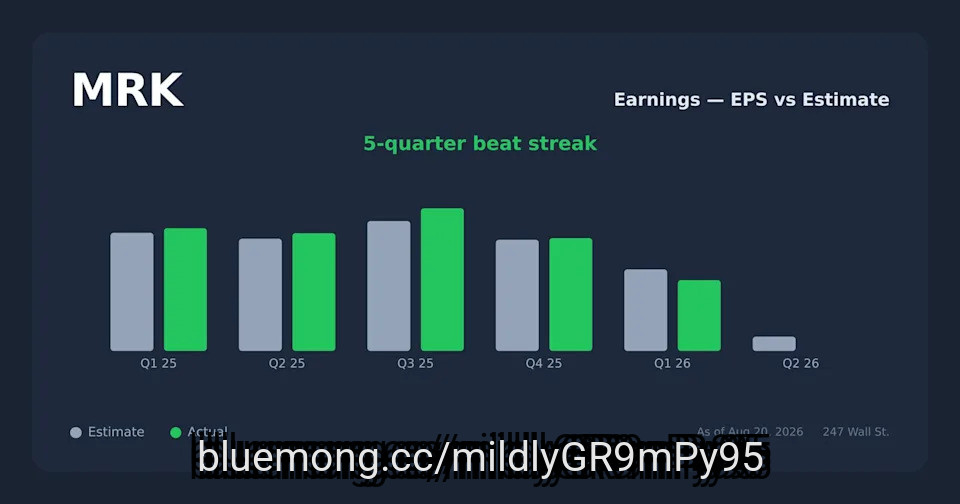
Merck (MRK) stock returned about 87% over the past twelve months, climbing from roughly $79 to about $147. Nothing in the year's results looks like that. The medicines Merck sells today grew at their usual pace. Investors spent the year repricing what comes next.
Revenue over the trailing twelve months was $66.6 billion, up 4.6% and in line with its own three-year pace. Profitability did not follow. Its operating margin over the same twelve months was 10.5%, versus a three-year average of 22.4%.
Most of that gap is one purchase. Merck took a $5.7 billion charge in the second quarter of 2026, about 9% of a year's sales. It bought Terns Pharmaceuticals, and with it MK-4208, a candidate for chronic myeloid leukemia. The bill hits earnings now and the medicine arrives later.
The proof matters because of the risk hanging over this stock. The KEYTRUDA family was just over half of Merck's revenue in the second quarter of 2026. The company is openly planning for the end of that exclusivity when Keytruda loses primary U.S. patent protection in 2028. Management describes the stretch as more of a hill than a cliff, with a shallow dip and a fast return to growth.
Johnson & Johnson (JNJ) returned 56% over the same twelve months and Pfizer (PFE) 23%, so a good year for pharmaceuticals explains some of this but not Merck's lead. What separated Merck was evidence. The FDA approved LIPFENDRA, the first and only oral PCSK9 inhibitor. In the CORALreef Lipids trial it lowered LDL cholesterol by up to 60% when added to a statin.
#year #johnson
Revenue over the trailing twelve months was $66.6 billion, up 4.6% and in line with its own three-year pace. Profitability did not follow. Its operating margin over the same twelve months was 10.5%, versus a three-year average of 22.4%.
Most of that gap is one purchase. Merck took a $5.7 billion charge in the second quarter of 2026, about 9% of a year's sales. It bought Terns Pharmaceuticals, and with it MK-4208, a candidate for chronic myeloid leukemia. The bill hits earnings now and the medicine arrives later.
The proof matters because of the risk hanging over this stock. The KEYTRUDA family was just over half of Merck's revenue in the second quarter of 2026. The company is openly planning for the end of that exclusivity when Keytruda loses primary U.S. patent protection in 2028. Management describes the stretch as more of a hill than a cliff, with a shallow dip and a fast return to growth.
Johnson & Johnson (JNJ) returned 56% over the same twelve months and Pfizer (PFE) 23%, so a good year for pharmaceuticals explains some of this but not Merck's lead. What separated Merck was evidence. The FDA approved LIPFENDRA, the first and only oral PCSK9 inhibitor. In the CORALreef Lipids trial it lowered LDL cholesterol by up to 60% when added to a statin.
#year #johnson


26 days ago
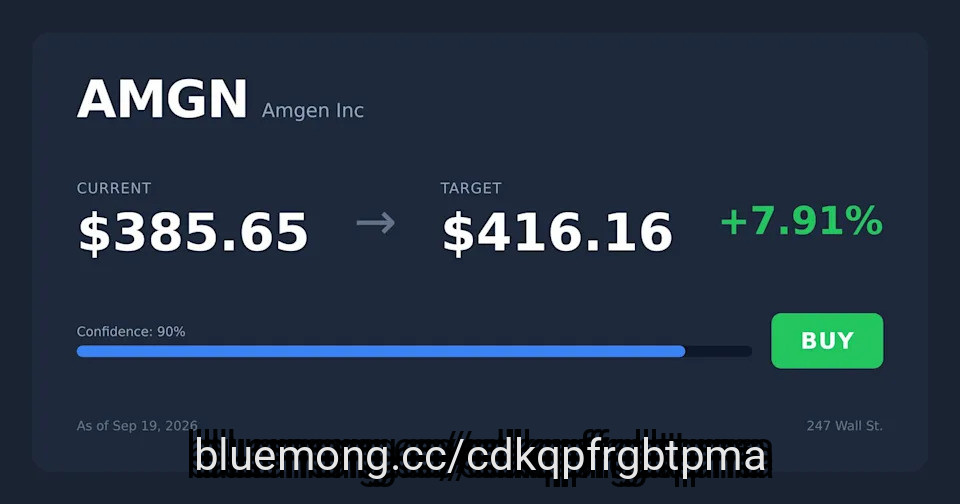
Amgen (AMGN) yields 2.6% with a $10.08 annualized payout, topping Merck (MRK) at 2.29%, and has raised its dividend 6% annually versus Merck's smaller step-ups.
Amgen's 17 billion-dollar products and $3.5B quarterly free cash flow dwarf Merck's reliance on a single Keytruda franchise facing peak penetration.
Merck absorbed a $5.7B acquisition charge that pushed Q2 earnings to a loss, while Amgen raised 2026 EPS guidance to as high as $23.50.
Just released. Our ***** ysts combed the entire stock market and named the ten best stocks to buy right now, and Merck didn't make the cut. Enter your email to see the names that beat MRK. The report is free. Enter your email and see if any of your stocks made the cut.
For a retirement portfolio that leans on pharma dividends, the choice between Amgen (NASDAQ:AMGN) and Merck (NYSE:MRK) comes down to one question: which check is more likely to keep getting bigger through the next wave of patent expirations? Both companies deliver quarterly income today. Only one has the coverage, the growth cadence, and the portfolio breadth to keep raising through the cliff.
#merck #amgen
Amgen's 17 billion-dollar products and $3.5B quarterly free cash flow dwarf Merck's reliance on a single Keytruda franchise facing peak penetration.
Merck absorbed a $5.7B acquisition charge that pushed Q2 earnings to a loss, while Amgen raised 2026 EPS guidance to as high as $23.50.
Just released. Our ***** ysts combed the entire stock market and named the ten best stocks to buy right now, and Merck didn't make the cut. Enter your email to see the names that beat MRK. The report is free. Enter your email and see if any of your stocks made the cut.
For a retirement portfolio that leans on pharma dividends, the choice between Amgen (NASDAQ:AMGN) and Merck (NYSE:MRK) comes down to one question: which check is more likely to keep getting bigger through the next wave of patent expirations? Both companies deliver quarterly income today. Only one has the coverage, the growth cadence, and the portfolio breadth to keep raising through the cliff.
#merck #amgen



28 days ago
Merck (MRK) was at the center of a major cancer-treatment update in August. Specifically, the drugmaker and Moderna (MRNA) said their personalized mRNA cancer therapy, intismeran autogene, delivered positive results in a Phase 3 study involving 1,137 patients with high-risk melanoma.
Used with Keytruda, the treatment reduced the risk of cancer returning or causing death and improved distant metastasis-free survival compared with Keytruda alone. Merck shares jumped 11% on the news. That was a big move for the stock, which had posted only five single-day gains of more than 5% over the past year.
This High-Yield Construction Stock Just Raised Its Dividend by 40%
Dear Intuit Stock Fans, Mark Your Calendars for September 17
This Dividend Stock Is Staging a Turnaround in 2026 and Pays More Than 2.4%
#Dividend #high #treatment #risk
Used with Keytruda, the treatment reduced the risk of cancer returning or causing death and improved distant metastasis-free survival compared with Keytruda alone. Merck shares jumped 11% on the news. That was a big move for the stock, which had posted only five single-day gains of more than 5% over the past year.
This High-Yield Construction Stock Just Raised Its Dividend by 40%
Dear Intuit Stock Fans, Mark Your Calendars for September 17
This Dividend Stock Is Staging a Turnaround in 2026 and Pays More Than 2.4%
#Dividend #high #treatment #risk




1 month ago
Rahway, New Jersey-based Merck & Co., Inc. (MRK) is a global research-driven biopharmaceutical company focused on developing medicines, vaccines, and animal-health products. Known as MSD outside the U.S. and Canada, Merck operates through two main businesses: Pharmaceuticals and Animal Health. Valued at a market cap of $297 billion, its pharmaceutical portfolio spans oncology, vaccines, cardiometabolic disease, infectious diseases, and other therapeutic areas.
Companies with a market cap of $200 billion or more are typically referred to as "mega-cap stocks." It fits right into that category, with its market cap exceeding this threshold, reflecting its substantial size and influence in the general drug manufacturers industry. Merck combines a dominant oncology franchise, a broad vaccine portfolio, an expanding pipeline of newer medicines, and a large animal-health business. Its key investment consideration is balancing the continued strength of Keytruda and newer products against pressure on mature franchises such as Gardasil and the eventual impact of Keytruda's patent expiry.
Wu-Tang Clan Member Raekwon Is a Palantir 'OG,' Visiting Headquarters 16 Years After Receiving His Custom PLTR Jacket
Tesla Just Killed Its Solar Roof After Years of Struggling to Scale. What It Means for TSLA Stock.
Tesla Stock Could Benefit as Trump Locks Down the U.S. Power Grid
#animal #medicines #products
Companies with a market cap of $200 billion or more are typically referred to as "mega-cap stocks." It fits right into that category, with its market cap exceeding this threshold, reflecting its substantial size and influence in the general drug manufacturers industry. Merck combines a dominant oncology franchise, a broad vaccine portfolio, an expanding pipeline of newer medicines, and a large animal-health business. Its key investment consideration is balancing the continued strength of Keytruda and newer products against pressure on mature franchises such as Gardasil and the eventual impact of Keytruda's patent expiry.
Wu-Tang Clan Member Raekwon Is a Palantir 'OG,' Visiting Headquarters 16 Years After Receiving His Custom PLTR Jacket
Tesla Just Killed Its Solar Roof After Years of Struggling to Scale. What It Means for TSLA Stock.
Tesla Stock Could Benefit as Trump Locks Down the U.S. Power Grid
#animal #medicines #products



2 months ago
Tempus AI, Inc. (NASDAQ:TEM) rallied following a melanoma breakthrough reported by Moderna and Merck. The companies said their Phase 3 INTerpath-001 trial met its recurrence-free survival endpoint for the personalized cancer therapy intismeran autogene, also known as V940, combined with Keytruda. Detailed trial data remain pending. The read-through came from Personalis, which has supported the V940 clinical-development program since its inception. Tempus agreed in July to a pending acquisition of Personalis at a $1.5 billion enterprise value, net of Tempus's existing stake. The question for Tempus AI, Inc. (NASDAQ:TEM) is whether the result validates the acquisition or merely confirms that one Personalis platform is strategically relevant to personalized cancer therapy.
Personalis uses ImmunoID NeXT to sequence tumor information for personalized vaccine development. That technology is distinct from NeXT Personal, the company's tumor-informed molecular residual disease test and the central strategic target of the acquisition. For Tempus AI, Inc. (NASDAQ:TEM), the clinical result validates Personalis's sequencing capabilities without establishing the economics of either product.
Tempus AI, Inc. (NASDAQ:TEM) is acquiring a company that has supported the V940 program from its beginning. A successful Phase 3 endpoint could strengthen Personalis's credibility with biopharma customers and create additional sequencing opportunities as drugmakers pursue individualized therapies across more tumor types.
The acquisition also reaches beyond vaccine sequencing. Tempus AI, Inc. (NASDAQ:TEM) has commercialized NeXT Personal since 2023. The MRD test searches for small traces of circulating tumor DNA after treatment, helping clinicians monitor response and identify possible recurrence before it becomes visible through conventional imaging.
Tempus AI, Inc. (NASDAQ:TEM) reported 9,000 total MRD tests in the second quarter, up from 6,500 sequentially. Personalis generated finalized quarterly revenue of $22.357 million and delivered 10,384 clinical tests, with volume rising 33% sequentially. NeXT Personal also has Medicare coverage in three indications, giving the pending transaction a commercial foundation independent of V940.
#v940 #acquisition #tumor
Personalis uses ImmunoID NeXT to sequence tumor information for personalized vaccine development. That technology is distinct from NeXT Personal, the company's tumor-informed molecular residual disease test and the central strategic target of the acquisition. For Tempus AI, Inc. (NASDAQ:TEM), the clinical result validates Personalis's sequencing capabilities without establishing the economics of either product.
Tempus AI, Inc. (NASDAQ:TEM) is acquiring a company that has supported the V940 program from its beginning. A successful Phase 3 endpoint could strengthen Personalis's credibility with biopharma customers and create additional sequencing opportunities as drugmakers pursue individualized therapies across more tumor types.
The acquisition also reaches beyond vaccine sequencing. Tempus AI, Inc. (NASDAQ:TEM) has commercialized NeXT Personal since 2023. The MRD test searches for small traces of circulating tumor DNA after treatment, helping clinicians monitor response and identify possible recurrence before it becomes visible through conventional imaging.
Tempus AI, Inc. (NASDAQ:TEM) reported 9,000 total MRD tests in the second quarter, up from 6,500 sequentially. Personalis generated finalized quarterly revenue of $22.357 million and delivered 10,384 clinical tests, with volume rising 33% sequentially. NeXT Personal also has Medicare coverage in three indications, giving the pending transaction a commercial foundation independent of V940.
#v940 #acquisition #tumor


2 months ago
BioNTech SE (NASDAQ:BNTX) rallied following the first positive interim Phase 3 topline result for a personalized mRNA cancer therapy. Moderna and Merck said intismeran, combined with Keytruda, significantly improved recurrence-free and distant metastasis-free survival in patients with surgically removed high-risk melanoma. The result lifted other mRNA developers because it provided the strongest evidence yet that the technology can work against cancer in a large late-stage trial. For BioNTech SE (NASDAQ:BNTX), however, the rally raises a harder question: does validation of the therapeutic class meaningfully improve the odds for its own candidates, or has the market moved ahead of company-specific evidence?
The distinction matters. Moderna's intismeran is individually designed around mutations found in each patient's tumor. BioNTech SE (NASDAQ:BNTX) is awaiting an interim ******* ysis from the Phase 3 portion of AHEAD-MERIT, which tests BNT113 with pembrolizumab in first-line unresectable recurrent or metastatic HPV16-positive, PD-L1-positive head-and-neck squamous cell carcinoma. BNT113 is an off-the-shelf FixVac therapy encoding the HPV16 E6 and E7 oncoproteins. Different antigens, manufacturing approaches, cancer types and treatment settings prevent Moderna's result from functioning as a direct clinical read-through.
Still, BioNTech SE (NASDAQ:BNTX) has more than one attempt at building an oncology franchise. The company has 14 ongoing pivotal trials across mRNA immunotherapies, immunomodulators and antibody-drug conjugates. It expects three late-stage readouts during 2026, including the BNT113 interim ******* ysis, and ended June with €16.6 billion in cash, cash equivalents and security investments.
The bull case for BioNTech SE (NASDAQ:BNTX) is that Moderna and Merck have reduced skepticism around the broader platform. Their trial enrolled 1,137 patients and met its primary endpoint of recurrence-free survival and a secondary endpoint of distant metastasis-free survival, with no new safety concerns reported. The result shows that an mRNA therapy can add meaningful benefit to a checkpoint inhibitor in Phase 3.
BioNTech also has a personalized program that more closely resembles intismeran. Autogene cevumeran, partnered with Genentech, is being studied in randomized Phase 2 trials in pancreatic and colorectal cancer. Meanwhile, BNT113 has FDA Fast Track designation and could provide BioNTech's own pivotal mRNA evidence. The company's cash position gives it room to fund these programs and absorb failures elsewhere in the portfolio.
#biontech
The distinction matters. Moderna's intismeran is individually designed around mutations found in each patient's tumor. BioNTech SE (NASDAQ:BNTX) is awaiting an interim ******* ysis from the Phase 3 portion of AHEAD-MERIT, which tests BNT113 with pembrolizumab in first-line unresectable recurrent or metastatic HPV16-positive, PD-L1-positive head-and-neck squamous cell carcinoma. BNT113 is an off-the-shelf FixVac therapy encoding the HPV16 E6 and E7 oncoproteins. Different antigens, manufacturing approaches, cancer types and treatment settings prevent Moderna's result from functioning as a direct clinical read-through.
Still, BioNTech SE (NASDAQ:BNTX) has more than one attempt at building an oncology franchise. The company has 14 ongoing pivotal trials across mRNA immunotherapies, immunomodulators and antibody-drug conjugates. It expects three late-stage readouts during 2026, including the BNT113 interim ******* ysis, and ended June with €16.6 billion in cash, cash equivalents and security investments.
The bull case for BioNTech SE (NASDAQ:BNTX) is that Moderna and Merck have reduced skepticism around the broader platform. Their trial enrolled 1,137 patients and met its primary endpoint of recurrence-free survival and a secondary endpoint of distant metastasis-free survival, with no new safety concerns reported. The result shows that an mRNA therapy can add meaningful benefit to a checkpoint inhibitor in Phase 3.
BioNTech also has a personalized program that more closely resembles intismeran. Autogene cevumeran, partnered with Genentech, is being studied in randomized Phase 2 trials in pancreatic and colorectal cancer. Meanwhile, BNT113 has FDA Fast Track designation and could provide BioNTech's own pivotal mRNA evidence. The company's cash position gives it room to fund these programs and absorb failures elsewhere in the portfolio.
#biontech


2 months ago
On August 19, 2026, Moderna, Inc. (NASDAQ:MRNA) and Merck & Co., Inc. (NYSE:MRK) said that their personalized mRNA cancer vaccine, combined with Merck's Keytruda, met its main goals in a first-ever Phase 3 trial for melanoma. The news sent Moderna shares up as much as 177%, adding $44 billion to its market value, while Merck shares rose more than 12% to an all-time high.
This is the first personalized cancer vaccine to succeed at the late-stage trial level, a milestone Moderna has pursued for years after its Covid-19 vaccine business faded. The stock became the most shorted in the S&P 500.
Does this trial genuinely validate personalized cancer vaccines as a new class of medicine, or is the market's reaction running ahead of data the companies haven't even fully released yet?
Breakthrough Results vs. Unreleased Data: The Moderna Debate
The combination, involving Moderna, Inc. (NASDAQ:MRNA)'s vaccine intismeran autogene and Merck & Co., Inc. (NYSE:MRK)'s Keytruda, extended the time patients lived without their melanoma returning. It reduced the risk of cancer spreading, building on earlier data showing a 49% reduction in recurrence or death risk and a 59% reduction in distant metastasis risk compared with Keytruda alone. Moderna CEO Stéphane Bancel called it validation of "an entirely new class of medicine." TD Cowen ******* ysts called it "a landmark moment" and expect regulatory approval as soon as next year. Even after the surge, Moderna trades at less than a third of its 2021 peak. Rezilient Health's Dr. Danish Nagda argued the platform remains undervalued given the potential to extend the approach to other cancers.
#vaccine #personalized #trial
This is the first personalized cancer vaccine to succeed at the late-stage trial level, a milestone Moderna has pursued for years after its Covid-19 vaccine business faded. The stock became the most shorted in the S&P 500.
Does this trial genuinely validate personalized cancer vaccines as a new class of medicine, or is the market's reaction running ahead of data the companies haven't even fully released yet?
Breakthrough Results vs. Unreleased Data: The Moderna Debate
The combination, involving Moderna, Inc. (NASDAQ:MRNA)'s vaccine intismeran autogene and Merck & Co., Inc. (NYSE:MRK)'s Keytruda, extended the time patients lived without their melanoma returning. It reduced the risk of cancer spreading, building on earlier data showing a 49% reduction in recurrence or death risk and a 59% reduction in distant metastasis risk compared with Keytruda alone. Moderna CEO Stéphane Bancel called it validation of "an entirely new class of medicine." TD Cowen ******* ysts called it "a landmark moment" and expect regulatory approval as soon as next year. Even after the surge, Moderna trades at less than a third of its 2021 peak. Rezilient Health's Dr. Danish Nagda argued the platform remains undervalued given the potential to extend the approach to other cancers.
#vaccine #personalized #trial


2 months ago
On August 19, 2026, Moderna, Inc. (NASDAQ:MRNA) and Merck & Co., Inc. (NYSE:MRK) said their personalized melanoma vaccine, intismeran, combined with Merck's Keytruda, met its goals in a Phase 3 trial of 1,137 patients. It reduced the risk of cancer recurrence and spread compared with Keytruda alone, Reuters reported.
It is the first positive late-stage trial result for an mRNA cancer vaccine. Merck's Jane Healy called the result a "clinically meaningful improvement," and said it was well tolerated, CNBC reported.
Both companies' shares rose on the news. Full data will be presented at an upcoming medical meeting alongside regulatory filing discussions. The companies are already running additional trials of the same vaccine-Keytruda combination in lung, bladder, kidney, pancreatic, and stomach cancers.
For Moderna, Inc. (NASDAQ:MRNA), this is proof that its mRNA platform works beyond vaccines for infectious disease. A positive Phase 3 readout validates years of personalized cancer vaccine development. It gives Moderna a genuine second growth pillar alongside its COVID business, one built on technology the company already knows how to manufacture and scale.
For Merck & Co., Inc. (NYSE:MRK), the result extends Keytruda's competitive life at a critical moment. Pairing Keytruda with a personalized vaccine gives Merck a differentiated, harder-to-copy combination therapy just as Keytruda itself approaches patent expiration later this decade. Hence, it protects franchise revenue through a next-generation product rather than the drug alone.
#result #NYSE
It is the first positive late-stage trial result for an mRNA cancer vaccine. Merck's Jane Healy called the result a "clinically meaningful improvement," and said it was well tolerated, CNBC reported.
Both companies' shares rose on the news. Full data will be presented at an upcoming medical meeting alongside regulatory filing discussions. The companies are already running additional trials of the same vaccine-Keytruda combination in lung, bladder, kidney, pancreatic, and stomach cancers.
For Moderna, Inc. (NASDAQ:MRNA), this is proof that its mRNA platform works beyond vaccines for infectious disease. A positive Phase 3 readout validates years of personalized cancer vaccine development. It gives Moderna a genuine second growth pillar alongside its COVID business, one built on technology the company already knows how to manufacture and scale.
For Merck & Co., Inc. (NYSE:MRK), the result extends Keytruda's competitive life at a critical moment. Pairing Keytruda with a personalized vaccine gives Merck a differentiated, harder-to-copy combination therapy just as Keytruda itself approaches patent expiration later this decade. Hence, it protects franchise revenue through a next-generation product rather than the drug alone.
#result #NYSE


2 months ago
Merck & Co., Inc. (NYSE:MRK) jumped 12.6% to a record $152.20 on August 19 after a pivotal melanoma trial validated intismeran autogene, the individualized mRNA cancer therapy developed with Moderna. In the 1,137-patient Phase 3 INTerpath-001 study, intismeran plus Keytruda produced statistically significant and clinically meaningful improvements in recurrence-free survival and distant-metastasis-free survival compared with Keytruda alone. No new safety concerns emerged. Investors are now asking whether intismeran can turn Keytruda from a drug approaching a patent cliff into the foundation of a personalized-cancer platform.
That distinction matters because Merck & Co., Inc. (NYSE:MRK) generated $31.68 billion from Keytruda and Keytruda Qlex in 2025, nearly half of the company's sales. In the U.S., biosimilar competition could begin after Keytruda's primary compound patent expires in December 2028, although biosimilars have already entered some smaller international markets. A successful combination could support continued use of the franchise without removing the need for other growth engines.
The bullish case for Merck & Co., Inc. (NYSE:MRK) is that intismeran adds a personalized immune response to a checkpoint inhibitor already embedded across oncology. The treatment is designed from the unique mutations in each patient's tumor and encodes as many as 34 neoantigens, training the immune system to recognize tumor cells while Keytruda removes a brake on the immune response.
Earlier Phase 2b data showed a 49% reduction in the risk of recurrence or death and a 59% reduction in distant metastasis or death at five years. Phase 3 confirmation makes the approach more credible for Merck & Co., Inc. (NYSE:MRK) beyond melanoma. The company is also studying intismeran combinations in non-small cell lung, bladder and renal-cell cancers. Success across several tumor types could create a portfolio of Keytruda combinations rather than a single indication.
That would give Merck & Co., Inc. (NYSE:MRK) another lifecycle-management tool alongside Keytruda Qlex and newer oncology ***** ets. It also strengthens the argument that Keytruda can remain commercially relevant after standalone pembrolizumab faces lower-priced competition.
#NYSE #tumor #cancer
That distinction matters because Merck & Co., Inc. (NYSE:MRK) generated $31.68 billion from Keytruda and Keytruda Qlex in 2025, nearly half of the company's sales. In the U.S., biosimilar competition could begin after Keytruda's primary compound patent expires in December 2028, although biosimilars have already entered some smaller international markets. A successful combination could support continued use of the franchise without removing the need for other growth engines.
The bullish case for Merck & Co., Inc. (NYSE:MRK) is that intismeran adds a personalized immune response to a checkpoint inhibitor already embedded across oncology. The treatment is designed from the unique mutations in each patient's tumor and encodes as many as 34 neoantigens, training the immune system to recognize tumor cells while Keytruda removes a brake on the immune response.
Earlier Phase 2b data showed a 49% reduction in the risk of recurrence or death and a 59% reduction in distant metastasis or death at five years. Phase 3 confirmation makes the approach more credible for Merck & Co., Inc. (NYSE:MRK) beyond melanoma. The company is also studying intismeran combinations in non-small cell lung, bladder and renal-cell cancers. Success across several tumor types could create a portfolio of Keytruda combinations rather than a single indication.
That would give Merck & Co., Inc. (NYSE:MRK) another lifecycle-management tool alongside Keytruda Qlex and newer oncology ***** ets. It also strengthens the argument that Keytruda can remain commercially relevant after standalone pembrolizumab faces lower-priced competition.
#NYSE #tumor #cancer


2 months ago
Tempus AI (NASDAQ: TEM) stock posted massive gains this week despite valuation pressures across the broader market. The healthcare artificial intelligence (AI) specialist's share price climbed 39.5% over its close at the end of the previous week's trading. Meanwhile, the S&P 500's level declined 1.9%, and the Nasdaq Composite's level declined 2.8%.
Tempus's big gains this week stemmed from a press release published by Merck and Moderna that provided an update on a trial for their cancer vaccine. Despite the big valuation pop, Tempus stock is still down roughly 10% over the last year.
Missed Nvidia in 2009? This Rare Signal Is Flashing Again. In 2009, a "Double Down" signal flashed for a little-known chipmaker called Nvidia. For the first time in years, that same "Total Conviction" signal is flashing for a company 1/100th the size of Nvidia. Continue »
On Wednesday, Merck and Moderna published a press release detailing Phase 3 trial data for the use of a jointly developed messenger ribonucleic acid (mRNA) vaccine along with Merck's Keytruda immunotherapy as a cancer treatment. The results showed that patients who took the combined treatment saw significant benefits compared to those who just took Keytruda, with the return and spread of cancer both being diminished among the cohort.
Tempus stock soared following the announcement, largely due to its pending acquisition of Personalis -- the company that developed the genomic tumor-profiling technology that was central to the development of Merck and Moderna's cancer vaccines. Tempus's deal to acquire Personalis is a binding agreement and is expected to close late this year or early in 2027.
#tempus #NASDAQ #keytruda
Tempus's big gains this week stemmed from a press release published by Merck and Moderna that provided an update on a trial for their cancer vaccine. Despite the big valuation pop, Tempus stock is still down roughly 10% over the last year.
Missed Nvidia in 2009? This Rare Signal Is Flashing Again. In 2009, a "Double Down" signal flashed for a little-known chipmaker called Nvidia. For the first time in years, that same "Total Conviction" signal is flashing for a company 1/100th the size of Nvidia. Continue »
On Wednesday, Merck and Moderna published a press release detailing Phase 3 trial data for the use of a jointly developed messenger ribonucleic acid (mRNA) vaccine along with Merck's Keytruda immunotherapy as a cancer treatment. The results showed that patients who took the combined treatment saw significant benefits compared to those who just took Keytruda, with the return and spread of cancer both being diminished among the cohort.
Tempus stock soared following the announcement, largely due to its pending acquisition of Personalis -- the company that developed the genomic tumor-profiling technology that was central to the development of Merck and Moderna's cancer vaccines. Tempus's deal to acquire Personalis is a binding agreement and is expected to close late this year or early in 2027.
#tempus #NASDAQ #keytruda


2 months ago
Moderna (MRNA) surged 177% and Merck (MRK) rose 12.5% after their mRNA cancer vaccine met key Phase 3 melanoma trial goals.
Phase 2b data showed a 49% reduction in recurrence or death versus Keytruda alone, with nine studies now underway across multiple cancer types.
Act now: the ******* yst who called NVIDIA in 2010 just named his top 10 AI stocks — and Merck didn't make the cut. Grab the names FREE today.
Moderna (NASDAQ:MRNA) shares have crashed 20% as of 12:00 PM ET on Thursday after delivering one of the biotech sector's most extraordinary single-day moves of 2026. CNBC co-anchor Andrew Ross Sorkin told viewers that Moderna's Phase 3 results for its experimental cancer vaccine sent the stock soaring 177% on Wednesday, while partner Merck (NYSE:MRK) rallied 12.5%.
As Sorkin summarized on air, "The mRNA based shot, in combination with Merck's immunotherapy called Keytruda, met key goals in a trial of patients with higher risk or advanced melanoma whose detectable cancer had been removed."
#mrna #merck #phase #sorkin
Phase 2b data showed a 49% reduction in recurrence or death versus Keytruda alone, with nine studies now underway across multiple cancer types.
Act now: the ******* yst who called NVIDIA in 2010 just named his top 10 AI stocks — and Merck didn't make the cut. Grab the names FREE today.
Moderna (NASDAQ:MRNA) shares have crashed 20% as of 12:00 PM ET on Thursday after delivering one of the biotech sector's most extraordinary single-day moves of 2026. CNBC co-anchor Andrew Ross Sorkin told viewers that Moderna's Phase 3 results for its experimental cancer vaccine sent the stock soaring 177% on Wednesday, while partner Merck (NYSE:MRK) rallied 12.5%.
As Sorkin summarized on air, "The mRNA based shot, in combination with Merck's immunotherapy called Keytruda, met key goals in a trial of patients with higher risk or advanced melanoma whose detectable cancer had been removed."
#mrna #merck #phase #sorkin

2 months ago
It's the day after one of the surprise healthcare stories of 2026.
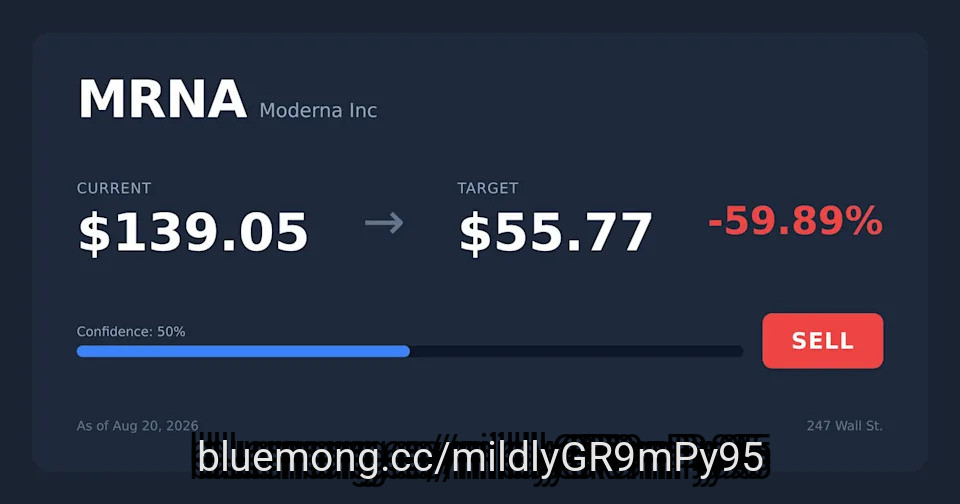
Moderna (MRNA) shares fell 20% in early trading on Thursday after a stunning 177% gain yesterday on news that the biotech and partner Merck (MRK) notched a big breakthrough in the fight against cancer.
The pair announced that their personalized mRNA cancer vaccine — called intismeran — successfully hit its primary goal in a Phase 3 late-stage trial, demonstrating a meaningful reduction in melanoma recurrence in patients who had already had their tumors surgically removed.
The trial compared using intismeran alongside Merck's well-known immunotherapy drug Keytruda against using Keytruda alone. Patients who received the combination lived meaningfully longer without their cancer returning or spreading.
"It's a home run, maybe even a grand slam," Dr. Ezekiel Emanuel said on Yahoo Finance (video above). "The results are pretty amazing."
#patients
Moderna (MRNA) shares fell 20% in early trading on Thursday after a stunning 177% gain yesterday on news that the biotech and partner Merck (MRK) notched a big breakthrough in the fight against cancer.
The pair announced that their personalized mRNA cancer vaccine — called intismeran — successfully hit its primary goal in a Phase 3 late-stage trial, demonstrating a meaningful reduction in melanoma recurrence in patients who had already had their tumors surgically removed.
The trial compared using intismeran alongside Merck's well-known immunotherapy drug Keytruda against using Keytruda alone. Patients who received the combination lived meaningfully longer without their cancer returning or spreading.
"It's a home run, maybe even a grand slam," Dr. Ezekiel Emanuel said on Yahoo Finance (video above). "The results are pretty amazing."
#patients



2 months ago
Two biopharma giants, Merck & Co., Inc. (NYSE:MRK) and Gilead Sciences, Inc. (NASDAQ:GILD), are proving that in modern drug development, the biggest catalyst isn't always competing head-to-head; it is knowing when to join forces. While both companies reported their first-quarter 2026 earnings earlier this year, their recent double dose of clinical and regulatory breakthroughs across oncology and virology shows how strategic alliances can reshape two massive therapeutic markets at once.
Merck & Co., Inc. delivered $16.3 billion in total sales for the first quarter of 2026, up 5% year-over-year (3% excluding foreign exchange). Top-line growth continued to be anchored by its flagship oncology therapy, Keytruda, which, alongside its sub-formulations, brought in $8.0 billion in sales, representing an 8% ex-exchange increase. Pulmonary arterial hypertension treatment Winrevair also contributed strongly with $525 million in quarterly revenue, up 87% ex-exchange. GAAP and non-GAAP bottom-line metrics reflected net losses per share of $1.72 and $1.28, respectively, largely driven by upfront charges tied to the strategic acquisition of Cidara Therapeutics. Despite those acquisition-related charges, Merck narrowed and raised the midpoint of its full-year worldwide sales guidance to between $65.8 billion and $67.0 billion.
Merck's growth story remains heavily reliant on expanding Keytruda's reach into earlier-stage treatments and novel combination regimens. With key patent expirations approaching toward the end of the decade, management has aggressively pursued business development and combination therapies to diversify its revenue base and maintain its dominance in immuno-oncology.
Gilead Sciences, Inc. reported $7.0 billion in total revenue for the first quarter of 2026, posting 5% year-over-year product sales growth. Gilead's base business, excluding COVID-19 treatment Veklury, rose 8% year-over-year to $6.8 billion, powered by its market-leading HIV franchise, which generated $5.0 billion in sales (up 10% year-over-year). Biktarvy remained the primary growth driver, while newly launched therapies like Yeztugo (lenacapavir) for HIV pre-exposure prophylaxis provided fresh momentum. The corporation's adjusted diluted earnings per share reached $2.03.
Backed by strong demand across its core virology portfolio, Gilead Sciences, Inc. raised its full-year 2026 total product sales guidance range by $400 million, targeting $30.0 billion to $30.4 billion.
#billion #merck #sciences #oncology
Merck & Co., Inc. delivered $16.3 billion in total sales for the first quarter of 2026, up 5% year-over-year (3% excluding foreign exchange). Top-line growth continued to be anchored by its flagship oncology therapy, Keytruda, which, alongside its sub-formulations, brought in $8.0 billion in sales, representing an 8% ex-exchange increase. Pulmonary arterial hypertension treatment Winrevair also contributed strongly with $525 million in quarterly revenue, up 87% ex-exchange. GAAP and non-GAAP bottom-line metrics reflected net losses per share of $1.72 and $1.28, respectively, largely driven by upfront charges tied to the strategic acquisition of Cidara Therapeutics. Despite those acquisition-related charges, Merck narrowed and raised the midpoint of its full-year worldwide sales guidance to between $65.8 billion and $67.0 billion.
Merck's growth story remains heavily reliant on expanding Keytruda's reach into earlier-stage treatments and novel combination regimens. With key patent expirations approaching toward the end of the decade, management has aggressively pursued business development and combination therapies to diversify its revenue base and maintain its dominance in immuno-oncology.
Gilead Sciences, Inc. reported $7.0 billion in total revenue for the first quarter of 2026, posting 5% year-over-year product sales growth. Gilead's base business, excluding COVID-19 treatment Veklury, rose 8% year-over-year to $6.8 billion, powered by its market-leading HIV franchise, which generated $5.0 billion in sales (up 10% year-over-year). Biktarvy remained the primary growth driver, while newly launched therapies like Yeztugo (lenacapavir) for HIV pre-exposure prophylaxis provided fresh momentum. The corporation's adjusted diluted earnings per share reached $2.03.
Backed by strong demand across its core virology portfolio, Gilead Sciences, Inc. raised its full-year 2026 total product sales guidance range by $400 million, targeting $30.0 billion to $30.4 billion.
#billion #merck #sciences #oncology


2 months ago
Pfizer (PFE) yields nearly 7% as COVID drugs crater, while Merck (MRK) compounds at 66% one-year gains with a leaner 3% payout.
Pfizer runs 20 pivotal trials in 2026 targeting obesity and oncology, with a Vyndamax patent extension to 2031 protecting dividend coverage.
It sounds nuts, but SoFi1 is giving new Active Invest users up to $3,000 in stock for a limited time, and all it takes is a $50 deposit to get started.2 See for yourself (Sponsor)
Pfizer (NYSE:PFE) and Merck (NYSE:MRK) refreshed the dividend debate with their latest quarterly reports.
Pfizer defends one of Big Pharma's fattest yields while its COVID franchise fades. Merck absorbs multi-billion dollar deal charges to reload a pipeline behind Keytruda. Two payouts, two very different risk profiles for income investors.
#NYSE #yields #Dividend
Pfizer runs 20 pivotal trials in 2026 targeting obesity and oncology, with a Vyndamax patent extension to 2031 protecting dividend coverage.
It sounds nuts, but SoFi1 is giving new Active Invest users up to $3,000 in stock for a limited time, and all it takes is a $50 deposit to get started.2 See for yourself (Sponsor)
Pfizer (NYSE:PFE) and Merck (NYSE:MRK) refreshed the dividend debate with their latest quarterly reports.
Pfizer defends one of Big Pharma's fattest yields while its COVID franchise fades. Merck absorbs multi-billion dollar deal charges to reload a pipeline behind Keytruda. Two payouts, two very different risk profiles for income investors.
#NYSE #yields #Dividend




2 months ago
By Michael Erman and Christy Santhosh
Aug 4 (Reuters) - Merck reported higher-than-expected second-quarter sales on Tuesday and raised its full-year revenue forecast on the strength of its top-selling cancer treatment Keytruda.
The U.S. drugmaker reported quarterly revenue of $16.61 billion, up 5% from a year earlier and above ******* ysts' average estimate of $16.36 billion, according to LSEG data.
Merck reported a loss for the quarter due to a $5.7 billion charge from its acquisition of cancer drug developer Terns Pharmaceuticals.
The company's reported loss in the quarter was 13 cents per share, including the $2.31 per share charge from the deal. ******* ysts had expected a larger adjusted loss per share of 27 cents, and Merck shares rose 0.6% to $128.54 in early trading.
#quarter #billion
Aug 4 (Reuters) - Merck reported higher-than-expected second-quarter sales on Tuesday and raised its full-year revenue forecast on the strength of its top-selling cancer treatment Keytruda.
The U.S. drugmaker reported quarterly revenue of $16.61 billion, up 5% from a year earlier and above ******* ysts' average estimate of $16.36 billion, according to LSEG data.
Merck reported a loss for the quarter due to a $5.7 billion charge from its acquisition of cancer drug developer Terns Pharmaceuticals.
The company's reported loss in the quarter was 13 cents per share, including the $2.31 per share charge from the deal. ******* ysts had expected a larger adjusted loss per share of 27 cents, and Merck shares rose 0.6% to $128.54 in early trading.
#quarter #billion

2 months ago
Agilent Technologies Inc. (NYSE:A) just extended its diagnostics franchise into one of oncology's toughest corners. On July 23, the company said European regulators had certified its PD-L1 IHC 22C3 pharmDx test, Code SK006, as a companion diagnostic for epithelial ovarian, fallopian tube, and primary peritoneal carcinoma. That lets pathologists flag patients who might benefit from Merck's Keytruda. It is a narrow, technical-sounding approval, but it adds up to something bigger: Agilent's diagnostics business keeps racking up new indications while competitors scramble to keep pace.
Bull Case: A Diagnostics Machine That Keeps Adding Indications
This is now the eighth CE-marked indication for the 22C3 pharmDx ****** ay in the EU, following FDA approval of a related PD-L1 test (28-8 pharmDx) for esophageal and gastric cancers just nine days earlier. Each new label doesn't require Agilent to build a new product; it just extends the reach of an ****** ay already running in labs worldwide, which is a high-margin way to grow. Agilent has also been adding inorganically, closing its acquisition of Biocare Medical in June to deepen its clinical pathology reach, the same market where this new ovarian cancer approval lives. Together, the pipeline of regulatory wins and the acquisition strategy point to a company compounding its diagnostics footprint one label at a time rather than swinging for one blockbuster product.
Bear Case: A Crowded Diagnostics Field With A Scarier Neighbor
Companion diagnostics is not Agilent's alone to win. Danaher Corporation (NYSE:DHR), through its Leica Biosystems unit, competes directly for the same pathology lab budgets and just agreed on July 14 to acquire StatLab Medical Products to strengthen its own histology and AI-pathology pipeline. Danaher's own stock cratered 14% on July 21 after it trimmed its core revenue growth outlook, even though it beat on earnings and raised its profit forecast.
#pharmdx #pathology
Bull Case: A Diagnostics Machine That Keeps Adding Indications
This is now the eighth CE-marked indication for the 22C3 pharmDx ****** ay in the EU, following FDA approval of a related PD-L1 test (28-8 pharmDx) for esophageal and gastric cancers just nine days earlier. Each new label doesn't require Agilent to build a new product; it just extends the reach of an ****** ay already running in labs worldwide, which is a high-margin way to grow. Agilent has also been adding inorganically, closing its acquisition of Biocare Medical in June to deepen its clinical pathology reach, the same market where this new ovarian cancer approval lives. Together, the pipeline of regulatory wins and the acquisition strategy point to a company compounding its diagnostics footprint one label at a time rather than swinging for one blockbuster product.
Bear Case: A Crowded Diagnostics Field With A Scarier Neighbor
Companion diagnostics is not Agilent's alone to win. Danaher Corporation (NYSE:DHR), through its Leica Biosystems unit, competes directly for the same pathology lab budgets and just agreed on July 14 to acquire StatLab Medical Products to strengthen its own histology and AI-pathology pipeline. Danaher's own stock cratered 14% on July 21 after it trimmed its core revenue growth outlook, even though it beat on earnings and raised its profit forecast.
#pharmdx #pathology


3 months ago
We can separate high-yield dividend stocks into two broad categories. The first group consists of companies with stable businesses that generate consistent cash flow and are very likely to continue paying -- and perhaps raising -- their dividends for the foreseeable future. The second are distressed corporations. They boast high yields because their share prices have fallen substantially, reflecting weak business fundamentals.
Many investors would put Pfizer (NYSE: PFE) in the second group. The drugmaker's shares have lost significant value over the past five years, as the company has failed to sustain the amazing success it achieved in the coronavirus market. However, there is much more to the story. Let's discuss why Pfizer's 7% forward yield is more sustainable than it appears at first glance.
Missed Nvidia in 2009? This Rare Signal Is Flashing Again. In 2009, a "Double Down" signal flashed for a little-known chipmaker called Nvidia. For the first time in years, that same "Total Conviction" signal is flashing for a company 1/100th the size of Nvidia. Continue »
Pfizer's revenue and earnings have declined over the past five years, while it has maintained and even increased its dividend. The company's payout ratio has soared as a result -- it is currently about 127%. That looks unsustainable. But Pfizer's cash payout ratio, a much better measure of whether the company can maintain its dividend program intact, looks less scary at 107.7%. Management is confident of the company's ability to sustain, and even increase, the payout moving forward. That isn't just wishful thinking: Pfizer could improve its business in the coming years and eventually post much stronger financial results.
Consider that Pfizer boasts highly promising programs in the pipeline that will yield brand-new approvals and label expansions. For instance, the company's Padcev is a cancer medicine that is currently one of its better-performing products. On July 10, Padcev earned approval for the treatment of muscle-invasive bladder cancer in combination with Merck's (NYSE: MRK) Keytruda. Padcev was granted the green light regardless of whether patients are eligible for Cisplatin, a chemotherapy drug for bladder cancer that is effective but comes with significant side effects. That's a big deal since many drugs for bladder cancer (including Padcev, initially) aren't approved regardless of Cisplatin eligibility.
#NVIDIA #yield #first
Many investors would put Pfizer (NYSE: PFE) in the second group. The drugmaker's shares have lost significant value over the past five years, as the company has failed to sustain the amazing success it achieved in the coronavirus market. However, there is much more to the story. Let's discuss why Pfizer's 7% forward yield is more sustainable than it appears at first glance.
Missed Nvidia in 2009? This Rare Signal Is Flashing Again. In 2009, a "Double Down" signal flashed for a little-known chipmaker called Nvidia. For the first time in years, that same "Total Conviction" signal is flashing for a company 1/100th the size of Nvidia. Continue »
Pfizer's revenue and earnings have declined over the past five years, while it has maintained and even increased its dividend. The company's payout ratio has soared as a result -- it is currently about 127%. That looks unsustainable. But Pfizer's cash payout ratio, a much better measure of whether the company can maintain its dividend program intact, looks less scary at 107.7%. Management is confident of the company's ability to sustain, and even increase, the payout moving forward. That isn't just wishful thinking: Pfizer could improve its business in the coming years and eventually post much stronger financial results.
Consider that Pfizer boasts highly promising programs in the pipeline that will yield brand-new approvals and label expansions. For instance, the company's Padcev is a cancer medicine that is currently one of its better-performing products. On July 10, Padcev earned approval for the treatment of muscle-invasive bladder cancer in combination with Merck's (NYSE: MRK) Keytruda. Padcev was granted the green light regardless of whether patients are eligible for Cisplatin, a chemotherapy drug for bladder cancer that is effective but comes with significant side effects. That's a big deal since many drugs for bladder cancer (including Padcev, initially) aren't approved regardless of Cisplatin eligibility.
#NVIDIA #yield #first


3 months ago
Finding a good dividend stock to buy at any given time usually isn't too tough. Finding one you can buy and hold forever, however, is a different story. The matter of longevity comes into play. You want to be sure the underlying company has the longevity required to not only continue paying its dividend, but to reliably raise its dividend payments at least in step with inflation. That's a taller order.
Nevertheless, these dividend names are out there. Here's a closer look at three of them.
Missed Nvidia in 2009? This Rare Signal Is Flashing Again. In 2009, a "Double Down" signal flashed for a little-known chipmaker called Nvidia. For the first time in years, that same "Total Conviction" signal is flashing for a company 1/100th the size of Nvidia. Continue »
Given the company's struggle since the easing of the COVID-19 pandemic undermined a fantastic but short-lived franchise, some investors might be surprised that drugmaker Pfizer (NYSE: PFE) earned a spot on this list. But it has, particularly since newcomers will be plugging into a healthy forward-looking dividend yield of 6.9%.
Although it'll be a while until investors can clearly see it, this pharmaceutical giant is developing multiple new profit centers. It acquired Seagen in 2023, for instance, largely for its oncology pipeline. This pipeline includes cancer-fighting Padcev, which was recently approved as a treatment for muscle-invasive bladder cancer when used in conjunction with Merck's Keytruda.
#Dividend #flashing
Nevertheless, these dividend names are out there. Here's a closer look at three of them.
Missed Nvidia in 2009? This Rare Signal Is Flashing Again. In 2009, a "Double Down" signal flashed for a little-known chipmaker called Nvidia. For the first time in years, that same "Total Conviction" signal is flashing for a company 1/100th the size of Nvidia. Continue »
Given the company's struggle since the easing of the COVID-19 pandemic undermined a fantastic but short-lived franchise, some investors might be surprised that drugmaker Pfizer (NYSE: PFE) earned a spot on this list. But it has, particularly since newcomers will be plugging into a healthy forward-looking dividend yield of 6.9%.
Although it'll be a while until investors can clearly see it, this pharmaceutical giant is developing multiple new profit centers. It acquired Seagen in 2023, for instance, largely for its oncology pipeline. This pipeline includes cancer-fighting Padcev, which was recently approved as a treatment for muscle-invasive bladder cancer when used in conjunction with Merck's Keytruda.
#Dividend #flashing


3 months ago
Pfizer Inc. (NYSE:PFE) is one of the 8 Worst Blue Chip Stocks to Buy Now.
On July 10, 2026, Pfizer Inc. (NYSE:PFE) and Astellas Pharma (ALPMY) announced that the U.S. Food and Drug Administration approved PADCEV, a Nectin-4 directed antibody-drug conjugate, plus the PD-1 inhibitor Keytruda or Keytruda QLEX as neoadjuvant and adjuvant treatment for adult patients with muscle-invasive bladder cancer, regardless of cisplatin eligibility. Pfizer said this marks the first platinum-free regimen approved for adult patients with MIBC, regardless of cisplatin eligibility.
The approval was based on results from the pivotal Phase 3 EV-304 clinical trial, which were presented at the 2026 American Society of Clinical Oncology Genitourinary Cancers Symposium. The expanded indication builds on the November 2025 U.S. FDA approval of the combination for use as neoadjuvant and adjuvant treatment in cisplatin-ineligible adult patients with MIBC, based on results from the EV-303 Phase 3 clinical trial published in the New England Journal of Medicine.
Also on July 10, BofA lowered the firm's price target on Pfizer to $26 from $27 and kept a Neutral rating on the shares. On July 6, HSBC downgraded Pfizer to Hold from Buy with a price target of $28, down from $32. HSBC lowered its view of the probability to market of sigvotatug vedotin to 40% following the Phase 3 setback in NSCLC and said it is now "less convinced" regarding short-term re-rating potential due to recent executive management changes and "a paucity of short-term re-rating catalysts."
Pfizer Inc. (NYSE:PFE) discovers, develops, manufactures, markets, distributes, and sells biopharmaceutical products in the United States and internationally.
On July 10, 2026, Pfizer Inc. (NYSE:PFE) and Astellas Pharma (ALPMY) announced that the U.S. Food and Drug Administration approved PADCEV, a Nectin-4 directed antibody-drug conjugate, plus the PD-1 inhibitor Keytruda or Keytruda QLEX as neoadjuvant and adjuvant treatment for adult patients with muscle-invasive bladder cancer, regardless of cisplatin eligibility. Pfizer said this marks the first platinum-free regimen approved for adult patients with MIBC, regardless of cisplatin eligibility.
The approval was based on results from the pivotal Phase 3 EV-304 clinical trial, which were presented at the 2026 American Society of Clinical Oncology Genitourinary Cancers Symposium. The expanded indication builds on the November 2025 U.S. FDA approval of the combination for use as neoadjuvant and adjuvant treatment in cisplatin-ineligible adult patients with MIBC, based on results from the EV-303 Phase 3 clinical trial published in the New England Journal of Medicine.
Also on July 10, BofA lowered the firm's price target on Pfizer to $26 from $27 and kept a Neutral rating on the shares. On July 6, HSBC downgraded Pfizer to Hold from Buy with a price target of $28, down from $32. HSBC lowered its view of the probability to market of sigvotatug vedotin to 40% following the Phase 3 setback in NSCLC and said it is now "less convinced" regarding short-term re-rating potential due to recent executive management changes and "a paucity of short-term re-rating catalysts."
Pfizer Inc. (NYSE:PFE) discovers, develops, manufactures, markets, distributes, and sells biopharmaceutical products in the United States and internationally.

4 months ago
We recently compiled a list of the 10 Best Weight Loss Drug Stocks to Buy in 2026. Merck & Co., Inc. (NYSE:MRK) is one of the best weight loss drugs on this list.
TheFly reported on June 18 that MRK announced that the U.S. Food and Drug Administration (FDA) granted an expanded approval for Capvaxive, extending its use to children and adolescents between 2 and 17 years old. The updated indication applies to pediatric patients who have completed their initial pneumococcal vaccination series and have chronic health conditions that increase their vulnerability to pneumococcal disease. With this authorization, Capvaxive becomes the only pneumococcal conjugate vaccine (PCV) in the United States specifically evaluated and approved for this patient group.
In another major operational breakthrough, on June 12, Merck & Co., Inc. (NYSE:MRK) announced that the U.S. Food and Drug Administration (FDA) approved KEYTRUDA and KEYTRUDA QLEX, its anti-PD-1 therapies, in combination with WELIREG for the adjuvant treatment of adults with clear cell renal cell carcinoma (ccRCC) at an increased risk of recurrence after surgery. The approval marks the first use of WELIREG in earlier-stage ccRCC and the first authorization of a PD-1 and HIF-2α inhibitor combination therapy. The decision was supported by results from the Phase 3 LITESPARK-022 trial, which showed the combination reduced the risk of recurrence, metastasis, or death by 28% compared with KEYTRUDA plus placebo in eligible patients.
Merck & Co., Inc. (NYSE:MRK) is a global healthcare company expanding its obesity pipeline through early-stage GLP-1 and dual agonist therapies. While it lacks a marketed weight-loss drug, its metabolic research and strong pharmaceutical portfolio make it a potential long-term obesity market contender.
While we acknowledge the potential of MRK as an investment, we believe certain AI stocks offer greater upside potential and carry less downside risk. If you're looking for an extremely undervalued AI stock that also stands to benefit significantly from Trump-era tariffs and the onshoring trend, see our free report on the best short-term AI stock.
TheFly reported on June 18 that MRK announced that the U.S. Food and Drug Administration (FDA) granted an expanded approval for Capvaxive, extending its use to children and adolescents between 2 and 17 years old. The updated indication applies to pediatric patients who have completed their initial pneumococcal vaccination series and have chronic health conditions that increase their vulnerability to pneumococcal disease. With this authorization, Capvaxive becomes the only pneumococcal conjugate vaccine (PCV) in the United States specifically evaluated and approved for this patient group.
In another major operational breakthrough, on June 12, Merck & Co., Inc. (NYSE:MRK) announced that the U.S. Food and Drug Administration (FDA) approved KEYTRUDA and KEYTRUDA QLEX, its anti-PD-1 therapies, in combination with WELIREG for the adjuvant treatment of adults with clear cell renal cell carcinoma (ccRCC) at an increased risk of recurrence after surgery. The approval marks the first use of WELIREG in earlier-stage ccRCC and the first authorization of a PD-1 and HIF-2α inhibitor combination therapy. The decision was supported by results from the Phase 3 LITESPARK-022 trial, which showed the combination reduced the risk of recurrence, metastasis, or death by 28% compared with KEYTRUDA plus placebo in eligible patients.
Merck & Co., Inc. (NYSE:MRK) is a global healthcare company expanding its obesity pipeline through early-stage GLP-1 and dual agonist therapies. While it lacks a marketed weight-loss drug, its metabolic research and strong pharmaceutical portfolio make it a potential long-term obesity market contender.
While we acknowledge the potential of MRK as an investment, we believe certain AI stocks offer greater upside potential and carry less downside risk. If you're looking for an extremely undervalued AI stock that also stands to benefit significantly from Trump-era tariffs and the onshoring trend, see our free report on the best short-term AI stock.