
2 days ago
This story was originally published on Marketing Dive. To receive daily news and insights, subscribe to our free daily Marketing Dive newsletter.
Walmart is reworking an iconic piece of pop culture history to bolster its holiday marketing and a "Who Knew?" brand platform starring Walton Goggins. The goal is to offer a unified marketing push with multigenerational appeal throughout the crucial gift-giving season.
The retailer in the past ran separate campaigns around different legs of the holiday season, such as the ramp-up to Black Friday, but has leveraged "Who Knew?" to streamline its storytelling. "Who Knew?," which launched last year, was developed to dispel misperceptions about the brand and position it as more style- and trend-forward as Walmart wins over higher-income shoppers.
"The holidays are an incredibly cluttered period of time from an advertising standpoint, and so the ability to break through is really important," Walmart CMO William White said in an interview. "Having one [theme], one campaign throughout the season allows a really quick read for customers to know it's Walmart."
#dive

22 days ago
Jim Cramer has built a career on conviction calls, and few have been more consistent than his faith in Amazon (AMZN). For years, the Mad Money host has treated the retail giant as close to untouchable. A permanent fixture in nearly every portfolio he recommends.
That changed, briefly and publicly, after watching a rival's AI demo live on air. Here is what Cramer actually said, the stock moves that gave his comment real weight, and what it all means for anyone holding either name heading into the rest of the year.
Also read: Jim Cramer noticed something odd about the stock market
Cramer made the comment live on CNBC's Squawk on the Street on September 28, after watching a demonstration of Meta's (META) new AI shopping capability. "I'm an Amazon guy, but maybe I shouldn't be. This seemed impressive," he said, speaking as a shopper describing his own buying habits rather than making a stock call.
The timing gave the remark unusual weight. Meta shares had climbed roughly 24% over the prior month. Amazon fell roughly 8% over the same stretch. Investors were already debating which company was winning the fight for online shoppers before Cramer weighed in.
#cramer #amazon #roughly


22 days ago
Christina Zhu, the head of Walmart's China business, remembers when Chinese shoppers did not have much choice.
As a child, she watched her parents wake up at 4:30 a.m. on Sundays to go to the wet market. "They had to haggle, and high-quality produce wasn't always guaranteed," Zhu, born in 1973, recalled at the Fortune Leaders Forum in Macau in September.
Today, Chinese shoppers are "probably the group with the most choices [in the world]," and they have become "the most demanding customers," she said.
Meeting those rising expectations has become the defining challenge for retailers in China, and Walmart has managed it better than most. It entered China in 1996 with a Supercenter and a Sam's Club in Shenzhen. Three decades later, the U.S. retailer is thriving in the world's second-largest economy even as other foreign brands struggle.
China represents 3% of Walmart's overall business, but it is growing, generating $24.6 billion in sales in its past fiscal year, a 19.3% jump. Sales grew 20.7% last quarter, faster than the 5.9% reported by the company as a whole.
#China


23 days ago
Ella Bleu Travolta has officially made her Paris runway debut on one of the top fashion brands' stages. The 26-year-old daughter of John Travolta and the late Kelly Preston made her Paris Fashion Week runway debut, walking in Miu Miu's Spring/Summer 2027 Ready-to-Wear show on Sunday.
Ella walked for the biggest fashion brands (@ The Grosby Group)
Ella rocked an oversized forest-green blazer layered over a patterned top and navy trousers and sandals. She looked cool and composed with hair in a perfectly messy updo with natural makeup. There's no denying she looked just like her mom's mini me. Kelly might be remembered for her blonde hair, but she used to dye it brown and shades of red over the years.
Ella looked just like her late mom (@ The Grosby Group / Getty)
Miu Miu is ranked as the world's second-hottest fashion brand according to the second quarter of the 2026 Lyst Index, which tracks the hottest fashion brands and products online. It looks at what 160 million shoppers are searching for and engaging with across social media, search, editorial coverage, and emerging AI platforms based on desire, demand, and discovery. So her Paris Fashion Week debut was with one of the most sought-after fashion houses in the world.
#fashion #travolta




25 days ago
MrBeast, whose real name is Jimmy Donaldson, put dozens of strangers through one of his outrageous tests: How long can people stay in a grocery store to win $250,000? One contestant, Juan Garcia, managed to do it and took home far more than he bargained for after spending over 200 days in the store.
Back in April, MrBeast uploaded a video to his channel ******* led "Last to Leave Grocery Store, Wins $250,000," and in the months since, the video racked up over 200 million views.
At the start of the video, MrBeast tells his audience he just bought a grocery store and uses the store's intercom to announce that the last person to leave wins the $250,000 prize pot (kept in a comically large gold shopping cart). Some shoppers immediately left with a bounty of groceries that MrBeast told everyone were free; others began to strategize, building forts and stockpiling food.
After 67 days, with only four contestants left, MrBeast decided to shake things up and gave them an ultimatum: If they decided to stay, he'd restock the entire grocery store, and the four of them had to eat all the groceries – if they were able to do so, they could split a $1,000,000 prize. They decided to stay, and the video ended on a cliffhanger, leaving fans wondering where the new video would be for months.
Today, MrBeast and his team finally released the second part, ******* led "Eat Everything In A Grocery Store Win $1,000,000."
#grocery #stay #decided #wins


1 month ago
On September 3, 2026, lululemon athletica inc. (NASDAQ:LULU) reported second-quarter fiscal 2026 results for the period ended August 2, 2026. Net revenue fell 4% to $2.4 billion, missing the $2.46 billion ****** ysts expected, and comparable sales dropped 10% on a constant dollar basis. Management cut full-year revenue guidance to a decline of 5% to 7%, down from a prior forecast of flat to down 1%, and lowered full-year earnings per share guidance to $9.48 to $9.73 from its prior forecast of $10.95 to $11.15, compared with $13.26 earned in fiscal 2025. Shares fell about 18% in extended trading. Incoming CEO Heidi O'Neill was set to start the following week.
Photo by Ian Deng Quddu on Unsplash
Citi's cut to $117 from $130 came with a Neutral rating and the observation that the stock's risk-reward is "slightly more favorable" after the selloff, even though the firm called fiscal 2027 visibility "very unclear." The operational bright spots are real.
lululemon athletica inc. (NASDAQ:LULU) increased its chase volume, the supply chain capability that lets it reorder fast-moving styles quickly, by about 20% this year, and away-from-body styles including the Groove Wide-Leg, Align Foldover Jogger, Breezily, and an updated Dance Studio Pant are trending well as shoppers shift from tight-fitting leggings. The brand's community pull held up too.
The SeaWheeze Half Marathon and Festival returned in August for the first time since 2019, drawing nearly 10,000 runners from 24 countries and roughly 14,000 festival attendees, while more than 85,000 people from 120 countries joined the companion Strava challenge, strong enough that Lululemon already committed to bringing the event back next summer. Rest of World revenue, spanning EMEA and APAC, grew 5% on a reported basis, and the company ended the quarter with $1.4 billion in cash and no outstanding borrowings.
#revenue #billion #NASDAQ


1 month ago
Vera Bradley, Inc. (NASDAQ:VRA) reported on September 15 that fiscal 2027 second-quarter revenue from continuing operations increased 1.1% to $71.6 million. For the quarter ended August 1, 2026, GAAP operating income from continuing operations reached $4.2 million, compared with a $4.6 million loss a year earlier.
However, gross profit included a $7.7 million tariff refund relating to prior-period imports. Subtracting that benefit from reported operating income, with all other items unchanged, produces an illustrative operating loss of approximately $3.5 million and an operating margin of negative 4.9%.
The quarter therefore shows improving customer demand alongside an earnings recovery that still depends heavily on refunds.
Direct-channel performance gives Vera Bradley, Inc. (NASDAQ:VRA) tangible evidence of customer traction. Direct revenue increased 8.0% to $65.4 million, while comparable sales rose 9.2%. Management attributed the comparable-sales improvement to better e-commerce conversion and higher average transaction values across direct channels.
That combination matters because stronger conversion means more shoppers complete purchases, while larger transactions support revenue without requiring equivalent growth in customer traffic. Continued momentum could help spread store, distribution, and corporate costs across a larger sales base.
#bradley


1 month ago
Credit card companies are racing to claim a place at the checkout when AI agents start shopping on behalf of consumers—even as shoppers remain skeptical of letting bots spend their money.
Mastercard rolled out a payment option Thursday that lets people give an AI agent a virtual card and allow it to buy things online without checking in before each purchase. Cardholders can limit how much it spends, restrict which retailers it buys from, or require approval before checkout.
"This is a land grab for infrastructure standards," Phil Bruno, chief strategy and growth officer at payments company ACI Worldwide, told Fortune. "If they set the standards for agentic commerce, they can keep the commerce in their environments for decades to come."
Rival Visa partnered with Alchemy earlier this year and has also announced its own AI shopping and payment product, Visa Intelligent Commerce, which the company says is still being deployed. Similarly, Meta has Muse, which can search for products and navigate checkout, but presents the purchase for the user's final approval.
It seems, though, that shoppers appear far more interested in using AI to find a deal than letting it pay. Just 7% of U.S. and U.K. consumers surveyed who buy fashion items said they would allow an AI ***** istant to make purchases without approval under predefined conditions, according to research commissioned by ACI Worldwide. More than half said they were uncomfortable allowing AI to purchase on their behalf.
#purchase #consumers

1 month ago
Costco is expanding its same-day delivery network as it looks to grow e-commerce sales and compete with retailers like Walmart and Target.
The retailer this week launched collaborations with DoorDash (NASDAQ: DASH) and Uber (NYSE: UBER) to pick up online orders at U.S. stores and drive them to the customer's door. The arrangements give Costco more channels to reach customers through ultra-fast delivery, made possible by gig drivers who use the platforms to select ******* ignments.
DoorDash, best known for delivering restaurant food, announced that Costco (NASDAQ: COST) members can now order groceries, dry goods, household essentials and other products from its marketplace and then arrange fast delivery from their local store, all through the DoorDash app. The U.S. launch extends the existing relationship between the companies in Australia, New Zealand, Sweden, Iceland and Puerto Rico.
DoorDash now serves eight of the 10 largest food retailers in North America.
On Wednesday, Uber announced a major expansion of its partnership with Costco to deliver products in 47 states, up from 17 states. Nearly 600 Costco locations are now available on the Uber Eats app, where shoppers can arrange on-demand and scheduled delivery.
#Food #announced

1 month ago
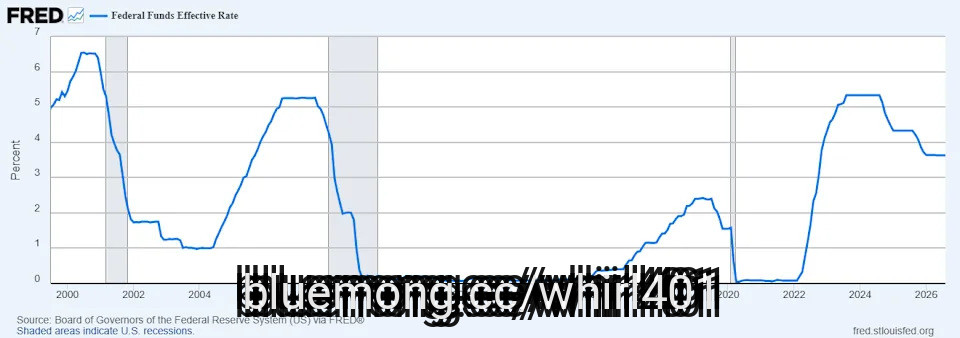
The Federal Reserve raised interest rates for the first time since July 2023 on Wednesday, and the S&P 500 (SNPINDEX: ^GSPC) immediately dropped. It rose again before the day was over, but it's been steadily declining over the past month since hitting a high in mid-August.
There are a number of reasons for the fall, and part of that has been the anticipation of rate hikes. The Fed's decision has a lot to do with the other reasons, including high inflation and rising oil prices, and none of these spell enthusiasm for the market. Here's how the inflation outlook and accompanying interest rates signal a warning for investors.
Missed AI's "Act 1"? Act 2 Could Be 15x Bigger. Most investors think they missed the AI boat because they didn't buy Nvidia in 2005. But according to our **** ysts, we're only at the end of "Act 1"—the R&D phase. "Act 2" is the global rollout. Continue »
The simple version is that rising oil prices increase production costs, leading to higher consumer prices. The artificial intelligence (AI) buildout is contributing as well; memory prices are skyrocketing as hyperscalers have an insatiable demand for scarce memory products, and Apple, for example, said it's going to raise some prices.
As inflation surges and prices go up, it's harder for shoppers to keep spending. The worry is that lower consumer spending will lead to sagging sales for many companies, and the market is pricing that in as the inflation outlook persists.
#inflation #since #high #market


1 month ago
Financial services company Enova International (NYSE: ENVA) seemed headed for the investor doghouse late Thursday. The company, which focuses on lending to underserved individuals and small businesses, withdrew its applications for banking licenses.
As investors considered this a defeat for the company, they promptly and vigorously sold the stock. As of Thursday evening, according to data compiled by S&P Global Market Intelligence, its price had fallen by nearly 20% week to date.
Missed Nvidia in 2009? This Rare Signal Is Flashing Again. In 2009, a "Double Down" signal flashed for a little-known chipmaker called Nvidia. For the first time in years, that same "Total Conviction" signal is flashing for a company 1/100th the size of Nvidia. Continue »
In December 2025, Enova announced it had signed a definitive agreement to acquire Grasshopper Bancorp, the holding company for a Federal Deposit Insurance Corporation (FDIC)-insured online lender Grasshopper Bank. Around that time, Enova submitted a clutch of applications to federal and state authorities for it to provide banking services as Grasshopper's would-be owner.
Enova said the decision was in the best interests of the company and its investors. It cited a lack of clarity in the authorization process as a roadblock for its ambition.
#signal


1 month ago
Michael Kliger, CEO of LuxExperience, said the luxury market is becoming increasingly polarized, with affluent customers continuing to spend heavily while middle-class shoppers pull back under inflationary pressure. He said the company is less concerned about total active customers, which are around 900,000, than about growing the small group of top customers that generate a disproportionate share of sales. He speaks with Romaine Bostick on "The Close."
#michael #becoming
#michael #becoming

1 month ago
Interested in Walmart Inc.? Here are five stocks we like better.
Target trades at roughly 15 times earnings with a 3% yield, presenting value relative to Walmart and Costco ahead of the holiday season.
Aggressive price cuts on over 10,000 items and October Deal Days discounts of up to 40% could drive market-beating Q3 and holiday results.
Dividend growth exceeding 50 years, buyback capacity, and heavy institutional ownership near 80% help limit downside risk into 2026.
Believe it or not, the holiday shopping season is here, so it's time to consider the best plays. As it stands, seasonal sales growth is expected to accelerate year over year to 4.55% to 4.8%, topping $1.7 trillion for the first time, underpinned as always by e-commerce. Digital sales are expected to top 8% seasonally and may outpace expectations as AI adoption accelerates. Hyperscalers, business services, and merchants are embedding AI throughout the digital retail stack, and it is resonating with consumers. An estimated 25% to 30% of shoppers say they will use AI this season for help with research, price comparisons, and budgeting.
#time


1 month ago
NBC4's helicopter was one of several news aircraft flying over the scene of a deadly bus crash in Chatsworth Tuesday evening at sunset.
It's common for multiple news choppers to arrive at the scene of breaking news, beaming live images for newscasts and streaming.
But around 7 p.m., something went horribly wrong and in a matter of seconds the NBC4 chopper dropped out of the sky, crashing into shipping containers and vehicles outside a warehouse a few blocks away, bursting into flames. Two station journalists, reporter Eliana Moreno and pilot George Marciniw, were killed along with a bystander on the ground.
Federal investigators are now trying to figure out what went wrong. The Times interviewed several experts, who reviewed recordings of the chopper's final moments. They offered insights into the helicopter itself, its movements that afternoon and what is known about how its mechanics work.
Here's what they had to say:
#went #wrong #tuesday #nbc4


1 month ago
Enova International Inc (NYSE:ENVA) withdrew regulatory applications for its planned Grasshopper Bancorp acquisition on Tuesday, sending shares sharply lower despite reaffirmed growth forecasts and plans for faster buybacks.
Shares fell 25% to $169.50 following the company's acquisition update.
The technology and ******* ytics company pulled applications with the Office of the Comptroller of the Currency and the Federal Reserve after reviewing the transaction and bank approval process.
CEO Steve Cunningham said withdrawing the applications was the best choice for Enova and its shareholders, adding that the company can keep growing without becoming a bank.
He argued that banking rules have not kept pace with the credit needs of consumers and small businesses that banks do not adequately serve.
#acquisition #bank #international


1 month ago
The Kroger Co. (NYSE:KR) cut its full-year 2026 identical-sales forecast excluding fuel to 0.2%–0.8% from 1%–2%, reflecting a sharper-than-expected slowdown in consumer demand. Second-quarter identical sales rose just 0.2%, down from 3.4% a year earlier and below the 0.9% ****** yst estimate.
The weakness reflects pressure on middle- and lower-income consumers, while a Cyclospora outbreak reduced quarterly identical sales by roughly 35 basis points and Medicare prescription-drug pricing changes created an approximately 140-basis-point headwind for pharmacy revenue. Importantly, Kroger maintained its full-year adjusted FIFO operating-profit forecast of $5.0 billion–$5.2 billion and delivered adjusted EPS of $1.09, ahead of the $1.06 consensus.
The strongest bullish argument is that The Kroger Co. (NYSE:KR) is currently protecting earnings despite the deterioration in sales momentum. Second-quarter adjusted EPS increased 5% year over year to $1.09, while adjusted FIFO operating profit was $1.076 billion. Kroger's gross margin rate actually increased by 13 basis points, although the overall gross-margin percentage was 22.4% versus 22.5% a year earlier, suggesting that pricing, sourcing, and cost-management initiatives are helping offset weaker volumes. The company's higher-margin businesses are also becoming increasingly important: adjusted e-commerce sales grew 20% in the quarter, and Kroger Precision Marketing profit increased 24%. That mix shift gives Kroger an earnings lever even when supermarket traffic and comparable sales are weak.
There is also evidence that management is actively responding to the competitive pressure rather than simply accepting slower growth. CEO Greg Foran has been pursuing tighter sourcing, simpler operations and lower prices, with Reuters reporting plans to cut prices across thousands of products to regain shoppers from Walmart, Costco and Aldi. The Kroger Co. (NYSE:KR)'s balance sheet provides room to fund that strategy: its net debt-to-adjusted-EBITDA ratio was 1.91x, below its stated target range of 2.30x–2.50x, while the company repurchased $1.0 billion of shares in the second quarter and $1.2 billion year to date. It also raised its dividend 11%, marking the 20th consecutive year of increases. If sales stabilize while e-commerce, retail media and cost efficiencies continue expanding, the unchanged $5.0 billion–$5.2 billion operating-profit forecast could prove more important to valuation than the reduced top-line outlook.
#year

1 month ago
Tributes began pouring in Wednesday after a news helicopter crashed in Los Angeles, leaving three people dead.
The crash occurred just before 7 p.m. local time Tuesday in the Chatsworth area of the San Fernando Valley, as the news chopper was covering a road traffic accident.
Angel City Air operated the helicopter, which was providing news coverage for NBC Los Angeles.
The victims aboard the helicopter were identified as Eliana Moreno, a journalist familiar to viewers of the station and its Spanish-language sister station, Telemundo 52, and pilot George Marciniw. The pair began flying together in 2023.
A pedestrian on the ground was also confirmed to have died at the scene, officials said. Authorities identified the third victim as Edy Gutiérrez Mejia, 29.
#wednesday

1 month ago
On August 6, The RealReal (NASDAQ:REAL) reported second quarter results that beat its own outlook and pushed the resale luxury marketplace to raise its full year guidance. Gross merchandise value hit an all time high of $617 million, up 22% from a year earlier, and management pointed to four straight quarters of GMV growth above 20%. But a wider net loss sitting next to those record numbers complicates the story for anyone weighing the stock today.
The headline number is GMV of $617 million for the quarter ended June 30, up 22% year over year, with total revenue climbing 17% to $193 million. Consignment revenue grew 15% while Direct Revenue, the company's owned inventory channel, grew 26%, showing both sides of the business contributing to the acceleration. Profitability moved in the same direction. Gross margin reached 74.4%, up 10 basis points from a year ago, and Adjusted EBITDA margin jumped to 7%, a 290 basis point improvement that management called nearly 300 basis points of expansion.
The buyer base backs up the growth story rather than just the pricing. Trailing twelve-month active buyers rose 11% to 1,107,000, and average order value climbed 13% to $659, meaning existing shoppers are spending meaningfully more per transaction, not just showing up more often. That combination gave management enough confidence to raise full-year guidance to $2.54 billion to $2.57 billion in GMV and $788 million to $797 million in total revenue, alongside third-quarter Adjusted EBITDA guidance of $13.5 million to $14.5 million.
Despite the operating improvements, GAAP losses widened. Net loss came in at $27 million, or 14.1% of total revenue, compared to $11 million, or 6.9% of total revenue, a year earlier. GAAP basic net loss per share was $0.23 versus $0.10 in the prior year period, and diluted net loss per share was $0.23 versus $0.13. Much of that swing traces to a $(18.6) million non-cash adjustment tied to the change in fair value of warrant liability, a factor unrelated to how the underlying business performed. On a non-GAAP basis, basic and diluted net loss per share actually narrowed to $0.01 from $0.06, underscoring how much of the GAAP gap is accounting rather than operations.
There is also a transparency wrinkle in the guidance itself. The RealReal said it has not reconciled its forward-looking Adjusted EBITDA figures to GAAP net income or loss, citing components like payroll tax expense on employee stock transactions that it cannot predict with reasonable certainty. That leaves investors trusting a non-GAAP target without the usual bridge back to the bottom line.
#adjusted


1 month ago
On September 10, Lovesac (NASDAQ:LOVE) reported record second quarter revenue of $161.2 million, its highest Q2 total ever, even as its entry-level furniture shopper kept pulling back. The 0.4% sales increase came almost entirely from showrooms rather than higher-margin online orders, and the quarter's real profit boost was traced to a one-time source. A $20 million tariff refund lifted gross margin by 1,200 basis points to 68.4%, masking an underlying business that actually lost money once that windfall is stripped out.
Configurations priced above $6,000 grew by double digits during the quarter, even against a strong comparison from a year earlier, and management pointed to that segment as the clearest sign the brand's value proposition still resonates. Showroom net sales climbed 4.6% to $114.1 million, helped by 14 net new locations opened over the past year and a double-digit jump in conversion rates that offset softer foot traffic.
The Snugg platform, a smaller and more digitally oriented sofa line, helped push "other products" revenue up 198.2%, with more than half of Snugg sales happening online, giving Lovesac a lower-priced entry point into the brand. The Loved by Lovesac resale program is doing similar work, with 70% of its customers new to the company.
Behind all of this sits a pipeline of four major launches set for the second half: a personalized comfort feature for Sactionals, an entirely new large-format premium seating platform, Snugg accessories including a corner piece and swivel base, and the start of onshore Sactionals seat manufacturing, alongside a national rollout of White Glove and Room of Choice delivery. The balance sheet backs it up, with $68.8 million in cash, no debt, $34 million in unused borrowing capacity, and $7.2 million in buybacks with $46.9 million left under the current authorization.
Omni-channel comparable sales fell 1.9%, driven by demand pressure below $6,000, where management said inflation, higher interest rates, and a spike in gas prices have hit the same buyers for several quarters running. Internet sales dropped 5.3%, Sacs sales fell 8.6%, and the exit of the Best Buy shop-in-shop partnership cut "other" net sales by 23.2%. Strip out the tariff refund and adjusted EBITDA was actually a loss of $1.3 million, compared with income of $0.8 million a year earlier, a sign the core business is less profitable than the headline numbers suggest.
#million #quarter #revenue


1 month ago
Walmart Inc. (NASDAQ:WMT) is expanding its restaurant-delivery business through a partnership with Papa John's, allowing customers in select U.S. markets to order pizzas, sides, and desserts through Walmart's app and website. The service is expected to launch this fall before expanding to thousands of participating Papa John's locations nationwide. Customers will be able to order restaurant food either separately or alongside Walmart groceries and household products, with Walmart's delivery network handling fulfillment.
The move builds on Walmart's broader push into fast delivery. The company recently reported that U.S. e-commerce sales increased 24% in its latest quarter, while fast-delivery services for groceries and general merchandise grew 48%. Walmart also said 30-minute-or-less delivery was available in 38 U.S. markets, highlighting the infrastructure it can potentially leverage for restaurant orders.
The Papa John's partnership could strengthen Walmart Inc. (NASDAQ:WMT)'s position as a broader consumer-delivery platform rather than simply a retailer. Adding restaurant meals gives shoppers another reason to open Walmart's app, while the ability to combine a pizza order with groceries and household products creates an opportunity to increase basket sizes and order frequency. This is particularly attractive because Walmart already has a large store network that increasingly functions as a last-mile fulfillment system; roughly 80% of its e-commerce orders are fulfilled from stores.
The deal could also improve the economics of Walmart's existing delivery infrastructure. Instead of building a completely separate restaurant-delivery network, Walmart can utilize its established fulfillment capabilities and Spark driver network to serve incremental demand. The Papa John's relationship also expands Walmart's restaurant offering beyond earlier partnerships, helping the company build a more comprehensive alternative to dedicated delivery platforms such as DoorDash and Uber Eats.
More importantly, restaurant delivery could become another engagement tool for Walmart Inc. (NASDAQ:WMT)'s increasingly digital customer base. With e-commerce approaching a quarter of Walmart's overall sales and growing substantially faster than traditional store sales, initiatives that increase digital traffic could support Walmart's broader ecosystem of e-commerce, memberships and advertising.
#walmart #network #fulfillment


2 months ago
For most of your adult life, you have decided which card comes out of your wallet. Maybe it is the one with the best cashback. Maybe it is the one on top.
That decision is starting to move to software.
More than one in 10 online shoppers will routinely use AI agents to shop and pay by 2030, according to a report published Sept. 8, 2026 by Mastercard (MA). That works out to more than 300 million people worldwide.
The number reads like a distant projection. Recent US data suggests the behavior is already further along than that.
The report, ******* led "A short history of the future of shopping and payments," pairs original consumer research with predictions from four futurists in the US, Europe and Asia, according to Mastercard.
#maybe


2 months ago
Consumers just can't catch a break. According to Friday's Consumer Price Index report from the Bureau of Labor Statistics (BLS), inflation is holding steady as surging gas prices empty shoppers' wallets.
But that's not all. Year-over-year data about household debt paints a dim picture of the state of consumer finances. However, this week's home sales report offers a silver lining, showing it might be a good time to buy a house.
More from WWD
Back-to-School Resale Meets Its Toughest Customer: Children
Cautious Consumers Seen Spending More this Holiday Shopping Season
#consumers #report #price


2 months ago
Chinese e-commerce giants such as Shein and Temu have reshaped the retail landscape amid economic uncertainty, higher prices, and cautious consumer spending by offering shoppers a wide range of products at extremely low prices.
Their growth has prompted established companies such as Amazon, Target, and Walmart to invest in strategies like third-party marketplaces, supply chain infrastructure, and digital tools to keep pace with changing consumer habits.
Now, one online-first fashion retailer is taking a different approach. While many established brands have been reassessing their physical footprints and closing underperforming stores, this e-commerce fashion company is moving in the opposite direction by expanding its brick-and-mortar presence in the U.S.
Founded in 2020 as an online-first womenswear brand, Cider has built its business around affordable, trend-driven fashion and a digital-focused shopping experience.
Cider opened its second permanent U.S. retail location on September 4, 2026, at Westfield Valley Fair in San Jose, California. The 11,269-square-foot store is located at 2855 Stevens Creek Blvd., ****** e No. 2411.
#fashion #cider #prices #first


2 months ago
The Minnesota Vikings continue to be relatively healthy as Week 1 approaches. Jakobe Thomas, the team's third-round pick at safety, was the only player who didn't participate in Wednesday's practice due to an illness.
However, it appears Thomas has gotten past that. He was limited in Thursday's practice, as were fellow rookies Caleb Tiernan (ankle) and Jacob Thomas (ankle), the undrafted free-agent safety out of James Madison.
Green Bay's injury list was lengthier, with DL Warren Brinson and LB Ty'Ron Hopper listed as DNPs for the second straight day. Starters who were limited on Thursday included RT Zach Bako-Bewele (knee), LG Aaron Banks (knee), DL Devonte Wyatt (ankle), DL Javon Hargrave (knee), and EDGE Barryn Sorrell (foot).
Starting LT Jordan Morgan (knee) was upgraded to a full participant after being limited on Wednesday.
This article originally appeared on Vikings Wire: Thursday injury report for the Vikings Week 1 matchup
#thomas #thursday #safety #practice

0.00$ raised of 0.00$ goal
0 donations
0.00$
to go

2 months ago
Chanel shoppers are known to be a discerning bunch, but artist Tom Sachs has created an unauthorized replica of the luxury house's sought-after Paris boutique in lower Manhattan.
Located in Sachs' studio at 245 Centre Street, the phony Chanel store has a sign with 31 Rue Cambon on its front door, and a black Chanel-esque ensemble in one street-front window and a red one in the other. During a pass-by Monday night, the studio's security grates were down and a sign on the front door read, "NOTICE BY ENTERING YOU ARE TO BE RECORDED."
Media requests to Sachs were unreturned.
Although Sachs' outpost has a sign with what looks like a handwritten version of Chanel's proprietary interlocked "CC" monogram, the designer label has not been involved in the project in any way. A Chanel spokesperson said Thursday, "Chanel is not involved in this project, and we did not participate in its conception or development. This is not part of the cultural [programs] that Chanel supports around the world and has no affiliation with Chanel."
Scheduled to open Friday and to run through Oct. 10, Sachs' store will have highly limited access — with hours set for 6 p.m. to 8 p.m. on Thursdays and Fridays, and 1 p.m. to 6 p.m. on Saturdays. The artist's body of work includes jabs at consumerism, materialism, logomania and high-low dressing. His Centre Street studio's new faux Chanel outpost is prismatic in a few ways, including the fact that his ****** e is a short walk to Canal Street where counterfeit goods are sold in abundance.
Sachs' faux boutique coincides with the $20 billion Chanel's accelerating growth and shoppers' fervor for fashion artistic director Matthieu Blazy's designs. Chanel hauls have gone viral, thanks to influencers like Elle Ferguson, who posted in March about traveling 30 hours to get the other Chanel bag of the season — the maxi flap bag in shearling. (She already had scored the mini rectangular bag in gold.) TikTokers like Mikayla Nogueira are sharing their much-coveted loot too with followers.
Asked about the potential impact of Sachs' project on Chanel, Luca Solca, global luxury goods ****** yst at Bernstein, said Thursday, "Imitation is the best form of flattery. This seems to confirm how powerful Chanel has grown into our collective perception."
The New York-based Sachs focuses on recreating modern icons with everyday objects like plywood, including Le Corbusier's 1952 Unite d'Habitation with foam core and a glue gun or variations of NASA's ****** ecraft like the Lunar Module. His unyielding tongue-in-cheek career narrative touches on craftsmanship, luxury and nihilism.
In 1998, his notoriety or fame rose with the creation of a Chanel-type guillotine. Along with Chanel, Sachs has also taken aim at Hermès with his art projects including his 2006 Tiffany Value Meal — a riff on McDonalds' "Happy Meal" in Tiffany & Co's signature blue with what appeared to be the company's logo. The New Yorker also dreamed up a Prada toilet and a


0.00$ raised of 0.00$ goal
0 donations
0.00$
to go

2 months ago
Walmart Inc. (NASDAQ:WMT) and The Home Depot, Inc. (NYSE:HD) are both booking real tariff refund windfalls, but reporting and using the money in noticeably different ways, CNBC reported.
Walmart CFO John David Rainey said the company is eligible for roughly $2.9 billion in refunds, has yet to receive just under $100 million of that, and saw Walmart U.S. gross profit grow 1.6% from the boost; Rainey said Walmart plans to use the funds to lower prices for consumers, with the impact showing up in the current fiscal third quarter.
Home Depot said it received $730 million in tariff refunds during its fiscal second quarter, using about $685 million to reduce the cost of goods sold, lifting gross margin by 0.3 percentage points. CFO Richard McPhail called that "the vast majority" of what the company expected. Lowe's Companies, Inc. (NYSE:LOW), by contrast, said it would not use its refund to cut prices, with CEO Marvin Ellison saying the company wants to "deliver strong profitability for our shareholders" instead.
Walmart Inc. (NASDAQ:WMT) can turn its tariff refund into both lower prices and solid sales. The firm expects roughly $2.9 billion in tariff refunds and has already used part of the benefit to lower prices on about 11,000 products. Walmart can attract price-sensitive shoppers and increase traffic. It can also strengthen its market share if those lower prices generate more purchases.
The Home Depot, Inc. (NYSE:HD) has taken a consumer-focused approach to its tariff refund while still protecting its margins. The company expects to receive roughly $730 million in tariff refunds and plans to apply about $685 million toward its cost of goods. That approach gives Home Depot room to pass savings to customers while retaining a financial benefit, potentially helping it compete more aggressively for home-improvement spending.
#depot

2 months ago
Costco (COST) shoppers kept spending through the last weeks of summer, and the numbers back it up. The warehouse giant posted another month of strong sales growth, giving investors plenty of reasons to watch Costco stock heading into Q4 2026.
The retailer's August results, covering the four weeks from Aug. 3 through Aug. 30, showed broad strength across regions and categories. Gas prices played a big role in the headline number, but even without that boost, Costco's core business kept growing at a healthy clip.
How to Play SNPS Stock as Layoffs Hit Synopsys
Micron Stock More Than Tripled in 2026. Now Taiwan Strike Threat Could Shake the AI Boom.
Dear Adobe Stock Fans, Mark Your Calendars for September 10
#kept #cost


2 months ago
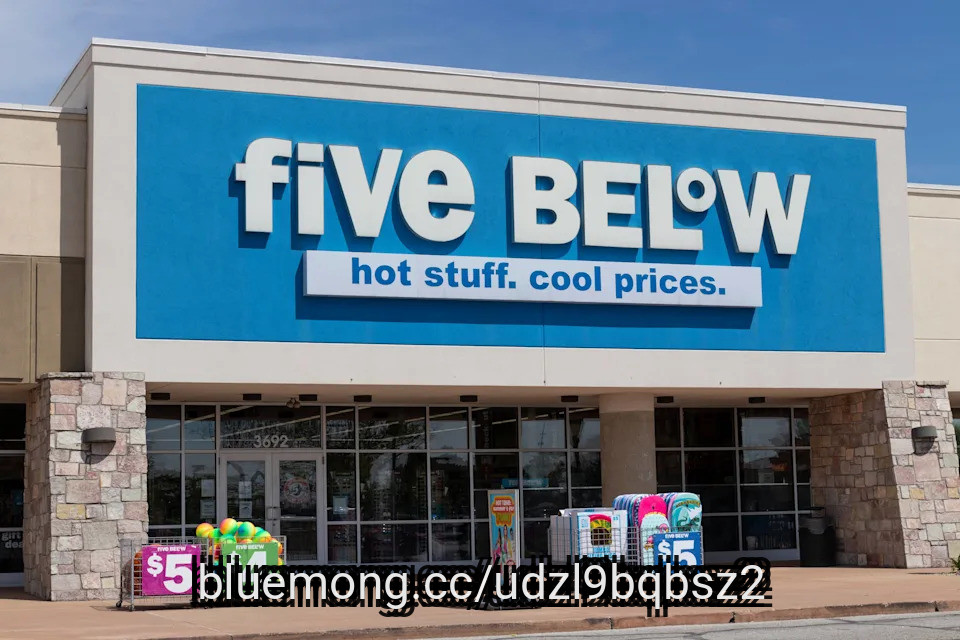
Low prices alone are no longer enough to guarantee success in discount retail.
Chains also have to give shoppers a reason to keep coming back, whether that means new products, viral merchandise, rewards, or making in-store shopping easier.
Five Below has spent the past year changing all three.
Now its latest results suggest shoppers are responding.
Five Below's second-quarter net sales jumped 22.9% to $1.26 billion, while comparable sales increased 14.1%.
#shoppers #alone #enough
2 months ago
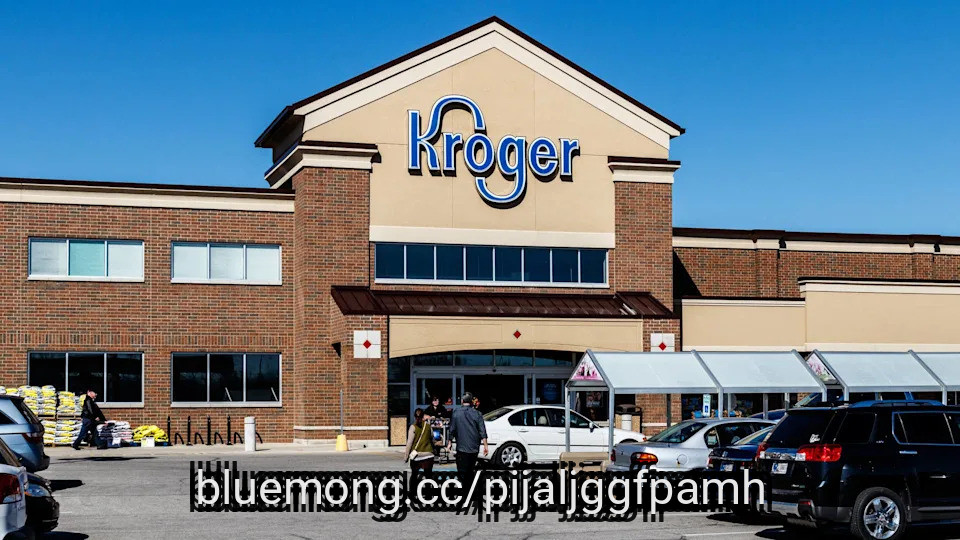
Americans have become value-driven when it comes to what goes into their shopping carts at grocery chains.
"Consumers aren't necessarily buying less. They're becoming more strategic. With 75% indicating that they're stressed about grocery bills (up from 73% last year), it makes sense that shoppers are looking for ways to maximize value from every trip," according to Algolia's The state of grocery shopping: inflation.
The survey showed that many consumers, but not a majority, have been willing to trade down.
Forty-two percent (42%) have switched to private labels to save money (up from 40% last year).
Thirty-six percent (36%) have traded their favorite brands for cheaper alternatives.
#grocery #consumers #value #year
2 months ago
Updated Sept 03, 2026, 2:56 pm EDT / Original Sept 03, 2026, 8:58 am EDT
Food stocks are in a bit of trouble. As shoppers grapple with elevated inflation, the cautious consumer backdrop has sparked investor concerns over the outlook for some industry giants.
Copyright ©2026 Dow Jones & Company, Inc. All Rights Reserved. 87990cbe856818d5eddac44c7b1cdeb8
Federal Reserve Chairman Kevin Warsh raised the markets’ expectations for a September rate hike. Not so fast, three Fed officials suggested this week.
#rights